🔥 Would you like to save this?
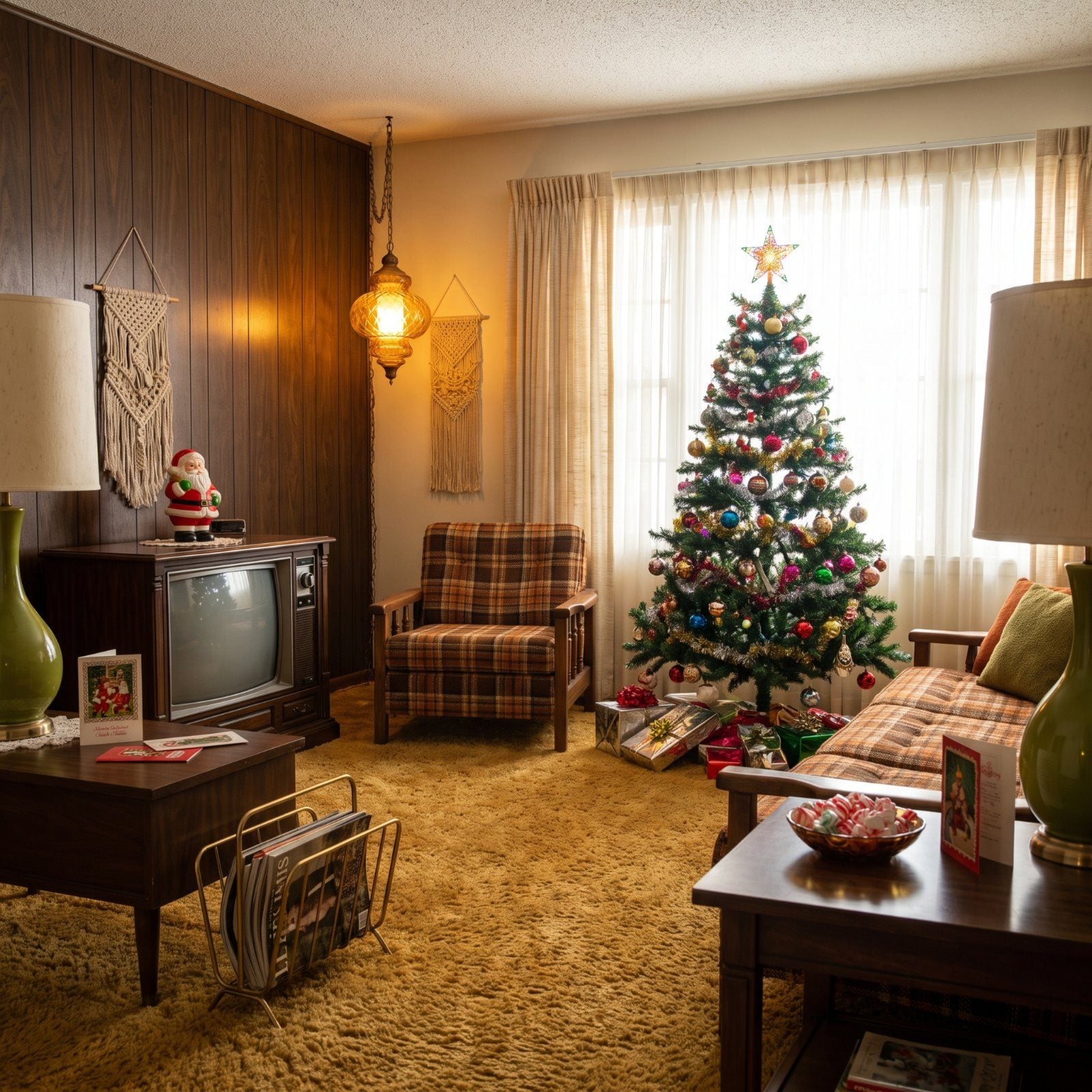
By the second week of December the whole house smelled like pine needles and warm plastic. Somewhere a color wheel clicked through red, blue, green, gold while a console TV murmured a variety special nobody was really watching. Tinsel caught the light. And the good ornaments came out of a box wrapped in tissue older than you were.
That particular glow is gone now, swapped out for white fairy lights and matched ribbon. But the things that made a ’70s room feel like Christmas are worth remembering. Here’s what we had.
In order to come up with the very specific design ideas, we create most designs with the assistance of state-of-the-art AI interior design software. Also, assume links that take you off the site are affiliate links such as links to Amazon. this means we may earn a commission if you buy something.
31. The Aluminum Tree With a Rotating Color Wheel
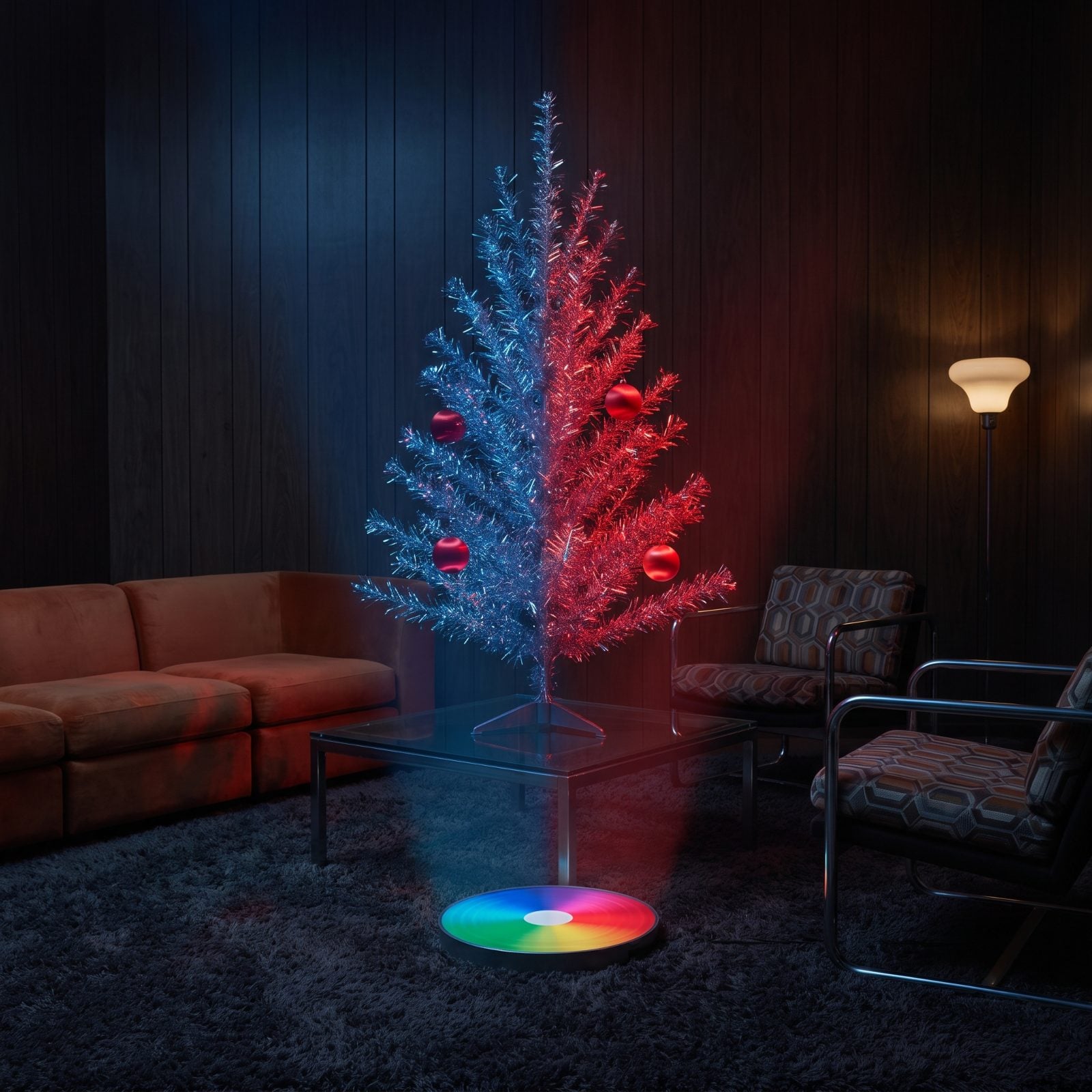
There was no debate. The aluminum tree got no ornaments, or maybe two or three red satin balls, because the branches were the whole show. Each one slid into a drilled hole in the trunk and ended in a little pom-pom of foil, and you fanned them out until the thing looked like a silver sea urchin.
The magic was the color wheel. A floodlight on the floor spun a disc of colored gels, so the tree pulsed red, then blue, then gold, then green, slow and hypnotic. You could lie on the shag carpet and watch it change for twenty minutes.
30. The Ceramic Christmas Tree With Plastic Bulb Lights
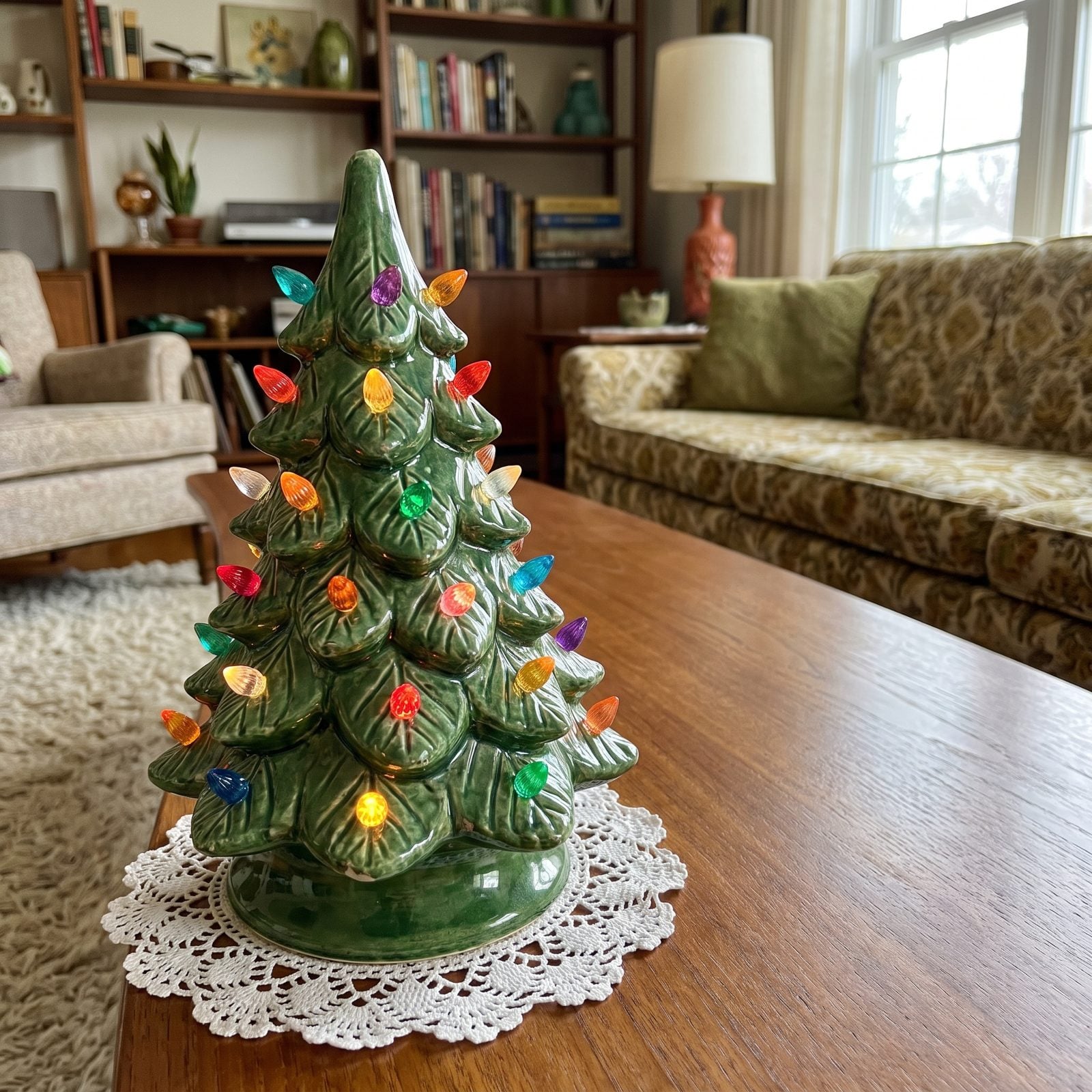
Grandma made this at a ceramics class, and every single bulb poked out of a hole she’d hand-pressed into the wet clay. The little colored pegs were translucent plastic, lit by one orange bulb hidden in the hollow base, and the whole thing glowed like a tiny stained-glass window.
It lived on the console TV or a lace doily on the side table, and it stayed lit all evening. Honestly these never fully disappeared. Half the people reading this have one in a closet right now, and the other half wish they’d grabbed theirs before the estate sale.
29. Thick Lead-Lametta Tinsel Hung Strand by Strand

This was the slow, sacred part.
You did not throw tinsel. You hung it one heavy strand at a time, draped so it fell dead straight like liquid metal, because the old lead-foil kind had real weight to it. It didn’t float or cling or static-stick to your arm. It hung.
The catch? It was literally lead foil. The government phased it out of production in the early ’70s, which is why the plastic stuff that came after never looked quite right — it danced around, bunched up, and lacked that mirror-smooth drape. If you kept the old strands, you peeled them off carefully in January and saved them in a cardboard tube for next year.
28. A Chalkware Nativity Nestled in Fiberglass Angel Hair

The chalkware figures were heavy for their size, a little chipped at Joseph’s elbow where he’d been dropped one year, their painted faces soft from decades of handling. They came out of a shoebox and got arranged on the mantel in the same order every December.
What really dates it is the angel hair. That fluffy white cloud nestled around the stable was spun fiberglass, and you were warned your whole childhood not to touch it with bare hands. It made your skin itch for an hour. Nobody uses it anymore, for obvious reasons, but it glowed like frost under the lights in a way cotton batting never managed.
27. A Cotton-Batting Christmas Village With Bottle-Brush Trees and a Mirror Pond
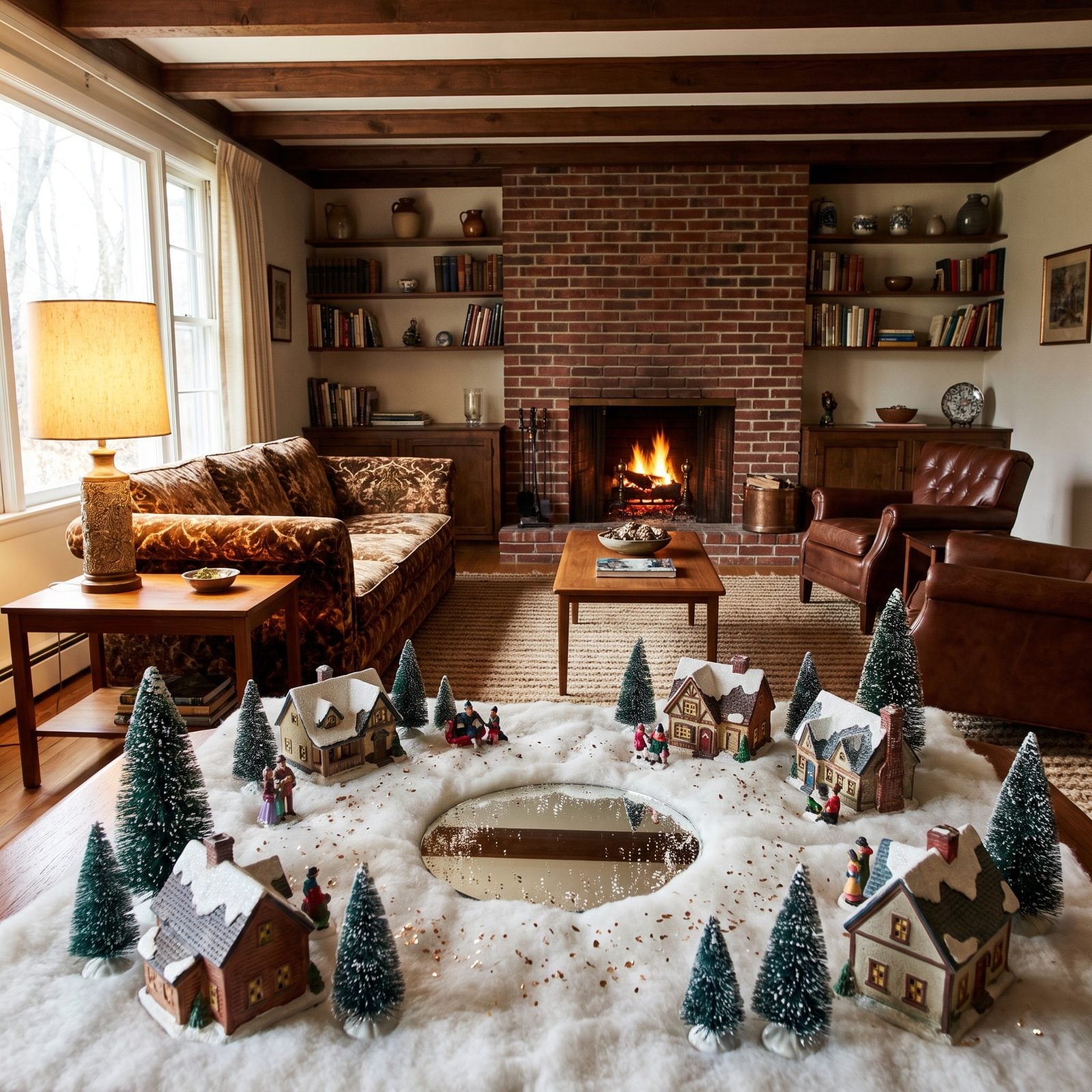
The cotton came off a long roll and got pulled and stretched into drifts, with a dusting of mica flakes on top that worked its way into the carpet and stayed there until spring. The houses were little cardboard putz cottages with cellophane windows, lit by a single bulb threaded in the back.
Every village had a frozen pond, and the frozen pond was always a hand mirror laid flat. Didn’t matter whose house. A mirror, a few bottle-brush trees, some cotton — and suddenly you had a whole snowy town on the end table. If you’re arranging seasonal vignettes on a country balcony decor ledge today, the mirror-pond trick still works beautifully.
26. The Melted-Plastic Popcorn Wreath
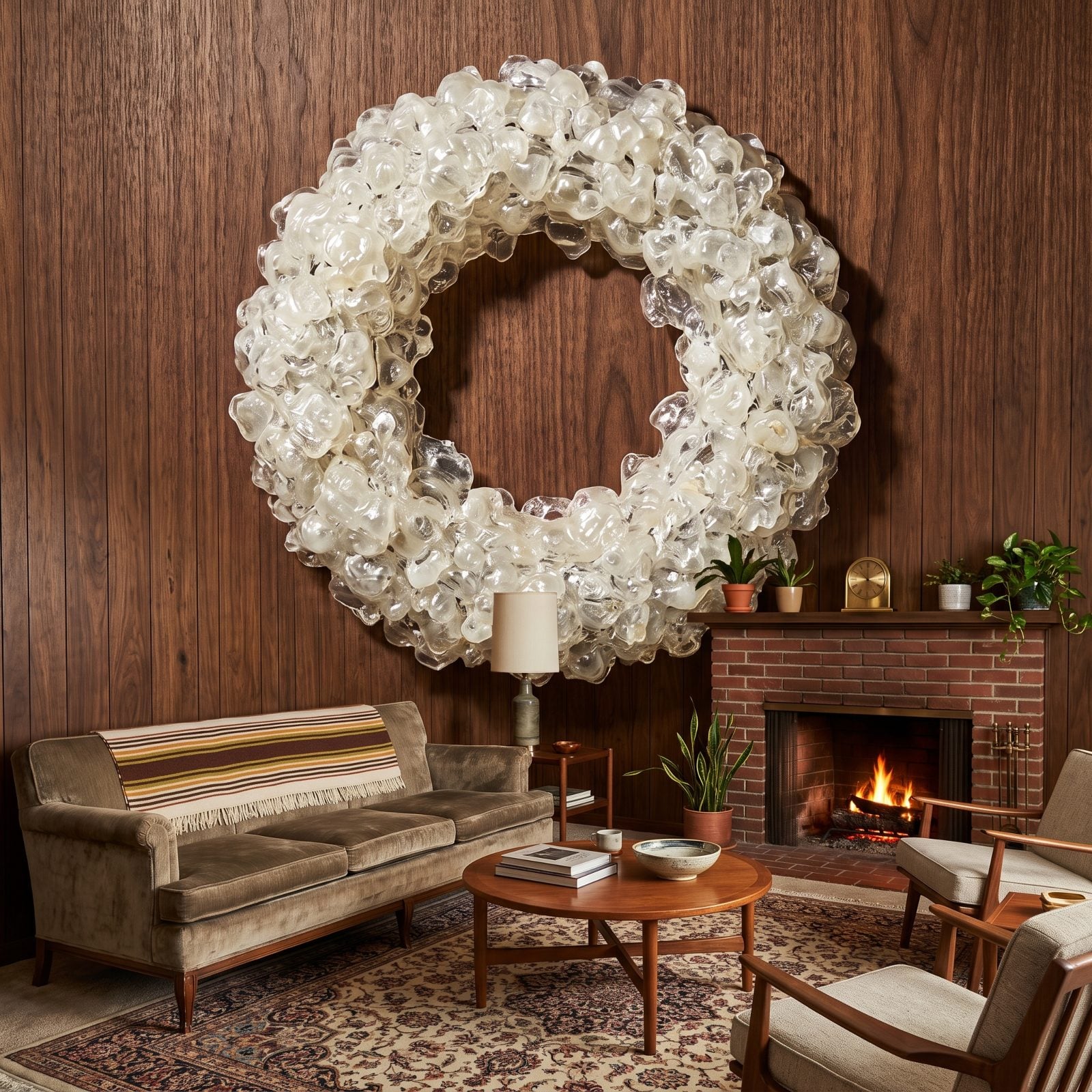
You made these. Specifically, you — or more likely a neighbor with a stovetop and a metal mold — melted a bag of plastic beads shaped like popcorn until they fused into a glossy ring. The finished wreath felt oddly heavy and smelled faintly of hot plastic for the first week.
It hung on the paneled wall or the front door with a red bow wired to the bottom, close to indestructible. These turn up at thrift stores constantly now, and people either shudder or light up. There’s no in-between.
25. Foil-and-Tissue Honeycomb Bells
They came flat.
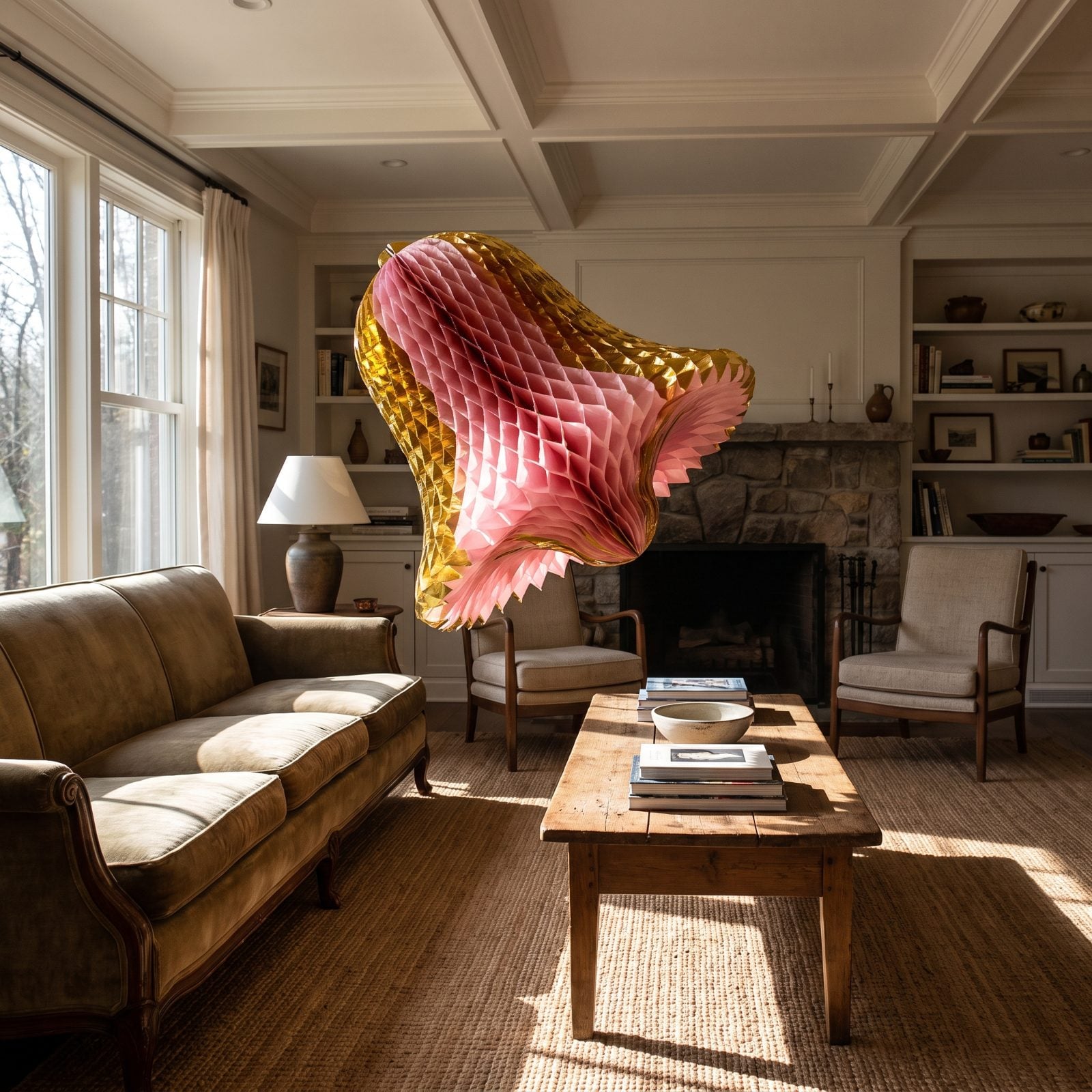
A folded cardboard-and-tissue thing you’d swear was a mistake, until you pulled the two halves apart and a full three-dimensional honeycomb bell bloomed out of nothing. There was always one person in the family who got to do the unfolding, and it was a whole moment.
They hung in doorways and over the window, usually bright red with a little foil tassel swinging underneath. At the end of the season you folded them flat again and pressed a book on top so they’d pack away thin. Half the time they didn’t make it two years before they tore.
24. Accordion-Fold Paper Christmas Trees
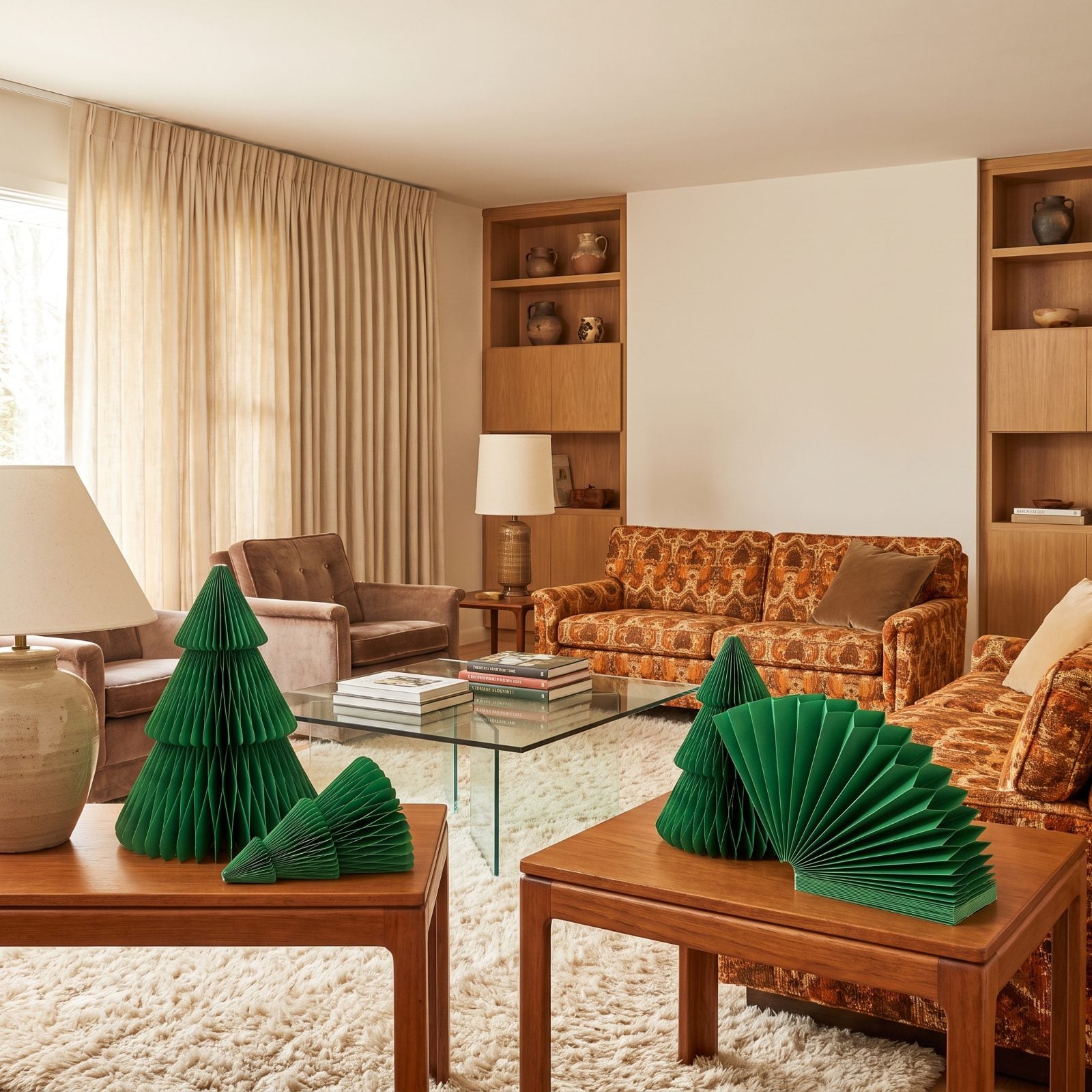
These lived in a flat pack and sprang into a pleated green cone when you fanned the folds and hooked the little tab at the back. A foil star went on top, and it sat on the coffee table or the windowsill looking like the cleverest little bit of design in the house for the price of nearly nothing.
They crushed if you looked at them wrong. Which is exactly why you rarely see them now — disposable before disposable was a conversation. And yet people kept the same ones for a decade out of pure stubbornness.
23. Metallic Foil Garlands Draped Across the Ceiling
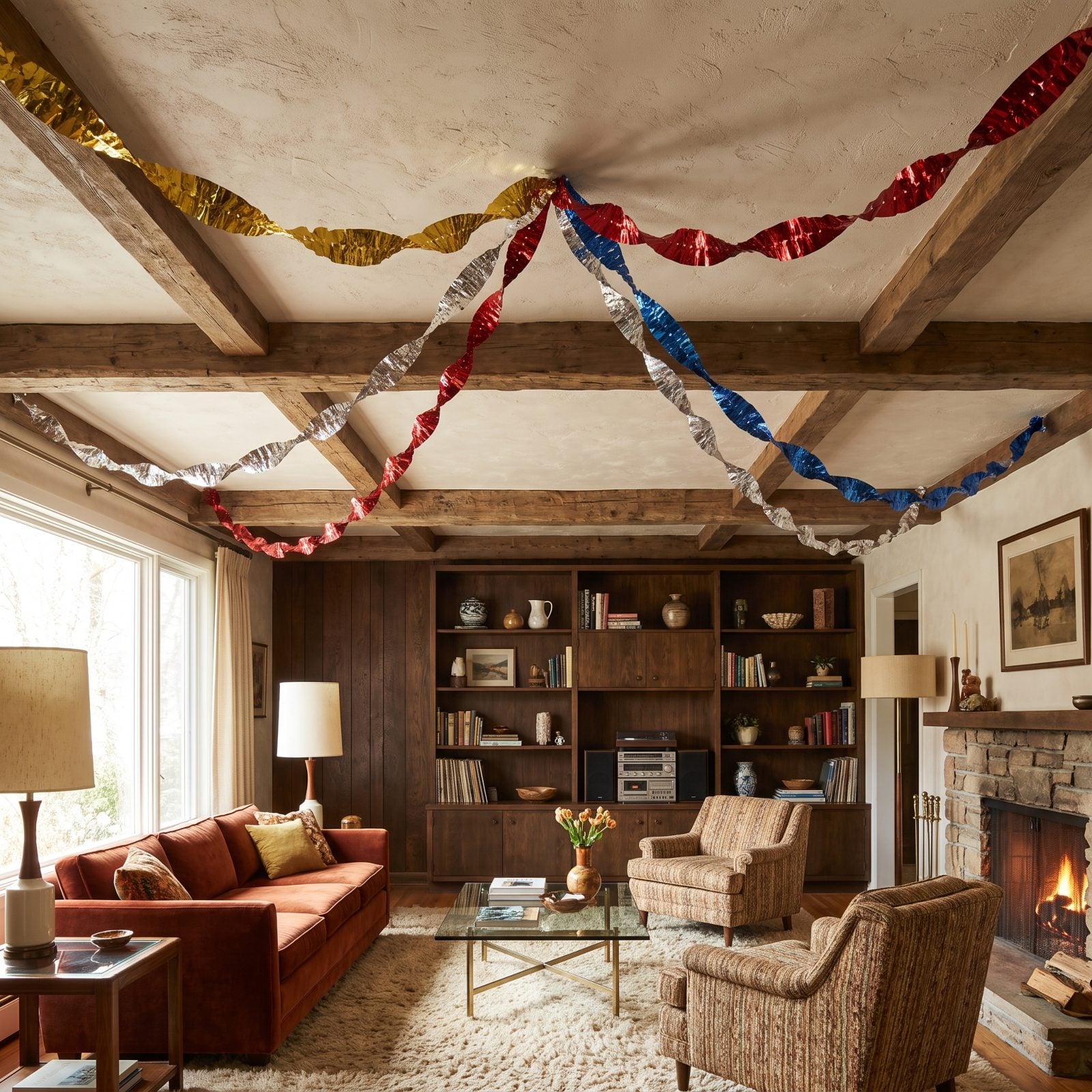
The ceiling was fair game. Twisted metallic foil garlands got thumbtacked corner to corner, four of them meeting at a foil bell or a paper honeycomb ball right in the center of the room, and the whole ceiling became part of the show.
They shed little metallic flecks the entire season and threw back the lights in a soft shimmer you felt more than saw. You don’t see ceiling decorating much anymore. A shame, honestly — there’s something about looking up from the couch and seeing the whole room dressed for the holiday.
22. Red-and-Green Crepe-Paper Streamers
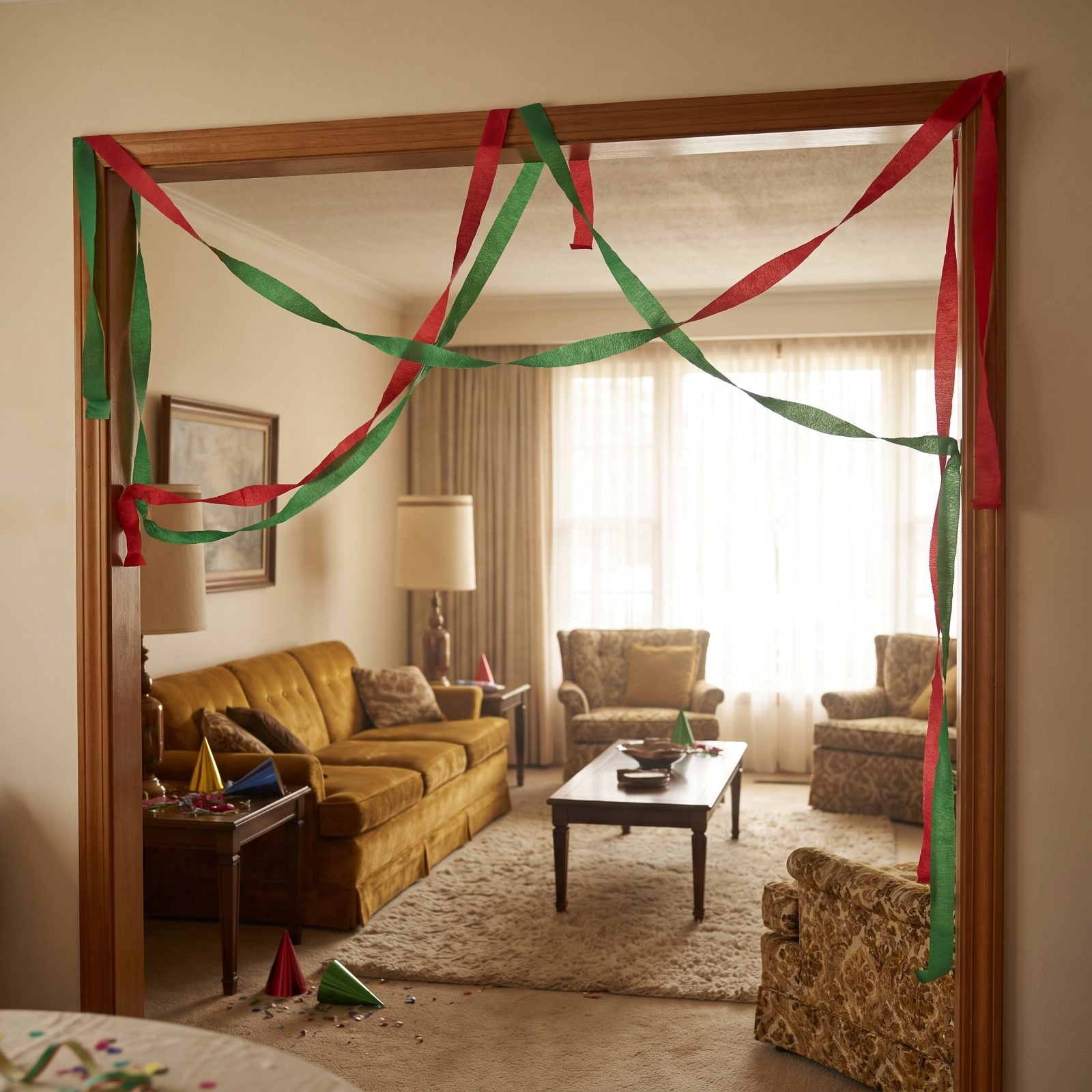
The last thing to go up, usually the morning of a party, was the crepe paper. You grabbed the end of a red roll and a green roll together, twisted them as you went, and tacked the twist in loops along the wall and around the doorways. Ten minutes and the whole room was dressed.
It had a soft matte finish nothing today replicates, and it drooped a little by the second day in a way that somehow made the room feel more like home, not less. Cheap, cheerful, gone by New Year’s. We threw it away without a thought, which is probably why almost nobody has a photo of it.
21. A Faux Fireplace With a Motorized Flame Drum
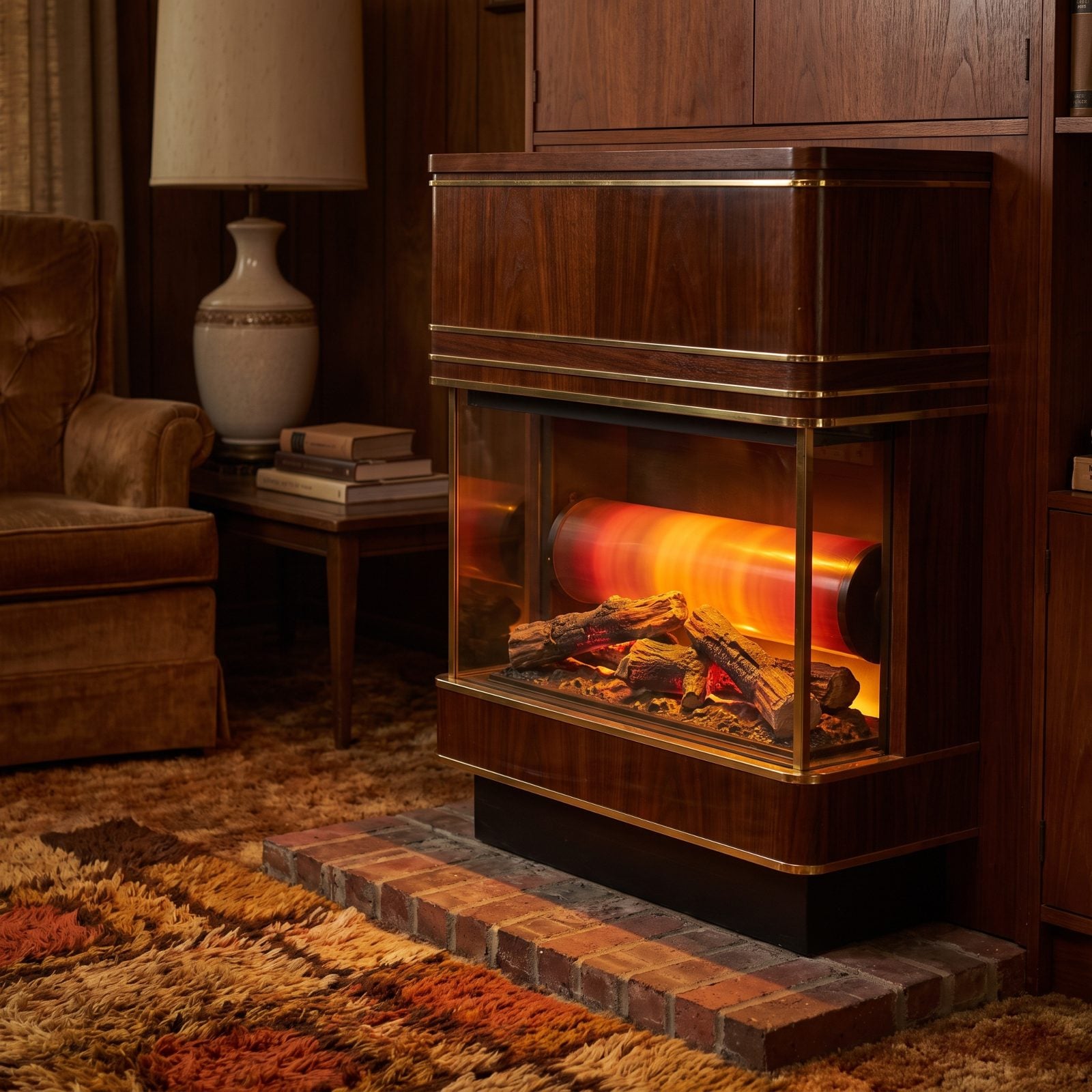
You remember the sound before the look. A faint motorized hum, then that slow revolving drum behind the plastic logs, throwing a loop of orange flicker across the ceiling that fooled absolutely nobody and warmed absolutely nobody either.
These units ran on a bulb and a rotating foil cylinder — no heat, no chimney, no mess. For apartments and houses without a real hearth it was the stand-in, and come Christmas it got dressed up with garland and stockings like the genuine article. The glow was steady and a little hypnotic. Oddly comforting, too, if you stopped expecting actual fire.
20. A Yule Log Playing on the Console Television
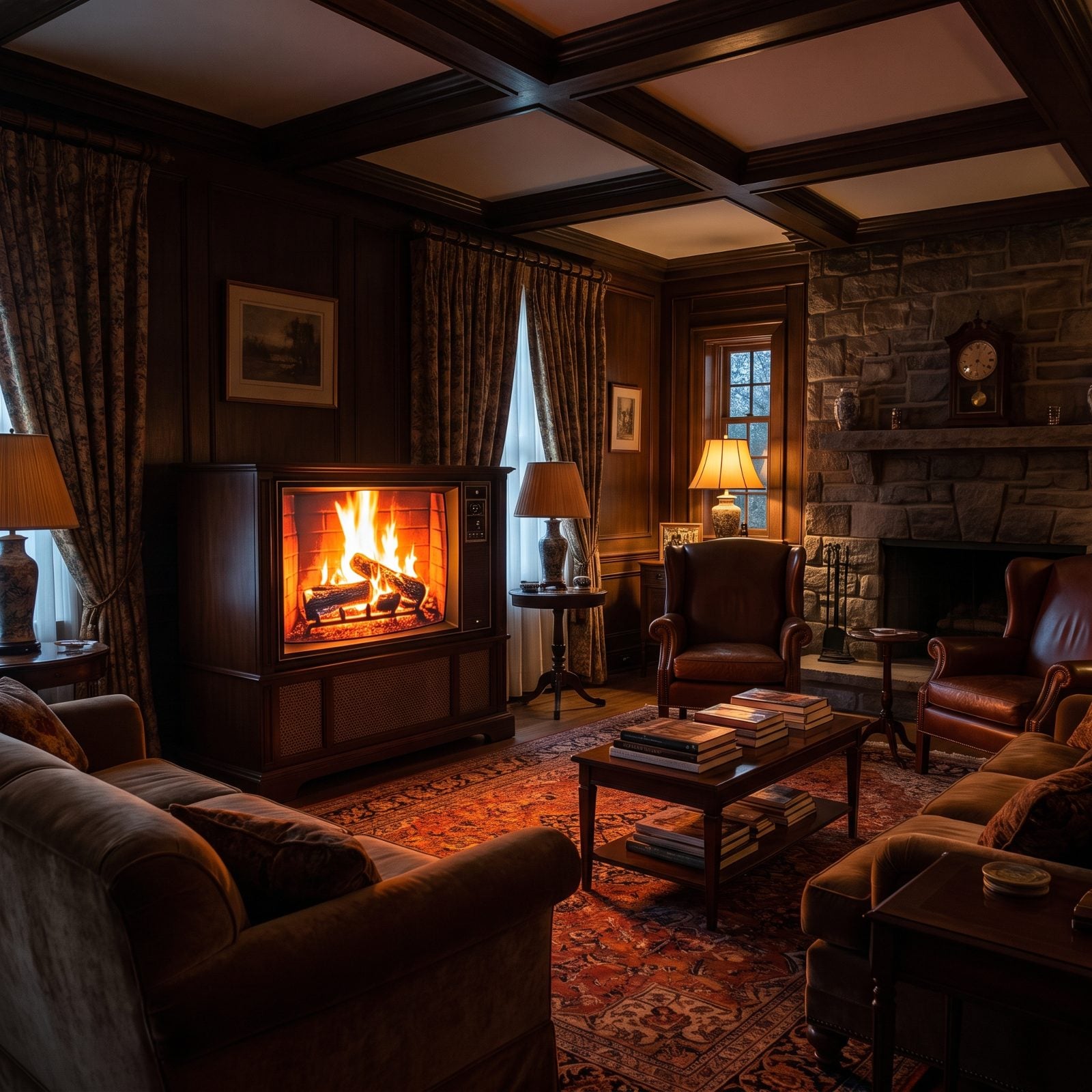
The screen that normally showed Carol Burnett suddenly showed a fireplace, and for a few hours the whole family pretended the television was a hearth. The WPIX Yule Log first aired in New York in 1966 — three hours of a looping log with carols playing over it — and it became a quiet holiday ritual.
Nobody watched it, exactly. It just stayed on in the background while people wrapped presents and argued about tape. The console itself was furniture, a slab of dark walnut you dusted and set a ceramic tree on top of. Today you’d call up a four-hour fireplace stream in two clicks. Back then it came on once, and you caught it or you didn’t.
19. A Giant Cardboard Santa Beside the Fireplace
🔥 Would you like to save this?
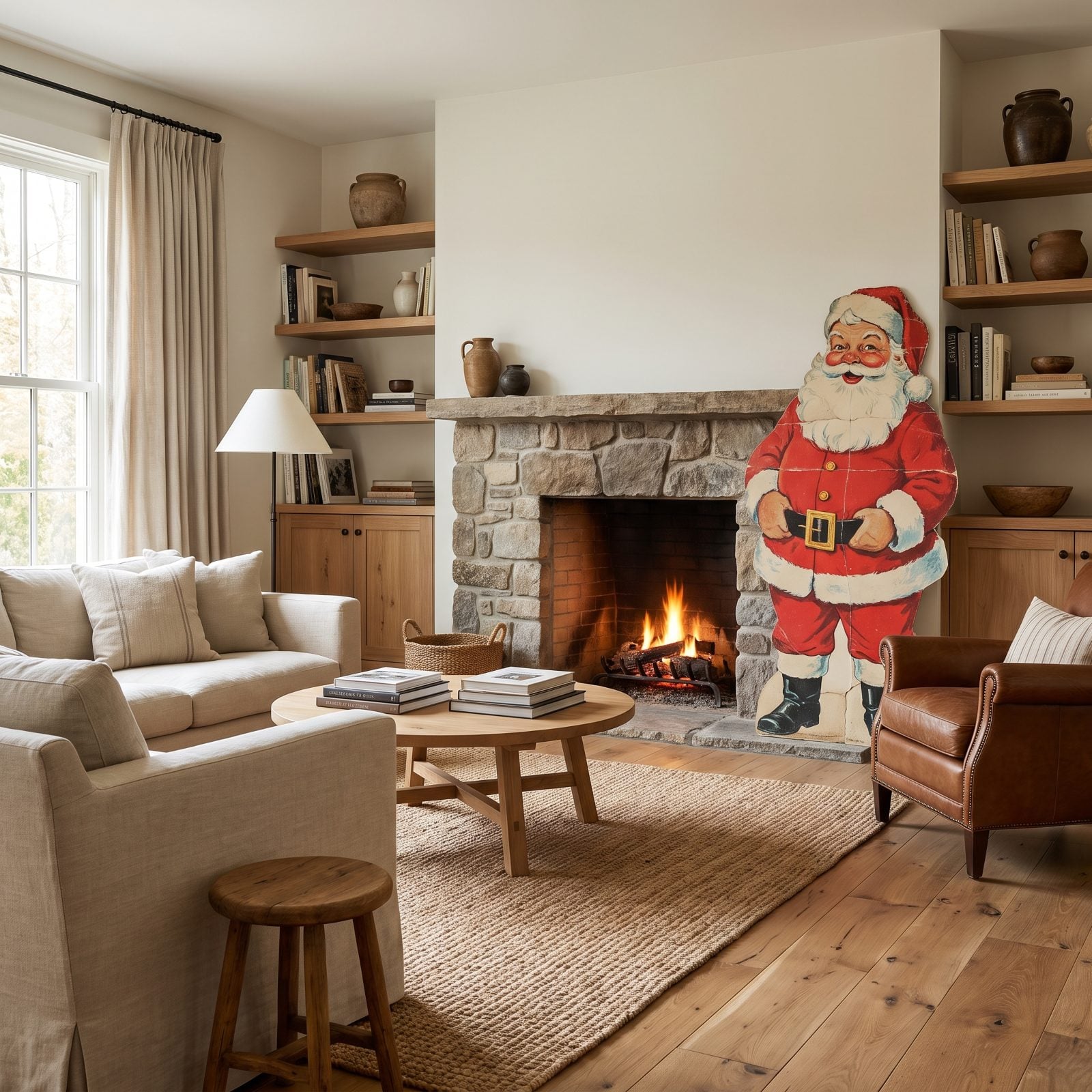
Flat as a pancake from the side, a full-color jolly giant from the front. The die-cut cardboard Santa leaned against the wall by the fireplace, printed on heavy stock with that slightly waxy sheen, and every year he came out of the closet with a fresh crease down one shoulder.
Kids loved standing next to him to measure up. By January he was softening at the base and curling at the edges, and you folded him back into the closet knowing next year he’d be a little more rumpled. The department-store look brought home — cheap, cheerful, and completely two-dimensional.
18. A Blow-Mold Santa Glowing Indoors
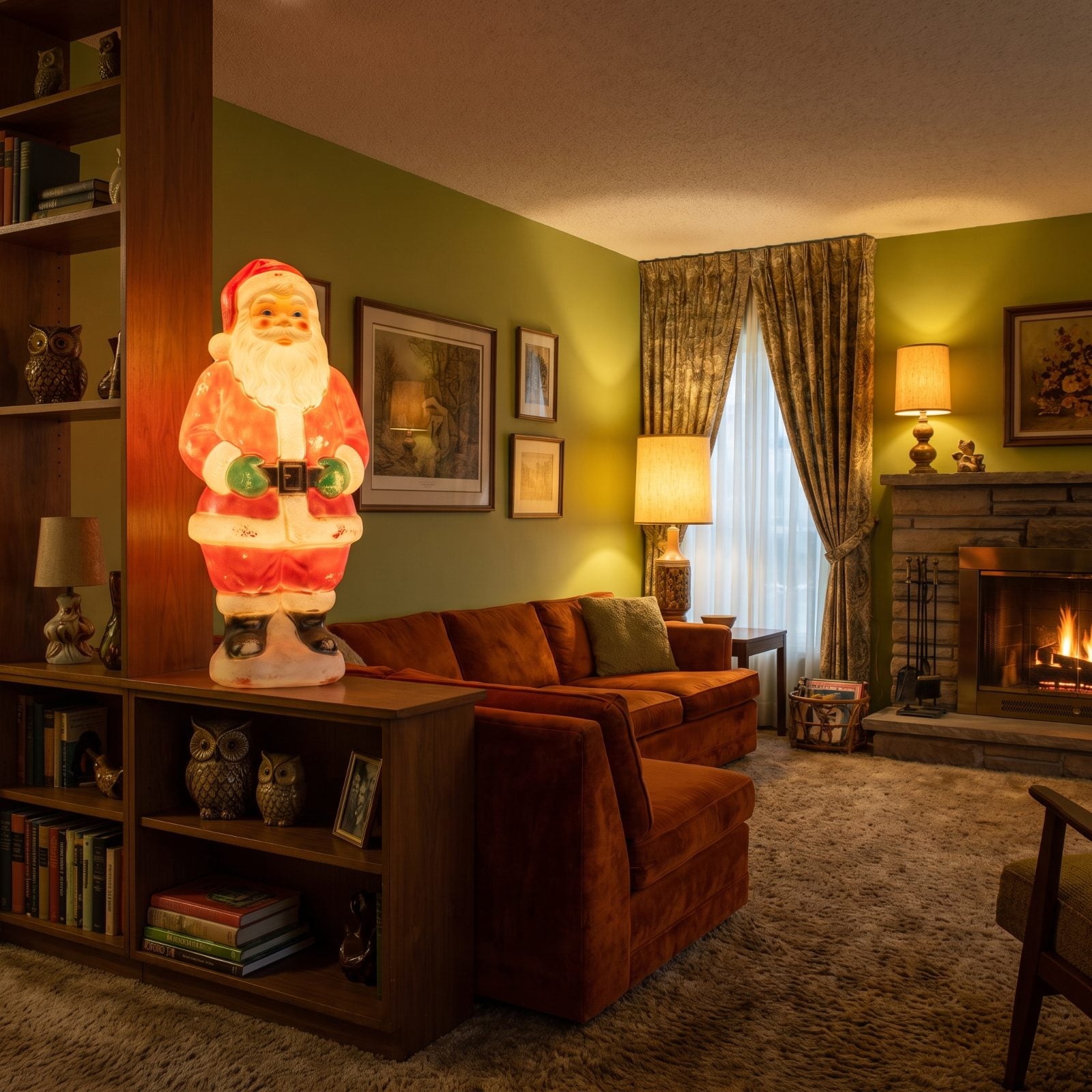
Lift the hollow body, feed the cord through the hole in the base, drop in a bulb, and suddenly Santa glowed from the inside out. Blow-mold figures usually lived on the front lawn, but plenty of families brought a smaller one indoors to stand guard by the tree.
The plastic was thick and a little translucent, the paint applied in flat blocks of red and white, and the light inside gave the whole thing a soft lantern glow at night. Union Products and Empire Plastics made millions of them. They’re genuine collectibles now, which would have baffled anyone who kept theirs in a garbage bag in the attic.
17. Illuminated Plastic Choirboys
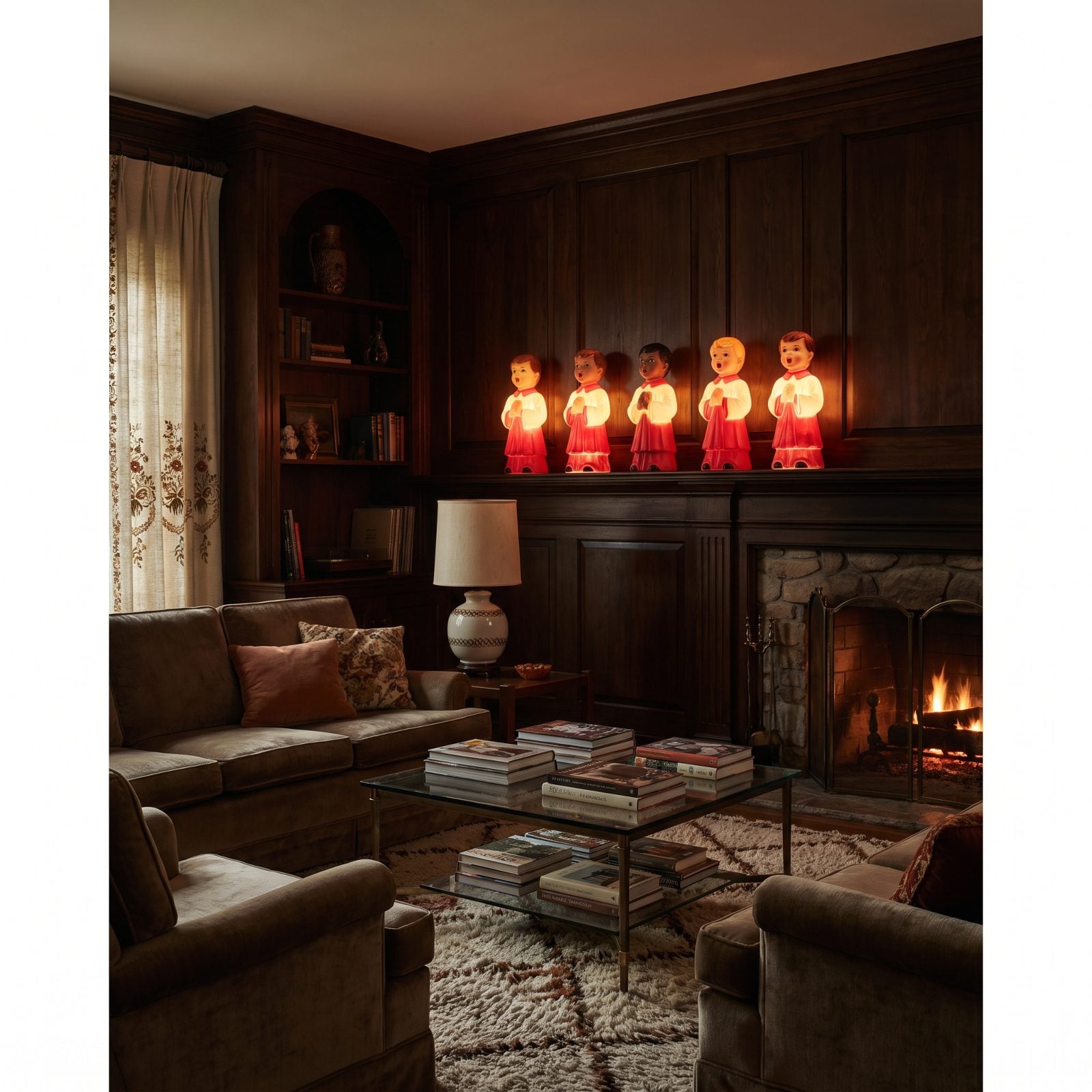
Mouths frozen mid-carol, little red robes, white collars, songbooks held open to a hymn nobody could read. The plastic choirboys lit up from a bulb tucked inside, and they usually came in a set of three or four lined up on the mantel or a side table.
After dark they had a soft, churchy glow, serene little faces that turned the corner of the room into a nativity scene. You find them now in thrift stores with cracked bases and yellowed robes. Honestly, they still look sweet.
16. A Lionel Train Circling the Tree Skirt

That electric smell when the transformer warmed up. The clatter of metal wheels on O-gauge track. A Lionel train looping the red felt tree skirt was the centerpiece dads secretly set up for themselves and let the kids believe was theirs.
There was a whole ritual to it. The track snapped together in sections, the dial controlled the speed, and if you pushed it too fast on a curve the whole train derailed into the presents. The headlight on the black diesel engine glowed as it rounded each curve. Mechanical, hands-on, gloriously analog.
15. A Musical Rotating Tree Stand

The tree spun. Slowly, a little unevenly, with a faint grinding whir underneath and a tinny music-box carol looping on repeat. That rotating stand turned your tree into a revolving display so every ornament got its moment facing the room.
You had to cut a notch in the tree skirt for the cord and pray the base was balanced, because an off-center tree wobbled like a drunk ice skater. The novelty wore off fast, and by December 20th the music had driven everyone slightly mad — but for the first few nights it was pure magic.
14. Large Multicolored C7 Bulbs on the Indoor Tree
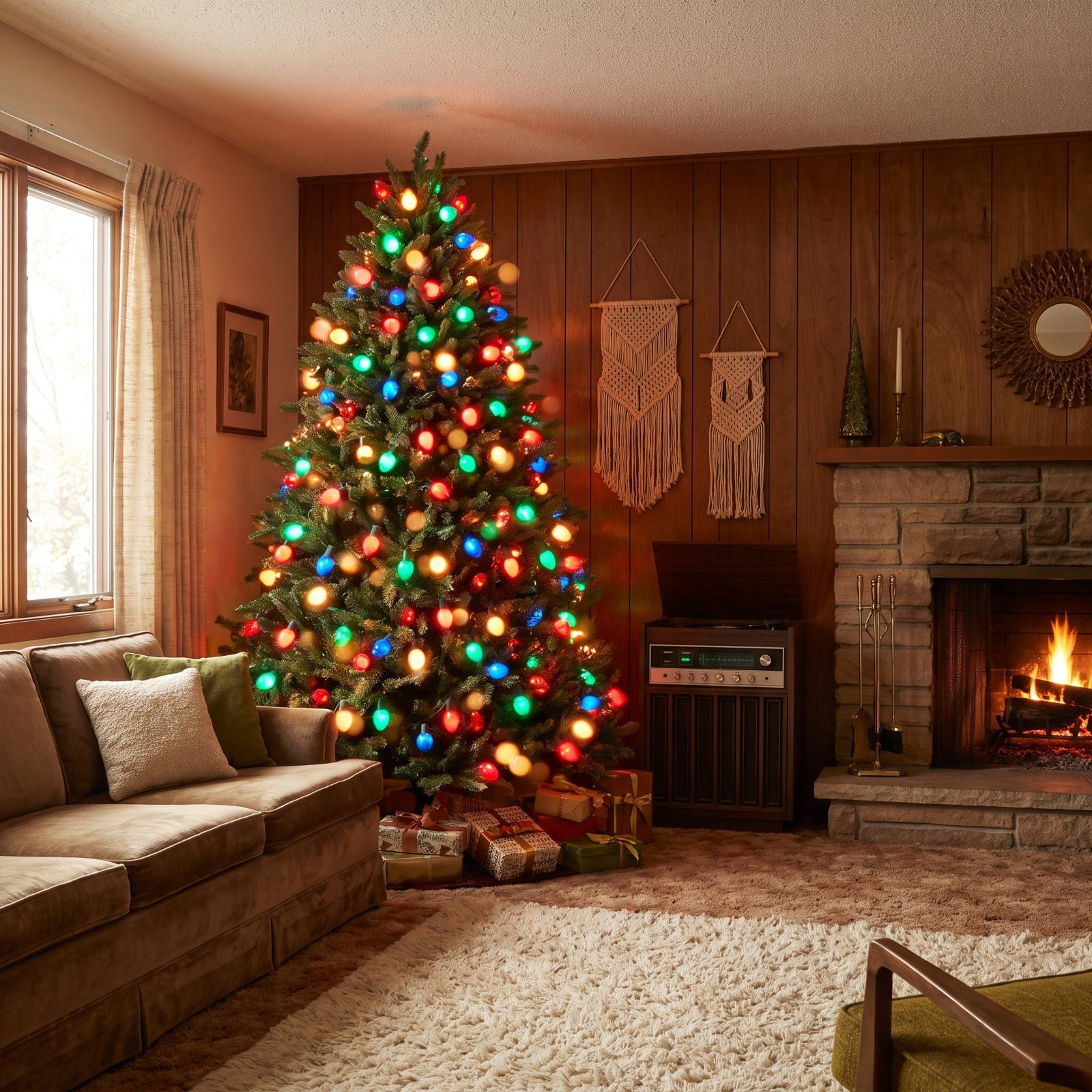
Big as your thumb, hot to the touch, and bright in that saturated candy-colored way modern LEDs can’t quite fake. C7 bulbs ran warm — warm enough that your mother warned you not to let them touch a branch too long.
Each socket took a replaceable bulb, so when one burned out you kept a little box of spares in the ornament bin. The whole strand didn’t die when one went, which was the one mercy they offered. The glass had a faint warmth and a slight haze, and the light pooled soft and golden-red instead of the cold blue you get from today’s strings.
13. Bubble Lights Clipped to the Branches
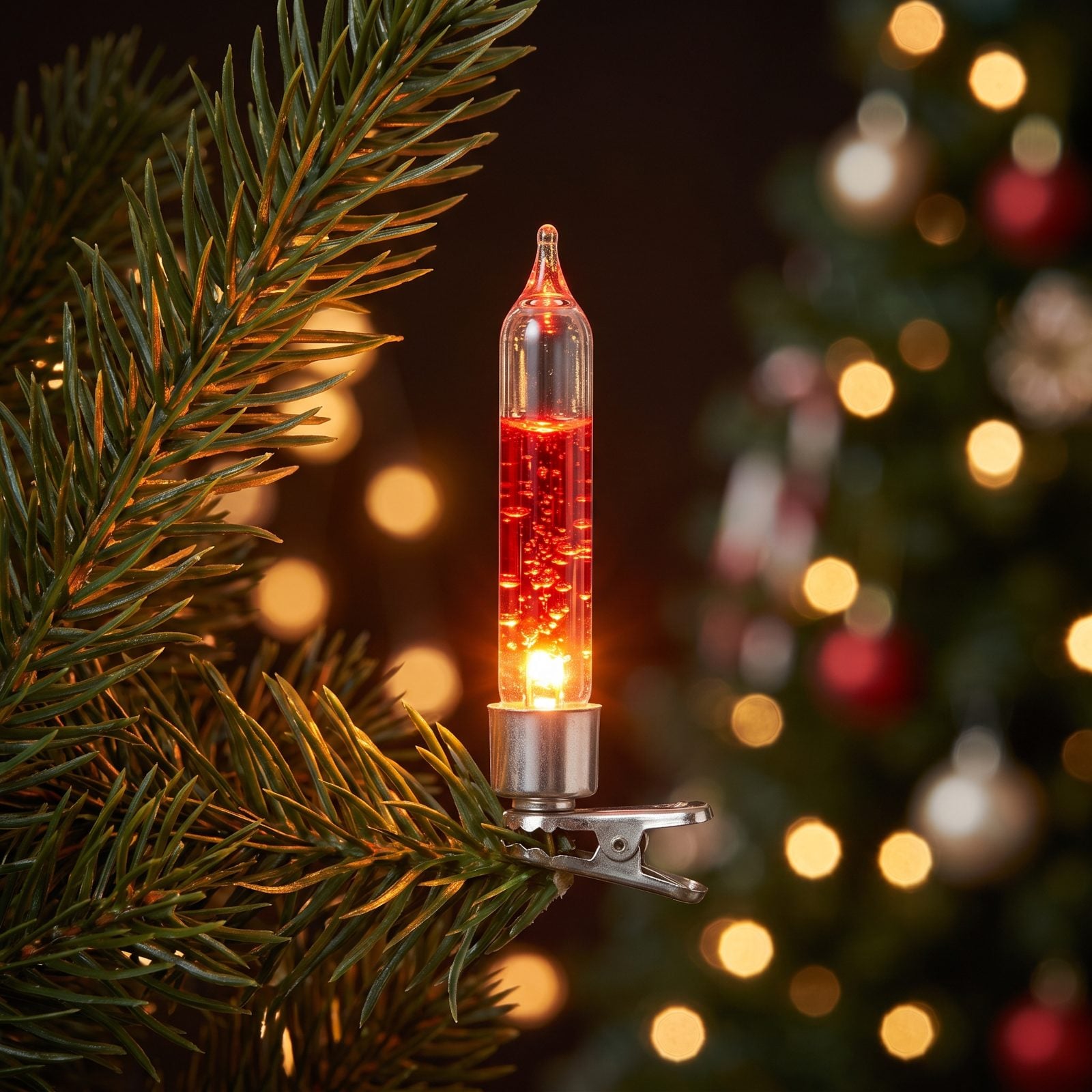
You’d press your face close and wait for the liquid to start rising. Bubble lights worked on heat — a sealed glass vial of colored fluid that boiled into a lazy stream of bubbles once the base warmed up — and the waiting was half the fun.
They had to sit perfectly upright or they’d stop bubbling, so clipping one to a branch that didn’t droop could be a real fiddle. The design dates to the 1940s but they were everywhere on 1970s trees, slim glass tubes of red and amber quietly percolating all evening long. Nothing on a modern tree moves the way those did.
12. Candle-Shaped Window Lights With Orange Bulbs
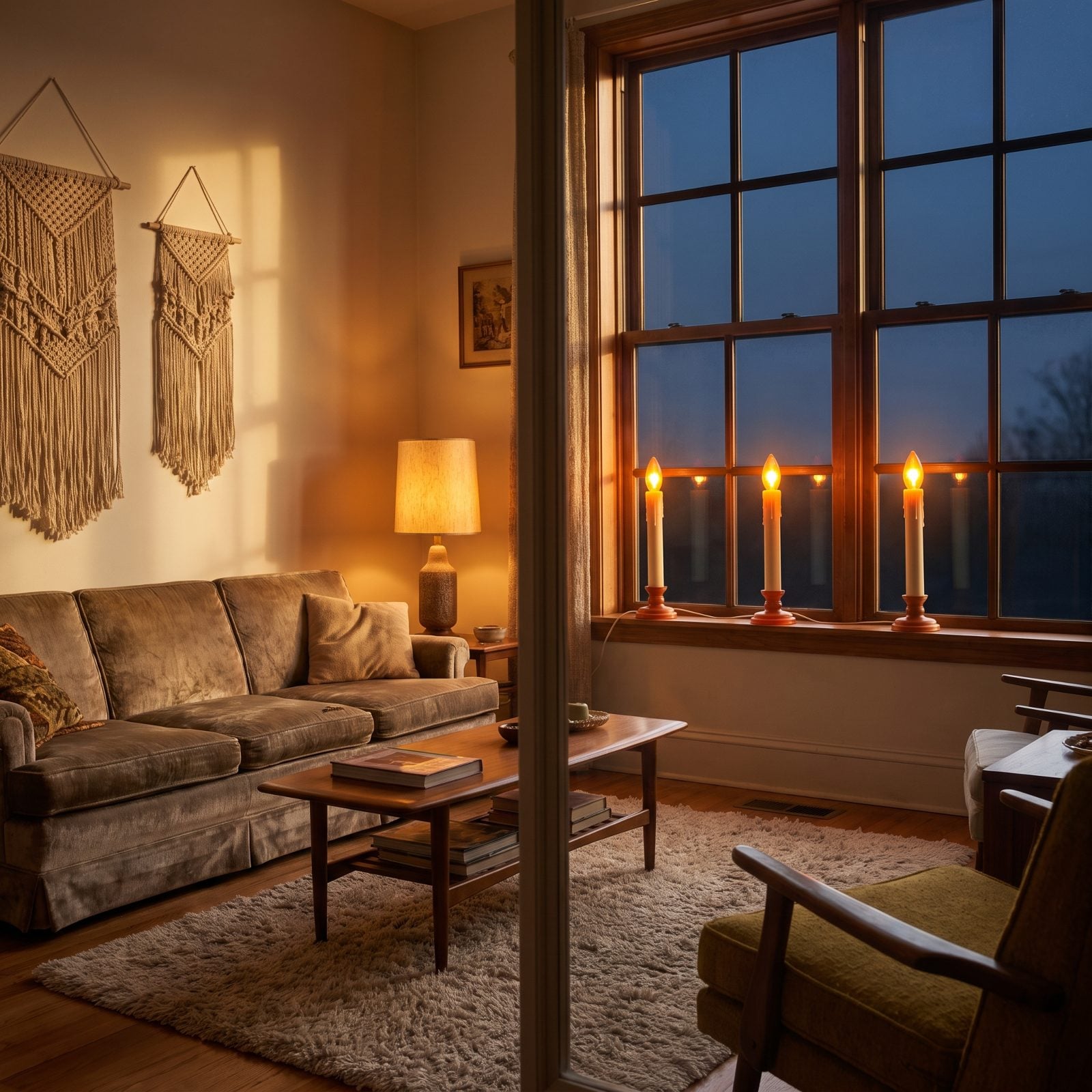
Every front window glowed with the same soft orange flame. Electric candle lights, one bulb apiece in a plastic or faux-wax base, lined up on the sill facing the street so the whole neighborhood looked like it was waiting for someone to come home.
The bulbs ran a deep amber, not white, which gave them that flickery candle warmth without the fire risk. They were the modern spin on an old Colonial custom of lighting a candle in the window, a signal of welcome. And driving home after dark in December, block after block of those glowing orange points felt like the warmest thing in the world.
11. Satin-Wrapped Foam Ball Ornaments
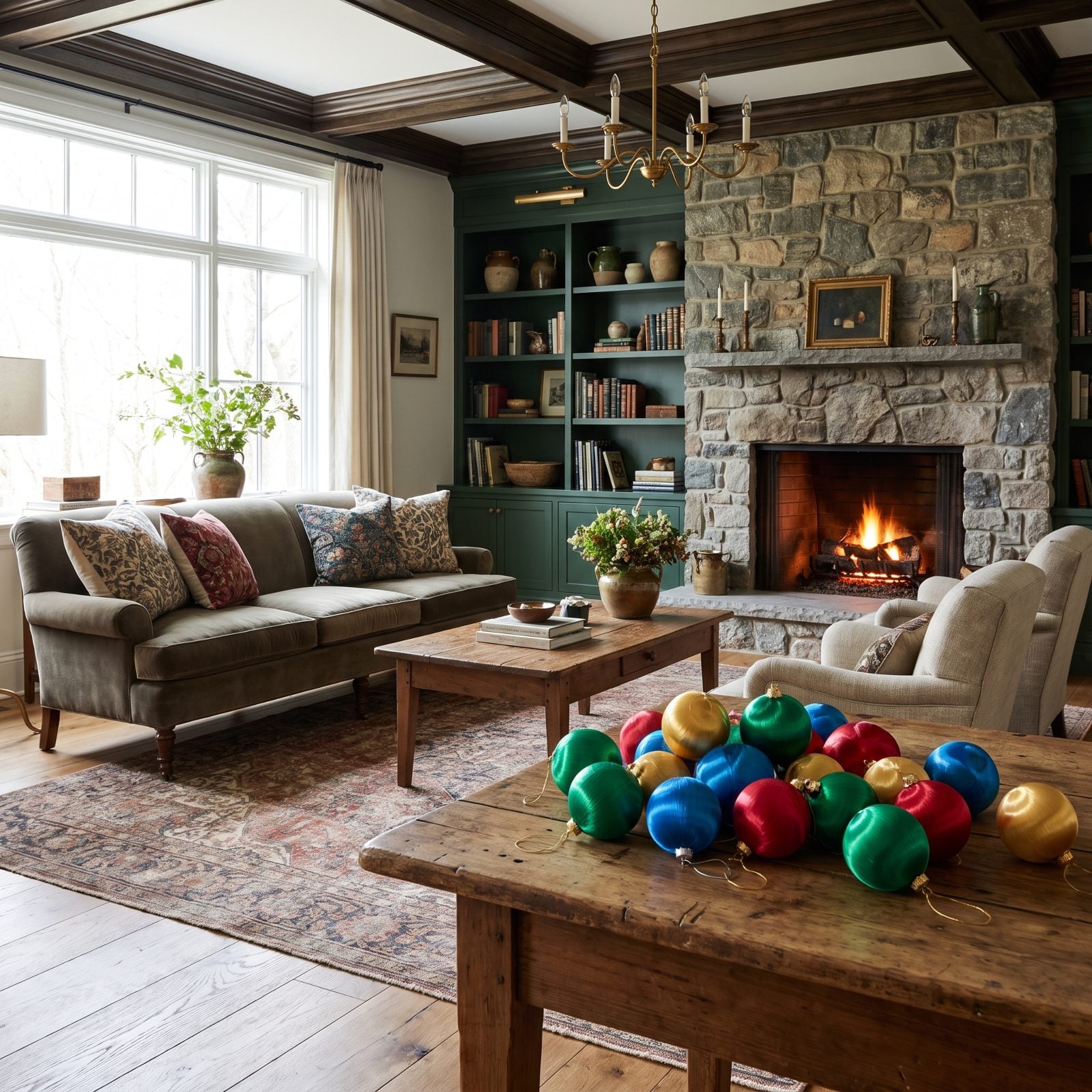
Somebody’s mom made these by the dozen, and you can tell. A foam ball, a spool of satin thread wound tight until the white stopped peeking through, then sequins and straight pins jabbed in to catch the light. Hours of winding while a holiday special played on the console TV. They never shattered when a kid knocked the tree, which was half the point, and they came back out of the shoebox every single December for twenty years looking nearly new. Satin doesn’t age the way glass does. If your grandmother had a tree in the seventies, odds are a few of these are still rolling around somebody’s attic right now, slightly crushed on one side, waiting.
10. Ribbon Candy in a Cut-Glass Bowl

You remember the texture before the taste. Ribbon candy never really got eaten so much as sucked on reluctantly, because it shattered like a windshield the second your teeth met it. Pretty folds, sure. The flavor was mostly sugar and regret.
It lived in a cut-glass bowl that only came out in December, usually the same bowl that held mixed nuts the rest of the holiday. Nobody loved ribbon candy and everybody had it anyway. Call it decoration that happened to be technically edible — and by New Year’s the whole bowl had fused into one solid brick of candy geology.
9. A Bowl of Unshelled Nuts With a Metal Nutcracker
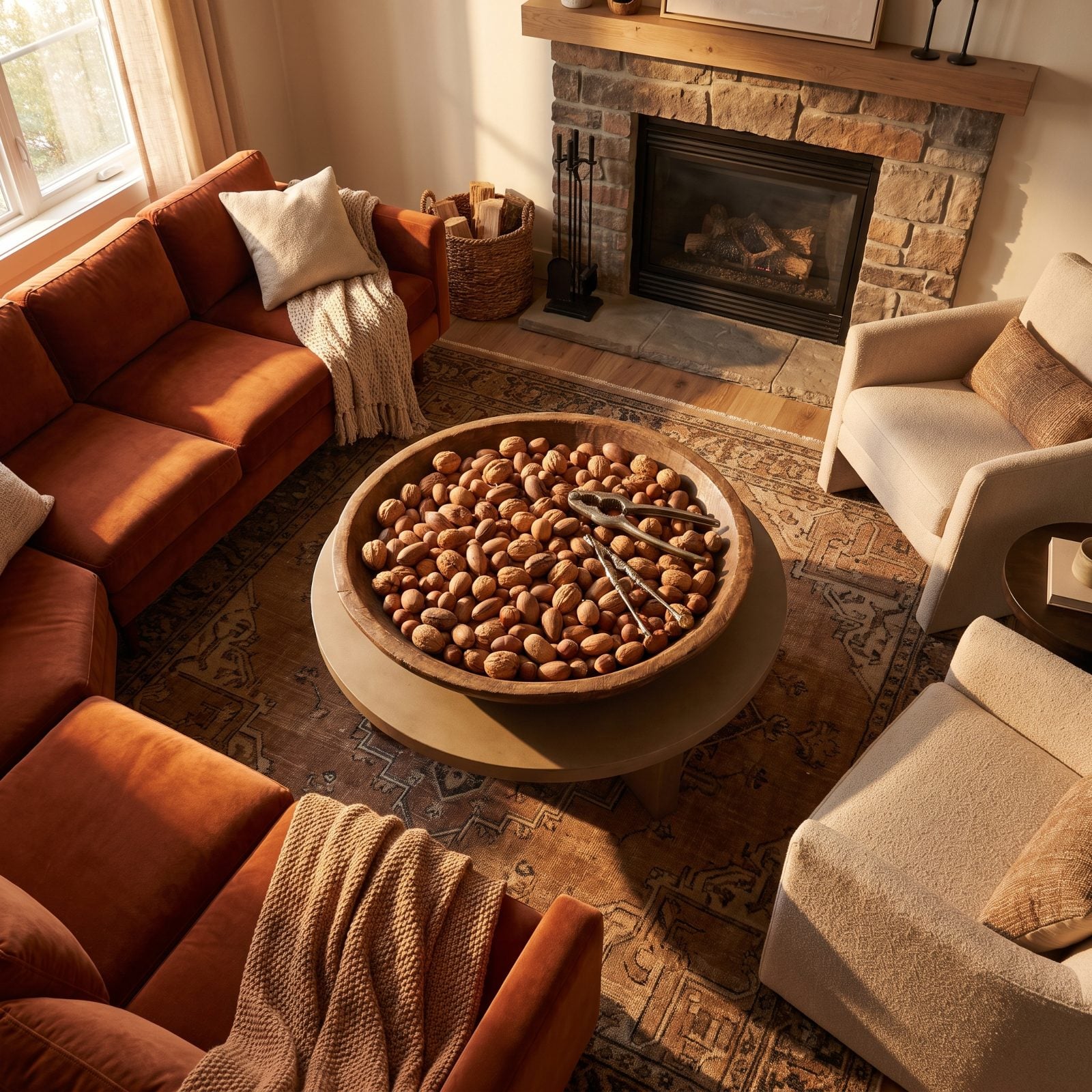
The sound is what comes back first. That sharp metallic crunch, then the hunt through the bowl for the little pick to dig out the stubborn bits of walnut wedged in the shell.
Every house had the same chrome nutcracker. It lived in the junk drawer eleven months a year, surfaced around Thanksgiving, and came with a matched set of thin metal picks that disappeared into the couch cushions by December 20th. Half the fun was the Brazil nuts nobody could ever open without launching a shell fragment across the room.
It was slow food before anyone called it that. You worked for every almond, and somehow that made sitting around the coffee table last longer. Maybe that was the whole point.
8. Oranges Studded With Whole Cloves

Before anyone was selling you a holiday candle for thirty dollars, your mother was jabbing cloves into an orange and calling it air freshening.
These pomanders sat in a bowl on the coffee table and perfumed the whole room with a smell that is still, to this day, the exact scent of Christmas for a lot of us. Making them was a kitchen-table afternoon. You pressed cloves in by the hundreds until your thumb went numb, usually while something baked.
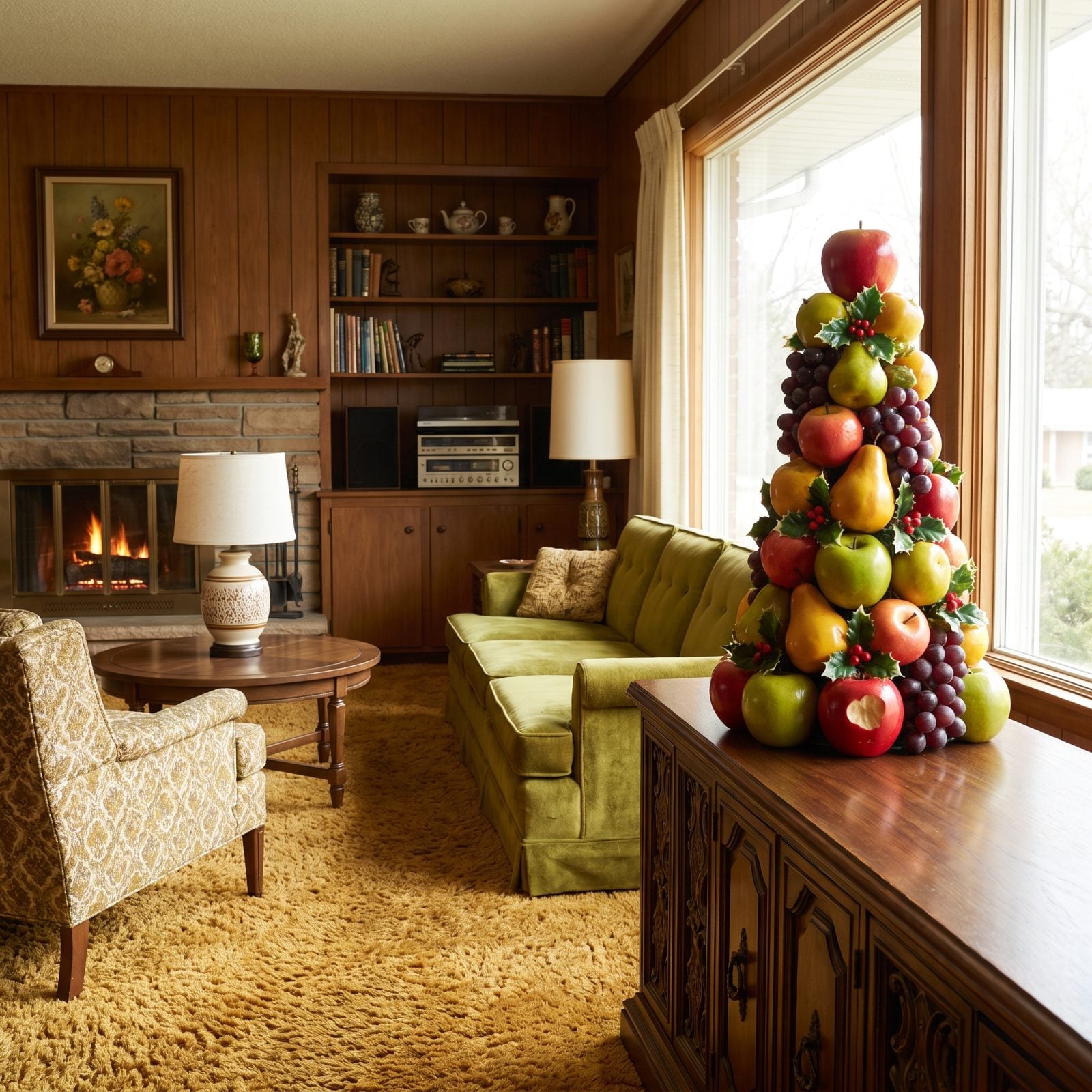
7. A Tower of Wax Fruit Dressed With Holly
🔥 Would you like to save this?
That wax fruit was never meant to be touched. Didn’t stop a single child from pressing a thumbnail into the apple to see if it would dent. It always did.
It sat in a brass compote year-round collecting a faint film of dust, and at Christmas it got dressed up with a few sprigs of plastic holly wedged between the grapes. Instant centerpiece. The banana was always the giveaway — that impossible waxy yellow no real banana has ever achieved.
Permanent fruit for people who had better things to do than keep replacing the real stuff. It looked abundant, cost nothing to maintain, and asked only that you never bite it.
6. Plastic Holly Picks Tucked Into Every Lampshade

Someone in the family would go around the house with a bag of plastic holly picks and jam one into the top of every lampshade. The dining room light. The end table lamps. That hallway fixture nobody ever used.
Four minutes of work and suddenly the whole house was decorated. The berries ran too red and the leaves too shiny, but flip the lamp on and watch the light catch them — the room felt done.
They came in bulk bags from the five-and-dime. Same tired picks pulled out every single year, berries slightly crushed from a decade crammed in the Christmas box.
5. Plastic Mistletoe Hanging in the Doorway
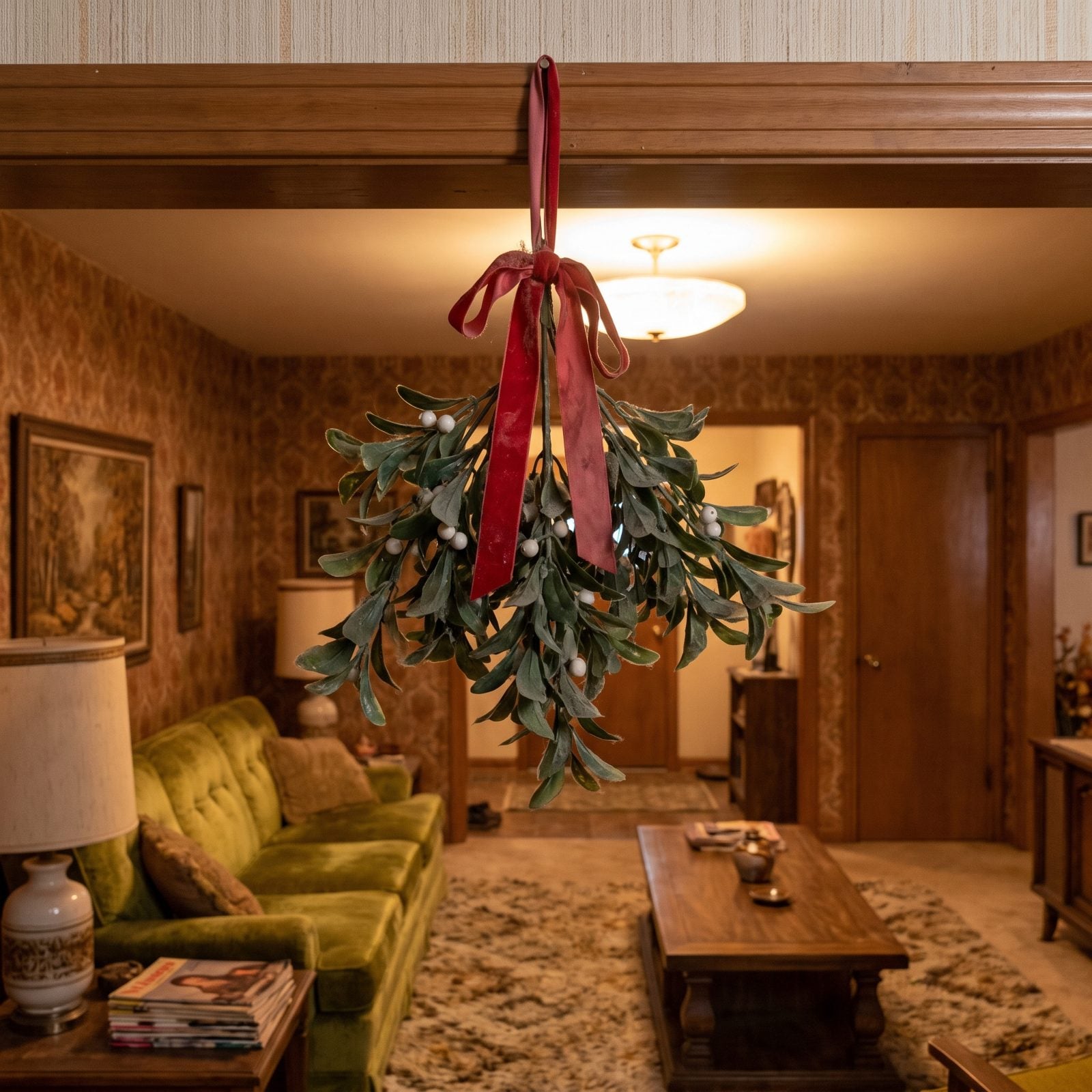
Everyone knew which doorway it hung in. That one plastic sprig with the slightly dusty berries and a limp red bow, tacked to the doorframe where the living room met the hall.
Real mistletoe was expensive and dropped berries. The plastic version lasted forever, got pulled from the same box every December, and hung in the exact same spot from the exact same thumbtack hole. It was less about actual kissing and more about the idea of it — a little holiday mischief built right into the house.
4. Christmas Cards Taped Around the Doorframe
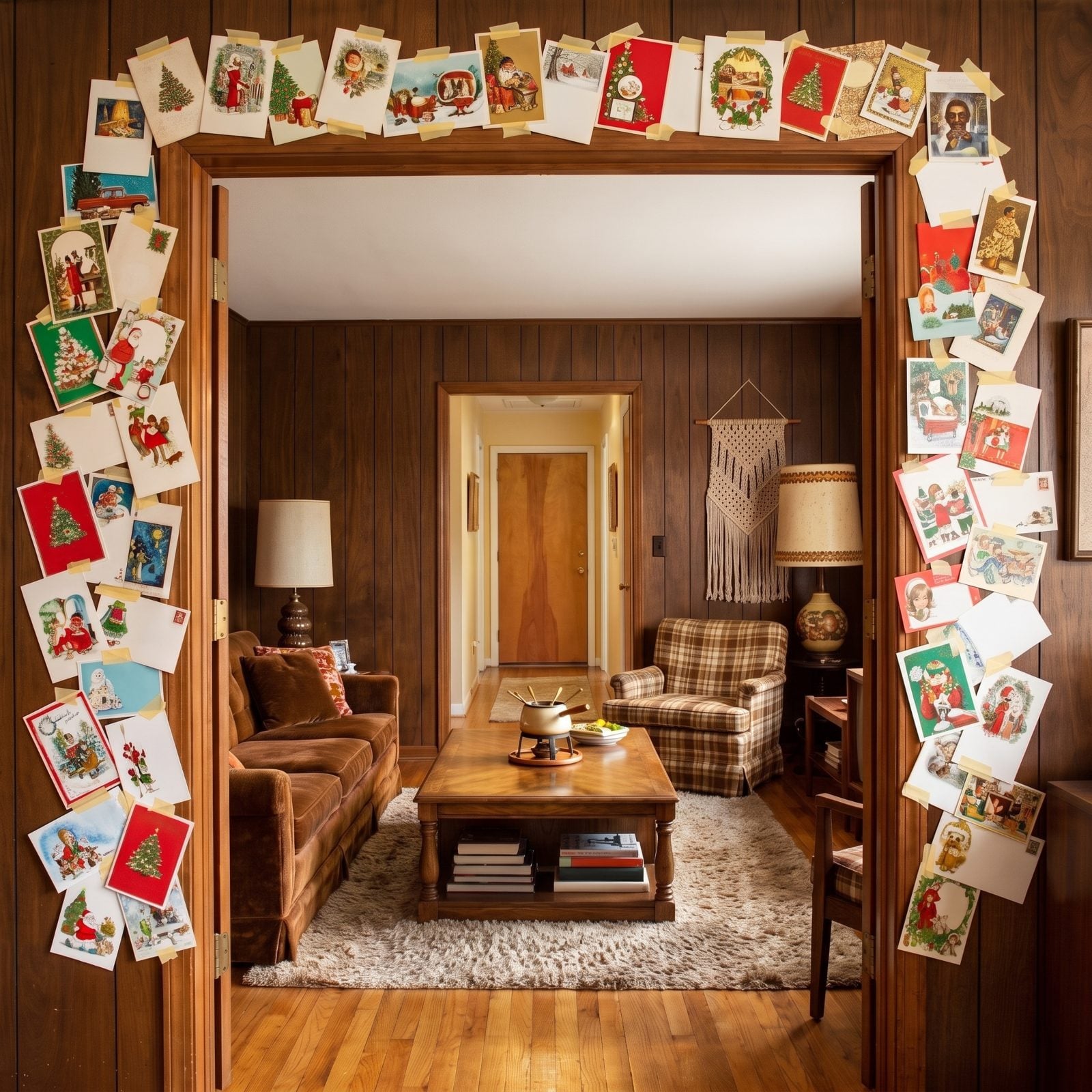
The cards came in all December, and every one got taped up. Around the doorframe, along the hallway, fanned across the mantel, eventually spilling onto a ribbon with little clothespins strung down the wall.
It was a running display of who remembered you, and the number mattered. A full doorframe meant a full social life, and admittedly there was a quiet competitive edge to it in some houses. You could read the whole year in those cards — the new baby photos, the shaky signature from a great-aunt, the office card everyone signed.
Tape left little marks on the paneling that lingered into February. Nobody minded. Those marks meant the season had happened.
3. A Red Felt Table Runner With Glued Sequins
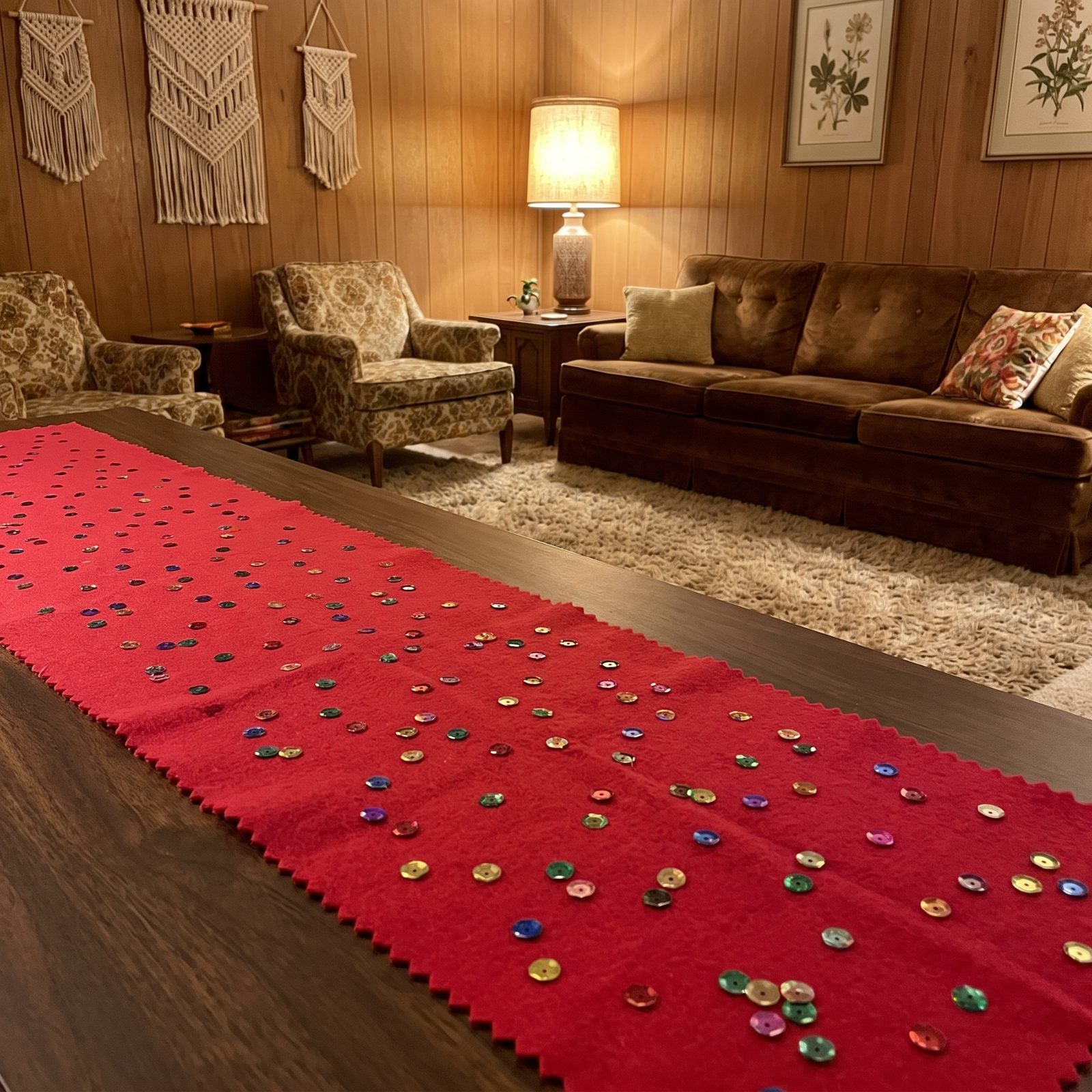
You could tell it was homemade from across the room, and that was the charm. A length of red craft felt, cut with pinking shears, decorated with sequins glued on by hand in a design that got noticeably less ambitious toward the far end.
Somebody made it one December, probably a kid at the kitchen table with a bottle of craft glue and a shoebox of loose sequins. The glue never fully dried flat. A few sequins always shed onto the tablecloth, which is how you’d find them in June.
And it came back every year regardless of how crooked the stars were. That crookedness is exactly why nobody ever threw it out.
2. A Quilted Felt Tree Skirt With Rickrack Trim
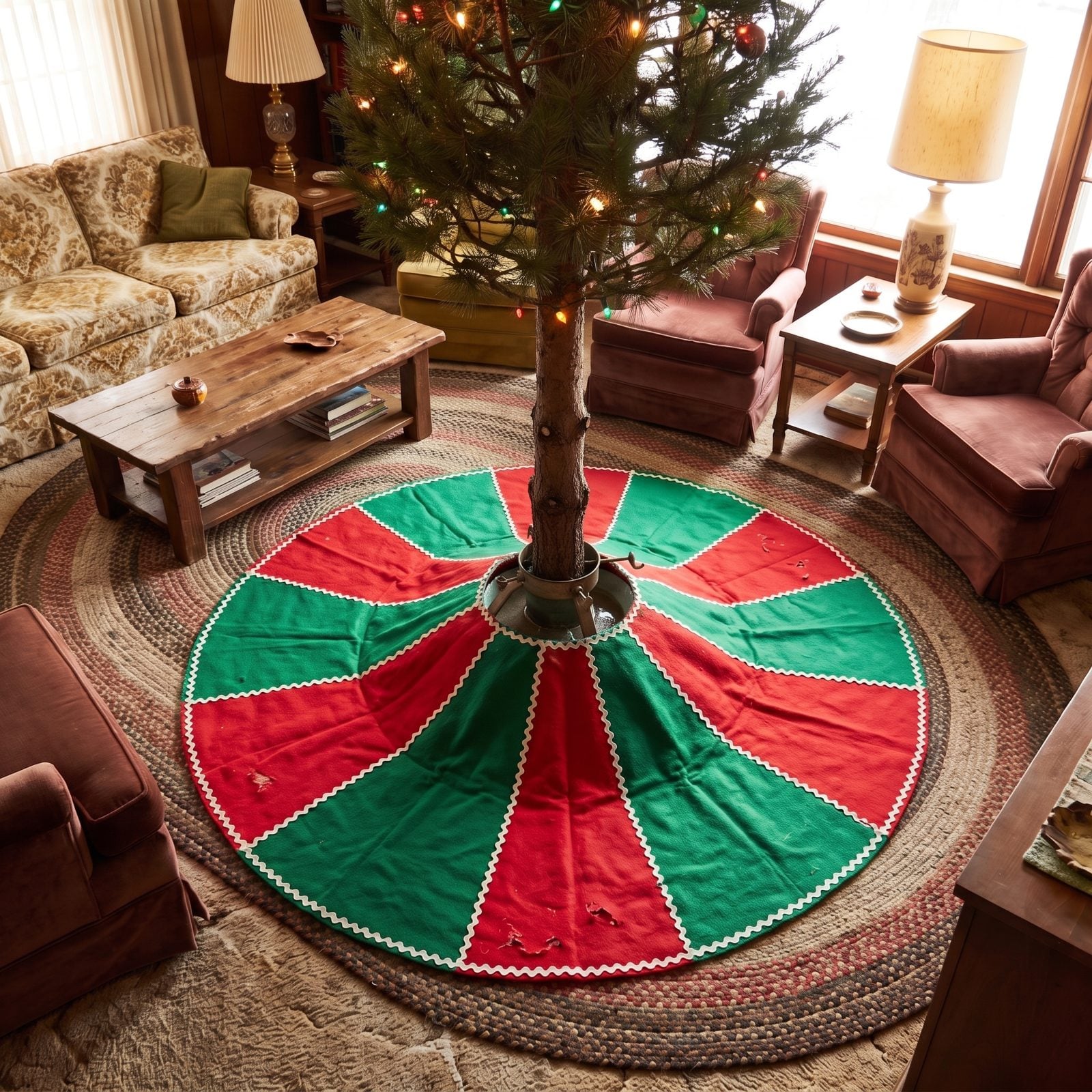
The tree skirt was its own small quilt — red and green felt with white rickrack running the edge in that wavy zigzag that somehow signaled the entire decade. Alternating red and green wedges pieced together like a pinwheel, rickrack along every seam. Maybe a few jingle bells sewn on that chimed when you nudged the tree.
It circled the metal stand and the water tray and caught the pine needles, real or plastic. But mostly it was the stage. Presents got arranged on it like a window display, and on Christmas morning the whole thing vanished under a sea of torn foil paper by about 7am.
1. A TV-Top Christmas Arrangement With Plastic Poinsettias
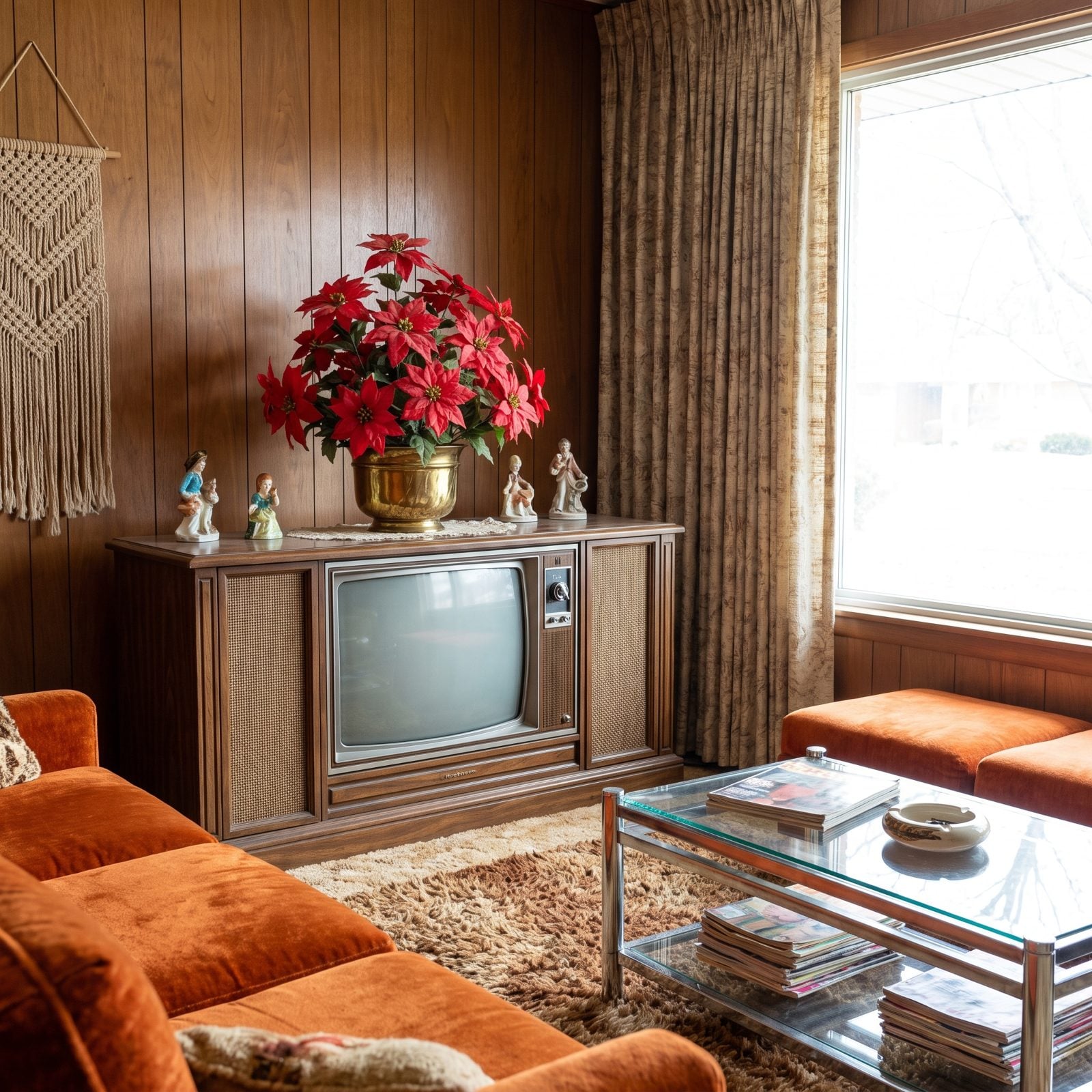
The console TV was furniture, so naturally it got decorated like furniture. That flat wood-grain top was prime real estate, and come December it held a whole little scene.
Plastic poinsettias in a gold pot, a ceramic Santa, maybe a bowl of extra ornaments, all arranged on a crocheted doily that had been sitting there the other eleven months anyway. The poinsettias ran almost aggressively red, a shade no living plant achieves, and they never wilted or dropped a leaf. Which was, frankly, the appeal.
When the family gathered for the holiday specials, that arrangement glowed in the corner of your eye the whole time. Nobody builds a scene like that on top of a flatscreen, mostly because you can’t. That flat top is quietly one of the small things the 1970s living room gave us that we didn’t know to miss.