🔥 Would you like to save this?
Open any adult’s closet, cabinet, or bedside drawer and you’ll find it. The one thing. The object that survived every move, every purge, every ruthless spring clean where you swore this time you’d get serious about minimalism. It made the cut. Everything else didn’t.
In order to come up with the very specific design ideas, we create most designs with the assistance of state-of-the-art AI interior design software. Also, assume links that take you off the site are affiliate links such as links to Amazon. this means we may earn a commission if you buy something.
You probably tell yourself it’s sentimental. Or that it’s useful. Or that you’ll get around to dealing with it eventually. None of that is the real reason. Psychologists who study attachment, memory, and material culture have spent decades untangling why certain objects refuse to leave us, and what they say about the person doing the keeping. The answers are stranger and more revealing than the object itself. What you kept is a confession. Here’s what it’s confessing.
The Object You Grabbed First Is a Map of Who You Were at Seven
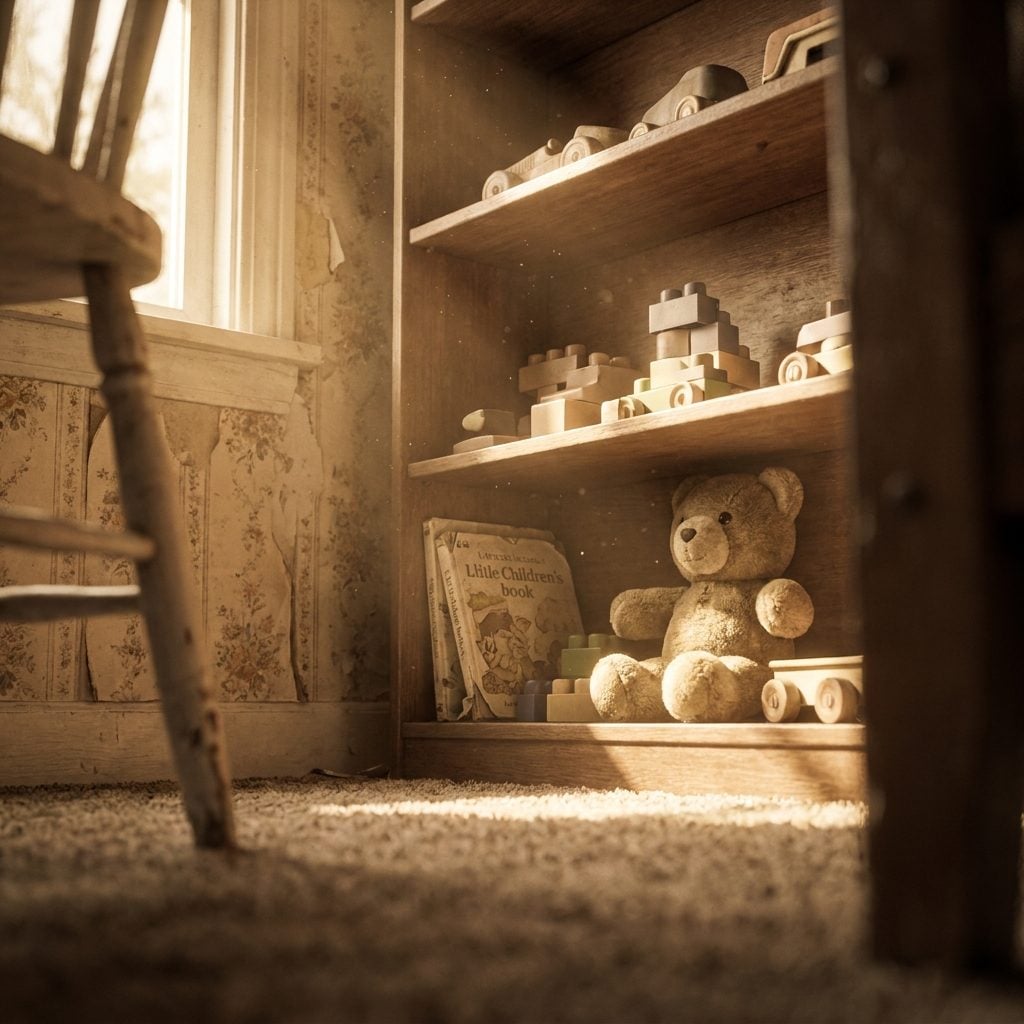
Think about which thing you saved. Not the one you meant to save. The one your hands went to first, before you thought about it.
That instinct is older than your adult self. Pediatrician Donald Winnicott coined the term “transitional object” in the 1950s to describe the first “not-me” possession a child chooses, a bridge between the inner world and the external one Source. The blanket. The stuffed bear with the flat ear. The plastic horse missing one leg. Whatever you grabbed for at seven, when the house got loud, is often the same category of thing you grabbed for last week when you cleaned out the attic.
Contemporary research has extended that idea well past childhood. Adults still form attachments to objects that ease transitions, and those attachments show up in ordinary keepsakes, hoodies, mugs, jewelry from someone gone Source. The object you grabbed first isn’t sentimental clutter. It’s a photograph of the child you used to be, in physical form.
Why the Ugliest Thing You Kept Is Actually the Most Honest
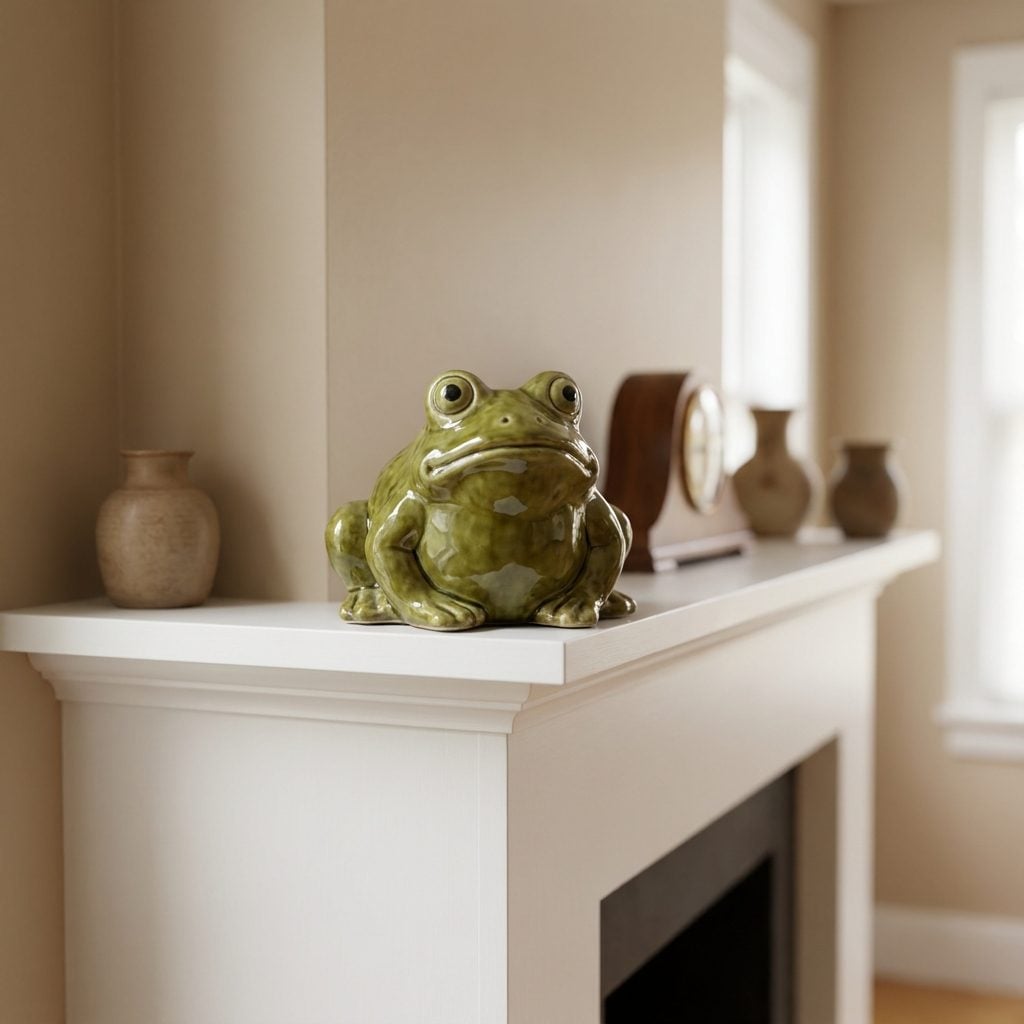
Nobody keeps the ugly ceramic frog because it’s a frog.
The pretty things get displayed. The tasteful heirloom gets a shelf, a light, maybe a small card explaining where it came from. But the ugly thing, the one you can’t put out and can’t throw away, that’s the honest one. It has no aesthetic argument for its own survival. It’s still in the box because keeping it isn’t a decision your rational brain made.
Researchers call this the extended self. Once an object becomes entangled with your identity, discarding it can register as a small loss of self, not just a loss of property Source. The ugly thing was probably a gift from someone who is now gone or distant, or it sat somewhere specific in a house you’ll never walk through again. Its ugliness is what protects it. Nobody else wants it. Nobody’s going to ask for it back. It’s safely, permanently yours.
That’s the tell. The pretty keepsakes you kept because they were worth keeping. The ugly one you kept because you couldn’t not.
The Piece of Furniture That’s Really a Time Machine in Disguise
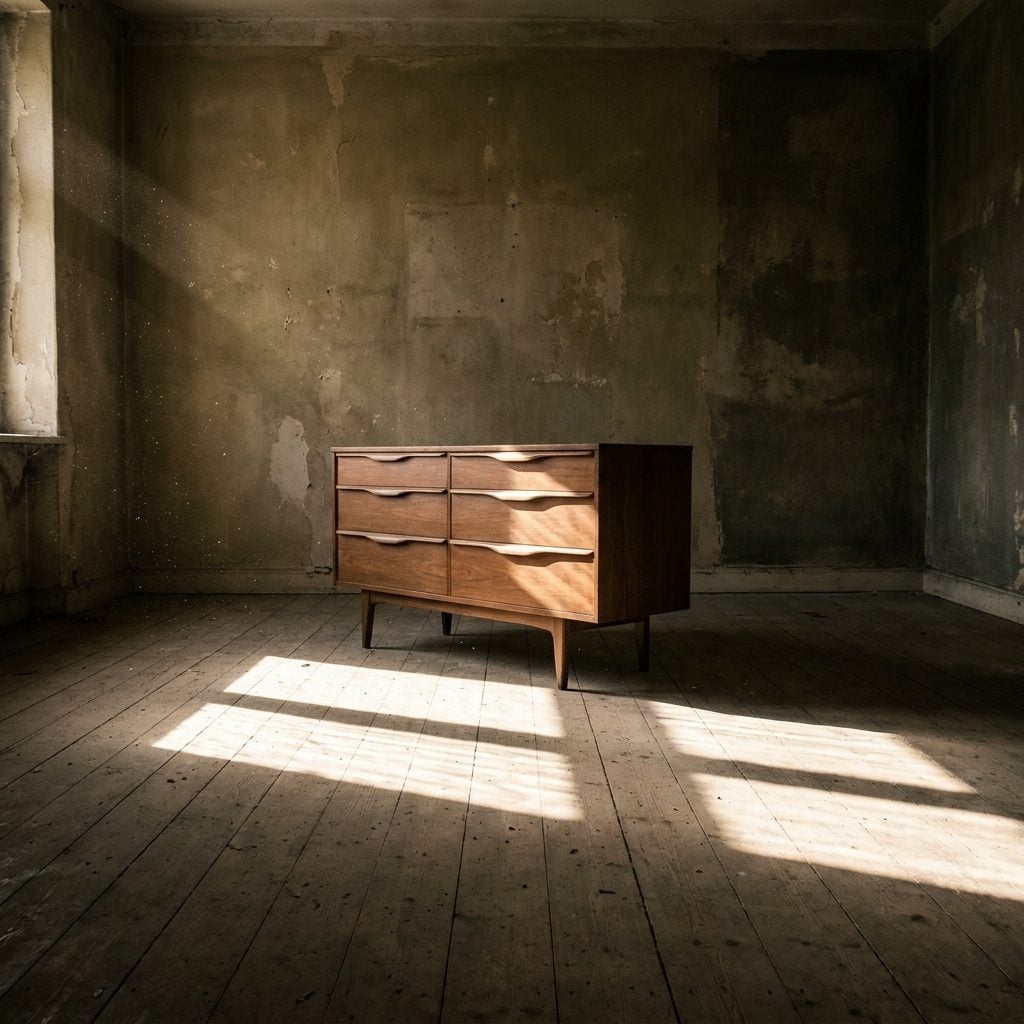
You didn’t inherit a dresser. You inherited a room.
Furniture from a childhood home carries something smaller pieces can’t. It has scale. You measured yourself against it when you were four feet tall, then five, then finally taller than it. The chest of drawers wasn’t just where socks lived. It was a landmark. Move it into your adult apartment and the entire past comes with it, uninvited, the way a single chord can drag you back to a room you haven’t seen in twenty years.
The Proust effect gets most of the attention here, but furniture works on a similar principle, spatial memory instead of olfactory. Odor cues have been shown to pull up memories from the first decade of life with a specificity that photos and words can’t match Source. A large familiar object triggers something adjacent, a full-body recall of the room it lived in.
That’s why the dresser feels heavier than it weighs. You’re not moving furniture. You’re relocating a floor plan you memorized before you knew you were memorizing it. Consider that when you’re deciding where to put it in a redesigned living rooms in your new place, it may quietly rearrange everything around it.
What Your Grandmother’s Dish Reveals About Your Fear of Forgetting
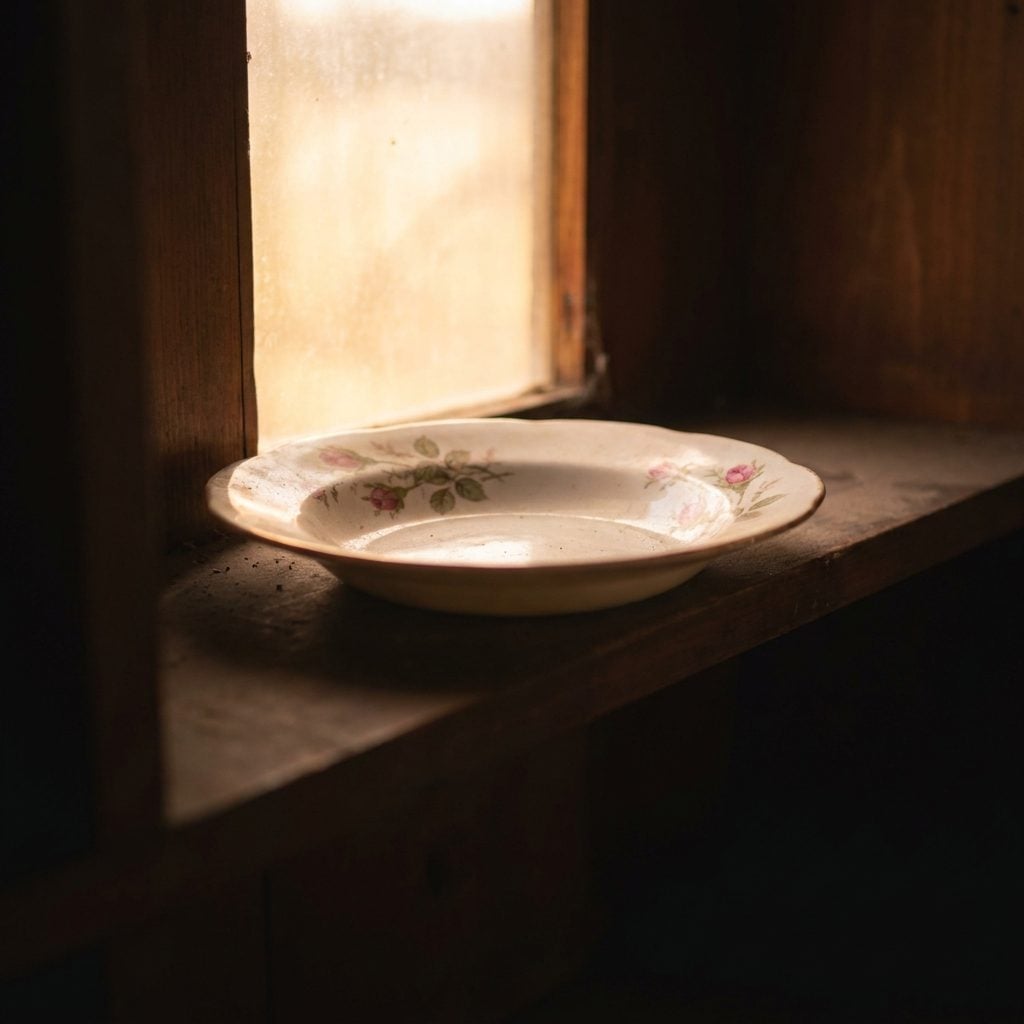
The dish never gets used. That’s the whole point.
You keep it on a high shelf where nothing will happen to it. Not because it’s valuable. A stranger at an estate sale would price it at nine dollars. You keep it because using it feels like risking it, and risking it feels like risking her.
Psychologist Russell Belk called this process sacralisation, where an ordinary object owned by someone who has died becomes charged with their essence. Even mundane items acquire what one researcher described as containing “the lost person’s essence” for those left behind Source. In interviews with older adults, cherished possessions were shown to provide a link to former relationships and selves, one woman describing a ceramic plate from her mother as company Source.
What the dish reveals is a specific fear. Not fear of losing her, that already happened. Fear of losing the memory of her. As long as the dish exists, the memory has somewhere to live outside your head, which is a place you no longer fully trust.
The Book You’ll Never Read Again but Can’t Give Away

It’s on the shelf. It’s been on the shelf for eleven years. You have not opened it once.
You will not open it. You know you won’t. And yet when you did the last purge, you took it off the donate pile and put it back. Twice.
Here’s what’s going on. Your brain doesn’t cleanly separate the object from the memory it holds, which means throwing out the book registers, at a gut level, as throwing out the version of yourself who read it. Discarding a sentimental object triggers anxiety about forgetting, heightened by ownership bias and the endowment effect Source. The book isn’t a book anymore. It’s a bookmark for a self. The fourteen-year-old on a beach towel who thought this sentence was the best sentence ever written. That person is gone but the book keeps her filed somewhere accessible.
Give the book away and she becomes harder to find. That’s the trade you keep declining.
Why You Kept the Broken One Instead of the Working One
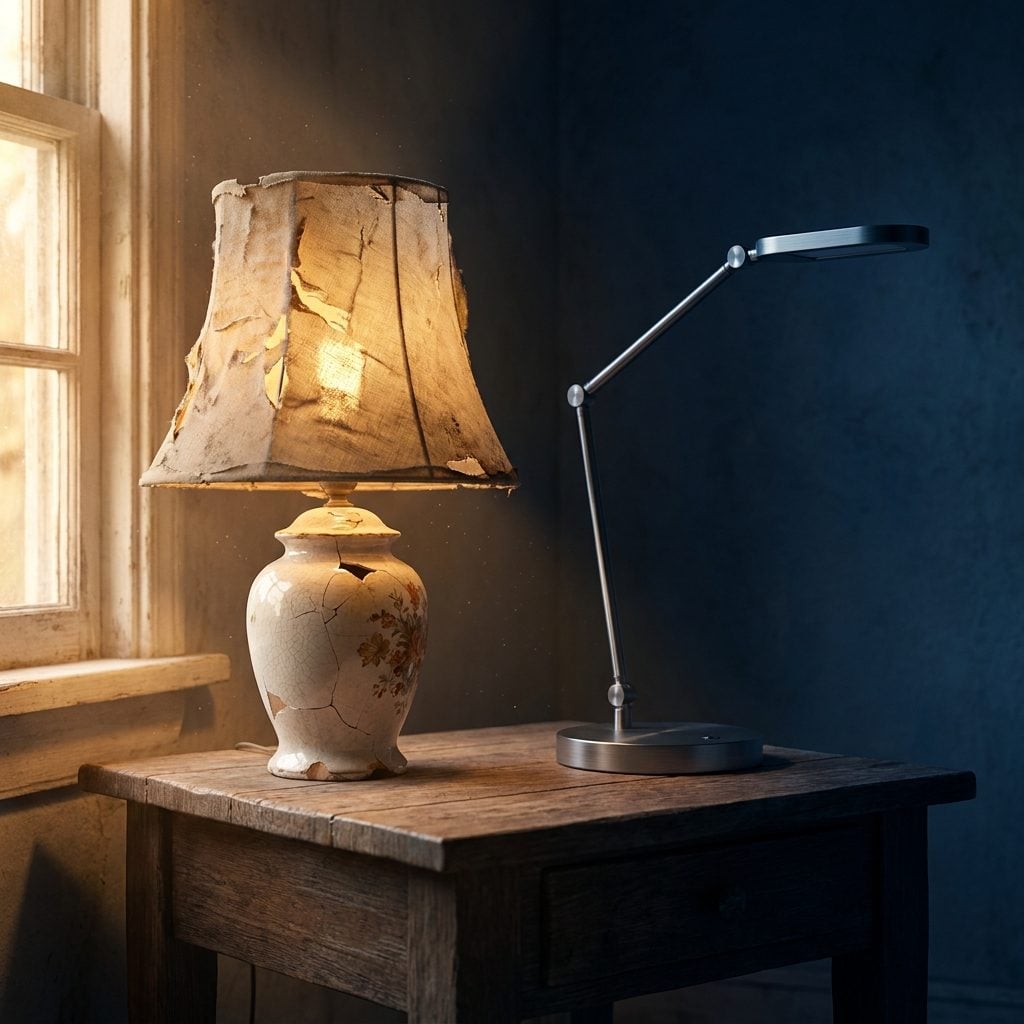
The lamp doesn’t turn on. It hasn’t turned on since 2003. It sits in your apartment anyway.
You had a working lamp. You gave the working lamp away. This one, the one that stopped working before you moved out of your parents’ house, made every cut. Every apartment. Every purge.
The broken object is the one that stopped time. A functional item keeps living, keeps being used, keeps accumulating new memories over the old ones. A broken item is fixed in place. Whatever room it stopped working in, whatever year it stopped working in, that’s the year it belongs to forever. Your brain treats sentimental items as essentially irreplaceable because we were never really attached to the object itself. We’re attached to the invisible history we believe it holds Source.
Fixing the lamp would ruin it. A working lamp is a lamp. A broken lamp is a fossil. You didn’t keep it despite the fact that it’s broken. You kept it because it is.
The Smell That Follows You From House to House to House
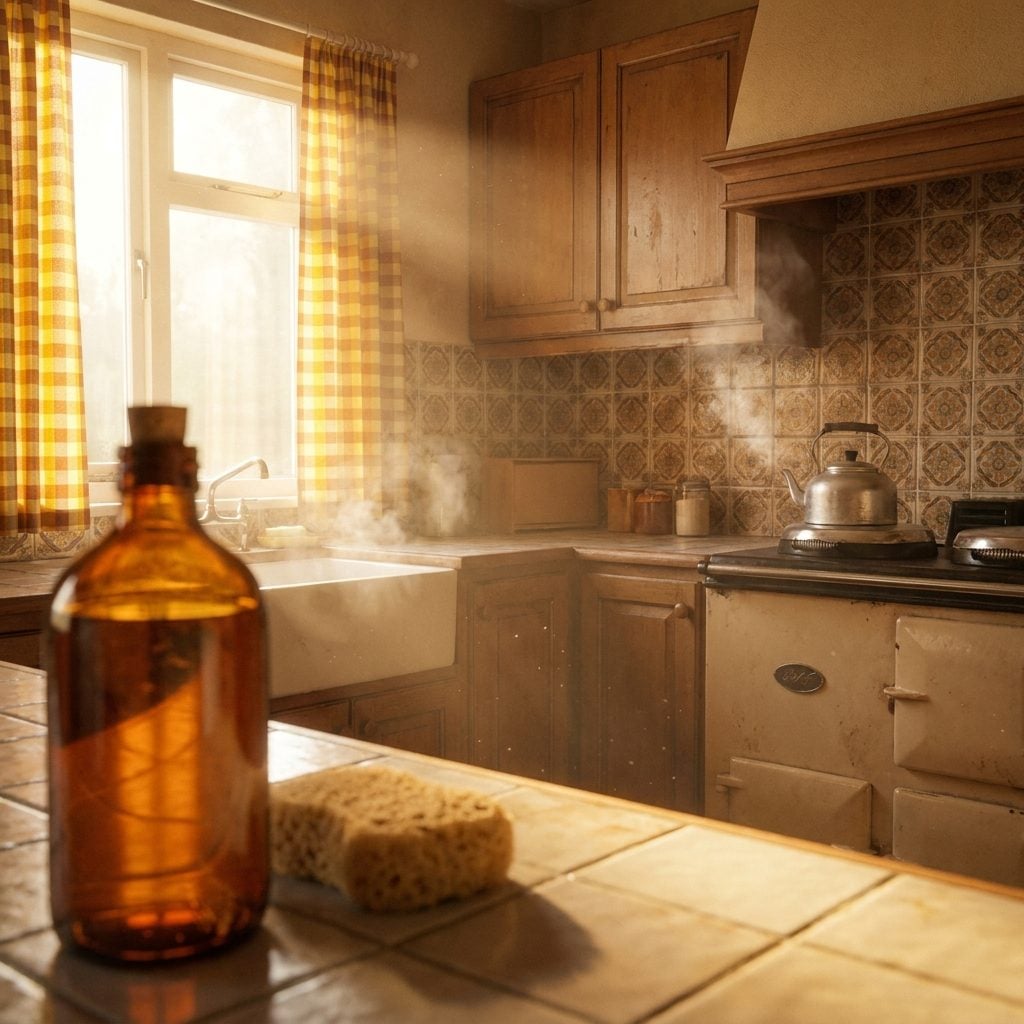
You walk into a stranger’s kitchen and you’re eight years old again.
It’s the specific dish soap. Or the way the wood floors were cleaned. Or something in the walls that has no name. Whatever it is, your body clocks it before your brain does, and for half a second you’re standing in a room that no longer exists.
This is the Proust effect, and it’s not a metaphor. In a 2006 study by psychologist Maria Larsson at Stockholm University, participants aged 65 to 80 were presented with smells, pictures, and words. Odor cues pulled up memories from the first decade of life, while pictures and words mostly triggered recollections from early adulthood Source. Scent lives in the oldest folder in your brain.
Which is why some people move eleven times and each new house eventually starts smelling, faintly, like the first one. You bring the candles. The soap. The specific detergent. You’ve been reconstructing a scent memory for decades without realizing you were doing it. Scent-evoked nostalgia has been linked to higher self-esteem, social connectedness, and a stronger sense of meaning in life Source. Rebuilding the smell of home isn’t sentimental. It’s stabilizing.
What the Photograph on Your Nightstand Says You’re Still Solving
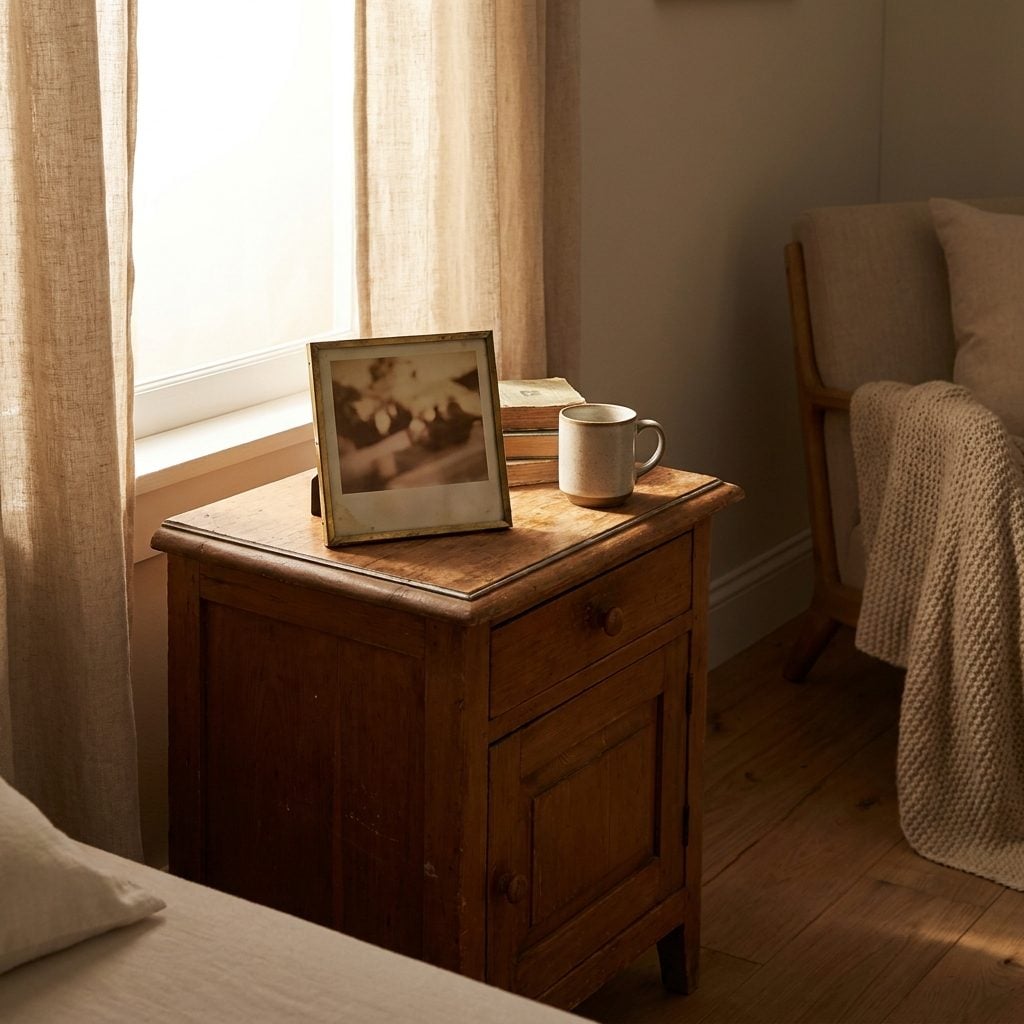
You picked one photo. Out of thousands.
It’s on your nightstand or your desk or leaning against a book on a shelf. You see it every day. You mostly don’t see it, which is the point, it’s less an image now than a fixture. But you chose it, and the choice wasn’t random.
The photograph that survives the move is almost always doing a job. Sometimes it’s grief work, a face you still need in the room. Sometimes it’s identity work, proof of a version of yourself you’re trying to hold onto or return to. Sometimes it’s the unresolved thing, the picture from a specific summer, a specific porch, a specific afternoon that you keep circling back to without quite knowing why. Cherished possessions from childhood have been shown to provide a link to former selves and support a stable sense of self over time, related to what psychologists call object constancy Source.
The photo isn’t decoration. It’s an open tab. Something in that frame is still being worked out, and keeping the image close is how the working-out happens. Notice which photo it is. That’s the puzzle you didn’t finish.
The Blanket You’ve Outgrown but Sleep Under Anyway
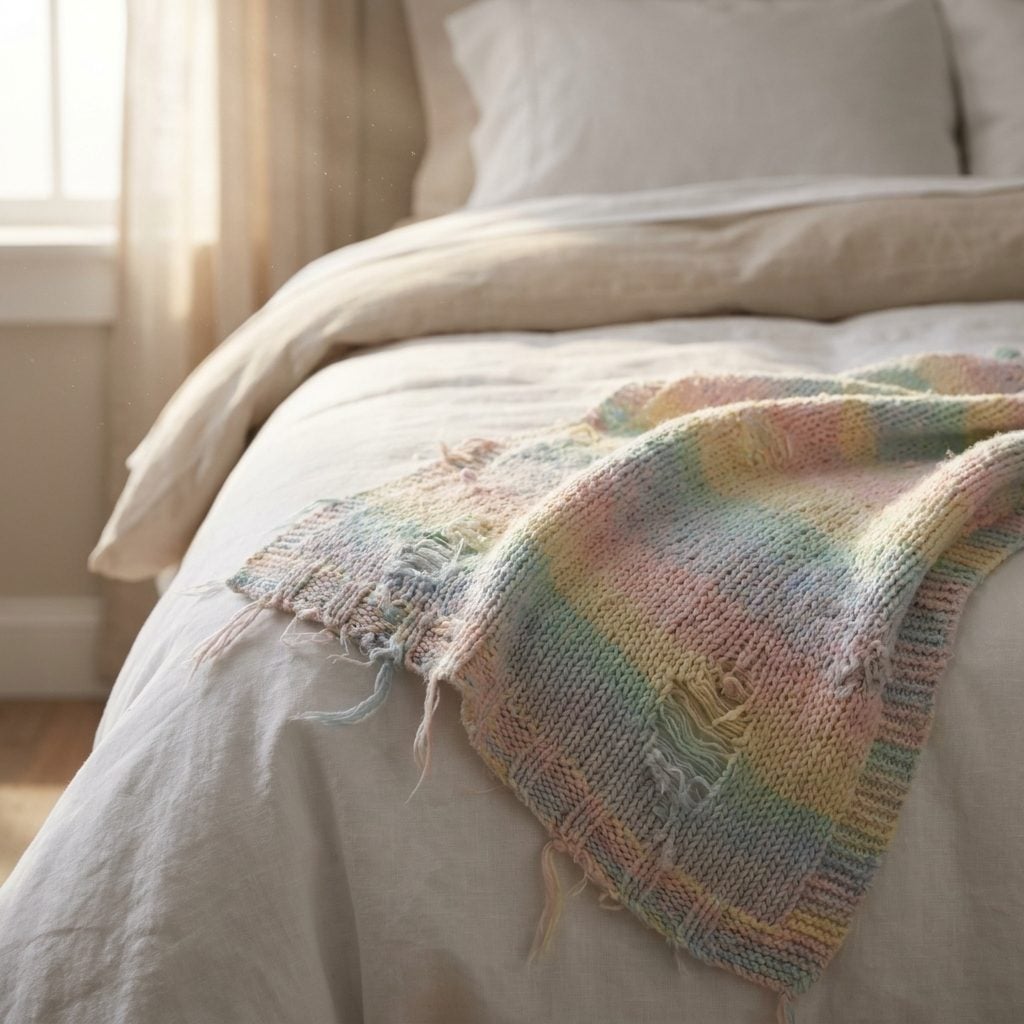
It’s threadbare. It smells like something you can’t quite name. It’s too small to cover you, and you sleep under it anyway. The pediatric psychology term is transitional object, coined by British psychoanalyst D.W. Winnicott in 1951, and the surprise isn’t that children need them. It’s that so many adults never stopped. Source
A 2010 UK survey found more than half of British adults still slept with a teddy bear from childhood, and a quarter of men admitted they’d packed one for a business trip. Source The blanket isn’t nostalgia. It’s a nervous system regulator. Research on children at the doctor’s office found that kids with their comfort blankets showed lower blood pressure and heart rate during stressful exams. Your adult body remembers the trick.
The people who kept theirs tend to be the ones who understand that comfort isn’t weakness. It’s infrastructure.
Why the Object You Hated as a Child Is the One You Kept
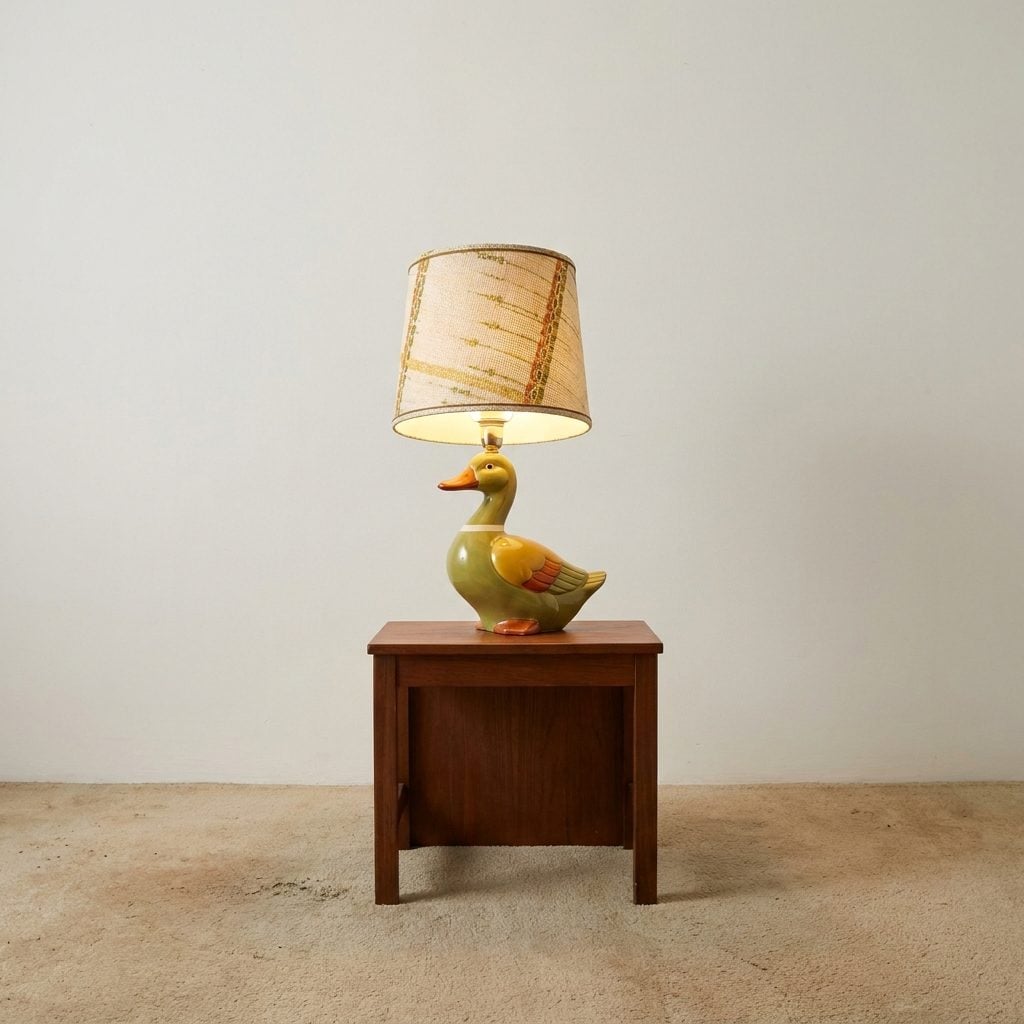
Strange thing about memory. The itchy sweater your grandmother knit. The lamp shaped like a duck that terrified you at night. The dish nobody ever used but you had to dust. You didn’t love these things. You resented them. And now they sit on your shelf, and you’d fight anyone who tried to move them.
Psychologists who study attachment to objects point to a specific mechanism: the item becomes a container for someone who’s no longer around to argue with. Source The sweater isn’t the sweater anymore. It’s your grandmother’s insistence that you’d catch a cold, preserved in wool.
Three reasons the object you hated is the one you kept
- It carries a voice you can no longer call on the phone.
- It represents a version of your earlier self that psychology suggests never actually leaves you, just gets layered over. Source
- Keeping it is a small act of forgiveness, offered to a child who didn’t understand what the object would come to mean.
There’s something psychologists call the endowment effect, where children as young as six place extra value on an object simply because it once belonged to them. Source You didn’t have to like it. You only had to own it long enough for it to start owning a piece of you back.
The Kitchen Tool That’s Really a Séance With Your Mother
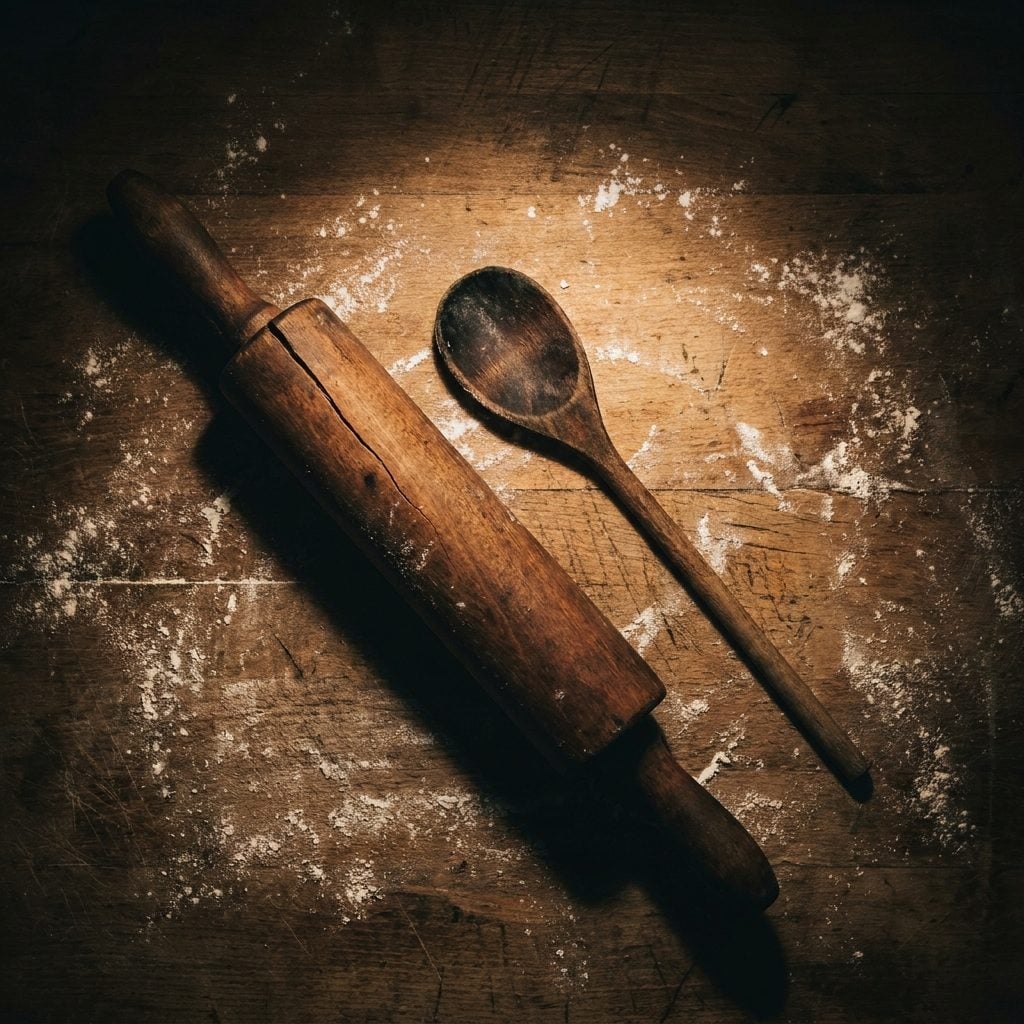
You have it. The rolling pin with the crack down the handle. The wooden spoon burned black on one side. The scratched-up measuring cup with the numbers half worn off. Objectively, you could replace it for six dollars at any store in the country. You won’t.
The reason isn’t sentimentality in the greeting-card sense. It’s sensory encoding. Smell and touch are wired directly to the limbic system, and researchers who study the Proust phenomenon have found that nostalgic memories triggered by taste and smell are especially self-relevant, arousing, and familiar (Source), with a more positive emotional profile than memories cued any other way. When you pick up that spoon, you aren’t remembering your mother. You are, for a second, standing next to her.
What the Toy in Your Closet Knows About Your Adult Anxiety
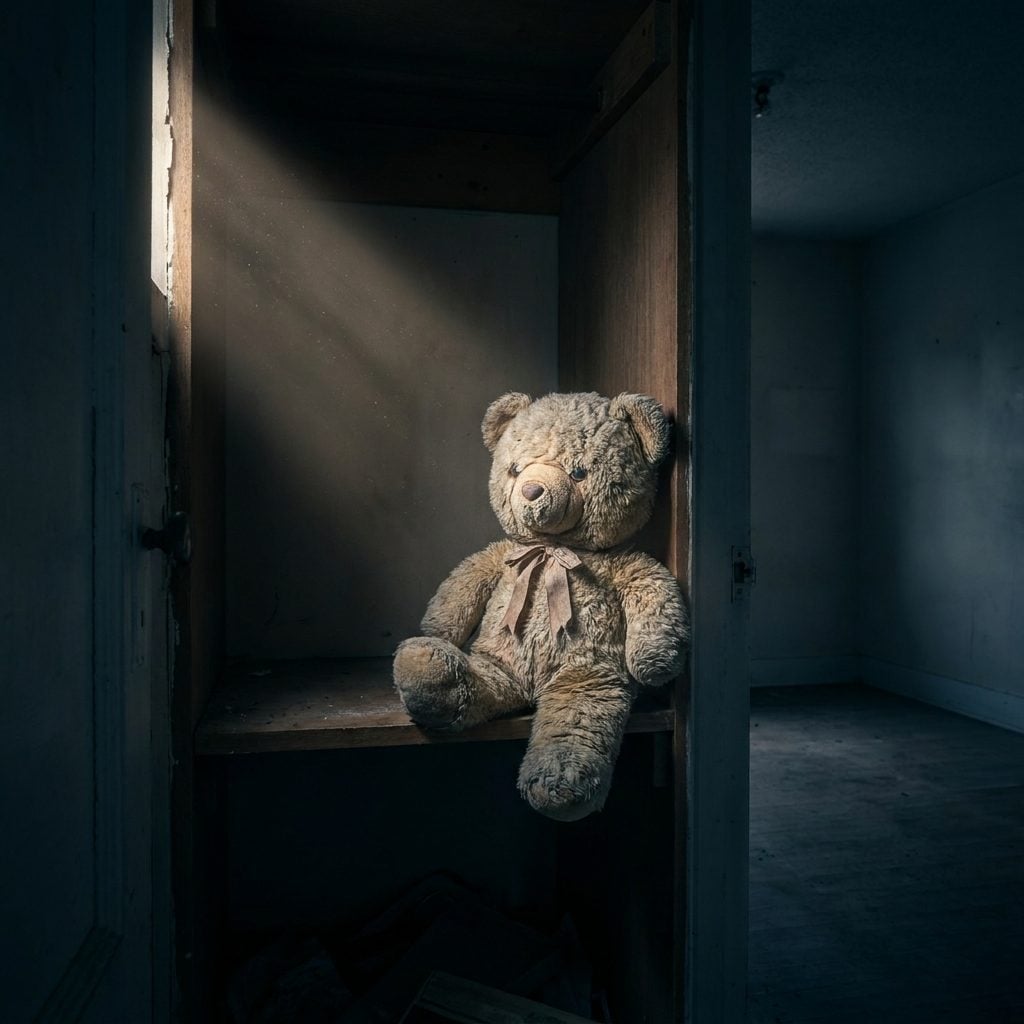
It’s on the top shelf. Or in a box in the basement. You haven’t held it in years. But you know exactly where it is, and you’d notice within a day if it were gone.
Psychologists have a name for this. Donald Winnicott called them transitional objects, and the assumption for decades was that we outgrow them around age seven. The research disagrees. A study of college students found that college students who still had their transitional objects were more anxious and depressed (Source). That reads worse than it is. Other research reframes the same finding: adults who use comfort objects tend to show stronger, not weaker, stress regulation (Source).
Both can be true. The toy stays because part of you still occasionally needs it. Keeping it isn’t regression. It’s inventory of a coping strategy that worked once and might again.
The Chair Nobody Sits In but Nobody Can Move
🔥 Would you like to save this?
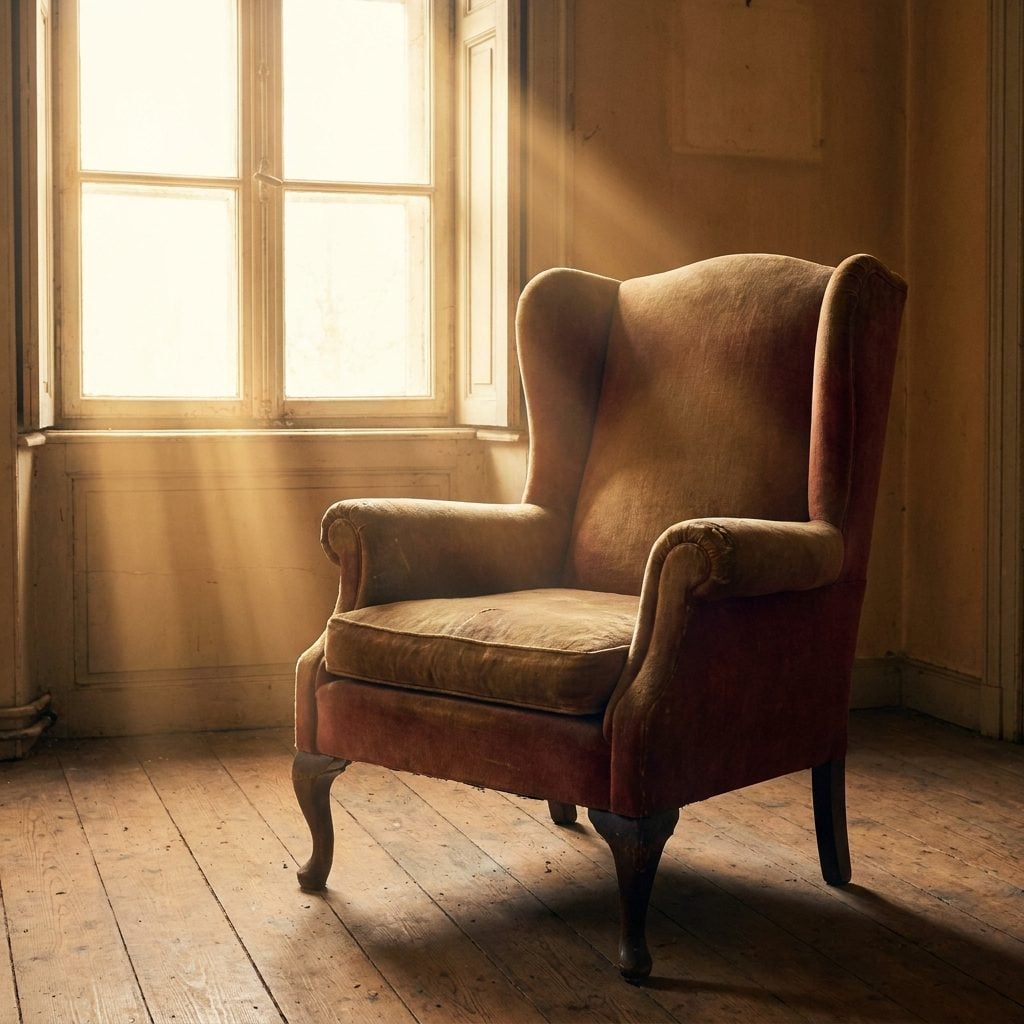
Every house has one. The wingback by the window that belonged to your grandfather. The wicker rocker on the porch nobody rocks in. Your father’s leather club chair, cracked at the armrest exactly where his hand went for forty years.
You know the chair. It has its spot in the room and it doesn’t move even during a full renovation.
This is the endowment effect wearing a cardigan. Kahneman, Knetsch, and Thaler showed in 1990 that people demand far more to give up a mug than they’d pay for it (Source). The bias intensifies with objects that carry symbolic weight. But there’s a second layer here. The chair holds the body-shape of someone who used it. The seat cushion remembers. Moving it would be admitting they aren’t coming back to sit in it, and some part of the brain isn’t ready to run that math.
Why You Kept the Thing That Reminds You of the Worst Year
Here’s the strange one. Not every childhood keepsake is a good memory. Some of these objects come from the year your parents split, or the year someone died, or the year you spent mostly hiding in your room.
You’d think you’d throw those out first. You didn’t.
The reason has to do with self-continuity. Research on sentimental attachment suggests that sentimental objects support a stable sense of self over time (Source). Even the bad periods. Maybe especially the bad periods, because those are the years that made you into whatever you are now. Discard the object and you’re implicitly discarding the person who survived it.
The Object That Passed the Suitcase Test Every Time You Moved
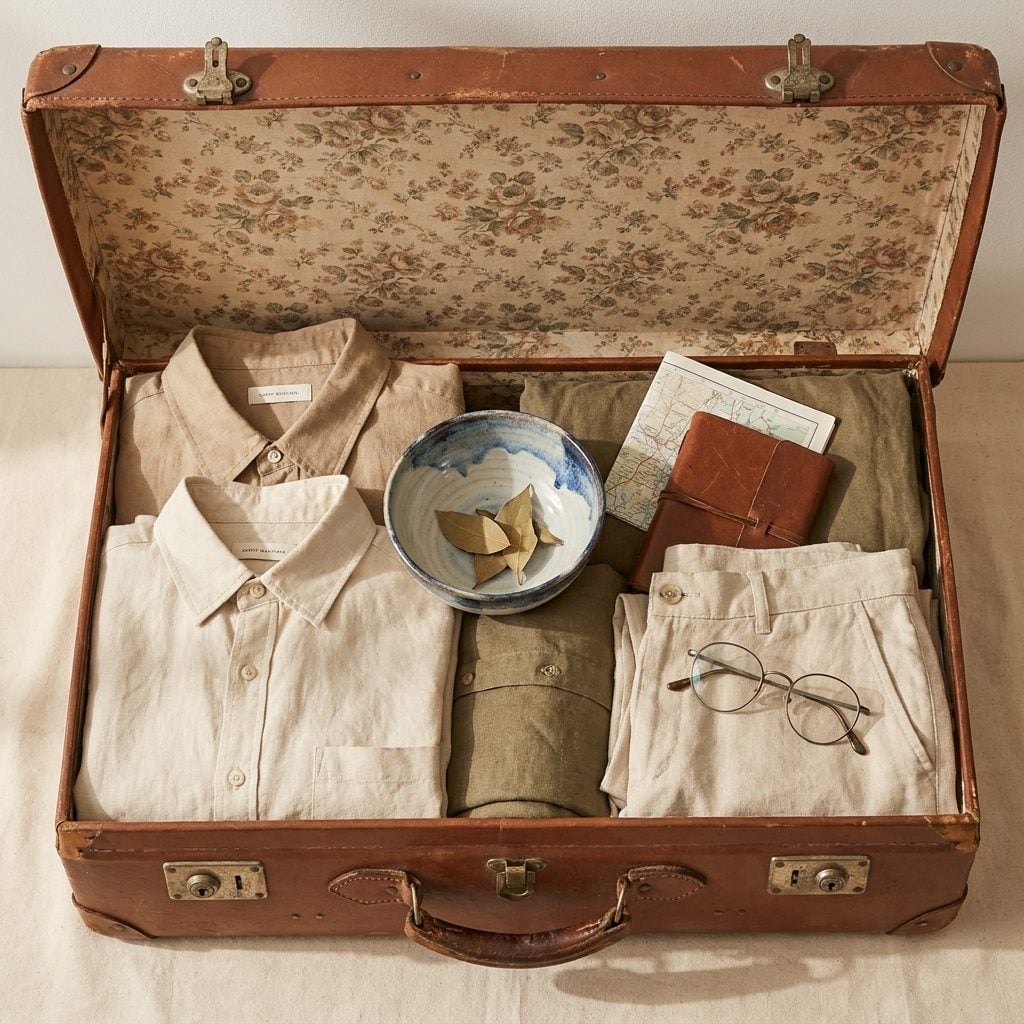
Count your moves. Now count the things that came with you every single time.
The list gets short fast. A ceramic dish. A book of your grandmother’s recipes in her actual handwriting. The small brass box you don’t remember buying but has always been on your dresser. Whatever it is, it survived a purge you did at nineteen, another at twenty-six, the cross-country move, the breakup, the downsize.
Researchers studying object attachment over the lifespan have documented that our attachment to objects deepens the longer we keep them (Source). Every time you chose it over something else, you told yourself it mattered more. Eventually that story becomes load-bearing. The object isn’t valuable because of what it is. It’s valuable because you kept choosing it, and choosing it is what turned it into part of you.
What the Item You Hide From Guests Reveals About You
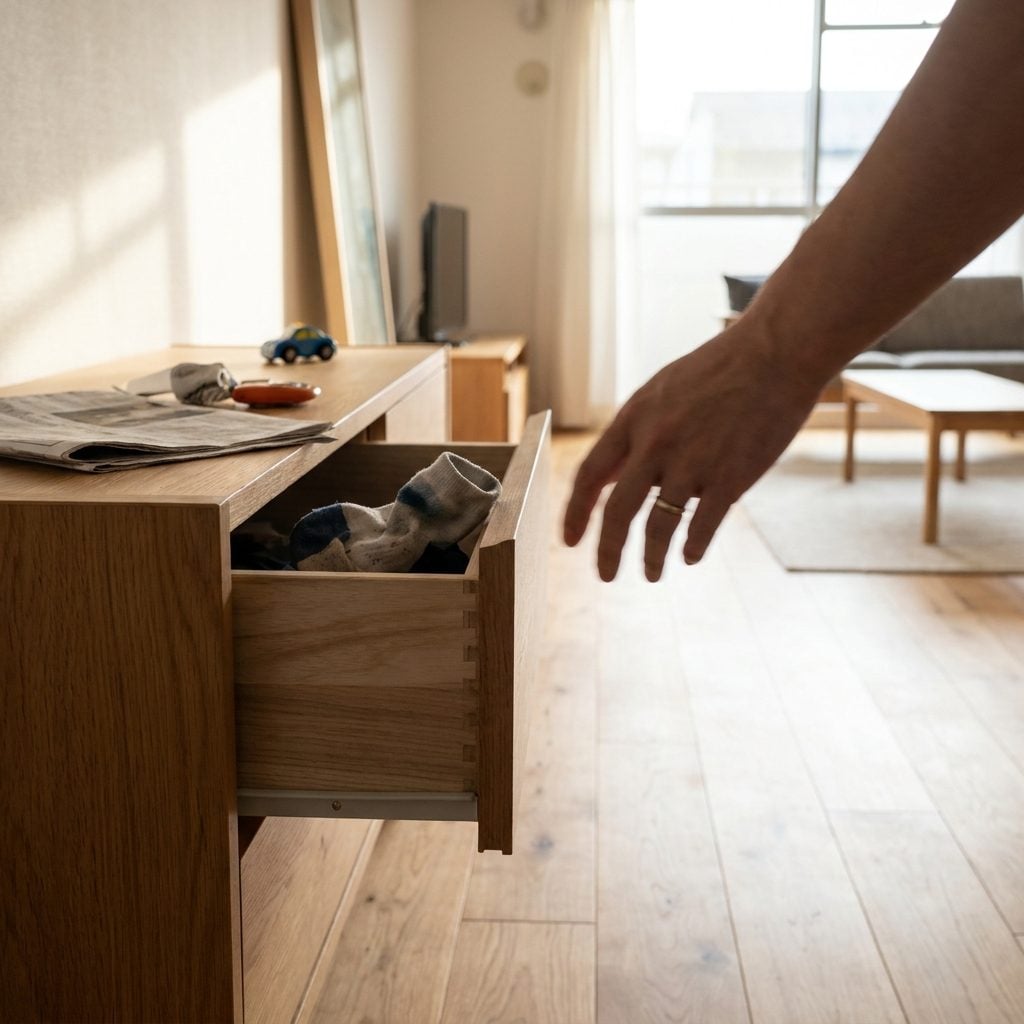
The dinner party is in an hour. You do the walk-through. And there’s the object you always tuck into the drawer before people arrive.
The Precious Moments figurine from your first communion. The macaroni-and-glitter frame with your fourth-grade photo. The ceramic thing your aunt made you at pottery class in 1993 that is objectively hideous and that you would fight someone in the street to keep.
The hiding is the interesting part. Research on possessions and identity suggests that our possessions become woven into how we understand our own identity (Source). The object you hide is doing double work. It’s a piece of you that you love, and it’s a piece of you that you don’t want strangers grading. You’re protecting the object from their judgment and protecting yourself from having to explain it. That’s not shame. That’s discernment about who gets to see which parts of you.
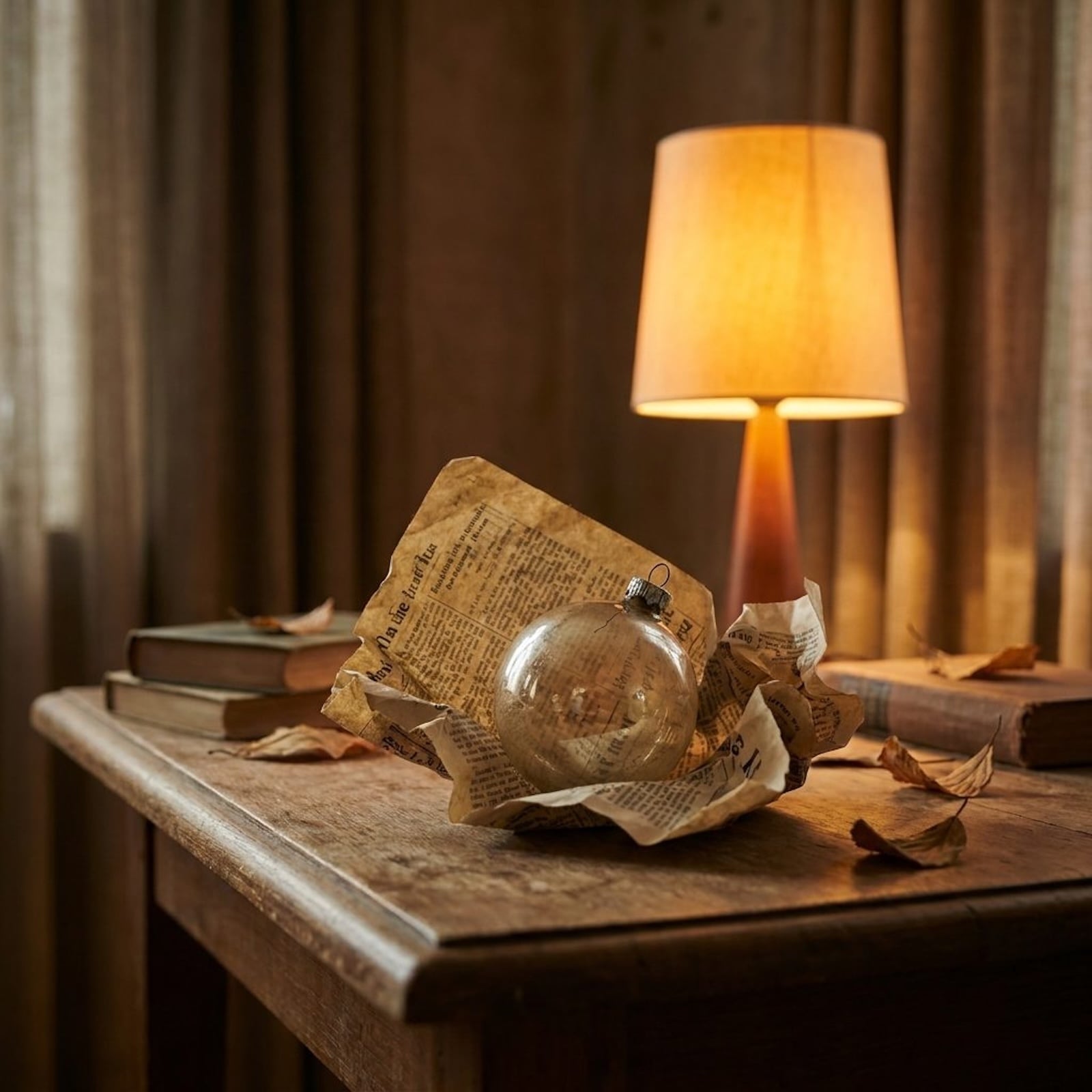
The Ornament You Rewrap in the Same Newspaper Every January
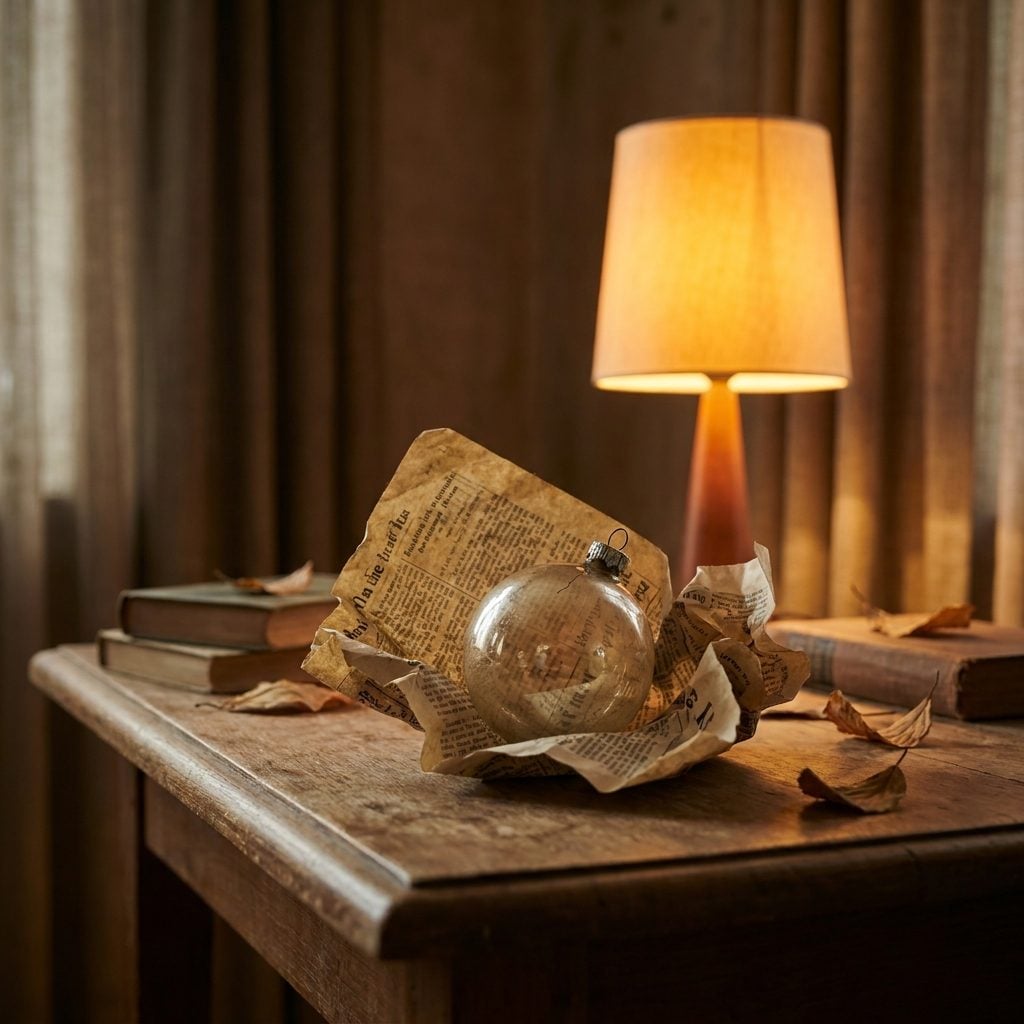
The ritual is what gives it away.
You have better tissue paper. You have those little padded ornament boxes from the store. You use neither. You use the same square of newspaper you’ve been using since 2004, softened at the folds, the ink faded to grey. You wrap the ornament, put it in the box, and don’t think about it again until December.
Seasonal ritual is one of the most reliable delivery systems for nostalgia we have, and smell has privileged access to unlocking childhood memories (Source). The newspaper carries the smell of the attic. Which carries the smell of every December you’ve had. The ornament is the vehicle. The wrapping ritual is the actual heirloom.
Why the Cheapest Object in the House Is the One You’d Save From a Fire
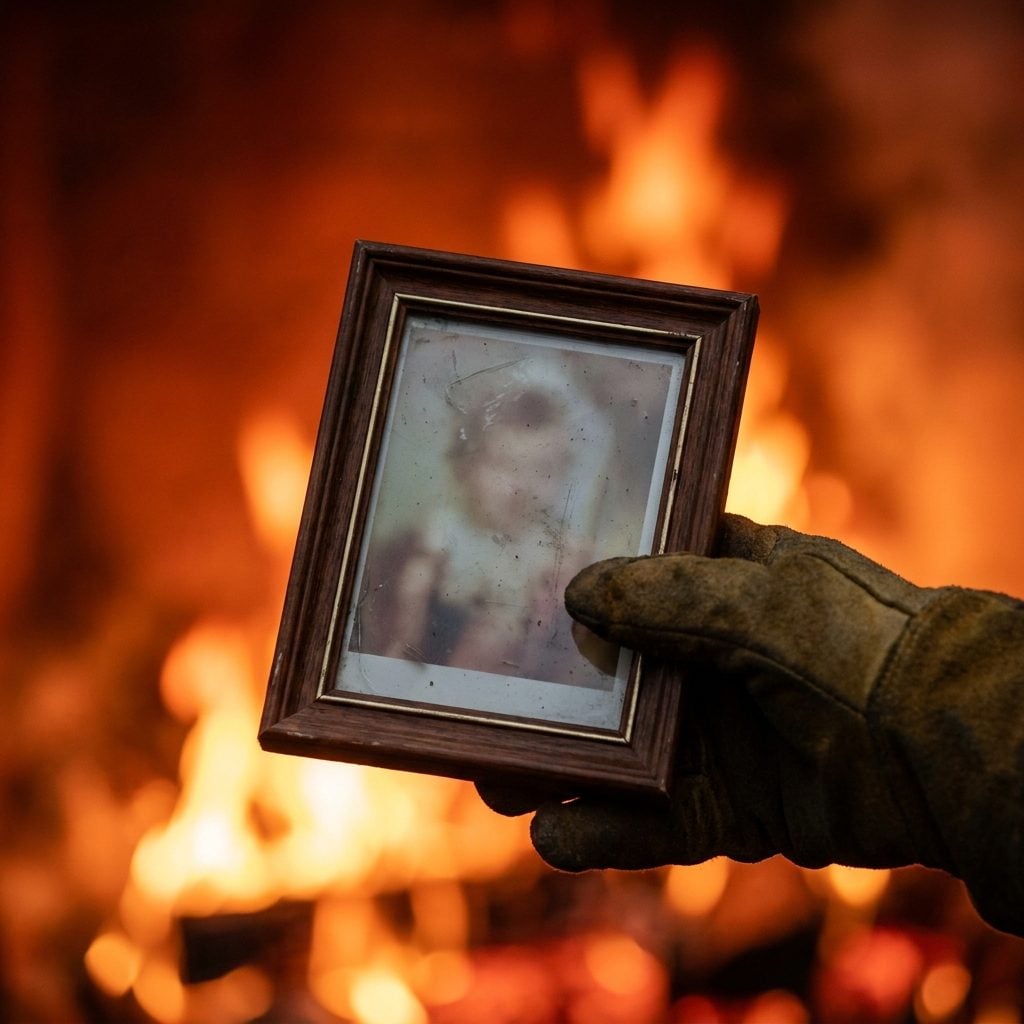
Ask anyone what they’d grab. After the passports and the hard drive, the answer is almost never expensive. It’s a photograph. A stuffed animal. A crayon drawing your mother saved. A rock your kid handed you on a beach in 2011.
The market value is zero. The replacement value is infinite. That gap is the whole story.
Kahneman and Thaler’s endowment effect explains part of it: we value things more simply because we own them (Source). But the fire question exposes something further. Under real stakes, we don’t rescue value. We rescue evidence. Evidence that a person existed, that a moment happened, that we were loved by someone who is no longer around to say it.
The expensive things in the house can be bought again. The cheap ones can’t. Your brain has known this the whole time. The list of what you’d save is the list of what you actually think your life is made of, and it’s rarely the list an insurance adjuster would write.
The Piece You Kept for a Sibling Who Didn’t Want It
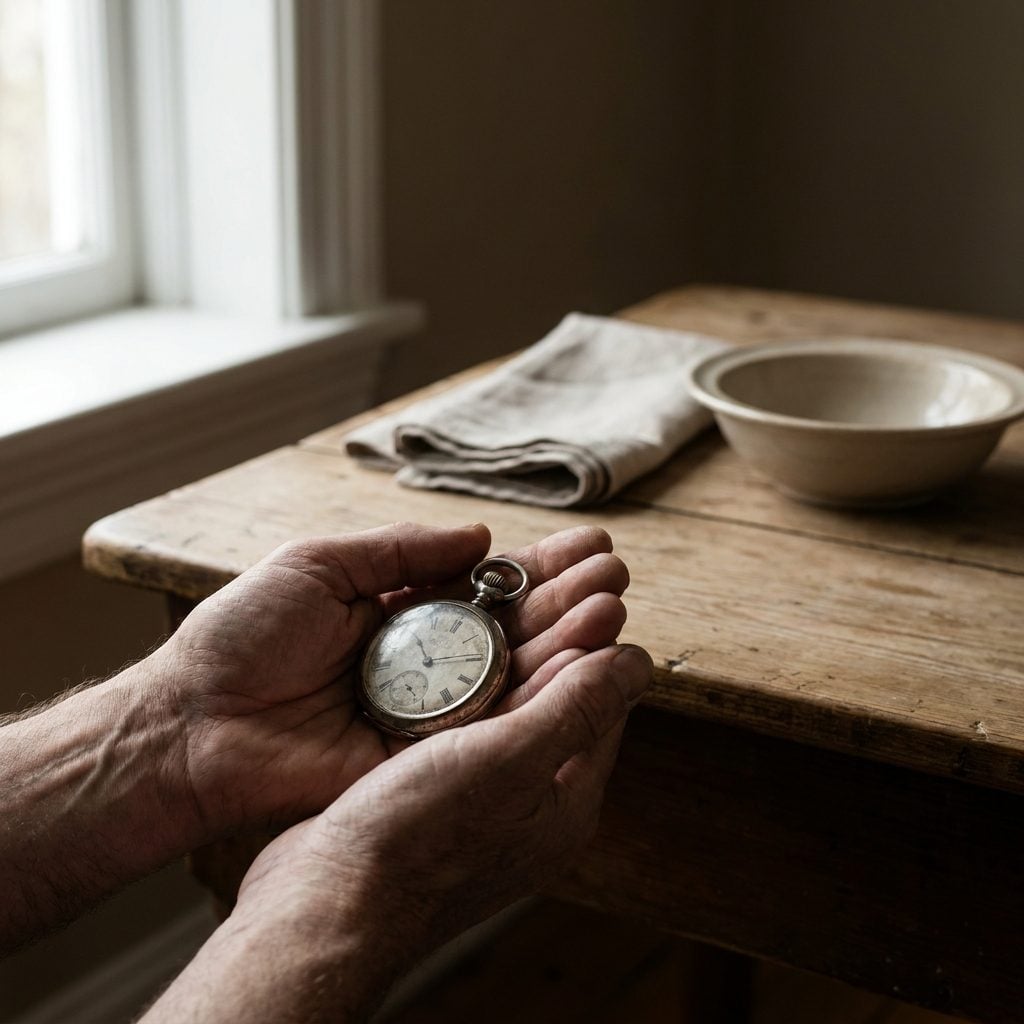
You know the object. The one your brother rolled his eyes at. The one your sister said take it, I don’t have room. You took it anyway, and now it lives on your bookshelf like a small hostage nobody’s coming back for.
There’s a particular psychology at work when the piece you kept was passed over by someone else. The object stops being about the parent and starts being about the sibling. Source research on inheritance disputes describes personal possessions as symbols of the dead parent, absorbed by whichever child claims them as an ongoing narrative of association. The one who claims writes the story. The one who declines exits it.
You’re not just holding an heirloom. You’re holding a position in the family that got assigned to you sometime around age nine, and you accepted it without ever being asked.
What the Framed Thing on Your Wall Is Actually Framing
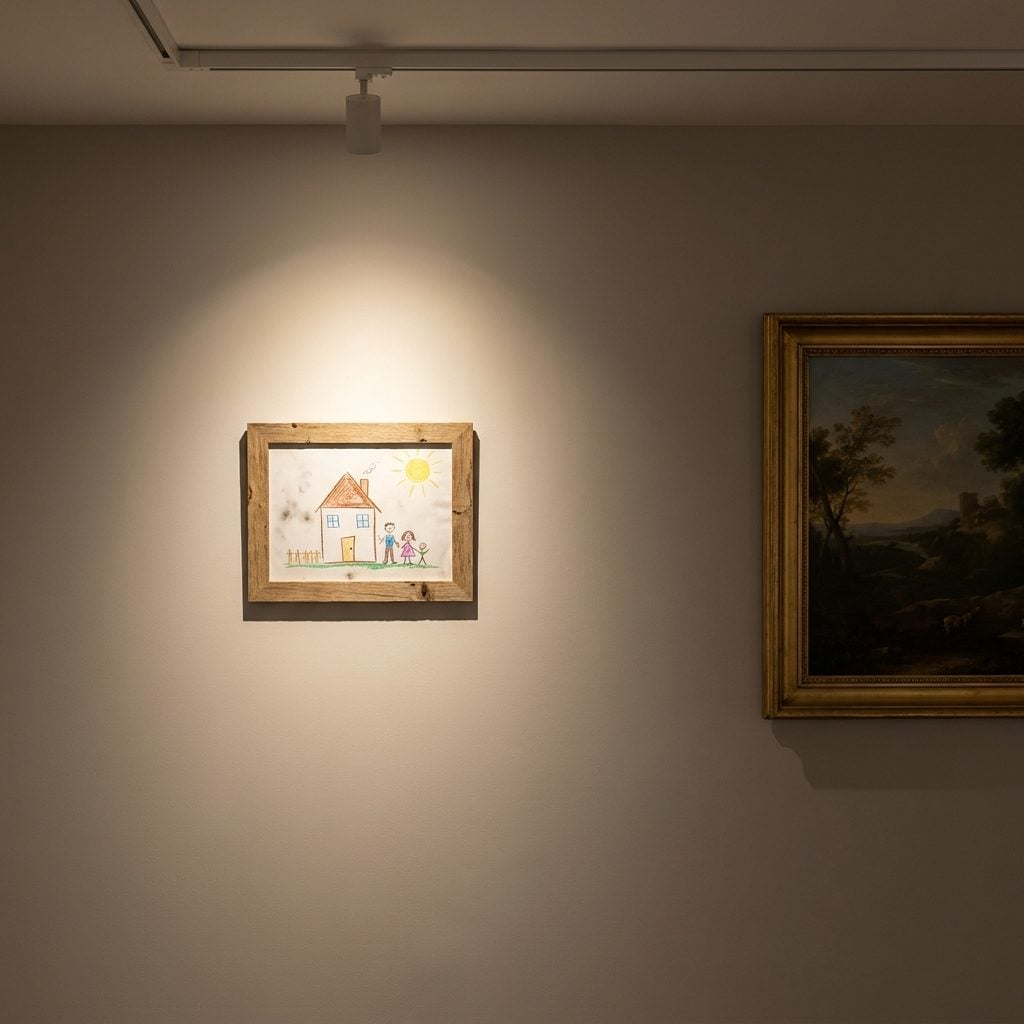
Look at what you chose to hang. Not the professional art, not the print you bought at a museum. The thing from before. The watercolor your aunt made. The map your grandfather annotated in pencil. The recipe card in your mother’s slanting handwriting, matted like it’s a Rothko.
You framed it because the object mattered. But framing does something stranger than preservation. It turns a private artifact into a public statement about who you are now. Psychology Today describes personal photographs and mementos as identity anchors and emotional time machines, memory triggers that ground the daily sense of self. Source
The frame is a small argument. It says this is worth looking at, and by extension, so is the person who chose it. Guests read the wall the way archaeologists read a dig site. You know they do. You did it too, the last time you were in someone else’s house.
Here’s the thing worth sitting with. The item inside the frame is only half the message. The other half is the space around it, the wall you gave it, the height you hung it at, the light you angled toward it. You’re not framing the thing. You’re framing the version of yourself that keeps it.
The Object That Only Makes Sense to You and One Other Person
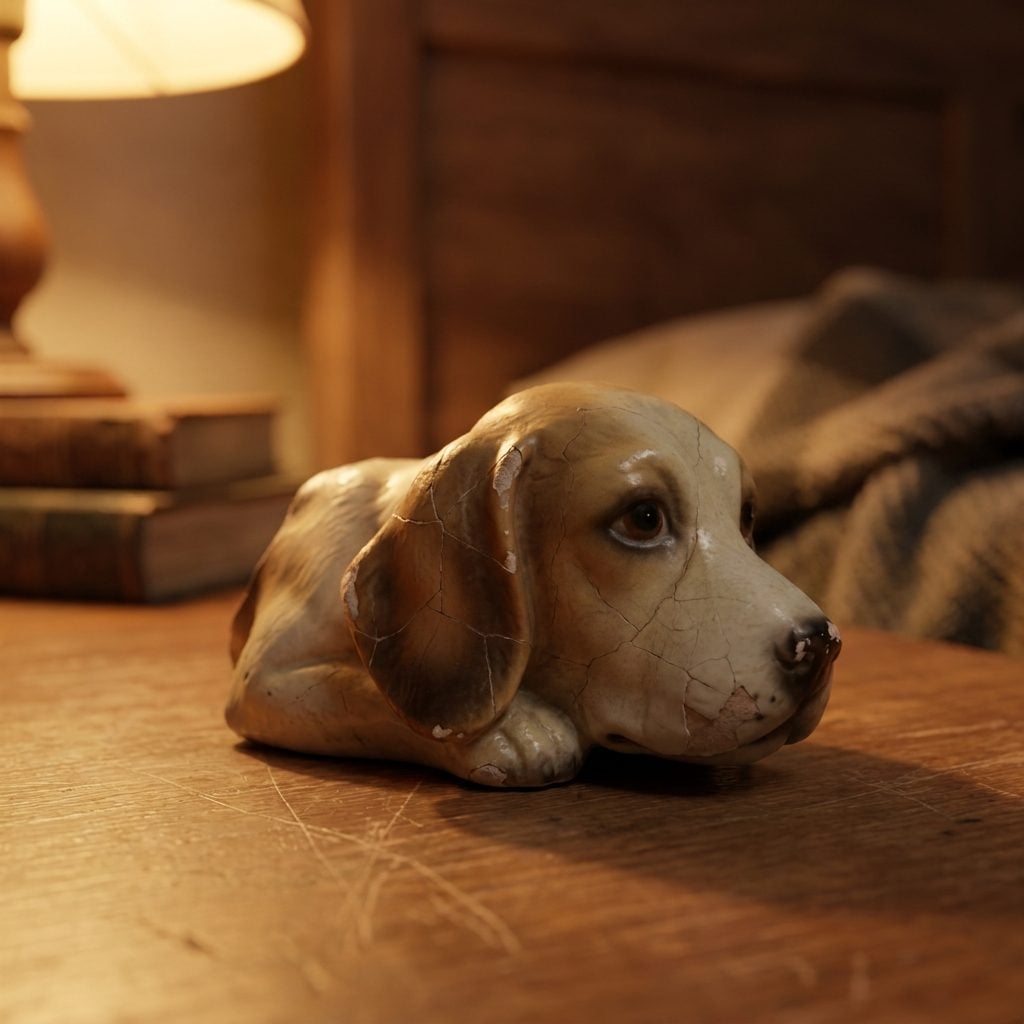
Every family has a private language, and some of it is made of objects. A cracked ceramic dog nobody else would recognize. A pair of dice from a game with rules only your grandmother remembered. The object itself is unremarkable. What matters is that exactly one other person on earth knows why you kept it.
This is what researchers call the extended self, almost like a second skin made of objects rather than tissue (Source). When the object is shared between two people, that skin has a witness. You are not making the memory up. Someone else can vouch for it.
Why You Kept Something That Doesn’t Fit Anywhere in Your Life
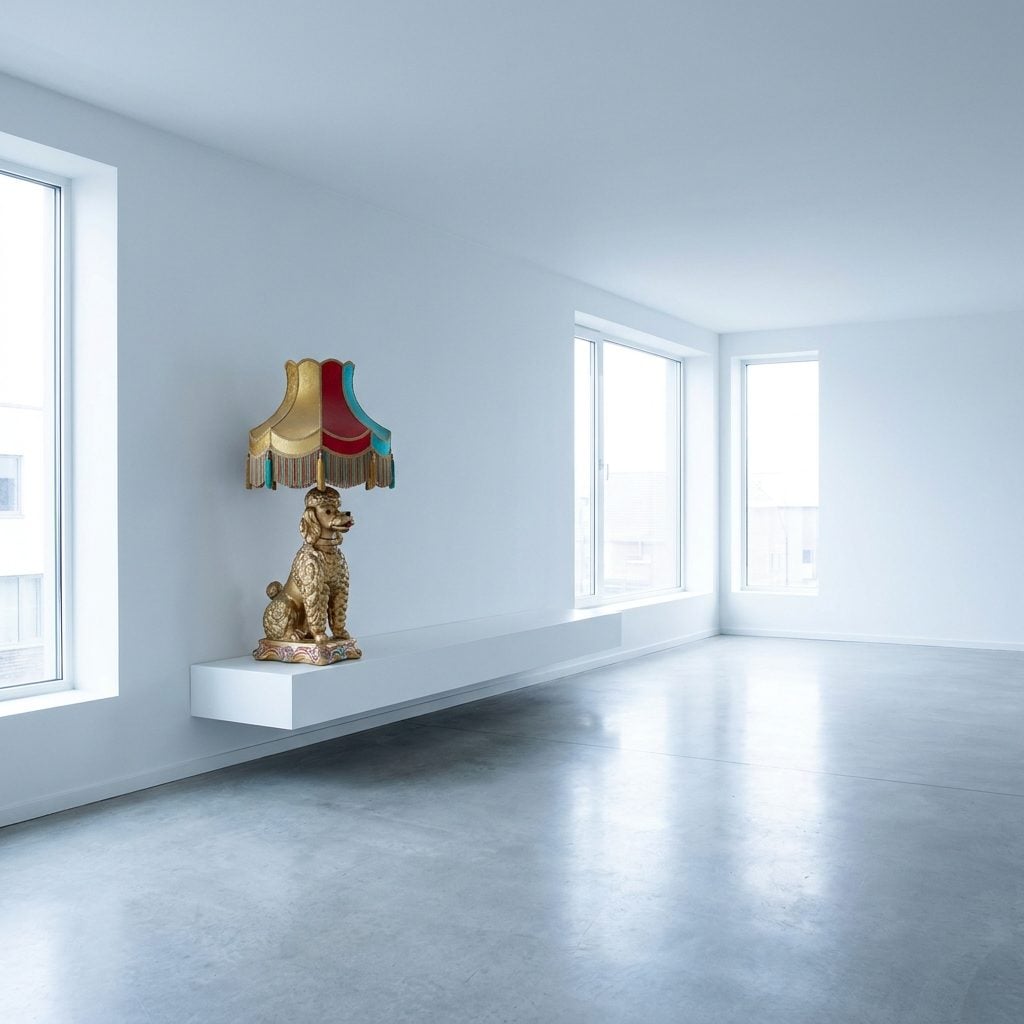
It doesn’t match your apartment. It clashes with everything you own now. You’ve moved it through four addresses and one divorce and you cannot explain, out loud, why it survived every purge.
The object is doing something invisible. Source research from psychologist Krystine Batcho suggests that the things we refuse to discard often draw their value not from the object itself but from the people associated with them. The lamp isn’t a lamp. It’s your father’s reading nook in 1993. Getting rid of it feels like agreeing that 1993 didn’t happen.
There’s also the endowment effect, Source the well-documented human bias to value what we own more than what we don’t. Combine that with childhood memory and the object becomes untouchable. Not because it’s beautiful. Because letting go feels like a small, quiet betrayal.
The Coffee Mug That Outlived the Marriage That Bought It
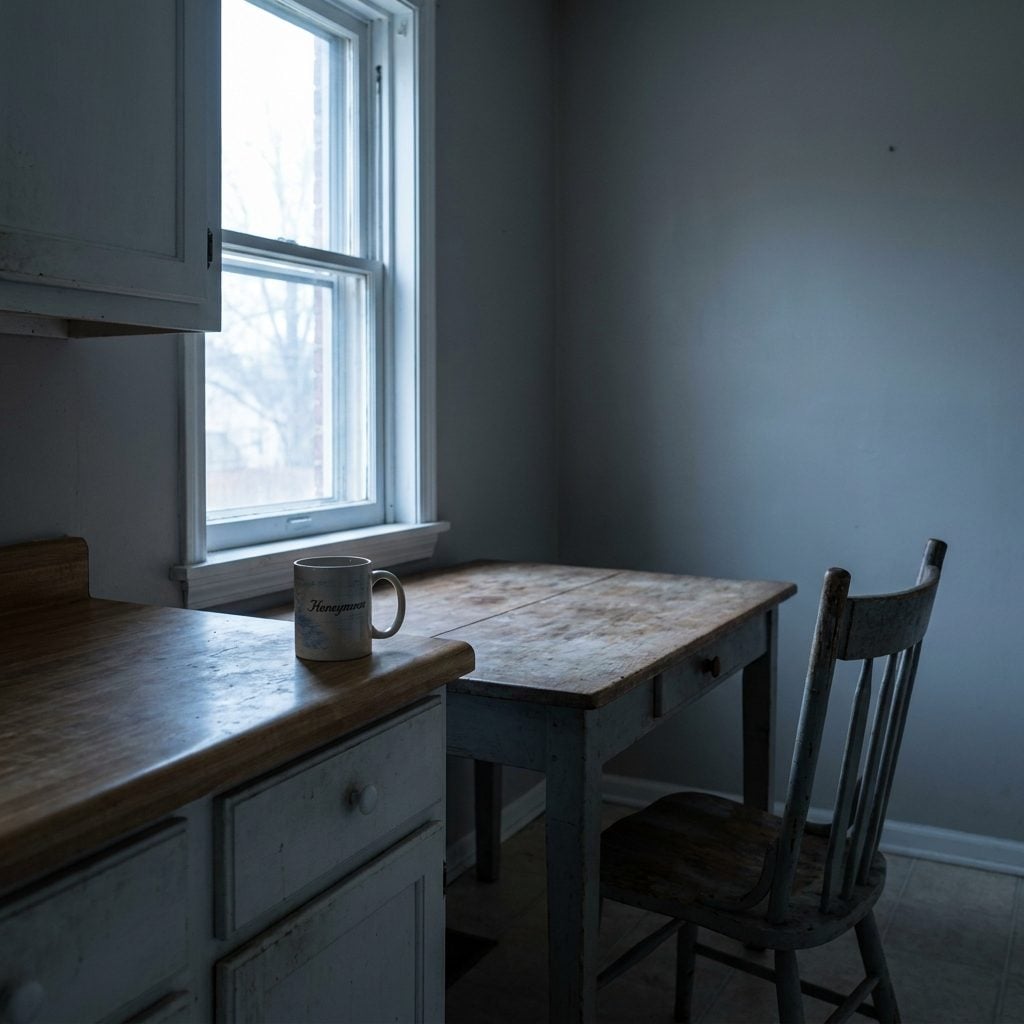
Some objects survive the people who chose them. A honeymoon mug. A wedding-registry mixing bowl. A set of steak knives from a couple who no longer speak. You’d think these would be the first things out the door. Often they’re the last.
The mug has been re-recruited. It used to belong to a marriage. Now it belongs to a morning. To a specific kitchen light at 7:14 a.m. To the version of you who kept going. Source research on keepsakes and separation has found that after a partner is gone, people redirect attachment onto objects that carried the relationship, using them to regulate the loss.
There’s a quieter thing happening too. Keeping the mug is a small refusal. You are not going to let the ending edit the middle. The good years happened. The mug is proof.
What the Recipe Card in Your Drawer Is Really Preserving
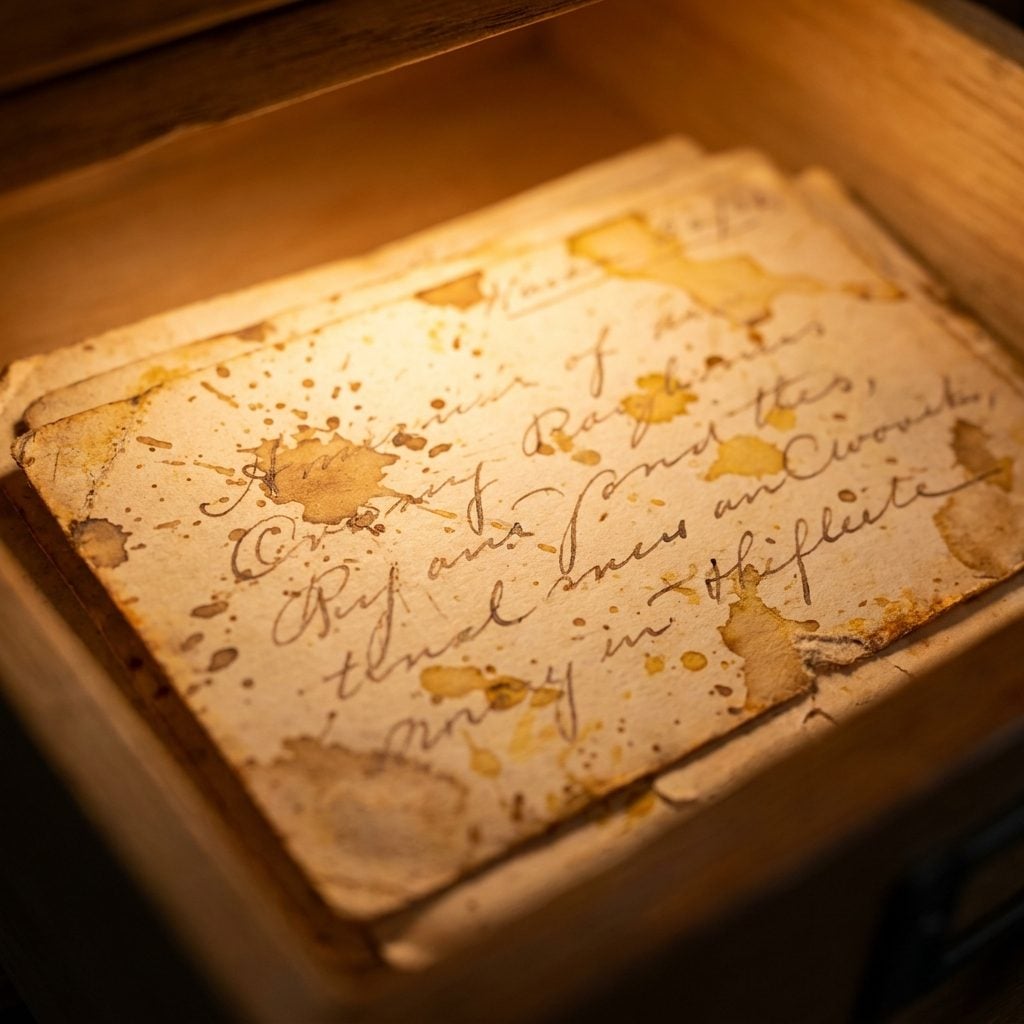
The handwriting is the point. Not the recipe.
You have the recipe in three cookbooks and forty websites. You could pull it up on your phone in six seconds. And still, you keep the index card with the butter stain and your grandmother’s slanted cursive, the one that spells ‘flour’ with a loop she made only when she was in a hurry.
Handwriting is one of the last analog fingerprints a person leaves. Source research on attachment security and material culture has shown that certain cherished objects act as attachment figures themselves, providing comfort and connection in the absence of the loved ones they represent. A recipe card is a small, edible séance. You follow her instructions and for forty minutes she is standing behind you in the kitchen, telling you the oven runs hot.
The Piece of Fabric You Can’t Explain Even to Yourself
🔥 Would you like to save this?
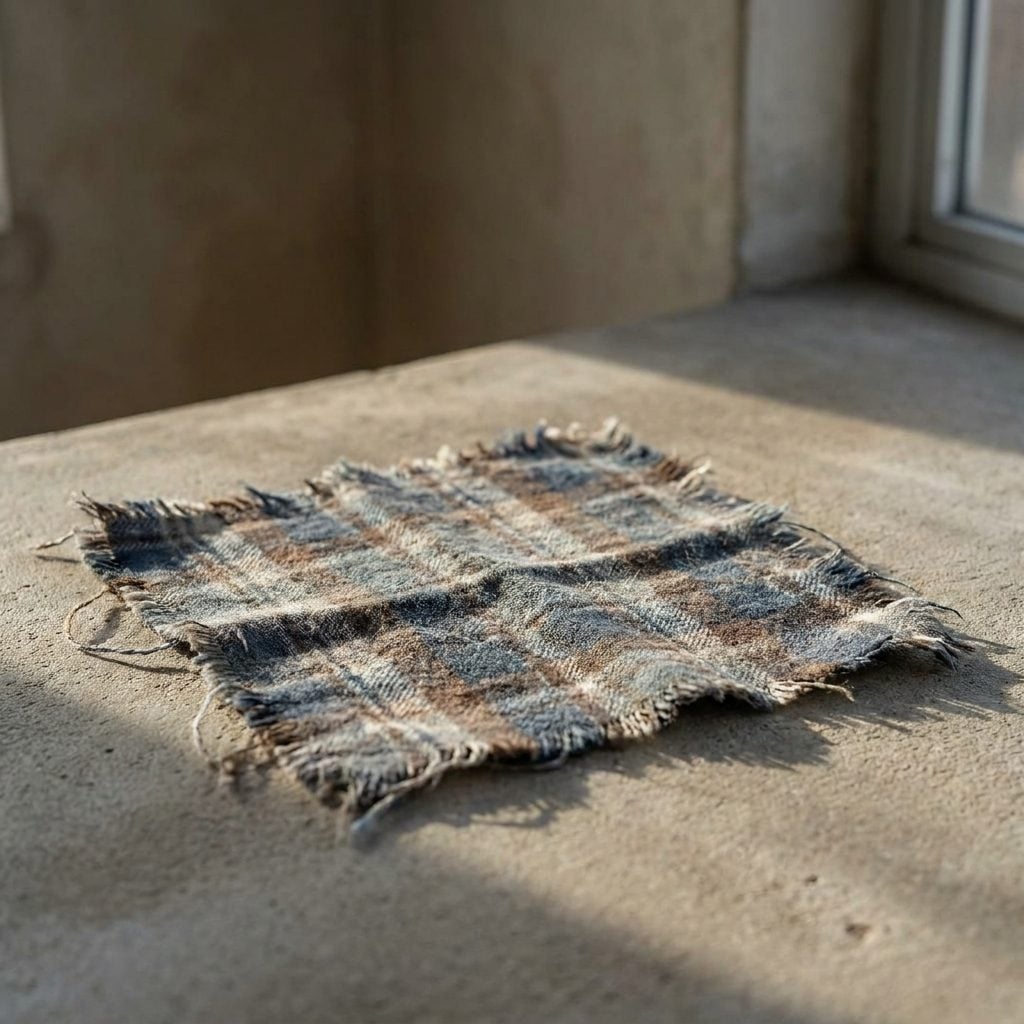
A square of a curtain. The pocket cut off a father’s flannel. A scrap of the blanket that was already old when you were born. Fabric keepsakes are the strangest of all, because fabric is the thing childhood was touched with.
Skin remembers what the brain forgets. The nap of a specific corduroy. The exact weight of a wool throw. Source research on transitional object attachment shows that these bonds form in the earliest months of life and can quietly persist into adulthood, tied to a bias for the specific and the authentic. Not a soft blanket. That soft blanket. Replace it with an identical one and the child, and the adult they become, can tell.
The fabric is doing the work the words can’t. It’s a physical hyperlink to a body you no longer have, in a room you can no longer walk into.
Why the Object Feels Heavier Every Time You Pick It Up
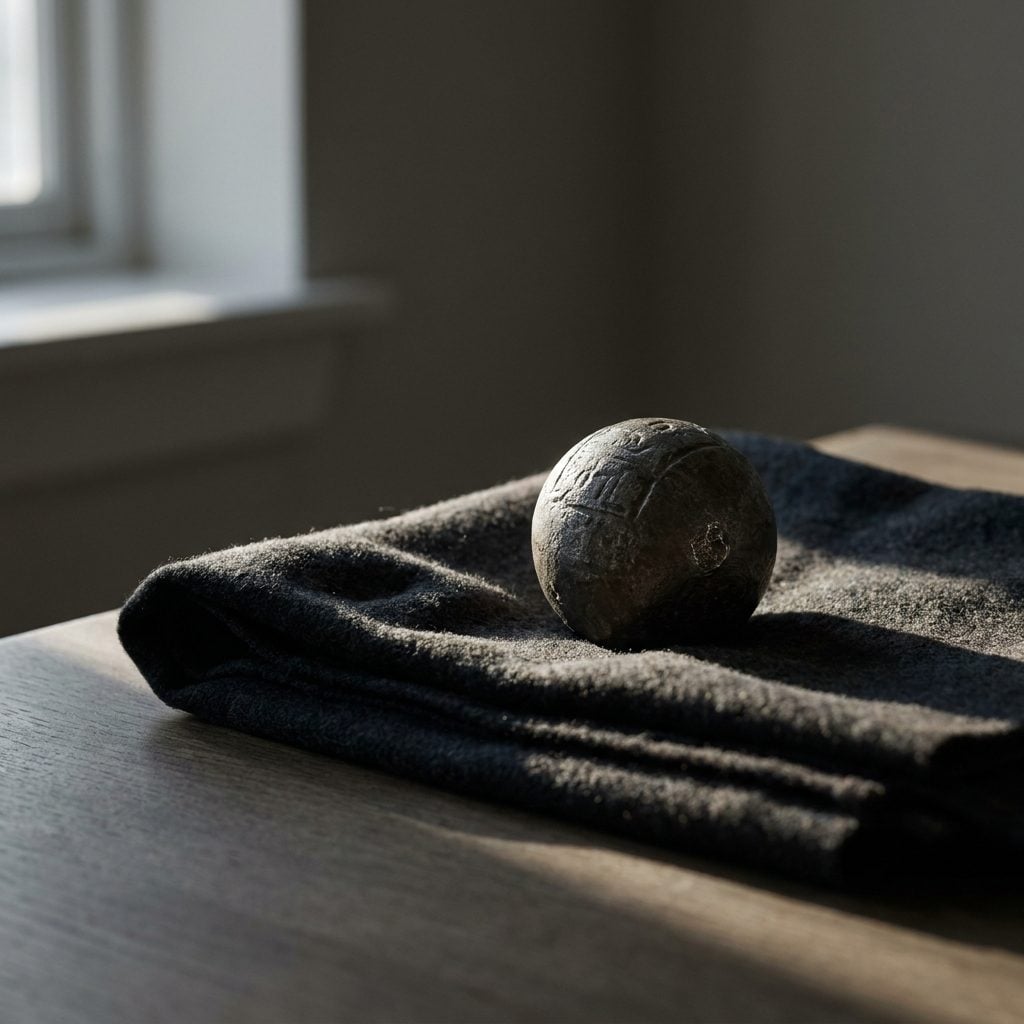
Physically it weighs the same. You know this. And yet every time you take it down from the shelf, it feels denser. This is not your imagination. It’s time doing what time does to inherited things.
Source As the British Psychological Society has noted, our attachments to objects deepen with the passage of time, the same way they deepen with people. Elderly people are often surrounded by things that have followed them across decades and continents, and each move, each survived crisis, adds another invisible layer of meaning. The object accumulates, even when nothing physical is added to it.
There’s also the small, spooky fact that Source children treat their attachment objects as if they have a unique essence, refusing exact copies, a magical thinking that never fully leaves us. That silver-plated candy dish isn’t just a dish. It contains, in some private way you’d never say out loud, your grandmother.
The Thing You Kept That Your Parents Would Be Surprised About
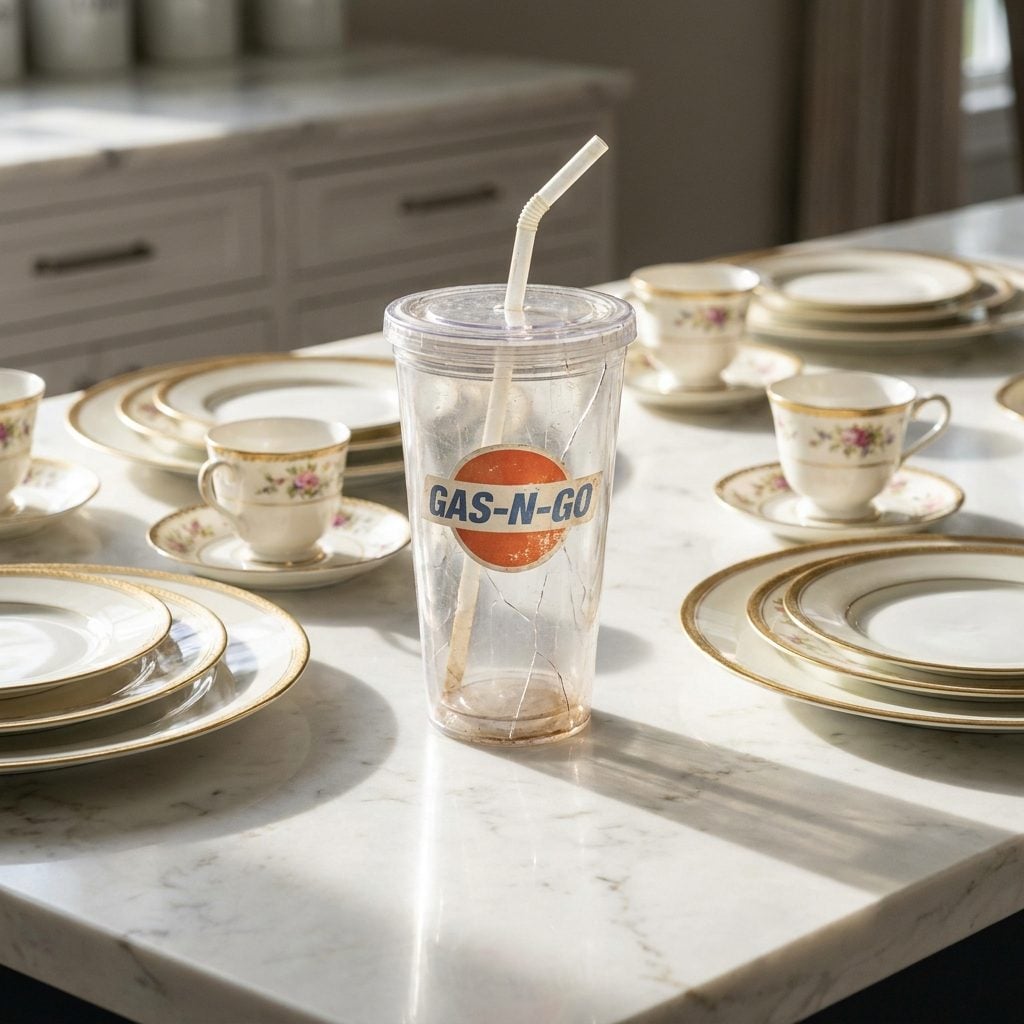
Not the wedding china. Not the framed diploma. The thing your parents would never guess. A cracked plastic tumbler from the everyday kitchen cabinet. The junk drawer’s yellow flashlight. The measuring tape from the garage.
These are the objects that made up the wallpaper of your childhood, and the wallpaper is often what you actually miss. The formal keepsakes were curated. The tumbler was just always there, at every ordinary dinner, for thirty years. Source Object relations theory holds that transitional objects help us self-soothe, and that this function does not stop at childhood; ordinary possessions in adulthood can act as tangible connections to a personal history that no photograph can carry.
Your parents would have thrown the tumbler out without a thought. That’s exactly why you didn’t.
What the Object You Loaned Out and Demanded Back Says
You once let someone borrow it. A book. A necklace. A record. You told yourself you were fine with it. You were not fine with it. Weeks later, in a voice too casual to be casual, you asked for it back.
That reaction told you something about the object you might not have admitted otherwise. It wasn’t a possession. It was a piece of you on loan, and the longer it was out of your sight, the more anxious your nervous system got about the missing limb. Source Researchers describe these possessions as part of the extended self, woven so tightly into identity that their absence registers almost like the absence of a person.
The friend gave it back. The friendship might have cooled slightly. You noticed you didn’t actually care, because the object was more yours than the friendship was. That’s the quiet, uncomfortable data point. The things you refuse to lose long-term are the truest map of who you think you are.
The Item You Rescued From the Donation Pile at the Last Second
You had it in the box. You had already told yourself the story about how someone else would love it more. Then your hand went back in and pulled it out. That reversal is worth paying attention to.
The moment you almost let it go is the moment your brain flagged it as more than an object. Research on loss aversion, first mapped by Kahneman and Tversky, shows that losing something registers roughly twice as painful as gaining something feels good, which is why the donation pile can trigger a small internal alarm no spreadsheet would predict. Source
There’s also the endowment effect at work: the mind quietly inflates the worth of anything it already considers yours, so a chipped mug or a warped photo frame from your parents’ living room can feel unswappable even for an identical twin off a shelf. Source
Why the Object You Kept Is the One That Kept You
Look at it sitting on your shelf right now. You think you saved it. It’s the other way around.
Psychologist Russell Belk’s extended self theory argues that possessions we invest with meaning stop being separate from us and start functioning as external storage for identity itself. The object holds a version of you that would otherwise dissolve into general memory: the kid who sat cross-legged on that rug, the teenager who slammed that door, the person you were before the moves and the jobs and the losses started stacking up. Source
Cognitive scientists call this the continuity of self, and it’s why cherished possessions often carry the heaviest weight during transitions. When Jane Kroger and Vivienne Adair interviewed older adults who had moved into residential care, they found that a single kept object often served as a link to former selves, keeping the thread of a life visible even when the room and the routine had completely changed. Source
So the mug, the quilt, the little wooden box: those aren’t souvenirs. They’re anchors. They stayed with you because on some level you needed proof that the earlier chapters actually happened, and that the person who lived them is still the person answering to your name.
You didn’t keep it because you couldn’t let go. You kept it because it was holding something for you.
The Single Thing You’ll Pass Down Without Explaining Why
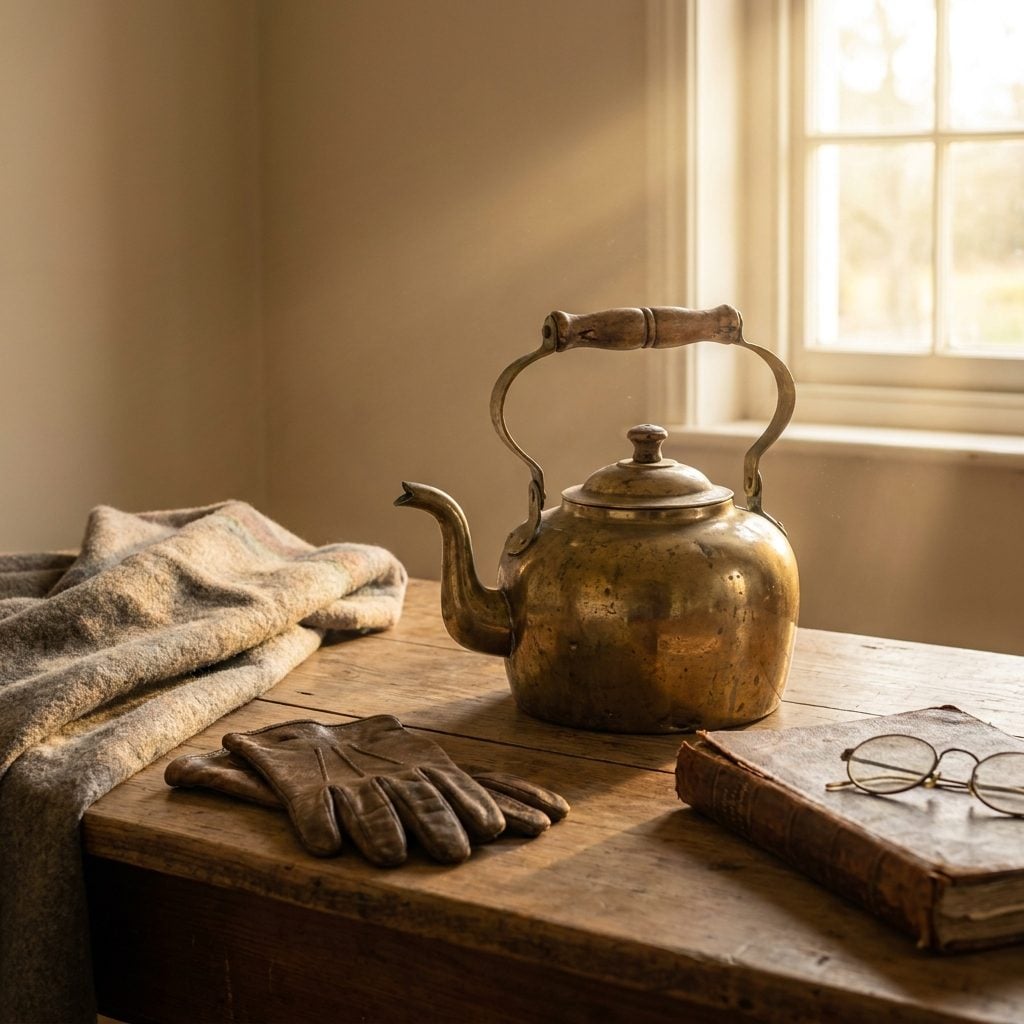
There’s a kettle in your kitchen, or a wooden spoon, or a small brass box that lived on your grandmother’s dresser. You couldn’t tell anyone why you kept it. You just know it goes with you to the next house, and the one after that.
Psychologists have a name for this. In The Meaning of Things, Mihaly Csikszentmihalyi and Eugene Rochberg-Halton studied what ordinary families cherished in their homes, and found the most treasured objects were almost never the expensive ones. They were the ones carrying a story only the owner knew. Cultural theorists call these vertical objects, meaning they move down the family line the way a name or a recipe does. They anchor identity when everything else shifts. Source
The strange part is how little conscious thought goes into it. You don’t sit down and decide this is the heirloom. You just notice, one day, that you’ve been protecting it for twenty years. And that your kid has started noticing it too.
The Bottom Line
The thing you kept isn’t a souvenir, it’s a receipt. It’s proof of the exact moment you decided who you’d have to become to survive that house, and you’ve been carrying it around because some part of you is still waiting for permission to put it down. Look at it tonight, really look at it, and ask whether you’re keeping it because you still need it, or because you’re afraid of who you’d be without it.