🔥 Would you like to save this?
The whole house clicked and swayed. You walked through a doorway, a hundred wooden beads rattled against your shoulders, and there it was—that particular mix of jute rope, warm dust, and a pothos vine reaching for the window. Somebody in the family had probably knotted at least part of the decor at the kitchen table, with a paperback pattern book propped against the sugar bowl.
These 28 details turned ordinary walls, windows, lamps, and furniture into something handmade and unmistakably 1970s. See how many rattle a memory loose.
In order to come up with the very specific design ideas, we create most designs with the assistance of state-of-the-art AI interior design software. Also, assume links that take you off the site are affiliate links such as links to Amazon. this means we may earn a commission if you buy something.
28. The Macramé Wall Panel Hung Behind the Sofa Like a Giant Textile Headboard
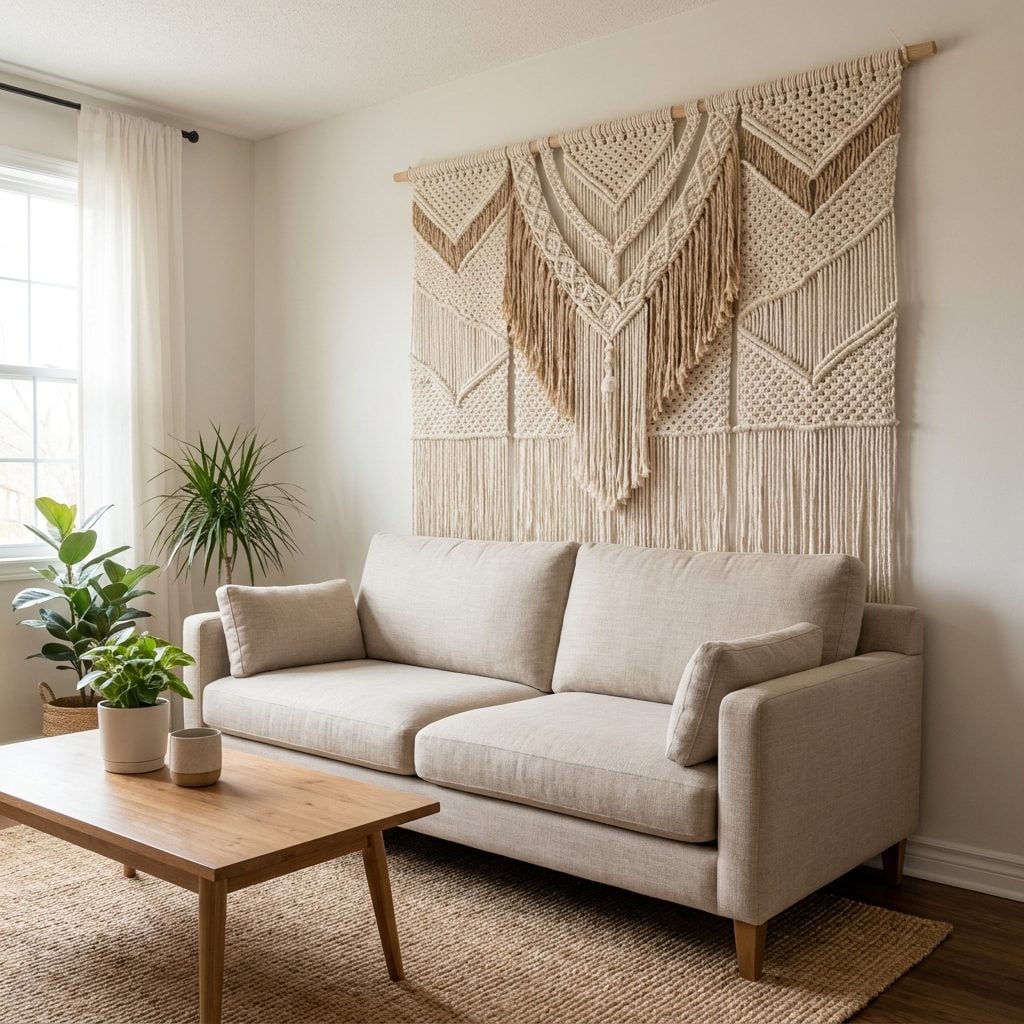
It was the size of a small area rug, and it hung on the wall. Rows of square knots and spiraling sennits formed a panel of undyed cord the color of a paper grocery bag, with a piece of driftwood or a wooden dowel supporting the whole arrangement. Beads appeared between the knots. Feathers sometimes joined the fringe when the maker felt especially ambitious.
This was not background decoration. It anchored the sofa the way a headboard anchors a bed and immediately announced that somebody in the house made things by hand. During a long phone call, you could follow one strand from the top dowel all the way down to the final knot.
27. The Classic Beaded Doorway Curtain Between the Living Room and Hallway
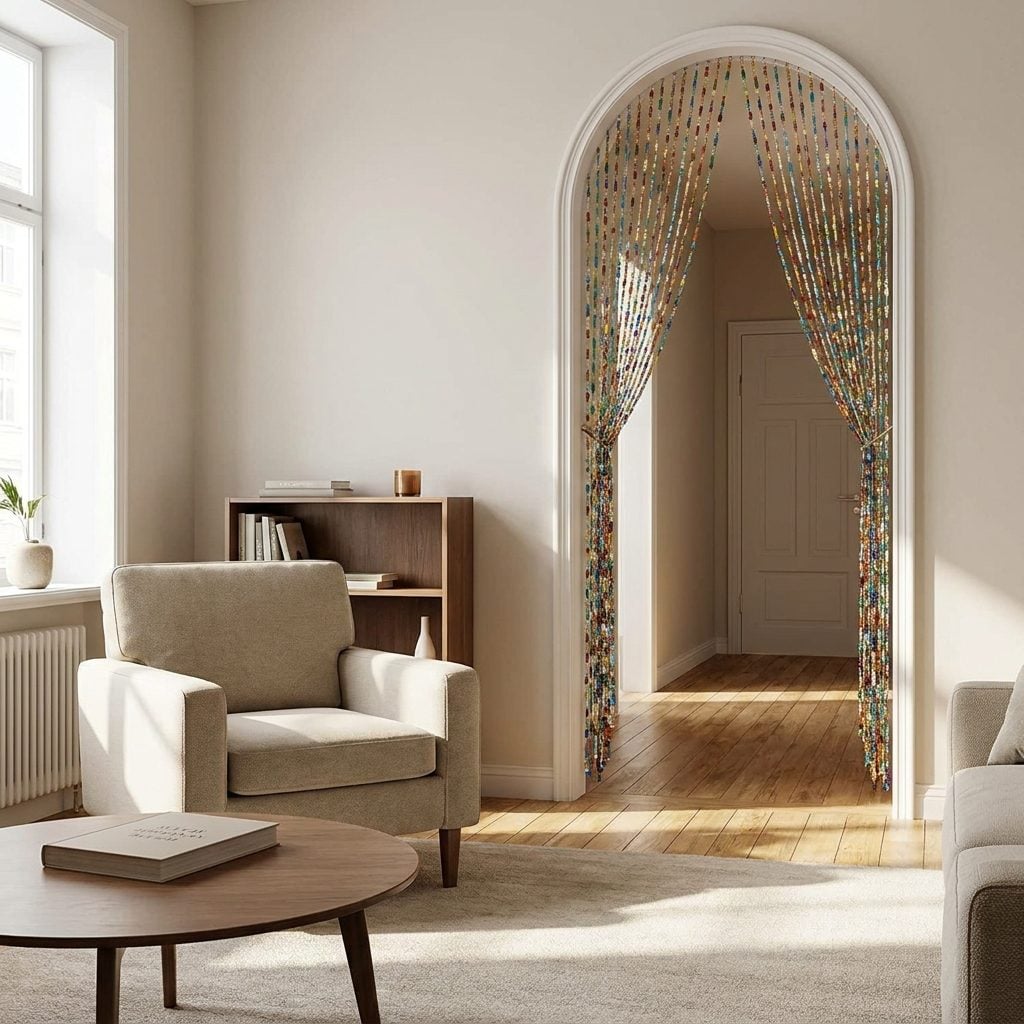
You never opened it. You walked through it, and the entire curtain swung and clacked behind you for another ten seconds. Wooden beads knocked together in that dry, hollow rattle everyone under the roof recognized.
Amber and dark-brown beads hung from a rod fitted across the top of the doorway. The strands blocked neither light nor sound, and they never stopped a determined sibling. Their real purpose was to make an ordinary threshold feel like an event. Cats loved them. Vacuum cleaners did not.
26. The Short Row of Beads Strung Across the Top of the Picture Window
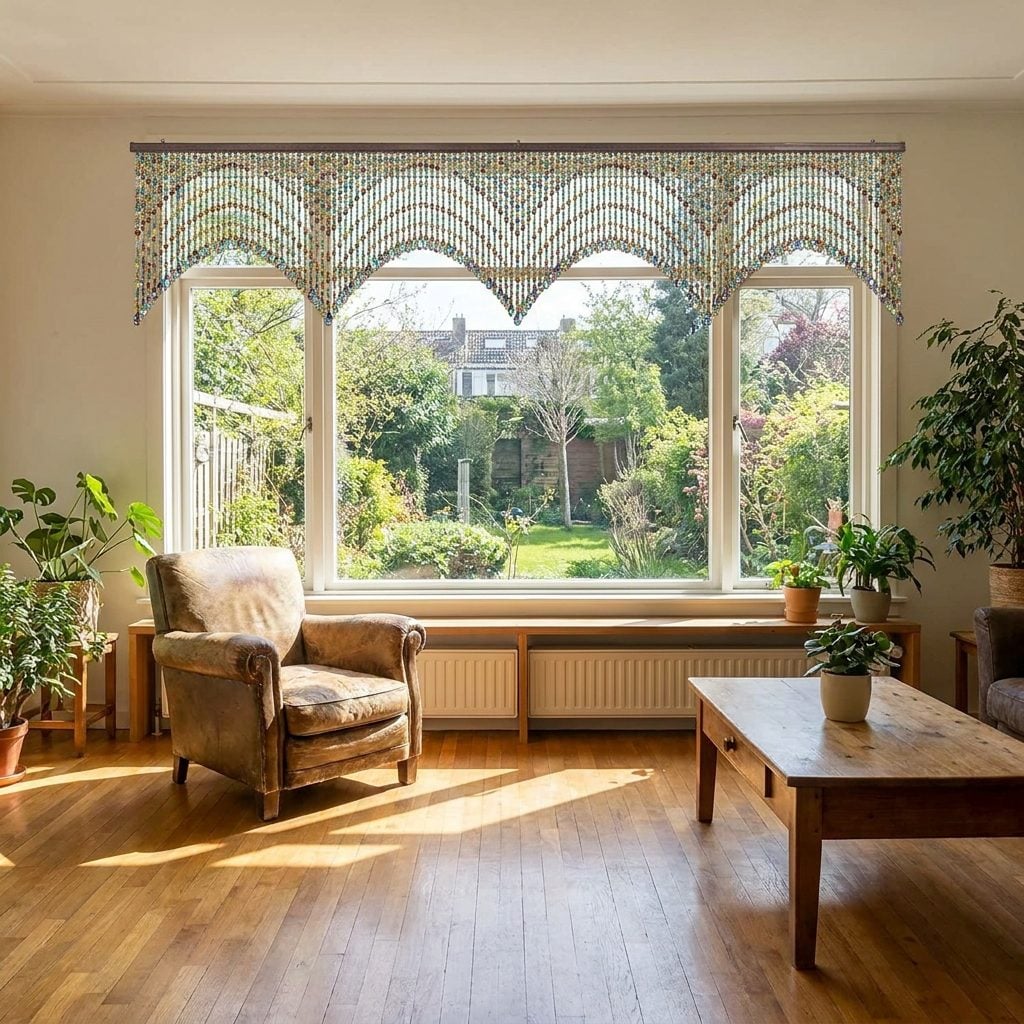
Nobody could explain what it was supposed to do. A shallow row of beads hung above the real curtains, too short to provide privacy and far too sparse to block sunlight.
Late in the afternoon, however, the sun caught the amber pieces and scattered warm freckles across the shag carpet. The display lasted perhaps twenty minutes before the light moved on.
It performed no practical job. Half the room ran on that principle.
25. The Macramé Plant Hanger Suspended in Front of the Window
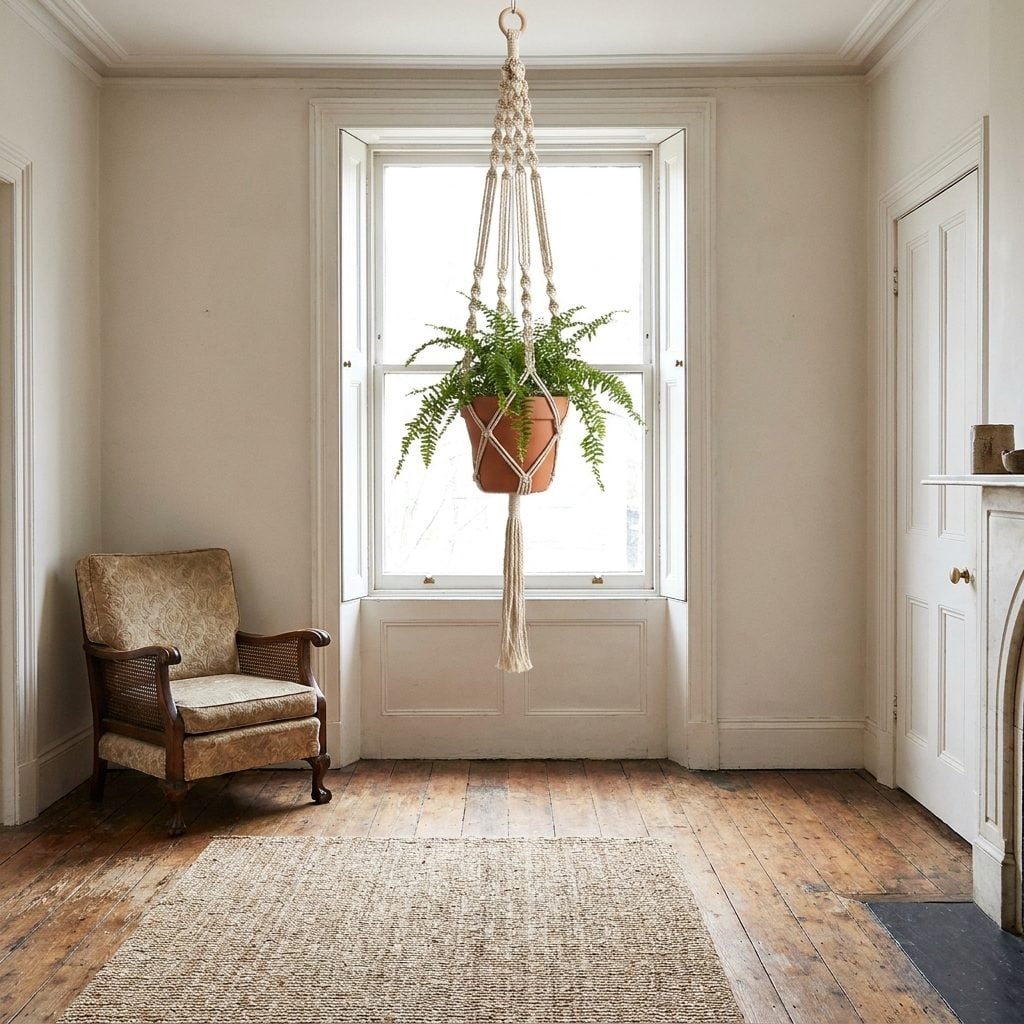
The plant hanger was the essential piece: a knotted sling holding a terracotta pot where the window light was strongest. Spider plants, pothos, and Boston ferns spilled over the rim while the long cords narrowed toward a wooden ring or ceiling hook.
Some homemade examples were remarkably well made. Others leaned slightly from the first day and never recovered. Watering either version required a step stool, a steady hand, and confidence that the carpet would dry before anyone noticed the ring.
24. The Double Macramé Plant Hanger Holding Matching Pots
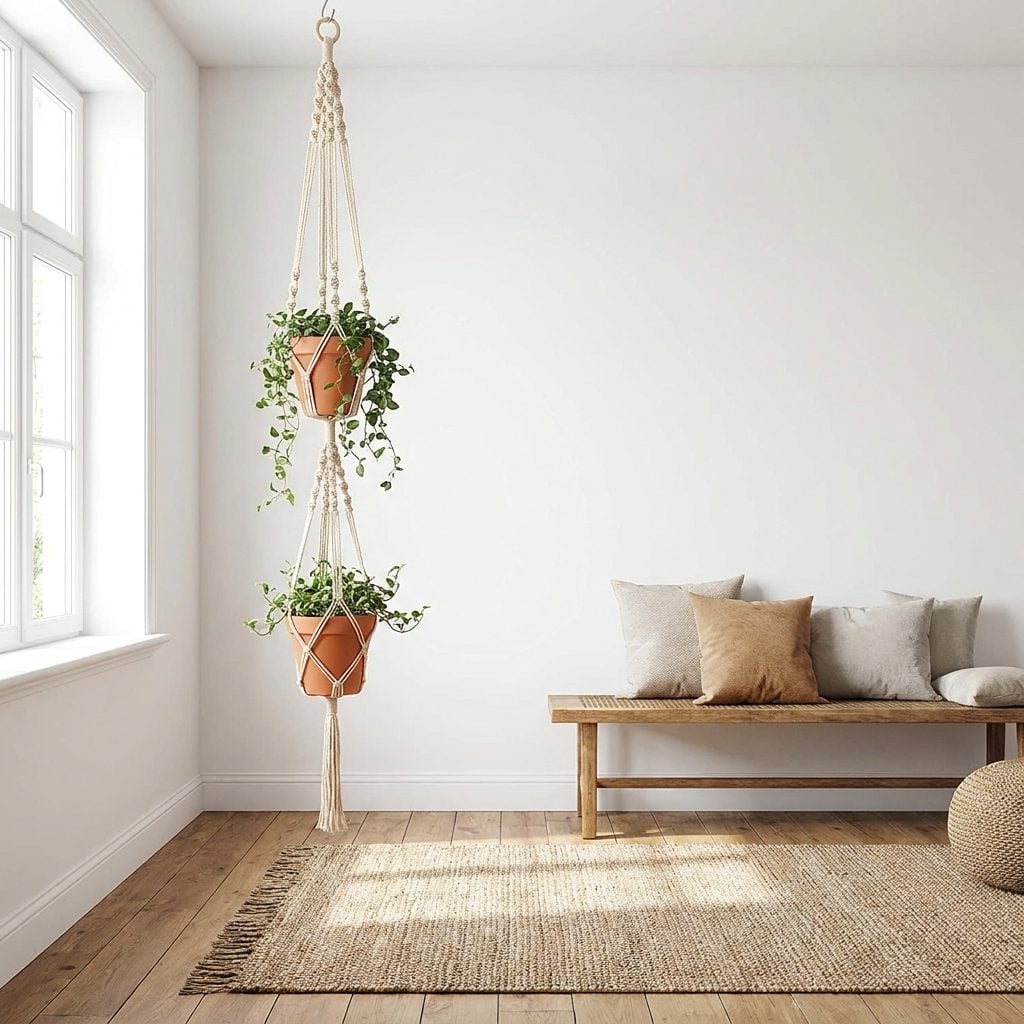
The single hanger was only the beginning. The more elaborate version stacked two pots in one long knotted column, with greenery trailing from different heights like a suspended garden.
Balancing it took patience. The upper and lower cradles needed to carry their weight evenly or the entire arrangement tilted toward the glass. When the knots held and the plants filled out, an empty corner suddenly looked finished.
23. The Macramé Magazine Holder Beside the Sofa
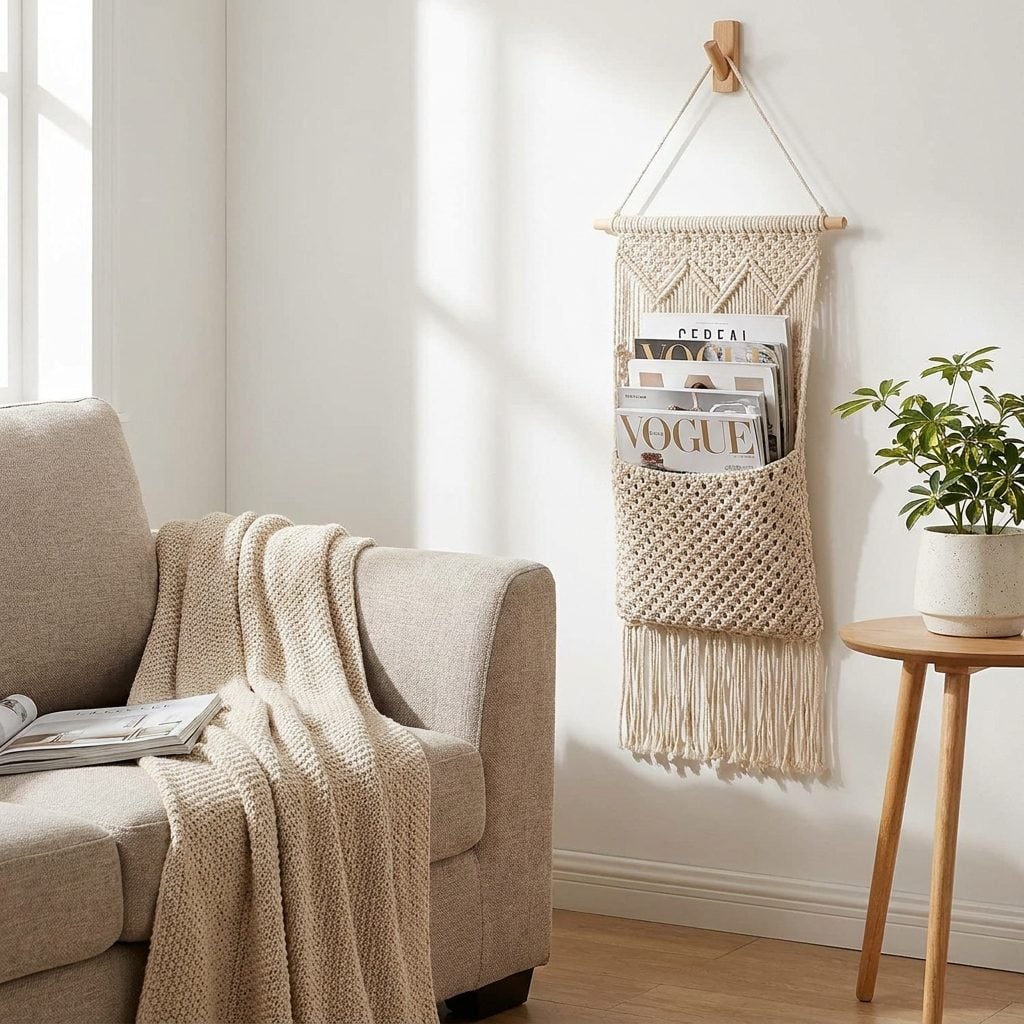
A knotted jute pocket hung from the sofa arm or a nearby wall hook, sagging under copies of TV Guide, Reader’s Digest, and National Geographic nobody intended to throw away.
The cord stretched gradually until the holder resembled a small hammock. People reached inside without looking and accepted whichever publication came out first. It was softer and less formal than the wooden magazine rack—and considerably more likely to trap a cracker crumb.
22. The Macramé Record Sling Beside the Stereo Console
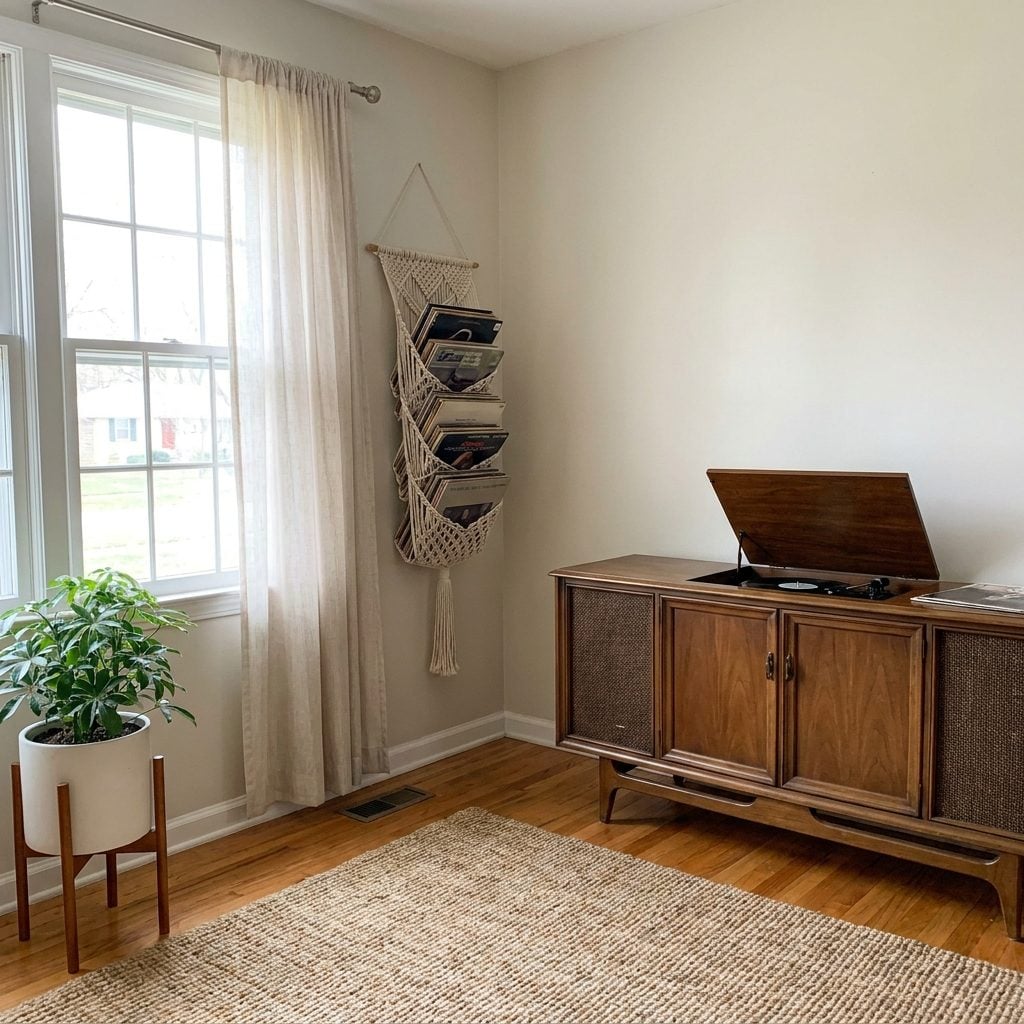
A heavy rope sling beside the wood-paneled stereo held a small stack of favorite albums upright. A dowel kept the opening spread wide enough for the covers to remain visible, turning record storage into part of the room.
You flipped through the stack like a card catalog: Fleetwood Mac, the Eagles, maybe a Herb Alpert album with a cover that generated uncomfortable questions. Vinyl was heavy, so the holder required tight knots and a properly anchored hook. Even then, it seemed to lean a little farther each year.
21. The Driftwood-and-Macramé Photo Display Above the Console
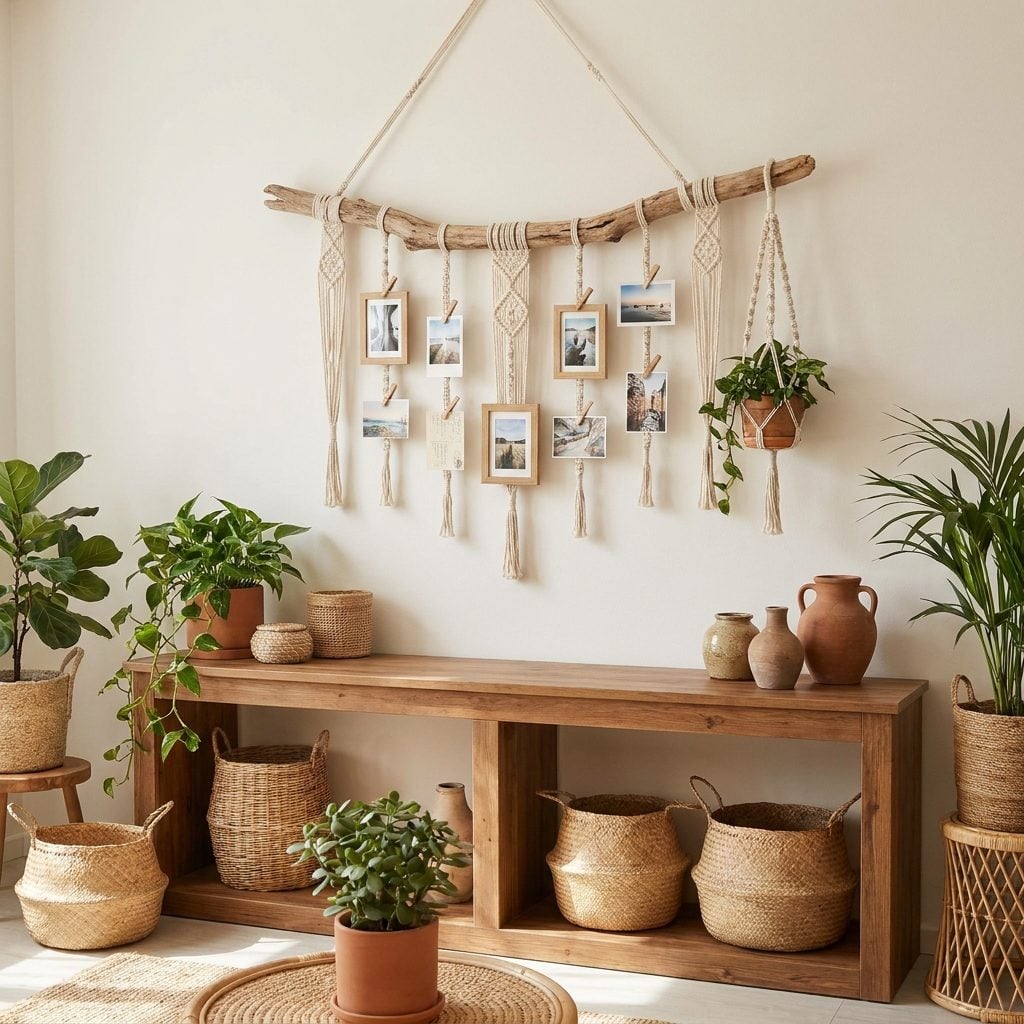
A gray branch stretched across the wall with knotted cords descending from it. Family snapshots, school portraits, and Polaroids slipped into loops or small clips instead of matching frames.
The arrangement felt casual and changeable. A new picture could be added without measuring a wall or finding another frame, and everything moved slightly when someone hurried past. The driftwood may even have come home from a family beach trip, although nobody necessarily remembered which one.
20. The Macramé Cushion Covers on the Sofa
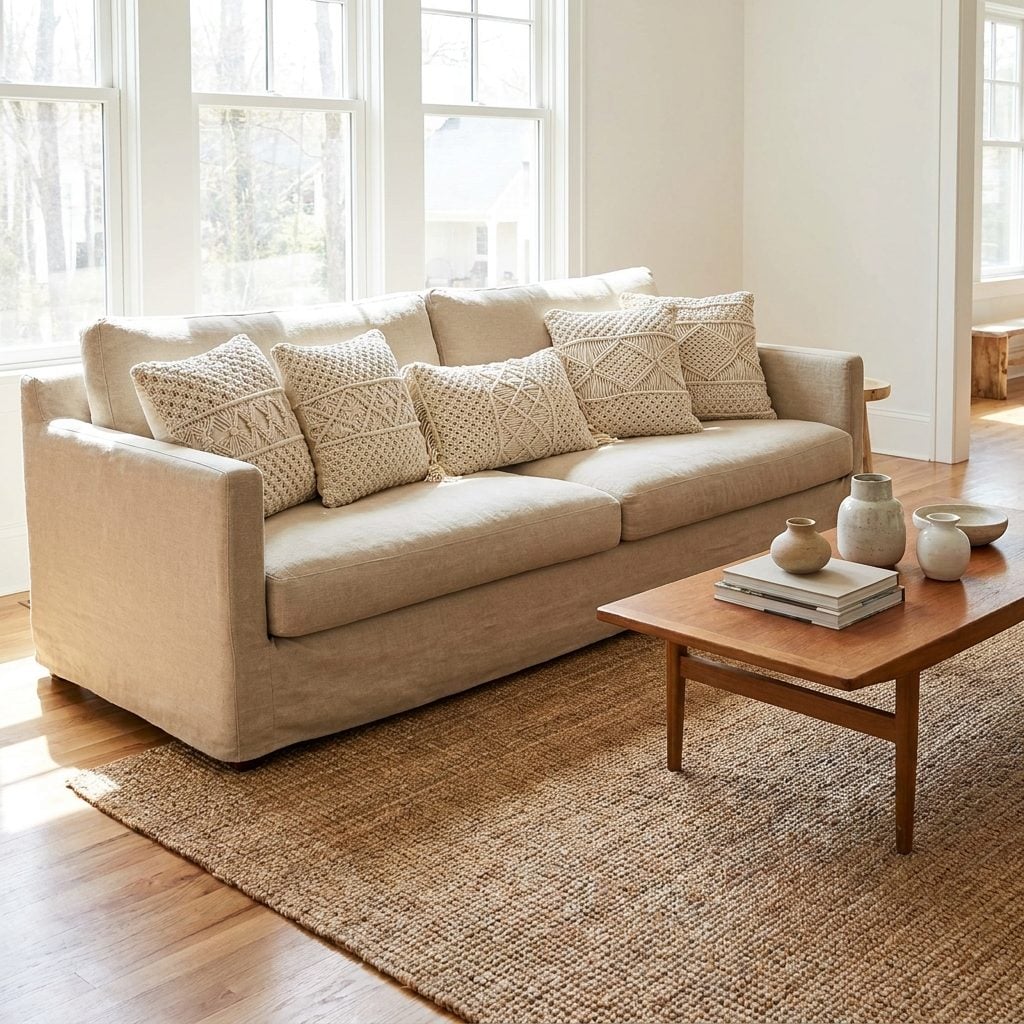
Two throw pillows, perhaps three, wore knotted fronts over solid fabric in mustard, rust, olive, or cream. They were decorative first and comfortable a distant second.
Against smooth vinyl or velour, the rough rope provided contrast and gave the sofa another layer of texture. Crumbs settled into the knots, and cleaning one thoroughly required far more commitment than simply turning it over.
19. The Macramé Cover Draped Across the Back of the Sofa
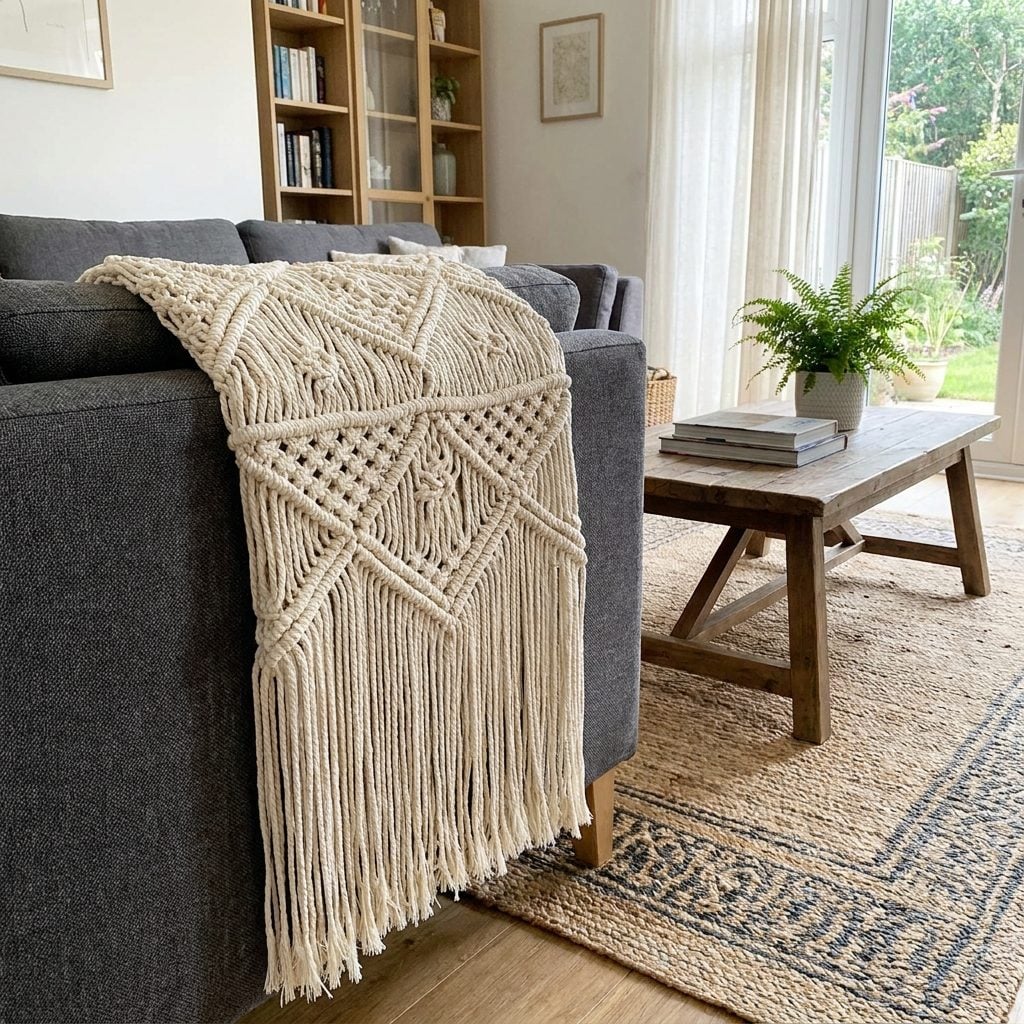
A long knotted runner rested across the top of the sofa, its fringe hanging behind the cushions. It protected the upholstery where heads and shoulders rubbed most often and conveniently concealed fading, wear, or the stain nobody discussed.
This was more practical than the decorative pillows and more personal than a store-bought throw. The hours spent tying, loosening, and retying the pattern remained visible in every uneven strand.
18. The Hanging Macramé Side Table Beside the Reading Chair
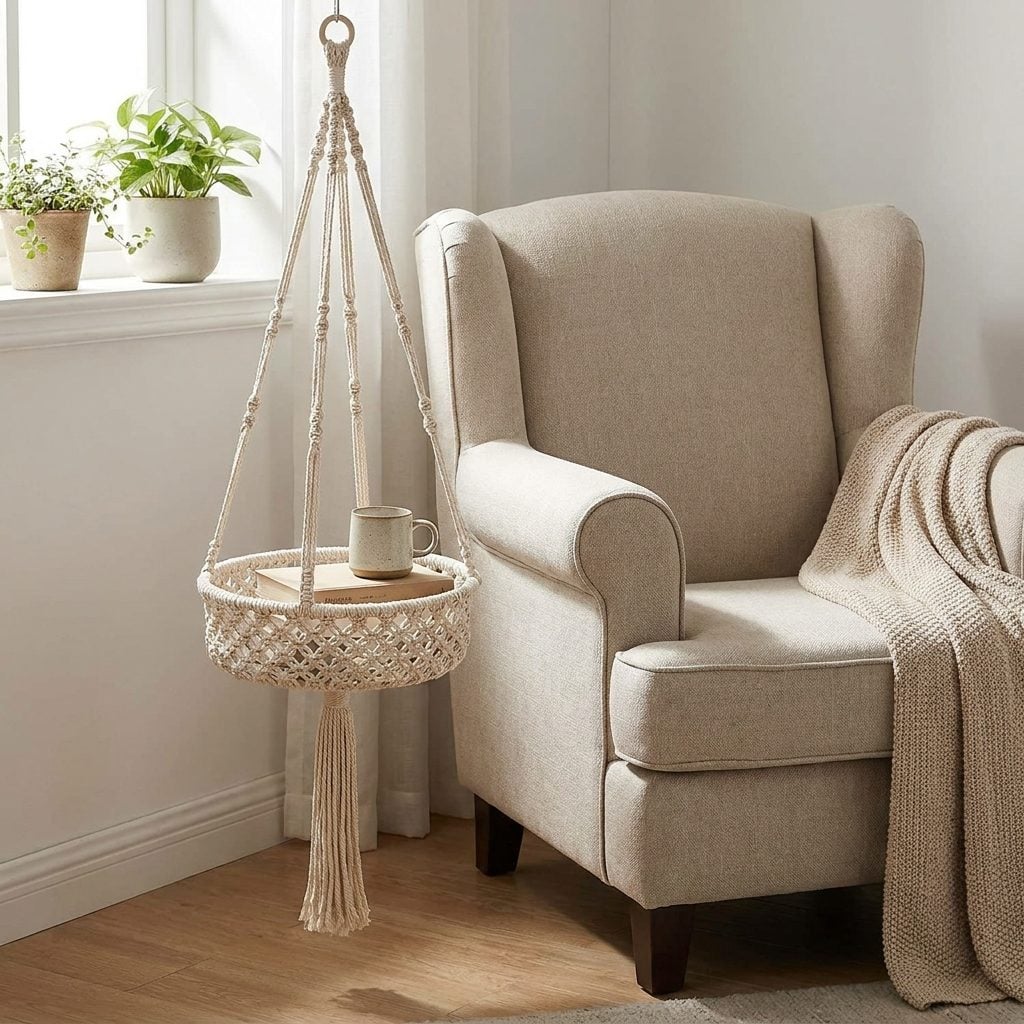
Dark-stained wooden shelves hung inside a web of knotted cord, creating a side table without legs. One level held a paperback, another supported a plant, and a third collected a mug ring that slowly became part of the finish.
The design saved floor space, although the upper support needed to be anchored securely enough to carry the combined weight. Every plant still leaned toward the nearest window, pulling the supposedly balanced arrangement slightly off-center.
17. The Knotted Jute Sleeve Wrapped Around the Floor-Lamp Pole
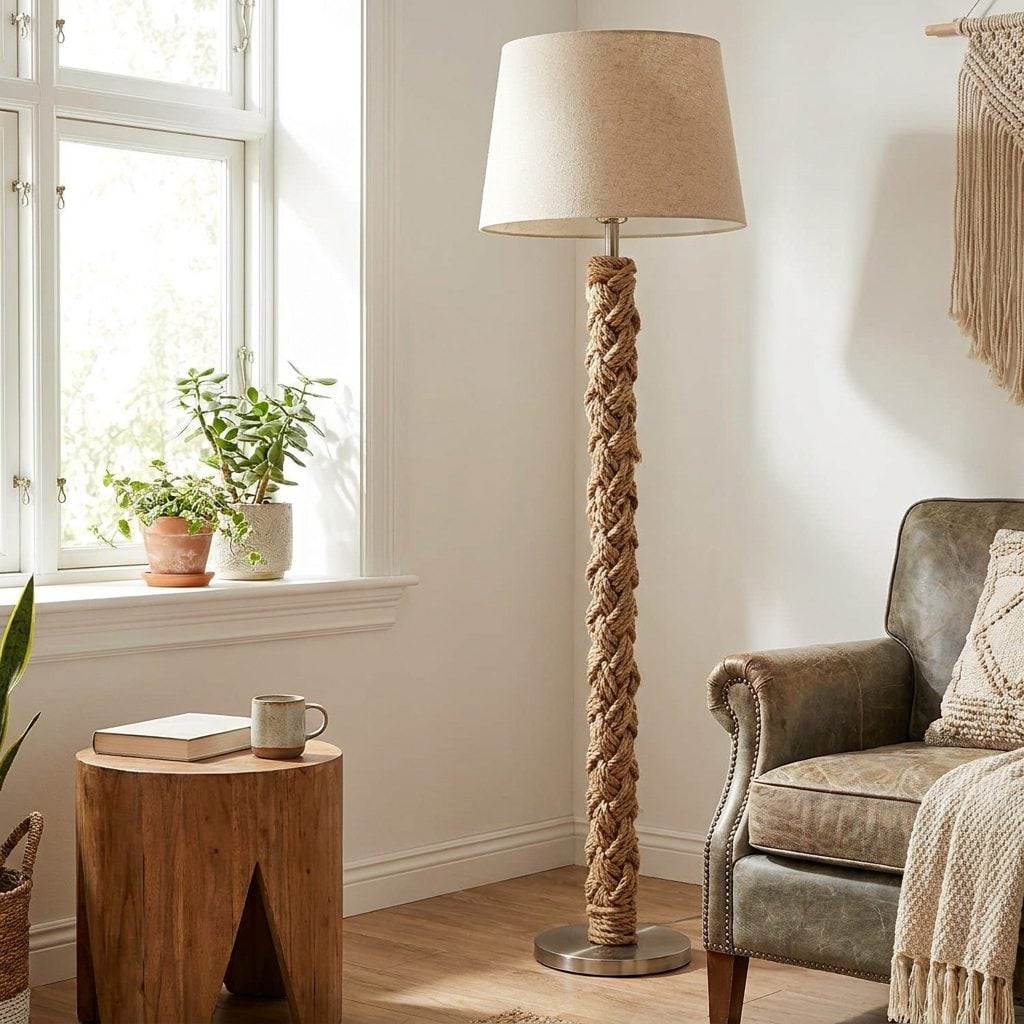
A plain brass or dark-metal lamp pole apparently looked unfinished, so somebody gave it a rope sleeve. Rows of square knots spiraled upward and ended beneath the shade in a short fringe.
The covering insulated nothing and improved no mechanical function. It simply softened the metal and connected the lamp to everything else made of jute in the room. Years of sunlight, dust, and cigarette smoke gradually changed the cord to a shade unavailable in any craft store.
16. The Beaded Pull Chain Hanging From the Swag Lamp
🔥 Would you like to save this?
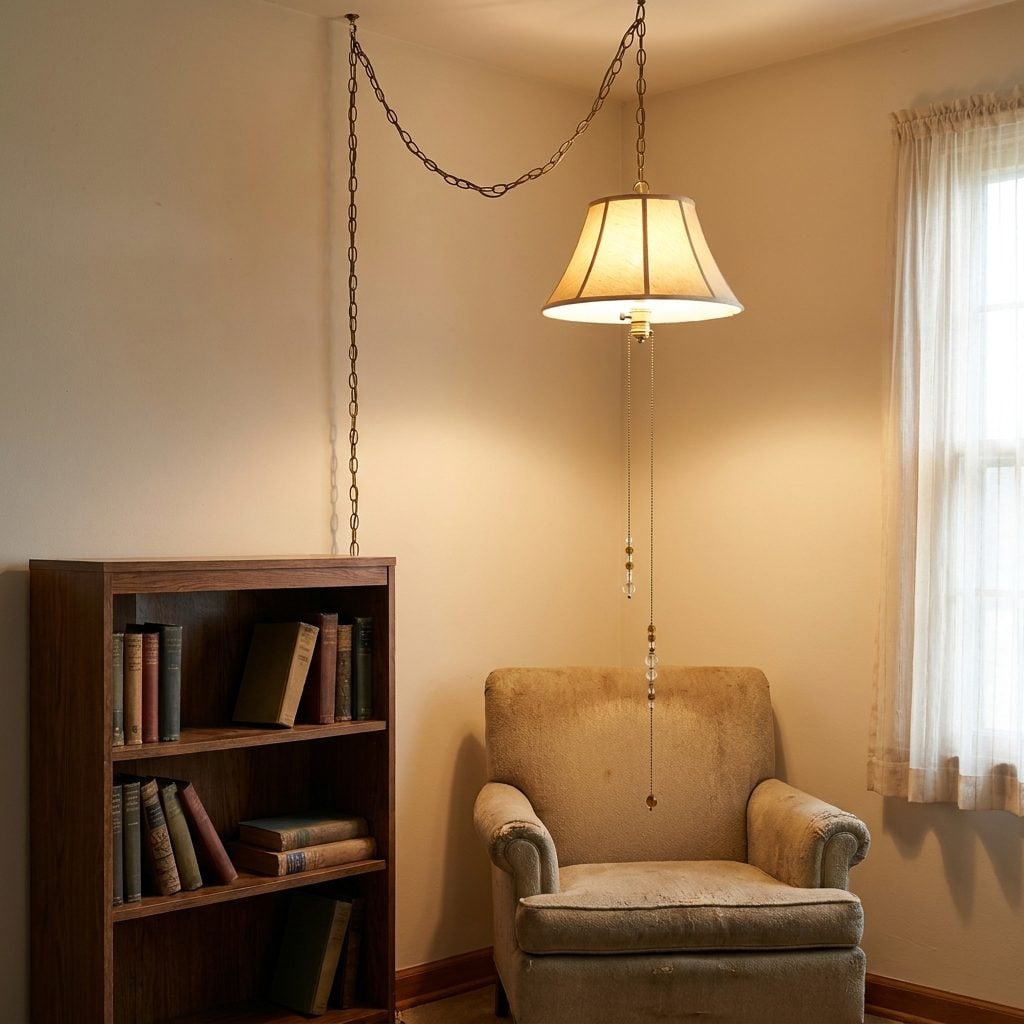
In the dark, your fingers found a length of chain threaded through amber or wooden beads, sometimes ending in a heavy glass teardrop. One tug and the swag lamp filled the corner with honey-colored light.
The lamp itself hung from a ceiling hook, its electrical cord looped across the ceiling and down the wall toward an outlet. The decorative pull chain made the unavoidable hardware feel intentional.
15. The Macramé Clock Surround That Made the Wall Clock Look Twice Its Size
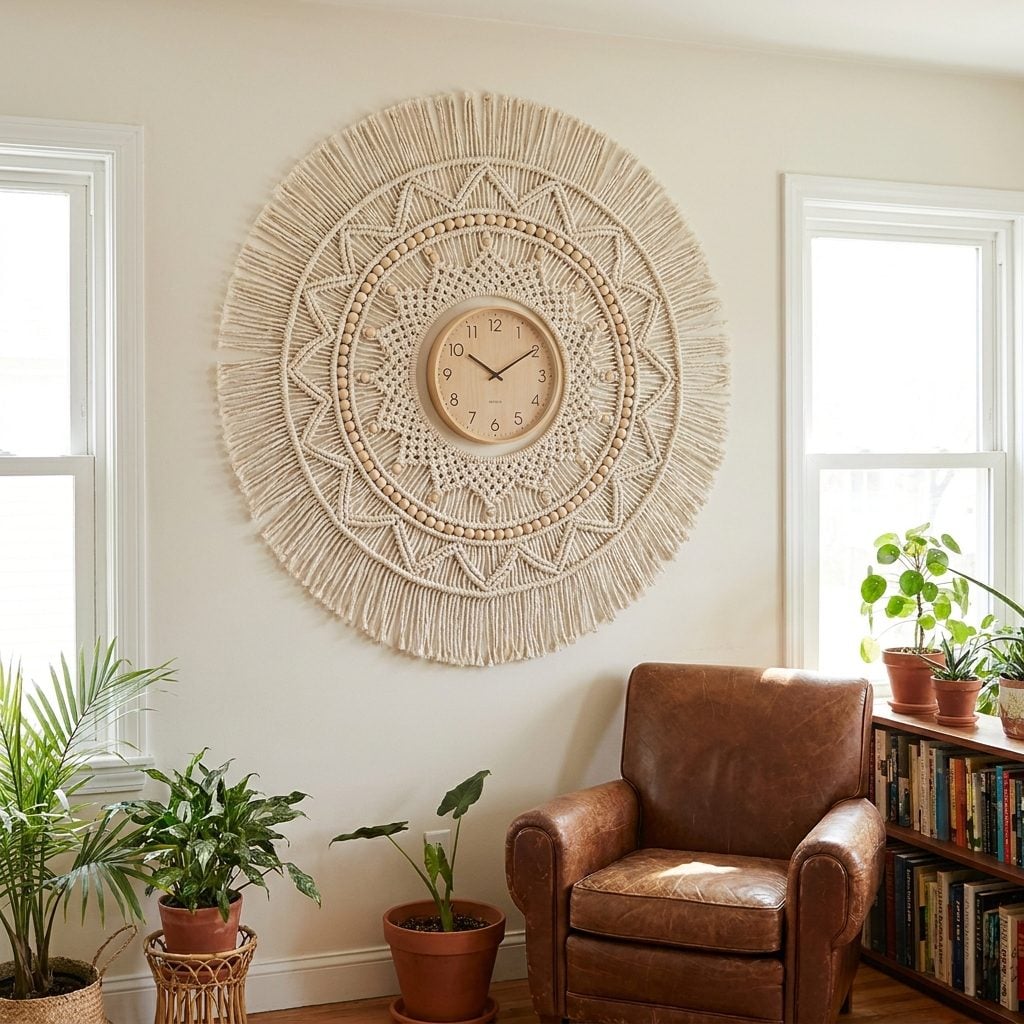
A modest round clock sat inside an explosion of knotted cord that spread well beyond the face. Rope radiated outward like sunbeams, wooden beads punctuated the pattern, and a fringe or tassel dropped from the bottom.
The clock told the time, but the knotting commanded the wall. Craft stores and pattern books offered variations that could turn an inexpensive clock into a weekend project large enough to anchor the room.
14. The Wooden Beads Sewn Along the Bottom of the Drapes
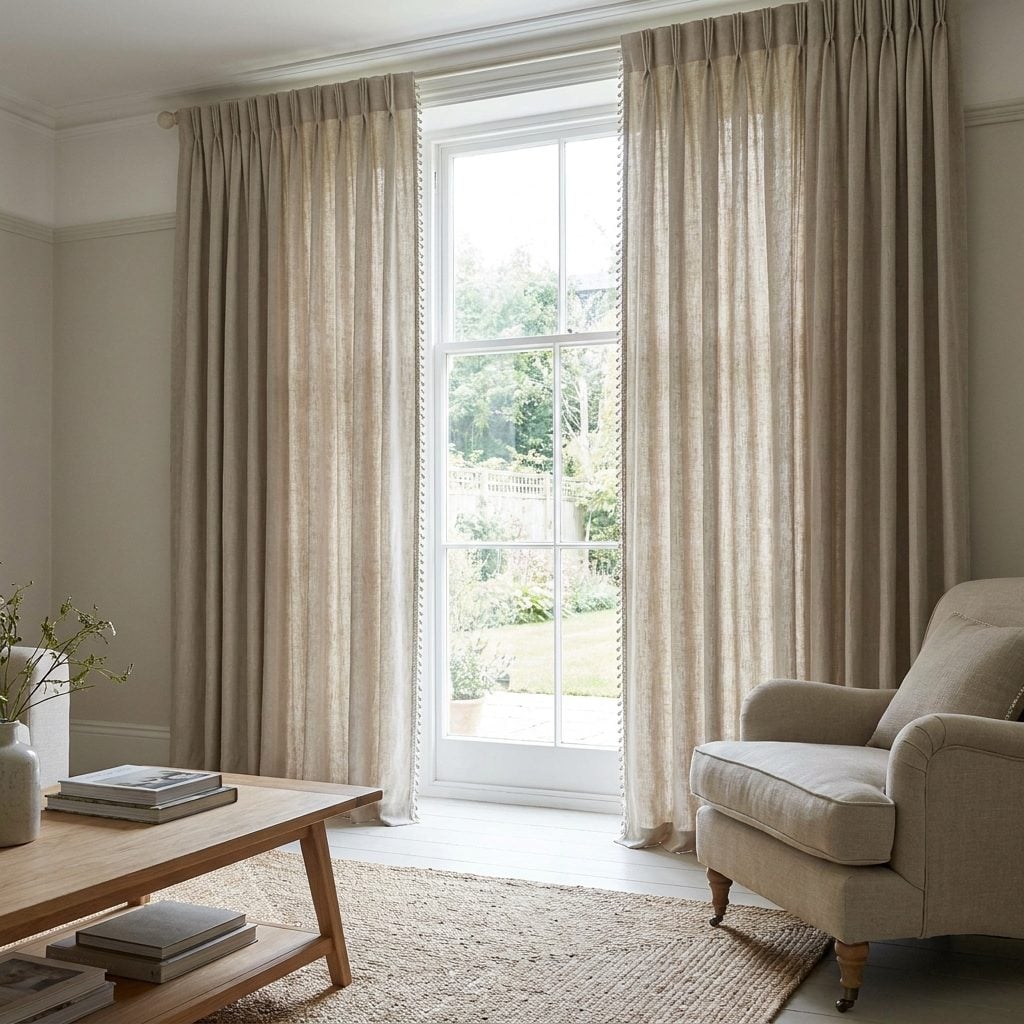
A row of small wooden beads added weight and movement to the curtain hem. When a draft reached the window, the beads clicked softly before the fabric shifted.
This was the kind of alteration done at home rather than ordered from a catalog. Cord, beads, a needle, and patience turned ordinary drapes into something nobody else on the block had in quite the same form.
Whenever the furnace started or a window opened, the weighted hem shifted first, producing a faint wooden tapping before the curtain itself began to move.
13. The Beaded Curtain Panel Hung Inside the Front Window
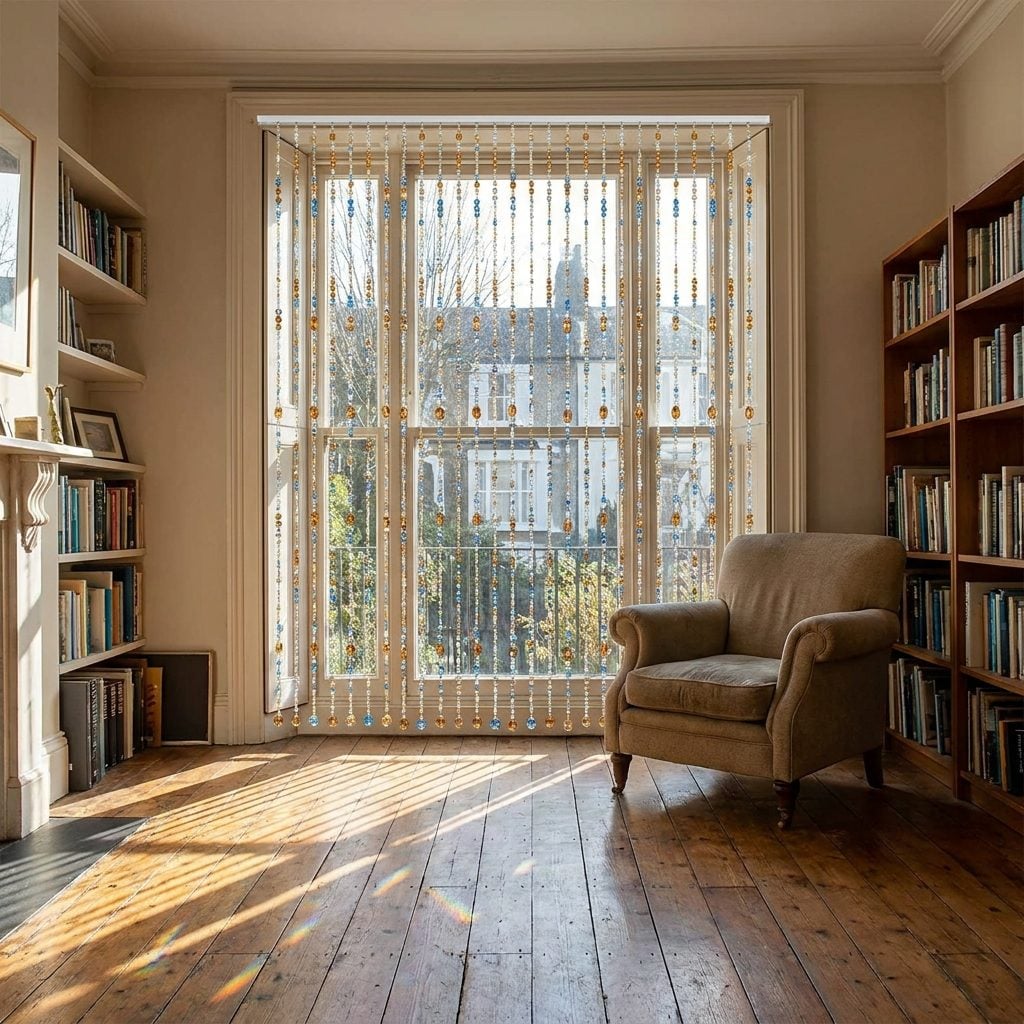
This was not a short valance or a doorway divider. Strand after strand of translucent amber, olive, and smoky-brown beads covered part of the front window, turning late-afternoon sunlight into a field of glowing circles.
The panel provided a suggestion of privacy without making the room dark. Crack the window and the strands shifted against one another, producing a quieter, glassier sound than the heavy wooden curtain in the hallway.
12. The Beaded Chain Curtain Across the Built-In Bar
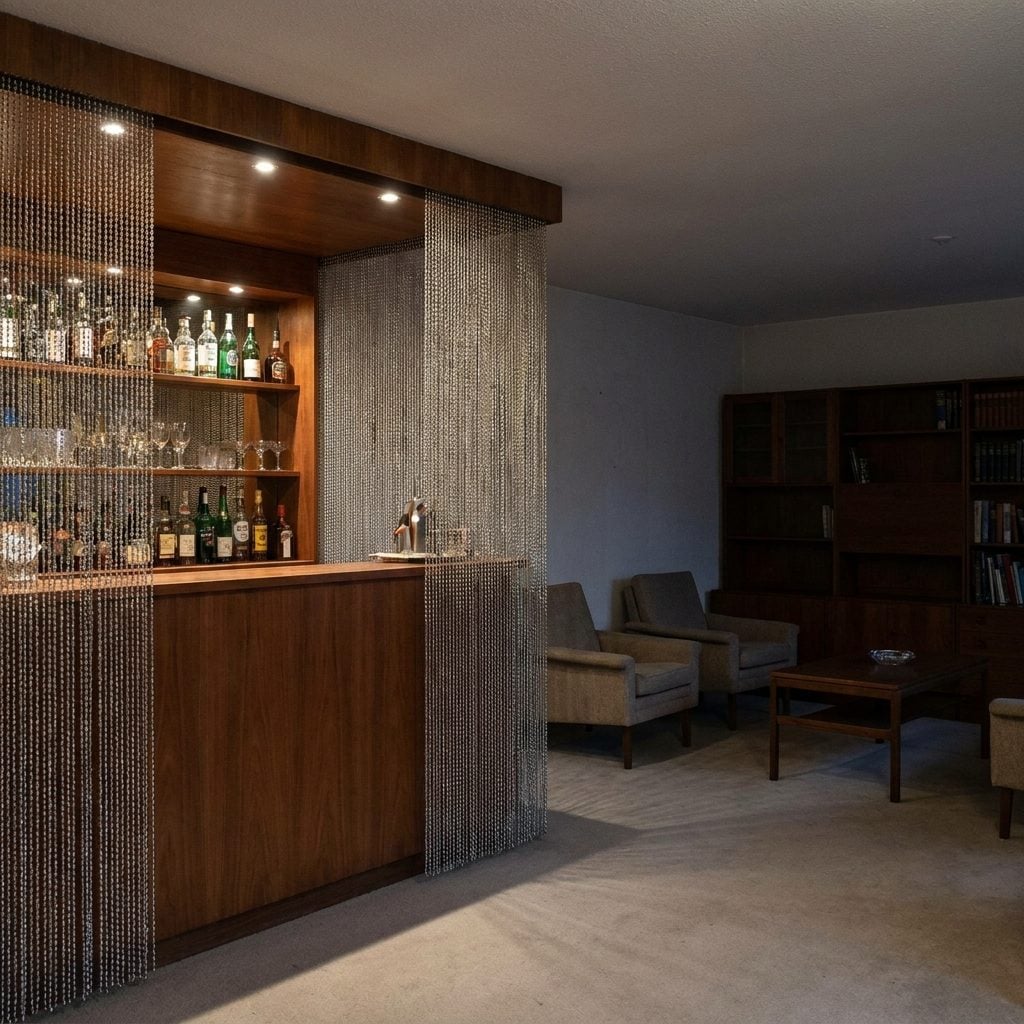
A short curtain of linked chains or glass beads marked the edge of the corner wet bar. One hand parted the strands while the other reached for the bottle kept for company.
Behind them sat amber highball glasses, a soda siphon, and an ice bucket shaped like a pineapple that everyone accepted without comment. The chains stayed cool against the knuckles and produced a sharper metallic click than the wooden doorway beads.
The sound meant glasses were being filled and the adults were settling in for the evening.
11. The Macramé Tissue-Box Cover on the Coffee Table
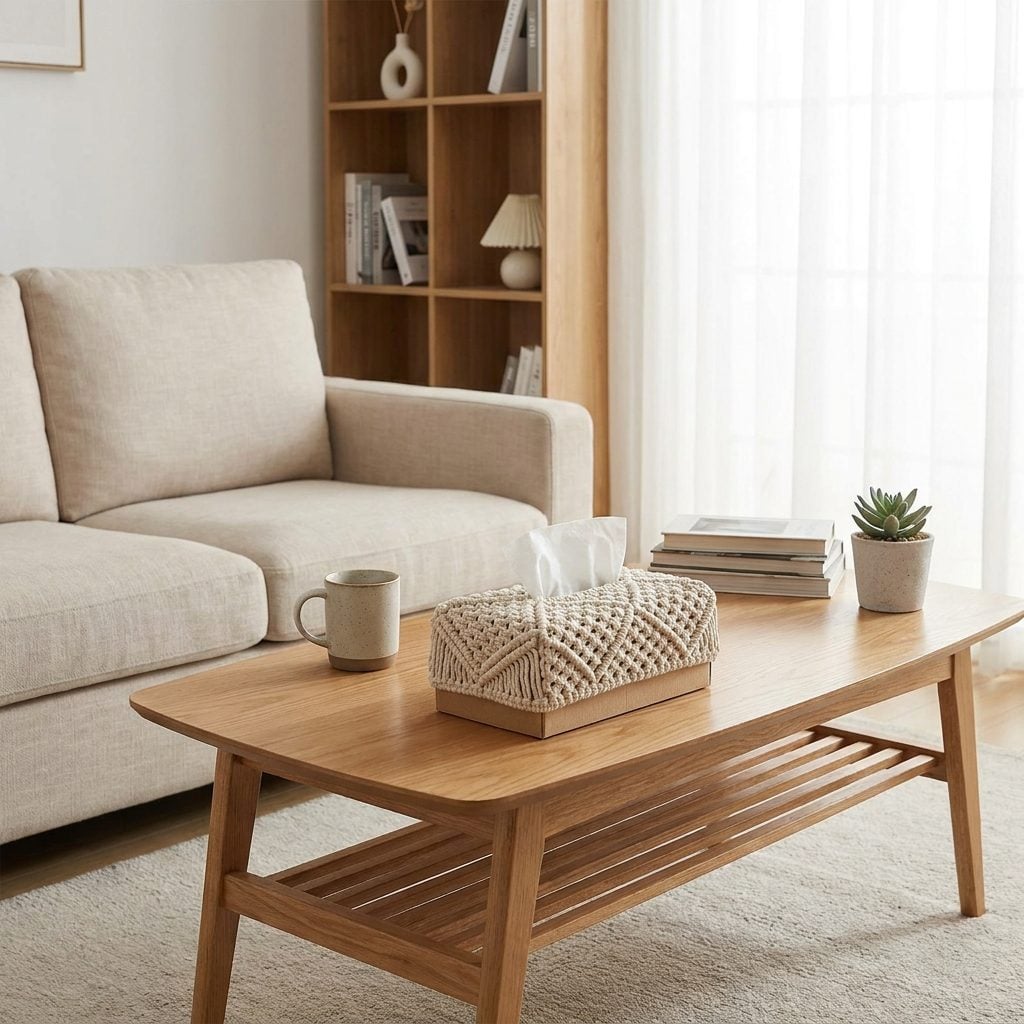
The humblest knotwork in the room was a rectangular jute sleeve fitted over a cardboard tissue box. Tissues emerged through an opening edged with small beads, while the package itself disappeared beneath carefully tied cord.
It sat in the middle of the coffee table beside the ashtray and TV Guide. Grandmothers and aunts made them as gifts, which is why so many families owned one even if nobody remembered asking for it.
10. The Macramé Bottle Cover Wrapped Around the Good Chianti
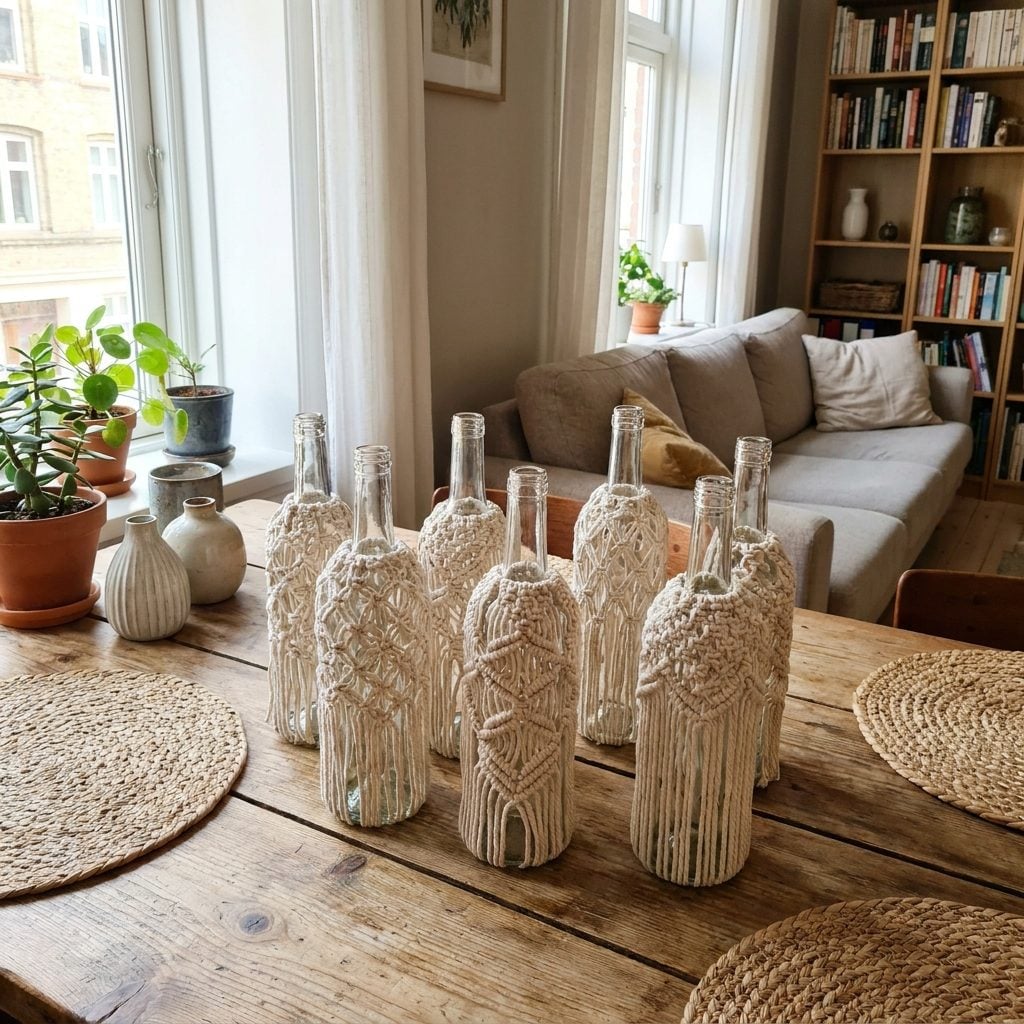
Nobody appeared to be saving the wine for dinner. The bottle sat on the sideboard for years, wrapped in tan cord and sometimes crowned with a candle whose wax had hardened down the glass.
Square-knot spirals hugged the bottle, with clay or wooden beads fitted onto the loose ends. Straw-covered Chianti bottles suited the treatment especially well because the woven base already looked halfway transformed.
It began as packaging, became a craft project, and ended as a keepsake nobody felt authorized to discard.
9. The Macramé Owl Wall Hanging That Watched You Eat Dinner
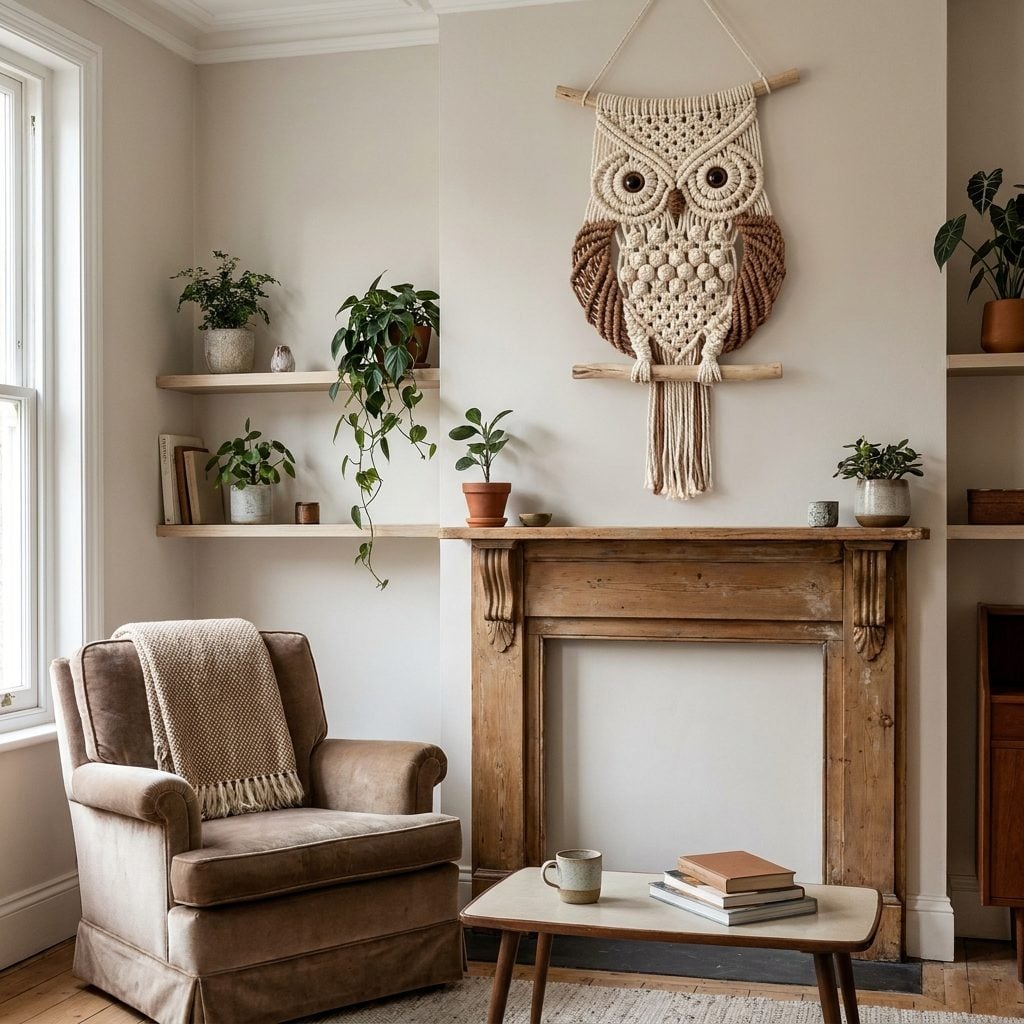
Most macramé owls shared the same alert expression: oversized wooden-bead eyes, a small beak, and a shaggy body suspended from driftwood or a dowel. Some sat on a separate wooden perch. Others seemed to grow directly out of the fringe.
Patterns circulated through craft books, kits, classes, and pamphlets, making the owl an approachable project with an impressive finished result. That is why so many homes ended up with a nearly identical bird staring down from the wall.
8. The Hanging Basket Filled With Silk Ivy That Never Died
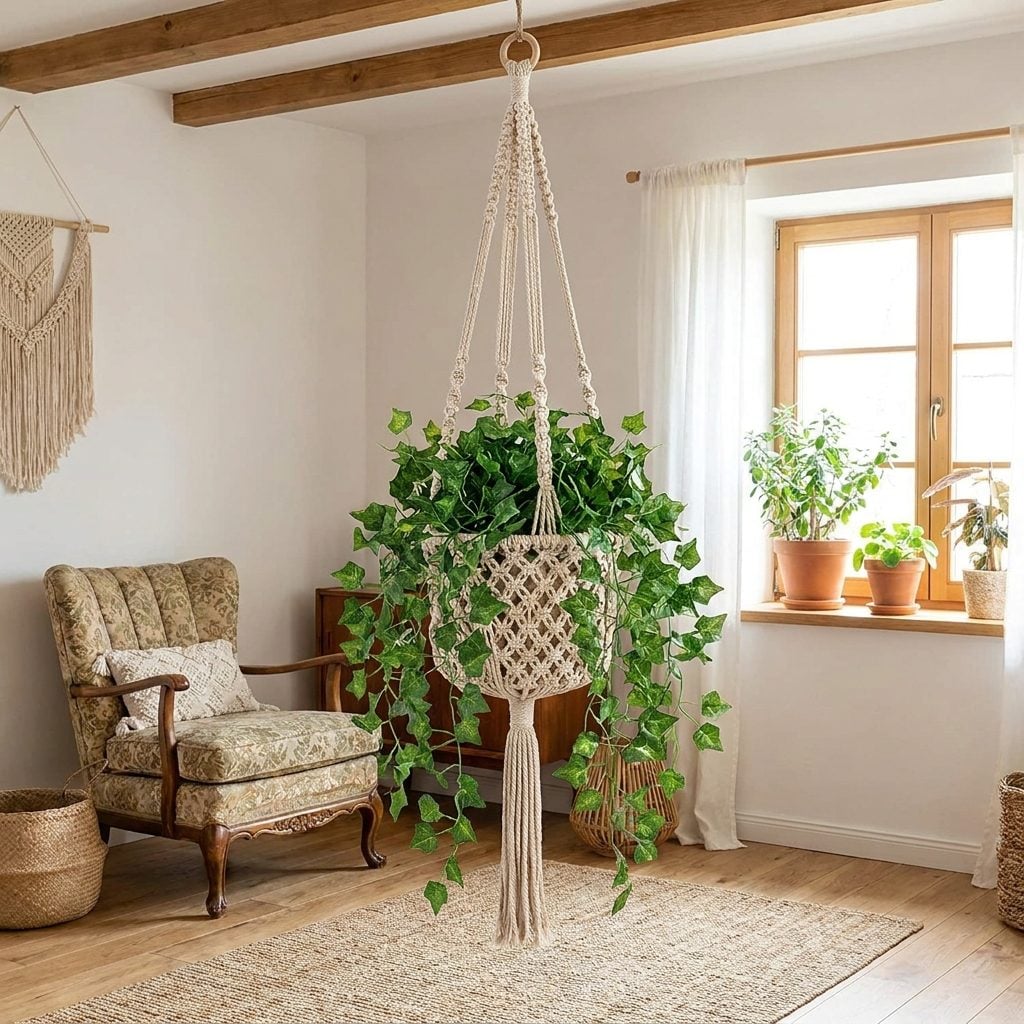
The plant was artificial and nobody was fooled. That was the advantage. Real ivy demanded light, water, trimming, and some ability to diagnose why it had turned brown overnight. Silk leaves asked only to be dusted, a request the household frequently ignored.
The hanger remained the visual star: long cords, wooden rings, and a basket suspended high enough to pull the eye upward. This was less about gardening than adding greenery to a corner where a real plant would have struggled.
7. The Beaded Fringe Dangling From the Swag Lamp
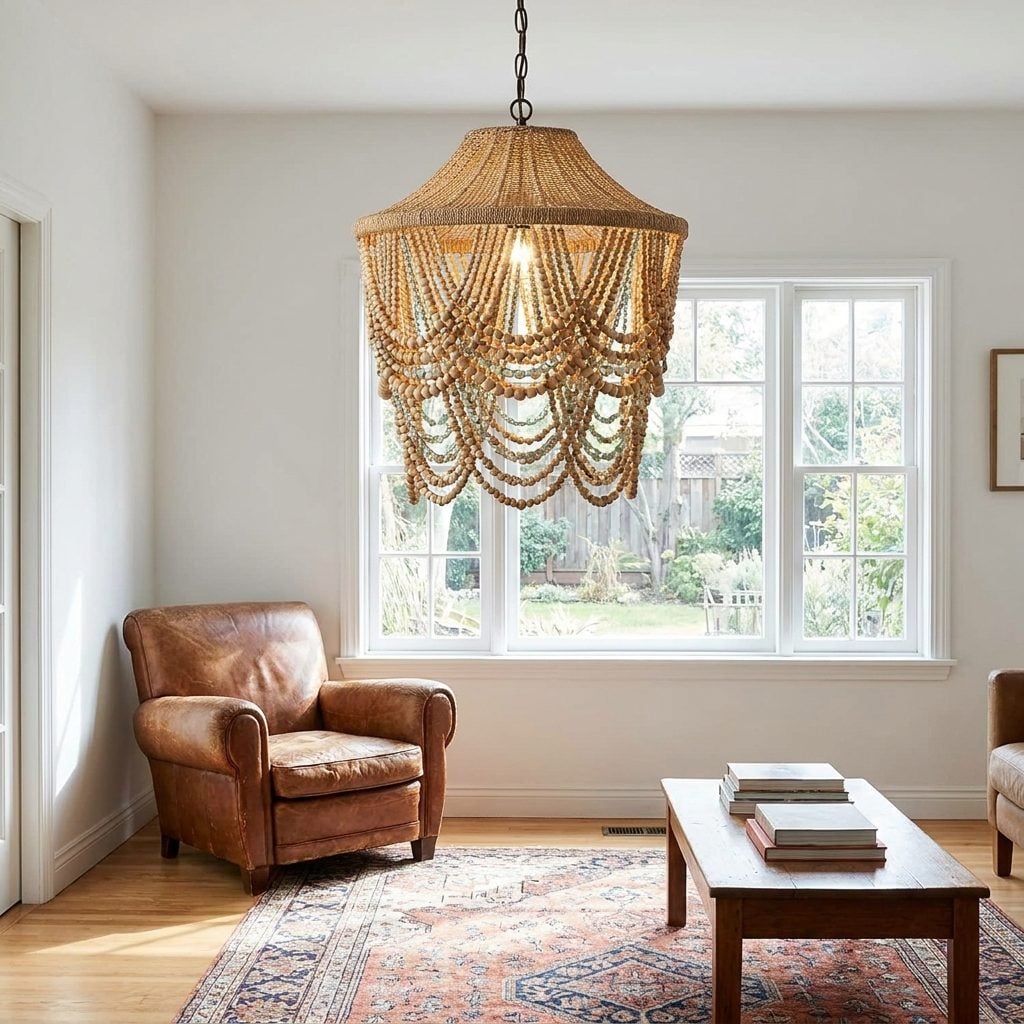
The pull chain controlled the lamp. The fringe transformed it.
Amber and smoke-colored beads circled the bottom of the shade, filtering the low bulb glow and casting small pools of color onto the carpet. When air moved through the room, the fringe trembled against the shade with a faint ticking sound.
A swag lamp already occupied plenty of visual territory. The beads made certain nobody overlooked it.
6. The Wooden-Bead Divider Framing the Conversation Pit
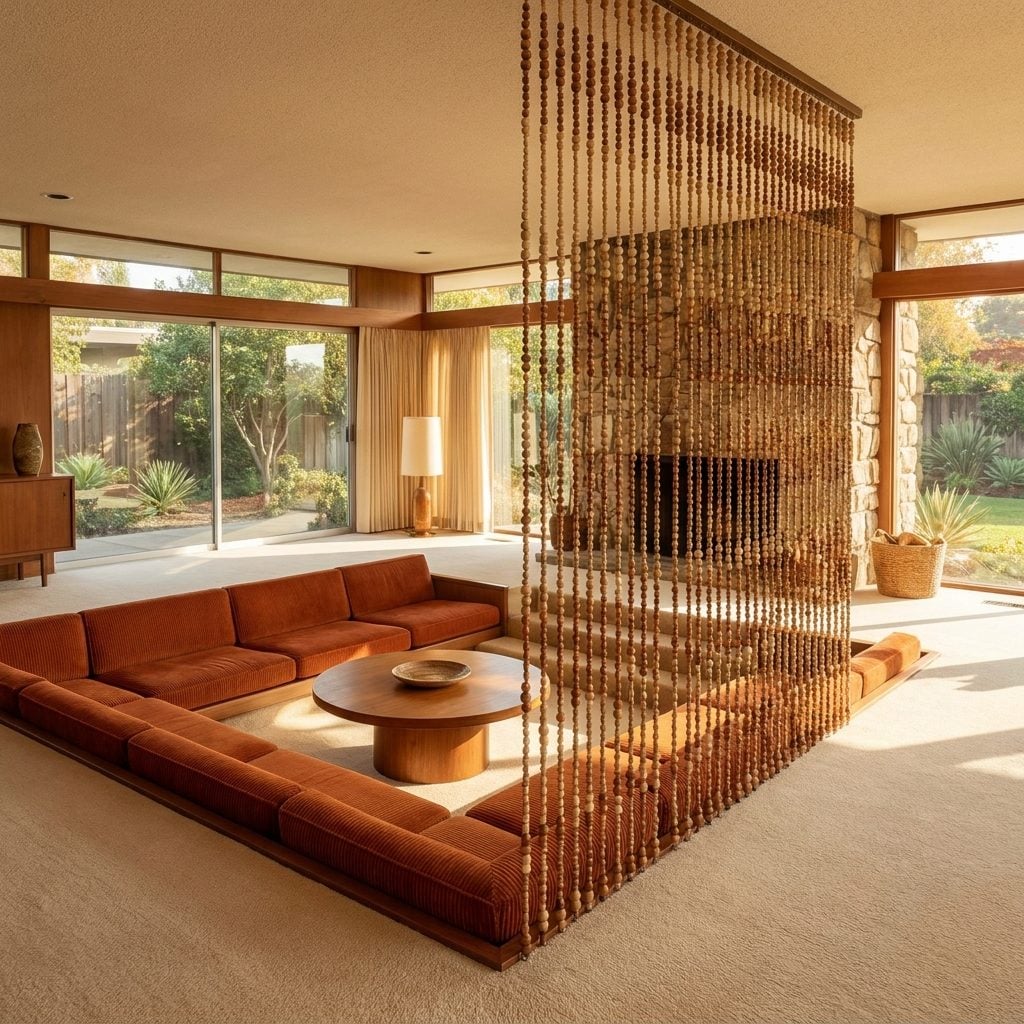
Here the beads did not simply fill a doorway. They marked the change in level between the main room and a sunken seating area, hanging beside an opening or curving around part of its edge.
The strands provided a visual boundary while leaving the gathering visible from the rest of the room. People touched them in passing, children counted the beads, and one section always seemed to be missing a piece.
5. The Shell-and-Bead Hanging That Clicked in the Screen-Door Breeze
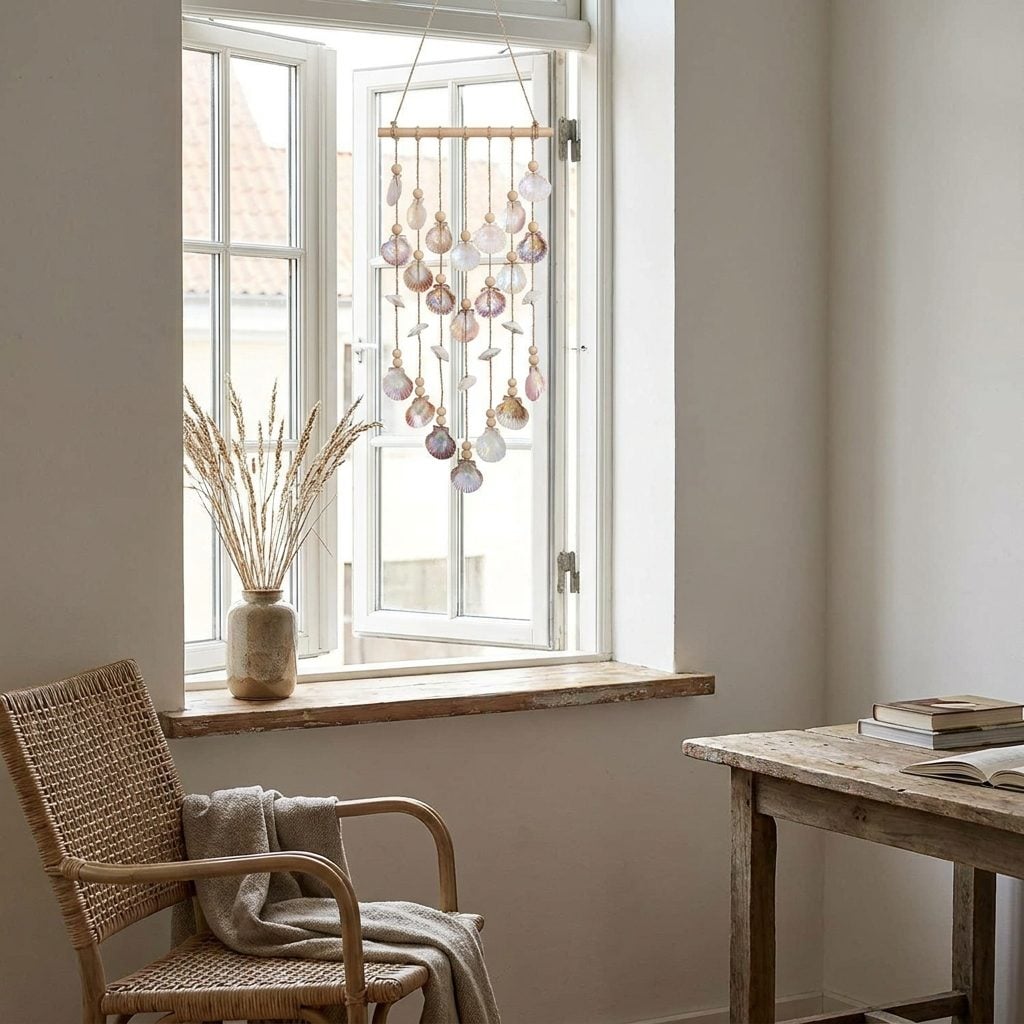
Small capiz shells and pastel beads hung from fishing line in a kitchen pass-through, sheltered porch opening, or beside a sliding door. On a still day, the strands barely moved. When a breeze crossed the screen, they produced a soft, glassy clicking.
Part curtain, part wind chime, the hanging announced that a door had opened before anyone entered the room.
It sounded like summer. It sounded like a back porch. That particular rattle remains buried in a lot of memories.
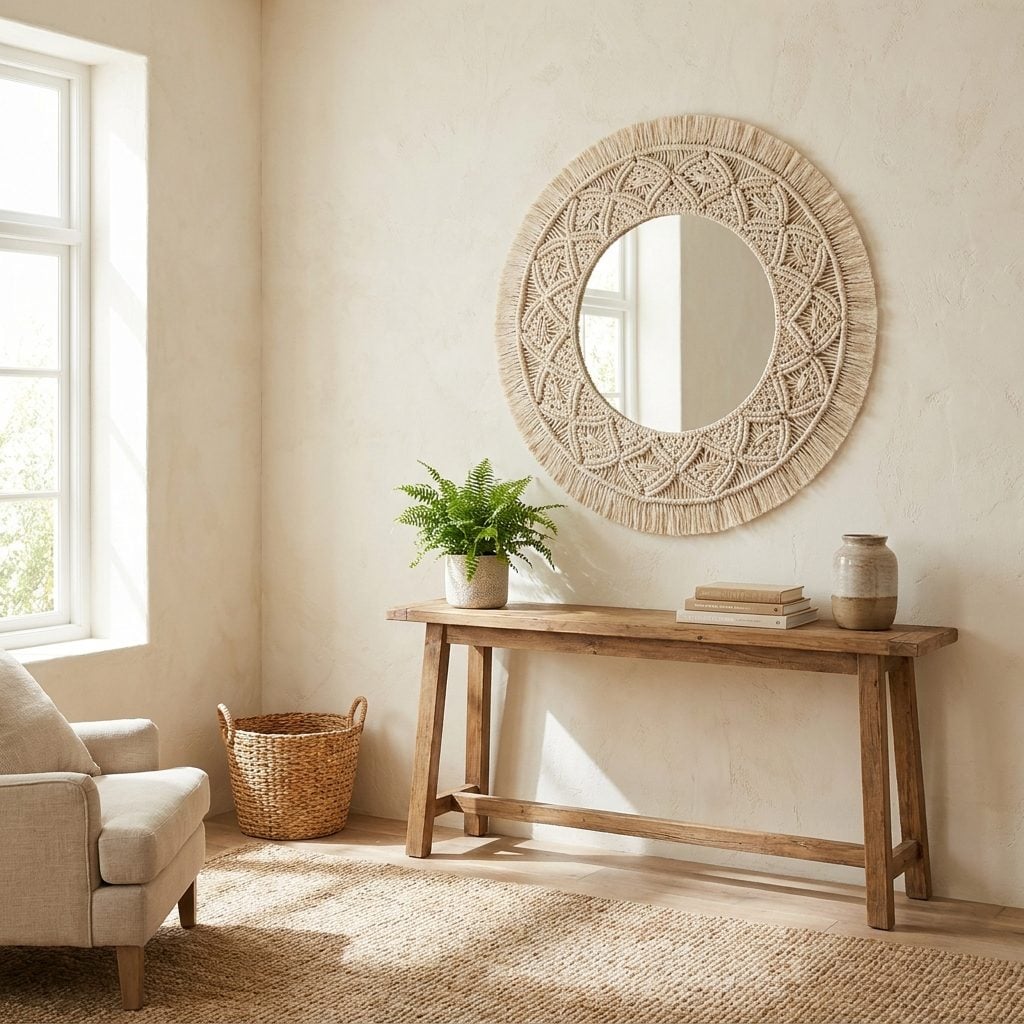
4. The Macramé Mirror Frame Hanging Over the Console Table
🔥 Would you like to save this?
A round mirror sat inside a thick rope sunburst or beaded halo. It hung above the entry console where people checked their collars, glasses, or feathered hair before leaving the house.
The knotted frame softened the surrounding wood paneling and connected the mirror to the room’s plant hangers and wall art. Below it sat a candy dish, a ceramic figurine, and perhaps one brass owl too many.
3. The Macramé Wine Rack That Held Four Bottles and a Whole Worldview
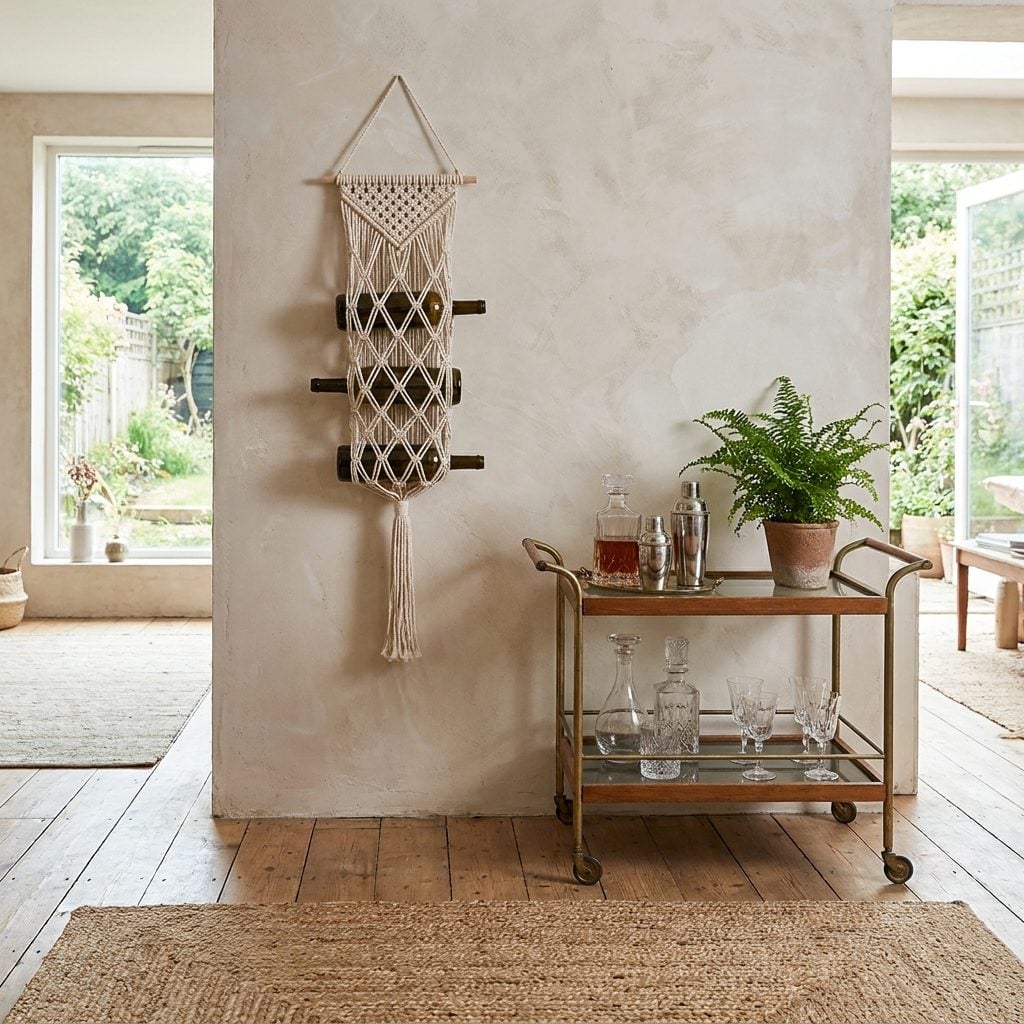
A properly constructed hanging rack could cradle several bottles inside thick loops of cord, but the knots and wall anchors had to carry real weight. Wooden beads added decoration while the rope did the structural work.
The visual contrast made the piece memorable: natural jute hanging beside a chrome-and-glass bar cart lined with crème de menthe, Galliano, and other bottles that seemed to last forever.
One side of the corner suggested cocktail hour. The other looked ready for a houseplant and a pottery class. Both belonged to the same room.
2. The Hand-Knotted Wall Pocket Holding Dried Flowers
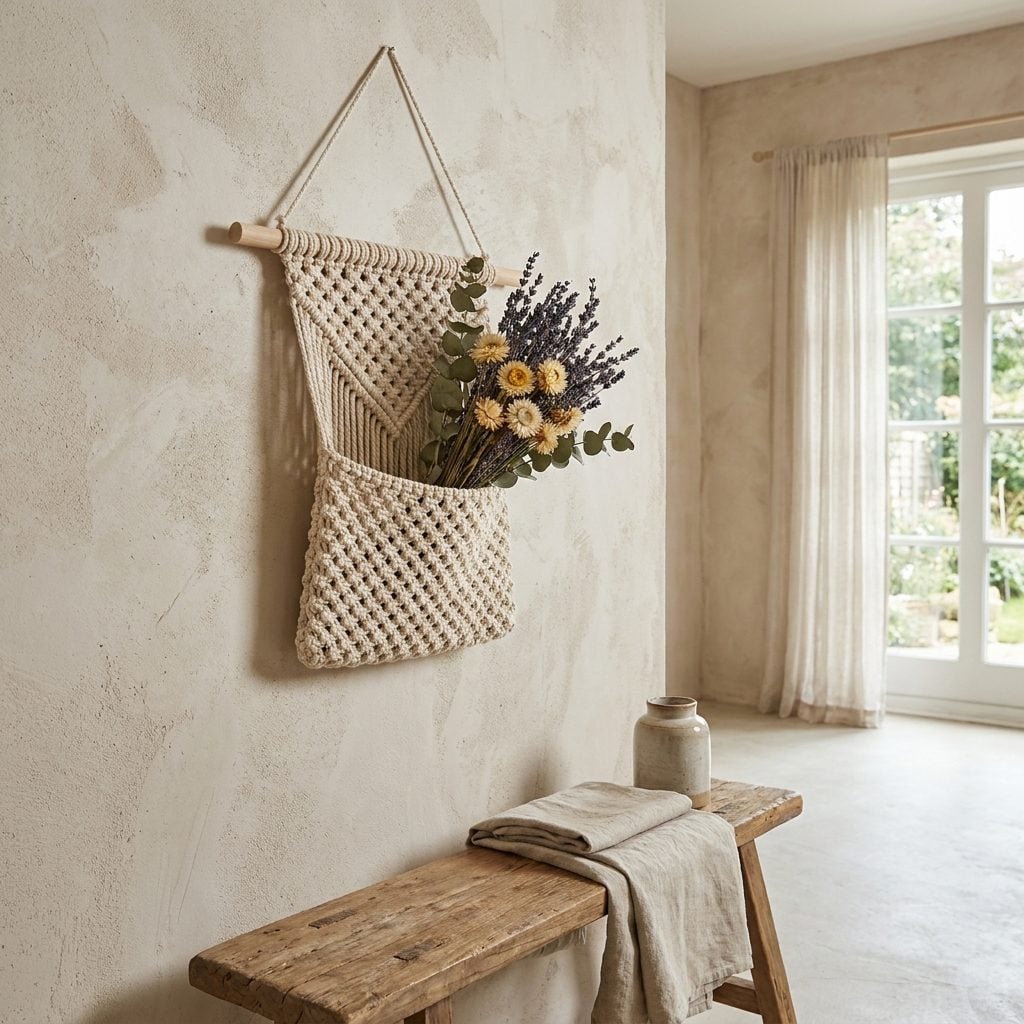
A shallow jute pouch rested against the wall, filled with dried statice, wheat stalks, and baby’s breath faded to the color of old paper. The flowers gathered dust, grew brittle, and remained undisturbed year after year.
This was not a centerpiece or a showpiece. It was one of the smaller handmade objects that gave the room its accumulated character.
1. The Macramé Key Holder Mounted Near the Front Door
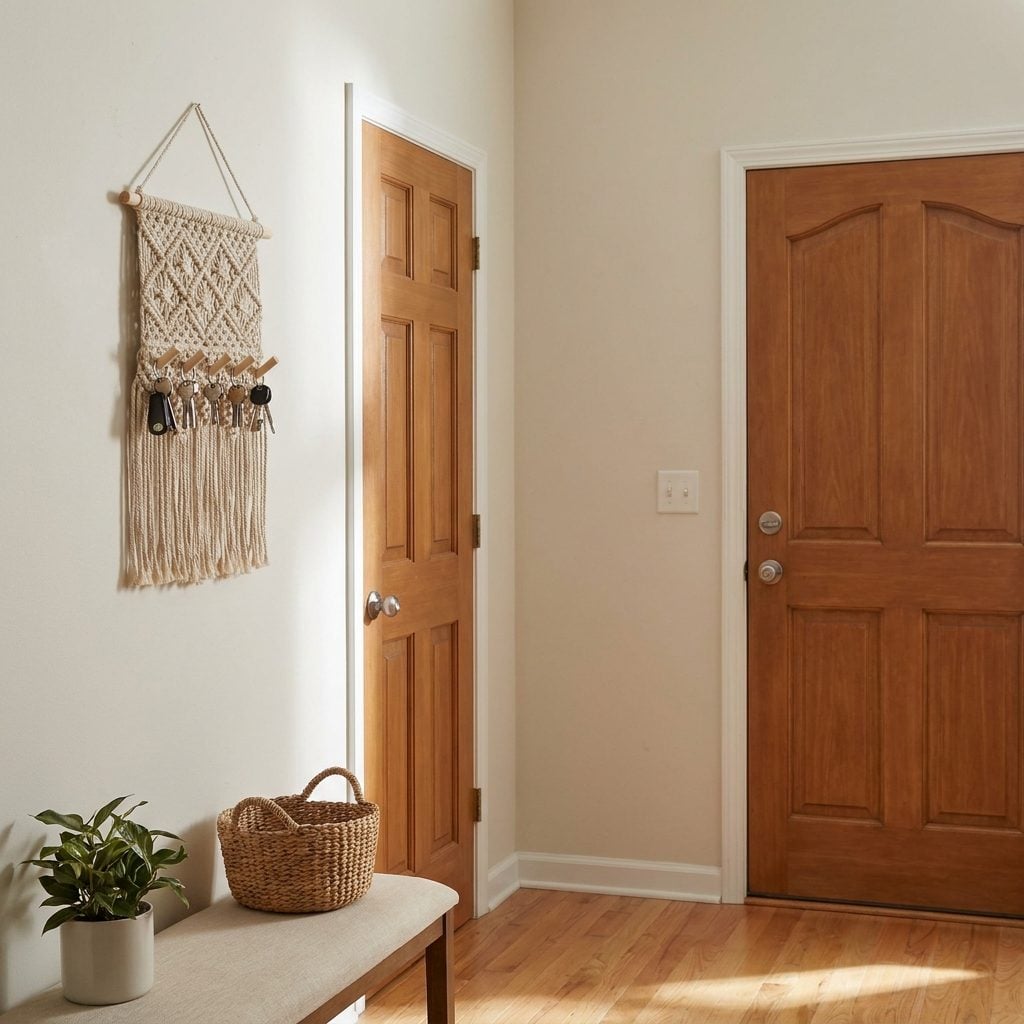
A small panel of oatmeal-colored cord hung within reach of the front door, fitted with loops or hooks along the bottom. Car keys, the shed key, and one mystery key to a lock replaced years earlier all shared the same space.
The system was not flawless. Keys tangled, loose strands caught on key rings, and the whole panel swung when the door slammed. Still, it gave an ordinary household necessity the same handmade treatment as the walls and windows.
A bare wall in 1974 was not a design choice. It was an unfinished project.