🔥 Would you like to save this?
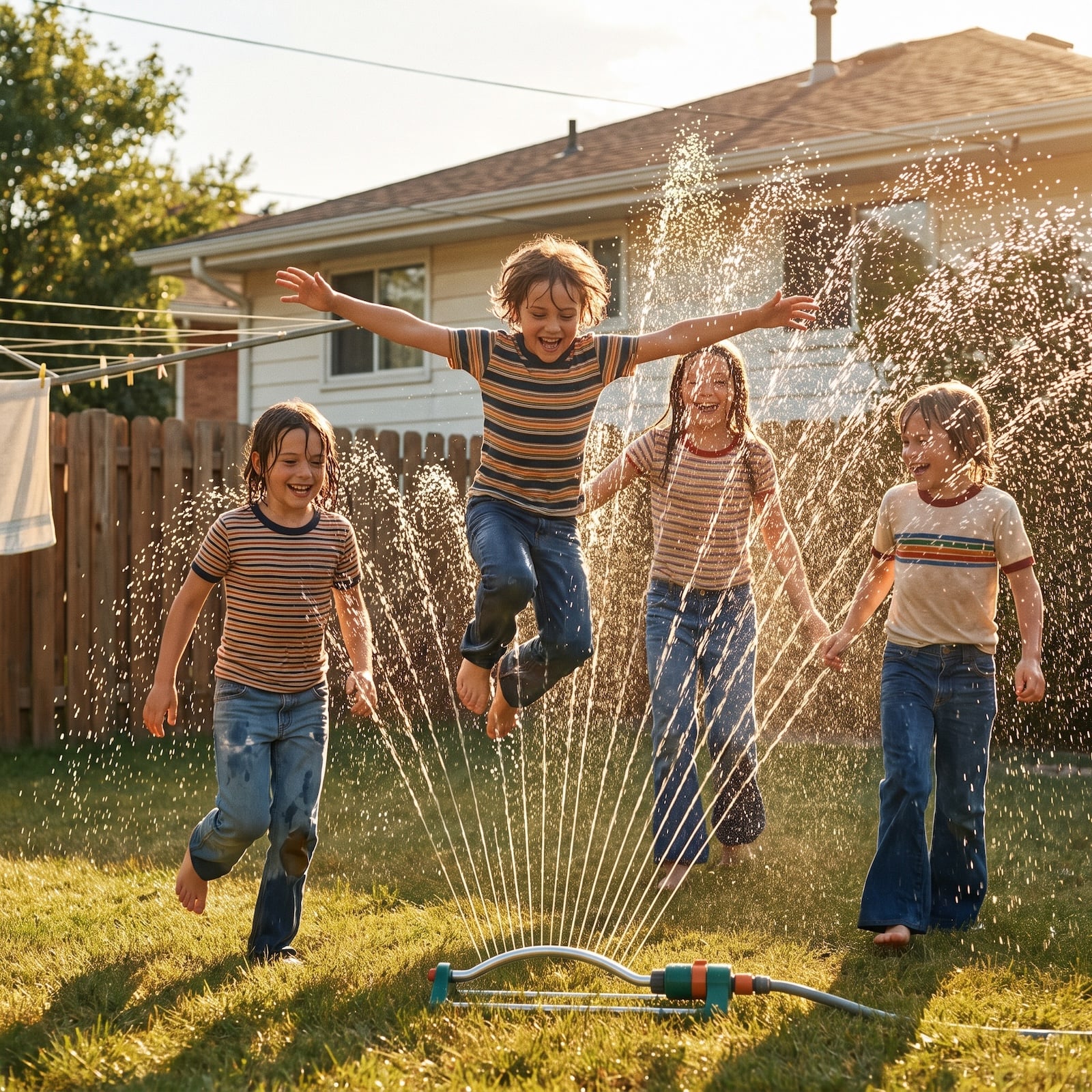
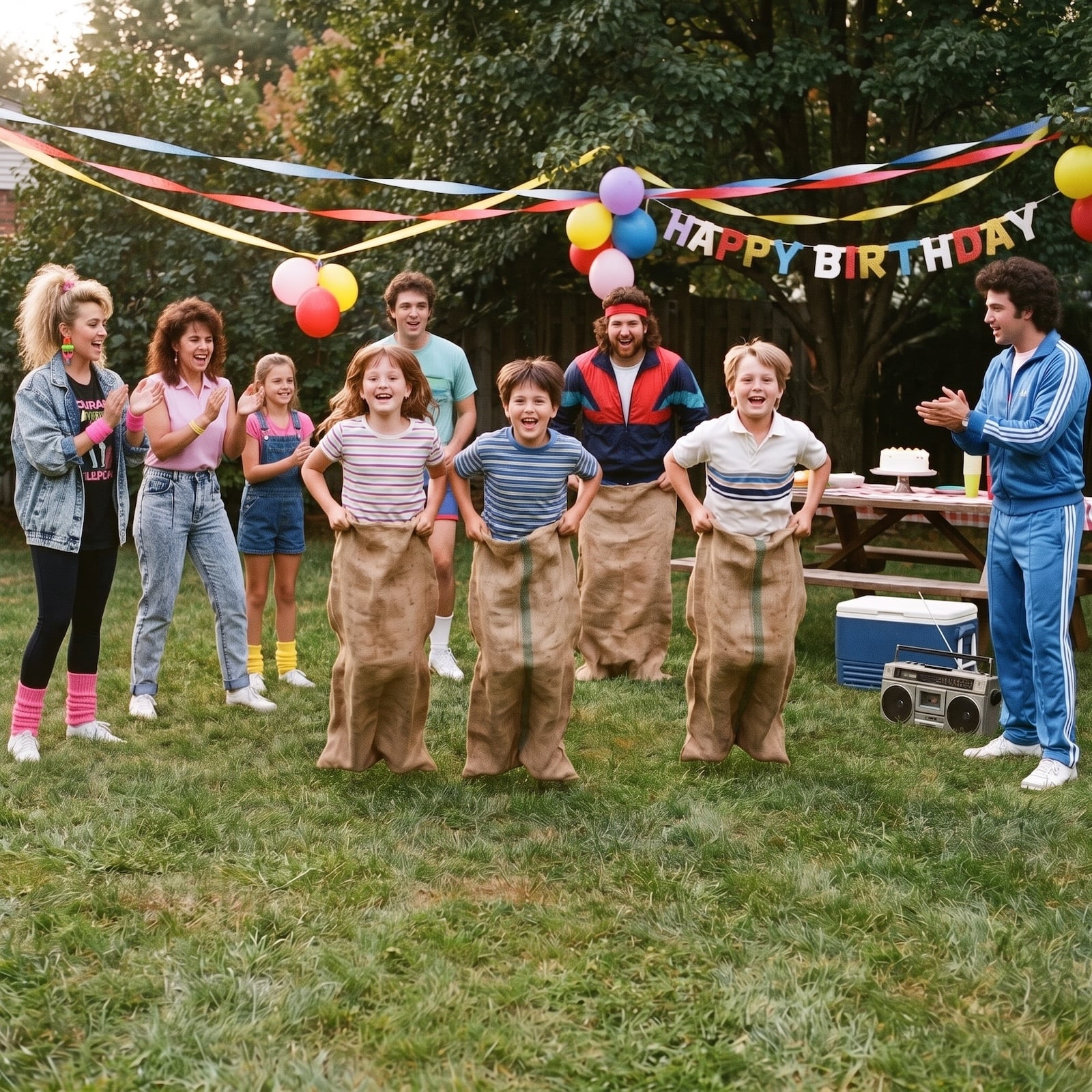
A 1980s backyard birthday did not begin with a booking confirmation. It began with a pack of paper invitations, a ballpoint pen and somebody clearing enough junk off the kitchen table to address eight envelopes. By party day, the yard had acquired crepe paper, balloons, folding chairs from three different rooms, a card table from the garage and a cake that might lean slightly to the left. Nobody called any of this rustic, curated or charming. It was simply how you got ten kids into one backyard and kept them entertained until their parents came back.
The prices look tiny now, but the wages were tiny too. The federal minimum wage settled at $3.35 an hour in 1981 and stayed there for the rest of the decade. A $10 piñata represented nearly three hours at that rate. A $2.30 half-gallon of ice cream took about forty minutes. Even mailing the invitations added up: first-class postage was 20 cents through early 1985, then 22 cents, and reached 25 cents in 1988. The party stayed affordable because families reused what they owned, borrowed what they did not and spent real money mostly on things that would be eaten, popped, smashed or thrown away before dark.
In order to come up with the very specific design ideas, we create most designs with the assistance of state-of-the-art AI interior design software. Also, assume links that take you off the site are affiliate links such as links to Amazon. this means we may earn a commission if you buy something.
These 30 price tags reconstruct the afternoon from the first invitation to the final trash bag. Some purchases lasted ten minutes. Others, like the folding table and boombox, came back year after year. Together they built the classic eighties birthday: paper decorations loosening in the breeze, hot dogs on the grill, Kool-Aid on the table, kids disappearing inside burlap sacks, a Slip ‘N Slide murdering one strip of lawn and somebody’s mother quietly calculating whether there was enough cake for the neighbor kids who had appeared without invitations.
Have a renovation on your wish list? See today’s home equity rates while you work out the numbers.
30. The Pack of Paper Invitations, Filled Out by Hand for $1 to $2
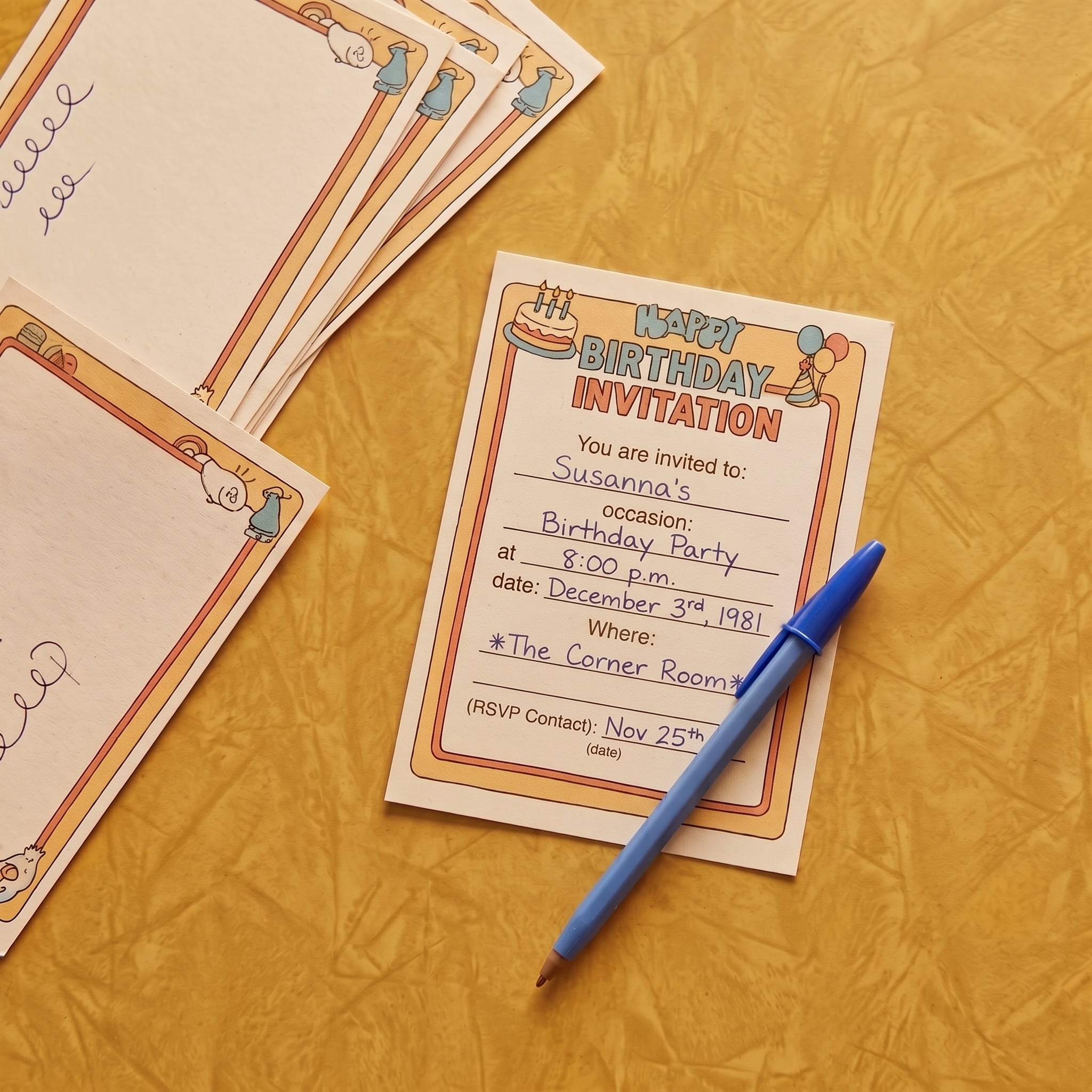
A small pack of themed invitations could land in the one-to-two-dollar range, with licensed cartoon characters usually occupying the fancier end of the rack. Then came the real work: name, date, time, address and RSVP number, all squeezed onto dotted lines in whatever handwriting you had.
The stamps could cost as much as the cards. By 1985, mailing eight invitations at 22 cents each added $1.76 before anybody had hung a streamer. You licked eight envelopes anyway, dropped them in the mailbox and waited for the phone to ring.
29. The Accordion-Fold HAPPY BIRTHDAY Banner: $1.50 to $2
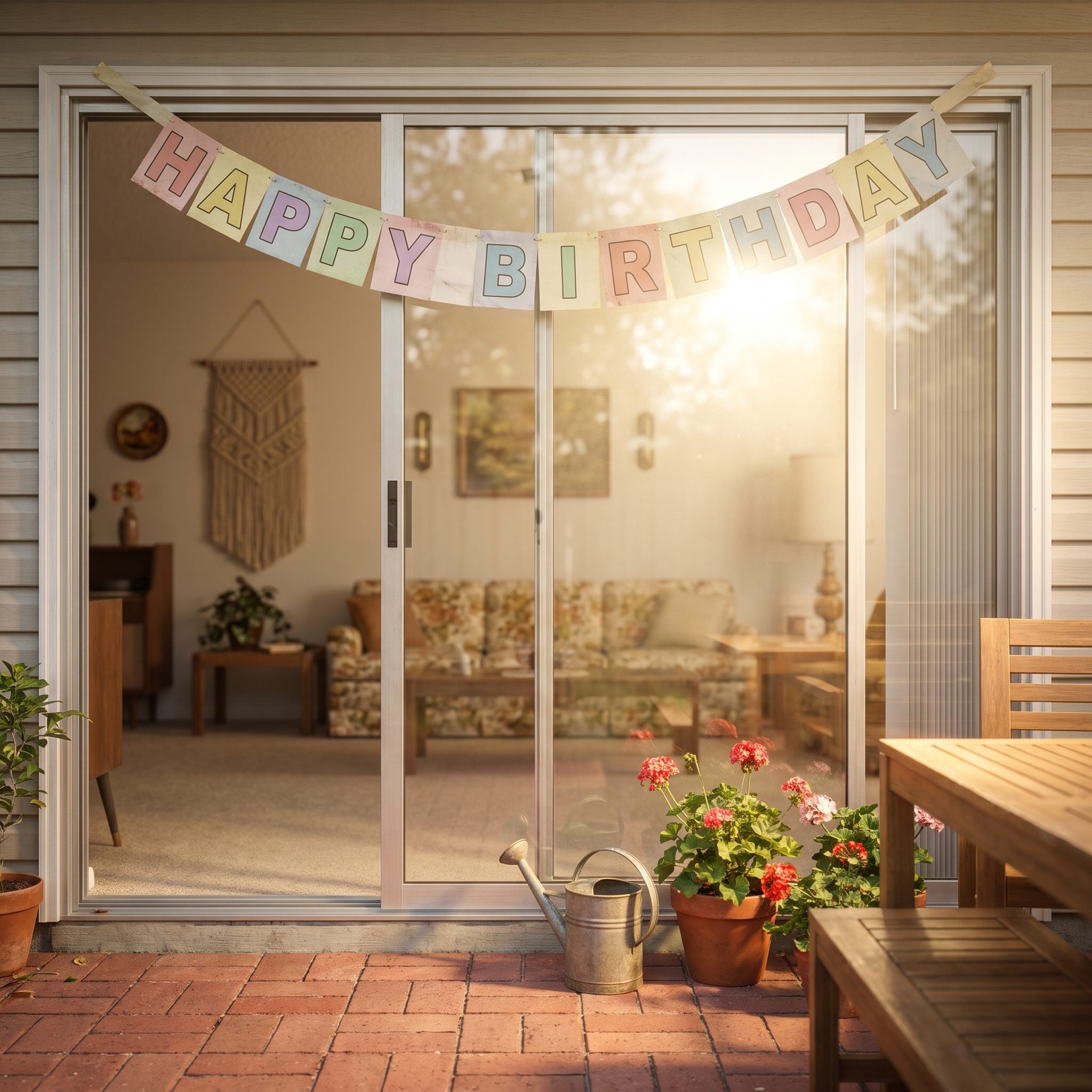
Two dollars bought the cardboard banner that spelled HAPPY BIRTHDAY in fat block letters and spent the rest of the afternoon trying to return itself to the floor.
You opened it accordion-style, taped both ends to the siding and stood back. Ten minutes later the center sagged. By cake time one corner had surrendered completely and the banner was hanging diagonally over the party like a tired parade float.
Nobody threw it away after one use. It folded back into its original pleats and disappeared into a cupboard until the next birthday, acquiring more tape scars every year.
28. A Dozen Balloons for $1 to $1.50, Inflated by Lung Power
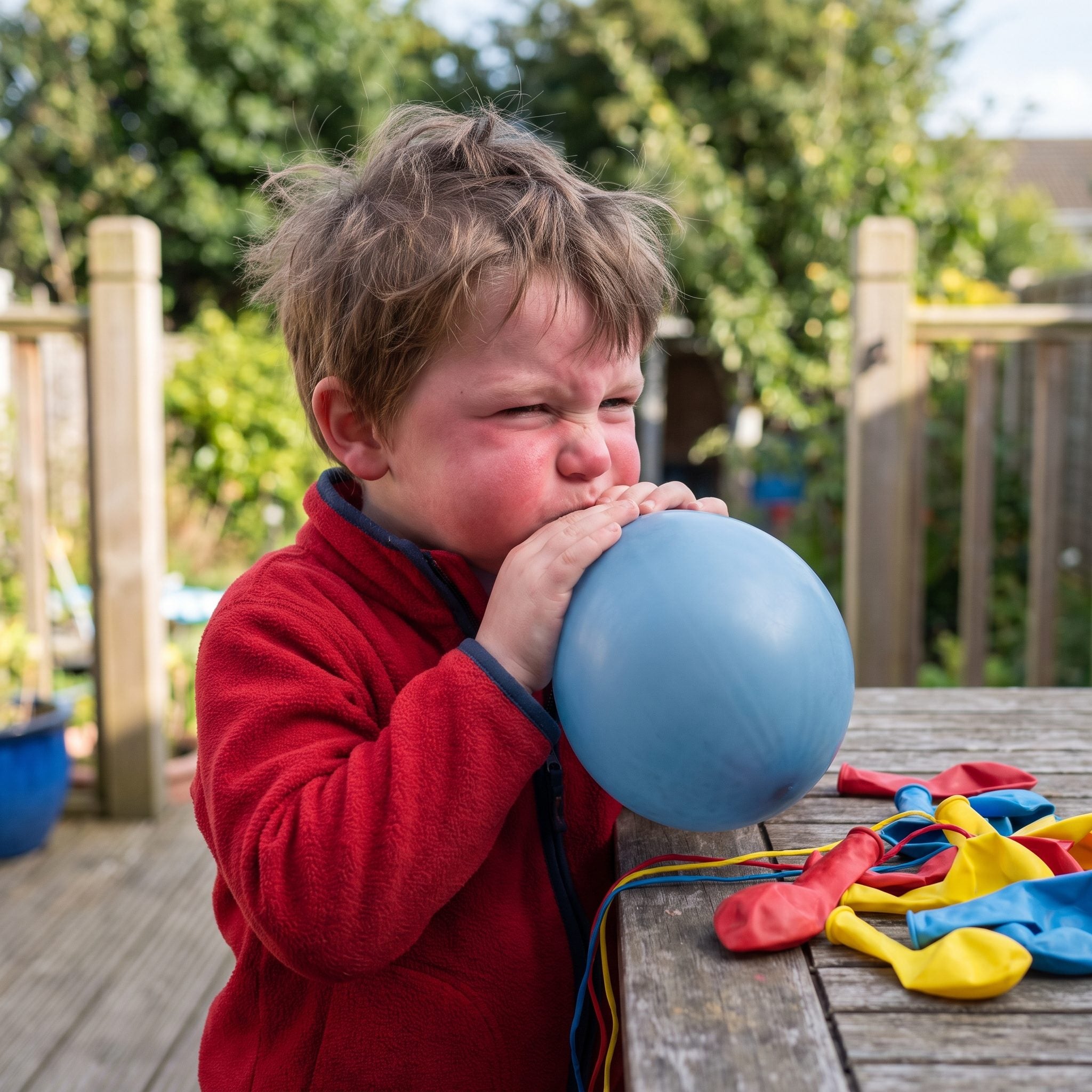
Helium changed the economics. A bag of ordinary assorted balloons did not. A dollar or so bought enough latex to decorate the fence, porch and folding chairs, provided the adults were willing to supply the air.
Somebody always claimed to have exceptional balloon-blowing stamina. That boast generally survived six balloons. The rest were passed around until the yard was colorful and half the adults looked as though they had just finished a sprint.
The heat popped a few before lunch. The survivors migrated indoors afterward and slowly shriveled behind furniture until somebody found the last one weeks later, wrinkled beyond recognition.
27. Crepe-Paper Streamers for 50 to 75 Cents a Roll
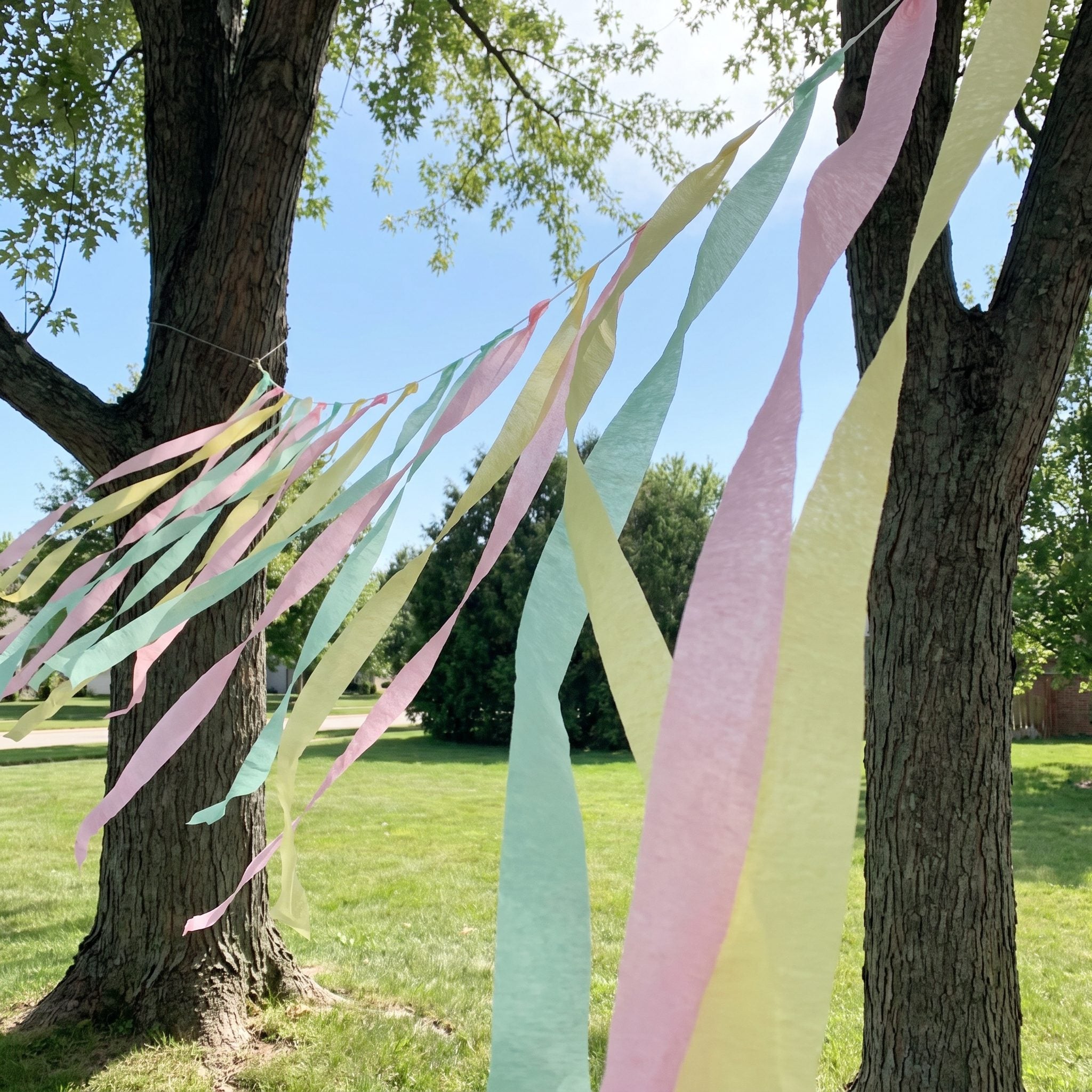
Crepe paper delivered an absurd amount of decoration for pocket change. A few rolls in competing colors could travel from porch post to tree, tree to clothesline and clothesline back to the house before anybody ran out of places to tape it.
The trick was twisting two colors together as you went, a decorating technique apparently transmitted directly from parent to child without written instructions. The result looked festive right up until rain arrived and the dye began surrendering itself to everything underneath.
Want that same low-effort, high-payoff outdoor charm today? A colorful backyard makeover pulls off the trick with paint and planters instead of paper.
26. The Folding Table That Became Party Headquarters: $20 to $30 New
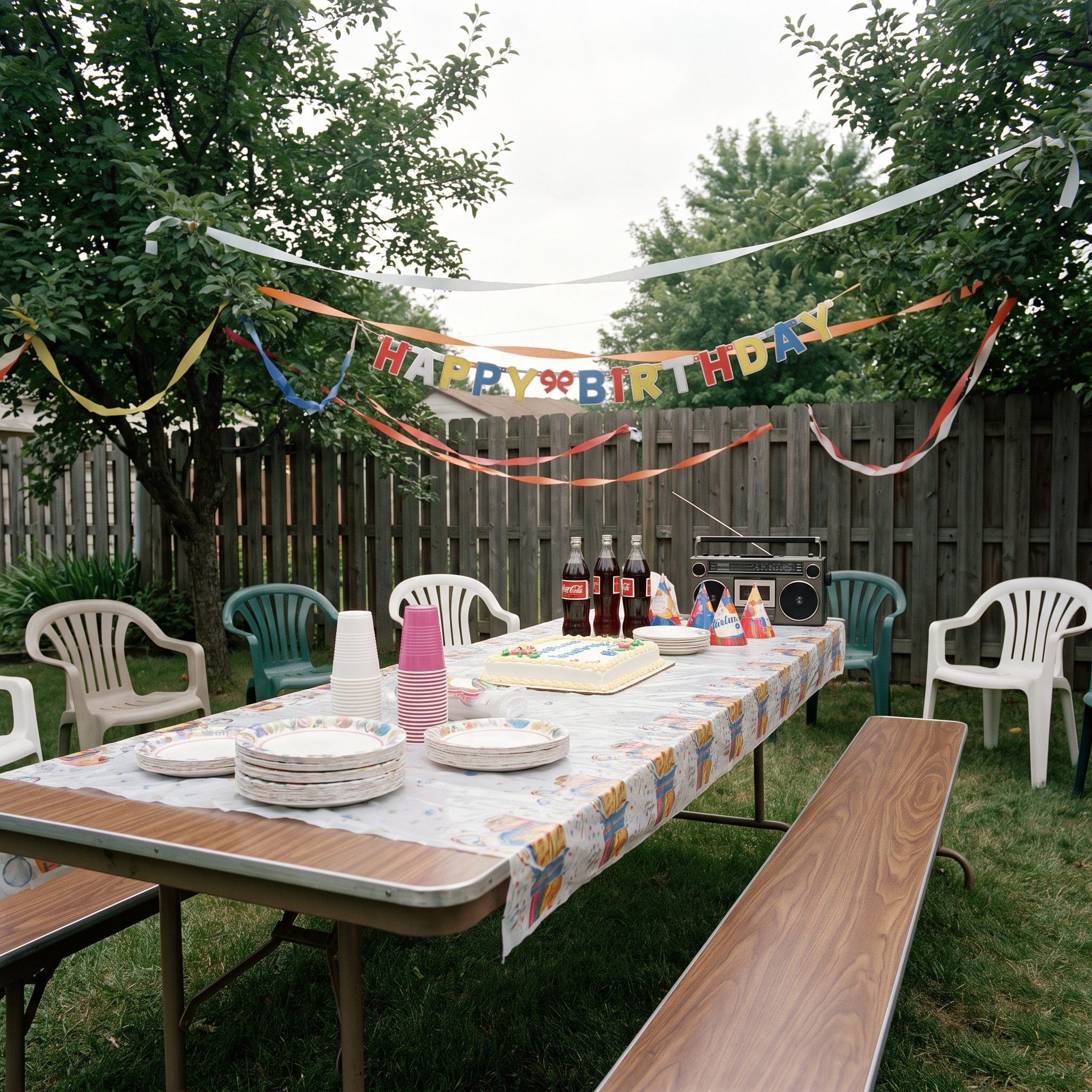
A new folding table represented a real purchase at twenty to thirty dollars, which is why the birthday usually inherited one the family already owned. Woodgrain laminate on top, folding metal legs underneath, one corner permanently questionable.
On party day it became command central. Cake landed at one end, presents collected at the other, drinks migrated through the middle and somebody eventually discovered that one leg was shorter than the rest. A folded piece of cardboard fixed that.
Six hours later the table folded shut and returned to the garage, ready for card games, Christmas overflow, a neighborhood sale or the next birthday.
25. A Cartoon-Character Paper Tablecloth for $1.50 to $3
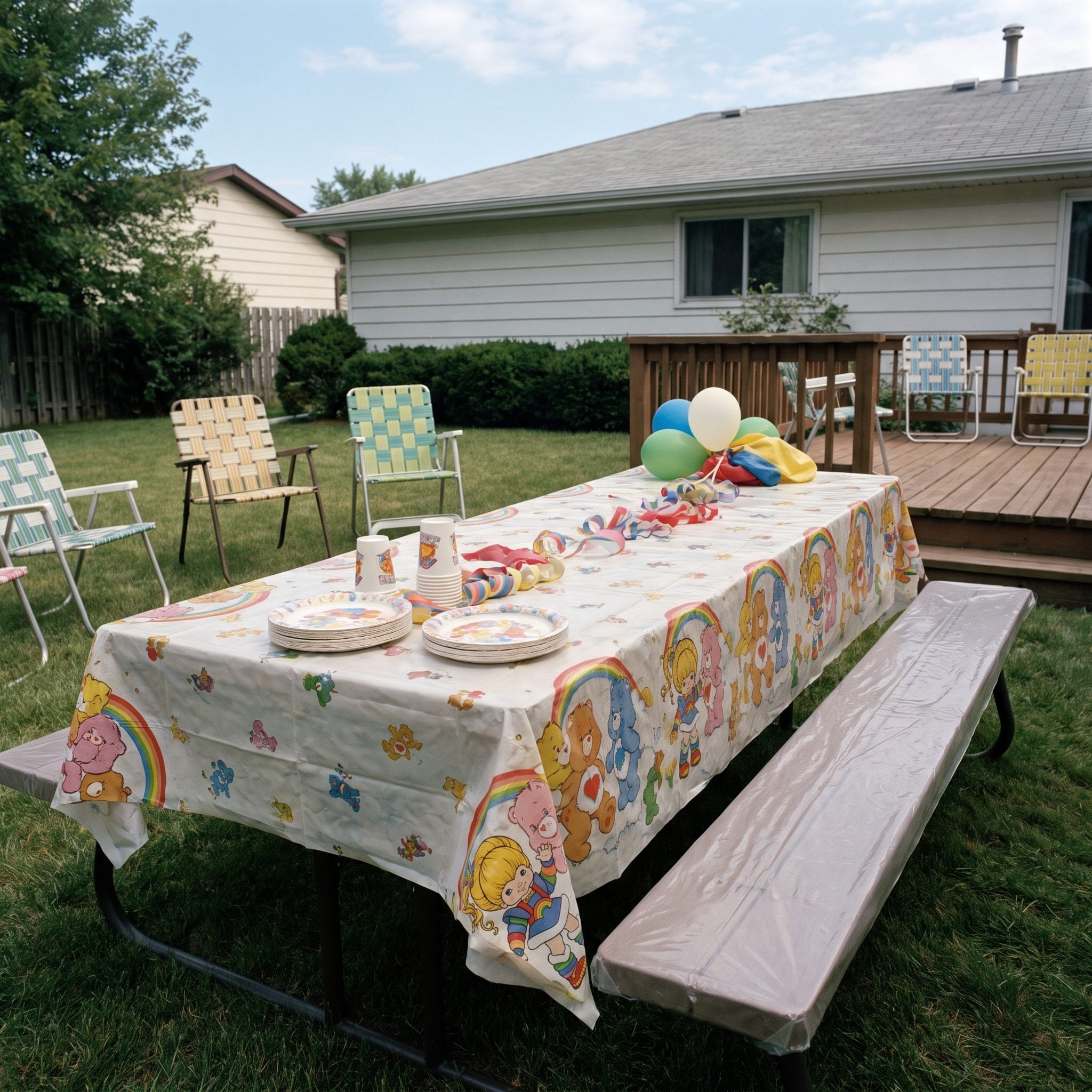
A few dollars covered the battered folding table with whatever cartoon, superhero or Saturday-morning character currently owned the birthday kid’s heart.
The material was thin enough to reveal the table’s history beneath it, but that was not really the job. The job was to make the photographs look festive and keep frosting out of the woodgrain laminate. A breeze inevitably lifted one corner, and a two-liter bottle or punch bowl immediately became a tablecloth weight.
By late afternoon the frosting zone had turned translucent and sticky. Into the trash it went, having completed its one brief tour of duty.
24. Folding and Lawn Chairs Gathered From Everywhere: Free to $12 Each
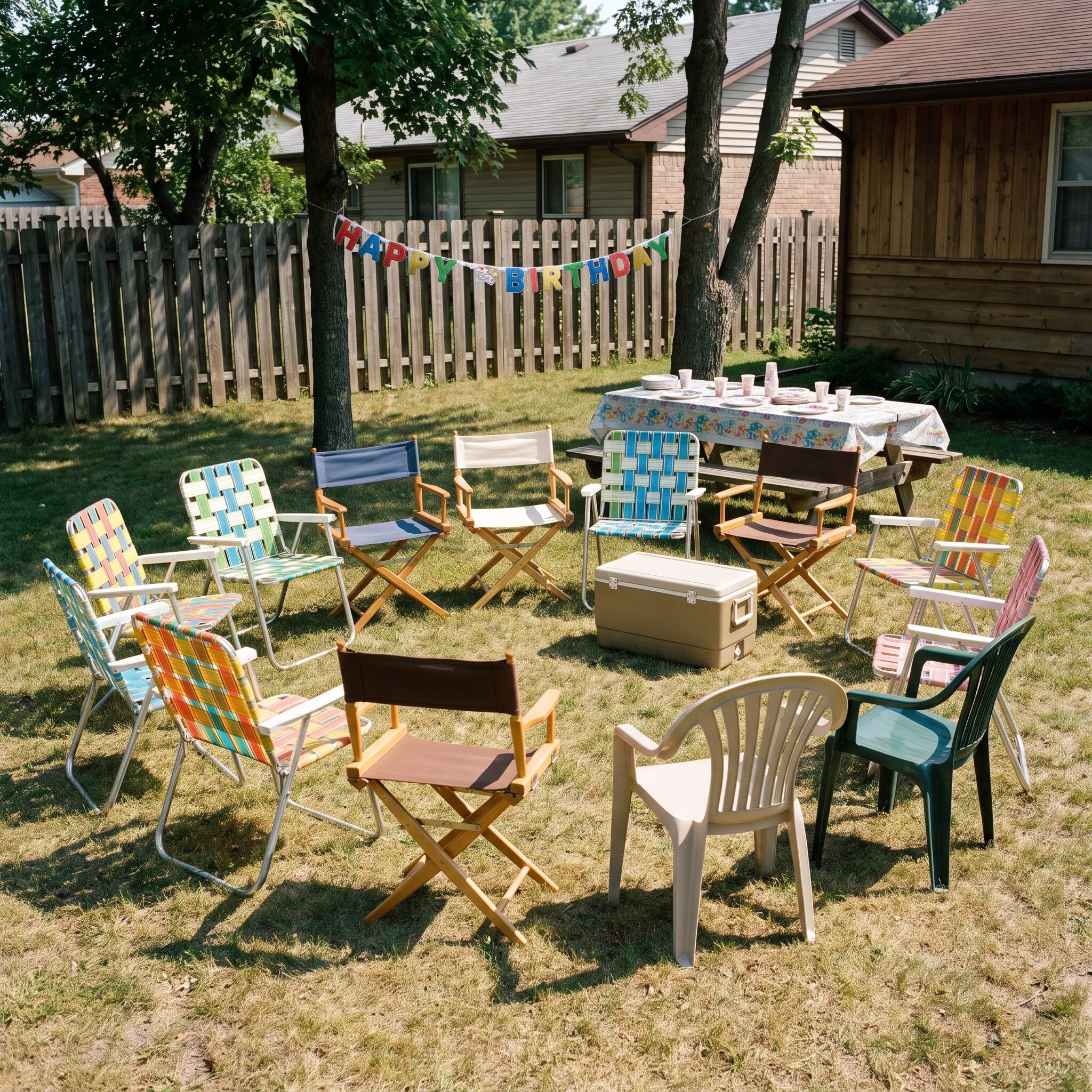
The seating plan was less a plan than a scavenger hunt. Aluminum webbed chairs came out of the garage. Metal folding chairs came out of a closet. Two kitchen chairs received temporary outdoor assignments.
A new lawn chair could run eight to twelve dollars, but borrowing from next door cost nothing and produced a far more convincing collection of stripes, plaids and slightly different heights.
After cake, the borrowed chairs wandered home again. That gathered-from-everywhere ease is what a relaxed back porch idea still tries to capture now.
23. Matching Paper Plates, Cups, and Napkins for $3 to $5
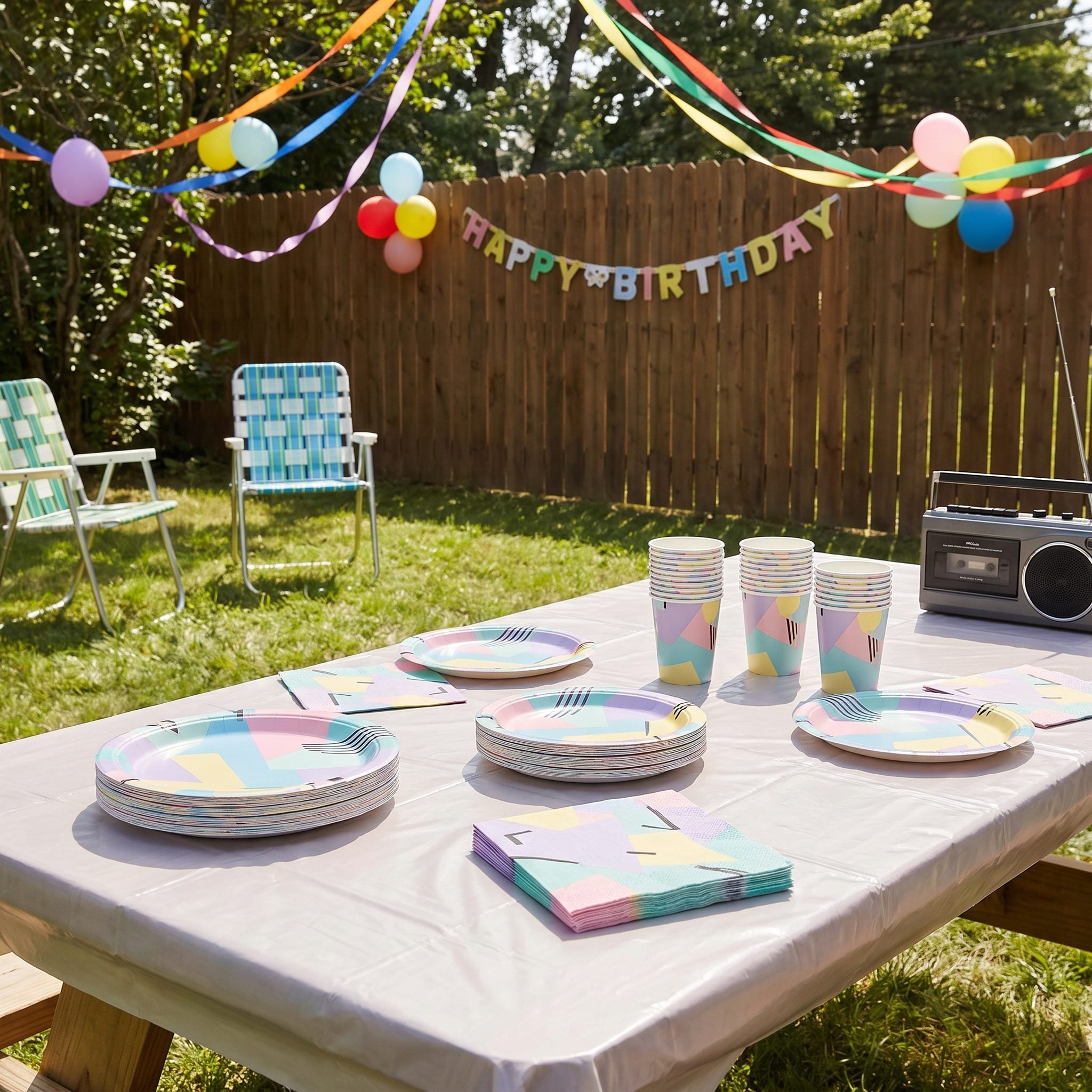
Another few dollars bought the matching plates, cups and napkins, turning one cartoon character into an entire tabletop administration.
The plates were not built for structural ambition. A large slice of cake created an immediate dip in the middle, which is why experienced children carried them with two hands. Cups got names in marker so twelve kids would not require thirty-six of them. It was an excellent system in theory.
22. Eight Paper Party Hats for 79 to 99 Cents
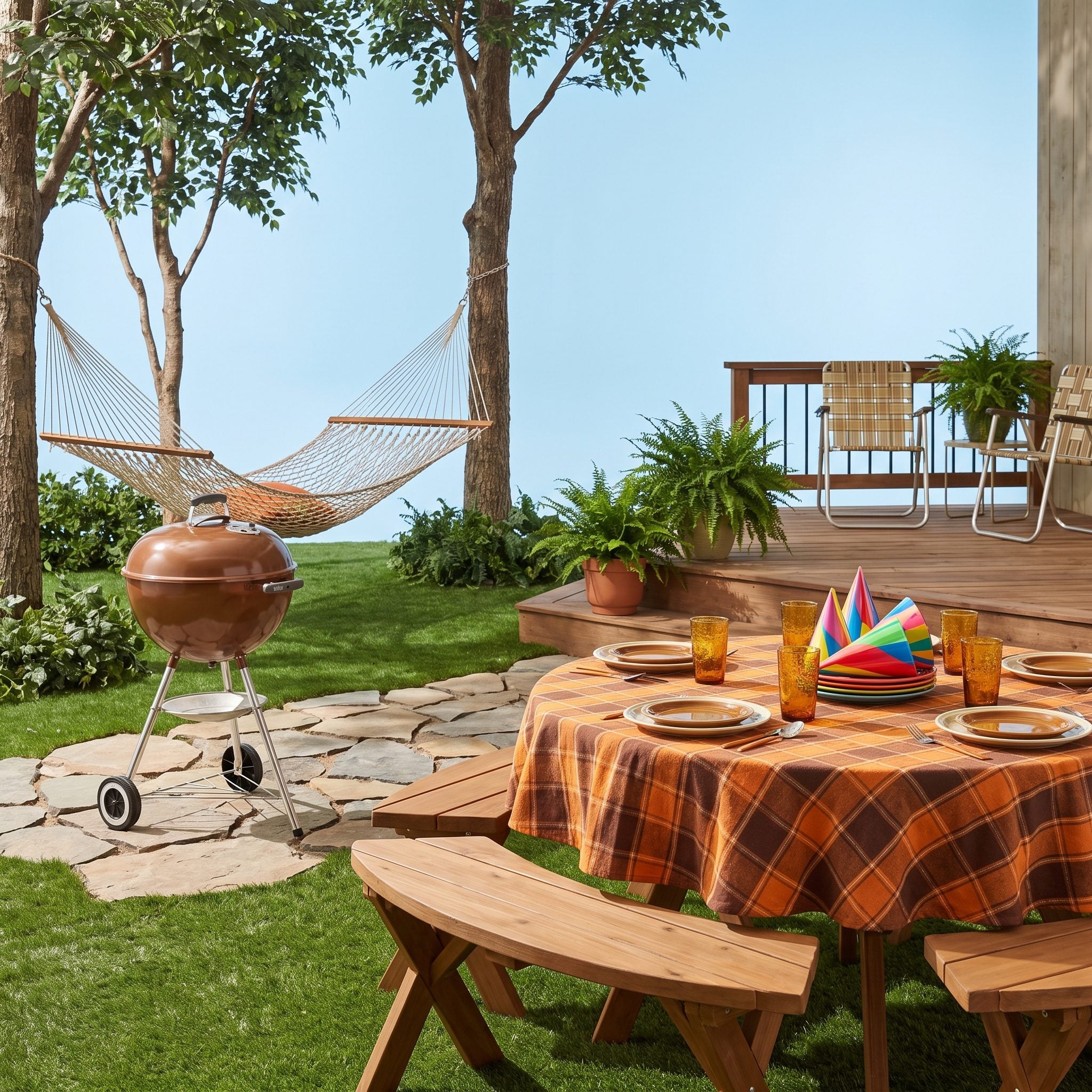
A cellophane pack of cone hats could stay under a dollar, making them one of the cheapest ways to get every child looking equally ridiculous for the group photo.
The shiny cardboard was not the problem. The elastic was. It slid, snapped, dug into the underside of the jaw and generally made a compelling case for removing the hat immediately after the photograph.
By cake time half were on the lawn. One had been stepped on. The dog had developed plans for another.
21. The Homemade Cake With Candles: $3 to $4 All In
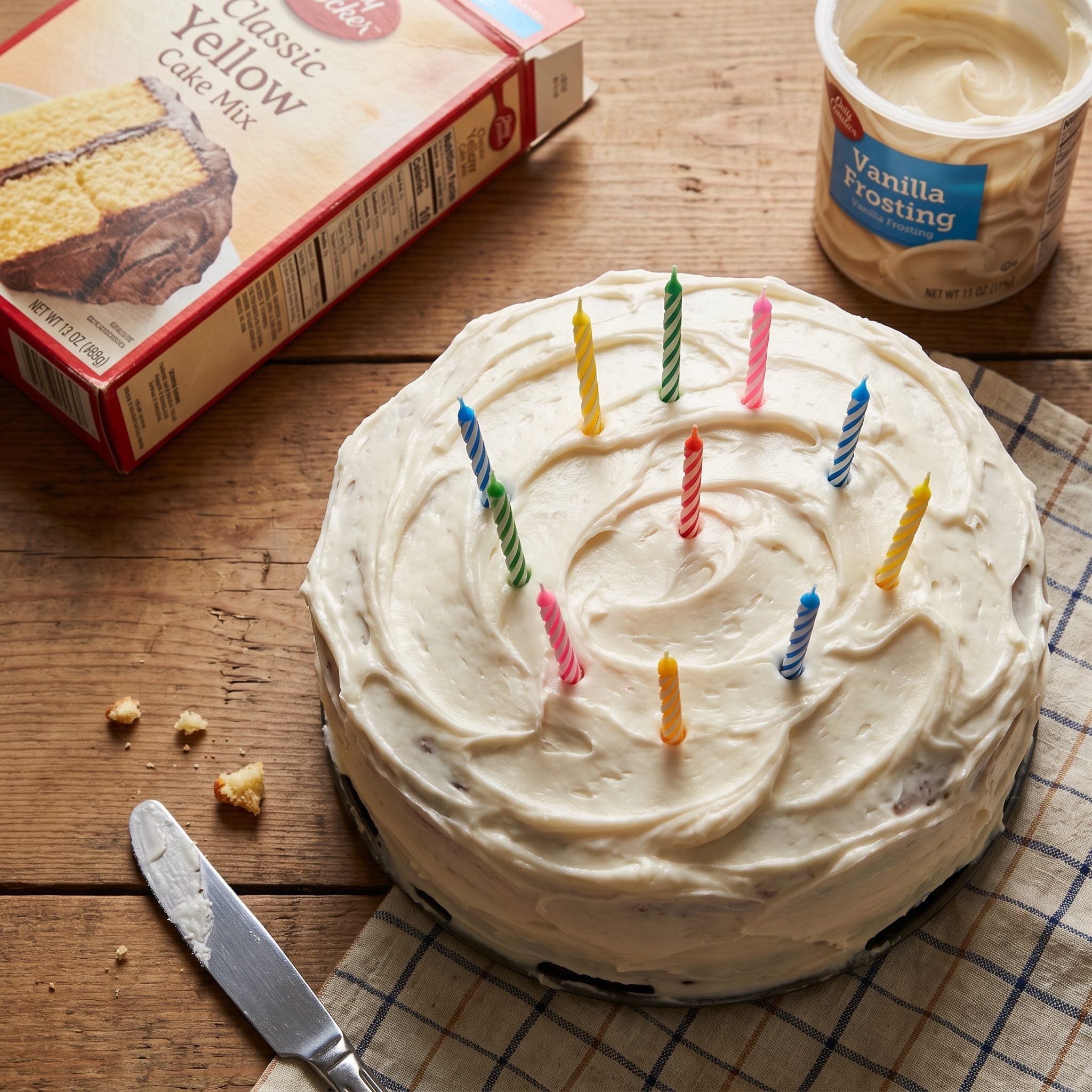
This was the kitchen-table route: boxed cake mix, frosting, eggs and oil from the pantry, then a little box of striped candles pushed into the top. Depending on brand and what was already in the cupboard, three or four dollars could put the centerpiece on the table.
The cake might rise higher on one side. Frosting covered the evidence. The candles started dripping wax the instant they were lit, somebody began the birthday song in the wrong key and at least one flame went out before the guest of honor got a chance at it.
Nobody needed a perfectly level cake to understand what was happening. The slightly homemade geometry was part of the occasion.
20. A Half-Gallon of Ice Cream Averaged $2.30 in 1985
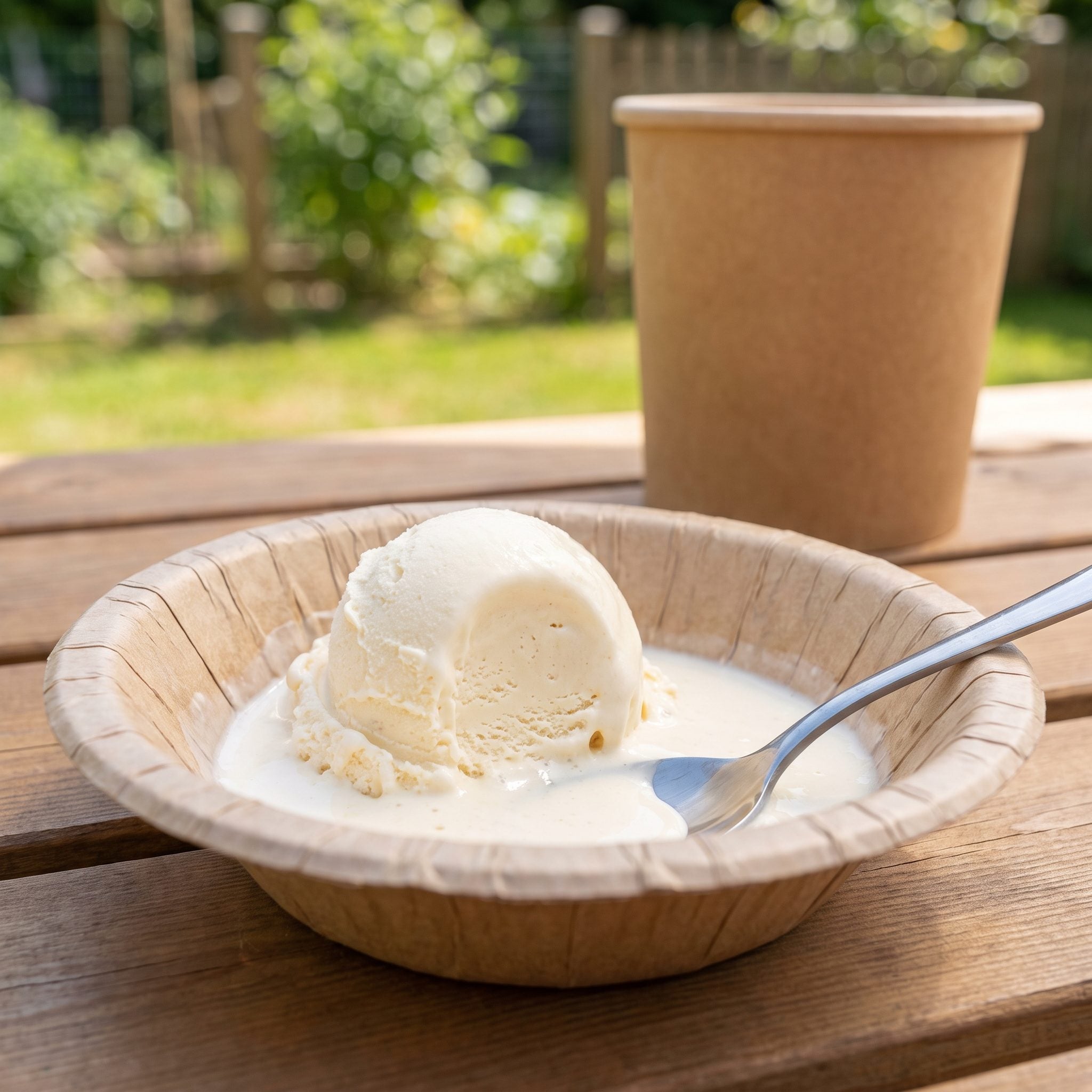
The national average for a half-gallon of packaged ice cream hovered near $2.30 in 1985. Vanilla was the diplomatic choice. Neapolitan was the coalition government.
Price was not the challenge. July was. The metal scoop refused to enter the carton when it first came out of the freezer, then fifteen minutes later the edges had become soup. By the third serving, the first child was eating cake beside a pale puddle in a paper bowl that had already lost structural confidence.
19. A Package of Hot Dogs and a Bag of Buns for About $3
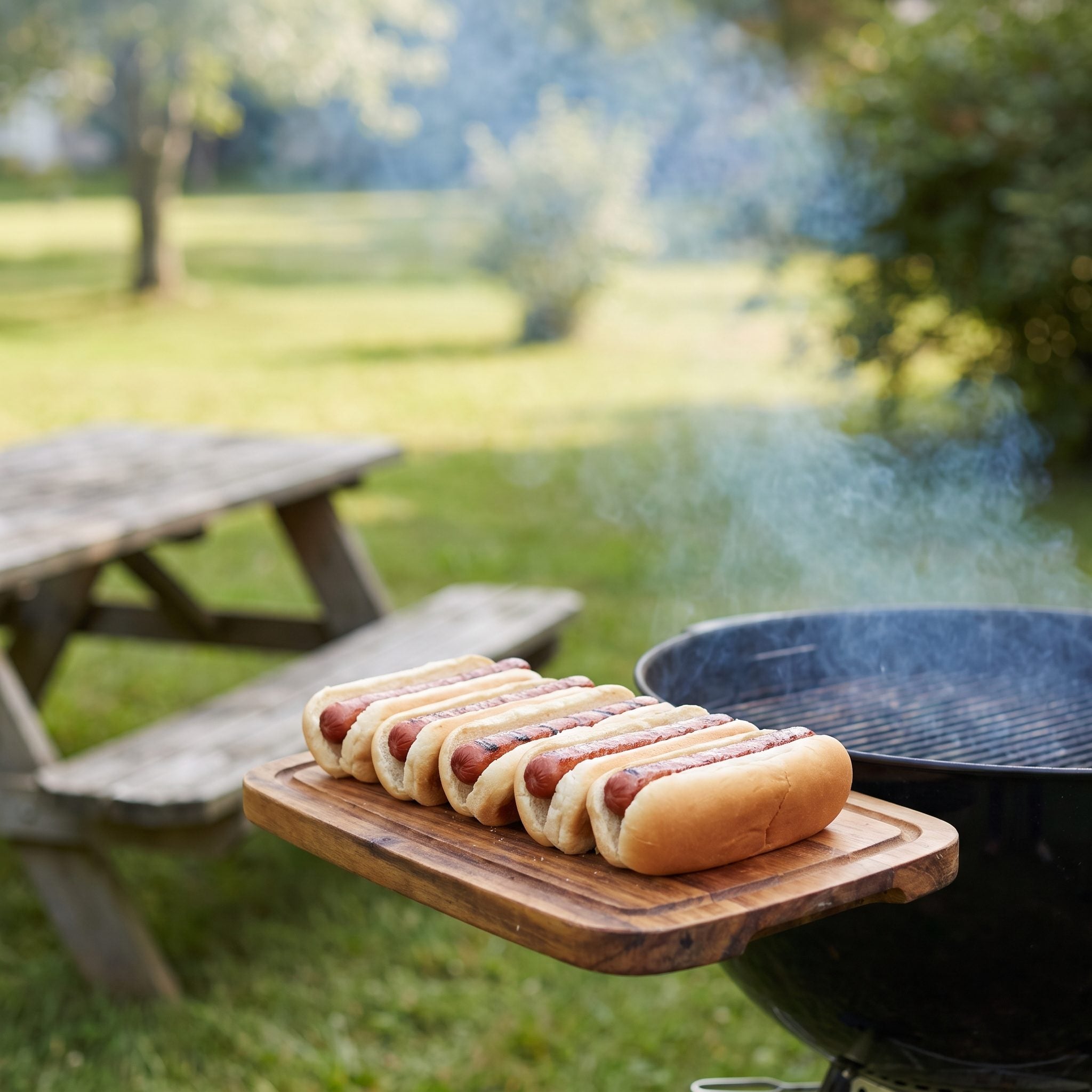
In 1985, all-meat or all-beef frankfurters averaged close to $1.80 a pound nationally. Add an inexpensive bag of buns and the basic hot-dog operation could land near three dollars before ketchup and mustard, which were already waiting in the refrigerator door.
They came off the grill blistered in spots and slightly gray everywhere else, then disappeared into soft buns that had about a fifty-fifty chance of splitting down the side. Yellow mustard for the adventurous. Ketchup for nearly everybody under ten.
Extra children were not treated as a catering emergency. Another pack appeared. Somebody cut a hot dog in half. Lunch expanded.
18. One Kool-Aid Packet for 25 Cents, Then Sugar and Tap Water
🔥 Would you like to save this?
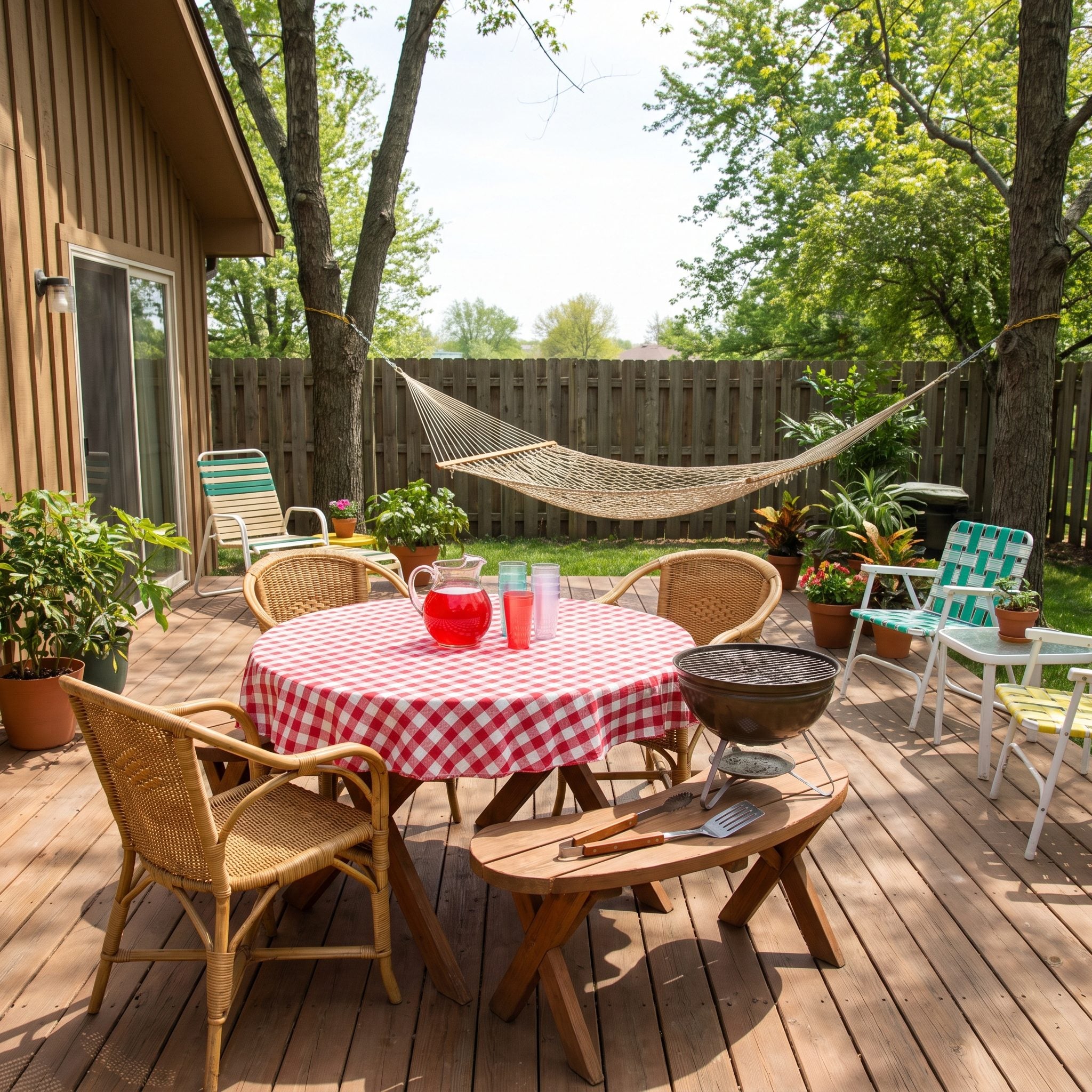
The envelope cost pocket change. Sugar came from the pantry, water came from the tap and the plastic pitcher had already lived through several summers.
One little packet turned two quarts of clear water into a color rarely observed in nature. Cherry left a red mustache. Grape left evidence on everything. When the ice ran out, children simply drank it warm from the folding table and continued running.
17. One 99-Cent Bag of Chips, Emptied Into the Biggest Bowl in the House
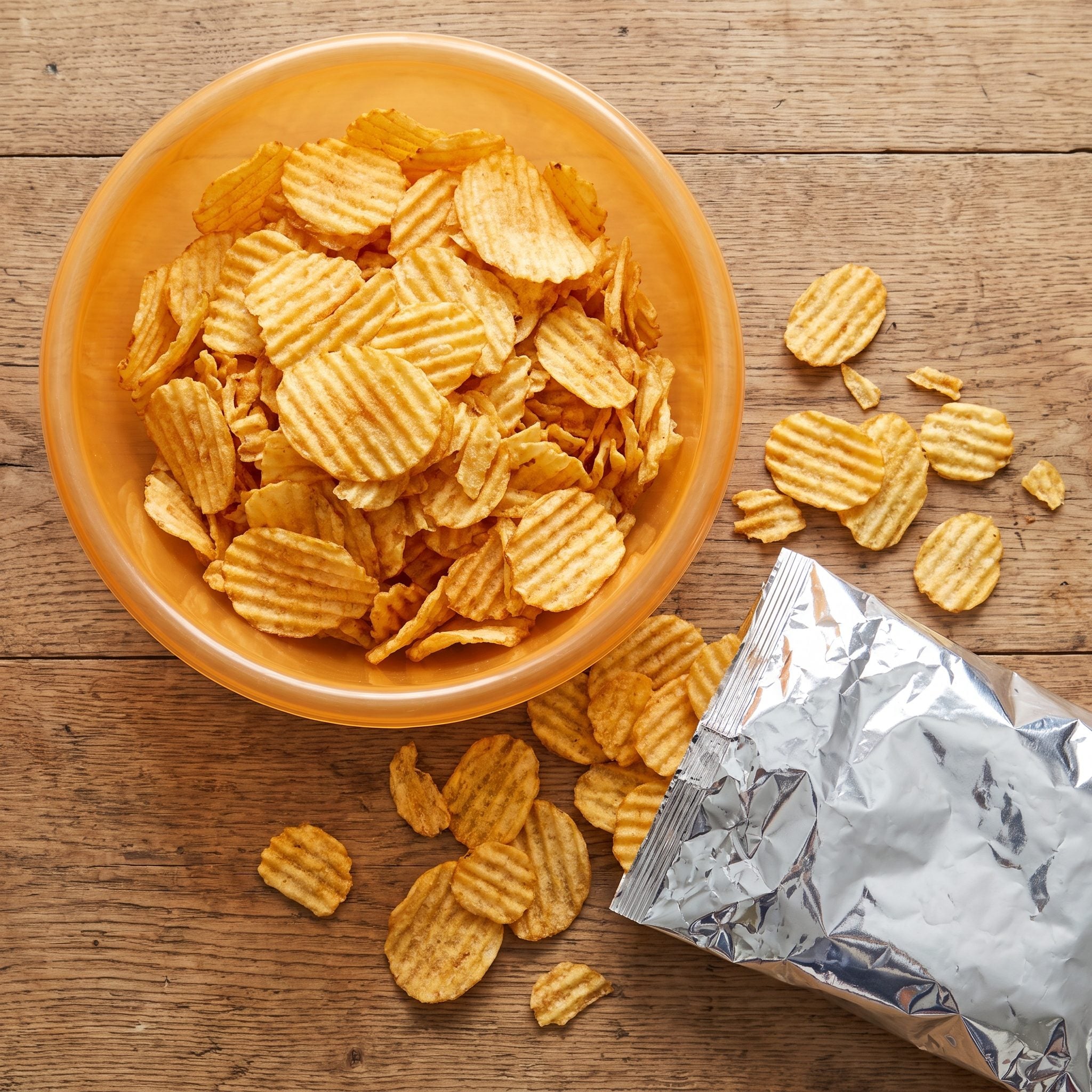
A large bag hovering near the one-dollar mark became the communal appetizer the second somebody dumped it into the salad bowl. Plain chips, ridges, nacho cheese if the birthday budget was feeling adventurous.
For ten minutes the bowl looked abundant. Then came hands from every direction, the intact chips vanished and everybody began excavating the broken fragments from the bottom.
No serving spoon. No second presentation. Empty bowl meant the chip course had concluded.
16. A Cooler of Cans and Ice: $4 to $6
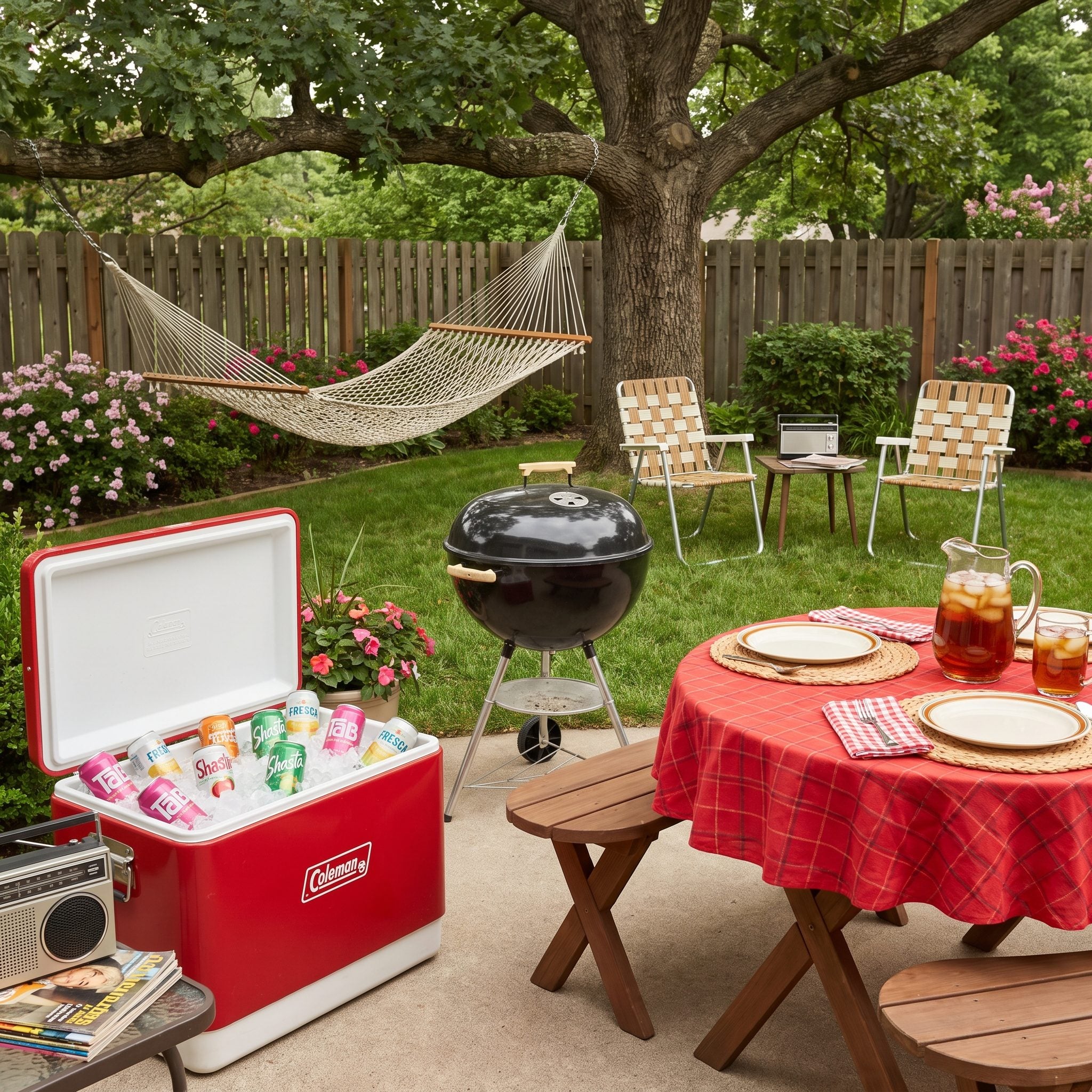
A few dollars bought the soda, another dollar or so the ice, and the old cooler supplied the infrastructure for free. Store-brand cola stretched the money farther. Brand-name cans made the contents look unusually official.
The cooler quickly became self-service. Children dug through half-melted cubes, rotating every can in the process, while the water level climbed toward their wrists. The sound of somebody hunting for the last grape soda could be heard from across the yard.
15. The Bakery Cake Splurge: $12 to $18
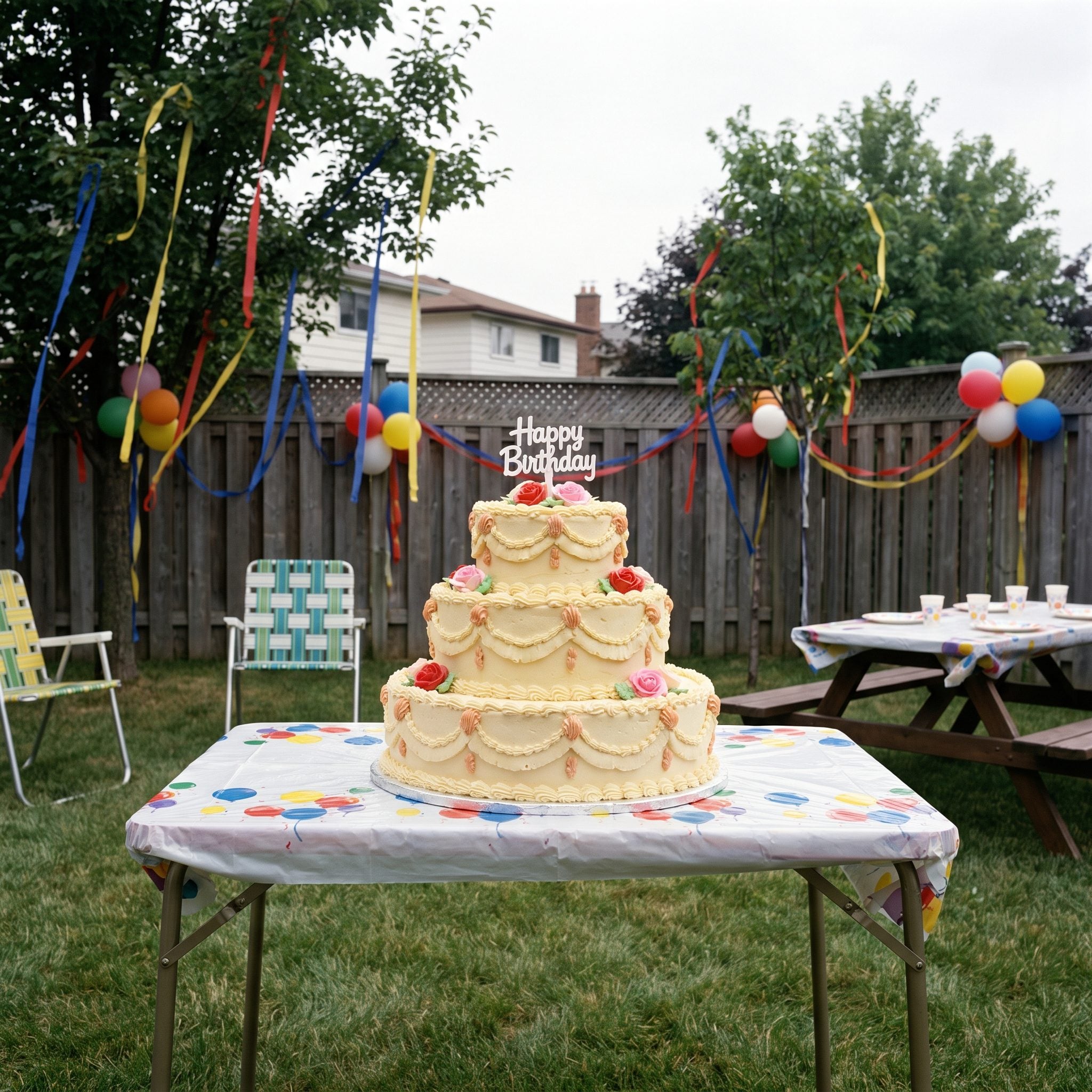
Then there was the supermarket sheet cake, piped border marching around the edge, flowers or balloons on top and the birthday child’s name written in icing with occasionally adventurous spelling.
A cake in the low-to-mid teens cost several hours at the federal minimum wage, so it was a noticeable line item rather than an automatic choice. Sometimes the occasion called for it. Sometimes nobody had time to bake. Either way, the clear plastic box arriving on the table carried its own small sense of ceremony.
14. A Pound of Ground Beef Averaged $1.20 to $1.30 in 1985
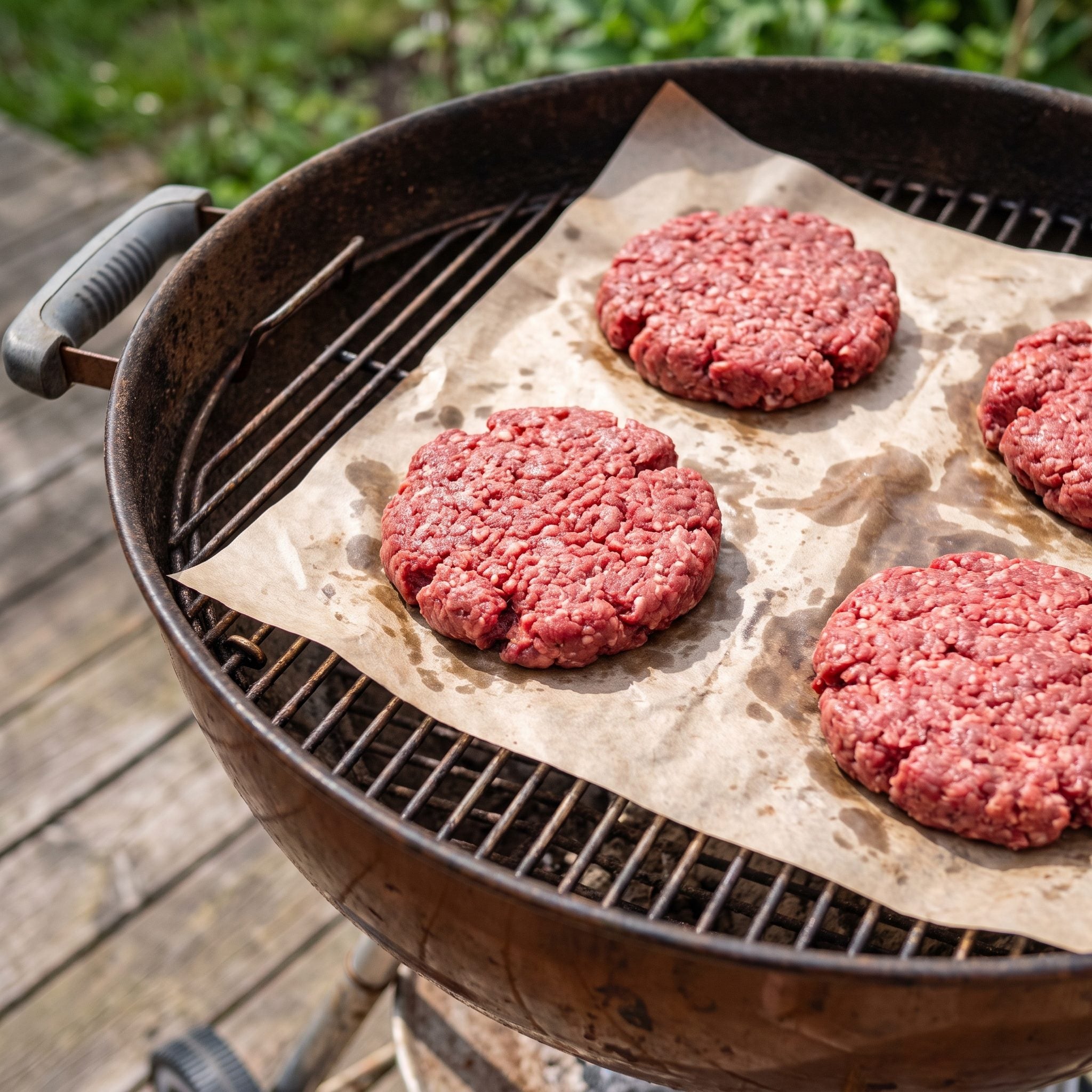
Regular ground beef averaged between $1.20 and $1.30 a pound through much of 1985. Three or four pounds could turn the grill into the more ambitious branch of the birthday menu without sending the food budget into another dimension.
The patties were usually pressed by hand, which meant nobody mistook them for factory work. One came out thick enough to require strategy. Another developed a hole. A third tried to escape between the grill bars.
The children ate them standing up anyway, ketchup making a slow journey toward somebody’s wrist.
13. The Boombox Soundtrack: Free if Borrowed, $40 to $80 New
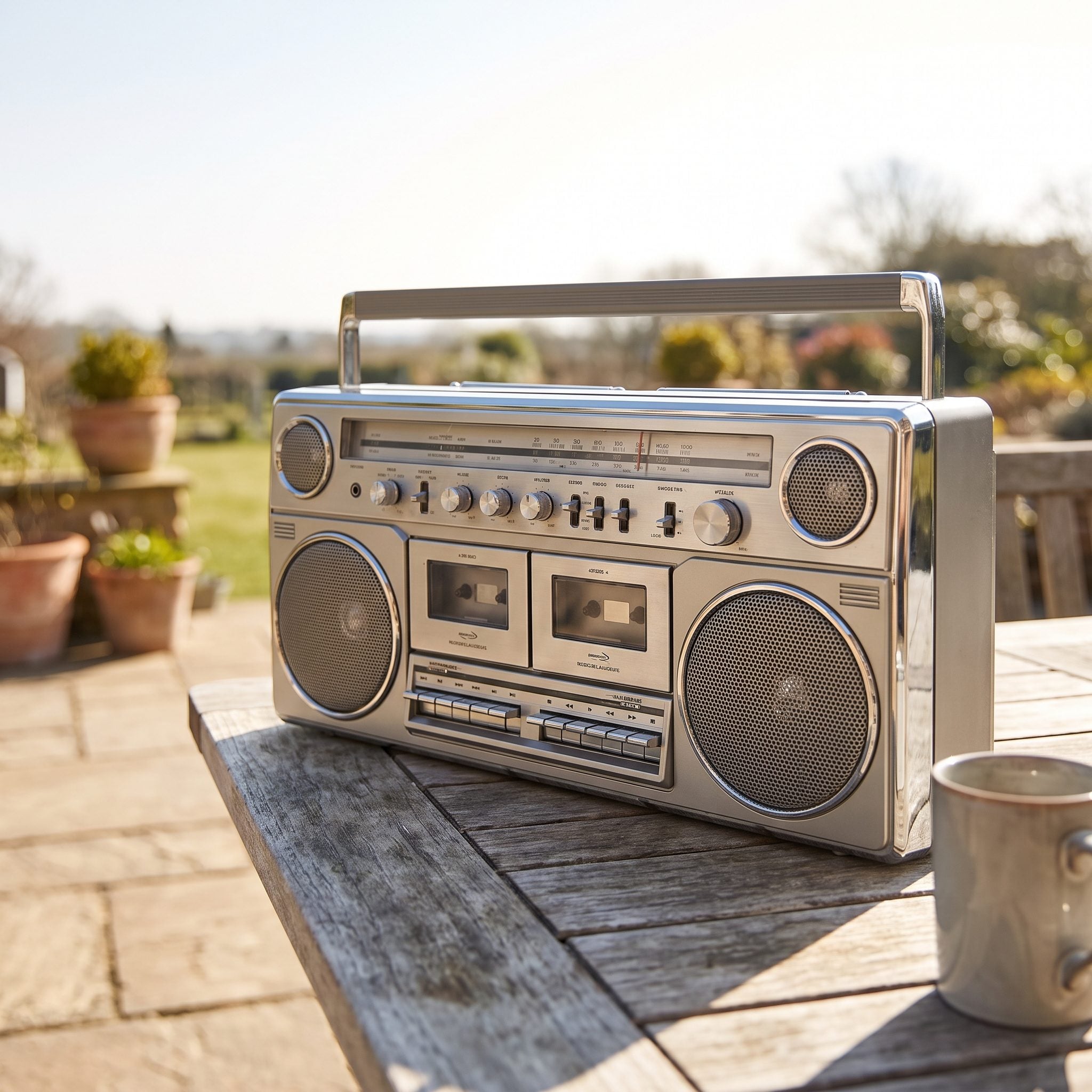
The boombox was technically equipment, not party spending, because the household usually already had one. Buying a decent new model could cost forty to eighty dollars or more, which ensured nobody bought one merely because a child was turning nine.
It went onto the picnic table with a cassette made by somebody’s older sibling. The tape represented hours of unpaid labor: hovering over the record button, waiting for the radio DJ to stop talking and hoping the song began before your reflexes failed.
One plastic box and two speakers turned the backyard into a dance floor. Bass distortion was included at no additional charge.
12. Pin-the-Tail-on-the-Donkey for Around $1.50
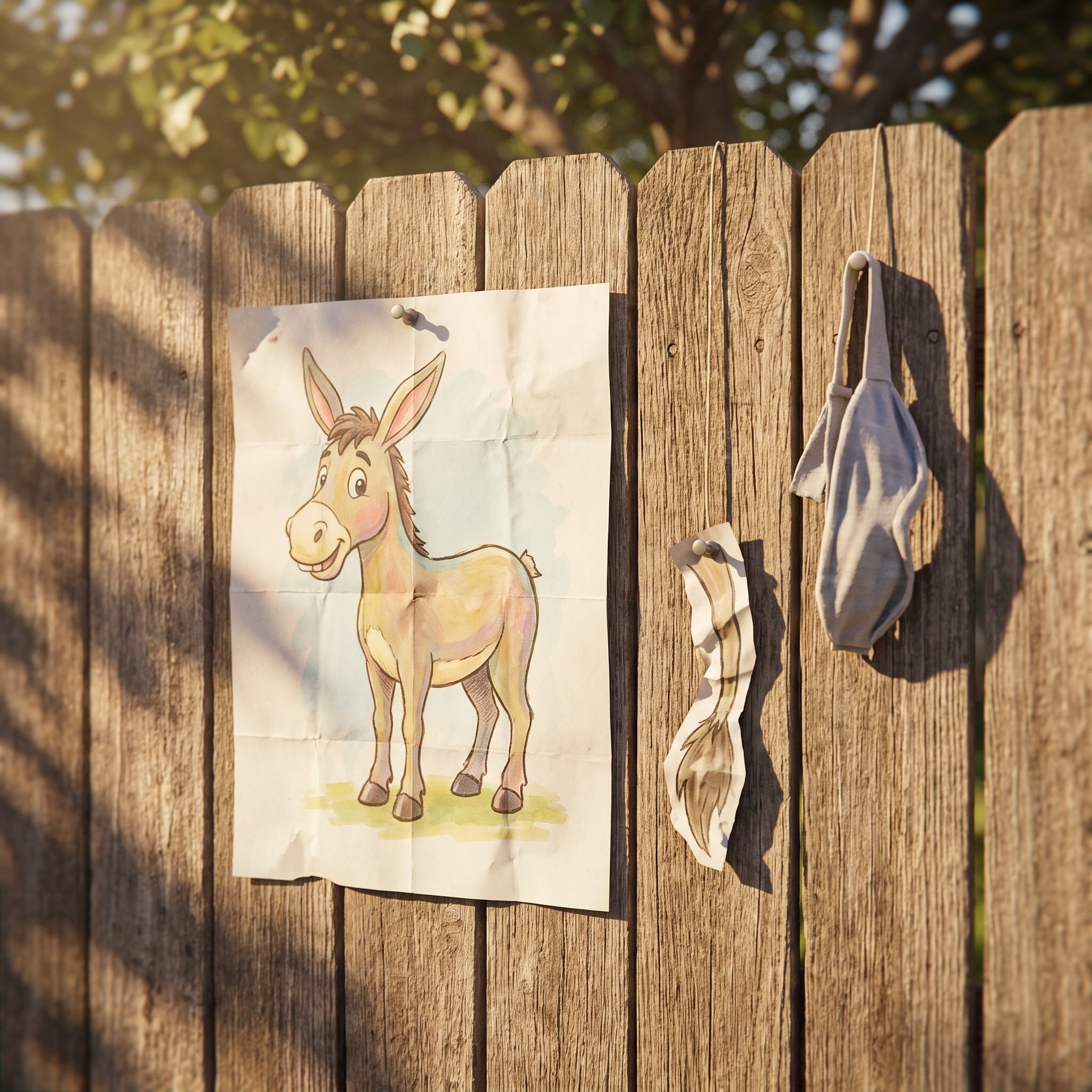
A dollar and change bought the folded donkey, paper tails and the possibility of sending blindfolded children wandering toward the garage wall.
The donkey went up with tape. Each child got spun around, pointed vaguely in the correct direction and immediately veered somewhere else. Winning required a little luck. Entertainment required almost none.
11. The Sack Race: Free if the Sacks Were Already Around
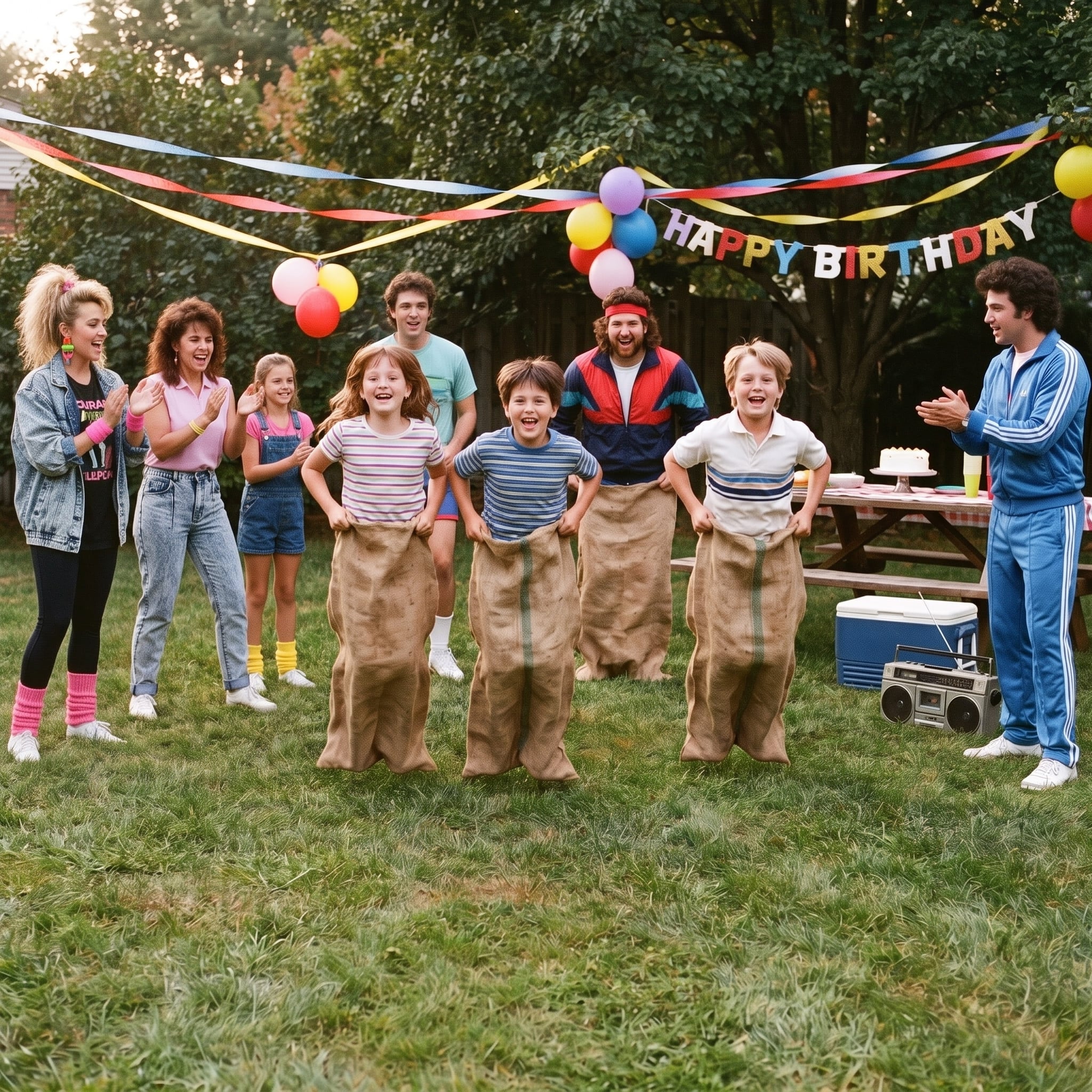
The great economic miracle of the backyard birthday was the game that required something the garage already contained. Feed sacks, garden sacks, old burlap bags: whatever was large enough to accommodate two legs and poor judgment.
Line the children up at the fence, give them a finish line and let gravity arrange the rest. Somebody always attempted speed. Somebody always discovered that hopping inside a sack has its own opinions about speed.
Grass stains were free. So was the laughter when three contestants went down almost simultaneously.
10. The Water-Balloon Game: 89 Cents for a Bag of 50
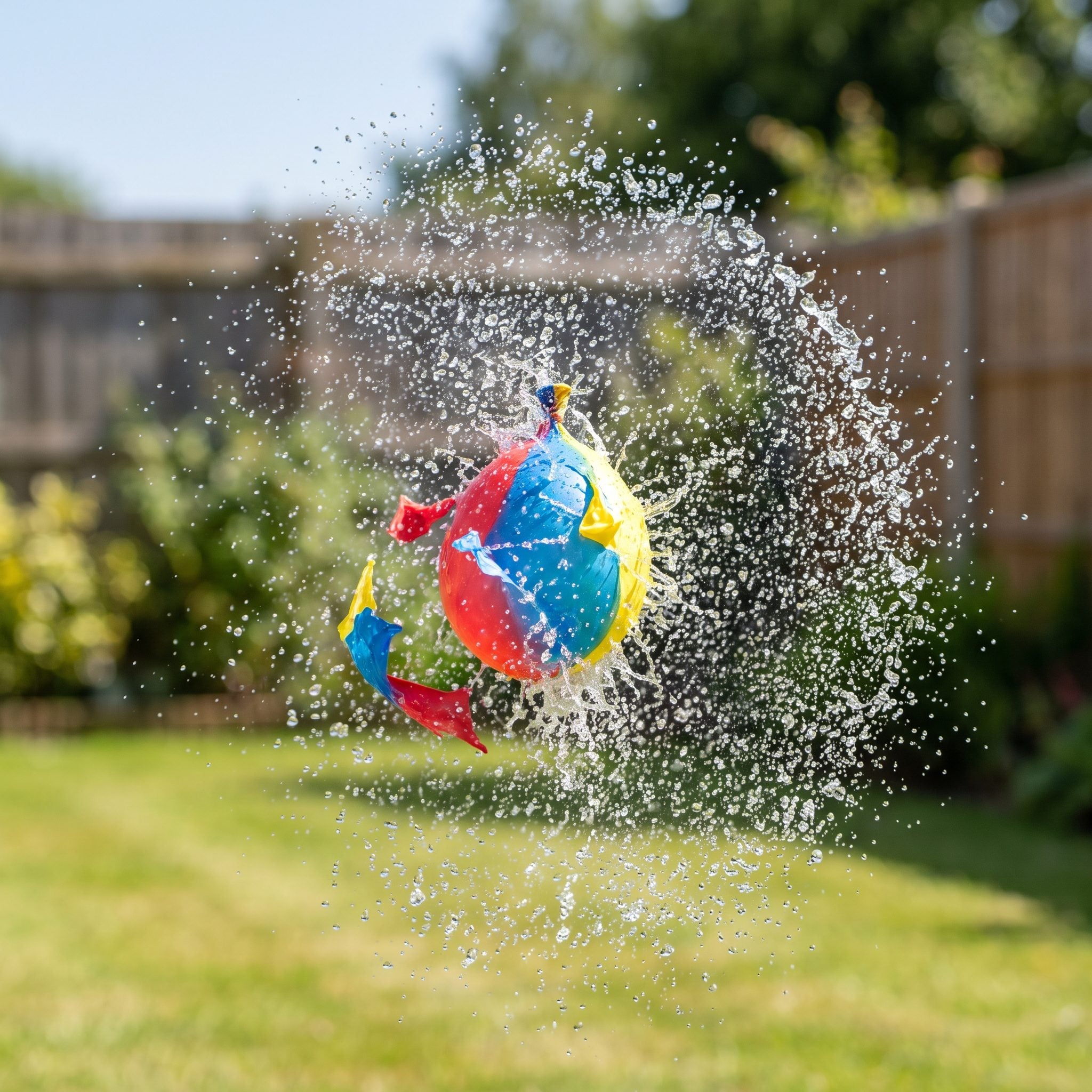
Less than a dollar bought the ammunition. The tap supplied the contents. The expensive part was twenty minutes of parental patience at the sink.
Fifty balloons lasted longer if somebody organized a toss. They lasted approximately ninety seconds if the children discovered the bucket before the adults explained the rules.
The party ended. The balloon fragments did not. Tiny pieces of latex hid in the grass until cleanup or the lawn mower found them.
9. The Three-Legged Race Cost Less Than $1 in Twine
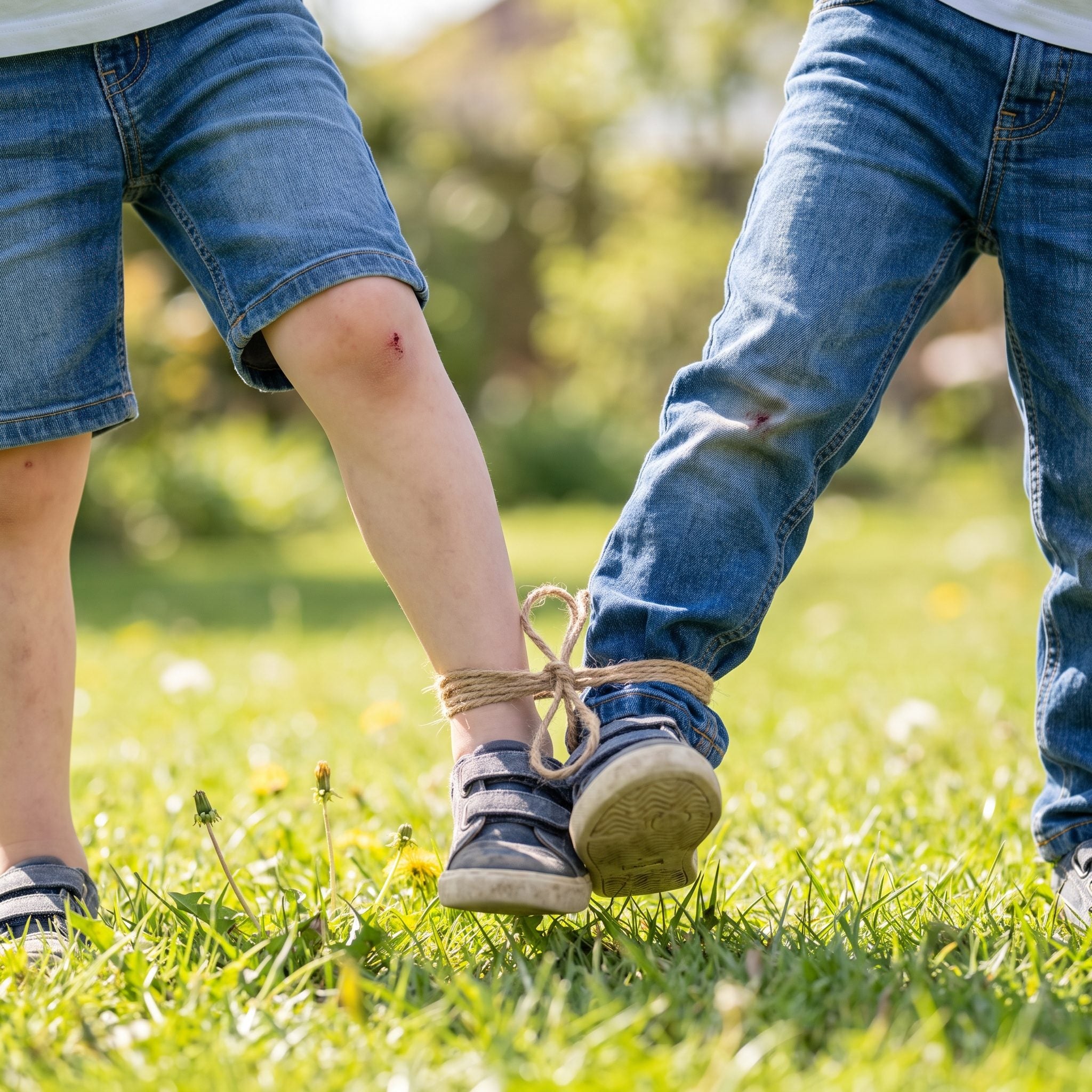
A spool of jute twine from the hardware store could run under a dollar and supply several rounds of one of humanity’s stranger decisions: attach two children at the ankle and ask them to run.
Strategy was discussed earnestly and abandoned instantly. One child stepped with the inside leg, the other chose the outside one and the partnership became horizontal.
Nobody really lost. Finishing upright merely looked suspiciously professional.
These days people drop thousands on colorful backyard makeovers built for outdoor entertaining. A roll of twine and a reasonably flat lawn once handled crowd engagement for less than a dollar.
8. The Rigid Blue Kiddie Pool: $10 to $15
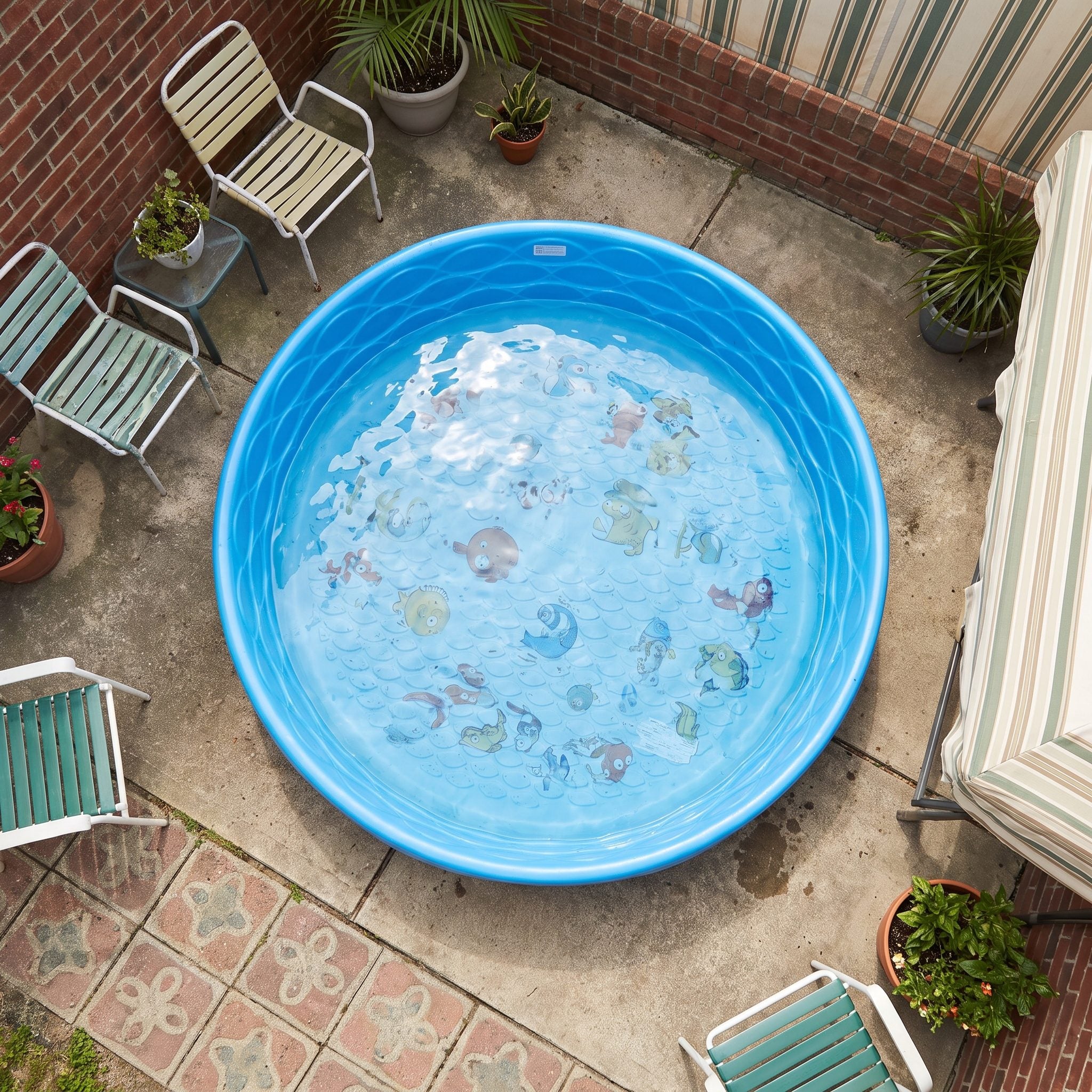
Hard blue plastic, fish molded into the bottom and just enough water to convince a five-year-old that swimming was taking place.
Ten to fifteen dollars bought a summer object with a remarkably flexible job description. At noon it was a pool. Later it could hold floating cans of soda and melting ice. The next week it might be a dog bath, sandbox or giant container for something nobody had anticipated when it left the store.
The walls flexed, the bottom scratched and eventually the plastic cracked. Until then, six inches of hose water was apparently all the resort anybody needed.
7. The Slip ‘N Slide: $8 to $10 and One Very Unhappy Strip of Grass
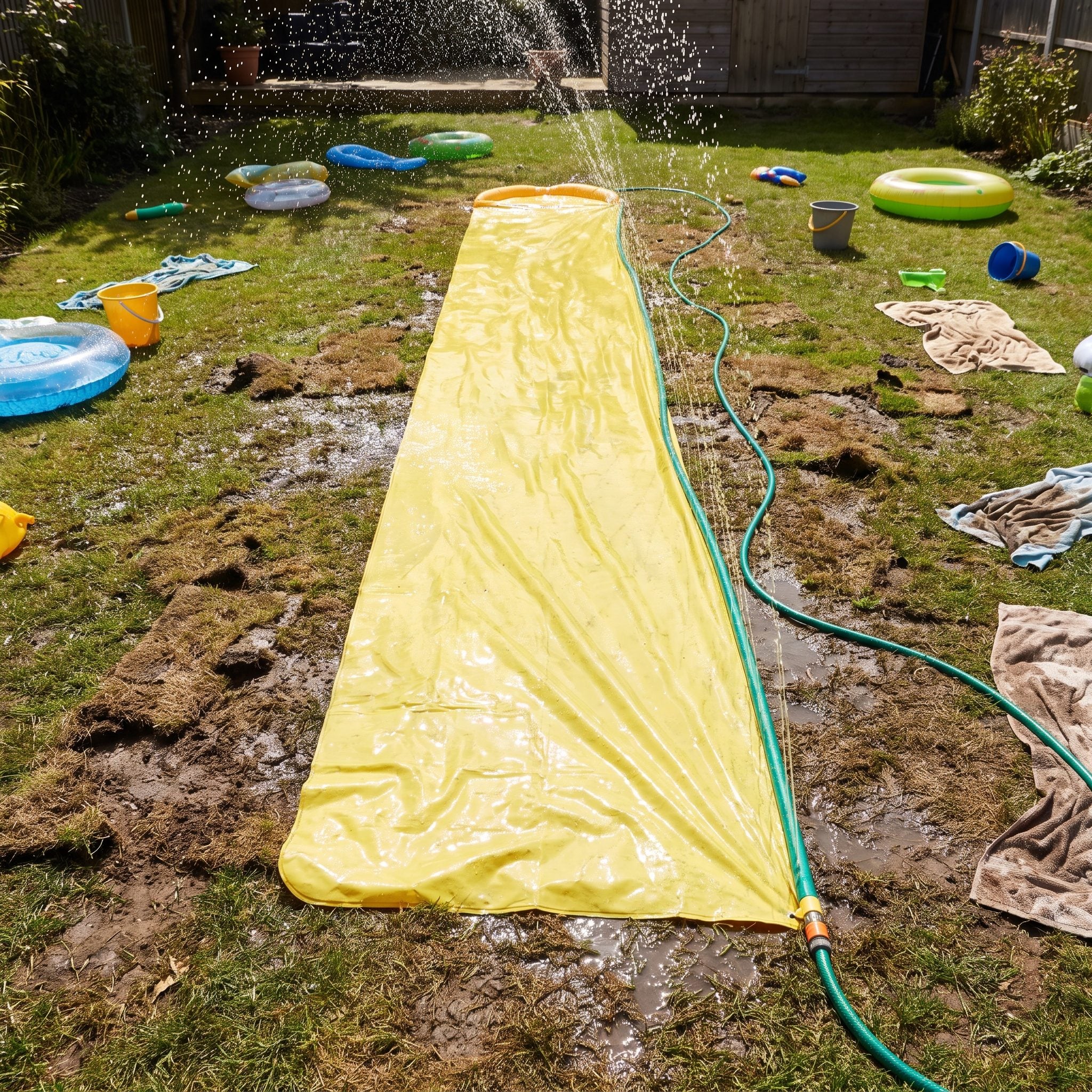
Eight or ten dollars bought the yellow vinyl, the hose connection and the immediate transformation of an ordinary lawn into the main attraction.
The first child took a cautious run. The second went faster. By the fifth, people were launching themselves with the confidence of professionals despite possessing none of the qualifications.
The bill arrived later in botanical form: a flattened brown stripe where the vinyl had spent the afternoon cooking the lawn. Wham-O introduced the Slip ‘N Slide in 1961, so by the eighties the ritual already had a generation of backyard history behind it.
If you want the modern version of trading a little lawn for a lot of fun, the same instinct drives a good colorful backyard makeover today.
6. The Candy-Stuffed Piñata: $10 Once It Was Filled
🔥 Would you like to save this?
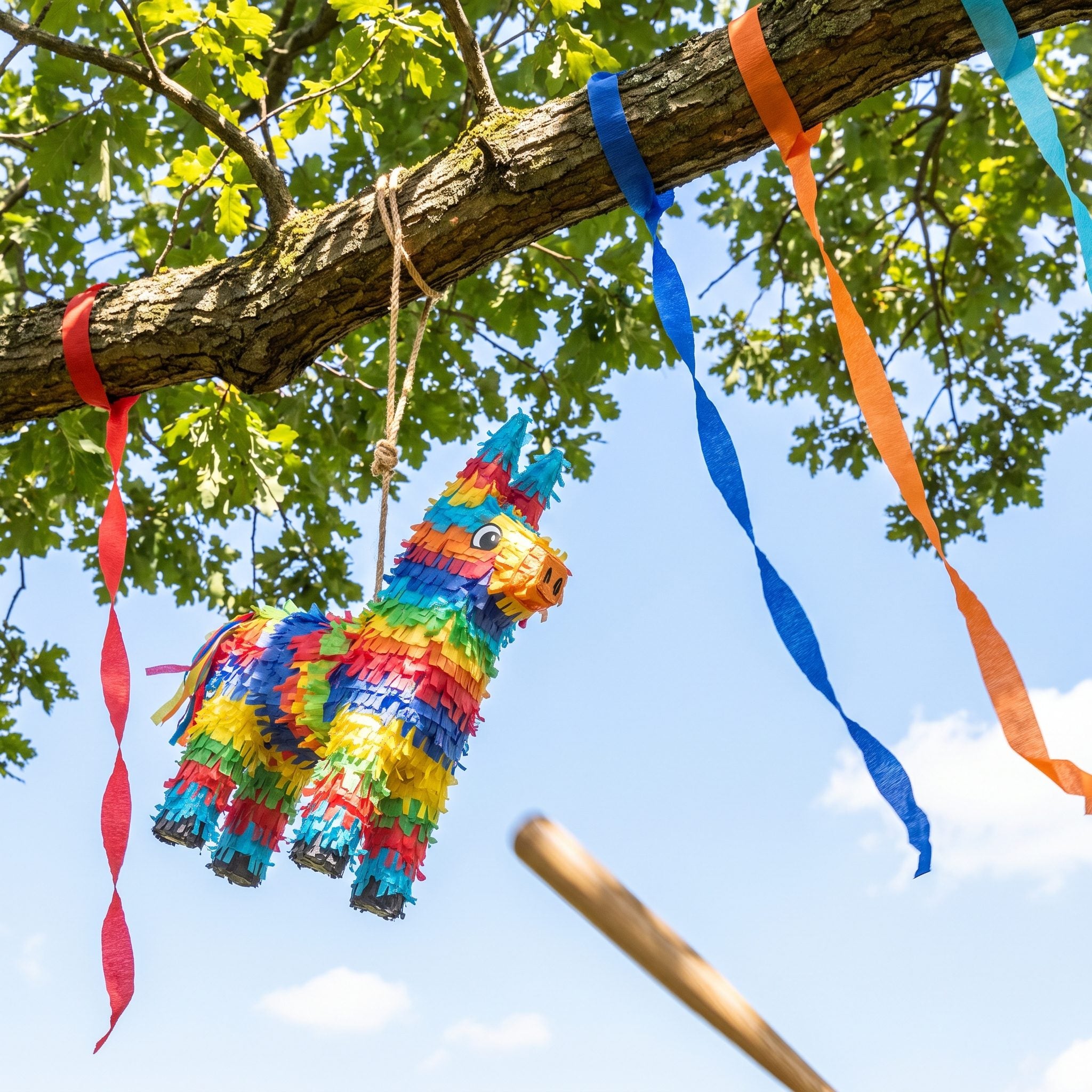
A paper donkey or star could run around six dollars, then another few dollars disappeared inside it as loose candy. Ten dollars could cover the whole operation before anybody picked up the broomstick.
For that money you got the loudest five minutes of the afternoon. One blindfolded child swung while every other child simultaneously ignored the concept of a safe distance.
Then the paper split. Candy hit the grass. Any pretense of orderly turn-taking ended instantly.
5. Bags of Candy and Tiny Toys for Prizes: $10 for the Whole Haul
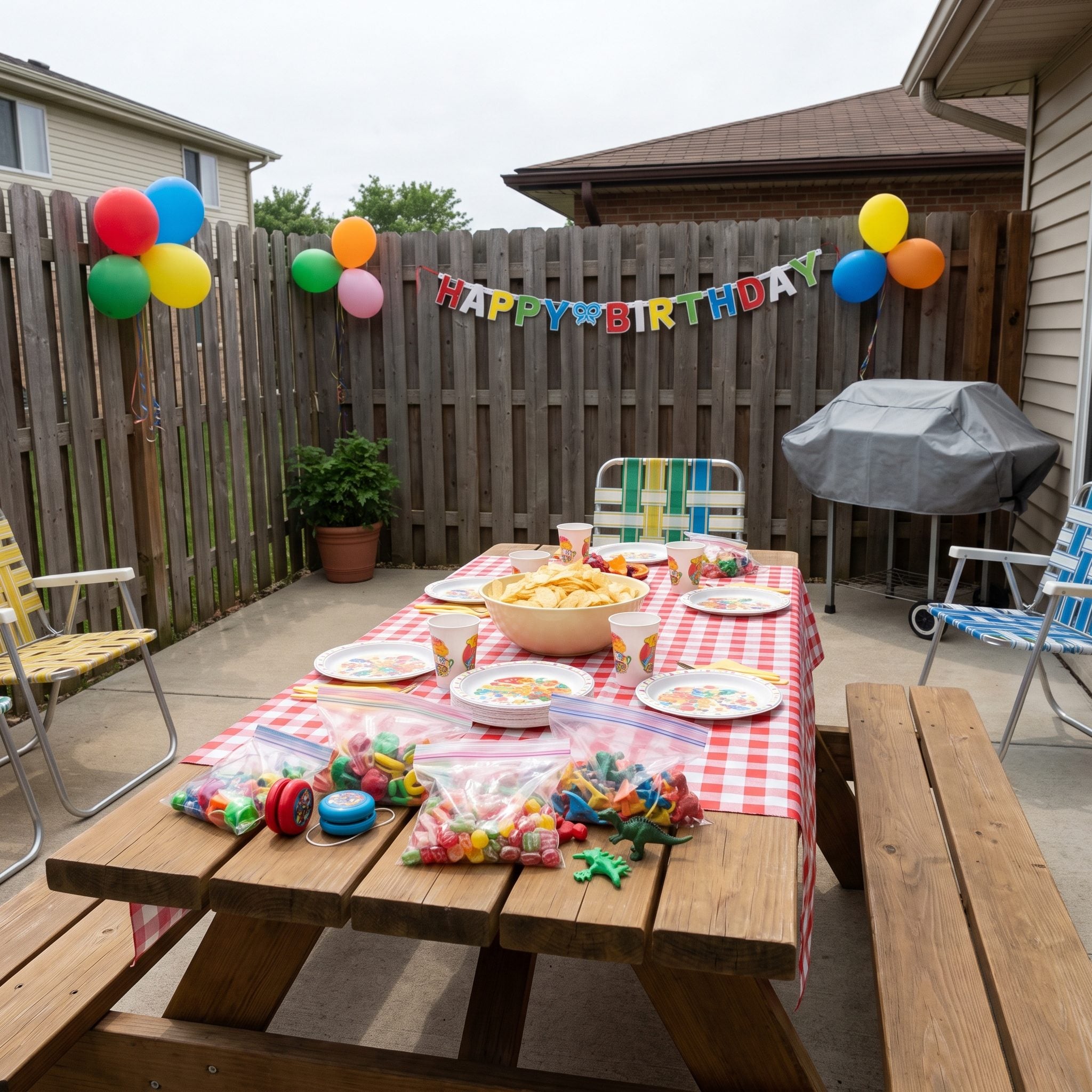
Ten dollars at a discount or dime store could produce a table full of small stakes: bouncy balls, jacks, stickers, whistles, wind-up toys and enough candy to make winning suddenly feel administratively important.
The prizes did not need longevity. A yo-yo could tangle before dinner. A plastic frog could stop hopping in the car on the way home. The victory had already happened.
The cheapest objects often generated the largest ceremony. First place got to choose first. Everybody watched.
4. The Little Favor Bags: About 50 Cents a Guest to Fill
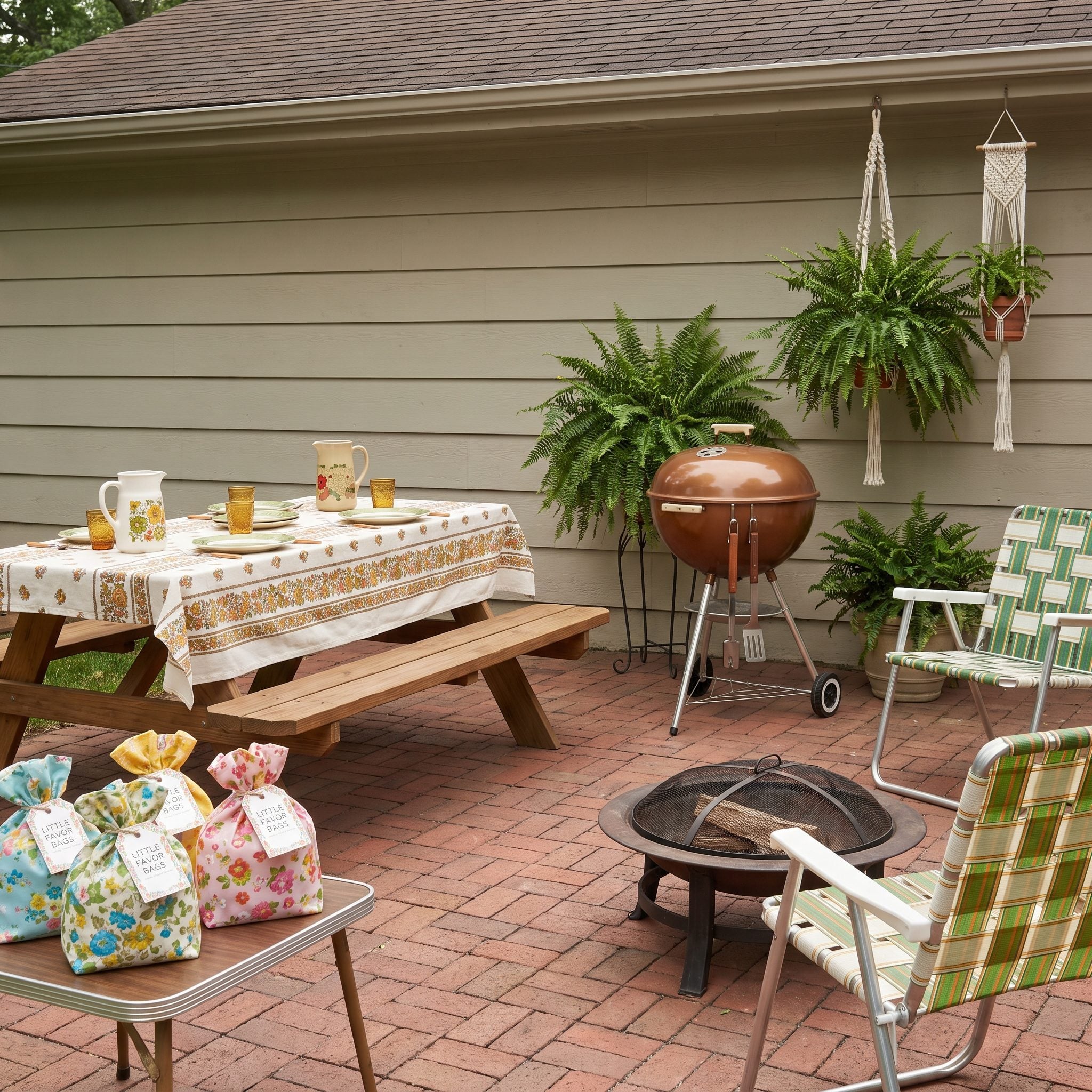
The favor bag was different from the prize table because nobody had to win it. A few pieces of candy, a plastic ring, paper horn and perhaps a bouncy ball could keep the cost near fifty cents per child.
Ten guests meant about five dollars to ensure everybody left holding a small paper bag by its twisted handles.
Half the candy was usually gone before the car door closed. The rest entered the mysterious ecosystem of bedroom drawers, coat pockets and couch cushions.
3. The Late-’80s Single-Use Camera: $8 to $10
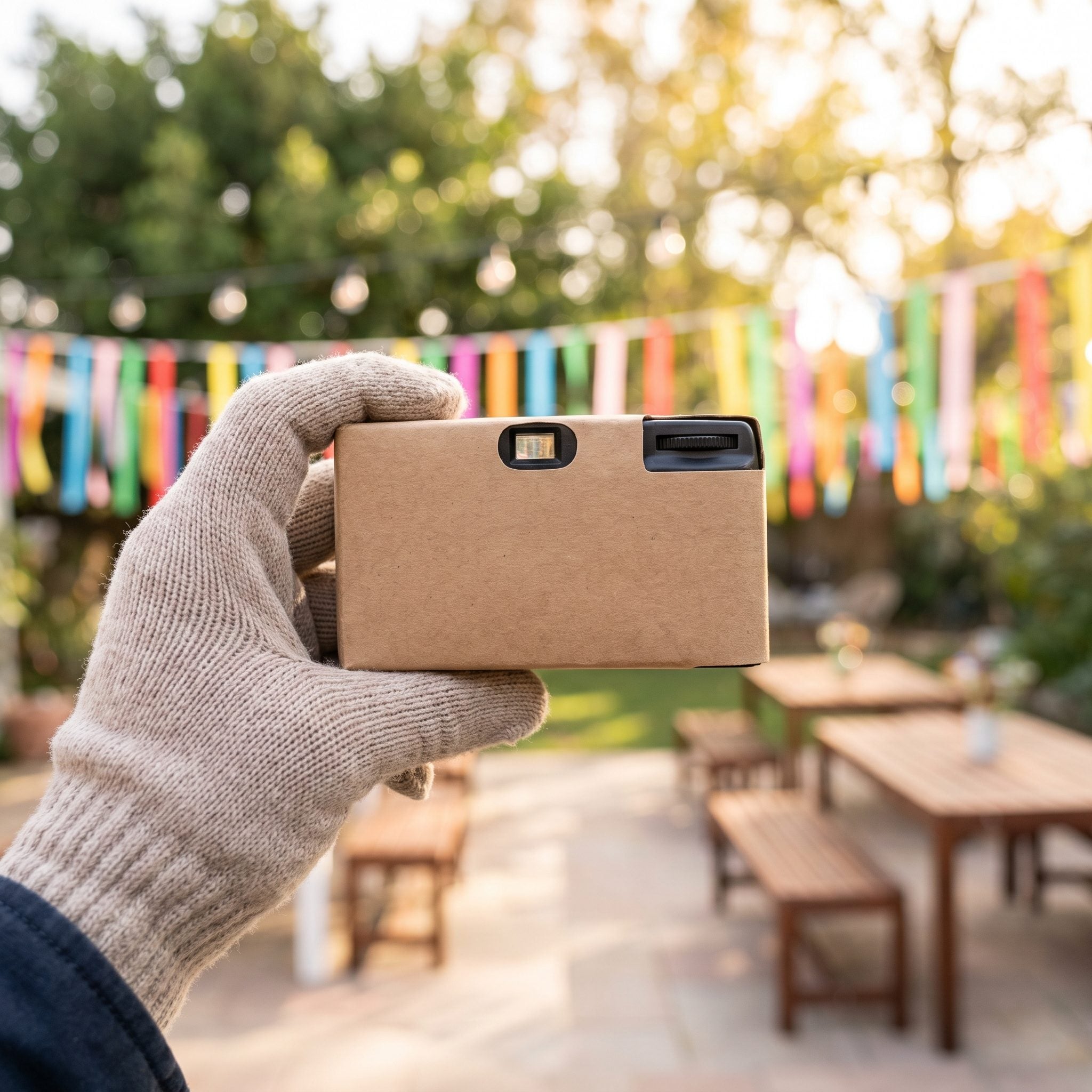
This particular piece of the birthday story belongs to the back half of the decade. Fujifilm introduced the first QuickSnap single-use camera in 1986, putting a lens, shutter and film into one grab-and-go package.
There was no screen, no immediate verdict and no deleting the child who blinked. You aimed, pressed the shutter and spent the next several days having absolutely no idea whether the photograph worked.
That uncertainty is why the good prints felt valuable. Twenty-four exposures did not produce twenty-four masterpieces. They produced evidence.
2. Film and Developing for the Family 35mm Camera: Another $8 to $12
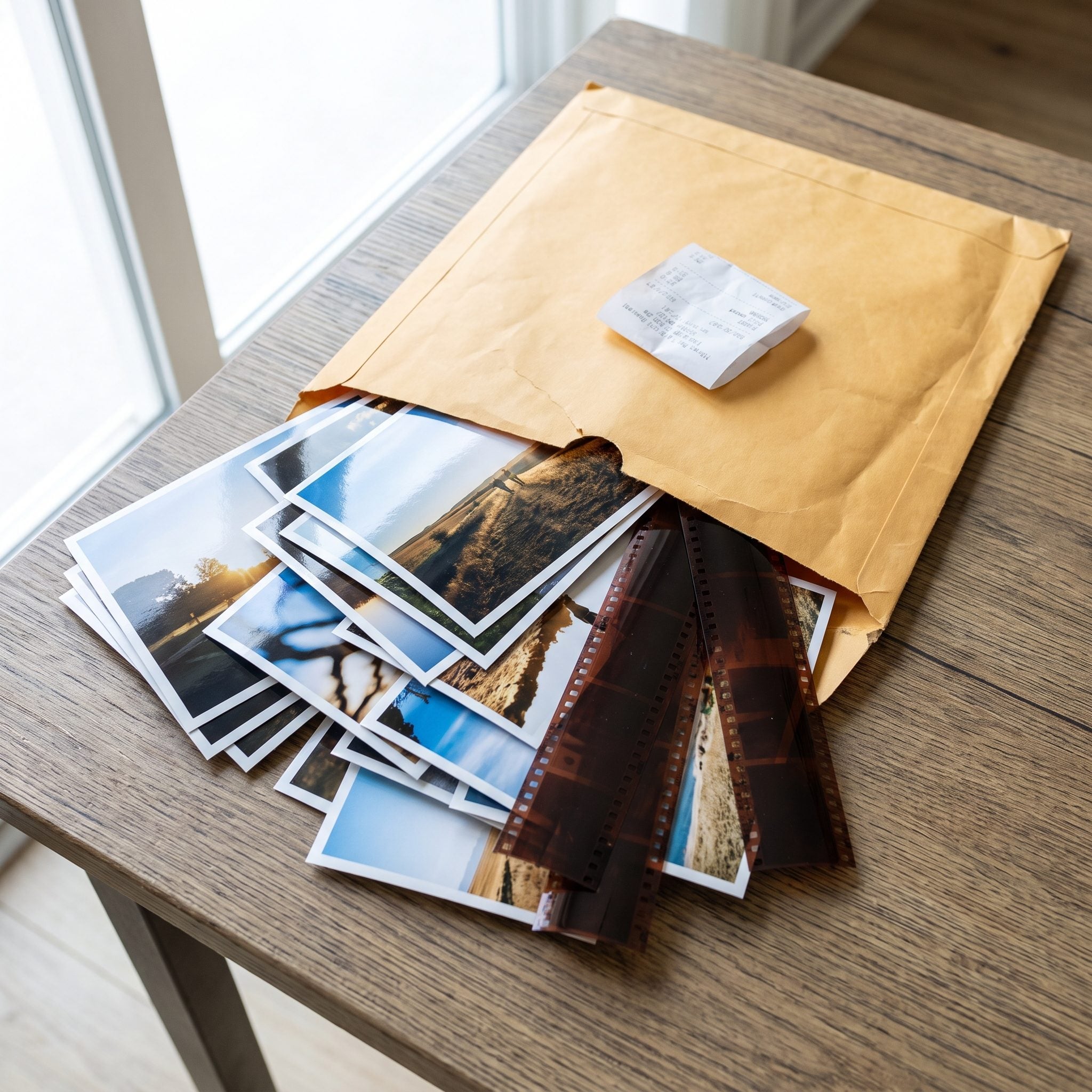
If the family used a reusable 35mm camera instead, the camera itself might already be paid for, but film and processing were not. A roll plus prints could add eight to twelve dollars depending on film, exposure count and the photo counter.
Then came the envelope. One thumb over the lens. Three blurry children. Somebody’s head missing at the forehead. One inexplicable photograph of the lawn.
And then four perfect pictures that stayed on the refrigerator until the corners curled. That was the return on investment.
1. The Cleanup That Cost Nothing and Took the Whole Evening
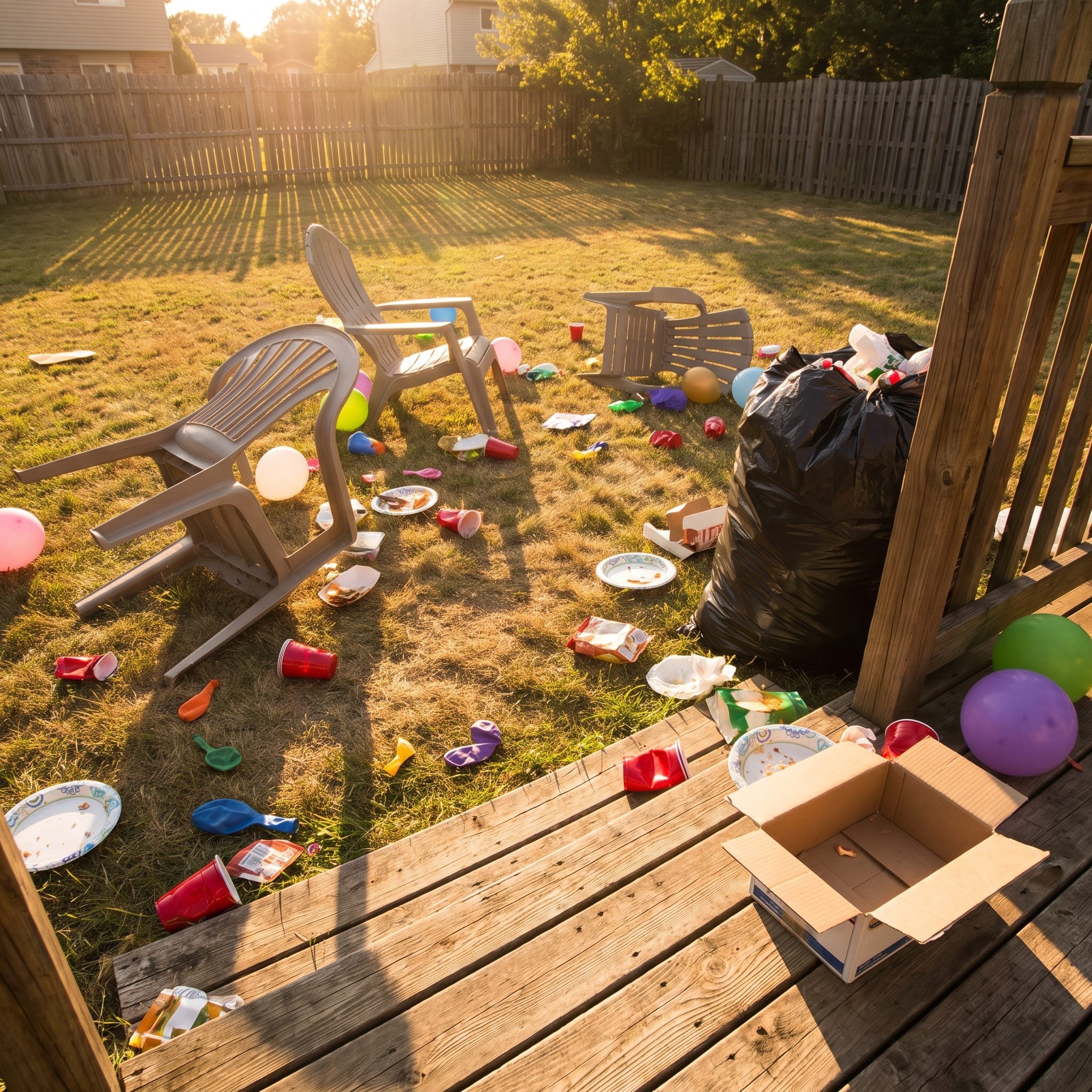
No price sticker for this one. Payment arrived in tired feet after the last station wagon backed out of the driveway.
The yard looked as though the previous six hours had been reconstructed by investigators. Frosting across the folding table. Popped balloons in the grass. Piñata tissue stuck wherever the hose had made the ground damp. Paper plates hiding beneath chairs. A pale stripe marking the exact location of the Slip ‘N Slide.
Somewhere in the middle of it, an adult moved slowly with a trash bag, gathering plastic cups and fishing water-balloon knots out of the lawn one by one. The table went back to the garage. Borrowed chairs returned next door. The cooler got tipped out. By dark, the backyard was almost a backyard again.