🔥 Would you like to save this?
The smell of a 1985 living room was popcorn, cigarette smoke that never quite left the drapes, and whatever candle Mom bought at the mall. The TV was warm to the touch. Dad had a specific spot on the couch and everyone knew not to take it. Rooms were built around people being in them together, because there was nowhere else to go and nothing else to look at. Then screens got personal, sofas got bigger, and something quiet went missing.
Here are 29 ways the living room changed.
In order to come up with the very specific design ideas, we create most designs with the assistance of state-of-the-art AI interior design software. Also, assume links that take you off the site are affiliate links such as links to Amazon. this means we may earn a commission if you buy something.
29. The Living Room Was Where the Family Gathered Every Evening
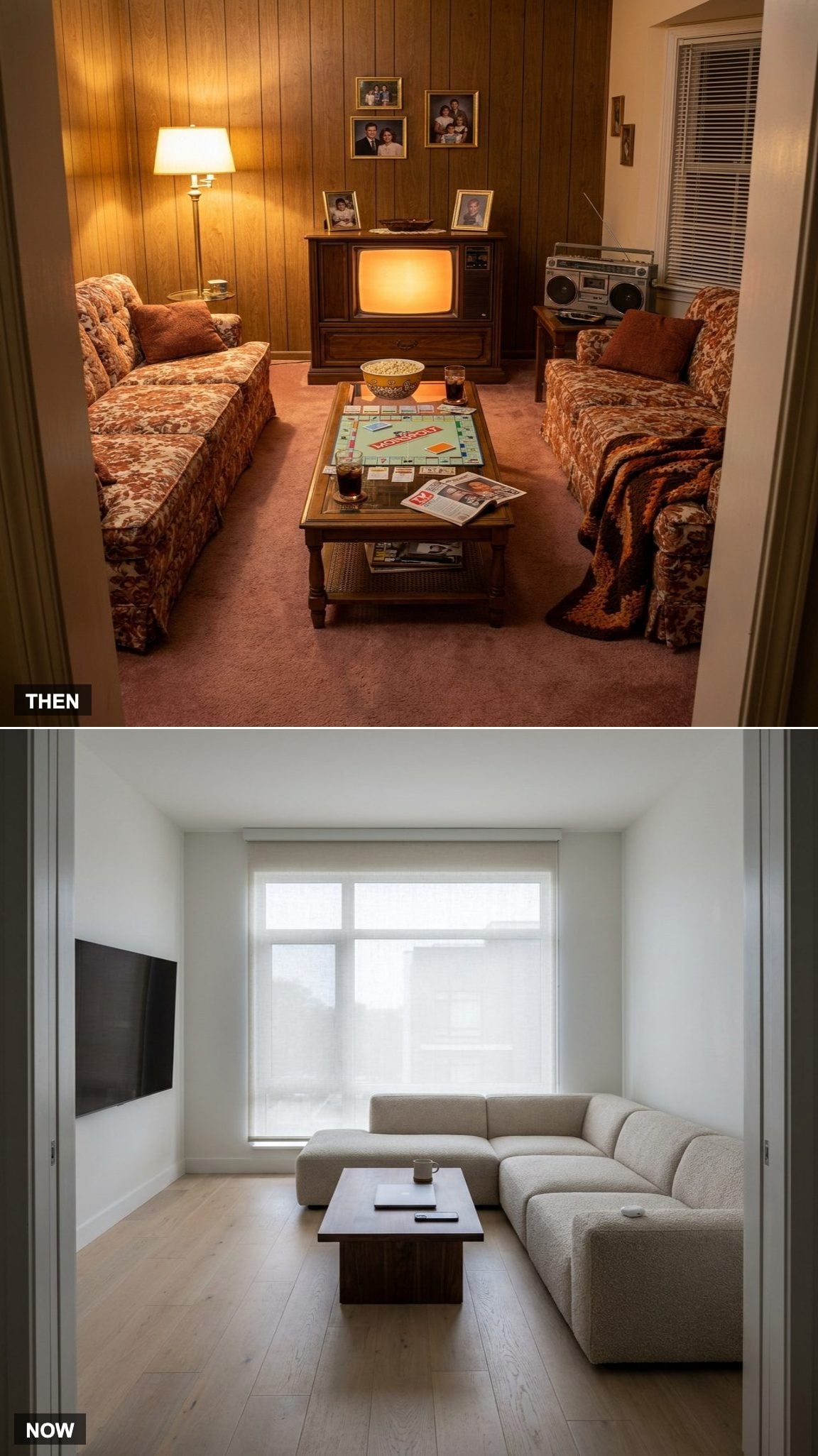
The 1985 living room had a job and it did it. Everybody in one room, one screen, one show, snacks on the coffee table, arguments over the remote settled by whoever was holding it. Loud. Crowded. The whole point of having a living room.
The current version is beautiful and often quiet because everyone is upstairs watching something different on a separate screen. The room still exists. The nightly gathering it was built for does not.
28. Oversized Sectionals Weren’t the Norm
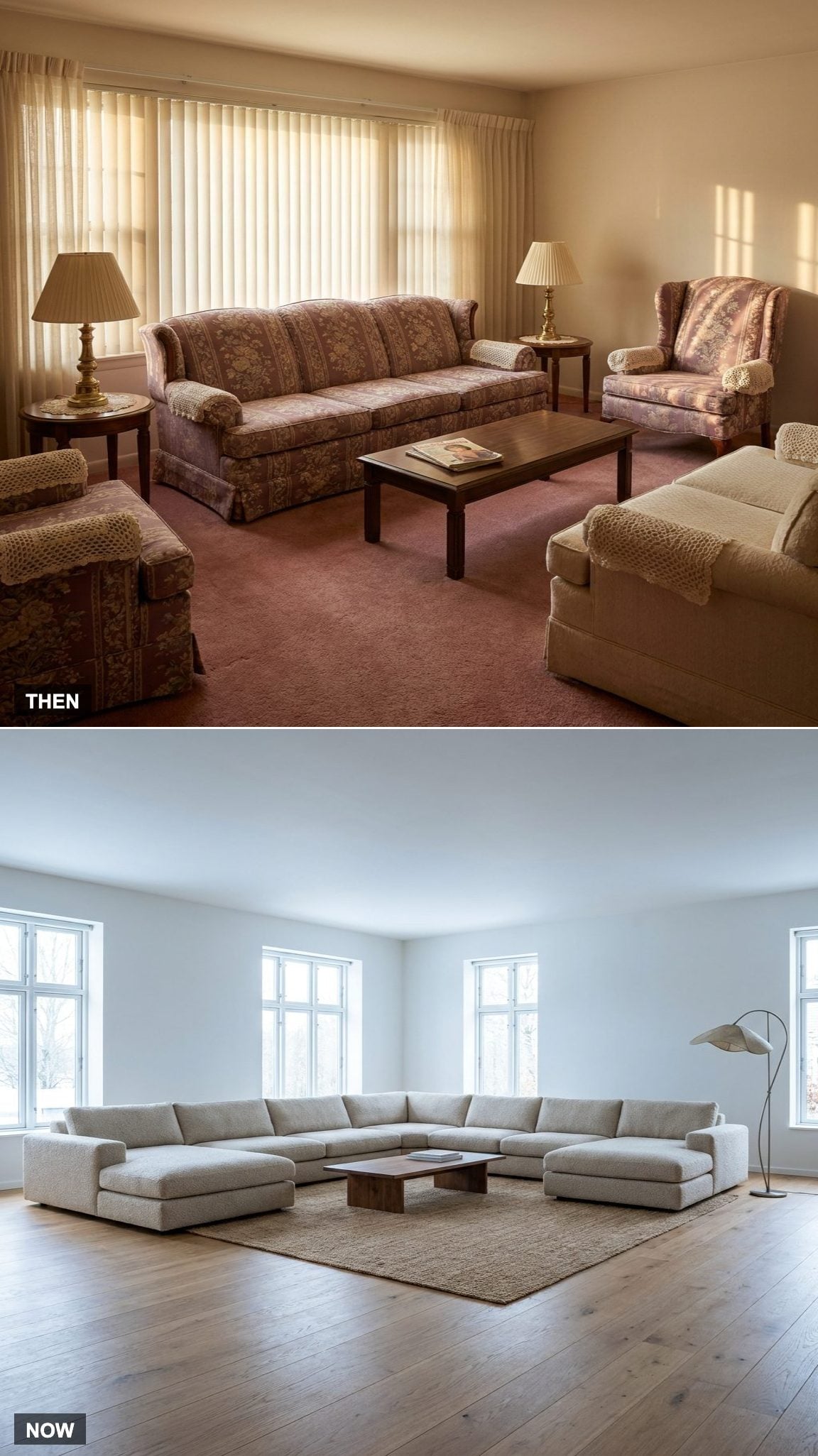
Furniture used to face other furniture. Sofa, loveseat, wingback, all pointed at each other so a family of five could see each other’s faces. Nobody had a name for the arrangement, because nobody needed one.
The modern sectional is one enormous piece aimed at a wall. Sleeps four, seats no one, because to look at another person on it you have to crane your neck. A bed pretending to be a couch. And we love it, and we bought it, and we lie on it alone.
27. Wood Entertainment Centers Framed Every TV
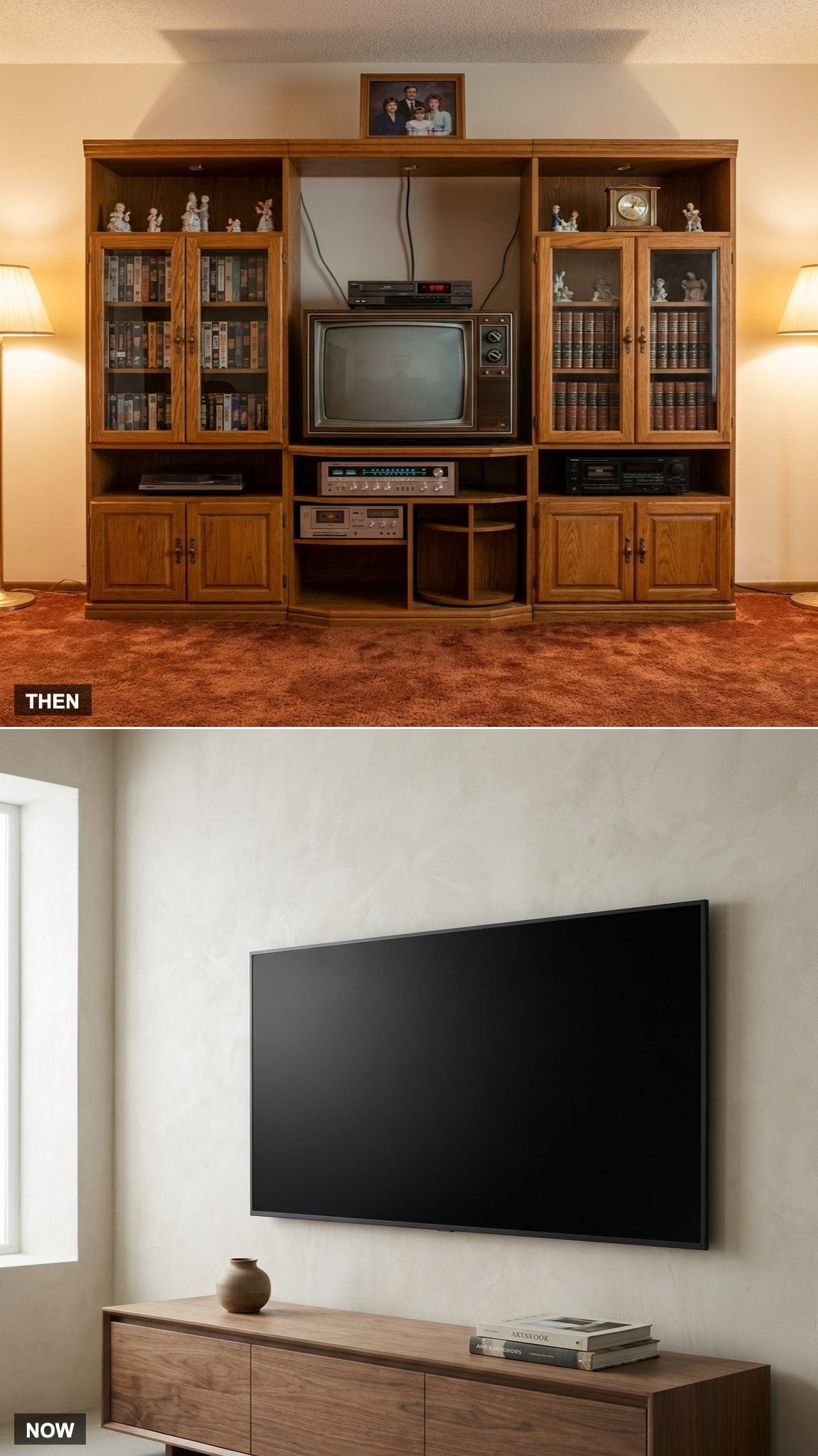
The entertainment center was a wall-sized wooden shrine to the Zenith—three hundred pounds of oak with glass doors, a slot for every tape and a shelf for every book. You didn’t move it. It moved with the house.
Now the TV is thinner than a magazine and floats on the wall like a painting. The whole wooden cathedral it used to live in eventually got Marie Kondo’d out of existence. Nobody mourns it. Nobody should. But it was the biggest, heaviest piece of furniture most families owned, and it’s just gone.
26. Conversation Was the Main Event
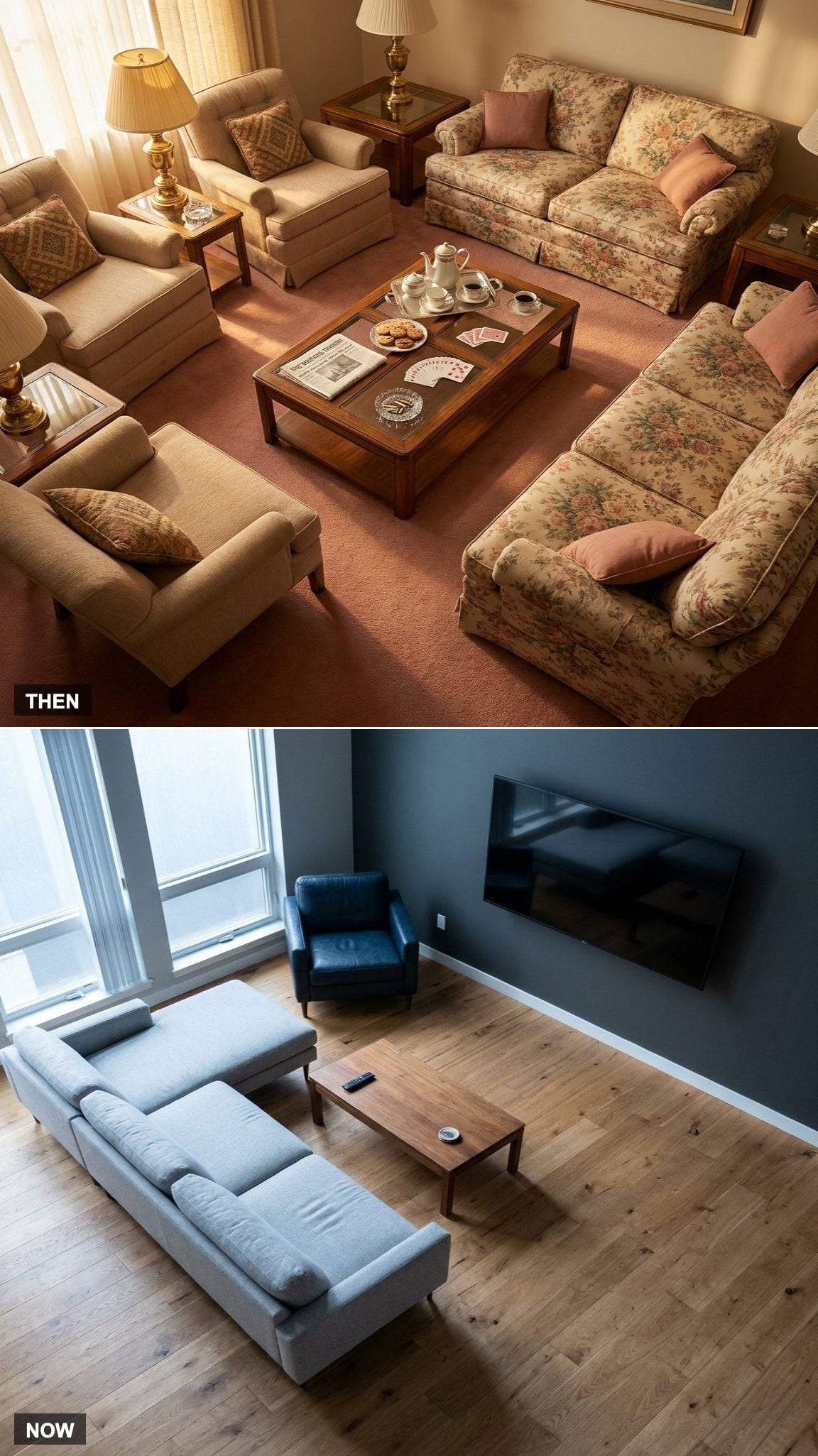
Furniture arrangement used to be a philosophical position: chairs facing each other because talking was the thing you did in the room. The TV lived in a corner. It was a guest.
Now the TV is the sun and everything orbits it—the sectional faces it, the chair faces it, even the coffee table lines up parallel to it. You can feel the shift the second you walk into either kind of room. One asks you to sit down and talk. The other asks you to sit down and watch.
The room used to face itself. Now it faces a screen.
25. Brick Fireplaces Were the Heart of the Home
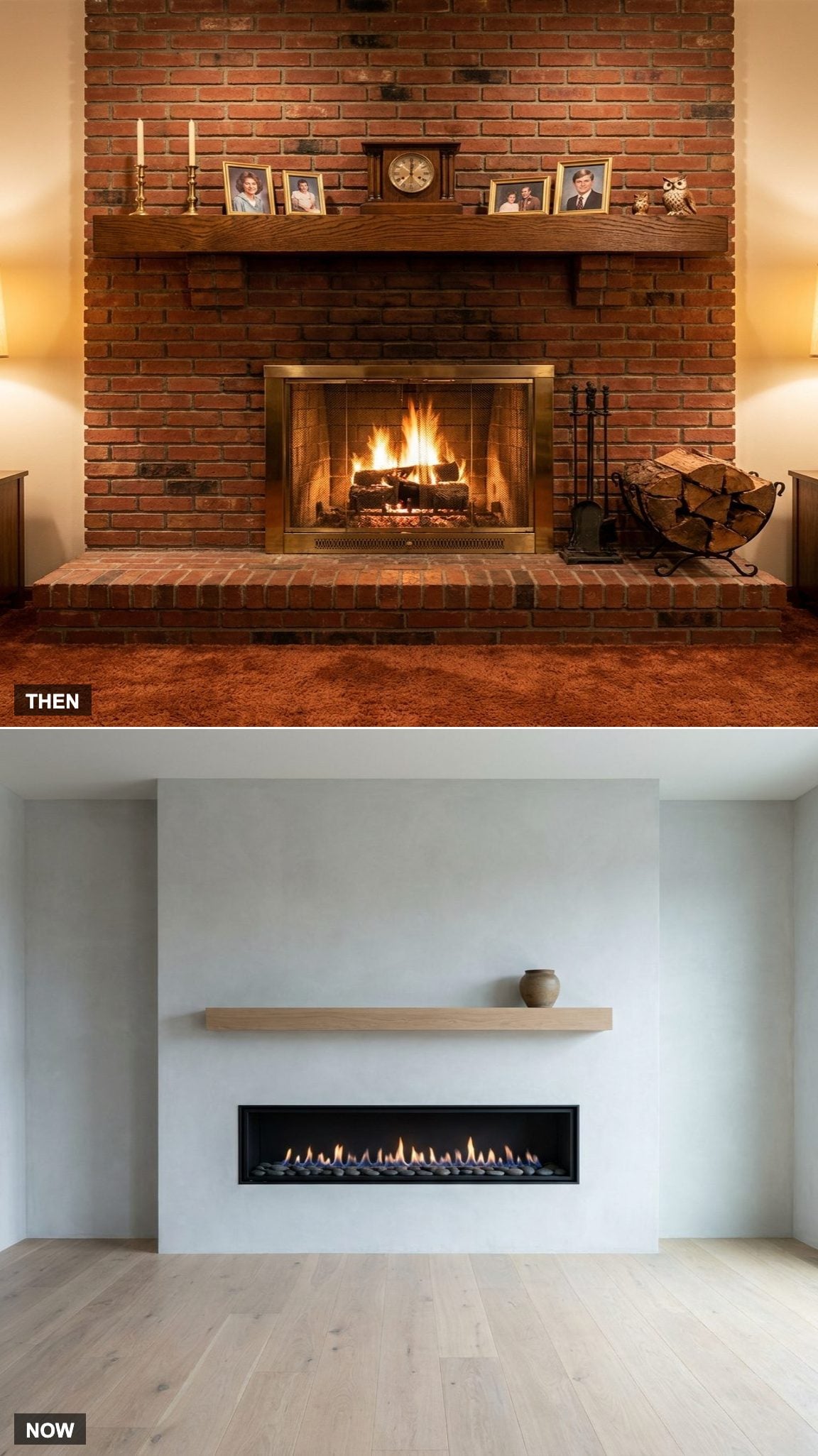
A brick fireplace was a mess and a project. You hauled the wood, built the fire, cleaned the ash, and replaced the screen when the mesh rusted through. It smelled like smoke for two days after. And it was the best thing in the house.
The linear gas version turns on with a wall switch. Cleaner, safer, easier. It also gives you nothing to do. No ritual, no hauling, no fire-tending, no ash. The flame is beautiful and it asks nothing of you, which turns out to be the problem.
24. Wall-to-Wall Carpet Made Rooms Feel Cozy
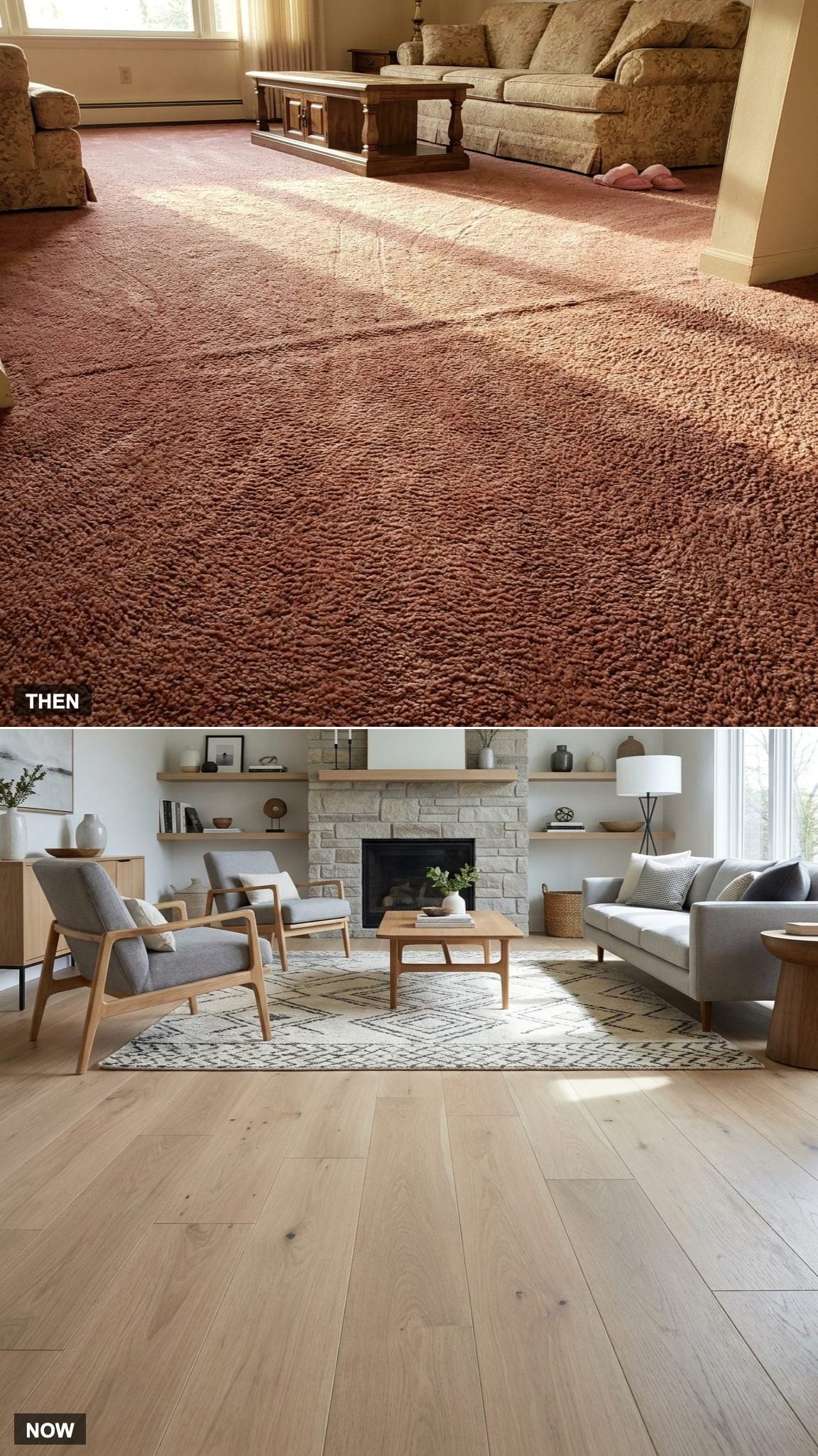
The feeling of bare feet on plush carpet is a sensory memory nobody under thirty has. Warm, soft, forgiving. It ate Cheerios, hid crumbs, and gave every dropped glass a fighting chance. It was also, in retrospect, filthy in ways nobody wanted to think about.
Hardwood is beautiful, easier to clean, and holds up for a hundred years. It’s also cold, loud, and unforgiving—drop a wine glass on oak and you’re picking shards out of the grain for a week. Both floors are right. They just make the room feel like completely different things.
23. Floral Sofas Filled the Room With Personality
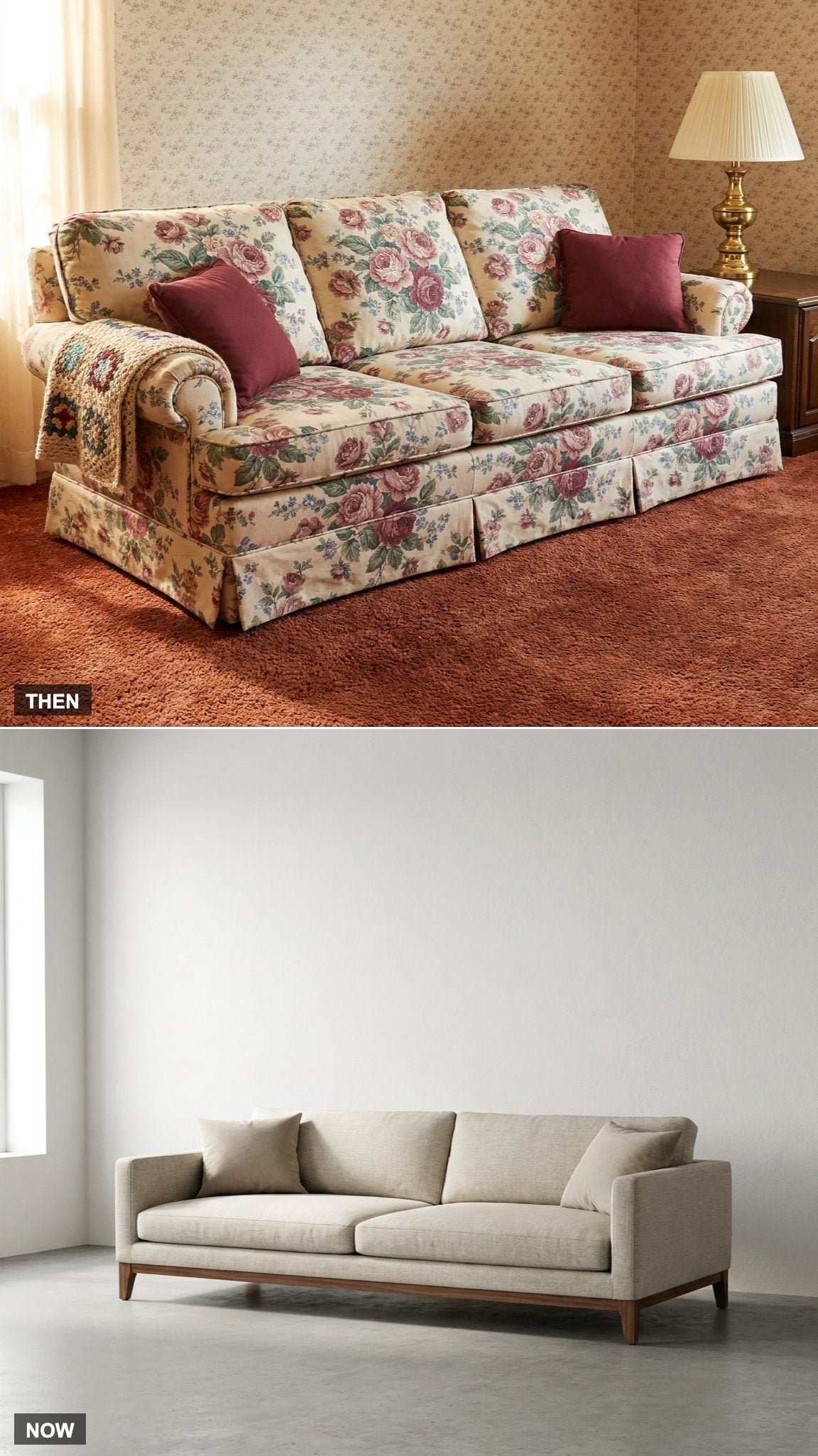
The chintz sofa was maximalist before maximalism had a name. Cabbage roses the size of a fist. A pattern so committed it fought with the wallpaper—which was also floral, which was fine, because that’s what living rooms did.
The current sofa is the color of oatmeal and says nothing. Beautiful. Calming. Photographs well. Gives away nothing about the people who bought it, which is probably the whole appeal, and possibly the whole problem.
22. Houseplants Were Scattered Everywhere
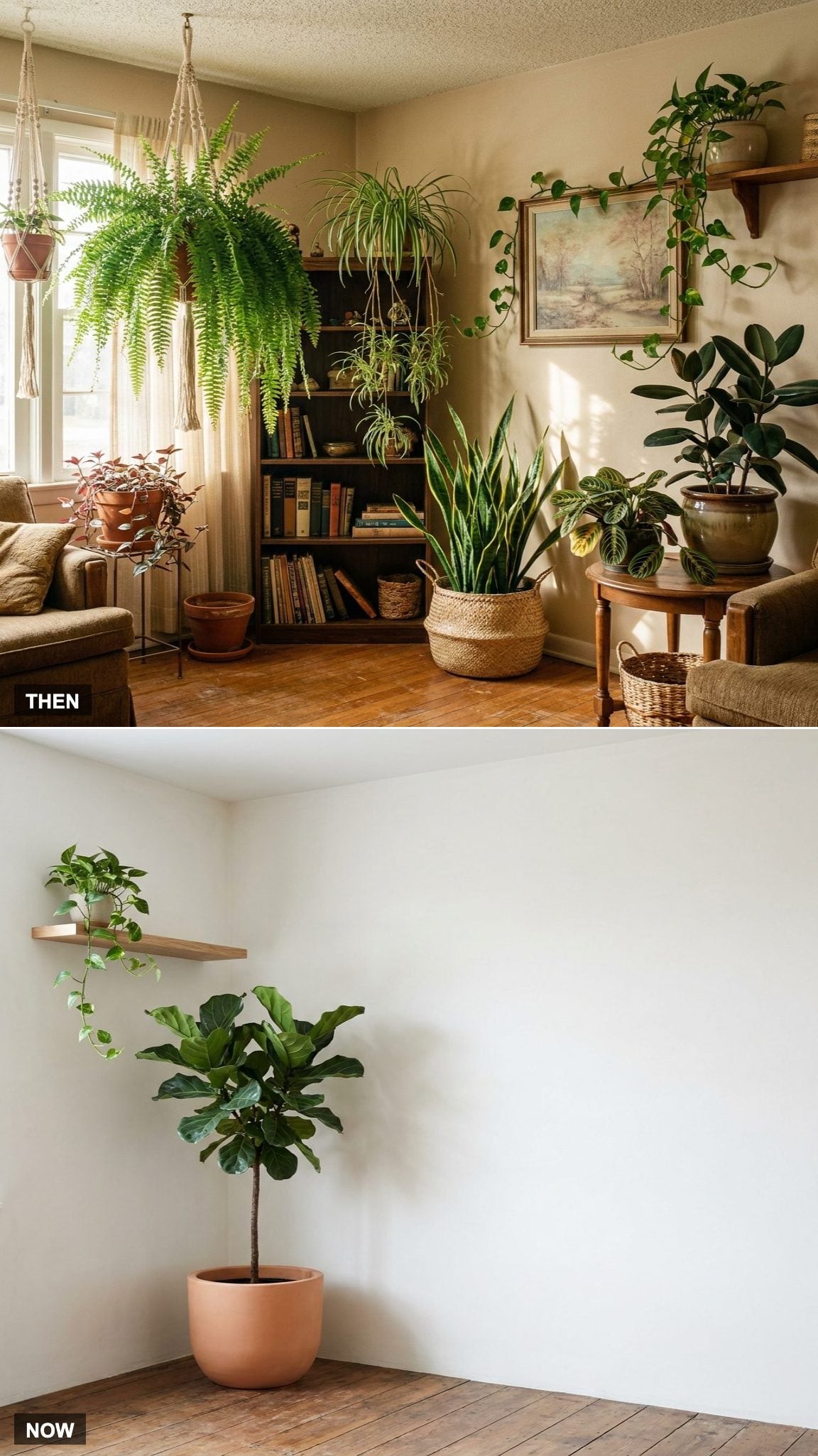
The 1985 plant corner was a full ecosystem—spider plants having babies, ferns dropping leaves, a pothos with a vine so long it had to be pinned to the wall with thumbtacks. Nobody knew the Latin names. Everybody had one. Yours was probably slightly dying, and that was okay.
Now the plant situation is one fiddle-leaf fig that cost a small fortune and gets its own humidifier. It’s a piece of decor with a name and a care schedule. The old jungle was messier and more alive. I say this as someone who has killed a fiddle-leaf and felt genuinely worse about it than I did about the pothos I forgot to water for a month in 1997.
21. Heavy Drapes Framed Every Window
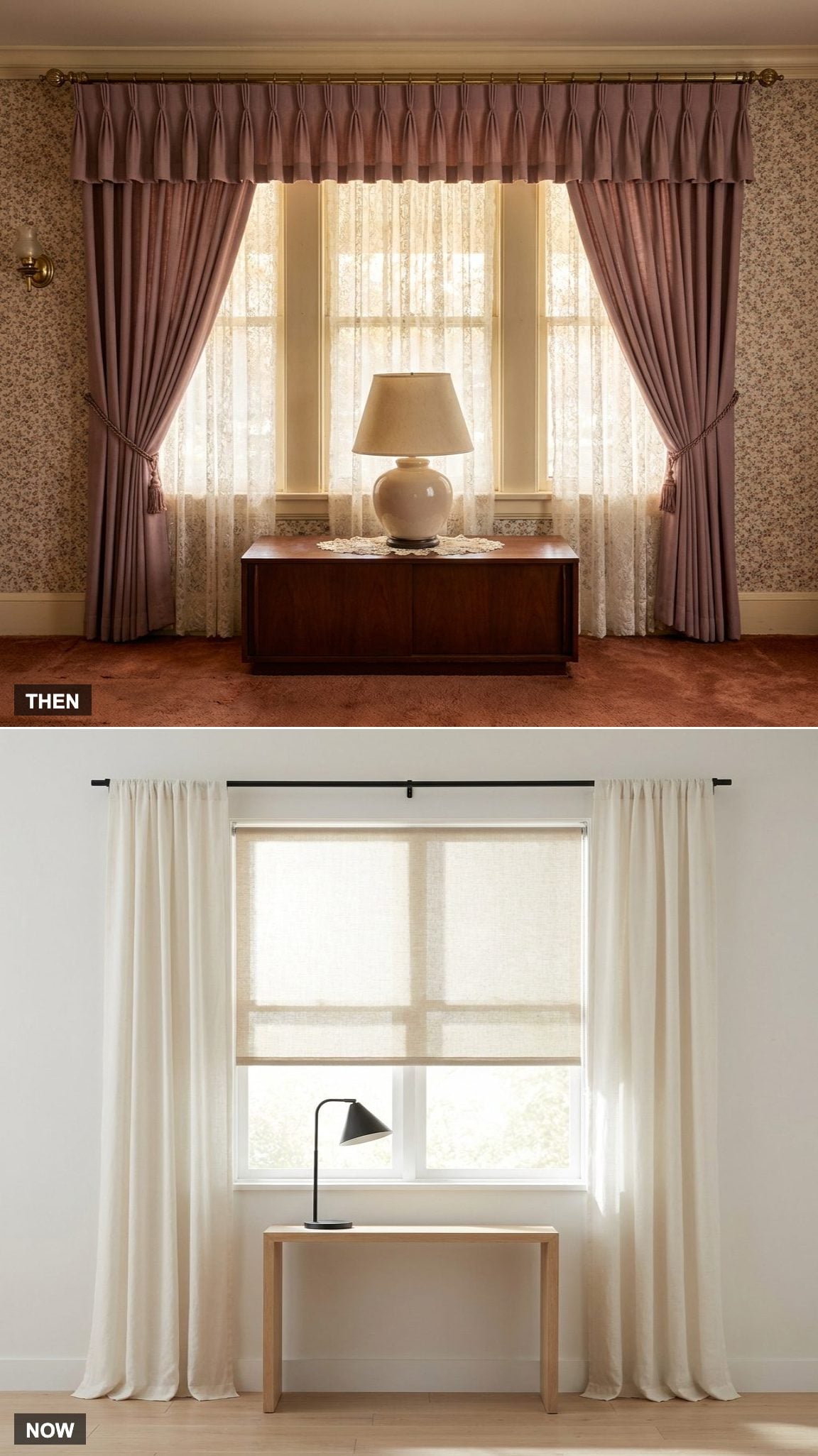
Windows used to wear outfits—drape, valance, tieback, sheer, all in coordinating fabric, all catching dust, all making the room noticeably darker than it needed to be. You dusted them. You never washed them. Nobody did.
The modern window is mostly naked. One linen panel, maybe a roller shade, and a huge amount of daylight nobody used to let in. The room is brighter. It’s also less soft, less framed, less theatrical. Drapes were a costume for the wall. And the wall misses them a little.
20. Coffee Tables Displayed Photo Albums
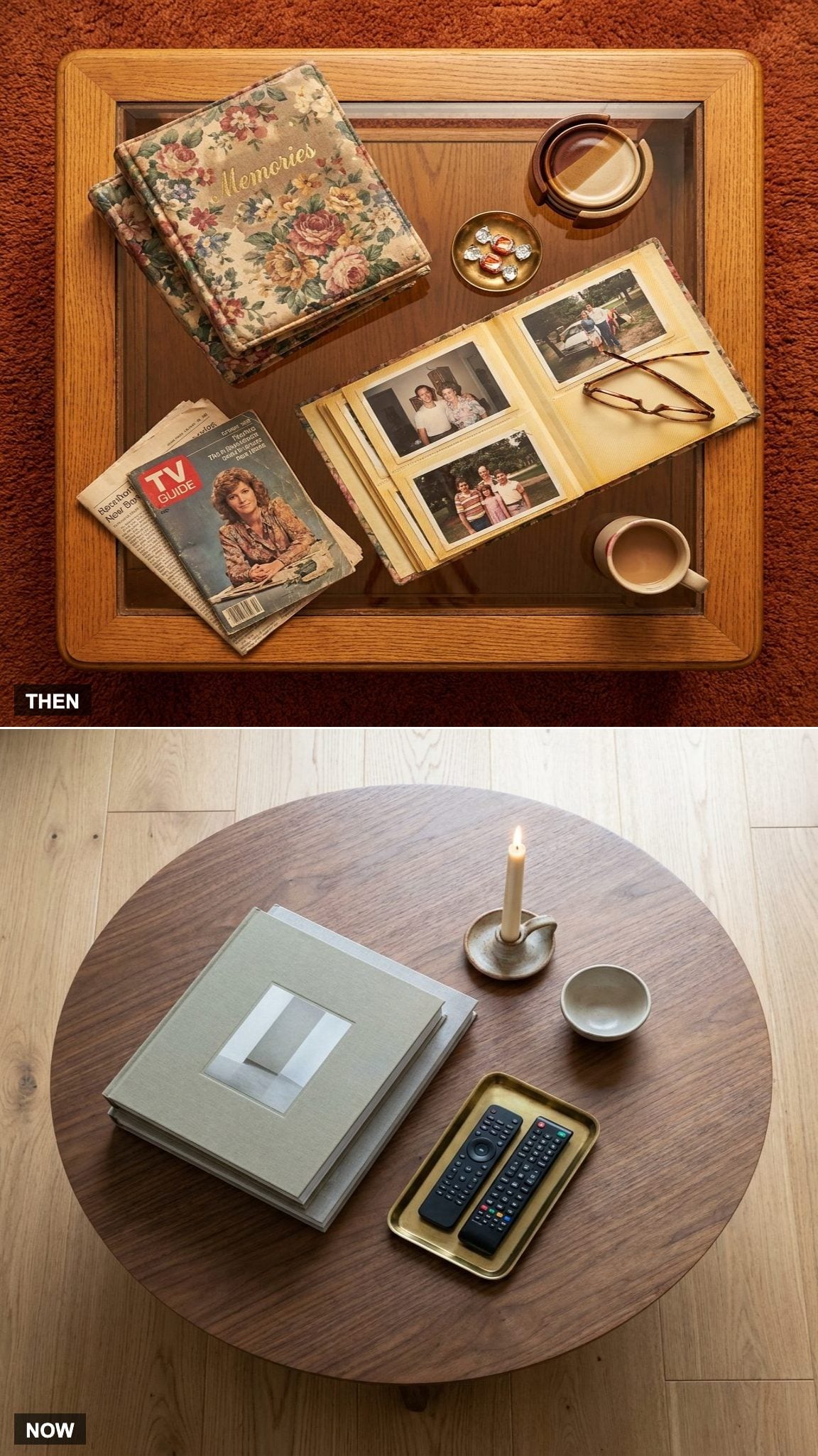
The coffee table used to be a scrapbook you could sit around. Photo albums with the sticky pages that yellowed the pictures. Somebody’s wedding album. A stack of school photos that never got put anywhere else. You’d open one and lose forty minutes.
The current coffee table has two art books nobody has opened, a candle, and the remote. The photos moved to phones—which means they exist, technically, but nobody flips through them together on a Sunday afternoon. Thousands of photos on a phone is not the same as fifty in an album, and I will die on this hill.
19. The Stereo System That Ate a Whole Wall
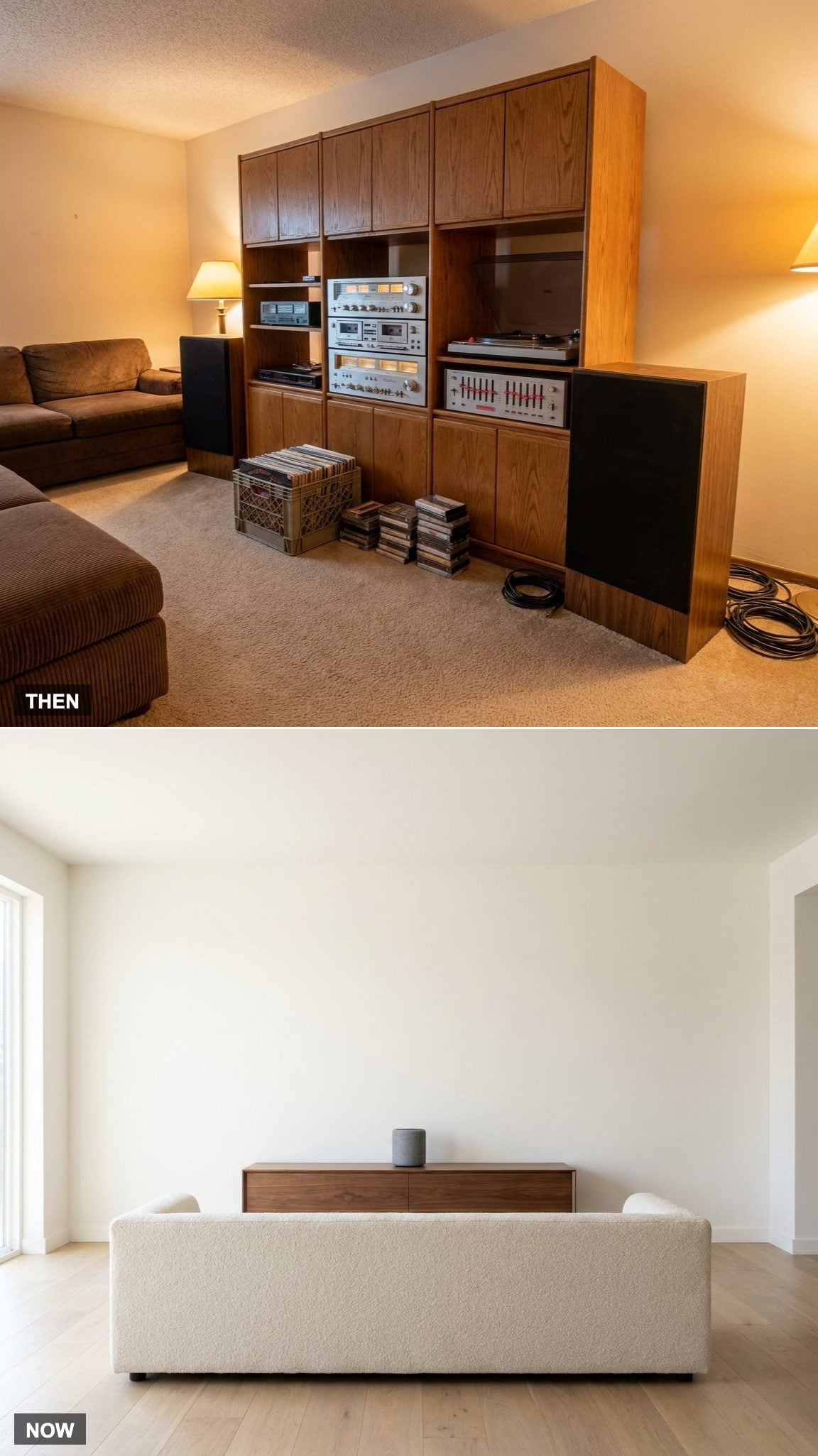
That silver-faced receiver with the glowing VU meters wasn’t equipment—it was furniture, and everyone treated it that way. Families arranged the whole room around it, ran speaker wire into corners with staples, and alphabetized vinyl on Saturday mornings while the coffee got cold.
Now a puck the size of a coffee mug does more and sounds cleaner, with none of the fuss the old setup demanded. Something got lost in the swap. Not fidelity. The ritual of putting a record on for somebody.
18. The Shelf Full of Framed Faces
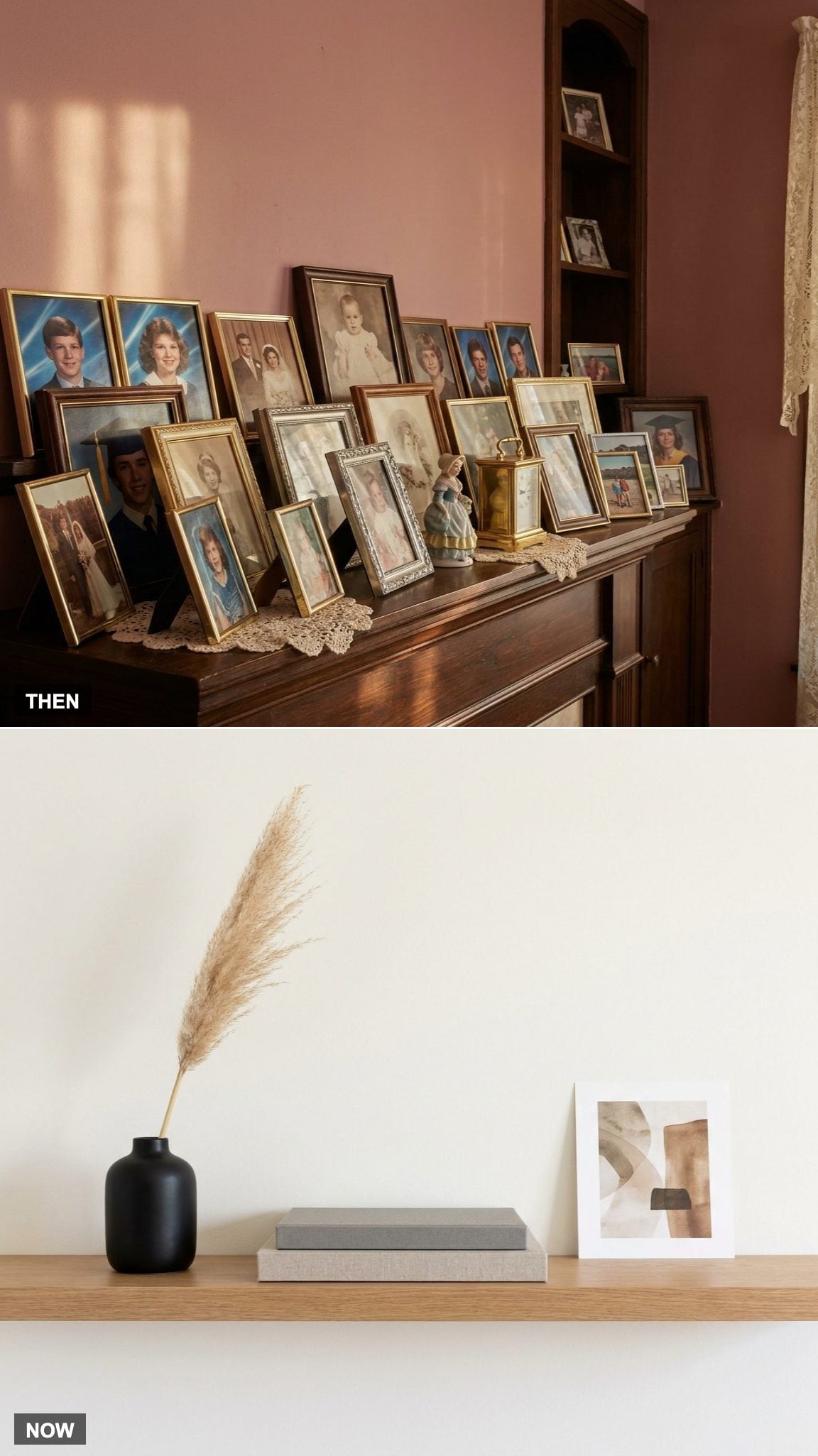
Every horizontal surface used to be a family tree—kids at every age, dead relatives, cousins nobody could name anymore. Dusting took an hour and everyone knew where each frame belonged.
The current version is three objects and a lot of breathing room. Cleaner, calmer, a little colder. What disappeared was the family itself as part of the room’s visual landscape.
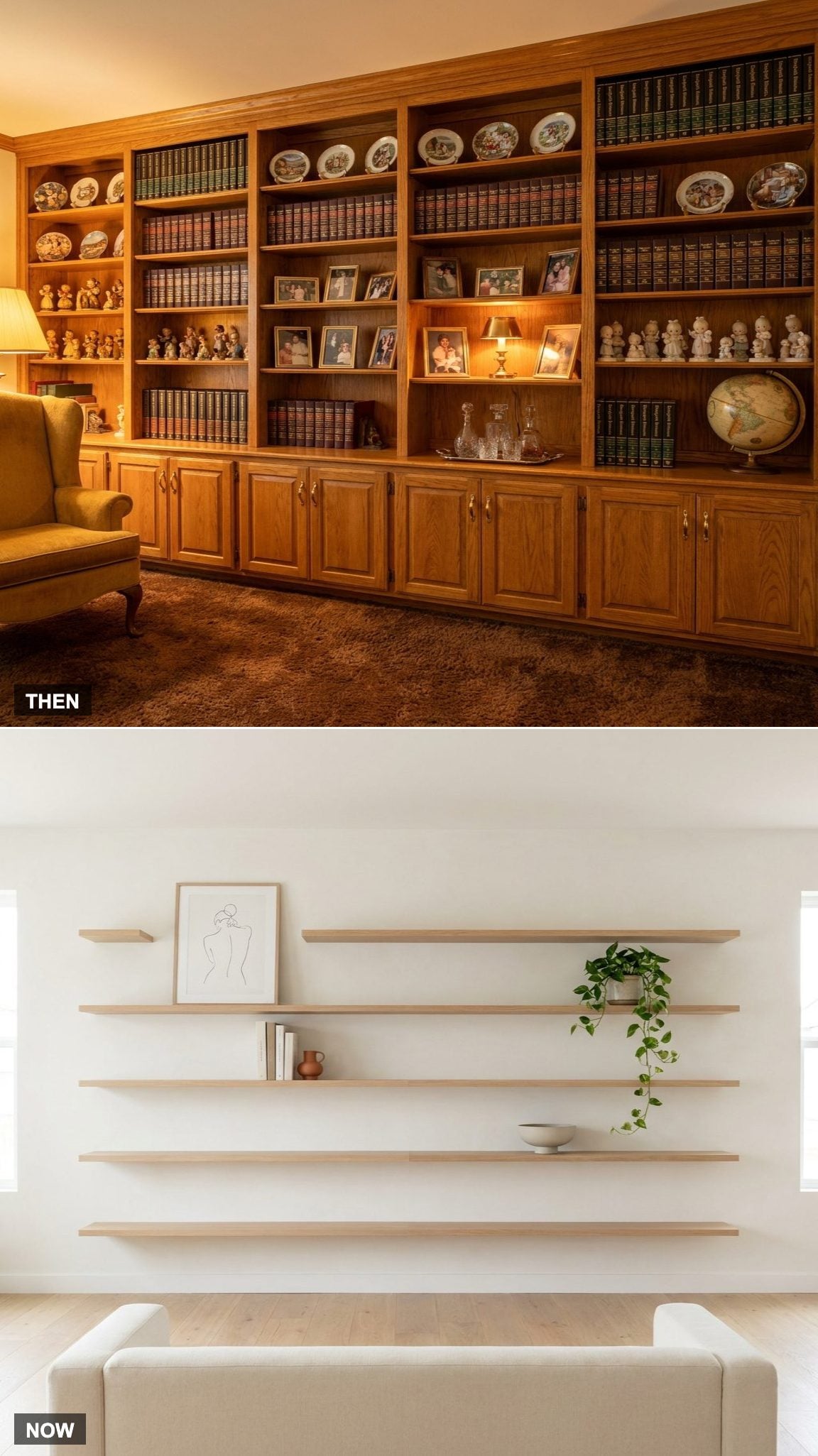
17. Built-Ins That Held a Life’s Worth of Stuff
🔥 Would you like to save this?
You could read a family from their built-ins. The encyclopedia set nobody opened after 1994, the Hummels somebody’s grandmother left behind, the romance paperbacks shoved to the back so the hardcovers showed in front.
Floating shelves gave that up on purpose. Three objects, a lot of wall, and an unspoken rule about never adding anything else. Looks like a magazine spread. Stores nothing.
16. The Honey-Oak Everything
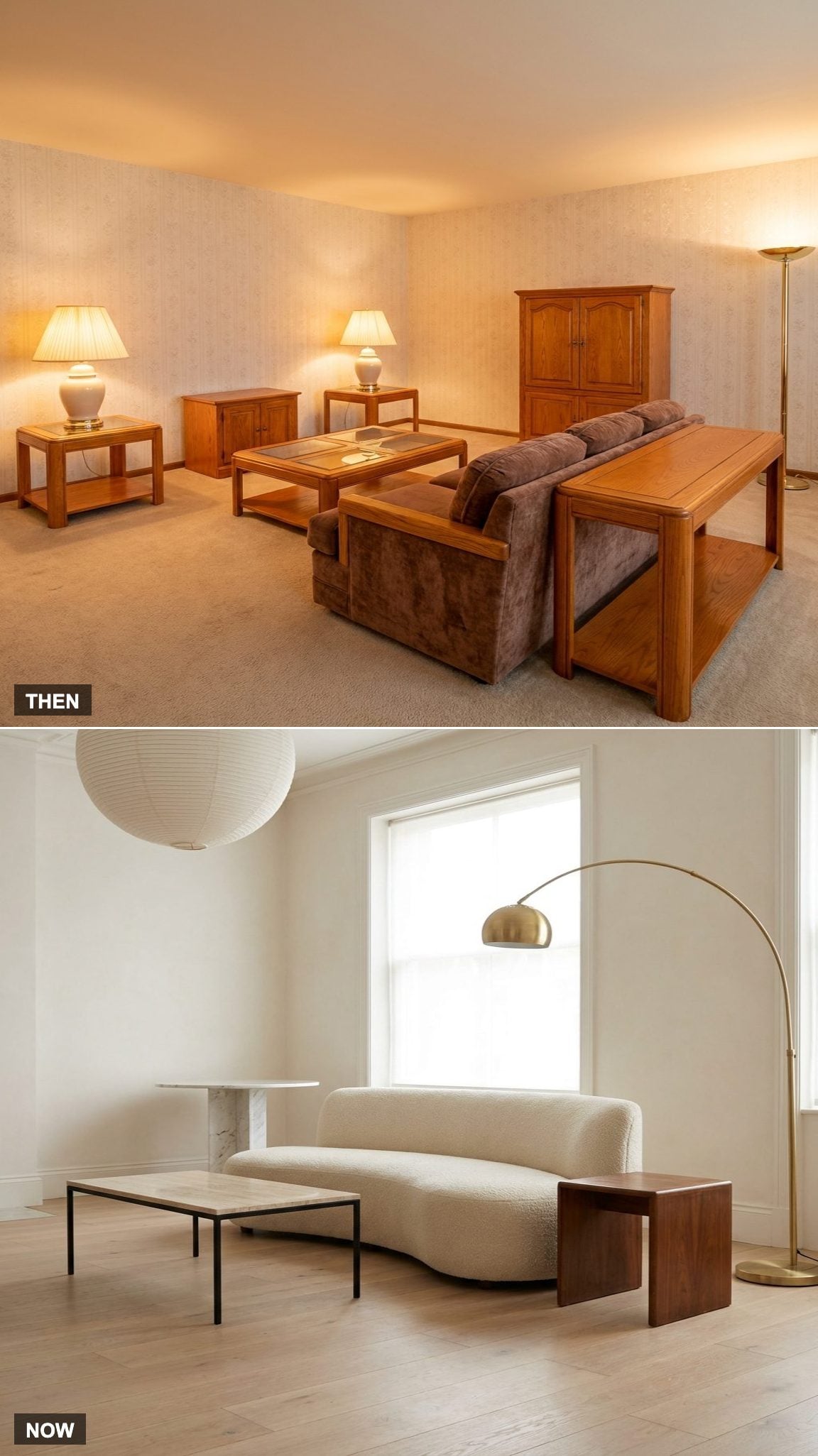
Matching wood suites were sold as a set and treated as one. If the coffee table went, the end tables went with it. There was a logic to all that unity. There was also a lot of orange.
Mixing materials reads as more considered because the room looks assembled, not delivered in a truck. A stone slab, a piece of walnut, some black metal. Nothing matches, and that’s the whole trick.
15. The Matching Sofa-and-Loveseat Combo
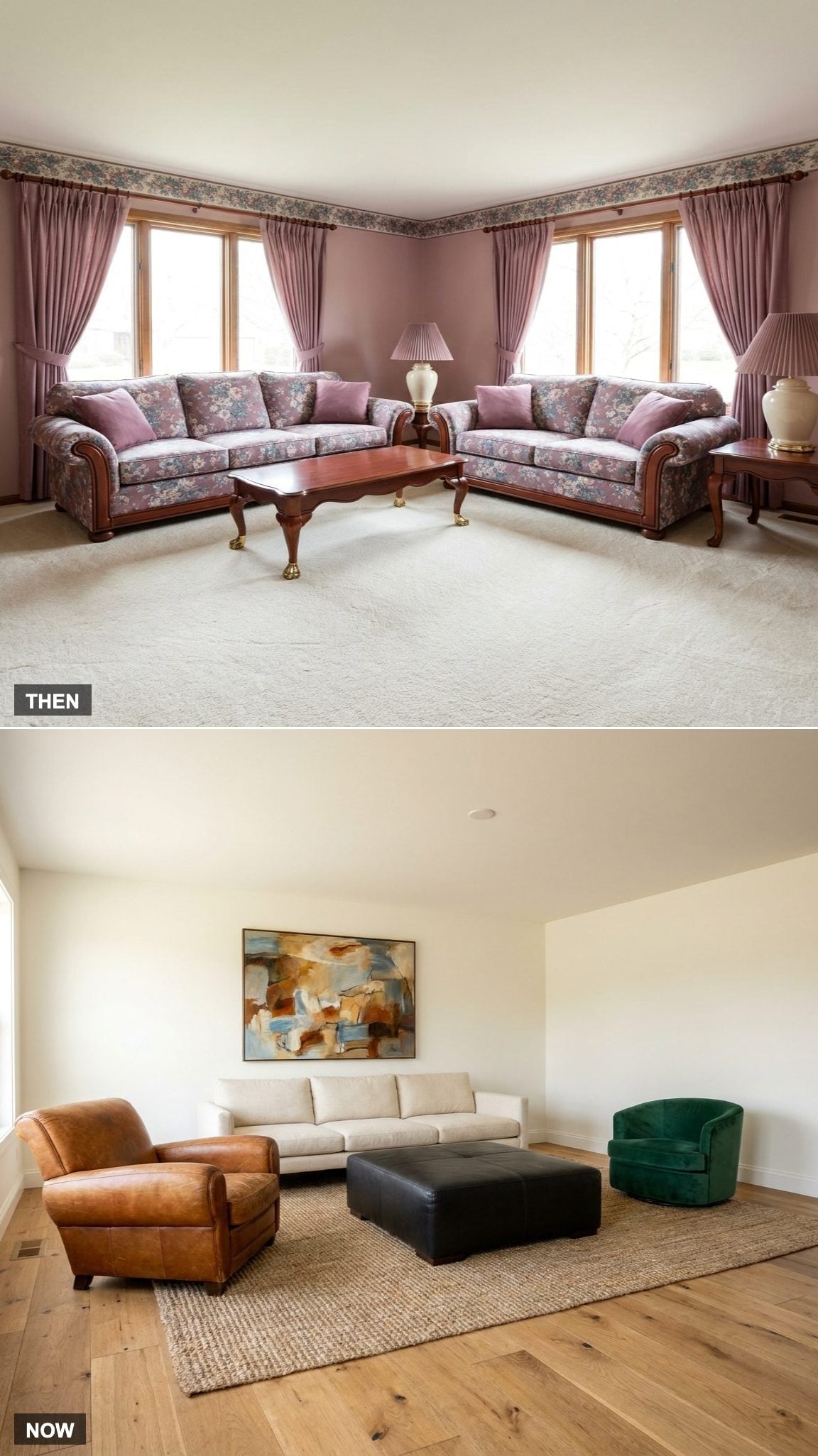
Buying the set meant you were done. Sofa, loveseat, coordinating drapes, wallpaper border to tie it all up in one visit. The whole room in one delivery.
Now the goal is looking like nothing came from the same store. A leather chair from an estate sale, a sofa ordered online at midnight, a swivel your sister was getting rid of before her move. It takes more time and a lot more nerve. It also looks like someone actually lives there.
14. The Landline’s Little Throne
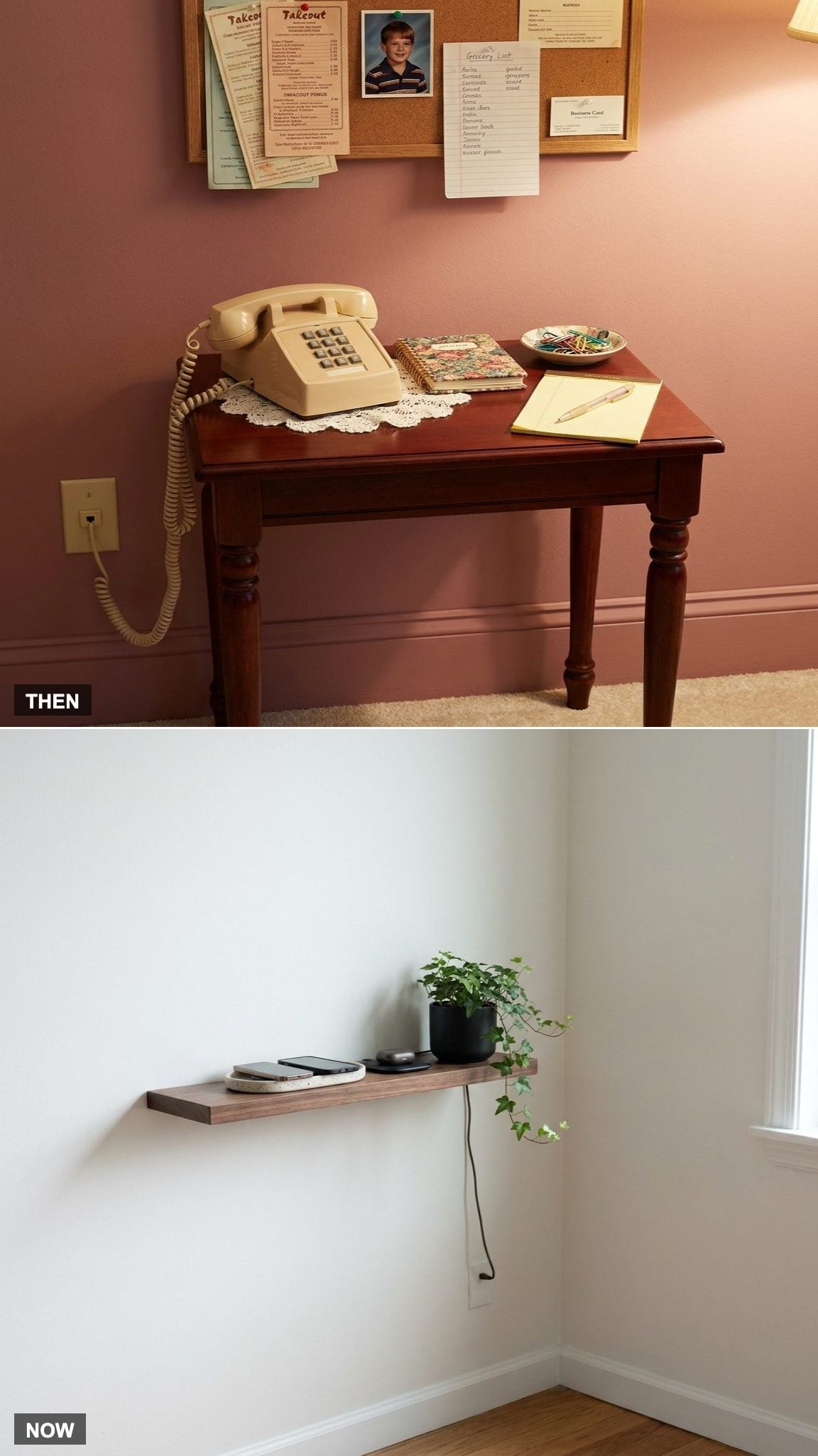
The phone had a table. The table sometimes had a chair. Kids stretched the cord around corners to get some privacy, and everyone in the house heard the whole conversation anyway.
Now the same corner holds a slab of walnut and a charging pad. Cleaner. Also lonelier, in a way that’s hard to name.
13. The One TV Everyone Watched Together
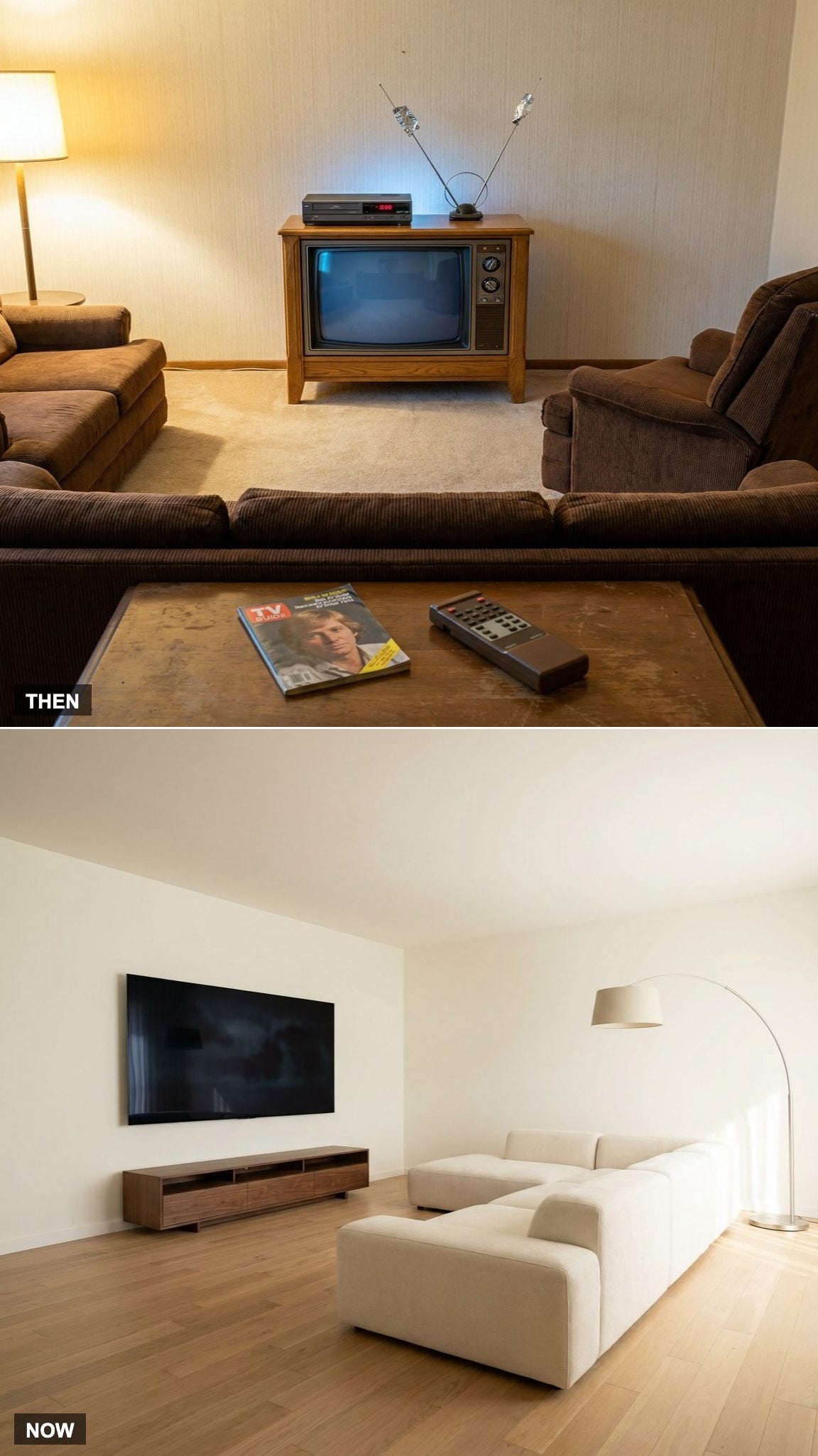
One television meant one show. Somebody won, somebody sulked, and the whole family ended up watching Cheers together because there was nothing else to do about it.
Now every person can watch exactly what they want without asking anyone else. The argument disappeared. So did the compromise, the shared boredom, and the strange family loyalty to shows half the room never would have chosen.
12. The Formal Living Room Nobody Sat In
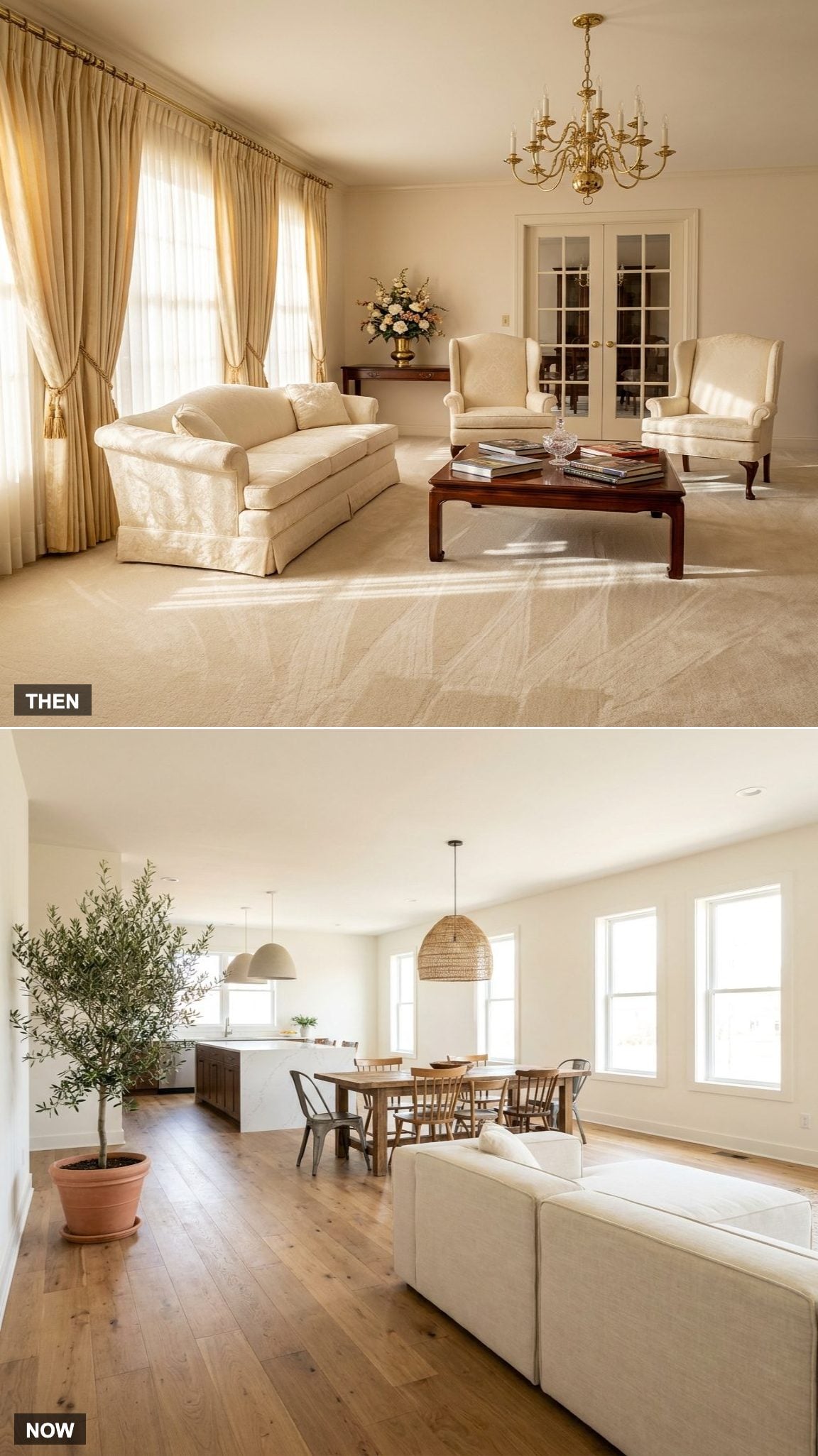
Not every living room was built for living. Some houses kept a second one in reserve: a museum with a couch. Kids were not allowed in it, adults barely used it, and it existed for a version of company that mostly never came knocking.
Open-plan renovations helped push it aside. Down came the wall, in moved the kitchen and dining room, and life spread into one big space where somebody was always cooking while somebody else was always talking. Something was gained in warmth. Something was lost in the idea that a house could keep a secret.
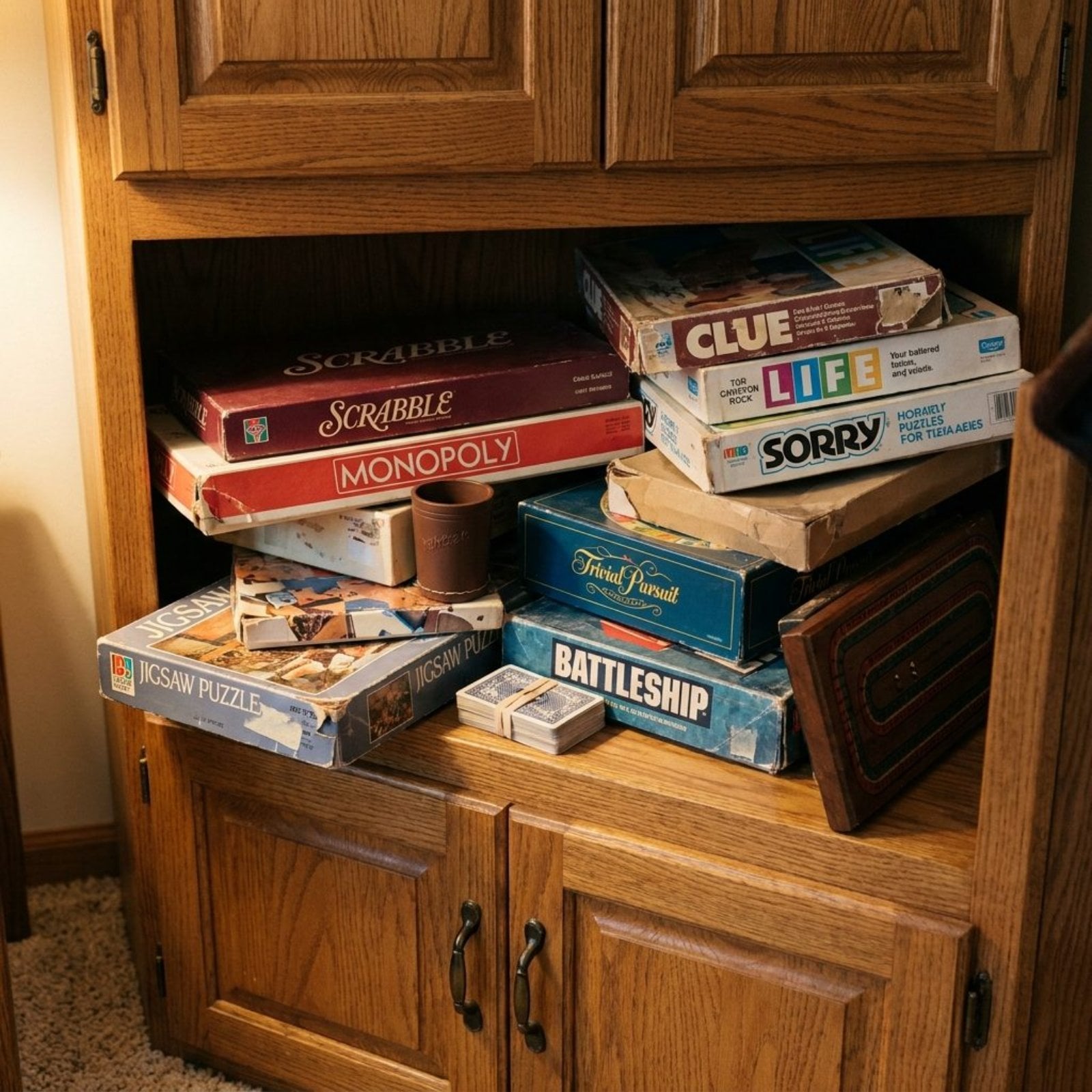
11. The Cabinet Stuffed with Board Games
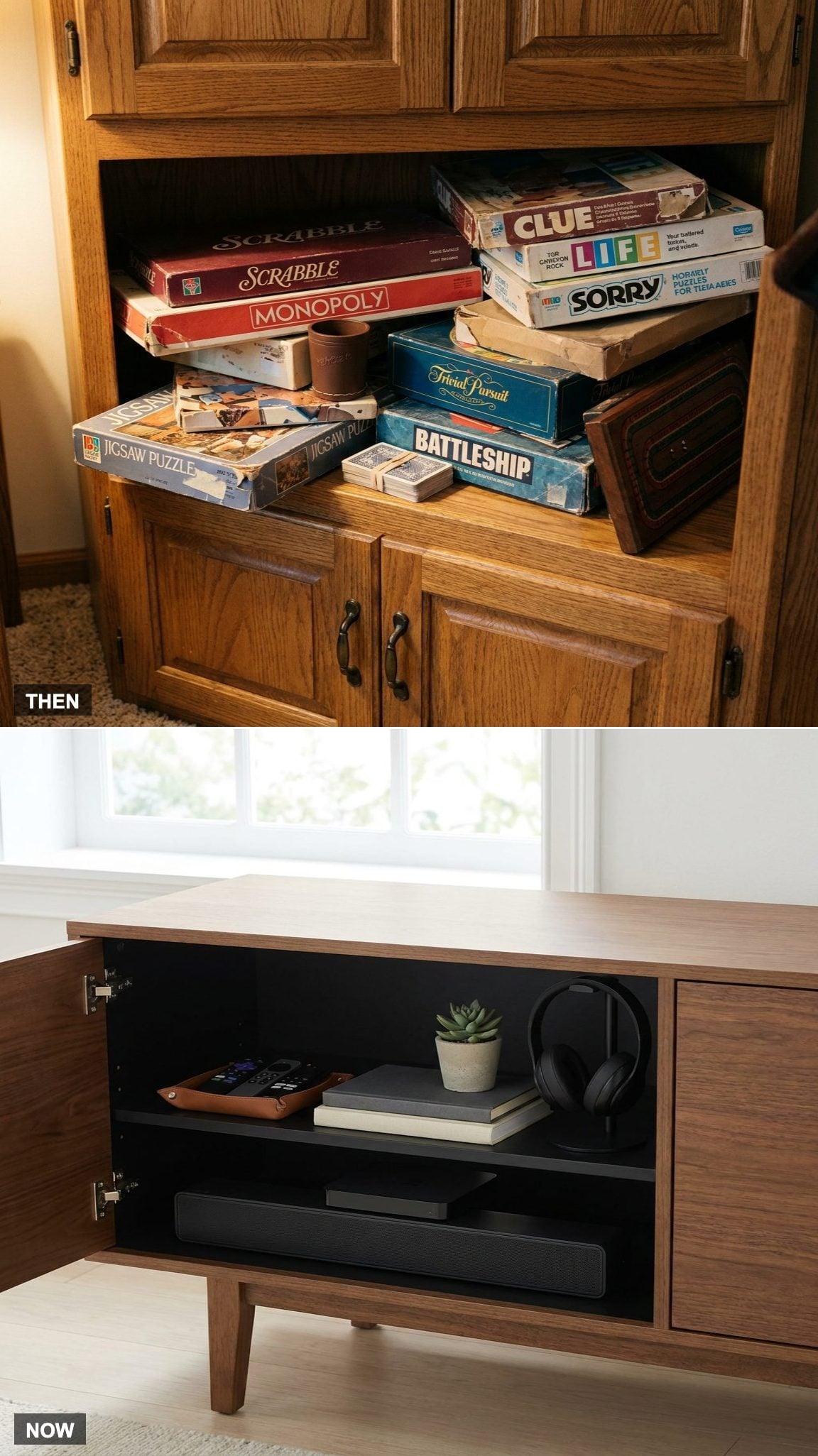
Every family had the cabinet. Monopoly with half the money missing, Scrabble with a Q that had gone rogue years ago, a jigsaw puzzle nobody had finished but nobody would throw out either.
In many houses, the cabinet still exists. It holds a streaming stick, a soundbar, and three remotes nobody can figure out how to use in sequence. Games moved to a closet or a landfill. Family game night got outsourced to whatever’s on.
10. The Wood Paneling That Ate the Light
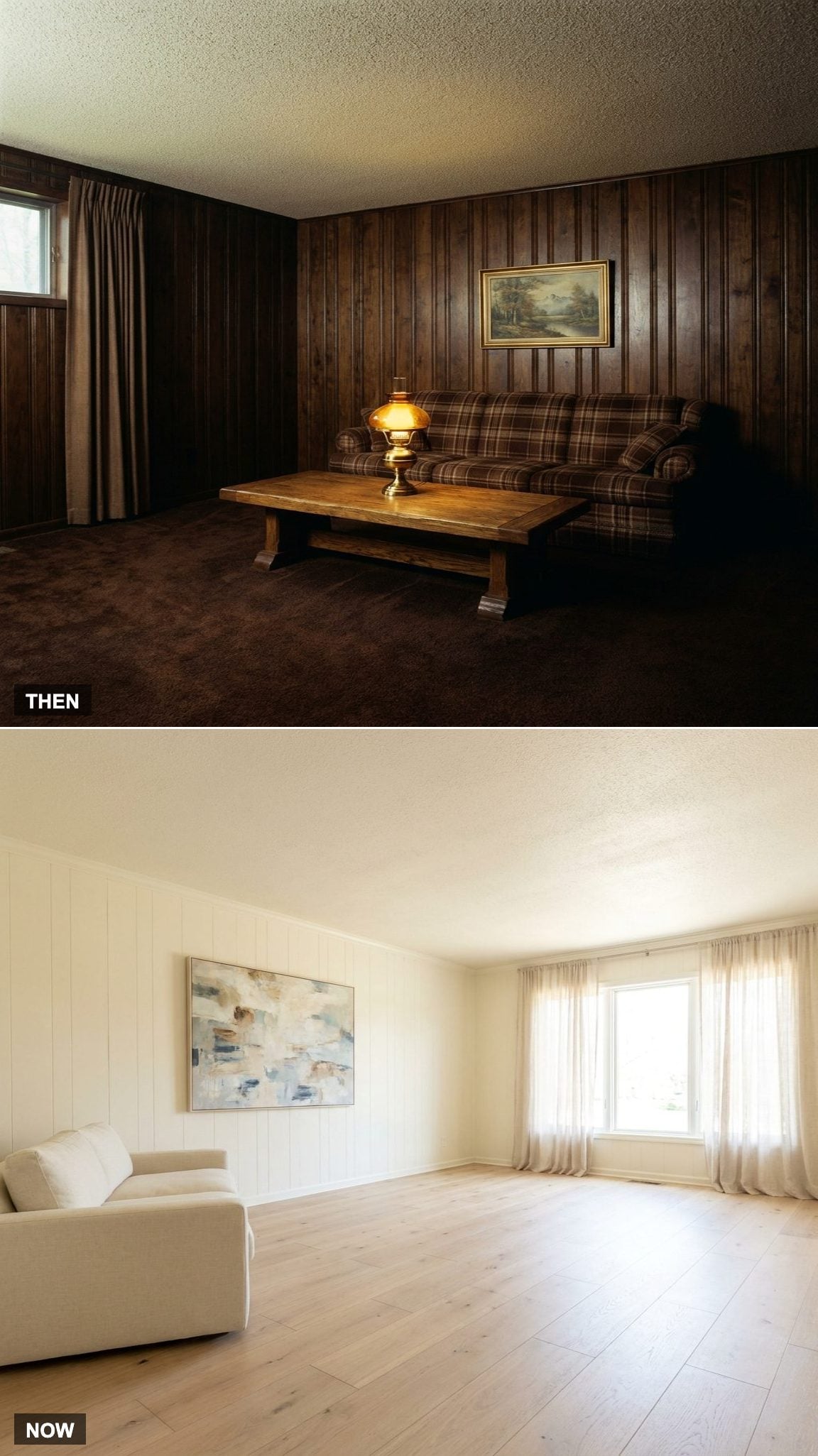
Dark paneling had its own gravitational pull, absorbing light and muffling sound until a Tuesday afternoon felt like a Sunday evening. Basement rec rooms across the country ran on it.
Paint could transform it without removing a single panel. Same walls, same square footage, twice the light. Some homeowners are painting over the paneling now instead of ripping it out—keeps the texture, loses the cave.
9. Ceiling Fans With Globe Lights Were Everywhere
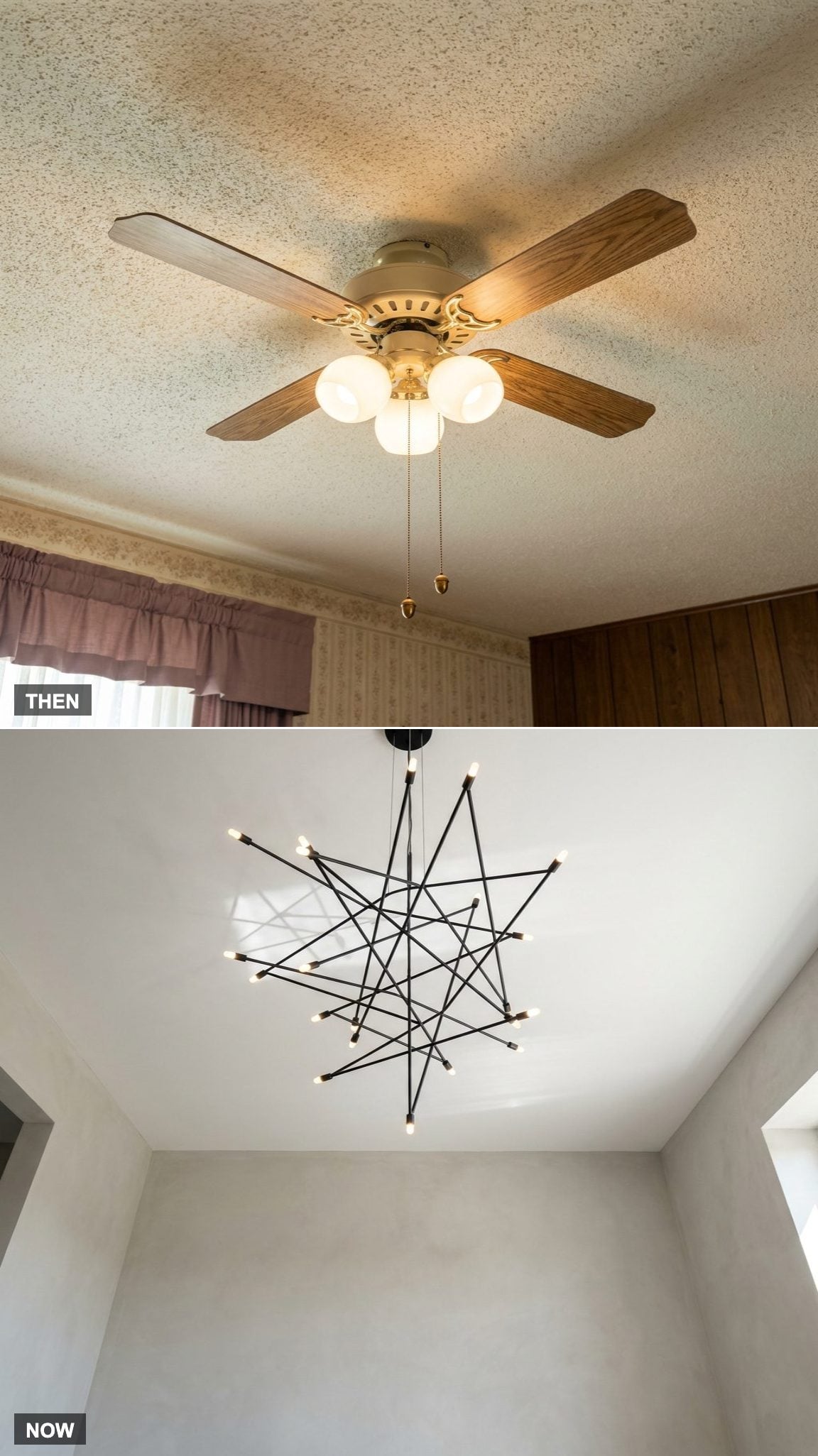
The brass-and-globe ceiling fan was the unofficial mascot of the 1985 living room. Five blades, three frosted globes, a pull chain that clicked when you yanked it too hard. It cooled the room, lit the room, and collected a soft gray fuzz of dust nobody talked about.
Now the light is the whole point. A sculptural pendant hangs where the fan used to spin, and its job description is short: look good doing nothing else. Cooling got outsourced to a vent you can’t see. The ceiling stopped multitasking.
8. Curio Cabinets Displayed Family Treasures
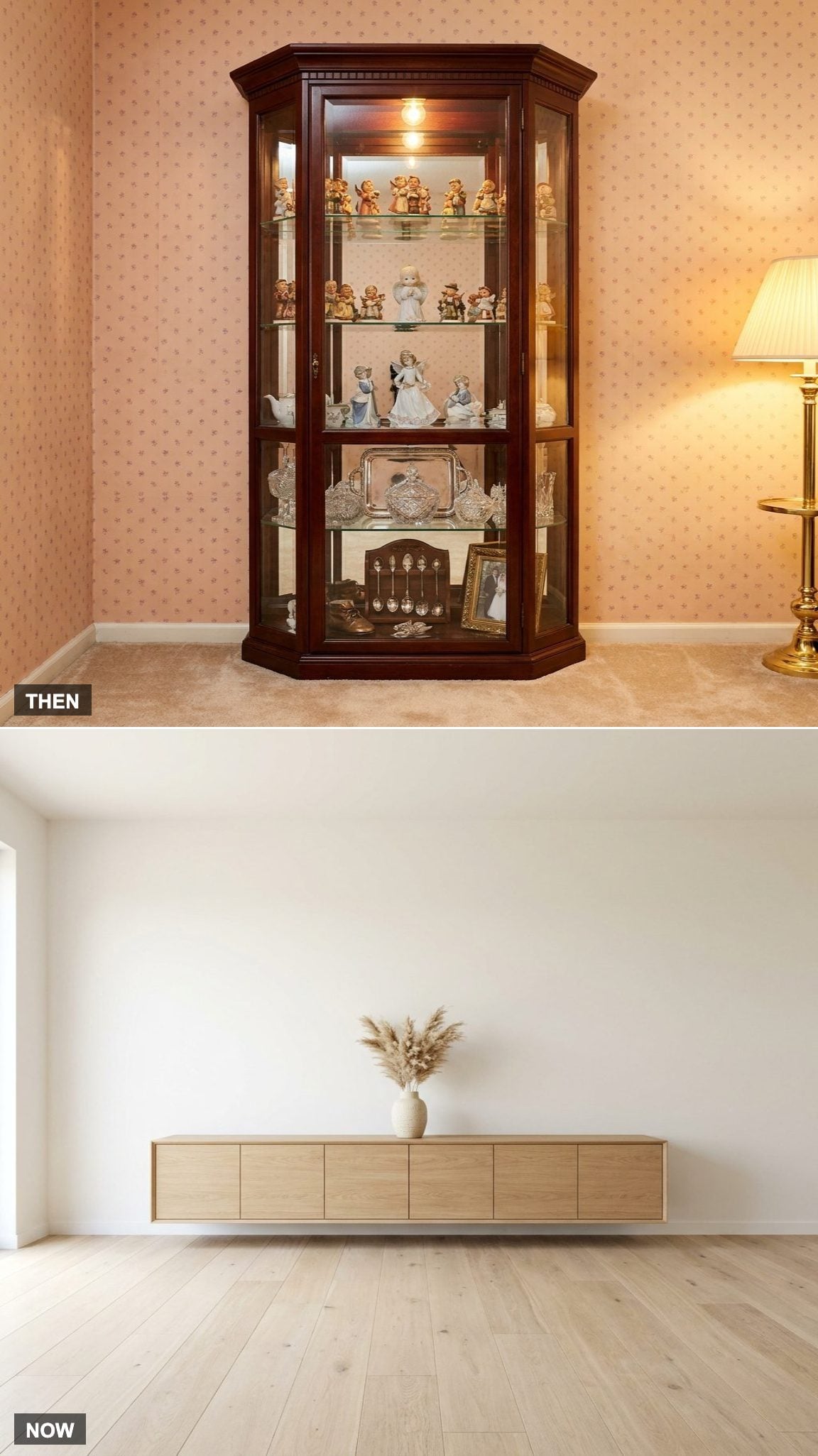
Grandma’s Hummels, the wedding china nobody used, a bronzed baby shoe. The curio cabinet was a museum of small family victories, lit from within by a single 15-watt bulb that made the crystal sparkle just enough.
Modern rooms hide almost everything behind flush cabinet doors. The stuff still exists, presumably. It lives in a bin in the garage now, waiting for a grandchild who won’t want it either.
7. TV Antennas and VCRs Filled the Console
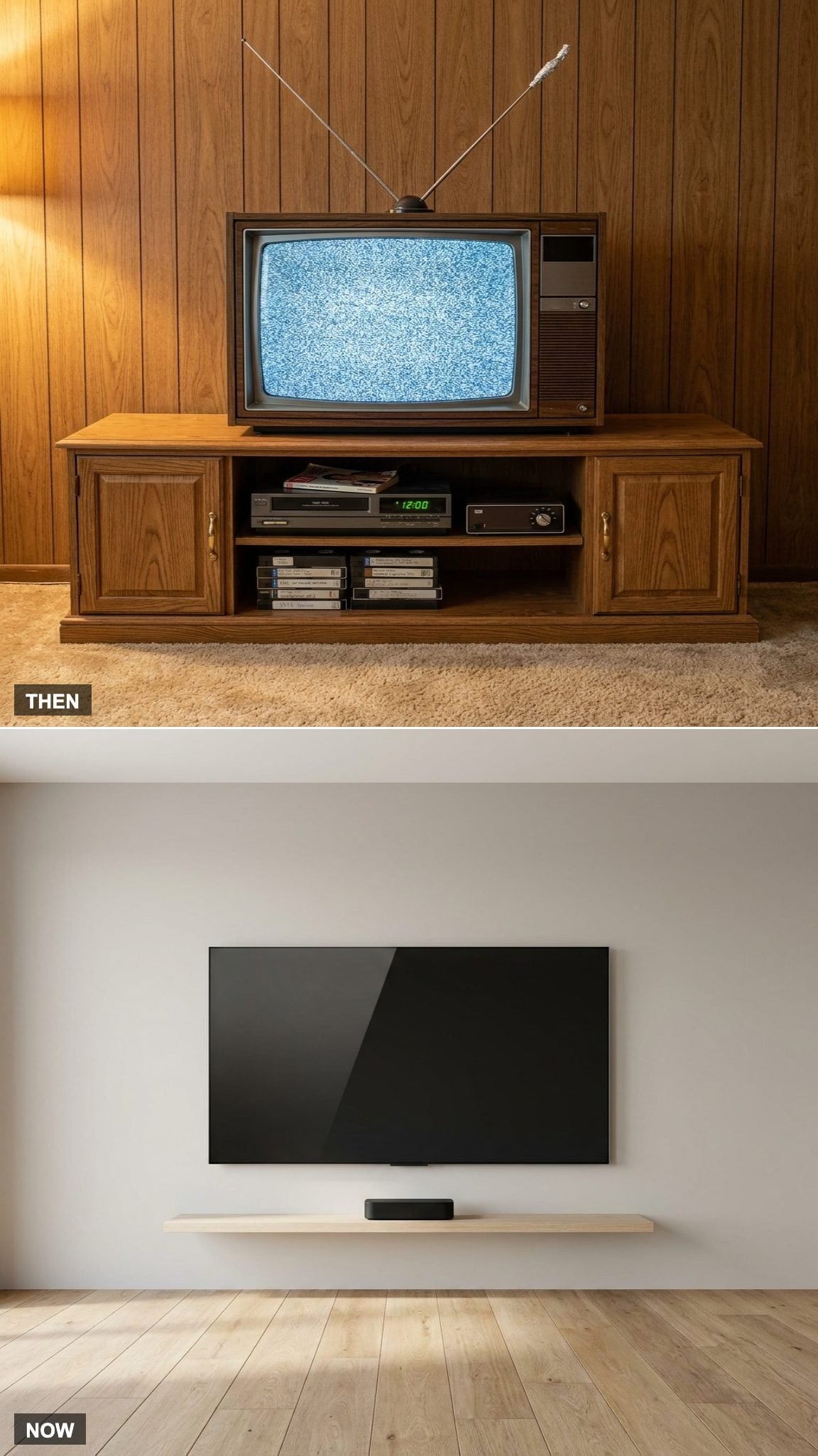
The VCR clock blinked 12:00 for eleven years in most American homes. Nobody knew how to set it. Nobody really tried.
The rabbit ears got adjusted like a science experiment every Sunday night—one hand on the antenna, one eye on the picture, a wad of tinfoil doing something nobody could explain. The TV is a black rectangle stuck to the wall now, and every device that used to sit under it has vanished into a box the size of a paperback. The console got its top back. It’s holding a single vase.
6. Patterned Wallpaper Added Character
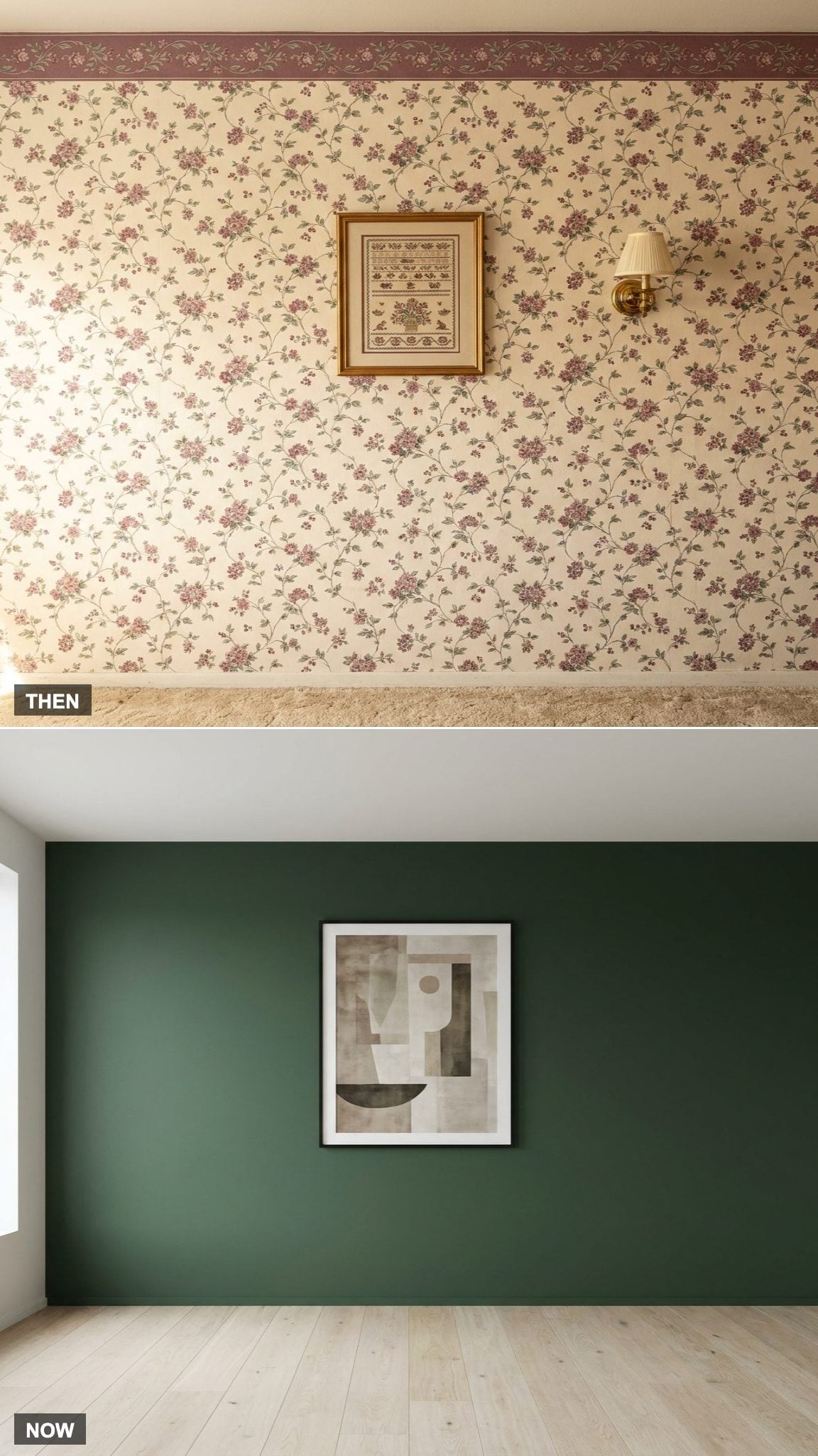
The 1985 wall was doing a lot. Florals, borders, coordinating trim, sometimes a matching valance—all in one room. A bold commitment that took two weekends and a lot of paste to install and about fifteen years to peel back off.
The modern move is one wall, one color, done. The dining room next door probably has the same approach. Less pattern, more paint, and if you change your mind in three years, you can fix it in an afternoon.
5. Every Living Room Reflected the Family’s Personality
🔥 Would you like to save this?
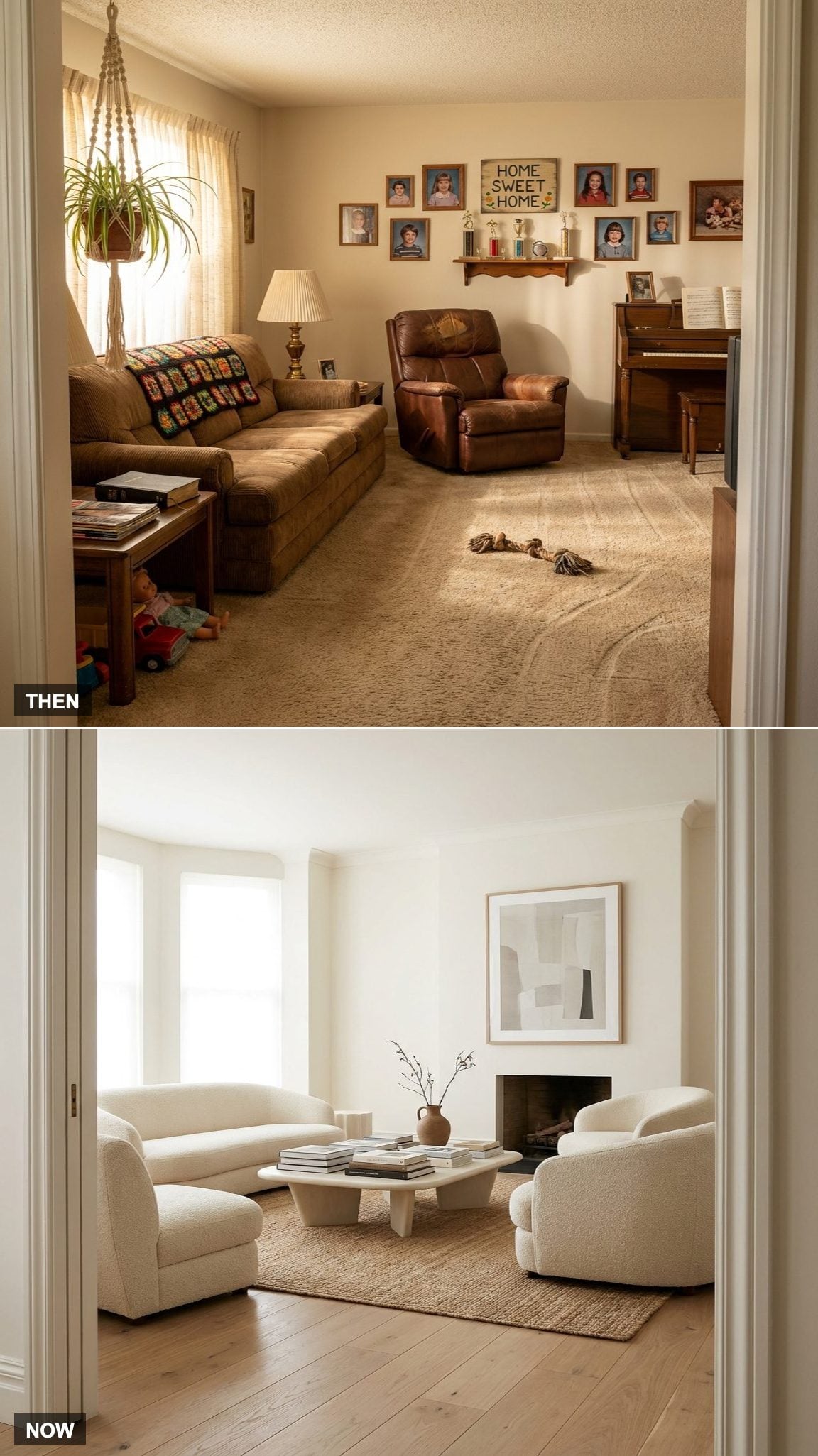
You could walk into a 1985 living room and know within thirty seconds what the family cared about. Bowling trophies said one thing. A piano said another. The macramé said Mom took a class at the community center in 1978 and never stopped.
Modern rooms are harder to read. The blush family room in one house looks a lot like the one in the house across town. Same bouclé sofa. Same coffee table books nobody opens. Same single vase of pampas grass. The room is a mood board—not a family.
4. Windows Stayed Open for Fresh Air
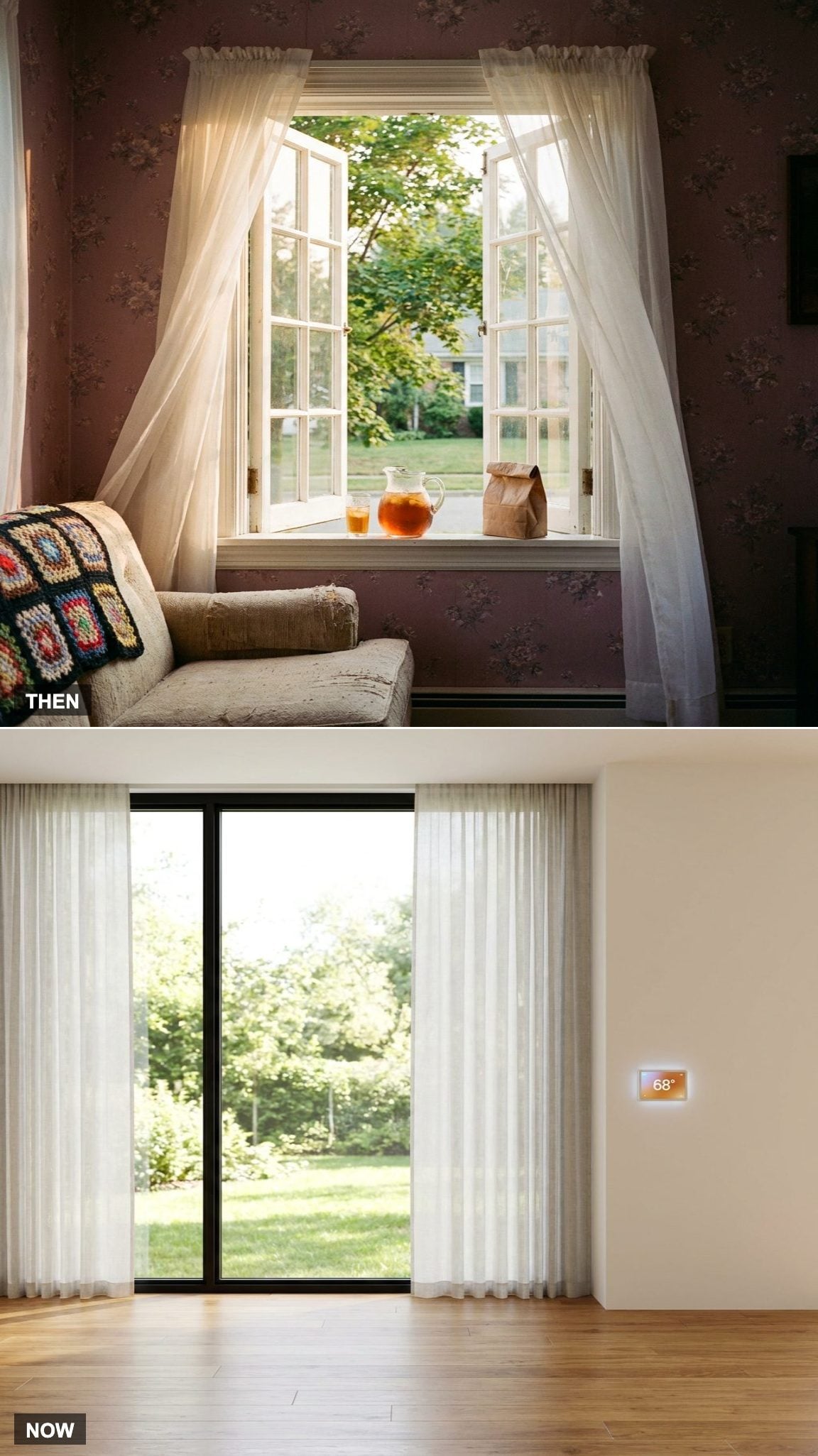
Summer 1985 had a soundtrack. The neighbor’s mower two yards over, a screen door slamming, cicadas at dusk. Windows stayed open from May to September and nobody thought twice about it. The house breathed.
Now the windows are picture frames. They show you the outside without letting any of it in. The air is 68 degrees and has been 68 degrees since March. The trade cuts both ways, and it’s more complicated than either side admits.
3. Handmade Decor Told Family Stories
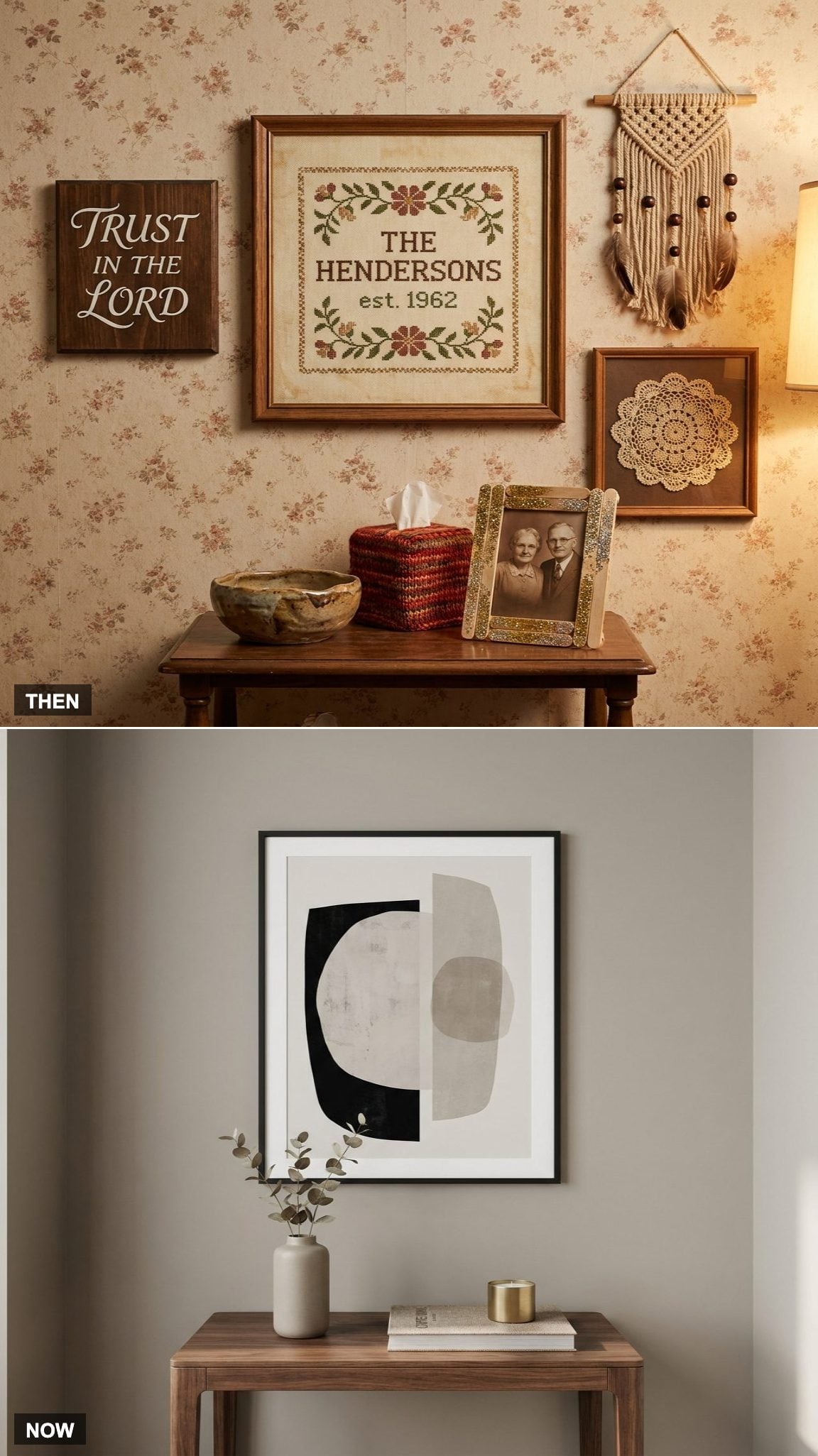
The lumpy ceramic bowl a nine-year-old made in art class sat on the side table for twenty years. It was hideous. It was priceless. Both things were true at once.
Mass-produced accessories don’t do that. The matte vase with the dried eucalyptus was made in a factory and photographed for a catalog and sold to a lot of people. It is fine. It looks great. Nobody will remember it after the room changes hands.
2. The Living Room Was Used All Day Long
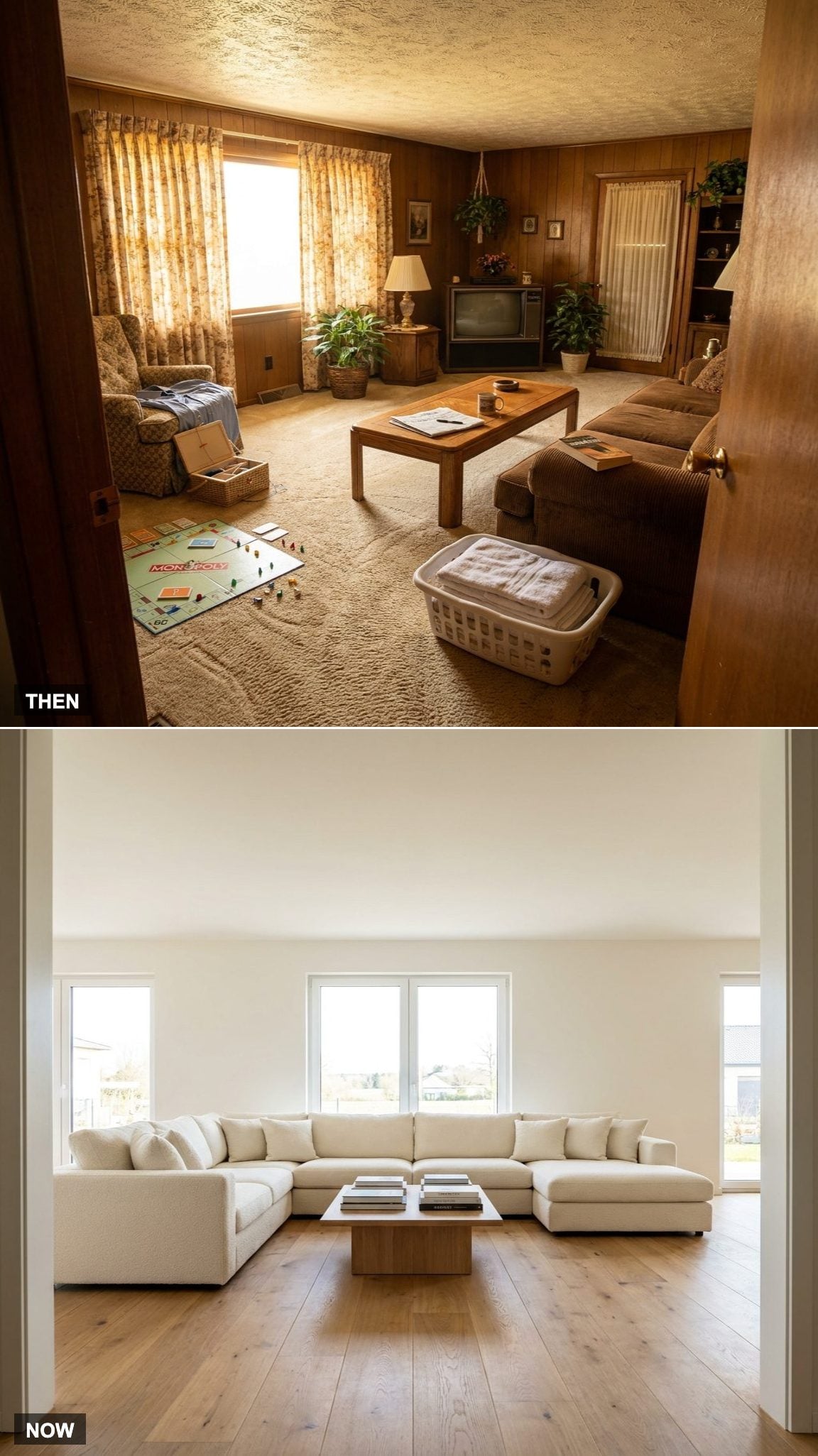
Mom did the mending in the living room, kids did homework on the carpet, Dad read the paper in the recliner, and someone was always in it. The room looked like it, too—slightly rumpled, actively used, a little embarrassed if company came unannounced.
Today many of those everyday jobs happen somewhere else. Homework spreads across the kitchen island, mending rarely happens at all, and the newspaper has become a phone held over breakfast. The formal living room stays pristine, waiting for a holiday it may never see. Call it the museum wing of the modern floor plan.
1. Living Rooms Were Designed for Living Together
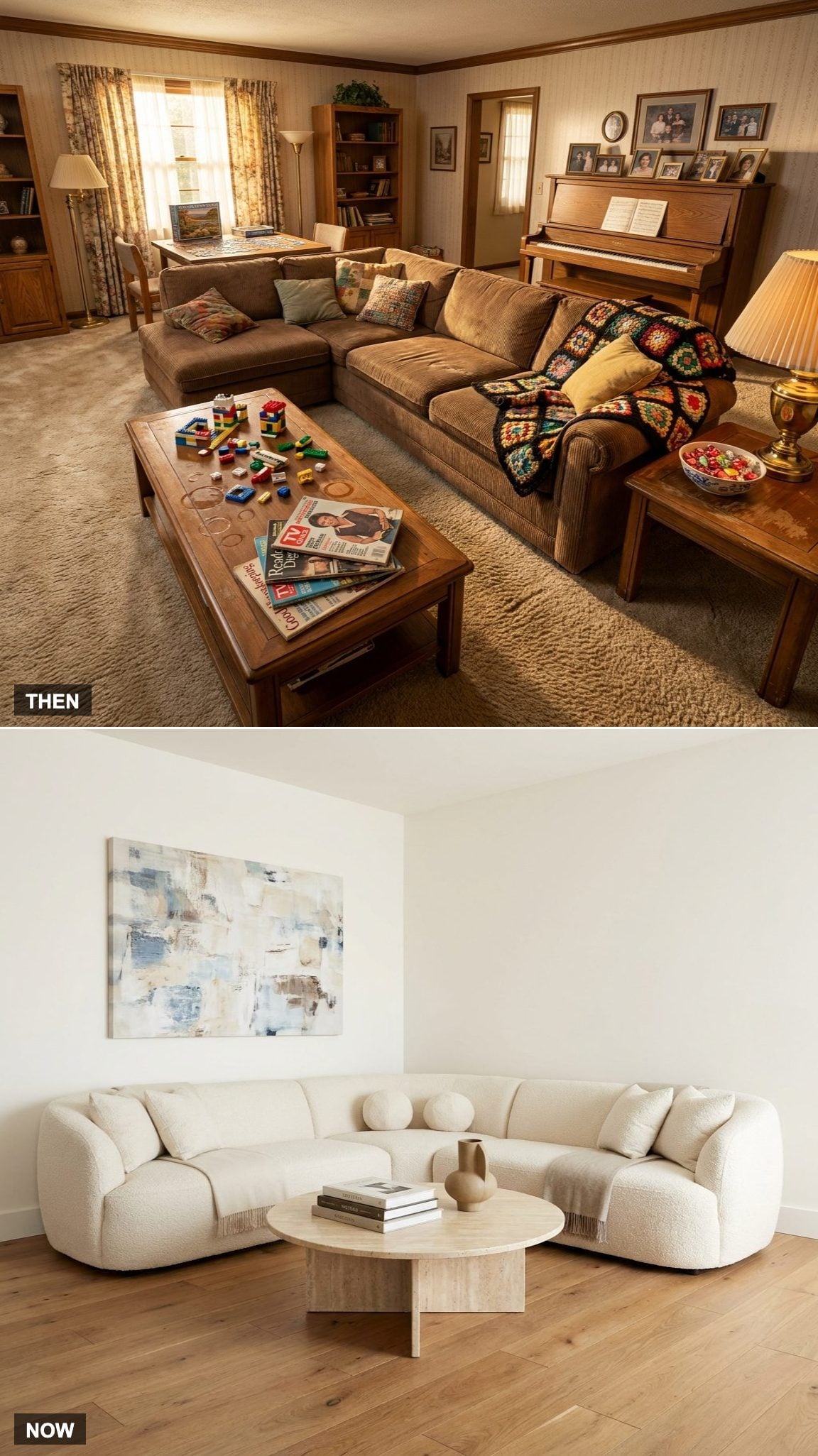
The 1985 living room was ugly on purpose and nobody knew it was ugly. Throw pillows didn’t match, magazines stacked crooked, the puzzle had been on the card table for three weeks. Built for people, not pictures.
Somewhere between 1985 and now, the living room became content. It got styled, shot from above, given its own hashtag. The couch is beautiful and nobody sits on it because sitting messes up the pillows. Even the smallest side room has a photo-ready shelf now.
A room that photographs well and a room that lives well are not the same room. Somewhere along the way we forgot which one we actually needed.
The trade was quiet. Nobody voted on it. One decade the couch was for sitting and the next it was for looking, and by the time anyone noticed, the puzzle table was already gone.