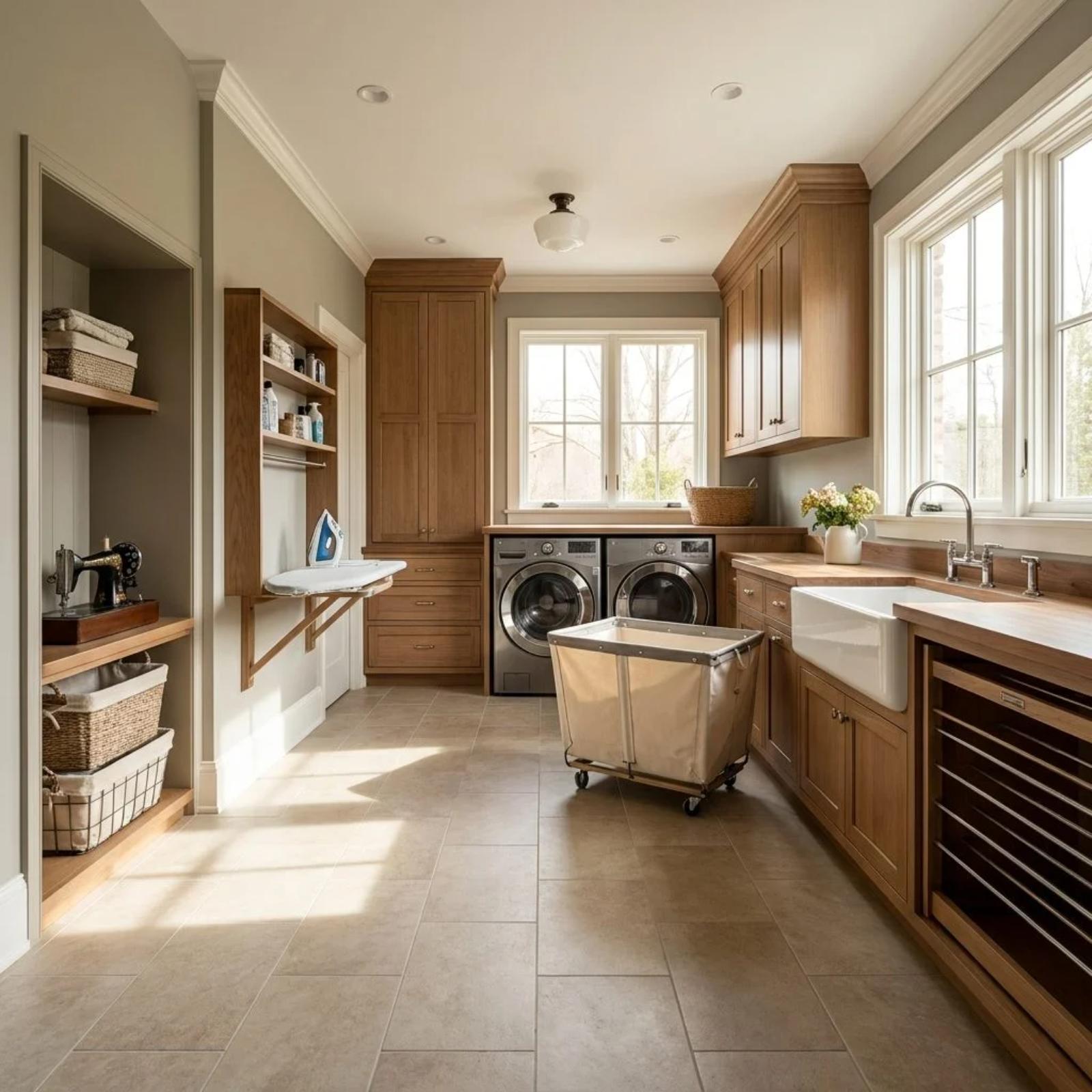
🔥 Would you like to save this?
Somewhere between the walk-in closet arms race and the open-concept great room, the laundry room got demoted to a hallway with a machine in it. The chutes, drip bays, airing cupboards, fold-down ironing boards, and clever little details that once made washing clothes bearable quietly vanished from the spec sheet.
Builders decided nobody needed them. That was a mistake. These are the practical, occasionally ingenious laundry features earlier homes understood — ideas that dealt with water, damp clothes, stains, sorting, drying, ironing, and repair before somebody value-engineered the usefulness out of the room.
In order to come up with the very specific design ideas, we create most designs with the assistance of state-of-the-art AI interior design software. Also, assume links that take you off the site are affiliate links such as links to Amazon. this means we may earn a commission if you buy something.
29. The Old-Fashioned Deep Porcelain Wash Sink
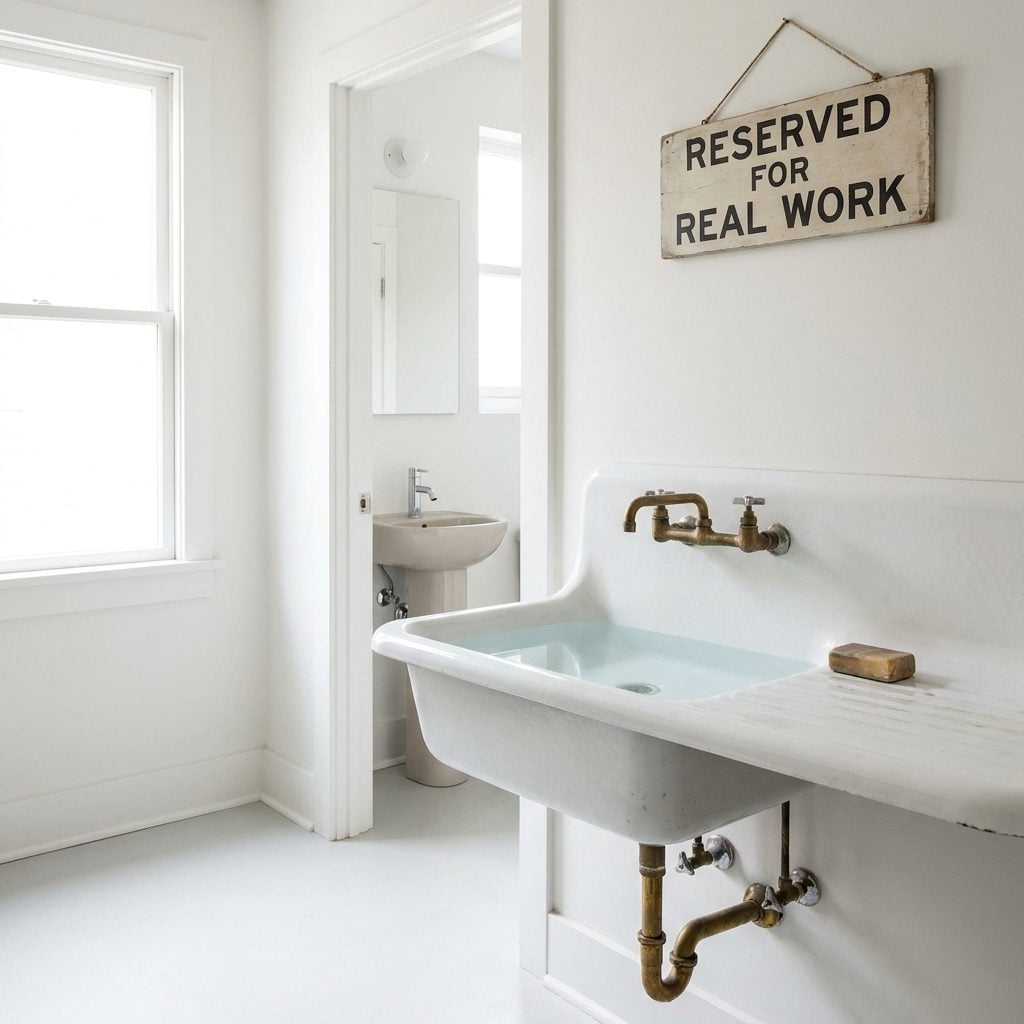
The laundry sinks in new homes can feel almost decorative: a shallow little basin you couldn’t comfortably soak a dish towel in, never mind a muddy pair of cleats or half a comforter.
Older utility rooms often had the real thing, a deep porcelain, enamel, or fireclay basin made for soaking bulky laundry, scrubbing boots, rinsing dirty tools, and handling the jobs nobody wanted anywhere near the kitchen sink. Depth mattered because splashes stayed inside and large things actually fit.
You don’t miss a proper utility sink until you’re kneeling over the bathtub trying to rinse something the size of a small sail. Then you miss it constantly.
28. The Laundry Chute That Let Gravity Carry the Basket
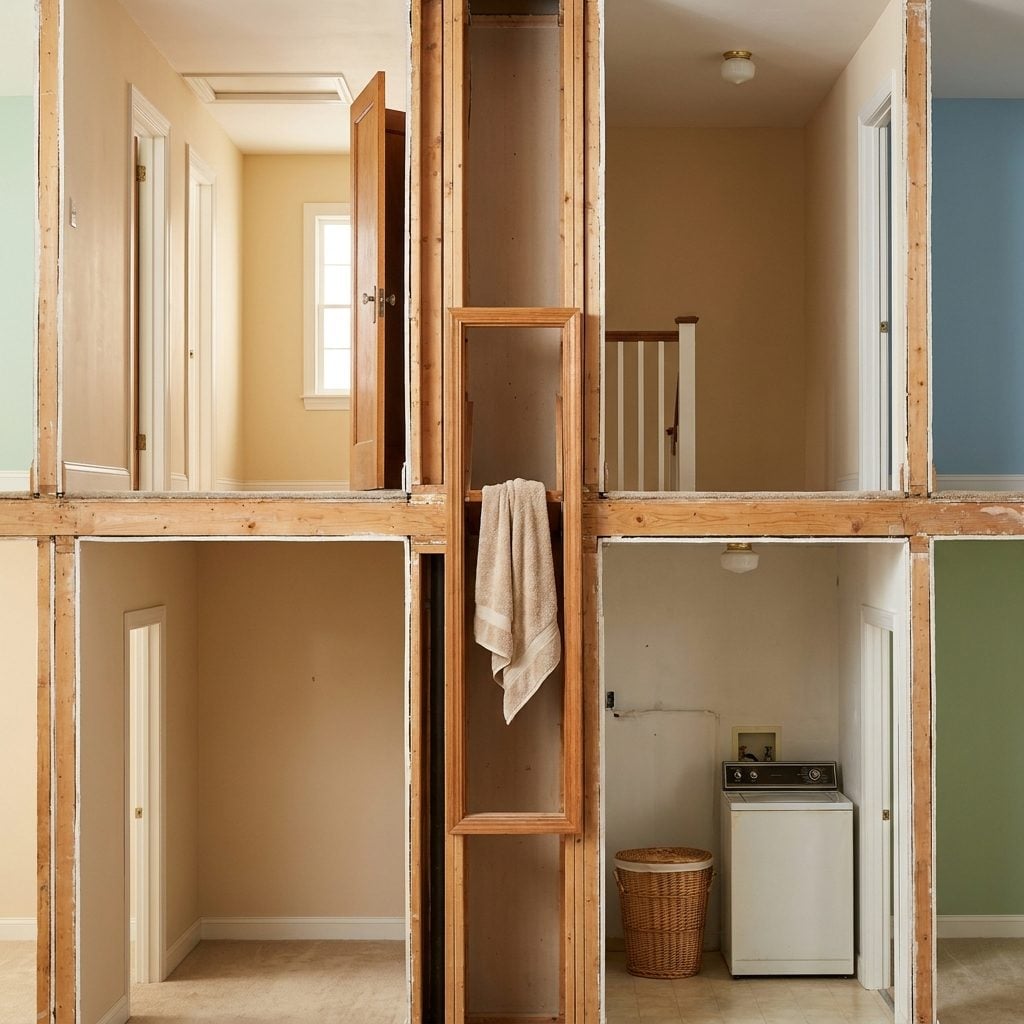
Toss a towel in upstairs, hear it disappear into the wall, and find it waiting beside the washing machine. Good idea. Still is.
Laundry chutes appeared in many twentieth-century houses, apartment buildings, hotels, and institutional buildings before construction practices and fire-safety requirements made the vertical shaft more complicated to incorporate. Modern versions can still work, but they need proper enclosure, closures, fire blocking where required, and a receiving cabinet designed as deliberately as the chute itself.
I have carried too many overflowing hampers down too many staircases to pretend gravity wasn’t offering us a better arrangement.
27. The Ceiling-Mounted Pulley Airer That Found Free Space Overhead
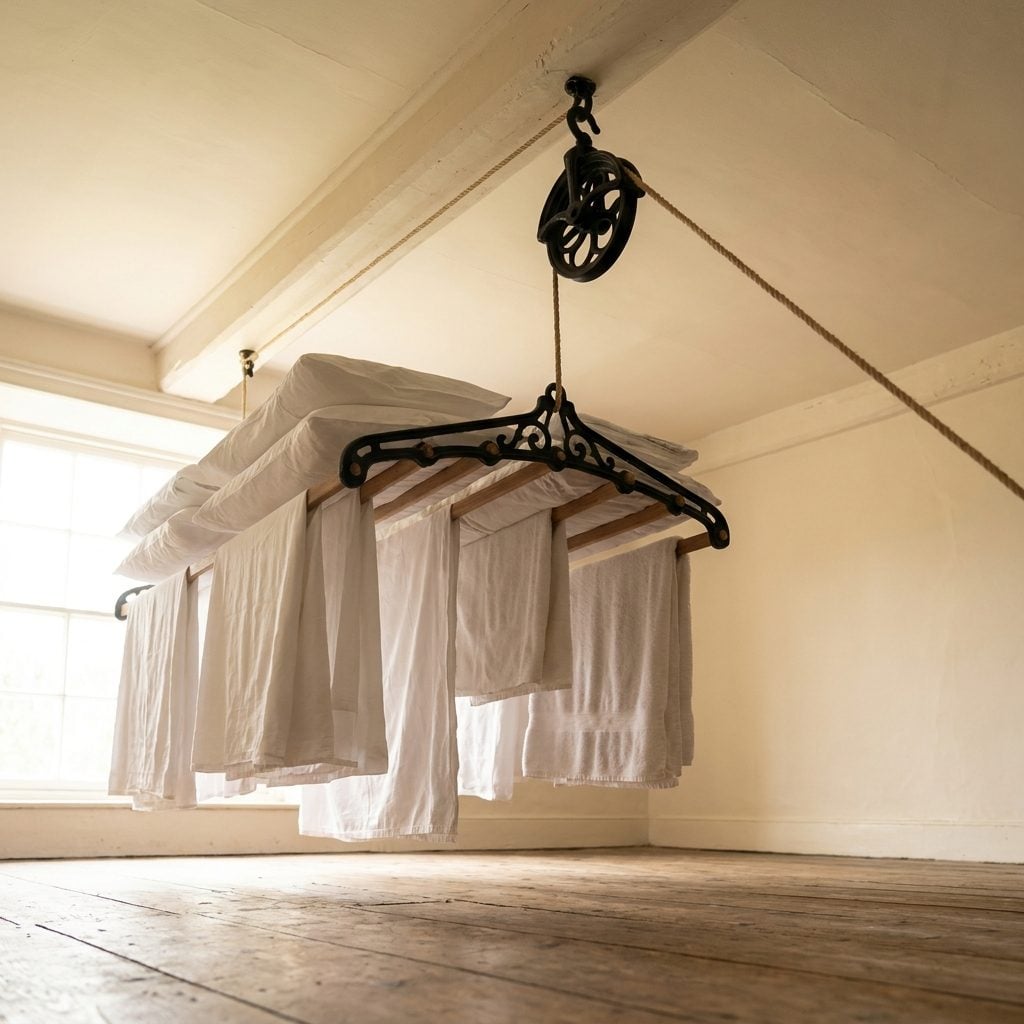
Warm air rises, and traditional kitchens and washhouses made use of it. A ceiling-mounted clothes airer lowered on ropes for loading, then hoisted wet laundry above head height where it could dry without occupying half the room.
The familiar cast-iron-and-wood pulley airer became a fixture in British homes long before today’s branded versions. Products such as the Sheila Maid are modern descendants of that older idea rather than the origin of it.
No electricity. No drying rack blocking the doorway. No sacrificing six square feet of floor to three shirts and a pair of socks. Load it, raise it, tie off the cord, continue with your life.
26. The Laundry-Room Floor Drain Nobody Notices Until Something Leaks
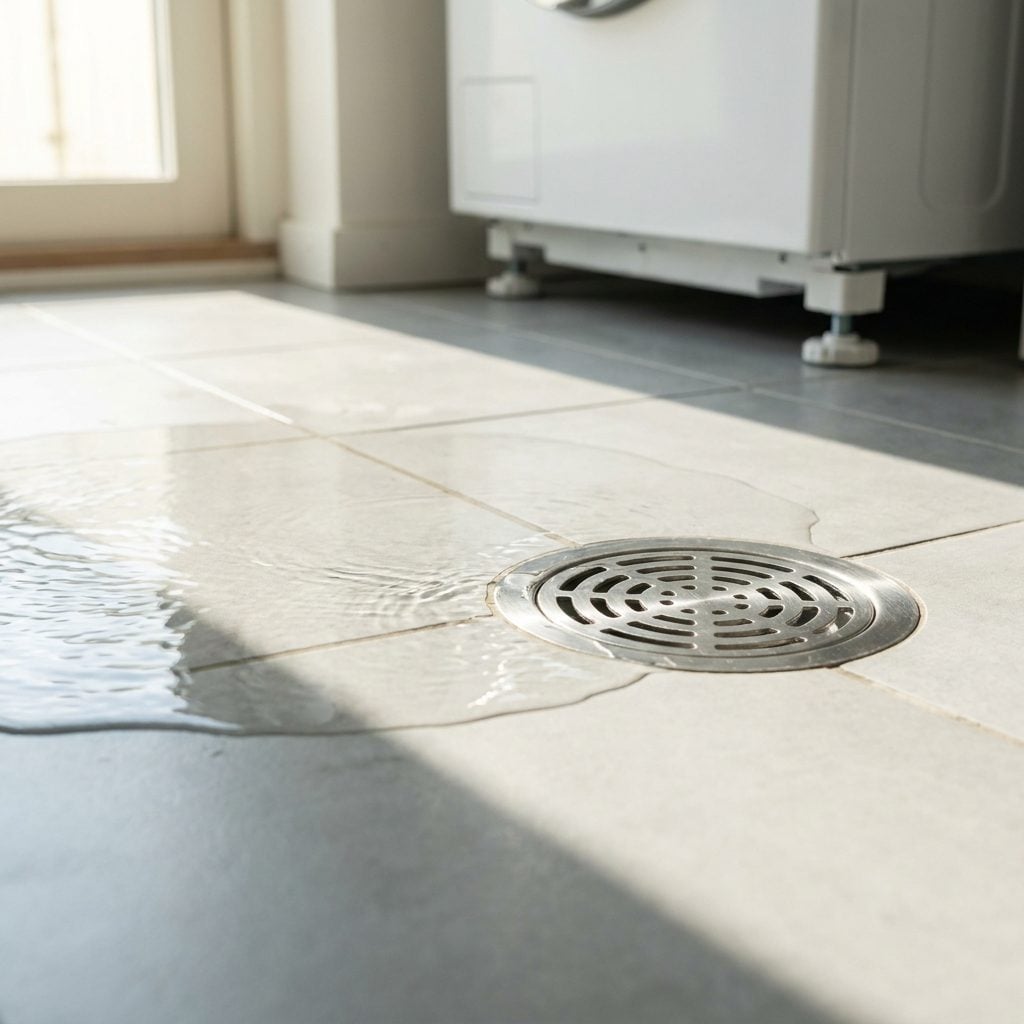
A washing-machine hose lets go at 2 a.m. In a room with a properly detailed floor drain, you may have a mess. In a room finished like a bedroom closet, you may be meeting the insurance adjuster.
Basement washrooms and older utility spaces were often expected to encounter water, so a drain in the floor made perfect sense. Modern laundry rooms increasingly migrated upstairs and into finished areas, while the defensive plumbing feature disappeared.
A discreet drain near the machines can catch an overflow, give incidental water somewhere to go, and make cleanup far less dramatic. Least glamorous feature on this list. Strong contender for the smartest.
25. The Recessed Ironing Board That Disappeared Into the Wall
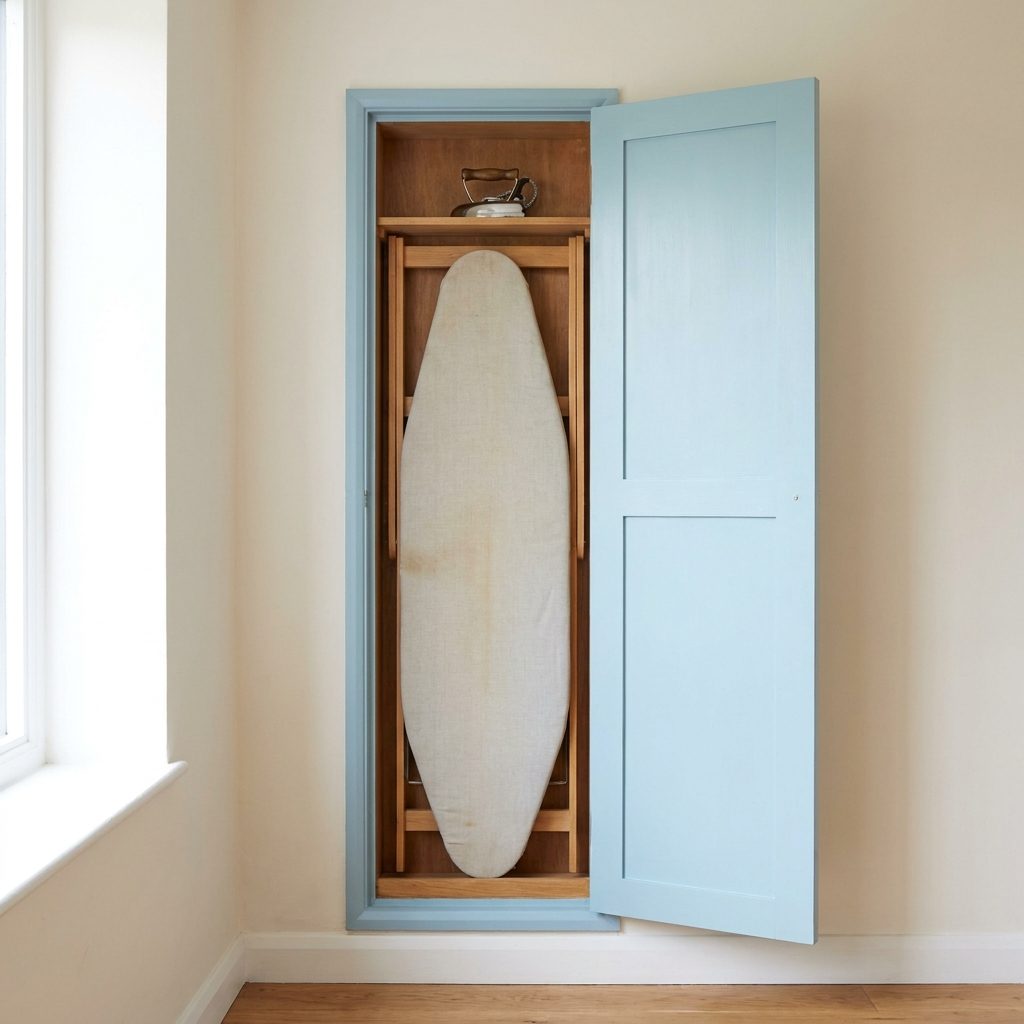
Open a shallow cabinet door, swing down the ironing board, and you’re ready. No dragging a metal contraption from behind the vacuum. No wrestling with folding legs. No discovering that somebody stored six winter coats in front of it.
Built-in ironing cabinets were sold through major retailers including Sears and through hardware and building suppliers, and plenty were framed directly between wall studs. The whole apparatus disappeared behind a door only a few inches deep.
I’ve folded exactly one modern ironing board back into a crowded closet without swearing. The built-in knew its job. Down, iron, up, done.
24. The Ventilated Hamper That Let Dirty Laundry Breathe
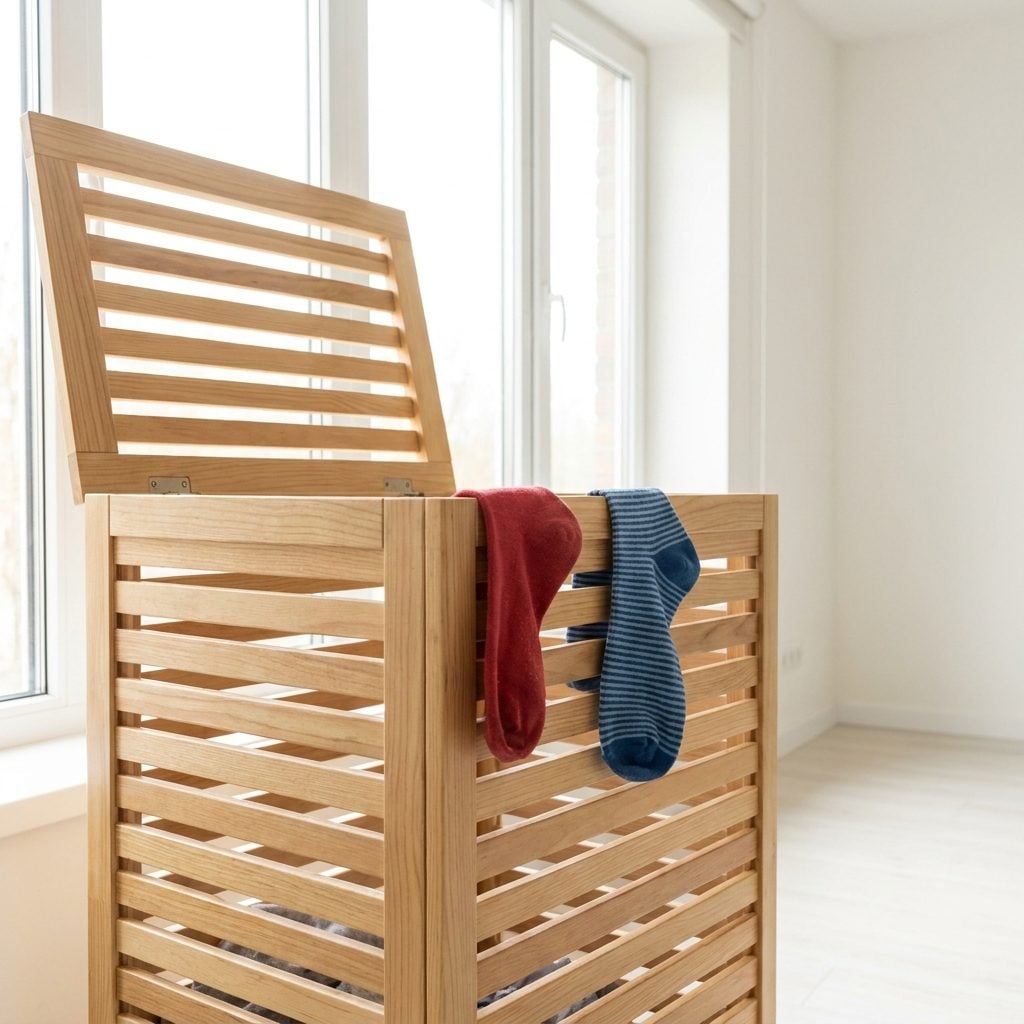
A hamper has two jobs. Hide the socks, yes. Also make sure the damp towel buried underneath them doesn’t spend four days fermenting in an airtight box.
Slatted, perforated, or mesh-fronted built-ins gave dirty laundry some airflow before wash day. Bring that principle back with two or three generous tilt-out compartments sized for real household loads rather than decorative little bins that hold six T-shirts and surrender.
Wet gym clothes still smell like wet gym clothes. Architecture cannot repeal biology. It can at least stop sealing the evidence inside a cupboard.
23. The Covered Drying Porch That Made Weather Less Important
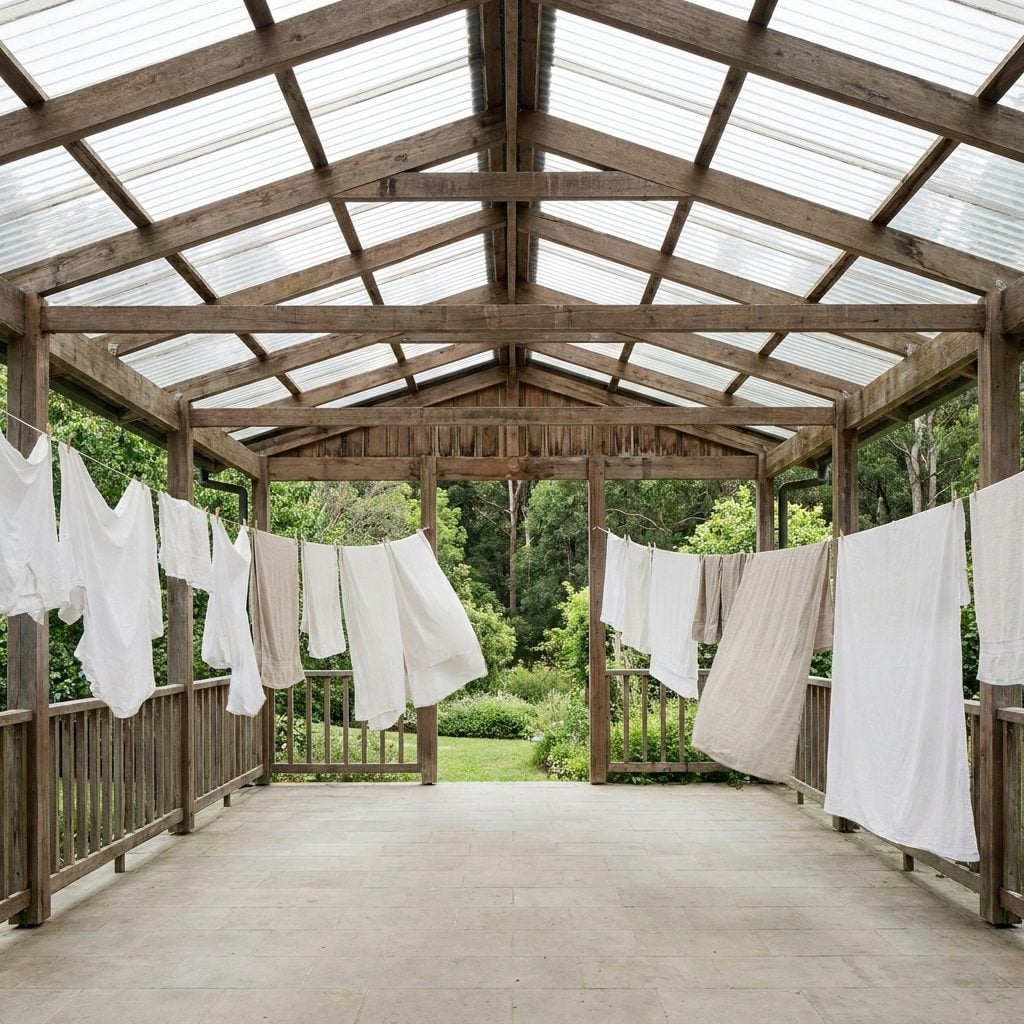
A covered drying porch solves the clothesline’s oldest problem: weather. You get outdoor airflow without making a sprint for the sheets every time the sky changes its mind.
Keep the roof, open the sides to moving air, and give the floor a water-tolerant finish with enough drainage that dripping laundry isn’t a problem. A folding ledge along one wall handles the final step, so a dry load can come off the line and be folded before it ever travels back indoors.
What I like most is how honest the room is. It isn’t pretending to be an entertaining terrace. It’s a working space with half its walls open to the garden, and that’s precisely why it earns its square footage.
22. The Little Mending Station That Saved Repairable Clothes
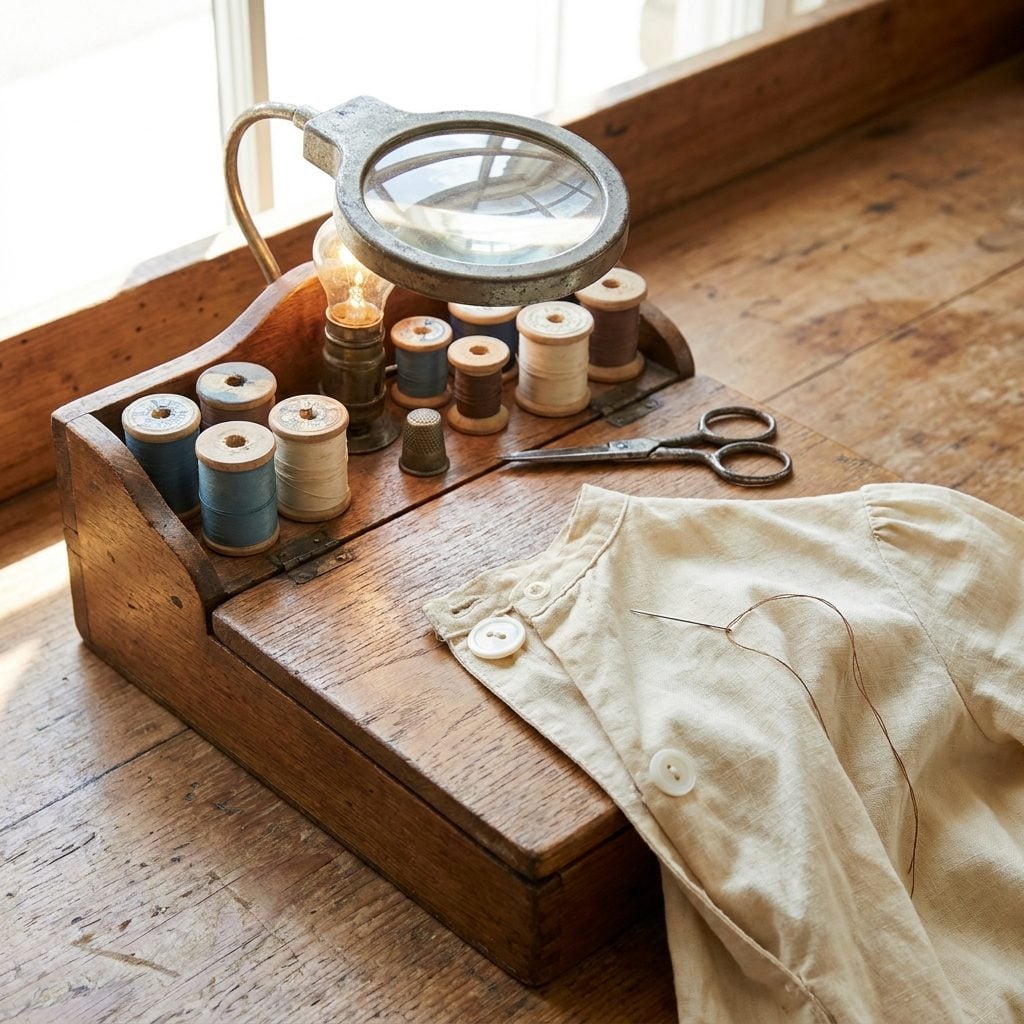
A dropped hem. A missing button. A seam beginning to separate. Earlier utility rooms sometimes acknowledged that cleaning clothes and keeping clothes usable were connected jobs.
The mending station doesn’t need to become a craft room. Give it a seated-height counter, good task lighting, shallow drawers for thread, needles and buttons, and enough elbow room to make a five-minute repair before the shirt disappears back into the closet for another six months.
The important part isn’t nostalgia. It’s removing the tiny inconveniences that turn a repairable garment into the thing hanging on a doorknob until somebody finally gives up on it.
21. The Ventilated Airing Cupboard for the Last Five Percent of Drying
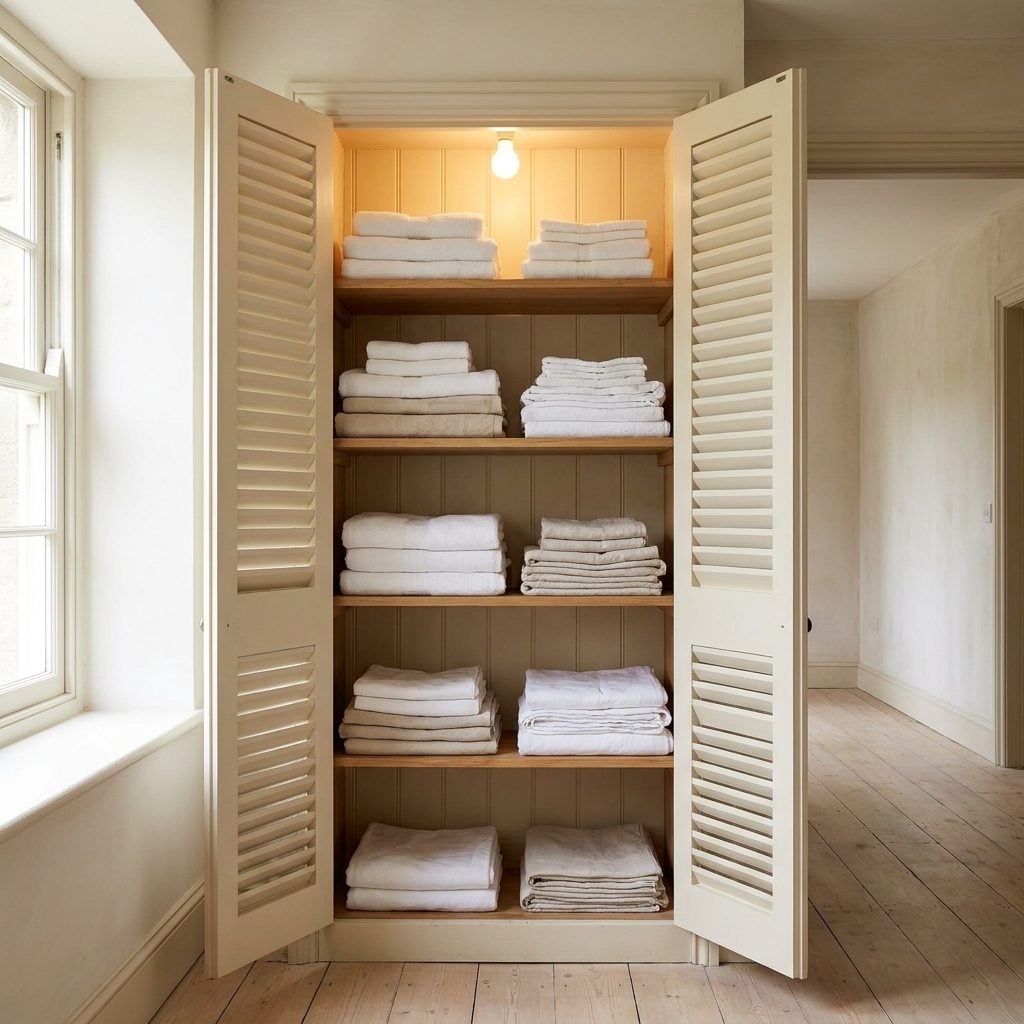
Line-dried and machine-dried clothes both occasionally reach that irritating stage where they’re almost dry. Fold them now and they smell stale later. Leave them scattered around the house and suddenly every chair is part of the laundry system.
An airing cupboard gives nearly dry textiles somewhere to finish. Slatted shelves, hanging rails, and openings that allow air to move through the cabinet keep pieces separated instead of compressing them together while moisture remains.
Many older British homes still retain airing cupboards, although modern heating systems have changed how they are built and used. The useful principle survives: slightly damp linen benefits from air and space before it goes behind a closed closet door.
20. The Exterior Laundry Door That Put the Clothesline Three Steps Away
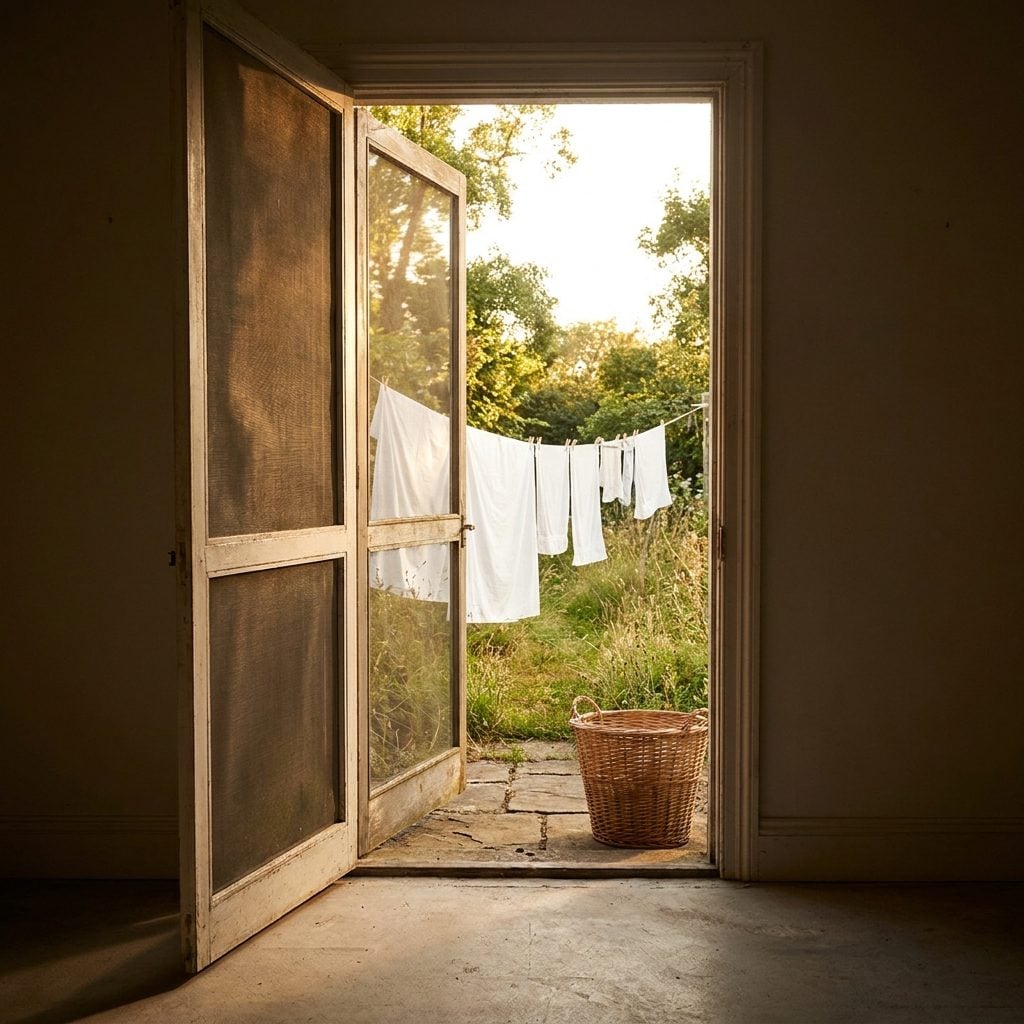
There is a small genius in a laundry door opening directly toward the clothesline. Basket off the counter, three steps outside, shirts in the sun. No hallway expedition. No wet duvet being dragged through the kitchen.
The alignment is the feature. Put the door beside the working zone, provide a durable threshold that won’t resent damp shoes, and keep the line close enough that carrying a heavy wet load doesn’t become a tour of the property.
On the right morning, this humble little doorway turns laundry from an indoor appliance task into something almost pleasant.
19. The Drip-Dry Bay That Treated Wet Clothes Like a Plumbing Problem
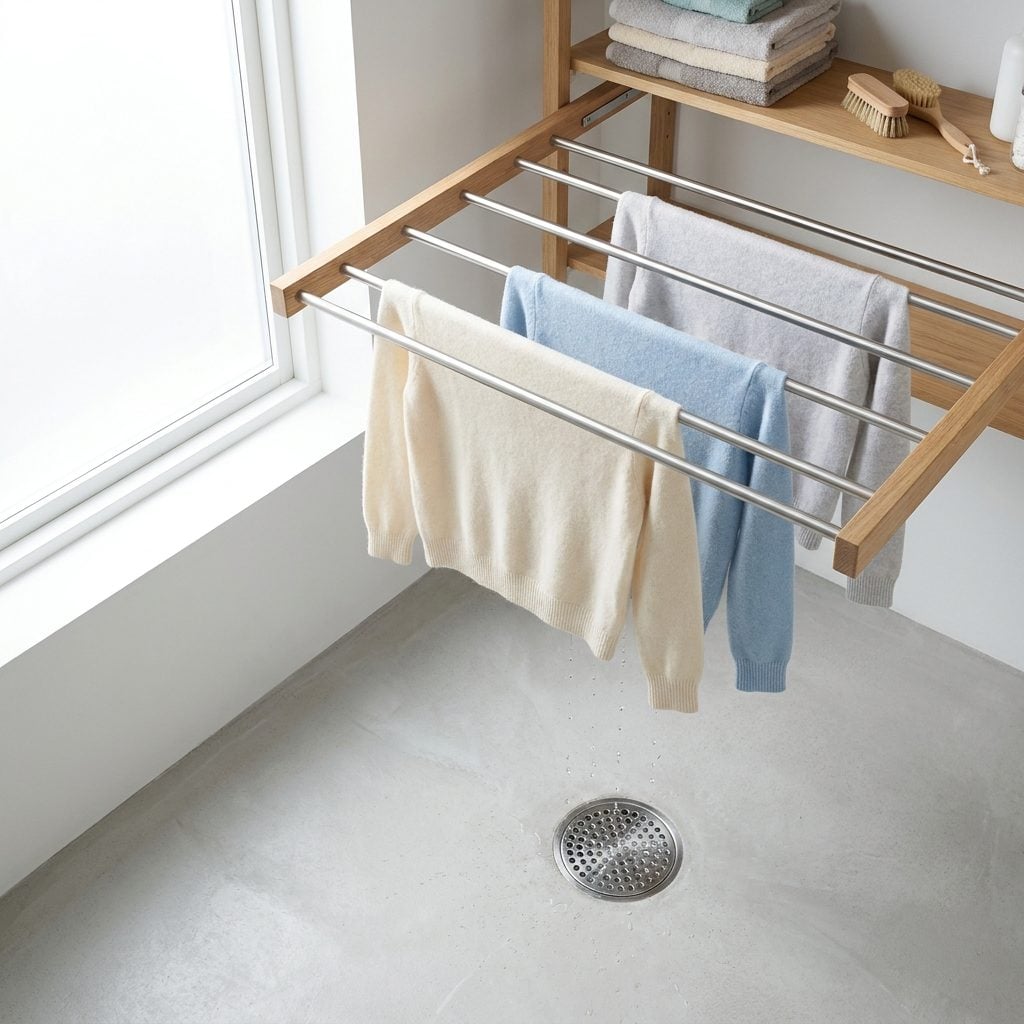
Every household owns something that comes out of hand-washing absolutely saturated and cannot be put in a tumble dryer. Most of us solve that by turning the shower rod into temporary laundry infrastructure.
A proper drip-dry bay handles wet garments as a plumbing problem. Tile the alcove, place a hanging rail above it, and give the water a drain directly underneath. Sweaters, rainwear, and freshly rinsed pieces can drip until they’re ready for gentler drying without soaking a bath mat or puddling across the floor.
It is such an obvious arrangement that modern houses managing without one feels like an elaborate prank.
18. The Sorting Cabinet That Gave Every Load Somewhere to Wait
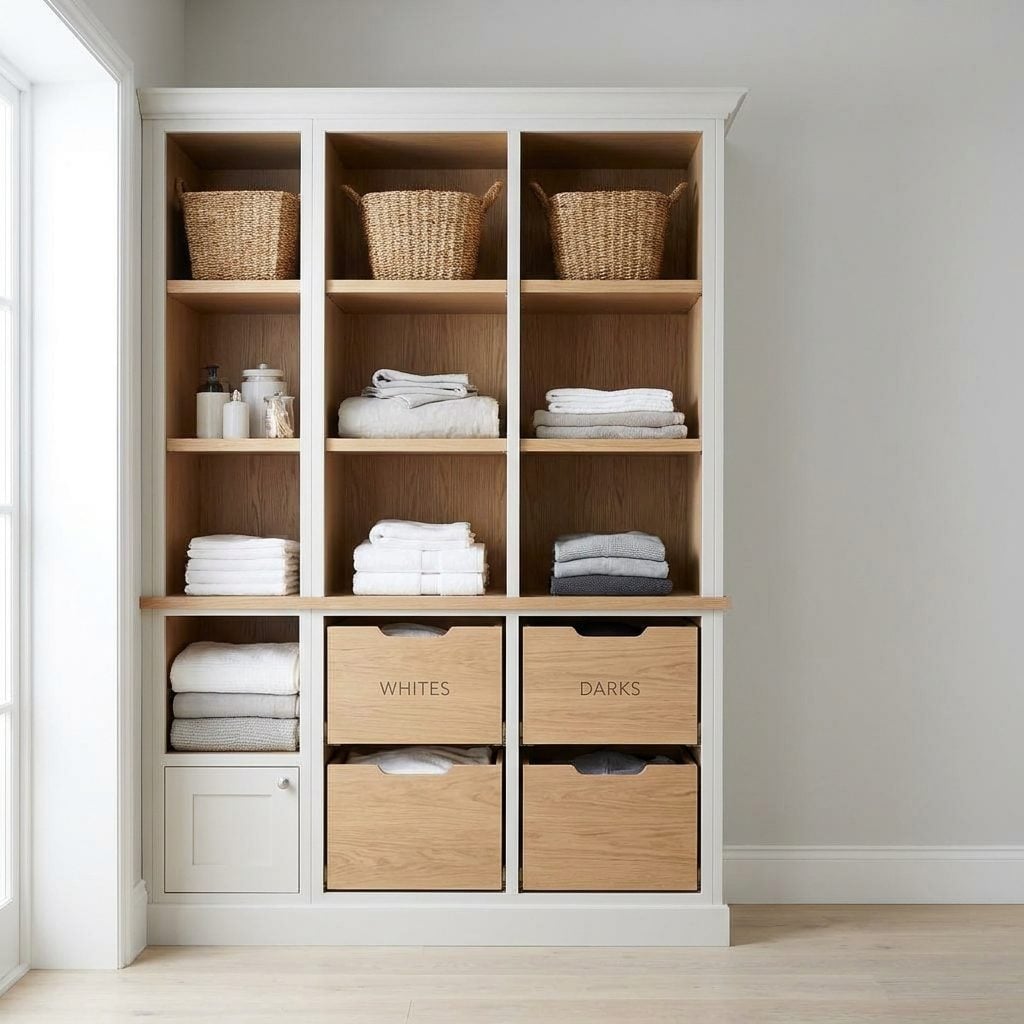
Sorting is not clutter. It’s one of the actual steps in doing laundry, yet we often pretend three plastic baskets shoved under a counter are an elegant solution.
Built-in receiving compartments treat the job as permanent infrastructure. Give whites, darks, delicates, or household linens their own ventilated bins, each large enough for something approaching a full load rather than a symbolic handful.
The millwork doesn’t have to be timid, either. If you’re comfortable with the strong color combinations in these multi-colored bathroom ideas, a utility room can carry more personality than white cabinets and chrome pulls. The storage just has to work before it decorates.
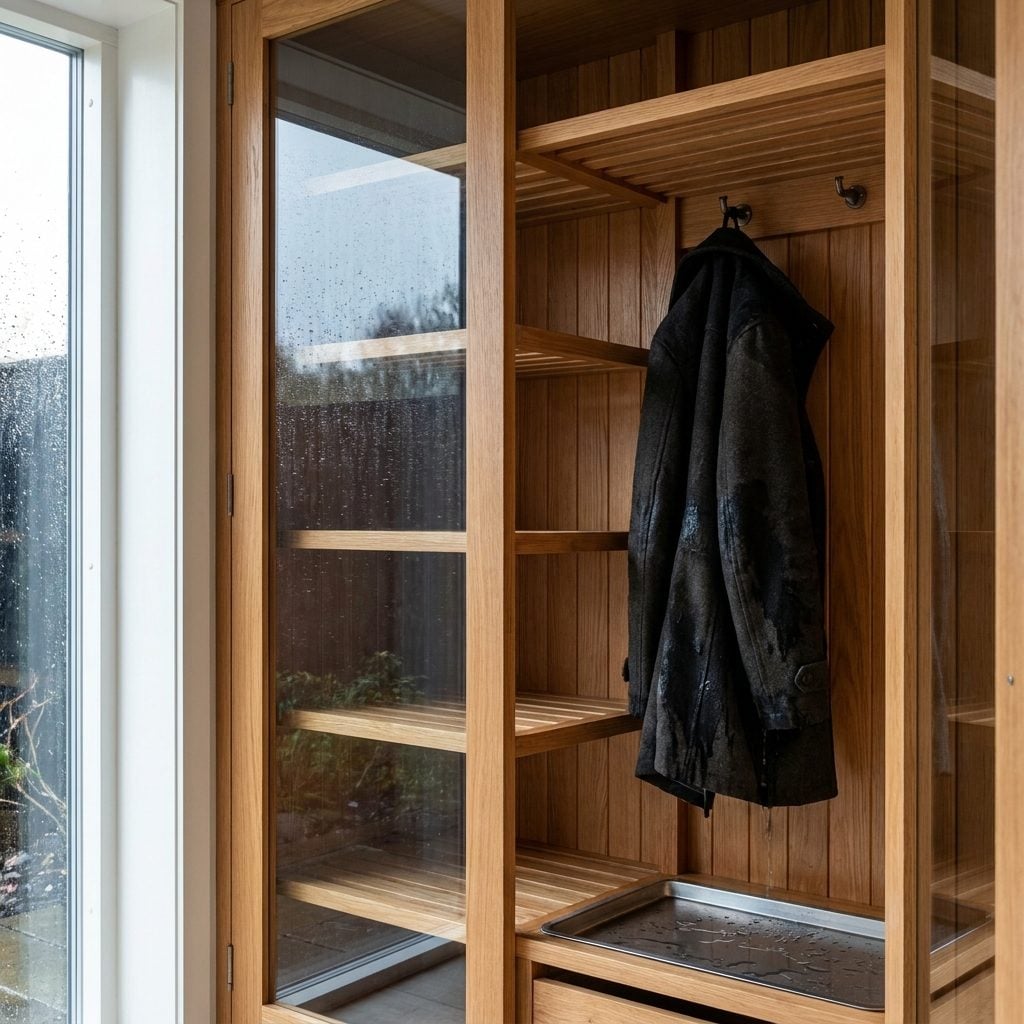
17. The Heated Drying Cupboard for Coats, Gloves and Miserable Weather
🔥 Would you like to save this?
Some wet things are too bulky for an airing cupboard and too delicate or awkward for a tumble dryer: gloves, rain gear, washable shoes, damp outerwear, and certain knitwear handled according to its care label.
A modern drying cupboard should not be a hot sealed box. Think gentle warm-air circulation, generous spacing, perforated shelves, hanging rails, and a tray or drained base for anything still dripping. The goal is controlled drying, not baking.
16. The Clothes Wringer Worth Remembering — With the Dangerous Part Removed
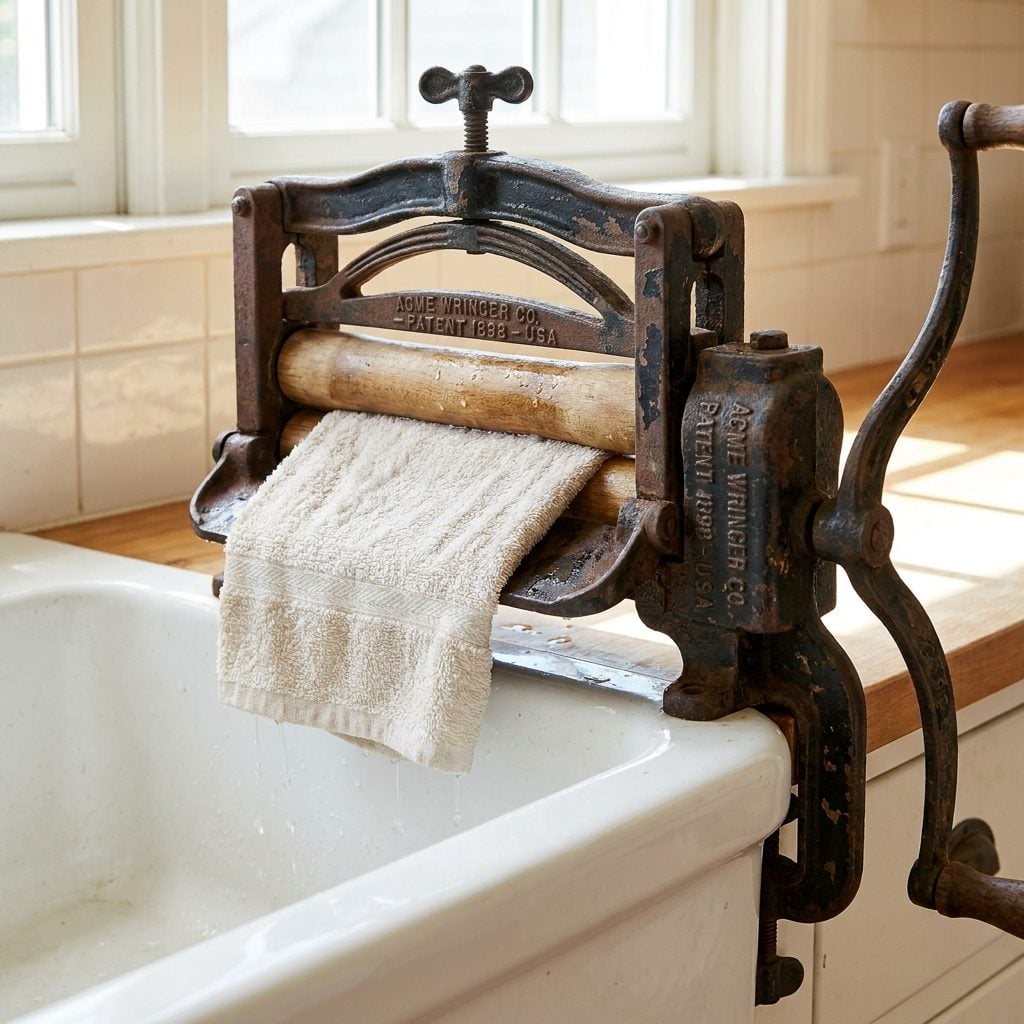
Before efficient spin cycles, roller wringers squeezed enormous quantities of water from laundry before it went to the line. They were effective. They were also famously unforgiving of fingers, loose sleeves, and hair.
A guarded manual roller can still make sense for certain tough utility textiles — cleaning cloths, mop heads, sturdy washable rags — where squeezing water out by hand is tedious and elegance isn’t part of the assignment. I would not feed a favorite wool sweater through one merely because our ancestors did.
The useful idea worth salvaging is mechanical water removal at the sink. The exposed pinch points can stay in the history books.
15. The Big Operable Window Positioned to Move Damp Air
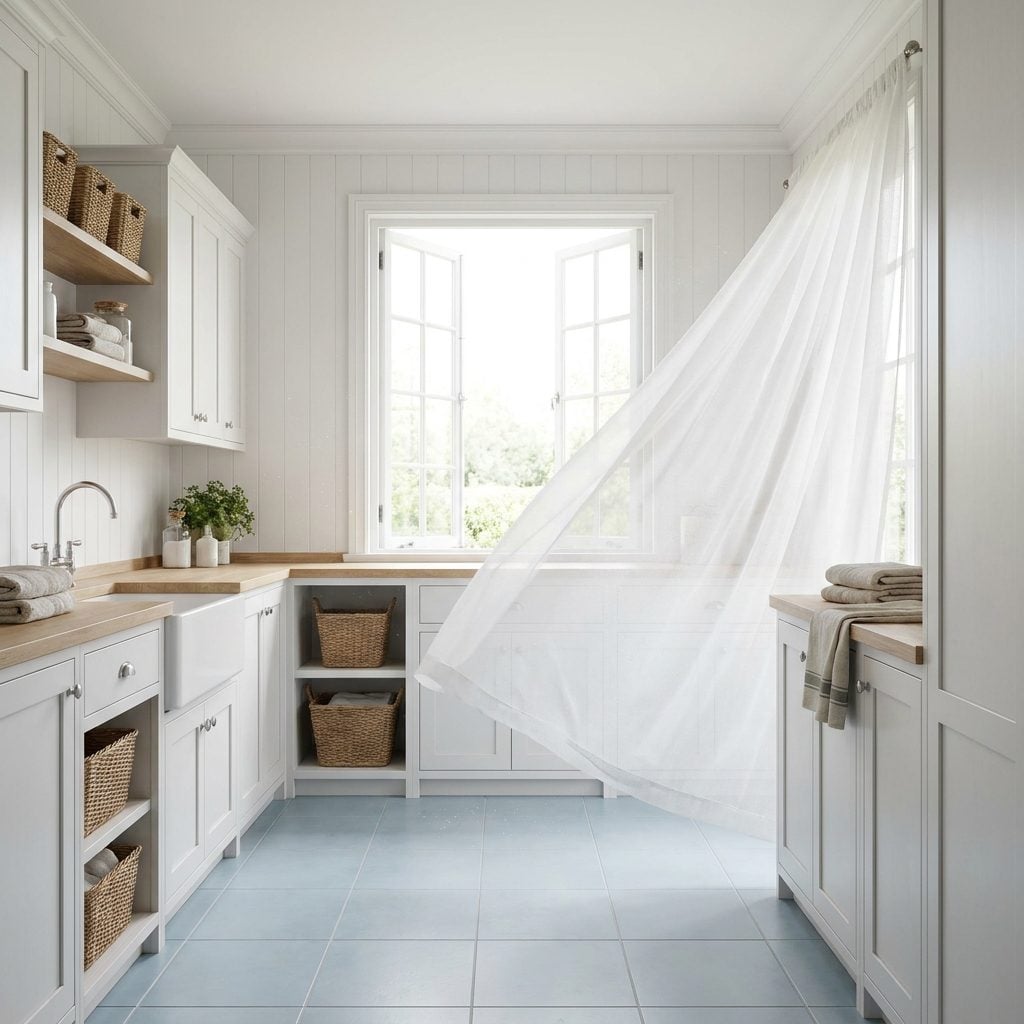
Laundry rooms generate moisture, and one of the simplest ways to clear it is still an opening in the wall. A generous operable window brings in fresh air, helps damp textiles dry, and makes the room feel far less like appliance storage.
Placement matters. Openings on opposite or favorably positioned walls can encourage stronger cross-ventilation when wind and pressure conditions cooperate, although even a single well-placed operable window provides useful natural ventilation.
One word of advice: install the screen. Nobody wants to discover that air-drying a blouse also invited twelve mosquitoes into the folding station.
14. The Smaller Hand-Washing Basin Reserved for Delicates
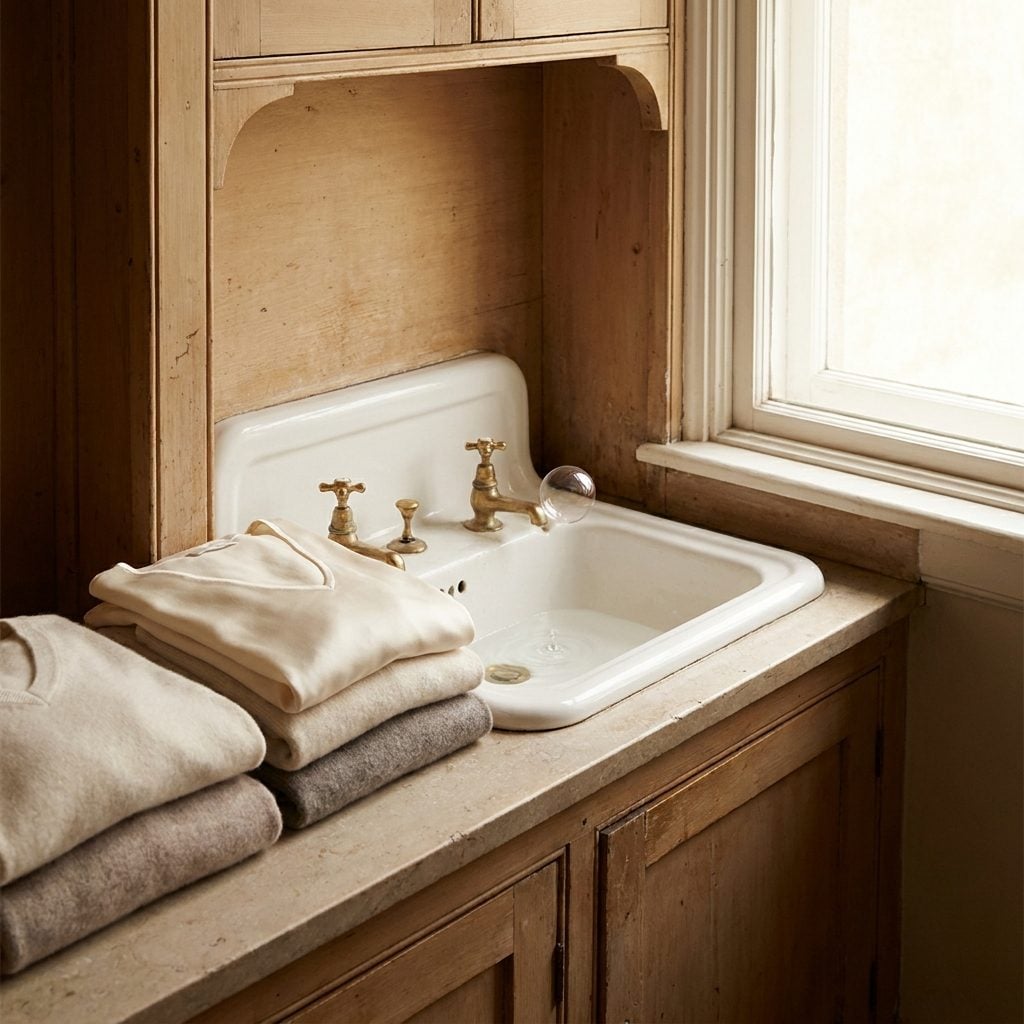
The deep utility sink is where boots, buckets, and filthy things go. A hand-washing basin solves a different problem: the silk blouse, fine knit, or small garment you would rather not lower into the same cavern where somebody scrubbed a paint tray yesterday.
A shallower ergonomic bowl with a gentle-flow faucet makes hand-washing easier on the wrists and puts the garment at a comfortable working height. Add a drainboard or waterproof counter beside it and the whole process becomes remarkably civilized.
Now we soak delicate things in salad bowls on the kitchen counter and call the disappearance of the dedicated basin progress.
13. The Laundry Cart With Its Own Parking Space
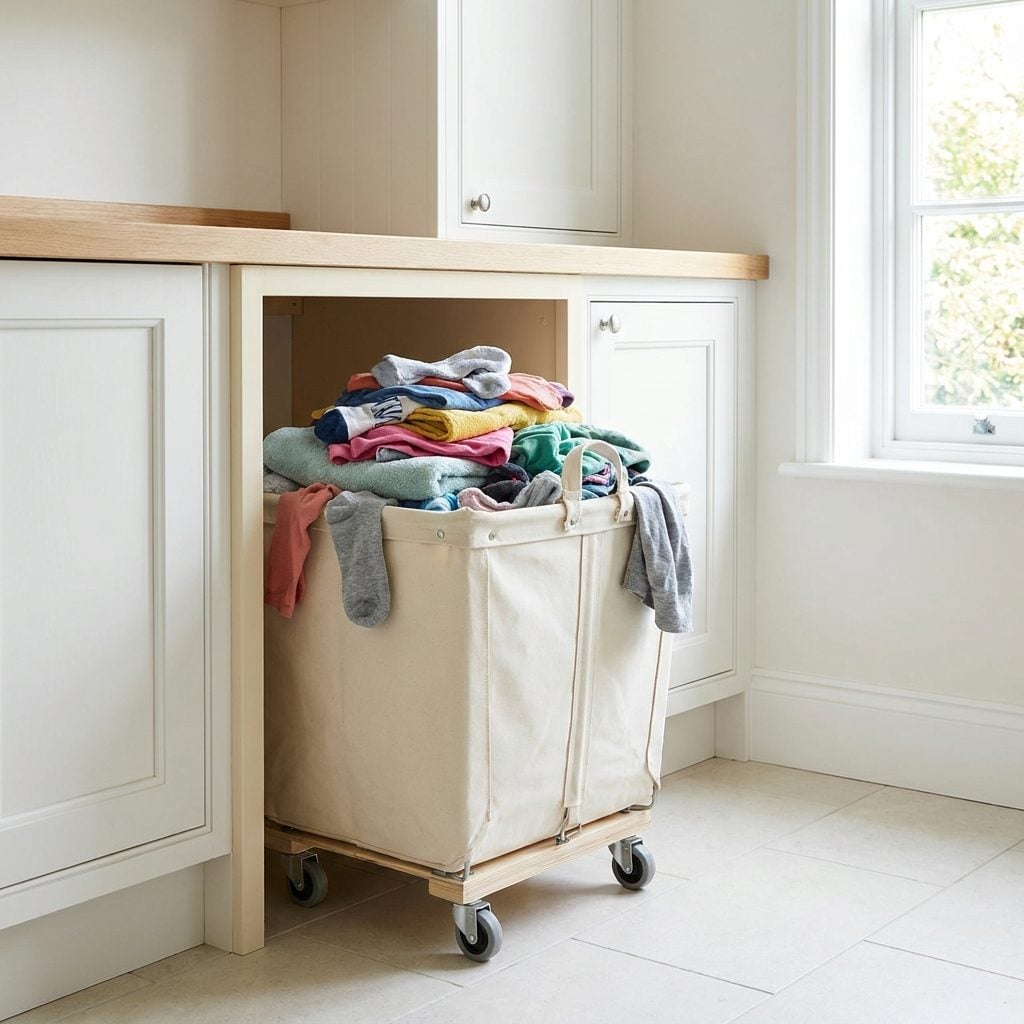
Big households generate enough laundry to make carrying it around in your arms feel like a poor transportation policy. A rolling cart solves that immediately.
The better idea is giving the cart its own bay beneath cabinetry, sized so it rolls in flush when the work is finished. Pull it to the sorting bins, roll it to the machines, collect the folded load, park it again. No permanent obstacle wandering the floor.
The detail worth stealing is clearance. A beautiful cart bay with no turning radius simply manufactures a new object to abandon in the hallway. Give it maneuvering room and the cart becomes one of the hardest-working pieces of furniture in the house.
12. The Wall-Mounted Drying Frame That Folded Flat When Laundry Day Ended
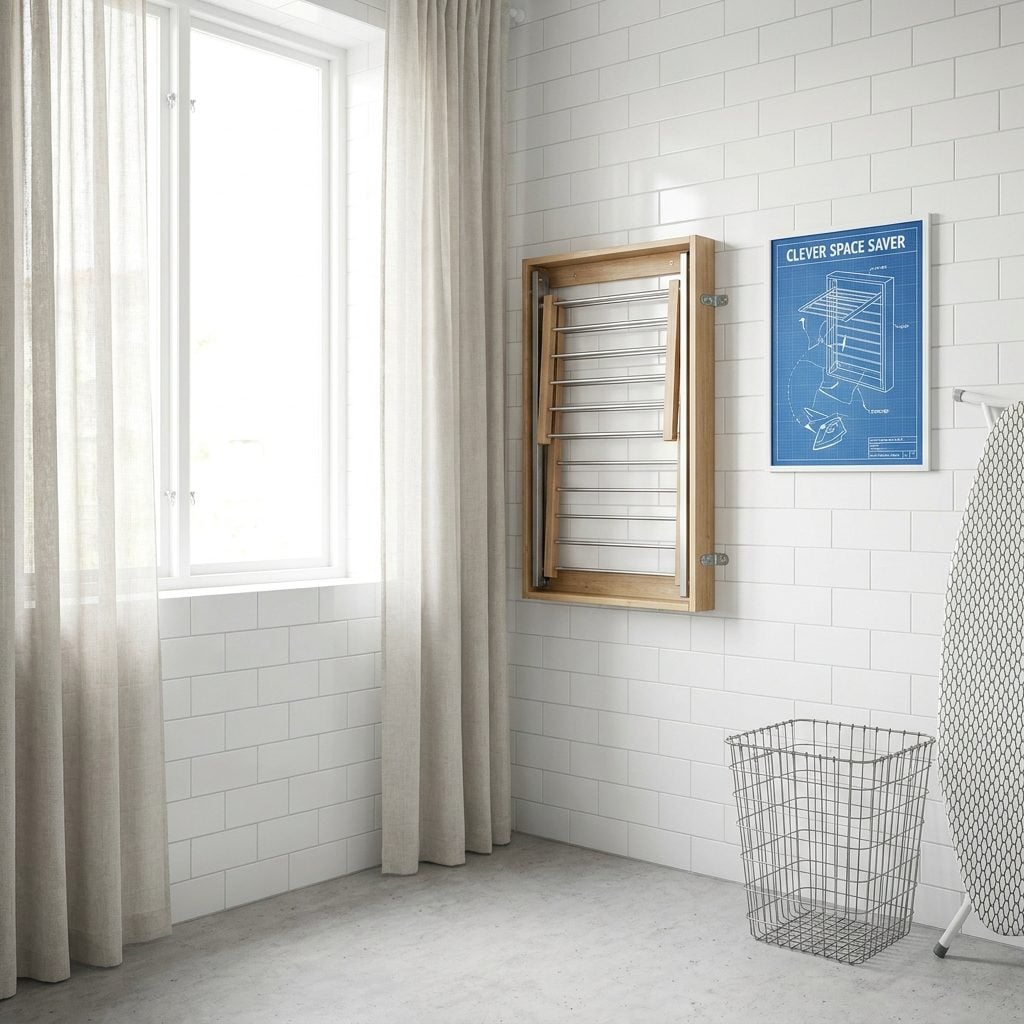
The best drying rack may be the one you never have to carry anywhere. Bolt a generously sized folding frame to a properly reinforced wall and it can handle an actual load before folding almost flat when wash day ends.
Proper hinges, sturdy rails, and wall structure capable of taking the wet weight are what separate the useful version from those apologetic little accordion racks that surrender after four socks and a tea towel.
Air-drying selected clothes keeps them away from unnecessary heat and tumbling. And if the rack has a permanent home here, the chairs and benches in a coastal sitting room can go back to their original career: being furniture.
11. The Pass-Through Laundry Drop for Rooms That Shared a Wall
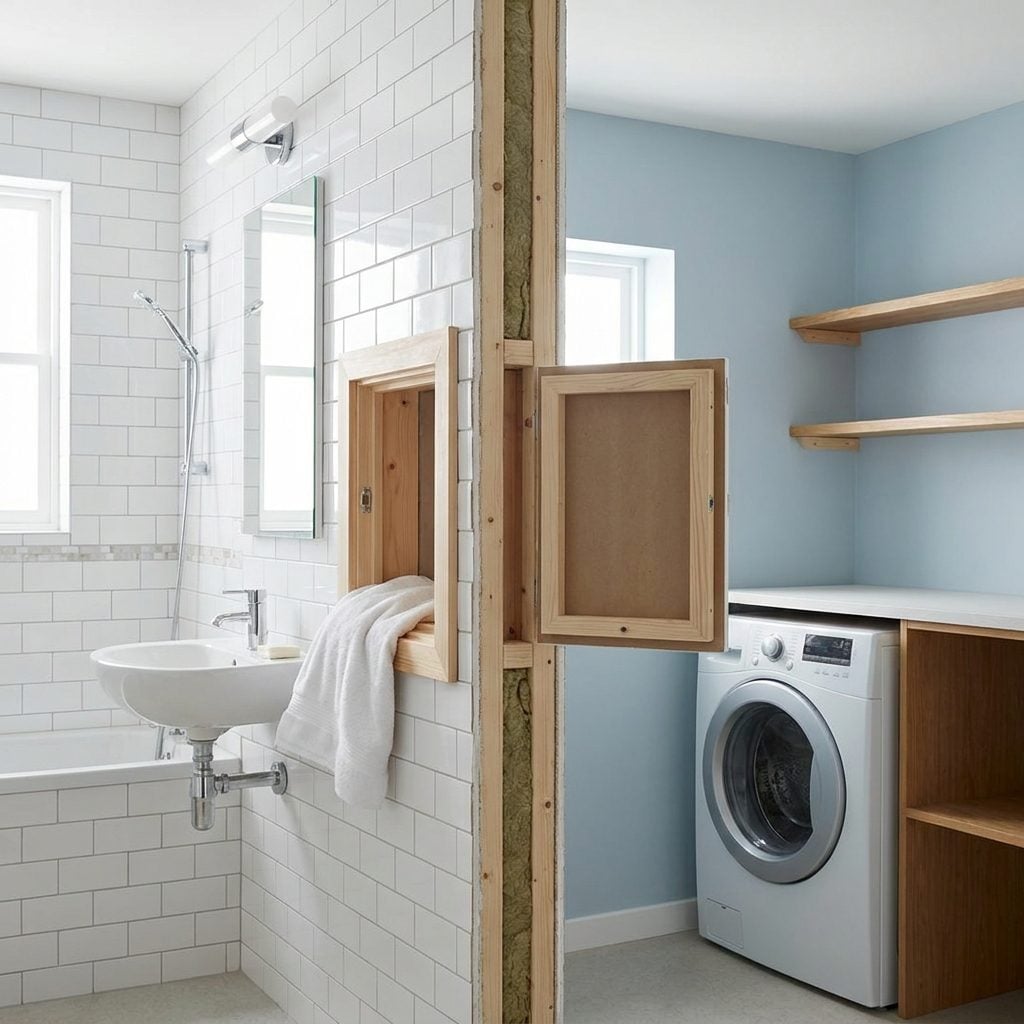
If the bathroom and laundry room share a wall, the shortest possible laundry route is about six inches long. Put a pass-through hatch between them and the wet towel can leave the bathroom directly into a receiving cabinet.
This isn’t a vertical shaft crossing several stories. It’s a short horizontal transfer through one wall, so it avoids the chimney-like vertical path that makes multistory laundry chutes more complicated. Any wall penetration still needs to respect whatever fire, acoustic, moisture, and construction requirements apply to that particular wall.
10. The Full Ironing Center That Turned Setup Into One Motion
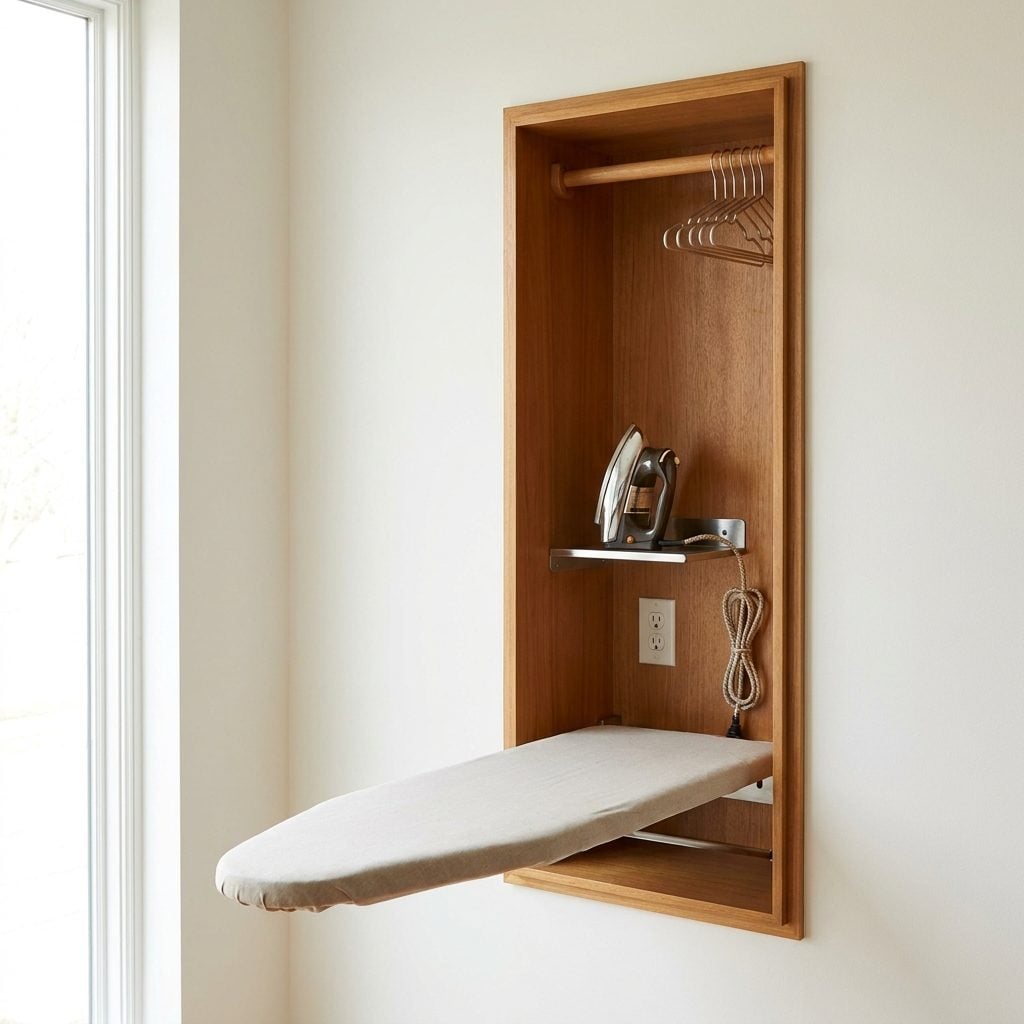
The fold-down board handled storage. The full ironing center handled the entire job.
Give the station a permanent board, a heat-safe resting shelf, an outlet placed where the cord stays out of the walkway, a short rail for finished shirts, and storage for starch, pressing cloths, and whatever mysterious spray makes linen behave.
Compare that with the modern routine: board from closet, outlet hunt, iron balanced somewhere stupid, finished shirts over a chair, everything dismantled afterward. We have successfully turned one chore into six setup chores.
9. The Waterproof Floor That Assumed Water Would Eventually Escape
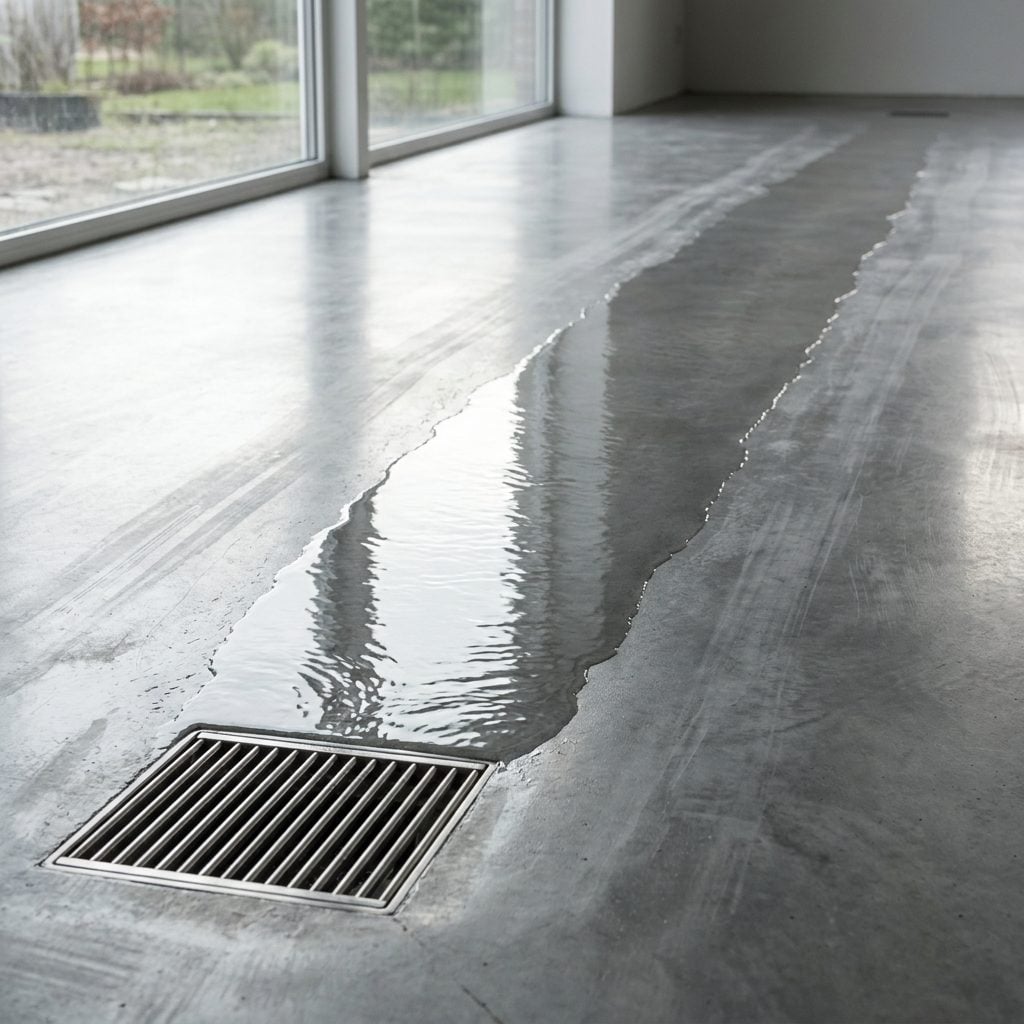
The floor drain is the emergency exit. The waterproof floor is the rest of the defensive strategy.
Use water-resistant finishes, correctly detailed transitions and wall bases, and — where the design and local requirements support it — a subtle fall directing incidental water toward the drain. Done well, none of this needs to look remotely industrial.
Warm greige porcelain, raised toe-kicks, a slim tiled threshold, and a nearly invisible pitch can make a finished laundry room behave more like a wet-tolerant utility space without looking like the basement washroom in a 1948 duplex. Same defensive thinking. Better shoes.
8. The Outdoor Clothesline Designed Like Part of the Architecture
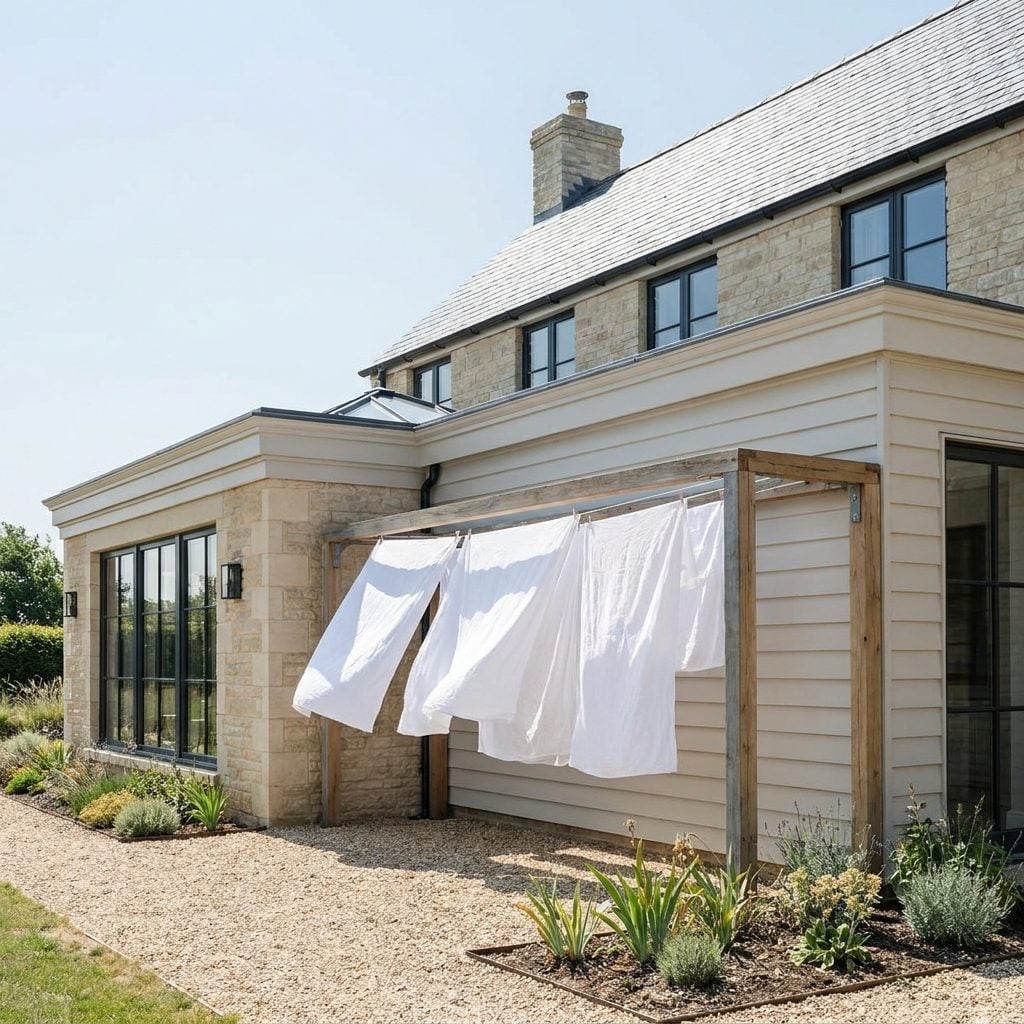
A clothesline doesn’t have to look like a temporary concession somebody stabbed into the lawn. Treat it as exterior infrastructure and suddenly the whole thing improves.
Properly anchored posts, taut lines, a paved route from the laundry room, and enough spacing for sheets to move freely make the functional part work. Then give the drying zone its own small service courtyard or screened edge so laundry isn’t competing visually with the patio.
There is no rule saying the place where sunlight dries your sheets must also be the ugliest twenty feet of the garden.
7. The Sewing-Machine Nook for Repairs Too Big for a Button
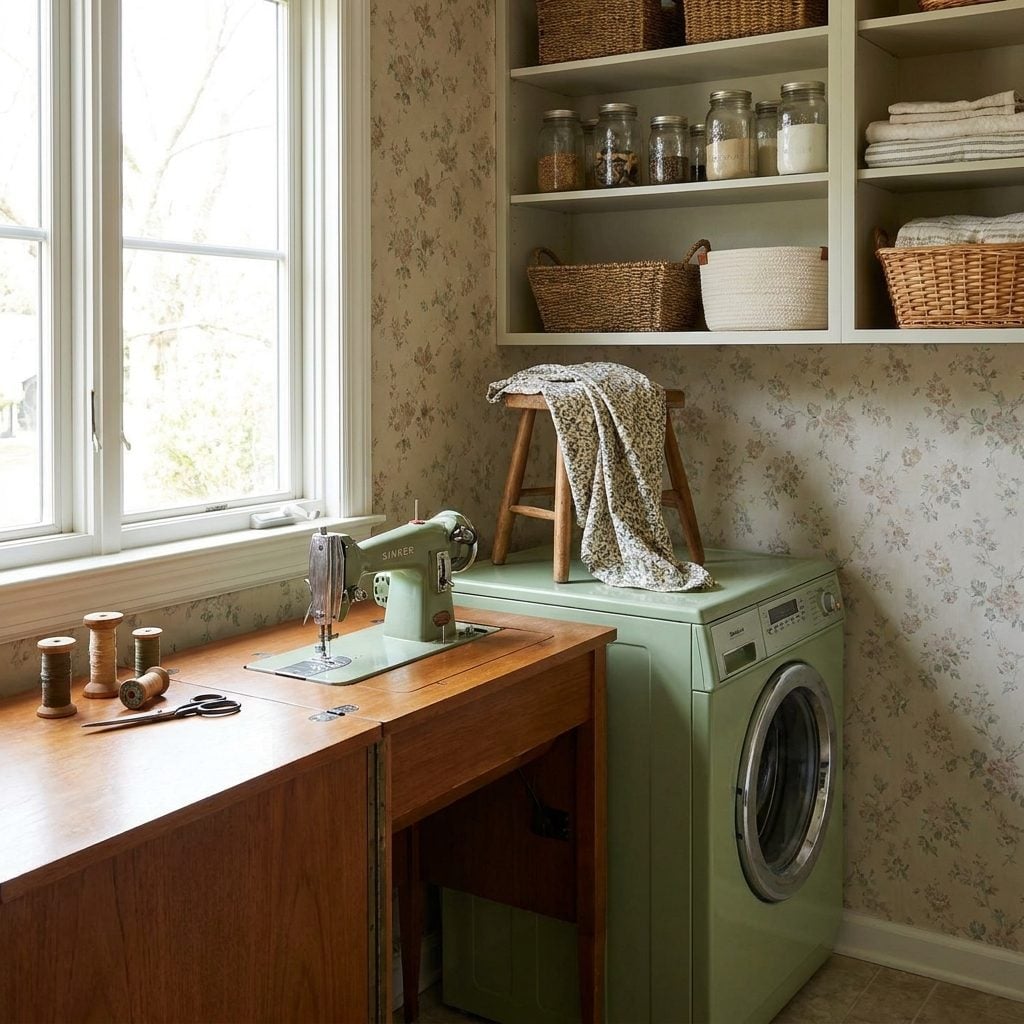
The mending counter handles buttons and little hems. A sewing-machine nook earns its keep when the repair requires more than a needle and five minutes.
A compact station needs a seated work surface with knee clearance, an outlet, task light, shallow storage, and enough room to leave the machine accessible rather than burying it under three boxes every time somebody finishes using it.
You could drag the machine into some other room when needed — even one of these carefully considered Japandi game rooms — but proximity wins. The torn garment is already in the laundry room. Put the machine where the problem arrives.
6. The Exhaust Fan for All the Moisture the Dryer Vent Doesn’t Catch
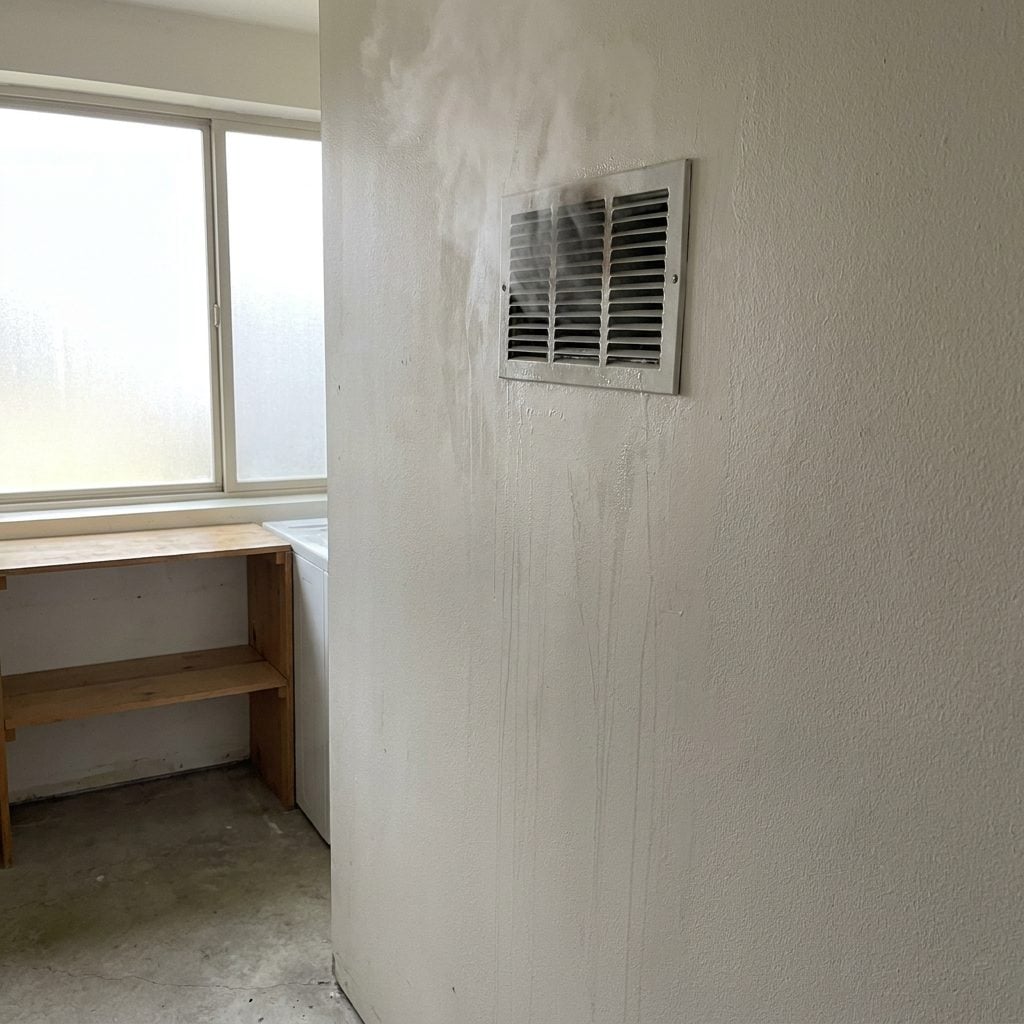
The dryer has its own exhaust. The room doesn’t. Yet wet laundry on racks, damp coats, hand-washing, and general moisture do not politely climb into the dryer duct just because one exists.
A dedicated room exhaust can pull humid air out independently, particularly valuable in an interior laundry room without a useful operable window. Pair it with appropriate make-up air and, where suitable, a humidity-responsive control so the fan runs when the room actually needs it.
This is the sort of feature nobody praises during a house tour. Live through one muggy summer without it and you’ll become surprisingly evangelical.
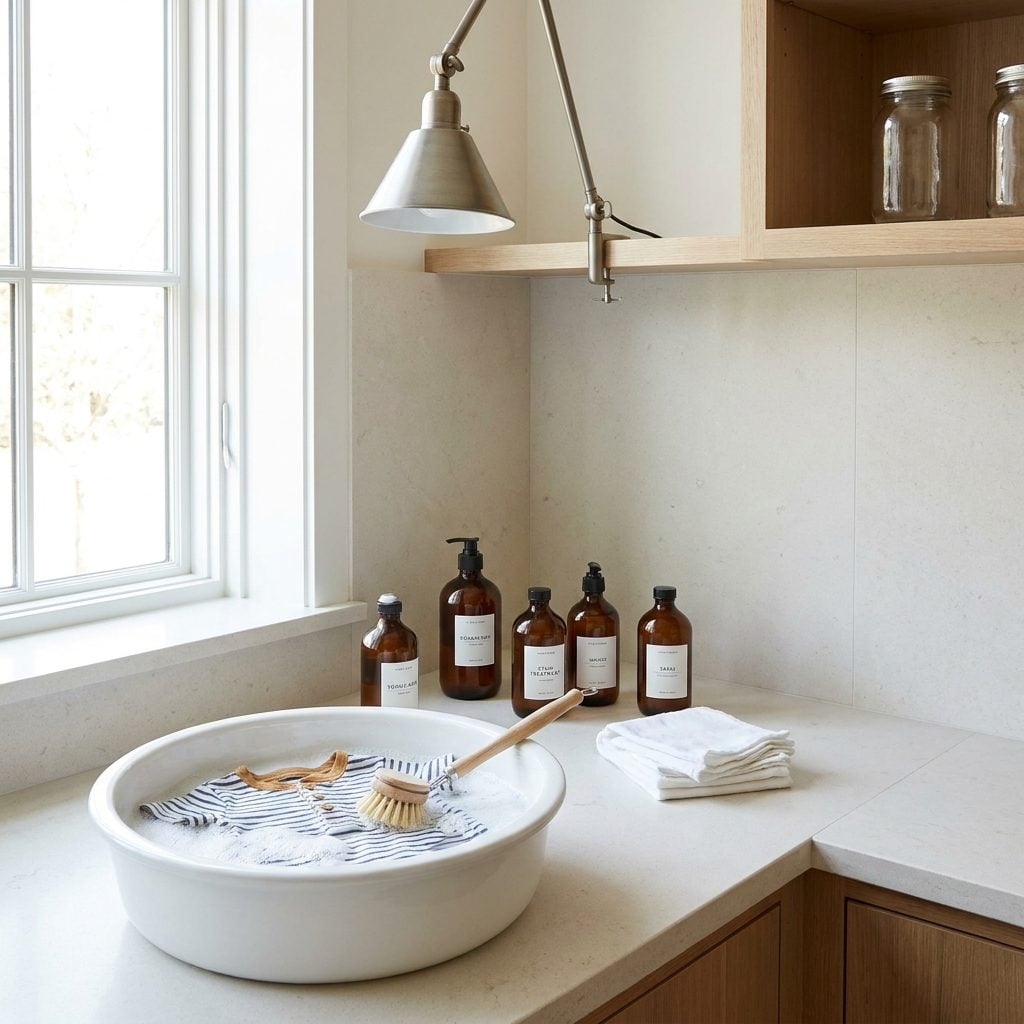
5. The Stain-Treatment Station for the Jobs a Washer Can’t Start
🔥 Would you like to save this?
Grass, wine, blood, grease, the mysterious substance on a child’s white shirt — some stains need attention before the washing machine gets involved.
The treatment station is less about soaking an entire blanket and more about working on a specific problem. Give it a deep sink, good hot-and-cold water control, bright task lighting, and a stain-resistant counter where a garment can lie flat while you blot, rinse, pretreat, or question your life choices.
Closed storage keeps detergents and stain products contained, while a few hooks handle pieces still dripping after treatment. Earlier wash spaces understood the principle even when their boilers, open flames, and chemical handling would horrify a modern safety inspector. Keep the dedicated work zone. Lose the danger.
4. The Drying Rack Positioned Directly Over the Utility Sink
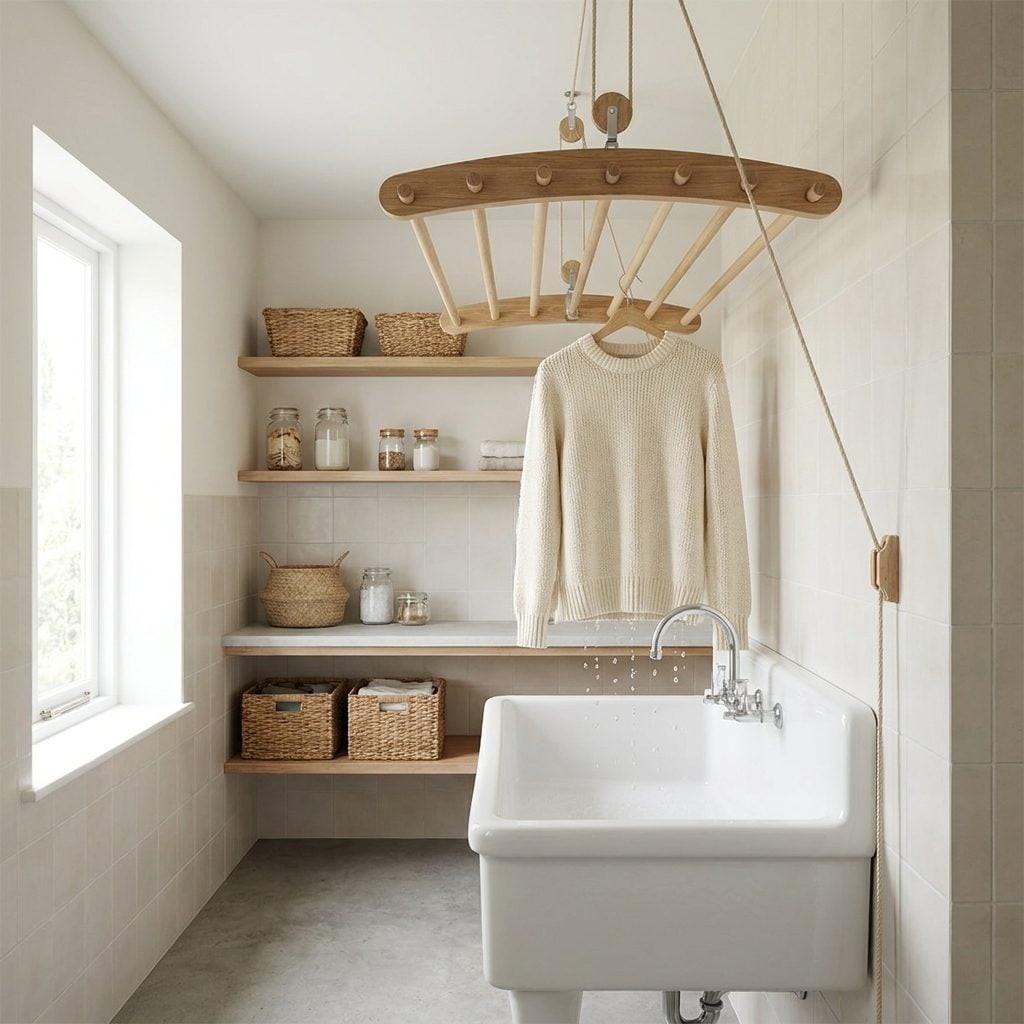
This may be the simplest water-management idea in the entire room. Wet things drip. Put the drying rack above something designed to hold water.
A permanently mounted rail or rack over the utility sink lets hand-washed garments drain directly into the basin while leaving the surrounding floor alone. Unlike the full drip-dry bay, this is the compact version: perfect when the room doesn’t have enough space to surrender an entire alcove.
Good rooms think about where water goes. Even the small-space solutions in these before-and-after powder rooms depend on getting wet-zone details right; a laundry room simply has far more opportunities for water to escape.
3. The Permanent Indoor Clothesline That Never Needed Unfolding
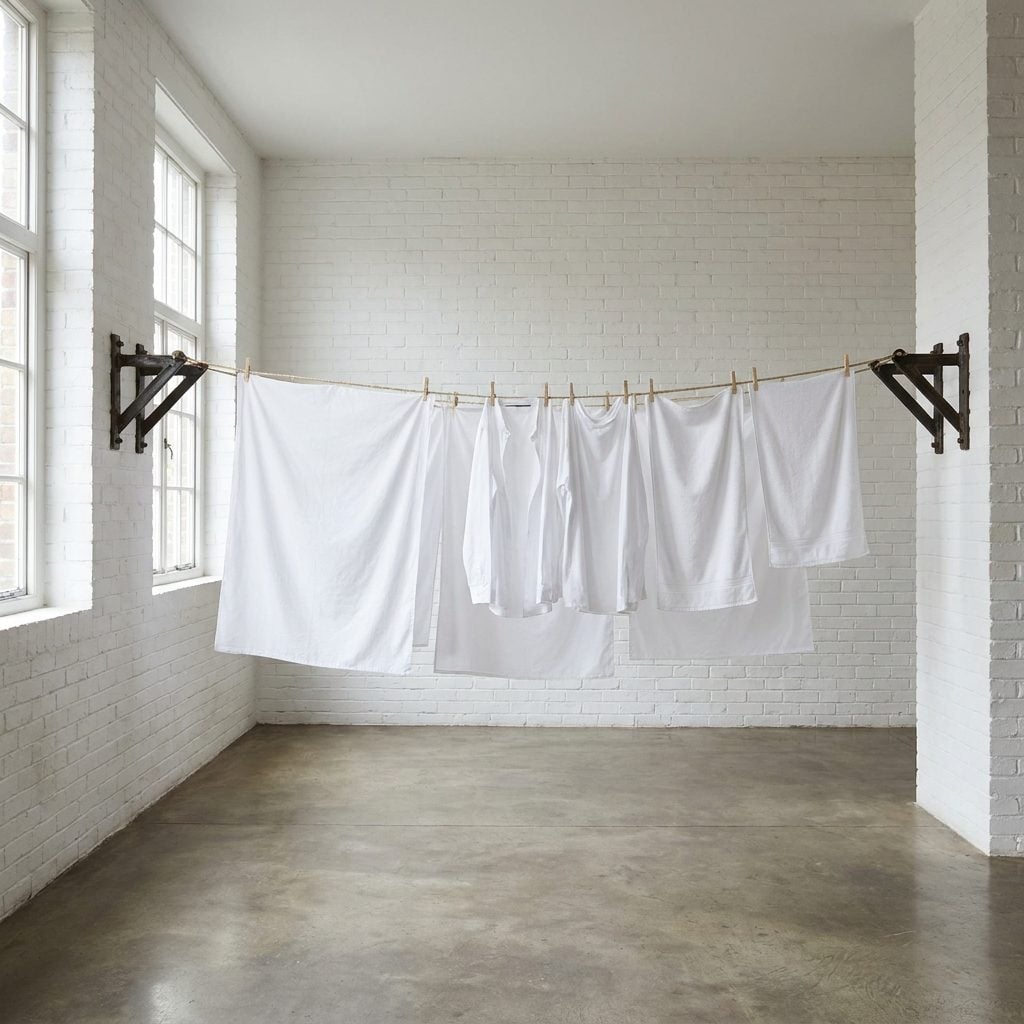
Not a retractable cord that snaps back toward your knuckles. A properly anchored line in a dedicated drying area, positioned where damp clothes can hang without turning the hallway into an obstacle course.
The advantage over the pulley airer is simplicity. Nothing moves. Nothing folds. String the line over a water-resistant zone with useful ventilation and it is permanently ready for shirts, linens, and pieces better kept away from tumble-dryer heat.
Line-dried cotton has a texture a dryer doesn’t quite reproduce. And yes, on the right day, you already know the smell.
2. The Built-In Soaking Tub Big Enough for the Awkward Stuff
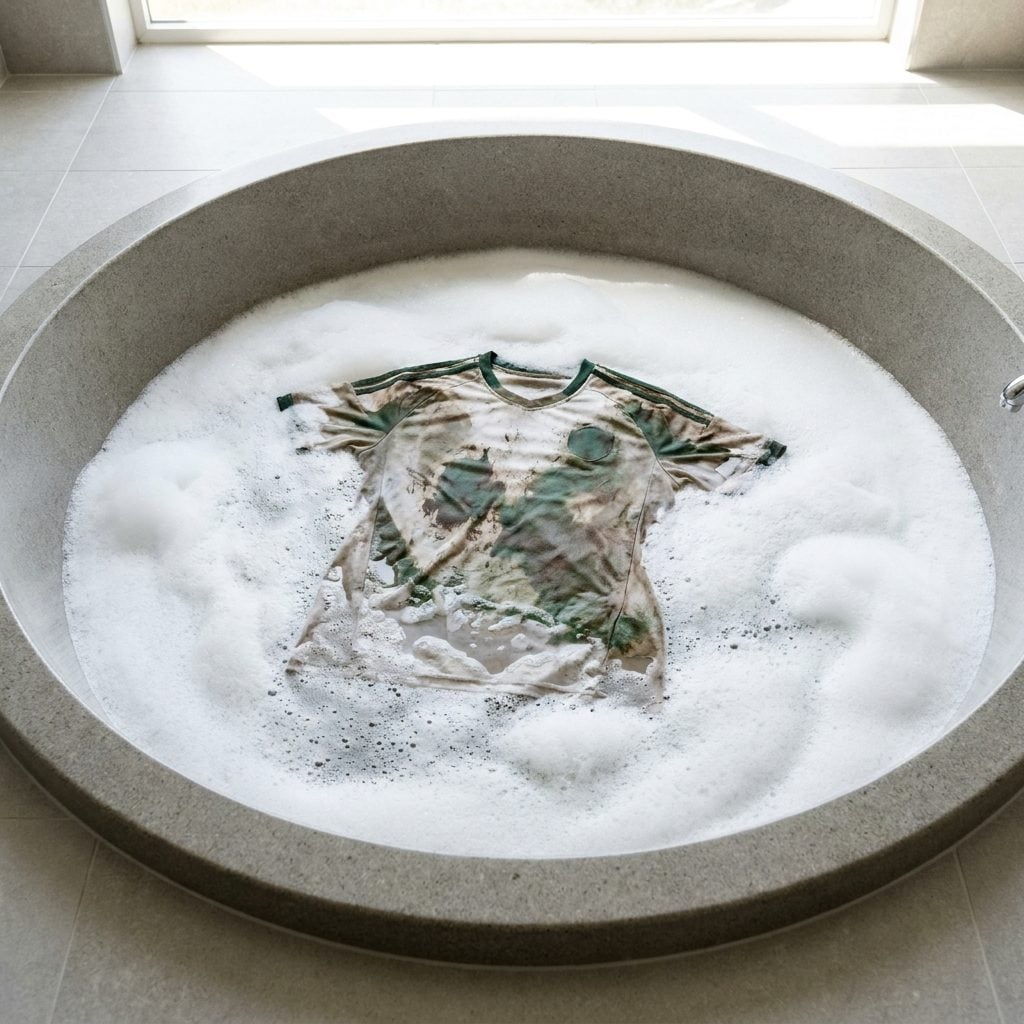
The stain station handles one shirt. The soaking tub earns its space when the thing needing water is large enough to have its own weather system.
Think blankets, washable slipcovers, heavily soiled sports gear, oversized linens, or anything else that benefits from sitting submerged before the machine gets involved. A broad deep basin, waterproof surround, good drain, and enough capacity to keep the textile under the water make this a different tool from the everyday utility sink.
Most of us accomplish the same job with a plastic tote, bucket, or bathtub. The old idea was to admit that soaking is part of laundering and give it somewhere permanent to happen.
1. The True Utility Room That Put the Whole System Back Together
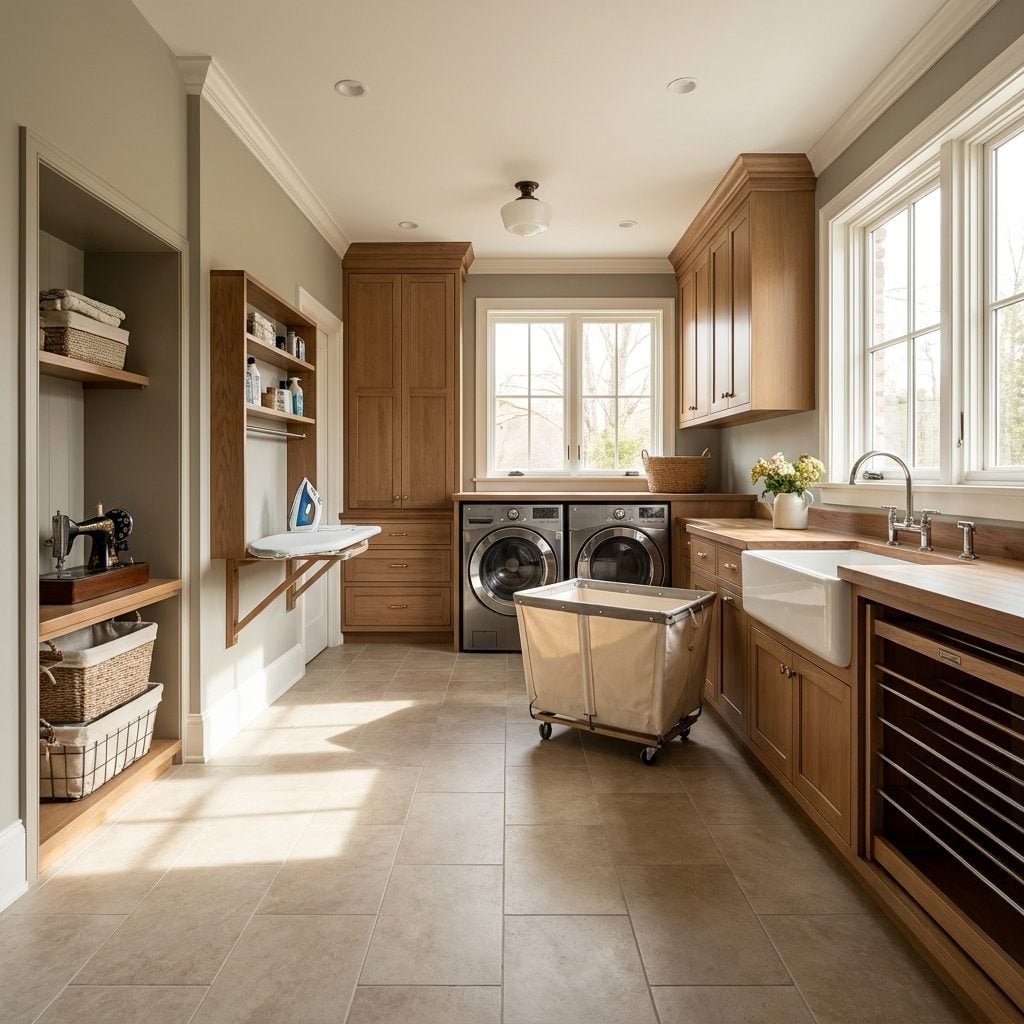
After all of that, the strangest thing becomes obvious: none of these features is particularly extravagant. They only seem extravagant because we’ve grown accustomed to asking two appliances and six feet of cabinetry to perform an entire household process.
The true utility room puts the pieces back together. Machines and a serious work sink occupy the wet zone. A water-tolerant floor protects what is underneath. A permanent folding surface catches clean loads. Somewhere above or beside it, air-drying happens without colonizing the hallway. An ironing station has an outlet where the iron is actually used. Almost-dry linens have ventilation. Finished clothes have a rail. Dirty ones have sorting bins.
Then give the room the small things modern plans forget: enough counter and task light to sew on a button, somewhere to pretreat a stain, room to park a laundry cart, and a window or mechanical ventilation capable of clearing the moisture all this work creates.
None of it requires pretending it’s 1930. Use good cabinetry, porcelain tile, quartz counters, quiet ventilation, efficient machines, and hardware that belongs in this century. Keep the old logic.
The best laundry rooms were never really about laundry. They were workshops for taking dirty, wet, damaged things and sending them back into the house clean, dry, repaired, and ready to be used again. Somewhere along the way we kept the machines and threw away the workshop.