🔥 Would you like to save this?
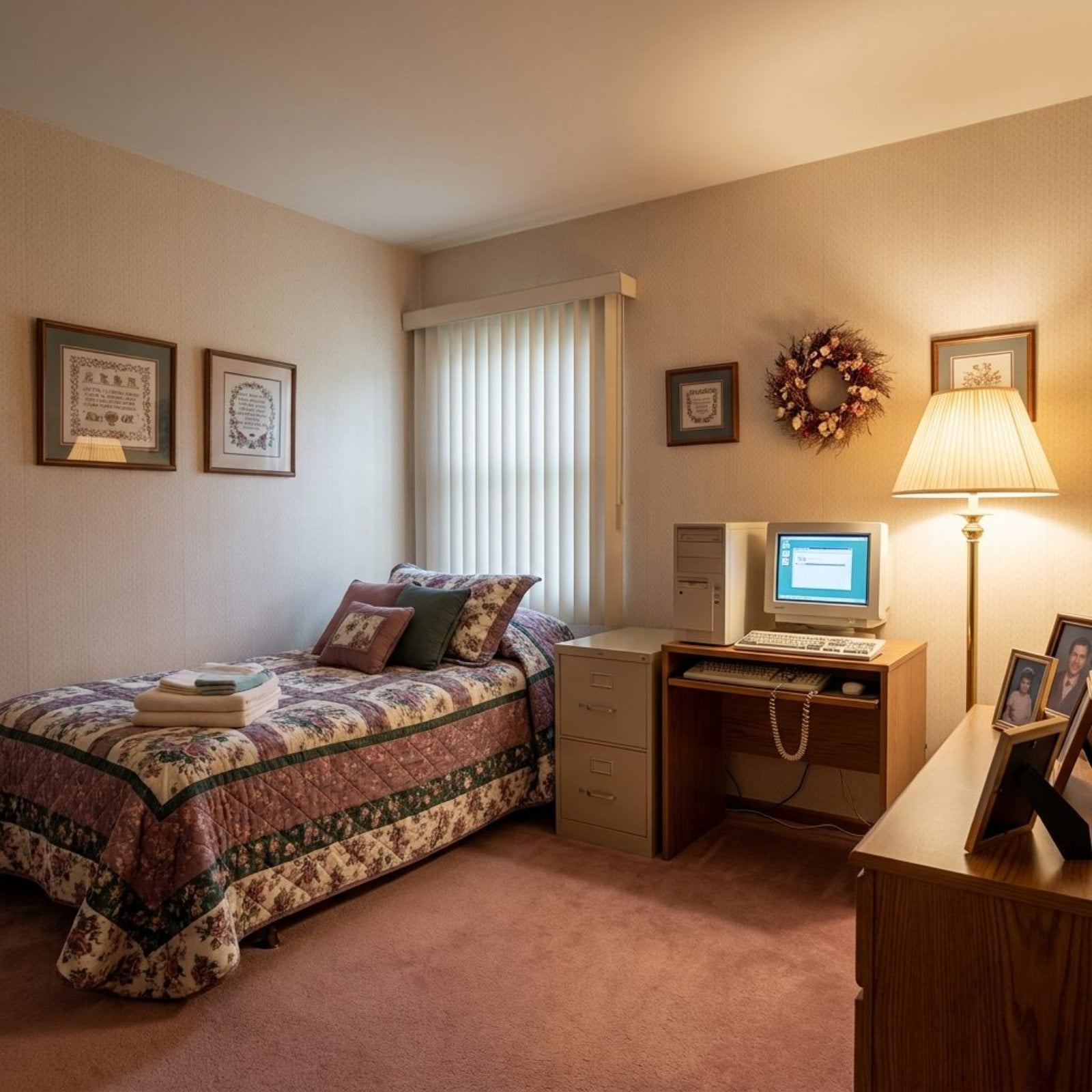
The room smelled like warm plastic and toner. A beige box the size of a microwave hummed on the desk, and somewhere down the hall a phone line was tied up because someone was downloading a two-page document. Home offices in 1990 were loud, hot, and permanently on the verge of running out of paper. Thirty-plus years later, the same room does more work with a laptop and a coffee cup than a 1990 setup pulled off with fifteen appliances.
21. The Desk-Eating CRT vs. The Sliver of a Screen
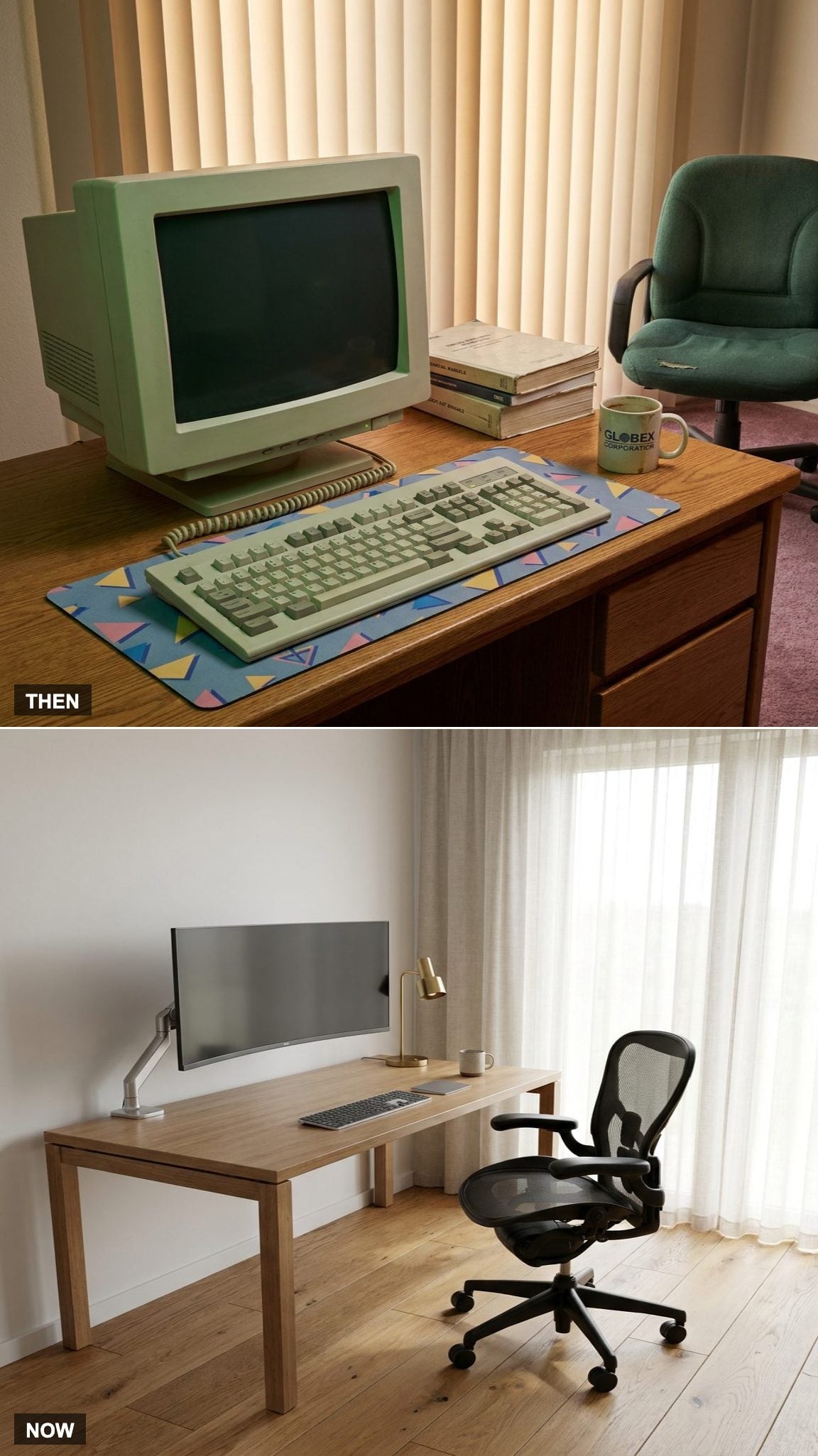
A 1990 monitor was furniture. The tube alone weighed forty pounds and pushed everything else — keyboard, papers, coffee, mouse — out to the outer edges of the desk, and the screen glowed at you like an aquarium.
In order to come up with the very specific design ideas, we create most designs with the assistance of state-of-the-art AI interior design software. Also, assume links that take you off the site are affiliate links such as links to Amazon. this means we may earn a commission if you buy something.
Now the monitor is a pane of glass on a stick. Same desk footprint, three times the working surface, and you can actually see the wood underneath.
20. Filing Cabinets vs. A Folder in the Cloud
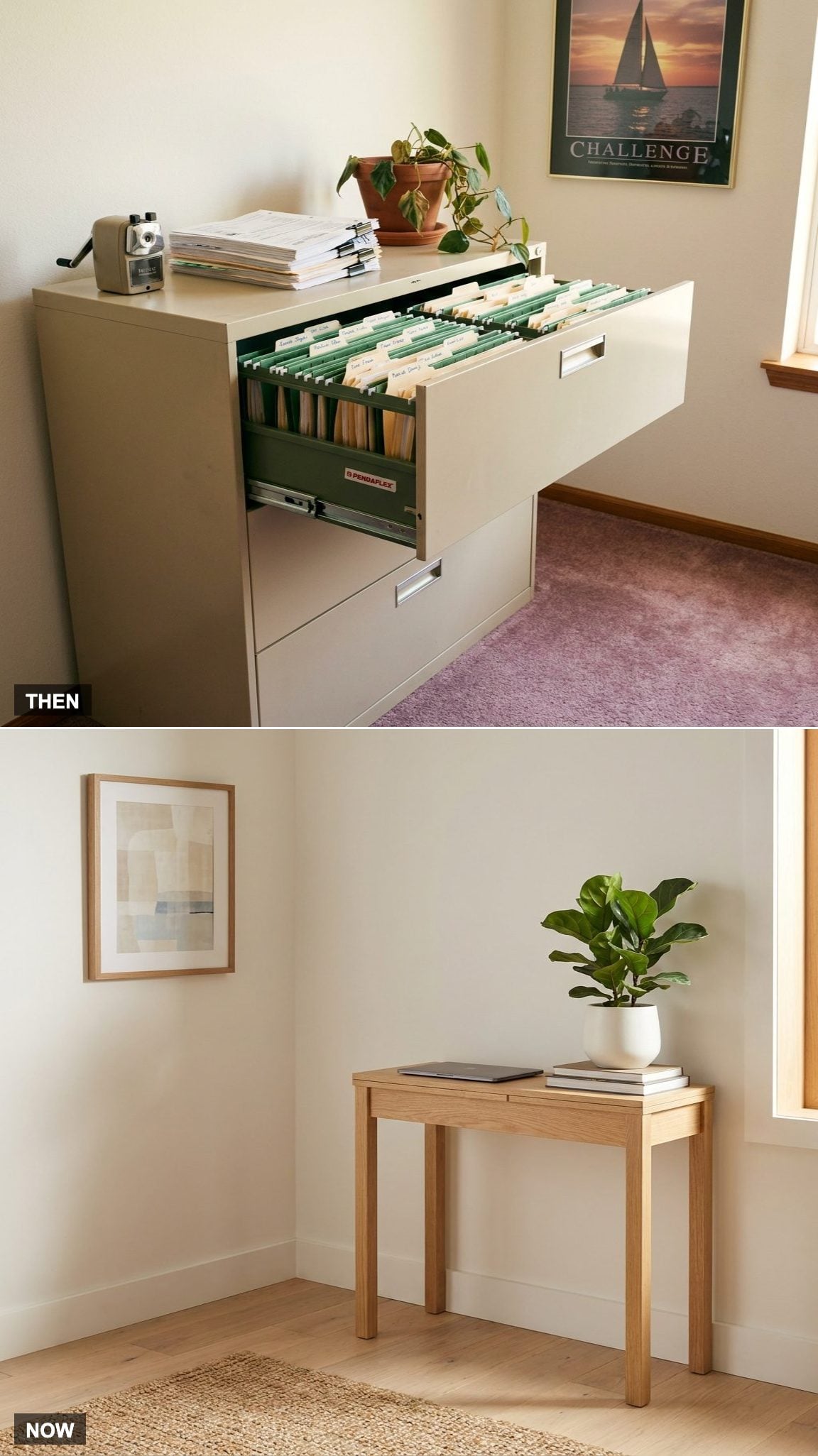
Everything important lived in a metal drawer that stuck in humid weather. Tax returns, warranties, receipts from 1987, a birthday card from an aunt who had since died — you kept it all because throwing anything out felt like a legal risk.
Now the same information lives in a folder you named badly and can’t find, which is admittedly its own problem. But the corner of the room is empty, and that counts for something.
19. Dial-Up That Ate the Phone Line vs. Wi-Fi You Forget Exists
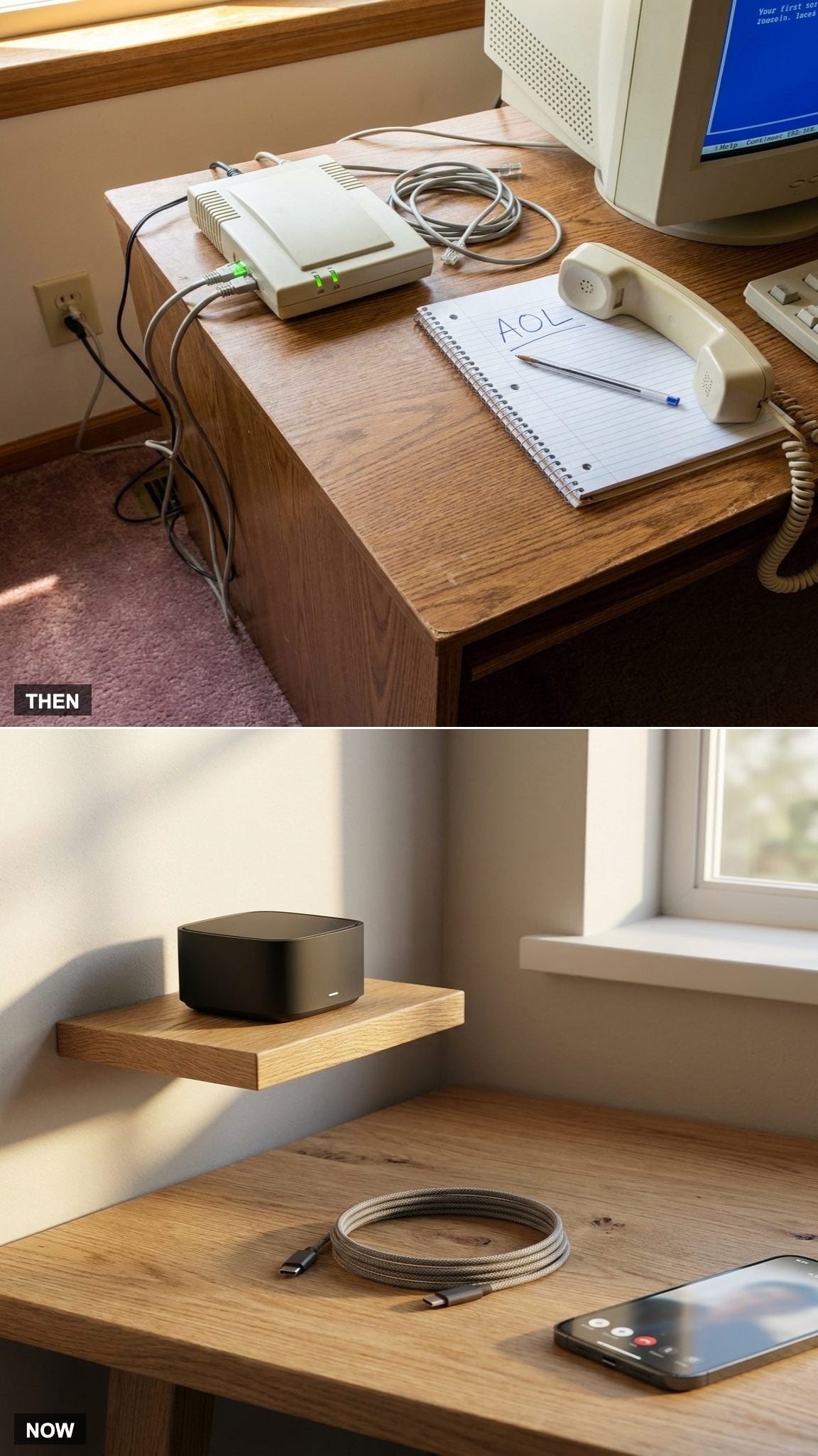
The sound is what people forget. That handshake screech, followed by a hiss, followed by your mom picking up the kitchen phone and knocking the whole thing offline. Even a modest image could take several minutes to arrive, and a large one could tie up the phone line for the better part of half an hour.
Now the router sits on a shelf and you have no idea what color it is because you have not looked at it in two years. It just works. Until it doesn’t, and then nobody in the house can function.
18. The Fax Machine Shrine vs. A Signature on a Phone
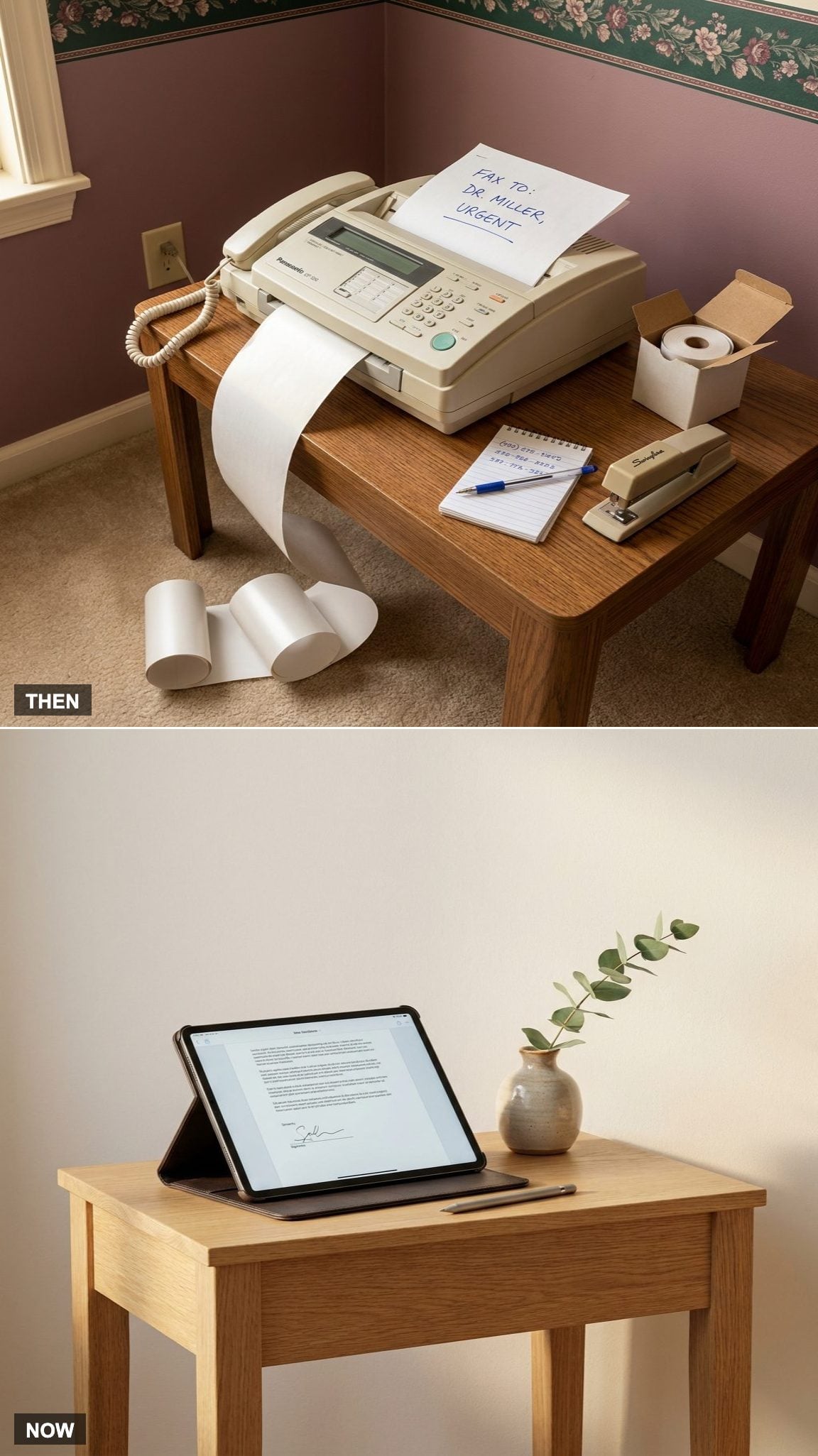
A fax machine was the most important appliance in a home office and also the one most likely to ruin your afternoon. The paper curled, faded, and jammed. You called the recipient to confirm the fax arrived, which defeated the purpose entirely.
Signing something now takes eleven seconds and a fingertip. The fax number on your old business card dials into a void nobody has checked since the Bush administration. The first one.
17. Corded Phone Anchored to the Desk vs. Calls That Follow You Around
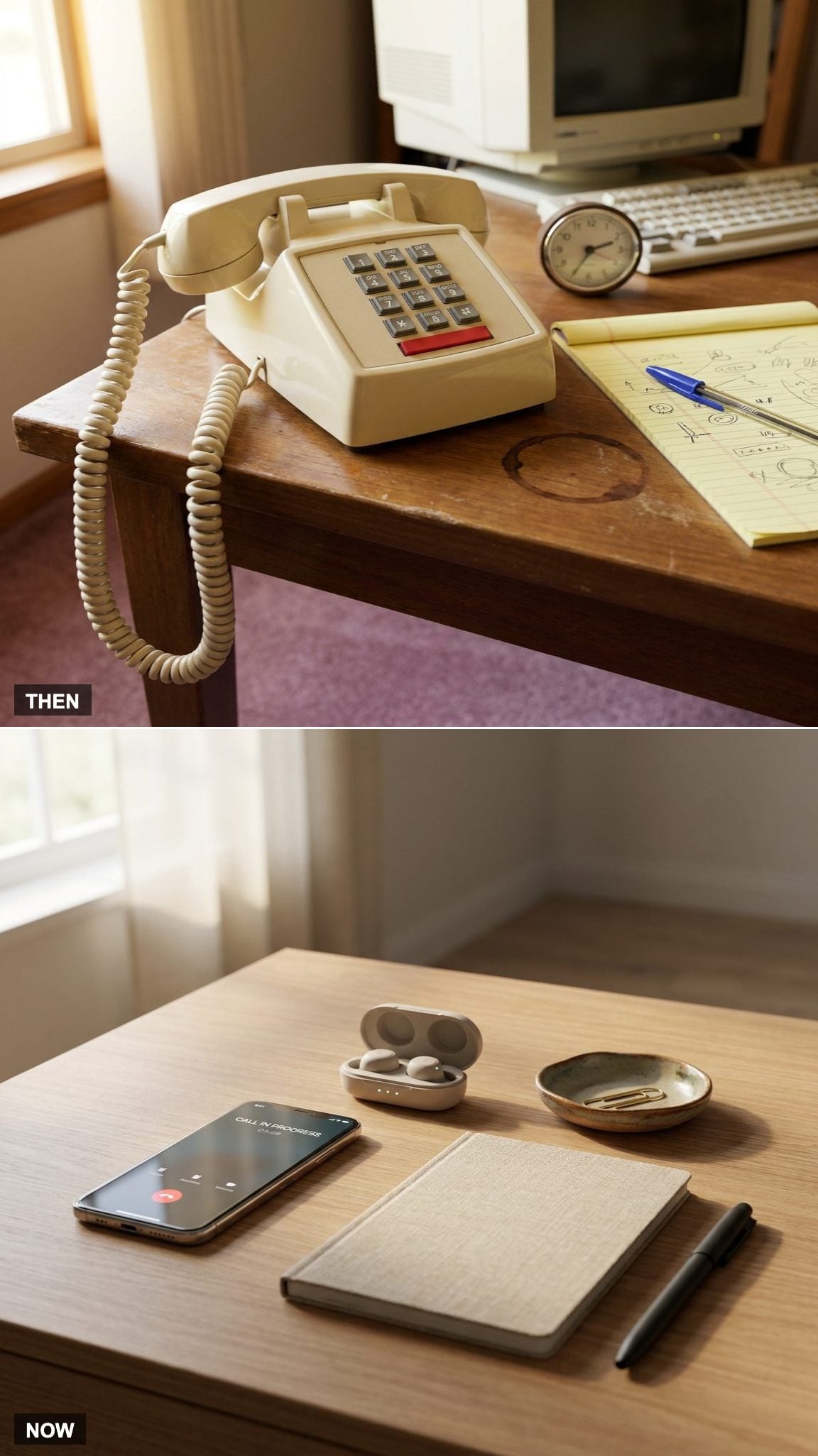
You took calls tethered. Six feet of curly cord, max, and if you paced, you knocked the pen cup over. The phone had one job and did it while occupying prime desk real estate.
A call now happens on whichever device is nearest, follows you to the kitchen, and hands off to the car without asking. The old desk phone? Your kids think it’s a toy.
16. Dot-Matrix Screech vs. A Printer You Forgot You Owned
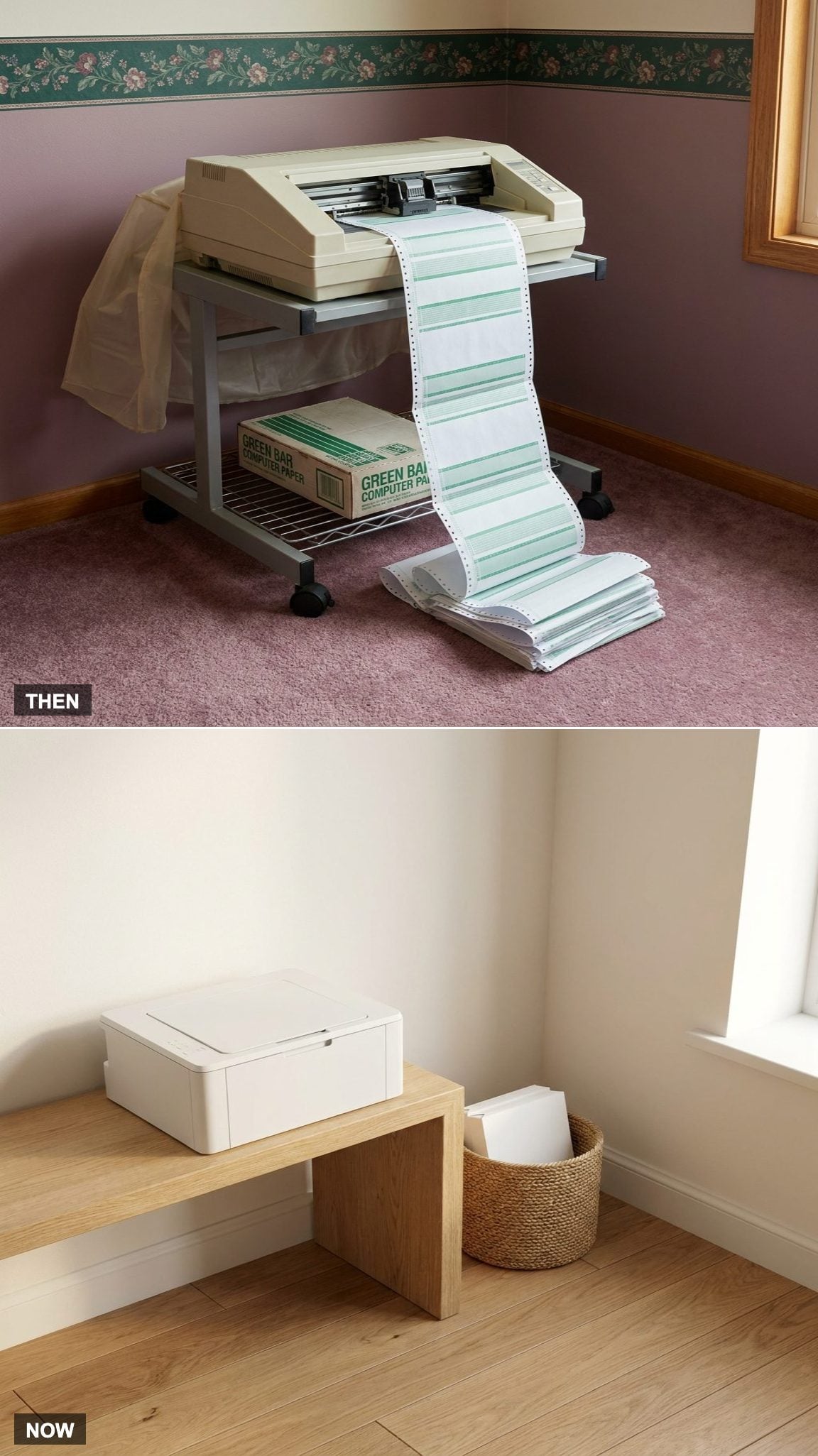
You heard a dot-matrix from three rooms away. The printhead ripped back and forth like a small machine gun and printed a term paper in the time it took to eat lunch. The paper came out in one long accordion, and you tore the perforated edges off one strip at a time.
Its modern replacement lives in a closet and prints when you email it from your phone. You forget it exists until the toner runs out.
15. A Wall of Reference Books vs. A Search Bar
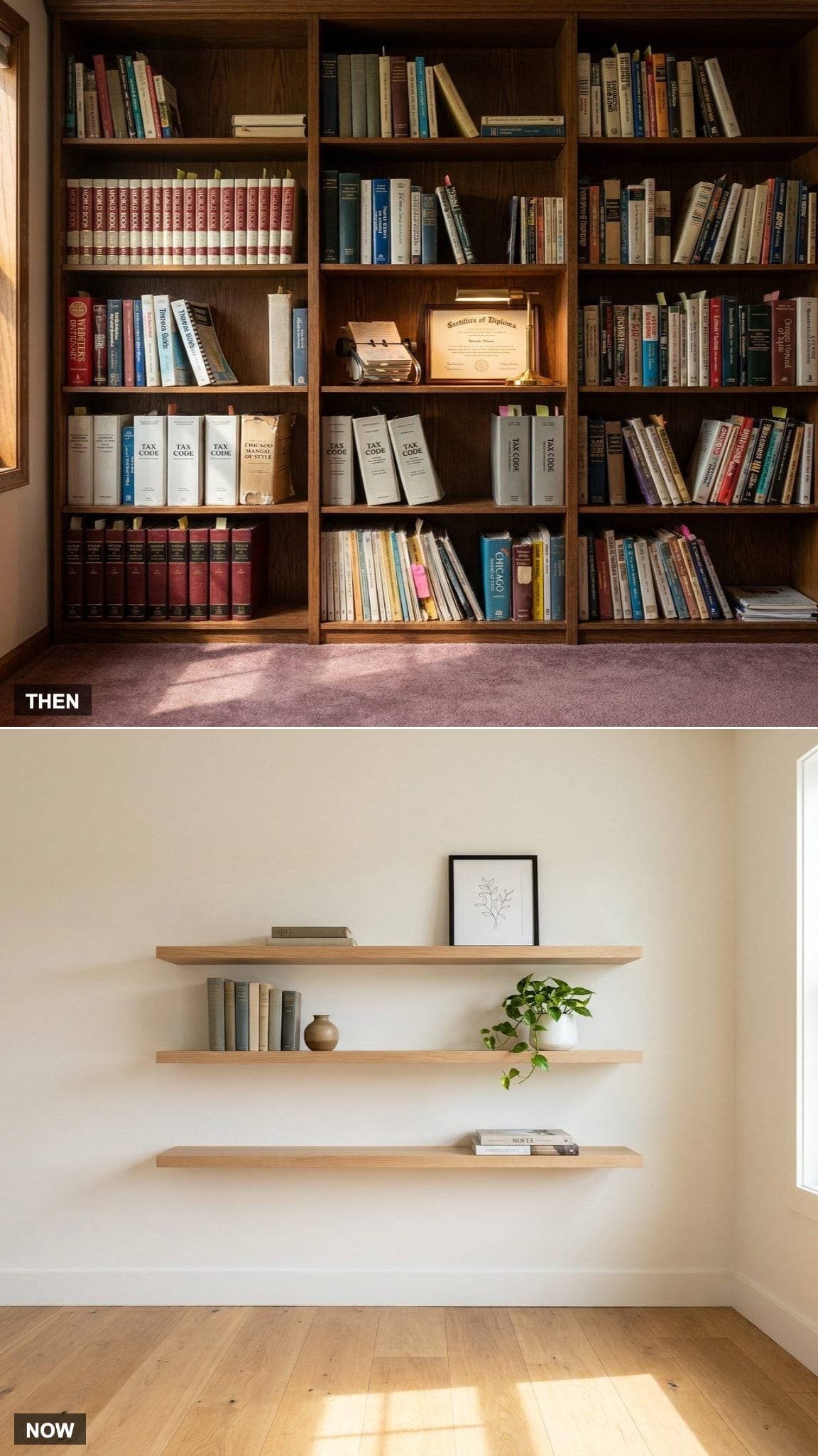
The World Book set was an investment — twenty-two volumes, a payment plan, a salesman who came to the door. You looked things up by flipping through the M volume with your finger tracing the top of the page.
Ask a question out loud now and something on the counter answers you. The books left on the shelf are there because you like how they look.
14. The Sacred Rolodex vs. Contacts That Sync Themselves
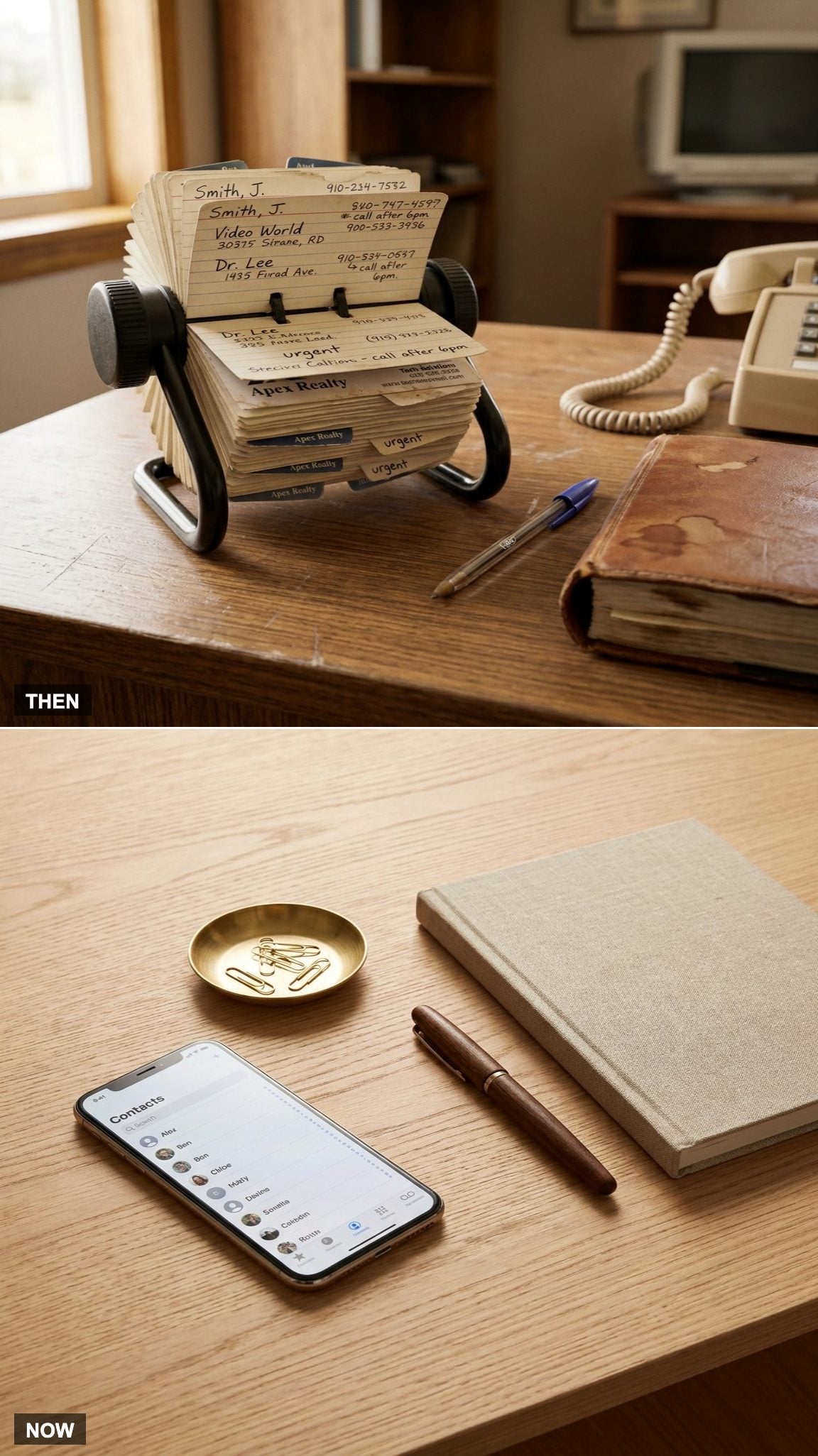
You knew someone’s Rolodex was serious when the cards were three inches thick and the tabs were dog-eared. Losing it was a small catastrophe. Losing a card was worse.
Your phone quietly copies every contact to three places at once, and you haven’t typed a phone number from memory since 2009. Ask someone under thirty to recite their partner’s number. Watch them stall.
13. The Beige Tower Under the Desk vs. A Laptop You Take to the Kitchen
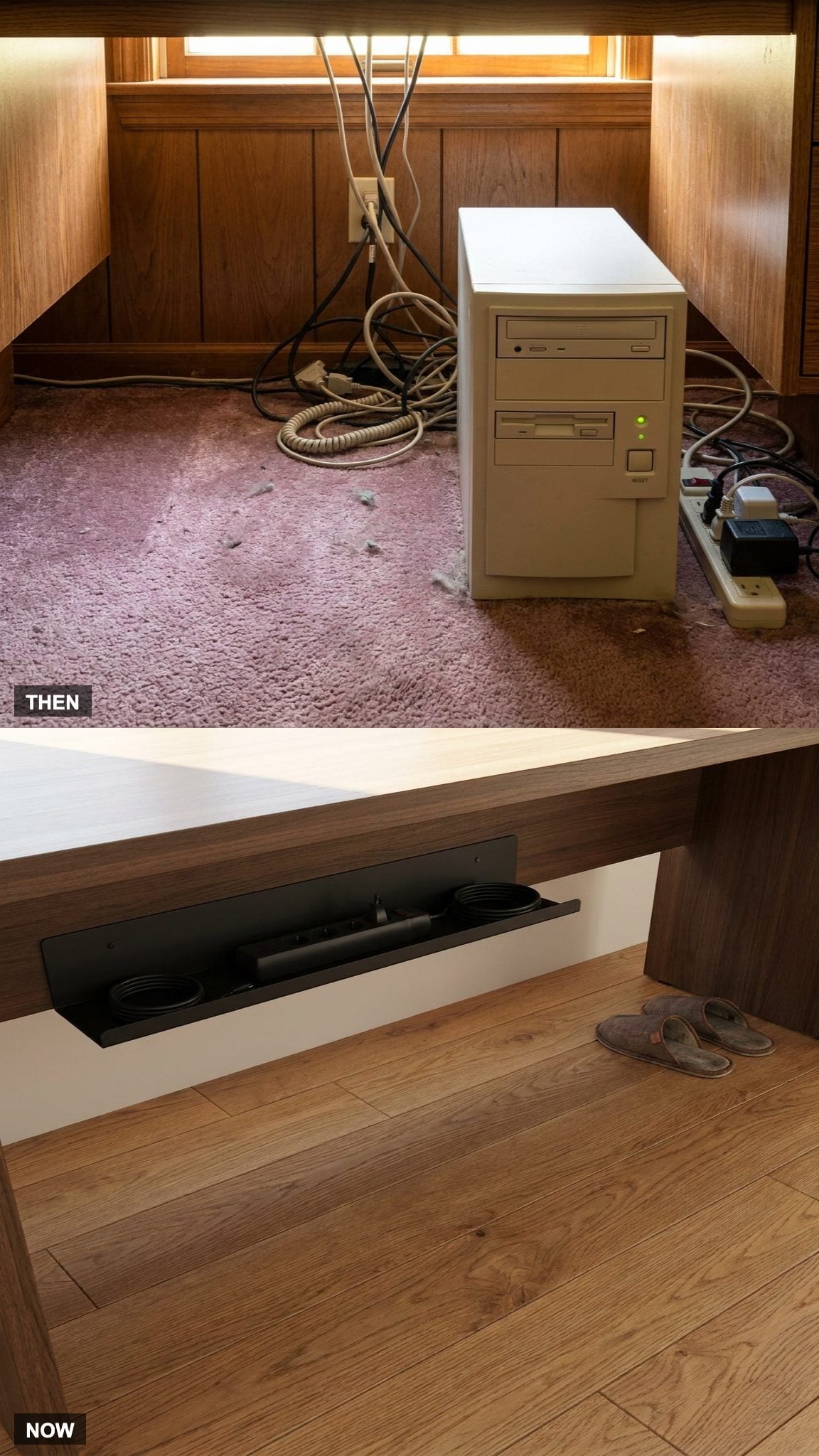
The tower lived on the floor because it had to — too heavy for the desk, too loud to ignore, too hot to touch after an hour, with six cables running out the back in a beige tangle.
The whole thing fits in a bag now. You work from the kitchen counter, the couch, a hotel room in another time zone. The space under the desk is where the slippers live, and honestly, that’s the one time progress actually delivered on the brochure.
12. Sticky Notes Covered the Monitor vs. Digital Task Managers Keep Everything Organized
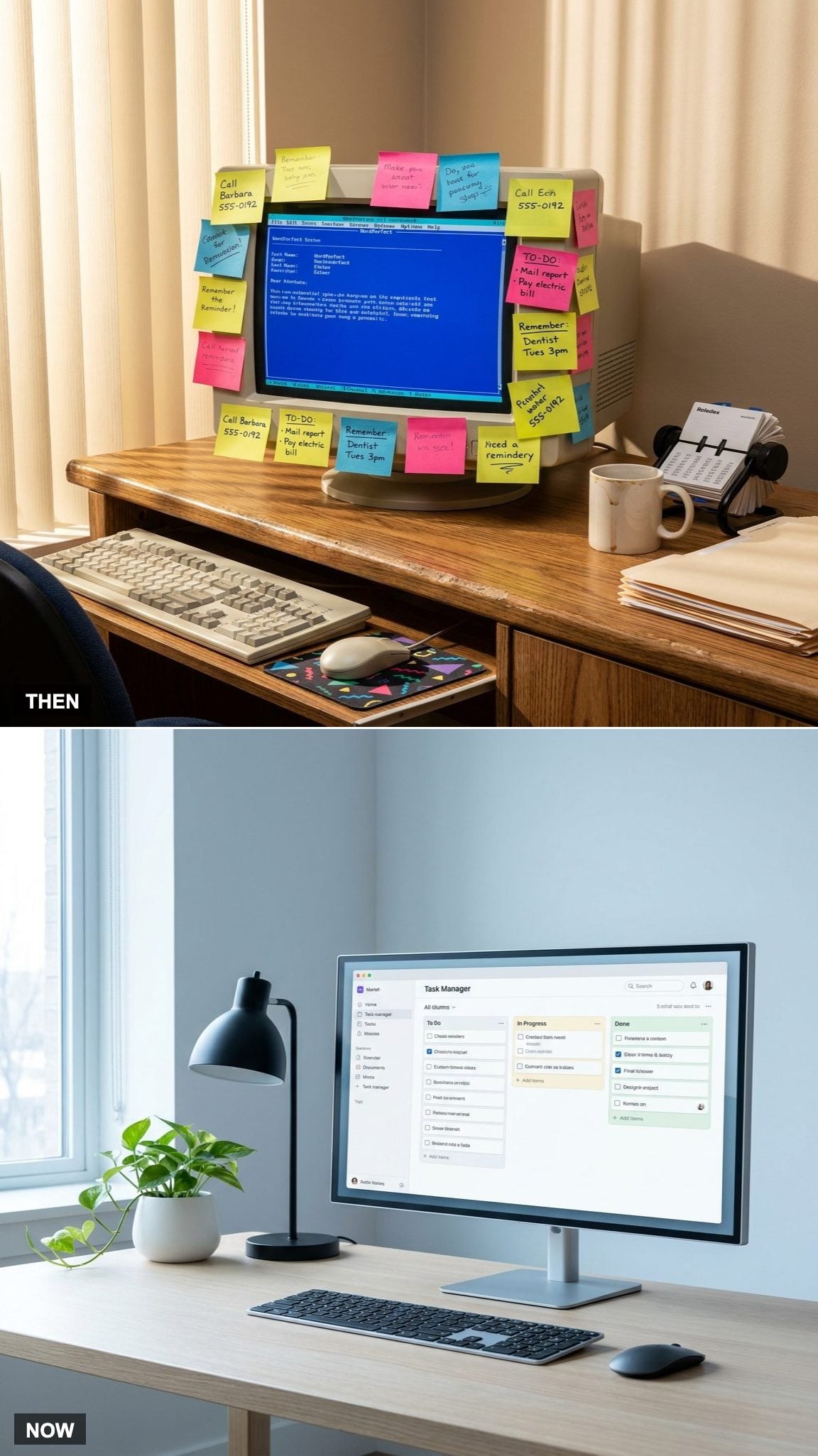
Anyone who worked from a home desk in 1990 remembers the monitor fringe — that halo of Post-its stuck to the plastic bezel, half of them curling at the edges, all of them written in ballpoint pen during some phone call you barely remember taking. The system worked until it didn’t. One knocked-off note and Tuesday’s dentist appointment vanished into carpet fibers.
Task apps live inside the screen now, syncing across phone, laptop, and tablet, nagging you with notifications you can actually snooze. Desk looks emptier. Brain feels emptier too. That’s the whole point.
11. Every Meeting Required a Phone Call vs. Video Calls Are a Daily Routine
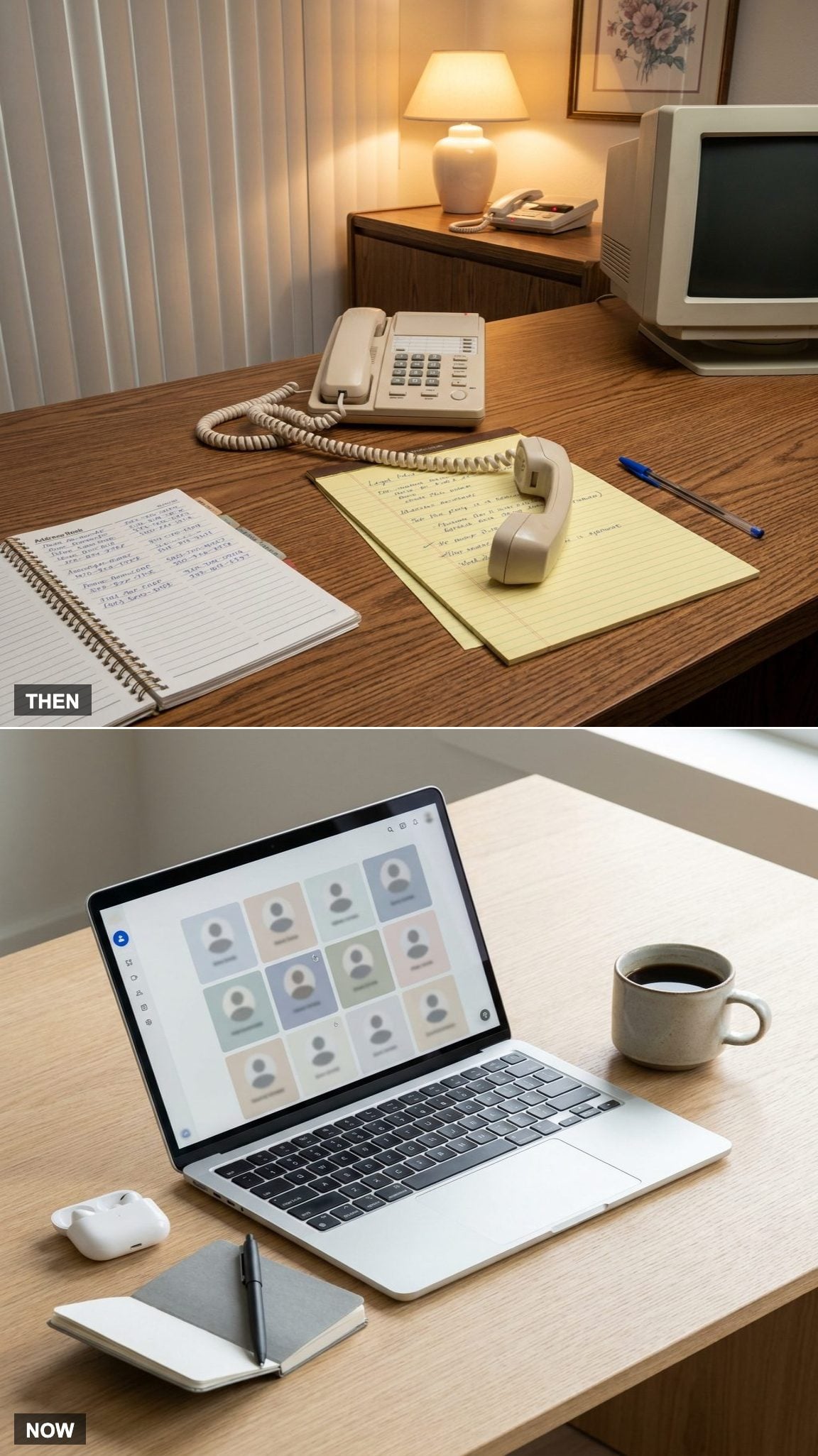
A 1990 conference call was an event.
You blocked the hour, closed the door, and told the family the line was tied up — which meant nobody could call in or out for anything short of a house fire. The receiver went warm against your ear by minute forty, and notes were taken by hand because there was no other way to take them. Somewhere around minute fifty-five you’d start doodling in the margins just to stay awake.
Now the meeting is a browser tab. Fifteen people across four time zones, everyone in soft focus, someone’s dog barking in the background, pants optional. Fatigue is different, etiquette is different, and the trade isn’t cheaper in every direction — but it’s cheaper overall.
10. Paper Calendars Controlled the Schedule vs. Digital Calendars Send Automatic Reminders
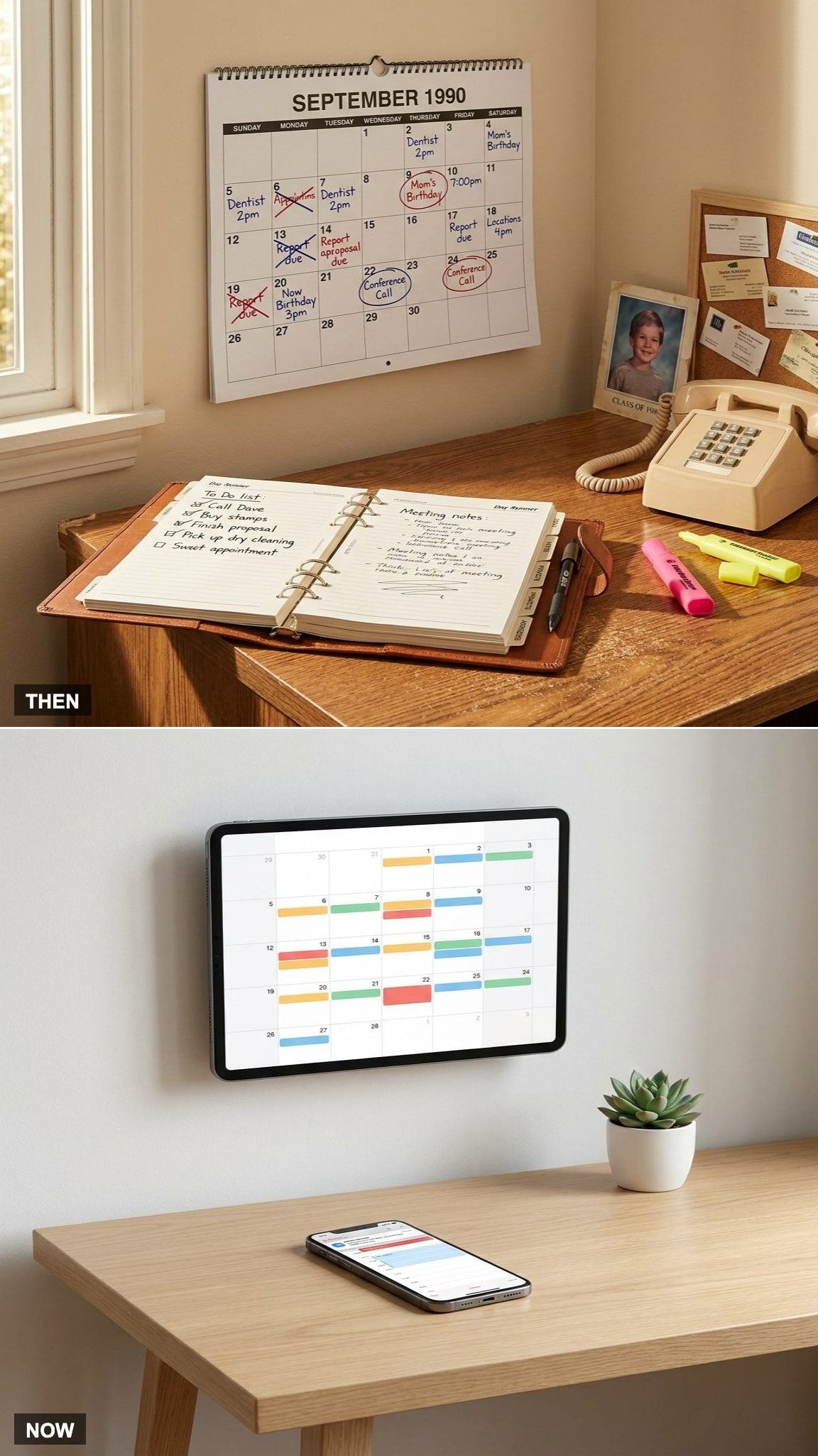
The Franklin planner was a status object. Leather cover, tabbed sections, a little pen loop, a filing philosophy that took a weekend seminar to fully absorb. People carried them into meetings like sidearms, and you could tell the truly devoted by how worn the corners were.
Digital calendars do the same job without the ceremony. They also nag you fifteen minutes before every appointment, which the leather binder never could. Whether that’s an improvement depends entirely on whether you enjoyed missing things.
9. Office Chairs Focused on Price vs. Comfort Is Part of Productivity
🔥 Would you like to save this?
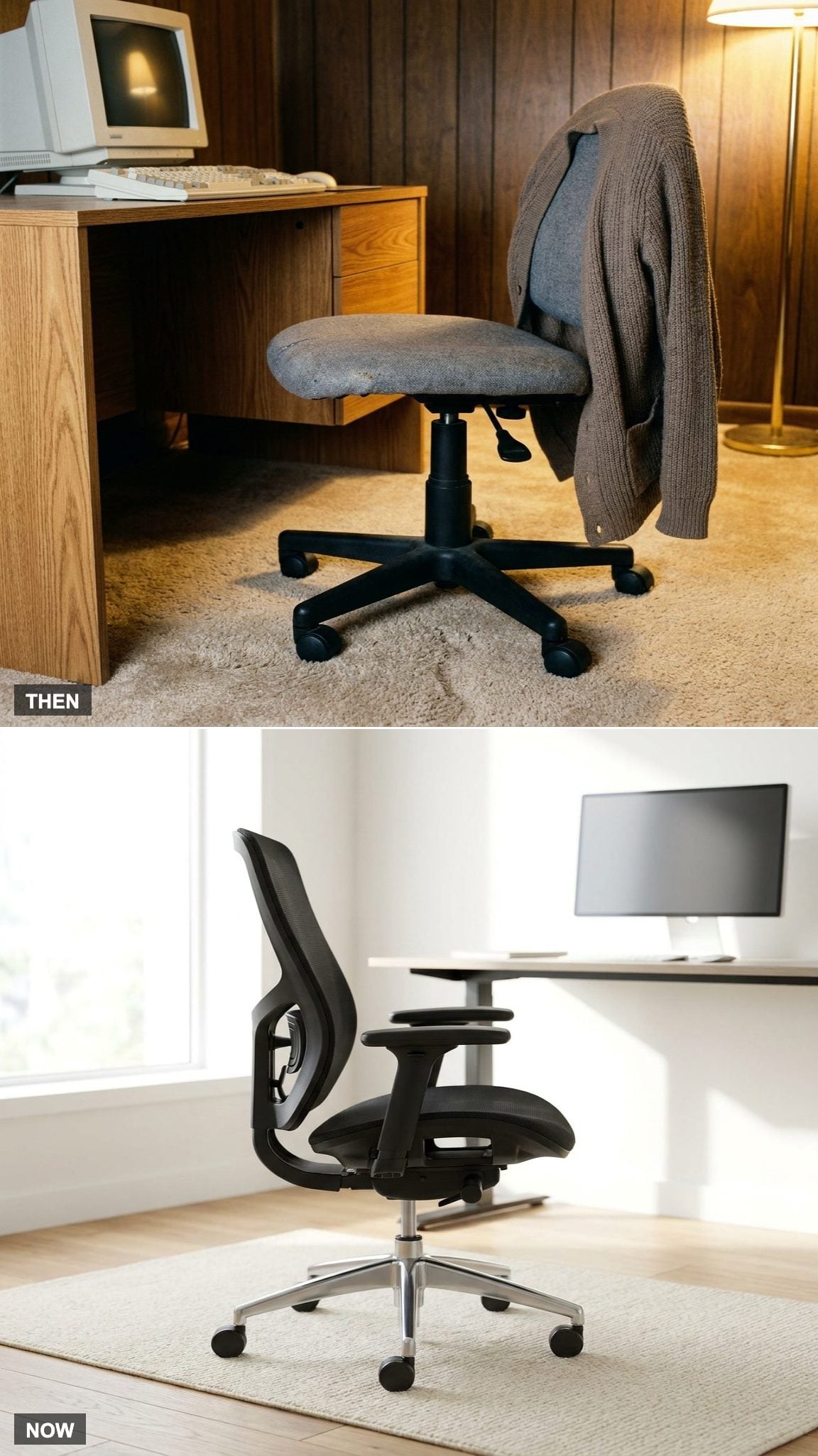
That chair. Maroon fabric, thin cushion, a lever that only worked half the time, a back that stopped supporting anything above the kidneys. Bought at Office Depot for under a hundred bucks and used until the foam quietly gave up somewhere around year six.
Ergonomics wasn’t a home-office consideration in 1990 because backs were something you had, not something you protected. Now they’re something you protect with mesh, lumbar adjustment, and a chair that costs more than the desk it’s pulled up to. Anyone who spends a full workday sitting will tell you it’s money well spent.
8. Desk Lamps Were the Only Lighting Upgrade vs. Adjustable Lighting Helps Reduce Eye Strain
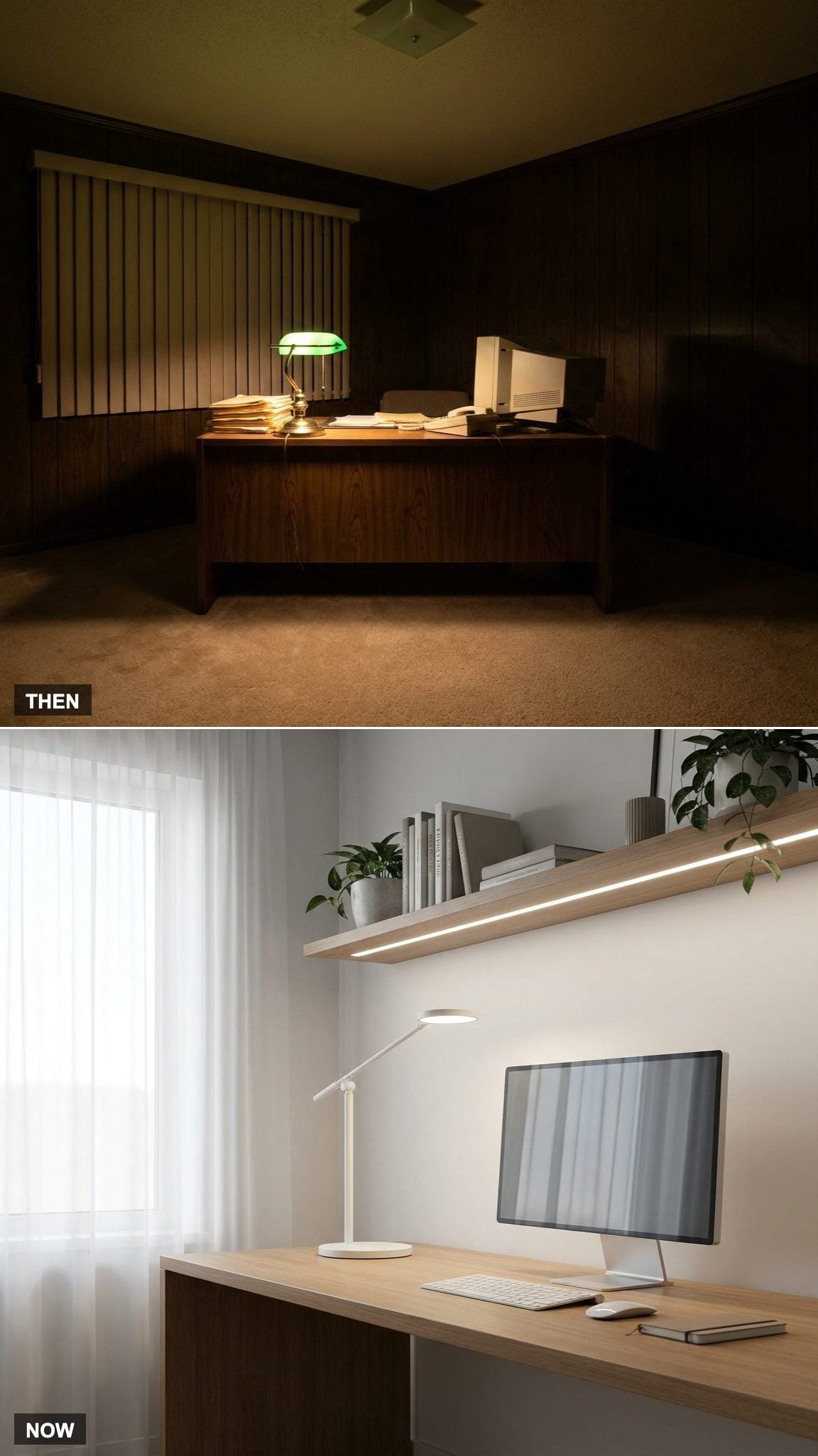
One lamp, one bulb, one small pool of yellow light, and everything outside that pool disappearing into shadow. Eyes worked overtime shifting between the bright page and the dim wall behind it. Nobody said eye strain back then. People just went to bed with headaches and blamed the day.
Layered lighting is the standard now. Task lamp on the desk, ambient wash on the walls, sometimes a bias light behind the monitor to soften the contrast. If you’re piecing together modern office decor, spend here first. Bad lighting undoes good everything else.
7. Every Cable Tangled Under the Desk vs. Wireless Accessories Cut the Clutter
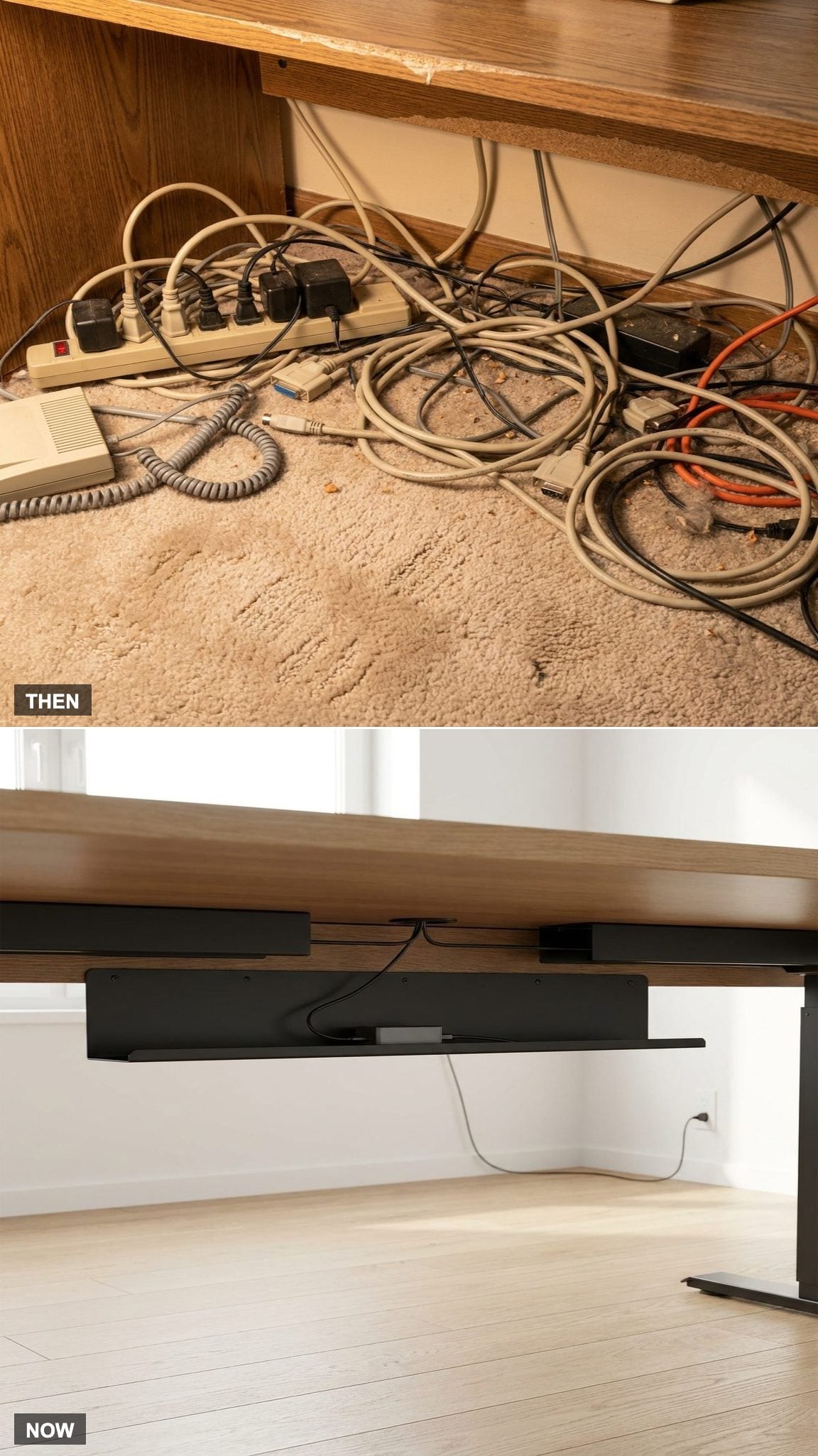
The dust colony under a 1990 desk had its own weather system. VGA, parallel, PS/2, phone line, power strip stacked on power strip, one loose plug that fell out every time the vacuum cleaner came within three feet. Reaching back there meant crawling on beige carpet and coming out sneezing.
Wireless keyboards. Wireless mice. Wireless printing. Wireless charging. The before and after is genuinely dramatic — same desk, same work, four fewer cables to hate.
6. Backups Meant Making Extra Floppy Disks vs. Files Save Automatically in the Cloud
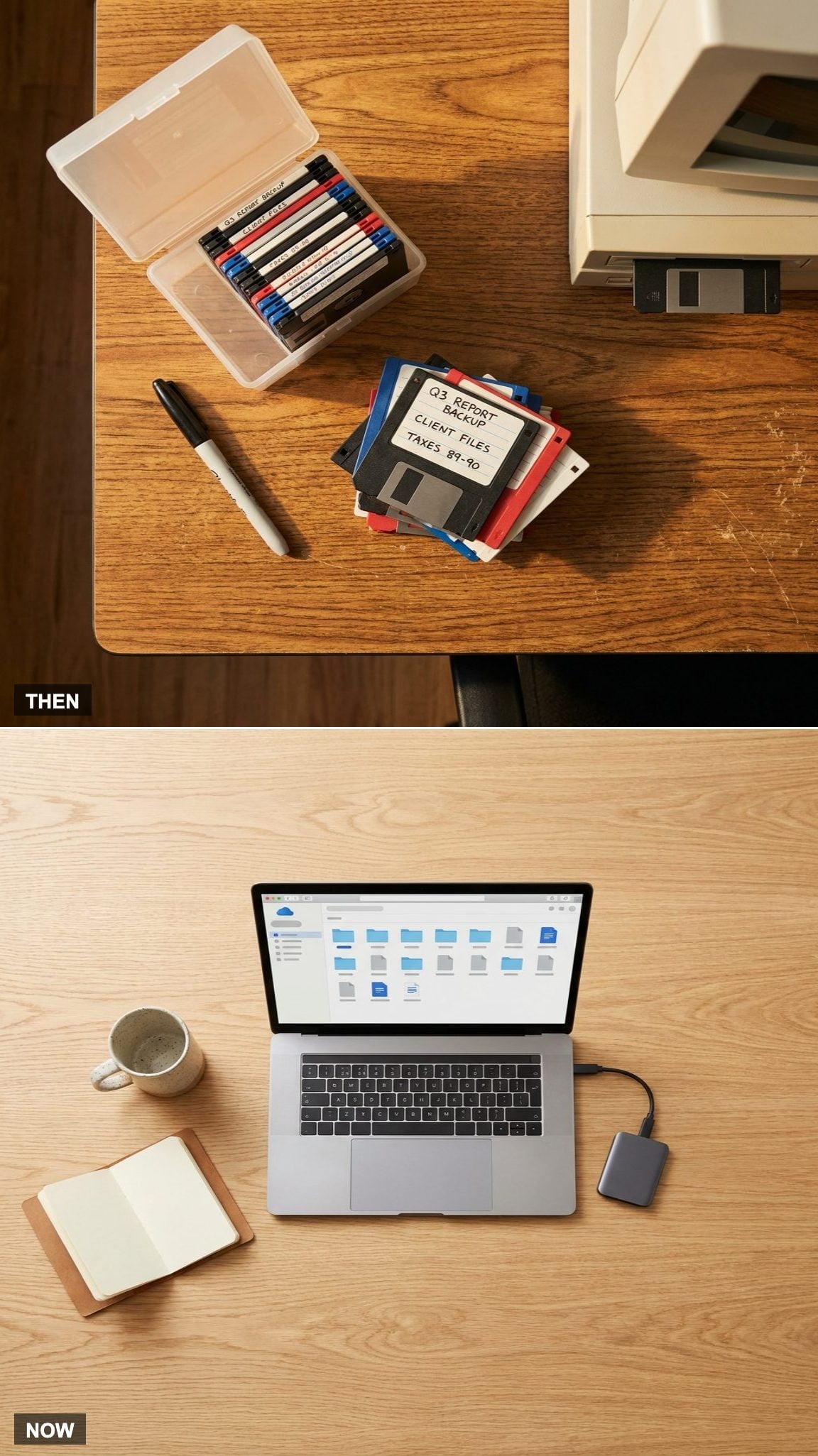
Backup in 1990 was a Saturday morning task. Insert disk one, copy files, eject, insert disk two, label with a Sharpie in handwriting that got worse as the stack got taller. The whole system lived in a plastic case in a drawer and was worth exactly nothing if the office flooded.
Now the file saves itself to a server three states away before you’ve finished the sentence. Floppies survive only as the save icon nobody under thirty recognizes.
5. The Dining Table Became an Office Until Dinner
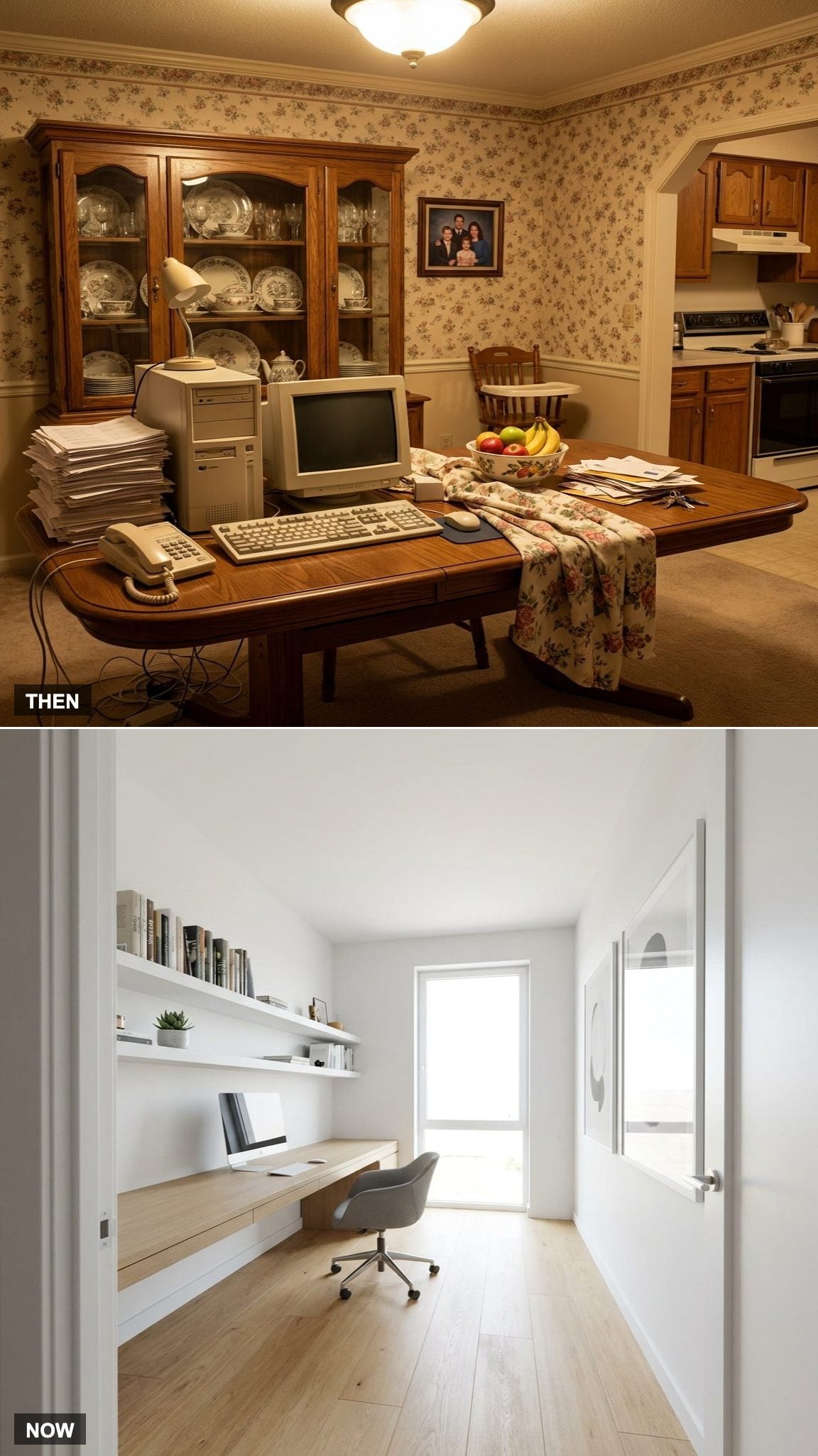
The dining table did double duty because there was nowhere else for the work to go. Bills, client files, a calculator, a phone and sometimes an entire computer occupied one end until somebody needed to set the table.
At five o’clock, the office disappeared. Papers went into a box, cords were unplugged, and anything important was moved before the gravy arrived. Work did not have a room of its own. It borrowed family space and gave it back every evening.
Today, even a modest home office is more likely to stay assembled. The monitor remains plugged in, the chair stays adjusted, and tomorrow’s work can wait exactly where today’s ended. The biggest change is not the equipment. It is that the office no longer has to vanish before dinner.
4. One Computer Served the Whole Household vs. Nearly Everyone Has Their Own Device
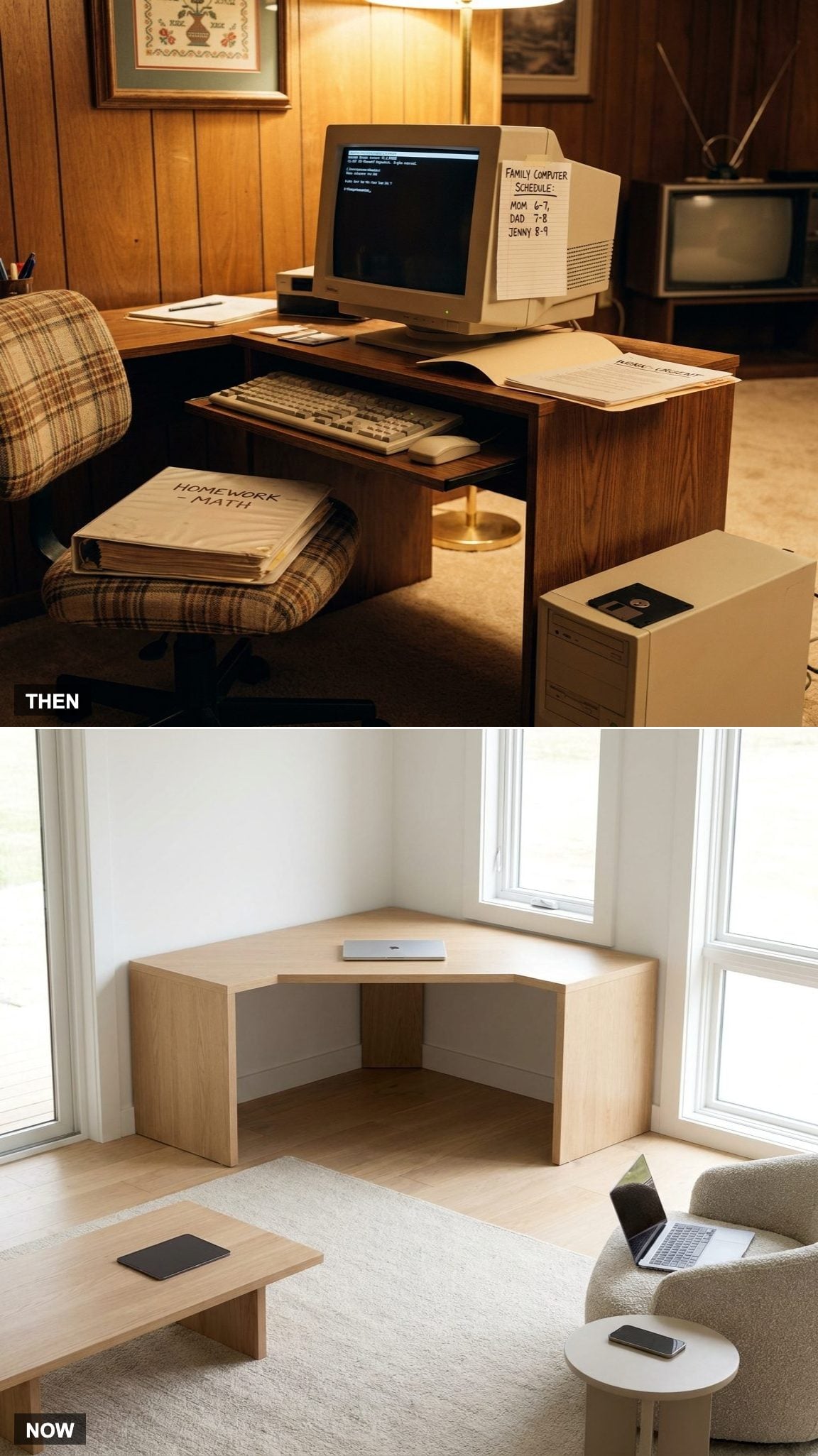
In a household lucky enough to have a computer, the family machine sometimes had a schedule taped to the monitor. Dad’s spreadsheet time, Mom’s letters time, kid’s Oregon Trail time — somebody was always waiting for someone else to finish, and somebody else was always overrunning their slot by twenty minutes.
Now the average household has more screens than people. Personal, portable, always on, always logged into you specifically. Nobody fights over the machine anymore. They fight over the Wi-Fi.
3. Long-Distance Business Calls Cost a Fortune vs. Global Video Meetings Are Often Free
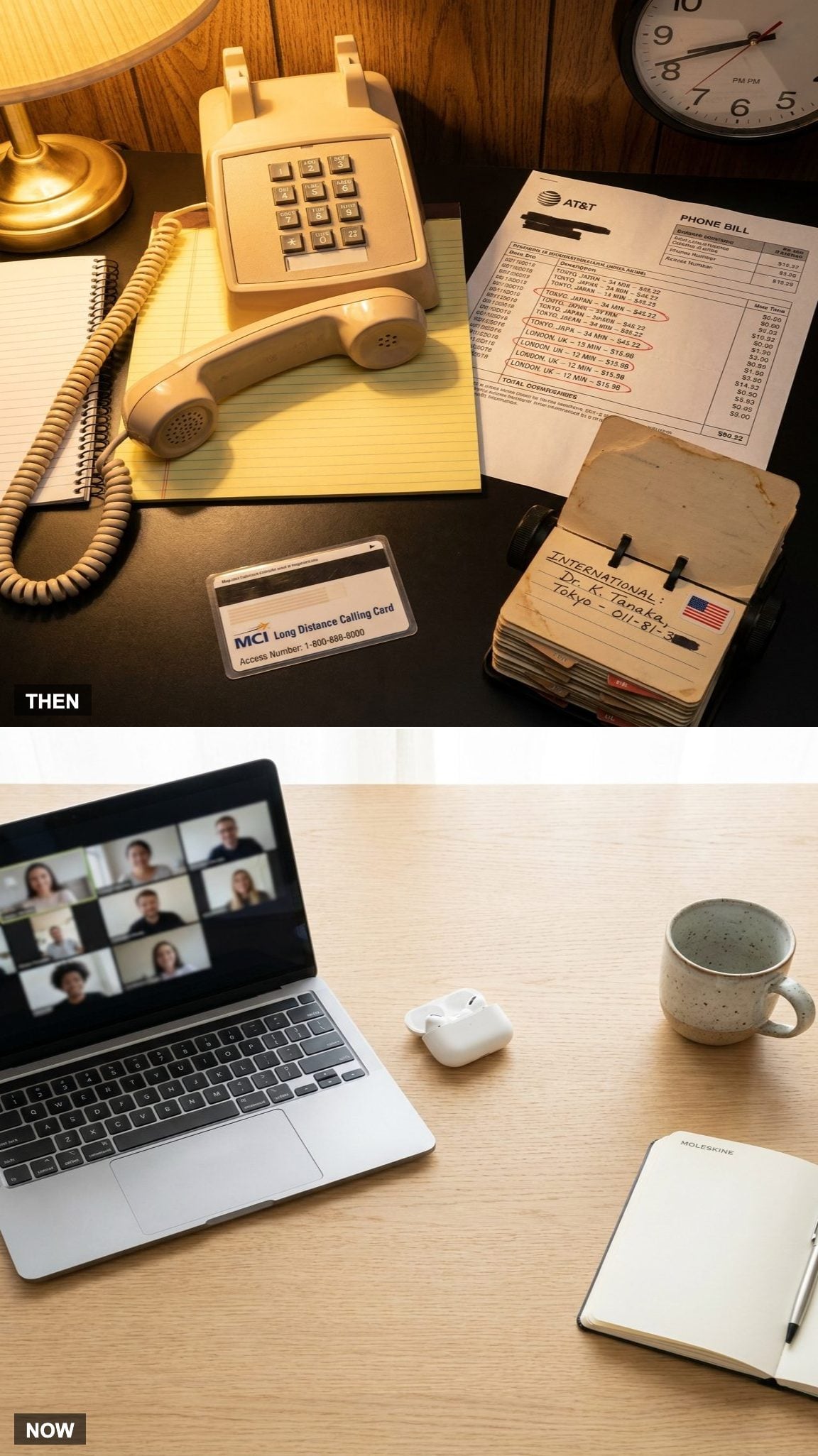
Calling London from a home office in 1990 was a small financial event. You waited until after 7 p.m. for cheaper rates, used a calling card, kept a paper log of the minutes so you could argue with the phone bill when it arrived — and it always arrived worse than expected.
Free video calls to anywhere on earth would have sounded like science fiction in that room. It’s arguably the single biggest cost collapse in the history of home business, and most people barely notice it anymore. Extraordinary things become default remarkably fast.
2. Working From Home Was an Exception, Not a Normal Workday
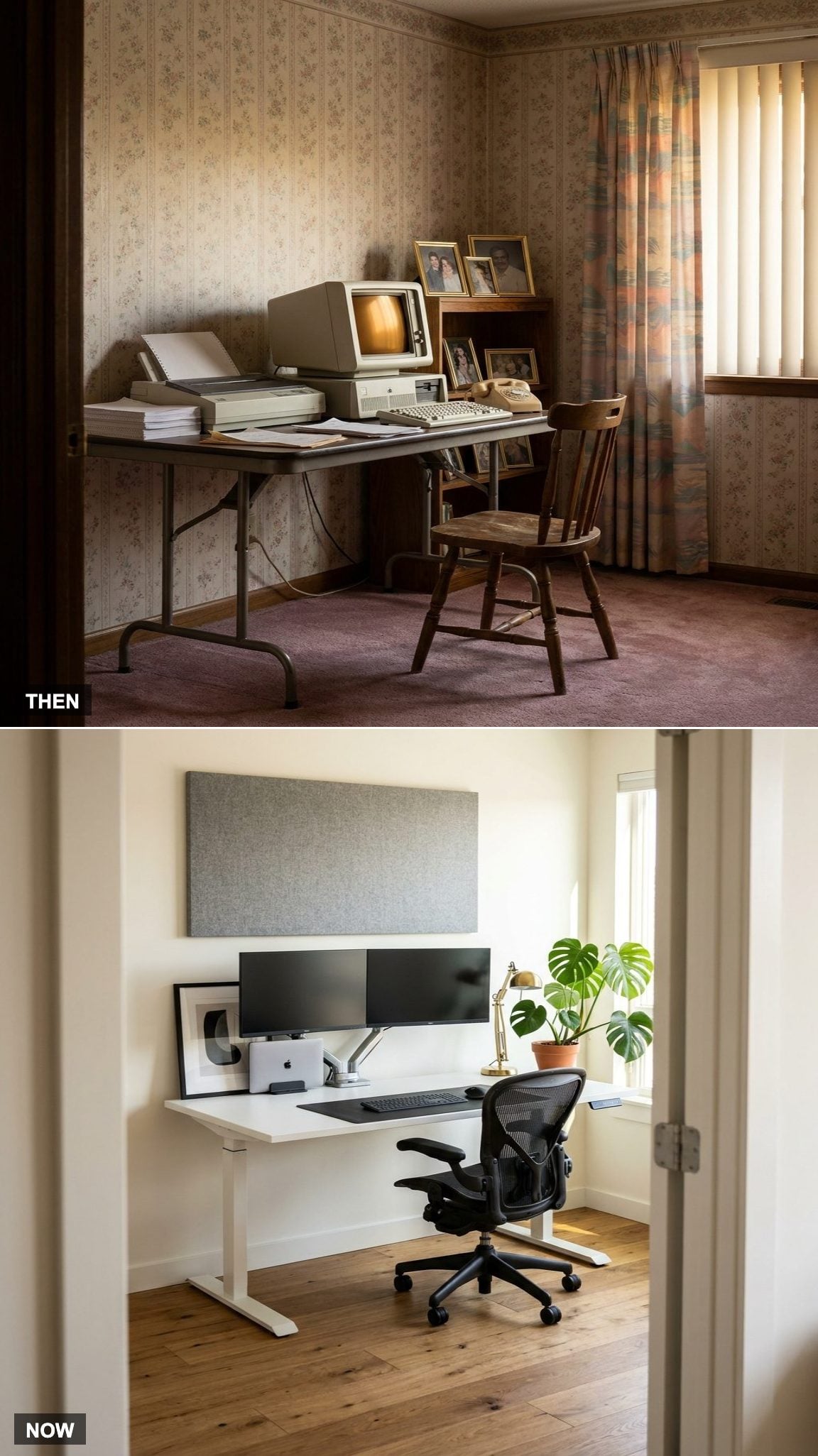
In 1990, working from home usually meant something had disrupted the regular plan. A snowstorm. A sick child. A deadline that followed you home in a cardboard file box. You made a few calls, finished what could not wait, and returned to the office as soon as circumstances allowed.
The setup reflected that temporary status. A borrowed chair, a phone extension, perhaps a modem dragged near the nearest jack. Nobody expected the arrangement to support five full workdays because it was never supposed to last that long.
Now remote and hybrid work can be part of the job itself. The home setup has to handle meetings, concentrated work, storage, lighting and eight-hour days. What began as a contingency has become a workplace category.
1. The Physical Tool Collection vs. The Software Stack
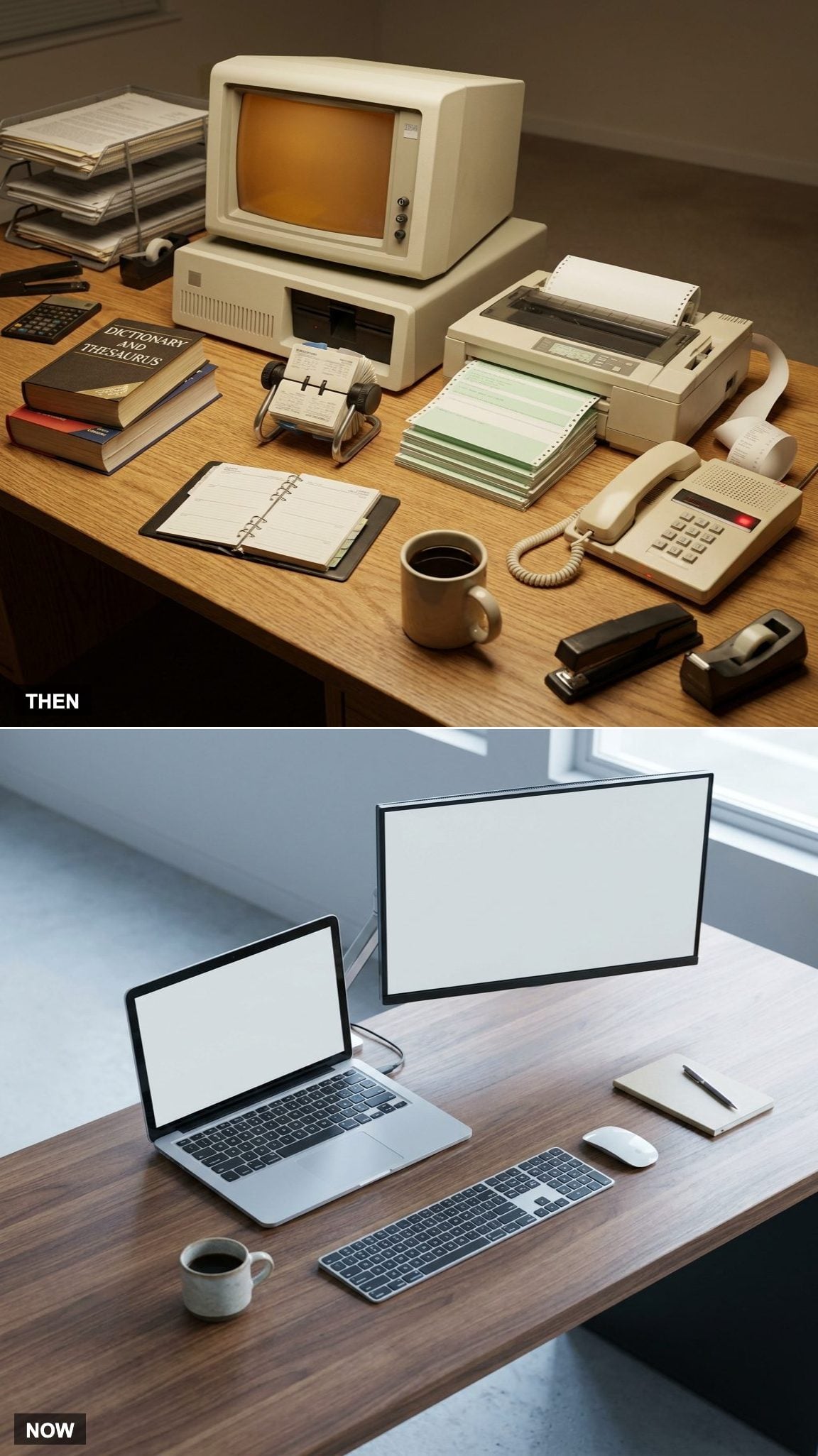
A 1990 desk was a workshop. Fax machine on one side, printer on the other, Rolodex in the middle, calculator within arm’s reach, dictionary and thesaurus stacked like bricks against the monitor. Each tool did one thing, and doing your job meant physically reaching for the right object all day long.
Now the whole workshop lives inside a laptop. Fax became an email attachment, the Rolodex became a search bar, the dictionary became a right-click, and the calculator hides behind a keyboard shortcut. The desk went from cluttered command center to a clean surface with a screen on it — and most of the productivity gain came from not having to stand up.
The best productivity tool of the last thirty years wasn’t a better stapler. It was making the stapler unnecessary.