🔥 Would you like to save this?
The check clears either way. What the contractor can’t control is the plan they’re handed — and most closet plans are already broken before the first shelf goes in. Not from bad taste. Not from a thin budget. From layout decisions that look perfectly logical on paper and quietly strangle usable space in real life. Double hanging rods in the wrong spot. Shelves spaced for shoes that don’t actually fit shoes. An island that blocks its own door. Before you call anyone or buy a single cabinet system, walk through the 26 decisions below. Your closet is riding on them.
26. Ignoring the Door Zone, the 6 to 18 Inches You’re Throwing Away
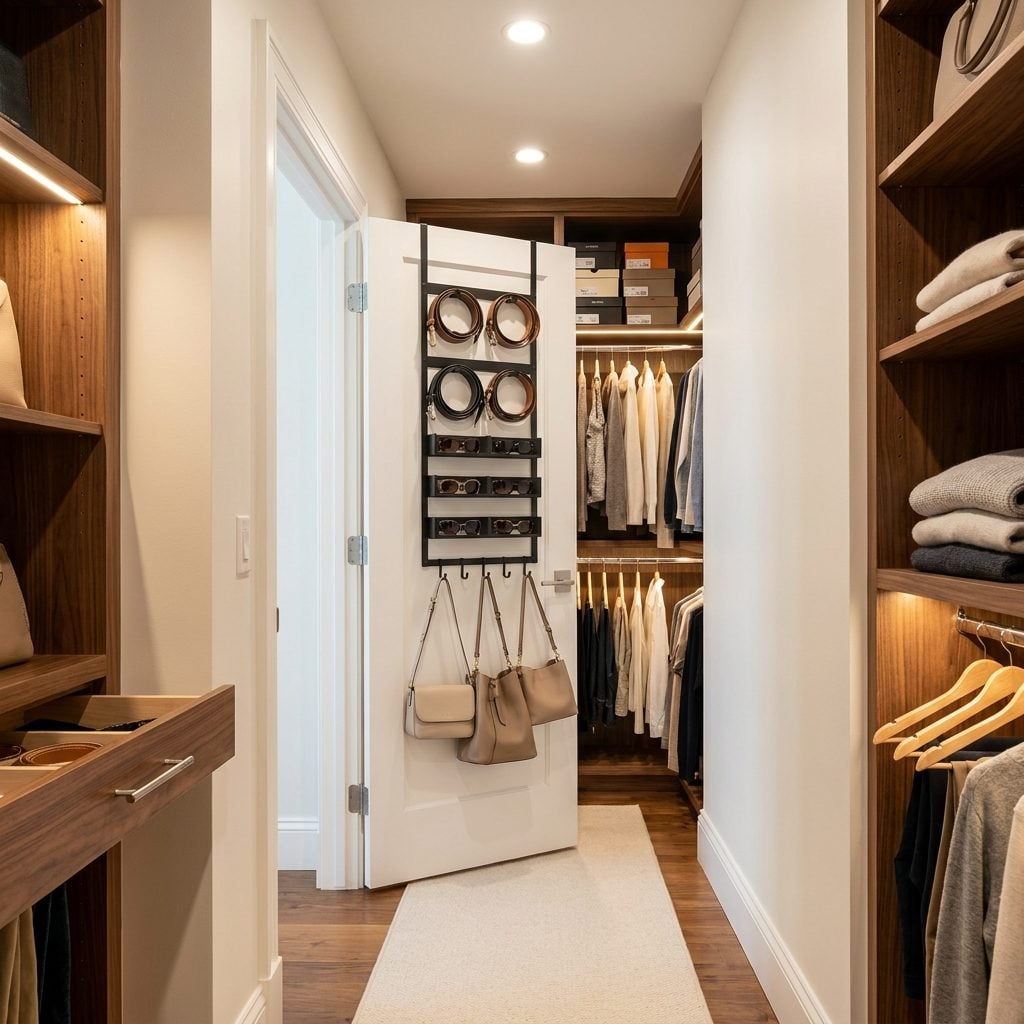
The back of your closet door is invisible when it’s open, which means most designers pretend it doesn’t exist. That’s a strip of real estate roughly 18 inches wide and 80 inches tall going completely to waste in most primary closets.
In order to come up with the very specific design ideas, we create most designs with the assistance of state-of-the-art AI interior design software. Also, assume links that take you off the site are affiliate links such as links to Amazon. this means we may earn a commission if you buy something.
A slim over-door organizer can hold belts, sunglasses, scarves, or small bags without touching a single shelf. Built-in door panels with hooks and narrow slots are even better if you’re doing a full system. It’s not glamorous storage, but it solves the “where do the awkward small things go” problem that clutters every other surface.
25. Building Shelves Too Deep for Shoes and Too Shallow for Bags
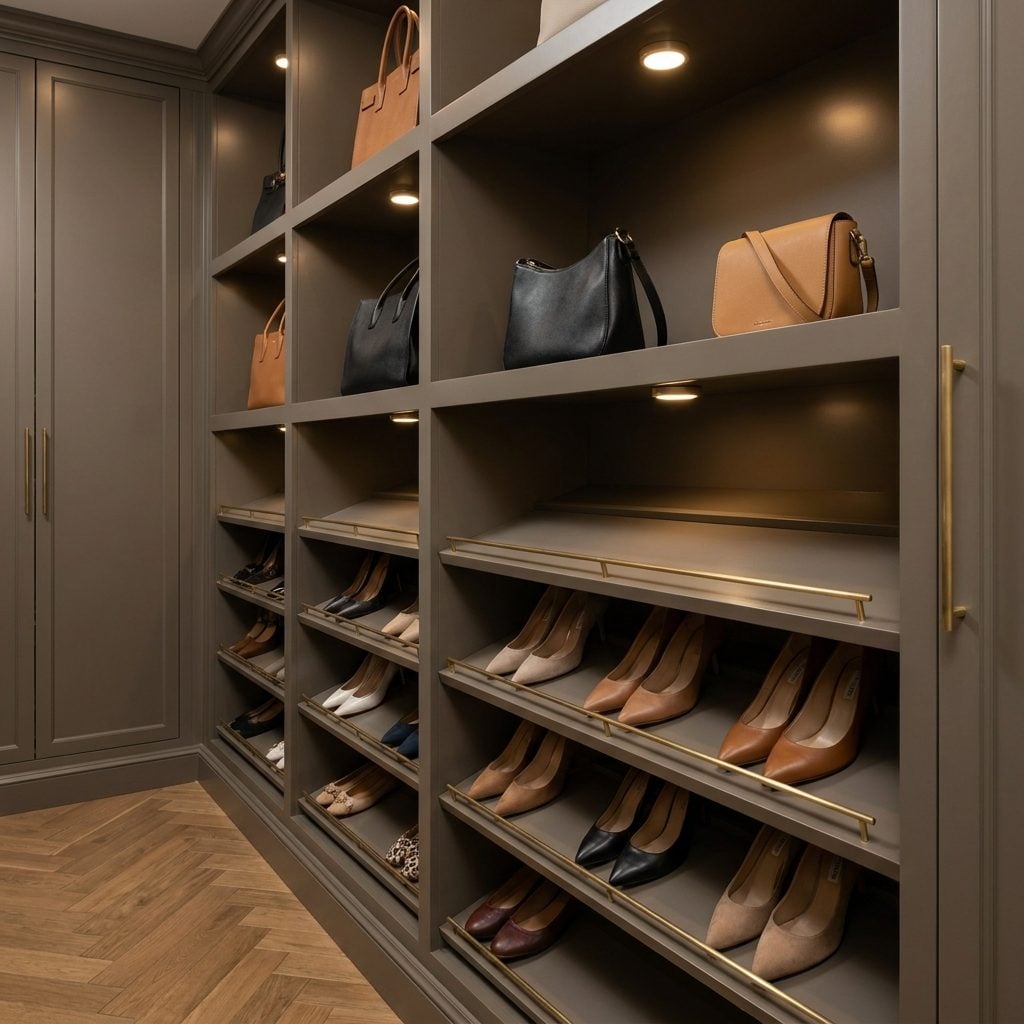
Standard closet shelves come in one depth, usually 12 inches, which manages to be wrong for almost everything. Shoes need about 7 to 8 inches. Bags need 12 to 16 depending on structure. Build everything at the same depth and you get shoes sliding to the back and bags tipping forward constantly.
The fix is tiered depths: angled shoe shelves at 8 inches in the lower zone, deeper fixed shelves for bags above. Some closet systems let you spec each shelf individually. This is worth asking about, because getting it right means your angled shoe shelf stops feeling like a place where shoes go to get lost.
24. Putting the Island in the Wrong Spot and Killing Your Flow
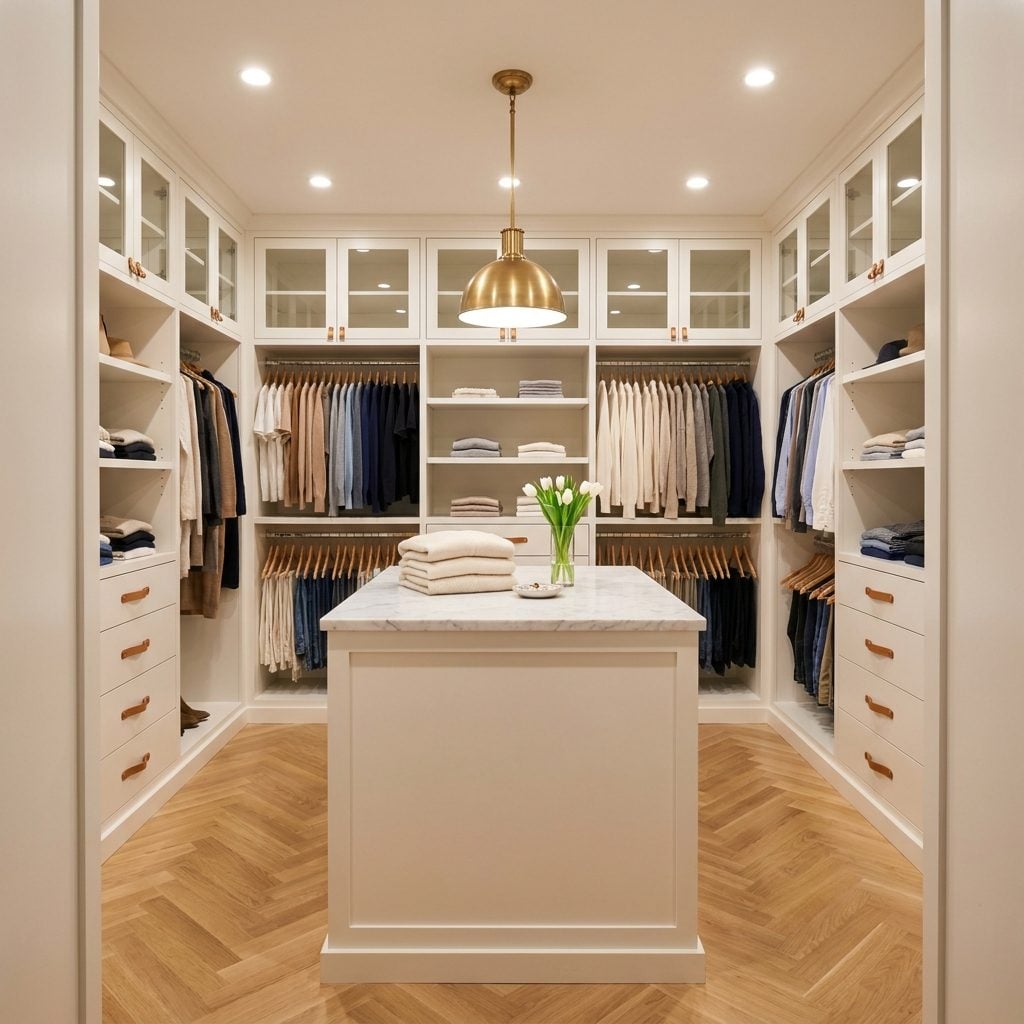
A walk-in closet makeover almost always includes the dream island, and almost as often, the island goes in without anyone actually walking the space first. If your clearance on any side is less than 36 inches, you’re not storing, you’re navigating an obstacle course at 6am in the dark.
The island needs to sit centered with real breathing room on all sides, and it only makes sense in closets that are at least 10 feet wide. Anything smaller, a narrow console or a pull-out valet rod does more work without eating your floor plan.
23. Skipping the Valet Rod, the One Feature That Earns Its Keep Every Single Morning
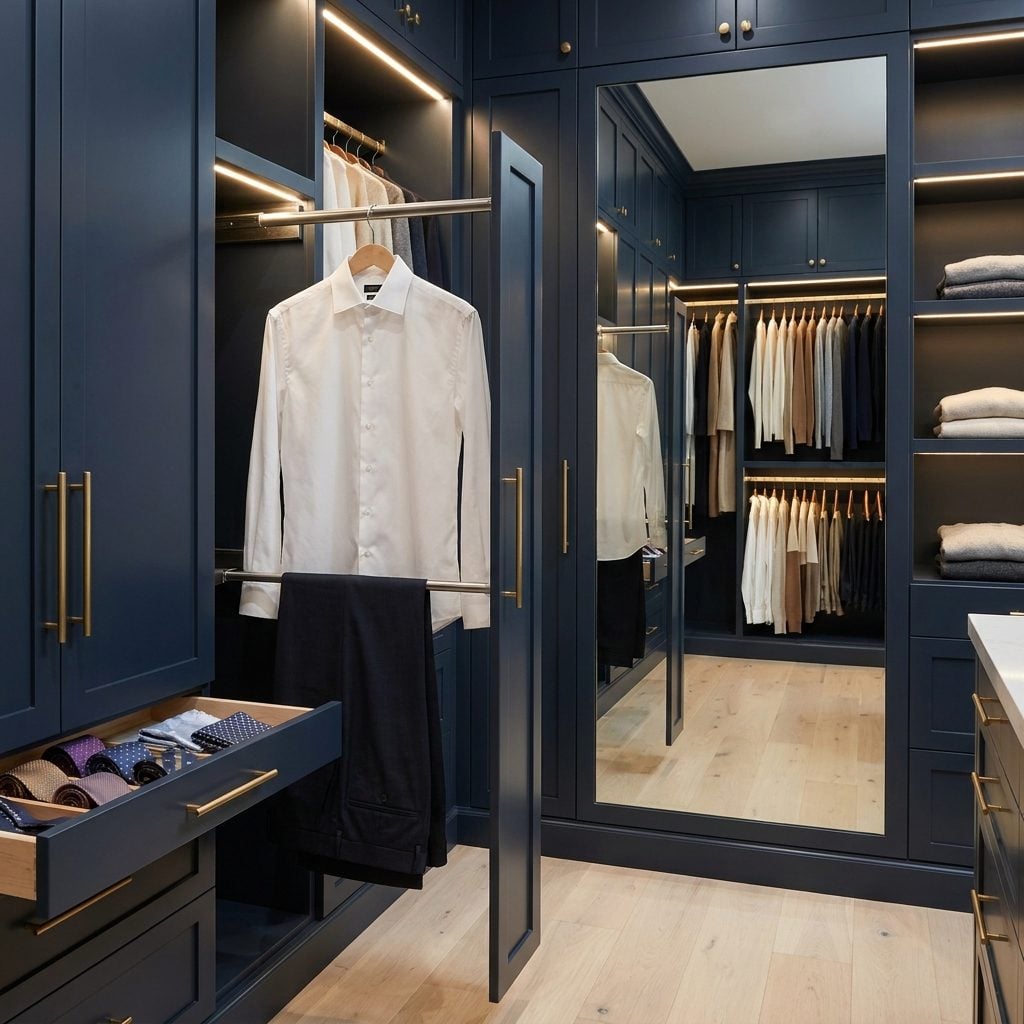
A pull-out valet rod is a single piece of hardware, usually under $40, that fits inside a cabinet column and extends out when you need it. It holds tomorrow’s outfit, a dry-cleaning return, or something you’re considering wearing. It disappears when you push it back in.
Without it, that outfit ends up draped over a chair, a door handle, or the corner of the bed. Which means a walk-in closet decor plan that cost tens of thousands of dollars is beaten every morning by furniture you didn’t intend to use as a wardrobe. A pull-out valet rod is the least glamorous upgrade and one of the most used.
22. Lighting the Closet From the Ceiling Only, and Wondering Why Everything Looks Washed Out
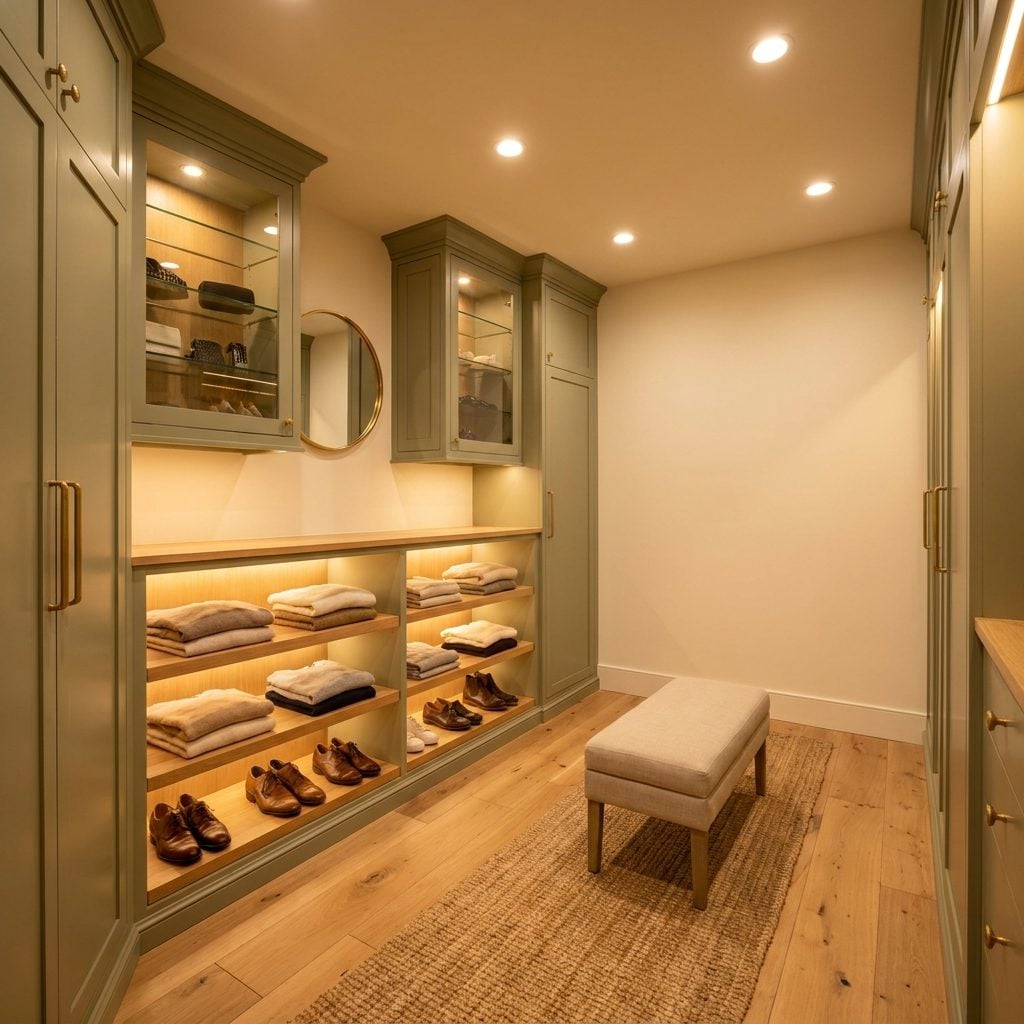
One ceiling fixture in a closet creates the worst possible conditions for getting dressed. Everything looks flat. Colors shift. Navy reads as black. You walk out thinking you’ve made a decision and discover halfway through your day that you were wrong.
The signs your kitchen is better lit than your closet should embarrass you into action. LED strips mounted under each shelf edge cost almost nothing and change everything. Add a mirror at face height where multiple light sources can hit it from different angles, and suddenly your closet is doing its actual job.
21. Designing the Closet for Your Current Wardrobe Instead of How You Actually Shop
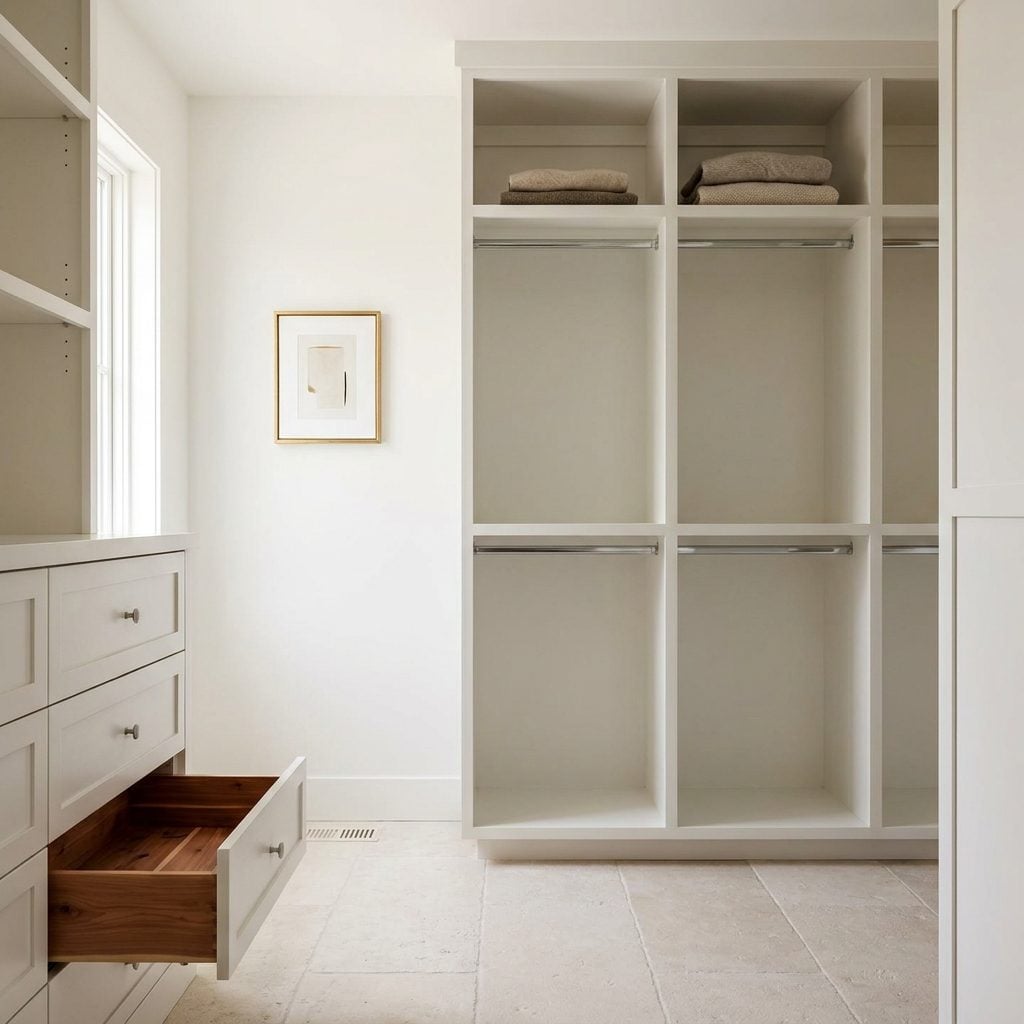
Most closet designs are built around what you own on the day you move in. Which means in two years, when the wardrobe has shifted, grown, or changed category entirely, more hanging, more shoes, fewer folded items, the whole system fights you.
Build in 20 percent more capacity than you currently need. Specifically, leave one hanging section, one drawer tower, and one open cubby zone intentionally empty. Empty space in a closet is not wasted space. It’s the reason you don’t have to do this renovation again in five years. The modular closet system you choose should accommodate reconfiguration without a full rebuild.
20. Treating Every Drawer Like a Junk Drawer Instead of Assigning Each One a Job
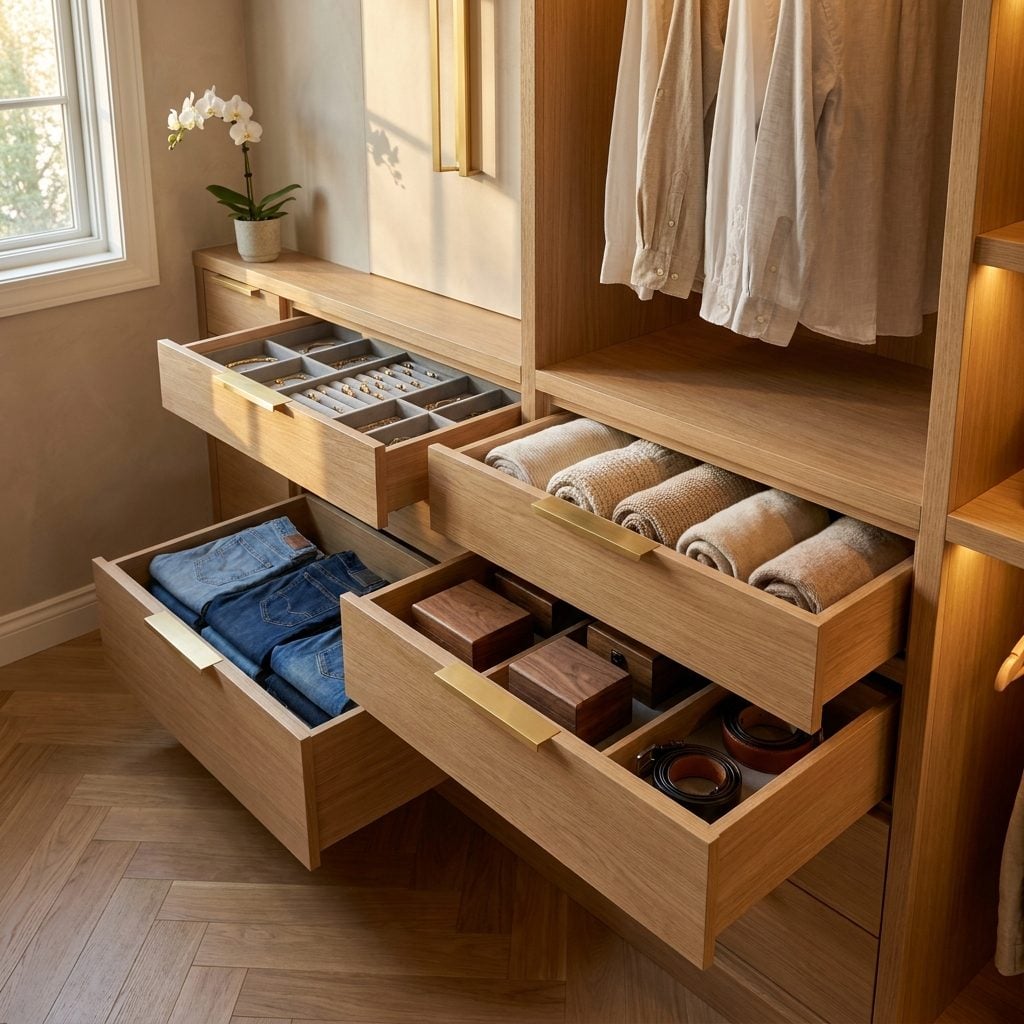
Drawers without a dedicated purpose become where things go to disappear. I spent years tossing belts, socks, old phone chargers, and a pair of sunglasses I forgot I owned into the same three drawers. Everything lived together. Nothing was findable.
The fix isn’t more drawers. It’s assigning every single one a category before you put a thing inside it. One for velvet jewelry organizers. One for knitwear, folded flat. One for denim only. One for accessories, subdivided with bamboo drawer dividers. The drawer depth should match its contents: shallow for jewelry and watches, deeper for bulky sweaters.
Sounds rigid. Feels like freedom. You stop rummaging and start reaching.
19. Forgetting the Hamper Entirely and Letting Dirty Clothes Colonize the Floor
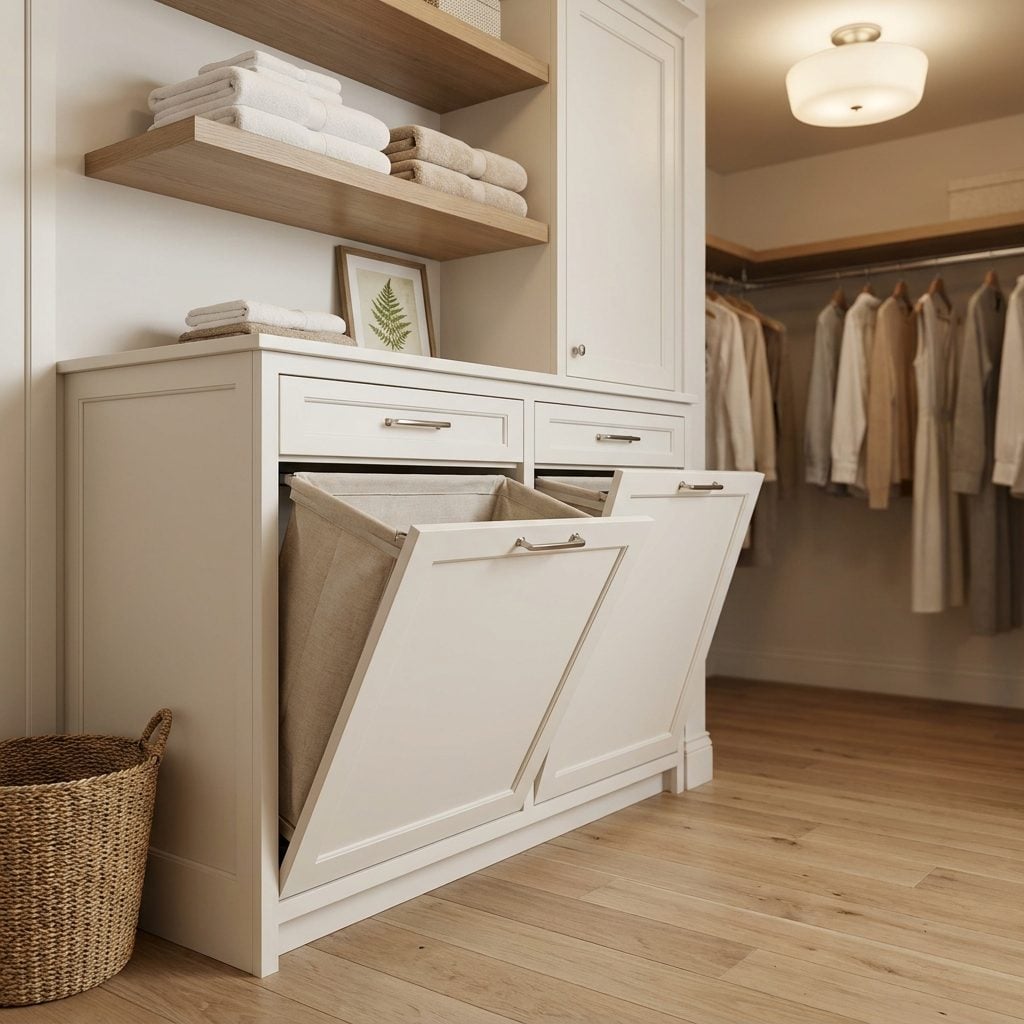
A closet without a hamper is a closet with a floor hamper. That pile next to the shoe rack? It grows every day and you stop seeing it, which is worse than noticing it.
Build the hamper in. A pull-out hamper cabinet with a removable linen bag takes up about 15 inches of width. That’s less than a single stack of shelves. Tilt-out versions work in tighter spots. Two compartments, lights and darks, means you’re pre-sorting without thinking about it.
18. Making Every Rod the Same Height and Wasting Vertical Real Estate
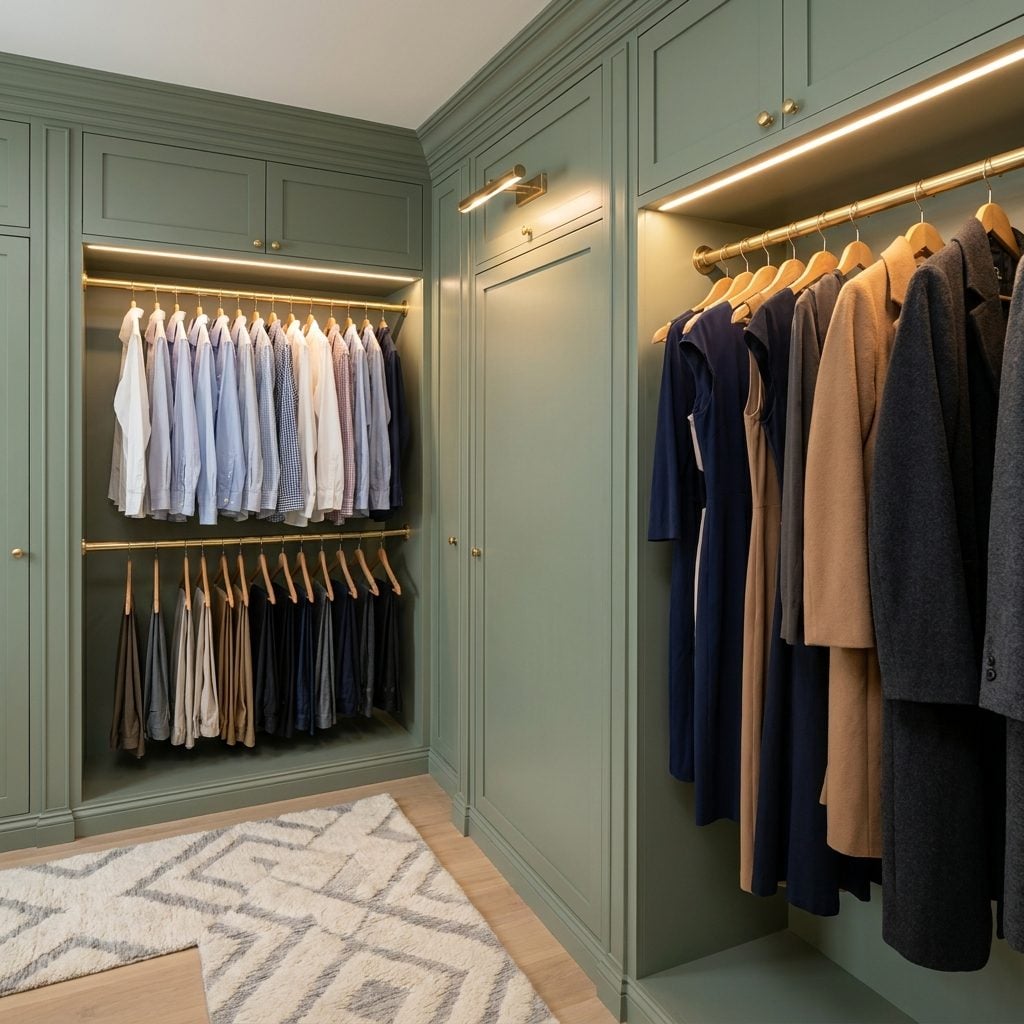
One rod at 66 inches. That’s what most closets come with. It’s enough to hang things. It’s not enough to use the space.
Double-hanging, where you stack two rods vertically, works for anything that doesn’t fall past your knee: shirts, blazers, folded trousers, skirts. You get twice the hanging capacity in the same linear footage. Reserve a separate section at full height for long dresses, overcoats, and robes.
The numbers that matter: top rod at 84 inches, bottom rod at 42 inches, and at least 3 feet of uninterrupted long-hang somewhere in the layout. Most people who do a walk-in closet makeover are shocked at how much rod space they were leaving on the table.
17. Choosing Solid Doors on Everything and Turning Your Closet Into a Guessing Game
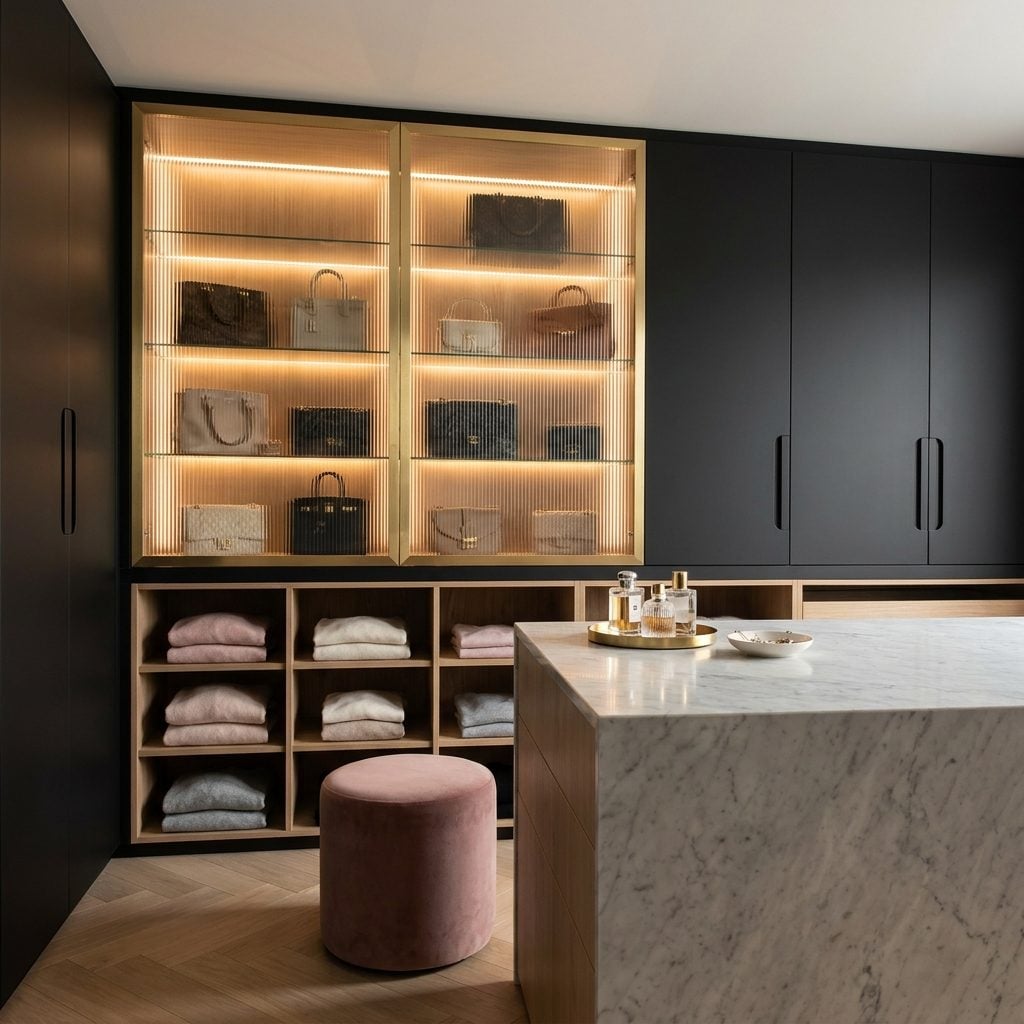
If every door is solid, you open six cabinets to find one scarf. It’s a memory test you take every morning, half-awake, and you always lose.
Reeded glass panels on upper cabinets let you see shapes and colors without full exposure. Your handbag collection, your stack of cashmere, your organized shoe display: visible through textured glass, they look intentional instead of cluttered. Save the solid doors for the stuff nobody needs to see. Cleaning supplies. The backup bedding. That box of cables you swear you’ll sort someday.
16. Putting Mirrors at the Back of the Closet Instead of Where You Actually Get Dressed
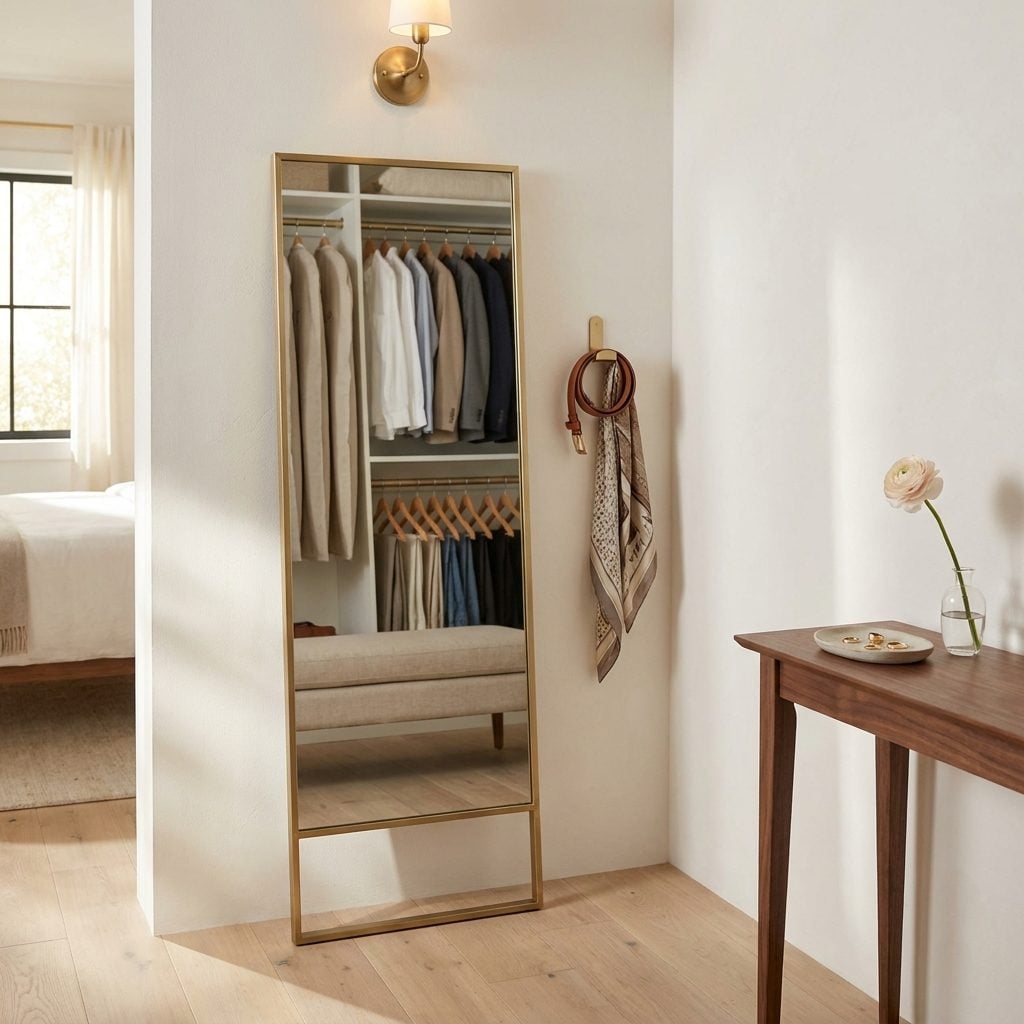
The mirror belongs where the light is. Not crammed between two racks at the deepest, darkest point in the closet where you can barely see your own silhouette.
Position your full-length mirror at or near the closet entrance, ideally where it catches natural light from the bedroom. A brass full-length mirror leaning against the wall works if you don’t want to commit to mounting. You get accurate color reading on your outfit, which matters more than most people realize. That navy blazer and those black trousers? They look identical under bad closet light. They look very different in daylight reflected by a well-placed mirror.
15. Hanging Everything When Half Your Wardrobe Should Be Folded
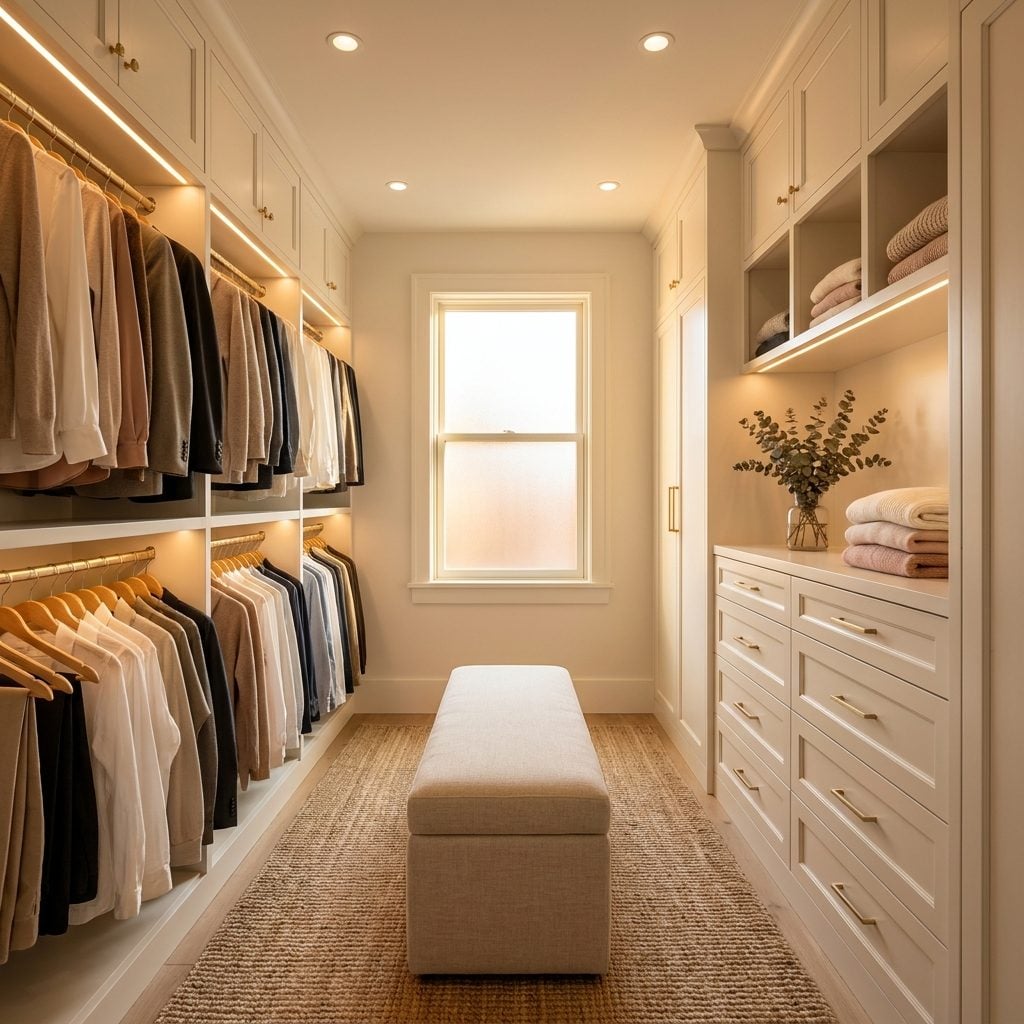
Closets are measured in linear feet of hanging rod, and that number gets burned into your brain when you’re planning. The problem is that roughly 60 percent of what most people own doesn’t need to hang at all. Knitwear, denim, loungewear, workout gear, folded tees, hanging these stretches them out and eats rod space that should go to structured pieces.
A drawer tower integrated into your white closet drawer tower system reclaims vertical real estate that would otherwise be dead air below your folded hanging zone. Build half your closet to fold, the other half to hang, and you’ll find you need far fewer linear feet than you thought.
14. Ignoring the Ceiling and Losing Two Feet of Prime Storage Overhead
🔥 Would you like to save this?
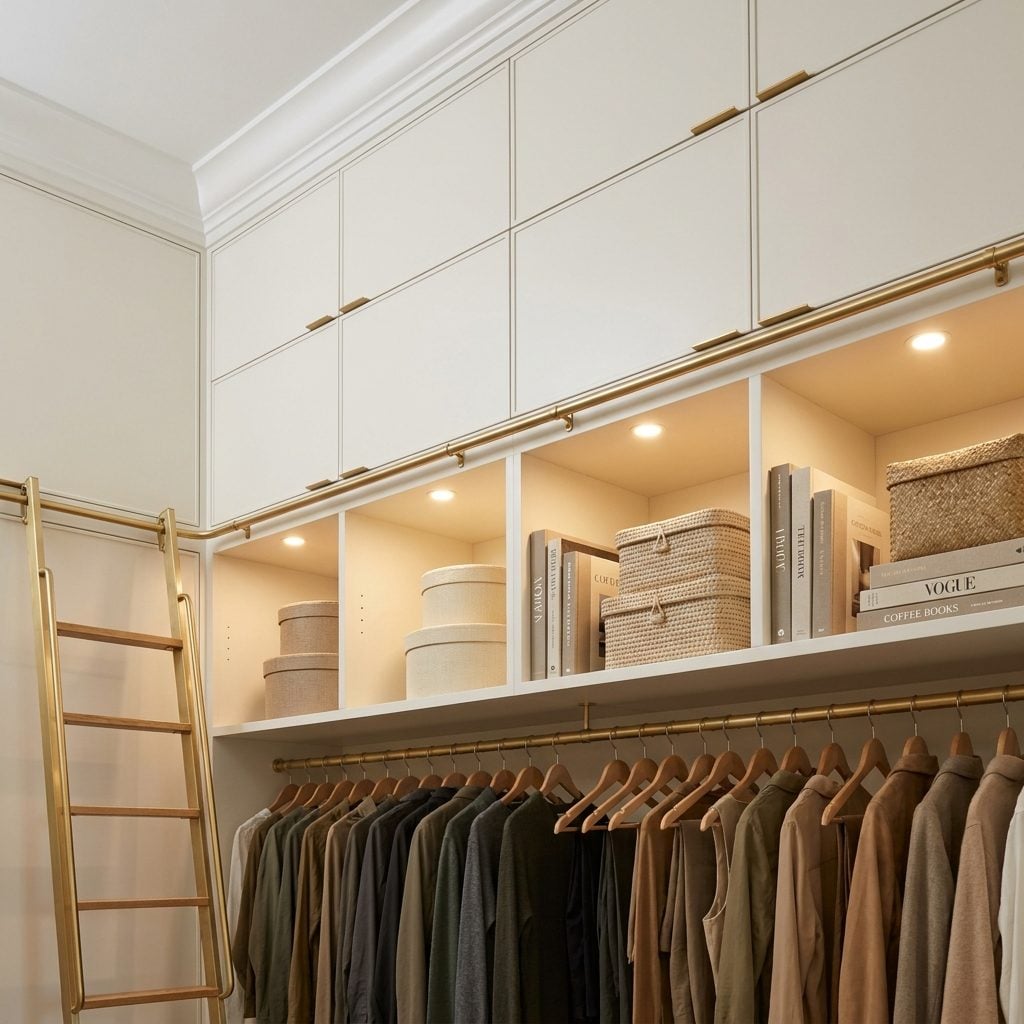
Standard closet systems stop at about 84 inches. Most ceilings are 96 to 108. That gap between the top shelf and the ceiling? It collects dust and guilt.
Take the cabinetry to the ceiling. The upper 18 to 24 inches become enclosed cabinets for luggage, off-season coats, holiday-specific outfits, that sleeping bag you use once a year. A brass rolling library ladder makes the upper zone accessible without a step stool and looks far better doing it.
13. Choosing Hardware That Matches the Bedroom Instead of Hardware That Works With Your Hands
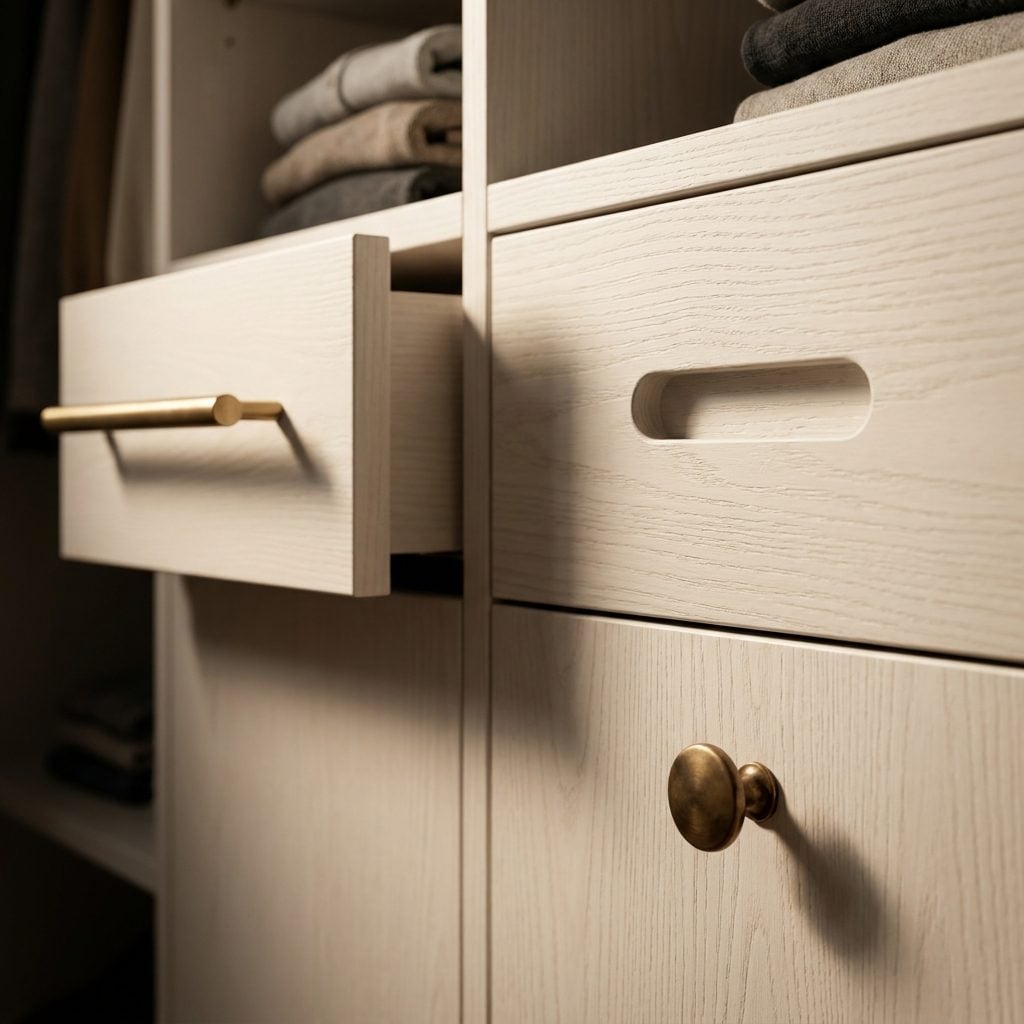
Tiny decorative knobs look great in a showroom. They’re terrible when your hands are full of folded laundry and you’re trying to open a drawer with your pinky.
Closet hardware needs to be grabbed, not pinched. Brushed brass bar pulls in 6- to 8-inch lengths give your whole hand something to grip. Recessed finger pulls work if you want a clean slab front. Round knobs are fine on upper cabinets you open once a week, not on everyday drawers.
I got this wrong in my own closet. Matched the bedroom hardware, pretty little cup pulls, and hated them within a month. Function first. Coordinate second.
12. Cramming in Maximum Storage and Leaving Zero Room to Stand, Turn, or Think
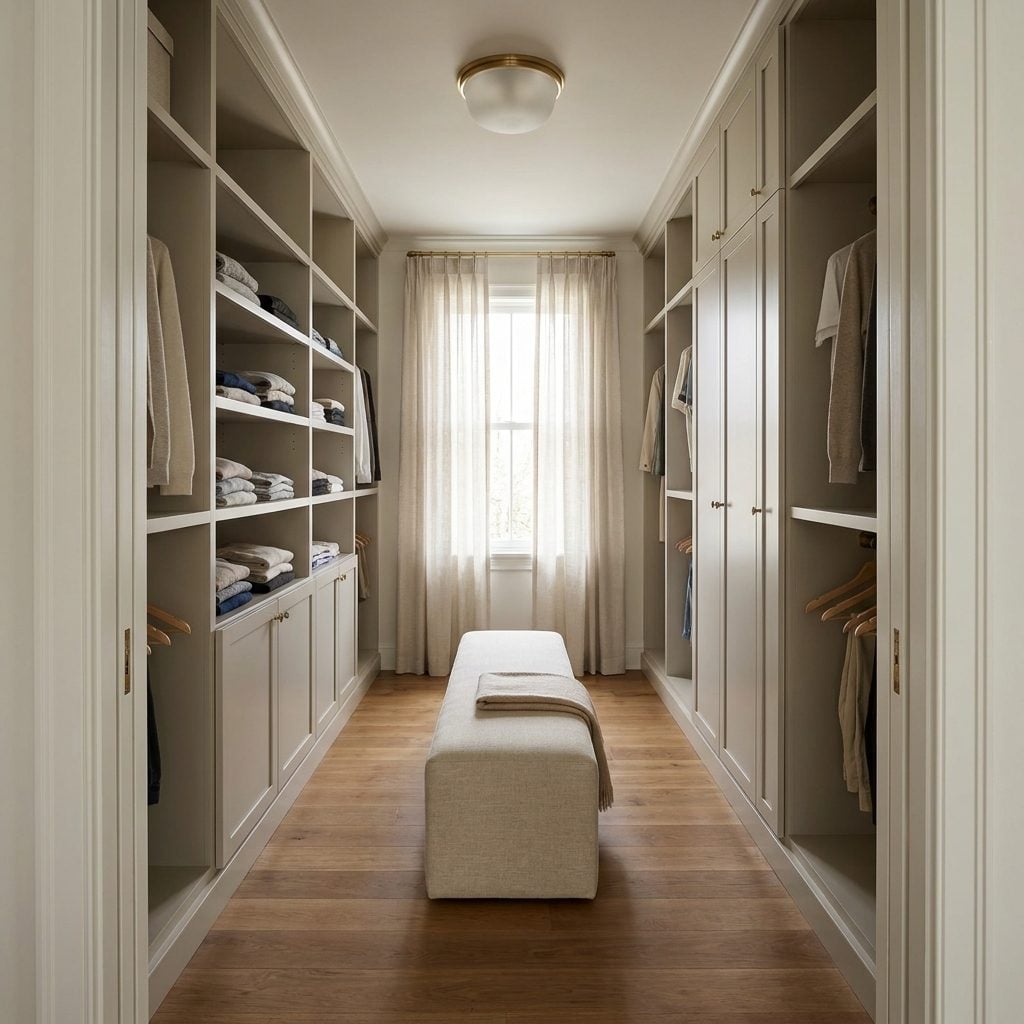
More storage does not mean better storage. I’ll die on this hill.
A closet crammed wall-to-wall with racks, shelves, and cubbies from floor to ceiling leaves you no room to move, no room to see what you own, and no room to feel anything except mild claustrophobia at 7 AM. The center aisle needs a minimum of 36 inches to be functional. 48 inches if you want to actually bend down or turn around without knocking a blazer off its hanger.
Leave some negative space. A small upholstered linen bench in the center aisle gives you somewhere to sit while putting on shoes and creates the psychological signal that this room is for you, not just your stuff.
11. Using Builder-Grade Wire Shelving and Expecting It to Hold Shape After Year Two
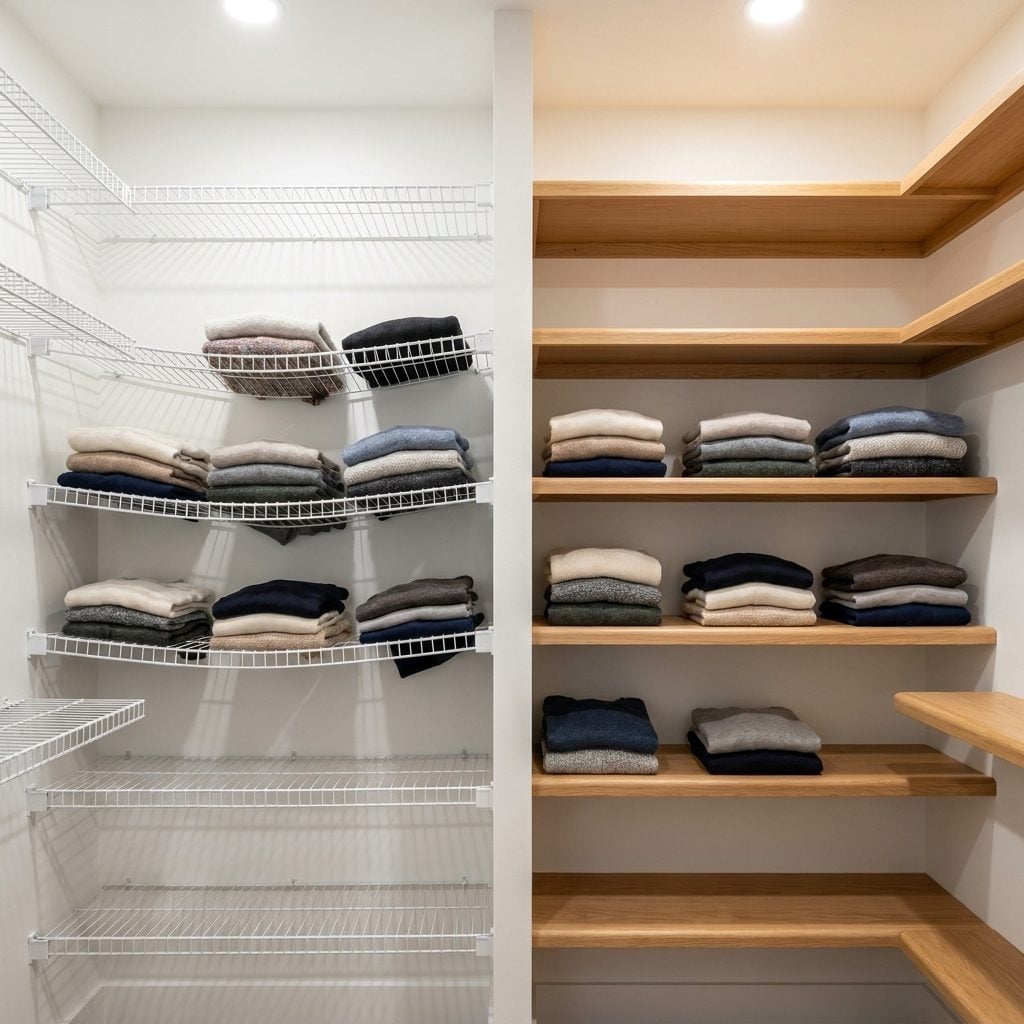
Wire shelving is what builders install because it’s fast and cheap. It’s also what makes your folded sweaters look like they’re melting through a grate.
The wire bows. The clips loosen. The shelf itself becomes a surface that nothing sits flat on. Knits get crease lines from the wire pattern. Stacks lean. Small items fall through. It’s a temporary solution that somehow becomes permanent in most homes.
Solid shelving in melamine, plywood with a veneer face, or actual hardwood costs more upfront. But a 3/4-inch solid shelf doesn’t sag at 36-inch spans the way wire does, and your clothes actually stay where you put them. If a full replacement isn’t in the budget, solid white shelf liners cut to fit over existing wire give you a flat surface for under $30 per shelf.
10. Designing for One Person When Two People Use the Closet Every Day
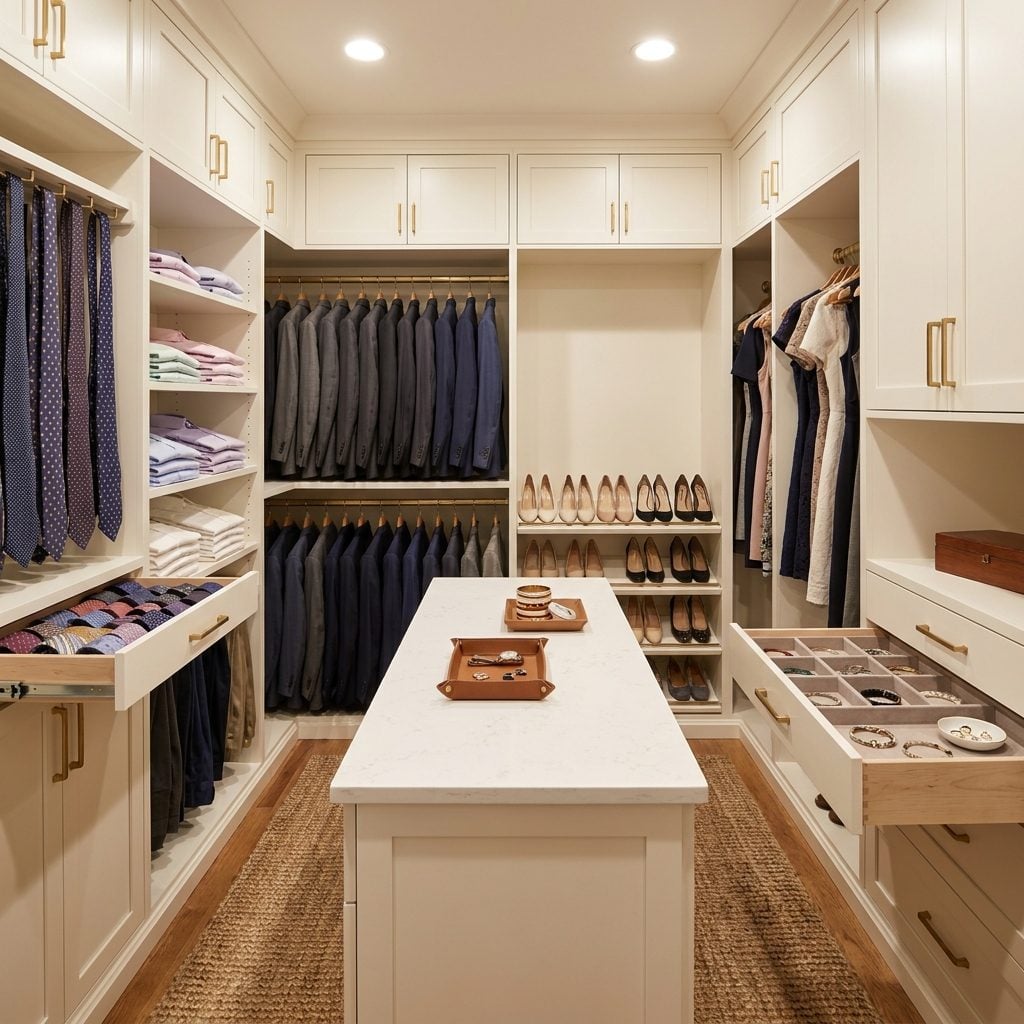
Two people. One closet. And someone always gets the worse half. Usually the half with the single rod and three sad shelves crammed next to the water heater access panel.
If two people share the closet, design it as two closets that happen to share a room. Each side gets its own rod configuration based on what that person actually wears. Each side gets its own drawer bank. The walk-in closet decor should feel cohesive, same cabinetry finish, same hardware, but the internal layout should differ because two people rarely dress the same way.
9. Installing a Jewelry Drawer Without Dividers and Watching Everything Tangle Into One Expensive Knot
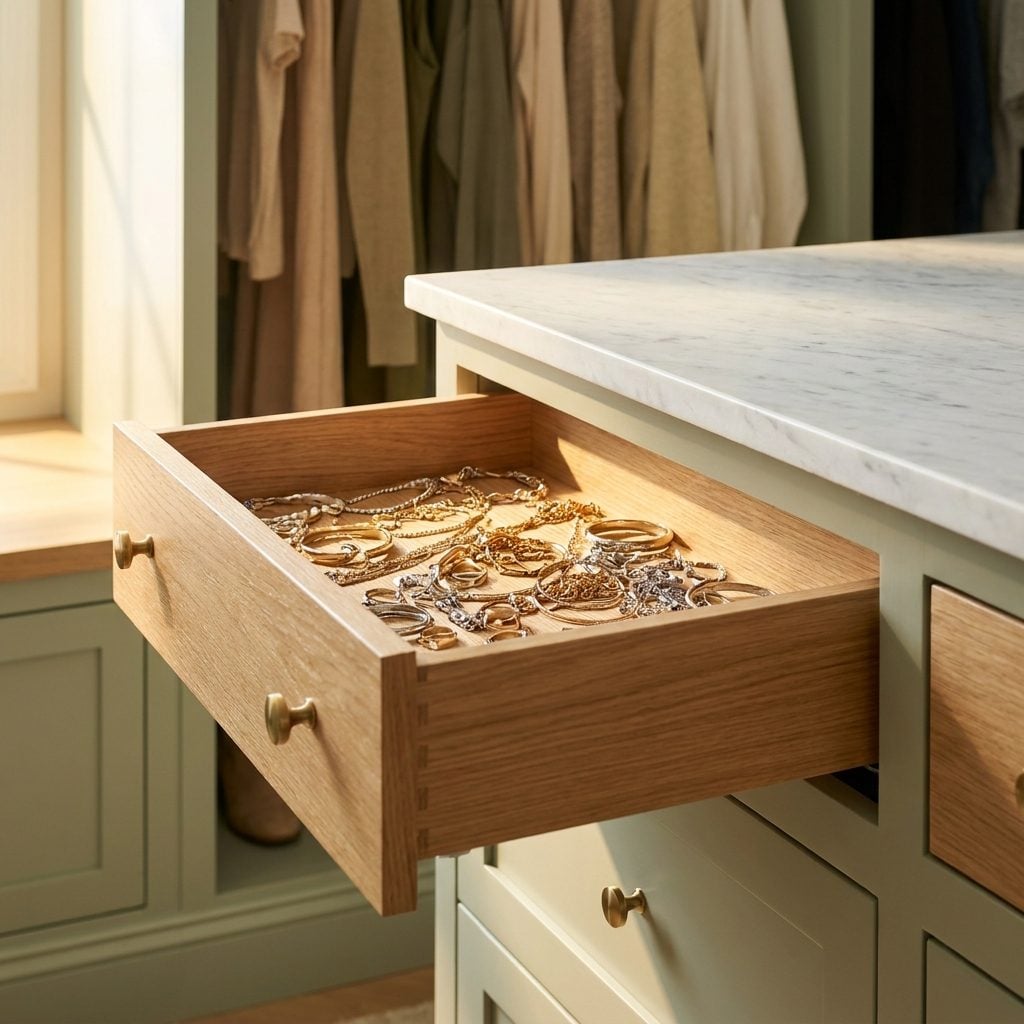
You dedicated a whole drawer to jewelry — good instinct — then left it as one open tray, and every chain you own fused into a single organism within a week.
Velvet-lined compartment inserts cost almost nothing relative to the drawer itself, but they turn a frustrating morning ritual into a three-second grab. Look for modular systems with ring slots, pendant hooks, and shallow wells for earring pairs. The insert should lift out entirely so you can carry it to a mirror or toss it in a suitcase.
8. Picking a Color Scheme That Disappears Into the Bedroom Instead of Making the Closet Its Own Room
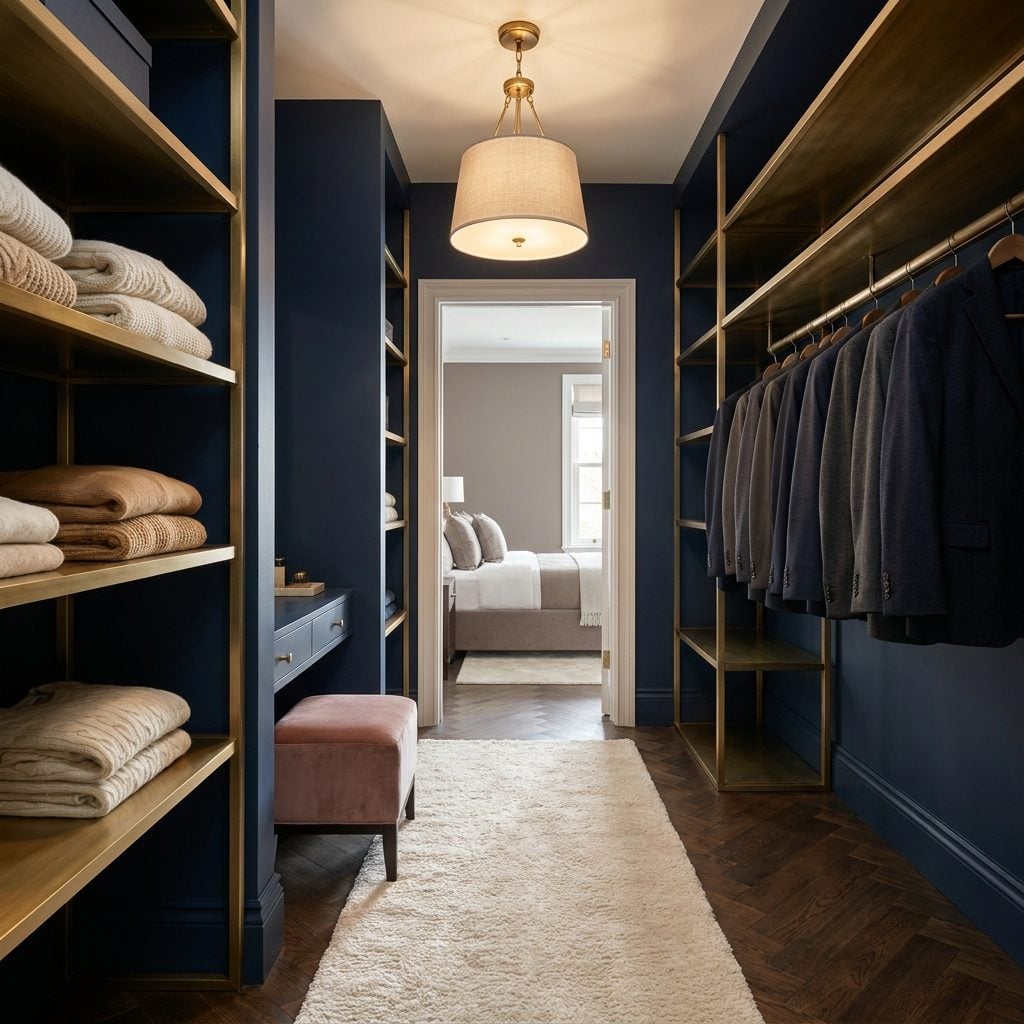
Most closets get painted the same color as the bedroom because nobody thinks of them as a separate space. But you stand in there every morning making decisions about how you want to present yourself to the world — the room should feel deliberate, not like an afterthought that leaked in from next door.
A walk-in closet decor scheme that contrasts with the bedroom gives the space its own character. Deep navy walls or at least a moody accent color, a different flooring treatment, a pendant that casts warmer light than anything in the bedroom. Your clothes become the collection. The room frames them.
7. Forgetting a Dedicated Spot for Accessories You Wear Every Single Day
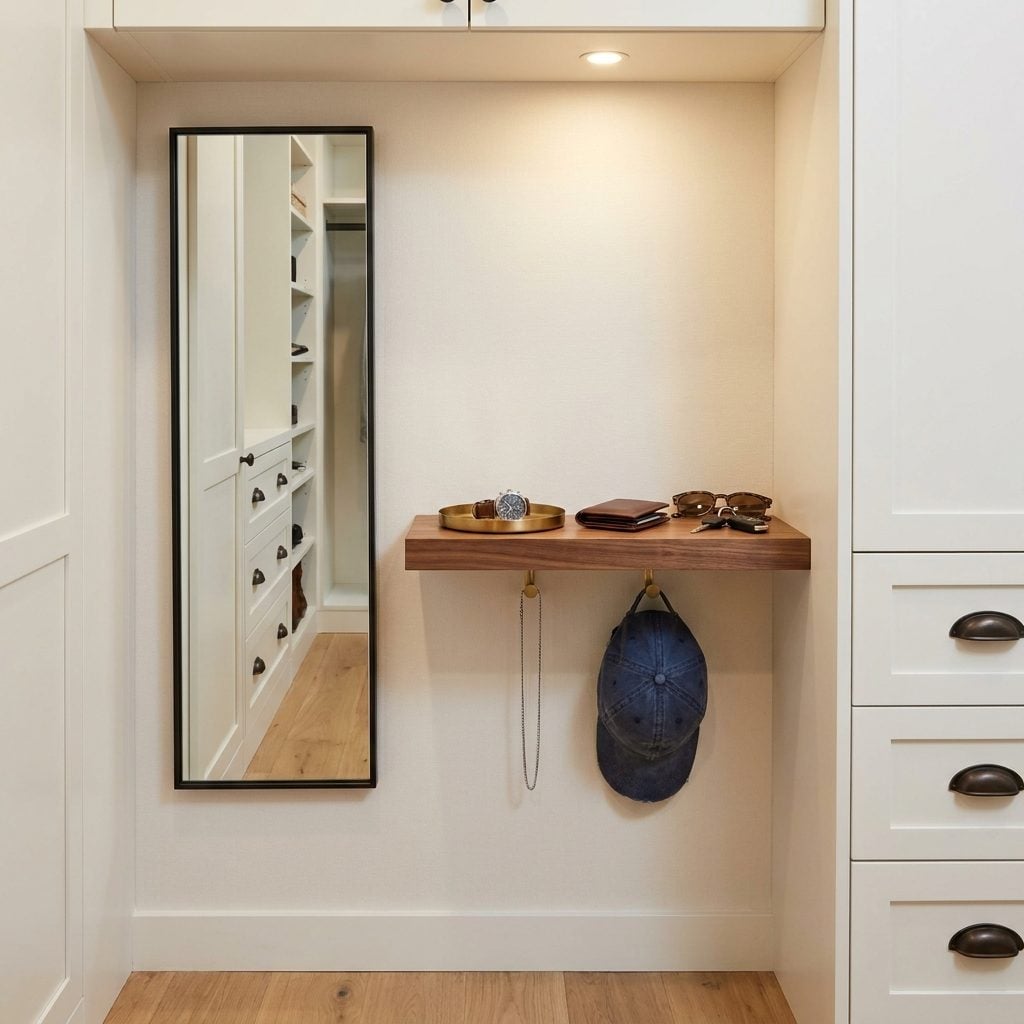
Watch. Wallet. Sunglasses. Keys. You touch these four things every morning and every evening, and in most closets they end up scattered across three rooms like evidence from a crime scene.
Build a small landing zone: a walnut floating shelf at chest height, a brass catchall tray, two hooks underneath. Twelve inches of wall. That’s the whole project. The payoff is ridiculous — you stop patting your pockets at the front door because everything lives in one place. I got this wrong for years, dumping my daily carry on the kitchen counter like a teenager, then doing laps through the house before leaving.
6. Designing the Entire Closet Around Hanging When Drawers Are Faster for 90% of Morning Tasks
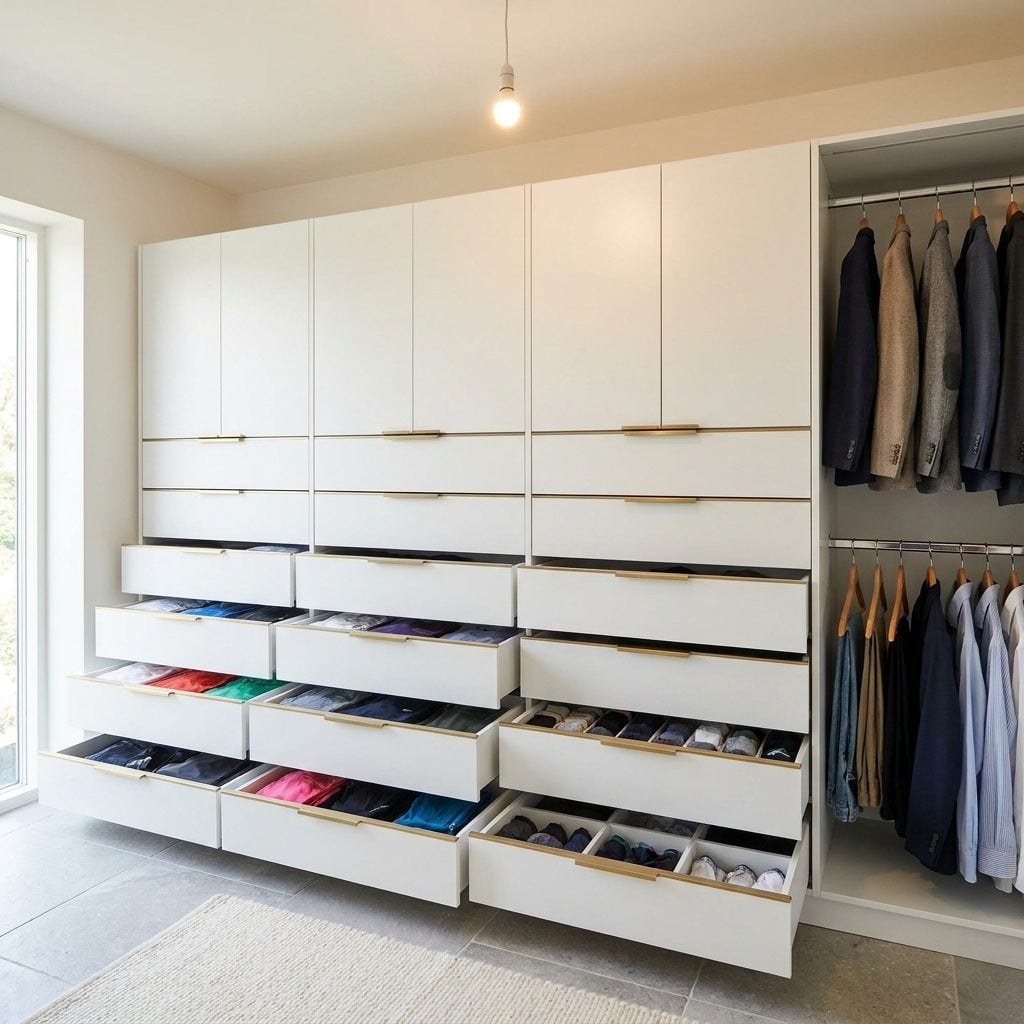
Hanging rods are the default because they’re cheap and obvious. But think about how you actually get dressed on a Tuesday — you pull a t-shirt from somewhere, grab socks, find workout shorts. Drawer tasks, every one of them.
A closet weighted toward drawers instead of rods cuts your morning routine dramatically. Wide, shallow drawers with proper dividers let you see everything at a glance: open, grab, close. No digging, no unstacking. Save the rods for what genuinely needs to hang — blazers, dresses, button-downs, anything that wrinkles the second you fold it.
5. Skipping a Full-Length Mirror Inside the Closet and Having to Walk to the Bathroom to See Your Outfit
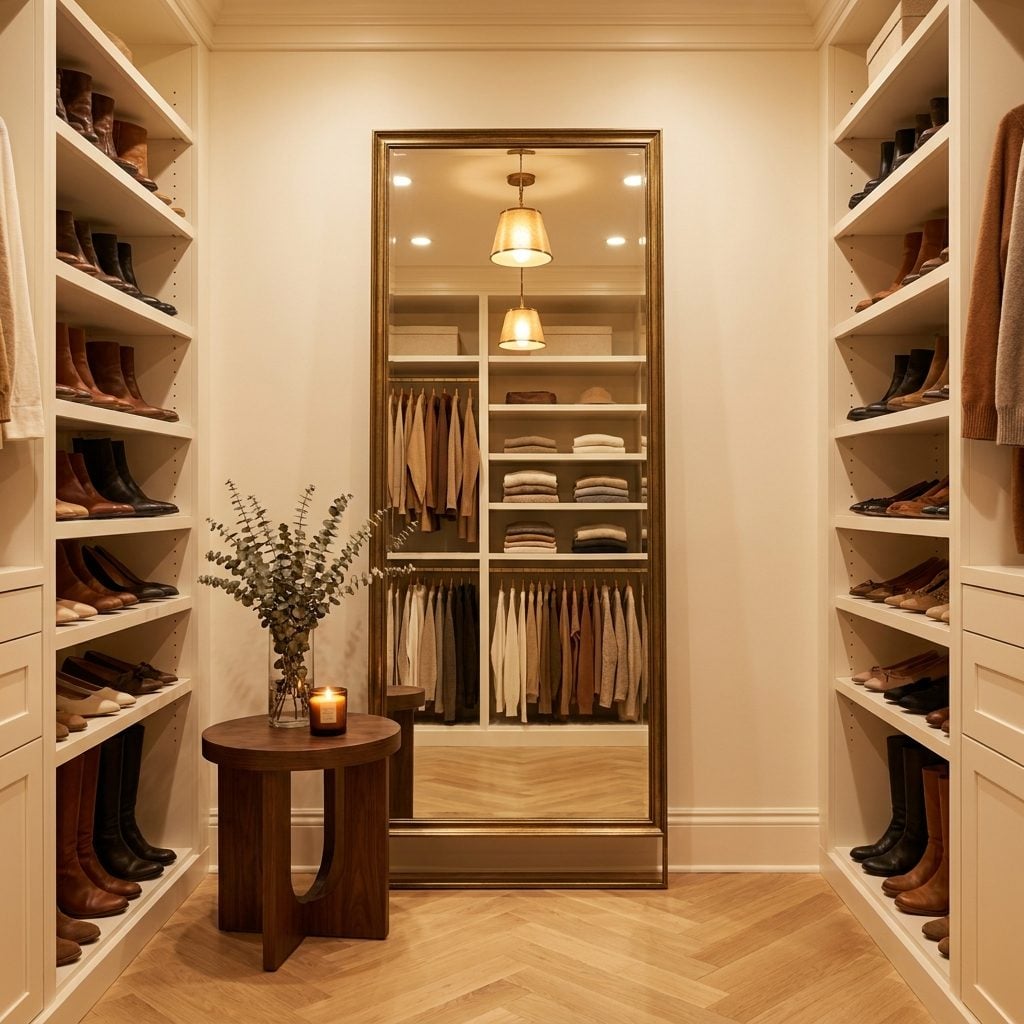
The outfit check either happens in the closet or it doesn’t happen. Once you leave that room, you’re committed — nobody’s walking back to swap the shoes.
An antiqued brass floor mirror leaned against the back wall does more for your daily confidence than any organizational system you’ll install. Position it where you can stand back at least four feet; anything closer and you only see yourself in fragments. You want the full picture, head to toe, in the same light where you chose everything. Bathrooms have bluish overhead fluorescents that lie to you. The closet mirror tells the truth.
4. Using Identical Shelf Spacing Throughout and Ignoring That Boots, Bags, and Hats Are Three Different Heights
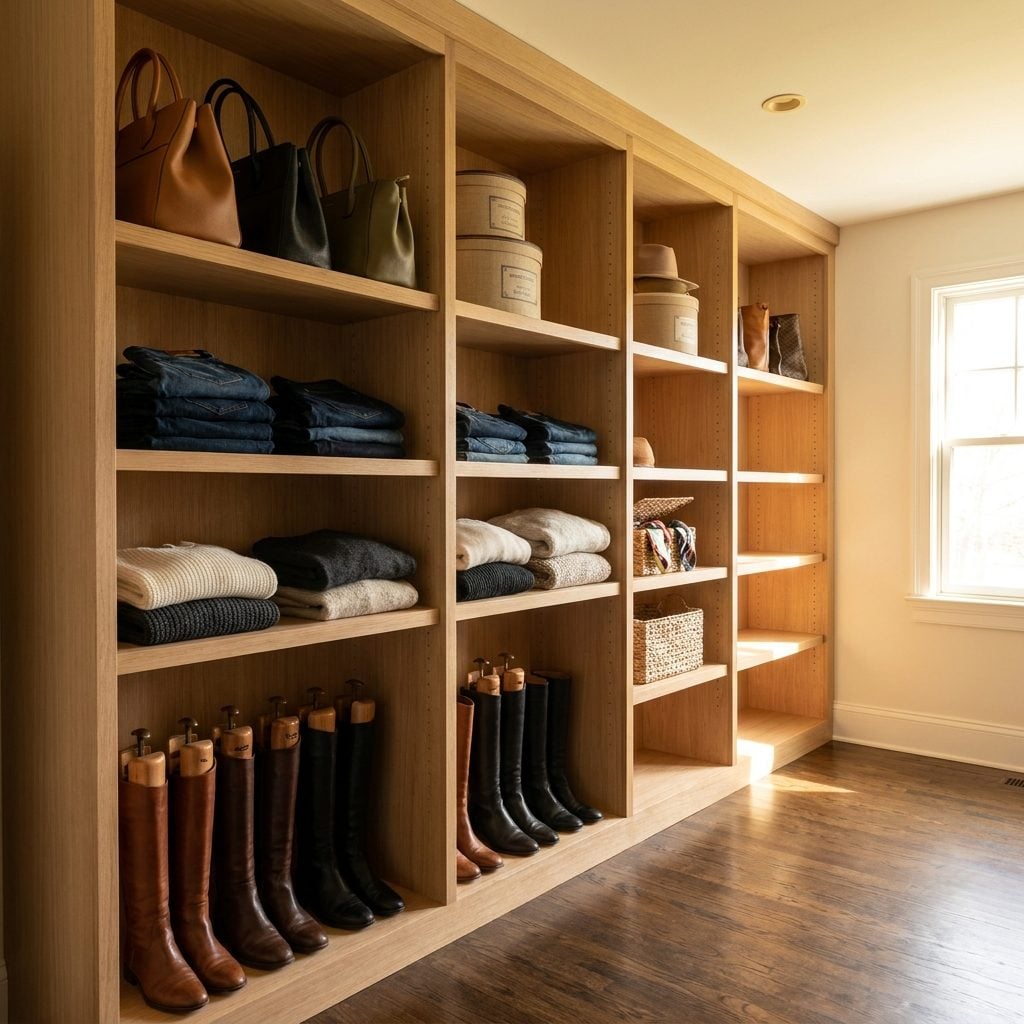
Every shelf at 12 inches apart. That’s what the installer did, and now your tall boots are crushed sideways, your clutch bags have six inches of dead air above them, and your baseball caps are stacked on top of each other like sad little pancakes.
Adjustable shelving exists and costs roughly the same as fixed. Insist on it. Then space by category:
- Boot shelves at 16 to 18 inches
- Handbag shelves at 12 to 14 inches, depending on your collection
- Folded knits at 8 to 10 inches
- Hat shelves at 6 to 8 inches
One shelf height for everything is like buying a single suit size for every person in your household. Technically it covers. Nothing fits right.
3. Putting the Laundry Staging Area Outside the Closet When That’s Where Clothes Come Back To
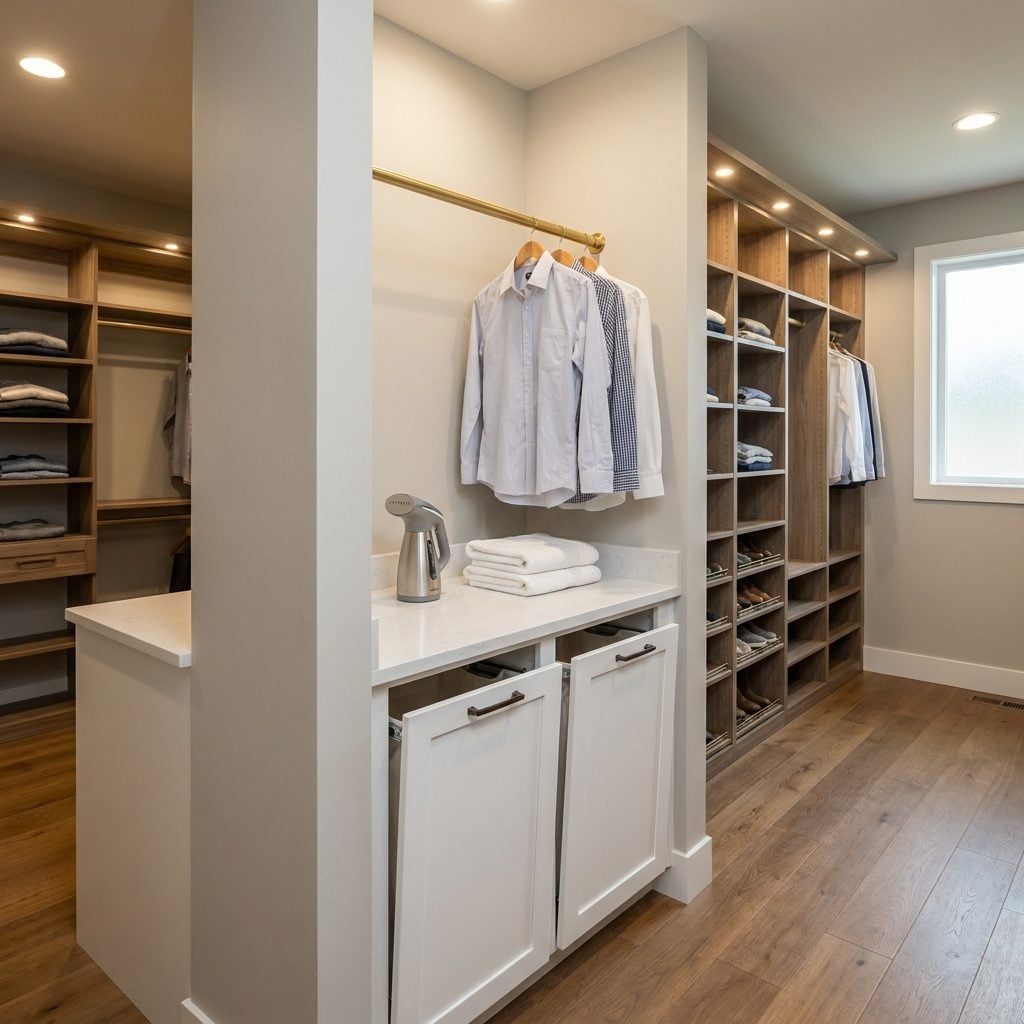
Clean laundry comes out of the dryer and goes to the closet. Dirty laundry comes off your body and should go to the closet too. Having the hamper in the bathroom, the folding station in the hallway, and the hanging in the closet means your clothes take a three-stop tour of the house twice a week. That’s insane when you think about it for more than two seconds.
A small walk-in closet makeover that includes pull-out hamper bins behind cabinet doors, a narrow folding counter, and a short rod for fresh-from-the-dryer items closes that loop. Everything enters and exits from the same room.
2. Neglecting Seasonal Rotation and Letting Winter Coats Eat Summer Real Estate All Year Long
🔥 Would you like to save this?
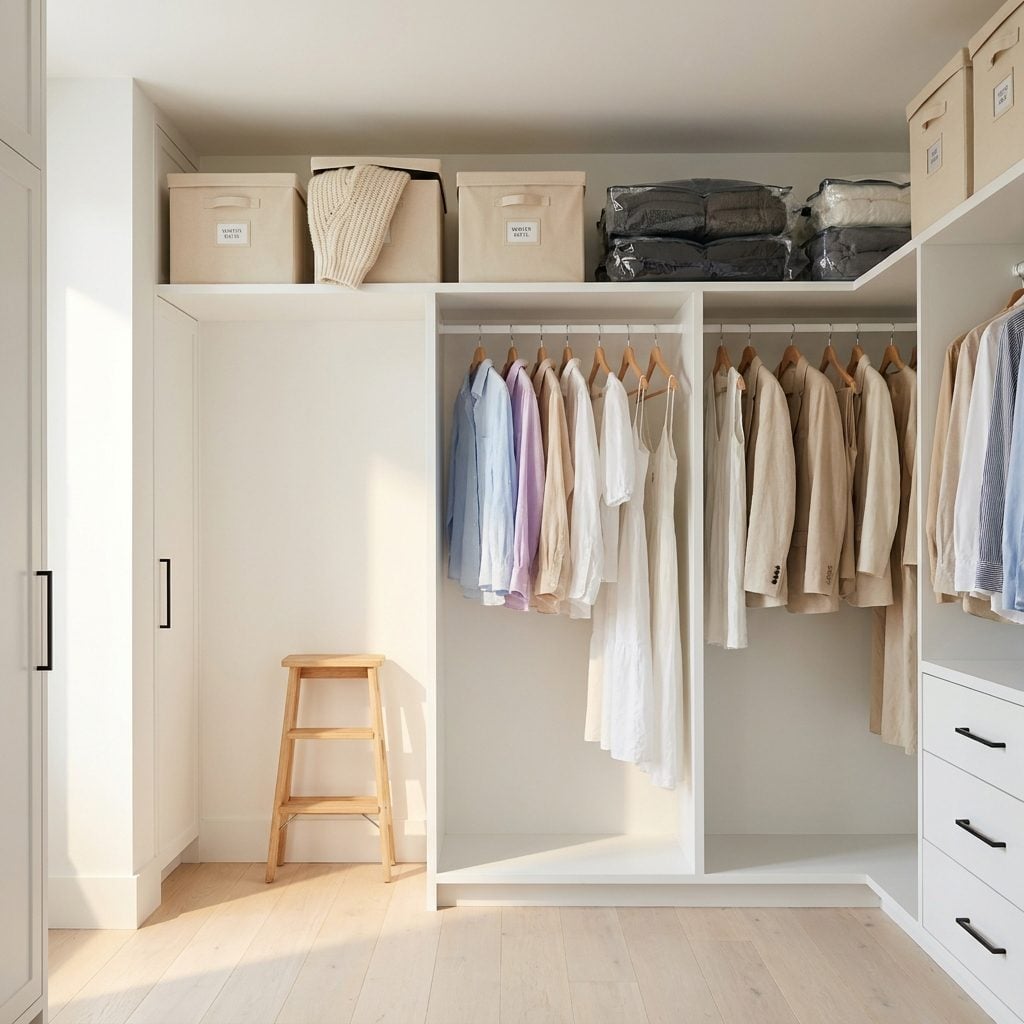
That puffer jacket you wore eleven times last January? Still hogging prime rod space in July. So are the wool trousers, the heavy sweaters, the scarves. Half your wardrobe is off-duty at any given moment, and it’s still occupying a front-row seat.
Dedicate your upper shelving — the stuff above six feet that requires a step stool — to canvas storage boxes and vacuum bags for the opposite season. Rotate twice a year, maybe on the same weekend you flip the clocks. Your in-season wardrobe suddenly has room to breathe. You can actually see what you own instead of shoving past a wall of irrelevant parkas to reach a linen shirt.
1. Building Beautiful Open Shelving for Shoes and Forgetting That Dust Exists
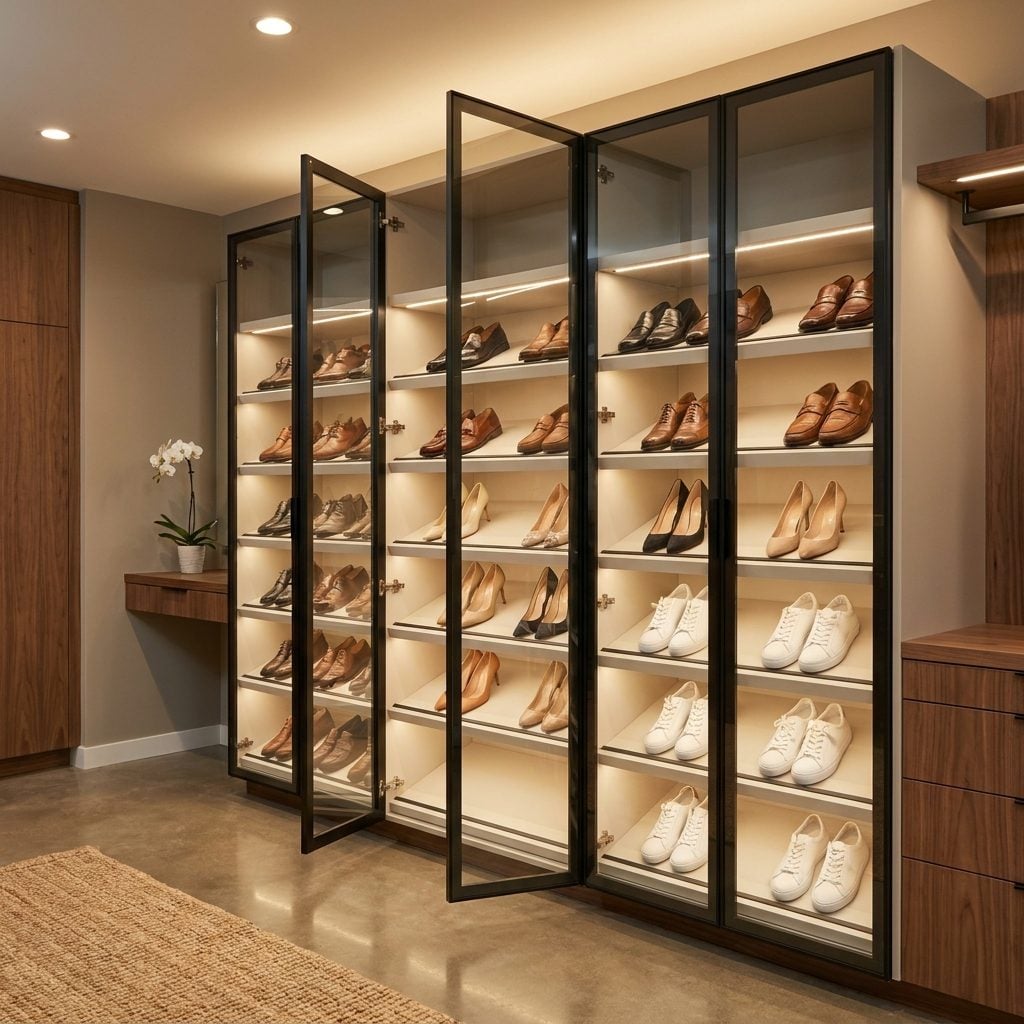
Open shoe shelves look spectacular on Instagram for about six hours. Then real life happens — dust, pet hair drifting in from elsewhere, the slow yellowing of white sneaker soles exposed to ambient light. Six months in, your display looks abandoned.
Glass-front doors in thin black metal frames fix this completely while preserving the visual. You still see everything. The shoes stay clean. Interior LED strips keep the boutique look without the Sunday-morning maintenance ritual. I will die on this hill: open shelving in a closet is a promise you will not keep.