🔥 Would you like to save this?
Saturday morning came with terms and conditions. Before you could disappear on your bike, knock on somebody’s screen door, or spend three uninterrupted hours doing something your parents would probably disapprove of, there was work to do. Beds got made. Floors got swept. Towels got folded. Somebody was handed a bucket. Somebody else was told to get the hose. And if Dad had the station wagon backed into the driveway, congratulations: your morning had just developed a second shift.
In order to come up with the very specific design ideas, we create most designs with the assistance of state-of-the-art AI interior design software. Also, assume links that take you off the site are affiliate links such as links to Amazon. this means we may earn a commission if you buy something.
Nobody called it “building character.” Nobody needed a chore chart printed in cheerful colors. A parent simply appeared in the doorway and started assigning jobs with the calm authority of someone who already knew exactly how badly you wanted to get outside. You learned quickly that “I’m almost done” meant nothing, that hiding things under the bed only worked until inspection, and that one wet footprint across a freshly mopped kitchen could reset the clock on your freedom.
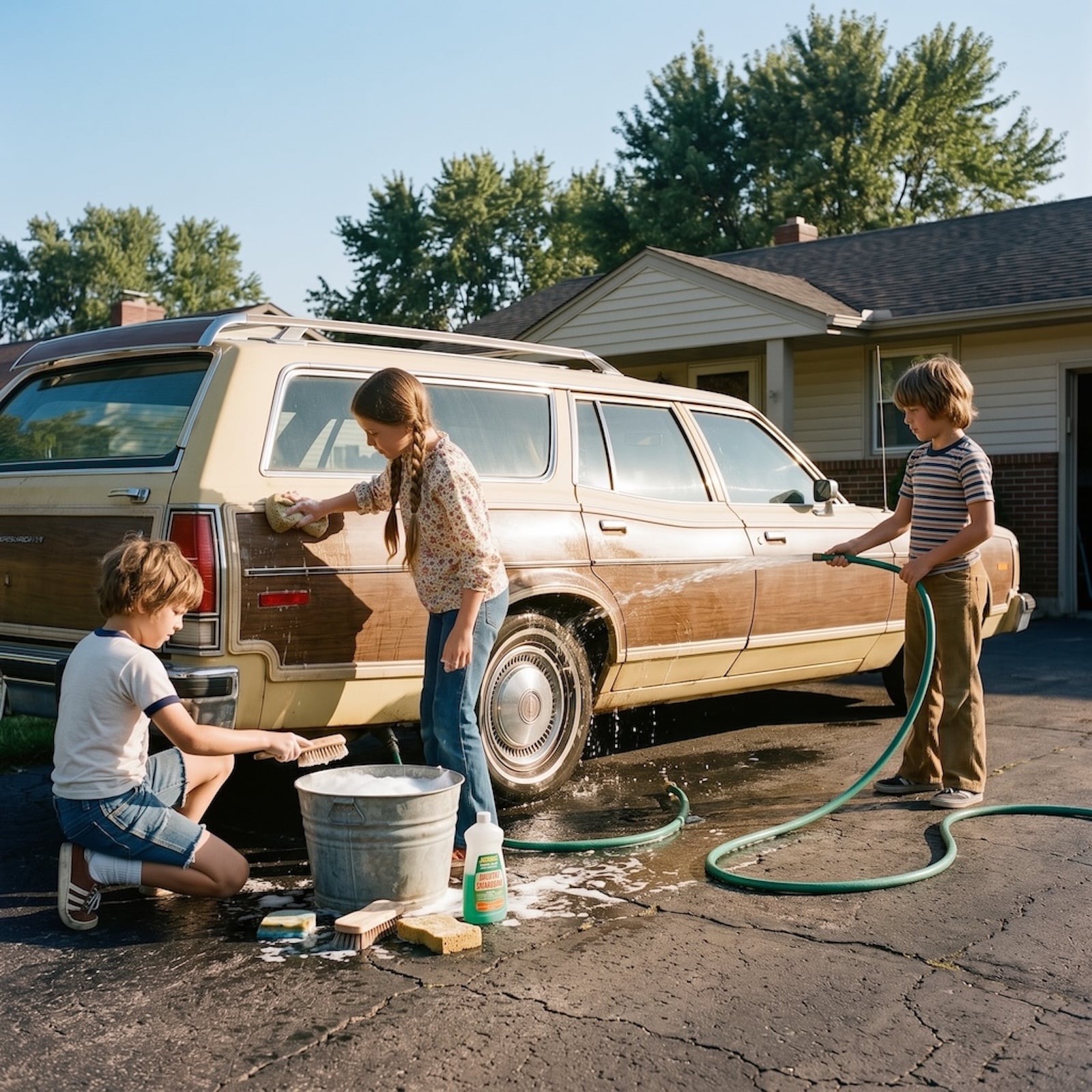
Some chores were miserable. Some were oddly satisfying. A few had obvious loopholes. Washing the car, for instance, usually began as unpaid labor and ended with three kids soaking wet, a hose firing across the driveway, and the family wagon somehow only marginally cleaner than when the operation began.
Before video games took over the afternoon, this was the obstacle course between breakfast and freedom: the jobs every kid knew, the ones you tried to rush, dodge, trade with a sibling, or finish just well enough to hear the only sentence that mattered.
“Okay. You can go.”
37. Making the Bed Every Morning
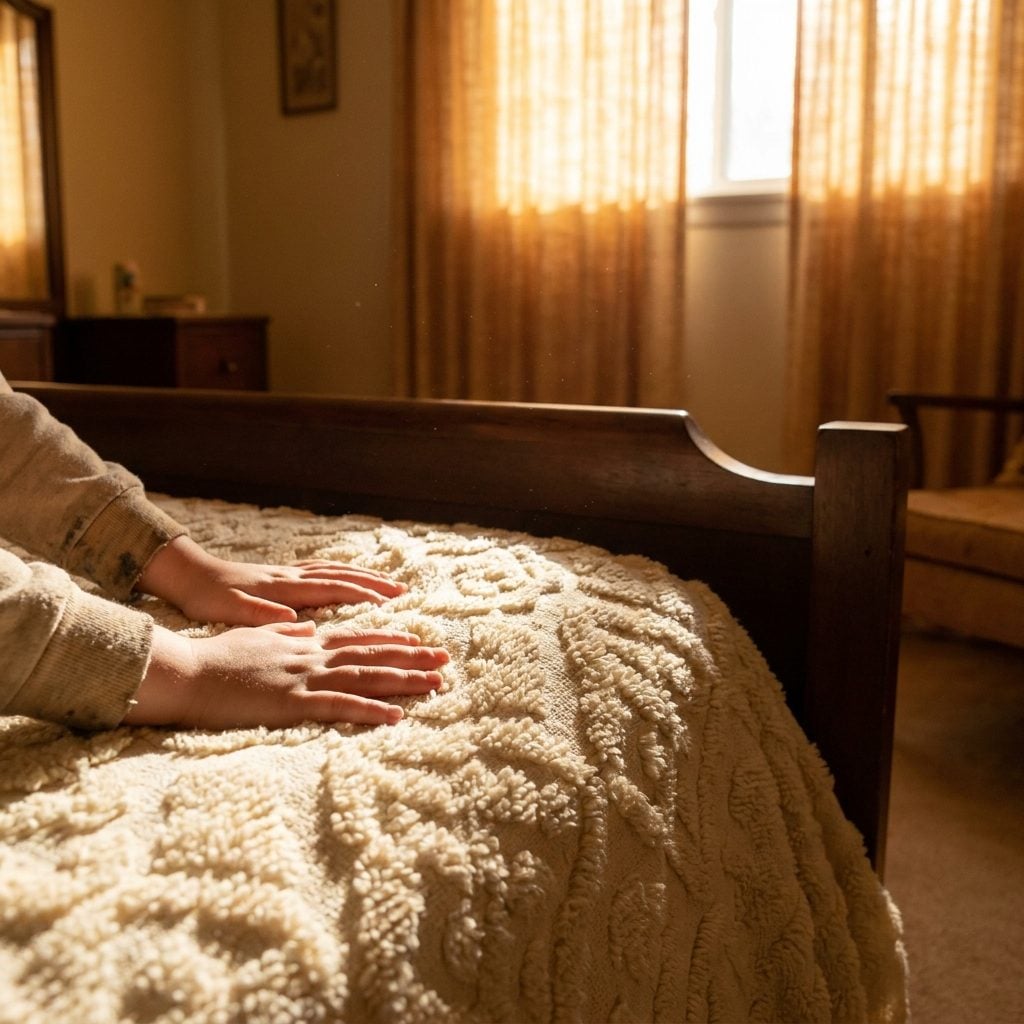
First job of the day, before your feet even warmed up. You yanked the top sheet and pulled the chenille spread flat, punching the pillow into shape whether it needed it or not. Corners never came out hospital-tight, no matter what anyone said.
The rule was simple: you didn’t leave the room until the bed looked like nobody had slept in it. Half the time you made it, crawled back under to read for twenty minutes, and had to make it all over again.
36. Picking Up and Cleaning the Bedroom
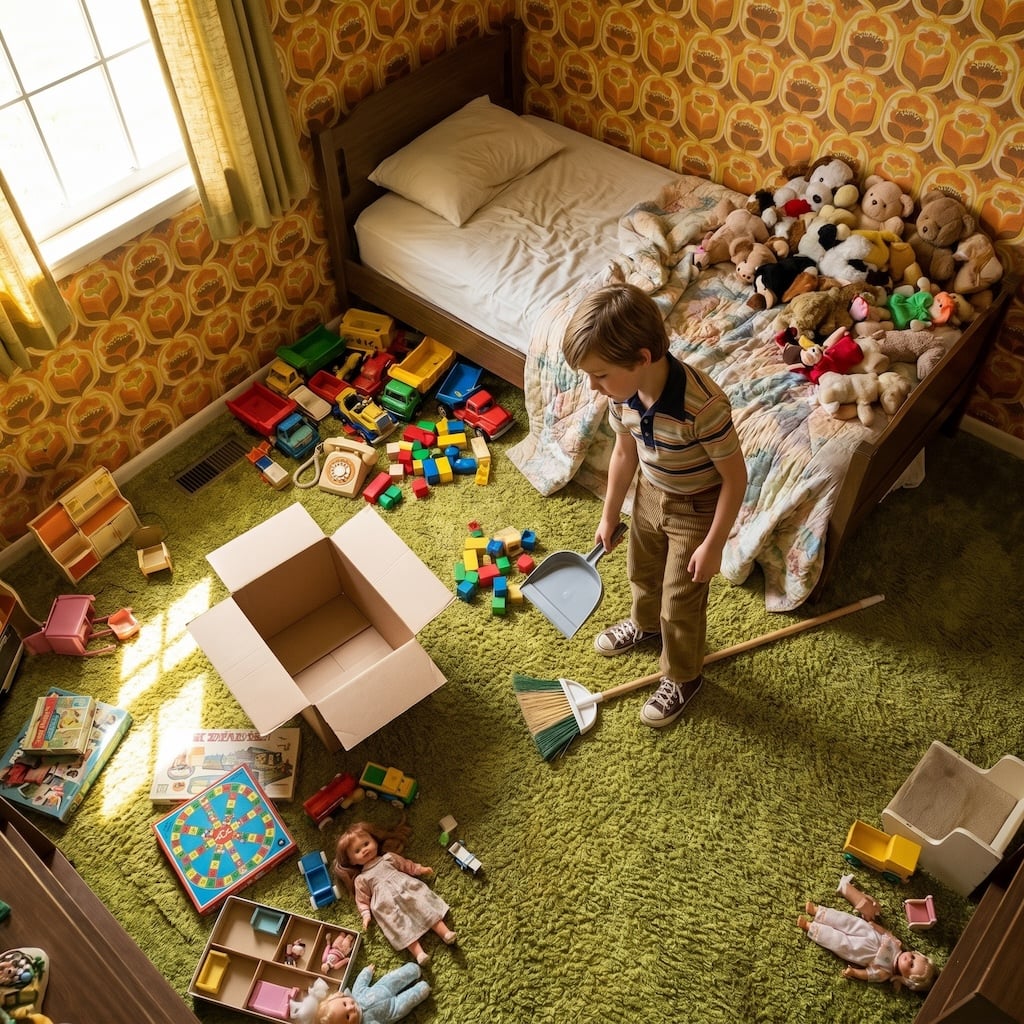
You knew the drill by the tone of the voice. Nobody eats until this room is picked up. Suddenly the floor you’d ignored for a week became a treasure hunt of one lost sock, three army men, and a sandwich crust you’d sworn you finished.
Everybody tried the same move: the shove-and-slam. You crammed everything under the bed or into the closet, then leaned the door shut with a hip and prayed. Worked until someone opened it.
35. Putting Away Clothes
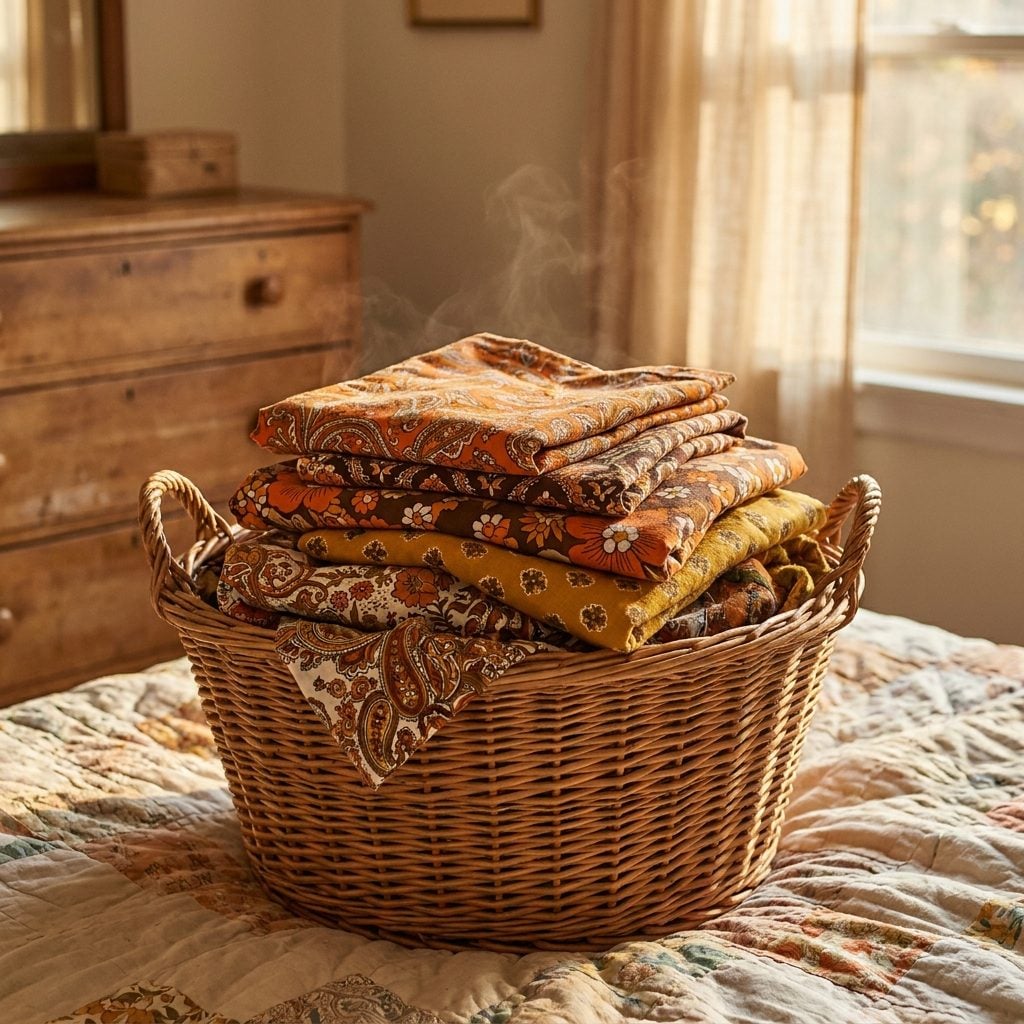
The basket landed on your bed still warm from the dryer, and that was the good part. Everything after was a negotiation with a dresser that never had enough room.
You matched socks by feel, rolled the orphans into a doomed single pile, and stuffed folded shirts into drawers that wouldn’t quite close. Hangers were their own event. The wire ones tangled like they were mad at you.
34. Dusting the Furniture
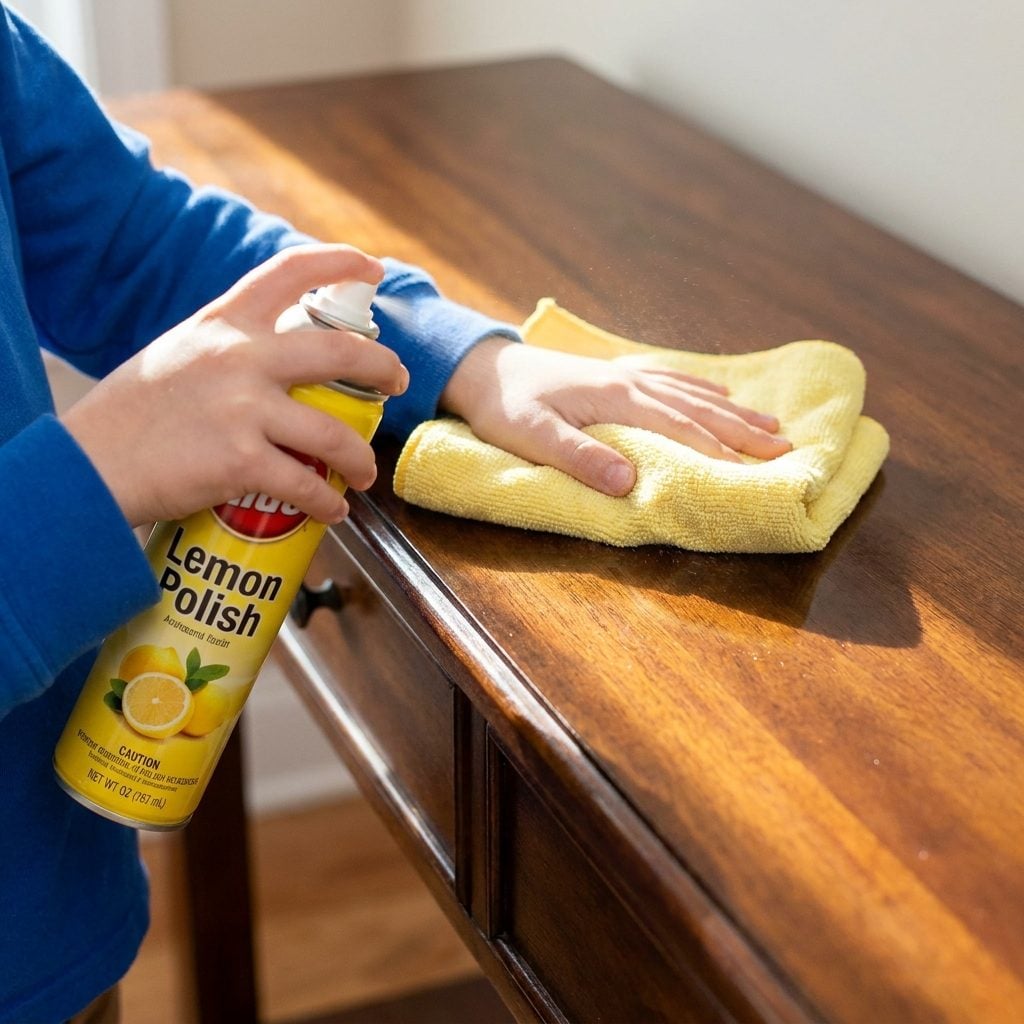
The smell of lemon Pledge is a whole decade in one can.
You sprayed too much every time, then chased the cloud with a folded rag while your eyes watered a little. Done right, the wood came up glossy instead of streaky, and you could see your own dumb reflection in Grandma’s end table.
Figurines were the enemy. You lifted each one, wiped underneath, and set it back in the exact ring it had left in the dust, praying you didn’t chip the shepherd boy.
33. Sweeping the Floors
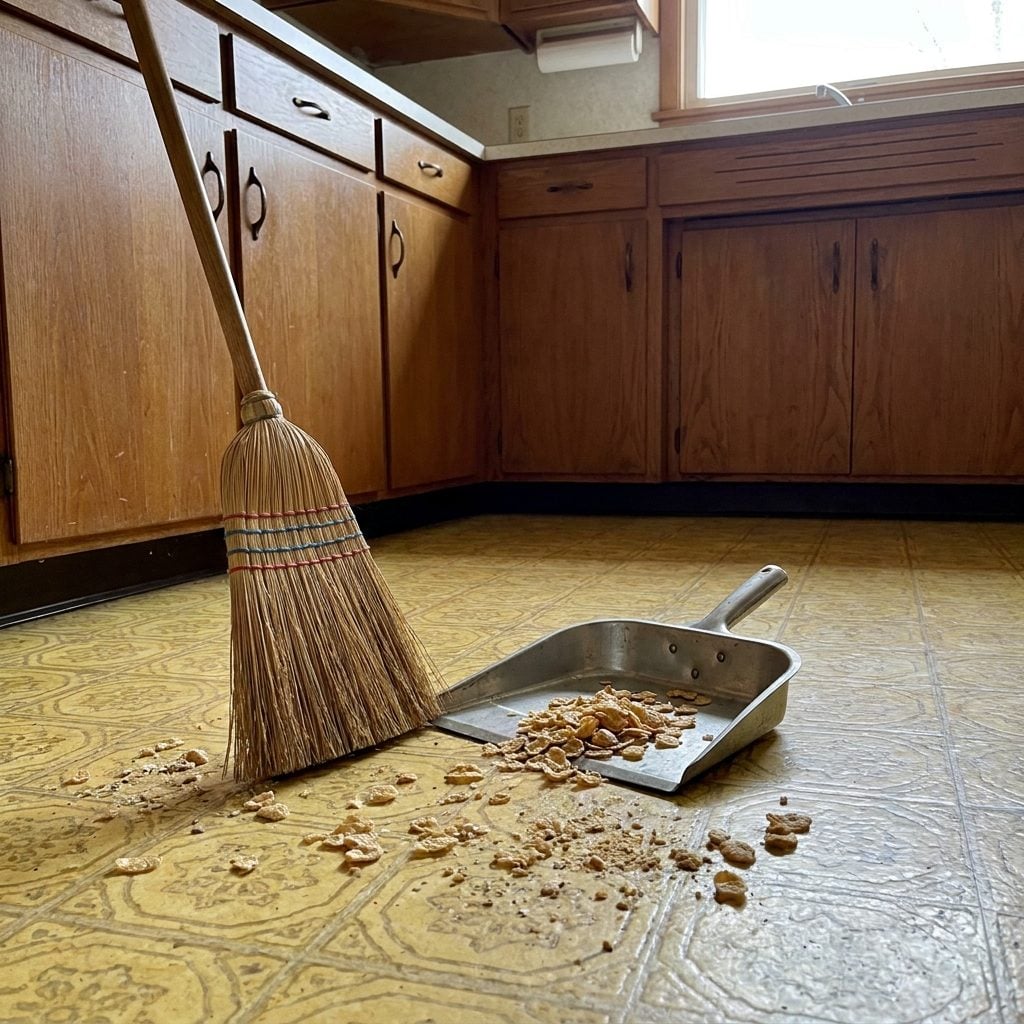
Corn broom in hand, you chased crumbs and dropped cereal across the linoleum toward a dustpan that always left one thin gray line no matter how you tilted it. That line was undefeated.
The real skill was getting into corners and under the toe-kick of the cabinets without dragging the whole pile back out. Kitchen first, then the back hall. Then, if nobody was looking, you swept the little pile straight out the screen door.
32. Vacuuming the Carpets
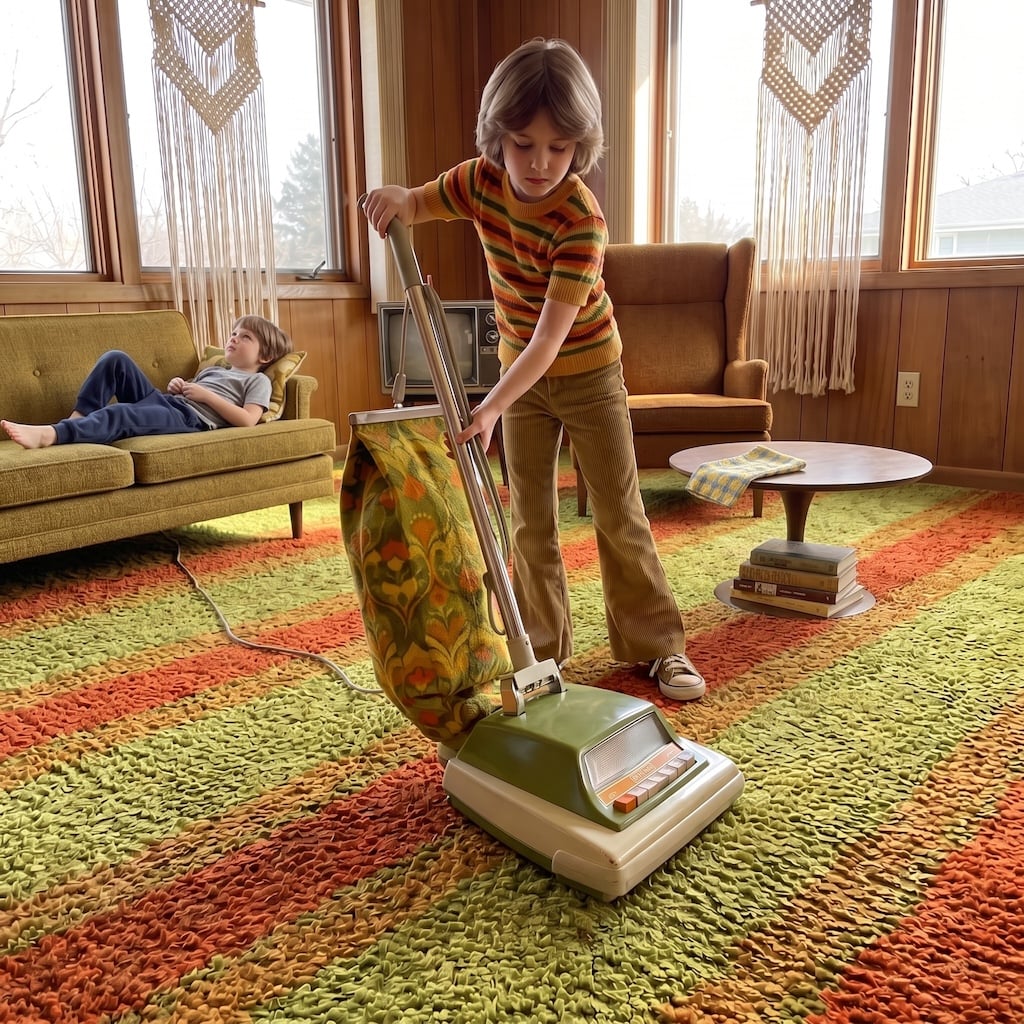
That machine roared like a small plane and weighed about the same. You pushed it back and forth across the shag until the pile stood up in those satisfying rows, then walked backward out of the room so you didn’t stomp new footprints across your own work.
Half the job was rescuing things it tried to eat. A shoelace. The fringe off the rug. One time a marble that rattled up the tube and stopped everything dead.
31. Mopping the Kitchen Floor
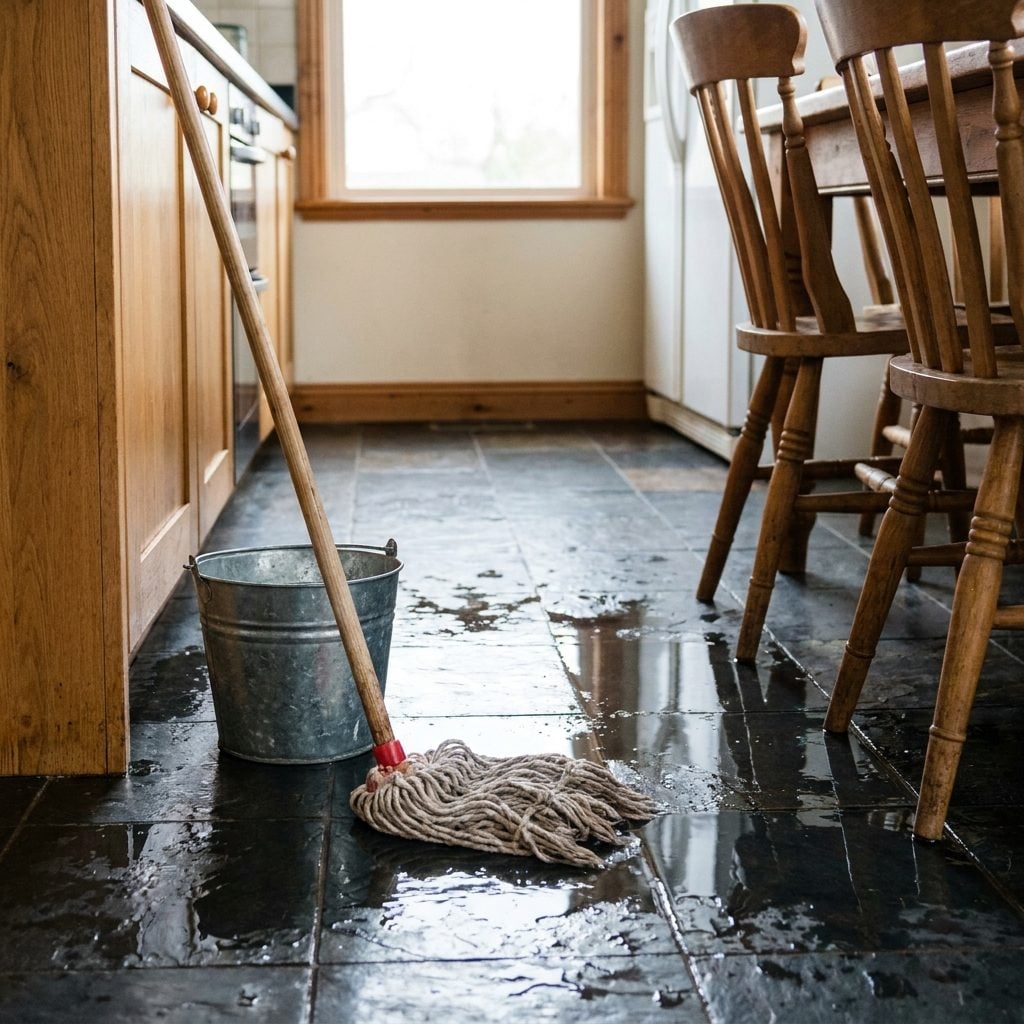
The floor came up smelling like pine and stayed wet forever.
You wrung the string mop against the side of the bucket and dragged it in figure-eights, and then the real rule kicked in. Nobody walks on it. So you mopped yourself right into a corner and stood there like a marooned sailor, waiting for it to dry.
Sock prints on a wet floor were a crime punishable by doing the whole thing over. You learned to hop across on the dry patches like the linoleum was lava.
30. Waxing and Buffing the Floors
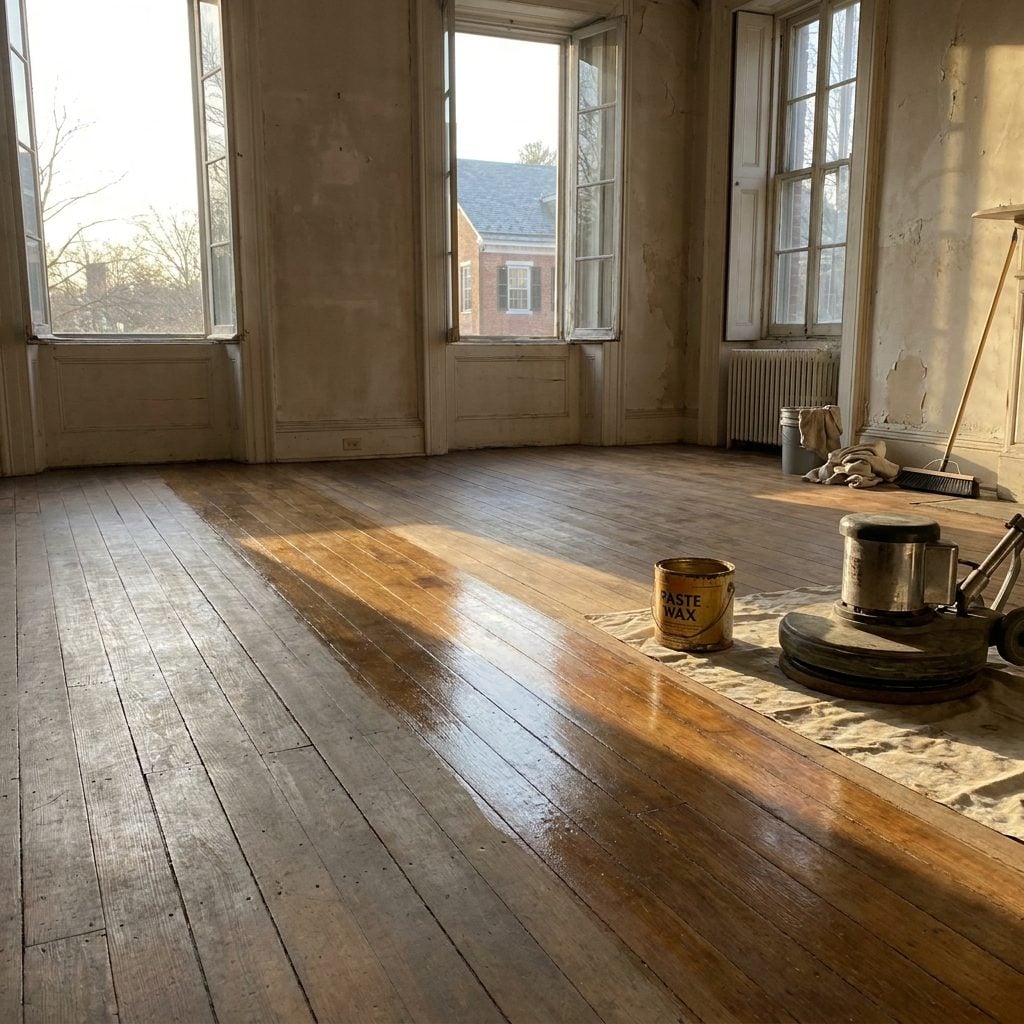
This one got saved for the big cleaning days, the ones that came with all the windows open. You worked the paste wax on in sections, let it haze over, then buffed it back with a rag. If you were lucky, you got the electric buffer, which dragged you around the room like a dog on a leash.
The payoff was a floor so slick you could take a running start in your socks and slide clear across it. Which, of course, is what got you yelled at ten minutes after finishing.
A freshly waxed floor was less a chore result and more an invitation to break your neck in socks.
29. Shaking and Beating Out the Rugs
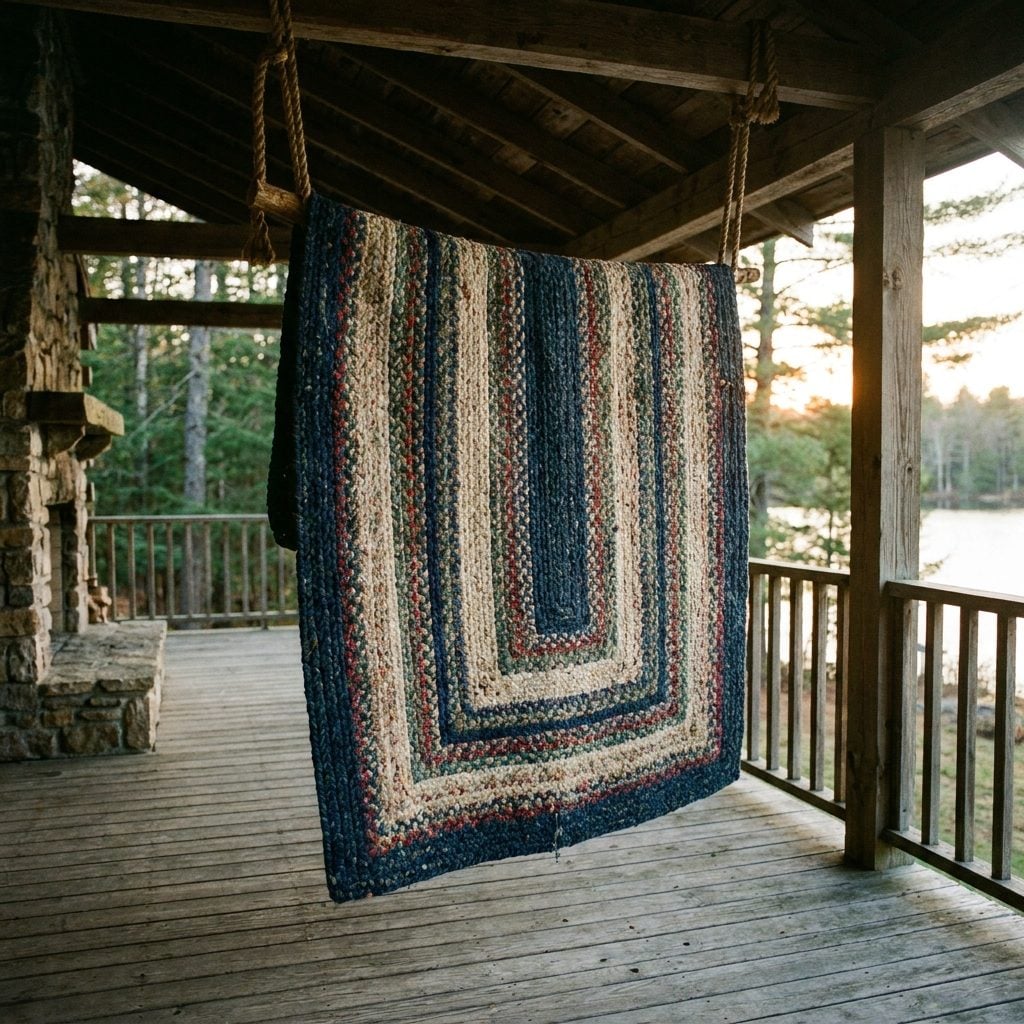
Out to the porch rail or the clothesline you went, rug over your shoulder, and you beat the daylights out of it. Two good snaps and a cloud came off that made you sneeze and wonder how a floor produced that much filth.
Braided oval rugs were the worst offenders. They held dirt like a sponge and only gave it up if you really committed to the whipping motion. Neighbors could set their morning by the sound of it.
28. Washing the Dishes
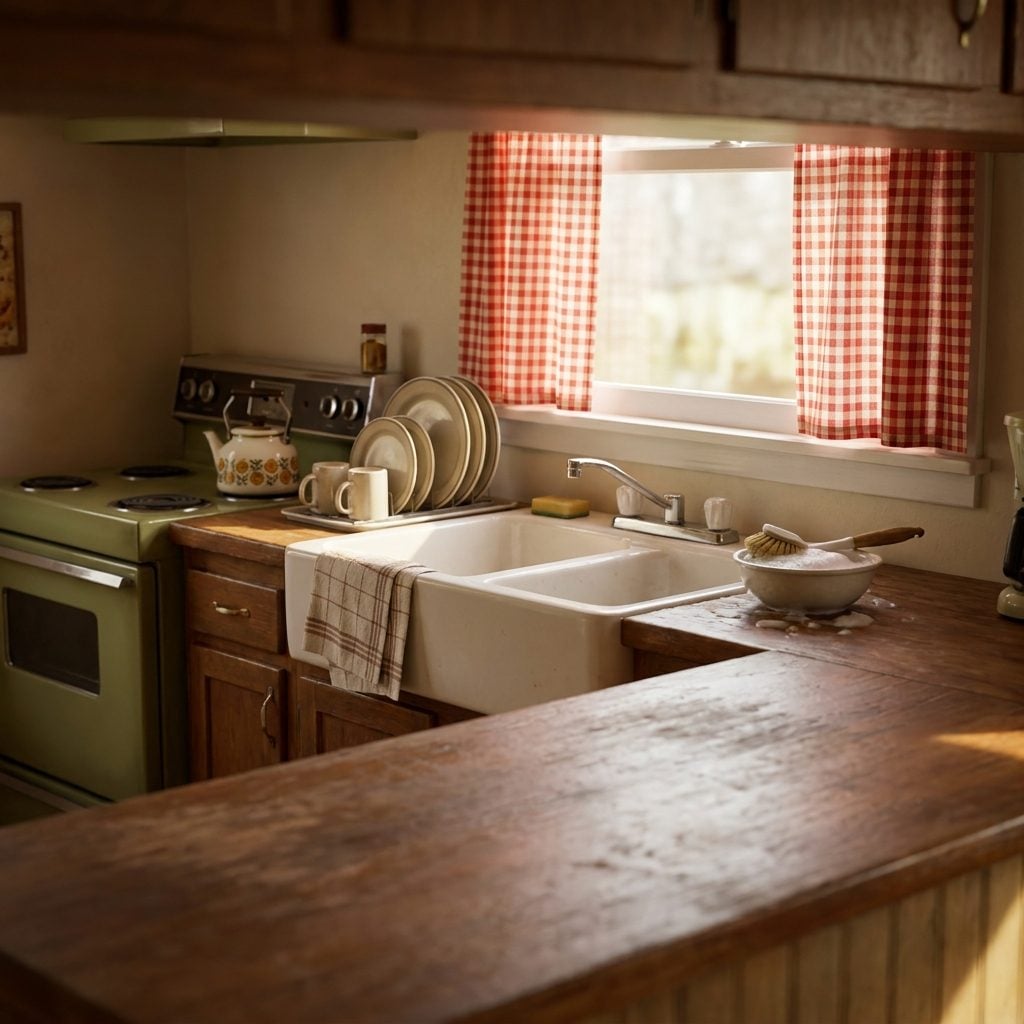
The dishwasher existed in some houses, sure, but in plenty of kitchens it was two kids and a sink. If you drew the washing job, you got the greasy pans, the forks welded together with dried egg, and the casserole dish that had somehow become a geological formation overnight.
The water started almost too hot to touch and ended lukewarm and gray. You worked from glasses to plates to the ugly stuff at the bottom, adding another squeeze of dish soap whenever the suds gave up. By the time the sink was empty, your fingertips were wrinkled and the next shift was already waiting beside you with a towel.
27. Drying and Putting Away the Dishes
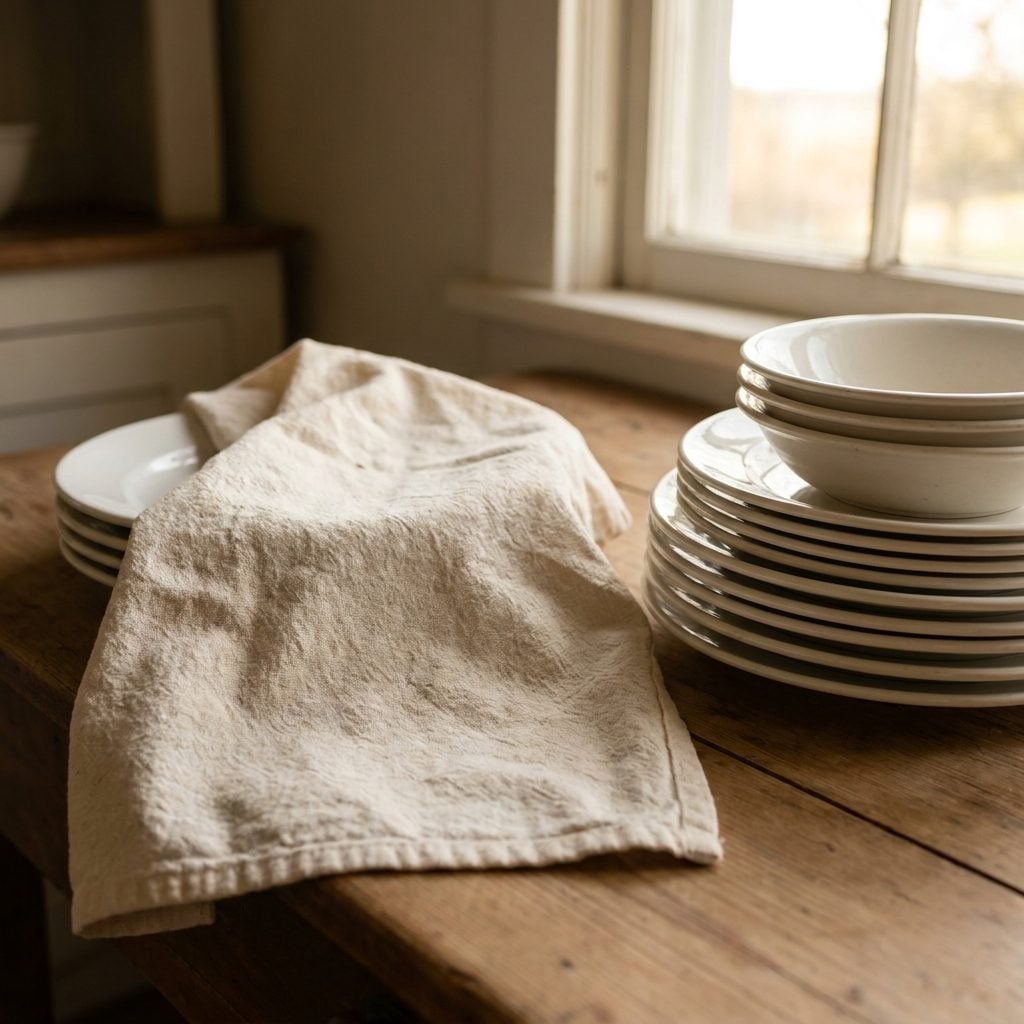
Someone washed, someone dried. If you were the dryer, you stood there with a flour-sack towel while the plates piled up faster than you could deal with them. The towel was damp by the fourth glass, the Corelle had to be stacked without a clatter, and somebody always disagreed about where the good glasses actually lived.
This was how you learned the kitchen by heart: jelly-jar glasses on the bottom shelf, serving bowls above the stove, cereal dishes wherever they would fit. Boring, yes, but strangely exacting. One wet plate at a time, the cabinets became a map you could navigate without thinking.
26. Setting the Dinner Table Before Anyone Was Called In
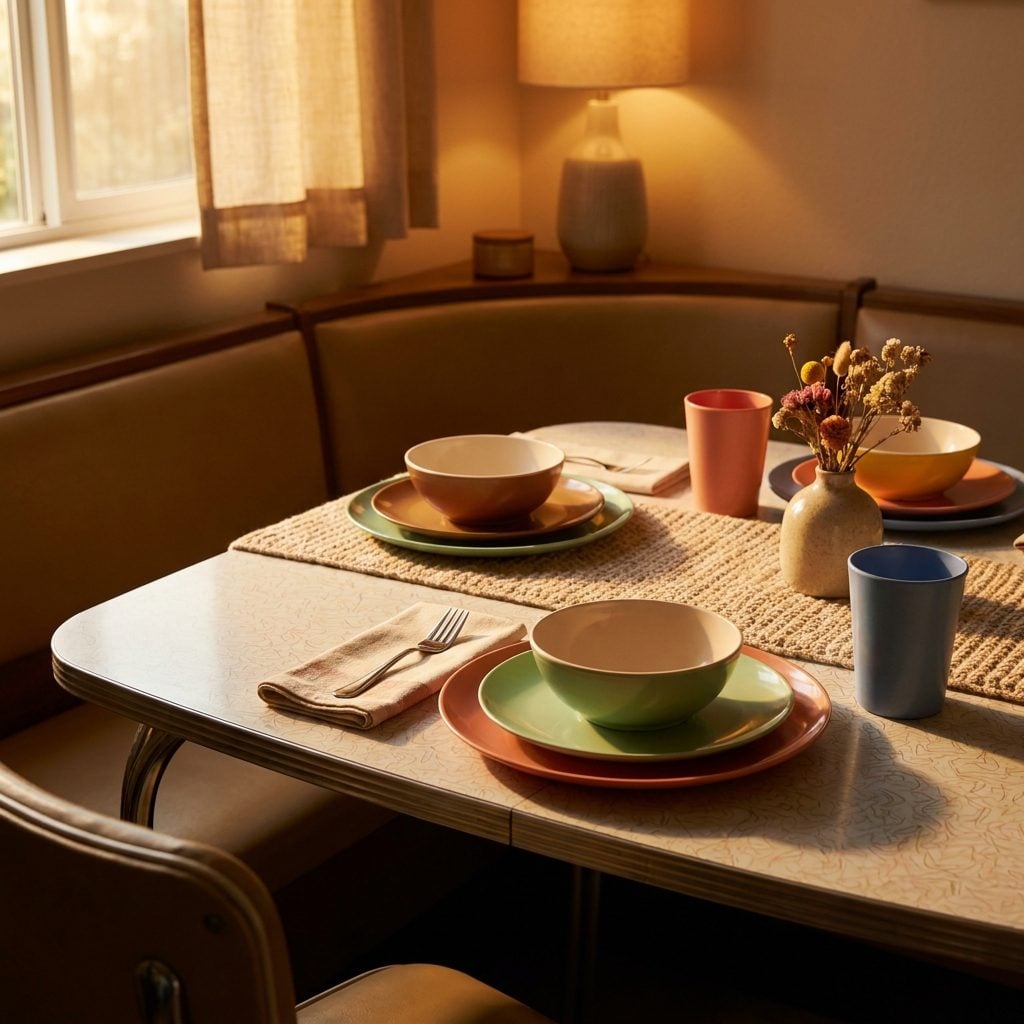
Fork on the left. That was the whole rule, and getting it right felt like a genuine accomplishment when you were nine. You laid out the melamine plates and the jelly-glass tumblers and tucked a paper napkin under each fork, and if the tablecloth had a crease you smoothed it flat with your palm. There was a hush to it, that stretch of quiet before everyone got called in and the noise took over. Nobody thanked you for setting the table. They noticed real fast if you didn’t, though.
25. Clearing the Table When You Wanted to Bolt
🔥 Would you like to save this?
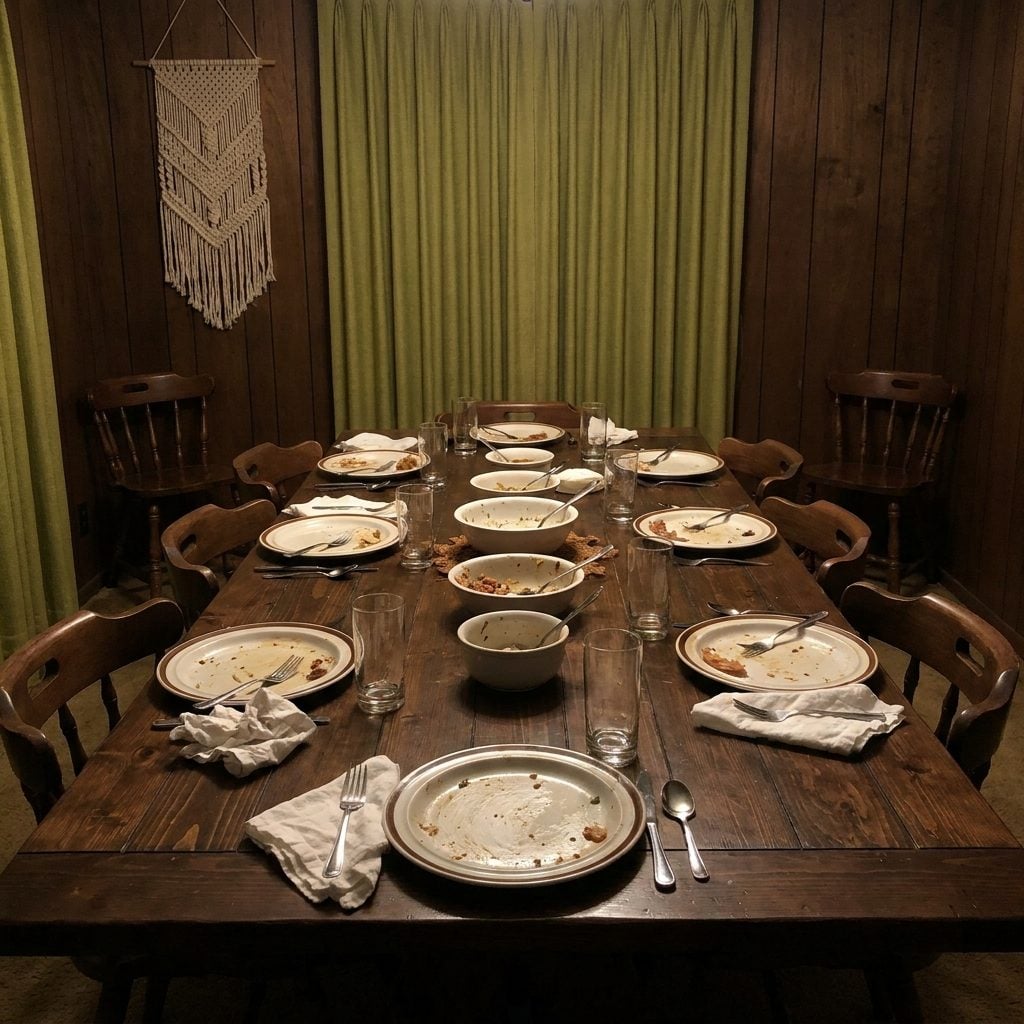
Dinner ended and every kid at the table did the math on how to disappear before the plates needed carrying. It never worked. You’d end up balancing a glass on a stack of dirty dishes, walking them to the sink at a pace that broadcast exactly how put-upon you felt, while a younger sibling scraped scraps into a Tupperware nobody would ever find a lid for. The casserole still had a spoon in it. The milk glass was half full and warm. And somehow this five-minute job stretched into a small nightly protest, because clearing the table meant admitting the fun part was over.
24. Hauling the Trash Out to the Curb
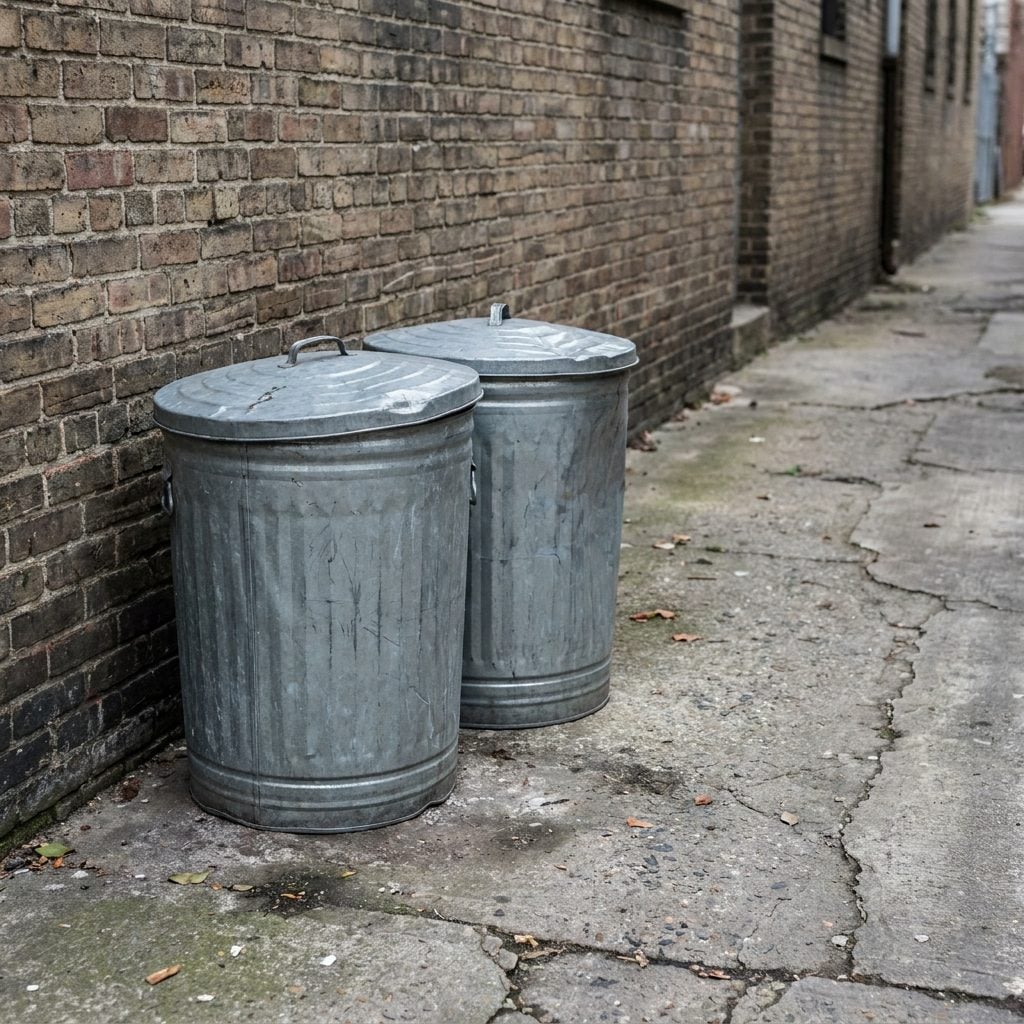
Two metal cans, dented lids, one held on with a bungee cord — you dragged them down the driveway one in each hand, clanging the whole way. It was heavier than it looked and the cans caught on every crack in the concrete. In plenty of households, this got handed to the boys, or at least it was treated that way, usually right at dusk when the last thing you wanted was to be outside in the cold. Golden hour made it almost bearable. Leaves everywhere, the station wagon glowing in the drive, and you hustling to get it done before the light went and someone called you in.
23. Scrubbing the Kitchen Sink Until It Squeaked
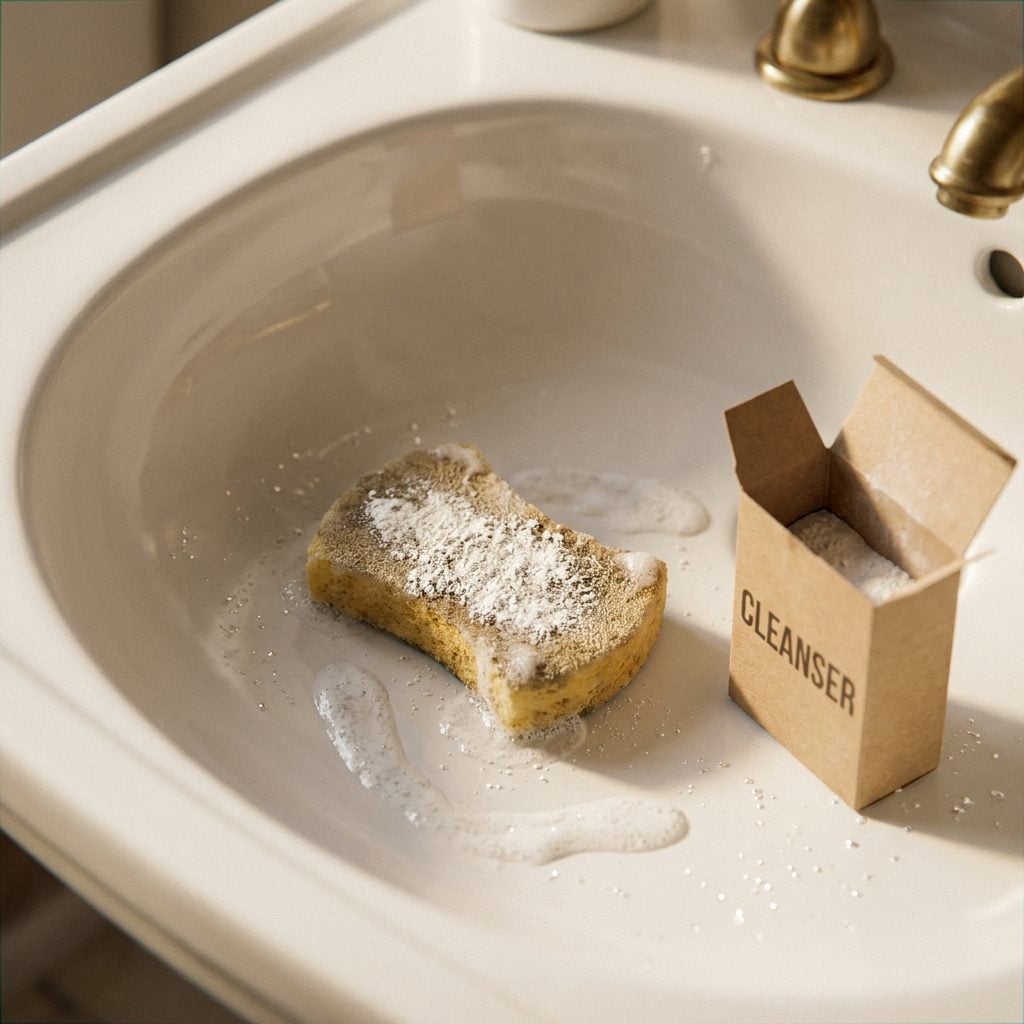
There was a right way and a wrong way, and Mom had opinions. You sprinkled the powdered cleanser, worked it into the porcelain with a green scouring pad, and kept at the corners where the grime hid until the whole basin actually squeaked under your thumb. The suds climbed up your forearms. A transistor radio on the windowsill made it go faster. Weird thing about scrubbing a sink until it shines: you feel a small, dumb pride in it that nobody warns you about, and then you’re twelve and secretly proud of a clean drain.
22. Wiping Down the Counters (Crumbs and All)
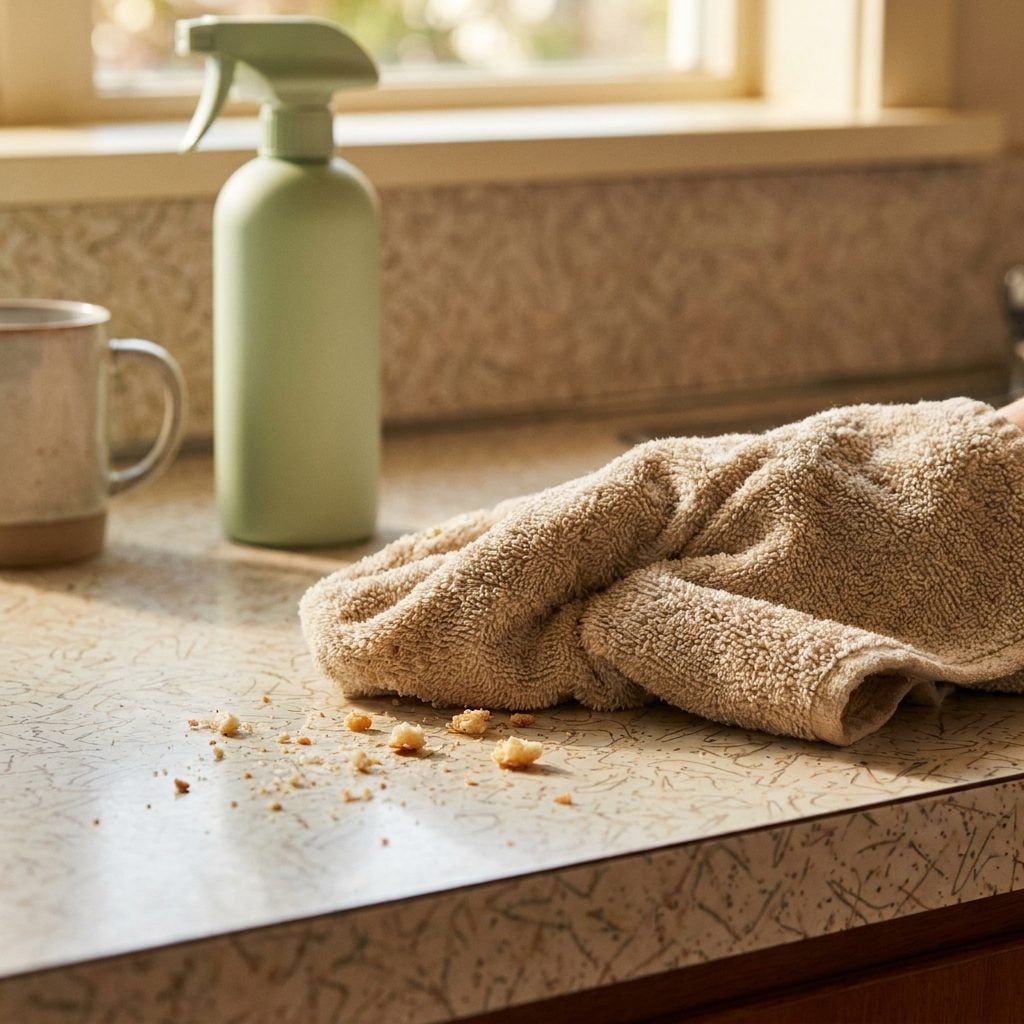
You sprayed the pale green cleaner, folded a terrycloth rag, and dragged it down the length of the counter, sweeping crumbs into your cupped hand as you went. Simple job. The trick was actually catching the crumbs instead of pushing them onto the floor for someone else to find and complain about later. Around you the toaster, the canisters marked Flour and Sugar, the bowl of bananas going brown — all the ordinary furniture of a kitchen that got wiped down twice a day and never quite stayed clean.
21. Scrubbing the Bathtub on Hands and Knees
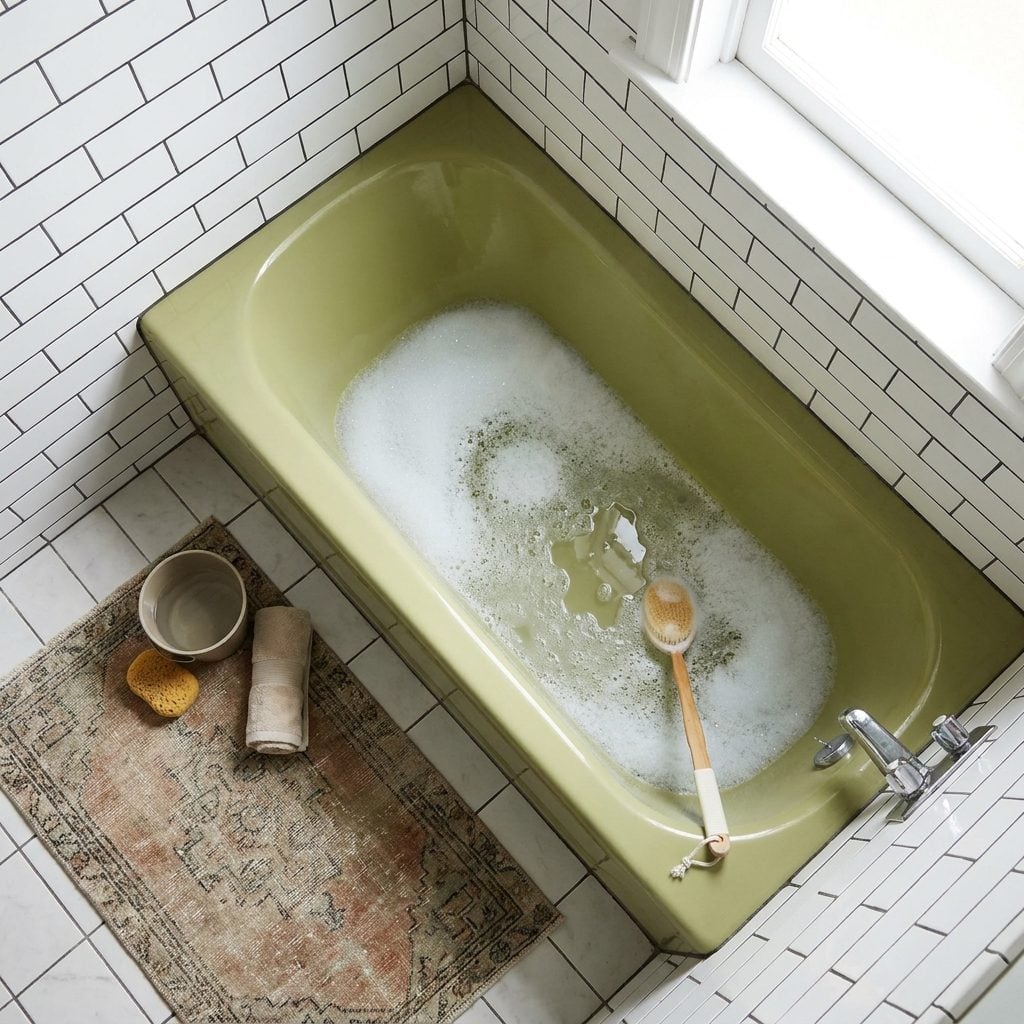
Nobody volunteered for the tub. You knelt on the bath mat, sleeves shoved up, and worked a long-handled brush around the inside of that cast-iron beast until your knees ached and the bucket of soapy water had gone gray. Cast iron holds a ring like it’s personal. You scrubbed and rinsed and scrubbed again, the hexagon tile cold under you, the whole time wondering why the least-loved chore in the house had somehow landed on you and not your brother, who was conveniently nowhere to be found.
20. Cleaning the Toilet, the Chore Nobody Volunteered For
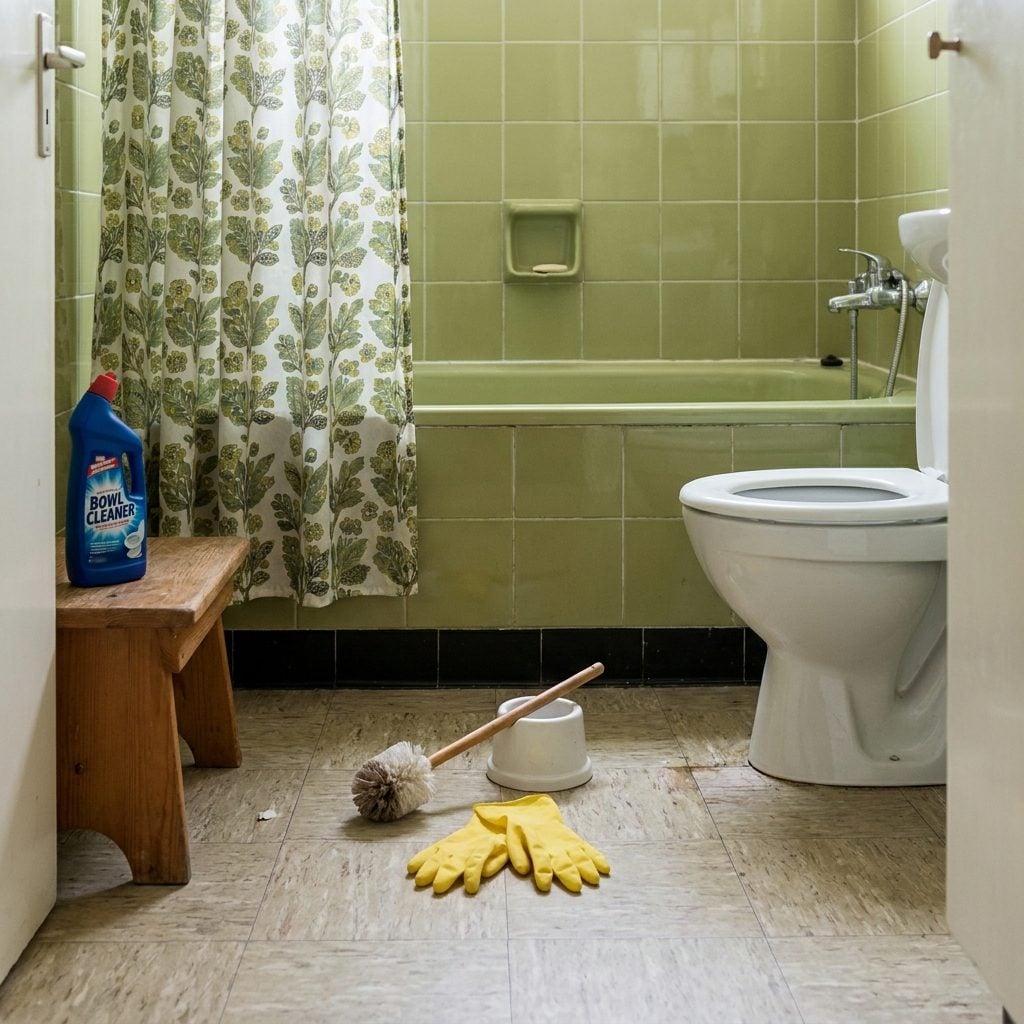
Yellow rubber gloves. Blue bowl cleaner. A toilet brush held at arm’s length and a face that said you’d rather be anywhere else on earth. This was the job that got assigned by losing an argument, and everyone knew it. The bathroom around you was almost cheerful about it — the fuzzy seat cover, the spider plant over the tank, the basket of old Reader’s Digests somebody read in there and nobody discussed. You did it fast, you did it holding your breath, and you never once said you liked it, because nobody ever has.
19. Washing the Windows With Newspaper and Vinegar
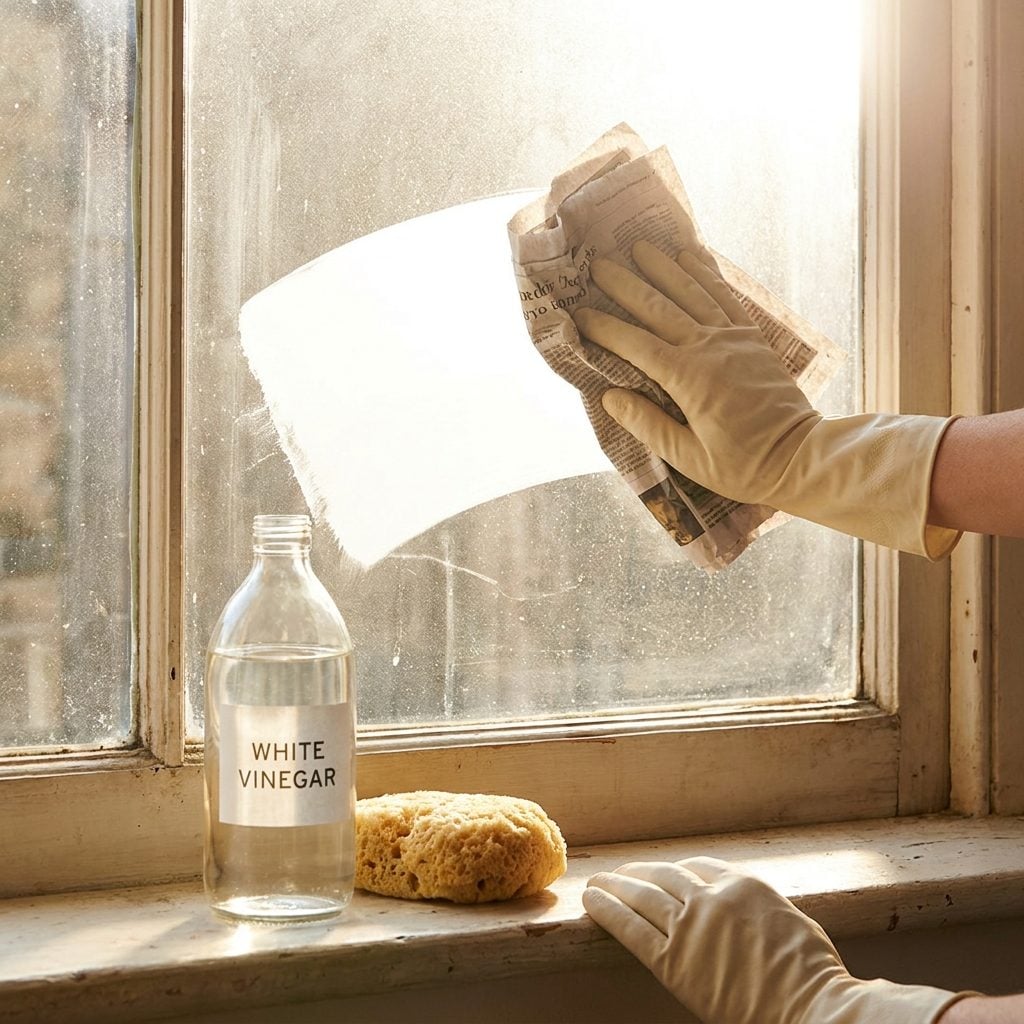
Vinegar and newspaper — that was the whole system, no fancy sprays needed, and plenty of households swore it worked better than anything at the store. You’d stand on a kitchen chair dragged in for the height, spritz the pane, and buff it with a crumpled sheet of newsprint that turned your fingertips gray. The trick was chasing the streaks with the light instead of against it, because a window looks spotless until the afternoon sun hits it sideways and shows every smear you missed. Sun pouring through a big picture window, ink on your hands, squinting against the glare. Not a bad way to spend an hour, honestly.
18. Cleaning Mirrors Until You Could See Your Reflection Twice
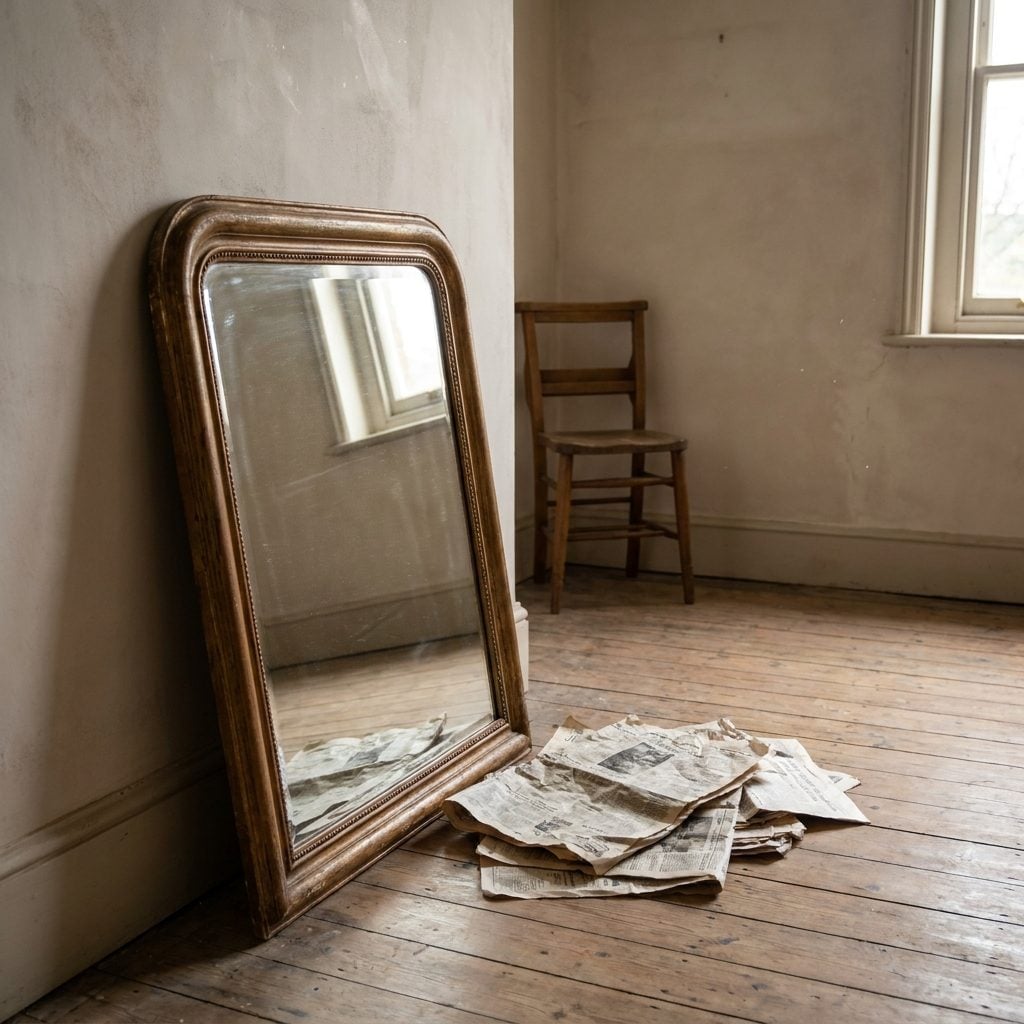
Mirrors had their own enemy: fingerprints, toothpaste flecks, hairspray haze, and that one greasy smear near the bottom corner that always survived the first pass. You’d spray, wipe, and then squint from three different angles until the glass stopped announcing where everyone had touched it. And if you left a streak, believe me, someone noticed. The whole point was that mirror looking like there was no glass there at all — just you, staring back, twice over if you caught the medicine cabinet swinging open. It was tedious work for a kid on a step stool. Still, there’s something oddly satisfying about seeing a job actually finish, and mirrors give you that instantly.
17. Hanging Wet Laundry on the Clothesline, One Wooden Peg at a Time
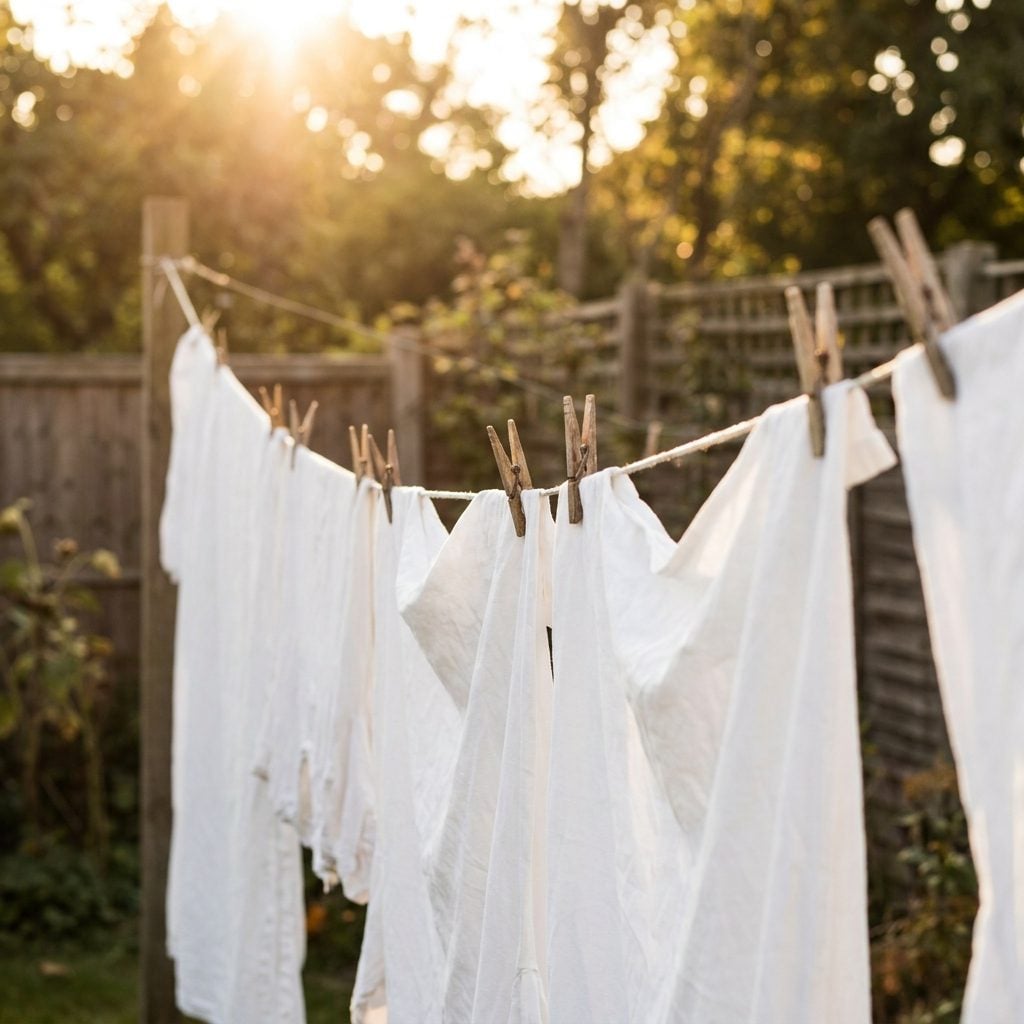
There was a system, and you learned it fast or you got corrected. Sheets went on the outer lines so they didn’t drip on the shirts. Socks got pegged in pairs. Anything white faced the sun to bleach out a little brighter. The wooden pegs lived in a cloth bag that slid along the wire, and you’d shuffle it down as you worked. Clothes dried outside smell like nothing a machine can fake — a little grassy, a little like warm air, faintly like the neighbor’s cut lawn. Was it slower than a dryer? Absolutely. But you were outside, the sheets were snapping in the wind, and honestly the smell alone made the case.
16. Taking It All Back Down Before the Rain (or the Bugs) Got To It
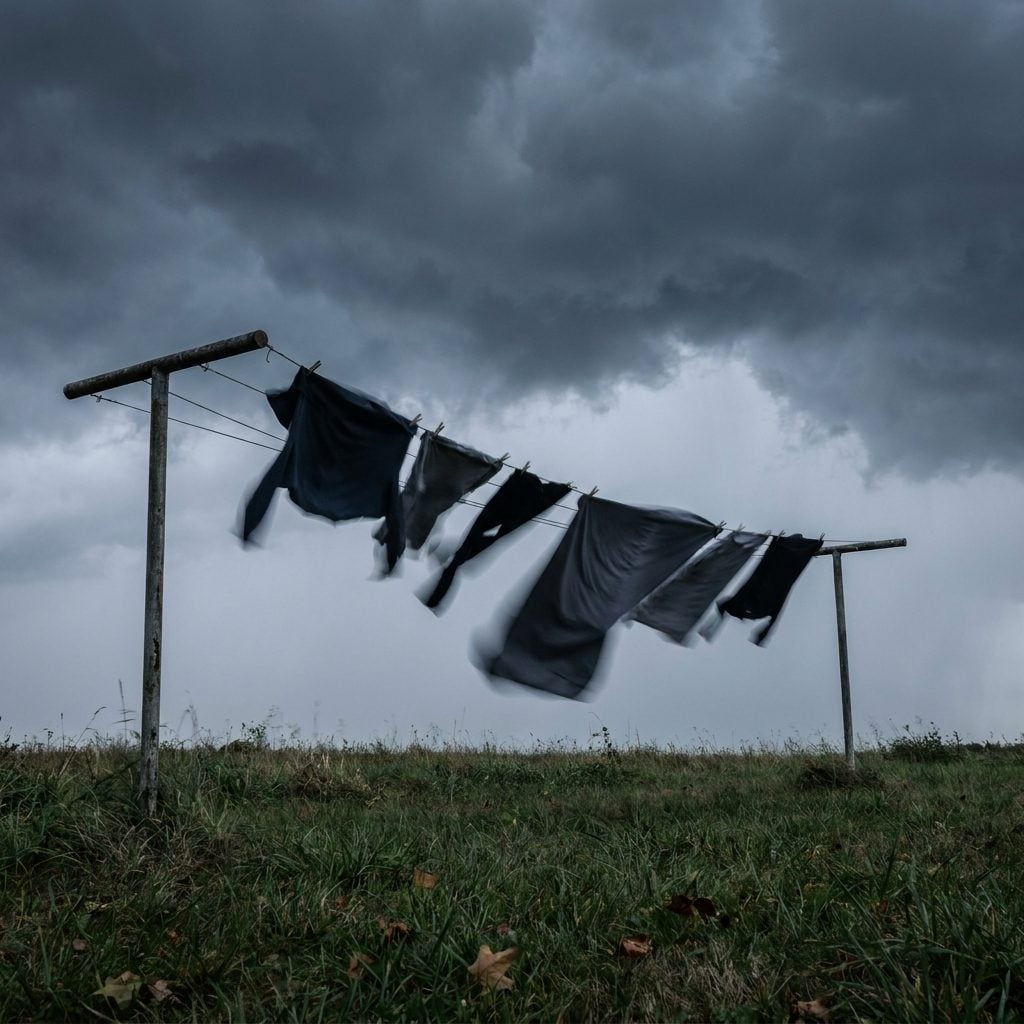
Hanging it out was the easy half. The other half was watching the sky. One dark cloud rolling in over the fence and suddenly you were sprinting across the yard, pegs clenched in your teeth, yanking towels down before the first fat drop landed. Get caught out and everything went back to soggy, which meant the whole thing started over. There were smaller enemies too. Leave a shirt out past dusk and you’d bring it in dotted with tiny bugs, or stiff as cardboard from the damp night air. So you learned to read the weather a little, the way farmers do. A city kid figuring out that gray on the horizon means move now.
15. The Folding Marathon on Mom’s Bed
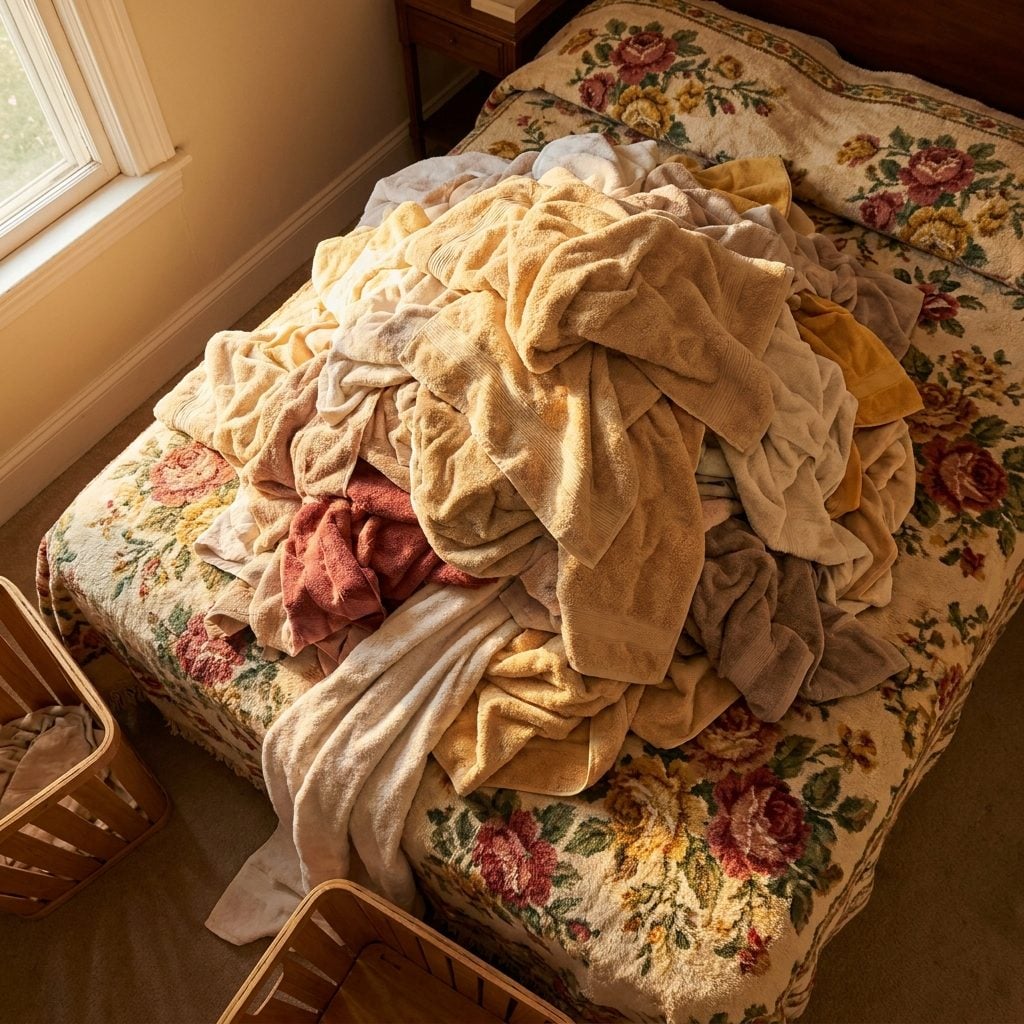
The whole warm load got dumped in the middle of Mom’s bed, and that was your afternoon gone. Towels folded in thirds, then in half. T-shirts stacked by whose they were. Socks matched into balls, which sounds simple until you realize six socks have no partner and you’re now conducting a full investigation. And the fitted sheet. Nobody has ever folded a fitted sheet correctly, not once in human history, and any kid who says otherwise is lying. You’d wrestle those elastic corners for a minute, give up, and roll the thing into a lumpy ball that got shoved to the back of the closet. If a sibling was helping, the pile became a battlefield of who was doing more and who kept unfolding the other’s work on purpose.
14. Ironing Pillowcases and Handkerchiefs Because Apparently Those Needed Ironing
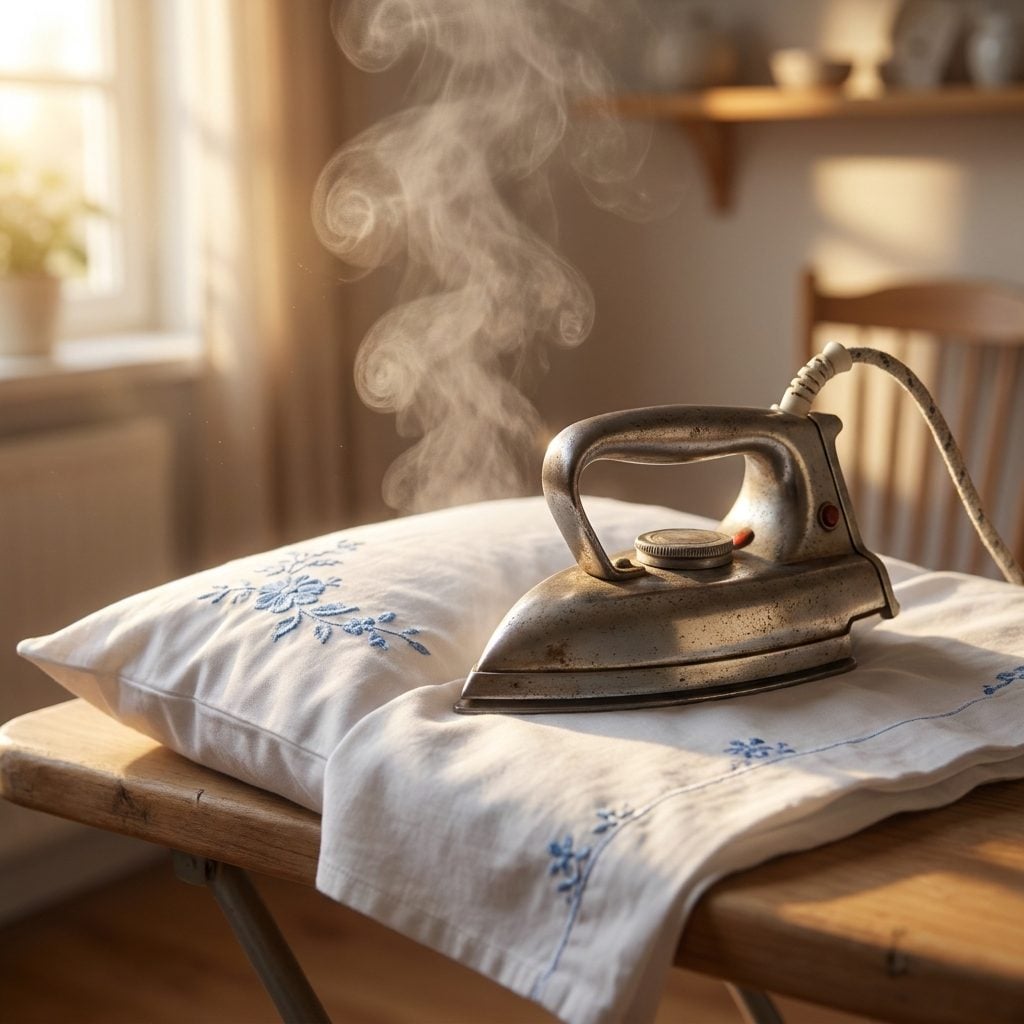
Here’s a thing that will baffle anyone under forty: people ironed their pillowcases. Their handkerchiefs. Sometimes their underwear, though we don’t need to dwell on that. Before steam irons became standard in every laundry room, plenty of households dampened fabric with water flicked from an old Coke bottle capped with a sprinkler top, then rolled everything up so the moisture could spread evenly before ironing. Then out came the heavy iron, and you pressed until every crease vanished. Was a crisp handkerchief worth a hot afternoon at the board? For those households, yes — a pressed pillowcase said you kept a proper home, full stop. The iron got scorching, the cover on the board was already singed brown in one spot, and you learned real fast not to rest a bare forearm anywhere near the plate.
13. Polishing Dad’s Shoes Until They Squeaked
🔥 Would you like to save this?
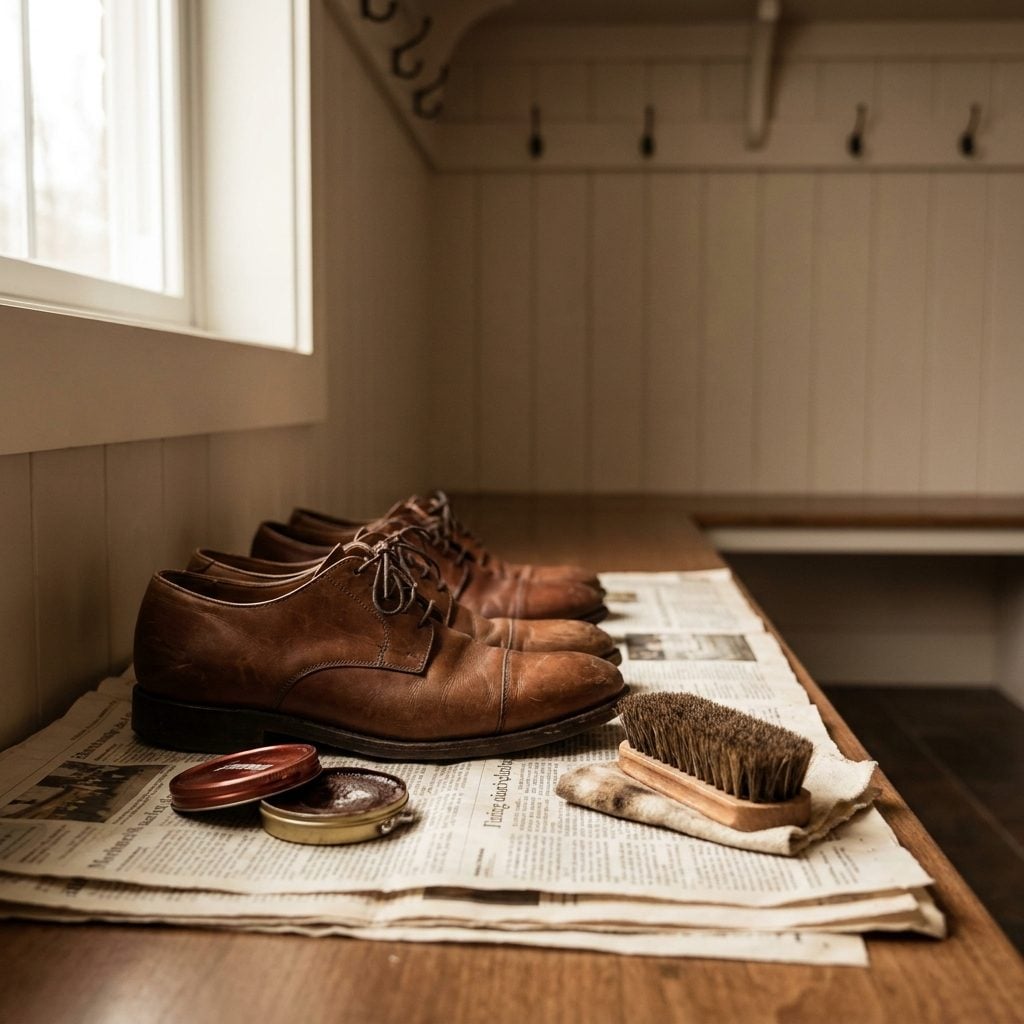
Saturday afternoon, newspaper spread on the mudroom floor, and Dad’s church shoes waiting in a row. You dabbed polish out of the flat Kiwi tin with a rag, worked it into the leather in little circles, let it haze over, then buffed. The buffing was the whole art of it. You went at that shoe with the horsehair brush until your arm ached and a dull black leather started throwing back light like it had somewhere to be. Some kids finished off with a soft cloth snapped back and forth across the toe for that extra gleam. You’d end up with black smudged across your knuckles and usually a streak on one cheek. But you handed those shoes back and they gleamed, and that felt like something.
12. Sweeping the Front Porch and Steps Every Saturday Morning
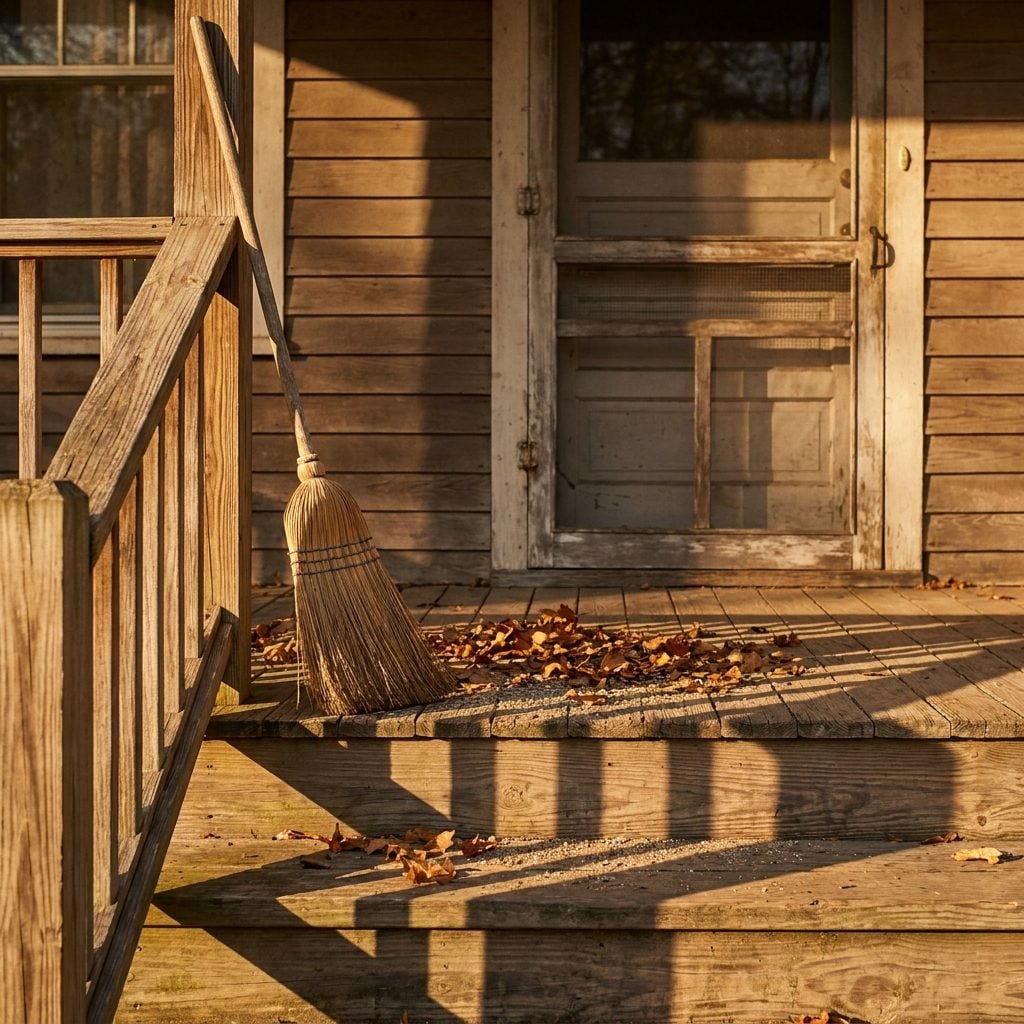
Every Saturday, corn broom in hand, you swept the porch. Leaves, grit tracked in off the yard, the odd dead moth from the porch light, whatever had blown up against the boards during the week. You worked it all toward the steps and off the edge, then chased the last of it into a metal dustpan. It wasn’t hard. It also wasn’t optional. A clean front porch was the face your house showed the street, and letting it go grubby was the sort of thing neighbors clocked without a word. There’s a rhythm to sweeping that a leaf blower never manages — the scratch of straw on wood, the little clouds of dust catching the morning light. You knew the weekend had officially begun once those boards were clean.
11. Raking Leaves Into a Pile You Weren’t Allowed to Jump In (Until You Did)
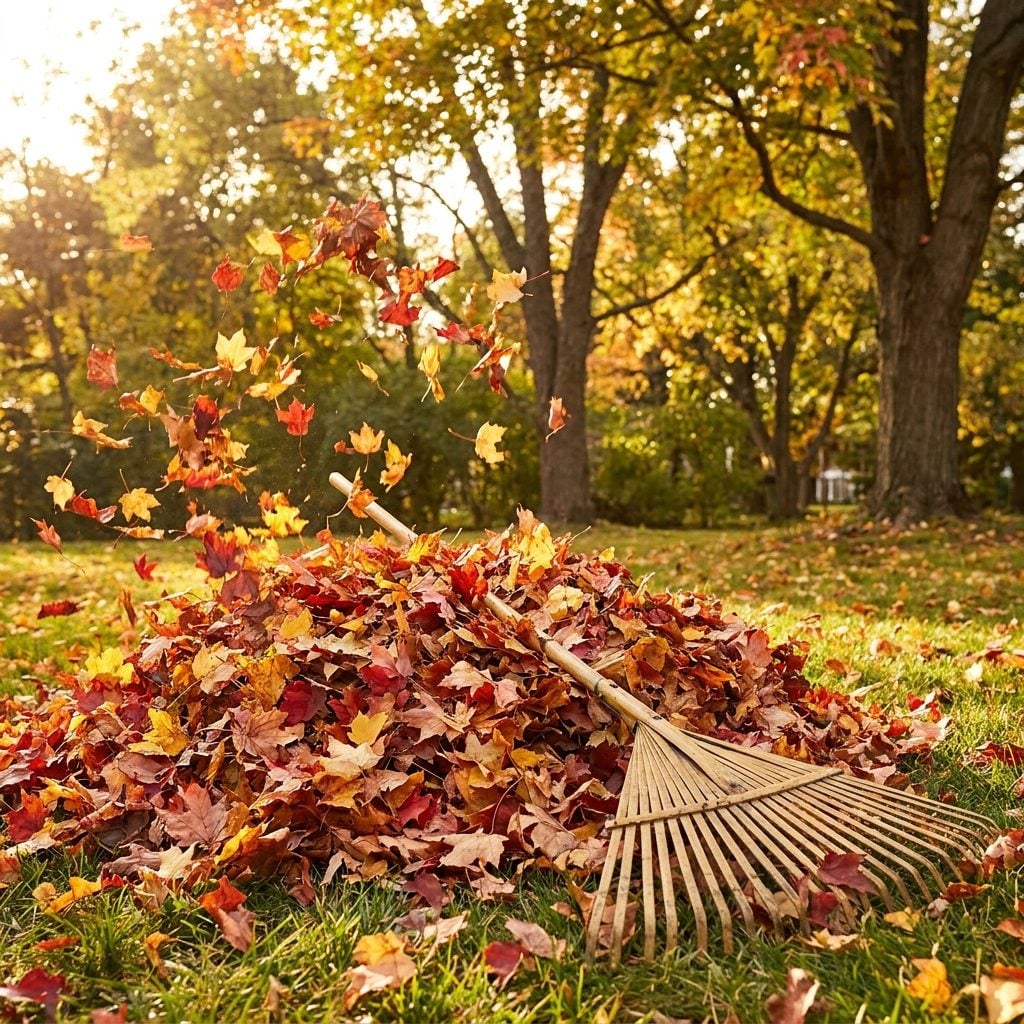
Bamboo fan rakes, wooden handles, one of them always too tall for the smallest kid raking. You’d drag the leaves in from the far corners of the yard, building the pile bigger and bigger, and the whole time you knew — you knew — you were not supposed to jump in it. That was the whole tragedy of the thing. Hours of careful raking sitting there in one gorgeous crunchy mound, practically daring you. So you jumped. Of course you jumped. Leaves everywhere, down your collar, in your hair, and then you raked it all up again because the alternative was explaining to a parent why the pile was gone. The bagging was the boring part. Jumping was the reason you did any of it.
10. Pulling Weeds Out of the Flower Beds on Your Hands and Knees

On your knees in the dirt, there was no shortcut for you that morning, just fingers and a stubborn dandelion root that snapped off halfway down every single time. The gloves sat right there and nobody wore them; you couldn’t feel the root through leather. Crabgrass came out in satisfying ropes if you got the timing right after a rain. Marigolds and zinnias stayed, everything else went in the bucket. It was hot, tedious, and your knees ended up printed with the pattern of the ground. But there’s a specific kind of pull that comes up clean, whole root and all, and any kid who’s done it knows that little jolt of triumph. That was the payment for an otherwise thankless hour.
9. Watering the Garden With the Hose Before the Sun Got Too High
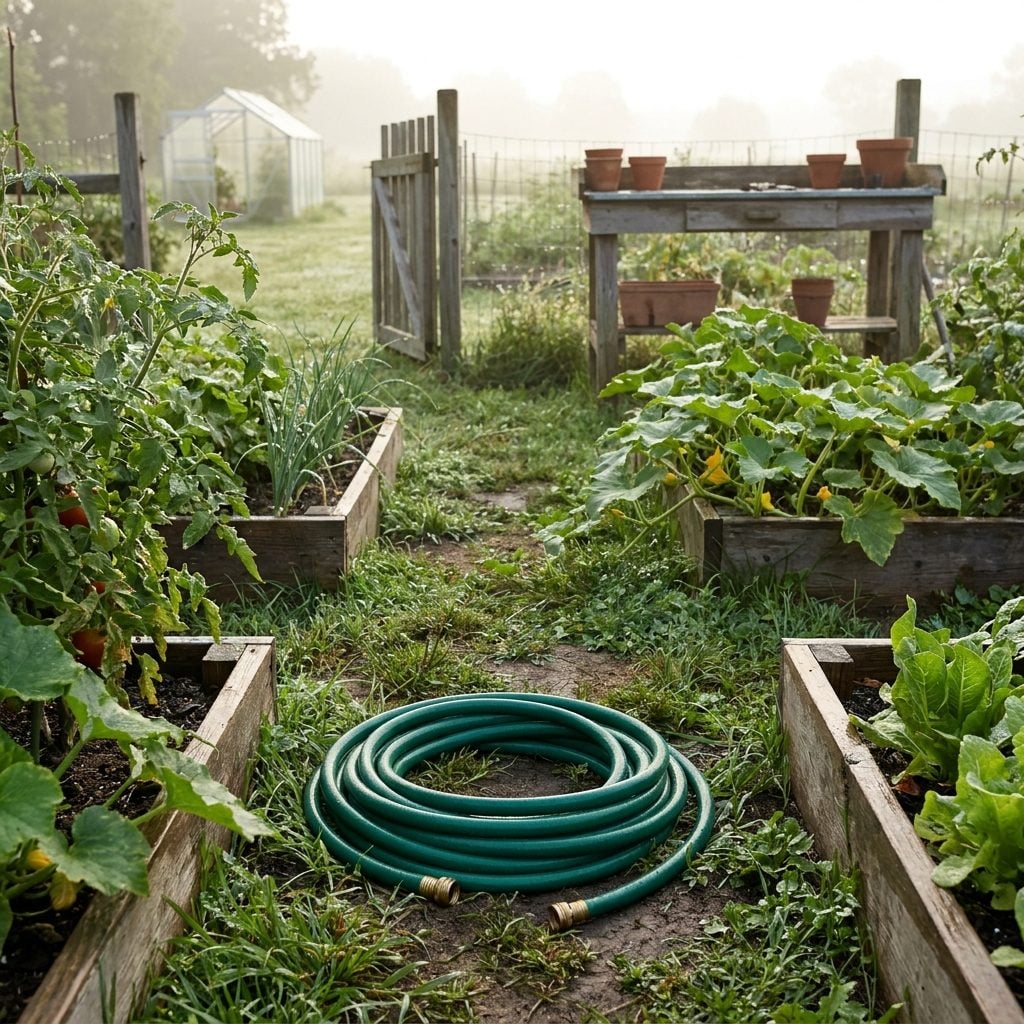
You watered early, before the heat of the day started stealing more water to evaporation. That was the rule, passed down without much explanation, and it turned out to be good gardening sense. Brass nozzle screwed onto the green rubber hose, thumb ready to choke the spray down to a soft rainbow arc so you didn’t blast the seedlings sideways. Tomatoes first, then the beans climbing the wire, then a slow drink for whatever else was coming up. Honestly, of every chore on this list, watering was the one you didn’t mind. Standing there in the cool of the morning, hose humming, the smell of wet dirt rising off the beds, a rainbow flickering in the mist every time you turned toward the sun. It was the closest a chore ever came to just goofing off with permission.
8. Mowing the Lawn With a Push Mower That Fought You the Whole Way
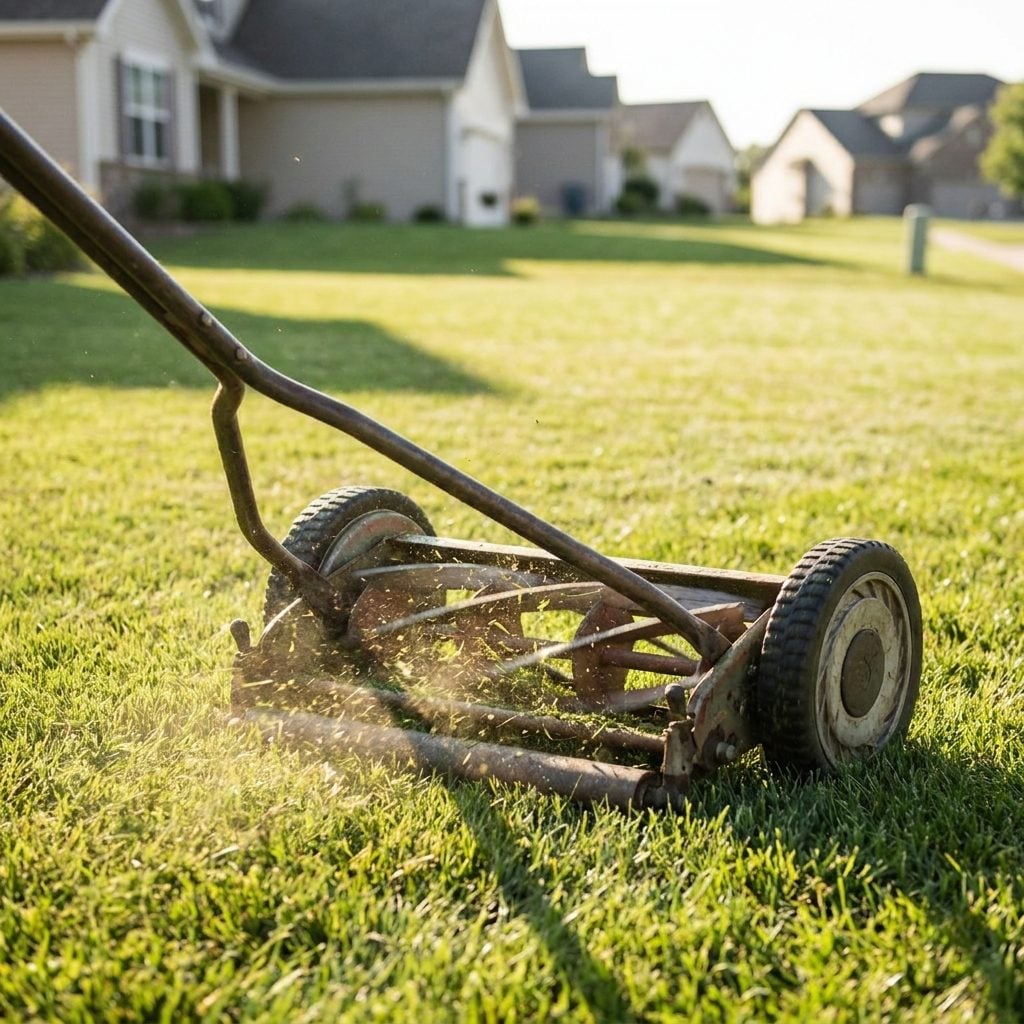
Saturday morning, and the whole street sounded like a swarm — every kid on the block out there at nine a.m. behind a mower that hadn’t been sharpened since the Nixon administration.
You learned quick that a push mower on a slope was a negotiation. Hit a patch of clover and thick grass and the thing bogged down, so you’d back up and take a run at it, again, and probably again. The reward? Stripes you cut yourself, plus the specific pride of a job nobody had to redo.
7. Walking the Yard for Sticks Before Dad Fired Up the Mower
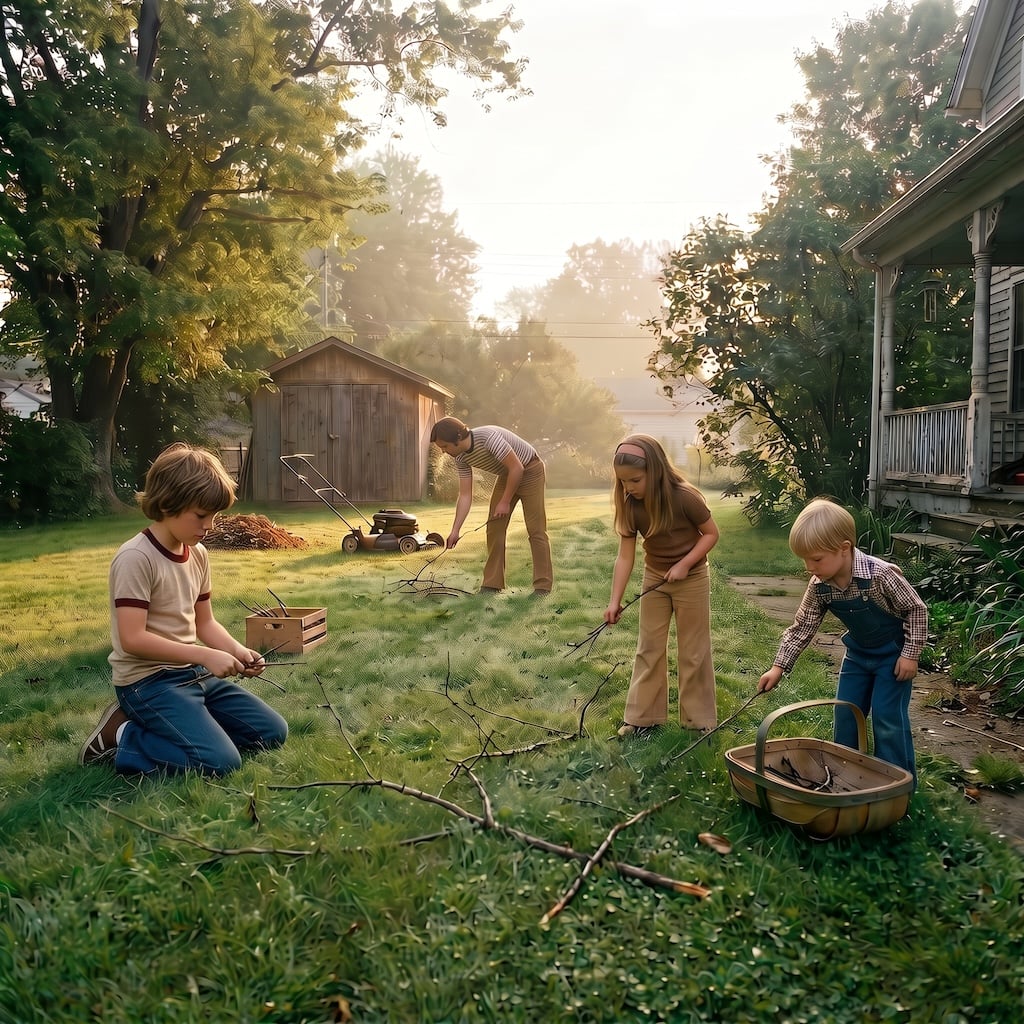
Before the mower earned its glory, someone smaller had to clear the runway. That someone was you — crisscrossing the yard head-down, hunting twigs like a low-stakes treasure map.
The rule was simple and non-negotiable: a stick left in the grass became a projectile, and a projectile might take out a window, a shin, or the neighbor’s cat. You never fully believed it until you heard one ping off the blade like a rifle shot. Then you believed.
6. Shoveling the Front Walk Before the Bus Came
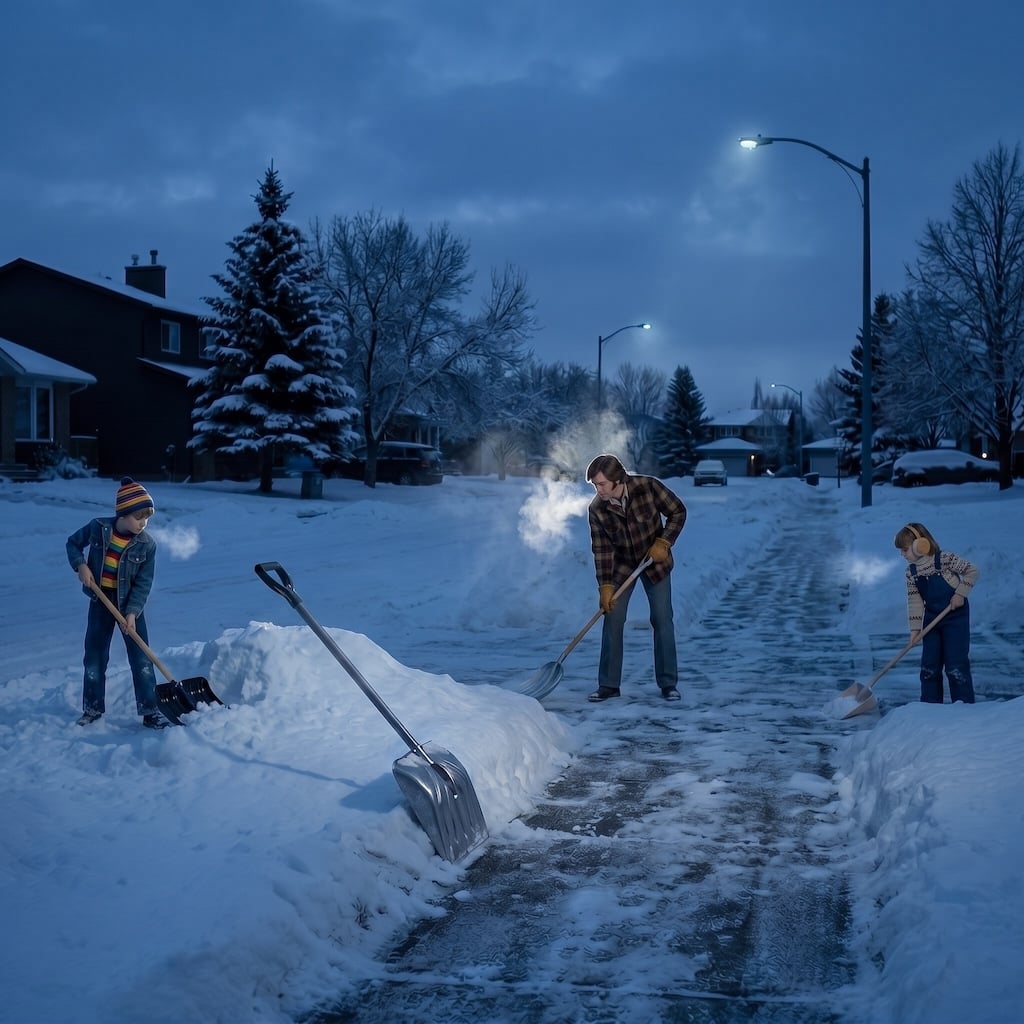
The dread started the night before, when the snow kept falling and you knew. Up before light, coat over pajamas, chipping away at a walkway that refused to end.
There was a grim math to it. Shovel too early and it snowed again; shovel too late and it froze into something that mocked you. And the moment you finished, the town plow rolled by and buried the end of the driveway in a wall of gray slush — which everyone agreed was a personal insult.
5. Washing the Family Car in the Driveway With a Bucket and a Hose
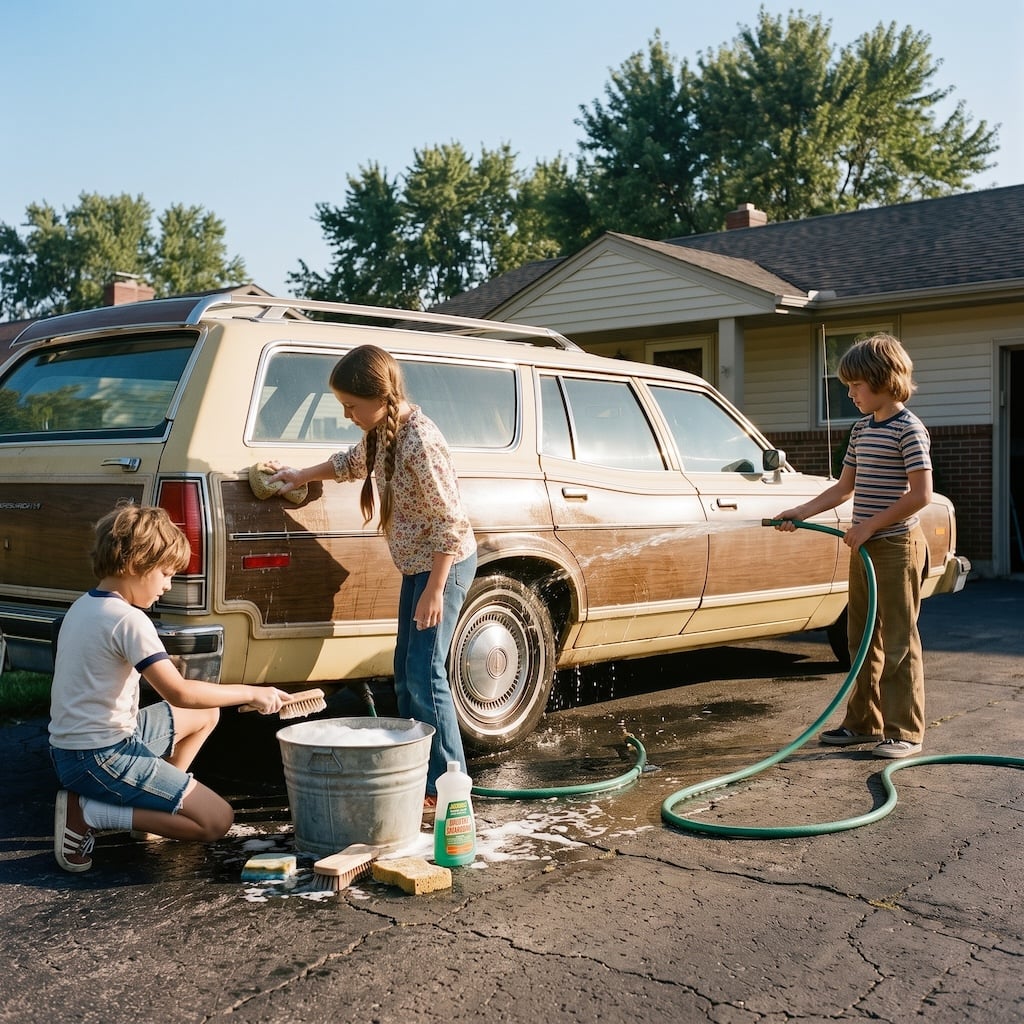
It started as a chore and ended as a water fight. Every single time.
Dish soap in a metal bucket — the wrong soap, technically, but nobody knew — a sponge that shed bits of itself, and a hose with a nozzle stuck between two settings: dribble and fire hose. You’d get the family wagon gleaming, then someone got sprayed, and the whole operation dissolved into shrieking.
The chrome bumper was the finish line. You buffed it out with an old bath towel until you could see your own squinting face, and Dad would nod once. Highest praise available.
4. Cleaning Out the Garage, aka the Family Museum of Broken Things
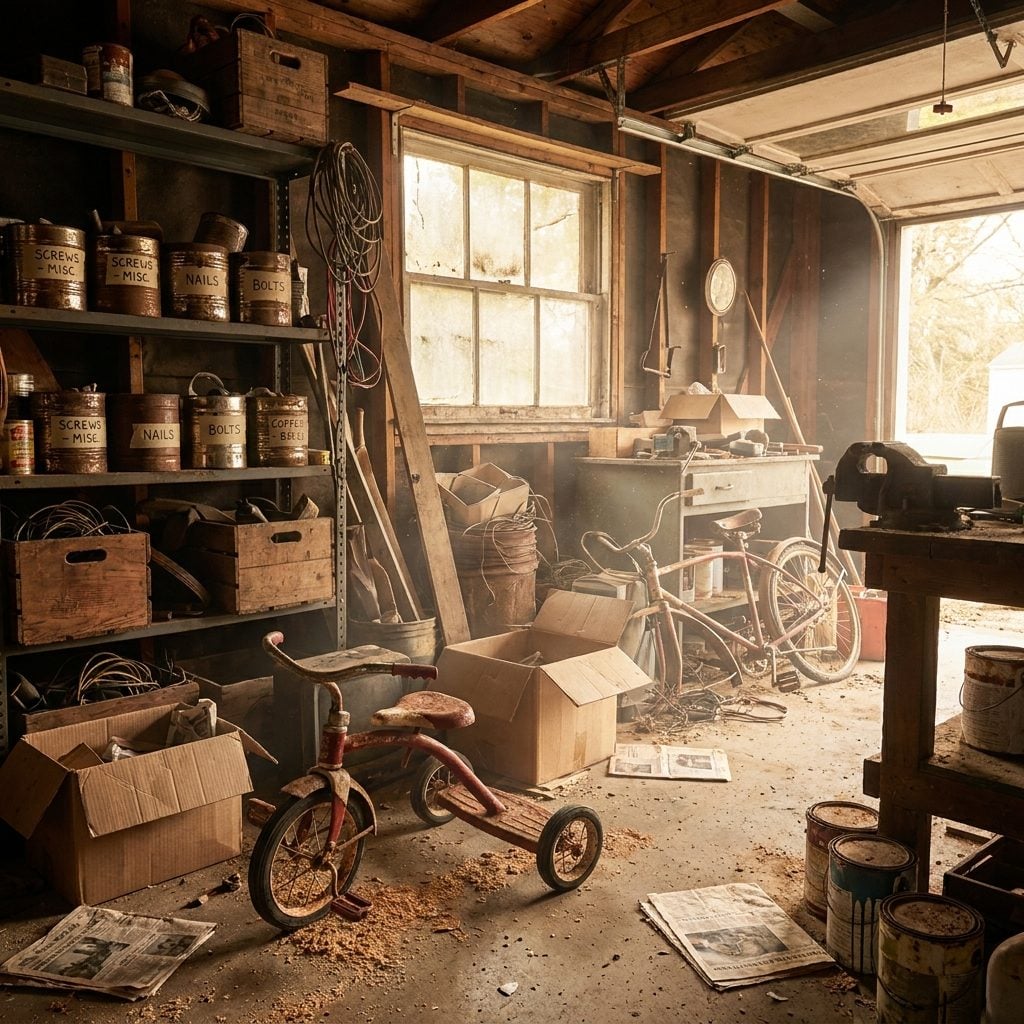
🔥 Would you like to save this?
Somewhere between the coffee cans of mystery screws and the tricycle you outgrew in 1974, you understood that the garage was where objects went to be forgotten with dignity.
The job was never really cleaning. It was archaeology. You’d unearth a hula hoop, a broken toaster Dad swore he’d fix, and a box of Christmas lights so tangled they’d achieved a kind of permanence. Half the afternoon vanished into finding things instead of sorting them. Anyone who has ever emptied a garage for a game room renovation knows the trap: you open one box, find something you forgot existed, and lose the next twenty minutes to it.
3. Feeding and Watering the Pets (Whether You Felt Like It or Not)
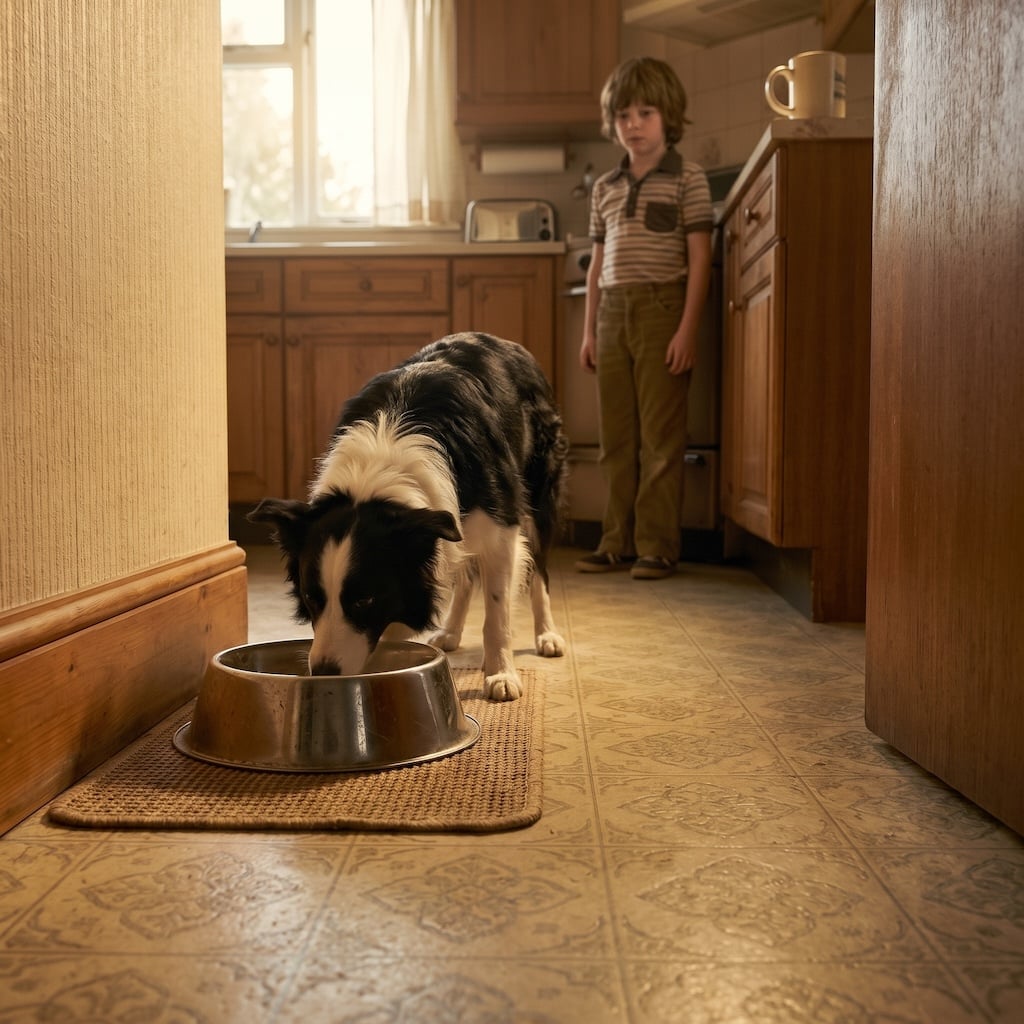
The dog knew your alarm clock better than you did, and it sat by the empty bowl at 6:45 sharp, staring with the quiet patience of a creature that had never once forgotten a meal in its life.
This was the chore with a conscience attached. You could grumble about the lawn all you wanted, but forget the cat’s water and you felt genuinely awful by lunchtime. For plenty of kids, it was an early lesson in being responsible for something that couldn’t ask twice.
2. Hauling the Bag of Deposit Bottles Back to the Store for Nickels
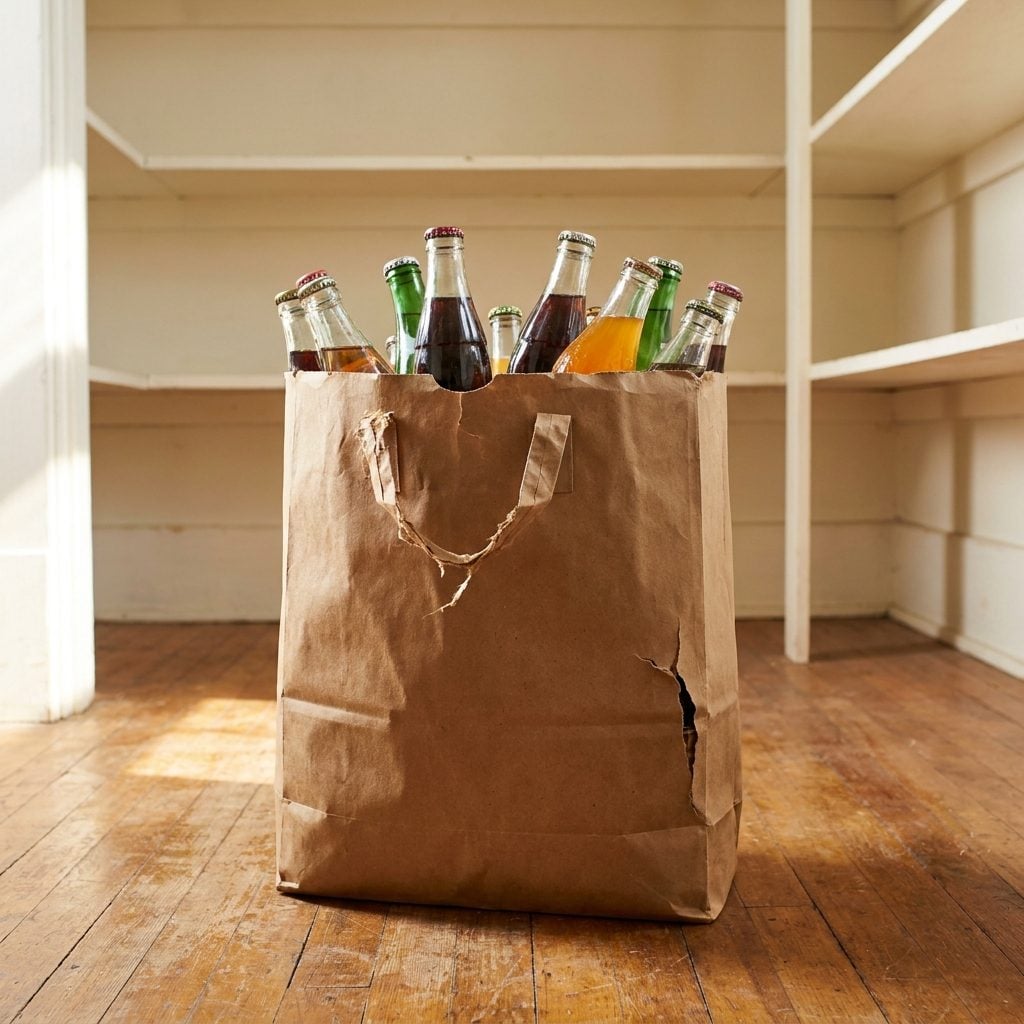
That bag was heavy. The paper was giving out at the bottom seam, and every bottle clinked a promise: deposit money. Real, spendable, candy-buying change.
You lugged them the four blocks to the store, prayed the bag held, and fed them one by one to the clerk or the machine. Simple math, immediate payoff — enough empties could buy a comic book or a fistful of penny candy, and no chore in America felt more like a paying job.
1. That Reluctant Pause at the Door: “Mom, Is There Anything Else?”
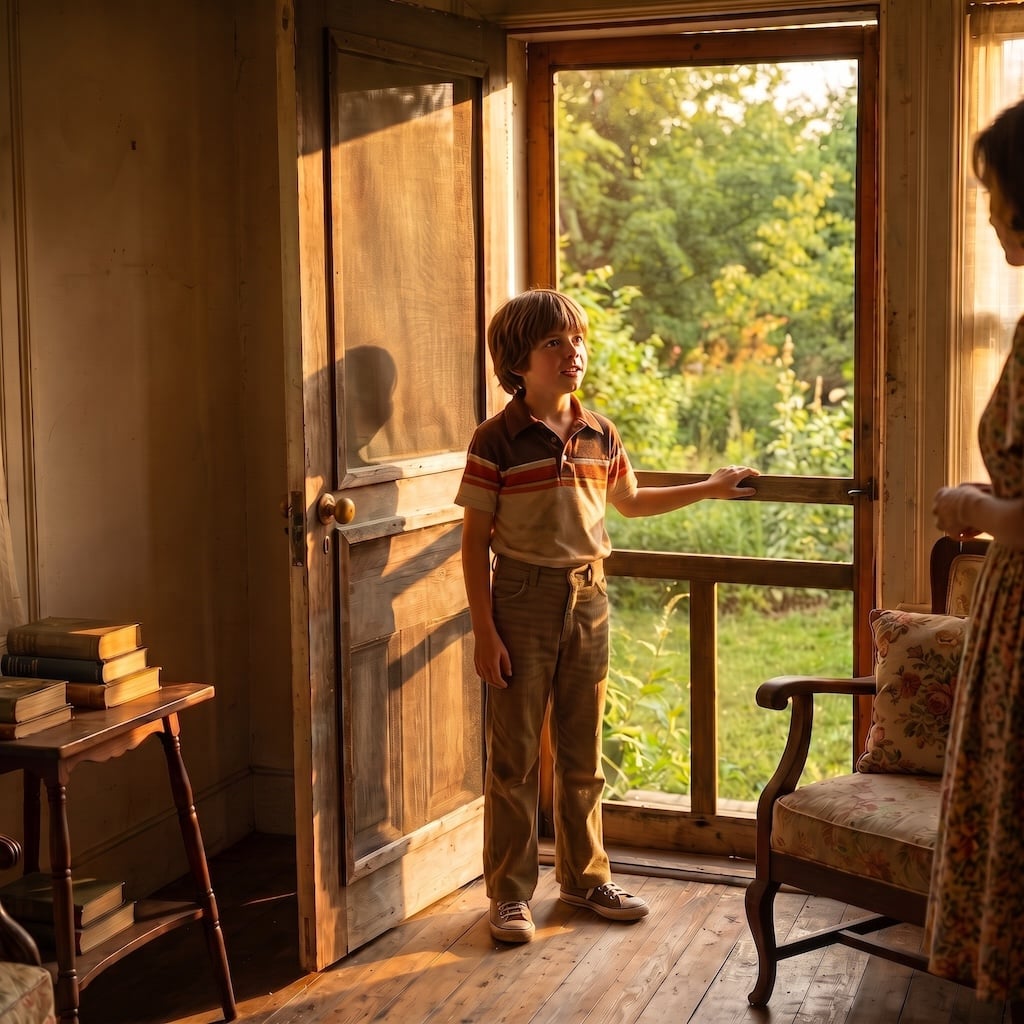
You had one hand on the screen door and the whole afternoon waiting on the other side. The question was a formality — a toll you paid to be released into the yard.
But you asked it anyway, because the answer might be no, and no meant freedom. Too casual and Mom might remember the trash. Too eager and she’d get suspicious. The trick was a fast, breezy delivery on your way out, already half gone.
Then the screen door slammed behind you and the day was yours. Bikes, dirt, the neighbor’s yard, gone until the streetlights came on. No screen glowed for us back then except the one on the television, and honestly? That could wait. This was the good part.