🔥 Would you like to save this?
A $38,000 bathroom quote lands on the counter, and the instinct is to go hunting for a lump of money. The homeowners who handle it well do two things at once: they shrink the number with smarter layout and material choices, then finance only what’s left with low-cost borrowing, leaving retirement accounts closed. Here are 28 moves that do both jobs, tied to this exact budget.
This article contains affiliate links. If you sign up or buy through them, Home Stratosphere may earn a commission at no extra cost to you.
In order to come up with the very specific design ideas, we create most designs with the assistance of state-of-the-art AI interior design software. Also, assume links that take you off the site are affiliate links such as links to Amazon. this means we may earn a commission if you buy something.
28. Keep the Toilet, Tub and Drain Exactly Where They Are
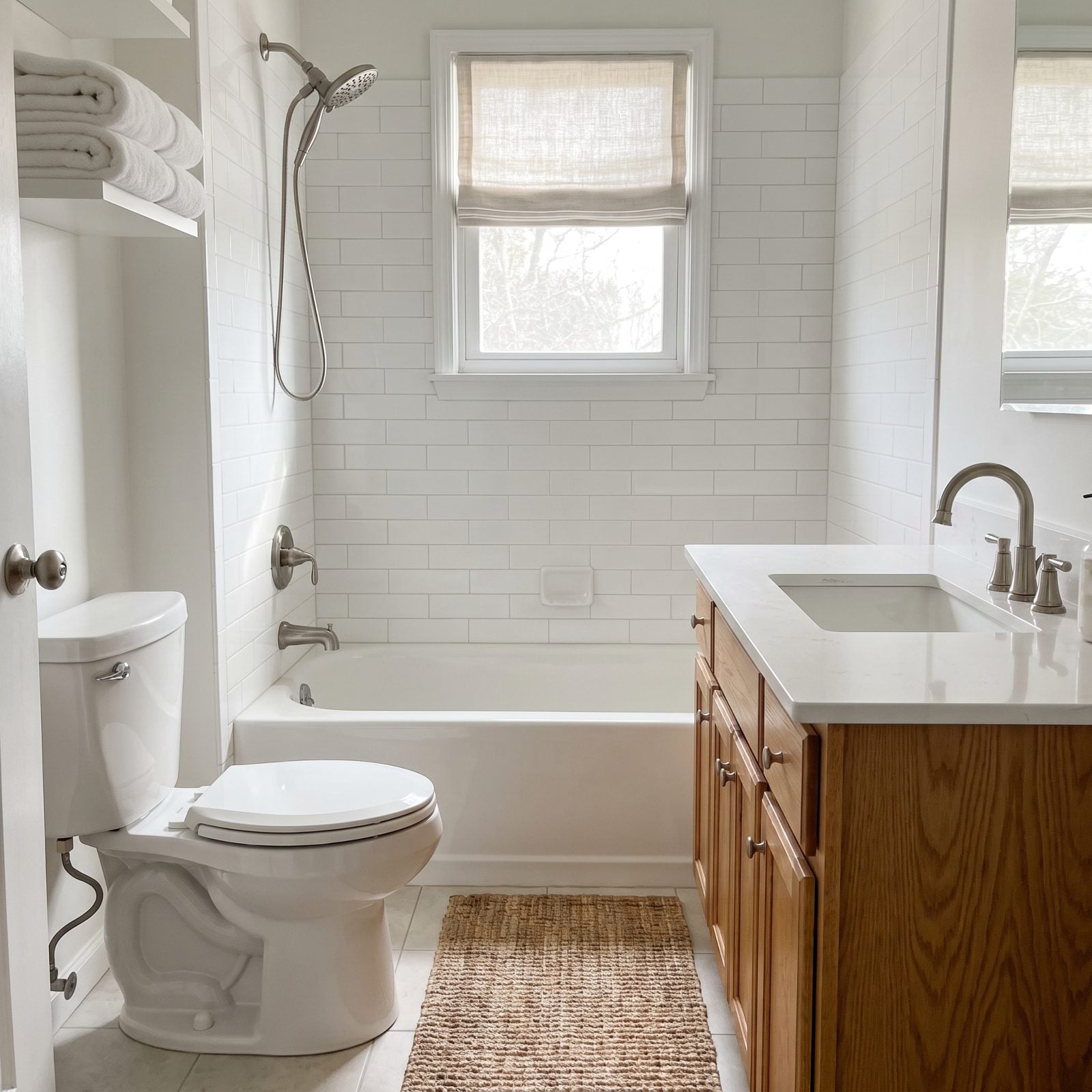
Moving plumbing is where bathroom budgets quietly bleed out. Relocate a toilet three feet and you’re paying to break the floor, reroute the drain, re-vent it, and patch everything back. That single decision can add a few thousand dollars before you’ve bought a single pretty thing.
Keep the toilet, tub and main drain on their existing lines and you protect the biggest chunk of your savings. You can still change everything you see. New fixtures, new tile, new vanity, same footprint.
27. Compare Today’s HELOC Rates Before You Touch Your Retirement Accounts
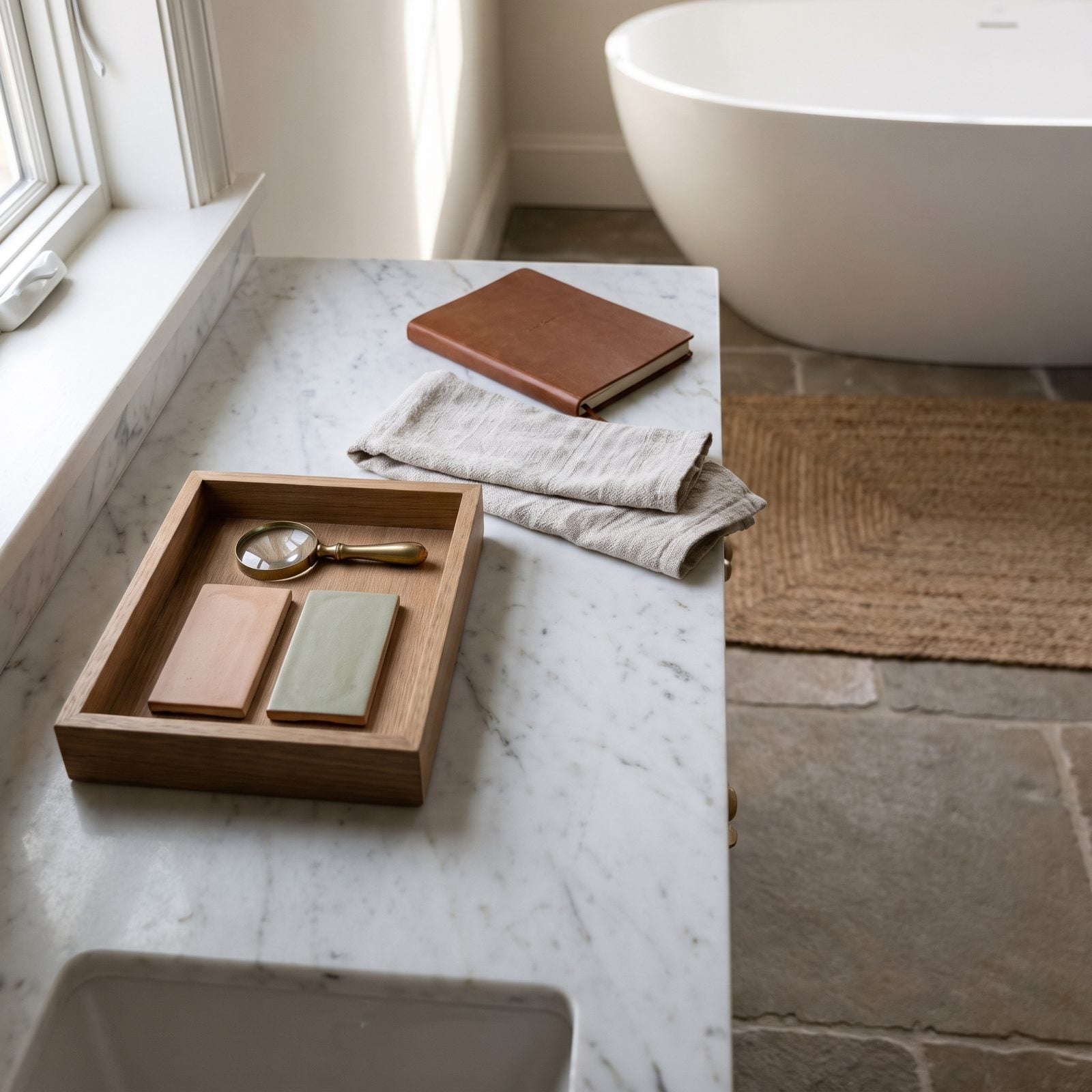
A home equity line of credit is the tool most people reach for first, and for good reason. You borrow against what you already own, usually at a lower cost than a card or a personal loan. The catch? It’s secured by your house, so the stakes are real and the rate can move.
Before you commit, pull quotes from two or three lenders and compare the actual cost, not just the headline rate. On a $38,000 project where you’ve already trimmed the job down to $26,000, you might only draw $18,000. Borrow what you need, not the full line they wave at you. Approval and rates vary, so treat every number as a starting point.
26. Have a Bathroom Pro Red-Line the $38,000 Quote Before You Sign
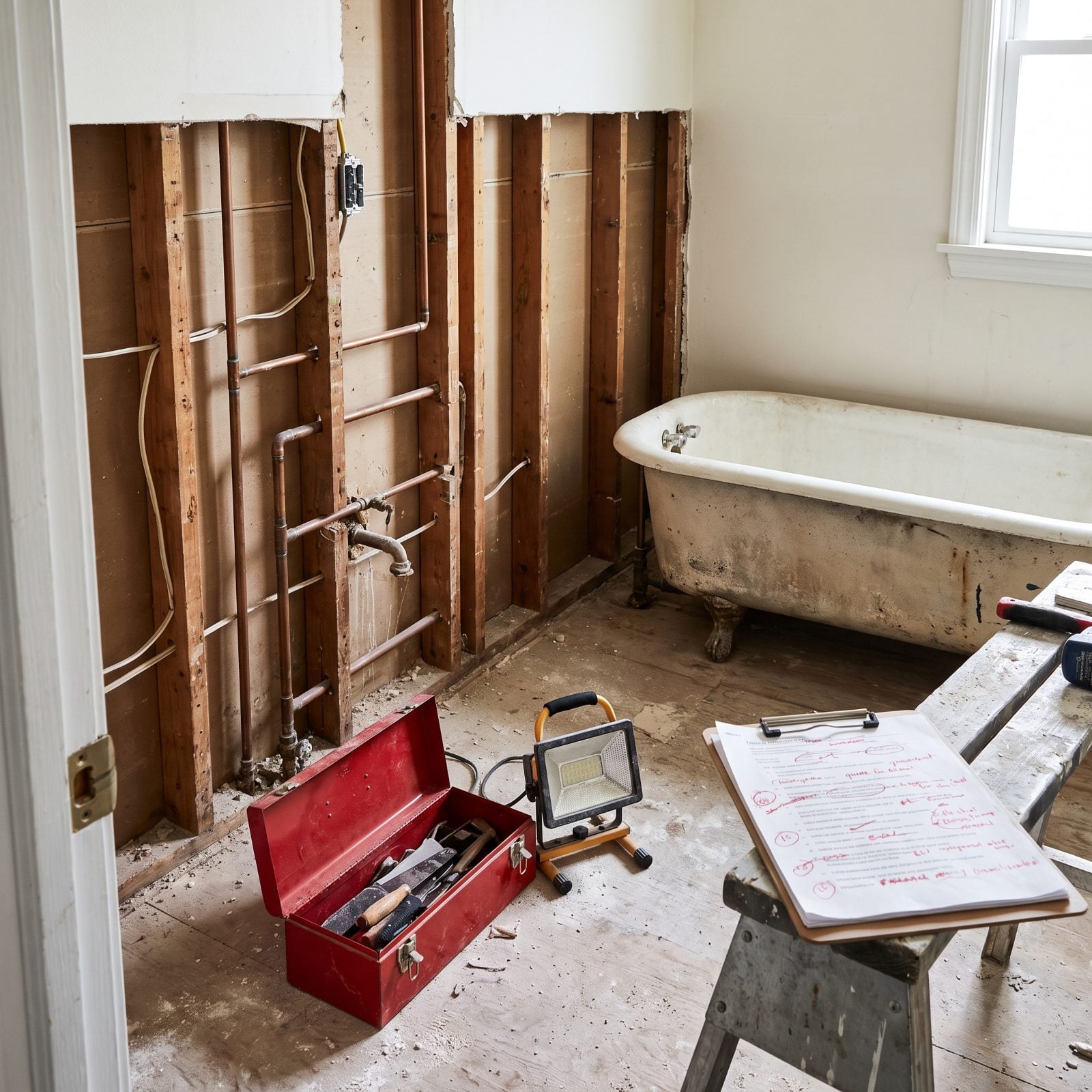
Get a second set of eyes on that quote before you sign a thing. A single line-by-line review often turns up a few thousand dollars of padding or vague allowances that would’ve ambushed you at the end.
Watch for three things especially:
- Tile and fixture allowances set so low you’ll blow past them and owe overages.
- Lumped line items that hide markup, like one big number for “demo and prep.”
- Work you don’t actually need, like re-tiling a wall that’s hidden behind the vanity nobody will ever see.
You don’t have to be rude about it. Just ask what every number covers.
Before you sign, you can ask a home improvement expert on JustAnswer to go through the bathroom quote line by line and flag what’s padded.
25. Swap the Custom Tile Shower Pan for a Prefab Base With Tile Walls
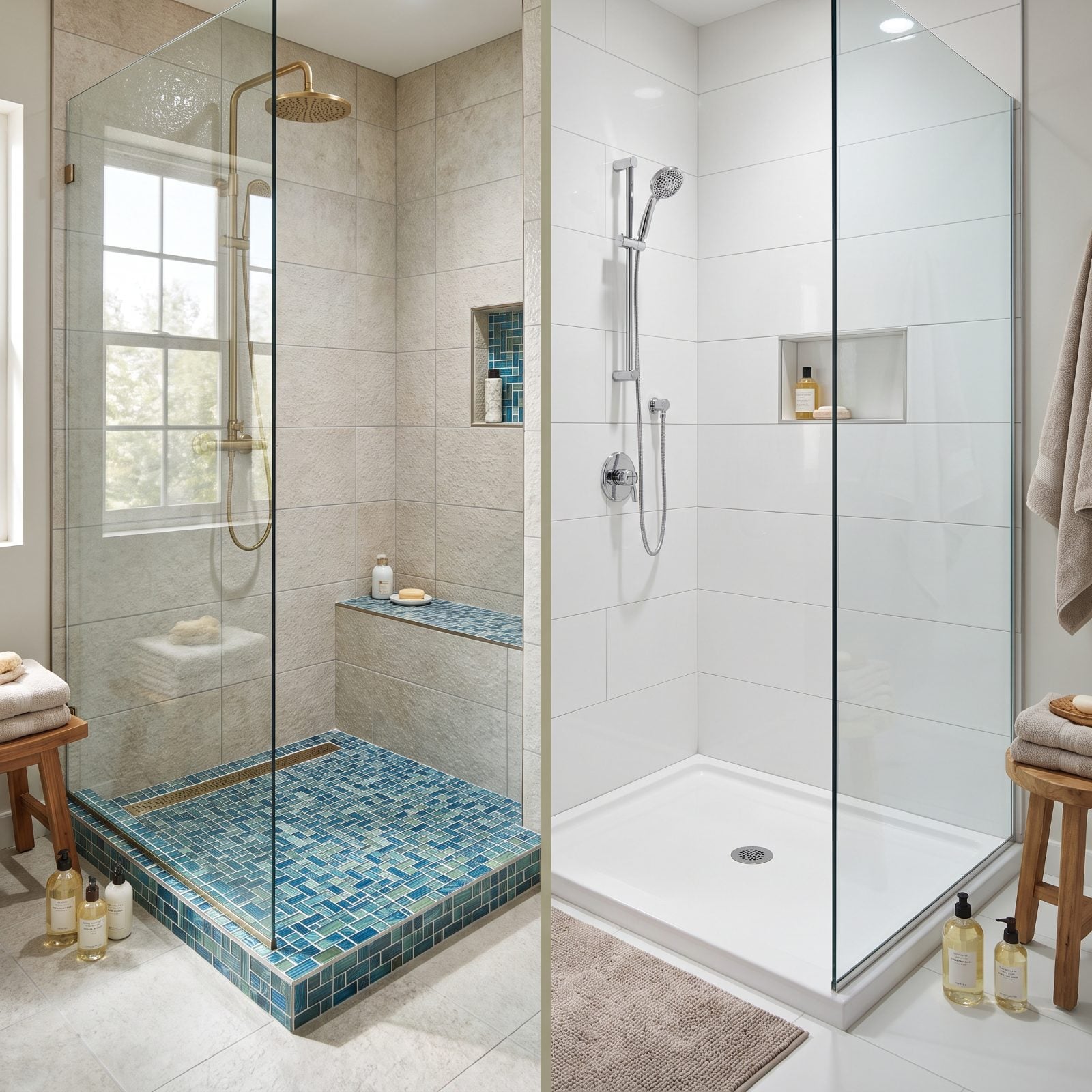
The shower floor is where custom tile gets expensive fast. A fully tiled pan with mosaic and a hand-built slope means labor hours, waterproofing fuss, and grout lines you’ll be scrubbing for the next decade.
A quality prefab base in solid surface or acrylic gives you a watertight floor in a fraction of the time, and you still tile the walls floor to ceiling for the look you were after. On this budget that one swap can save hundreds to over a thousand dollars in labor alone, and your shower floor stops being a grout maintenance project.
24. Why Pulling From a 401(k) or IRA Is the Most Expensive Way to Pay

Pulling money out of a retirement account to redo a bathroom is almost always the costliest path, and it’s worth understanding why before anyone talks you into it.
Take an early withdrawal and you generally owe income tax on it, plus a penalty if you’re under the qualifying age. So to net $20,000 for the project you might have to pull out far more than that just to cover the tax bite. Then there’s the quieter cost. That money stops growing. Dollars you’d have let compound for years are gone, and the renovation never pays them back.
Loans against a retirement plan carry their own traps, including repayment rules if you leave your job. A tile floor is not worth gambling your later years on. Rates and tax rules vary, so talk to a tax professional about your own situation before doing anything here.
23. Put a Fixed-Rate Home Equity Loan Against the Big-Ticket Work

Want certainty over flexibility? A fixed-rate home equity loan is the counterpart to a line of credit. You borrow a set amount once, at a set rate, with a monthly payment that never moves.
That predictability suits a defined project. Say your trimmed budget lands at $24,000 and you’re covering $6,000 from savings. A fixed loan for the remaining $18,000 gives you one payment you can plan around for years. Like any home equity product, it’s secured by your house, so weigh the total cost against a HELOC and a personal loan before choosing. Borrow only the amount the job actually needs.
22. Find Out Whether a Tax Pro Can Free Up Cash You Didn’t Know You Had
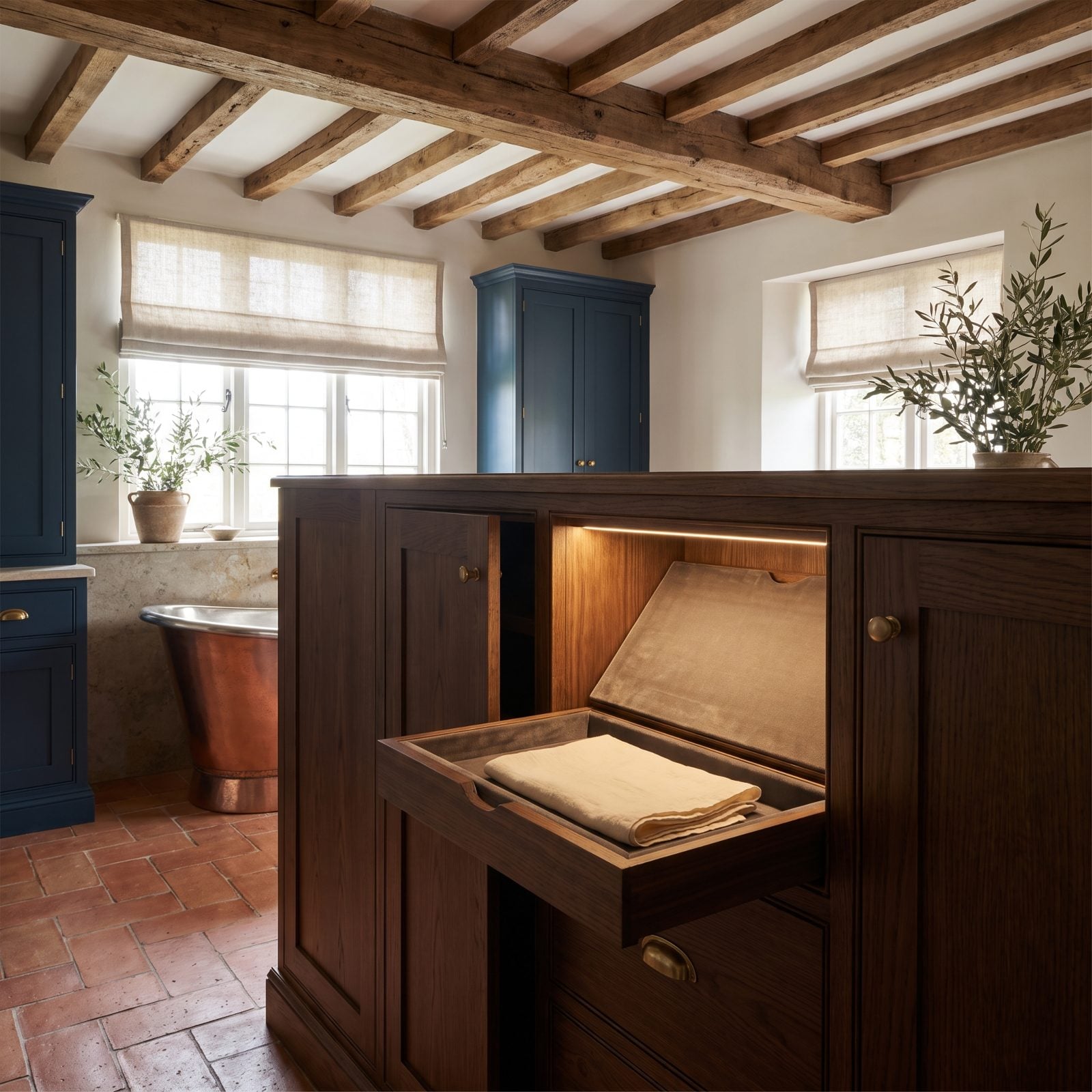
Some of the money for your remodel may already exist, hiding in credits and rebates you simply don’t know about.
Certain energy-efficient upgrades, like qualifying water heaters or ventilation improvements, can come with tax credits or local utility rebates that effectively lower what you spend. The rules shift by year and by where you live, and eligibility is fussy, so this is exactly the kind of thing a tax professional earns their fee on. A short conversation before you buy fixtures can tell you which choices qualify and which don’t. Confirm it for your own situation rather than assuming, because programs change and nobody can promise an outcome.
If a refund is likely, you can talk to a tax expert online through Tax Expert Now and find out what you’re leaving on the table.
21. Spend on the Shower Valve and Waterproofing, Save on the Trim

Here’s the rule every renovation should follow: spend on what’s behind the wall, save on what’s bolted to the front of it.
The shower valve and the waterproofing are the parts you can never easily reach again. A quality pressure-balanced valve and a properly sealed membrane keep water out of your framing for the next twenty years. Skimp there and you’re looking at a repair that costs more than the whole remodel.
The trim, meaning the visible handle and plate, is cosmetic and swappable in an afternoon. Buy a mid-priced finish kit instead of the designer one and nobody will ever know the difference. Put the good money where the water lives.
20. Refinish the Tub Instead of Replacing It
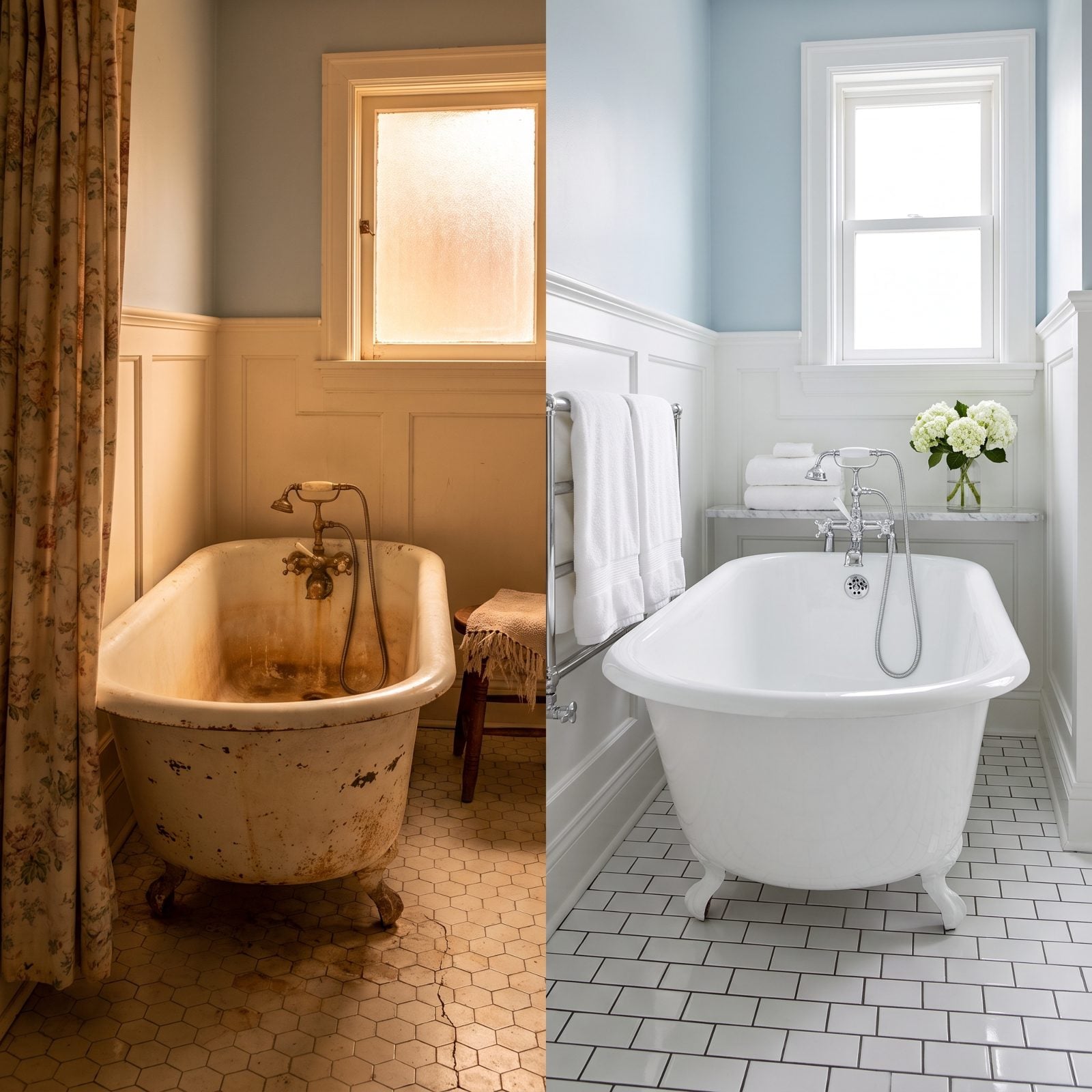
A tub that’s structurally sound but ugly doesn’t need a dumpster. It needs a refinisher.
Professional refinishing resurfaces the existing tub in a fresh glossy coat for a tiny fraction of what rip-out-and-replace costs. It skips the demo, the disposal, the plumbing rework, and the tile repair around it. On this budget, refinishing instead of replacing can keep well over a thousand dollars in your pocket for other work, and it’s one of the best returns in the whole project.
19. Buy the Vanity, Faucets and Mirror Yourself
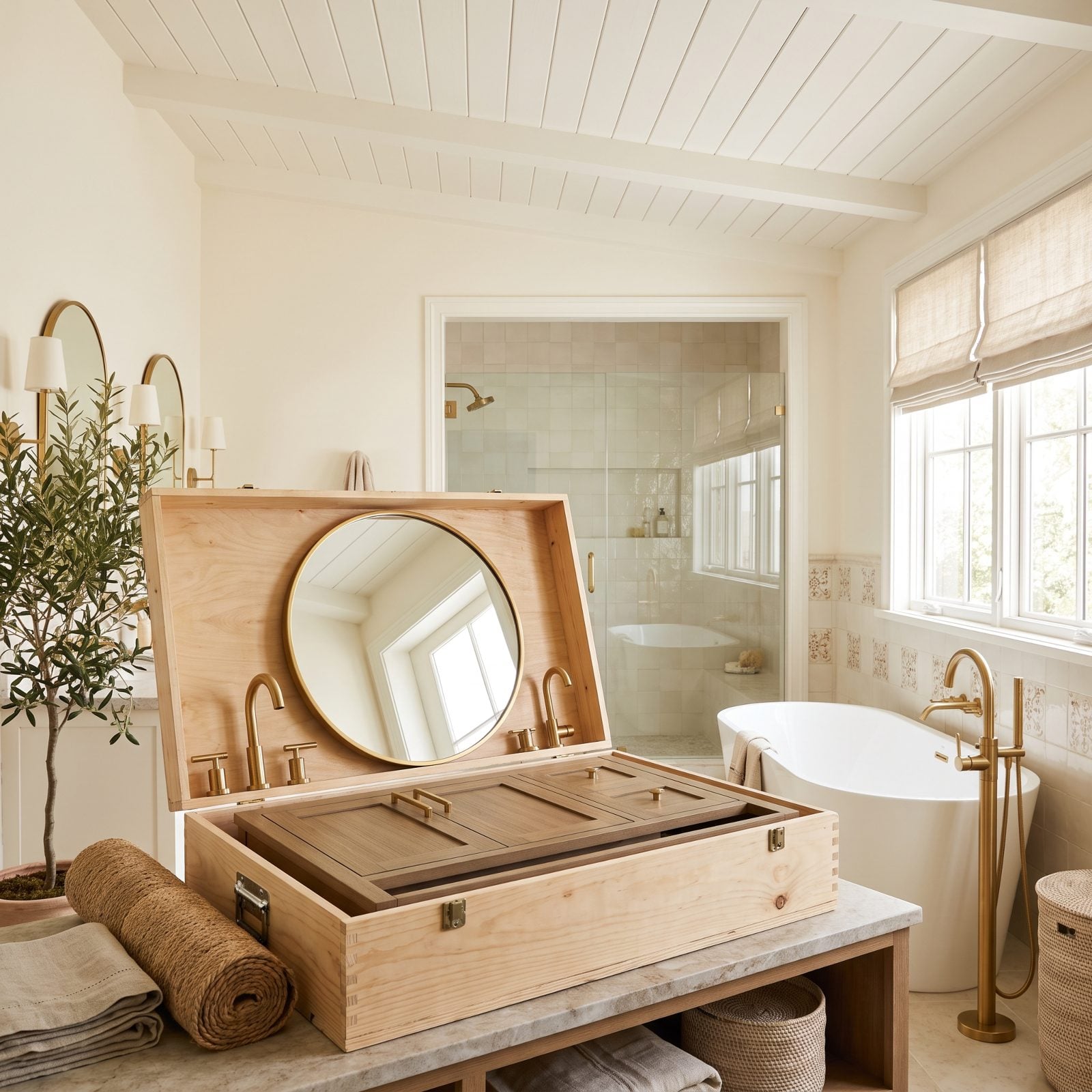
Contractors mark up materials. That’s normal, part of how they make the job worth doing, but on the finish pieces it means you’re paying a premium for things you could grab yourself.
Source the vanity, faucets and mirror on your own and hand them over for install. You often pocket the markup, and you get exactly the walnut vanity and brushed-brass faucet you wanted instead of whatever’s in the contractor’s catalog. Just coordinate sizes and delivery dates first so nothing holds up the crew.
18. Build Your Credit Score Up Before You Apply for Anything
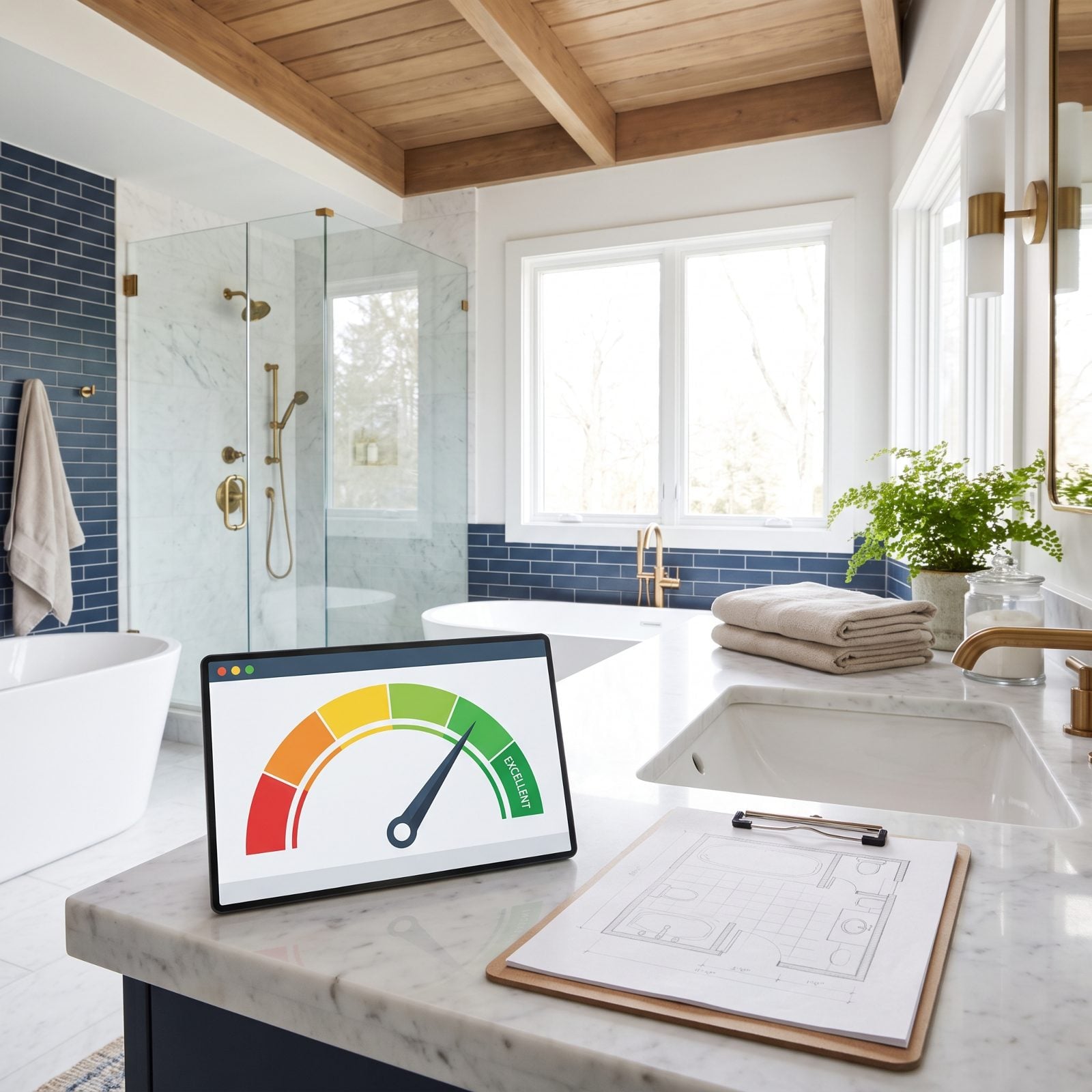
The cheapest thing you can do for a pricey bathroom is nothing at all. Spend a few months paying down card balances before you apply for financing, and the rate a lender offers tends to improve. On a sum this size, a better rate can mean real money over the life of the loan.
Pull your credit reports, fix the errors, keep old accounts open. Approval and pricing always vary by lender and by you, so there’s no promise here, but walking in with a cleaner file costs you nothing but patience and can save you more than any tile discount ever will.
Tools like Brigit’s credit-building features can help you get your score in better shape before you apply for financing.
17. Use Large-Format Porcelain That Looks Like Marble
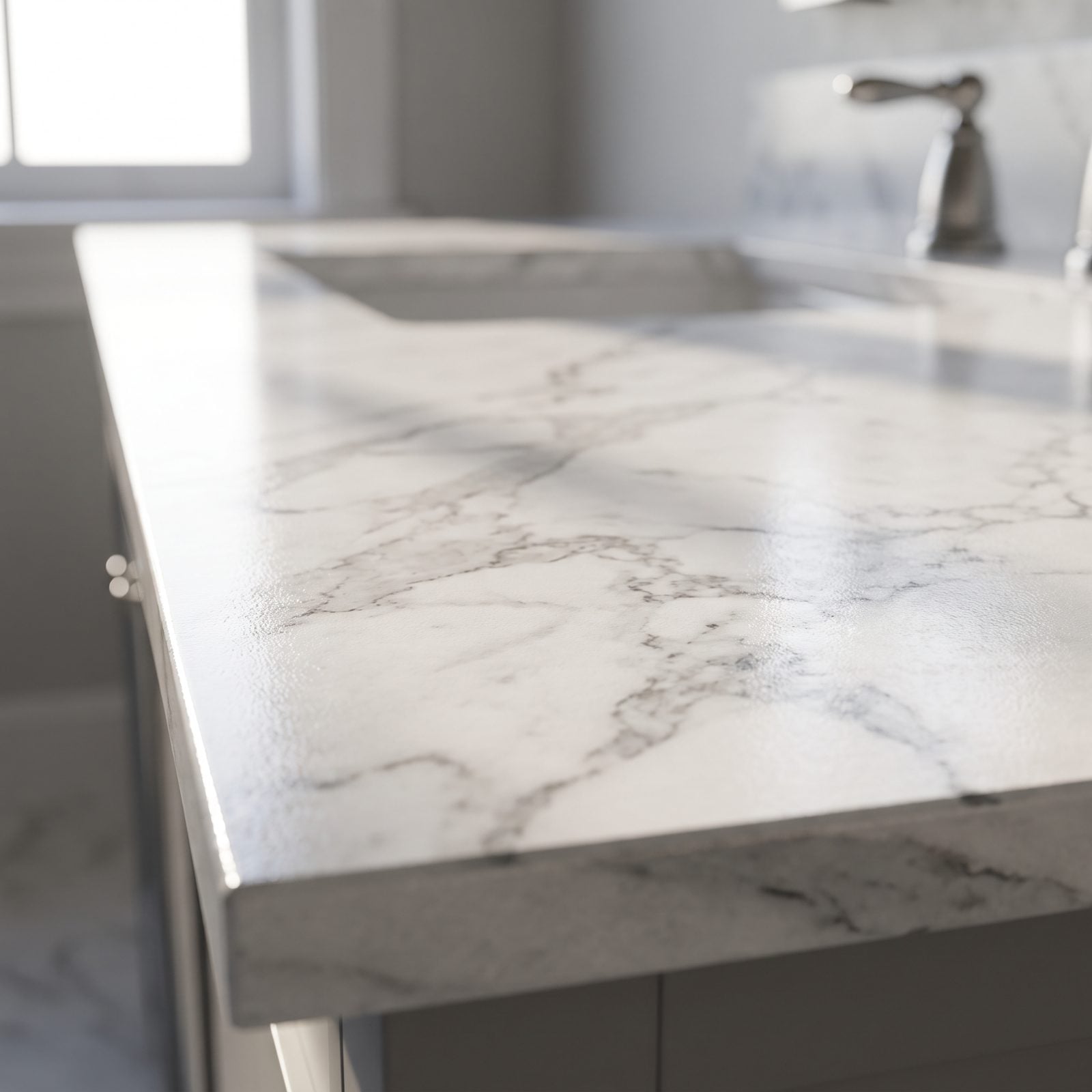
Here’s where the real savings live. Natural marble runs steep per square foot, stains if you look at it wrong, and needs sealing on a schedule you’ll forget. Porcelain fakes the veining so well that most guests will never clock the difference, and it shrugs off water, soap, and the occasional spilled glass of wine without flinching.
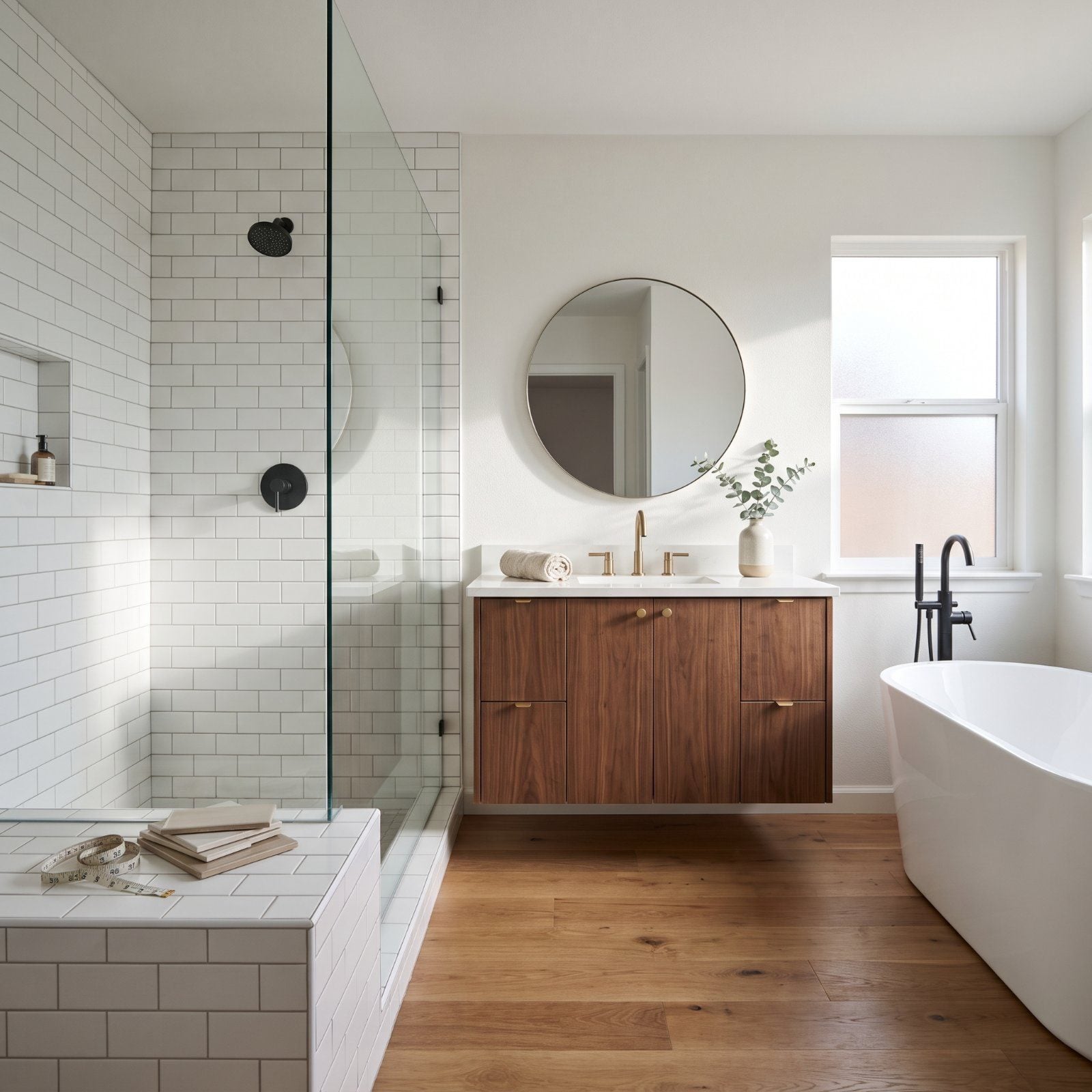
Big slabs mean fewer grout lines, which reads as luxury and cuts your cleaning time in half. Swap genuine stone for a convincing porcelain look-alike across a full wet wall and you can move hundreds off your materials bill without the room looking one bit cheaper. A matte brushed brass rain head keeps the whole thing feeling considered.
16. Ask About a Renovation Loan That Lends on the Finished Value
🔥 Would you like to save this?
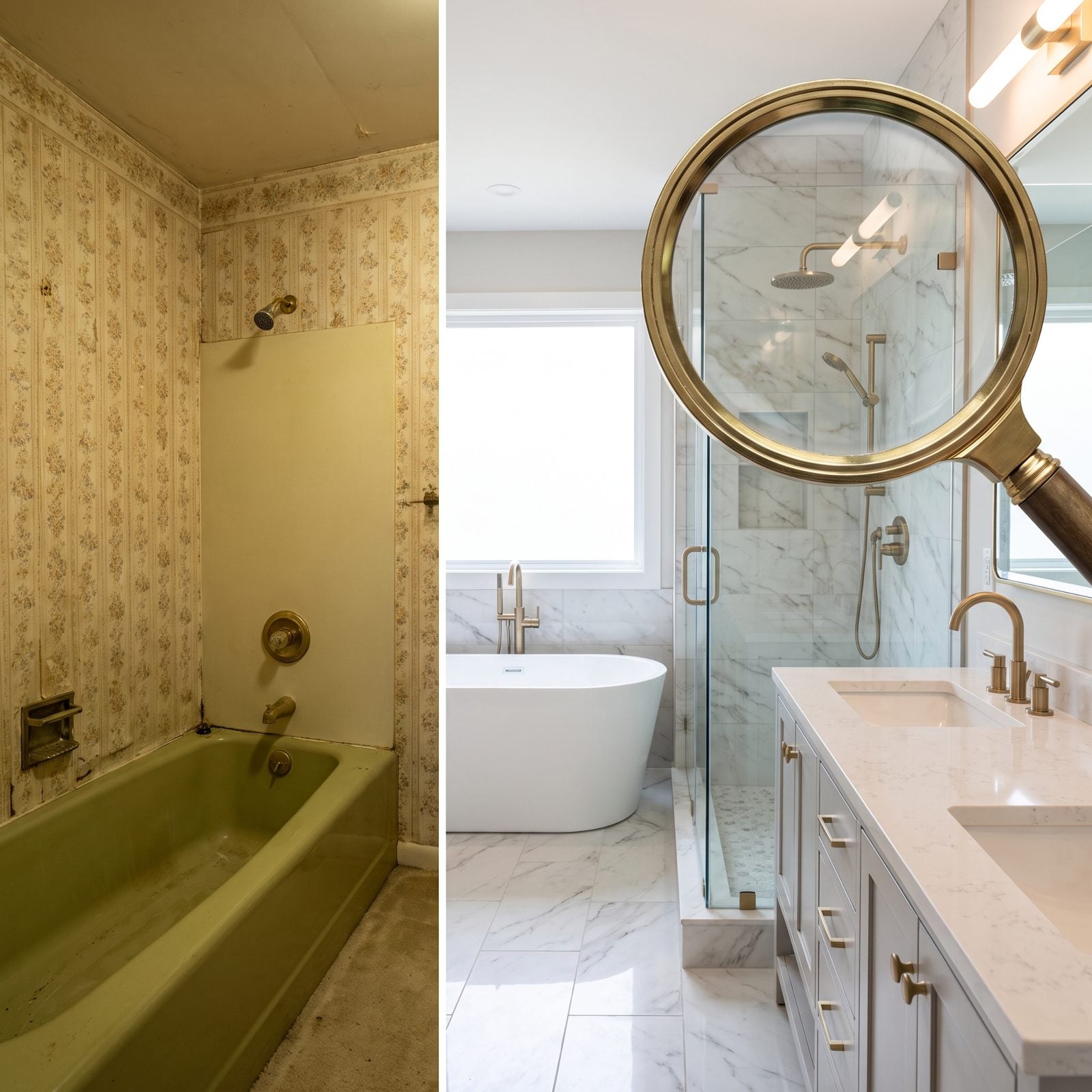
Some loans size up your home as it will be, not as it sits today. For a bathroom that genuinely lifts resale value, that can mean borrowing against the after-renovation number rather than the equity you’ve got right now.
These are specialized products. They come with appraisals, draws, and more paperwork than a plain personal loan, and terms, rates, and whether you even qualify all vary by lender and property. Borrow only what the project needs once you’ve cut the fat elsewhere. And compare the total cost, not just the monthly payment, because a low payment stretched over too many years can quietly cost more than a higher one you pay off fast.
15. Tile Only the Wet Zones and Paint the Rest
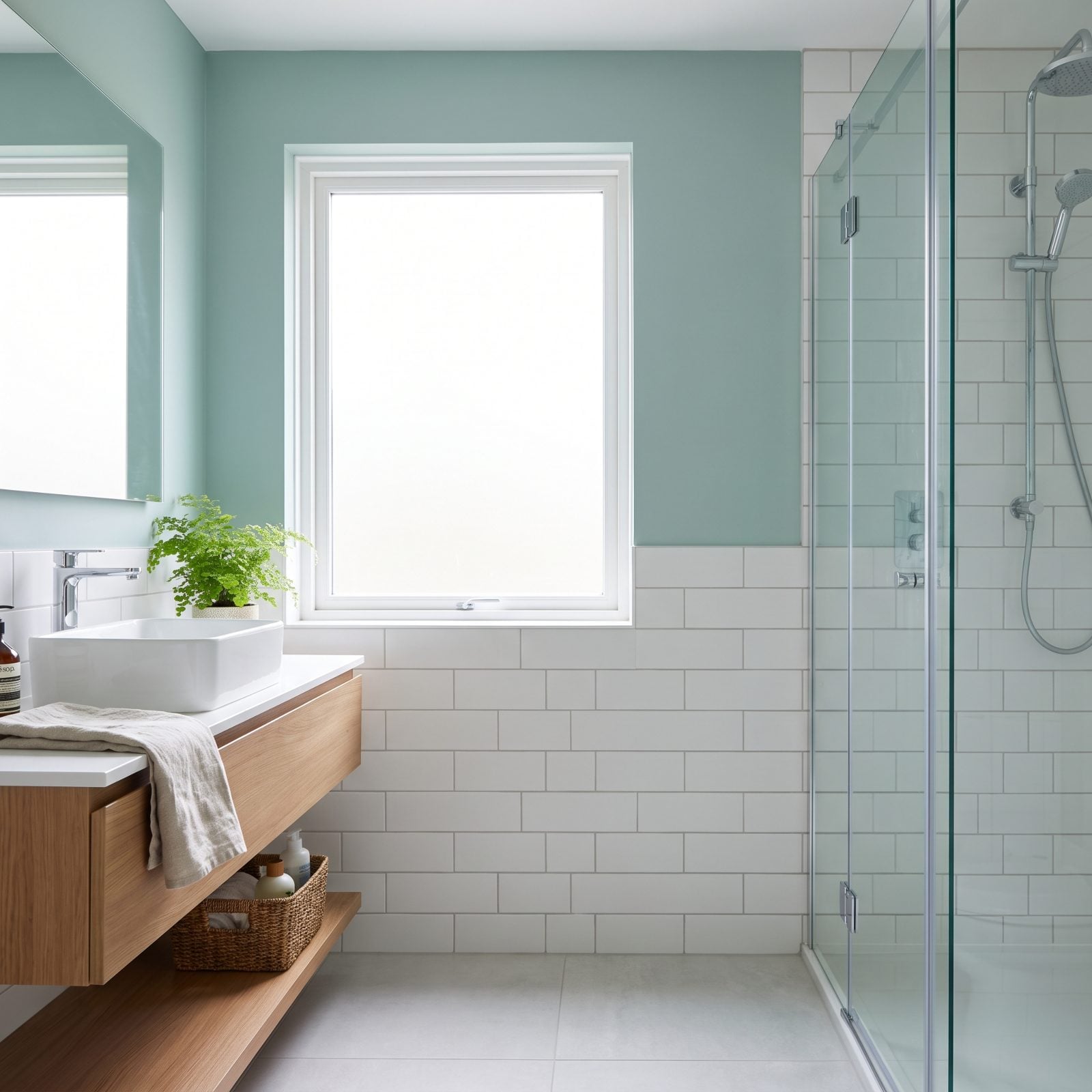
Nobody needs tile behind the towel rack. Water only touches a few surfaces in a bathroom — the shower, the tub surround, the splash zone behind the sink. Tile those, paint everything else in a good moisture-resistant finish, and you spend tile money only where tile actually earns its keep.
The painted walls also hand you a cheap way to add color. A warm clay or soft sage reads richer than a half-hearted tile you picked just to fill space. Want ideas for working warm neutrals into a room? Our beige bathroom makeover gallery shows how far paint carries the mood.
14. Book Your Contractor for Their Slow Season
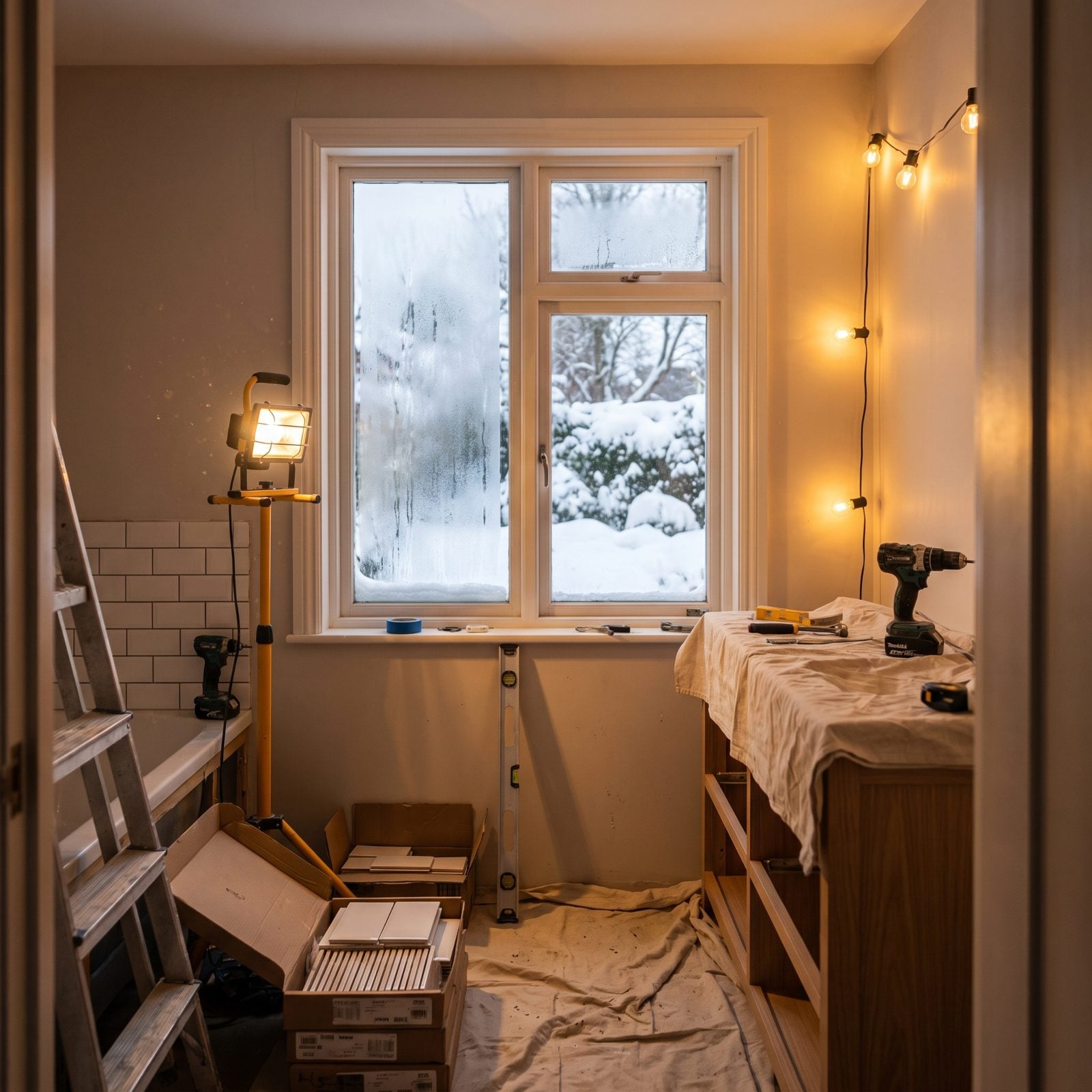
Contractors have a calendar, and parts of it are empty. Late fall and deep winter slow down for a lot of remodelers, which is exactly when a crew with a gap in the schedule gets flexible on price.
You won’t always land a discount — a good crew books out regardless. But asking for an off-peak start costs you nothing and sometimes shaves a meaningful chunk off labor. Bonus: you get more of their attention when they aren’t juggling six jobs at once.
13. Get Three Bids With the Same Line-Item Scope
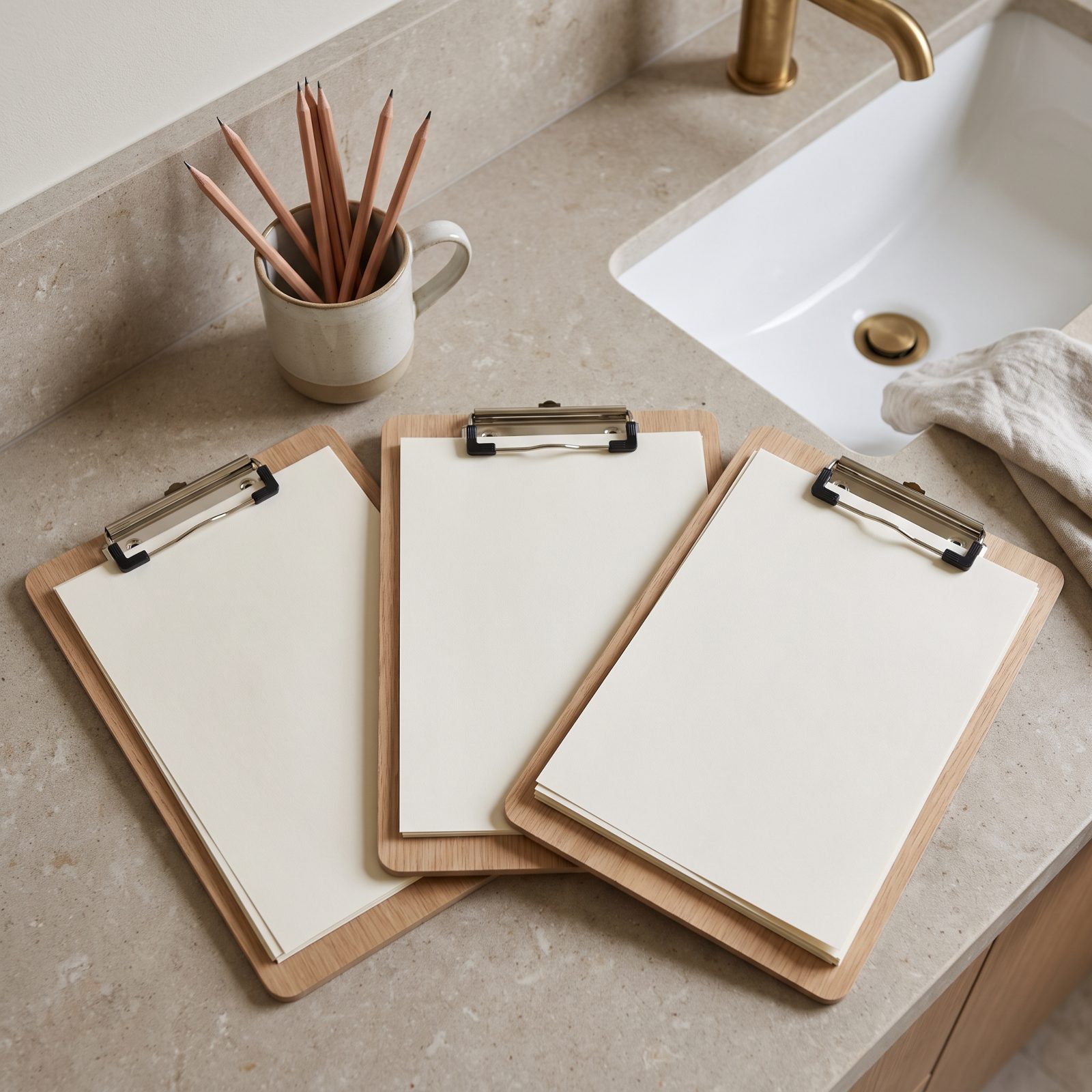
Three bids mean nothing if each one prices a different bathroom. One contractor folds in demolition; another assumes you’ll handle it. One quotes mid-grade tile, the next quotes the cheap stuff. You end up comparing apples to a parking lot.
So write one scope. Every fixture, every surface, who hauls the debris, who buys the materials. Hand the identical list to all three. Now the numbers actually mean something, and the lowball bid tends to out itself the moment you spot what it quietly left out.
12. Trim Your Home Insurance Premium and Redirect the Savings

Your renovation budget has a quiet donor hiding in your monthly bills. Raise your home insurance deductible a notch, bundle your policies, or just call and ask what discounts you’re missing — the premium often drops.
Point that difference straight at the bathroom fund. It won’t bankroll the whole project, but a leaner premium each month, redirected for a year, buys a surprising amount of tile. It isn’t glamorous, but every dollar you stop overpaying is a dollar you don’t have to borrow.
It takes a few minutes to compare home insurance quotes with GetYourInsurance and see whether your current premium is out of line.
Compare Home Insurance Quotes →
11. Keep the Window and Exhaust Fan Where They Are
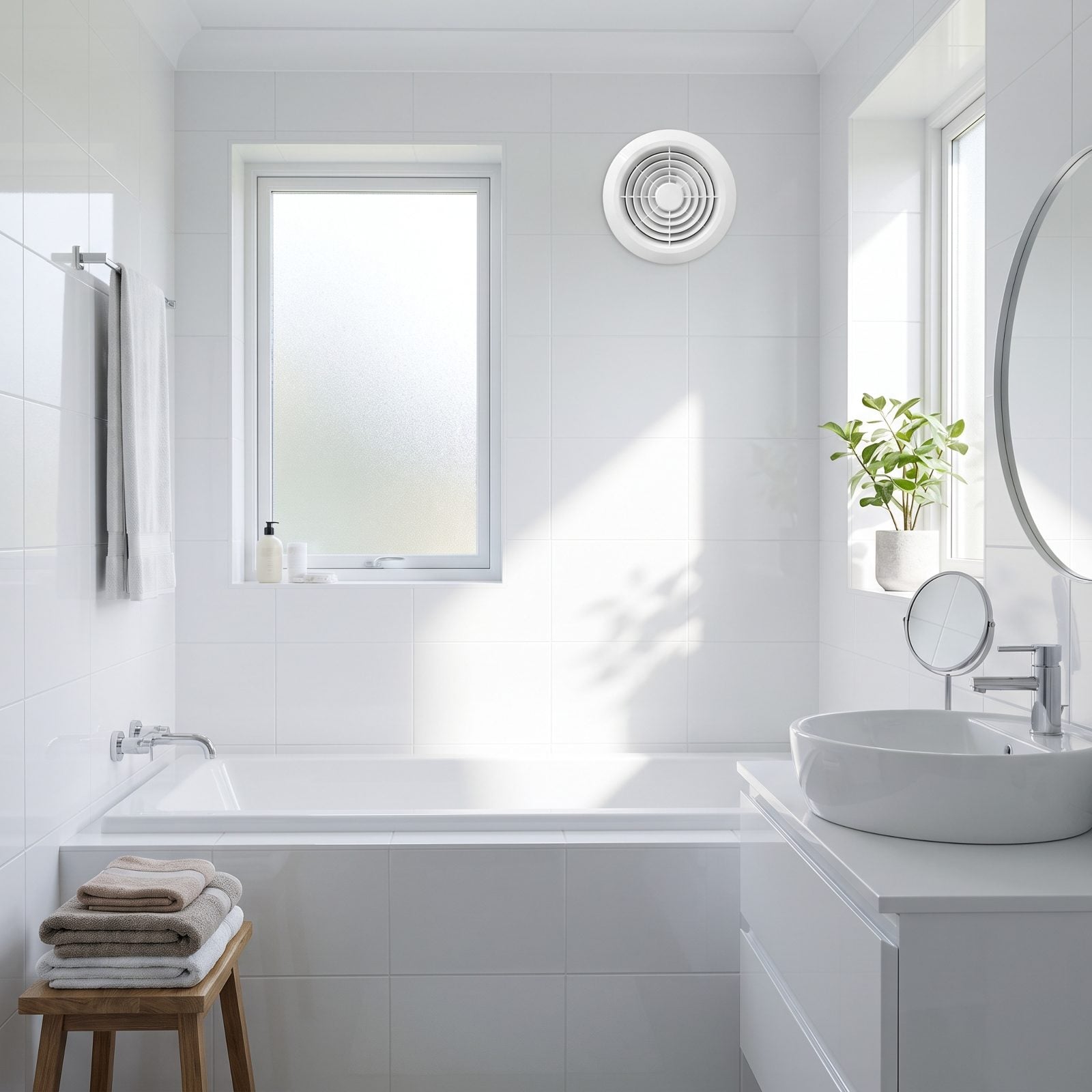
Windows and exhaust fans look like small details, but moving either one means new framing, exterior patching, rerouted ductwork, electrical changes and drywall repair. Shift the window to free up a vanity wall and the costs stack fast. The costs stack fast.
Keep the window and fan exactly where they live now and you sidestep the most expensive category of surprises. You can still change everything you see — fixtures, finishes, tile, lighting, all fair game. It’s the stuff behind the walls that empties the account, so leave it alone unless it’s broken.
10. Turn the Second Bathroom Into Phase Two
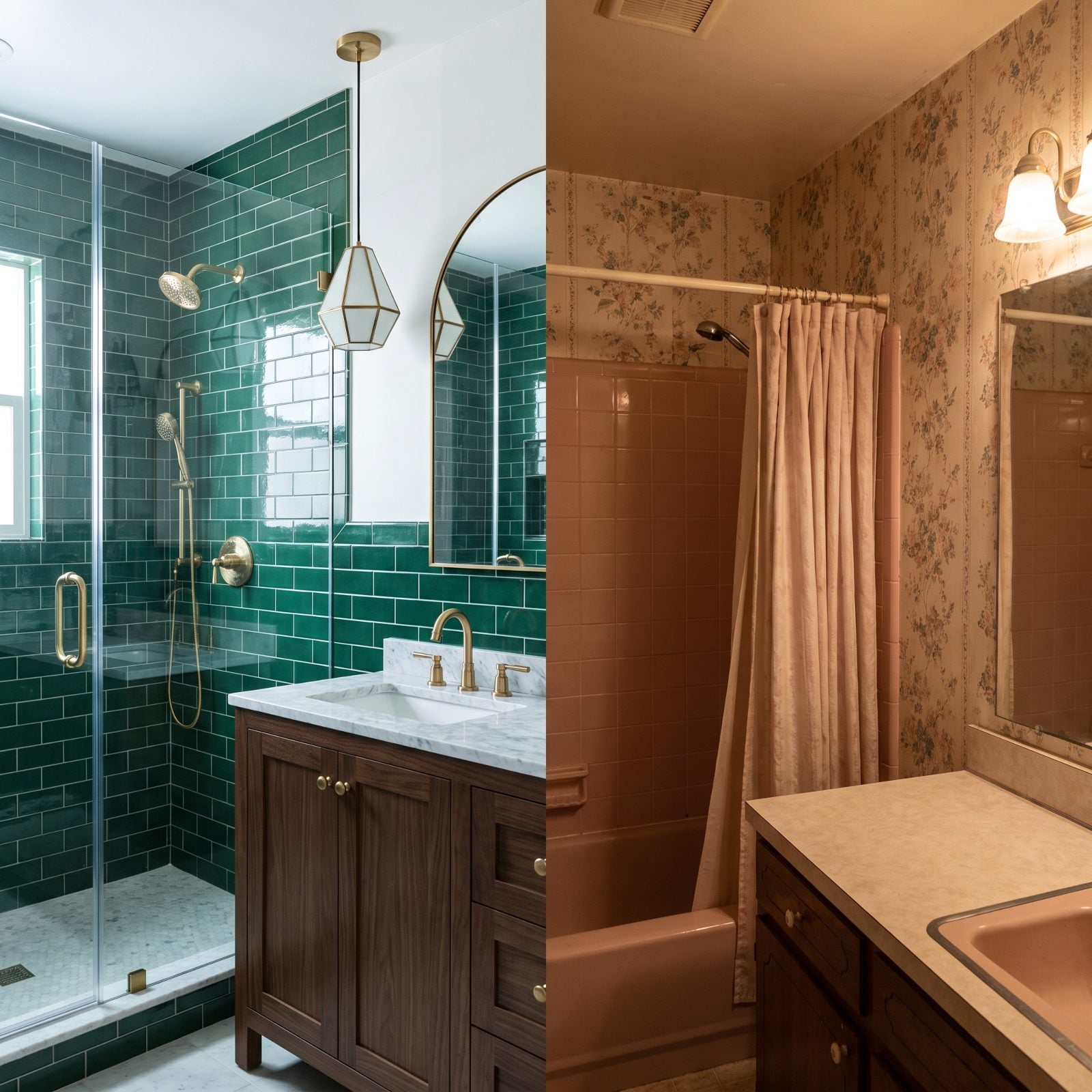
You don’t have to do it all at once. Finish the main bathroom now, live with the second one as-is, and tackle it next year once the first loan is paid down and your cash has recovered.
Splitting a big spend into phases keeps you from borrowing the entire amount in one gulp, and it lets you learn on the first project. By round two you’ll know which splurges were worth it and which ones you’d happily skip — knowledge that usually trims the second bill.
9. Ask for Scratch-and-Dent Tubs and Discontinued Tile Lots
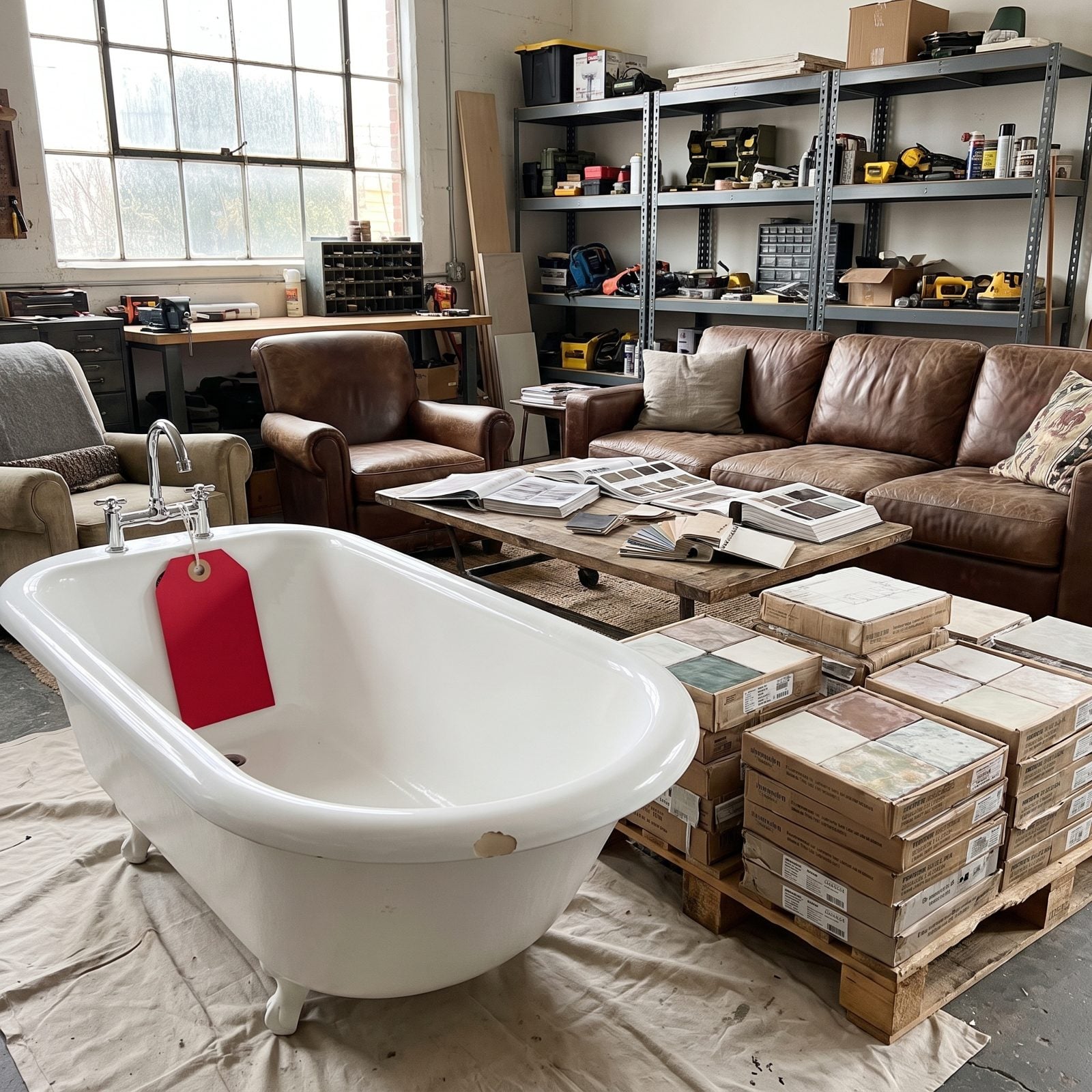
A tub with a tiny chip on the underside — where no living soul will ever see it — sells for a fraction of a flawless one. Showrooms and suppliers move this stuff all the time. They just rarely advertise it.
Discontinued tile plays out the same way. When a line gets retired, the leftover lots get slashed to clear the shelf. The catch is quantity: you need enough from a single lot to finish the job plus a little spare, because you can’t reorder later. Measure first, ask what’s being cleared out, and a premium look can land at a clearance price.
8. Use Contractor Promotional Financing Only With a Clear End Date
Contractor financing can be a smart tool or a slow leak, and the difference comes down to one thing: whether you know the exact day the promotional rate ends. On a big project, deferred-interest offers tempt you because the monthly number looks tiny. But miss the promo window, and interest can hit retroactively all the way back to day one.
Borrow only what you genuinely need after shrinking the project. Say you finance part of the total and keep the rest in cash. Set a payoff target that lands comfortably ahead of the deadline, not on it. Rates and approval vary by lender, so compare the fine print, not the headline.
7. Put One Small, Fixed Portion on a Card You Can Pay Down Fast

Keep the plastic small and specific. Put one defined slice of the budget on a card, something like the lighting and mirror package, and treat it as a 60-day sprint rather than a carryover balance.
The psychology here matters more than you’d think. A card with a single bathroom charge and a payoff date feels nothing like a card that quietly absorbs everything you touch. One’s a plan. The other’s a hole. Carrying a revolving balance is the most expensive way to pay for a renovation, so this only works if you can clear it fast. Can’t clear it fast? Then don’t start it.
If your credit is limited, you can see if you pre-qualify for a Yendo card, which uses your car to secure the line.
See If You Pre-Qualify for Yendo →
6. Check Utility Rebates on Low-Flow Fixtures and Heat Pump Water Heaters
Before you buy a single fixture, spend an afternoon checking what your water and electric utilities will quietly pay you back for. Low-flow toilets, efficient showerheads, and heat pump water heaters often qualify for rebates, and some energy-efficient upgrades may be eligible for tax credits.
Don’t trust a number you found online. Confirm current eligibility and amounts directly with your utility and a tax professional, because programs change and rules differ by location. Pick a qualifying model you were going to install anyway, and it’s basically free money for a decision you’d already made.
5. Pick One Showstopper Feature and Keep Everything Else Simple

Every budget has room for one thing that makes people stop in the doorway. Pick it, fund it properly, and let everything around it stay calm and cheap.
A book-matched slab feature wall behind the shower can cost a fraction of what tiling every surface in the same material would. The eye lands on the star and forgives the chorus. One confident move, backed up by quiet neutrals, reads as intentional rather than plain.
Spread the drama everywhere and you’ve spread the budget everywhere too. Concentrate it. A single black round mirror and matte black fixtures keep the supporting cast honest.
4. Earn Side Cash for the Fixtures and Finishing Touches
🔥 Would you like to save this?
The last sliver of a bathroom is almost all discretionary: the brass pulls, the sconce, the towels, the mirror. Fund that part with money that didn’t come out of your regular paychecks, and the whole project feels lighter.
A few months of selling things you don’t use, picking up freelance hours, or renting out a parking spot can cover a modest finishing budget without touching your core cash. The trick is mental accounting. Money labeled ‘bathroom extras’ gets spent on the bathroom, not absorbed into everyday life. Same dollars, better outcome.
One low-effort option is to earn with Branded Surveys in spare minutes and point every payout at the finishing touches.
Start Earning With Branded Surveys →
3. Sell the Old Vanity, Fixtures and Leftover Tile
That old vanity isn’t trash. It’s a down payment on the new one.
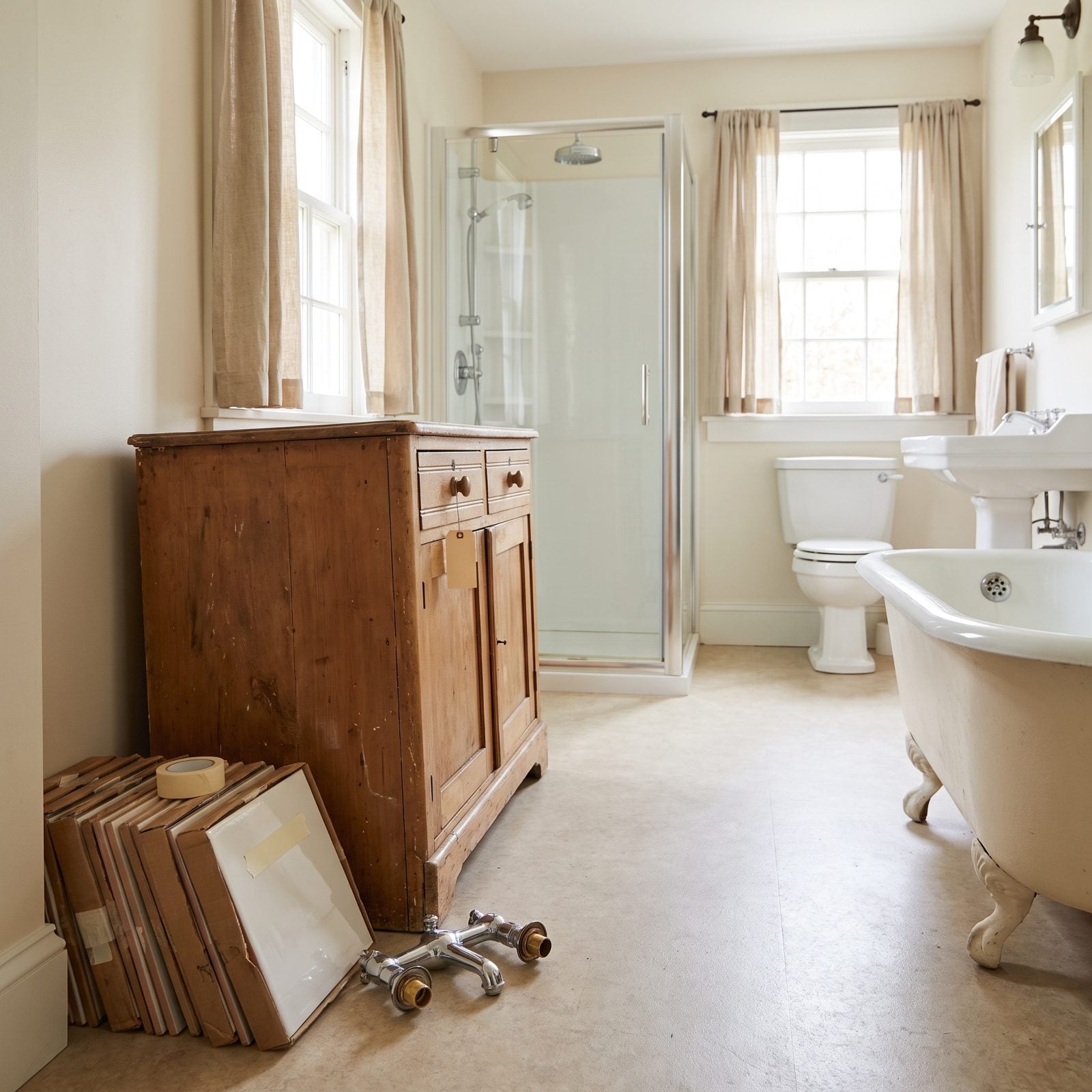
Working fixtures, a solid cabinet, a usable sink, and unopened leftover tile all sell to people doing budget projects of their own. A removed vanity in decent shape, a cast iron sink, and a couple of boxes of extra tile can add up to real money toward your new fixtures.
2. Do the Demo and Painting Yourself
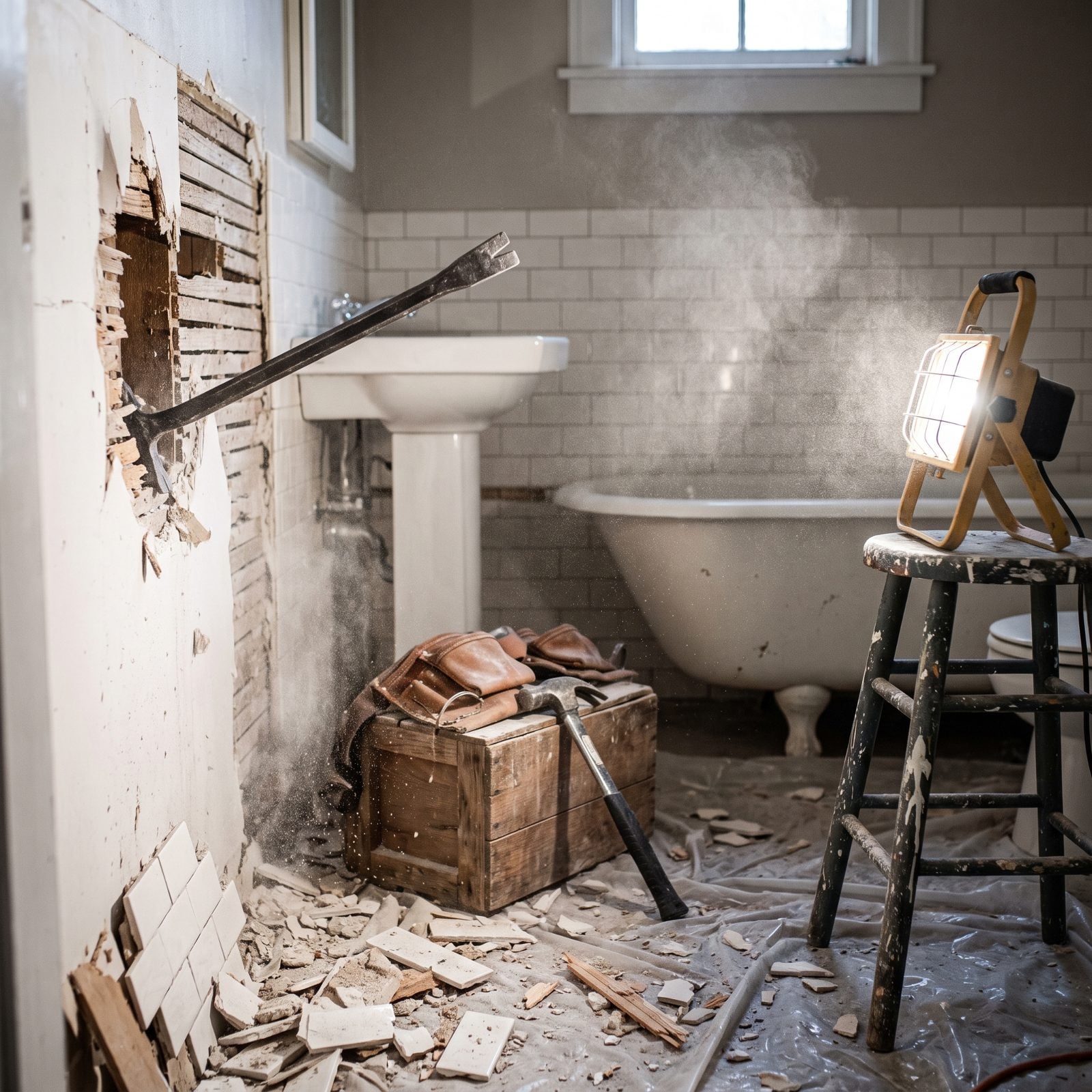
Demo and paint are the two jobs that trade sweat for real money. Swinging a pry bar and rolling a wall don’t require a license, and labor is where a bathroom budget bleeds out.
Pull your own tile, haul your own debris, and paint the room yourself, and you can shave a meaningful chunk off the estimate. One caution: know what’s behind the wall before you swing. Water lines, gas, and asbestos in older homes are not DIY. Demo the drywall, leave the pipes to the pro.
1. Bank a Bathroom Fund for Six Months Before the Start Date

Time is the cheapest financing there is. Set a start date six months out, move a fixed amount into a separate account every pay period, and a big piece of the project arrives as cash you already have.
Automate it so you never see the money in your checking account. What you don’t see, you don’t spend.
Here’s the part worth sitting with. Every dollar you fund this way is a dollar you never have to borrow, and a dollar you never pull from retirement. Early withdrawals from a 401(k) or IRA can trigger taxes and penalties and quietly cost you decades of growth, which makes them one of the most expensive sources of money you own. The patient savings account costs you nothing but a little waiting. Start the fund, set the date, and let boring do the heavy lifting.