
🔥 Would you like to save this?
Sixty-one thousand dollars is a real kitchen. New cabinets, stone counters, decent appliances, and a layout that finally makes sense. Almost nobody pays for it in one clean swipe. Most people do two things at once: they shrink the number first, then borrow only what’s left. Cut the quote by ten or fifteen grand, finance the rest responsibly, and the scary figure turns manageable. Here are 31 ways to pull that off, from where to trim to how to borrow without regret.
This article contains affiliate links. If you sign up or buy through them, Home Stratosphere may earn a commission at no extra cost to you.
In order to come up with the very specific design ideas, we create most designs with the assistance of state-of-the-art AI interior design software. Also, assume links that take you off the site are affiliate links such as links to Amazon. this means we may earn a commission if you buy something.
31. Cut $10,000–$20,000 From the Kitchen Before Borrowing Anything

The cheapest money is the money you never borrow. Shaving the project down before you ever call a lender is the single most effective move on this whole list, and it’s where most of the drama lives.
Cabinet refacing instead of full replacement is the big one. New boxes, doors, and installation can run well north of twenty grand, while refacing the existing boxes with new fronts and hardware often lands a good deal lower, and in a kitchen with solid cabinet frames nobody will know the difference. Keep your appliances one more cycle if they still work. Swap a pricey stone slab for a quartz that reads nearly identical from three feet away.
Do those three things and you’ve knocked fifteen grand off before a single interest charge ever hits. That’s not a makeover compromise. That’s just not overpaying.
30. Tap Your Home Equity

Before you fall for the first offer your own bank slides across the counter, shop around. HELOC rates swing a lot between lenders, and the gap on a large draw can add up to real money over the life of the loan. Check your bank, a credit union, and at least one online lender.
A HELOC uses your house as collateral, so don’t rush it. Compare the rate, sure, but also the draw period, the annual fee, and whether the rate is variable (most are). Variable means the payment can climb later, so run the numbers at a higher rate than today’s rather than the teaser you were quoted.
29. Ask a Home Improvement Expert Where the $61,000 Quote Can Be Cut

A good contractor or designer will happily walk you through a line-item breakdown, and that’s where the fat lives. Ask one direct question: “If I had to lose ten grand off this, where would it come from?” You’ll get an honest answer, because they’ve done this a hundred times.
Usually the easy cuts don’t touch structure. A quartz counter instead of marble, mid-range cabinets instead of custom, a panel-ready dishwasher downgraded to plain stainless, open shelving on one wall where you’d have put uppers. None of it reads cheap. A well-planned modern kitchen design can look expensive on a leaner budget when you concentrate the splurges right where the eye lands.
Before you sign, you can ask a home improvement expert on JustAnswer with the quote in hand and ask exactly which line items are padded or optional.
Ask a Home Improvement Expert Now →
28. Finance Only the Gap Instead of the Full $61,000

Here’s the mindset shift that saves people the most: the loan amount is not the project amount. Trim the kitchen to forty-six grand, hold twenty grand in savings earmarked for the job, and you’re financing twenty-six, not the full sixty-one.
Borrow only the gap. Every thousand you don’t finance is interest you never pay, and on a ten-year HELOC or home equity loan that interest compounds into a surprising number. Pull your actual available cash, subtract it from the trimmed quote, and that smaller figure is the only one you shop loans against. It makes approval easier too, and your monthly payment lighter.
27. Consider a Fixed-Rate Home Equity Loan Instead of a HELOC

A HELOC is a revolving line with a variable rate. A home equity loan is a lump sum with a fixed rate and a fixed monthly payment. Both use your home as collateral, but the difference matters more than people think.
If you already know your renovation number, the fixed-rate home equity loan is often the calmer choice. You borrow the gap once, the payment never moves, and you can budget around it for the full term. A HELOC flexes if your project creeps, but that variable rate can climb, and your payment right along with it.
Rates and approval vary by lender and by your credit and equity, so compare both side by side. If an unpredictable payment would keep you up at night, fixed wins. Want flexibility and can stomach some rate movement? The line of credit earns its keep.
26. Look at a Cash-Out Refinance Only If the Math Works
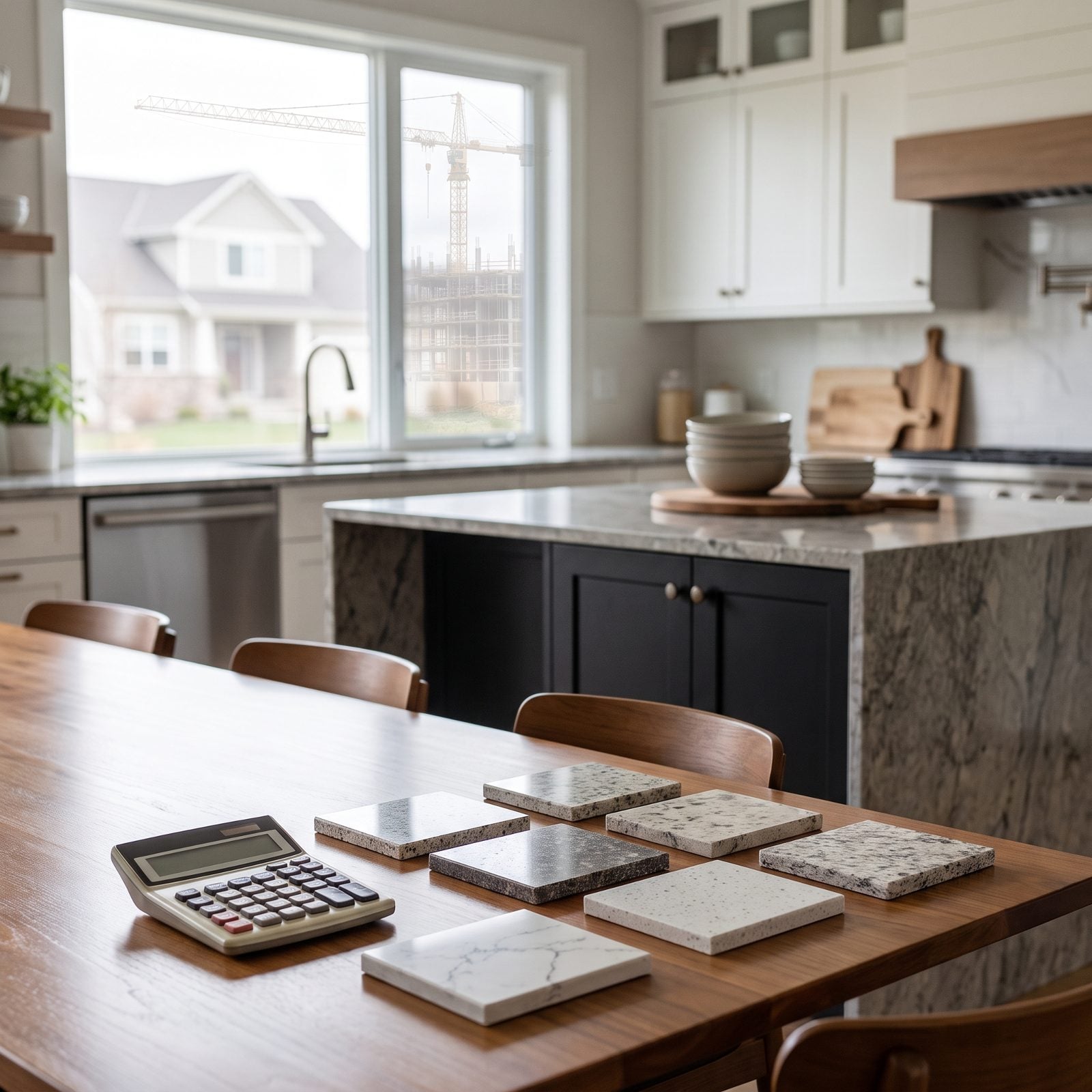
A cash-out refinance replaces your entire mortgage with a bigger one and hands you the difference. For a kitchen, this usually only pencils out if you can also lower your existing mortgage rate while you’re at it.
Already sitting on a low rate? Refinancing the whole balance just to grab thirty grand can mean throwing that better rate away and paying closing costs on the entire loan. An expensive way to buy counters. Run it against a home equity loan on the same amount, and compare total interest over the life plus the closing costs before you decide.
25. Ask About a Renovation Mortgage Like Fannie Mae HomeStyle or FHA 203(k)
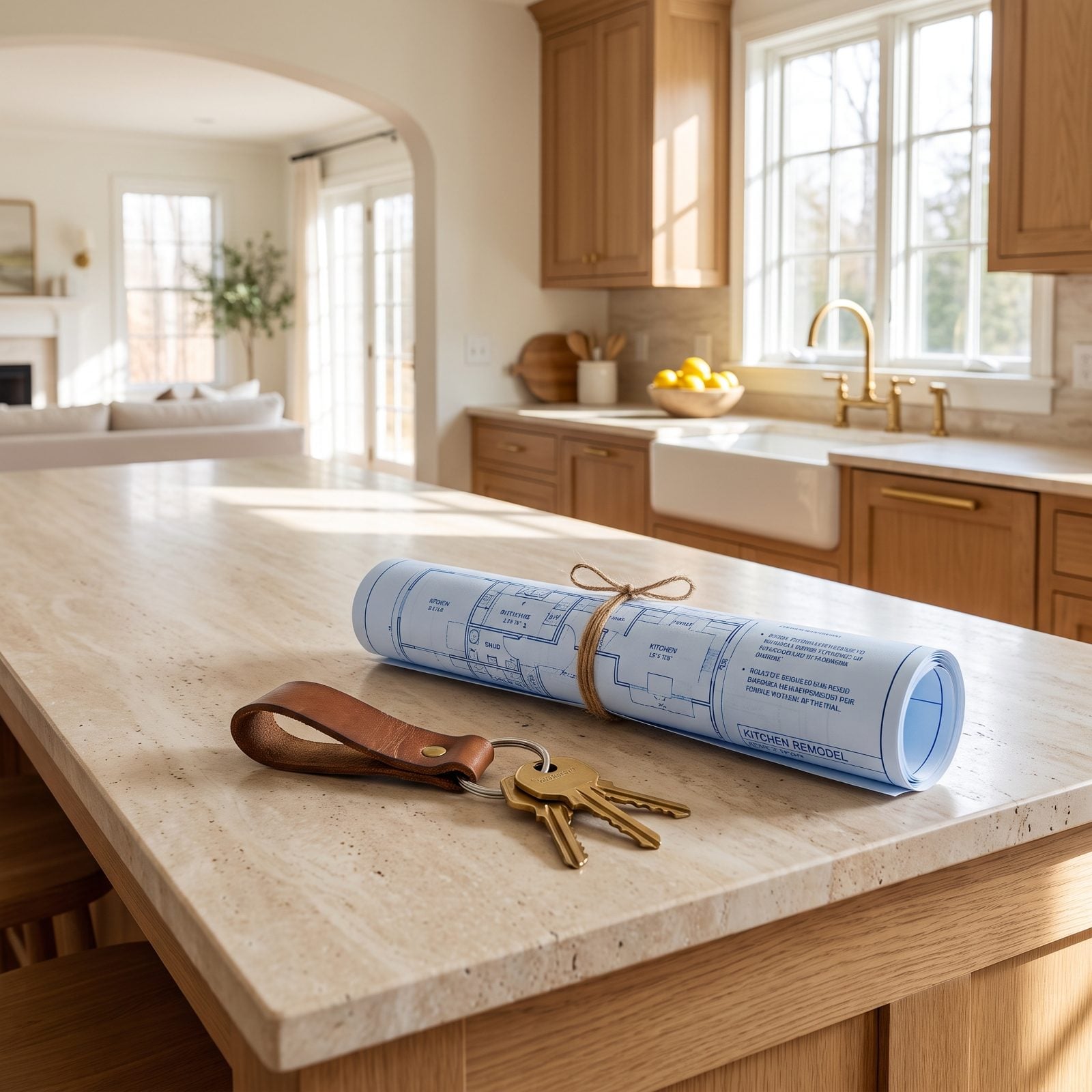
Buying a home and renovating at the same time? A renovation mortgage rolls the purchase price and the project cost into one loan. Fannie Mae HomeStyle and FHA 203(k) are the two most common versions, and they’re built for exactly this.
These loans come with more paperwork, required contractor bids, and inspections tied to the work, so they move slower than a quick HELOC. But for a buyer who wants the $61,000 kitchen baked into the original mortgage instead of borrowing twice, they can be the cleaner path. Eligibility, limits, and rates vary, so talk to a lender who actually originates these, not just any loan officer who’ll nod along.
24. Use a Credit Card for a Smaller, Manageable Portion

Credit cards carry high interest, so they’re the wrong tool for the whole kitchen. For a small slice you can pay off fast, though, they’re fine, and sometimes even smart.
Say the backsplash tile, the hardware, and the light fixtures come to a few thousand dollars you’ll have covered from your next two paychecks. A rewards card earns you cash back on money you were spending anyway, and you clear the balance before interest kicks in. The rule is simple: only charge what you can pay off inside the grace period. The moment a card balance starts carrying month to month at those rates, it quietly becomes the most expensive part of the whole project.
If your current cards don’t have the room, see whether you pre-qualify for the Yendo card is one option to look at for a smaller purchase you can pay off quickly.
See If You Pre-Qualify With Yendo →
23. Use 0% Intro APR or Contractor Promotional Financing Carefully
Zero-percent intro offers and the “no interest for 18 months” deals contractors dangle can genuinely save you money, if you read the fine print and set a hard payoff plan.
The trap is deferred interest. Some promos don’t just start charging interest after the window closes. They charge it retroactively, all the way back to day one, on the full original balance if you haven’t cleared it in time. Miss the deadline by a month and that “0%” deal can cost more than a plain loan would have.
22. Keep the Existing Layout, Plumbing and Gas Lines

Moving the sink across the room feels like a small change on paper. It isn’t. Relocating plumbing, gas, and electrical is where kitchen budgets quietly detonate, because now you’re paying for a plumber, an electrician, maybe a permit, and a floor that gets opened up.
Keep the sink under the window. Leave the range on its original wall. Let the refrigerator stay in its alcove. Spend that saved money on the stuff you actually see and touch: better cabinet fronts, a real stone counter, a faucet with some weight to it. A fresh layout rarely pays you back the way great materials do.
I’ll admit I used to think an island with a second sink was the dream. Then I priced running water to the middle of a room. The dream got a lot cheaper the day I kept the plumbing where the builder left it.
21. Reface or Repaint the Cabinets Instead of Replacing Them

The single biggest lever on a $61,000 kitchen is the cabinets. New custom boxes can swallow $20,000 or more before a single counter goes in, while refacing — new doors, drawer fronts and matching veneer on the existing boxes — usually lands around $8,000 to $12,000. A quality repaint, if your boxes are solid, can come in under $4,000.
The catch is honest. Refacing only works when the carcasses are square and sound. Paint over a bad foundation and you’ll regret it.
But when the bones are good? Swapping doors and adding new cabinet pulls can reroute ten grand straight to counters and appliances.
20. Lower Your Home Insurance Bill and Put the Savings Toward the Kitchen

Most homeowners set their insurance policy once and never look at it again. That’s money sitting in the wall.
Shop your home insurance against two or three other carriers, bundle it with your auto policy, and raise your deductible if you’ve got an emergency fund behind you. The annual savings often runs a few hundred dollars — on a renovation this size, that’s a real appliance line or your whole backsplash.
It won’t fund the whole kitchen. Nothing single-handedly funds a kitchen. But this is found money you’re already spending, redirected toward quartz instead of a premium you never questioned. Approval, rates and savings vary by home and carrier, so get actual quotes rather than guessing.
It takes a few minutes to compare home insurance quotes and see whether you’re overpaying for the same coverage.
Compare Home Insurance Quotes →
19. Ask the Contractor to Value-Engineer the Quote

🔥 Would you like to save this?
Value engineering sounds like contractor jargon. It just means asking one honest question: where can we get the same look for less?
A good builder will walk your quote line by line and offer swaps — quartz that mimics marble for half the stone cost, a stock cabinet line finished to look custom, a mid-tier faucet that performs like the designer one. These substitutions can trim thousands off a $61,000 quote without the room looking cheaper.
Ask it bluntly: “If this were your own kitchen and you wanted to save ten grand, what would you change?” Contractors know exactly where the money hides. They just don’t volunteer it unless you ask.
18. Get Three Competing Bids Before You Sign Anything
One bid tells you a number. Three bids tell you the truth.
On a project this size, quotes from reputable contractors can swing thousands apart for essentially the same scope. Not because one is cheating you, but because labor rates, markup and how they source materials all differ. Without comparison, you have no idea whether your single quote is fair or inflated.
Hand all three the exact same scope in writing so you’re comparing like for like. The pendant lights over your island shouldn’t be “premium” in one bid and “standard” in another. And don’t auto-pick the cheapest — pick the clearest, most itemized bid from someone whose past work you’ve actually walked through.
17. Phase the Renovation Into Two Projects
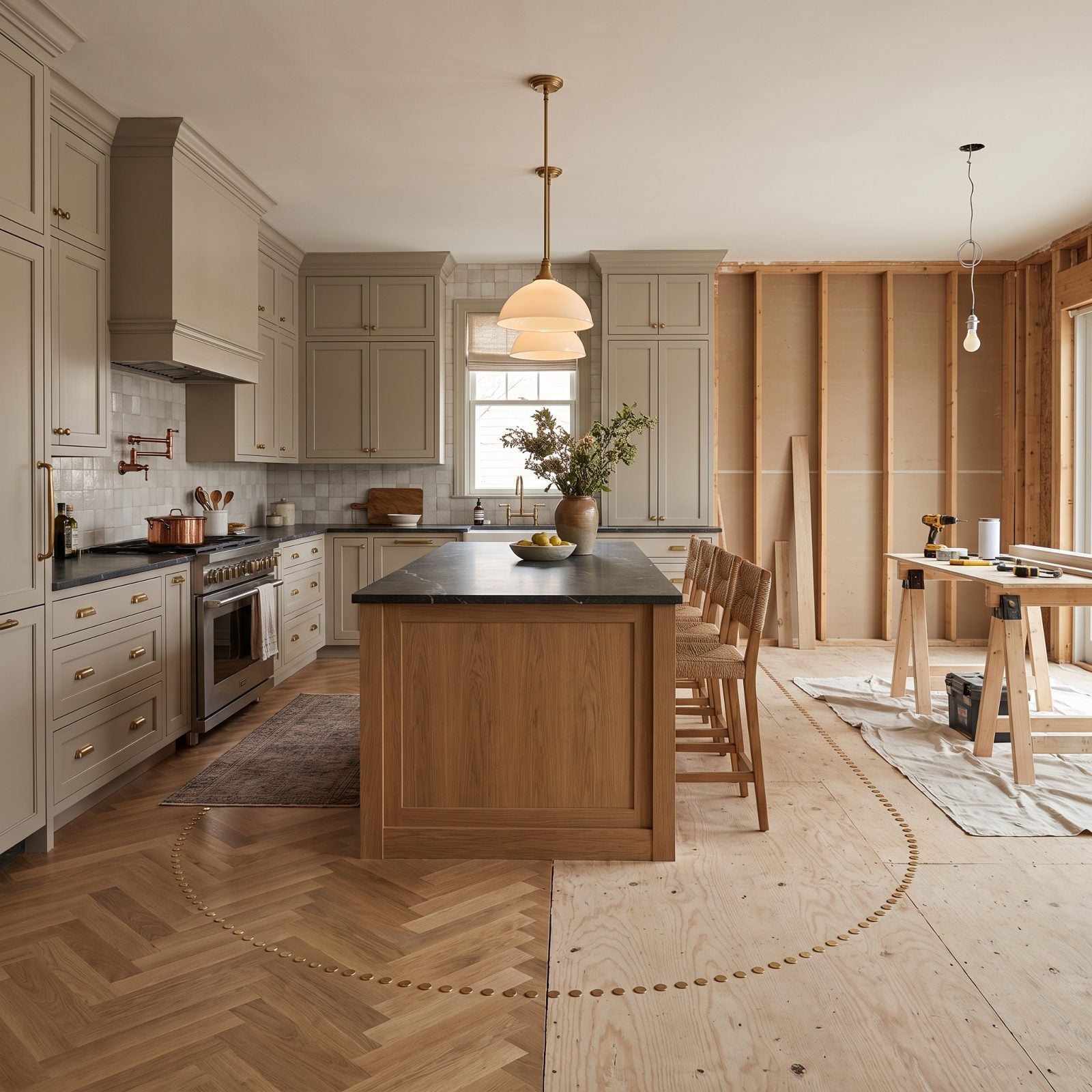
You don’t have to do it all at once. Splitting a $61,000 kitchen into two phases lets you pay with cash flow instead of debt.
Phase one handles the bones — cabinets, counters, plumbing, electrical, anything that requires tearing into walls. Say that’s $40,000, paid from savings and a bonus. A year later, phase two covers the backsplash, the dream range, and that walk-in pantry you’ve been eyeing, with the remaining budget funded by then.
The honest downside: a second mobilization costs a little more, and you live with an unfinished corner for a while. But you skip interest entirely and keep the project debt-free. Phasing turns one big scary number into two your paycheck can actually reach.
16. Build Your Credit Before Taking on New Financing

If you plan to finance any part of this kitchen, your credit score decides how much the money costs. The gap between a strong score and a shaky one can mean thousands in interest over the life of a loan.
Give yourself three to six months before you apply. Pay down card balances, don’t open new accounts, and pull your reports to dispute any errors. A better score moves you into a lower rate tier, which lowers your monthly payment on whatever you borrow.
No one can promise you a specific rate or approval. Lenders weigh income, equity and debt alongside your score. But walking in with a cleaner profile gives you leverage you simply don’t have otherwise. Borrow only what you need, and only what the payment comfortably fits.
Apps like Brigit offer credit-building tools and budgeting help that can make the months before you apply easier to manage.
15. Keep the Existing Appliances and Upgrade Them Later

A full appliance package — range, fridge, dishwasher, hood, maybe a built-in microwave — can run $8,000 to $15,000 on its own. If your current ones still work, defer that line item.
Fresh cabinets and counters do most of the visual lifting. A clean stainless fridge from five years ago looks perfectly at home against new quartz, and nobody walking in clocks the model year of your dishwasher.
Finish the room, enjoy it, and replace appliances one at a time as they age out or hit a sale. You spread the cost over years instead of cramming it into one invoice.
14. Claim Rebates and Tax Credits on Energy-Efficient Upgrades

If your kitchen plan includes new windows, an induction range, a heat-pump water heater or high-efficiency appliances, check what’s available before you buy.
Federal tax credits, state programs and local utility rebates can knock real money off qualifying energy-efficient upgrades. The amounts and eligibility rules change and vary by where you live, so confirm the current programs for your area rather than assuming. Some rebates hit instantly at purchase; others come back at tax time.
The move is simple. Pick the qualifying version of something you were already buying. If an induction range earns a rebate and you wanted induction anyway, that’s free money for a choice you’d have made regardless. Keep every receipt and model number, and let a tax professional tell you exactly what applies to your return.
13. Use a Bonus, Tax Refund or Commission Toward the Project

Windfalls are the quietest way to pay for a kitchen. A year-end bonus, a tax refund, a quarterly commission check — money that arrives outside your normal budget feels painless to spend because you weren’t counting on it anyway.
Set up a dedicated savings account and route every irregular payment straight into it. A refund here, a bonus there, a good commission run, and over a year or two of patience you’ve covered a surprising chunk of the bill.
The psychology does the heavy lifting. Money you never saw in your checking account never felt like yours to blow on takeout. Pre-committing it before it lands means you never have to make the hard choice twice. The kitchen just quietly funds itself in the background.
12. See Whether Tax Help Could Free Up Cash

Plenty of homeowners overpay their taxes without ever knowing it. Deductions missed, credits never claimed, a filing status that no longer fits. A good tax professional often finds more than they charge.
If some of your kitchen ties into a home office, a rental unit or energy-efficient improvements, the tax picture gets more interesting — interesting enough for a real conversation with a pro. The goal isn’t anything clever or risky. It’s just keeping money you’re legally entitled to keep.
Whatever a review frees up, route it straight into the renovation fund. This won’t bankroll the whole kitchen, and anyone who promises a specific refund is guessing. But paired with cost-cutting on the build and sensible financing for the rest, it’s one more honest stream flowing toward those quartz counters. Talk to a qualified professional about your own situation before counting on any of it.
If your return is complicated, it can pay to talk to an online tax expert before you file rather than after.
11. Buy Appliances, Fixtures and Lighting Yourself

Contractors mark up appliances and fixtures, sometimes by a little, sometimes by a lot. On a full kitchen remodel the appliance package alone can run into the thousands, and the faucet, pendant lights and hardware pile on more. Buy those yourself and you keep the margin.
Watch for holiday appliance sales, open-box deals, and bundle discounts when you grab the fridge, range and dishwasher together. Coordinate sizes and delivery dates with your contractor first, though. A fridge that shows up three weeks early and camps in your garage? Fine. One that’s an inch too deep for the cabinet run is a headache you’ll be unpicking for days.
10. Use Stock or Semi-Custom Cabinets Where Nobody Will Notice
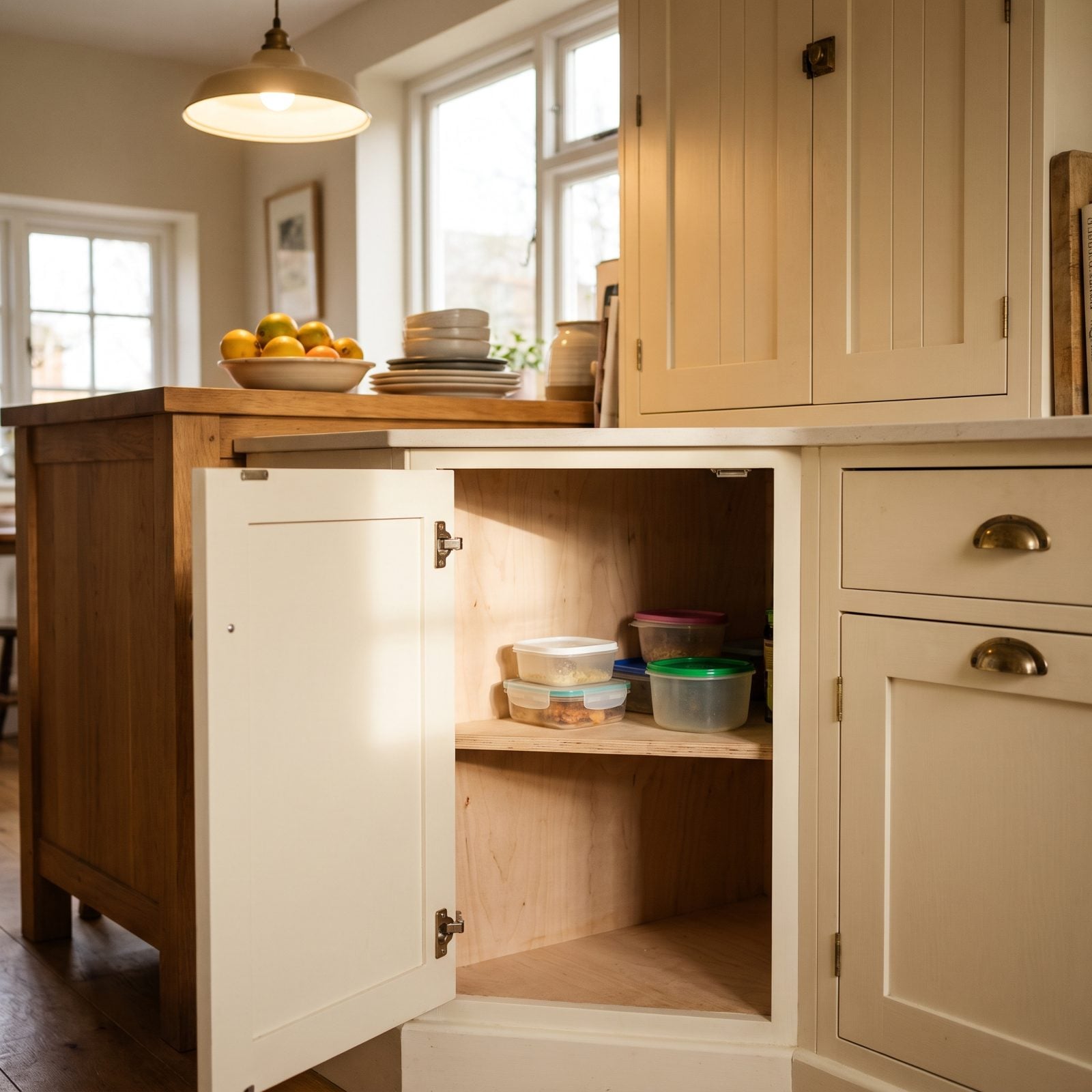
Nobody opens your lower corner cabinet and judges the dovetails. That’s the secret the showrooms won’t lead with. Full custom cabinetry can swallow a huge chunk of your budget, while quality stock and semi-custom lines cost a fraction of that for a similar footprint — and the doors on display at eye level look nearly identical.
Spend on the pieces people actually see and touch: nice doors, good hardware, soft-close hinges. Go stock on the interiors, the toe kicks, the garage cabinet nobody photographs. A semi-custom line hands you a few choices on dimensions and finishes without the full custom bill, which is usually where the real money quietly vanishes.
9. Sell an Underused Asset to Fund Part of the Renovation

Look around. Most of us are sitting on money we stopped using years ago. The second car that barely moves, the boat that goes out twice a summer, a camera kit, a watch, a timeshare, the motorcycle under a cover gathering dust in the corner.
Selling one underused asset can cover a real slice of a mid-size kitchen remodel without borrowing a cent. The math is honest: an asset you rarely touch versus a kitchen you’ll stand in every single day. For most people that trade is easy once they actually run it.
8. Earn Extra Cash for Smaller Kitchen Purchases
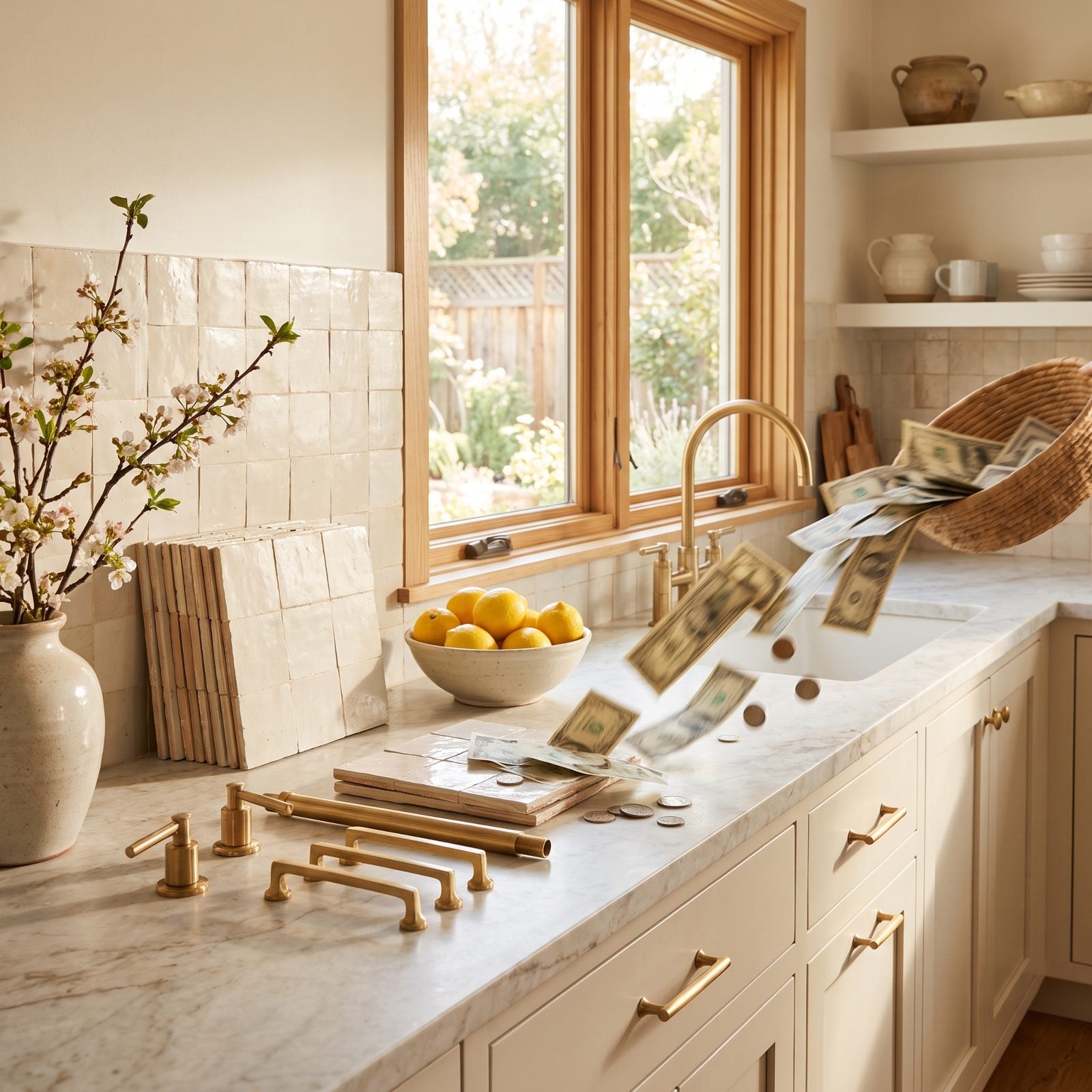
You don’t have to fund the whole kitchen with a side hustle. You just have to fund the edges — the backsplash tile, the new dishware, the pendant lights, the window treatments. Those smaller line items that always sneak up at the end of a job.
Picking up extra shifts, freelancing a skill you already have, offloading things around the house, or taking on seasonal work for a few months can cover those finishing touches in cash. It keeps the trailing costs out of whatever you end up financing, and the trailing costs are exactly the ones people forget to budget for.
Survey sites like Branded Surveys won’t fund the cabinets, but they can chip away at the hardware, lighting or small-appliance fund in spare minutes.
Start Earning With Branded Surveys →
7. Choose One Big Splurge and Go Midrange Everywhere Else

🔥 Would you like to save this?
A kitchen doesn’t need five showstoppers. It needs one. Put your money where your eye lands first, and let everything else play a supporting role.
Maybe that’s a pro range in a bold color. Maybe it’s a slab of real marble on the island while the perimeter counters stay quartz. Maybe it’s a handmade blue kitchen inspiration moment with cabinetry you love. Spend there, go midrange on the rest, and the whole room reads high-end because the thing you notice first is genuinely great. The eye forgives a lot when it’s already impressed.
6. Buy Floor Models, Scratch-and-Dent or Discontinued Appliances

A ding on the side of a fridge that faces a wall is worth real money off, and it’ll never bother you again after installation day. Floor models, scratch-and-dent units and discontinued lines can knock a meaningful share off appliance prices, which on a big package is money back in your pocket.
The catch is you take what’s available. Check the warranty, inspect the dent in person, and make sure cosmetic damage is purely cosmetic. A scratch on a hidden panel? A gift. A dent across the door you open twenty times a day is not. Know the difference before you commit.
5. Delay Another Major Purchase for a Year

Big purchases rarely come one at a time. The new car, the vacation, the furniture upgrade — they all seem to show up the same year you want the kitchen. You can’t do everything at once without borrowing, so pick an order.
Pressing pause on one major purchase for twelve months frees up cash flow and lets you pay for more of the kitchen outright. The car that’s still running fine can wait a year. The trip can move to next summer. Sequencing your spending instead of stacking it is one of the least painful ways to protect your budget.
4. Rent Out Unused Space, Storage or Parking Temporarily

That empty garage bay. The spare room. The driveway you never use, the basement corner stacked with nothing important. People pay to park and store things, especially in dense areas near transit or city centers.
Renting out a parking spot might bring in a little each month, and a storage space or spare room can bring more. Over the months you’re saving and renovating, that adds up to a steady trickle flowing straight into the kitchen fund. Check your local rules and your insurance first. It’s not life-changing money, but it’s steady, it’s low-effort, and it’s income you weren’t earning otherwise.
3. DIY the Low-Risk Parts and Pay Pros for the Expensive Skills

There’s a clean line between what you can safely do yourself and what you should never touch. Learn it and you save thousands.
Safe to DIY: painting, demo of old cabinets, installing a simple backsplash, swapping cabinet hardware, basic assembly. These can shave a decent slice off a labor bill.
Leave to the pros: electrical, gas lines, plumbing, structural changes, and anything that needs a permit or inspection. A botched gas connection or a flooded subfloor erases every dollar you saved and then some.
Do the parts that only cost you a weekend and a sore back. Pay licensed people for the parts that cost you your house if they go wrong. And honestly? A tidy DIY backsplash can look as sharp as a pricey install once the tile’s up.
2. Build a Dedicated Renovation Fund for 6–12 Months

The least glamorous option is also the one that costs nothing in interest. Open a separate high-yield savings account, name it something you’ll feel, and auto-transfer money into it every payday.
Saving the whole kitchen outright is a tall order for most people in under a year, and that’s fine. The goal isn’t always the full amount. It’s shrinking what you have to finance. Set aside a chunk every month for six to twelve months and you’ve built a real cash cushion. Combine that with cost-cutting from the rest of this list, and the piece you actually borrow gets small.
If you do finance the remainder, borrow only what’s left after the cash and the savings. A home equity loan, a HELOC or a cash-out refinance all use your house as collateral, so compare the rates, the fees and the repayment terms carefully. Rates and approval vary by lender and by your situation. The smaller the loan, the less any of that costs you.
1. Cap the Budget and Ask, “What’s the Best Kitchen You Can Build for This Number?”

Before you fall in love with a single slab of quartzite, pick the number and hang your whole plan on it. A generous budget buys a kitchen most people would call a dream. The trick is deciding that figure is a ceiling rather than a starting point that quietly drifts upward while you aren’t looking.
Flip the question you ask contractors. Instead of asking what your dream kitchen will cost, ask what the best kitchen is they can build for exactly your cap, all in. You’ll get sharper answers. One bidder might keep your existing layout and pour the money into better cabinets and a honed marble island, while another moves the sink and hands you laminate you’ll resent within a few years. Same budget, wildly different kitchens.
Now break the number into rough buckets so the trade-offs stay visible. Cabinets eat the biggest share. Countertops, appliances, and labor split what’s left, and the gap closes with whatever’s cheaper than you hoped. When a splurge shows up somewhere, something else has to shrink to pay for it — and honestly, that tension is where the real decisions happen, not in the showroom.