🔥 Would you like to save this?
The walls grabbed your sleeves, the ceilings shed crumbs, and somebody always had a repair patch that was “good enough from the doorway.” Popcorn ceilings got all the attention, especially when a chandelier made them sparkle like a bargain-bin planetarium, but the walls were doing plenty of work too.
There were ridges down the hall, grit in the basement, swirls above the dining table, and enough texture in the average family room to sand a coffee table by accident. Nobody called it character. Nobody called it a trend. It was simply how a finished house looked. Here are 27 textured surfaces, repairs, and strange little details that made the 1970s impossible to mistake for any other decade.
In order to come up with the very specific design ideas, we create most designs with the assistance of state-of-the-art AI interior design software. Also, assume links that take you off the site are affiliate links such as links to Amazon. this means we may earn a commission if you buy something.
The Orange-Peel Kitchen Walls That Caught the Morning Light
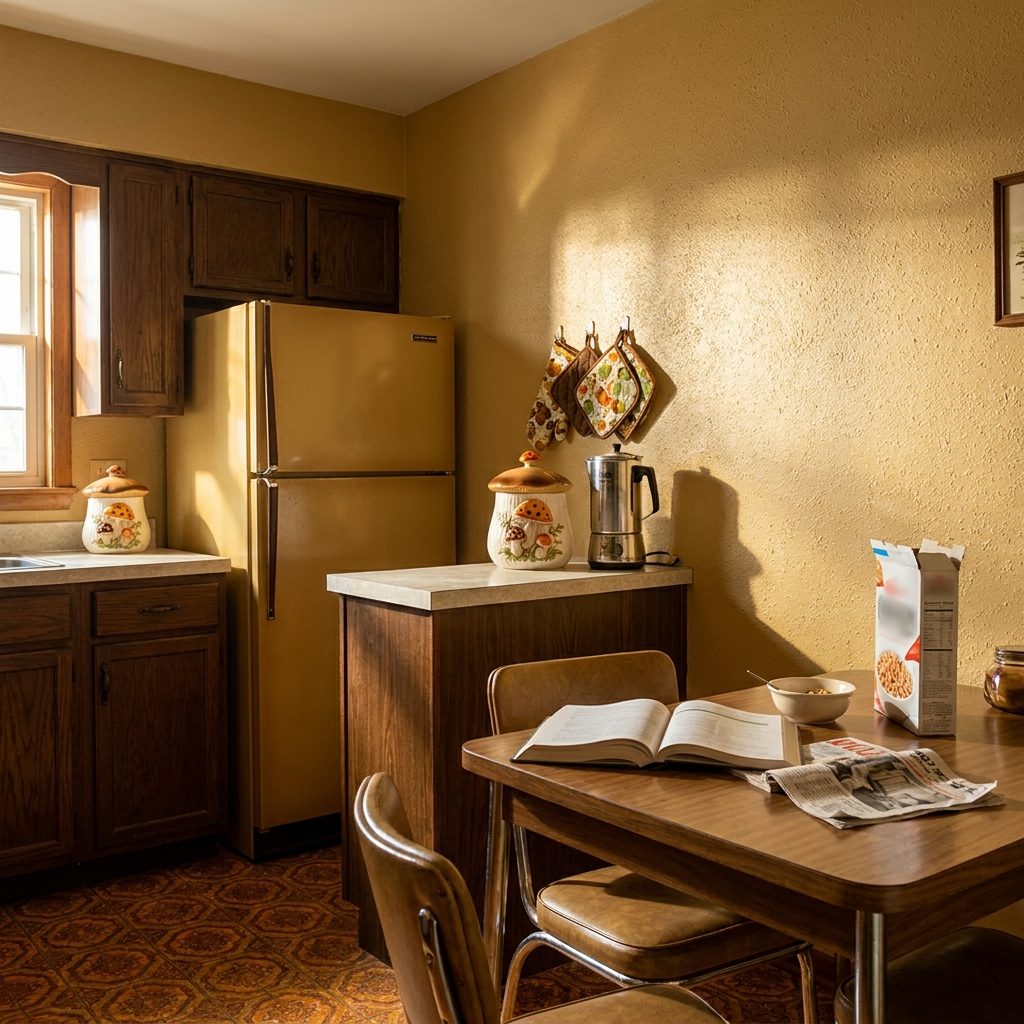
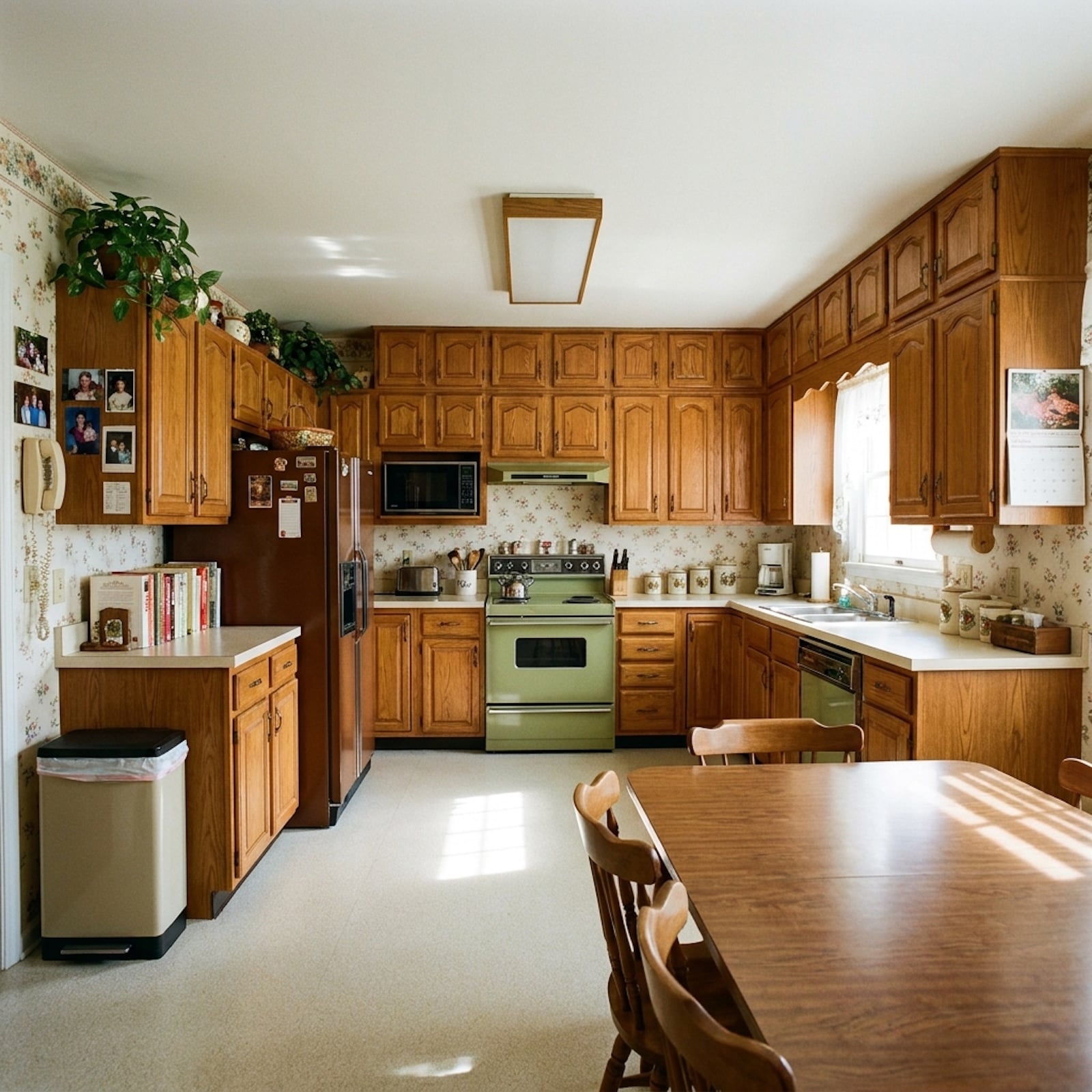
You noticed orange peel first at breakfast, when low sunlight turned the kitchen wall into a field of tiny shadows. The sprayed finish looked softly dimpled rather than rough, giving plain drywall a little depth without turning the wall into a major decorative statement.
Builders liked it because it was quick to apply and forgiving of minor surface irregularities, though the wall still needed properly finished joints underneath. Near the stove, grease settled into the dimples and made cleaning less pleasant. Against harvest-gold appliances and a Formica table, however, it became part of the kitchen rather than something anyone thought to question.
26. Knockdown Walls in the Den That Felt Like Frozen Frosting
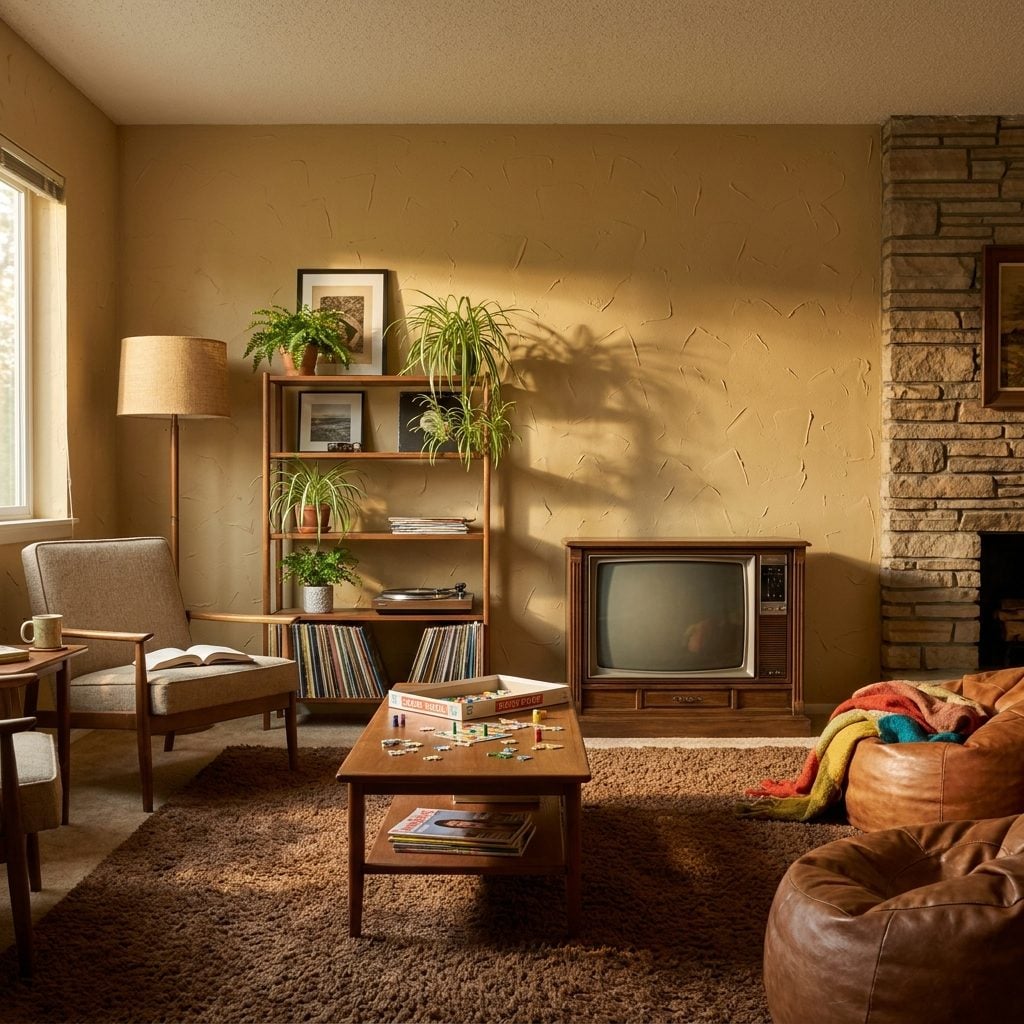
The den had a rougher finish than the rest of the house. Knockdown texture began as a sprayed spatter, then a wide knife flattened the peaks into irregular islands that caught late-afternoon light.
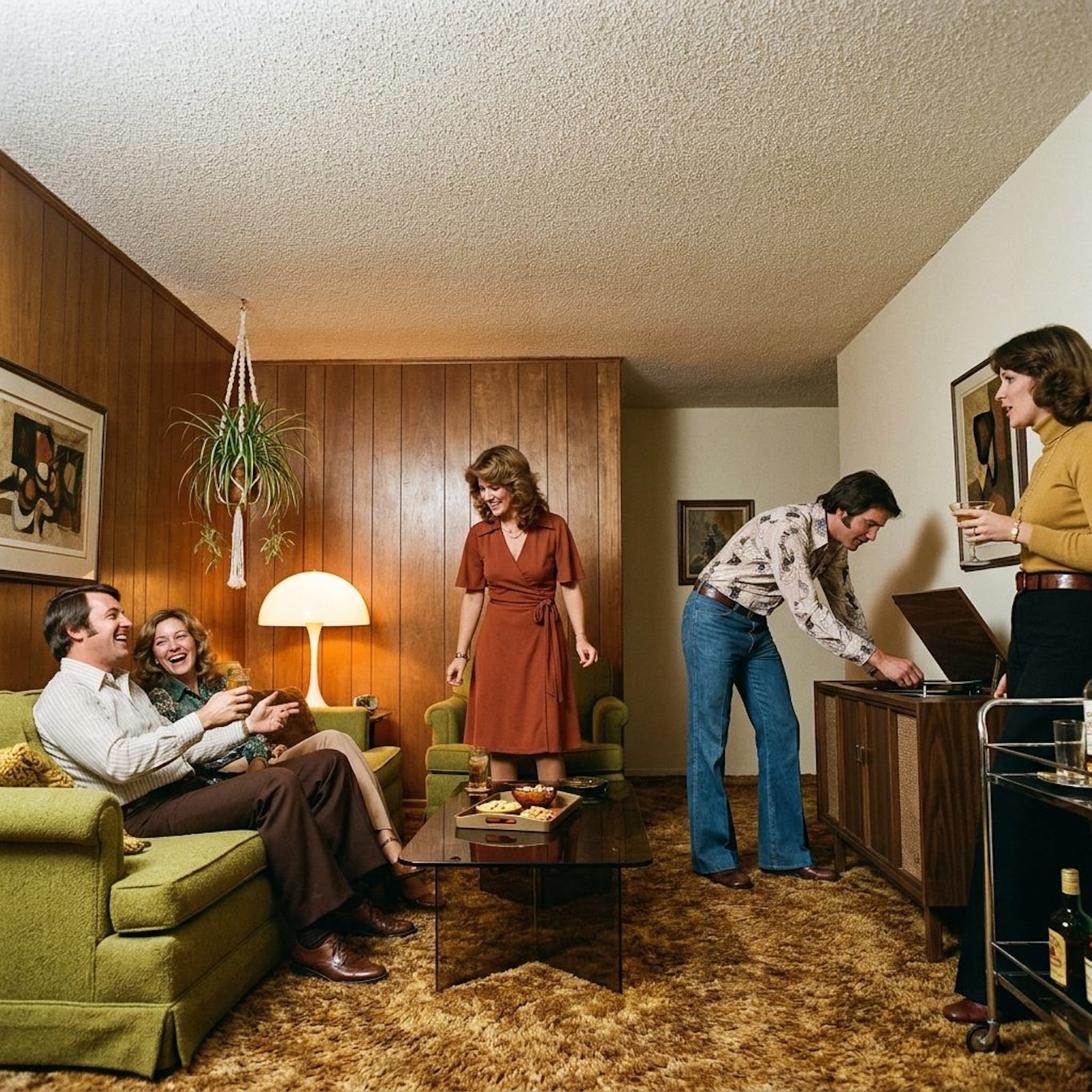
The result sat somewhere between smooth drywall and hand-troweled plaster. It made small dents and uneven patches less obvious, though it did not replace proper drywall preparation. In a room with a wood-veneer entertainment wall, a plaid recliner, and an amber lamp, those flattened ridges gave the walls a little extra weight without competing with everything else in the room.
25. The Ochre Family Room Wall With Texture You Only Saw in the Afternoon Light
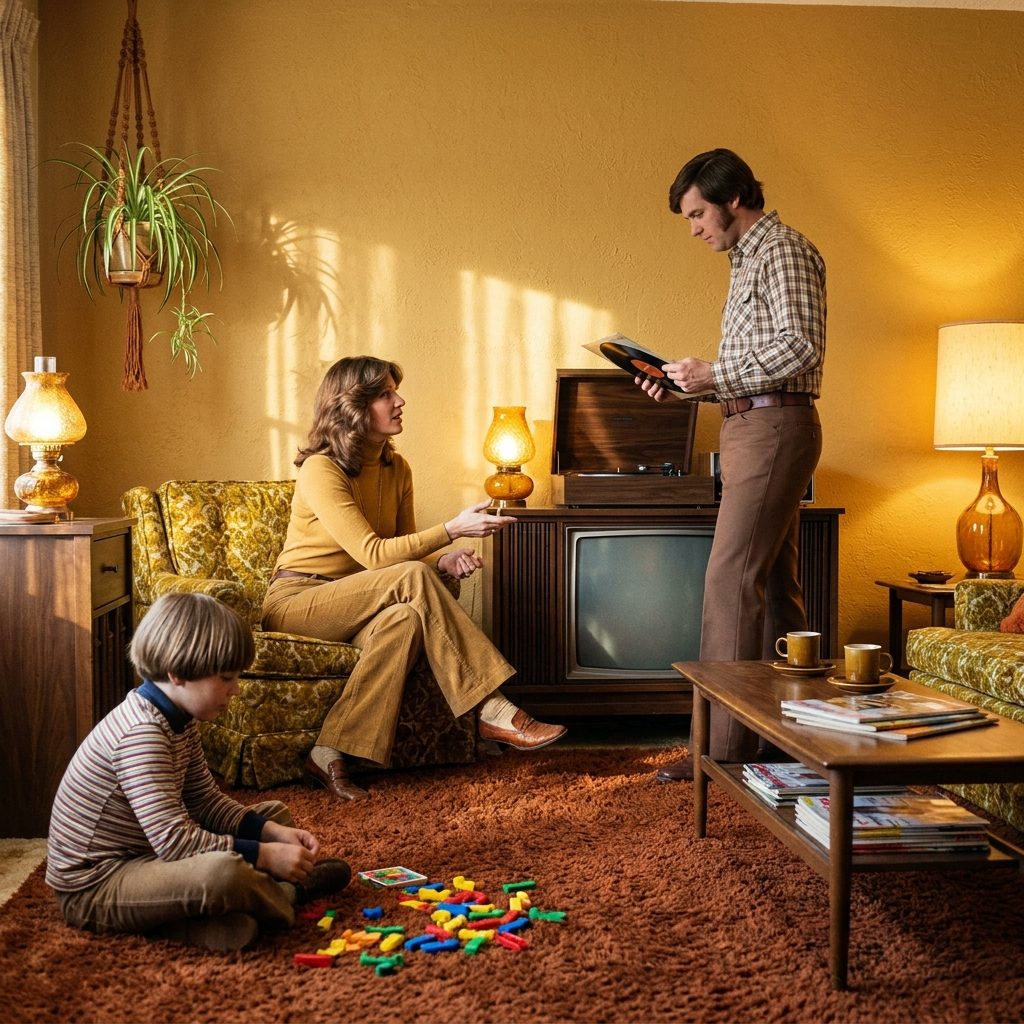
The family-room wall relied on texture rather than color variation. A warm ochre coat covered a lightly troweled or knockdown surface, and the low afternoon sun revealed every shallow ridge and irregular patch.
From across the room, the wall read as one uninterrupted field of gold. Up close, the hand-worked finish added enough variation to keep the color from feeling flat, especially beside the patterned upholstery, amber lamps, wood television cabinet, and deep rust shag carpet.
24. The Glitter-Flecked Popcorn Ceiling That Threw Light All Over Dinner
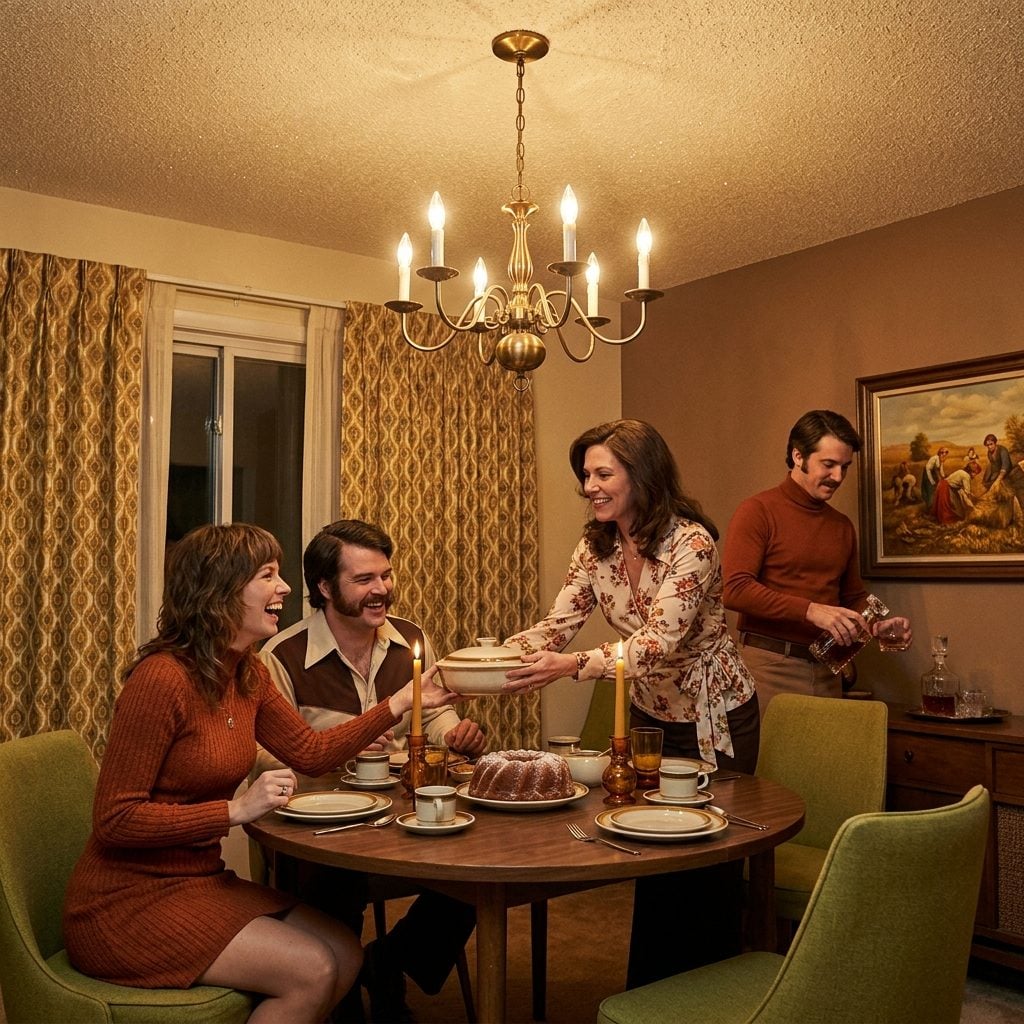
The chandelier concentrated its warm light directly above the table, turning individual flecks of mica into small flashes that moved whenever someone shifted in a chair. What looked like an ordinary white ceiling during the day became part of the room once dinner began.
The sprayed finish remained economical and forgiving of minor surface irregularities, but the lighting made it feel deliberate rather than purely practical. Brass, glassware, polished wood, and that faint overhead sparkle gave the dining room its after-dark character.
23. Hallway Walls So Rough They Doubled as a Cheese Grater
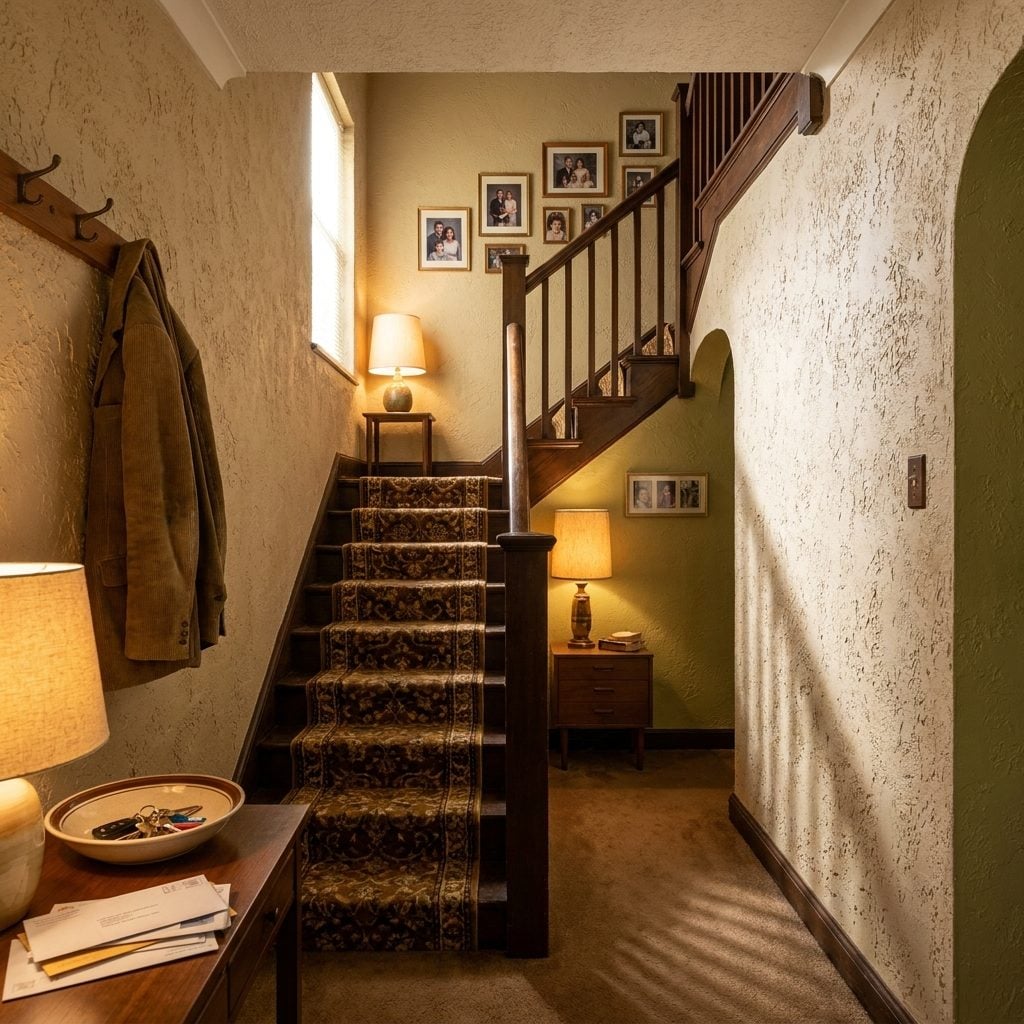
Hallway texture lived at hand and shoulder height, which meant every raised point eventually showed wear. A rough wall could make small marks less noticeable from across the room, but close contact polished the high spots and left a dull path along the stairs.
That worn stripe became a record of the household. Groceries brushed it, children dragged their hands along it, and coats grazed the same corners for years. The wall did not remain flawless; it simply absorbed ordinary damage in a way that looked familiar rather than alarming.
22. Wallpaper Slapped Right Over the Textured Wall (You Could Still Feel the Bumps)
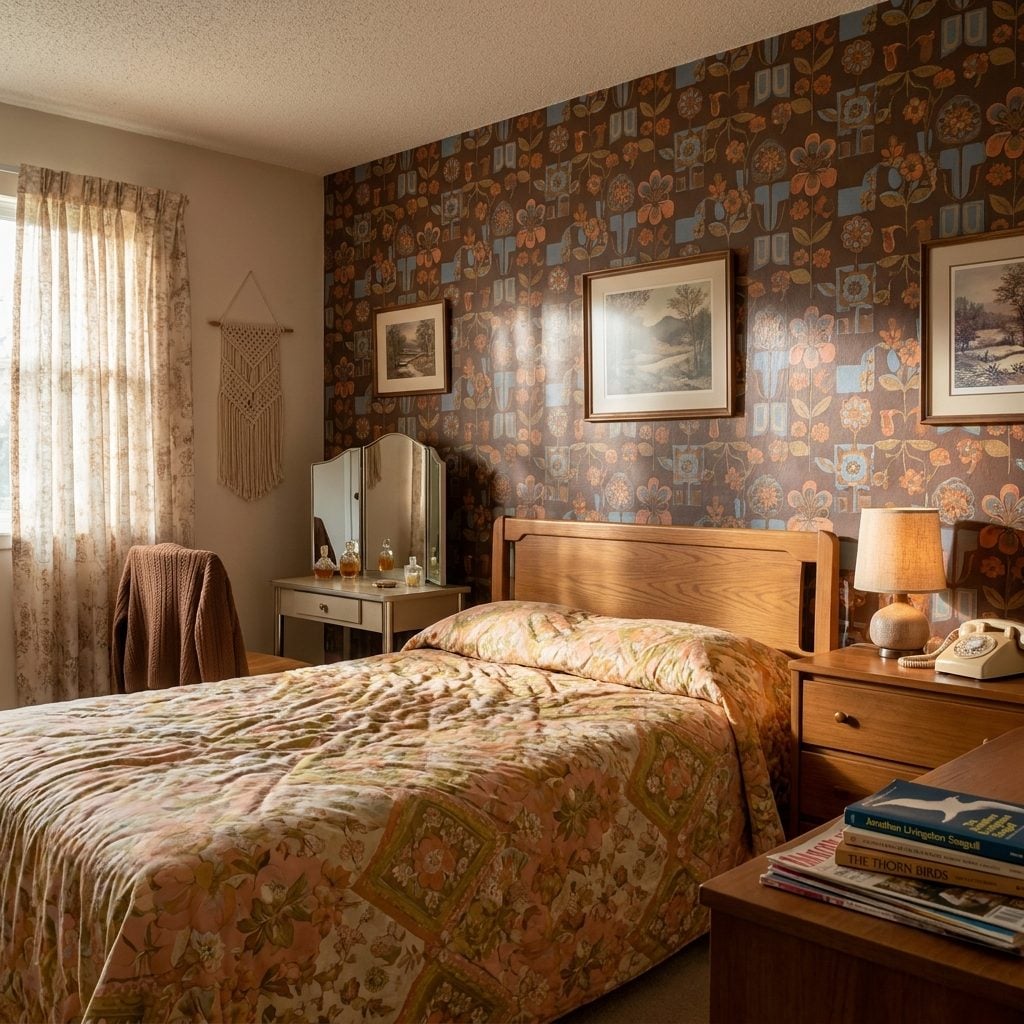
Wallpaper over texture announced every shortcut underneath it. Lightly textured walls sometimes accepted paper well enough from a distance, but heavier ridges telegraphed through the print, weakened adhesion, and kept seams from lying flat.
The result could still feel warm and enclosed, particularly in bedrooms with small floral patterns and shaded lamps. The problems appeared later: bubbles at the corners, paper tearing into fragments during removal, and stubborn texture remaining after the pattern was gone. Proper preparation would have meant smoothing or skim-coating the wall first, but plenty of households skipped that step.
21. The Glitter-Flecked Popcorn Ceiling in the Bathroom That Sparkled Over the Sink
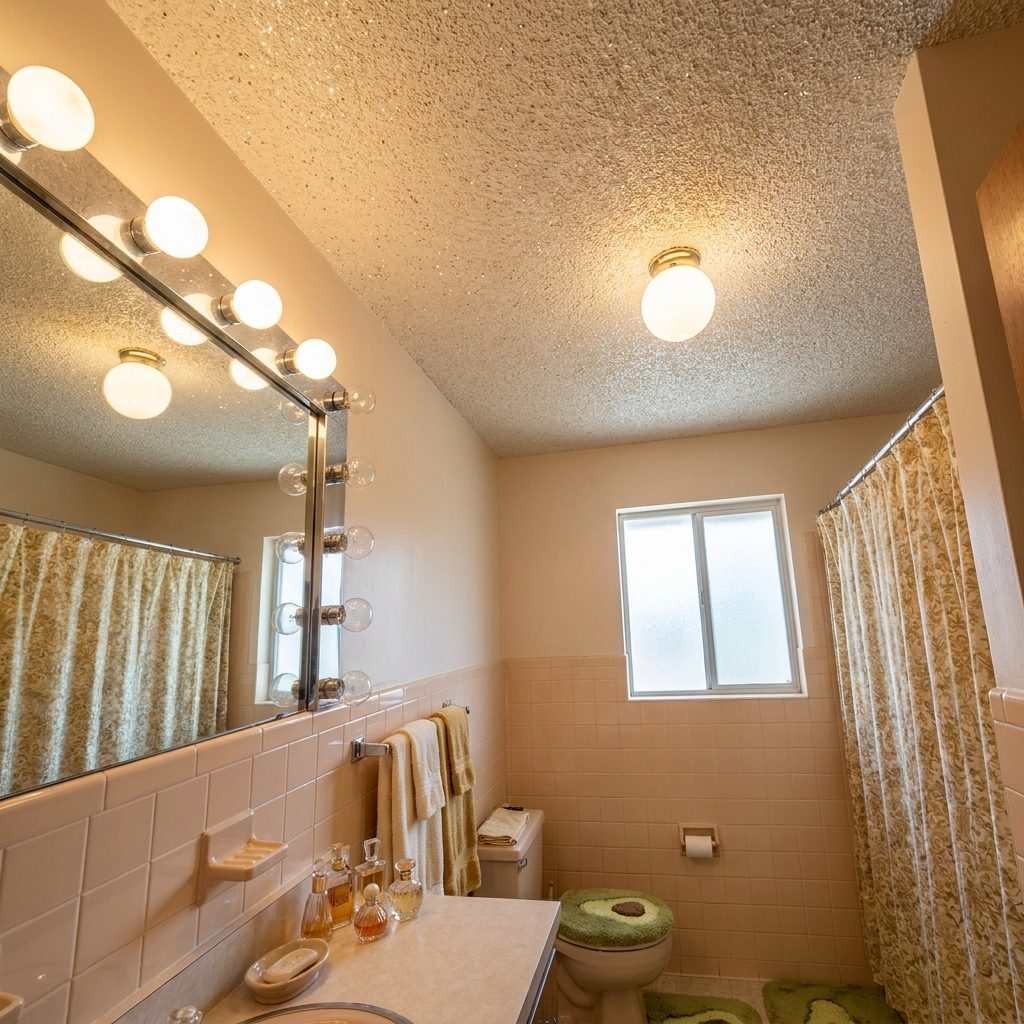
Bathroom globe lights made glittered popcorn behave differently from the dining-room versions. The bulbs sat close to the ceiling and reflected through tile and mirror, so even a small amount of mica flashed above the sink.
The room also exposed the finish to humidity, hairspray, and dust, which could dull the surface over time and make cleaning difficult. The glamour was real, but so was the maintenance problem. As with any older sprayed texture, the material should be assessed before renovation rather than identified by appearance alone.
20. The Roller-Stipple Kitchen Ceiling That Caught the Breakfast Steam
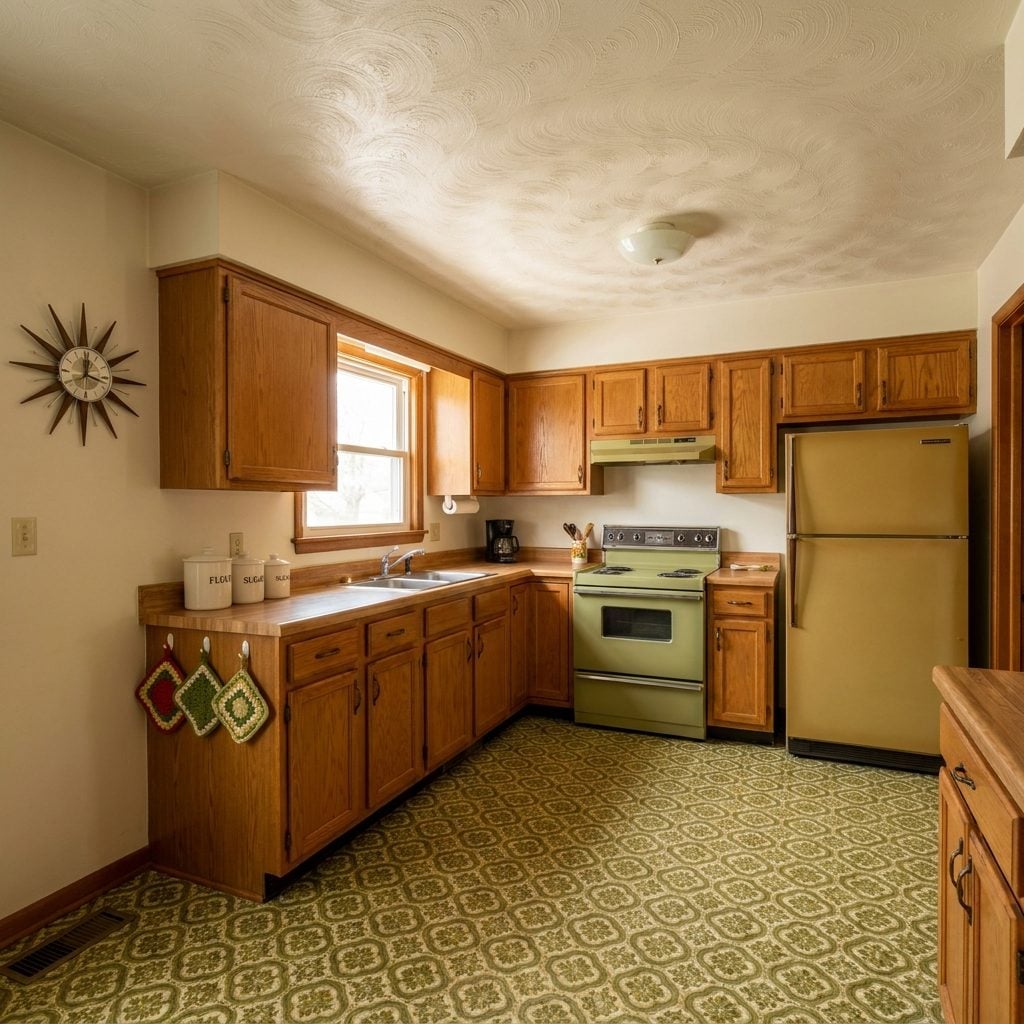
Roller stipple was less random than sprayed popcorn. A thick coating was rolled across the kitchen ceiling, then patterned with a textured roller that left raised bumps or looping marks.
The attraction was the repeated roller pattern. Morning light picked out the loops and raised bumps one after another, giving the ceiling a rhythm that sprayed popcorn lacked. Repainting demanded enough coverage to reach the recesses without filling them in. The finish was practical, inexpensive, and visually busy without being as coarse as popcorn.
19. Rosebud-Textured Dining Room Ceilings You Only Noticed Mid-Argument
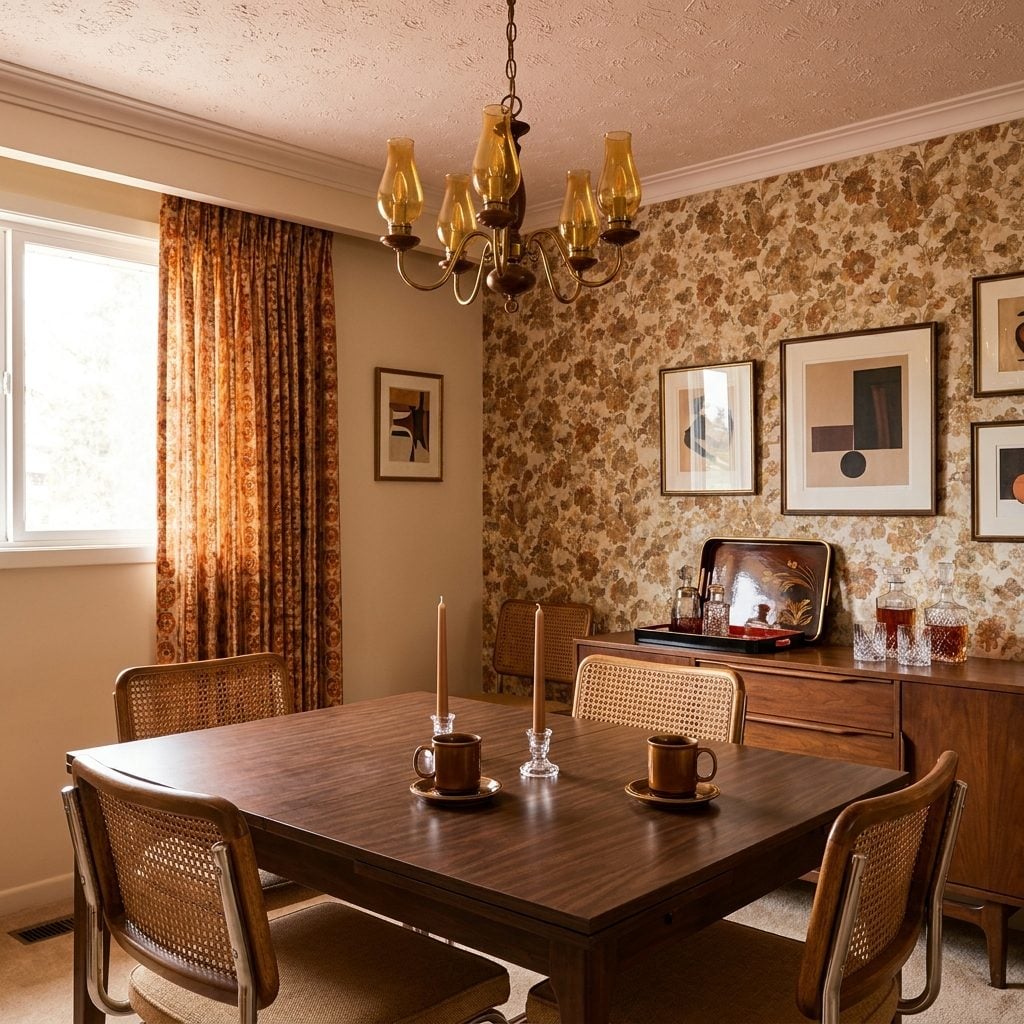
Rosebud texture formed repeated floral clusters across the dining-room ceiling. A loaded brush pressed into wet compound left rounded marks that could remain raised or be lightly flattened, depending on the desired finish.
From the table, the pattern often read as a general field rather than a series of individual flowers. Chandelier light changed that, throwing a shadow around each cluster and revealing the workmanship overhead. Decorative rooms received these more deliberate patterns because the ceiling was expected to contribute to the setting rather than disappear.
18. The Shell-Pattern Ceiling Arcing Over the Sunken Conversation Pit
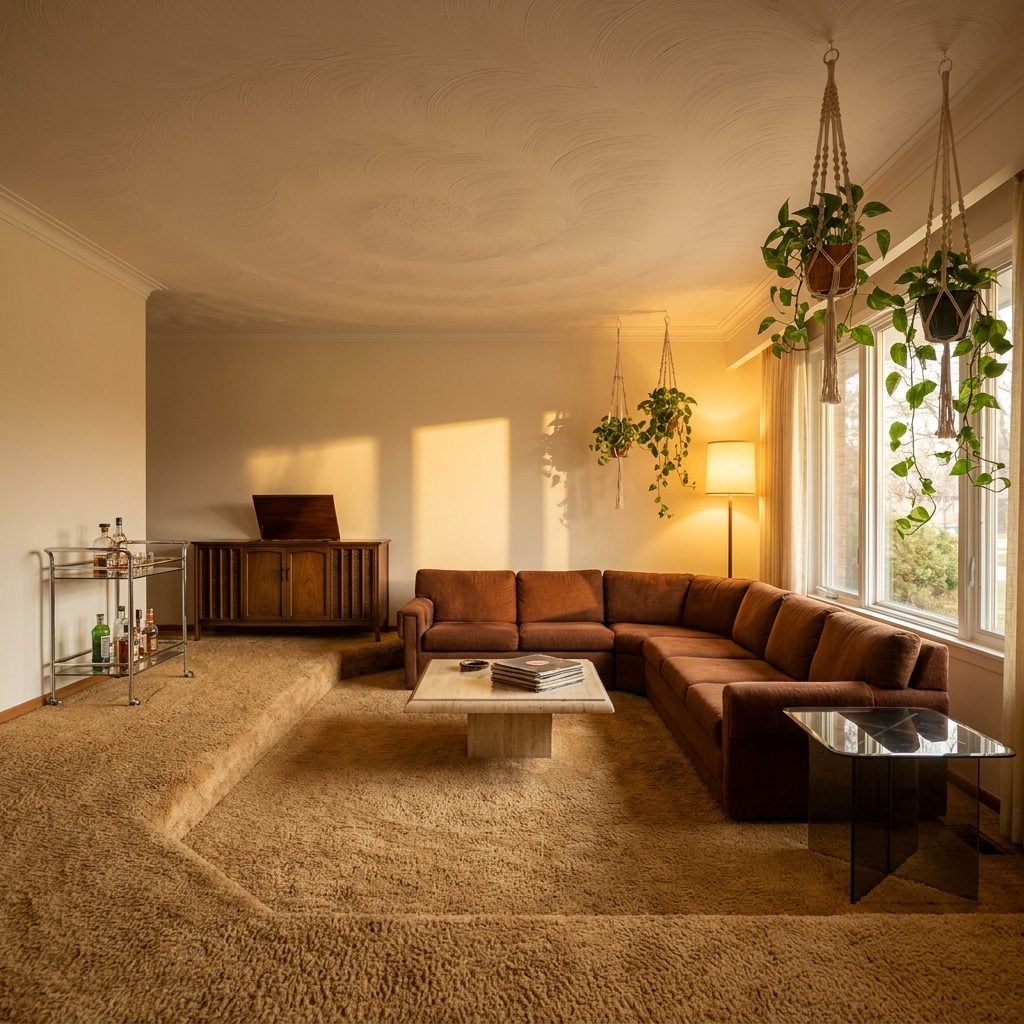
The shell-pattern ceiling echoed the curves of the sunken conversation pit below it. Broad fan-shaped arcs moved across the overhead surface, catching long shadows as afternoon light crossed the room.
Unlike sprayed textures, this pattern depended on repeated hand movement and consistent spacing. It looked deliberate because it was. In a room already filled with camel shag, smoked glass, and low seating, the ceiling completed the sense that every surface had been considered—even when the overall effect dated quickly once tastes changed.
17. The Painted-Over Water Stain on the Laundry Room Popcorn Ceiling
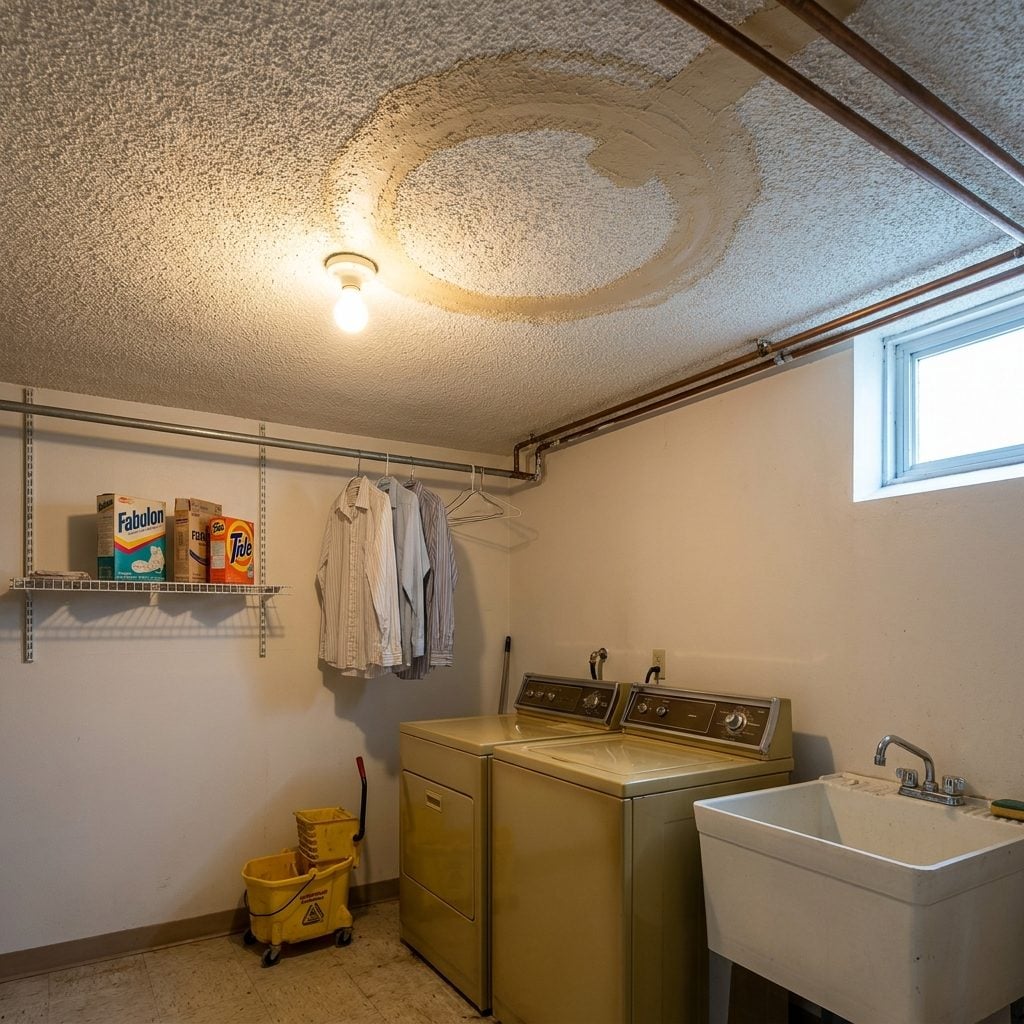
A painted-over water stain told two stories at once: the original leak and the decision to stop the repair once the surface looked acceptable. Repeated rolling softened the popcorn peaks and left a patch that differed slightly in color and texture.
The important issue was always the source of the stain. Paint could hide discoloration, but it could not correct a roof, plumbing, or condensation problem. In the laundry room, where finishes received less attention, the mismatched patch often remained long after the leak itself was addressed.
16. The Bedroom Popcorn Ceiling Softened by Three Coats of Paint
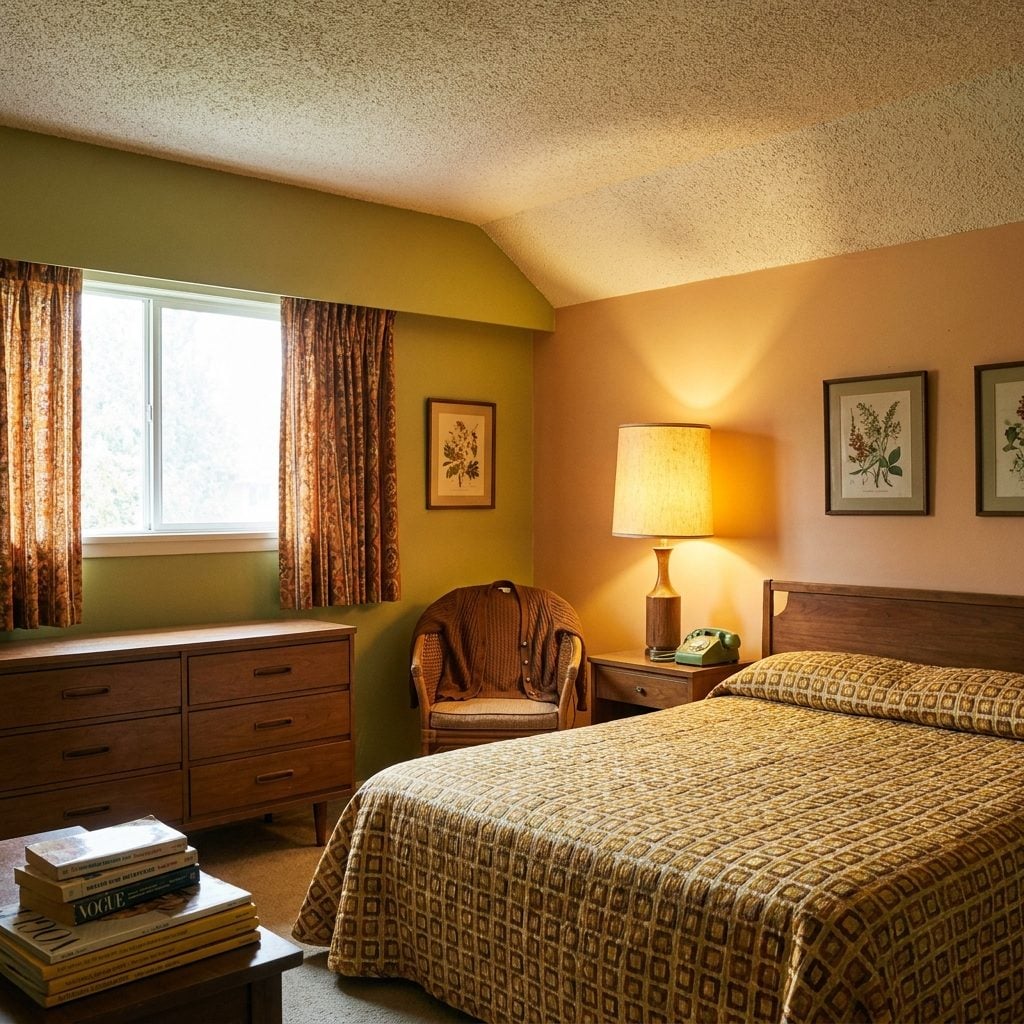
Multiple coats of paint gradually changed the bedroom popcorn ceiling. Each layer bridged small gaps, rounded sharp peaks, and made the original aggregate look softer and heavier.
Whether that was an improvement depended on the room. In soft bedside light, the dulled texture produced fewer hard sparkles and a gentler overhead surface. Painting could also make later removal more difficult because water no longer penetrated the finish as easily. The ceiling became less like fresh popcorn and more like a record of every repaint.
15. Faux-Stucco Den Walls With Corners Rounded by Hand
🔥 Would you like to save this?
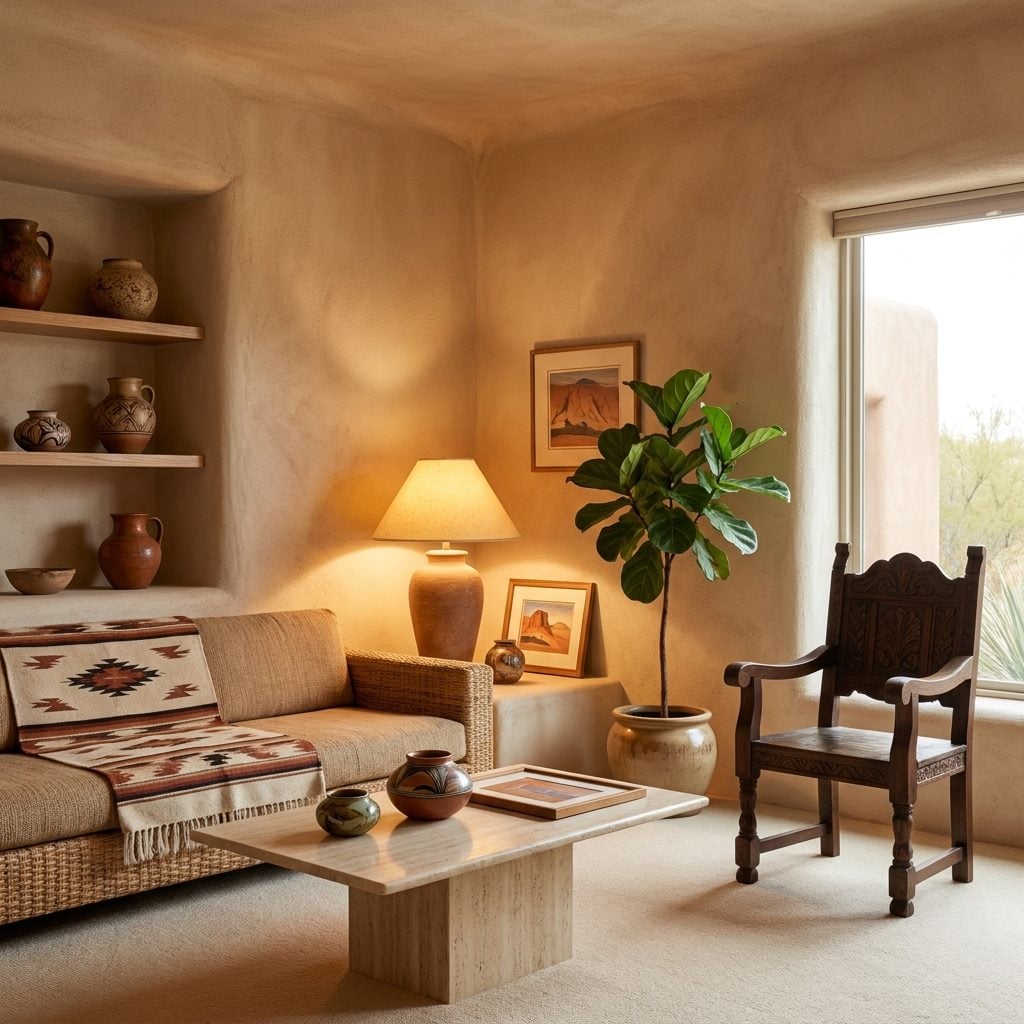
Faux-stucco walls traded crisp drywall edges for rounded corners and broad hand-worked movement. The aim was an adobe-inspired interior, often paired with clay colors, pottery, carved wood, and woven textiles.
Not every rounded corner was handmade plaster, but the visual effect mattered more than the construction method. Warm lamplight settled into the dips and emphasized the softer geometry of the room. This den focuses on the tactile surface itself: uneven, earthy, and deliberately less precise than ordinary drywall.
14. The Half-Scraped Ceiling That Marked the Start of a Long Weekend
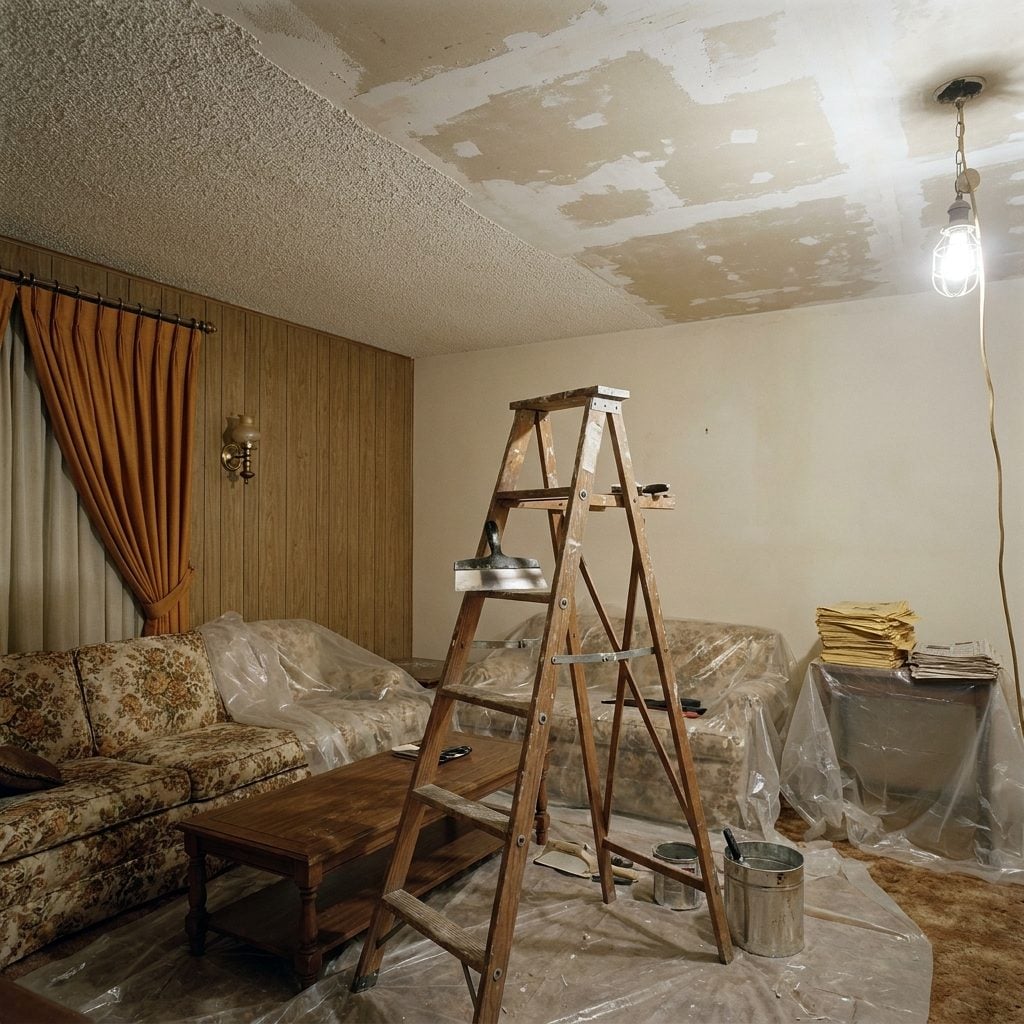
A half-scraped ceiling marked the moment a simple weekend project became a renovation. One side remained rough and familiar; the other exposed uneven drywall, old paint, and all the finishing work the texture had concealed.
Older ceiling material should be professionally assessed before disturbance because some historical products contained asbestos. When testing confirms the texture is safe to remove, the method still depends on whether it has been painted and how firmly it is bonded. The divided ceiling shows two eras at once: the rough finish still in place on one side and the unfinished surface waiting beneath it on the other.
13. The Tree-Bark Foyer Wall That Greeted Every Guest at the Door
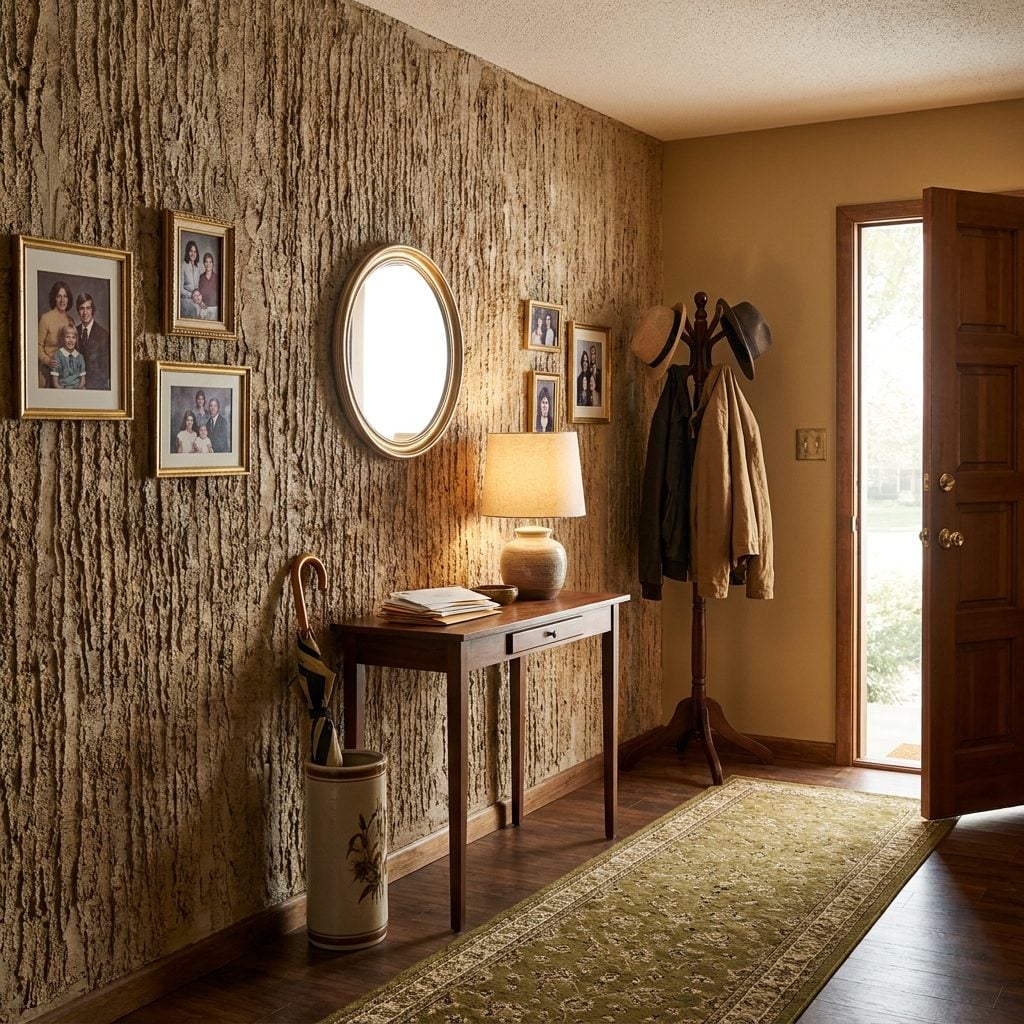
This foyer uses tree-bark texture as a first impression rather than a long hallway treatment. The vertical grooves sit beside the front door, where guests steady themselves, children drop bags, and coats repeatedly brush the wall.
The pattern feels more architectural here because it frames the arrival space. A bench, mirror, and sconce give the ridges a clear setting, while angled light makes the grooves visible from the doorway. The wall still collects dust and takes extra effort to repaint, but it succeeds at being memorable before anyone reaches the living room.
12. The Sprayed Popcorn Kitchen Ceiling That Watched Over Every Breakfast
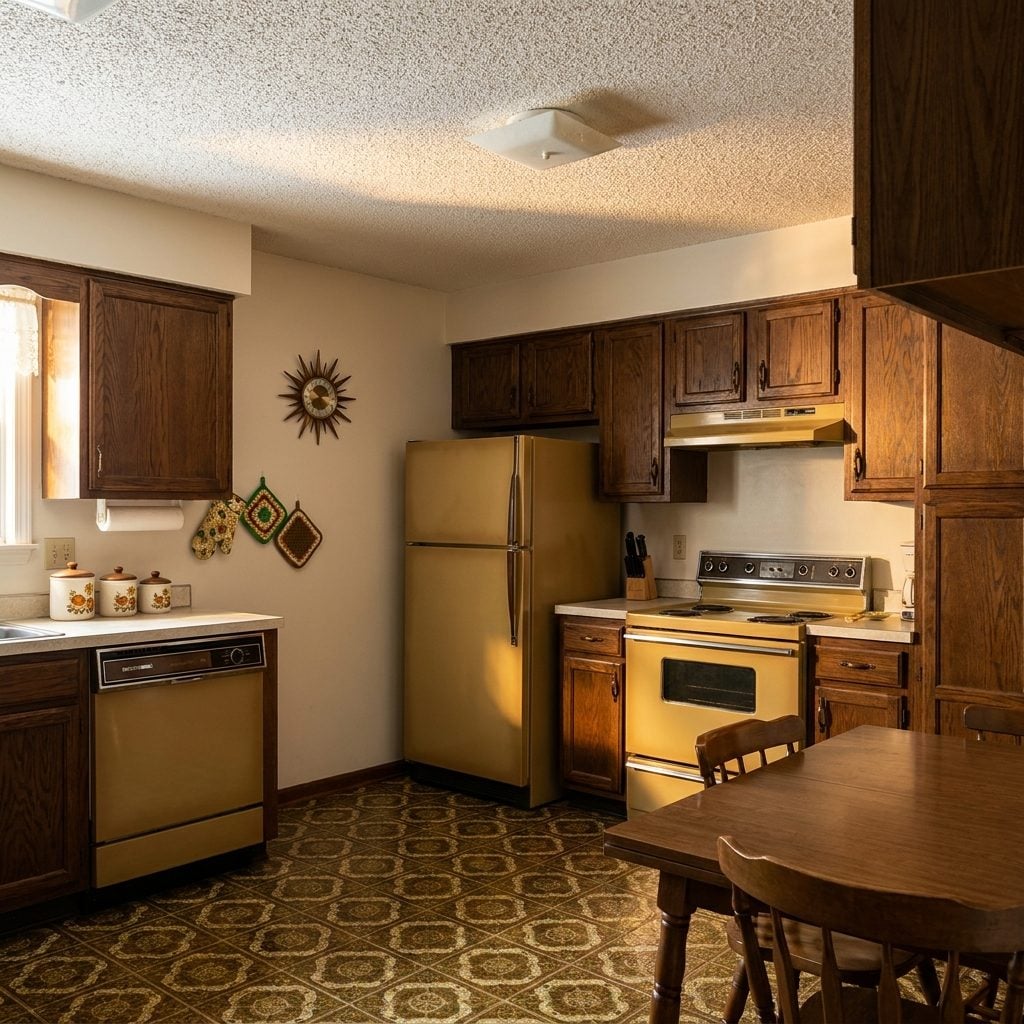
Kitchen popcorn was less about glamour than endurance. The sprayed ceiling concealed minor imperfections and created a uniform surface above a room where steam, grease, and heat gradually changed the color.
The most distinctive detail was the faint yellowing over the stove. It formed a quiet map of where cooking happened, while the rest of the ceiling stayed comparatively white. Popcorn did not eliminate kitchen noise or replace proper drywall finishing, but it was economical and visually forgiving enough to become common.
11. Popcorn Ceilings Meeting Dark Beams in the Sunken Family Room
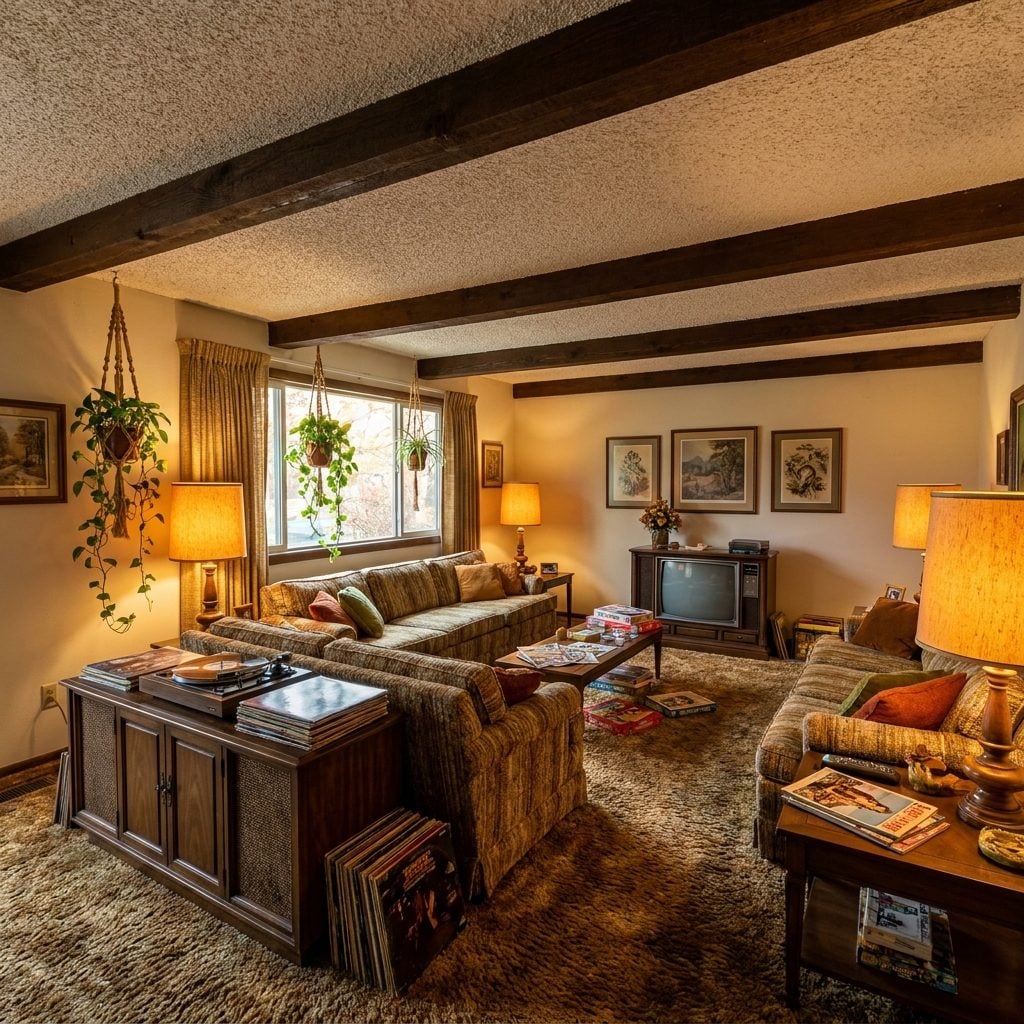
Dark beams gave the family-room ceiling a structure that popcorn alone could not provide. Rough white texture filled the spaces between stained timbers, creating a strong contrast between irregular aggregate and smooth wood.
The beams organized the ceiling into long panels and made the sprayed finish feel intentional rather than merely economical. Late light picked out the rough white surface while the stained timbers stayed dark and solid. Visually, the beams carried the room and the popcorn brightened the spaces between them.
10. The Textured Ceiling Border That Framed the Dining Room Like a Picture
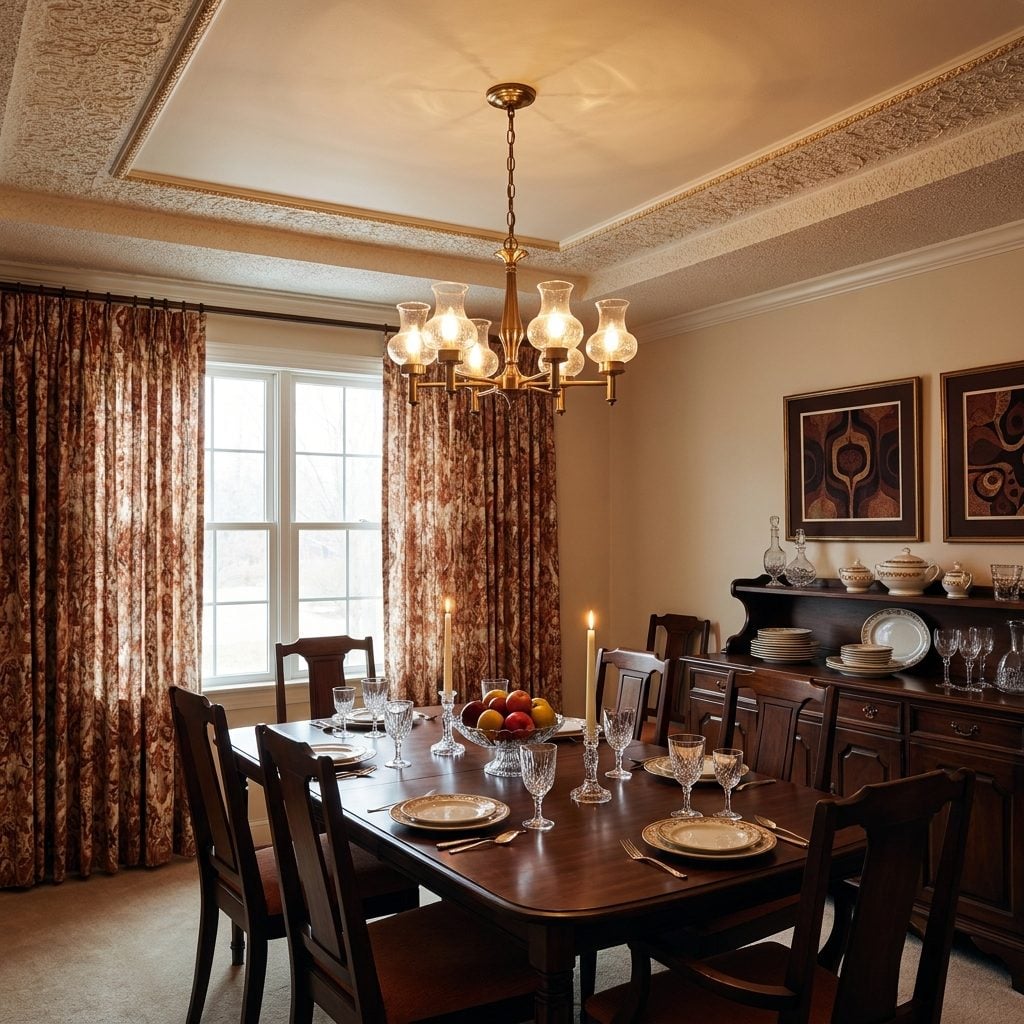
This dining-room border is graphic and bold. A swirled perimeter forms a clear frame around the chandelier and smooth center panel, making the ceiling read almost like a piece of trim.
People noticed it in pauses—looking up during conversation, tracing the border, then returning to dinner. The ceiling treatment made the room feel dressed for company without covering every inch in texture, tying the border directly to the dining table below.
9. Sand-Finish Basement Rec Room Walls That Caught Every Bit of Light
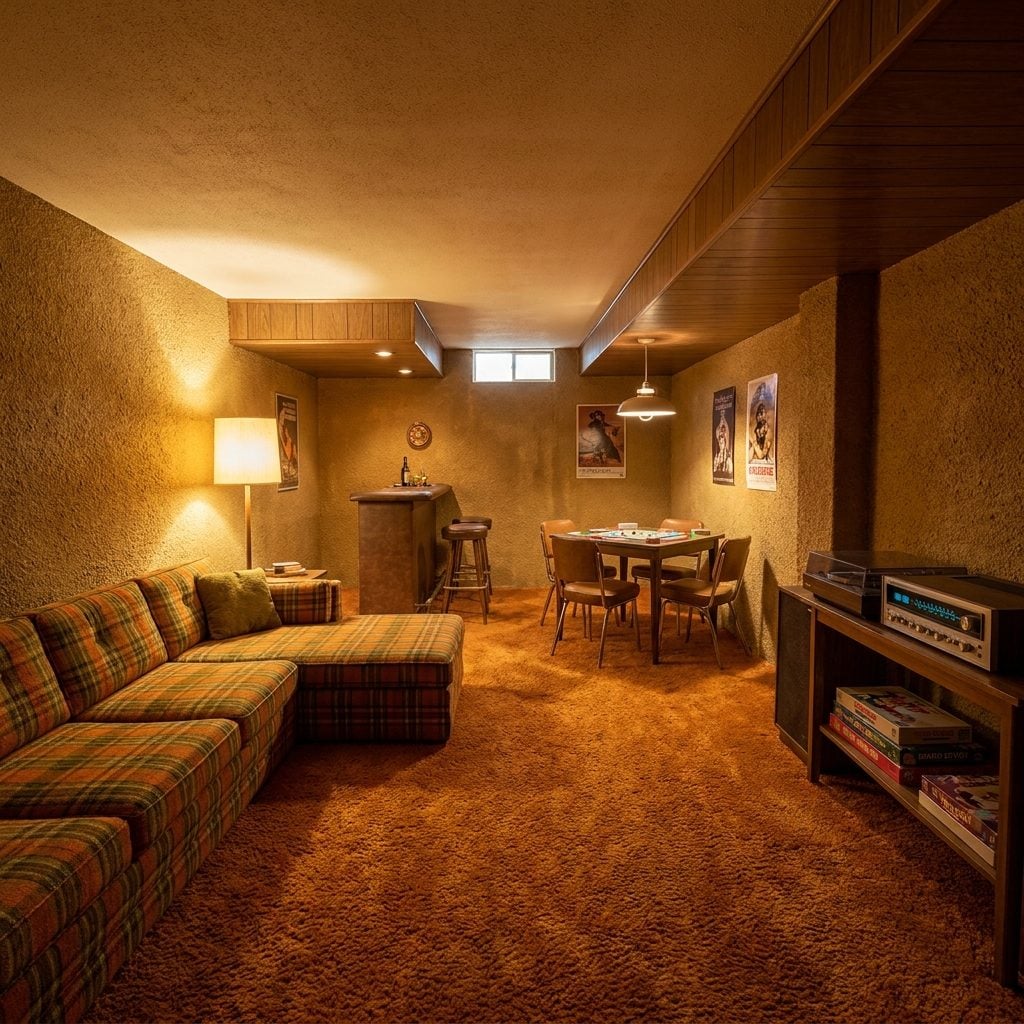
In the rec room, sand finish worked as a background rather than a feature. The fine grit caught one pool of warm lamplight while the furniture, stereo, and people supplied the movement.
Repainting it was where the trouble started. The grit swallowed paint, rollers skipped over the recesses, and the original builder beige often survived simply because nobody wanted to tackle another coat. Paneling, carpet, and upholstery supplied the color instead.
8. The Mismatched Texture Patch Halfway Up the Stair Hall Wall
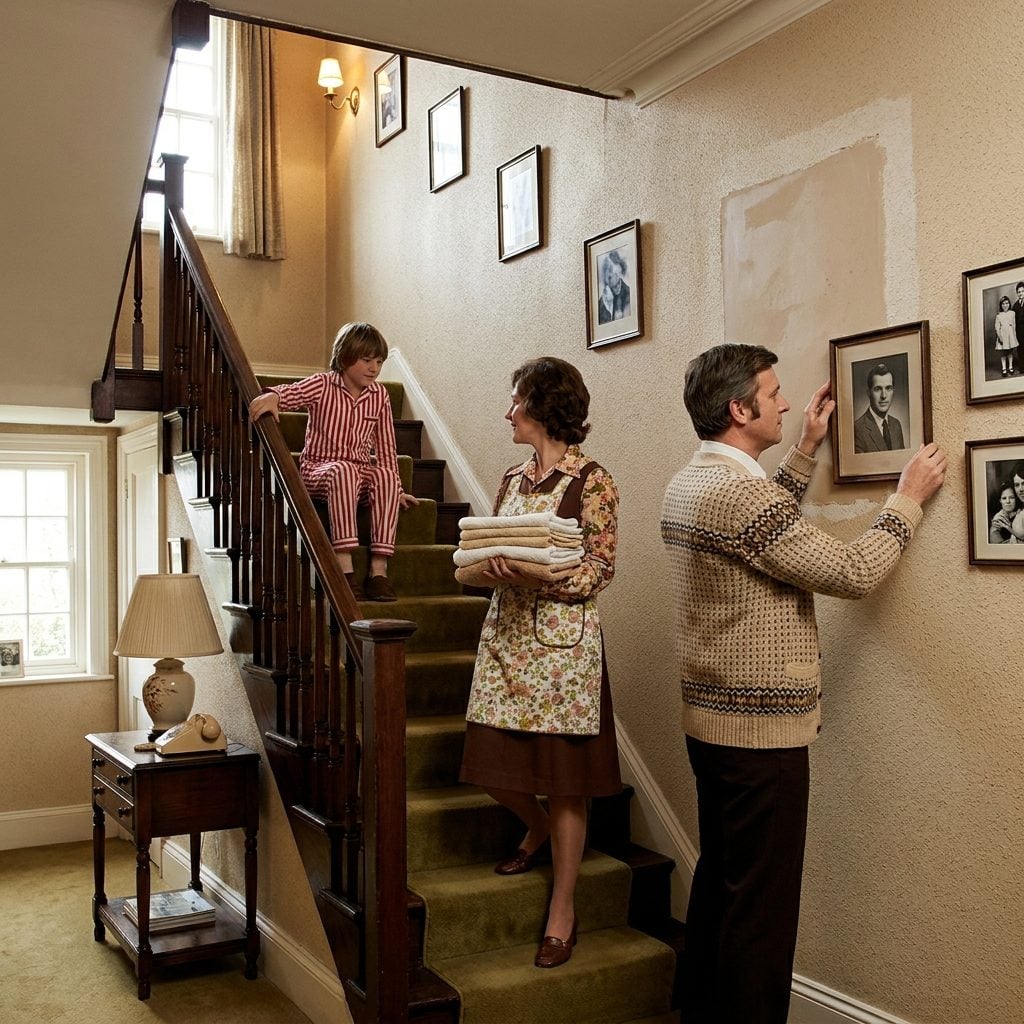
The stair-hall patch was harder to ignore than a repair in a flatter-lit room because side lighting exposed every difference. The new stipple was slightly finer, the paint a little brighter, and the edge visible from the landing.
Its cause was ordinary—a doorknob, loose hook, or damaged section of wall—but the location turned it into part of the daily route through the house. In flat daylight it nearly disappeared. Under the wall sconce, the edge announced itself from clear across the landing.
7. Comb-Textured Sunroom Walls You Traced With a Fingertip While Nobody Watched
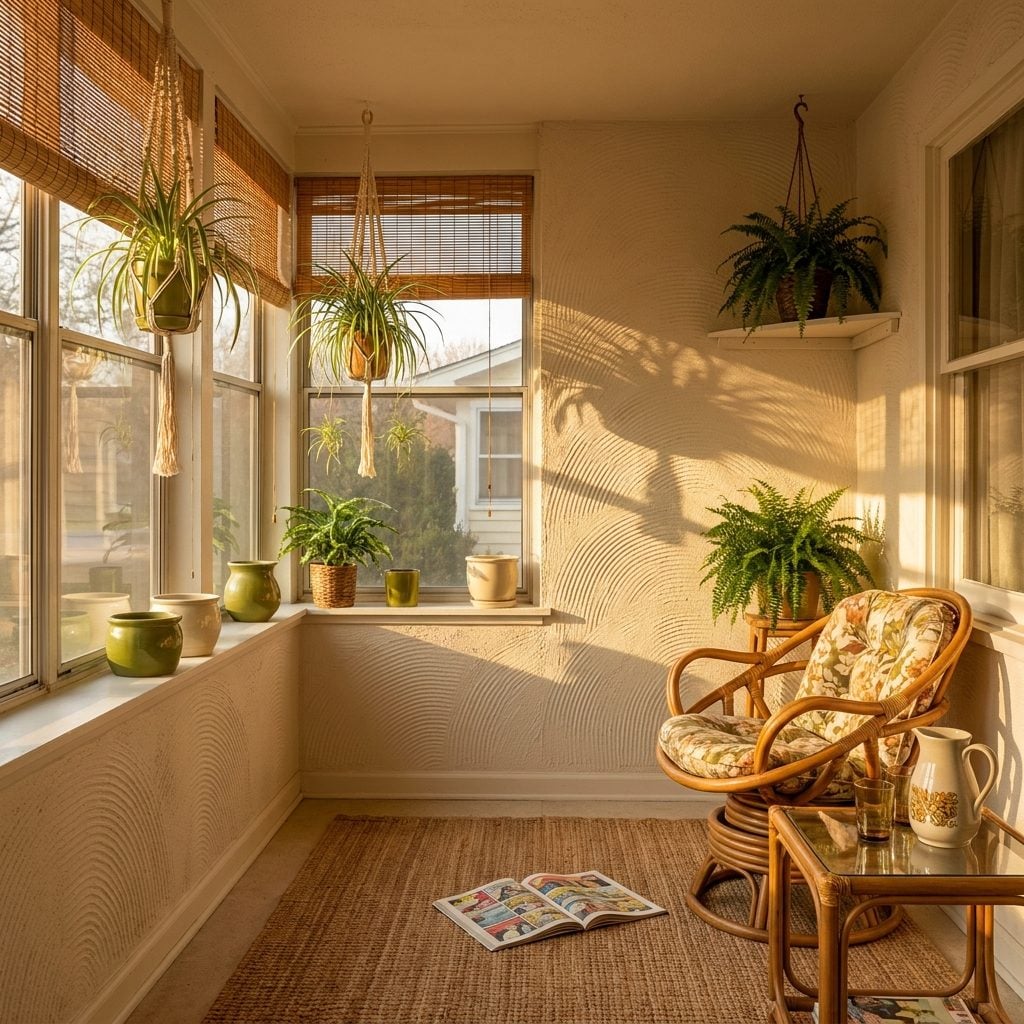
Comb texture turned the sunroom walls into long bands of shadow. A notched tool dragged through wet plaster or compound left parallel grooves that became much more visible when afternoon light crossed them sideways.
The room suited the finish. Wicker furniture, hanging plants, and bright windows already leaned toward a handmade, casual look. Unlike tree-bark texture, which used irregular vertical ridges, comb work followed a more controlled repeated pattern. The pleasure was in tracing one groove into the next.
6. The Gritty Card-Room Ceiling That Disappeared Once Poker Night Started
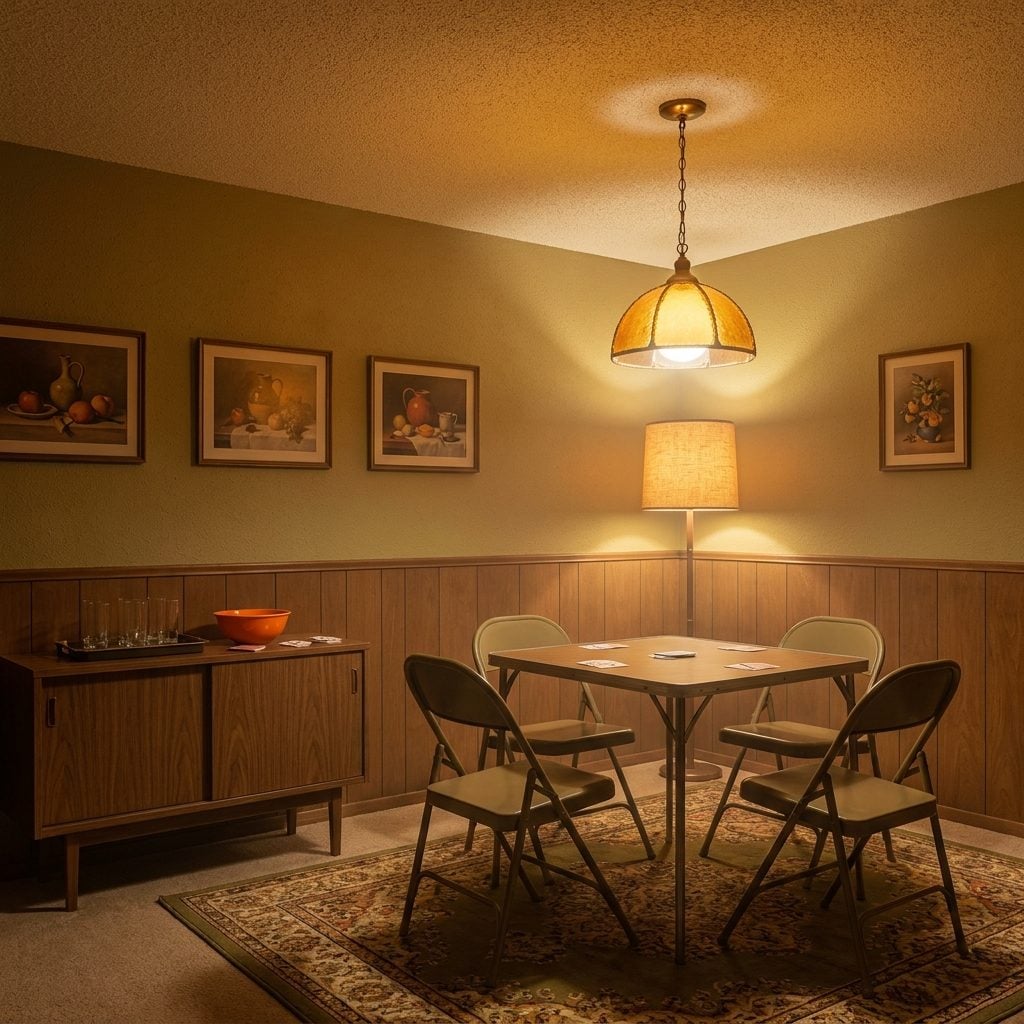
In the card room, sand finish appeared overhead rather than on the basement walls. Fine aggregate in paint or compound gave the ceiling a uniform grain that looked less elaborate than swirl or rosebud texture.
The players rarely studied it, which was part of the appeal. A simple finish could cover minor unevenness without competing with the table below. Warm pendant light flattened the grain from most angles and revealed it only near the fixture, keeping the room visually low and close while the card game held everyone’s attention below.
5. The Popcorn Ceiling That Hovered Over Every Saturday Night House Party
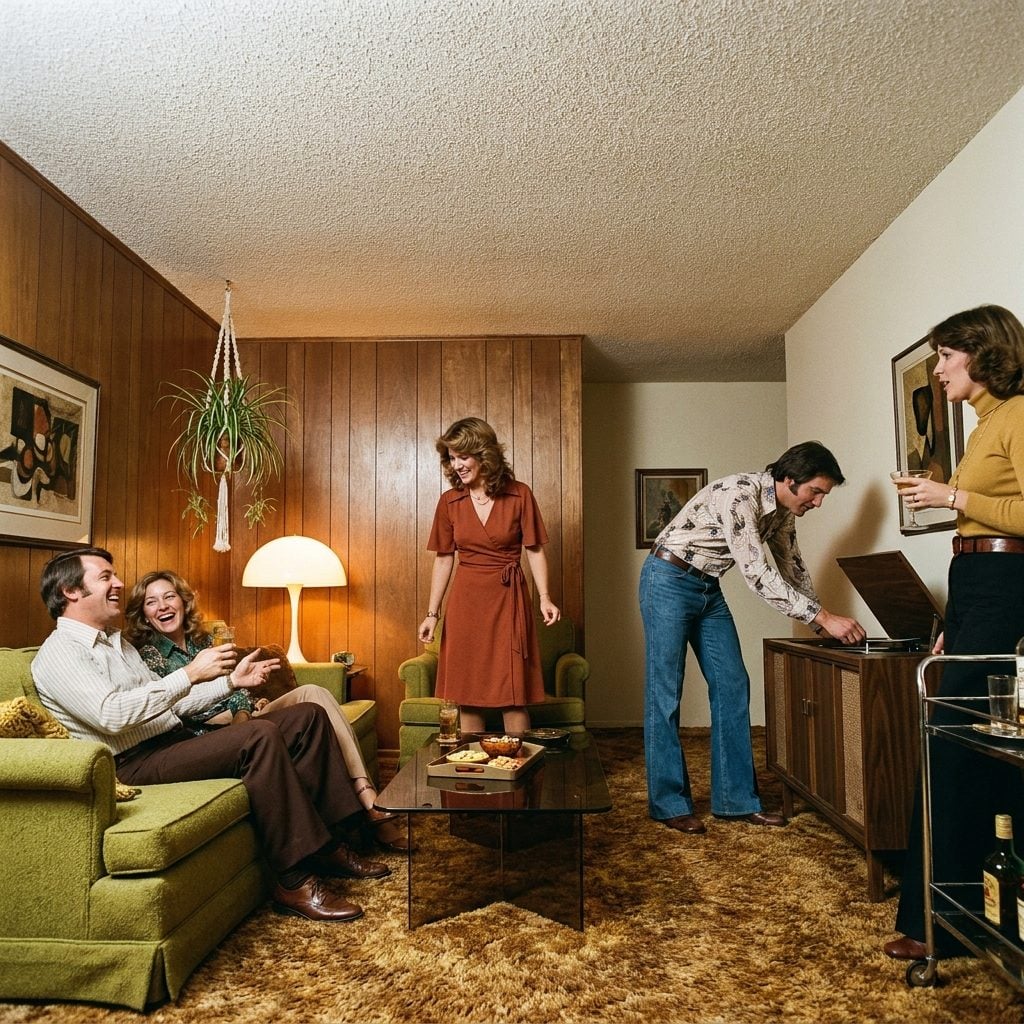
A crowded living room made the popcorn ceiling almost invisible until the overhead light came on. Music, conversation, glasses, and movement occupied the room below while the rough white surface remained a familiar lid over the party.
Its practical appeal was simple: the sprayed finish was economical, visually forgiving, and quick to apply. Carpet, curtains, upholstered furniture, and a room full of guests did far more than the ceiling to soften the noise. Late at night, direct light cast tiny shadows from every raised fleck and made the surface briefly noticeable again.
4. The Sand-Swirl Music Room Ceiling That Arced Over Piano Nights
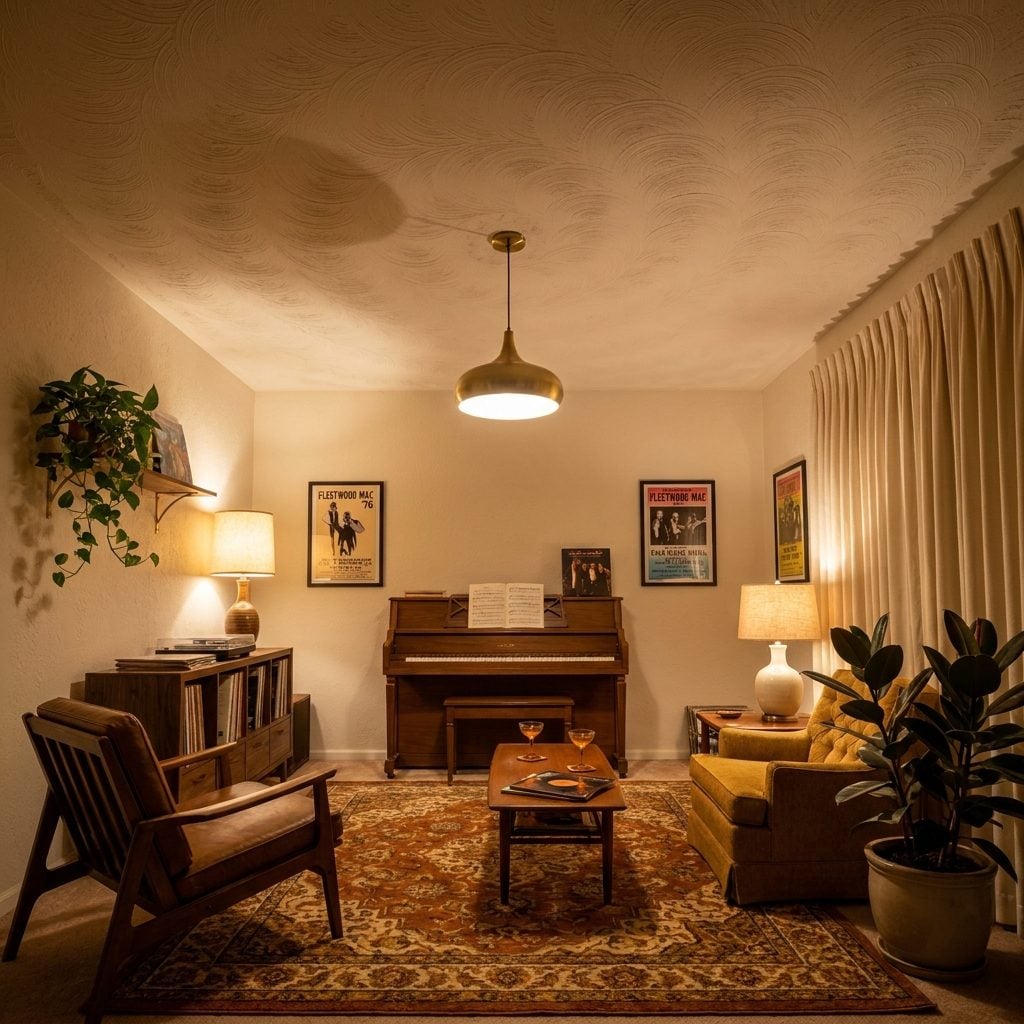
Sand-swirl texture swept across the music-room ceiling in broad arcs that echoed the movement of the piano below. A brush worked through sanded compound left overlapping curves, each one catching the brass pendant light differently.
The room gave the pattern a natural setting. One person played, another turned a page, and listeners gathered nearby while the ceiling remained visible above the group. Unlike plain sand texture, the aggregate here was organized into deliberate movement. The result combined grain and rhythm without relying on the coarser bumps of popcorn.
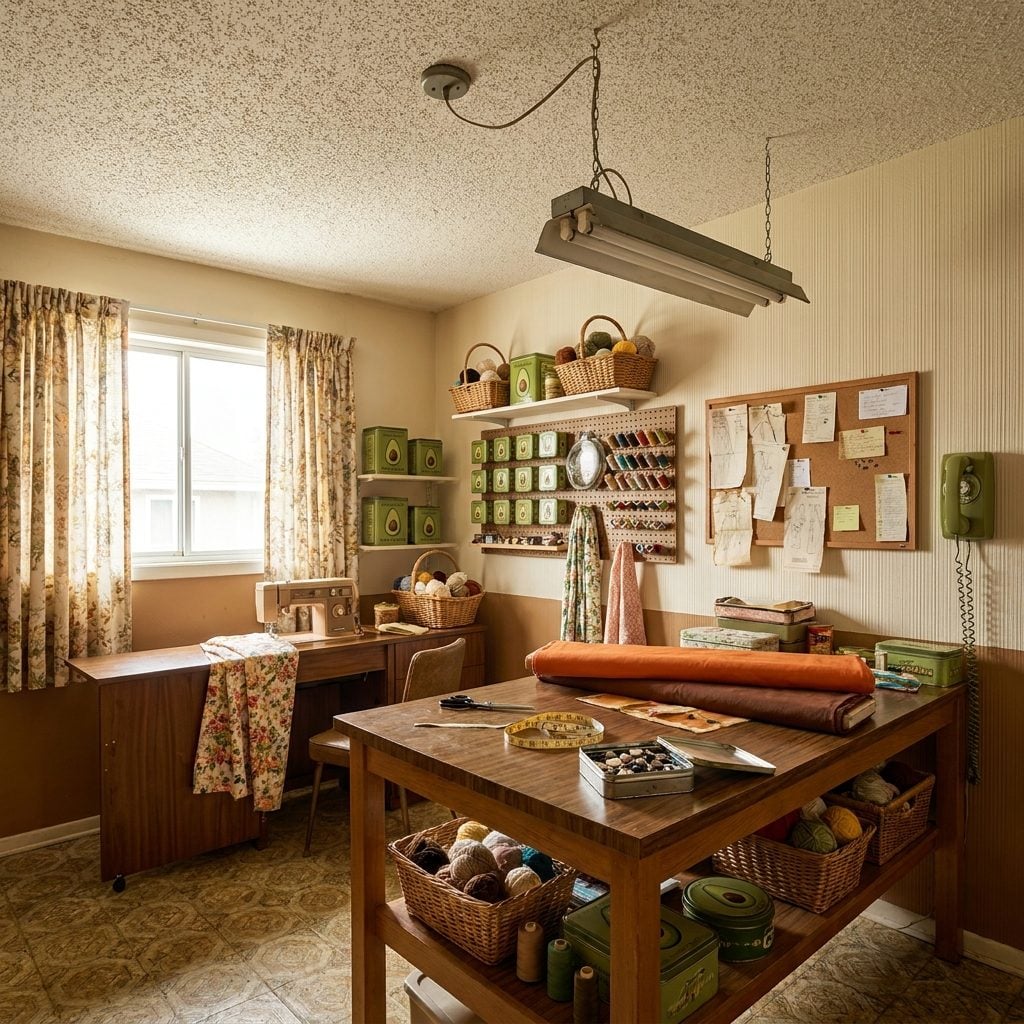
3. Stipple Ceiling Over the Sewing Room, Combed Walls Along Every Side
🔥 Would you like to save this?
The sewing room carried two textures at once: fine stipple overhead and combed grooves along the walls. Bright task lighting revealed the difference immediately, turning the ceiling into a soft field and the walls into long directional lines.
That contrast suited a room built around pattern and handwork. Fabric, thread, rulers, and folded pieces already created visual activity, so the surfaces stayed controlled rather than flamboyant. The stipple concealed minor overhead irregularities, while the combed walls added rhythm beside shelves and worktables.
2. The Skip-Troweled Library Walls Where Grown-Ups Talked Long After the Coffee Went Cold
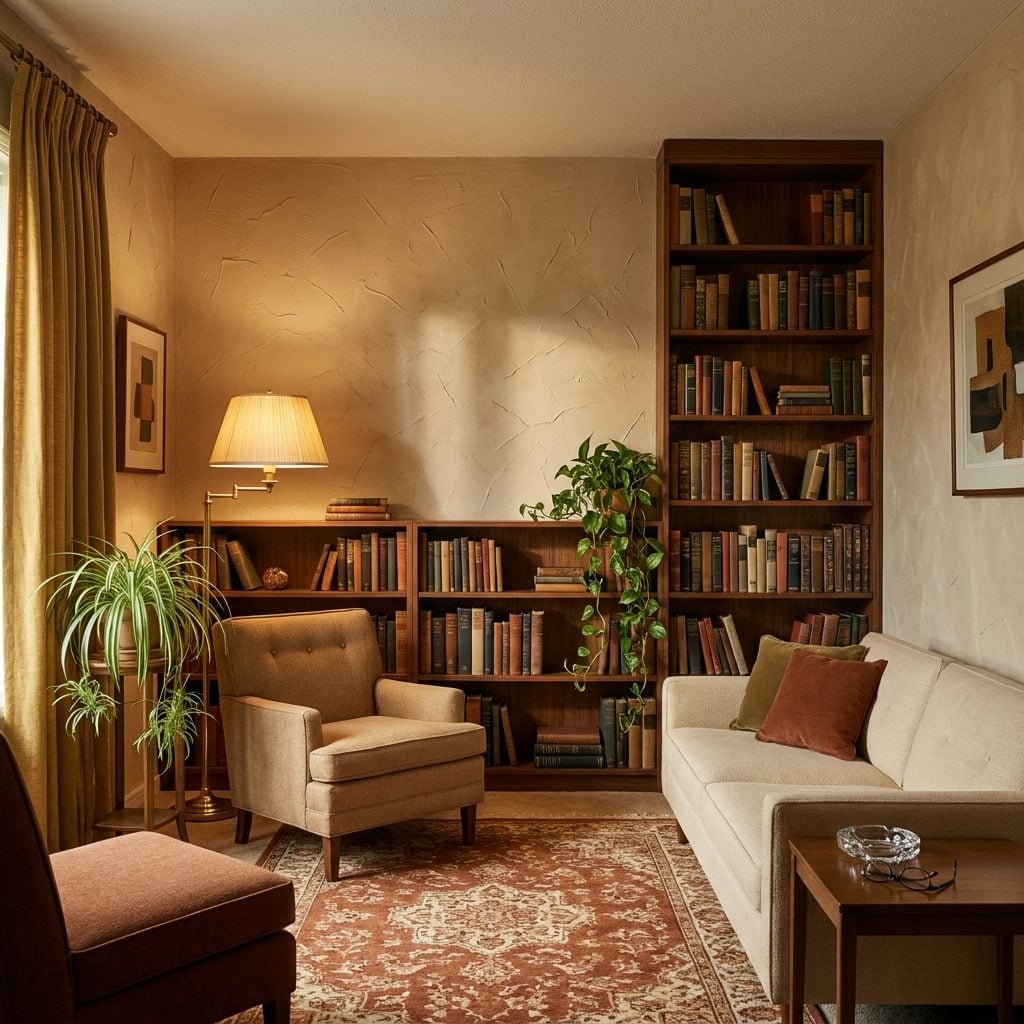
Skip-trowel walls gave the library a hand-finished surface without the deep grooves of comb or tree-bark texture. A broad trowel moved irregularly across wet compound, leaving thin ridges, open patches, and subtle changes in thickness.
Lamplight made those marks visible behind the bookshelves and seating area, but the texture never became the whole room. Walnut shelves, a low sofa, reading lamps, and long conversations carried the atmosphere. The shallow ridges caught enough light to keep the walls from feeling flat, while the books, drapes, and worn upholstery made the room feel settled and quiet.
1. The Swirl-Textured Ceiling That Turned Every Living Room Into a Frosted Cake
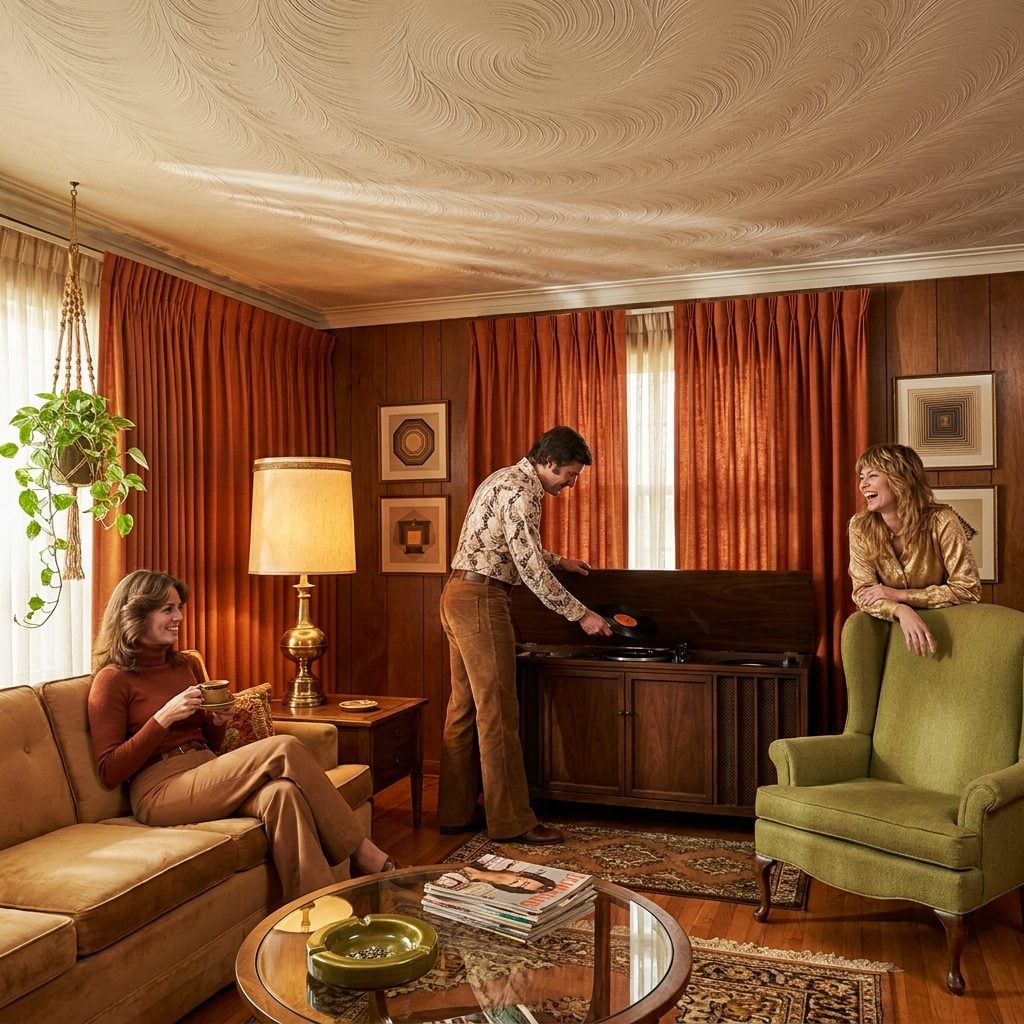
Wide plaster arcs moved across the living-room ceiling in overlapping rows, each curve made while the compound was still workable. A brush, trowel, or similar tool created the pattern, and the skill of the finisher determined whether the result looked rhythmic or hurried.
Swirl, stomp, and comb textures are related hand-worked finishes, but they are not identical patterns. This ceiling relies on broad circular sweeps rather than the clustered marks of a stomp brush or the narrow grooves of a comb. Lamplight catches the ridges and makes the design more visible after dark.