🔥 Would you like to save this?
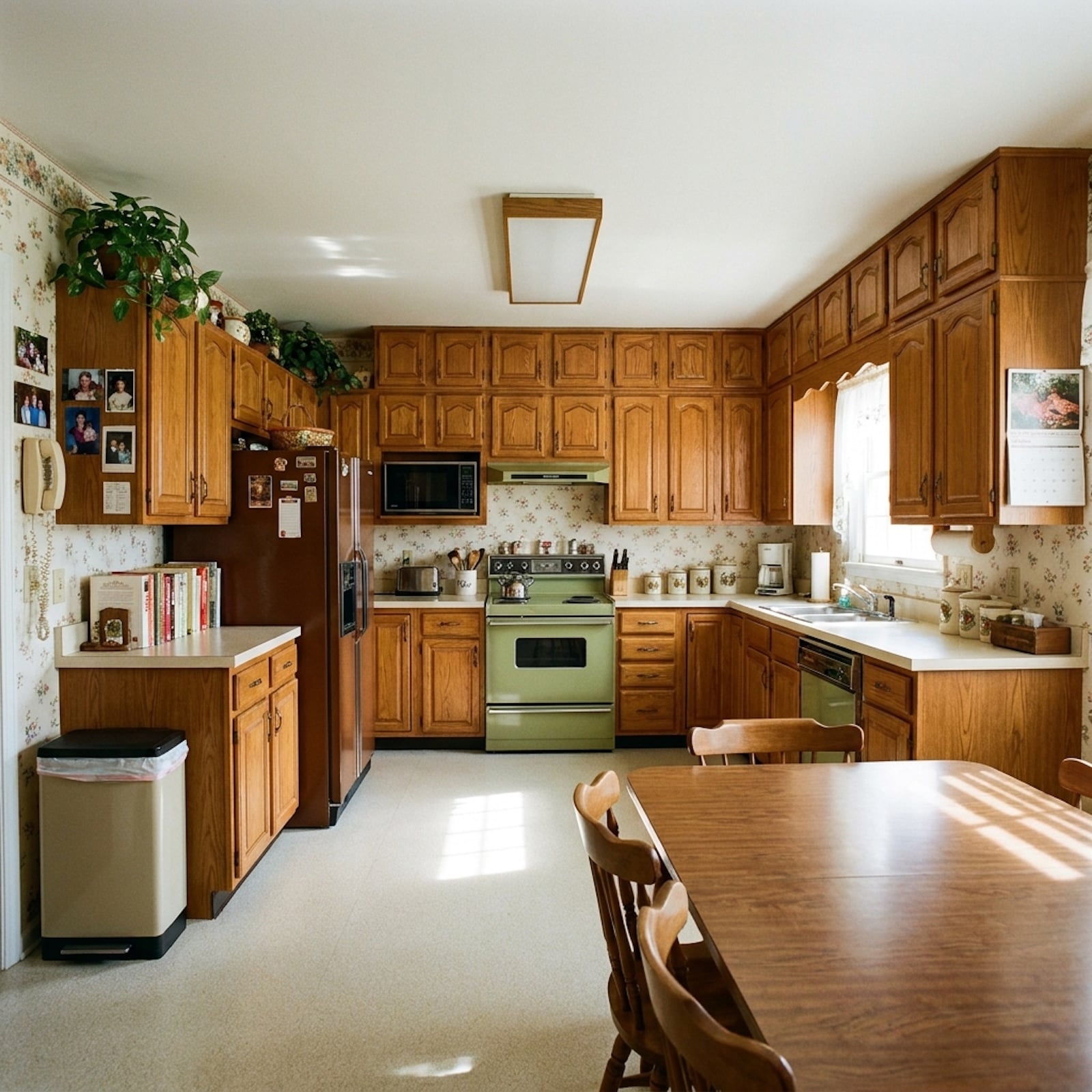
Somewhere in a landfill sits a mountain of honey-oak cabinet doors, torn out around 2011 by people convinced white was the answer. The joke’s turning now. That warm golden wood, the almond fridge humming in the corner, the tile counter with grout you could never quite keep white—we called all of it dated and couldn’t rip it out fast enough.
Turns out a lot of those kitchens were quietly getting things right. They hid mess. They stored enormous amounts of food. They gave everybody somewhere to sit, somebody somewhere to write a check, and the paprika a fighting chance of being found before you bought another jar.
In order to come up with the very specific design ideas, we create most designs with the assistance of state-of-the-art AI interior design software. Also, assume links that take you off the site are affiliate links such as links to Amazon. this means we may earn a commission if you buy something.
What follows is the stuff we mocked, replaced, painted over or hauled to the curb—and now catch ourselves reinventing under much fancier names.
33. The Honey-Oak Cabinets We Couldn’t Paint Over Fast Enough
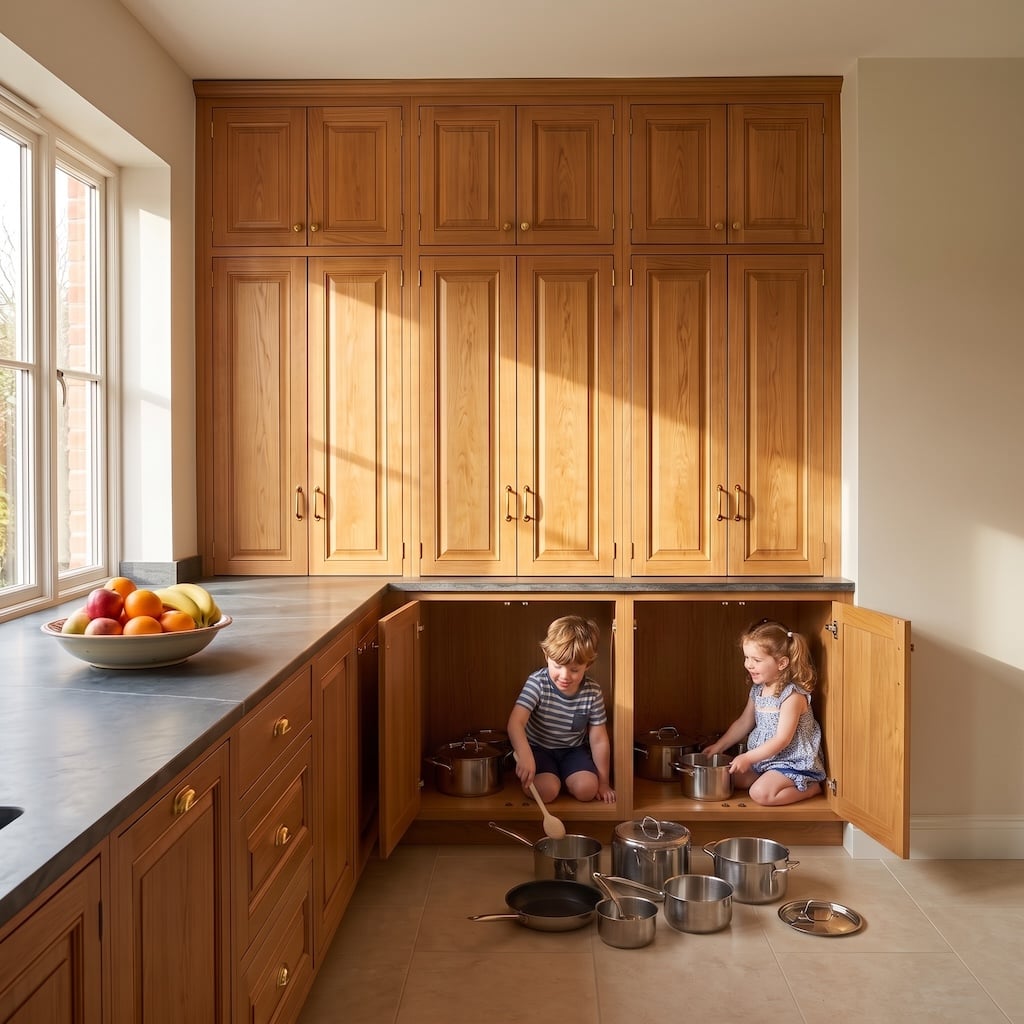
We tore these out by the truckload. Honey oak became shorthand for a kitchen that gave up somewhere around 1994, and paint sprayers came out across the country. Everybody wanted white. Everybody got white.
Now stand in one of those all-white kitchens on a gray afternoon and tell me you don’t understand what the oak was doing. The grain gave the room movement. The color warmed the light. And many of those kitchens were sturdily built, with real wood doors and face-frame cabinetry capable of surviving decades of dinners.
The lesson wasn’t that every honey-oak kitchen deserved preservation. It was that good wood deserved a hearing before somebody reached for primer.
32. The Kitchen Desk That Ran the Entire Household
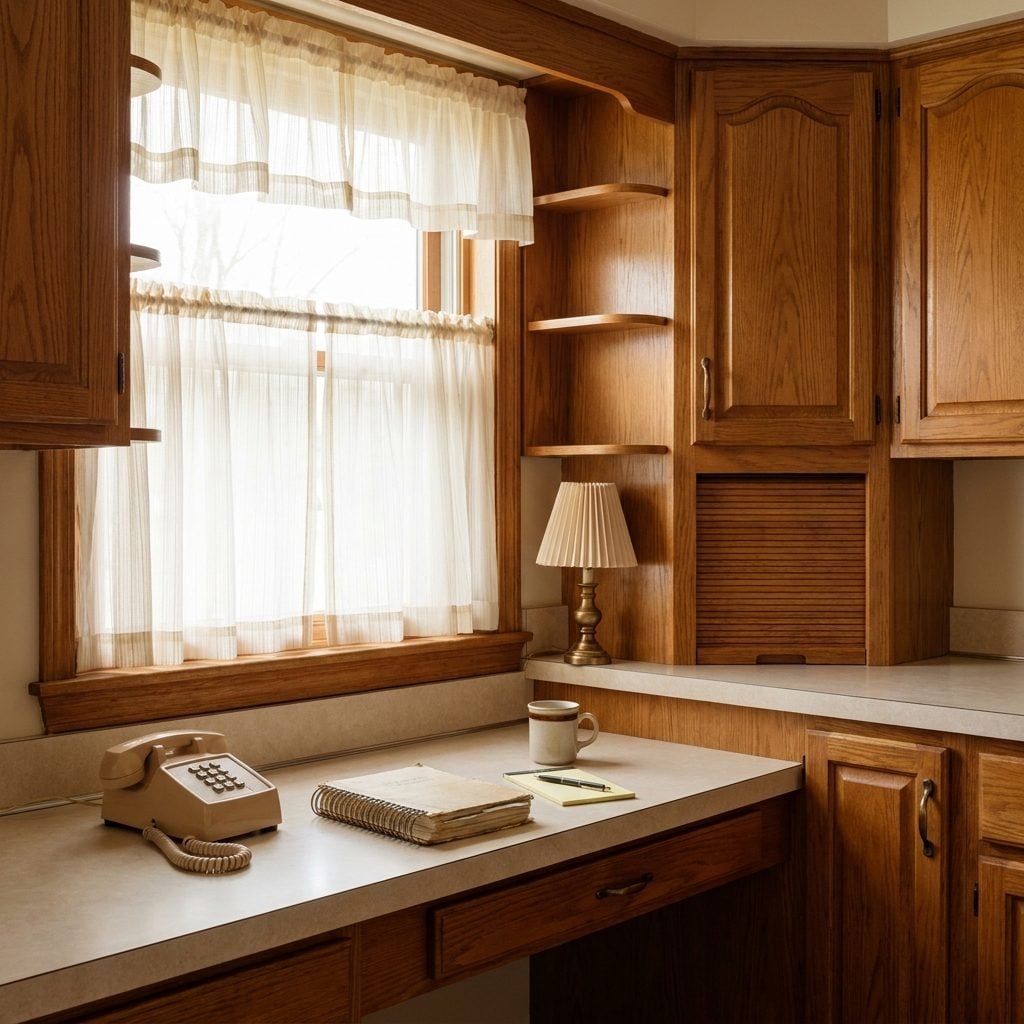
The kitchen desk was the household’s server room before anyone knew what that meant. Corded phone. Fat address book full of cross-outs. Bills. Permission slips. A calendar overhead that knew where everybody was supposed to be before anybody else did.
Someone sat there paying the electric bill while taking a call and signing a school form, all within the same ten minutes. The desk wasn’t glamorous. It ran the family.
Then open-concept kitchens wanted every inch for counter space, and the little desk looked expendable. Now many homes have laptops on islands, chargers in piles and paperwork migrating between rooms. Turns out one designated place for the household’s administrative debris wasn’t such a foolish idea.
31. The Checkerboard Kitchen Floor We Thought Was Hopelessly Dated
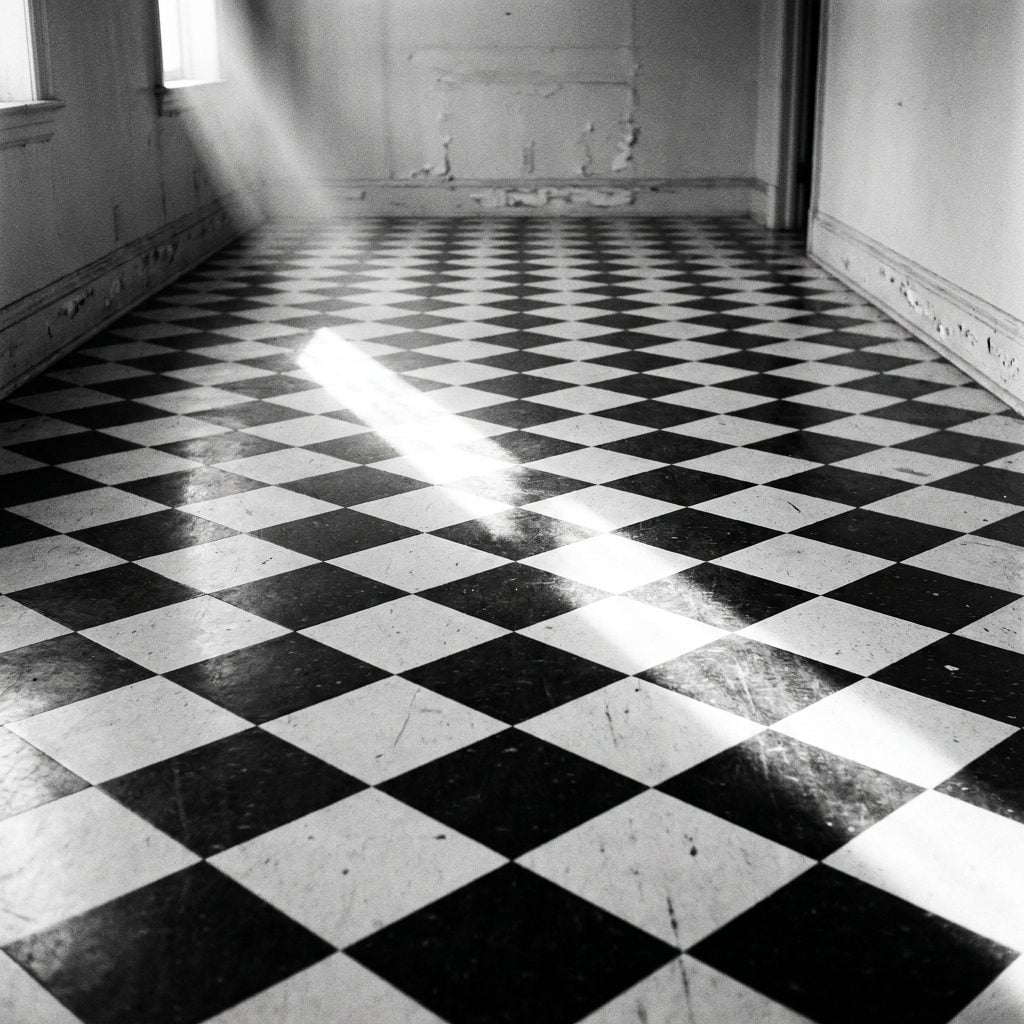
You know the floor. Black and white squares running straight to the baseboards, the kind of pattern that made a small kitchen feel like a diner and a diner feel like a movie set.
For a while, checkerboard became one more thing renovations were supposed to erase. Then designers rediscovered exactly what had been sitting there all along: bold geometry, instant contrast and a pattern with a history much longer than any one decorating decade.
The floor wasn’t obsolete. We were briefly tired of looking at it.
30. The Appliance Garage That Made the Toaster Disappear
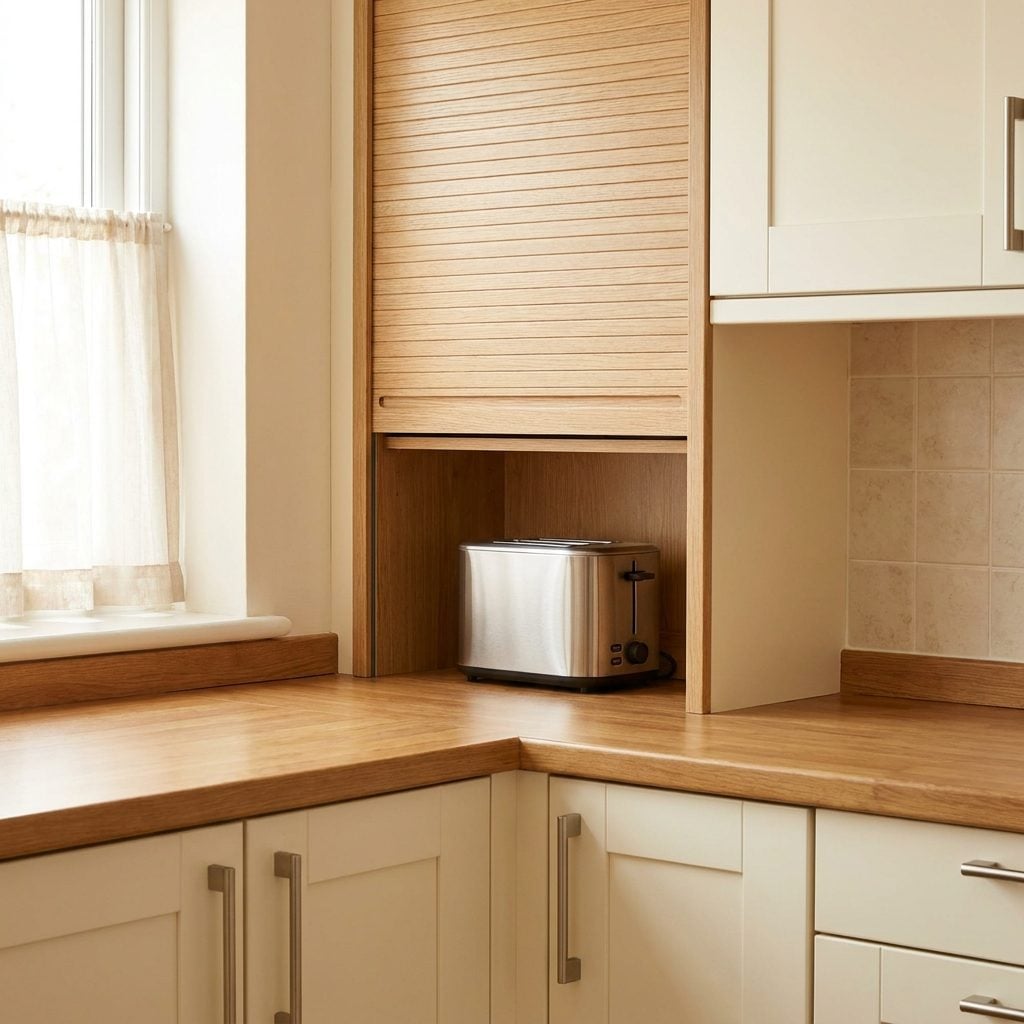
The little tambour door rolled up with a sound halfway between a rolltop desk and a beach cabana. Behind it sat the toaster, coffee maker and can opener, plugged in and waiting. Pull the door down and the counter went quiet.
For a while appliance garages looked fussy and over-engineered. Then everybody accumulated espresso machines, air fryers, blenders, mixers and enough black electrical cord to rig a small theater production.
Now concealed appliance stations are back in serious kitchens, only the tambour door may have become a pocket panel and the price has acquired another zero.
29. The Almond Appliances Everyone Eventually Replaced With Stainless
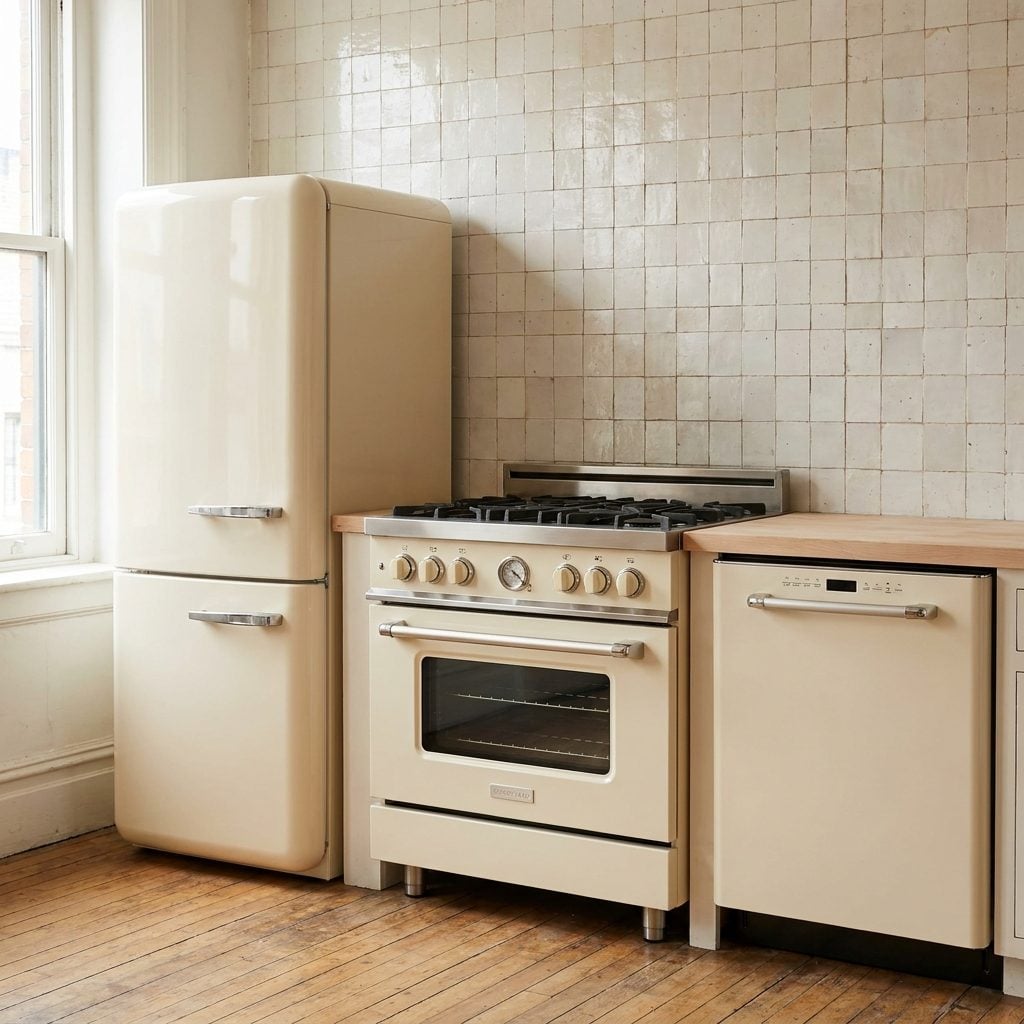
Almond was the color of a kitchen trying to be nice to you. Warm creamy beige on the refrigerator, range and dishwasher, all softer against oak and patterned tile than a wall of gleaming steel.
Then stainless steel became the badge of the updated kitchen and almond appliances headed for the garage-sale curb. Stainless had plenty going for it, but warmth wasn’t usually the selling point.
Now colored ranges, cream refrigerators, matte finishes and panel-ready appliances are everywhere. Almond itself may not be staging a hostile takeover, but the idea behind it—an appliance doesn’t have to look like restaurant equipment to be respectable—suddenly feels rather current.
28. The Cozy Breakfast Nook That Made You Want to Stay After Eating
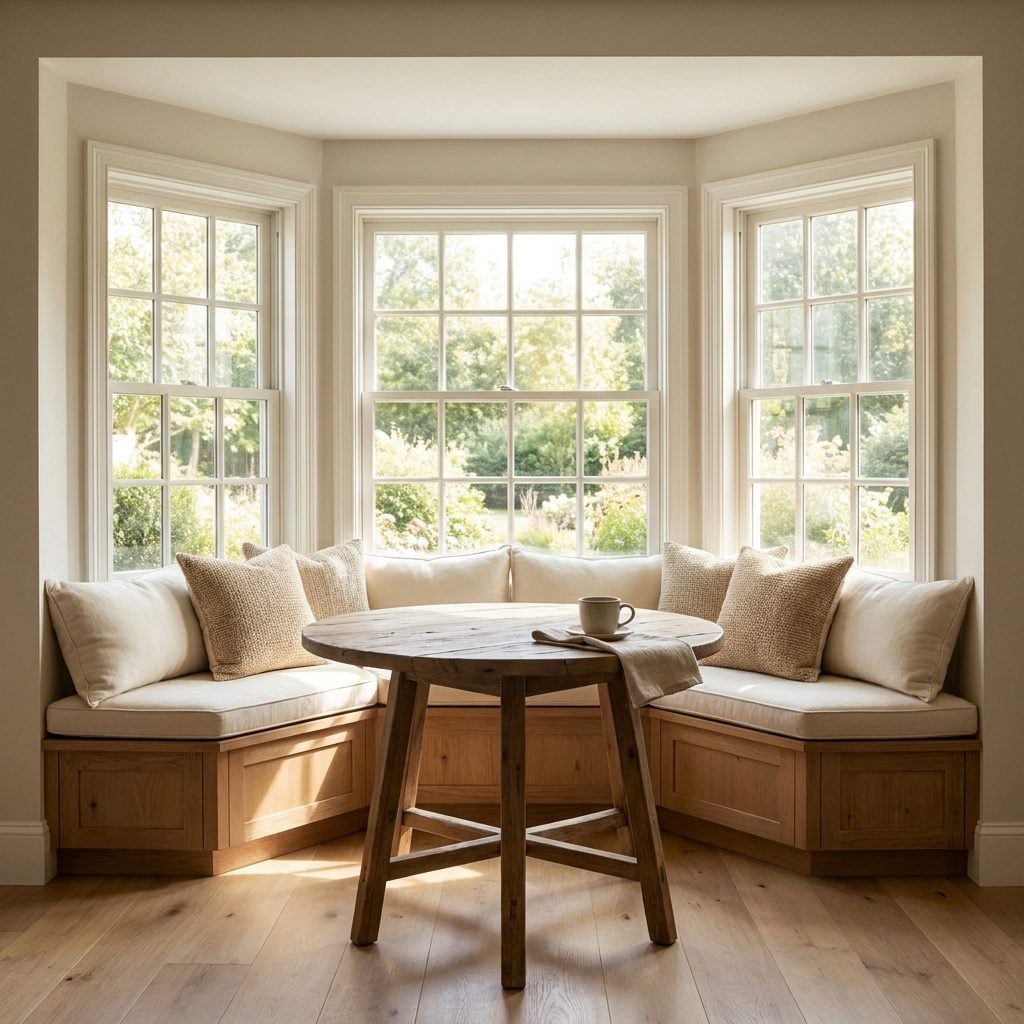
Sun poured into that little corner, and nobody seemed in a hurry to leave. The breakfast nook tucked itself into a bay window with just enough room for the family, a coffee pot and a newspaper folded into increasingly hostile sections.
Later somebody looked at the floor plan and called it wasted square footage. Extend the counter. Add storage. Put stools there. Sensible enough.
But nooks gave kitchens something efficiency calculations don’t measure particularly well: a place where sitting down wasn’t merely tolerated. Second coffee happened there. Homework lingered there. People stayed five minutes longer because the room had given them somewhere worth staying.
27. The Brass Cabinet Knobs and Pulls We Couldn’t Wait to Replace
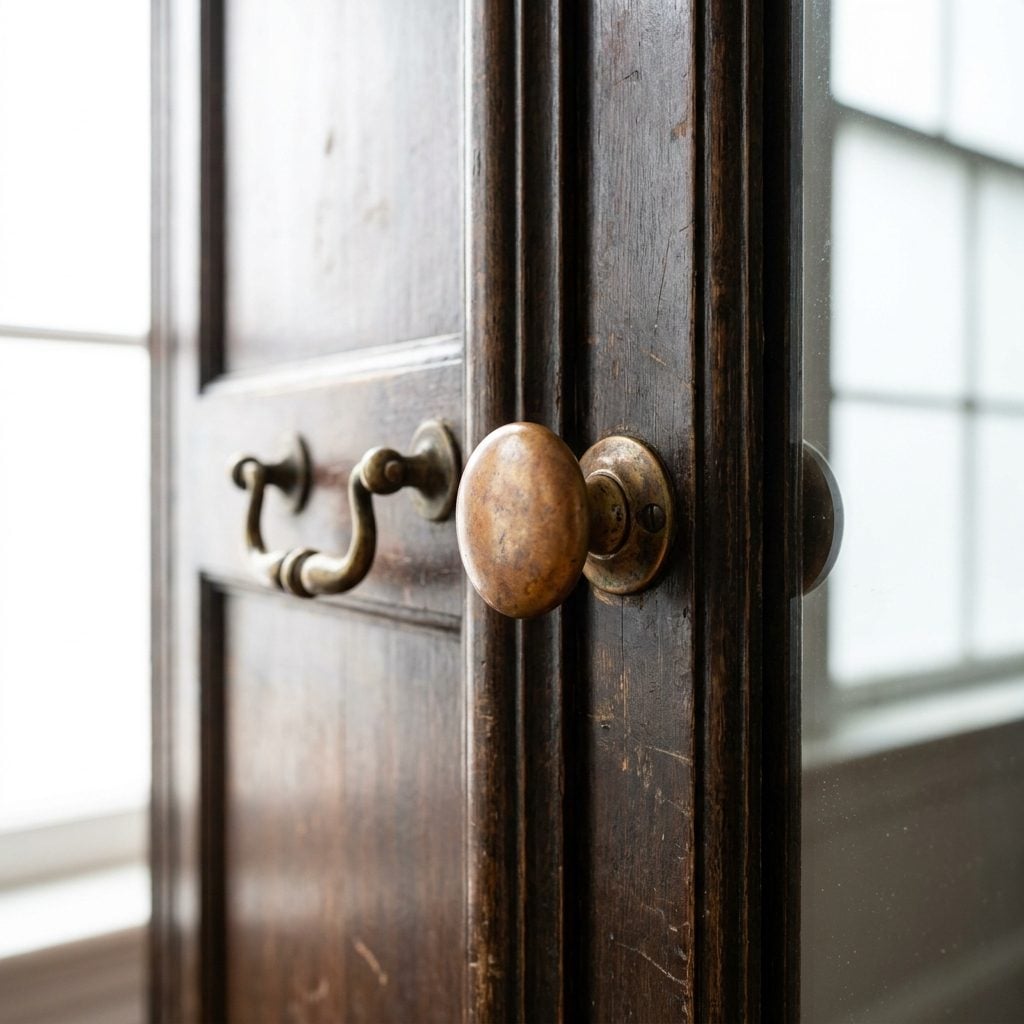
They had a little heft. Grab an old solid-brass pull and you felt the difference immediately. Over time the finish softened and darkened where hands landed most often.
Then the late ’90s and early 2000s moved hard toward brushed nickel, satin chrome and cooler metallic finishes. Out came the drill. Warm brass suddenly looked like evidence.
Now unlacquered brass and living finishes are sold back to us as luxurious precisely because they patina and change. Somewhere in somebody’s garage is a coffee can full of hardware that could have saved them several hundred dollars.
26. The Pull-Out Shelves That Saved You From Crawling Into a Cabinet
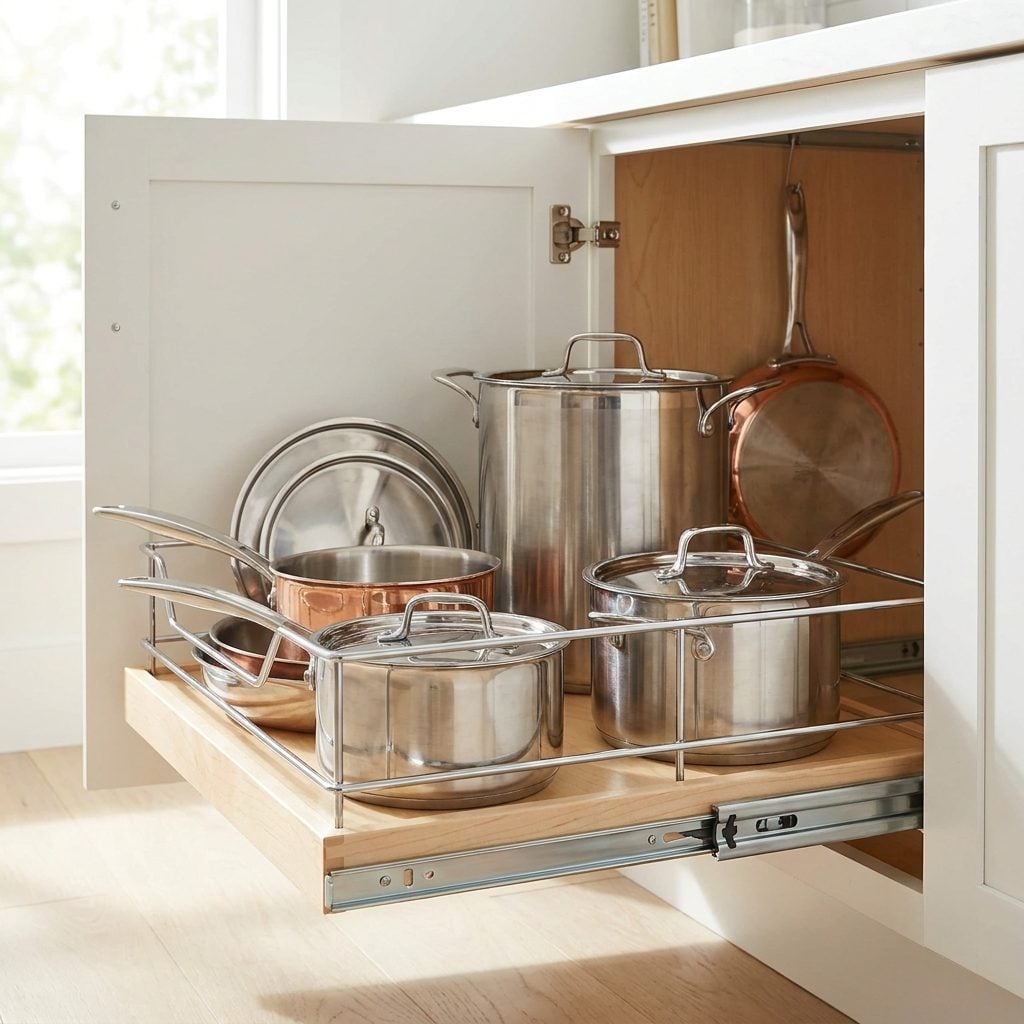
Everybody knows the base cabinet. The roasting pan lives at the very back behind a colander, three unrelated lids and a slow cooker last seen during the previous presidential administration.
Then somebody put the shelf on drawer glides. Pull the handle and the cabinet comes to you. The stuff at the back stops being archaeological.
For a while roll-outs were treated like catalog extras. Now deep drawers and pull-out storage are among the things people specifically look for because knees, backs and patience all eventually submit formal complaints.
25. The Wallpapered Kitchen We Thought Was Way Too Busy
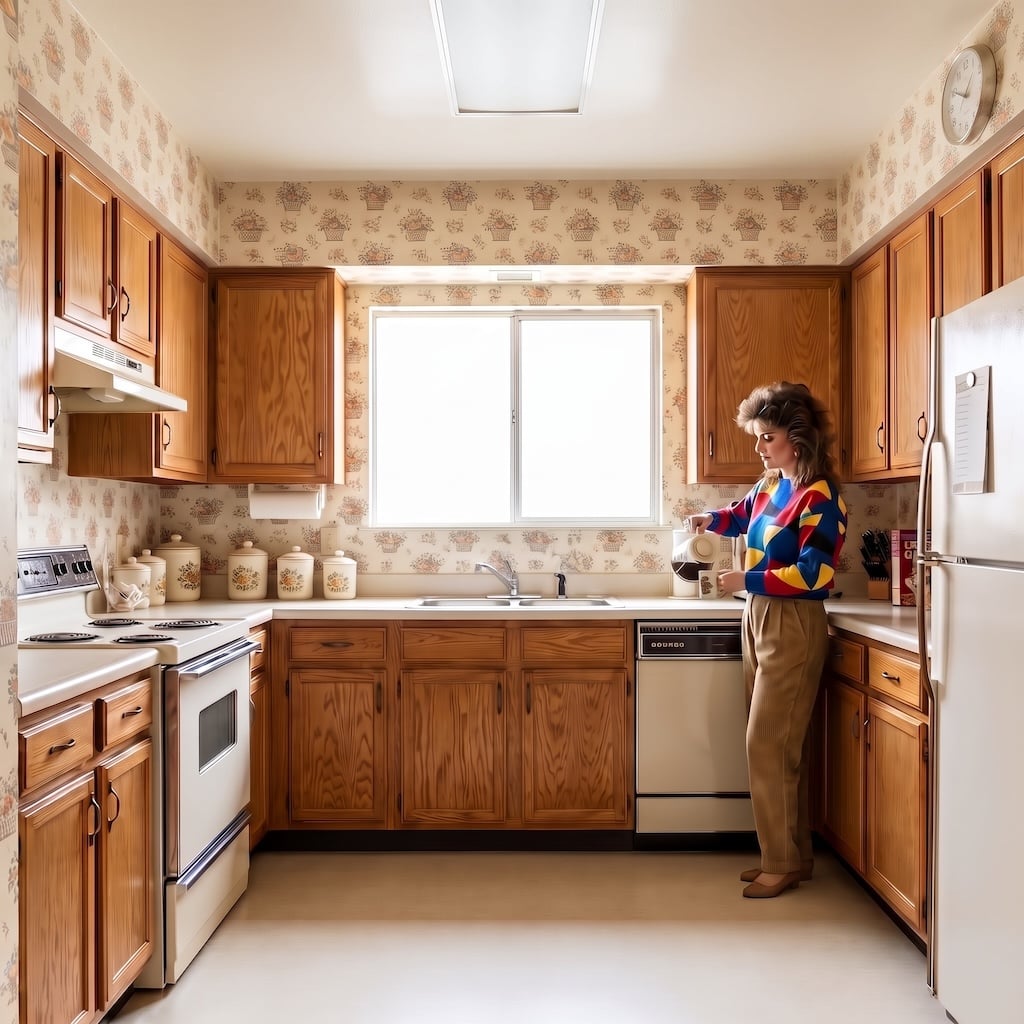
Little strawberries. Teapots. Tiny ivy. Maybe a repeating grid of geese in bonnets, which absolutely happened to real kitchens and cannot be erased from the historical record.
The paper climbed the walls, tucked into the soffit above the cabinets and occasionally kept right on going. By the late ’90s, one look at it could send a homeowner directly toward the scoring tool and steamer.
Nobody warned us that removing every pattern could leave a kitchen feeling anonymous. Wallpaper gave a room scale, color and personality before anybody called those things “layers.” Today’s versions may be more graphic and better edited, but the impulse is familiar.
24. The Wall Telephone With the Extra-Long Curly Cord
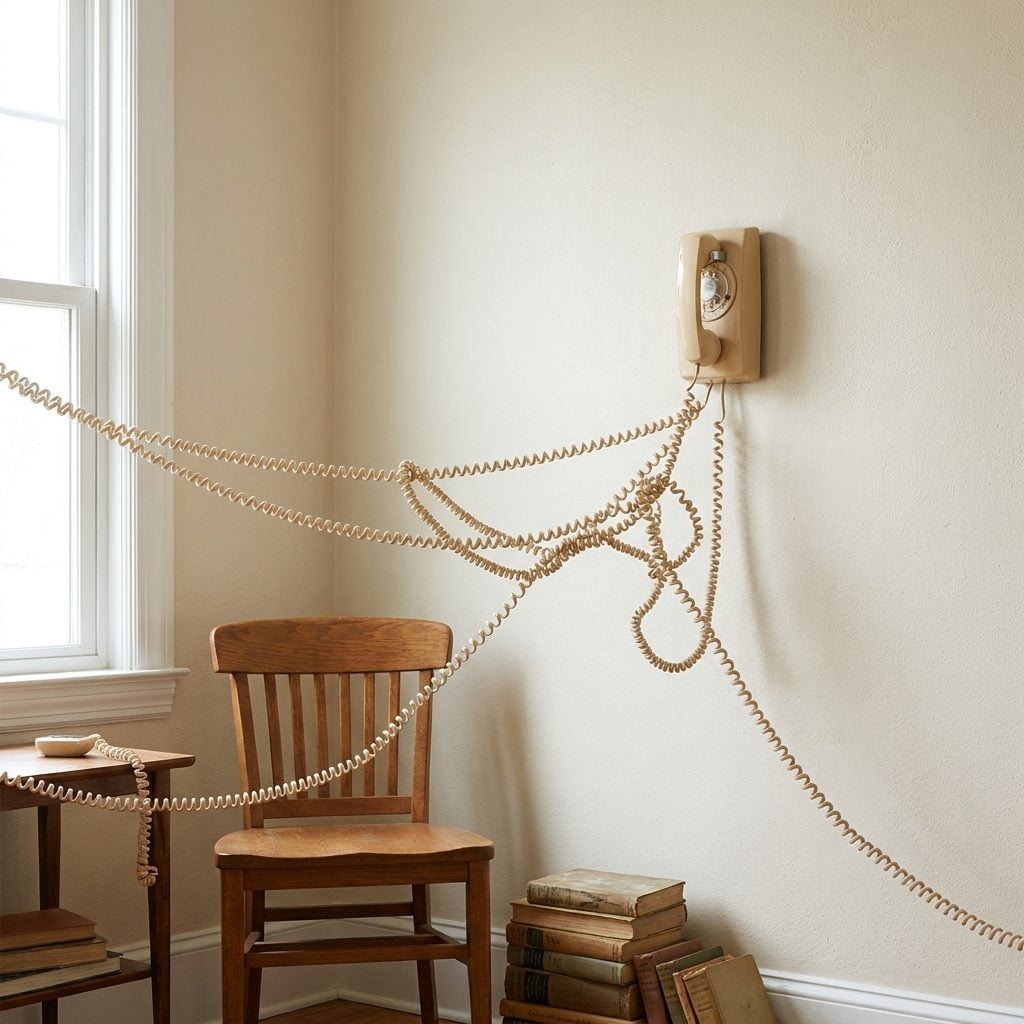
The cord. That coiled beige cord stretching from the wall by the fridge to the pantry, around a corner and possibly into another postal code if you leaned hard enough.
You could pace, but you couldn’t disappear. Calls happened in shared space. Your mother heard half the conversation, your little brother heard the other half and weaponized it before dinner.
Privacy was terrible. Presence was unavoidable. Now people build phone-free dinners and digital-detox routines to recreate something a plastic cord enforced by accident.
23. The Colored Kitchen Sink That Refused to Blend Into the Counter
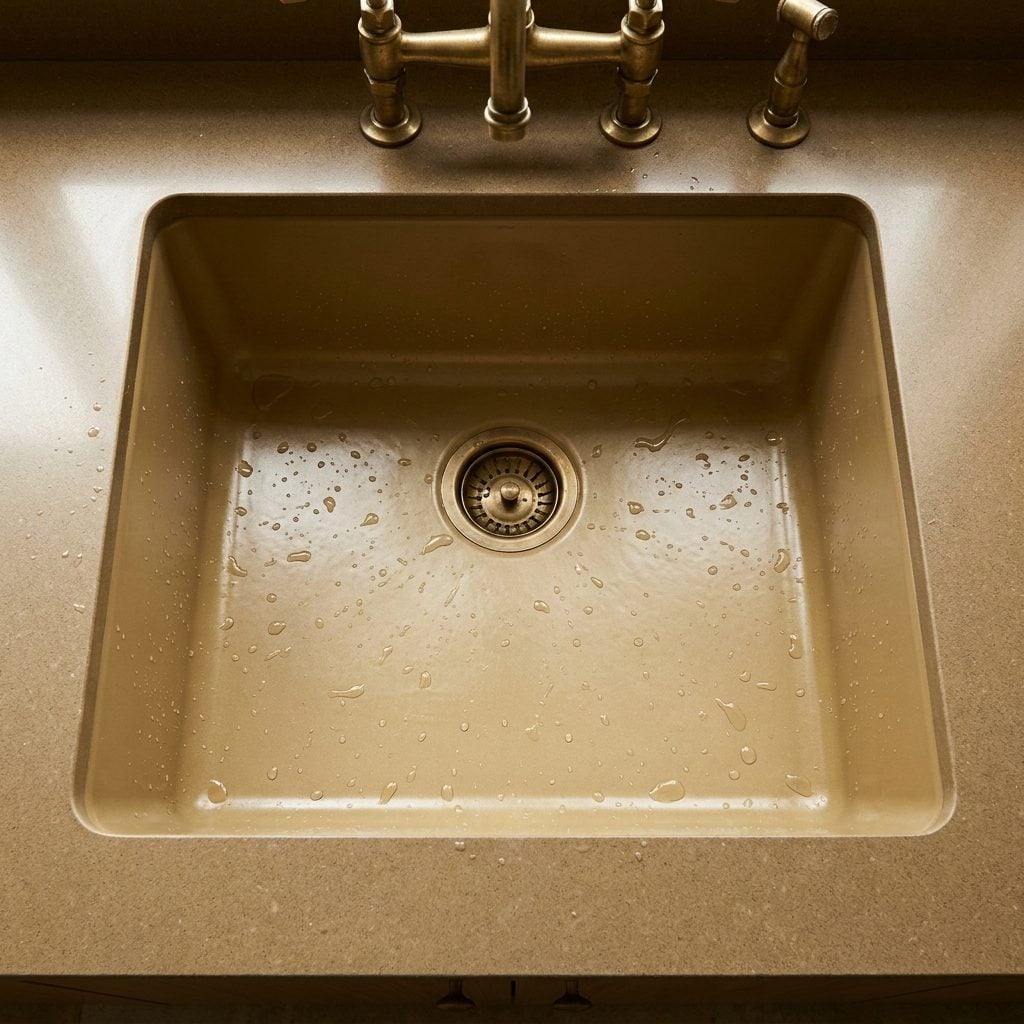
The sink came in a color and made no effort to apologize. Muted gold. Soft green. Warm brown. Sometimes it coordinated with the counter, sometimes the curtains, sometimes whatever mysterious palette agreement the entire room had signed.
Later stainless steel and white became the safe defaults, and the sink mostly disappeared from the decorating conversation.
Yet a sink that participates in the room can be genuinely charming. It says somebody considered the fixture as part of the composition instead of treating it as a hole where the dishes go.
22. The Furniture-Like Island That Didn’t Swallow Half the Kitchen
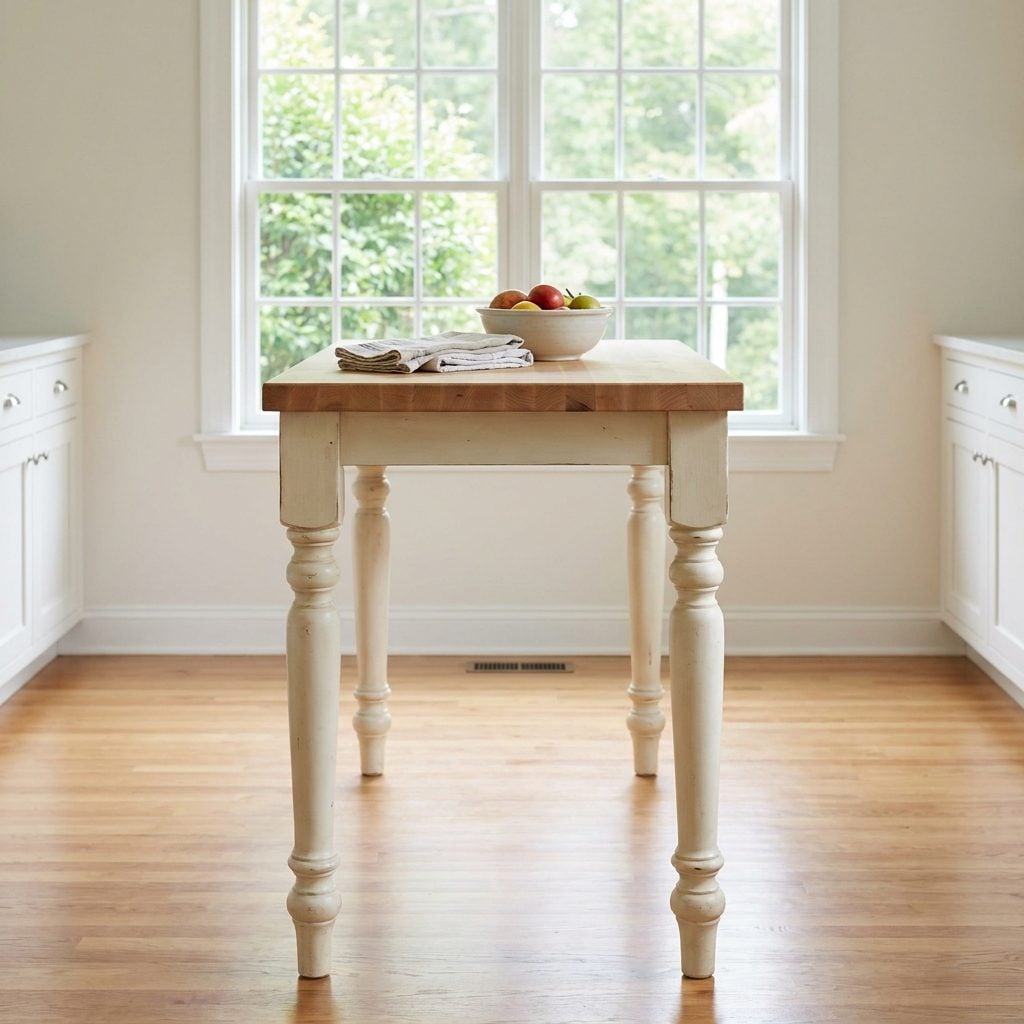
It had legs. That’s the tell. The island looked more like a butcher-block worktable than a small annex to the house, with a shelf underneath for pots and enough open floor around it to walk past somebody chopping an onion.
Then islands grew. Seating for six. Second sink. Dishwasher. Waterfall stone. A footprint approaching compact-car territory.
The old worktable version remembered the assignment: provide another surface without taking possession of the room. A modest island still plays beautifully against almost anything, from a crisp white kitchen makeover to warmer wood cabinetry.
21. The White Tile Countertops With All Those Grout Lines
🔥 Would you like to save this?
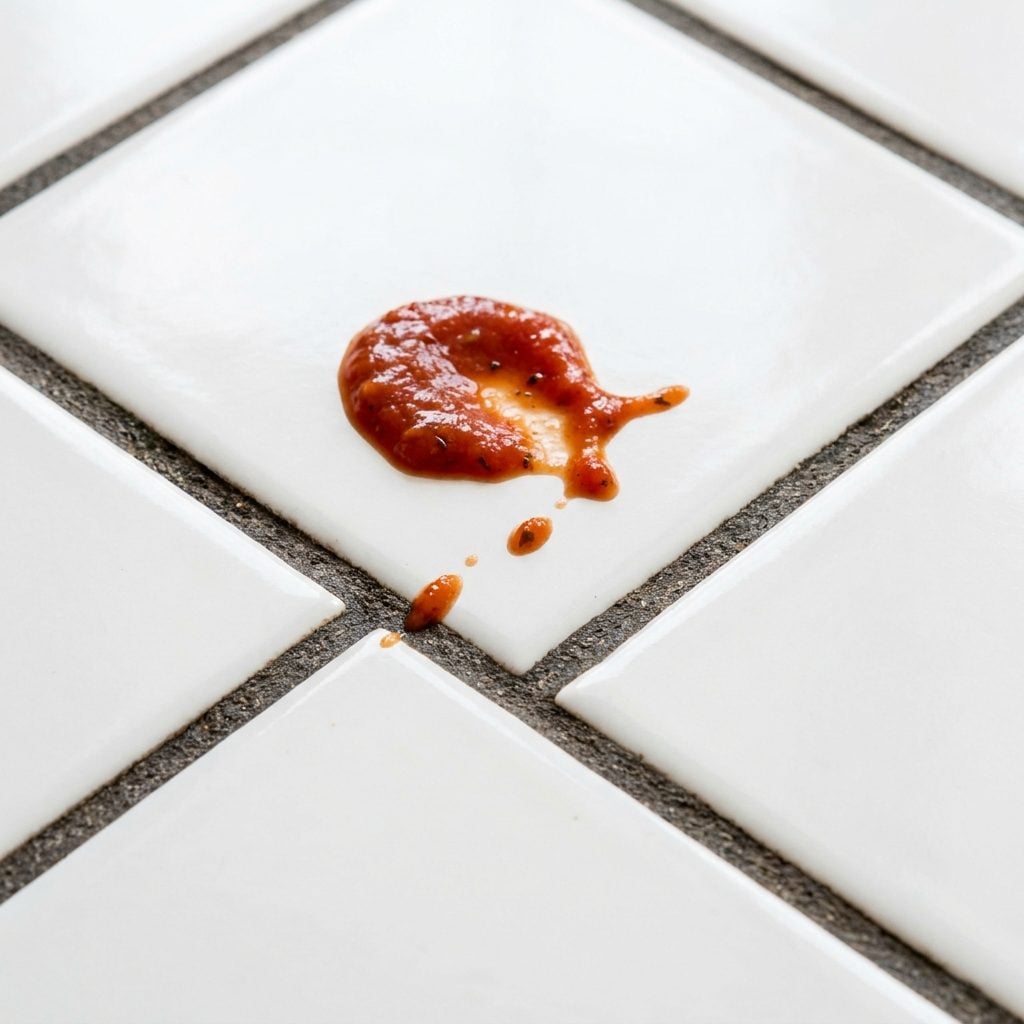
Every grout line was a small betrayal. Coffee found it. Tomato sauce found it. Somehow one strip beside the sink always turned the color of weak tea despite vigorous arguments with a toothbrush.
Tile counters had obvious drawbacks, and nobody needs to invent a heroic past for the grout. But they also had texture, dimension and a handmade quality that a seamless slab deliberately removes.
We traded the maintenance for easier surfaces, which was rational. What disappeared with it was a certain irregularity. The old counter looked constructed rather than poured from one enormous, flawless thought.
20. The Recipe Box Full of Handwritten Cards You Actually Cooked From
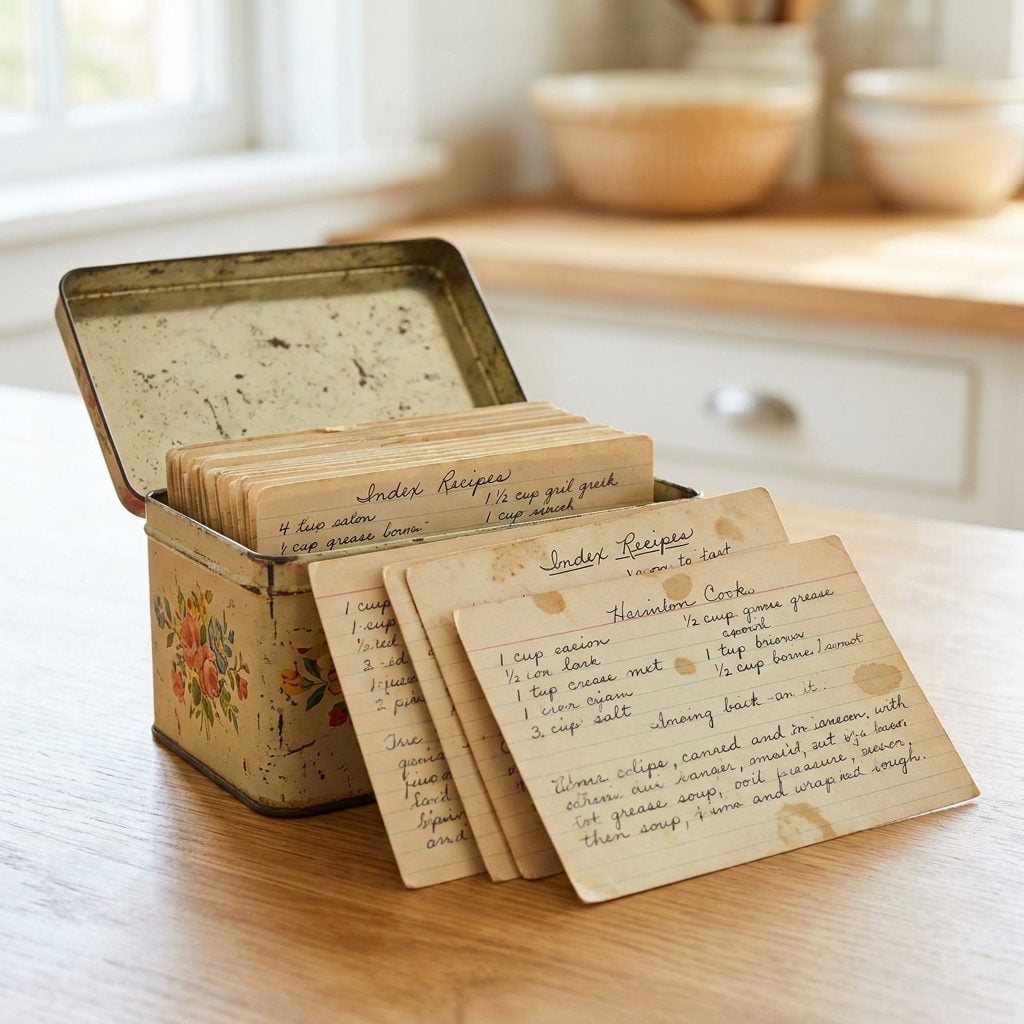
Grease-spotted, soft at the corners, the ink half-faded on the recipes that got made most. The box didn’t just hold instructions. It held handwriting.
Your grandmother’s looping cursive on the pie card. Your aunt’s cramped print on the casserole nobody could ever duplicate exactly. Measurements were crossed out and changed. Somebody wrote “DON’T OVERBAKE” hard enough to dent the card.
A recipe on a phone tells you the same number of teaspoons. It just doesn’t have anyone in it.
19. The Painted Kitchen Cabinets That Weren’t Automatically White
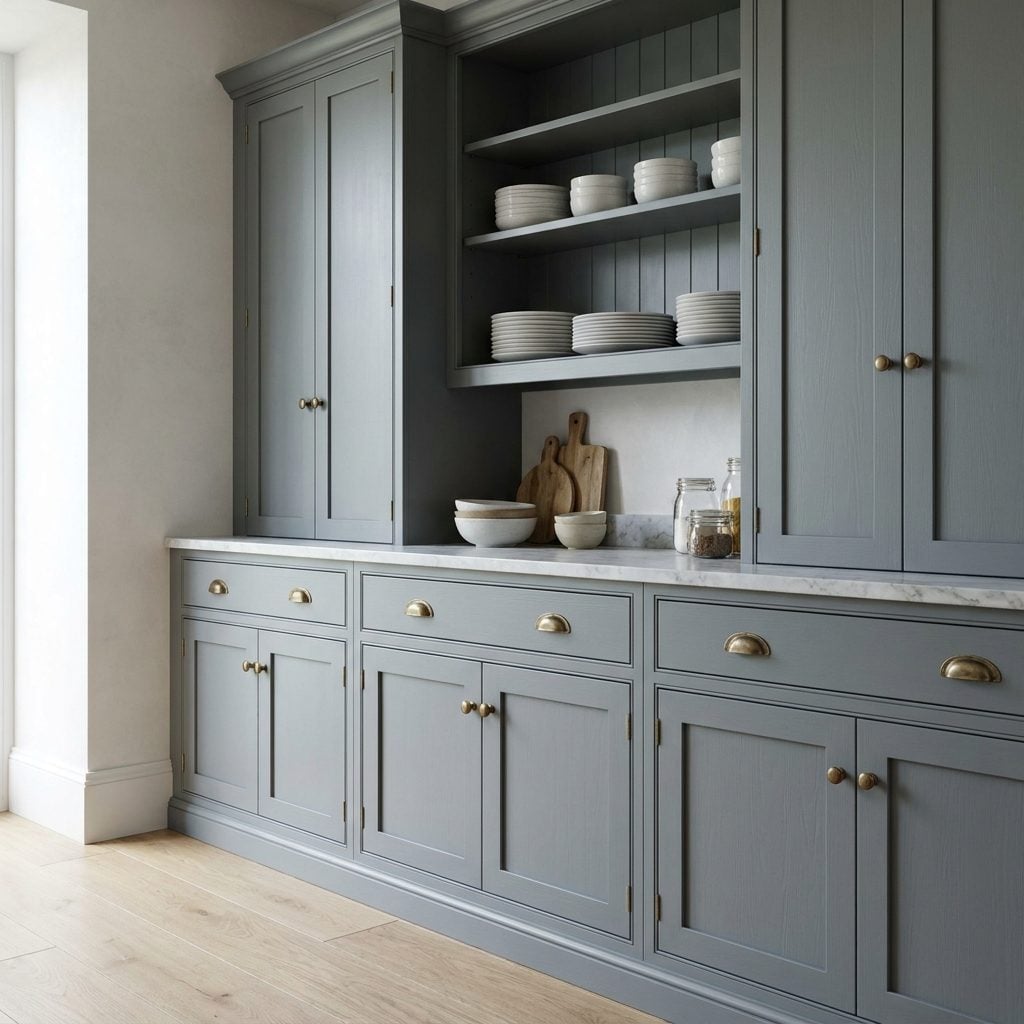
Before white became the default answer to almost every cabinet question, people painted kitchens actual colors and seemed remarkably untroubled about it. Dusty blue. Country green. Muted red. Cream with a colored island before anybody called that a two-tone kitchen.
Those rooms had opinions. Some opinions aged better than others, but at least you knew whose kitchen you had walked into.
Then we flattened enormous numbers of them into white and eventually started craving color again. If you want farmhouse kitchen inspiration with personality, those earlier painted kitchens understood the assignment without needing permission from an algorithm.
Turns out the color was often the interesting part.
18. The Café Curtains That Gave Privacy Without Losing the Sunshine
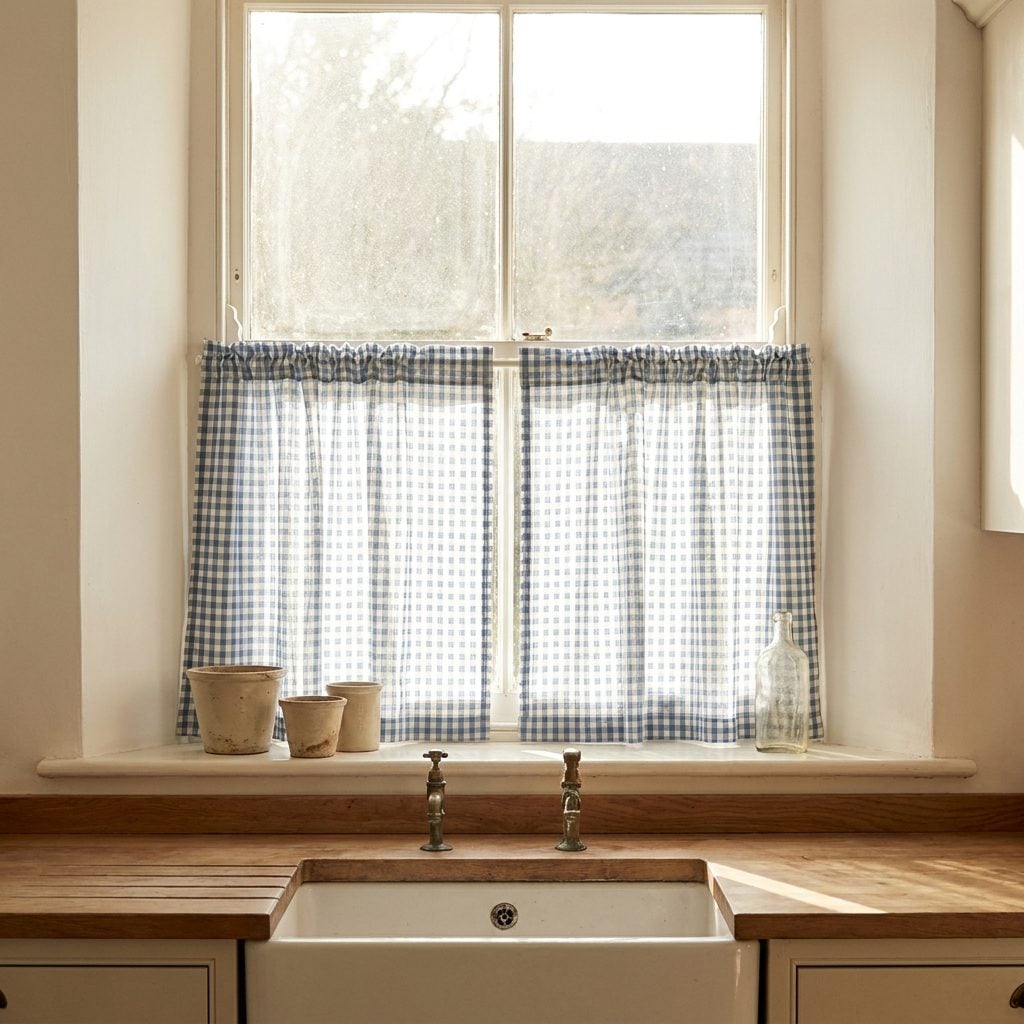
They covered the bottom half of the glass and left everything above it alone. Gingham, calico, plain linen—whatever the decade required.
You could stand at the sink without giving the neighbors a live broadcast of the dishes, while daylight kept pouring through the upper panes. That is such an obvious solution that its disappearance now seems stranger than its return.
Minimalism eventually favored bare glass and roller blinds. Café curtains kept doing what they had always done: splitting privacy and daylight exactly where people needed them.
17. The Lazy Susan Corner Cabinet That Made Awkward Space Useful
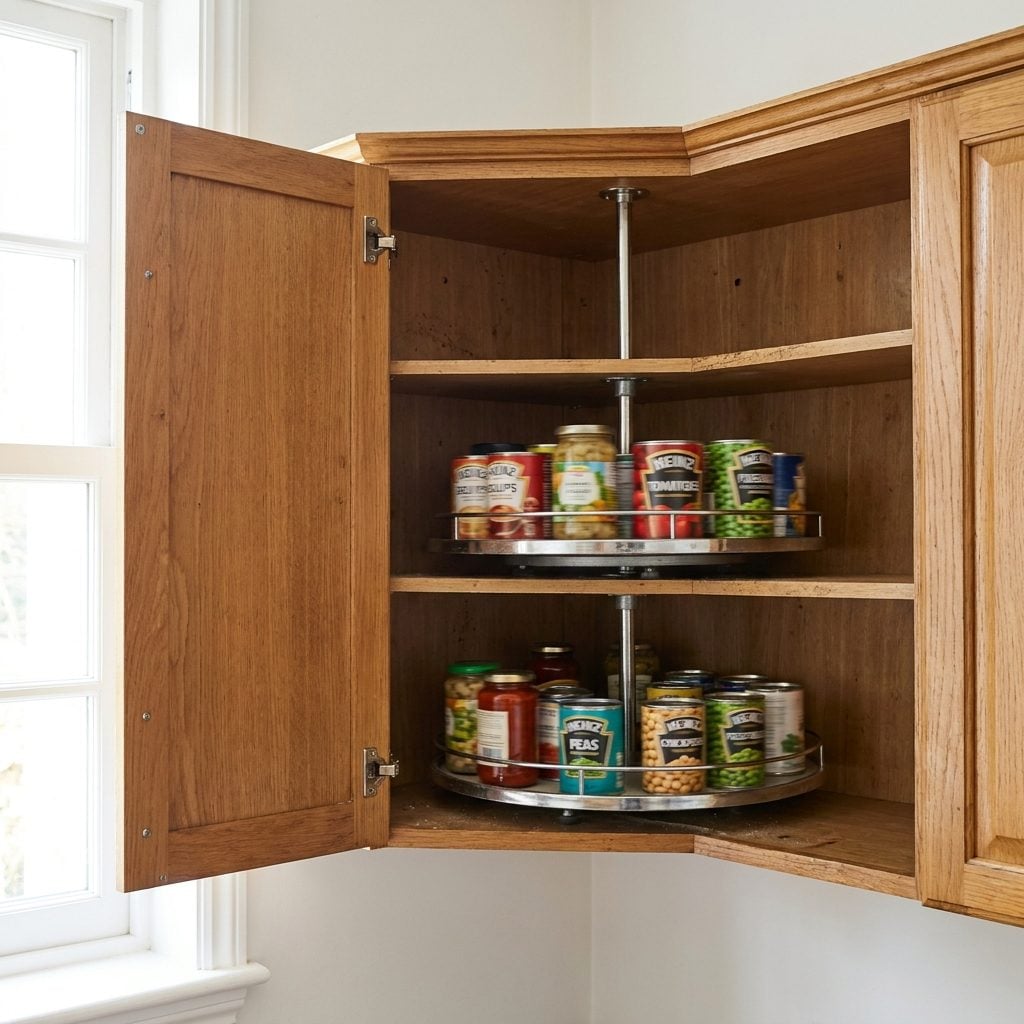
You spun it and the back of the cabinet came to you. Usually plastic. Usually two tiers. Frequently capable of making one lonely can of beans disappear off the rear edge into a parallel dimension.
Lazy Susans were imperfect because corner cabinets are imperfect. That dead angle is some of the most awkward square footage in a kitchen, and the rotating shelf at least tried to make it accessible.
Today’s corner hardware may pull, swing and articulate with considerably more choreography, but the problem hasn’t changed. The old carousel deserves credit for showing up.
16. The Black Appliances That Suddenly Look Surprisingly Current Again
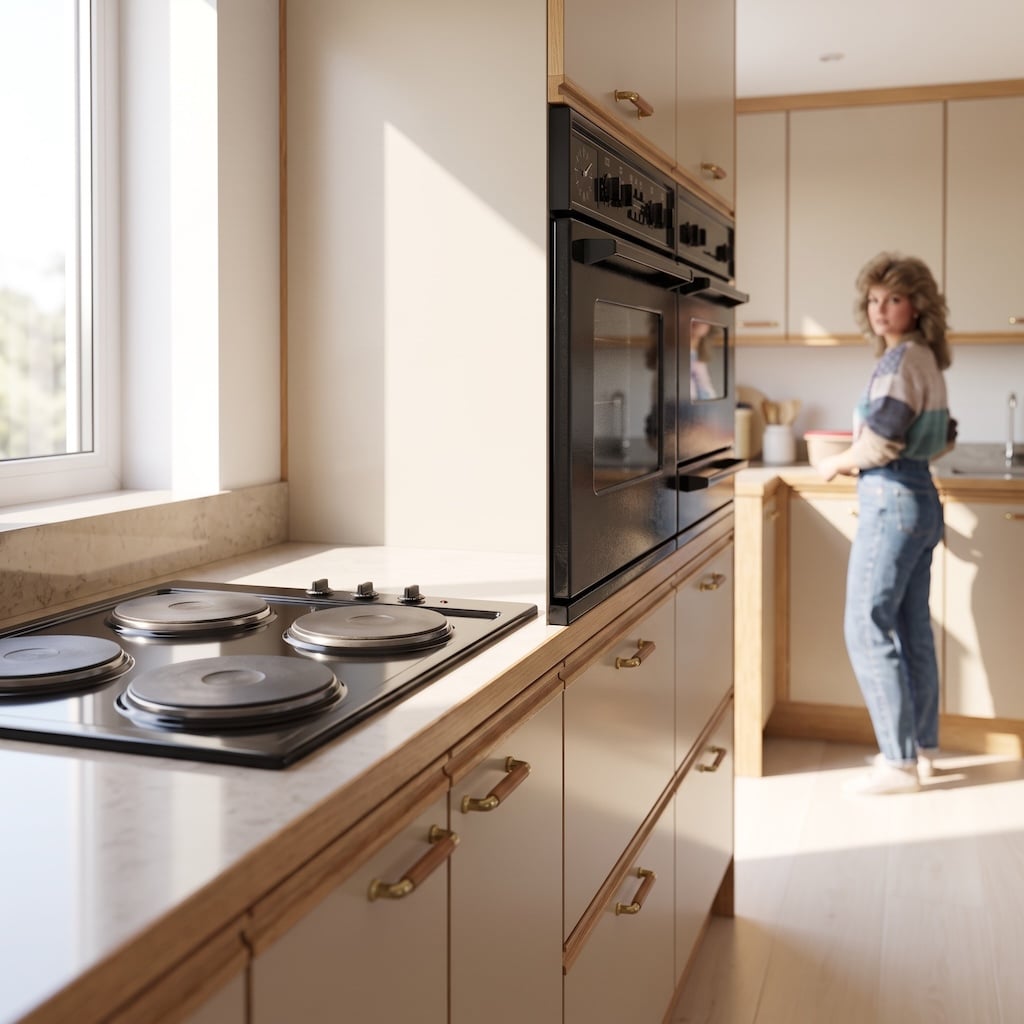
Here’s the strange one. Black appliances from the late ’80s and ’90s spent years lumped in with everything else a renovation was supposed to remove. Put the same dark refrigerator against pale cabinetry today and the result can look unexpectedly familiar.
Black against light wood or cream creates a graphic break that almond never tried to provide. Add restrained hardware and suddenly the supposedly obsolete appliance color is speaking fluent 2026.
Sometimes the thing we mocked wasn’t permanently wrong. It was merely waiting for the rest of the room to catch up again.
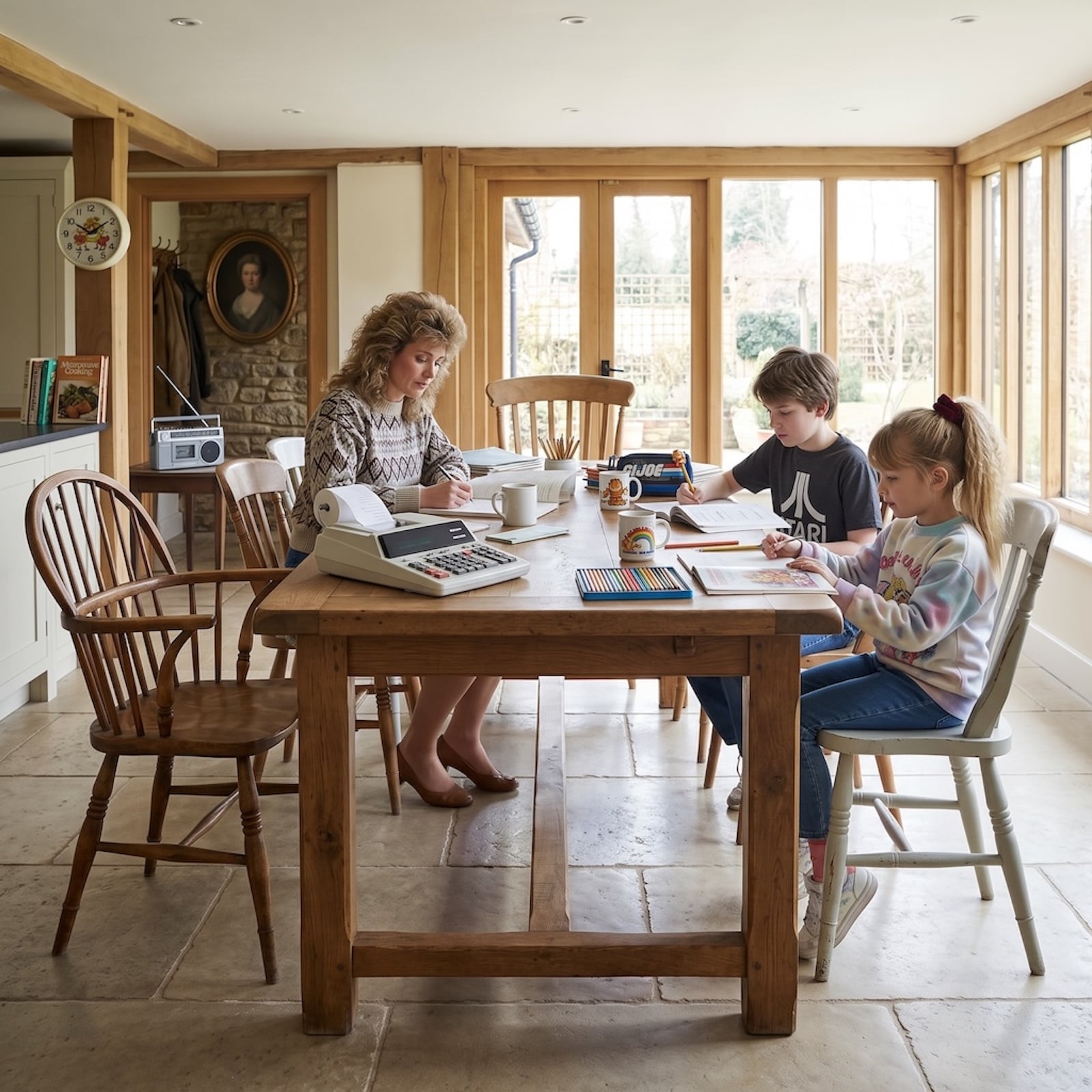
15. The Real Kitchen Table Everyone Used for Everything
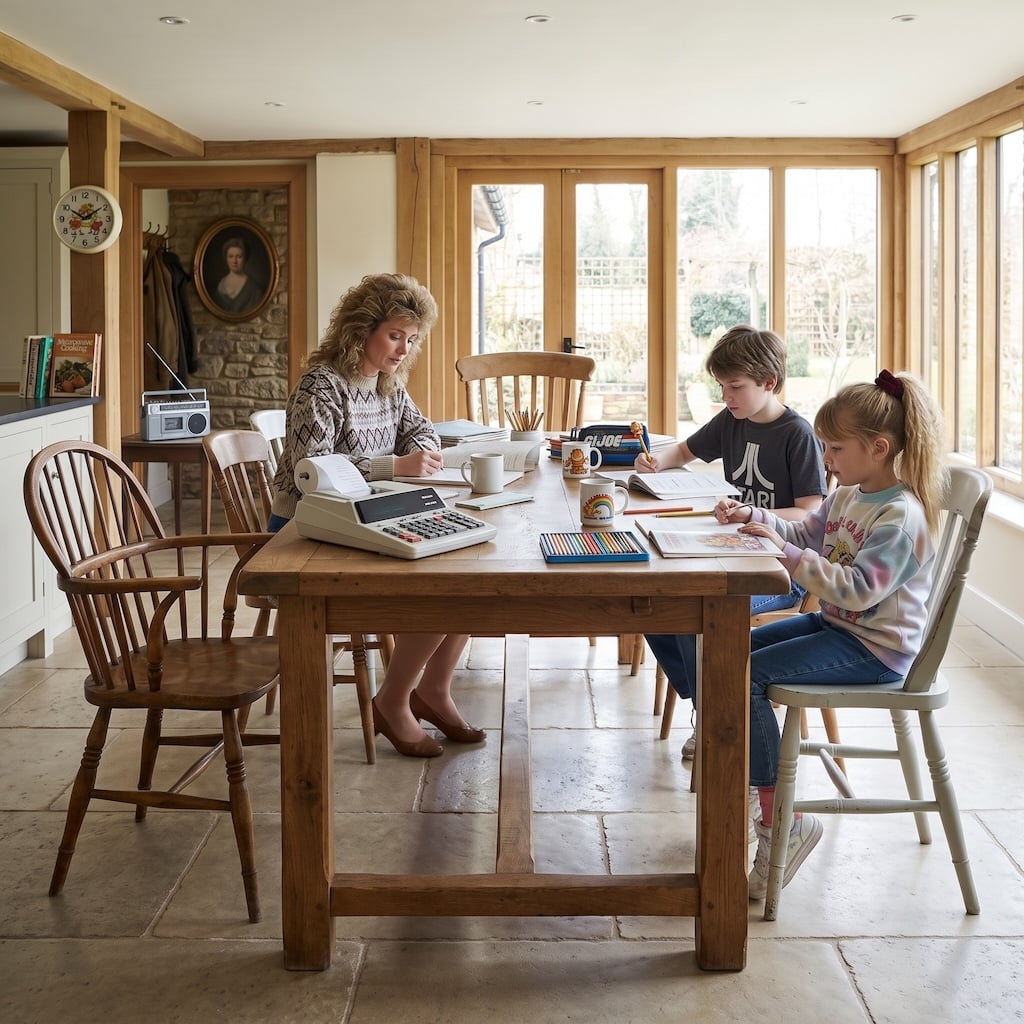
Before the island became the gravitational center of the kitchen, there was a table. An actual table, with chairs facing one another and scratches acquired honestly.
Homework happened there. Bills got sorted there. Dough got rolled out there. Someone read the newspaper while somebody else complained about algebra across from him.
Modern islands can be wonderfully social too. The old kitchen table’s advantage was simply that sitting together was its entire reason for existing. A good bold kitchen from that era often feels less like a workspace with seats attached and more like a room organized around staying awhile.
14. The Tile Backsplash That Wasn’t Afraid to Have a Pattern
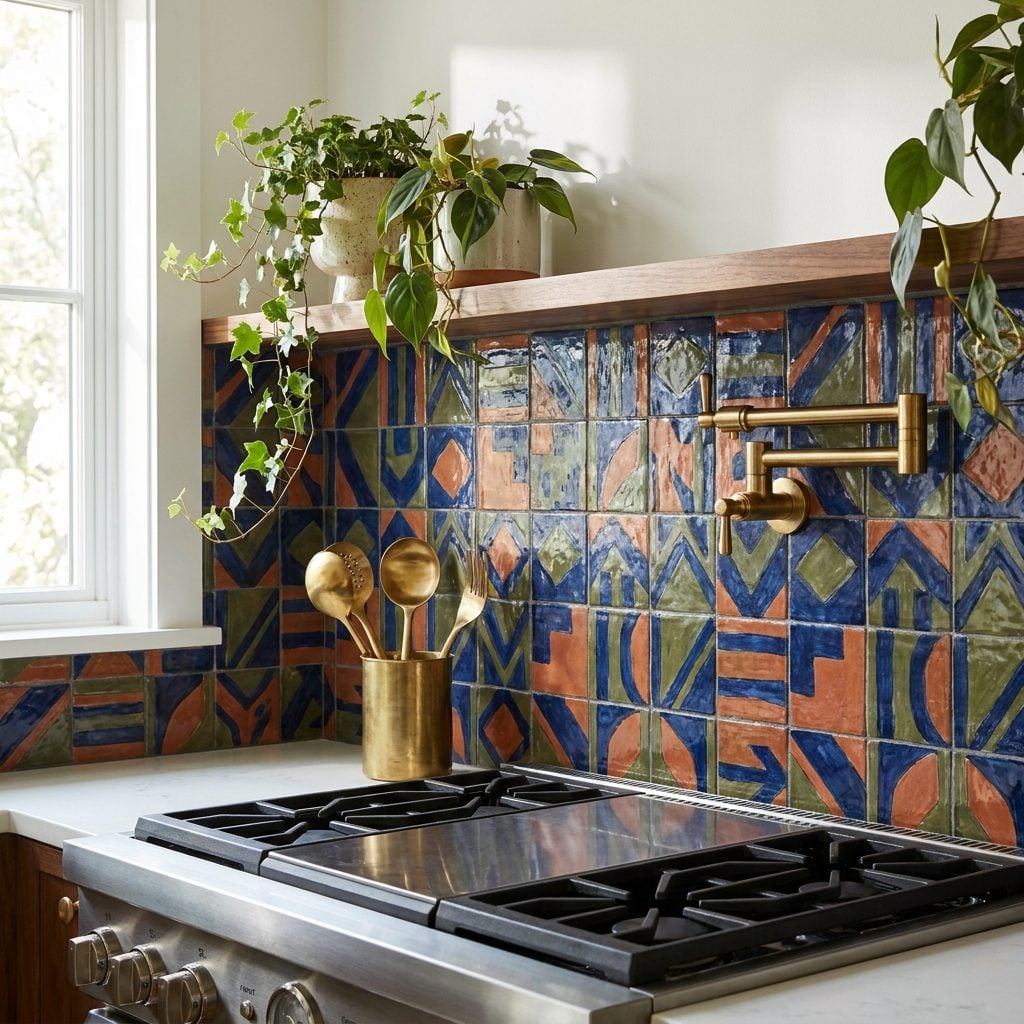
Somewhere along the way the backsplash received instructions to become quiet. Neutral. Invisible. Please do not distract from the stone countertop.
The ’80s kitchen was under no such obligation. Diagonal layouts, checker accents, a burgundy square dropped into cream because somebody liked burgundy—the cooking wall had an opinion.
Many of those installations eventually looked busy because every period leaves behind its fingerprints. Yet expressive tile itself never stopped making sense. Current kitchens are happily discovering pattern again, and a red kitchen decor palette would hardly shock somebody who tiled one in 1988.
13. The Tall Pantry Cabinet That Used an Entire Wall for Storage
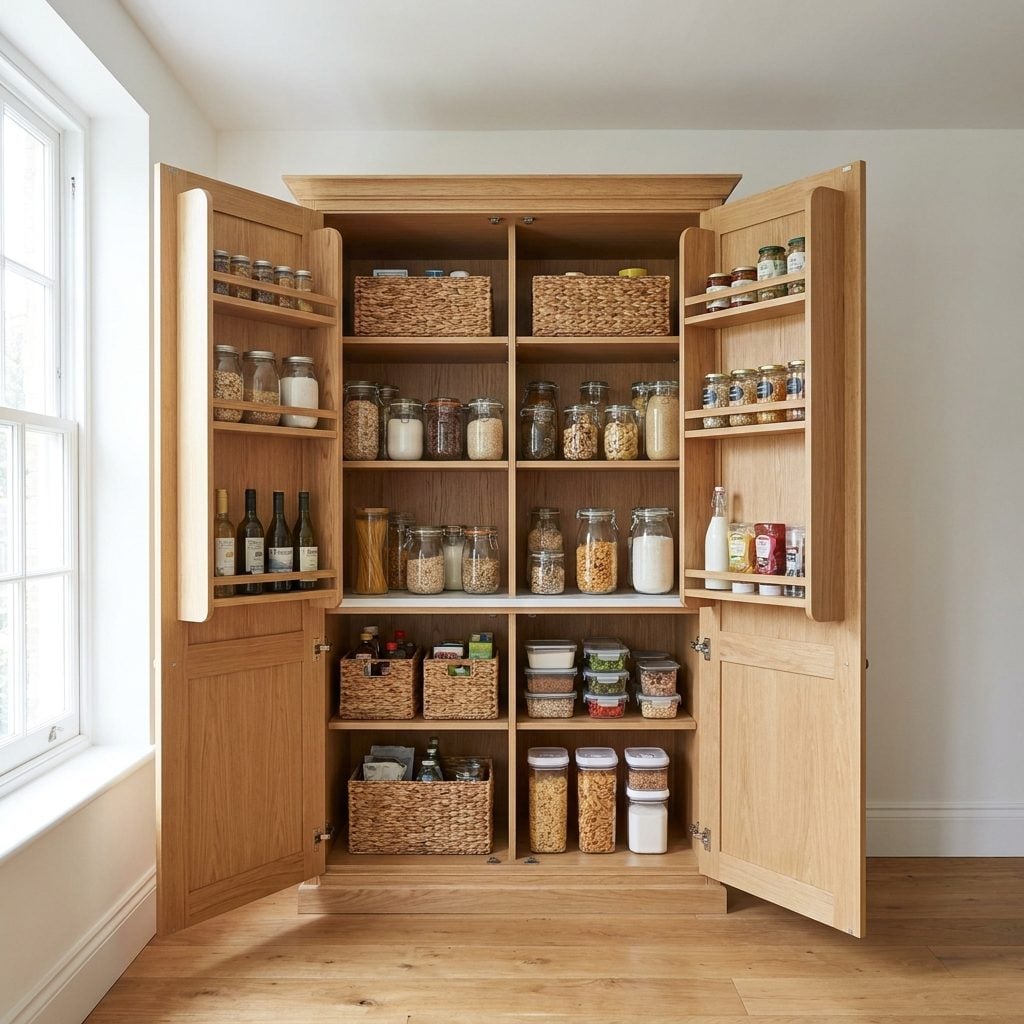
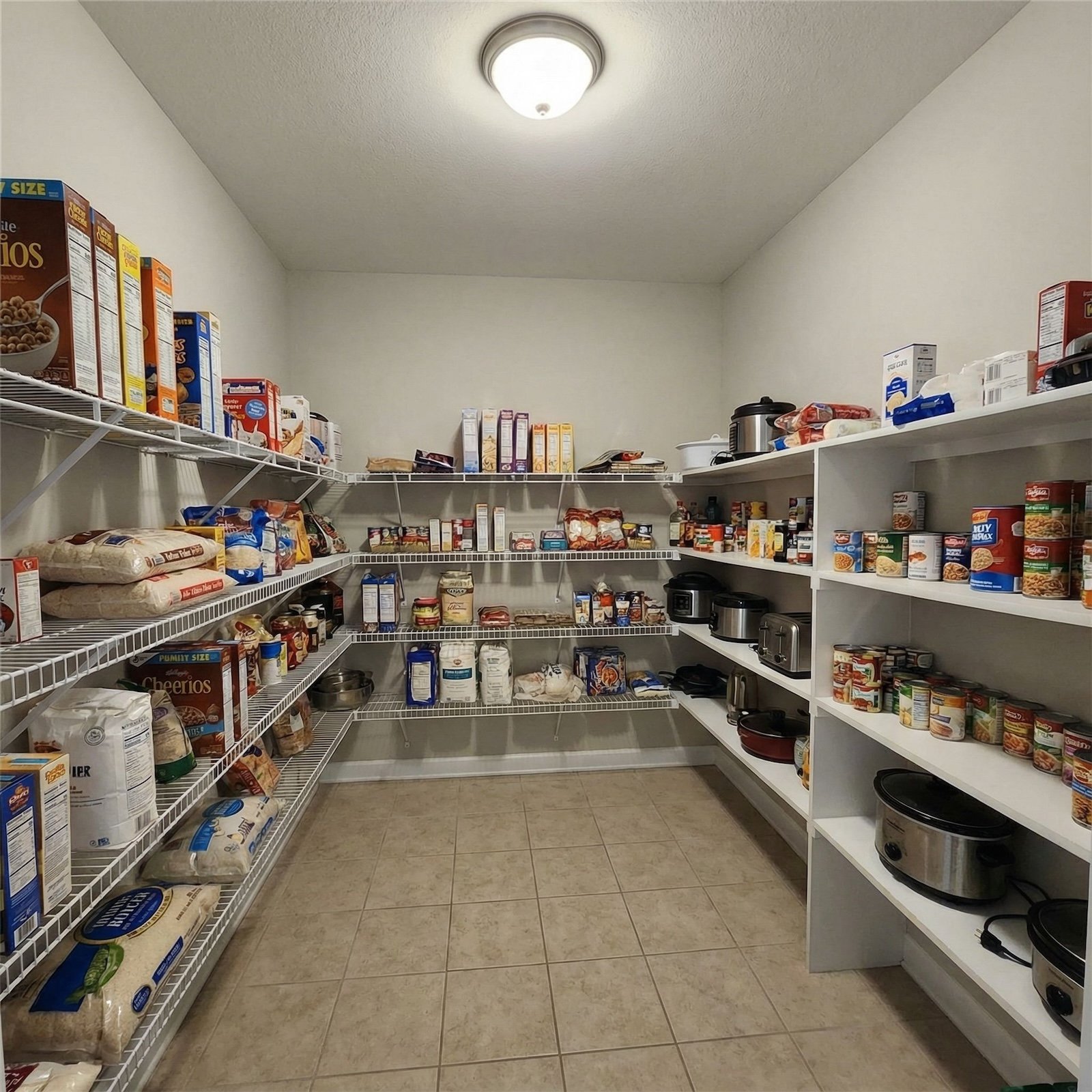
It started at the baseboard and stopped just shy of the ceiling, a great vertical wall of oak swallowing cereal, canned soup, flour, crackers and three jars of something whose expiration dates had become philosophical.
At one point this looked bulky. Sleeker kitchens wanted continuous counters and cabinetry that visually disappeared.
Then everybody remembered food occupies space. A tall pantry lets the mess remain real without requiring the mess to remain visible. Open the doors, find the pasta, close the doors, move on with your life. No arranging vinegar bottles by height for the benefit of strangers.
12. The Hanging Pot Rack That Put the Good Cookware on Display
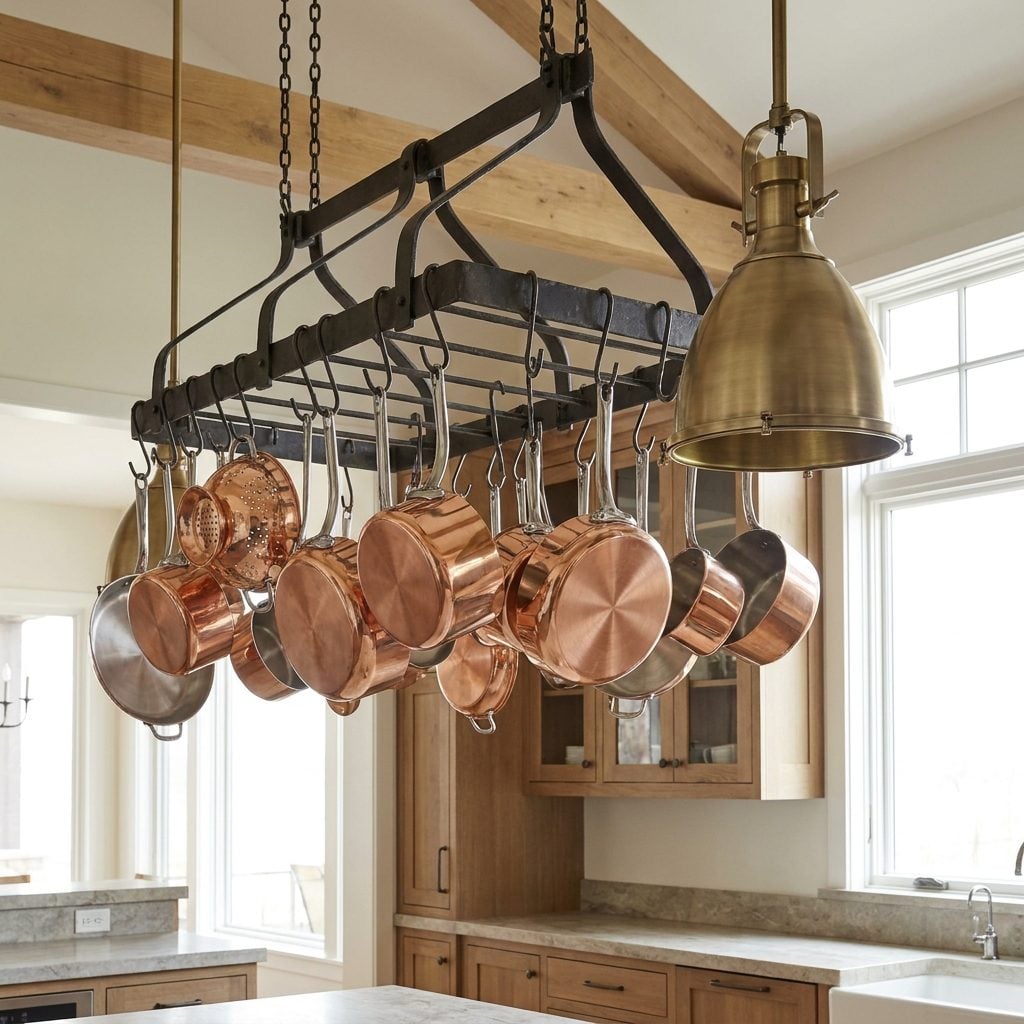
The pot rack had drawbacks. Too much stuff overhead. One badly positioned colander away from a forehead injury. And if your pans looked terrible, the kitchen knew.
But frequently used cookware lived exactly where you could grab it. Copper caught the afternoon light. Cast iron went dark from actual use. Nothing required excavating a leaning stack from the back of a cabinet.
Today’s versions show up again in handsome kitchens because the underlying idea never stopped being practical: good tools can be storage and decoration at the same time.
11. The Warm Wood-and-White Kitchen Combination
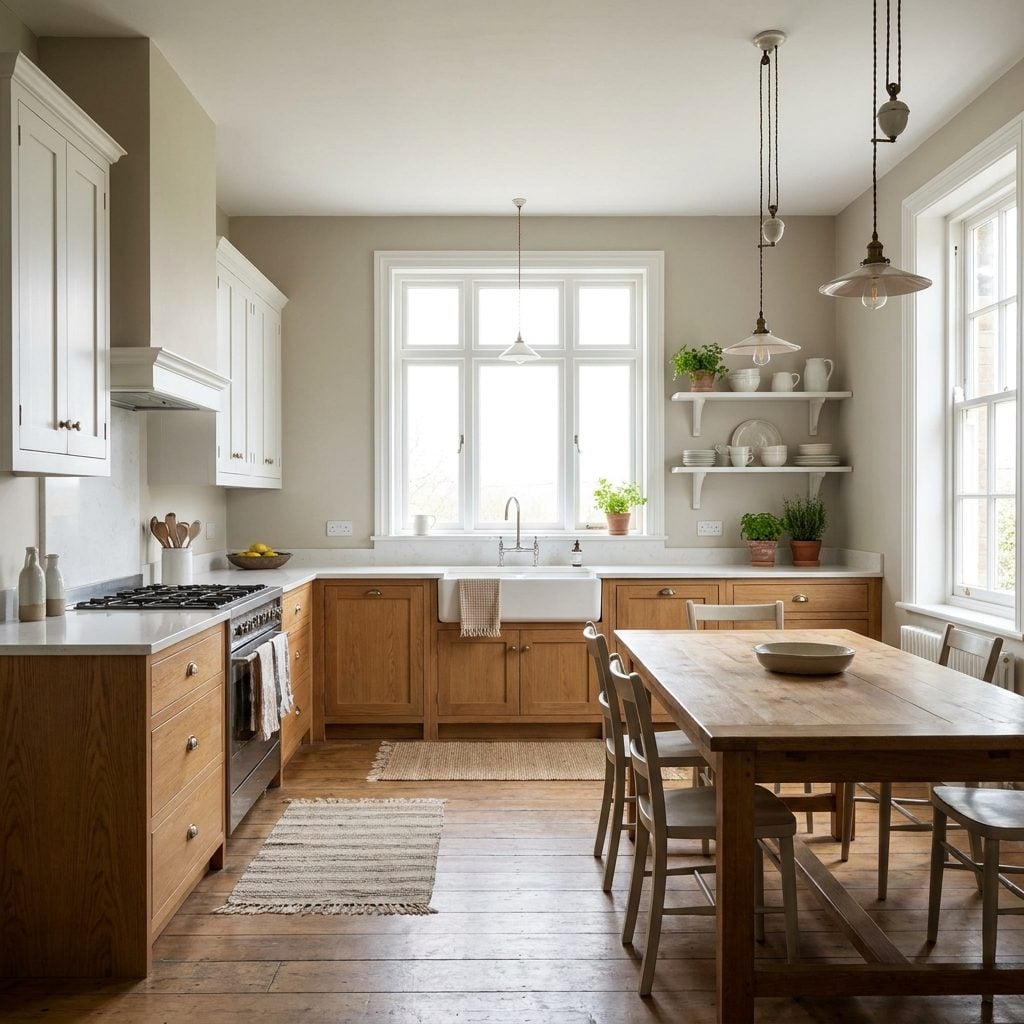
Wood on the cabinets, white on nearly everything else. Not as heavy as an all-dark kitchen, not as chilly as an all-white one. It was the sensible middle ground nobody particularly congratulated.
Morning light loved it. White visually lightened the palette while the wood brought grain, texture and warmth back into the room.
Today that combination is once again presented as a sophisticated way to soften a white kitchen makeover. Plenty of kitchens were already doing it in 1986. We just called them normal.
10. The Giant Paper Family Calendar Covered With Everyone’s Plans
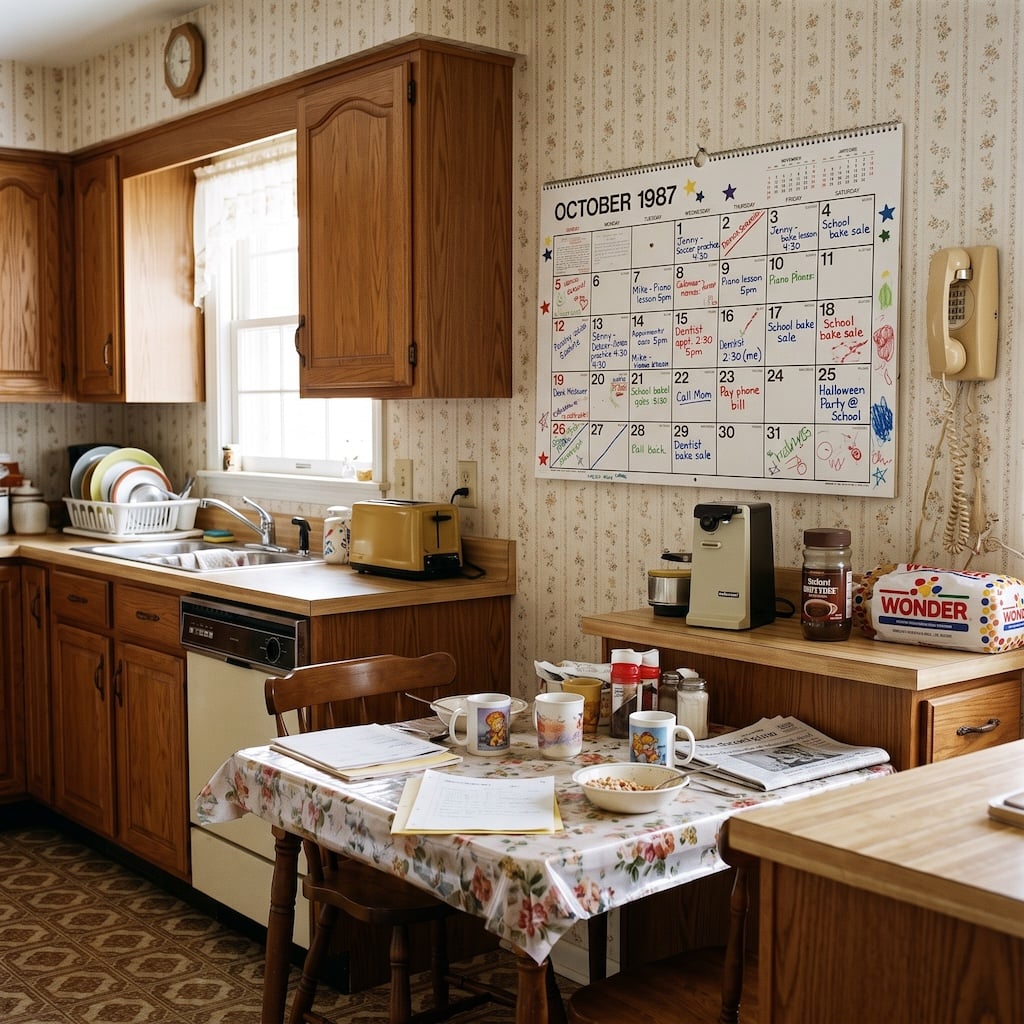
One enormous paper grid held the family together. Soccer practice in red. Dentist appointment boxed twice. Somebody’s half-day squeezed into a square already carrying three other obligations.
You walked past the thing fifty times a day. That was its advantage. The information didn’t wait for you to open anything. It sat beside the refrigerator and ambushed you every time you went looking for cheese.
Shared calendar apps are more powerful by almost every technical measure. The paper calendar was simply impossible to minimize.
9. The Built-In Spice Rack That Gave Every Little Jar a Home
🔥 Would you like to save this?
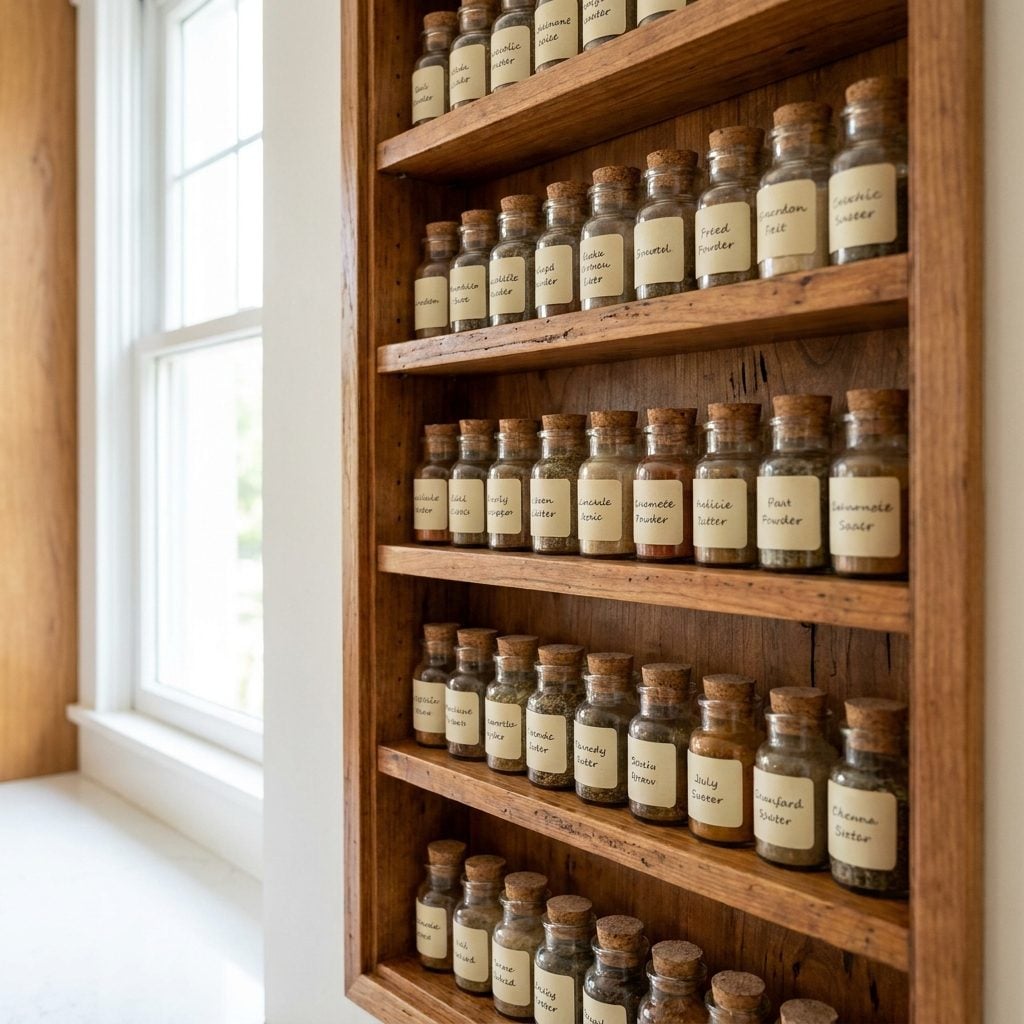
Open one cabinet and there they were, stair-stepped in tidy little rows. Cinnamon next to cumin next to something whose original label had vanished but whose contents everybody somehow continued to trust.
The old rack devoted precious cabinet space to tiny jars, which could look excessive until you spent three years buying duplicate paprika because the first jar had disappeared behind the vanilla.
Specific storage for small things remains one of those ideas that sounds unimportant right up until you don’t have it.
8. The Fabric Valance Over the Kitchen Window
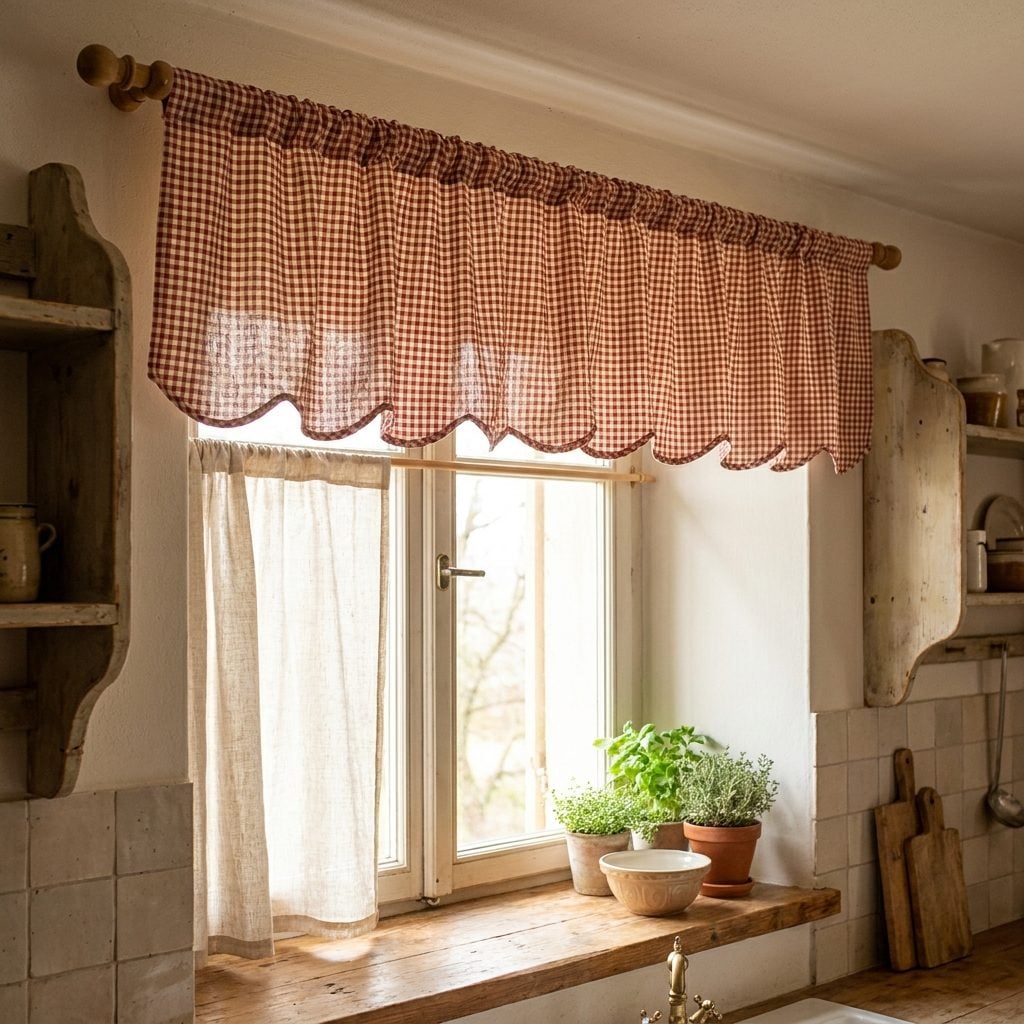
It sat at the top of the window, gathered and pleated, frequently matching whatever floral pattern was already conducting business elsewhere in the room. Half a curtain, full commitment.
Valances eventually became collateral damage in the war on fussiness. Bare windows looked cleaner, and in plenty of rooms they genuinely did.
Yet soft fabric at the top of a kitchen window can add color, texture and a finished edge without blocking much light. That’s why the idea keeps sneaking back whenever interiors grow tired of looking quite so disciplined.
7. The Patterned Vinyl Floor That Actually Hid Everyday Messes
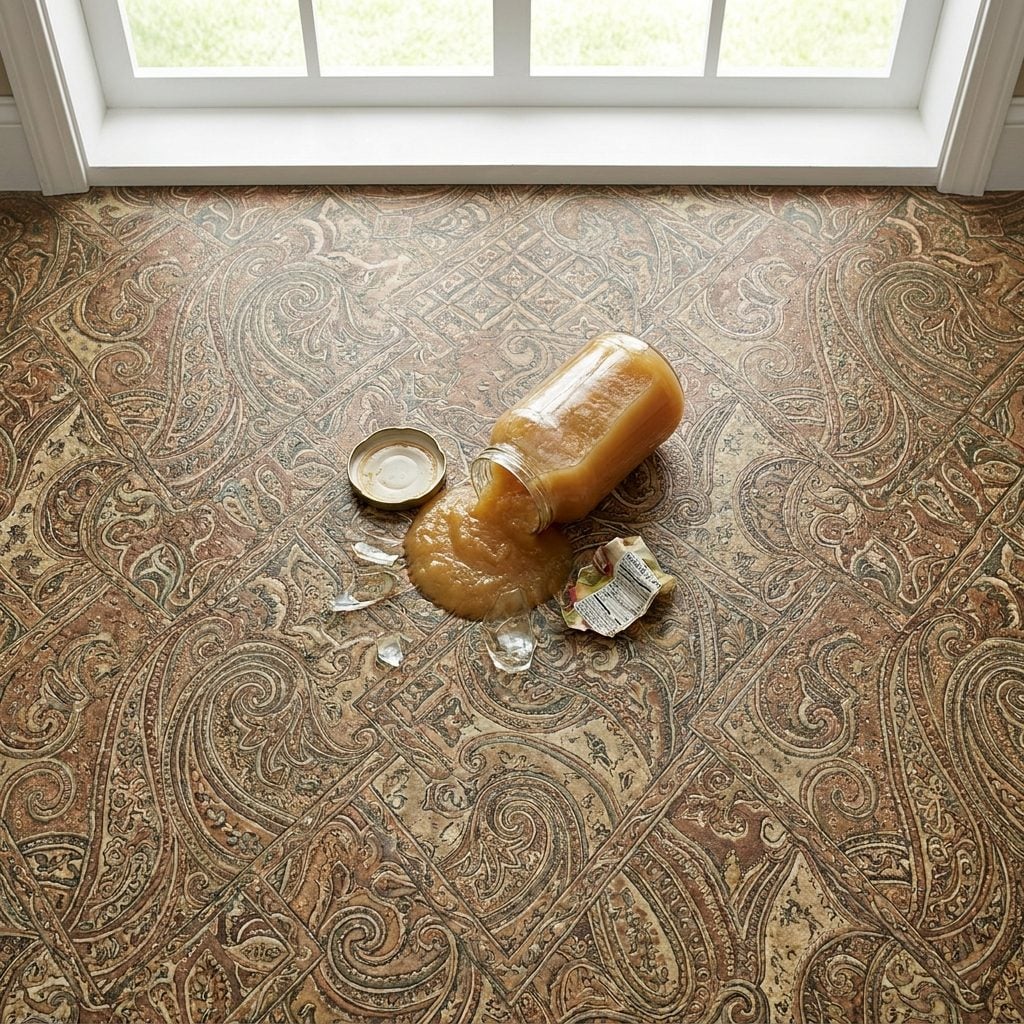
Drop a jar of applesauce and the pattern absorbed the drama. Beige, rust, cream, maybe a little brown—the small print swallowed crumbs, footprints and most evidence that children had passed through recently.
Patterned vinyl didn’t pretend to be precious. It was resilient, relatively inexpensive and often softer and warmer underfoot than hard tile.
Eventually the pattern itself became the embarrassment and cleaner-looking floors took over. Some of those replacements showed every speck of dirt with almost touching sincerity. The old vinyl may not have been glamorous, but it understood the job.
6. The Open Plate Rack That Made Everyday Dishes Part of the Kitchen
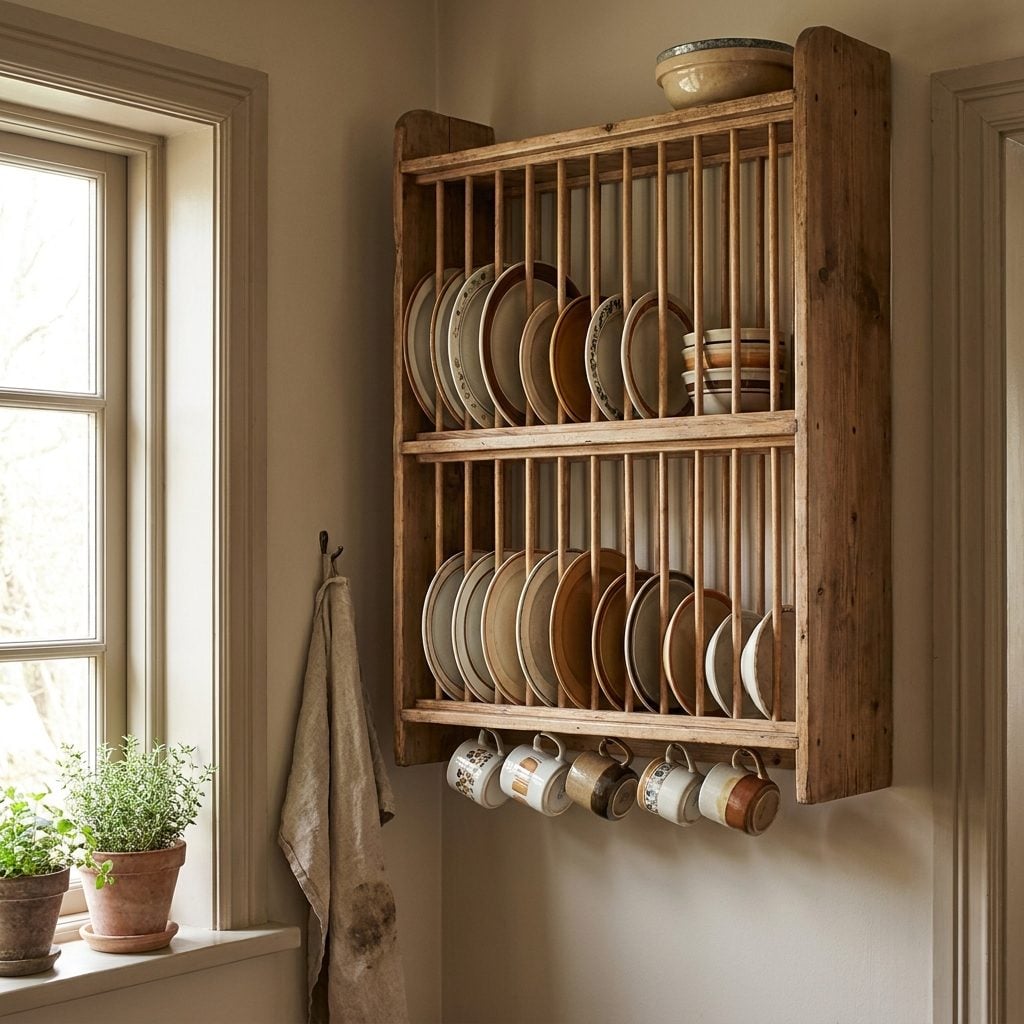
The open plate rack got called quaint, which was sometimes just the polite word for visibly full of plates. Dishes stood on edge in their little slots without a cabinet door protecting the room from the shocking fact that people ate there.
But you could reach for one in the middle of cooking without breaking stride. A blue plate from one set sat beside a cream one from another, and the collection slowly became a record of what the household had actually used.
Some racks even caught dishes while they finished drying. Storage, display and practicality all occupying the same narrow strip of wall.
5. The Floral and Botanical Patterns That Made the Kitchen Feel Cheerful
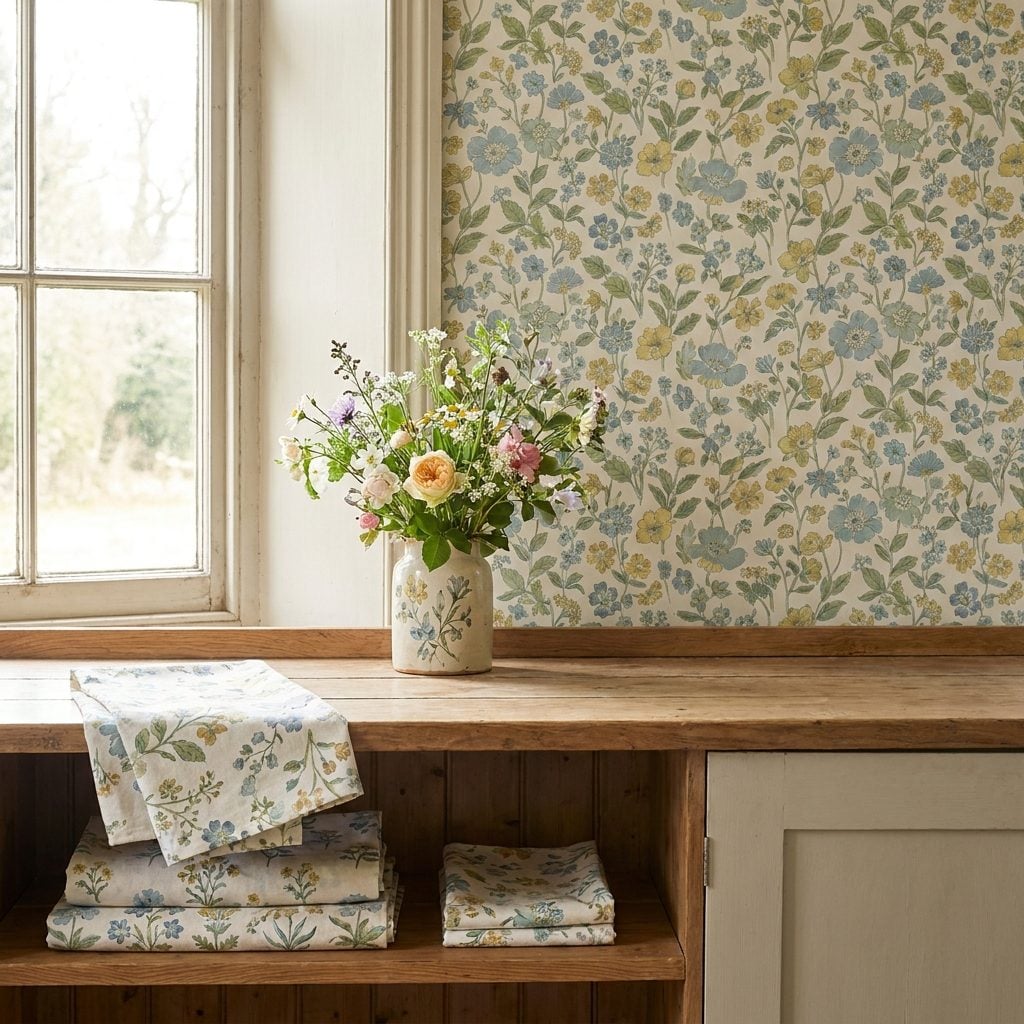
The flowers didn’t know when to stop. They migrated from the wallpaper to the curtains, appeared on the canisters, turned up on the dish towels and occasionally joined forces with an ivy border marching around the ceiling.
Country geese with gingham ribbons may also have been present. We cannot rule them out.
Eventually all that pattern felt fussy and the purge began. Yet today’s block prints, botanical papers and patterned textiles are chasing some of the same energy with better restraint. A room doesn’t need twenty-seven flowers. It may, however, survive three.
4. The Built-In Banquette That Somehow Always Fit One More Person
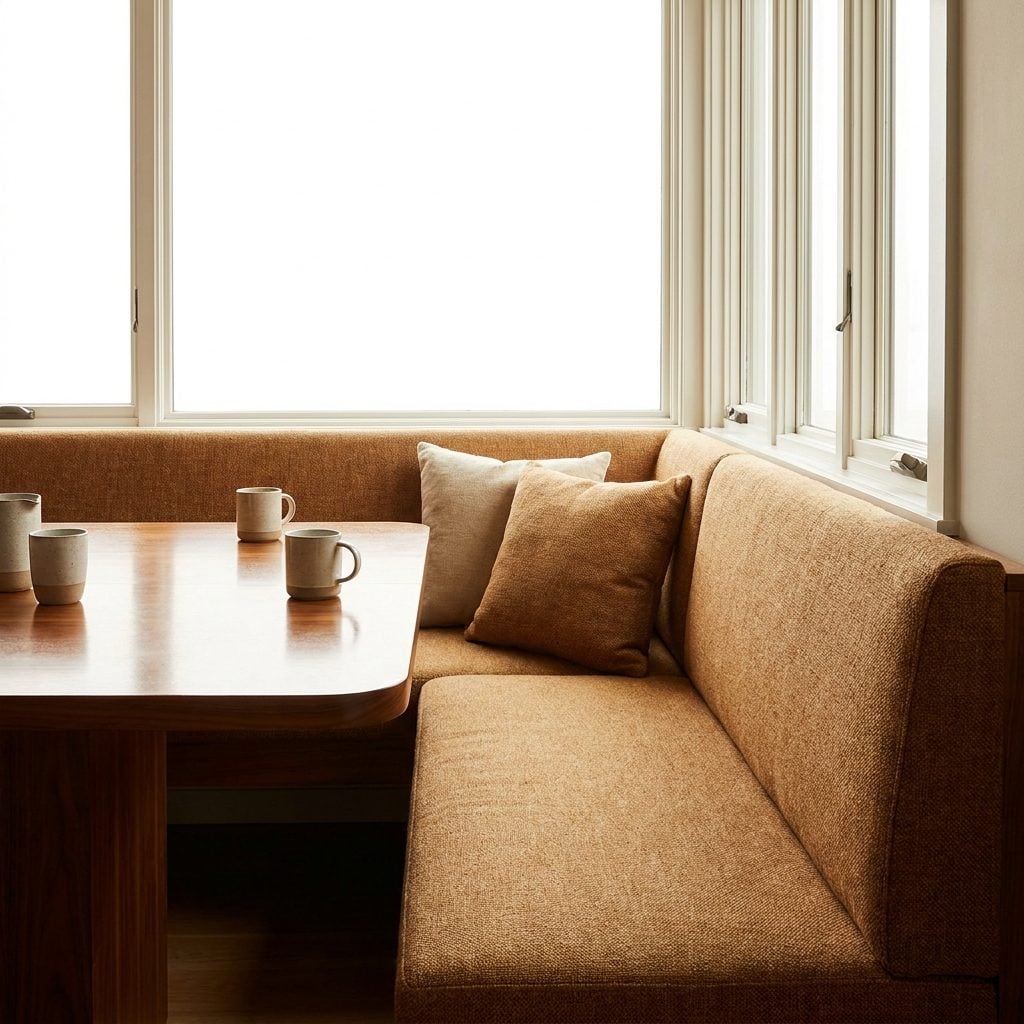
Chairs have numbers. Six chairs, six obvious seats. A banquette operated under looser accounting. Somebody’s cousin appeared at breakfast and everybody moved three inches.
That was the charm. A corner that might otherwise have held a plant or nothing at all became one of the most heavily used spots in the house.
Built-in benches spent some time looking old-fashioned. Now they’re everywhere again because squeezing storage and sociable seating into an awkward corner remains an awfully difficult argument to beat.
3. The Display Shelves Crammed With Cookbooks, Pottery and Family Stuff
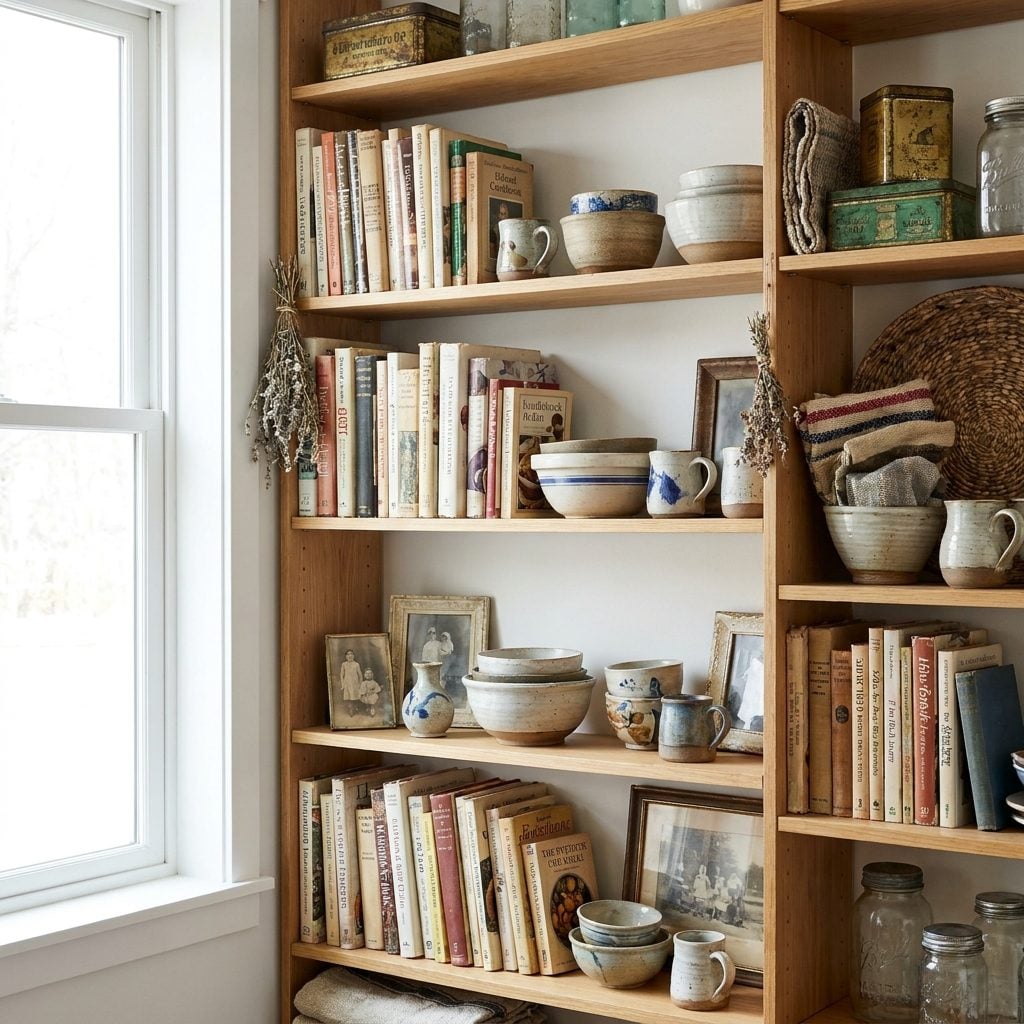
Every family had some version of this shelf. The Betty Crocker binder had lost its cover. A stoneware pitcher leaned beside a child’s clay pinch pot. One family photograph curled slightly at the edge because apparently archival standards were not the priority beside the toaster.
For a while we called these shelves clutter. The fitted kitchen increasingly hid daily life behind doors.
Then open shelving returned as a deliberate design feature. The old version had one advantage the styled reincarnation sometimes forgets: everything on it belonged there because somebody actually used or loved it.
2. The Plants and Herbs Crowding the Kitchen Window
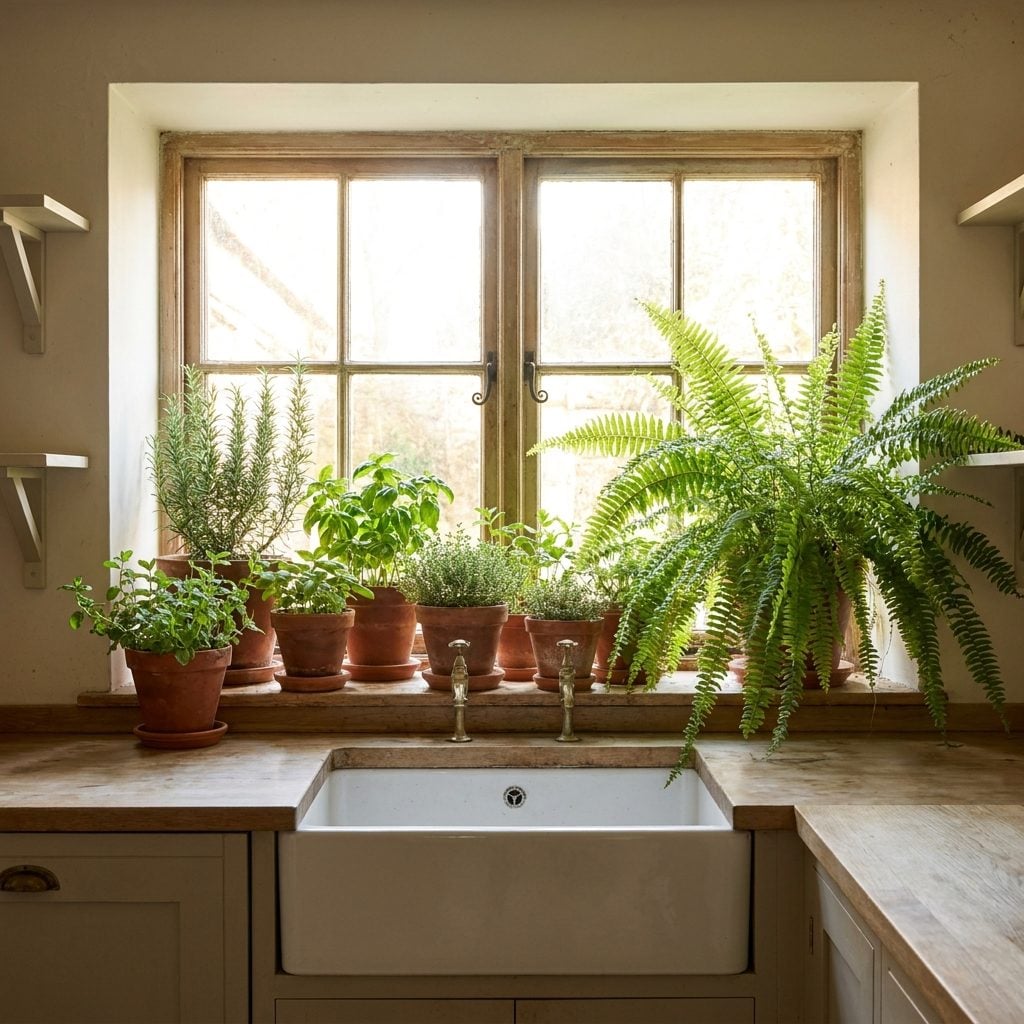
The windowsill above the sink was prime real estate, and the plants had seized it. A fern with questionable prospects. Chives somebody actually clipped into eggs. A pothos heading toward the faucet like it had somewhere else to be.
Watering happened while the dishes were being done. Rinse a glass, tip the leftover water into the parsley, continue.
Eventually many kitchens cleared their windowsills in pursuit of cleaner lines. The old arrangement understood something simpler: green things make a hard-working room feel alive, particularly when one of them can also go into dinner.
1. The Kitchen That Actually Committed to a Color Palette
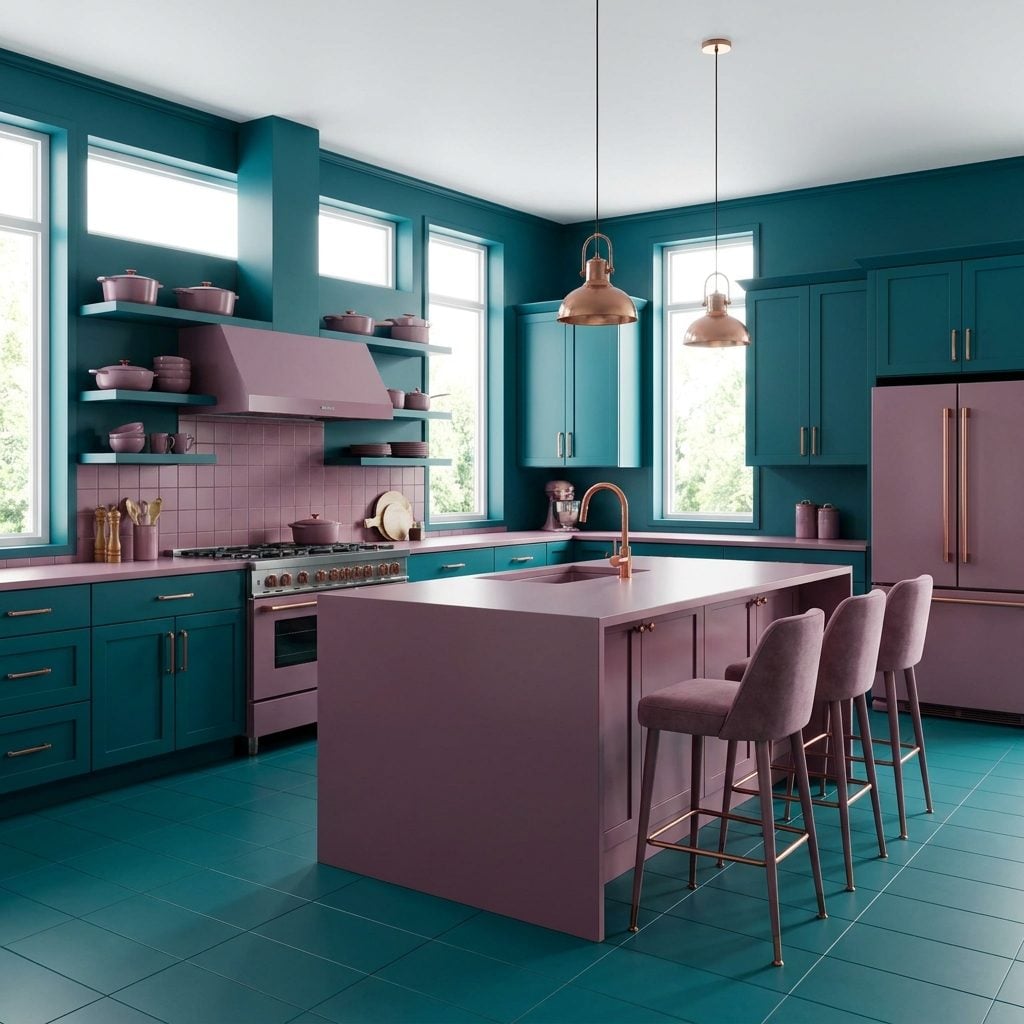
Here’s what those old kitchens understood better than we gave them credit for: they picked a lane.
Dusty blue with cream and oak. Forest green with ivory and brass. Burgundy against soft gray. Cabinets, counters, tile, curtains and plates all belonged to the same conversation. Sometimes the room went too far, but nobody could accuse it of being afraid of itself.
A kitchen that picks a color is a kitchen that knows what it wants to be.
Neutral kitchens gave us flexibility, light and broad resale appeal. They also taught us how quickly “timeless” can become “anonymous” when every risky decision gets edited out.
That’s why a confident bold kitchen from an earlier decade can still stop you in a photograph. Not because every finish deserves to return, and certainly not because we need the geese back. The room simply feels claimed.