🔥 Would you like to save this?
The room had a smell. Warm dust rising off the back of the television, a little popcorn butter, the faint rubber-and-vinyl scent of a recliner that had absorbed years of Friday nights. You knew which sofa cushion dipped, which lamp gave enough light to read by, and exactly how far the telephone cord would stretch before somebody yelled at you.
There were ways to disappear in the 1980s, of course, but the family room made it remarkably inconvenient. Entertainment, music, games, telephone calls, magazines, snacks, and half the household’s accumulated stuff kept routing people back through the same few square yards. These 31 things didn’t make families magically harmonious. They did something more practical: they made being together the path of least resistance.
In order to come up with the very specific design ideas, we create most designs with the assistance of state-of-the-art AI interior design software. Also, assume links that take you off the site are affiliate links such as links to Amazon. this means we may earn a commission if you buy something.
31. The Entertainment Center That Put Half the House on One Wall
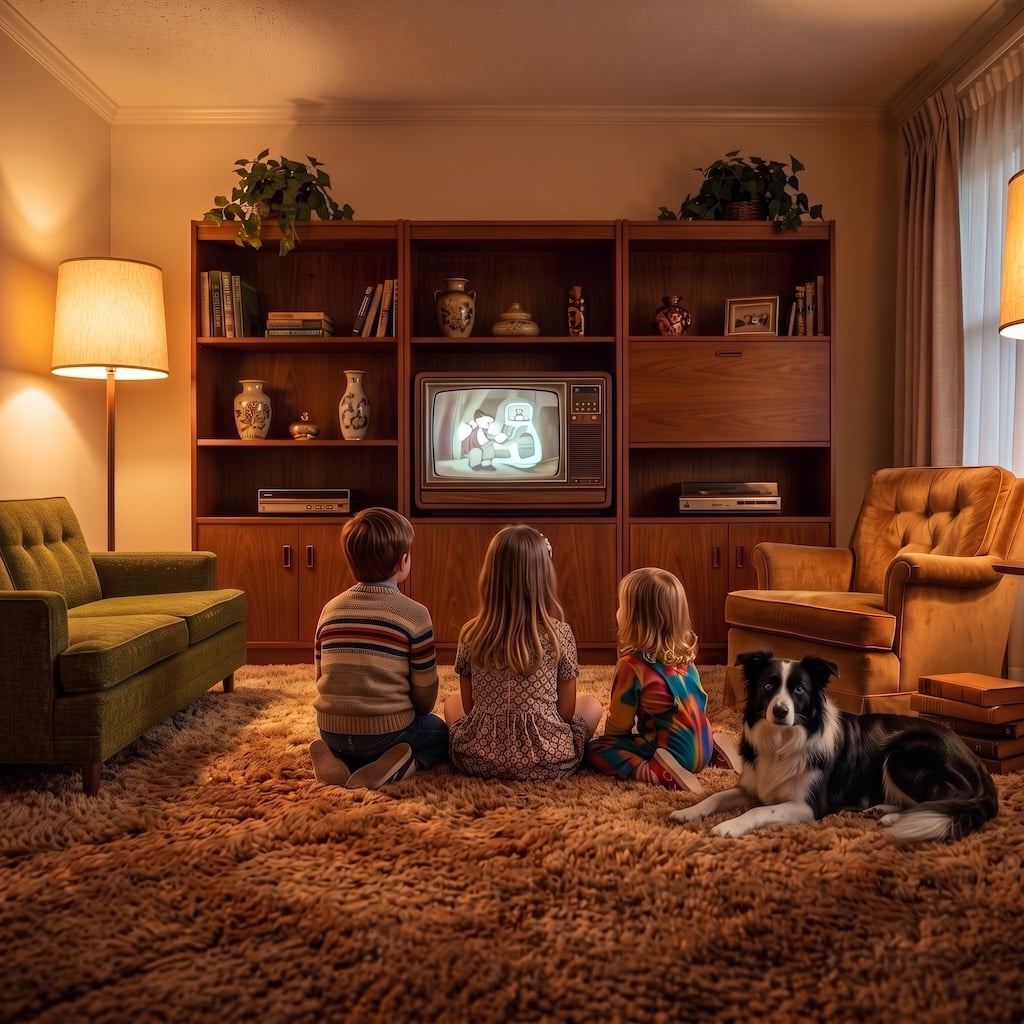
The television, VCR, stereo components, tapes, family photos, game cartridges, and stray instruction manuals all converged inside one enormous oak cabinet. It wasn’t elegant. It was infrastructure disguised as furniture.
That concentration mattered. If you wanted the movie, the music, or the game, you headed toward the same wall and usually found somebody already there. The family room design didn’t need to manufacture a focal point; the technology had already volunteered.
30. The Afghan That Was Never Really Decoration
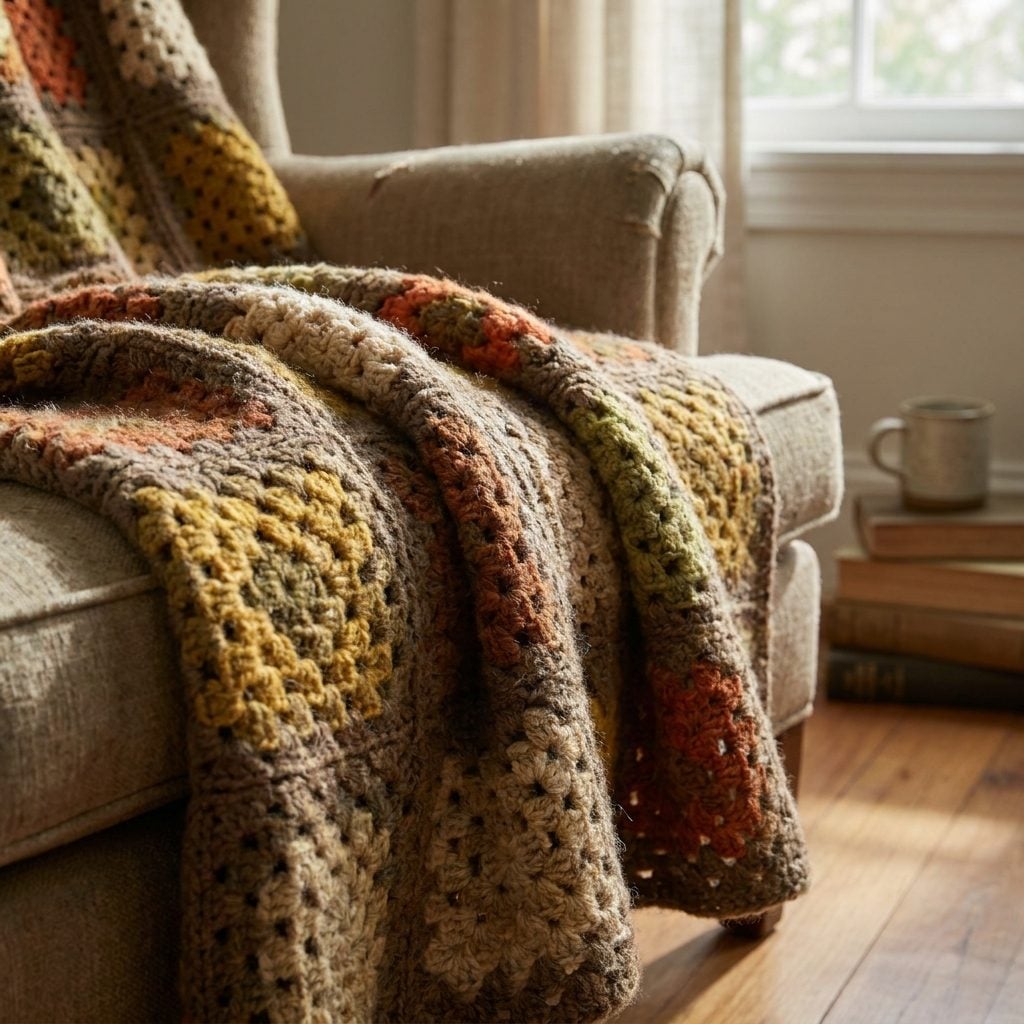
It might have been striped, made from granny squares, or assembled from enough brown, orange, gold, and avocado yarn to camouflage itself against the sofa. Often handmade, it arrived over the back cushions and gradually stopped looking removable.
Someone pulled it over their legs during a movie. Someone else rolled it into a pillow. Two kids shared half of it and complained about the division. After enough years, the stretched corner and loose loops became part of the object rather than defects to correct.
29. The VCR That Turned Starting a Movie Into an Event
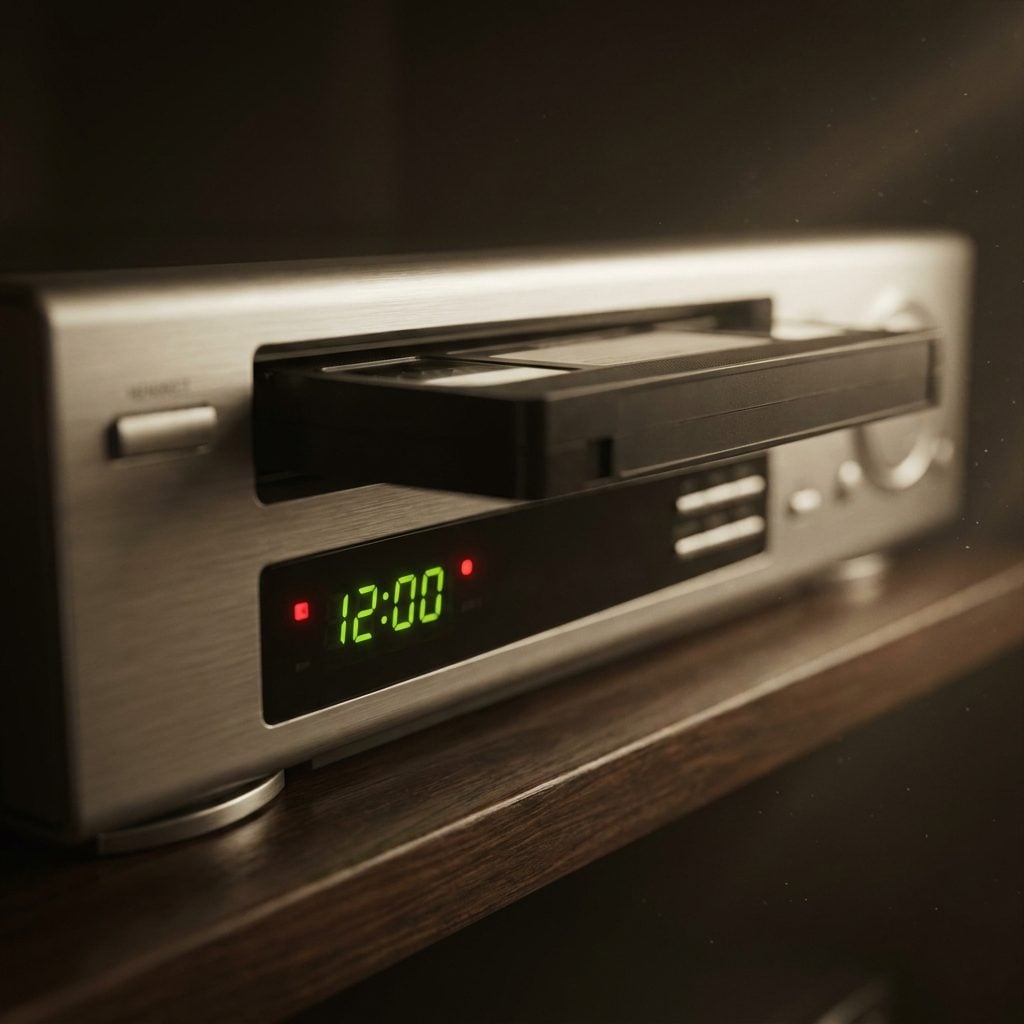
You pushed in the cassette and the machine swallowed it with that soft mechanical chunk. Somewhere nearby, the green clock was probably blinking 12:00 because setting it had been postponed indefinitely.
Starting a movie involved enough ceremony to announce itself to the room. Somebody loaded the tape, somebody made popcorn, somebody claimed the good seat. By the time the picture appeared, the audience had assembled. And if it was a rental, “Be kind, rewind” was waiting for you at the other end.
28. The Spider Plant Still Carrying the 1970s Into the Next Decade
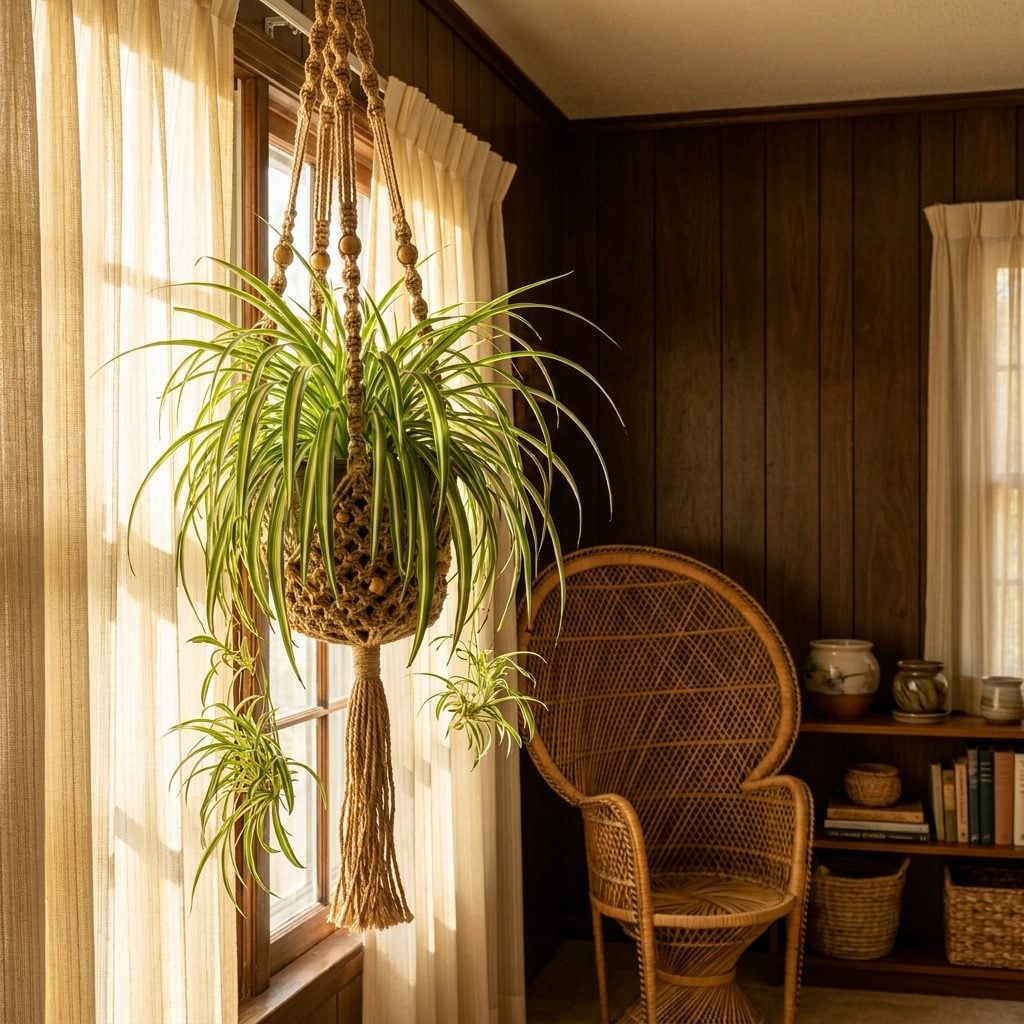
The 1970s did not pack up neatly when 1980 arrived. Macramé hangers, terracotta pots, and spider plants kept swinging in plenty of family rooms while newer electronics multiplied underneath them.
Against wood paneling, vinyl, glass, and veneer, trailing leaves gave the room something unruly and alive. Call it biophilic design if you like; nobody watering the spider plant needed the terminology. They just knew the corner looked better with something green in it.
27. The Board-Game Stack With One Box Held Together by a Rubber Band
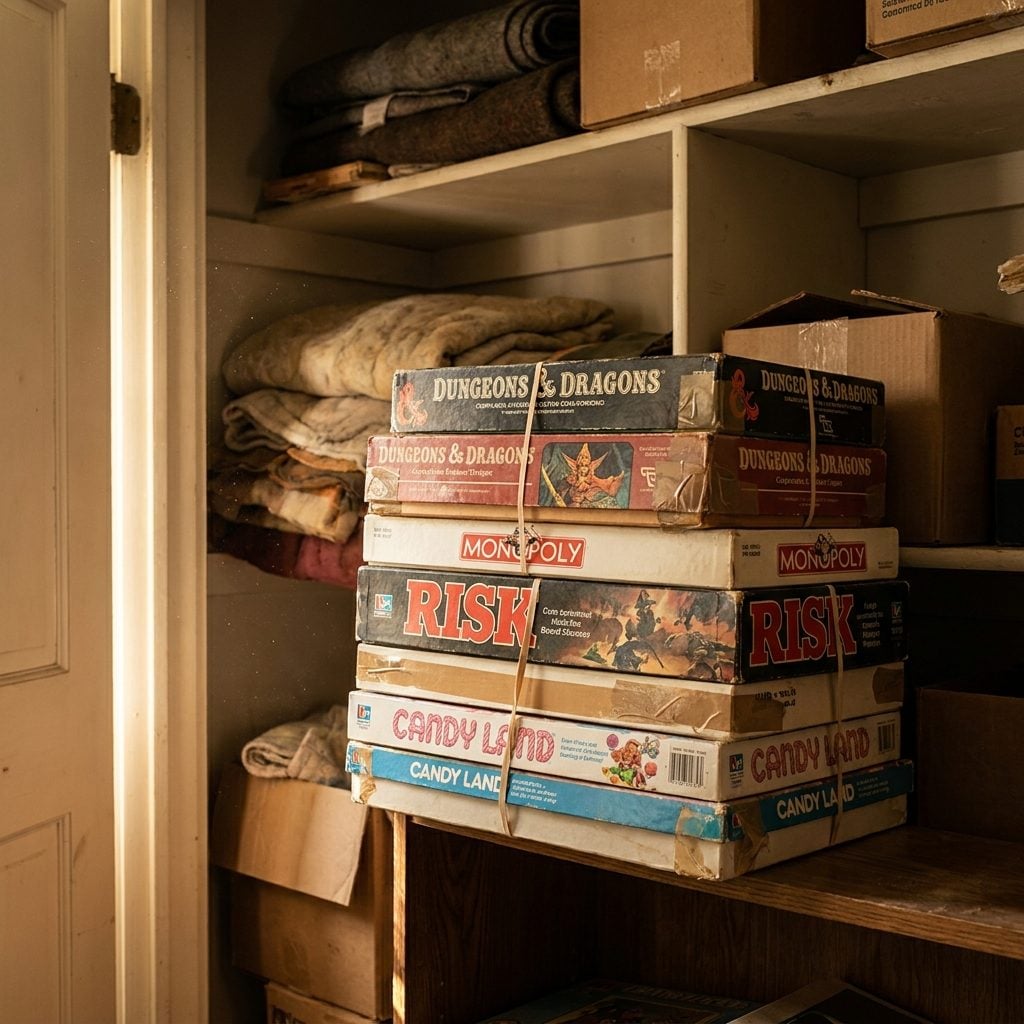
The boxes lived on a shelf or in the hall closet, soft at the corners and increasingly optimistic about how many original pieces remained inside. Missing token? Use a button. Lost die? Somebody had another one somewhere.
The important part was that everybody had to occupy the same little patch of floor or coffee table. There were accusations, alliances, rule disputes, and at least one person who suddenly discovered a forgotten technicality when losing became likely.
Before everybody carried entertainment in a pocket, one board on one coffee table could keep five people arguing in the same room for an entire evening.
26. The Recliner That Had an Owner Whether Anyone Admitted It or Not

Everybody knew whose chair it was. The cushion usually knew too, having developed a permanent depression in exactly the right place. Sit there while its owner went for a snack and you understood the arrangement was temporary.
Yet the recliner rarely isolated anybody. Kids sat on the arm, leaned against the side, or migrated halfway into the chair during a movie. It was less a throne than a dependable piece of geography.
25. The Stereo System That Required Actual Procedures
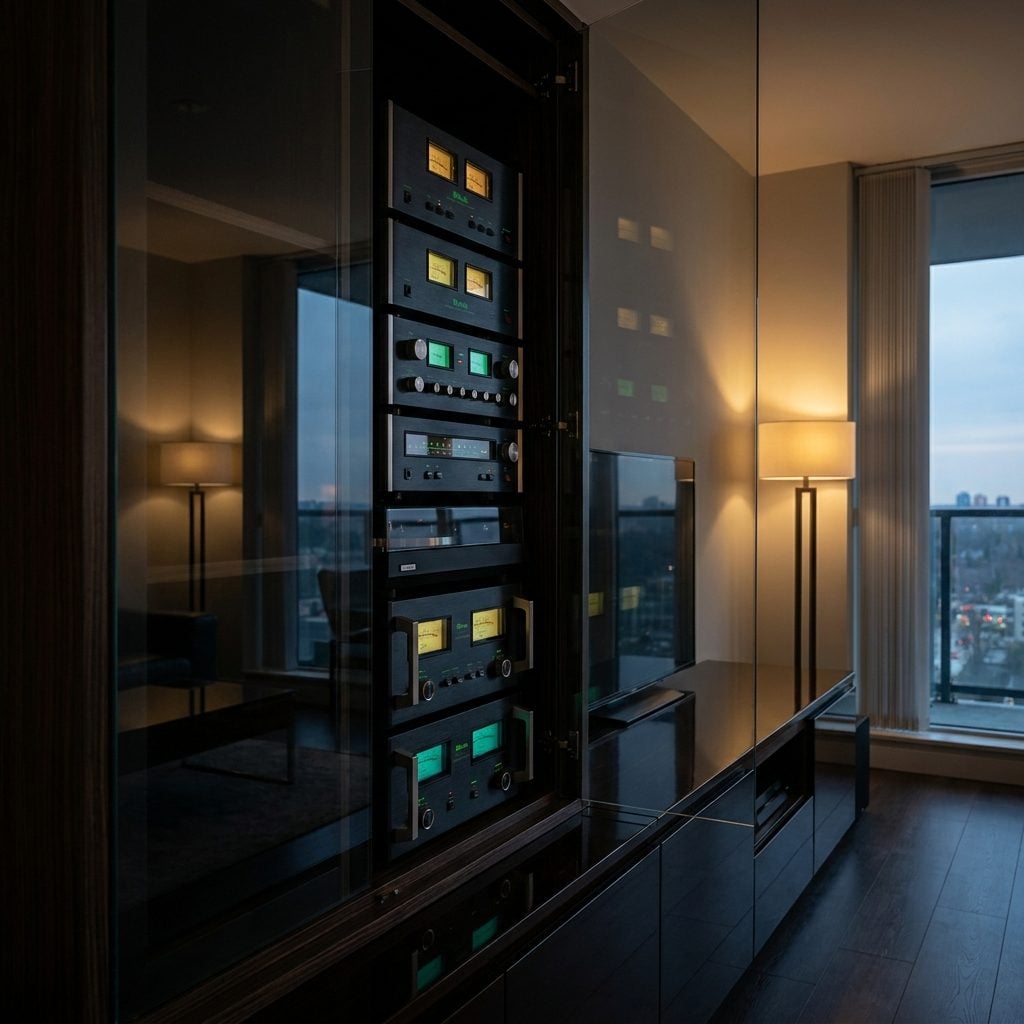
Receiver. Turntable. Cassette deck. Equalizer. Maybe another cassette deck if somebody had become serious about mixtapes. The stereo wasn’t one appliance so much as a small technical department stacked behind smoked glass.
Playing music had steps, and those steps made the choice public. Records came out of sleeves, needles dropped, buttons clicked, meters bounced. Somebody adjusted the bass and somebody immediately objected. The good speakers lived here, so the music did too.
24. The Folding TV Trays That Moved Dinner Into Prime Time
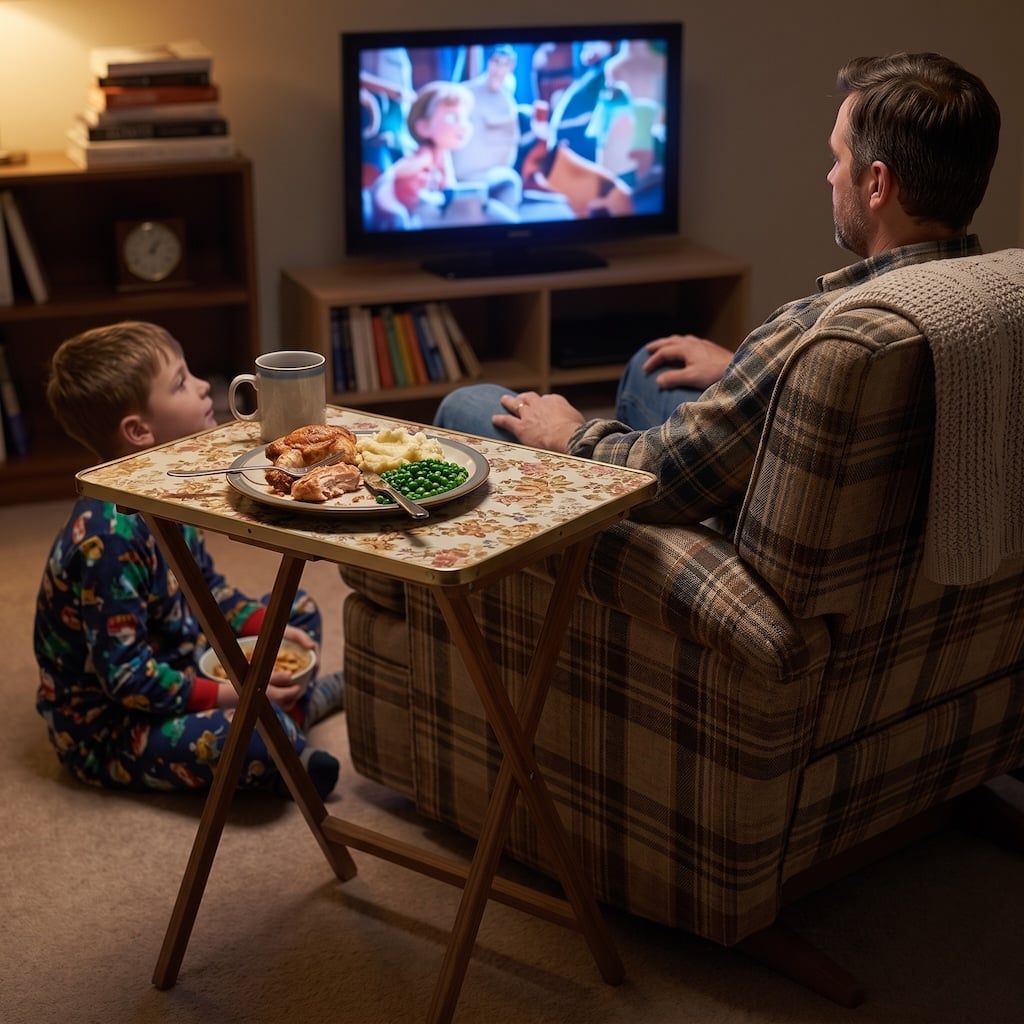
They spent most of their lives folded upright in a rack until dinner suddenly required deployment. Out they came with that metallic clack, each tray barely large enough for a plate, glass, and the dangerous ambition of reaching for another helping.
Eating in front of the television felt mildly illicit even when the parents had approved it. The dinner table vanished for the evening, but the family did not. Everyone watched the same program while serving bowls traveled precariously from tray to tray.
23. The Corded Telephone That Put Private Business in Public Space
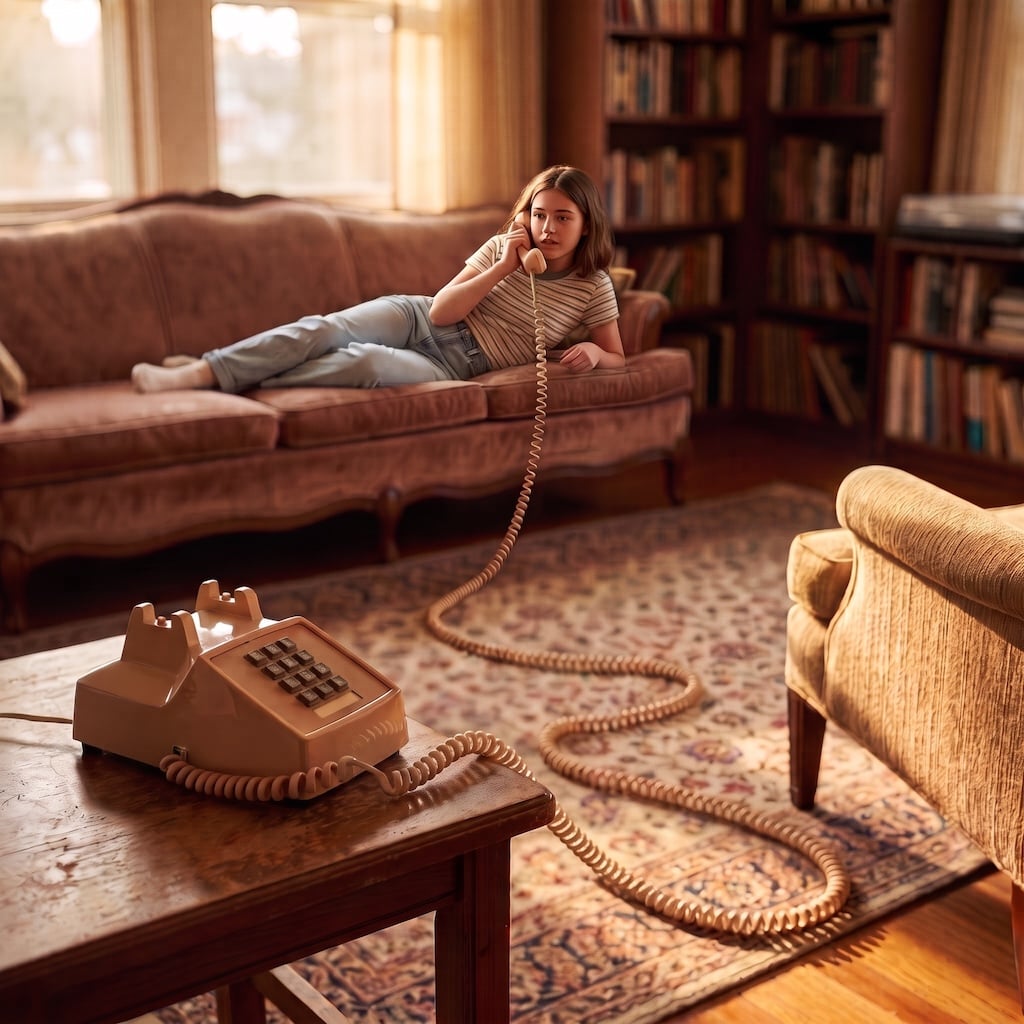
The phone had a cord, the cord had a maximum reach, and that measurement determined the outer boundary of privacy. You could stretch toward the hallway, crouch behind a chair, or turn your back dramatically. You were still in the room.
Calls became group events by accident. Someone talked to a sister while another person mouthed questions. A teenager tried to sound casual while three relatives listened badly. Communication wasn’t portable yet. The wall socket had jurisdiction.
22. The Big Glass Ashtray That Could Survive a Small Earthquake
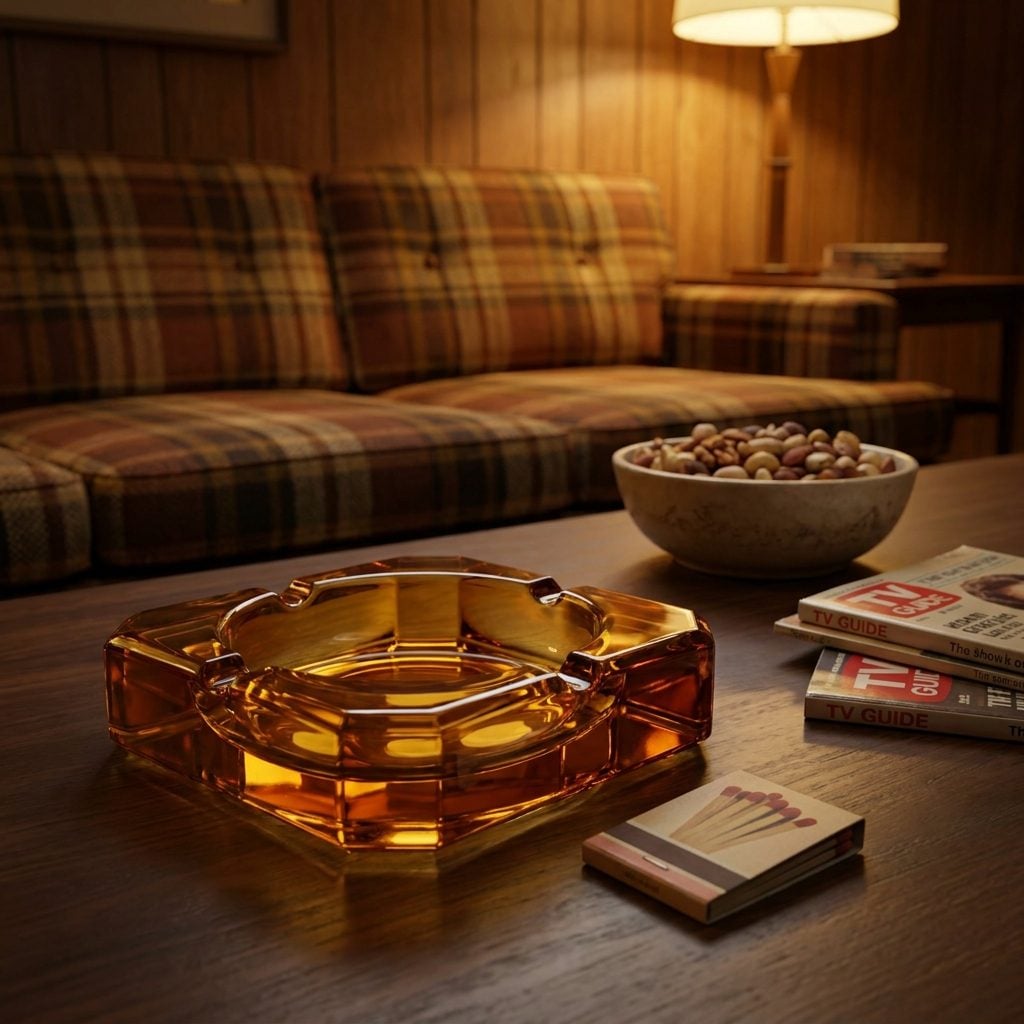
Amber, smoked, clear, faceted, and heavy enough to make you reconsider lifting it one-handed. In homes where people smoked, it sat in the middle of the coffee table like permanent equipment. Elsewhere, old ashtrays often lingered long after their original purpose had disappeared.
Eventually one might collect loose change, keys, rubber bands, or absolutely nothing. The absurd weight was part of the charm. Nobody threw it away because nobody could imagine what could possibly happen to it.
21. The Atari That Turned Waiting Your Turn Into Half the Game
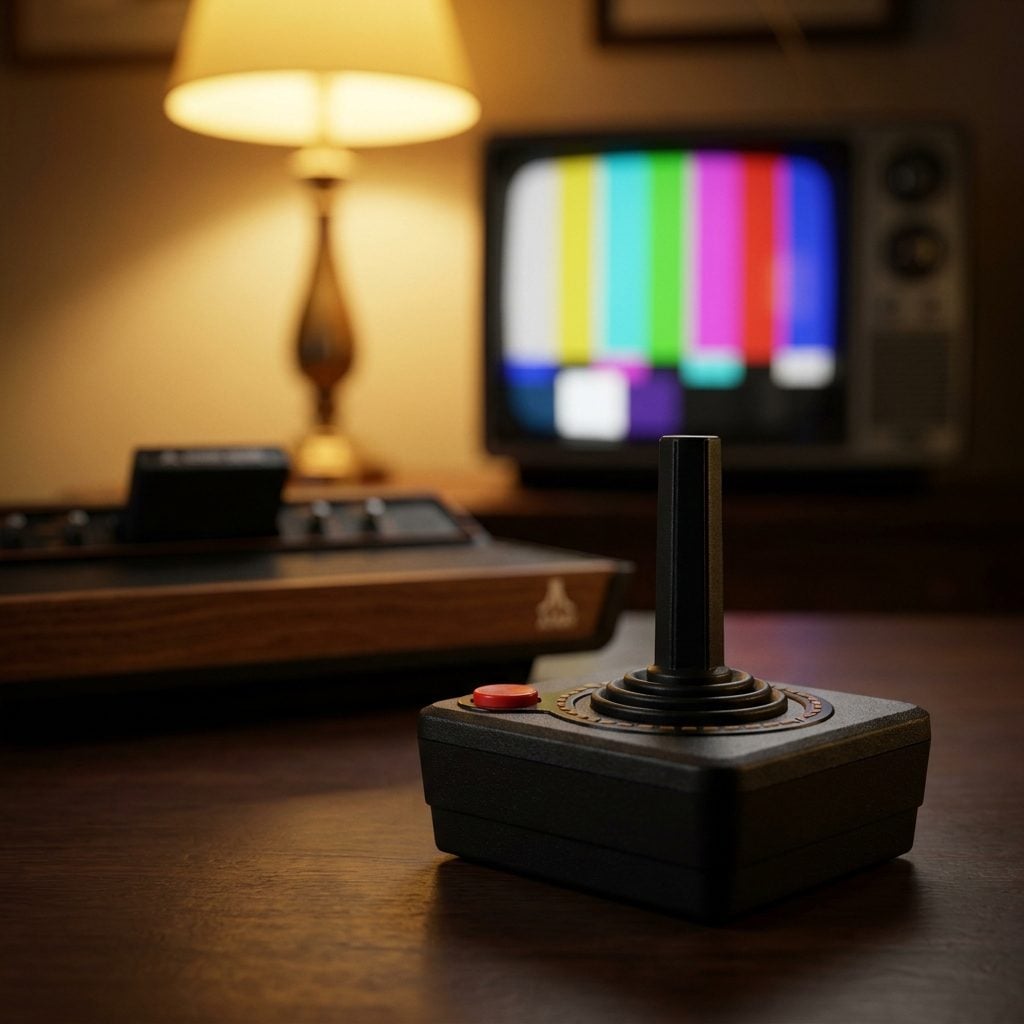
The console sat on the carpet with a cartridge sticking out of the top and a joystick that looked almost comically simple: stick, button, go. Its greatest multiplayer feature may have been that everybody else had to wait.
That waiting kept spectators close. Siblings studied mistakes, parents offered unsolicited coaching, and the next player hovered within striking distance of the controller. It was the compact ancestor of the game room ideas that would later get entire dedicated spaces, except this one simply borrowed the family television.
20. The Magazine Basket That Could Lose You for Twenty Minutes
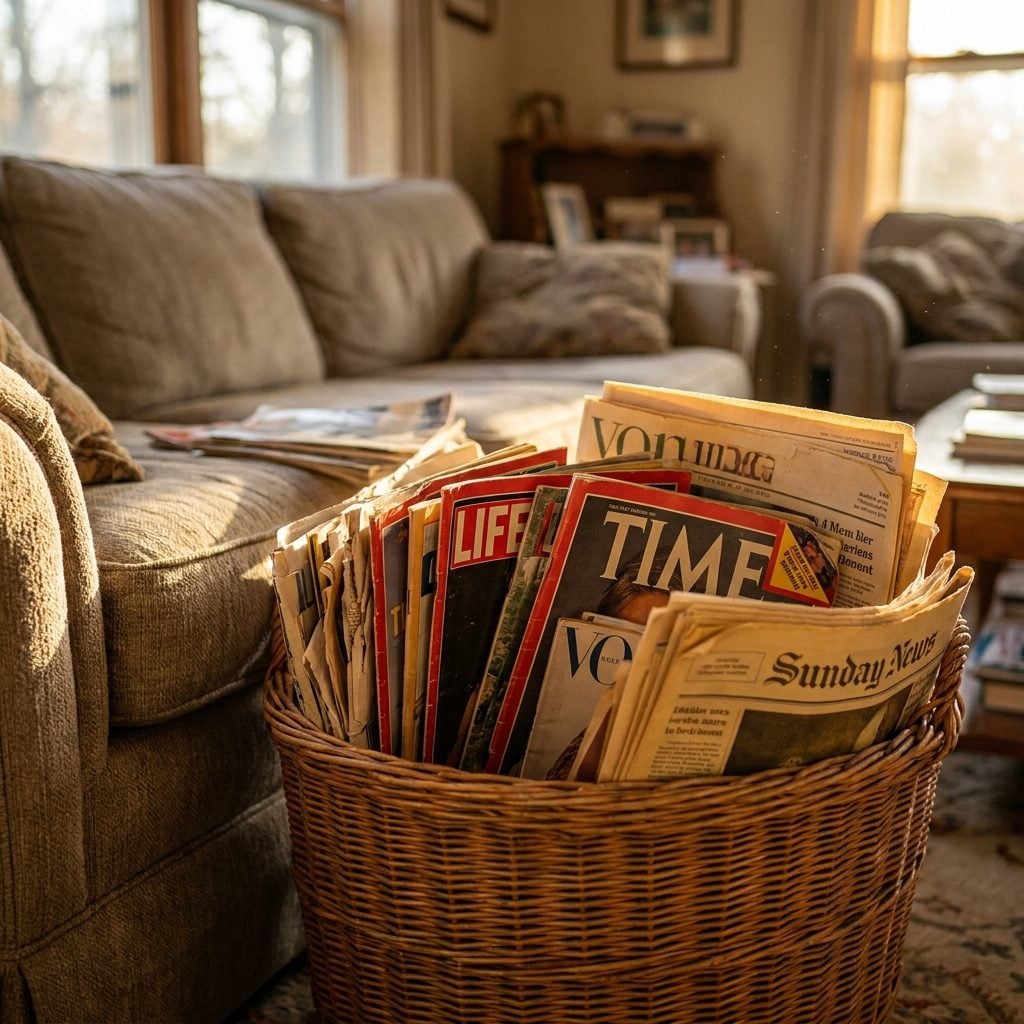
It sat beside the sofa slowly digesting magazines, Sunday newspaper sections, catalogs, old TV guides, and whatever printed thing somebody thought might still be worth reading someday.
You reached in for one thing and surfaced with another. One person read a magazine, another worked the crossword, somebody else watched television. Nothing coordinated except the location. That was the quiet genius of the room: being together didn’t require synchronized activity.
19. The Big Lamp That Let Quiet Time Stay in the Family Room
🔥 Would you like to save this?
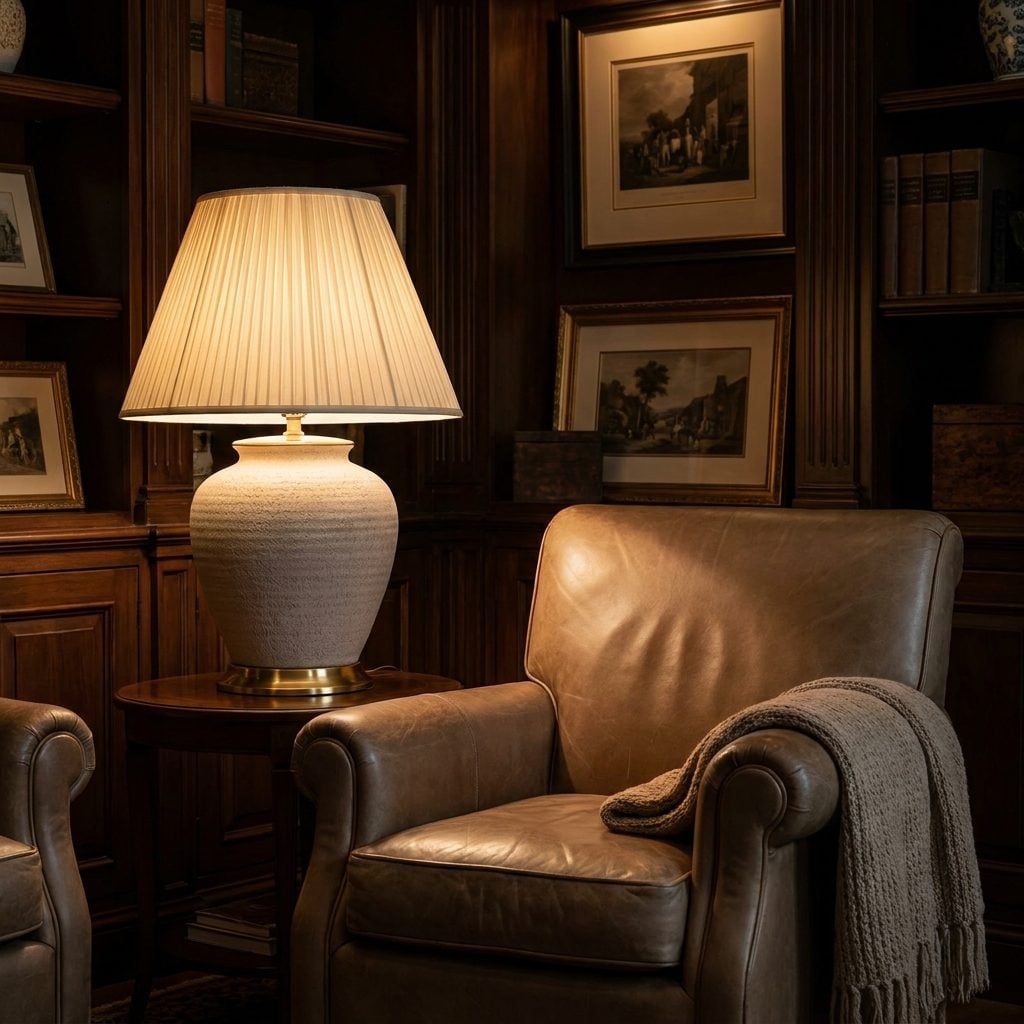
It wasn’t a tiny accent lamp. It was a substantial ceramic thing with a shade wide enough to cast useful light over half the sofa. Switch it on after dinner and there was enough illumination for a newspaper, a magazine, and somebody’s paperback at once.
That mattered because reading didn’t require retreat. Someone could disappear into a book while still half-hearing the television, looking up for a joke, or joining a conversation when it got interesting.
18. The VHS Stack That Made Choosing the Movie Part of Movie Night
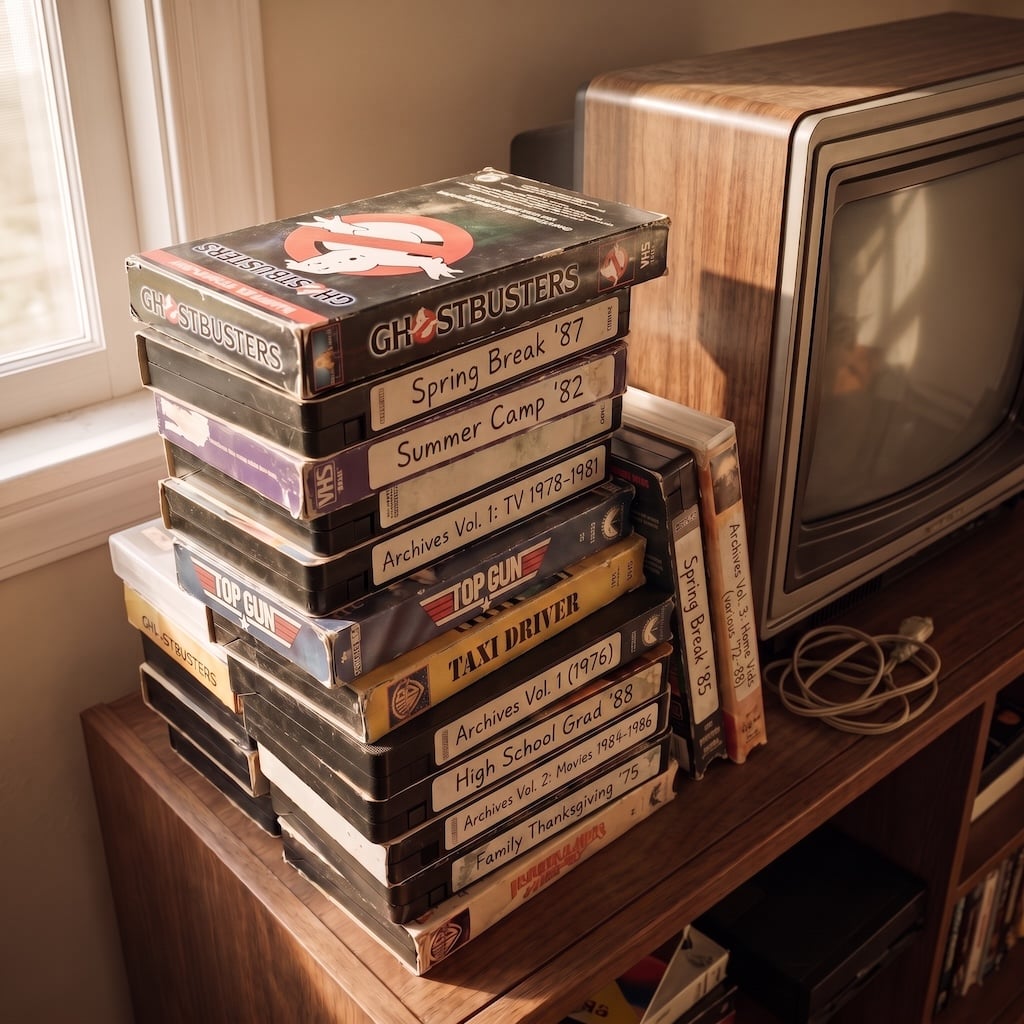
Half the stack might be commercial releases and half recorded from television, identifiable by handwriting on the spine. A movie could begin after a soap opera, contain commercials nobody bothered to pause around, and end with ten minutes of a wedding nobody remembered recording.
Choosing one required negotiation. Tapes came out, cases opened, vetoes arrived. By the time consensus emerged, half the collection might be on the carpet.
17. The Wood Paneling the 1970s Forgot to Take With It
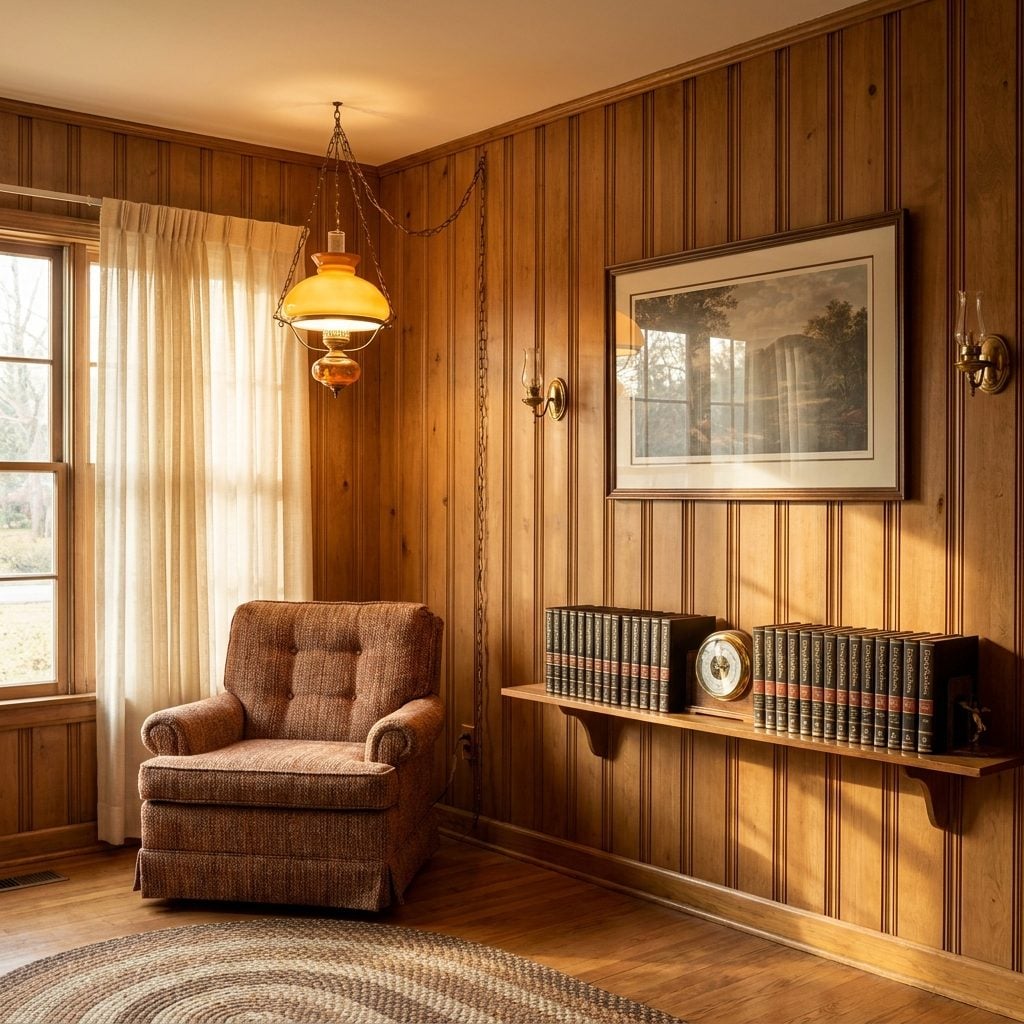
Some paneling used wood veneer; plenty used printed faux-wood surfaces on thin sheets. Either way, it had already colonized countless rec rooms and family rooms before the 1980s arrived, and homeowners were in no hurry to tear apart perfectly serviceable walls.
The effect was unmistakable: darker, warmer, and more enclosed. Paneling absorbed light rather than bouncing it everywhere, giving suburban rooms a den-like quality that today’s charcoal family room often pursues with paint instead.
16. The Deck of Cards That Required Almost No Planning
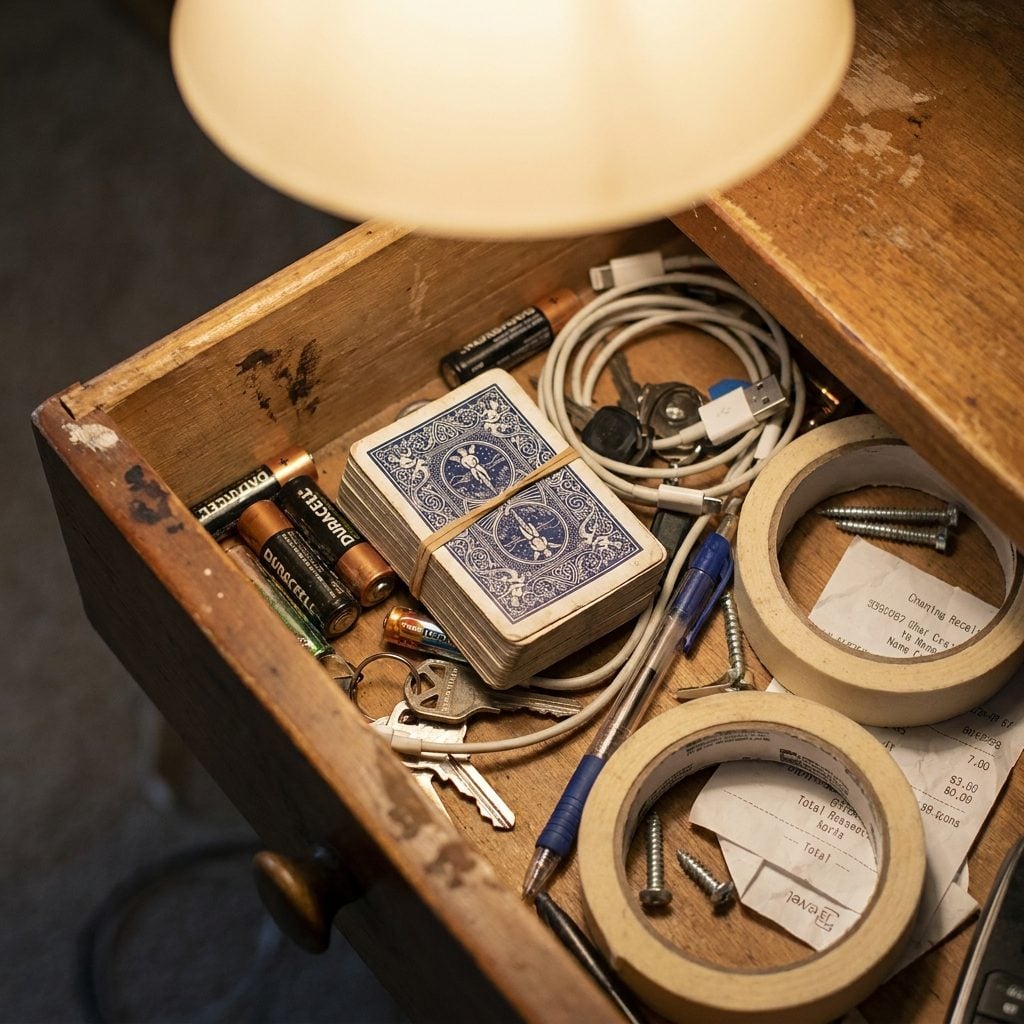
Nobody remembered buying the deck. It simply existed in a drawer, corners softened from shuffling, perhaps one joker mysteriously absent. Rummy, Spades, Go Fish, War—the choice depended on who was old enough to understand what.
Cards asked almost nothing of the room. Push the pretzel bowl aside, shuffle, deal. An activity could appear out of nowhere and consume an hour without batteries, setup screens, or instructions longer than anyone’s patience.
15. The Big Speakers That Made the Sofa Part of the Sound System
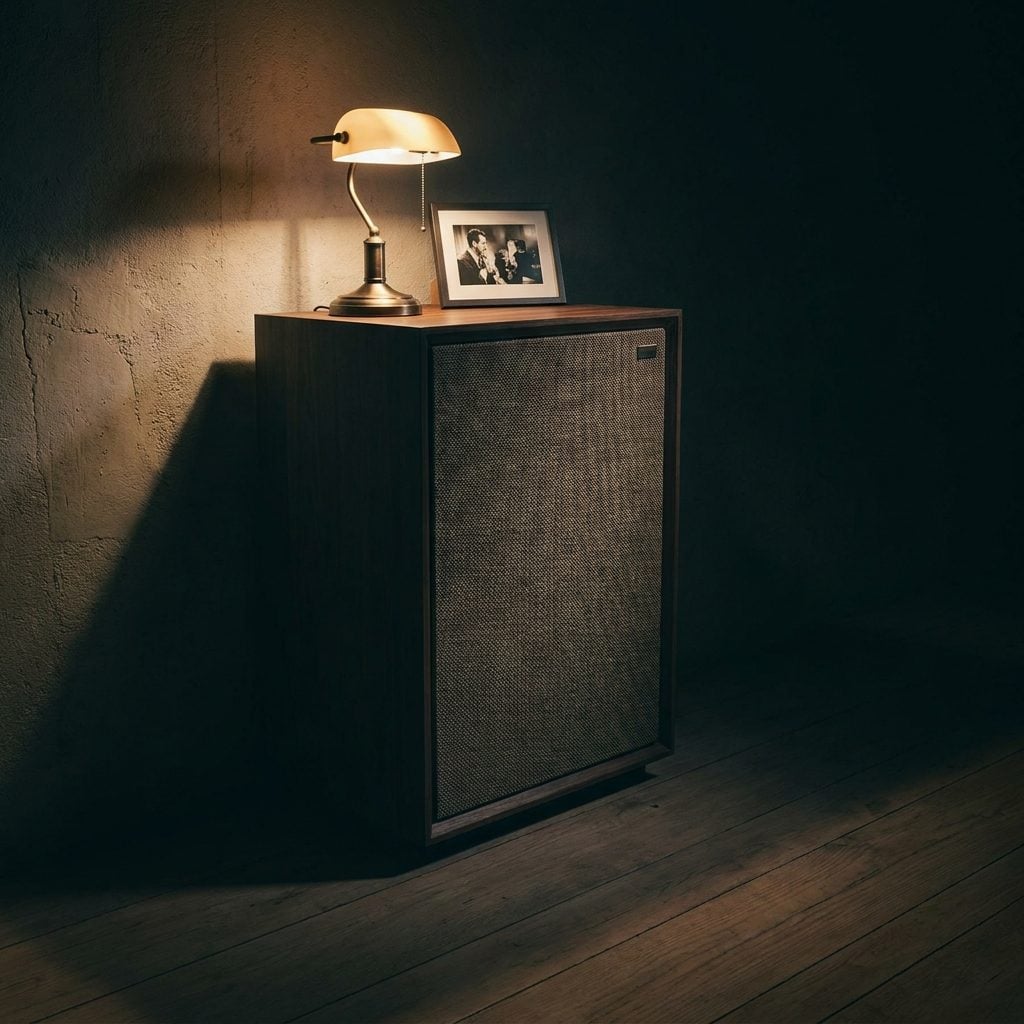
These were almost furniture: tall wood cabinets planted on opposite sides of the room, occasionally pressed into service as stands for lamps, plants, or framed photographs.
Turn them up and music became environmental. Bass traveled through the sofa cushion while conversation worked around it. Headphones certainly existed, but personal listening had not yet become the effortless default it would become with increasingly portable digital devices.
14. The Family Portrait That Watched Every Argument From the Wall
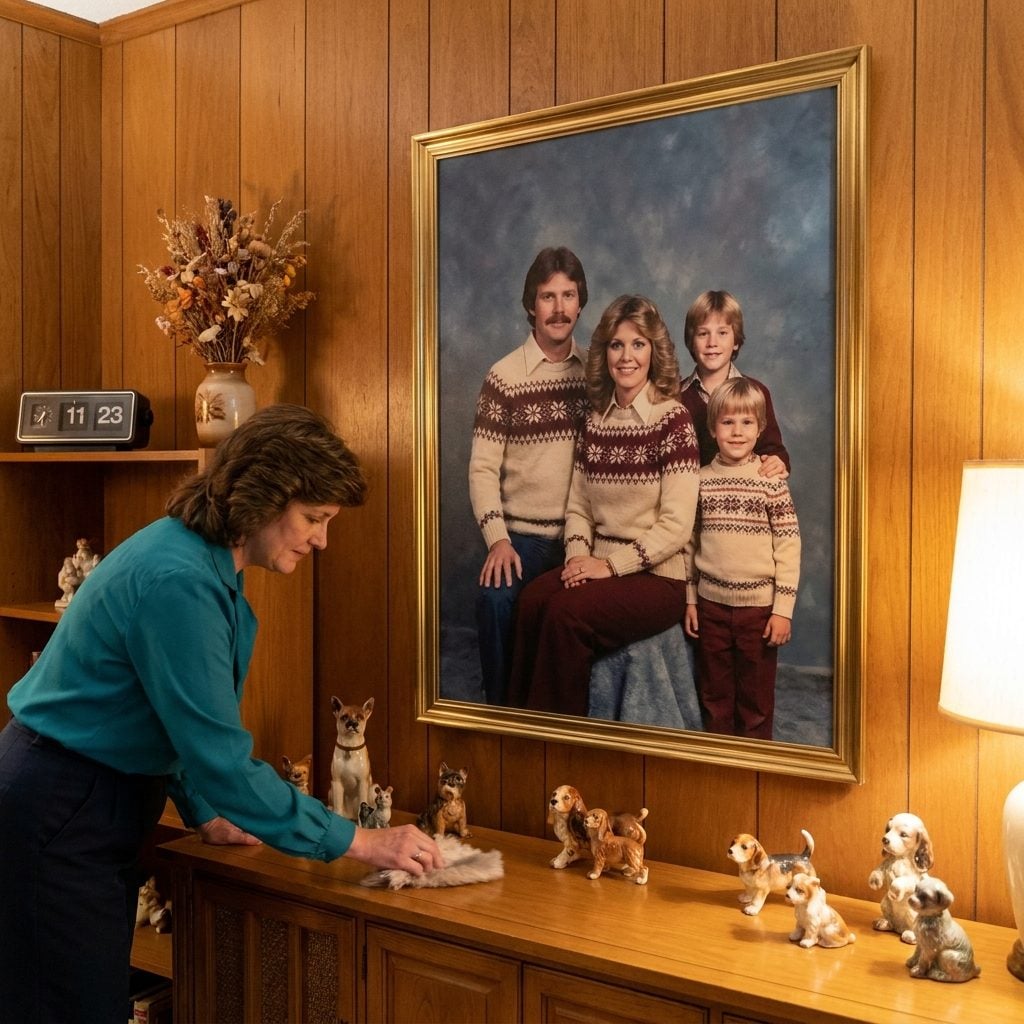
Call it the Olan Mills era: coordinated sweaters, feathered hair, studio lighting, and a painted or mottled backdrop designed to suggest someplace more atmospheric than a shopping-center portrait studio.
The finished photograph occupied serious wall space near the sofa or television. Years later, people stopped seeing the careful pose and started noticing everything around it—the old haircut, the missing tooth, how startlingly young the parents looked.
13. The Cable Box With a Cord and a Household Power Structure
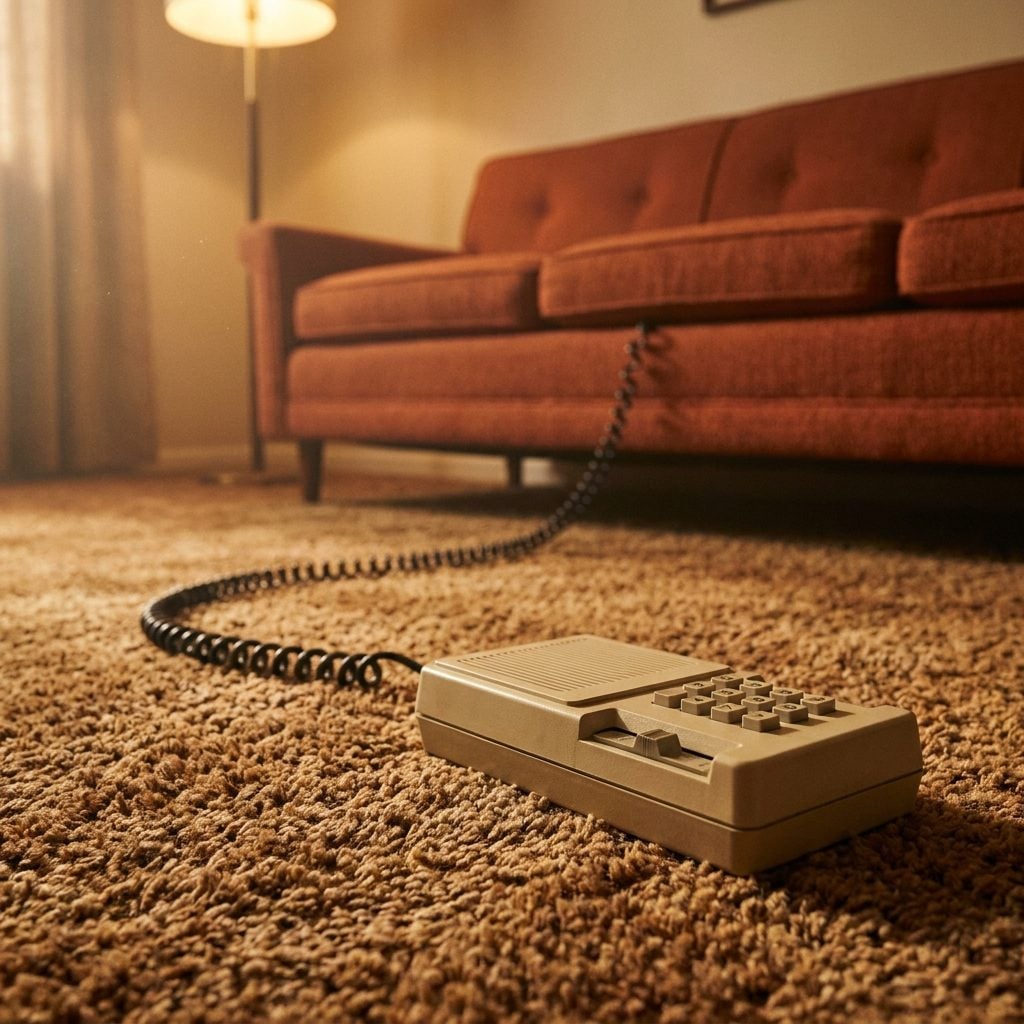
It sat on the carpet or side table at the end of a cord, equipped with a slider or a regiment of chunky push buttons. Whoever possessed it controlled the television, which gave an otherwise unimpressive plastic box astonishing authority.
Channel counts varied enormously by place and year, but nobody was scrolling through an endless streaming catalog. Choosing meant committing long enough for somebody else to complain, and control of the box could change hands several times before the opening credits.
12. The Popcorn Ceiling That Became Scenery During Long Phone Calls
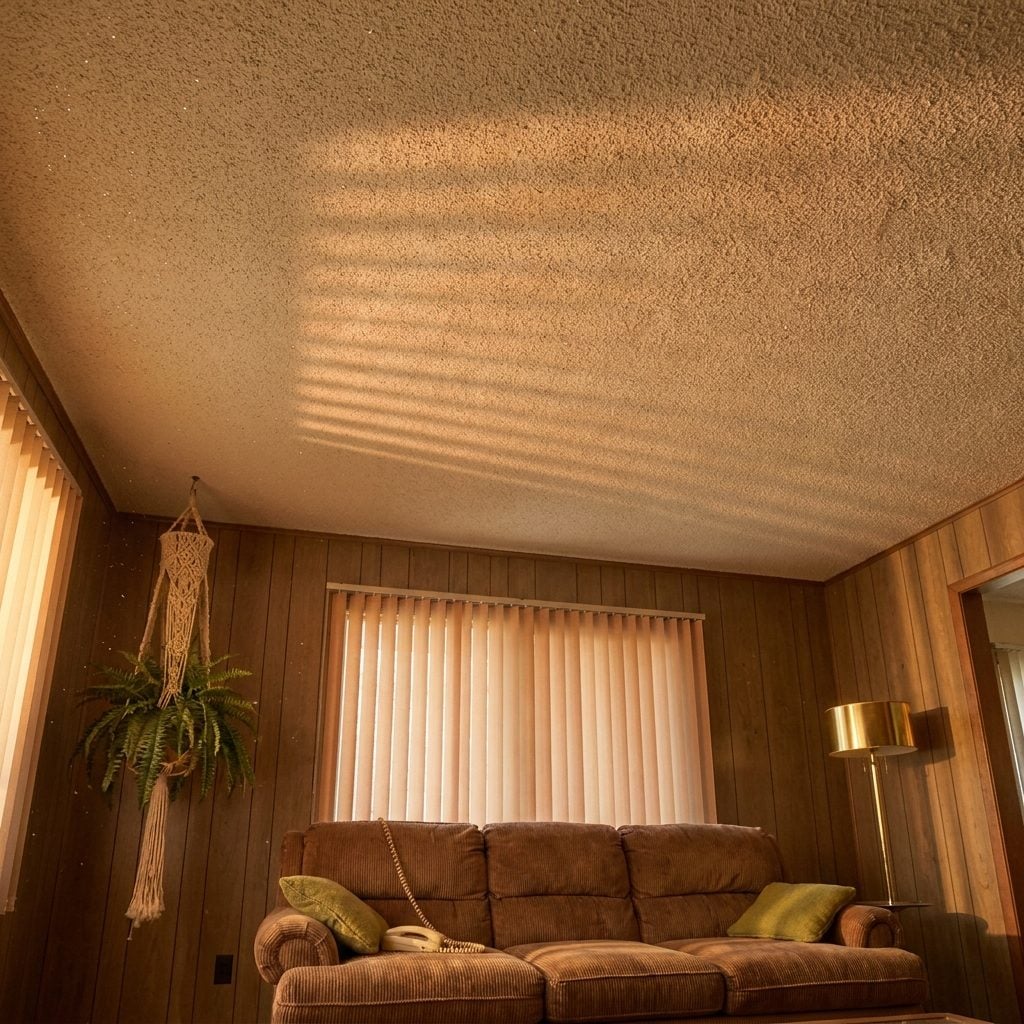
Stretch the telephone cord far enough and eventually you ended up on the floor, feet against the wall, staring upward while the conversation wandered. Suddenly every lump in the ceiling texture became available for inspection.
Acoustic or “popcorn” texture was popular because it could disguise imperfections and provide some sound absorption without a perfectly finished ceiling underneath. It also collected dust and proved miserable to patch invisibly.
11. The Vinyl Cabinet That Doubled as a Family Archive
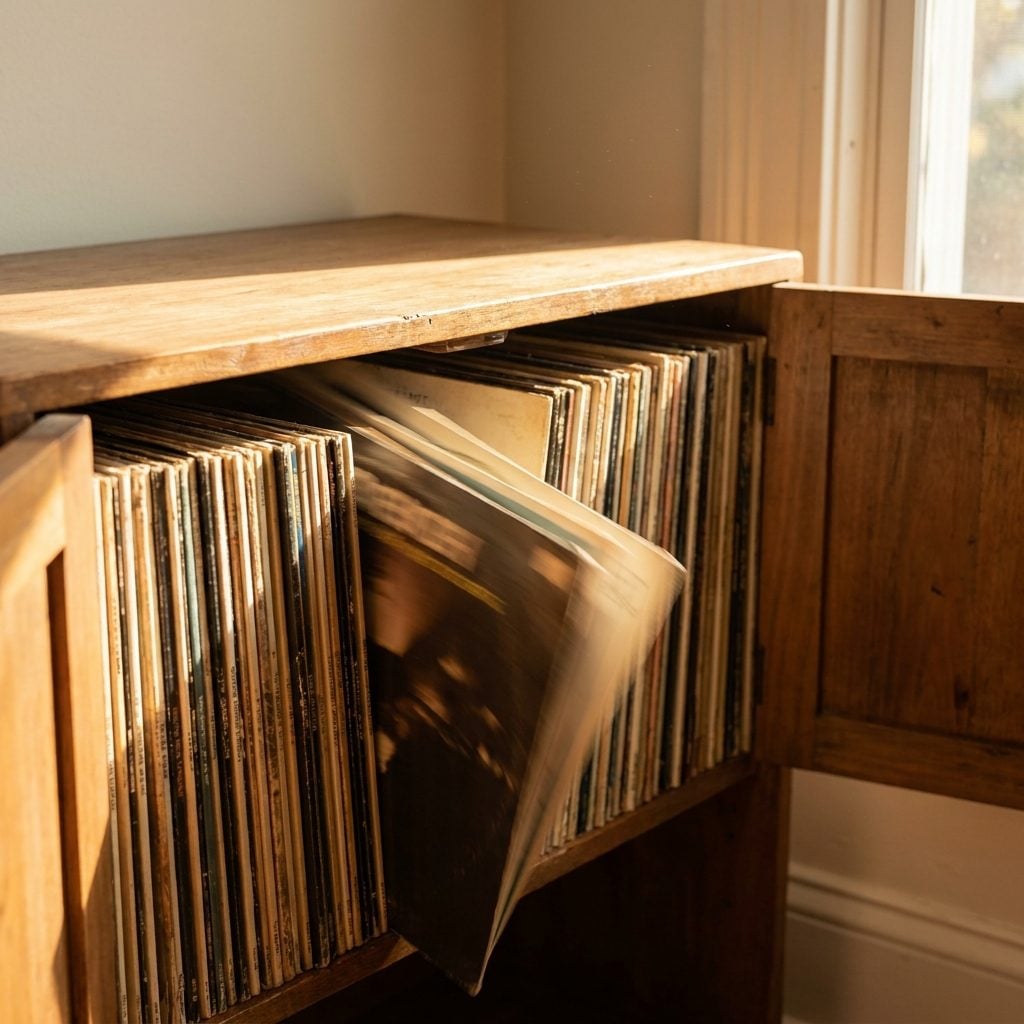
Records stood spine-out in a low cabinet, alphabetized according to a system that usually collapsed after the first three purchases. Running a hand through them produced that soft cardboard thunk-thunk-thunk that announced somebody was about to choose the afternoon’s soundtrack.
The collection was biography disguised as storage: one parent’s records, the other’s records, an older sibling’s questionable phase, the album everybody eventually admitted liking. Skipping tracks was possible, of course, but it required enough effort that entire album sides received a lot more uninterrupted attention.
10. The Beanbag Chair That Turned Sitting Down Into Competition
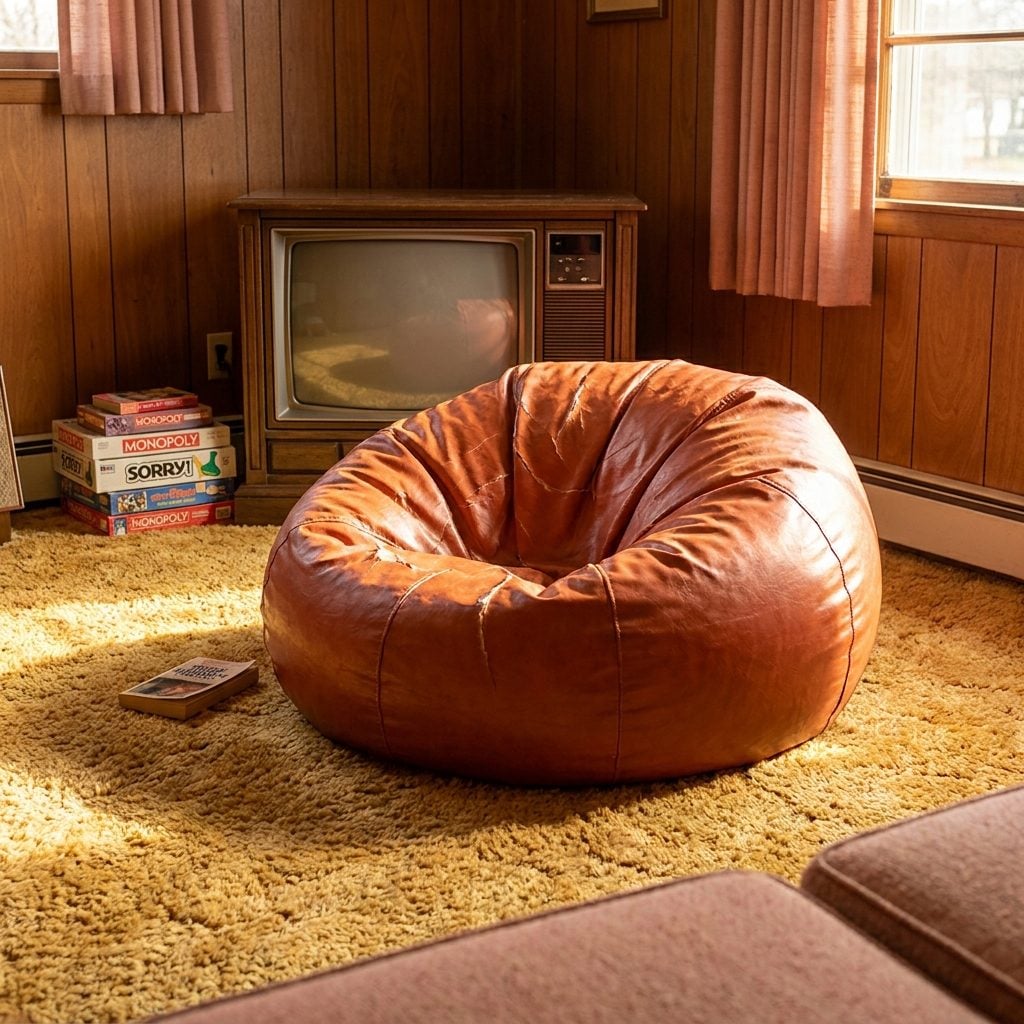
Another 1970s survivor refused to leave quietly. The vinyl beanbag—orange, brown, maybe an alarming shade of green—still occupied plenty of family-room floor space while newer furniture arrived around it.
There was usually more demand than supply. Claim it first or take your chances on the carpet. The filling shifted, the vinyl wheezed, and sooner or later a seam released enough tiny foam beads to haunt the house for months.
9. The Telephone Book and Address Book Waiting Beside the Phone
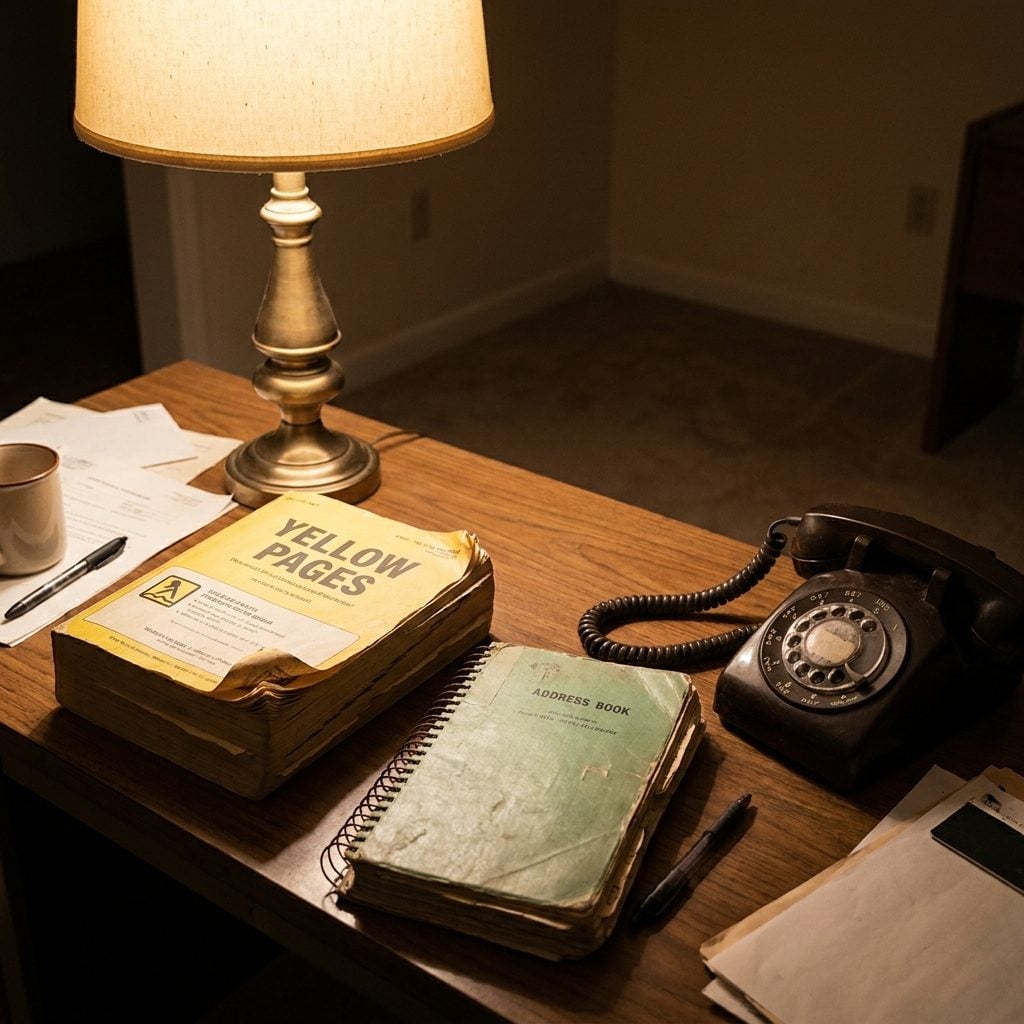
The phone book was a brick of thin pages and tiny print, while the handwritten address book beside it contained the information that actually mattered: relatives, friends, babysitters, the dentist, and somebody whose old number had been crossed out twice.
Looking something up often became collaborative. One person searched while another supplied spelling, neighborhood, or the certainty that “it’s under his wife’s name.” Reaching the outside world required a small information station right there in the shared room.
8. The Nintendo That Made Dying on Screen a Household Event
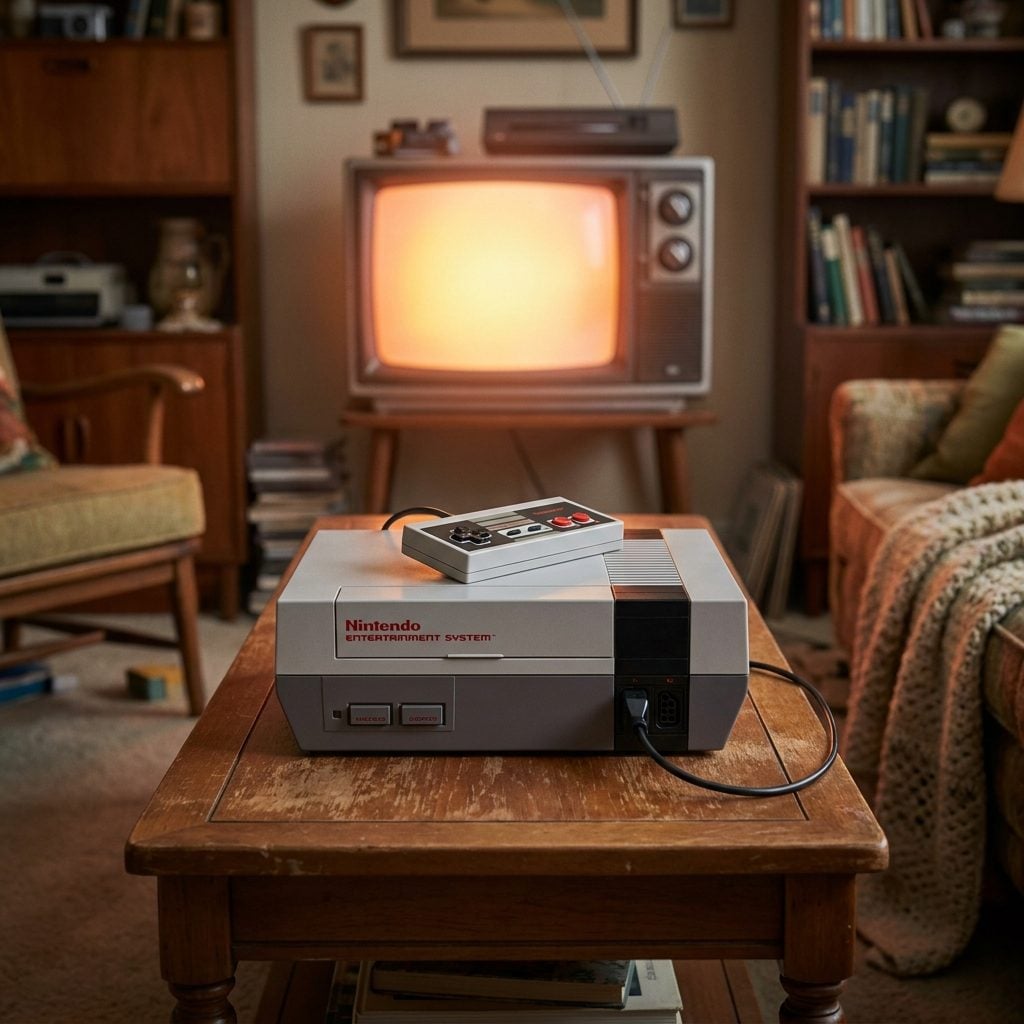
The gray box raised the stakes. Games became longer and more elaborate, with levels, passwords in many titles, and—on some cartridges—battery-backed saving. That meant one player’s turn could become suspiciously elastic.
House rules appeared quickly. Lose a life, hand it over. Finish the level, hand it over. Stop claiming you “almost had it.” The waiting players didn’t disappear; they coached, heckled, memorized patterns, and waited for the controller to become available.
One television, one active controller, four opinions. The spectators were part of the game whether the cartridge acknowledged them or not.
7. The Wet Bar That Made the Basement Feel Slightly More Important
🔥 Would you like to save this?
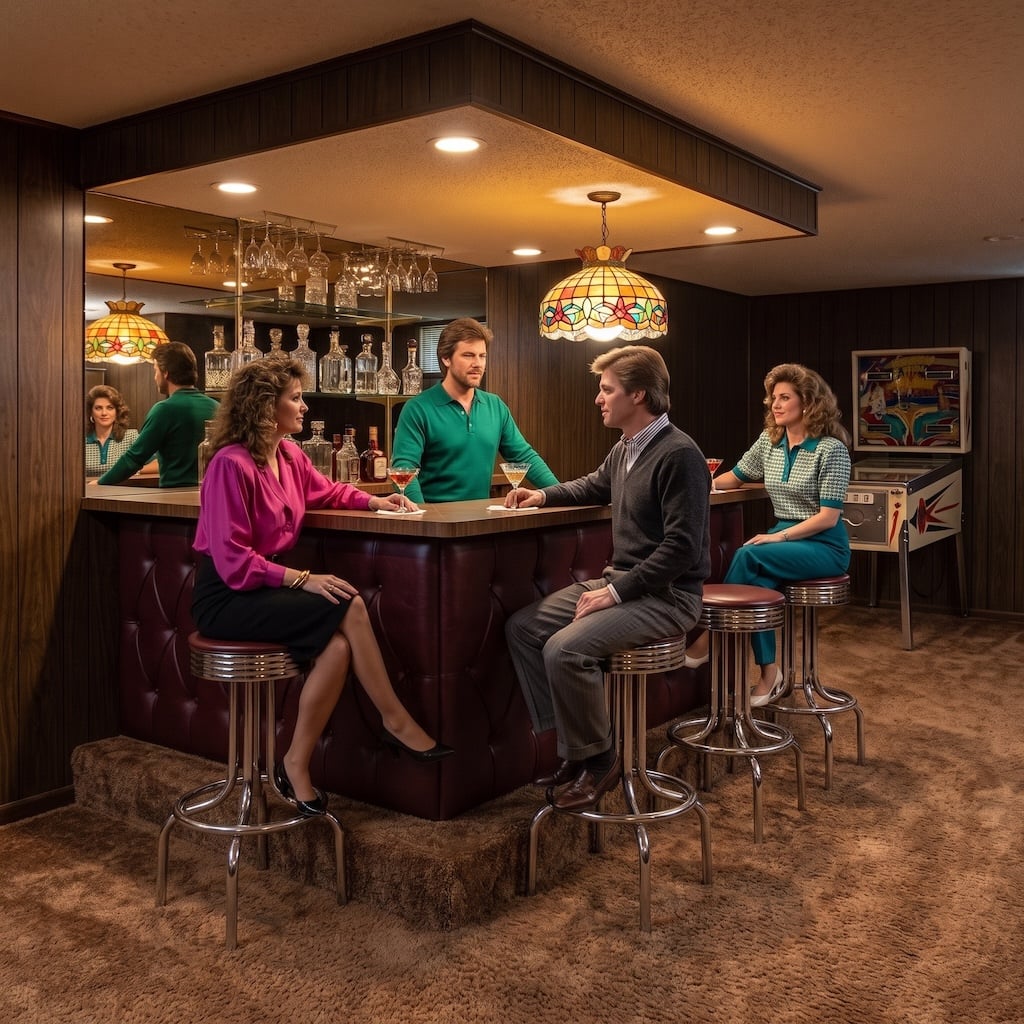
Tufted vinyl fronts, chrome stools, mirrored shelving, and a collection of bottles multiplied visually by reflection—the home wet bar could make a finished basement feel like it had acquired its own little hospitality department.
Adults gathered at it while kids occupied everything around them. Later, the same counter might hold a blender, snacks, or whatever equipment the household accumulated. Plenty of modern game room ideas still use the same basic move: give the room a place where people can linger without formally sitting down.
6. The Cassette Tapes That Lived in Permanent Mild Chaos
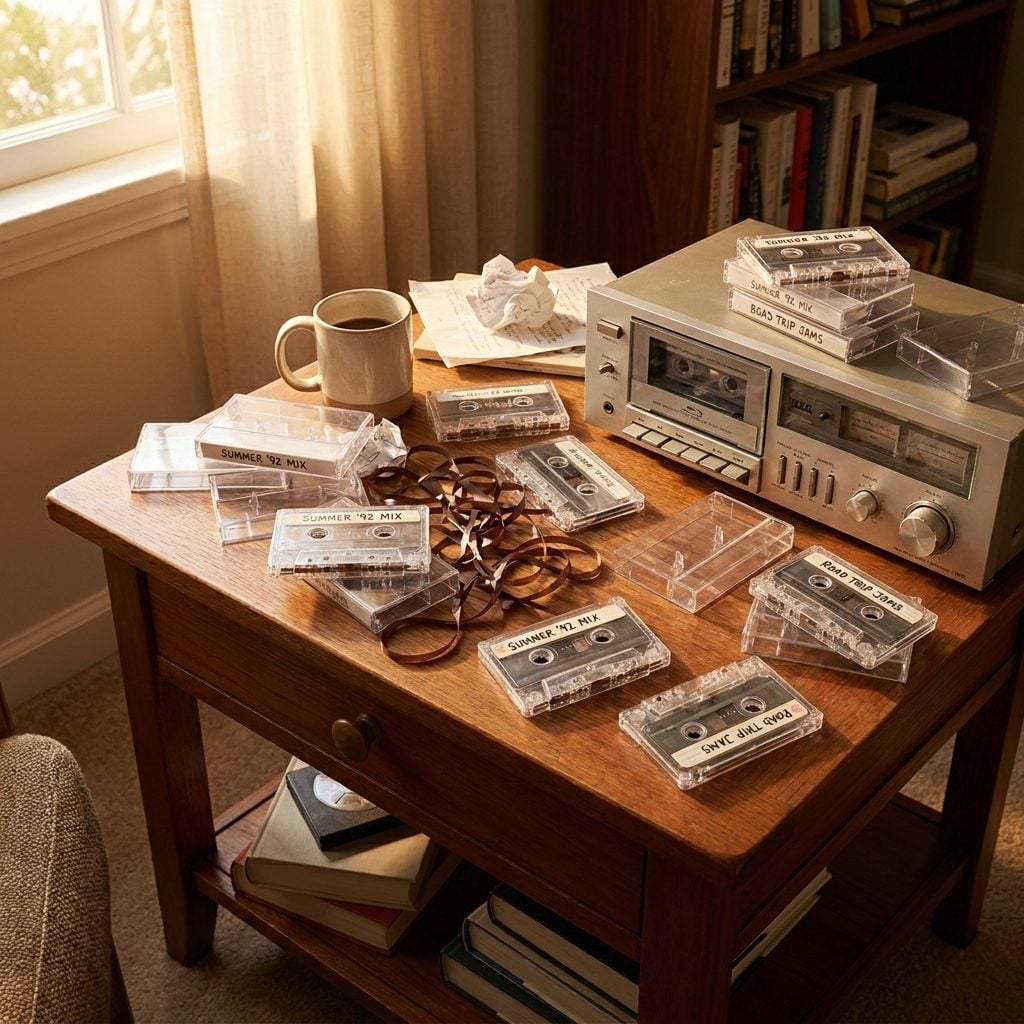
One cassette was in the deck, two were on the shelf, three cases were empty, and nobody could explain where the tapes belonging to those cases had gone. This was normal.
Making a mixtape was not. That required attention: hovering near the radio, waiting for the song, trying to hit record before the opening note, and silently begging the DJ not to talk over the intro. A playlist can be assembled in minutes. A cassette recorded its maker’s patience right into the gaps between songs.
5. The World Book Set That Made the Shelf Look Smarter Than Everybody
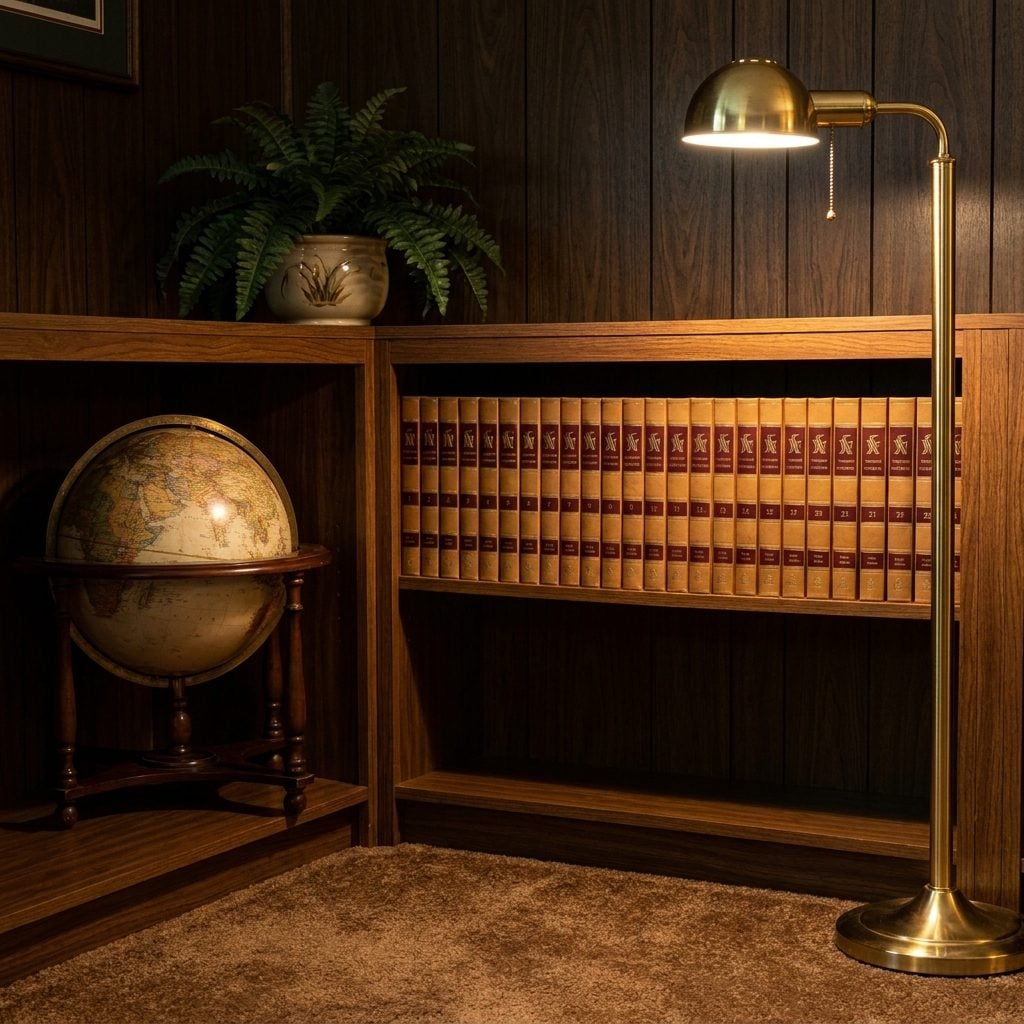
Twenty-some matching volumes occupied enough shelf space to look important even when nobody had opened Volume H in three years. Sets such as World Book were often sold directly to families, sometimes through sales representatives and installment arrangements.
Homework eventually forced them into service. Before an online search could turn up forty thousand answers in half a second, the answer—or at least a reasonably authoritative version of it—might be sitting ten feet from the couch, smelling faintly of glue and paper.
4. The Video-Game Cartridges That Had to Be Worth Playing Again
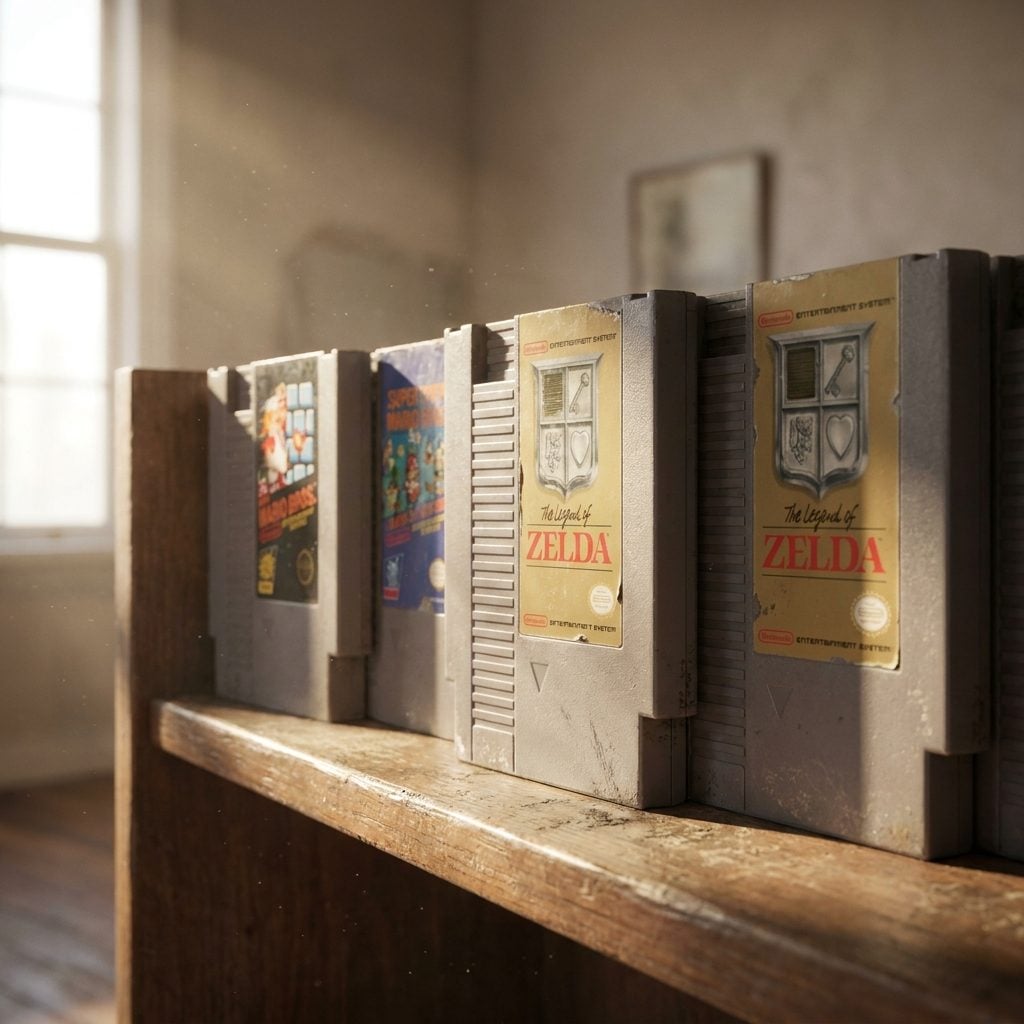
The collection was finite enough to memorize. A handful of cartridges on a shelf could represent months of birthdays, allowance, rentals, trades, and negotiations with siblings.
Scarcity gave games strange longevity. People replayed levels, discovered shortcuts, swapped cartridges with friends, and argued over which one deserved another Friday night. Blowing on the connector became its own famously persistent ritual, whether or not it deserved the technical faith placed in it.
3. The Wall-to-Wall Shag That Kept Kids at Floor Level
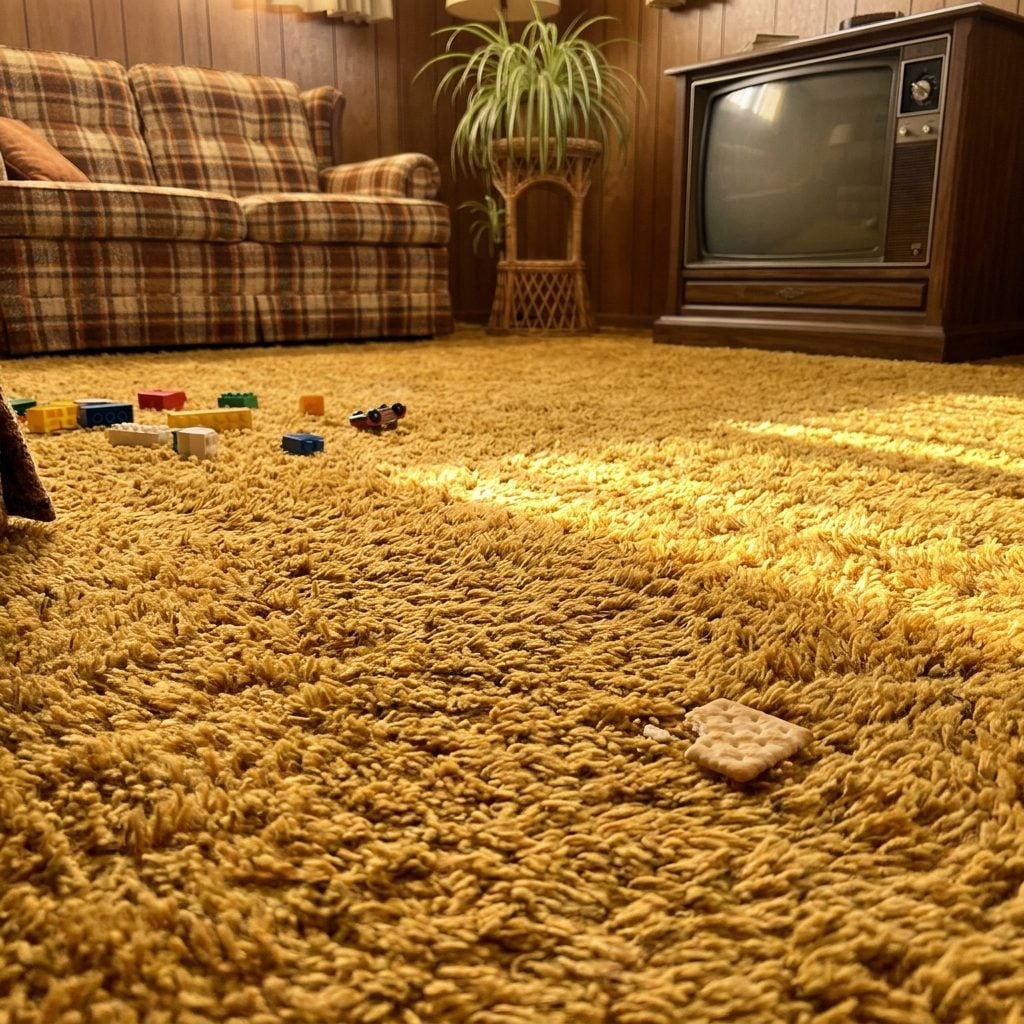
Another decorating decision carried forward from the previous decade: deep-pile carpet in harvest gold, brown, orange, avocado, or some shade that had once seemed sensible under showroom lighting.
Kids did not care whether it was current. They sat on it, wrestled on it, built Lego cities across it, and lost enough cereal inside the pile to support future archaeology. A soft floor effectively enlarged the seating area, turning everything between sofa and television into usable territory.
2. The Giant Sectional That Finally Had Room for Everybody
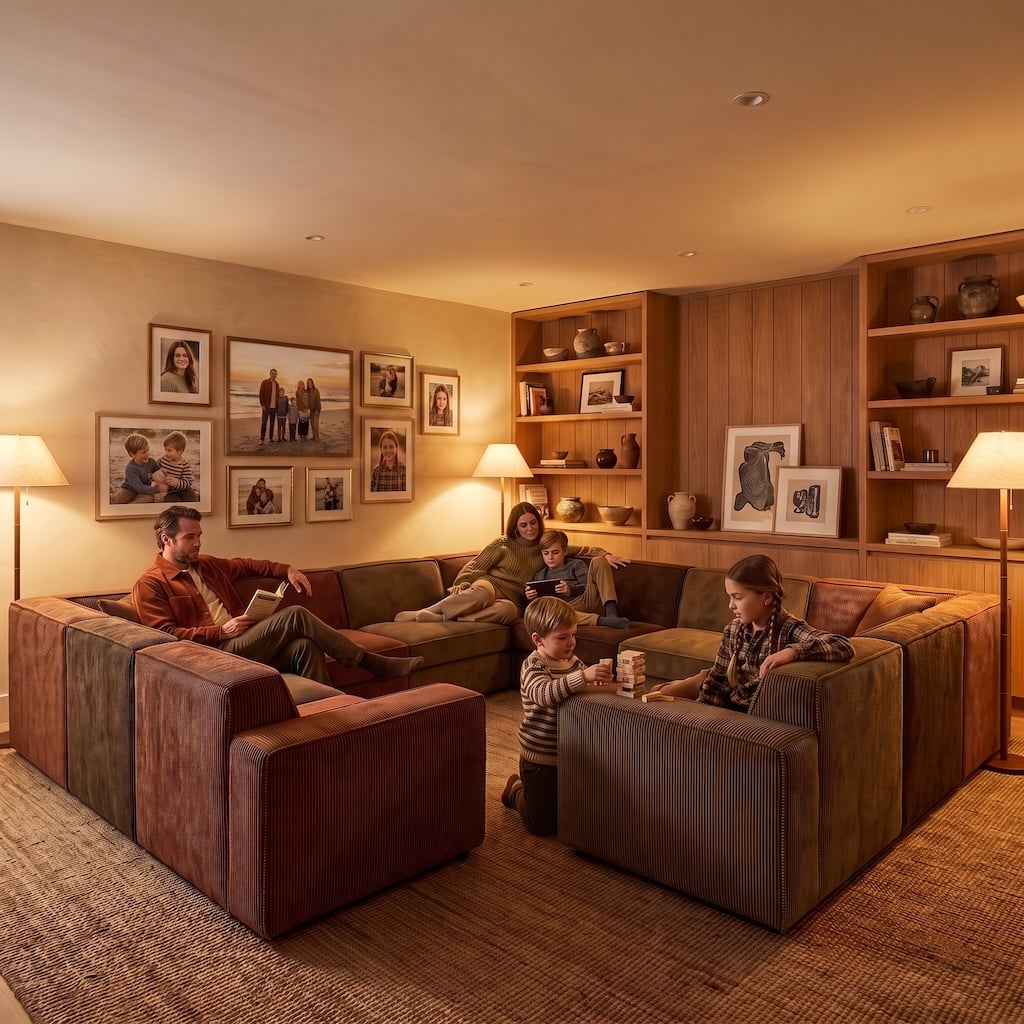
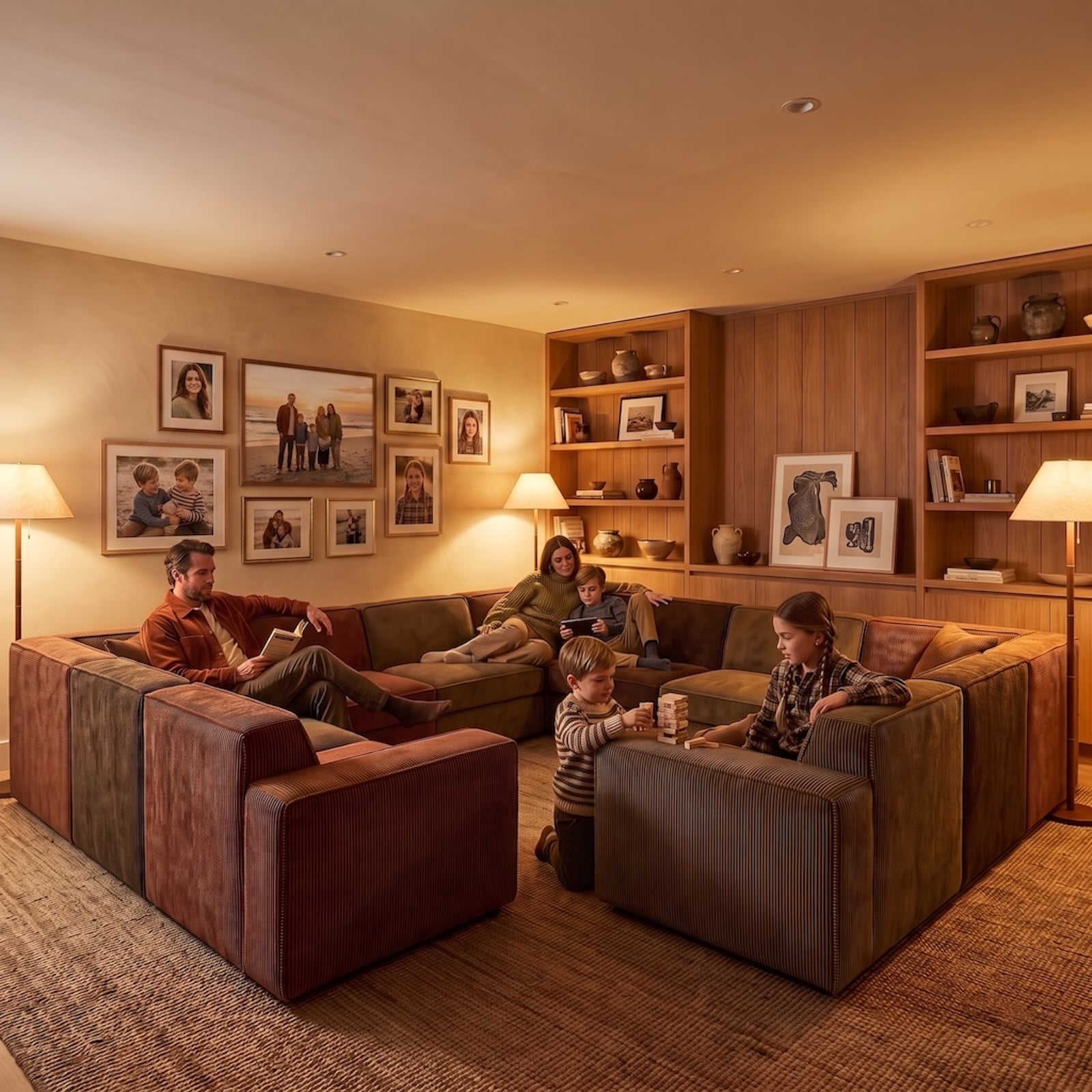
The sectional wrapped around a corner and solved the simplest problem in the room: where do you put five people without sending two of them somewhere else? There was room to sit upright, stretch out, lean sideways, or surrender the good end to Grandma without abandoning the group.
Its L-shape also changed how people faced one another. Not every seat pointed straight at the television; some naturally turned inward toward the rest of the sofa. Four people could be reading, talking, watching, and playing something while still occupying one loose conversation.
1. The Heavy Wooden Coffee Table Where the Household Left Its Life
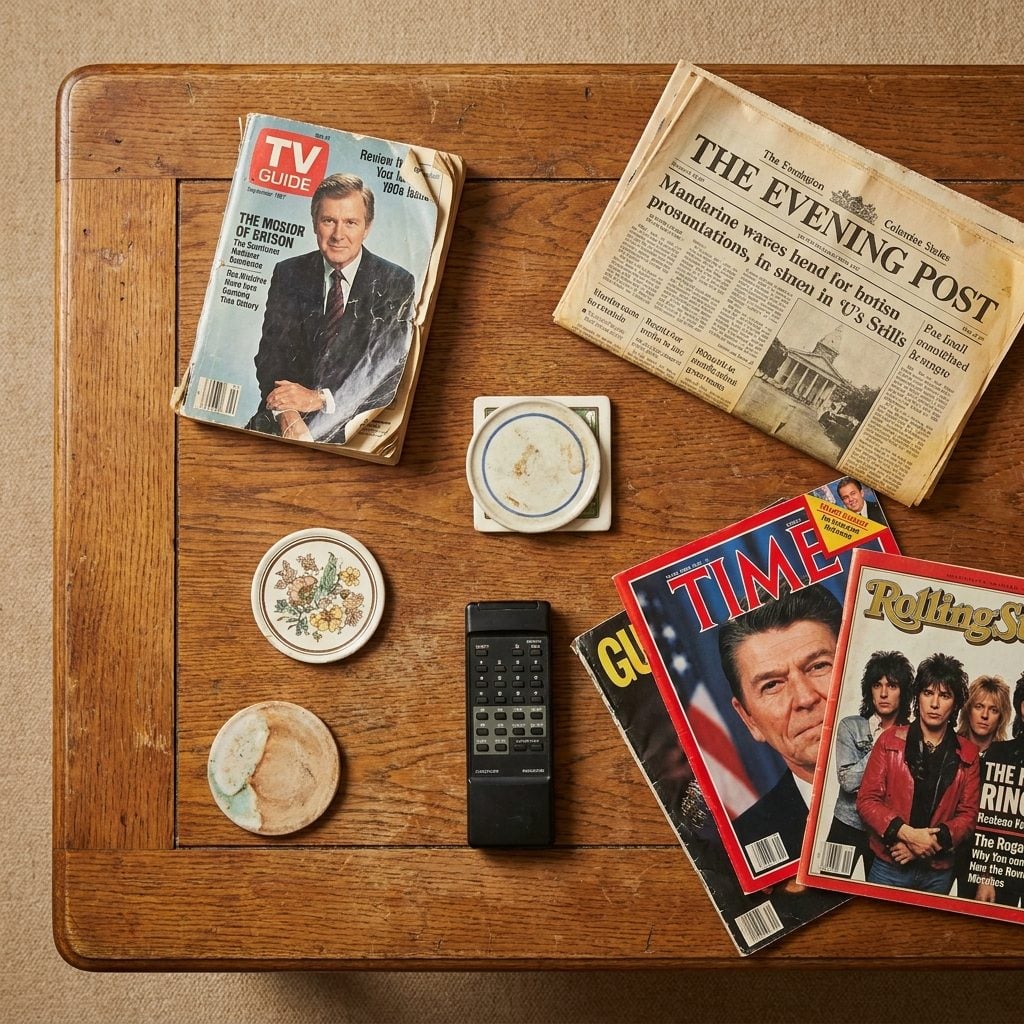
The coffee table accumulated evidence. A TV guide folded open to Thursday. Playing cards. Newspaper sections. A bowl with three pretzels left in it. Coasters nobody used. Somebody’s drawing. A cassette case whose cassette was nowhere nearby.
That mess was part of the mechanism. Put a shared surface low in the middle of a room and people start reaching across it: for cards, snacks, magazines, pencils, game pieces, the remote, somebody else’s drink by mistake. Good family room design still depends on some version of that idea.
Maybe that’s what the old family room understood better than its reputation for shag, paneling, and giant electronics suggests. Nobody had to announce that it was time to spend quality time together. The room simply kept putting the useful things—and therefore the people—in one place.