🔥 Would you like to save this?
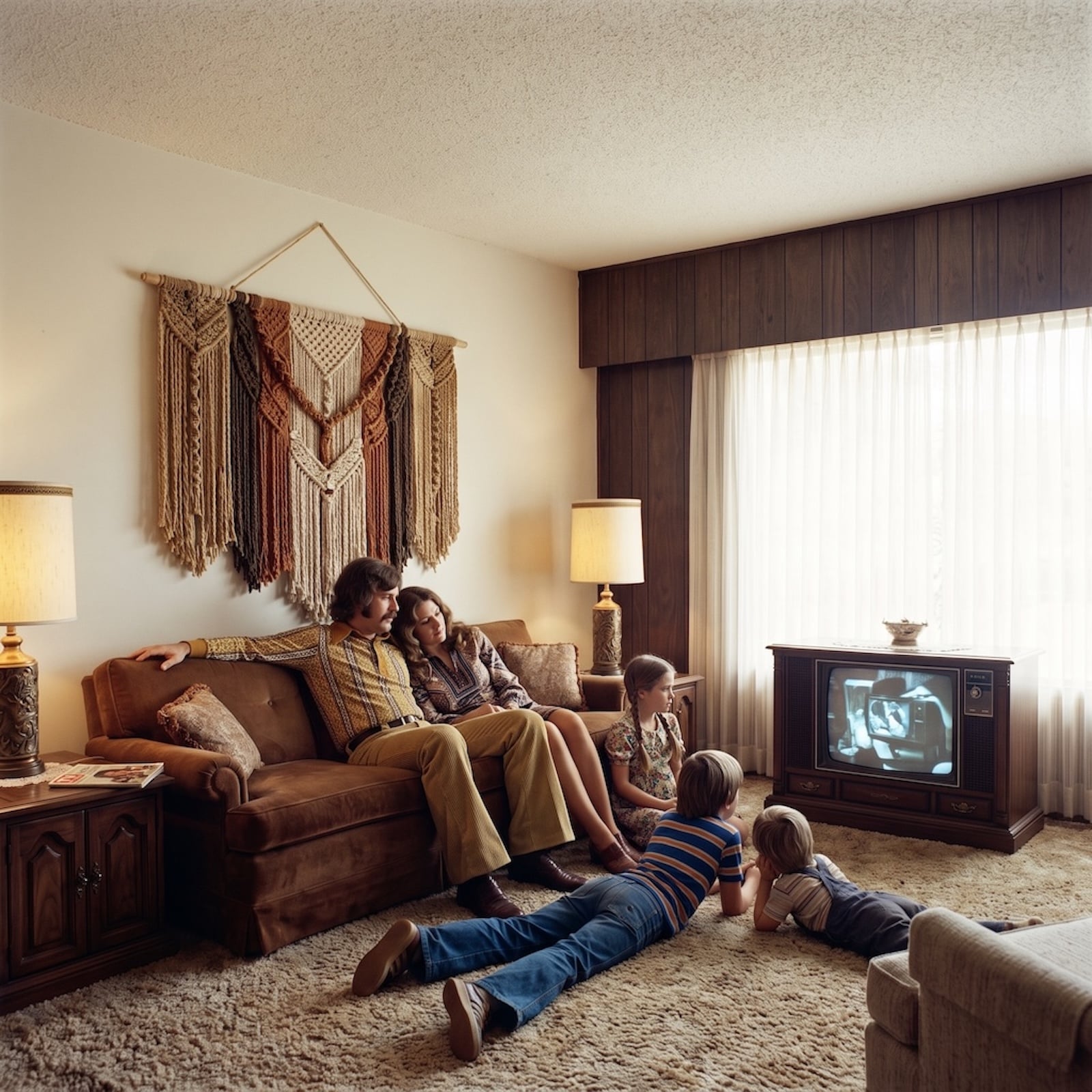
The plastic runner going down the middle of the carpet. The smell of Lemon Pledge on the coffee table you weren’t allowed to put your feet on. Somewhere a console stereo was warming up, and the good couch sat under a shaft of afternoon light nobody was permitted to sit in until company arrived.
A nice living room in 1978 had rules, textures, and a color scheme that felt like autumn indoors. The rooms below bring back the furniture, the rituals, and the peculiar little objects that once made a living room feel properly finished.
In order to come up with the very specific design ideas, we create most designs with the assistance of state-of-the-art AI interior design software. Also, assume links that take you off the site are affiliate links such as links to Amazon. this means we may earn a commission if you buy something.
36. The Coordinated Sofa-and-Loveseat Suite
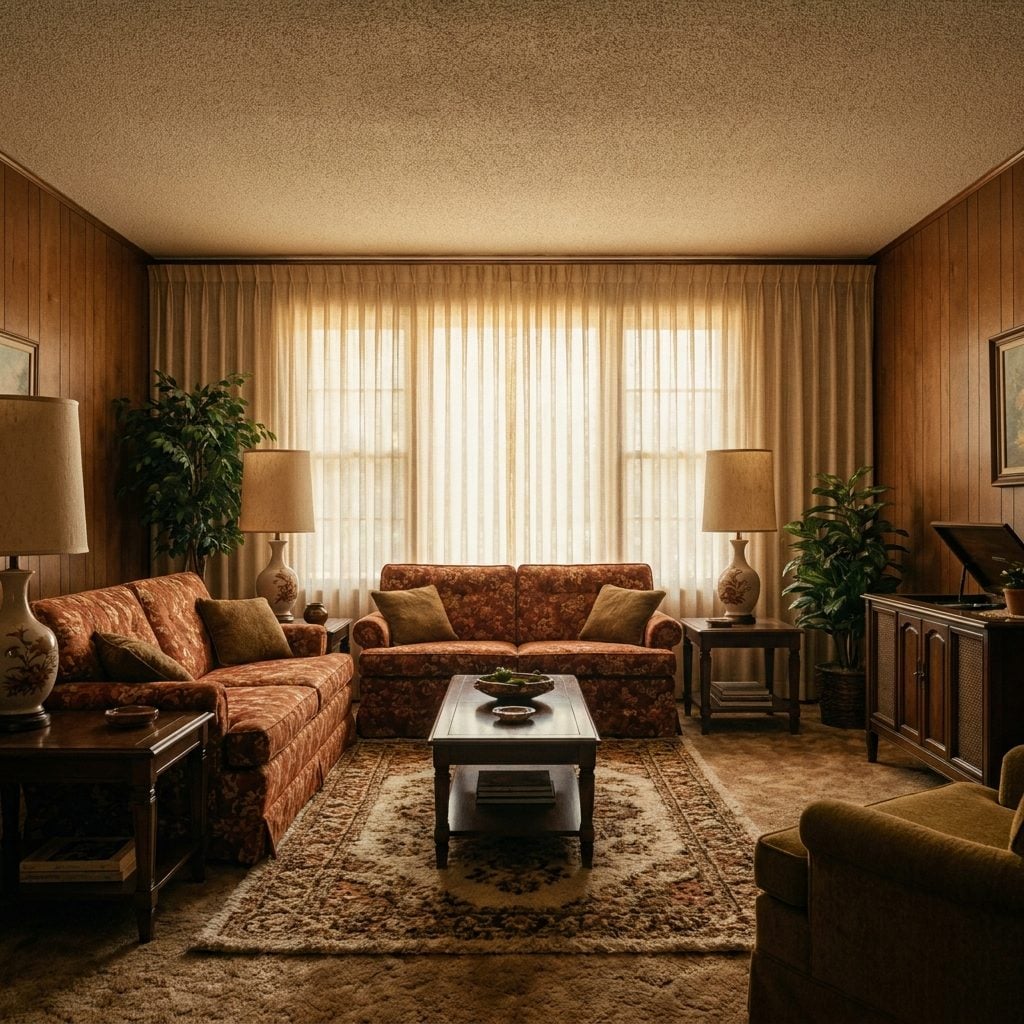
You bought the couch, you bought the loveseat, and heaven help you if they didn’t come from the same fabric bolt. The 1978 living room ran on the buddy system. A sofa without its smaller twin looked lonely, unfinished, like someone had left before the photo.
Matching fabric across two substantial pieces gave the room one clear visual identity before a lamp, rug, or drape entered the argument. Everything agreed with everything else, which was precisely the point.
35. Earth-Tone Upholstery in Rust, Brown, Gold, and Avocado
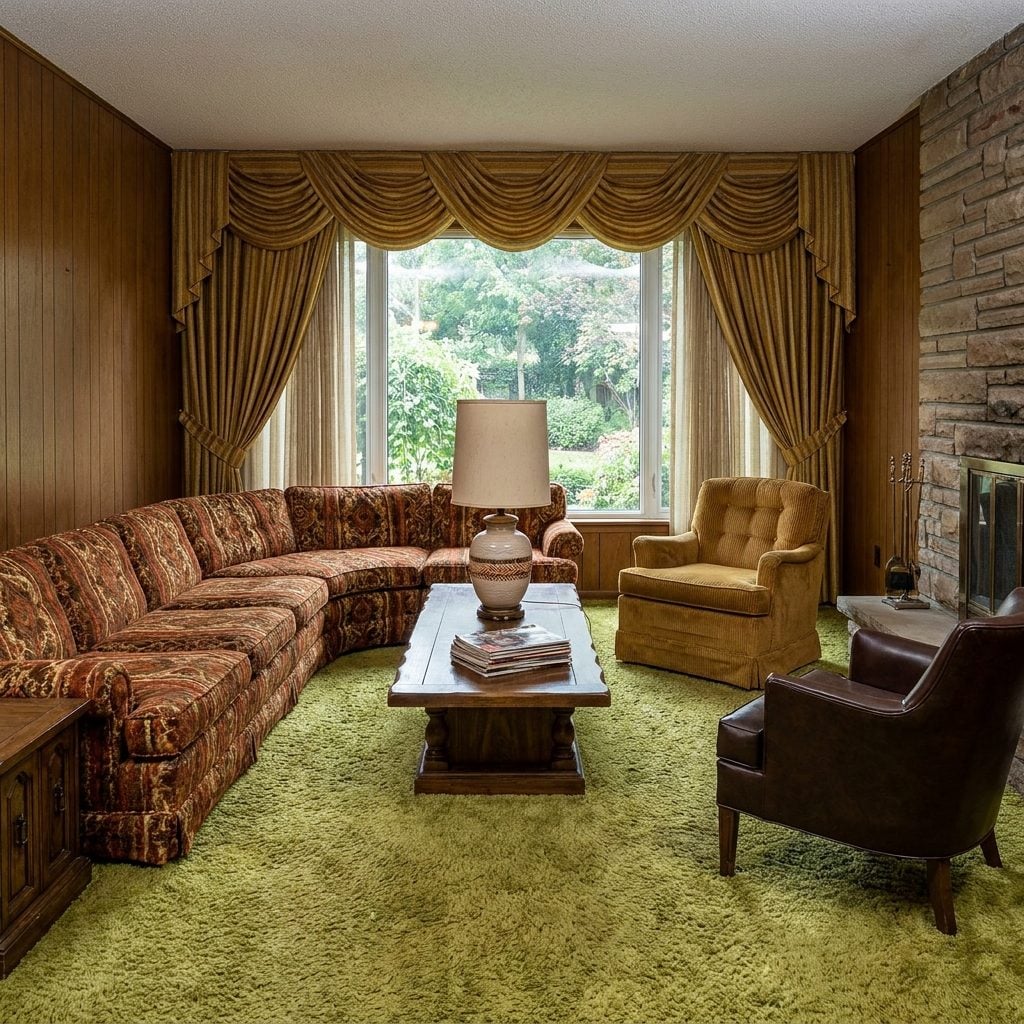
Somebody looked at a forest floor in October and thought, that, but for the sofa. The 1978 palette lived in rust, chocolate, harvest gold, and avocado, colors that seemed borrowed from a bag of trail mix.
They were forgiving colors for a room that actually got used. Dirt hid. Coffee spills negotiated rather than announced themselves. A family could spend years on a mustard-gold couch and the upholstery kept its secrets.
34. Oversized Floral-Print Sofas
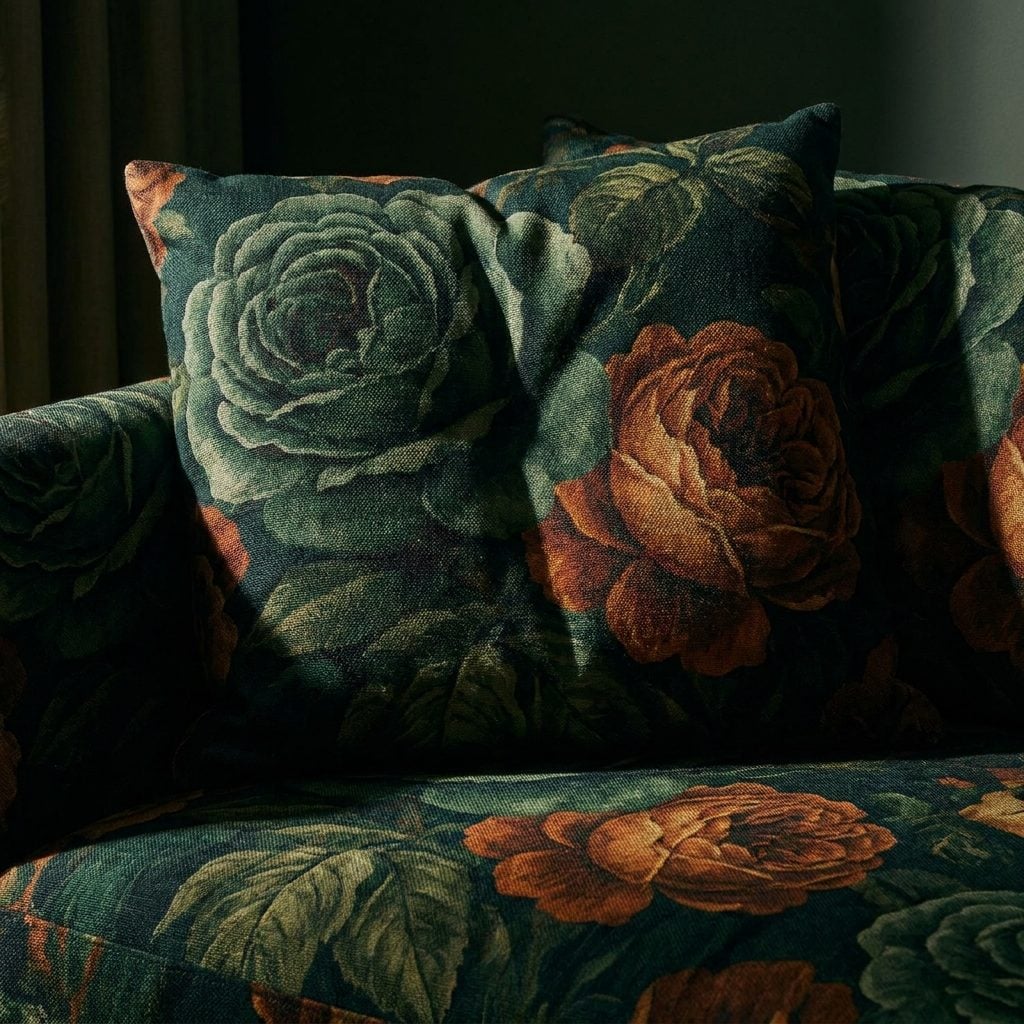
These couches did not whisper. Cabbage-sized blooms in rust and gold sprawled across every cushion, so many flowers you couldn’t find a plain spot to rest on if you tried.
That visual chaos had one practical advantage: a stain could disappear into it. Grape juice, ballpoint pen, the mystery mark nobody claimed. A busy floral was camouflage with armrests.
33. Plaid Upholstered Sofas and Chairs
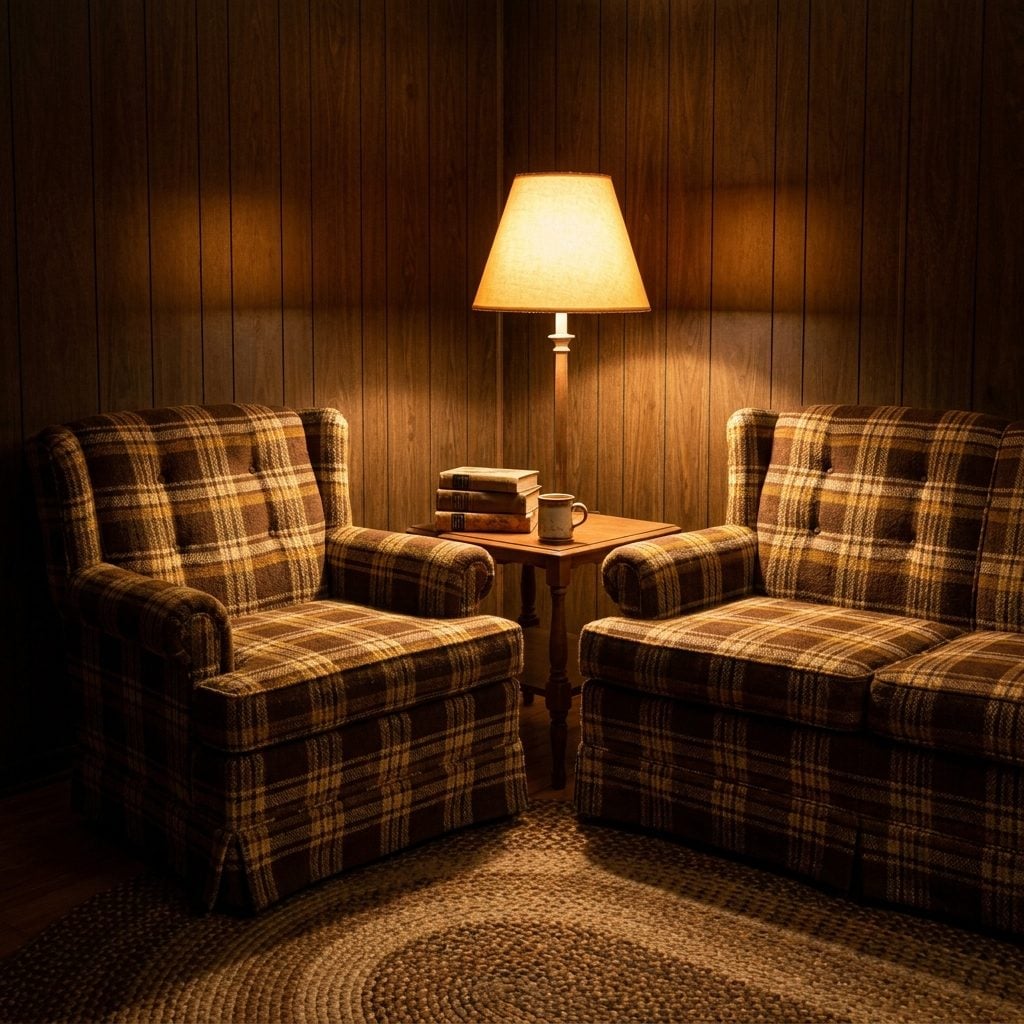
Plaid escaped the flannel shirt and landed on the furniture, and frankly it looked comfortable there. A brown-and-gold plaid sofa gave a den the feeling of a lodge you never actually visited but somehow missed.
Unlike sprawling florals, the repeated grid made the upholstery feel organized even when the pattern was busy. Plaid was earth-tone decorating with sharper elbows.
A brown-and-gold plaid sofa gave a den the feeling of a lodge you never actually visited.
32. Crushed-Velvet Accent Chairs
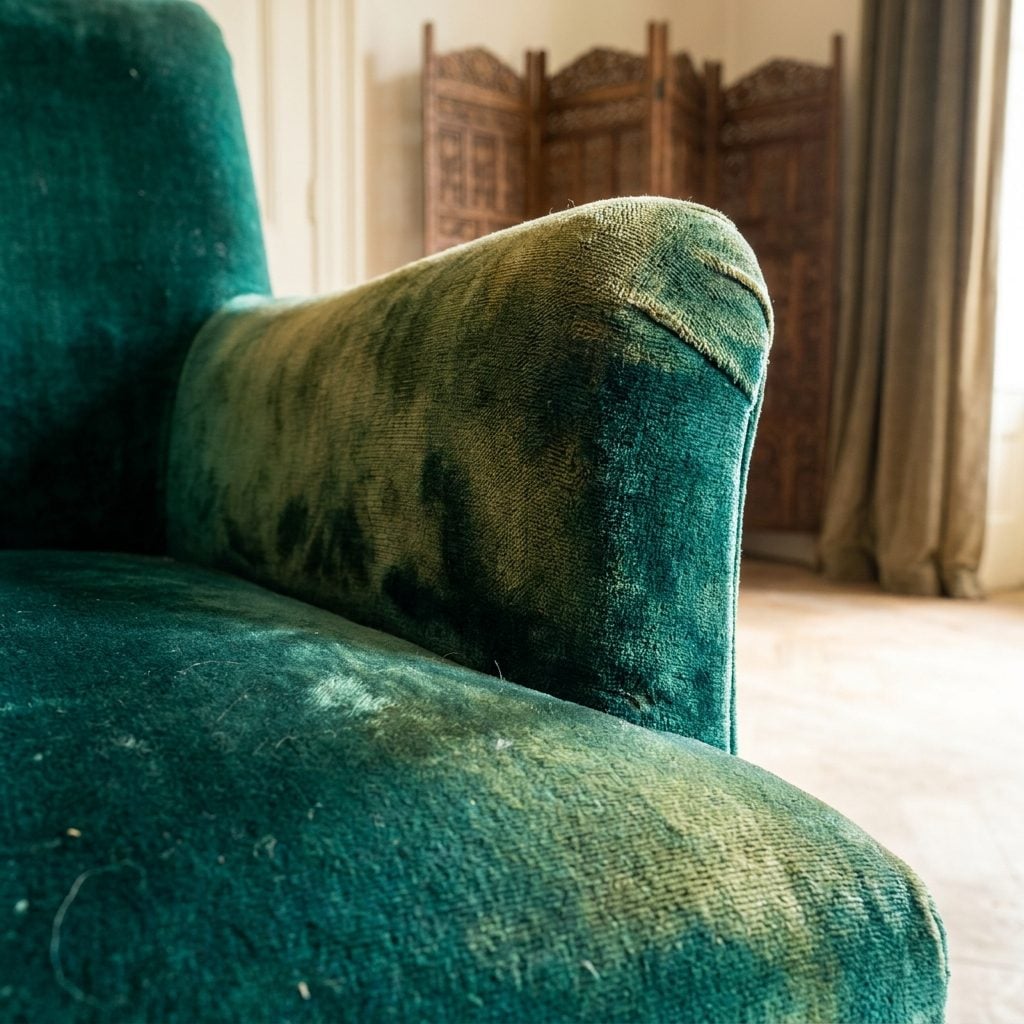
Run your hand across it one way and it went dark; the other way and it lit up. Crushed velvet was the fanciest thing in the room and it knew it.
Usually there was just one, parked in a corner in burgundy or bottle green, the chair reserved for the guest you wanted to impress. Children understood on instinct not to eat near it.
31. The La-Z-Boy-Style Recliner
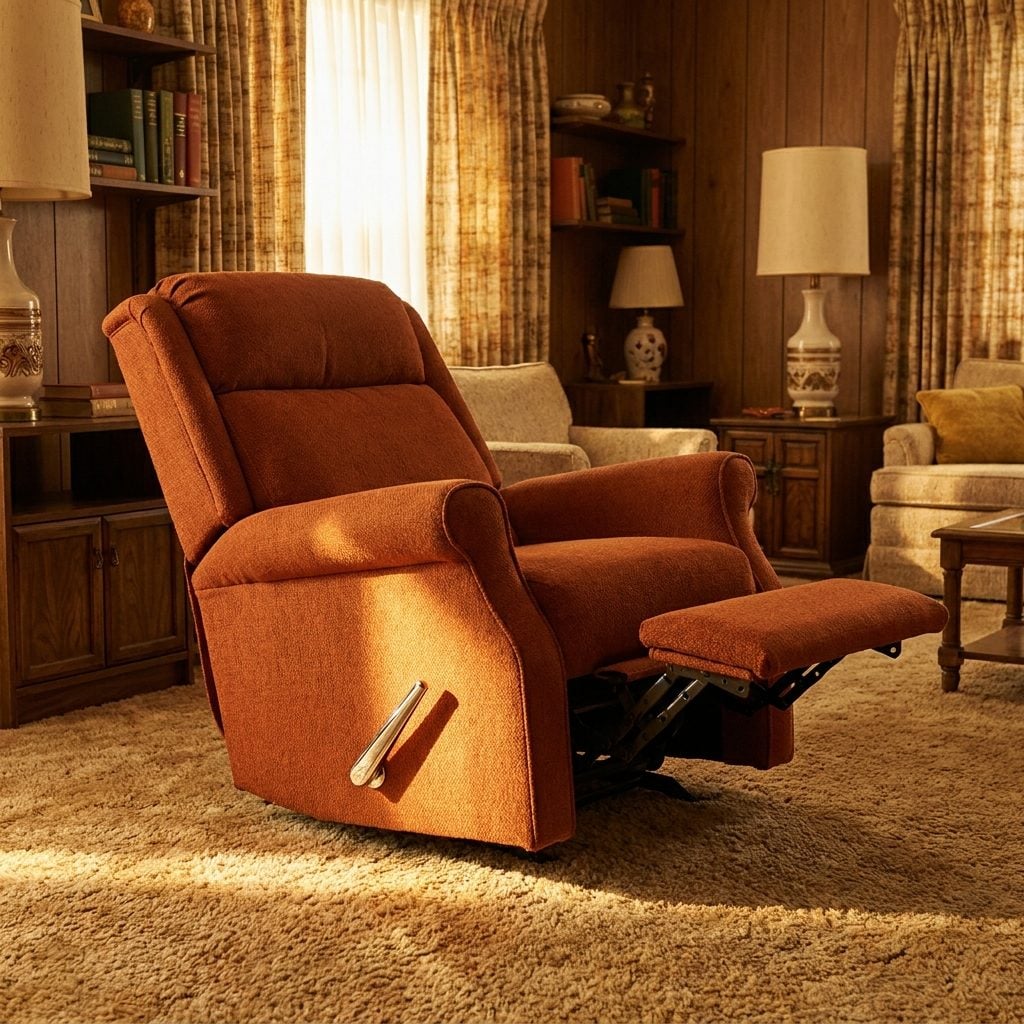
The lever. That heavy metal lever on the side that you yanked, and the whole chair kicked back with a clunk you could feel through the floor. In plenty of houses, one recliner belonged so completely to one person that nobody needed to discuss it.
Dad’s chair became Dad’s chair the way a river finds its path. The brown vinyl held the shape of him. The armrests wore smooth. You could sit there while he was out, but the sound of a car in the driveway ended the experiment.
30. Dark-Wood Mediterranean-Style Furniture
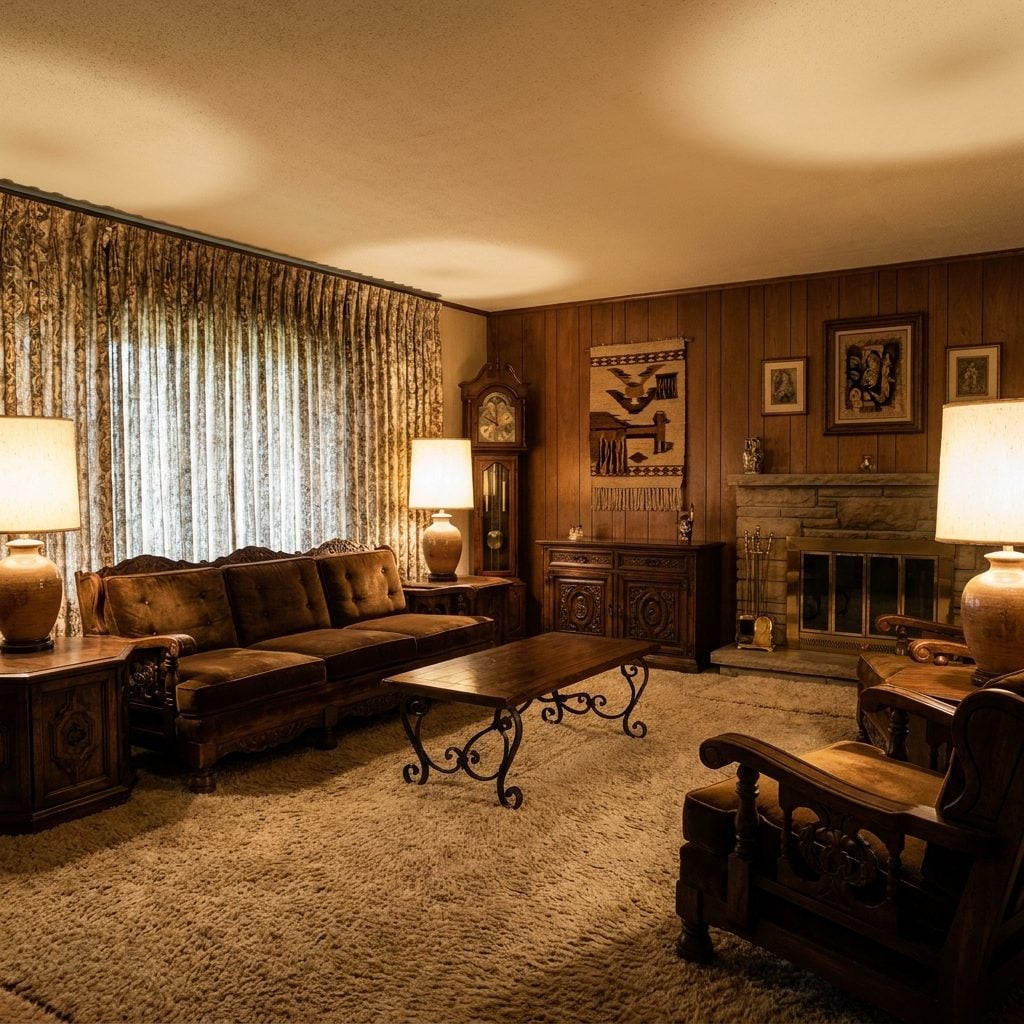
Everything was heavy. Dark, near-black wood, carved edges, wrought-iron pulls that looked as if they had come off a castle door. This was furniture built to survive a siege, and it weighed accordingly.
Spanish- and Mediterranean-inspired furniture was a major 1970s look, with ornate cabinets, turned legs, iron hardware, and deep pecan or walnut-toned finishes. Pair it with a dark family room palette and even an ordinary Tuesday acquired gravity. Moving day was less romantic.
29. Chunky Carved-Wood Coffee Tables
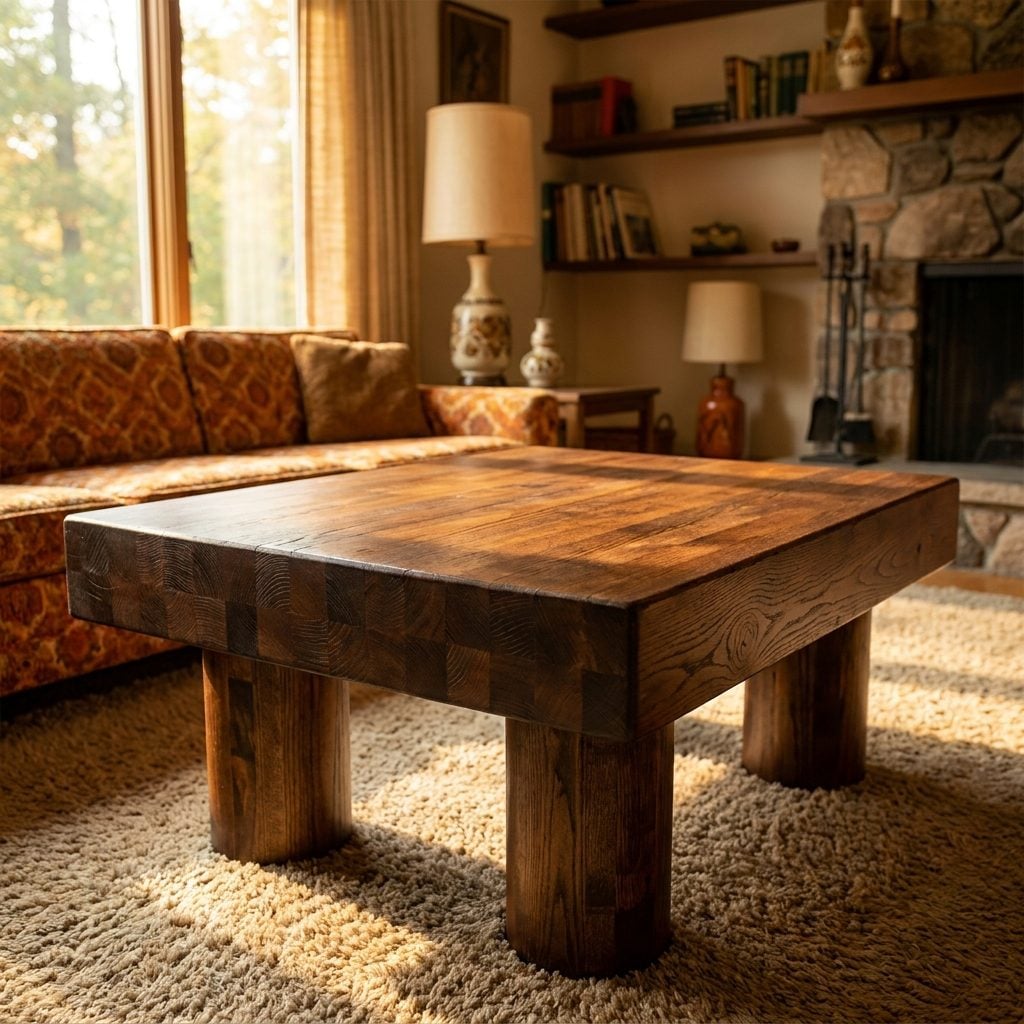
This table did not move. Solid-looking wood, thick as a butcher block, with legs a toddler could headbutt at full speed and lose the fight. It anchored the room like something dropped from a crane.
The top collected rings from mugs set down before coasters became a moral issue. Underneath sat magazines nobody read and the candy dish full of strawberry hard candies in crinkly wrappers. Every single one of them.
28. Matching End Tables on Either Side of the Sofa
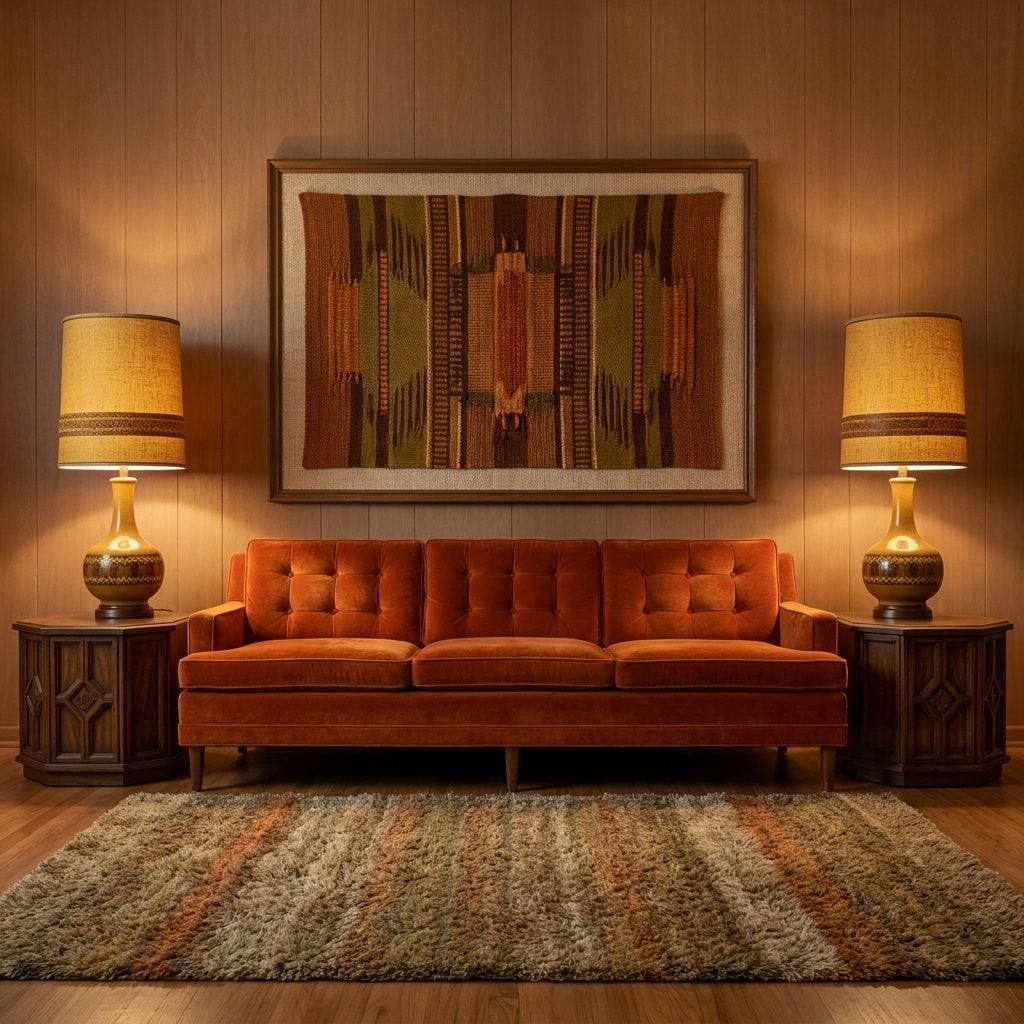
One on the left, one on the right, identical down to the lamp. The symmetry was the entire point. A sofa flanked by a matched pair looked settled, like the room had made up its mind.
Each table held its own lamp, coaster, and little domestic ecosystem. The arrangement survived because it was simple, useful, and visually orderly.
27. Smoked-Glass Coffee and End Tables
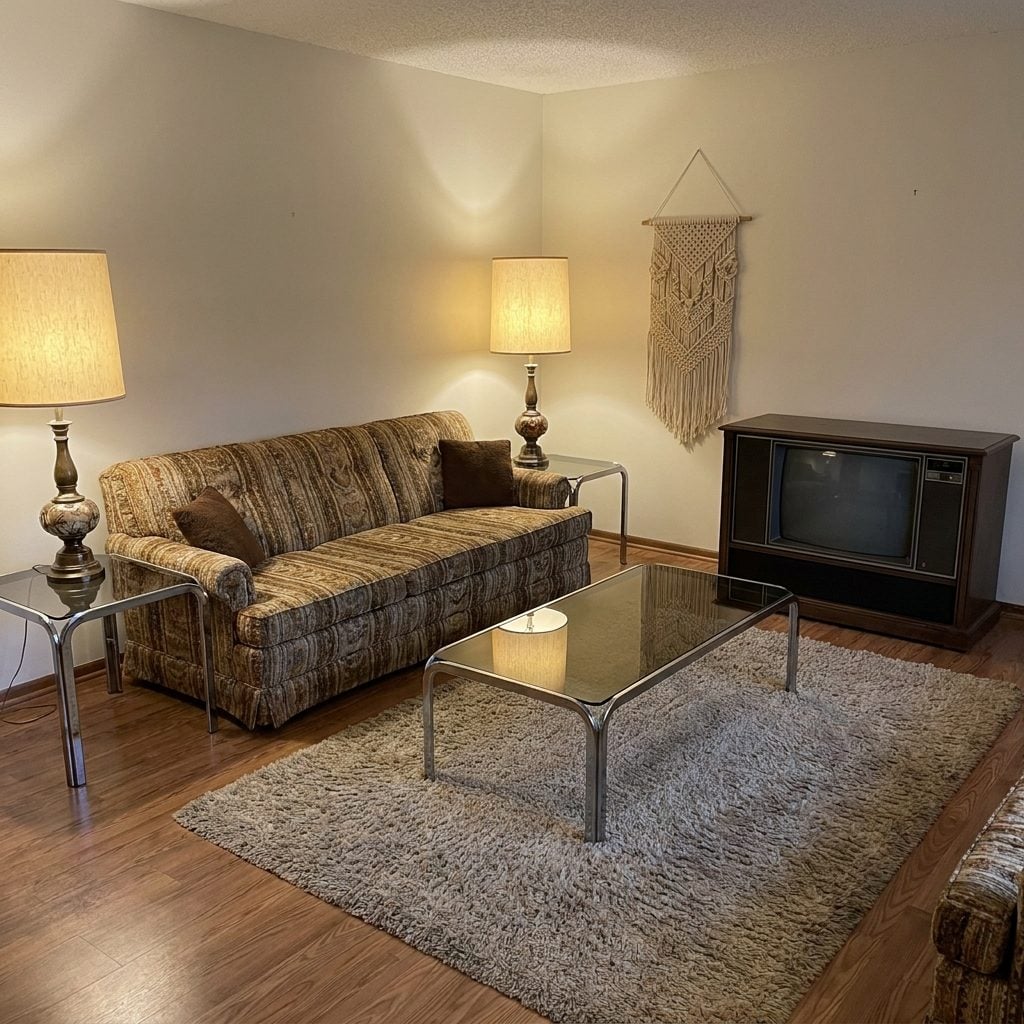
Here was the family that considered themselves modern. While the neighbors went heavy with carved walnut, these folks put in smoked glass and chrome, the furniture equivalent of tinted sunglasses.
The look was cooler, sleeker, a little disco. Unfortunately, dark glass did not make fingerprints disappear. Somebody was forever circling the table with glass cleaner and a rag. A living room makeover in the smoked-glass direction announced that one foot had already crossed into the future.
26. The Brass-and-Glass Table That Displayed a Little of Everything
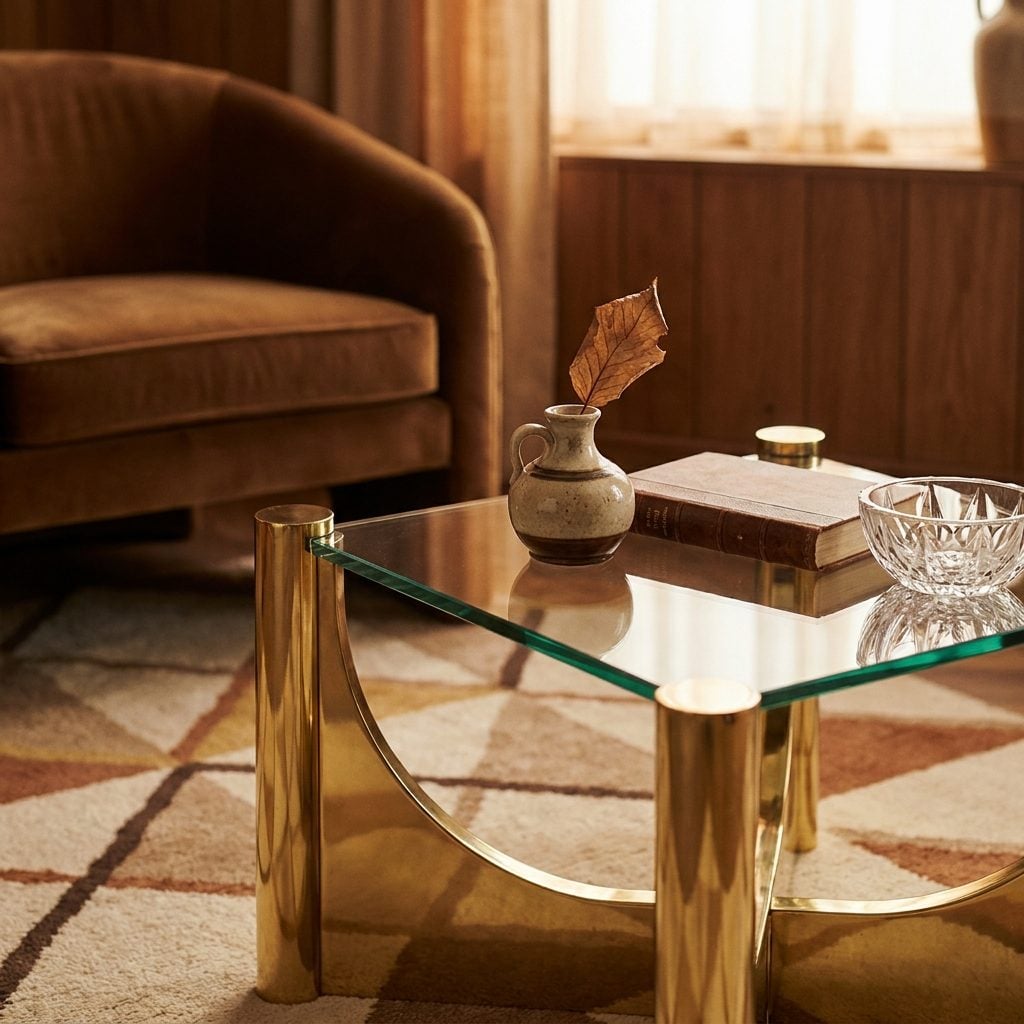
Every nice living room seemed to have one of those delicate brass-and-glass tables you did not put your full weight on. Thin metal legs, a clear top, and enough exposed glass to record every fingerprint from Thanksgiving to Easter.
On top went the small collection nobody actually used: a crystal candy dish, folded reading glasses, a ceramic bird, maybe a coaster set from Florida. None of it essential. All of it somehow necessary.
The brass dulled between polishings, and the glass rang when a drink landed too firmly. Children learned quickly: this was not the table you leaned on.
25. Wall-to-Wall Shag Carpet You Could Lose a Marble In
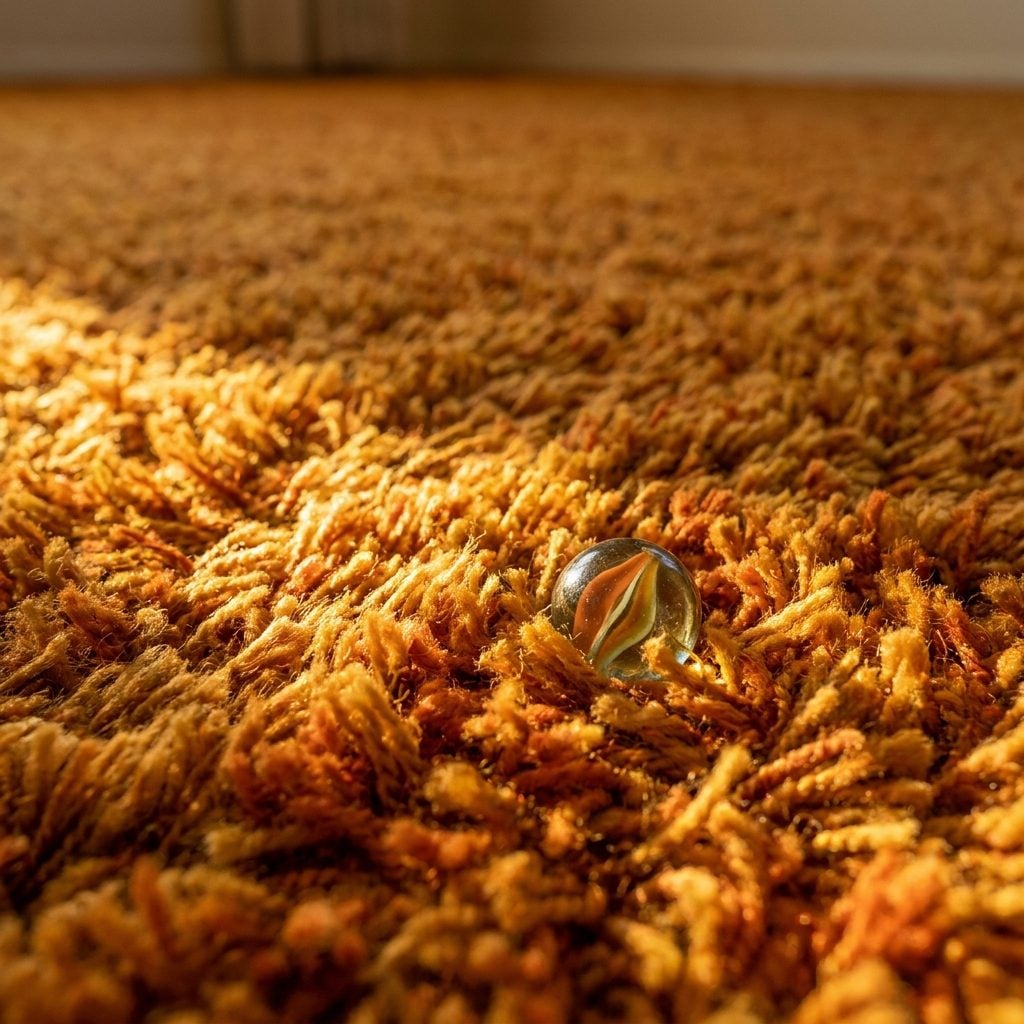
You raked it. Nobody warned you about that part. Deep shag could be combed back into shape with a carpet rake, leaving rows like a freshly groomed lawn — avocado, harvest gold, burnt orange, fibers standing improbably tall.
Drop an earring and it entered witness protection. Vacuuming took muscle, and the machine sank into the pile like it was crossing wet sand. Barefoot on a Saturday morning, though, the entire floor felt upholstered.
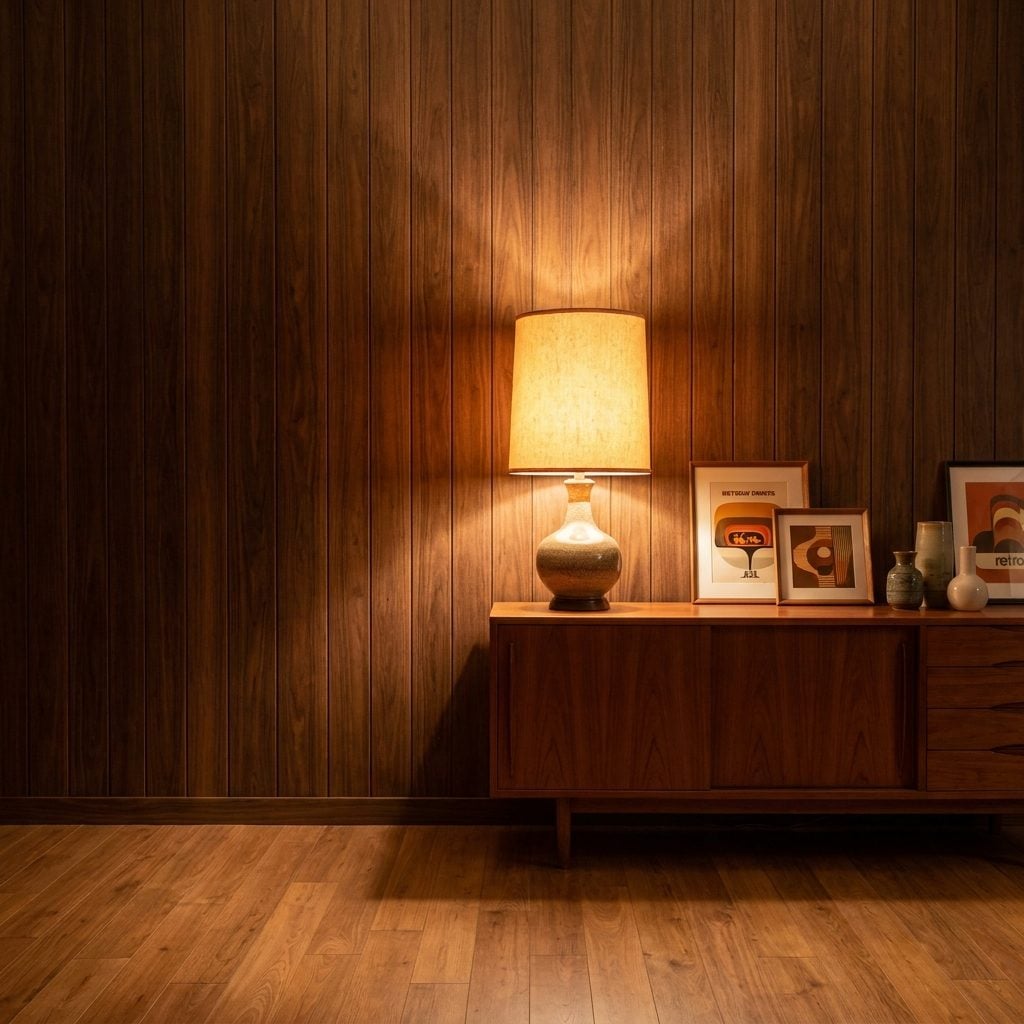
24. The Walnut-Paneled Wall That Warmed Up an Entire Room
🔥 Would you like to save this?
Run your hand along the grooves and you could feel every seam where one four-by-eight sheet met the next. The panels went up over a weekend with finish nails and construction adhesive, and suddenly the room felt like the inside of a hunting lodge. Warm. Dim. A little cavernous, which was part of the appeal.
Much inexpensive paneling wasn’t walnut at all but faux wood grain applied to hardboard or similar sheet material. Nobody cared. The dark surface soaked up lamplight and gave a basement den instant atmosphere.
23. The Floor-to-Ceiling Stone or Brick Fireplace That Anchored the Whole Room
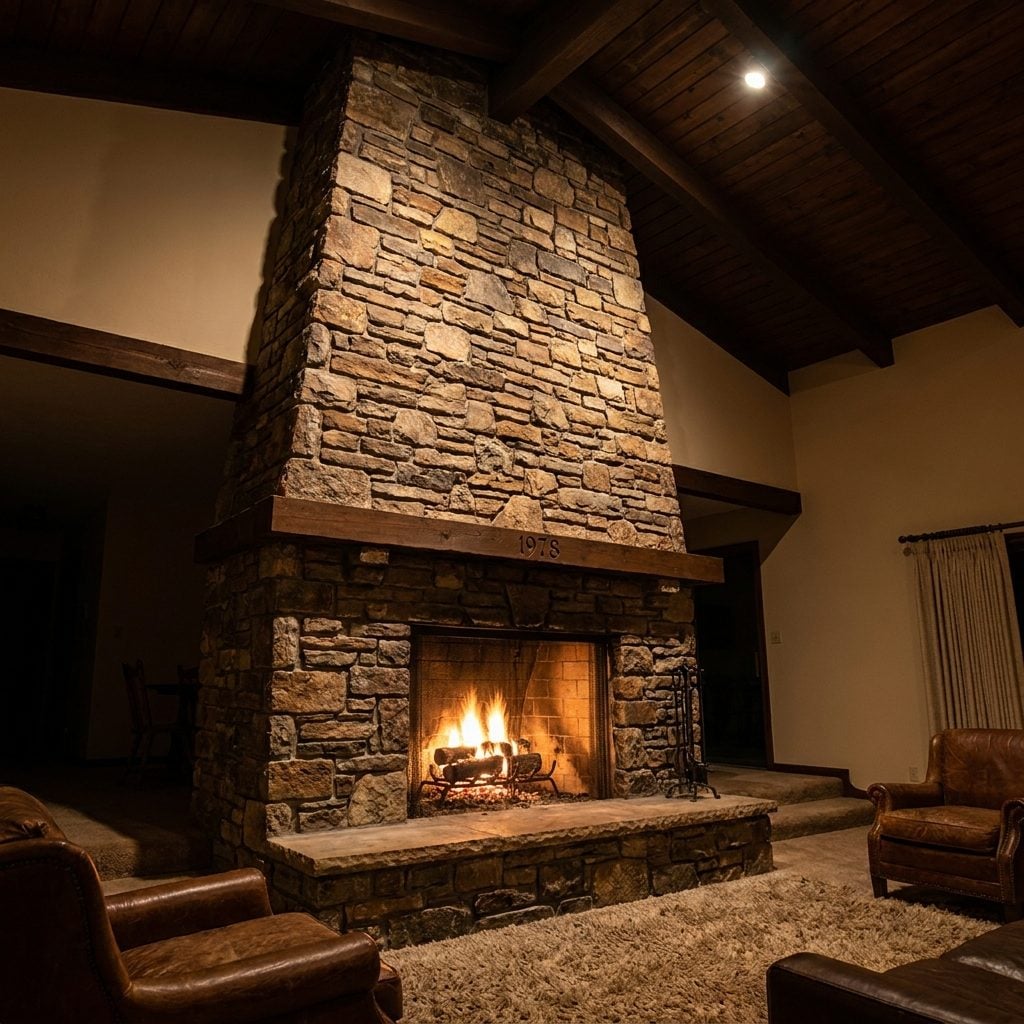
It started at the hearth and climbed all the way to the ceiling, a wall of fieldstone or dark clinker brick that everything else in the room arranged itself around. The sofa faced it, the recliner angled toward it, and even the television had competition.
Sometimes the fire itself was almost beside the point. The masonry supplied mass, texture, and permanence before a single log was lit. A rough wood mantel usually crossed the front, holding a clock, framed photos, and one brass candlestick whose candle had vanished years earlier.
22. The Brass Fireplace Screen and Matching Tool Set Nobody Touched
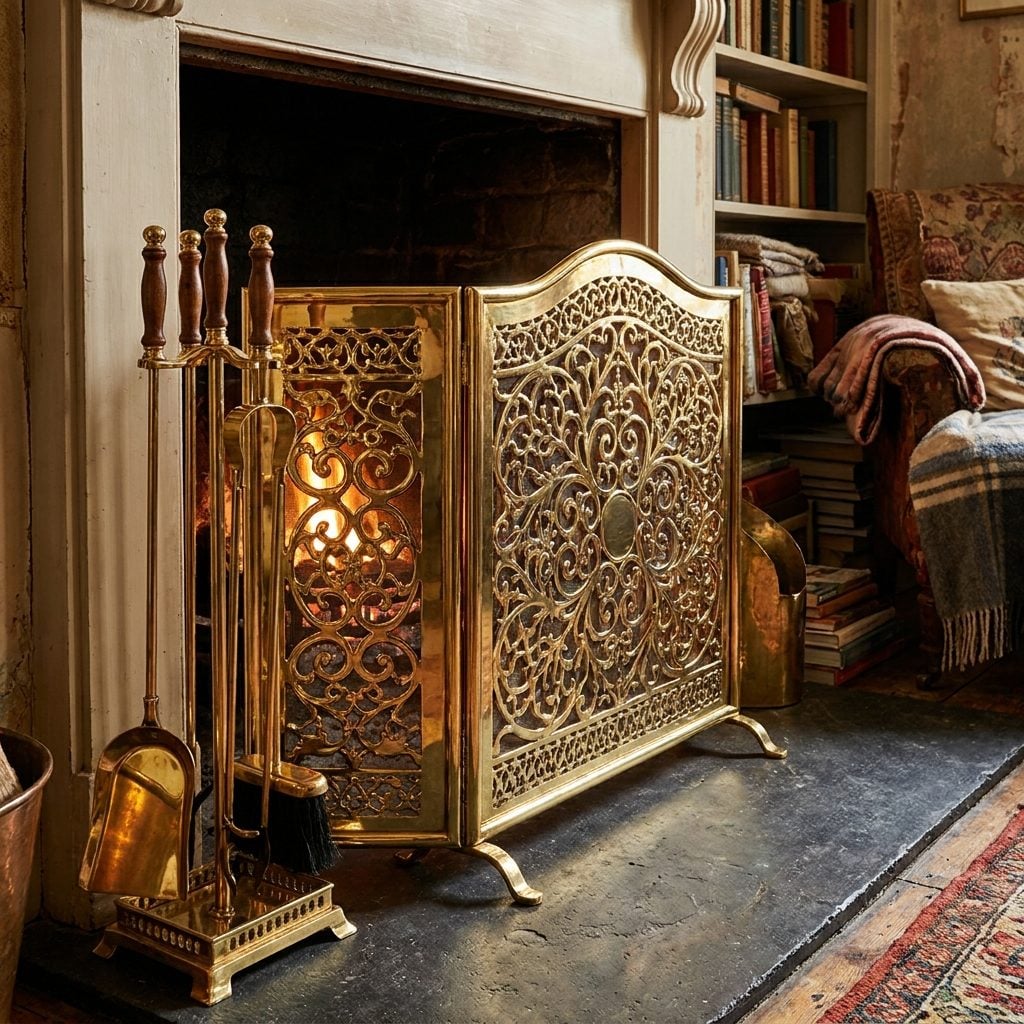
It stood guard in front of the fireplace whether there was a fire or not. Polished brass, sometimes with a mesh curtain sliding on tiny rings, displayed every fingerprint left by anyone foolish enough to touch it. Beside it hung the matching stand: poker, brush, little shovel, tongs, all four in formation.
In rooms where the fireplace was rarely used, the tools became almost ceremonial. They completed the hearth the way earrings completed an outfit. Functional in theory; decorative most Tuesdays.
21. Macramé Plant Hangers
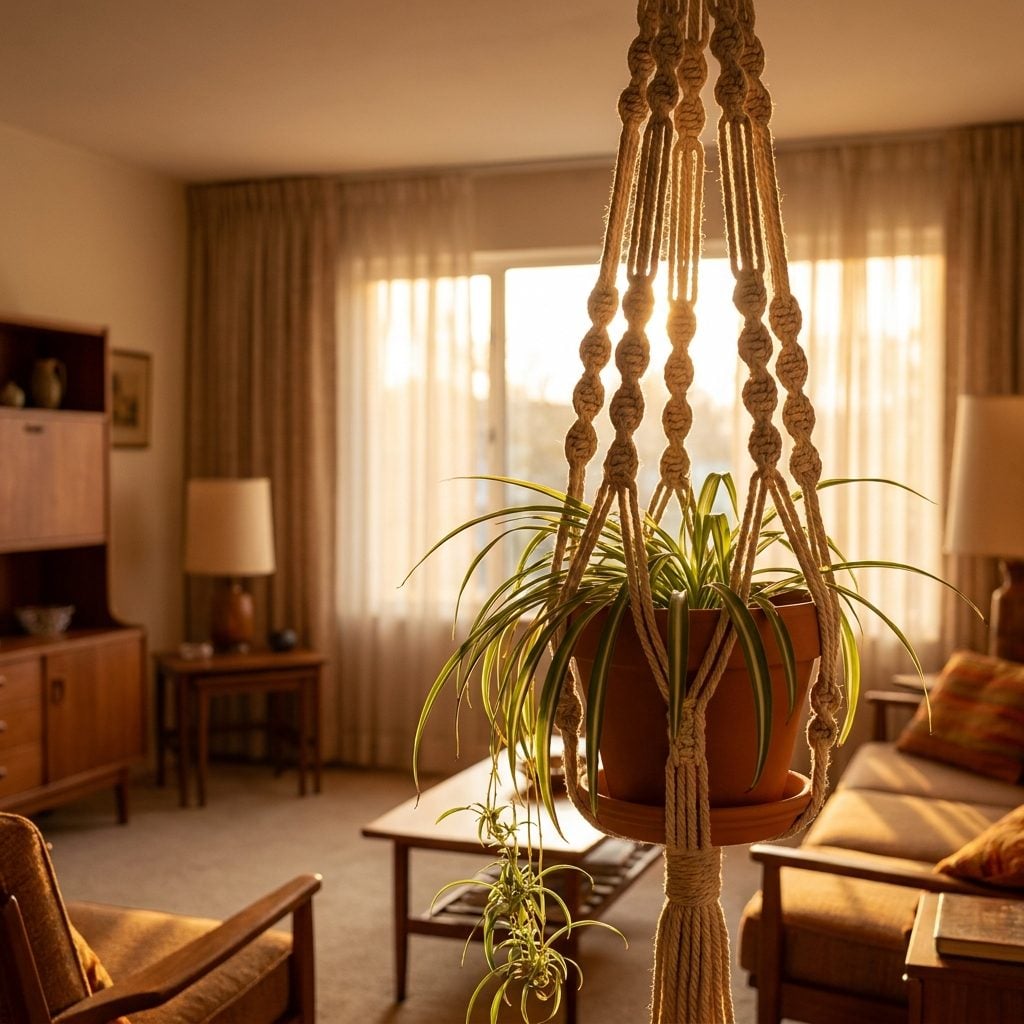
Somebody in the neighborhood made these. That was almost a rule. A book of knots, a length of jute, a few wooden beads, and suddenly the ceiling had acquired houseplants.
The best ones spiraled through rows of half-hitches around a terracotta pot with a spider plant or philodendron spilling over the edge. When the afternoon sun hit the window, cords and leaves threw their own shadows across the room.
20. The Built-In Shelves Framing the Fireplace, Half Books and Half Everything Else
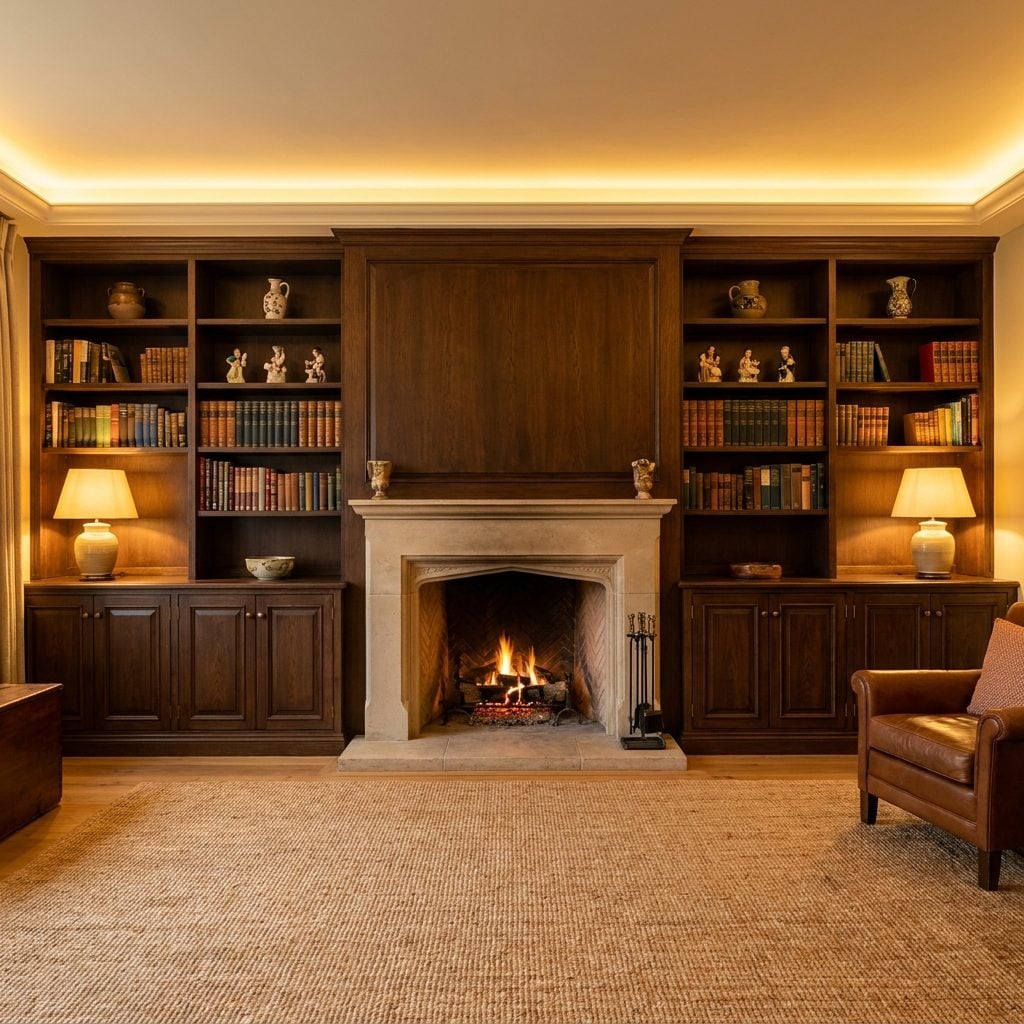
They ran floor to ceiling on both sides of the brick, and only about a third of the space actually held books. The rest was a museum of the family: bowling trophies, a conch shell from Florida, the good encyclopedia set nobody had cracked open lately, a school photo with somebody grinning through a missing tooth.
Usually the wood was stained walnut or oak to match the paneling. Stereo components, book-club hardcovers, framed photographs, and ceramics filled the shelves in proportions no decorator would attempt to reproduce today. Children knew which level was reachable. Everything breakable lived above it.
19. The Heavy Floor-to-Ceiling Drapes That Swallowed an Entire Wall
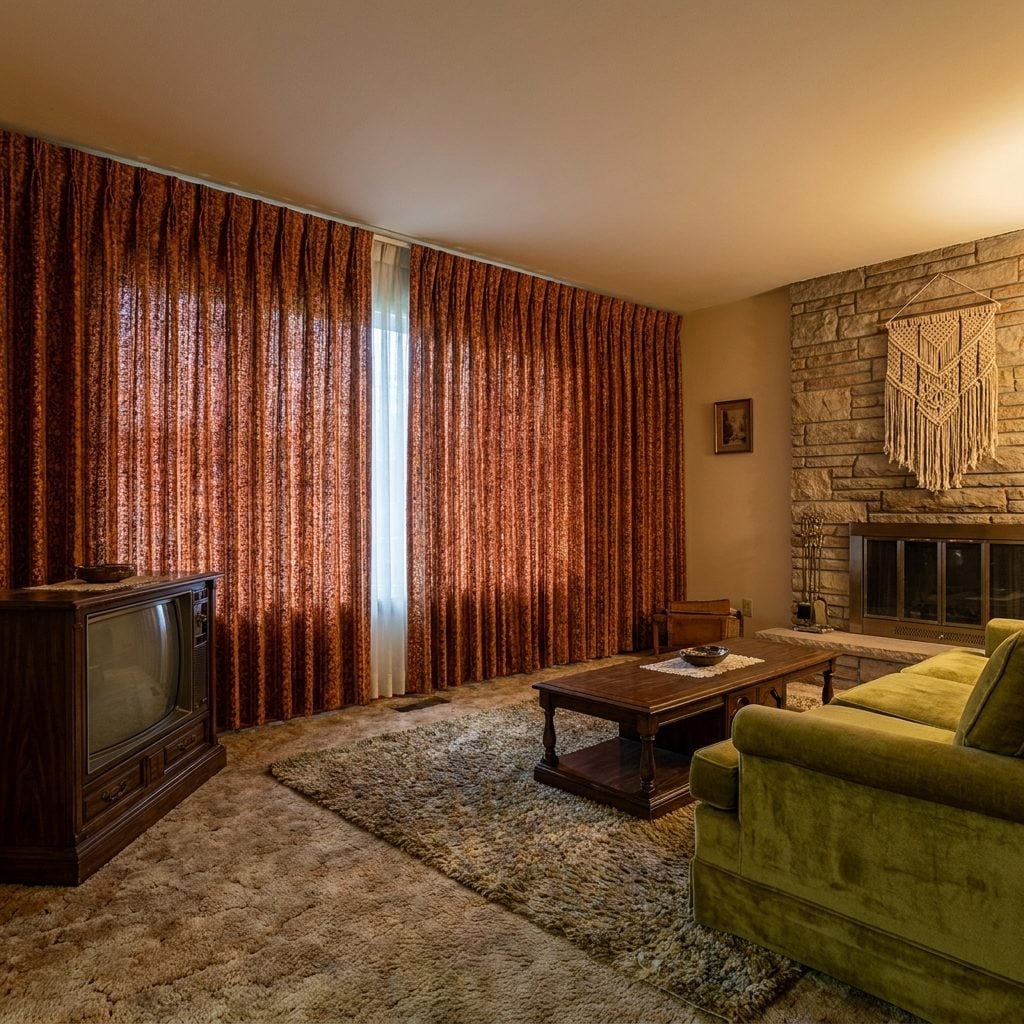
You pulled the cord and the whole room went dim. These drapes weren’t decorating a window so much as sealing off the outside world with yards of lined, pinch-pleated fabric.
Rust, gold, a brown so deep it looked black by evening. The colors matched the sofa, naturally. Heavy lined curtains could also help reduce drafts and heat loss, which gave all that fabric a practical argument during an era newly conscious of energy costs.
18. The Sheer Curtains That Stayed Up After the Drapes Came Down
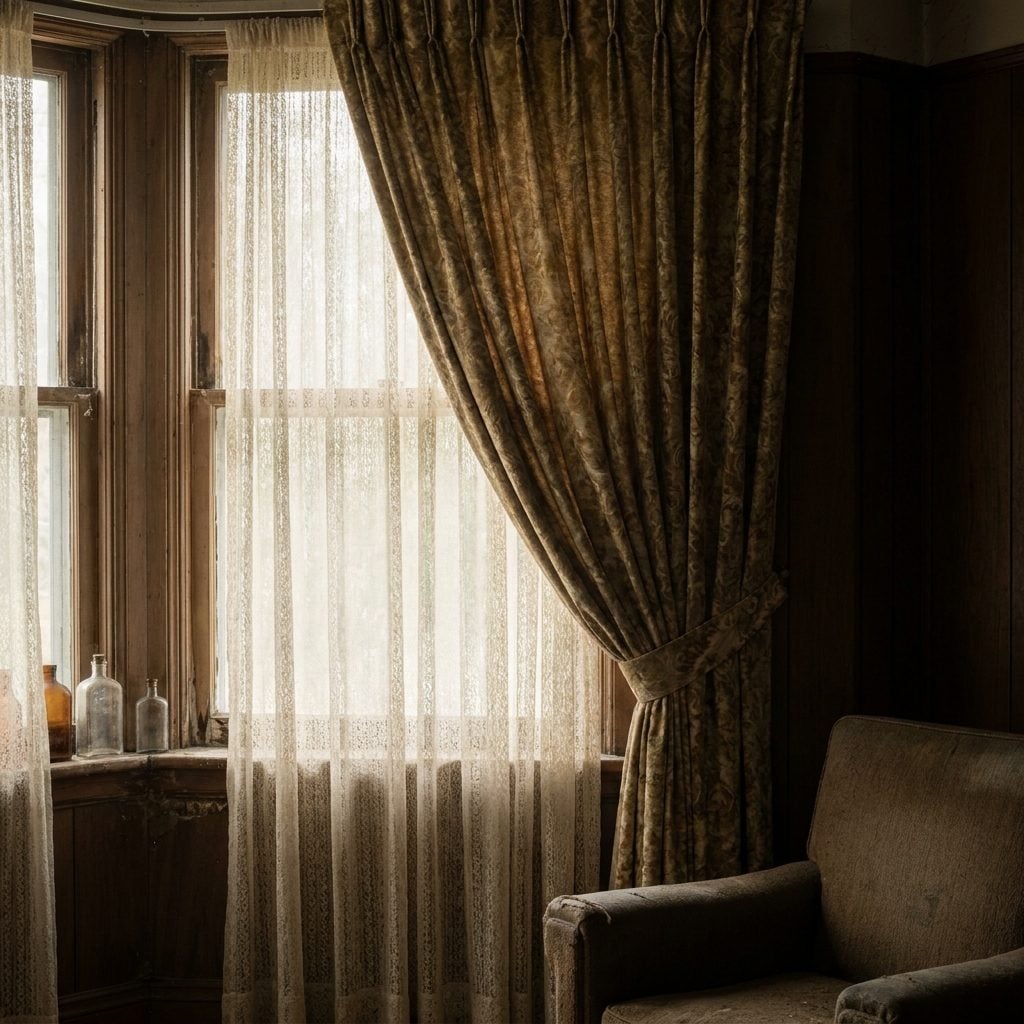
Pull the heavy drapes open and there they were, standing guard: a second layer of gauzy white or cream sheers, sometimes ruffled at the bottom, hanging on their own rod behind the main treatment. They handled daytime while the drapes rested.
Sheers softened incoming light and made a room less exposed from the street, although anyone passing by could still catch blurred shapes moving behind them.
They yellowed eventually, and rehanging them meant dealing with dozens of tiny hooks. That alone was enough to postpone laundering for another month.
17. Large Framed Landscape Paintings
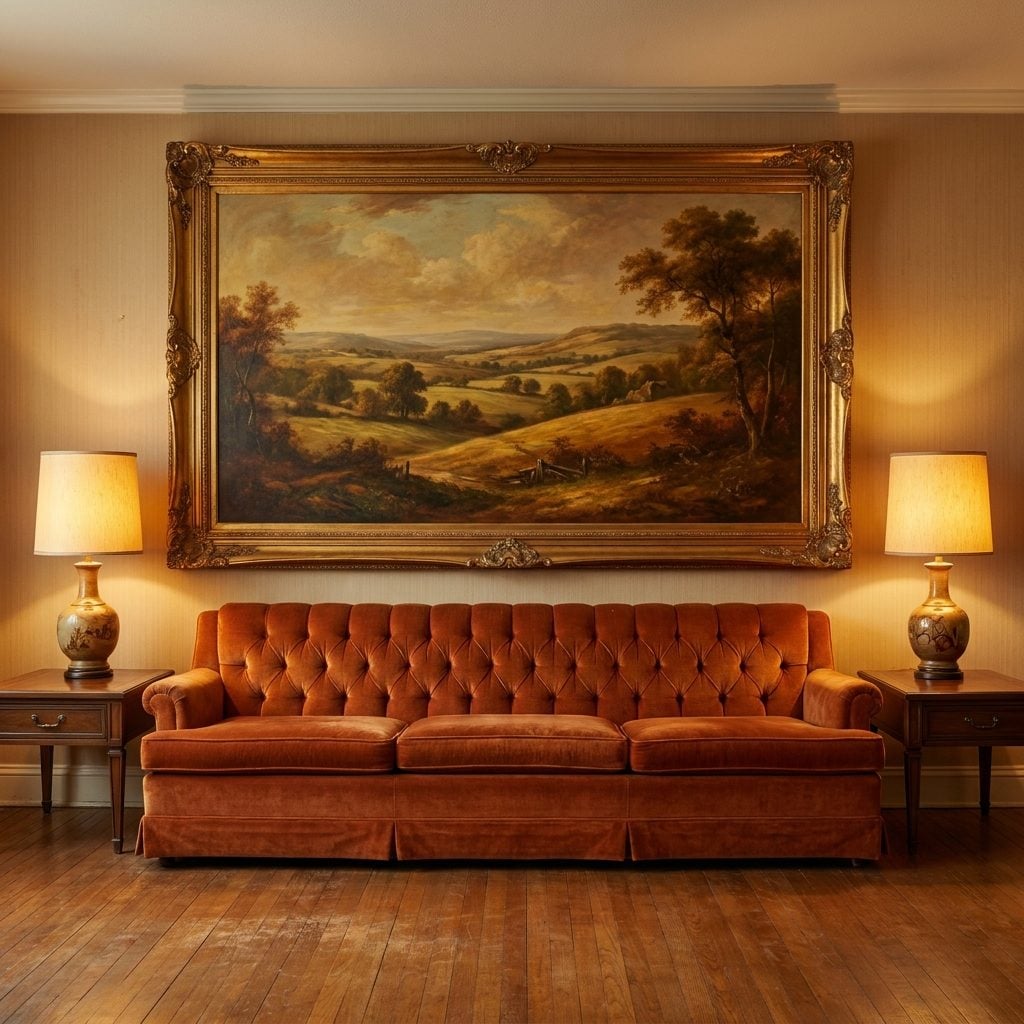
Above the sofa there was often a landscape, and it was usually big. A golden valley, covered bridge, stag on a ridge, or mountain scene rendered in browns and ambers sympathetic to the carpet. Nobody knew who painted it. It seemed to arrive with the wax fruit.
Scale mattered more than authorship. One substantial picture could establish where the sofa belonged and occupy a wall without requiring a gallery of little frames. A single oversized living room makeover still often starts with exactly that idea.
16. The Fabric Valance That Finished the Window Nobody Asked It To
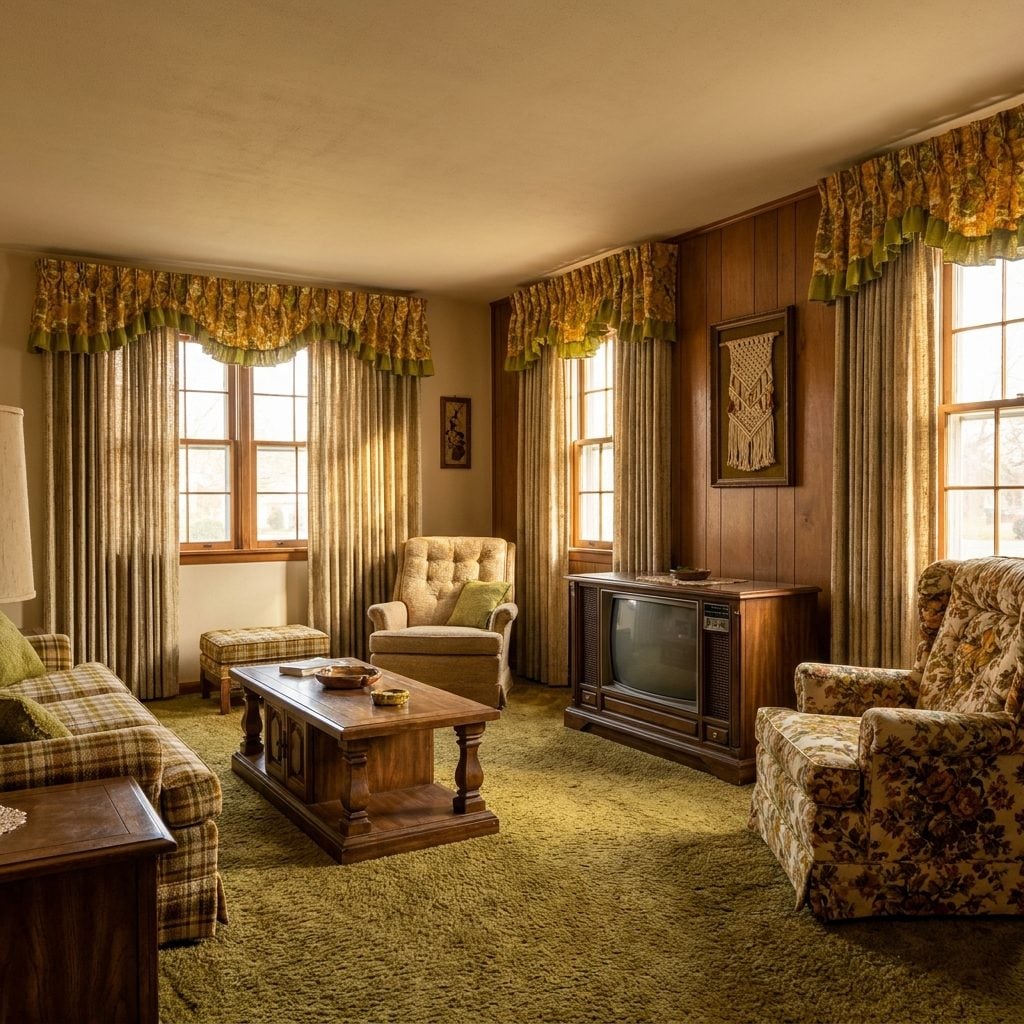
Above the drapes, above the sheers, one more layer waited. A stiff band of pleated or scalloped fabric ran across the top of the window and hid the rod as if the hardware had embarrassed the family. Usually it matched the rust or gold print elsewhere in the room. Sometimes fringe joined the proceedings. Sometimes tassels did too.
Nobody could tell you exactly what the valance accomplished after the curtain rod disappeared. The window simply wasn’t considered dressed without that final strip of fabric.
15. The Giant Ceramic Table Lamp That Took Two Hands to Move
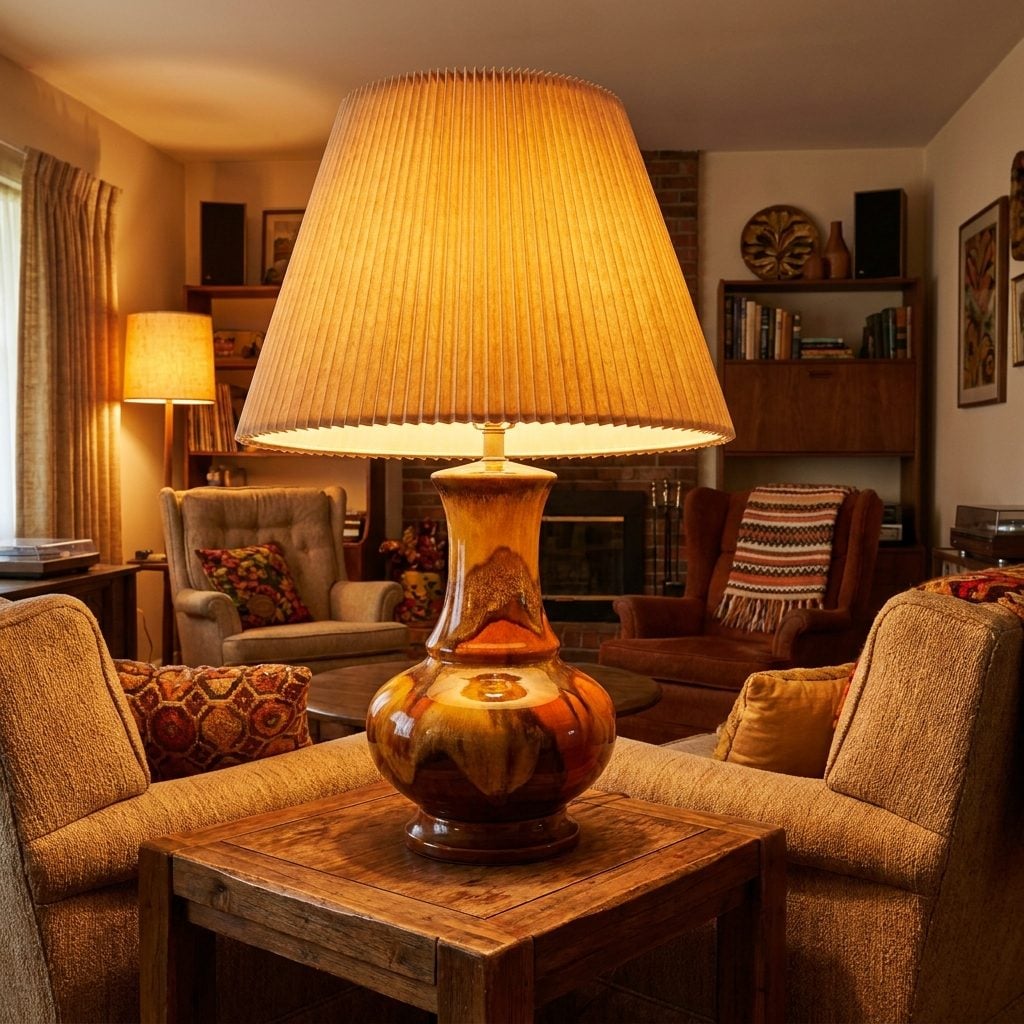
It weighed more than the table it sat on. Glazed deep brown or amber, molded into some vaguely urn-like shape, and topped with a pleated shade the color of weak tea, the lamp did not get dusted so much as negotiated with.
Matched pairs flanking the sofa were especially convincing. Click one on in late afternoon and the entire room took on that low honeyed glow ceiling fixtures have spent decades failing to imitate.
14. Oversized Houseplants in Decorative Pots
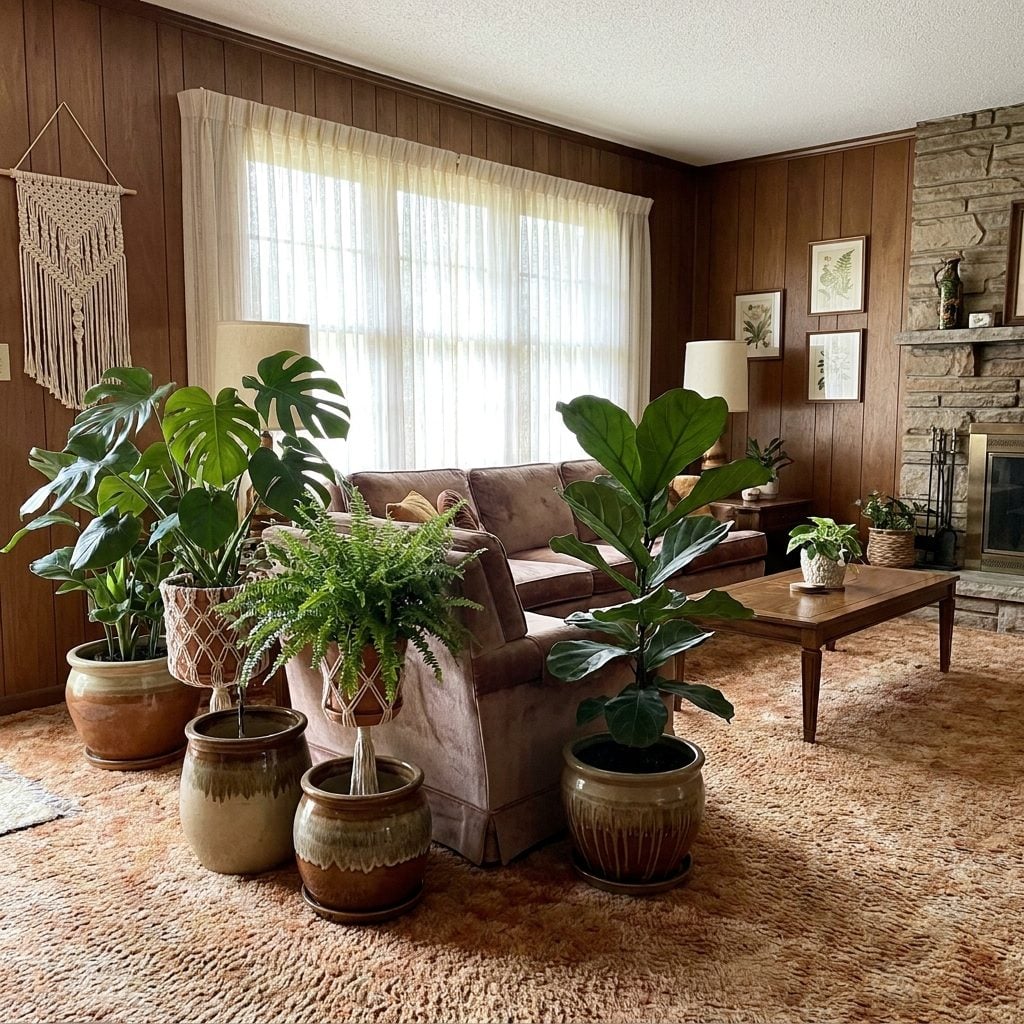
These weren’t decor. They were dependents. A rubber plant or split-leaf philodendron got a schedule and the sunniest corner, usually inside one of those glazed pots with orange or brown drip glaze.
The leaves needed wiping. That was a real household chore: damp cloth, leaf by leaf, removing dust until the plant looked newly issued. When one finally leaned over the sofa, its owner mentioned the achievement to visitors.
13. Swag Lamps Suspended From Chains
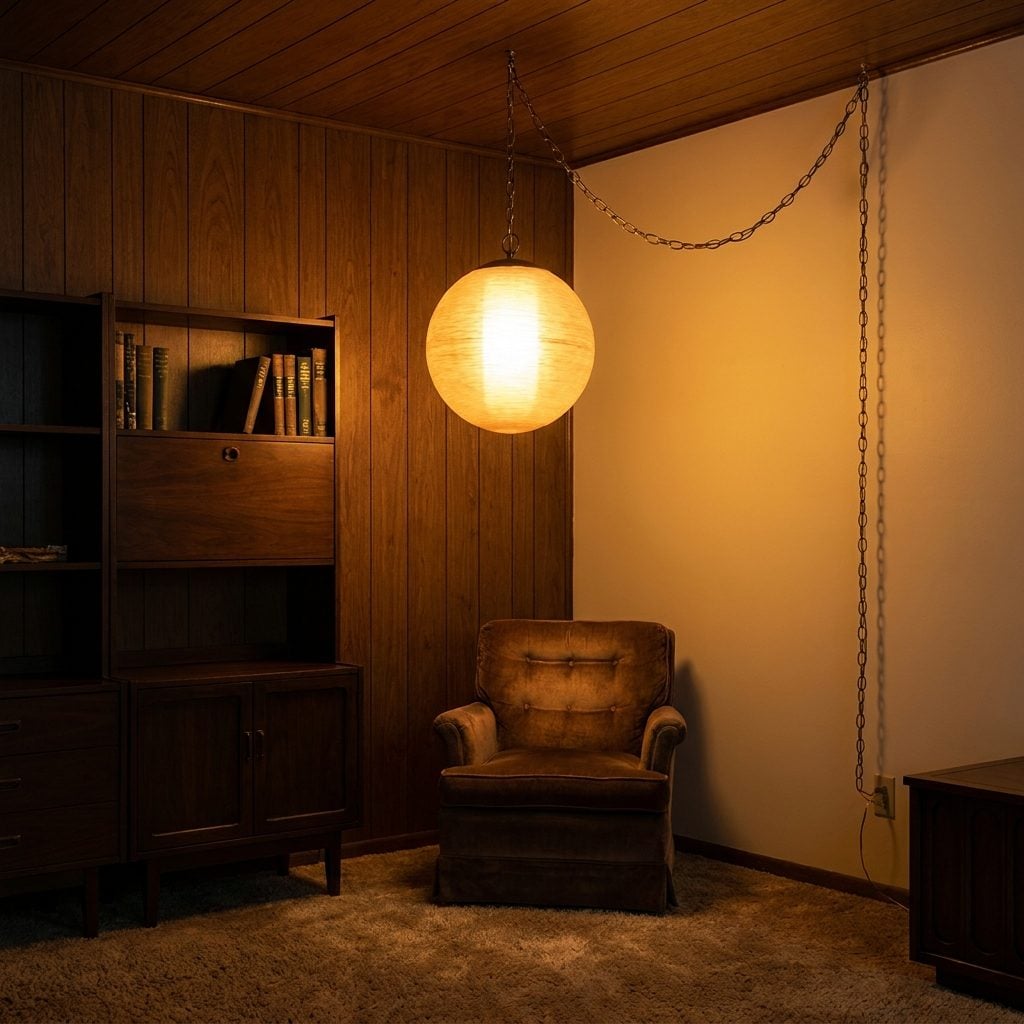
The chain was the whole point. A plug-in lamp could hang where the room needed light rather than where an electrical box happened to exist, with the cord swagged across the ceiling toward an outlet.
The shade might be amber glass, stained glass, or a hobnail globe. Switched on over a card table, it made a little island of light while the rest of the room receded.
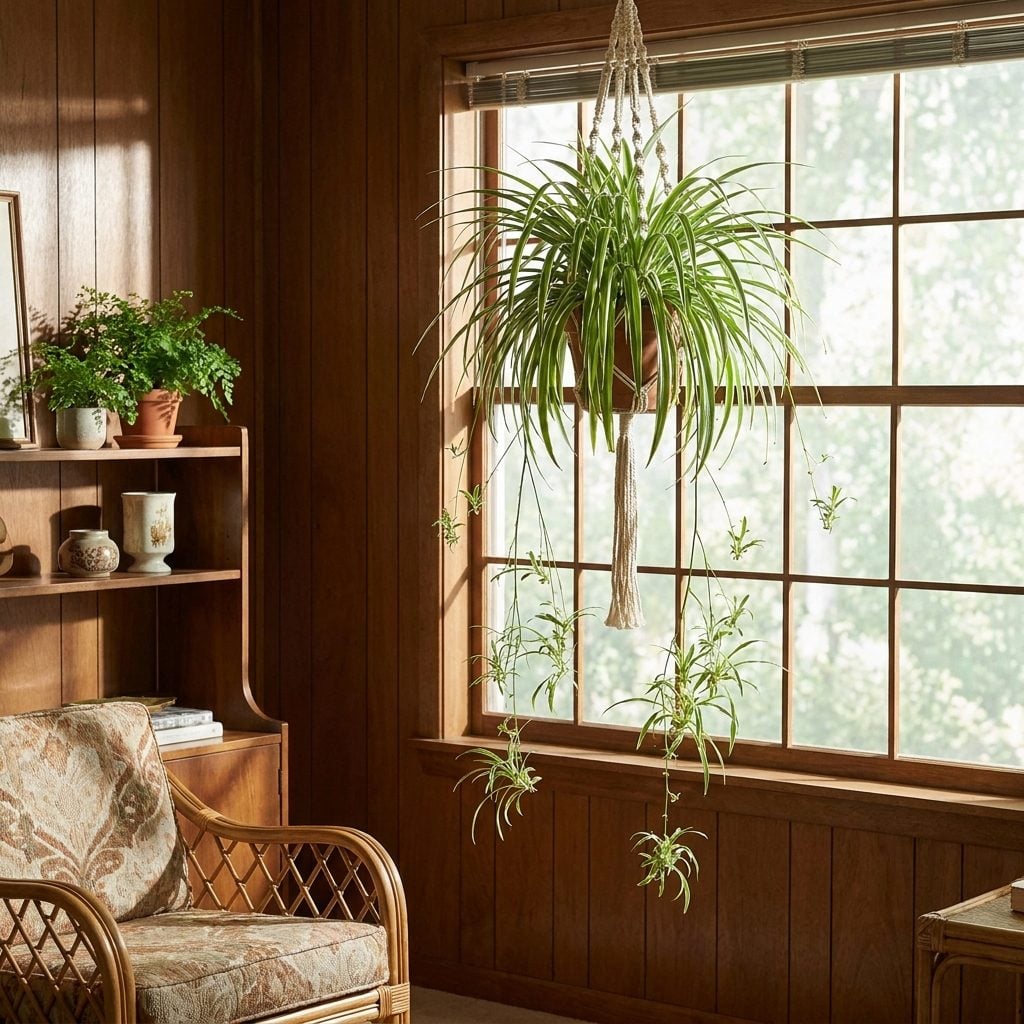
12. Hanging Spider Plants and Ferns
🔥 Would you like to save this?
The spider plant was the plant of the people. Generous to a fault, it kept sending out little plantlets on runners that could be clipped, rooted, and handed to a neighbor. Half the spider plants on the street were probably related.
Ferns were the drama queens by comparison, dropping leaves when the humidity displeased them, but people hung them anyway because nothing filled a bright corner like a fern going full waterfall. Both occupied the upper reaches of the room where furniture couldn’t.
11. Brass Floor Lamps Beside the Sofa
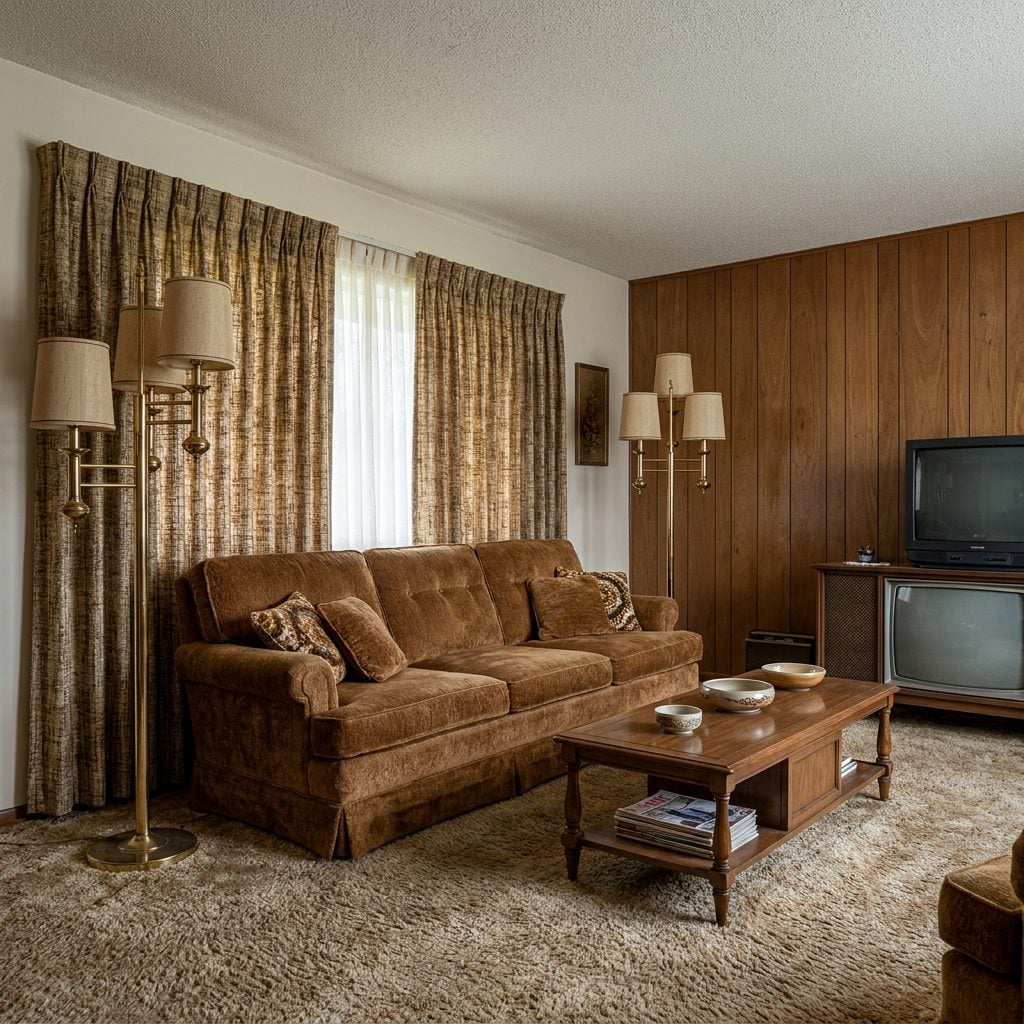
At the end of the sofa stood a slim brass column with a little pull-chain you fumbled for in the dark. The shade tilted slightly no matter how carefully anyone adjusted it, and the brass recorded fingerprints like evidence.
This was reading light, late-night light, the pool of amber that meant someone was still awake. The same basic idea keeps turning up beside the beige sitting room sofas of today, only the shade has usually stopped listing to one side.
10. Oversized Macramé or Woven Wall Art
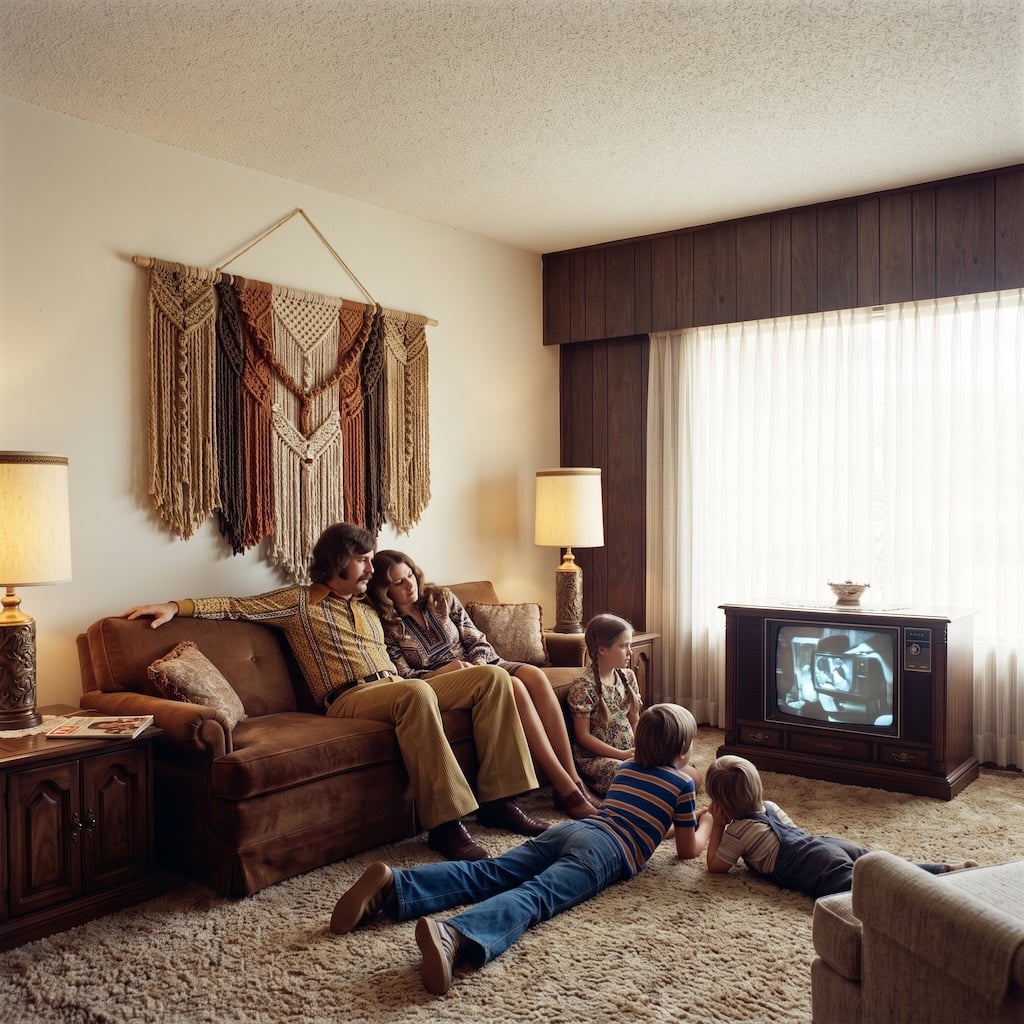
The wall hanging was the landscape painting’s crunchier cousin. Instead of oil and gilt, you got cream and brown wool knotted onto a dowel, with fringe dropping toward the floor and wooden beads joining the composition.
People made these at home or bought them at craft fairs. Their appeal was entirely tactile: a flat wall suddenly acquired knots, shadows, fibers, and movement. Contemporary woven wall hangings have revived much of the same vocabulary, including the dowel, fringe, and natural fibers familiar to the craftsman craft room crowd.
9. Decorative Mirrors in Gold or Brass Frames
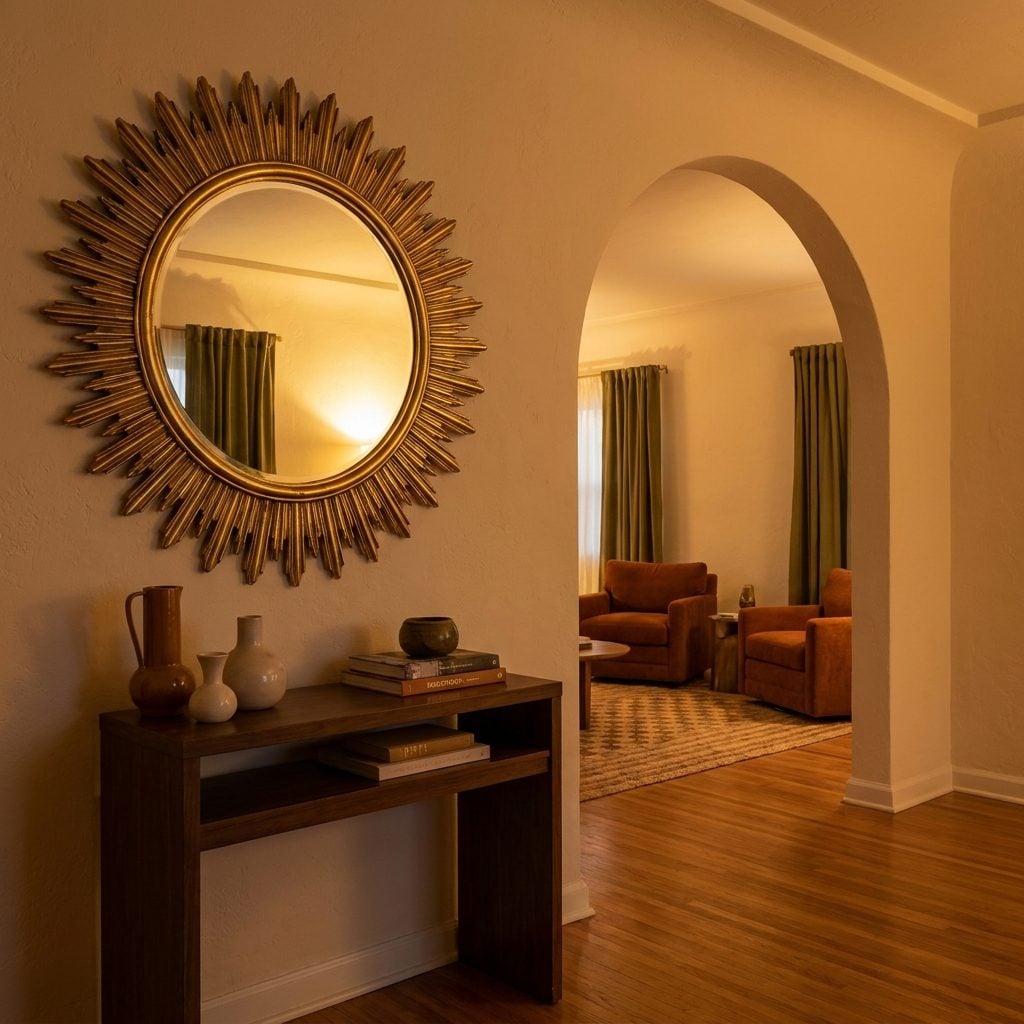
A big gold mirror over the console did two jobs at once. It reflected light back into a room that was mostly brown, and it created the impression of more depth beyond the wall. The frame was the loud part: spiky brass sunburst, scrolled gilt, maybe something vaguely Florentine.
Guests checked their hair in it on the way in. That was the practical function nobody mentioned.
8. Ceramic Figurines Arranged on Tables and Shelves
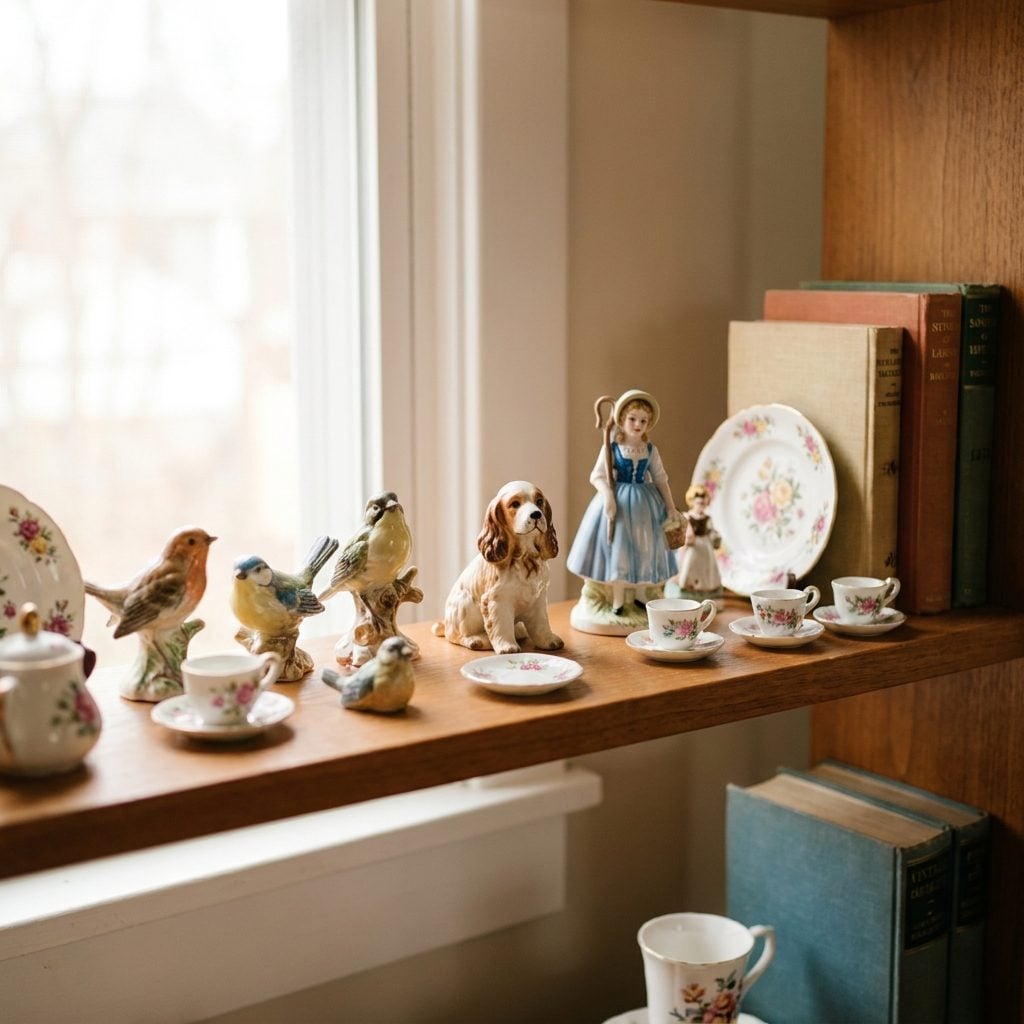
Every shelf had a little population. Porcelain birds, a shepherdess, a spaniel or two, maybe a ballerina caught mid-pose, all lined up on a doily that had to be lifted before anyone could dust underneath. You did not touch these. That lesson arrived early.
They came from gift shops, relatives, anniversaries, and that one aunt who always found another perfect little object. Nobody planned the collection. It accumulated until the shelf became a record of occasions the family itself had half forgotten.
7. Large Decorative Ashtrays on the Coffee Table
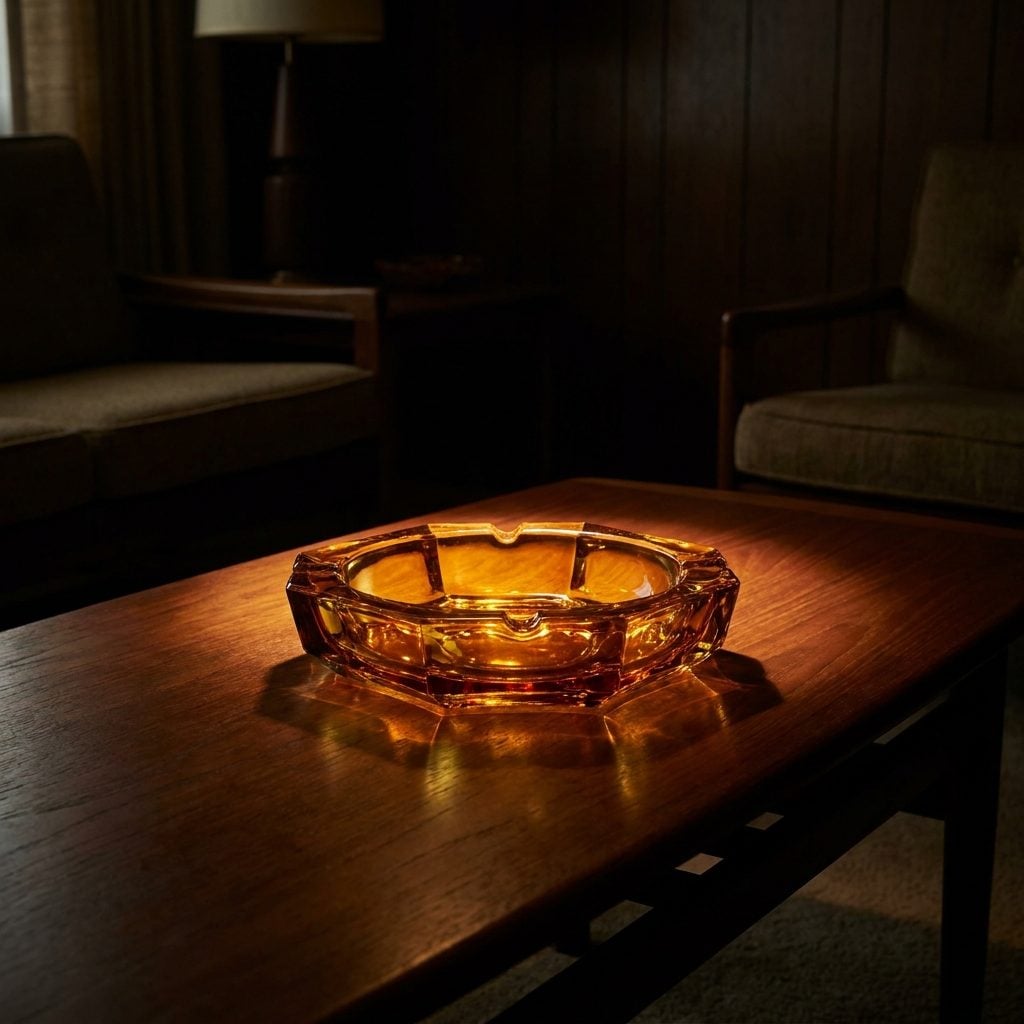
Front and center on the coffee table sat a slab of pressed glass the size of a dinner plate, amber or avocado, with notched grooves around the rim. It was heavy enough to require two hands if you were eight and questionable judgment if you were older.
If nobody smoked, it held hard candy, matchbooks, or loose change. When indoor smoking declined, many of these migrated to cupboards, thrift stores, and antique booths, where the same objects now turn up labeled as catchall dishes.
6. The Wood-Console Television That Weighed as Much as You Did
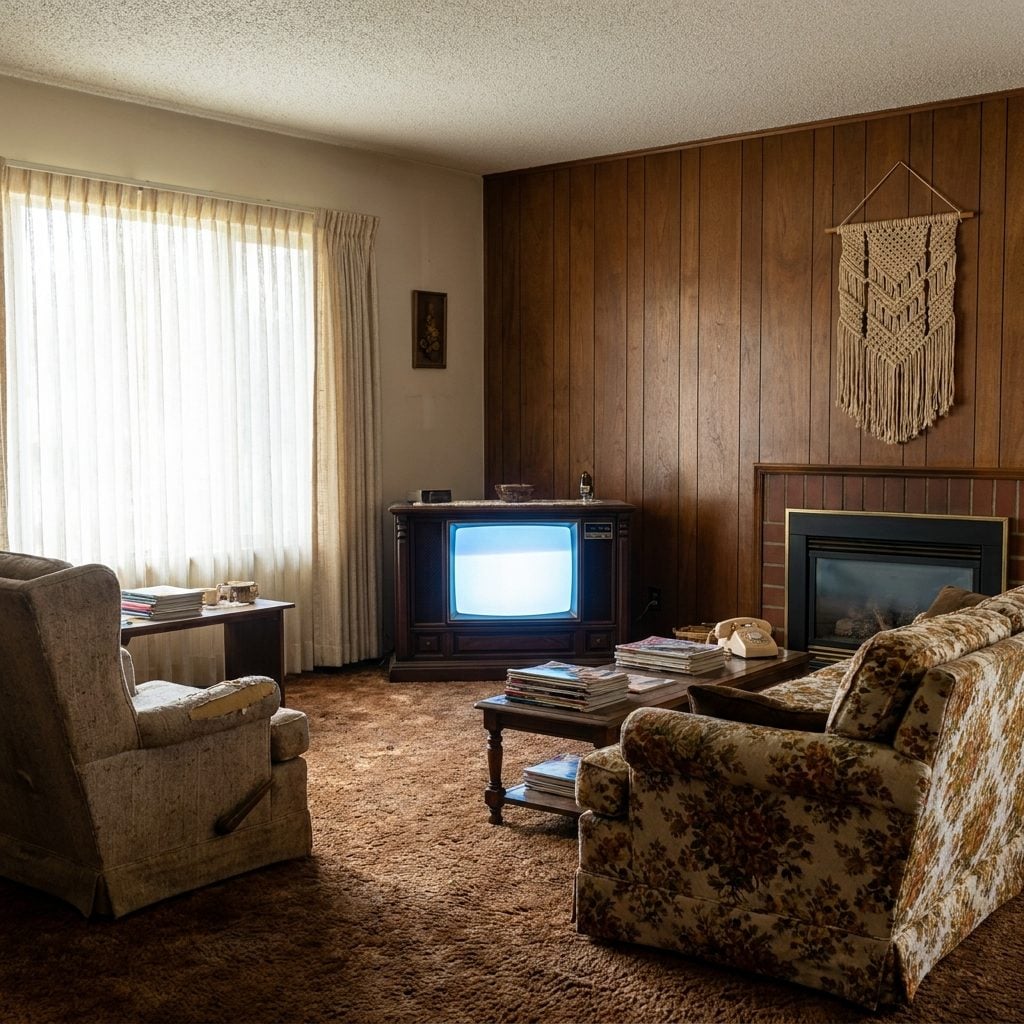
It wasn’t merely a television. It was furniture. A large wood or wood-veneer cabinet sat directly on the floor, sometimes with doors to hide the screen when company arrived, and moving one required another adult plus a brief reconsideration of the friendship.
The top became prime real estate: family photo, lamp, candy dish, perhaps a doily. Changing channels still often meant walking across the room and turning a mechanical dial, with VHF channels clicking satisfyingly into place and UHF occupying its own more mysterious territory.
5. The Stereo Console That Looked Like a Sideboard
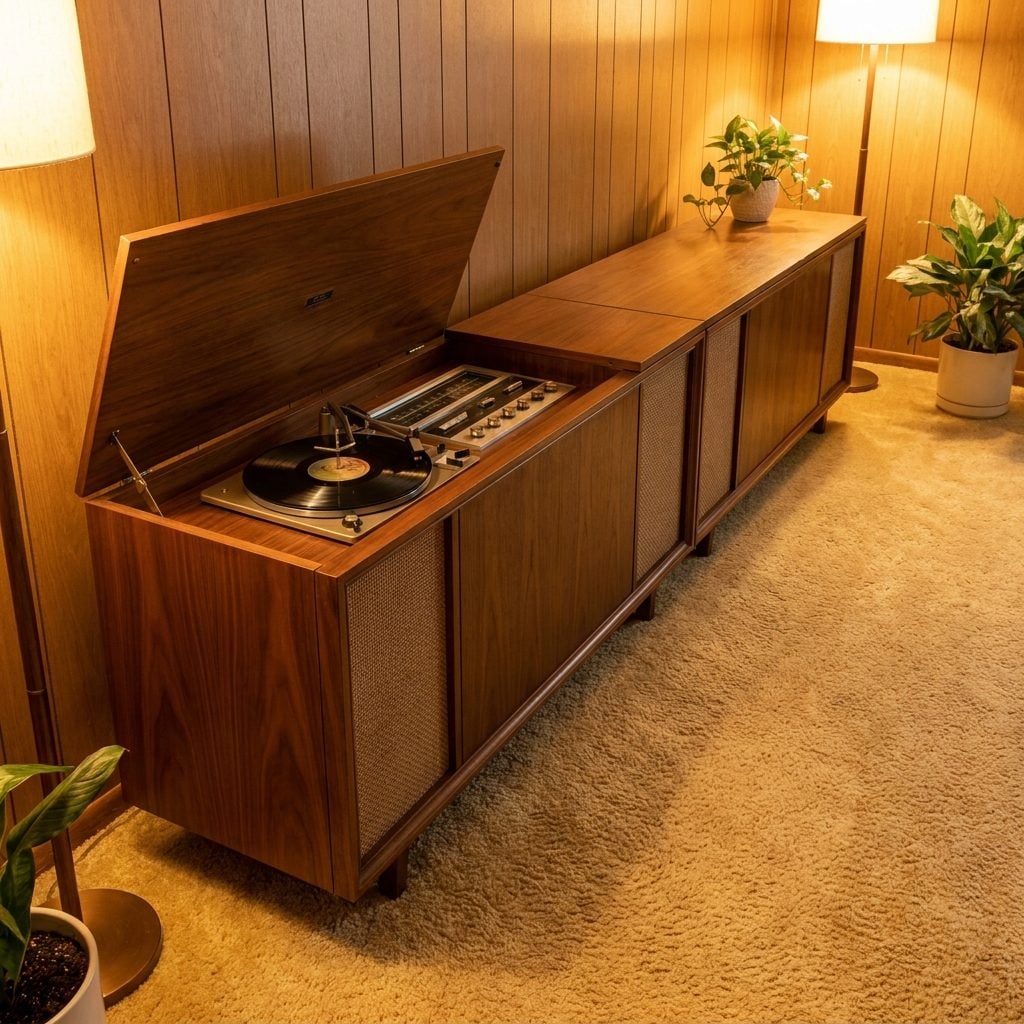
Long, low, and pretending to be a credenza. The stereo console stretched across a wall and tucked the machinery into one polished wood cabinet: turntable beneath a lift-up lid, AM/FM tuner behind a panel, speakers hidden behind woven grille cloth.
You didn’t hook up components so much as open the furniture. Drop the needle, lower the lid, and the cabinet resumed pretending it was a sideboard. The top inevitably collected a lamp, ashtray, plant, or all three.
4. Giant Wood-Cabinet Speakers You Could Set a Drink On
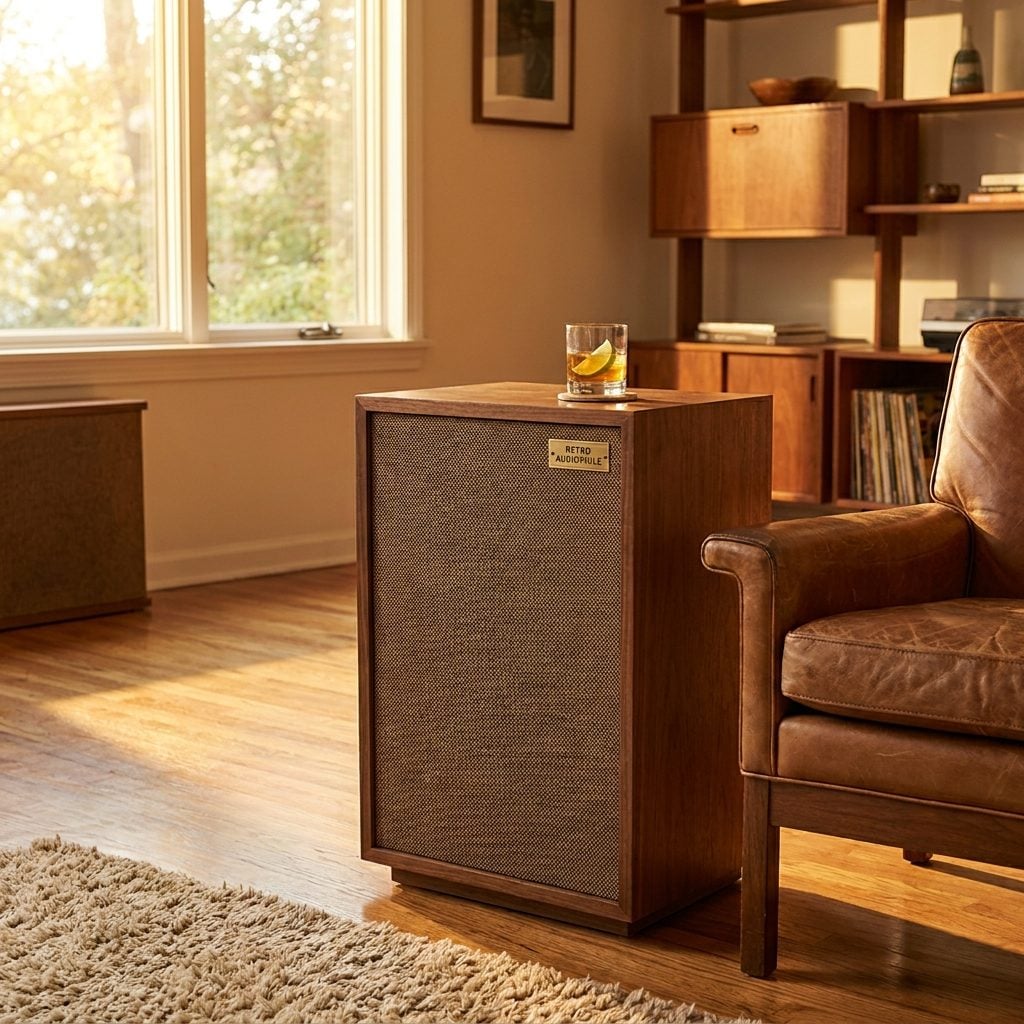
These weren’t speakers you mounted. They were speakers you furnished around. Waist-high wood cabinets with brown grille cloth stood in the room like architecture, and the flat top invited a lamp, plant, or beer that was slowly ruining the veneer.
Bass could feel physical when a large speaker system was pushed hard enough, and every household eventually discovered the exact volume at which someone in another room would bang on the wall.
3. The Wooden Crate of Records Standing Guard Beside the Turntable
🔥 Would you like to save this?
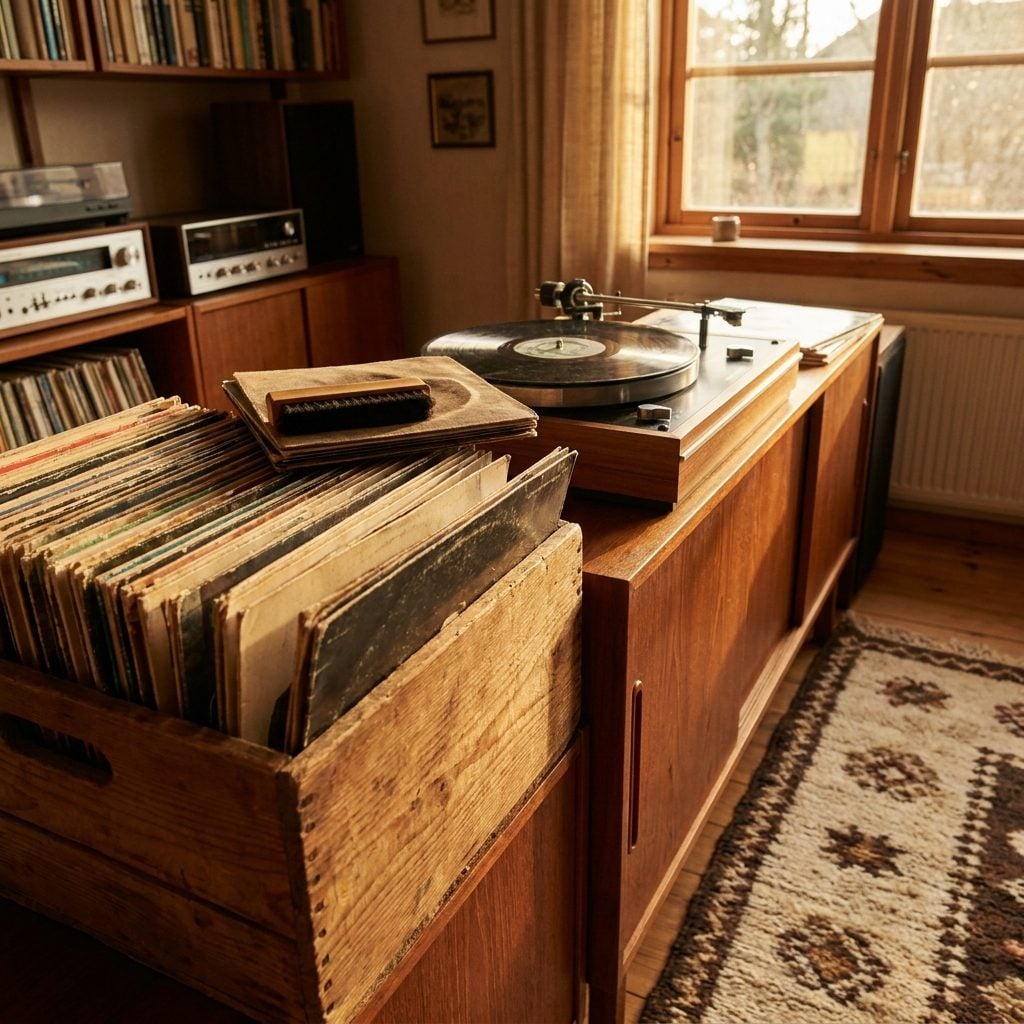
Filed upright in a wooden crate or low shelf built for exactly one purpose, the albums lived within arm’s reach of the needle. You flipped through them front to back with a sound like shuffling giant playing cards, reading liner notes you’d already read a hundred times.
The sleeves were the artwork of the house. Big twelve-inch squares got propped against the wall while the record played. Everybody had a filing system — alphabetical, by mood, by genre, or whatever had been played last — and everybody believed theirs was the only sensible one.
The album cover was the biggest piece of art most living rooms owned, and it rotated every forty minutes.
2. The Formal Living Room Nobody Was Actually Allowed to Sit In
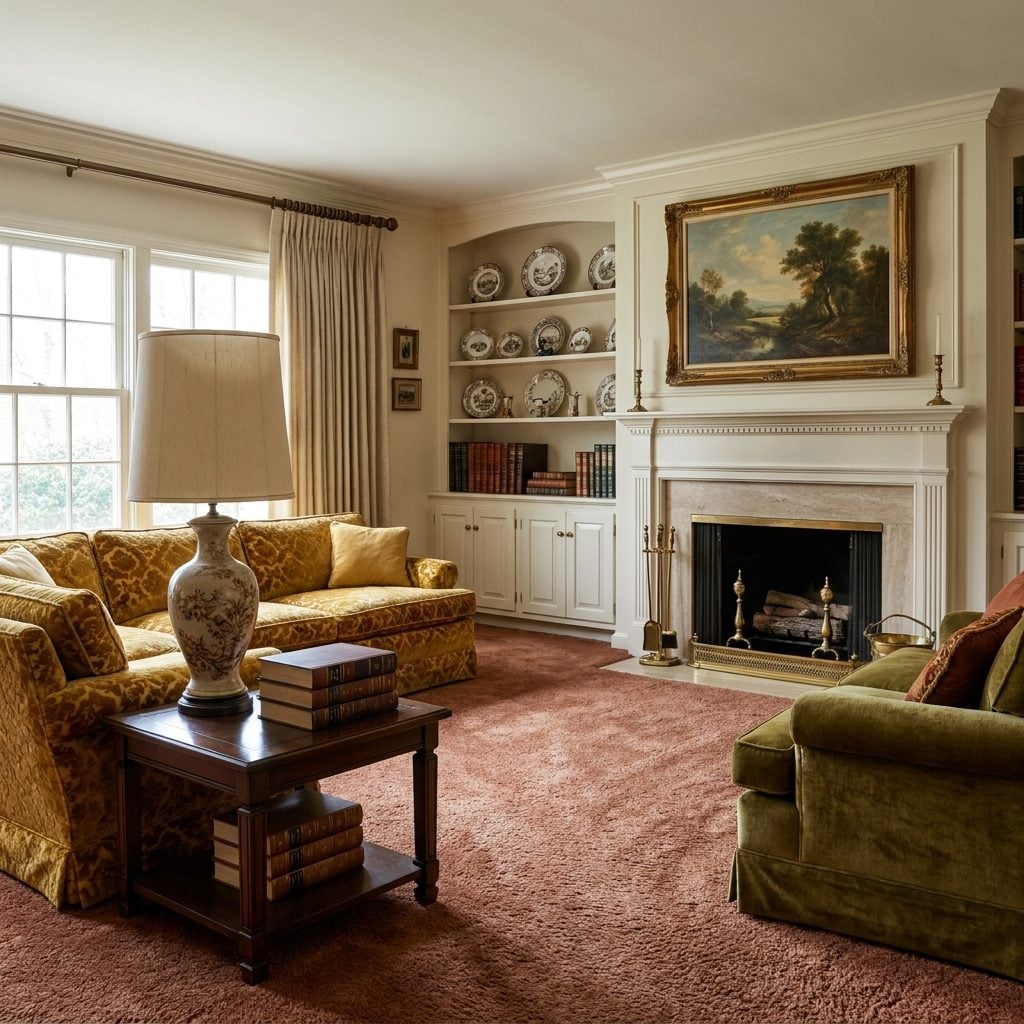
Plenty of houses had a room nobody seemed expected to live in. The good sofa, the good rug, the good lamp, all arranged for guests who appeared a few times a year. The rest of the time the room remained suspiciously perfect, sometimes with plastic slipcovers that attached themselves to bare legs in July.
Children learned the boundary young. Cut through quickly. Don’t bounce on the sofa. Don’t touch the figurines. A certain kind of living room makeover today begins by undoing exactly that idea and making the nicest room usable again.
1. The “Everything Matches” Look, Bought as a Complete Set
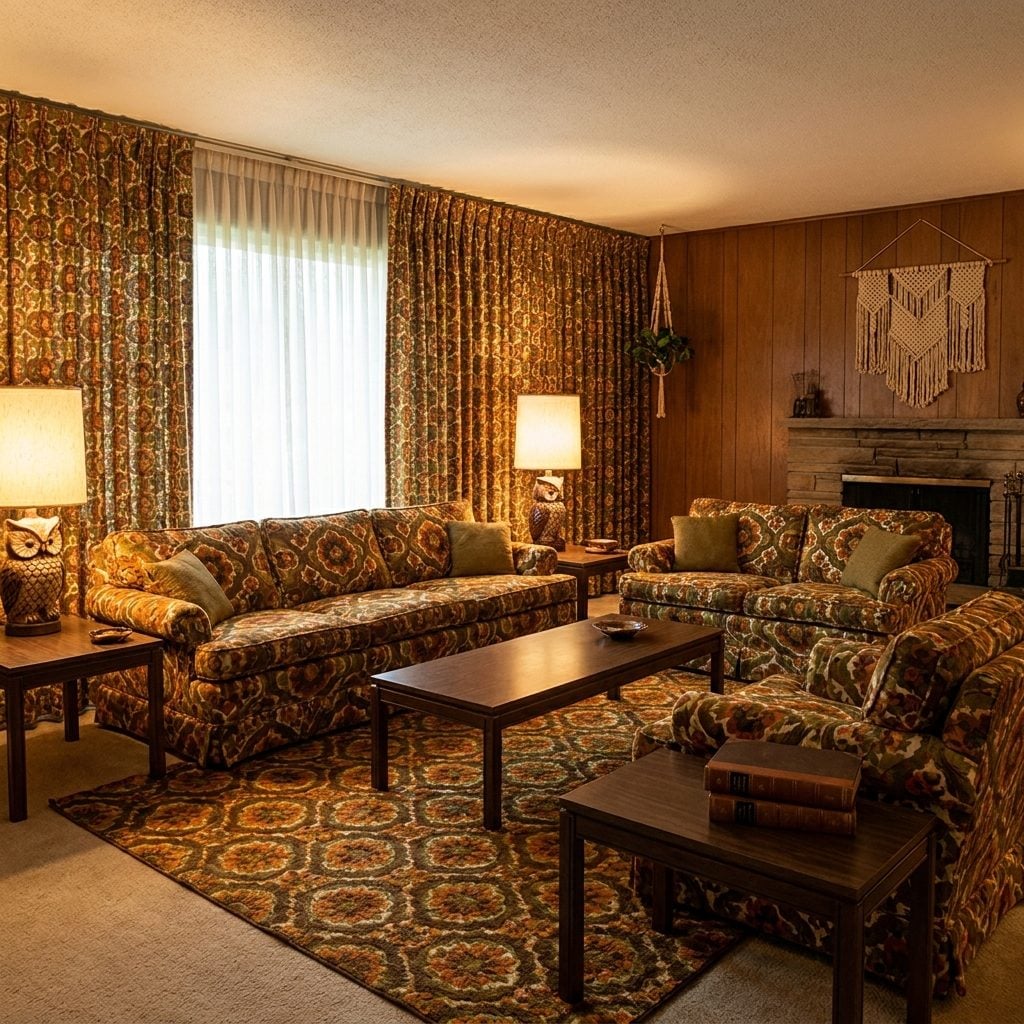
Matching wasn’t a mistake in 1978. It was the goal. Sofa, loveseat, chair, drapes, and accessories could all live inside the same harvest-gold, rust, brown, or avocado family, and nobody apologized for the commitment.
The lamps matched the throw pillows. The candy dish answered the ashtray. Nothing looked accidental. After decades of interiors built around contrast and collected eclecticism, tone-on-tone rooms such as today’s beige sitting room have rediscovered part of the appeal: repetition can make a room feel deliberate rather than dull.
Was it a lot of one color? Absolutely. But there is something impressive about a room that chooses a lane and refuses to drift out of it.