🔥 Would you like to save this?
The towels were always folded into fans. The soap was always a seashell nobody was allowed to touch. And somewhere behind that frosted glass door, an entire bathroom existed in a shade of green that hasn’t appeared in nature since. The 1970s bathroom wasn’t just a room. It was a statement, a showpiece, a place your parents would actually walk guests through on a house tour like it was the Sistine Chapel. Here are the features that made it all feel so impossibly glamorous.
36. The Harvest Gold Sink and Toilet Set That Was Basically a Status Symbol
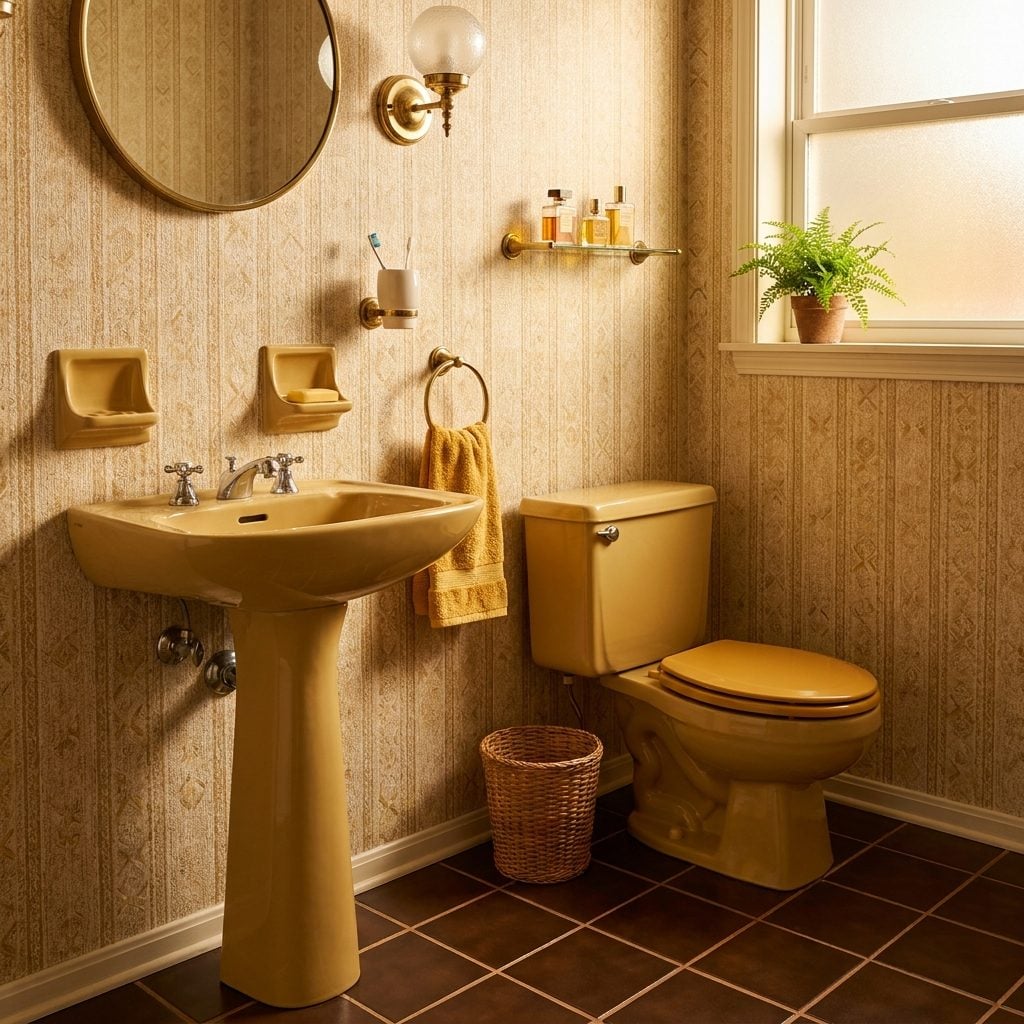
Nobody called it yellow. It was harvest gold, and that distinction mattered enormously. This wasn’t some accidental color choice from a builder’s clearance bin. Families picked harvest gold out of a catalog, waited weeks for delivery, and then pointed it out to every single visitor who stepped through the front door. “Did you see the new bathroom?” was a sentence uttered with genuine pride.
In order to come up with the very specific design ideas, we create most designs with the assistance of state-of-the-art AI interior design software. Also, assume links that take you off the site are affiliate links such as links to Amazon. this means we may earn a commission if you buy something.
The porcelain had a particular warmth to it, almost buttery, that made white fixtures look clinical by comparison. Paired with dark wood vanities or brown tile, a gold pedestal sink and matching toilet could make a 40-square-foot bathroom feel like a suite at a Holiday Inn, which in 1974 was absolutely a compliment.
35. Shag Toilet Seat Covers and the Matching Contour Rug Nobody Questioned
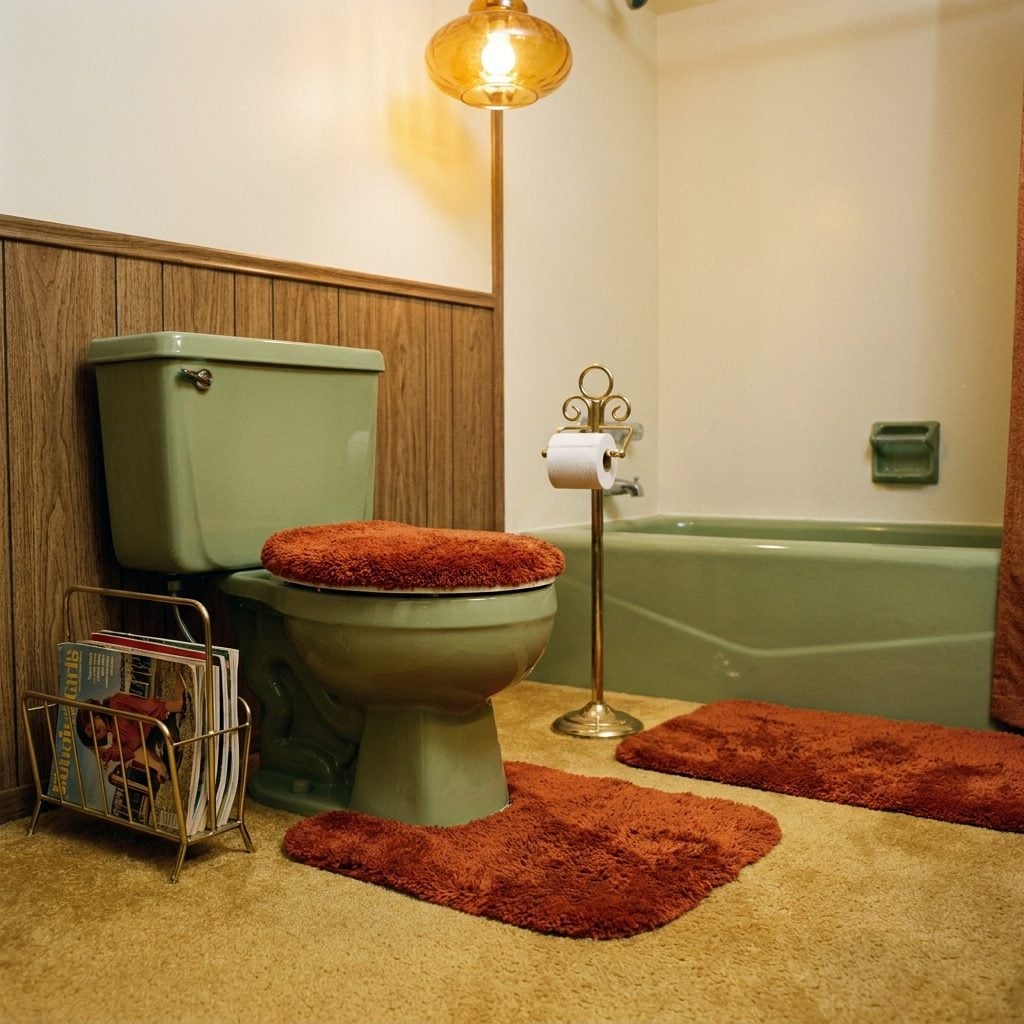
The lid was fuzzy. The seat was fuzzy. The floor around the toilet was fuzzy. And the whole ensemble came in one coordinated color, sold as a three-piece set in a clear plastic zip bag at Sears or JCPenney. Rust, avocado, powder blue, or that specific shade of pink that only existed in bathrooms and never anywhere else.
Here’s what nobody talked about: that contour rug, the one cut to wrap around the toilet base like a custom-fitted carpet, collected every splash, every drip, every bit of moisture that a bathroom produces. It was a sponge shaped like a horseshoe. And yet we washed it, dried it, and put it right back down, because a bare floor around the toilet would have looked unfinished.
34. Sunken Bathtubs Framed with Tile Surrounds That Felt Like Private Roman Baths
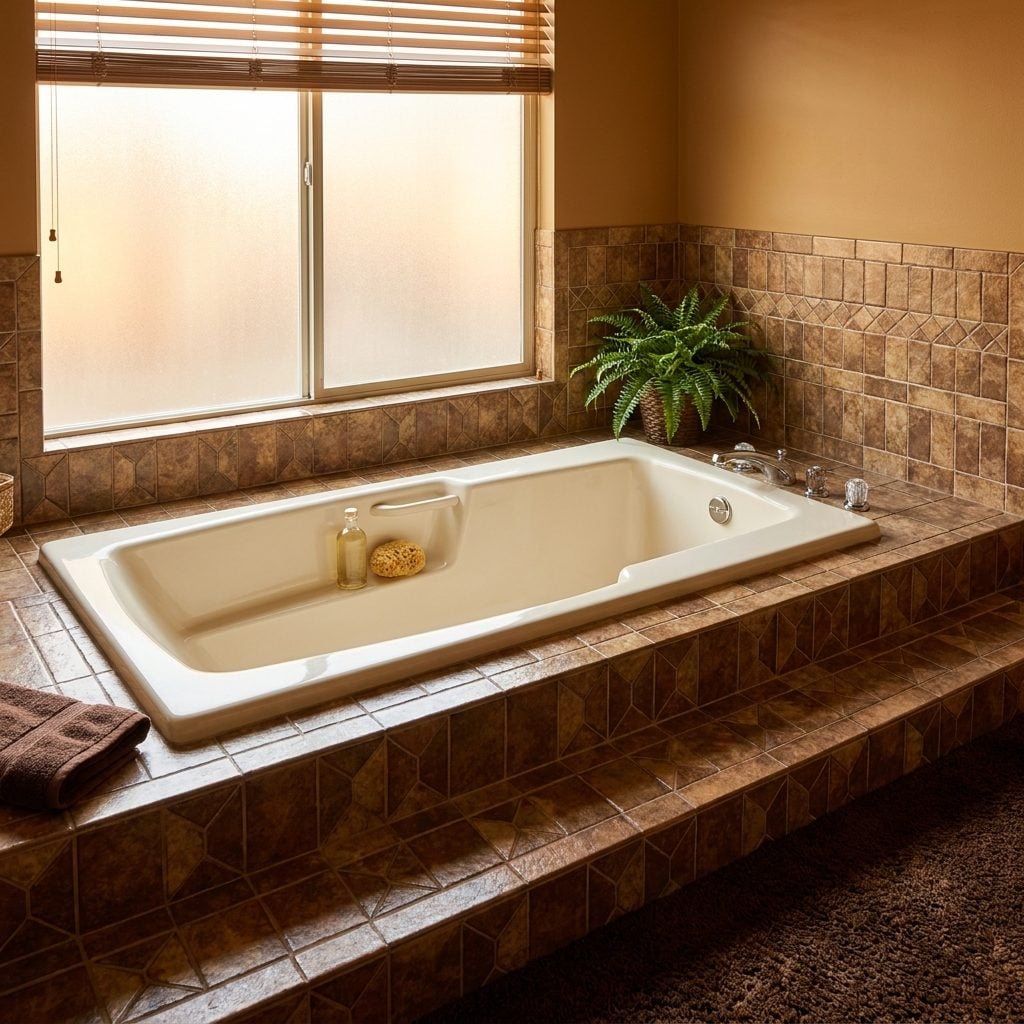
Two steps down into hot water. That was the promise of the sunken tub, and it delivered a feeling of luxury that no freestanding soaking tub has ever quite matched. The tile surround, usually in earth tones like chocolate brown, burnt sienna, or tan, created a kind of stage for the bathtub. You weren’t just getting into a tub. You were descending into one.
The more ambitious versions had built-in tile shelves for candles and bottles, maybe even a small planter box at one end. The whole setup borrowed heavily from the conversation pit happening in the living room, translated into porcelain and grout. If you grew up with one, every standard-height bathtub you’ve used since has felt like a compromise.
33. The Avocado Green Bathroom Suite That Defined an Entire Decade
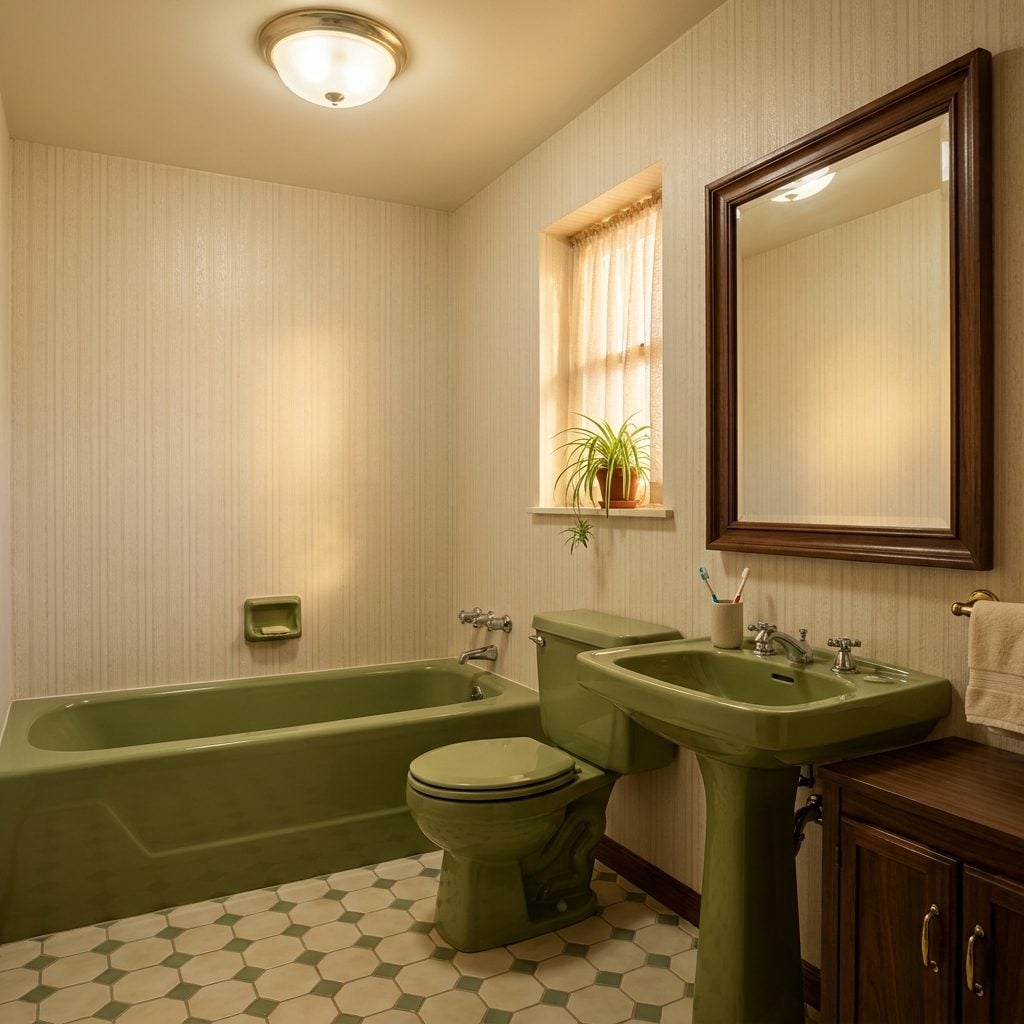
Avocado green. Not sage, not olive, not forest. Avocado. A color so specific to its era that spotting it on a toilet instantly tells you the decade, the neighborhood’s tax bracket, and probably what the family ate for dinner. This wasn’t a subtle accent choice. The toilet was green. The sink was green. The tub was green. The whole room committed.
I’ll say this plainly: I got the appeal wrong for years. I thought it was ugly. Then I saw a well-maintained original in a house with the right wood trim and warm lighting, and something clicked. The color has a depth to it, a richness that photographs never quite capture. It reads as warm, grounded, almost organic against cream tile and dark wood. It worked. It just worked in a way that’s hard to explain to anyone who only knows it from renovation “before” photos on HGTV.
32. Wall-to-Wall Floral Wallpaper in Powder Rooms So Small You Could Touch Both Walls
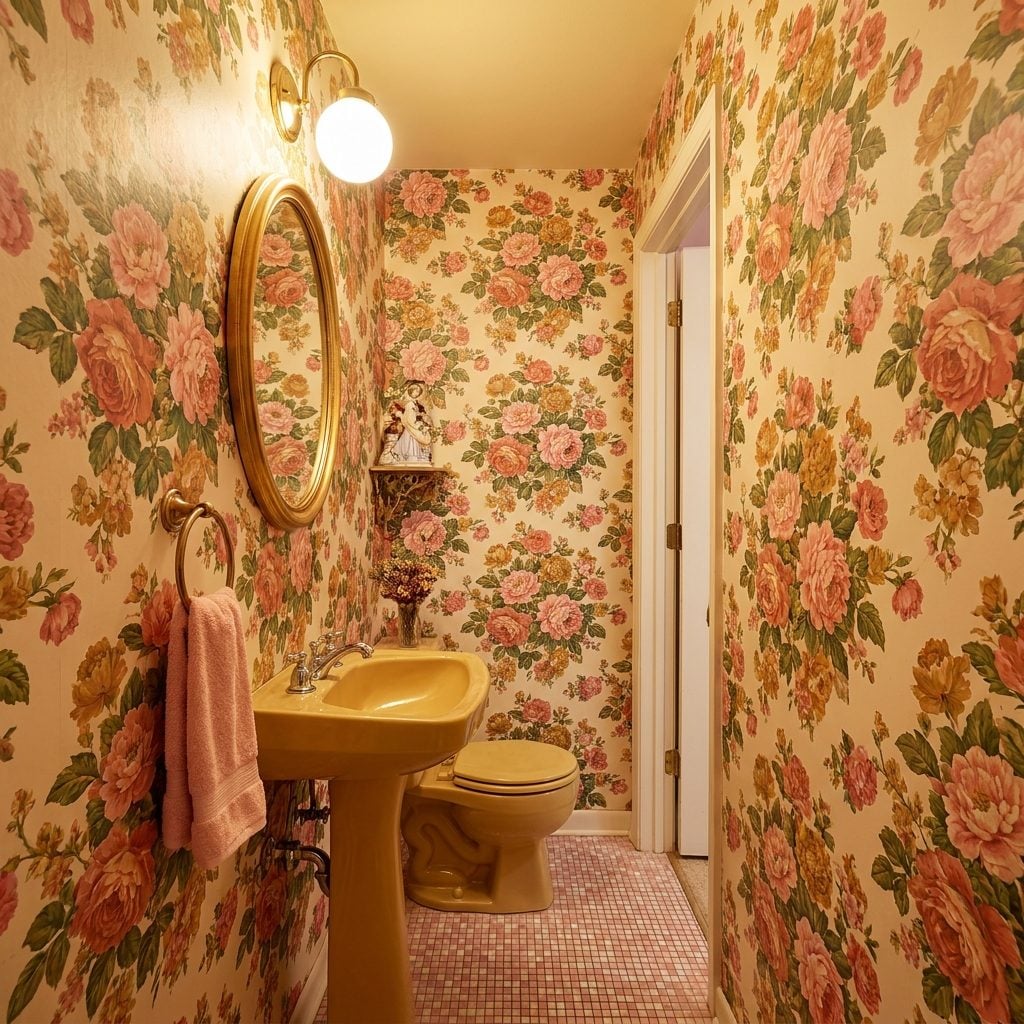
A room barely large enough to turn around in, absolutely drowning in cabbage roses. The powder room got the boldest wallpaper in the house because it was small enough to paper in an afternoon and dramatic enough to make guests comment. And guests always commented.
The patterns ranged from enormous pink and coral florals to dense botanical prints that made the room feel like the inside of a gift box. Nobody worried about the wallpaper making the small sitting room feel smaller. That was the point. The powder room was supposed to feel enclosed, intimate, almost theatrical. You stepped in, closed the door, and found yourself inside a garden. The paste eventually yellowed at the seams. The edges curled near the ceiling. But for a solid decade, that tiny room was the most decorated square footage in the house.
31. Hollywood-Style Globe Vanity Lights That Made Everyone Look Like a Movie Star
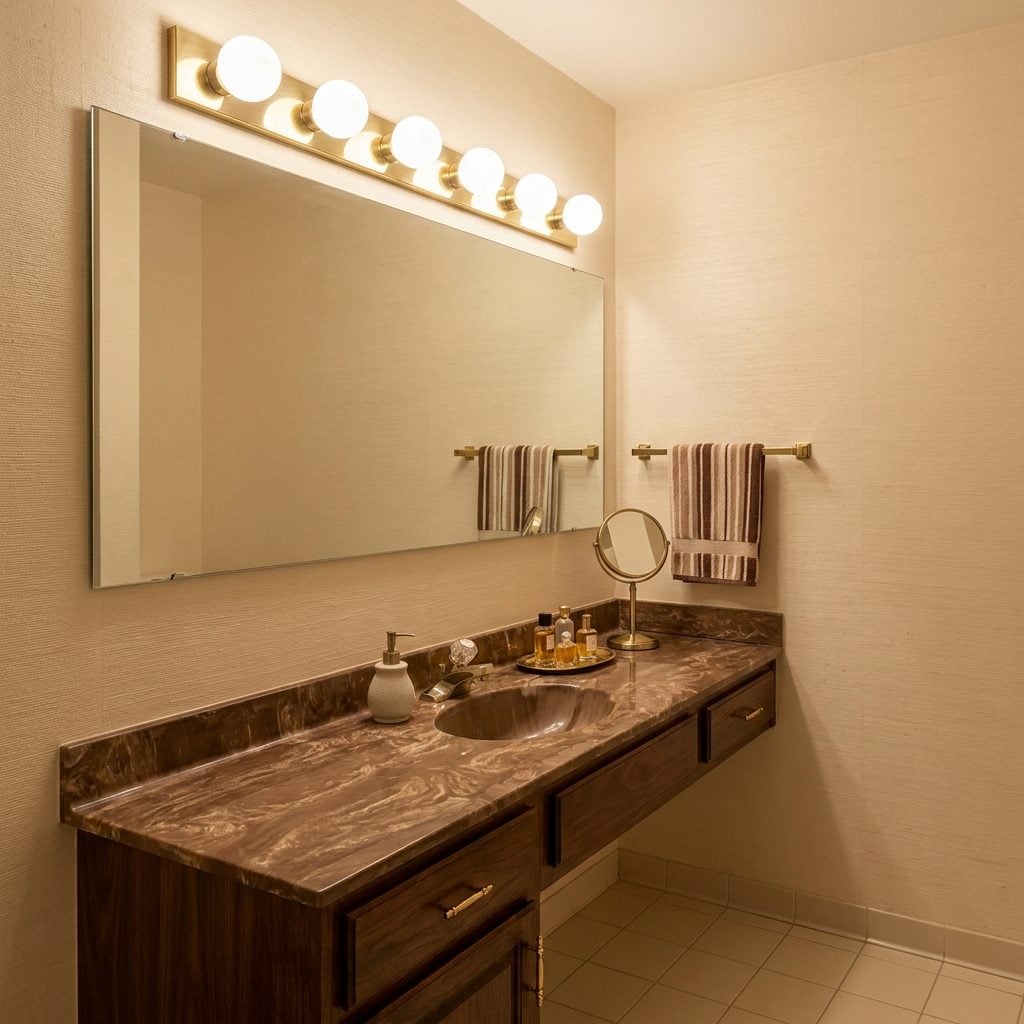
Six glowing orbs lined up across the top of the mirror, each one a frosted frosted globe vanity light the size of a softball, pumping out warm incandescent light that erased every shadow from your face. This was the bathroom equivalent of a backstage dressing room, and it felt glamorous every single morning.
The brass or chrome strip they mounted on ran the full width of the mirror, sometimes with four bulbs, sometimes six, occasionally eight for the truly committed. The light they produced was genuinely flattering. Even, diffused, warm enough to make anyone look rested. Modern LED vanity bars produce cleaner light, technically superior light, but they’ve never once made someone pause at the mirror and think, “I look fantastic.” These did.
30. Mirrored Walls Behind the Sink That Made Tiny Bathrooms Feel Infinite
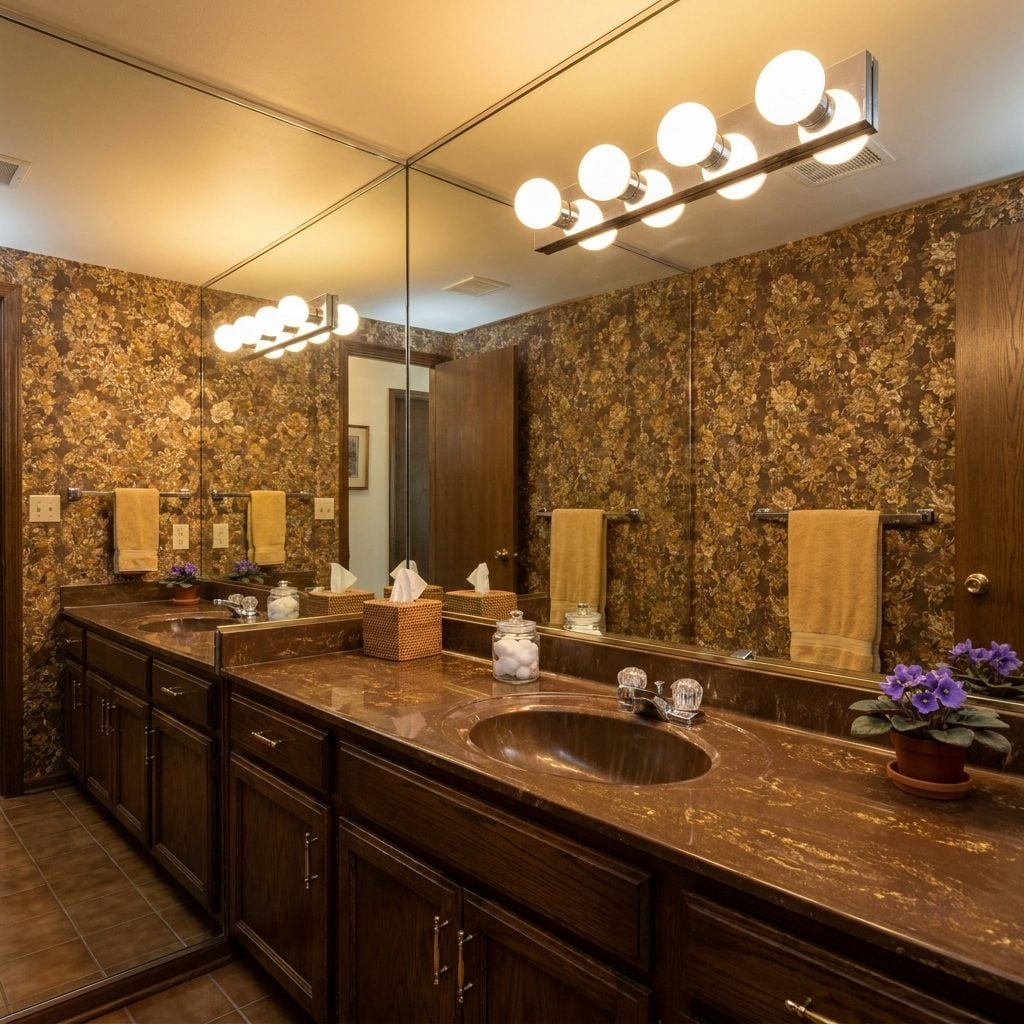
Not a mirror. A mirrored wall. The entire surface behind the vanity, countertop to ceiling, sometimes wrapping around corners, covered in a single unbroken sheet of reflective glass. It doubled the visual size of the room instantly. It also doubled the visual chaos of everything on the counter, but that was a problem for a different decade to worry about.
What made it work was the commitment. A framed mirror over a sink is practical. A wall of mirror is a design decision. Combined with those globe vanity lights mounted directly to the mirror surface, the whole arrangement created a glow that bounced light into every corner. The downside, which nobody mentioned at dinner parties, was the cleaning. Toothpaste splatter on a framed mirror is a small problem. Toothpaste splatter on a wall of mirror is a lifestyle.
29. Heavy Smoked-Glass Shower Doors That Weighed More Than the Vanity
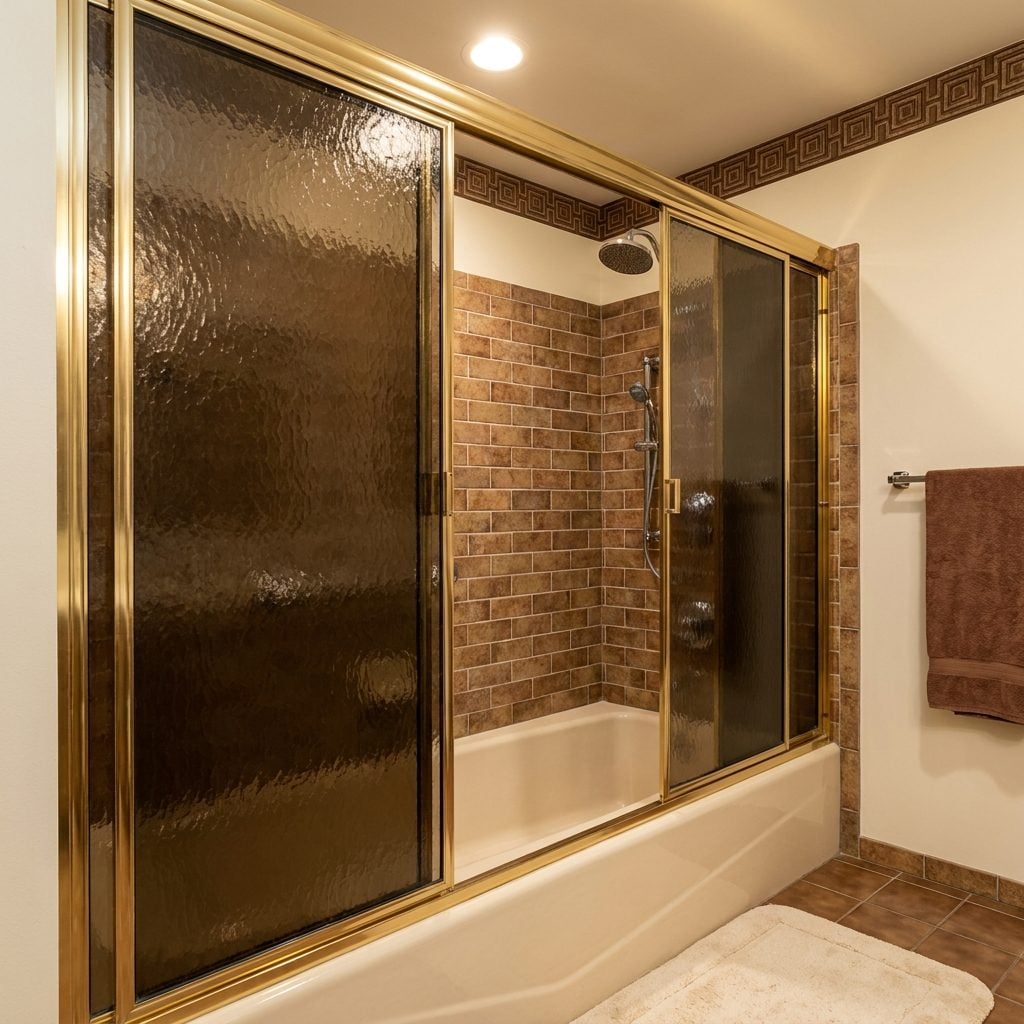
You could hear them rolling. That heavy, grinding slide along the aluminum track, the metal-on-metal rumble that announced every shower in the house to everyone in the house. Smoked glass shower doors in the 1970s were thick, genuinely heavy panels of bronze-tinted glass that required actual effort to open and close.
The tint served two purposes. It hid the shower occupant behind a veil of dark amber or gray. And it hid the soap scum, at least for a while. The gold or chrome tracks collected mineral deposits in the grooves like it was their job. Cleaning those tracks required a toothbrush, white vinegar, and the kind of patience most people simply didn’t have. But closed, with the light behind them, those doors looked undeniably sophisticated. Like the bathroom belonged in a hotel lobby.
28. The Built-In Ashtray Near the Toilet, Because Apparently That Was a Thing
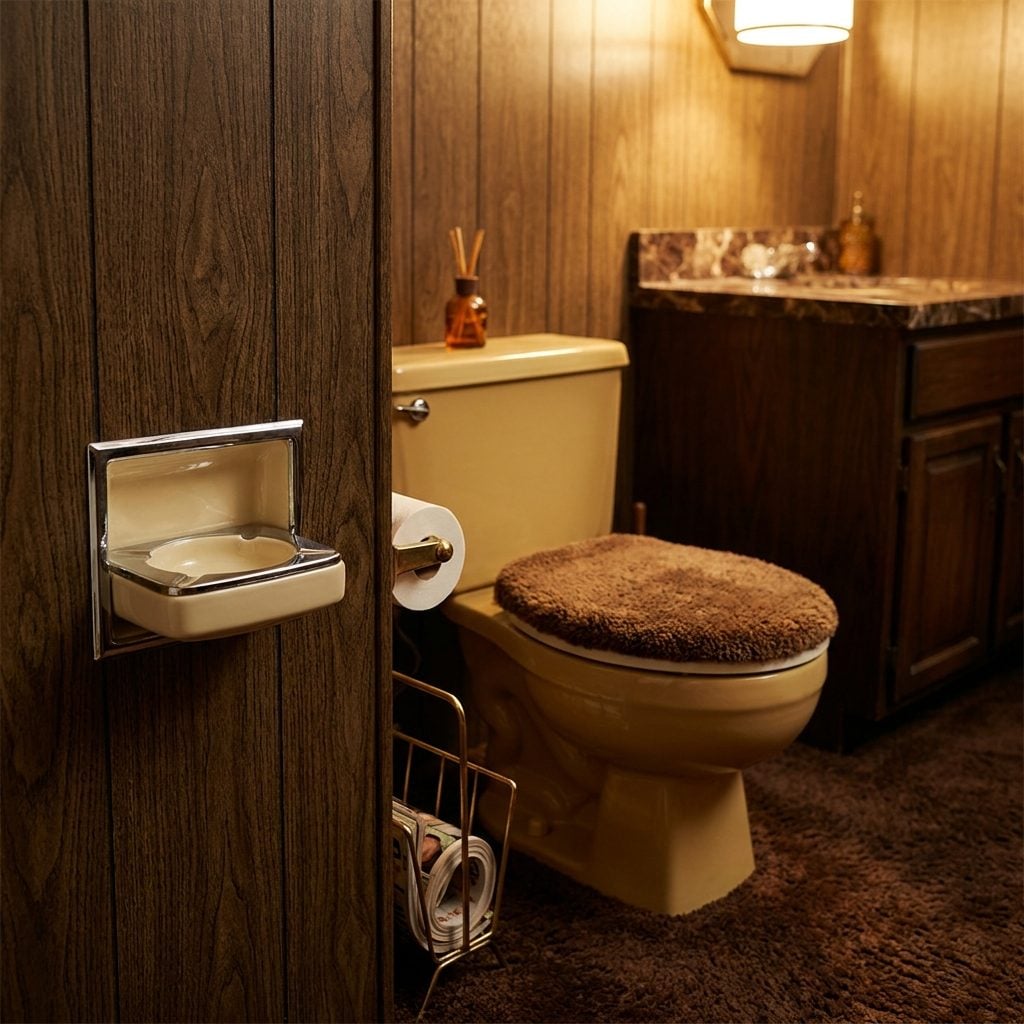
Recessed into the wall, right at arm height from a seated position, finished in matching chrome or ceramic. A built-in ashtray. In the bathroom. Next to the toilet. Like that was normal.
And it was normal. Completely, unremarkably normal. Smoking was so woven into daily life in the 1970s that bathroom designers built ashtrays into the walls the same way they built in toilet paper holders. Some were ceramic dishes set into recessed niches. Some were chrome flip-out trays mounted on swivel brackets. The fancier ones matched the other bathroom hardware. The whole concept now feels like an artifact from a different civilization, which, honestly, it kind of is.
27. Thick Plush Carpet Installed Right Around the Toilet Base, and Nobody Flinched
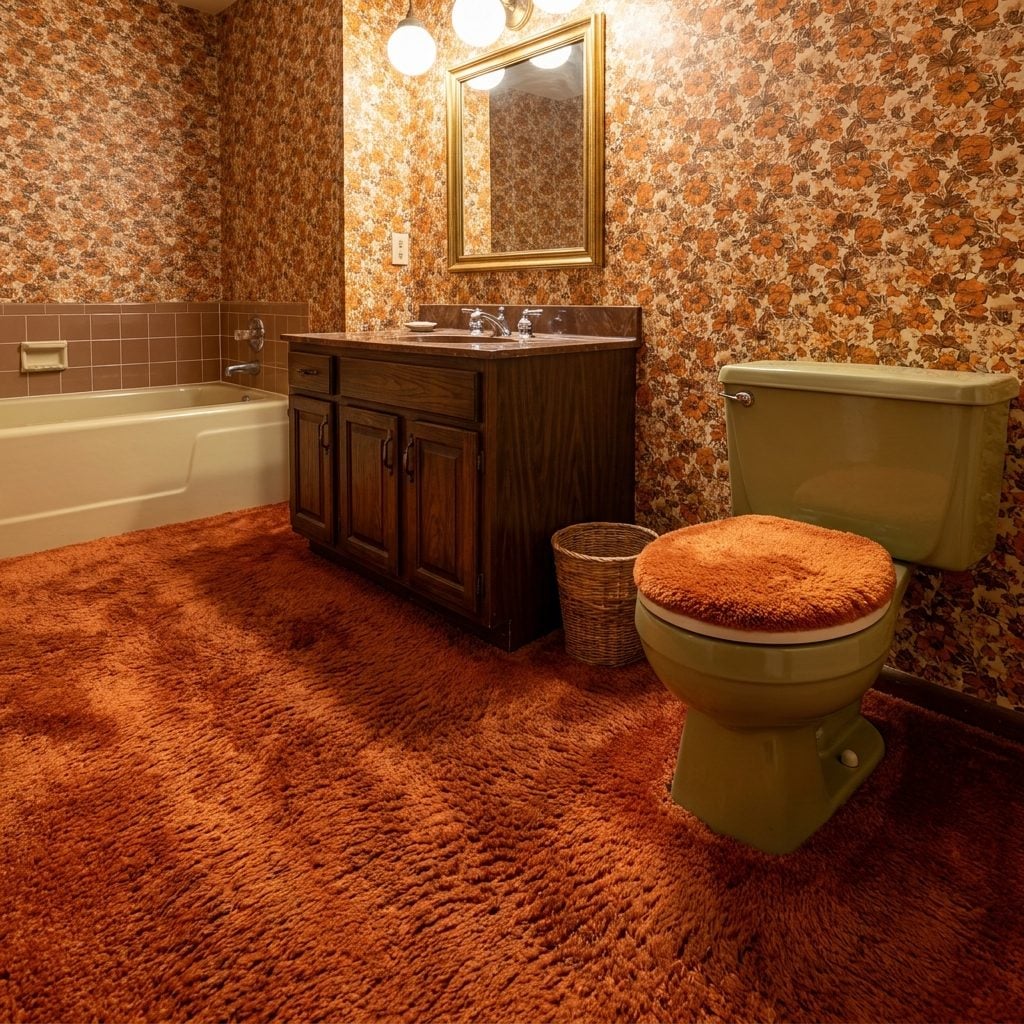
This is the one. The hill I will die on when arguing that the 1970s bathroom existed in a parallel dimension with different rules of hygiene. Wall-to-wall carpet. In a bathroom. Cut and fitted snugly around the base of the toilet like someone took real measurements, got down on their hands and knees, and carefully trimmed shag pile to meet porcelain. Because someone did.
The colors were always bold. Burnt orange. Deep gold. Forest green. Colors dense enough to hide what was inevitably going to happen to carpet installed in the wettest, most splash-prone room in any house. The carpet absorbed everything. Steam, drips, overspray from the sink, the slow creep of moisture from the shower. And it held onto all of it with the quiet determination of a material that was never, ever supposed to be there.
By the 1980s, tile and vinyl started replacing bathroom carpet, and by the 1990s, the entire concept felt like a cautionary tale. But for about fifteen years, a carpeted bathroom was the mark of a house that had been “done right.” Your parents weren’t cutting corners. They were investing. In carpet. Around a toilet. And they were proud of it.
26. Dark Wood Vanity Cabinets with Ornate Brass Pulls That Weighed More Than the Towels
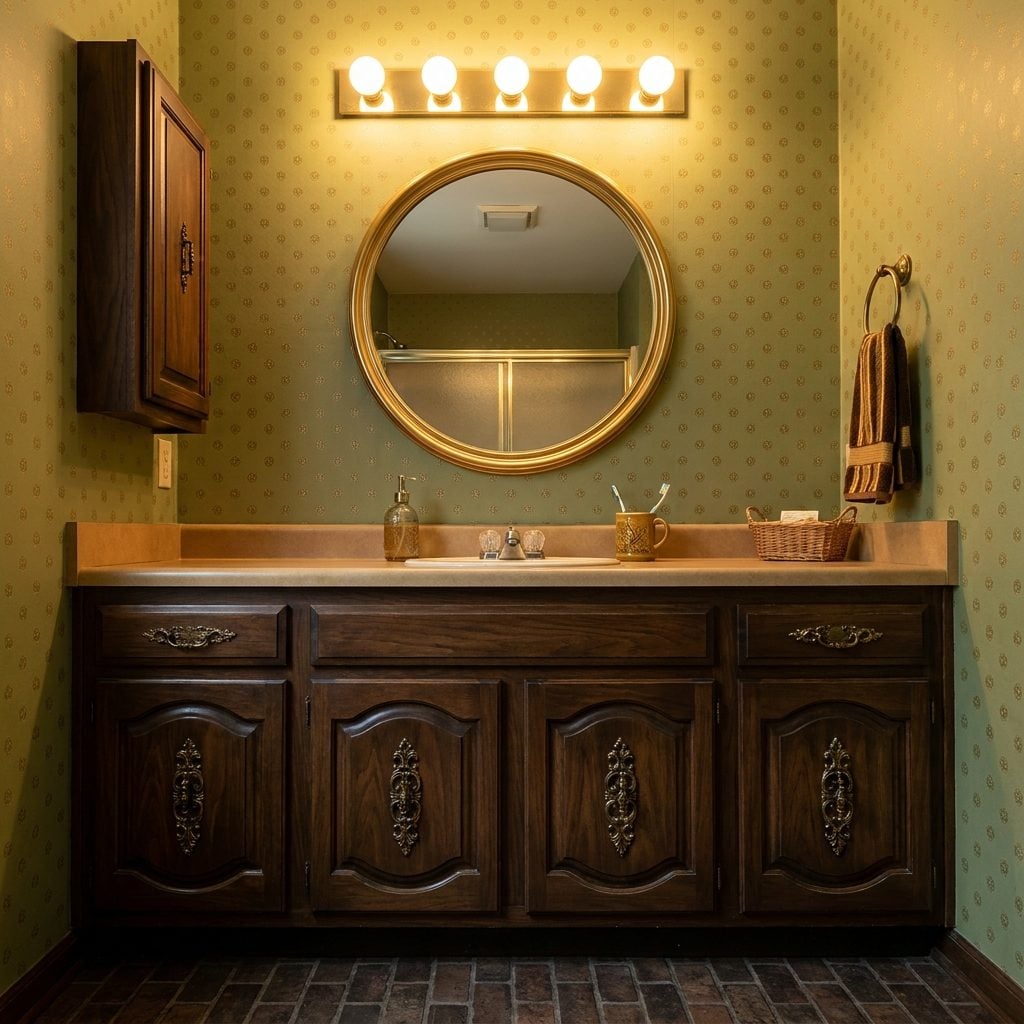
Those brass pulls could double as small weapons — thick, scrolled, absurdly heavy for a bathroom cabinet, catching every fingerprint and water droplet while still looking regal doing it. The dark walnut stain on the vanity was so deep it practically swallowed the room’s light. Nobody seemed to mind. Gravitas was the whole agenda.
Opening those drawers felt like pulling on a church door. The brass hardware jangled against the wood with a satisfying clunk, and inside you’d find the usual chaos: bobby pins, half-squeezed tubes of Crest, a comb nobody claimed. But the outside? Looked like it belonged in a judge’s chambers. Every 1970s bathroom was reaching for that energy, and these vanities delivered it with absurd conviction.
25. Pink Ceramic Tile Carried Halfway Up Every Wall Like It Ran Out of Ambition
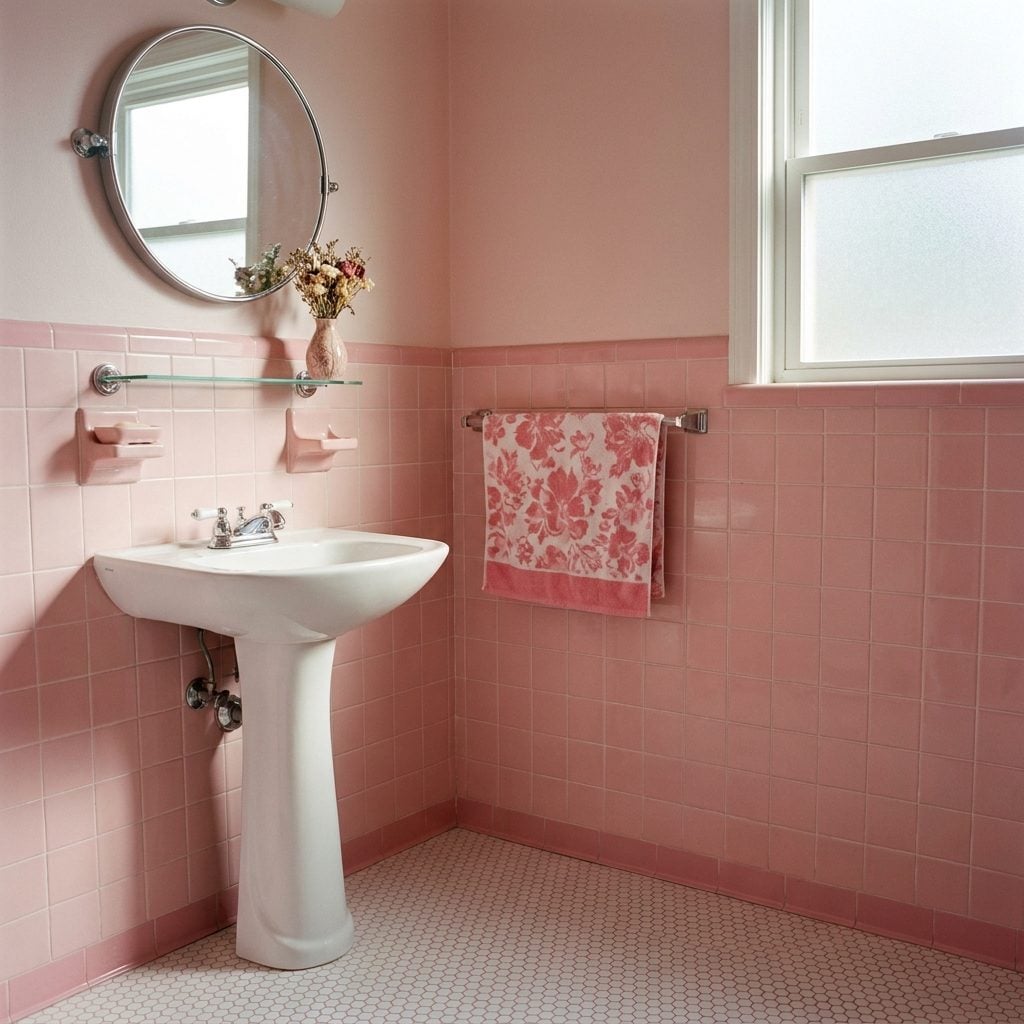
Not blush. Not salmon. Not coral. That specific, unapologetic pink that existed only in mid-century ceramic tile — a shade no paint company has ever successfully matched because it was born in a kiln and meant to outlast the house itself.
The tile stopped at roughly hip height, capped with a neat bullnose trim, and then bare drywall or paint took over. Officially the logic was waterproofing. The result was a bathroom that looked like it was wearing a turtleneck. And ripping it out cost a fortune, so those blue bathroom ideas and white-everything renovations of later decades had to reckon with grout lines that simply refused to leave. Some of those pink tiles are still there right now, behind someone’s shiplap, quietly winning.
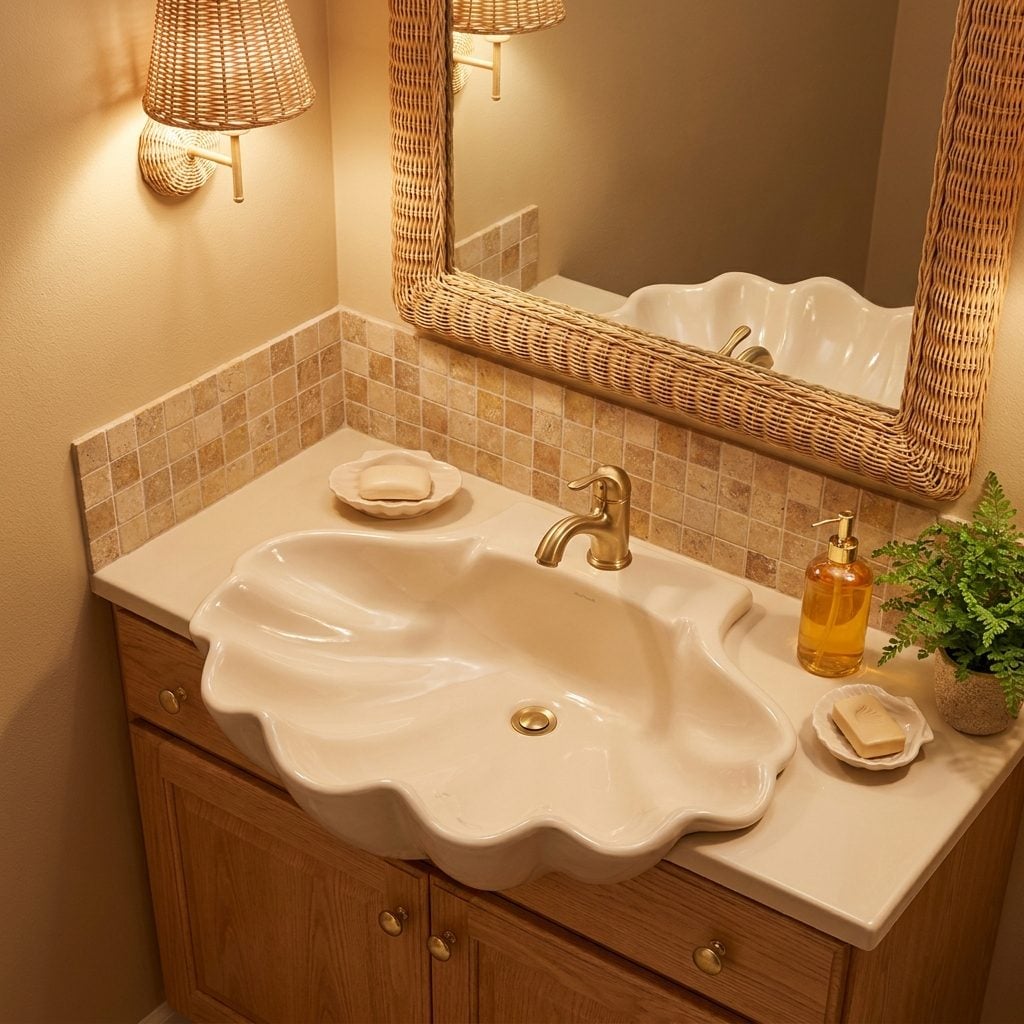
24. Giant Seashell-Shaped Sinks and Soap Dishes That Turned the Bathroom into a Grotto
🔥 Would you like to save this?
Total commitment to the ocean theme. A full-sized shell-shaped soap dish on the counter, a scalloped sink basin that looked like Botticelli’s Venus should be standing in it, maybe a seahorse towel hook for good measure. Nobody lived near a beach. Didn’t matter even slightly.
These weren’t subtle design accents. The sink itself had ridges, water pooled in the valleys of the scallops, and cleaning toothpaste out of those grooves required a dedicated toothbrush — which defeated some larger purpose nobody wanted to examine. But guests always commented on the shell sink. Always. That reaction was the driving force behind 1970s bathroom design: making someone remark on your bathroom unprompted.
23. Fake Marble Laminate Countertops with Gold Flecks That Sparkled Under Every Light
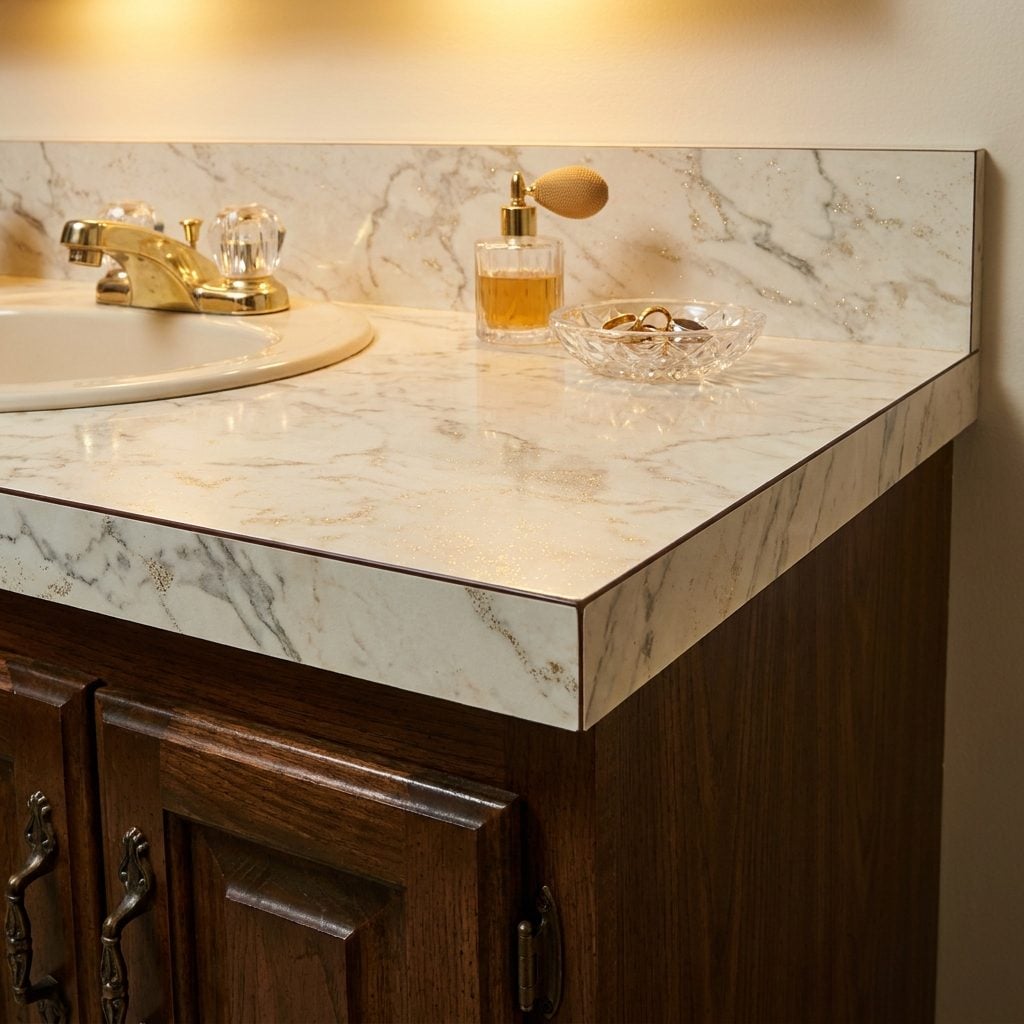
Real marble was for banks and hotel lobbies. This was better, arguably, because real marble doesn’t sparkle. These countertops did — tiny gold metallic flecks suspended in cream-colored laminate, catching vanity light and throwing it back like a very committed disco floor in miniature.
The veining pattern repeated at regular intervals, which you’d never notice unless you stared at it while brushing your teeth for years on end. (Many of us did.) That telltale brown seam line at the counter’s edge gave the game away, but nobody cared. Warm to the touch, easy to wipe down, a fraction of the cost of real stone. It delivered the sensation of luxury without any of the anxiety about staining it. Honestly? Underrated material.
22. Molded Fiberglass One-Piece Tub and Shower Combos That Defined ‘Good Enough’
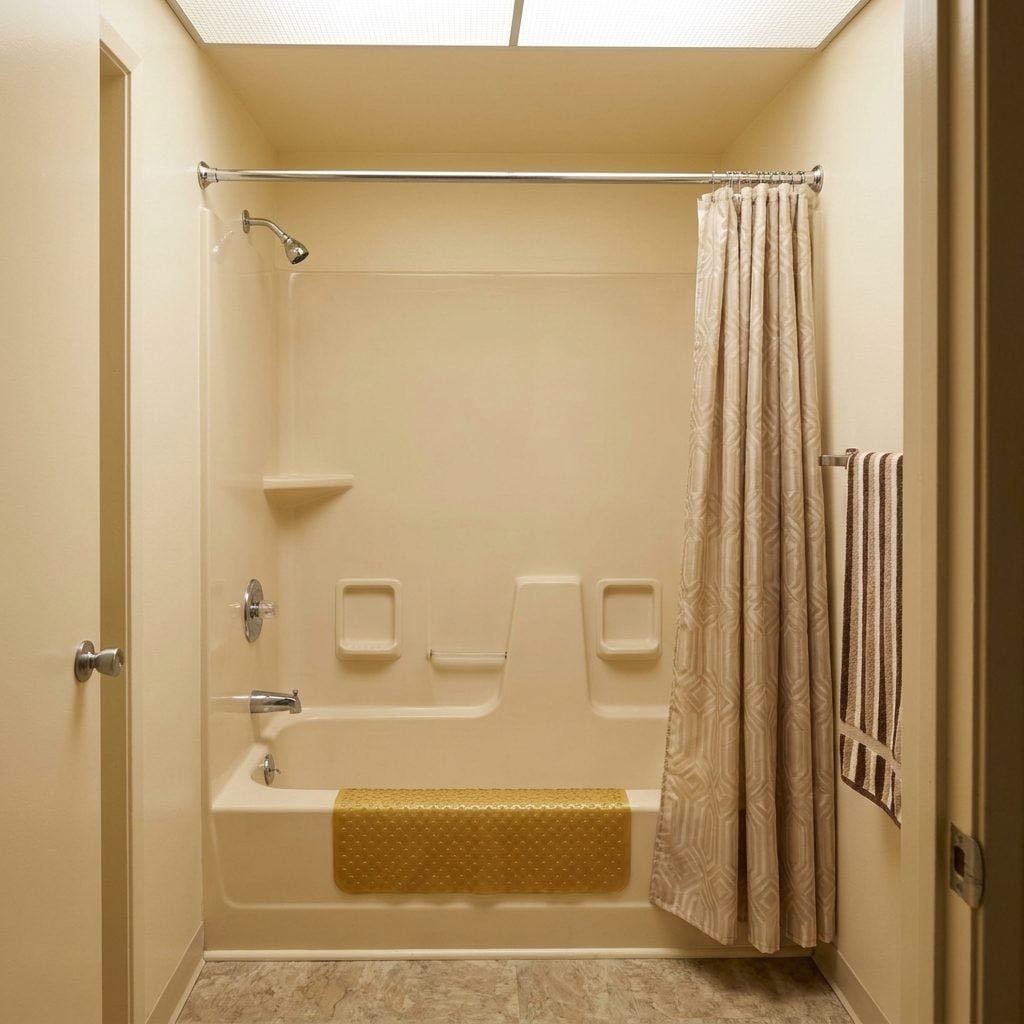
One piece. No grout lines, no tile to crack, no separate tub and surround to seal. It arrived on a truck already shaped like a bathroom, and two guys with a dolly muscled it through the hallway before the drywall went up — because after that, it wasn’t fitting through any door on earth.
The built-in soap dish was too small for a full bar of Dial, and the molded corner shelf held one shampoo bottle at a slight angle that guaranteed it would topple during every shower. Standing on that textured floor felt like a very mild cheese grater. Over the decades the whole unit yellowed in a gradient pattern that mapped exactly where water hit most often. Practical, indestructible, deeply unlovable — and yet it worked without a single complaint that mattered. Decades. No drama. You had to respect that, even grudgingly.
21. Decorative Hanging Bead Curtains Near Bathroom Entrances Because Doors Were Optional
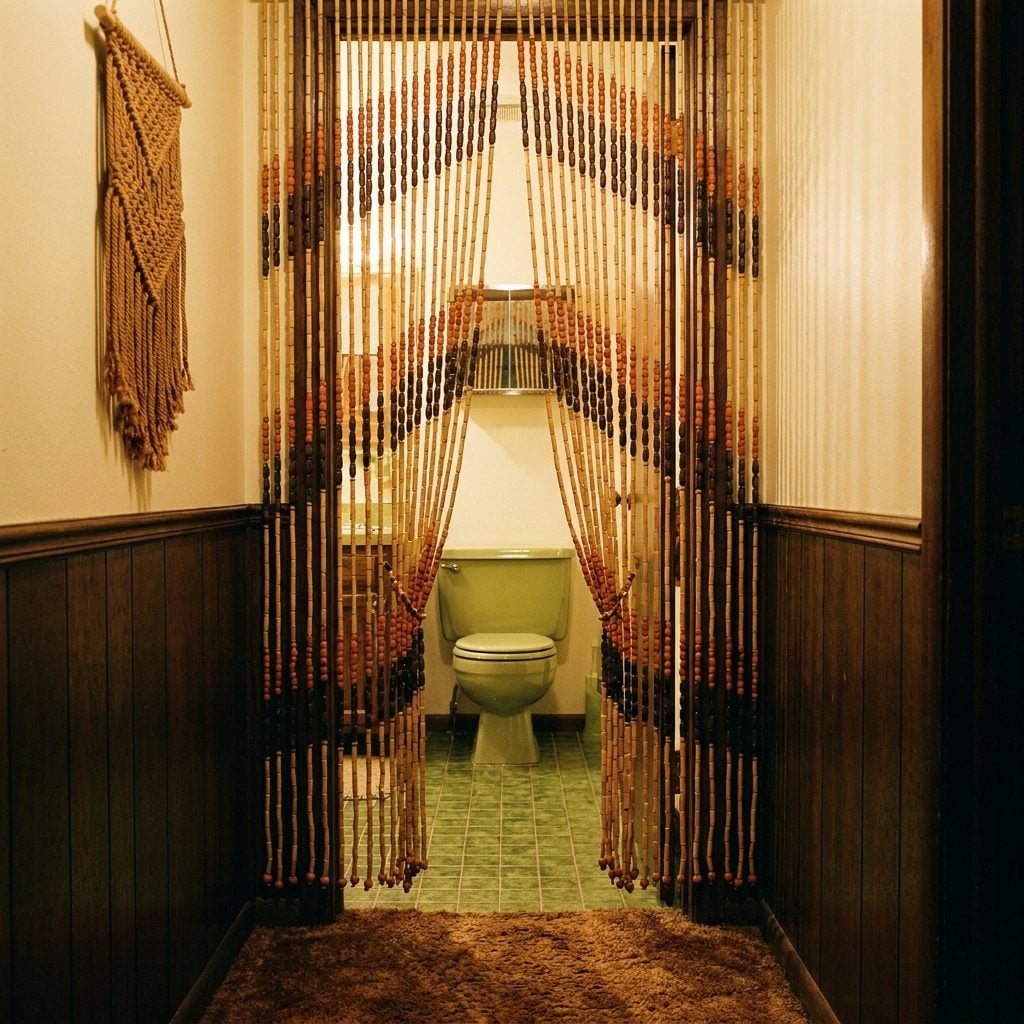
Every trip to the bathroom was a full percussion event. Wooden beads, bamboo tubes, or those translucent acrylic ones that looked like frozen drops of honey — all swinging and clicking against each other as you pushed through. The clatter announced you to the entire household.
Privacy was, let’s say, conceptual. A bead curtain hid nothing and muffled less. But it marked the threshold between hallway and bathroom with a theatrical flourish that a hollow-core door could never manage. Some families hung them where a door was missing. Others hung them in addition to a door, out of pure aesthetic commitment. Either way, you heard everyone coming and going, and somehow that was fine. The 1970s had a wildly different relationship with bathroom acoustics.
20. Frosted Window Films with Geometric Patterns That Said ‘Privacy, but Make It Groovy’
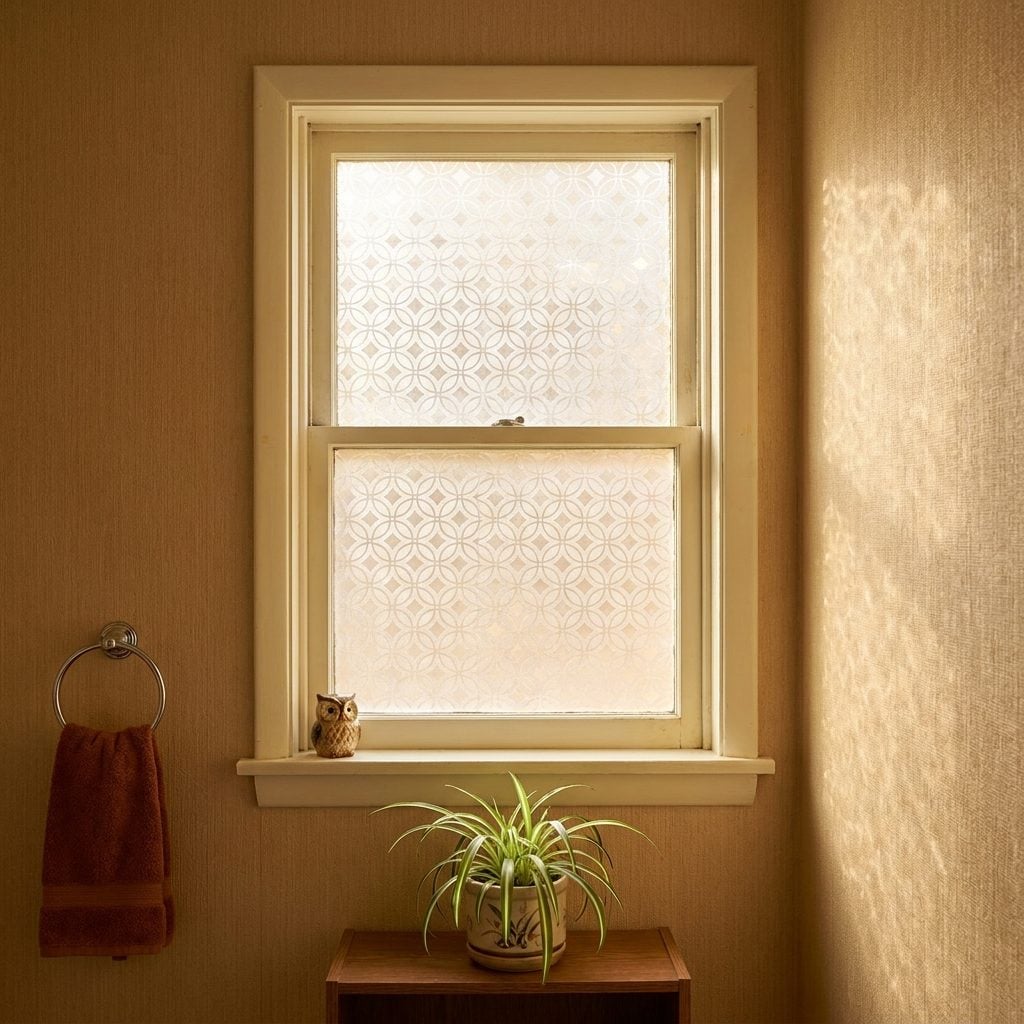
Curtains got wet. Blinds grew mildew. Frosted adhesive film? Problem solved forever — or at least until the edges started peeling and curling like old stamps.
The patterns were always geometric: interlocking diamonds, concentric circles, or that one design that looked vaguely like a chain-link fence trying its best. What the film did to light was genuinely lovely, turning hard daylight into a soft amber glow that made every 1970s bathroom feel like the inside of a lantern. Nobody outside could see in, nobody inside could see out, and both outcomes were considered wins. When a corner finally lifted? Someone pressed it back down with a wet thumb and called it maintenance. Fixed. Done. Move on.
19. Textured Popcorn Ceilings Inside Bathrooms, Where Steam Made Them Even Worse
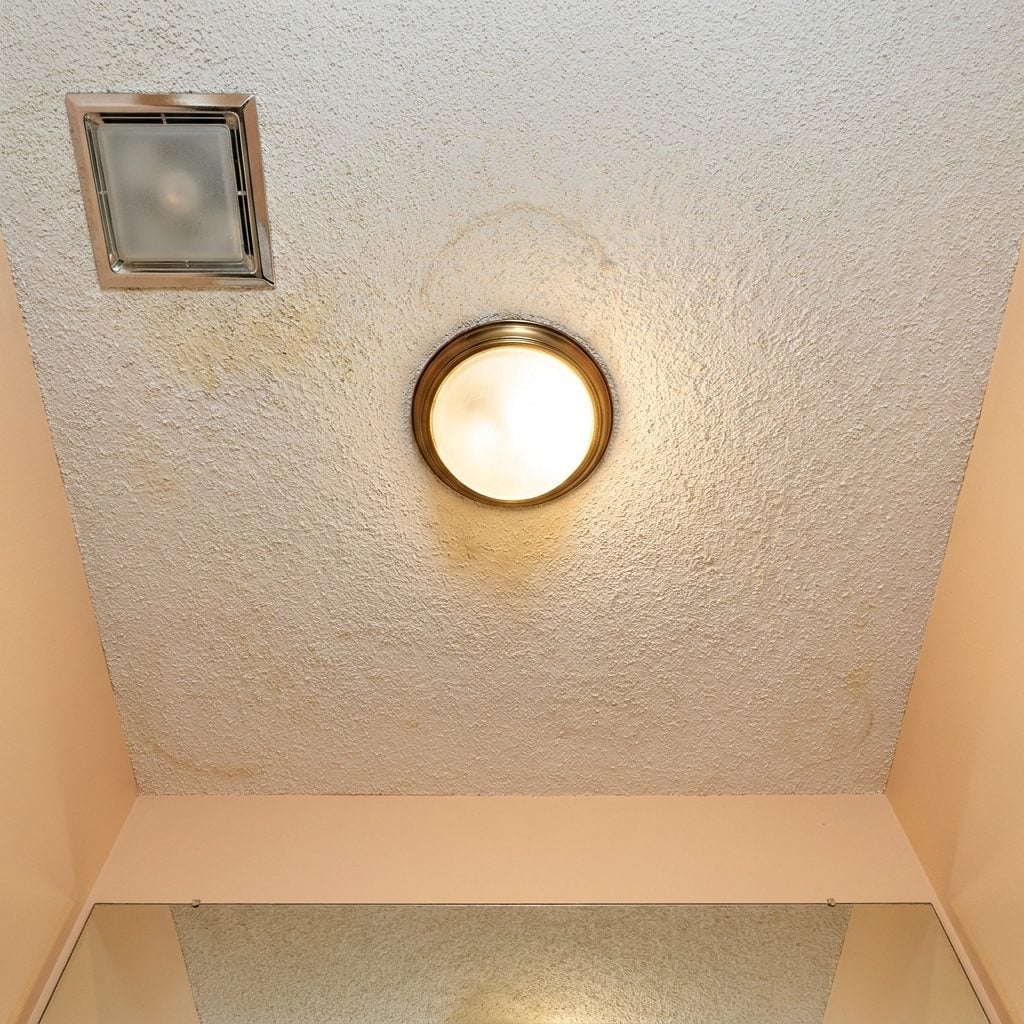
Every bathroom had it. Every bathroom suffered for it.
Popcorn ceiling texture was already questionable in dry rooms, but in a bathroom — where hot shower steam rose twice daily and condensed on those thousands of tiny stippled bumps — it became something worse. The texture trapped moisture, turned faintly yellow over the years, and developed mysterious brown ring stains that nobody could explain and everyone ignored. Painting over it just made the bumps thicker. Scraping it off released a snowstorm of gritty white debris and, in older homes, potentially asbestos. So it stayed. It always stayed. You’d lie in the bathtub staring up at it, finding faces and animals in the bumps like some damp Rorschach test, and that ceiling stared right back — unbothered, permanent, outlasting every renovation conversation beneath it.
18. Accordion Folding Doors on Linen Closets That Never Once Folded Correctly
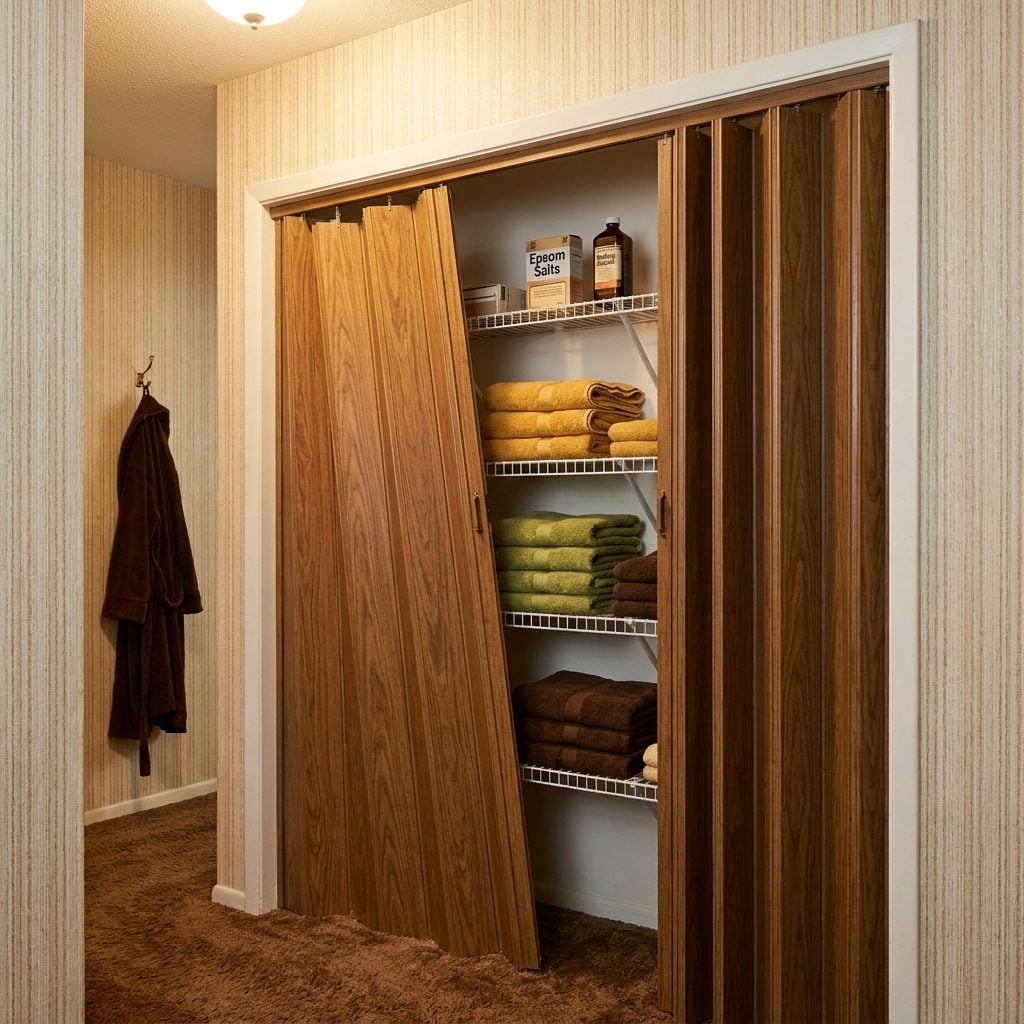
The vinyl woodgrain print was always peeling at the fold lines, and those little wheeled carriages riding the top track would pop out if you looked at the door with any urgency. Opening one required a specific jiggling technique that every family member knew instinctively and no guest could figure out.
These doors existed because the small family room layouts of 1970s homes didn’t leave enough hallway clearance for a real swinging door. The accordion was the compromise, and like most compromises, it left everyone vaguely annoyed. It hid the towels, mostly. It closed the closet, approximately. When you yanked it too hard and the whole thing collapsed like a broken concertina, you just popped the wheels back in the track and carried on with your day. I still have a muscle memory for that exact wrist-flick maneuver — some things the body never forgets.
17. Wallpaper Borders Filled with Vines, Swans, or Tiny Flowers Running at Chair-Rail Height
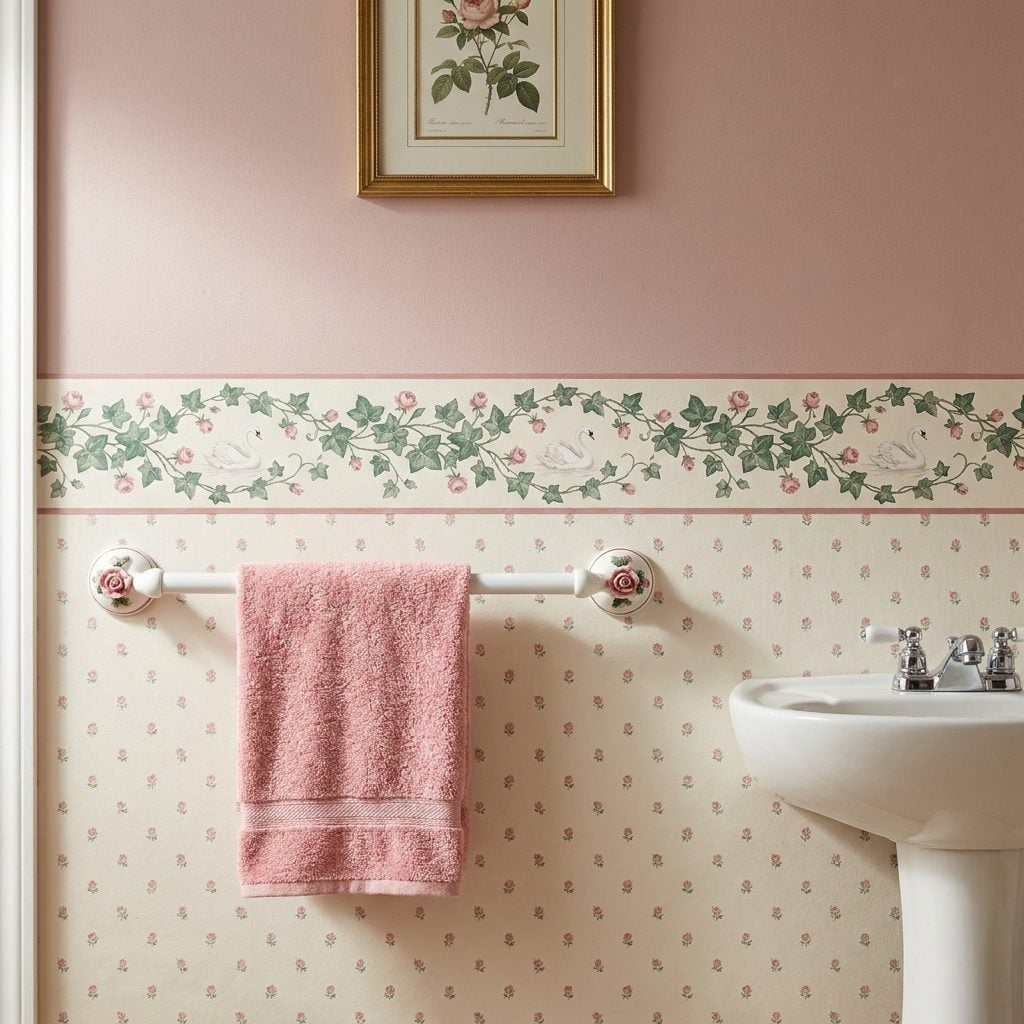
Five inches of ivy. Or swans drifting on a lake. Or those tiny calico flowers that looked like fabric samples from a Laura Ashley fever dream. The border ran the entire perimeter of the bathroom at exactly chair-rail height — above it, paint; below it, coordinating wallpaper or more paint. It held the visual line of the room, and removing it later meant discovering that the colors above and below had faded at completely different rates, which was its own small betrayal.
Hanging these borders was a two-person job involving a folding table, a tray of warm water, and a conversation that tested marriages. The paste was unforgiving. Bubbles appeared. Seams refused to align at corners. And yet once it was up, the bathroom had a finished, deliberate quality that plain painted walls couldn’t touch. Someone cared enough to measure, wrestle with wet paper, and argue about whether the swans should face left or right at the doorway. That effort showed. Even when the seams eventually started lifting, it showed.
16. The Built-In Medicine Cabinet With That Mysterious Razor Blade Disposal Slot
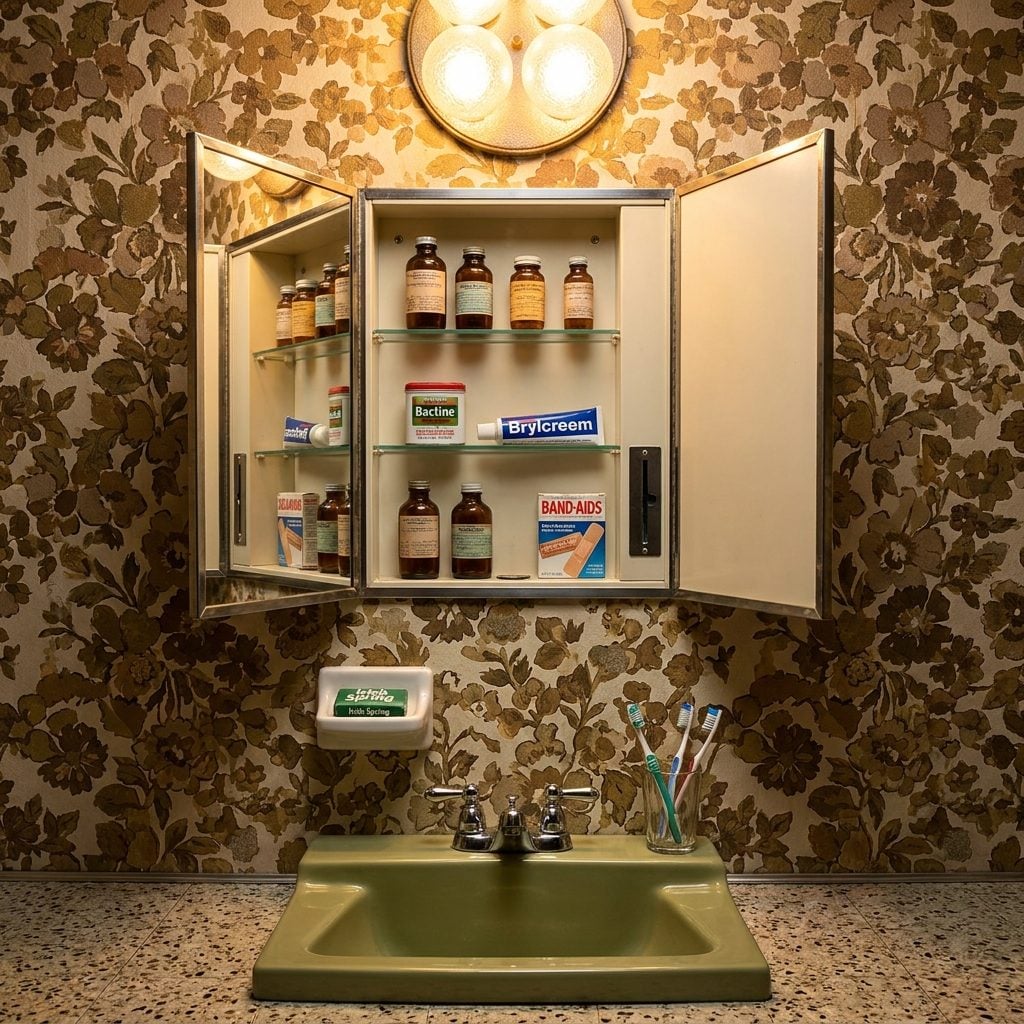
Open the mirrored door and there it was — a slit in the metal wall about two inches long, barely noticeable between the shelves of Mercurochrome and Aqua Velva. Dads slid used razor blades through that slot without a second thought. Nobody questioned where they went. The answer, for anyone who’s since torn apart one of these bathrooms, is genuinely unsettling: they just piled up inside the wall cavity. Decades of rusted blades sitting between the studs, waiting to ambush some future homeowner with a reciprocating saw and optimism.
The cabinet itself packed an absurd amount of stuff into a tiny space — glass shelves holding everything from prescription bottles to a mysterious tube of ointment that predated your birth. And that mirror pulled double duty as both the family’s grooming station and the door to a miniature pharmaceutical archive nobody ever inventoried.
15. Gold-Tone Faucets and Towel Bars That Announced You Had Arrived
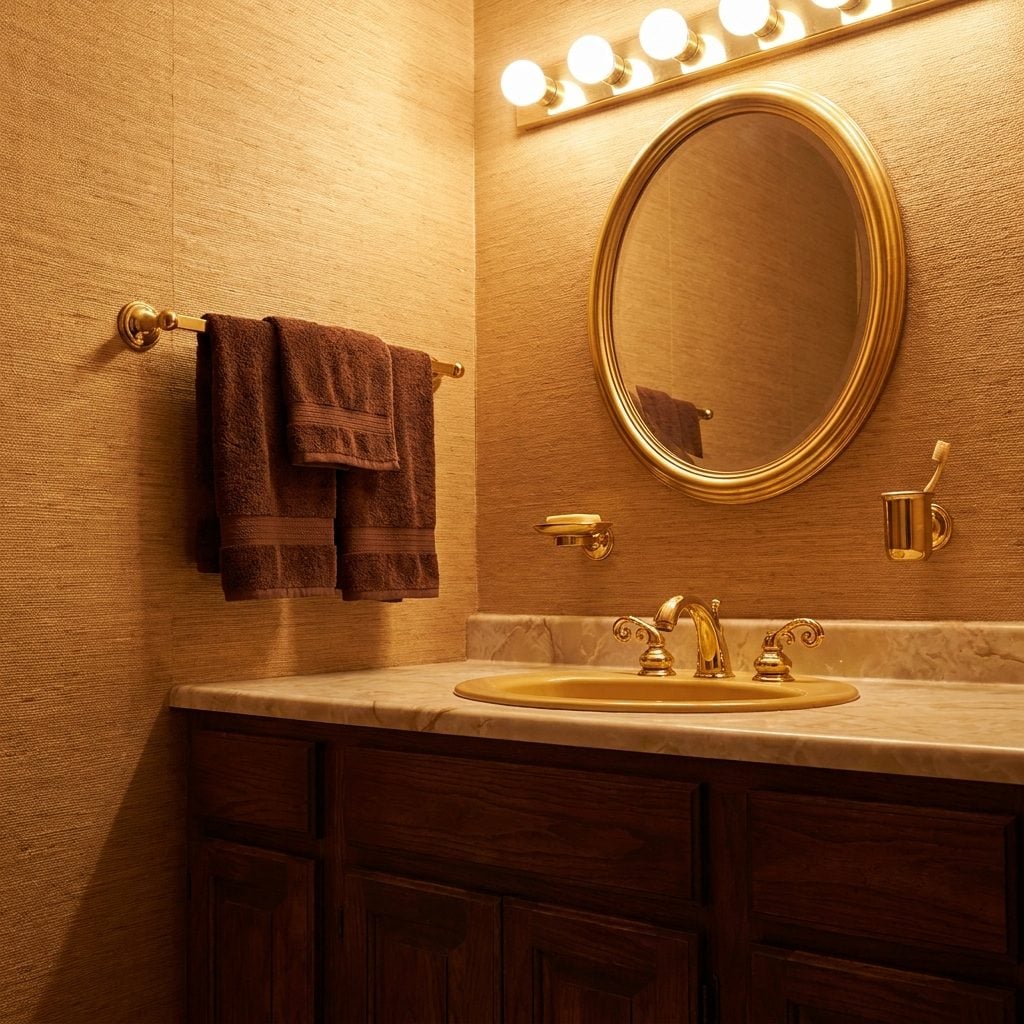
Chrome was for the hall bathroom. Gold was for the master. Every family understood the hierarchy without anyone spelling it out. Those gold-tone faucets weren’t actually brass — they were chrome underneath with a lacquered finish that would start flaking within five years, revealing sad little patches of silver like a secret the bathroom couldn’t keep.
When they were new, though? Magnificent. They matched the towel bars, the toilet paper holder, the robe hook, and the shower door frame in one coordinated display that announced “we upgraded” louder than any renovation could today. The whole suite had a confidence about it, a swagger, even if the lacquer’s shelf life made it a temporary one.
14. The Freestanding Magazine Rack Parked Right Next to the Toilet
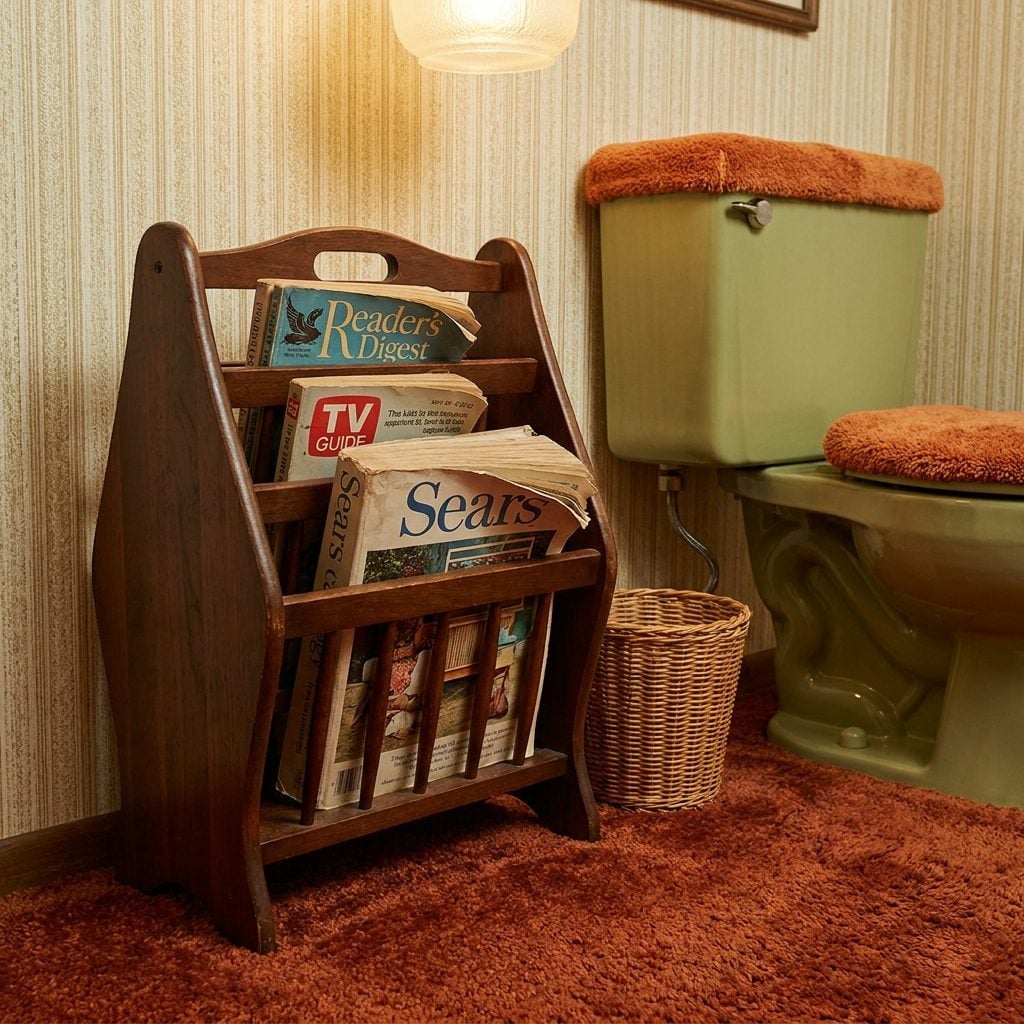
No one pretended it was for decoration. That wooden magazine rack — usually with spindle sides that pinched your fingers — existed for one purpose, and the whole family silently agreed to never discuss that purpose at dinner. Reader’s Digest. TV Guide. The Sears catalog with certain pages more worn than others. A National Geographic from 1974 that had lived there so long it qualified as furniture.
The rack itself was often a gift, sometimes homemade. It sat on the carpet (yes, the carpet) beside the toilet like a tiny library branch with the most honest circulation numbers in the house. Every major furniture catalog sold them through the early 1980s, which tells you everything about how normalized the whole arrangement was.
13. Macramé Plant Hangers Dangling Near the Bathroom Window Like Textile Jellyfish
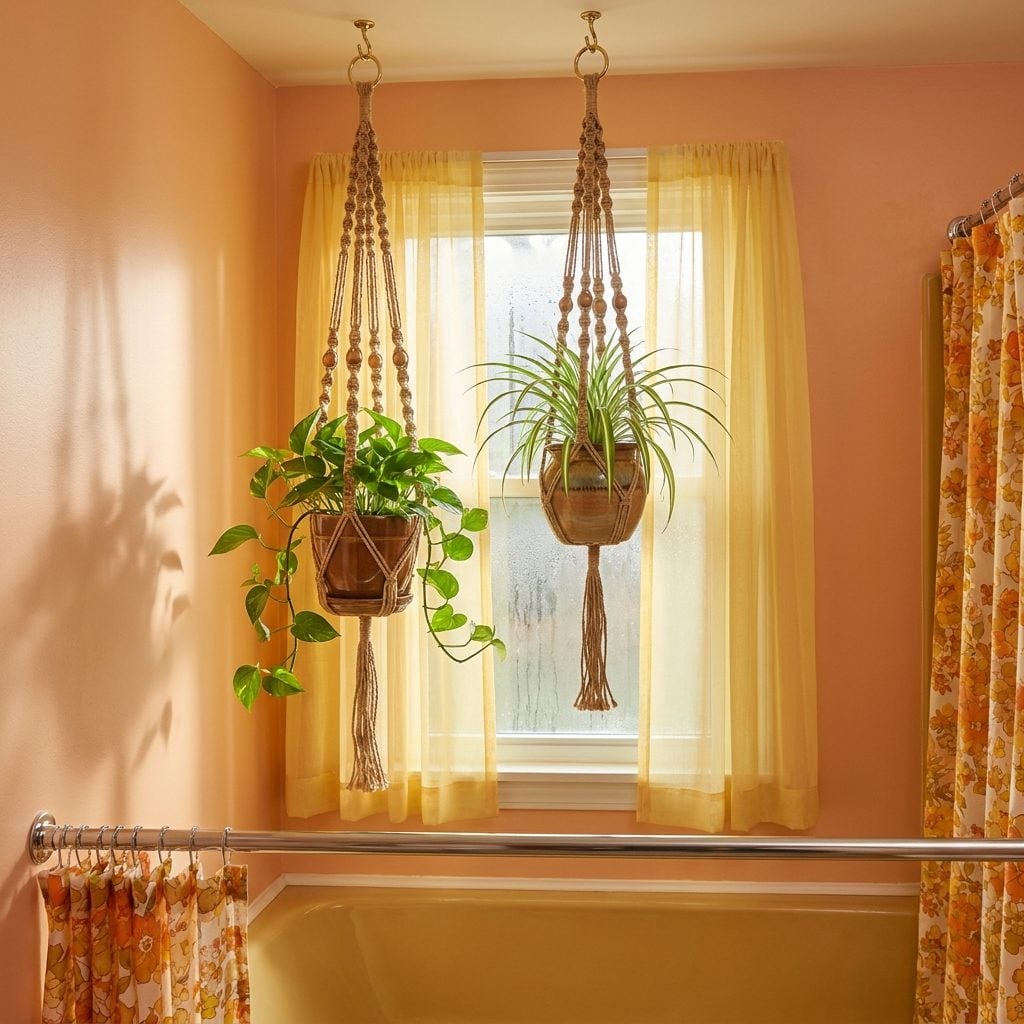
They hung from brass hooks screwed directly into the ceiling, and the plant was always either thriving beyond reason or completely dead — no middle ground existed. A spider plant trailing its babies down through the knotted jute, or a sad fern reduced to brown sticks that nobody bothered to remove for months. Sometimes both conditions in the same bathroom.
Hours of patient knotwork held a glazed ceramic pot that weighed enough to be genuinely concerning, and every shower filled the room with steam. The plants either loved the humidity or rotted from the inside out. Didn’t matter. The hanger stayed up regardless, because taking down macramé felt like admitting defeat against an entire decade.
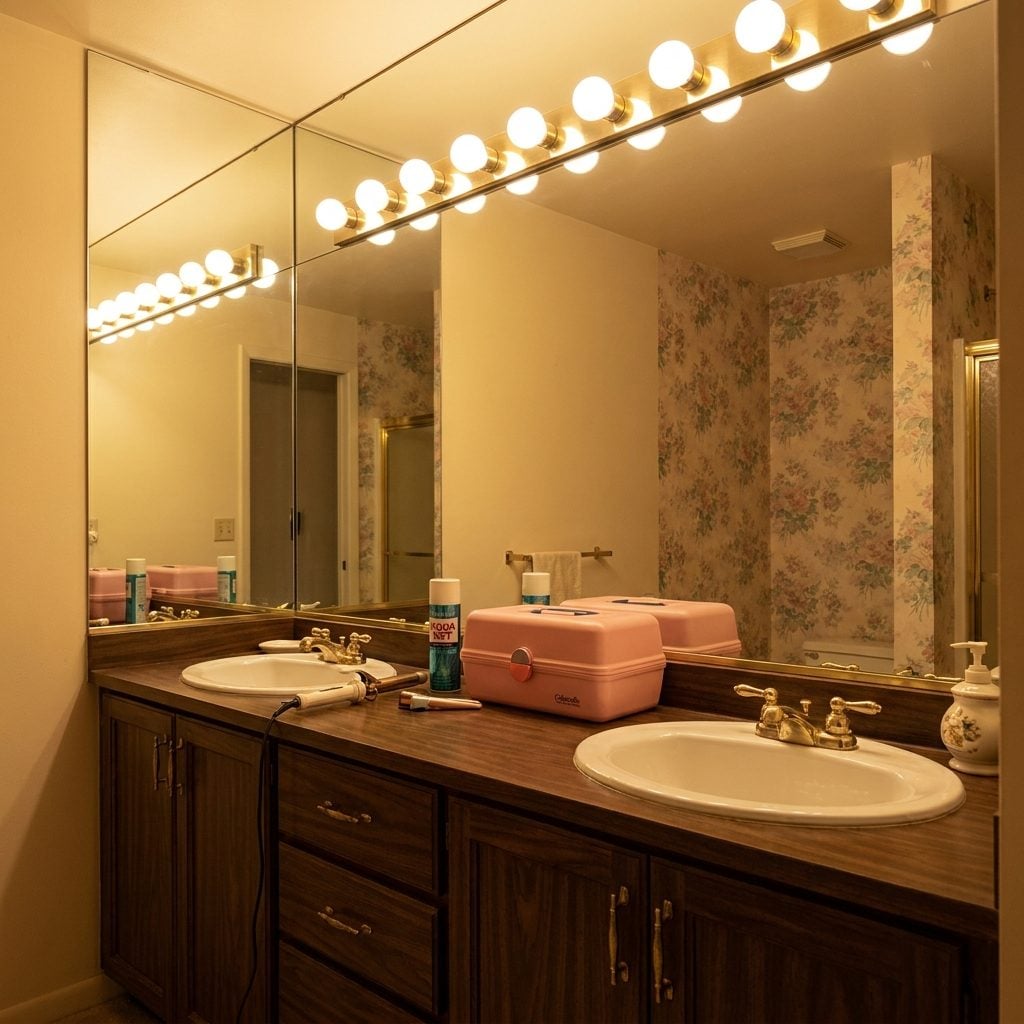
12. Oversized Vanity Mirrors That Stretched Wall to Wall Like a Dance Studio
🔥 Would you like to save this?
These mirrors weren’t accent pieces. They were entire walls. Glued directly to the drywall with adhesive that would later make removal a nightmare involving scoring tools and profanity. The mirror ran from backsplash to ceiling, sometimes wrapping around a corner, turning a cramped bathroom into something that felt twice as large.
The visual trick worked. Problem was, it worked in both directions — you saw yourself from angles you never asked for, every flaw reflected and doubled. Getting out of the shower became a full-body confrontation with reality that most modern bathrooms, mercifully, spare us from. Worth it for the sense of space? Debatable. The builders clearly thought so.
11. Heat Lamps Built Into the Ceiling That Made You Feel Like a Rotisserie Chicken
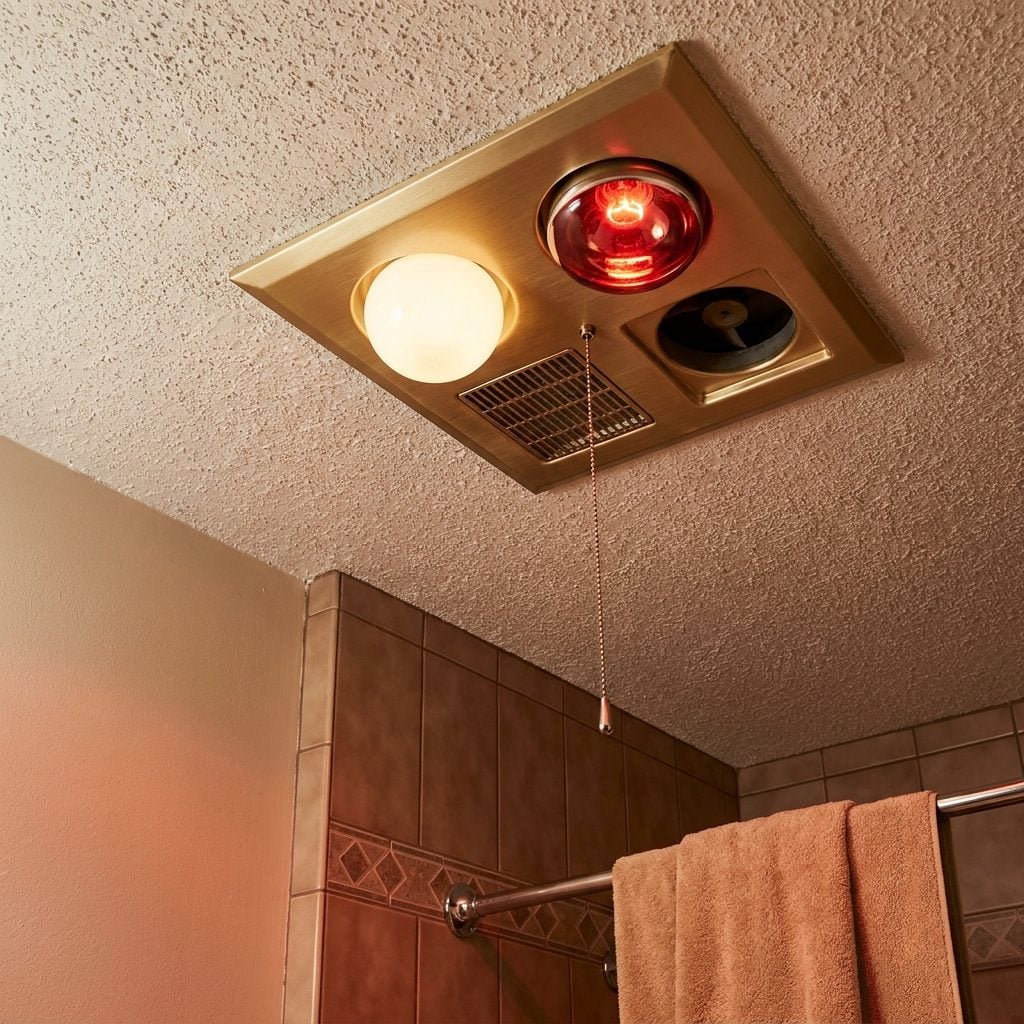
That red-tinted bulb in the ceiling had one job: making the thirty seconds between turning off the shower and grabbing a towel slightly less miserable. Flip the switch and a cone of infrared warmth hit your shoulders like a tiny, personal sun. Two inches to the left? Freezing. Directly under it? Your scalp started cooking.
The fixture usually crammed the heat lamp, a regular bulb, and a wheezing exhaust fan into one housing, all controlled by a confusing row of switches that nobody in the house fully understood. One wrong flip and you got the fan without the heat. Or the heat without the light — fumbling around in a warm, dark bathroom wondering who designed this thing. I suspect nobody tested these switch configurations before they left the factory.
10. Padded Vinyl Toilet Lids in Colors No Toilet Lid Should Ever Be
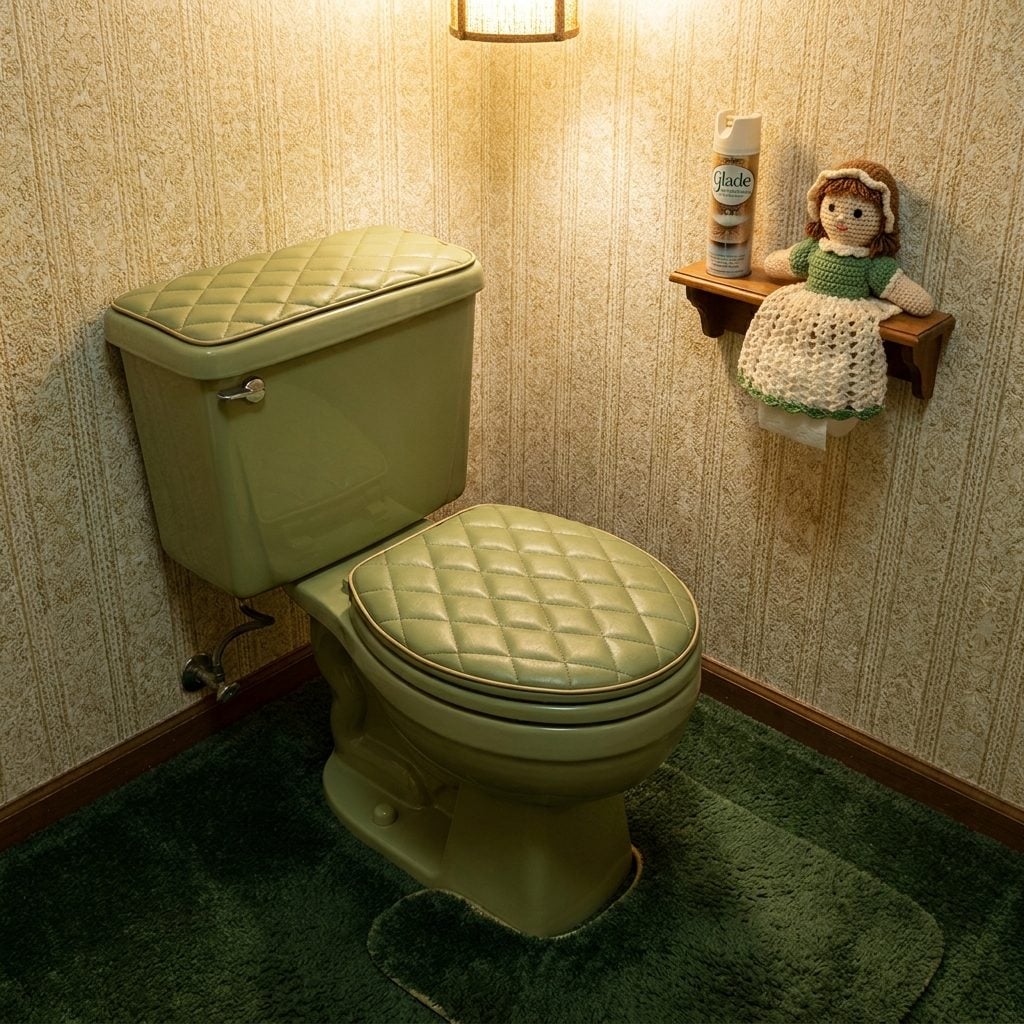
Sit down and it exhaled. A slow, wheezy sigh of trapped air escaping from the vinyl cushion as it compressed under your weight — mortifying when guests were over and the bathroom shared a wall with the living room. But the comfort? Undeniable. Warm in winter, yielding instead of cold porcelain. You could see why people bought them.
They came in avocado, harvest gold, powder blue, and a shade of pink that existed nowhere else in nature. The quilted diamond-tuck pattern with piped edges gave them a vaguely automotive quality, like someone had upholstered a bench seat from a Buick and mounted it on a toilet. Which, aesthetically, is more or less what happened.
The vinyl cracked eventually. Always. And the foam underneath turned yellow and crumbly — a deterioration nobody wanted to examine closely.
9. Ruffled Fabric Sink Skirts That Hid the Plumbing and Every Lost Earring
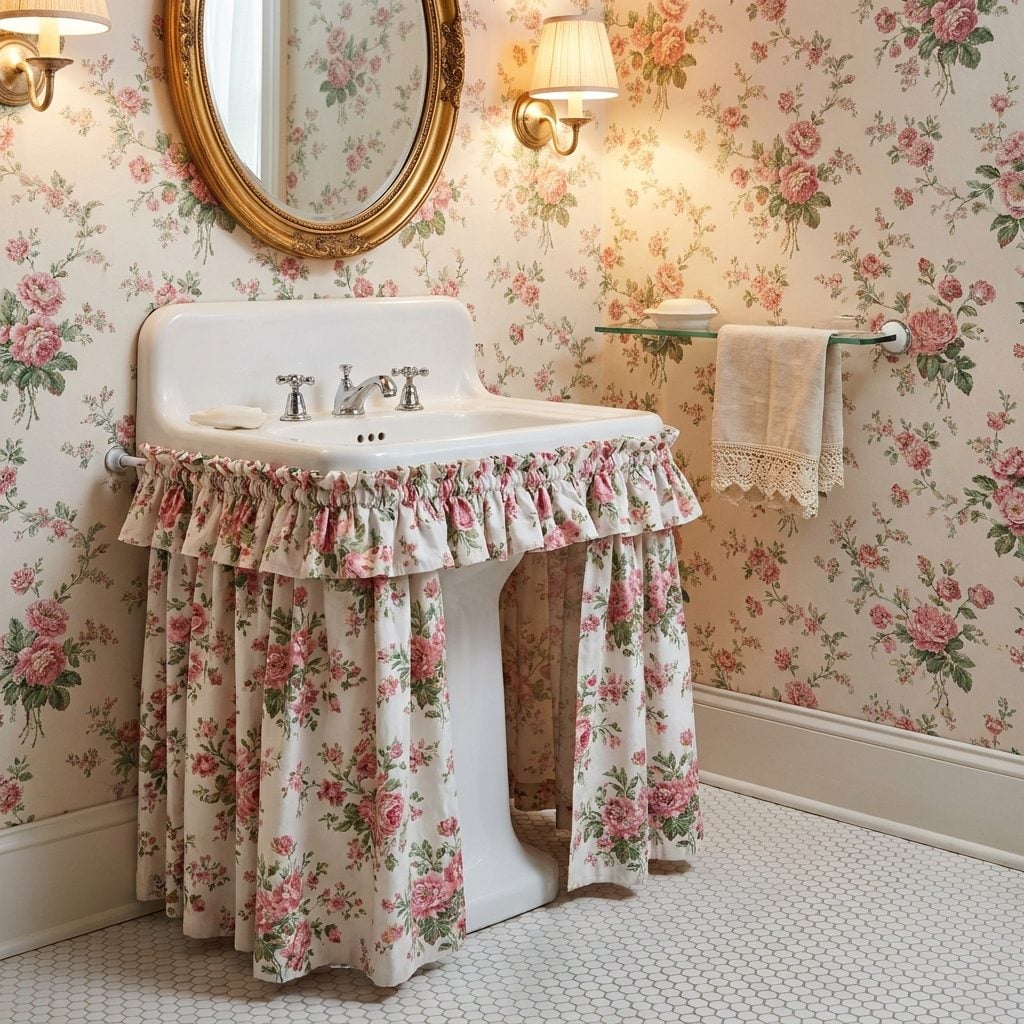
The concept was simple: ugly pipes exist under the sink, and fabric fixes everything. A gathered skirt of floral chintz or eyelet cotton — attached with Velcro or a tension rod — fell to the floor in a cascade of ruffles that made the sink look like it was headed to prom. Some families coordinated the skirt with the shower curtain and window valance, achieving a level of textile commitment that bordered on obsessive.
Behind that skirt was a different universe. Cleaning supplies, a plunger, spare rolls of toilet paper, and a small ecosystem of dust bunnies all lived in the shadows. It concealed plumbing, sure, but also everything you didn’t want guests to see — which made it, honestly, one of the most practical bathroom inventions of the decade. There’s something to appreciate in designs that borrow from Victorian bathroom sensibilities but function as pure camouflage.
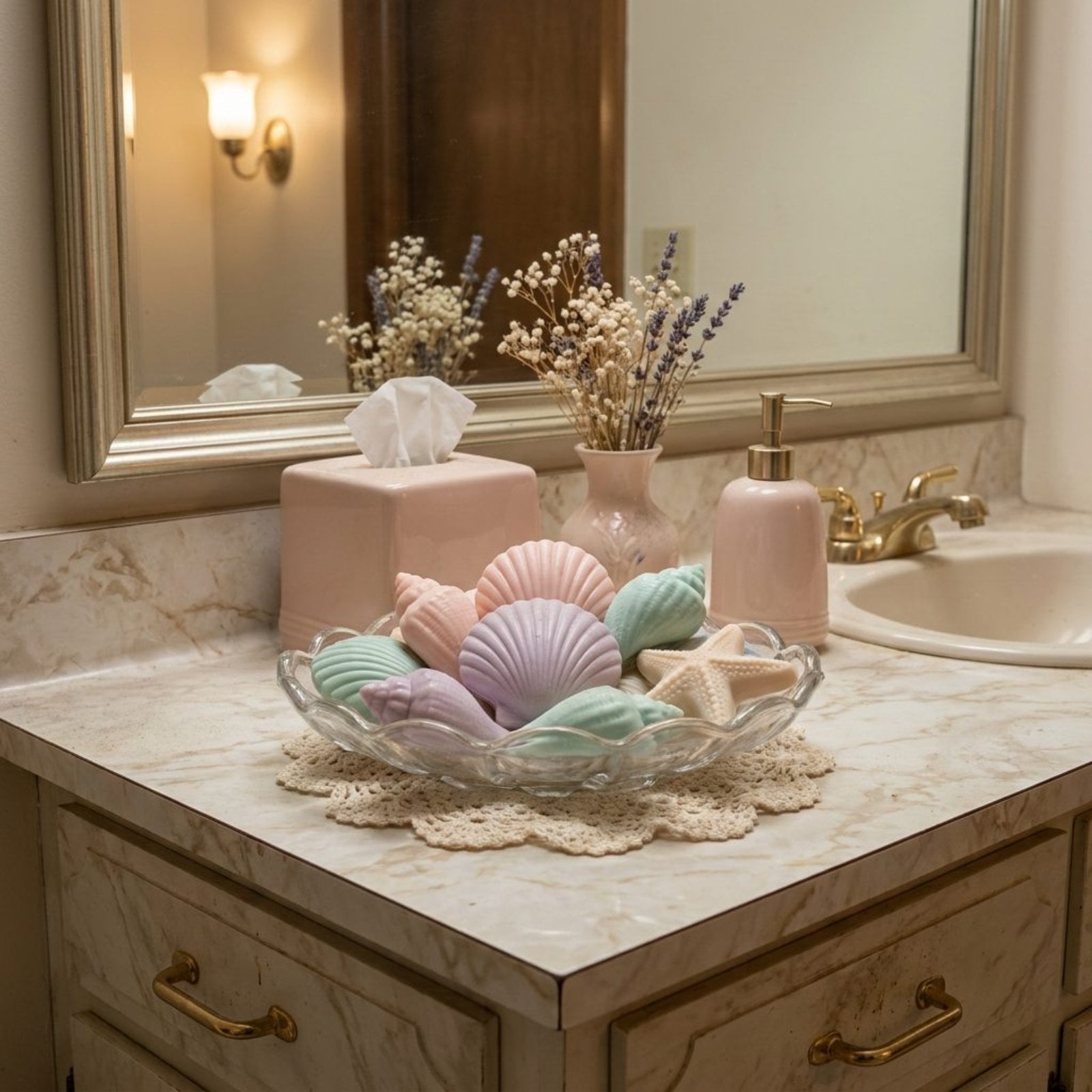
8. Decorative Seashell Soap Collections That Nobody Was Ever, Under Any Circumstances, Allowed to Touch
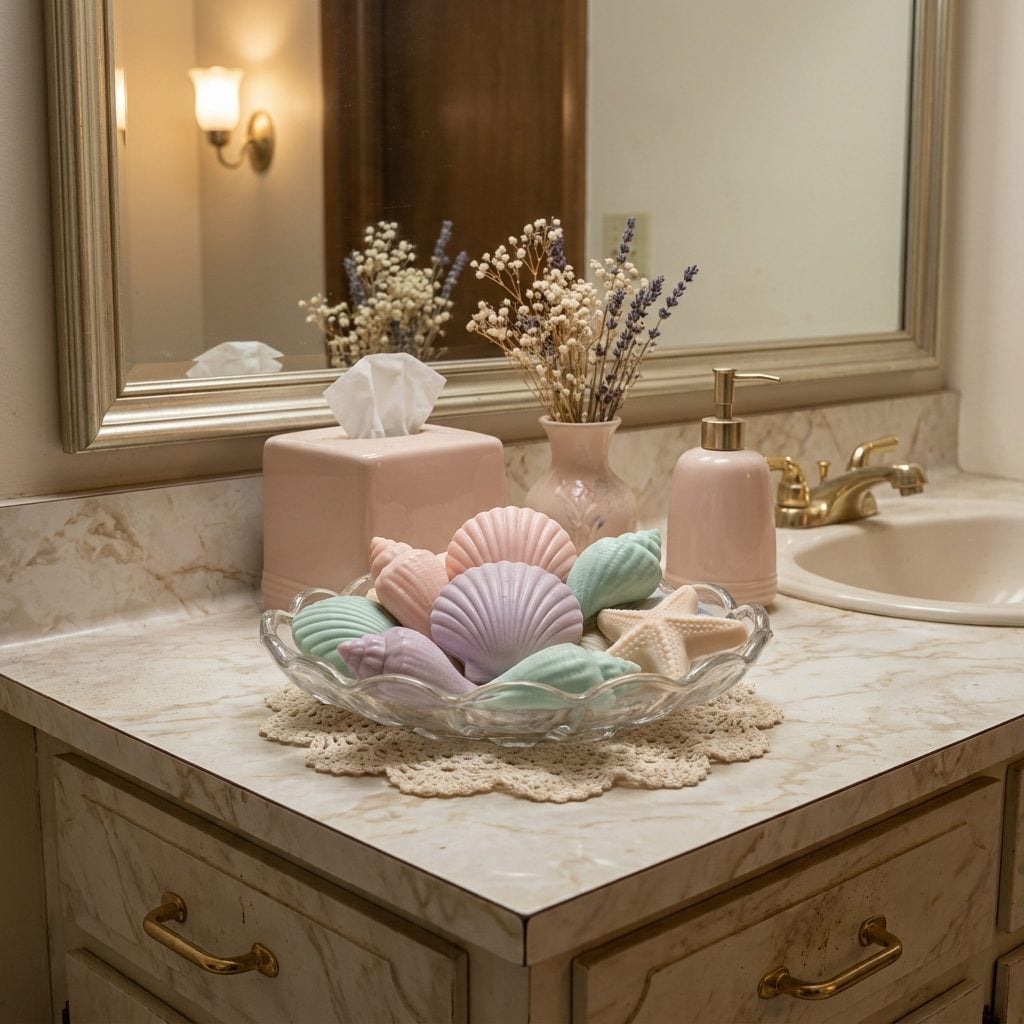
They sat in a scalloped glass dish on the back of the vanity, pastel and perfect, gathering dust like tiny beach-themed sculptures. Conch shells, starfish, sand dollars. A faint floral scent that faded years ago. Touch one and you’d hear about it from the next room.
“Those are for company.”
Company never came. Or if they did, they knew better than to lather up with the display soaps too. A bar of Dial or Coast sat in the soap dish by the faucet for actual hand-washing — functional, unglamorous, honest about its purpose. Meanwhile, the shell soaps existed in a state of permanent readiness for a dinner party that would never arrive, slowly fusing to the dish underneath through years of humidity and neglect. I find it oddly moving, all that anticipation hardened into a sticky residue.
7. Tiny Crystal Perfume Bottles Displayed on Mirrored Trays Like a Vanity Altar
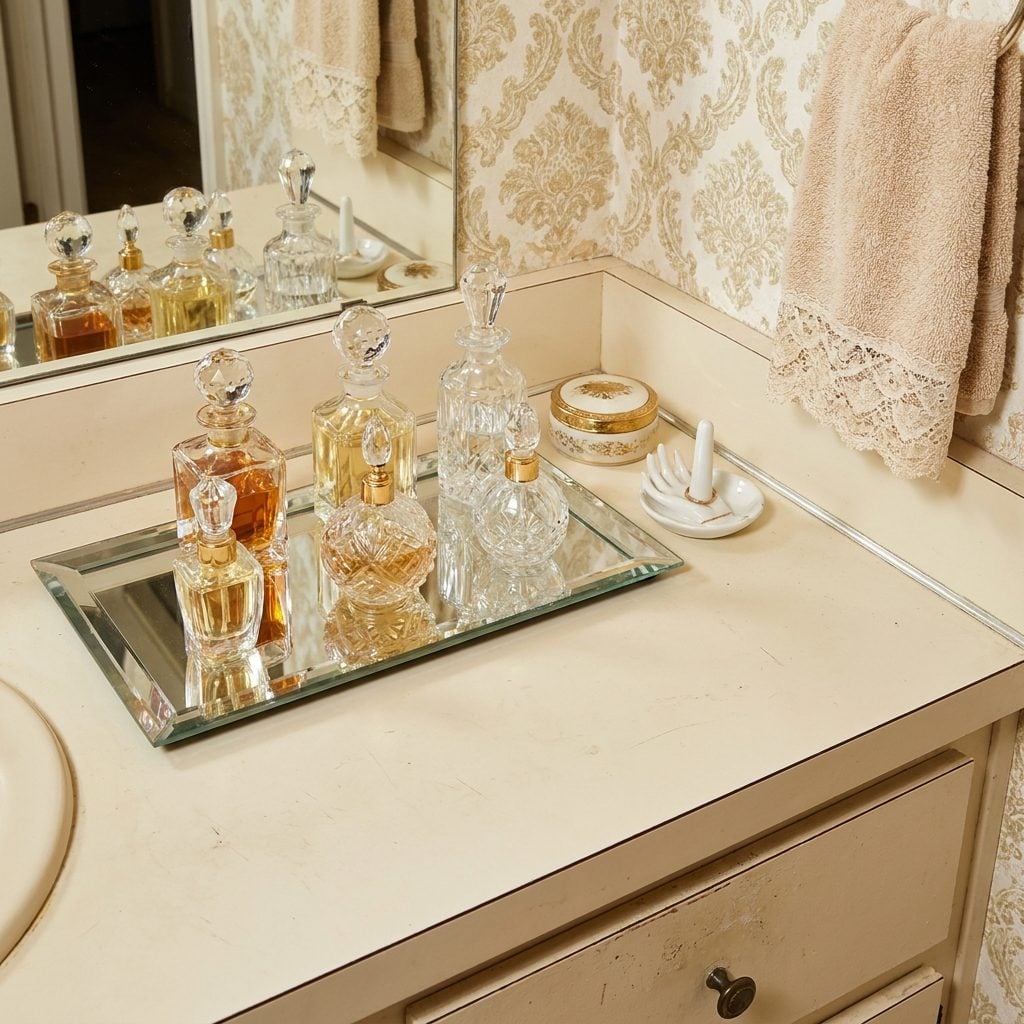
The mirrored tray lived on the vanity counter like a sacred precinct. Crystal bottles with faceted stoppers caught the light and threw tiny rainbows onto the wallpaper — some held actual perfume, some held perfume that had turned dark and syrupy with age, and some were completely empty but far too pretty to discard.
Each bottle had a story. An anniversary gift. A department store splurge. Something inherited from a great-aunt who wore it to church every Sunday. The dauber wands inside had dried out years ago, but that was beside the point. The tray itself, with its beveled mirror edges, doubled every bottle and made the collection look twice as grand. Which — let’s be frank — was the entire reason it existed.
6. The Basement Powder Room Where Wood Paneling Met Tile and Nobody Questioned It
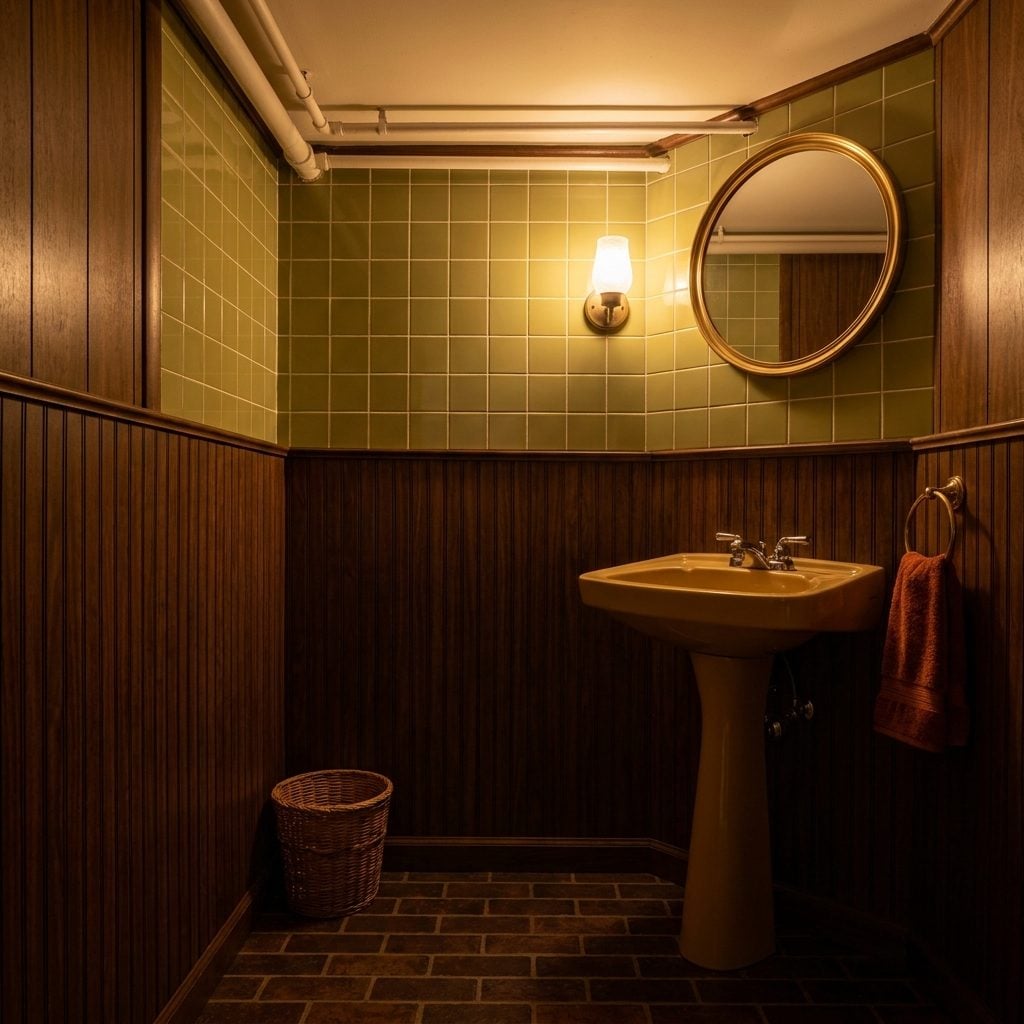
Half the wall was fake wood. The other half was ceramic tile in a color no manufacturer has touched since Carter was in office. And somehow, in 1974, this made perfect sense for a bathroom roughly the size of a phone booth, tucked under the basement stairs next to the washing machine.
The logic, such as it was: paneling was cheap, tile was waterproof near the sink, and slapping them together broadcasted “we finished the basement ourselves” louder than any yard sign could. Grout came out a shade nobody intended. Paneling seams wandered away from the tile edge like they’d had a disagreement.
These rooms smelled like cedar air freshener cut with damp concrete — one towel, one bar of soap cracked down the middle, a lock that never fully latched. Families treated them like genuine accomplishments. Honestly? They were. Building anything plumbed under your own stairs with no YouTube tutorial deserves a small monument.
5. The Built-In Intercom Speaker That Made You Feel Like You Lived in a Space Station
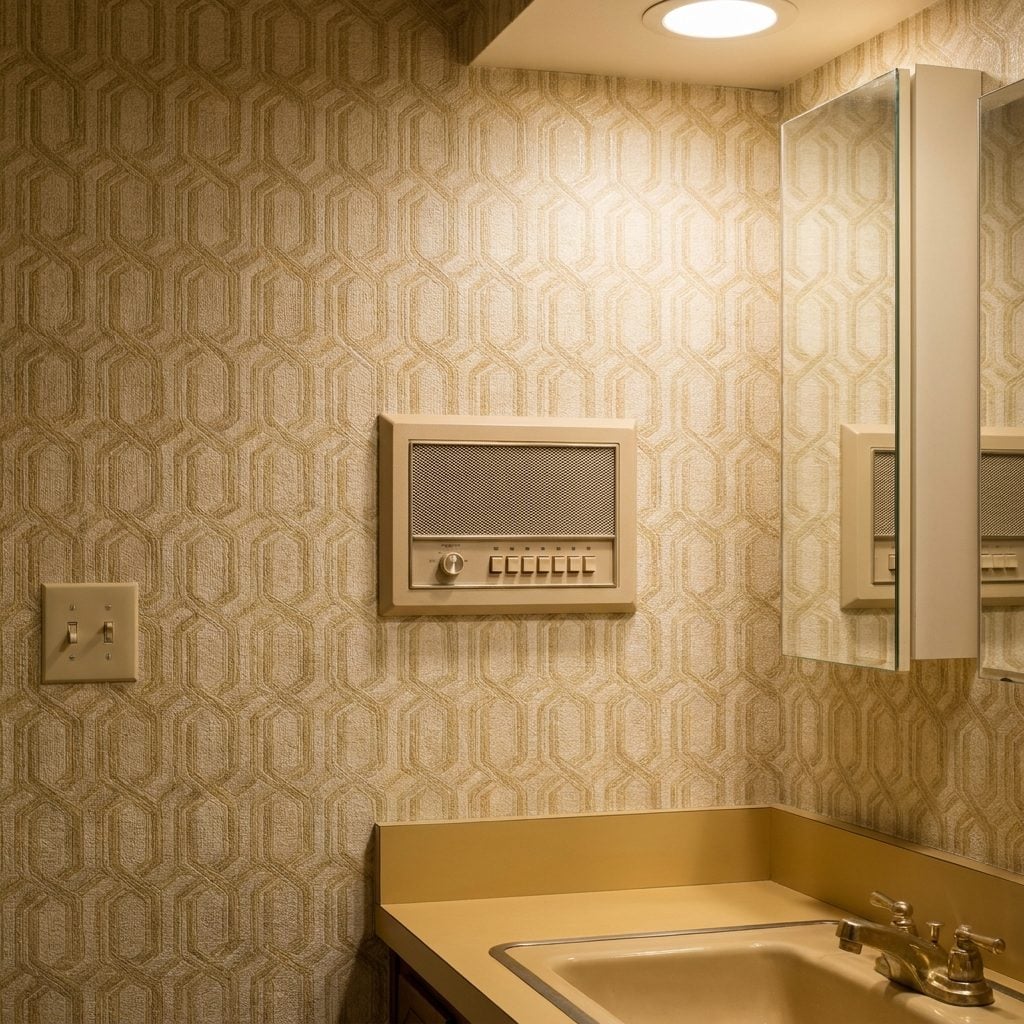
Mom’s voice, lightly distorted and crackling with static, ordering everyone to dinner from a beige plastic rectangle on the bathroom wall. That was the intercom experience. NuTone dominated this market, and having their system wired through the house ranked as a flex somewhere between a two-car garage and an in-ground pool.
The bathroom unit had a tiny speaker grille, a volume knob nobody ever adjusted, and a row of buttons labeled for different rooms. Most families used exactly two functions: the “all call” button and the AM radio, which played faintly while you brushed your teeth. FM came in scratchy at best, mostly static with occasional ghost-fragments of a local DJ.
I genuinely believed these were sophisticated technology. They were not. But hearing music leak out of the bathroom wall at 7 AM still triggers something warm and oddly specific — a memory of a house straining toward the future with whatever RadioShack had to offer.
4. Tile Countertops with Grout Lines Thick Enough to Lose a Contact Lens In
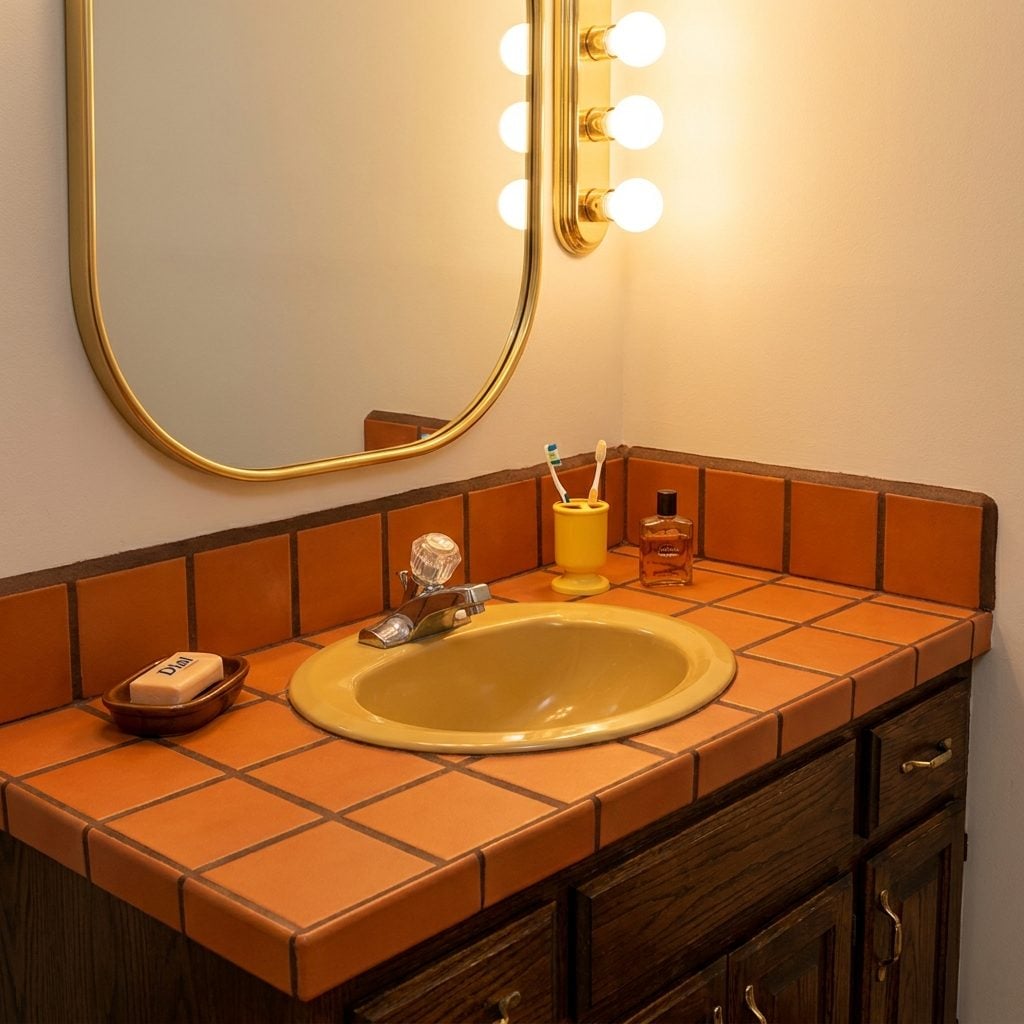
Every single tile was a dirt trap, and every family swore they’d reseal the grout “this spring.” Nobody ever did.
The tiles ran 4×4 squares in colors like burnt sienna, chocolate brown, or that peculiar shade of orange-tan that existed exclusively between 1971 and 1979. Grout lines — wide, deep, nearly a quarter inch — collected toothpaste residue, stray hair, and whatever blue liquid leaked from the bottom of the Scope bottle. Cleaning them demanded a toothbrush and a patience most people abandoned by week three. After that, you just stopped looking closely.
Those countertops did feel substantial, though. Weight and texture that laminate couldn’t fake. Running your hand across the tile ridges gave you cool ceramic interrupted by rough grout — a sensory signature that read as permanence, even when the whole vanity cost less than a decent dinner out.
3. Café Curtains with Lace Trim on the Bathroom Window, Because Privacy Was Decorative
🔥 Would you like to save this?
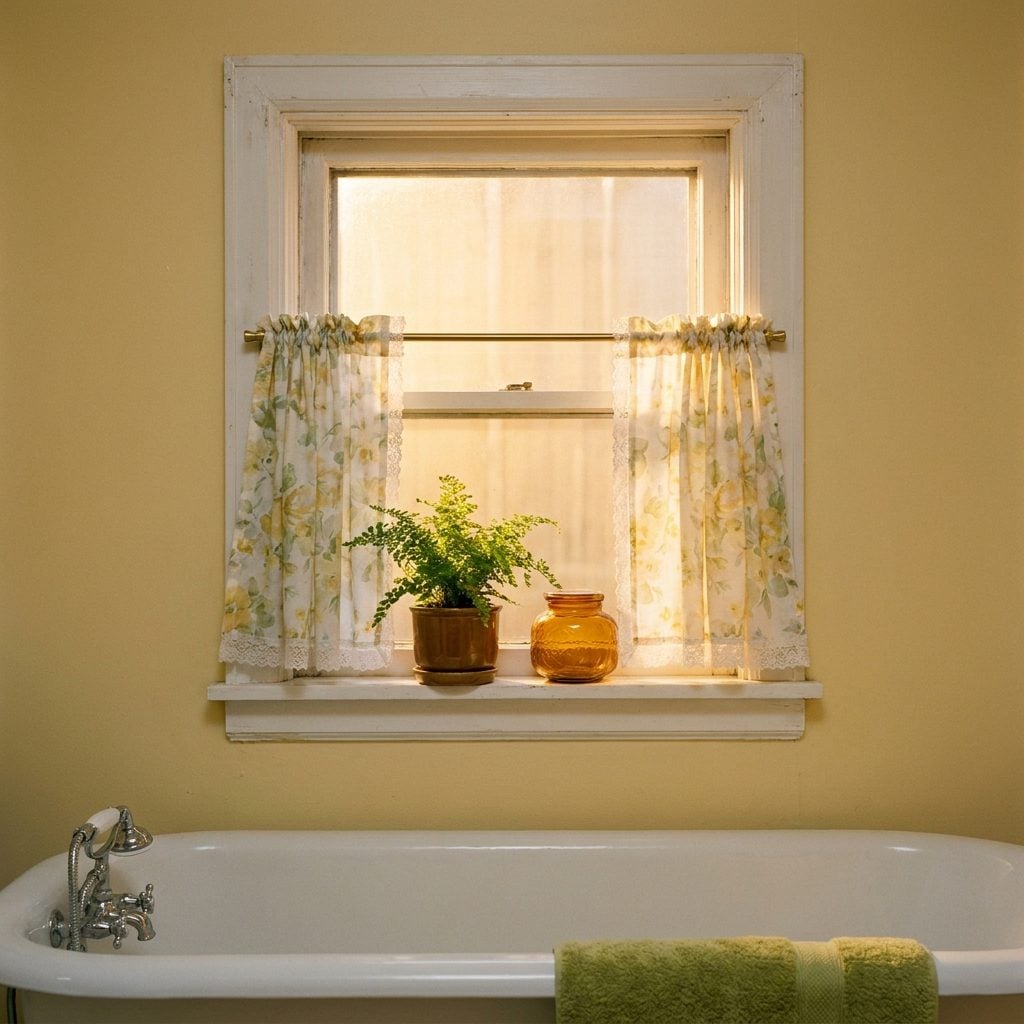
The logic was beautifully flawed: cover the bottom half so neighbors can’t see you, leave the top open for light, trim everything in lace so it looks intentional rather than just inadequate.
These curtains absorbed steam like a sponge, yellowed within a year, and developed a faint mildew smell no wash cycle fully killed. The brass tension rod slipped down a notch every few months until somebody finally shoved it back up. Meanwhile the lace trim — crisp and white on day one — went limp and vaguely gray, curling at its edges like parchment left near a radiator. None of this discouraged anyone from buying another pair when the first set gave out.
Yet they turned a bathroom window into something that felt considered instead of accidental. Filtered afternoon light coming through a floral print, landing on the lip of the tub — even a cramped bathroom went soft in that glow. My grandmother had these in every bathroom she ever occupied. Replacing them with blinds would have been received as a small act of treason.
2. The Wood Toilet Seat That Whispered “We Have Taste” Every Time You Sat Down
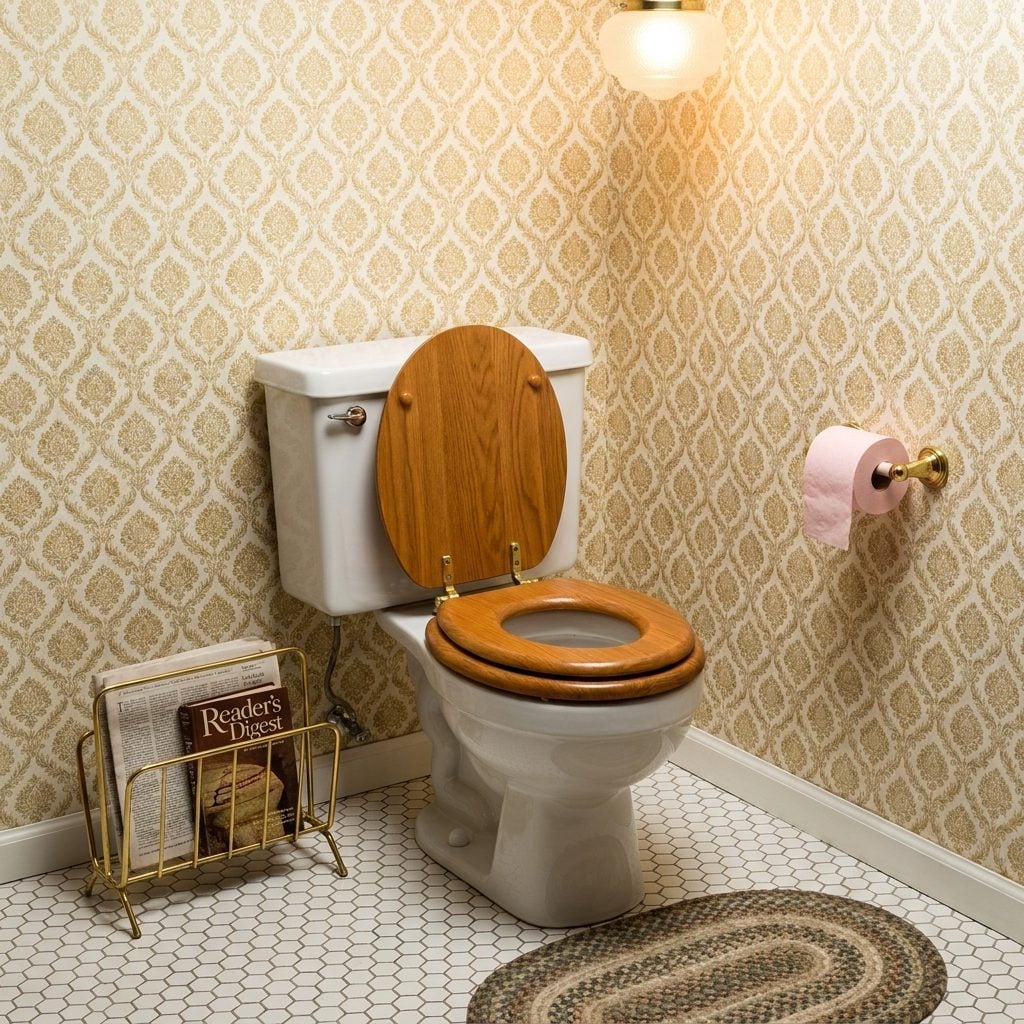
Plastic was for other people’s bathrooms. Wood was for yours.
An oak or walnut toilet seat lacquered to a shine you could practically see yourself in — that was an upgrade that cost barely anything extra but carried outsized psychological weight. It announced that someone in this household sweated the details, even the ones you sat on. The brass hinges caught the bathroom light like tiny jewelry, which sounds ridiculous, but people noticed.
Of course the lacquer cracked. The wood warmed uncomfortably in July and went ice-cold in January — somehow worse than plastic pulling the same trick. Hinges loosened until the whole seat drifted sideways under you. But for those first couple of years? Magnificent. A small luxury that broadcast how a family saw itself, which was really what the 1970s bathroom orbited around — not plumbing, not square footage, just aspiration expressed in finishes.
1. The Laundry Chute Behind a Tiny Cabinet Door That Made Dirty Towels Disappear Like Magic
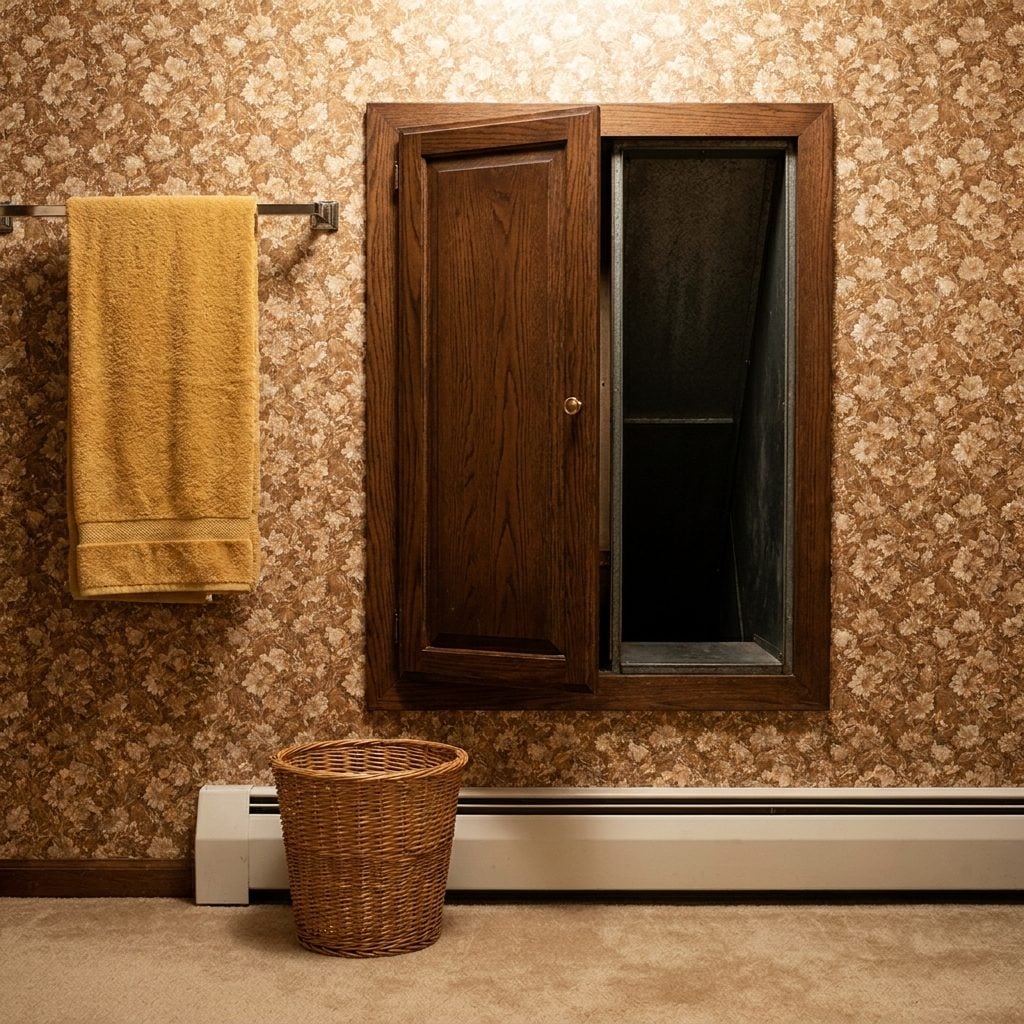
Open the little door. Drop the towel into darkness. Listen to it whoosh down a metal-lined shaft and land with a muffled thump in the basement. Close the door. Feel unreasonably accomplished.
The built-in laundry chute was the single most satisfying feature in any 1970s home, turning the boring chore of dealing with dirty laundry into a minor event. Kids threw everything down it — towels, socks, occasionally a shoe. In our house, someone once sent a sandwich wrapped in a washcloth on the journey. It was discovered three days later in circumstances nobody wants to revisit.
Typically a small oak cabinet door with a brass knob, the chute blended into the bathroom wall like a secret passage. Most opened into the space between wall studs and dropped straight to a basket near the washing machine. Dead simple engineering. Disproportionate joy. Modern homes almost never include them, and I think that’s a genuine loss — some features don’t need to be smart or connected to Wi-Fi. They just need to work, make a satisfying sound, and save you one trip downstairs.