🔥 Would you like to save this?
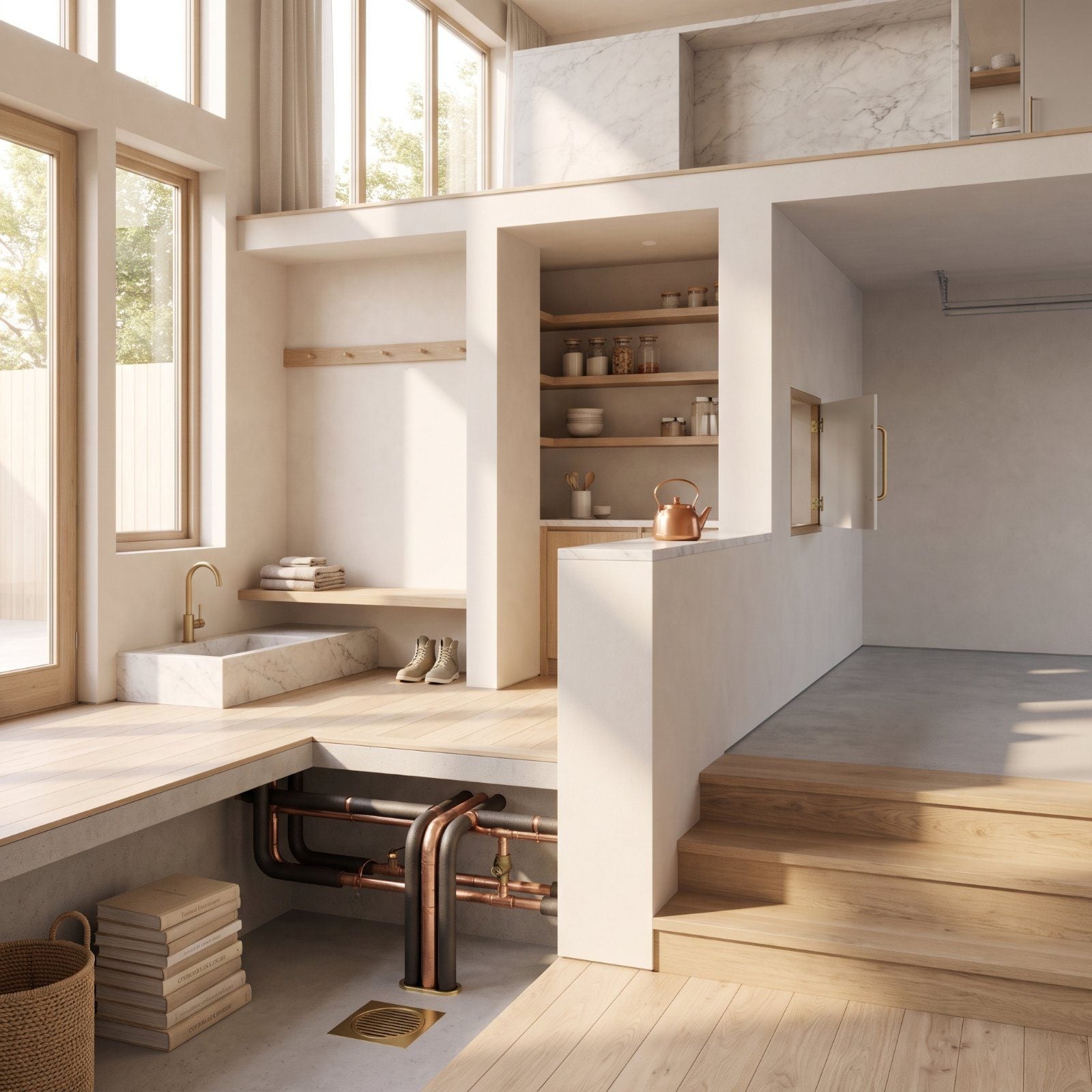
The best upgrades are the ones nobody notices until they’re gone. Not the marble island. Not the chandelier. The hidden stuff — the drain that recycles heat, the hatch that saves you a trip across the kitchen while four grocery bags saw into your fingers. Builders know about these. Most homeowners never hear a word until a renovation forces the conversation. They solve real problems: wasted energy, muddy floors, cold showers, washers that overflow at the worst possible hour. None of them are flashy, and every one of them makes a house easier to live in. Here are the ones worth stealing.
49. Drain-Water Heat-Recovery Pipe: Steal the Heat Before It Escapes
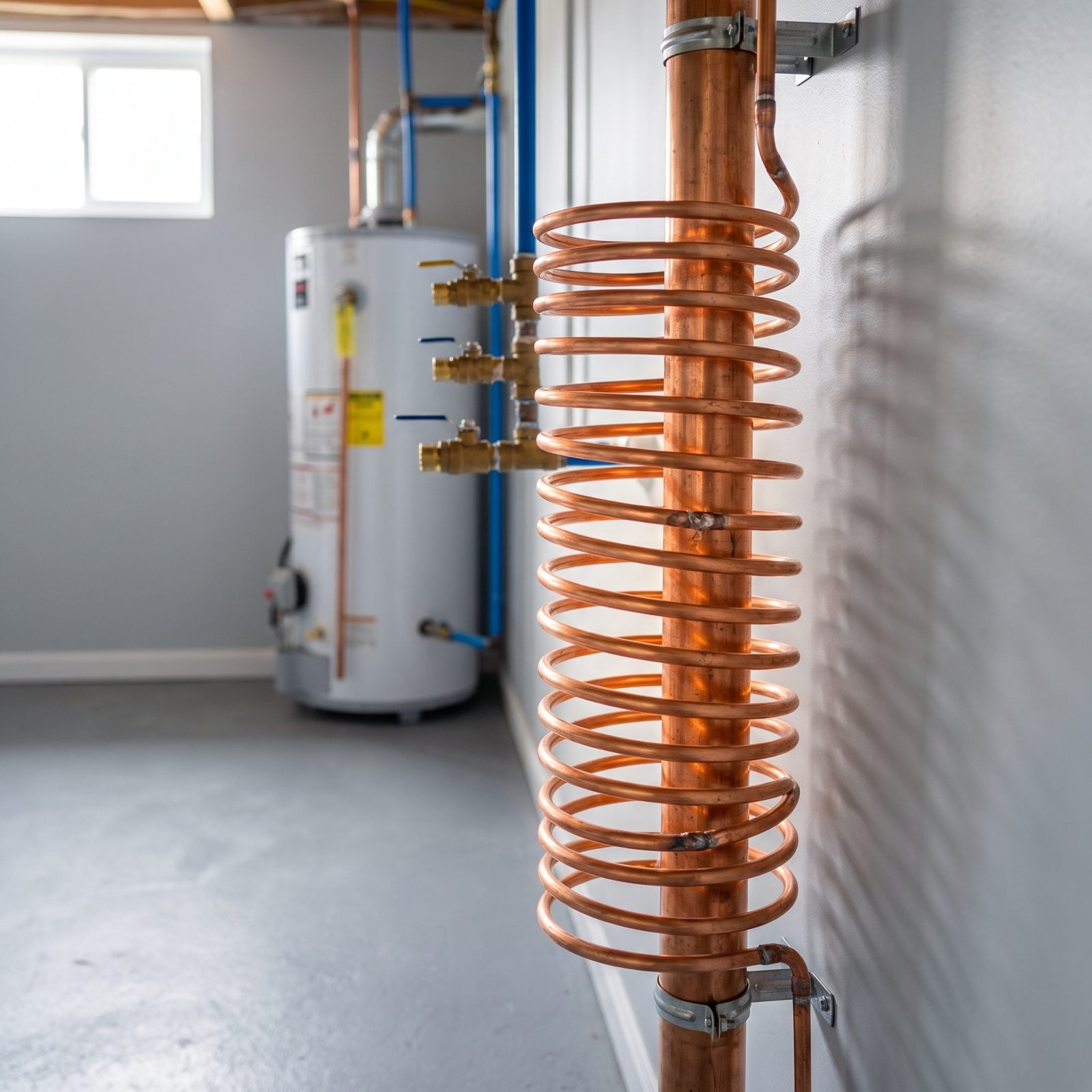
Every hot shower you take pours warm water straight down the drain and out to the street, and all that heat just vanishes. A drain-water heat-recovery pipe grabs it on the way out.
In order to come up with the very specific design ideas, we create most designs with the assistance of state-of-the-art AI interior design software. Also, assume links that take you off the site are affiliate links such as links to Amazon. this means we may earn a commission if you buy something.
The idea’s simple. A coil of copper goes around the vertical drain line, and cold water headed to your heater runs through that coil, picking up warmth from the water leaving. The loose, springy coil pictured here only touches the drain at a couple of solder points, though. For real heat transfer, the coil has to be wrapped tight against the pipe along its whole length. Your heater does less work. Your shower stays hotter, longer — especially the marathon ones you won’t admit to.
48. Jump Ducts Above Bedroom Doors: Let the Air Breathe
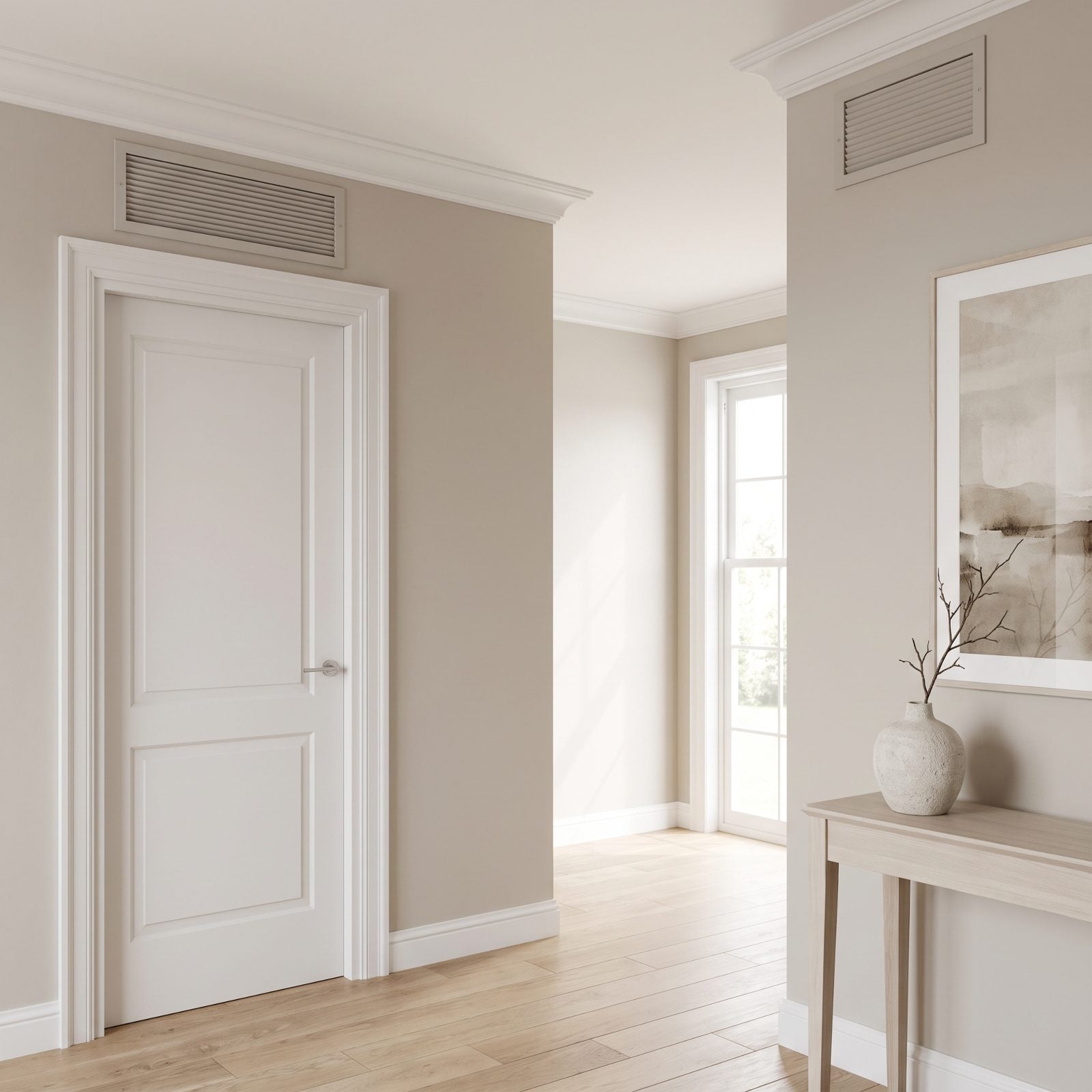
Close a bedroom door in a lot of newer homes and the room slowly turns into a pressure pocket. The HVAC keeps pushing air in with nowhere for it to go, so it gets stuffy, the temperature drifts, and the system basically fights itself.
Jump ducts fix it without a sound. A short duct runs through the ceiling or wall from inside the room to the hallway, grille on each end, and the air escapes back to the return without an open door. Nobody hears your TV. The room actually holds the temperature you set.
47. Shower Controls Beside the Entrance: End the Cold-Water Dance

You know the move. Reach one arm into the freezing spray, flinch, wait, test again, finally climb in. Done it a thousand times.
Put the valve beside the shower entrance instead of under the head and the whole ritual disappears. Turn it on, let it warm up from dry ground, step in when it’s ready — the brushed brass shower valve does the work while you stay warm. Costs nothing extra to position during a remodel. It’s purely about where the plumber sets the rough-in.
46. Garage-to-Pantry Grocery Hatch: Skip the Long Walk In
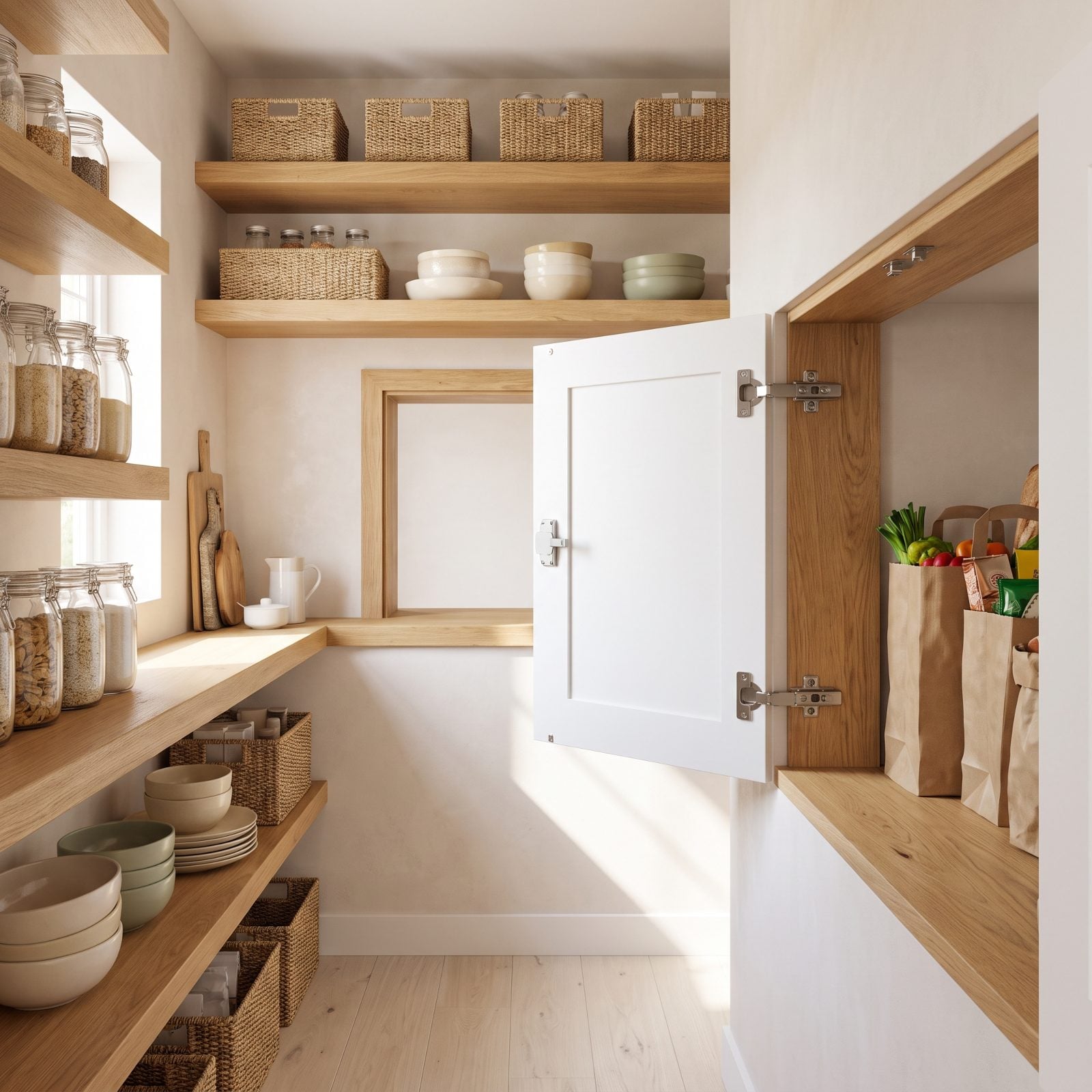
Hauling groceries from the car to the kitchen means tracking through the mudroom, down the hall, past the dog, bags biting into your hands the whole way.
A grocery hatch cuts straight through the wall between the garage and the pantry. Set bags on the ledge from the car side, walk around, pull them through — no trek across the house. Build it at counter height with a shallow oak landing shelf so nothing tumbles, then hang a simple white Shaker-style door with a latch so you can close the opening off when it’s not in use.
45. Toe-Kick Vacuum Inlet: Sweep the Crumbs Away
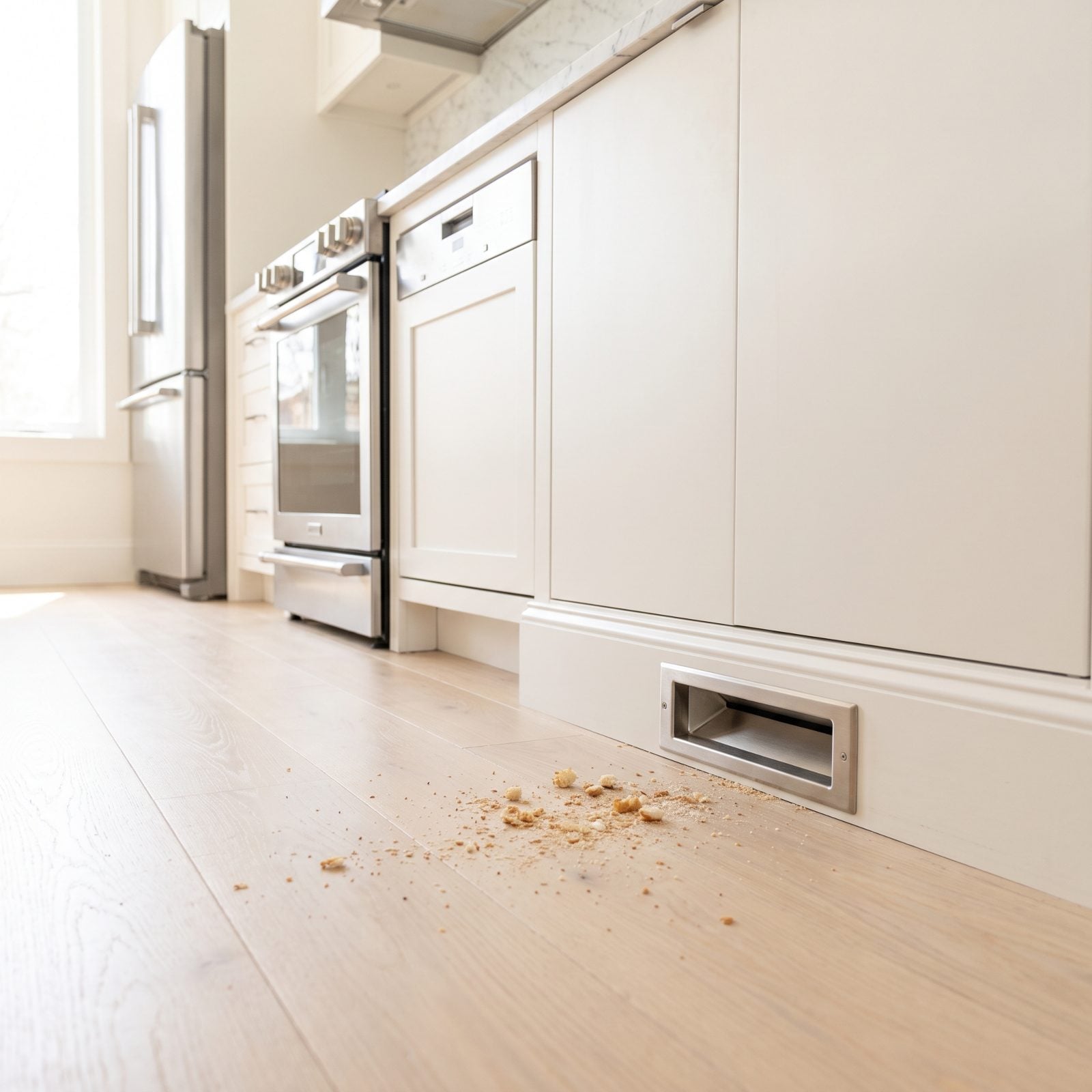
Sweeping into a dustpan is a losing game. There’s always that last thin line of crumbs the pan refuses to catch, so you nudge it, sweep again, and eventually give up.
A toe-kick inlet ends that. It’s a slim vacuum port built into the kick space under your cabinets, wired into a central vacuum line. Sweep the pile toward it, tap the switch with your foot, gone. No bending, no pan, no stubborn final crumb line mocking you from the floor.
44. Laundry Room Floor Drain: Plan for the Flood You’ll Eventually Have
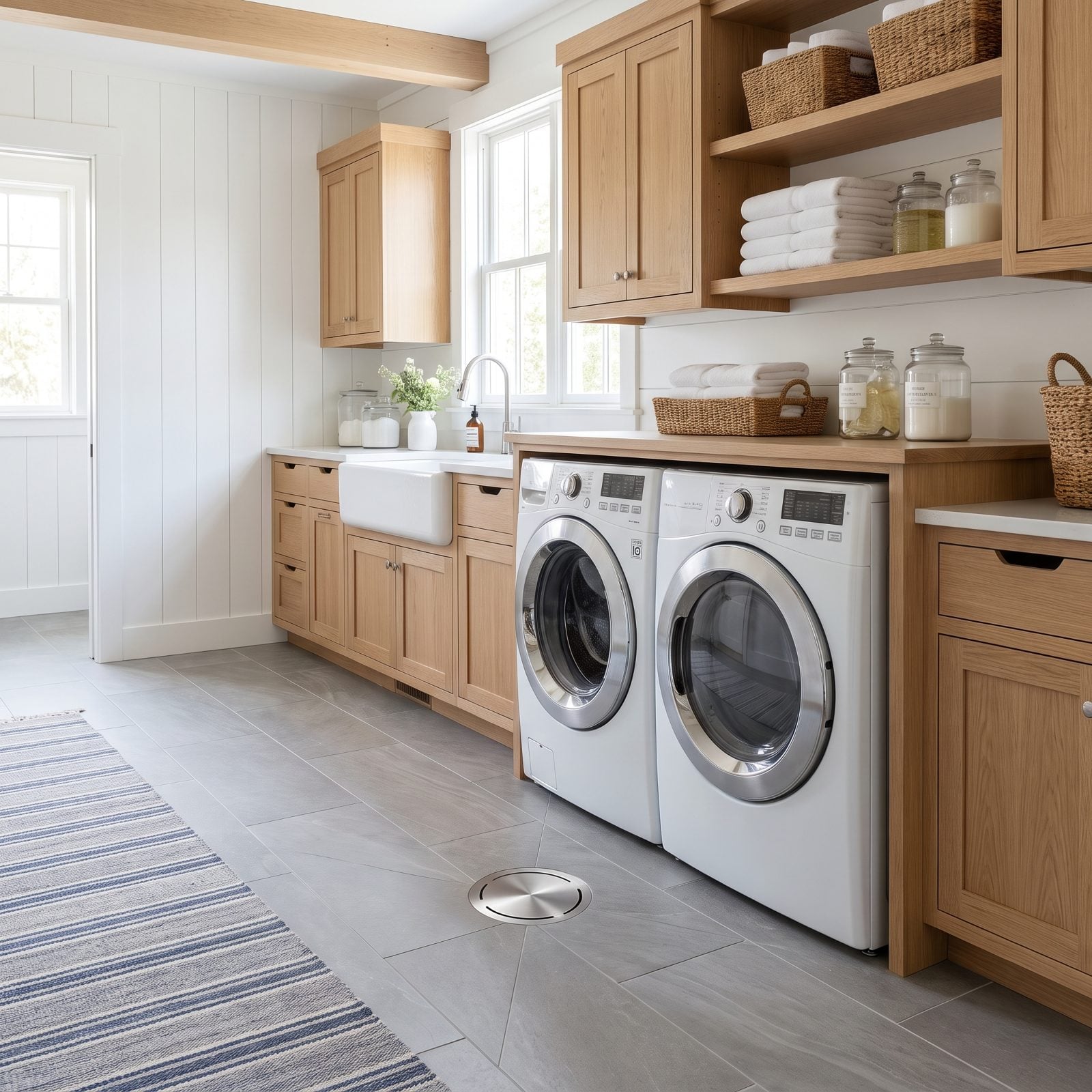
A washer hose doesn’t fail politely. It lets go at 2 a.m. and dumps gallons onto a floor that funnels every drop straight into the room below.
A floor drain over a gently sloped tile floor turns that disaster into a mop-up. Overflow, a dripping water heater, a hose that pops off — it all heads for the drain instead of the drywall. Pair it with a brushed stainless floor drain cover that sits flush with the porcelain. Cheap insurance during construction, and nearly impossible to add once the floor’s down.
43. Mail Slot Into a Locking Interior Cabinet: Mail Without the Open Door
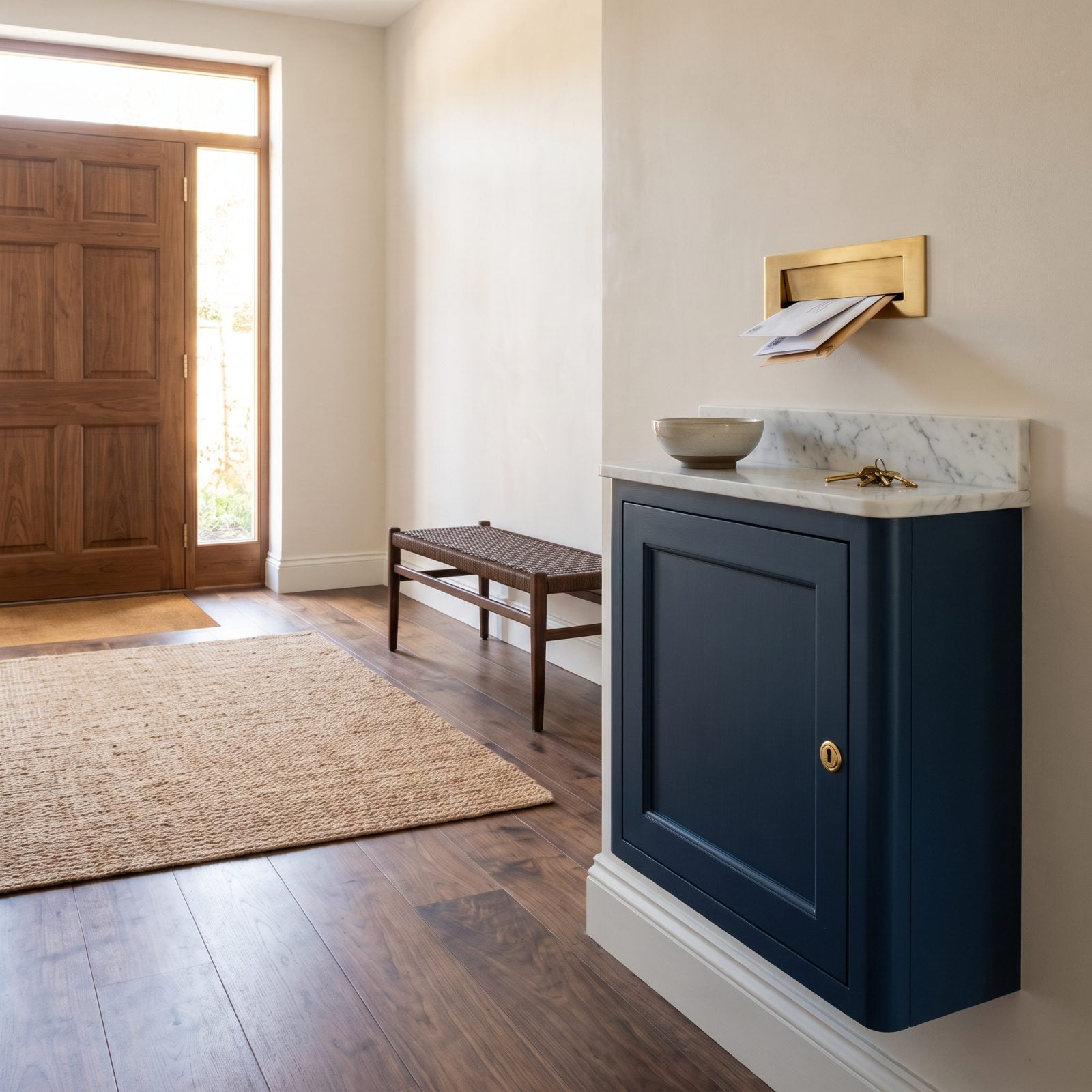
A standard mail slot is a hole in your front door. It drafts cold air, it lets prying eyes peek in, and your mail ends up scattered across the floor.
Route the slot into a locking interior cabinet instead. Letters drop through the wall into a secured box with a brass lock, out of sight and out of the weather — no draft, no scattered envelopes, no privacy gap. The navy built-in entry cabinet doubles as a drop zone for keys on the marble ledge up top.
42. Mudroom Boot-Wash Basin: Catch the Mud at the Door
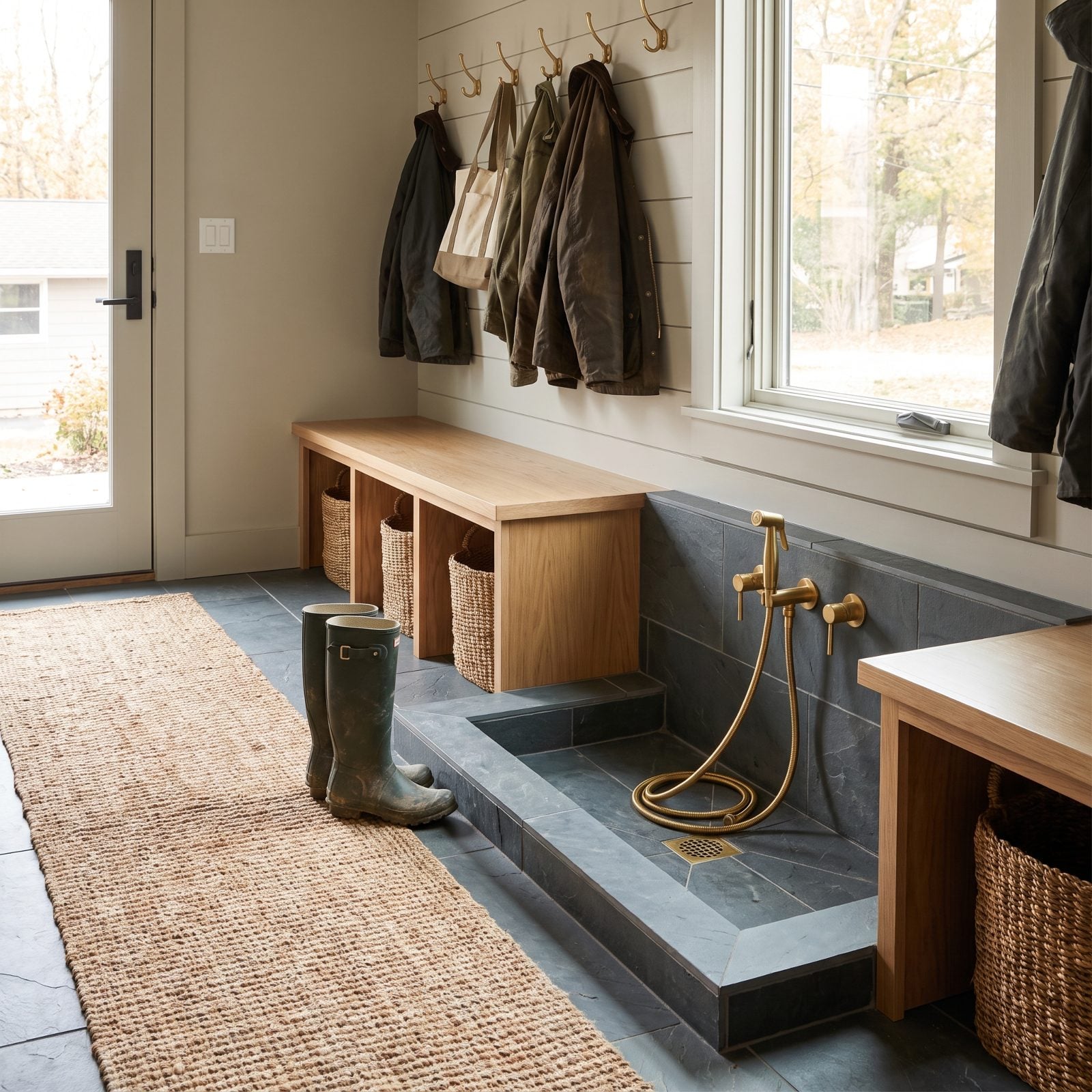
Dirt that makes it past the mudroom never really leaves. It grinds into the hall rug, the kitchen grout, the stair treads. Catch it at the door and you stop chasing it everywhere else.
A boot-wash basin is a low tiled trough set into the floor with a handheld sprayer and a drain. Rinse muddy boots, dog paws, garden clogs right there, before anything touches the clean floor. Line it in slate to hide the grime and fit it with a brass sprayer on a flexible hose.
41. Charging Outlet Inside the Broom Closet: Hide the Dead Battery
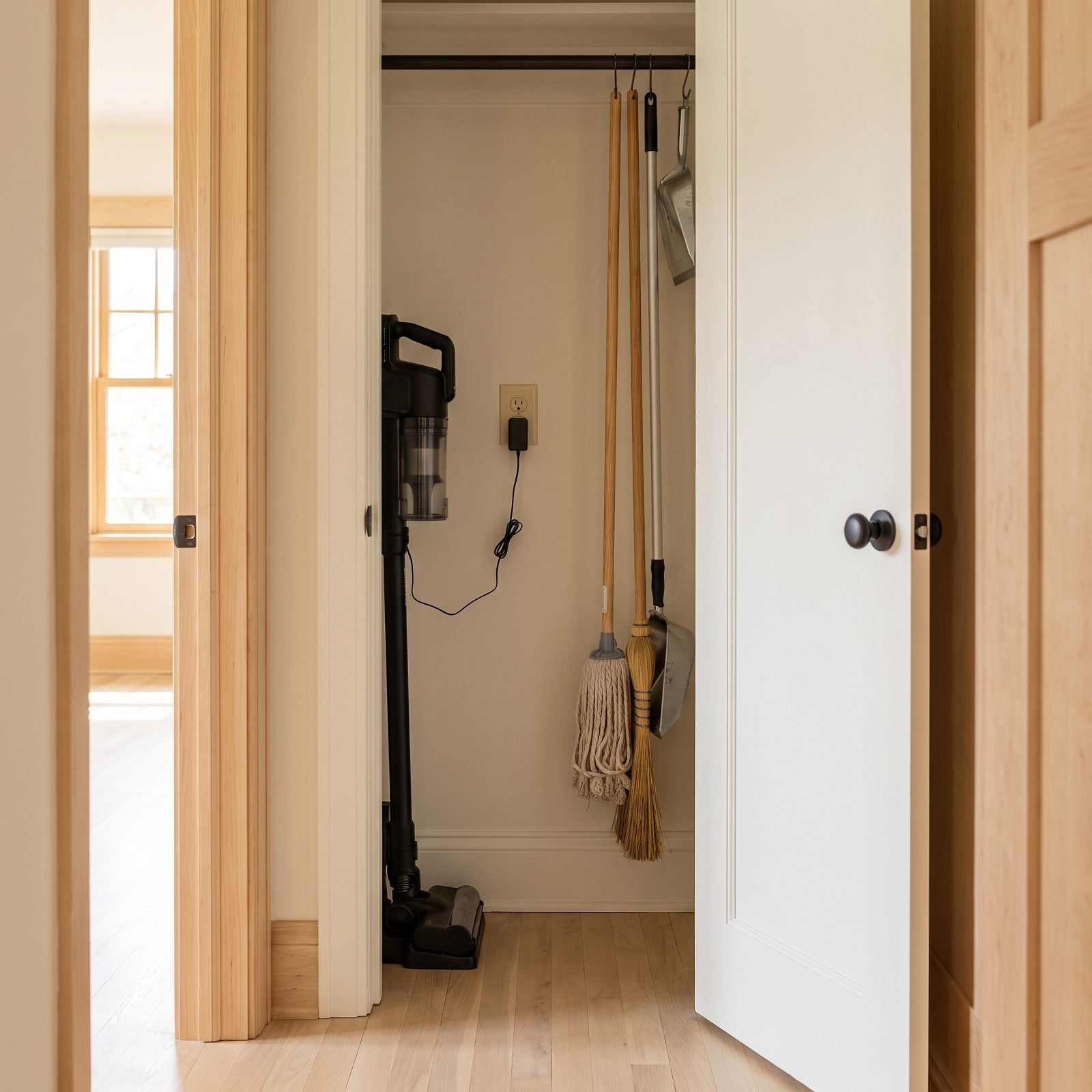
A cordless vacuum charging on the kitchen counter is an eyesore. A cordless vacuum charging nowhere is just a dead stick that fails you the moment you need it.
Put an outlet inside the broom closet. The vacuum docks on its wall mount, charges out of sight, and stays ready. Door closed, nobody knows it’s there. Ten-minute ask for an electrician during a build, and it clears your counters for good.
40. Two-Sided Linen Cabinet: Share Towels From Both Rooms
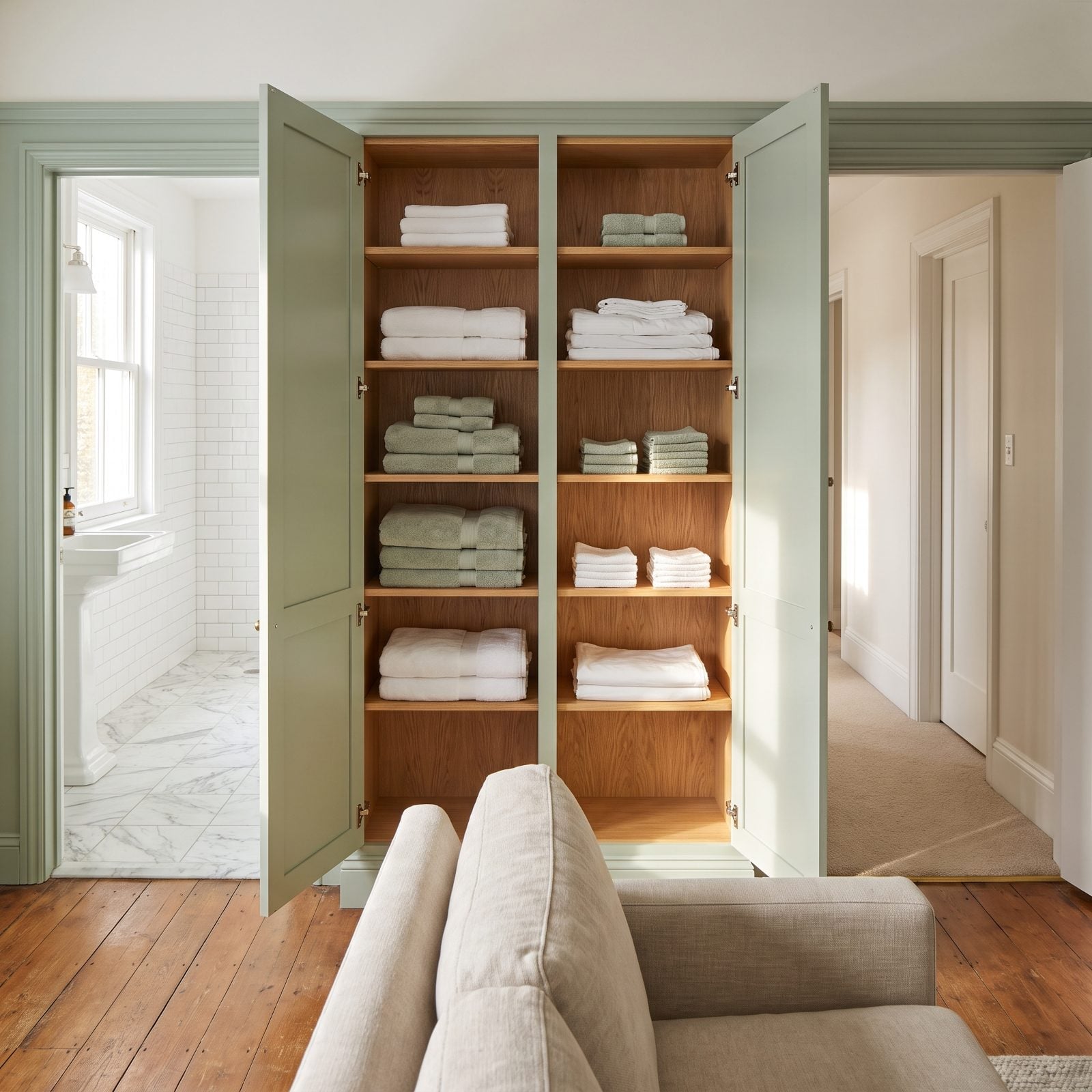
Running wet and dripping to the hall closet because the towels live on the wrong side of the wall is a small daily indignity. A linen cabinet set right between the bathroom and the hall quietly deletes it.
Built into the wall between the bathroom doorway and the hallway, it opens into the hallway through a pair of tall sage doors onto oak-lined shelves. Grab a fresh towel on your way into the bathroom, restock straight from the hall, skip the long trip entirely — one stack of linens, steps from both rooms. Sounds fussy on paper. Feels obvious the first time you use it.
39. Hot-and-Cold Outdoor Faucet
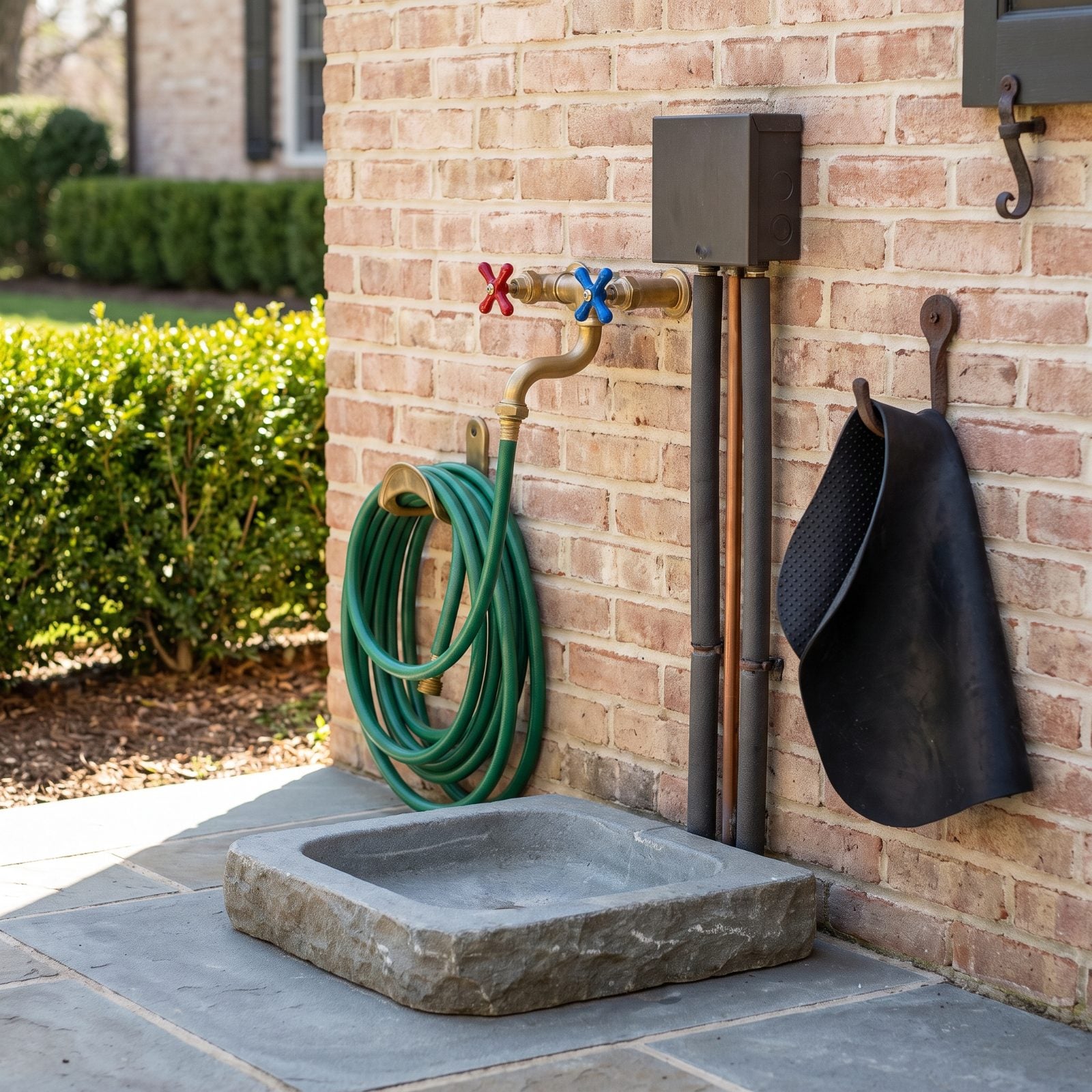
Most outdoor spigots run cold only, which is why winter cleanup feels like punishment and washing a muddy dog turns into a standoff. Run a hot line out alongside the cold one to feed the hose and the whole chore changes. Paws get rinsed without the flinch, boots get scrubbed without numb hands, and that brass outdoor faucet earns its keep nine months a year.
The weathered stone basin and rubber grooming mat make the corner feel intentional instead of tacked on, and the pipes running up the wall into that weatherproof box beside the faucet, two wrapped in foam insulation plus one bare copper line, keep the corner tidy, with the insulated pair better protected against the first freeze.
38. Bedside Master Switch

That last trip through the house to kill a light somebody left on downstairs is a small nightly tax nobody agreed to pay.
A bedside master panel collapses it into one press. The labeled rockers handle the hallway, the porch, the stray living room lamp, all from the brass switch plate within arm’s reach of the pillow. Walnut nightstand, soft linen, and it still looks like a bedroom rather than a control room. And for anyone unsteady on their feet in the dark, it’s a genuine safety win worth more than the convenience ever is.
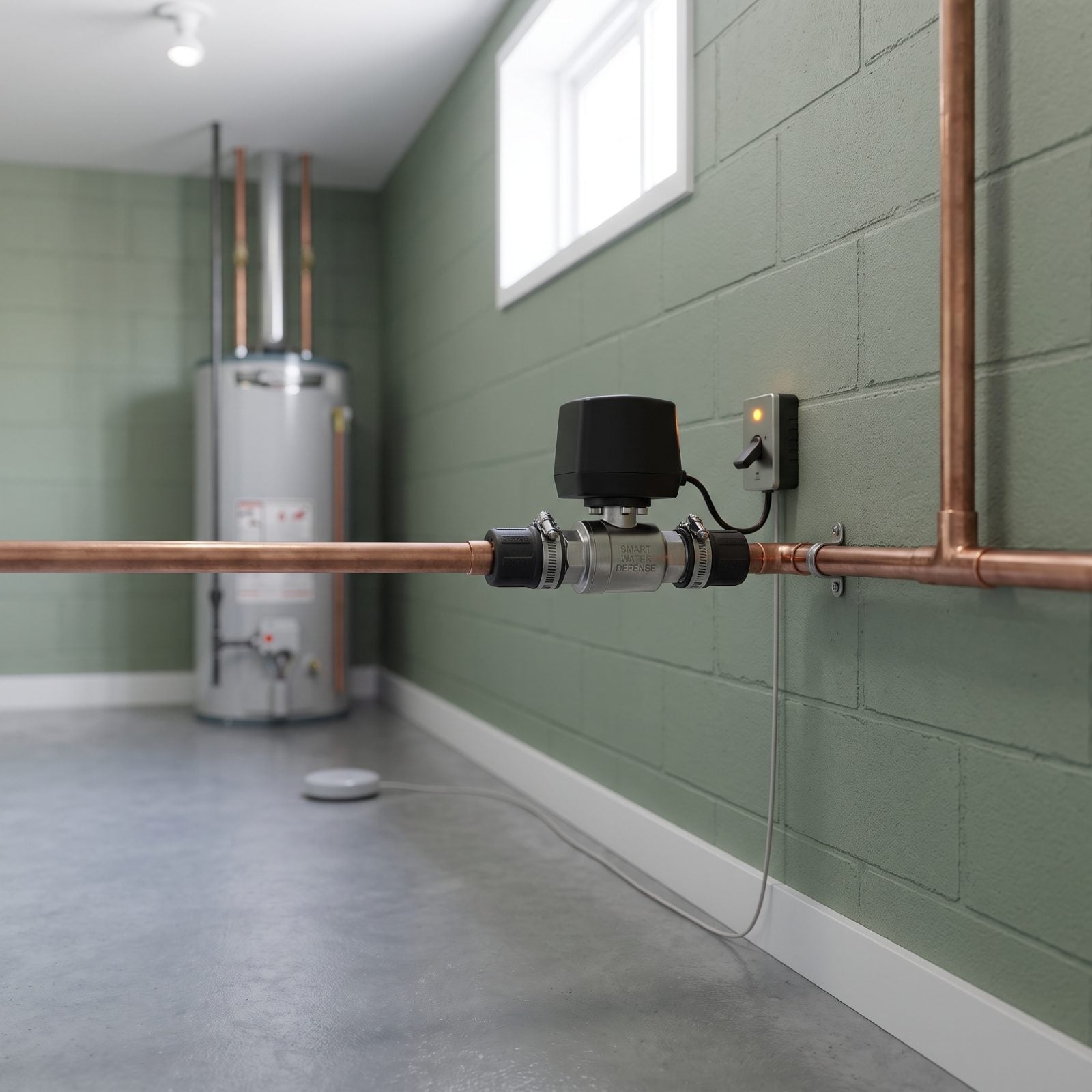
37. Automatic Water-Main Shutoff
🔥 Would you like to save this?
Picture coming home from a weekend away to a supply line that let go on Friday. Two days of water running, nobody there to hear it. That’s the flood that redoes your floors, your drywall, and your insurance premium all at once.
An automatic main shutoff watches for the pattern that gives a leak away: unusual flow, a wet sensor on the floor, a pipe running when the house should be dead quiet. Then it closes the valve. No app, no one home.
36. Stovetop Fire-Suppression Canister
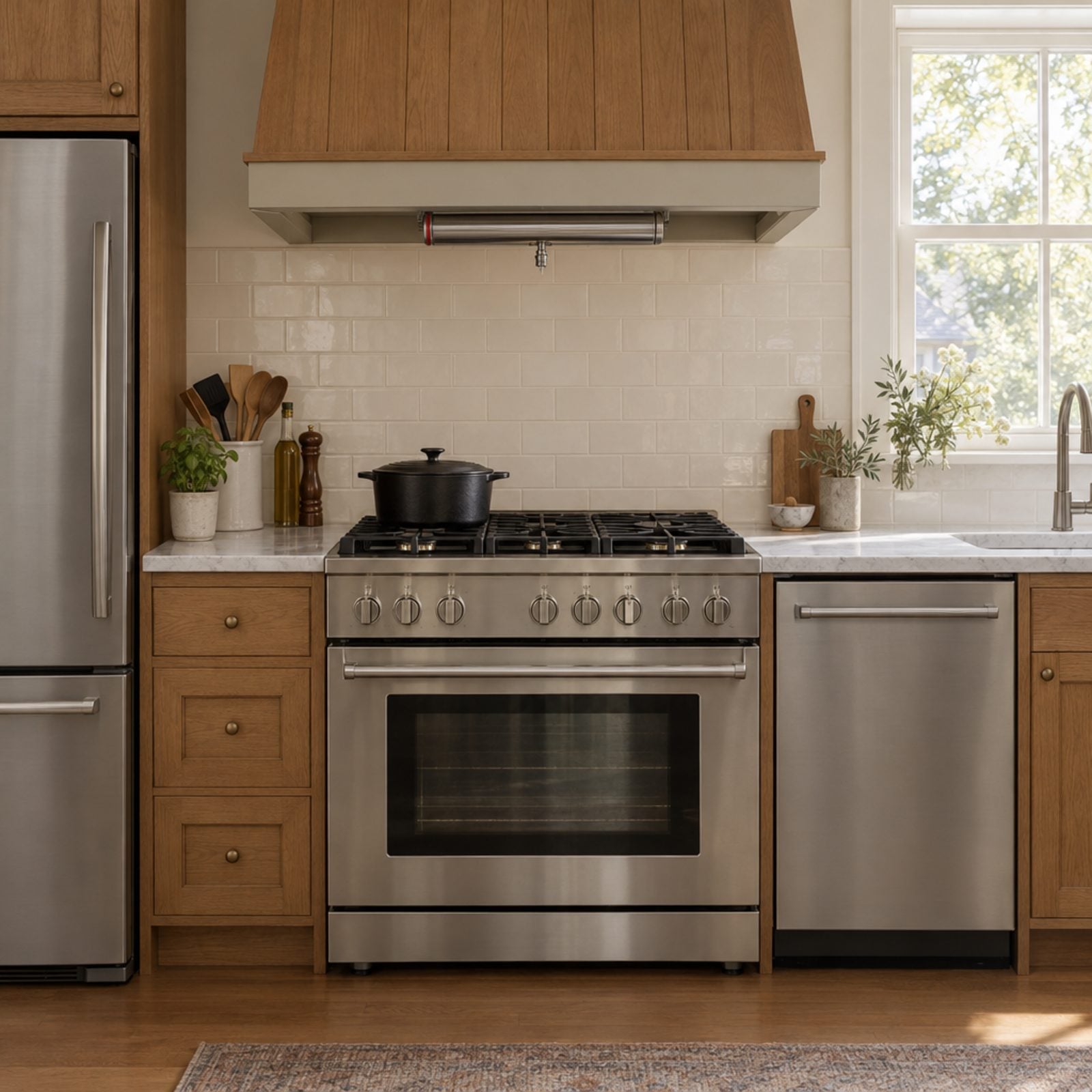
Grease fires don’t warn you and they don’t wait for you to remember where the extinguisher went. Most kitchen fires start at the stove, and most people’s first instinct, throwing water, makes it worse.
A heat-triggered canister mounted on the underside of the hood sits centered above the burners doing absolutely nothing until it has to. When flames hit its trigger temperature, it sprays a suppressant across the cooktop and smothers the fire before you’re even across the room. The slim stainless cylinder sits horizontally beneath the hood, easy to mistake for a paper-towel holder, so you forget it exists, which is the whole idea.
35. Toe-Kick Step Stool
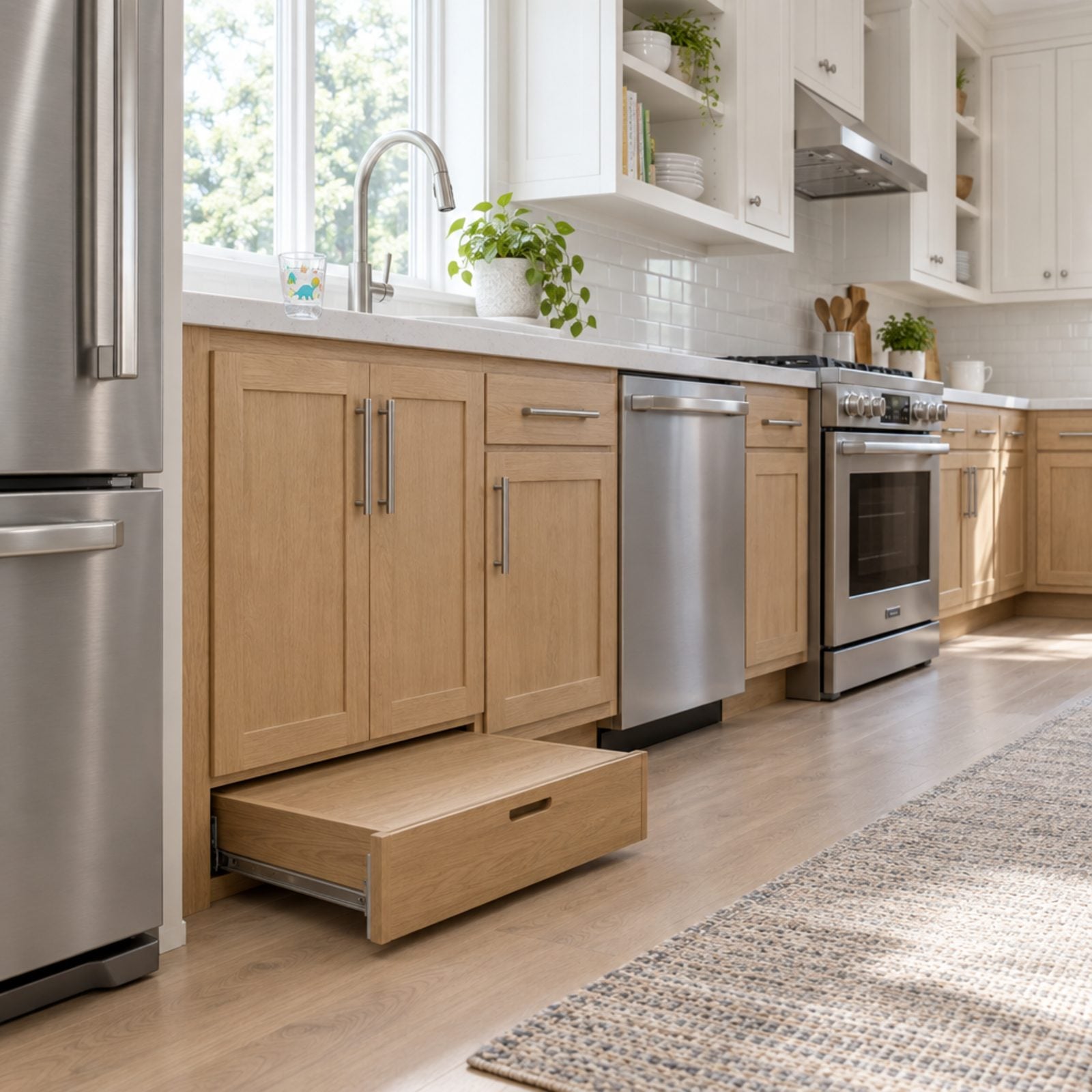
Kids need reach. The loose plastic step stool answers that need by living underfoot, getting kicked across the floor, and tripping someone in the dark.
Build the step into a base cabinet instead. It slides out of an open bay under the sink cabinet doors, holds a child up to the counter, then slides back into the cabinet base when they’re done. Nothing to store, nothing to stub a toe on at midnight.
34. Pop-Up Appliance Lift
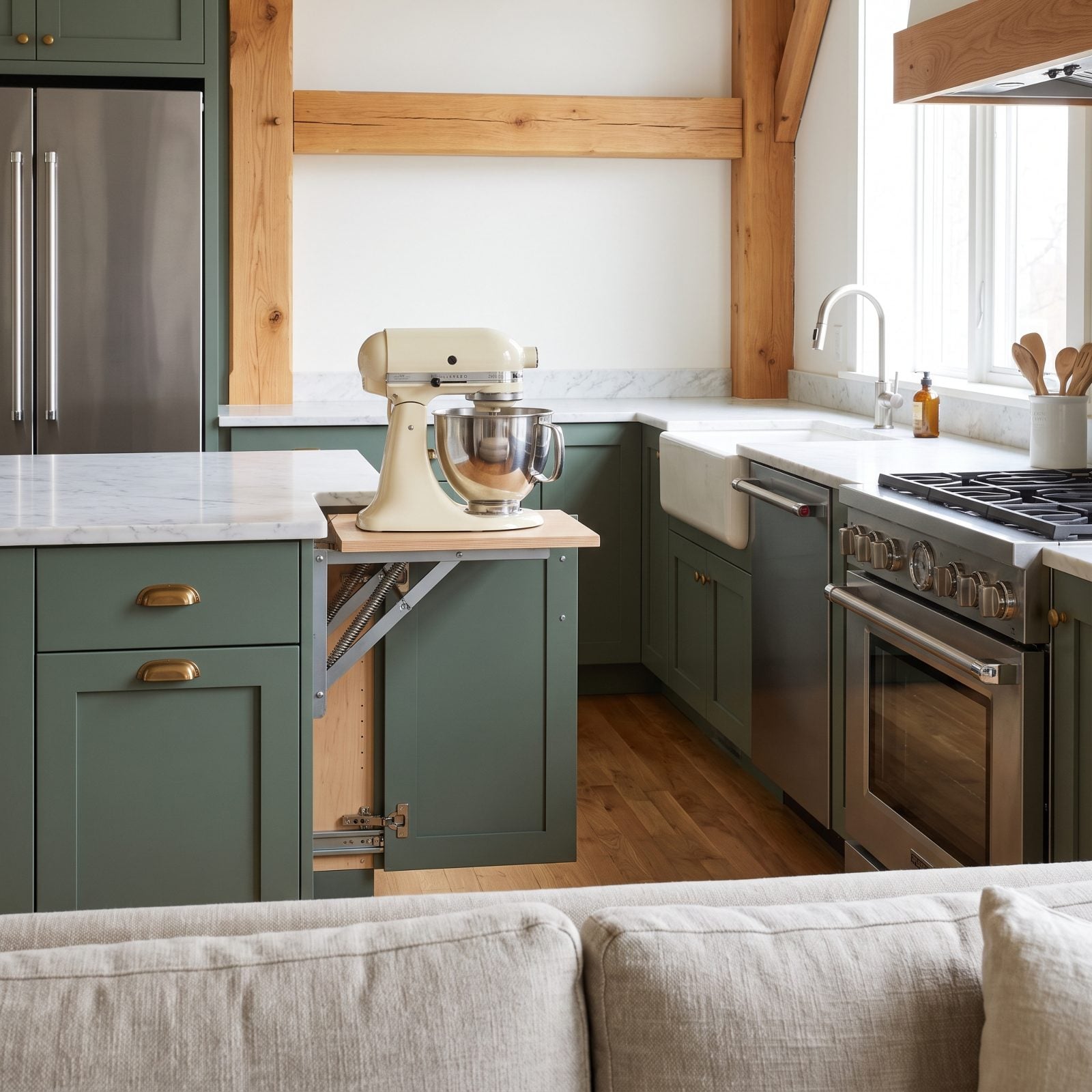
A stand mixer weighs enough that people who own one still bake less than they want to, because hauling it up from the bottom cabinet is a whole decision before you’ve even measured flour.
Let a spring-assisted lift do the lifting. The shelf swings up and out of the base cabinet and lands the mixer at counter height, ready to go. Done baking? It folds back down and the counter is clear again. Fewer excuses, more cake.
33. Countertop Compost Chute
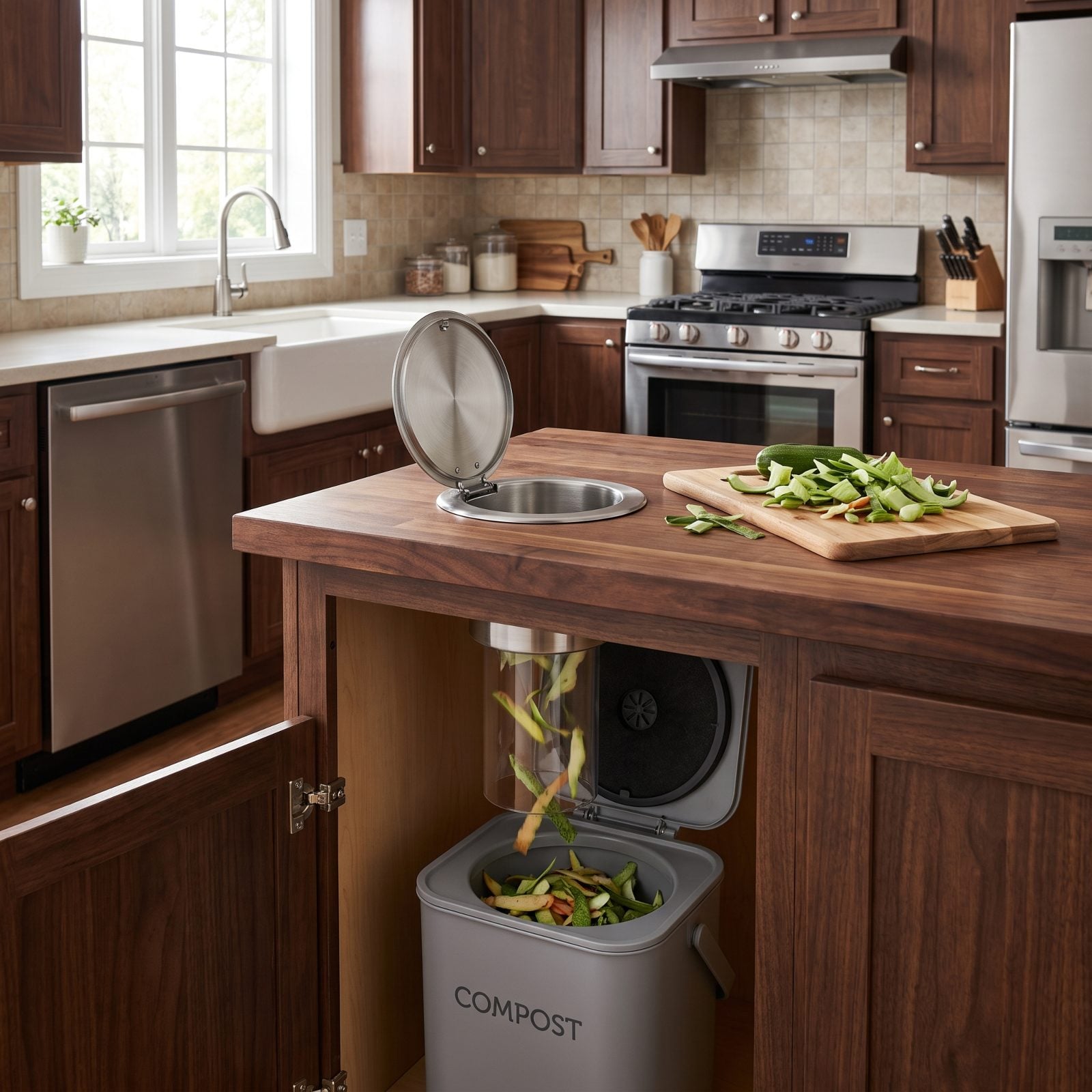
The countertop compost crock is a good idea that smells like a bad one by Wednesday. It sits there, it attracts fruit flies, and someone eventually quietly stops using it.
A flush chute cut into the counter fixes the weak link. Scrape the cutting board straight into the opening and the scraps drop toward the filtered bin in the cabinet below (just make sure its lid is open, or they’ll land on top of it), so there’s no crock on the counter, just a hinged stainless lid to flip back, and no smell drifting up while dinner cooks. The brushed stainless opening reads as deliberate against the walnut block, so it looks like a feature instead of a workaround.
32. Foot-Pedal Kitchen Faucet
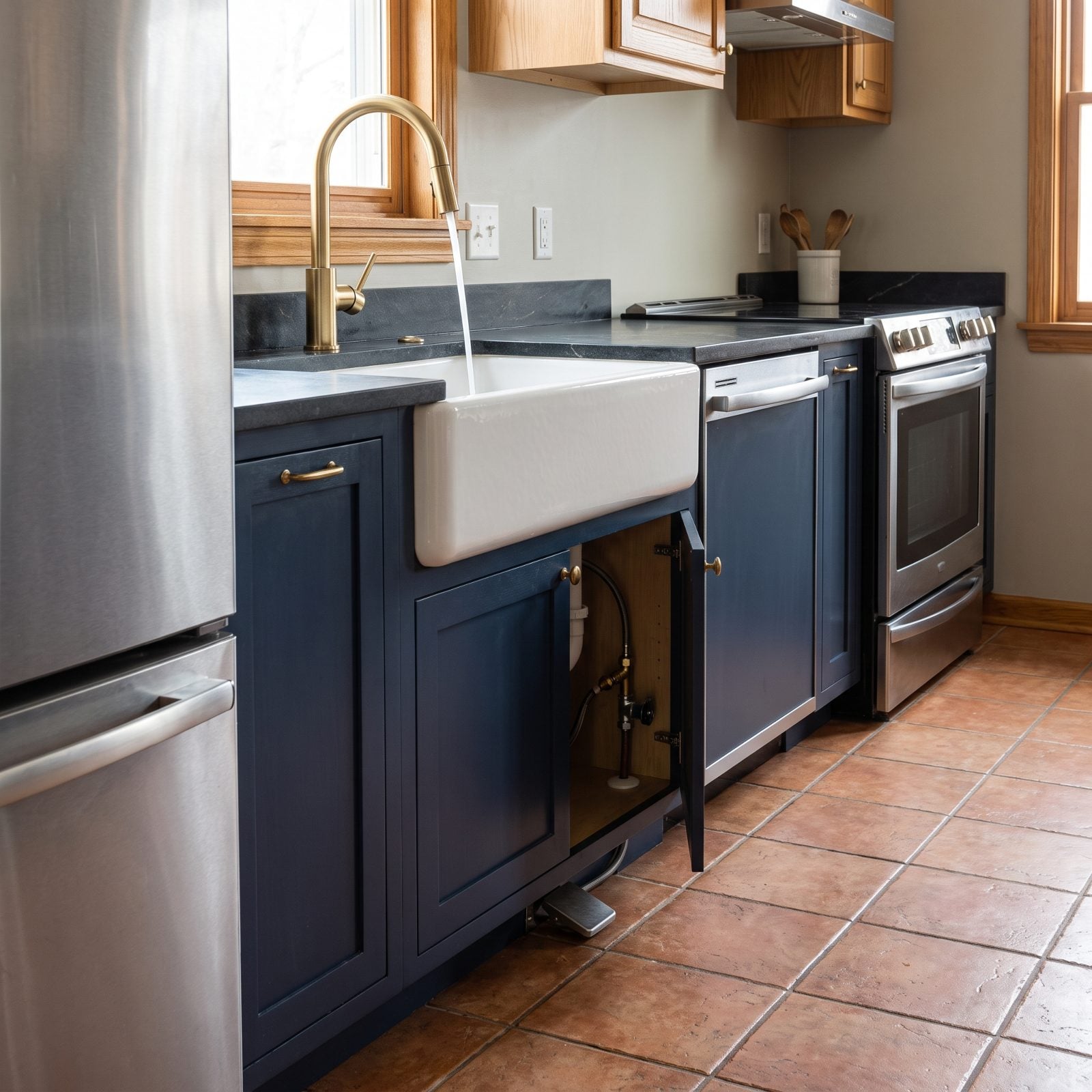
Raw chicken on both hands and the faucet handle a clean inch away. That’s the exact moment a foot pedal pays for itself.
A toe-tap at the base of the cabinet runs the water, so you never smear a handle you’ll just have to scrub later. Lift your foot and it stops, which also makes it hard to leave running. The pedal hides in the toe-kick where you forget it’s there until your hands are full.
31. Plumbed Coffee Station
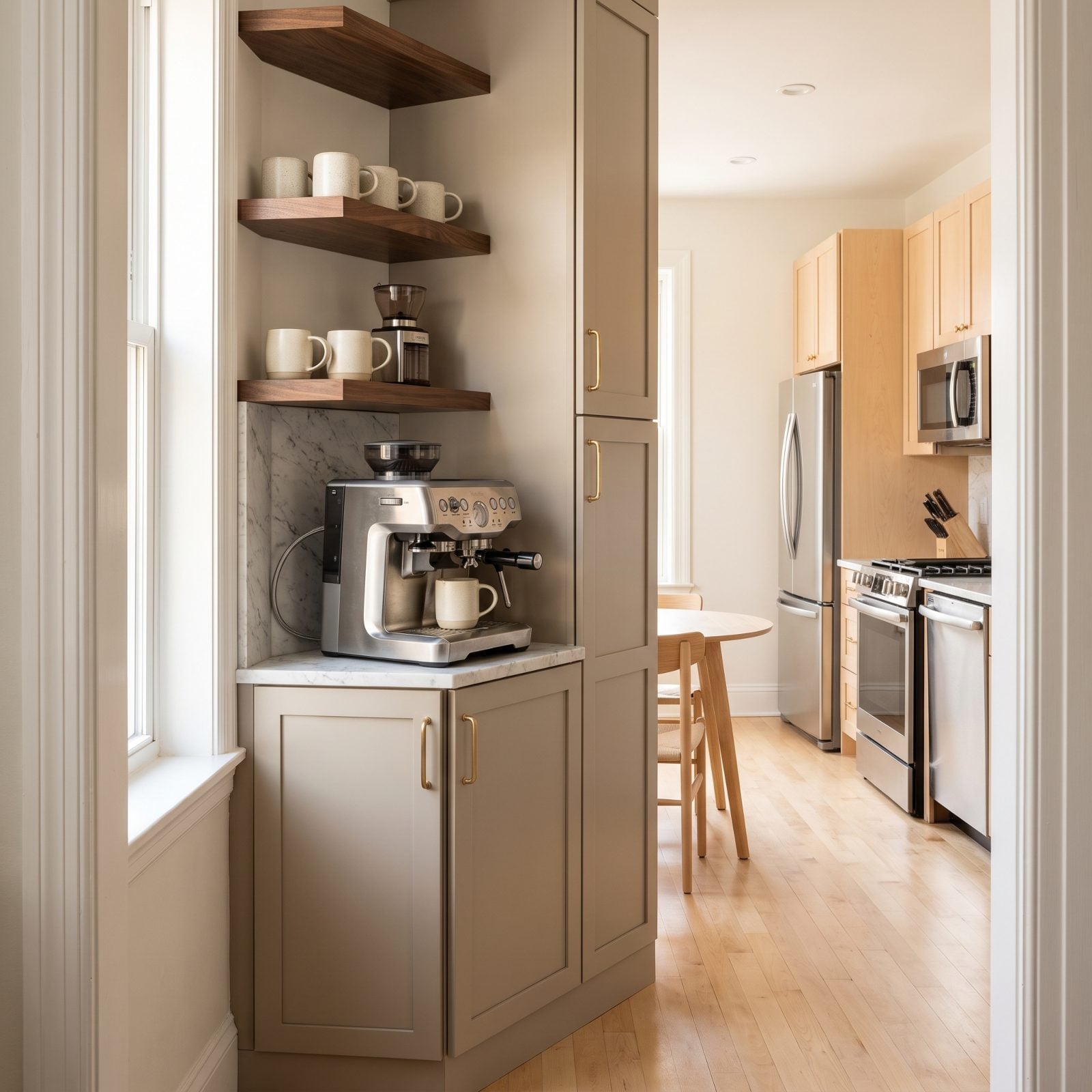
The reservoir refill is a small chore that only grates when you’re half-awake and desperate, which is every single morning.
Plumb the coffee maker straight to the water line and the fill jug is retired for good. The machine draws what it needs from a neat line routed through the cabinet behind it, so your morning starts at the button instead of the sink. Walnut open shelving above keeps the mugs and grinder in reach and gives the corner the feel of a little cafe you happen to own.
30. Single Dishwasher Drawer
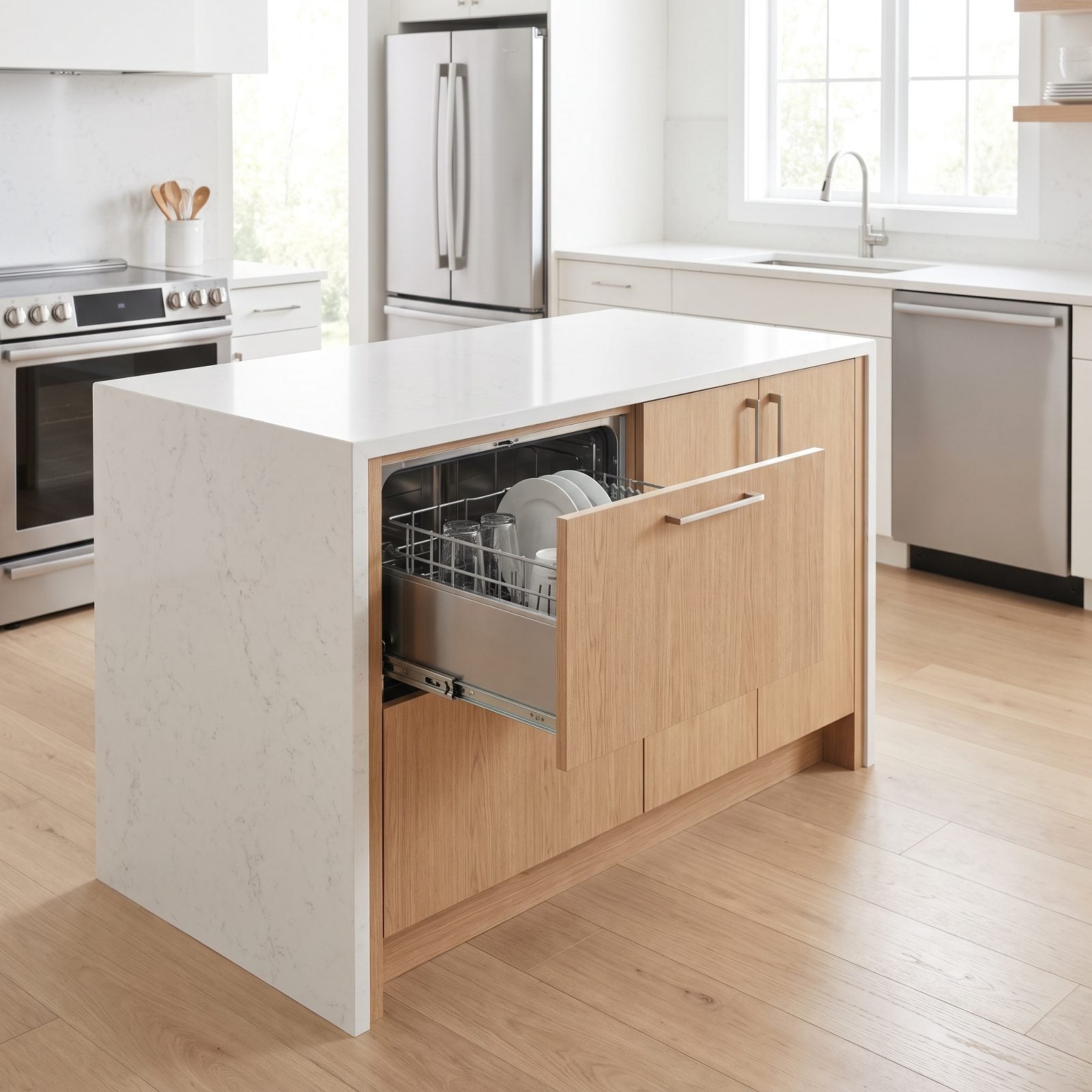
Running a full-size dishwasher for four plates and two glasses is how a household of two burns water waiting for the rack to fill.
A single drawer unit handles the small, frequent loads. It washes a day’s worth of dishes in a fraction of the space and the water, and it sits at a height that doesn’t make you fold double to load it. Paneled in light wood to match the island’s base cabinetry, it reads as a drawer, not a second appliance. Keep the big machine for dinner parties and let the drawer carry the everyday.
29. Floor Outlet Beneath a Floating Sofa
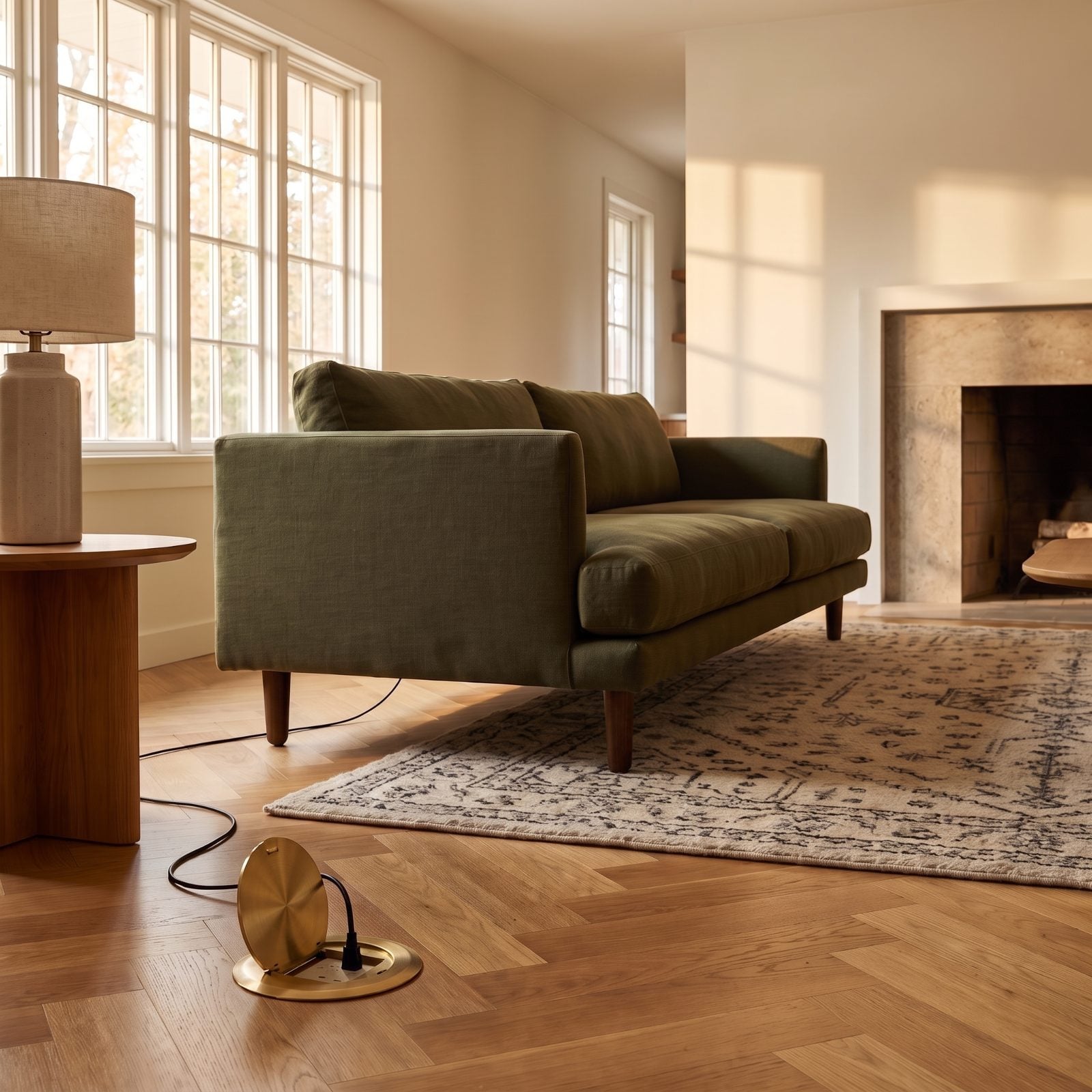
You’ve arranged the room perfectly, then watched one orange extension cord drag across the floor like a tripwire and wreck the whole thing. A floor outlet beside a floating sofa brings the power to the middle of the room instead.
The flip-up brass floor outlet here sits flush in the oak herringbone out in the open floor in front of the sofa, so the sofa gets power without a cord taped to the baseboard. Pull the sofa off the wall and the floor plan opens up — the floor outlet is the thing that lets you do it without running a cord all the way back to the wall.
28. Door-Jamb Closet Switch
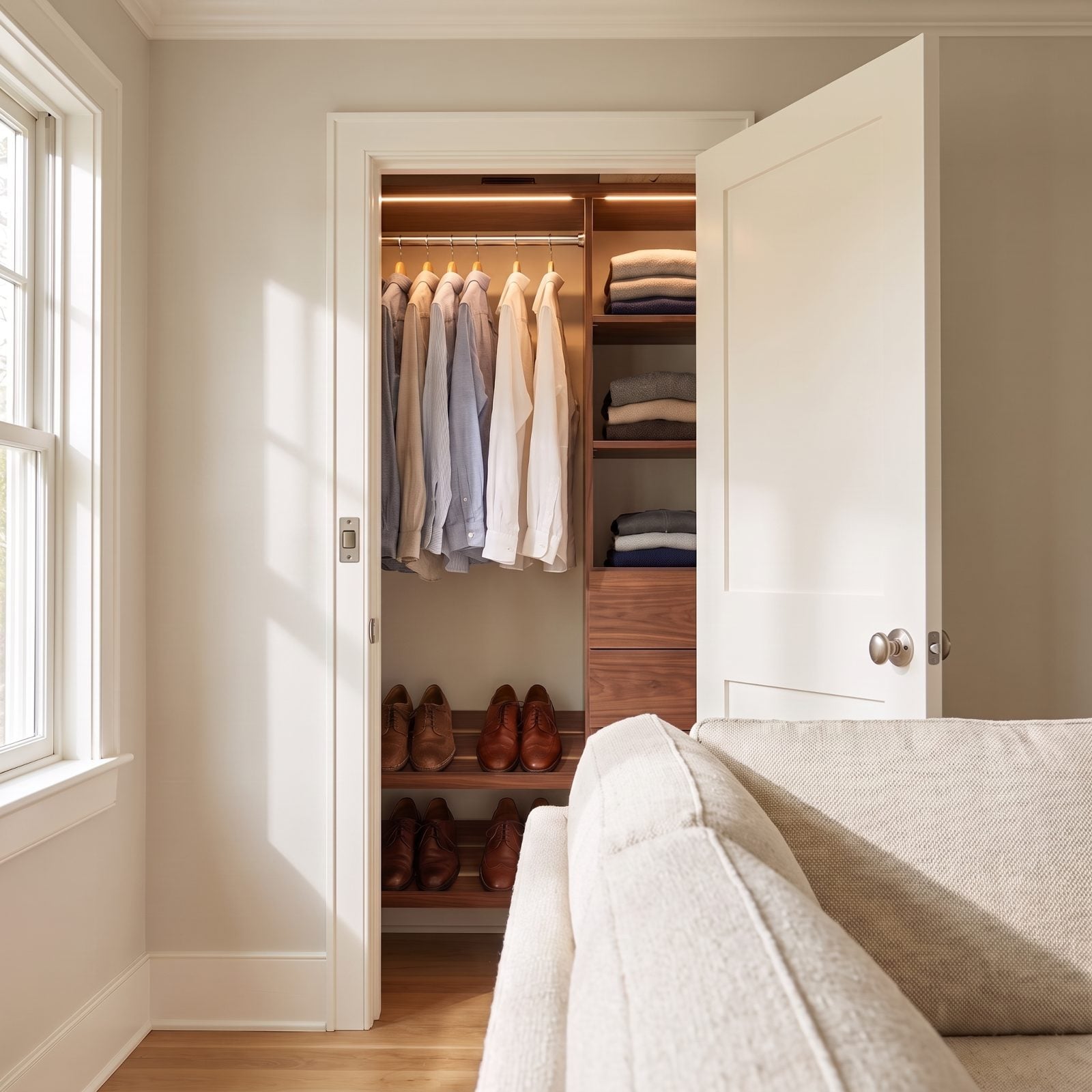
Open the door, press the button right there beside the door, and the light comes on. Press it off as you close up. No fumbling along the wall with an armful of laundry.
A small rectangular push-button switch set into the door jamb works just like the switches you use in every other room, just relocated somewhere useful — right at your fingertips, so it’s easy to remember to turn off and the closet doesn’t sit glowing behind a shut door, quietly burning power for nothing. People assume it’s some fancy retrofit. It’s a two-wire switch and an afternoon.
27. Red-Spectrum Bathroom Night-Light
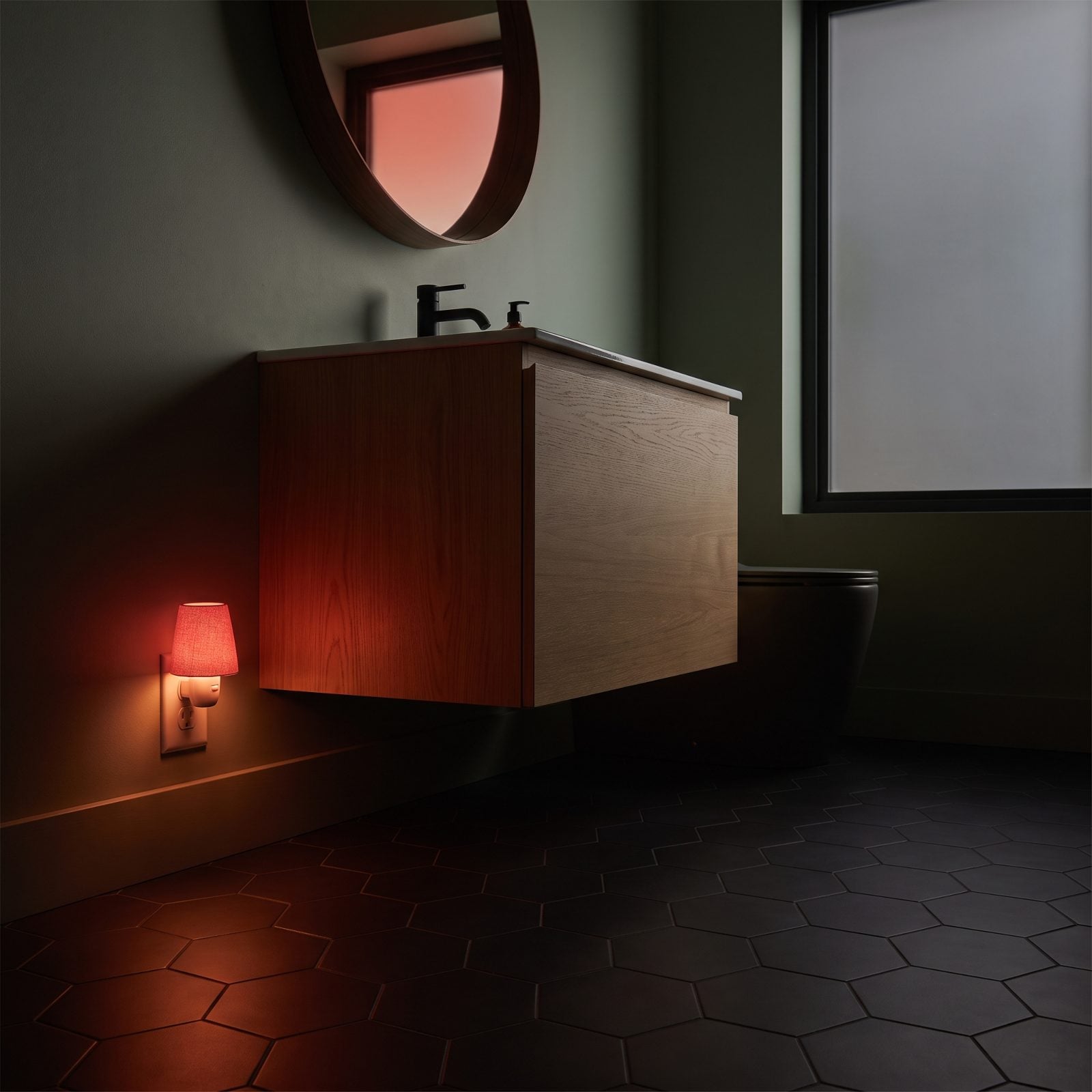
Here’s the part most people never learned. White and blue light tell your brain it’s morning; red light doesn’t. That’s exactly why the 2am bathroom trip wrecks your sleep, and the fix is simply a night-light in the right color instead of the wrong one.
A red night-light set low near the floor gives you enough to see the path without tripping the wake-up response. Your pupils stay relaxed, your melatonin stays put, and you’re back asleep in minutes instead of staring at the ceiling.
26. Illuminated Stair Handrail
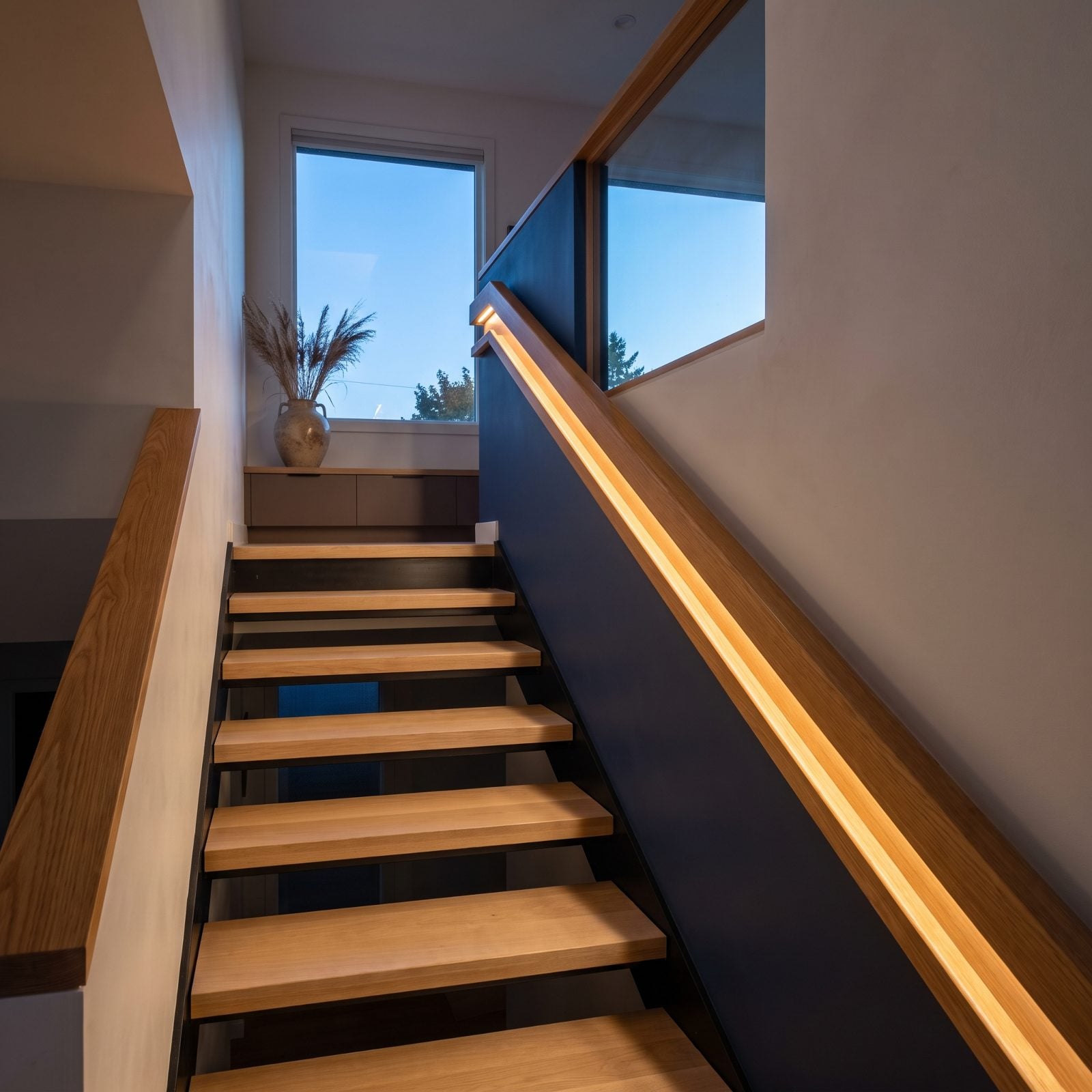
Most stair lighting points down from the ceiling, which drops glare in your eyes and shadow on the step. Backwards.
An illuminated handrail flips that logic completely. The LED strip tucks under the rail’s lower lip and throws light onto the tread edges, right where your foot is heading and your hand already rests. Nobody stumbles groping for a switch at the top of the stairs anymore, because the guidance is built into the very thing they’re already holding.
25. Tubular Skylight for a Windowless Room
🔥 Would you like to save this?
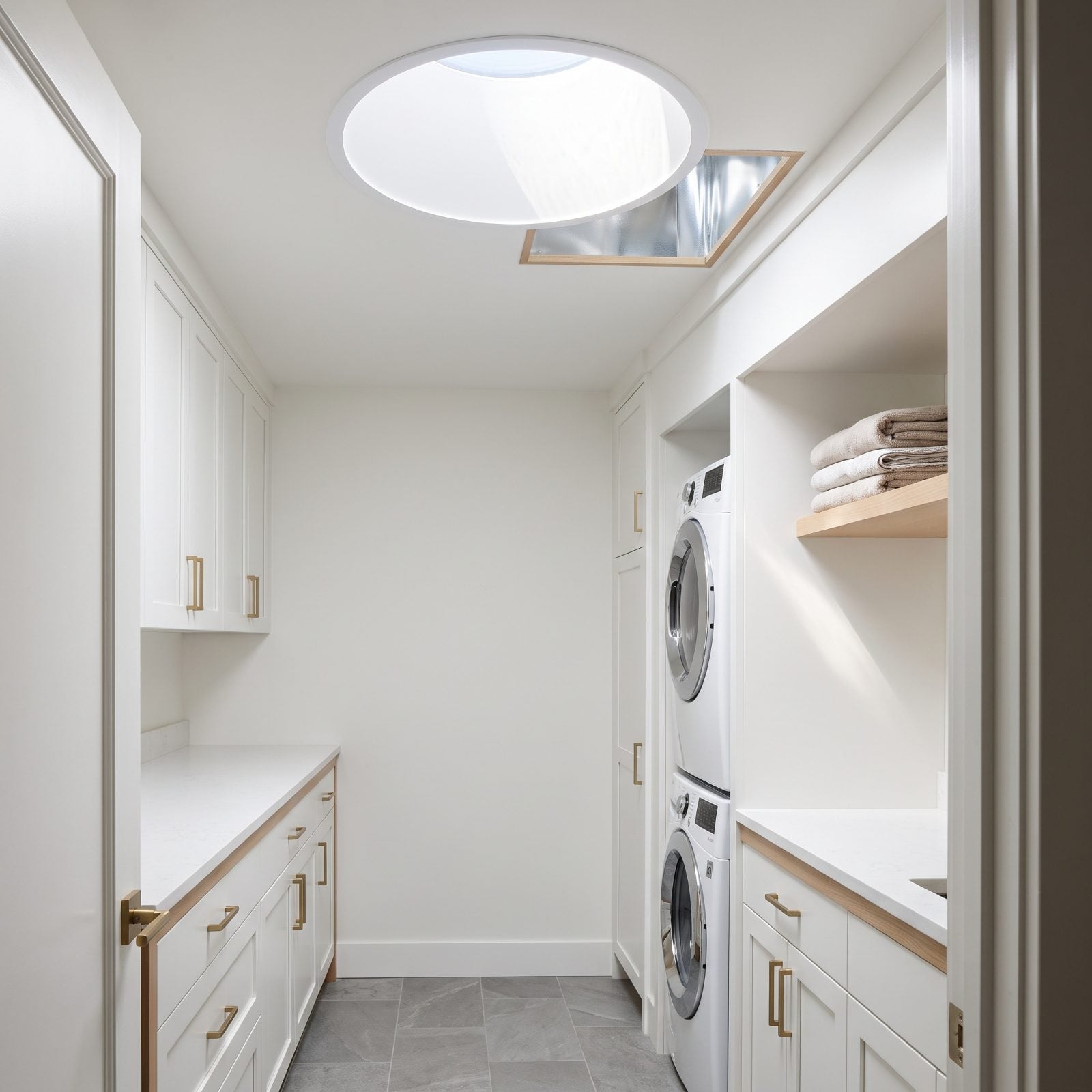
That interior laundry room with no window and a single harsh bulb — you know the one. A tubular skylight turns it into one of the sunniest spots in the house, and it asks for no wall and barely any ceiling.
A dome on the roof catches daylight, a mirror-lined tube carries it down, and an open ceiling ring lets it pour straight into the room, with no diffuser in the way, so you can look up and see blue sky. The light quality is the real shock. It reads as daylight because it is daylight — full-spectrum and free until the sun goes down.
24. Operable Interior Transom Window
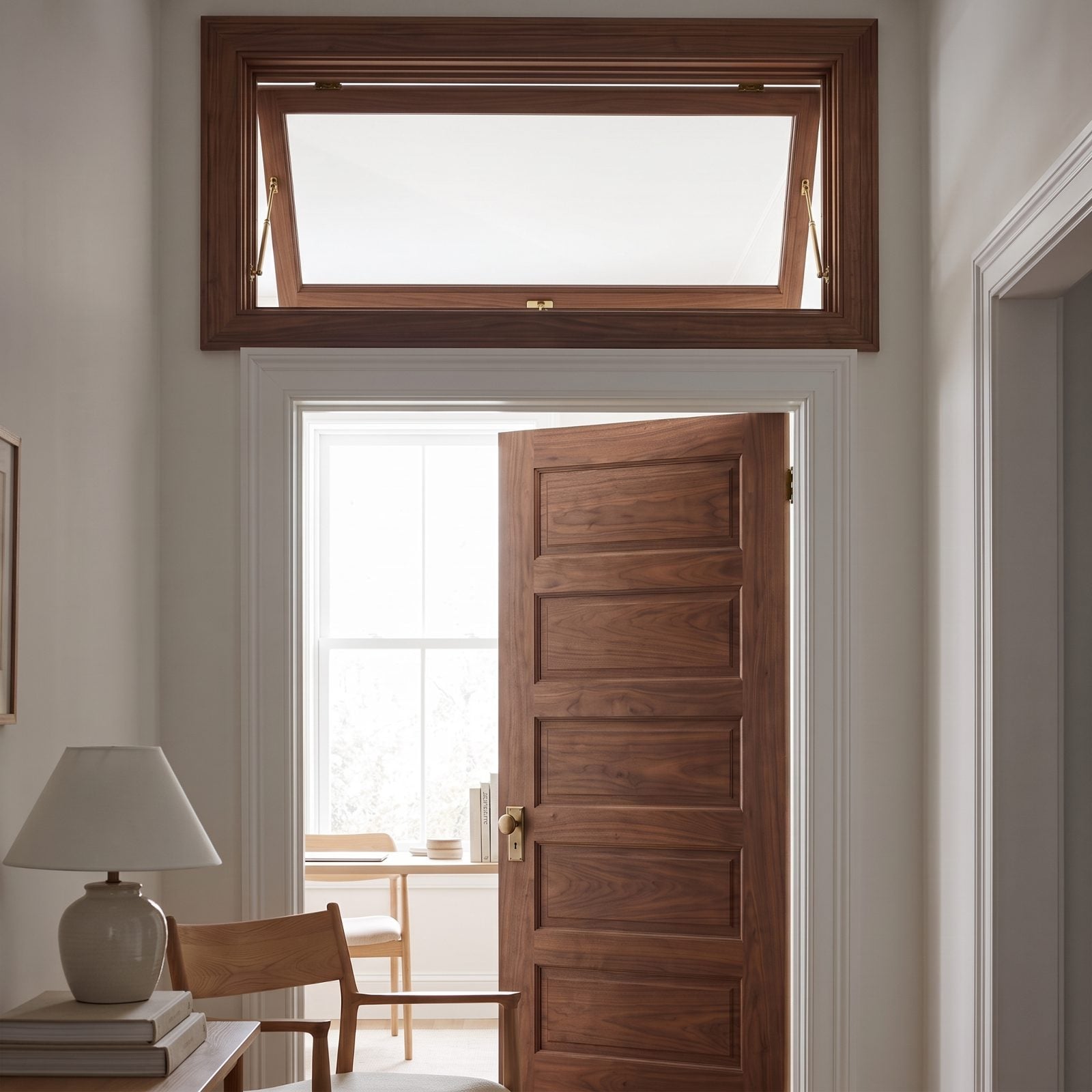
Old houses figured this out a century ago, and then we promptly forgot. The window above the door, hinged to tilt open, let air move and light pass while the door itself stayed firmly shut.
An operable transom brings all of that back. Shut the door for privacy or to keep the noise down, and the pane above still shares daylight into a windowless hall while letting warm air bleed out of a stuffy room. Two problems solved with a single sheet of glass and a pair of brass stay arms.
23. Dutch Pantry Door
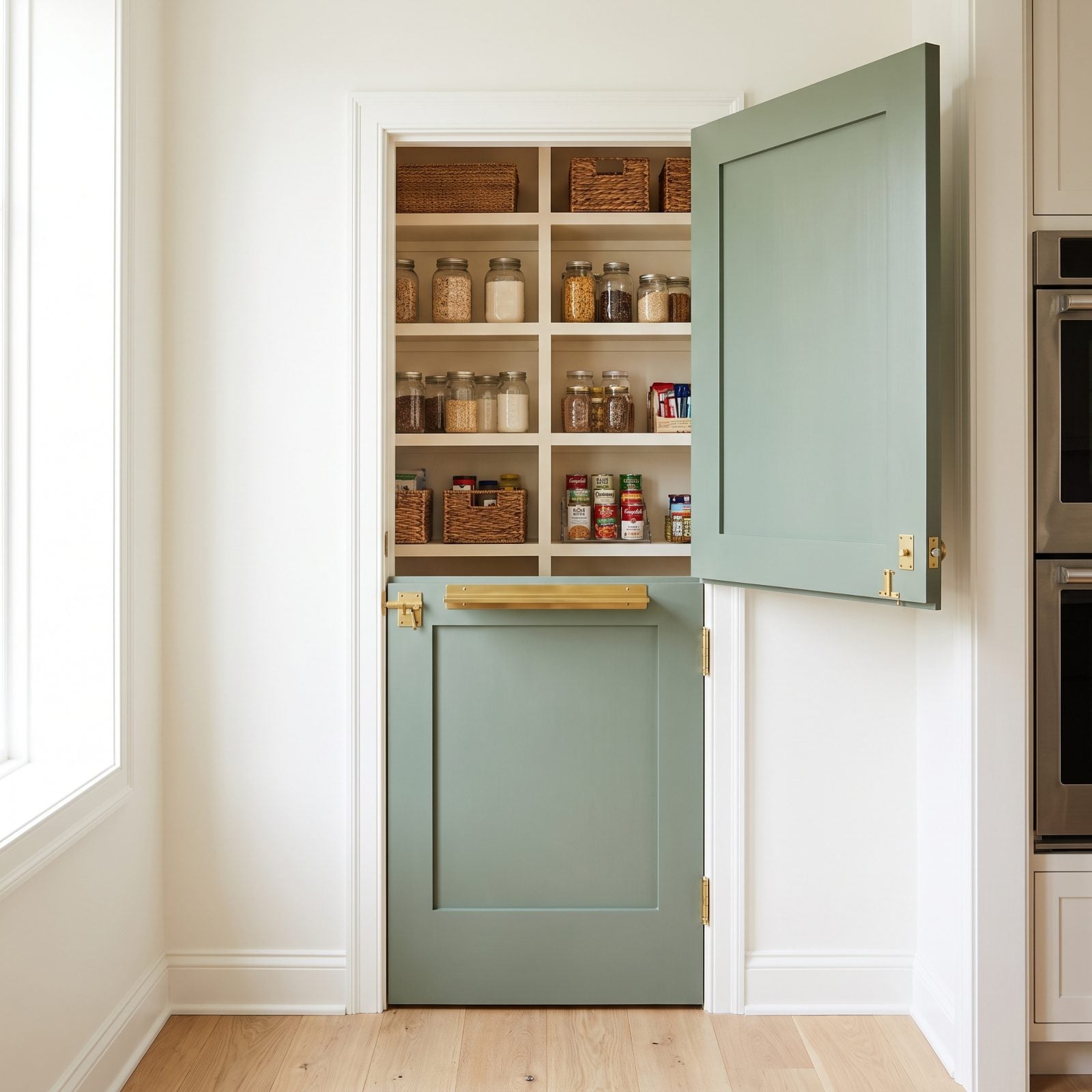
Split the door in half and keep the top open. Now the pantry stays visible and breathable while the bottom half keeps the dog from helping himself to the dry goods.
A sage green Dutch door pulls off the same trick the half-door has always managed in old farmhouses — contain the chaos down at floor level, keep the airflow and the sightline up top. Add a small brass ledge to the lower half and it doubles as a spot to set a basket while you load it.
22. Retractable Pocket Screen
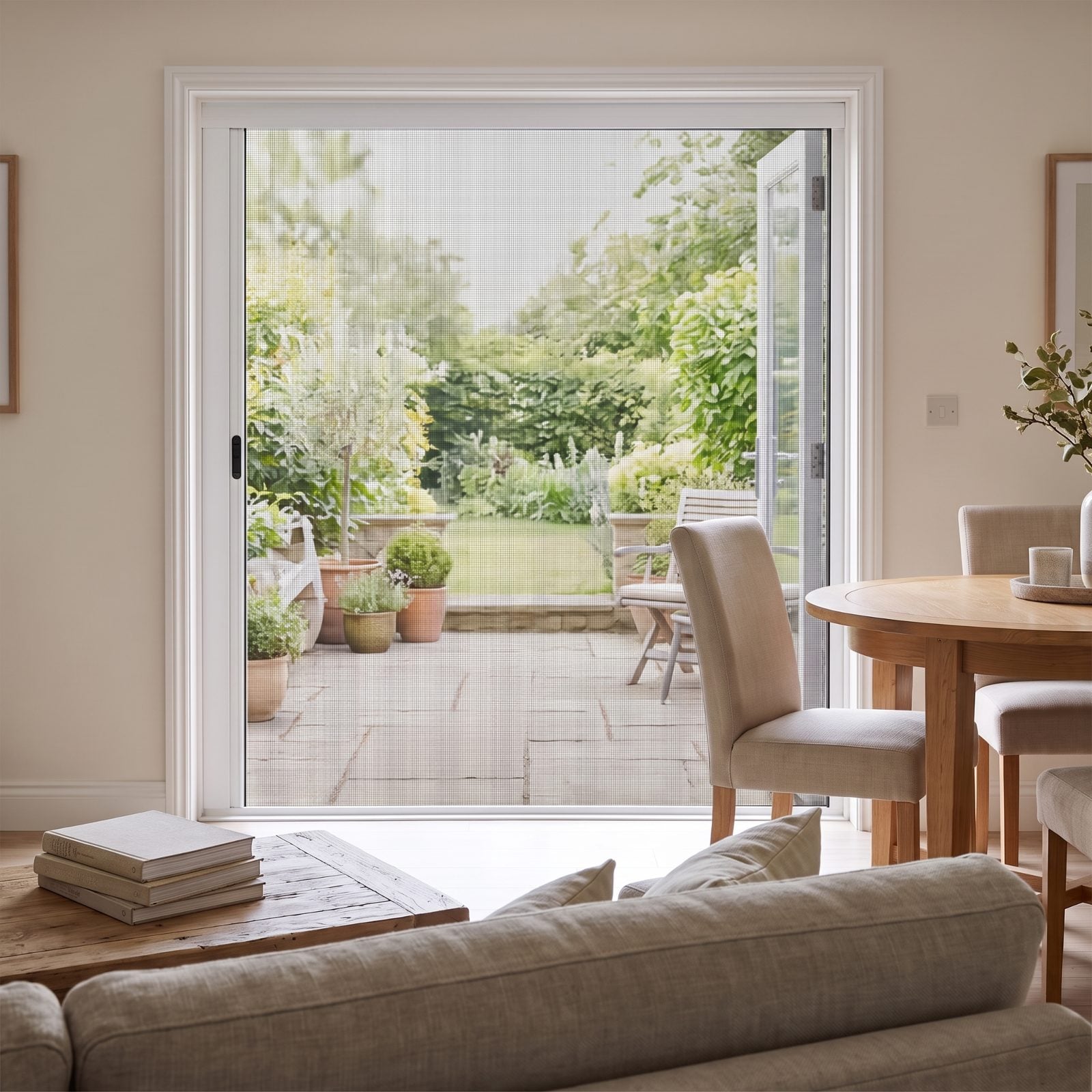
A fixed screen door is one more thing to look at, bang into, and eventually tear. This version is a slim framed panel that simply slides aside along the track when you don’t need it.
Pull it across by its latch handle when you want the breeze, slide it back when you don’t. The door frame reads clean all year, no flimsy, sagging screen clutters a nice entry, and the mesh stays held taut between sturdy top and bottom rails instead of getting kicked out at the bottom corner. Call it the screen for people who can’t stand how screens look.
21. Raised Pet-Washing Station
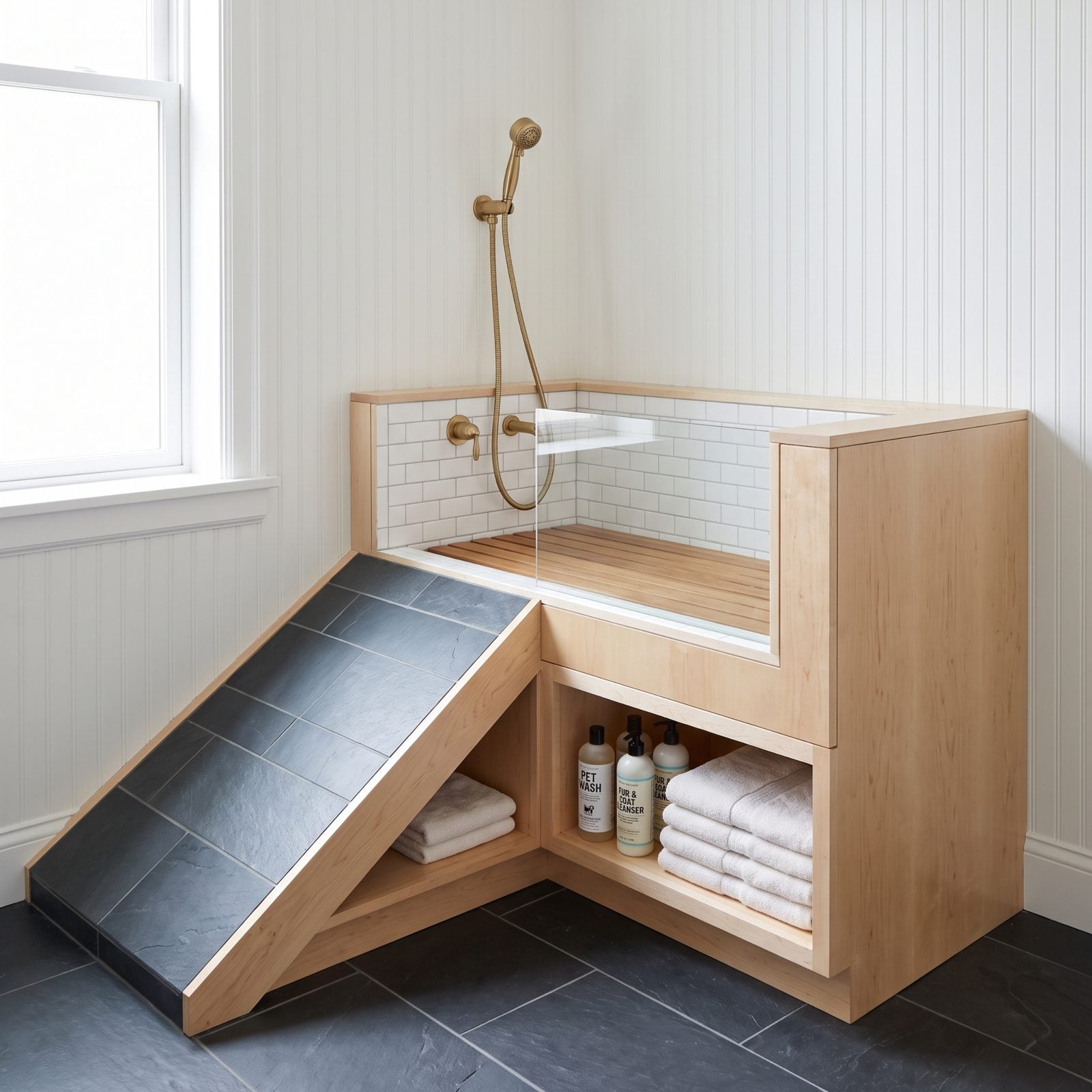
Anyone who has wrestled a big dog into a regular tub knows the aftermath — a soaked back, a flooded floor, and fur in the drain for a week.
A raised wash station lifts the basin to waist height so you’re not folded in half, and the brass handheld sprayer plus a half-glass splash panel keeps the water where it belongs. A tiled ramp rises along the window wall beside the tub, and its top meets the basin at a low tiled ledge, so the dog can walk straight up and into the tub without being lifted over the edge. The whole thing corrals the mess into one tiled box you can rinse down in thirty seconds.
20. Pull-Out Pet-Feeding Drawer
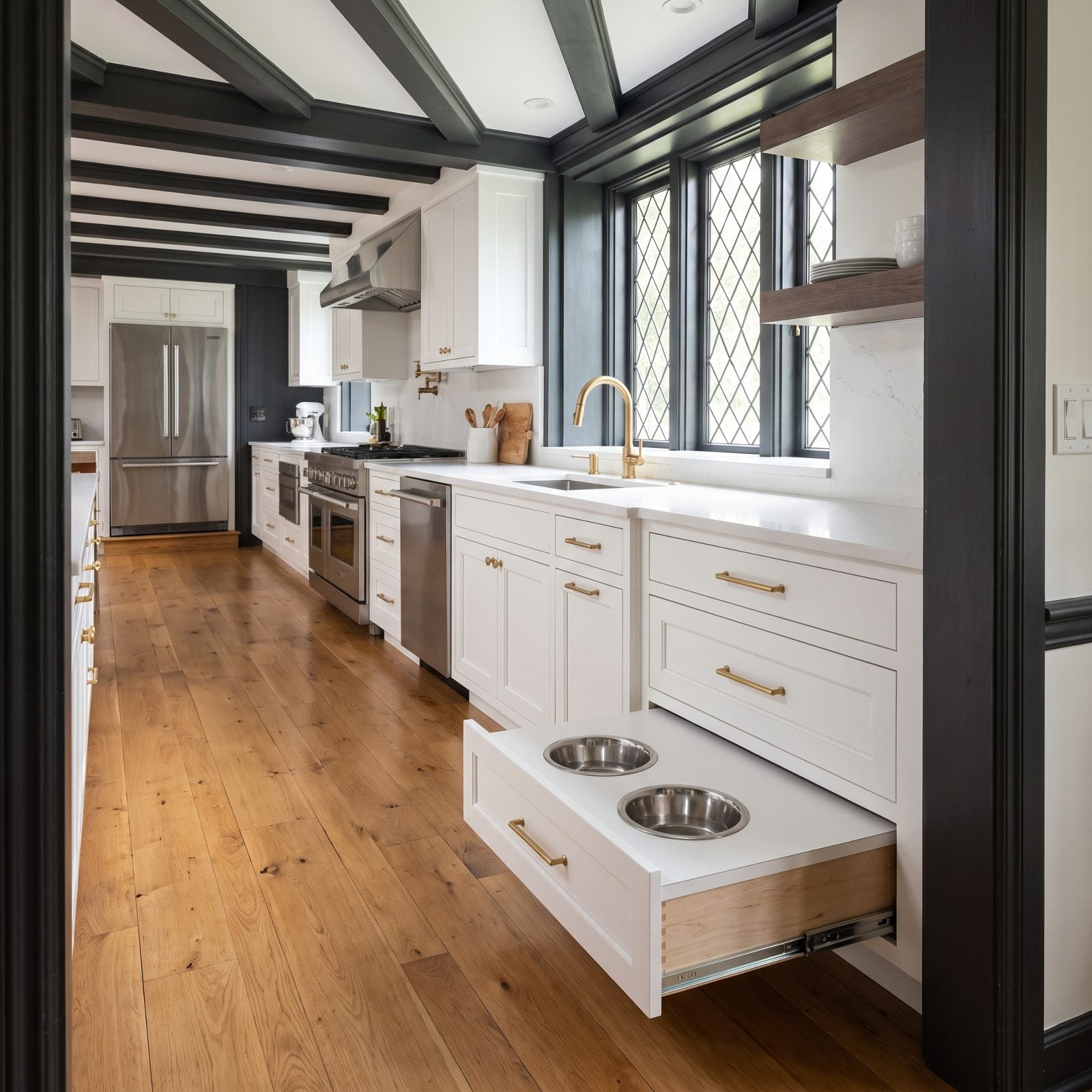
Pet bowls on the kitchen floor are a stubbed toe waiting to happen, and they never stop reading as clutter.
A pull-out feeding drawer built into the lower cabinets tucks the whole operation out of sight. Two stainless bowls sit recessed in the drawer base, flush and invisible when closed, slid out at mealtime and shoved back after. The kitchen behind keeps doing its real job — fridge, range, and dishwasher all in a row — while the feeding zone just vanishes into the cabinetry the rest of the day. No more punting the water dish across the floor at 6am. Push it shut and the kitchen looks like nothing ever happened there.
19. Weather-Sealed Wall Pet Tunnel
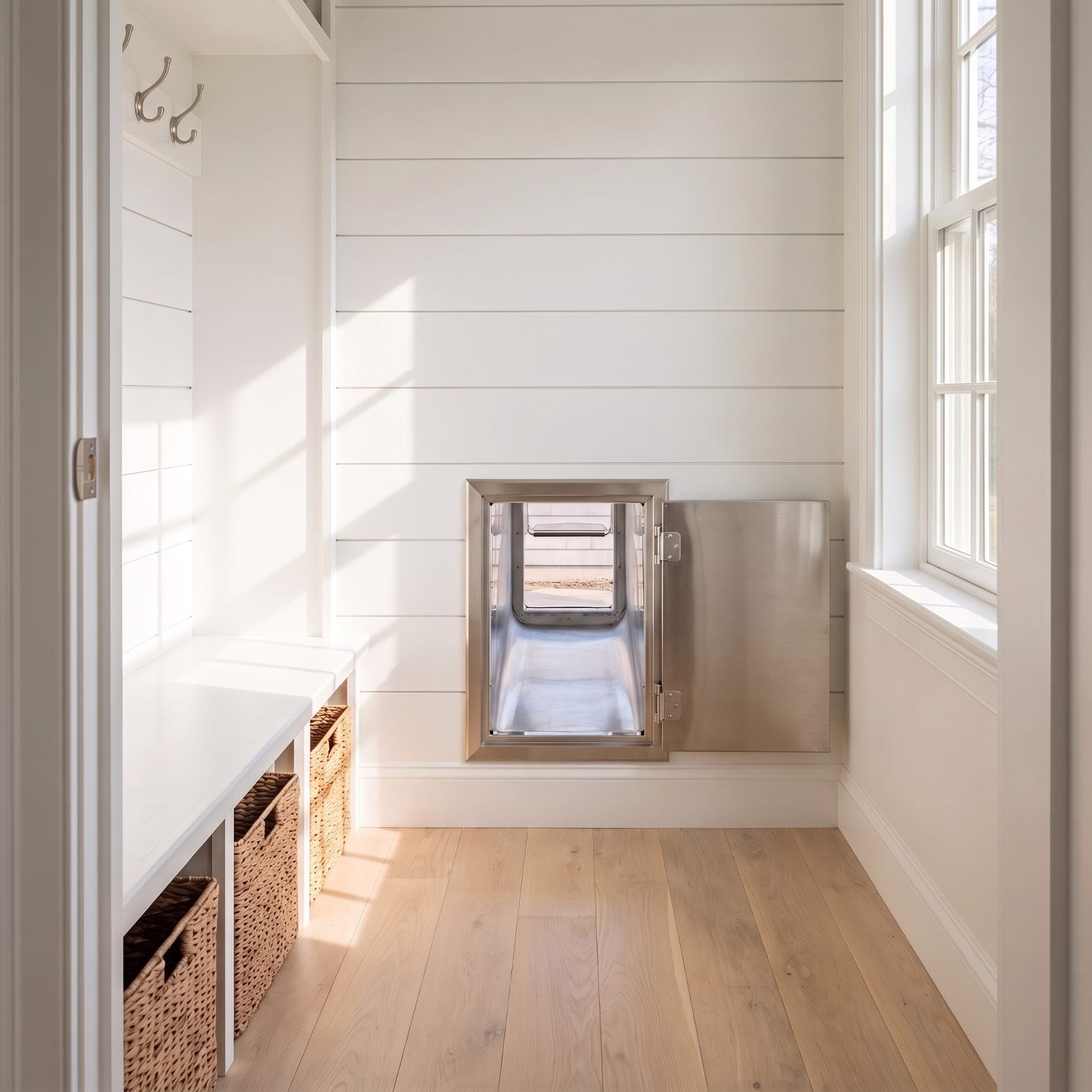
Cutting a hole in a solid door ruins the door. A wall tunnel doesn’t, because it routes the opening through a long, chute-like channel, lines it with insulated aluminum, and caps the inside end with a gasketed, hinged stainless door and the outside end with a flap, which together seal against drafts and rain. Your heating bill barely notices.
The real win is placement freedom. A door flap lives wherever the door happens to be, but a wall tunnel can land in the mudroom, beside the woven storage baskets, exactly where traffic already flows.
18. Toilet-and-Sink Combination
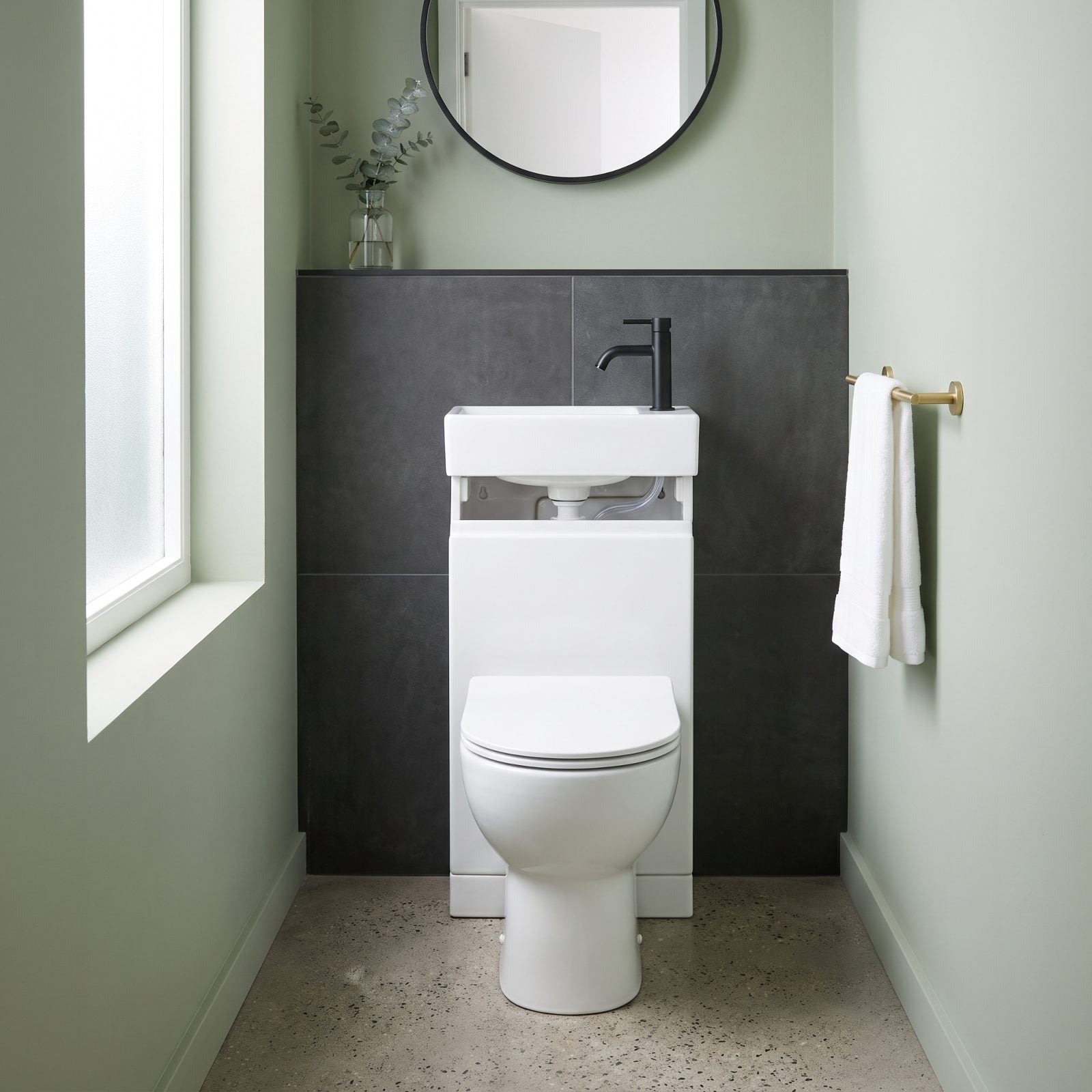
The water you wash your hands with vanishes down the drain, perfectly clean enough to flush with. A combination unit catches it: the basin sits on top of the cistern, the faucet runs into the tank, and that same water does a second job before it leaves the house.
These are standard fare in Japan and have been for decades. In a tight powder room they also buy back floor space, since one footprint now does what two used to.
17. Recessed Shower Foot Niche
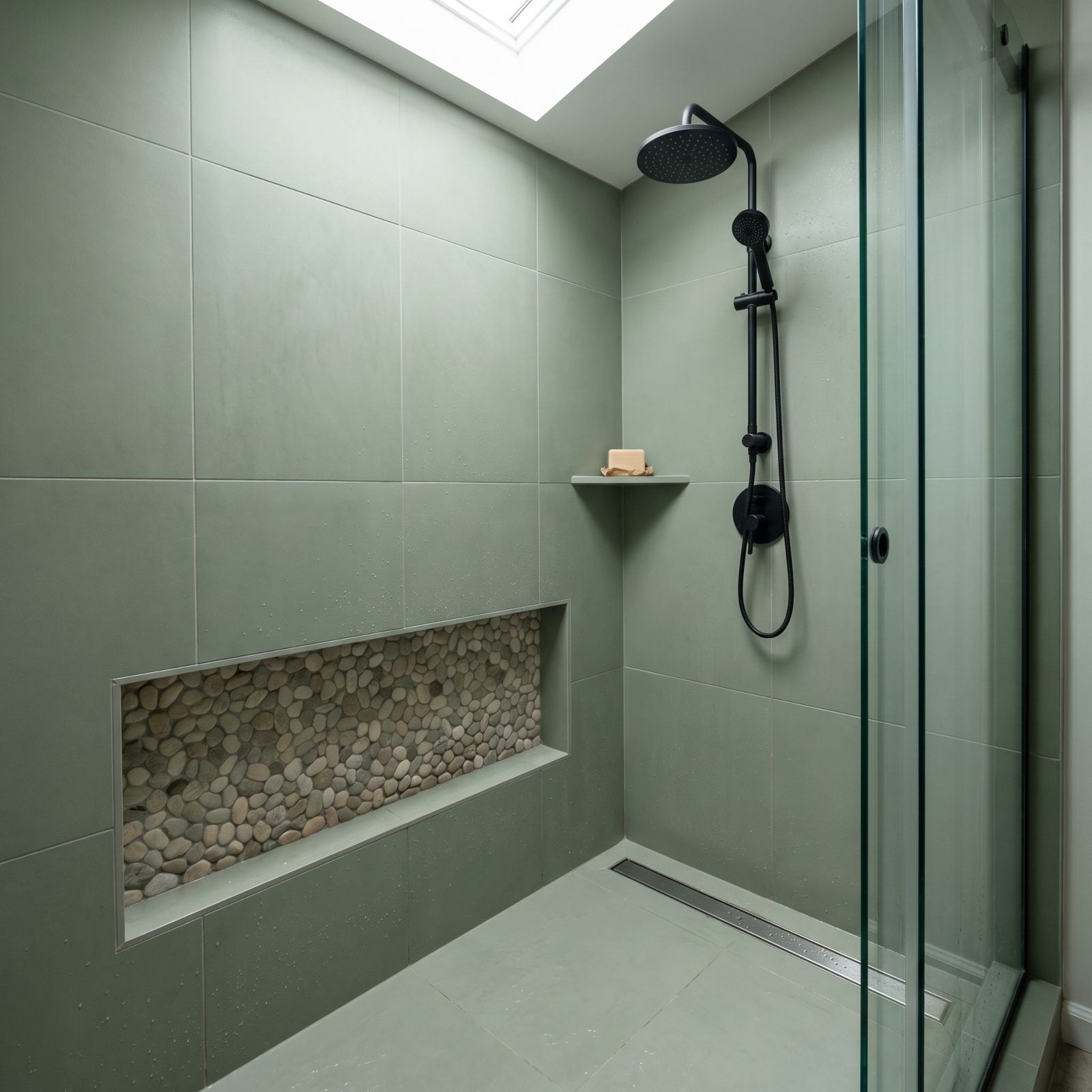
Balancing on one leg to shave in a slick shower is how falls happen. A recessed foot niche fixes that with a stable ledge built right into the wall, low enough to prop a foot, deep enough to trust.
Line the back wall with pebble mosaic tile for texture, and finish the ledge itself in the same smooth, flat sage-green tile as the walls so it’s easy to wipe down. No awkward teak stool cluttering the floor, no acrobatics. Just a flat place to stand that was always missing.
16. Heated Bathroom Mirror

🔥 Would you like to save this?
You step out of the shower and the mirror is a white blur. Every single morning. A heated mirror ends that for good, because a thin pad behind the glass keeps the surface warmer than the surrounding air, so condensation never gets a foothold.
15. Ventilated Drying Cabinet
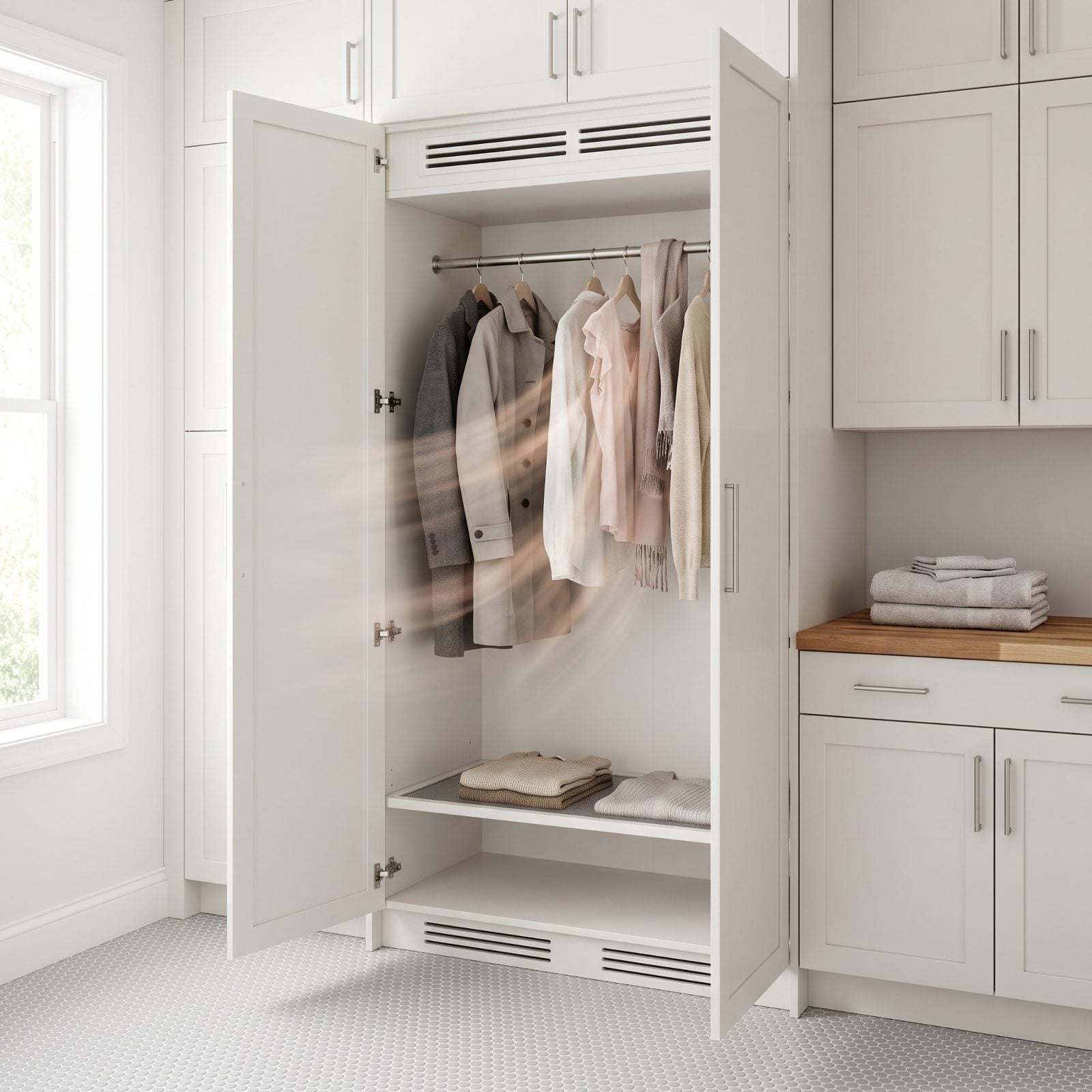
The tumble dryer is brutal on anything you actually care about. Wool shrinks, elastic dies, and that one good coat pills into submission. A ventilated drying cabinet skips all of it.
Warm air circulates past hanging garments on a closed rail, so coats come out dry by morning. No radiator draped in dripping sleeves. No sweater flat on a towel eating the whole guest bed. For delicates and outerwear it beats a machine, and it beats a wooden clothes drying rack that eats half a room.
Scandinavian homes have leaned on these for generations, which tells you they survive real winters and real laundry piles.
14. Ceiling-Mounted Pulley Drying Rack
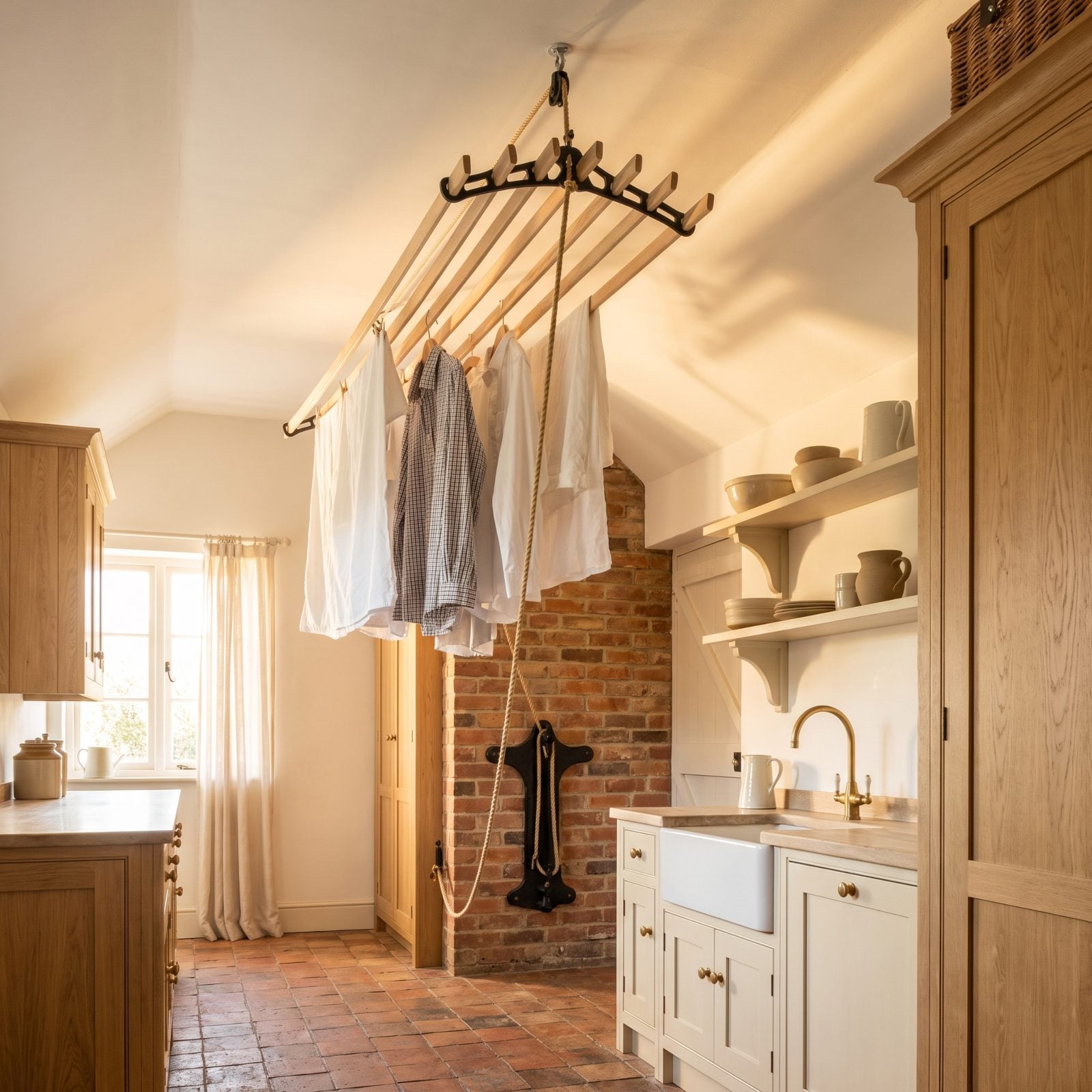
The warmest air in any room is already up near the ceiling, doing absolutely nothing. A pulley rack puts it to work. You load damp laundry at waist height, haul it up on the rope, and cleat it off overhead where the heat lives.
Victorian kitchens ran these as standard kit. They still earn their keep, especially in a small home where floor-standing racks turn every room into an obstacle course.
13. Powered Attic Storage Lift
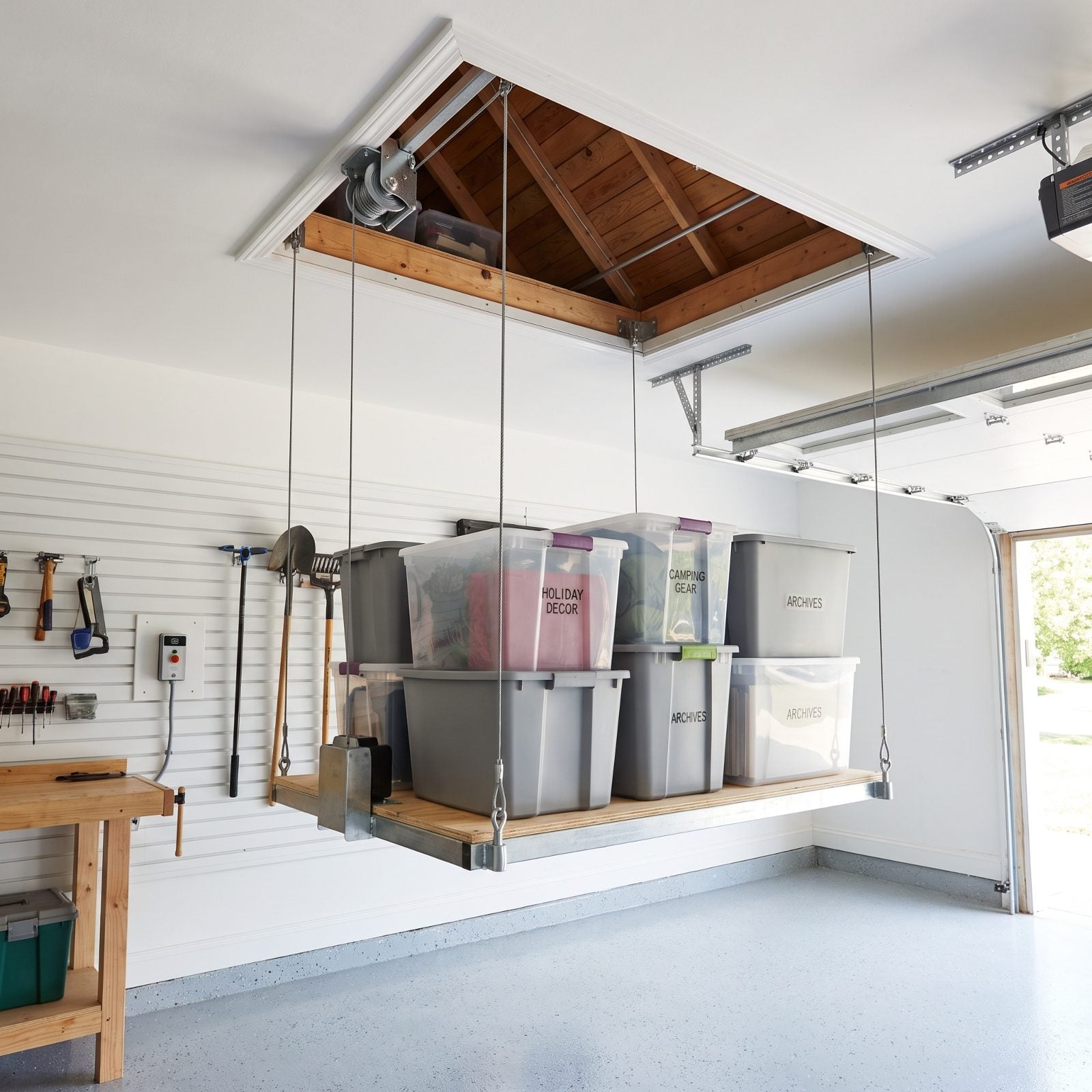
Hauling a bin of holiday decorations up a wobbling ladder is a sprained ankle waiting to happen. A powered lift does the climbing for you. Load the platform on the garage floor, press the switch, and the bins ride up through the hatch on their own.
This opens up attic square footage most people write off entirely, because getting heavy things up there felt impossible. Now it’s one button.
12. Residential Dumbwaiter
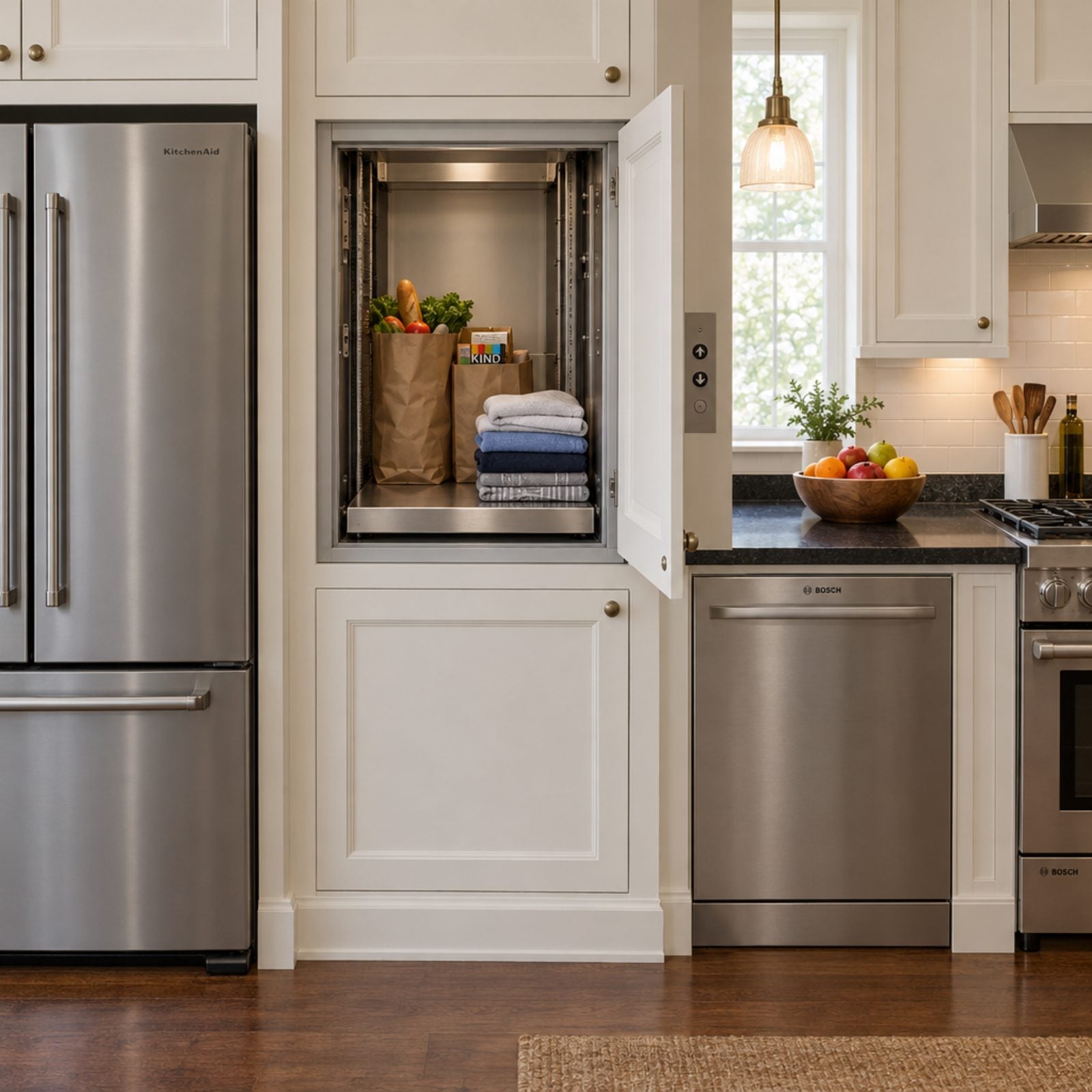
Three trips up the stairs with grocery bags cutting into your fingers. Laundry baskets balanced on one hip while you grip the rail. A dumbwaiter ends the whole routine, because you load it on one floor, send it to the next, and meet it there empty-handed.
Multi-story kitchens built these in for a century before anyone called them a luxury. They slot between floors in a cabinet-width shaft, and the car disappears behind a painted white shaker door set in among your white raised-panel cabinets.
11. Pull-Down Wardrobe Rail

The top rail in a tall closet holds half your wardrobe, and you reach it with a chair and a prayer. A pull-down rail solves it: a spring-assisted arm swings the whole row down and forward to chest height, then glides back up when you’re done.
Every inch of vertical closet space becomes usable, not just the bottom four feet. For anyone shorter, or anyone who’d rather not stand on furniture daily, it’s the difference between storage and dead air.
10. Roll-Out Drawers Under the Stairs
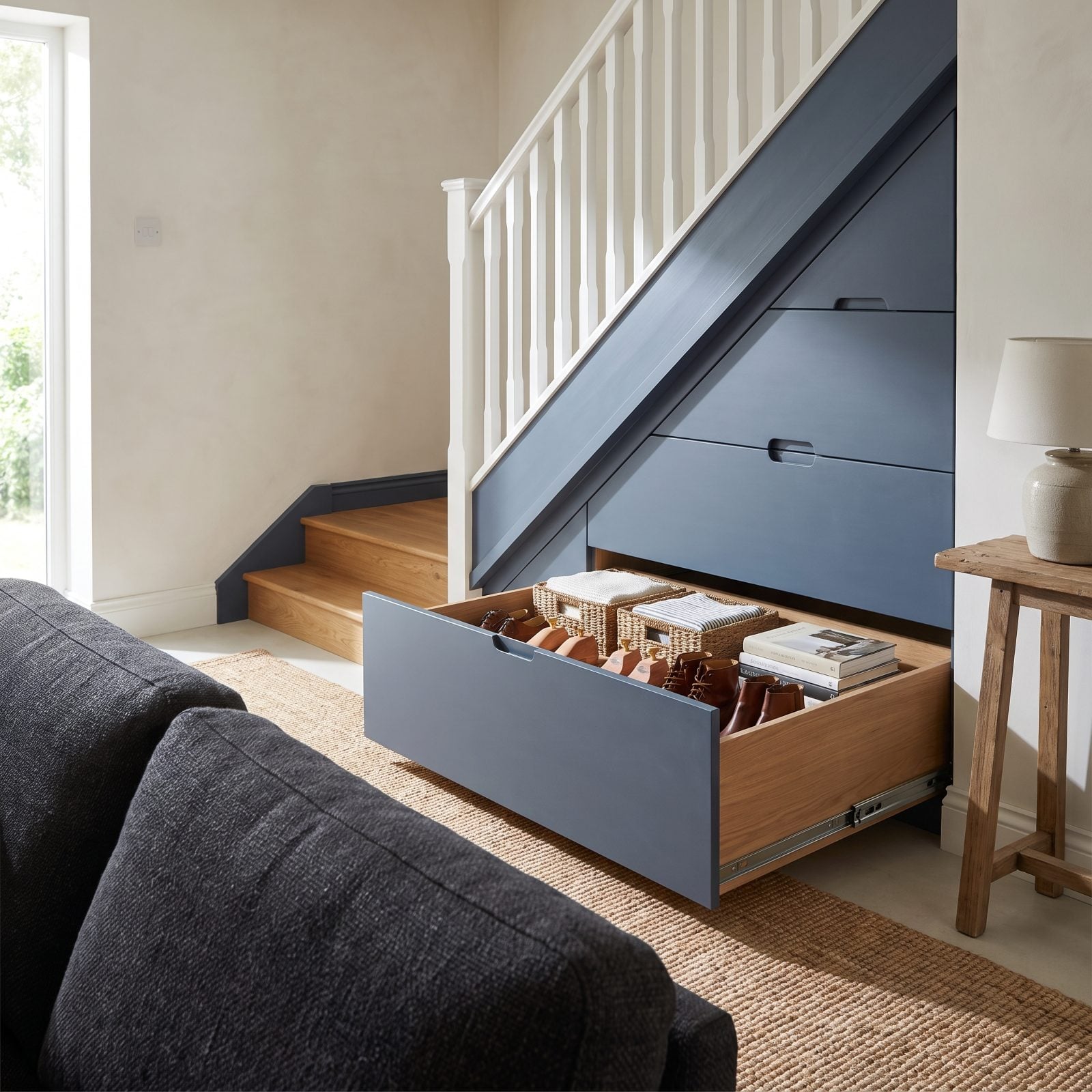
That triangle under the stairs is usually a dark hole you shove things into and never see again. Roll-out drawers flip the logic. Instead of crawling in after a lost boot, you pull the whole cavity out to meet you.
Deep drawers on heavy-duty runners reach the full depth of the slope, so even the shallow back corner gives up its storage. Paint the fronts to match the navy stair risers and the whole thing reads as built-in joinery rather than a scramble to fill empty space.
9. Between-Stud Pantry Shelves That Steal No Floor Space
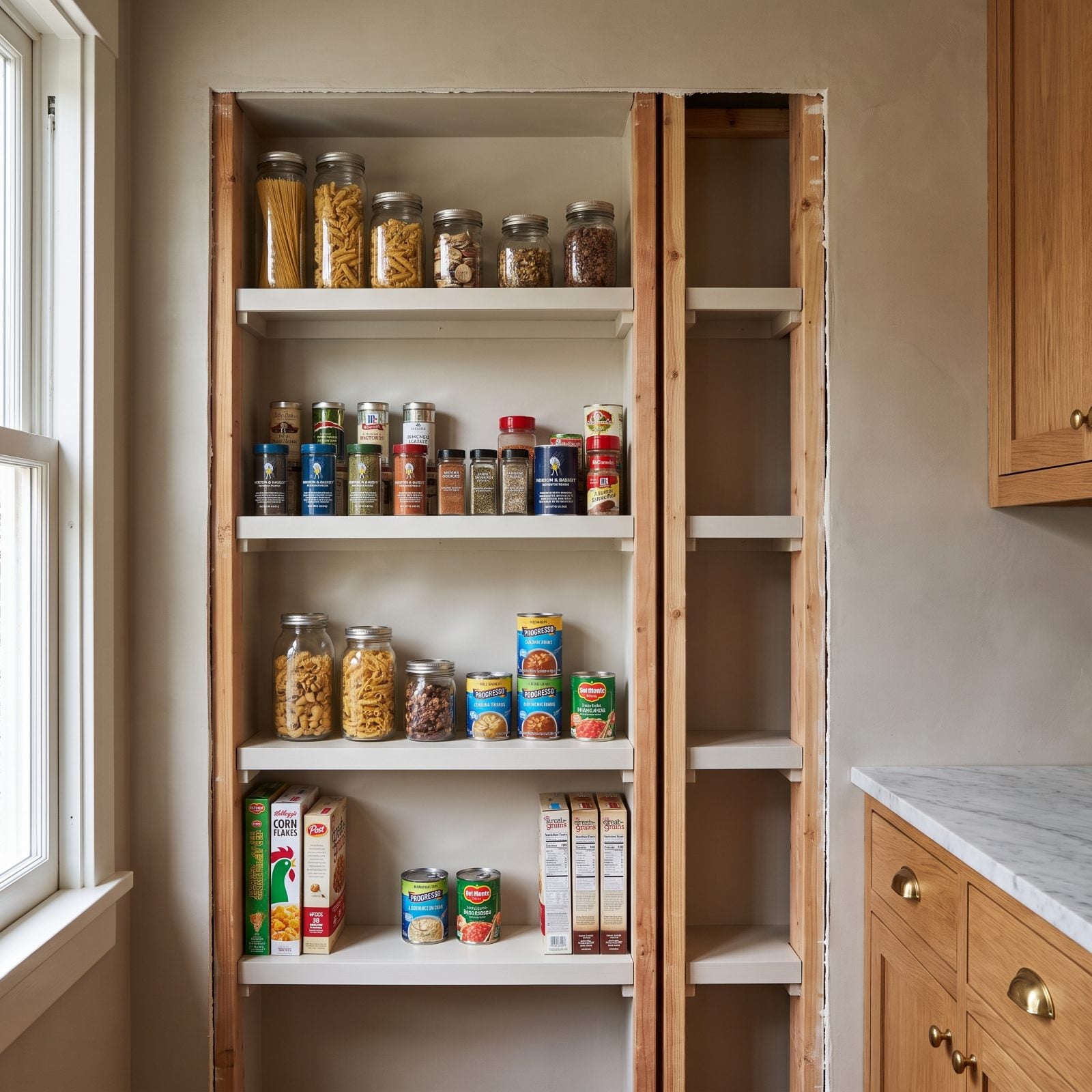
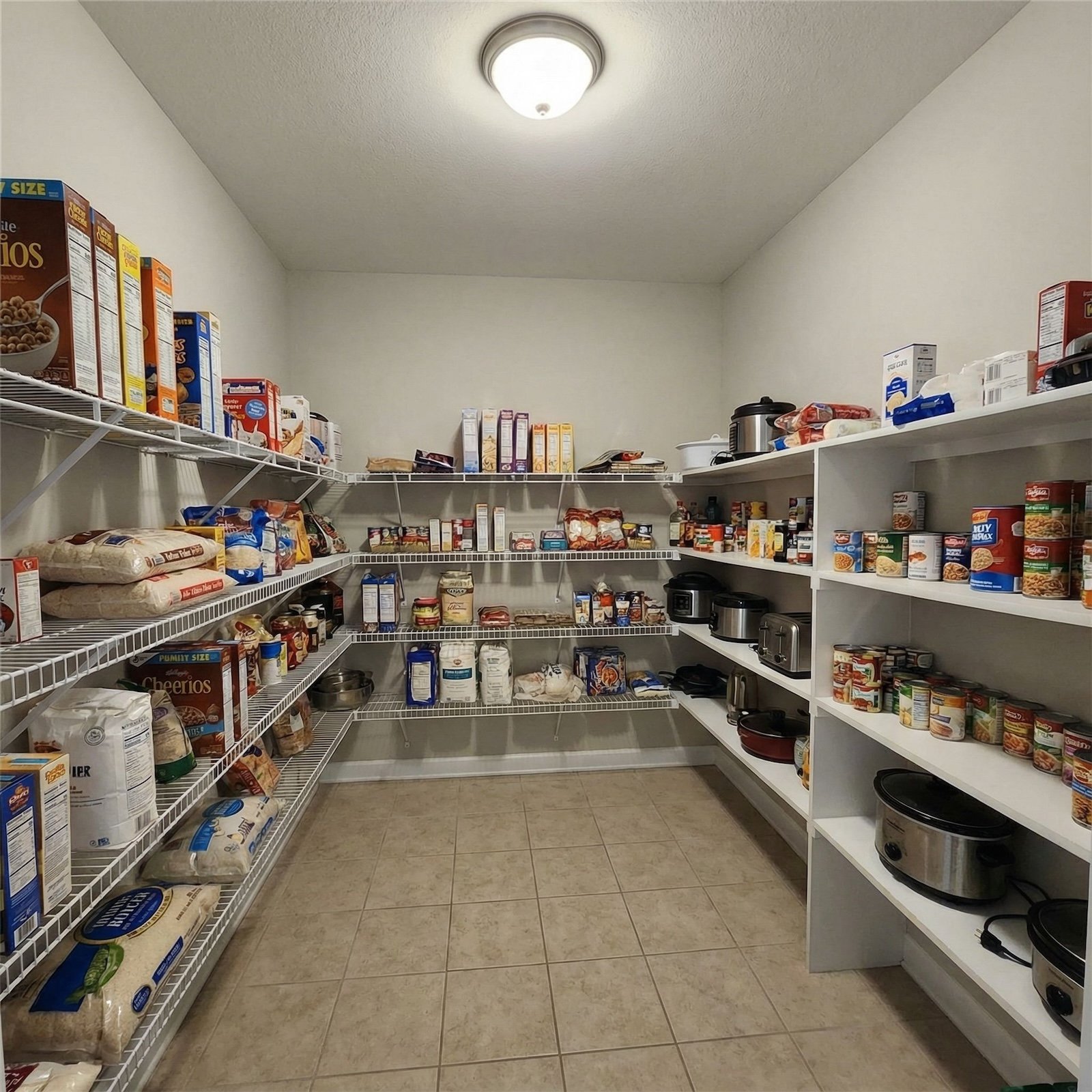
The space between your wall studs is sitting empty right now, deep enough for a row of spice jars, canned tomatoes, or cereal boxes. Open up the drywall across several stud bays, recess a run of open shelves that continues right down toward the floor, and you’ve gained a full pantry that costs zero floor space.
Works best in a kitchen, along a laundry wall, or in that dead strip beside a bathroom door. Recessing into the wall gives enough depth for large jars, stacked tins, and cereal boxes, and because the shelves stay open, nothing hides behind a door where it expires forgotten.
8. Motorized Ceiling Rack That Lifts Clutter Off Your Car
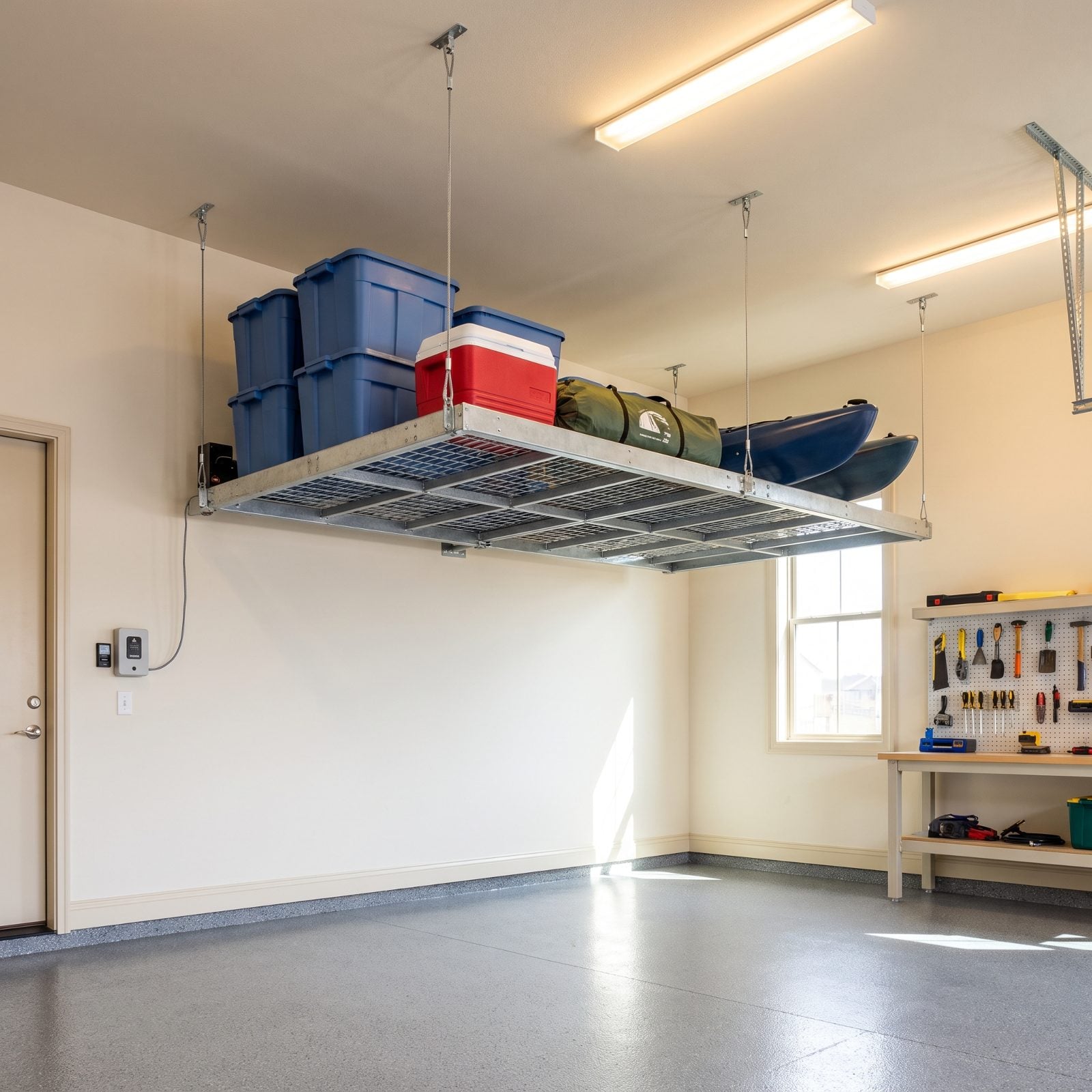
Garage ceilings are some of the most wasted square footage in the average home, and a motorized rack fixes that in an afternoon. Load your seasonal bins, the cooler, and the camping gear, hit a button, and the whole platform rises to the ceiling on steel cables while your car parks underneath.
The motor does the lifting. You’re not hauling a loaded bin up a ladder and praying it doesn’t shift. Lower it in spring, swap the gear, send it back up — and the parking spot stays clear all year.
7. A Built-In Air Line So You Never Drag the Compressor Again
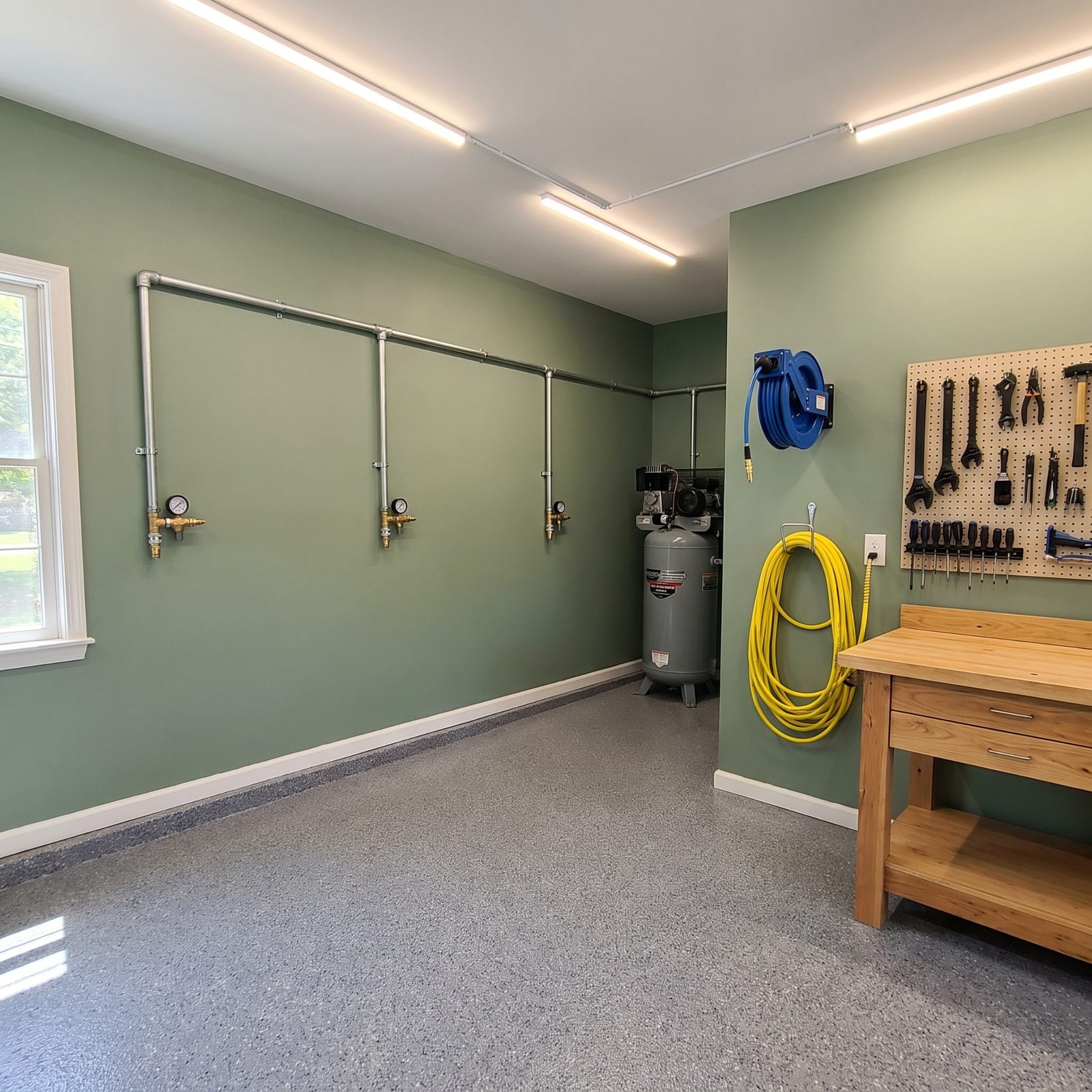
Anyone who’s wrestled a compressor across a garage to reach a flat tire knows the ritual: unplug, drag, re-plug, repeat. Run rigid air piping around the garage walls instead, with quick-connect outlets at each station.
The compressor lives in one corner, out of the way, and air travels through the pipes to wherever you need it — a tire valve by the door, an impact wrench at the bench, a blow-off nozzle in the corner. No cord. No dragging. No roaring motor following you around the room.
6. The Laser Line That Tells You Exactly Where to Stop
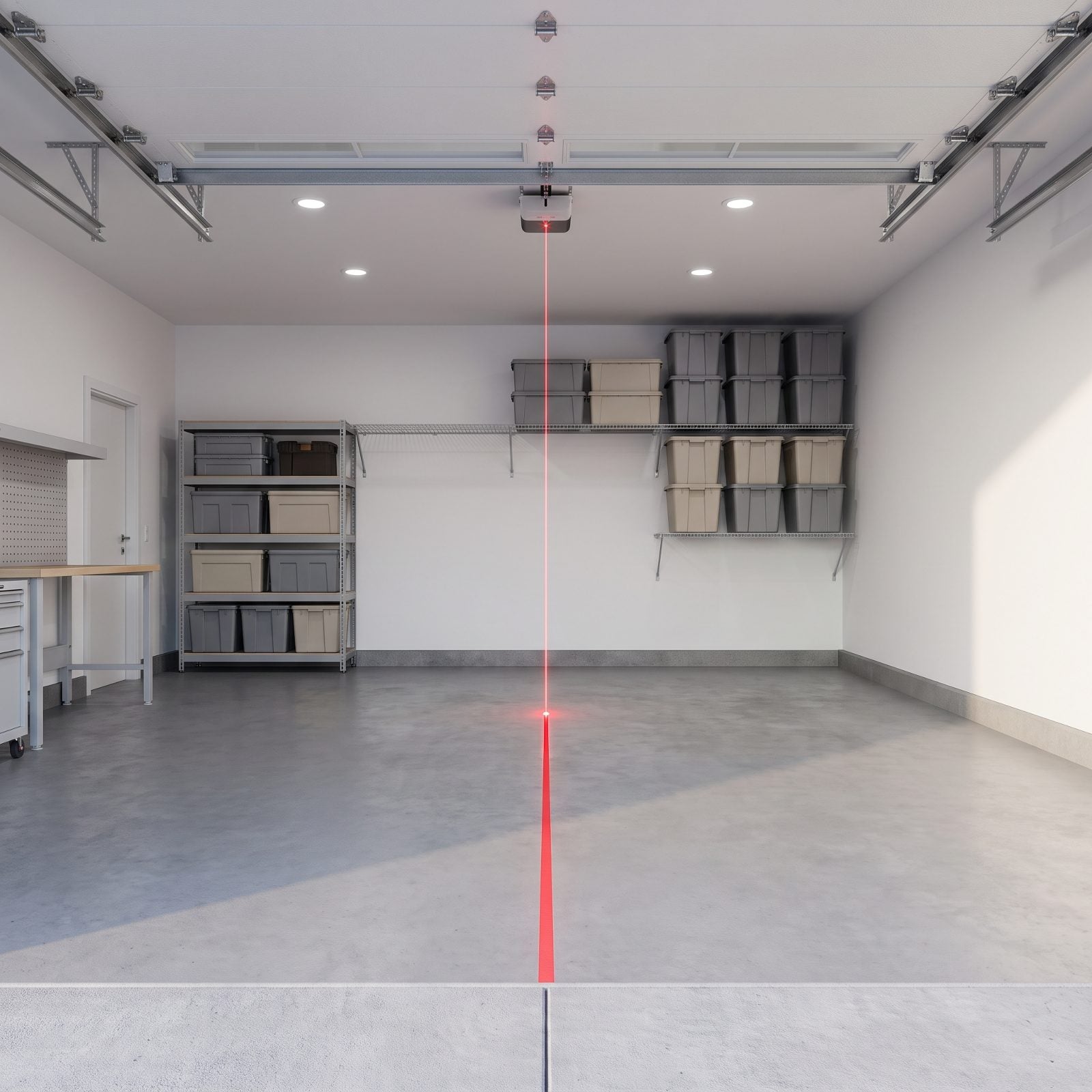
Pull in too far and you crumple the bumper against the shelving. Not far enough and the garage door clips the trunk. A laser guide mounted on the garage ceiling ends the guesswork by dropping a thin red beam to a dot on the floor partway into the garage, with a second line running from that dot out to the threshold, where the door comes down.
Roll forward along the floor line until you reach the red dot, well short of the shelving. That’s it. No tennis ball swinging on a string, no creeping in while a family member waves frantically from the doorway.
5. An Overhead EV Cable That Keeps the Cord Off the Floor
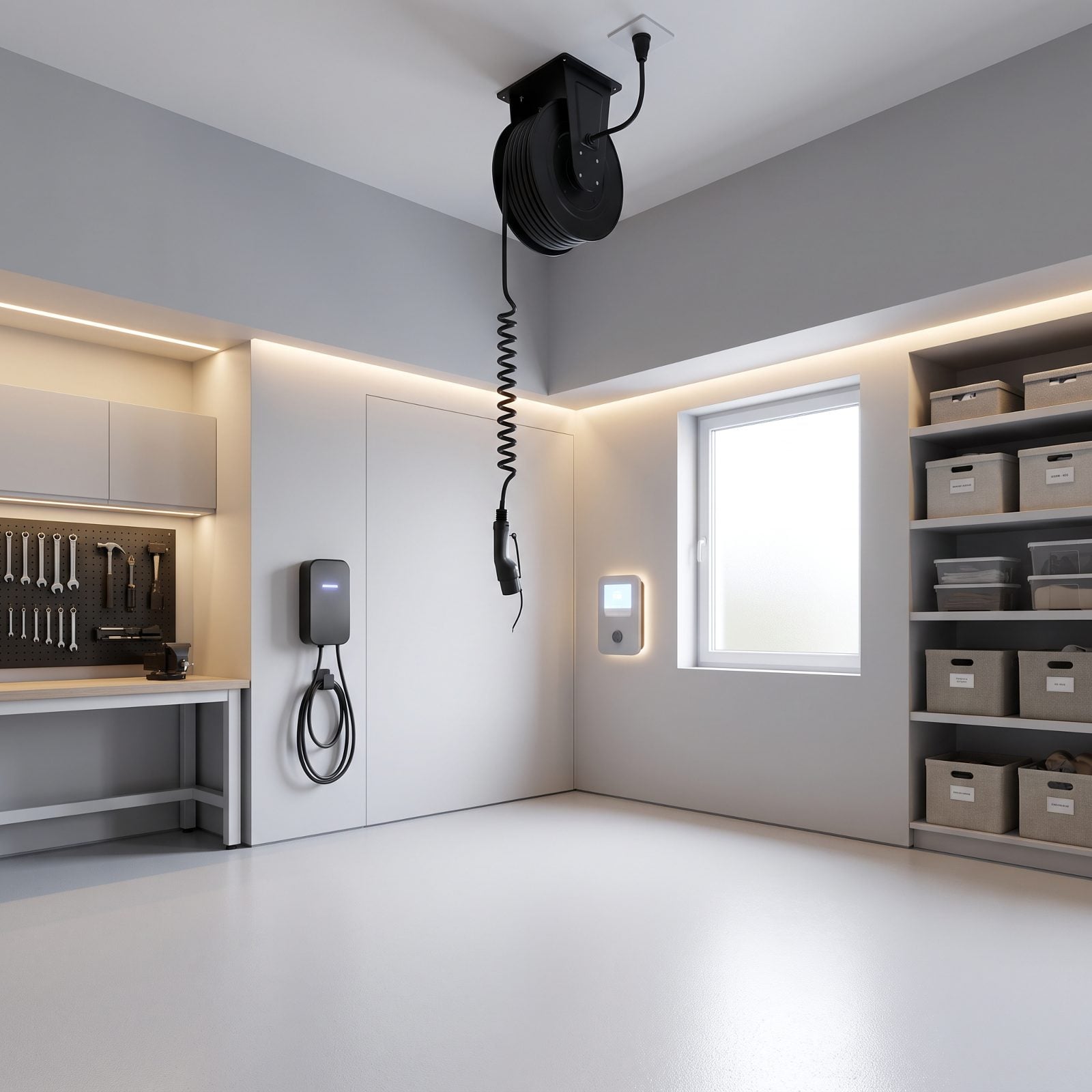
EV charging cables are heavy, and left on the floor they become a tripping snake you kick every time you walk to the trash bins. Mount the cable overhead on a retractable reel and it drops straight down to the charge port, then springs back up when you unplug.
Nothing coils in a puddle on the concrete. Nothing gets run over. The connector hangs at an easy reach, and the floor stays open for sweeping, parking, and everything else.
4. A Rainwater-Fed Toilet That Flushes With the Sky
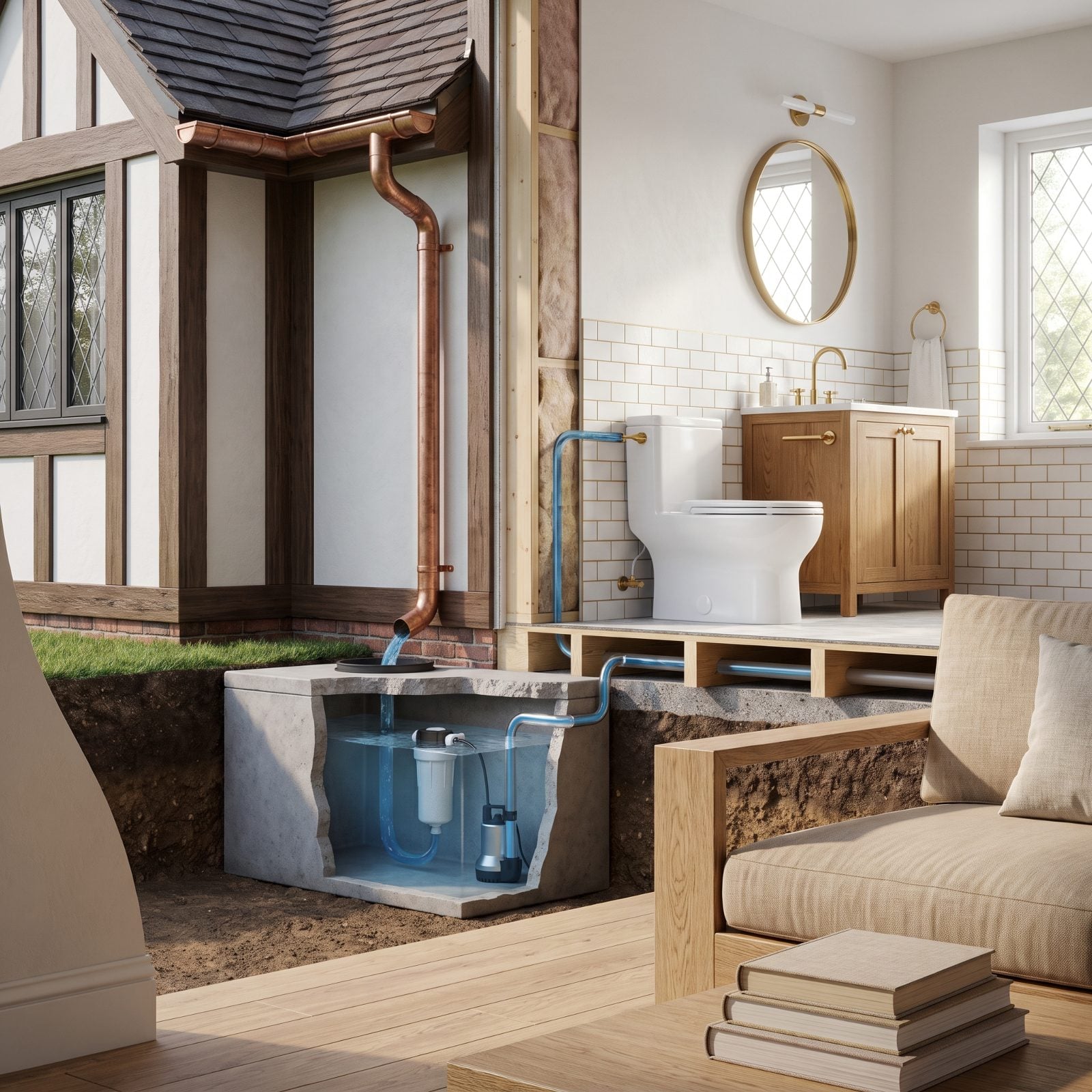
Flushing drinking-quality tap water down the toilet is one of those habits nobody questions until they see the alternative. A rainwater-fed system captures roof runoff in a cistern, filters it, and pipes it indoors to your toilet.
Toilets are the single biggest water user in most homes. Feed them with captured rain and you shave a real chunk off the municipal bill while taking pressure off the supply during dry spells. The rain was falling on your roof anyway — why send it straight to the gutter?
3. A Laundry-to-Landscape Line That Waters the Garden for Free
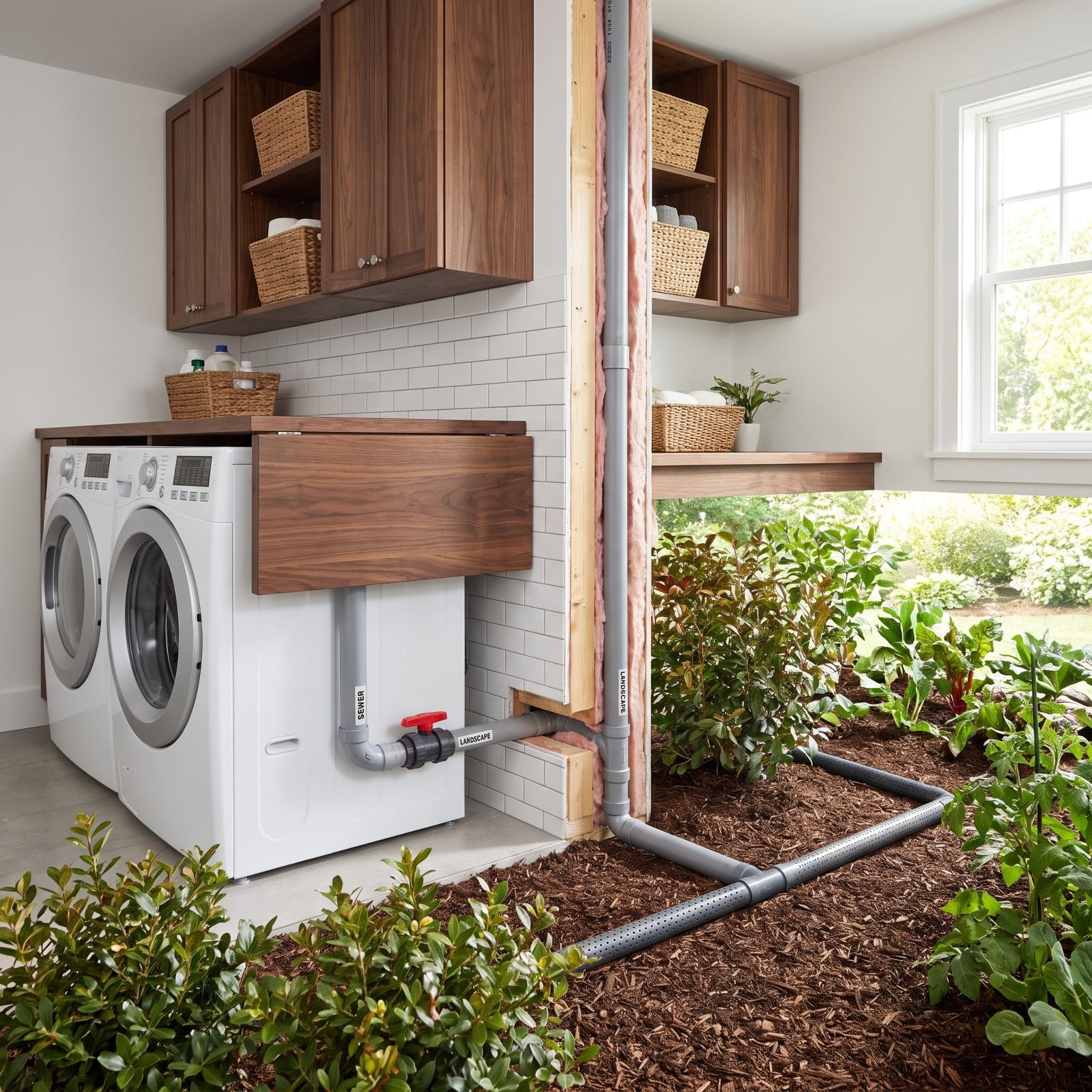
Your washing machine dumps gallons of perfectly usable water down the drain with every rinse cycle. A laundry-to-landscape line reroutes that gentle wash water to a mulch basin in the garden instead of the sewer.
A simple diverter valve lets you switch between sewer and garden depending on what you’re washing. Stick to plant-safe detergents and that graywater keeps your shrubs and fruit trees going through a dry summer. And here’s the part that sells it: the whole retrofit usually takes just one small opening in the wall to run the line outside.
2. A Heated Front Walk That Melts Ice Before You Slip
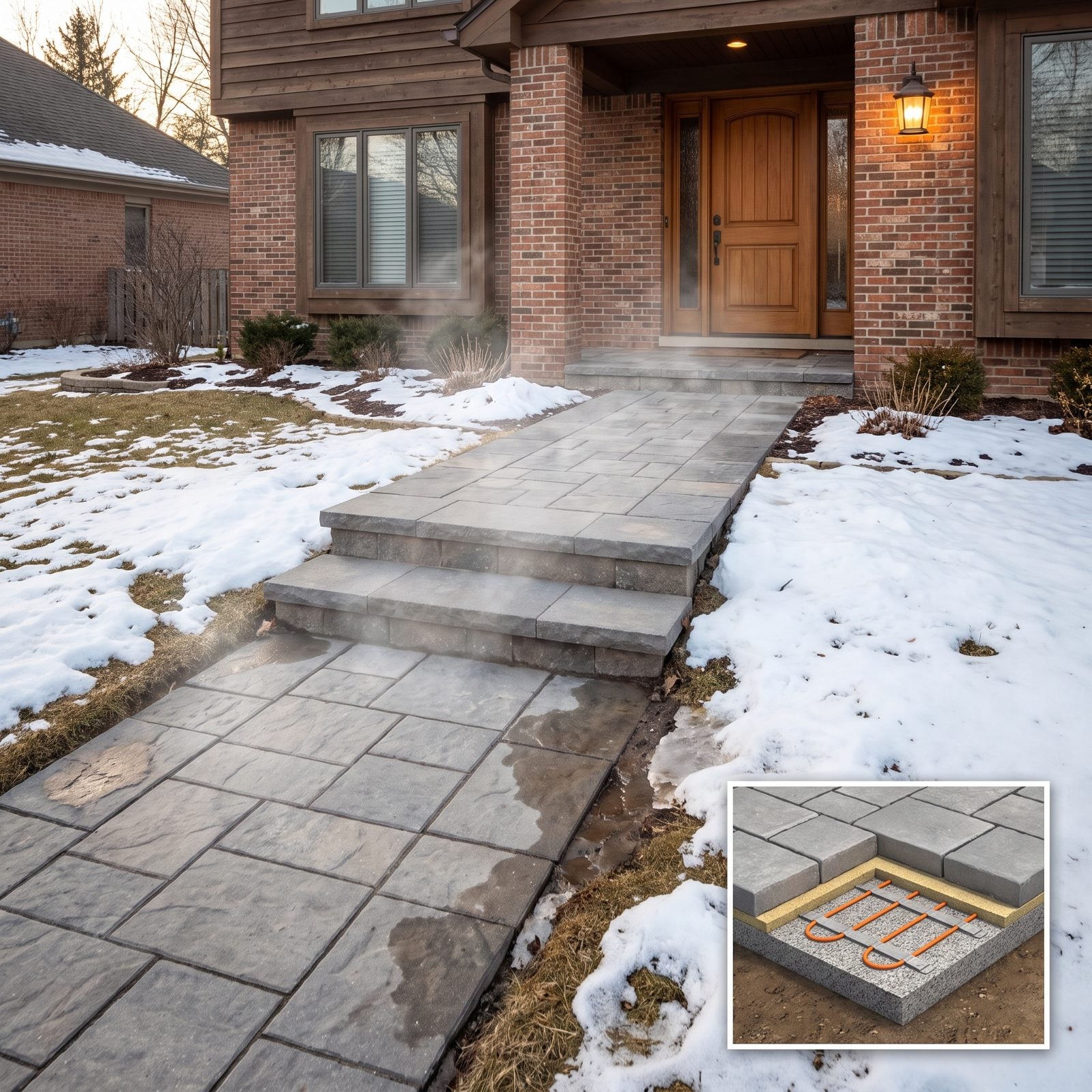
The main walk to your front door is where guests slip, deliveries pile up on ice, and you white-knuckle your way to the mailbox. A heated walkway runs electric cables or hydronic tubing under the pavers and melts snow and ice on contact.
No shoveling. No salt chewing at your stone and tracking indoors. No pre-dawn scramble with an ice scraper before work. The path just stays dry while the rest of the yard vanishes under snow.
1. A Recessed Hose-Reel Cabinet That Disappears Into the Wall
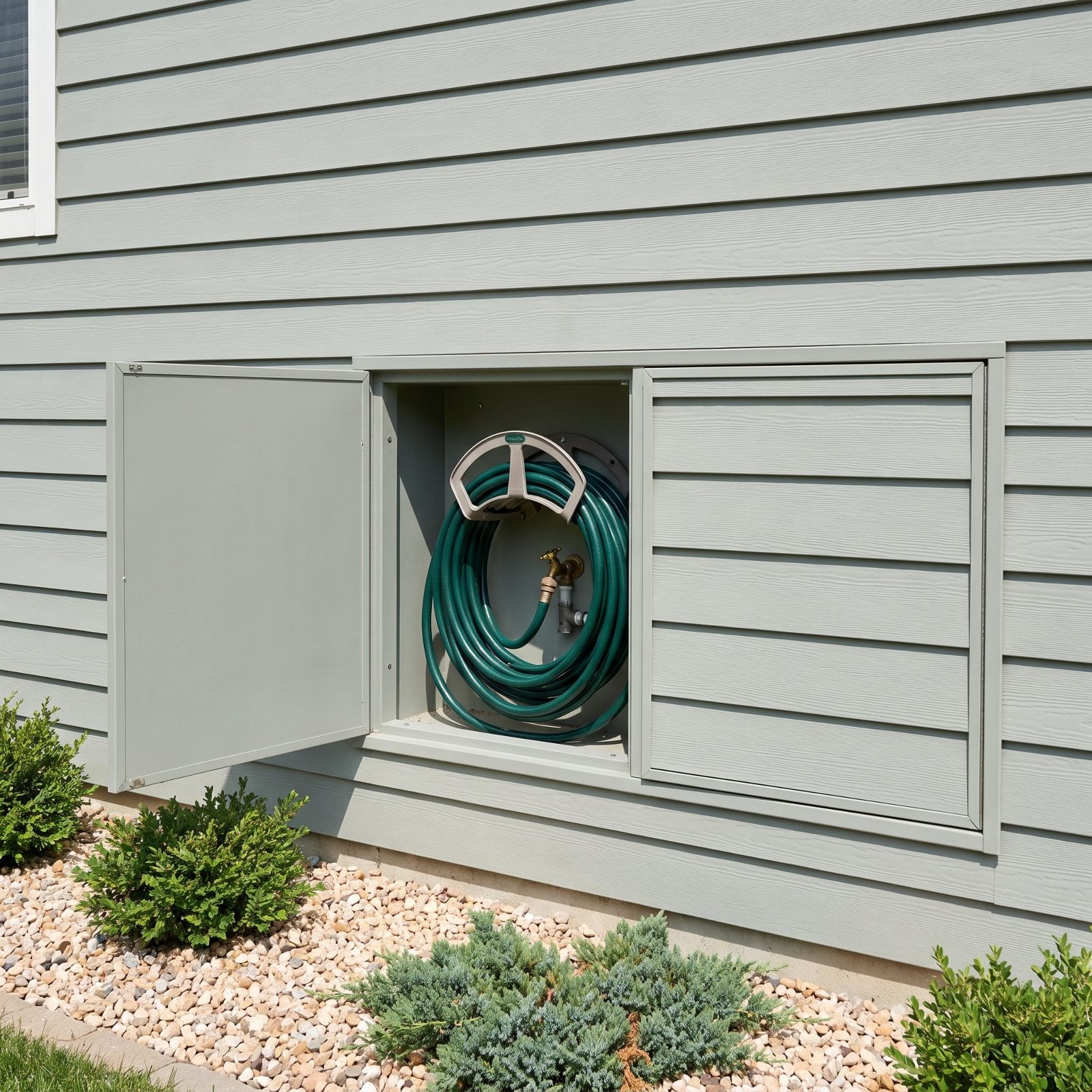
The hose draped over a bush or tangled in a wobbly cart by the door is a small eyesore you stop noticing until a visitor shows up. A recessed cabinet sinks the whole reel into the wall cavity, behind a door finished to match your siding.
Open the panel, unwind the length you need, and coil it back onto the wall hanger when you’re done. Closed, the wall reads clean and the hose is protected from sun and frost. This one wins by hiding in plain sight.