🔥 Would you like to save this?
By 1975, the American home bar had escaped the cocktail cart and started annexing entire corners of the family room. A new car averaged somewhere around $4,700, while a serious bar project could consume several hundred dollars before anyone bought the first bottle: cabinetry, plumbing, mirrors, stools, lighting, refrigeration, glassware, stereo equipment, shag carpet, and enough brass to make a basement glow after sunset. None of it was incidental. The whole point was to make staying home feel suspiciously like going out.
That ambition explains why these rooms became such concentrated pieces of 1970s design. Dark walnut met smoked glass. Chrome foot rails met avocado upholstery. Faux stone competed with grooved paneling while amber pendants turned everything underneath them the color of bourbon. Then came the equipment: ice makers, blenders, decanters, stereo receivers, giant speakers, cocktail books, chip-and-dip sets, and enough specialized glassware to make pouring a rum and Coke feel ceremonial.
In order to come up with the very specific design ideas, we create most designs with the assistance of state-of-the-art AI interior design software. Also, assume links that take you off the site are affiliate links such as links to Amazon. this means we may earn a commission if you buy something.
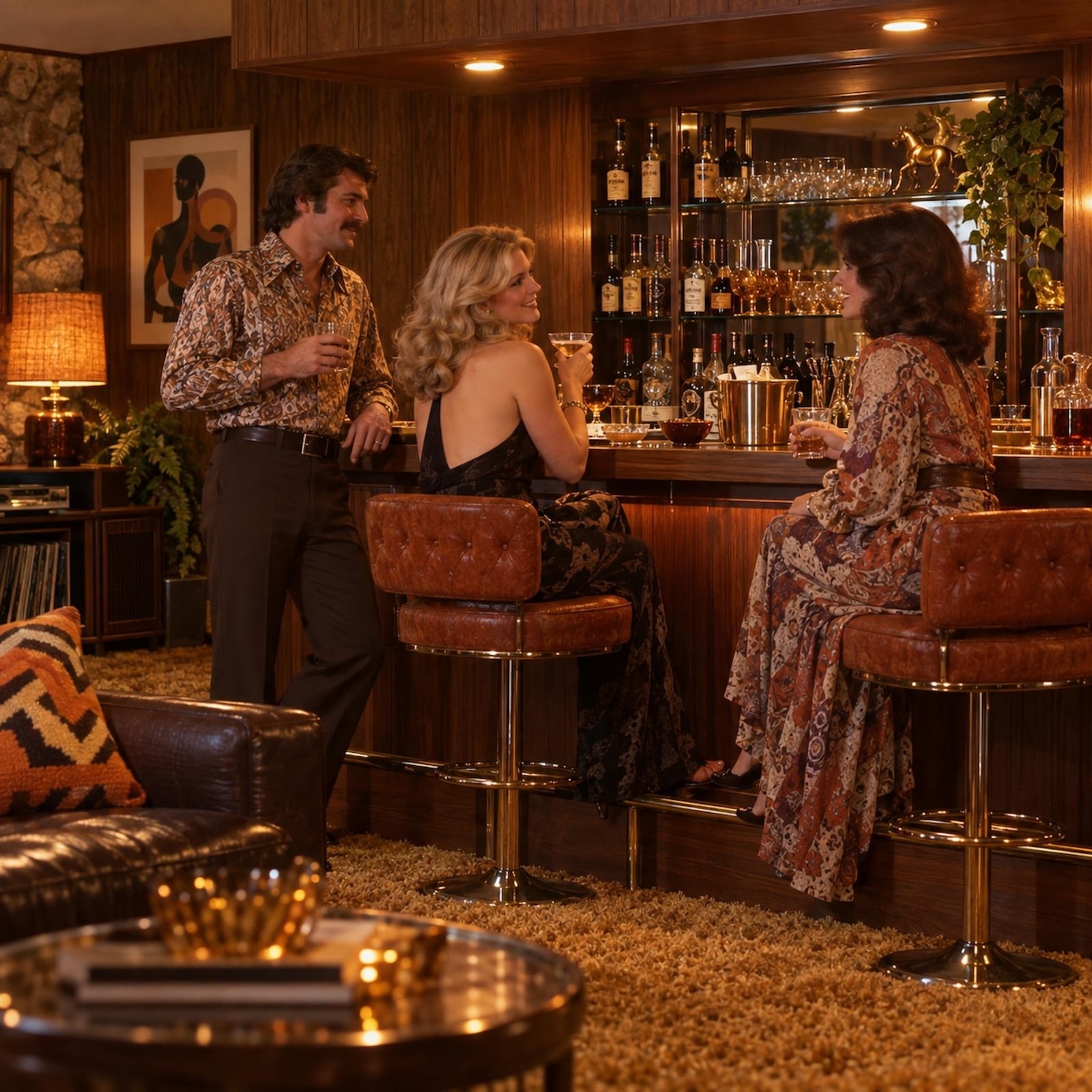
These 39 price tags reconstruct the room one purchase at a time, from the built-in bar that started the project to the swizzle sticks that cost almost nothing. The last image shows what all that spending was trying to create. Once the daylight disappeared, the lamps came on, the records started turning, and people actually pulled up a stool, the family-room bar stopped looking like an expensive collection of objects. It became the destination.
If you haven’t checked home equity rates lately, take a look at today’s offers here before financing your next project.
39. The Built-In Wood Home Bar That Started the Whole Project, Around $300 to $700 in 1975
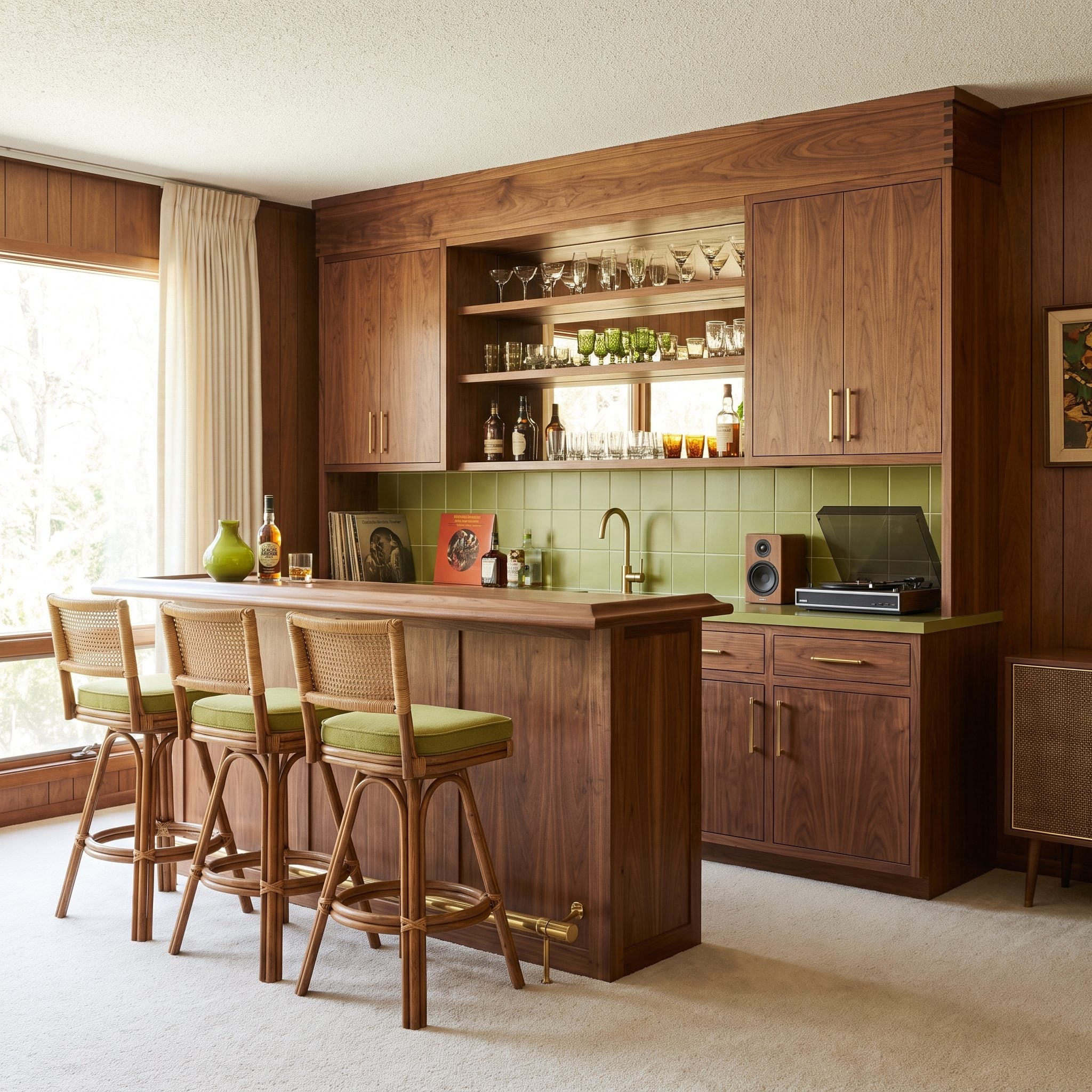
The bar was the mortgage payment of the rec room. A substantial built-in, whether assembled from a factory kit or framed and finished at home, could run roughly $300 to $700 in the middle of the decade. Custom cabinetry and better woods pushed the bill higher.
That was serious household money. The payoff was psychological as much as practical: once the counter, shelves, and stools were in place, an ordinary basement corner suddenly had a purpose.
And that purpose wasn’t subtle. The bar told guests where the evening was supposed to happen.
38. The Padded Vinyl Bar Stools With Chrome or Brass Bases, About $25 to $50 Each in 1975
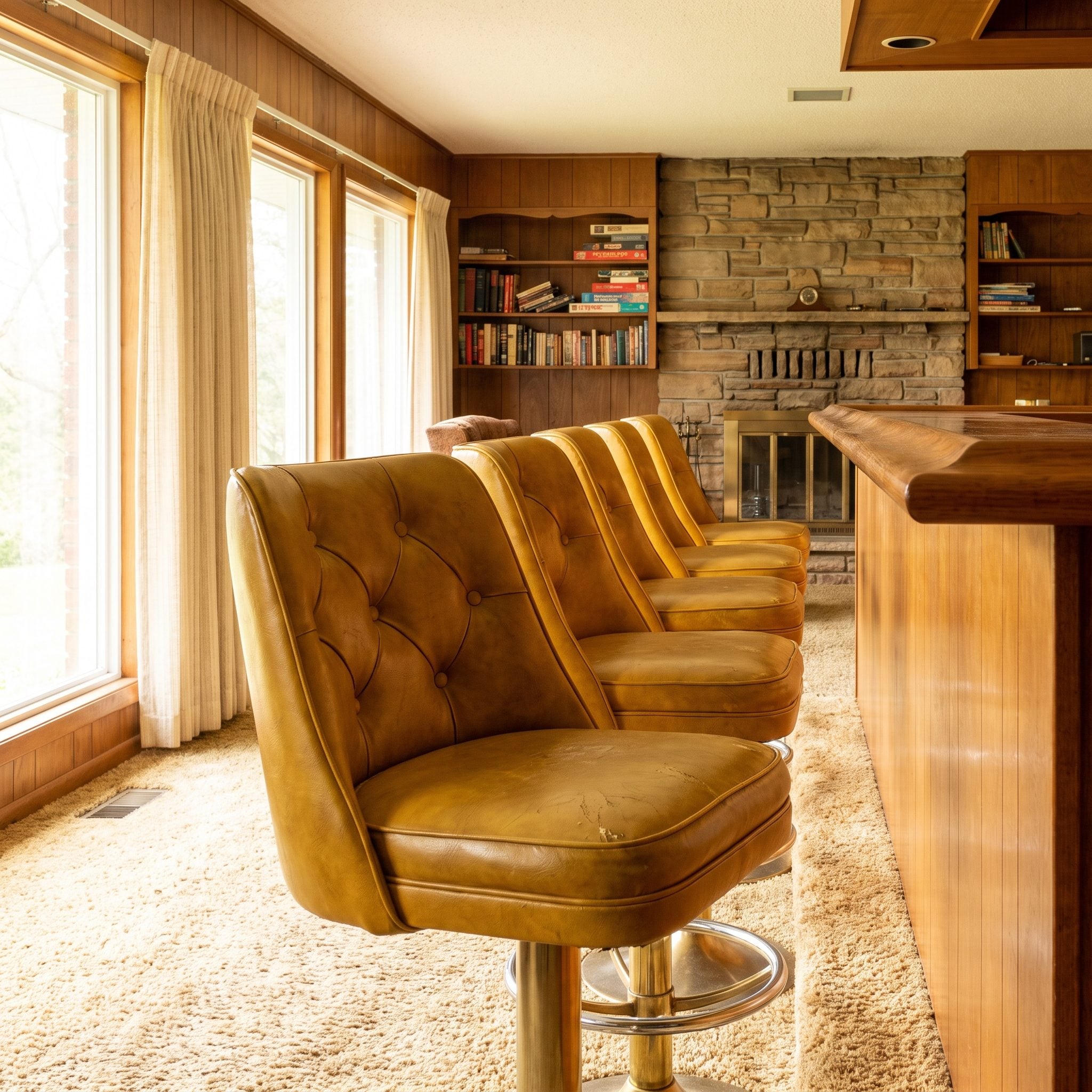
The stools made it a bar instead of a counter. Padded vinyl seats on chrome or brass pedestals ran about $25 to $50 each, putting a matching trio around $75 to $150.
Harvest gold, burnt orange, avocado — nobody was trying to future-proof the color scheme. What mattered was the swivel, the footring, and enough back support to stay through another round.
Buying three at once was part of the commitment. A lone stool looked temporary. A matching row said the room had officially opened for business.
37. The Mirrored Back Bar That Made the Room Feel Twice as Fancy, Around $60 to $150 in 1975
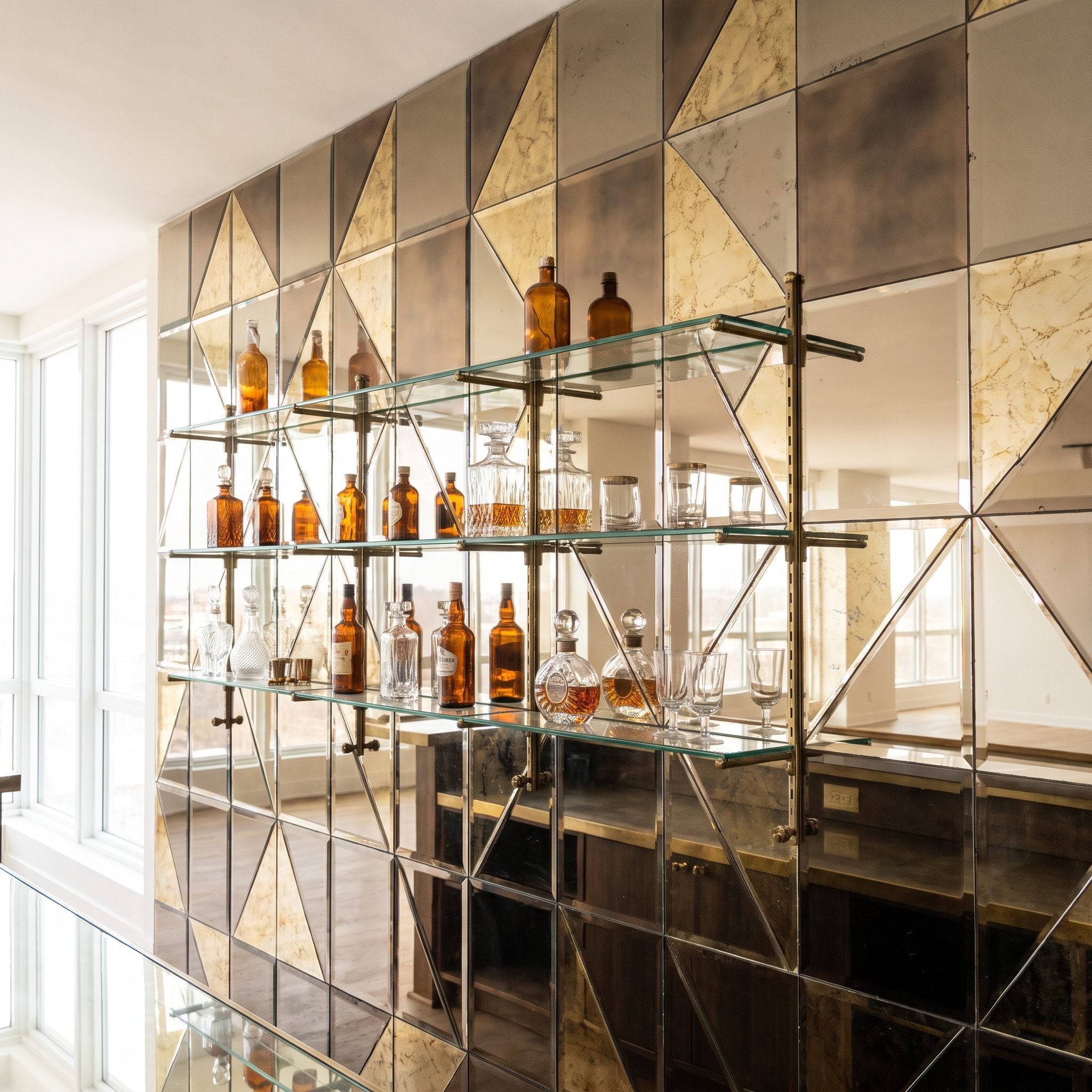
Nothing stretched a small basement like a mirrored back wall. Sheet mirror — sometimes clear, sometimes smoked or antiqued — could run roughly $60 to $150 installed depending on size and finish.
It multiplied everything people wanted multiplied: bottles, stemware, lamps, movement. Three whiskies became six. One pendant became two. A dark corner picked up depth.
36. The Rolling Bar Cart for Homes Without a Built-In, About $30 to $90 in 1976
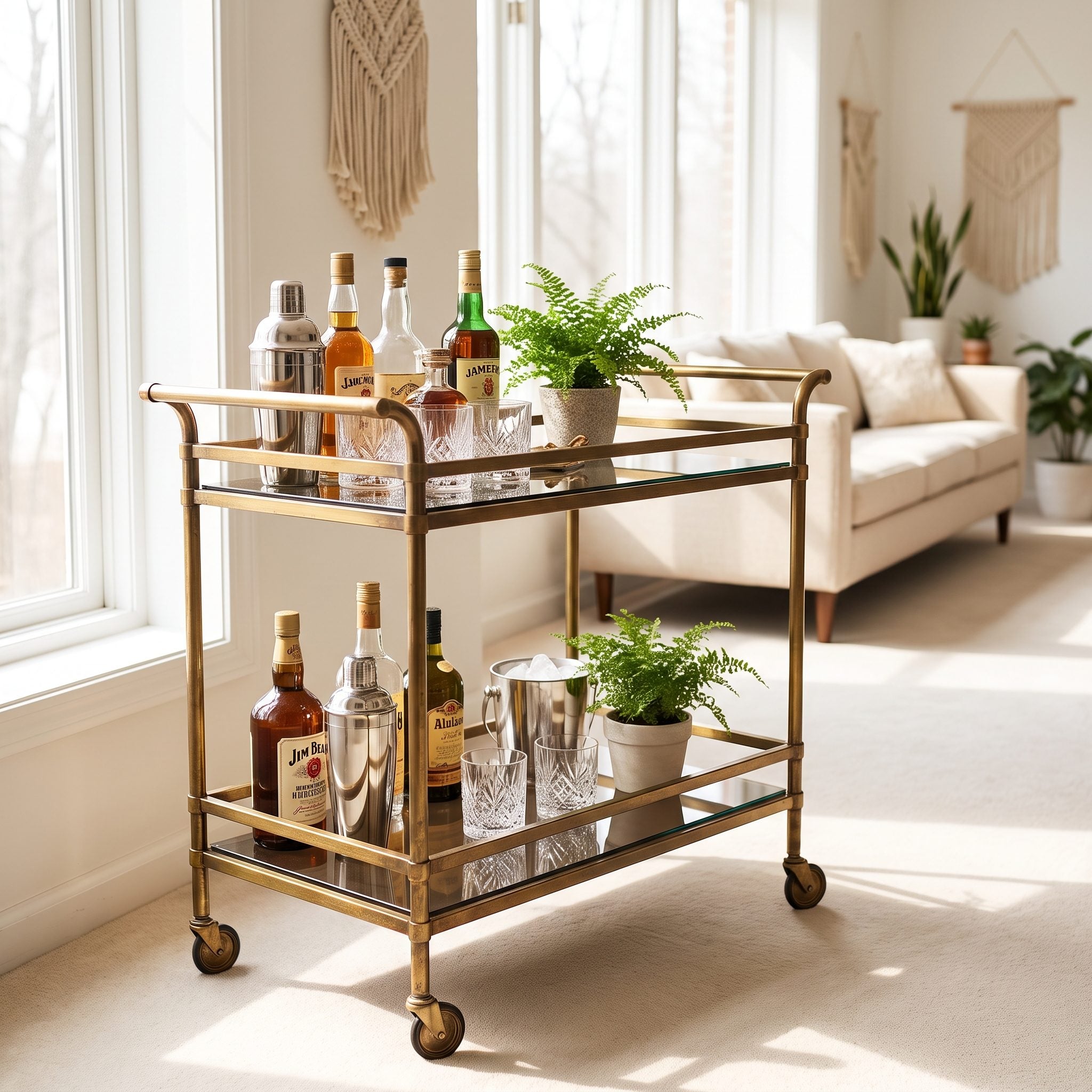
Not everybody had a basement to conquer. A brass-and-smoked-glass rolling cart offered the ritual without the renovation for roughly $30 to $90.
Load it with a decanter, ice bucket, bottles, and a couple of glasses and the whole operation could migrate into the living room. When the party ended, roll it against a wall and reclaim the floor.
The big home bar was aspirational. The cart was achievable — and unlike plenty of 1970s furniture, it never stayed unfashionable for very long.
35. The Hanging Swag Lamp Over the Bar: Around $25 to $60
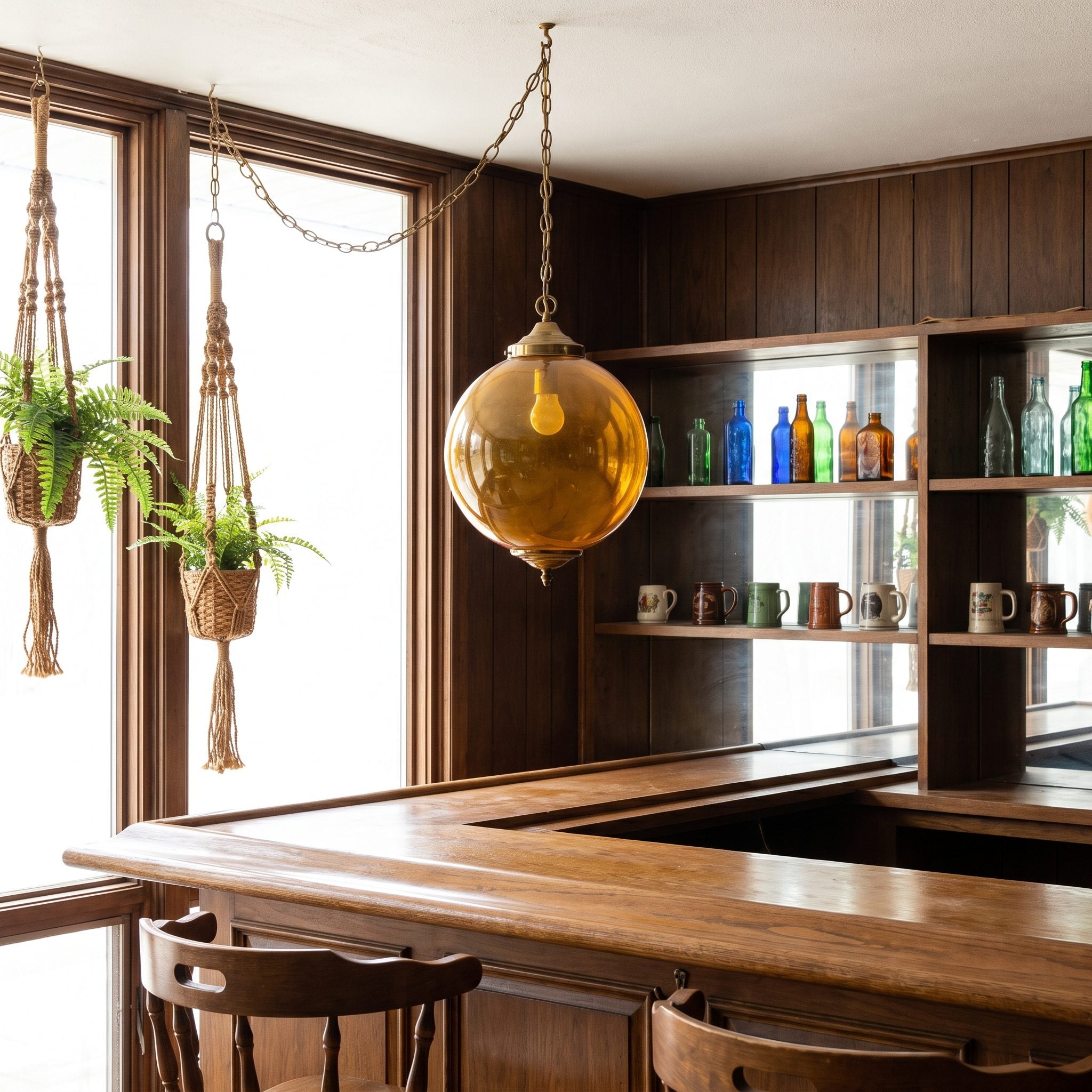
The hanging swag lamp was the crown of the home bar, and it cost roughly $25 to $60. Installation could be as simple as a ceiling hook, a chain, and an electrical cord draped to the nearest outlet.
Amber glass globes, macramé-wrapped shades, chunky faceted plastic that looked like colored ice — the fixtures hung low and threw a concentrated pool of warm light onto the bar top.
That was the real effect. Instead of lighting the whole room evenly, the lamp created a bright little island and allowed the rest of the basement to fall into shadow.
34. The Under-Counter Mini Refrigerator, Roughly $100 to $180 in 1975
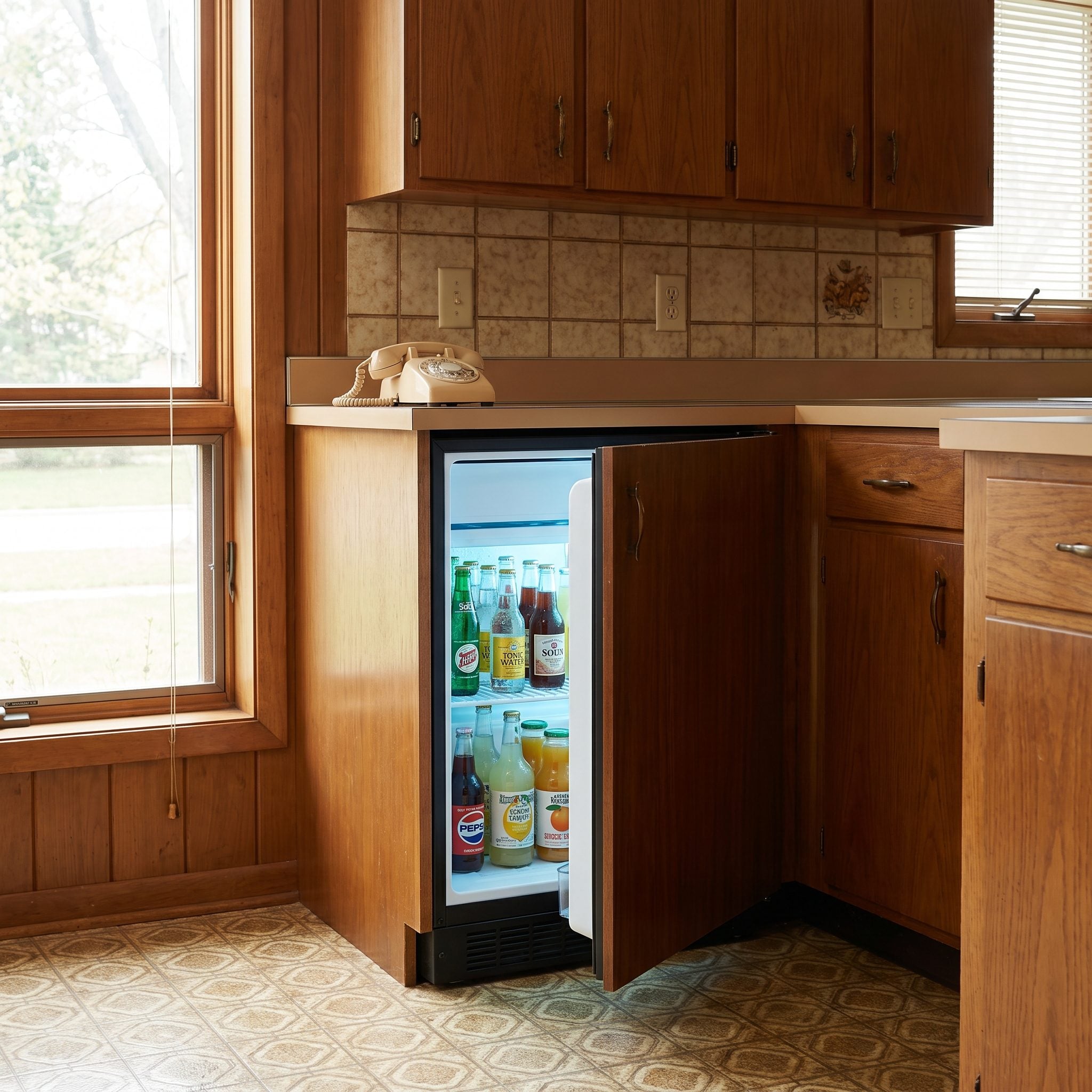
Keeping mixers cold without running upstairs was the small luxury that made a home bar feel finished. A compact under-counter refrigerator could cost around $100 to $180.
Harvest gold or white kept it firmly within the appliance palette of the day. Inside went beer, soda, tonic, citrus, and whatever bottle somebody had decided should be chilled.
For families already stretching the budget on the built-in, this was exactly the sort of upgrade that could arrive a year later, after the first round of expenses stopped hurting.
33. The Gold-Rimmed, Smoked, and Amber Glassware That Screamed 1970s: About $10 to $20 a Set
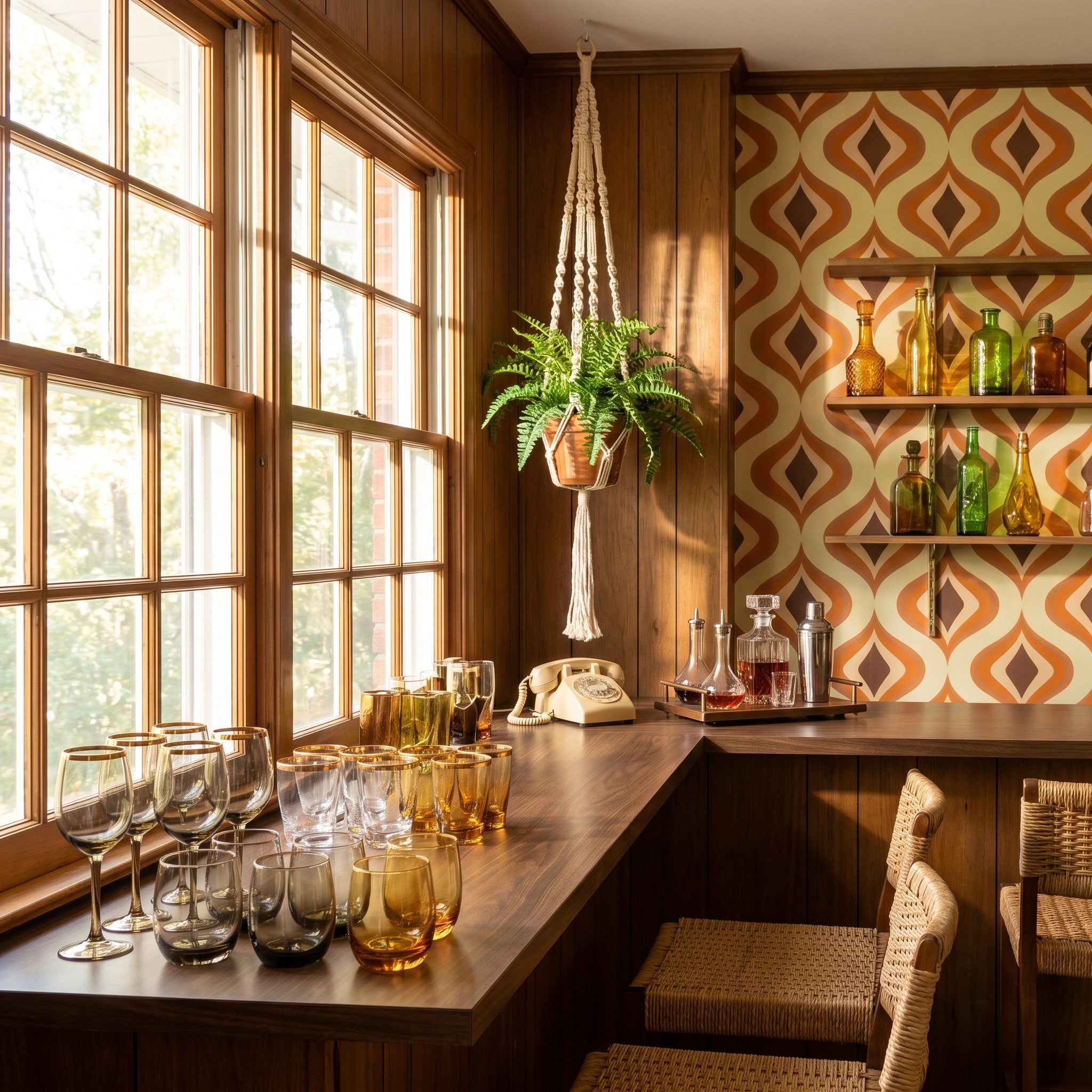
Here’s where the decade really showed its hand. Clear glass did fine for everyday use, but the special sets wore smoke-brown tint, amber color, or a thin gold line around the rim. Roughly $10 to $20 bought enough pieces to turn the shelves into part of the decorating scheme.
The amber versions gave everything away. Lampshades, ashtrays, mugs, tumblers — the whole house could end up in the same tea-colored haze.
32. The Wood Paneling That Turned a Basement Corner Into a Lounge: Around $4 a Sheet
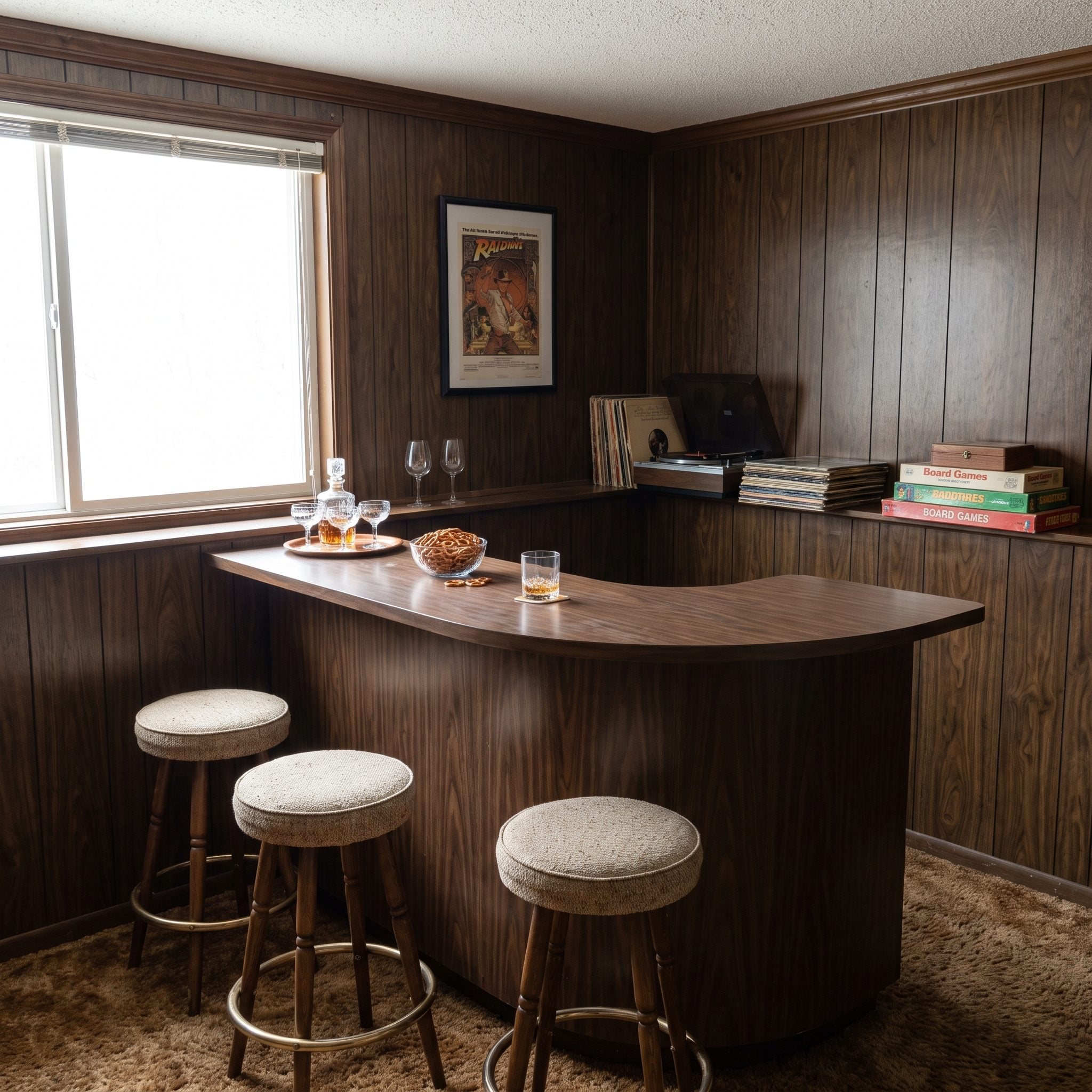
Faux-walnut paneling could sell for only a few dollars per 4-by-8 sheet in the early 1970s, making it a remarkably efficient way to transform unfinished walls.
You’ve seen the result. Grooved honey-brown panels wrapped a room until the basement stopped looking like storage and started looking somewhere people might willingly spend a Saturday night.
It was inexpensive, relatively quick to install, and excellent at hiding less glamorous construction underneath. No wonder rec rooms devoured it by the sheet.
31. The Chrome Cocktail Shaker That Cost Around $6 to $12
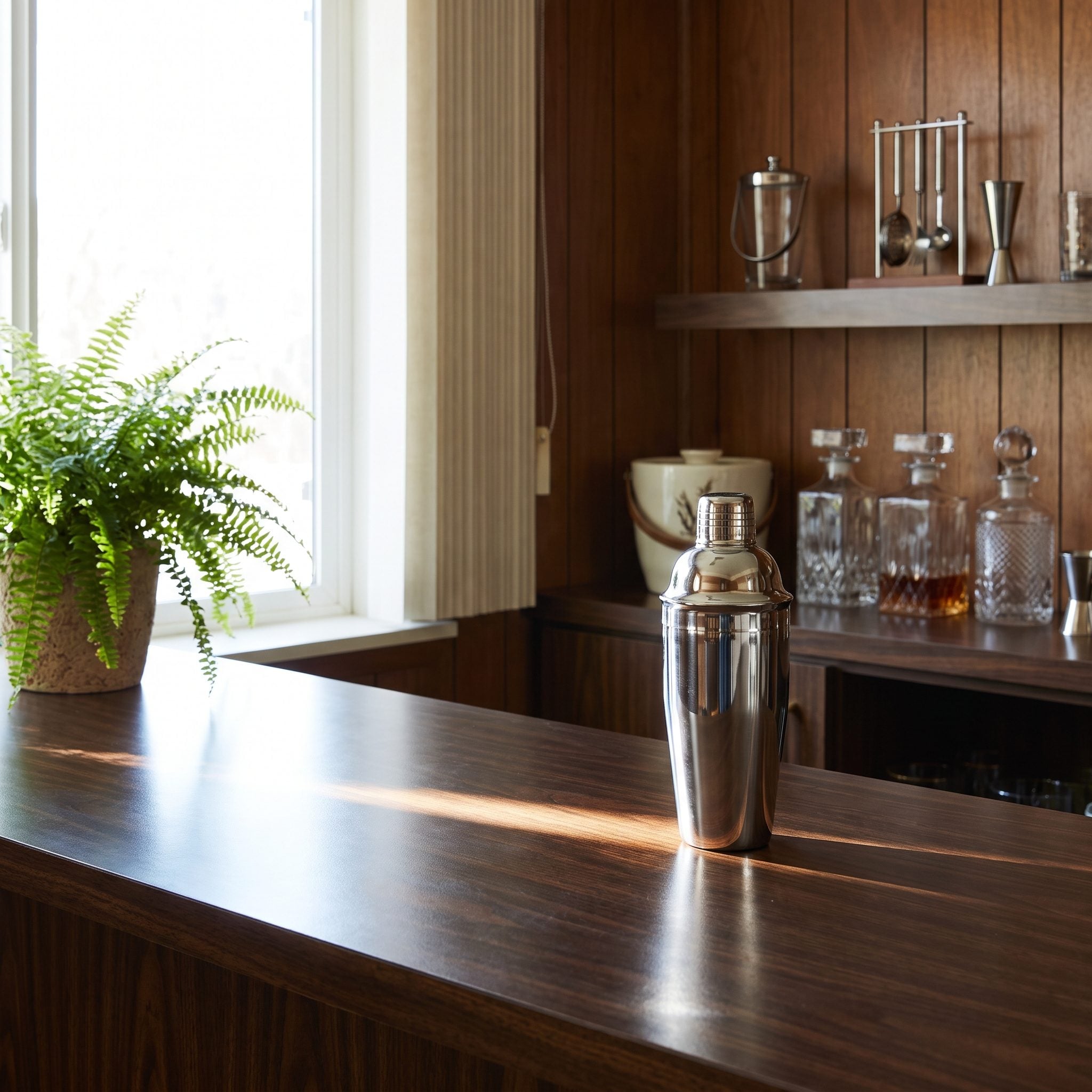
A stainless or chrome cocktail shaker went for roughly $6 to $12. Cheap enough to be common, substantial enough that nobody tossed it because the finish picked up a few scratches.
The cobbler style — shaker, built-in strainer, cap — was especially convenient at home because it combined several jobs in one object. Shake, strain, pour.
The two-piece Boston shaker remained strongly associated with professional bartending. Home hosts tended to appreciate equipment that didn’t require learning how to break the seal on a two-piece shaker dramatically in front of the neighbors.
30. The Shag Carpet Under the Bar Stools: About $8 a Square Yard
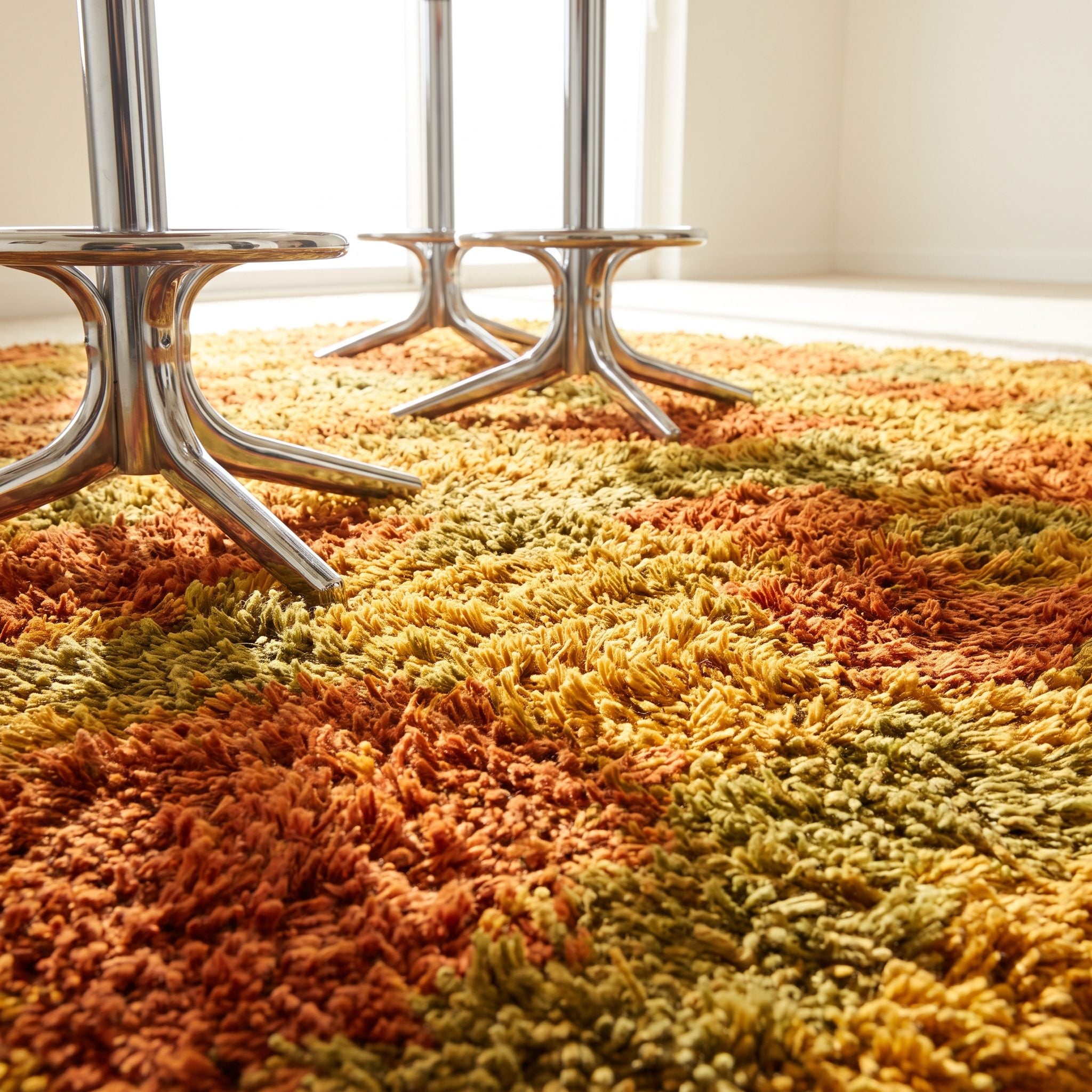
Shag carpet cost a few dollars a square yard in the 1970s, with deeper pile pushing higher. A bar area’s worth was manageable enough to become part of plenty of basement makeovers.
I have complicated feelings about shag. It looked terrific, hated vacuum cleaners, and could swallow a cocktail pick indefinitely.
Under a bar, though, the logic was surprisingly sound. It softened a concrete slab, absorbed some of the room’s hardness, and made an unfinished basement feel warmer underfoot.
Harvest gold was practically a default. Avocado waited for the braver households.
29. The Decorative Liquor Decanter Set: $15 to $40
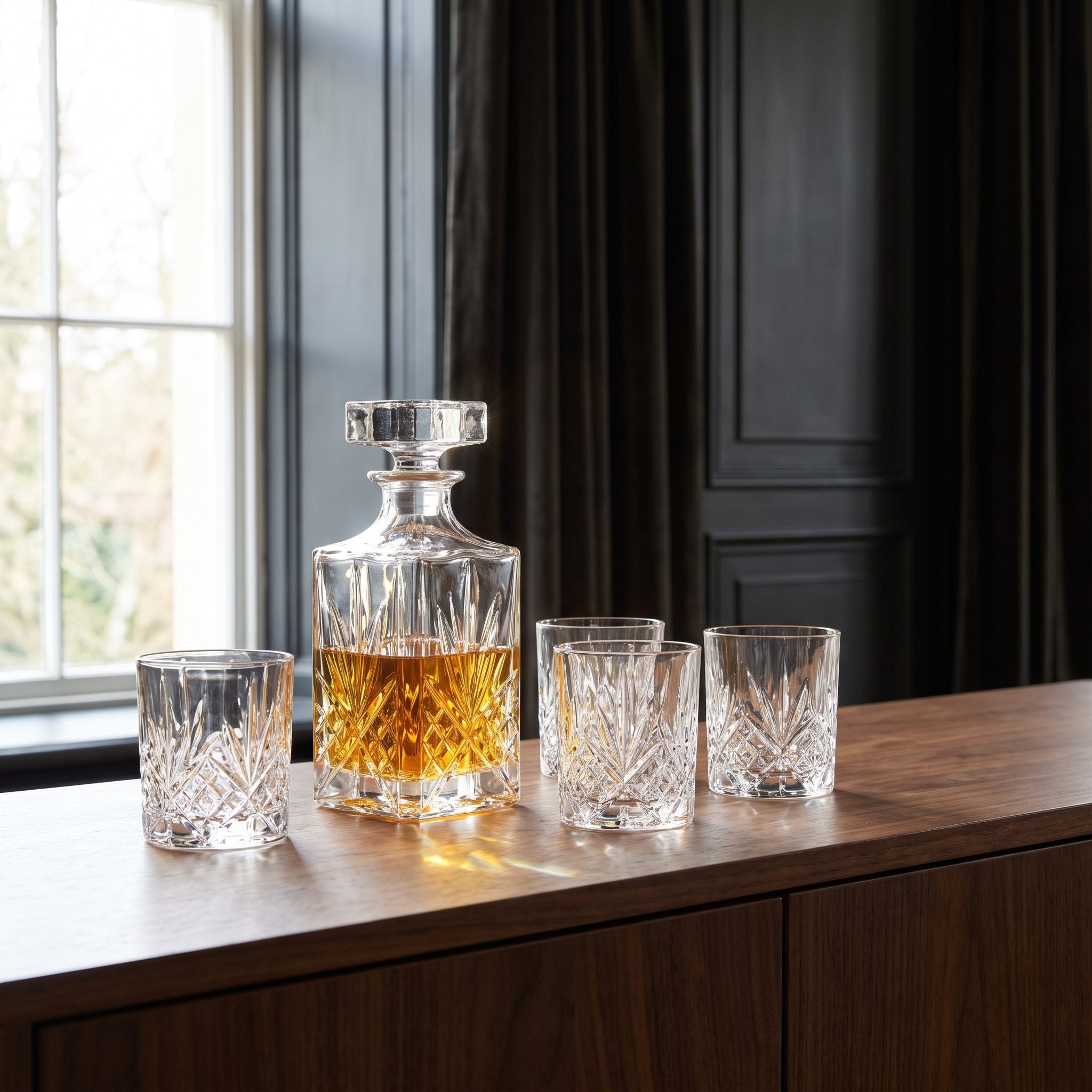
A decanter set could run $15 to $40 depending on how much weight, cutting, and sparkle you wanted. Pressed glass sat toward one end of the spectrum; finer crystal climbed quickly.
Function was never the whole argument. Pouring bourbon from a heavy faceted decanter instead of the store bottle was ceremony, and that ceremony was part of what people were purchasing.
Set the decanter on a mirrored tray under a warm lamp and the amber liquid handled half the decorating by itself.
The decanter didn’t make the whiskey better. It made the moment feel better, which for a lot of people was the whole reason to have a home bar at all.
28. The Base Cabinets for Bottles, Glasses, and Bar Supplies, About $150 to $400 in 1976
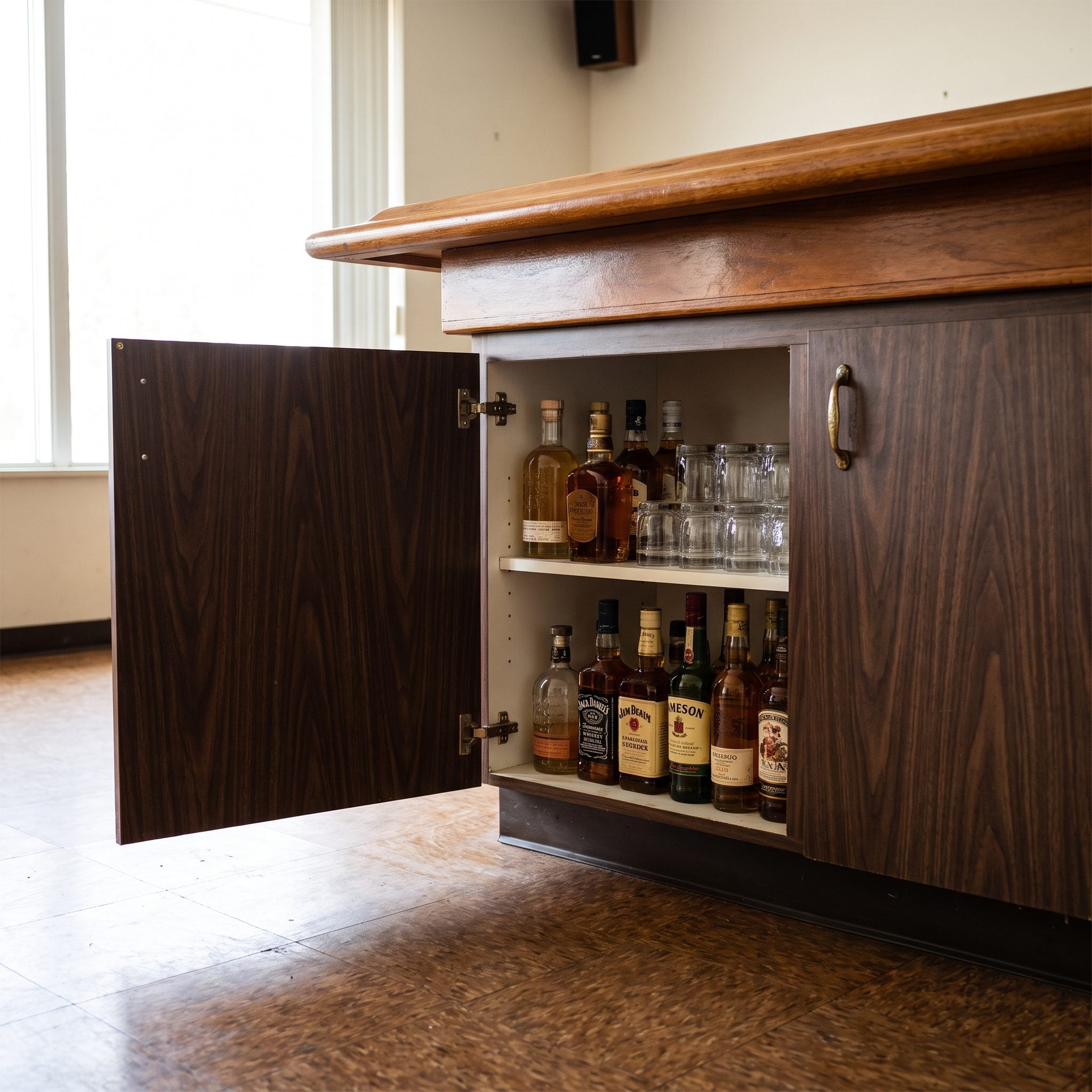
Everything the bar needed to function without looking cluttered lived below the counter. A run of base cabinets could cost roughly $150 to $400 depending on materials, hardware, and how much cabinetry was involved.
Brass ring pulls on walnut doors fit the moment perfectly. Inside went overflow bottles, tools, mixers, napkins, glassware, and whatever good Scotch the adults preferred not to leave at eye level.
Same instinct behind a proper big home bar today, just with different hinges.
27. The Fondue Set That Crashed Every Party: About $10 to $30
🔥 Would you like to save this?
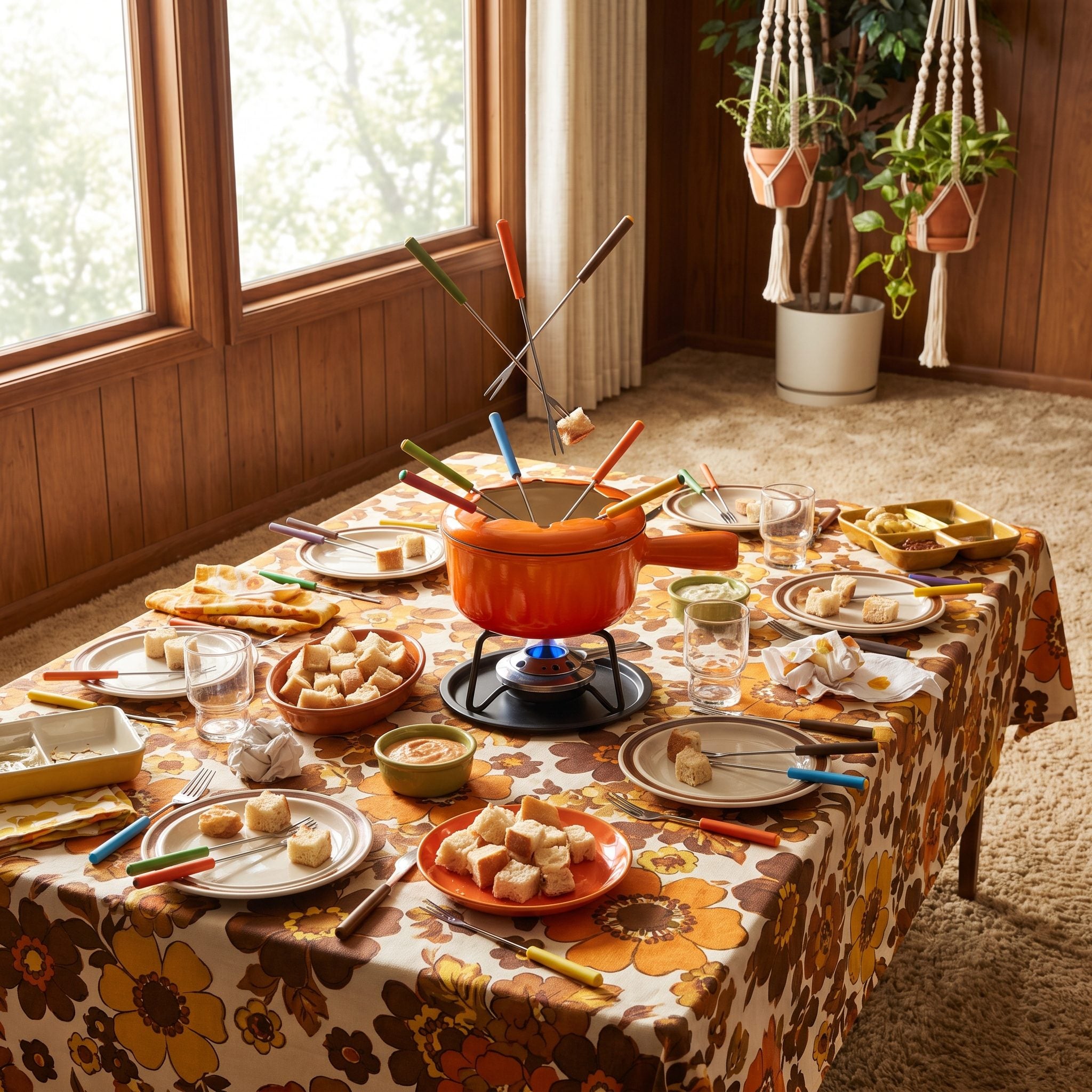
No 1970s entertaining zone felt entirely safe from a fondue set. Depending on materials, the whole apparatus could cost roughly $10 to $30.
Fondue was social theater. Six people gathered around one pot, everyone got a color-tipped fork, and suddenly dinner had rules, rituals, and the possibility of somebody losing bread in the cheese.
The American fondue craze accelerated after Swiss restaurants helped popularize it at the 1964 New York World’s Fair. By the 1970s, fondue sets had become familiar wedding and housewarming gifts.
Most were used intensely for a while and then disappeared into cabinets. A cheese fondue night still works perfectly well beside a bohemian deck makeover or a fire pit.
26. The Small Wet-Bar Sink and Faucet, Roughly $40 to $90 in 1974
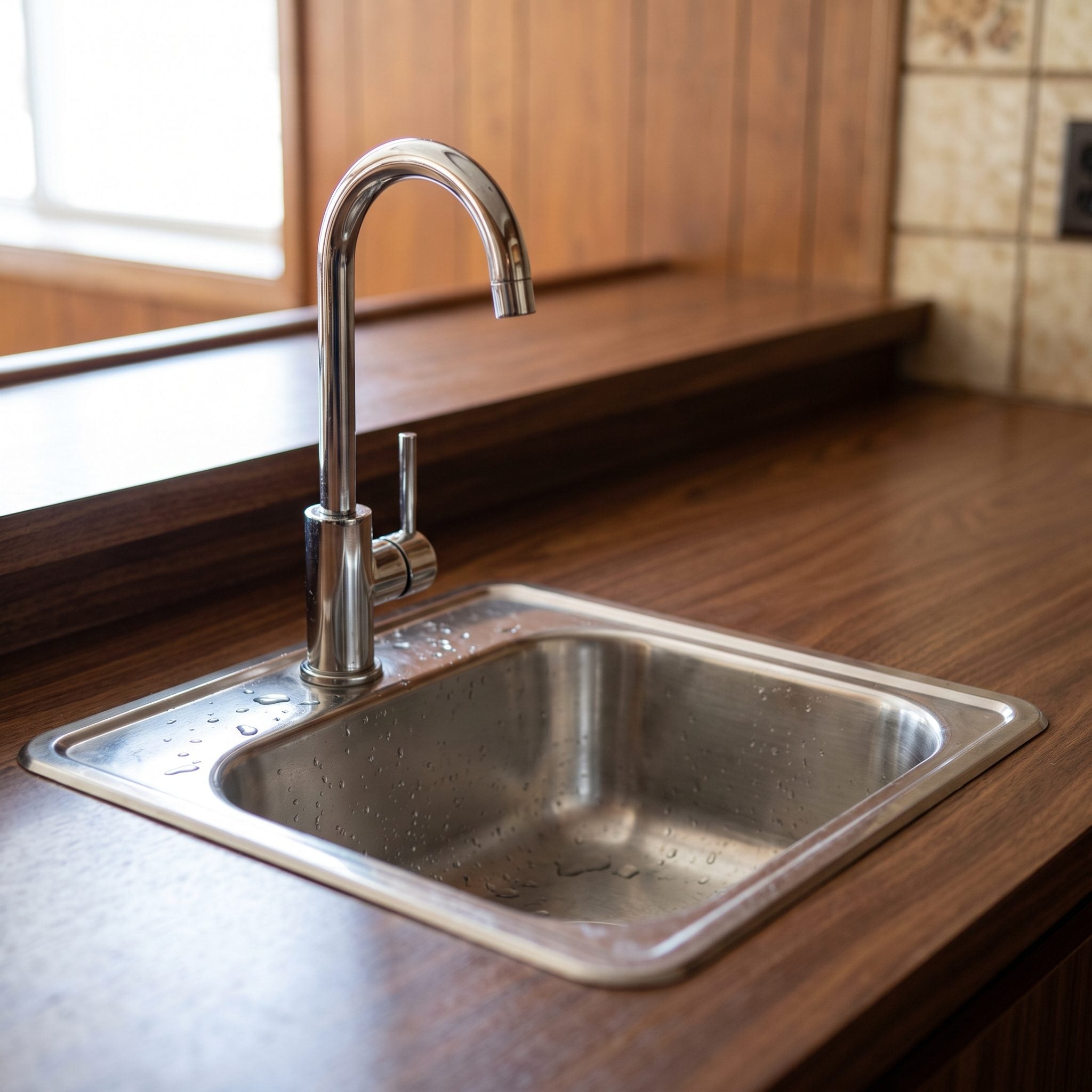
The little stainless sink was the difference between a bar and a shelf with bottles on it. A compact basin and chrome faucet could run roughly $40 to $90 before plumbing labor entered the picture.
Running a new supply and drain line could easily become the more consequential expense, which is why handy homeowners had a clear advantage.
Once installed, that tiny bowl felt disproportionately luxurious. Rinse a shaker, wash a glass, cut another lemon, carry on. Nobody had to disappear upstairs in the middle of the party.
25. The Card Table and Chairs That Ran the All-Night Entertaining Zone: $25 to $50 for the Set
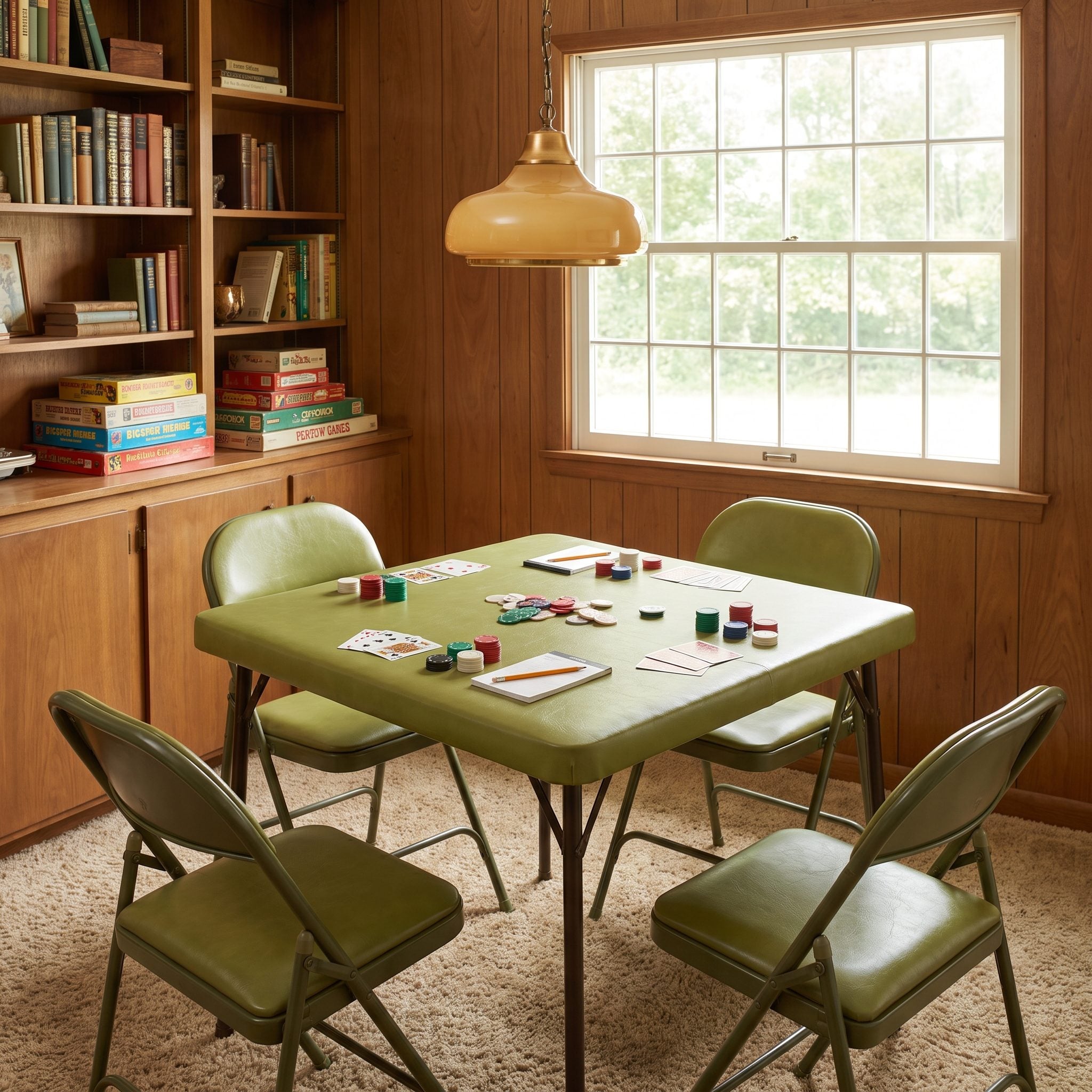
A padded folding card table with four matching chairs could be had for roughly $25 to $50. When the game ended, the whole operation folded flat and vanished against a wall.
That flexibility mattered. The bar anchored the room, but the card table changed its job.
Poker, bridge, gin rummy, snacks, an ashtray filling up, the ice bucket gradually emptying — suddenly one family-room corner could support an entire night and then disappear before breakfast.
24. The Cocktail Recipe Book Behind the Bar: Around $3 to $8 Hardcover
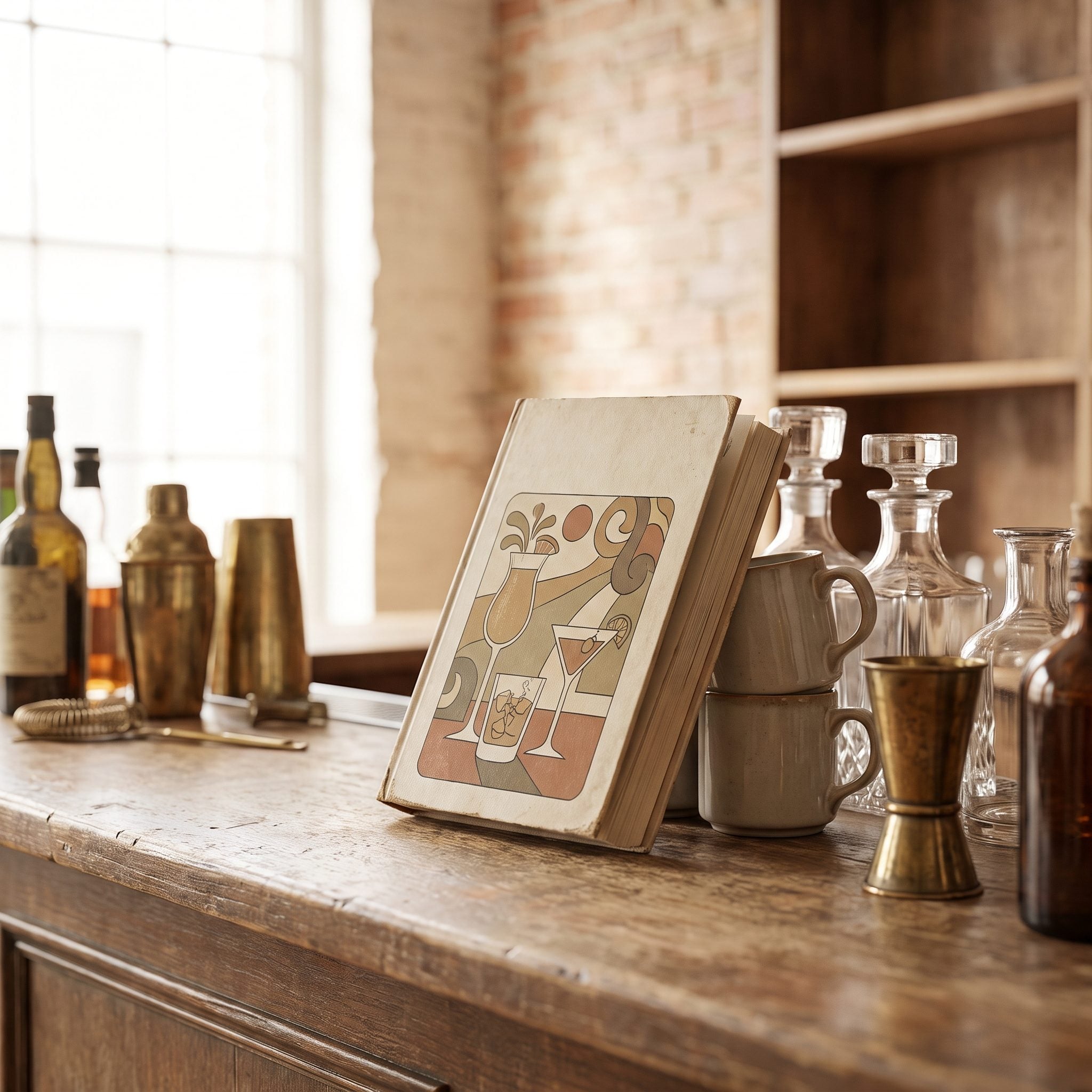
A hardcover cocktail guide might cost around $3 to $8 in the 1970s, with promotional paperbacks and branded recipe books sometimes costing less.
Half instruction manual, half prop. Leave it open on the bar and you looked like somebody who knew a Tom Collins from a John Collins even if you’d made exactly one of them.
23. Amber and Smoked-Glass Pendant Lights: About $18 to $40 in 1974
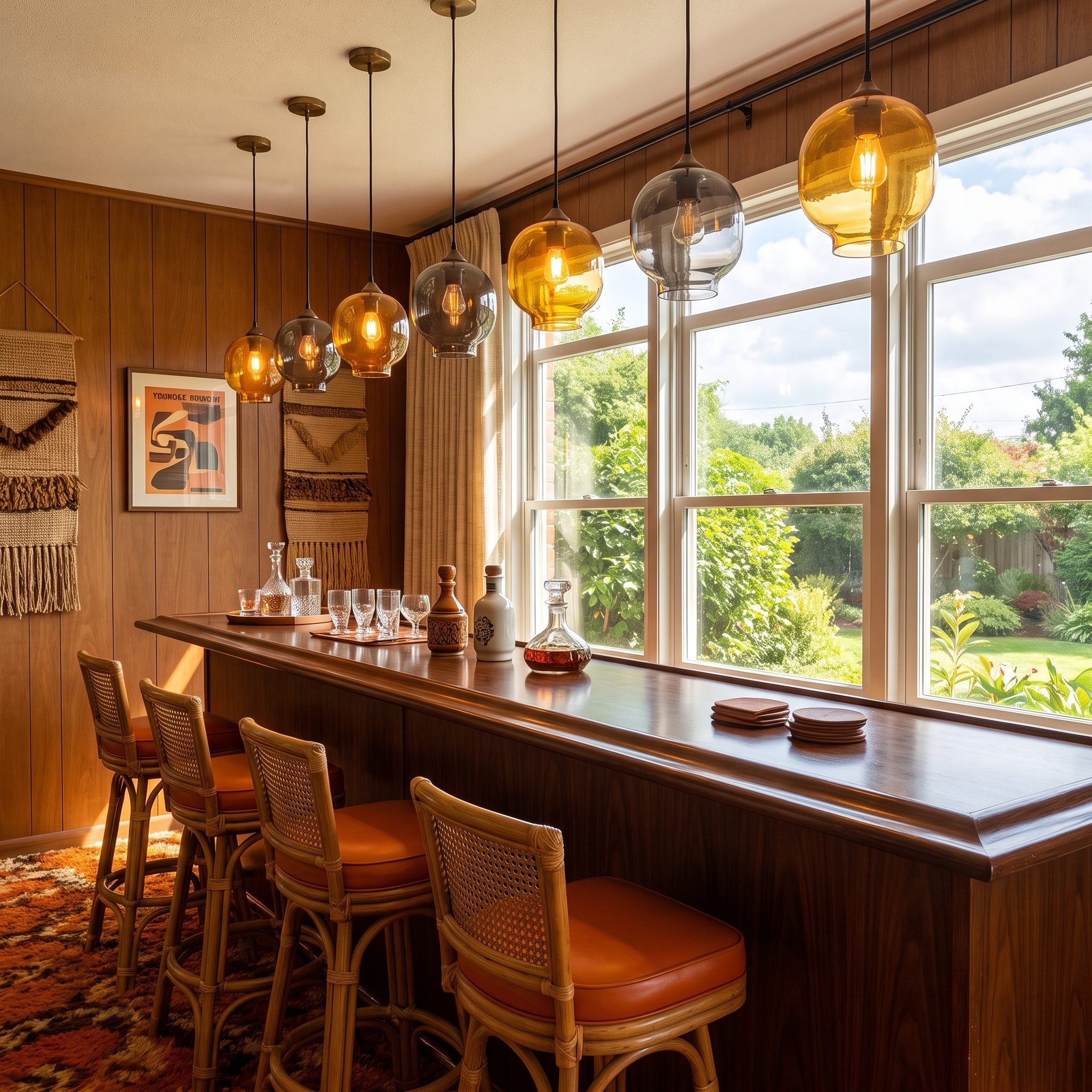
A single amber or smoked-glass pendant could cost roughly $18 to $40 in the mid-1970s, with multiples quickly becoming a noticeable lighting purchase.
The color was the attraction. Amber glass made electric light resemble the last hour of a very good evening.
22. The Highball Glass Set for Everyday Mixed Drinks: $5 to $12
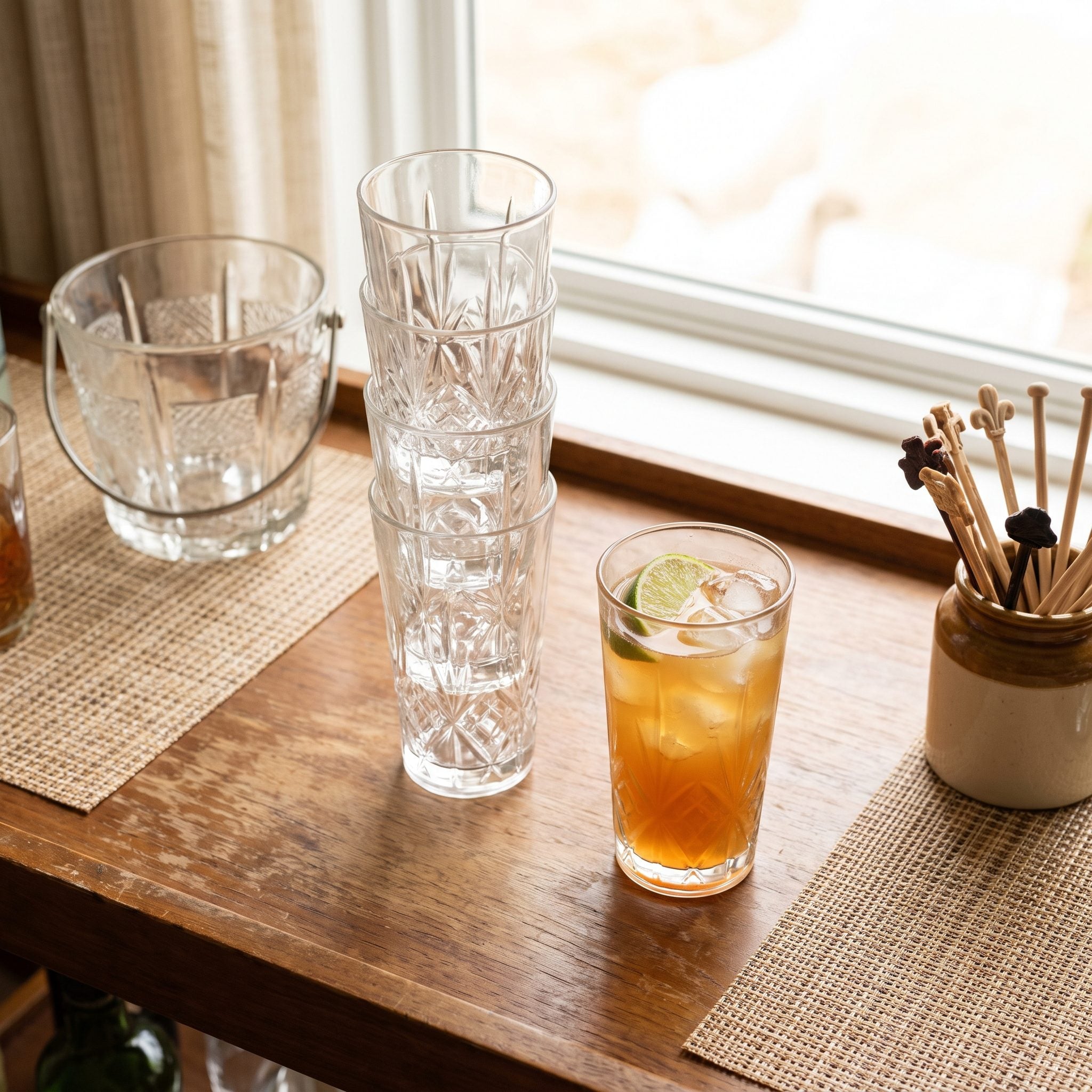
The workhorses. A set of highball glasses might run $5 to $12, which helped explain why so many households had stacks of them.
Gold rims, geometric orange patterns, smoked glass — manufacturers found plenty of ways to make an everyday tumbler look like part of the room.
Gin and tonics, screwdrivers, rum and Cokes: tall mixed drinks went here. Buy a dozen and assume the household population would gradually decline.
21. The Stereo Receiver and Turntable: Around $250 to $400 for the Pair
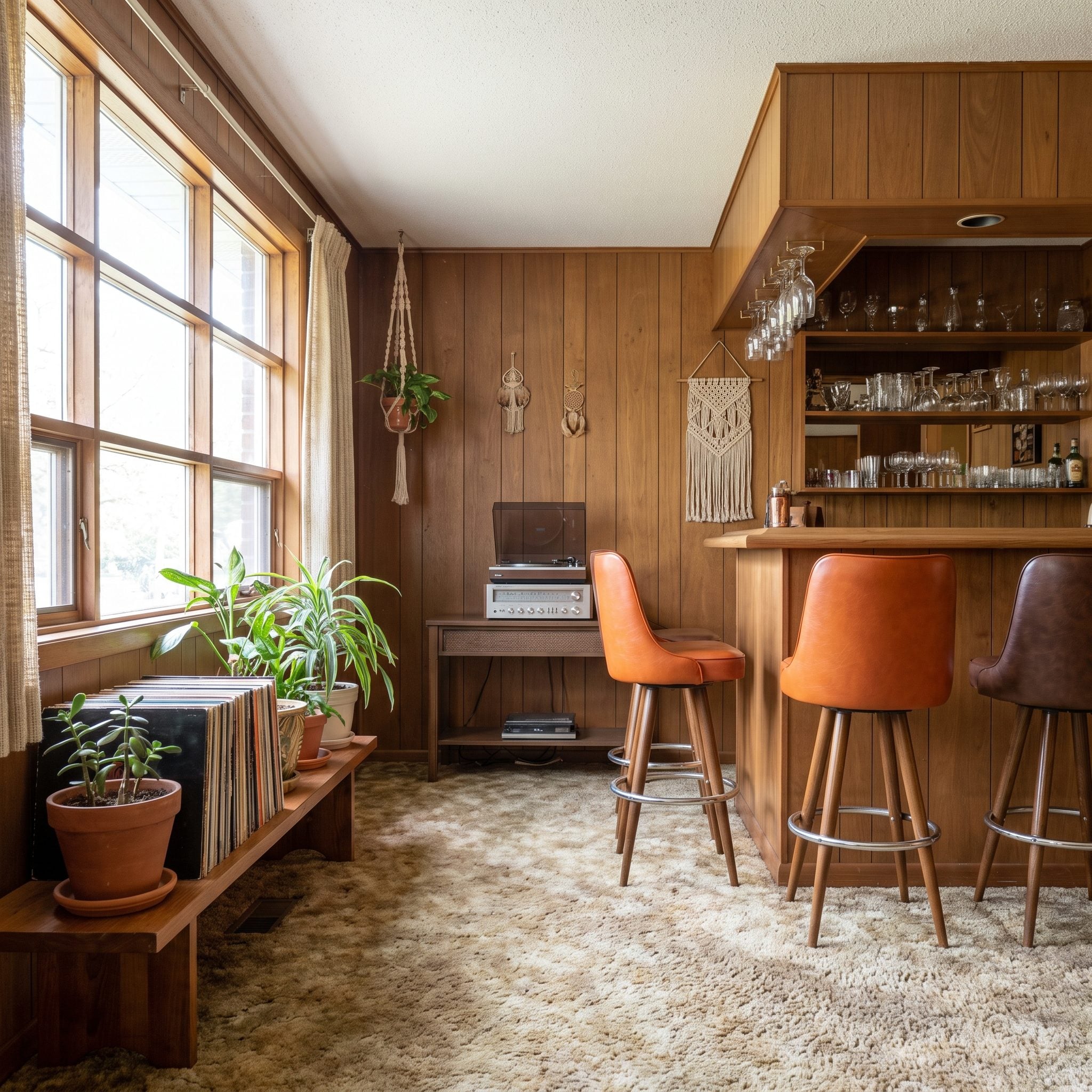
A decent silver-faced receiver was already a serious purchase, and pairing it with a respectable turntable could push the combined bill to roughly $250 to $400.
This was the pulse of the room. Fleetwood Mac, Stevie Wonder, disco, country — whatever record landed on the platter could change the direction of the night faster than another lamp or piece of furniture ever could.
A glowing tuning dial and a spinning LP supplied movement, light, and a reason for somebody to get up every twenty minutes and choose what came next.
The bar poured the drinks. The stereo decided what kind of night it was going to be.
20. The Cocktail Coaster Set: Rarely More Than $5, Sometimes Free With the Booze
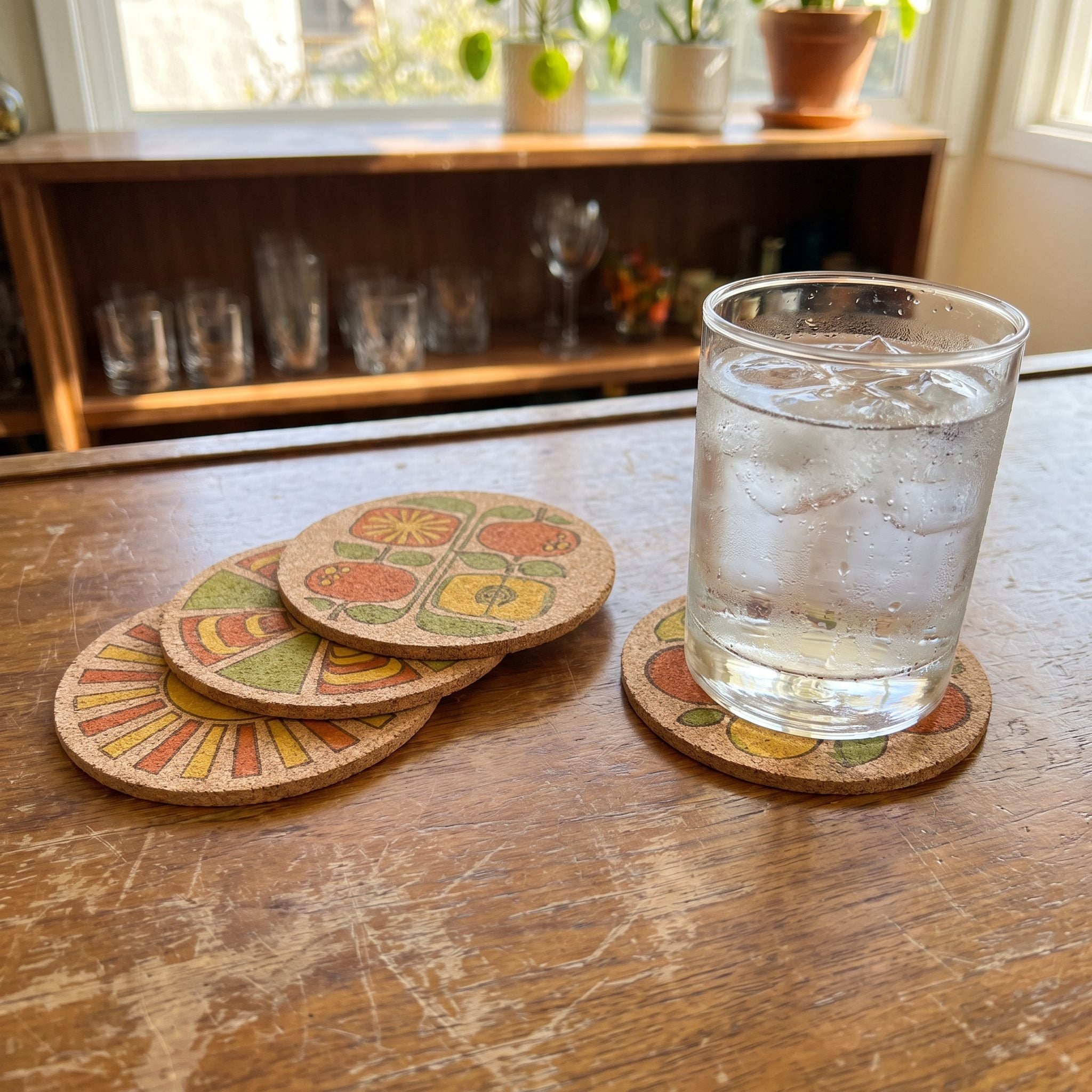
A set of coasters could cost under five dollars, and plenty of bars accumulated them without buying any at all. Liquor brands, restaurants, and taverns supplied a steady stream of promotional versions.
Cork, laminated plastic, little ceramic tiles, palm trees, drinking jokes — nobody expected restraint from a coaster.
Still, one pale ring on fresh walnut could convert even the most skeptical homeowner into a coaster evangelist.
19. The Faux-Brick or Stone Bar Wall: Roughly $2 to $3 a Square Foot
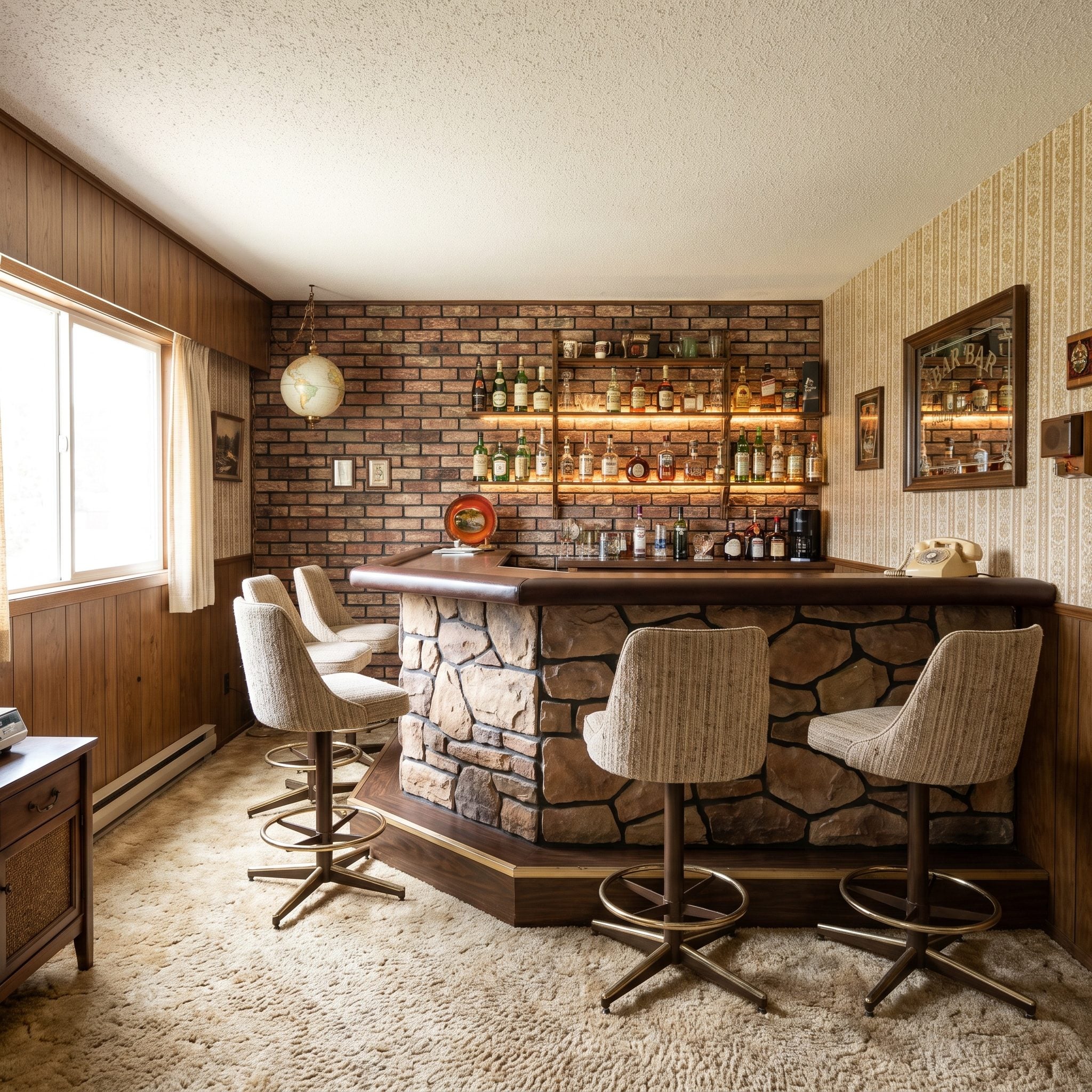
Faux-brick and simulated-stone veneer panels could cost a few dollars a square foot in the 1970s. Facing one accent wall created a large visual change without the labor and weight of real masonry.
That was the sell. Brick looked permanent even when the bar had been framed the previous spring.
Beside wood paneling and brass hardware, the rough texture gave the room another layer and helped separate the bar visually from the rest of the basement.
18. The Martini, Coupe, and Special-Occasion Cocktail Glasses: $8 to $18
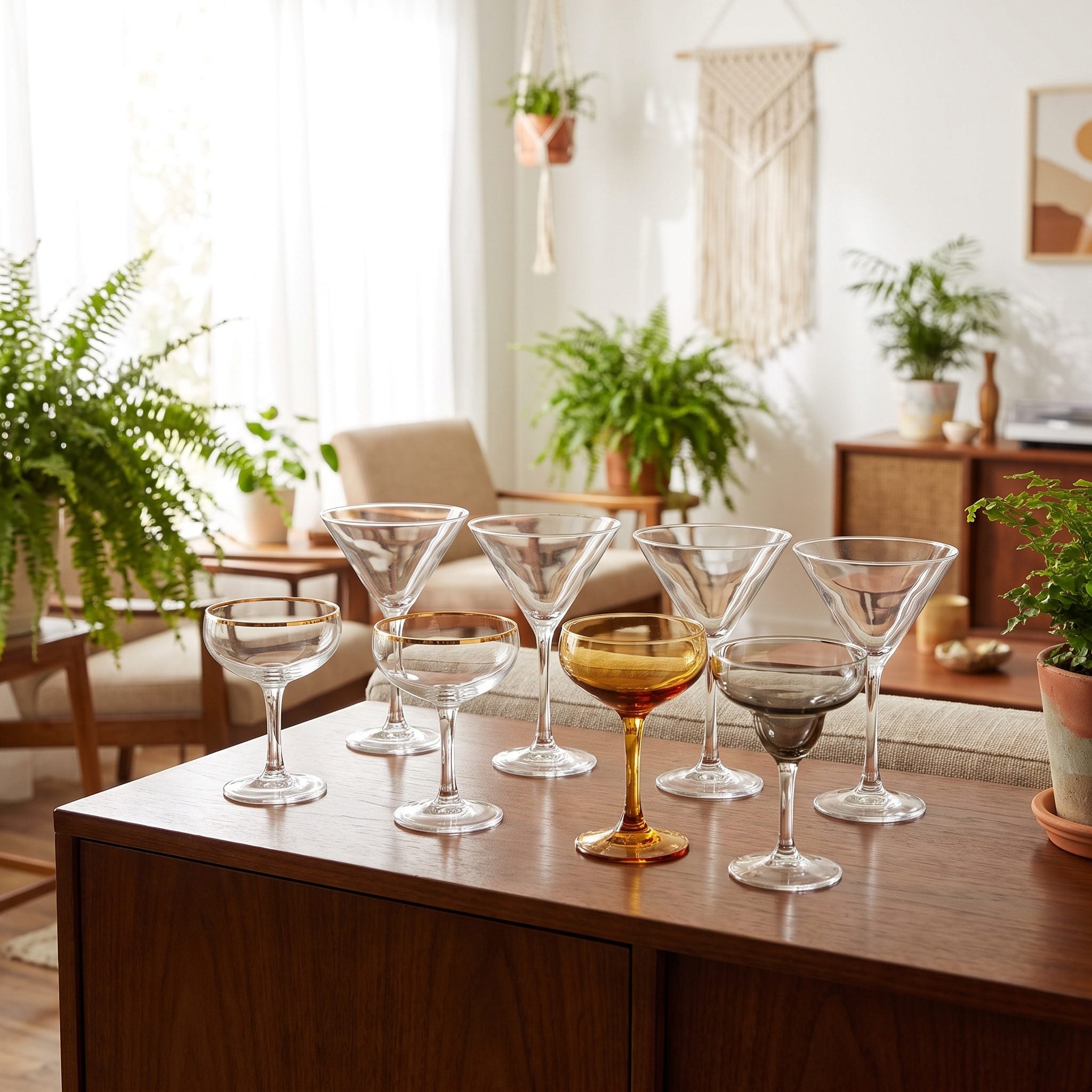
The delicate stuff came out for company. Martini glasses, coupes, and other specialty stems might cost $8 to $18 a set, more with gold trim or etched decoration.
These lived in cabinets most of the year, appearing for anniversaries, holidays, and nights when somebody decided the drink deserved a stem.
The martini glass carried its own mythology. Few shapes could make an ordinary suburban basement look more convinced of its sophistication.
17. The Electric Ice Maker for the More Elaborate Setup, About $200 to $350 in 1977
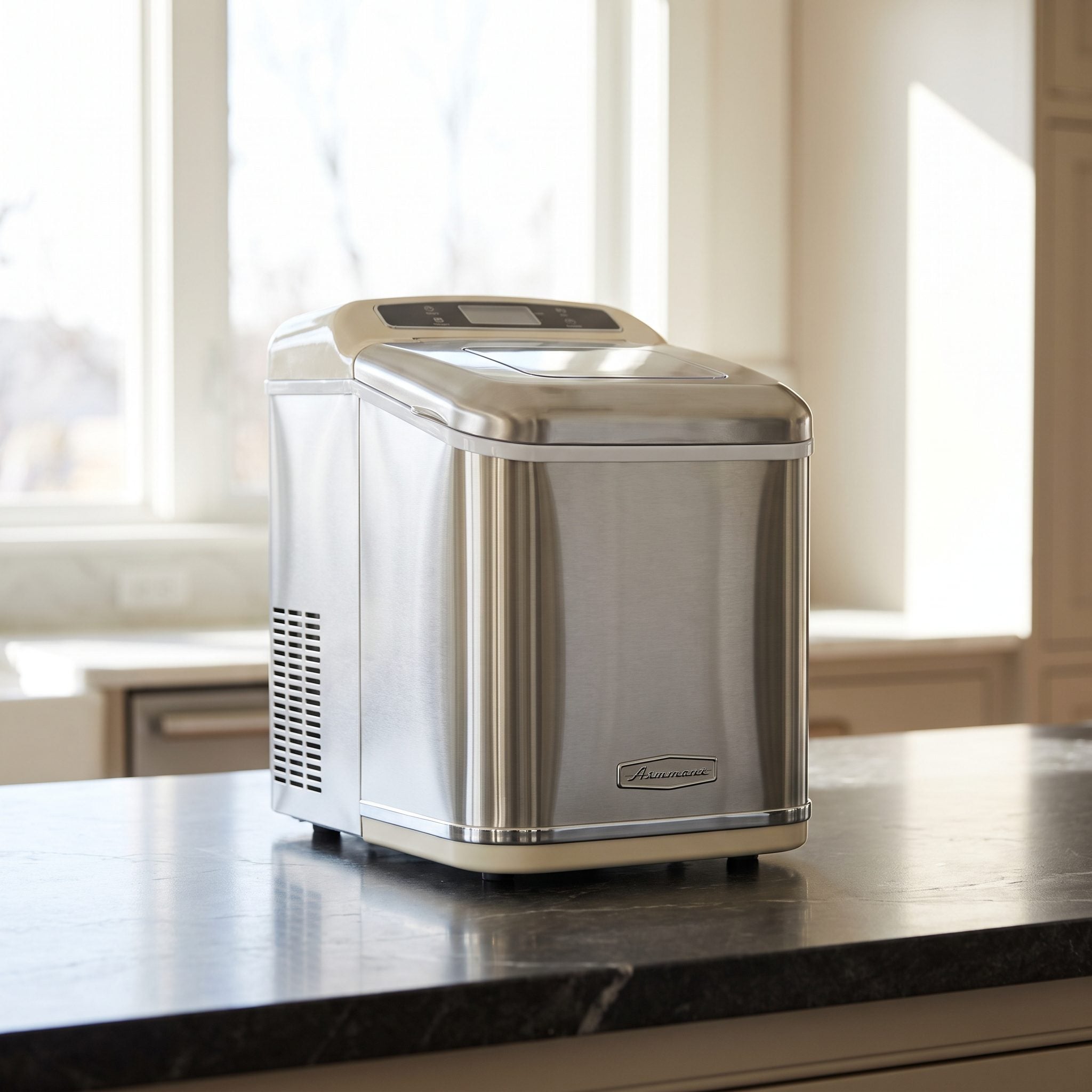
The status piece. An automatic electric ice maker could run $200 to $350, real money in 1977, and it announced that the bar had moved beyond dabbling.
Everybody else was cracking trays and refilling buckets. The homeowner with the dedicated machine had ice arriving without ceremony.
Practical? Only to a point. Most households survived perfectly well without one.
But practicality wasn’t the entire point of the 1970s home bar. It was about walking downstairs and feeling as though your own little lounge had staff.
16. The Cocktail Serving Tray: Around $6 to $18, and the Metal Decided the Price
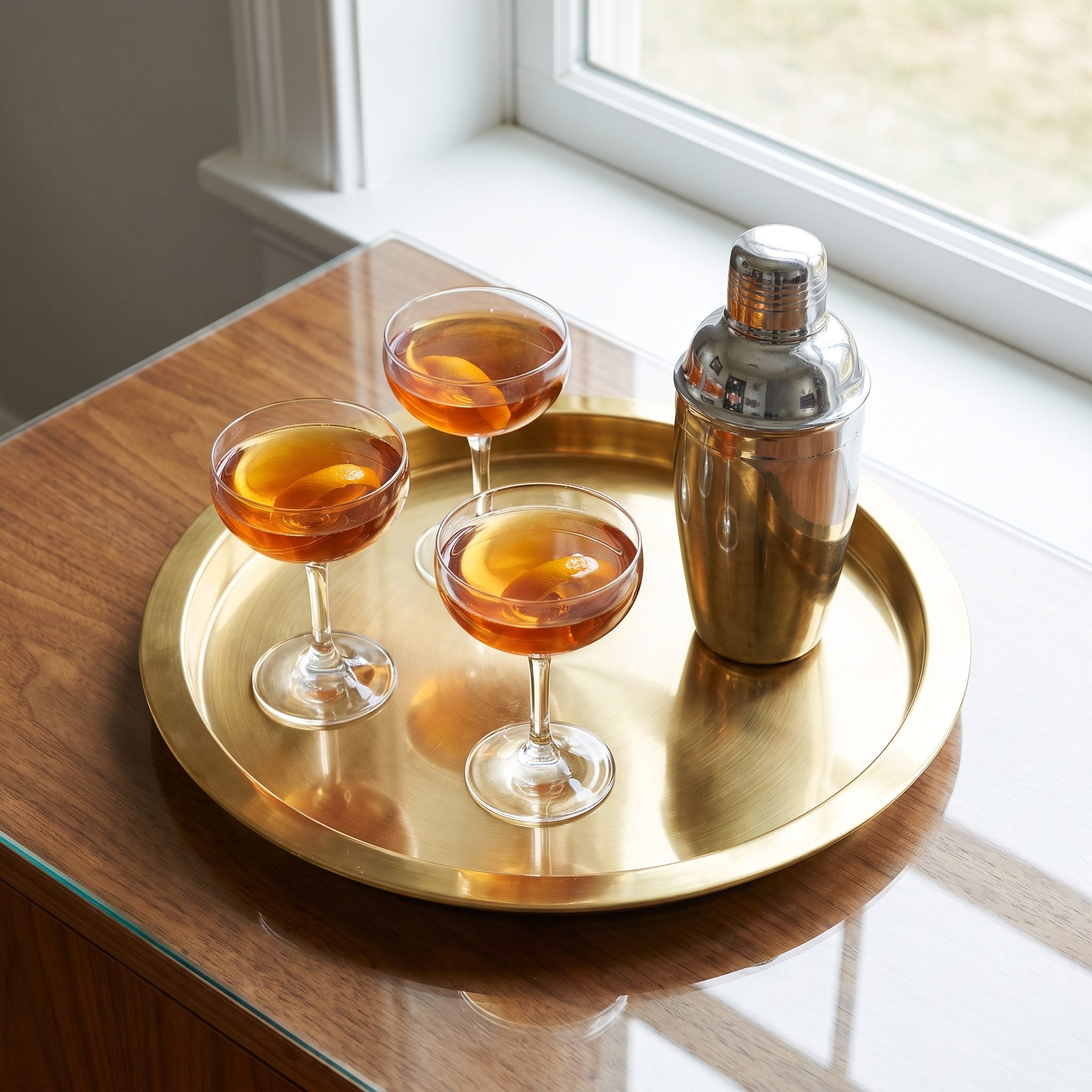
A plain chrome tray might cost around $6. Hammered brass, gallery edges, decorative handles, and heavier construction could push one toward $18.
That seems like a lot of attention for a flat object designed to move drinks twelve feet.
But the tray was one of the few bar pieces guests actually handled. Brass picked up the foot rail, stool bases, and lamp hardware, letting one little object visually stitch the room together.
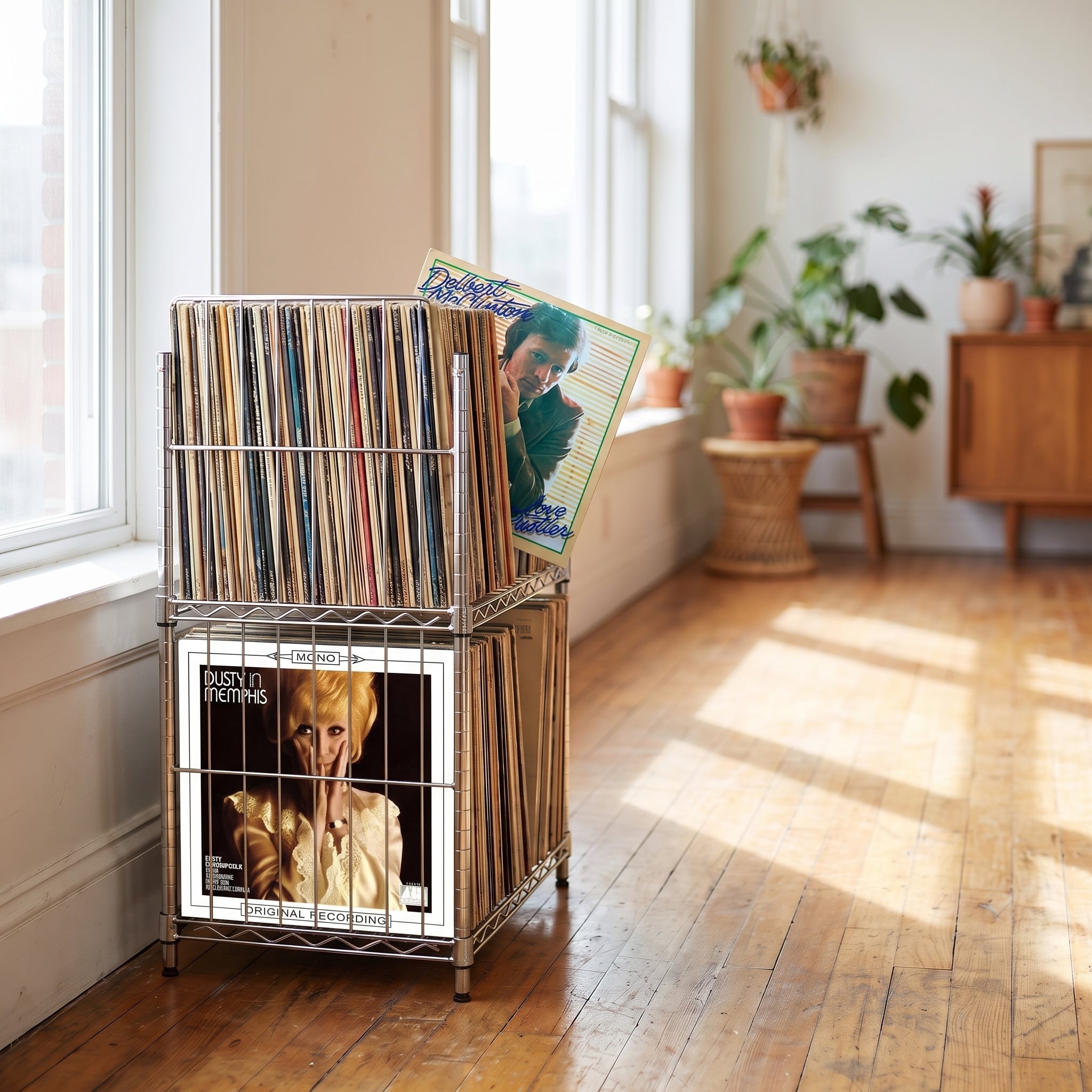
15. The Record Rack Filled With Party LPs: About $1 to $2 for the Rack, $5 to $7 Per Album
🔥 Would you like to save this?
The rack itself could be almost laughably cheap — a dollar or two for chrome wire or a simple plywood cube. The albums were where the money accumulated.
At several dollars apiece, fifty records represented years of slow collecting rather than one afternoon at the store.
That collection also functioned as biography. You could learn quite a lot about a host before the first drink simply by reading the spines.
The rack sat near the turntable for obvious reasons. Nobody wanted to cross the room when the current record had just killed the mood.
14. The Heavy Lowball Glasses: Around $6 to $14 a Set
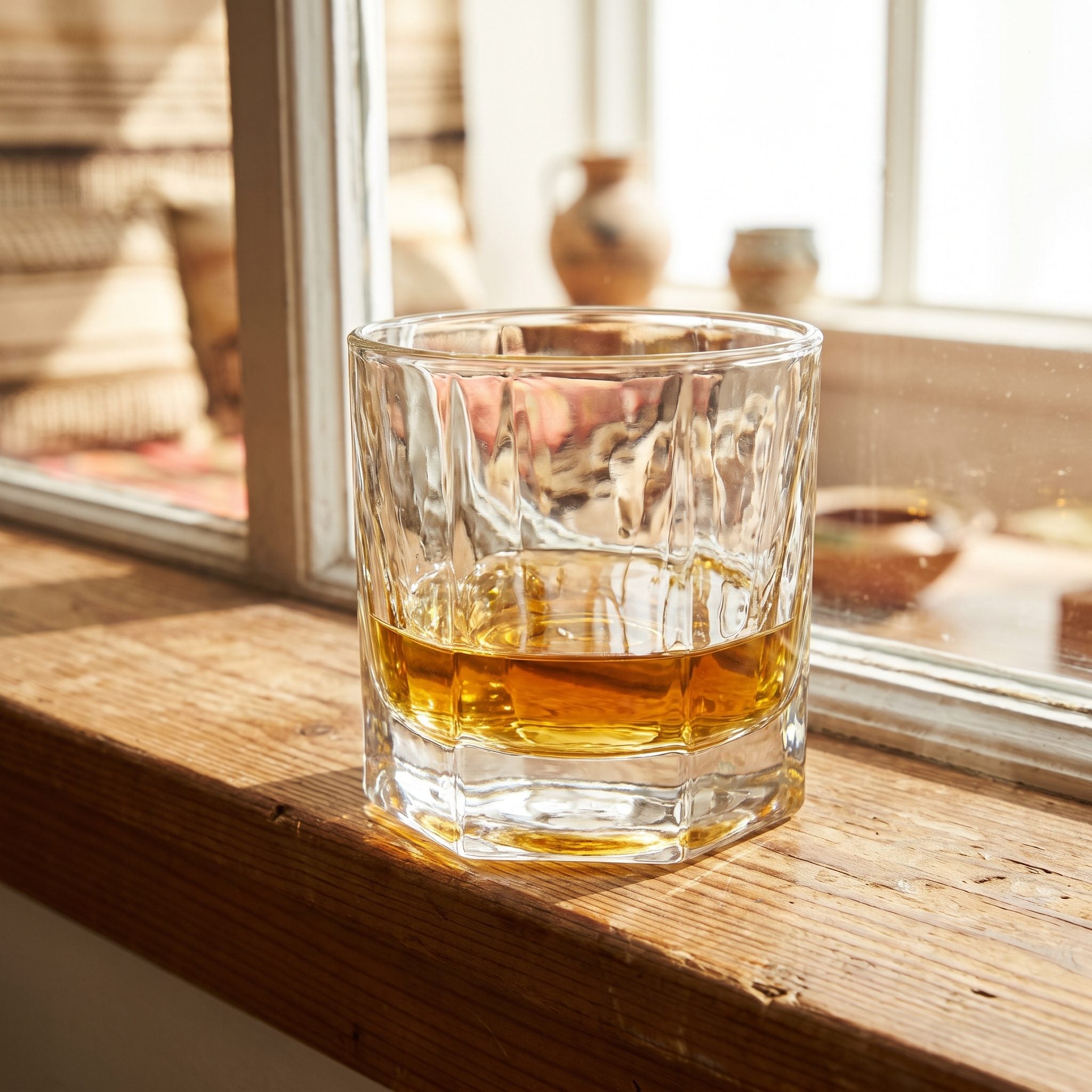
Old-fashioned glasses — rocks, lowball, take your pick — might run $6 to $14 for a set. Better examples had thick weighted bases that made the glass feel more substantial than its size suggested.
That heft was part of the appeal. A neat pour of Scotch or an old-fashioned looked more serious when the vessel had some gravity.
Smoked amber and green tints let even the glassware join the room’s color scheme.
13. The Garnish Station: Cutting Board, Paring Knife, and Citrus Juicer for Under $10 Combined
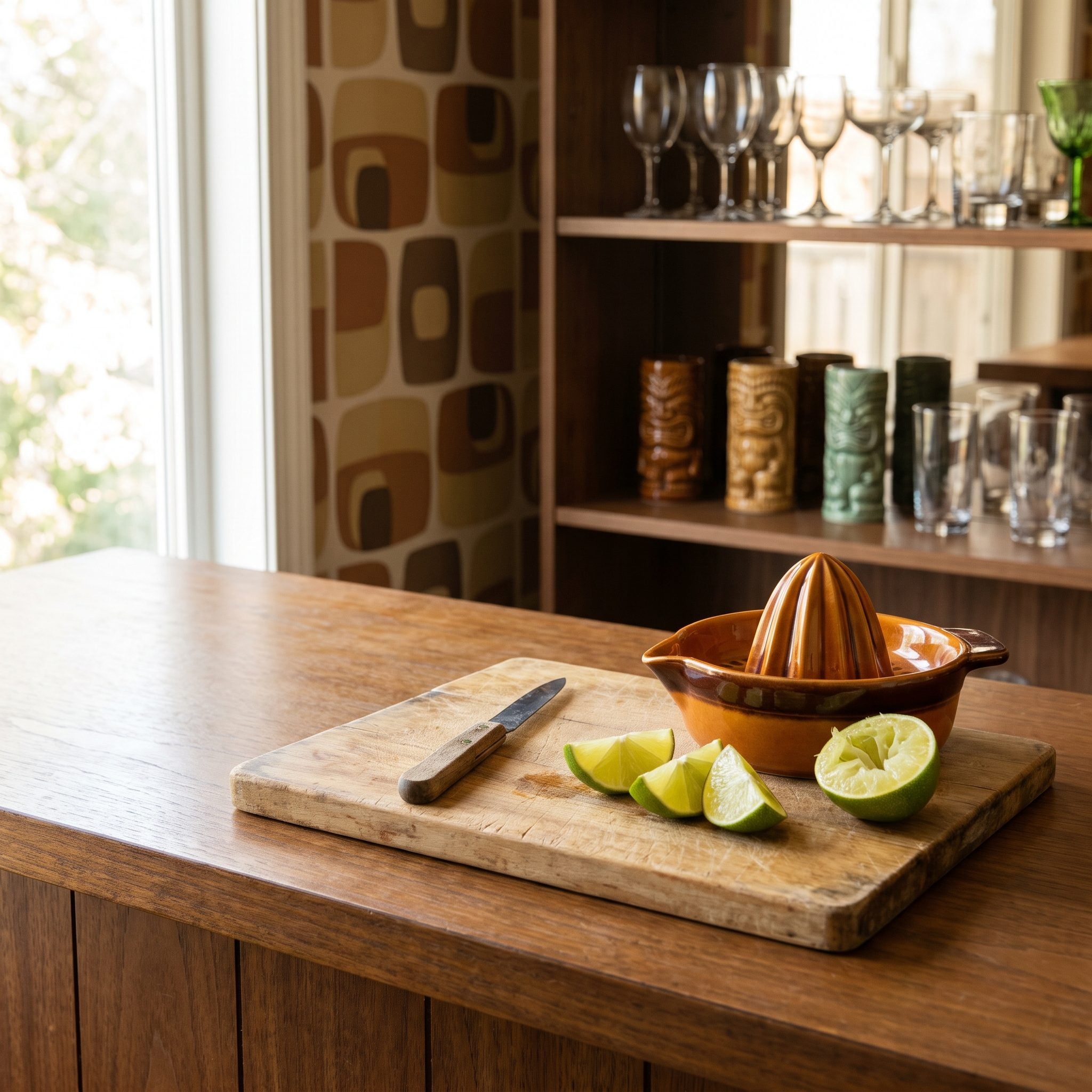
Nobody thought of the humble garnish trio as a major purchase. A small cutting board, paring knife, and hand citrus reamer could come in under $10, especially when half the equipment migrated downstairs from the kitchen.
The glass reamer deserves more attention than it usually gets. Milk glass, clear glass, amber glass — it could sit on the counter looking decorative and still outperform plenty of complicated gadgets for one lemon.
Press, twist, pour. No motor. No buttons. No manual required.
12. The Speakers That Made the Basement Feel Like a Private Club: $80 to $200 a Pair
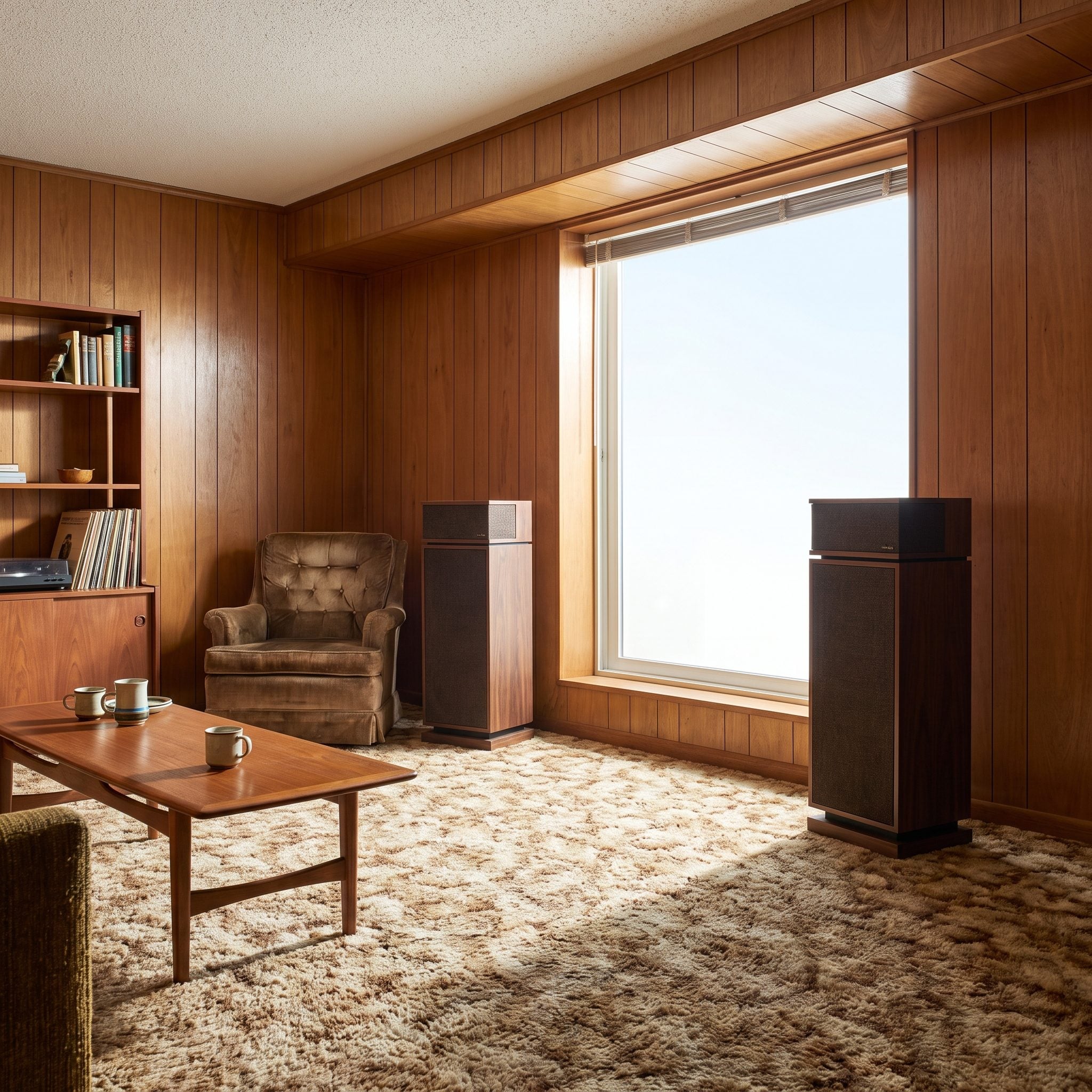
A pair of floor-standing wooden speakers was another serious purchase, with better models easily reaching $80 to $200 or more.
Two large cabinets with woven grilles standing guard on either side of the room changed the experience immediately. The music stopped sounding like something coming from a box and started filling the basement.
Suddenly the corner where the family stored Christmas decorations had aspirations toward a private club. Same instinct drives every modern glam deck built around an outdoor sound system.
11. The Wine and Champagne Stems Pulled Out for Company: About $8 to $15 a Set
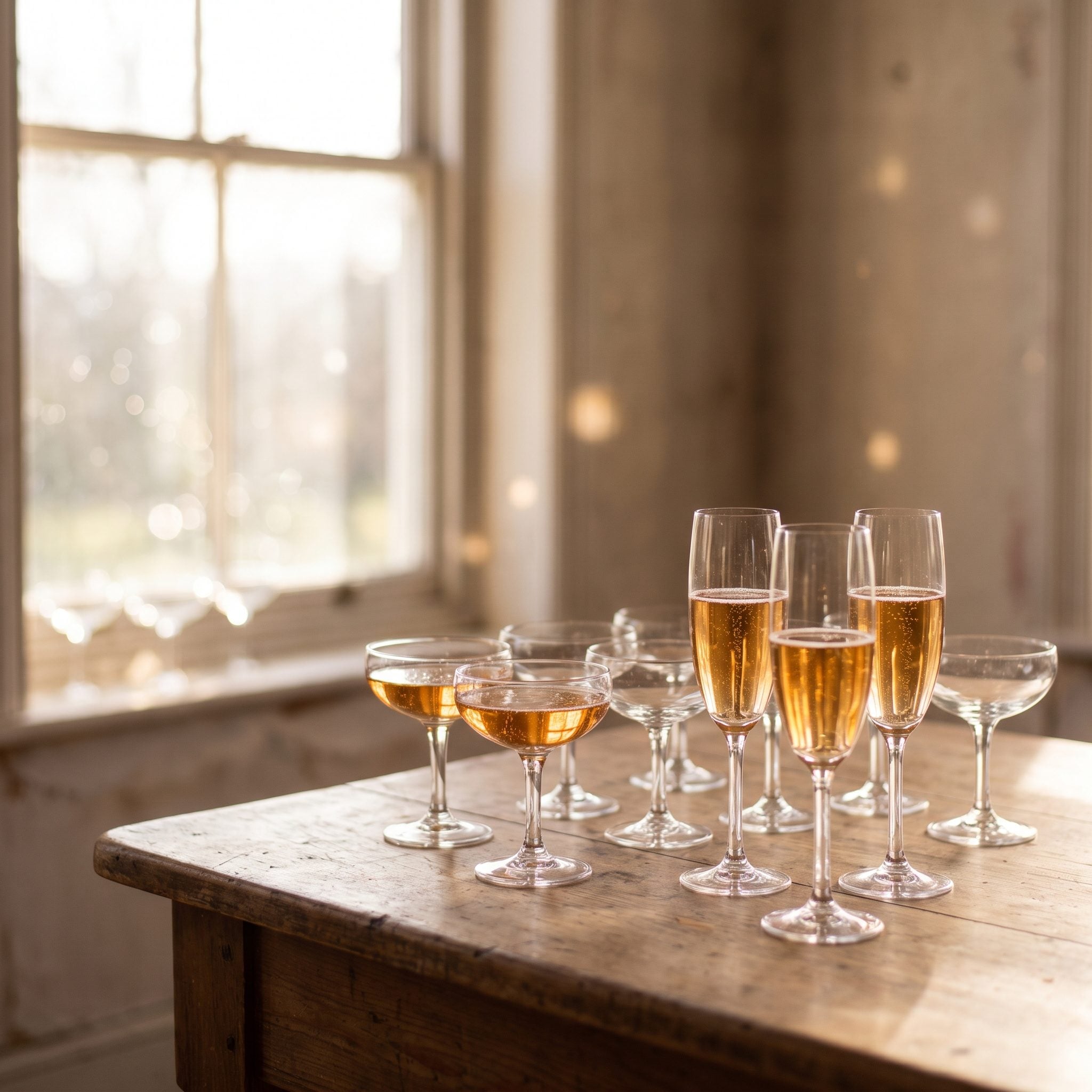
Wine and champagne glasses lived on the higher shelf and tended to come down when company did. A set of six might cost roughly $8 to $15 in the middle of the decade.
The shallow champagne coupe was already an old shape, but the home bar had no interest in retiring it quickly. Wide, elegant, precarious over shag carpet — nearly everything about it made sense only when nobody walked too fast.
10. The Brass or Chrome Foot Rail Along the Bottom of the Bar, Roughly $30 to $80 in 1974
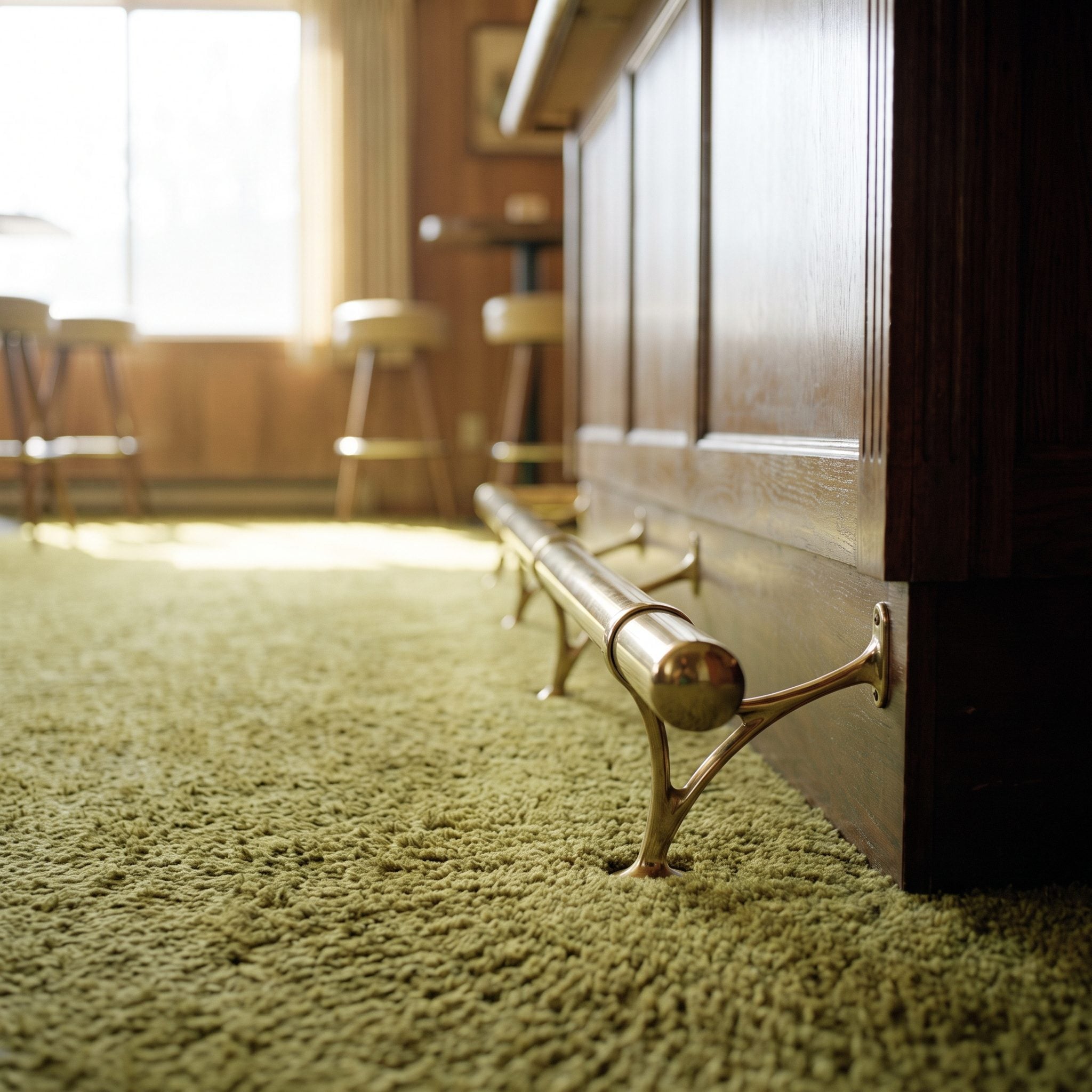
Its practical job was simple: give feet somewhere comfortable to rest while somebody sat or leaned at the bar.
But a polished brass or chrome rail costing roughly $30 to $80 did considerably more for appearances.
Suddenly the basement counter borrowed the posture of a real tavern. Put one shoe on the rail, lean an elbow on the top, and suburban drywall was doing its best downtown impression.
9. The Electric Blender for Frozen Drinks: About $25 to $45
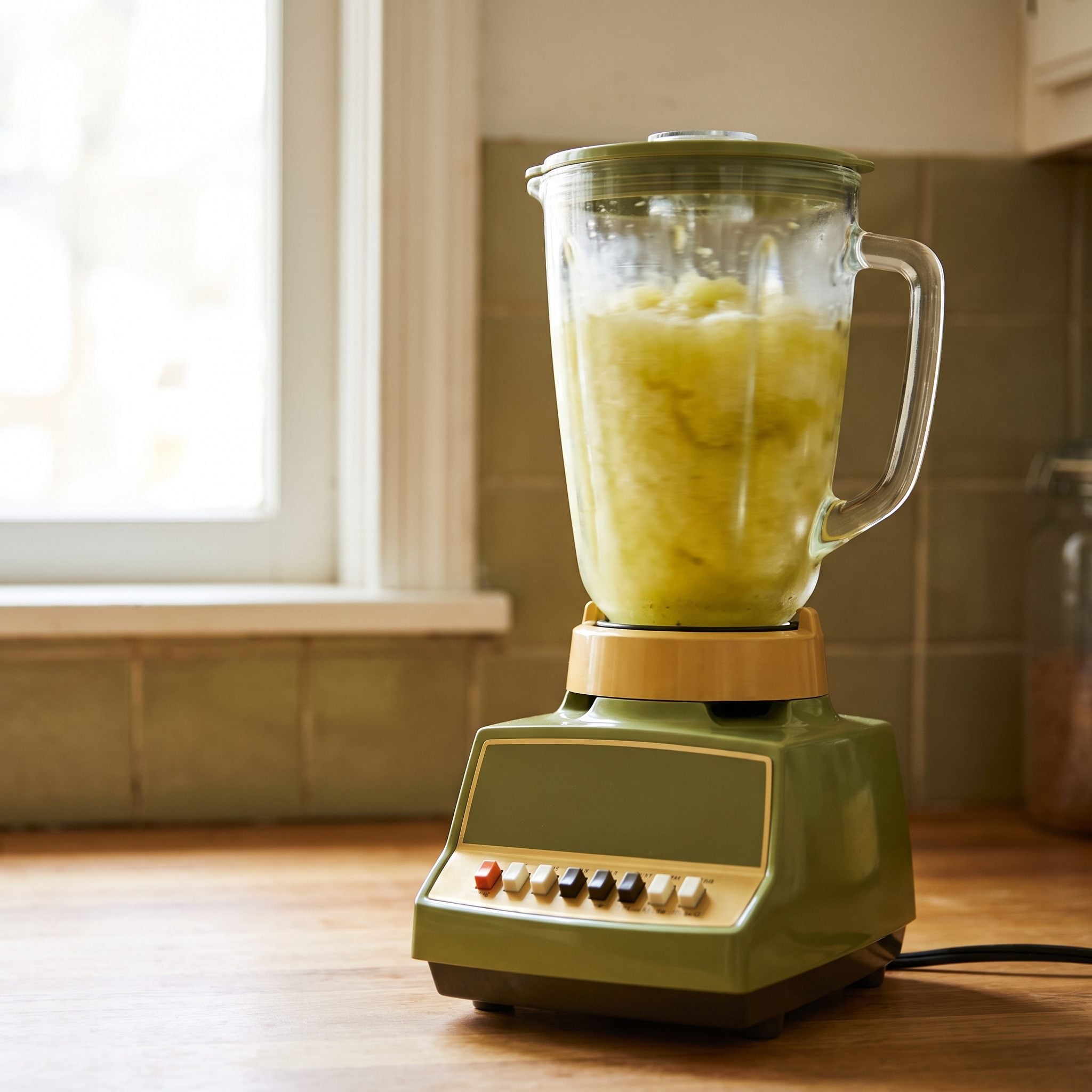
A decent countertop blender could cost around $25 to $45 in 1975. With the federal minimum wage at $2.10 an hour that year, a $40 machine represented roughly nineteen hours of minimum-wage work.
But the blender had range. A bar that once poured whiskey and highballs could suddenly produce frozen daiquiris, piña coladas, and anything else requiring crushed fruit and noise.
Harvest-gold base, ribbed glass carafe, a row of push buttons whose distinctions grew increasingly theoretical after the third drink.
It lived on the counter because putting it away felt too much like announcing that the party was finished.
8. The Glass Shelves Used to Display Bottles and Glassware, Roughly $20 to $60 in 1973
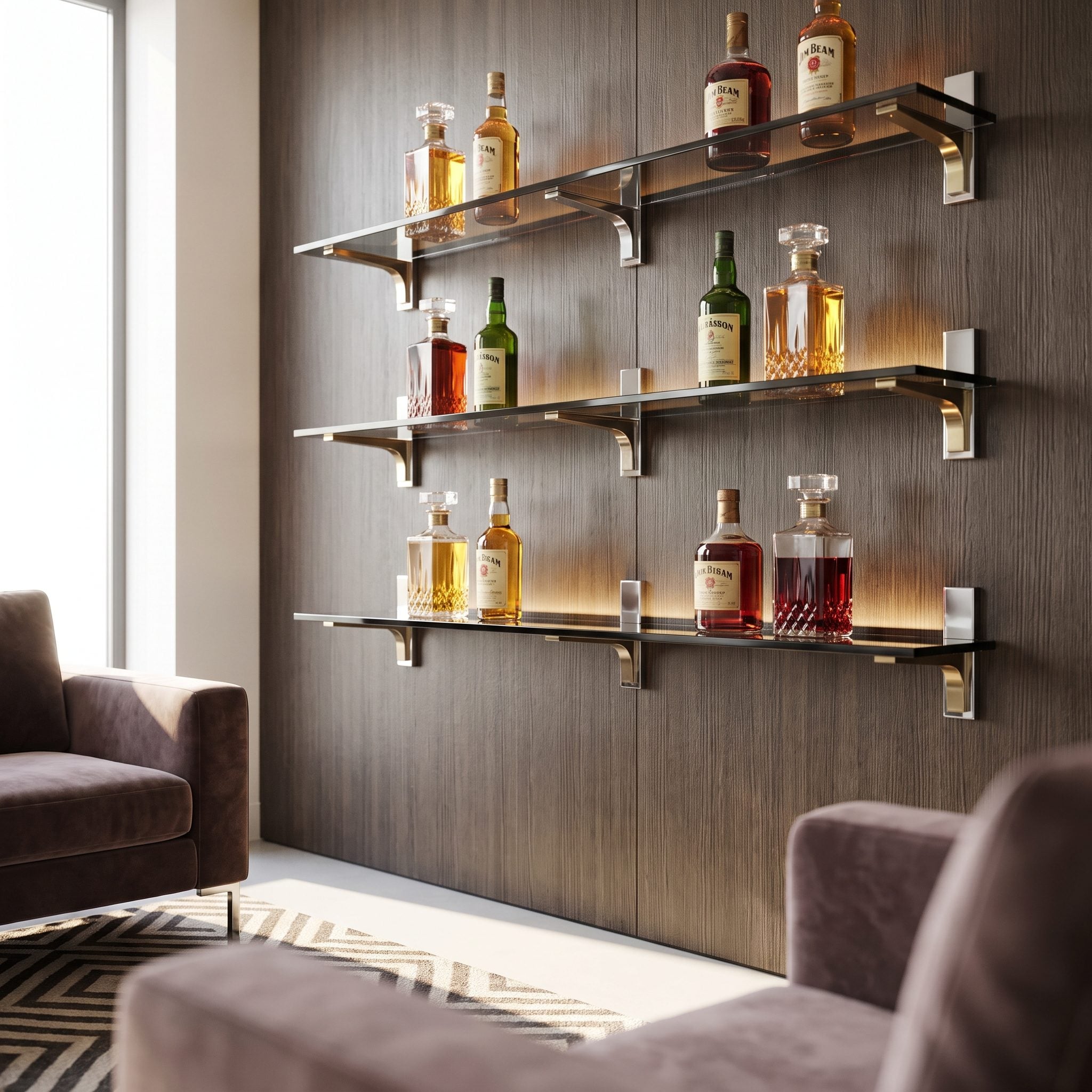
The floating shelves handled the showing off. A set of smoked-glass shelves on brass or chrome brackets might cost roughly $20 to $60.
Against a mirrored wall, they looked less like storage than hotel-lounge display.
That was the point. Bottles became decoration the moment they left a cupboard and started catching light behind glass.
7. The Chip-and-Dip Serving Set: Roughly $5 to $15 in Ceramic or Chrome
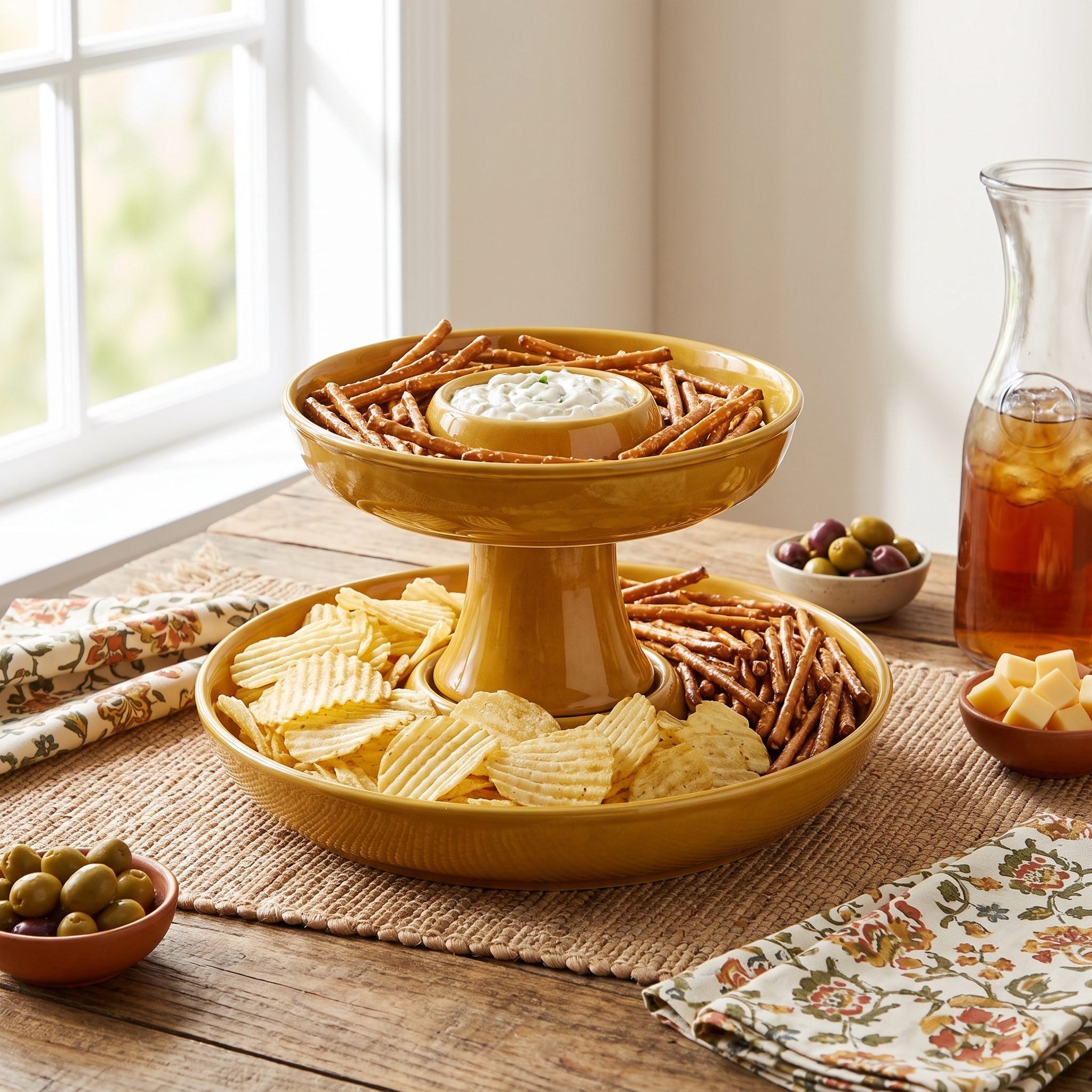
The chip-and-dip set was one of cocktail hour’s great pieces of social engineering, and it might cost roughly $5 to $15.
Fancy versions came in chrome or other metals. The ones that lodged themselves permanently in memory were often ceramic: avocado, brown, orange, one big bowl with a smaller dip bowl attached at the edge.
Set one down and people gathered automatically. Hands had somewhere to go, strangers had something to comment on, and onion dip took over the diplomacy.
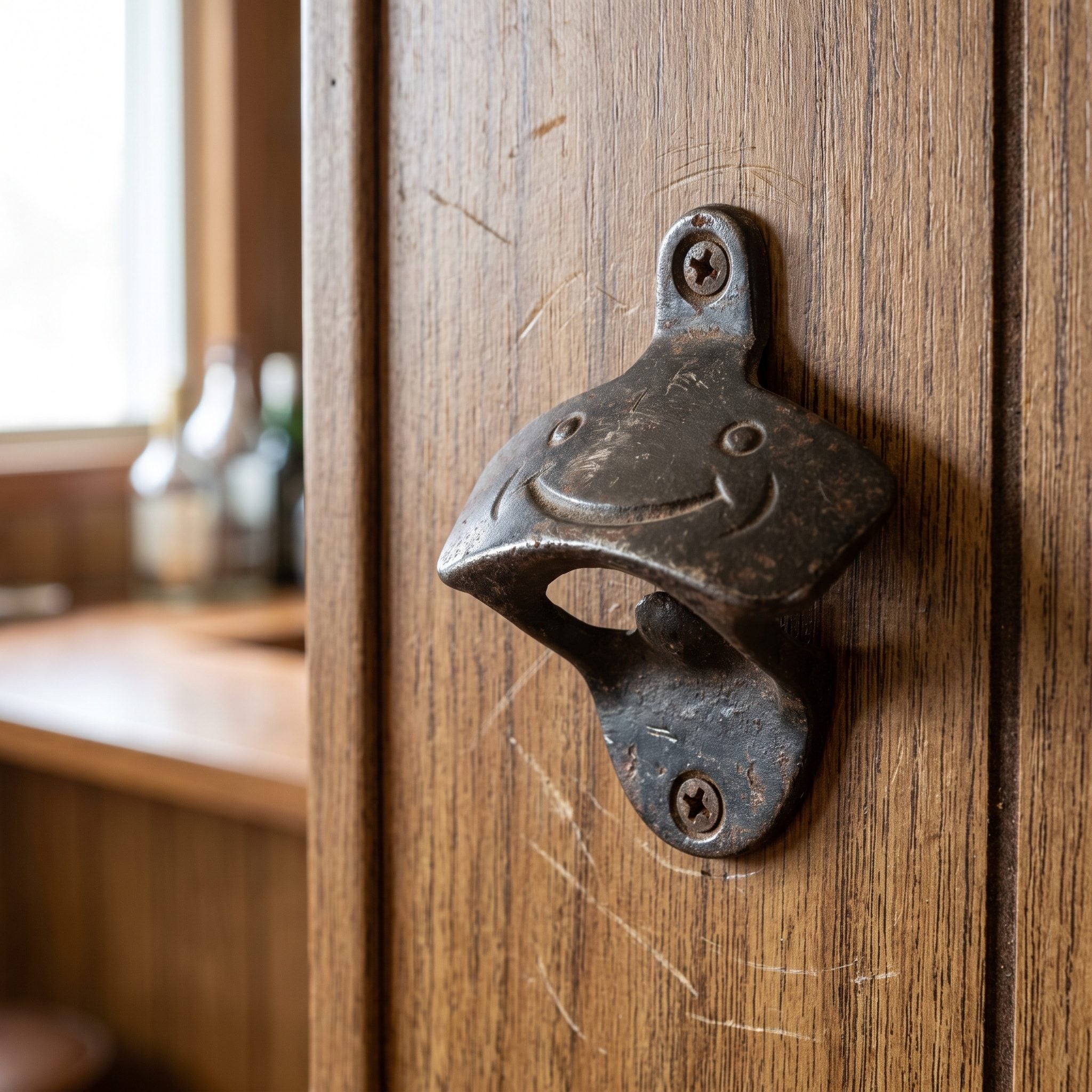
6. The Wall-Mounted Bottle Opener for Under $3
🔥 Would you like to save this?
Cheapest thing on the wall and probably one of the most frequently used. A screw-in opener could cost under three dollars.
Mount it directly to the paneling, add a little catcher underneath, and bottle caps stopped ricocheting across the carpet.
Tiny investment. Enormous contribution to the illusion that this was not merely a refrigerator full of beer.
5. The Full Bar Tool Set: Roughly $10 to $20 Boxed
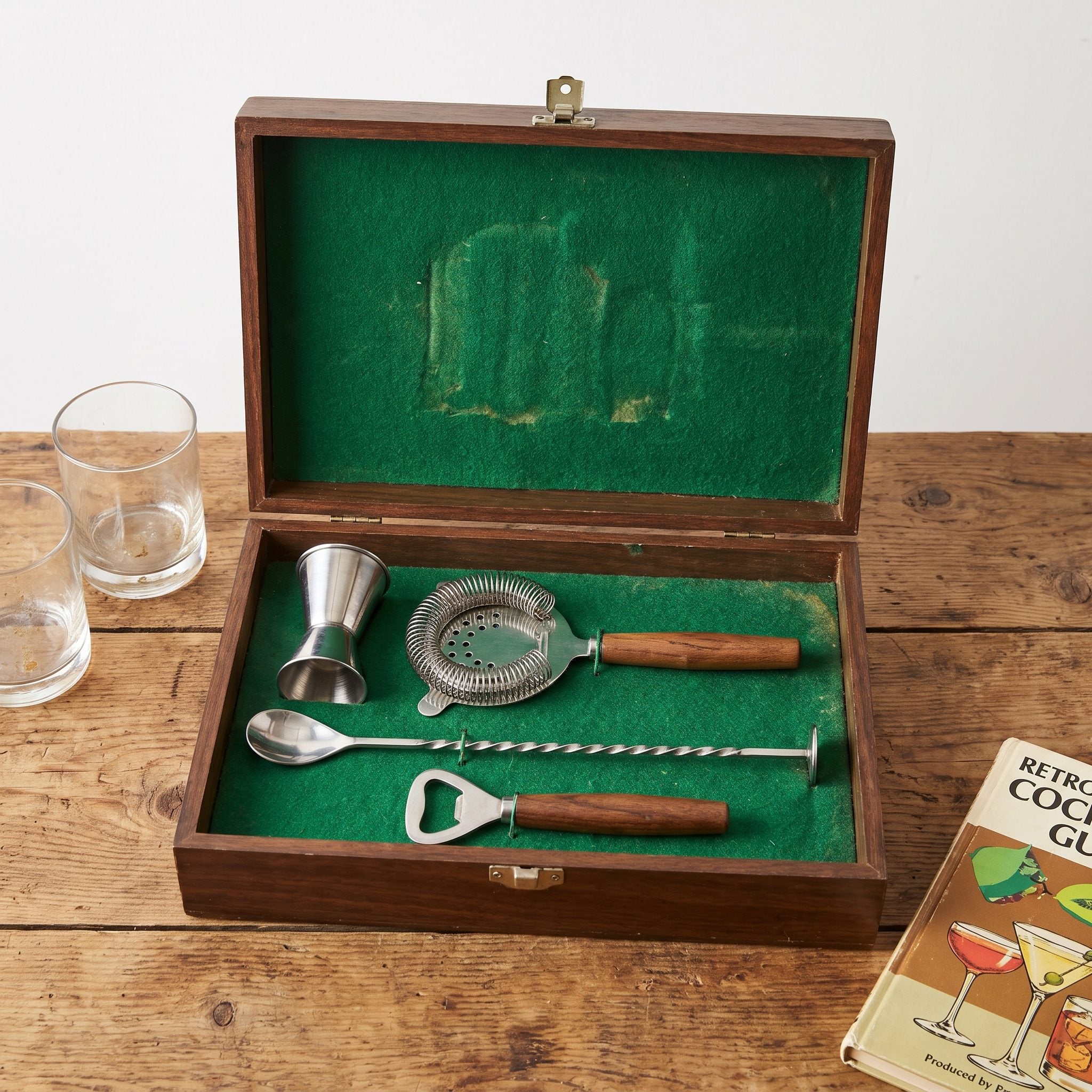
The boxed set was the shortcut. Jigger, strainer, spoon, opener — all arranged in a presentation box for roughly $10 to $20.
Buying pieces individually could cost more, but the real appeal was visual. A matched set looked intentional even if the most sophisticated drink anybody made was a screwdriver.
These same tools turn up in every big home bar today, just with heavier handles and more ambitious price tags.
4. The Ice Bucket and Matching Tongs: About $8 to $15 in 1974
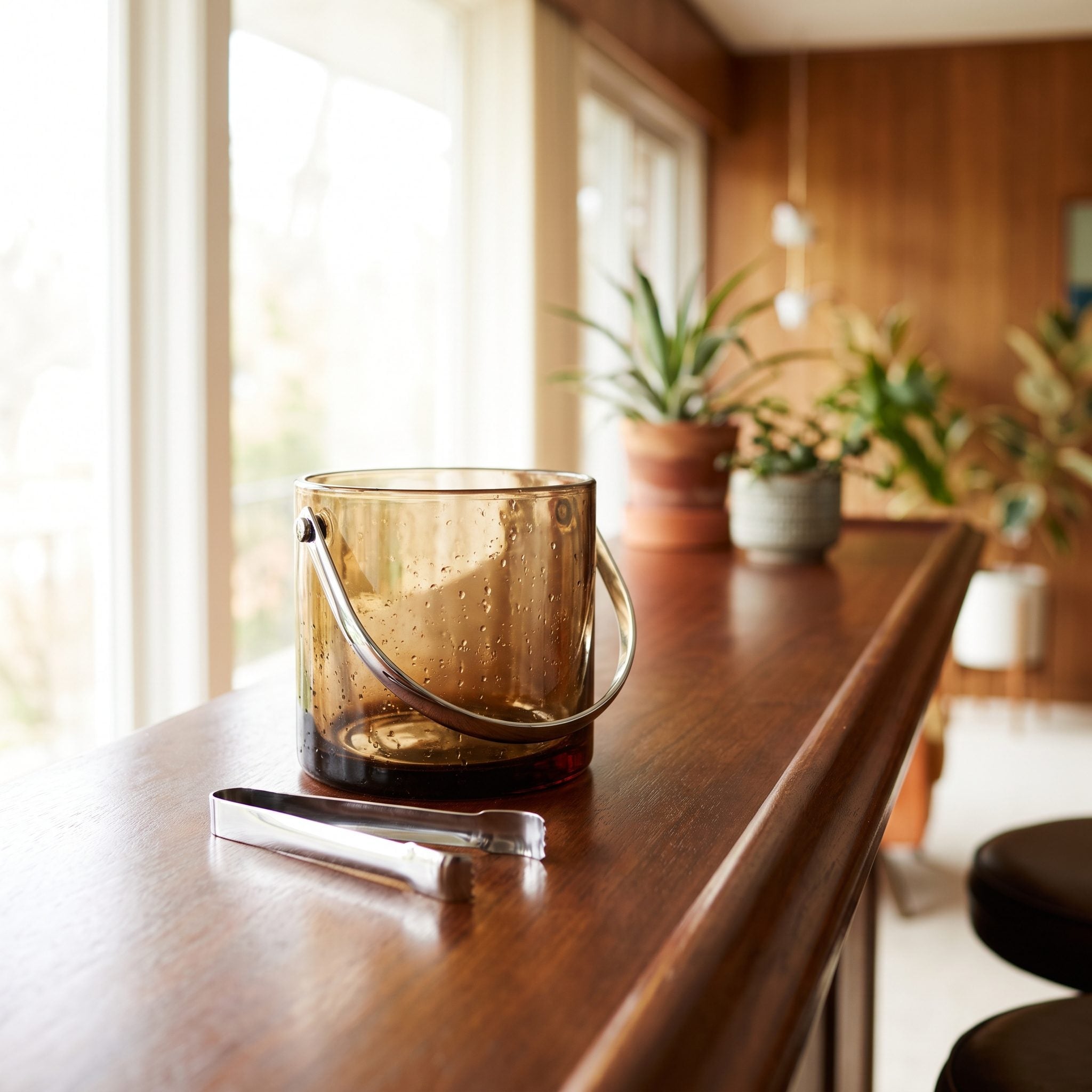
An ice bucket might run somewhere from $8 to $15, with smoked glass, chrome trim, insulated construction, and matching tongs nudging the price upward.
After the federal minimum wage rose to $2 an hour in 1974, even the nicer examples represented several hours of minimum-wage work. Not outrageous, but not nothing.
Double-walled construction was the useful upgrade. Ice lasted longer, fewer emergency freezer trips interrupted the evening, and the bucket could sit directly on display.
Harvest gold and burnt-orange aluminum versions handled the practical end. Smoked glass handled the posing.
3. The Ice Crusher That Made the Bar Look Serious: $10 to $20
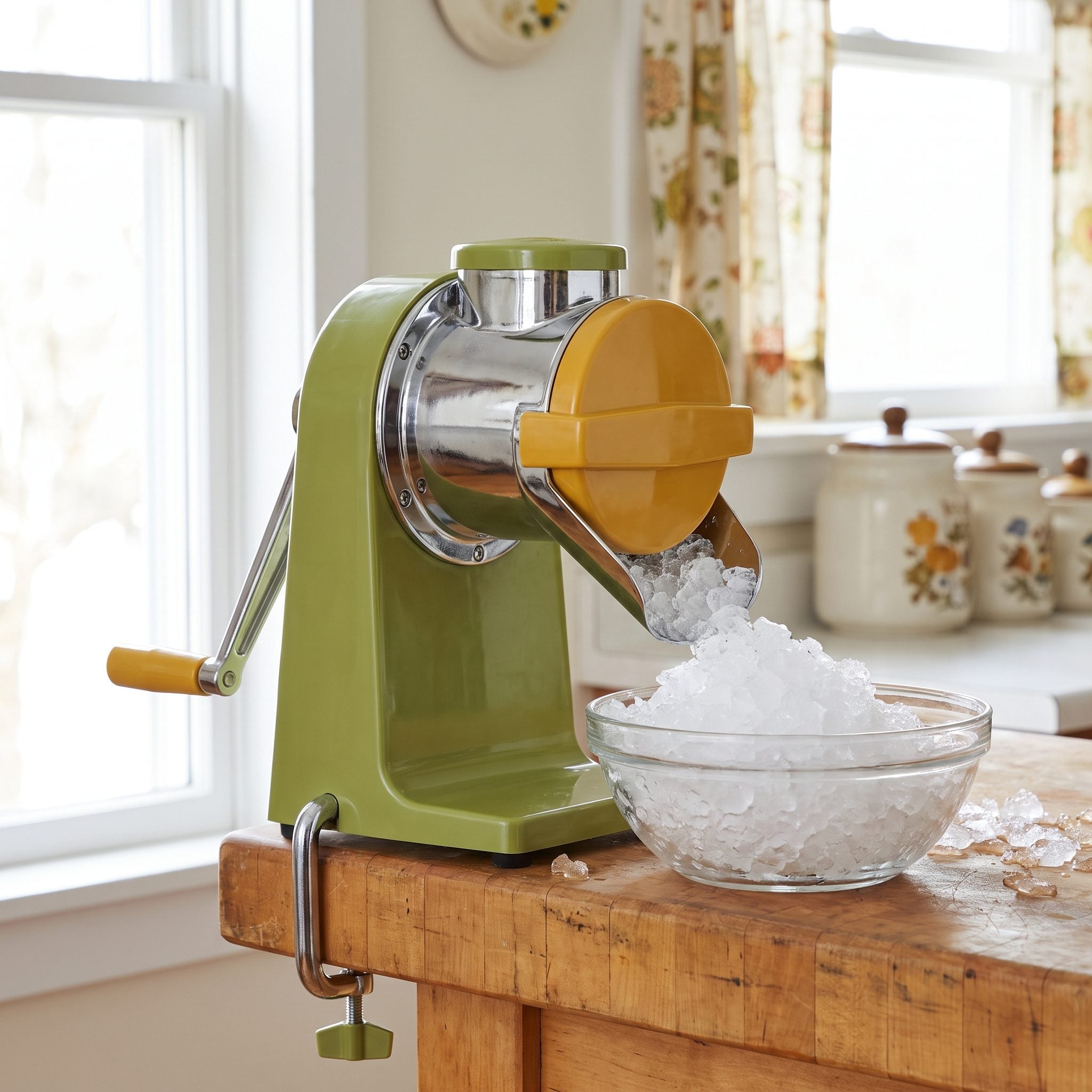
The ice crusher pushed a home bar from casual to committed. Hand-crank and electric versions could land around $10 to $20.
Crushed ice opened the door to juleps, tropical drinks, and anything improved by a mound of frost.
But the entertainment value mattered too. Feed cubes into the hopper, crank furiously, produce snow in front of guests.
Nobody strictly needed one. That did not stop anyone from wanting one.
2. Swizzle Sticks and Cocktail Picks: A Handful of Change, Sometimes Nothing at All
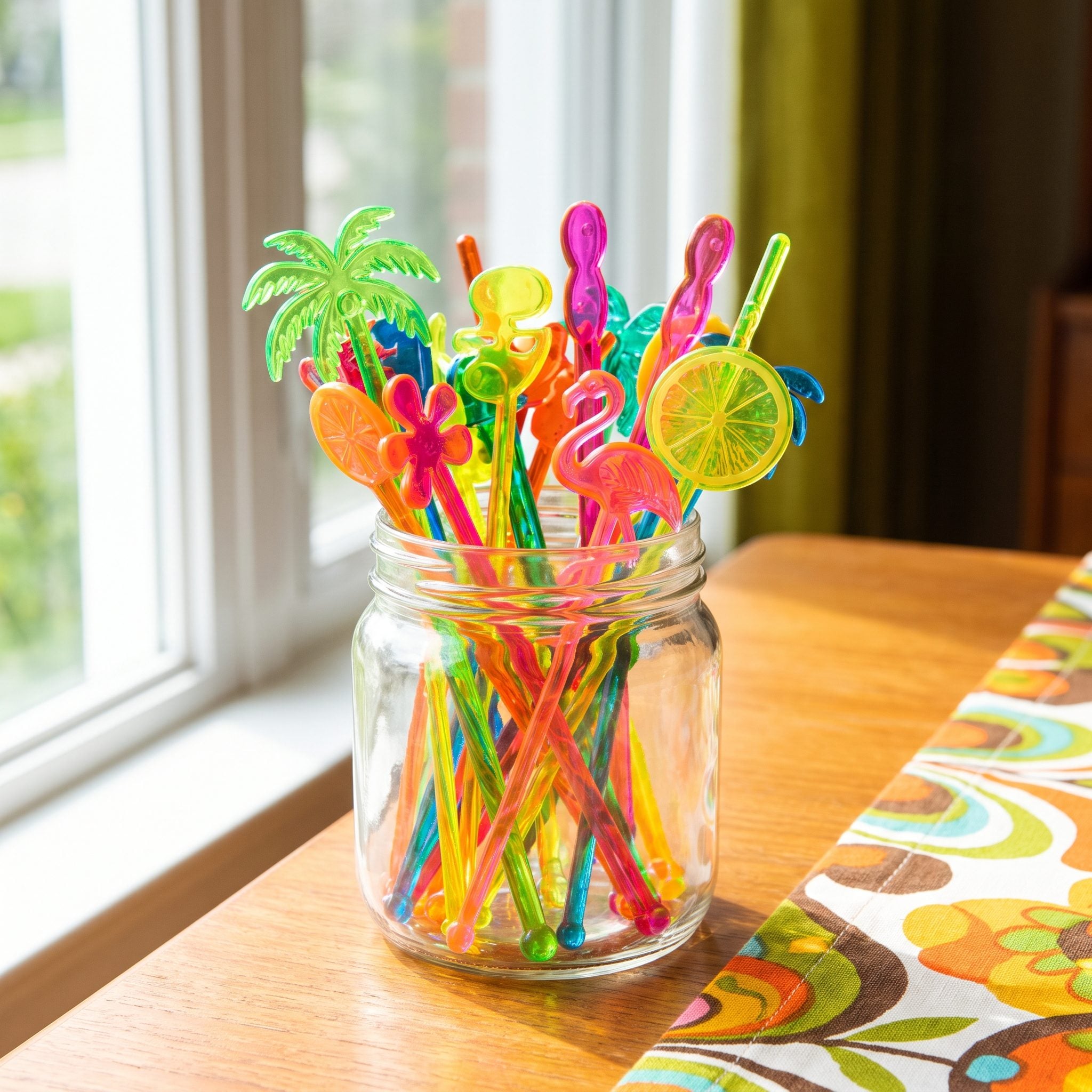
The tiny stuff barely disturbed the budget. Plastic swizzle sticks, cocktail picks, frilled toothpicks — often pennies, sometimes promotional freebies.
Bars and liquor brands printed their names on them because somebody had realized the most efficient billboard in the room might be the one sitting directly inside the drink.
People saved the good ones from restaurants without a second thought. Matchbooks did the same job in pockets. Swizzle sticks simply got wetter.
1. When the 1970s Home Bar Finally Earned Its Keep
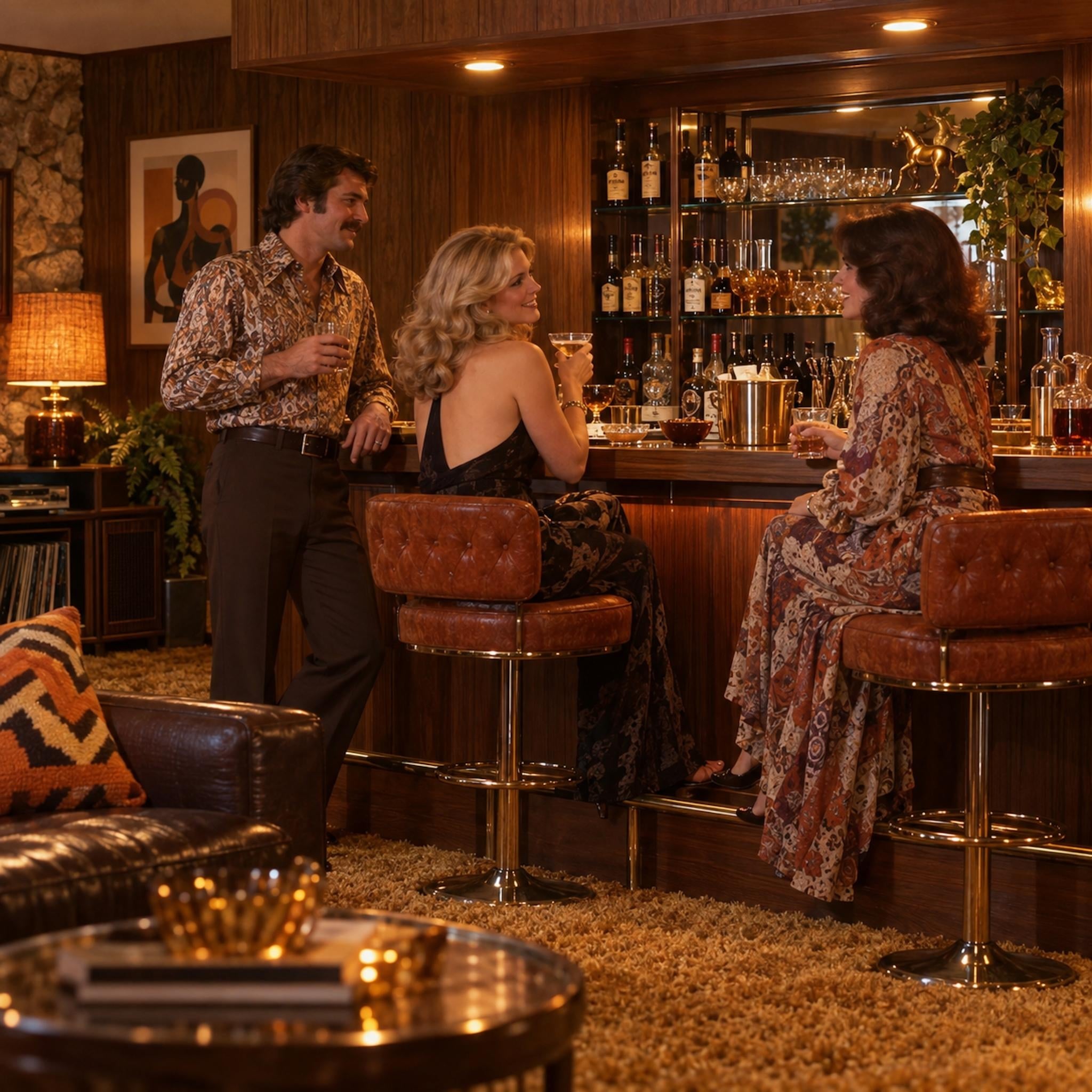
By the time the paneling, mirrored shelves, leather stools, brass trim, glassware, bottles, and shag carpet were all in place, the home bar stopped being a collection of purchases and became the room everyone drifted toward after dark. This is the point where all those individual price tags finally make sense together: not as décor, but as a little private nightclub built into the family room.
The lighting changes everything. Walnut that can look heavy in daylight turns glossy and theatrical under warm recessed lamps. Amber glass starts to glow. Chrome stool bases catch the light. The mirrored back bar doubles the bottles, stemware, and movement in the room, making a modest suburban setup feel far more glamorous than its footprint suggests. Even the shag carpet suddenly looks less like a flooring decision and more like part of the atmosphere.
And that was really the return on the investment. A 1970s home bar wasn’t only about what the stools, shelving, liquor cabinet, or glassware cost separately. The appeal came from what happened once people actually gathered there — somebody leaning against the counter, somebody staying for one more drink, records playing from the family-room stereo, and the whole house feeling slightly more grown-up after sunset.