🔥 Would you like to save this?
The wallpaper was fuzzy. The toilet was avocado green. There was carpet under your feet, and not a single person in the household found any of this alarming. The 1970s powder room operated under its own set of rules, a half-bath fever dream where shag met seashell soap and foil wallpaper reflected your confused expression back at you from four different angles.
Some of these choices were bold. Some were unhinged. All of them felt perfectly reasonable at the time. Here are 36 that still live rent-free in our memories.
In order to come up with the very specific design ideas, we create most designs with the assistance of state-of-the-art AI interior design software. Also, assume links that take you off the site are affiliate links such as links to Amazon. this means we may earn a commission if you buy something.
41. The Avocado Green Toilet That Nobody Questioned, Not Even Once
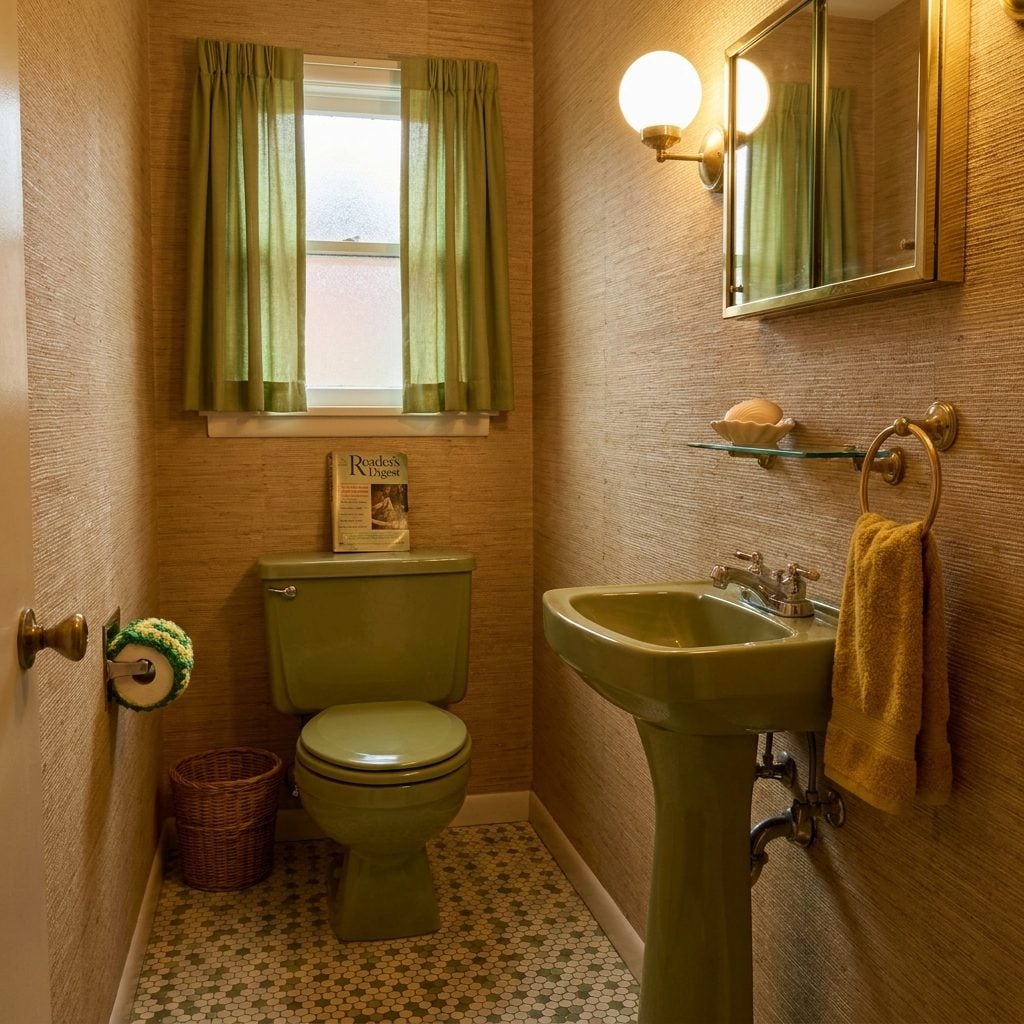
It wasn’t just green. It was that green. A color somewhere between an unripe avocado and army surplus, and it came standard in roughly half the homes built between 1968 and 1978. You didn’t pick it. The builder picked it, or your parents picked it, and everyone acted like porcelain was supposed to look like produce.
The wildest part? It came as a set. Toilet, sink, and sometimes even the tub, all matching in that murky olive tone. American Standard and Kohler sold these in massive quantities. And the thing is, nobody flinched. Company would come over, use the powder room, and never once say, “Why is your toilet the color of a vegetable?”
40. Fuzzy Toilet Lid Covers and Matching Contour Rugs, an Entire Textile Ecosystem
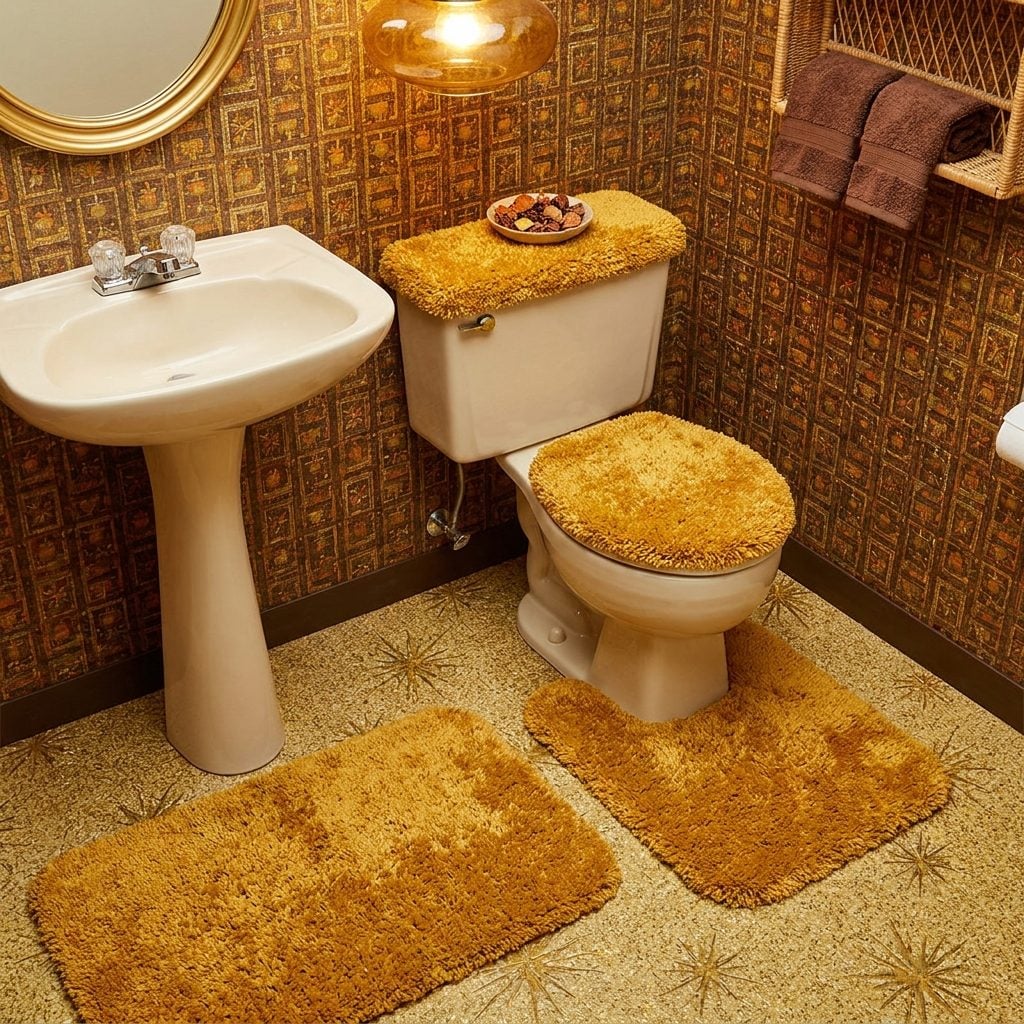
Three pieces minimum. The lid cover, the contour rug that hugged the toilet base like a custom-fitted sweater, and the rectangular mat by the sink. Some households went further with a matching tank topper, which was basically a shag carpet poncho for your toilet’s back.
These came in colors you could only find in a 1970s Sears catalog: harvest gold, burnt orange, avocado, and something called “champagne” that was really just off-white trying hard. The lid cover had elastic underneath and never stayed put, sliding off at the worst possible moments. I say this as someone who watched it happen at every family gathering.
The real issue nobody discussed? Moisture. Bathrooms are wet places. Shag carpet around a toilet is, objectively, a terrible idea. But there we were, buying the full set and acting like porcelain was just too cold to sit on without a fuzzy intermediary.
39. Wallpaper So Bold It Had Its Own Gravitational Field
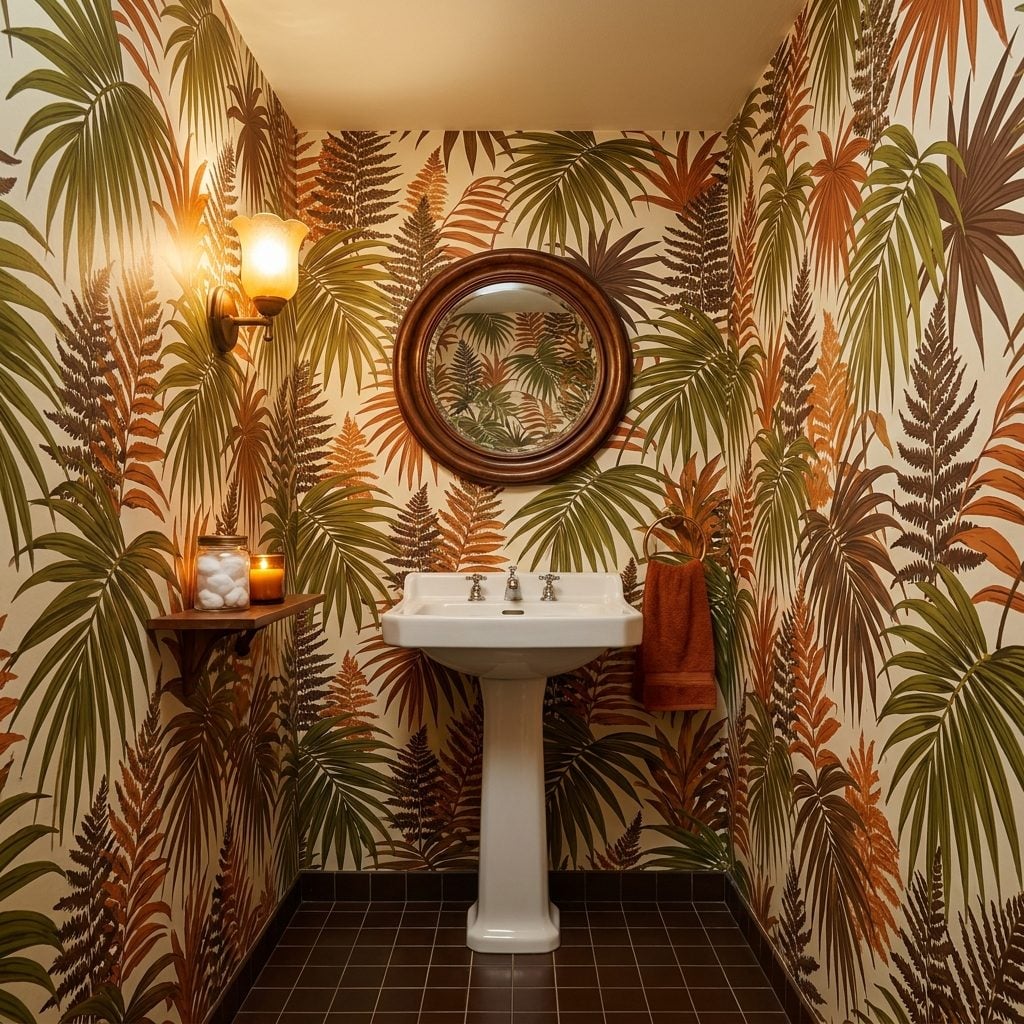
Every surface. Not an accent wall. Not a tasteful half-wall with chair rail. Every single vertical surface, including the narrow strip behind the toilet that required cutting wallpaper into an impossible shape, got covered.
And the patterns weren’t subtle. Giant palm fronds. Enormous poppies. Geometric abstractions that looked like a quilt designed during an earthquake. The powder room was apparently where homeowners felt permission to go completely unhinged with pattern, maybe because guests only spent ninety seconds in there.
The paste was industrial. Removing 1970s wallpaper decades later required a steamer, a scoring tool, and a vocabulary your grandmother wouldn’t approve of. Some of it’s still there right now, under three coats of paint, in houses across the country.
38. The Shell-Shaped Soap Dish Holding a Tiny Decorative Soap Nobody Was Allowed to Use
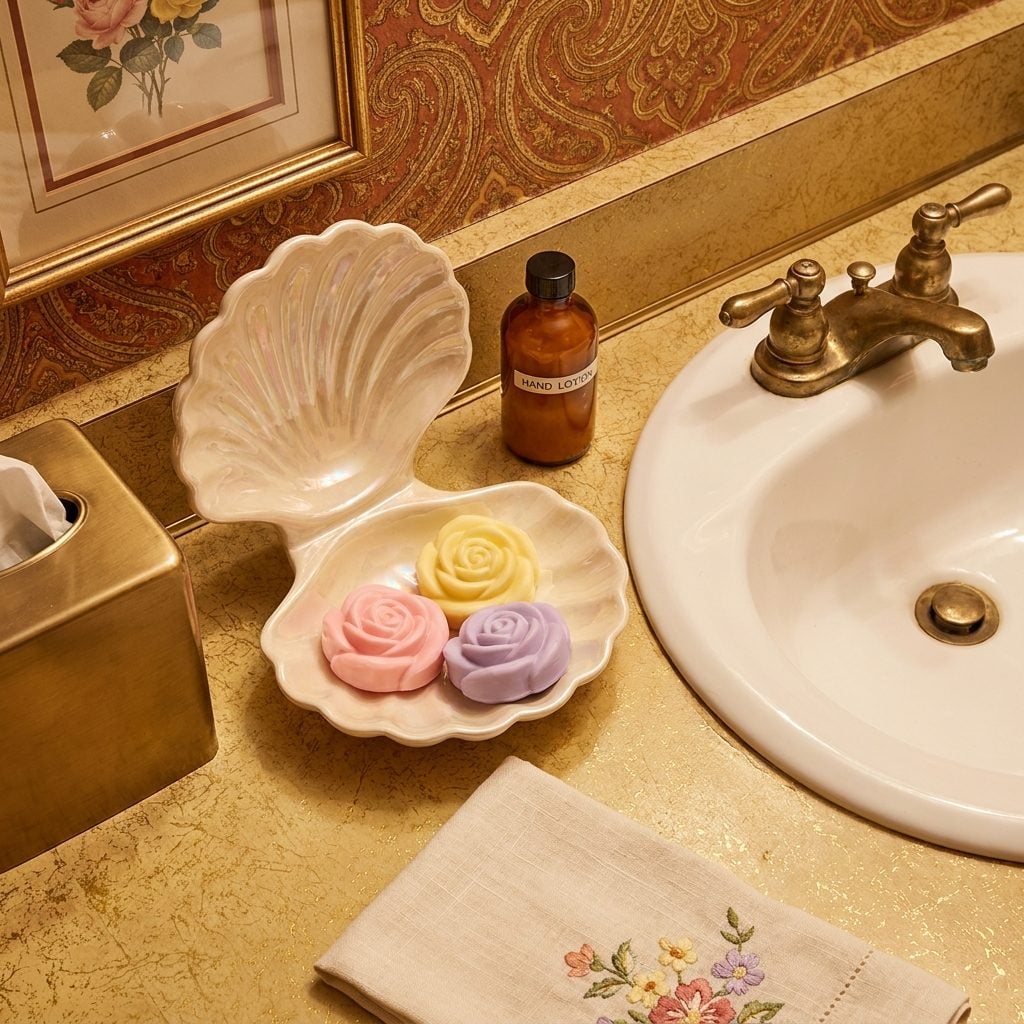
Rose-shaped. Sometimes seashell-shaped. Always pastel, always dry, always clearly there for visual purposes only. You could tell because after years on that dish, they’d developed a thin film of dust and a faint crack along the petal line, yet they remained perfectly intact because no human hand had ever touched them with the intent to actually wash.
The real soap? Hidden under the sink or pumped from an entirely separate dispenser. These decorative soaps were performance art. They said, “We are a household that prepares for guests,” while also saying, “Do not touch our nice things.”
37. Gold-Veined Mirror Tiles Glued Directly to the Wall Like That Was Fine
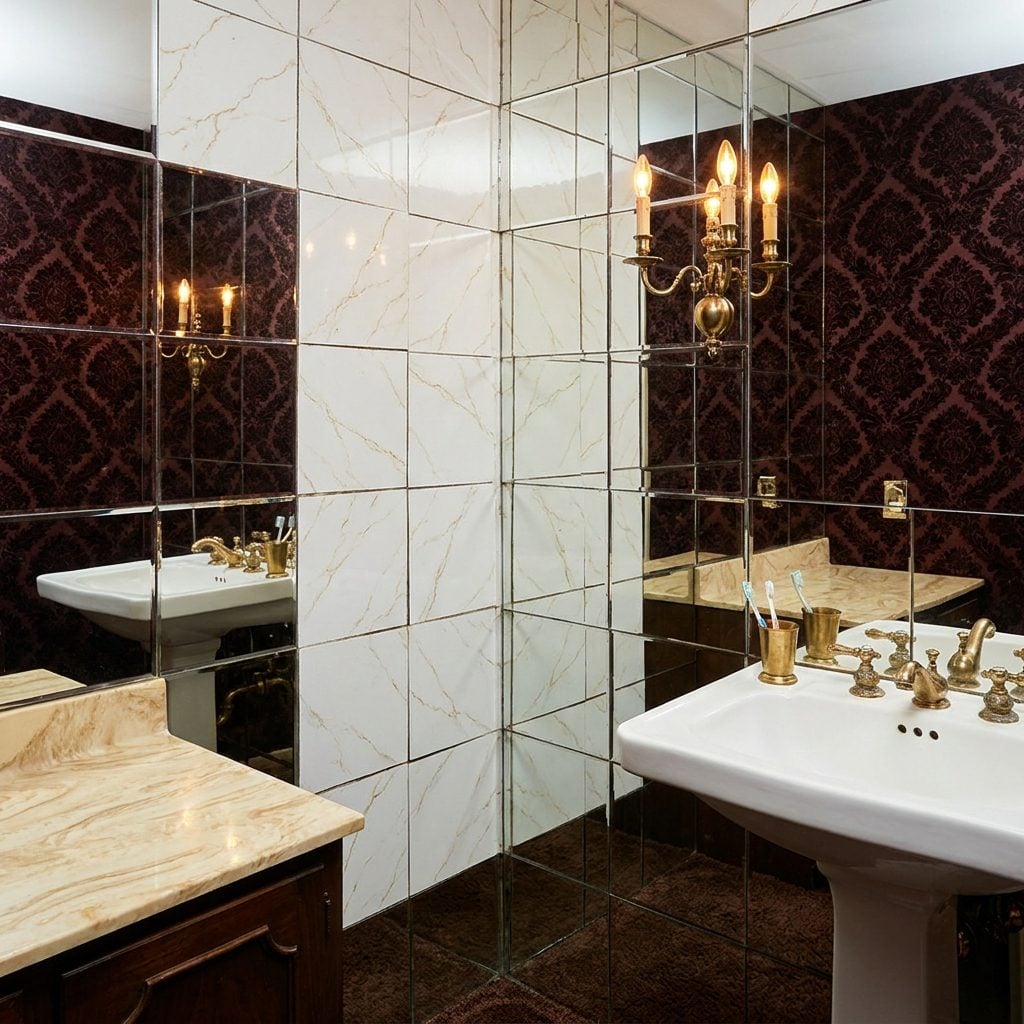
Not a proper mirror. A grid of adhesive-backed mirror squares, each about twelve inches, stuck to the wall with all the precision of a kid applying stickers. The edges never quite lined up. Your reflection came back to you in segments, like a low-budget funhouse.
The gold-veined version was considered the upscale choice. Smoky bronze was another option. Both had the effect of making the powder room feel vaguely like the lobby of a Holiday Inn, which in the 1970s was apparently the aesthetic goal for a small sitting room adjacent to the hallway.
Getting them off the wall later was its own nightmare. The adhesive bonded to drywall like it had a personal vendetta, taking chunks of wall with it. But for a solid decade, we all looked at our fractured golden reflections and thought, “Yes, this is elegant.”
36. The Seashell-Shaped Sink Basin That Made Washing Your Hands Feel Theatrical
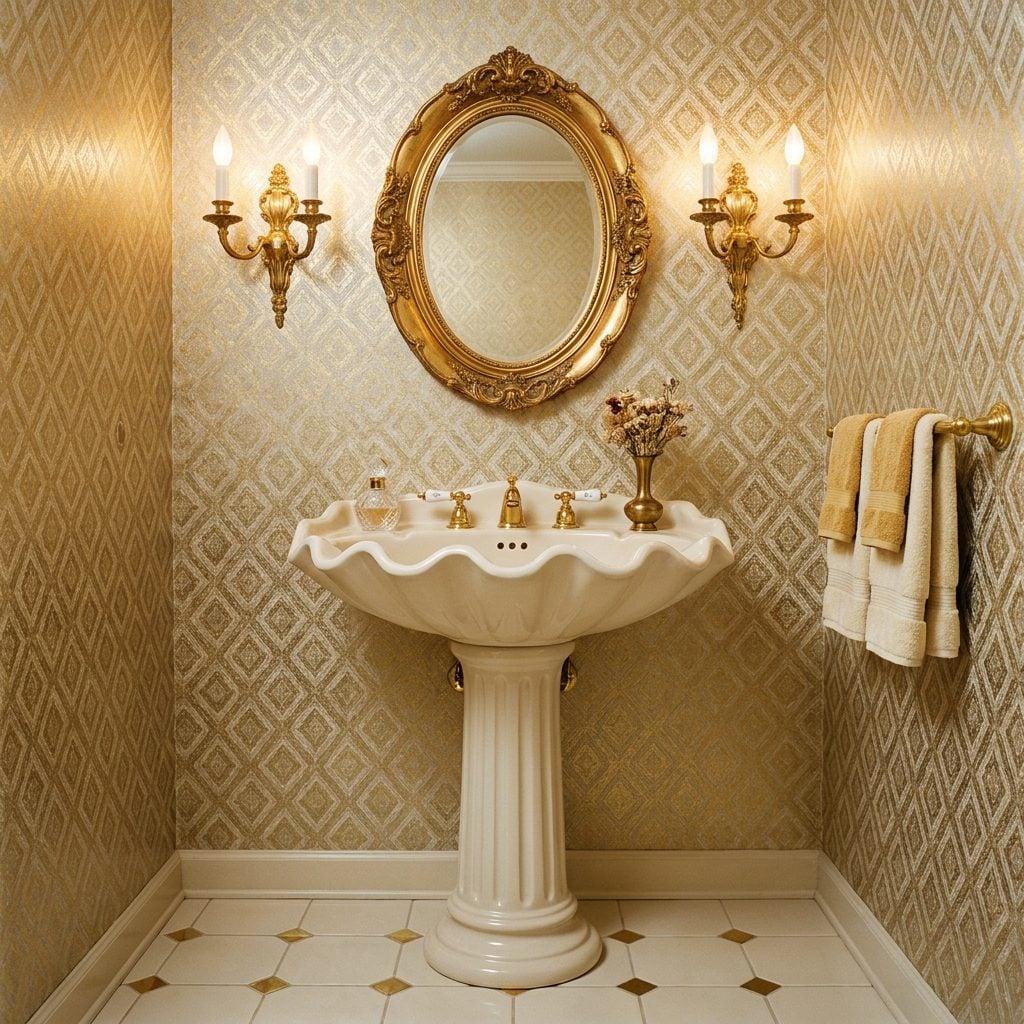
Scalloped edges fanning out from the drain like porcelain origami. Water pooled in the ridges and never quite drained properly, leaving little mineral deposits in every groove. Cleaning it required a toothbrush and patience.
But the drama. You’d walk into someone’s powder room and there it was, a shell-shaped pedestal sink that belonged in a palazzo, sitting in a room barely big enough to turn around in. Paired with a gold baroque mirror and matching sconces, it turned a half-bath off the hallway into something that felt like a scene from a period film. Nobody needed this. Everybody wanted it.
35. The Tiny Framed “Poem About Friendship” Hanging at Exact Eye Level While You Sat
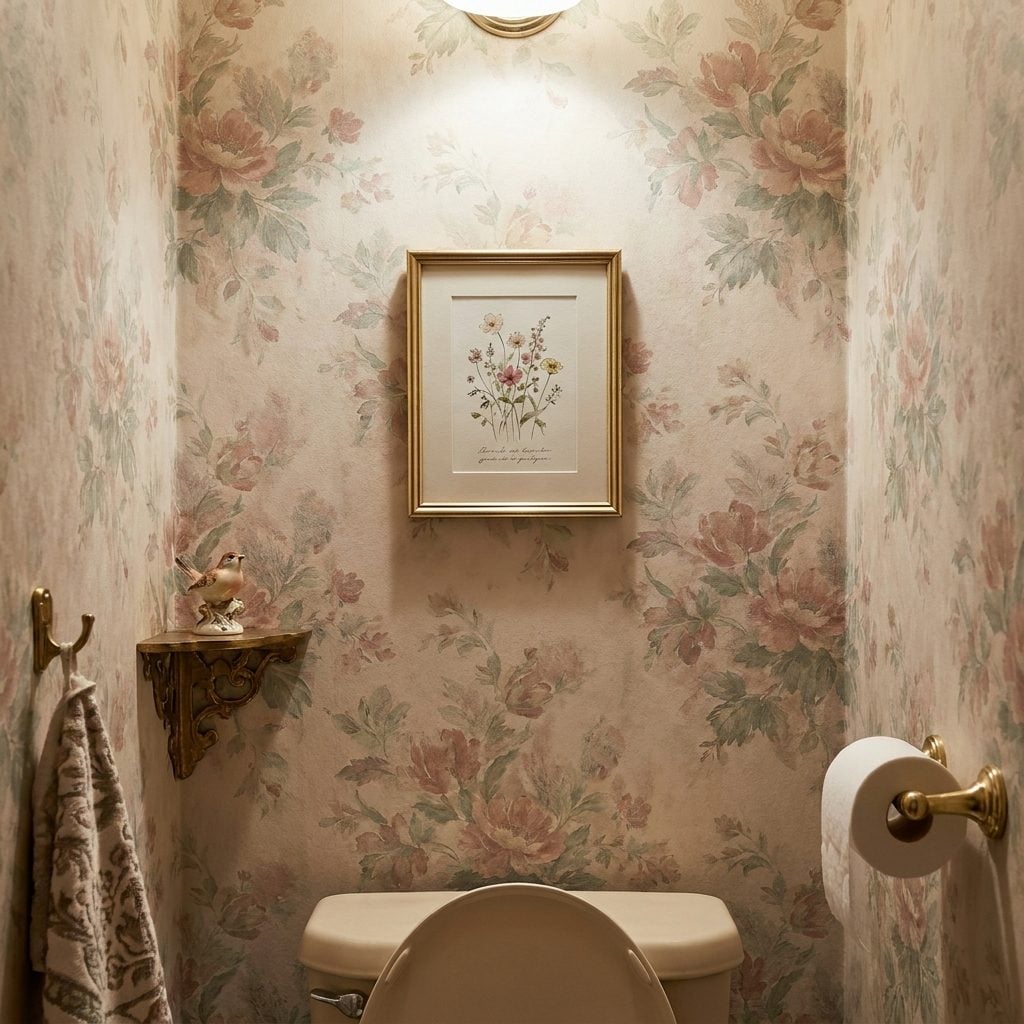
Positioned with surgical precision so you had absolutely no choice but to read it. Every single time.
“A friend is someone who knows the song in your heart and can sing it back to you when you have forgotten the words.” You’ve read that sentence four hundred times while sitting in your aunt’s powder room. The frame was always small, always gold-toned, always hung on a nail that left the frame tilting about three degrees to the right. Sometimes it was a poem. Sometimes a Hallmark-style illustration of two children on a bench. Occasionally a butterfly with a Bible verse.
This was the 1970s version of bathroom reading material, and it beat the alternative, which was staring at floral wallpaper and counting the pattern repeats. Which, honestly, we also did.
34. The Seashell-Shaped Soap Dish That Nobody Was Allowed to Actually Use
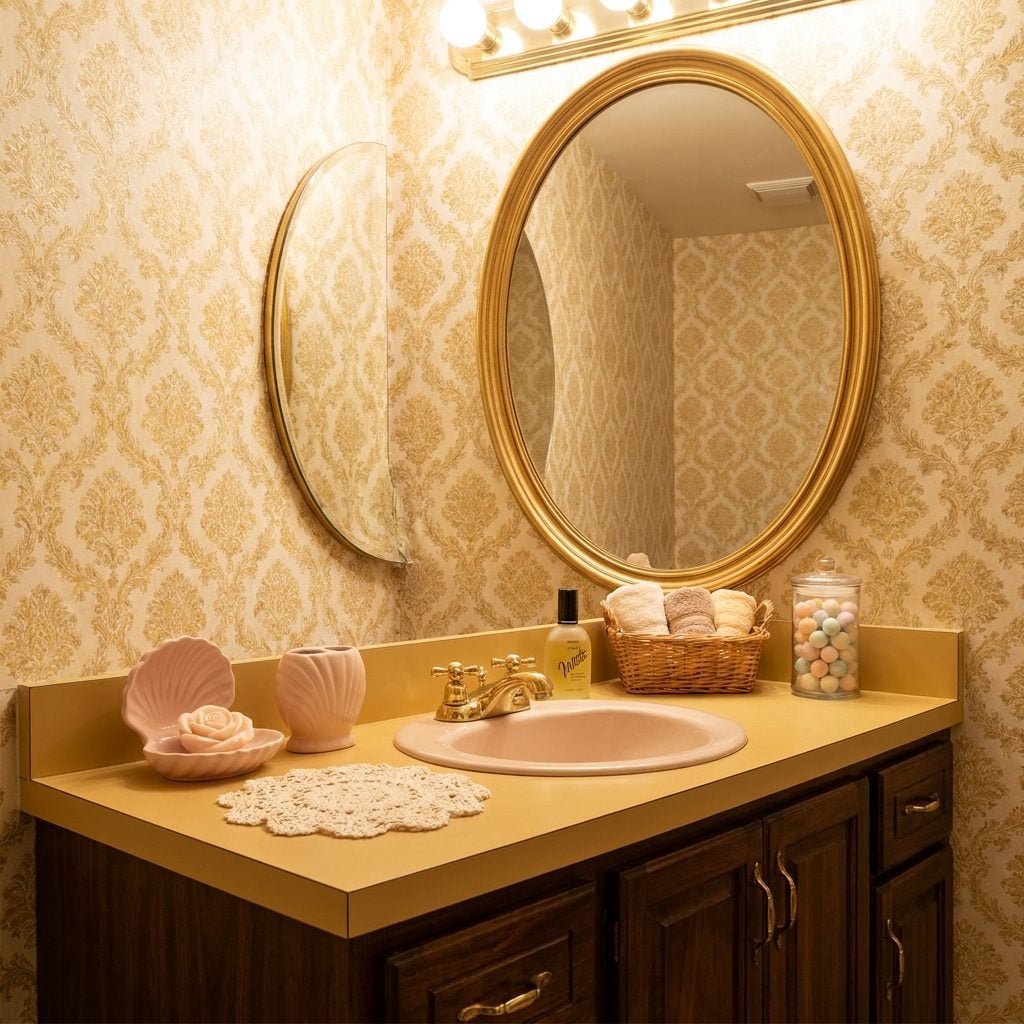
There it sat, this ceramic seashell soap dish holding a rose-shaped guest soap that had been there since the Nixon administration. You were not supposed to use it. Everyone knew this without being told. The actual soap, the soap for your hands, was a sliver of Dial wedged behind the faucet.
The decorative soap existed purely as sculpture. It accumulated a thin film of dust that somehow made it look more precious. If a guest ever dared lather up with it, your mother would notice within minutes. The indentation of a thumbprint on that pristine rose was basically a crime scene.
33. A Basket of Tiny Soaps Shaped Like Fruit That Were Apparently Just Decoration Forever
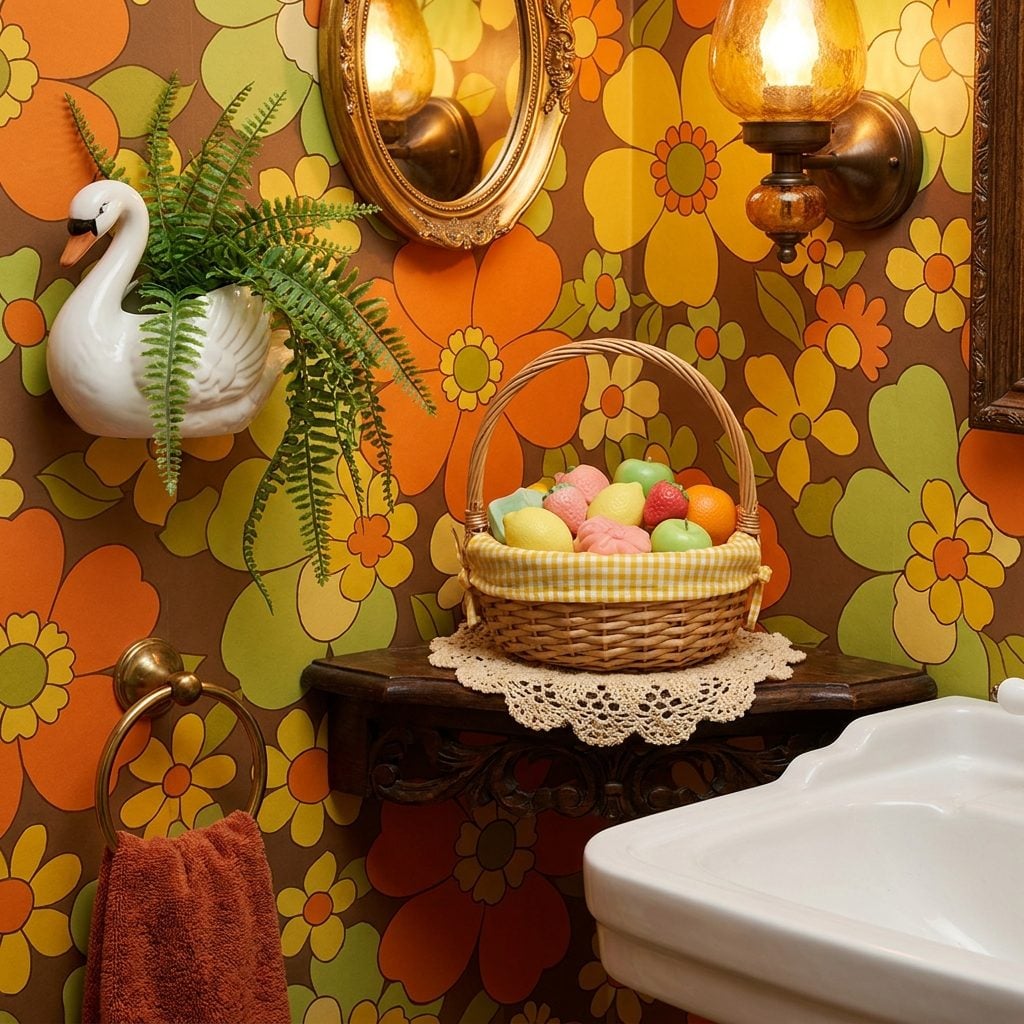
Somewhere between soap and candy, these little wax-coated fruits lived in a basket on the back of the toilet or the vanity shelf, and their only purpose was confusing children. Were you supposed to wash your hands with them? Eat them? The answer was neither. They were decorative soap, which is a category of object that has thankfully gone extinct.
They smelled like chemicals pretending to be strawberries. After a few years they’d develop a white chalky film and lose whatever faint scent they once had, but nobody threw them away. That would be wasteful.
32. Wallpaper So Busy It Could Trigger a Migraine Before You Found the Light Switch
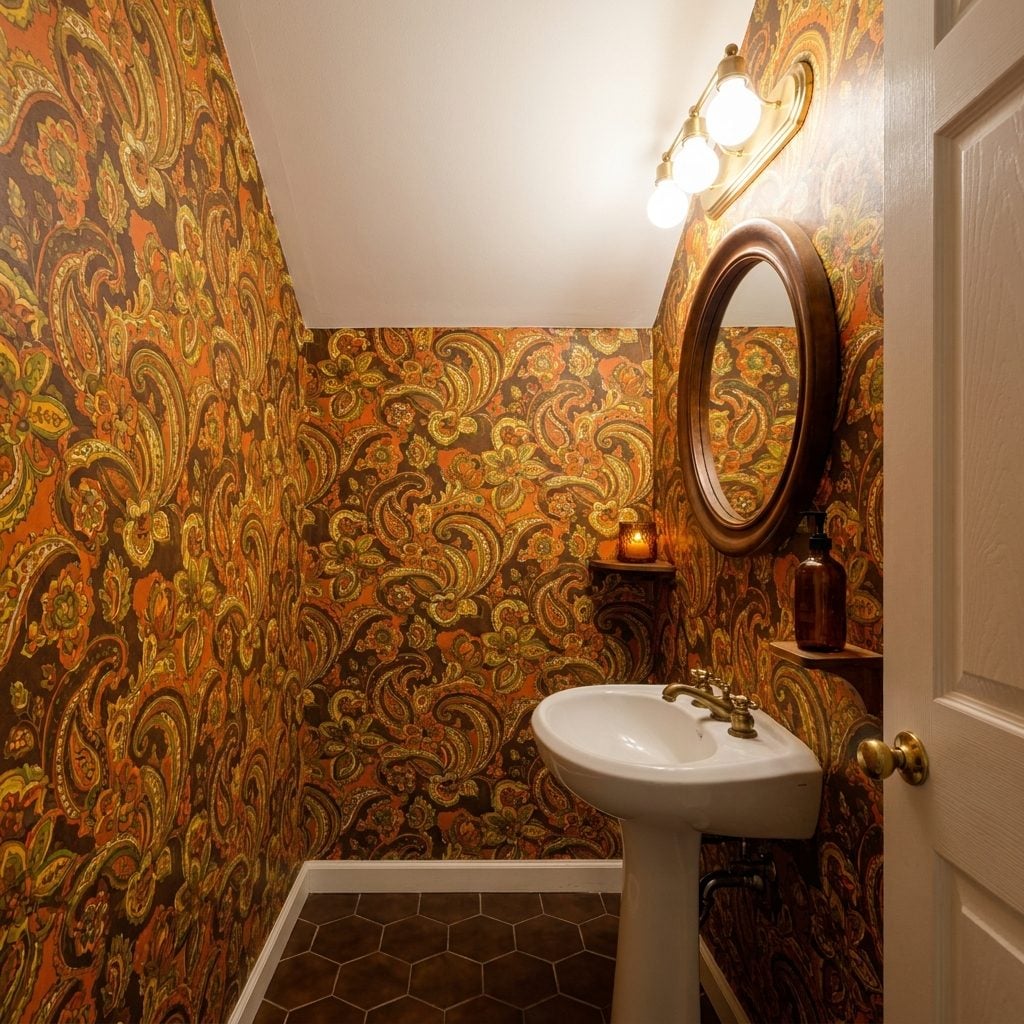
The powder room was always the room where wallpaper went to scream. Something about a half-bath being small gave homeowners permission to go completely feral with pattern selection. Oversized paisleys. Tropical birds. Geometric explosions in burnt orange and avocado. Often all three moods at once.
The rest of the house might have restraint. Beige carpet, tasteful curtains. But that little room off the hallway? Pure visual chaos. The logic seemed to be: it’s small, guests will only be in there for two minutes, let’s make it an experience. And it was.
I’m convinced those patterns are why half of us close our eyes in small bathrooms to this day.
31. The Brass Tissue Box Cover That Made Kleenex Feel Like a Formal Affair
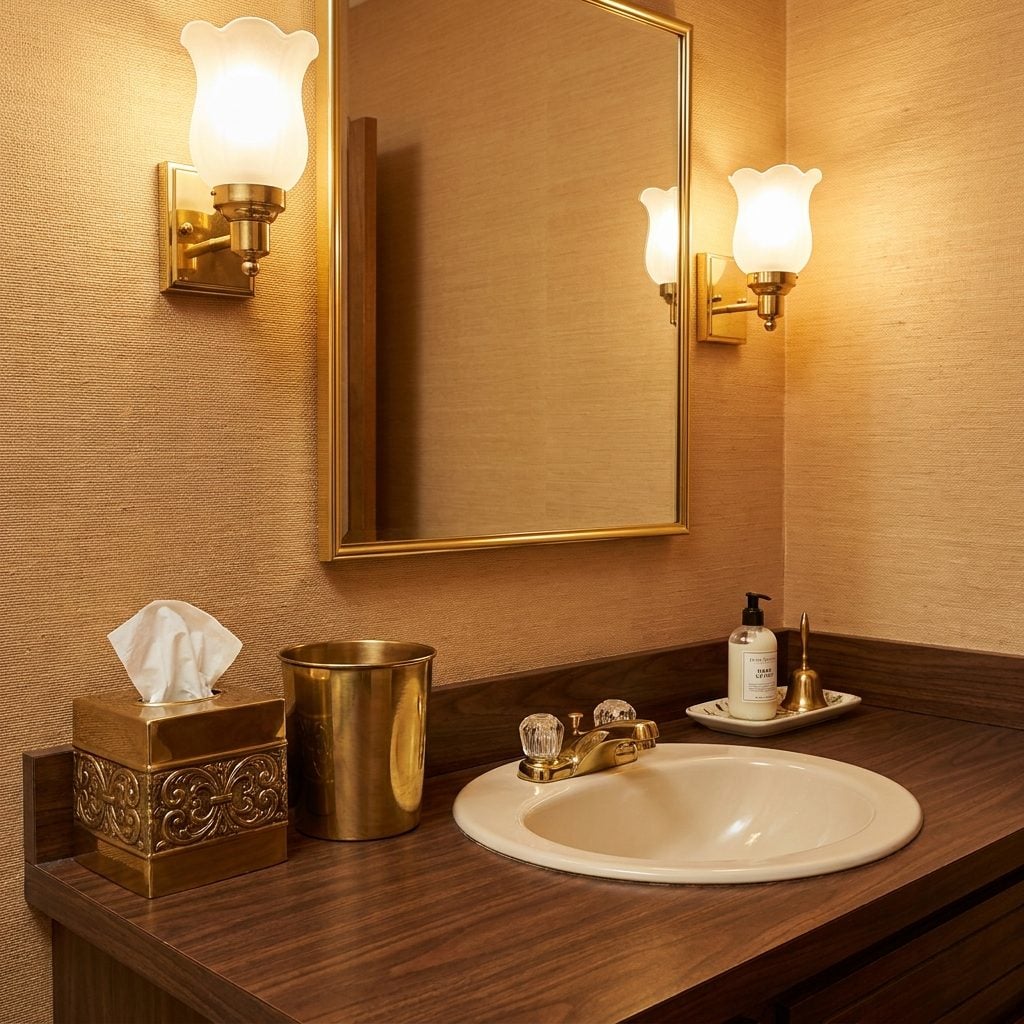
Pulling a tissue out of a regular cardboard box was apparently too casual for company. So into the brass tissue box cover it went, and suddenly blowing your nose felt like a ceremony. The metal was always cold to the touch and the slot on top would occasionally grab the tissue and tear it in half.
The matching brass wastebasket usually sat right beside it. Together they formed a pair that whispered: “yes, this is a bathroom, but it is a dignified bathroom.”
30. That Carpet on the Bathroom Floor (Yes, Wall-to-Wall, Yes, Right Up to the Toilet)
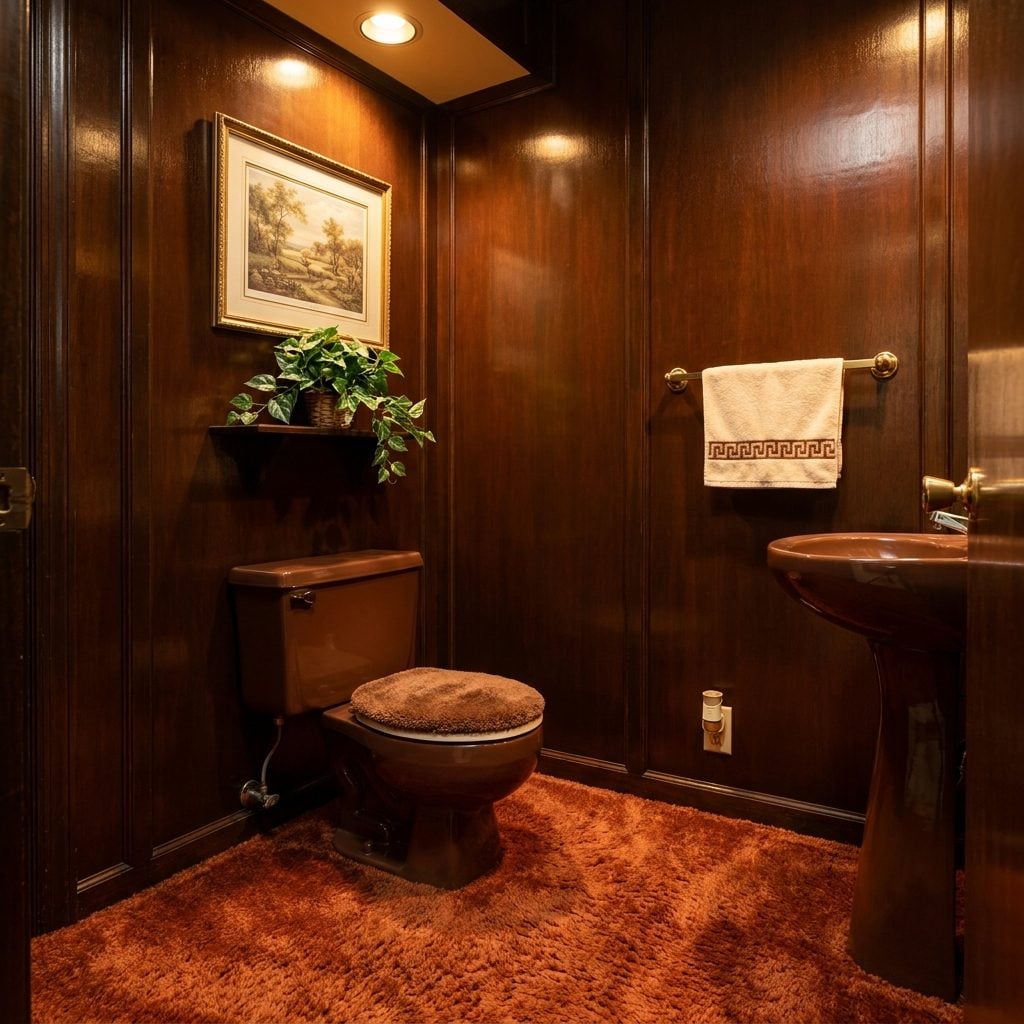
We carpeted bathrooms. We just did it. Soft, absorbent, wall-to-wall carpet in a room defined entirely by water and questionable aim. It went right up to the base of the toilet. It went under the pedestal sink where drips collected. Nobody blinked.
The color was always something forgiving: rust, dark brown, forest green. Colors that could hide sins. And they needed to, because that carpet absorbed everything and released nothing. You’d step out of a bathroom with warm feet and a vague sense that something was fundamentally wrong with the arrangement, but you couldn’t articulate it because every house you’d ever visited had the same setup.
We all collectively agreed to stop doing this around 1987, and nobody has apologized.
29. The Macramé Towel Holder That Made You Feel Like You Were Drying Your Hands in a Craft Fair
🔥 Would you like to save this?
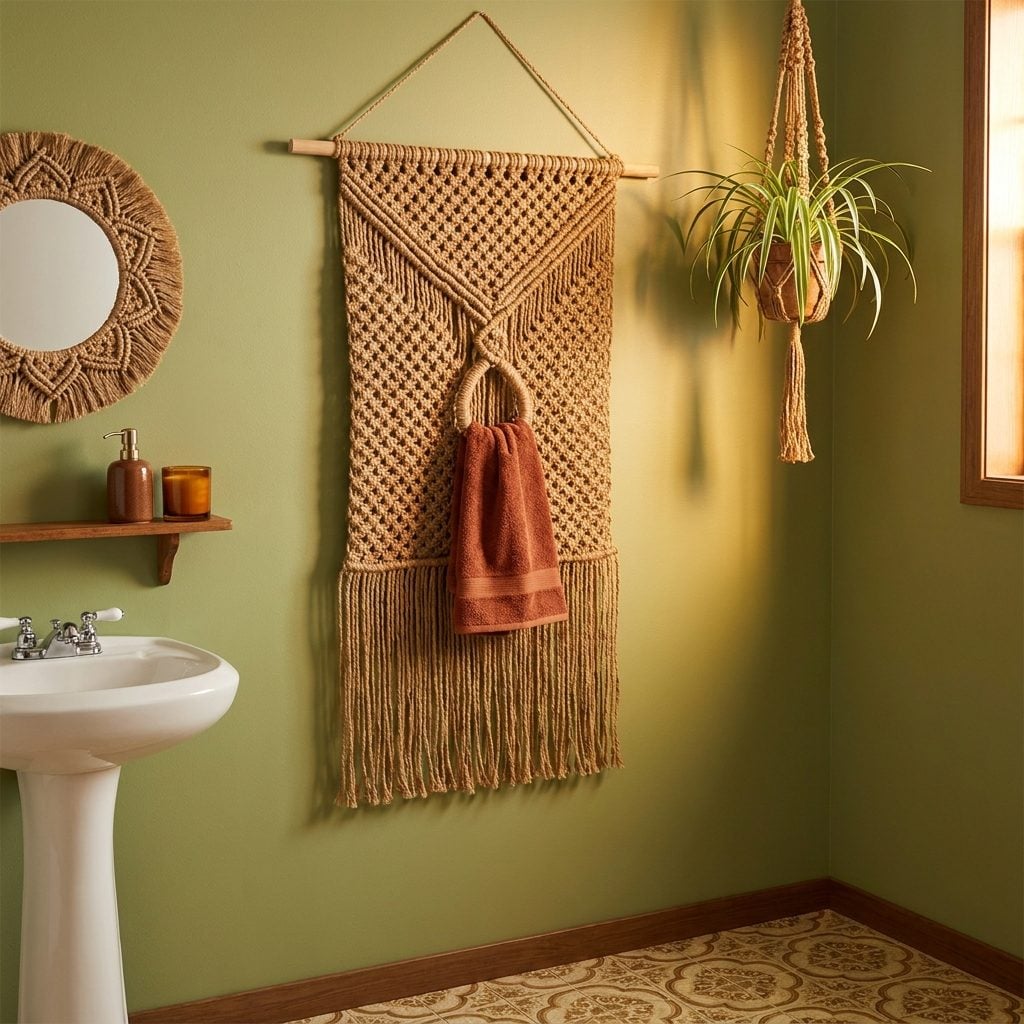
Macramé had infiltrated every room by 1974, and the powder room was no exception. The towel holder was a knotted jute creation hanging from a wooden dowel, with loops and fringe and sometimes wooden beads threaded through it. The hand towel was supposed to drape artfully through one of the openings.
It never stayed put. The towel would slip out, pool on the floor, and the macramé would just hang there like an art installation that had given up on its practical ambitions. But it matched the macramé plant holder in the corner, and that mattered more than function.
28. The Vanity Light Bar with Exposed Globe Bulbs That Made Everyone Look Like a Game Show Host
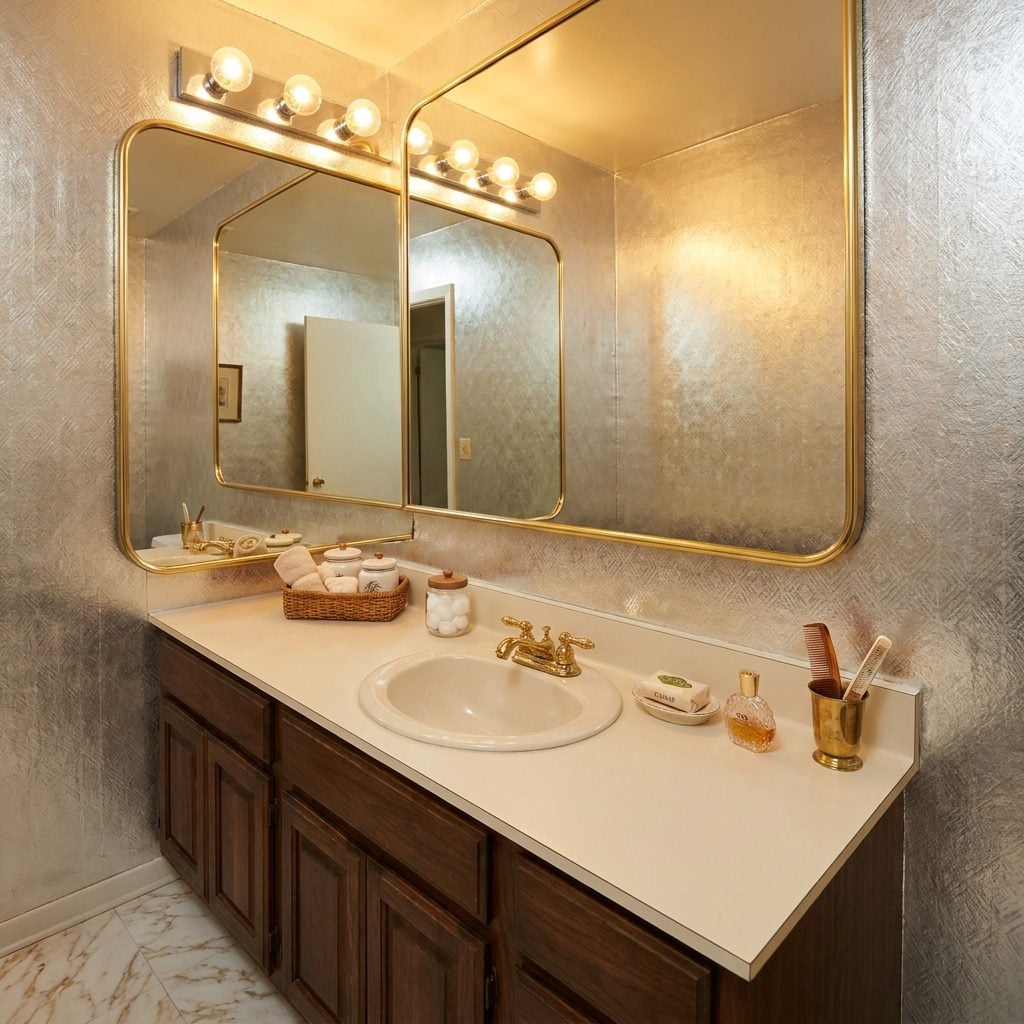
Six bare bulbs in a chrome strip, blasting warm light directly at your face with zero diffusion, zero mercy. The Hollywood vanity light bar was standard issue in every 1970s powder room, and it made washing your hands feel like preparing for a close-up on The Price Is Right.
The lighting was aggressively honest. Every pore, every blemish, every questionable makeup choice, all illuminated with the subtlety of a police interrogation. And the bulbs ran hot. Touch one by accident and you’d remember it for a week.
27. The Mysterious Potpourri Bowl on the Back of the Toilet
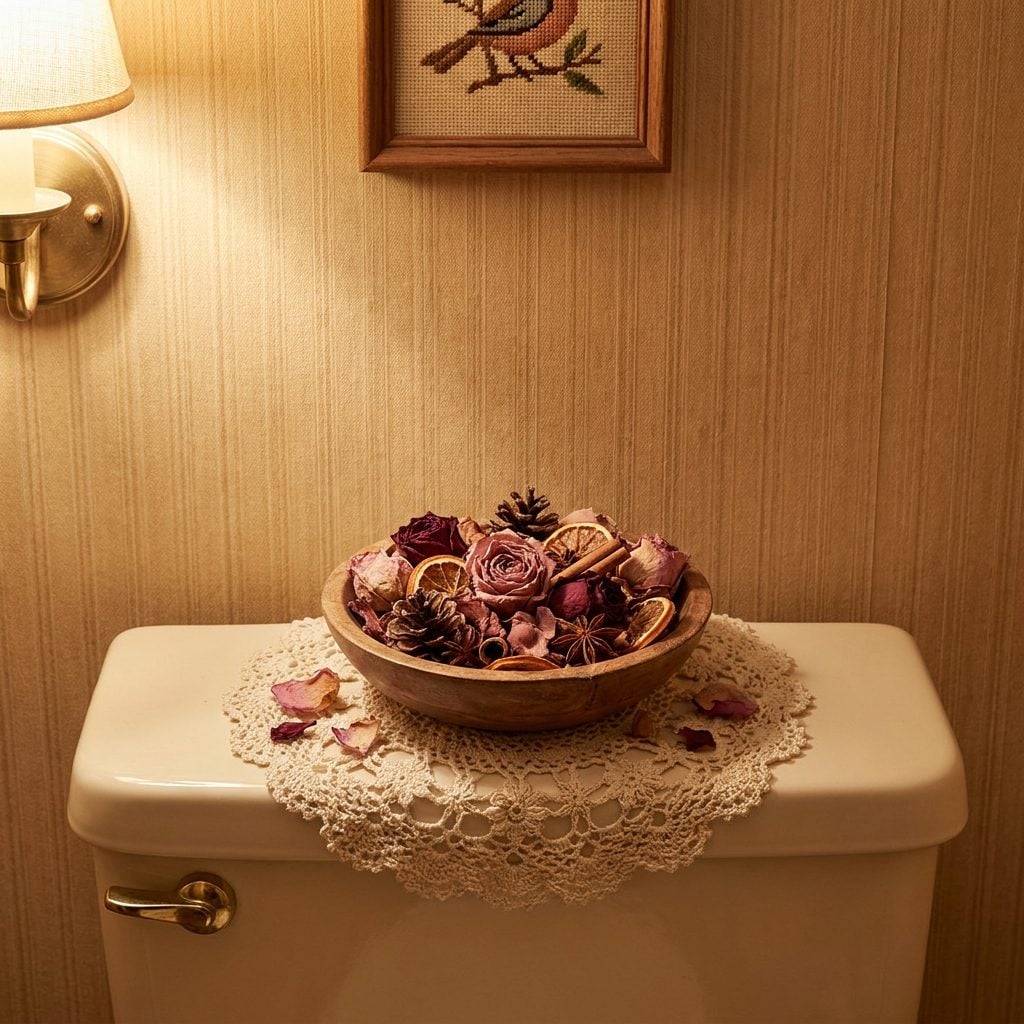
The smell hit you before you even closed the door. Dried rose petals, cinnamon bark, some kind of orange peel situation, and a few drops of essential oil that your aunt refreshed every six months whether it needed it or not. It always needed it.
Potpourri bowls on the back of the toilet were non-negotiable in the 1970s. The bowl was usually wood or ceramic, always shallow, always positioned on a crocheted doily. By year two, the petals had turned to grey dust and the scent was more “old closet” than “English garden.” Nobody replaced the actual potpourri. They just added more oil.
26. That Aggressively Floral Contact Paper Lining Every Shelf and Drawer
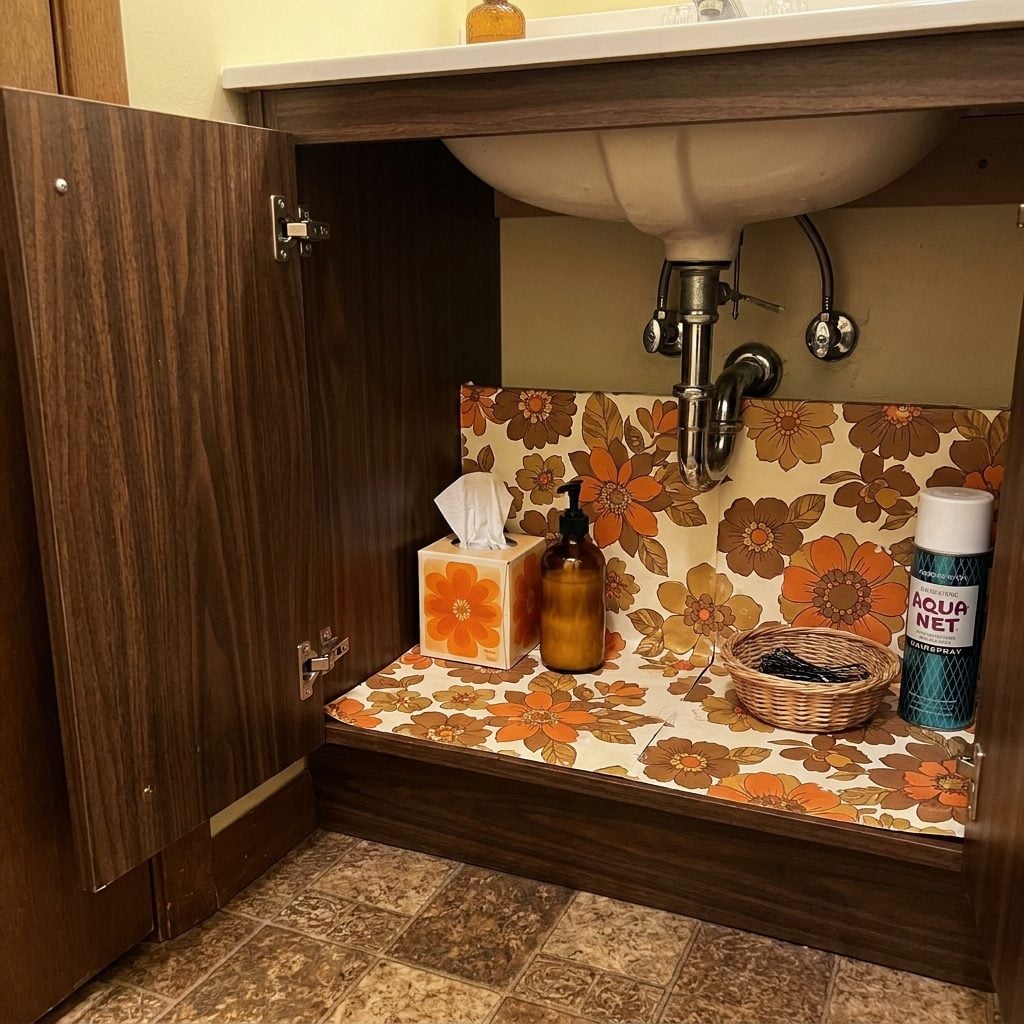
Open any cabinet in a 1970s powder room and there it was: contact paper in a floral print so loud it could be heard from the hallway. Orange and brown blossoms on cream, always slightly bubbled, always with at least one seam that didn’t line up.
The logic was sound enough. Protect the shelf surface. Keep things sanitary. Sure. But the execution turned every under-sink cabinet into a tiny psychedelic garden. And it never came off cleanly. Ever. Peel it up twenty years later and you’d find a layer of sticky residue that could survive a nuclear event.
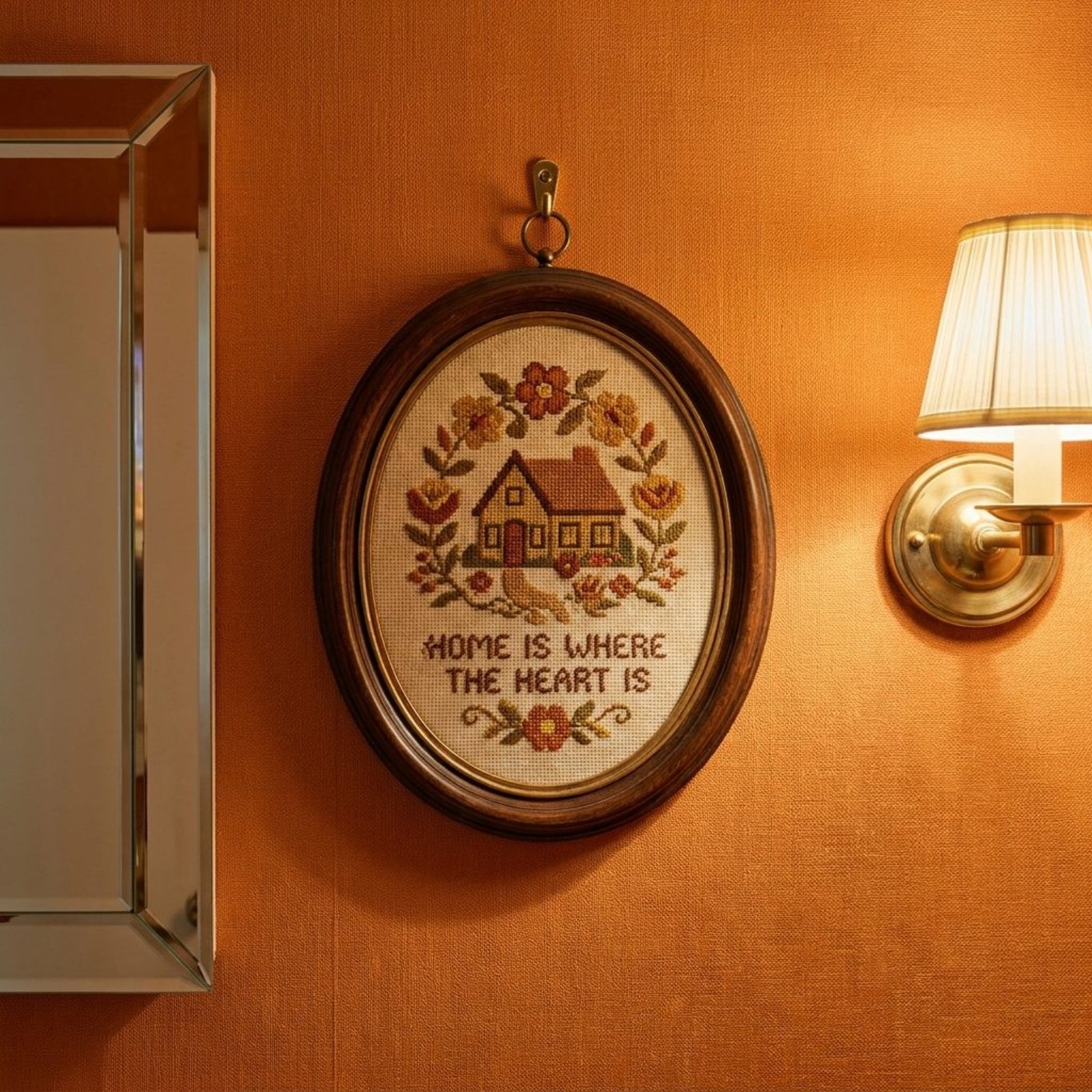
25. A Framed Needlepoint of Some Vaguely Inspirational Phrase, Stitched by Someone You’d Never Met
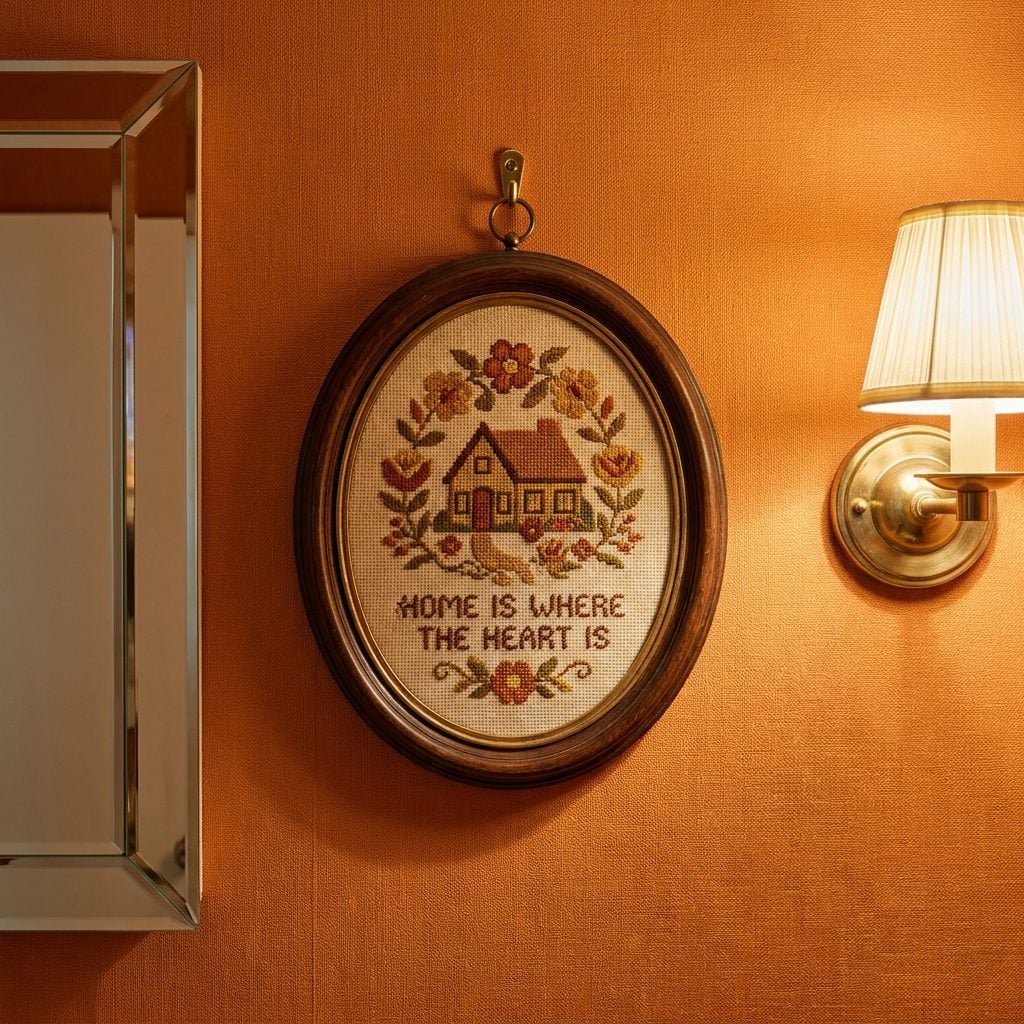
Somebody’s grandmother stitched this. Not your grandmother. Somebody else’s grandmother, at some unspecified point in history, and it ended up in a dark wood oval frame on the powder room wall between the mirror and the light switch.
The subject was always either a small cottage with improbable flowers, a Bible verse, or something like “Bless This Mess” in brown thread on ecru linen. You read it every single time you used the bathroom even though you’d memorized it by visit three. It was never discussed. It was simply there, like gravity.
24. The Vanity Light Bar with Five Bare Globe Bulbs, All Different Wattages
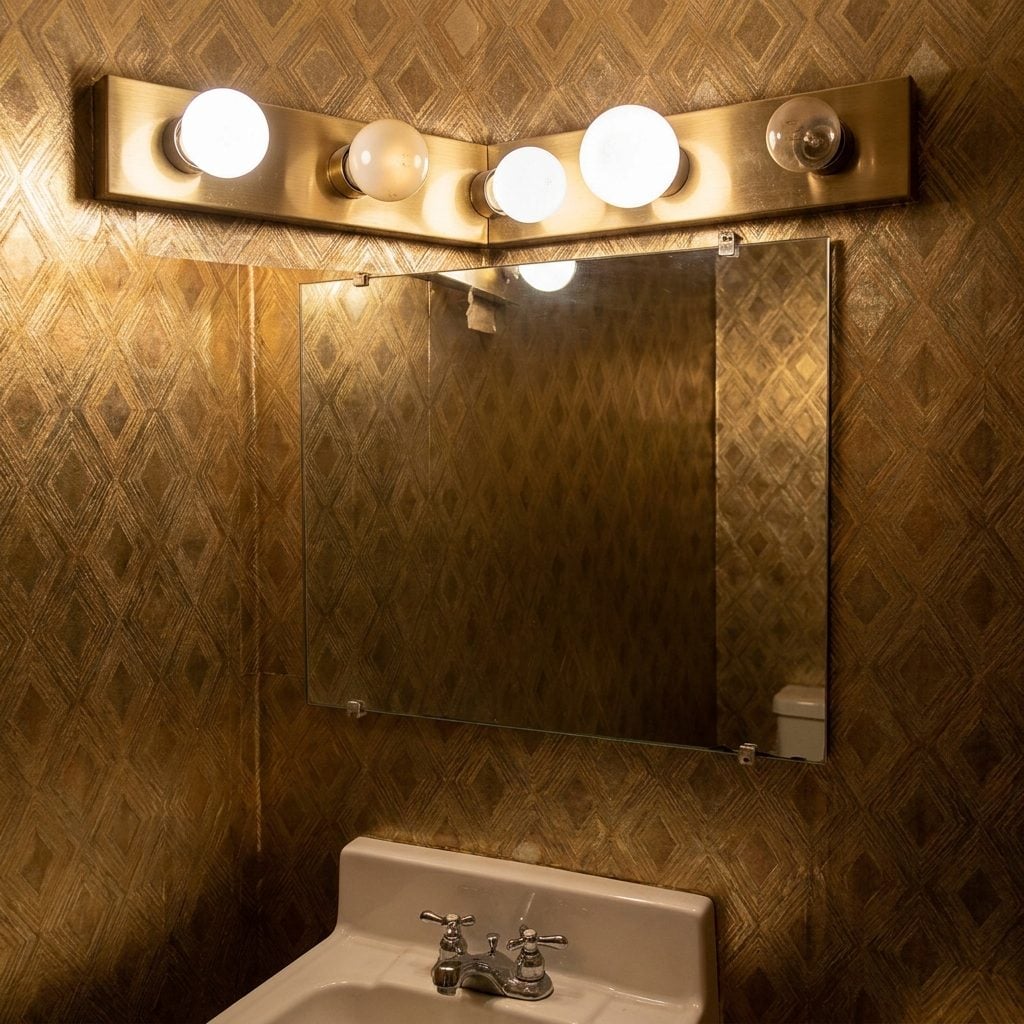
Five globe bulbs. That was the standard. A horizontal brass bar above the mirror, Hollywood-style, as if every powder room were a backstage dressing room. The reality was less glamorous.
At least one bulb was always burnt out. Two others were clearly replacements from different eras, throwing off the color temperature so your face looked warm on the left and vaguely clinical on the right. Nobody replaced all five at once because that felt wasteful. So you just lived with the patchwork lighting, checking your teeth in a mirror lit like a ransom note.
23. The Lock on the Door That Was Just a Hook and Eye Latch, and You Had to Trust It
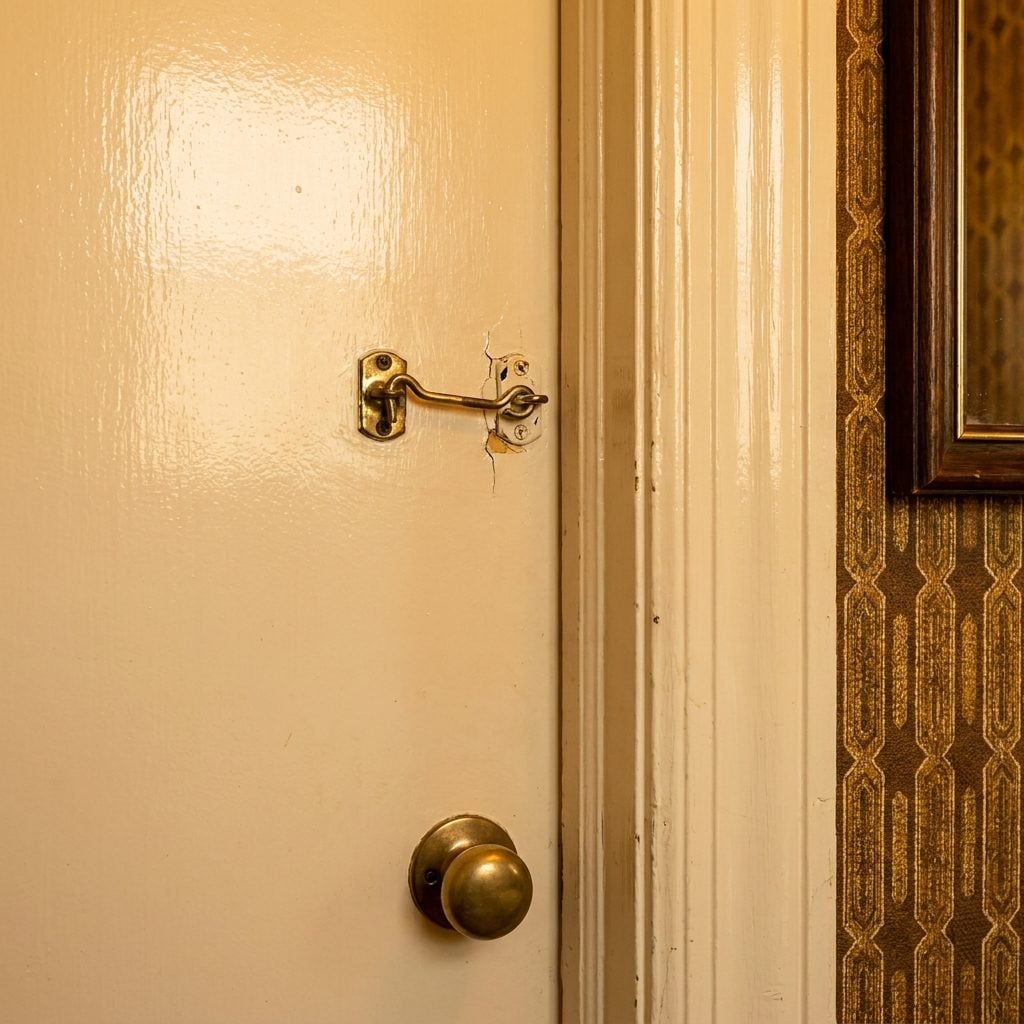
A brass hook. A tiny eye screwed into the door frame. That was your privacy. That was the entire security system standing between you and whoever was walking down the hallway.
The hook was always slightly bent. The eye was always a little loose. You’d flip that hook into place, hear the tiny metallic click, and just… hope. Hope that it held. Hope that nobody leaned on the door. Hope that the structural integrity of two small screws in a hollow-core door was enough to preserve your dignity at a dinner party. It always felt like a suggestion more than a lock.
22. The Ceramic Soap Dish Built Directly Into the Wall Tile Like a Tiny Altar
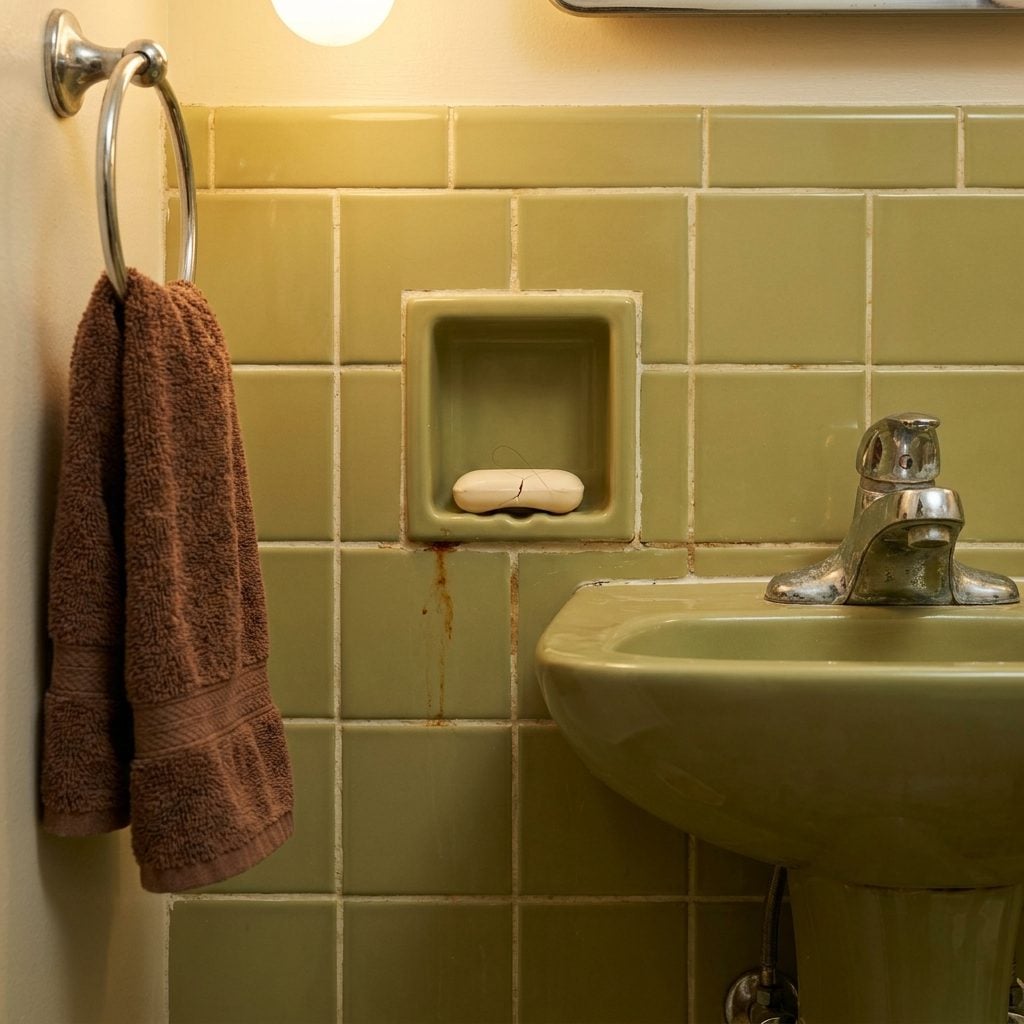
Not a soap dish ON the wall. A soap dish IN the wall. These recessed ceramic holders were tiled right into the surface during construction, flush with the surrounding squares, like the builder decided your soap’s permanent address before you ever moved in.
They came in whatever color the tile was. Avocado, harvest gold, sometimes a dusty rose that nobody asked for. And they always had that little drainage ridge at the bottom that did absolutely nothing. Your soap still dissolved into a gelatinous puddle that bonded with the ceramic like it was trying to become part of the house.
Good luck ever replacing one without destroying the entire wall. That was the deal. The soap dish was forever.
21. A Guest Towel Collection So Fancy Nobody Was Actually Allowed to Use It
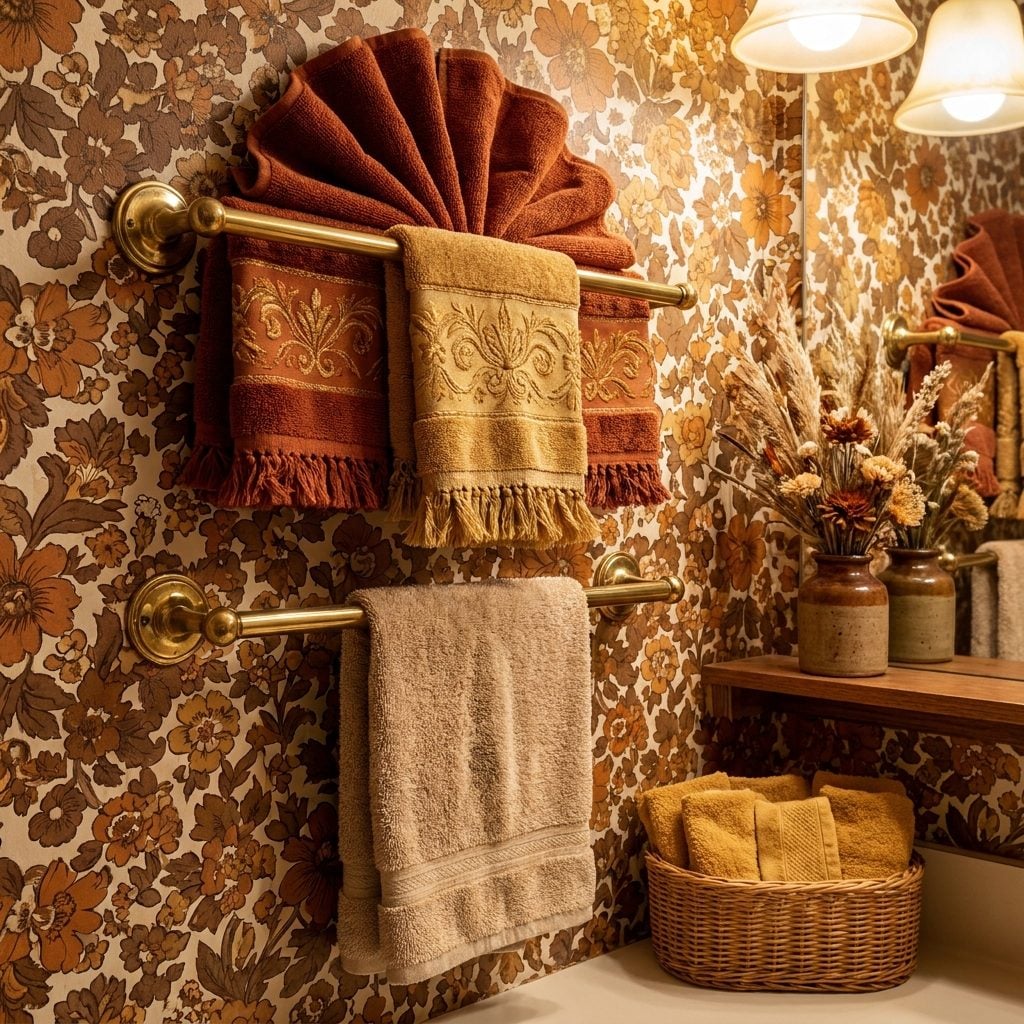
You dried your hands on your jeans. Everyone did. Because those towels were not for you.
They sat there, fanned out on the towel bar or rolled into a basket, monogrammed, fringed, sometimes seasonal. Your mom replaced them with pumpkin-themed ones in October. They cost real money. They were decorative objects that happened to be made of terrycloth, and touching one would have caused a domestic incident.
20. Hot and Cold Knobs That Required an Engineering Degree to Get Lukewarm Water
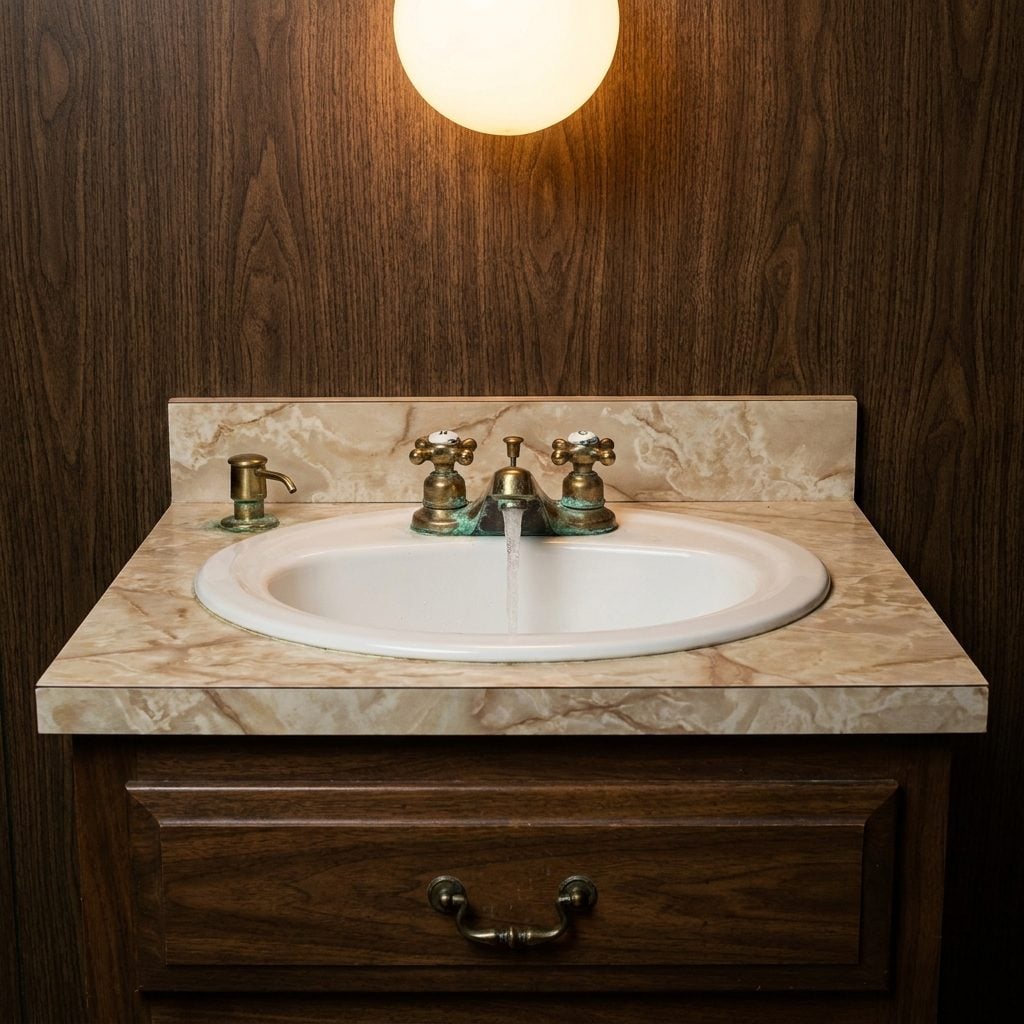
Separate hot and cold handles with zero cooperation between them. You’d crank the hot, get scalded. Back it off, now it’s ice. Try adjusting the cold to compensate and suddenly both are doing something completely unexpected. Washing your hands in a 1970s powder room was a negotiation.
The handles themselves were always those ornate cross-shaped brass numbers with porcelain center caps. Beautiful, sure. But they required a full quarter-turn to do anything, and the washer inside was always slightly worn, so the hot side dripped. You could hear it from the hallway at night. That steady, metronomic plinking into the basin that your dad swore he’d fix this weekend.
19. That Sunken Threshold Step That Caught Every Single Visitor Off Guard
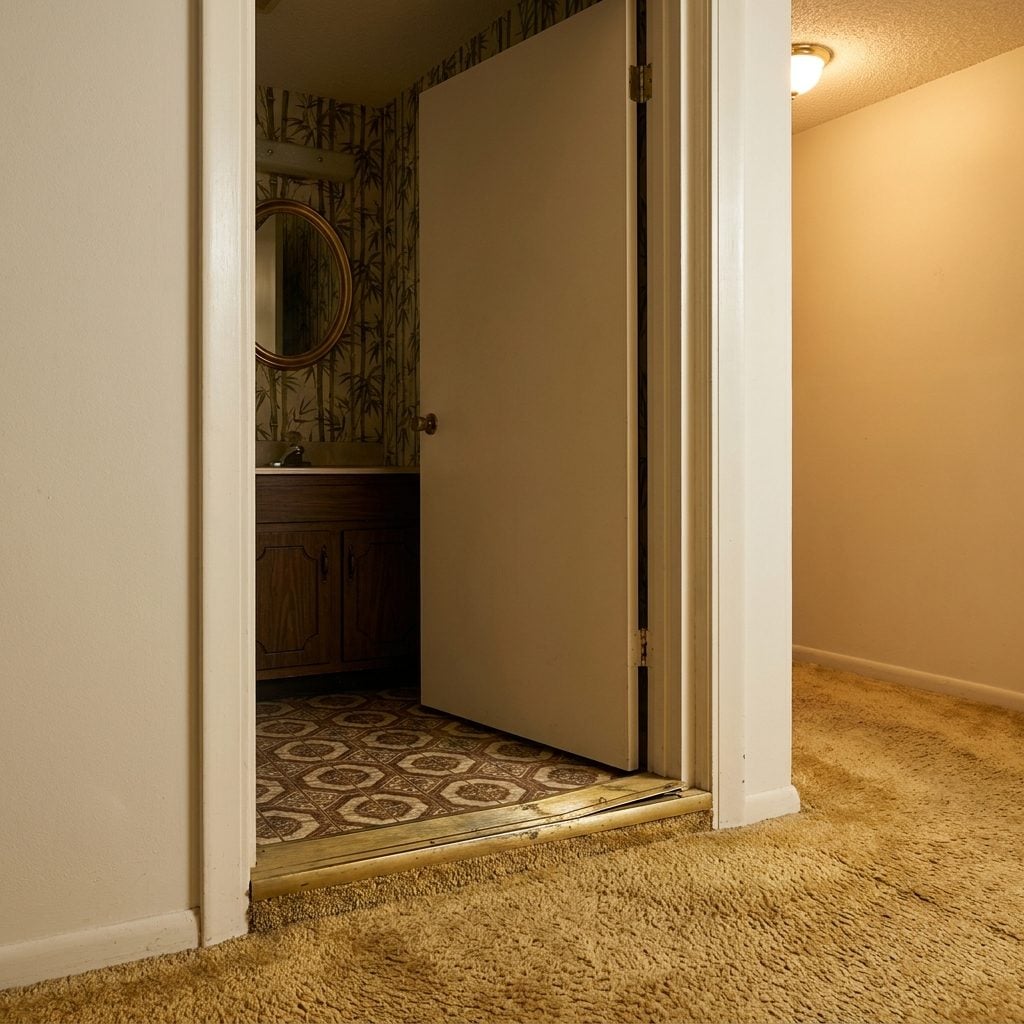
Who approved this? Some powder rooms in the 70s sat four inches below the hallway for reasons that no one could explain then and certainly can’t explain now. Maybe it was a plumbing thing. Maybe an architect just wanted to keep everyone on their toes, literally.
Guests who’d had two glasses of wine at dinner would stumble into that step every time. You’d hear the little “whoop” from the living room. The brass threshold strip was always slightly peeled up at one corner, adding an extra tripping hazard for good measure.
18. The Wicker Wastebasket That Was Somehow Both Decorative and Completely Useless
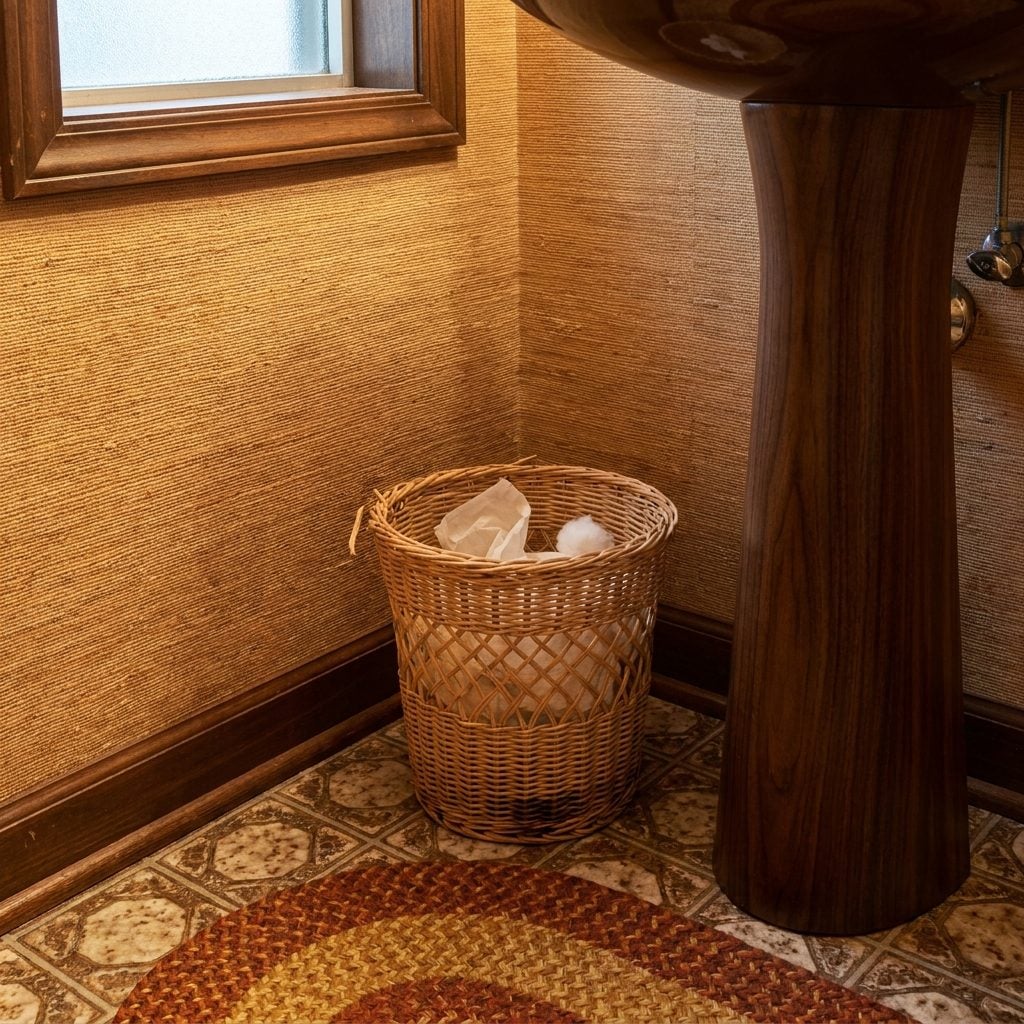
Open weave. That was the fundamental design flaw. A wastebasket with holes in it. Tissues poked through the gaps. Bobby pins fell out the bottom. And yet every powder room had one because wicker was the answer to every decorating question in the 1970s.
It matched the wicker tissue box cover. And the wicker shelf. And the wicker-framed mirror. Your entire small sitting room was basically a basket.
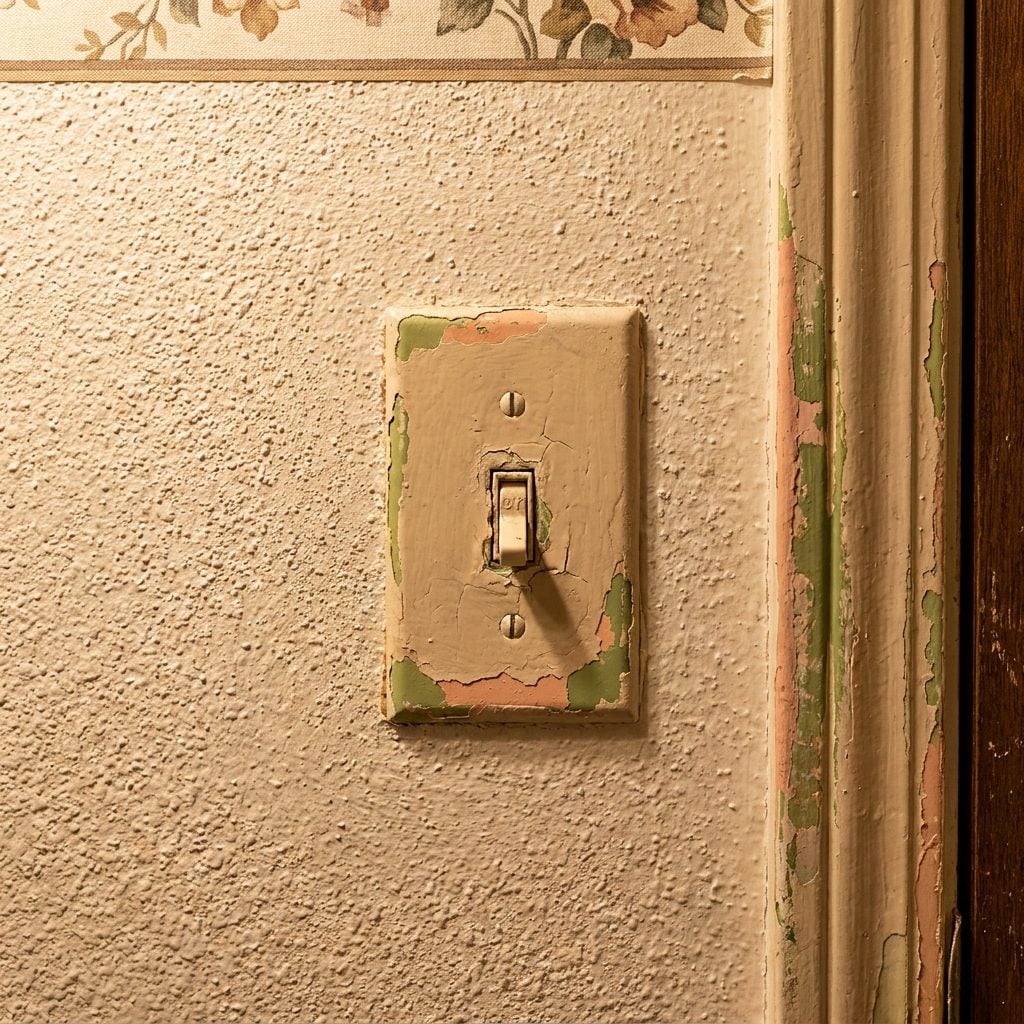
17. The Light Switch Plate Painted Over So Many Times It Was Basically a Relief Sculpture
🔥 Would you like to save this?
Fourteen coats deep. You could date the layers like geological strata. Beige on top, then the green phase, then something peachy underneath that, and below it all, the original white from when the house was built. The toggle barely moved because paint had fused it into a permanent state of almost-on.
Nobody ever removed the plate before painting. That would have required a screwdriver and thirty additional seconds of effort. So each coat just went right over the top, building up a soft, rounded edge where the plate met the wall until the whole thing looked like it was slowly being absorbed back into the plaster.
Flipping that switch required a committed thumb. A real downward shove. And it made a thick, muffled click instead of a clean snap. The sound of a house that had been lived in for decades.
16. A Padded Toilet Seat That Exhaled When You Sat Down
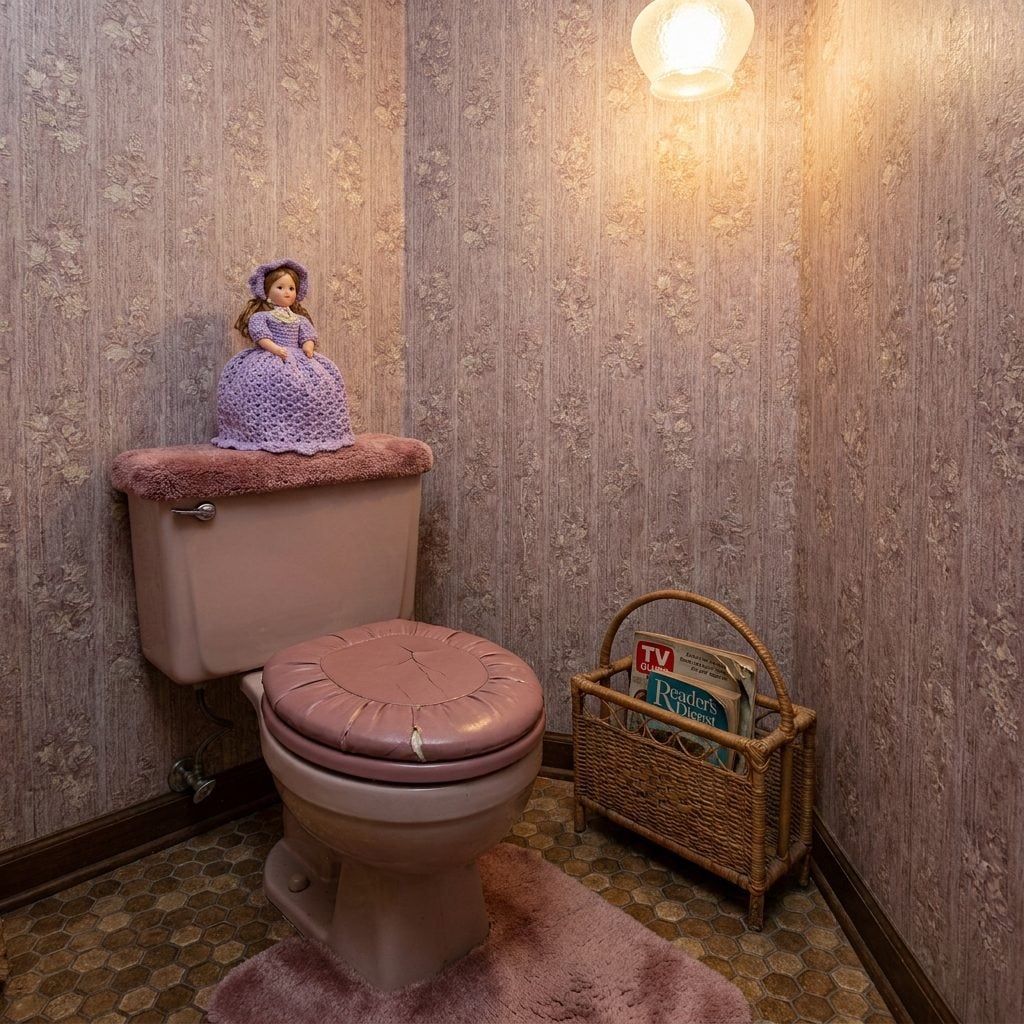
The sound it made. That slow, resigned hiss of air escaping vinyl as you lowered yourself down. Like the seat was sighing. Every single time.
These things were everywhere in the seventies, and they came in colors no toilet seat should come in: dusty rose, baby blue, harvest gold. The vinyl would crack after a few years, exposing sad yellow foam that would absorb things you’d rather not think about. But for a brief window, someone decided that a hard toilet seat was a problem worth solving with upholstery, and millions of us just went along with it.
15. The Mirror That Was Actually Smoked Glass with Gold Veining, So You Could Never Quite See Your Face
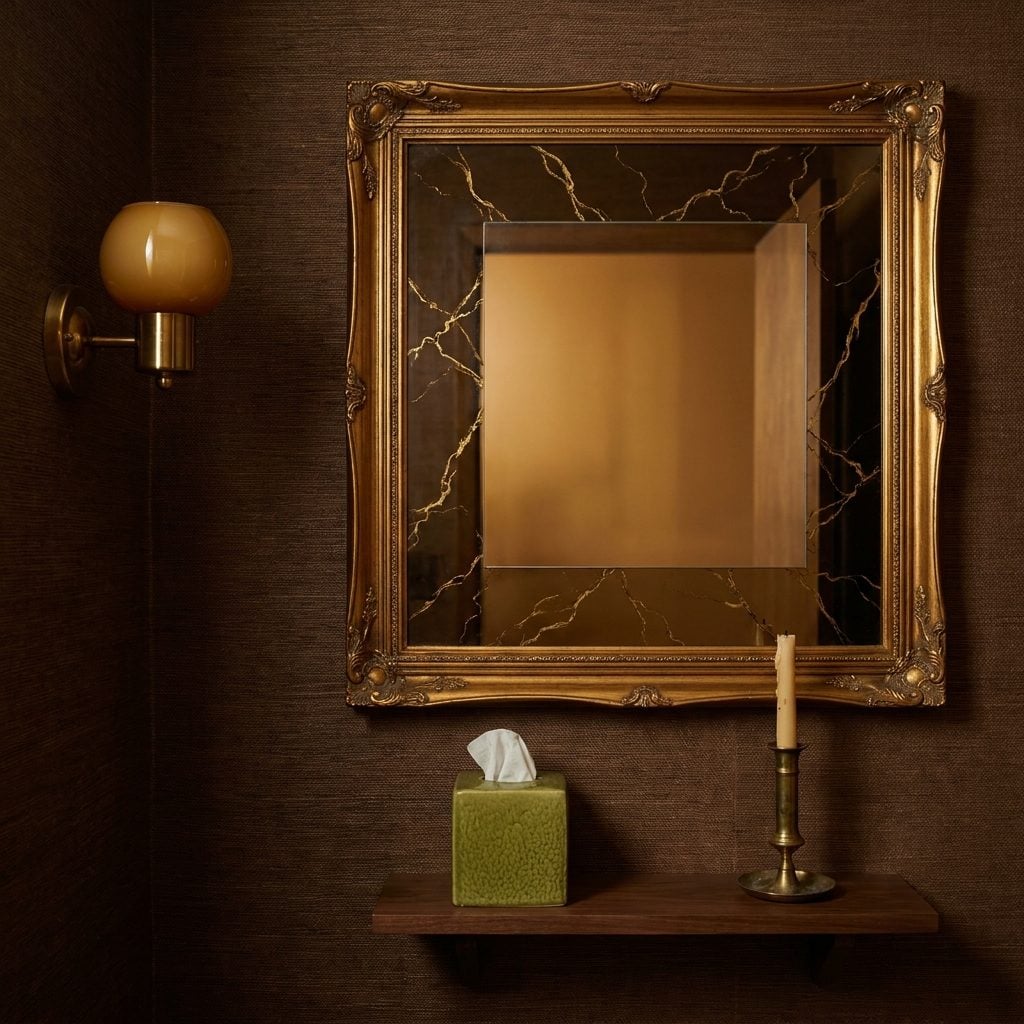
You’d lean in to check your teeth and all you’d see was a bronze silhouette of yourself floating in amber fog. These smoked and veined mirrors were supposed to look expensive. Artistic. Like something from a European hotel lobby. What they actually did was make every powder room feel like a dimly lit cocktail lounge where nobody could confirm whether they had spinach in their teeth.
The gold veining ran through the glass like rivers on a fantasy map, and over time the edges would darken even further. But removing one felt like a crime because the wall behind it was inevitably a different color from the rest of the room. So it stayed, and you just learned to use the light living room mirror down the hall instead.
14. The Crocheted Doll Whose Skirt Hid the Spare Roll of Toilet Paper
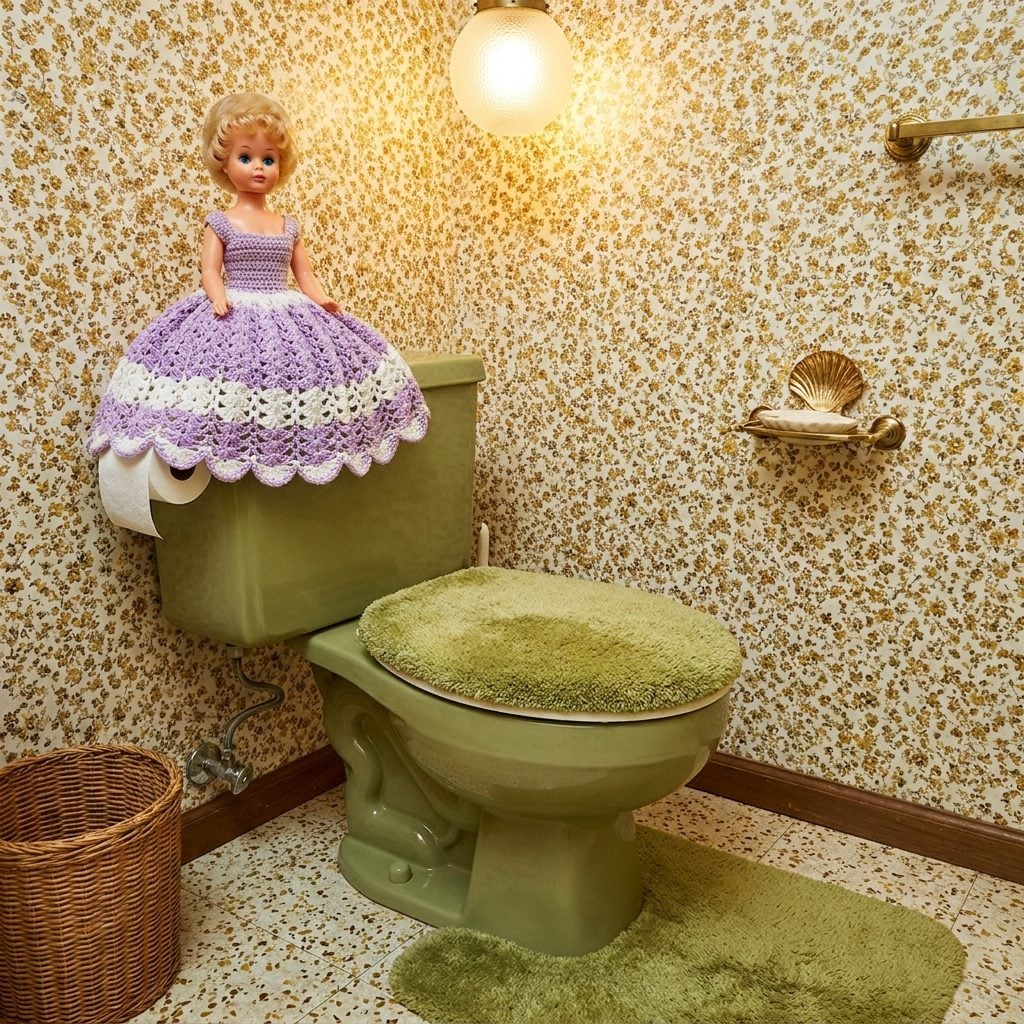
She had a frozen smile, a crocheted gown in some shade of lavender or mint, and a job description that nobody questioned: hide the backup toilet paper. Every powder room had one. Every grandmother made one. The plastic doll torso poked out of a bell-shaped skirt stiff enough to stand on its own, and underneath sat a full roll of Charmin like a shameful secret.
The craftsmanship was genuinely impressive, I’ll give it that. Tight, even stitches. Sometimes a ribbon at the waist. But the doll’s painted-on stare followed you across the room, and there was always that awkward moment when a guest needed the roll and had to undress her to get it.
13. Faux Wood Paneling That Stopped Halfway Up the Wall at a Decorative Chair Rail
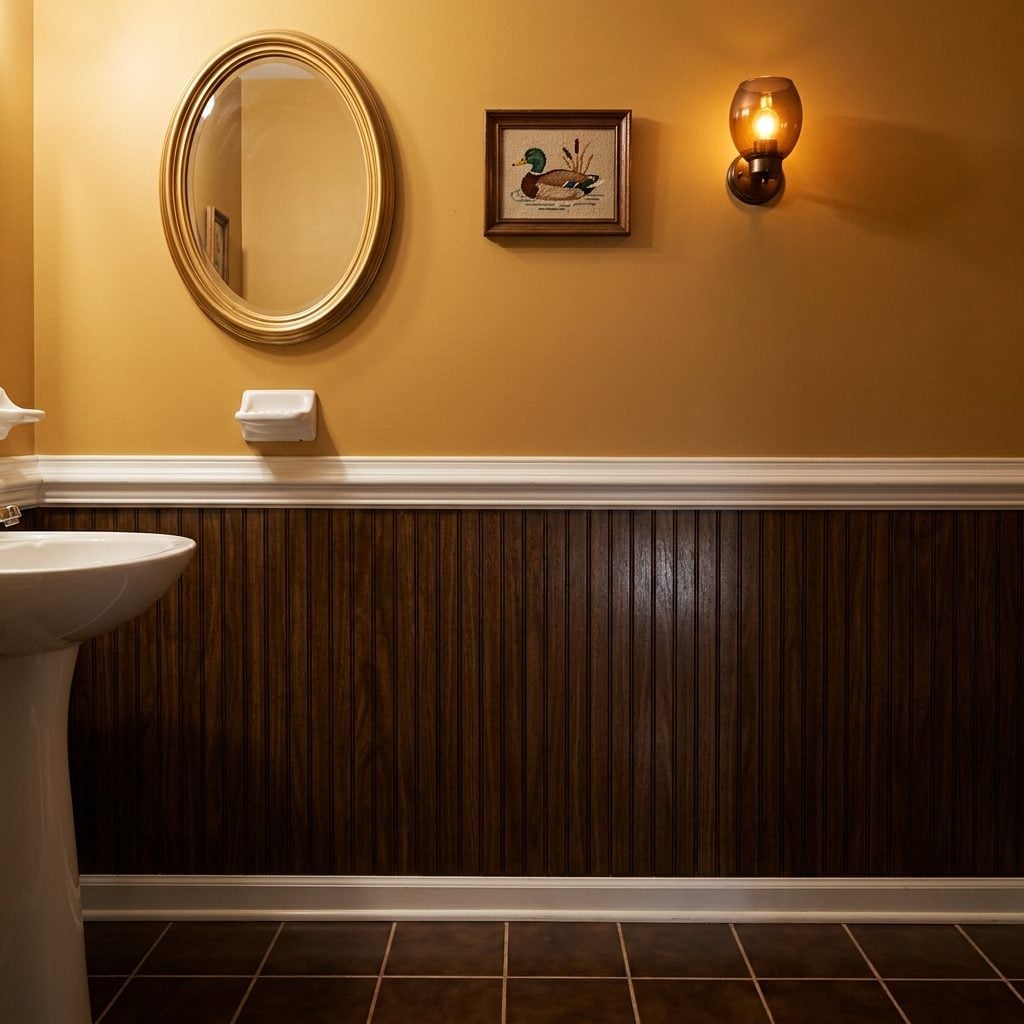
You could rap your knuckles on it and it sounded hollow because it basically was. Those 4×8 sheets of printed paneling were maybe an eighth of an inch thick, and the “wood grain” was a photograph laminated onto pressed board. But slap a white chair rail across the middle, paint the top half harvest gold or burnt orange, and suddenly it was a “design choice.”
The chair rail was doing a lot of heavy lifting. It hid the seam where the paneling ended and the paint began, which never lined up perfectly. In a small sitting room or den you’d see the paneling go floor to ceiling, but the powder room got the half-and-half treatment. It looked oddly formal for a room the size of a closet.
12. Pebbled Privacy Glass on the Window That Looked Like Frozen Bubble Wrap
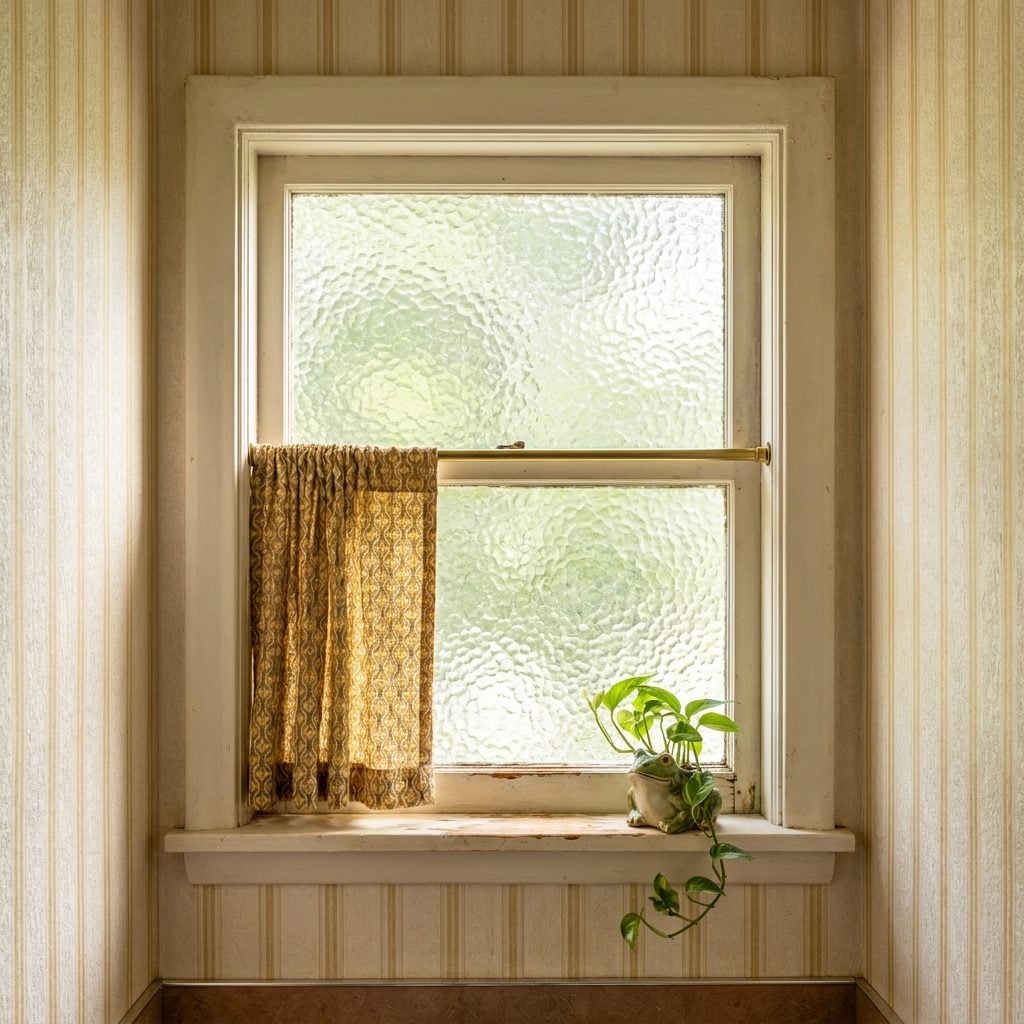
That weird glass did exactly one thing well: it let in light while making everything on the other side look like an impressionist painting. You could press your face right up against it and still not see the neighbor’s yard clearly. Just green blurs and the occasional moving shape that might have been a person or a large dog.
Nobody called it “pebbled” back then. It was just “the bathroom window.” But it had a texture you could feel with your fingertips, all those little raised bumps, cool and slightly greasy from years of humidity. Half the time it was also covered by a set of brass cafe curtain rod and some fabric that matched absolutely nothing else in the room.
11. Pleated Paper Guest Towels in a Brass Holder That Nobody Was Brave Enough to Use
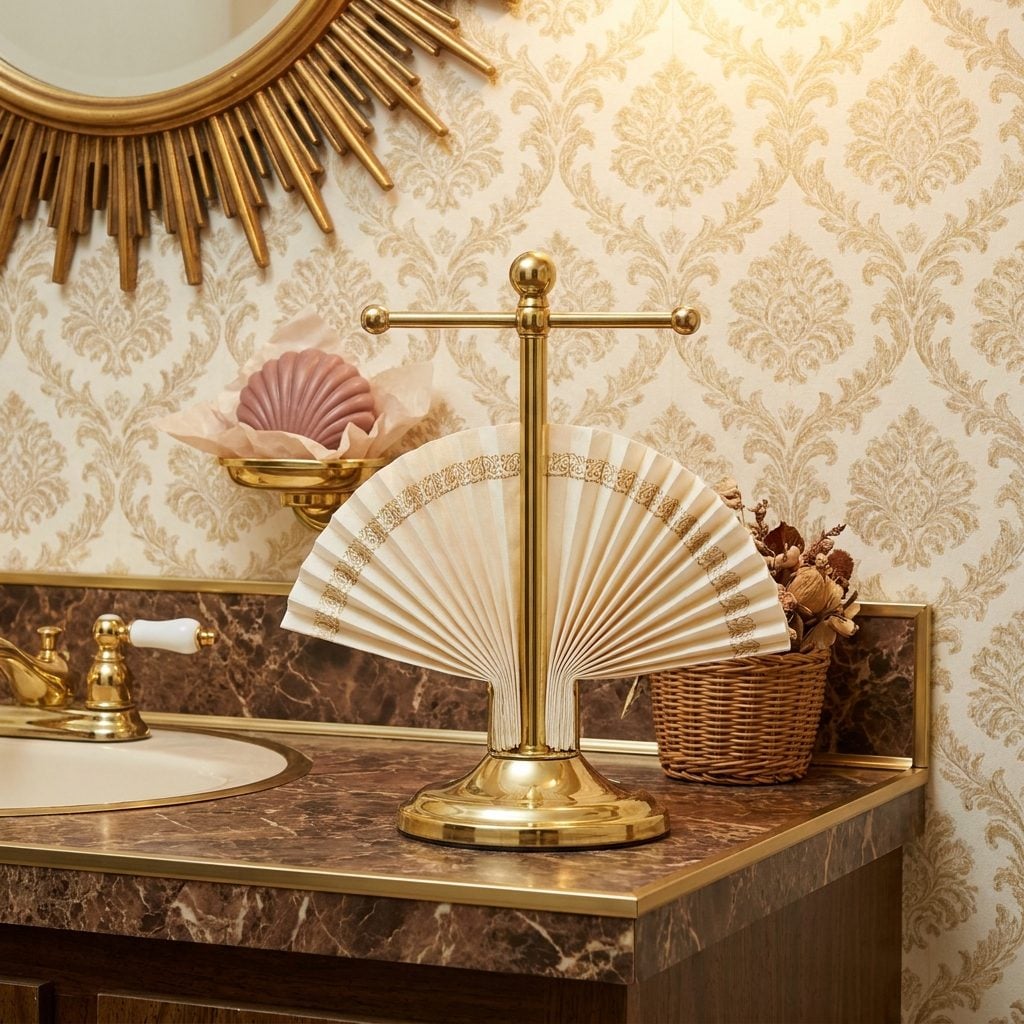
They sat there for months. Sometimes years. A perfect little fan of pleated paper towels in cream or ecru, maybe with a tiny gold border, arranged in their brass guest towel holder like origami on display. And you dried your hands on your jeans.
Everyone did this. The towels were too nice, too intentionally placed. Using one felt like pulling a book out of a Jenga tower. So they stayed, gathering a thin film of dust along the folded edges, a monument to hospitality that was never actually consumed. Your mother bought them at the drugstore in a cellophane pack of fifty, and fifty is how many she’d still have at Thanksgiving.
10. A Ceramic Owl Perched on the Corner Shelf, Watching You with Unblinking Judgment
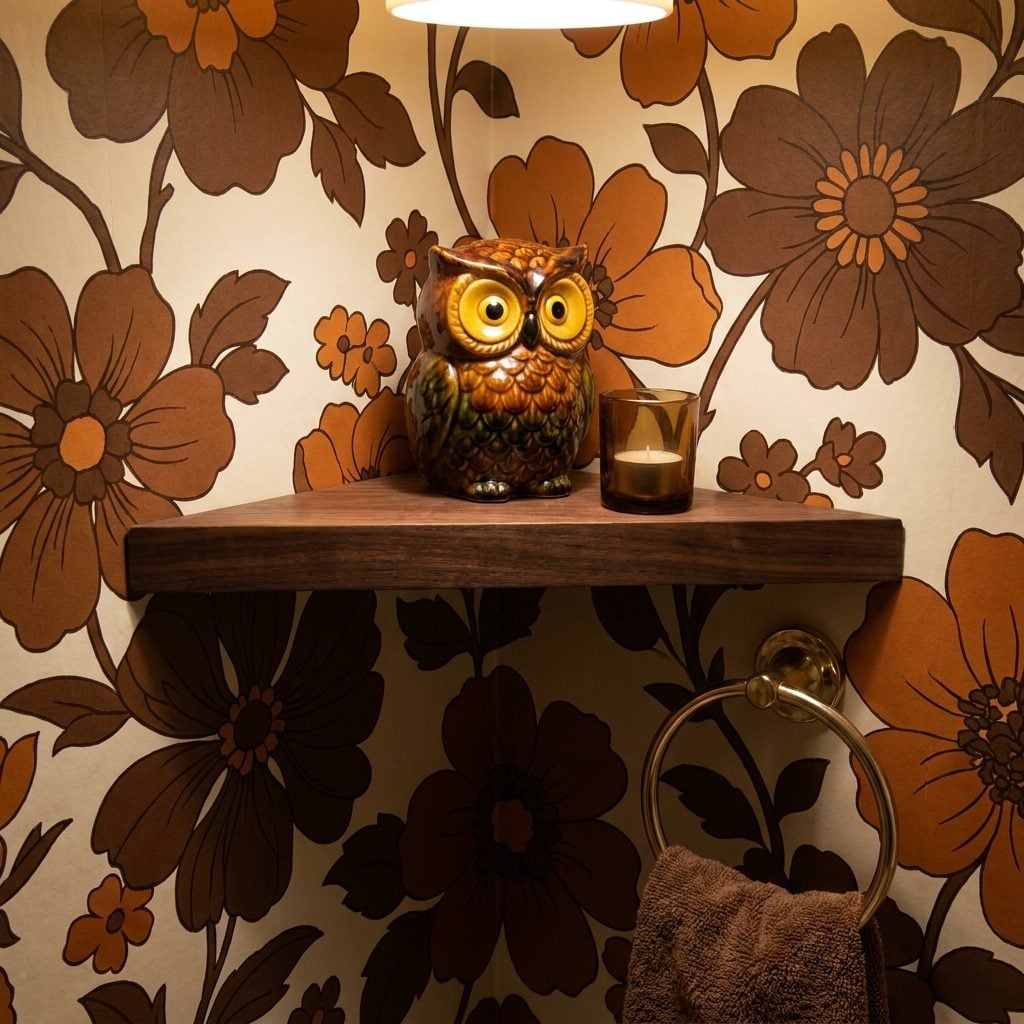
Why owls? I’ve never gotten a satisfying answer. But in the 1970s, ceramic owls colonized every powder room, kitchen shelf, and mantelpiece in America. The powder room owl was usually small, maybe five or six inches, perched on a corner shelf or the back of the toilet, glazed in browns and ambers that matched absolutely everything in that decade.
Those eyes, though. Enormous, round, unblinking. You’d be sitting there in what should be a private moment, and this thing was locked onto you like a security camera with feathers. Some were sweet-faced. Most were not. Most looked like they were silently documenting your sins.
9. Apothecary Jars Filled with Cotton Balls and Q-Tips That Were Strictly for Show
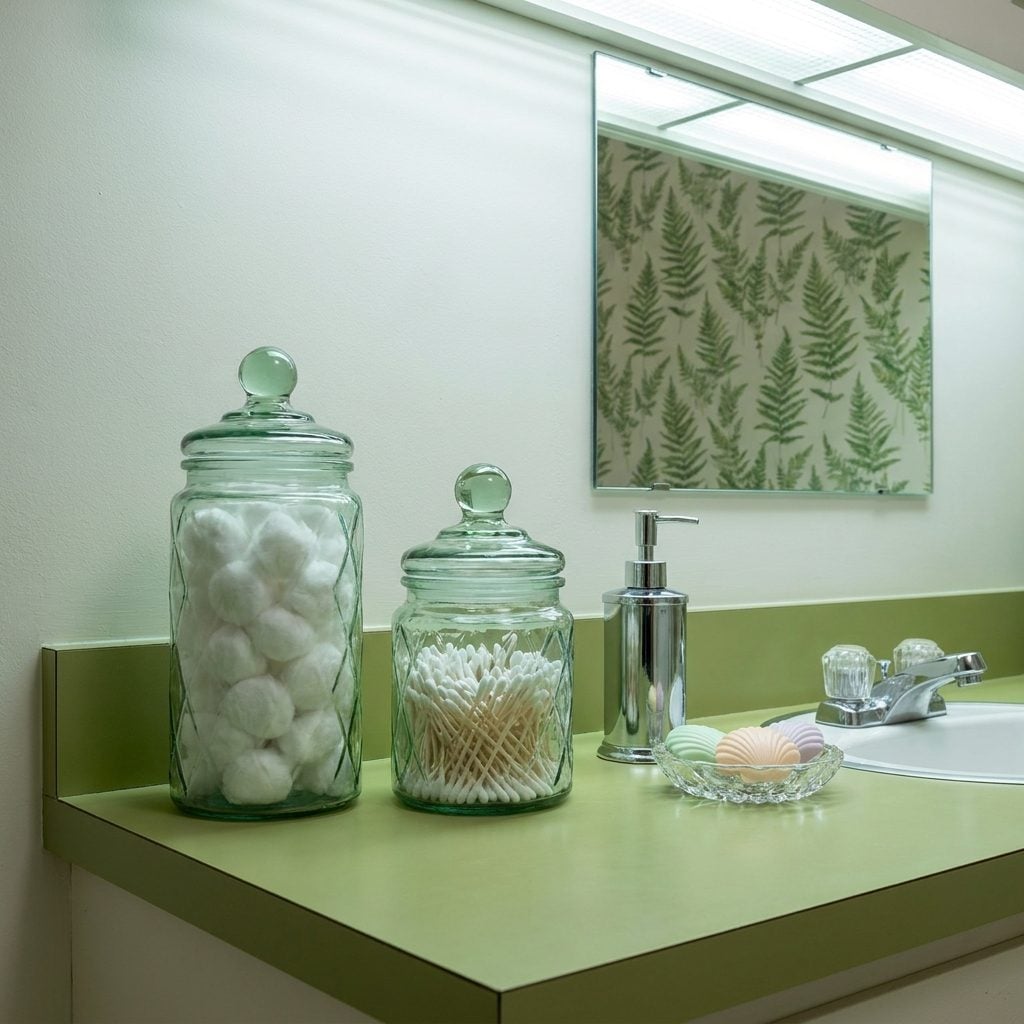
Touch them and face consequences. Those glass apothecary jars were filled with surgical precision: cotton balls packed like snowballs, Q-tips standing at attention in perfect rows. They looked medical and decorative at the same time, which is a vibe unique to the 1970s powder room.
Nobody used them. The real cotton balls were under the sink in a crumpled plastic bag. These were display cotton balls. Presentation Q-tips. They existed to signal that a civilized woman lived here, one who kept her grooming supplies in crystal-adjacent glassware instead of a drawer. If one cotton ball went missing, the whole arrangement collapsed and your mom would know.
8. The Pleated Fabric Skirt Hiding the Plumbing Under the Pedestal Sink
🔥 Would you like to save this?
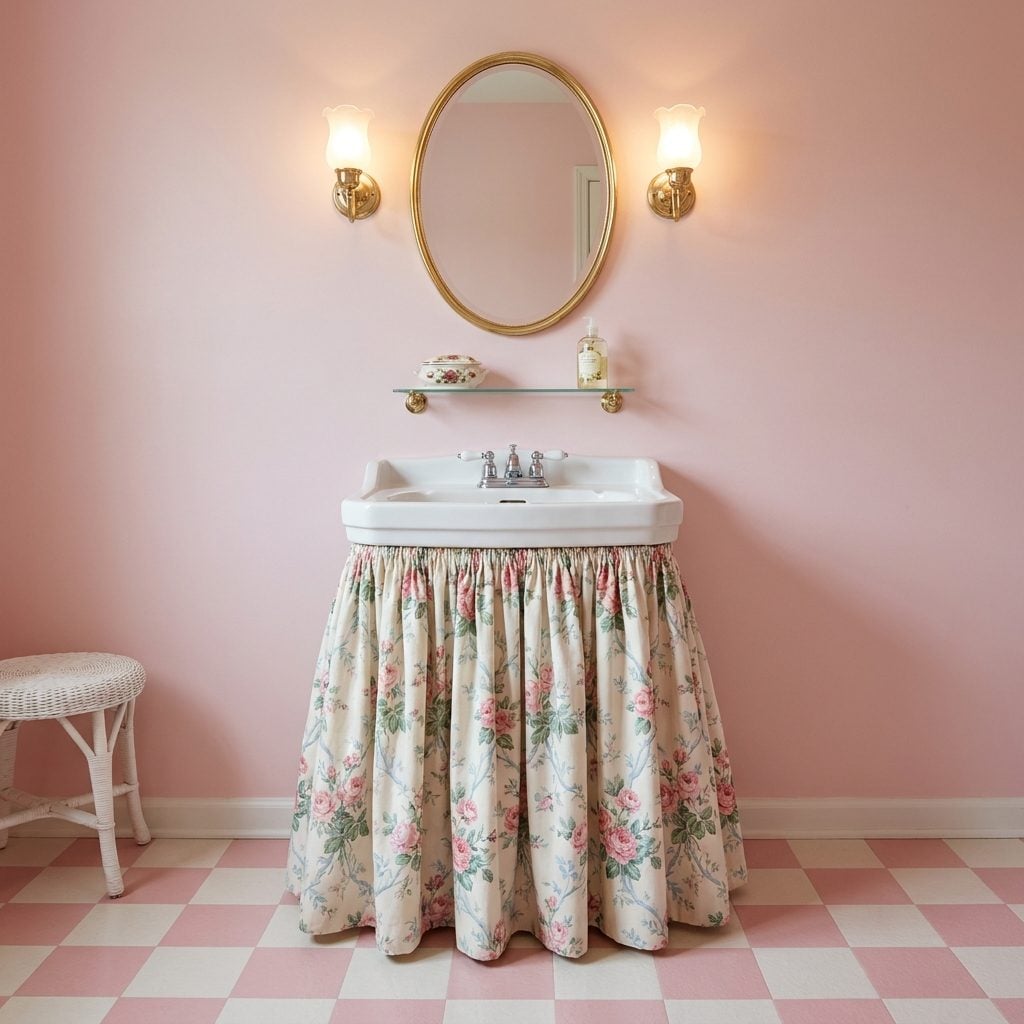
Plumbing was considered ugly. Not just impractical or utilitarian, but genuinely offensive to the eye. So someone decided the solution was a skirt. A literal floral sink skirt, gathered on a wire or glued with something mysterious, turning your pedestal sink into a small fabric tent.
Behind that chintz curtain was a horror show of corroded pipes, drip stains, and whatever cleaning supplies didn’t fit under the kitchen sink. It was the junk drawer of the bathroom, hidden by roses and rickrack. Kids would stick their hands under there looking for hidden things and come back with dust bunnies and a bottle of Comet.
7. The Silk Flower Arrangement on the Toilet Tank That Had Been There Since the Carter Administration
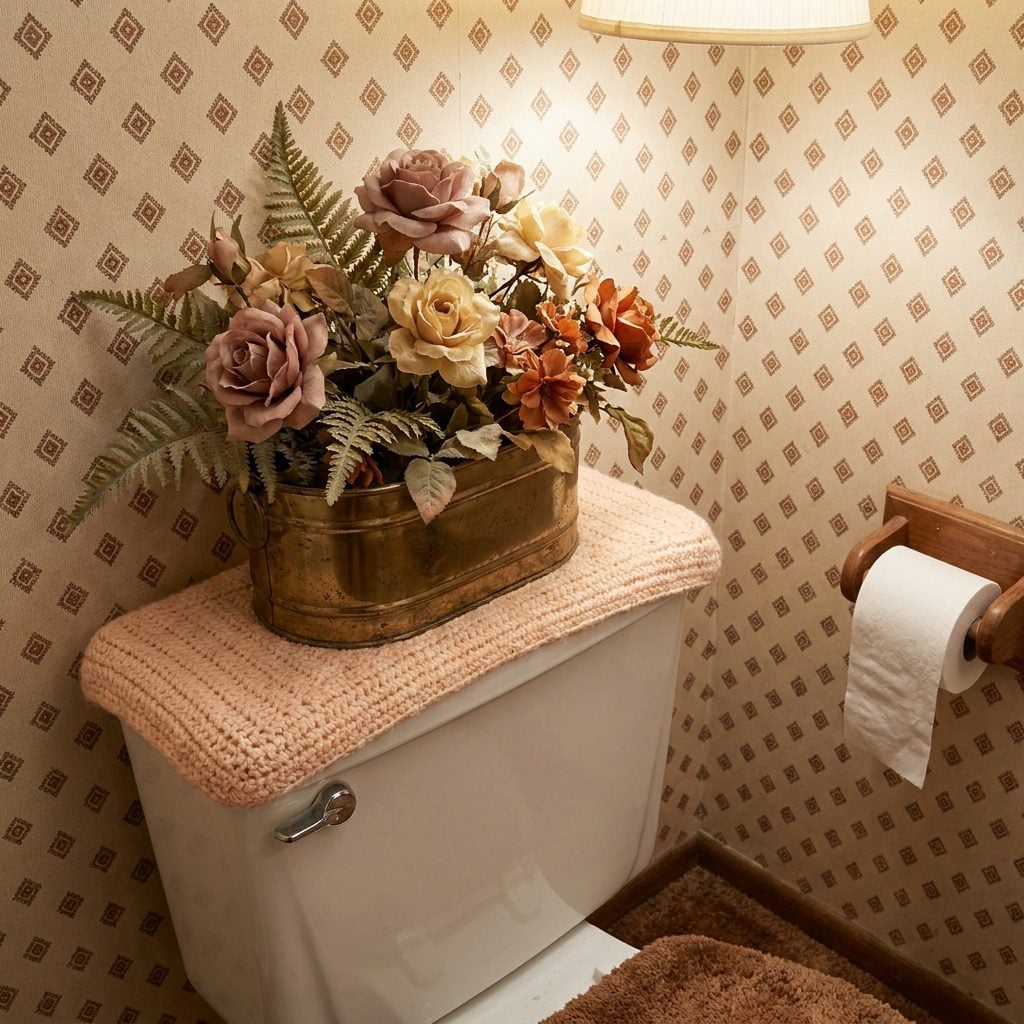
Dust collected in the creases of each petal like sediment in a geological record. That arrangement hadn’t been moved, adjusted, or acknowledged in years. It just existed on the toilet tank, a permanent fixture somewhere between decoration and archaeological artifact, its original colors long since faded to a uniform dusty mauve.
Real flowers would have been impractical. They’d wilt, drop petals, need water. Silk flowers solved every problem except the aesthetic one, which is that they looked exactly like what they were: fake flowers on a toilet. But they gave the room a finished quality, a sense that someone had made a deliberate choice about this space once, even if that choice was made during the Ford administration and never revisited.
The brass planter they sat in always had a felt bottom, slightly peeling, leaving a permanent ring on the porcelain beneath. That ring is probably still there in houses across America, a ghost of a floral arrangement no one remembers placing.
6. The Solid Glade Air Freshener in a Plastic Dome, Permanently Set to ‘Spring Bouquet’
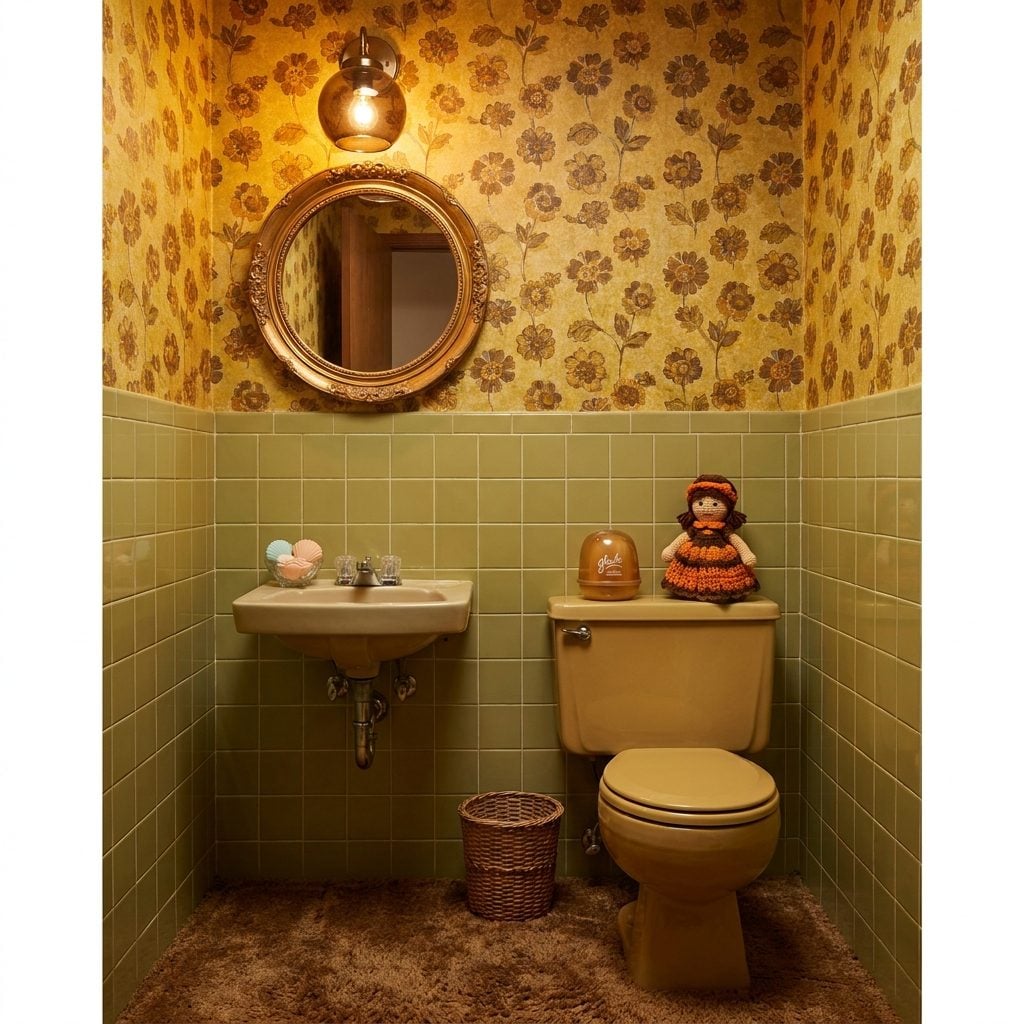
You never actually smelled spring in that bathroom. You smelled something chemical and floral and vaguely waxy, and your brain just filed it under “clean.” That little amber dome sat on the back of the toilet tank for months, slowly shrinking into a hard disc nobody thought to replace.
The thing is, it worked. Not well, but persistently. It masked whatever needed masking with a sweetness that clung to the towels, the wallpaper, your sleeve if you brushed against it. Every powder room had one, always in “Spring Bouquet” because nobody in the history of that product ever chose “Mountain Pine” for the half bath.
5. Faceted Crystal-Look Plastic Doorknobs That Were Always Slightly Sticky
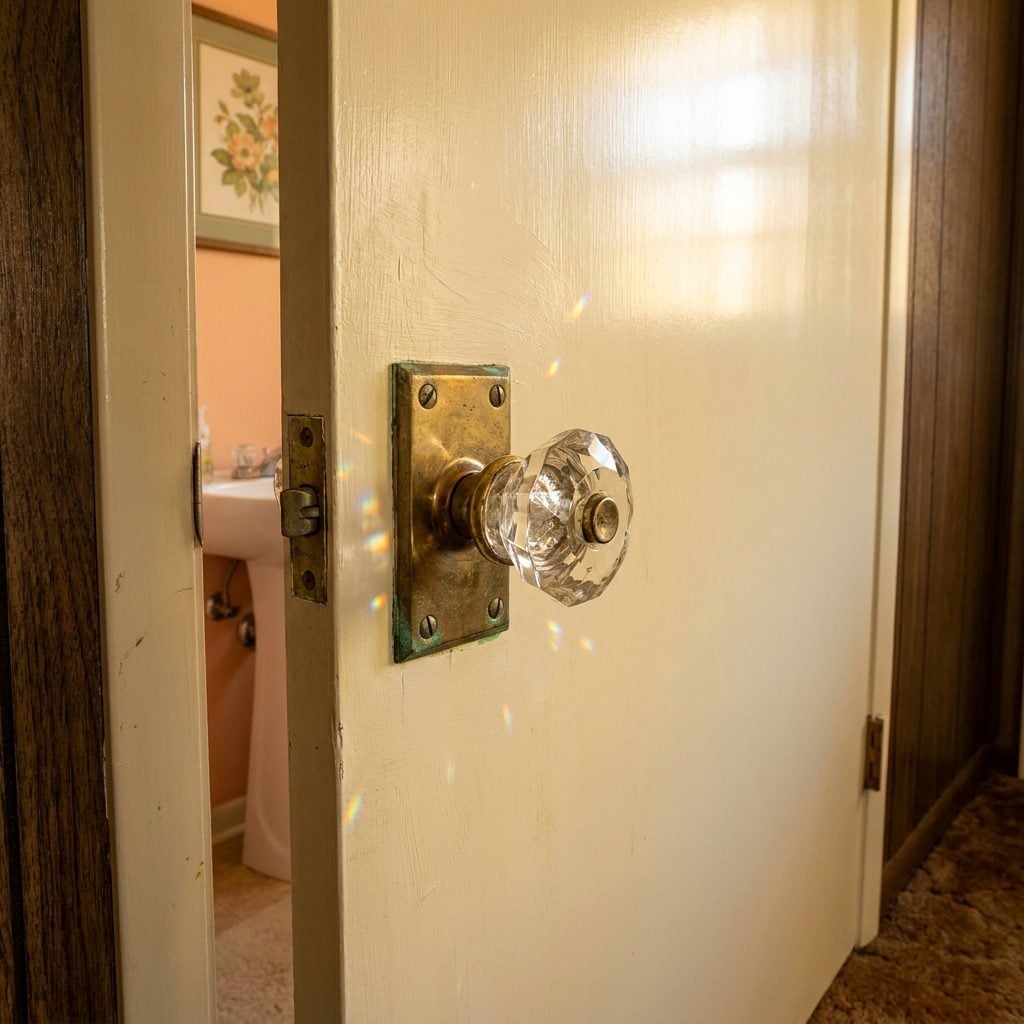
Nobody installed these because they looked like real crystal. Everyone installed them because they cost $3.49 at the hardware store and came in a blister pack. The facets caught the hallway light in a way that was almost pretty, if you didn’t look too hard.
But the stickiness. That inexplicable, permanent tackiness that no amount of Windex could fix. Was it the plastic degassing? Hairspray residue from decades of Aqua Net? A mystery for the ages. You’d grab it, feel that faint resistance against your palm, and just… accept it. We all accepted it.
4. The Over-the-Toilet Storage Rack That Threatened to Collapse Every Time You Reached for a Towel
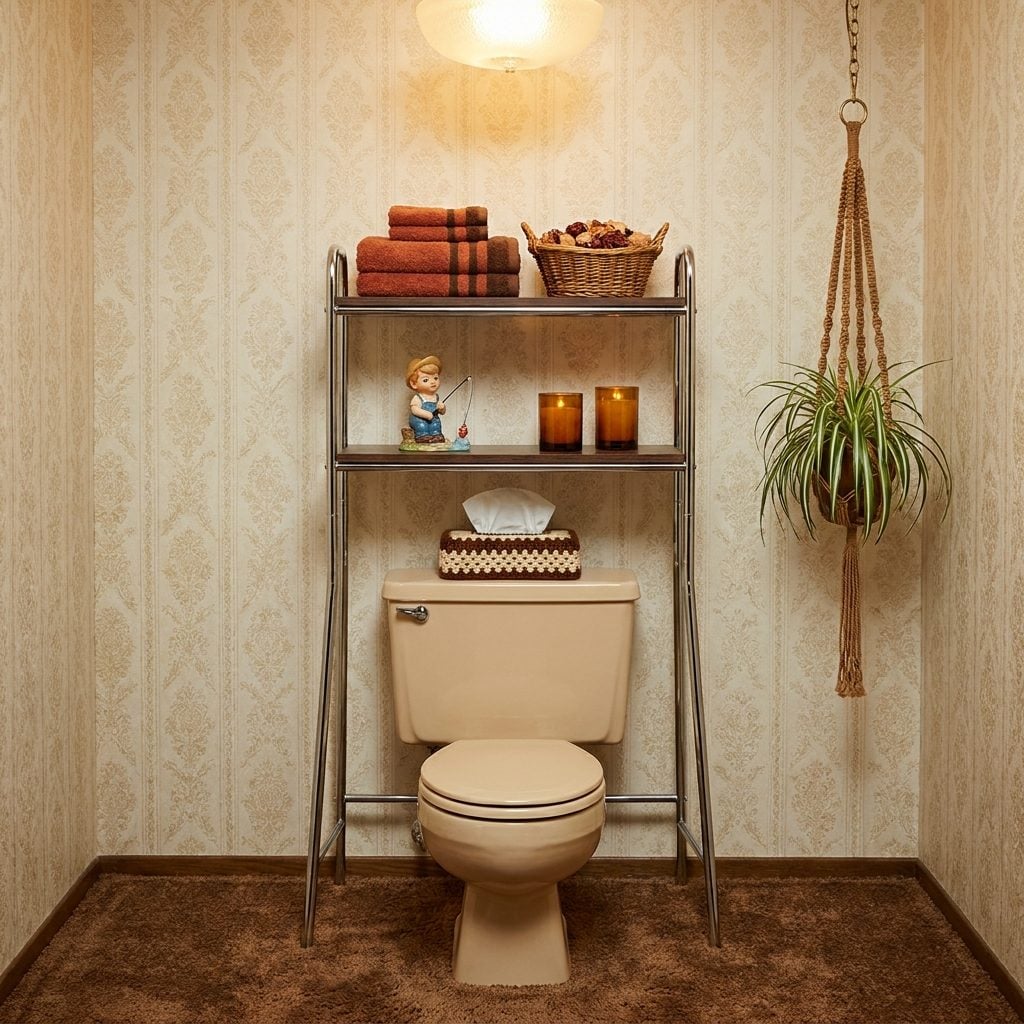
This thing was held together by tension, prayer, and the structural integrity of two chrome tubes wedged between the toilet tank and the ceiling. It never felt stable. You knew it. The towels on the middle shelf knew it. The ceramic figurine of a boy fishing on the top shelf absolutely knew it.
Still, every small family room and powder room in the decade relied on vertical storage like this because the rooms themselves were barely wider than your wingspan. You’d reach up carefully, slowly, like defusing a bomb, and pull down a hand towel while everything above it shifted two inches to the left.
3. The Faux Marble Laminate Countertop That Fooled Absolutely Nobody
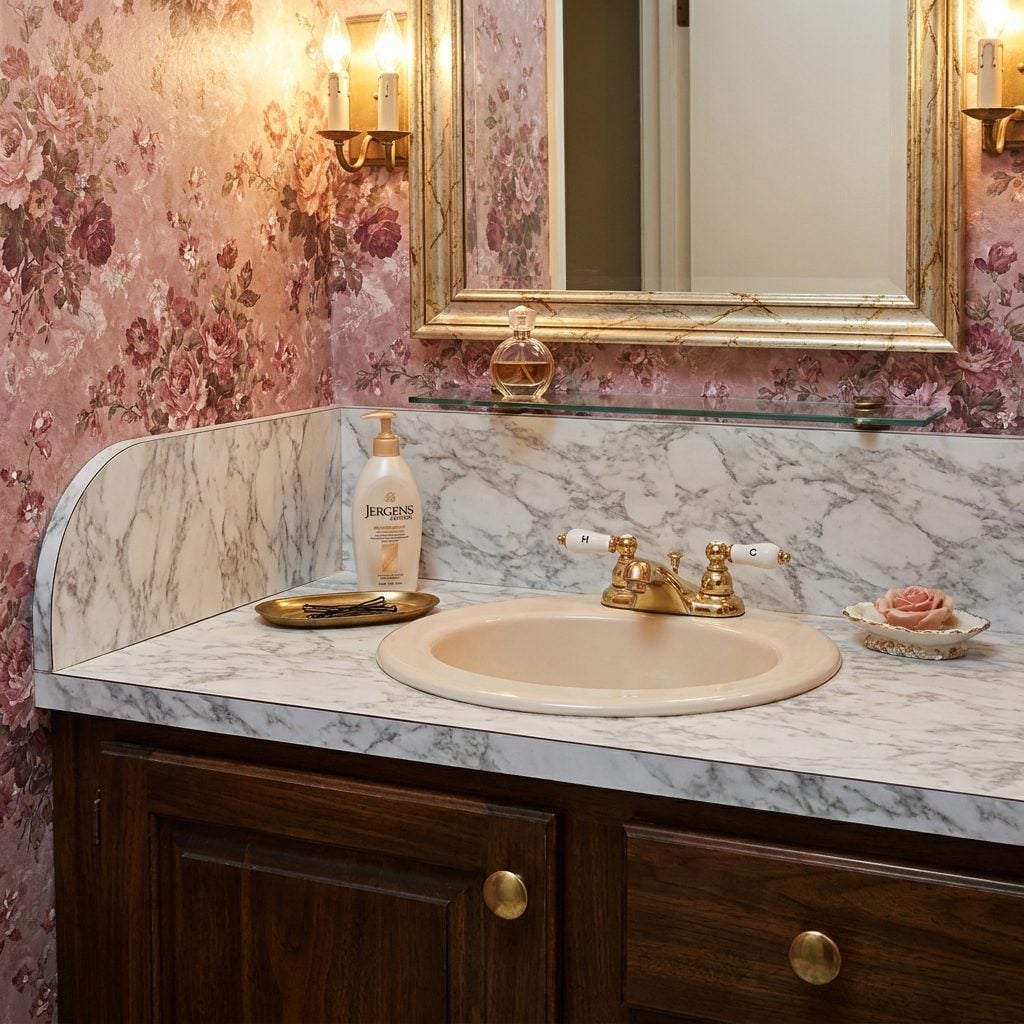
The veining was too uniform. The color was too gray. The surface was warm to the touch where actual marble would be cool. And where the laminate met the backsplash, it curved up in a little cove that real stone would never, ever do.
But every guest complimented it. “Oh, is that marble?” No. It was not marble. It was a photograph of marble glued to particleboard, and it cost a fraction of what the contemporary utility room counters cost today. I’ll say this for it, though: it was indestructible. Hairspray, nail polish remover, a dropped curling iron. That laminate took everything and kept its fake dignity intact.
2. The Built-In Magazine Rack That Everyone Pretended Was Decorative
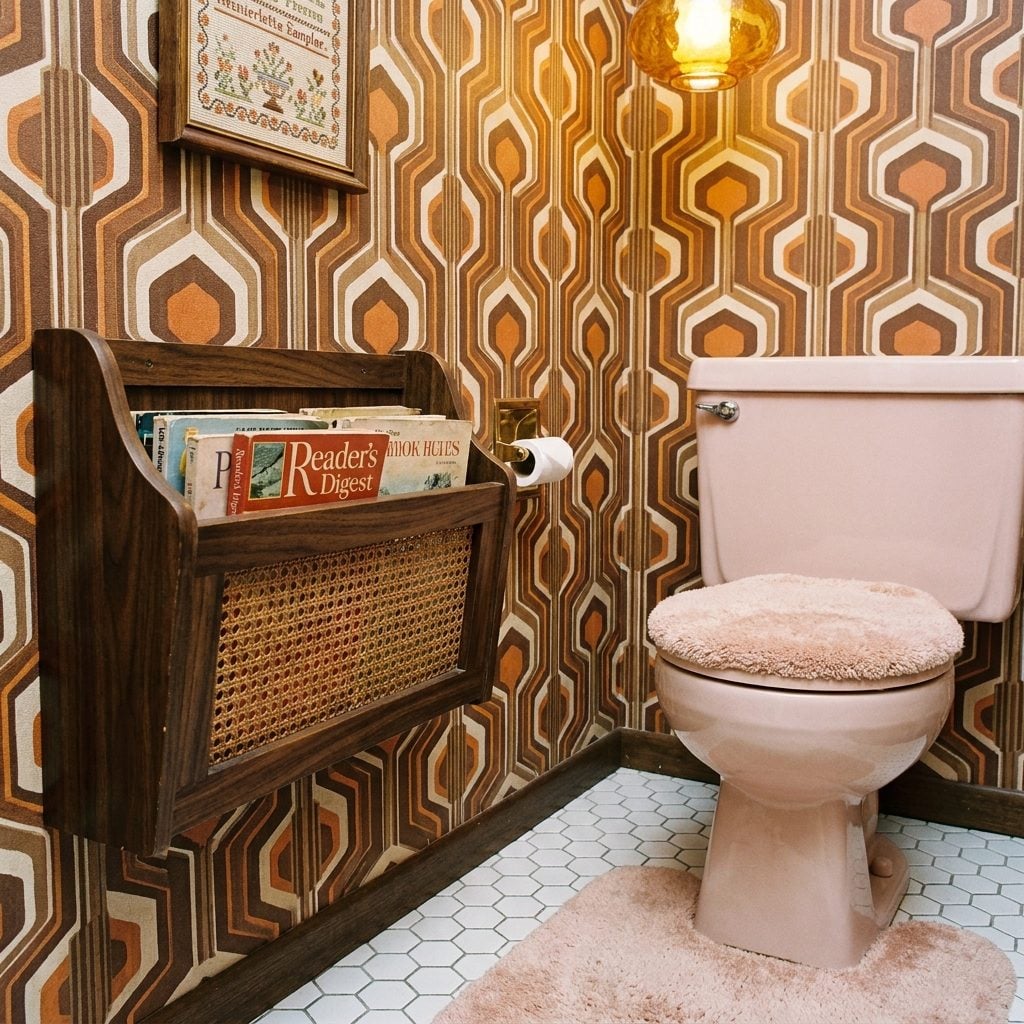
It was right there, bolted to the wall at arm’s reach from the toilet, stuffed with three Reader’s Digests, a TV Guide from two months ago, and a JCPenney catalog with the corner of page 47 folded down. Decorative? Sure. In the same way a fork is decorative.
1. The Air Freshener That Smelled Like Pine Chemicals and Quiet Desperation
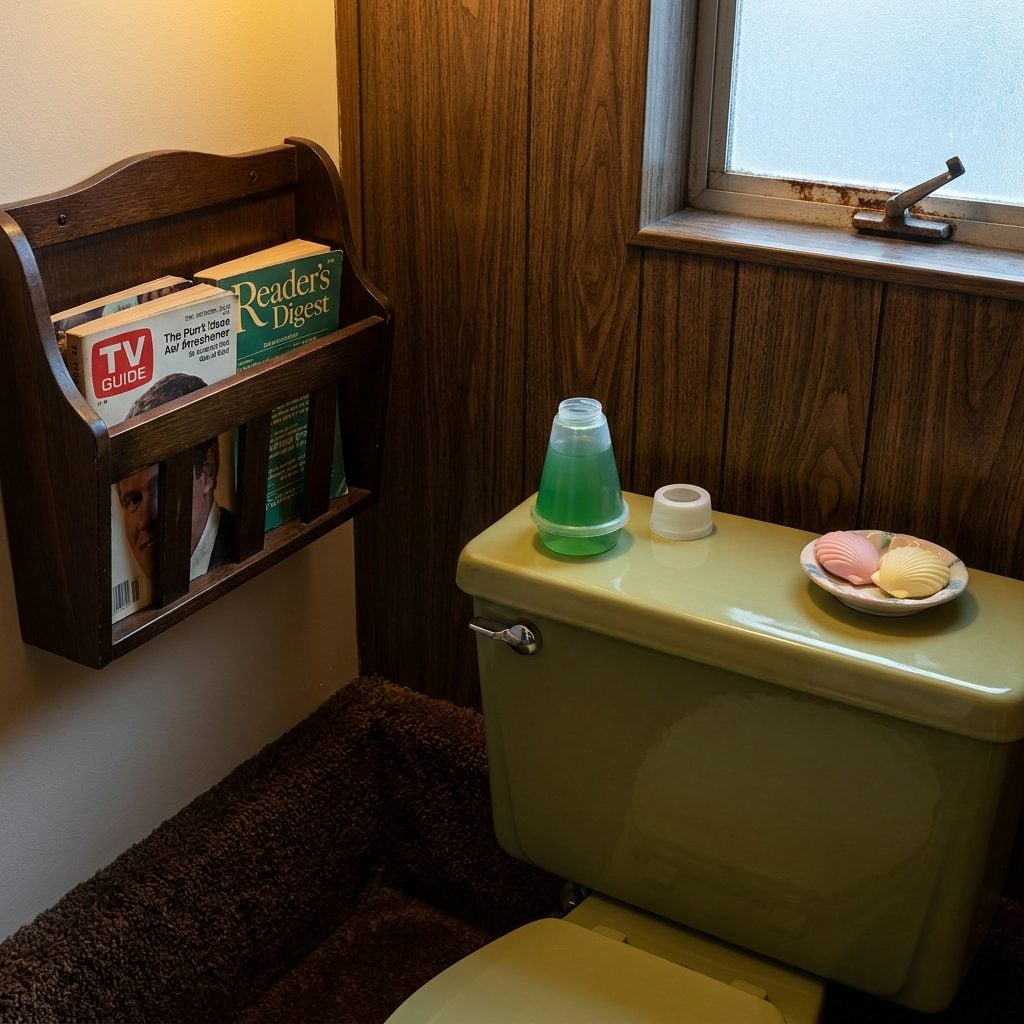
That translucent green cone. You know the one. It sat on the back of the toilet tank like a tiny chemical sentinel, and its job was to make the small sitting room-sized powder room smell like a forest. It did not smell like a forest. It smelled like someone had described a forest to a chemist over the phone in 1968 and the chemist did their best.
Over weeks, the gel would shrink and harden, pulling away from the plastic container walls, leaving a dark ring like the world’s least appetizing dessert. Nobody replaced it promptly. It just sat there, half its original size, contributing almost nothing but a faint antiseptic whisper to the room. And honestly, we accepted that.