
🔥 Would you like to save this?
Welcome to the Transitional home decor ideas style guide where you can see photos of all interiors in the Transitional style including kitchens, living rooms, bedrooms, dining rooms, foyers and more.
In order to come up with the very specific design ideas, we create most designs with the assistance of state-of-the-art AI interior design software. Also, assume links that take you off the site are affiliate links such as links to Amazon. this means we may earn a commission if you buy something.
Related: All Interior Design Styles | All Residential Architectural Styles | Impressively Remodeled Home | Types of Houses | Types of Lots
Transitional Homes (Exteriors)
Check out these spectacular homes showcasing the Transitional style architecture.
1. Delightfully Captivating Glen Iris Home By Canny

This lovely house seems like it has an inner ethereal glow on its white walls contrasted by the dark roofing with a pair of A-frame roofs in front with French windows mirroring those of the ground floor.

This backyard view features a blue pool with lights to make the water glow against the concrete flooring and the white walls of the house exterior that has spot lights pointed at the walls for that ethereal gleam.
[su_divider text=”GO TO TOP” divider_color=”#8a8a8a” link_color=”#2aa4cf” size=”5″ margin=”10″]
2. Prouve Pavilions (Beach Road 7) – Stunning Beachfront Mansion by Hughes Umbanhowar Architects
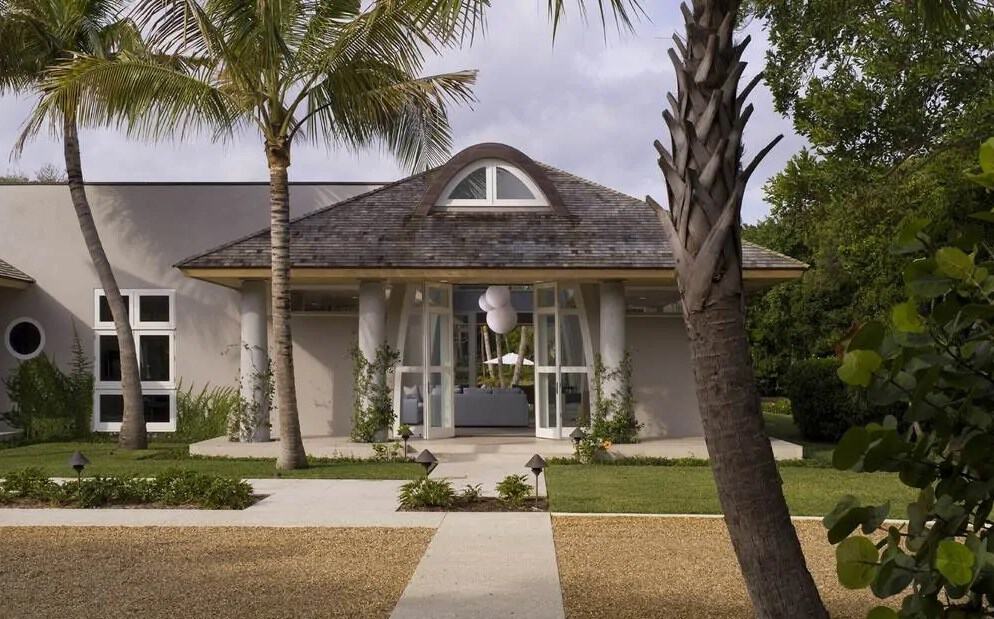
The coconut trees of the landscape surrounding this house is a perfect fit for the hut-like main entryway with a small round dormer window on the top. This entryway has concrete pillars with creeping vines on the bottom for that lost in the jungle aesthetic of the gray-walled house.
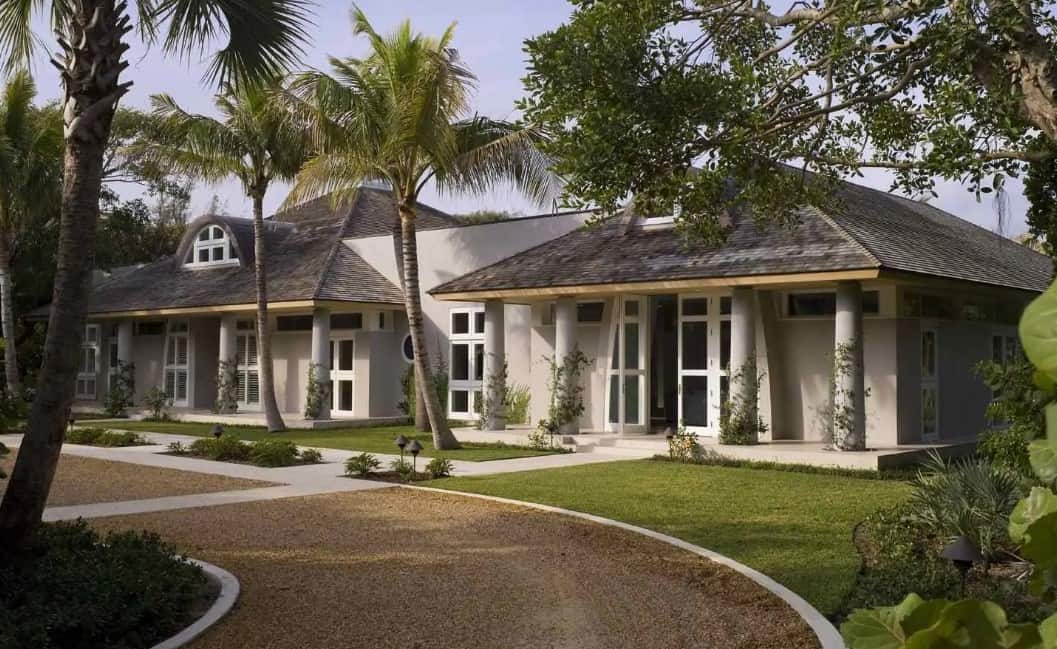
See more. Design by Hughes Umbanhowar Architects
This is a better vantage point of the house that looks like it is made of two over-sized huts with round dormer windows on top. The two hut-like structures are connected by a flat-roofed portion that follows the angles and lines of the white-framed windows and doors.
[su_divider text=”GO TO TOP” divider_color=”#8a8a8a” link_color=”#2aa4cf” size=”5″ margin=”10″]
Transitional Interior Examples (by Room)
The following are photo examples of Transitional style interiors (room-by-room). Below each photo are links that take you to extensive Transitional style photo galleries for each room.
The following examples are from this house (Designed by Audax).
Living Rooms

See more Transitional-style living rooms here.
This amazing white living room of white walls and the white ceiling is complemented by blue velvet cushioned long sofas flanking the modern coffee table paired with a modern fireplace inlaid in a column of white marble.
[su_divider text=”GO TO TOP” divider_color=”#8a8a8a” link_color=”#2aa4cf” size=”5″ margin=”10″]
Kitchens

See more Transitional-style kitchens here.
The hardwood flooring that has a herringbone pattern is a nice complement to the chocolate brown cabinets and drawers of the kitchen island and peninsula with a modern oven that has a matching metallic vent hood over it.
[su_divider text=”GO TO TOP” divider_color=”#8a8a8a” link_color=”#2aa4cf” size=”5″ margin=”10″]
Dining Rooms

See more Transitional-style dining rooms here.
This dining room has lovely velvet green-backed chairs with black seats perfectly contrasting the golden trimmed modern dining table matching the golden modern chandelier that shines due to the natural light coming in from the curtained windows.
[su_divider text=”GO TO TOP” divider_color=”#8a8a8a” link_color=”#2aa4cf” size=”5″ margin=”10″]
Bedrooms

See more Transitional-style bedrooms here.
This simple bedroom has an elegant golden chandelier with crystal accents hanging from the white ceiling that blends with the white walls. This is paired with a white cottage bed that contrasts the hardwood flooring with a herringbone pattern.
[su_divider text=”GO TO TOP” divider_color=”#8a8a8a” link_color=”#2aa4cf” size=”5″ margin=”10″]
Bathrooms

See more Transitional-style bathrooms here.
The white marble flooring of this bathroom pairs well with the freestanding bathtub that is placed in an alcove of white walls with marble wainscoting that matches the flooring. There is an elegant dark wooden two-sink vanity across from the bathtub that has a white marble countertop the same as the floor.
[su_divider text=”GO TO TOP” divider_color=”#8a8a8a” link_color=”#2aa4cf” size=”5″ margin=”10″]
Entry Halls

See more Transitional-style entry halls here.
This brilliant foyer has shiny white marble flooring that has a pattern of black lines perfectly contrasting the white wooden door and walls as well as the white tray ceiling that supports a semi-flush crystal lighting that elevates the elegance of the foyer.
[su_divider text=”GO TO TOP” divider_color=”#8a8a8a” link_color=”#2aa4cf” size=”5″ margin=”10″]
What is Transitional Home Decor?
In the dictionary, transitional is a process or period of change or transition. In terms of design, it is referring to a blend of two common design styles: traditional and modern, or contemporary. What transitional design does is takes the simplistic features of traditional design and merges them with the textured pieces of contemporary design.
The blend of these two styles in one area can make a cohesive design space. This design is also very flexible as it allows you to pick and choose which pieces from these two styles you want in your space.
Transitional spaces are a mix of both masculine and feminine features that allows everyone to feel comfortable in the space. The furniture features straight lines and gently curved profiles with diverse and texturized fabrics and graphics. This design also takes a minimalistic approach to accessorizing the room.
It doesn’t use a lot of colors, using mostly neutral colors like whites, grays, tans, and olives, and rooms are lightly decorated. Using too many pieces of art or objects in the room will confuse the eye and distract from the design’s aesthetic of a comfortable and casual feeling.
Transitional Interior Style Features
The transitional design mixes different features of modern and traditional together, to make one cohesive design. Some features a transitional interior will have are:
- Furniture with straight lines and rounded curves: they do not often have sharp edges as seen in modern or contemporary designs, but instead feature curved lines. It’s gentler and less elaborate than in traditional design.
- Neutral colors: the use of neutral colors like creams, taupes, grays, and blacks, allow the furniture to take center stage in the layout and design. It also allows room for different textured fabrics to counterpoint the furniture and provide a calming atmosphere and appeal.
- Diverse fabric: texture doesn’t just have to be used in the furniture or adornments. The fabric can be texturized as well. Still using neutral colors, pillows and furnishings can use textures like corduroy, suedes, leather, and chenille, to make a well-rounded room. With any graphic or texture, whether it be in the fabric of the furniture or in rugs, you want to avoid complex patterns.
- Incorporating texture: some textures used in this style are wood, glass, fabric, steel, leather, and metal. Just like the texture in the fabric, texture in the furnishings and different accessories, adds to the entire aesthetic of the home.
- Minimal accessories: Transitional design is a simple and clean approach to modern and traditional styles. With this style, you will want to minimize the use of accessories as to not confuse the eye. Due to the nature of the neutral and subdued furnishings, the minimal accessories you have will be more focused.
- Focal point: find the focal point of the room and decorate with one large painting instead of multiple small paintings. Choose something impactful that will highlight the rest of the room, using similar colors and aesthetics.
Transitional Exterior Style Features
The exterior of a Transitional home is often an updated version of a Colonial or Craftsman style home. Some features a transitional home will use to update a traditional home are:
- Clean lines: transitional homes feature a lot of clean lines, often curved lines. This doesn’t change with the exterior walls.
- Exaggerated features: an update to a traditional home will be to add features that are a little more exaggerated. For example, a wide roof overhang or lots of glass windows.
- Open-floor layouts: having an open-floor design layout will allow the nature of the simple and texturized furnishings and accessories and neutral colors to blend throughout the home for a more cohesive layout.
- The use of different materials: transitional homes will oftentimes use some industrial materials like a metal roof, vertical siding, and grid railing, to update the classic design plans of a farmhouse or a cottage.
- Oversized windows: they are often asymmetrical and are oversized to allow plenty of natural light into the home. Due to the transitional style being simple and not overly accessorized, letting natural light into the home draws you into the focal points of the home and makes it more calming and comfortable.
- Contrasting colors: Still using neutral colors like whites, tans, and grays, having contrasting shades and tones will add depth to the exterior of the home.
Transitional Furniture Styles
The blend of modern and traditional styles makes the furniture in a transitional design classic and timeless. The furniture features straight lines with rounded or curved shapes. There are no sharp edges like in modern designs, and pieces are of average size, not overly large or too small. The stylings of the furniture are meant to be cozy and relaxing.
They are less ornate than traditional furnishing styles but may have small carvings meant for embellishments or accents. The furniture shape is simplistic in nature and uses neutral colors that are subdued, allowing the fabric to be a little more playful. You can use different sorts of fabrics, like suedes, leathers, or corduroys to provide charm to the furniture.
The style of transitional brings with it a balance of both masculine and feminine pieces throughout the home. The overall feel of transitional furniture is that there is something for everyone and everyone can feel at home and comfortable with the design.
Using a mix of simplistic designs, textured fabric, and minimal decor, the design style is allowed to stick with a simple and sophisticated aesthetic. Some examples of the furniture you can find in a transitional home are:
- The Madison Park Tyler swivel chair. This chair is upholstered in a light grey fabric with silver nailhead accents along the edging. It has a curved back that brings comfort to the piece and could fit in any room of your house.
- The Divano Roma sofa. The sofa has a curved shape with tufted gray fabric that gives it a sophisticated and classic look. This chair would go well in the living room with some geometric throw pillows and glass coffee and end tables.
- The Nathan James Asher glass top coffee table is perfect to go with the Divano Roma sofa. The table is supported by brass metal legs with an oak storage shelf under the glass top. It uses a simplistic style that will go well with any piece and blends well with the transitional style.
Transitional Design Materials
Due to its simple and minimalistic approach to design, the transitional design uses many different materials to elevate the design. The materials often used are:
- Wood: different types of woods are used in transitional designs. Dark or painted wood can be used, but mostly wood that is lightly treated is used more in this design style.
- Glass, wood, and metal: these items are often used together and can be used in different combinations, like in a glass tabletop or a mirrored frame. Glass and metal are not often used on their own.
- Textured fabrics: different types of fabrics are used in this design because of the use of neutral colors. Different textures and graphics in the fabric bring charm to the design. Some fabrics used are suede, chenille, and corduroy.
- Leather: a popular material in transitional design. The leather is oftentimes distressed and is used because of the style’s casual and comfortable aesthetic. It also adds a bit of formality to the design space.
Transitional Decor
Decorating your home in the transitional style is where you need to hone your skills with less is more. Too many decorations in a home can be overwhelming. Add small touches of things here and there to draw your eye into the room. Instead of having multiple pieces of art on a wall, get one large piece instead.
You can add texture to the room by adding some throw pillows or rugs with geometric patterns or texture. Some pops of color can be added throughout, but most of the home should be neutral based. Some key decor pieces would be mirrors with simple frames, room dividers, and candles or plants in small pots and holders. Here are some examples:
- Gold Geometric Wall Mirror: this piece will draw your eye into the room with its geometric aspect and a hint of gold in this simplistic design.
- Cream and Orange Area Rug: this rug, though with some orange coloring, is subtle enough to blend in with a simplistic design. It can go with anything in your home and adds a little pop of color for a homey effect.
- Benjara Wooden Screen: this item is a large item that could easily be the focal point of your room. It has little leaf embellishments and wood construction will allow you to coordinate other accessories around this item. It will also go well with the area rug and geometric mirror.
Styles that mix well with Transitional Design
Transitional design can integrate well with other styles. Even though transitional designs are already a combination of traditional and modern design, these styles can easily be added to any other design style, like coastal, minimalist, industrial, country, and rustic. These design elements can elevate the room by adding touches of these styles to your home in a subtle way.
The transitional design already contains a minimalistic approach to its design space, so that style is easy to mix in. The exterior and interior of a transitional home also add some industrial elements such as using metal on the roof and as accents on the furniture or in the accessories. What about the other styles? Just add a few pieces of the style you want to your home to evoke a different feeling.
If you’re looking for a transitional coastal design, why not add some wainscoting on the walls, and throw in some gold features to the accessories throughout your home. Maybe gold knobs on the dresser? Both rustic and country designs have natural elements to their pieces. You can add these natural pieces to your transitional design by adding wood, stone, or brick pieces to your home.
You may already have some of these textures in your home, so it will be an easy blend. All you need is to know what type of feel you want to have in your home and add those little touches to get the vibe you are looking for.
The History of Transitional Design
Transitional design, as stated before, is a blend of modern and traditional styles. Modern design was popular from the 1940s to the 1980s. During this time, particularly the 1950s is when the transitional design came into play. Why? People began remodeling their homes. They kept the straight lines of the modern furniture, but added some curves to it, and toned down the color for a more subdued look.
To get a better idea of how classic style blended with the modern, let’s look at the kitchen. The kitchen is usually one of the first things homeowners remodel or update in their homes. Modern designs have smooth, straight-lined furniture, large glass windows, and furniture with geometric shapes, patterns, and bright colors. Red, yellow, and orange were very popular in modern designs.
With a transitional design, the modern ideals of angles and straight lines may remain in the furniture and cabinetry, but the colors will be more subdued. Instead of red or yellow chairs with white cabinets, the cabinets may be a neutral color with a little touch of detail, like brass or metal handles or a backsplash. This creates a blending of the new and old. This design is still popular today, especially with Millennials.
Why Transitional Design should be in your home
Transitional design is a pleasing aesthetic for any home. It combines two different styles, modern and traditional, together to make a comfortable and classic home. It has minimalistic values and simple designs that allow it to blend with other design styles as well.
This design allows a lot of room for flexibility, which is often rare in interior design. You can choose elements from different styles and add them to your home that will still allow it to look and feel cohesive and comforting.
Want a plush sofa? Get it. How about some fun fabrics filled with different geometric shapes? Get some throw pillows for the sofa. The transitional design calls for neutral colors, but that doesn’t mean you have to stick with just using whites, grays, and tans. You can add little pops of color here and there if it makes you happy.
The key to a transitional home is simple and minimal accessories. You don’t want to overdo yourself with knick-knacks and pictures and more scattered around your home. Pick a few pieces that you like, and display them throughout the home. Everything will blend together and this is where less is more.
Your eye will be drawn to these small little touches, instead of being confused if there were too many decorations. Take the elements you like and create your own little cozy home. Something you’ll enjoy daily. That’s what’s important and makes transitional design the best design style for your home.