🔥 Would you like to save this?
Nobody brags about a shutoff valve. There’s no Pinterest board for condensate switches. But anyone who’s lived through a burst pipe behind a wall, or a bathtub leak that soaked a ceiling they couldn’t reach, knows something the rest of us learn the expensive way. The smartest things in a house are the ones you never notice until the day they save you a four-figure repair. Oddball, unglamorous, overkill-looking right up until the exact moment they aren’t.
44. Marine-Grade Deck Plates That Keep Tub Plumbing Reachable
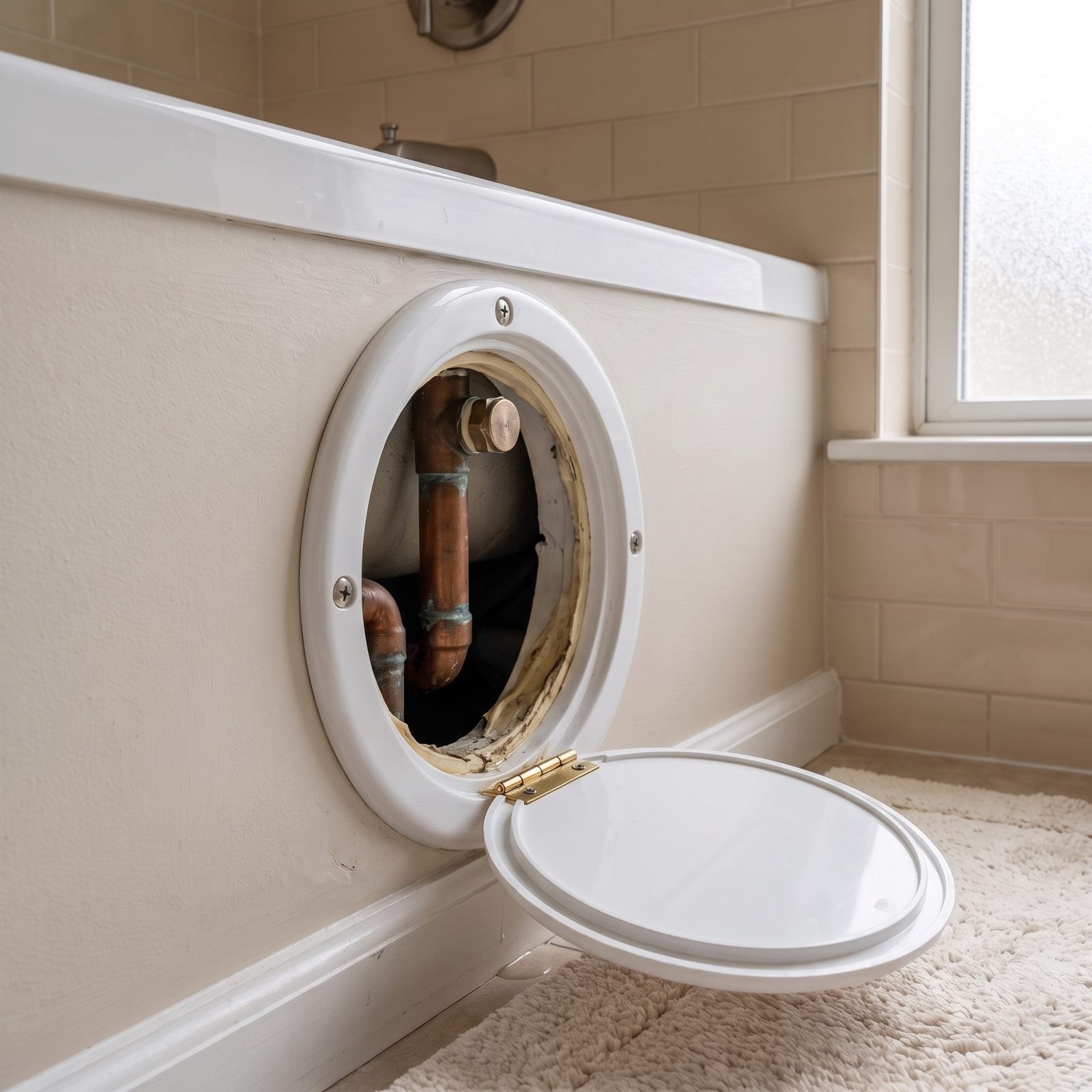
Builders love to seal a tub drain behind solid tile and call it finished. Then the overflow gasket fails, and the only way in is a saw and a prayer. A marine-grade deck plate — the same swing-open cover used on boat hulls — sets flush into the tub skirt and gives you a hand-sized porthole straight to the P-trap and overflow.
In order to come up with the very specific design ideas, we create most designs with the assistance of state-of-the-art AI interior design software. Also, assume links that take you off the site are affiliate links such as links to Amazon. this means we may earn a commission if you buy something.
It costs a few dollars and reads as a design decision rather than a repair scar. The screwed-down ring stays watertight and the hinged lid swings aside in seconds, so when something drips upstairs you’re reaching the joint instead of demolishing a wall to find it.
43. Recessed Shutoff-Valve Boxes That Stay Accessible Behind Furniture
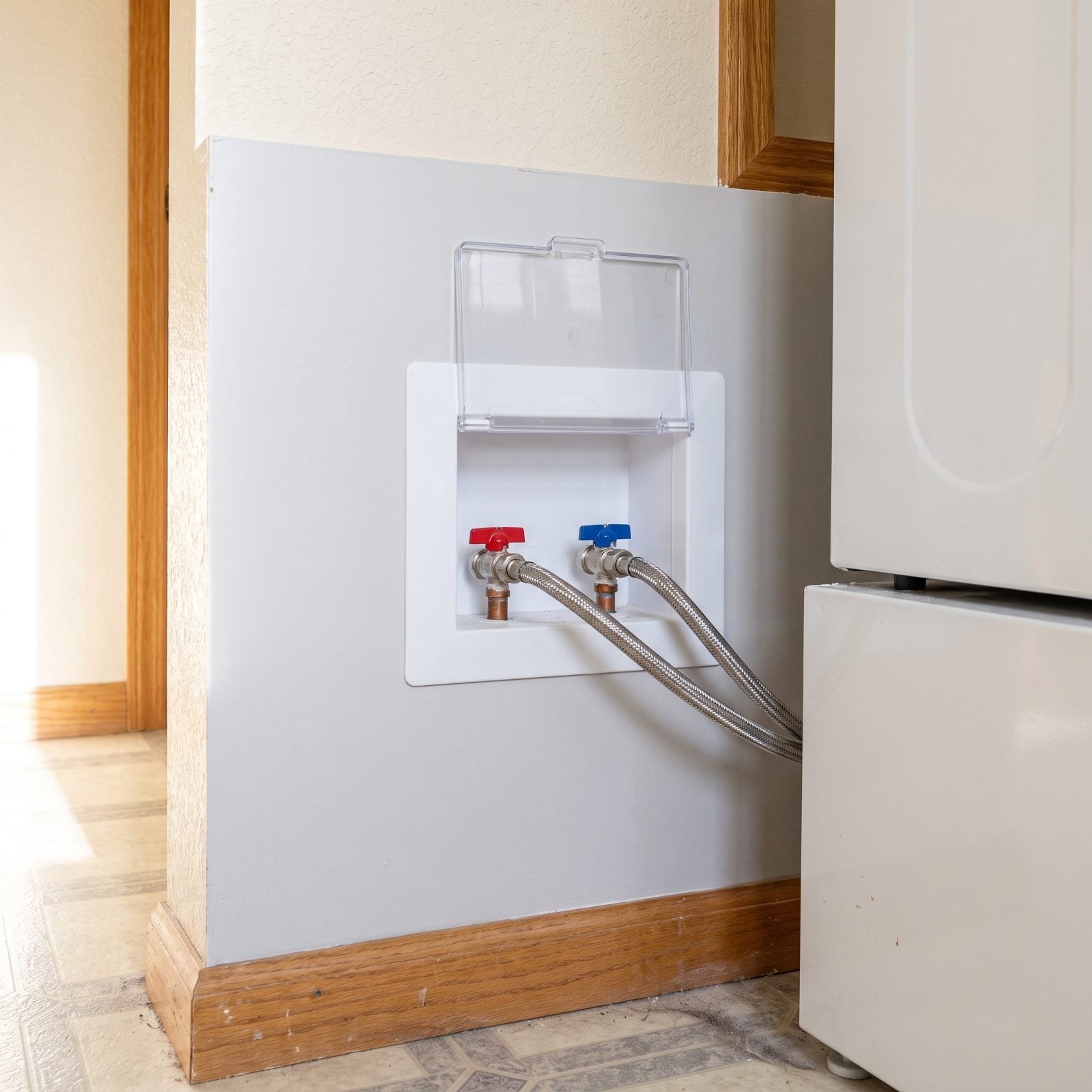
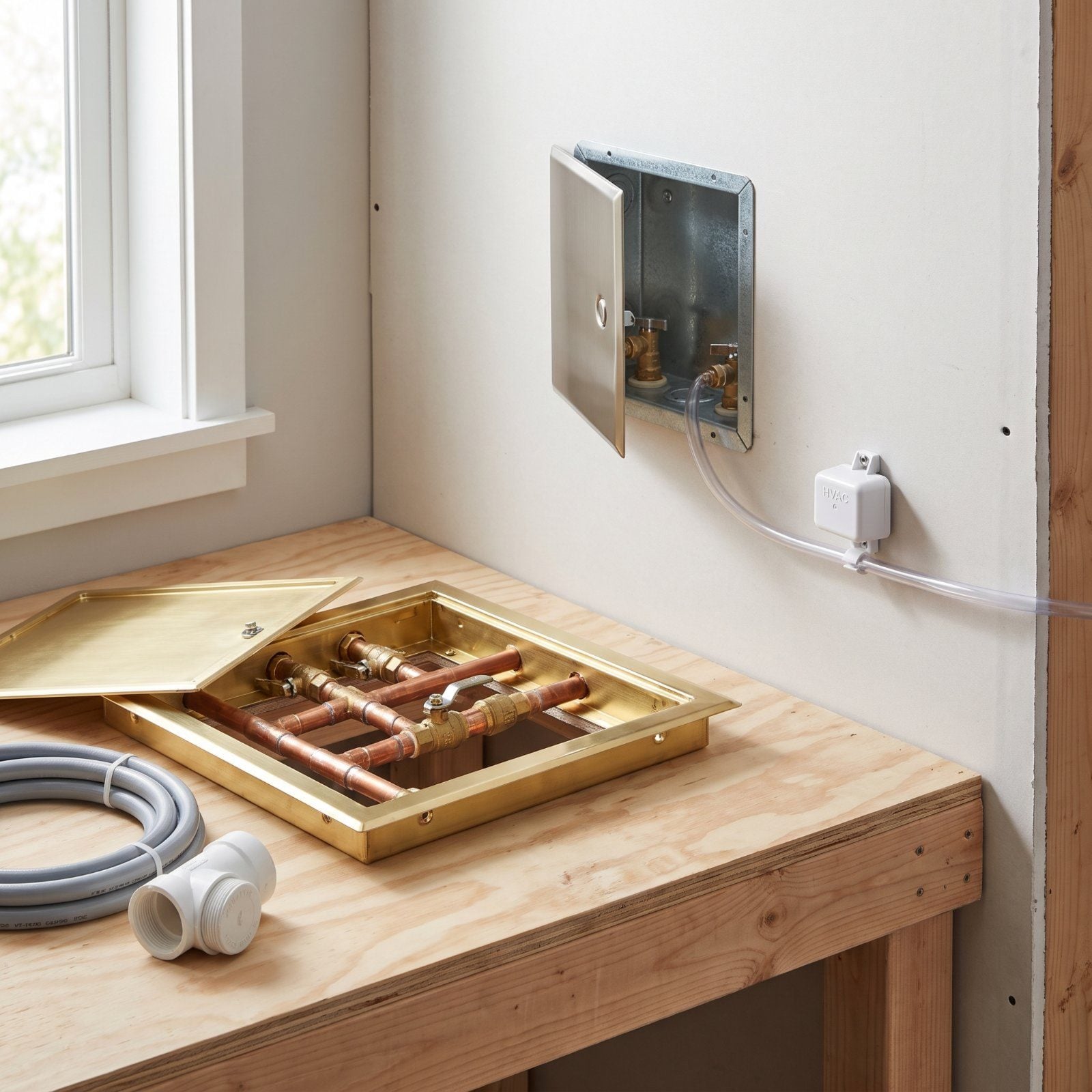
Shutoff valves get buried in the worst spots. Behind the fridge, under the dresser, pinned against a wall you can’t reach without three people and a dolly. A recessed valve box fixes that by sinking the valve into the wall cavity behind a flush cover, so furniture can sit right in front of it.
Here’s what it buys you. When a supply line lets go, every second you spend dragging appliances is a second the floor is soaking, and flipping open a cover to crank the valve closed is the whole difference between a mop and an insurance claim.
42. An HVAC Condensate Safety Switch That Prevents Overflow Damage
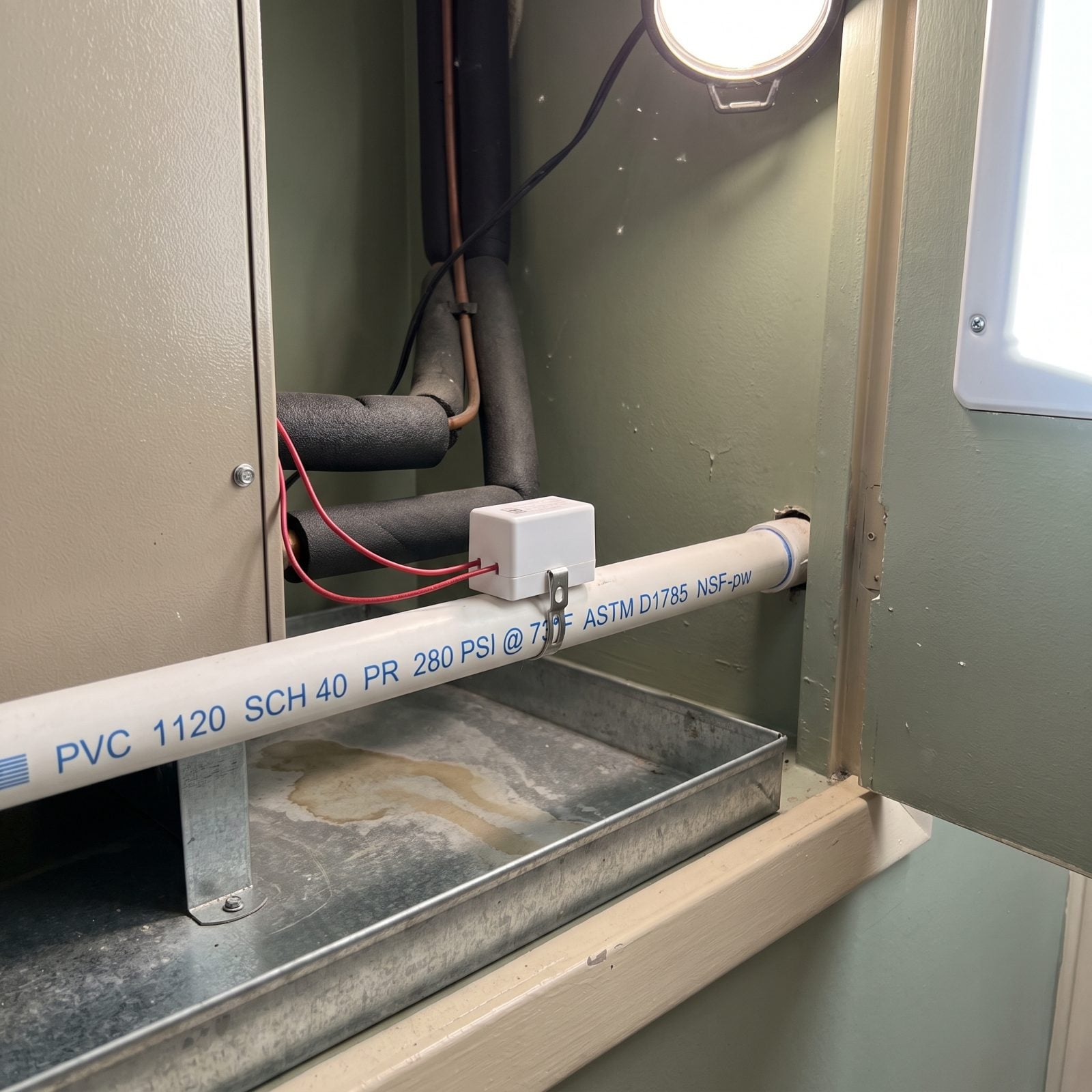
Here’s a leak that ruins ceilings slowly and silently. The condensate drain on an air conditioner clogs with algae, water backs up, and the overflow pan quietly fills until it spills through the drywall below.
A float safety switch cuts the system off the moment water rises past a set point, but only if it sits where the water collects. The white box shown here is zip-strapped to the outside of the horizontal PVC drain pipe, so it could never sense rising water. A working float switch goes inline on a tee in the drain line or down in the pan itself. Mount it there and you get no water, no damage. And the dead air conditioner on a hot afternoon tells you something’s wrong before the ceiling does.
41. French-Drain Inspection Risers for Finding Underground Blockages
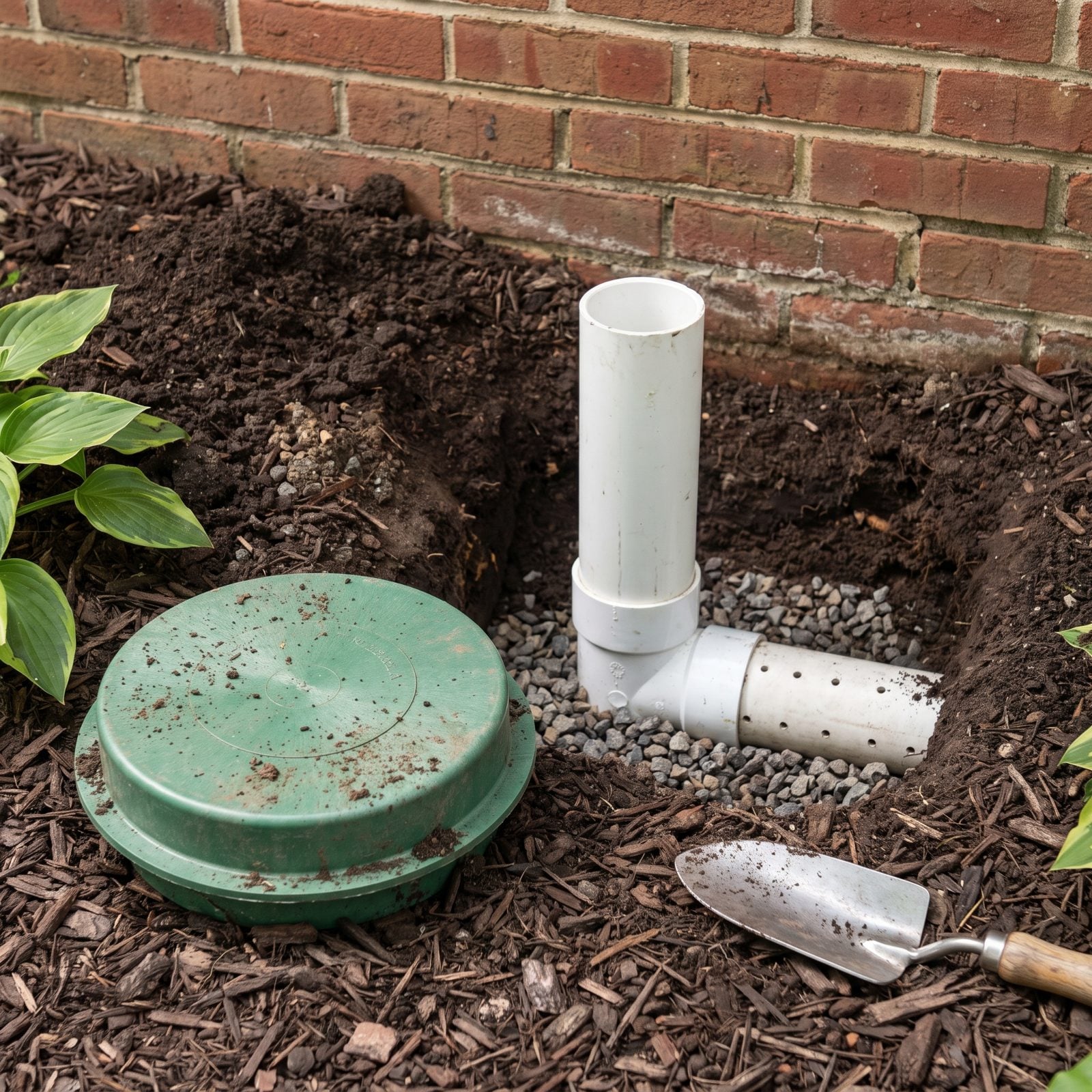
A buried drain is a mystery until it fails.
French drains silt up over the years, and when they stop moving water the usual move is to guess, dig, and hope. Inspection risers end the guessing — simple capped vertical tees spaced along the run, giving you a window to look down, snake a camera through, or flush the line with a hose.
Catch a partial clog early and you clear it with water pressure. Miss it, and you’re renting an excavator to find out where the blockage actually sits. The caps vanish into mulch, so nobody knows they’re there except you on the day it counts.
40. A Downspout Cleanout Port That Makes Clogs Easier to Reach
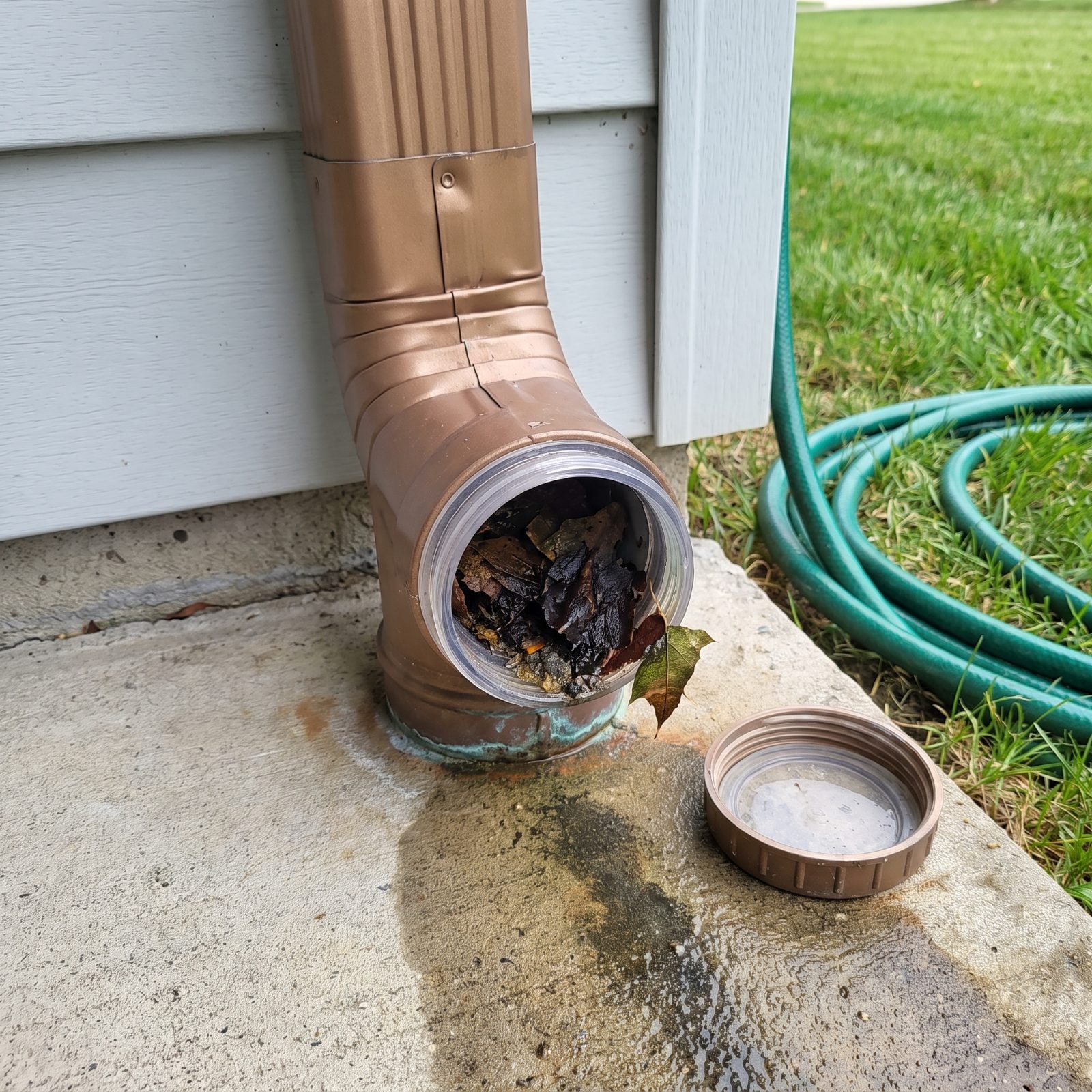
Downspouts clog exactly where you can’t see: at the underground elbow, packed with wet maple leaves until the gutter overflows down your siding. A cleanout port at that elbow gives you a cap you pop off to reach the jam with a hand or a hose.
Most people never think to add one. It turns a ladder-and-coat-hanger ordeal into a two-minute job in rain boots.
39. An Empty Conduit Sleeve Beneath a Walkway for Future Cables
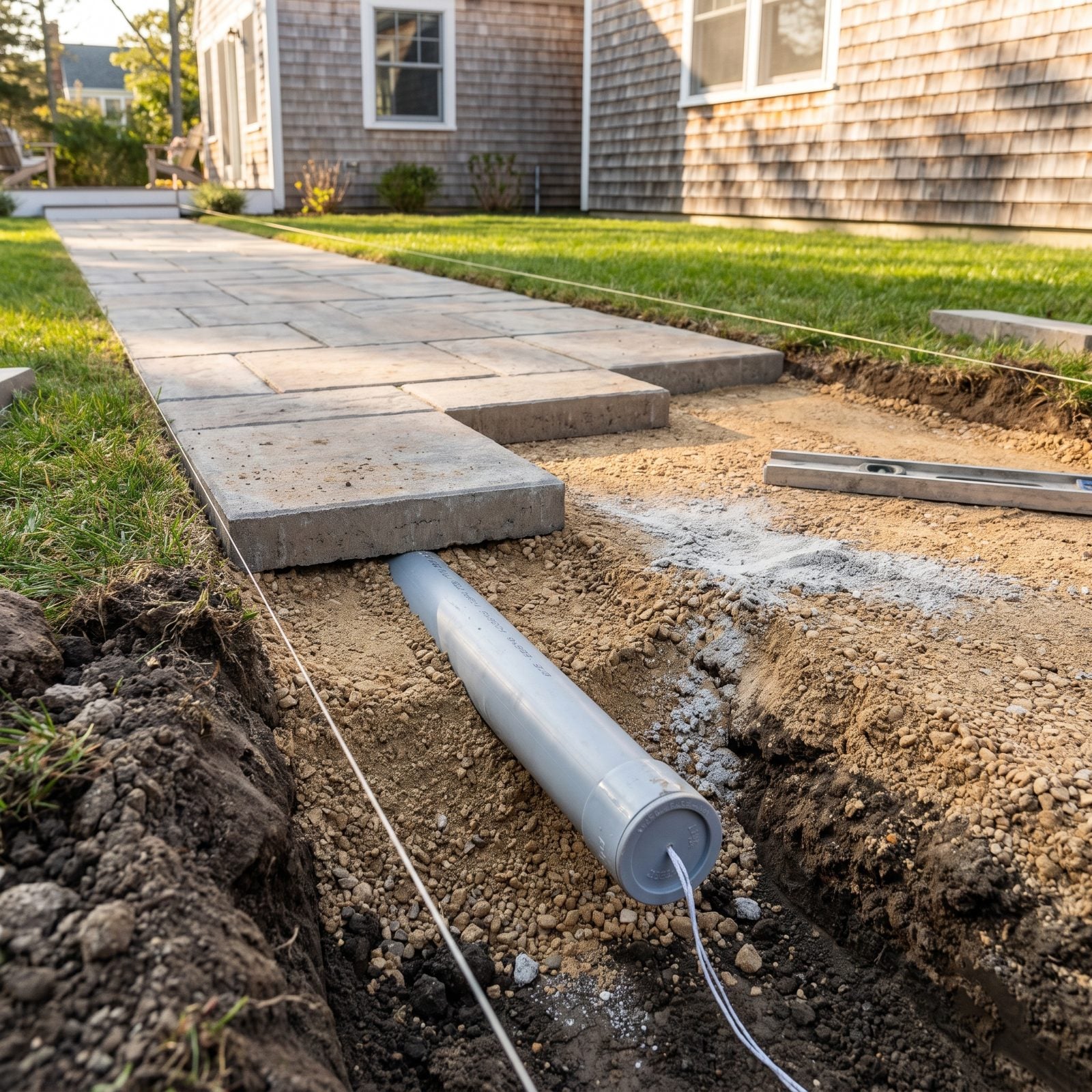
The cheapest thing to do during a walkway pour is bury an empty pipe. The most expensive thing to do later is cut that same walkway open because you forgot to.
An empty conduit sleeve with a pull-string left inside means that someday — low-voltage lighting, a security camera run, an EV charger on the far side of the yard — you feed the cable through in minutes. No trenching, no busted concrete. Nobody regrets the spare sleeve. Plenty of people regret the slab they had to jackhammer.
38. A Cyclone Separator Bucket That Keeps the Shop Vacuum From Clogging
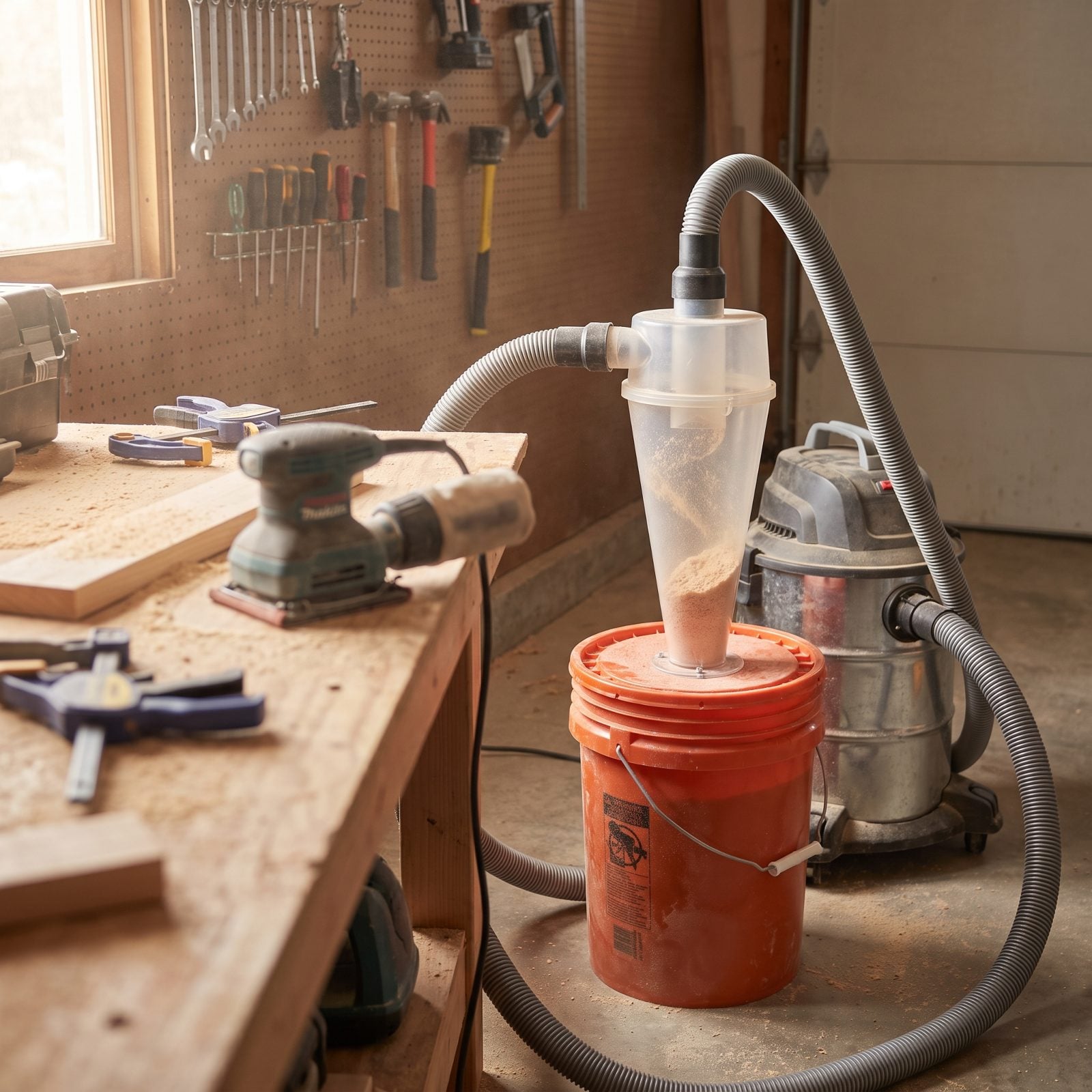
Shop vacuums lose suction the second the filter cakes over with fine dust.
A cyclone separator sits between the tool and the vac, spinning out nearly all the heavy debris into a cheap bucket before it ever reaches the filter. The vac barely fills, the filter stays clean, and suction holds steady through an entire project instead of fading after ten minutes.
Empty a bucket when you’re done, not a clogged canister three times mid-job. Anyone who works wood or does drywall sanding swears by these, and the first time you use one you get it.
37. Push-Button Hot-Water Recirculation at Faraway Faucets
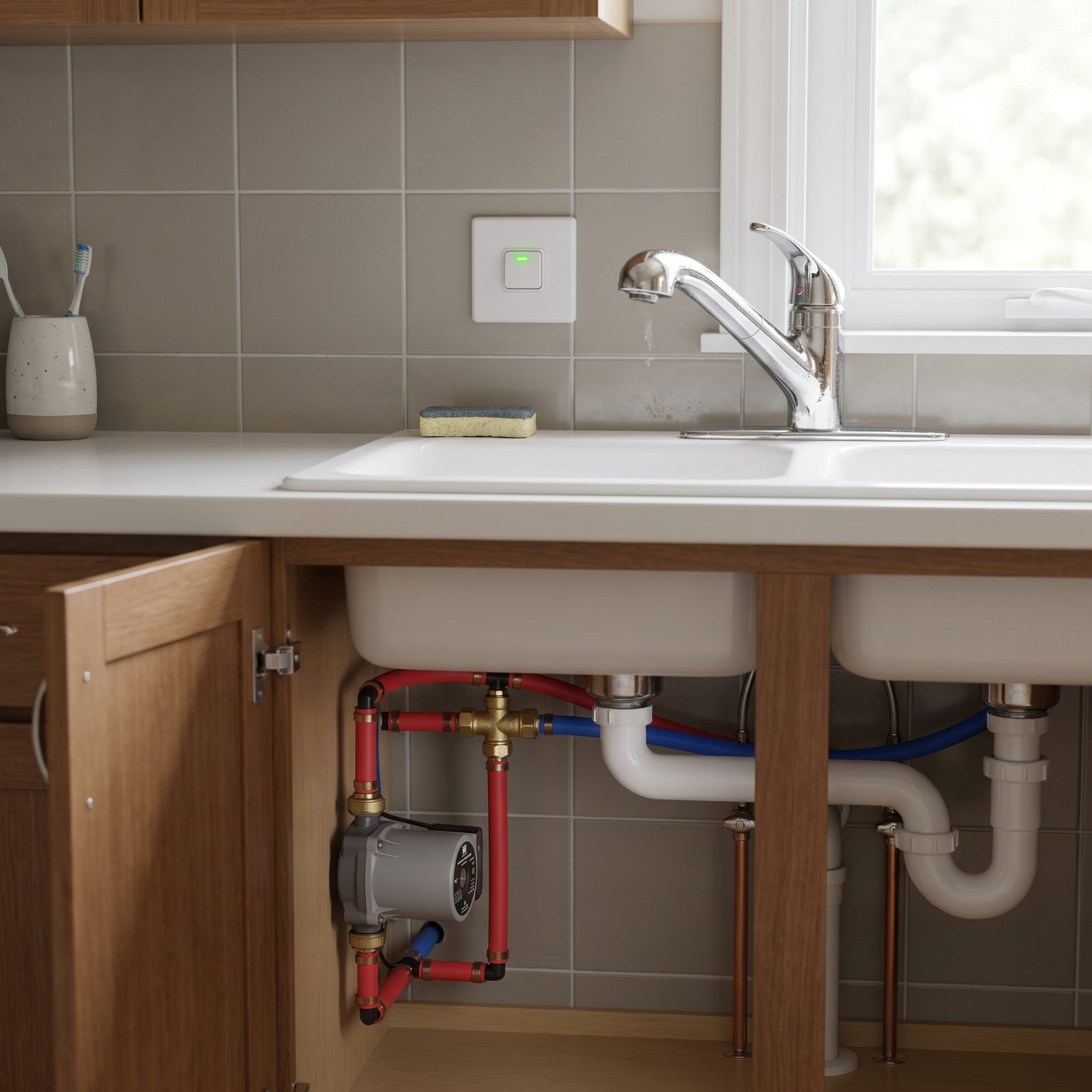
You know the wait. The faucet farthest from the water heater runs cold for thirty seconds before it warms, and all of it goes down the drain. A push-button recirculation setup lets you tap a button, wait a few seconds, and get hot water on demand without a pump running all day and burning energy.
The button goes at the sink. The pump and a crossover valve do the work under the cabinet. A small change that erases a daily annoyance and stops pouring warm water into the sewer.
36. A Hot-Water Hose Bib for Washing Pets and Patio Furniture
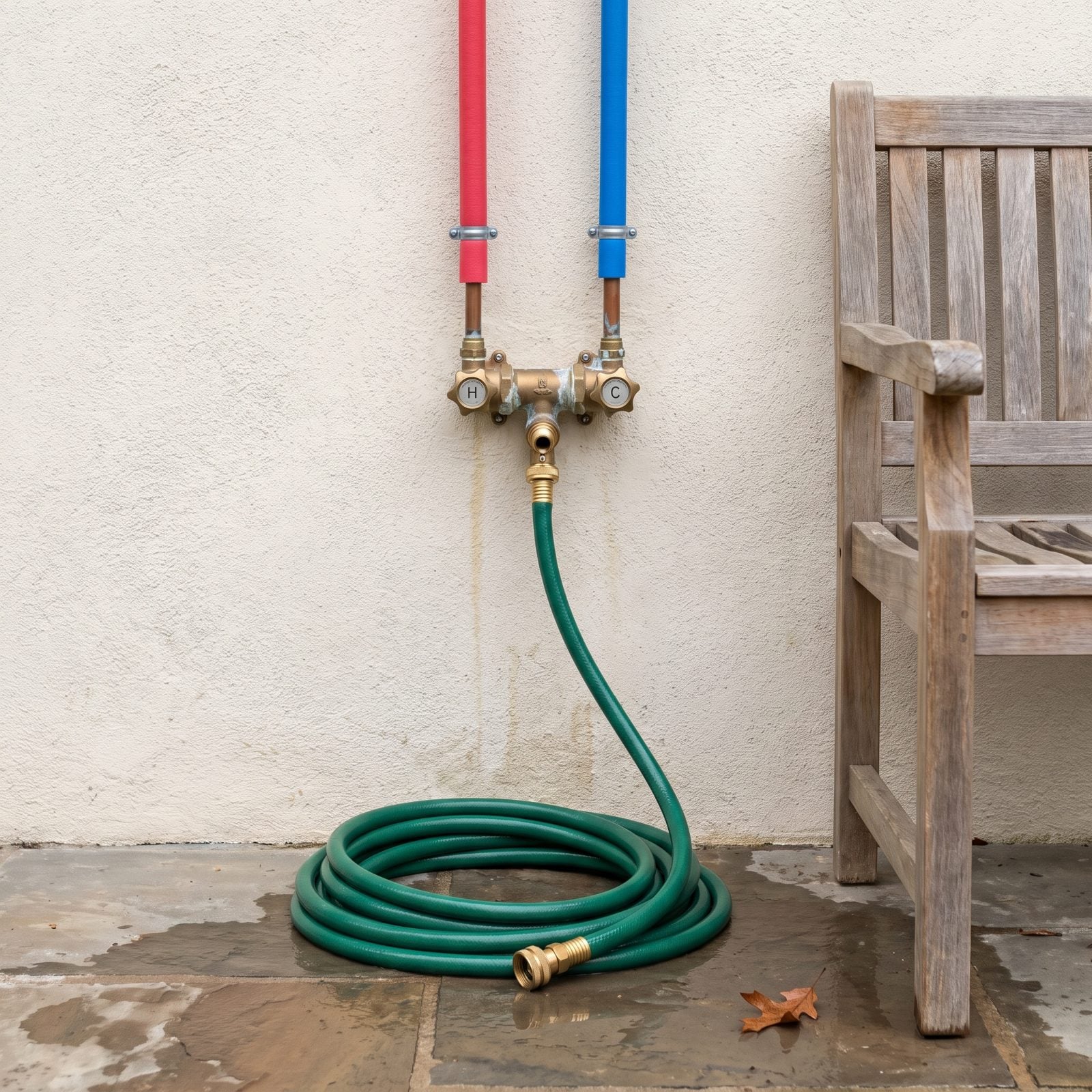
Cold-water bibs are standard. A hot-and-cold mixing bib outside is the oddball that quietly earns its keep. Rinsing a muddy dog in freezing water is a fight, while scrubbing grease off patio furniture or a grill grate with warm water actually works.
Two supply lines run to a mixing spigot, so you dial the temperature right at the wall. In winter it thaws a frozen line or warms a bucket for the car. The kind of thing you don’t know you want until you’ve had one.
35. A Central-Vacuum Toe-Kick Inlet for Sweeping Kitchen Crumbs Away
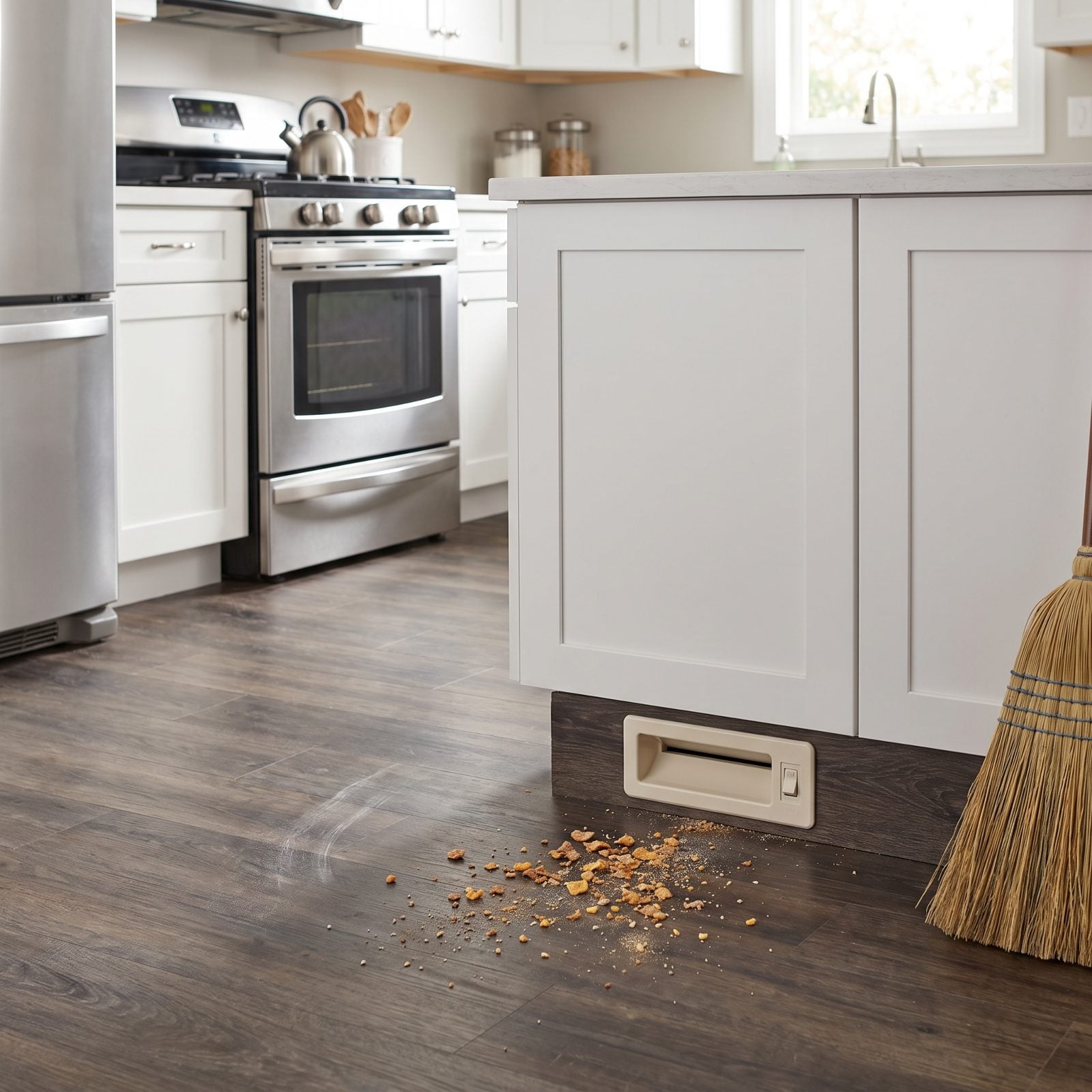
Sweep the kitchen floor, and you still end up chasing a dustpan around while half the pile scatters. A toe-kick central-vacuum inlet kills the dustpan entirely. You sweep crumbs toward a slot at the base of the cabinet, tap the switch, and the central vac pulls it all away.
Since the kitchen is where most daily sweeping happens, this is where the inlet pays off fastest. Spilled flour, cereal, pet food — gone in seconds, no bending over.
34. A Ceiling-Mounted Retractable Extension Cord in the Garage
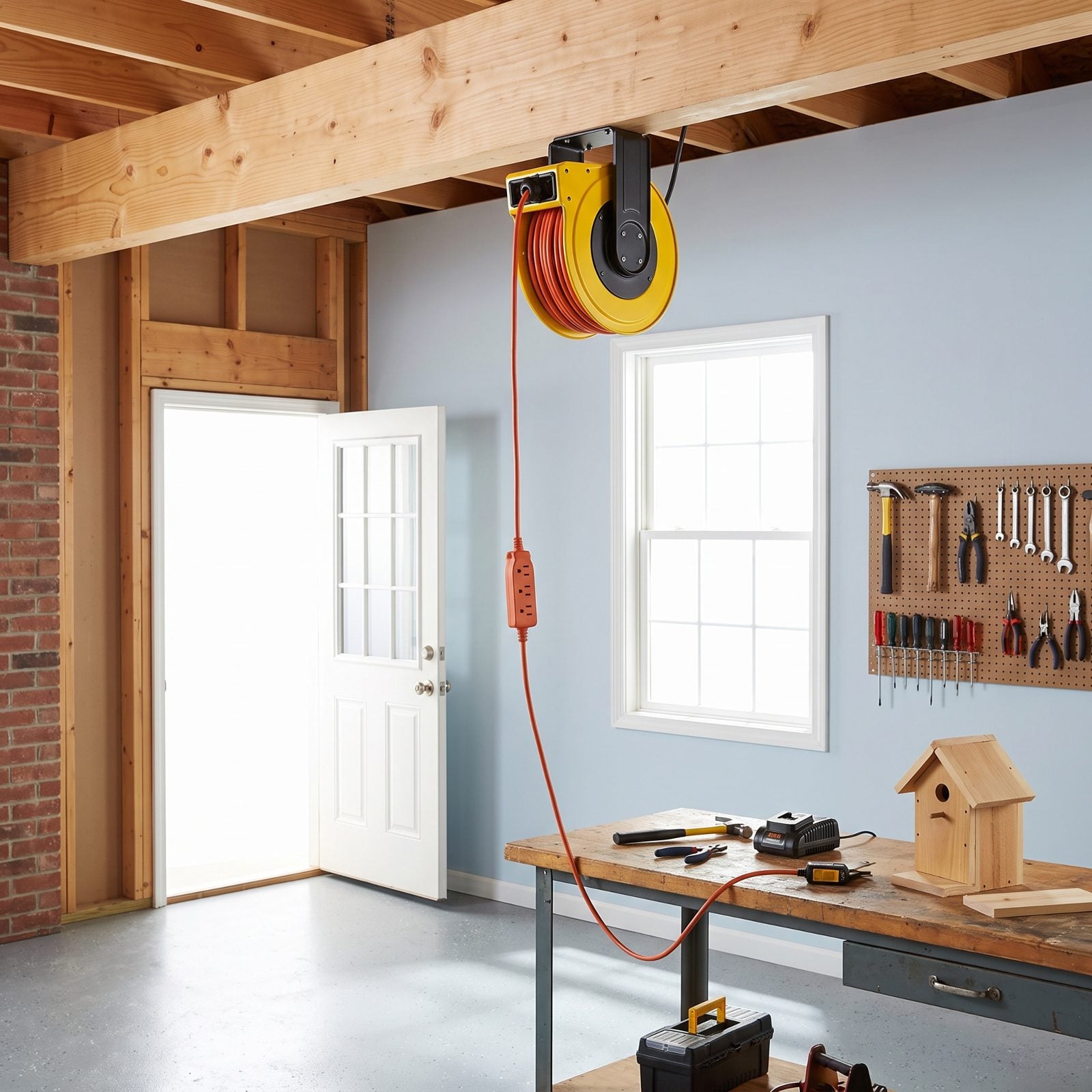
Tripping over a cord dragged across the floor gets old fast. A reel bolted to the ceiling solves it by pulling power down from above, right over the workbench, then snapping back up when you let go.
The win is floor space. Nothing to coil, nothing to catch a tire, nothing to kick into a corner and forget about for two years. Pull what you need, work, release, and the cord disappears overhead where it belongs.
33. Switched Weatherproof Outlets Under the Eaves for Seasonal Lights
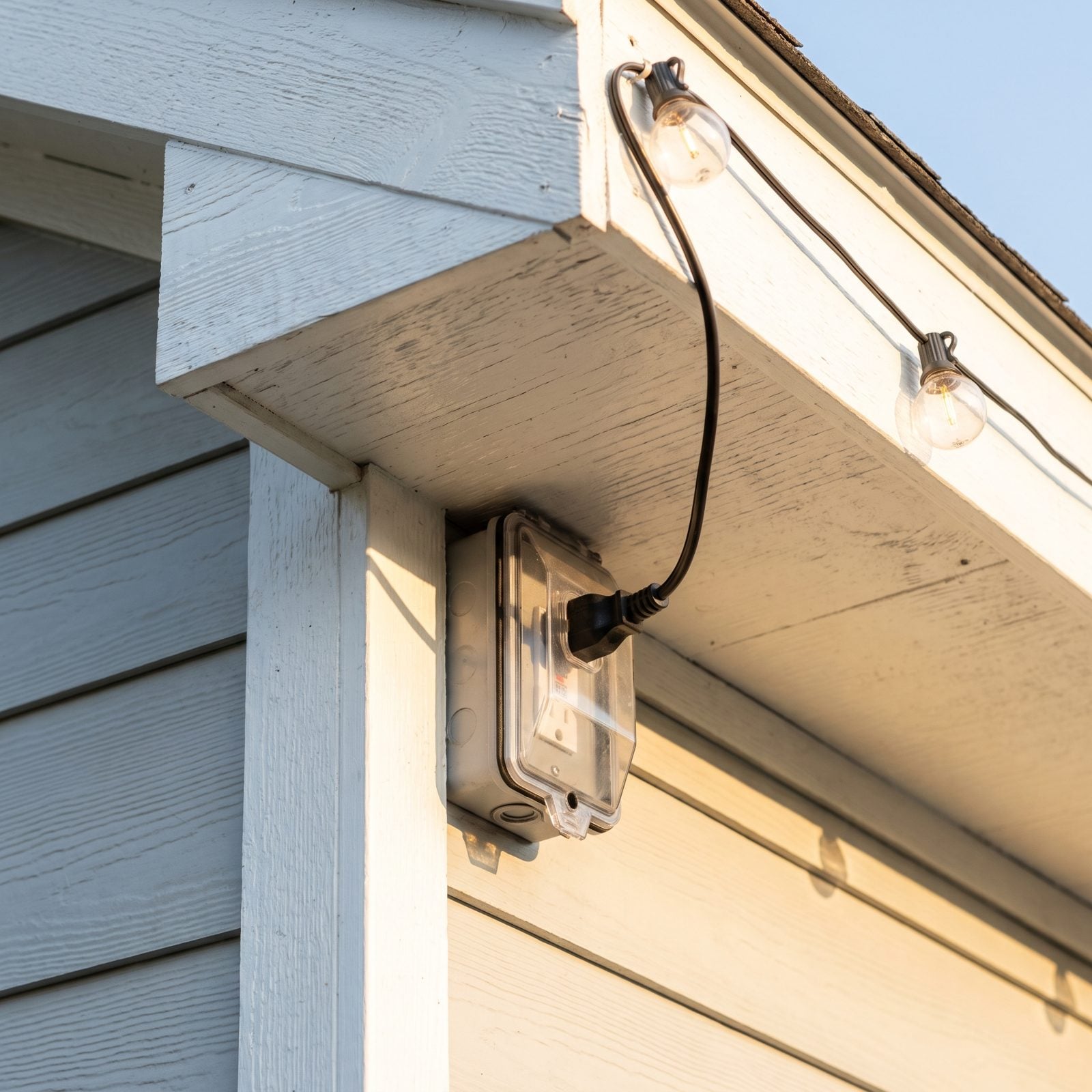
Running an extension cord out a window every December is a chore nobody misses once it’s gone. Weatherproof outlets tucked under the eaves put permanent power right where holiday lights and landscape fixtures want it.
Wire them to a switch inside, or a timer, and the whole display goes on and off from the kitchen. No ladder in the cold. No cord snaking across the porch for the dog to chew through. You feel it every single season.
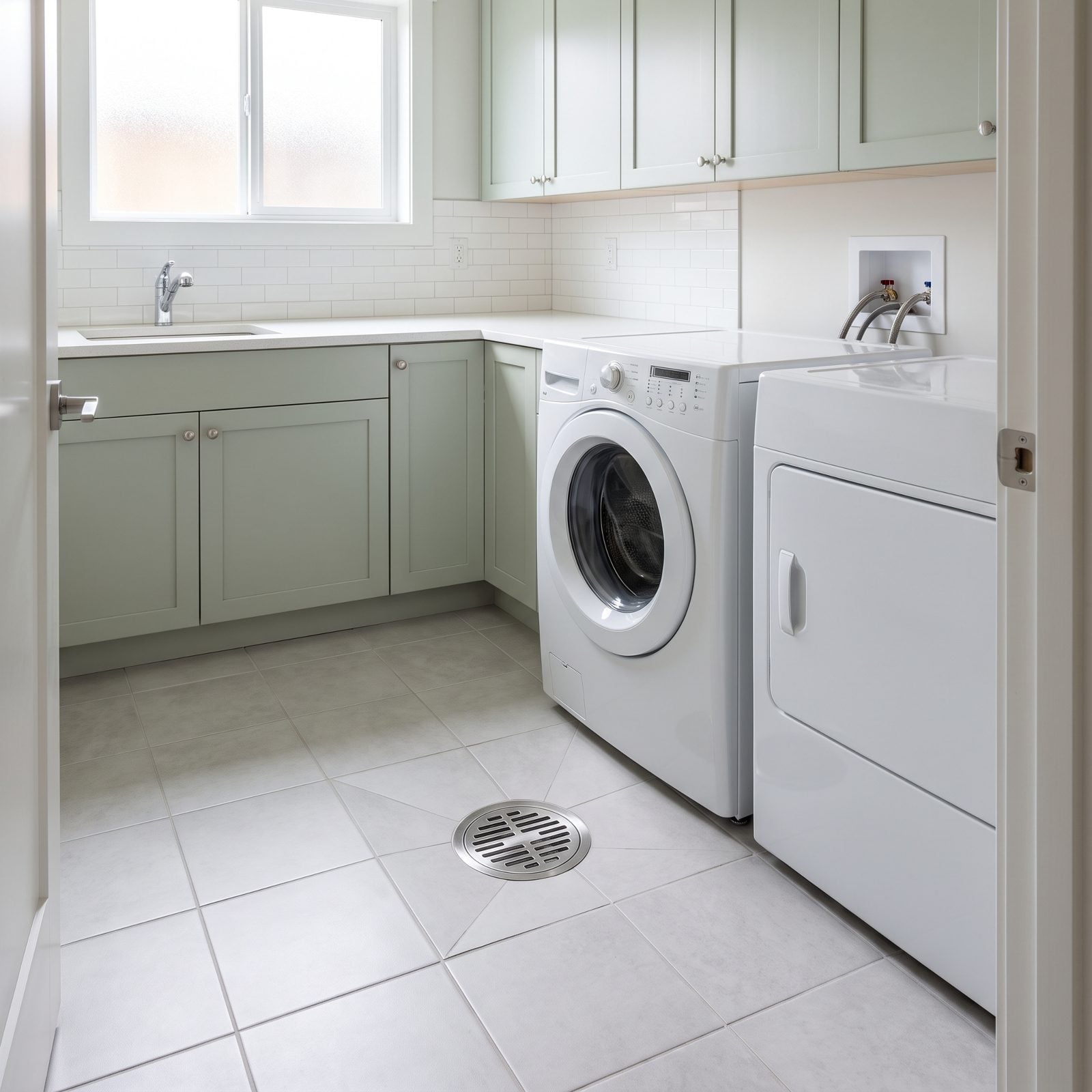
32. A Laundry-Room Floor Drain for Containing Appliance Leaks
🔥 Would you like to save this?
A washer hose can fail without warning, and when it does, water doesn’t wait around for anyone to come home.
A floor drain turns a flooded first floor into a wet tile you mop up later. The floor slopes, the water goes down, and the hardwood in the next room stays dry. Costs little during a build or remodel, almost nothing to use, and you forget it’s there right up until the day it saves the ceiling below.
31. A Dishwasher Leak Tray Paired With a Water-Sensor Puck
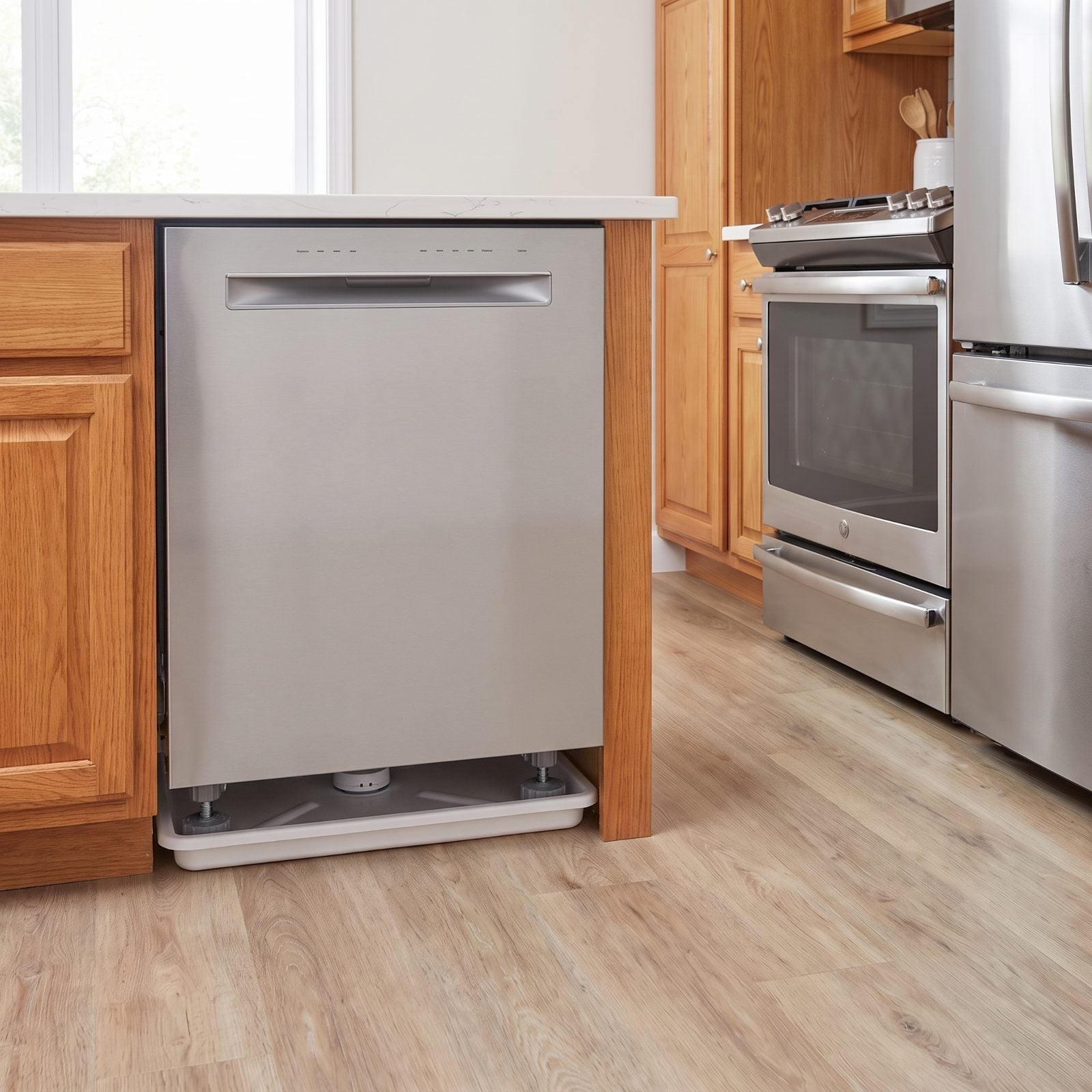
The worst dishwasher leaks are the slow ones. A pinhole drip runs for weeks under the cabinet, soaks the subfloor, and announces itself only when the cabinet sides start to warp.
A shallow tray set on the floor of the dishwasher bay, right under the machine itself, catches the drip, and a battery sensor puck sitting in that tray screams the second it gets wet. Together they turn a silent disaster into a thirty-second fix. Your kitchen is only as sound as the floor you can’t see.
30. A Utility-Sink Faucet With Hose Threads for Filling and Rinsing
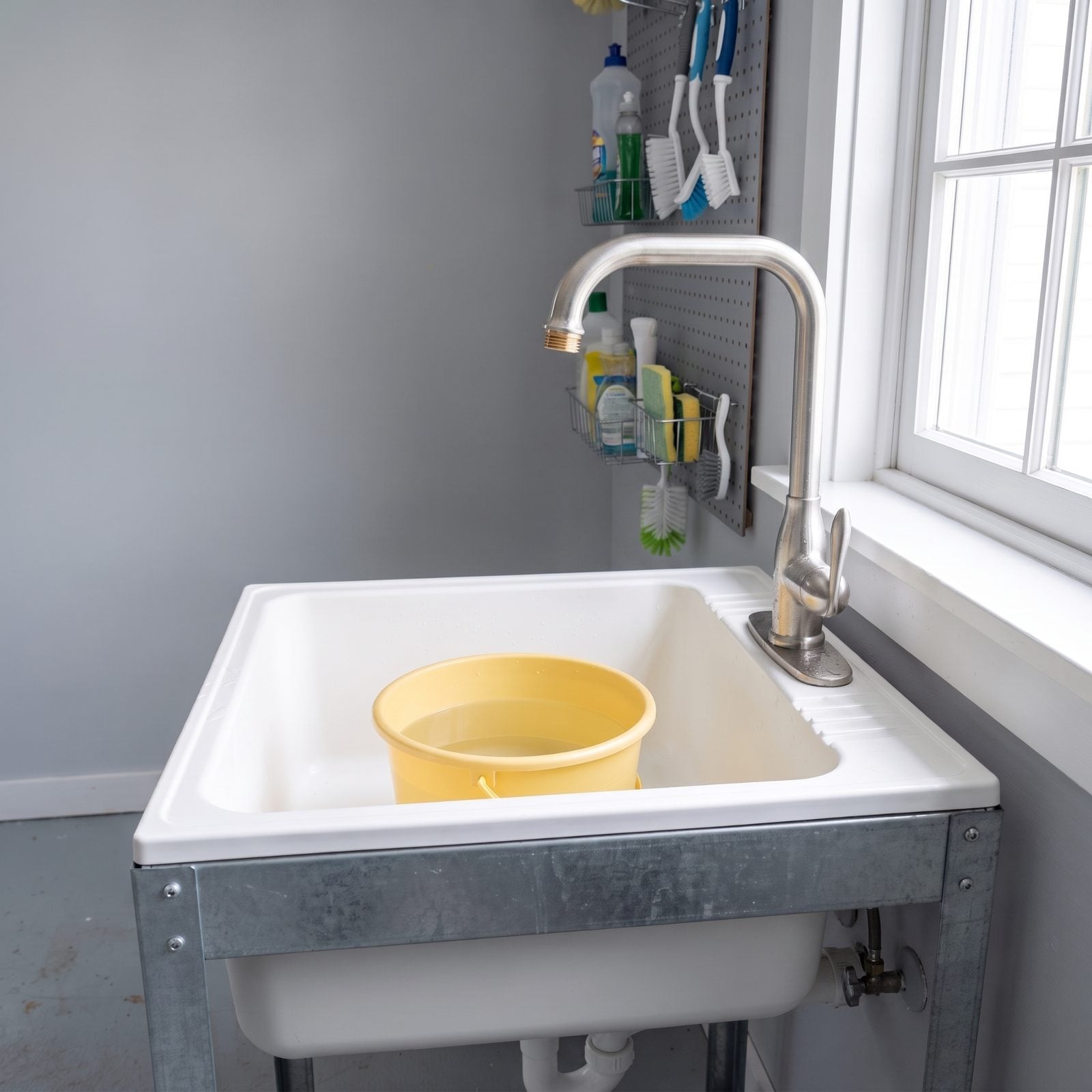
A spout with hose threads is a small detail that changes how a utility sink gets used.
A bucket sits right in the deep basin to fill under the bare spout; screw on a short hose when you need more reach. Rinse a muddy boot. Flush a paint roller. You even reach the corners of the sink a fixed stream never touches. It’s a two-dollar difference at install time and a daily convenience afterward.
29. A Recessed Shower Foot Ledge That Simplifies Shaving
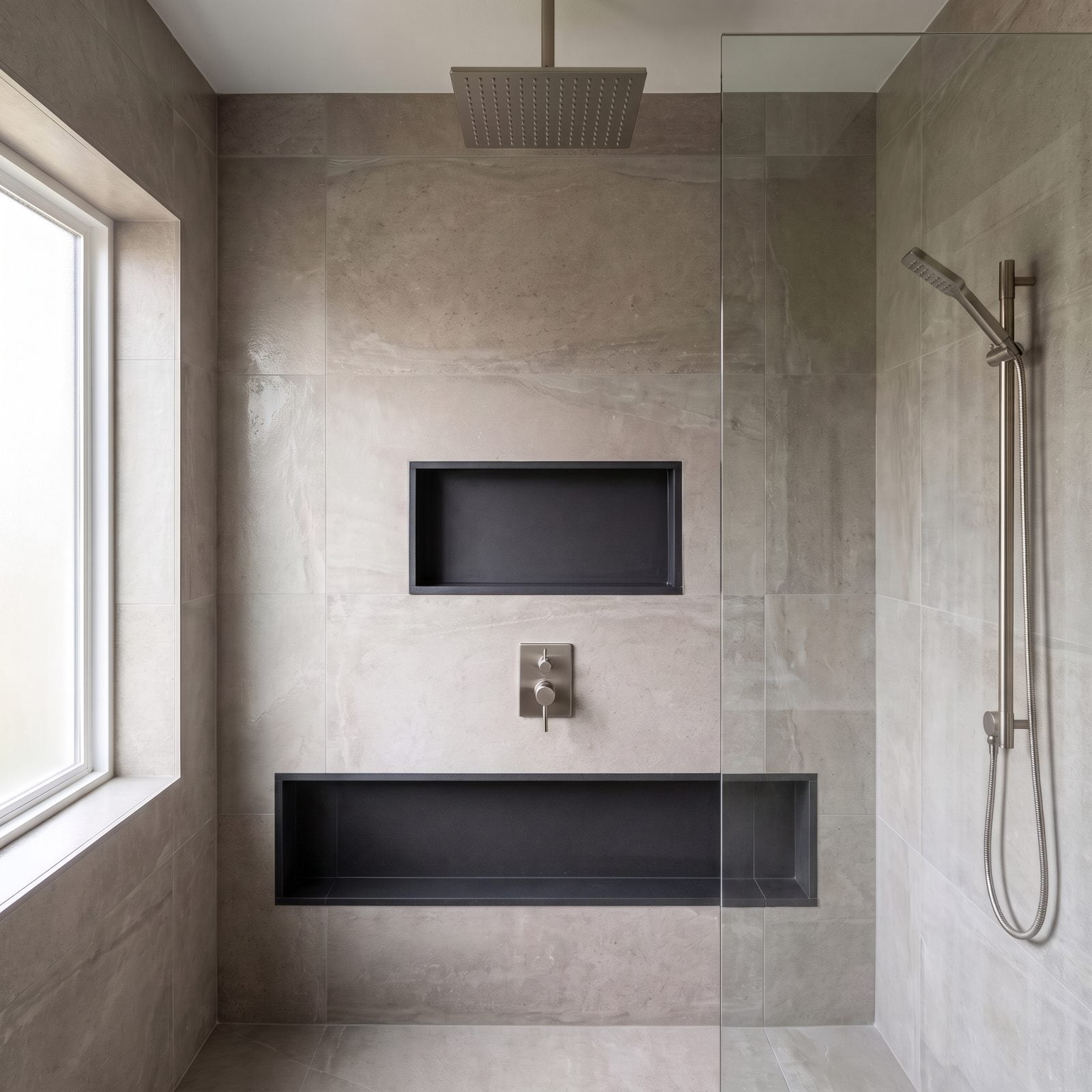
Balancing one foot against a slick tiled wall while holding a razor is how shower injuries happen.
A recessed ledge built into the wall gives that foot somewhere to go, at the right height and out of the spray path. Because it’s recessed fully into the wall, its dark metal box sitting flush with the tile, it eats no elbow room, and it doubles as a spot to park a bottle. Anyone who shaves their legs knows exactly why this earns its keep.
28. A Heated Boot Dryer Permanently Installed in the Mudroom
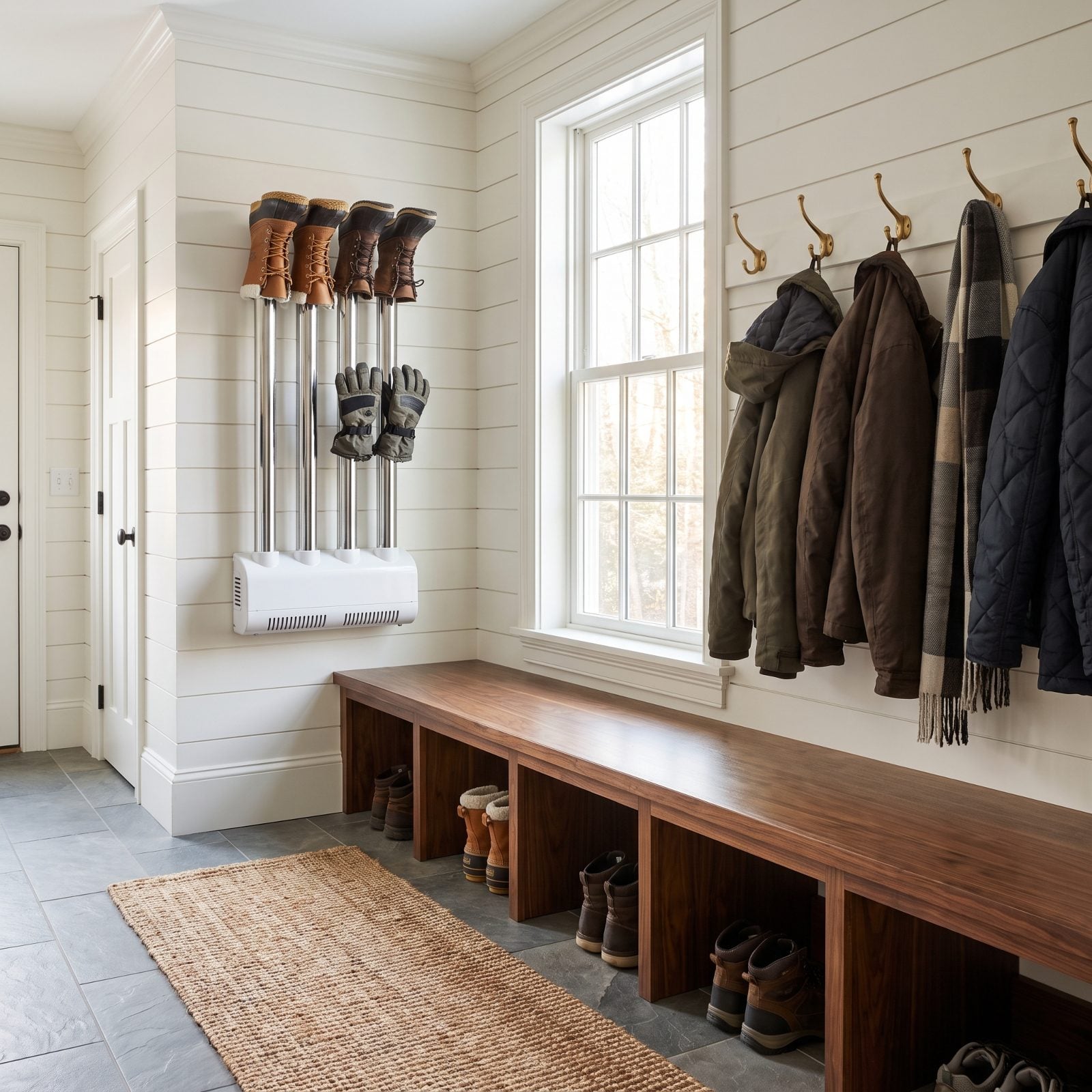
Wet boots that never fully dry breed cold feet and that damp basement smell that trails you back indoors.
A hard-wired boot dryer in the mudroom ends it. Slide the boots on, let gentle warm air run overnight, and dawn brings a dry, toasty pair waiting at the door. Mount gloves and liners on the same unit while you’re at it. For anyone in a snow climate, it goes from nice-to-have to don’t-know-how-you-lived-without-it inside one winter.
27. Motion-Activated Baseboard Lights for After-Dark Hallway Trips

The 3 a.m. walk to the bathroom shouldn’t force a choice between a stubbed toe and an overhead light that wakes the whole house.
Motion sensors tucked near the floor fix both. They throw a warm, low glow across the floor the moment feet hit the hall, bright enough to see by and dim enough that nobody fully wakes up.
26. Photographs of Open Walls Taken Before the Drywall Goes Up

Walk the house before the drywall closes it up, phone in hand, and shoot every open wall.
Where the studs sit. Where the pipes run. Which bay hides the electrical, which one the drain stack. Months later, when a shelf needs anchoring or a leak needs chasing, those photos turn a guessing game into a known quantity. Hunting for a stud behind finished drywall is one of the small miseries of homeownership, and this skips it entirely.
25. Paint Formulas Written Behind the Corresponding Switch Plates
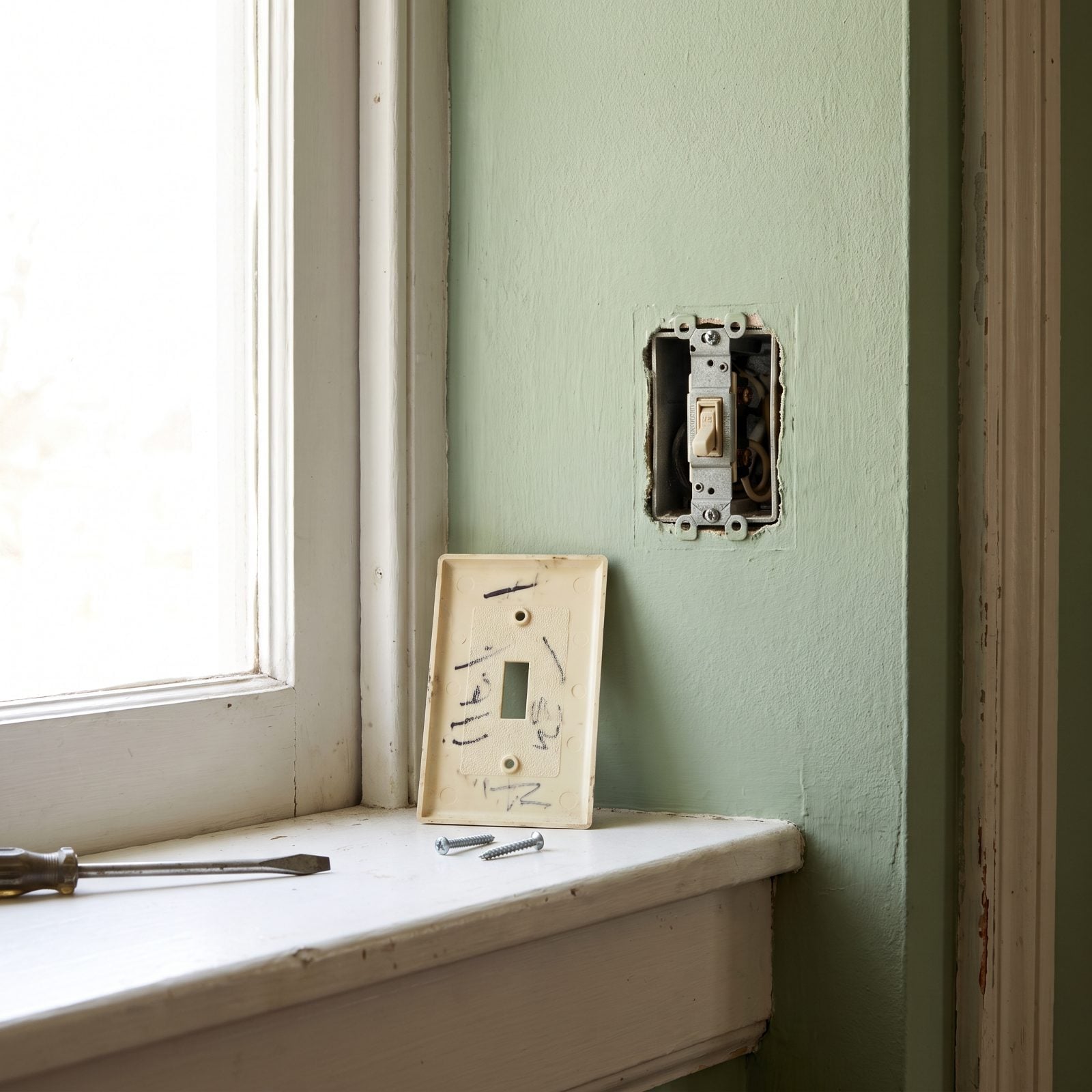
Every can of paint eventually dries out, gets tossed, or vanishes in a move, and the formula goes with it.
The fix is almost too simple. Pop the switch plate for each painted room and write the color name and formula on the back in marker. The information lives in the exact room it belongs to, protected, impossible to lose. Need to patch a scuff three years from now? The answer is six inches from the damage, waiting behind a single screw.
24. A Laminated Map of Buried Utilities and Household Shutoffs
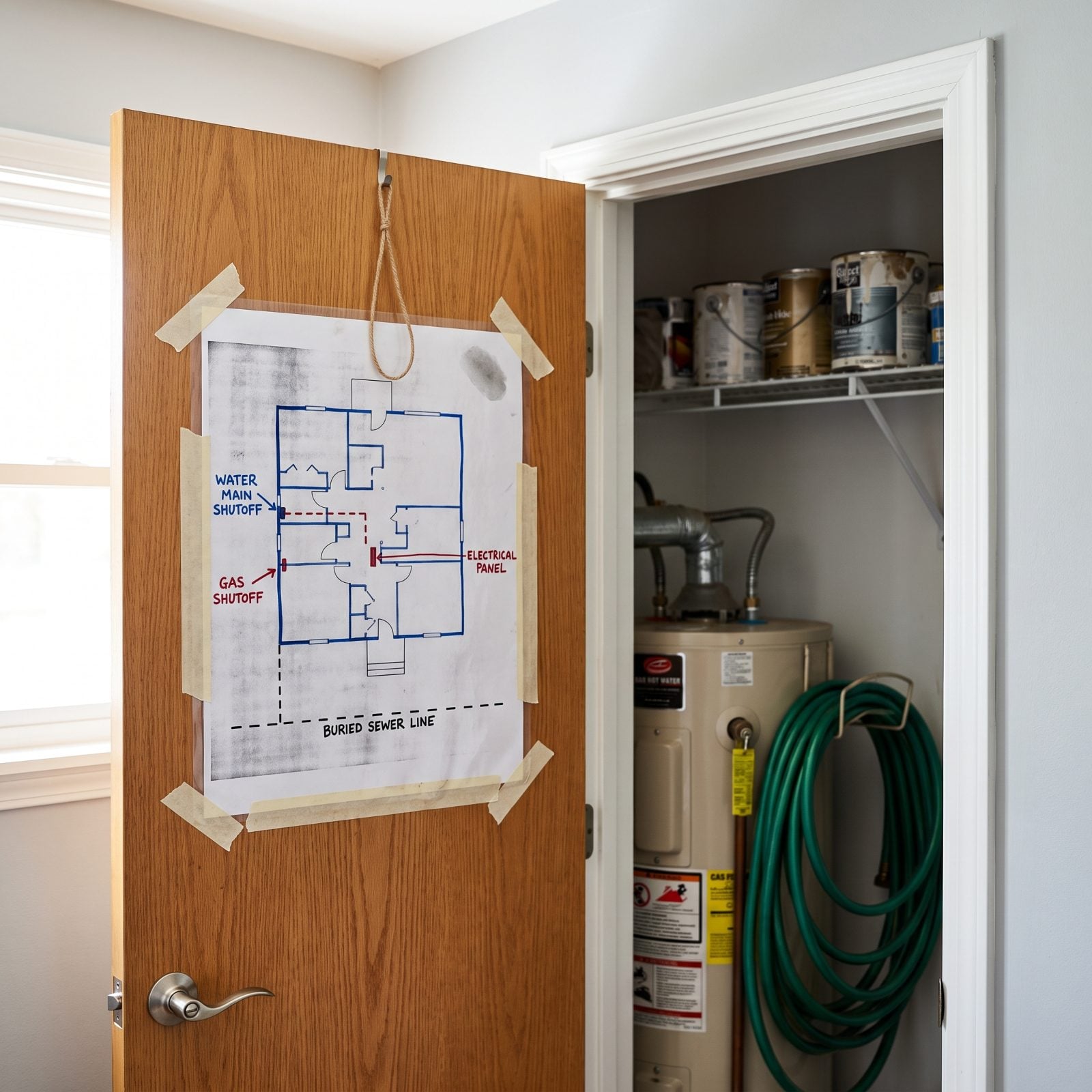
Most people learn where their water shutoff is at the worst possible moment — on their knees in the dark with water rising around their ankles. A laminated map taped to the utility closet door fixes that forever: one page, every shutoff marked, buried lines sketched in from the inspection survey.
Here’s where it earns its keep. A pipe bursts, and anyone in the house — the babysitter included — can find the valve in ten seconds flat instead of ten frantic minutes. And the lamination isn’t fussiness. The thing lives in a damp closet and gets grabbed with wet hands.
23. A Magnetic Flashlight Kept on the Electrical Panel
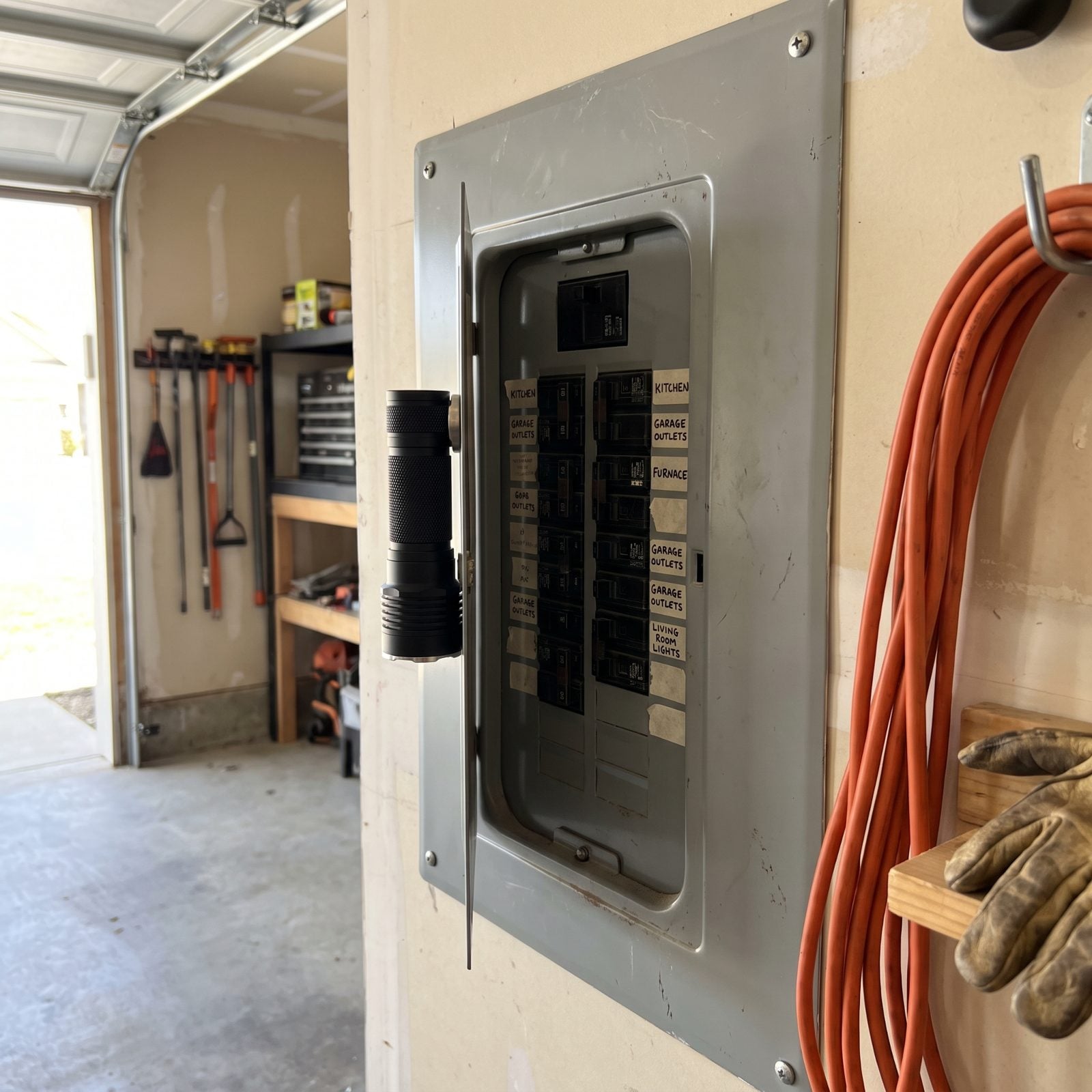
The lights go out, and the one place you need to see is the one place that’s now pitch black. Keep a magnetic-base flashlight clinging to the panel door. It waits right where the emergency happens.
So no more hunting through junk drawers by the glow of your phone. You walk straight to the panel, grab the light that’s already stuck to the steel, and go find the tripped breaker.
22. A Dedicated Water-Shutoff Key Hung Beside the Main Valve
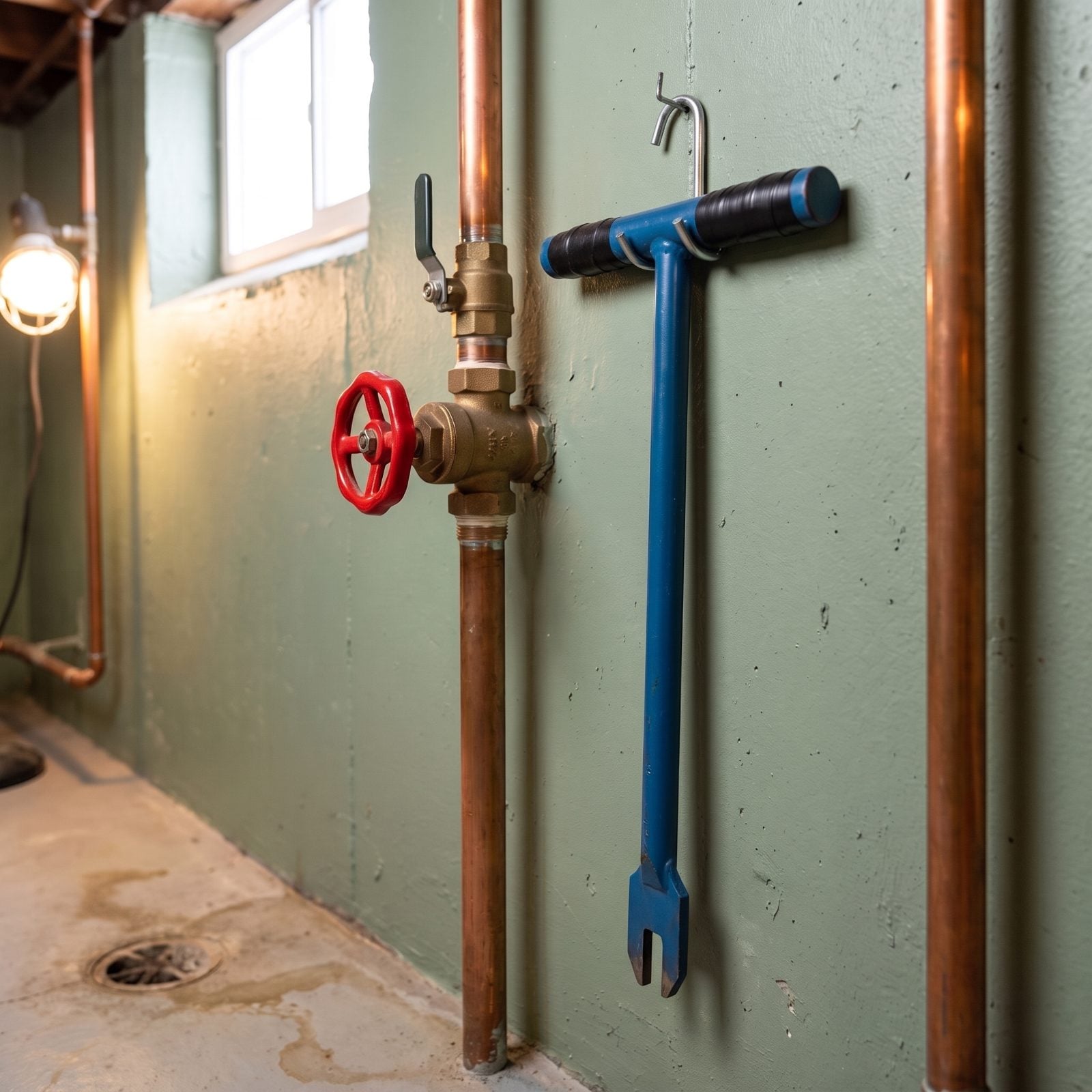
The indoor shutoffs here are easy: a red gate-valve wheel and a ball-valve lever, both with working handles right on the copper line. The weak link is the buried curb stop out by the street, which only turns with a meter key nobody can ever find.
So hang that key on a hook beside the main valves, painted a loud blue so it never wanders into the toolbox and vanishes. A shutoff is only as good as how fast you reach it, and speed dies the second you’re rummaging through the garage.
21. Extra Tiles Taped Beneath a Vanity for Future Repairs
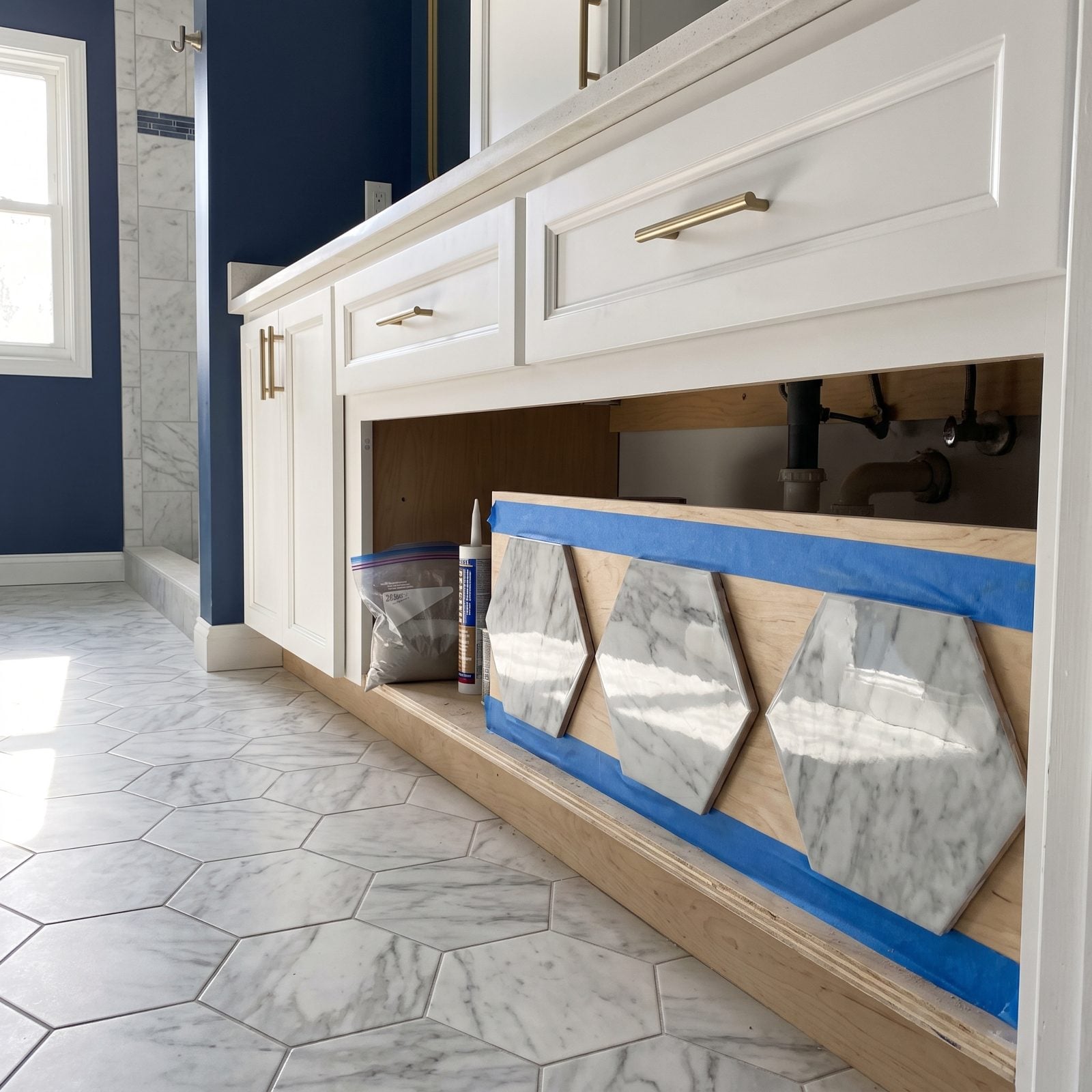
Tile lines get discontinued. You crack one tile three years in, call around, and discover your exact batch stopped existing the month after your install. Now you’re stuck with a mismatched patch forever.
Tape a few leftover tiles, a sandwich bag of grout, and a dab of adhesive under the vanity, where they stay dry and out of the way. Whoever finds them during a repair will think the previous owner was a genius. Surprise — that genius is you.
20. Toe-Kick Drawers That Turn Wasted Cabinet Space Into Storage

🔥 Would you like to save this?
That blank panel at the bottom of your base cabinets — the one your shoes keep bumping — is hollow dead space. A toe-kick drawer claims it back. Shallow, wide, and perfect for the flat stuff that never fits anywhere else: baking sheets, serving platters, dog bowls, cooling racks.
A good kitchen is the sum of all these recovered inches, and the matching cup pull on the drawer front ties it right into the cabinet line. In this run, the sage green shaker fronts let the brass pulls read like jewelry instead of noise.
19. Deliberately Shallow Pantry Shelves That Keep Everything Visible

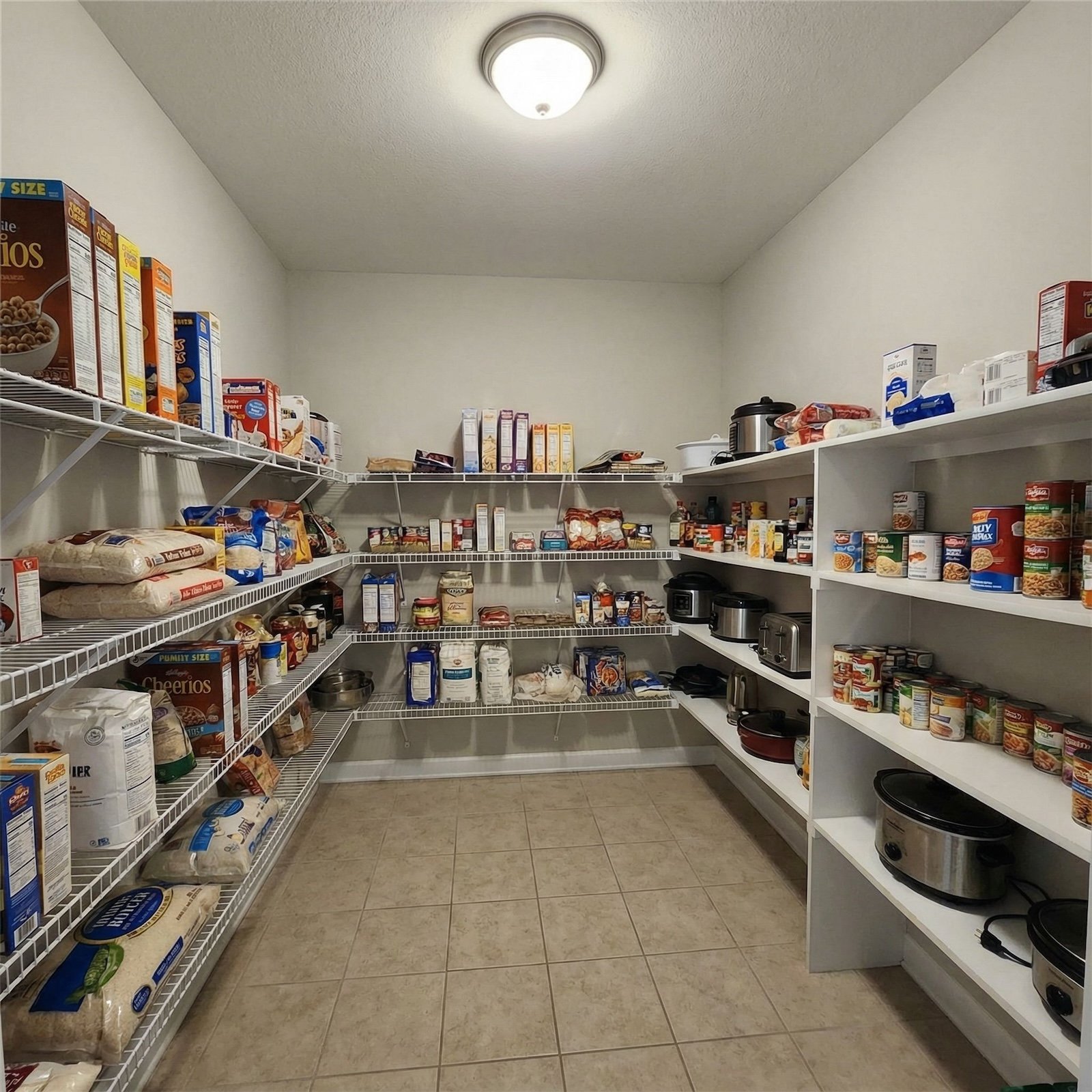
Deep pantry shelves are where food goes to die quietly. Three expired cans of chickpeas lurking in the back row, bought because you never spotted the two already hiding behind the cereal.
Shallow upper shelves hold a single row, every label facing out, while the bottom shelf takes the bulk overflow of tall boxes and jars of pasta. You see nearly everything you own at a glance — no archaeology, no accidental duplicates, no mystery jar from a holiday two years gone.
18. A Vented Appliance Garage With Outlets Inside
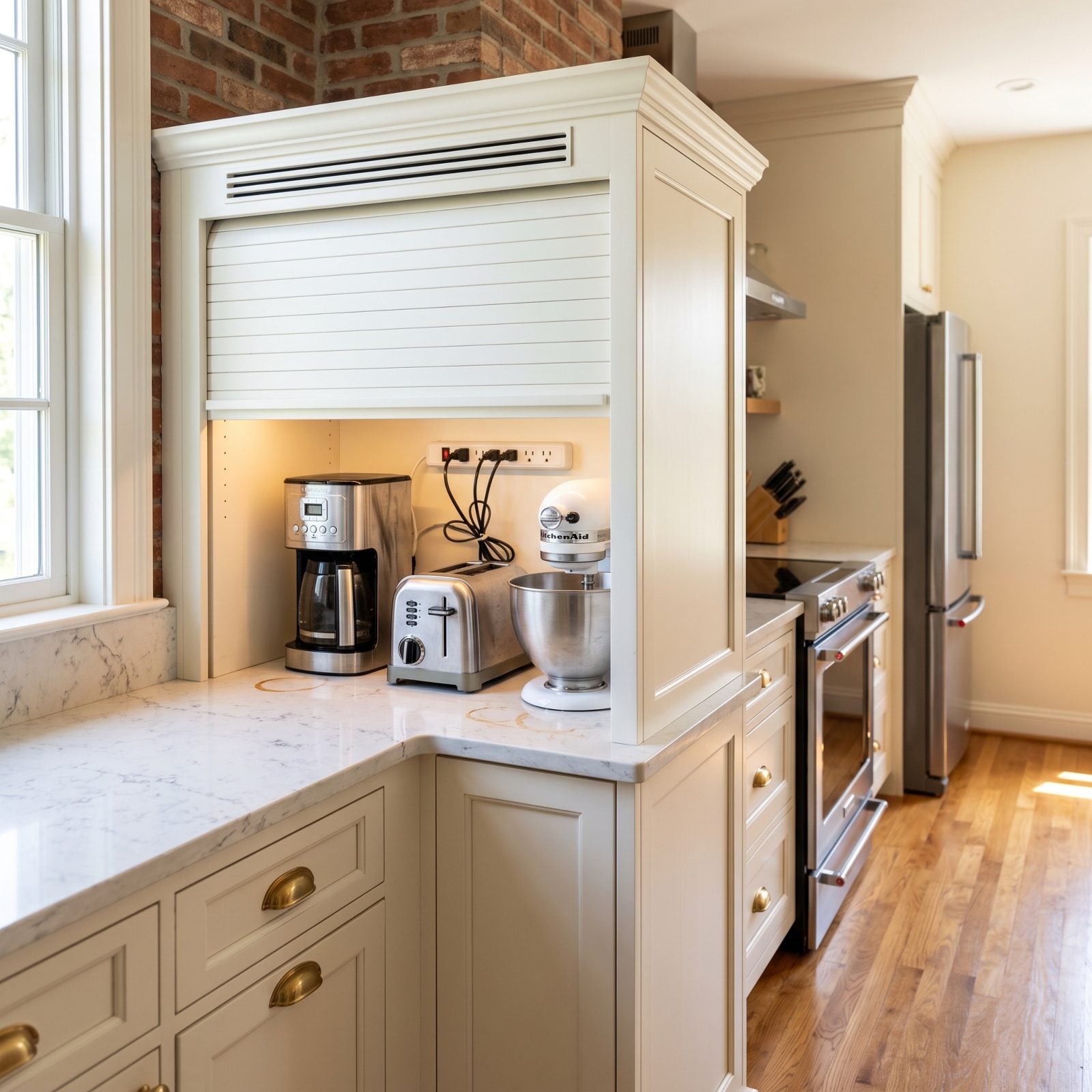
The coffee maker, the toaster, the blender — they breed on your counter and tangle their cords while they’re at it. An appliance garage hides the whole crowd behind a roll-up door, and the versions with outlets built inside mean nothing gets unplugged, hauled out, and re-plugged every single morning.
The vent slot up top is the detail people skip, and skipping it bites. Coffee makers and toasters throw off heat and steam, a sealed box traps both, and one strip of venting keeps the cabinet from slowly cooking itself. Leave it out and you’ll smell the regret within a week.
17. A Floor Outlet Positioned Beneath a Floating Sofa

Float a sofa in the middle of a room and you nail the layout, but you’ve created a new headache: the lamp cord has nowhere to go that isn’t a tripping hazard snaking all the way across the floor to the nearest wall.
A flush floor outlet near the seating shortens the run. Here, though, the brass outlet sits out on the bare wood floor just past the rug’s edge, so the lamp cord still snakes visibly across the bare floor from the table leg to reach it. Set it right under the sofa instead and the cord would drop straight down and disappear. Then the navy linen sofa would actually float, instead of being tethered by a loose cord like every other couch on the block.
16. A Garage Laser Guide That Makes Consistent Parking Effortless
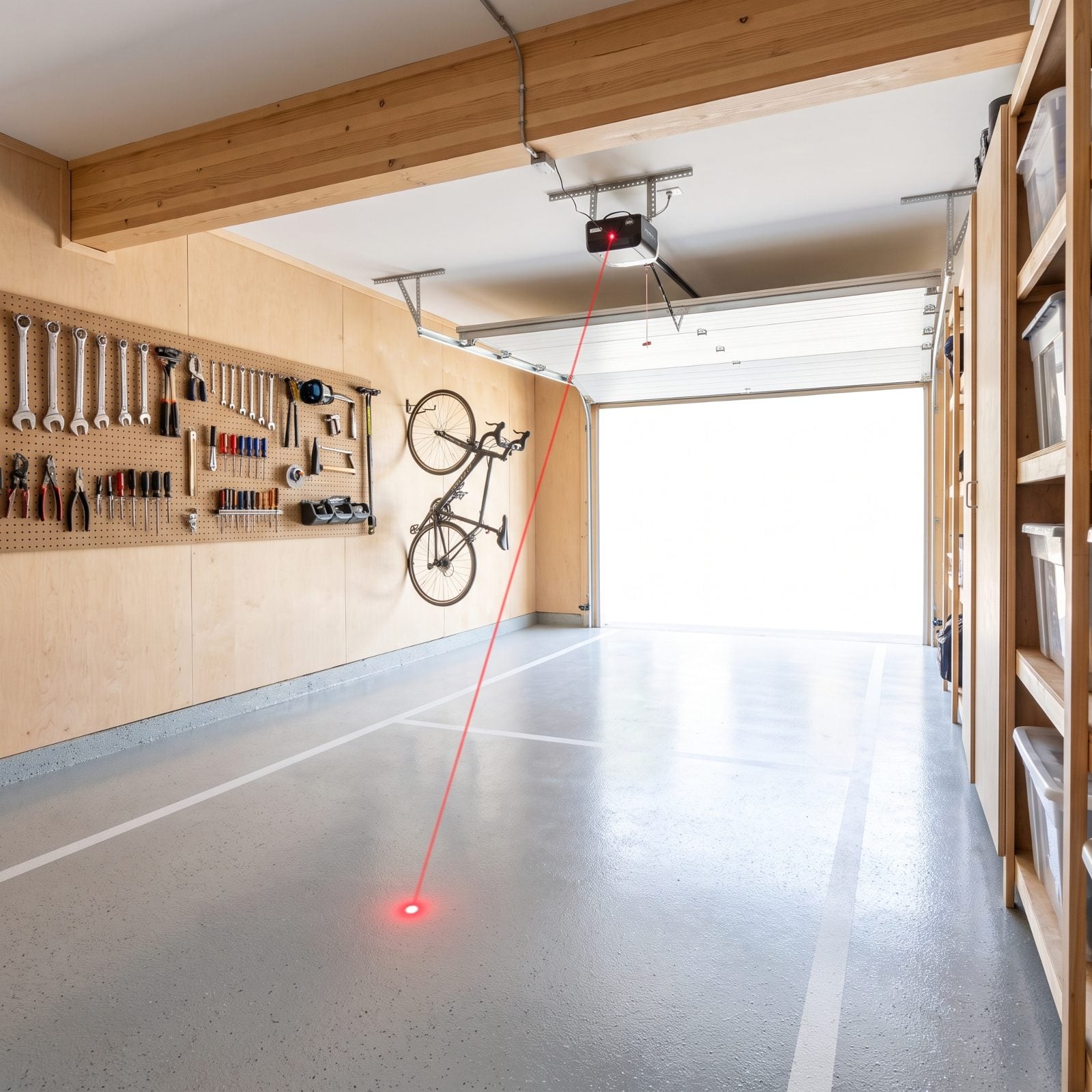
Pull in too far and you crush the bike; not far enough and the door won’t close. A ceiling-mounted laser drops a red dot exactly where it needs to land on your hood, and you stop the car when the dot hits the spot.
Mounts in five minutes, costs about as much as a decent pizza, and it ends the slow creep-and-check dance for good. Nobody dings the door. Nobody gets out to look. You just roll forward until the dot lands where it always lands.
15. A Convex Driveway Mirror for Seeing Around Blind Corners
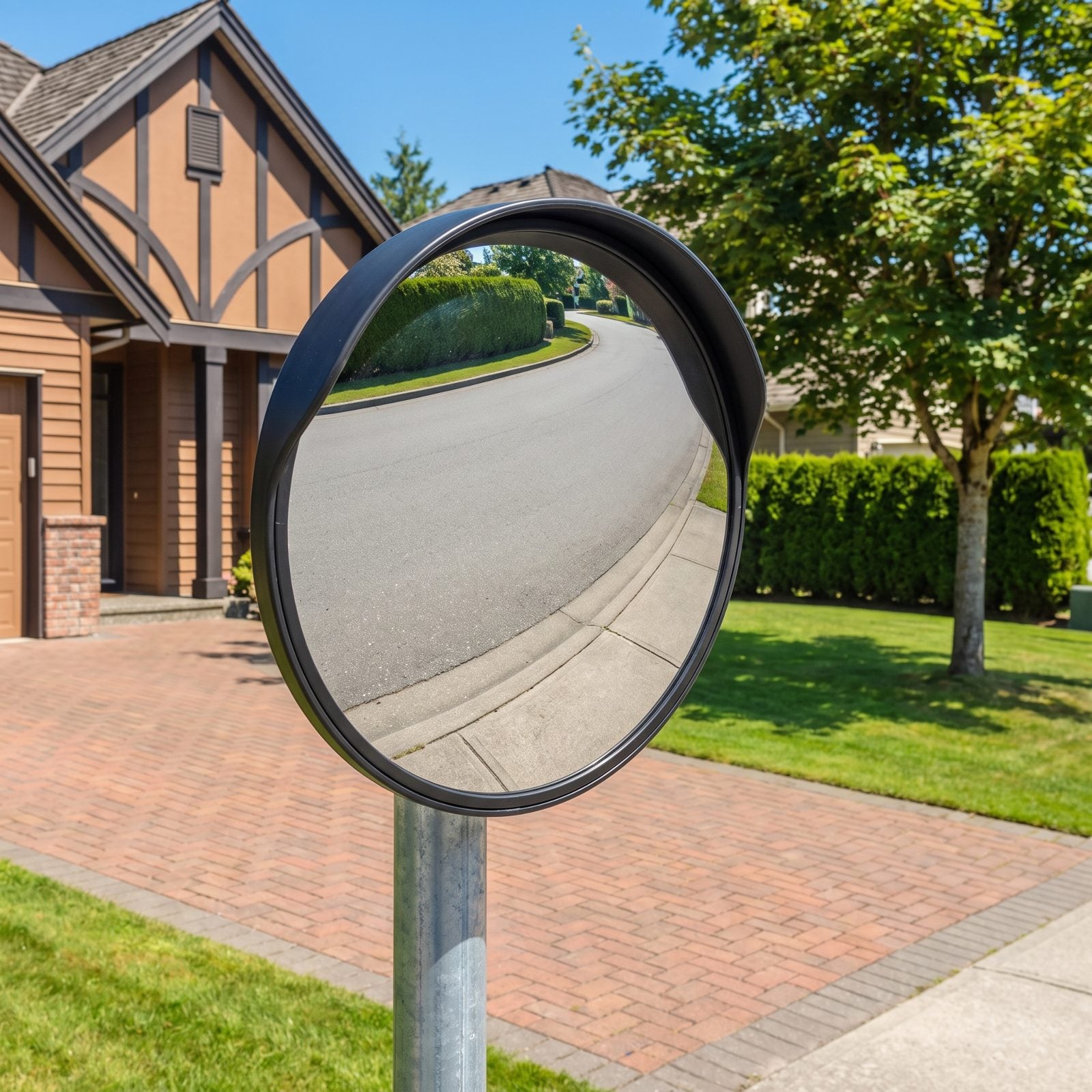
Backing out of a driveway hemmed by a tall hedge is a blind gamble, every single time. You inch out, crane your neck, and hope for the best. A convex mirror on a post kills the blind spot flat out.
One glance shows the whole sidewalk and the car you’d otherwise never clock until it was too late. It’s the kind of fix you install once and promptly forget about — right up until the day it spares a kid on a bike. After that, you remember it every time.
14. Hose-Guide Stakes That Protect Plants at Garden Corners
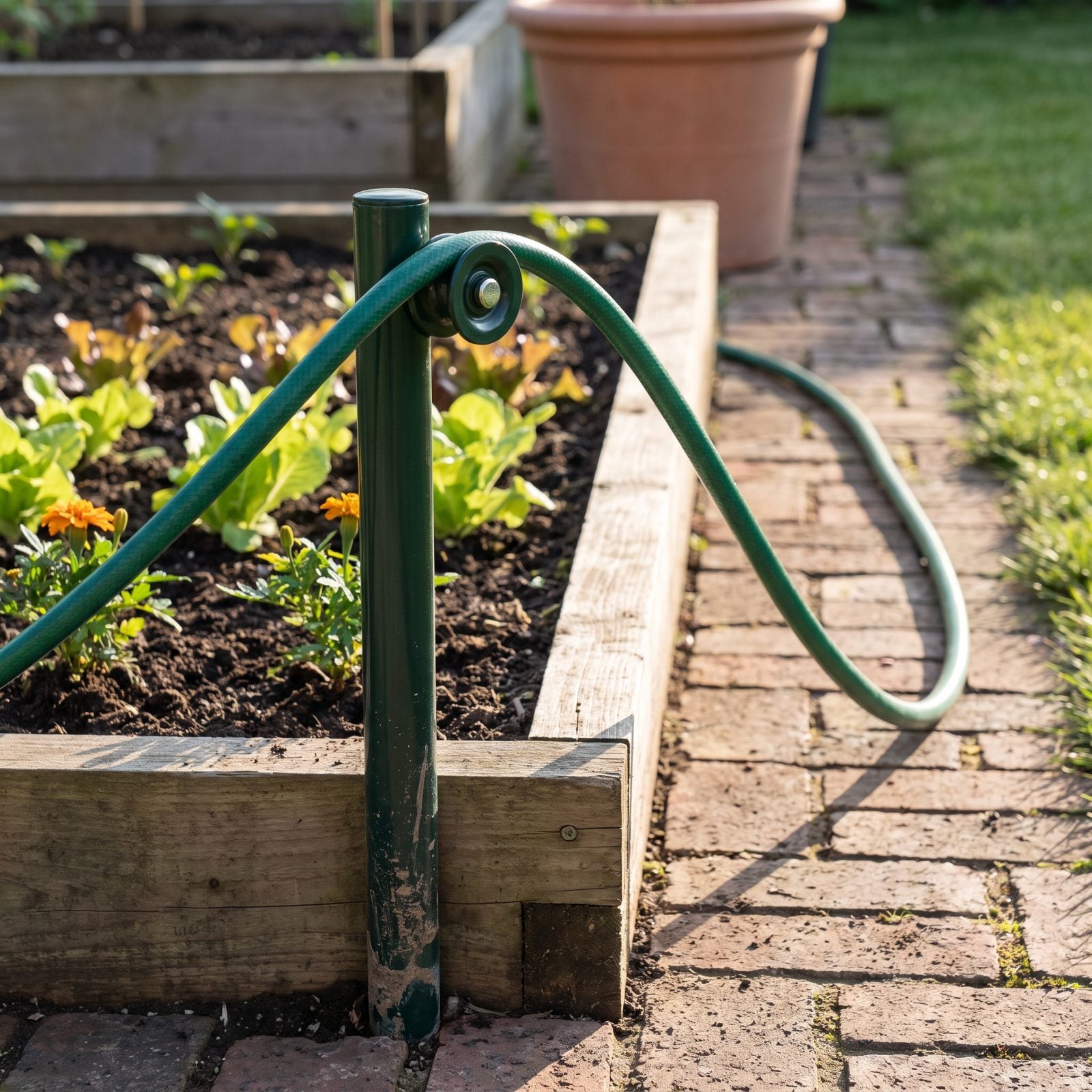
Drag a hose across a flower bed enough times and the corner plants pay for it. A spinning guide stake at each turn solves a problem most gardeners just shrug at as the cost of watering — the hose bends around the post, past a pulley bolted to its side, instead of being dragged through whatever grew too close to the corner.
The spinning pulley is what counts. A fixed peg lets the hose saw back and forth and strip bark off young stems, while the one that turns absorbs all that drag.
13. A Clear Level Tube That Shows How Much Water Remains in a Rain Barrel
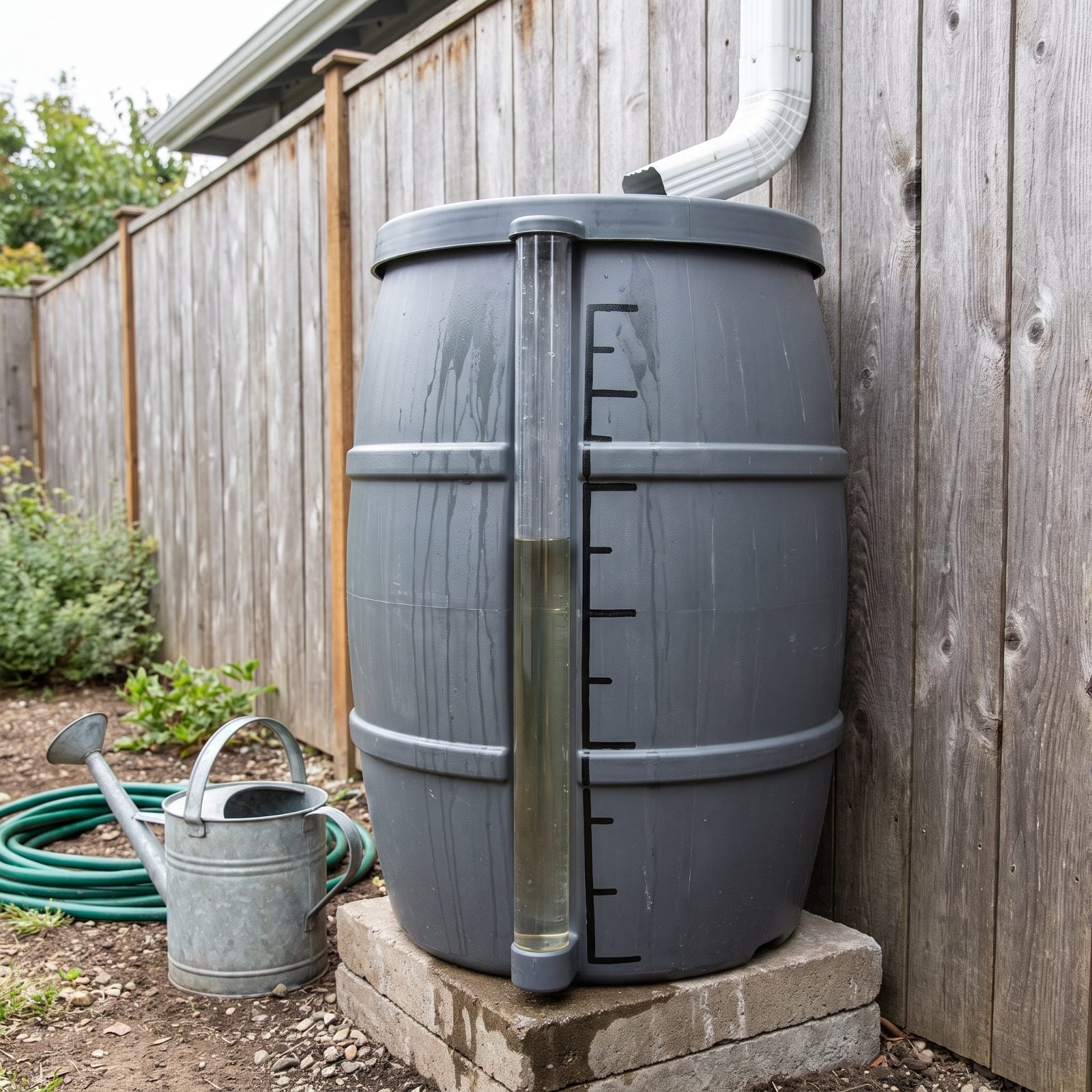
You never know how much is left in a rain barrel until you need it and it sputters out halfway through a row of tomatoes. A clear sight tube running up the side kills the guesswork — one glance tells you whether to ration or let it rip.
Same trick a coffee urn uses. The water in the tube sits at exactly the level inside the barrel, so you read it like a fuel gauge. Cheap to add, and it saves you from prying off a lid and squinting into the dark.
12. A Fixed Boot Scraper at the Back Step for Removing Packed Mud
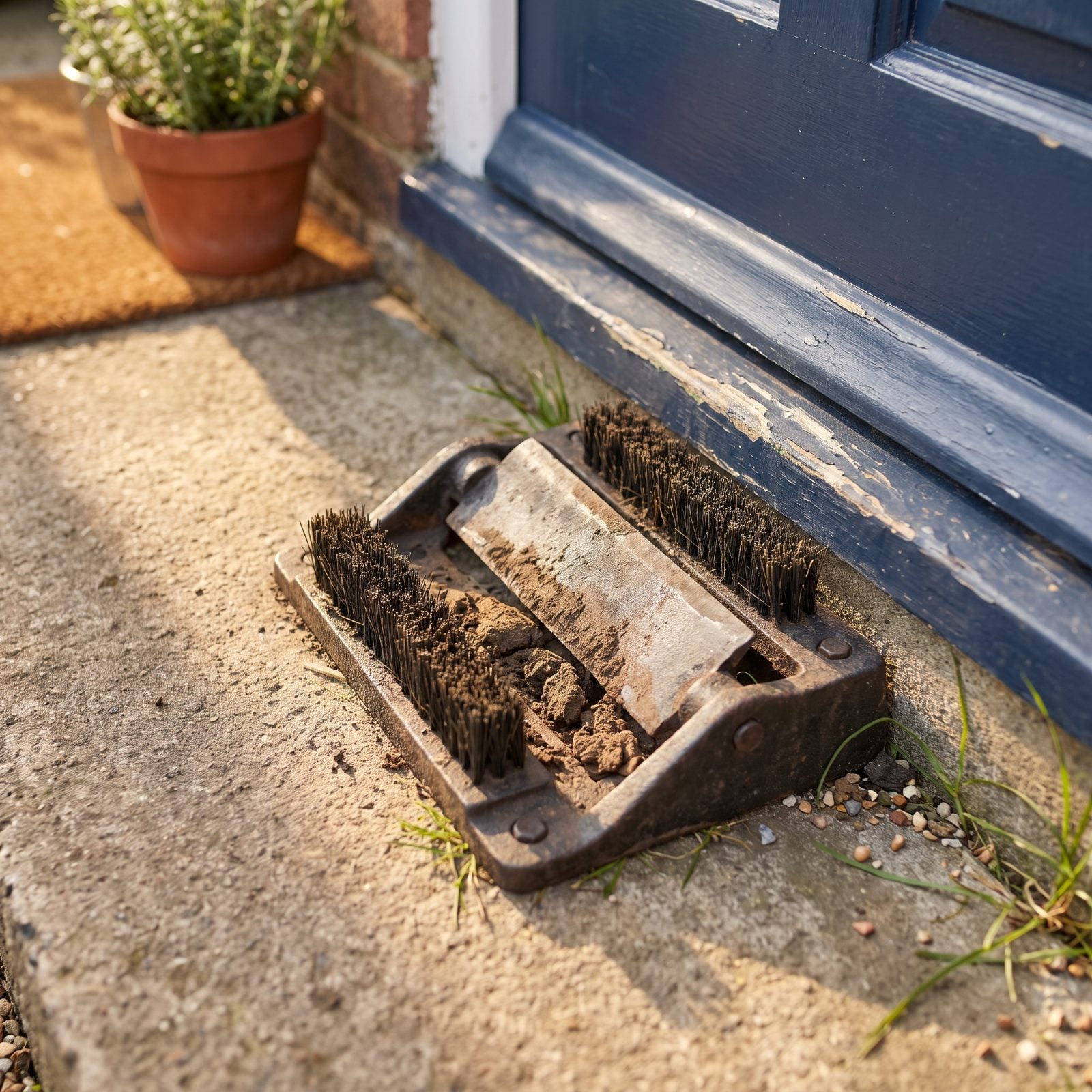
Anyone who gardens in clay knows the specific defeat of mud that won’t shake loose. It cakes into the tread and dries like cement. A fixed iron scraper bolted into the back step handles what a doormat never will — packed, heavy mud that needs stiff bristles and some real force behind it.
What makes it work is that it doesn’t move. A handheld brush slides away the second you press on it. One anchored into concrete lets you scrub a boot against the bristles with your whole weight, and the floors inside stay cleaner for it.
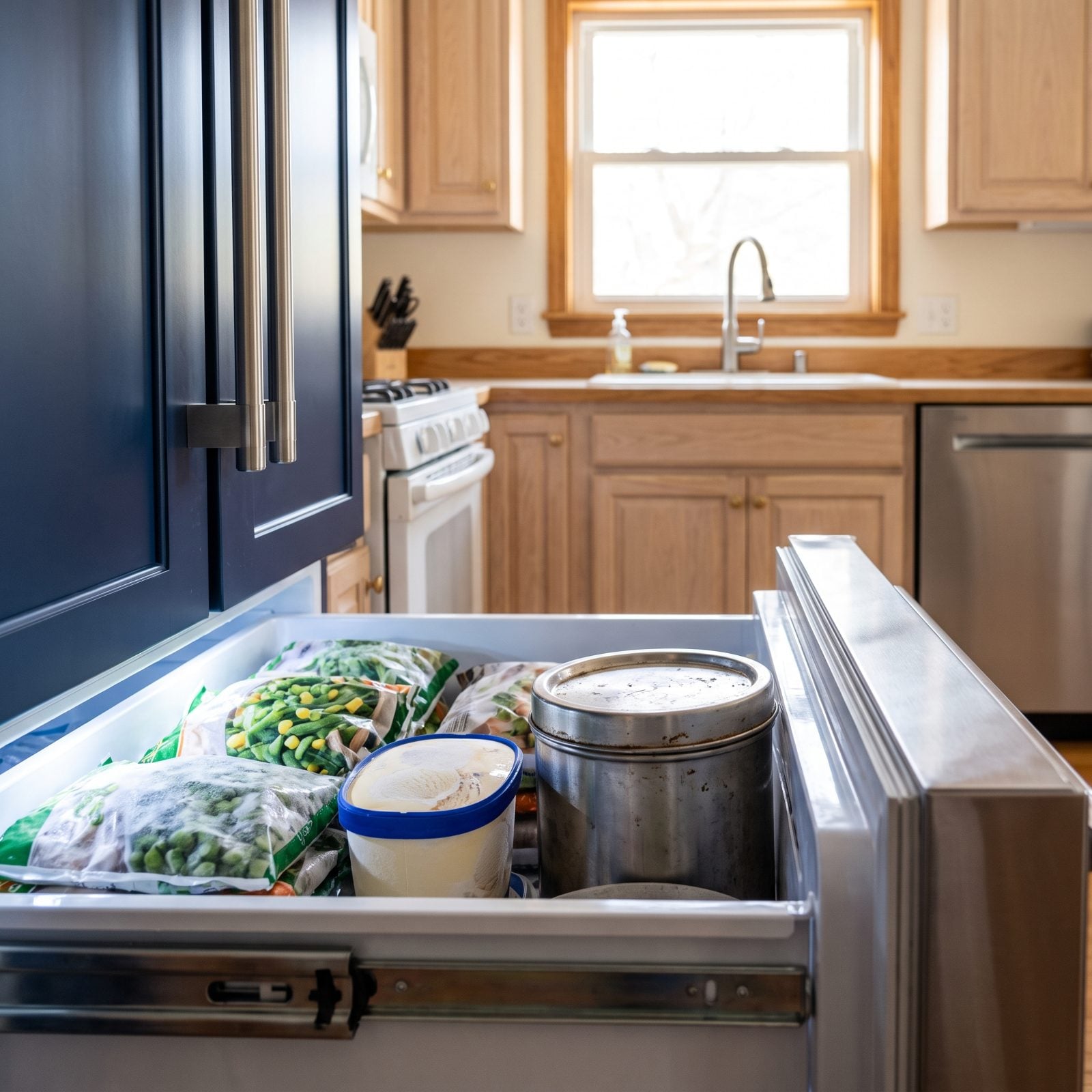
11. A Food-Scrap Container Kept in the Freezer Until Collection Day
🔥 Would you like to save this?
Most people give up on composting because of the smell. A countertop scrap bin turns sour by day two, draws fruit flies, and gets dumped straight into the trash out of sheer frustration.
Freezing the scraps kills all of that — no odor, no flies, no slime. The container just sits in the freezer, inert, until collection day or a trip out to the pile. One small shift, and it’s usually the difference between the people who stick with composting and the people who quit within a week.
10. An “Eat First” Refrigerator Bin for Food Nearing Its Expiration Date
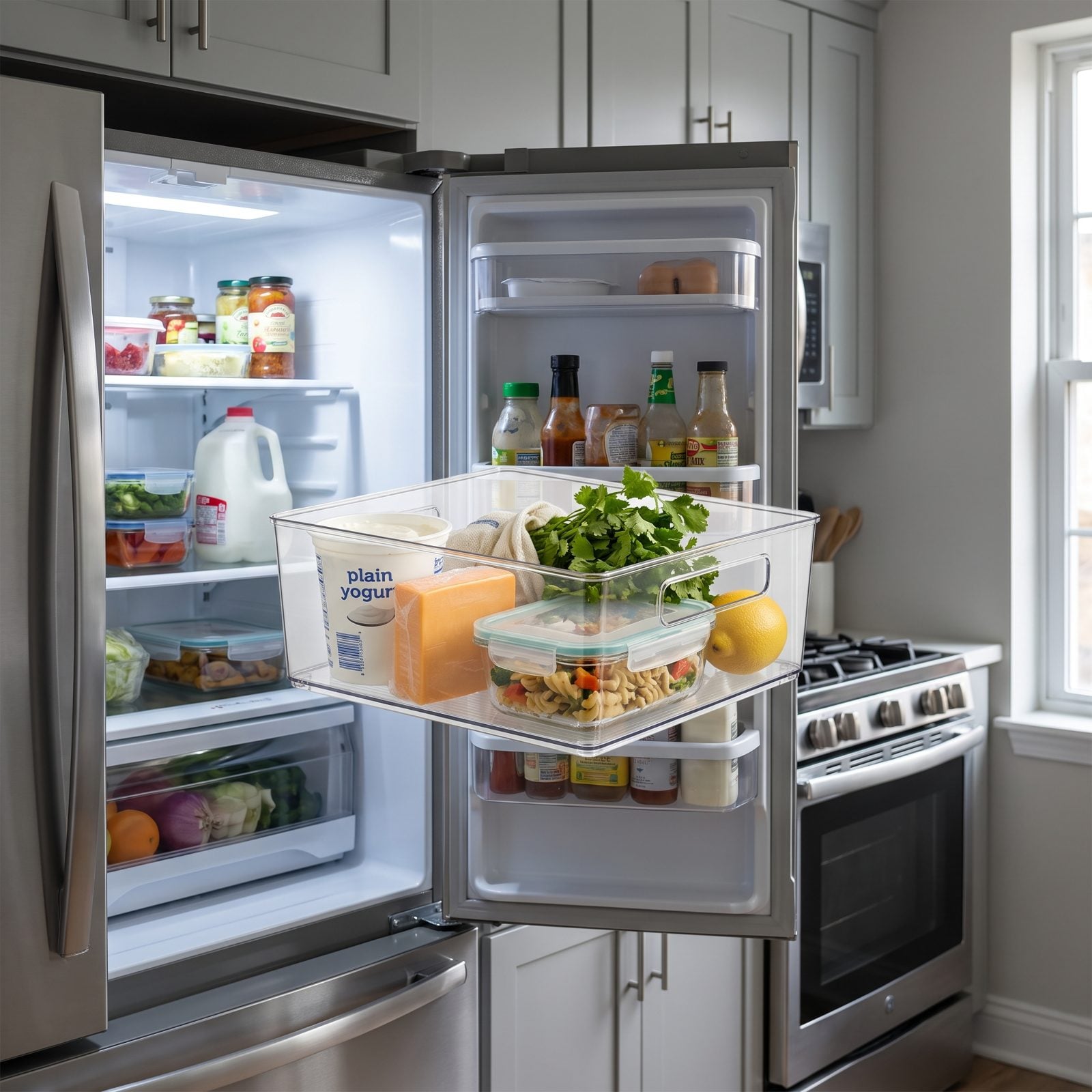
Food doesn’t rot because people are careless. It rots because it slides to the back of the fridge and vanishes. An “eat first” bin drags everything on the clock up front where you’ll actually see it.
Half a tub of yogurt, the herbs going limp, last night’s leftovers — they go in the bin, the bin comes out front of the open fridge where you can’t miss it, and dinner starts there instead of with something still sealed. Grocery waste is mostly a visibility problem, and this is the cheapest fix going.
You throw out the thing you forgot, not the thing you planned.
9. A Soap-Filled Dish Wand Reserved for Cleaning the Shower
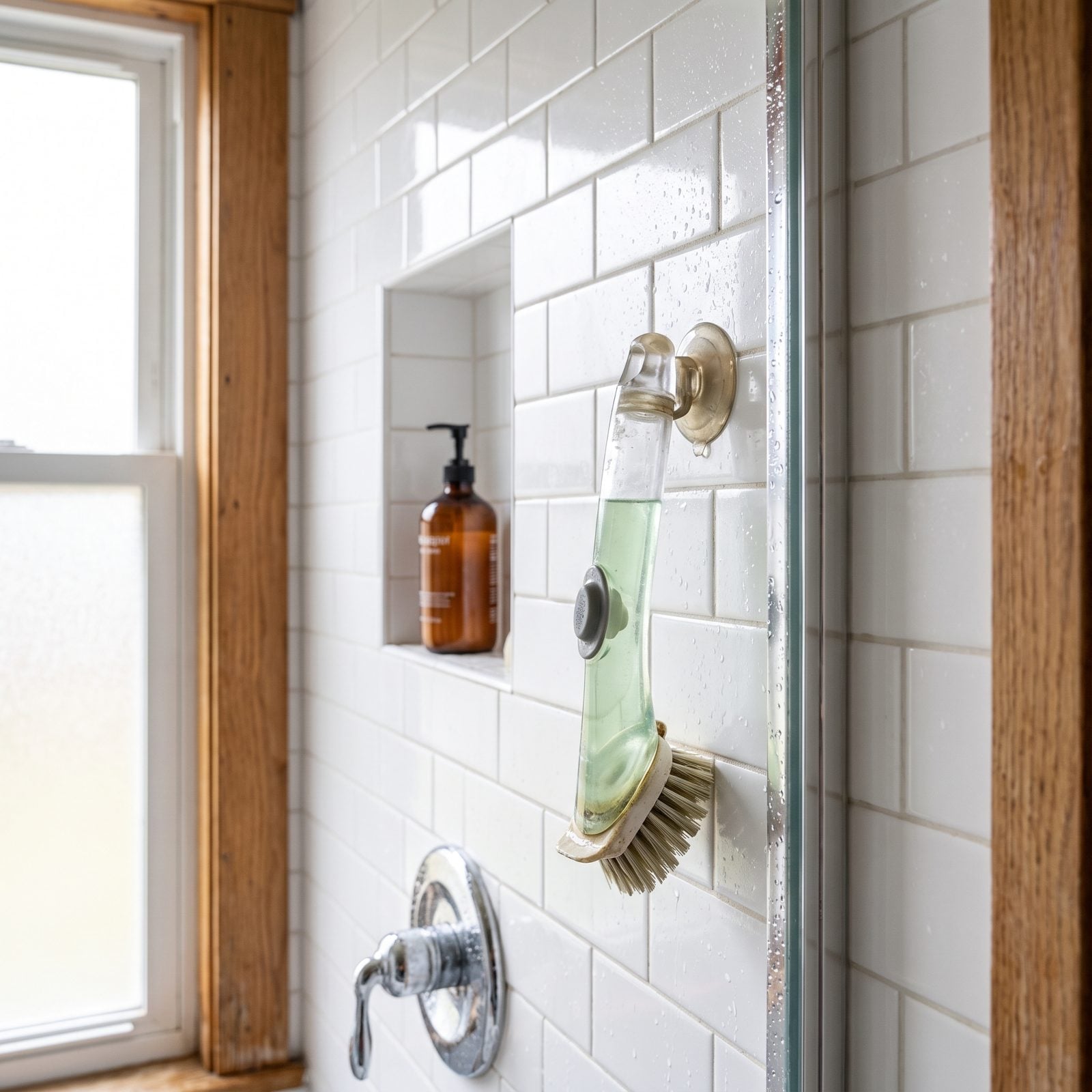
Shower cleaning fails because it requires a trip. You have to go dig out the spray bottle and the scrubber, which means it never happens until the grime demands a full assault. Hang a soap-filled dish wand right in the shower and that trip disappears.
Keep it loaded with a diluted cleaner. Give the tile a few passes while the water’s still running and you’re already standing there anyway. The work spreads across the week instead of piling up into one miserable Sunday.
8. A Rubber Broom That Pulls Embedded Pet Hair From Rugs
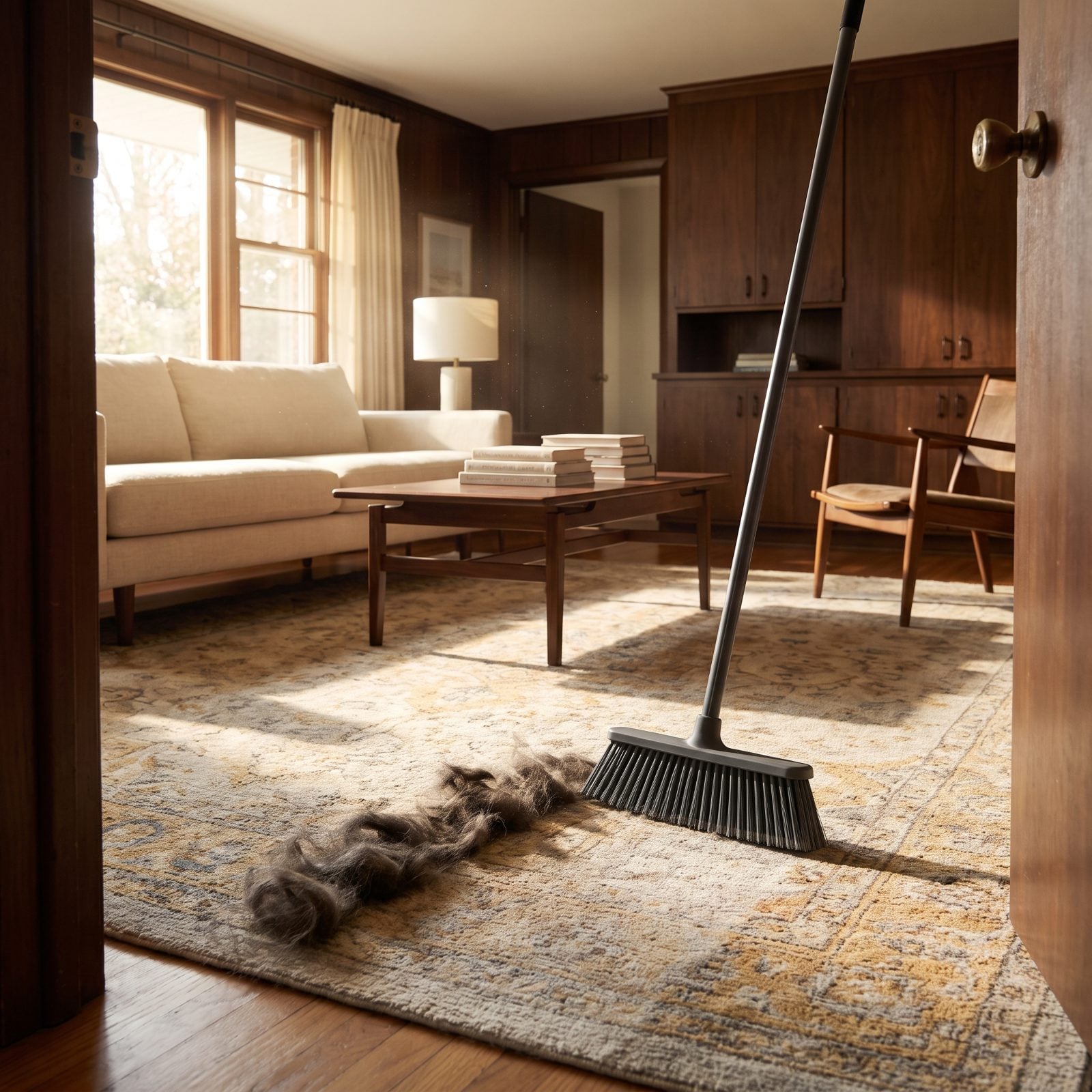
Vacuums lie about rugs. They lift the surface fluff and leave the real problem woven down into the pile. A rubber broom drags it out, and honestly, it’s a little gross to watch the first time.
Static grip is the trick here. Rubber teeth grab fiber and hair that suction can’t budge, rolling it into a mat you can pick up by hand. Anyone with a shedding dog knows exactly the look of it.
7. A Box Fan With a Furnace Filter for Dusty Home Projects
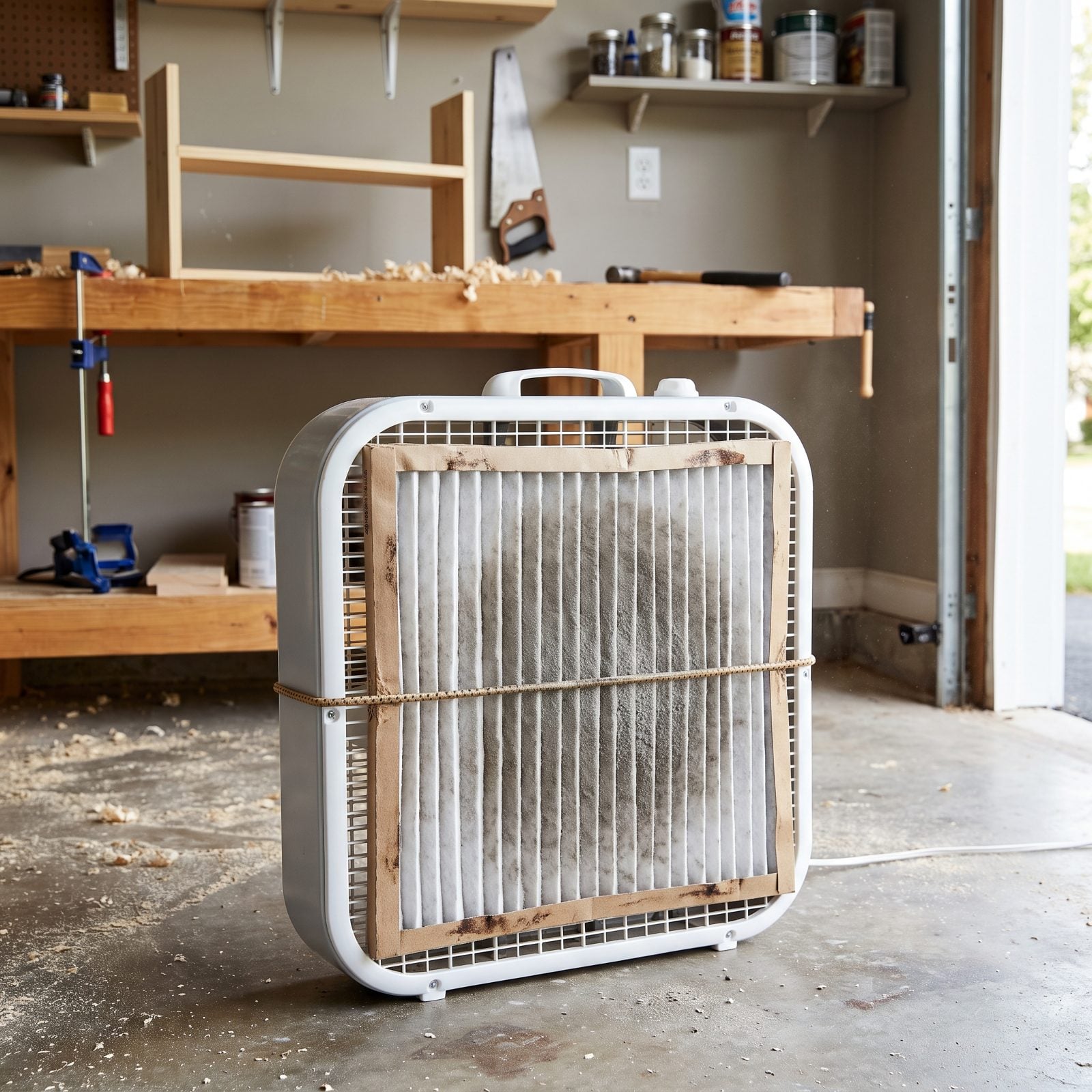
Sanding a bookshelf fills a room with dust that hangs in the air for hours and settles on everything you own. Bungee a furnace filter to the back of a box fan and it catches the stuff mid-flight.
Run it in the corner while you work. The fan pulls air through the filter, the fine particles stick to the pleats, and the room clears in a fraction of the usual time. Swap the filter once it grays over. It costs a sliver of what a shop air scrubber runs, and it does most of the same job.
6. A Small Drain Snake Stored Under Each Bathroom Sink
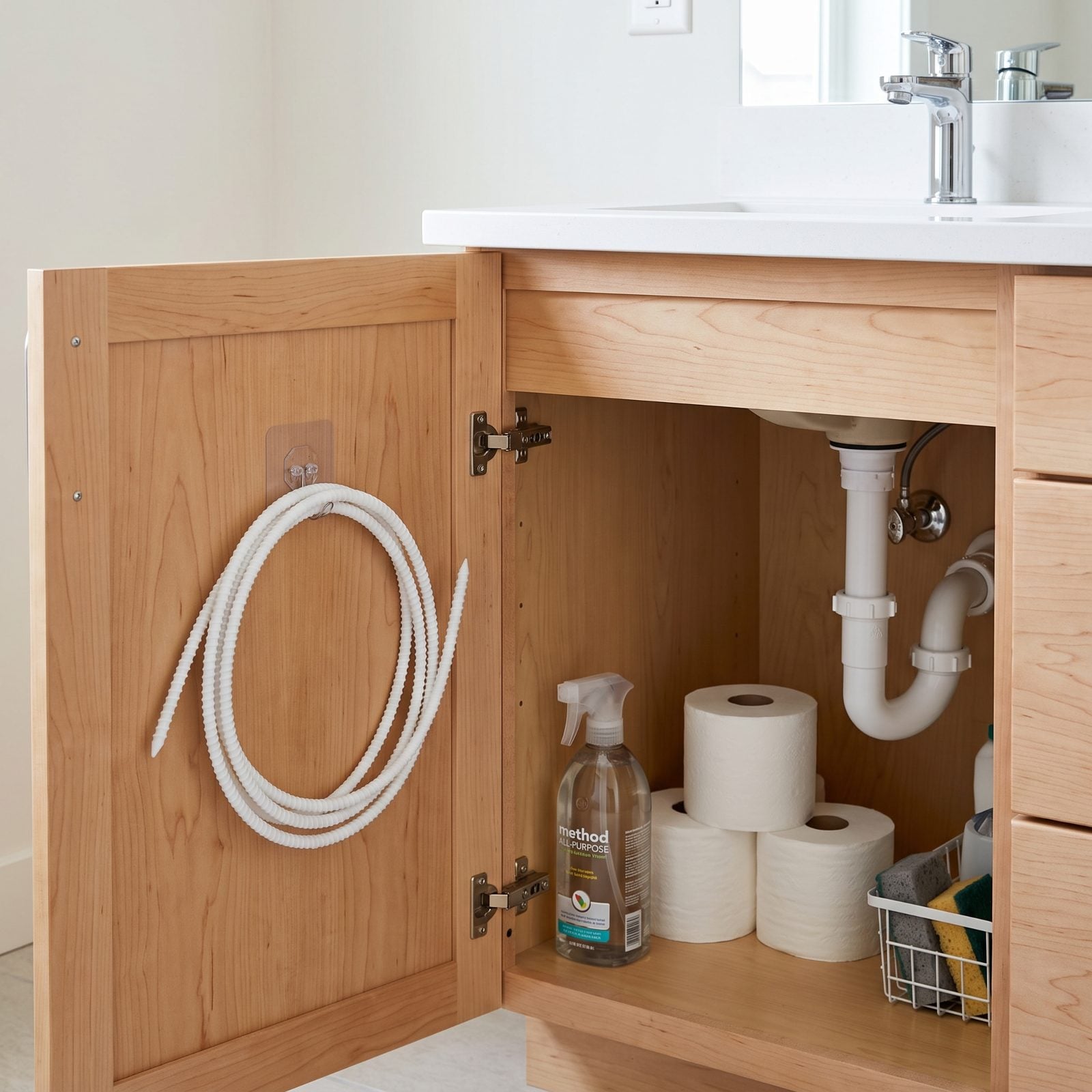
A slow drain is a two-minute fix that people somehow turn into a plumber’s bill, because the tool is buried somewhere in the garage. Hook a cheap plastic drain snake inside each bathroom cabinet and the whole calculation flips.
It lives where the clog happens. The sink starts draining slow, you pull the snake out, fish the hair and gunk, and you’re done before you’ve talked yourself into waiting another week. A tool you have to go find is a tool you don’t use — that’s the whole reason storage matters here.
5. A Stainless-Steel Hair Catcher in Every Shower Drain
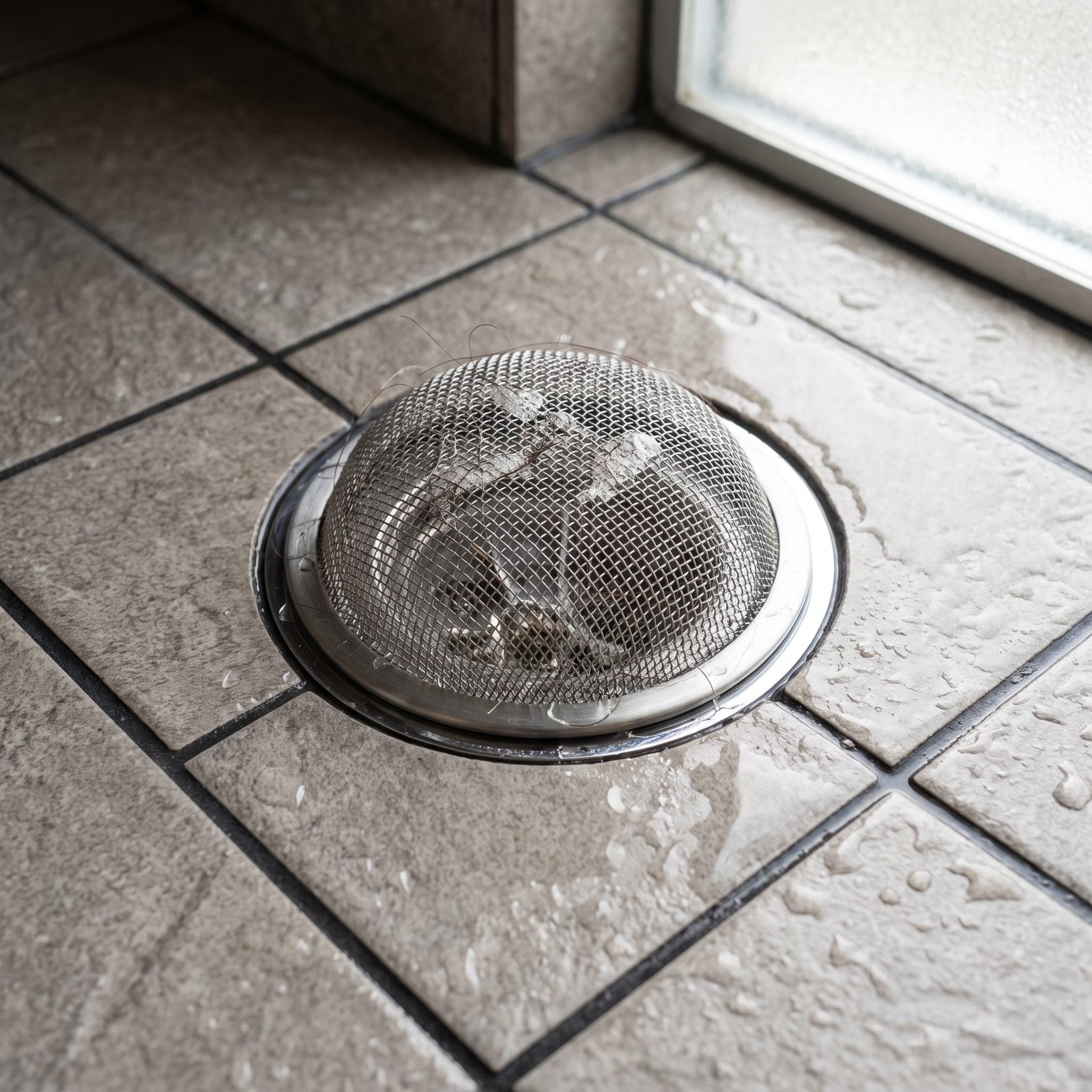
The least glamorous upgrade on this list also happens to prevent the most expensive problem. A steel mesh hair catcher over the drain stops the one thing that clogs showers: hair binding with soap scum into a plug deep in the pipe.
Steel over plastic, always. Plastic ones warp, crack, and slide out of place. A weighted stainless catcher sits flush, never corrodes, and empties with a quick rinse. You trade a two-second rinse now for never snaking a shower drain again. Take that deal.
4. A Battery Organizer With a Built-In Tester
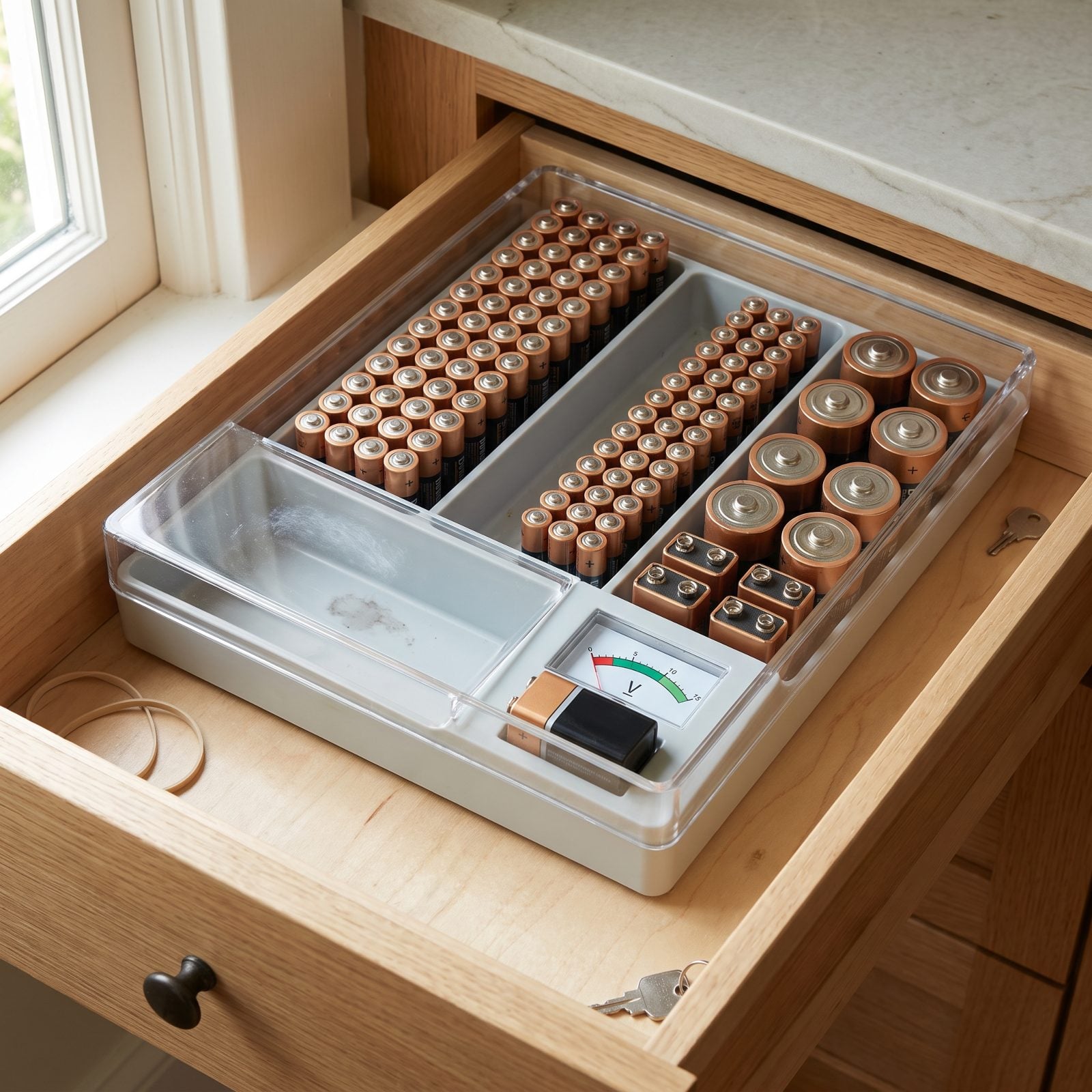
Half of everyone’s battery stash is dead and nobody knows which half. You test the remote, it doesn’t work, so you grab another from the drawer, and that one’s dead too — now you can’t tell if the problem is the batteries or the remote.
An organizer with a built-in tester ends the guessing. Batteries stand sorted by size, and a little dial reads out the charge left in seconds. Flat ones go to recycling, good ones go back, and you’re done with the drawer full of maybes.
3. A Fire Extinguisher Mounted Near the Kitchen Exit, Not the Stove
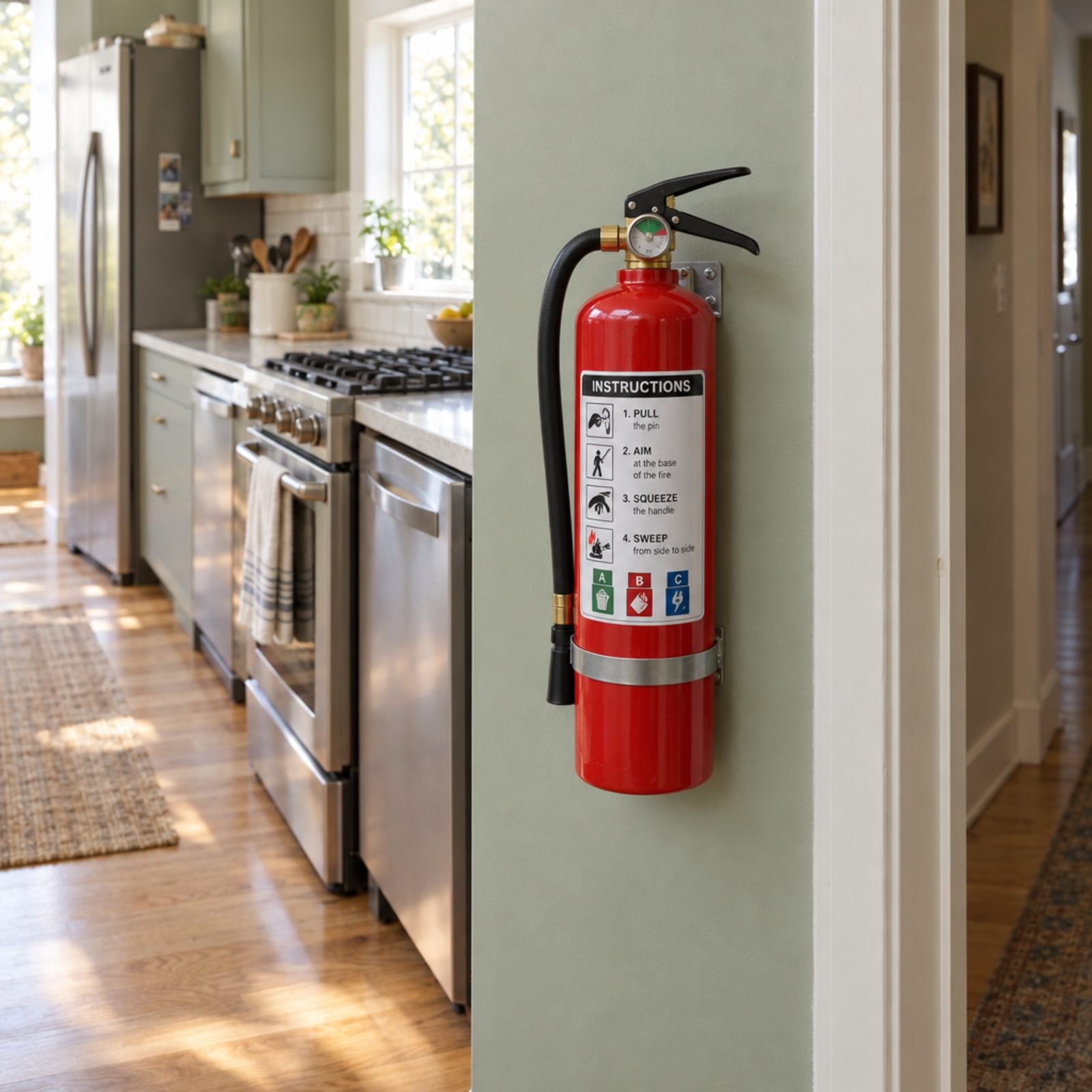
Most people hang the extinguisher right next to the stove, which sounds smart and is exactly backwards. If the range is on fire, that’s the one spot you can’t get to.
Mount it by the exit instead, so you grab it heading toward the fire with an escape route already behind you. Firefighters have been saying this for years. Yes, the reach is a couple of steps longer — and those steps keep you between the flames and the door.
2. Installation Dates Written Directly on Smoke Alarms
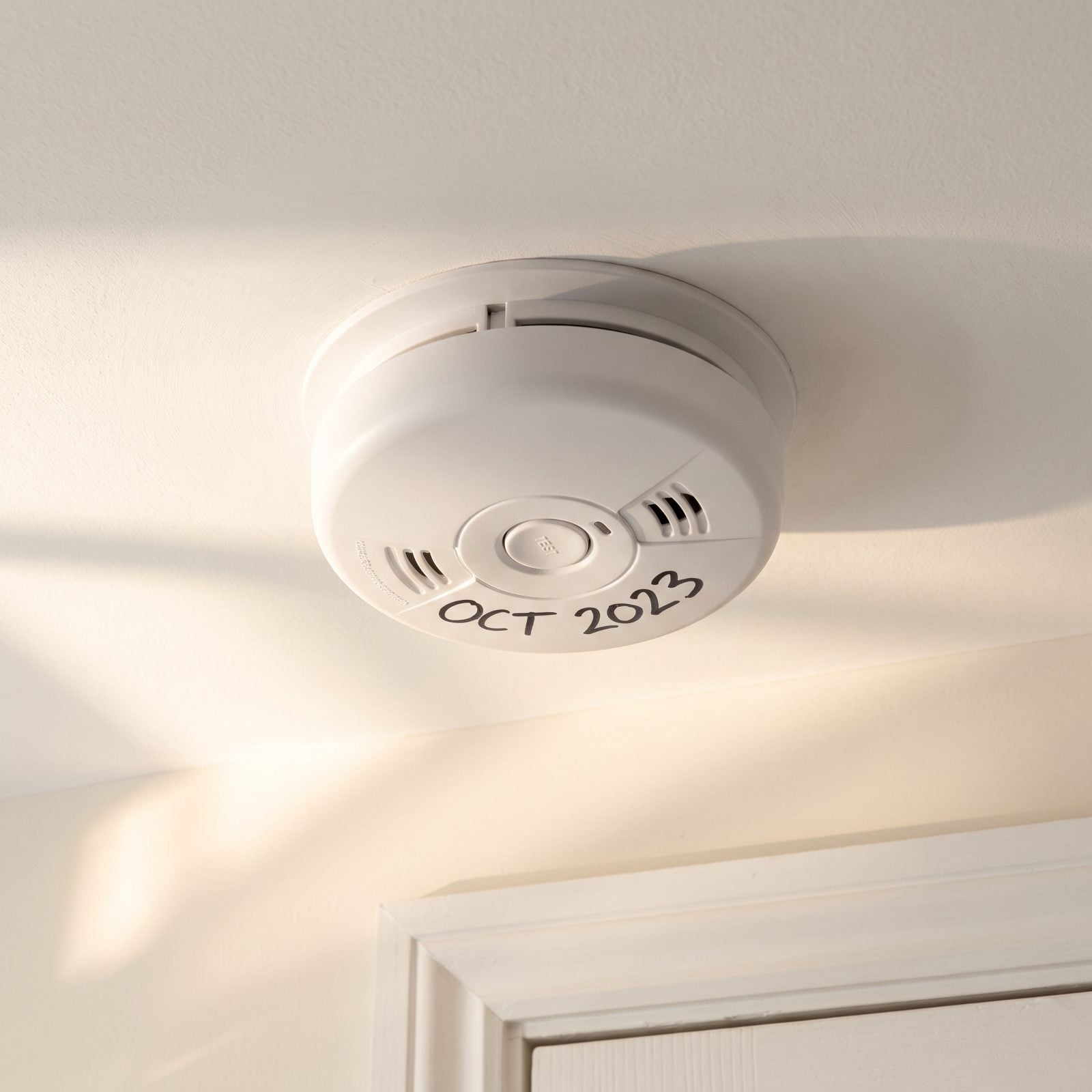
Smoke alarms expire. Almost nobody knows this. The sensor inside degrades whether it ever beeps or not, and most have a service life of about a decade — after that, the thing on your ceiling is basically decoration.
So write the install date on the housing in marker. One glance tells you how old it is and when it’s done — no digging for receipts, no guessing from a dusty manual you tossed years ago.
1. Oversized Reflective House Numbers Emergency Crews Can Spot
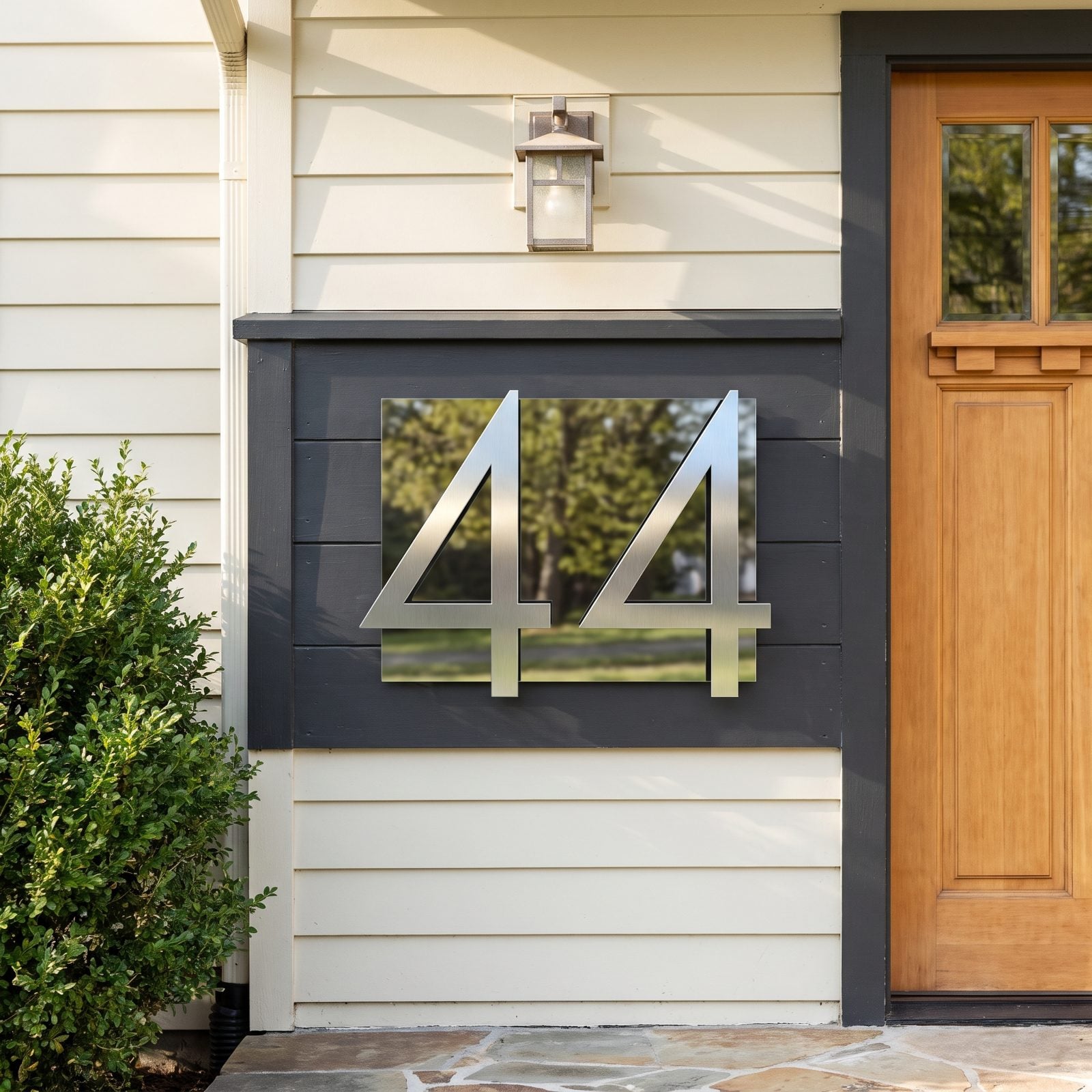
Picture it. An ambulance turns onto your street at night, headlights sweeping across brass numbers the size of a thumbnail, tucked behind an overgrown shrub and painted the same color as the siding. Every second the driver spends squinting is a second you don’t have.
Big reflective numbers fix all that for almost nothing. Mount them where a car’s headlights land, dark panel behind for contrast, large enough to read from the road. Cheapest safety upgrade a home can get, and the one you hope never matters.