Somewhere along the way, a rule got handed down like it was carved in stone: small room, small furniture. If you have a compact living room, you were supposed to squeeze in a loveseat, keep everything low-profile, and leave wide-open stretches of floor that somehow never felt spacious, just bare. The sectional, that grand statement piece you actually wanted, was declared off-limits. Too big. Too much. Too greedy with the square footage.
But what if that rule was never really about space at all? What if it was about perception, psychology, and the way your brain actually reads a room, none of which were ever part of the conversation? The science of spatial psychology tells a very different story, and once you hear it, that “rule” starts to look a lot less like wisdom and a lot more like a myth that stuck around for the wrong reasons.
In order to come up with the very specific design ideas, we create most designs with the assistance of state-of-the-art AI interior design software. Also, assume links that take you off the site are affiliate links such as links to Amazon. this means we may earn a commission if you buy something.
The Cognitive Illusion That Makes a Single Sofa Feel More Crowded Than a Sectional
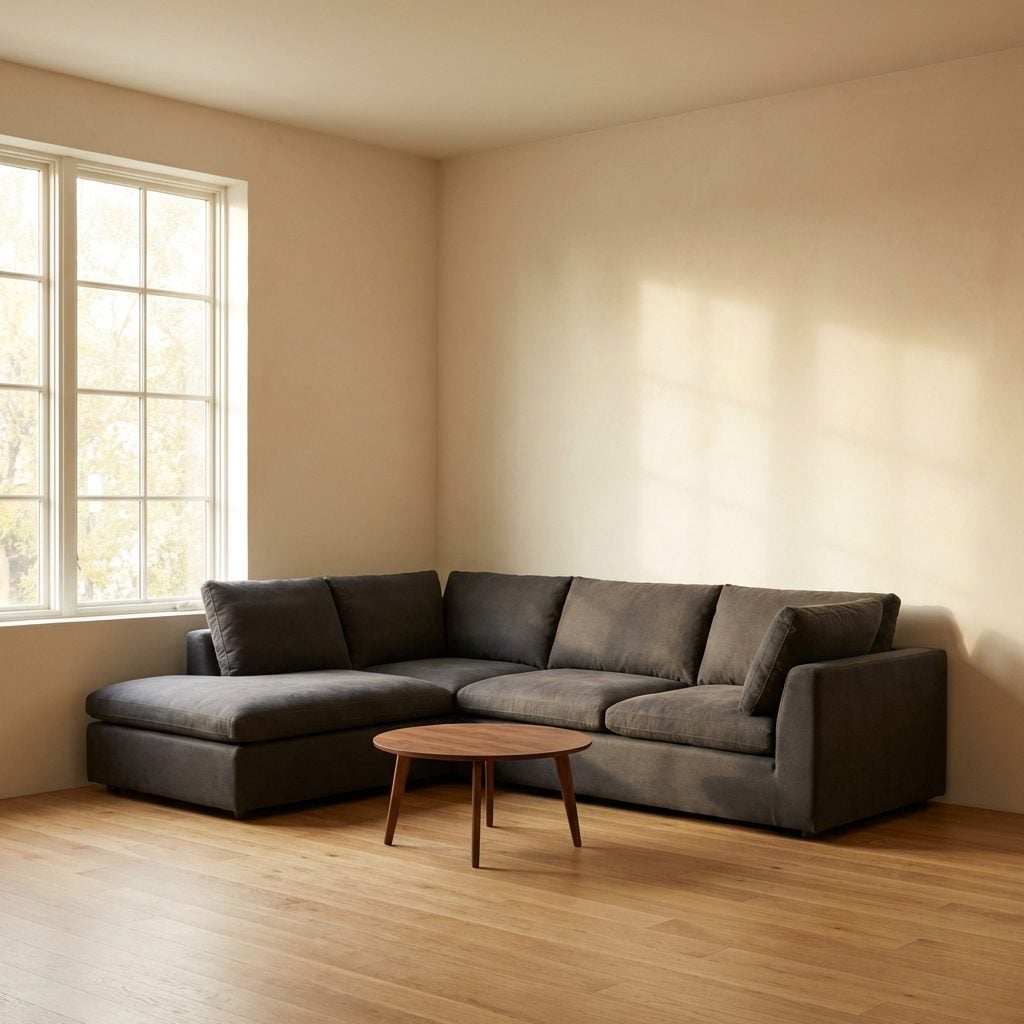
Your brain doesn’t measure furniture with a ruler. It reads context. Source A phenomenon known as proportion bias means we gauge scale by comparing objects to their surroundings, and a single linen sofa floating in the center of a small room has almost nothing to calibrate against. The result? Your eye reads the sofa as oversized and the surrounding empty floor as insufficient. Chaos reads as cramped, even when the square footage says otherwise.
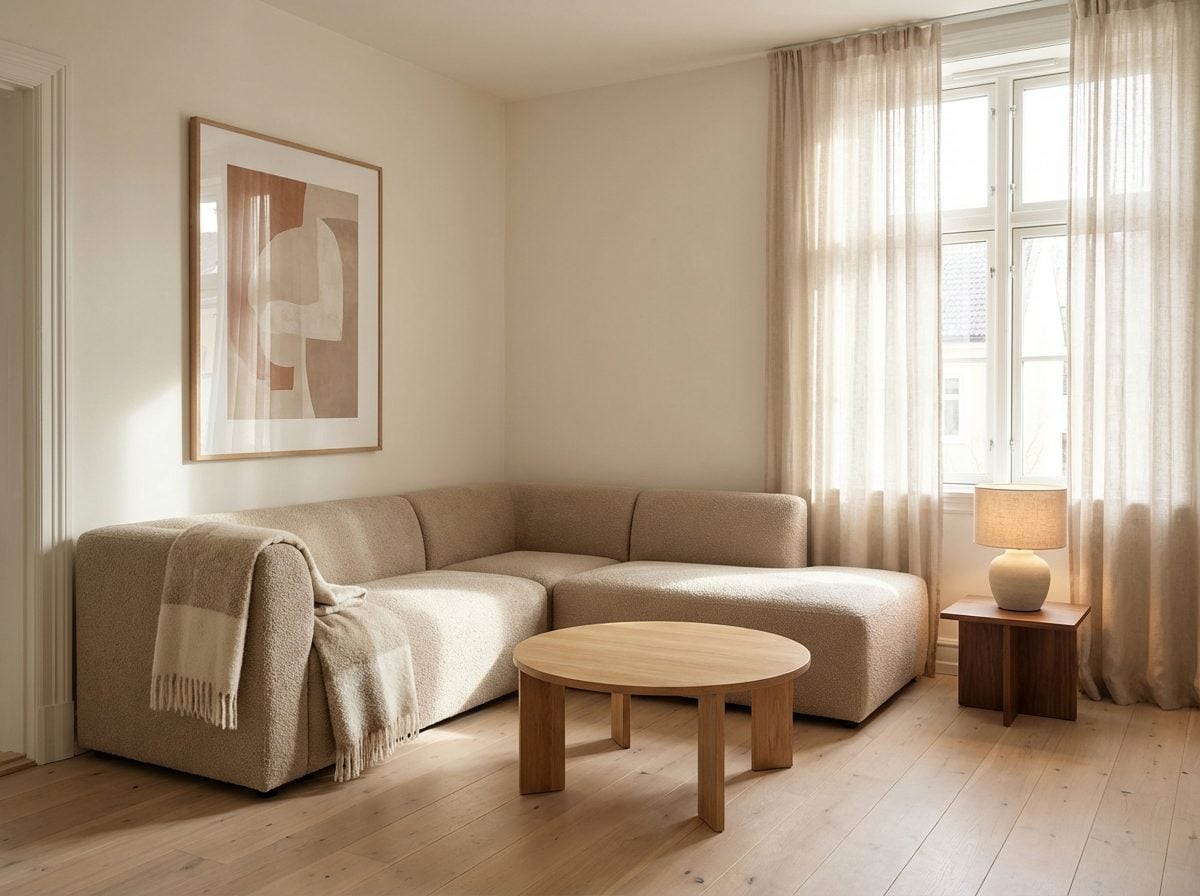
A sectional, by contrast, pushes against two walls and claims its corners. It gives your brain a clear perimeter to lock onto. The room’s edges become legible. What was disorienting open floor space, which the brain processes as unresolved territory, becomes framed, anchored, and purposeful. The room feels complete, not crammed. The same square footage, two completely different psychological reads. This is why a tiny sectional in a compact room can feel more considered than a smaller standalone sofa rattling around in the same space.
Why Your Brain Reads ‘Incomplete’ Furniture Arrangements as Threatening
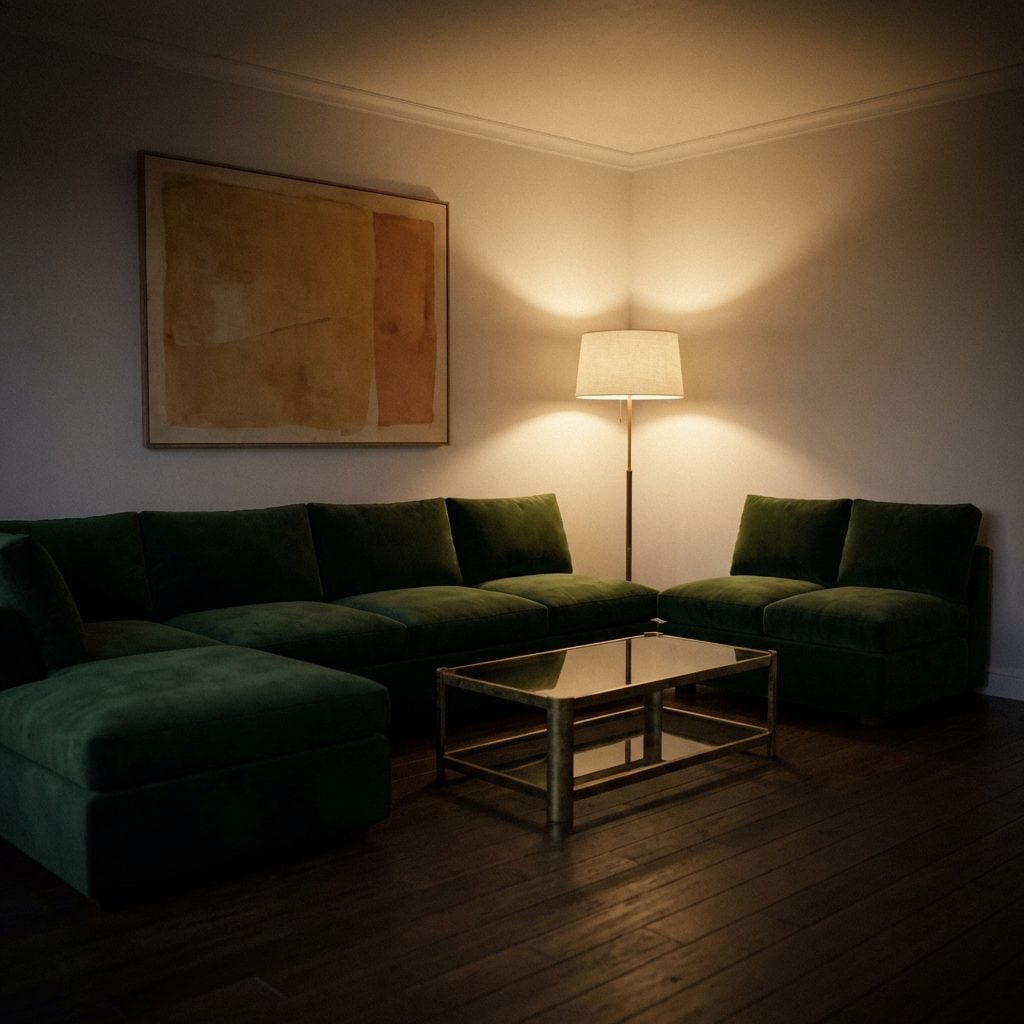
An unfinished room isn’t just aesthetically unsatisfying, it registers as low-grade stress. The principle behind this comes from Gestalt psychology: the brain craves closure. When a furniture arrangement has obvious gaps, a sofa with no visual anchor on either side, chairs scattered without relation to one another, a coffee table adrift in the center of a room, your nervous system treats those gaps as unresolved problems.
Environmental psychologist Roger Barker’s research in the 1950s on “behavior settings” showed that physical space directly shapes behavior, and that environments with oversized or poorly arranged furniture caused residents to use those rooms less and gather there less often. Source A sectional solves this in one move. Its L-shape creates an immediate sense of enclosure and completion, the furniture arrangement reads as finished. Your brain stops scanning for what’s missing and starts relaxing into what’s there. That sense of resolution, subtle as it is, is why some rooms feel restful the moment you walk in, and others keep you vaguely on edge.
The Prospect-Refuge Secret Hidden Inside Every L-Shaped Sectional
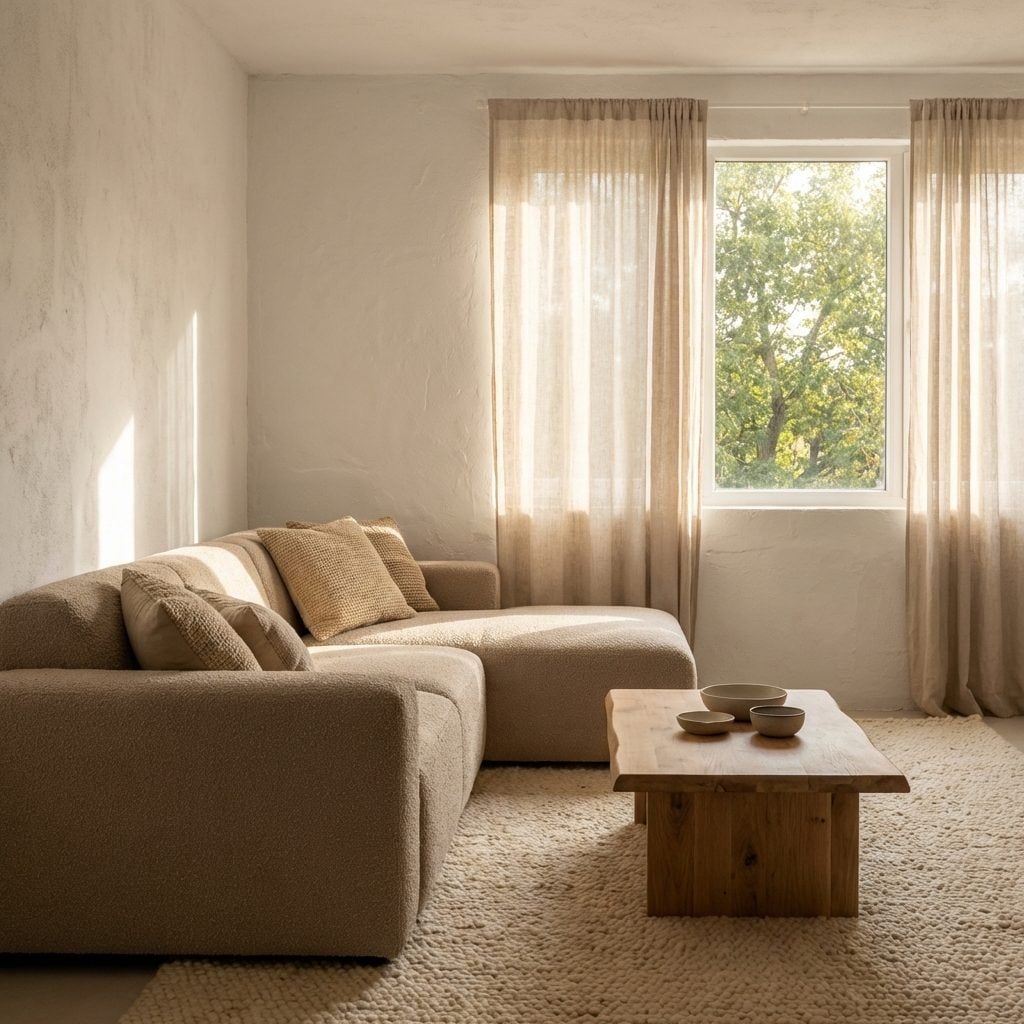
In 1975, geographer Jay Appleton proposed what became one of environmental psychology’s most enduring theories: humans instinctively prefer spaces where they can observe their surroundings without being exposed themselves. He called it prospect-refuge theory. Source It’s why you gravitate toward the corner booth at a restaurant. Why a seat with its back to the wall feels more comfortable than one in the middle of a room. And why, when you sit at the interior corner of an L-shaped sectional, something in your body quietly unwinds.
That interior corner position is prospect-refuge made physical. Your back and one side are sheltered by the sofa’s arms and cushions (refuge), while the open face of the room stretches out in front of you (prospect). You can see without being seen, survey without being approached from behind. According to (Source), open views are consistently associated with higher preference ratings in built interior settings. A sectional in a small room doesn’t just address seating capacity, it creates the most psychologically secure seat in the house.
What Eye-Tracking Studies Reveal About How We Actually Measure a Room
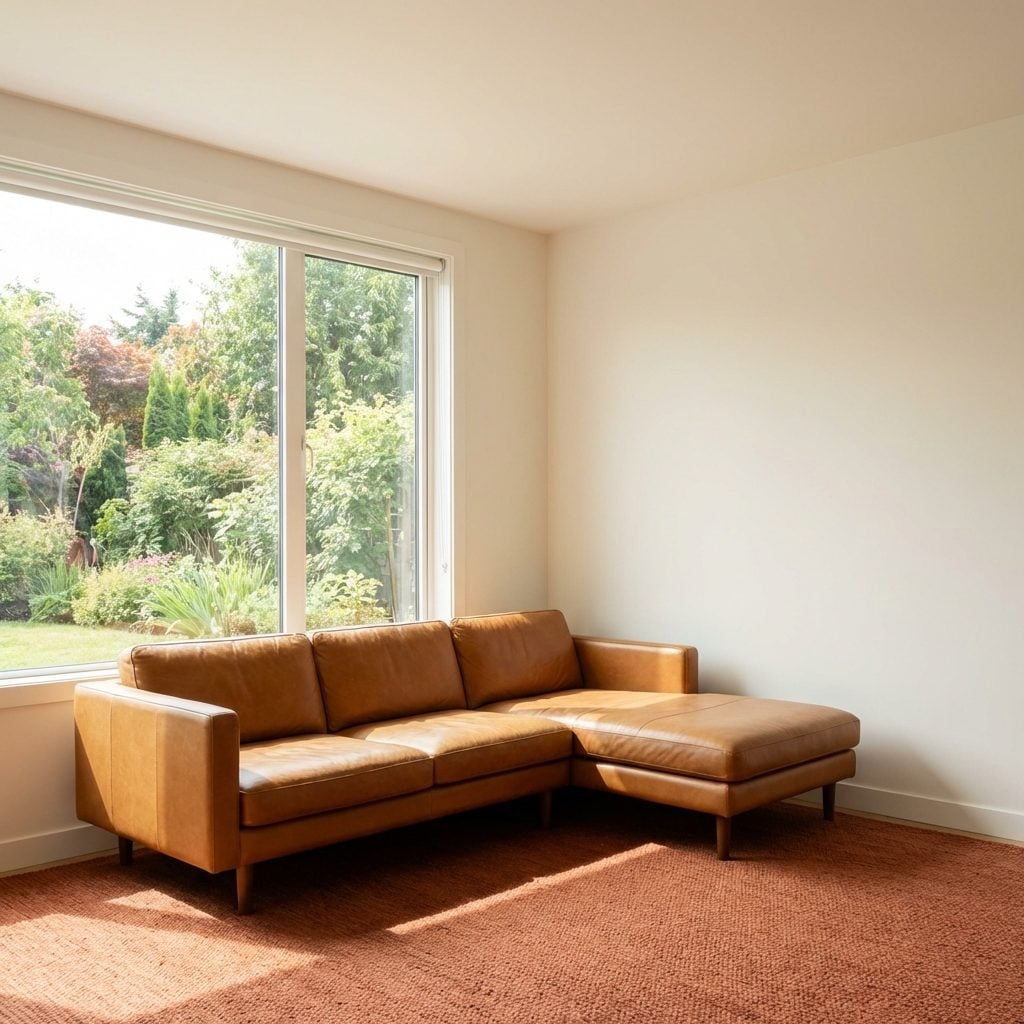
Here’s what’s counterintuitive: you don’t assess a room’s size by looking at the floor. A 2024 study from Virginia Tech published in Frontiers in Psychology used eye-tracking technology to monitor exactly where participants directed their gaze when evaluating spaciousness, and the floor was consistently the least visited area of interest, regardless of room size, ceiling height, or furnishings. Source Your brain is reading walls, windows, and materials, not square footage.
The same study found that view access (particularly window size) and surface materiality had the strongest influence on perceived spaciousness. Natural and textured materials were rated as more spacious than concrete surfaces, even in identical room geometries.
What this means for sectional skeptics: the argument that a sectional “takes up too much floor space” is based on a metric your brain barely registers. You’re not standing in your living room counting floor tiles. Your eyes are scanning upper walls, windows, and the quality of surfaces, and if those read well, the room feels open. A low-profile sectional keeps sightlines high and walls visible, which is exactly what the brain uses to decide the room is generous.
The Furniture Rule That Was Invented to Sell More Sofas, Not to Help You
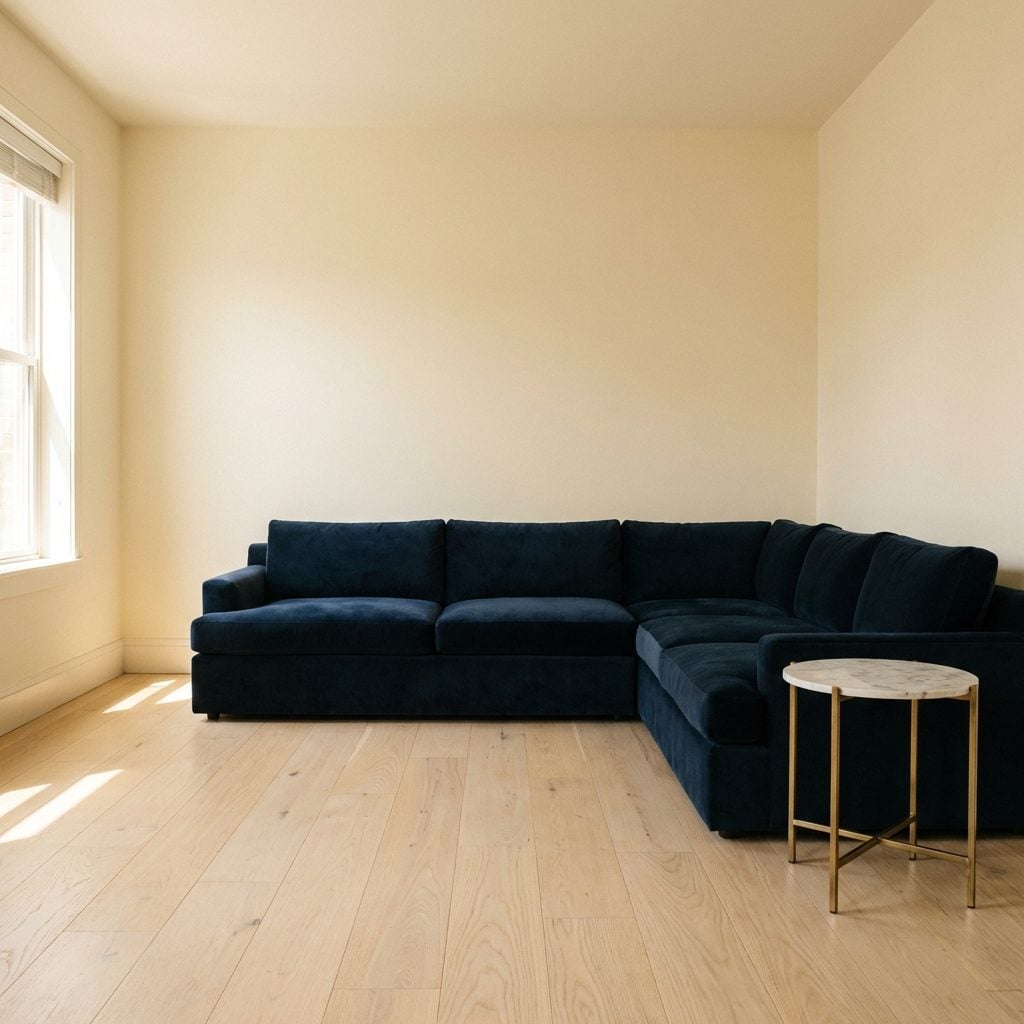
The rule that small rooms require small furniture didn’t emerge from spatial research or psychology. It emerged from mid-century furniture retail logic, where the goal was to make every room feel “safe” enough to purchase a second, third, or fourth piece. The advice served showrooms, not homeowners.
When furniture is undersized for its room, the brain reads the mismatch as incompleteness, which prompts the very human urge to fill the gap. More side tables. Another accent chair. A lamp here, a rug there. What started as a single sofa “scaled to the room” becomes a room full of competing small objects, each fighting for visual attention. The cognitive load climbs. The room feels busy. And the design advice that was supposed to help you ends up doing the opposite.
The real takeaway: small spaces don’t need smaller furniture. They need fewer, better-placed pieces. A modular sectional sofa configured thoughtfully is one decisive anchor, one cognitive event, rather than six small decisions that never quite cohere. Think of the difference between a well-edited preppy family room built around a single strong seating piece versus one assembled from mismatched small-scale furniture that never settles.
“Small rooms don’t need smaller furniture. They need fewer, better-placed pieces.”
Why Negative Space Feels Larger When It’s Anchored by One Dominant Object
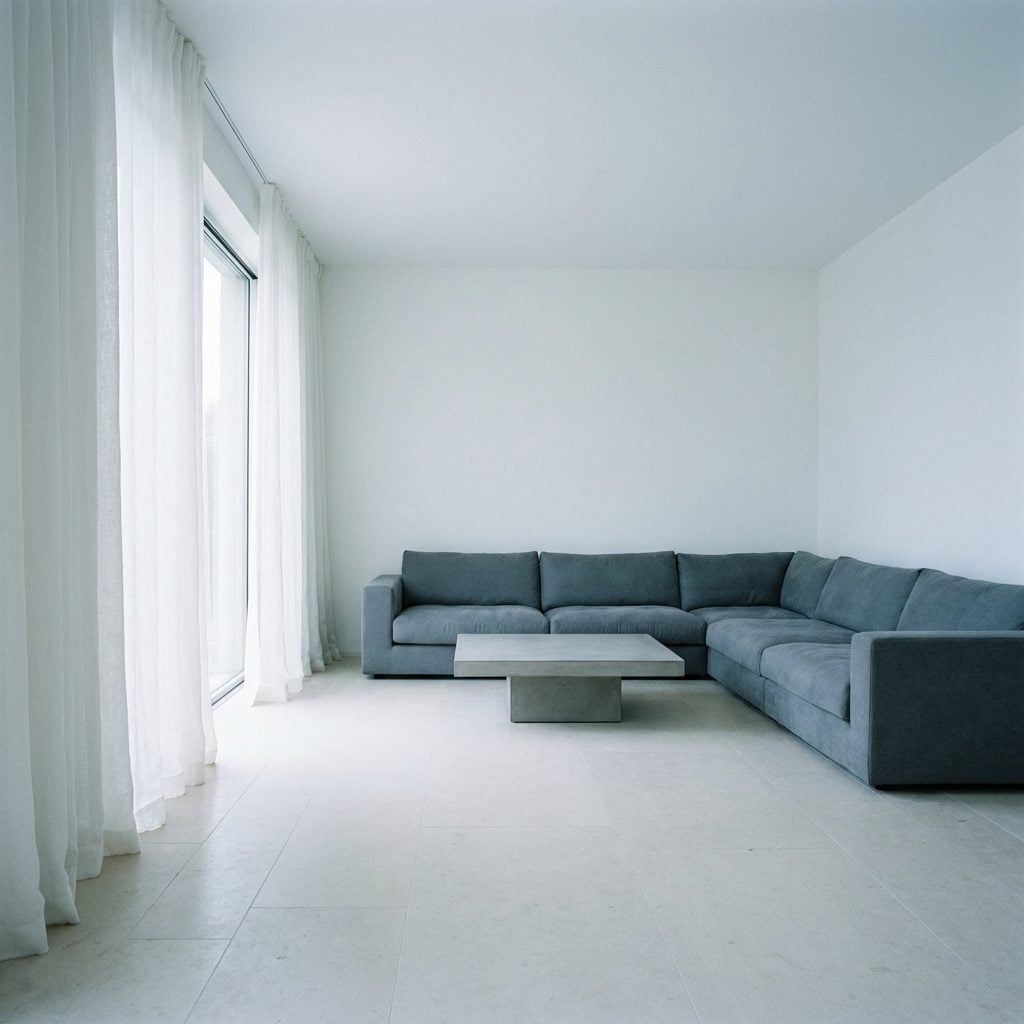
Counterintuitive but consistent: an empty room doesn’t feel spacious. It feels ambiguous. Without reference points, the brain struggles to parse scale, which is exactly what proportion bias describes. Source Bare walls don’t provide context, so your brain can’t orient itself. That open floor you’re so carefully preserving by choosing a smaller sofa? It registers as undefined territory, not generous space.
One dominant anchor changes all of this. When a single large object, a sectional, a dining table, a statement area rug, claims the room with authority, the negative space around it suddenly has meaning. It becomes a foil. The eye can measure the room against something, and that measurement always registers as more generous than a room full of competing small elements. A charcoal family room anchored by one large sectional and almost nothing else will read as more spacious than the same room with three small sofas, two accent chairs, and a cluster of side tables.
The Gestalt Principle That Makes Sectionals Visually Shrink a Room’s Chaos
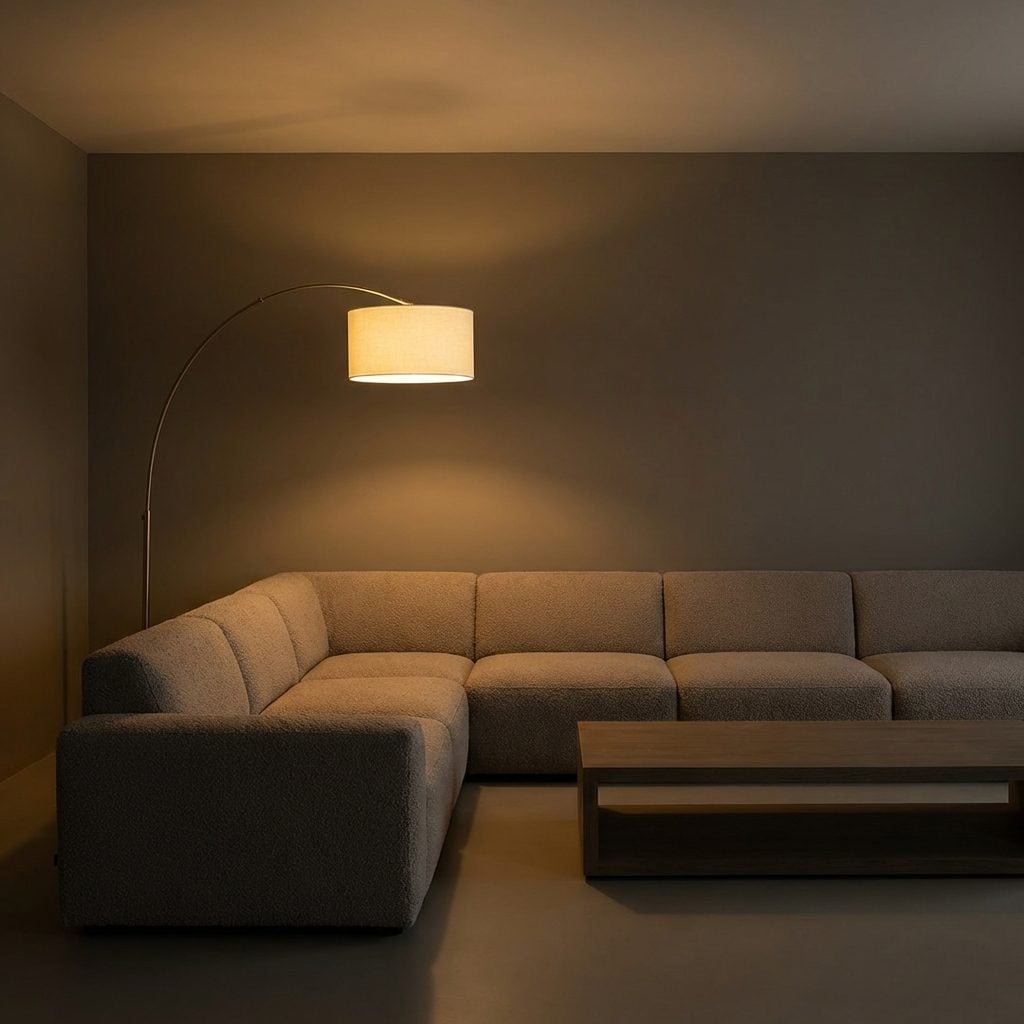
Gestalt psychology’s Law of Prägnanz states that the brain always resolves visual complexity into its simplest possible form. When you walk into a room, your visual cortex is actively compressing what it sees, grouping nearby objects together, reading lines as continuous, organizing chaos into pattern. This happens before you’re even consciously aware of the room.
Multiple small furniture pieces read as multiple visual events. A sofa, two chairs, a chaise, an ottoman: five separate objects the brain must catalog and relate to one another. A sectional reads as one event. One continuous line. One resolved shape. According to the principle of unity in Gestalt theory, the brain prefers fewer, coherent visual units, and registers them as calmer, more controlled, and yes, as taking up less perceived space. The room’s “chaos” is compressed into a single elegant gesture. A well-placed grey sectional doesn’t just anchor your seating, it does the visual math for your brain before you sit down. That’s why walking into a room with a sectional often triggers an immediate, wordless sense of order. Your brain had less work to do.
How the ‘3 Feet Rule’ Became Design Gospel Despite Zero Psychological Evidence
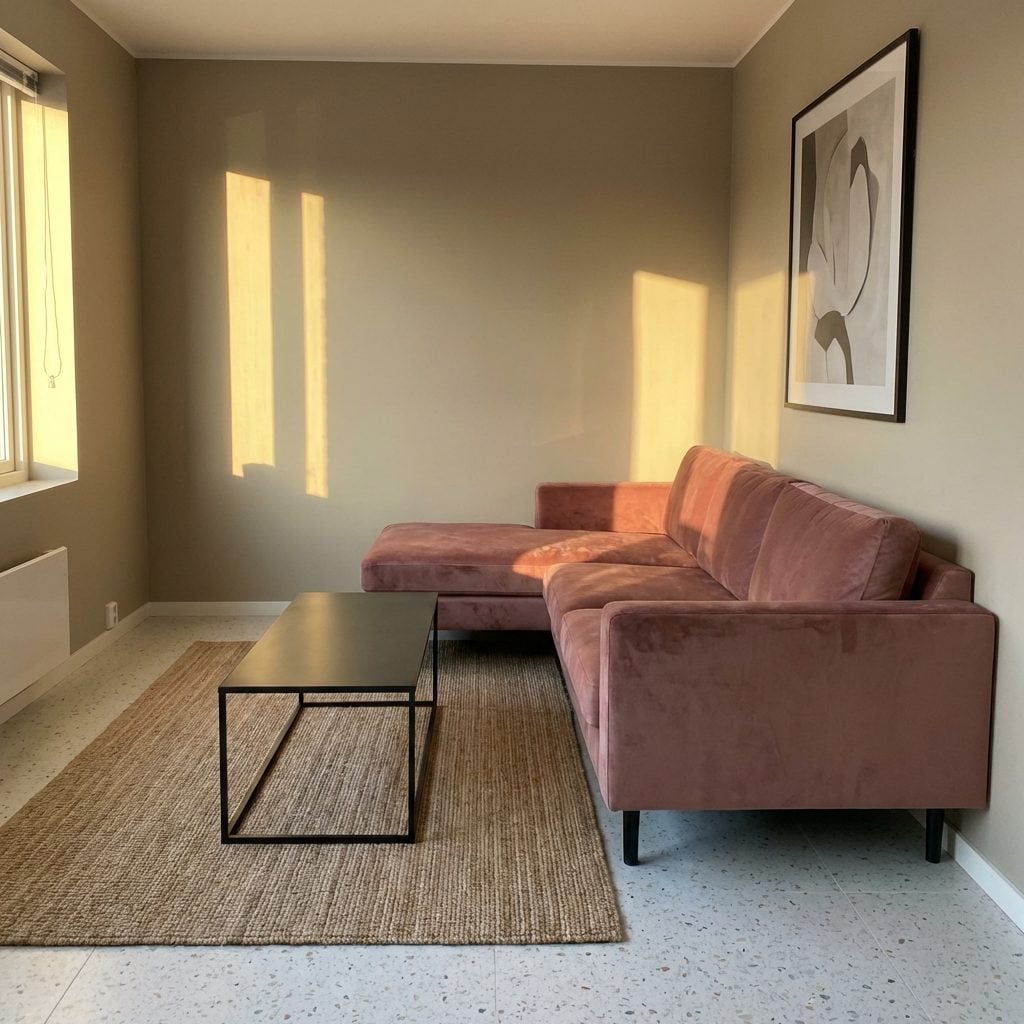
Ask most interior designers where the “leave 3 feet of clearance around furniture” rule comes from, and you’ll get a pause. Because it doesn’t come from ergonomics research. It doesn’t come from environmental psychology. It emerged informally from mid-century building codes, minimum clearance guidelines for commercial spaces and fire egress, and migrated quietly into residential design advice, where it calcified into dogma.
The rule has real utility in hospitality and retail, where foot traffic is unpredictable. In a personal living room where you know exactly how many people use the space and how they move through it, it’s a blunt instrument applied to a precision problem. Applying a commercial clearance standard to a 280-square-foot apartment living room is how you end up with a sofa so small it never quite fills the space, floating awkwardly three feet from every wall, surrounded by negative space that reads as indecision rather than breathing room.
Research on spatial perception shows the brain evaluates comfort through visual cues, the definition of zones, the legibility of pathways, the anchoring of sightlines, not by measuring floor clearance in feet. Source A small entryway design or a compact living room that uses a well-configured sectional with 18 inches of walking clearance will feel more navigable, and more resolved, than one that religiously honors a three-foot rule while leaving a small, orphaned sofa marooned in the center.
The Status Signal Hiding Inside the Furniture You Were Told You Couldn’t Have
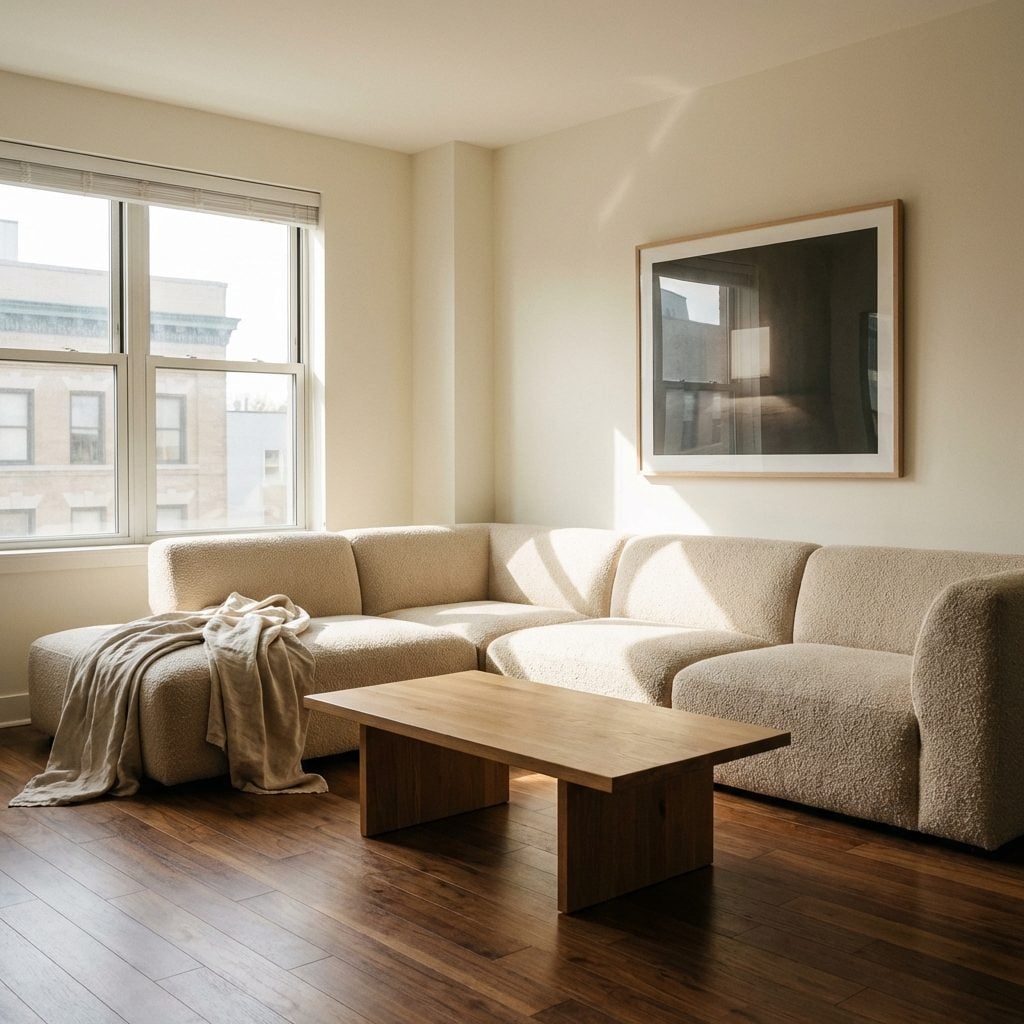
There’s a quiet class signal embedded in the sectional sofa, and it isn’t subtle once you see it. Historically, large, generous seating was the domain of grand drawing rooms, private clubs, and country house libraries, spaces that had room to spare. The sectional, as a form, whispers abundance. It says the person who owns it isn’t rationing their square footage. According to (Source), furniture is rarely a purely utilitarian purchase: it functions as an expression of self-image, a signal to guests, and a statement of how someone sees their life. (Source) found that over 72% of respondents agreed furniture design directly reflects their personality, which means what you choose, and what you deny yourself, becomes part of your identity.
The perverse thing about the “small room, small sofa” rule is that it trains people to opt down, to choose the apologetic loveseat over the low-profile sectional they actually want, encoding a kind of self-imposed spatial austerity. The room doesn’t read modest. It reads incomplete. And somewhere, your brain knows the difference.
Why Rooms With Defined Seating Zones Feel More Spacious Than Open-Plan Voids
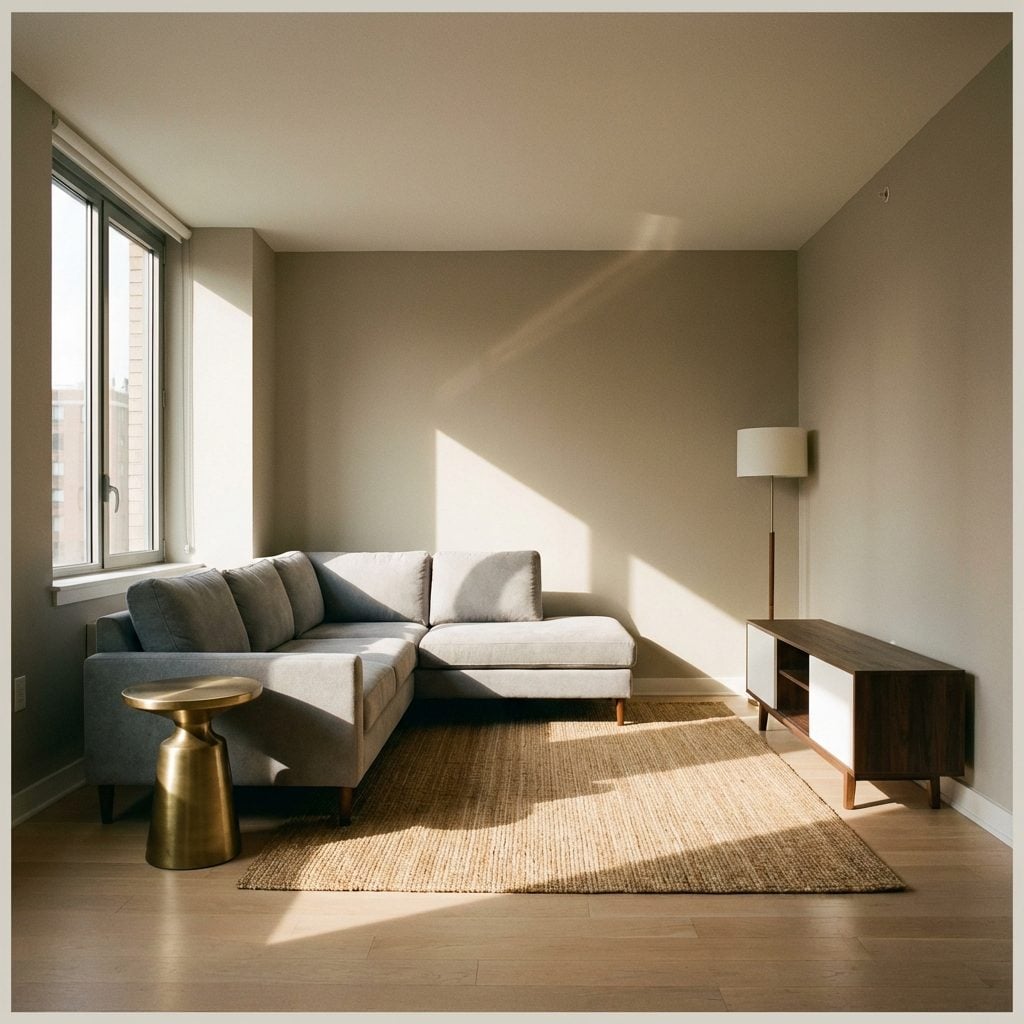
Counter-intuitive but consistent: research on spatial perception keeps arriving at the same uncomfortable conclusion for minimalism purists. A completely open room, stripped of furniture and zone definition, doesn’t read as spacious to the human brain, it reads as unresolved. (Source) examining furnishing and spatial perception found that the relationship between furniture and perceived spaciousness is significantly more complex than conventional design wisdom suggests, with furnished rooms sometimes registering as taller, and with width and depth ratings largely unaffected by the presence of furniture.
What furniture actually does, particularly a well-placed sectional, is give the eye a destination. The brain processes defined zones as legible, purposeful, and navigable. According to (Source), open-plan layouts can reduce the sense of intimacy and the clear definition of individual zones, suggesting that total openness trades one psychological quality (perceived freedom) for another (legibility and warmth). A tiny sectional placed deliberately doesn’t crowd a room. It organizes it. And an organized room, neurologically speaking, is a larger-feeling one.
The Unexpected Way Low-Profile Furniture Rewires Your Brain’s Depth Perception
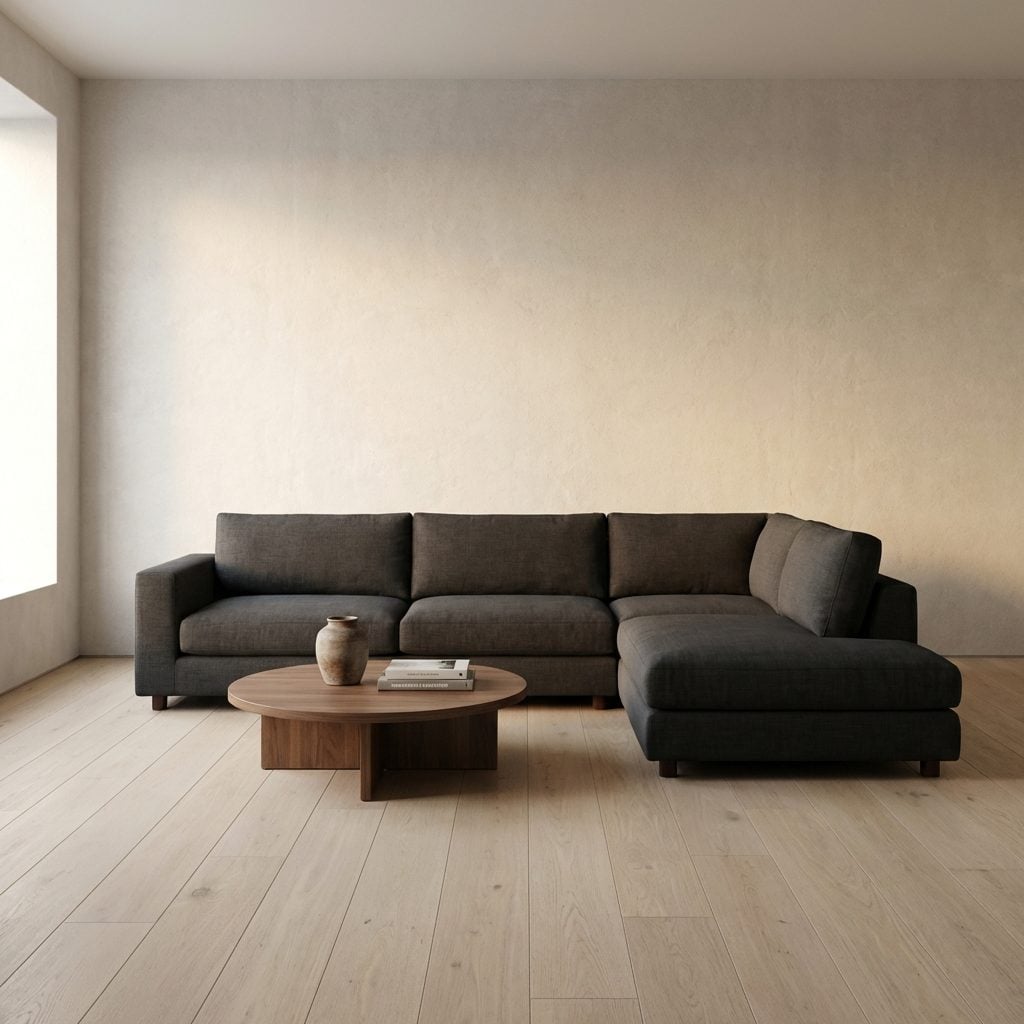
Your eye doesn’t measure rooms, it tracks visual interruptions. Every piece of furniture that rises toward eye level functions as a visual stop, a place where your gaze hits a wall and turns back. Tall armchairs, bulky traditional sofas, and towering bookcases fill not just floor space but sightlines, chopping a room into smaller perceptual parcels. Low-profile furniture does the opposite.
When seating sits well below eye level, the gaze travels over it and continues to the wall, to the floor beyond, to the space behind. The room is perceived in one long read rather than several interrupted ones. Research in architectural psychology confirms that visible floor area increases our sense of safety and spatial control, and low furniture maximizes that visible floor. A low-profile sectional sofa with a clean silhouette and short legs doesn’t just look modern. It actually manipulates your depth perception, extending the room’s apparent footprint. (Source) noted that visual clutter shrinks a room faster than large furniture ever could, which means the silhouette of a piece, not just its size, determines how much space it appears to consume.
What Retail Psychology Taught Us About Why We Believe Certain Design Myths
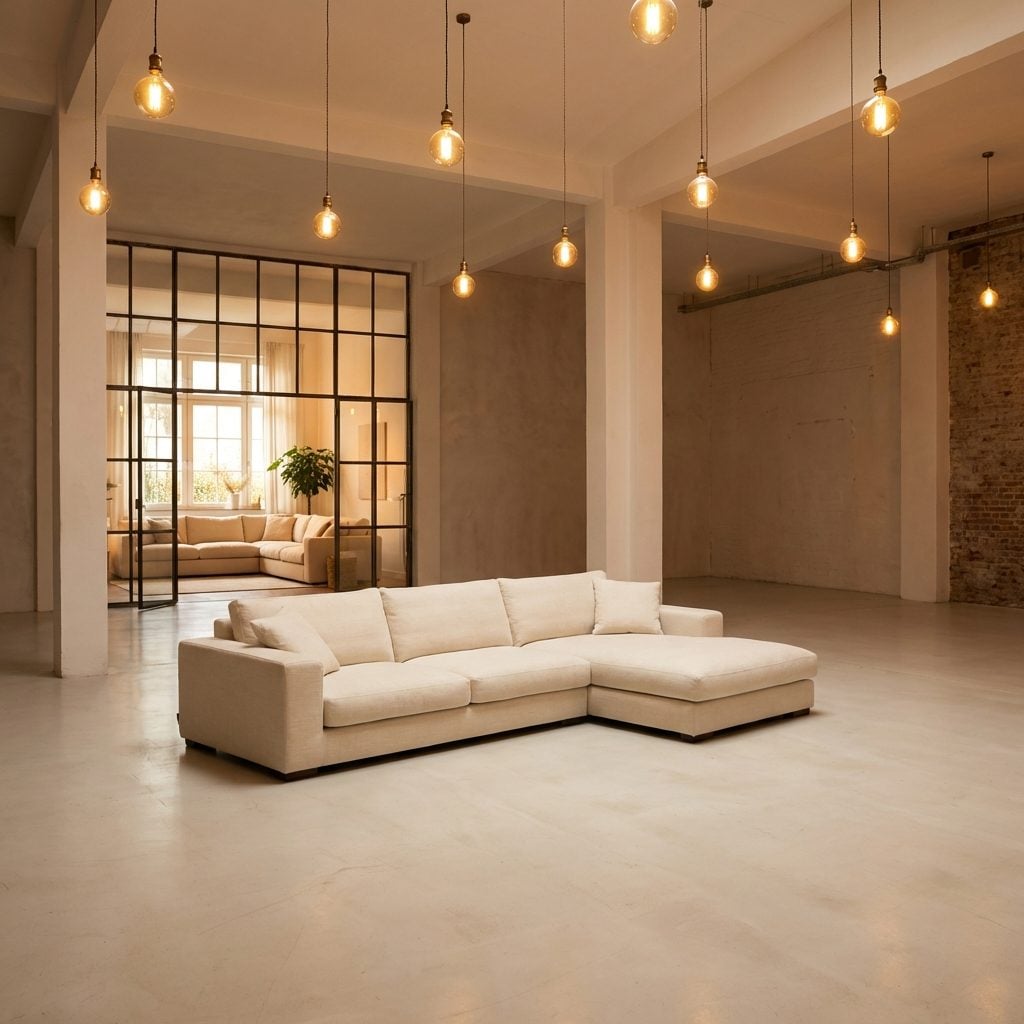
The “small room, small furniture” rule didn’t emerge from architectural research. It emerged from showrooms. Furniture retailers stage pieces in enormous, high-ceilinged showroom floors where everything looks proportional, and manageable. Research in architectural proportion bias explains precisely this: in a showroom, a sofa appears light and proportional because it’s surrounded by high ceilings, ample light, and other large pieces. The context distorts your perception. You walk away believing the piece is smaller than it is, and then apply that miscalibrated judgment to your actual room.
Retail display psychology compounds the problem. (Source) on retail visual complexity found that store layouts and decorative compartmentalization actively shape consumer perception of space and product scale. Showrooms are optimized to make you feel comfortable, aspirational, and yes, to make large pieces feel like safe bets. The small-space buyer, already self-conscious, then reaches for the smallest possible option to compensate. The myth gets reinforced not by physics, but by the retail environment that sold them the idea in the first place.
The ‘Enclosure Effect’ That Explains Why Sectionals Make Small Rooms Feel Like Sanctuaries
🔥 Would you like to save this?
In 1975, geographer Jay Appleton published a theory that would quietly reshape how designers think about comfort forever. Prospect-refuge theory, as it became known, proposes that humans are instinctively drawn to spaces that offer both an open view (prospect) and a sense of enclosure at their back (refuge). It’s an evolutionary response: the ideal position is one where you can see threats approaching while remaining protected from behind.
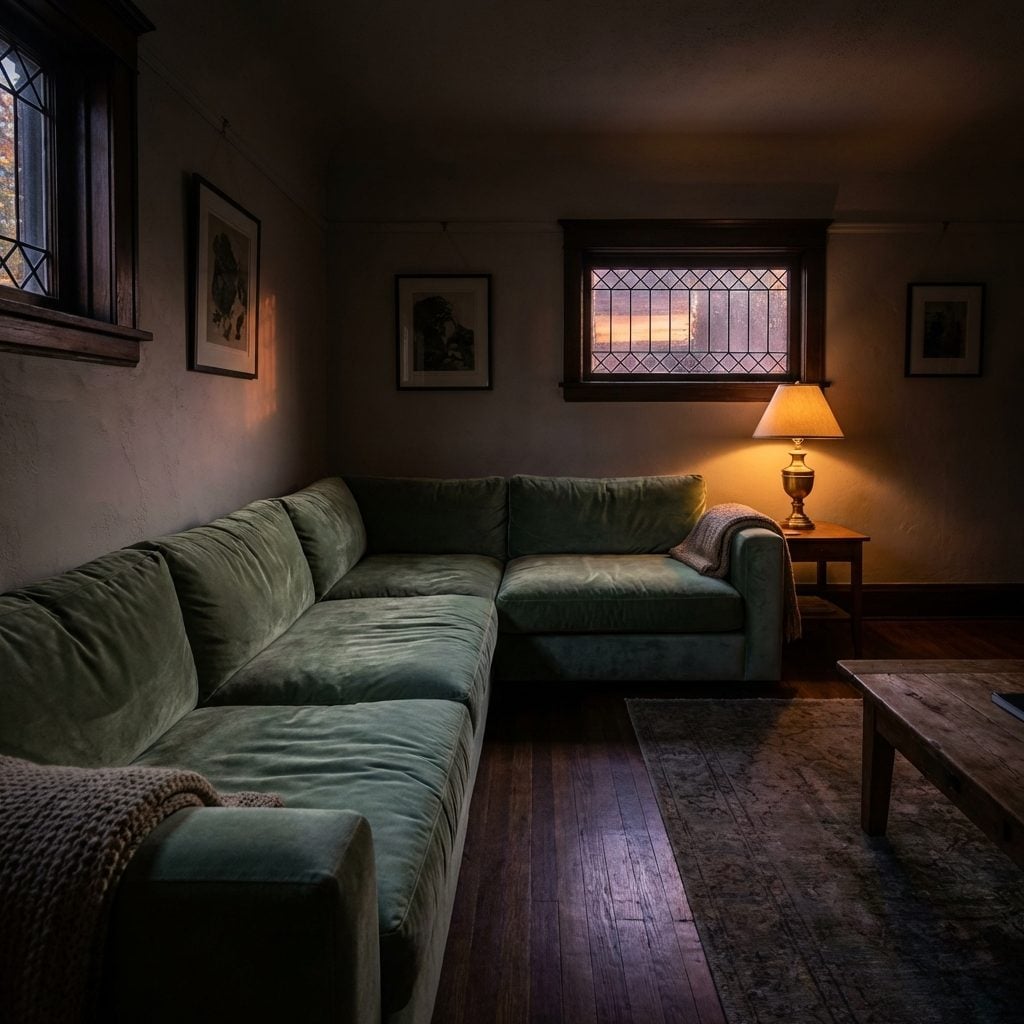
A sectional, particularly an L-shape or U-shape, creates exactly this condition inside a room. Your back is held. The sofa wraps around you. You face outward toward the window, the TV, the fireplace. The room becomes less a container and more a nest. (Source) consistently identify L-shaped and wrap-around seating arrangements as one of the clearest domestic expressions of the refuge condition. The takeaway is sharp: a sectional in a small room doesn’t just give you more seating. It gives your nervous system something it has been craving since before architecture existed.
- Back protection: The high back of a sectional mimics the cave wall, your most psychologically vulnerable point is covered.
- Outward orientation: Seated in the corner of an L-shape, you face the room. Prospect satisfied.
- Perimeter anchoring: Sectionals hug walls, keeping the center of the room open, a legible, scannable space that reads as safe.
Why Scale Contrast, Not Scale Matching, Is What Actually Makes Small Rooms Feel Finished
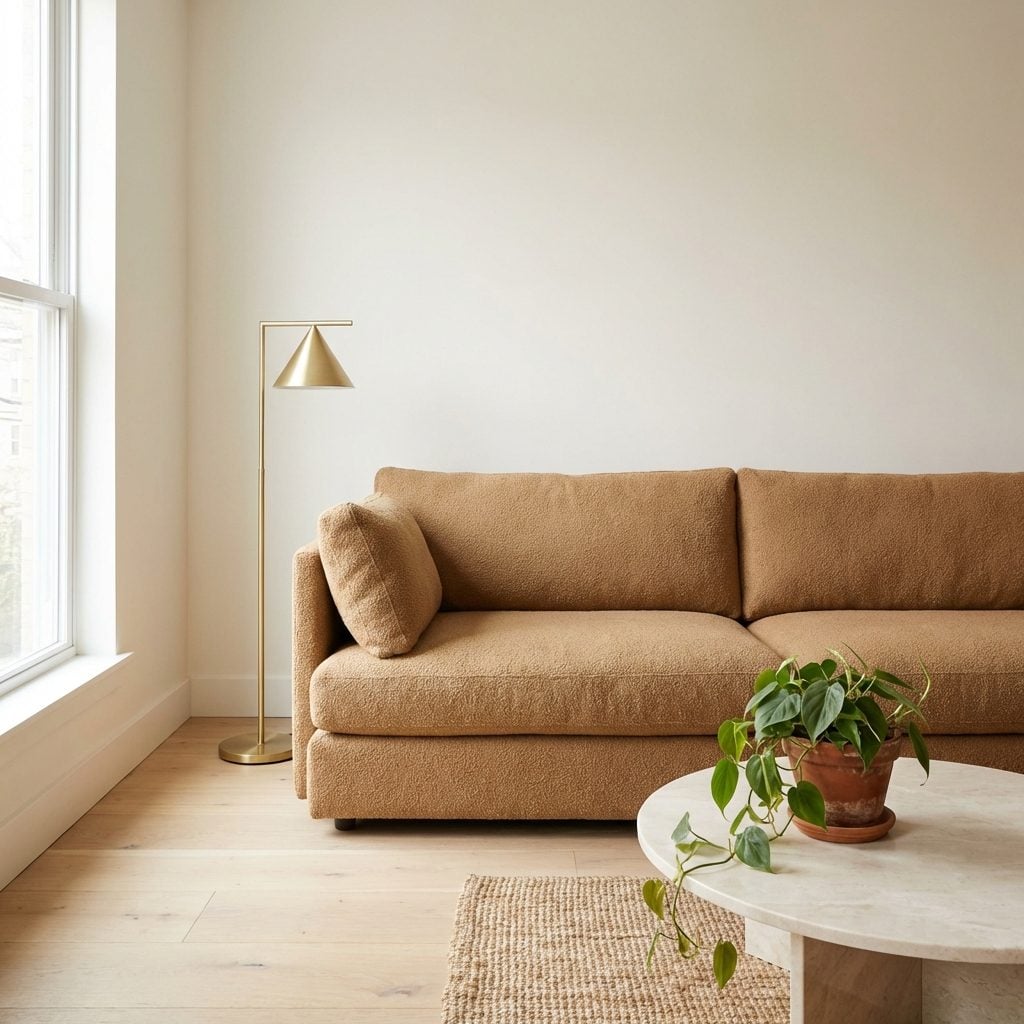
The instinct to match the scale of your furniture to the scale of your room is logical, tidy, and almost entirely wrong. Scale matching produces rooms that feel apologetic, everything carefully proportioned down, every piece shrunk to match the container. The result is a room that looks like a carefully furnished dollhouse: internally consistent, but somehow unconvincing.
What actually reads as finished, resolved, and visually satisfying is contrast. (Source) notes that contrast between large and small, between emptiness and density, is precisely what affects our perception of size. One confidently scaled piece, a full sectional, an oversized art print, a large area rug, gives the room a sense of intention. It establishes a visual anchor that makes everything else readable. (Source) puts it plainly: tiny pieces in a small room leave the space feeling empty and disconnected. You don’t want to eliminate scale contrast, you want to control it. One well-placed sectional creates the visual anchor that a room filled with cautious, small-scaled furniture never can.
“Every room needs at least one large piece to serve as an optic center.”, Heuser, cited in spatial design research
The One Layout Principle That Exposes Everything Wrong With the ‘Small Room, Small Furniture’ Rule
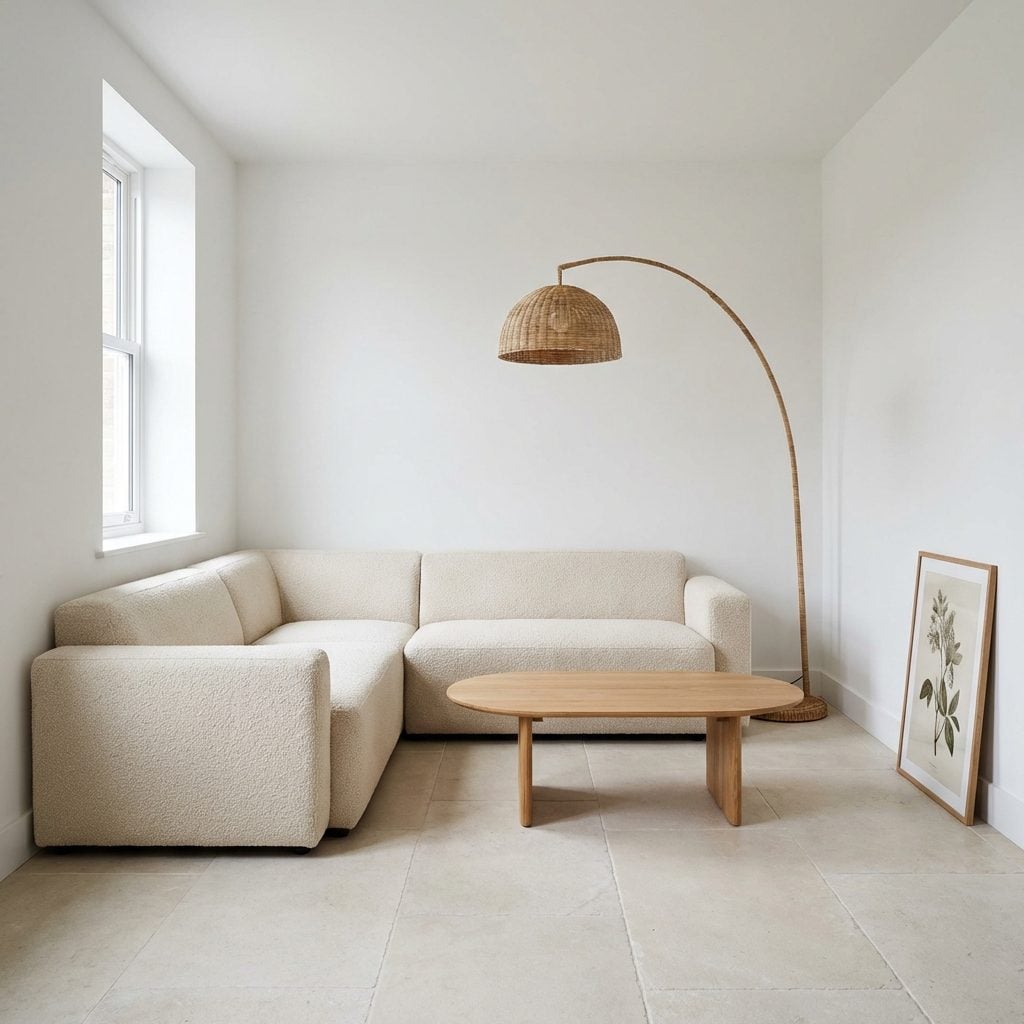
The rule stuck around because small spaces were treated like they needed smaller furniture, when in reality they need fewer, better-placed pieces. That’s a fundamentally different problem with a fundamentally different answer.
Research in architectural proportion bias identifies the real culprit clearly: it’s not furniture size that shrinks a room, it’s furniture density. Multiple small pieces create more visual interruptions, more legs on the floor, more competing focal points, and more cognitive noise than a single well-scaled anchor piece. A small room crowded with appropriately scaled small furniture still registers as crowded. A small room with one large, low sectional and deliberate negative space registers as considered.
The layout principle that cuts through all of it is simple: anchor first, accessorize second. Place the largest piece, yes, even the sectional, and let it establish the room’s logic. Then work outward from there, keeping density low and sightlines clear. (Source) found that view access and spatial legibility are among the most significant determinants of how open a room feels, both of which are served by fewer, bolder, lower pieces rather than a collection of cautious ones. A small entryway design applies the same logic at a micro scale: one strong anchor, clear sightlines, and nothing competing for dominance.
The Bottom Line
The rule was never about your room, it was about moving smaller, cheaper inventory and wrapping that commercial interest in the language of design authority. A sectional works in a small living room because it anchors negative space, satisfies your brain’s need for enclosure, and resolves the visual chaos that smaller, scattered furniture actually creates. Before you default to what you were told you’re allowed to have, ask who benefited from that rule, and whether your room has been paying the price for it ever since.