🔥 Would you like to save this?
In order to come up with the very specific design ideas, we create most designs with the assistance of state-of-the-art AI interior design software. Also, assume links that take you off the site are affiliate links such as links to Amazon. this means we may earn a commission if you buy something.
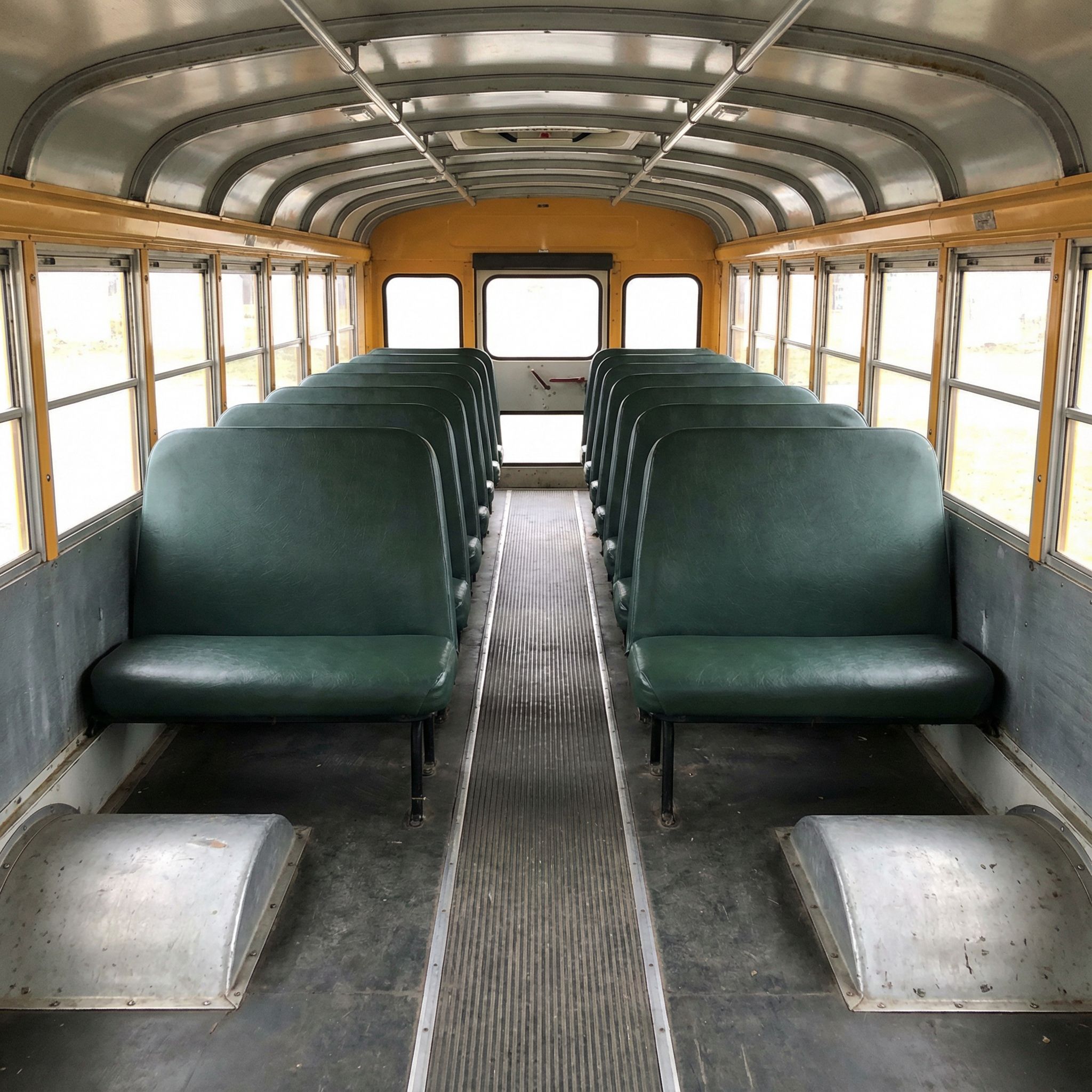
We bought a school bus. An actual, full-sized, yellow school bus with forest green vinyl seats and a rubber-ridged aisle floor that probably hasn’t been cleaned since the Clinton administration. My partner and I stood inside it for the first time, staring down that long corridor of bench seating, and I genuinely wondered if we’d made a terrible mistake.
So we did what anyone in our position would do: we fed photos of the interior to AI and asked it to show us possibilities. Thirty-three of them, to be exact. What came back ranged from rustic lodge vibes to yacht-cabin minimalism to something that looked like it belonged in a Scandinavian design magazine. Some made me want to start demolition immediately. Others made me question whether AI understands how weight distribution works in a moving vehicle.
Here’s what the algorithms dreamed up for our rolling rectangle of potential.
Stacked Stone and Walnut Paneling Take Over the Cabin
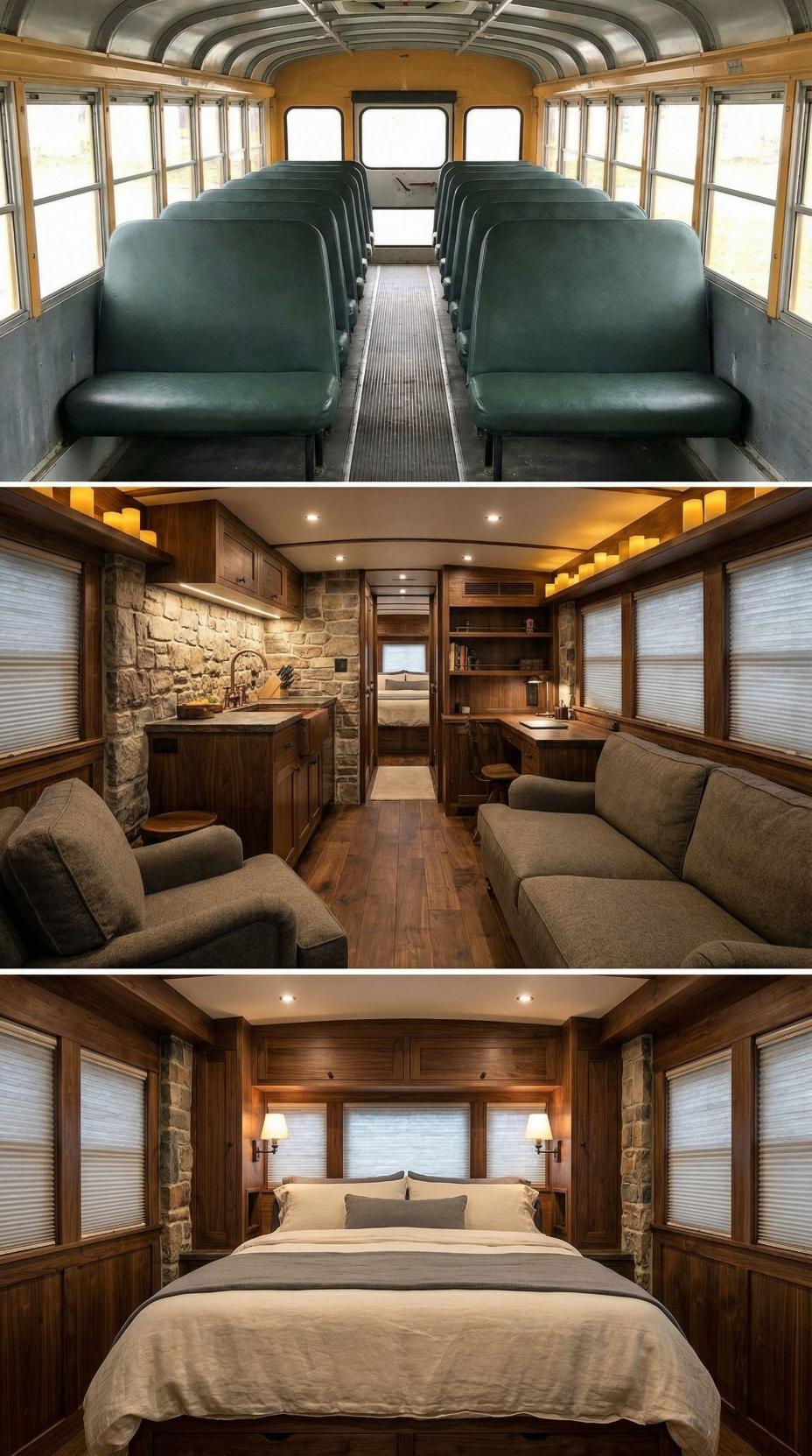
The AI went full mountain lodge on this one. Rough-cut limestone columns frame the galley kitchen, while dark walnut cabinetry lines both walls with shaker-style doors and brushed copper hardware. Those olive-grey wool sofas face each other across a narrow aisle that somehow still reads as livable. Candles perch on the upper ledges where emergency exits used to be.
What strikes me most is the bedroom at the rear. A queen mattress fills the entire width, dressed in cream linen with a single grey bolster pillow. Matching wall sconces flank the headboard, their warm light bouncing off more of that walnut paneling. The pleated Roman shades covering every window look expensive. They also look heavy, which makes me think about fuel economy.
By The Numbers: Bus conversion projects have increased 340% since 2019, according to specialty RV insurers tracking new policy applications for converted vehicles.
A Light Oak Kitchen with an iMac Workstation
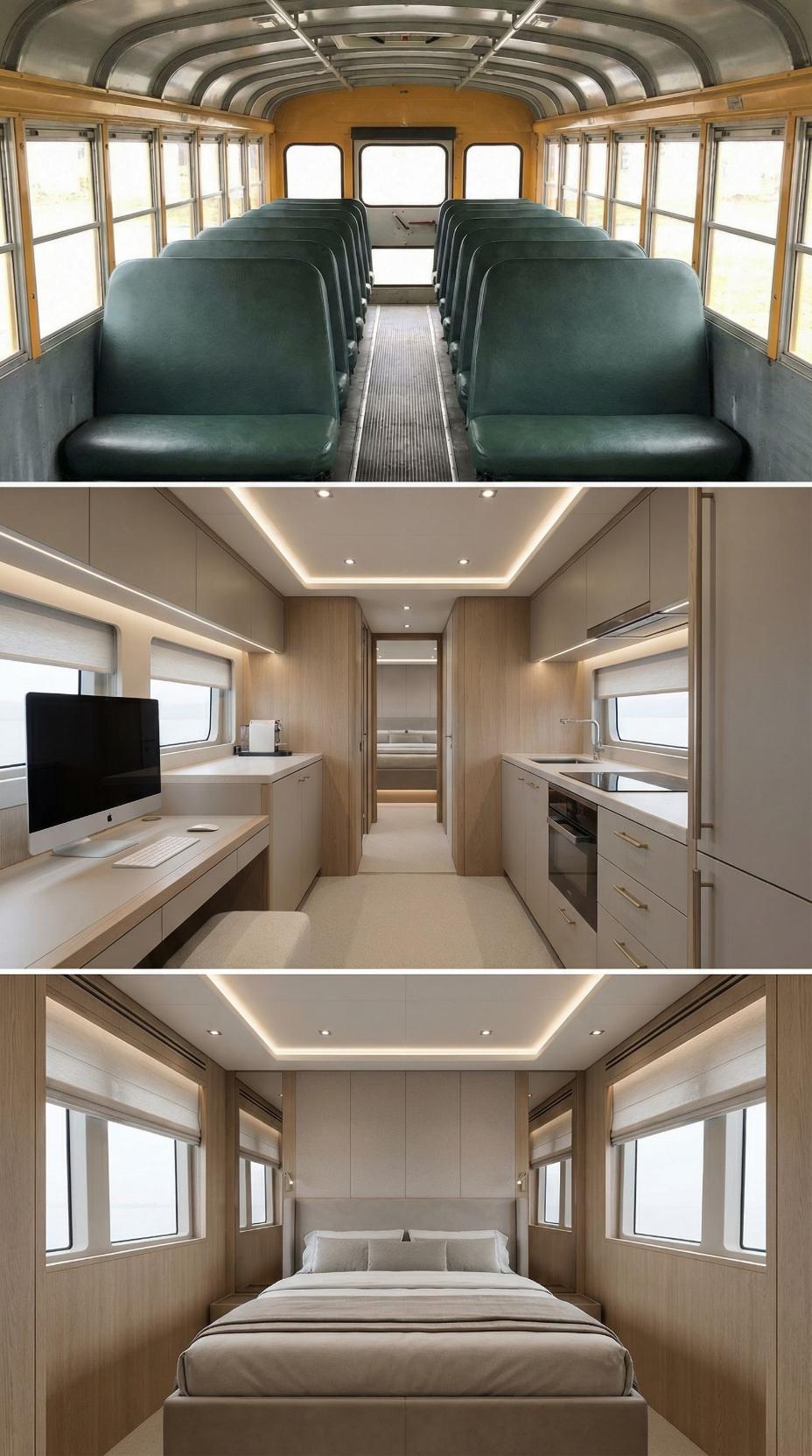
This design assumes we work remotely, which we do. A floating desk spans the left wall with a large-screen iMac anchoring the setup, all rendered in pale ash wood that matches the floor-to-ceiling cabinetry. The kitchen opposite features a stainless undermount sink, built-in oven at eye level, and what appears to be Silestone or similar engineered quartz in a soft ivory.
LED cove lighting runs along the ceiling perimeter, creating that diffused glow you see in high-end hotels. The bedroom visible through the doorway continues the monochrome palette with grey bedding and more of those recessed ceiling fixtures. I appreciate that AI understood the corridor layout of a bus and worked with it rather than against it.
Dark Mahogany and Porthole Windows Channel Private Yacht
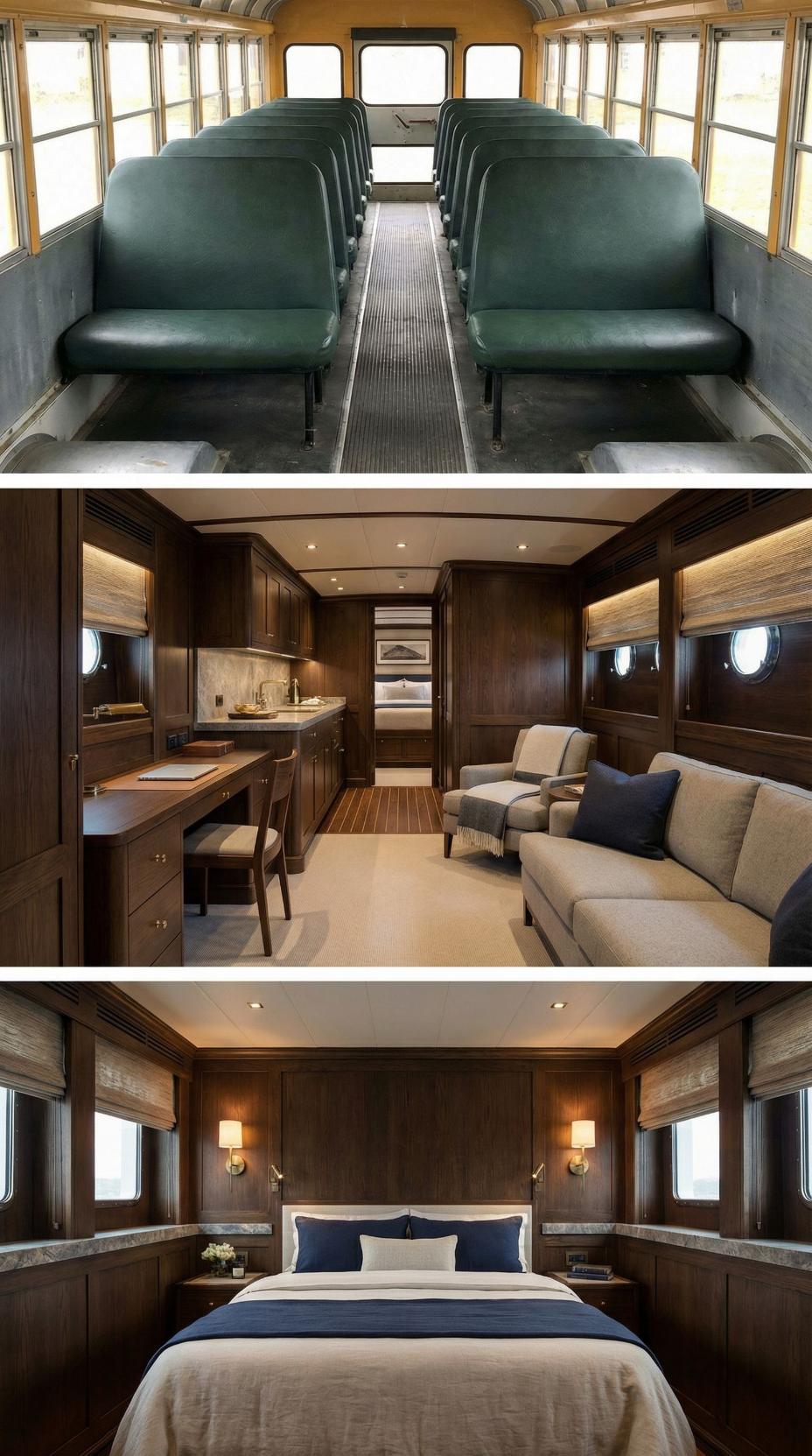
The AI replaced our rectangular school bus windows with circular portholes. I have questions about structural integrity, but the aesthetic is undeniably striking. Espresso-stained wood paneling covers every vertical surface, broken up by woven grass cloth around the window frames. A compact galley sits to the left with grey-veined marble backsplash and the same dark millwork.
Two sofas in oatmeal linen face each other, one with a navy throw pillow that’s the only pop of color in the entire space. Teak flooring runs in straight planks toward the bedroom, where a platform bed sits low against the rear wall. Brass wall sconces cast warm pools of light. The overall effect is a 1940s ocean liner cabin, which I didn’t know I wanted until now.
Charcoal Walls with Concrete Counters and Bentwood Furniture
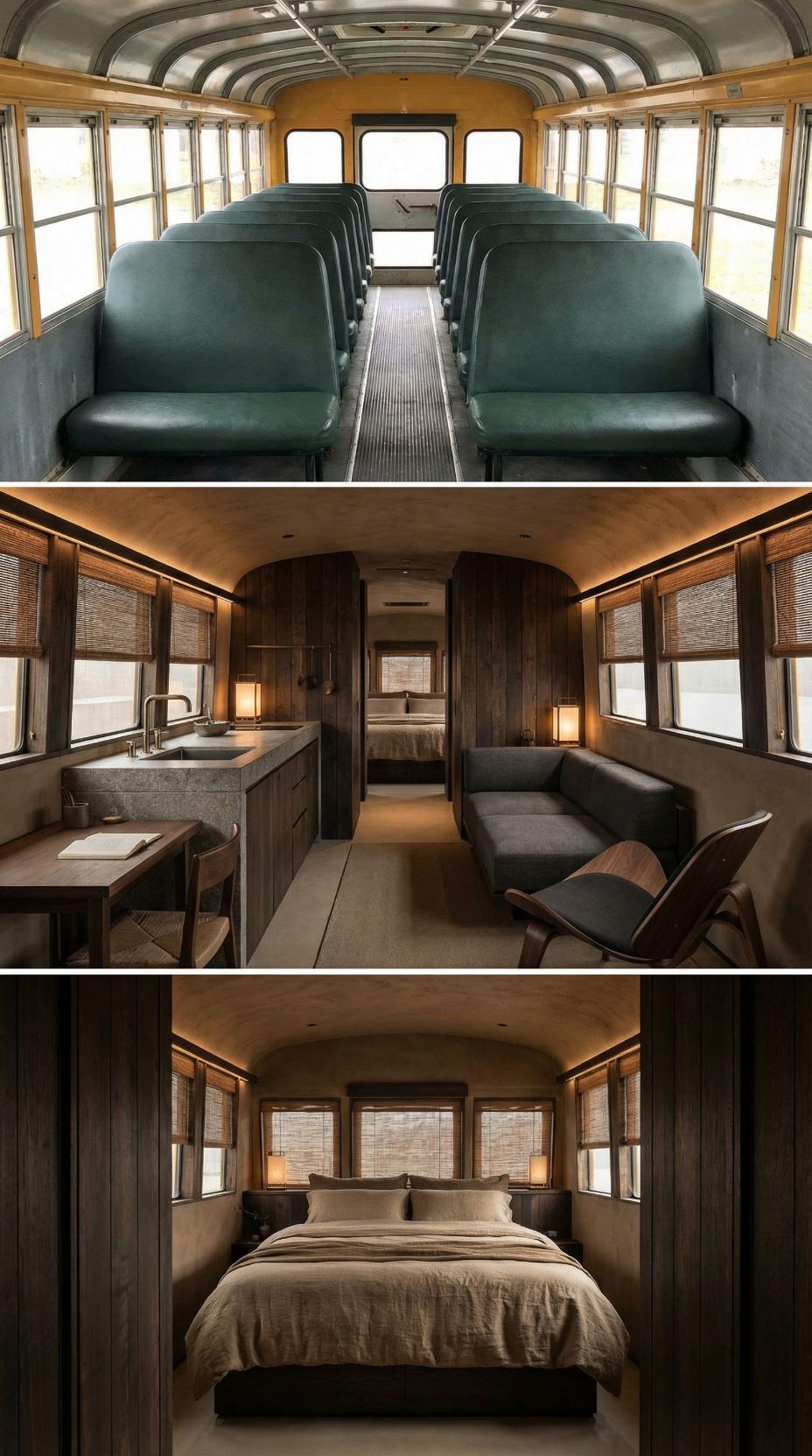
This one went moody. Dark shou sugi ban wood paneling wraps the walls while a poured concrete counter runs along the kitchen side, its grey mass broken by a sleek stainless faucet. The seating area features a low sofa in charcoal wool flanked by a curved bentwood chair that looks lifted from a mid-century catalog. Woven bamboo shades filter the window light into honey-colored stripes.
Japanese paper lanterns glow softly on either side of the central corridor, and the bedroom at the back continues the dark palette with taupe linen bedding on a platform frame. What I appreciate here is the restraint. No competing patterns, no accent colors screaming for attention. Just texture and shadow doing the work.
Blonde Wood, White Linen, and a Matte Black Faucet
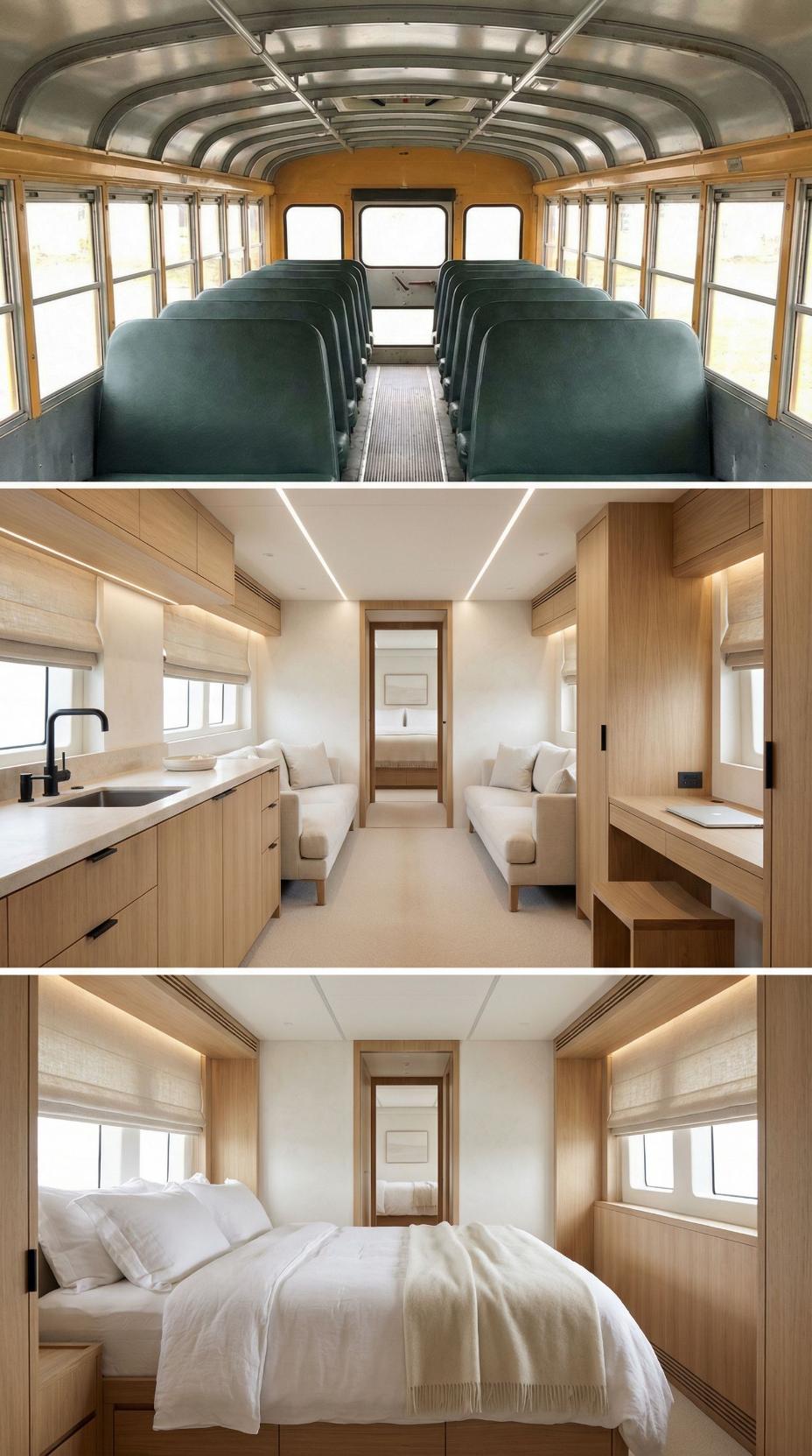
Here the AI leaned hard into Scandinavian restraint. White oak cabinetry from floor to ceiling, white quartz countertops, cream canvas cushions on built-in benches. The only visual punctuation comes from a single matte black gooseneck faucet and matching cabinet pulls. Roman shades in natural linen hang at every window.
A small desk area tucks into the left side with just enough surface for a laptop. The bedroom through the doorway shows more white oak framing a bed dressed entirely in white cotton, with a framed landscape print the only wall decoration. This is the design I keep coming back to. Something about all that pale wood and diffused light feels calm in a way the darker schemes don’t.
“The interesting thing about AI-generated interiors is how they reveal our collective visual vocabulary. These designs pull from yacht catalogs, boutique hotels, and Instagram feeds to create something that feels simultaneously familiar and impossible.”
Curved Cabinetry Follows the Original Roofline
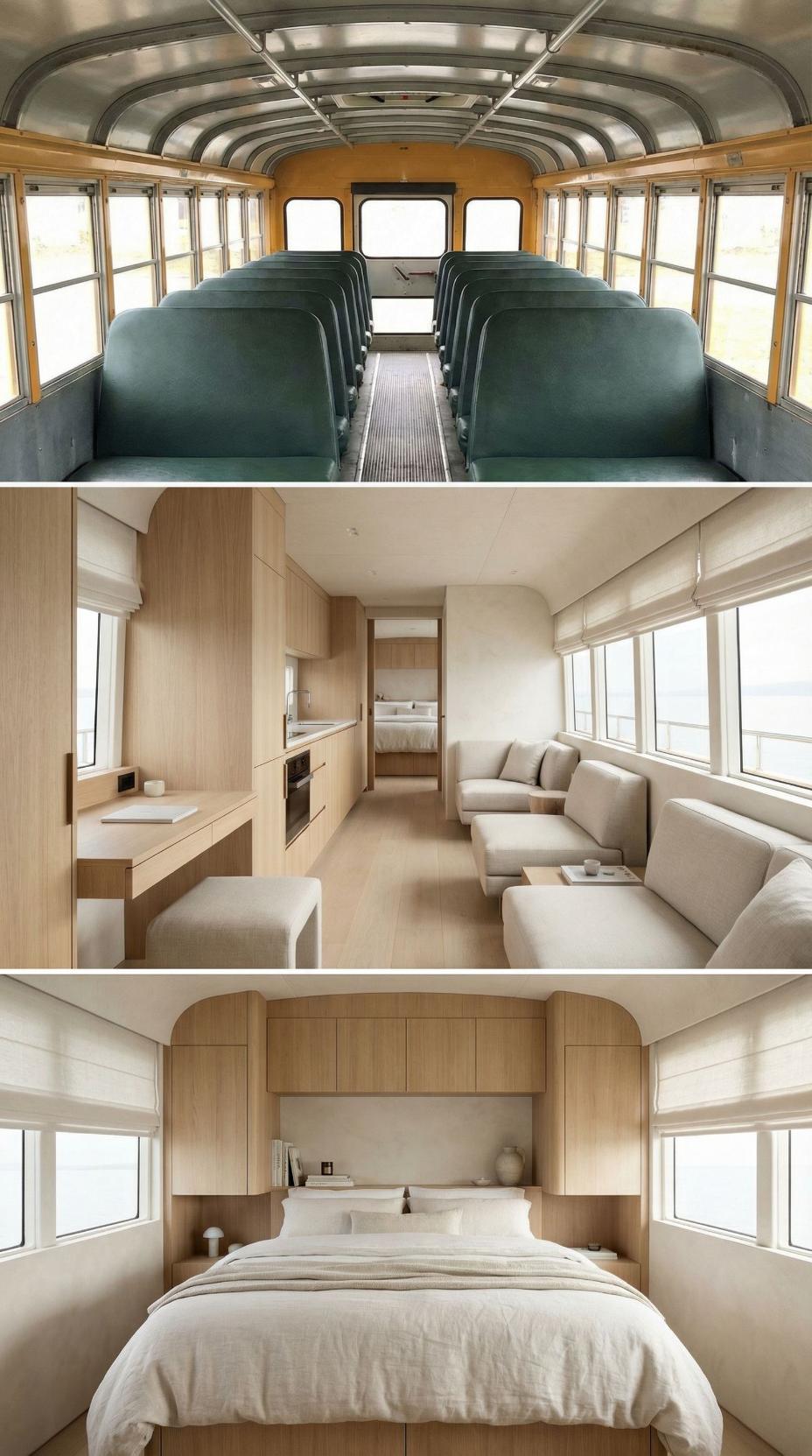
Most bus conversions fight the curved ceiling. This design works with it. Upper cabinets in honey oak follow the arc of the original roof, their doors trimmed with subtle reveals that emphasize the curve. Below, a sectional sofa in stone-colored cotton wraps around a small wood side table. Natural light pours through oversized windows that look larger than our actual bus windows.
The bedroom takes the curved ceiling concept further, with built-in storage above the bed that creates an alcove effect. Soft grey bedding sits against more of that warm oak, and a small niche shelf holds books and a ceramic vase. I spent twenty minutes trying to figure out if this ceiling shape is actually possible with our bus model. The answer appears to be yes, with significant structural work.
Terracotta Seating Against Black Millwork
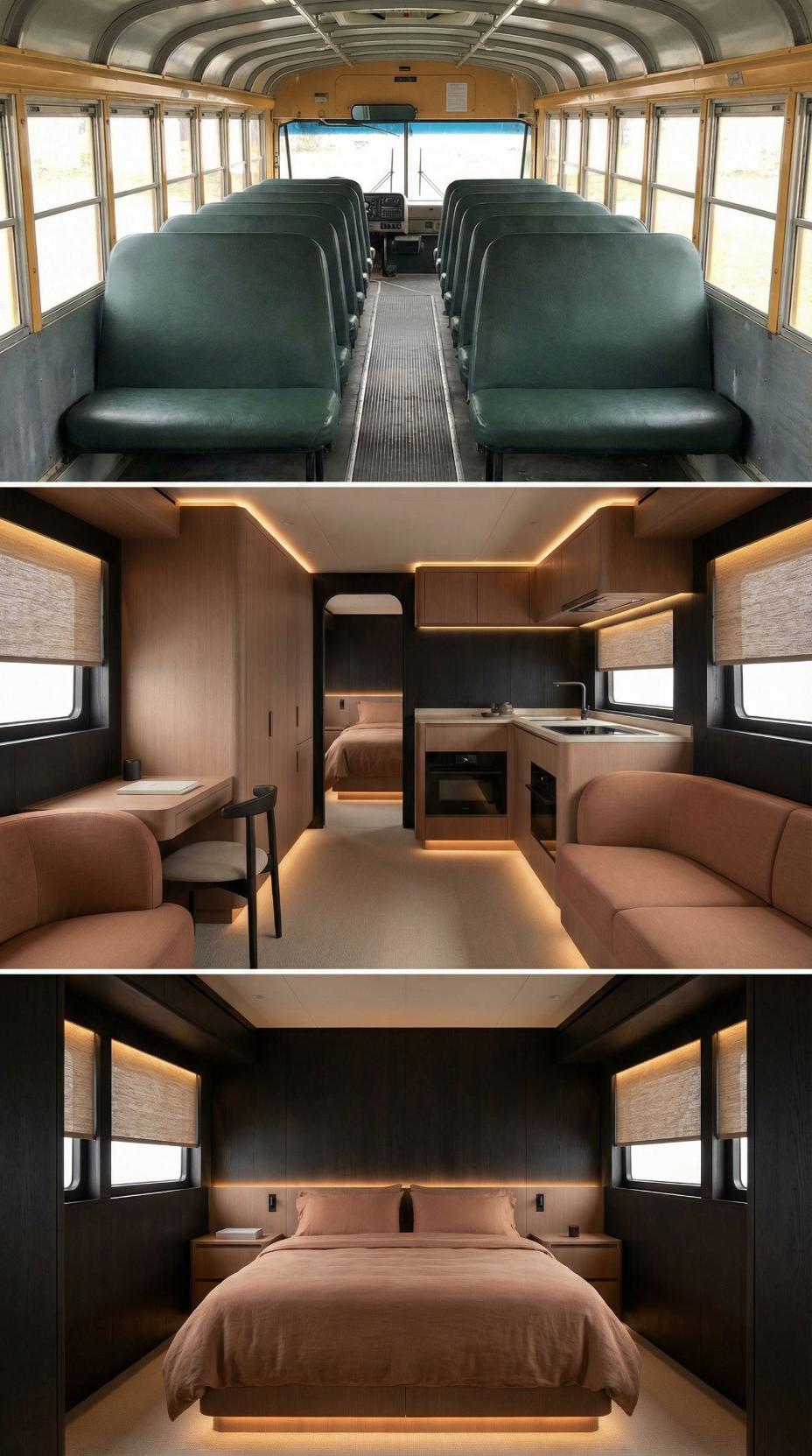
This scheme introduces actual color. A curved sofa in burnt sienna boucle faces another in the same fabric across the corridor, both glowing against matte black wall panels. Honey oak accents appear in the kitchen cabinetry and a small writing desk, while woven raffia shades soften the window light. LED strips trace the ceiling perimeter and floor edges, creating an amber halo effect.
The bedroom continues the terracotta theme with rust-colored bedding on a platform frame surrounded by more black millwork. What makes this work is the temperature of the lighting. Everything reads warm, almost golden, which keeps the black surfaces from feeling cold or harsh. The AI understood that this palette needed careful light calibration.
Copper Fixtures and Dusty Rose Throughout
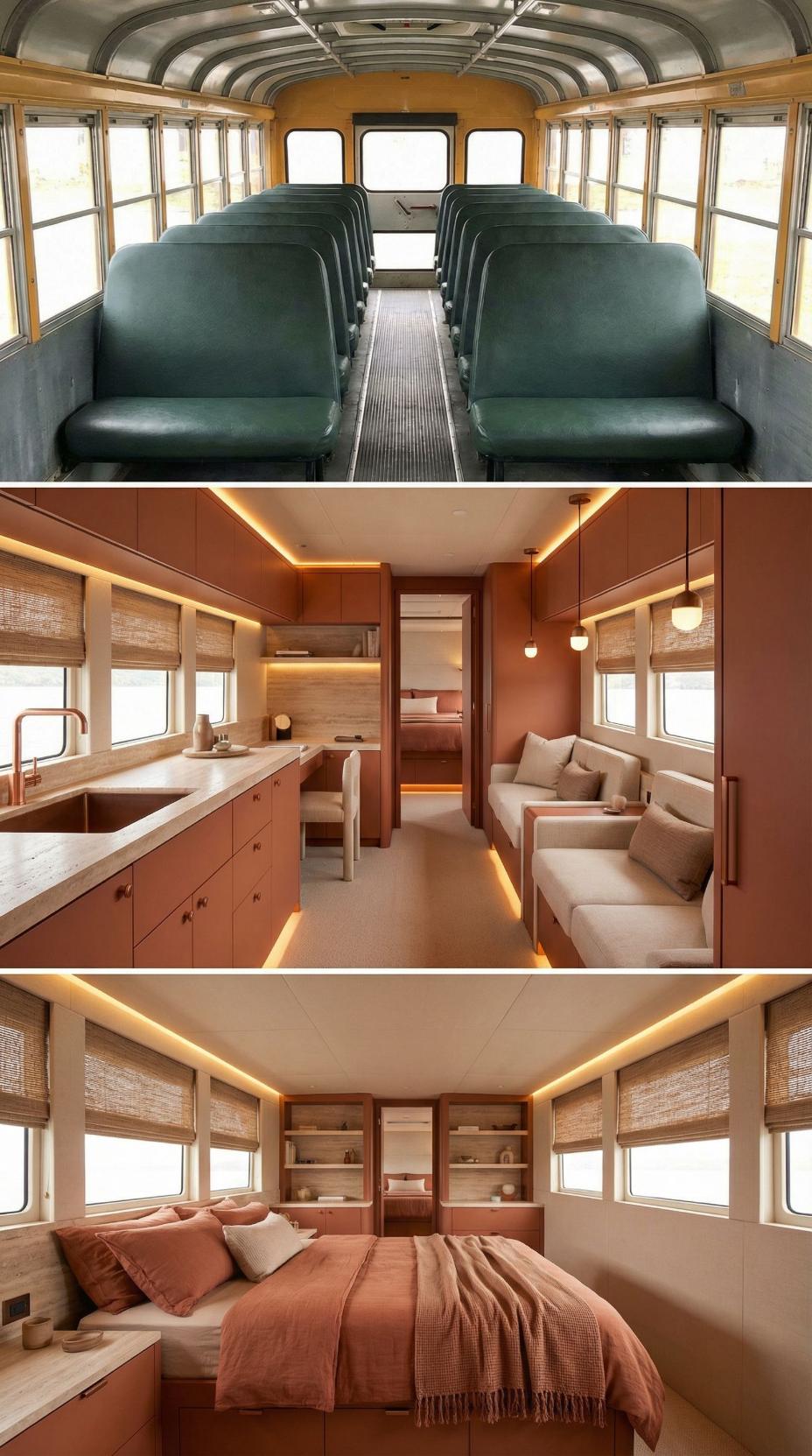
A copper farmhouse sink catches my eye first. It sits in a travertine countertop, flanked by terracotta-painted cabinet doors and matching drawer fronts. The living area features built-in sofas in cream linen with a scattering of blush and beige throw pillows, while woven bamboo shades cover every window. Pendant lights in frosted glass hang from the ceiling.
The bedroom at the rear goes full commitment on the dusty rose theme. A queen bed wears layers of terracotta and blush bedding with a chunky knit throw at the foot, while open shelving on either side holds ceramics and books. Built-in nightstands flank the bed, and more of that warm LED lighting traces the ceiling. This is the most feminine scheme in the bunch, and I’m not mad about it.
The Dark Academia Conversion
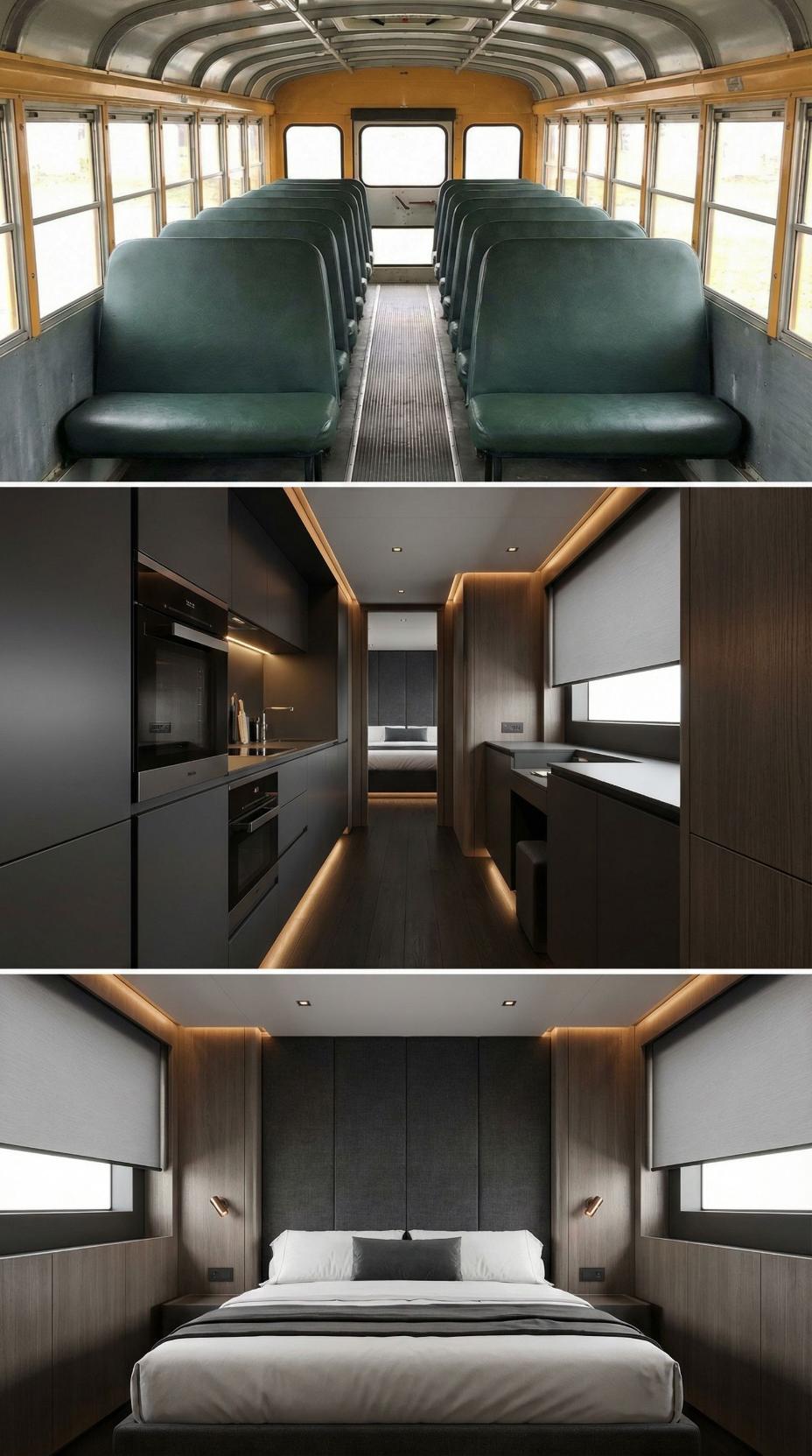
This one stopped me cold. The AI took those teal vinyl benches and ribbed rubber flooring and produced something that belongs in a boutique hotel catalog. Matte charcoal cabinetry runs floor to ceiling, broken only by black built-in ovens and a slim stainless range hood. Warm amber LED strips trace the curved ceiling line and run along the floor, creating that floating effect you see in high-end yacht interiors.
The bedroom at the rear features a padded textile headboard in slate grey, flanked by walnut panels and copper reading sconces. White bedding against all that darkness keeps it from feeling like a cave. What strikes me most is how the design preserved the original arched ceiling structure while making it feel intentional rather than inherited.
Coastal Calm With a View to Match
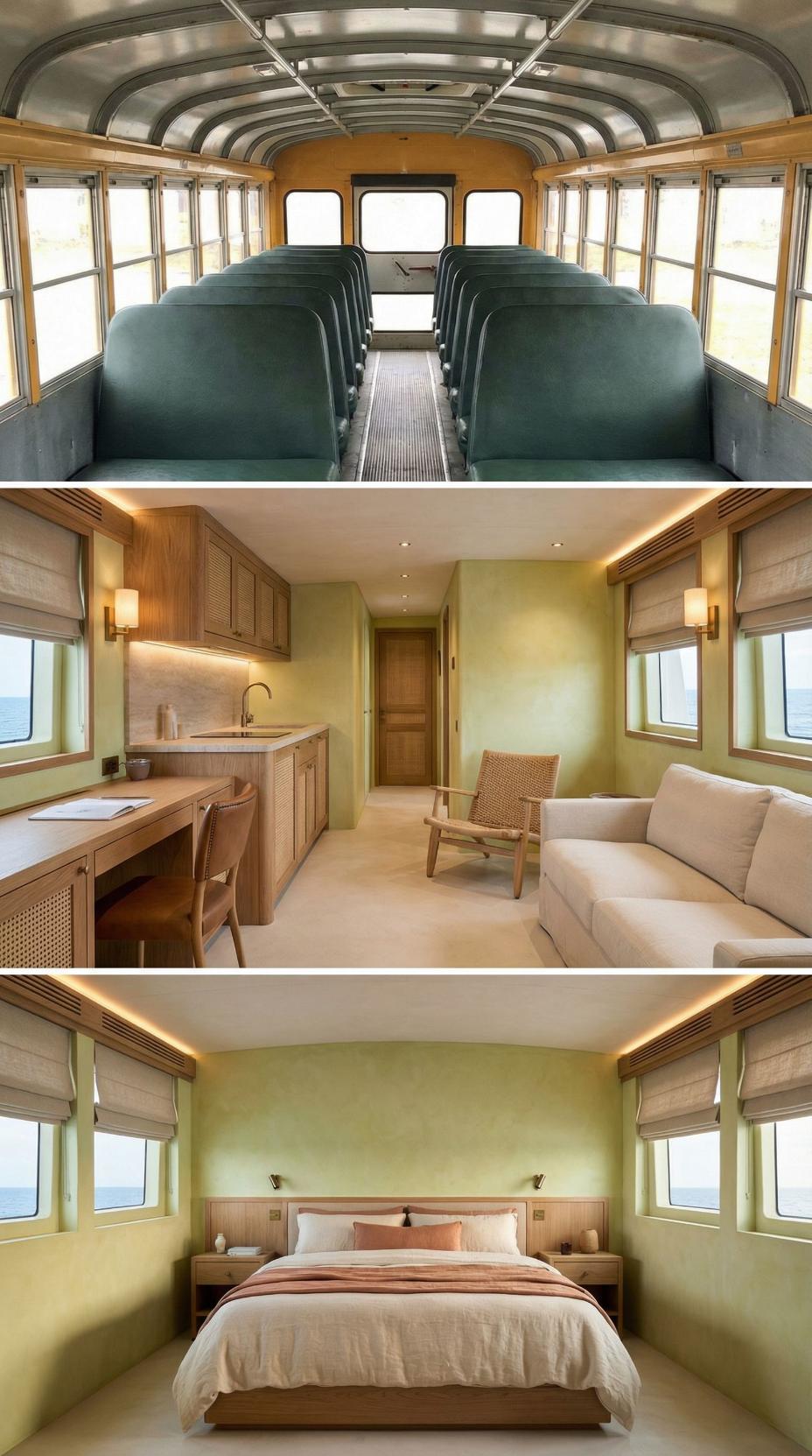
Soft sage walls with a chalky lime wash texture give this conversion a distinctly Mediterranean feel. The AI paired honey oak cabinetry with woven rattan chairs and a low-slung cream linen sofa that looks genuinely comfortable. Notice the windows here actually show ocean beyond them, which makes me wonder if the AI was trying to suggest placement rather than just interior treatment.
Linen roman shades in a natural oatmeal filter the light. The bedroom continues the earthy palette with terracotta accent pillows against white cotton bedding, plus built-in nightstands that extend from the platform bed frame. Practical and pretty.
Fun Fact: Lime wash paint, the technique visible on these walls, has been used since Roman times and naturally resists mold. Perfect for humid coastal environments where a bus might actually be parked.
When the AI Went Full Superyacht
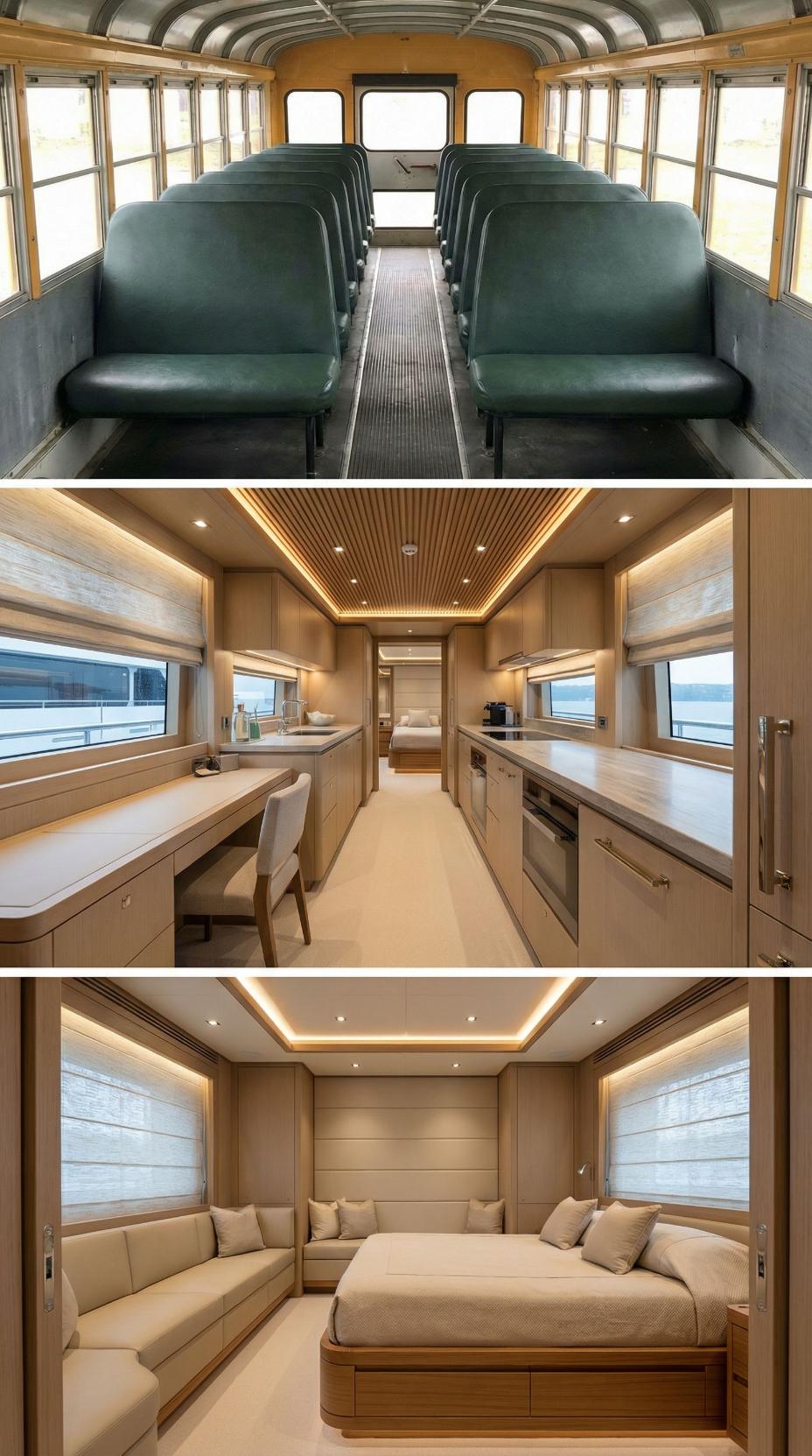
I laughed when this one came through. Blonde quarter-sawn oak panels, a slatted ceiling with recessed cove lighting, cream leather upholstery, and what appears to be a pull-out refrigerator drawer beside the galley. The bedroom features an L-shaped banquette that doubles as additional sleeping space, upholstered in the same pale leather as the main seating area.
Everything is symmetrical and precise. Built-in Roman shades in a matching cream sit flush with the window frames. The floor appears to be a light limestone or porcelain tile. This is the kind of interior that costs six figures to build in reality, but the AI generated it from the same teal bench starting point as everything else.
The Gentlemen’s Club on Wheels
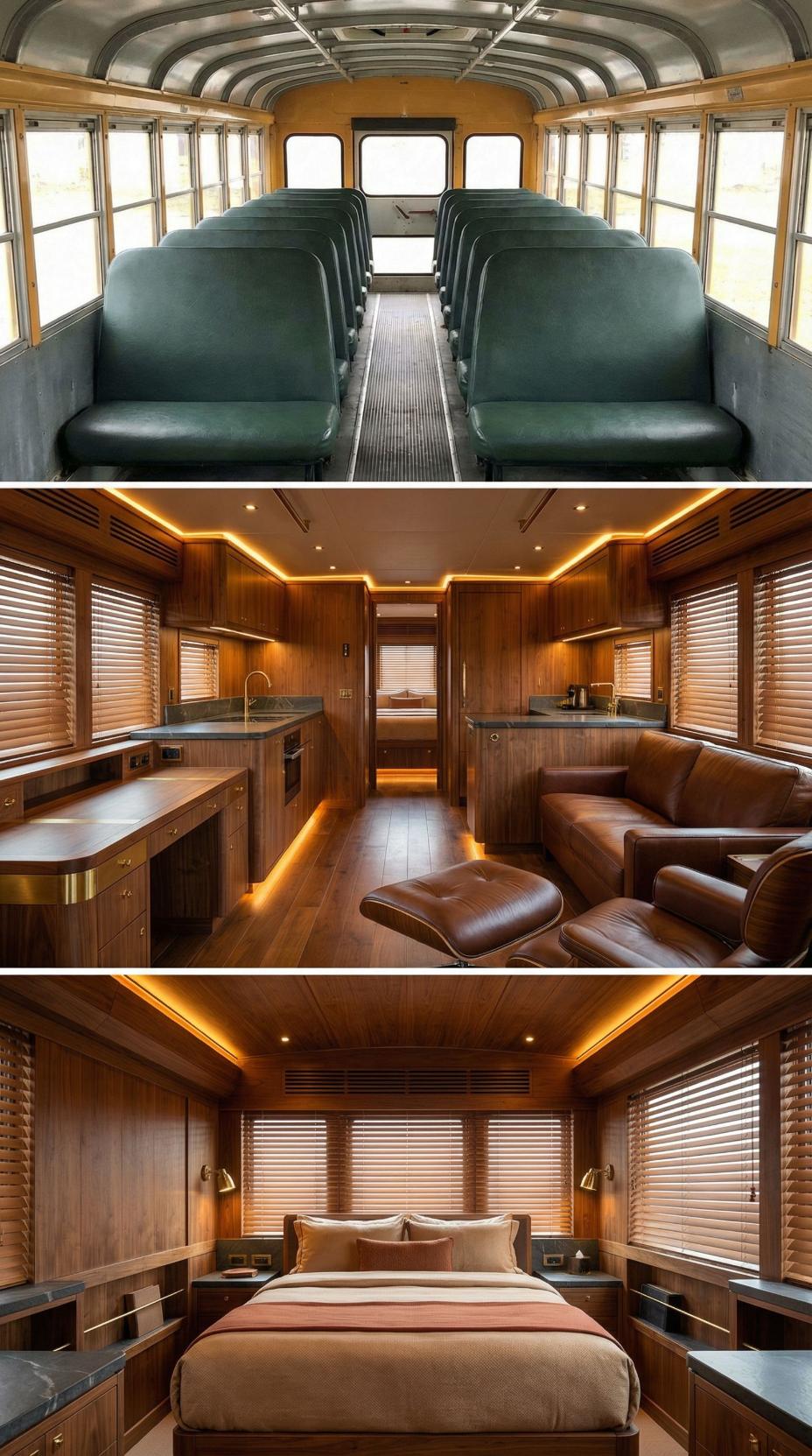
Rich American walnut covers every surface here. The horizontal wood blinds in a matching finish feel like something from a 1970s executive office, but somehow it works. A cognac leather sofa sits opposite an Eames-style lounge chair and ottoman in the same leather. Dark veined marble countertops run through the galley. Brass fixtures throughout, including a gold-toned gooseneck faucet.
The bedroom continues the walnut theme with a platform bed dressed in rust and cream linens. Under-cabinet lighting casts a warm glow along the floor line. This design leans heavily into masculine mid-century references, and I can picture a very specific type of person wanting to live here. Not me, but I understand the appeal.
“The AI understood something interesting: walnut and leather together signal permanence. In a vehicle designed to move, that psychological anchoring matters.”
Quiet Minimalism Done Right
🔥 Would you like to save this?
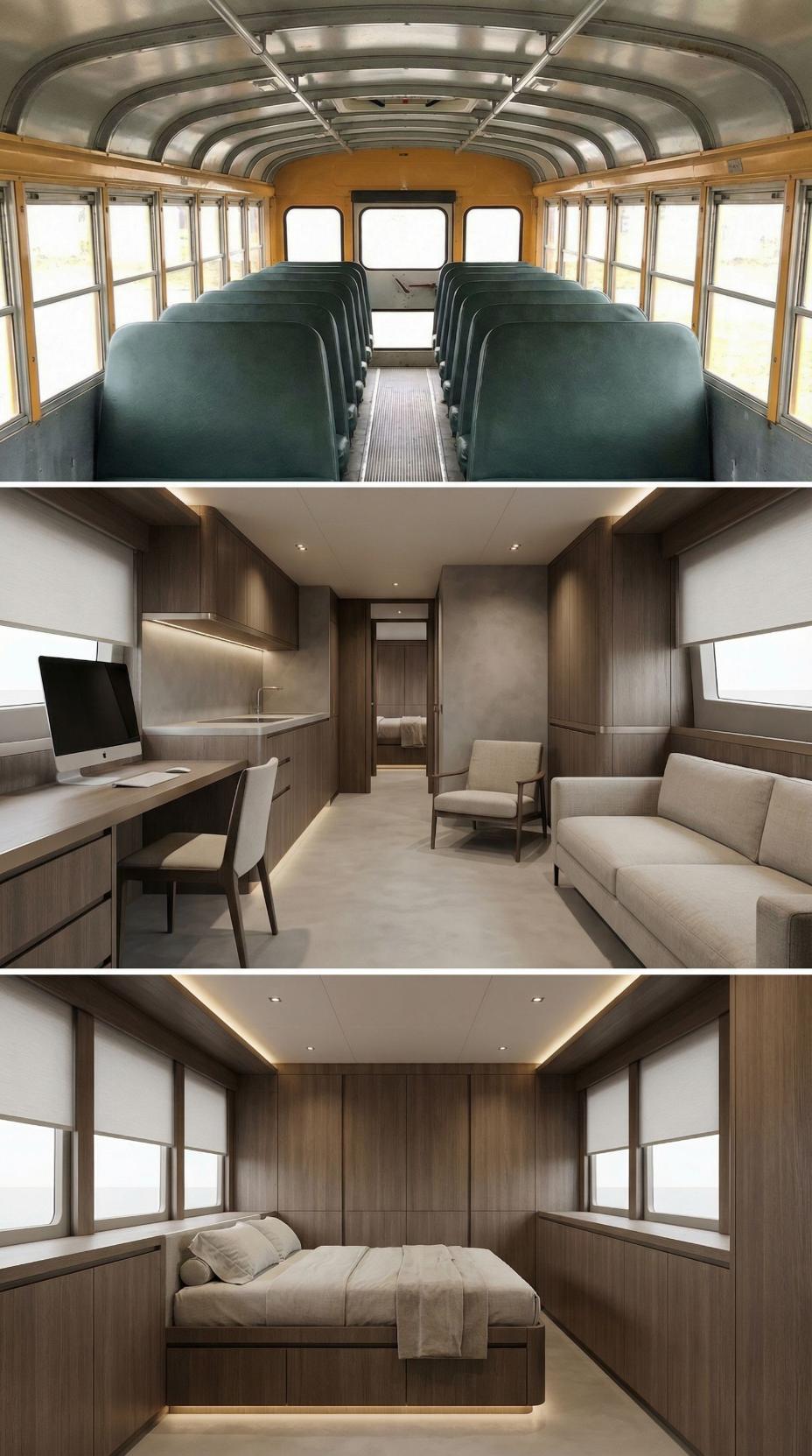
Grey-brown oak panels line the walls here, paired with a greige linen sofa and a single armchair in the same fabric. An iMac sits on a built-in desk that extends from the kitchen counter, suggesting this design anticipated remote work needs. The bedroom features floor-to-ceiling paneling and a platform bed with integrated storage below.
No brass, no marble, no leather. Just wood, linen, and carefully placed recessed lighting. The simplicity feels Japanese-influenced, particularly in how the bed sits low and the storage disappears into the architecture. Of all the designs, this one might be the most livable for extended periods.
Mountain Lodge Energy in 300 Square Feet
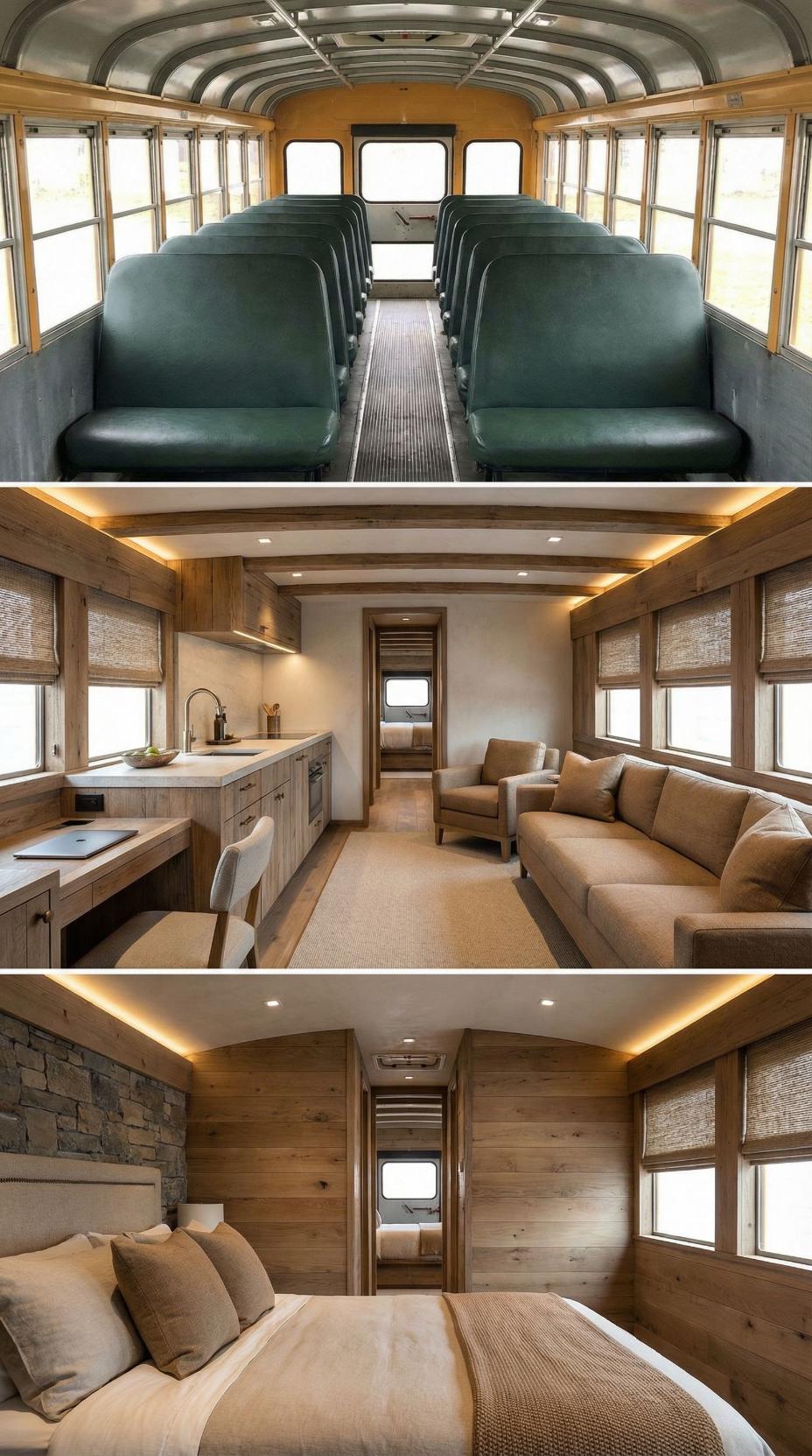
Weathered oak planks run horizontally across the walls, paired with woven jute shades and a tan chenille sectional that wraps around a natural fiber area rug. The kitchen features white quartz counters against the warm wood, with a laptop station built into the counter run. Recessed ceiling lights follow the original curved roofline.
But the bedroom is where this design commits fully to its concept. A stacked grey stone accent wall rises behind an upholstered headboard in taupe linen. Built-in closets flank both sides. The effect is cabin-like without feeling kitschy, which is harder to achieve than it sounds.
Try This: If you want that cabin feeling without committing to full wood paneling, focus on one accent wall in the bedroom. Stone veneer panels (the lightweight kind) can install directly over existing walls and immediately change the mood of a small space.
How Honey Oak Became Sophisticated Again
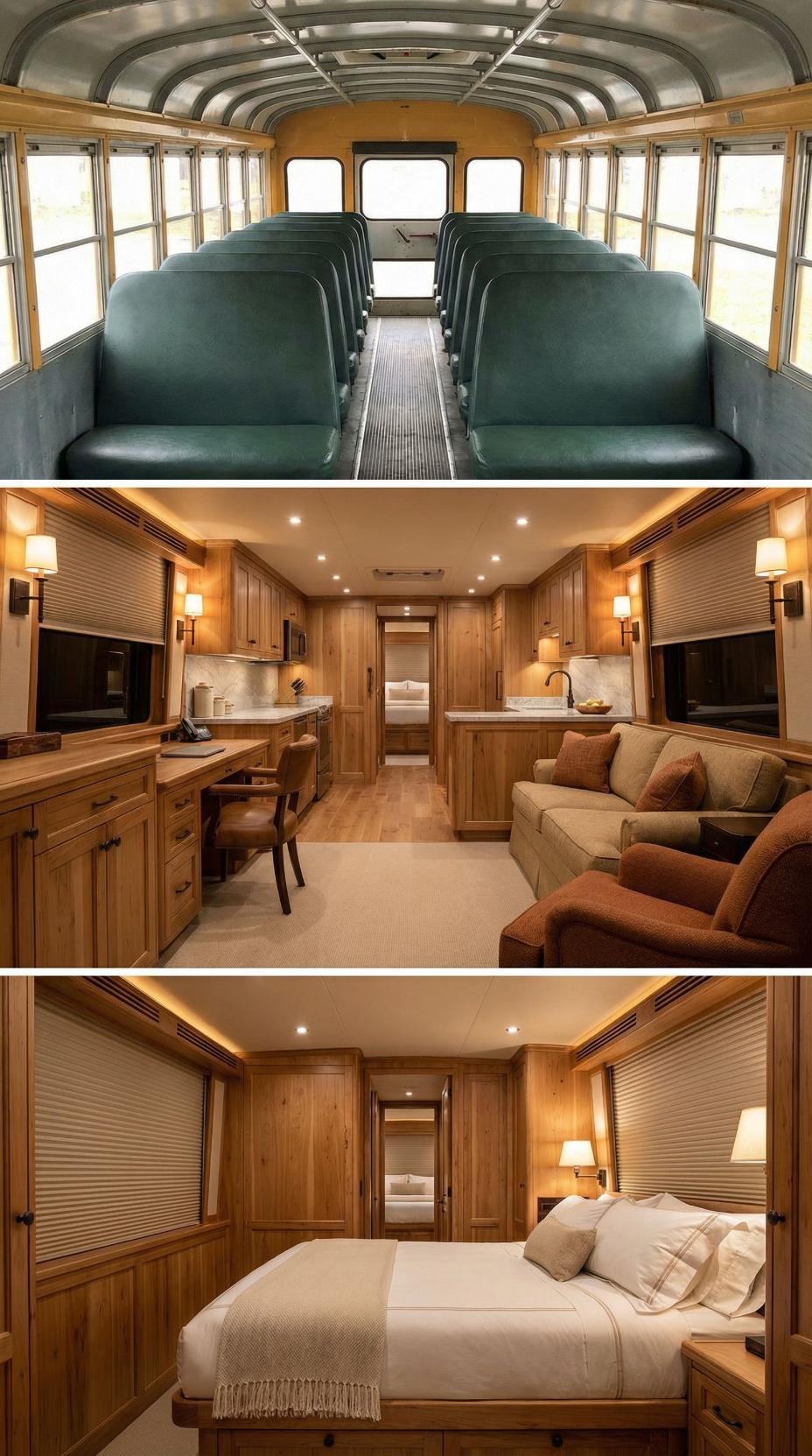
For years honey oak was the material everyone painted over. This design makes me reconsider that impulse. The AI used it floor to ceiling, paired with warm white marble counters, rust and olive throw pillows on a cream sofa, and honeycomb cellular shades in a matching golden tone.
Wall sconces with linen drum shades provide ambient light. The kitchen includes a built-in television mounted in the upper cabinetry, plus what appears to be a marble backsplash behind the cooktop. The bedroom continues the golden palette with pleated Roman shades and built-in wardrobes. Everything glows.
The Pullman Car Revival
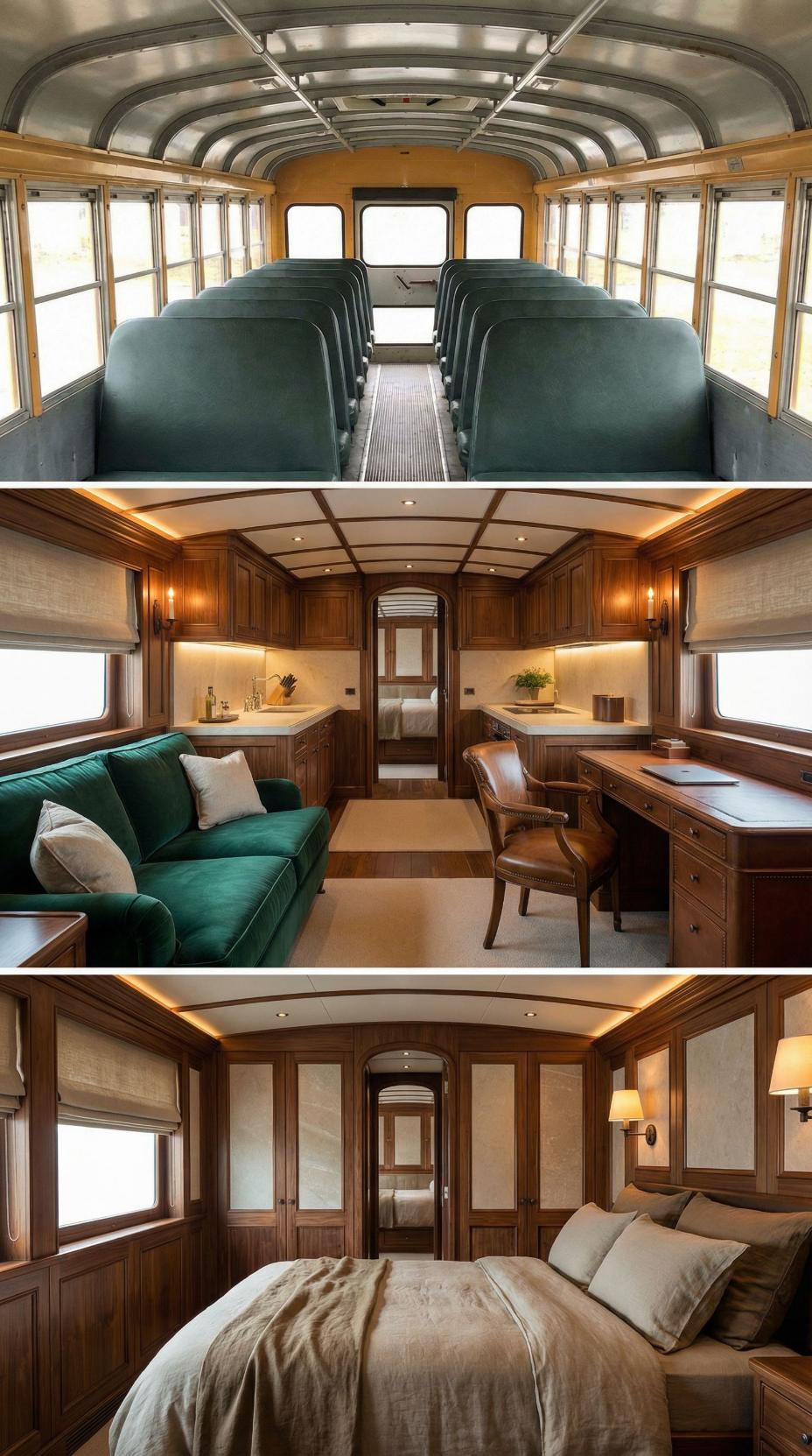
Dark mahogany raised panel millwork covers every wall, accented by cream inset panels that break up the visual weight. An emerald velvet sofa sits opposite a cognac leather desk chair at a built-in writing desk. The galley features white counters and a small fresh flower arrangement. Arched doorways between zones reference Edwardian train car design.
The bedroom continues the formal approach with wall sconces, a linen-dressed bed in sage and cream, and those same cream inset panels. Roman shades in natural linen soften the windows. This is the most historically referential design in the batch, and probably the most expensive to actually execute. The AI clearly studied what made golden-age rail travel feel special.
History Corner: Pullman sleeping cars, which ran from the 1860s through the 1960s, pioneered the concept of mobile luxury. Their signature raised panel millwork and velvet upholstery became shorthand for sophisticated travel. This AI design borrows directly from that vocabulary.
Those rows of forest-green vinyl seats tell a familiar story. The ribbed rubber aisle runner, the aluminum window frames with their sliding panes, the curved silver ceiling ribs catching whatever light filters through. This is the starting point for every conversion we explored, and somehow it never gets old watching AI take this blank canvas somewhere unexpected.
Honey Oak Warmth from Floor to Ceiling
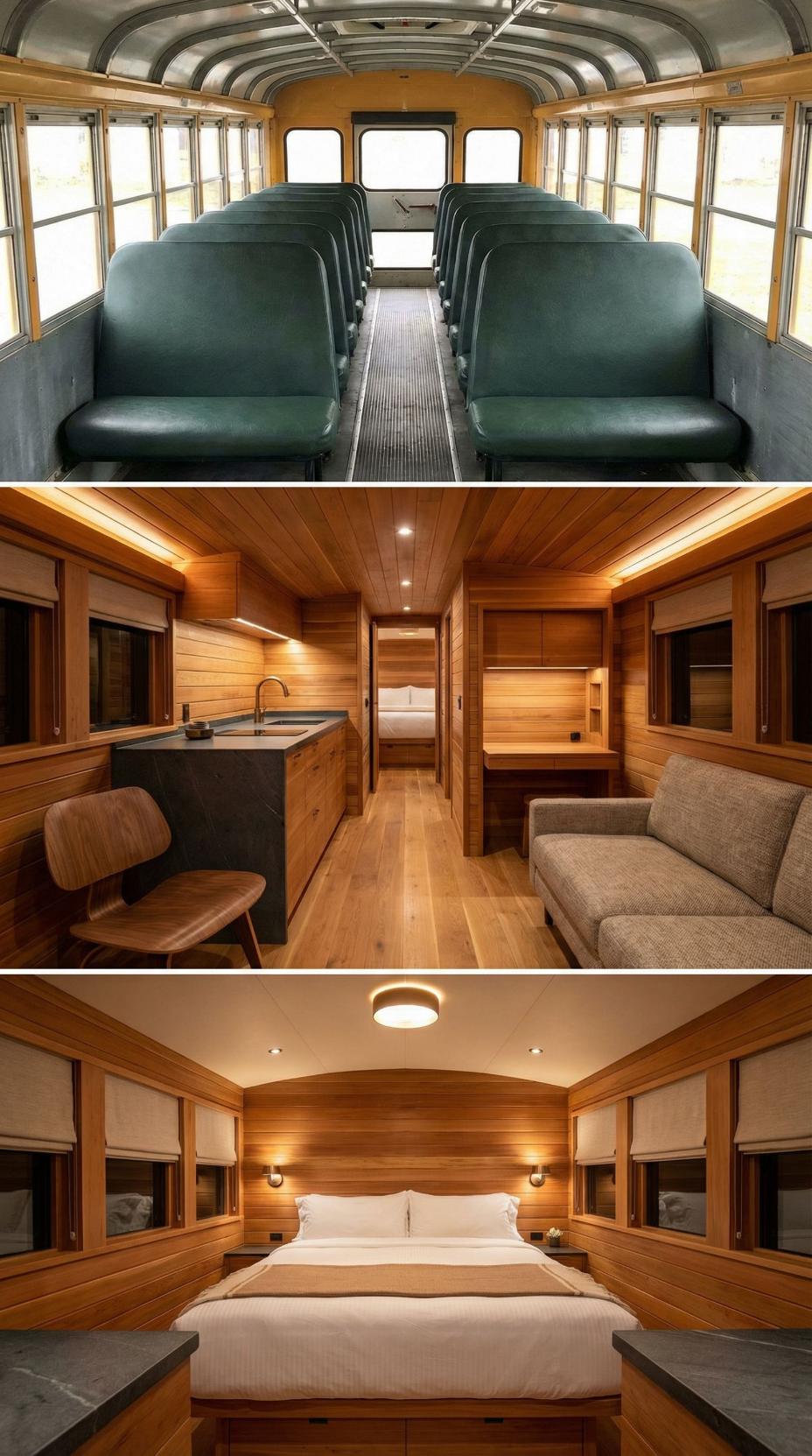
The horizontal planking runs uninterrupted across walls, ceiling, and cabinetry in a golden tone that reads somewhere between cedar and maple. A charcoal soapstone waterfall counter anchors the kitchen zone, its dark veining creating the only real contrast in the space. That single bentwood chair in walnut sits at the counter like a piece of sculpture.
What caught my attention was the ceiling treatment. The planks radiate outward from the center in a subtle fan pattern, following the original curved roofline. Recessed puck lights dot the surface at regular intervals. The bedroom visible through the doorway continues the wood envelope, with crisp white bedding providing relief and cream Roman shades softening each window opening.
Arched Walnut with a Yacht-Like Flow
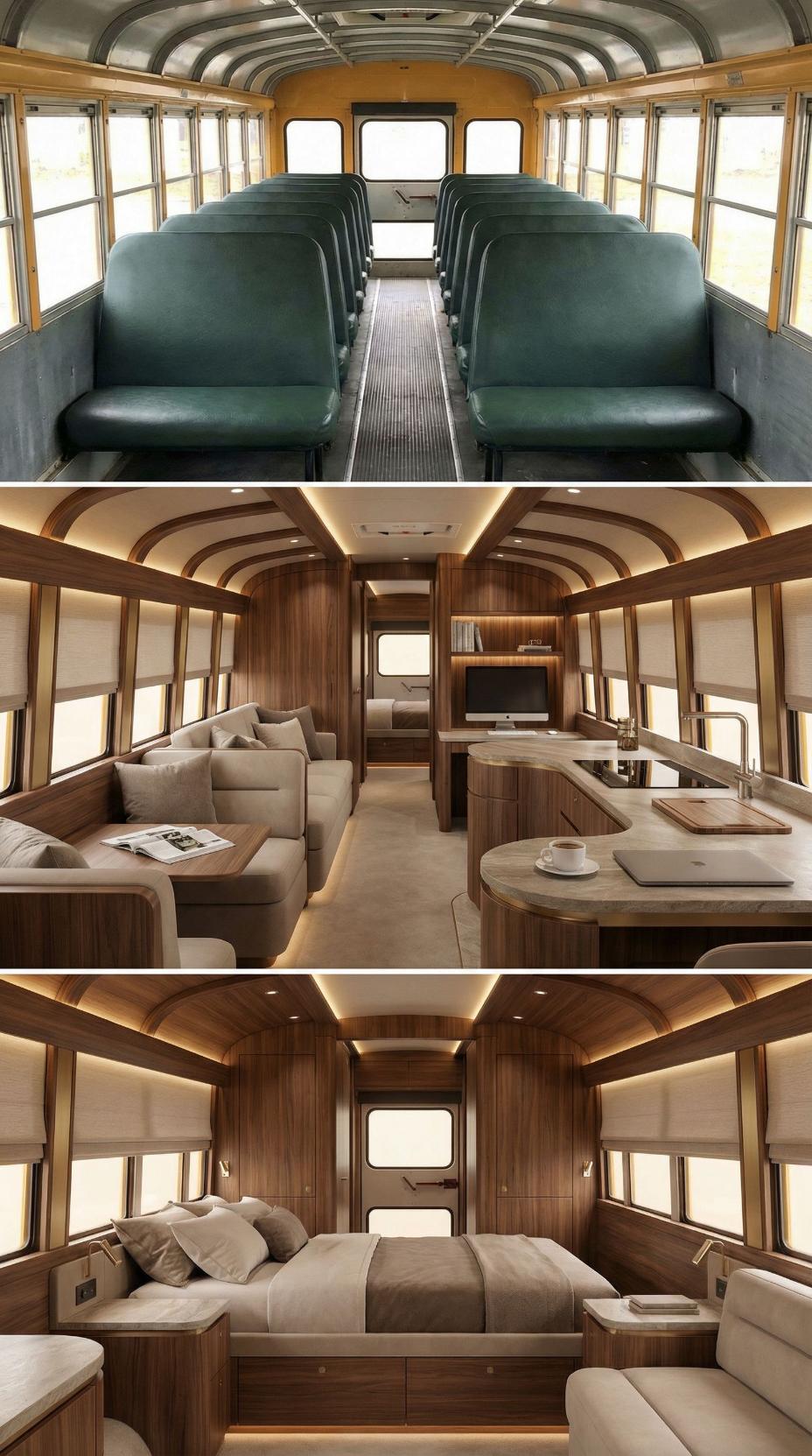
This one borrows heavily from private jet and yacht design language. The walnut veneer shows prominent grain running in sweeping curves that echo the original roofline architecture. Cream upholstery on the L-shaped sectional picks up the oatmeal tones in the linen Roman shades, while a magazine sits open on the coffee table as if someone just stepped away.
Why It Works: The curved walnut ribs framing each section serve double duty. They conceal LED strip lighting that washes the ceiling with warm ambient glow, while also creating visual rhythm that draws your eye through the space toward the bedroom. Breaking up a long narrow tube into distinct zones keeps it from feeling like a hallway.
The kitchen features a curved peninsula with grey-veined stone on top and what looks like a coffee cup waiting at the edge. An iMac sits at a built-in desk on the opposite wall. The bedroom pillows are stacked generously against a padded headboard in matching cream, with reading lights mounted on articulating arms.
Cognac Leather and Vertical Cedar Planking
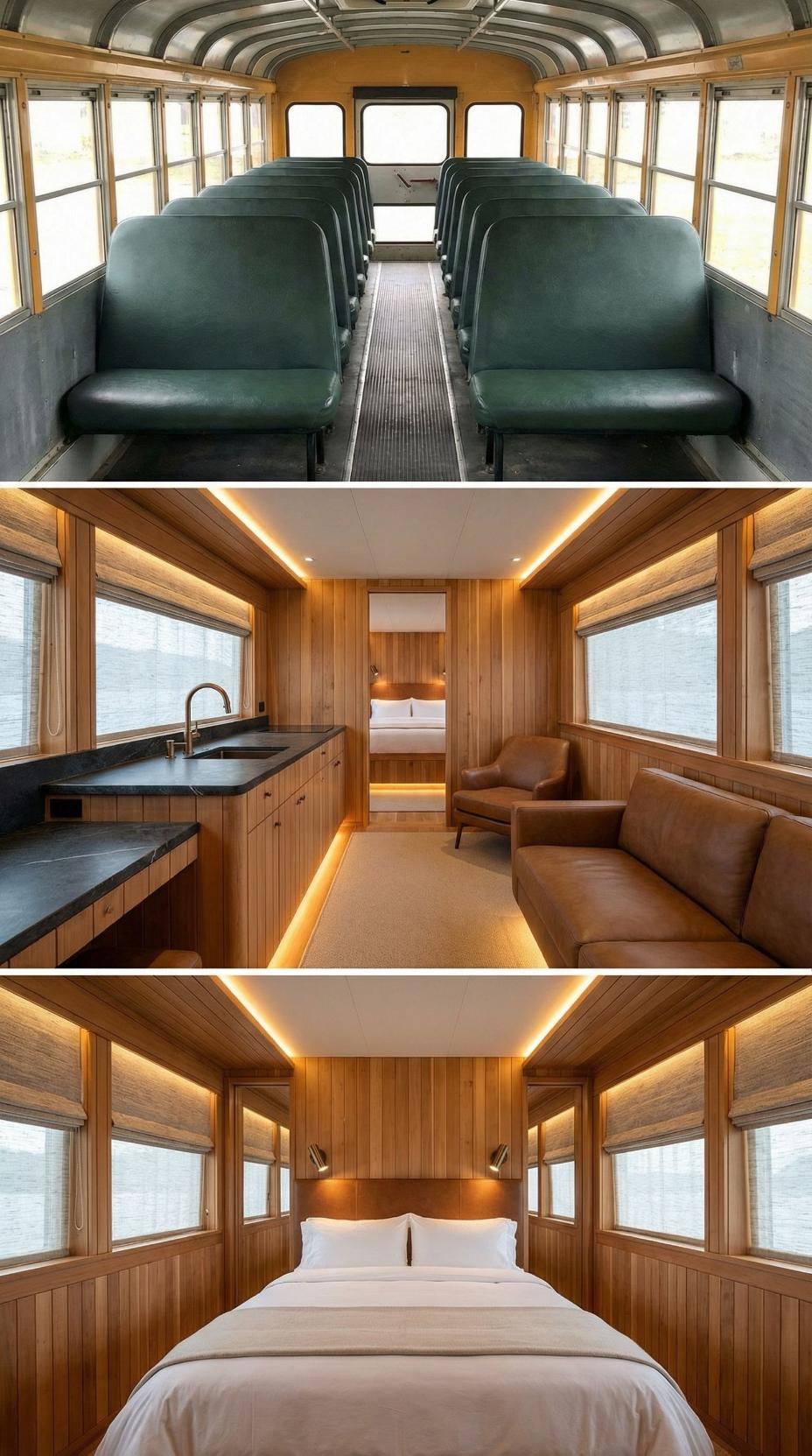
Vertical boards. That small choice changes everything about how this space reads. The cedar runs floor to ceiling in narrow planks with a warm amber finish, and LED tape lighting traces the perimeter where wall meets floor, casting a continuous glow that makes the furniture appear to float.
The seating here takes a different direction than most of these designs. A cognac leather sofa and matching armchair sit on opposite sides of a cream area rug, their rich brown tones picking up the darker grain lines in the wood. Black soapstone counters extend along the kitchen wall with a brushed brass faucet arching over the sink. The bedroom through the back doorway keeps things simple with white linens and flanking sconces.
The Cream and Walnut Executive Suite
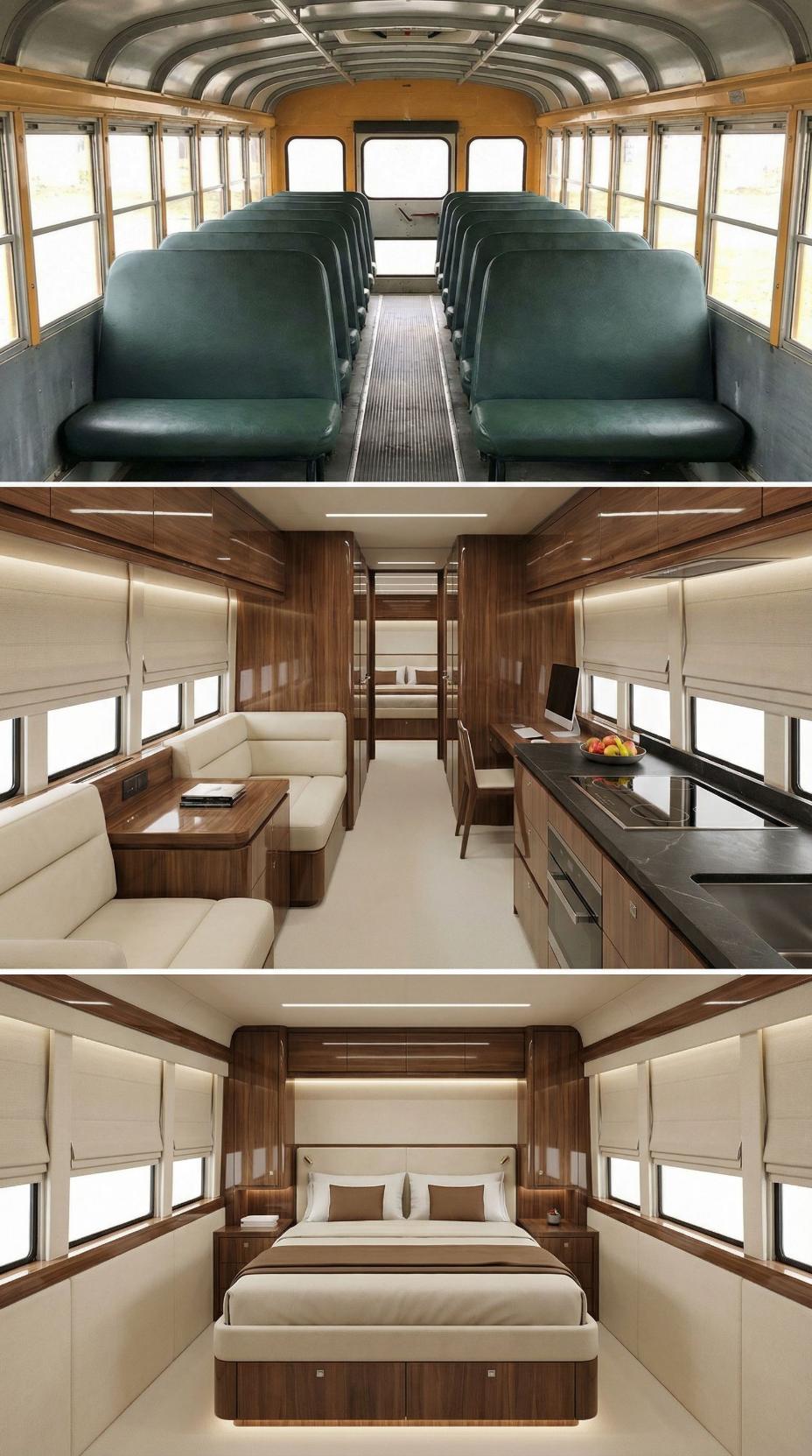
Corporate jet energy here. The palette splits cleanly between cream leather seating and dark walnut millwork, with black stone countertops providing the anchor points. Rounded corners soften every cabinet edge and doorway opening. A bowl of fruit sits on the kitchen peninsula, and an iMac glows from a built-in desk nook carved into the right wall.
The bedroom treatment deserves attention. Platform storage drawers tuck under a mattress dressed in cream and brown linens, with integrated reading lights on either side. The window shades match the cabinetry color rather than the upholstery, which grounds the space and keeps it from feeling too precious.
Twin Beds and a Central Marble Island
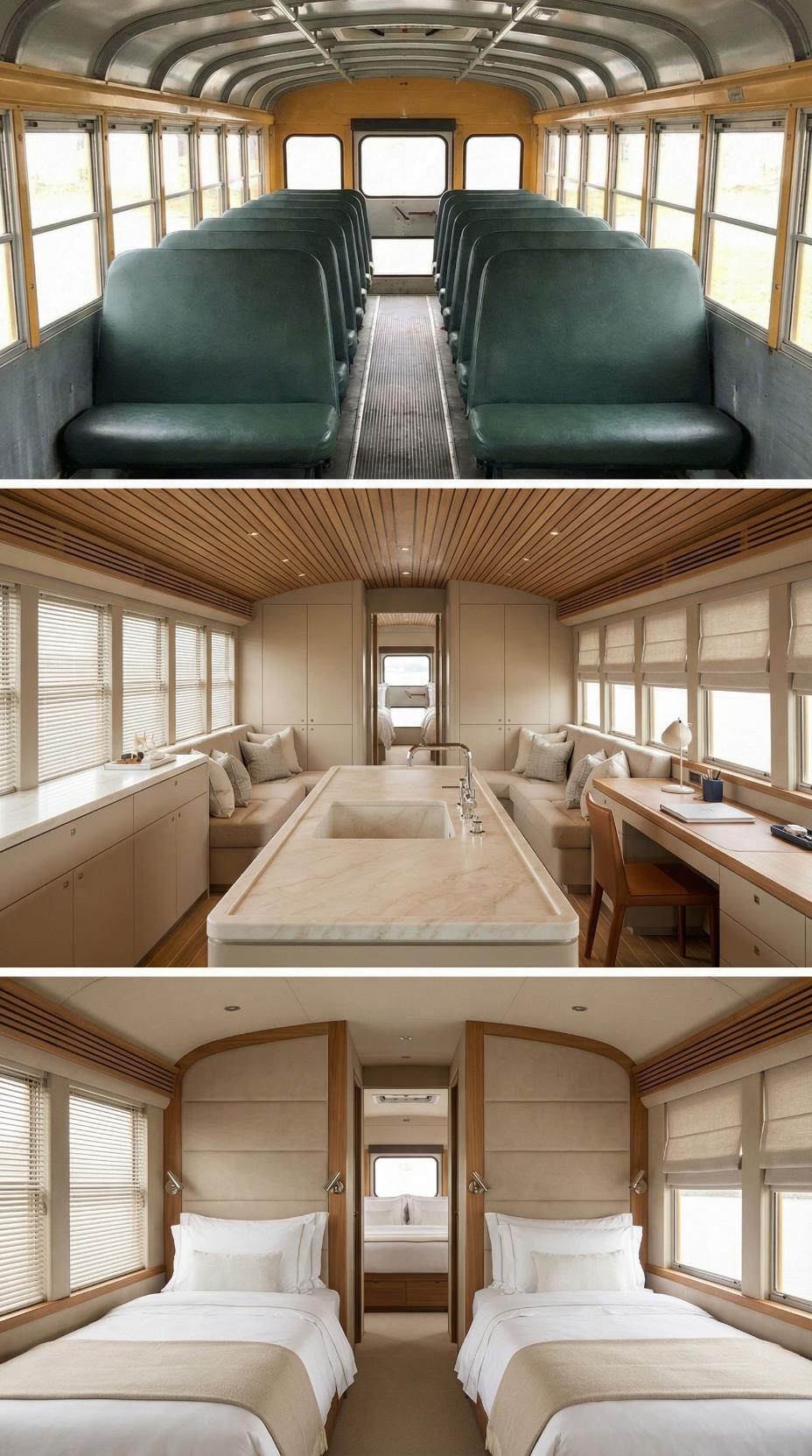
This layout surprised me. Two single beds flank a central corridor in the sleeping area, an arrangement that would suit traveling companions who want separate sleeping spaces or a family with kids. Honey oak frames each bed niche with horizontal wood blinds at the windows and arched doorways leading to the main living zone.
Did You Know: The skoolie conversion movement has grown by over 200% since 2019, with an estimated 15,000 converted buses now traveling North American roads. Most owners report spending between 18 and 24 months completing their builds.
The main living area features flanking banquette seating in taupe linen with grey throw pillows, and a creamy white marble island with integrated sink dominates the center. A walnut desk with a mid-century chair creates a work nook on the right side. The slatted wood ceiling treatment follows the curved roofline while adding visual texture overhead.
Charcoal Sophistication with a Moody Edge
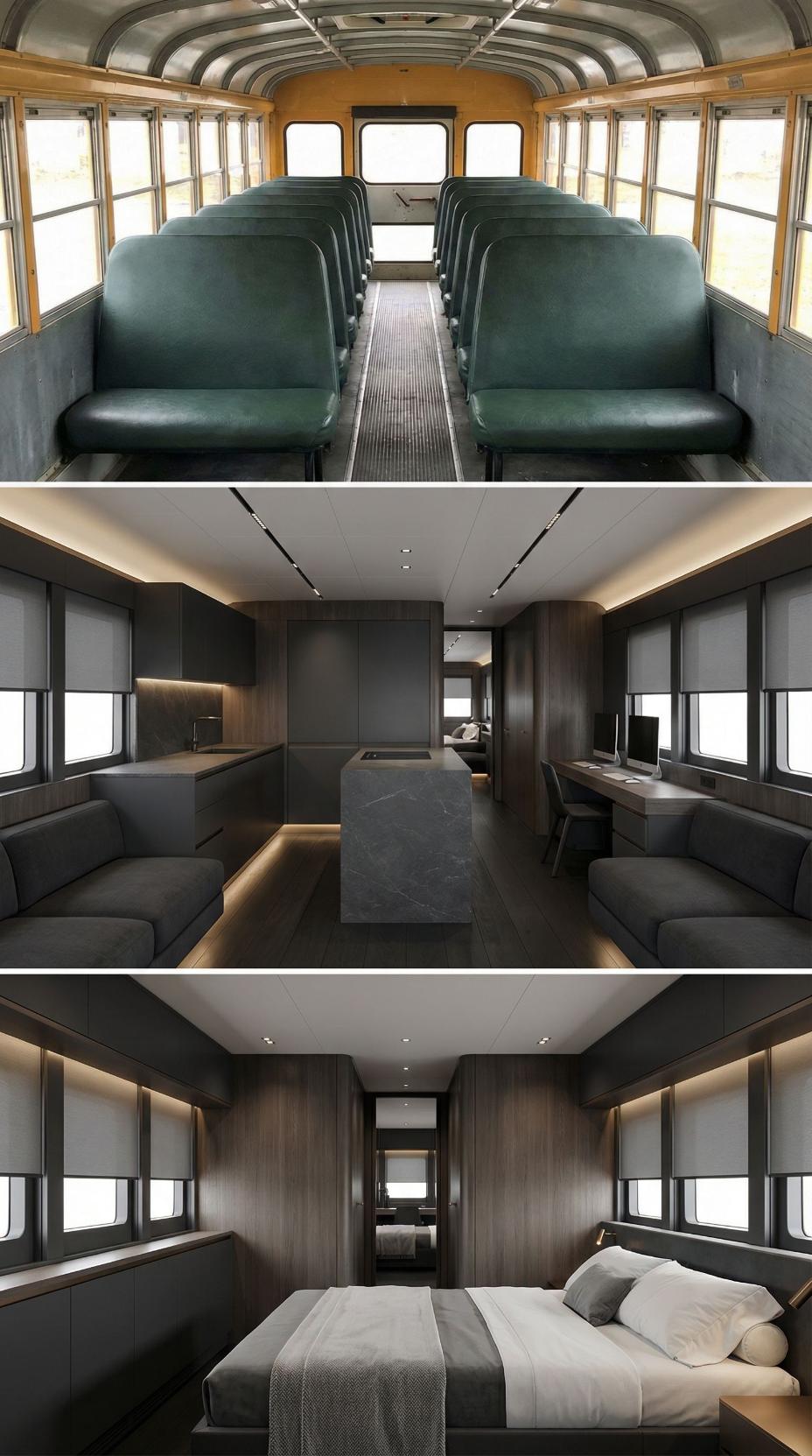
Finally, something that breaks from the warm wood formula.
Dark grey-brown cabinetry wraps the entire interior in a cocoon-like atmosphere, with charcoal upholstered sofas flanking a black marble waterfall island. Track lighting runs in parallel lines overhead instead of the recessed pucks we have seen elsewhere. Grey Roman shades at each window keep the palette consistent, while the bedroom continues the moodiness with grey and white striped bedding against the same dark wood walls.
The desk area features a walnut wood surface that provides the only real warmth, with an iMac screen glowing against the darker surround. This design would photograph well at night with all that ambient lighting, and honestly appeals to me more than the lighter versions. Sometimes you want a space that feels like a den rather than a showroom.
Walnut Paneling with Traditional Molding Details
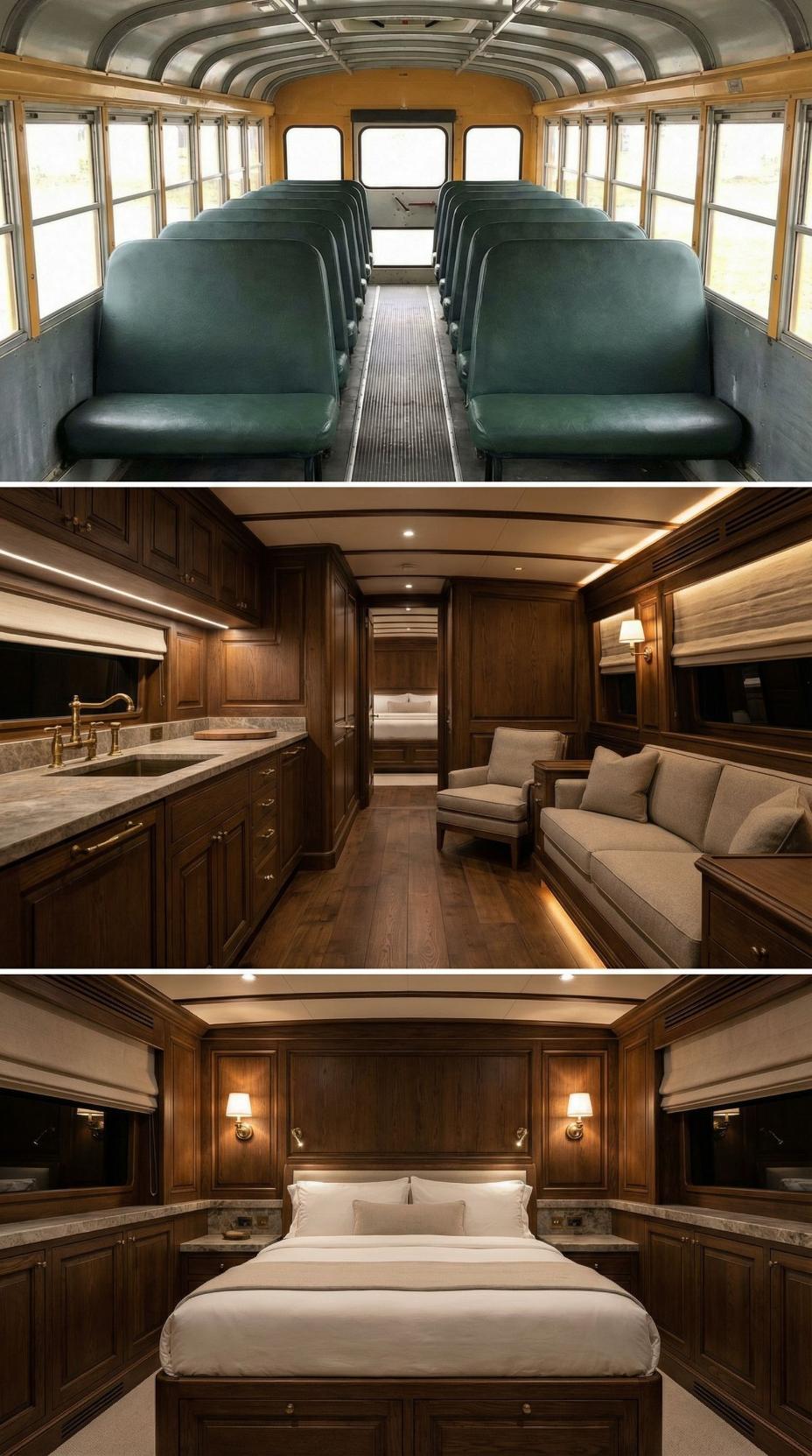
This one channels classic Pullman train car design more than any other. Raised panel cabinetry in a medium walnut stain features traditional molding profiles and brass hardware. The marble countertops have a grey vein pattern that reads almost blue in certain light. Brass bridge faucets and wall sconces add period-appropriate metalwork throughout.
A taupe linen sofa and matching armchair sit in the living zone with throw pillows in the same neutral family. The bedroom headboard wall matches the paneling treatment elsewhere, with traditional brass sconces flanking the white bedding and illuminating marble-topped nightstands built into the structure. Dark hardwood flooring grounds the warmer wood tones above. The whole thing feels like a private rail car from the 1930s updated with modern appliances.
Bleached Oak and Soft Grey Minimalism
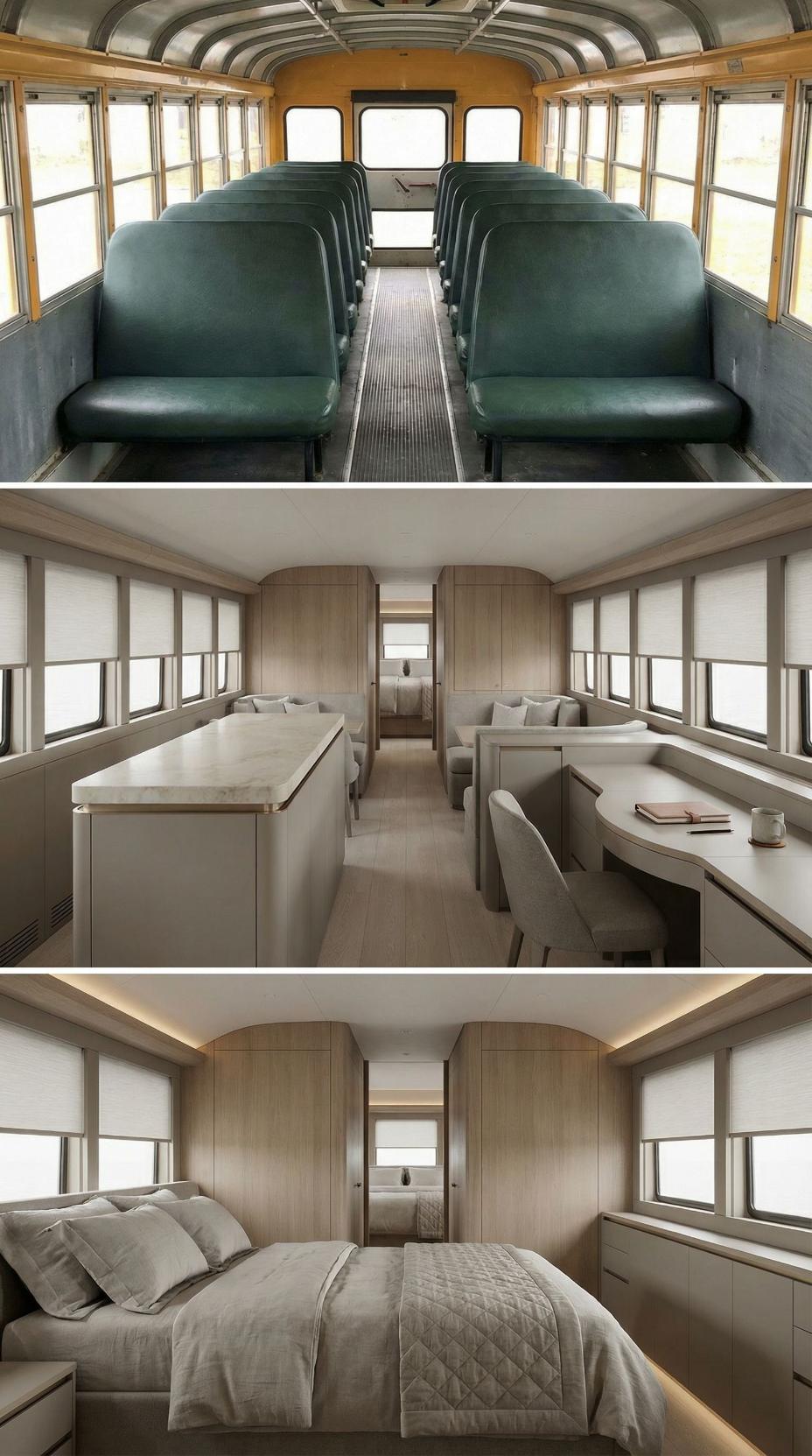
Scandinavian sensibilities take over here. Bleached oak cabinetry in a pale wheat tone pairs with soft grey upholstery and white marble countertops for an airy, light-filled interior. The arched cabinet doors follow the bus roofline while cream Roman shades maintain the neutral envelope.
Try This: If you are drawn to the lighter palettes but worried about showing dirt, consider a slightly greyed or oatmeal tone rather than pure white or cream. These designs use that trick throughout, and the result reads as bright without the maintenance anxiety.
Built-in banquette seating in grey tweed faces a small desk area with grey upholstered chairs. A white mug and notebook sit on the desk surface waiting. The bedroom at the rear features grey quilted bedding with white accent pillows, recessed reading lights, and the same arched cabinetry flanking each side. Bleached wood flooring runs the full length of the interior.
Walnut Paneling and Curved Ceilings Define This Mobile Suite
🔥 Would you like to save this?
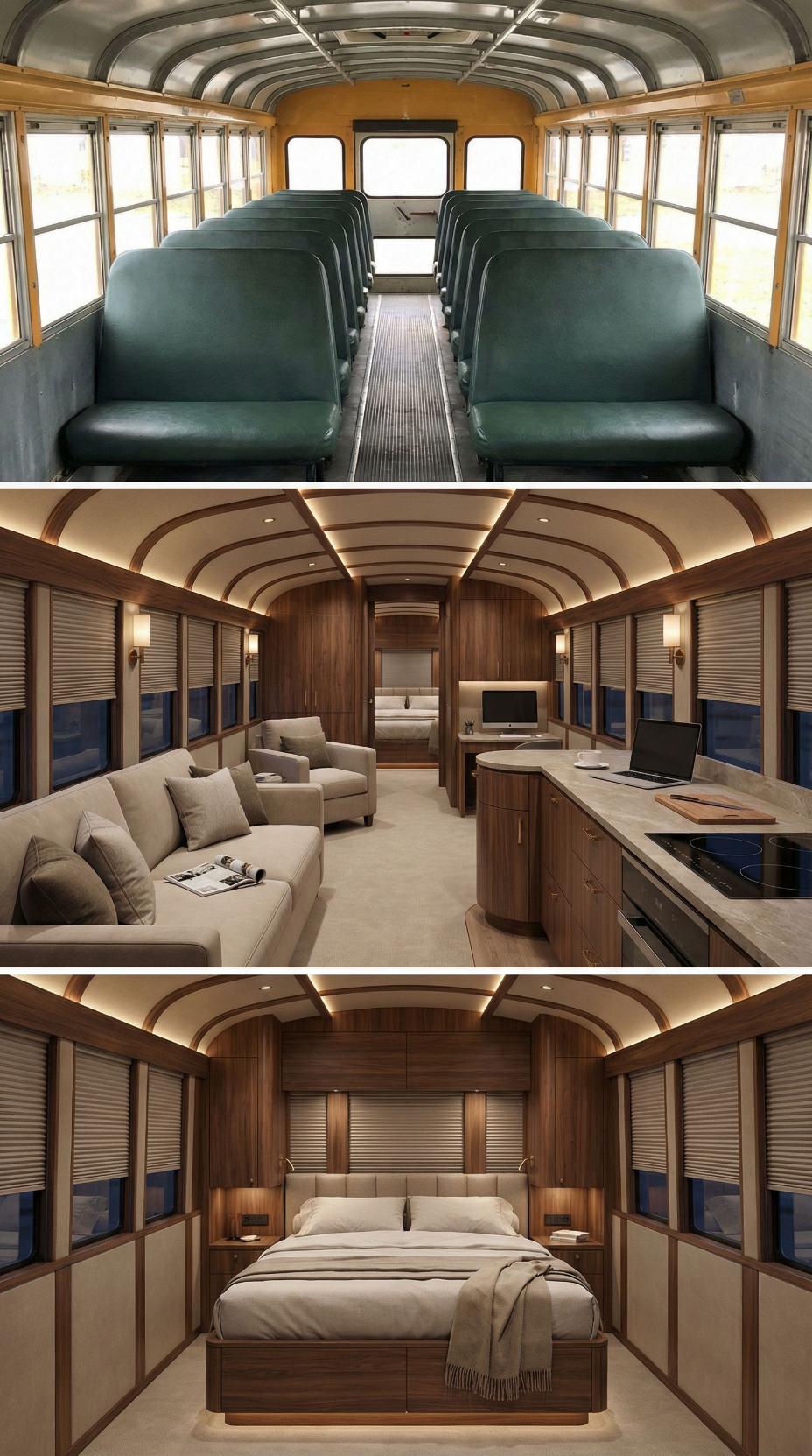
Those arched ceiling ribs wrapped in dark walnut veneer caught my attention first. The way the designer leaned into the bus’s existing curved structure rather than fighting it shows real spatial intelligence. Warm LED strips trace each rib, drawing the eye forward through the living area toward the bedroom visible through that central doorway.
The cream sectional with its overstuffed cushions sits low and deep. Navy blue panels break up the wood along the lower walls, matched by horizontal blinds that look almost like they belong on a yacht. Built-in cabinetry runs floor to ceiling on both sides. In the bedroom, a channel-tufted headboard in taupe fabric anchors the bed, flanked by integrated nightstands with their own recessed lighting. The grey throw blanket draped across white bedding adds a casual note to an otherwise formal composition.
Teak and Marble Create Lakeside Lodge Vibes
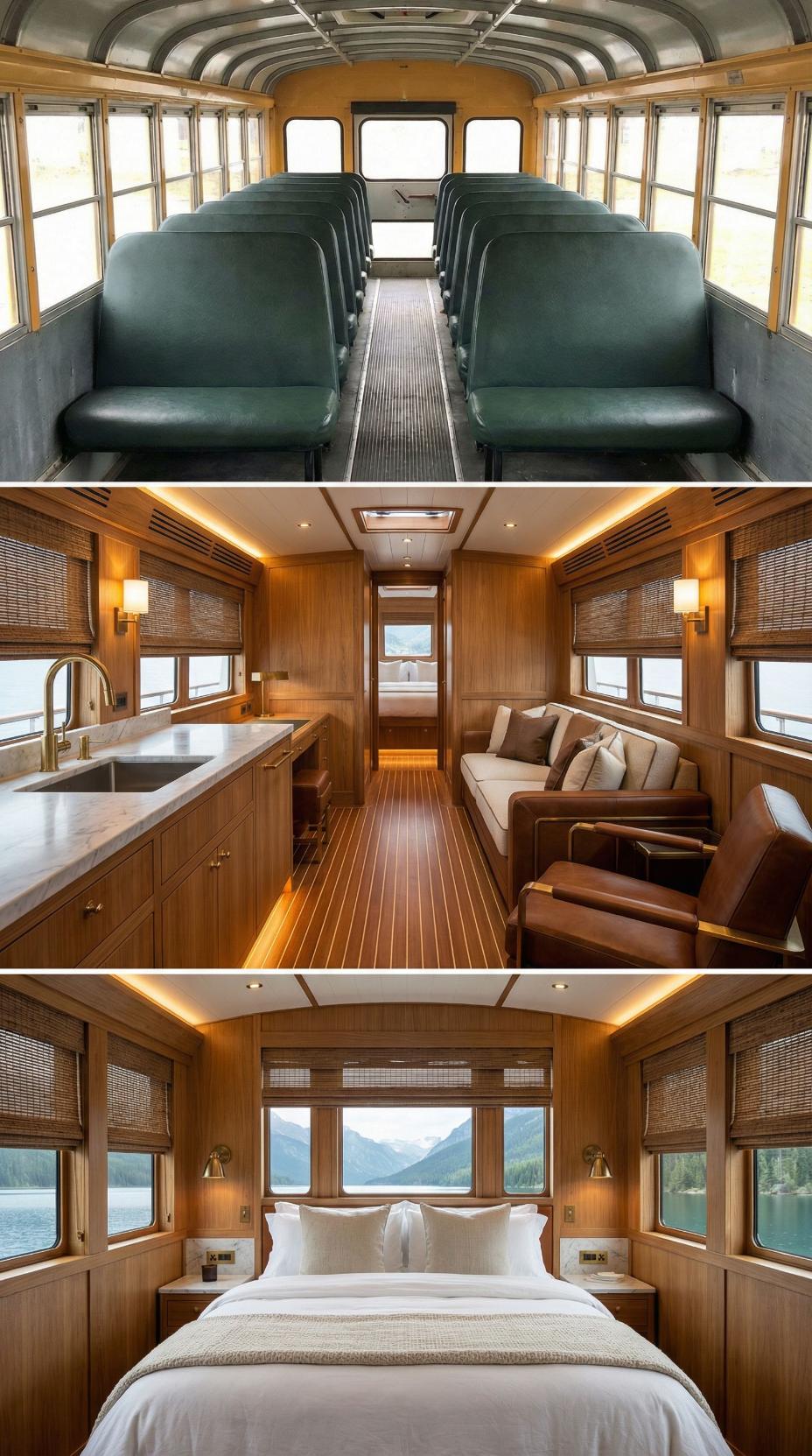
Golden honey-toned teak runs the length of this conversion, punctuated by woven bamboo shades pulled halfway down oversized windows. The galley kitchen features a brass gooseneck faucet that catches light from the windows, set against grey-veined marble countertops. Planked flooring in matching teak establishes the look of a classic wooden boat.
Two cognac leather club chairs face a cream linen sofa piled with taupe and ivory pillows. That mountain and lake view visible through the rear windows explains the design choice to keep window treatments minimal. The bedroom tucks into the back with white bedding, a woven blanket, and the same bamboo shades framing that view. Polished brass wall sconces flank the bed. Looking at this, I keep thinking about how the bus’s original bones gave the designer a canvas that most architects would pay dearly for.
“The constraint of 8 feet wide forces decisions that most designers avoid in larger spaces. Everything earns its place or gets cut.”
Soft Neutrals and Oak Cabinetry in a Scandinavian Direction
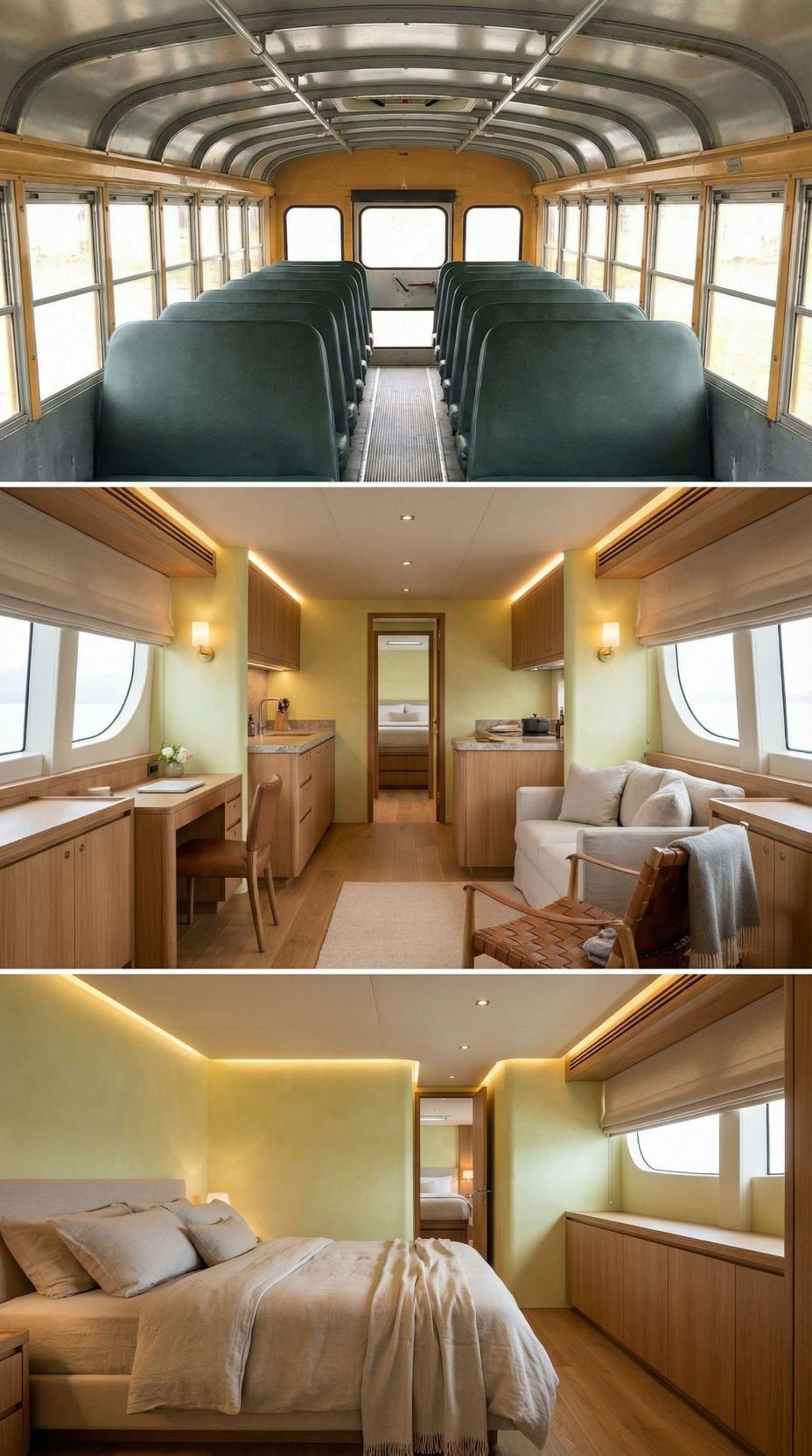
Pale sage walls provide a quiet backdrop for blonde oak cabinetry and a compact cream sofa. The woven leather chair in cognac adds the only dark note to an otherwise airy palette. Rounded window shapes replace the original rectangular bus windows, softening the space considerably. LED cove lighting washes the ceiling in warm amber.
A small built-in desk with a matching oak chair tucks under one window. The kitchen runs galley-style with white countertops and integrated appliances. In the bedroom at the rear, grey linen bedding meets the same sage walls, while a window seat spans the full width. The throw blanket pooling at the foot of the bed looks like lightweight cotton in a slate grey. Notice how nothing competes for attention here. Every surface recedes, making the small footprint feel larger than its measurements suggest.
Navy Lacquer and Teak Bring Nautical Precision
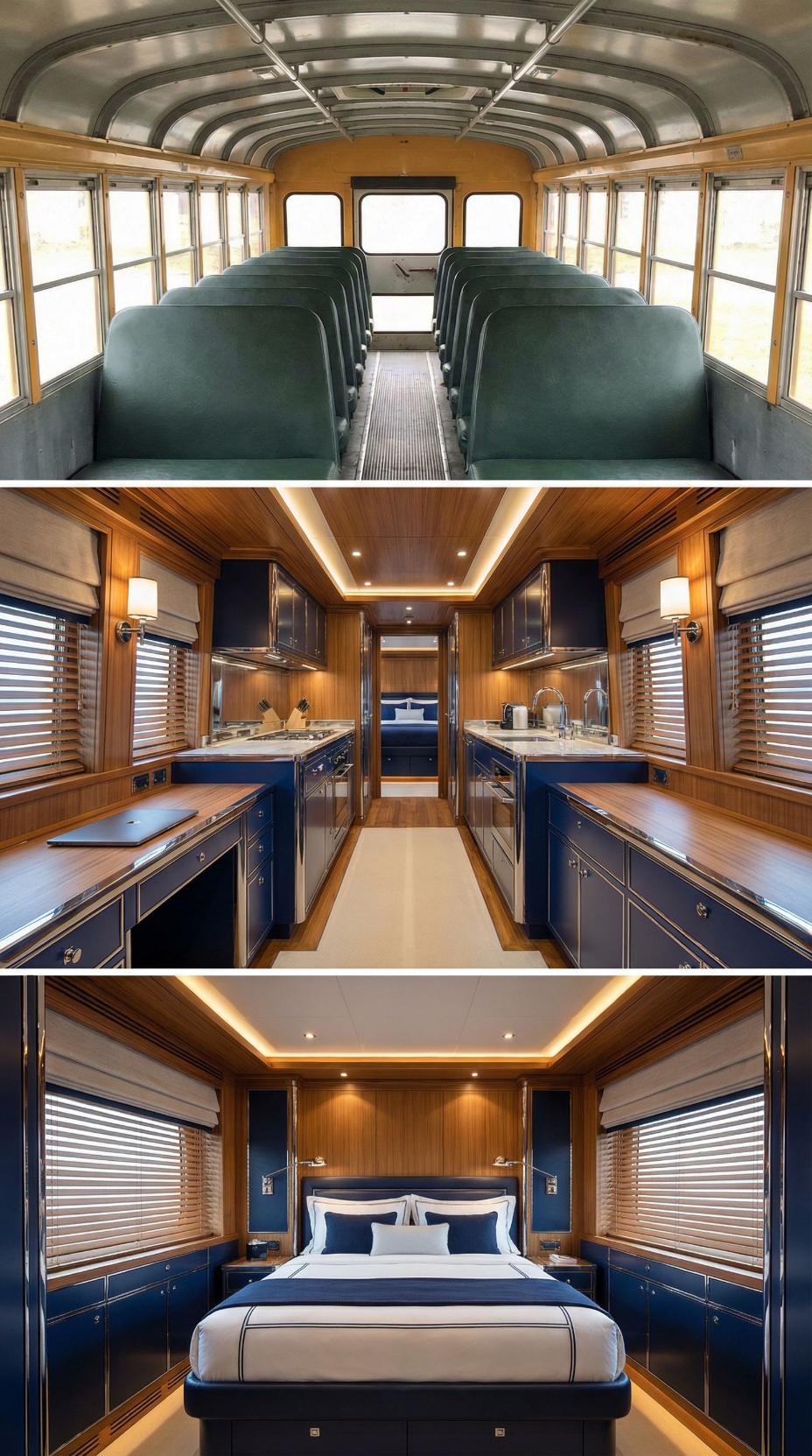
Deep navy lacquered cabinets line both sides of the galley, broken up by honey-toned teak trim and ceiling panels. Stainless steel appliances sit flush with the cabinetry. The marble countertops read almost white under the LED strip lighting that traces every architectural line. Wooden blinds in a matching honey tone cover the windows.
Why It Works
The navy and teak combination borrows directly from yacht design, where those materials have proven durable and refined in tight quarters for decades. Pairing high-contrast colors with horizontal lines elongates the narrow space visually. The white bedding in the rear acts as a palate cleanser, preventing the dark tones from becoming oppressive.
The bedroom continues the nautical theme with the same navy panels flanking a white upholstered bed. Grosgrain ribbon trim in white edges the navy bedding. Chrome hardware throughout adds polish without calling attention to itself. This design commits fully to its reference point, which is why it works.
Charcoal Millwork and Cream Boucle Strike a Modern Note
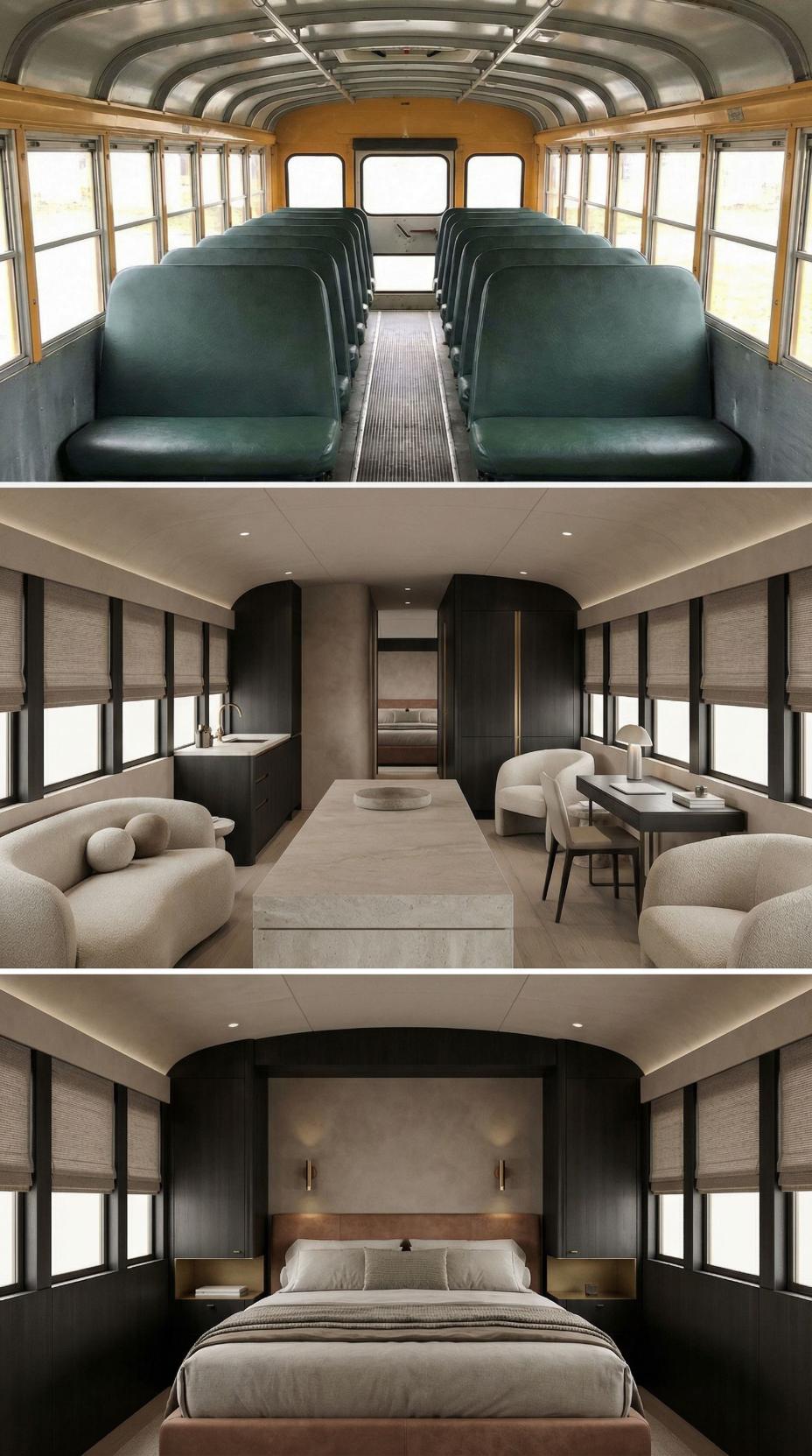
Matte charcoal cabinetry creates strong vertical lines against pale plaster walls. Two curved sofas in cream boucle face each other across a massive stone coffee table block. The fabric has that nubby texture that photographs well and hides wear even better. Bolster pillows in matching cream add softness without color.
Roman shades in a greige woven fabric filter light through the large windows. A small desk area with a curved boucle chair sits ready for work. The bedroom uses cognac leather as a headboard, introducing the only warm tone in an otherwise cool palette. Gold wall sconces flank the bed. Grey linen bedding keeps things understated. I find myself drawn to how the curved furniture softens all those sharp cabinet edges.
Desert Palette with Copper Accents and Porthole Windows
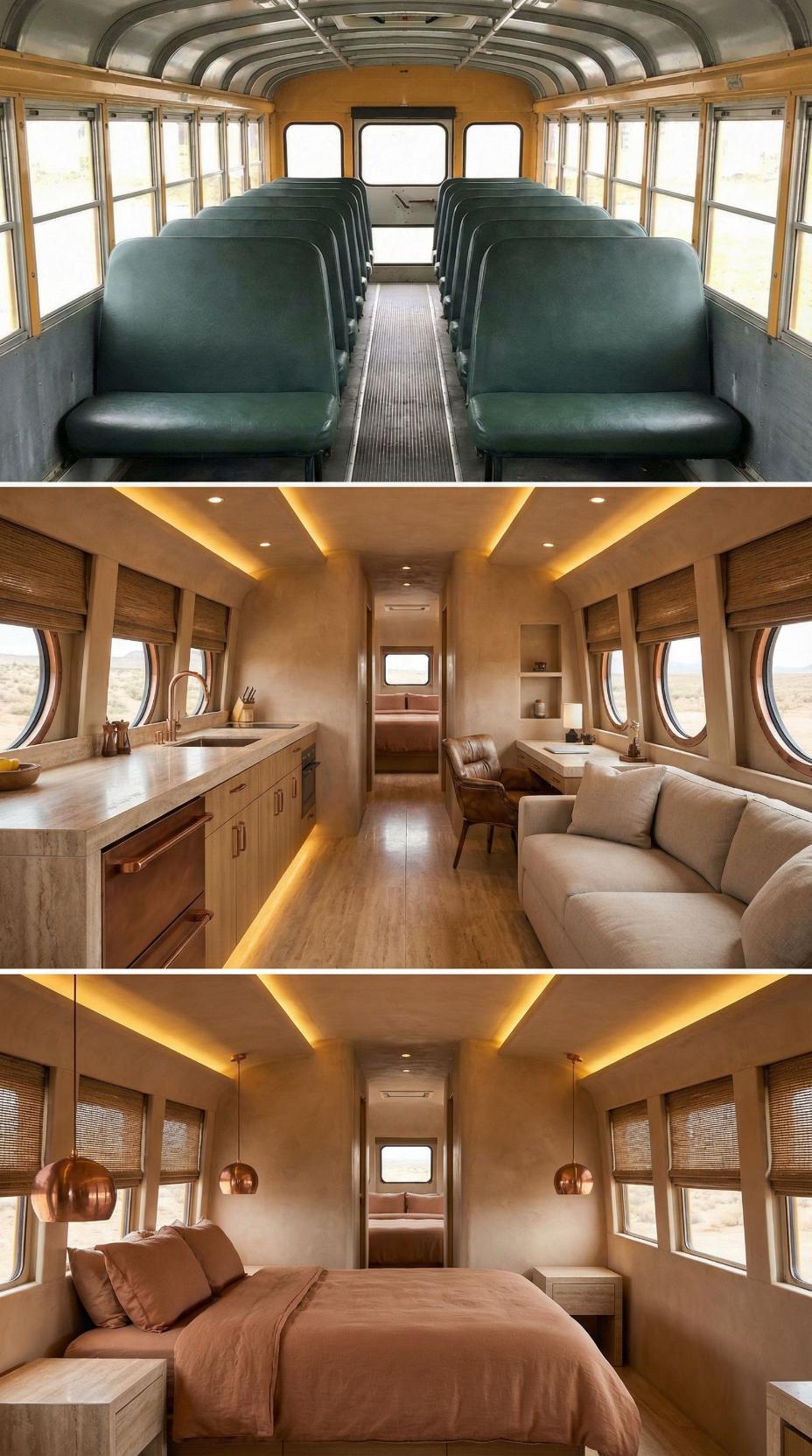
Rounded porthole-style windows immediately set this conversion apart. Sandy plaster walls and blonde wood cabinetry create a Southwestern mood, while copper pendant lights and a copper faucet add metallic warmth. The countertops appear to be a cream-colored stone with subtle veining. A distressed leather chair in chocolate brown sits beside a curved sofa in greige linen.
Try This
If you want copper accents to read intentional rather than random, use them in odd numbers. Three copper elements (pendant, faucet, and one accessory) feels deliberate. Two feels accidental. Five starts to overwhelm.
The bedroom leans into terracotta with rust-colored bedding and matching throw pillows. Those copper pendants reappear flanking the bed. Bamboo roller shades cover the rounded windows. Desert landscape visible through the glass completes the Airstream-in-the-Southwest fantasy. The warm amber cove lighting running along the ceiling softens the plaster walls at night.
Full Walnut Paneling Creates Lodge-Style Warmth
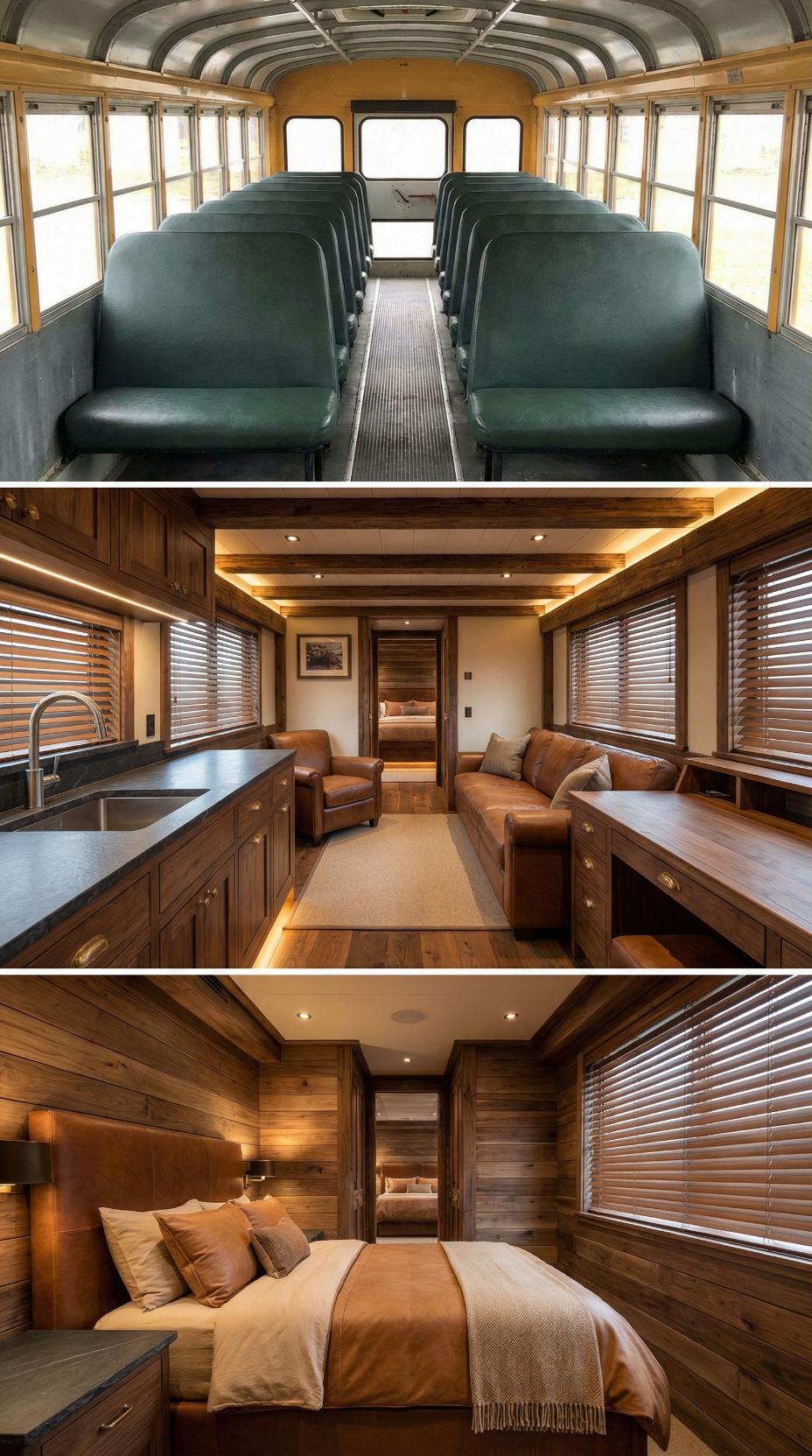
Dark walnut covers every surface here, from the coffered ceiling to the floor. The effect reads more mountain lodge than mobile home. Black granite countertops add weight to the galley kitchen, while cognac leather seating brings richness without competing with the wood. Wooden blinds match the paneling exactly.
A built-in desk runs beneath windows on one side. The L-shaped leather sofa wraps around to face a matching club chair. In the bedroom, a leather-wrapped headboard in the same cognac tone anchors the bed. Rust and copper pillows pile against white sheets. The throw blanket looks like heavyweight cotton in burnt sienna. LED strips tucked into ceiling coffers provide ambient light without visible fixtures.
Knotty Pine and White Linen for Cabin Simplicity
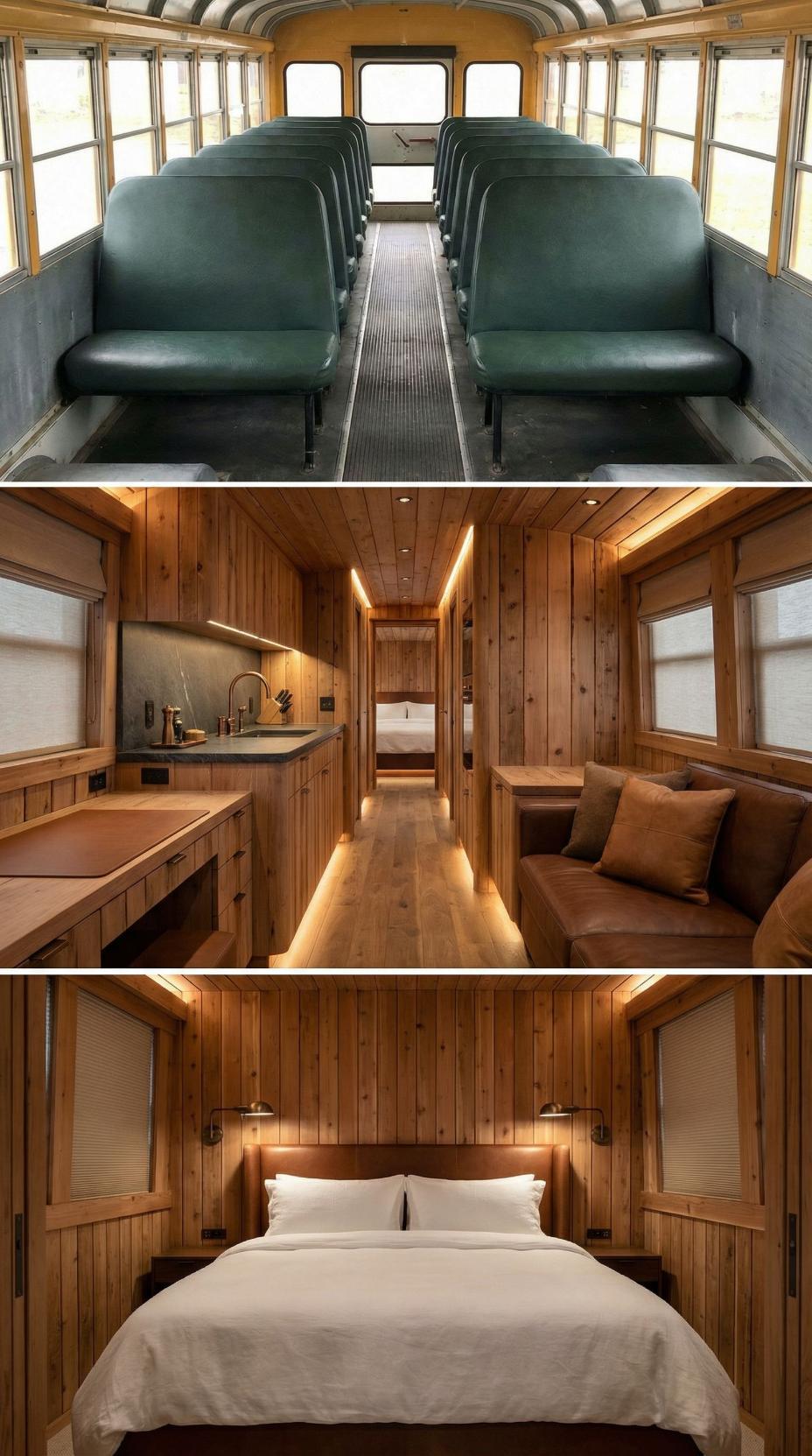
Vertical knotty pine planks wrap walls and ceiling, giving this conversion the feeling of a Scandinavian sauna. The wood has that golden-amber tone that only comes from certain species. A compact galley kitchen with a dark soapstone counter sits beneath a linear pendant light. The brass gooseneck faucet glints against the grey stone.
A small cognac leather loveseat with rust pillows provides seating. Cream roller shades cover windows. The floor uses the same pine planking, running lengthwise to elongate the space. In the bedroom, white linen bedding creates strong contrast against all that warm wood. Brass reading lights mount directly to the pine walls. The bedroom feels like sleeping inside a cedar chest, in the best possible way.
The Hotel Suite That Moves With You
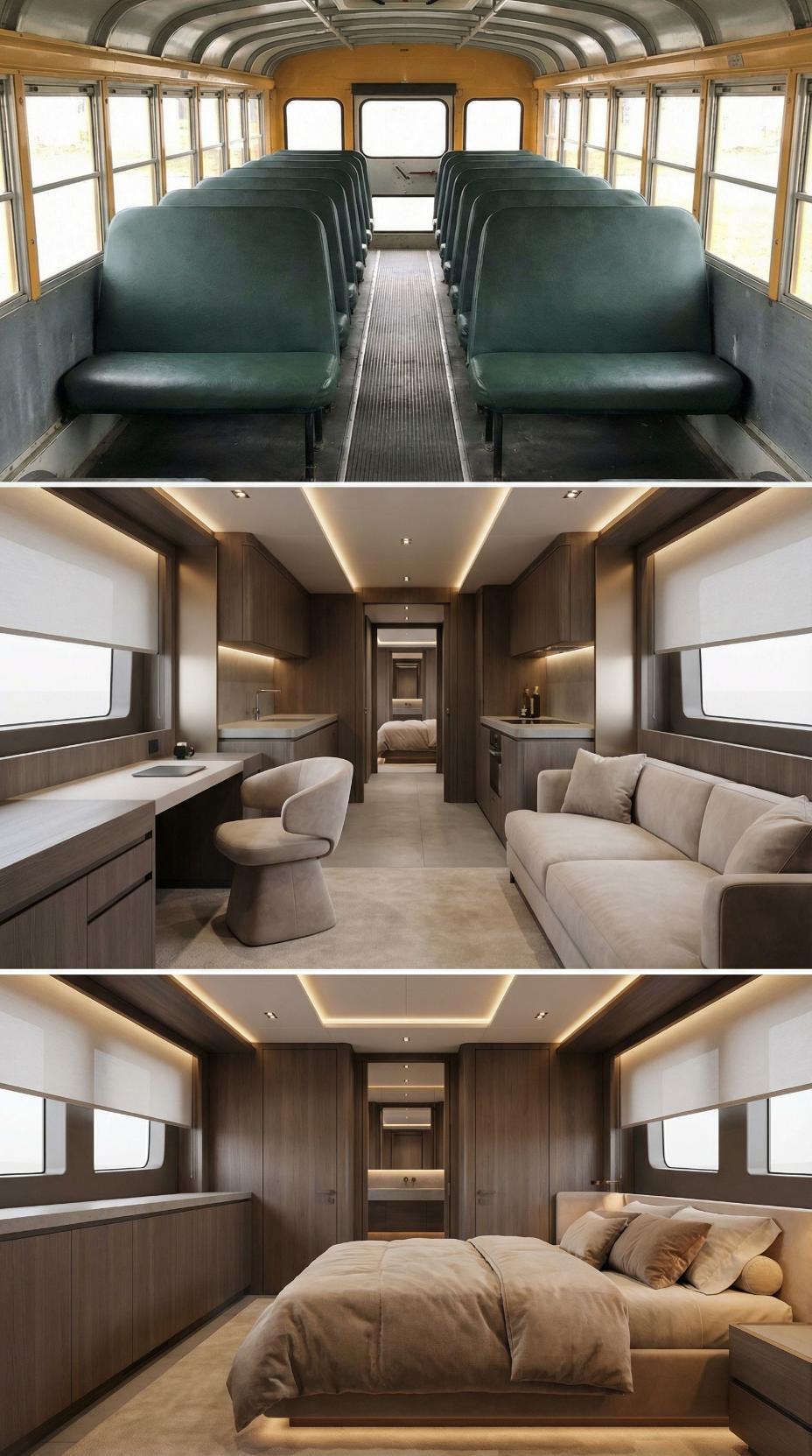
I keep returning to this one. Those forest green vinyl benches in the original image sit in rows like patient soldiers, their patina telling decades of stories. The yellow-painted window frames and ribbed rubber floor runner down the center aisle are pure nostalgia.
Then you scroll down and everything shifts. Dark walnut panels wrap the walls in that moody, cocoon-like way high-end yacht interiors do. The living area features a greige velvet sofa with matching sculptural armchair, both sitting on polished concrete-look flooring. Recessed LED channels trace the ceiling perimeter, throwing warm light across every surface. A built-in desk with marble top occupies the left wall, and at the far end, I can see a bedroom with crisp white bedding through the corridor.
Why It Works: The ceiling height stays identical. By running the walnut paneling vertically and adding those horizontal light channels, the eye reads the space as longer and taller than it actually measures. The monochromatic palette in the taupe-grey family prevents the narrow footprint from feeling choppy.
Walnut, Bouclé, and Brass Walk Into a Bus
🔥 Would you like to save this?
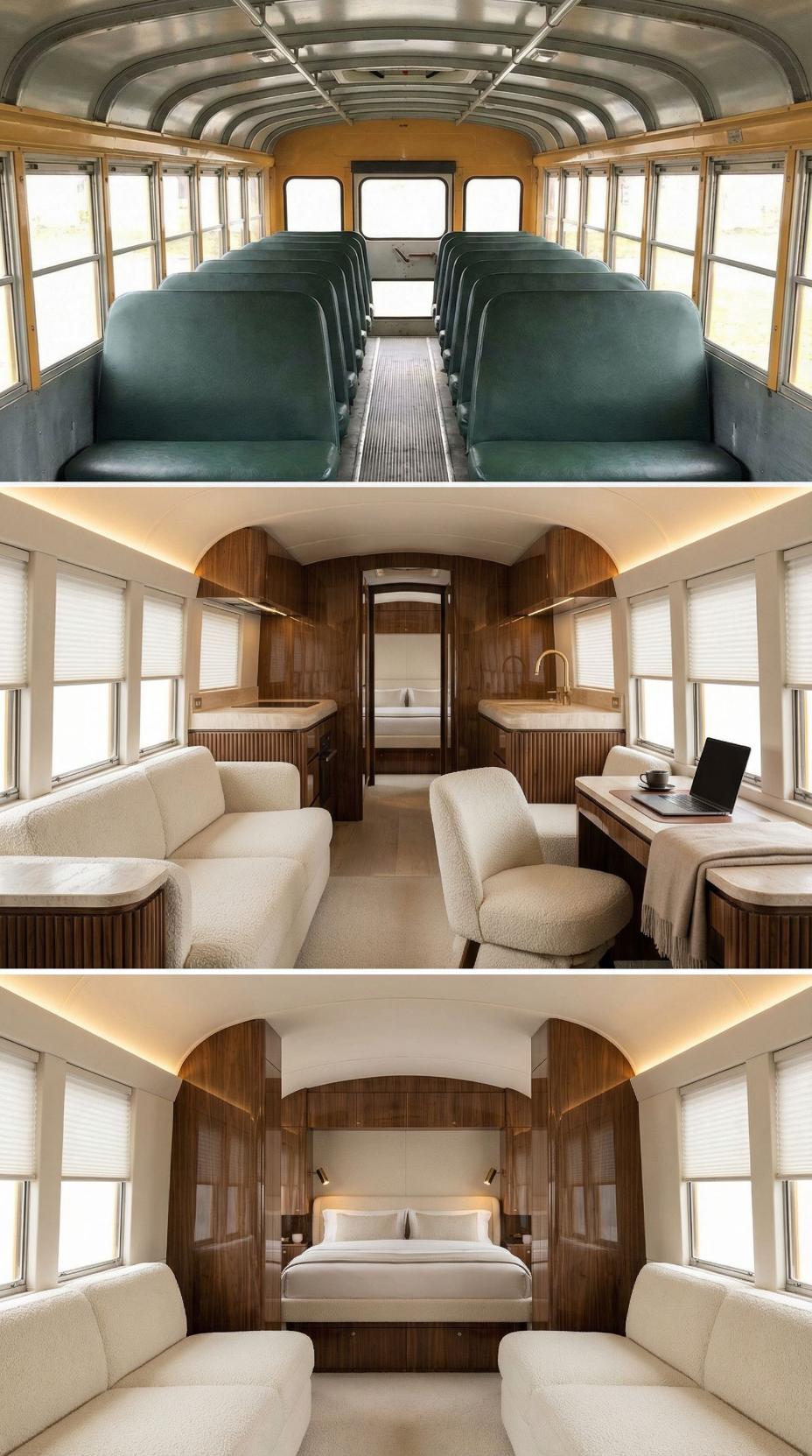
Same starting point as before: those green benches, that ribbed aisle, those sunny yellow frames. But this AI took a completely different path.
Cream bouclé upholstery covers a curved sofa and swivel chair in the living zone. The fabric has that nubby texture you want to touch. Fluted walnut panels add rhythm to the lower cabinets, while the upper walls stay smooth. A laptop sits open on the built-in desk, a grey wool throw draped over the chair back. Through the arched doorway, I spot the bedroom: a platform bed centered under recessed reading lights, white linens pulled tight, the same walnut paneling framing everything like a picture.
Try This: If you’re working with any narrow space, borrow this trick: use arched doorways instead of square ones. The curved top draws your eye upward and softens the transition between rooms. It’s a detail that costs nothing extra in most builds but changes how the entire space feels.
Cream honeycomb blinds cover every window, filtering light without blocking it entirely. That brass gooseneck faucet in the kitchen catches my attention. Small choices like that signal intention.
We’ve reached the end of our 33 AI-generated designs, and I’m still not sure which direction we’ll take. Maybe that’s the point. Having this many options laid out forced us to articulate what we actually want versus what we thought we wanted. The bus sits in the driveway, still full of green vinyl and possibility.