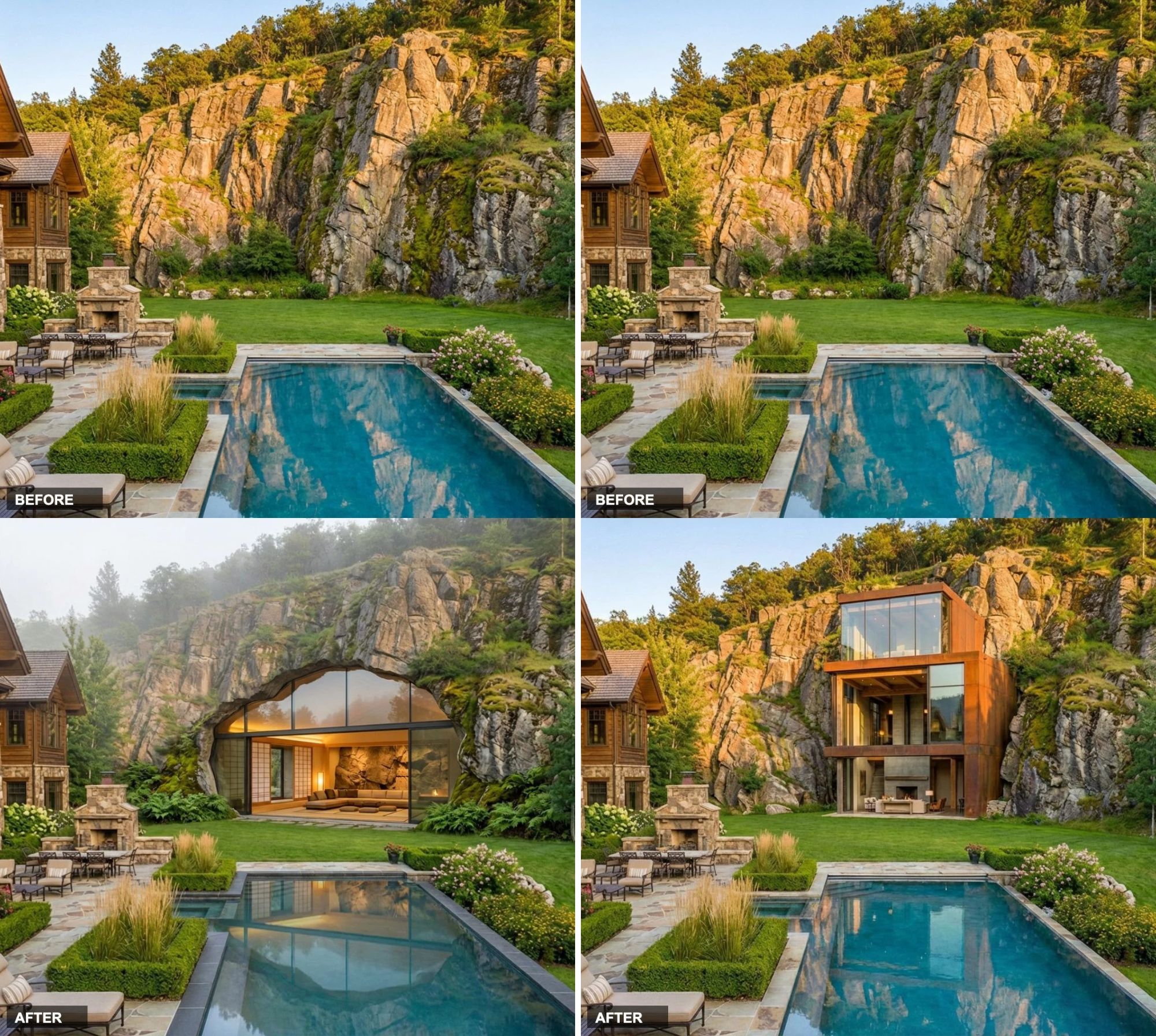
Most backyards treat a cliff face as an obstacle. These concepts treat it as the foundation. Starting from the same raw granite wall overlooking a rectangular pool, each design carves, anchors, or wraps a fully realized guest house directly into the rock, some with blackened steel and drama, others with warm timber and restraint. The before is the same every time. What changes is everything else. Here is what happens when architects stop working around nature and start working with it.
Raw Granite Columns and Double-Height Glass Turn a Cliff Wall Into an Architectural Statement
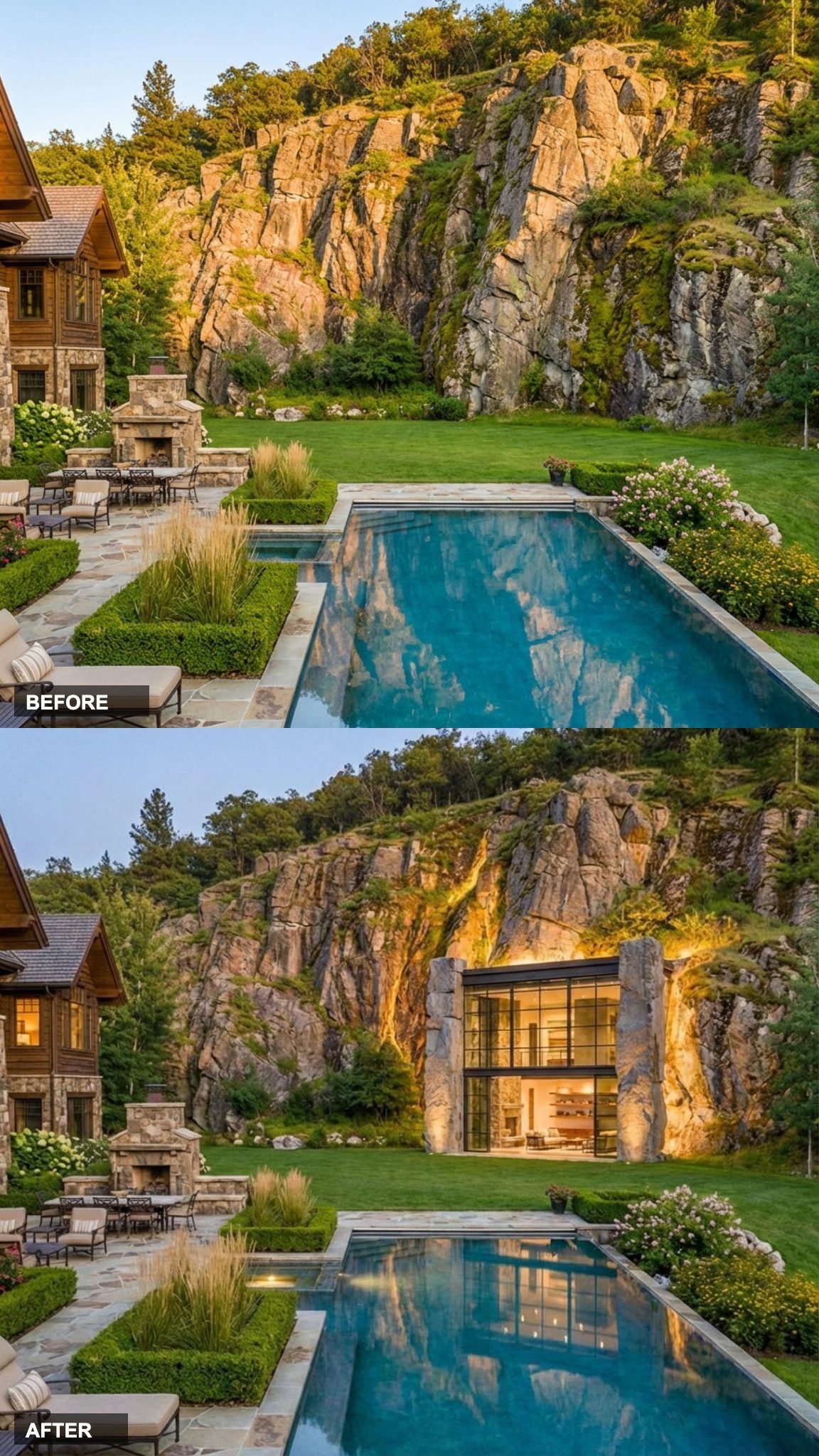
The cliff stops being background the moment those raw granite columns rise from the existing rock and anchor a double-height glass pavilion directly to the face. Nothing is concealed or polished away. The stone reads exactly as it formed, fissured, mineral-streaked, ancient, and the full-height glazing makes the contrast between geological time and precision engineering the entire point of the design.
In order to come up with the very specific design ideas, we create most designs with the assistance of state-of-the-art AI interior design software. Also, assume links that take you off the site are affiliate links such as links to Amazon. this means we may earn a commission if you buy something.
Inside, the double-height volume creates a guest suite that feels carved rather than constructed. Natural light floods the space from above while the pool terrace unfolds through the glass below. This is the rare design where roughness is not a problem to solve but the central material.
A Full-Width Glass Wall Split Into the Rock Hollow Reveals a Dramatic Living Space From the Pool Deck
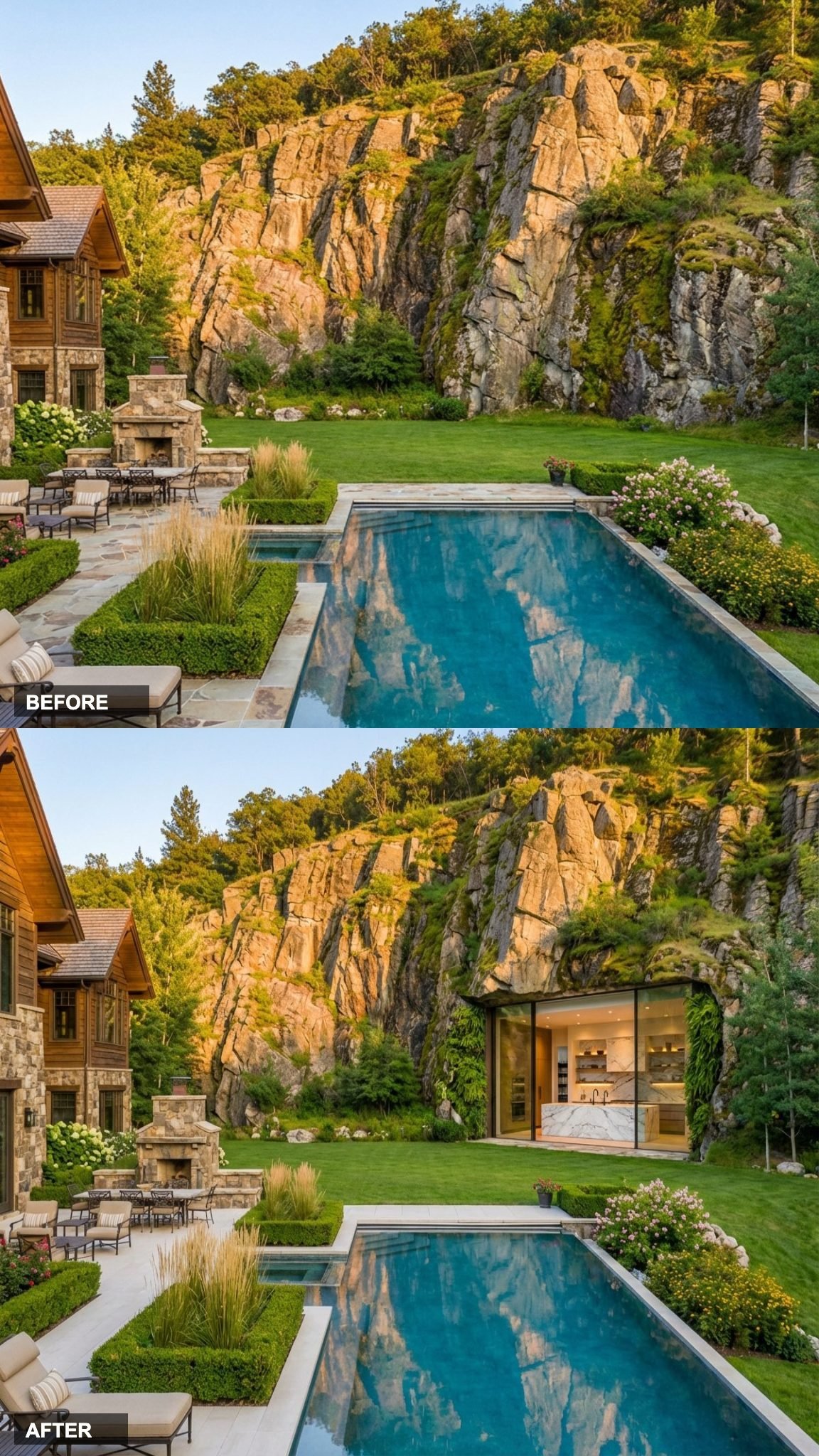
Opening the cliff face across its full width rather than cutting a single aperture changes the spatial relationship between inside and outside completely. The natural alcove becomes a room, the glass wall becomes a threshold rather than a barrier, and the pool terrace reads as an extension of the interior floor plane.
The dark interior, visible through floor-to-ceiling glazing, contrasts against the pale granite surround in a way that feels almost cinematic. From the pool, the effect is of light spilling out of the rock itself.
Steel and Glass Follow the Rock’s Own Curve for a Structure That Looks Like It Grew There
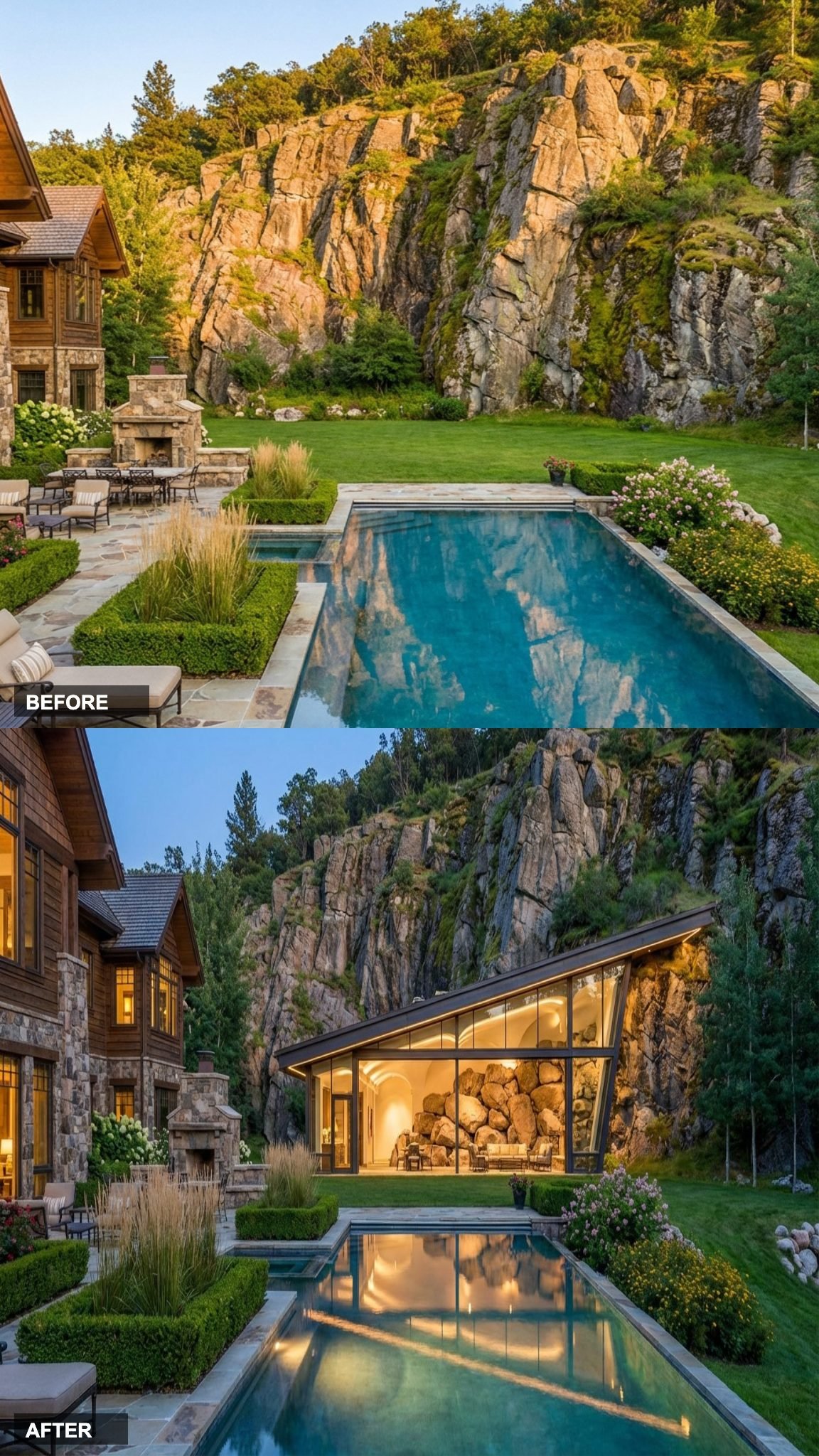
Most buildings fight the site. This one traces it. A low-profile steel-and-glass structure follows the natural curve of the cliff base rather than imposing a straight line against the rock, and the result is a guest house that reads as an extension of the geology rather than an insertion into it.
The best site-responsive architecture makes you wonder if the curve was always there waiting to be found.
The low roofline keeps the full height of the cliff visible above, preserving the drama of the natural backdrop while the interior benefits from the organic geometry on every wall.
Steel-Framed Glass Bays Recessed at Varying Depths Create a Facade With Genuine Topographic Rhythm
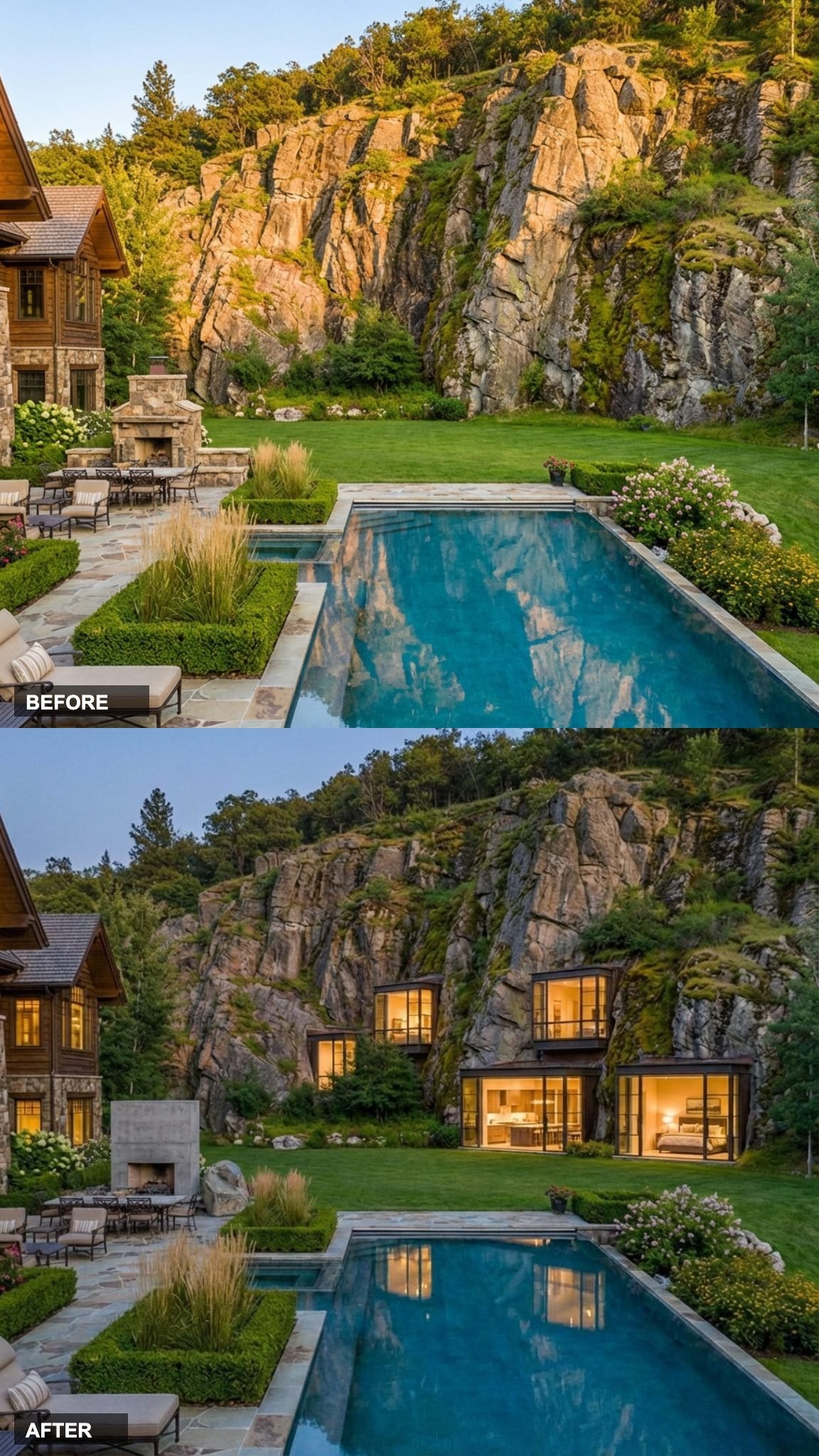
Each bay sits at a different depth within the rock face, creating a facade that has the same layered quality as the cliff itself. Some bays press forward to meet the light. Others retreat into shadow. The rhythm is irregular but deliberate, and it gives the structure a visual complexity that a flat facade simply cannot achieve.
Blackened Steel and Glass Tuck Under a Natural Rock Overhang Like They Were Always Meant To Be There
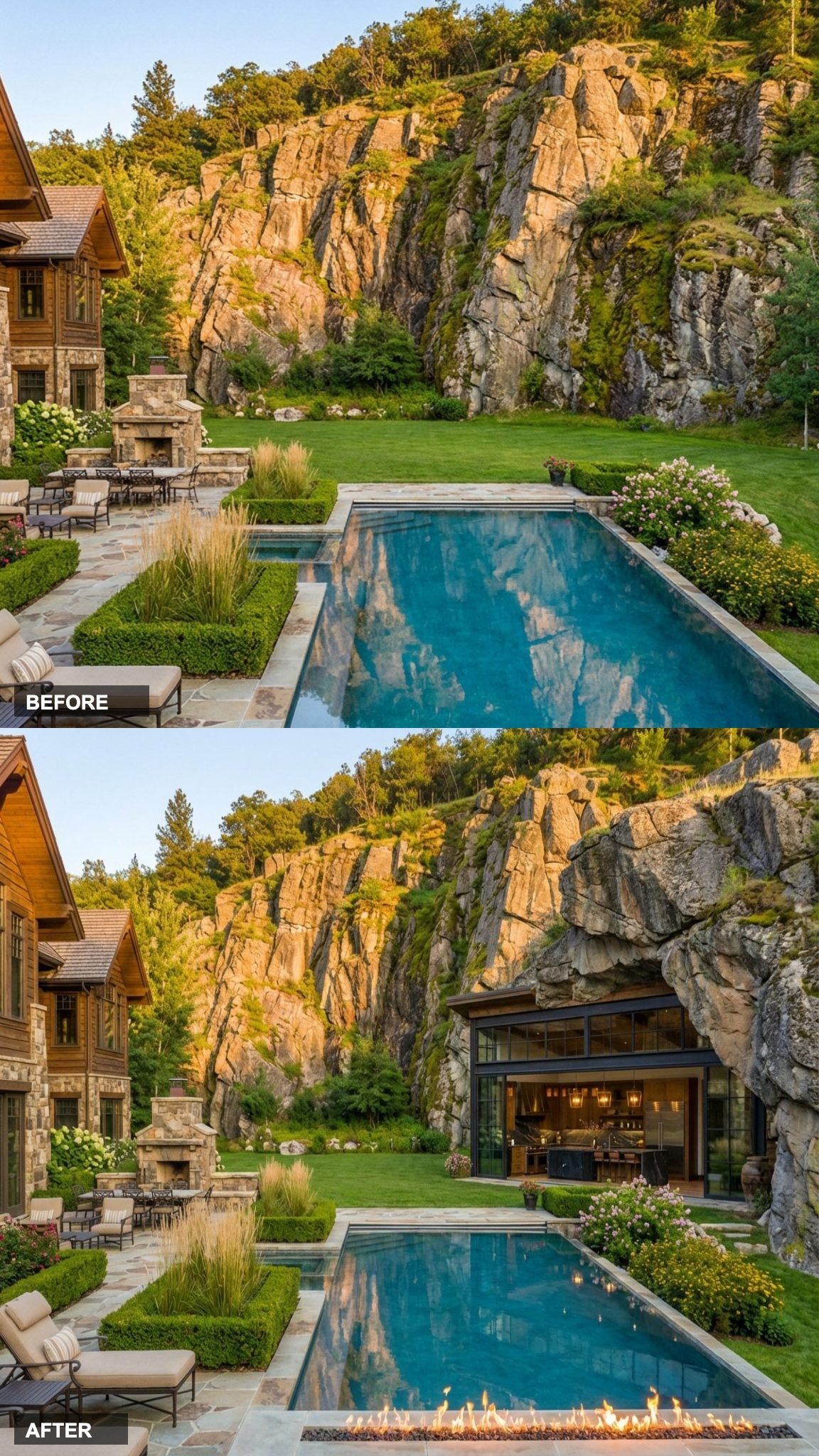
The natural overhang does the heavy architectural lifting here. Rather than engineering a dramatic cantilever, this design reads the existing rock geometry and tucks the blackened steel-and-glass facade neatly beneath it. The overhang provides shade, shelter, and visual drama without a single additional structural element to achieve it.
Blackened steel against raw granite is a material pairing that rewards close inspection, both surfaces absorb light rather than reflect it, which gives the exterior an unusual depth and moodiness even in full sun.
- The overhang eliminates the need for external shading devices
- Blackened steel weathers to complement rather than contrast granite’s grey tones
- The sheltered entry creates a distinct threshold moment before stepping inside
Curved Glass Panels Follow the Rock Hollow to Create a Double-Height Living Room Inside the Cliff
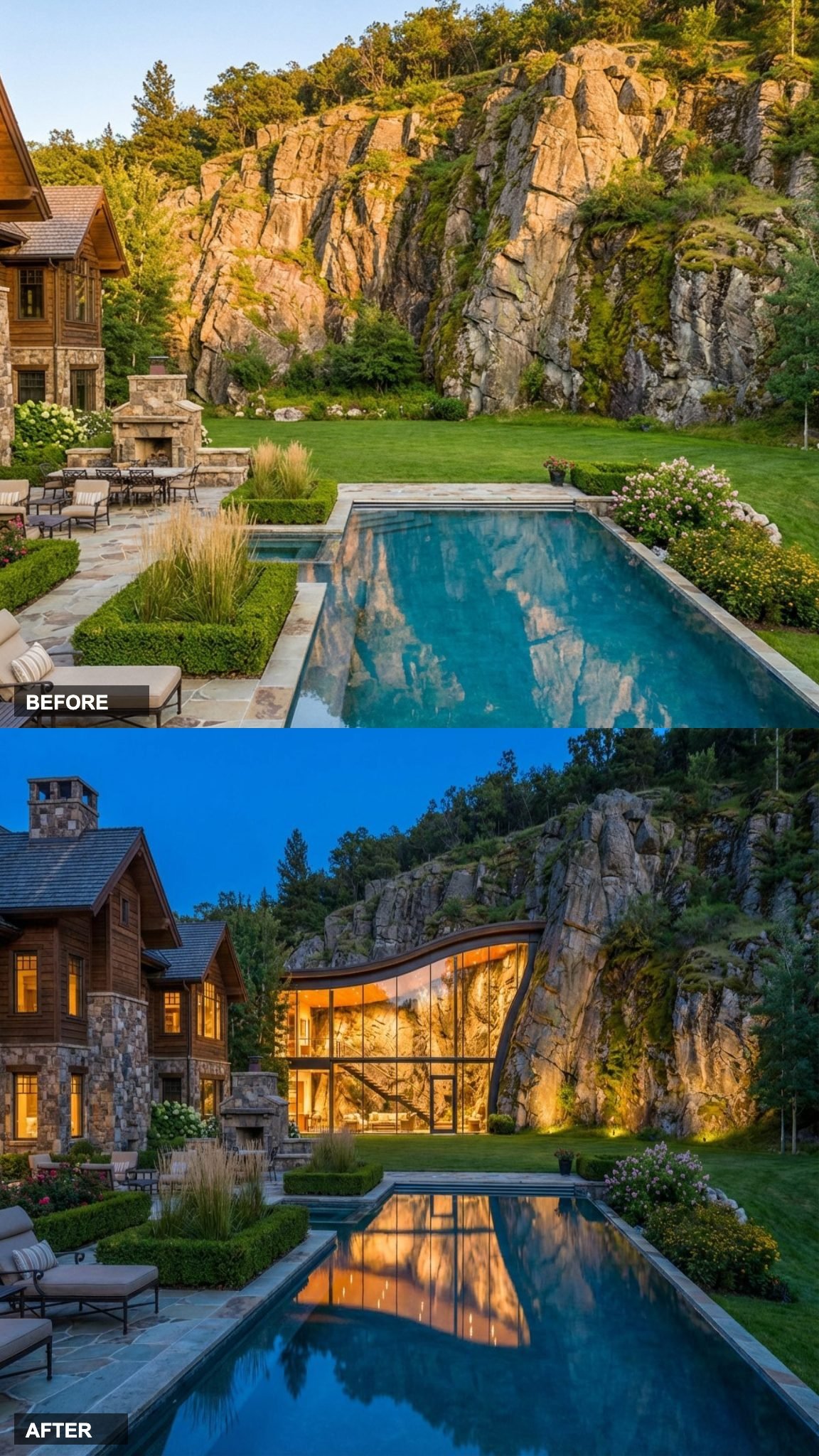
Flat glass against curved stone always looks like an apology. Curved panels that actually follow the rock hollow look like a conversation. The interior double-height living room benefits from walls that bow slightly inward at the rock surface, creating an almost cave-like sense of enclosure that is entirely at odds with the full transparency of the glazing.
A Recessed Glass-Fronted Dwelling Flush With the Cliff Face Disappears Into the Rock
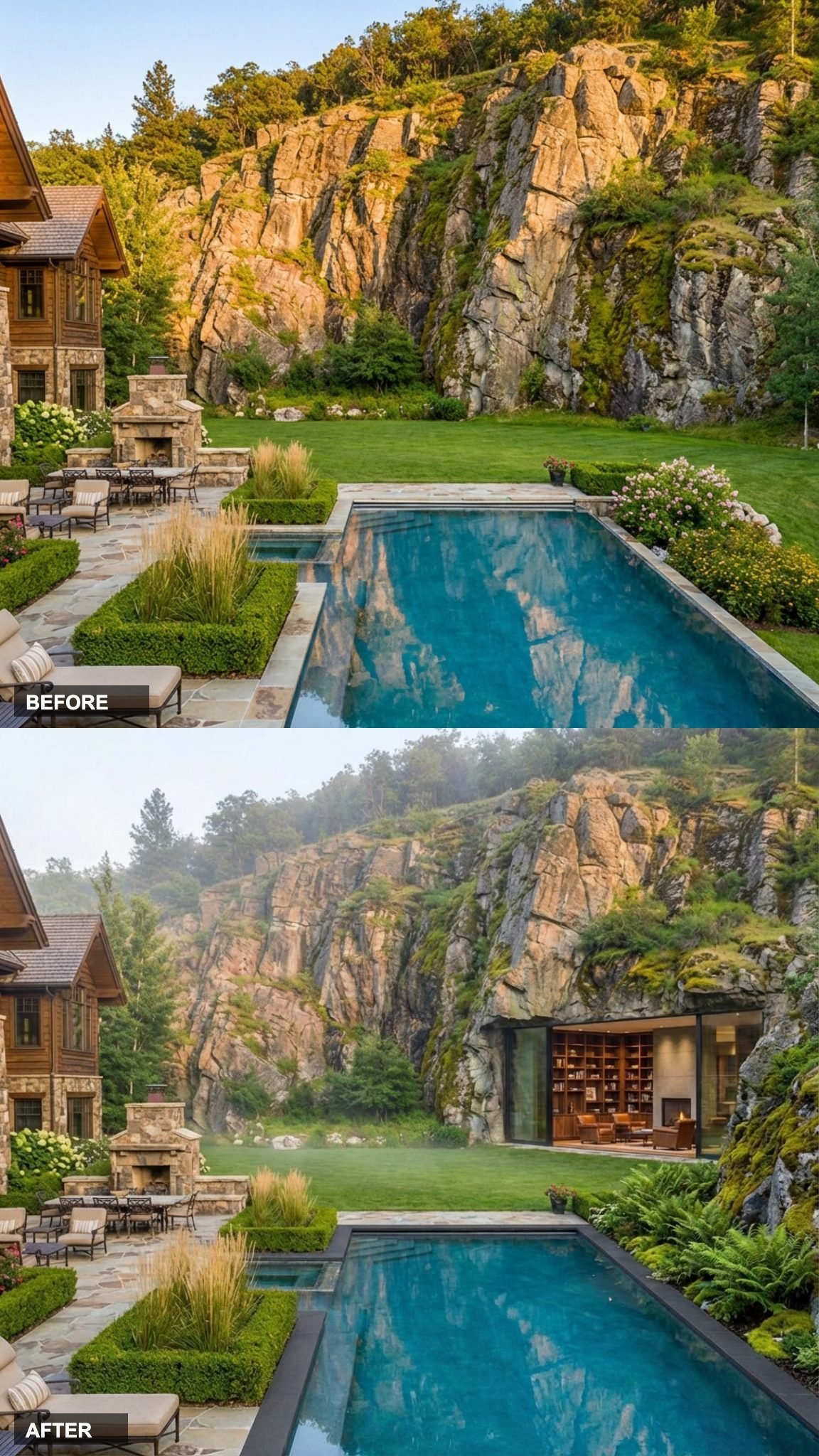
Partially excavating the cliff face and setting the glazing flush with the surrounding stone surface produces something genuinely rare: a building that does not read as a building at first. The glass is there, the interior is visible, but the overall cliff profile is barely interrupted. From the pool terrace, the dwelling appears to have been revealed rather than built.
This kind of visual restraint requires significant engineering confidence. The excavation must be precise, the waterproofing behind the glass wall is critical, and every structural element must be hidden within the rock envelope. The payoff is a facade with no visible effort.
Industrial-Luxury Blackened Steel Mullions Give the Cliff Facade an Honest, Unpolished Edge
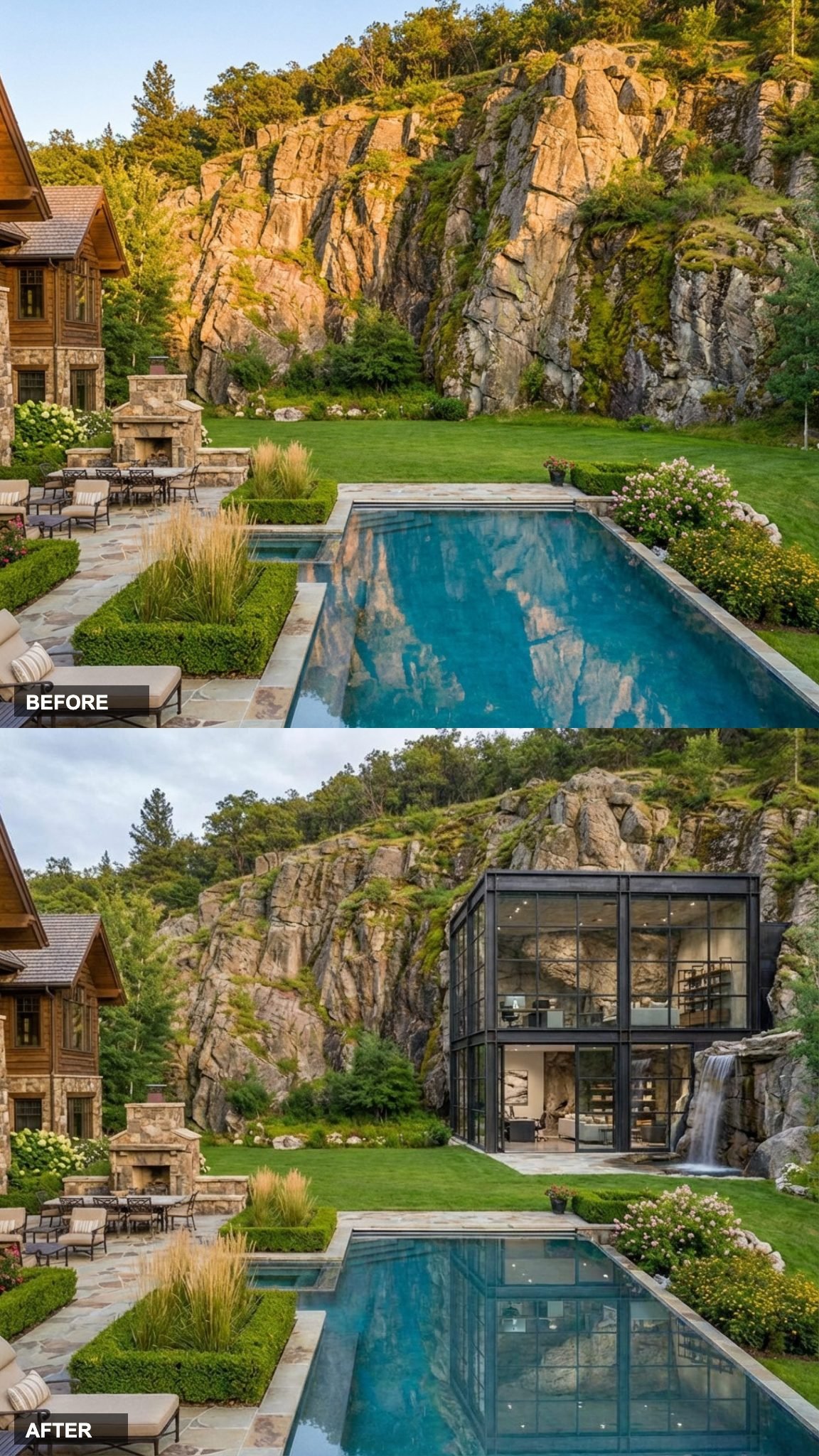
Mullions are usually designed to disappear. These are designed to be seen. The raw, blackened steel framing each glass panel is thick and unapologetic, an industrial detail that reads as completely honest against granite that has never been asked to look refined. The contrast between precision-cut steel and irregular rock is the entire point.
Inside, that same blackened steel continues as structural elements, maintaining the visual language from exterior to interior without translation loss.
A Cantilevered Glass Box Extends From the Rock Face Above the Pool
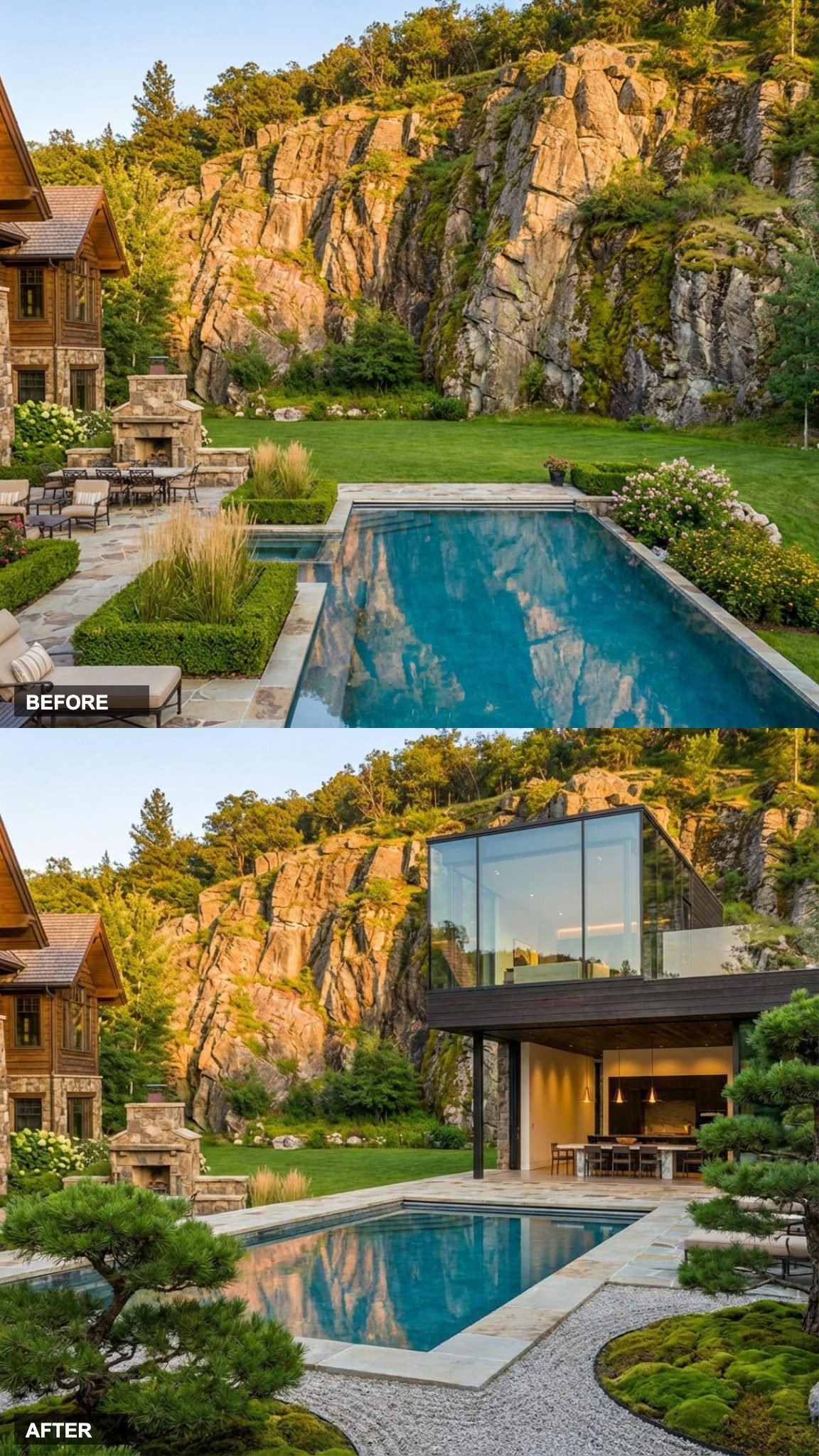
Cantilevering over the pool terrace rather than sitting at grade changes everything about the relationship between the guest house and the landscape. The lower level stays flush with the ground. The upper glass box projects outward from the rock, suspended above the pool deck, and suddenly the cliff face has a presence that reads from every corner of the yard.
Structurally, this requires the rock face to act as anchor rather than simply backdrop, deep steel embedments driven into the granite carrying the load of the projecting box. Engineering as drama.
A Low-Slung Glass Pavilion With a Roofline That Follows the Granite’s Own Slope
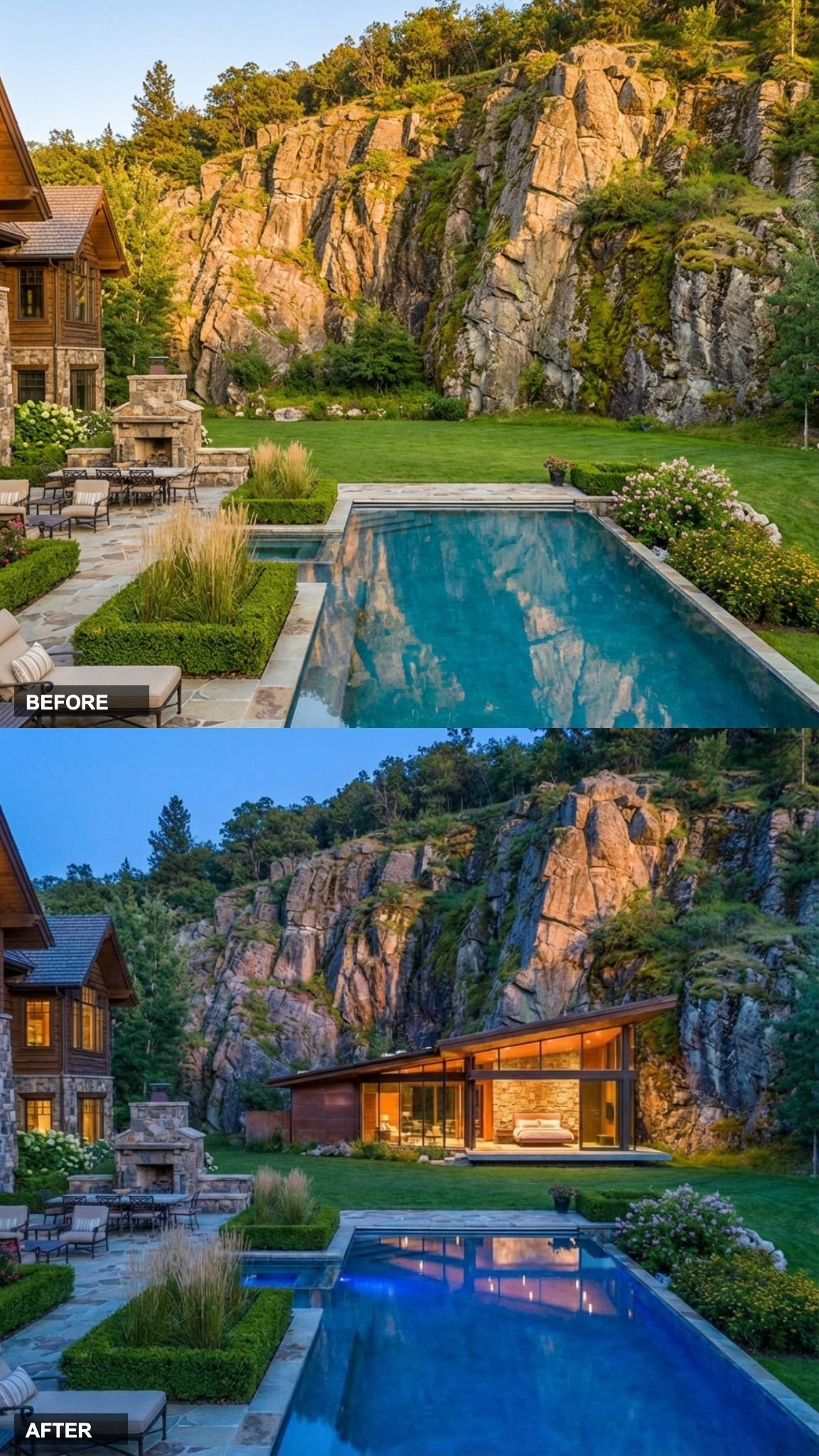
Letting the rock determine the roofline rather than imposing a flat plane produces a silhouette that reads as inevitable. The low-slung pavilion has an almost Japanese quality of restraint, nothing projects above what the cliff face establishes, and the result is a building that enhances rather than competes with the geology above.
Poured Concrete and Glass Built Into the Cliff Face While the Raw Rock Stays Exposed on Both Sides
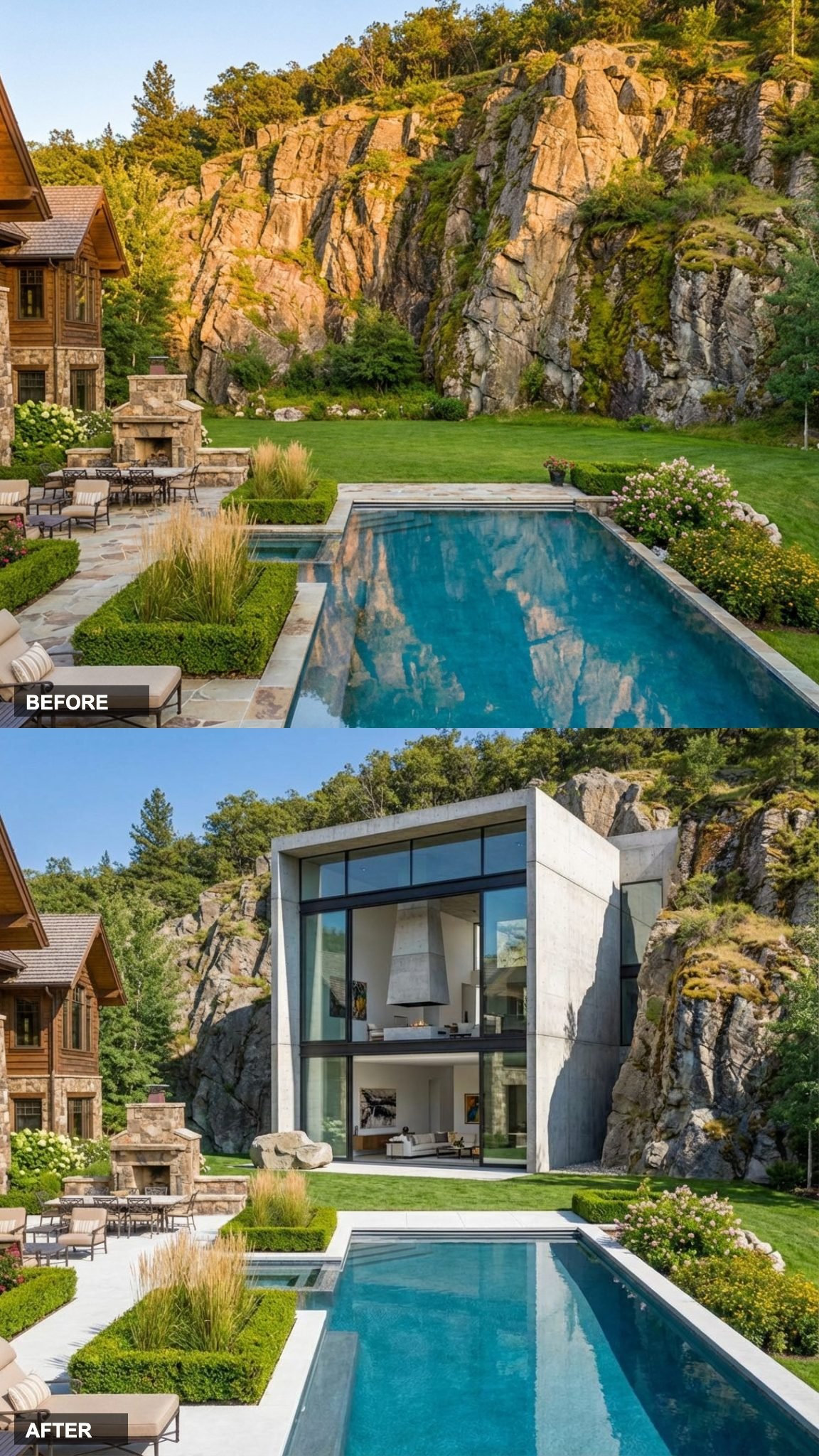
Board-formed concrete and raw granite are both honest materials, neither pretends to be something it is not. Setting a concrete-and-glass structure between two untouched flanking sections of cliff creates an architectural composition that feels like an excavation rather than a construction: something found and revealed rather than added and finished.
The board-form texture in the concrete references the geological layering in the granite in a way that reads as intentional without being forced. Two formed materials in quiet dialogue.
When the cliff becomes the back wall, you stop needing to finish anything. The rock does it for you.
Floor-to-Ceiling Glazing Shaped to a Natural Cave Mouth Turns Geology Into Architecture
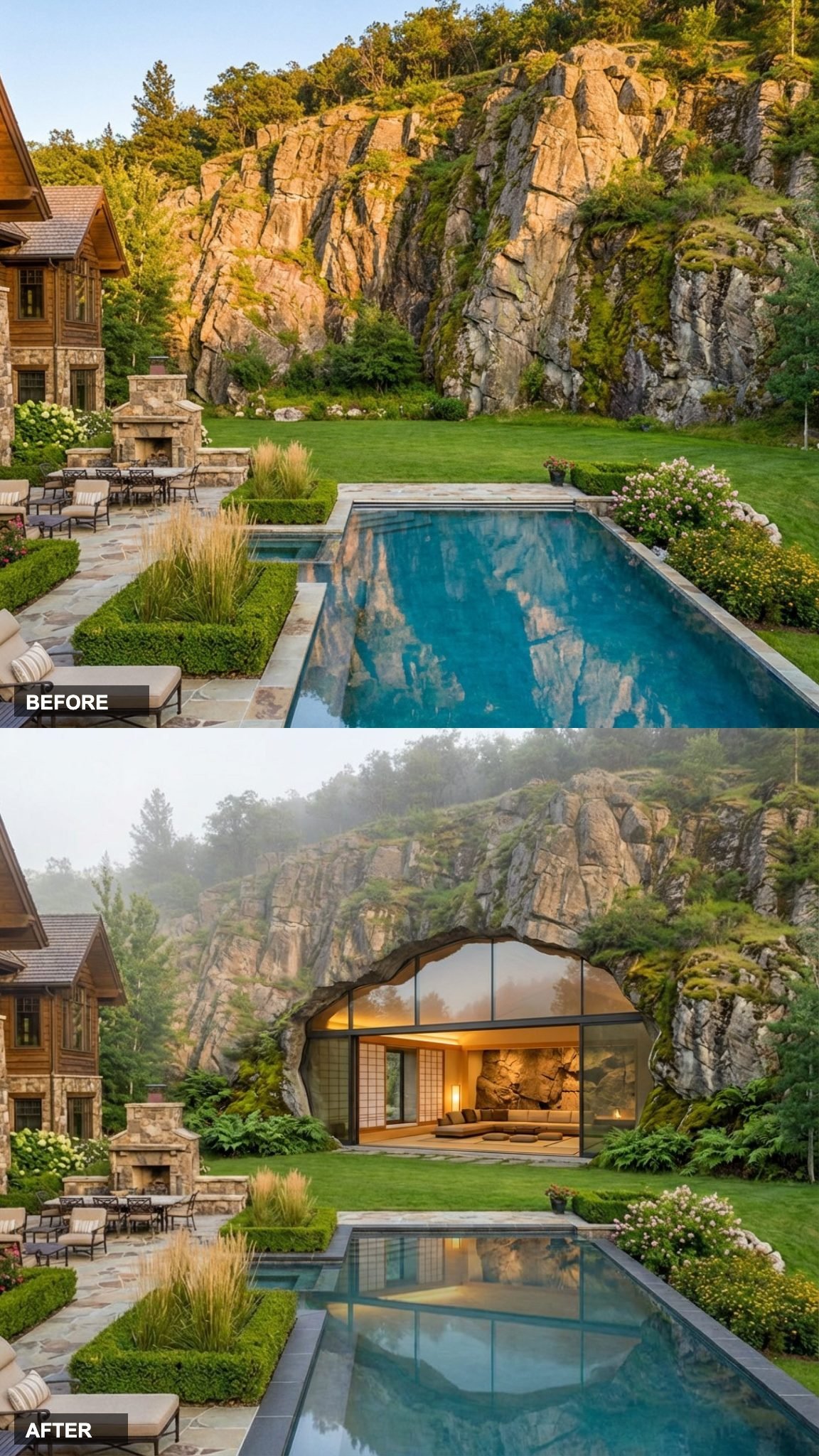
The cave mouth was already there. This design simply acknowledges it with glass. Fitting the glazing to the natural aperture rather than cutting a new one preserves the geological event that created the opening, the glass traces the existing rock profile at every point, and the interior takes on the organic shape of the cavity behind it.
High-end interiors visible through the cave-profile glazing create a layered reading: wild exterior, precise glass threshold, luxury interior. Three worlds compressed into a single facade.
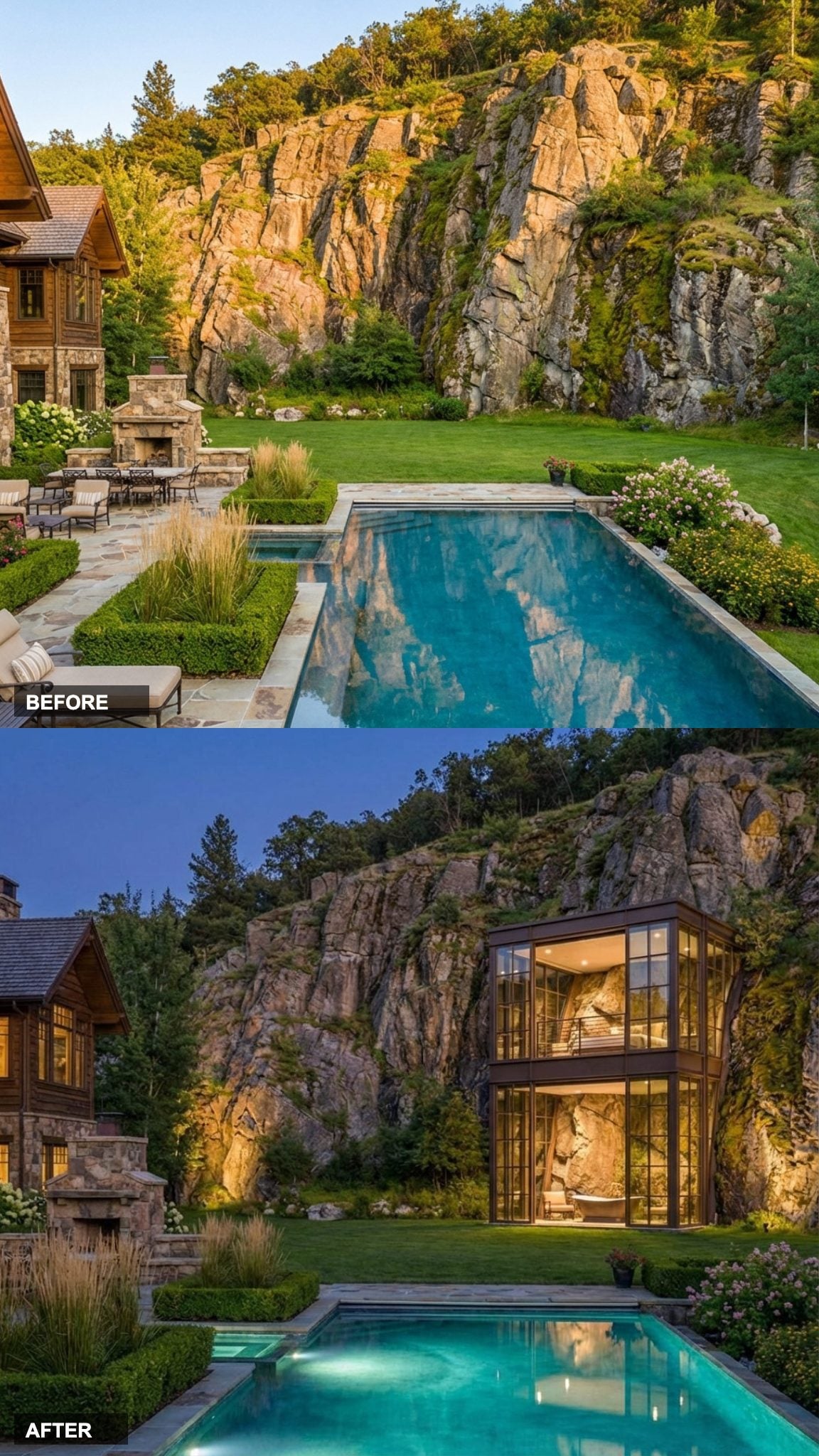
Bronze-Tinted Mullions and a Mezzanine Level Give the Cliff Structure Warmth and Vertical Drama
🔥 Would you like to save this?
Bronze tinting on the steel mullions is a small decision with a large visual payoff. Against raw granite, standard black or silver reads as industrial. Bronze reads as considered, it pulls the warm iron oxide tones out of the rock and makes the facade feel like it belongs to the same material family as the cliff rather than sitting in front of it.
The mezzanine level visible through the upper bay adds vertical complexity. The structure reads as occupying the full height of the cliff face rather than crouching at its base.
Corten Steel Frames the Glass as the Rust-Toned Panels Age Into the Granite Backdrop
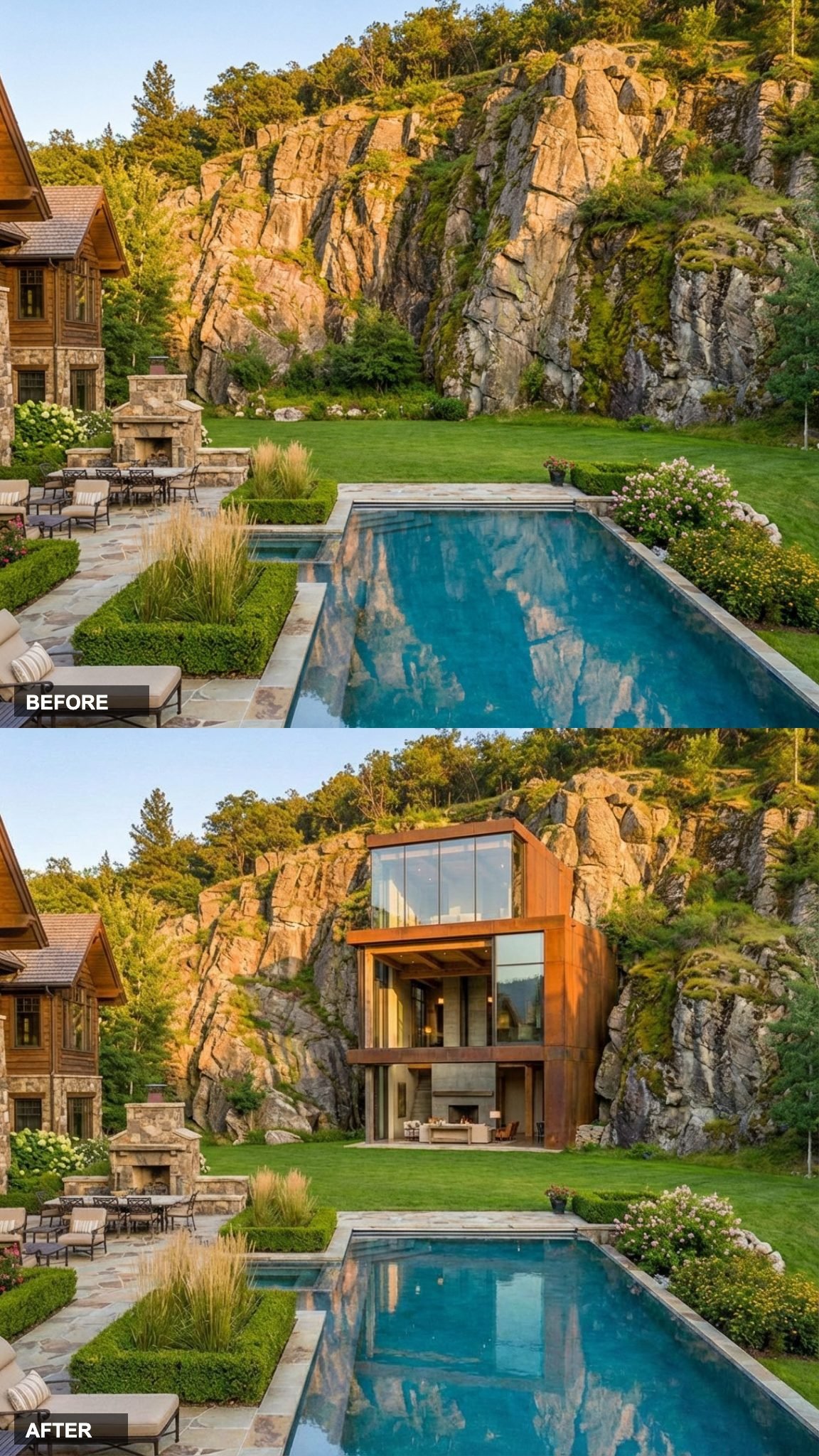
Corten steel rusts on purpose, and in front of a granite cliff it is an almost unfair material advantage. The orange-brown oxidized surface shares its tonal range with the iron streaks already present in the rock face, so as the Corten weathers, the structure slowly blends into the cliff rather than standing apart from it.
This is architecture designed to improve with time rather than require maintenance to stay presentable. The patina is not decay. It is completion.
A Sweeping Curved Glass Facade Embedded in the Rock Hollow Opens to an Expansive Interior
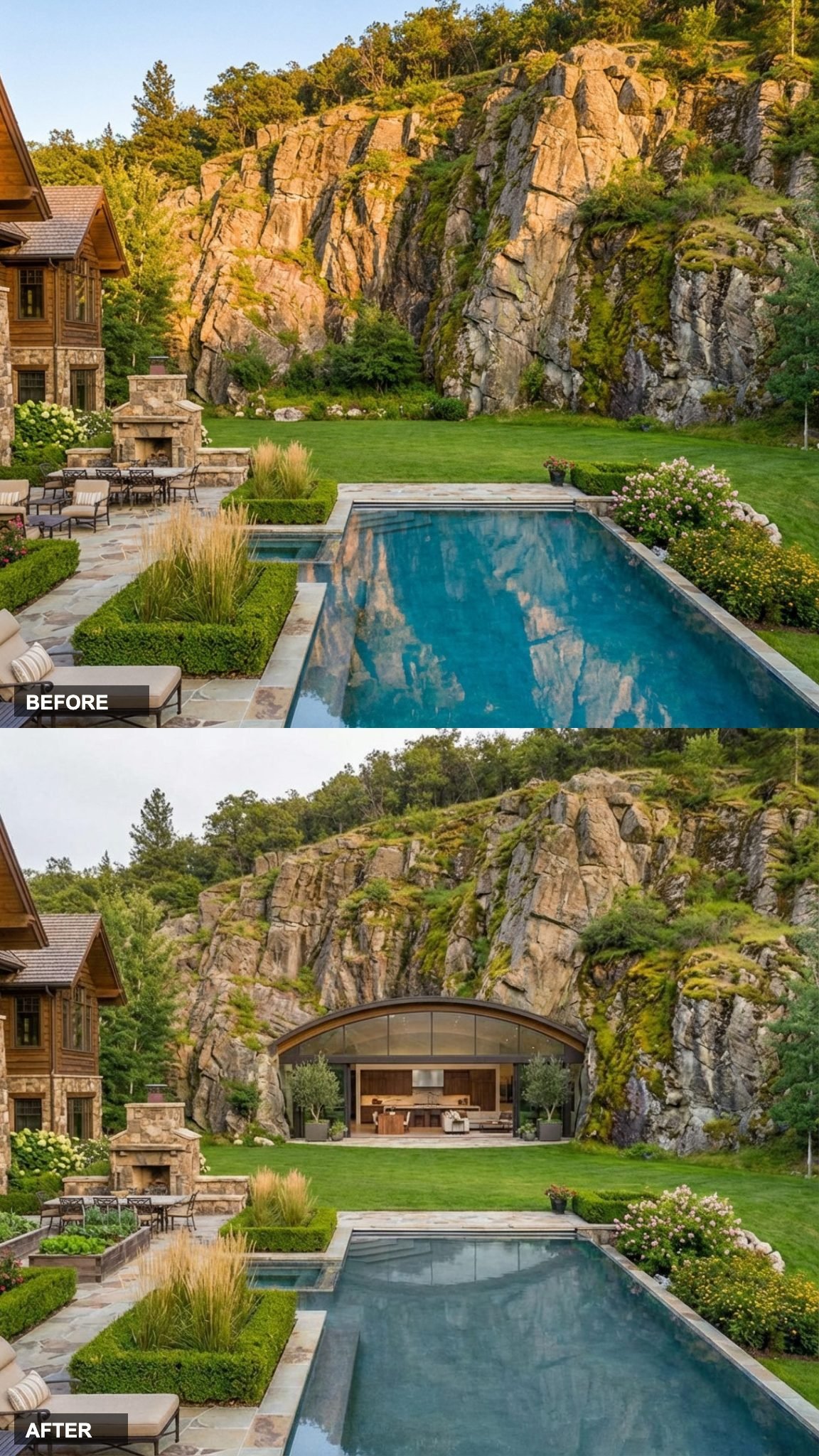
The curve sweeps wide rather than cutting straight, and the interior benefits from every inch of it. An open-plan layout, visible through the full curved facade, reads as dramatically larger than its actual footprint because the curved glazing brings the pool terrace visually inside. The rock hollow frames the glass on both sides like a proscenium arch, and the interior becomes the stage.
Black Steel and Low-Iron Glass Let the Rock Grow Over One Corner of the Structure
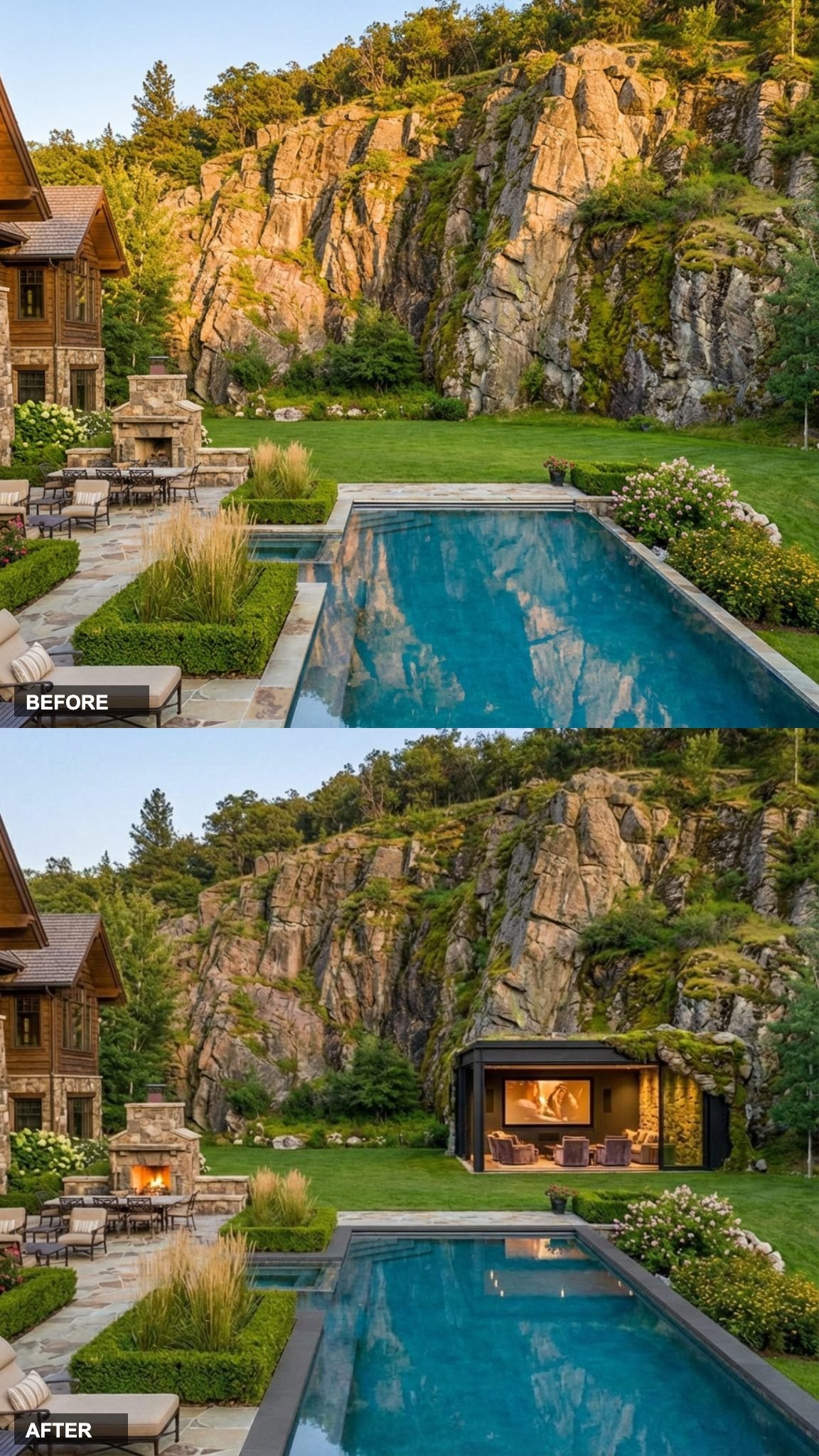
Designing for the rock to grow over one corner is the kind of thinking that takes real patience. The structure is clearly new, the steel is precise, the low-iron glass is crystal-clear, but one corner is deliberately left open to the overhanging rock, moss and all. The result is a building that appears to be in the process of being absorbed by the cliff, which is exactly the right posture for this kind of site.
Why Low-Iron Glass Matters Here
Standard float glass carries a green tint that becomes visible at the edges and in large panels. Low-iron glass eliminates that cast entirely, so the granite behind the glazing reads with full color accuracy. On a site where the rock’s mineral palette is the primary design material, accurate color transmission through the glass is not a luxury specification.
A Minimalist Glass House Floats Between Granite Surfaces With No Visible Roof
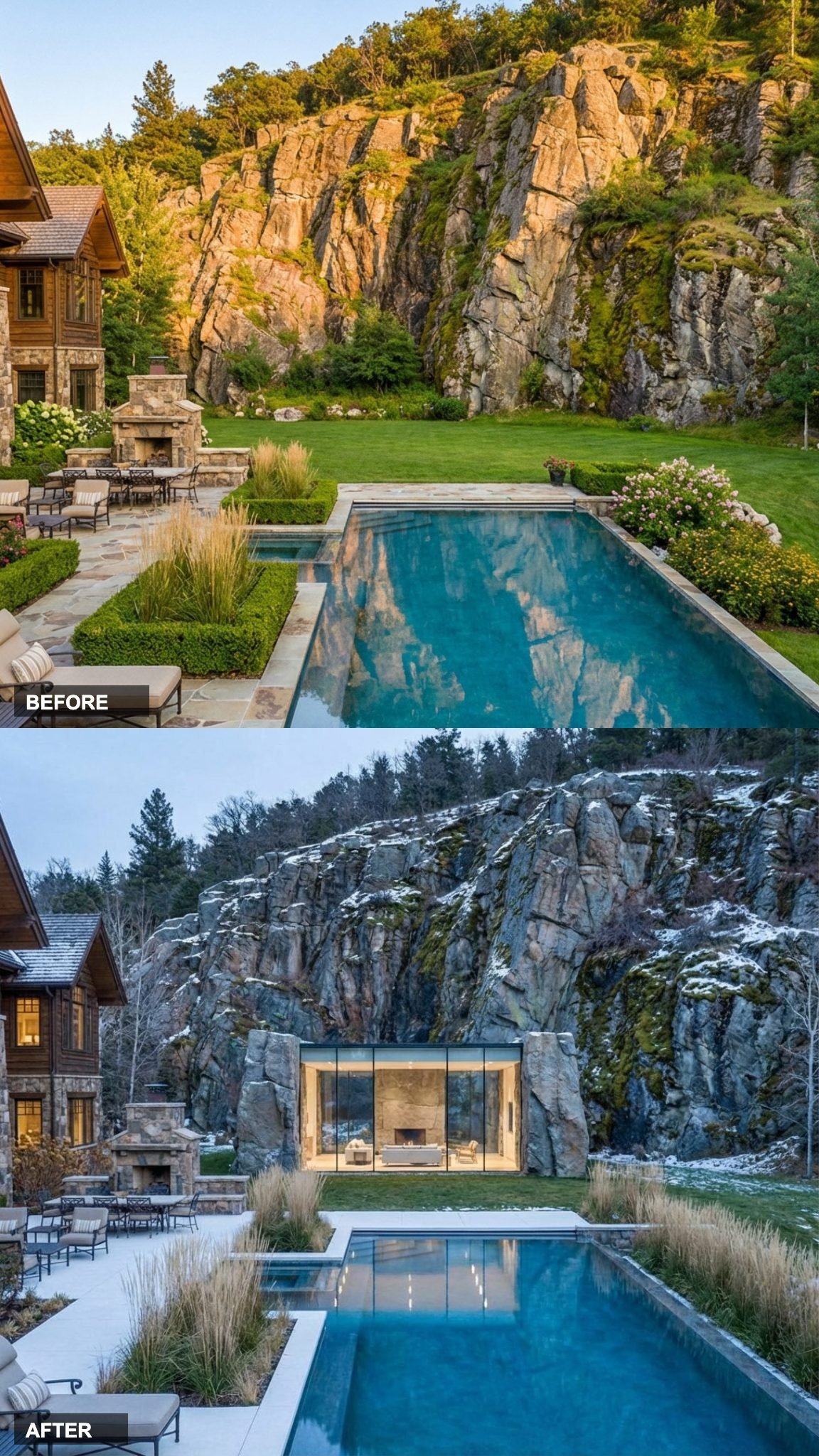
Removing the visible roof from the composition produces something genuinely unsettling in the best possible way. The glass appears to rise directly from the terrace and terminate against the rock above, no cap, no overhang, no conventional closure. The visual effect is of the cliff simply opening up rather than of a building being inserted into it.
A Vertical Glass Tower Anchored Into the Rock Adds a Study With Views Over the Pool
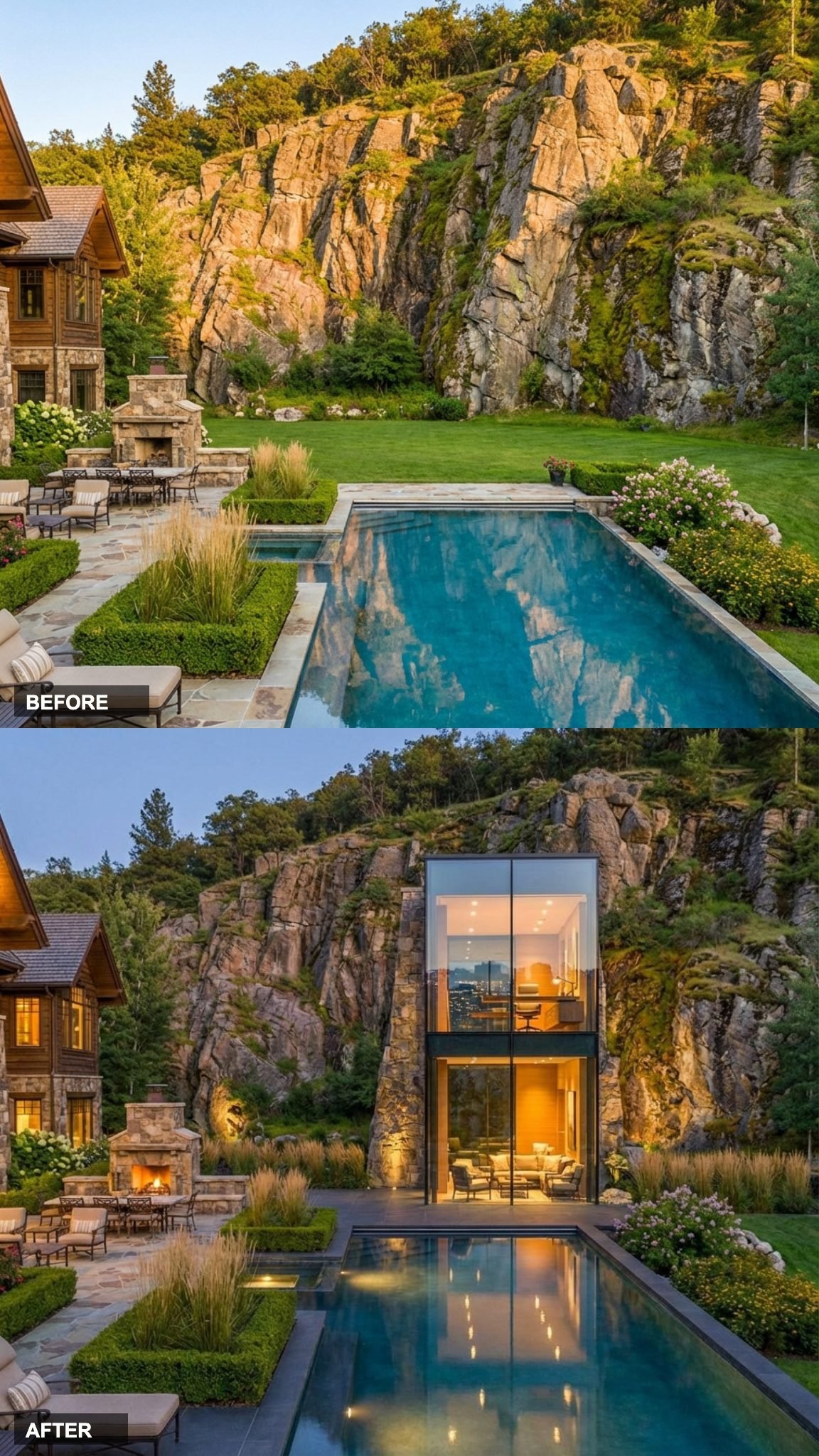
Vertical rather than horizontal. The tower form is unusual in cliff-integrated architecture precisely because it reads against the geological grain, rock formations layer horizontally, and a vertical glass insertion acknowledges that it is something different. The upper-storey study, visible behind full-height glazing, positions the guest house occupant above the pool terrace rather than level with it, which changes the relationship to the landscape entirely.
A Living Roof of Moss and Sedum Begins Merging the Guest Pavilion With the Cliff Above
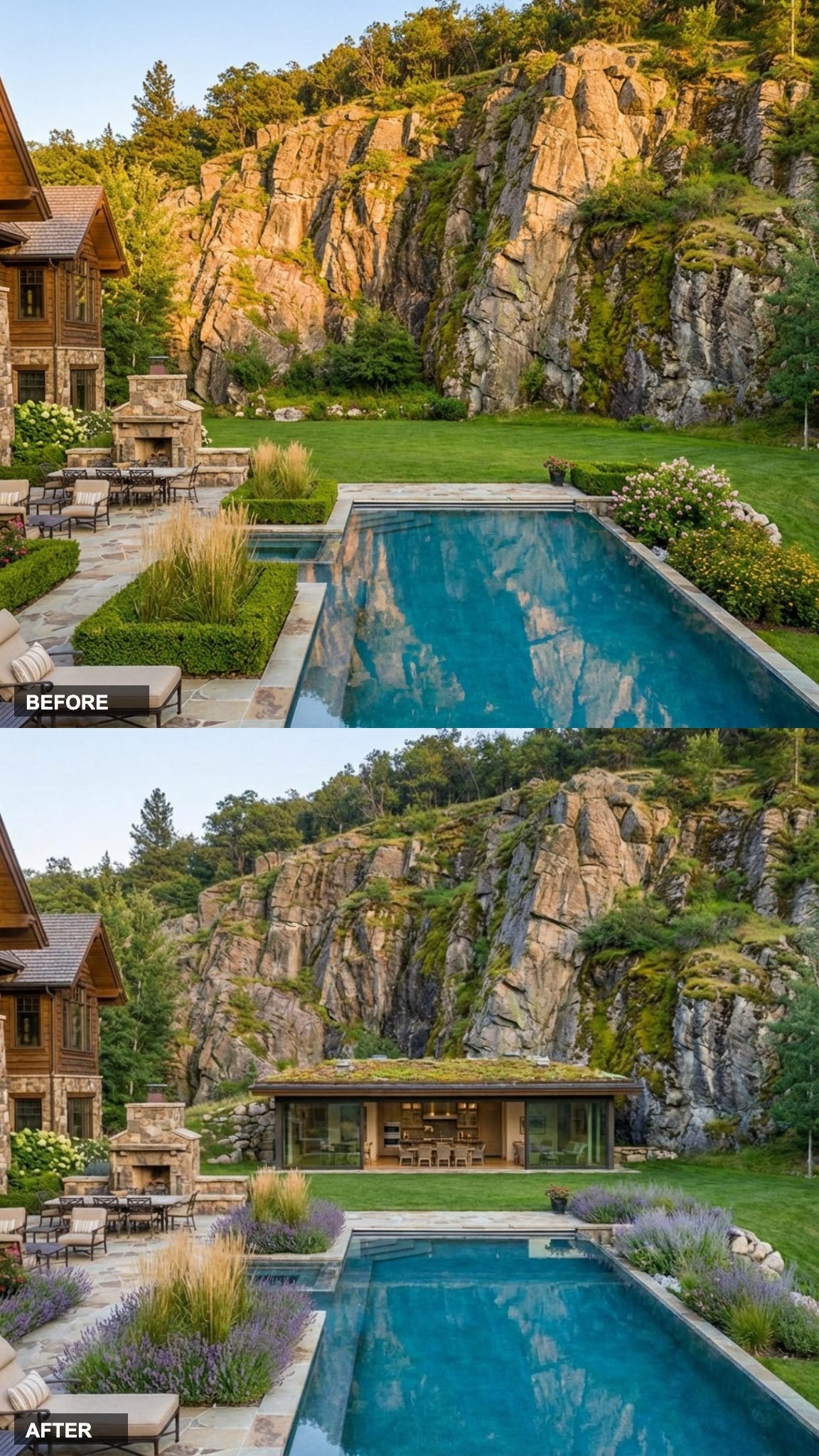
A single-storey pavilion with a living roof does something no steel-and-glass composition can do on its own: it starts to disappear over time. The moss and sedum planted at the roofline are already beginning to merge with the vegetation on the upper cliff, and within a few seasons the roofline will be difficult to locate from above. The building is not hiding. It is integrating.
From the pool terrace, the green-topped pavilion reads as a low threshold between lawn and cliff, natural enough to feel unhurried, refined enough to register as deliberate architecture.
Board-Formed Concrete Walls Built Into Granite Create a Brutalist Guest House That Earns Its Drama
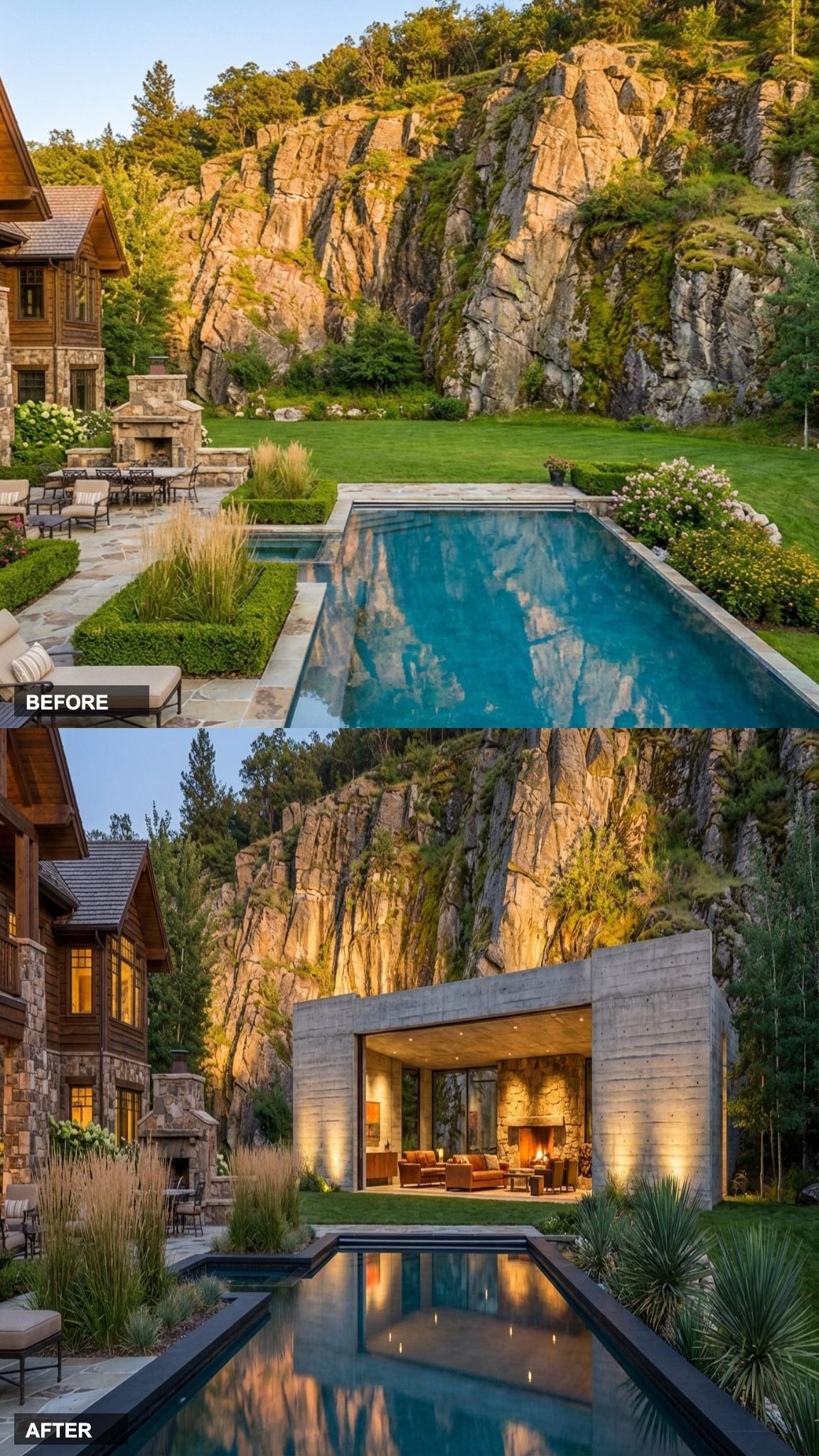
Concrete and granite are both formed under pressure over time, and placing board-formed concrete walls directly against raw rock makes that geological kinship visible. The board-form texture in the concrete references the cliff’s own stratification lines. Neither material asks to be treated gently.
The glass portion reads as the precise, controlled element between two rough surfaces, and that contrast between raw material and engineered clarity is exactly where brutalist architecture is most effective. Not oppressive. Just honest.
Thick Cedar Timber and Glass Build a Pacific Northwest Lodge Into the Rock Face
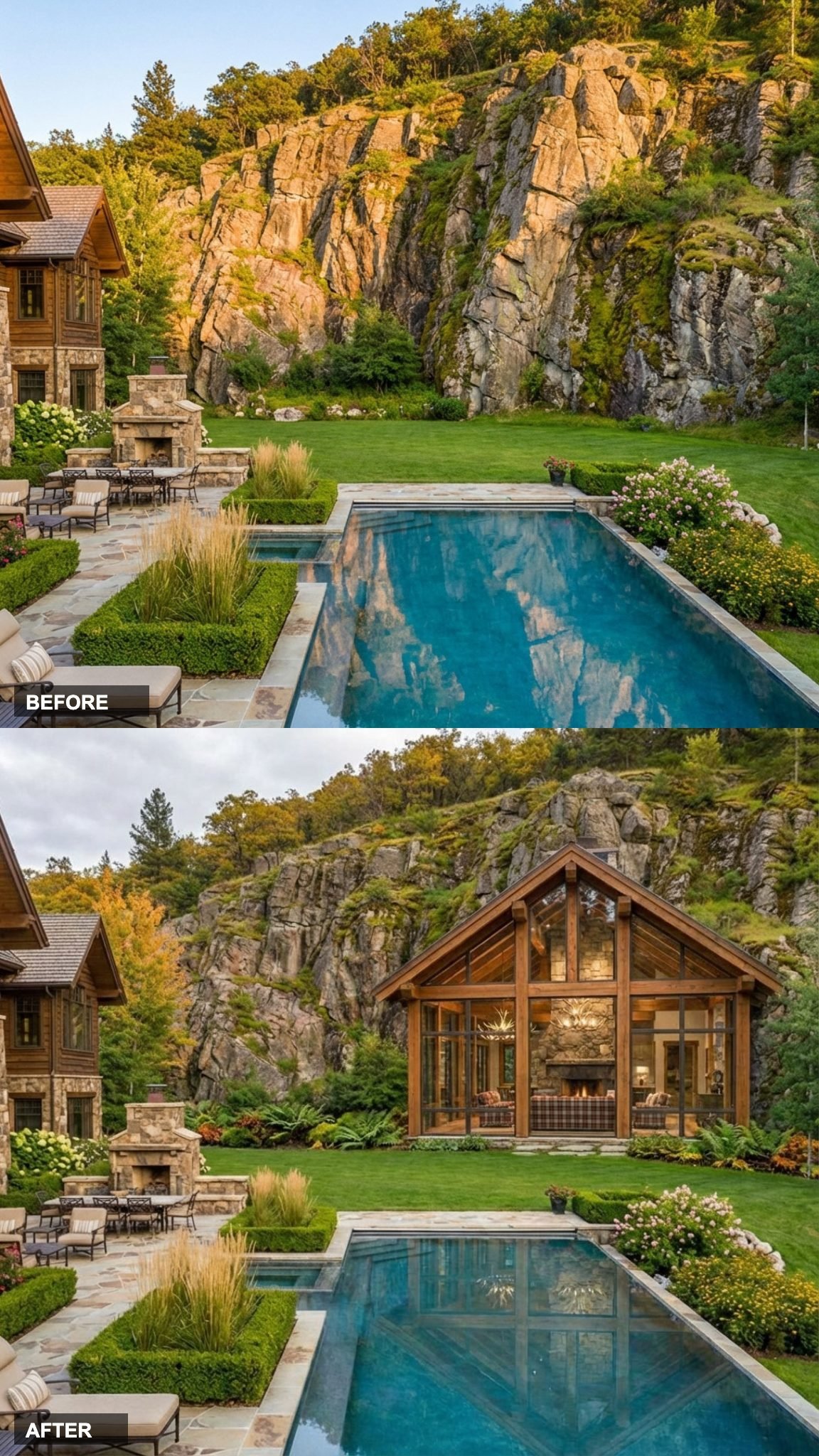
Cedar against granite is a pairing that belongs to the Pacific Northwest the way olive trees belong to Tuscany. The thick timber frame carries visual weight without feeling heavy, the grain and natural texture of the cedar absorb light softly, warming the facade in a way that steel cannot achieve in a grey-sky climate. The lodge-style structure pressed against the rock face reads as built for permanence, not as a seasonal gesture.
In a landscape of Douglas fir and basalt, the material logic of cedar and granite is almost self-evident. The architecture is just making it explicit.
Raw Copper Cladding Flanks the Glazing and Oxidizes Toward the Cliff’s Own Mineral Palette
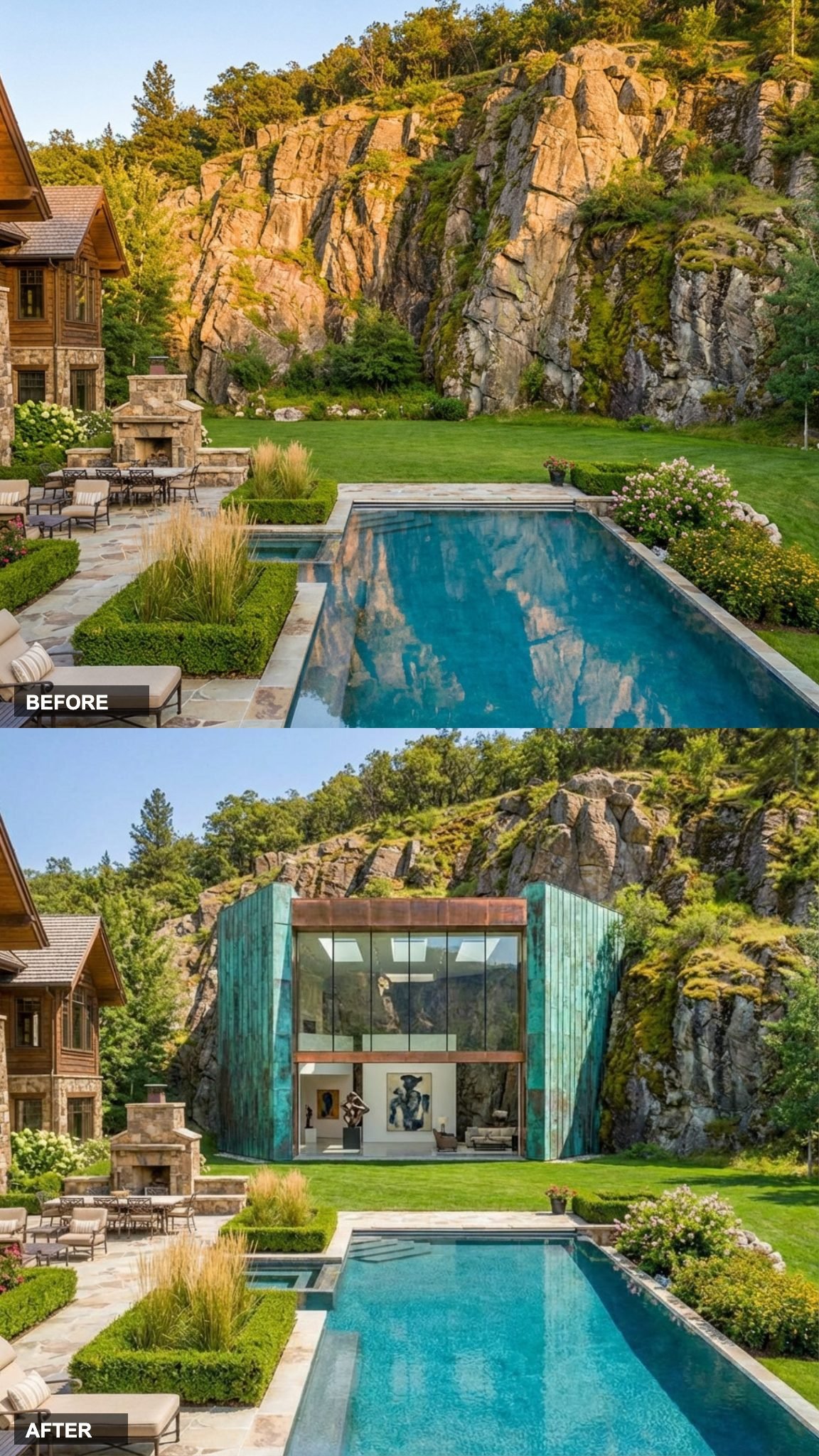
Copper starts warm and orange, then turns green, then settles into a complex blue-grey that shares its tonal range with aged granite. Flanking the glazing with copper cladding is an investment in a facade that keeps changing for the first twenty years before reaching a steady state that reads as if it has always been part of the cliff. The design is calibrated for time rather than immediate visual impact.
Few materials reward patience as visibly as copper on a rock face. This is architecture as a slow reveal.
White Oak and Seamless Glass Built Into a Granite Recess Create the Most Serene Design of the Series

After 26 iterations of drama, cantilevered boxes, industrial steel, living roofs, copper oxidation, the white oak and glass option arrives as a kind of relief. Nothing shouts. The pale oak casing around the glazing is close in value to the granite face, the glass is frameless at every possible joint, and the interior visible behind is warm, quiet, and lit with restraint. It is the most considered of the twenty-seven precisely because it resists every temptation to make itself interesting through contrast.
Good design does not always announce itself. Sometimes it simply makes the cliff look better than it did before, and steps back.
Cave Suite With a View: Warm Timber and Bronze Glass Carved Into the Mountain
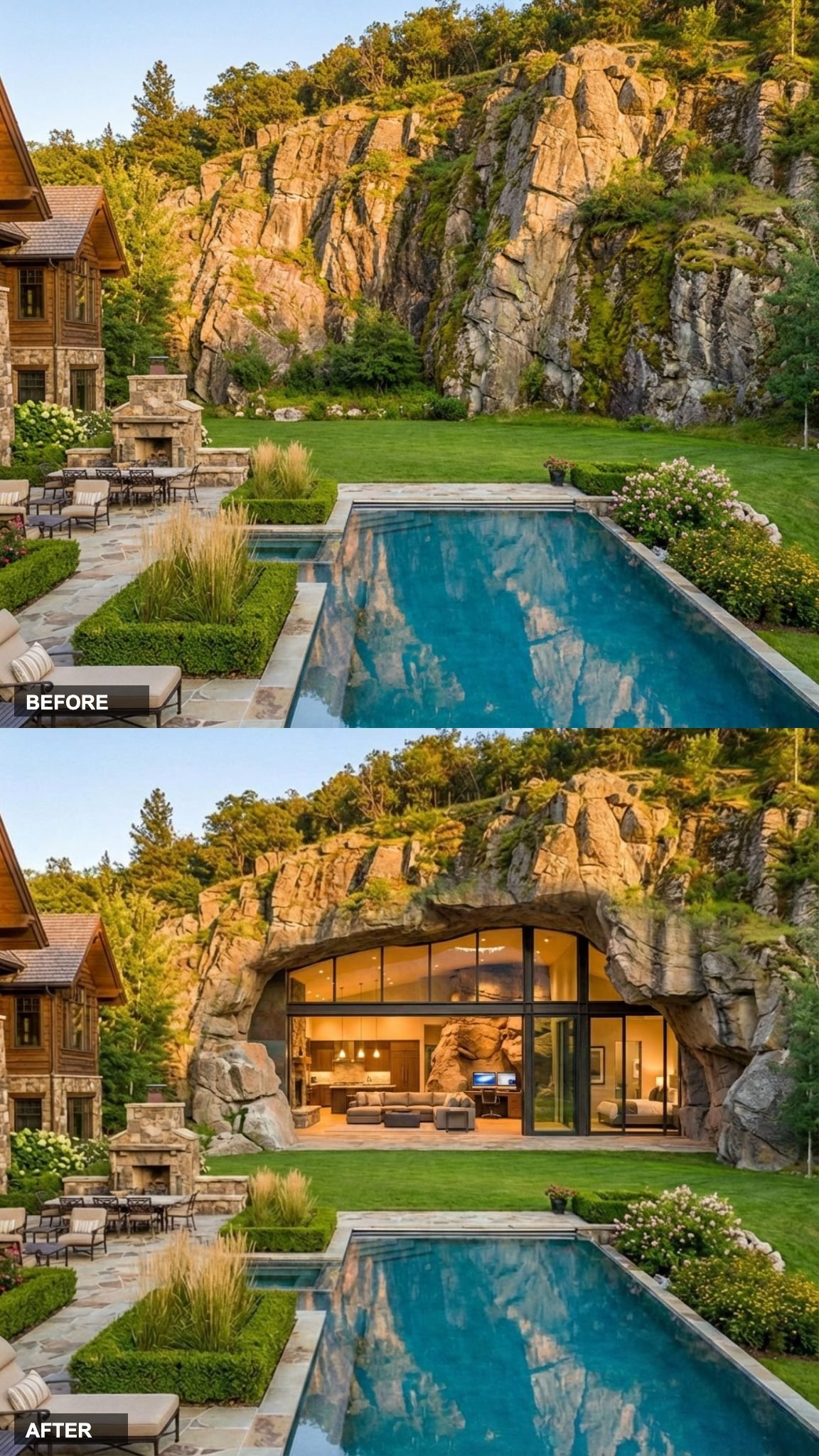
The cliff hasn’t been conquered here, it’s been collaborated with. The guest house pushes deep into the rock, its entrance framed by a recessed timber portal that makes the stone around it look intentional rather than incidental. Bronze-tinted glass catches the afternoon light and throws a warm amber haze across the pool patio below, turning the whole backyard into something that feels less like a residential property and more like a high-altitude boutique retreat.
What makes this work is the restraint on the exterior. No applied cladding, no decorative stonework, just the raw cliff, the timber frame, and the glass. The natural and the crafted share the same wall without one apologizing for the other.
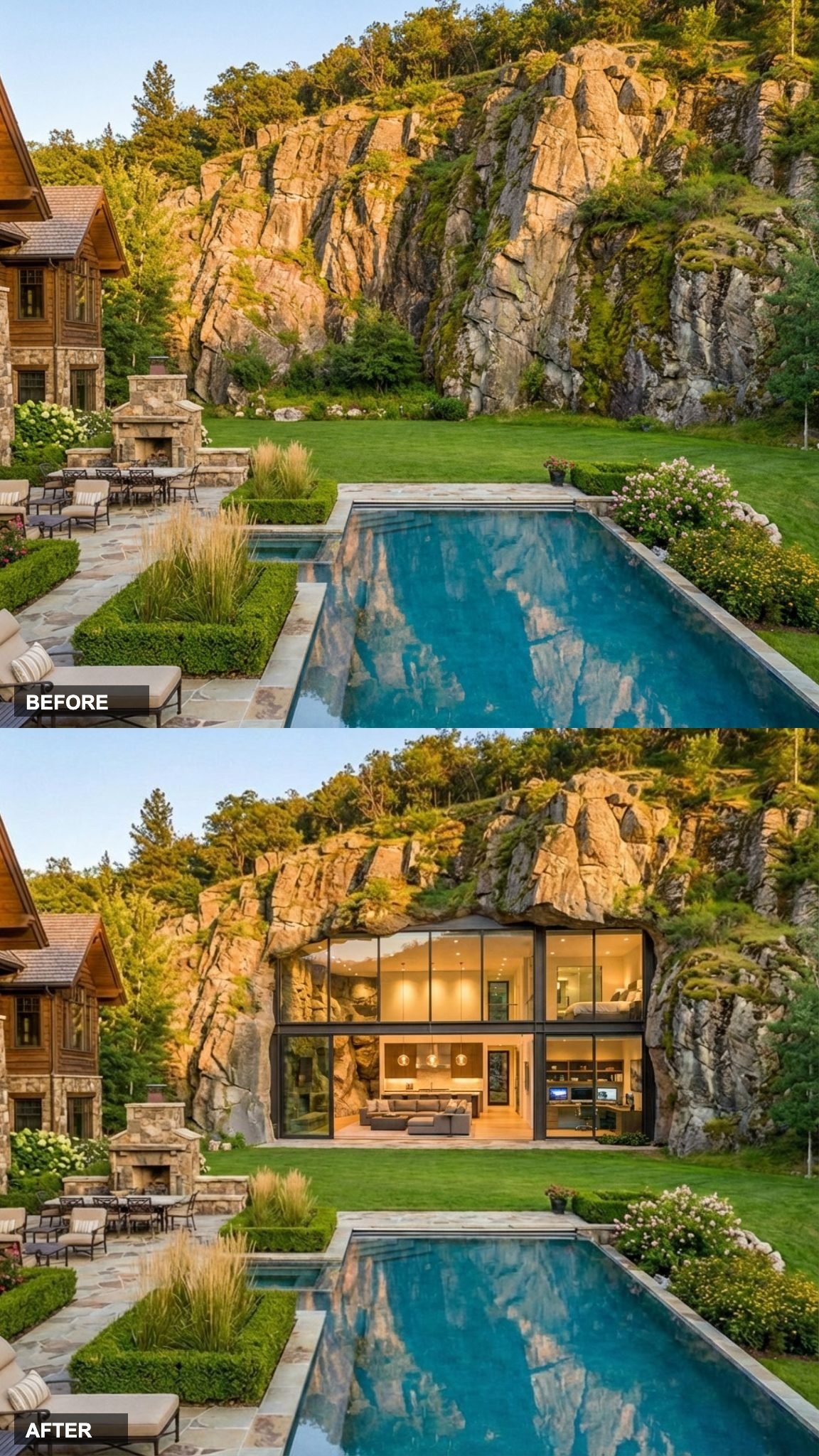
The Mountain Opens Up: A Multi-Room Cliff Dwelling With Full-Height Stone Walls
🔥 Would you like to save this?
Some guest houses borrow a view. This one is the view. Carved directly into the cliff face and set back behind a deep natural overhang, the structure reveals itself in layers, first a stone threshold, then a set of floor-to-ceiling pivot doors, then a full interior where the back wall is the geological bedrock itself, left completely raw.
The scale is the story. This isn’t a grotto or a folly, it’s a proper multi-room dwelling that simply happens to have a mountain for three of its walls. Anchoring the design is the contrast between the rough-cut stone and the interior’s polished concrete floors and linen upholstery.
Steel, Black Glass, and Granite: A Brutalist Cliff House That Doesn’t Apologize
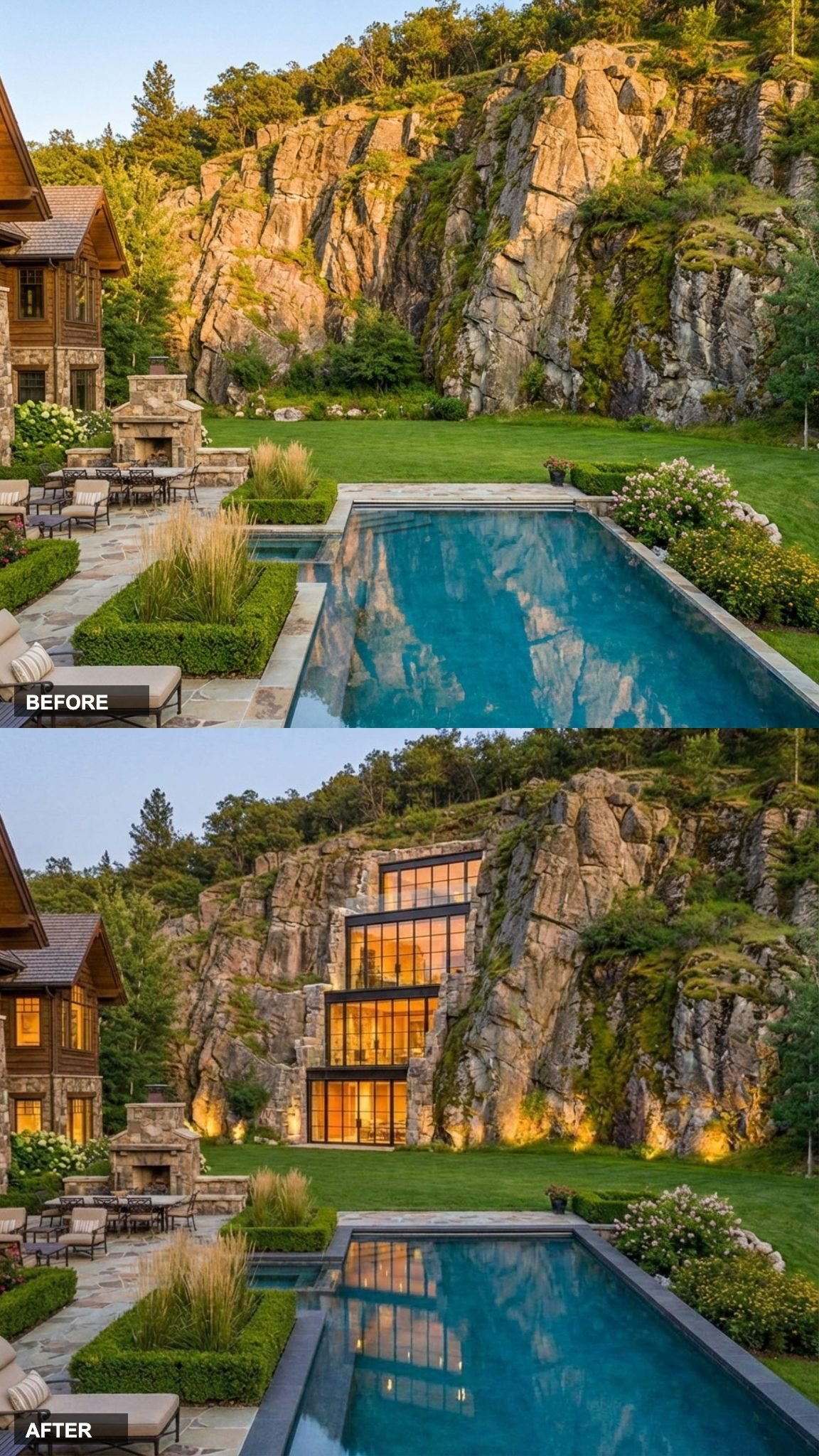
This version commits fully to contrast. Steel-framed black glass panels are set flush into the granite like windows punched through the mountain by force, and the effect is exactly as dramatic as it sounds. The dark frames against the pale grey rock create a graphic quality that photographs like architecture editorial and lives like a five-star cave.
The cliff face doesn’t disappear here. It becomes the facade.
Inside, the kitchen and living spaces glimpsed through the glass are finished in matte black cabinetry and honed basalt countertops, materials chosen to blur the boundary between the interior and the rock it sits inside. The pool patio reads completely differently now: where the cliff once felt like a backdrop, it feels like a building.
Two Floors in the Rock: A Glass and Blackened-Steel Cliff House With a Split-Level Soul
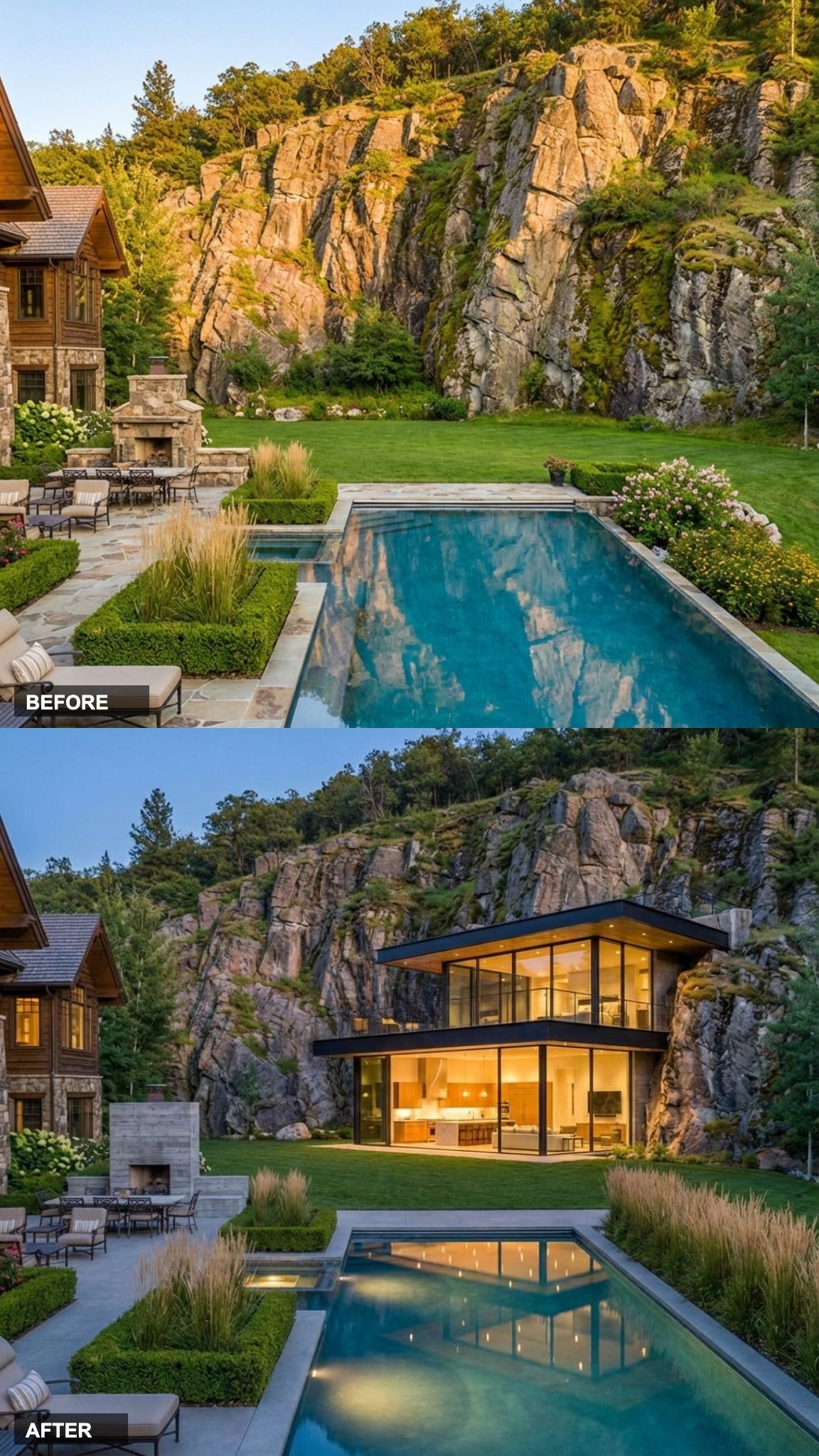
Going vertical changes everything. This design stacks two distinct programs inside the cliff, a sleek kitchen and open living space at pool level, visible through wide glass panels, and a bedroom tier above accessed by an interior stair cut through solid stone. The blackened steel structural grid that holds the glazing together doubles as the aesthetic spine of the entire facade, giving the cliff face a kind of industrial lattice that reads as architecture from across the pool.
- The double-height glass wall keeps both floors visually connected to the pool and landscape below.
- Blackened steel oxidizes slowly over time, eventually reading closer to the dark mineral streaks already in the granite.
- The split-level plan creates genuine separation between the social and sleeping zones, something most single-story guest houses can’t achieve.
The Minimalist Cave Pavilion: Glass Flush With a Natural Rock Recess
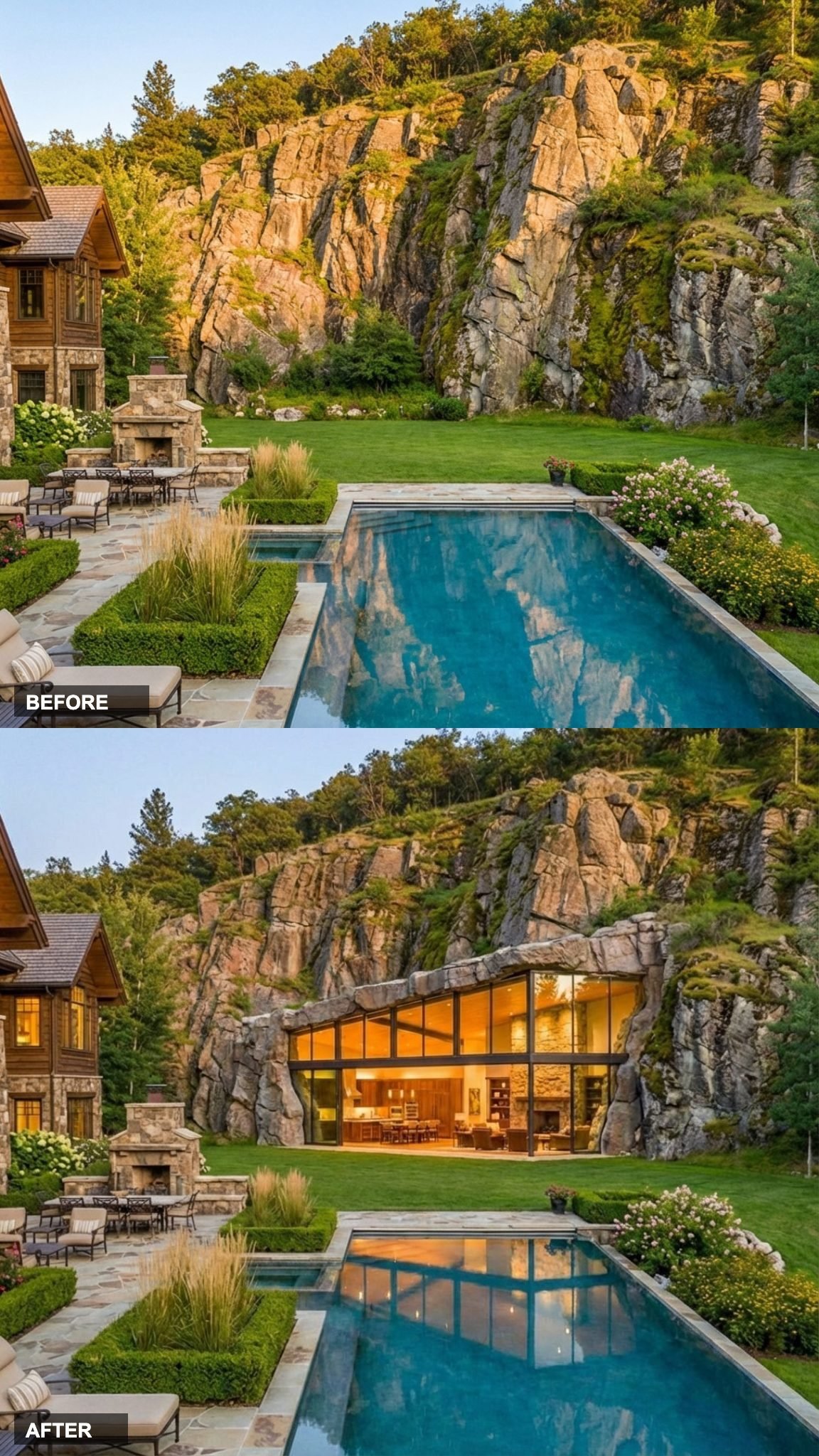
This is the quietest of the five, and arguably the most confident. Rather than carving aggressively into the cliff, the design finds a natural cave-like recess already present in the granite and fills it precisely with a steel-and-glass pavilion set flush with the rock face. From the pool, the structure almost disappears. The glass reflects sky and water, the steel frame is barely thicker than a finger, and the raw granite overhead becomes the ceiling of the entire composition.
The interior is sparse by design: polished concrete, a single low platform bed, a minimal kitchen bar along one wall. Every surface defers to the rock. The psychological effect of sleeping inside a mountain, insulated by hundreds of tonnes of stone above, is something no conventional guest suite can replicate.