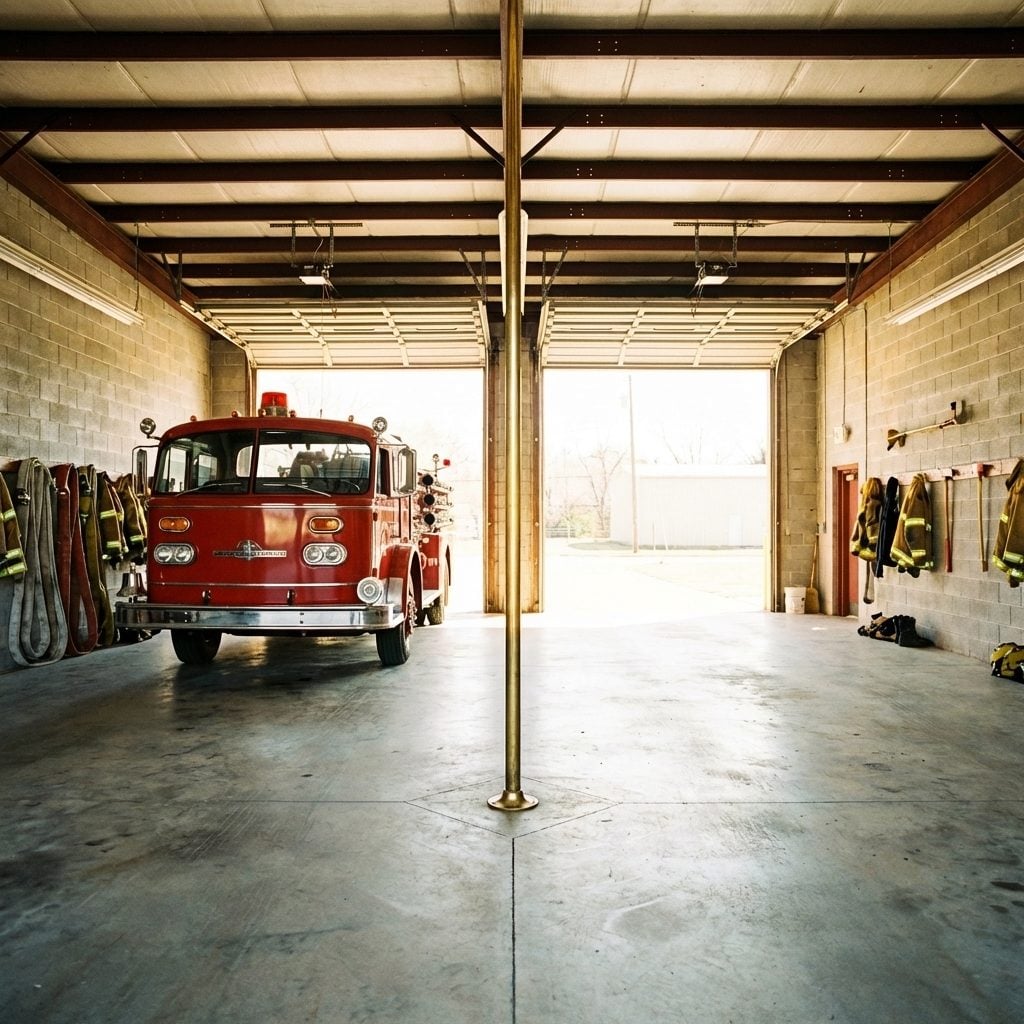
There is something almost cinematic about a firehall conversion. The bones are already there: soaring ceilings, industrial-scale windows, thick masonry walls that absorbed decades of heat and urgency. But strip away the apparatus bays and the utilitarian finishes, and what you have is an architectural blank canvas that most residential buildings could never offer. These 37 transformations take the same raw starting point and spin it in wildly different directions, from hushed Belgian minimalism to sun-drenched California wine country. Every single one proves that the right design instinct can turn municipal grit into something genuinely worth living in.
When a Firehall Gets a Parisian Passport: Bleached Oak and Soft Plaster Romance
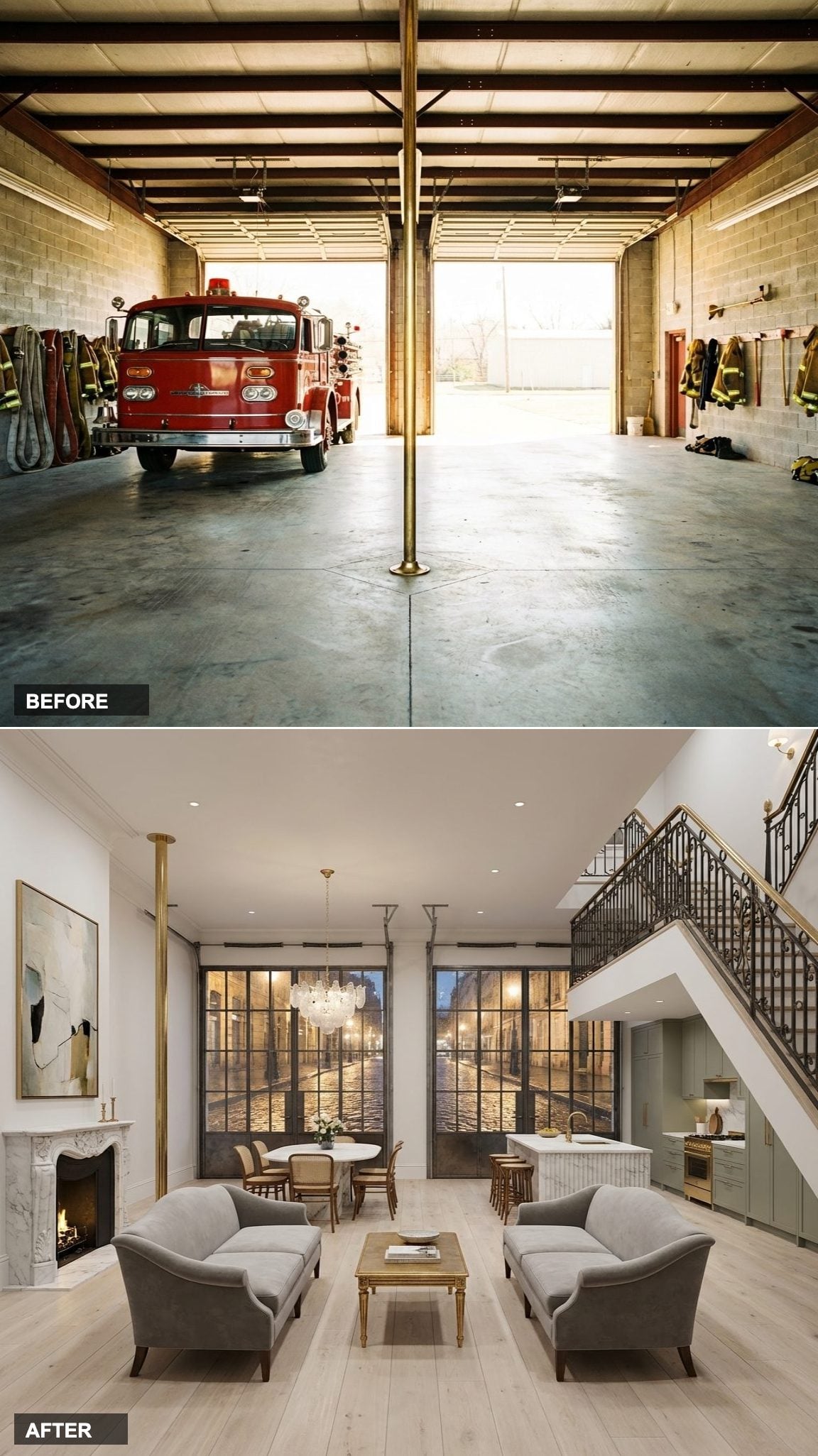
Chalk white plaster walls, wide-plank bleached French oak running the full length of the floor, and the kind of bone-and-gilt palette that makes a room feel like it was assembled slowly over many years rather than staged in a week. This Parisian chic conversion leans entirely on restraint. The original masonry bones are not hidden but softened, wrapped in limewash so pale it reads silver in morning light.
In order to come up with the very specific design ideas, we create most designs with the assistance of state-of-the-art AI interior design software. Also, assume links that take you off the site are affiliate links such as links to Amazon. this means we may earn a commission if you buy something.
The kitchen anchors the space with marble-faced cabinetry, unlacquered brass fixtures, and a La Cornue-style range in cream enamel. Linen upholstery, a raw plaster chandelier, and a single oversized gilded mirror do the rest. Nothing shouts. Everything hums.
Rustic Modern Farmhouse, Built Inside Four Walls That Used to Hold Fire Trucks
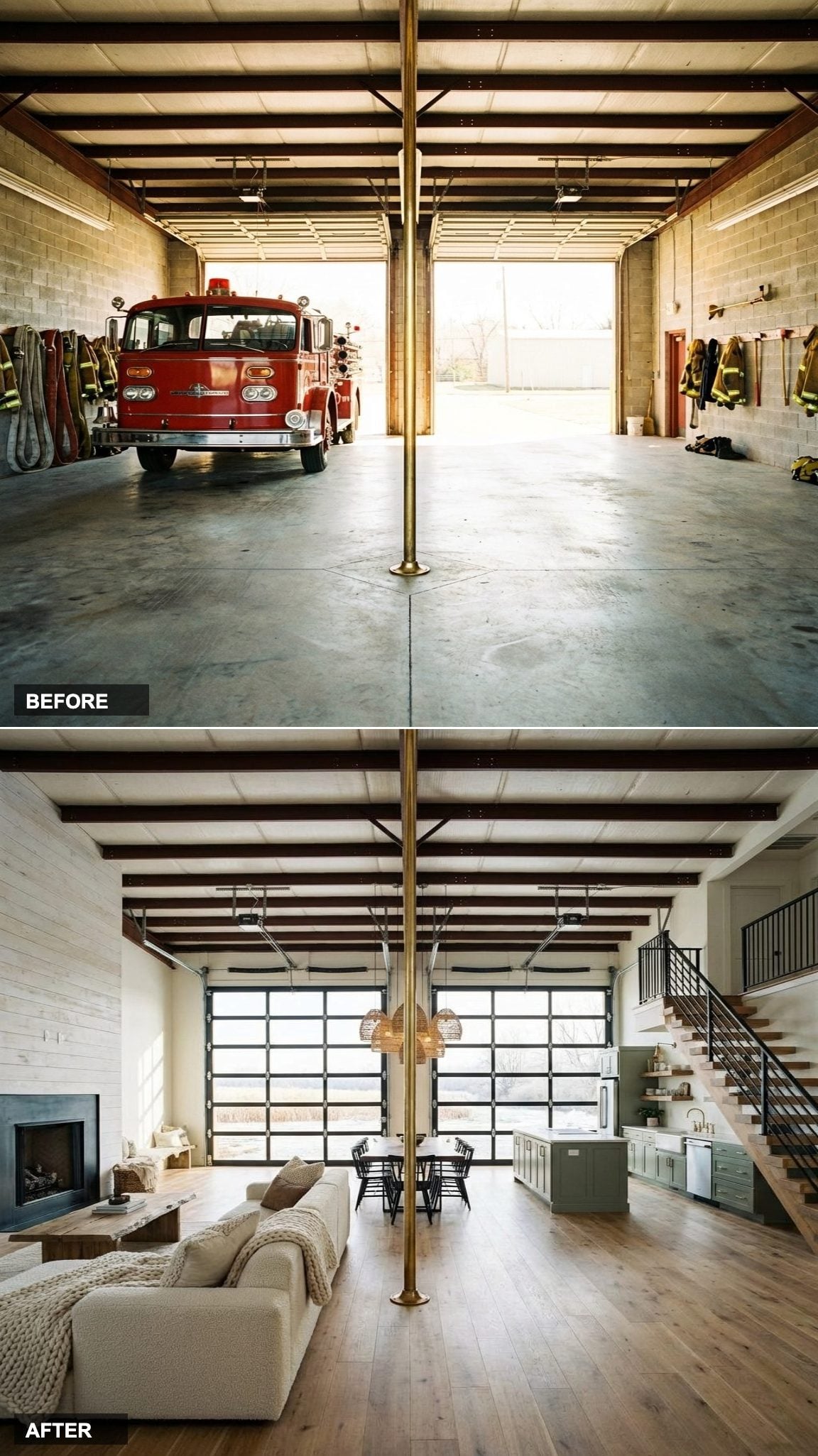
Wire-brushed white oak floors, shiplap in warm greige, unlacquered hardware that will patina over time. The rustic modern farmhouse version of this firehall conversion does not try to erase the industrial past. It layers over it with materials that feel earned rather than purchased.
A kitchen island in aged black walnut sits under a run of aged brass pendants. The original concrete block on one wall is left bare, sealed rather than plastered, acting as a quiet reminder of the building’s first life. Sink-in linen sectionals and a stone hearth at the far end complete the picture.
Smoked Oak, Cast Iron, and a Color Palette Borrowed from Midnight: The Dark Industrial Edit
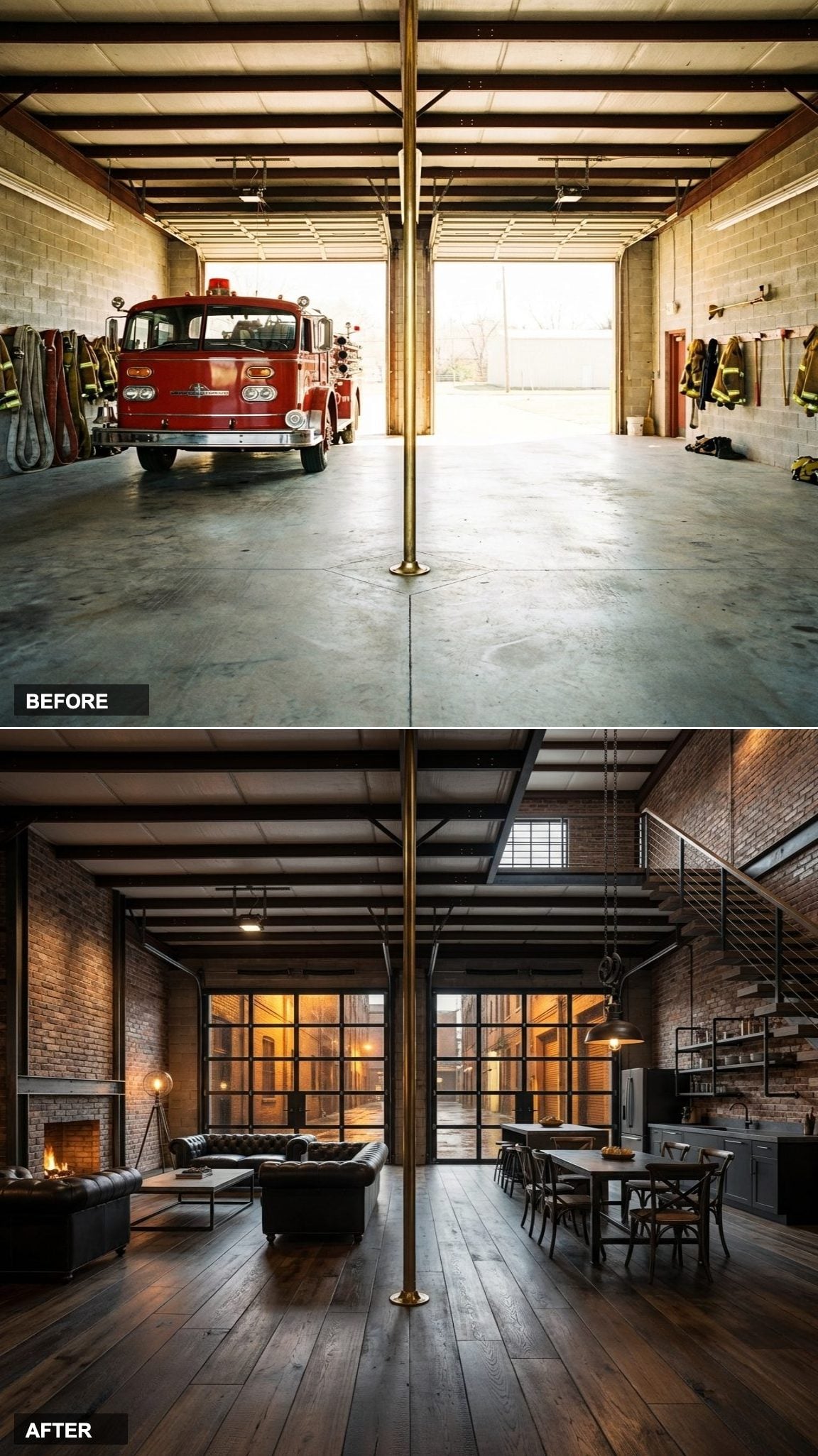
This is not a space that apologizes for the building’s history. Charred and smoked oak floors, blackened steel window frames, raw concrete walls sealed to a near-lacquer depth. The dark industrial conversion takes every intimidating element of the original firehall and doubles down on it.
The kitchen runs in matte black cabinetry with a single slab of honed nero marquina marble, brutally beautiful. Edison filament pendants cast a bronze wash over the dining table below. A single oversized leather Chesterfield anchors the living zone, worn oxblood against the dark floor.
The space rewards your eyes the longer you sit in it. Details emerge: the texture of the concrete, the grain in the charred wood, the way the pendant light catches a brass detail on the range hood. Drama, built from patience.
Honey Oak Floors, Vintage Kilims, and the Particular Chaos of Parisian Bohemian Done Right
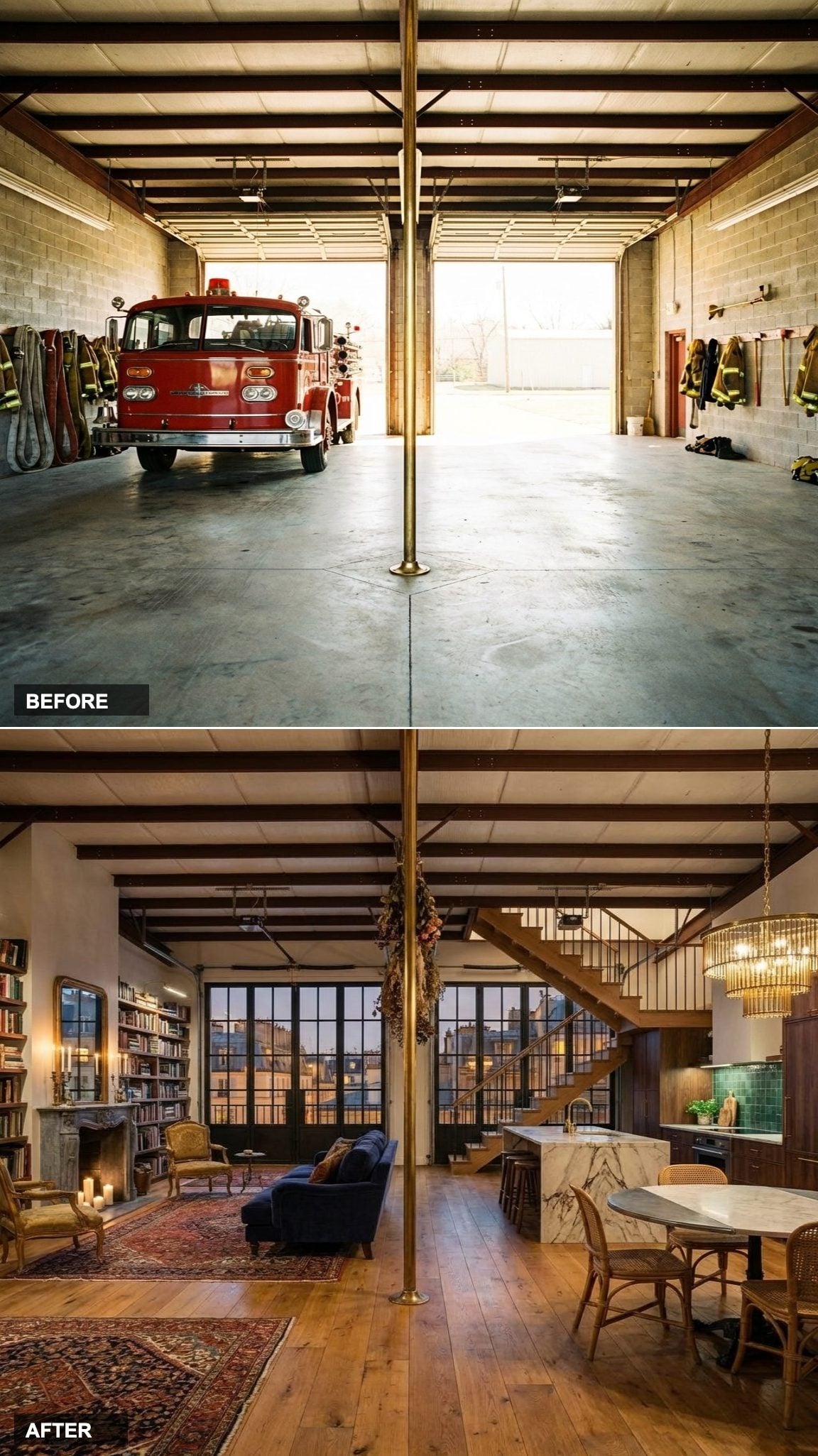
Layered, a little impractical, and entirely magnetic. The Parisian bohemian take on this conversion answers the question of what happens when a francophile collector moves into a firehall and refuses to edit herself.
Aged honey-toned oak with a hand-rubbed finish undercuts antique Persian rugs in faded indigo and rose. Open shelving carries ceramics from three different continents. A vintage patisserie counter repurposed as a kitchen island. Arched plaster niches carved into the original block wall.
“The best bohemian rooms look like they took twenty years to assemble. This one pulls that off in a single open-plan floor.”
Refined Rustic Modern: Where Hand-Scraped Oak and Warm Honey Tones Meet Architectural Confidence
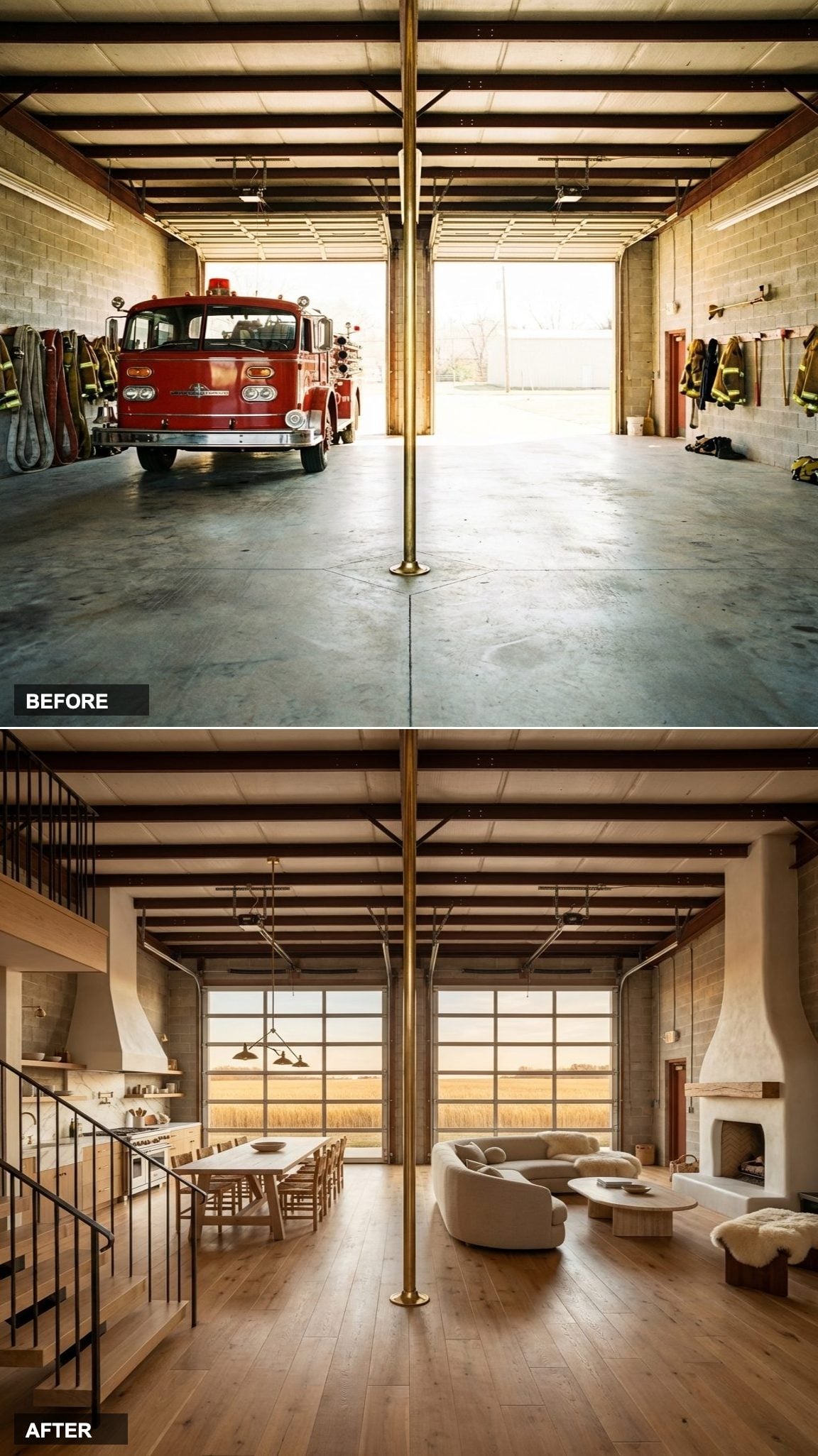
Hand-scraped European white oak in a warm honey stain is doing a lot of work in this space, and it earns every bit of it. The refined rustic modern approach is the least theatrical of the firehall conversions and possibly the most livable.
- The warm floor tone prevents the high ceilings from reading as cold or institutional.
- Plaster walls in a deep antique white absorb light rather than reflecting it, keeping the scale human.
- Integrated cabinetry in muted sage with unlacquered bronze hardware reads as custom without screaming for attention.
A raw linen sofa, an antique oak dining table with mismatched vintage chairs, and a simple concrete range hood. The restraint is the point.
Reclaimed Douglas Fir, Riveted Steel, and the American Rustic Industrial Story Told Properly
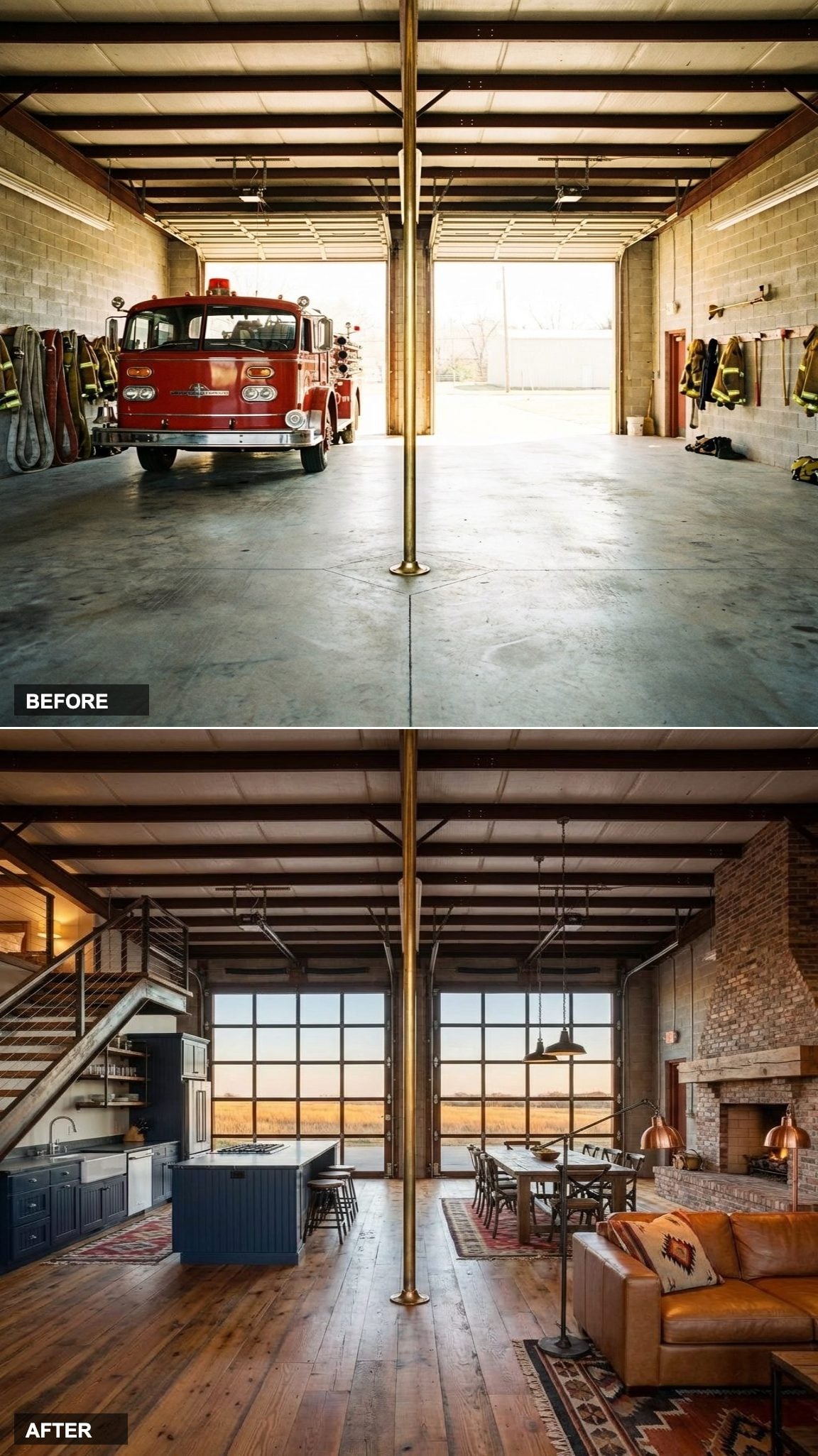
Skip-planed Douglas fir floors with a century of grain history underfoot. This is the American rustic industrial version, and it has a directness that the European takes in this series do not.
Original fire station red still bleeds through the reclaimed brick on the north wall, left intentionally unpainted. A steel-and-wood kitchen in black pipe and butcher block. Industrial pendant cages over a poured concrete dining table. The living zone anchors around a vintage factory cart repurposed as a coffee table and a sectional in worn caramel leather.
Nothing was imported. Everything feels local, specific, and grounded in the actual history of the building.
Quarter-Sawn Pale Greige Oak and the Particular Restraint of Parisian Moderne
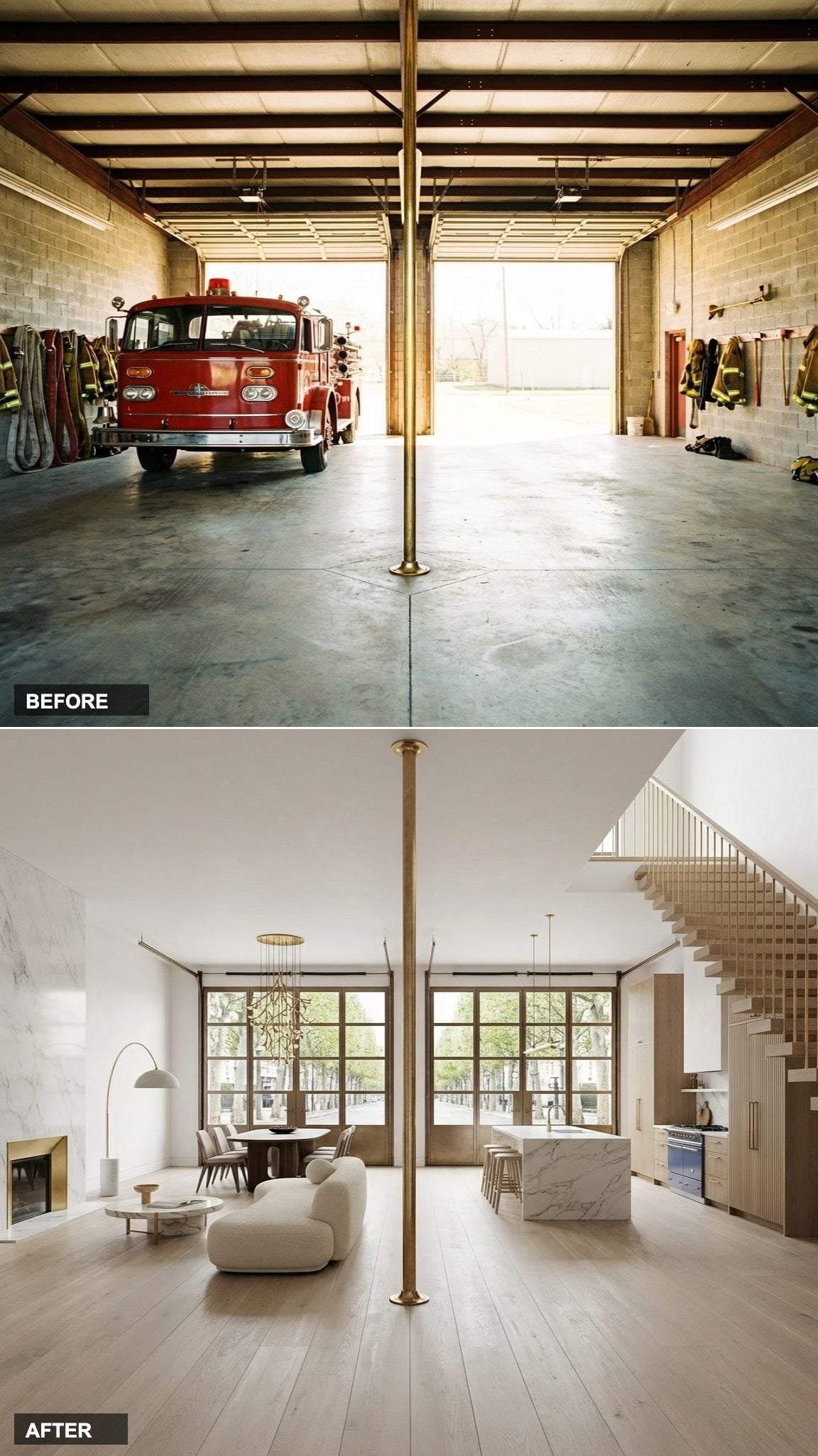
Quarter-sawn white oak with a pale greige stain is one of those flooring choices that makes every other material in the room look more considered. The Parisian moderne take on this firehall is the most architecturally controlled of the group: clean plaster ceiling, integrated cabinetry with no visible hardware, and a color palette that runs from off-white through pale stone to warm taupe without a single accent color interrupting it.
The kitchen features a marble waterfall island and a flush-panel refrigerator panel. A single arc floor lamp over the living area. A wool boucle sofa in cream. The discipline of this space is almost aggressive, and that is exactly what makes it work.
Blackened Oak, Raw Concrete, and the Quiet Violence of Rustic Brutalism
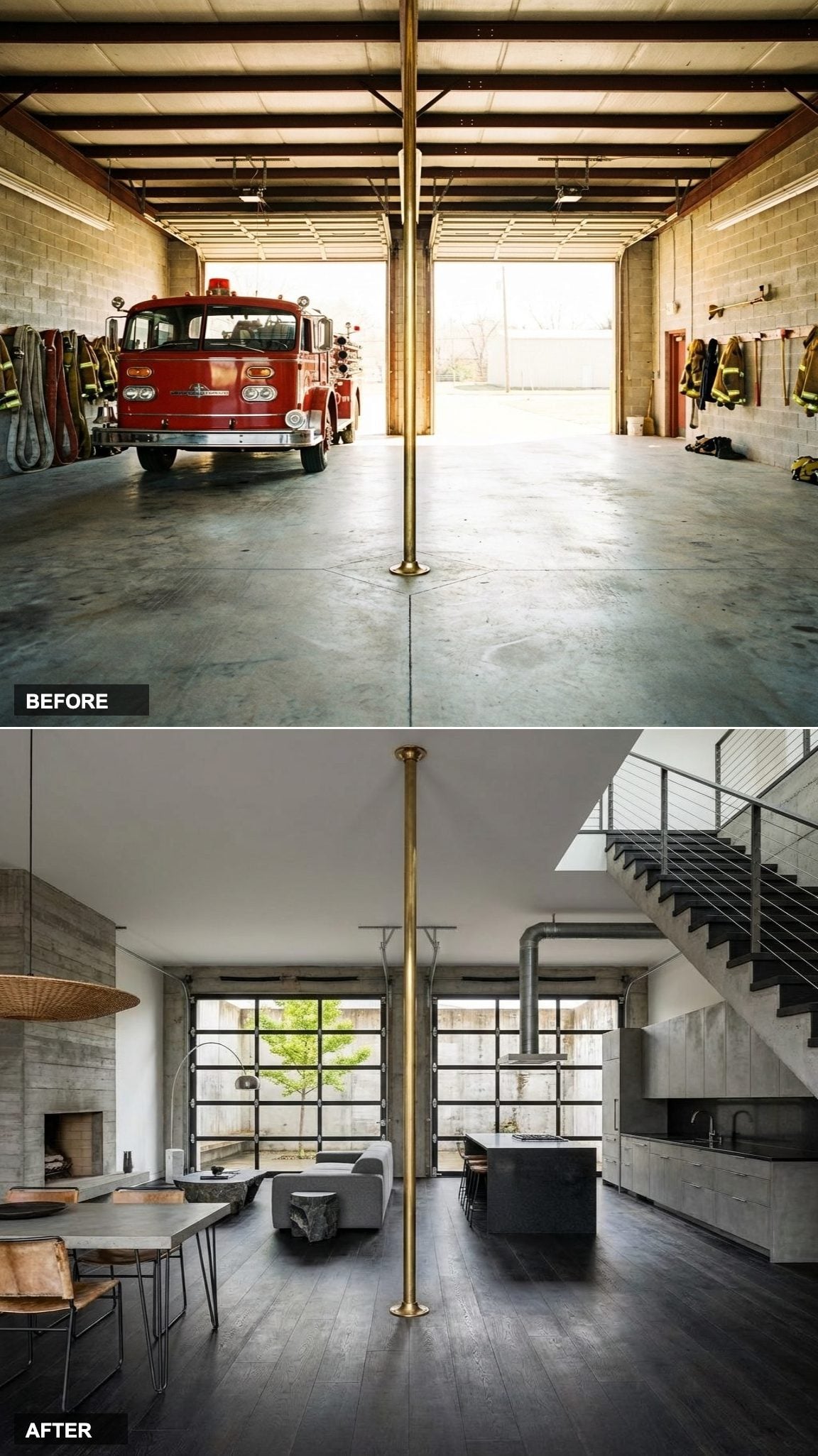
Brutalist design in a residential context is a commitment. Blackened oak floors with a raw matte finish, exposed aggregate concrete walls, steel-framed pivot doors, and a kitchen in unsealed dark limestone with no upper cabinets. This firehall conversion sits at the architectural extreme of this collection.
And yet: thick wool throws, a battered leather reading chair, an open fire in a concrete hearth. The brutalist shell softened just enough to suggest habitation rather than occupation. The contrast between the raw surfaces and the few soft furnishings is the entire emotional argument of the room.
Dark French Walnut, Left Bank Attitude, and a Firehall With a Literary Past Life
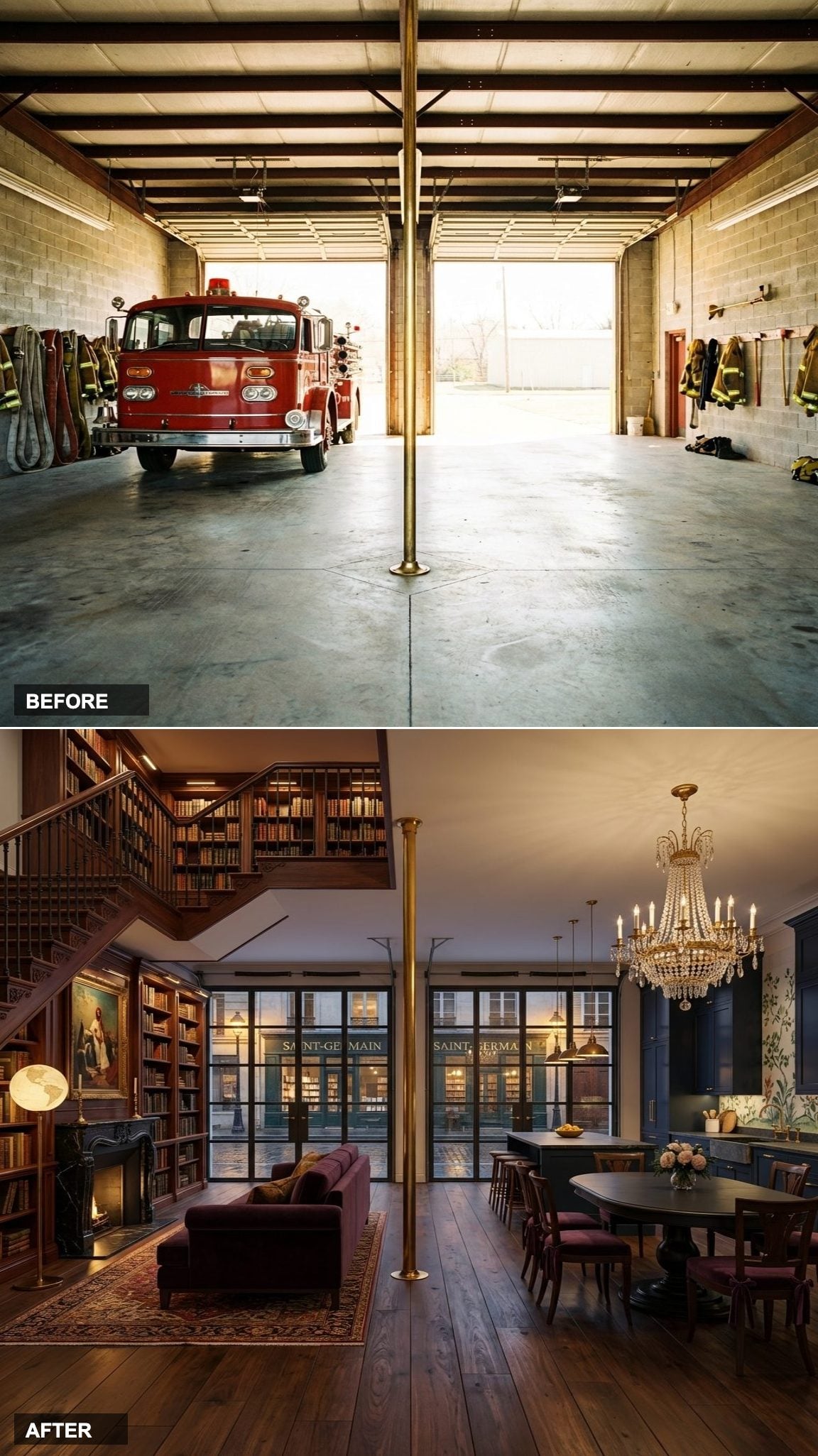
Long-board dark-stained French walnut floors with a satin finish do something to a high-ceilinged space that lighter floors simply cannot: they pull the room down, making it intimate despite the volume. The Parisian Left Bank version of this conversion has a richness and a slight moodiness that the other Parisian takes in this series avoid.
The kitchen runs in deep forest green lacquered cabinetry with aged brass pulls and a slab of book-matched Calacatta marble. A pendant chandelier in blackened iron and amber glass. In the living area: a cognac leather sofa, a Persian rug in sapphire and rust, and floor-to-ceiling bookshelves built into the original block wall on one side.
“It is the kind of room where you imagine the person who lives there has read every book on those shelves and cooked something complicated for dinner.”
Smoked Norwegian Oak, Birch White Plaster, and Nordic Industrial Spare Enough to Breathe
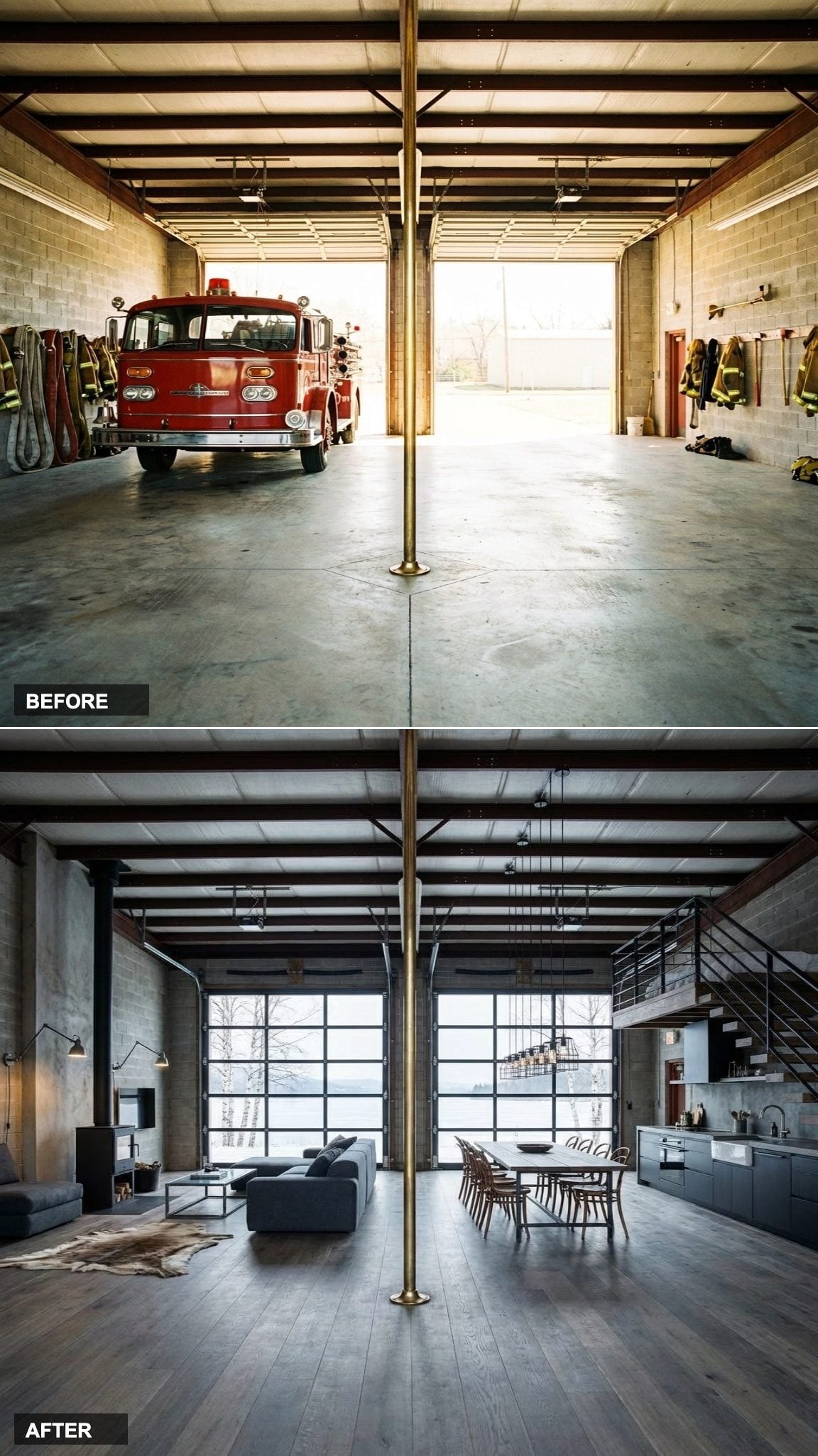
Smoked and hand-scraped Norwegian oak in a pale ash tone. White birch plaster walls. Steel window frames in a matte charcoal that disappears against the wall rather than announcing itself. The rustic Nordic industrial conversion closes this series with the most disciplined restraint of any of them, and it earns the last spot precisely because of that.
The kitchen runs in flat-front cabinetry in a bleached linen white, with a single slab of honed white quartzite and an integrated everything: refrigerator, dishwasher, hood. The dining table is raw oak in a single slab. In the living zone, a low-profile sofa in undyed Scandinavian wool, a concrete floor lamp, and one piece of woven textile art on the wall.
Spare, yes. Cold, no. The smoked oak floor carries just enough warmth to keep the space from tipping into austerity. It is a careful balance, and this conversion holds it without flinching.
Polished Concrete, Raw Steel, and a Brass Pole That Finally Gets the Spotlight It Deserves

The original fire pole isn’t a quirky relic here, it’s the centerpiece. Polished to a mirror finish and anchored beneath a skylight that floods it with natural light, the brass becomes sculptural, almost theatrical. Everything else in the space defers to it: the floating reclaimed wood staircase, the matte black steel railings, the poured concrete floors with their subtle aggregate shimmer.
What makes this version work is restraint. The palette is tight, raw concrete, warm brass, dark steel, and natural oak. No competing finishes, no decorative clutter. The open-plan kitchen, dining, and living areas read as one continuous composition rather than three rooms awkwardly sharing a floor plate.
Appalachian White Oak Meets the Ghost of a Working Firehouse

Hand-scraped white oak floors do something in a converted firehall that polished stone never could: they absorb the history of the space rather than competing with it. The wide planks carry natural variation in grain and tone, picking up warm amber light from the pendants and bouncing it softly against the exposed brick and reclaimed timber ceiling beams above.
This Appalachian-inflected design keeps the industrial skeleton of the apparatus bay visible while layering in the craft traditions of the mountain South. It’s a conversation between two kinds of making, one built for speed, the other built to last centuries.
Southern Plantation Heart Pine Floors Reclaim an Old Engine Bay

🔥 Would you like to save this?
Antique heart pine is arguably the most historically loaded flooring material in American residential design. Salvaged from decommissioned mills and factory buildings, these planks carry a warmth and density that new growth pine simply cannot replicate. The visible nail heads aren’t a design detail so much as a confession of authenticity.
The amber patina deepens under the kind of warm incandescent lighting this conversion uses, turning the ground plane into something that almost glows from within. Against the whitewashed brick walls and the original steel apparatus bay doors preserved as room dividers, the effect is part working heritage, part Southern grandeur.
Adirondack Knotty Pine Turns a Firehall Loft Into a Great Camp Fantasy

Knotty pine has spent decades unfairly exiled to basement rec rooms and hunting cabins. In this loft conversion, it’s been rehabilitated completely. Wide planks with a hand-rubbed oil finish catch pendant light with a mellow warmth that feels more like candlelight than interior design.
The Adirondack Great Camp tradition was always about wealthy people choosing to live like they were roughing it, and this conversion carries that same knowing tension. The bones of a working fire station, raw and purposeful, get dressed in the visual language of rustic luxury.
Norwegian Hytte Calm Inside an Industrial Shell That Never Expected It

Scandinavian interior design operates on a principle that most industrial conversions ignore: the quality of light matters more than the quantity of material. The hand-planed Norwegian pine floors finished with natural lye and white soap treatment stay pale and almost chalky, refusing to compete with the room and instead making it feel larger and more luminous than the raw concrete bones would suggest.
The hytte aesthetic strips everything back to function and honesty. No decorative gestures that don’t earn their place. The firehall’s original utilitarian logic and the Norwegian cabin tradition turn out to have more in common than expected.
Catskills Chestnut Floors and the Art of Leaving Paint Traces Alone

American chestnut was functionally extinct as a commercial timber species by the mid-20th century, wiped out by blight. Every antique chestnut plank in existence is genuinely irreplaceable. The decision to preserve the traces of original paint in this conversion’s floors rather than sanding them clean is an act of material honesty that rewards close inspection.
“The best historic conversions don’t erase the evidence. They frame it.”
Set against the Catskills farmhouse sensibility of whitewashed walls and simple iron hardware, this floor becomes the room’s most interesting surface, a document as much as a floor.
Basque Country Chestnut With Beeswax and the Particular Smell of Old Europe

There’s a tactile dimension to beeswax-finished chestnut floors that photographs almost capture but can’t fully convey. The surface is slightly softer underfoot than polyurethane, warmer to the touch, and carries the faint organic scent of the wax itself for years after installation.
The Basque country tradition of building for permanence, with local materials worked by hand and maintained through generations, finds a strange resonance inside a decommissioned fire station. Both were built to last. Both carry their age honestly.
Ozark Mountain White Oak With a Drawknife Finish That Earns Its Texture

Most distressed floors are faked. The drawknife texture on these Ozark white oak planks is not. Each stroke of the blade leaves a visible mark in the grain, creating a surface that catches shadow the way hand-tool woodworking always does, with irregularity that no machine can produce.
The beeswax finish keeps the wood from reading shiny or precious. It stays matte and dense, which in a high-ceiling industrial space means the floor functions as an anchor rather than a mirror. The Ozark design tradition prized durability and honesty of craft above ornament, and this conversion wears that value system openly.
Steel, Linen, and Evening Light: A Luxury Loft That Earns Every Square Foot

The original fire station’s corrugated roll-up door is gone, replaced by full-height steel-framed glass that closes the bay without blocking a single ray of evening light. What floods in at dusk is something close to theatre: diffused gold washing across deep linen sofas, pooling on polished concrete, catching the edge of every brass fixture.
This is a conversion that respects the building’s scale rather than fighting it. The kitchen anchors one end of the open plan while the living zone breathes freely beneath the retained industrial ceiling, letting the bones of the original station do exactly what good bones should.
Colorado Lodge Energy in a Fire Station Shell: Timber, Stone, and a Forest Framed in Glass

Snow-dusted pines visible through full-height garage glass doors have a way of making every design decision look correct. The mountain lodge conversion leans on that view without leaning on it too hard, anchoring the interior with chunky reclaimed timber beams, a stone-clad fireplace that runs nearly floor to ceiling, and furniture in hide and heavy wool.
The kitchen uses soapstone counters and matte cabinet fronts in forest green, a combination that reads as both rugged and refined. Cast iron pendant lights hang low over the island. The fire station’s original concrete floor has been left intentionally rough underfoot, a grounding contrast to all that mountain softness above.
White-Framed Glass, Overstuffed Linen, and Farmhouse Warmth That Actually Delivers

Farmhouse design fails when it becomes prop-heavy and sentimental. This version avoids that completely. White-framed glass garage doors at the far end of the open plan keep the palette bright without bleaching the space, and the linen sofas in the living zone have the kind of depth and slouch that only good upholstery achieves.
The kitchen runs a classic shaker profile in soft white with unlacquered brass hardware, and the unlacquered part matters: over time those pulls will develop a warmth no polished finish can fake. Wide plank white oak floors connect the zones. Everything here is chosen to age well.
Pacific Northwest Moody: Black Steel, Cedar Mist, and a Kitchen Built for Serious Cooking

Misty cedar forest pressing against full-height black steel-framed glass is the kind of backdrop that makes restraint feel like the only intelligent design choice. The interior matches that restraint precisely: charcoal plaster walls, dark walnut millwork, slate tile floors that absorb rather than reflect the grey Pacific light.
- The matte black steel window grid echoes the cabinet hardware and pendant lights, creating a visual logic that ties the room together without any single element shouting.
- The kitchen island in honed black granite is large enough to serve as a genuine prep station, not just a styling surface.
- Integrated appliances keep the wall elevation clean, letting the forest view carry the weight it deserves.
Texas Hill Country Stone and Live Oaks Seen Through Glass: A Conversion With Genuine Grit

Limestone walls, a terrace visible through closed glass garage doors, and live oaks casting dappled shade across the dining area, this conversion doesn’t need to try very hard, and it knows it. The interior palette is lifted directly from the Hill Country landscape: warm buff, dusty sage, and the reddish brown of cedar heartwood.
The kitchen uses local limestone for the island waterfall and brushed bronze hardware throughout. Leather barstools at the island are thick-seated and slightly worn-looking, the way good Texas furniture should be. Underfoot, large-format terracotta tile ties the inside to the terrace beyond in a way that makes the garage door feel optional.
Japandi in a Fire Station: Frosted Glass, Low Profiles, and a Silence You Can Feel

Slim frosted glass garage doors diffuse exterior light into something almost meditative. The Japandi conversion is the quietest room in this series, and deliberately so. Every piece of furniture sits low to the ground. Every material is either natural or deliberately imperfect: raked plaster in warm grey, blackened oak cabinetry with no visible hardware, a poured concrete dining table on a single slab base.
The kitchen is built to disappear when not in use: flush-fronted panels conceal the refrigerator and dishwasher, and the oven sits in a deep alcove lined with hand-pressed Japanese ceramic tile in unglazed white. A single pendant in hand-blown glass hangs over the island. The silence in this room is an active design choice.
Spanish Colonial in a Fire Bay: Arched Glass Doors, Terracotta, and Something Ancient in the Air

🔥 Would you like to save this?
Arched steel-framed glass garage doors are an architectural masterstroke here, softening the industrial bay opening into something that reads as genuinely old-world. A terracotta courtyard is visible beyond the glass, and the interior pulls every warm pigment from that view: ochre plaster walls, hand-painted Talavera tile behind the range, and a ceiling in rough-hewn exposed timber.
The kitchen island is faced in reclaimed terracotta brick and topped with a thick slab of honey-veined marble. Iron pendants hang in pairs. The living zone is anchored by a low plaster fireplace surround and a large wool rug in burnt sienna and cream.
“Spanish Colonial isn’t a style. It’s a temperature.”
Tuscan Dusk Through Bronze Frames: Olive Groves, Stone Floors, and a Kitchen Built to Feed Crowds

Bronze-framed glass garage doors at dusk with an olive grove beyond is not a real view many people have access to, but the design here argues convincingly that this is exactly how fire stations should end up. The interior is warm plaster and worn stone: a large farmhouse sink in aged travertine, open shelving in iron and rough-cut chestnut, a six-burner range in cream enamel that anchors the kitchen like a piece of furniture.
The dining table is a single slab of reclaimed Italian walnut, long enough for eight, sitting beneath a pair of wrought iron chandeliers. Underfoot, irregular limestone flags in pale buff. The stone is the color of the olive grove dust outside, and that is not a coincidence.
From Concrete Shell to Wabi-Sabi Japanese Retreat

Wabi-sabi isn’t a style you apply, it’s a philosophy you allow. The raw concrete walls of the original firehouse didn’t need to be hidden; they needed company. Panels of aged cedar, rough-sawn and deliberately uneven, run horizontally across the lower half of each wall, leaving the upper concrete visible and honest. The contrast is the point.
A sunken conversation pit anchors the center, upholstered in undyed linen and surrounded by low karesansui-style gravel borders that contain smooth river stones. Paper lantern pendants soften the industrial light, and a long engawa-style wooden bench runs along the window wall.
From Station Storage Room to Jewel Box Wine Cellar

Tight rooms are wine cellar assets, not liabilities. The original storage room’s thick masonry walls already provide natural thermal stability, so this conversion barely needed mechanical climate control. Custom wrought iron riddling racks hold 800 bottles in a herringbone pattern across every wall, while a central tasting island in honed nero marquina marble becomes the room’s jewel.
Here’s the lighting strategy that makes it: recessed amber LEDs are set inside each rack channel, so every bottle glows from behind. The effect is somewhere between gallery vitrine and cathedral.
From Watch Tower to Glass-Wrapped Sky Lounge

‘The best seat in any converted firehouse was always the tower. It just took this long for anyone to admit it.’
The original watch tower sat above the main station, accessed by a steep metal stair, used only for scanning the horizon for smoke. Replacing three of its four walls with floor-to-ceiling structural glass turns a utilitarian perch into the most coveted room in the house. At sunset, light comes in from every compass point simultaneously.
Curved seating in cognac leather wraps the perimeter, following the octagonal footprint of the tower. A single sculptural concrete table anchors the center. No overhead lighting, no curtains, no apologies for the view.
From Communal Bunkroom to Boutique Hotel Suite Suite Sequence

Six bunks became six suites. The original crew bunkroom ran the full length of the building’s upper floor, with basic beds recessed into structural bays that the architects originally created for seismic bracing. This conversion treats each bay as its own alcove suite, separated by opaque glass partitions that allow borrowed light without sacrificing privacy.
- Each alcove gets its own pendant light, material palette, and bedding color, so no two feel identical
- A continuous floating oak shelf runs the full length at waist height, unifying the sequence without erasing individuality
- The existing bay windows are deepened into built-in window seats with upholstered cushions in varying textiles
From Station Kitchen to Polished Culinary Studio

The original fire station kitchen was engineered for function and nothing else: stainless steel utility tables, heavy-duty commercial ranges, and industrial ventilation so aggressive it sounded like weather. The bones were professional-grade. The problem was that absolutely no one had ever considered how the room should feel to inhabit.
This redesign keeps every appliance in place but rebuilds the visual context around them. Fluted satin brass cabinet fronts replace raw metal doors. The concrete ceiling stays exposed but gets a warm limewash tint. A 14-foot island in calcatta viola marble runs the full room length, doubling as a dinner party surface at the far end. The transformation from institution to home happens not through what was removed, but through what was added.
From Mechanical Room to Dramatic Spa Bathroom

The worst-looking rooms in a building often have the best bones. The mechanical room’s original appeal: thick walls, zero exterior windows, and a location adjacent to the main plumbing stack. All three are precisely what spa bathrooms need.
The conversion strips the room to its masonry shell, then introduces a soaking tub carved from a single block of honed travertine, set on a raised plinth. The shower is a curbless room-within-a-room in black fluted tile, lit by a single skylight punched through the roof above. Steam stays in, sound stays out, and the original concrete block wall texture becomes a kind of brutalist accent wall no tile could replicate.
Firehalls are built to last. Thick masonry walls, soaring apparatus bays, and oversized doors designed for trucks make these buildings structurally overbuilt by residential standards, which is exactly what makes them so appealing to architects looking for a conversion project.
When a firehall closes, it leaves behind a shell that most developers would overlook. Residential buyers and designers have started to see something else: raw square footage, ceiling heights that most new construction cannot match, and a civic history baked into every brick. The result is a small but growing category of homes that carry the character of a public building into private life.
The five conversions below show how former firehalls across North America and Europe have been turned into some of the most distinctive private residences on the market.
Brass Pole Still Standing in This Austin Firehouse Conversion

The original brass sliding pole anchors the open floor plan, now flanked by wide-plank white oak flooring and a walnut kitchen island with a waterfall edge. Dark-stained exposed steel beams run the length of the ceiling above mid-century seating, including what appears to be an Eames lounge chair and ottoman in black leather. The original bay door was replaced with a steel-framed glass panel grid that floods the living area with natural light.
Brass Pole Kept, Garage Door Swapped for Glass Panels in This Firehouse Living Room

🔥 Would you like to save this?
Concrete floors and exposed steel ceiling beams stayed intact, while a white-painted fireplace surround with paneled millwork anchors the left wall. A slipcovered sofa sits opposite a wood-trunk coffee table, with a plaid wool throw adding texture. On the right, a staircase with dark X-brace railings leads to a loft.
Brass Pole, Leather Sofas, and a Lit Fireplace Inside a Converted Firehouse

Polished concrete floors run beneath two layered Persian rugs in deep crimson and rust, anchoring a living area furnished with tufted leather sofas in cognac brown. A brass fire pole bisects the open floor plan, retained from the original apparatus bay. The garage door opening was replaced with steel-framed glass panels, flooding the space with light while exposing the brick exterior wall beyond. On the left, a herringbone-pattern firebox sits flush within a concrete surround. Toward the rear, reclaimed wood cabinetry frames a kitchen island with bar-height stools, and an open steel staircase with cable railing leads to an upper level.
Brass Pole, Glass Garage Door, and Poured Concrete Floors in a Converted Texas Firehall

What was once a truck bay in a cinder block firehall is now a open-plan residence where the original brass pole anchors the room’s center axis. The garage door opening was replaced with a grid of black steel-framed glass panels, flooding the polished concrete floor with flat, even daylight.
Two low-profile sofas upholstered in cream fabric face each other across a natural fiber rug, flanking a cast concrete fireplace surround. To the left, flat-front cabinetry in warm-toned wood lines a kitchen with a gray stone island countertop. A steel cable staircase along the right wall leads to a sleeping loft with open metal railings.
Sliding Glass Panels Replace the Bay Doors in This Mountain-View Firehall Home

A brass pole anchors the open floor plan, flanked by a marble-topped kitchen island with an undermount sink on one side and a curved charcoal sectional on the other. Exposed dark-stained wood beams run the full ceiling length. Floor-to-ceiling glass panels, framing snow-capped peaks, replaced the original bay doors entirely.
Try This: Keep the brass pole if your conversion allows it. Beyond the visual continuity it provides, it signals the building’s past life without requiring a single piece of vintage decor. Pair it with warm-toned metals elsewhere, like brushed brass fixtures or aged bronze hardware, to let it read as intentional rather than incidental.