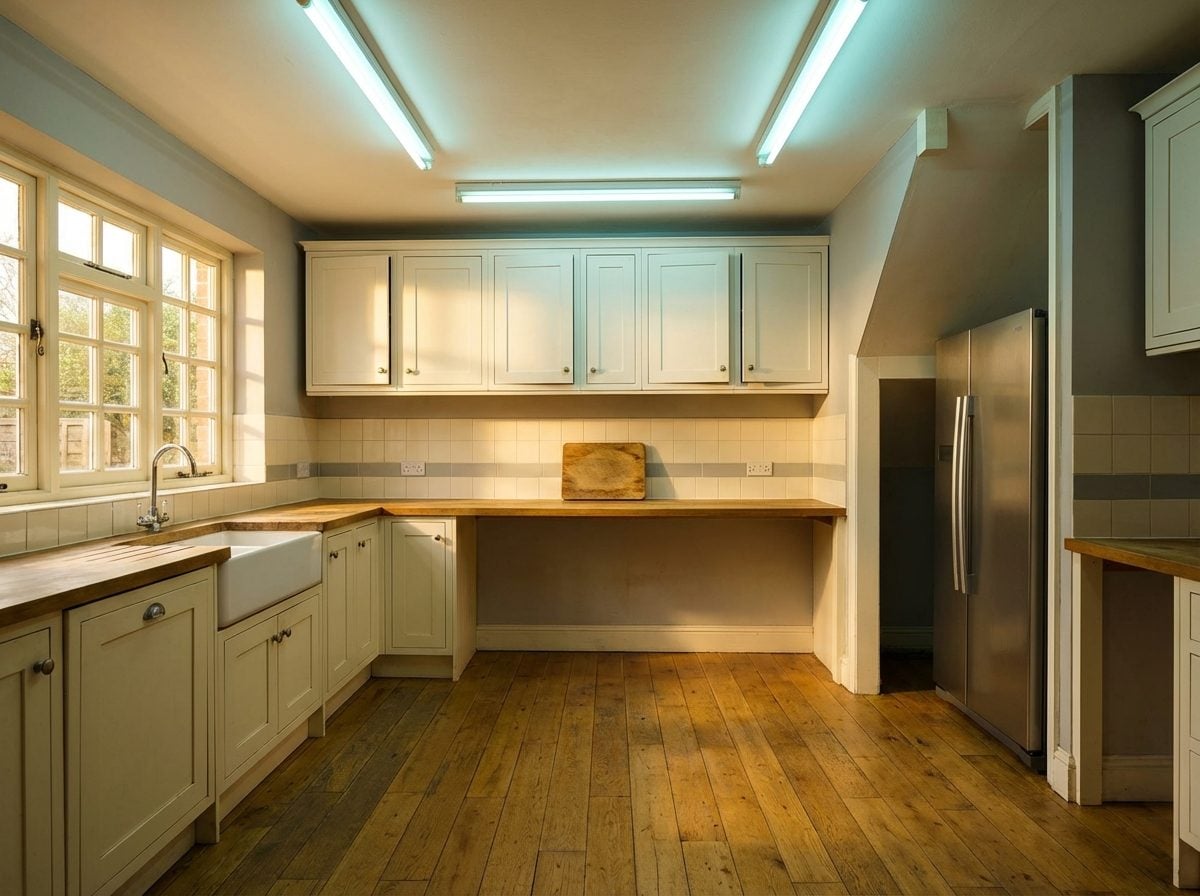
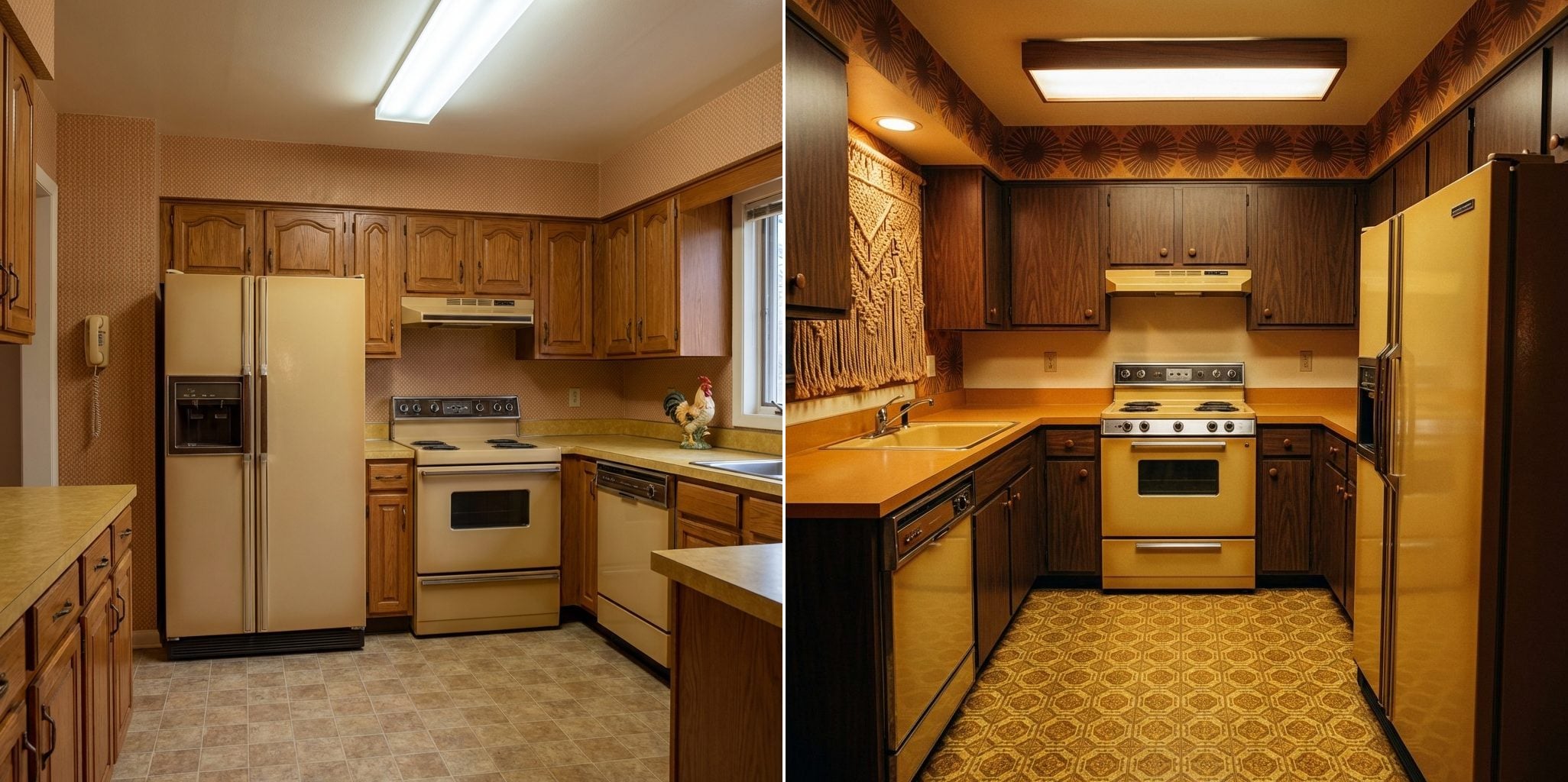
Walk into an ’80s kitchen and your senses hit a wall, the hum of the refrigerator compressor, the faint chemical sweetness of vinyl flooring, the particular clunk of laminate cabinet doors. Everything was louder, bolder, and somehow more confident than it had any right to be. A generation grew up eating cereal at counters the color of old mustard, watching microwaves the size of small appliances warm up leftovers in containers that were absolutely not microwave-safe. These are the things we lived around without a second thought.
The Almond-Colored Refrigerator That Wasn’t Quite White and Wasn’t Quite Beige
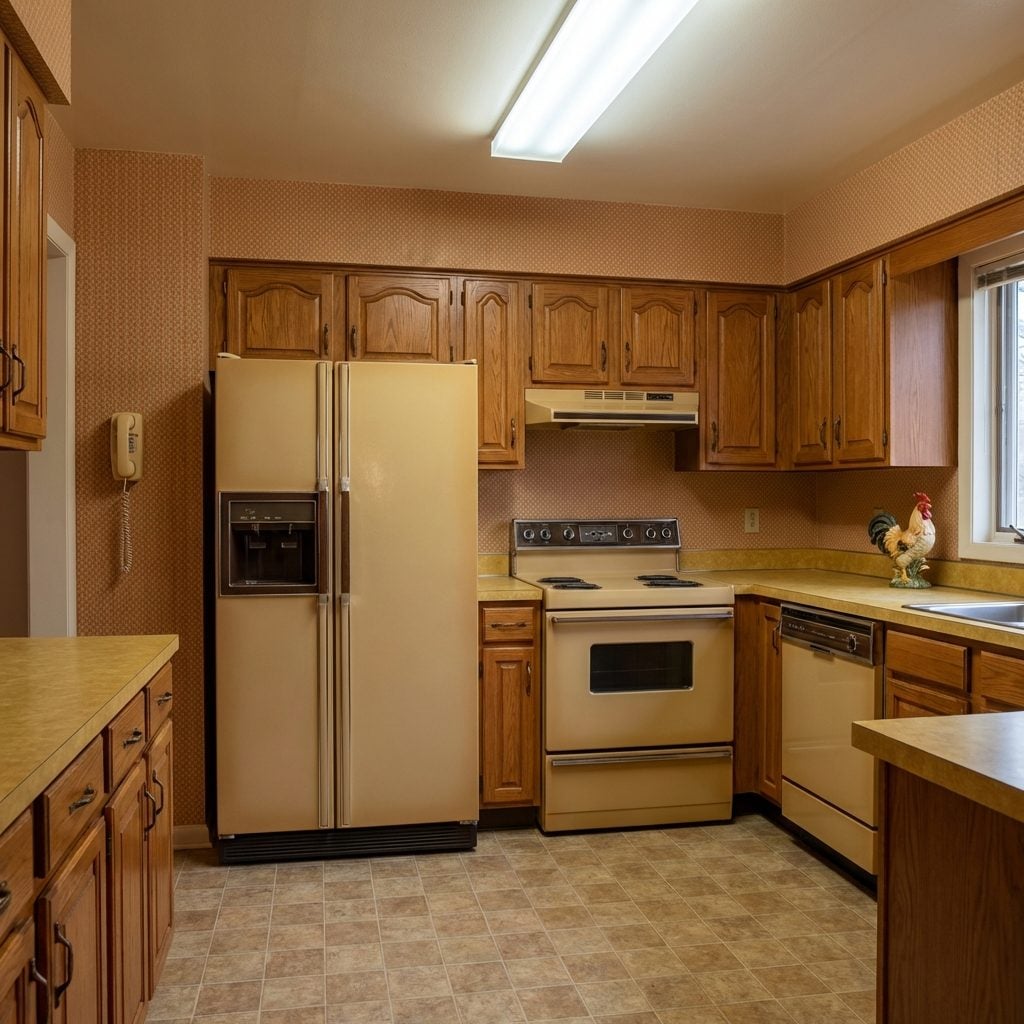
The ’80s had three refrigerator colors and three refrigerator colors only: white, harvest gold, and almond. Almond was the controversial middle child, too yellowish to be white, too pale to be gold, and somehow it ended up in roughly half the kitchens in America. It photographed terribly and aged even worse, developing a patina that could charitably be described as “aged ivory” and uncharitably as “old tooth.”
In order to come up with the very specific design ideas, we create most designs with the assistance of state-of-the-art AI interior design software. Also, assume links that take you off the site are affiliate links such as links to Amazon. this means we may earn a commission if you buy something.
Every major appliance manufacturer offered it. Almond refrigerator sets came with matching dishwashers and ranges, and the full suite installed together was considered the peak of domestic coordination. If you had all three in almond, you had arrived.
Harvest Gold Everything, The Stove, the Fridge, the Sink, and God Help Us, the Dishwasher
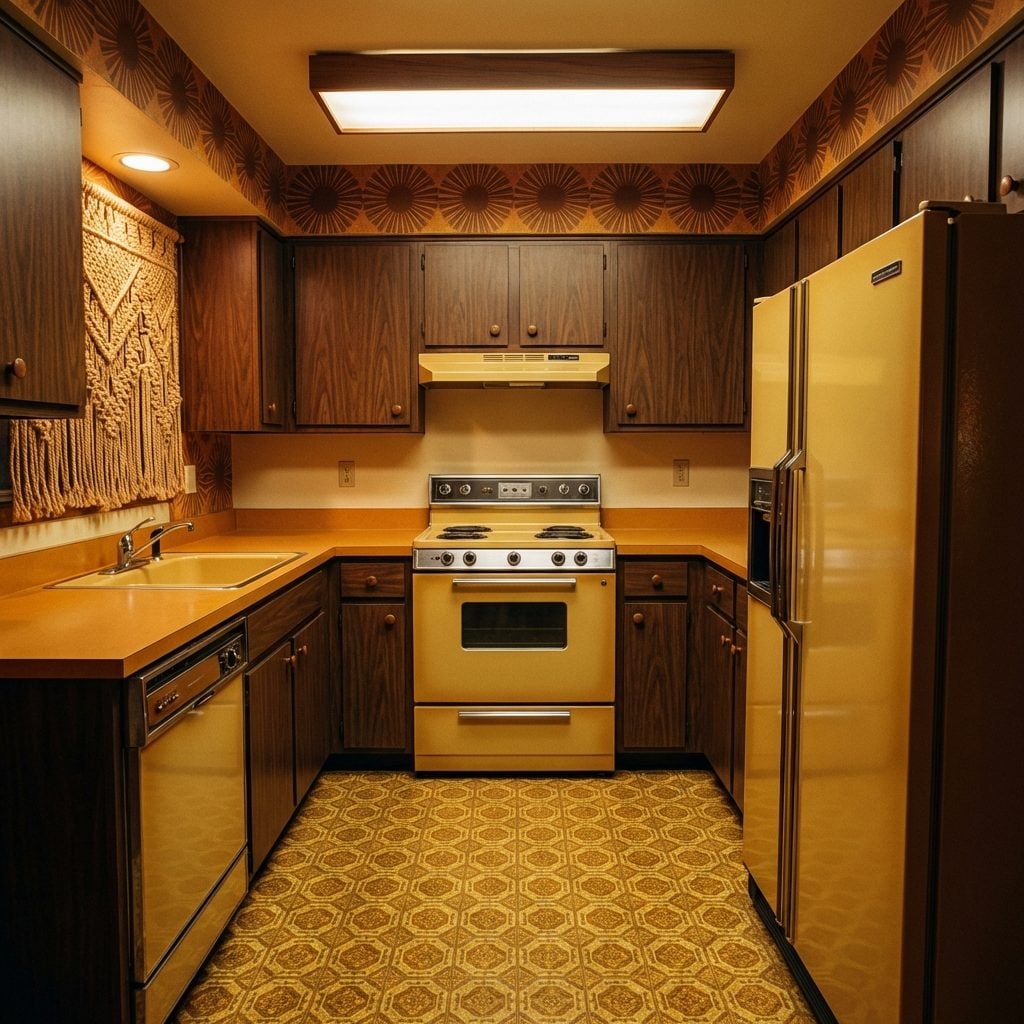
Harvest gold was not just a color. It was a commitment. A lifestyle declaration. A full harvest gold appliance suite, harvest gold range, refrigerator, dishwasher, and sometimes the sink, told the world that you had purchased your kitchen intentionally, as a set, like furniture. The coordination was the point.
Nobody questions it more than people born after 1995, who encounter it and think something has gone wrong. Nothing went wrong. That was just Tuesday in 1983.
The Microwave That Lived on the Counter and Weighed as Much as a Toddler
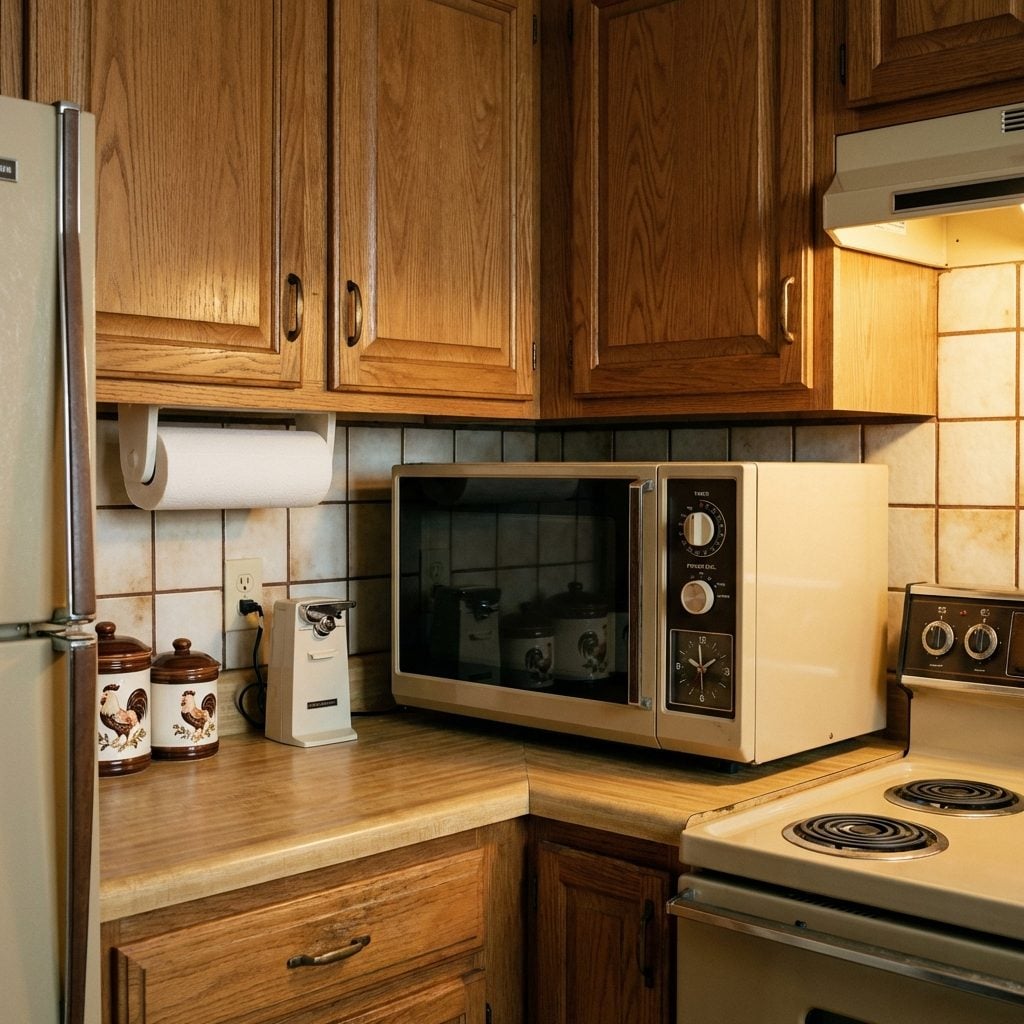
The countertop microwave of the early ’80s was roughly the size of a television set and weighed approximately the same as a car engine. It occupied about a third of the available counter space, ran at a maximum of 600 watts, and required a dedicated outlet because it would trip the breaker if anything else was plugged in nearby. The door latch made a sound like a small vault closing.
Reheating leftovers in one took roughly twice as long as reheating them on the stove, but that wasn’t the point. The point was that you owned a microwave. That was the flex.
The Rotary Wall Phone Mounted Directly Next to the Stove
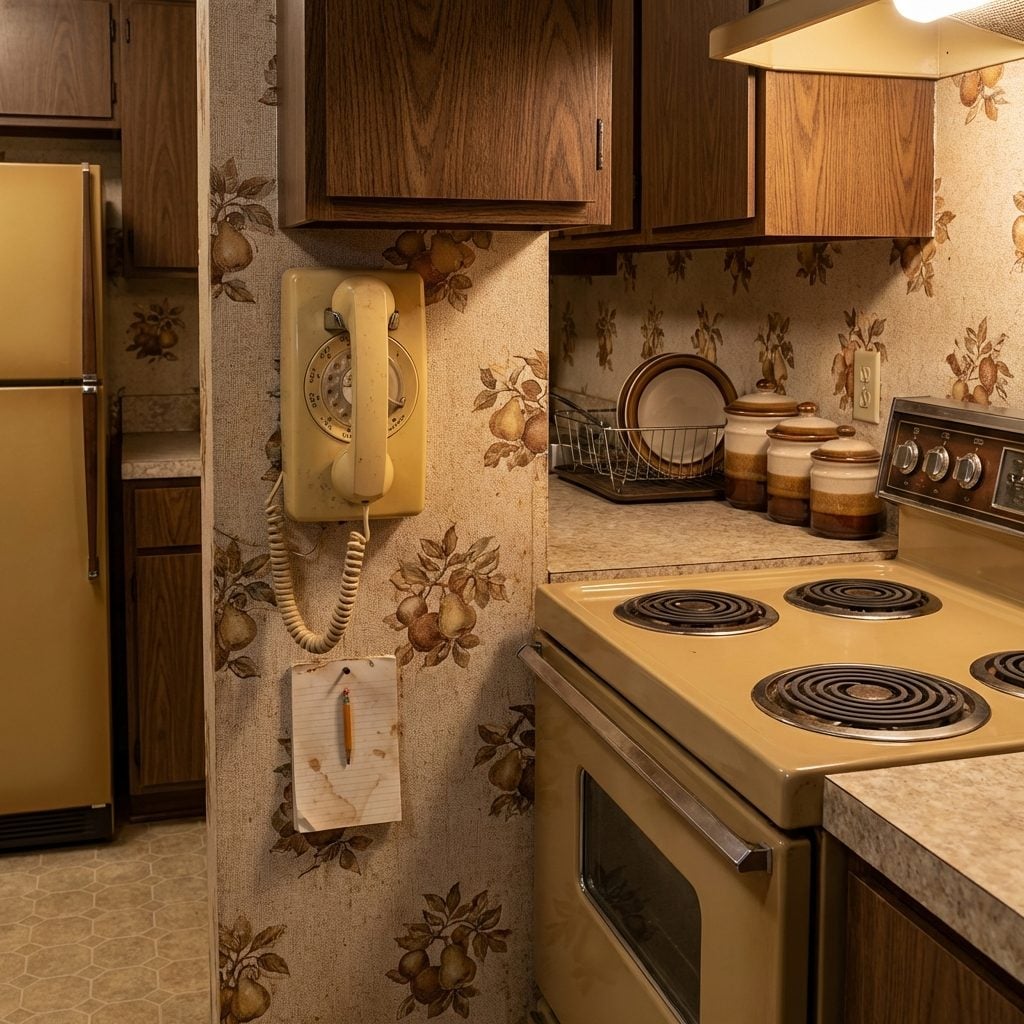
Not cordless. Not portable. Mounted to the wall with a short coiled cord that meant you had to stand in one spot, facing the wall, to talk. The cord was always stretched out of shape from years of someone wandering as far as the cord would allow and then leaning against the counter. The grease from cooking had permanently bonded with the handset.
And it was right next to the stove because that was the logical place for the phone. Where else would you need to be when someone called? You were cooking. The kitchen phone was a specific domestic technology that has no modern equivalent, the thing you picked up while stirring something and said “I can’t talk, I’m making dinner” and then talked for forty-five minutes.
Laminate Countertops in a Color That Had a Proper Name Like ‘Copper Tone’ or ‘Wilsonart Almond’
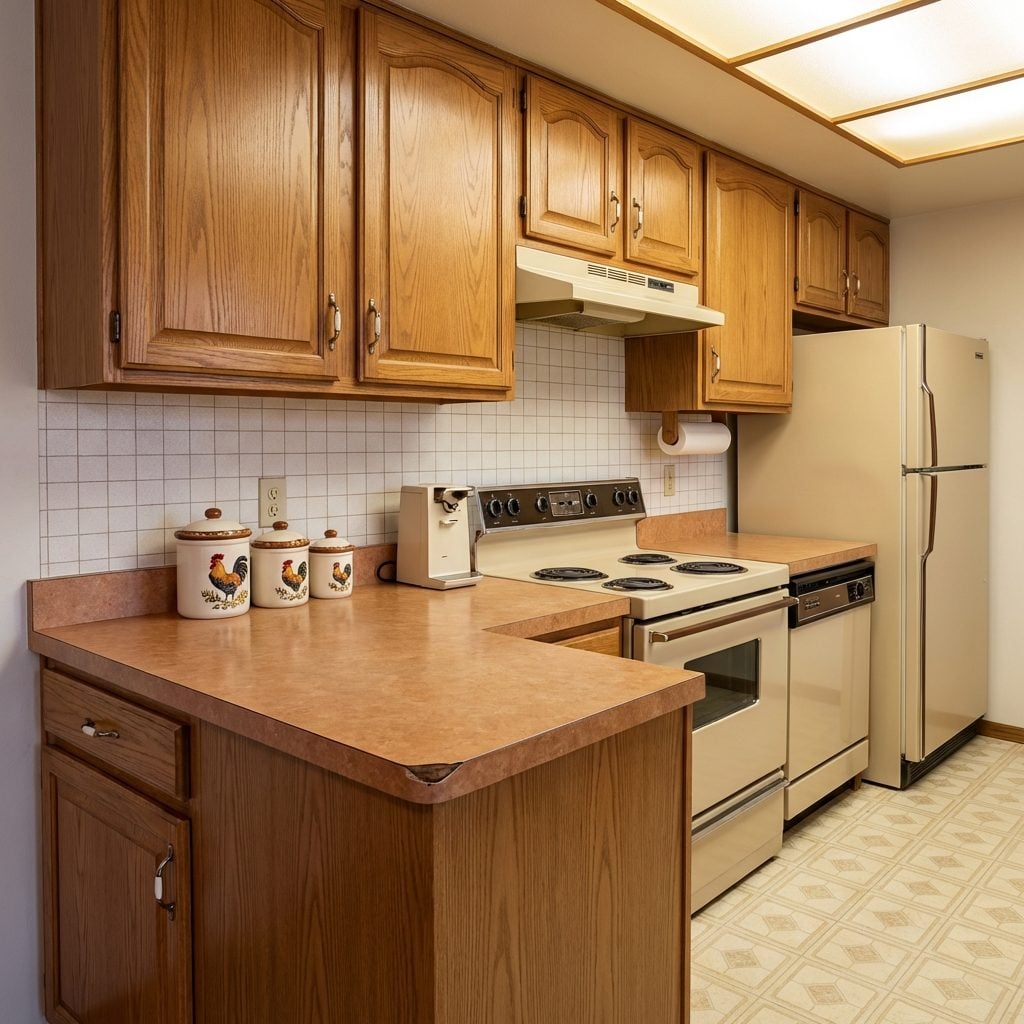
Every laminate brand had a catalog. Wilsonart, Formica, Pionite, each with names for their colors that sounded like paint chips in a very specific genre of beige. “Copper Tone.” “Harvest Beige.” “Sandstone.” “Antique White.” These countertops were everywhere, and the slightly speckled surface pattern was specifically designed to hide crumbs, which was the single most practical design decision anyone made in that decade.
The edges always went first, a small lift at the corner by the sink, a faint separation where water had gotten in repeatedly. Most families lived with this for years before doing anything about it, occasionally pressing the lifted edge back down with a thumbnail as they passed.
The Electric Coil Burners That Glowed Red-Orange and Took Five Minutes to Cool Down
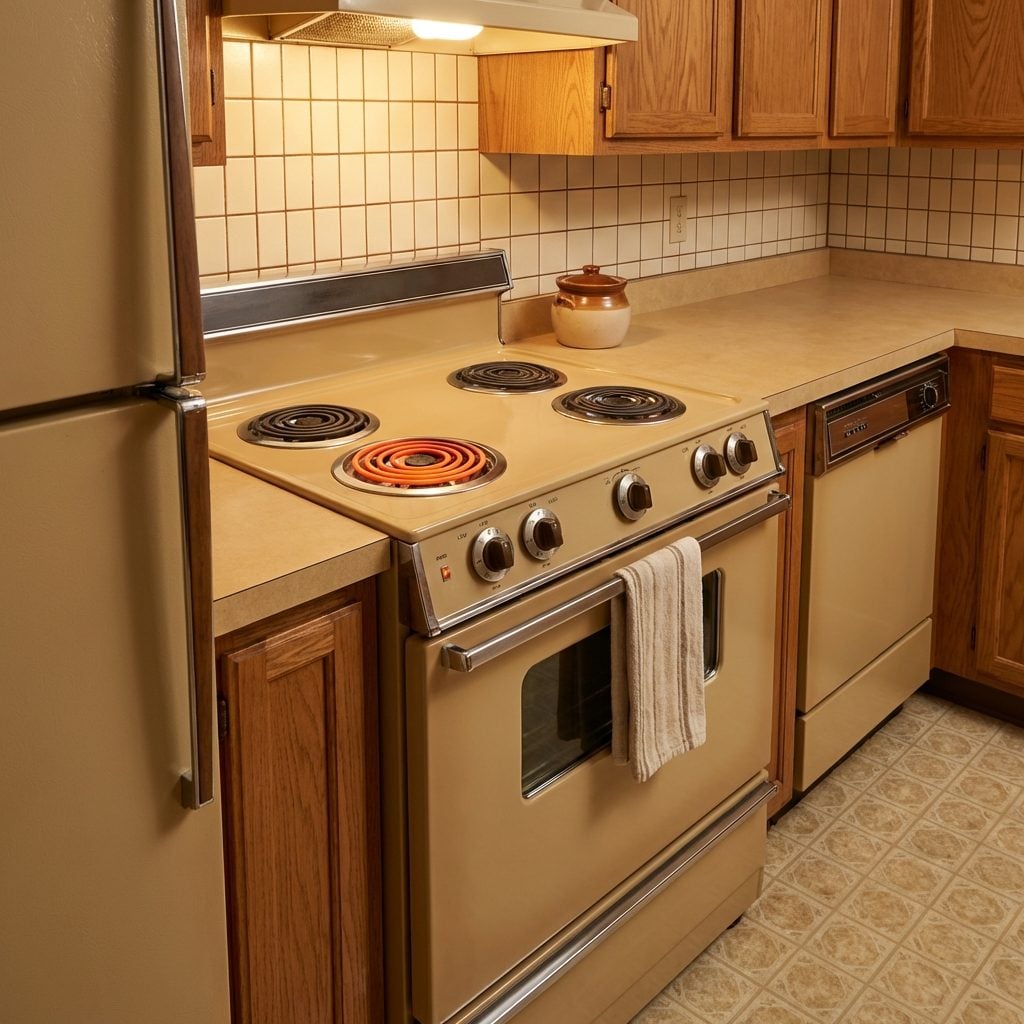
You couldn’t touch it. You couldn’t put anything near it. You couldn’t always tell by looking at it whether it was on or off, because a coil that’s just been turned off looks exactly like a coil that was never on, right up until the moment you touch it. Every ’80s family had at least one story involving this discovery.
The drip pans were either spotless, because someone’s mother cleaned them obsessively, or they were archaeological records of every spill since the range was installed. There was no middle ground. And if a burner stopped working evenly, you just rotated which one you used for eggs and moved on with your life.
Fruit and Rooster Motifs on Literally Every Surface That Could Accept a Pattern
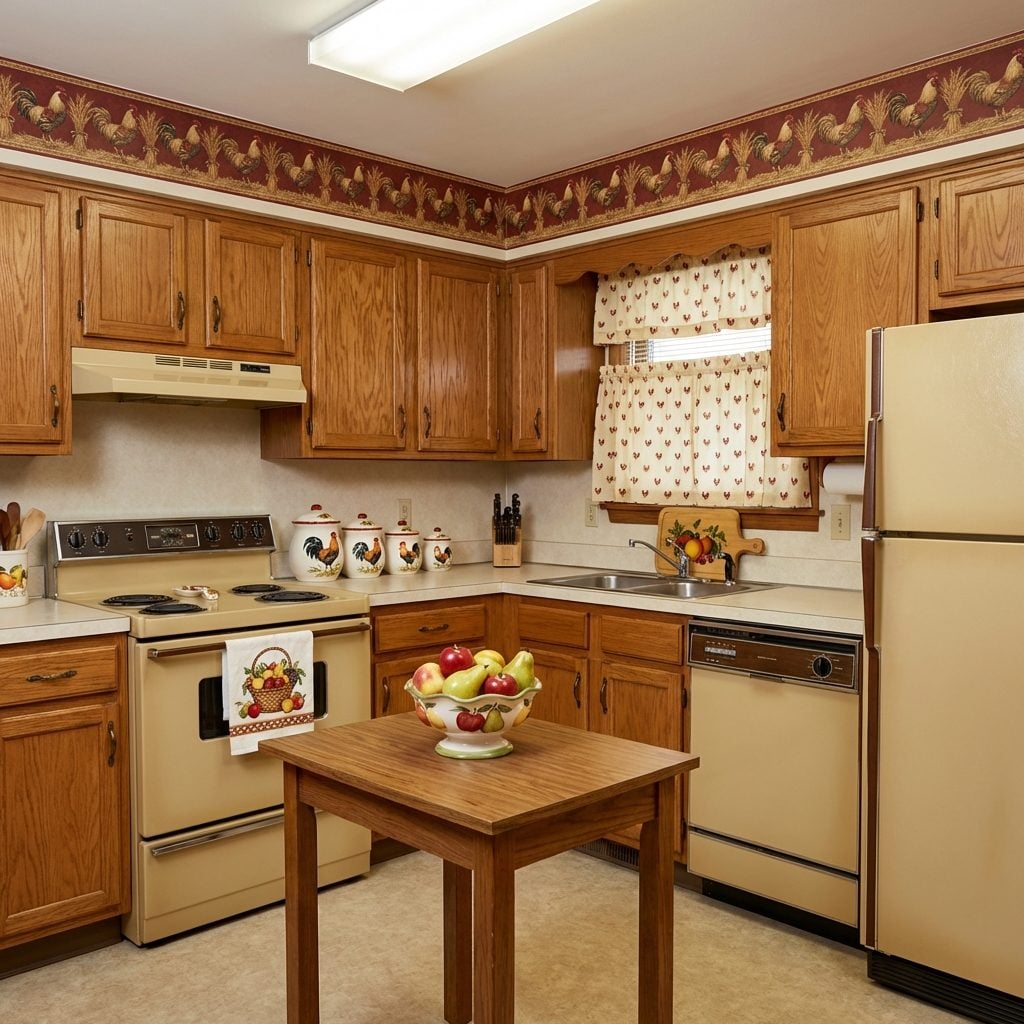
The ’80s kitchen picked a motif and committed. Roosters were the most popular, on the canister set, the curtains, the wallpaper border, the kitchen towels, the oven mitt, and at least one decorative plate hung on the wall. Fruit ran a close second. Strawberries were especially overrepresented, appearing on surfaces that had no logical connection to strawberries, like light switch plates and paper towel holders.
Nobody decided this consciously. You bought a rooster canister set, then a matching towel appeared, then someone gifted you a rooster trivet, and suddenly your kitchen had a theme. This is how it happened for approximately 40 million American households.
The Junk Drawer, Not a Concept, an Actual Physical Drawer of Pure Chaos
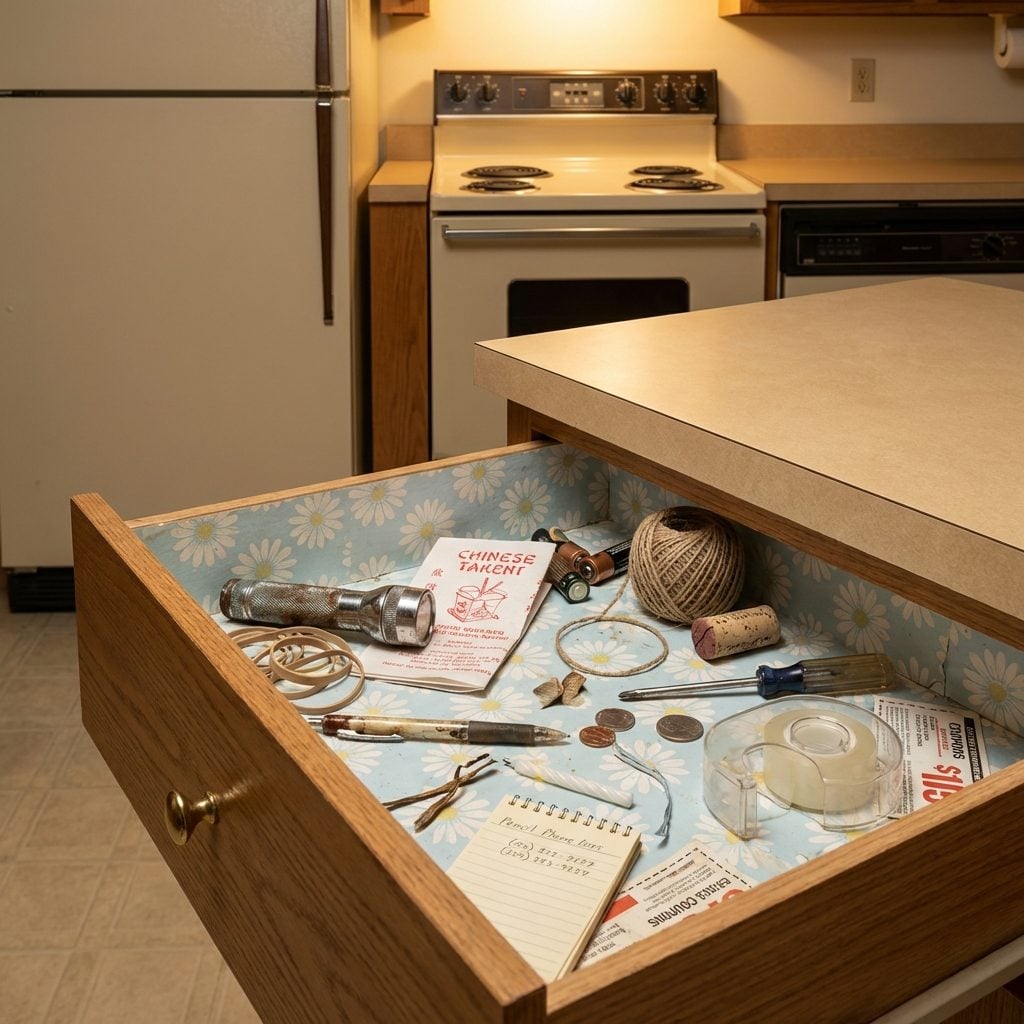
Every kitchen had exactly one drawer that was specifically for things that had no other place. The contents were universal: dead batteries that might still work, a flashlight with corroded contacts, rubber bands in various states of deterioration, a takeout menu from a restaurant that had probably closed, loose change, and at least three dried-out pens. The contact paper lining was always a small floral print, usually blue and white, slightly sticky at the front edge.
The kitchen drawer organizer was not a concept anyone in the ’80s had encountered. The junk drawer was not a failure of organization. It was the organization.
Café Curtains on the Window Above the Sink, Half-Length, on a Tension Rod, Usually Cotton
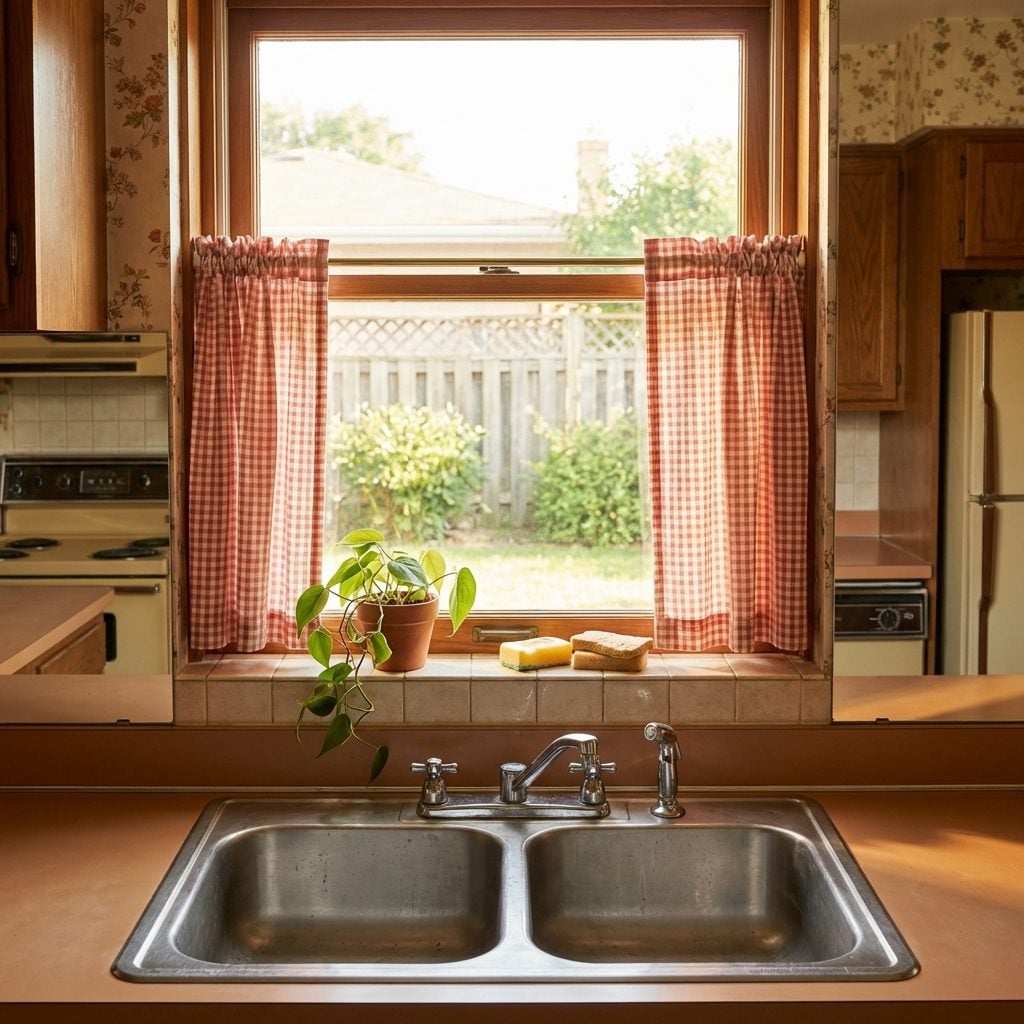
Half-length. Always half-length. The logic was that you needed privacy from the neighbors but also needed light, and a full curtain in the kitchen felt too heavy, too formal. Café curtains on a brass tension rod split the difference perfectly. They were almost always cotton, either in a gingham check or a small printed pattern, cherries, apples, a thin stripe, and they faded within a year from the combination of steam and direct sun.
The plant on the windowsill was mandatory. Usually a pothos. Always slightly rootbound in a small terra cotta pot that had a white mineral ring about halfway up from years of tap water.
The Linoleum Floor With a Pattern That Only Made Sense From Six Feet Away
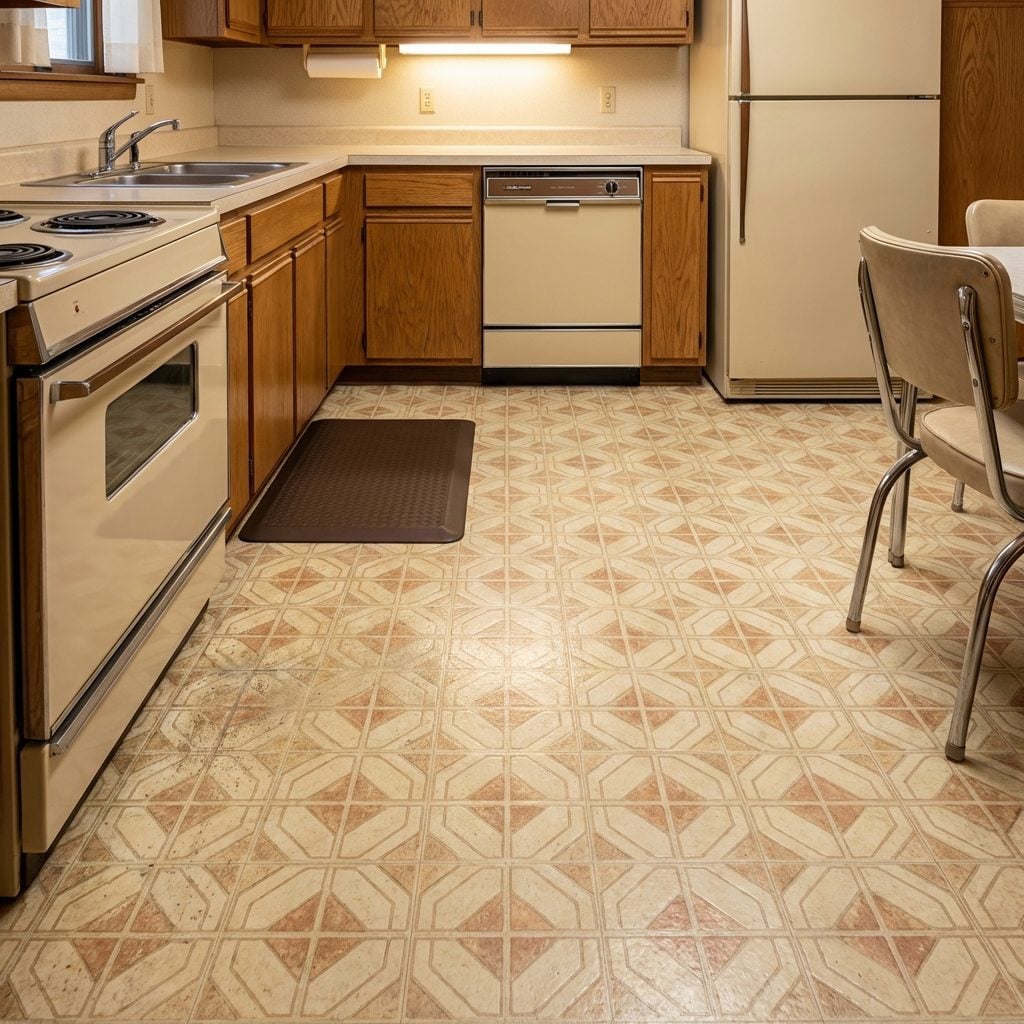
Sheet vinyl was sold in rolls and installed in a single piece, which meant no grout lines to scrub, an innovation celebrated as a triumph of modern housekeeping. The patterns mimicked ceramic tile, parquet, or stone with an optimism that only held up from a standing height. Get down on the floor to pick something up and the illusion dissolved completely into a printed paper on a foam-rubber backing.
The wear pattern was always the same: dulled near the sink, slightly scuffed near the range, and perfect and shiny everywhere else, which created an accidental map of where work happened in that kitchen.
The Ceramic Canister Set, Flour, Sugar, Coffee, Tea, Always in a Row on the Counter
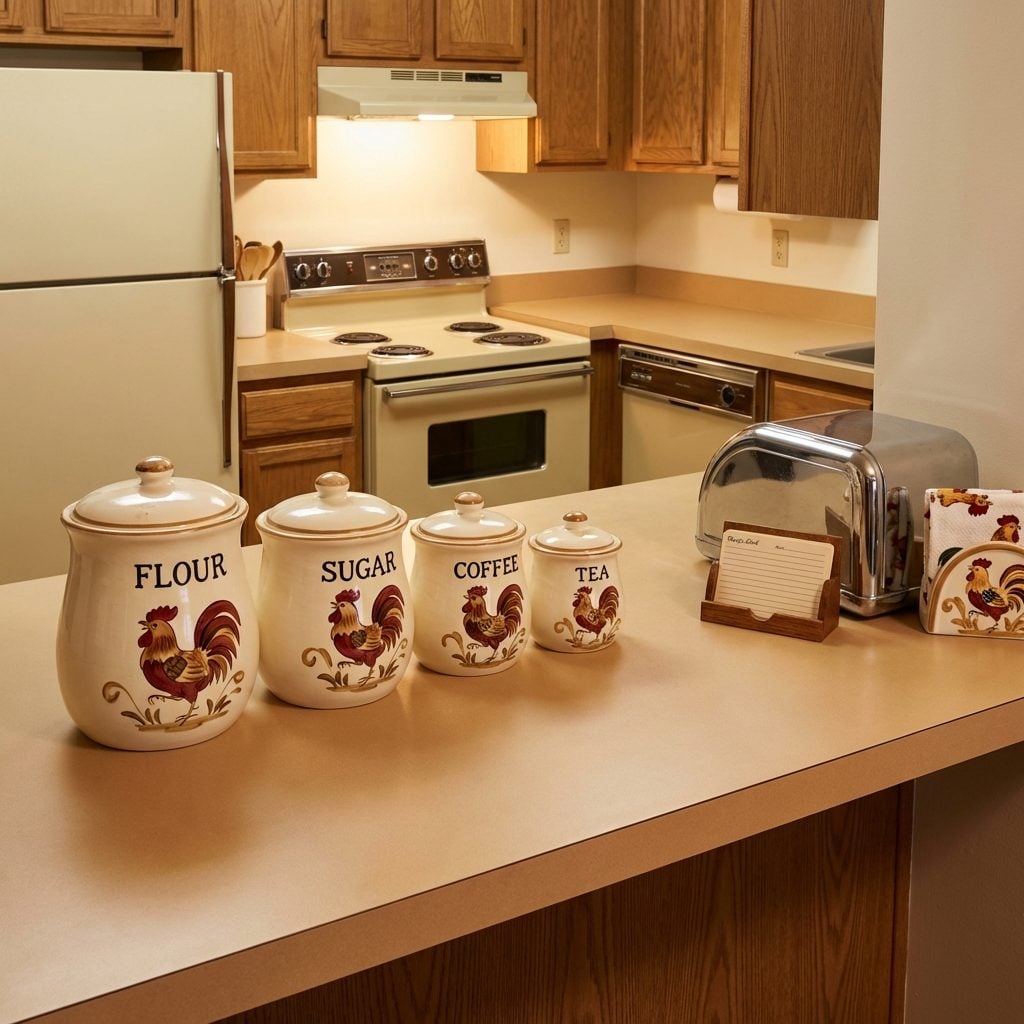
Four canisters. Always four, always in this order by size: flour (biggest), sugar, coffee, tea (smallest). The set was either ceramic with a painted motif or stoneware in earthy glazes, and it lived permanently on the counter because putting it in a cabinet was not how canister sets worked. The entire point was to display them.
The tea canister was usually the least used and therefore the most pristine. The flour canister lid never quite sat flat after a few years. Nobody thought about this. It was just the canisters.
Wallpaper With a Border, Usually a Strip of Something Coordinating Near the Ceiling
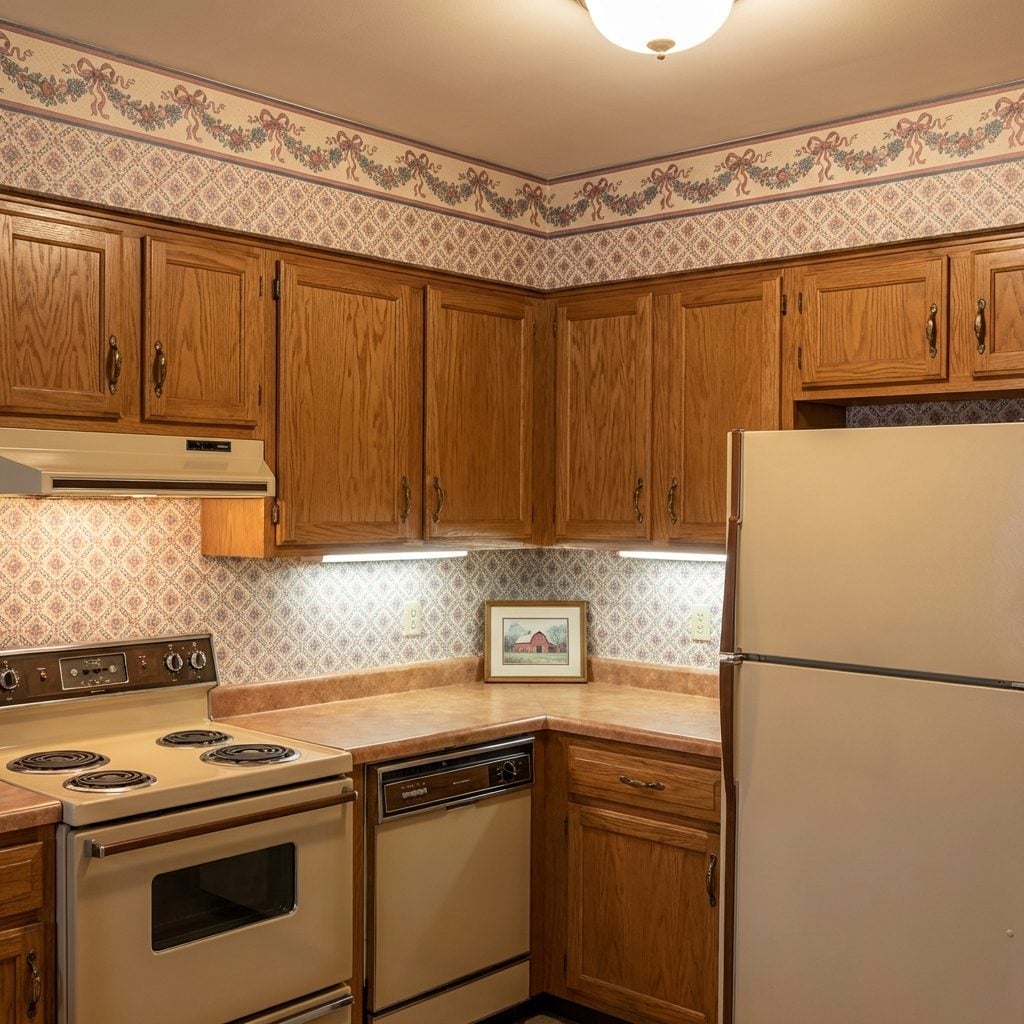
The border was a separate strip of wallpaper, sold by the roll, applied about six inches below the ceiling as a finishing detail. It coordinated with but did not match the main wallpaper, a subtle interplay of patterns that the Waverly Home catalog of 1986 would have called “charming.” Installation required a level, a straight edge, and considerable patience, none of which were consistently present during the average weekend DIY project.
One corner always bubbled slightly within the first year. This was accepted.
The Recipe Box, A Tin or Wooden Box of Index Cards With Your Mother’s Handwriting on Every One
🔥 Would you like to save this?
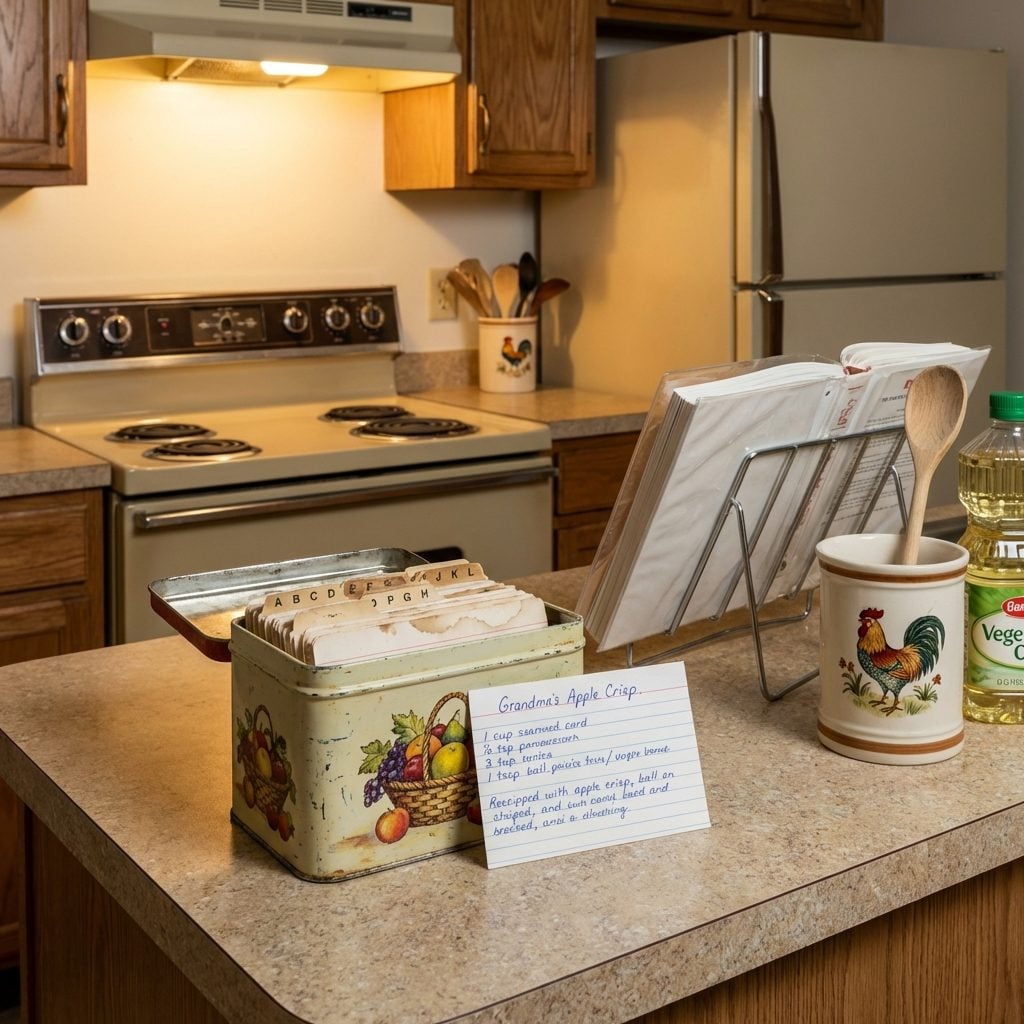
Not digital. Not on a phone. Handwritten, on a 3×5 index card, in your mother’s or grandmother’s actual handwriting, with grease spots where the card had been propped up against the toaster during production. Some cards had notes: “double the vanilla,” “Aunt Carol’s version,” or just a star drawn in the corner indicating that this one was worth repeating.
The recipe box sat on the counter because it was consulted regularly, and its presence was so ordinary that nobody photographed it or archived it or thought about what it represented until it was gone.
“The recipe box sat on the counter because it was consulted regularly, and its presence was so ordinary that nobody photographed it until it was gone.”
The Kitchen Table That Wasn’t in a Dining Room, Just Four Chairs and a Formica-Topped Table in the Corner
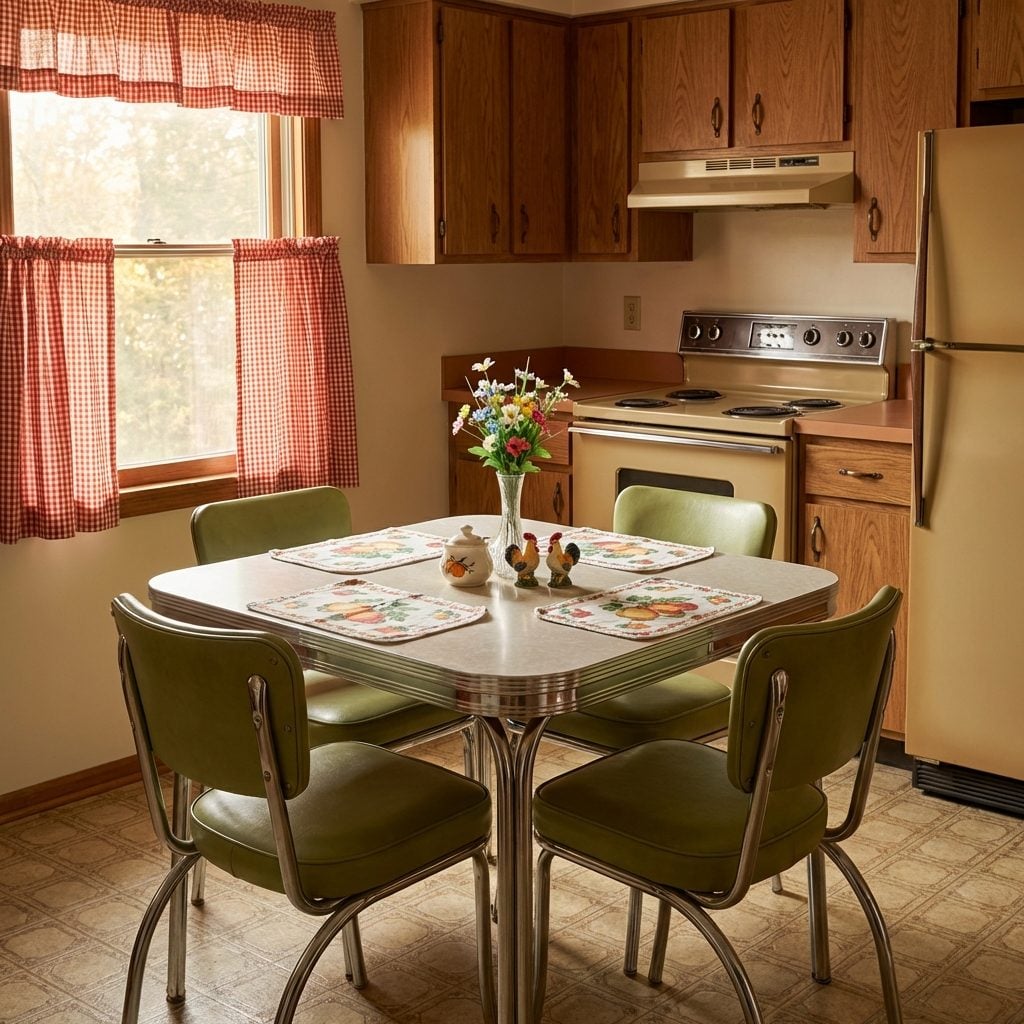
The kitchen table was not the dining room table. The dining room table was for company. The kitchen table was for breakfast, for homework, for paying bills, for folding laundry that had migrated from the basket, for birthday cake on a school night. It was a chrome kitchen table with a Formica top and vinyl kitchen chairs that stuck to bare legs in summer.
The ’80s kitchen wasn’t trying to be an “open concept living rooms in disguise.” It was a working room. The table in the corner was a tool, not a design statement, and the fact that it was slightly the wrong scale for the space was something nobody worried about.
The Bread Box, A Domed Chrome Box That Lived on the Counter and Held Exactly Two Loaves
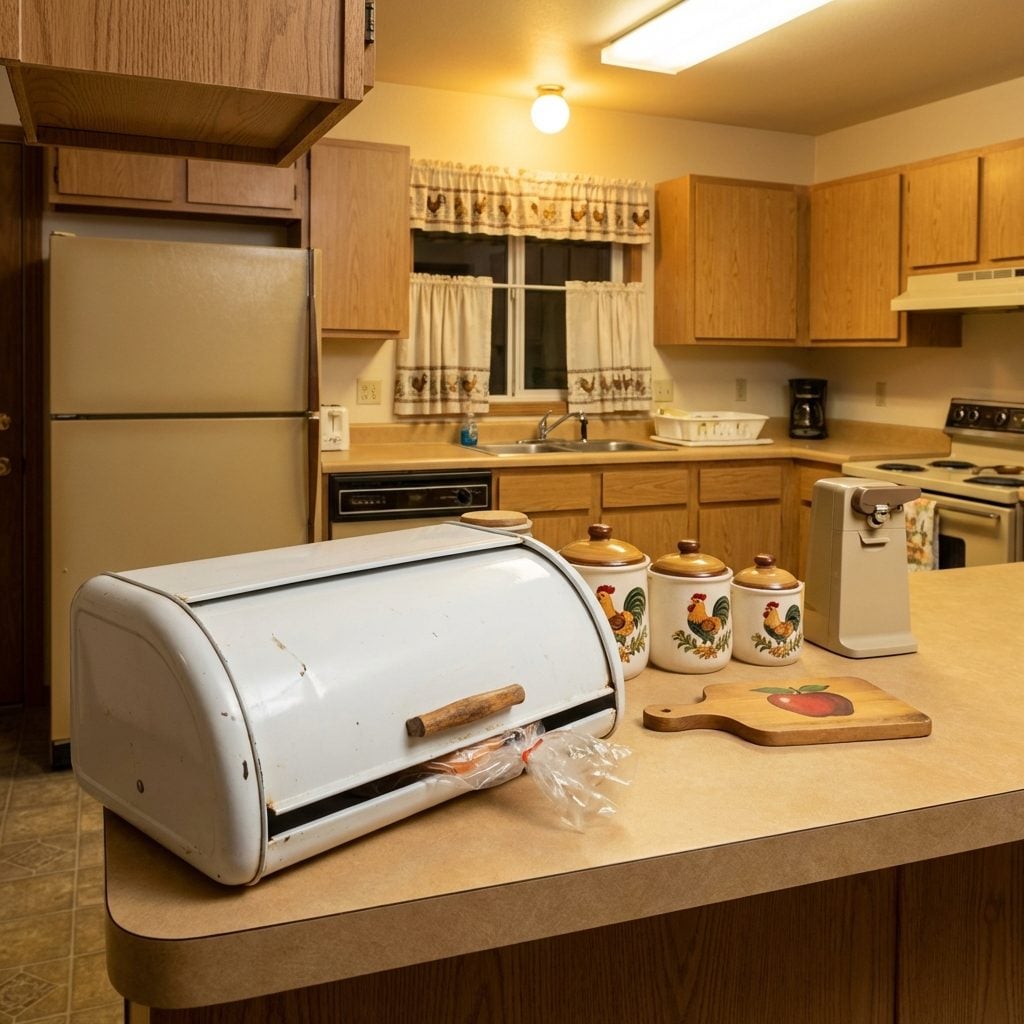
The bread box sat next to the canisters like a chrome-plated sentinel. Its job was to keep bread from going stale, which it accomplished with moderate success, and to occupy counter space, which it accomplished completely. The roll-top lid had a specific sound when you flicked it open, a light metallic slide followed by a soft thump against the back stop, that is permanently stored somewhere in the sensory memory of anyone who grew up around one.
Nobody owns bread boxes anymore. The bread lives on top of the refrigerator now, slowly going stale, while the space the bread box once occupied has been colonized by a Keurig machine and a phone charger. Progress is complicated.
The Rooster, Cow, or Fruit-Themed Everything
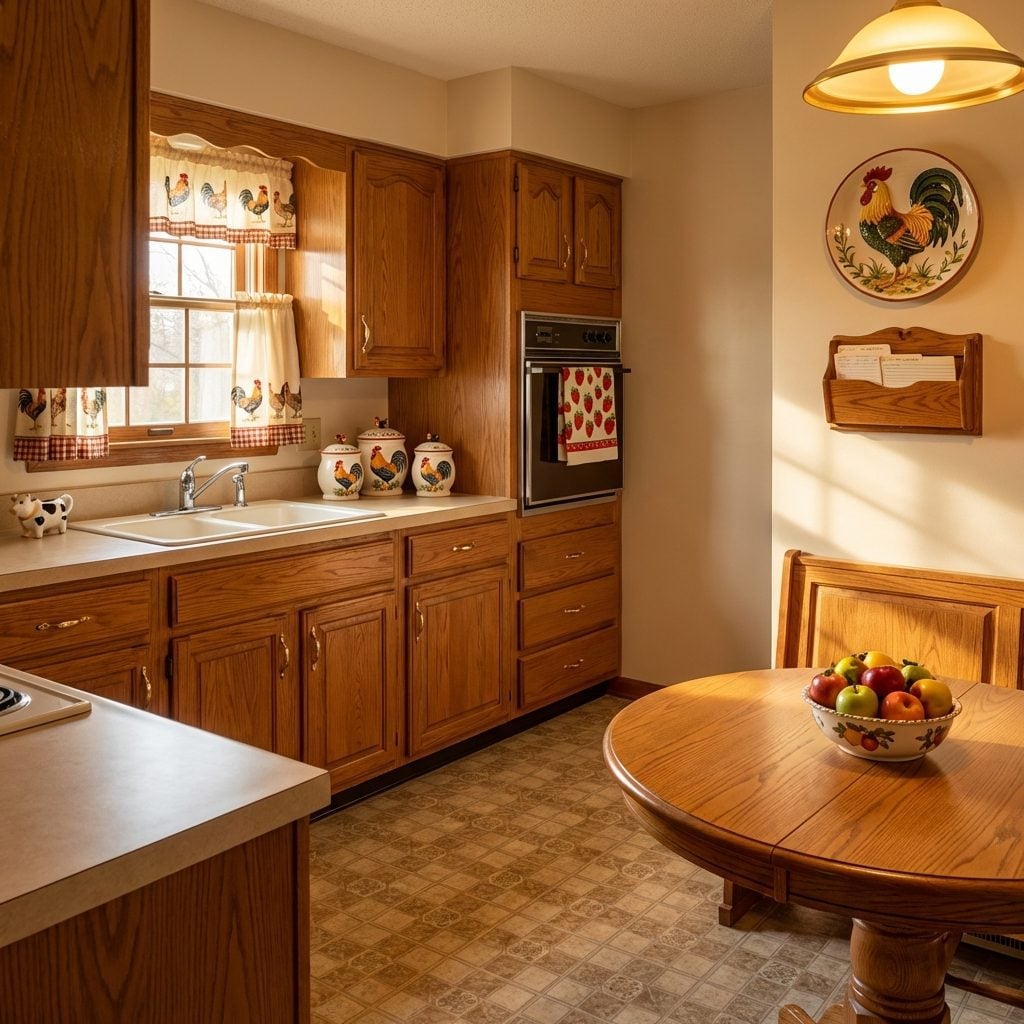
Roosters on the curtains. A cow-shaped creamer on the counter. Strawberries marching across the canister set. The ’80s kitchen had a mascot, and it was usually barnyard or produce. Nobody sat down and decided this would be the theme, it just happened, one impulse purchase at a time, until the kitchen had an unmistakable rural-adjacent personality that had nothing to do with whether you lived anywhere near a farm.
The rooster was the most committed. He showed up on the valance, the dish towels, the ceramic trivet, and sometimes a large decorative plate hung on the wall like a portrait. He was inescapable. And honestly? He gave the kitchen a personality that a lot of modern kitchen renovation projects accidentally spend a fortune trying to replicate.
The Narrow Pantry Cabinet With the Bifold Doors That Always Jumped the Track
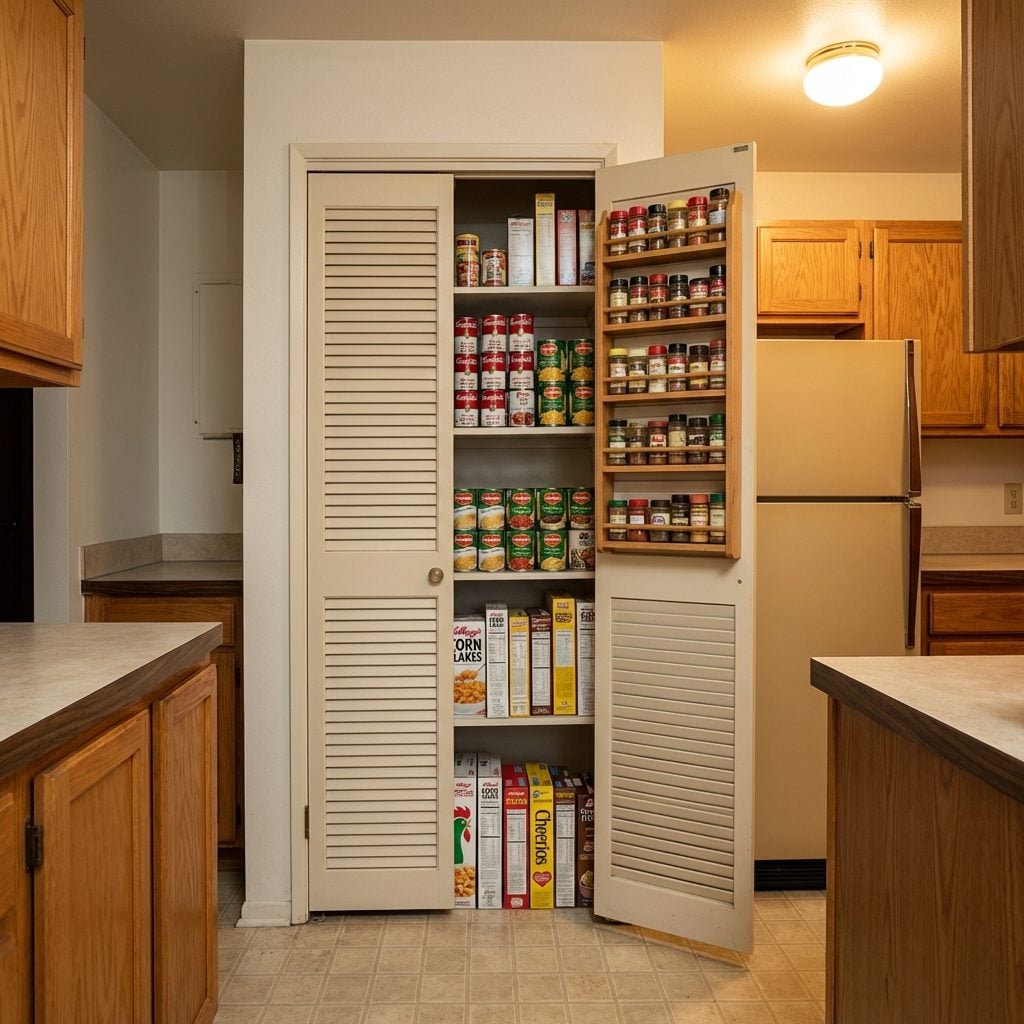
Every ’80s kitchen had one: a tall, shallow pantry cabinet tucked beside the refrigerator or into a corner, sealed with bifold doors that worked fine for about six months before one panel started dragging and the other swung loose. Opening it required a specific three-part motion, lift, push left, pray, that every family member learned through painful experience.
Inside was a masterclass in vertical stacking. Canned goods on one shelf, cereal boxes on another, a mysterious selection of backup condiments on the bottom. The door panels usually had shallow shelves built into them for spice jars that rattled every time the bifold derailed. It was a small kitchen storage solution that required more patience than it gave back.
The Can Opener Mounted to the Underside of the Cabinet
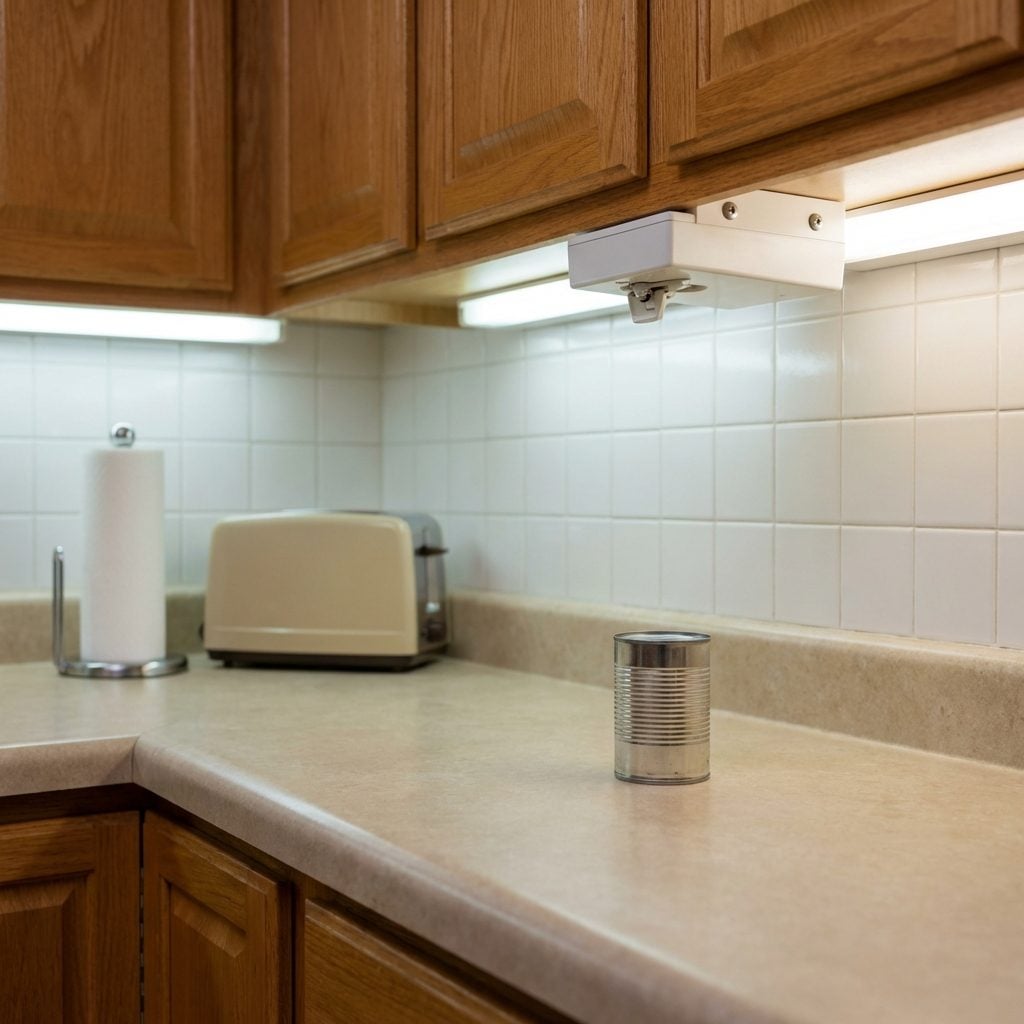
Screwed directly into the cabinet bottom, right where the counter met the wall, the electric under-cabinet can opener was a fixture in virtually every ’80s kitchen. It had a cutting wheel, a magnet to catch the lid, and a motor that whirred with the reassuring sound of something being accomplished.
Nobody questioned whether it needed to be permanently installed. Of course it did. You used it three times a week minimum, cream of mushroom soup alone justified the mounting hardware. When these finally disappeared from kitchens, it wasn’t because anyone removed them. It was because the whole cabinet eventually got replaced, and the new one just… didn’t get one.
The Avocado or Harvest Gold Dishwasher That Did Not Match the Other Appliances
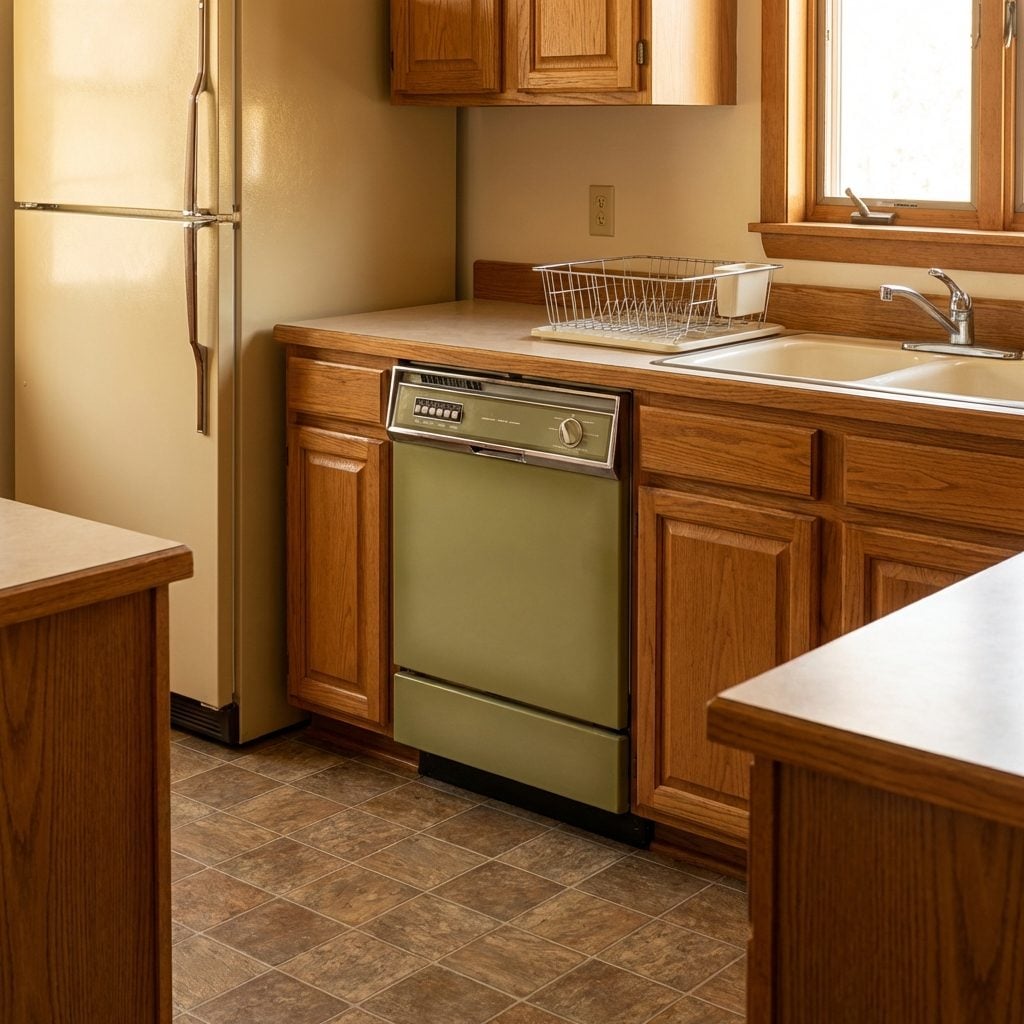
In many ’80s kitchens, the dishwasher was a time traveler from the ’70s, still avocado green or harvest gold while the fridge and stove had already been replaced with almond or white. Nobody replaced a working dishwasher just because it clashed. You just lived with the visual discontinuity and called it character.
The Hanging Pot Rack Over the Island (That Was Actually Just the Kitchen Table)
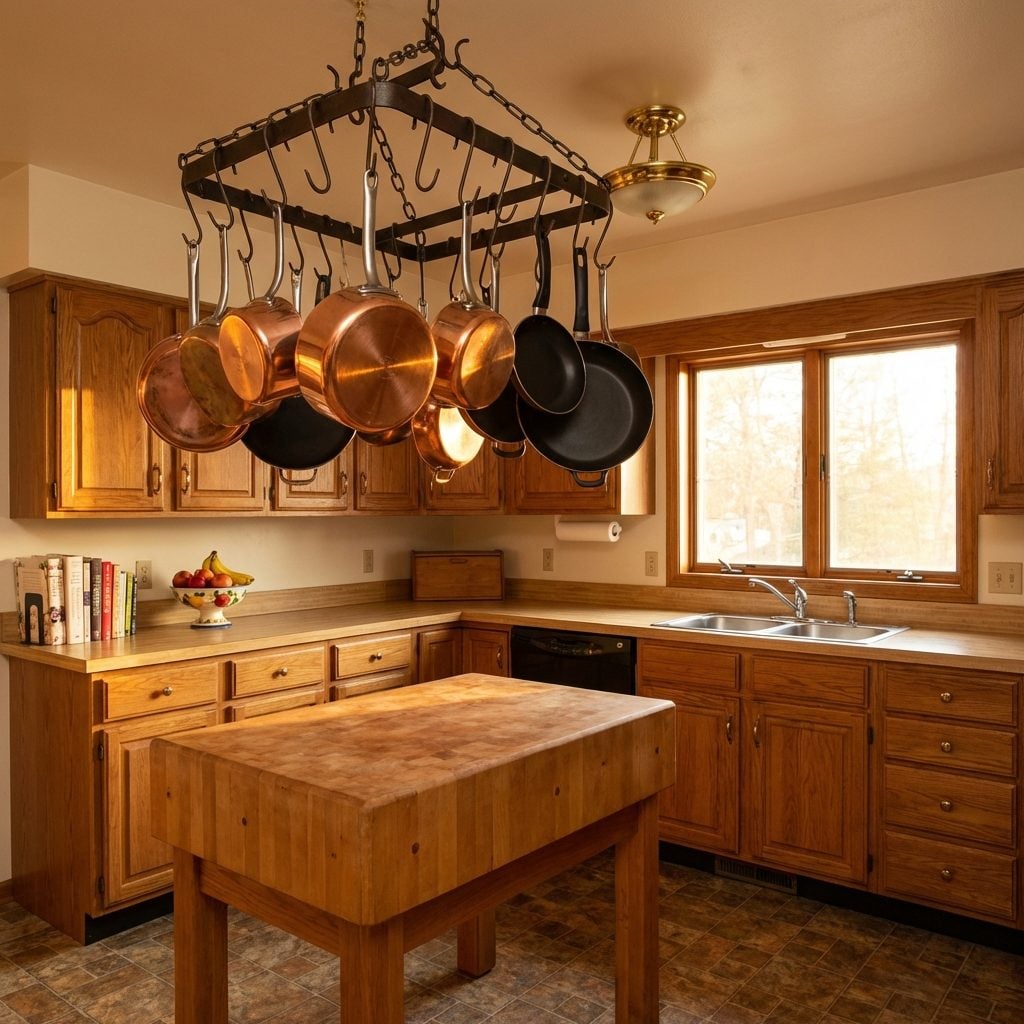
In kitchens that were trying to have a little personality, a wrought iron or brass pot rack hung from the ceiling, suspending copper-bottomed or dark Teflon pots in a way that said: this is a kitchen that takes itself seriously. The only problem was that the ceiling height in most split-levels was exactly low enough that taller family members collected bruises on their foreheads from the hanging copper skillet.
The look was pure craftsman kitchen inspiration before that was even a phrase anyone used. Those pot racks gave the kitchen a warmth that no amount of stainless steel has ever quite matched. The pots swayed a little whenever someone walked by, making a quiet metallic sound that meant someone was probably cooking something real.
The Small Television Mounted Under the Cabinet at Counter Level
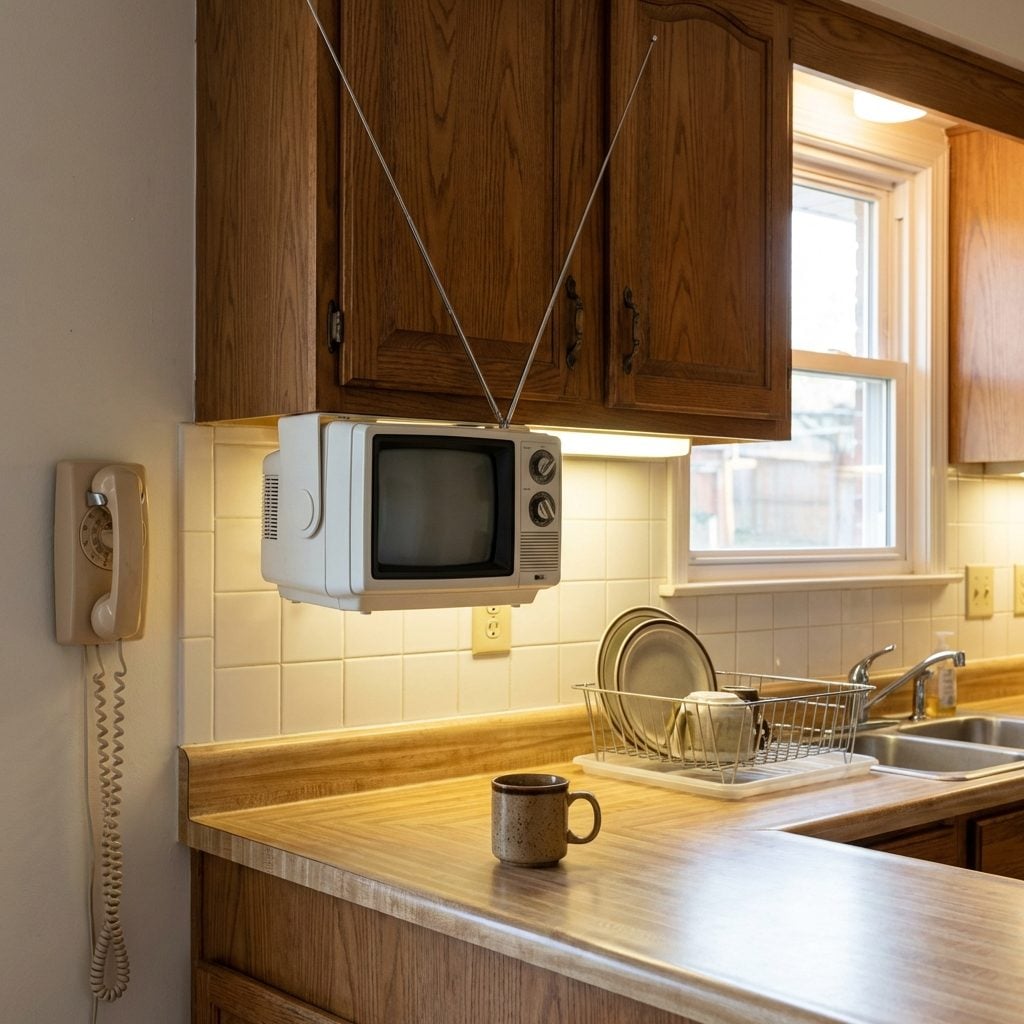
Tucked under the upper cabinet right next to the phone, the under-cabinet TV was about nine inches of screen in a white plastic housing with a pull-out antenna and two dials. It got maybe four channels clearly. You watched the local news while doing dishes. You watched game shows while making lunch. You watched it from a slightly awkward angle that required you to tilt your head ten degrees to the left for the entire runtime of whatever was on.
This was the original kitchen screen. It predated the laptop on the counter, the tablet propped against the backsplash, the phone leaning on the fruit bowl by about twenty-five years. The problems it solved were identical. The picture was just considerably worse.