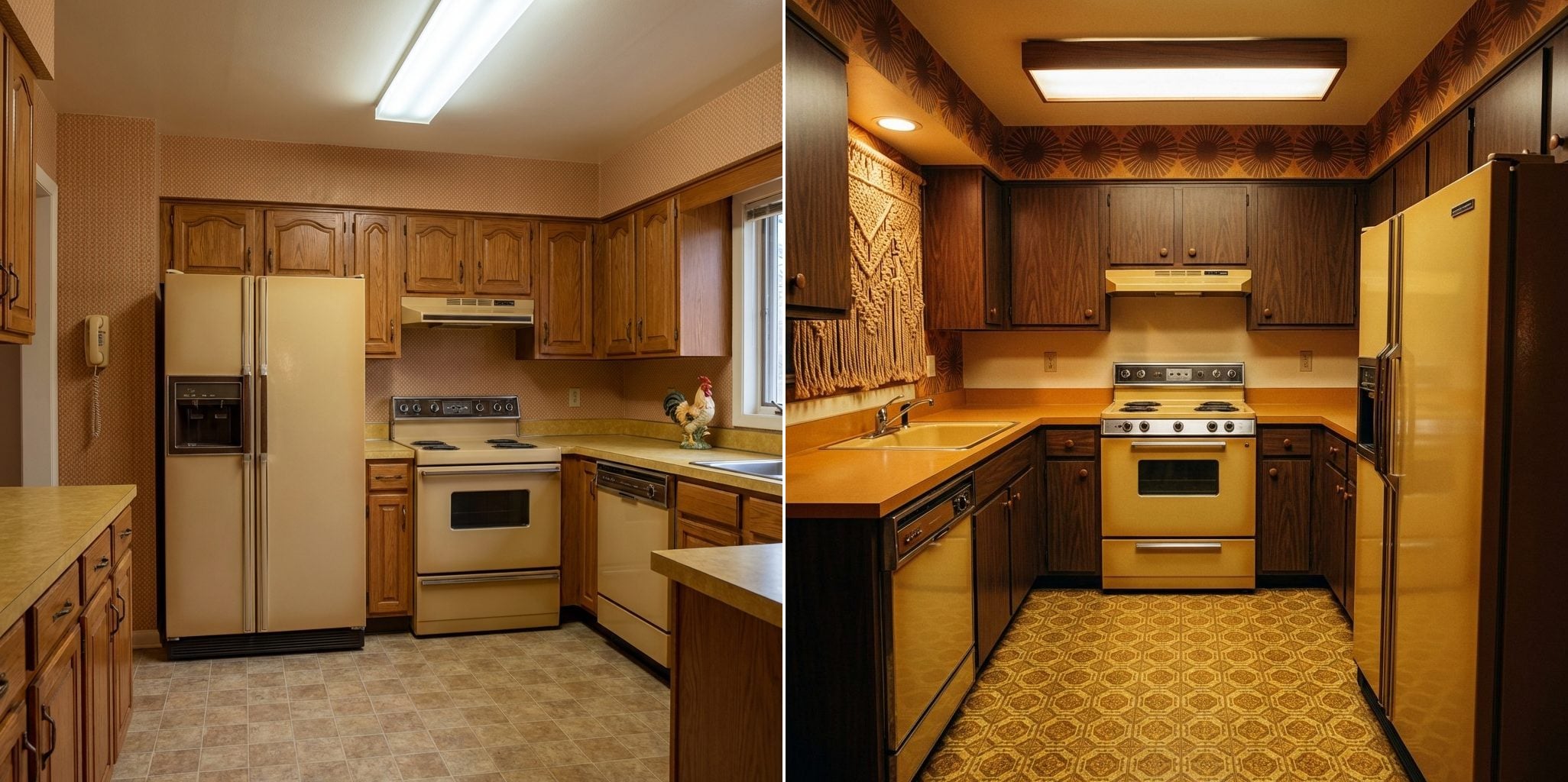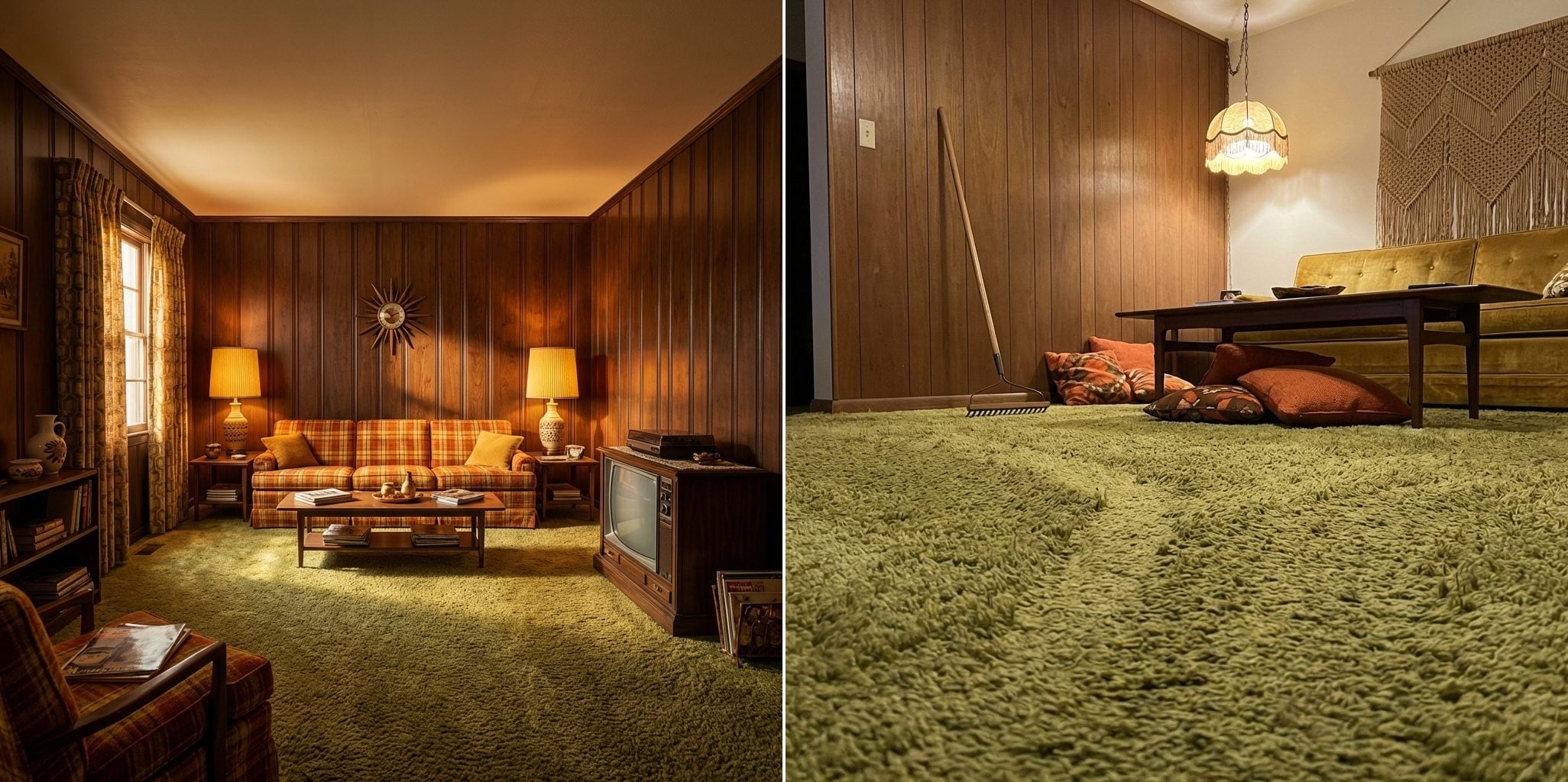
Close your eyes and picture it: the smell of cigarette smoke threading through shag carpet fibers, a console TV humming in the corner, and paneling the color of a forest floor stretching floor to ceiling. The 1970s living room was its own complete universe, one that made perfect sense to everyone who lived inside it. Not a single soul questioned the macramé owl. Here are 25 of those things.
The Floor-to-Ceiling Wood Paneling That Ate Every Wall in the Room
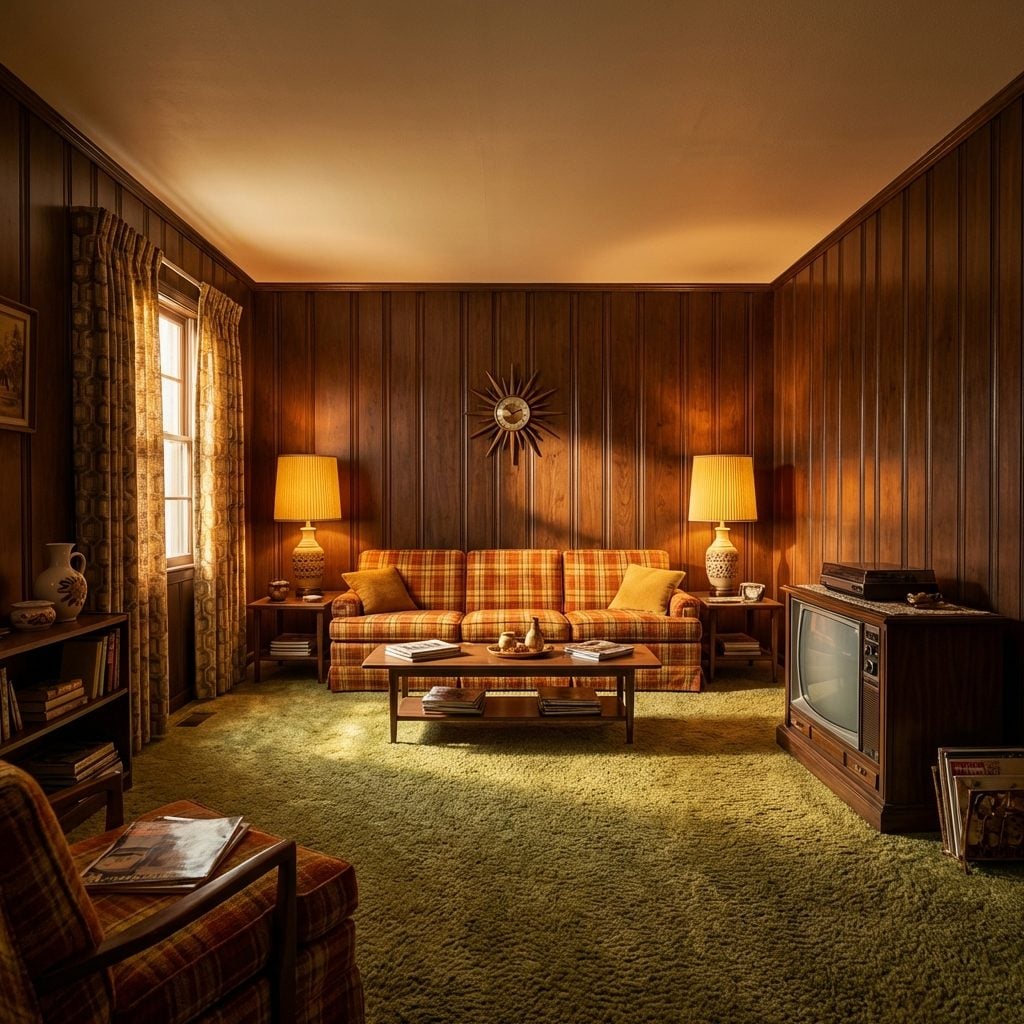
It covered every surface, top to bottom, corner to corner, and somehow nobody thought this was alarming. The paneling was usually a thin sheet of pressed wood printed to resemble real walnut or mahogany, and it made every room feel like the interior of a ship’s cabin, which seemed to be the point.
In order to come up with the very specific design ideas, we create most designs with the assistance of state-of-the-art AI interior design software. Also, assume links that take you off the site are affiliate links such as links to Amazon. this means we may earn a commission if you buy something.
The grooving was perfectly spaced, the finish slightly too shiny, and over time it developed a patina somewhere between “cozy den” and “basement that has opinions.” This was the decade’s defining design commitment, and it was total. You didn’t panel one accent wall. You paneled ALL of them.
Shag Carpet So Deep You Could Lose a Matchbox Car in It
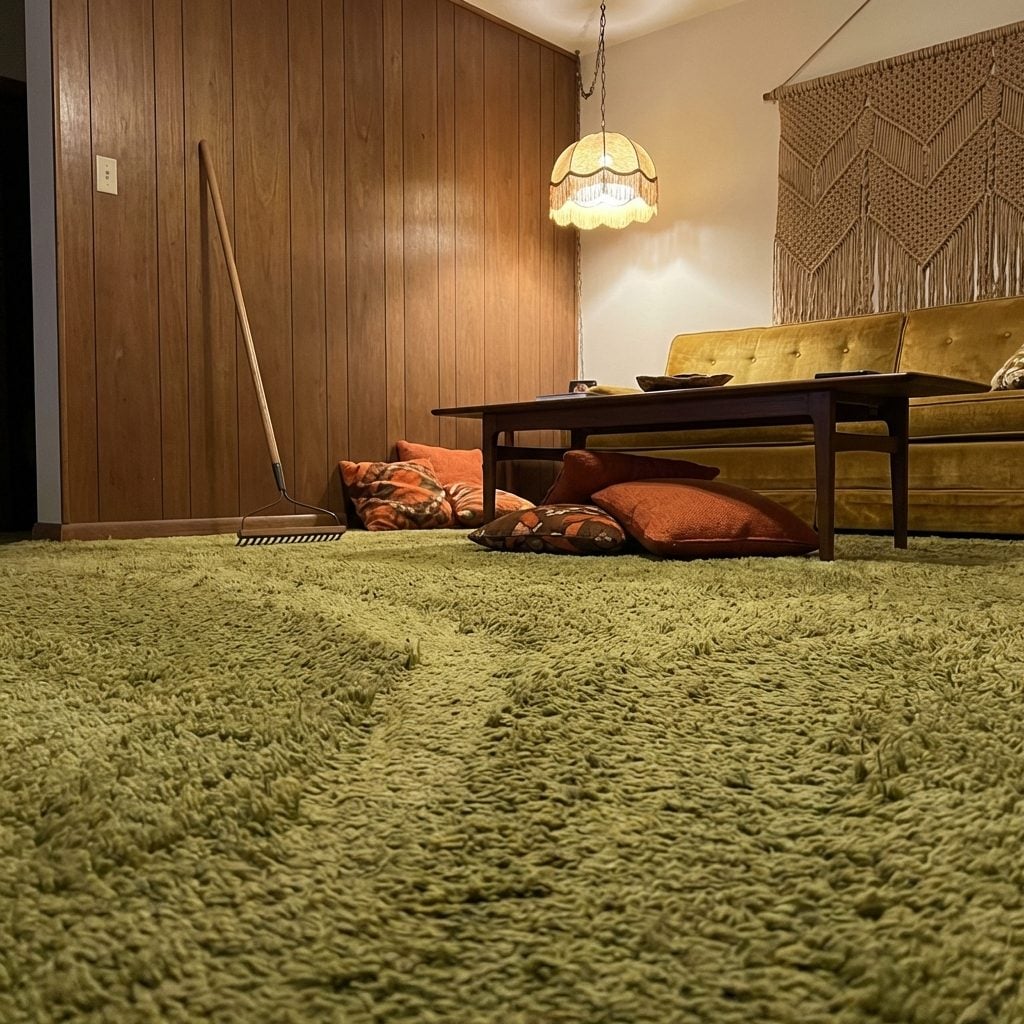
Avocado green. Harvest gold. That particular shade of brown that didn’t have a name but was in every house between 1971 and 1983. Shag carpet was the defining textile of the decade, and it required its own tool for maintenance: the carpet rake, which sat in every living room corner like a tiny, embarrassed lawn implement.
Dropping a coin in shag carpet was a genuine loss event. You watched it disappear and made a mental note to find it during the annual move-the-furniture cleaning, which was also the only time anyone confirmed what was actually living down there.
The Macramé Wall Hanging That Took Six Months to Make and Thirty Years to Take Down
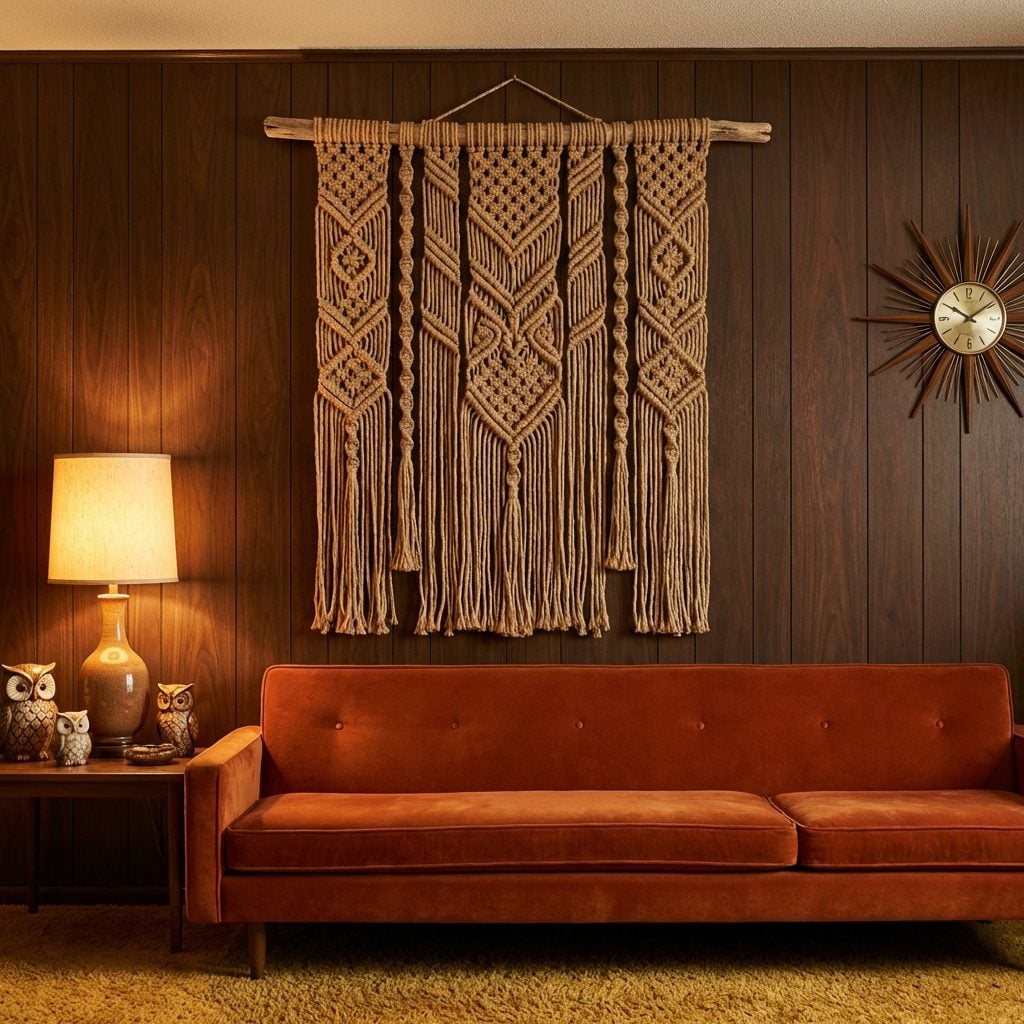
Every living room had one, and at least one person in the household made it by hand from a kit purchased at a craft store that no longer exists. The jute was always scratchy, the driftwood dowel was from an actual beach trip, and the knot patterns were either deeply intentional or completely improvised depending on how the afternoon went.
It hung there for decades, slowly collecting dust in its fibers, outlasting multiple furniture sets and at least one divorce. Nobody took it down because nobody decided to take it down. It just existed, suspended between eras, a monument to a very specific kind of creative confidence.
The Console TV the Size of a Coffin That Doubled as a Display Surface
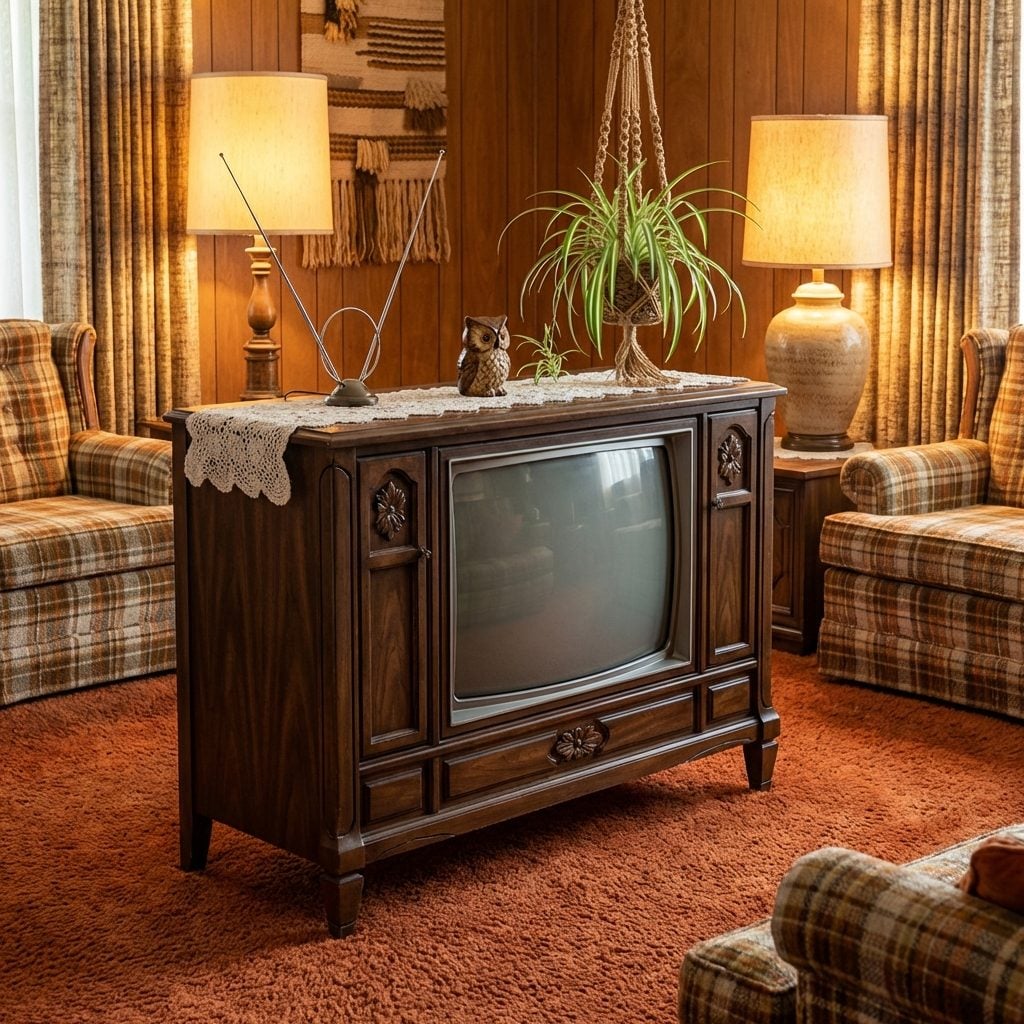
It wasn’t just a television. It was furniture, specifically a very large piece of furniture that happened to contain a television inside a walnut-veneer cabinet the scale of a sideboard. The top surface became a dedicated display area: a crocheted doily, a few framed photos, a plant in a macramé hanger, and possibly a ceramic horse.
When the TV stopped working, the cabinet stayed. For years. Because it was a perfectly good cabinet, and also because moving it required four adults and someone getting hurt.
The Conversation Pit That Required Careful Footwork After Dark
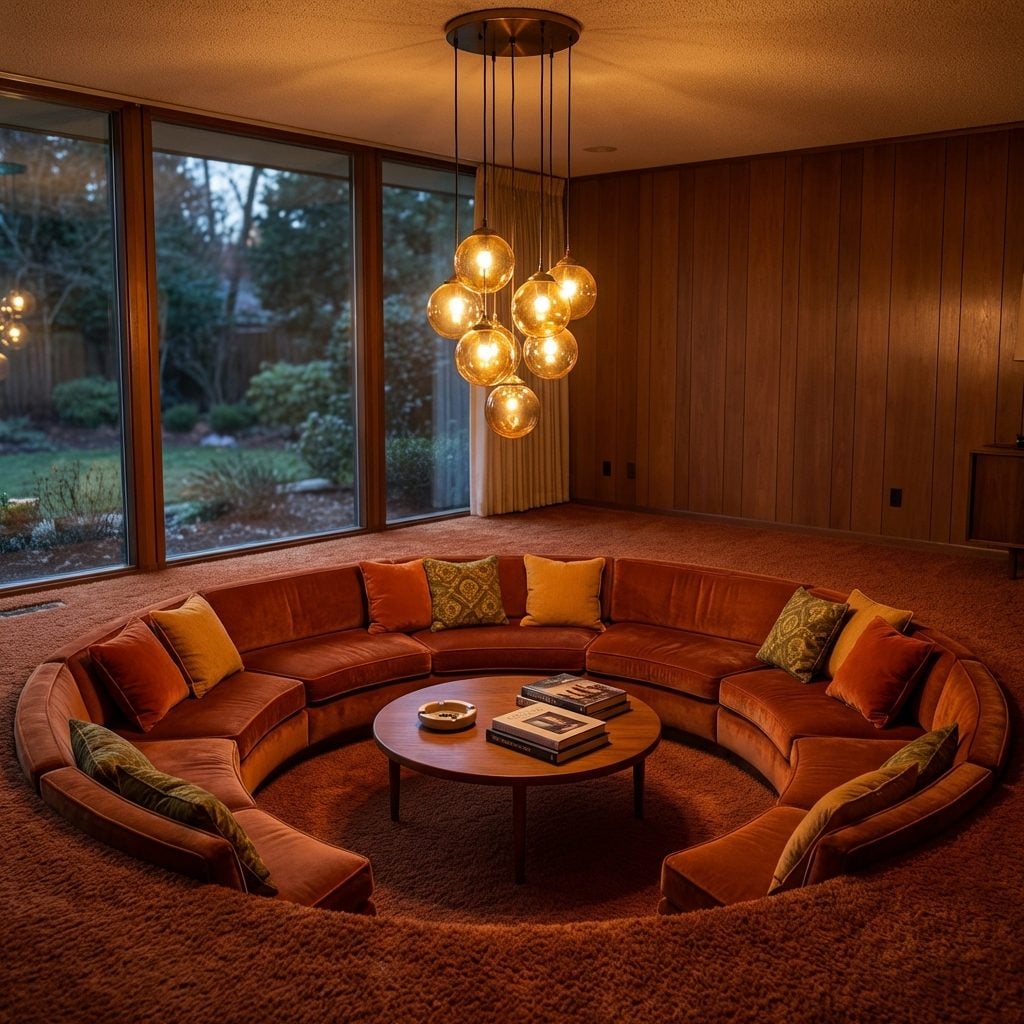
The conversation pit was the most architecturally ambitious thing the 1970s living room attempted, and it delivered both on drama and on liability. A sunken section of the floor, lined with built-in sectional seating and enough throw pillows to stock a small store, it turned the act of sitting down into a mild descent event.
It was designed for lingering, for long evenings with wine, for the kind of conversation that didn’t require standing up. What it was not designed for was navigating after midnight in dim lighting, a mistake that every household with a conversation pit made exactly once per year.
The pink family room of today might chase that same cocooning instinct, but it does so with considerably fewer tripping hazards.
The Plaid Sofa in Colors That Should Not Have Gone Together but Did
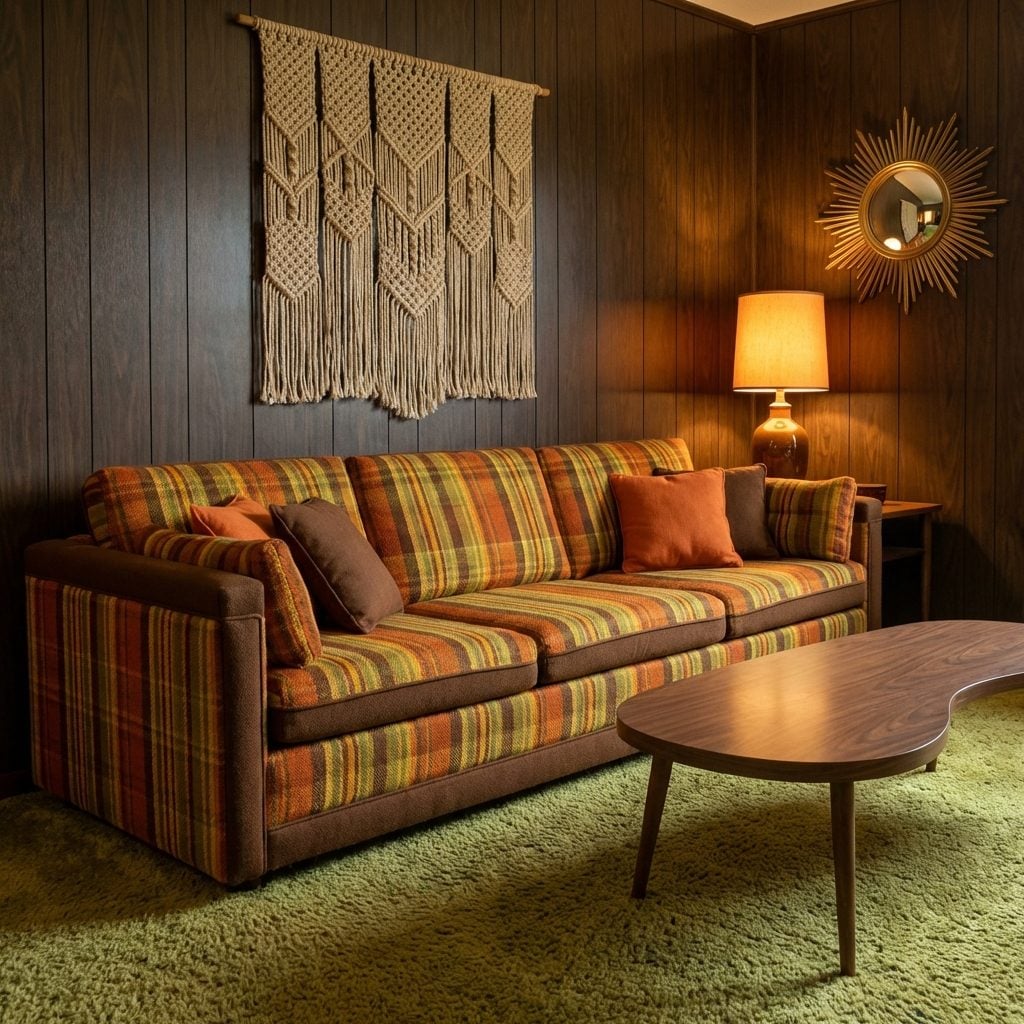
Burnt orange, harvest gold, avocado green, and brown. Four colors that had no business sharing a sofa, and yet there they were, in plaid formation across the widest piece of furniture in the house. The twill weave was practically indestructible, which was fortunate because that sofa was going to outlast several design revolutions before anyone seriously considered replacing it.
The Swag Lamp Hanging From a Ceiling Hook With Absolutely No Electrical Support
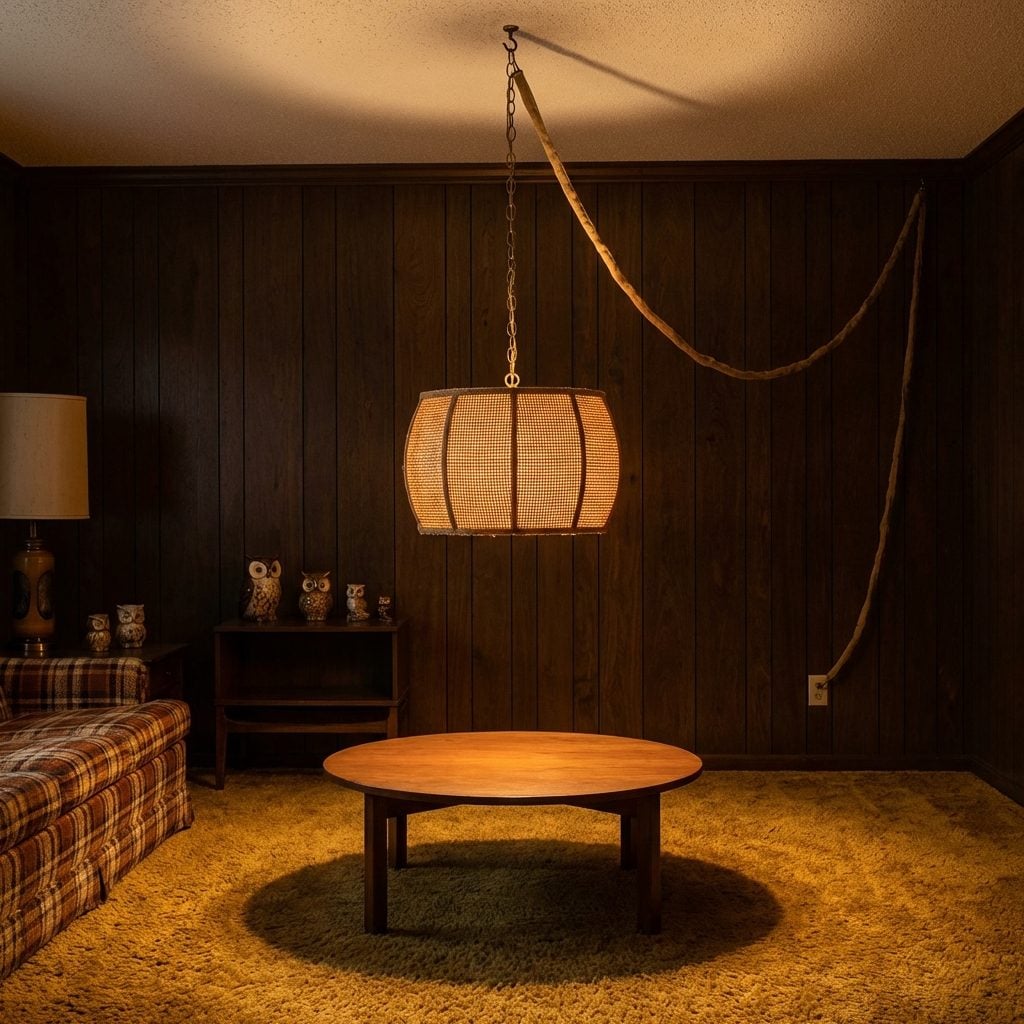
The swag lamp asked only one thing of its owner: a single ceiling hook and enough cord to reach a wall outlet via a decorative swooping arc that somehow nobody found strange. It was not hardwired. It was not structurally committed to its location. It was simply hanging there, confident, casting amber light over the coffee table below.
The cord running along the ceiling and down the wall was always slightly visible, always slightly concerning, and always completely ignored. This was fine. Everything was fine.
The Encyclopedia Britannica Set in the Built-In Bookcase Nobody Ever Read
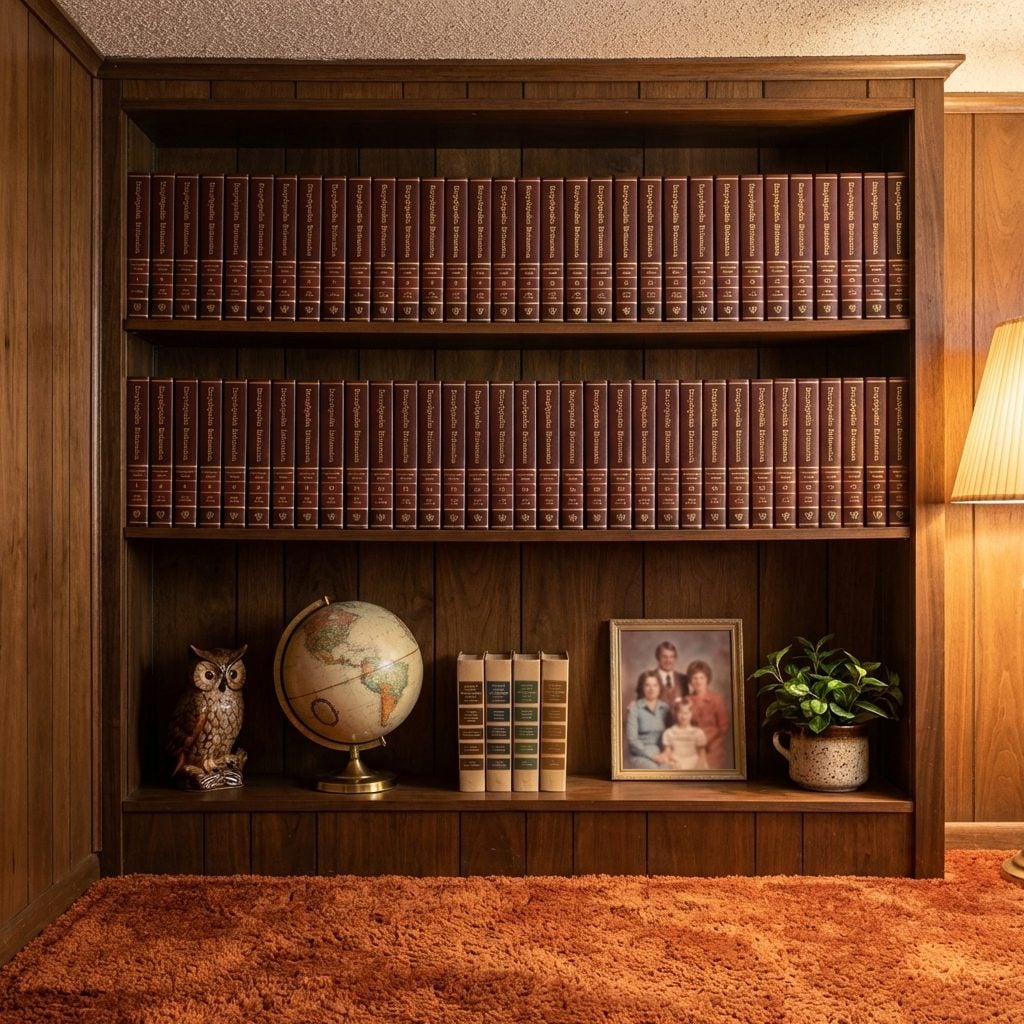
Every volume in perfect order, spines aligned, the gold lettering on the burgundy covers glinting under the table lamp. They were purchased from a door-to-door salesman who was very convincing, and they cost roughly what a used car cost, and they were consulted perhaps four times between 1974 and 1991.
Mostly they were furniture. Very expensive, slightly guilty furniture that signaled, to anyone who visited, that this was a household that took education seriously, even if nobody could locate volume 14 when it was actually needed.
The Sunburst Clock That Hung Over the Sofa Like an Exploding Star
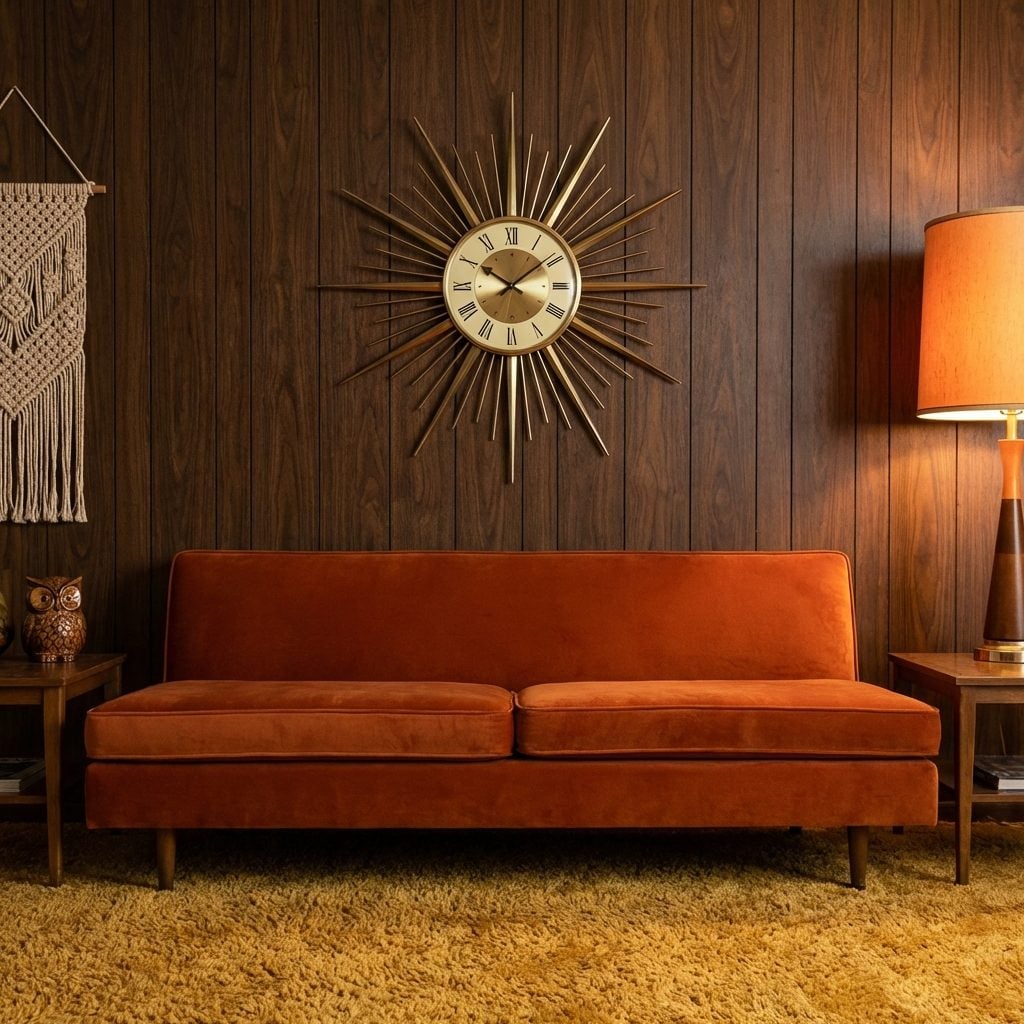
Somewhere between a clock and a sculpture, the sunburst hung on the paneling like a small gold supernova, its spokes radiating out at irregular lengths in a way that somehow communicated both artistry and punctuality. They came in gold, brass, and a specific shade of bronze that matched nothing else in the room and worked anyway.
The sunroom decor of today chases that same maximalist warmth through different objects. The sunburst clock was doing it in 1973 with considerably more confidence.
The Ceramic Owl Collection Arranged on Every Available Horizontal Surface
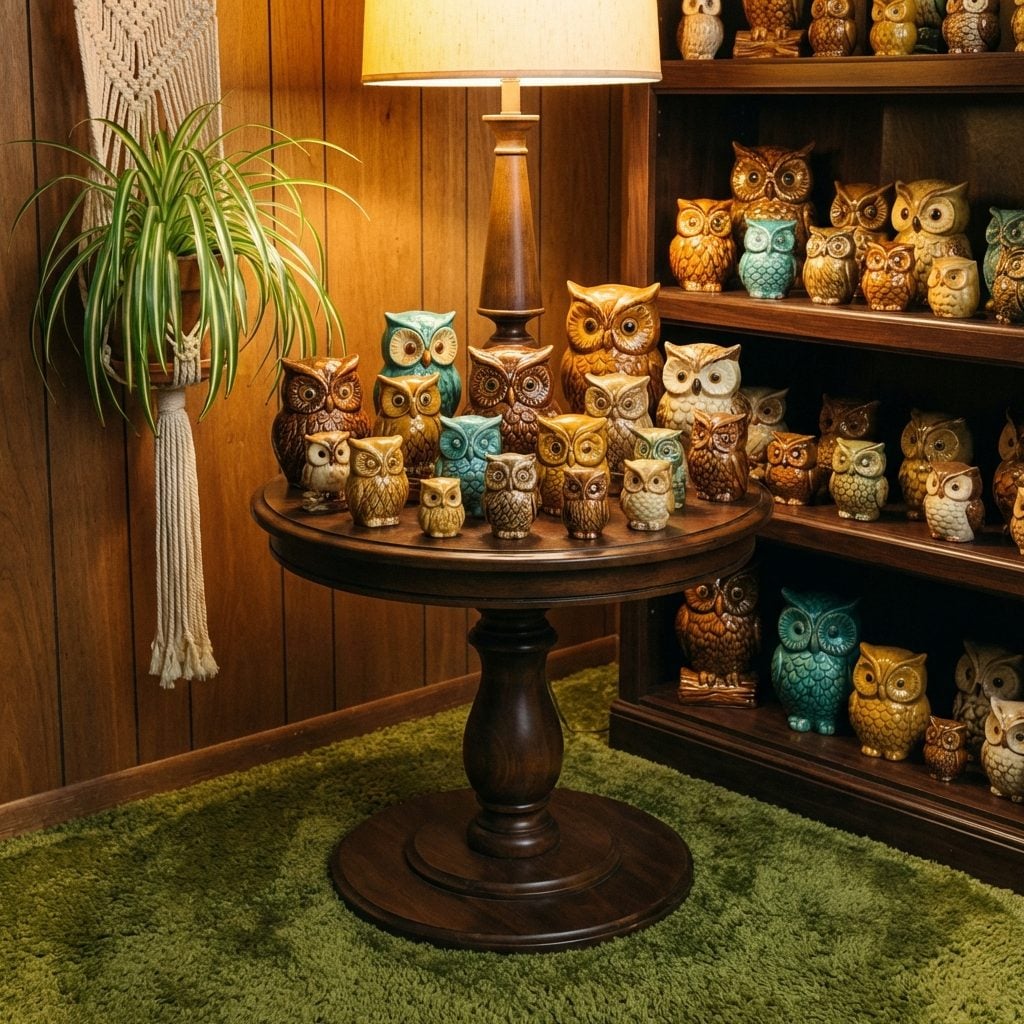
Nobody decided to collect ceramic owls. The collection simply accumulated, one figurine at a time, through gift exchanges, craft fairs, and a general cultural consensus throughout the 1970s that owls were the appropriate decorative mascot of the era.
They arrived in every glaze finish the ceramic arts industry could produce: matte brown, glossy teal, hand-painted amber, iridescent cream. Each one had enormous eyes. Each one was placed on a horizontal surface and never moved again. By 1977, every living room in the country had at least six, and nobody questioned this.
The Recliner With the Pull Lever on the Side That Dad Would Not Surrender
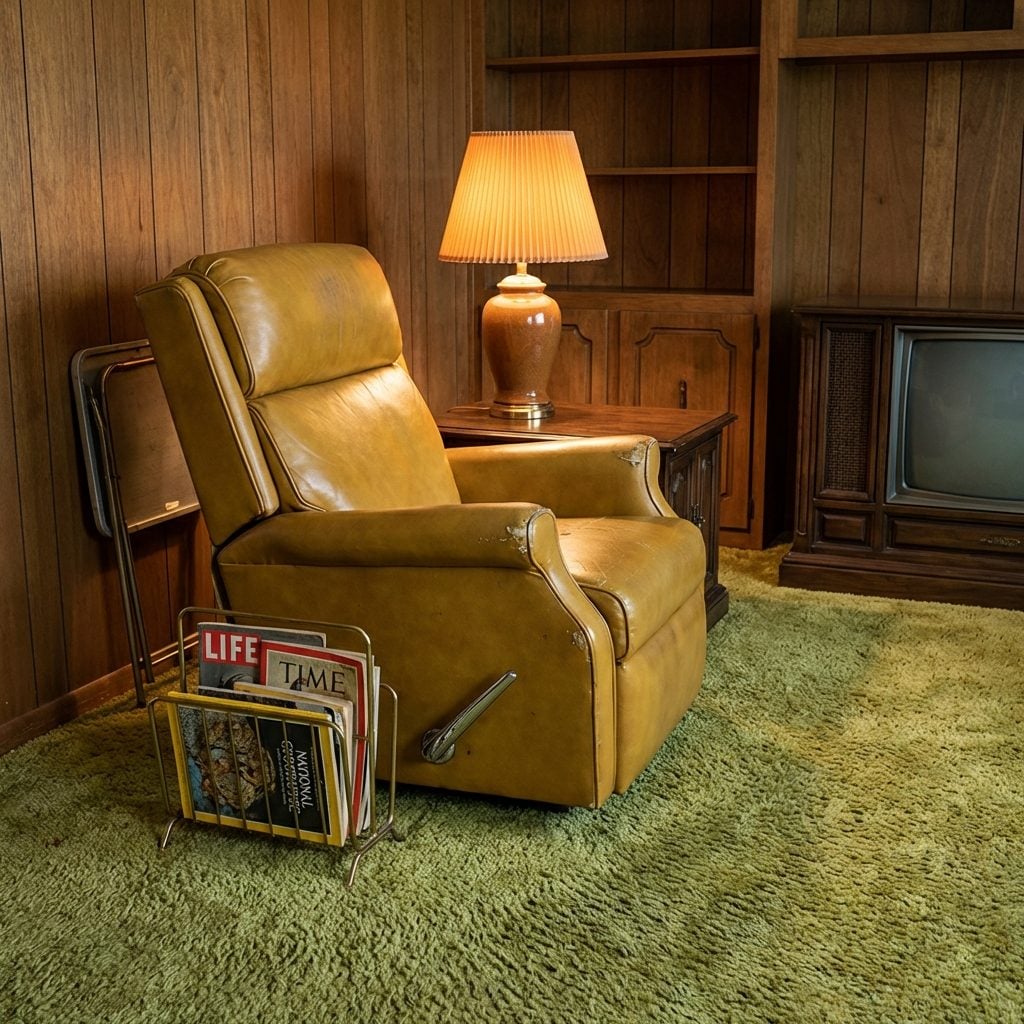
The chrome lever on the right side was the mechanism, and operating it was a specific physical action: a sharp downward pull, a backward lean, and then the footrest shooting outward in a single committed motion. Once the recliner was deployed, the person inside it was essentially immovable until a commercial break or a genuine emergency.
This chair had a designated spot that never changed. The carpet beneath it showed a permanent indentation. The brass magazine rack beside it held reading material that hadn’t been touched since 1976. This corner of the room was not a seating area. It was a territory.
The Plastic Slipcovers That Protected Furniture That Nobody Was Allowed to Use Anyway
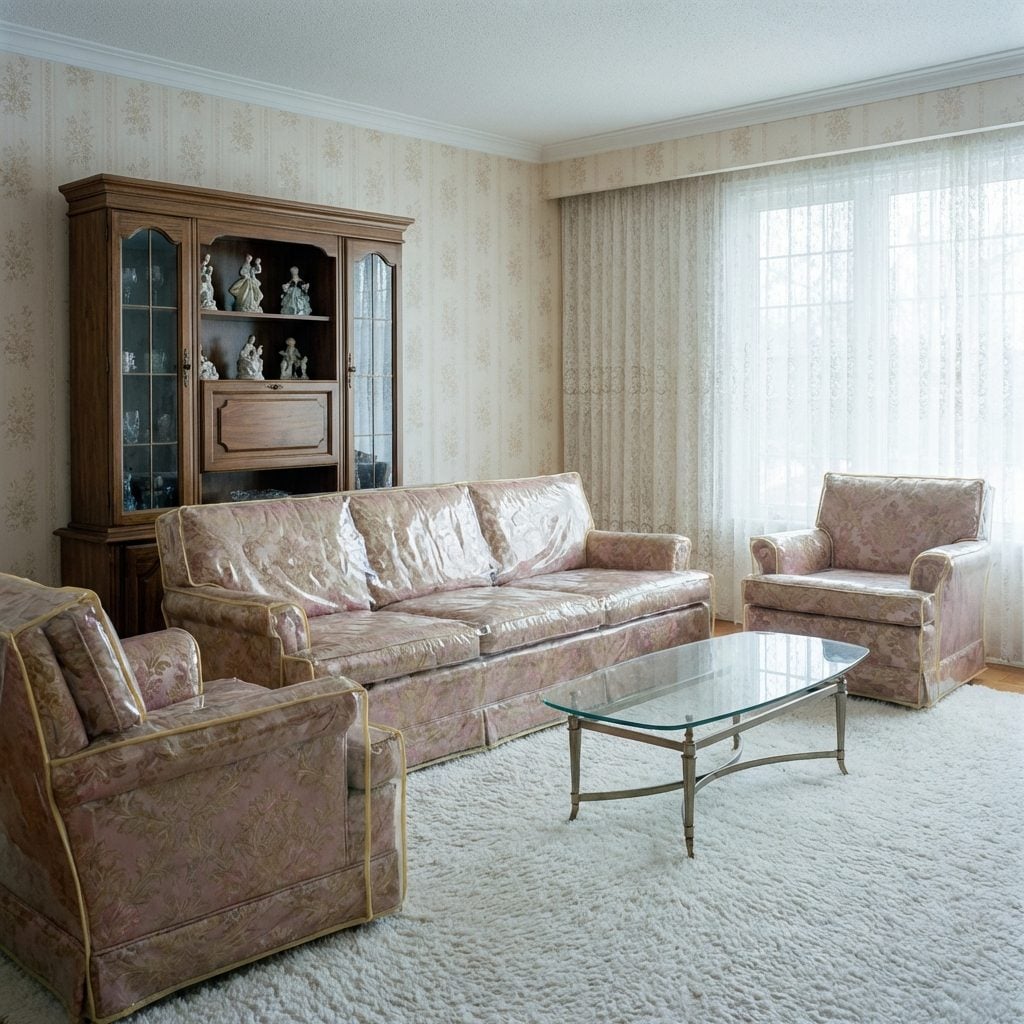
The plastic made a specific sound when you sat on it: a kind of sticky, slightly embarrassing crinkling that announced your presence to everyone in the house. It was also approximately the temperature of the room, which in summer meant it was hot, and in winter meant it was cold, and in both cases meant it was uncomfortable.
This was the formal living room furniture. The furniture nobody was allowed to use. Protected by plastic from a humanity that was not permitted to interact with it. The psychological logic here has never been fully explained, but every household with plastic slipcovers understood the rule without being told.
The Hanging Bead Curtain in the Doorway Instead of an Actual Door
🔥 Would you like to save this?
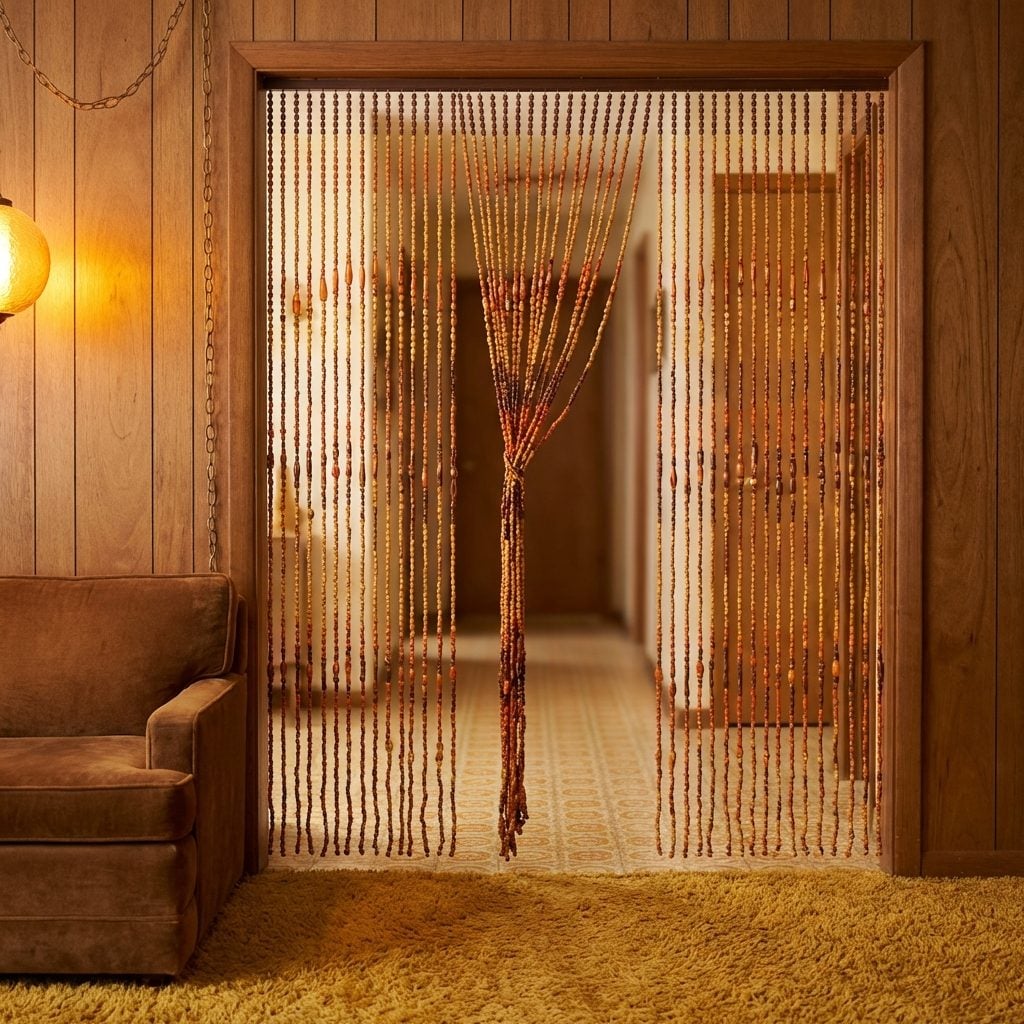
Wooden beads, plastic beads, sometimes shells, occasionally bamboo sections threaded together, hanging from a wooden rod across the full width of a doorway, doing absolutely nothing to block sound, light, sight, or drafts. The only thing the bead curtain reliably blocked was comfortable passage from one room to the next.
Walking through it involved a face-full of beads and the specific tactile sensation of a dozen strands dragging across your shoulders. This was considered atmosphere. The living room’s craftsman kitchen decor equivalent of a door, for people who found doors unnecessarily formal.
The Kidney-Shaped Coffee Table in Walnut Veneer That Never Had a Right Angle
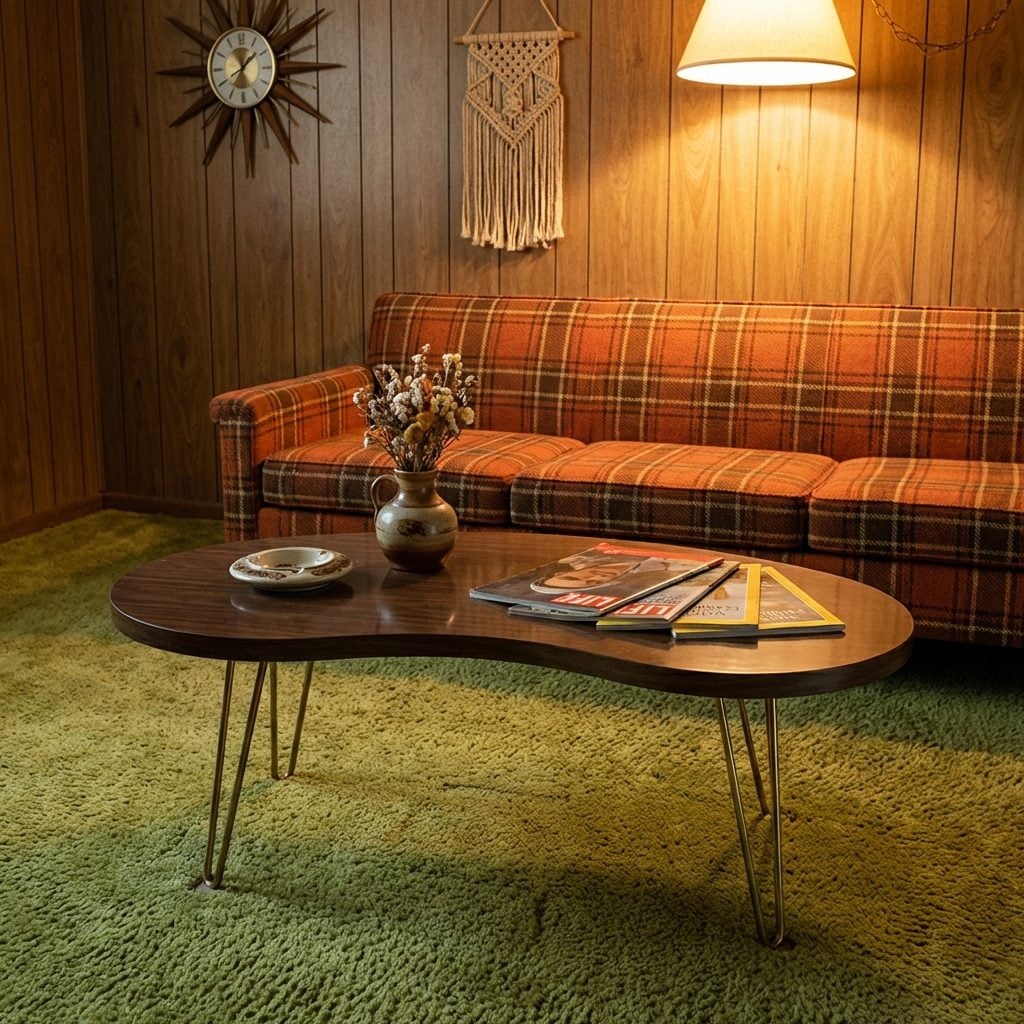
The kidney shape was a design holdover from the late 1950s that had no intention of leaving. It was asymmetrical, organic, and completely impractical for placing things on in a balanced way, which seemed to be of no concern to the decade that chose it as its signature coffee table form.
Setting a glass of Tang on the narrow end felt precarious. Picking something up from the far curve required leaning across it in a way that was vaguely athletic. None of this stopped millions of households from centering their living rooms around one.
The Spider Plant in the Macramé Hanger That Propagated Forever and Gave Away Its Children
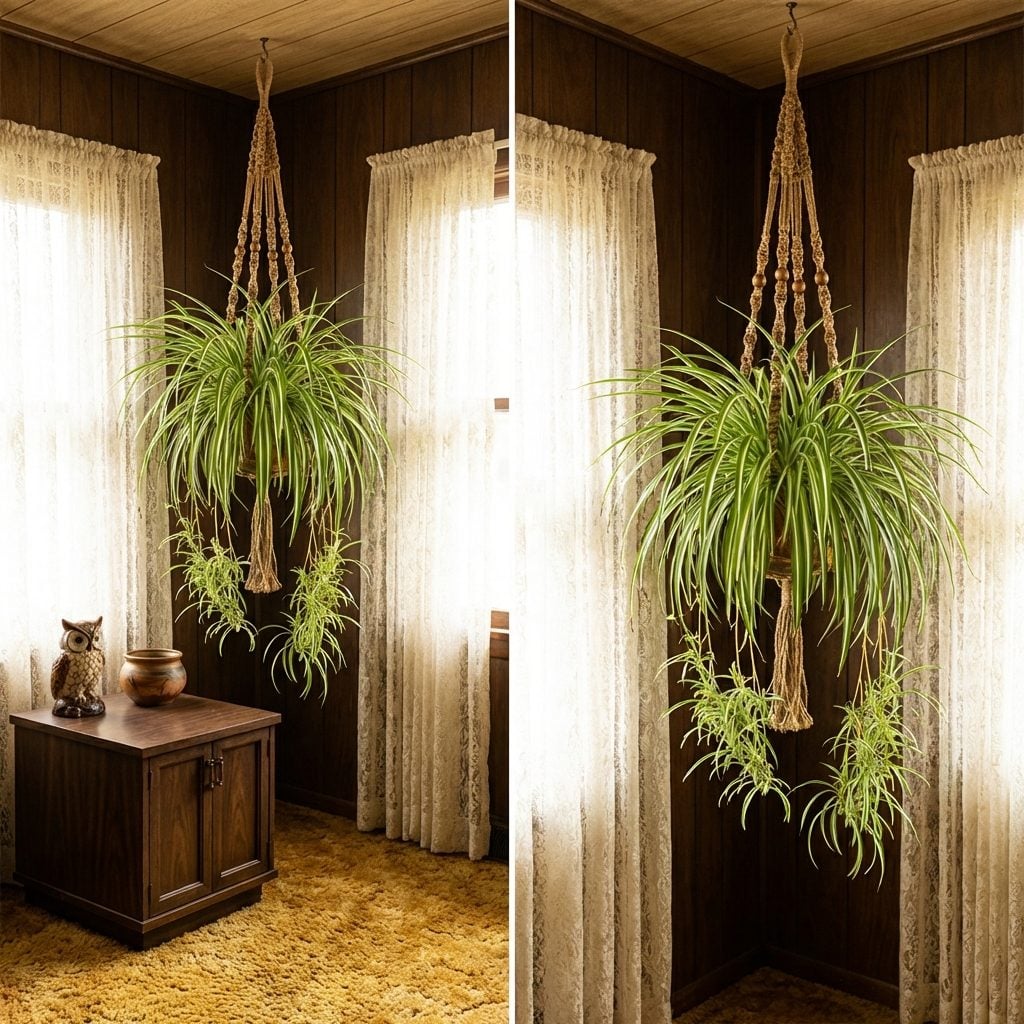
The spider plant hung from the ceiling in its macramé hanger, long tendrils of plantlets dangling down like it was slowly reaching for the shag carpet below. It was essentially immortal. You could forget to water it for three weeks, leave it in a dark corner, let the cat near it (before remembering the cat was not allowed in this story), and it would still produce more baby plants than you had pots for.
Those plantlets got clipped, potted in reused margarine containers, and distributed to neighbors, relatives, and anyone who visited and made the mistake of admiring it. The spider plant was the 1970s living room’s most generous resident.
Wrought Iron Plant Hangers Stationed at Every Window
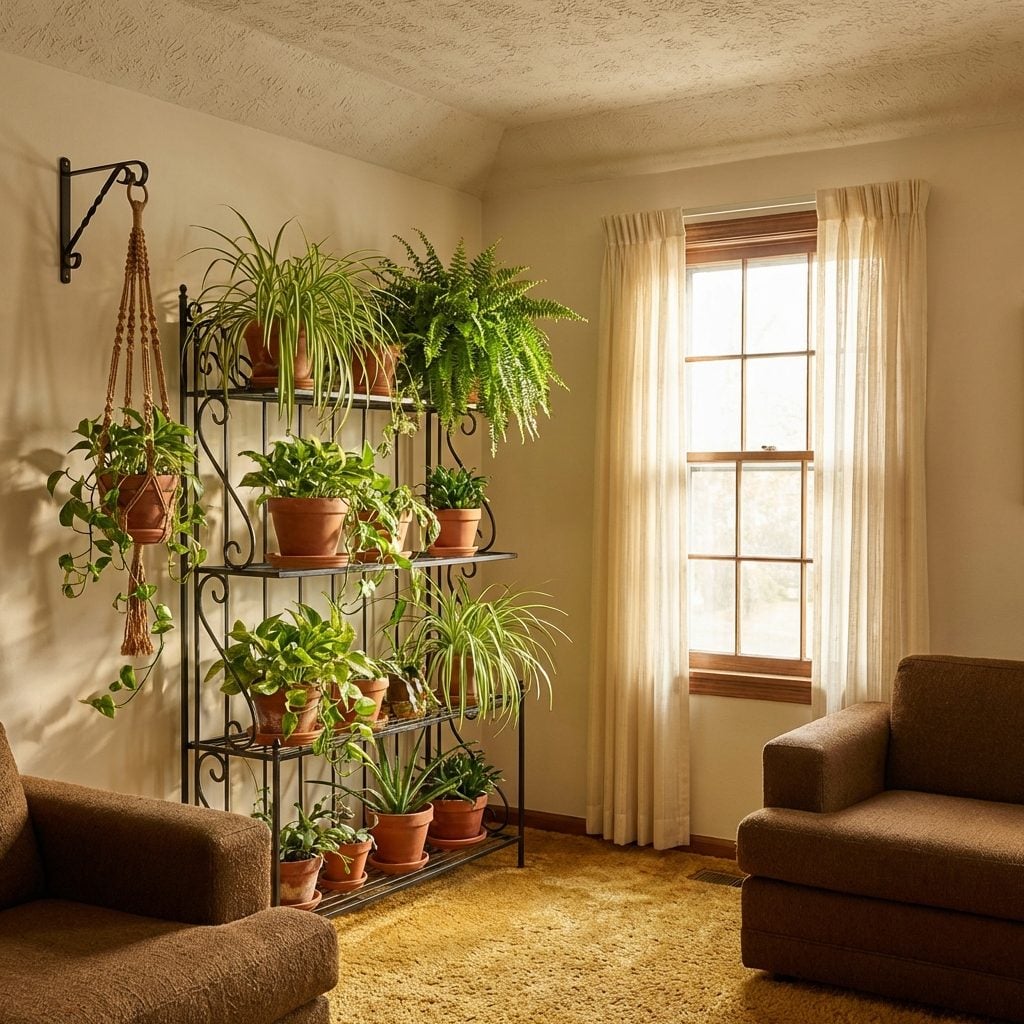
Every 1970s living room had at least one corner that had been fully surrendered to plant life. The wrought iron plant stand, usually a tiered floor unit or a curling bracket bolted beside a window, was ground zero for this indoor garden takeover. Spider plants cascaded from the top tier. A struggling fern occupied the middle. Something that had once been a philodendron but was now primarily stem anchored the bottom.
These weren’t decorative choices so much as a whole philosophy about living. The houseplant obsession of the 1970s was real and serious, and the wrought iron stand was its shrine. The sunroom decor philosophy of bringing the outdoors inside was not a trend back then. It was simply Tuesday. The pots were always terracotta, always slightly ringed with white mineral deposit, and always placed on a saucer your mom would check weekly for standing water.
The Eight-Track Player Built Into the Entertainment Console
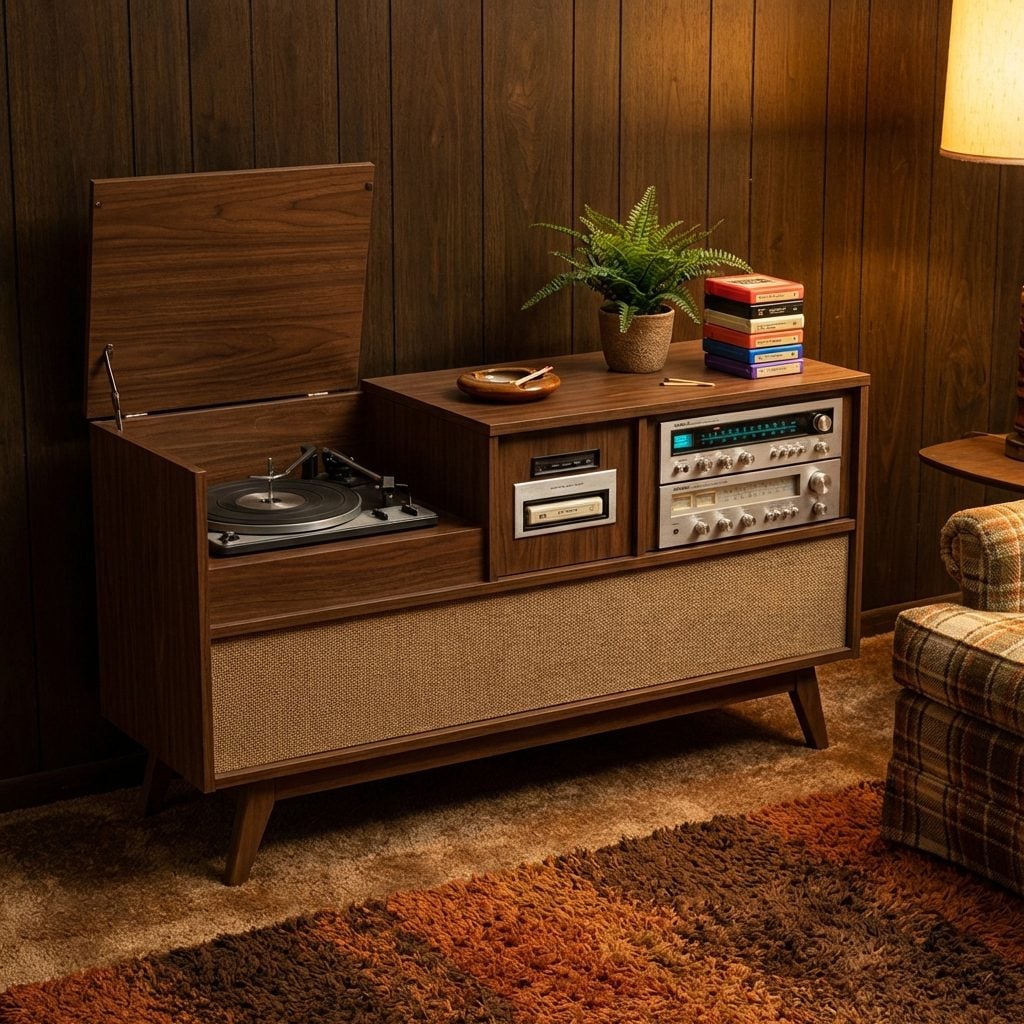
It sat in the console like it had always been there and always would be. The eight-track player was flush-mounted alongside the turntable and AM/FM tuner in that long, low entertainment unit, its slot-loading mechanism facing out with all the authority of something permanent and important. You slid the cartridge in until it clicked, and then the room filled with sound, occasionally punctuated by the mechanical thunk of the program changing mid-song.
Nobody questioned the thunk. It was just what music did.
The console itself deserves its own mention: typically a walnut or teak veneer cabinet running four or five feet wide, sitting on tapered legs, housing the entire family audio system behind a woven fabric speaker grille. This was the entertainment center before the entertainment center existed as a concept. If you want to understand mid-century den design sensibility carried into the 1970s, start here.
Mirrored Wall Tiles Installed in Geometric Patterns
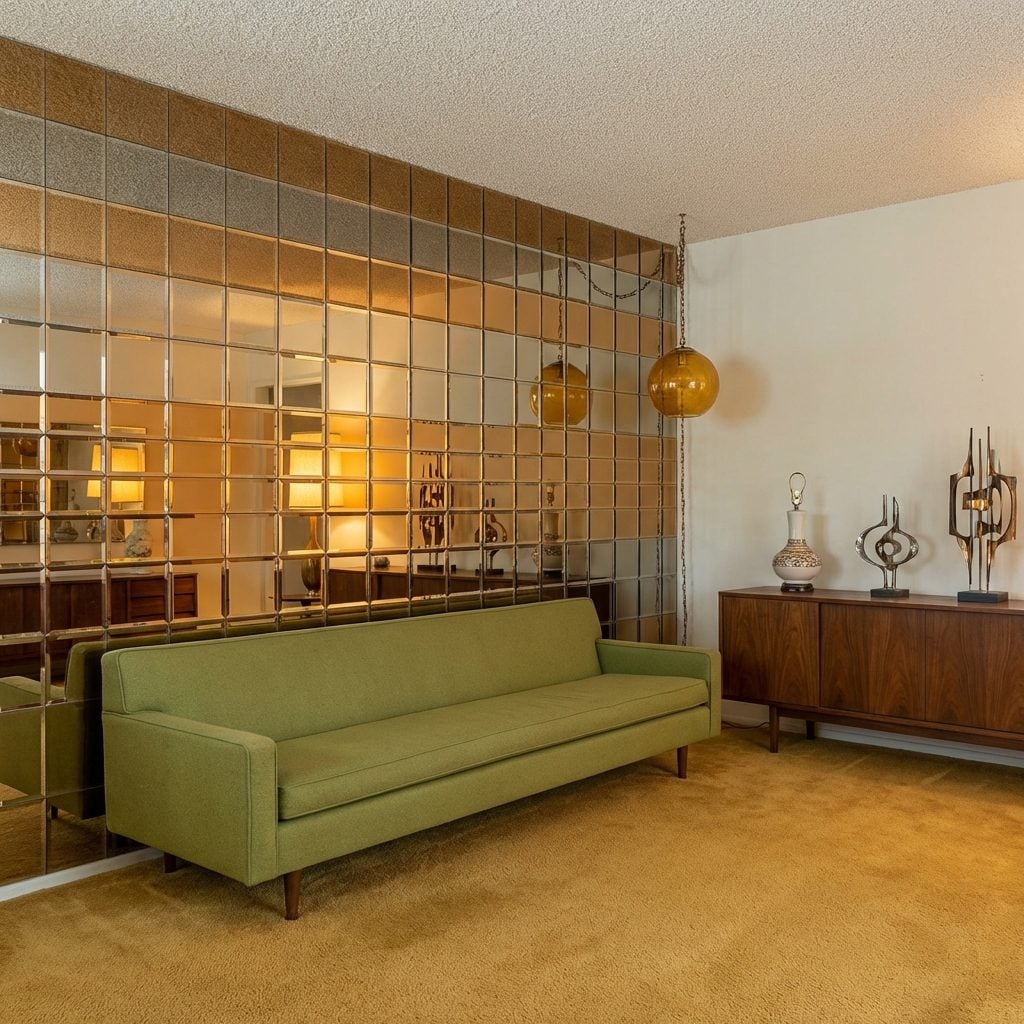
Someone in 1972 made the decision to tile an entire living room accent wall with six-inch mirrored squares, and the rest of the decade followed. These weren’t mirrors in frames. They were adhesive-backed reflective tiles arranged in grids or occasionally offset brick-style, installed floor-to-ceiling or sometimes just on the upper half of a feature wall above a sofa or credenza.
The stated purpose was to make small rooms feel larger. The actual effect was to give you a fragmented, slightly funhouse reflection of yourself every time you sat down to watch television. The grout lines between tiles meant your face appeared in seventeen separate squares at slightly different angles. It was disorienting, and somehow everyone was fine with it for approximately fifteen years.
The Portable Bar Cart Permanently Parked in the Corner
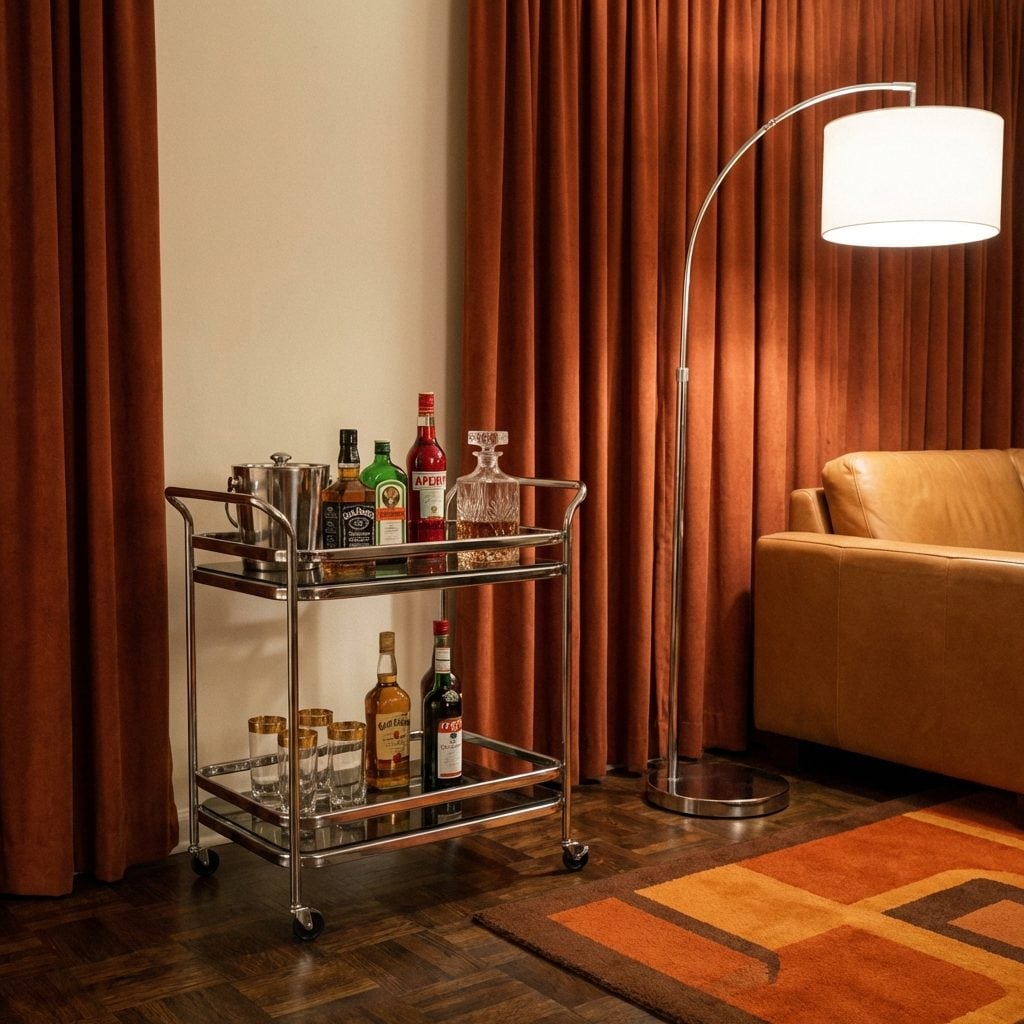
Calling it portable was technically accurate. It had wheels. But that bar cart had not moved since 1974 and everyone knew it. Typically chrome-framed with smoked glass or mirrored shelves, it held a rotating cast of bottles: Scotch, gin, a bottle of Campari that was mostly for show, some crème de menthe that had been there since Nixon. A small ice bucket with tongs that no one used because the tongs were decorative. A set of highball glasses with gold rims.
The living room bar cart was not just about drinking. It was about signaling a certain kind of adulthood. Having it out in the open, fully stocked and permanently stationed, said: we are people who entertain. We are prepared. Pour yourself something and sit down.
Sheer Curtain Panels Layered Under Heavy Velvet Drapes
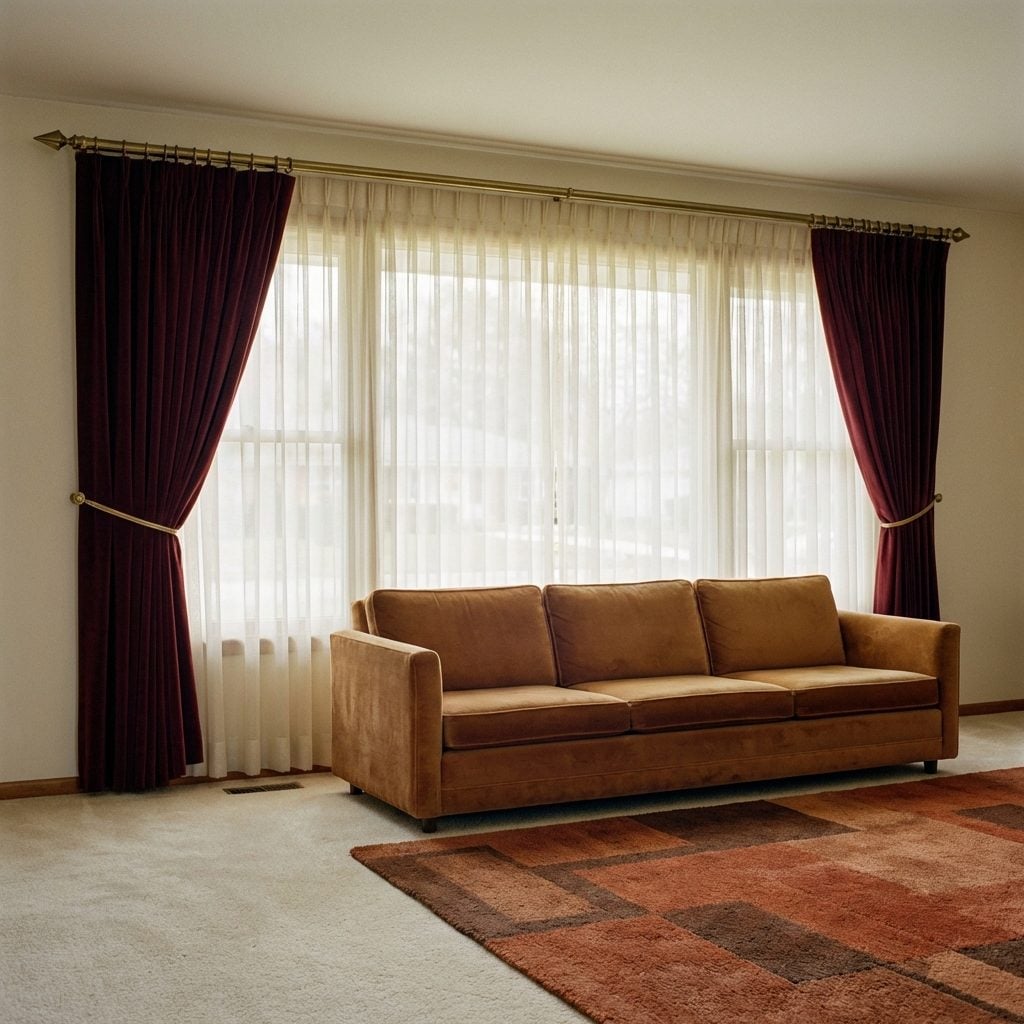
The double curtain system was not a style choice. It was a fact of life. Every window had two layers: a sheer white or cream panel mounted closest to the glass, hung from a secondary rod, and then a set of floor-length drapes in something heavy and serious pulled back to the sides. The sheers diffused the daylight into something soft and private. The drapes, when drawn, blocked everything. The layered effect created a kind of theatrical depth at every window that no single curtain panel has ever quite replicated.
The drapes themselves were often in velvet or a heavy lined fabric: deep burgundy, forest green, burnt orange. They had a pleated header and touched the floor with exactly a half-inch puddle. The hardware was always a brass rod with finials shaped like spear tips or acorns. The whole setup communicated formality and effort in a way that modern cordless blinds simply cannot.
The Gigantic Freestanding Ashtray on a Pedestal
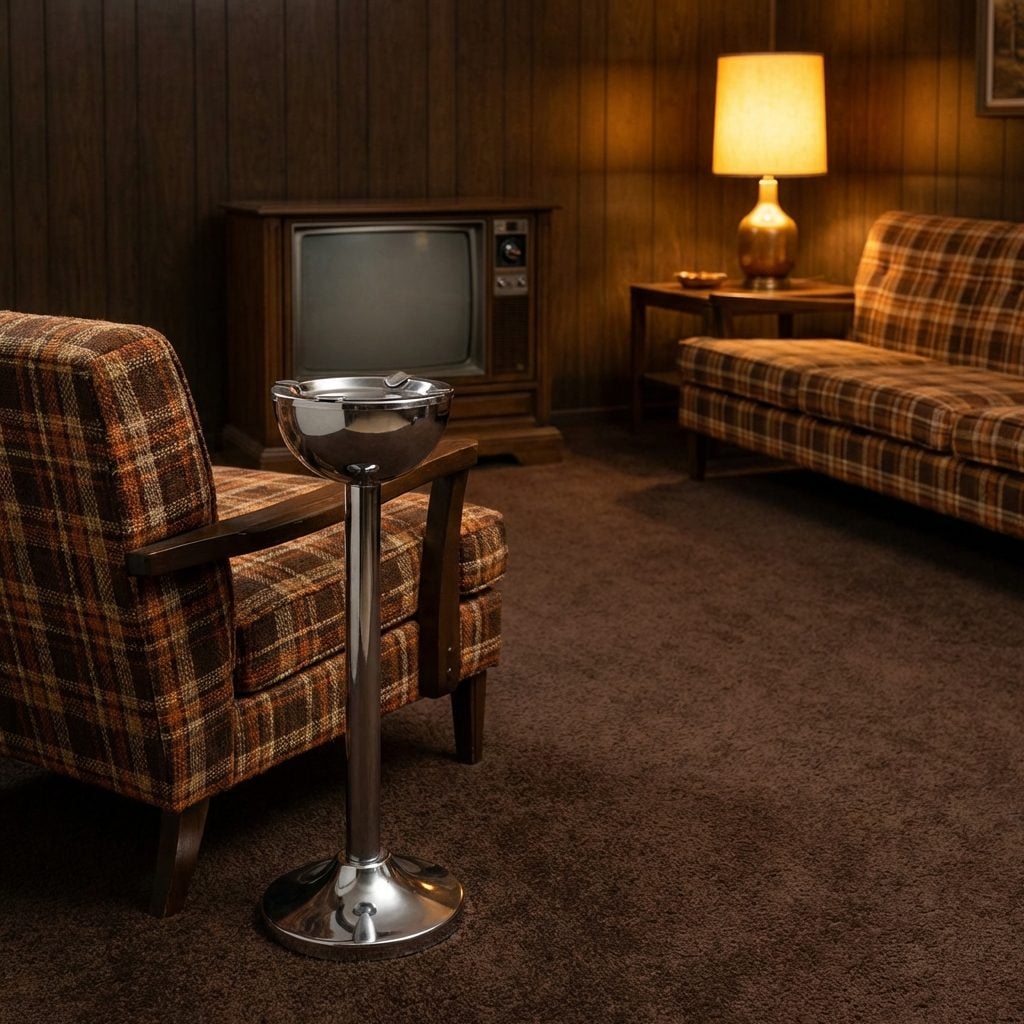
Floor-standing ashtrays were living room furniture. Full stop. The pedestal ashtray, typically 24 to 30 inches tall, had a weighted base, a long metal or ceramic shaft, and a wide rimmed bowl at the top deep enough to hold a pack’s worth of evidence. The good ones were brushed chrome with a flip-top lid. The casual ones were ceramic in harvest gold or avocado. Some were made of wrought iron with a sand-filled bowl.
They stood beside armchairs the way a side table stands beside a sofa today. Completely integrated. Completely expected. The idea that you might ask before lighting up in someone’s living room would have seemed bewildering. The ashtray’s presence was its own standing invitation.
The Console Television With a Wood Cabinet That Matched the Furniture
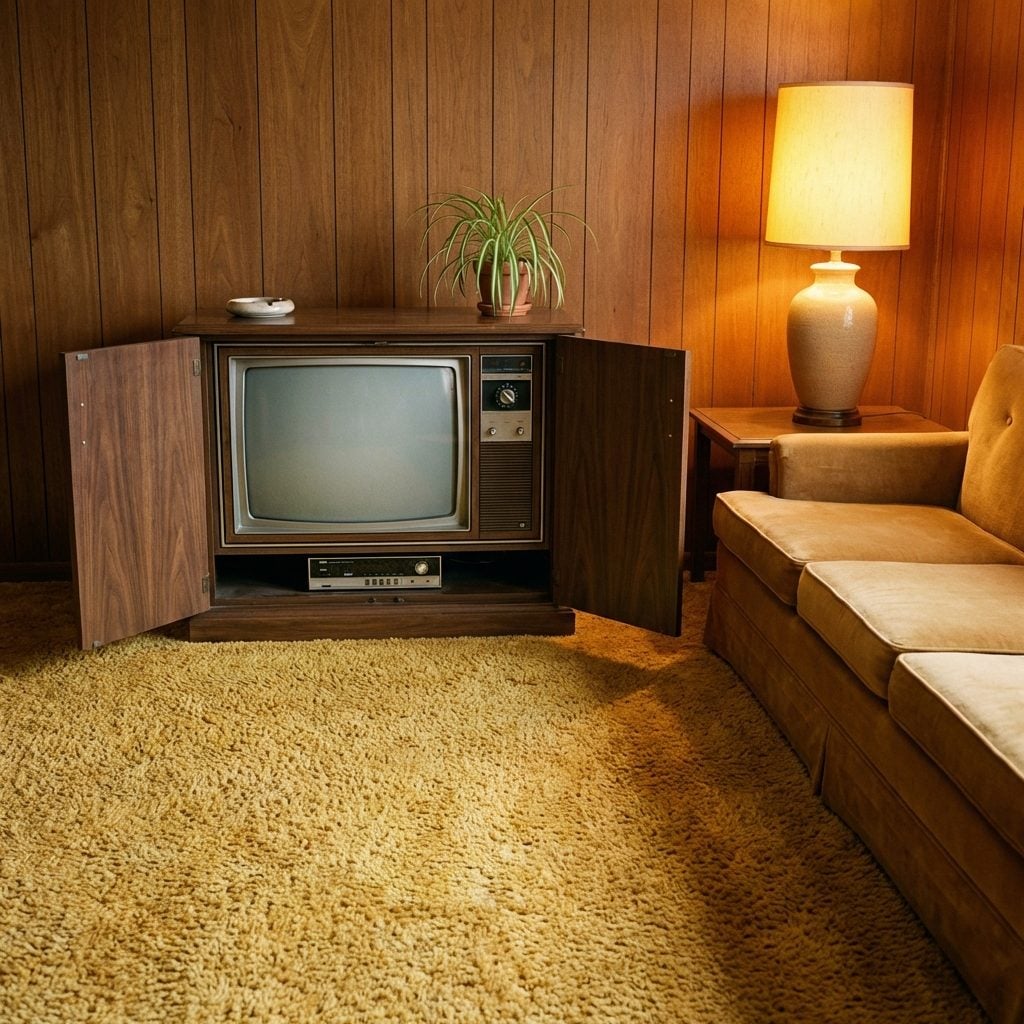
This television was not a screen. It was a piece of furniture with a screen inside it. The console TV sat low on the floor on its own integral base or short legs, housed in a genuine wood or wood-veneer cabinet finished in walnut or mahogany stain, with a door that sometimes swung closed over the screen when the set was off. It was approximately the size of a large dresser and weighed roughly as much as a Buick.
The picture tube inside was deep, which meant the cabinet was deep, which meant the whole thing protruded at least 20 inches from the wall. Nobody cared. There was nowhere to mount a television in 1972. The console TV occupied its own piece of floor real estate, often on a shared wall with the sofa across the room. Viewing distance was not really optional.
The wood cabinet was intentional: televisions were supposed to look like furniture. They were supposed to belong in the room. When the screen went dark, you weren’t supposed to see a black rectangle staring back at you. The closed-door models solved this entirely, which felt genuinely civilized.