🔥 Would you like to save this?
Specifications
- Sq. Ft.: 1,560
- Bedrooms: 2-5
- Bathrooms: 1.5 – 2.5
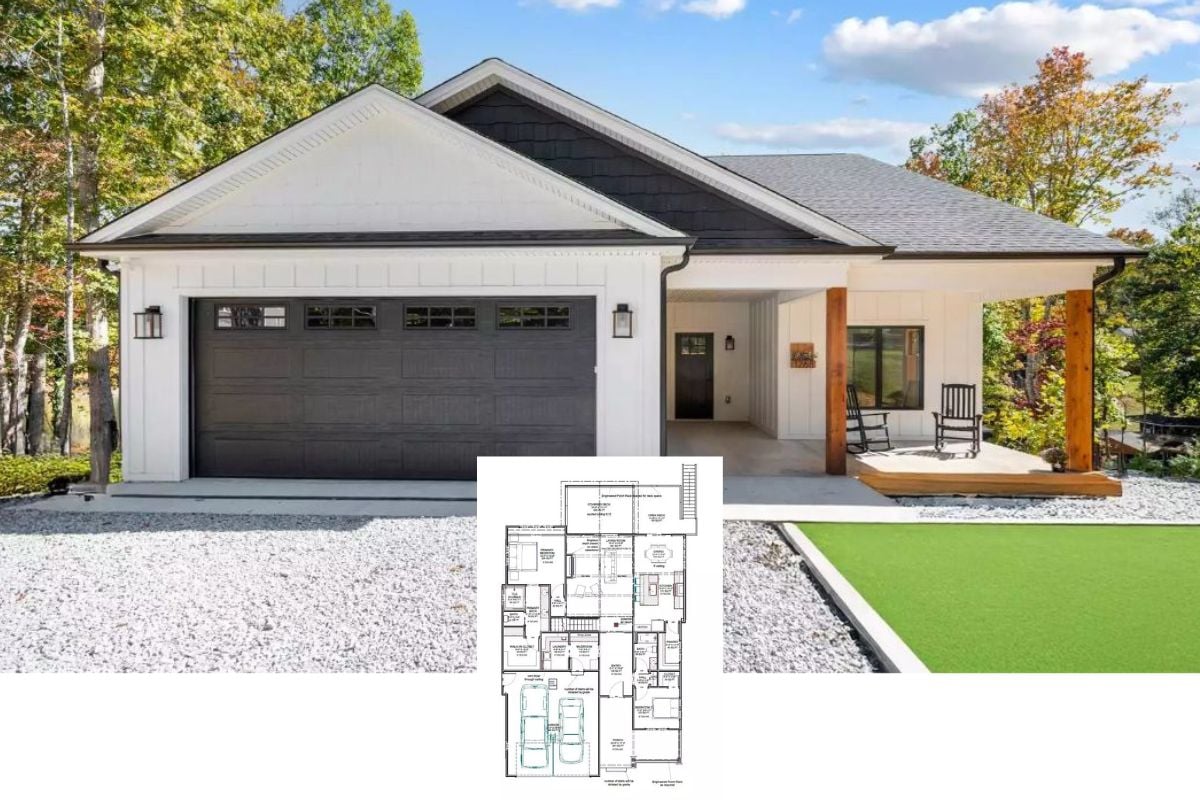
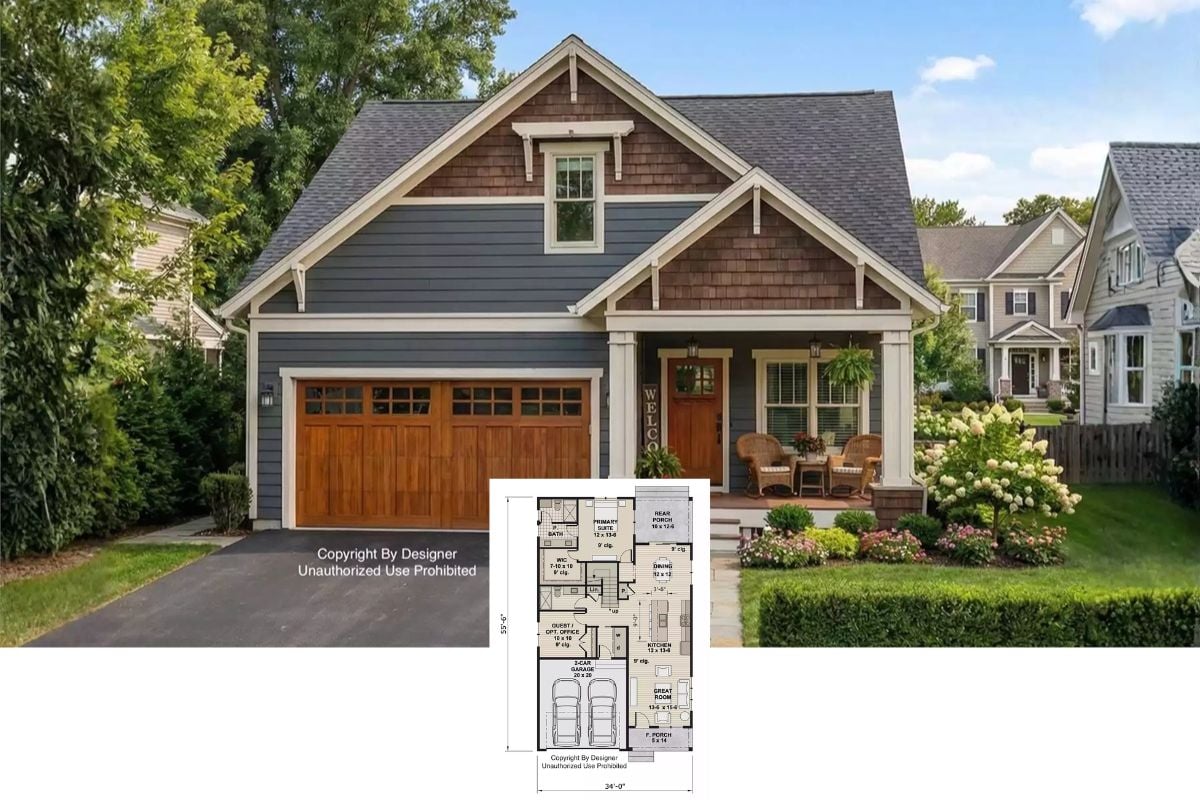
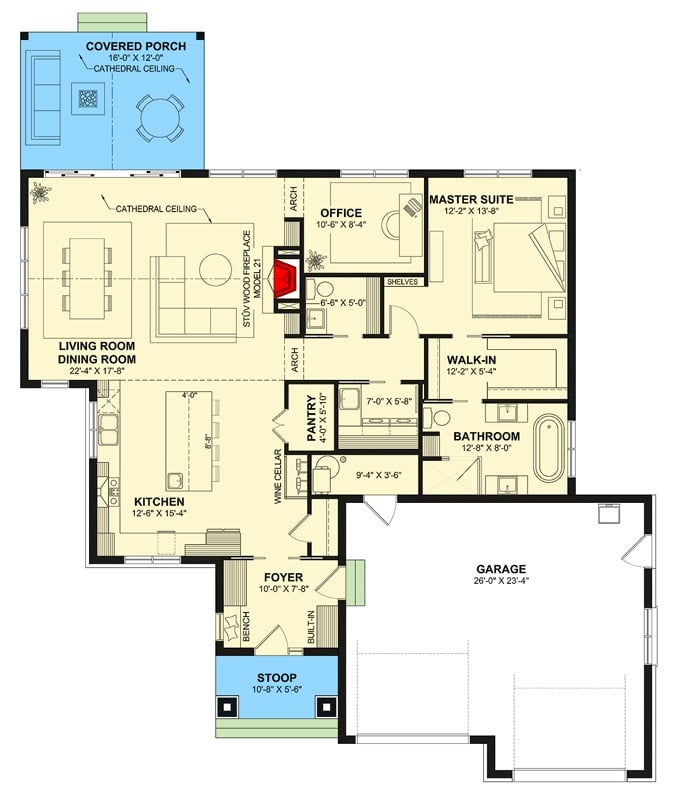
Floor Plan: The Master Suite Connects Directly to a Walk-In Closet and Private Office
In order to come up with the very specific design ideas, we create most designs with the assistance of state-of-the-art AI interior design software. Also, assume links that take you off the site are affiliate links such as links to Amazon. this means we may earn a commission if you buy something.
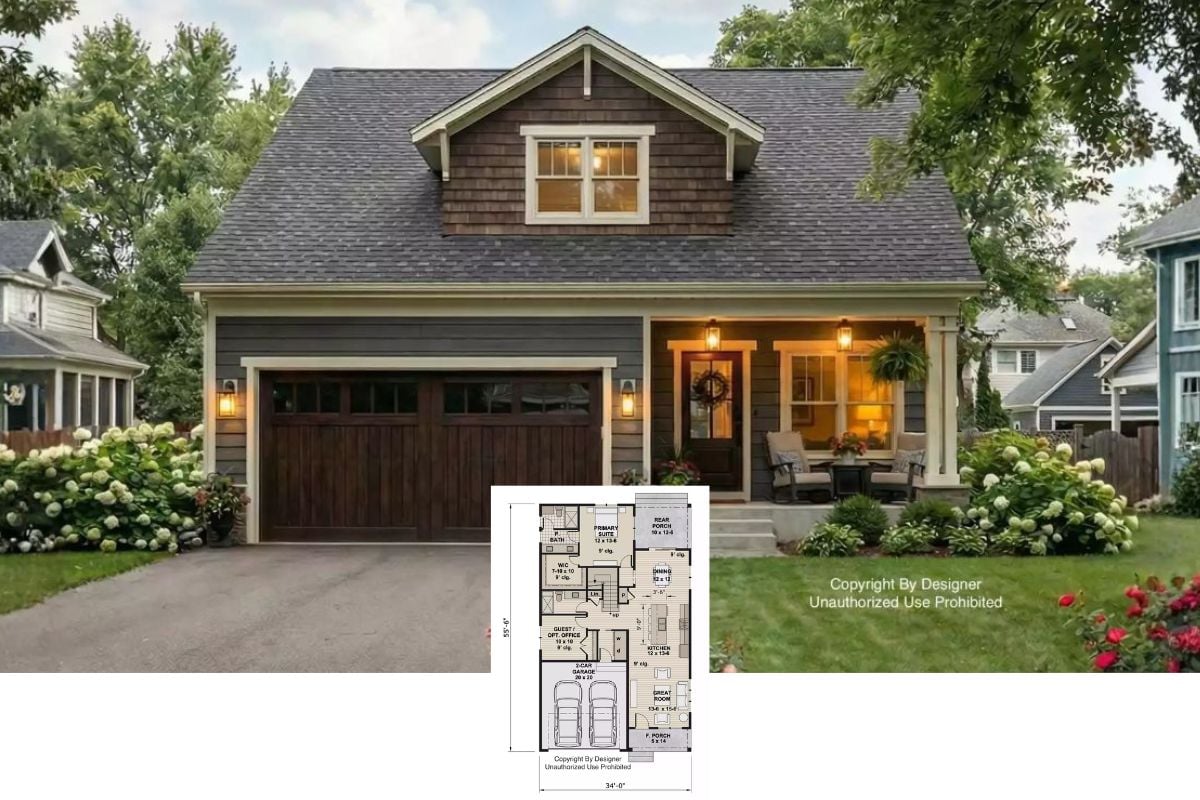
The master suite anchors the right side of the home with its own office and walk-in closet, creating a private zone separate from the main living areas. The open-concept living and dining room flows into the kitchen, which sits near the pantry and laundry for efficient meal prep and cleanup. A covered porch extends the living space outdoors. The foyer offers a second entrance via the stoop.
Basement Floor Plan: A Home Gym Sits Steps From Storage and Mechanical Access
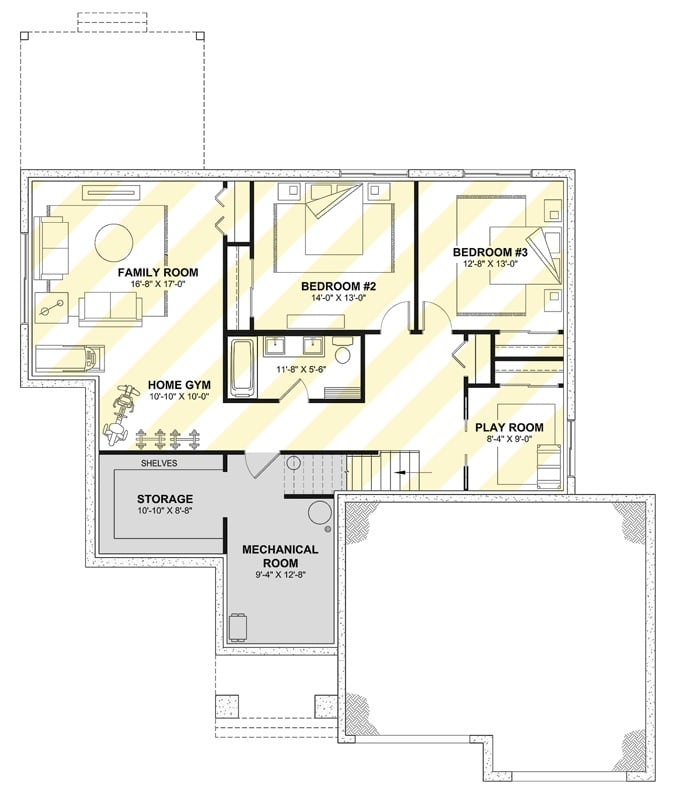
This lower level dedicates serious square footage to fitness with a dedicated home gym beside family gathering space. Two bedrooms anchor one wing with a shared bathroom between them. A play room gives kids their own zone away from adult areas. Storage and mechanical access keep utility functions contained but accessible.
The Psychology Behind This: Placing a gym near mechanical rooms isn’t accidental. Both spaces tolerate noise and benefit from proximity to plumbing for post-workout showers. Separating active zones from sleeping quarters protects rest while giving each function room to expand.
Floor Plan: A Central Staircase Divides Public and Private Zones Efficiently
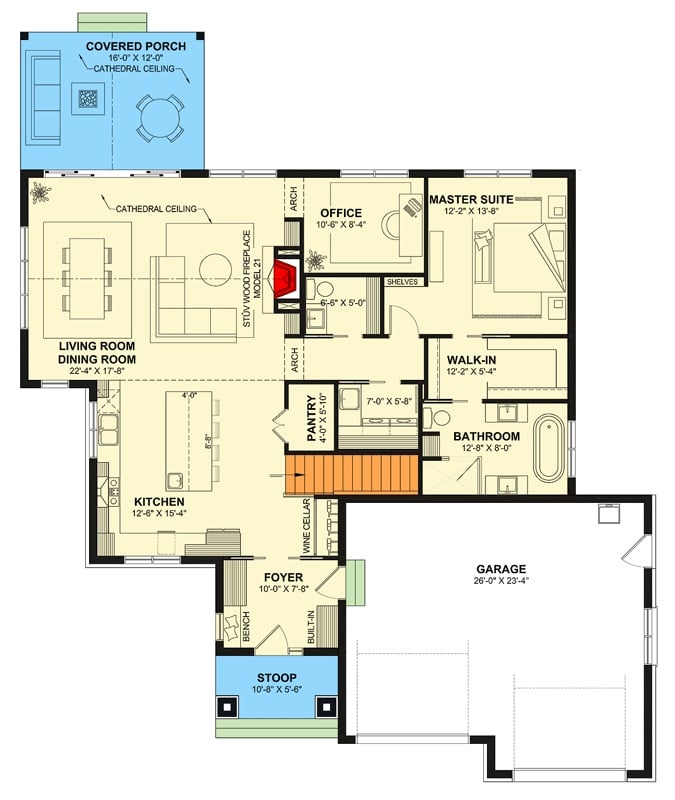
Central stairs separate living spaces from the master suite and office, creating natural privacy zones without long hallways. Cathedral ceilings expand the living and dining room. A covered porch connects directly to the main gathering space. Pantry storage bridges kitchen and half bath access.
Glass Sidelights and Transoms Frame the Entry Door in Natural Light
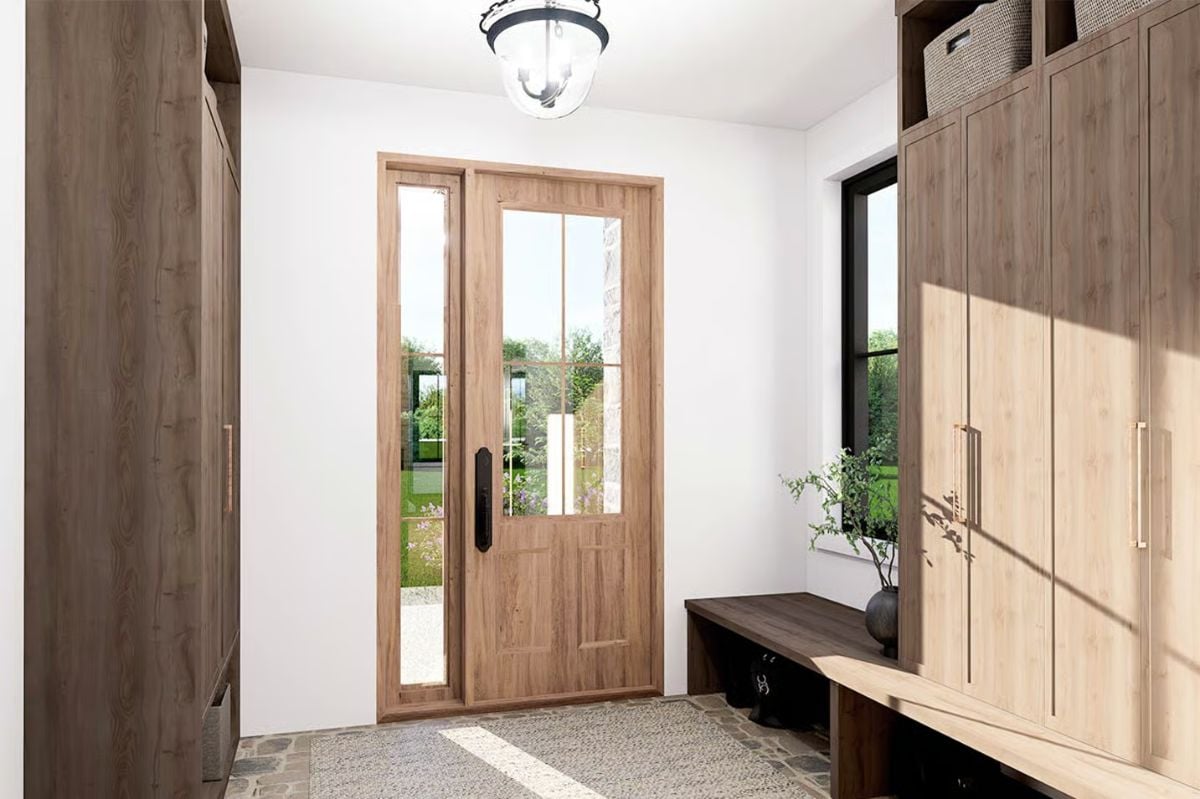
Full-height sidelights flank a wood-grain fiberglass door with divided lite windows, bringing daylight deep into this mudroom entry. White walls contrast with light oak cabinetry that lines both sides of the space. A bench with open cubbies below anchors the right side. Woven baskets fill upper shelves for concealed storage. Pendant lighting with a bronze frame hangs centered above gray-toned tile flooring with a patterned inset that zones the threshold.
Exposed Beam Vaulting Draws Every Sightline Upward in This Open Living Room
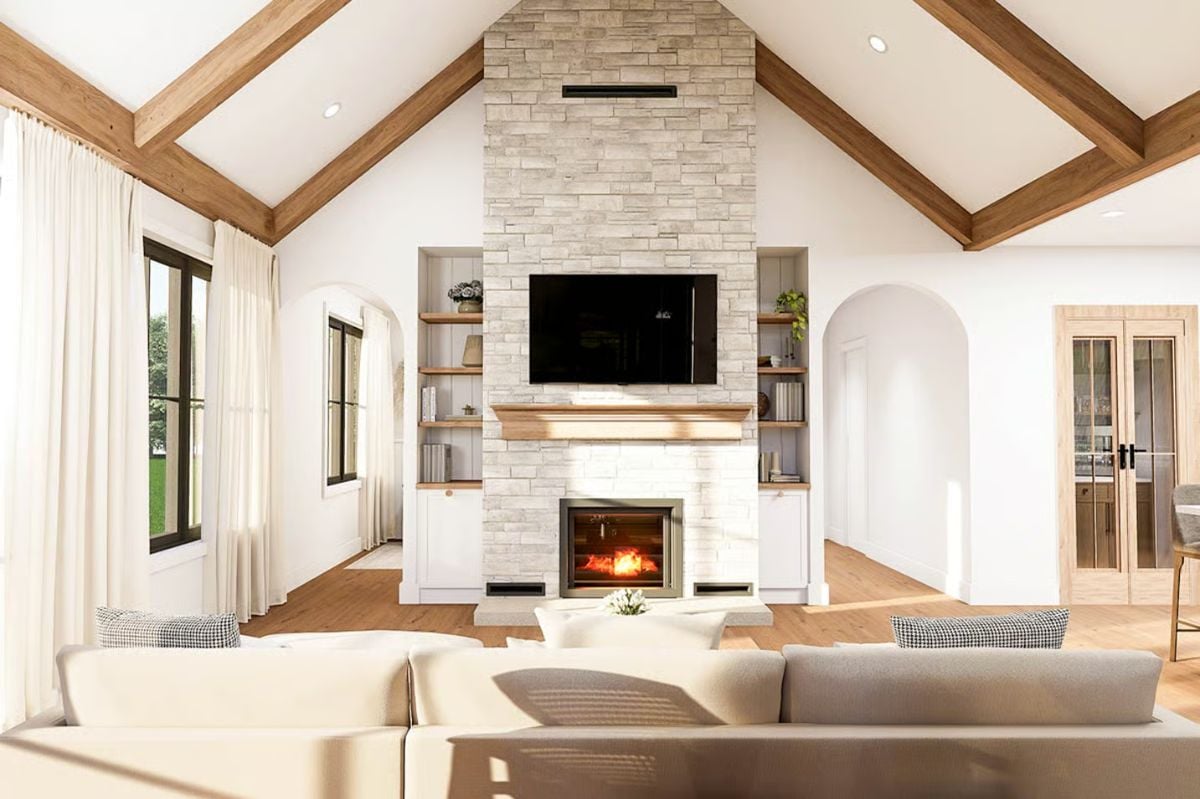
Wood beams trace the vaulted ceiling, pulling focus up and amplifying volume. A stone-clad fireplace anchors one wall with built-in shelving on both sides. Arched doorways frame adjoining rooms. Curtains soften black-framed windows while neutral tones keep the palette calm and open.
Vaulted Ceilings with Exposed Beams Give Volume to an Open-Concept Floor
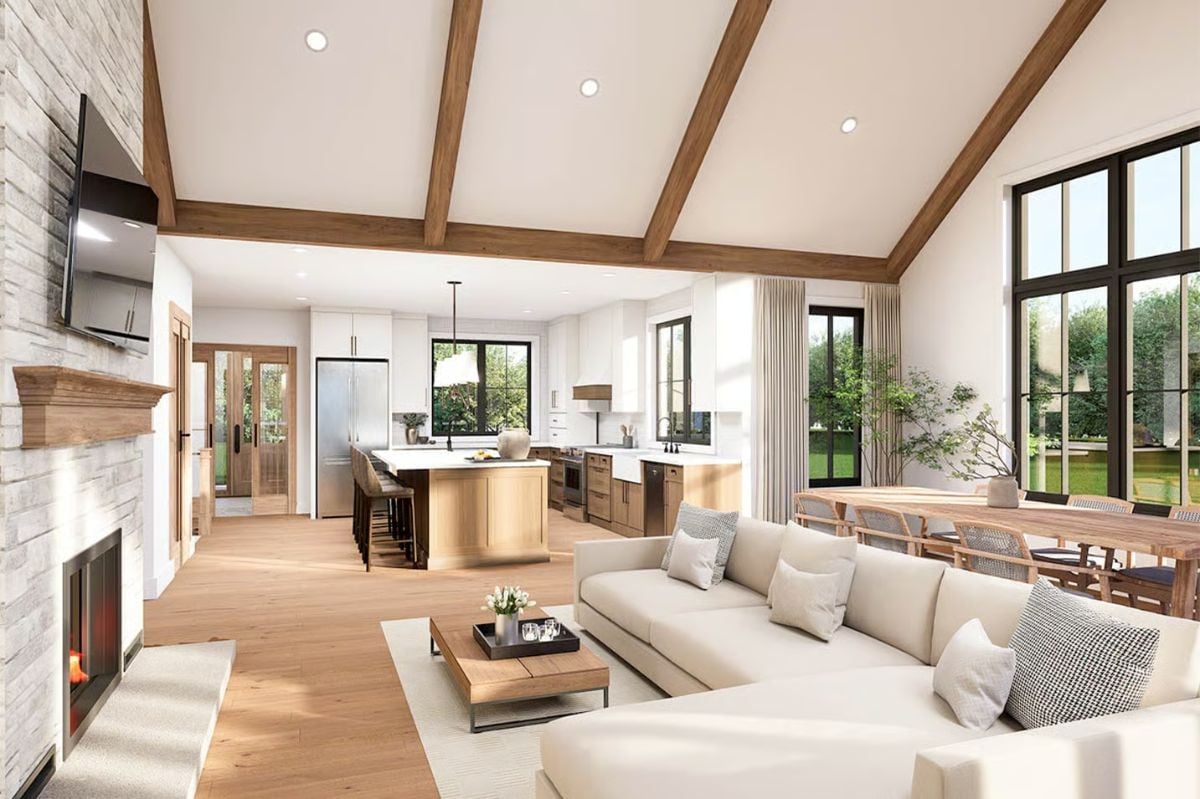
Oak beams cut across a vaulted ceiling, visually anchoring a wide-open living and kitchen layout. Light oak flooring runs throughout, uniting seating, dining, and cooking zones without barriers. A white brick fireplace claims one wall. Black-framed windows stretch floor to ceiling on two sides, pulling in natural light and views. Cream upholstery and neutral tones keep the palette calm while wood tones add warmth.
Painted White Cabinetry Balances Natural Wood Tones Across the Island and Beams
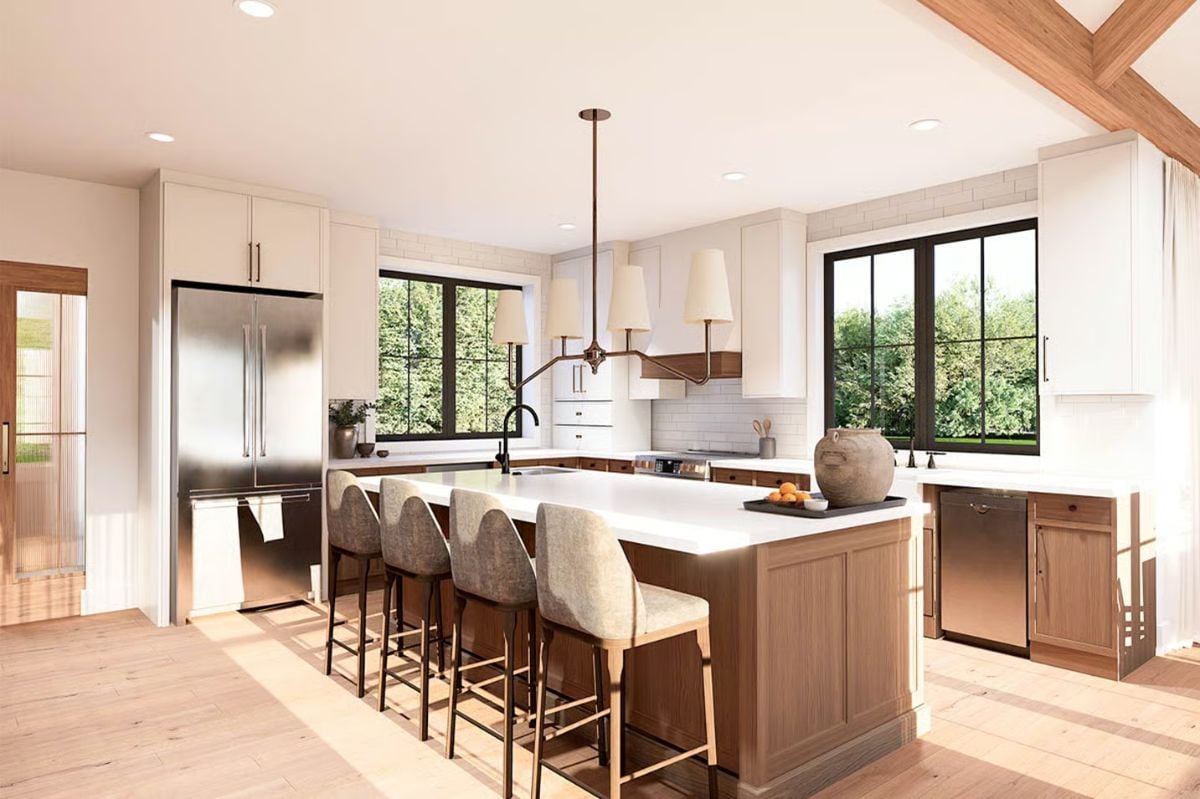
Painted white upper cabinets and subway tile create a neutral backdrop, allowing natural wood to define the island, ceiling beams, and lower accent cabinets. A large chandelier with fabric shades hangs over four upholstered bar stools at the island. Black-framed windows flank the range and dishwasher wall, pulling in views of greenery. Recessed lighting supplements the pendant. Light oak flooring unifies the space without competing for attention.
Oval Mirrors With Wood Frames Echo Each Other Across a Symmetrical Double Vanity
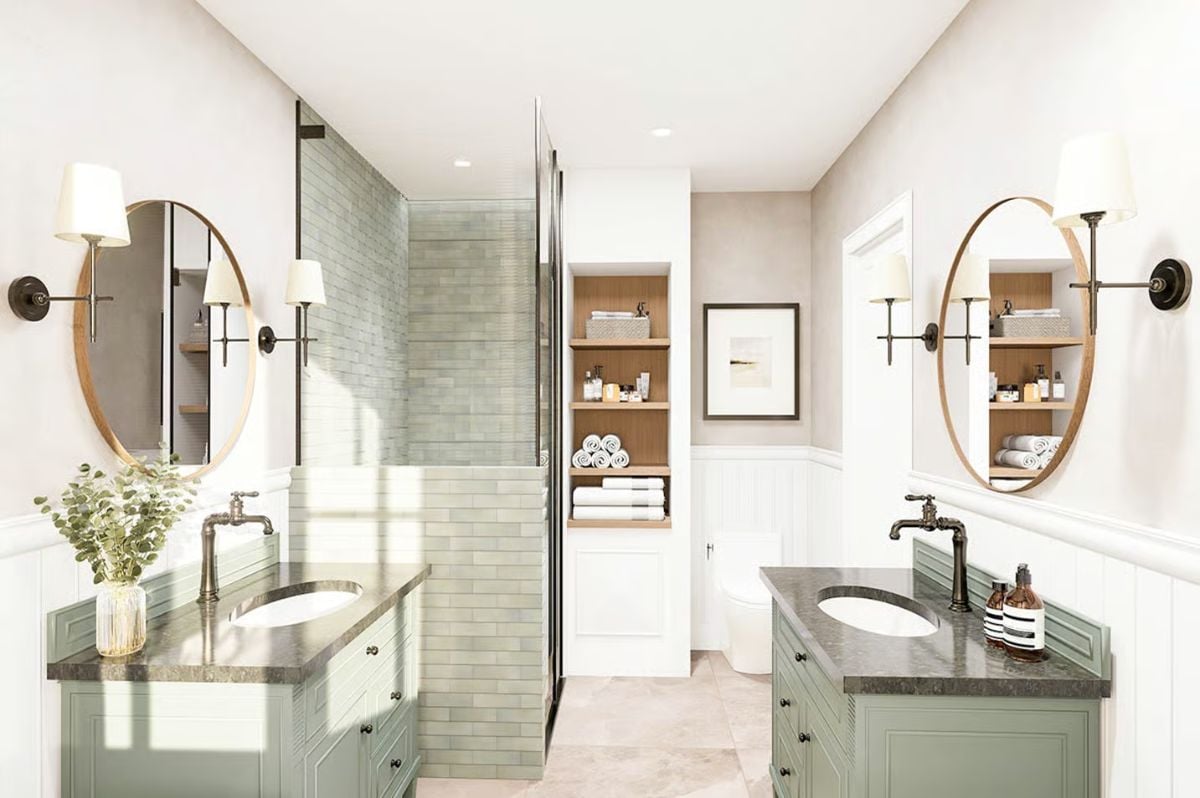
Mirrored vanities anchor each side of the bathroom with matching oval frames, sconces, and gray quartz tops. Sage-green cabinets bring color to white walls and subway tile. Open shelving sits between vanities for towels and toiletries.
Pin It
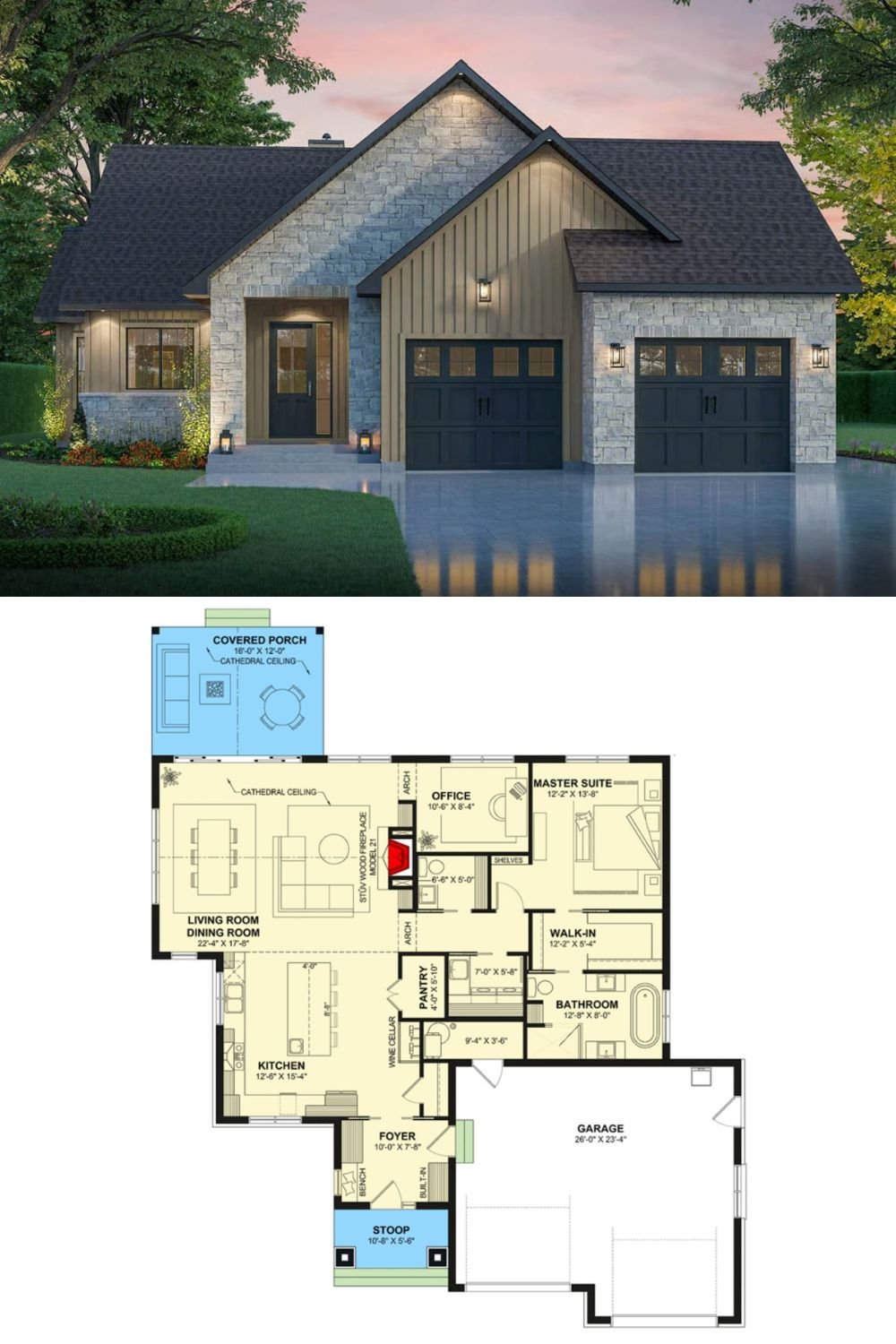
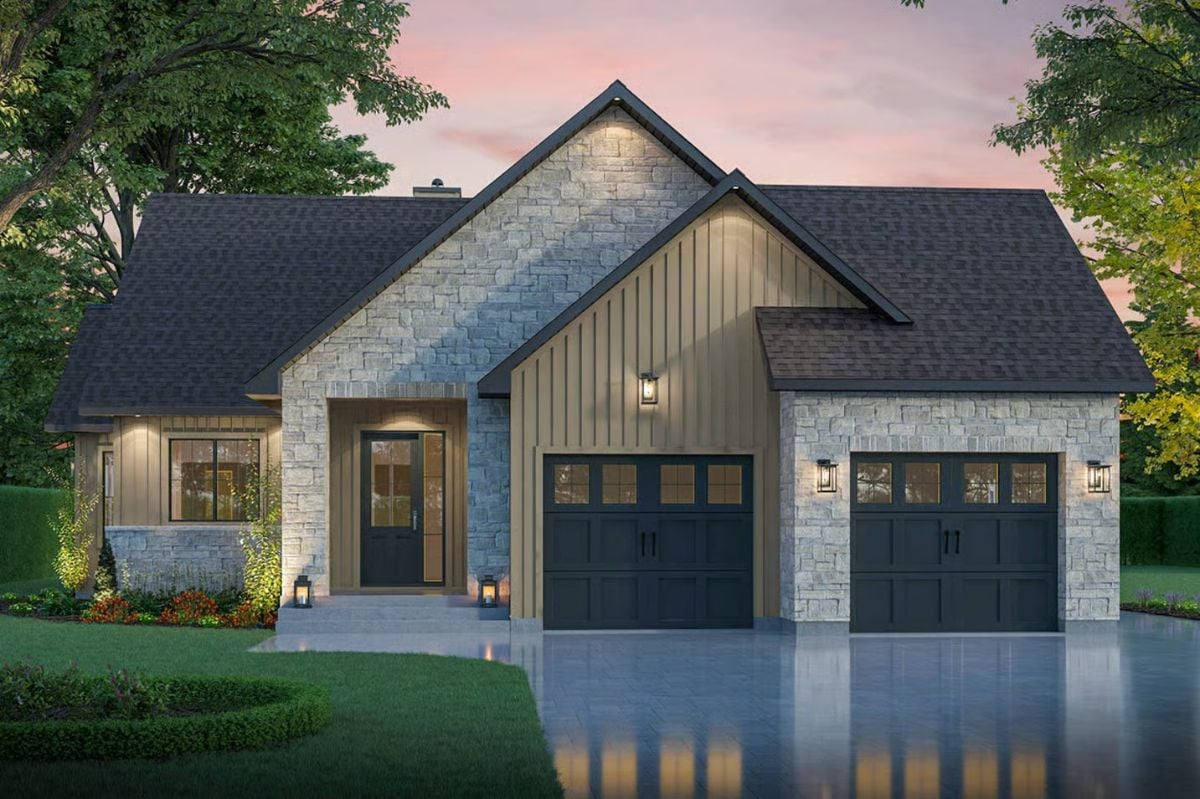
A stone-and-vertical-siding cottage pairs with its floor plan to reveal open living spaces, a covered front porch, and a private master suite anchored by a walk-in closet.
Did You Know: Vertical board-and-batten siding was originally used on barns to shed water quickly, but modern homes adopt it for its clean lines and ability to make single-story structures feel taller. Pairing it with stone anchors the base and prevents the facade from reading too lightweight.
🔥 Would you like to save this?

Discover This Versatile 5-Bedroom Lake House with Expansive Deck (2,150 Sq. Ft. Floor Plan Included)
Sq. Ft.: 2,150 | Bedrooms: 2-5 | Bathrooms: 2.5-4.5

Discover This 4,714 Sq. Ft. 5 Bedroom Farmhouse with a Stunning Layout – Check Out the Floor Plan
Sq. Ft.: 4,714 | Bedrooms: 5 | Bathrooms: 3.5

Experience Modern Comfort in This 2,288 Sq. Ft. 5 Bedroom Home with a Must See Floor Plan
Sq. Ft.: 2,288 | Bedrooms: 3-5 | Bathrooms: 2

5-Bedroom European-Style Country Home with Balcony and Finished Basement (Floor Plan)
Sq. Ft.: 6,403 | Bedrooms: 5 | Bathrooms: 6
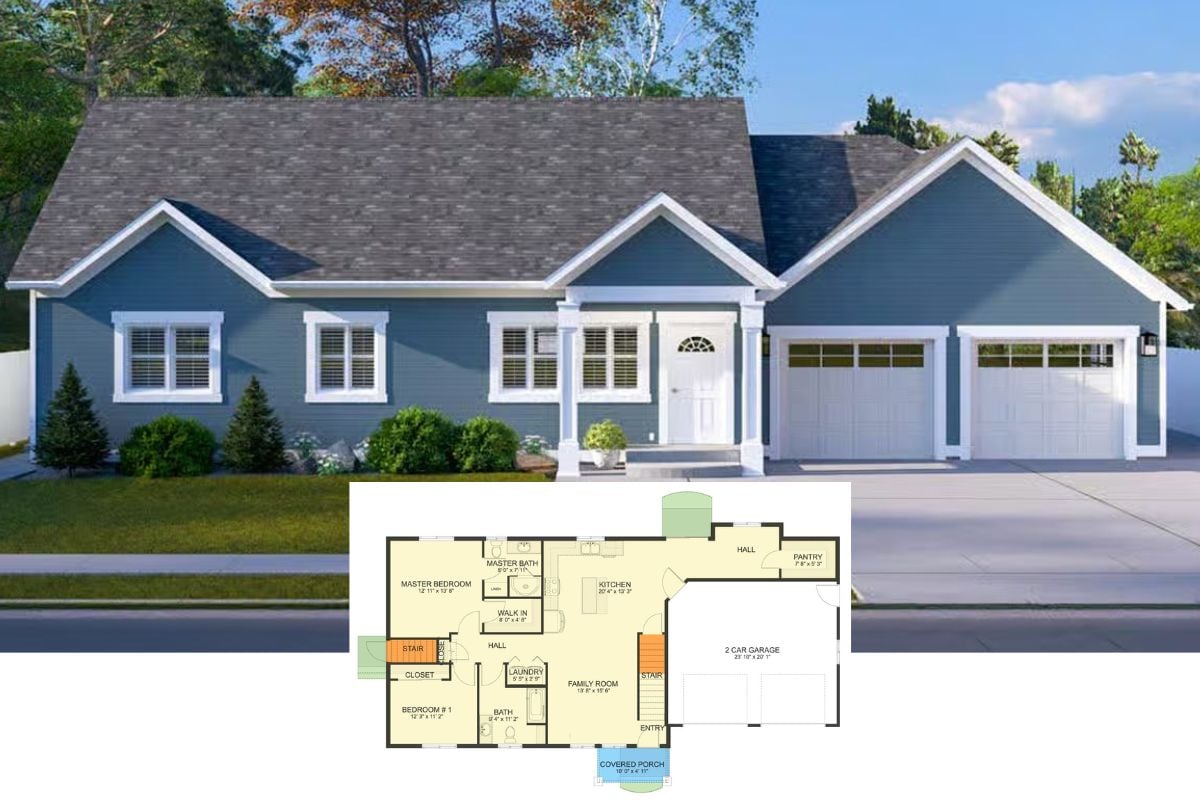
Country-Style 3-Bedroom Home with Loft and 2-Car Garage (Floor Plan)
Sq. Ft.: 1,956 | Bedrooms: 3-5 | Bathrooms: 3-4