🔥 Would you like to save this?
Some people don’t need a vacation. They need a room. For the nature-deprived homebody — the person who craves forest floors, moss gardens, and ocean light but rarely leaves the house — the right sunroom isn’t a luxury. It’s a lifeline. These jaw-dropping before-and-after transformations prove that when sophisticated design meets a deep longing for the natural world, the result isn’t just a better room. It’s a better life.
In order to come up with the very specific design ideas, we create most designs with the assistance of state-of-the-art AI interior design software. Also, assume links that take you off the site are affiliate links such as links to Amazon. this means we may earn a commission if you buy something.
Builder grade sunrooms often feel like afterthoughts, with basic finishes and wasted potential. These 35 makeovers show how homeowners converted bland, cookie-cutter spaces into personalized retreats that actually connect them with the outdoors.
From dated tile floors to uninspired layouts, each transformation tackles common problems that plague standard sunrooms and turns them into rooms worth spending time in.
Beadboard Ceiling Replaced by Exposed Timber and Dense Tropical Growth
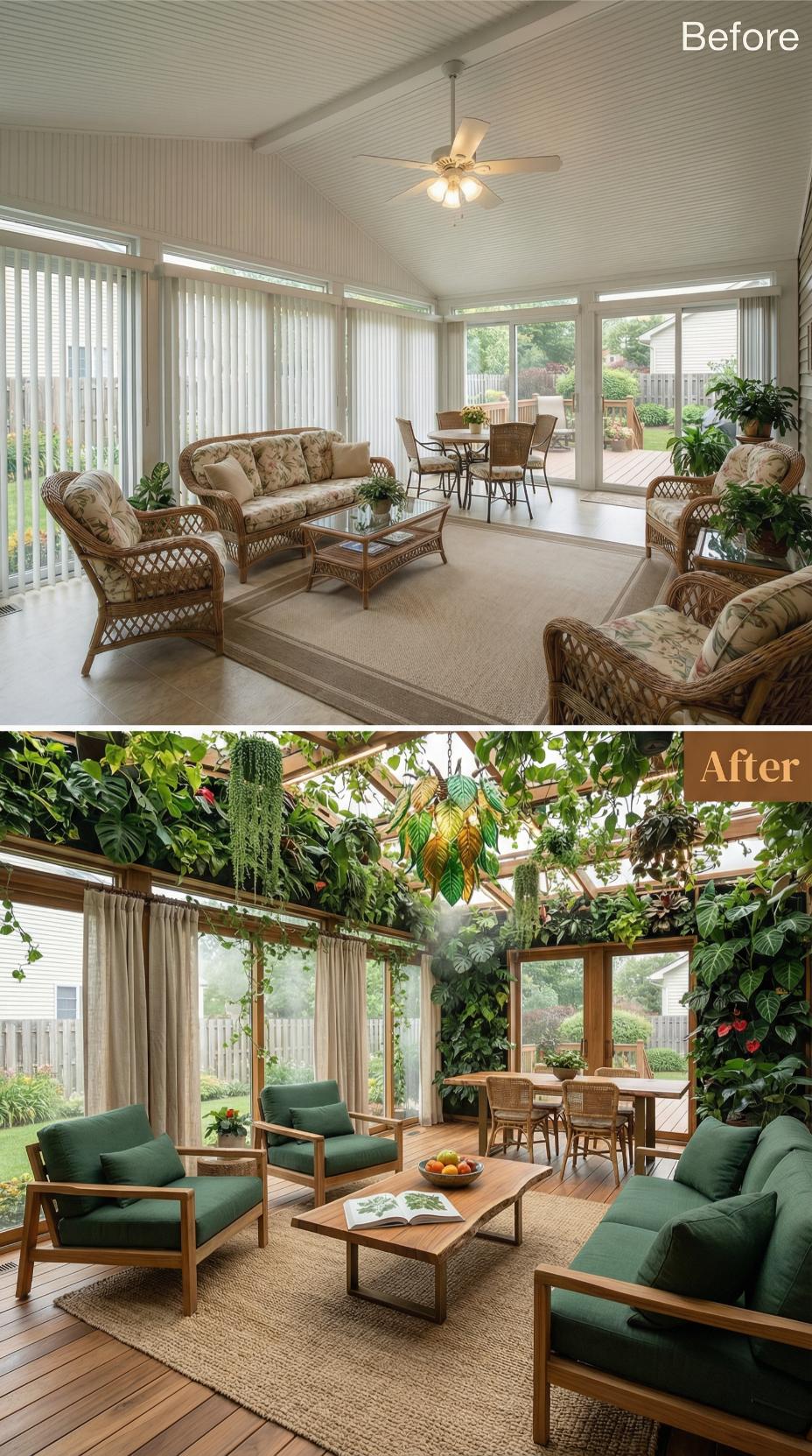
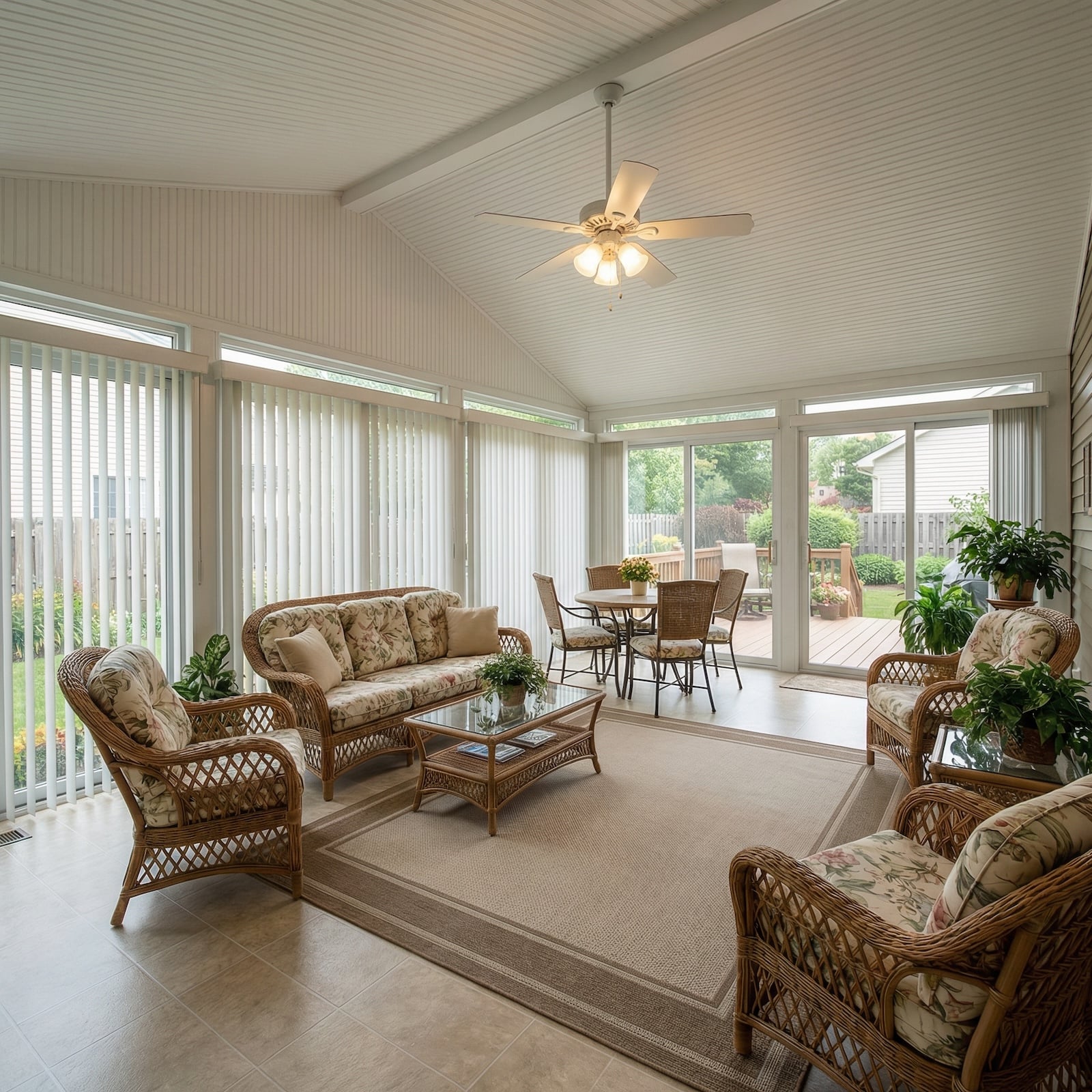
The original space featured white vertical beadboard walls and ceiling, wicker furniture with floral cushions, and vertical blinds shading floor-to-ceiling windows. A basic ceiling fan with frosted glass light shades hung from the center. The after version strips away all surface treatments to reveal rich wood tones throughout. Exposed timber beams form an angular roofline overhead, while abundant hanging plants cascade from crossbeams.
Mid-century modern furniture in forest green upholstery on teak frames replaces the dated wicker. The jute area rug remains, but the space now functions as an indoor conservatory. Trailing pothos, monstera, and flowering vines overtake the upper volume, creating a layered canopy effect that filters natural light into soft, dappled patterns across the wood plank flooring.
Wicker Furniture Out, Japanese Shoji Screens and Low-Profile Seating In
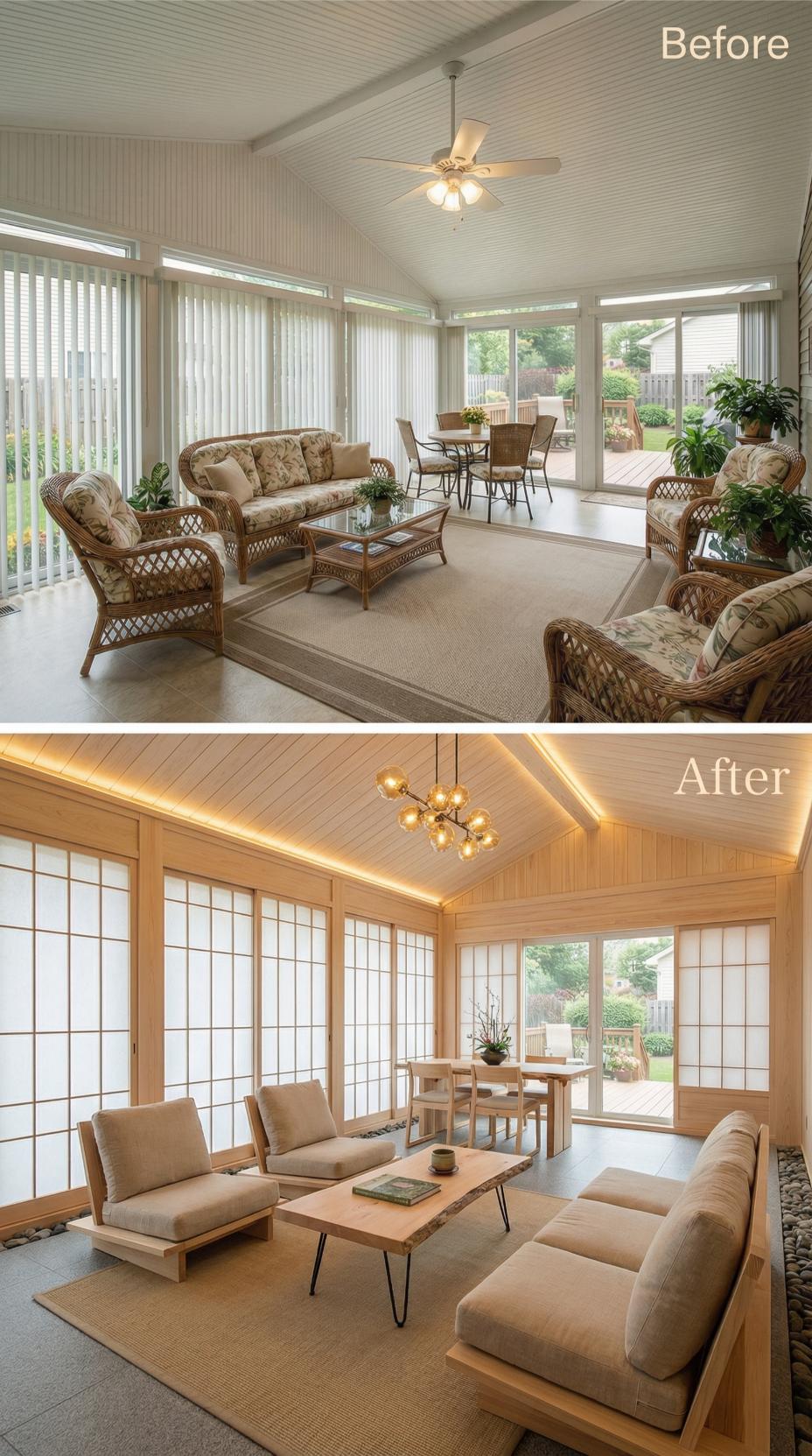
Vertical blinds and white beadboard vanish in favor of floor-to-ceiling shoji screens with grid patterns that diffuse light evenly. Natural oak paneling replaces the previous white ceiling, now accented by recessed LED strips along the vaulted edges. Low modular seating with taupe linen cushions replaces wicker pieces, while a blonde wood dining set occupies the center.
Dated Wicker Traded for Scandinavian-Inspired Gray Upholstery
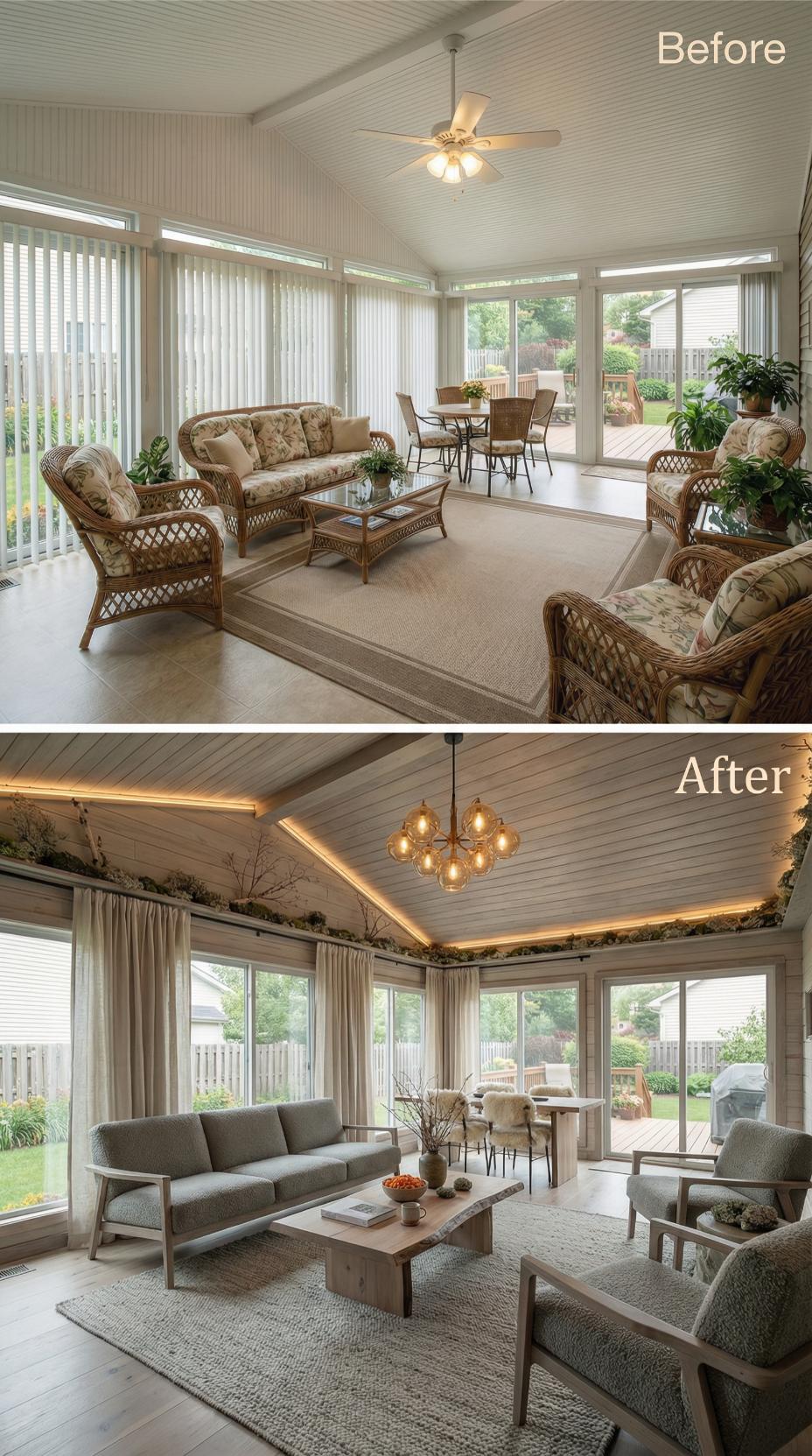
Floral-cushioned wicker furniture gives way to a mid-century modern gray sofa and matching lounge chairs with exposed wood frames. Vertical blinds disappear in favor of floor-length neutral drapery panels hung on black metal rods. Ambient LED strip lighting now wraps the ceiling perimeter, emphasizing the beadboard angles. A multi-globe pendant replaces the traditional ceiling fan.
Ribbed Vinyl Panels Give Way to Exposed Brick and Wood Planks
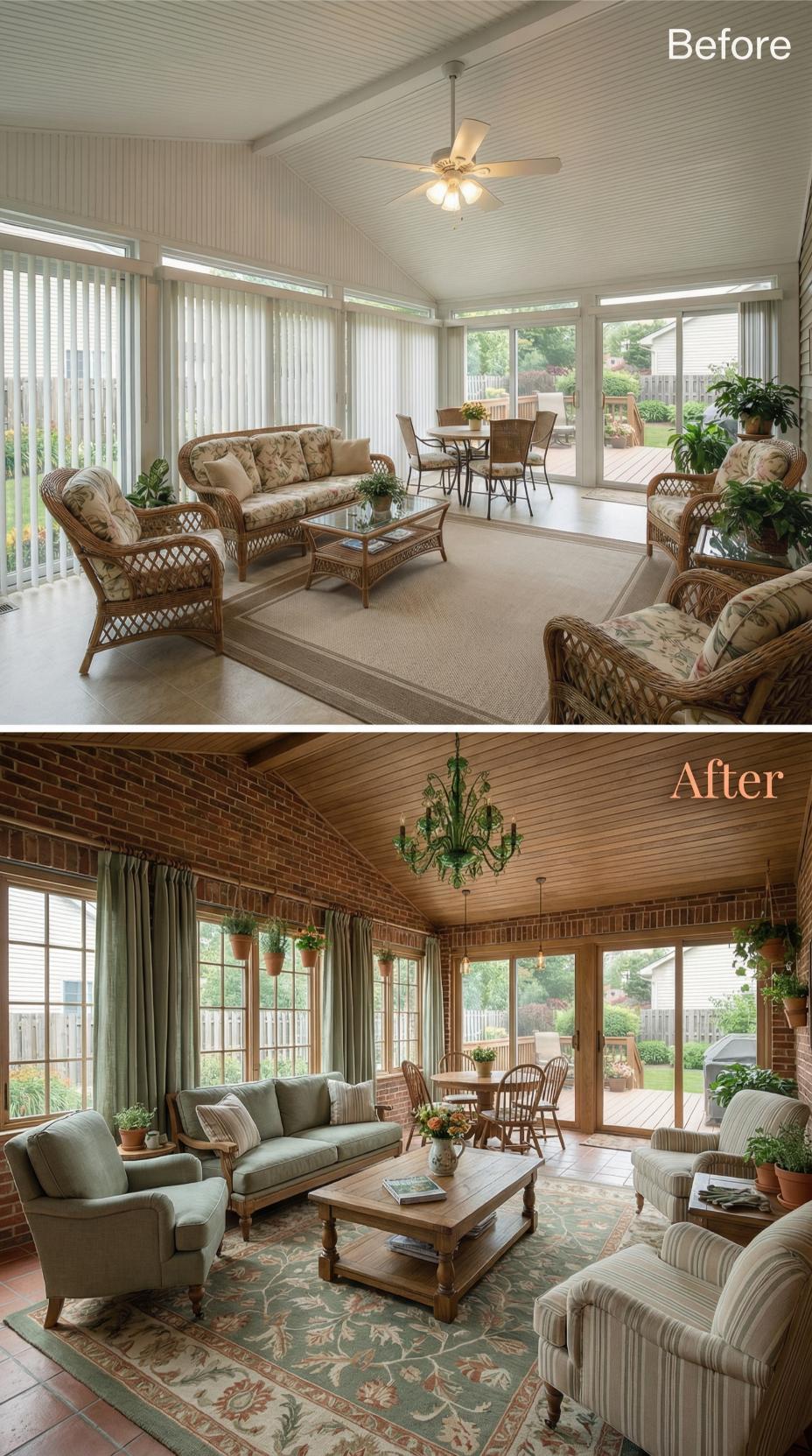
White vertical blinds and ribbed ceiling panels created a sterile sunroom in the before. The after introduces warm brick veneer across the walls, horizontal wood plank ceilings, and terracotta tile flooring. Sage green upholstered sofas with striped accents replace floral wicker seating. A green chandelier with faux foliage drops from the center. Bamboo roman shades soften the windows, and potted plants in terracotta pots bring natural texture indoors.
Coastal Blues Replace Beige Wicker and Vertical Blinds
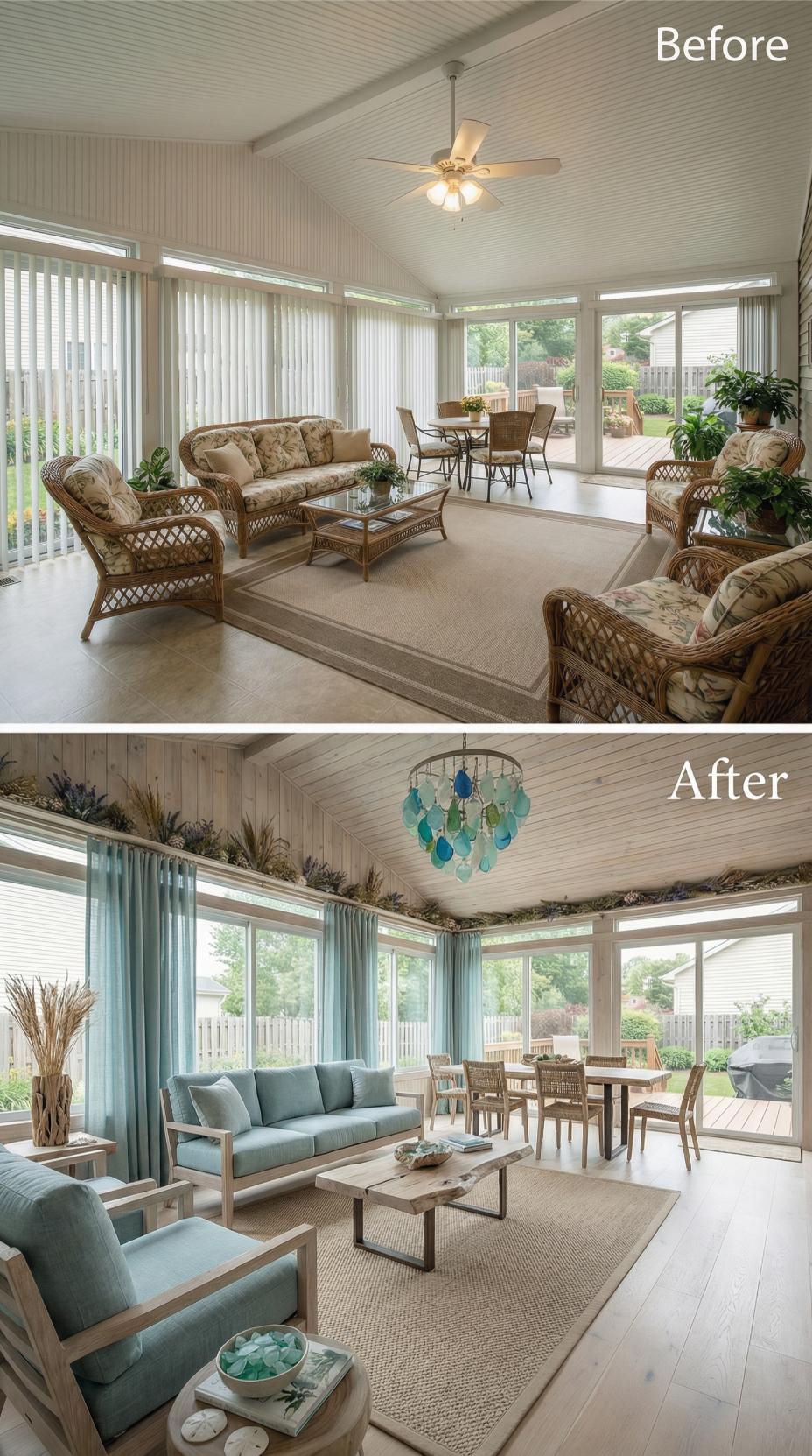
Turquoise linen curtains hang from simple rods, replacing dated vertical slat blinds that once sectioned every window. A teal-cushioned sofa and matching armchairs feature solid wood frames in a light oak finish. The round glass-top coffee table exits in favor of nested rectangular tables with metal legs and reclaimed wood tops.
A capiz shell chandelier in graduated aqua and blue tones hangs where a brass ceiling fan with frosted glass shades previously dominated. Pampas grass arrangements and dried botanicals soften the ceiling line, while whitewashed wood paneling maintains the original beadboard texture.
Style Tip: Position curtain rods at ceiling height rather than just above the window frame to visually extend wall height and create a more custom look in vaulted spaces.
Beige Beadboard and Vertical Blinds Displaced by Moroccan Zellige and Carved Teak
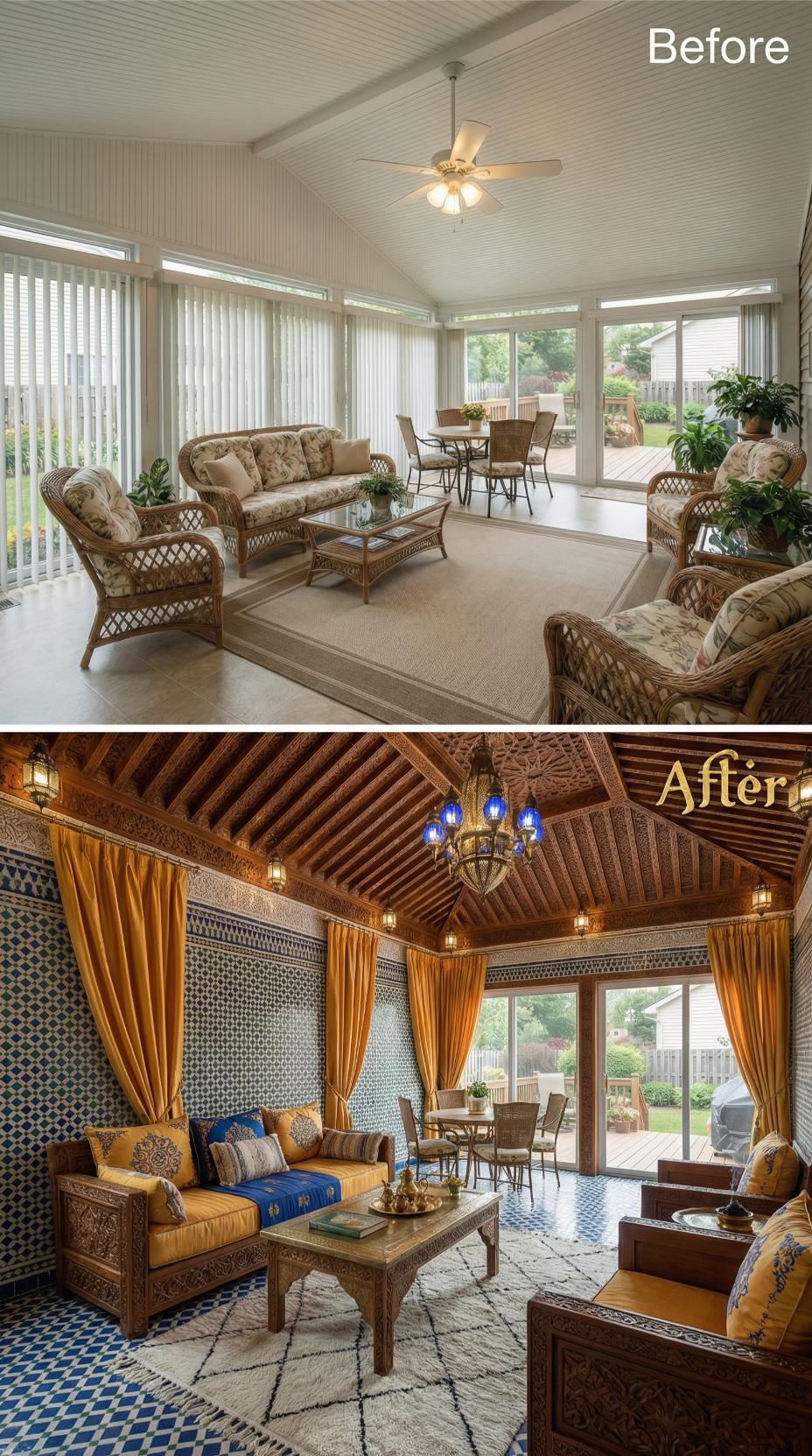
Ribbed ceiling panels vanish beneath an intricate geometric cofferhouse framework stained in dark walnut. Carved teak furniture with inlaid brass detailing replaces floral-cushioned wicker. Blue zellige tile covers the floor in a traditional Moroccan pattern, while mustard velvet curtains frame the windows.
An ornate brass chandelier with cobalt glass inserts hangs where a builder-grade ceiling fan once circulated air. Mosaic wall panels in navy and turquoise extend halfway up the walls, meeting cream plaster above. The coffee table features hand-carved arabesque motifs that echo the metalwork on the sofa frames.
Wicker and Vertical Blinds Replaced by Horizontal Wood Planking and Lantern Pendants
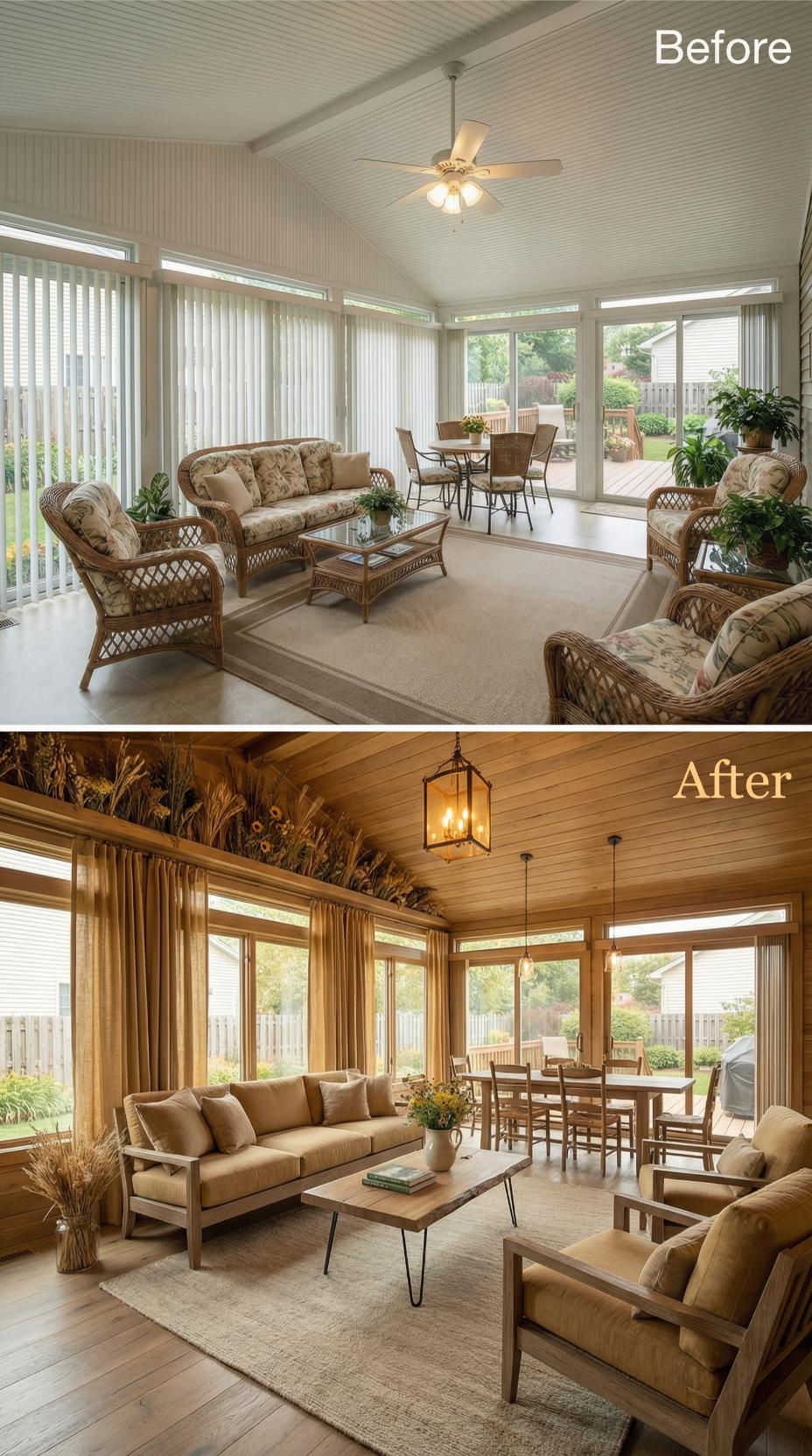
Natural oak or pine tongue-and-groove planks now cover the ceiling and walls, replacing white beadboard panels. Horizontal pleated shades and tan drapery panels hang from wooden window frames instead of beige vertical blinds. Bronze or blackened-metal lantern pendants drop from the ceiling on chain mounts. Tan linen sofas with exposed wood frames sit on the original beige carpet. A larger dining table with ladder-back chairs occupies space near the windows.
Light Wicker and Vertical Slats Replaced by Walnut Planks and Plaid Rug
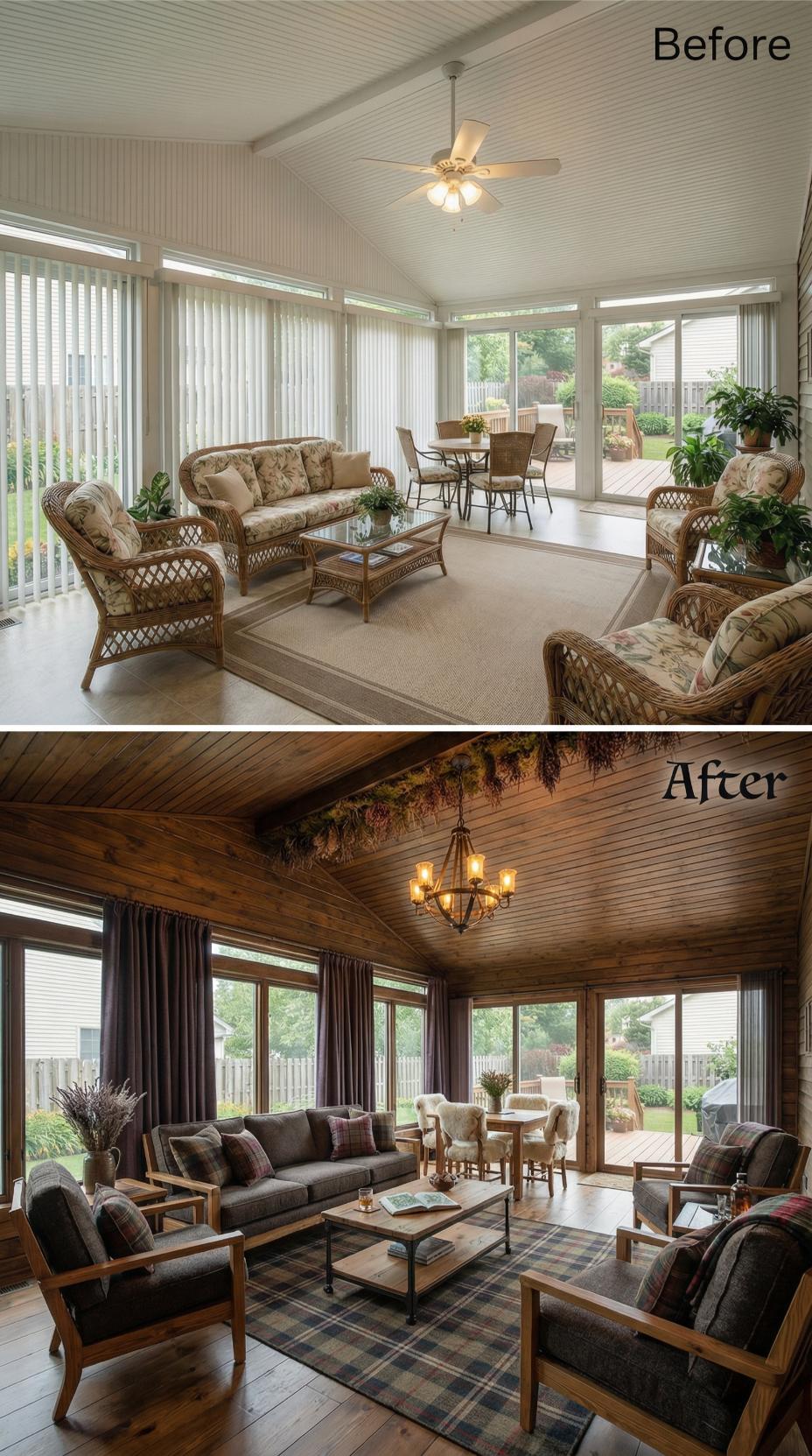
Cream beadboard paneling and a builder-grade ceiling fan disappear in favor of horizontal walnut tongue-and-groove across walls and vaulted ceiling. Dark charcoal linen sofas and plaid upholstered chairs rest on a tartan area rug in navy, forest green, and burgundy.
Window trim shifts from white aluminum to stained wood frames. The original ceiling fan gives way to an iron chandelier with candle-style bulbs. Vertical blinds are removed entirely, allowing floor curtains in charcoal fabric to frame the glass doors and transom windows above.
Corrugated Vinyl Panels Outfitted with Wallpapered Tray Ceiling and Crystal Chandelier
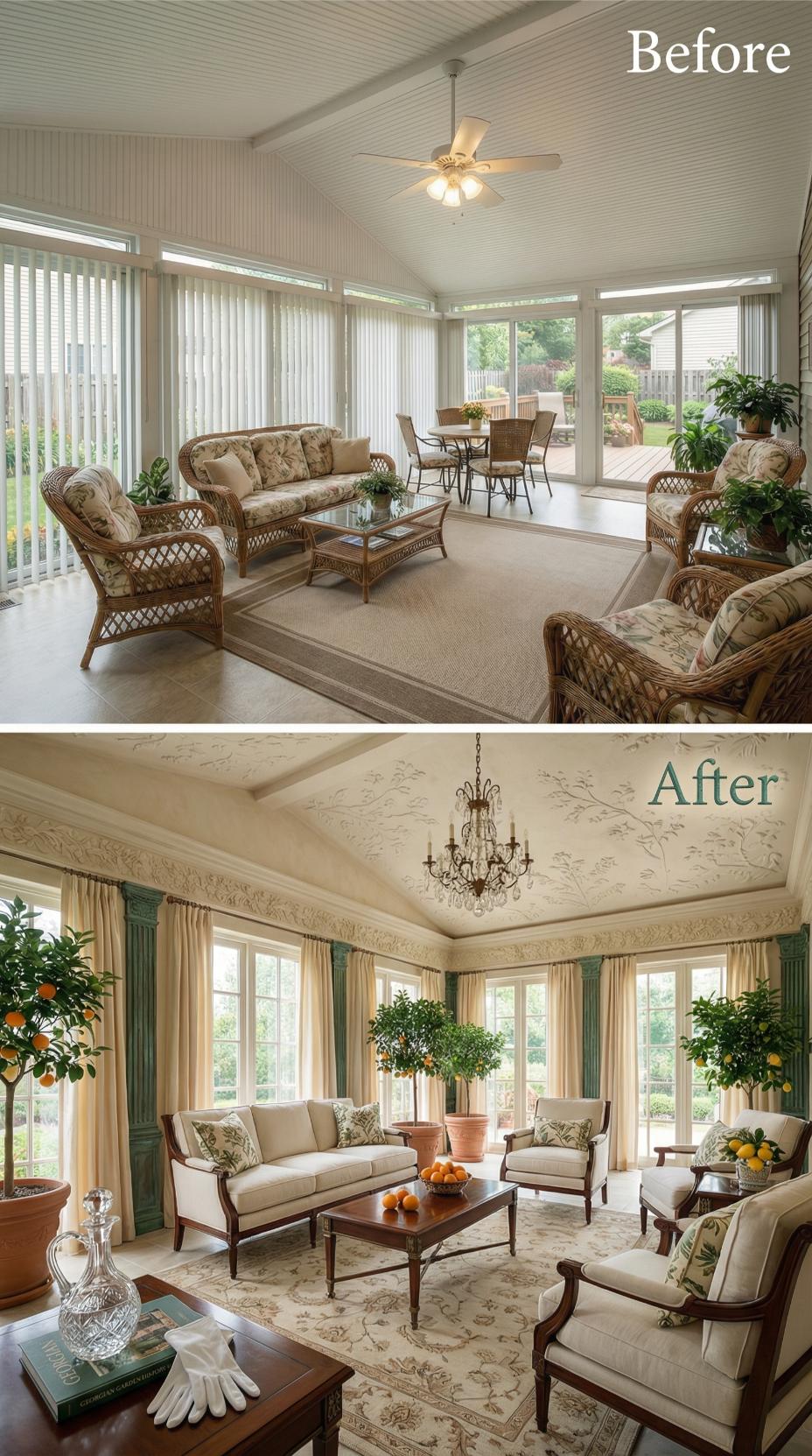
Corrugated vinyl paneling and a brass-tone ceiling fan have been replaced by wallpapered surfaces featuring botanical sketches that extend across the tray ceiling. Fluted pilasters in sage green frame cream drapery panels that hang from ceiling-mounted tracks. Potted citrus trees anchor each corner while a crystal chandelier with candelabra bulbs suspends above upholstered armchairs arranged around a wood coffee table.
Woven Wicker and Beige Vertical Blinds Exchanged for Linen Drapes and Metallic Chandelier
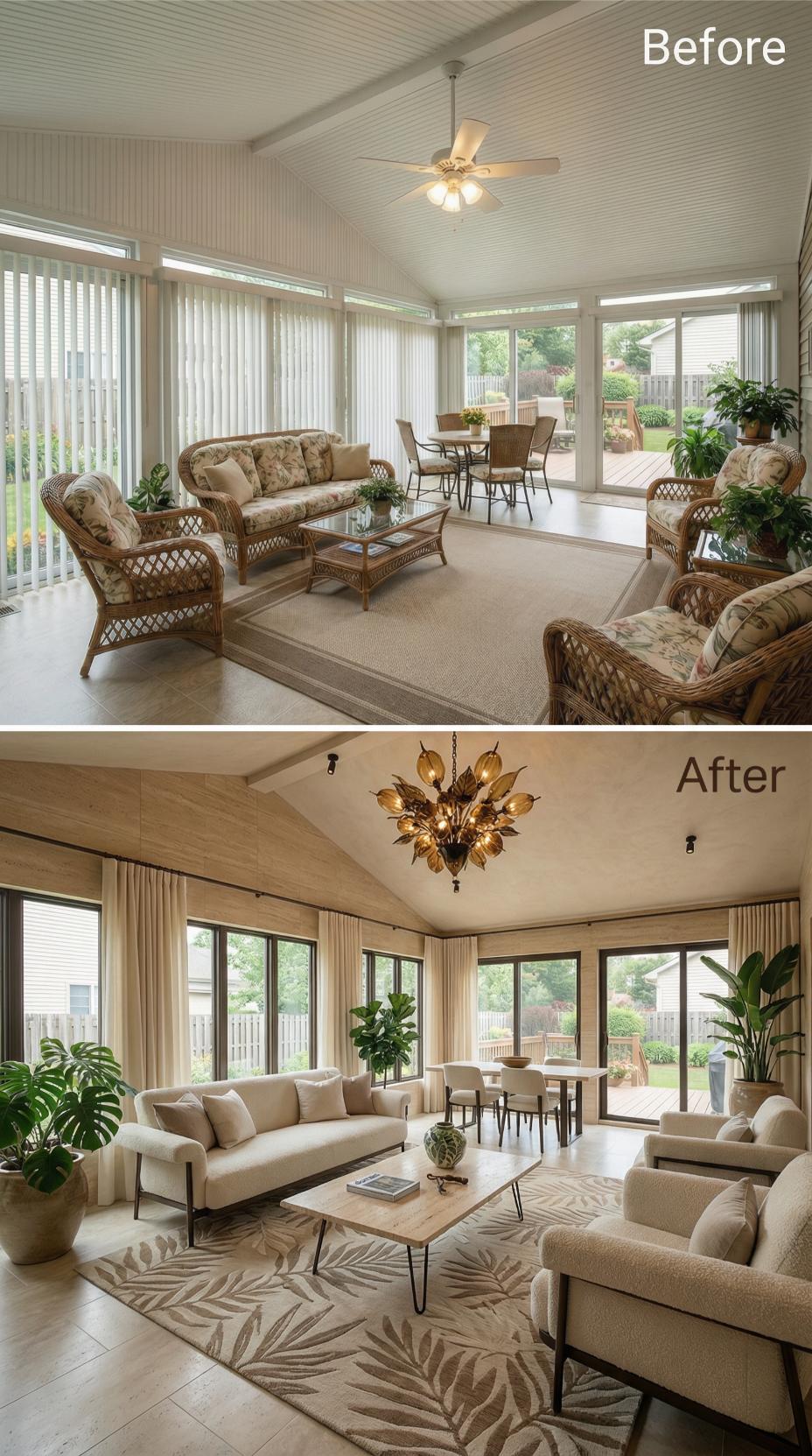
Rattan furniture with floral cushions gave way to low-profile cream linen sofas and armchairs. Bronze-framed windows replaced white vinyl, while floor-to-ceiling drapery panels in ivory replaced vertical blinds. A sculptural gold-leaf chandelier now anchors the vaulted ceiling. Large-format pale tile replaced carpet, and a botanical palm-leaf rug adds pattern beneath a wood coffee table with hairpin legs.
Pro Tip: Swap ceiling fans for statement chandeliers in sunrooms with high vaulted ceilings. The right fixture draws the eye upward and balances the vertical space without competing with natural light.
Beadboard and Bulky Rattan Cleared for Slim Steel Frames and Gold Ring Chandelier
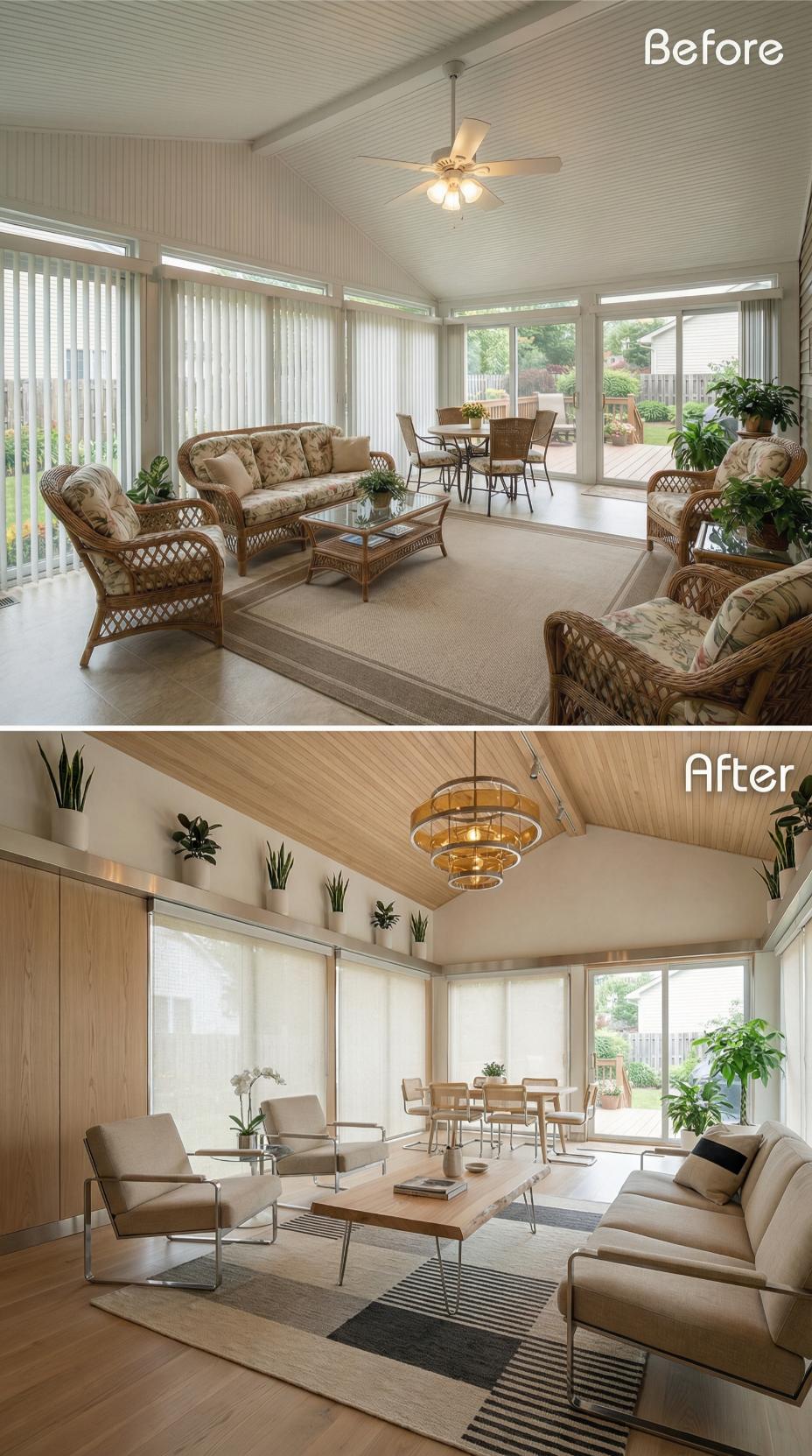
Tan wicker seating with floral cushions exits alongside vertical blinds that chopped the wall of windows into narrow segments. Light wood beadboard coats the ceiling above, while a ceiling fan with globe lights provides dated illumination. The new layout introduces steel-framed lounge chairs with canvas upholstery and a low-slung sofa that keeps sightlines open.
A circular gold chandelier with concentric rings hangs from the same vaulted ceiling, now finished in smooth horizontal wood panels. Roller shades in translucent white fabric replace the vertical slats, unifying the window wall. A geometric area rug in charcoal and cream anchors the furniture, and a natural wood coffee table adds warmth without bulk. Built-in cabinetry along the left wall uses light oak with a floating shelf lined with potted plants.
Beige Wicker Gone, Deep Emerald Walls and Velvet Upholstery Arrive
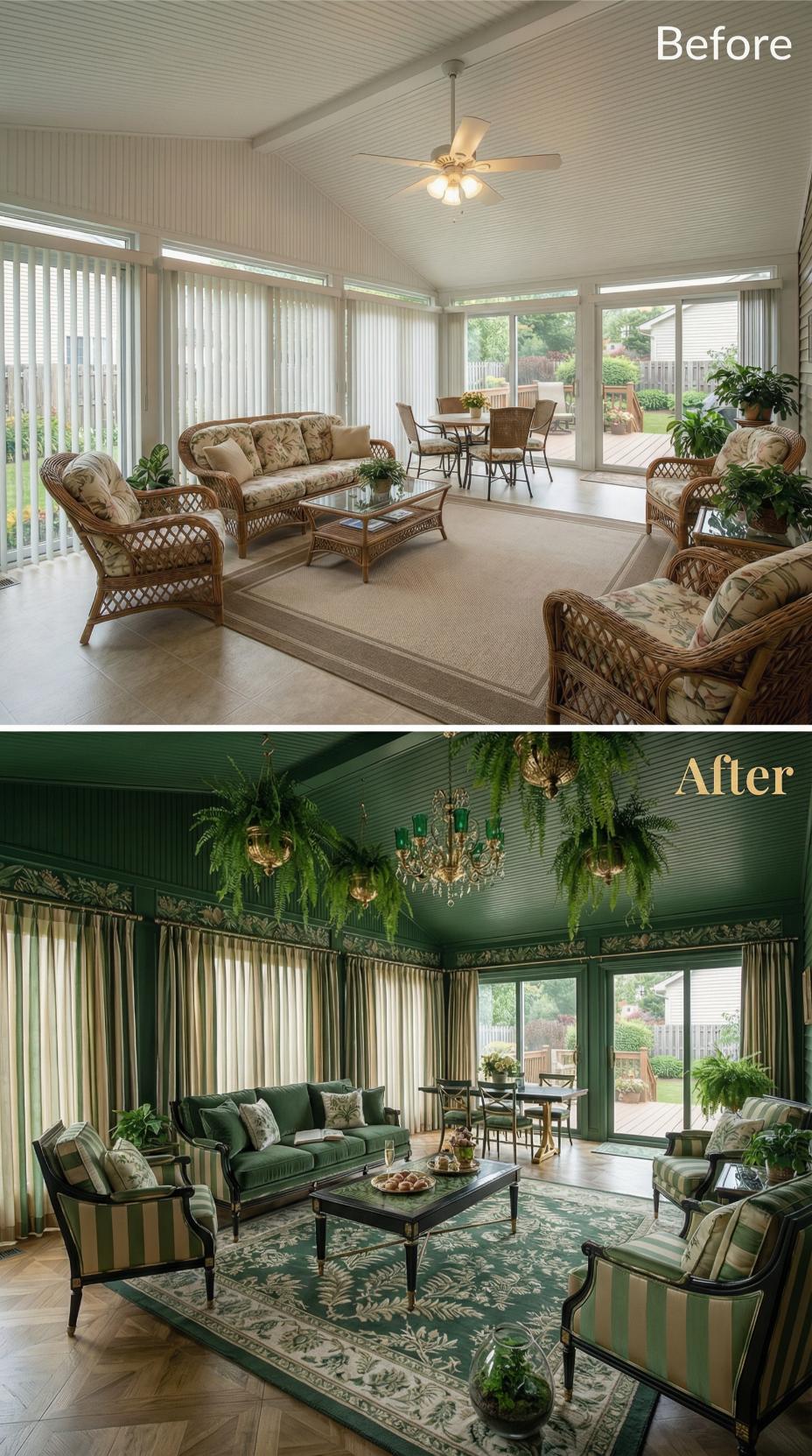
Forest green paint coats every surface, from the walls to the vaulted ceiling, while ornate crown molding in the same shade frames the upper perimeter. Vertical blinds vanish in favor of floor-length cream drapery panels hung on decorative rods. The wicker seating gives way to a tufted velvet sofa in hunter green flanked by striped accent chairs with exposed wood frames.
Multiple glass and brass chandeliers suspend from the ceiling at varying heights, their candelabra bulbs catching light. A botanical area rug in cream and green anchors the furniture arrangement. Hanging ferns cascade from ceiling hooks, reinforcing the conservatory aesthetic that the original neutral palette never attempted.
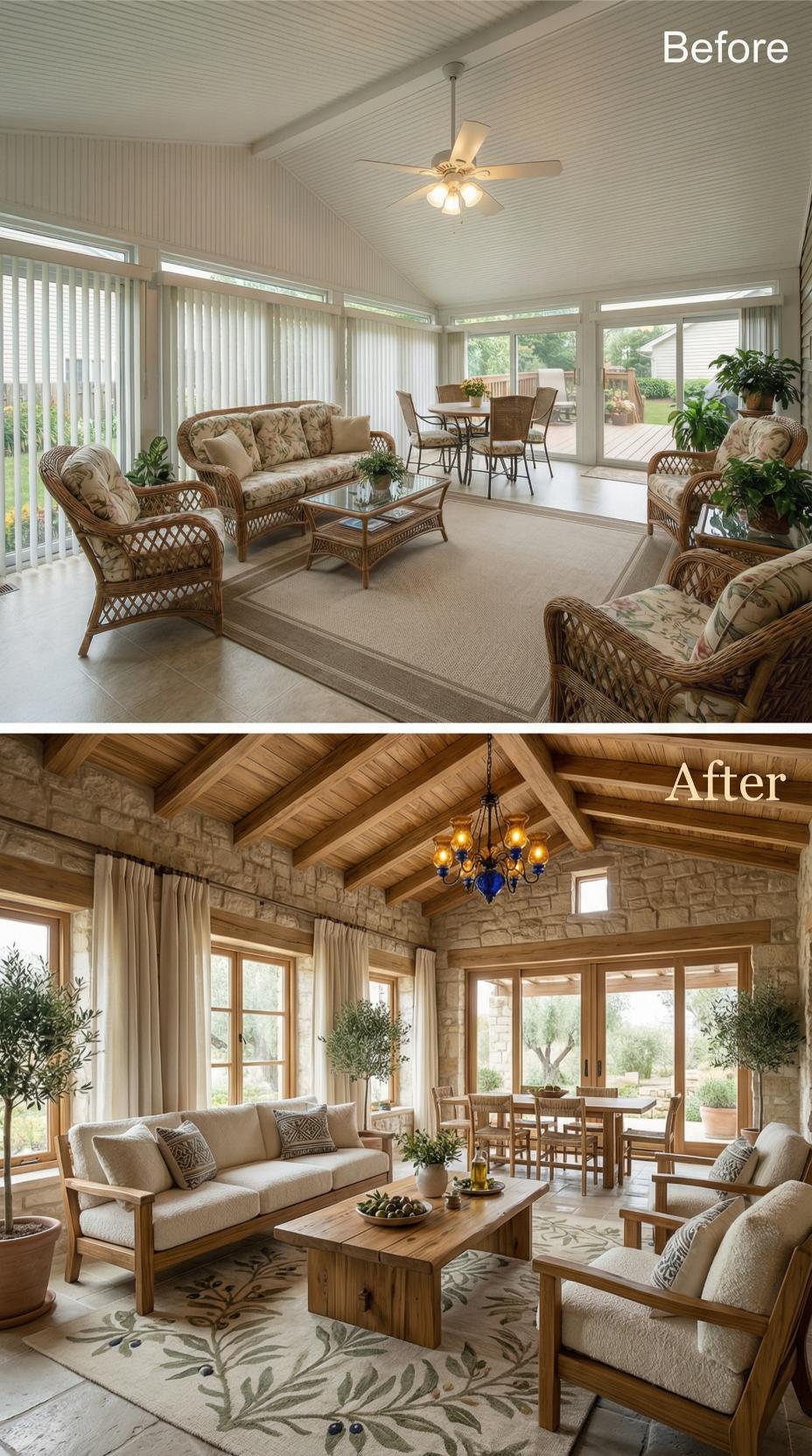
Vertical Blinds and Beadboard Vanish Behind Stone Walls and Timber Trusses
🔥 Would you like to save this?
Ribbed beadboard ceilings and white vertical blinds defined the original sunroom, where floral-patterned wicker furniture crowded a neutral carpet. Builder-grade finishes kept the space functional but forgettable.
Stone veneer now climbs the walls, framing exposed timber beams that vault overhead. A wood-framed sofa with linen cushions anchors the room alongside matching armchairs. Wide plank flooring supports a botanical area rug, while linen drapes soften wood-trimmed windows. An ornate chandelier with amber glass shades replaces the ceiling fan, and a rustic wood coffee table centers the seating arrangement.
Beadboard and Brass Fan Cleared for Exposed Beams and Terracotta Tile
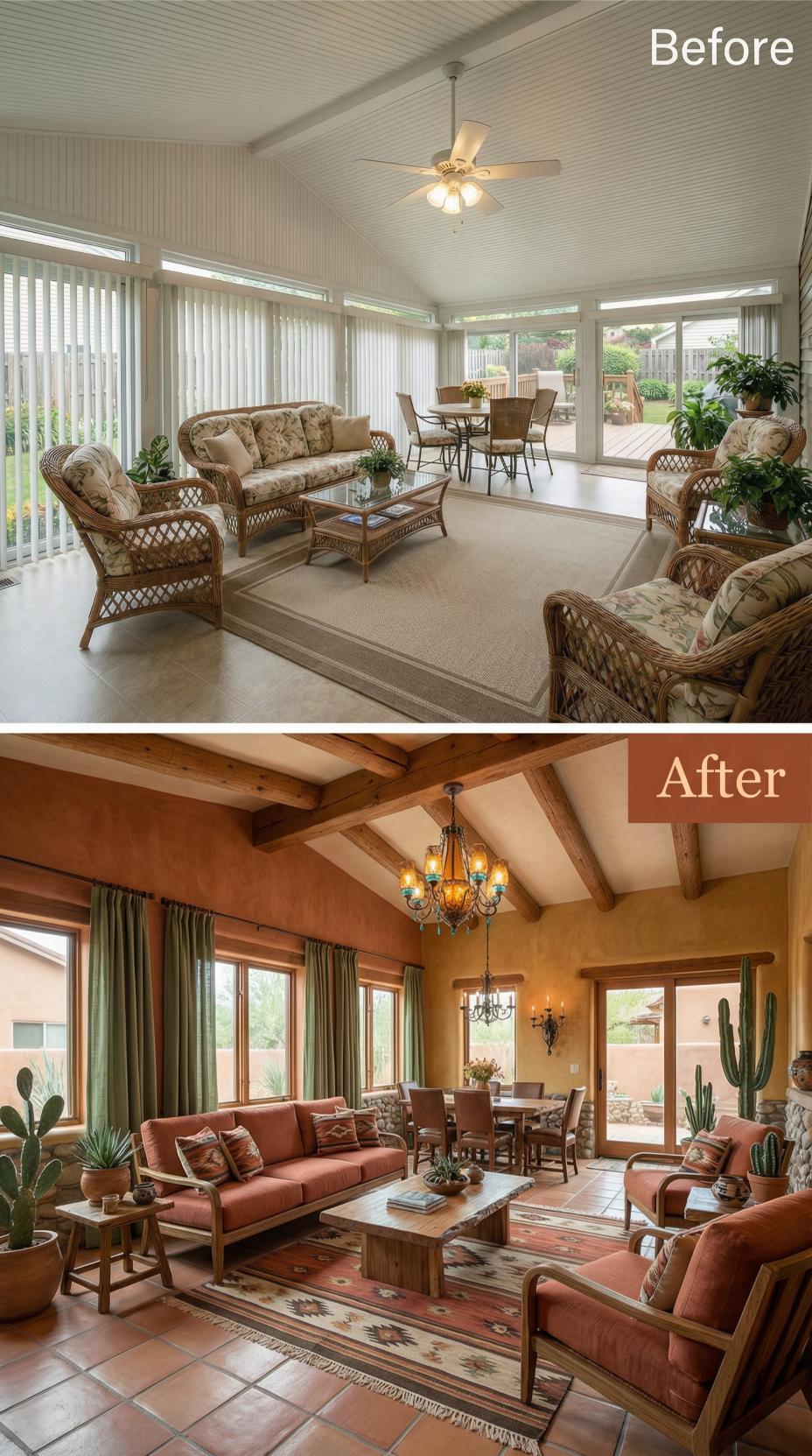
Vertical blinds and pale beadboard vanish as exposed wood beams span the vaulted ceiling above terracotta tile flooring. Rust-colored leather sofas anchor the seating area beside a wooden coffee table and Southwestern rug in coral and turquoise. Olive green drapes frame wood-trimmed windows while cactus plants punctuate the corners.
Beige Ribbed Panels Swapped for Stone Veneer and Chandelier Drama
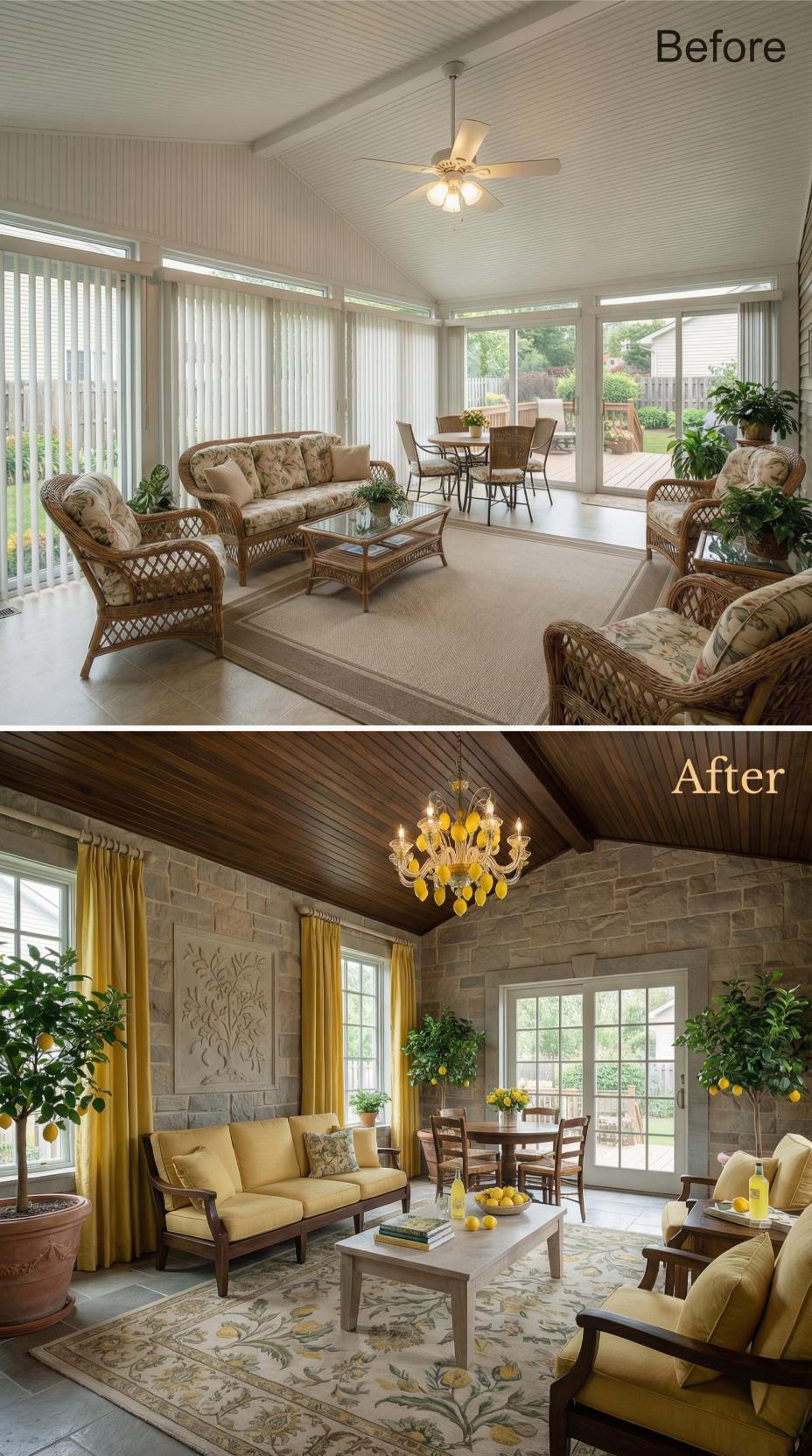
Vertical blinds and a ceiling fan once dominated the upper level, covering beige beadboard walls and carpet that absorbed natural light. The lower transformation installs gray stone veneer across all walls, grounding the room with texture that mimics limestone blocks. Dark stained wood planks now line the vaulted ceiling, creating depth against the lighter masonry.
A yellow Murano glass chandelier anchors the seating area, its candelabra arms and pendant drops introducing color through reflection. Yellow velvet cushions outfit dark wood chairs and a low-profile sofa, while lemon trees in terracotta pots flank the space. Golden silk drapes replace the original blinds, softening the windows without blocking views. A patterned area rug layered over gray tile grounds the furniture arrangement, pulling citrus tones into the floor plane.
Wicker Traditionalism Erased by Illuminated Ceiling and Icy Blue Velvet
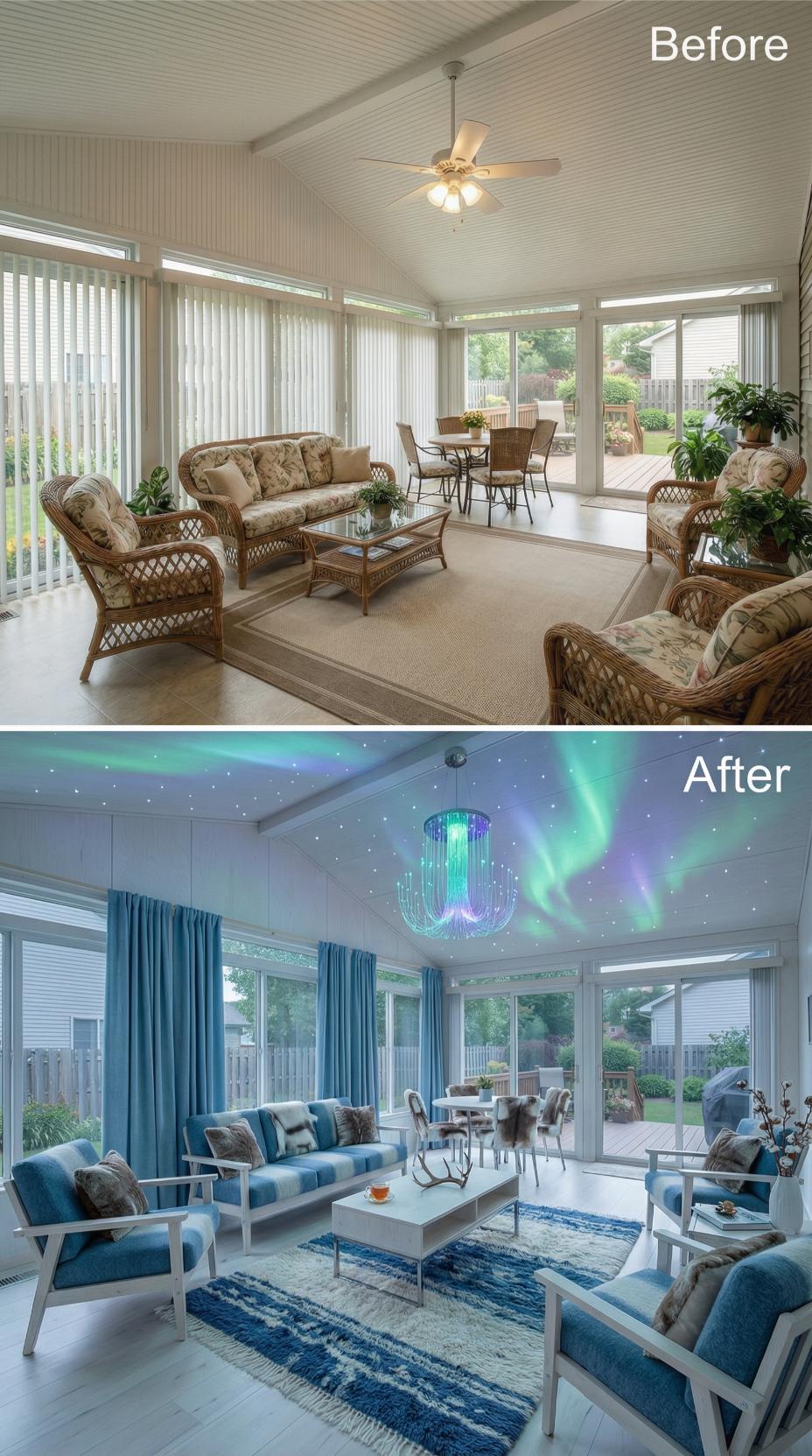
White beadboard and tan wicker furniture disappear to make room for a color-blocked palette anchored by teal velvet seating and matching drapery. The ceiling now hosts fiber optic stars and a projection system casting aurora borealis effects across the surface. A color-changing chandelier with cascading tubes hangs where a basic fan once spun. Gray tile flooring replaces beige carpet, and the dining set shifts to white upholstered chairs with a modern silhouette.
Beige Vertical Blinds and Wicker Dismissed for Emerald Ceiling and LED Strips
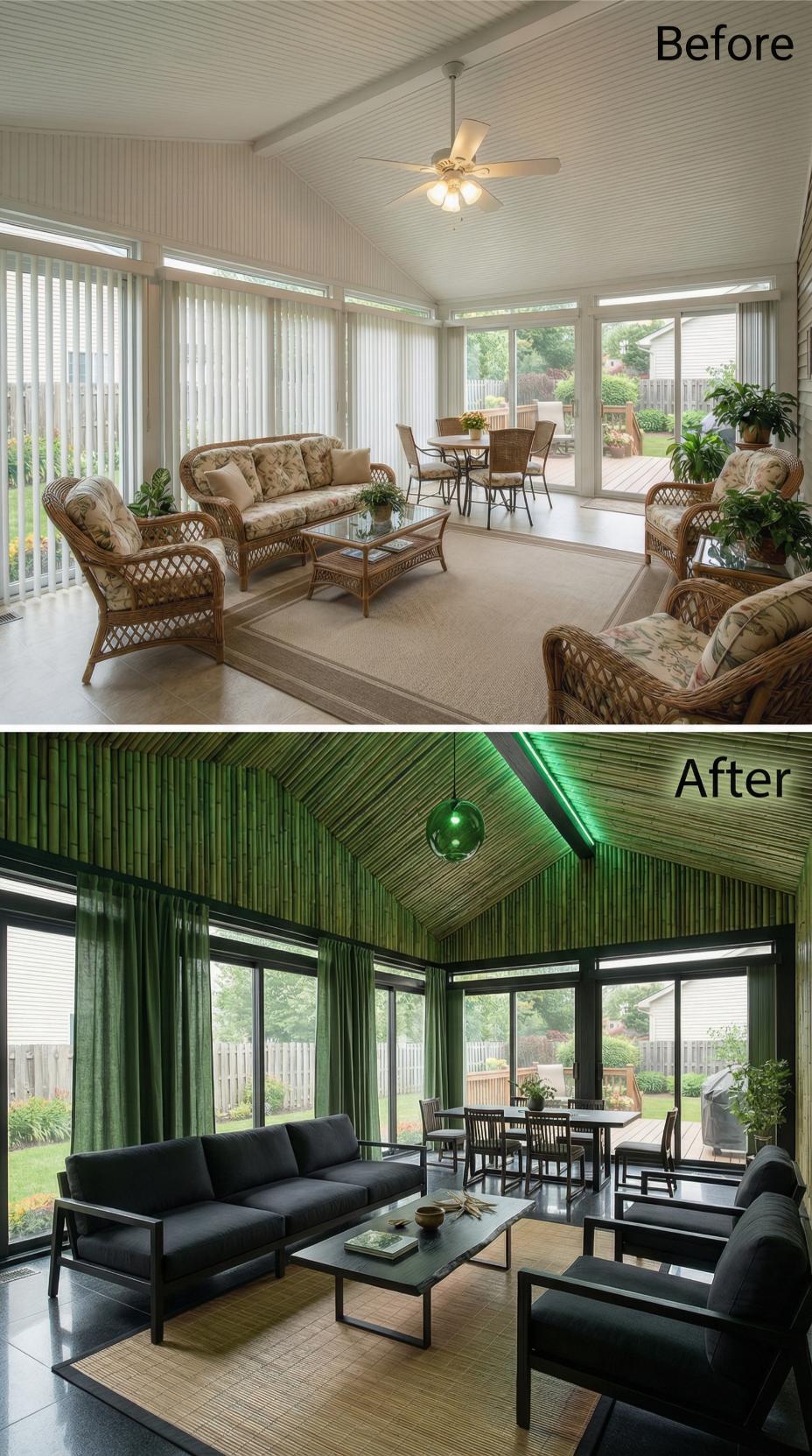
Ribbed beige paneling on the ceiling gives way to green-painted horizontal planks fitted with recessed LED strips that cast a glow across the vaulted profile. The old ceiling fan and white vertical blinds disappear, replaced by a spherical green glass pendant and charcoal window frames with matching emerald drapes. Black metal furniture with low-profile upholstery sits on dark tile, contrasting sharply with the original wicker seating and beige carpet. A dining set anchors the back corner beneath the sloped roofline.
Trend Alert: Green monochrome treatments, from ceiling paint to window textiles, unify mismatched architectural elements under one bold chromatic choice. The effect reads cohesive even when surfaces vary in texture or reflectivity.
Pale Beadboard and Wicker Furniture Ousted by Walnut Planking and Sage Upholstery
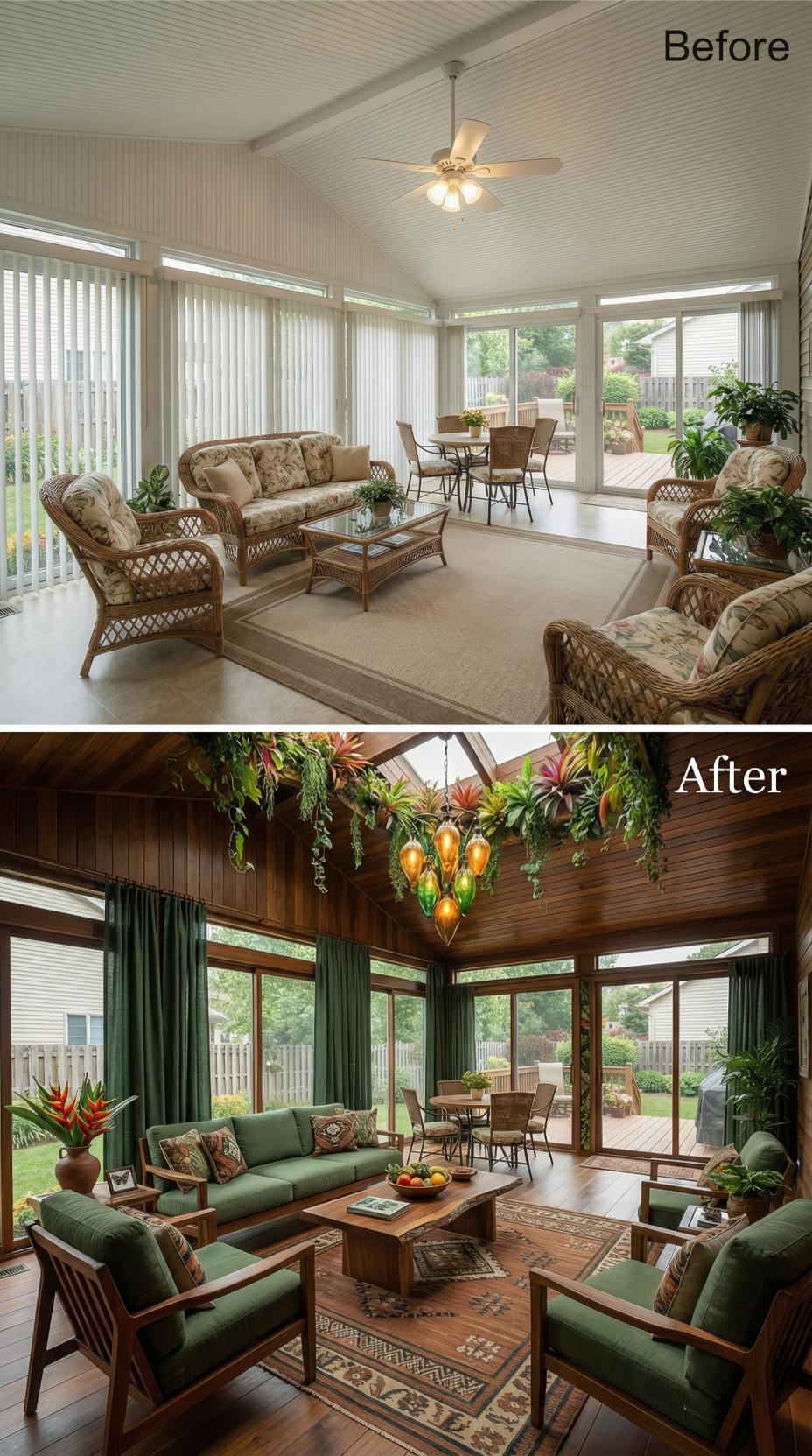
Beadboard walls and ceiling in an anemic beige gave way to horizontal walnut planking that wraps the room in warmth. The floral-cushioned wicker set vanished, replaced by midcentury-inspired chairs and a sofa upholstered in sage green linen. Vertical blinds disappeared in favor of floor-length emerald curtains that frame windows trimmed in matching walnut. An amber glass chandelier suspended over the seating area introduces tropical flair, echoed by bromeliads and trailing pothos mounted above the windows.
The neutral sisal rug traded places with a patterned runner in rust and cream geometric motifs. Hardwood flooring in a rich chestnut stain anchors the space, contrasting with the original builder-grade carpet. The ceiling fan with frosted globes made way for dark wood paneling that extends the walnut theme overhead, while hanging planters introduce vertical garden layers that soften the angular architecture.
Beadboard Neutrality Replaced by Tropical Ceiling Mural and Teal Chandelier
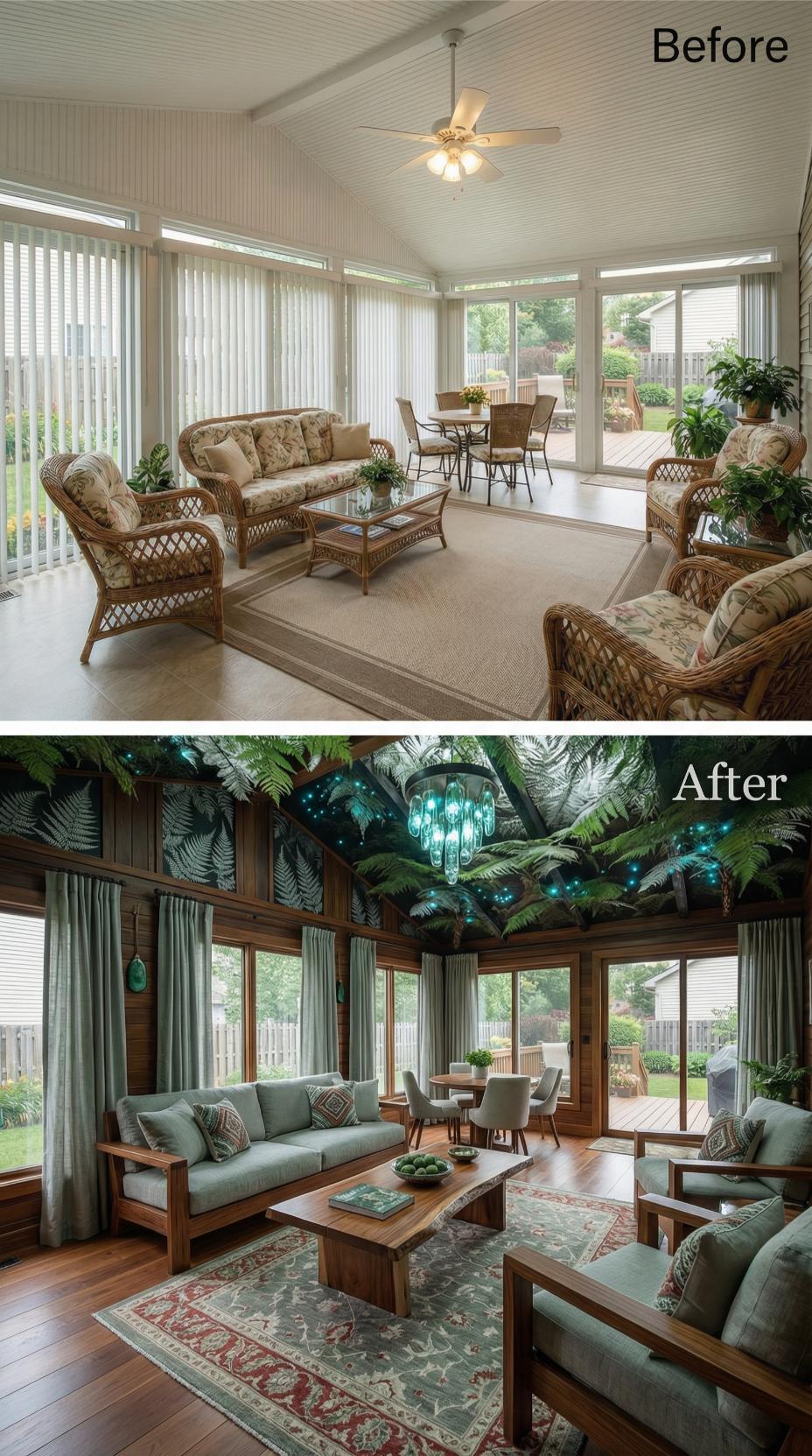
Beadboard gives way to horizontal wood plank walls stained in espresso, while the ceiling hosts a dense jungle mural complete with layered fern fronds and concealed LED twinkle lights. A cascading teal glass chandelier anchors the center above solid walnut furniture upholstered in sage linen. Vertical blinds disappear behind full-length eucalyptus-toned drapes that puddle slightly at the floor. The original beige carpet converts to wide-plank hickory flooring, and a Persian-style area rug in rust and seafoam grounds the seating arrangement.
Stone Veneer and Blue Linen Replace Beige Wicker and Vertical Slats
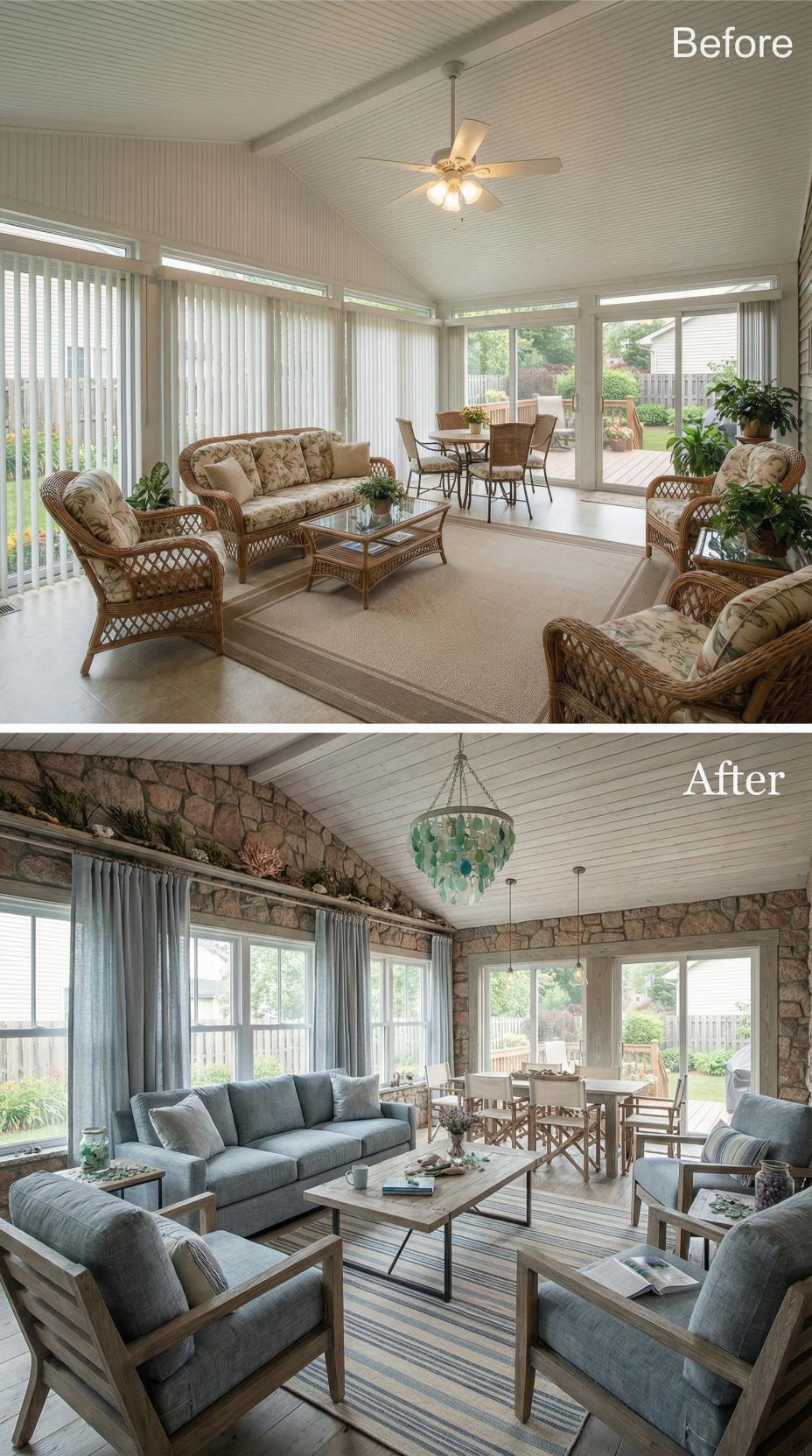
Cream vertical blinds hung across floor-to-ceiling windows once filtered light into a space dominated by beige beadboard and a brass ceiling fan. Wicker furniture upholstered in floral fabric sat on wall-to-wall beige carpet. The layout felt cluttered, with too many pieces competing for attention.
Stone veneer now wraps the walls, introducing texture and weight that anchors the room. A turquoise beaded chandelier hangs where the fan once spun. Blue-gray linen sofas and club chairs with exposed wood frames replace the wicker. A striped rug in cream and blue grounds the furniture. Sheer blue curtains soften the windows without blocking views. A wood coffee table with metal legs sits between the seating. Director’s chairs surround a rustic dining table at the far end, creating a casual dining zone. The ceiling retains its beadboard but reads fresh against the stone.
Wicker Lattice and Vertical Blinds Ousted by Brick Veneer and Floral Garland
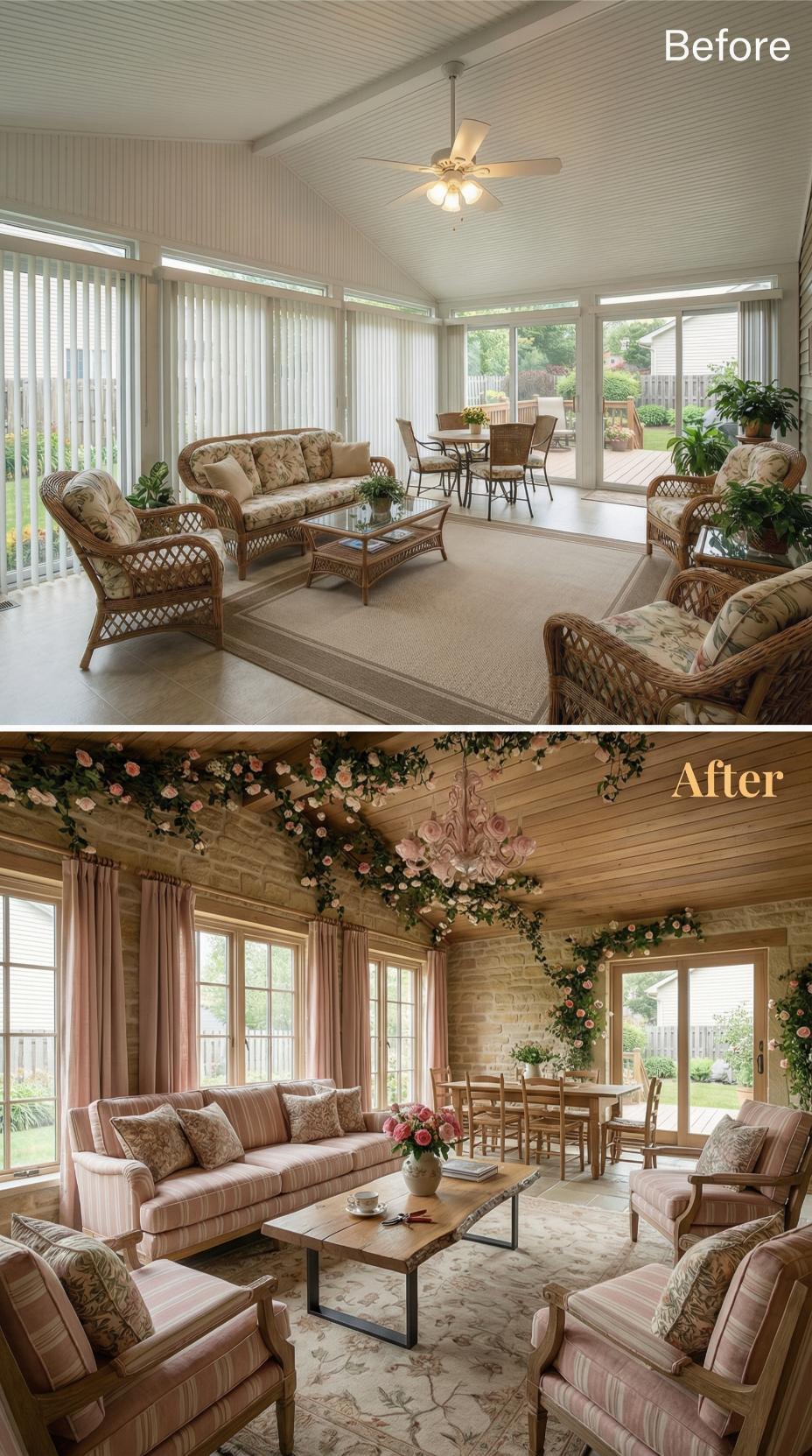
Honey-toned brick veneer now wraps the walls where ribbed beadboard once dominated. Horizontal wood planking stretches across the vaulted ceiling, painted in a warm wheat tone. A pink Murano-style glass chandelier anchors the center of the room, strung with faux floral garland in blush and ivory that drapes along the ceiling line.
Striped linen upholstery in peach and cream replaces the tropical wicker seating. A floral area rug in soft pastels grounds the furniture arrangement. Tall drapes in dusty rose frame the left windows, replacing the vertical blinds that previously lined every pane. The dining set shifts from metal and glass to natural oak.
Dated Wicker and Ceiling Fan Replaced by Living Moss Wall and Modern Teak
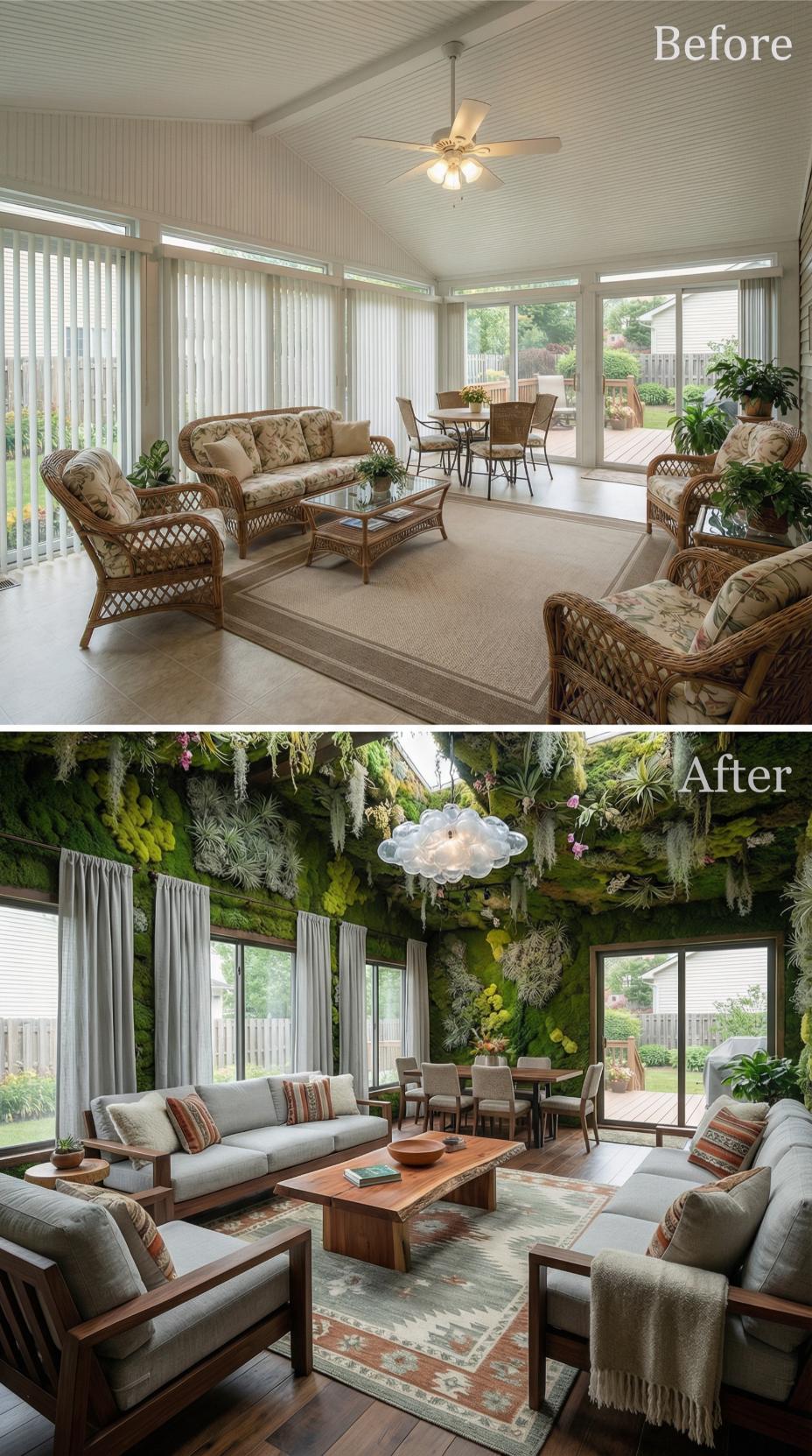
Beige carpeting and wicker furniture with floral cushions dominated the original space, paired with vertical blinds and a beadboard ceiling that reflected a safe, traditional approach. The transformation introduces a dramatic living wall spanning the entire rear surface, dense with air plants, ferns, and trailing succulents in varying shades of chartreuse, forest green, and sage.
Dark walnut flooring anchors the room, while low-profile teak sofas upholstered in natural linen create clean horizontal lines. A glass-and-wood coffee table sits atop a geometric area rug in burnt orange and cream. The dining zone features midcentury-style chairs with pale upholstery around a simple wood table. Soft gray drapery replaces the vertical blinds, and a sculptural cloud chandelier with frosted glass orbs provides ambient light without competing with the botanical focal wall.
- Teak furniture frames with linen cushions establish organic modernism
- Full living wall introduces biophilic design without potted plants
- Cloud chandelier with frosted glass diffuses light across the plant installation
Wicker Florals and Beadboard Ceiling Exit for Dark Walnut and Pitcher Plant Suspension
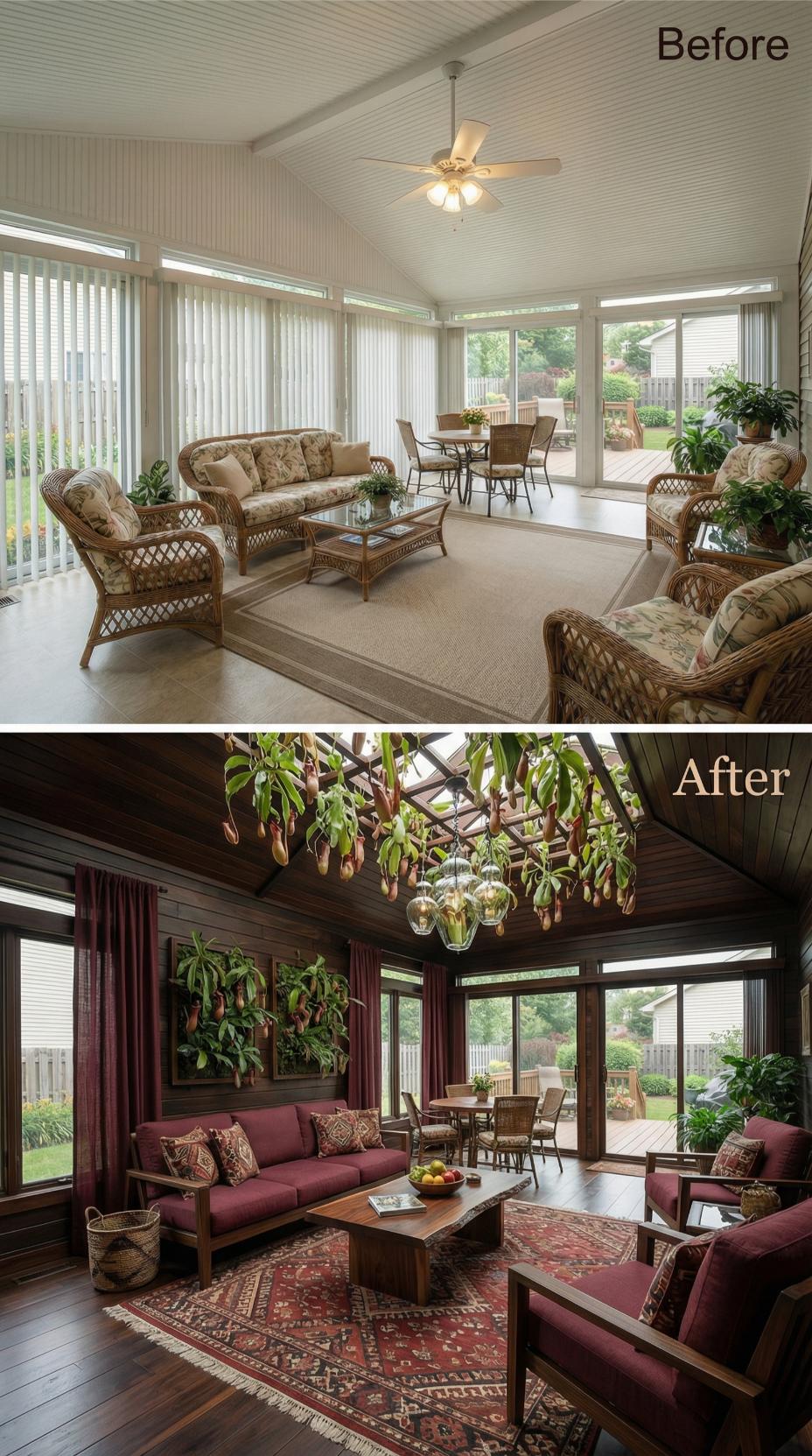
Floral wicker seating on beige carpet gives way to a deep burgundy sofa and chairs with walnut frames anchored by a Persian rug in navy, rust, and cream. The beadboard ceiling panel system disappears beneath dark stained tongue-and-groove planks that climb the vaulted pitch. A statement fixture suspends live pitcher plants and glass globe pendants where a brass ceiling fan with frosted shades once circulated air.
Chocolate-stained shiplap wraps the walls, contrasting with the original white vertical blinds now replaced by plum drapery panels. The dining set shifts from light rattan to darker wood with upholstered seats, while baskets and layered greenery soften the moody palette.
Prayer Flags and Mustard Walls Overtake Neutral Wicker and Beaded Ceiling
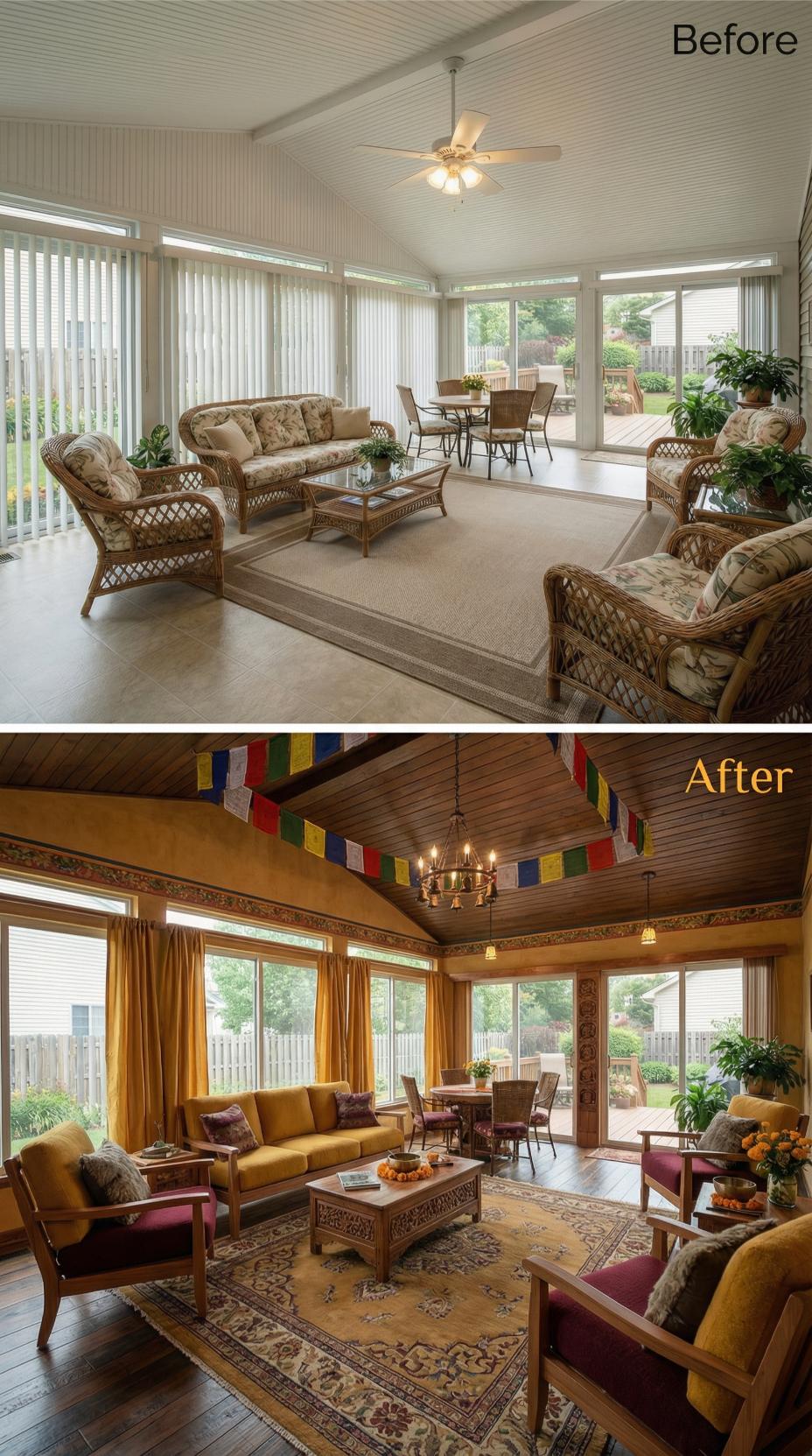
Tibetan prayer flags in primary hues drape across the upper wall, contrasting with the mustard yellow painted walls below. Dark walnut tongue-and-groove planks replace the original white beadboard ceiling. A tan leather sofa anchors the seating area, while burgundy velvet chairs flank carved wooden side tables. Traditional Persian rugs in rust and navy layer over dark hardwood flooring.
Beige Vertical Blinds Replaced by Cedar Planking and Craftsman Furniture
🔥 Would you like to save this?
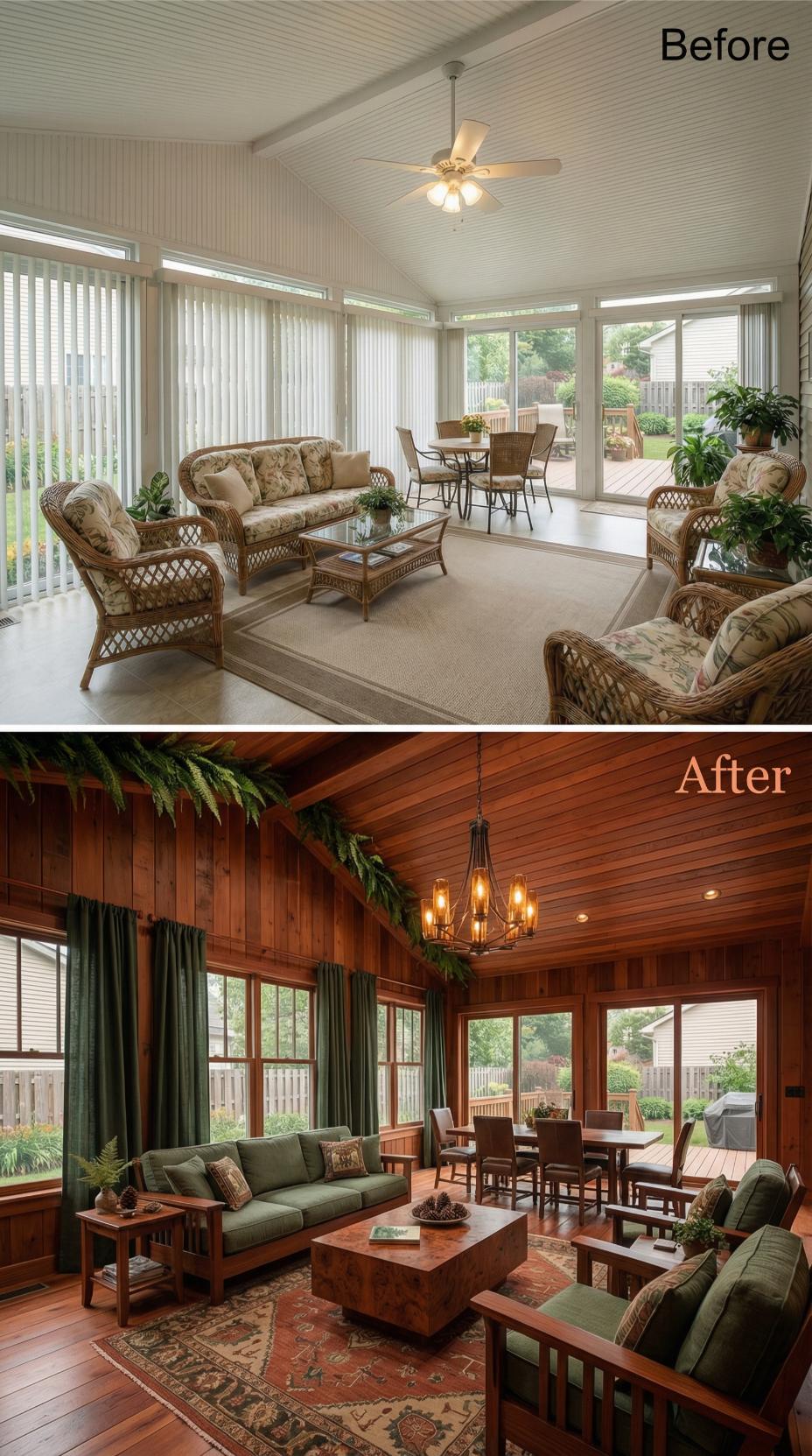
Ribbed white paneling and tan vertical blinds disappear behind floor-to-ceiling cedar tongue-and-groove walls stained in mahogany tones. Mission-style sofas and chairs upholstered in forest green linen anchor the seating area over terracotta hexagonal floor tiles and a Persian rug in rust and olive. A black iron chandelier with Edison bulbs replaces the brass ceiling fan, while green velvet drapes frame the window transoms.
Wicker Casual Replaced by Dark Shiplap and Bronze Chandelier Drama
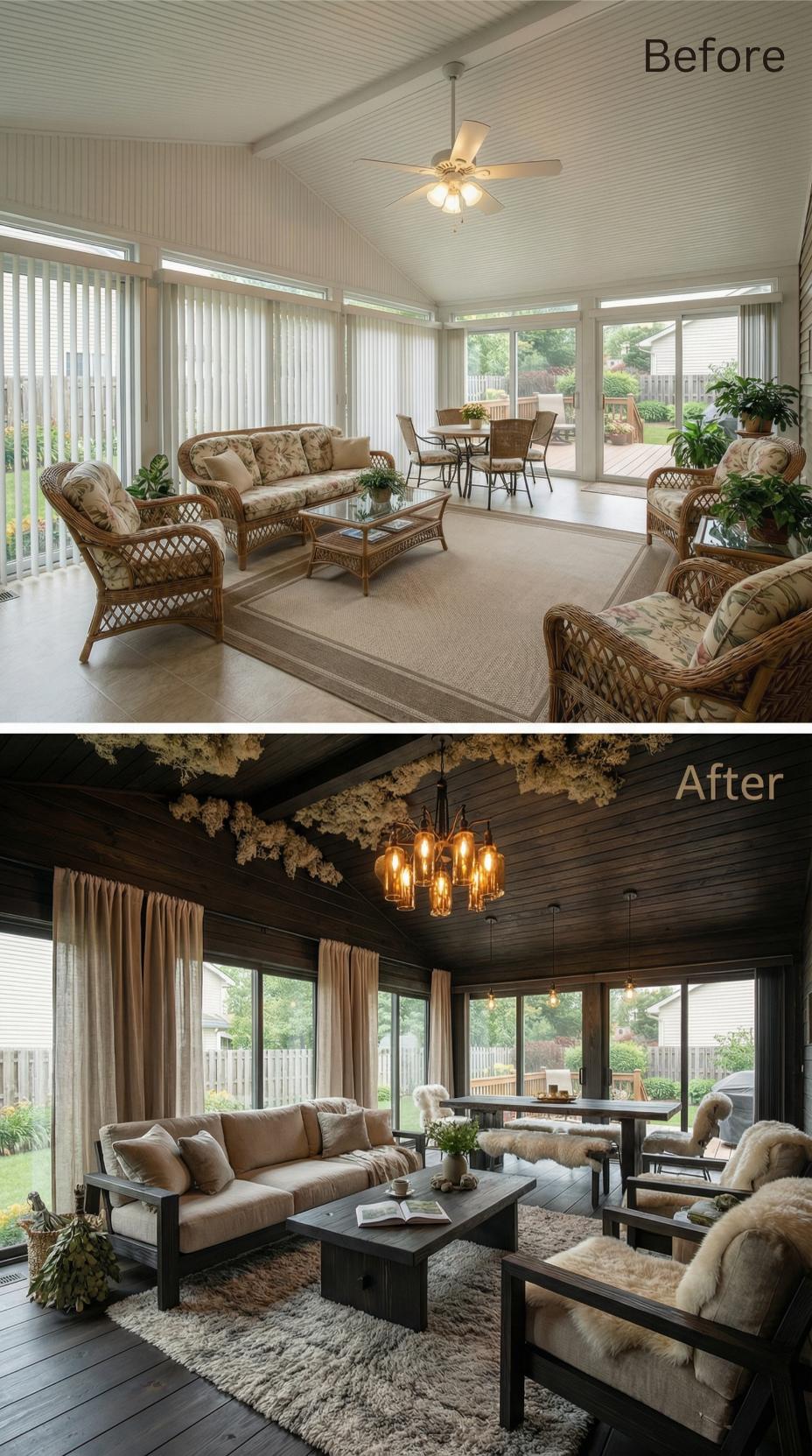
Woven rattan furniture and beige carpet vanish in favor of a dramatic dark-stained shiplap envelope that stretches across walls and vaulted ceiling. A bronze chandelier with amber glass pendants suspends above a modern black oak coffee table, casting warm light that bounces off the charcoal wood grain. Neutral linen sofas with rolled arms and taupe throw pillows rest on exposed black-stained plank flooring layered with a shaggy ivory wool area rug.
The dining zone features a live-edge black walnut table surrounded by tufted linen chairs, positioned near windows now framed with taupe drapery panels instead of vertical blinds. Dried hydrangea clusters hang from the ceiling’s peak, introducing organic texture against the monochromatic palette. Window trim receives black paint to match the furniture, creating visual cohesion throughout the angular space.
Vertical Vinyl and Floral Wicker Yield to Stone Accent Wall and Charcoal Linen
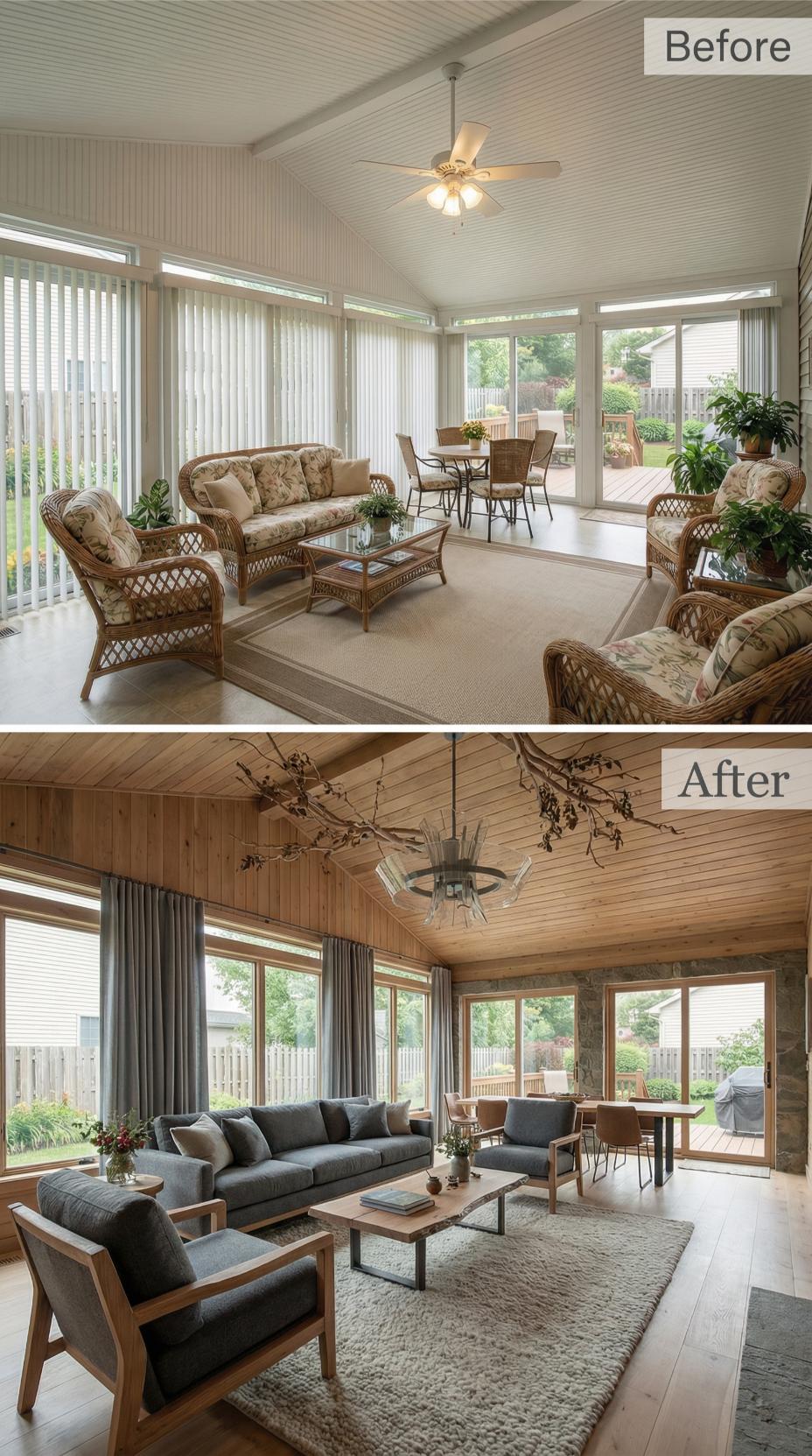
White beaded paneling and a dated ceiling fan with frosted shades once dominated this space, paired with tan wicker seating dressed in busy floral cushions. Vertical vinyl blinds covered every window, while beige carpet absorbed what little character remained.
Horizontal wood planking now wraps the ceiling in warm honey tones, anchored by a sculptural branch chandelier that replaces the builder-grade fan. A stacked stone column introduces texture near the entry, while charcoal sofas with clean lines and wooden frames create a modern lounge. Gray drapery panels frame the windows, and wide-plank flooring in weathered gray oak grounds the updated palette. The dining set moves deeper into the room, opening sightlines to the deck beyond.
Vertical Blinds and Ceiling Fan Displaced by Botanical Gallery and Emerald Velvet
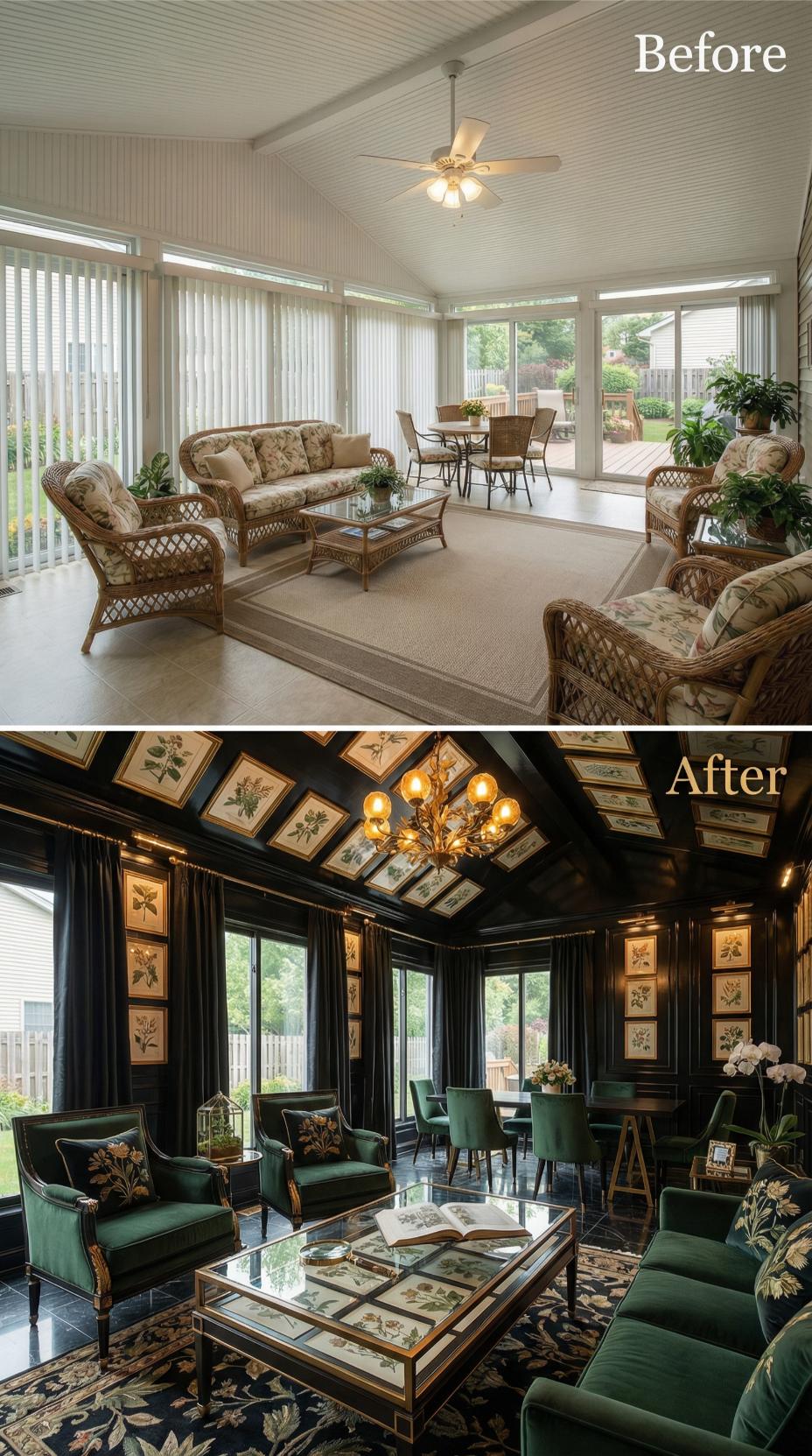
Black lacquered wall panels form a dramatic backdrop for framed botanical prints arranged in precise salon-style rows. Emerald velvet armchairs and sofas with gold trim replace wicker furniture, while a floral chandelier with amber globes hangs from the coffered ceiling. Black window frames and dark drapery enclose the space in moody sophistication, while a glass-topped coffee table displays pressed botanicals beneath its surface.
Black lacquered wall panels form a dramatic backdrop for framed botanical prints arranged in precise salon-style rows.
Beadboard Sunroom Gives Way to Walnut Walls and Mid-Century Lounge
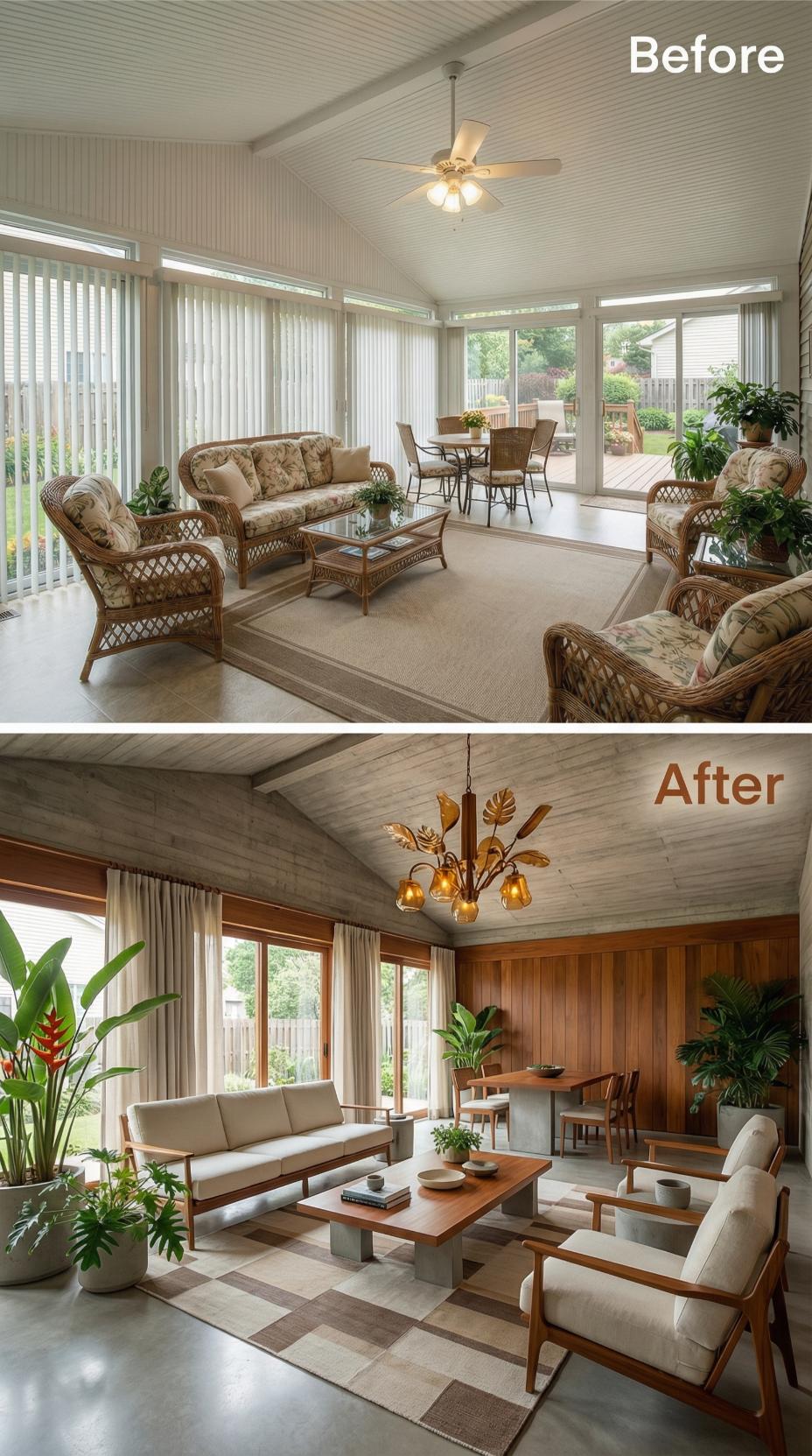
Vertical beadboard paneling in pale gray disappears beneath rich walnut tongue-and-groove walls that wrap the space in warmth. Mid-century furniture anchors the room with low-profile teak frames upholstered in cream linen, replacing floral-cushioned wicker seating. A botanical chandelier with amber glass globes and brass leaf accents suspends from the vaulted gray-washed wood ceiling where a dated fan once hung.
Zen Minimalism Overturns Wicker Clutter and Vinyl Verticals
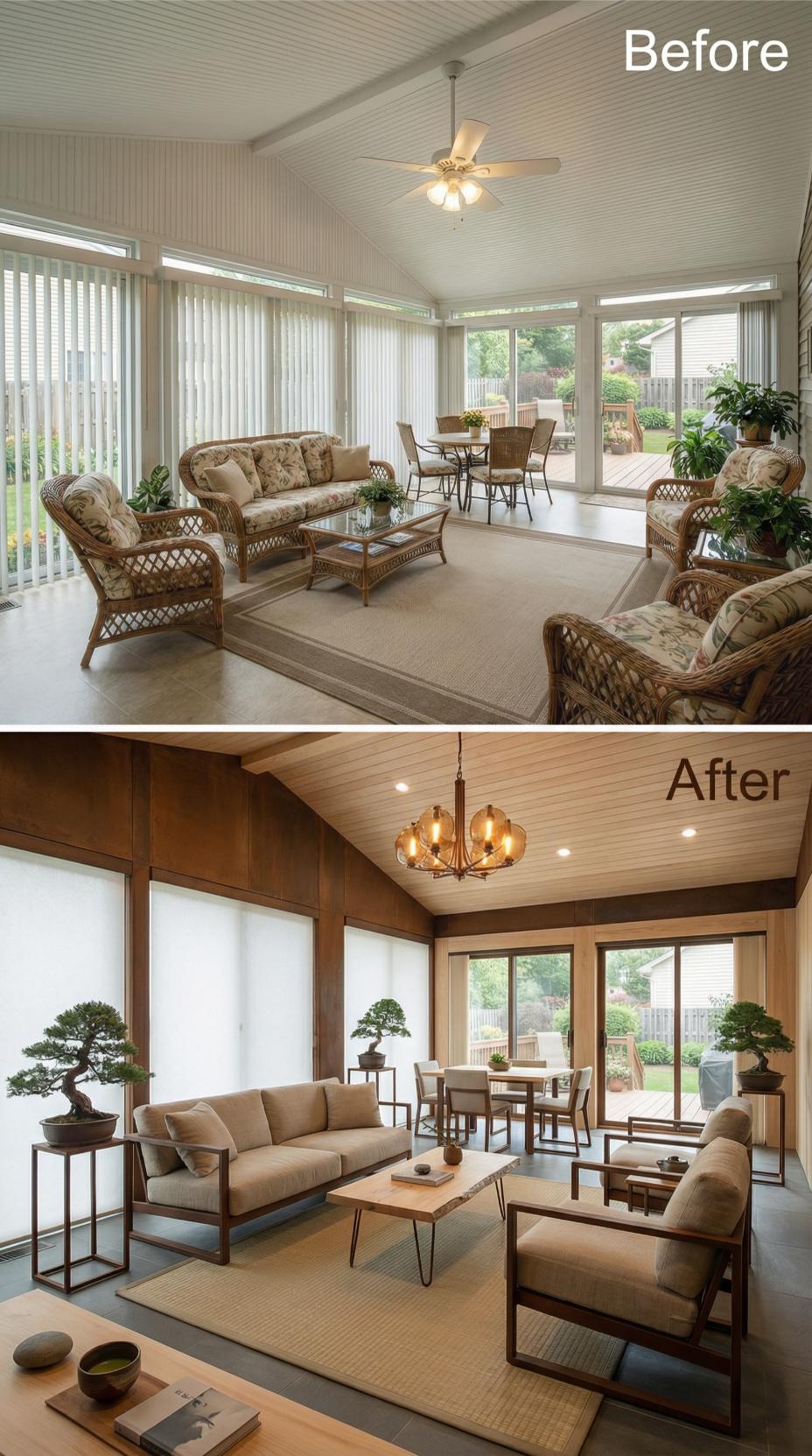
Dark walnut frames now encase frosted white panel shades where vertical blinds once hung. Low-profile tan sofas with exposed wood armrests and hairpin-leg coffee tables anchor tatami mats. Bonsai specimens on metal pedestal stands flank the seating zone, introducing sculptural horticulture against a warm wood-planked ceiling and chocolate trim.
Ribbed Vinyl and Wicker Fade Into Rich Walnut Paneling and Leather
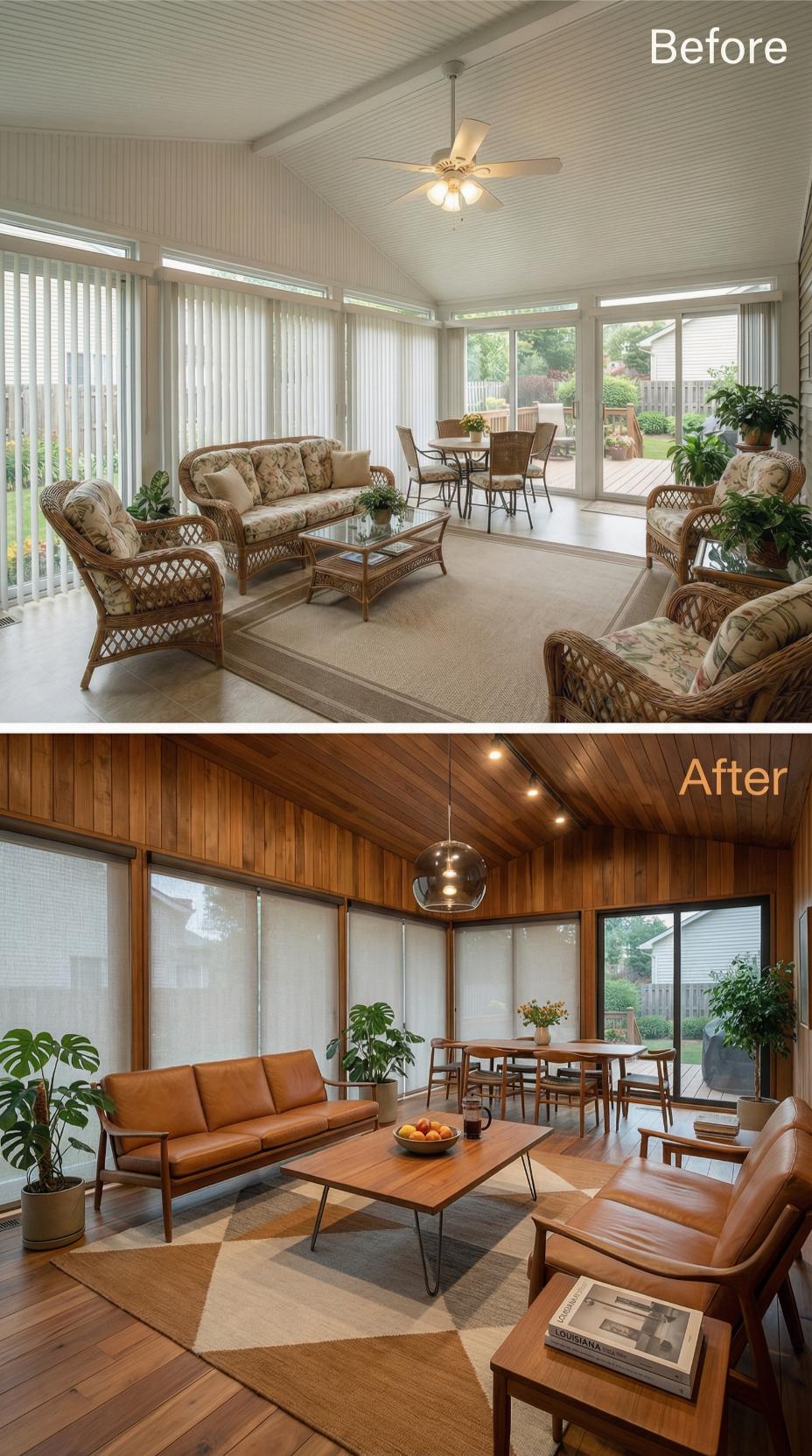
The original sunroom featured beadboard ceiling panels, vertical blinds in off-white, and a dated wicker furniture set upholstered in floral prints. Beige carpet covered the floor beneath a glass-top coffee table, while a brass ceiling fan attempted to anchor the space.
Walnut tongue-and-groove boards now clad both walls and ceiling, creating warmth that flows from surface to surface. Tan leather seating in mid-century silhouettes replaces the wicker ensemble. The dining set shifts to teak, and roller shades in light gray linen filter sun through black-framed windows. Recessed ceiling lights and a smoky glass globe pendant deliver focused illumination without the fan’s visual weight. Slate tile flooring in large format supports the walnut’s depth.
Beadboard Neutrality Gives Way to Exposed Beam Drama and Terracotta
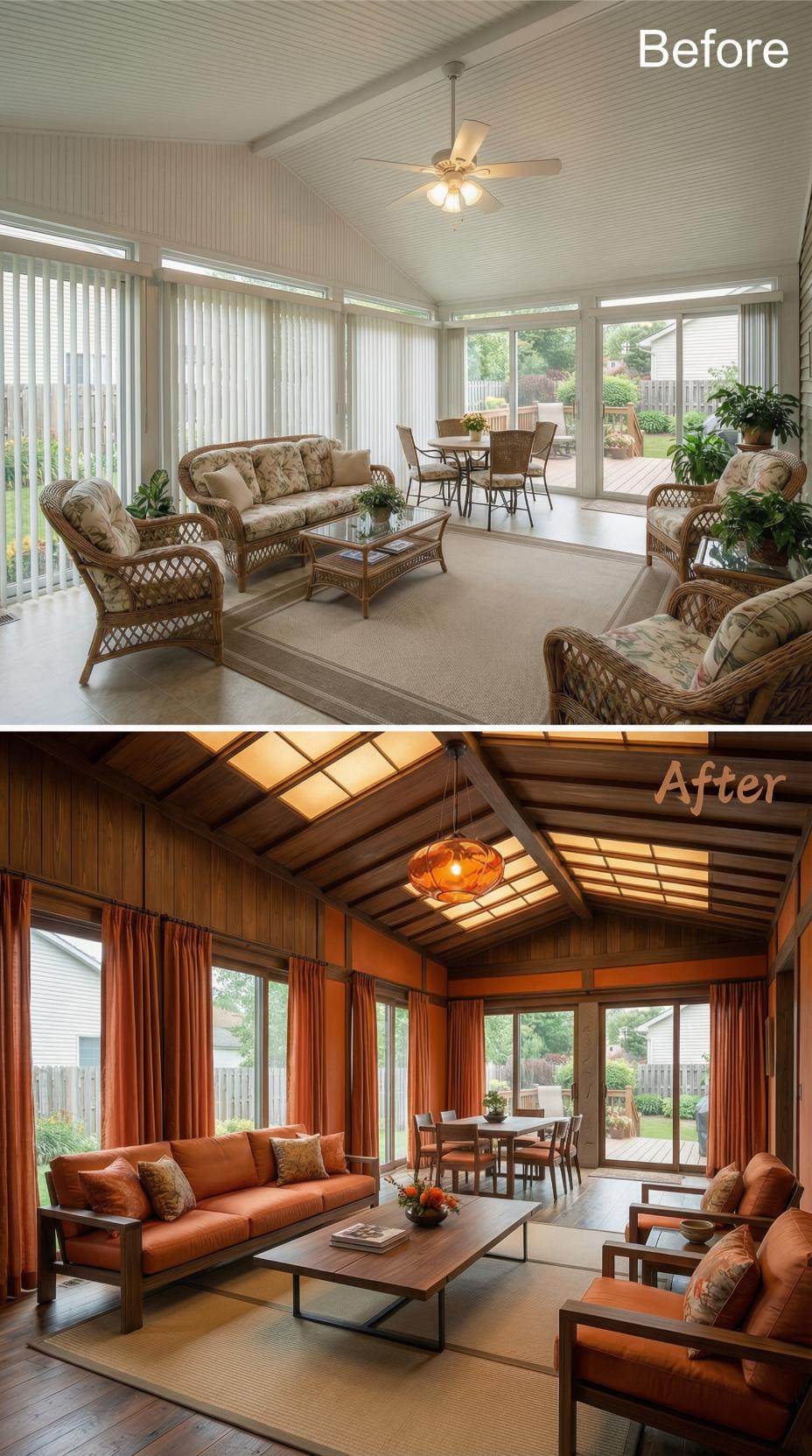
Honey-toned wood paneling replaces white beadboard walls while exposed ceiling beams bracket backlit panels for architectural depth. Terracotta drapes frame every window, matching rust-orange cushions on mission-style seating with slatted wooden frames. A bronze geometric pendant replaces the ceiling fan, casting ambient light across the vaulted structure.
Beadboard and Wicker Exit for Coffered Mahogany and Stained Glass Pendant
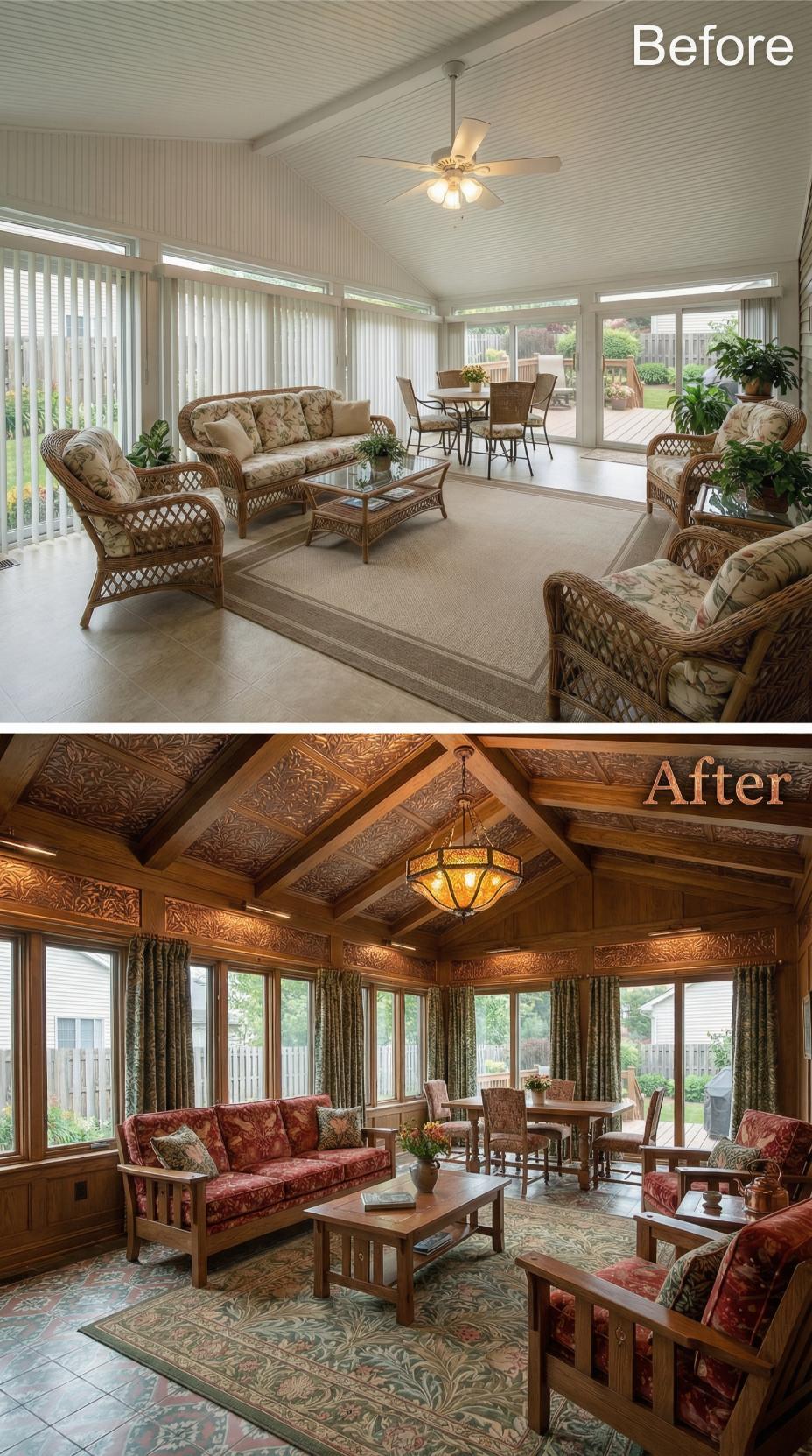
Neutral beadboard walls and floral wicker furniture give way to a coffered mahogany ceiling with embossed tin inserts and carved frieze bands. Mission-style furniture in quartersawn oak takes over, upholstered in burgundy damask with sage botanical patterns. Silk drapery in moss green replaces vertical blinds, framing wood-trimmed windows. An amber stained glass pendant fixture replaces the builder-grade ceiling fan. Tile flooring and a patterned area rug complete the Arts and Crafts revival.
Floral Wicker and Vertical Blinds Vanish for Wood Beams and Cobalt Upholstery
🔥 Would you like to save this?
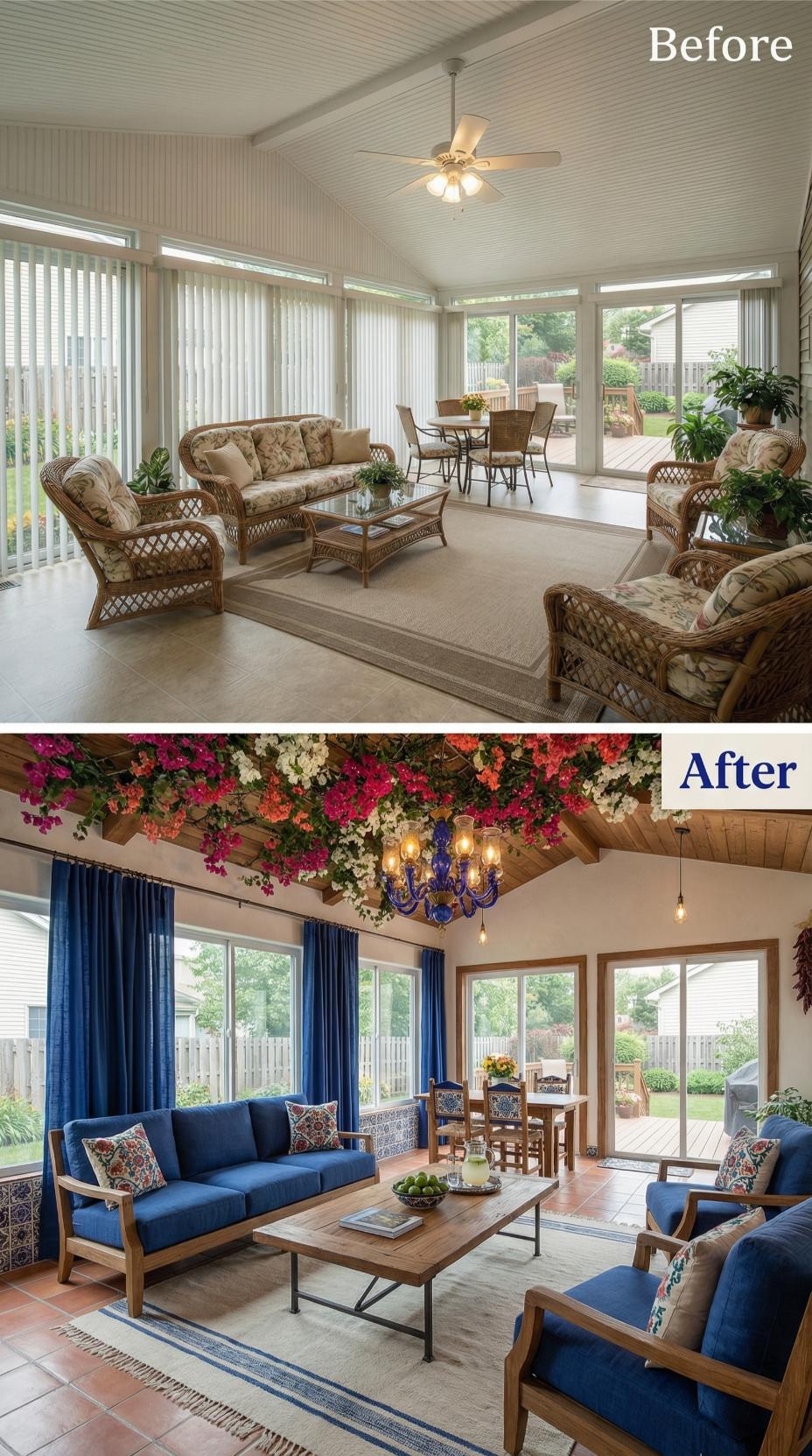
Beadboard walls and ceiling in the original space gave way to exposed wood beams stained in warm chestnut tones. White vertical blinds disappeared in favor of navy blue drapery panels flanking the windows, while the wicker furniture set with floral cushions made room for solid wood frames upholstered in rich cobalt fabric.
The dated ceiling fan with frosted glass shades was replaced by an ornate chandelier in midnight blue metal paired with Edison bulbs. Overhead, faux bougainvillea vines in magenta, coral, and cream cascade across the beams. Window frames now wear natural oak trim, and the flooring shifts from beige carpet to terracotta tile with a rustic finish.
Japanese Shoji Screens Replace Vinyl Verticals in Wood-Paneled Retreat
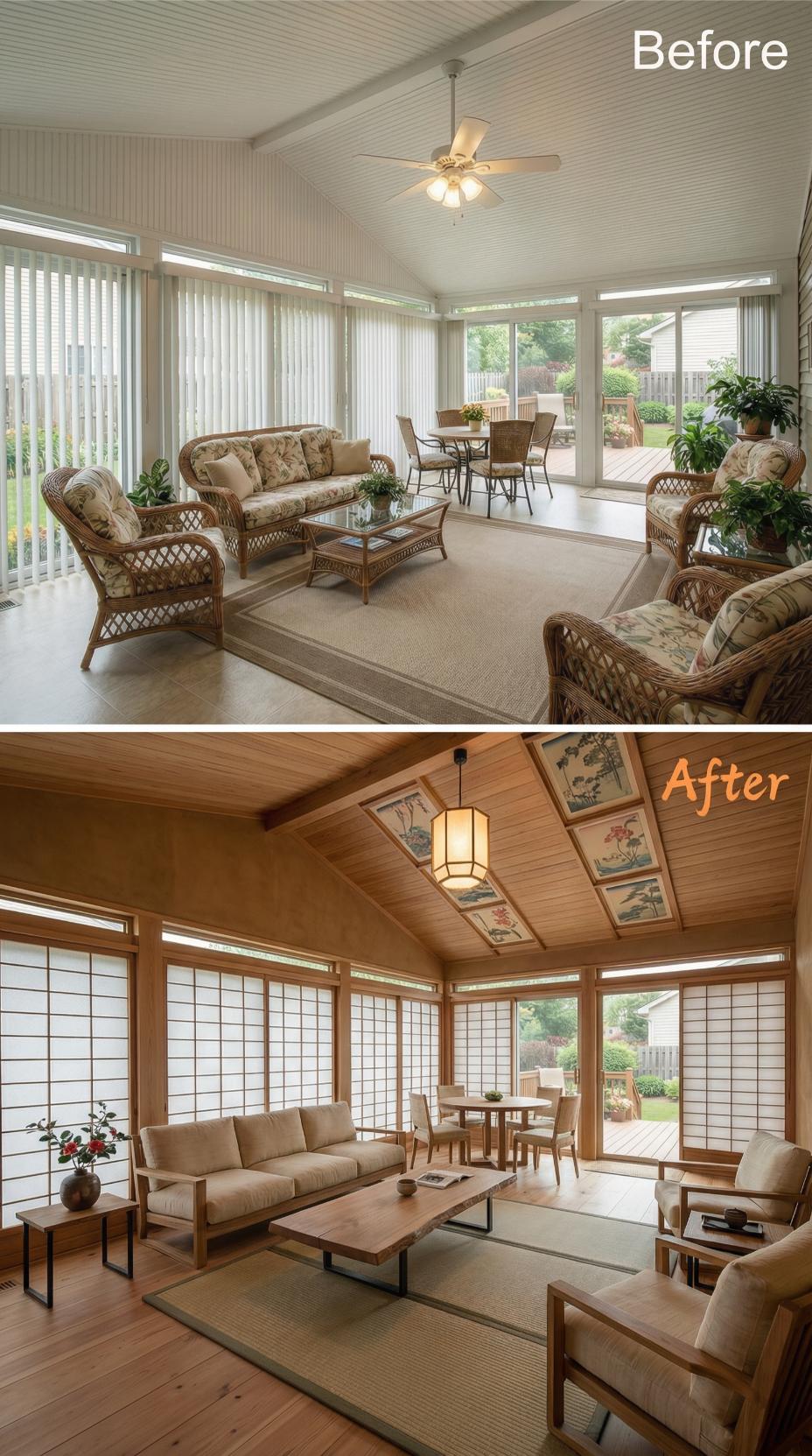
Ribbed vinyl paneling and a dated ceiling fan make way for honey-toned cedar tongue-and-groove and traditional shoji screens framed in warm wood grids. Tatami mats anchor the seating area beneath a low coffee table and streamlined sofa. Four framed botanical prints hang in a vertical row on the ceiling plane. A Craftsman-style lantern pendant replaces the original fixture, while the dining set transitions from metal to solid wood with clean lines.