Nobody walks into a kitchen and thinks, I am now performing a personality assessment. But that is exactly what happens. Before you’ve offered anyone a drink, before a single word about the renovation or the square footage, the room has already spoken. The blender left on the counter, the coffee station positioned just so, the junk drawer half-open, the fruit bowl that hasn’t seen a banana in three weeks, every choice is a data point. Environmental psychologists have spent decades studying how the spaces we inhabit reflect the minds that organize them, and the kitchen, it turns out, is the most honest room in the house. Not the living room you staged, not the bedroom you closed the door on. The kitchen. Here’s what yours is saying.
The Counter Clutter Code That Reveals Whether You’re a Doer or a Planner
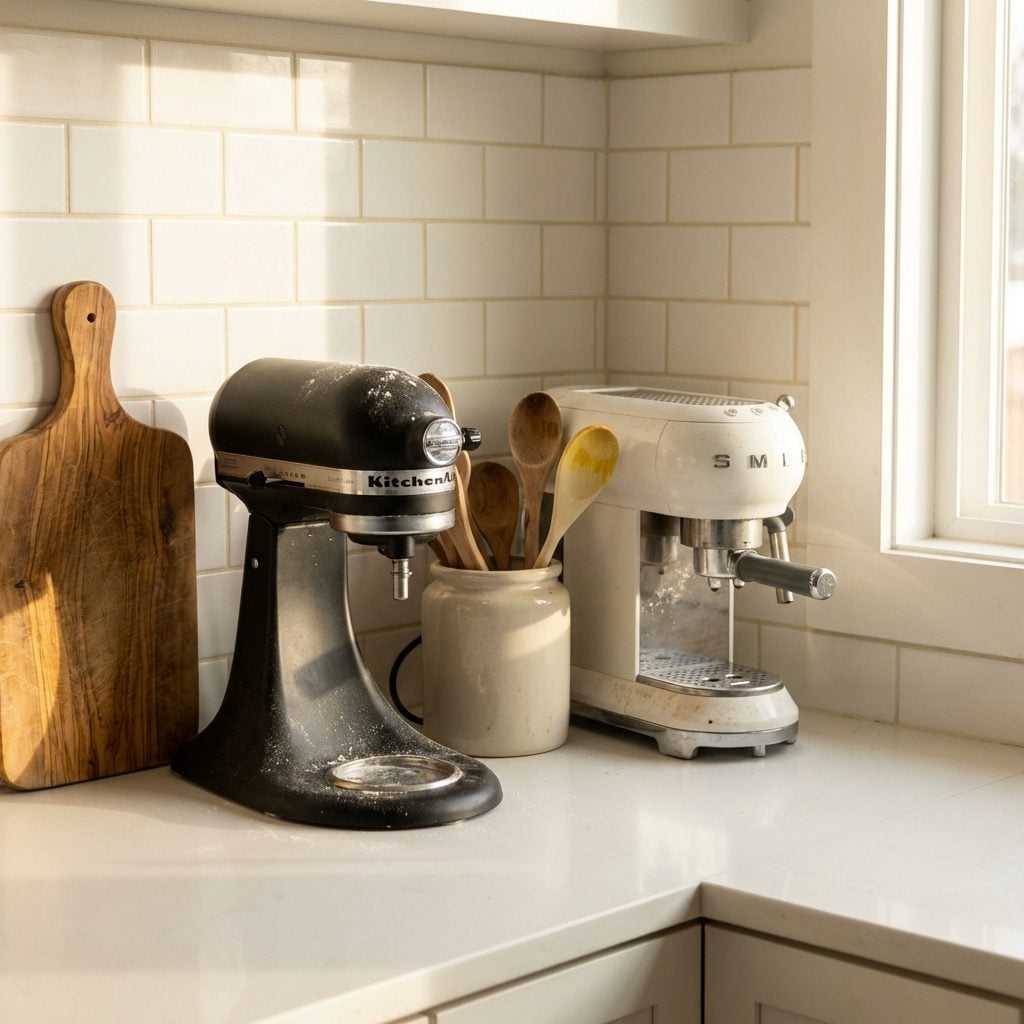
Everything sitting on the counter is doing something for you, even if you can’t articulate what. The stand mixer that never gets put away isn’t laziness. It’s an efficiency bias: keep what you use most visible, reduce friction, act fast. Psychologically, people who keep tools out are optimizing for speed over aesthetics. They don’t plan the week’s meals in advance, they scan what’s available and make a decision in real time. That’s not disorganization. That’s a different cognitive style, one that prioritizes doing over deliberating.
In order to come up with the very specific design ideas, we create most designs with the assistance of state-of-the-art AI interior design software. Also, assume links that take you off the site are affiliate links such as links to Amazon. this means we may earn a commission if you buy something.
The counter becomes a live map of your actual life, not your aspirational one. Dr. Joseph Ferrari, a psychology professor at DePaul University and leading clutter researcher, has found that clutter-adjacent environments often reflect a high mental load rather than character flaws, the brain is simply offloading memory to the physical space around it (Source). What’s telling isn’t just what’s out, it’s the pattern. A toaster and a kettle signal routine. A half-finished charcuterie board and three open wine bottles signal spontaneity. The rice cooker next to a jar of tahini and a well-worn wok tells an entirely different story. Your counter isn’t cluttered. It’s autobiographical.
Why Psychologists Say the Kitchen Is the Only Room You Can’t Lie In
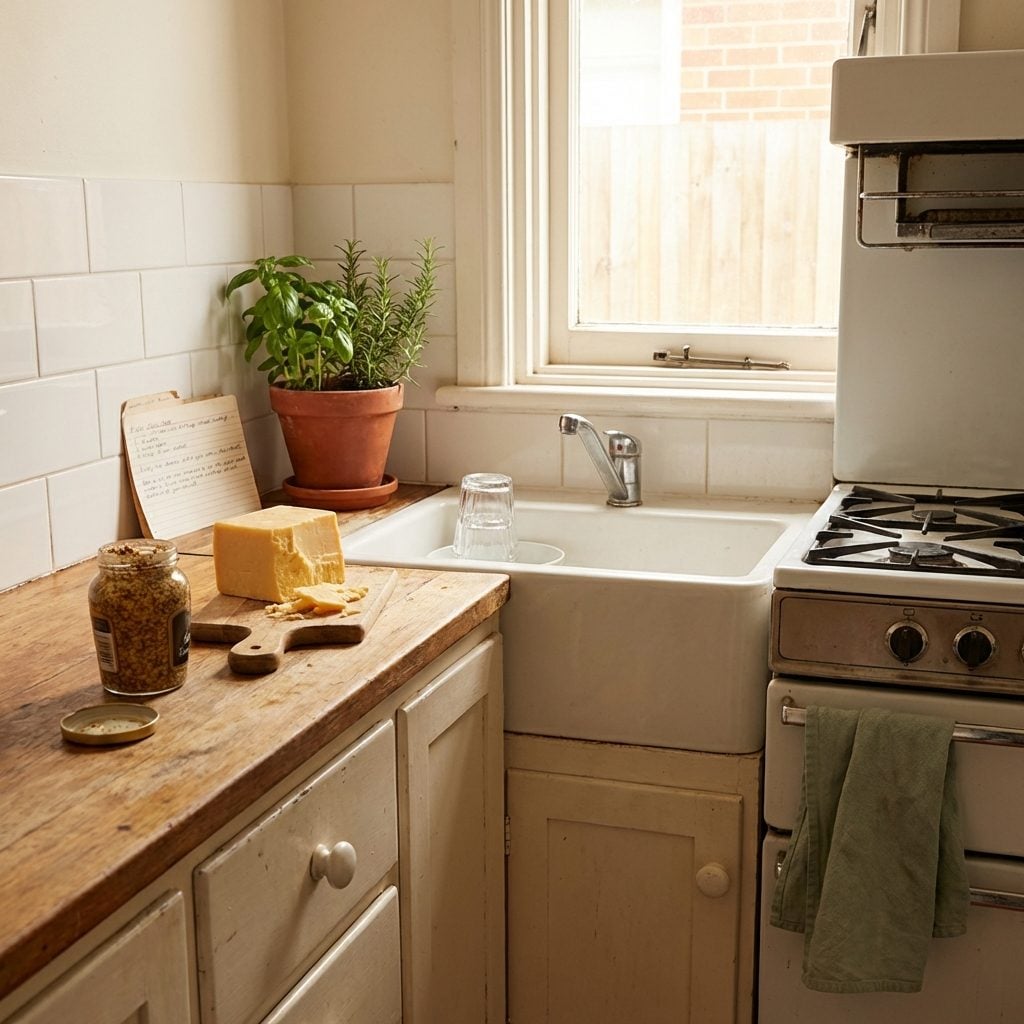
Every other room in the house can be staged. The living room gets the good throw pillows and a stack of books you want people to see. The bathroom gets a candle lit right before guests arrive. But the kitchen, especially a small one, has no backstage. Berkeley professor Clare Cooper Marcus, who studied the psychological relationship between people and their homes in House as Mirror of Self, argued that our domestic spaces reveal the inner life we rarely narrate out loud. The kitchen, specifically, is the room where the performance breaks down.
Think about it. A well-designed kitchen communicates aspiration. But what guests actually notice is the dark kitchen inspiration mood on your upper cabinets and the expired supplements on the windowsill. They notice whether there’s space to put a glass down, whether your sponge smells, whether the trash can has a lid. These aren’t aesthetic judgments. They’re character reads. The kitchen, stripped of decorative intention, shows how you actually live, not how you’d like to.
The Obsessively Clear Counter and the Anxiety Secret It’s Keeping
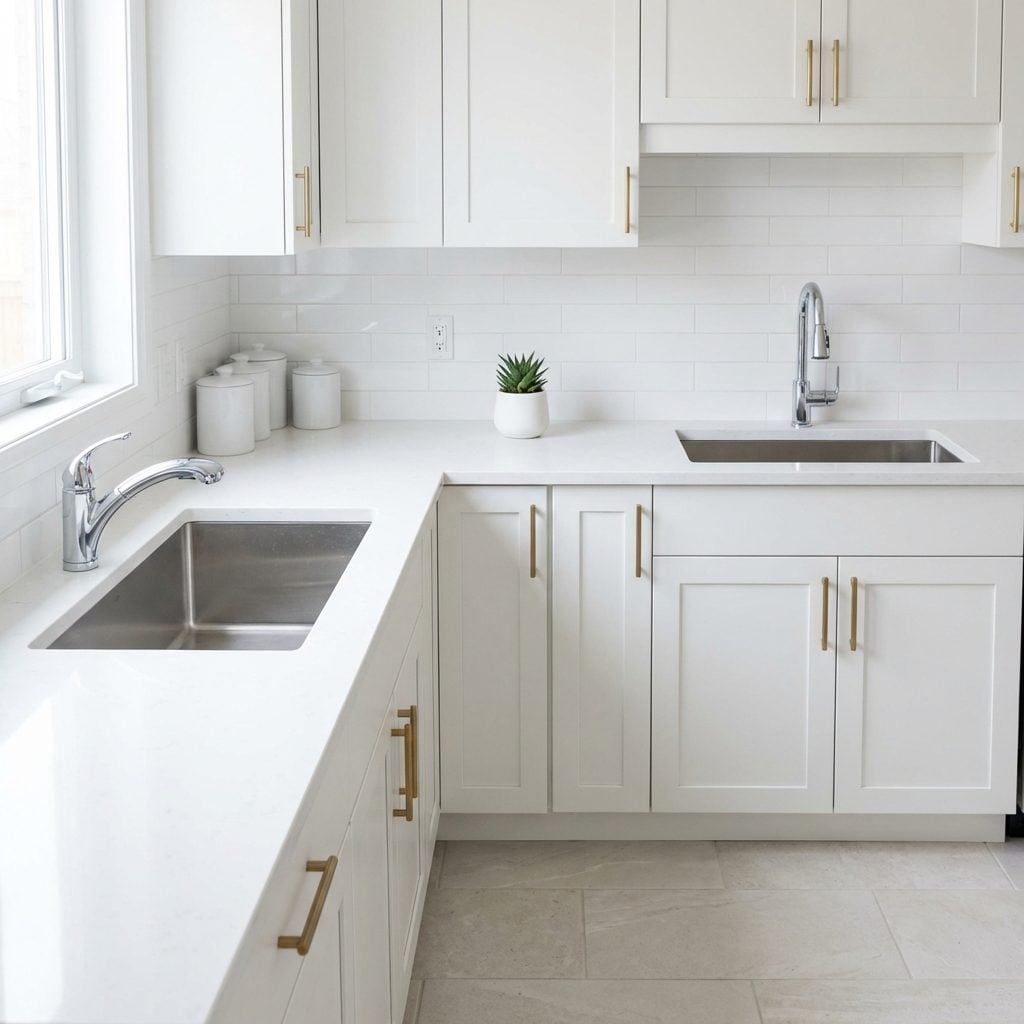
There is a version of kitchen minimalism that is genuinely restorative, and there is a version of it that is performance, control, and low-grade dread masquerading as aesthetic preference. The difference is worth examining. Research published in Personality and Social Psychology Bulletin found that people who described their homes as cluttered showed significantly higher cortisol levels and more pronounced symptoms of depression, but the inverse also carries a cost (Source). When clearing the counter becomes a compulsion, something that must happen before you can sit down, relax, or have a conversation, it stops being a preference and starts being a coping mechanism.
Psychologists who study obsessive tidiness note that the drive to control physical space often mirrors a drive to control internal states: anxiety, performance pressure, the sense that things are always slightly about to fall apart. The spotless kitchen isn’t the problem. It’s the question underneath it: What happens if someone sees it any other way? Guests can feel the difference between a kitchen that is clean because its owner enjoys calm, and a kitchen that is clean because its owner is afraid of what mess implies about them.
What the Coffee Station You Built for Guests Says About Your Attachment Style
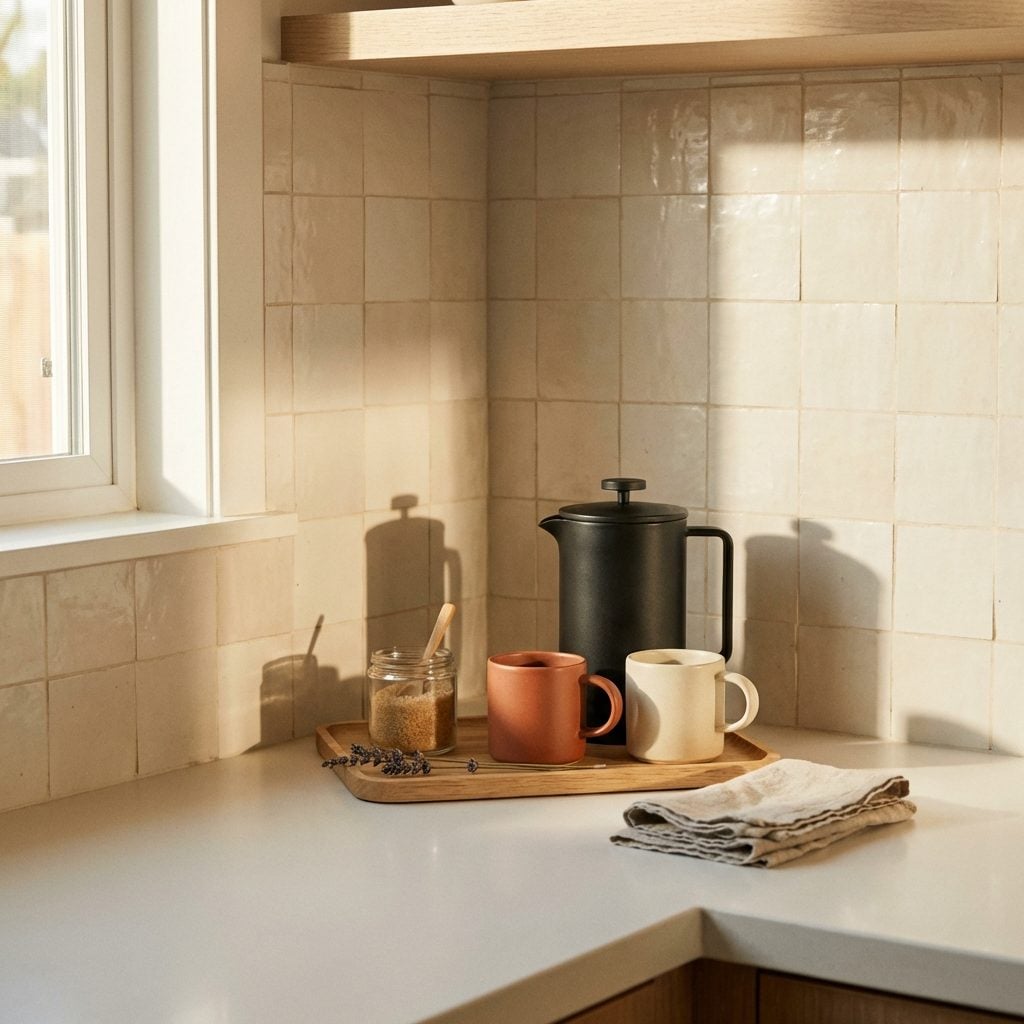
A dedicated coffee or tea station in a small kitchen is one of the most honest gestures in domestic design. It says: I thought about you before you arrived. That matters more than the quality of the beans or the style of the mugs. In attachment theory research, first developed by John Bowlby and later expanded to adult relationships, the act of anticipating another person’s needs, and structuring your environment to meet them, is one of the clearest behavioral signatures of a secure attachment style. You’ve internalized the guest’s comfort as part of your own planning process. That’s not performative hospitality. That’s attunement (Source).
Contrast that with the kitchen that has no clear place to put anything down. No surface free, the kettle buried behind the air fryer, the mugs in a cabinet with no obvious logic. This isn’t always negligence, sometimes it’s simply that the owner’s workflow takes priority over a guest’s orientation. But guests read it accurately: this space was built for you, not for me. The coffee station doesn’t have to be elaborate. A matte black matte black French press, a small wooden tea tray, and a few mismatched mugs you actually love, that’s enough. The signal is in the intention, not the Instagram grid.
The Sunk-Cost Container You’ve Kept for Years and What It Betrays About Your Inner Life
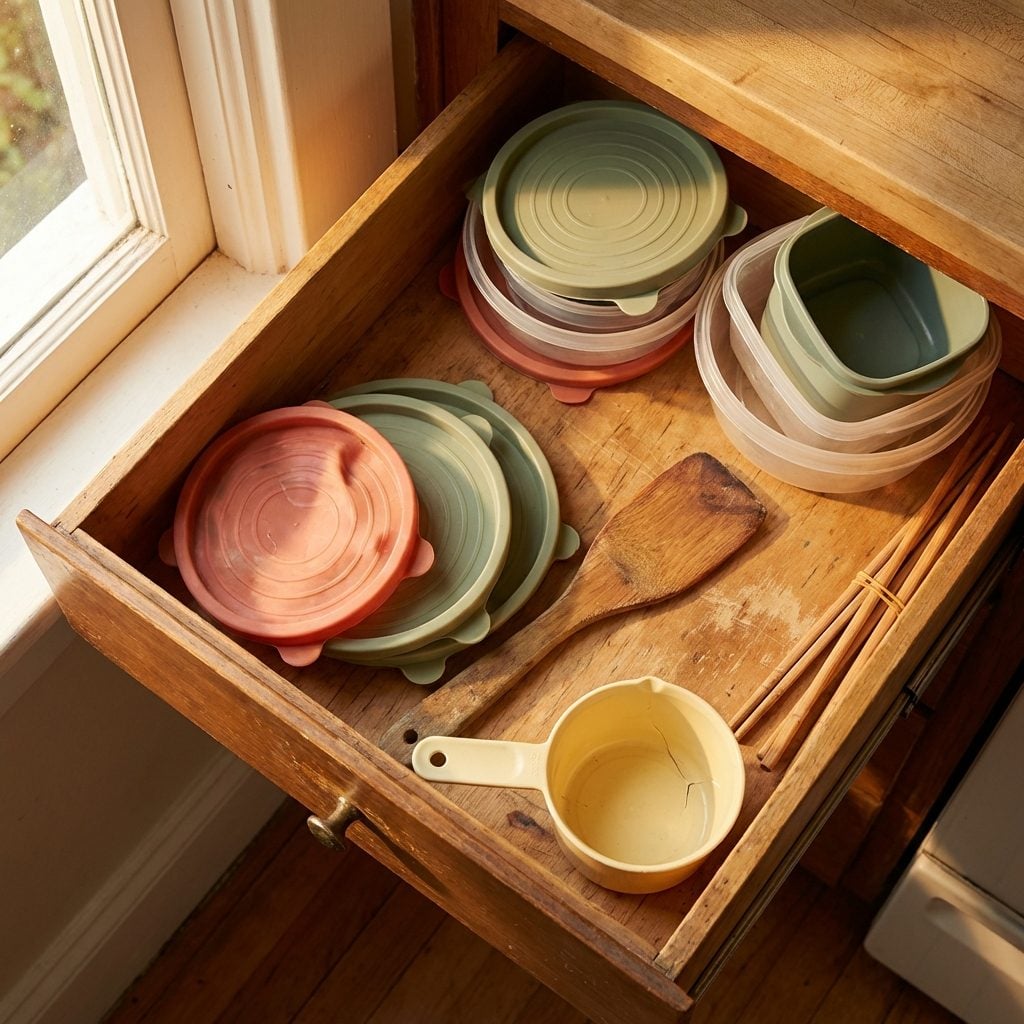
There is always one. The Tupperware lid with no matching base, the blender that works but takes fifteen minutes to reassemble, the good pasta pot with a handle that requires a specific grip. You keep it because you paid for it, or because your mother gave it to you, or because throwing it out feels like admitting something. Behavioral economists call this the sunk-cost fallacy: the irrational tendency to factor past, unrecoverable investment into present decisions. Richard Thaler first identified the pattern formally, later expanded by Hal Arkes and Catherine Blumer, who found that people consistently behave as if past costs justify future commitment, even when logic says otherwise (Source).
In the kitchen, it plays out quietly, container by container. But look at what you’ve held onto and you get a read on something deeper than practicality. The mismatched containers you’ve kept for years often signal sentimentality, a resistance to the finality of loss, an attachment to objects as proxies for time. Research on the endowment effect shows that simply owning something inflates its perceived value in our minds, independent of utility (Source). Your kitchen drawers aren’t just drawer drawers. They’re a low-key biography of every moment you couldn’t let go.
Why Guests Drift Into Your Kitchen Whether You Invite Them or Not
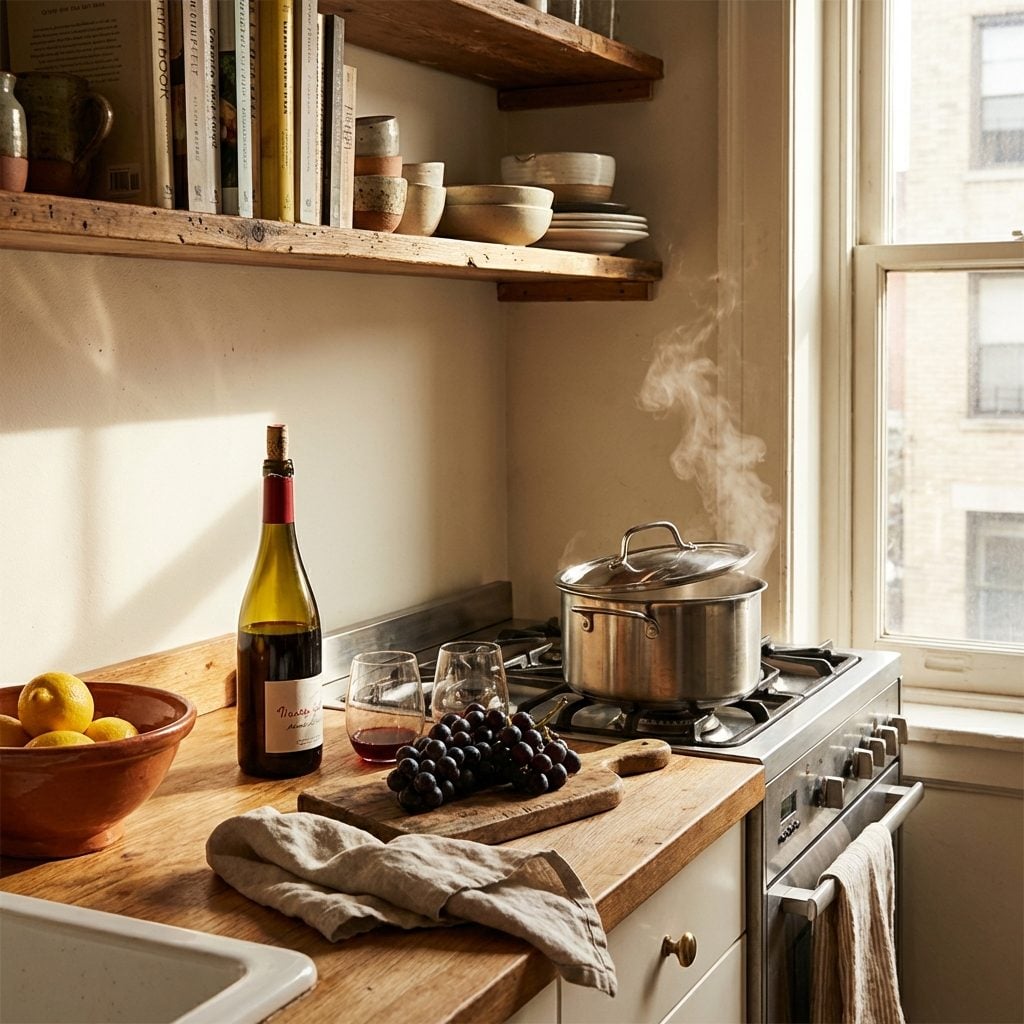
It was never really about the food. The pull of the kitchen at social gatherings is one of the most documented phenomena in environmental psychology, and its roots are older than open-plan design. Rolland Munro, a philosophy professor at the University of Leicester who has studied the kitchen’s social evolution, traces this pull back to medieval great halls, communal spaces where the hearth was both literal and symbolic center (Source). Even as homes grew more compartmentalized and kitchens became utilitarian servants’ quarters, people found ways back to the warmth. Now that walls have come down and kitchen-living hybrids are the norm, the gravitational pull is only stronger.
But here’s what the architecture alone doesn’t explain: guests drift into even small, cramped kitchens. The kitchen offers something the living room can’t, permission to be useful, a task to perform, a role to play that doesn’t require sustained social effort. According to a 2018 NPR feature on the sociology of kitchen gatherings, the kitchen functions as a low-effort, high-reward social space: people can mingle, observe, help, or simply occupy without committing to a prolonged interaction (Source). That makes the kitchen functionally distinct from every other room. And it also makes it the most revealing room in the house, because it’s the one where guests show up uninvited, unguarded, and actually looking around.
The Pantry-vs-Junk-Drawer Contradiction That Exposes a Compartmentalized Mind
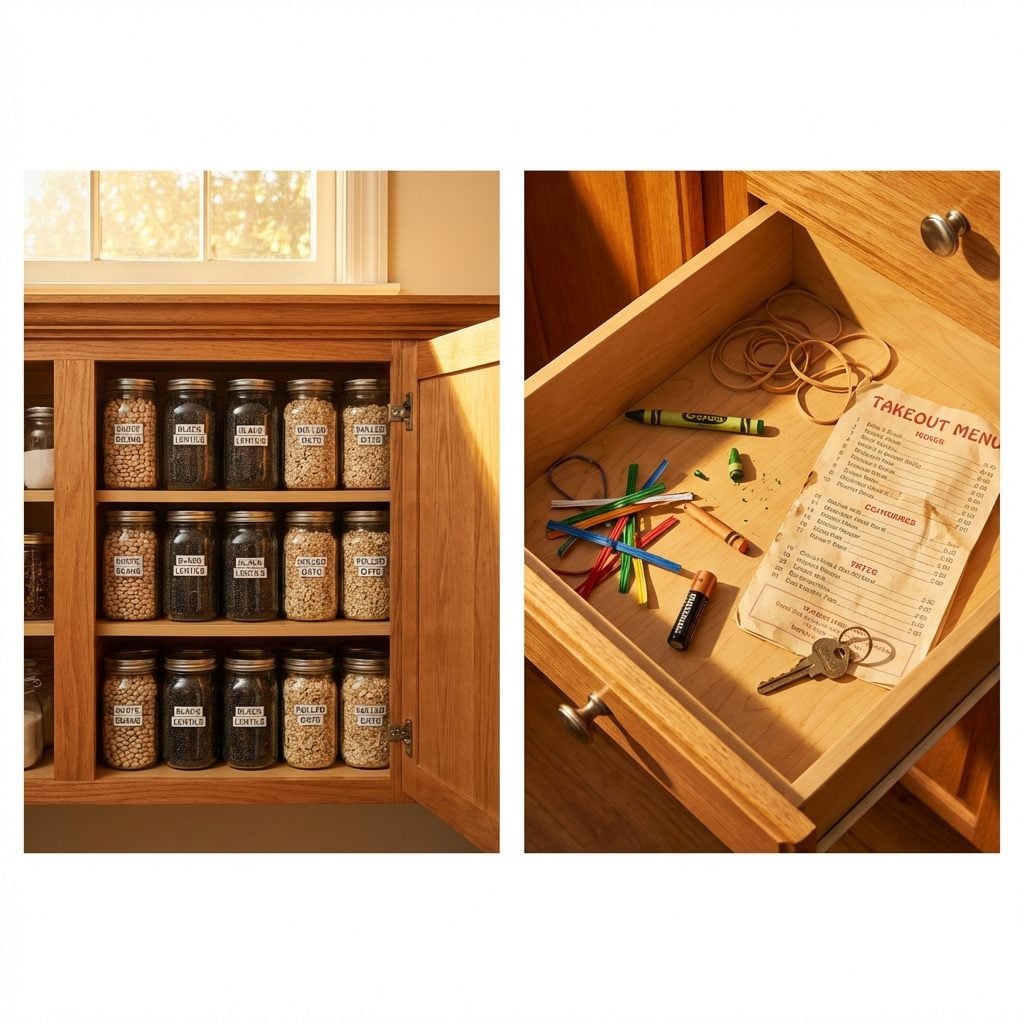
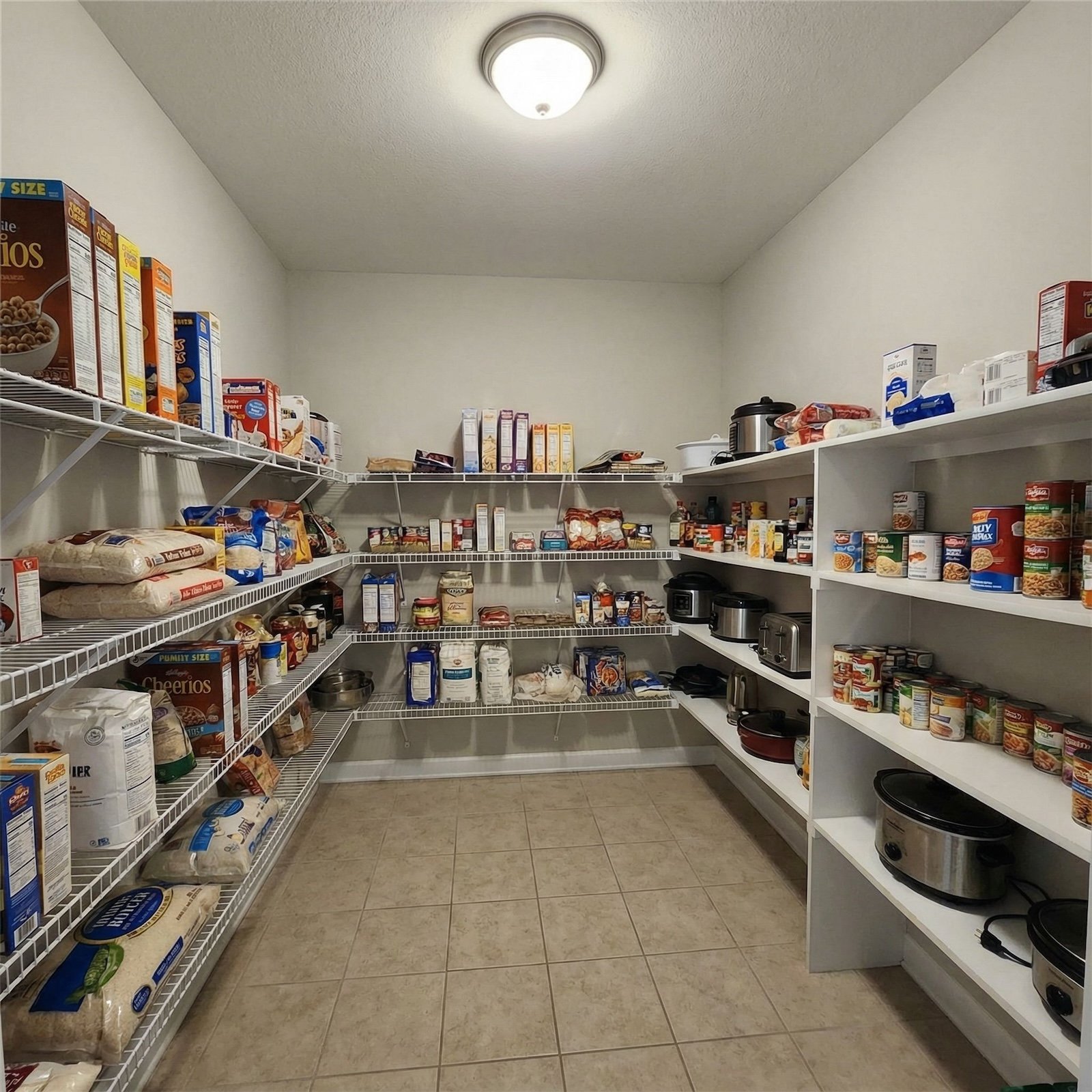
The personality type that keeps a categorized, labeled pantry, grains alphabetized, spices decanted, snacks in uniform glass jars, while simultaneously maintaining a junk drawer of such density it requires a specific technique to open is not a contradiction. It’s a map. Psychologists who study environmental behavior describe this as compartmentalization: the ability to maintain different organizational standards in different domains of life simultaneously, often as a coping strategy for managing cognitive load (Source).
The pantry is visible, social, and aspirational. The junk drawer is private, functional, and real. People maintain the pantry for the same reason they frame degrees and hide bank statements, some things are for display, and some things just need to exist somewhere without judgment. What’s psychologically interesting is the specificity of the divide. The same person who anxiety-spirals about a disordered spice rack may feel no distress about the drawer of dead batteries and mystery keys. That selective tolerance tells you exactly which domains of life they’re managing for external perception, and which ones they’ve internally accepted as organized chaos.
The Decorative Fruit Bowl Trap, and What It Signals When No One Is Actually Eating the Fruit
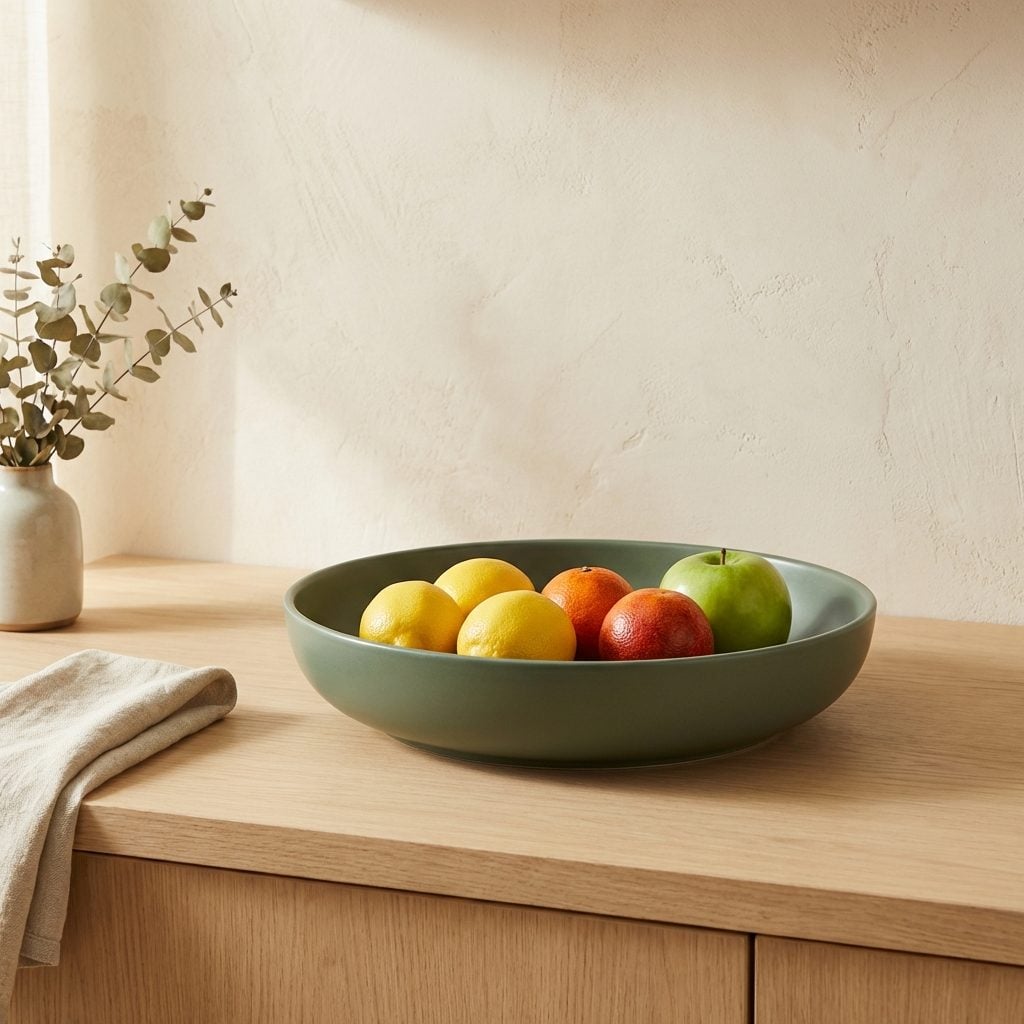
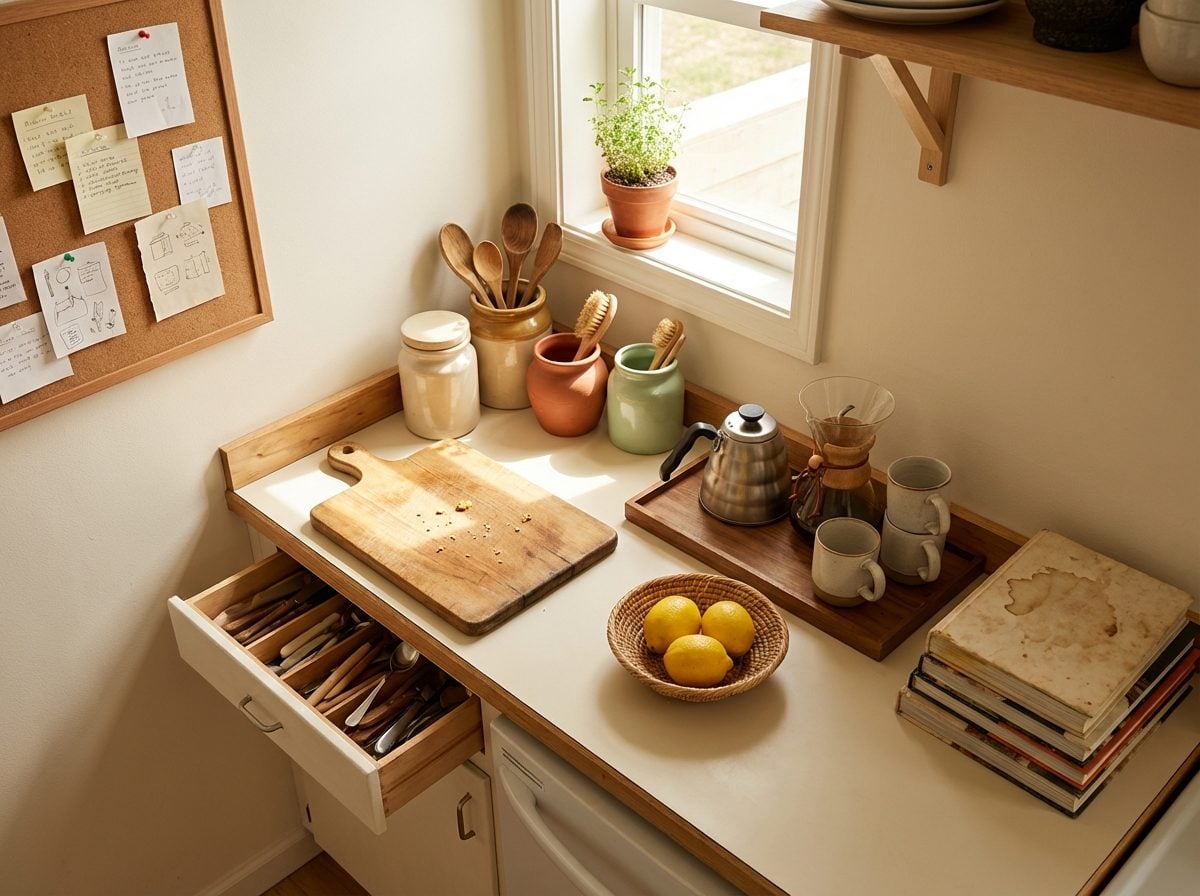
Here is the tell: the fruit bowl has lemons in it. Lemons are not snacking fruit. They’re a design choice. And the ceramic bowl they’re sitting in, heavy, matte, possibly purchased at a market during a trip to Portugal, is equally not about fruit. It’s about the version of yourself you want to project when someone walks into your kitchen. Sociologists call this conspicuous wellness: the display of health-signaling objects whose function is primarily symbolic rather than nutritional.
Thorstein Veblen’s century-old theory of conspicuous consumption maps almost directly onto this behavior, we arrange our kitchens, like our wardrobes, to communicate values and aspirational identities to observers (Source). The fruit bowl is not dishonest, exactly. It’s aspirational. It says: this is the kind of home where people eat fresh fruit. Whether that’s true on a Wednesday morning is a separate question entirely. Interestingly, research published in the British Journal of Nutrition confirms that eating fruit regularly does meaningfully improve mental well-being, so the aspiration isn’t misguided, just occasionally more aesthetic than behavioral (Source).
The most honest fruit bowls are the ones with one overripe banana and a lone apple that’s slightly soft on one side. That’s a kitchen where people actually live. The bowl of perfect Cara Cara oranges arranged by size on a warm kitchen renovation countertop is a beautiful thing, but it’s saying something very specific about the gap between the life you perform and the life you live.
How You Handle the ‘Ugly But Necessary’ Items Is a Mirror of Your Whole Personality
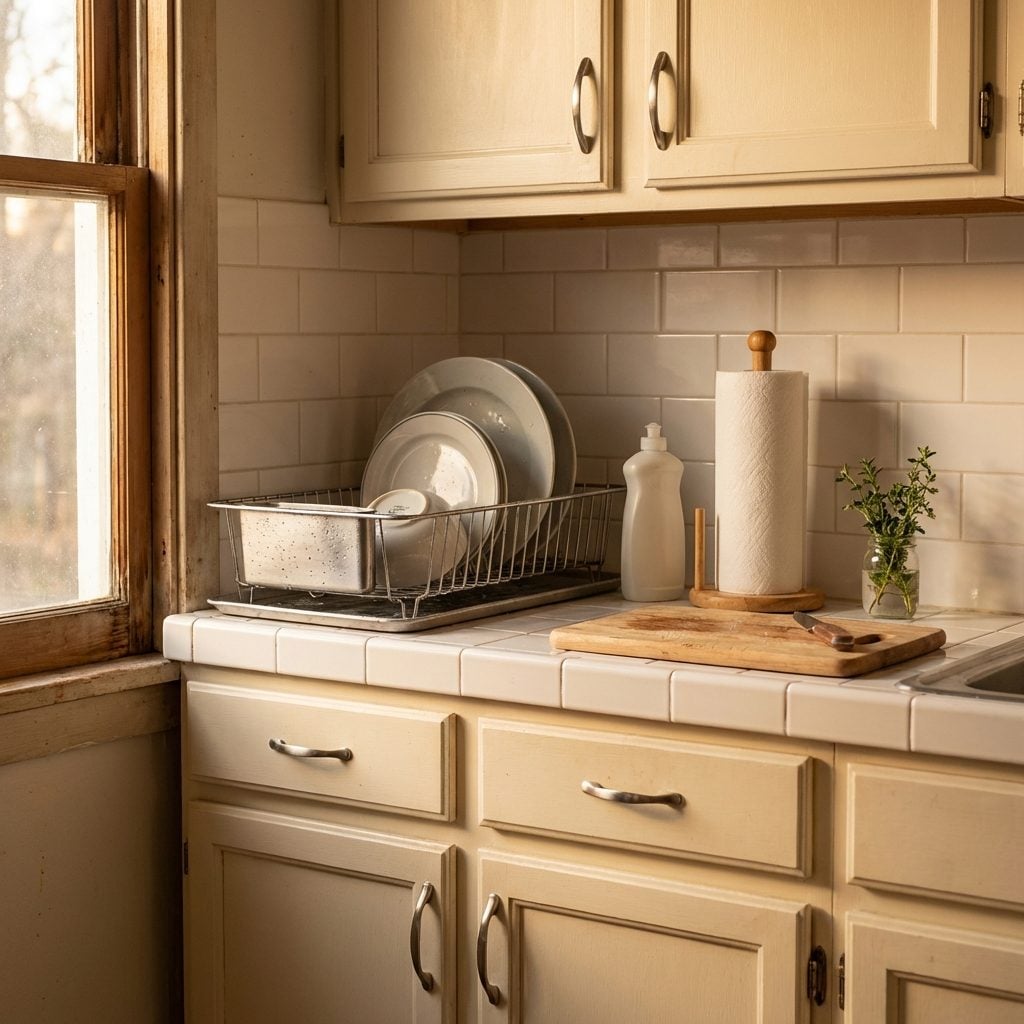
The blender with the cracked lid. The dish rack that never fully dries. The paper towel roll sitting on the counter because there’s no where else to put it. How a person handles these objects, the utilitarian, aesthetically inconvenient fixtures of daily kitchen life, is one of the most honest personality reads in any home.
Psychologists have long observed that (Source), meaning the choices we make about what to display, hide, or tolerate in our immediate space are rarely neutral. Someone who tucks the dish rack inside the cabinet after every use is performing a relationship with appearances, not just with tidiness. Someone who leaves the paper towels out, stacked next to the coffee maker, is optimizing for function, they’ve made peace with the tradeoff. Neither is wrong. Both are revealing.
The more interesting tension is the person who hides these objects poorly, the blender shoved behind a cutting board, the dish soap tucked sideways, as if the hiding attempt itself is the message. That pattern points to something specific: a gap between the person they want to be seen as and the practical reality they actually live in. The kitchen doesn’t lie. It just holds up a mirror.
The Worn Cookbook Tells a Story the Instagram-Perfect Shelf Never Could
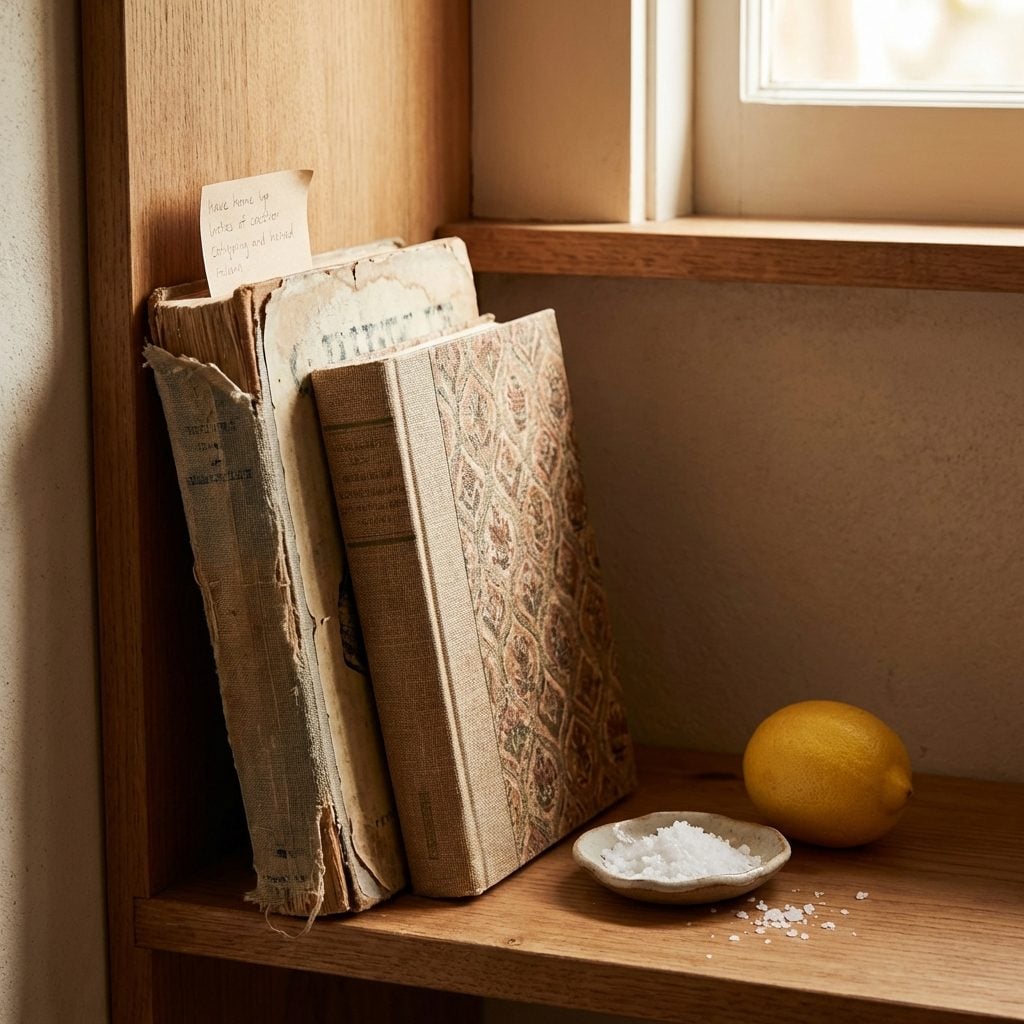
There is a specific kind of cookbook that says everything: the spine is cracked at three different chapters, the pages at the risotto section are stained a faint amber-gold, and a sticky note from four years ago, “add more lemon”, is still tucked between pages 86 and 87. This object is not decoration. It’s a document.
Research into cookbooks as cultural artifacts has found that (Source), a way of constructing and communicating who they are, both to themselves and to others. The distinction the research draws is sharp: buying cookbooks and displaying them is one behavior. Actually cooking from them, returning to the same pages, wearing them down, that’s something else entirely.
A shelf of pristine, spine-uncracked cookbooks arranged by color signals one thing: a desire to be seen as someone who cooks. The single battered copy of Marcella Hazan or a grease-smudged Ottolenghi signals something harder to perform, actual practice. Guests who notice the difference, even unconsciously, are reading more than a recipe collection. They’re reading proof of follow-through.
Why Small Kitchens Force the One Psychological Test Most Homes Let You Avoid
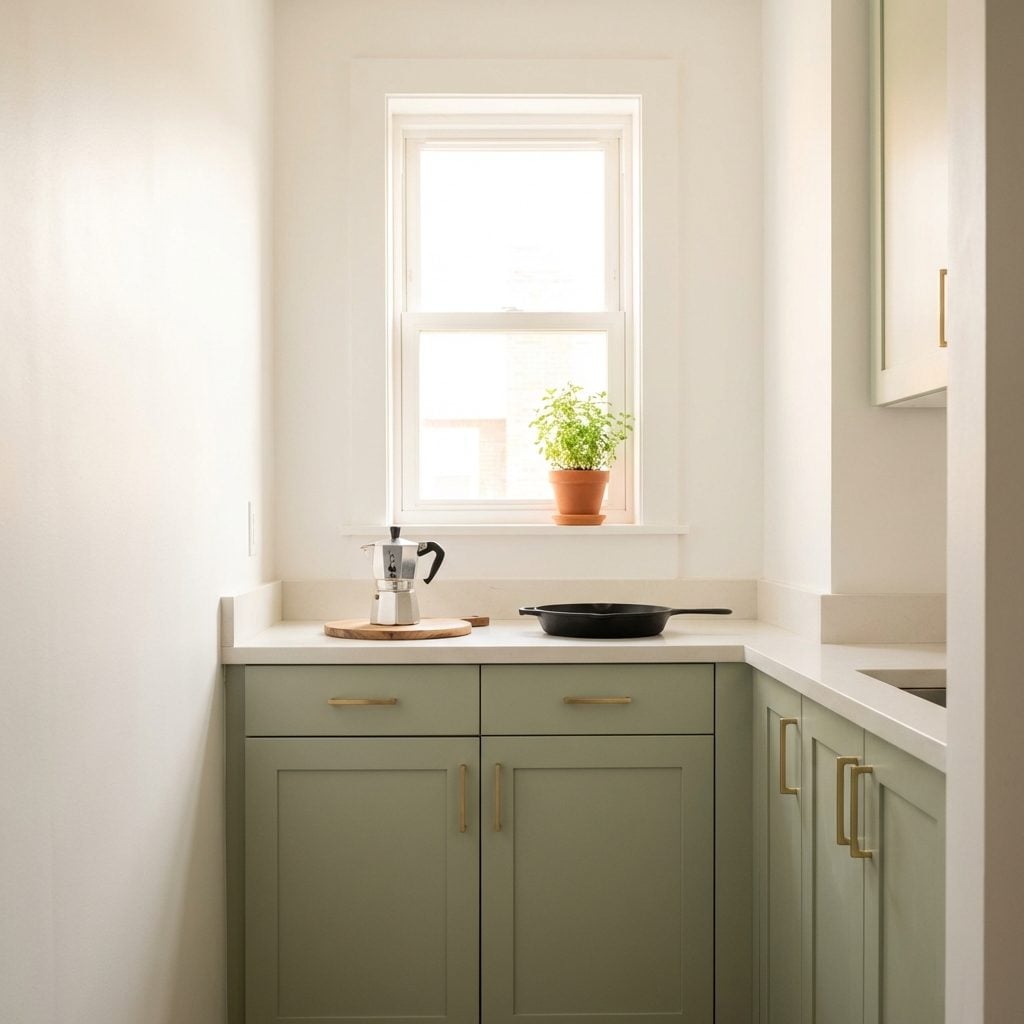
Constraint is clarifying. A sprawling kitchen can absorb everything, the impulse buy spiralizer, the six varieties of vinegar, the panini press used twice. There’s always another drawer, another cabinet, another corner of counter. Nothing has to be chosen against anything else. But remove that surplus space and something shifts: every object you keep is an implicit vote for what matters.
This is the quiet psychological test that small kitchens administer whether you want to take it or not. When square footage forces prioritization, what stays visible is no longer accidental, it’s a values statement. (Source), aligned with what actually matters to the person living there. In a large kitchen, that alignment is optional. In a small one, it’s required.
The coffee station that takes up a full corner of a 90-square-foot galley says: morning ritual is non-negotiable here. The cast iron skillet hanging from a hook on the wall says: I cook from scratch. The decorative fruit bowl that holds mostly keys and mail says: I wanted to be the kind of person who keeps fresh fruit out. These aren’t judgments. They’re data points. And in a small kitchen, small foyer design principles apply, intentional placement reveals intention of character.
The No-Clear-Surface Problem, and What It Silently Communicates About Who Comes First
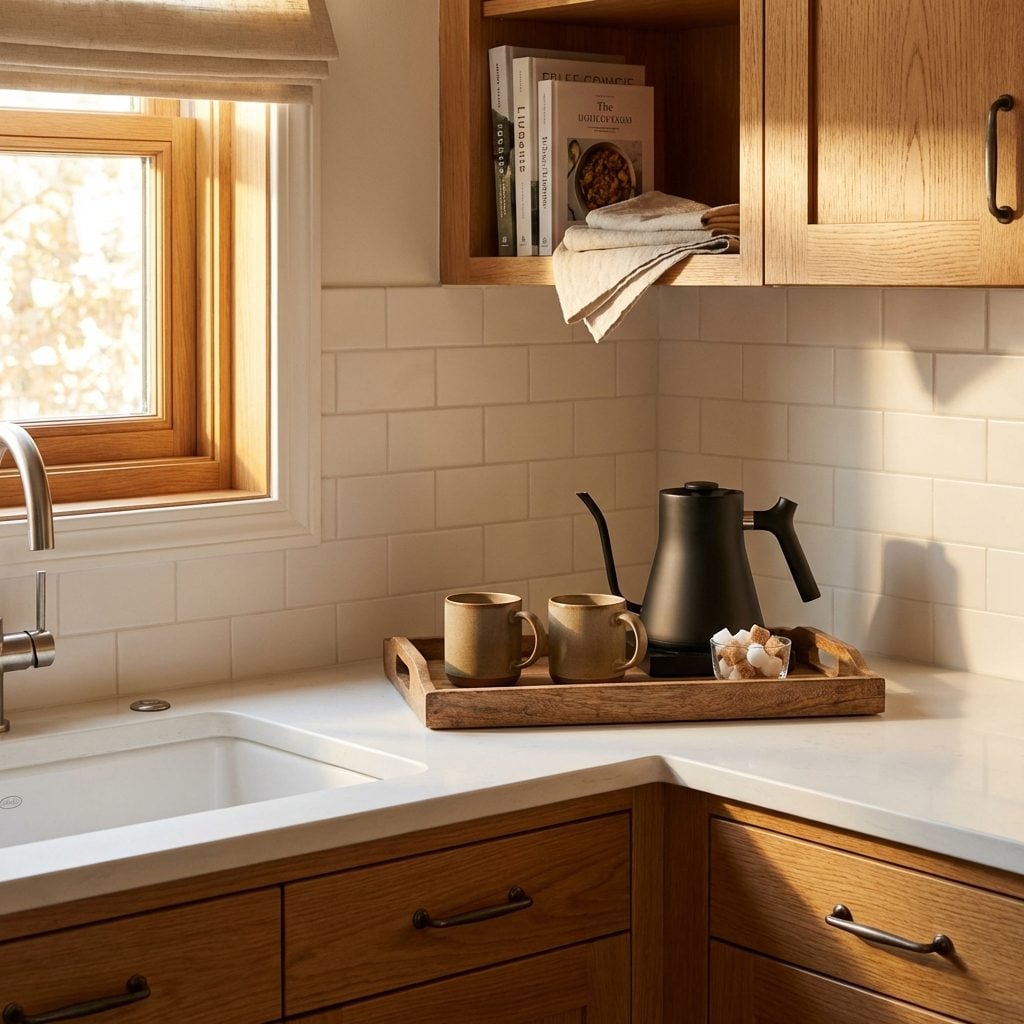
Ask yourself this: if a guest walked into your kitchen right now, is there a clear, unobstructed surface where they could set down a bag, rest a glass, or put a plate without reorganizing something first? If not, that absence communicates something specific, and guests feel it, even if they’d never say so out loud.
A kitchen with no clear landing surface is optimized entirely for the person who lives there. That’s not inherently wrong, a working kitchen is a working kitchen. But there’s a psychological read that guests make instinctively: (Source), which makes its readiness for them more loaded than any other room in the house. When there’s nowhere to put anything down, the subtext is clear: this space wasn’t arranged with you in mind.
Compare that to the kitchen where a small corner of counter is always clear, or where a warm kitchen renovation has included a deliberate coffee and tea station, a ceramic mug set arranged beside a kettle, a small tray of sugar cubes nearby. That setup signals something that no throw pillow or scented candle in the living room can replicate: someone thought about your comfort before you arrived. Intentional hospitality reads louder than any decor decision.
What Your Mismatched Containers Reveal About How You Handle Loss
🔥 Would you like to save this?
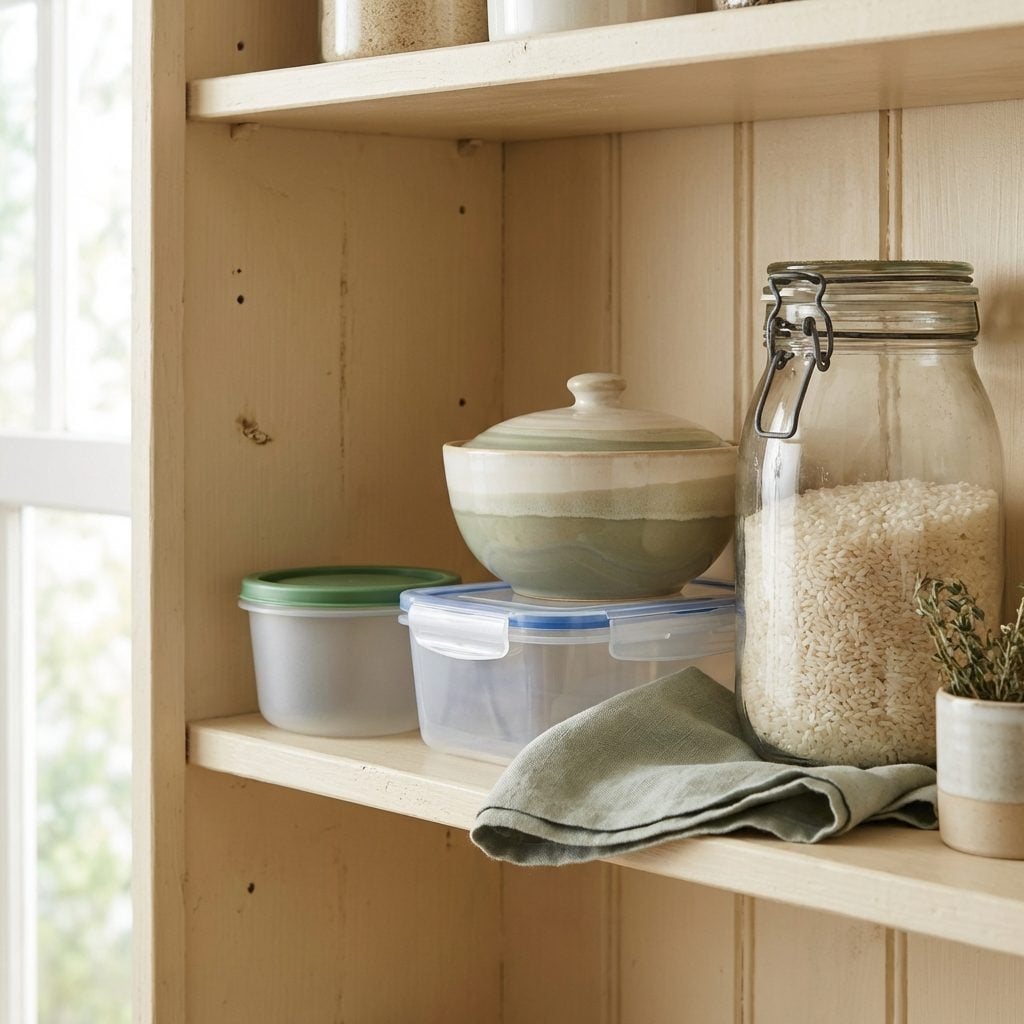
The plastic container with the lid that no longer quite fits. The glass jar that used to hold fancy jam and now stores dried lentils. The set of three nesting bowls where only two remain. Mismatched containers are almost universal in kitchens, but the psychology of why people keep them, rather than replacing them with a matching set, is more interesting than it first appears.
Psychologists identify loss aversion as one of the central forces behind our attachment to objects we’ve long since outgrown their original purpose. Research on possession psychology suggests that the displeasure of discarding something consistently outweighs the pleasure of gaining something new of equivalent value, which means that perfectly functional-but-mismatched glass food storage containers stay in rotation long after a matching set would make more practical sense.
But there’s a second layer here that’s less about economics and more about sentiment. A container kept for years, through multiple moves and kitchen overhauls, has accumulated a kind of quiet loyalty. Replacing it feels, on some level, like a small betrayal. The person who keeps these objects is often the same person who keeps ticket stubs, who still has their college coffee mug. They’re not disorganized. They’re sentimental, and resistant, in a very human way, to erasing the evidence of their own history.
The Values Statement Hidden Inside Every Square Inch of Visible Counter Space
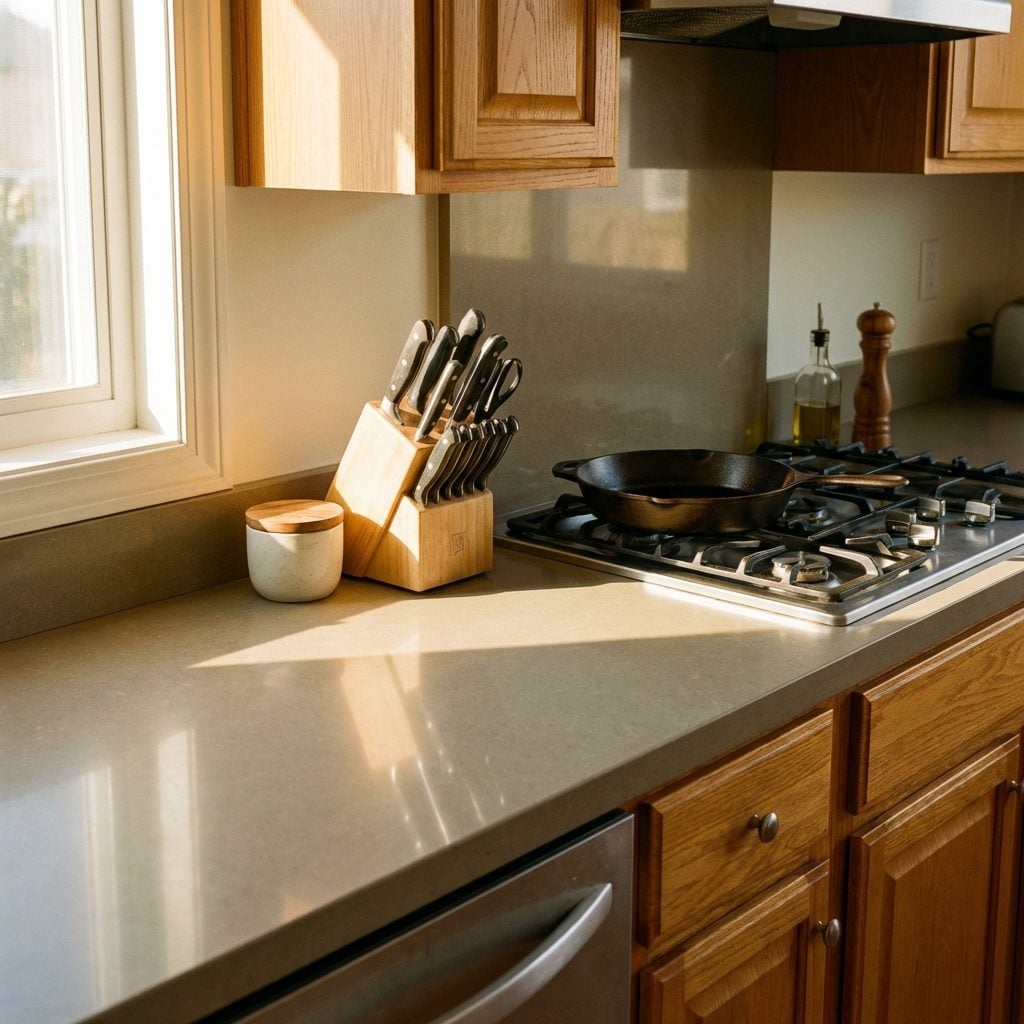
Counter space in a small kitchen is arguably the most contested real estate in any home. Every object that earns a permanent spot on it, rather than a cabinet, a drawer, a shelf, has won a quiet competition. And what wins that competition tells guests, consciously or not, what the person who lives here actually cares about.
Research on clutter behavior finds that what people keep visible reflects their action orientation, those who keep tools out are optimizing for speed and execution, not aesthetics. The stand mixer permanently on the counter says: I bake often enough that the setup time matters. The French press and pour-over coffee station says: the ritual matters as much as the caffeine. The decorative fruit bowl, the one with two aging lemons and a lime that’s been there since Tuesday, says something more ambiguous: a wellness aspiration that hasn’t quite landed in daily practice.
The Three Counter Archetypes
- The Operator: Everything out, optimized for speed. Oil next to the stove. Knives on a magnetic strip. Salt within arm’s reach. This person cooks seriously and doesn’t apologize for how the kitchen looks mid-session.
- The Curator: Only the photogenic items earn counter space. A marble mortar and pestle, a matching canister set, a single cutting board with visible wood grain. The kitchen is an aesthetic statement as much as a workspace.
- The Avoider: Everything eventually migrates to the counter because putting things away requires a decision. The counter isn’t curated or optimized, it’s the default landing zone for unresolved choices.
None of these is purely good or bad. But guests are reading the pattern whether they realize it or not, and the read sticks longer than the conversation.
Why the Most Welcoming Small Kitchens Aren’t the Most Organized, They’re Something Else Entirely
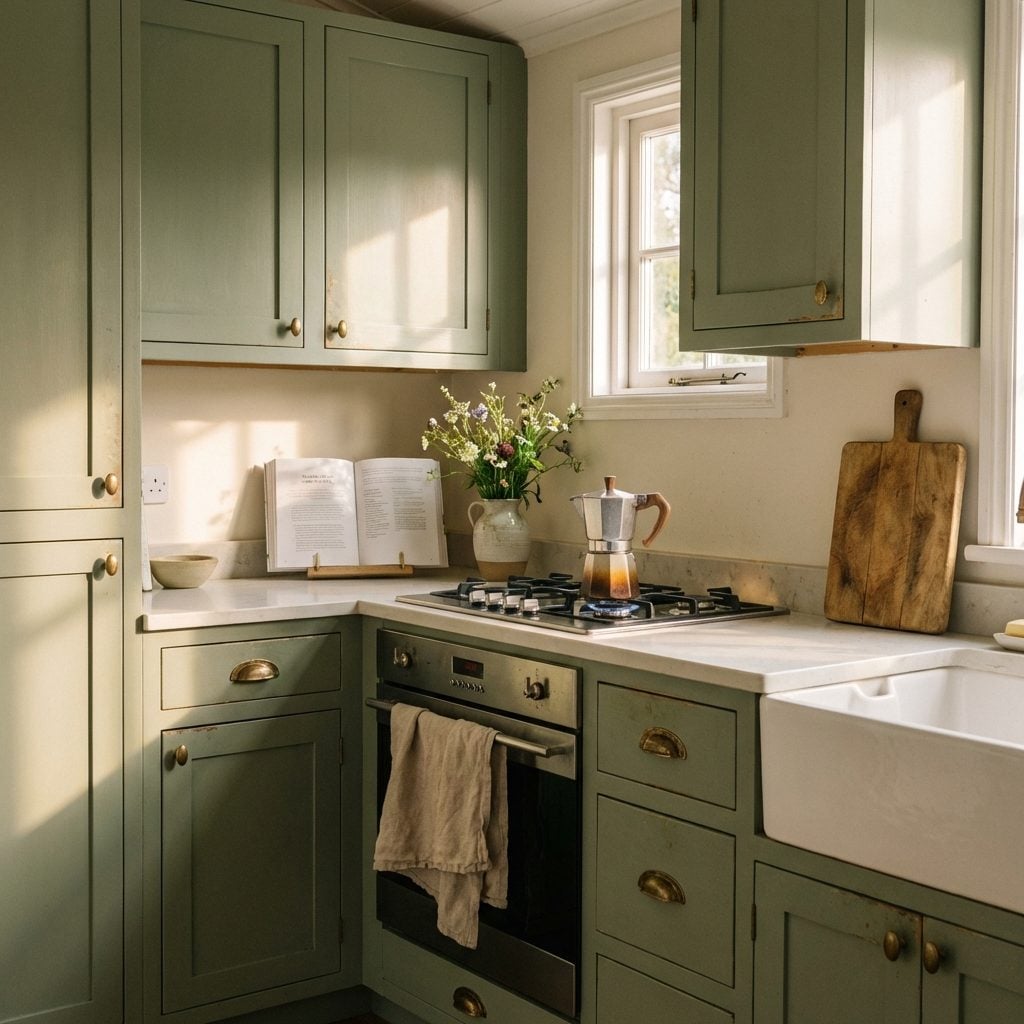
Every design magazine tells the same story: organize, declutter, match your containers, clear your counters, and the kitchen will feel better. And some of that is true. But the kitchens that guests remember, the ones they drift back to, the ones that feel genuinely warm, are rarely the most organized. They’re the most intentional.
There’s a real difference between the two. An organized kitchen can feel cold, performance-oriented, almost anxious in its precision. An intentional kitchen feels like someone made choices, not to impress, but because those choices reflect how they actually live. (Source), sometimes the polish and social-media perfection of a space can have “a weirdly cold effect”, and what people are really seeking is warmth, not order.
Small chandelier designs, a worn rug runner, a linen dish towel draped over the oven handle, these are the details that signal a kitchen lived in with care rather than managed for appearances. The coffee station that exists because someone thought about their guest’s first morning. The cookbook propped open because someone is actually in the middle of something. The imperfect container arrangement that’s been the same for three years because it works.
Square footage is circumstance. Organization is preference. But intentionality, the sense that this kitchen was set up by a person who has thought, even briefly, about what they value and who they want to make comfortable, that’s character. And guests feel it before they’ve said a word.
The Bottom Line
The answer the entire article has been circling is this: what your guests are actually reading in your small kitchen is not your cleanliness or your organization, it is your honesty about how you live. The kitchens people remember, return to, and feel genuinely comfortable in are the ones where the person inside them stopped performing and started inhabiting. So the one thing worth doing after reading this is identifying the single object, habit, or arrangement in your kitchen that exists entirely for appearance, and asking yourself what it would mean to let it go.