🔥 Would you like to save this?
In order to come up with the very specific design ideas, we create most designs with the assistance of state-of-the-art AI interior design software. Also, assume links that take you off the site are affiliate links such as links to Amazon. this means we may earn a commission if you buy something.
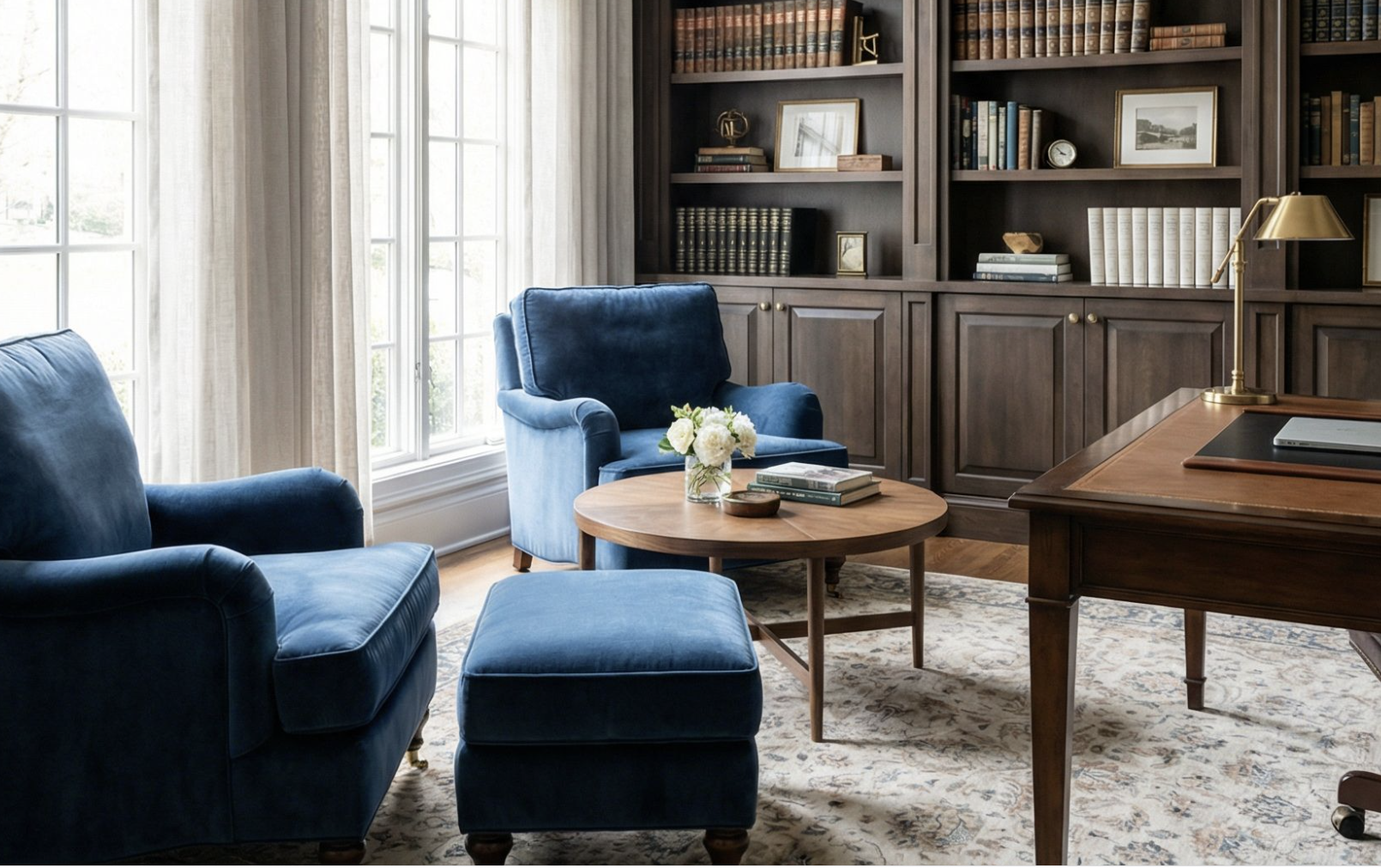
The quiet luxury movement has redefined how we approach home office design, particularly for bibliophiles seeking sanctuary within their personal libraries. Transitional aesthetics bridge traditional warmth with contemporary restraint, creating environments where literature and productivity coexist harmoniously. These twenty-five designs exemplify this sophisticated balance, proving that book-centric workspaces can embody understated elegance without sacrificing functionality or intellectual charm.
Quiet Luxury Transitional Home Office with Floor-to-Ceiling Bookshelves

Floor-to-ceiling shelving transforms walls into literary landscapes, maximizing vertical space while creating commanding visual impact. Custom millwork in matte finishes allows books to become the focal point, their spines providing organic color variation. This architectural approach satisfies both practical storage needs and the psychological comfort that surrounding yourself with accumulated knowledge provides, creating an enveloping cocoon of intellectual security.
Walnut-Paneled Transitional Home Office for Book Collectors

Rich walnut paneling introduces warmth and gravitas, establishing the perfect backdrop for serious collections. The wood’s natural grain patterns create subtle movement without distraction, while its honey-brown tones complement leather-bound volumes beautifully. This design choice signals permanence and investment, appealing to collectors who view their libraries as generational assets rather than temporary decoration.
Neutral Transitional Home Office with Library Ladder

Sliding library ladders add functional charm while solving the accessibility challenge of tall shelving. Against neutral palettes of greige, ivory, and taupe, the ladder becomes sculptural hardware that celebrates the romance of book ownership. This practical element transforms reaching for volumes into a deliberate ritual, slowing down our interaction with literature in ways that honor contemplative reading.
Quiet Luxury Home Office Featuring Built-In Book Nooks

Architectural niches carved into walls create intentional display opportunities for treasured volumes. These recessed spaces, often illuminated with discrete LED strips, elevate specific collections to gallery-worthy status. The psychology here is profound: designating special zones for books acknowledges their value beyond utility, treating literature as art worthy of curatorial consideration and reverent presentation.
Leather-Accented Transitional Home Office for Readers

Supple leather furnishings—from desk chairs to reading loungers—introduce tactile luxury that ages gracefully alongside beloved books. The material’s patina development mirrors how collections evolve over time, both becoming more characterful with use. Leather’s association with traditional libraries provides historical continuity while contemporary silhouettes maintain modern relevance, satisfying our desire for timeless sophistication.
Transitional Home Office with Window Seat Reading Corner

Window seats transform natural light zones into dedicated reading sanctuaries, psychologically separating contemplative reading from productive work. Upholstered in performance fabrics with hidden storage below, these built-ins optimize often-wasted architectural spaces. The proximity to windows satisfies biophilic needs while providing ideal illumination for extended reading sessions, merging wellness principles with literary passion.
Marble and Wood Transitional Home Office Library

Marble surfaces paired with warm wood cabinetry create material contrast that defines quiet luxury aesthetics. The stone’s cool permanence balances wood’s organic warmth, establishing visual tension that energizes neutral spaces. This combination signals investment in quality materials that transcend trends, appealing to book lovers who appreciate enduring craftsmanship in both architecture and literature.
Quiet Luxury Home Office with Curated Book Display

Strategic curation—displaying select volumes face-out or on stands—transforms books into decorative objects without diminishing their literary purpose. This approach requires thoughtful editing, choosing books whose covers merit showcase treatment. The psychology of curation creates breathing room in collections, preventing the overwhelm that densely packed shelves can trigger while highlighting titles that define personal identity.
Transitional Home Office Featuring Vintage Book Collection

Antique volumes provide instant patina and intellectual credibility, their aged spines adding warmth that new books cannot replicate. Displaying vintage collections requires climate consideration—controlled humidity and filtered light prevent deterioration. These historical objects connect us to reading’s lineage, satisfying our desire for rootedness in an increasingly digital, ephemeral world.
Monochromatic Transitional Home Office for Book Enthusiasts

Single-color palettes create serene environments where books provide the primary visual interest. Layering various tones of one hue—cream, gray, or sage—establishes sophisticated cohesion without sterility. This restraint allows the mind to focus, reducing visual noise that can fragment attention during deep work or immersive reading, essentially designing for cognitive optimization.
Quiet Luxury Home Office with Illuminated Bookshelf Design

Integrated lighting within shelving systems transforms books into glowing architectural elements after dark. LED strips behind shelves create ambient backlighting, while directional pucks spotlight special collections. Proper illumination extends usability into evening hours while creating atmosphere that honors books as more than mere reference materials—they become luminous companions.
Cashmere-Toned Transitional Home Office Reading Space

Soft cashmere hues—oatmeal, camel, and mushroom—create enveloping warmth that encourages extended occupation. These sophisticated neutrals provide psychological comfort without the starkness of pure white or the heaviness of dark colors. The tonal approach mirrors cashmere’s textural luxury, suggesting spaces designed for sensory pleasure alongside intellectual engagement.
Transitional Home Office with Hidden Book Storage

🔥 Would you like to save this?
Concealed storage behind paneled doors maintains clean aesthetics while accommodating extensive collections. This approach appeals to those who appreciate books but resist visual clutter, allowing selective display of favorite volumes. Hidden storage also protects light-sensitive rare editions, merging preservation needs with contemporary preferences for minimalist presentation and flexible spatial configurations.
Quiet Luxury Home Office Featuring Rare Book Showcase

Glass-fronted cabinets or museum-quality vitrines protect valuable first editions while allowing display. Climate-controlled cases with UV-filtering glass preserve investment-grade collections that require archival conditions. This approach acknowledges that some books transcend reading material status, becoming collectible objects whose monetary and sentimental value demands specialized housing that respects their fragility.
Glass-Enclosed Transitional Home Office Library Design

Floor-to-ceiling glass walls separate library zones while maintaining visual connection and light flow. This transparent boundary creates psychological distinction between work and reading areas without physical isolation. The enclosure also provides dust protection and climate control for sensitive collections while adding architectural drama that celebrates books as central design elements deserving special designation.
Transitional Home Office with Cozy Book Reading Nook

Intimate alcoves with plush seating invite total absorption in literature, psychologically signaling that this space prioritizes comfort over formality. Adequate task lighting, side tables for beverages, and footrests transform nooks into complete reading environments. These contained spaces satisfy our primitive desire for protected vantage points, creating security that facilitates the vulnerability required for deep reading.
Quiet Luxury Home Office Combining Workspace and Library

Dual-function designs integrate professional work zones with personal libraries, acknowledging modern life’s blurred boundaries. Strategic furniture placement and storage zoning allow seamless transitions between tasks. This integration reflects how many knowledge workers draw inspiration from personal collections, with proximity to books serving as creative fuel that enriches professional output through cross-pollination.
Brass-Detailed Transitional Home Office for Bibliophiles

Warm brass hardware, light fixtures, and shelf brackets introduce metallic accents that elevate without ostentation. Unlike chrome’s clinical coldness or nickel’s neutrality, brass develops living patina that complements aged books beautifully. These details reference traditional library aesthetics while maintaining contemporary restraint, bridging temporal divides that define transitional design philosophy.
Transitional Home Office with Symmetrical Book Arrangements

Balanced shelving configurations create visual harmony that calms rather than stimulates, supporting focus during work hours. Symmetry satisfies our innate preference for order while simplifying organizational decisions. This formal approach suggests discipline and intentionality, qualities that book collectors and productive professionals both value highly when curating spaces that reflect aspirational self-concepts.
Quiet Luxury Home Office Featuring Antique Book Elements

Incorporating vintage library furnishings—card catalogs, bookstands, or dictionary holders—adds historical texture and conversation-worthy character. These functional antiques connect contemporary spaces to reading’s rich material history while providing unique storage solutions. Their presence signals appreciation for bibliophilic tradition, distinguishing serious collectors from casual readers through deliberate curatorial choices.
Velvet-Furnished Transitional Home Office Reading Room

Luxurious velvet upholstery introduces tactile richness and acoustic softening that enhances reading environments. The fabric’s light-reflective properties add subtle glamour while its sound-absorbing density creates quietude essential for concentration. Velvet’s historical association with luxury libraries reinforces the space’s serious purpose, elevating everyday reading into an occasion worthy of ceremonial surroundings.
Transitional Home Office with Color-Coded Book Organization

Arranging books by spine color creates gradient effects that transform collections into large-scale art installations. While controversial among purists preferring categorical organization, this visual approach celebrates books’ decorative potential. The method works particularly well in quiet luxury contexts where aesthetic cohesion matters, though it requires sacrificing findability for Instagram-worthy presentation.
Quiet Luxury Home Office Featuring Literary-Inspired Decor
Subtle references to favorite authors or literary periods—through portraits, quotes, or thematic objects—personalize spaces without kitsch. Restrained implementation maintains sophistication while revealing intellectual influences that shaped the owner’s worldview. These curated references create conversation opportunities and reinforce identity, transforming generic home offices into autobiographical spaces that honor formative reading experiences.
Transitional Home Office with Minimalist Book Display

Selective shelving with generous negative space allows individual titles room to breathe, creating gallery-like presentation. This approach requires ruthless curation, displaying only truly meaningful volumes. The minimalist aesthetic appeals to those who view quality over quantity as the ultimate luxury, with empty shelf space signaling discernment rather than lack.
Quiet Luxury Home Office Combining Modern and Classic Books

Intermingling contemporary releases with timeless classics mirrors transitional design’s temporal bridge, creating collections that honor tradition while embracing present moments. This integration suggests readers who value historical context alongside current discourse, with shelving arrangements reflecting intellectual breadth. The visual variety prevents monotony while demonstrating that serious reading transcends any single era or genre.