🔥 Would you like to save this?
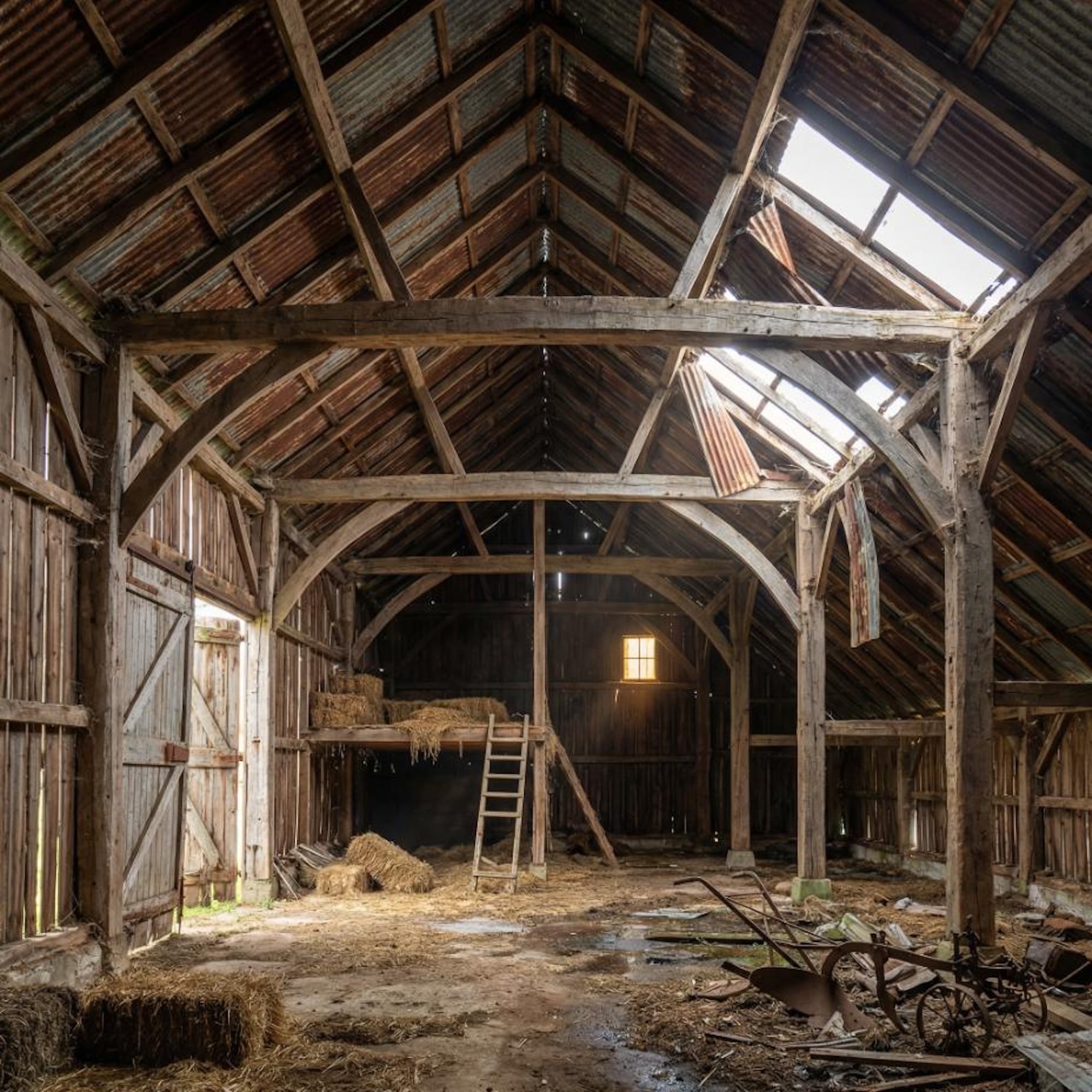
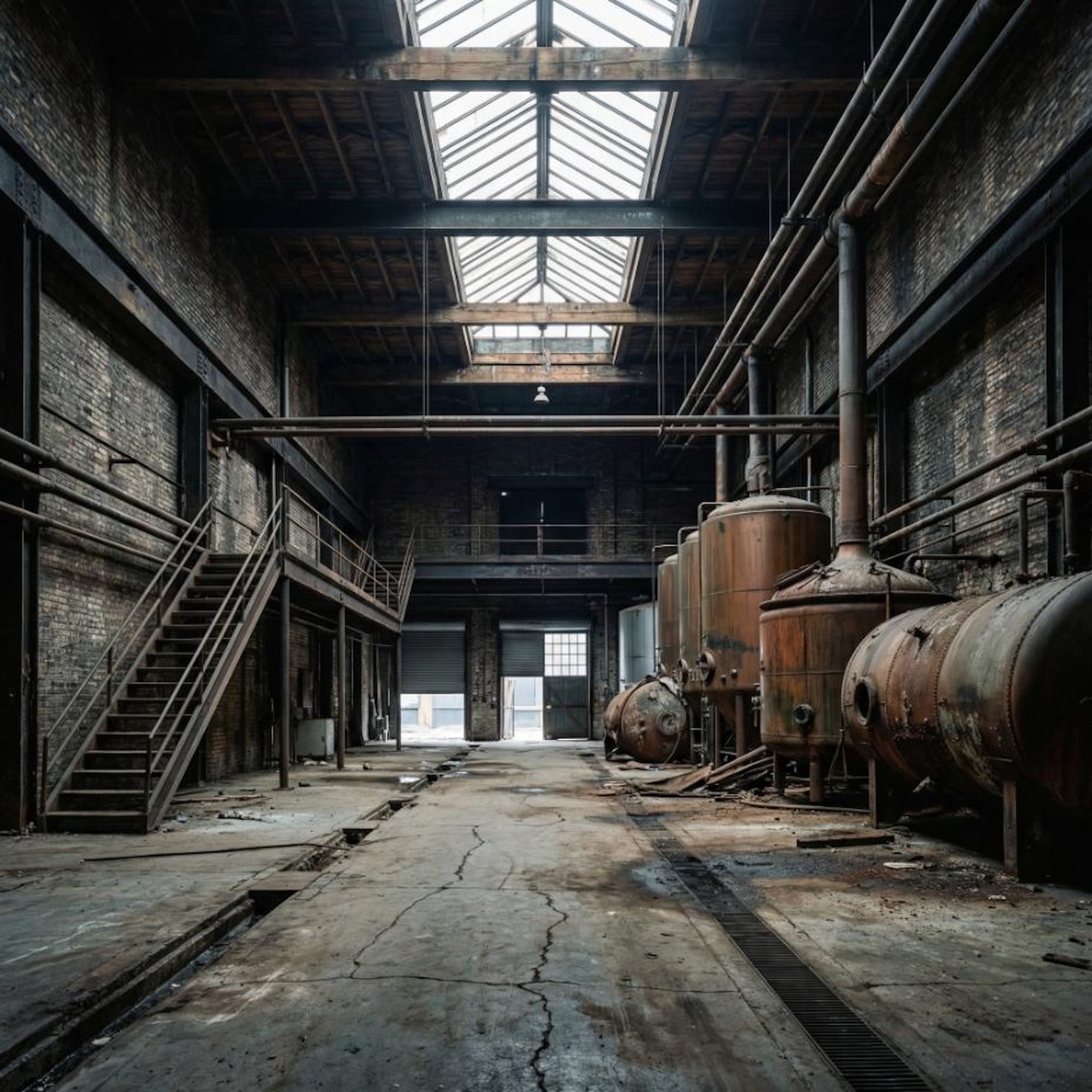
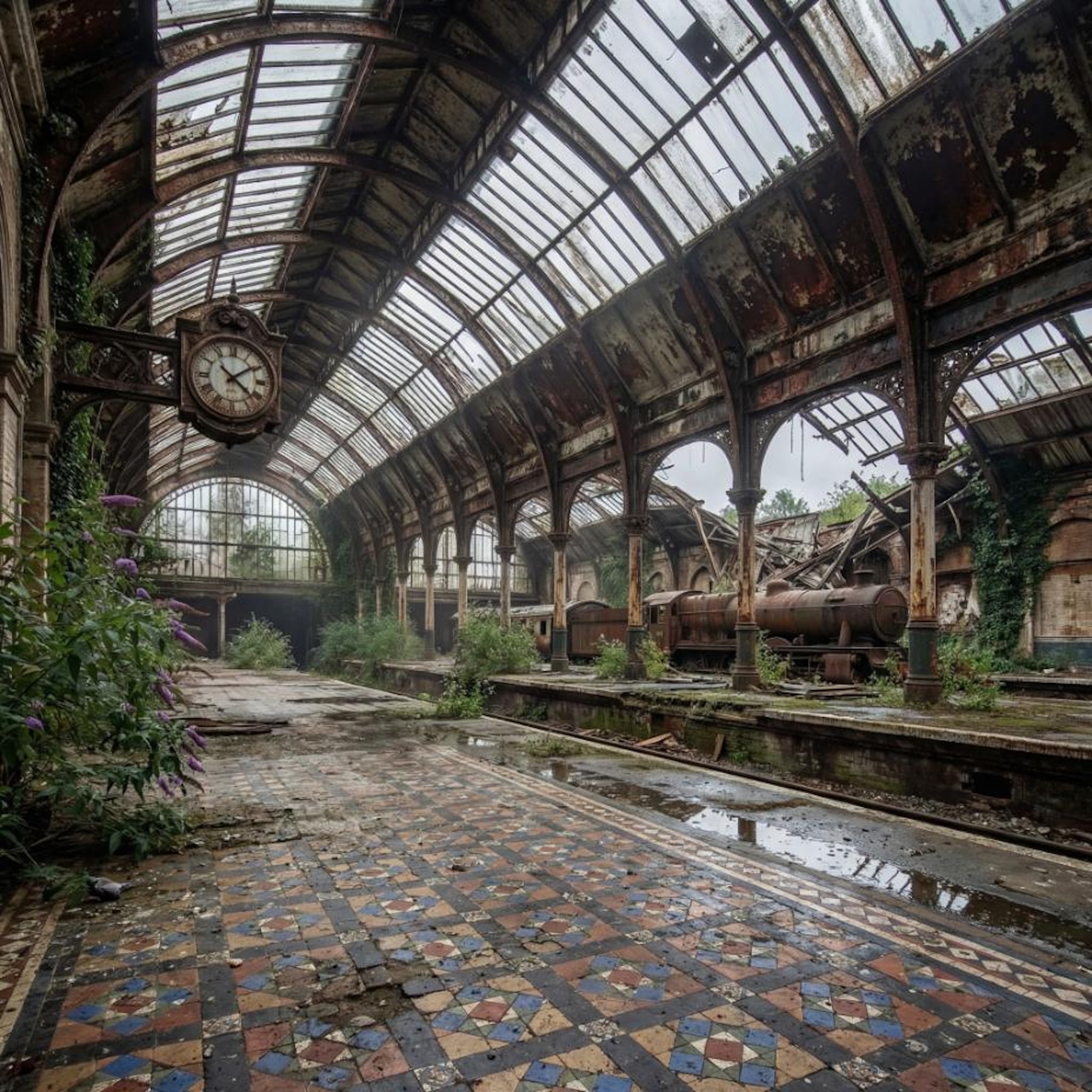
Rusted metal, grease-blackened steel, and the particular silence of machinery that will never run again. A decommissioned vessel’s engine room is not where most architects begin — which is exactly what makes these 33 designs so arresting. The source material here is unusually specific: riveted bulkheads, cavernous vertical volume, multi-level industrial bones, and a dockside position that puts open water at every window.
In order to come up with the very specific design ideas, we create most designs with the assistance of state-of-the-art AI interior design software. Also, assume links that take you off the site are affiliate links such as links to Amazon. this means we may earn a commission if you buy something.
Rather than erasing that vocabulary, each designer leaned into it — letting the raw infrastructure dictate floor plans, drive material choices, and lend every residence a spatial drama that no purpose-built home could manufacture. The results span a wide spectrum of aesthetic sensibility. What unites them is an ambition to elevate every inch.
Rusted Engine Room Gutted and Rebuilt Into a Waterfront Living Space
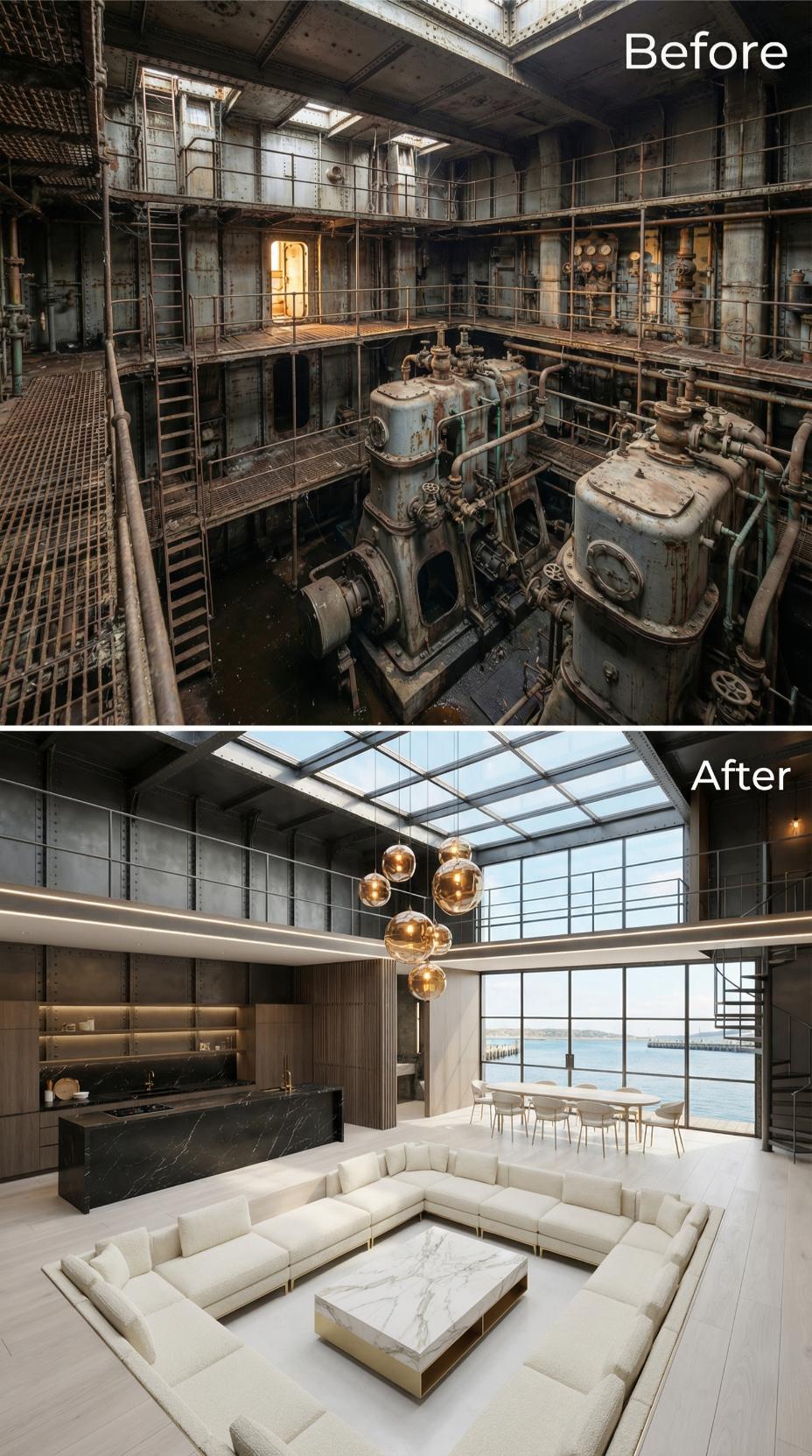
What once housed corroded steam machinery, iron scaffolding, and grated metal walkways now holds a U-shaped sectional sofa upholstered in cream fabric, anchored by a white marble coffee table with a brass-trimmed base. The kitchen island runs in black Nero Marquina marble with white veining, positioned against built-in shelving with warm amber backlighting. A cluster of gold-toned spherical pendant lights hangs at varying heights above the central living zone.
The original steel wall panels remain exposed, preserving the industrial bones of the ship’s interior. A glass skylight and floor-to-ceiling steel-framed windows flood the space with natural light and open directly to a harbor view. The dining area sits near the glazed facade, furnished with a round white table and slender gold-legged chairs on pale porcelain tile flooring.
Corroded Steel and Pipes Cleared for Ivory Linen and Marble Surfaces
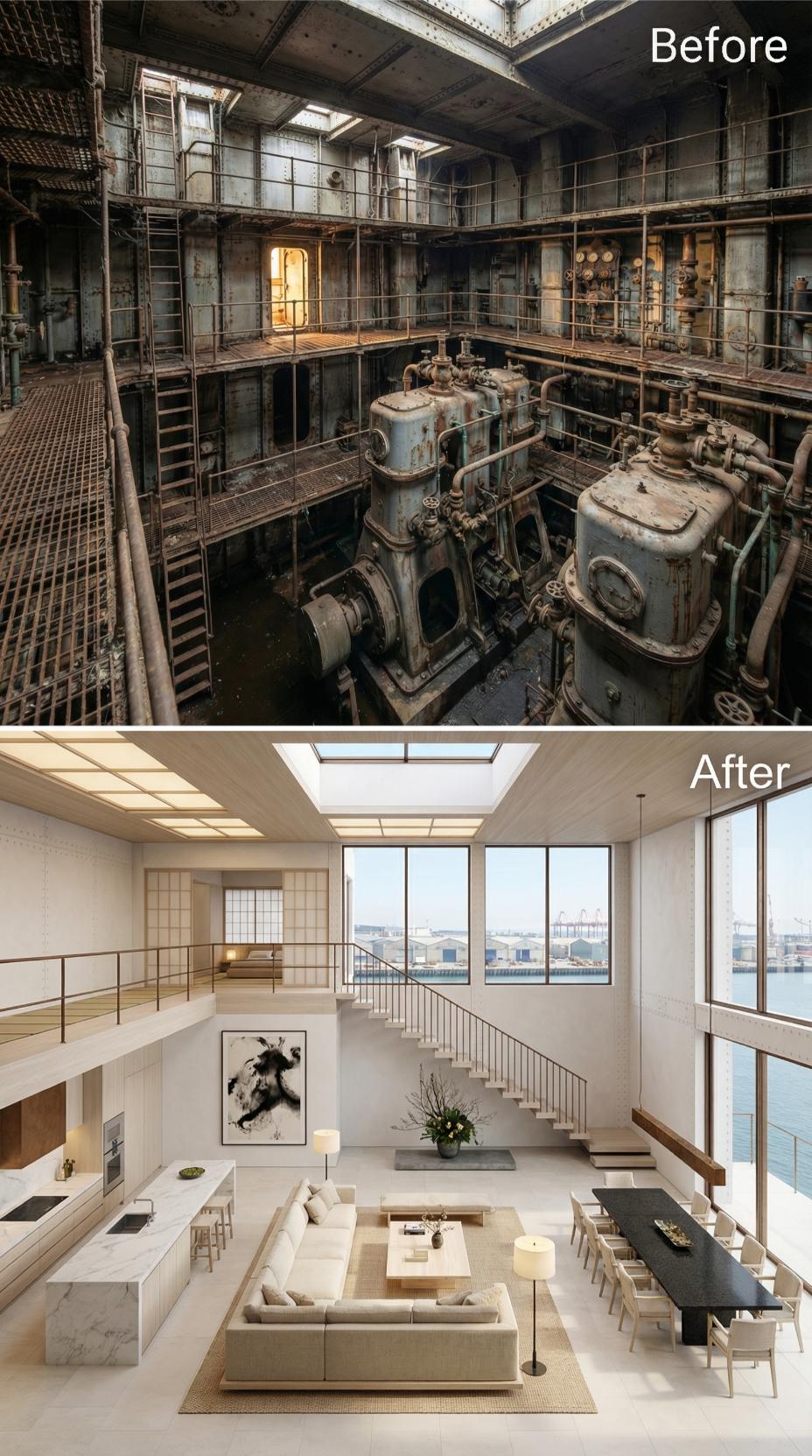
Where multi-level iron catwalks and corroded industrial machinery once filled the hull, a double-height living space now opens onto waterfront views through floor-to-ceiling black-framed windows. The palette runs entirely in warm ivory: linen sofas, a wool area rug, and marble-topped kitchen island with no visible hardware. A black slab dining table anchors the right side.
A mezzanine level with shoji-screen panels and timber rail references Japanese joinery without ornamentation. The floating staircase uses open treads in pale wood against a slender steel balustrade. One ink-wash artwork on the lower wall provides the only contrast in an otherwise bone-white interior.
Rust and Machinery Swapped for Velvet, Marble, and Brass Over Two Levels
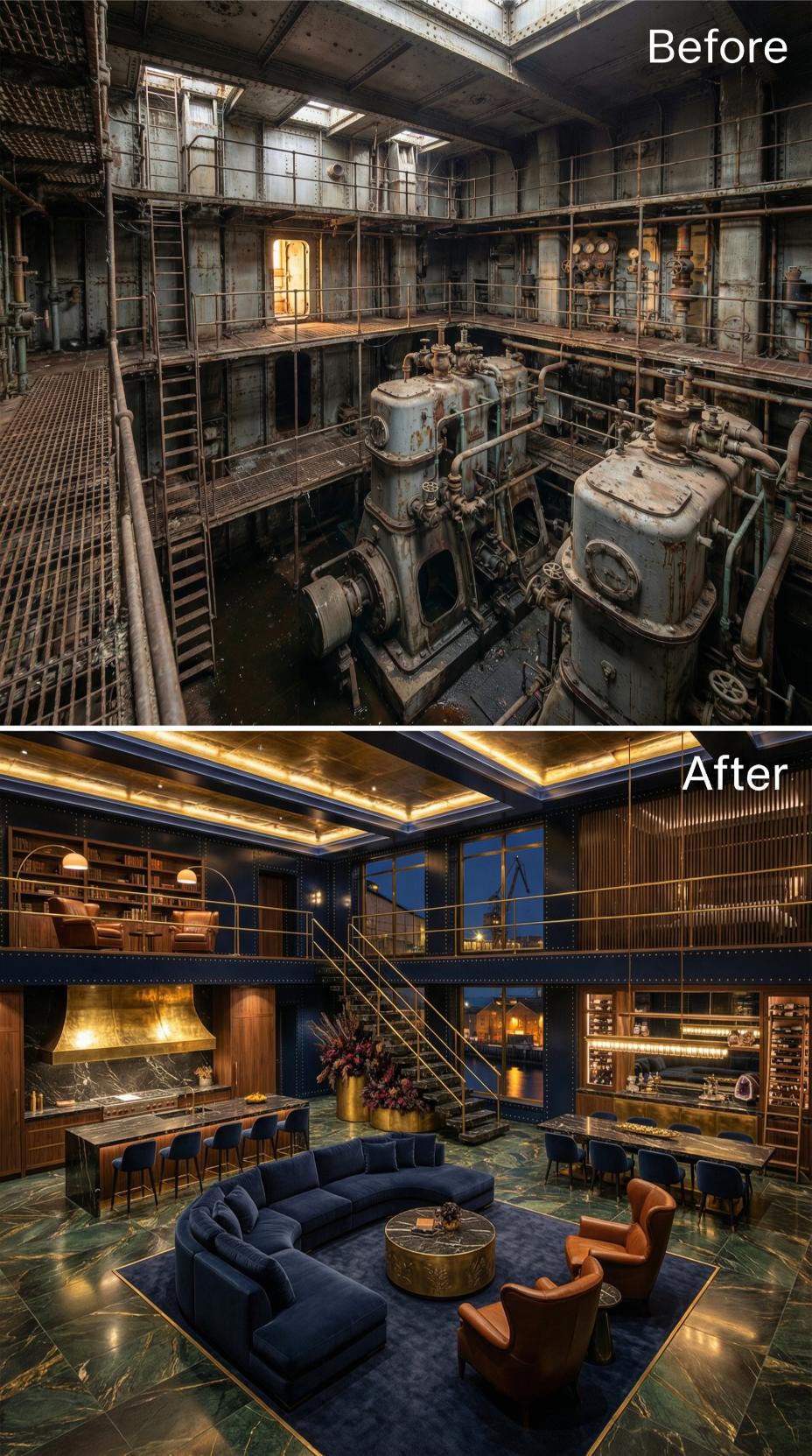
Navy velvet wraps a curved sectional at center, anchored by a brass-and-marble drum coffee table. Green marble flooring runs the full lower level, catching warm light from recessed gold ceiling coves above.
Editor’s Note: The upper mezzanine retains the ship’s original riveted steel wall panels, now painted deep navy to unify the two levels. Brass stair railings replace the rusted grating, drawing the eye upward toward a built-in walnut library with leather armchairs. A gold hood vent above the kitchen island is one of the few purely decorative gestures in an otherwise material-driven design.
Bleached Oak Floors and a Living Wall Replace Decades of Industrial Decay
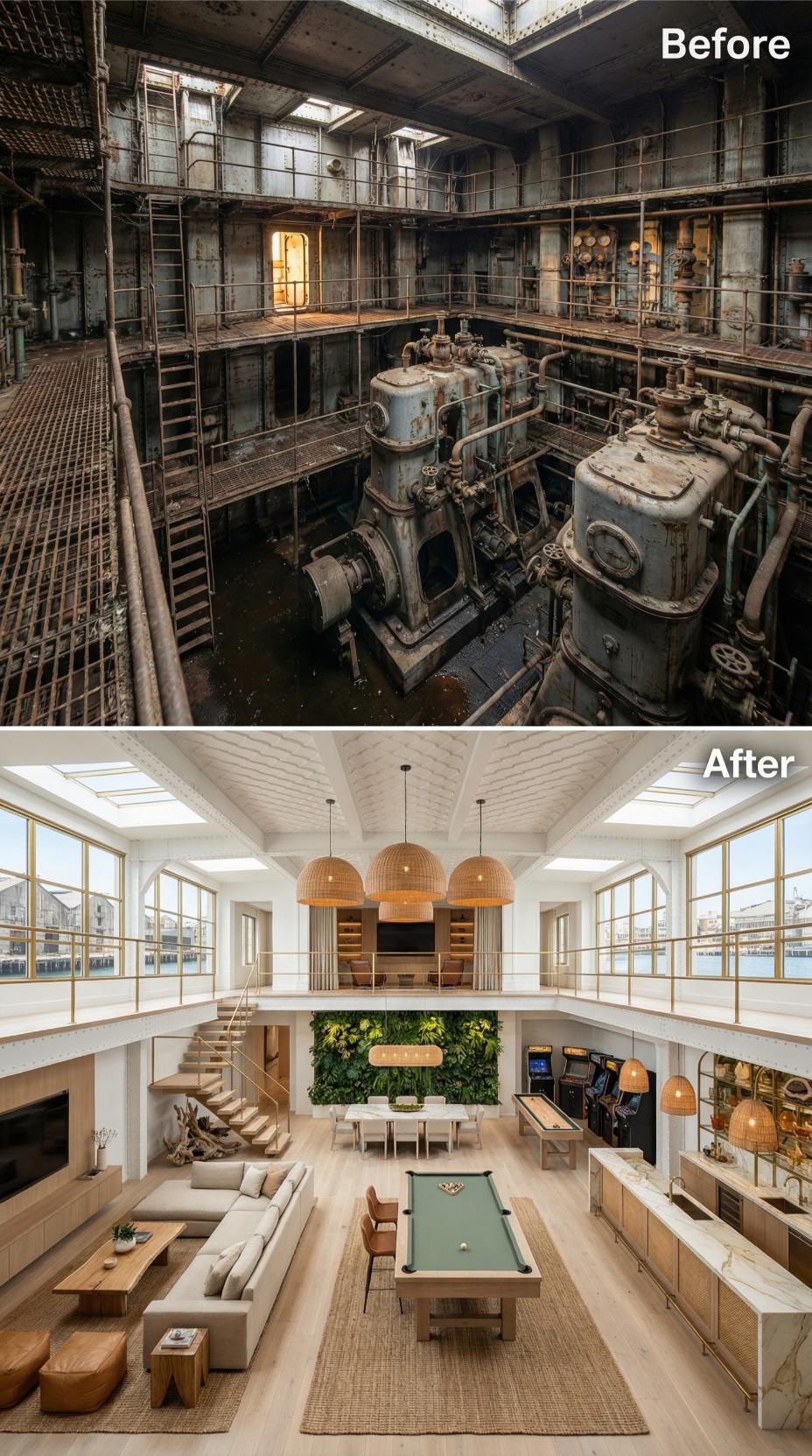
Pale oak planks run the full length of the lower level, anchoring a layout that splits between lounge, game room, and bar without a single partition wall. The sectional sofa sits in natural linen fabric, paired with cognac leather chairs at the dining table. Three woven rattan pendants hang low over the billiard table, their warm tone pulling against the white-painted barrel vault ceiling above.
Floor-to-ceiling steel-framed windows on both sides flood the space with harbor light. A vertical garden wall planted with ferns and tropical foliage anchors the far end, positioned directly behind a marble-topped dining surface. Arcade cabinets line the right wall beside a shuffleboard table, while the bar counter to the far right shows what appears to be a white marble slab surface with brass hardware throughout.
The Mezzanine Level Keeps the Space from Reading as a Single Flat Room
The open mezzanine runs across the back third of the space and is accessed by an open-tread staircase in light oak with a brass rail. A built-in shelving unit with a mounted television sits flush against the mezzanine back wall, giving that upper level a defined purpose rather than leaving it as overflow square footage. The sightline from the lower floor through to the harbor windows beyond the mezzanine creates a layered depth that a single-level layout would never produce.
Skylight, Concrete, and Floor-to-Ceiling Glass Replace Decades of Rust
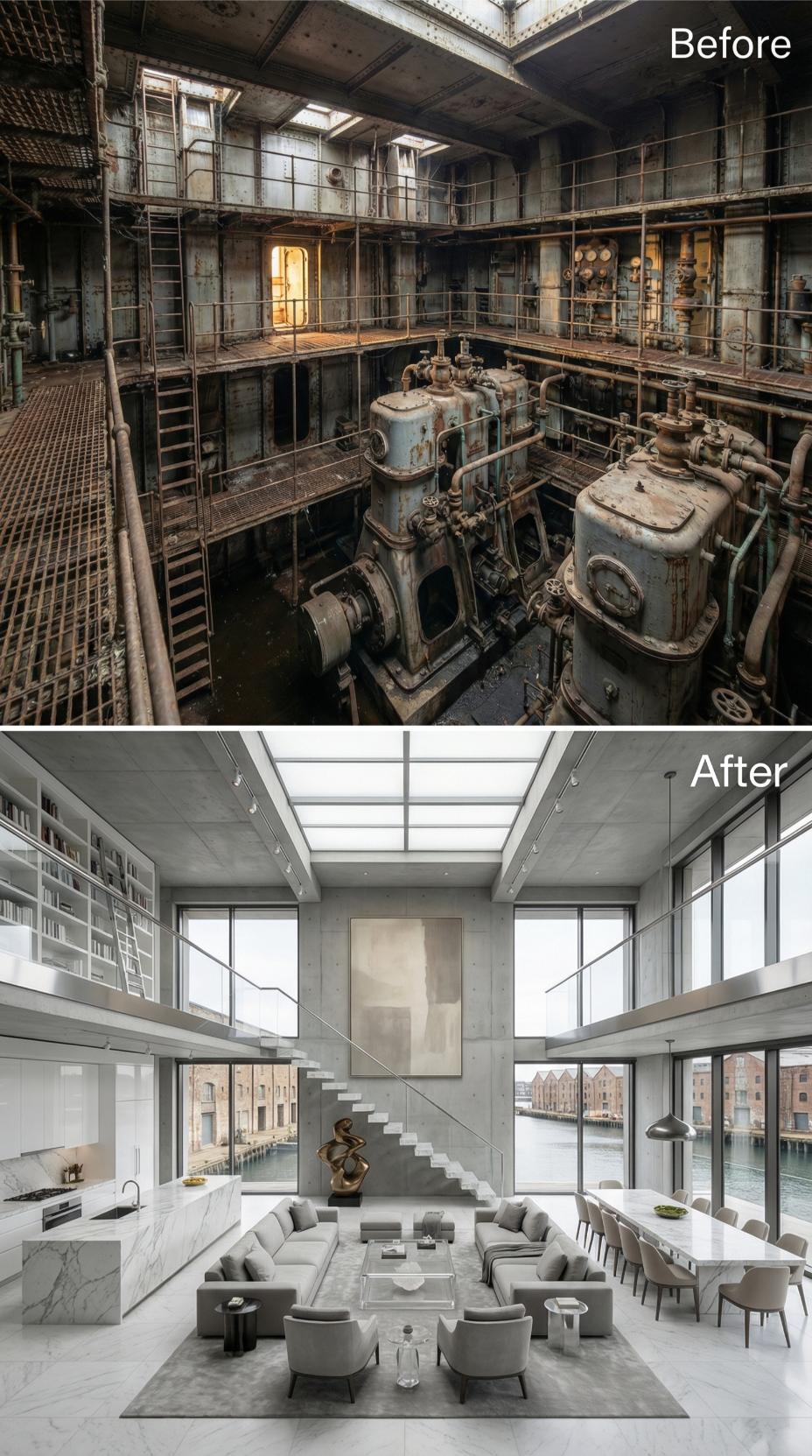
Polished concrete floors run the full length of the open plan, anchored by a sectional sofa in medium grey upholstery and flanked by a marble island with a waterfall edge. Floating stairs in raw concrete climb toward a mezzanine library lined with built-in white shelving. Large-format glazing on three sides pulls in direct waterfront views of brick warehouse buildings across the channel.
A skylight grid overhead floods the central living zone with diffused natural light. The dining area holds a long white marble table paired with upholstered side chairs in a warm greige. One oversized vertical canvas breaks the concrete wall behind the sofa grouping, its muted tones echoing the palette throughout.
Why It Works: Replacing the engine room’s ceiling with a structural skylight grid solved the lighting problem without adding artificial fixtures to the main zone. The decision to run a single material, polished concrete, across floors, stairs, and walls creates visual continuity that draws the eye outward toward the water rather than inward toward the architecture.
Cream Bouclé and Marble Replace the Corroded Heart of a Decommissioned Engine Room
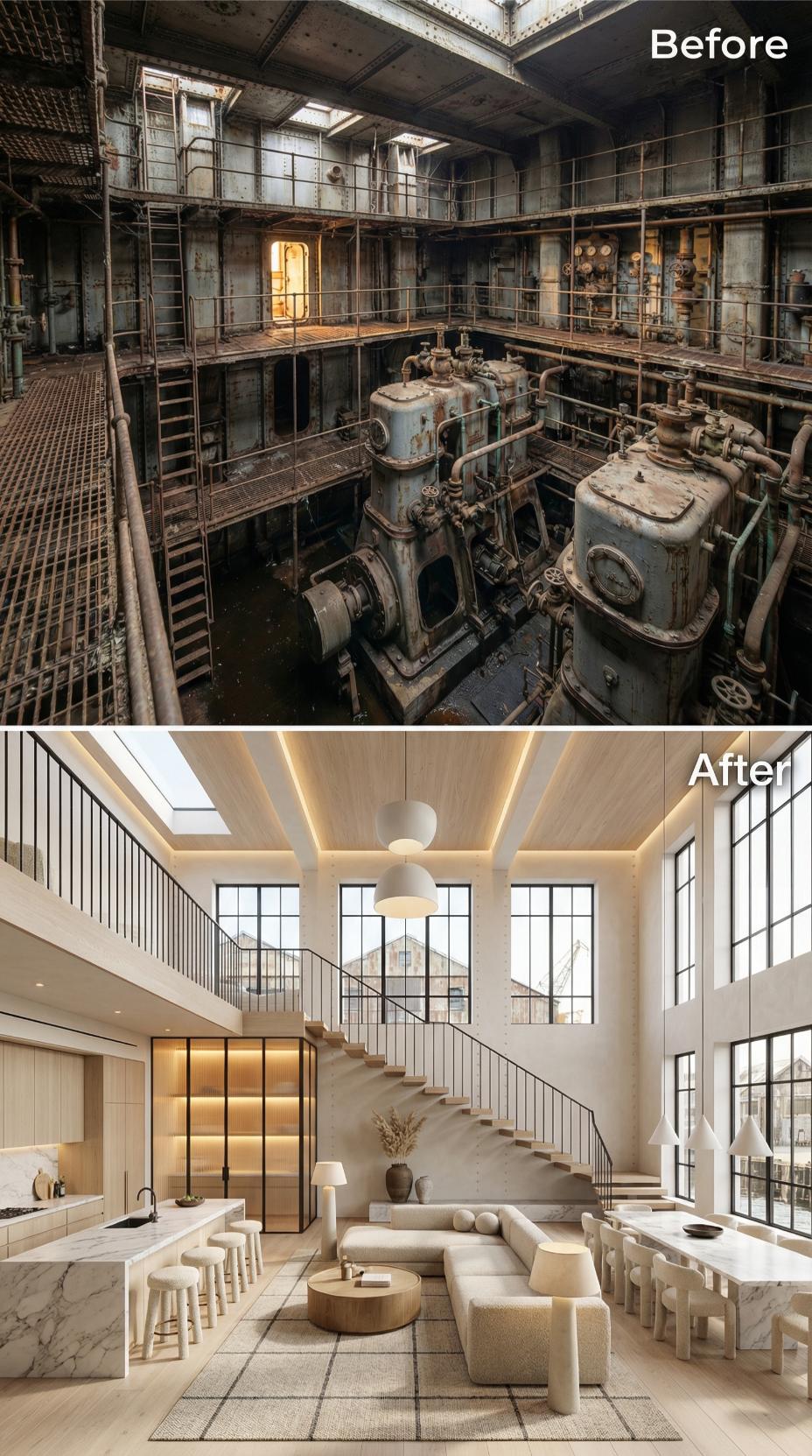
Ivory bouclé sectionals anchor the open floor plan, paired with a drum coffee table in wire-brushed brass and a marble waterfall island edged with boucle bar stools.
Did You Know: Adaptive reuse projects like this one typically retain 40 to 60 percent of the original structure’s steel framework, reducing material waste significantly compared to ground-up construction. Keeping the ship’s load-bearing hull walls intact also cut the project timeline by several months. The original porthole placements informed where the new steel-framed windows were positioned along the upper level.
Corroded Engine Pit Rebuilt Into a Green Marble and Brass Living Room
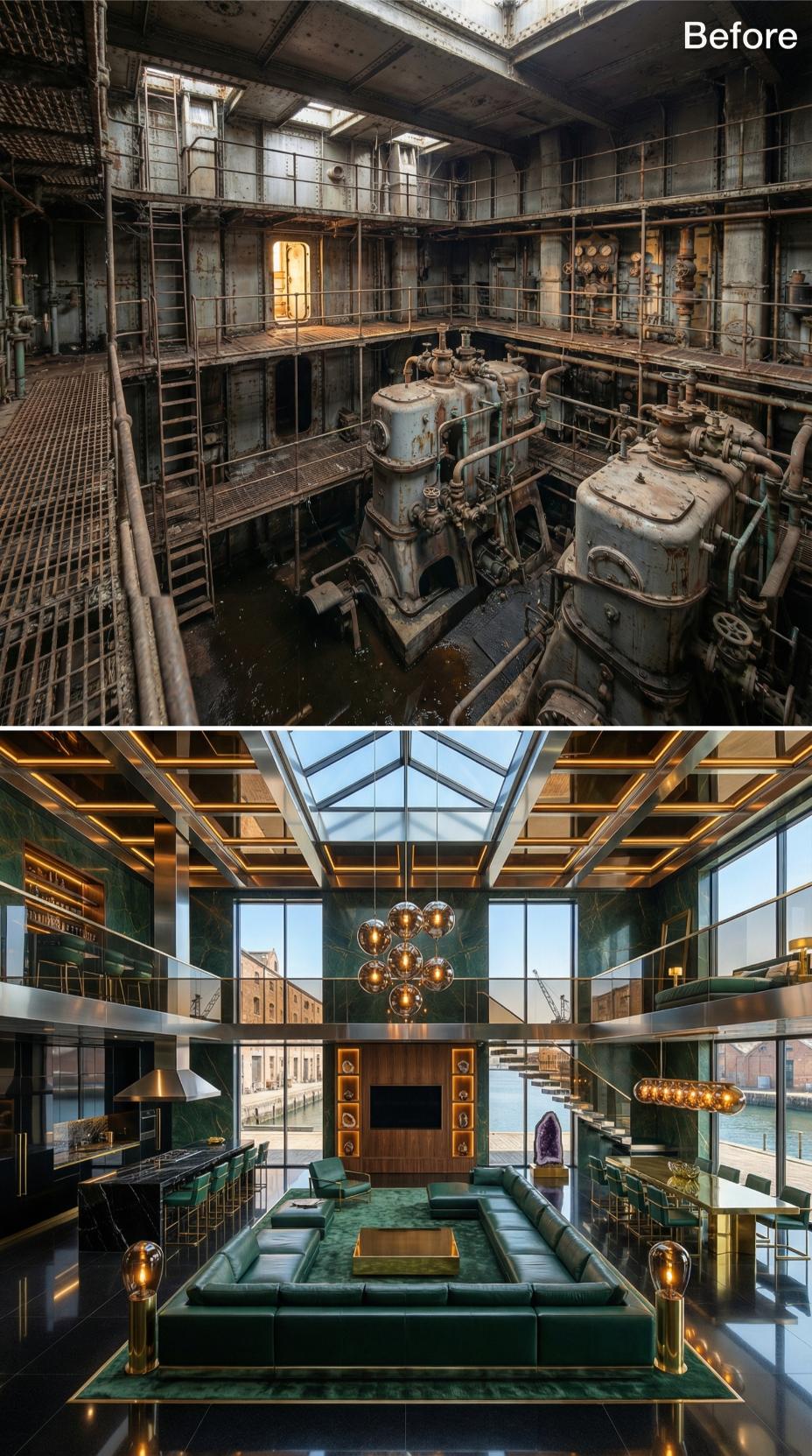
Gold floor lamps flank a sunken seating pit where bilge water once pooled beneath corroded steam equipment.
Emerald green marble cladding covers every wall surface from floor to mezzanine, and the reflective black stone floor doubles the room’s height visually. A sculptural brass chandelier with globe pendants hangs centered beneath a full glass skylight, pulling daylight down into the pit. The sectional sofa sits in deep forest green velvet, arranged around a brass-framed coffee table at sunken level. Floor-to-ceiling glass panels on two sides open the space to a working waterfront canal, with dock cranes visible through the glazing. Warm amber LED strips run along recessed ceiling coffers, layering light against the cool stone. A walnut media cabinet with amber-lit open shelving anchors the back wall, flanked by an amethyst geode used as a freestanding accent.
Gold Sphere Pendants and Green Marble Reclaim a Corroded Engine Pit
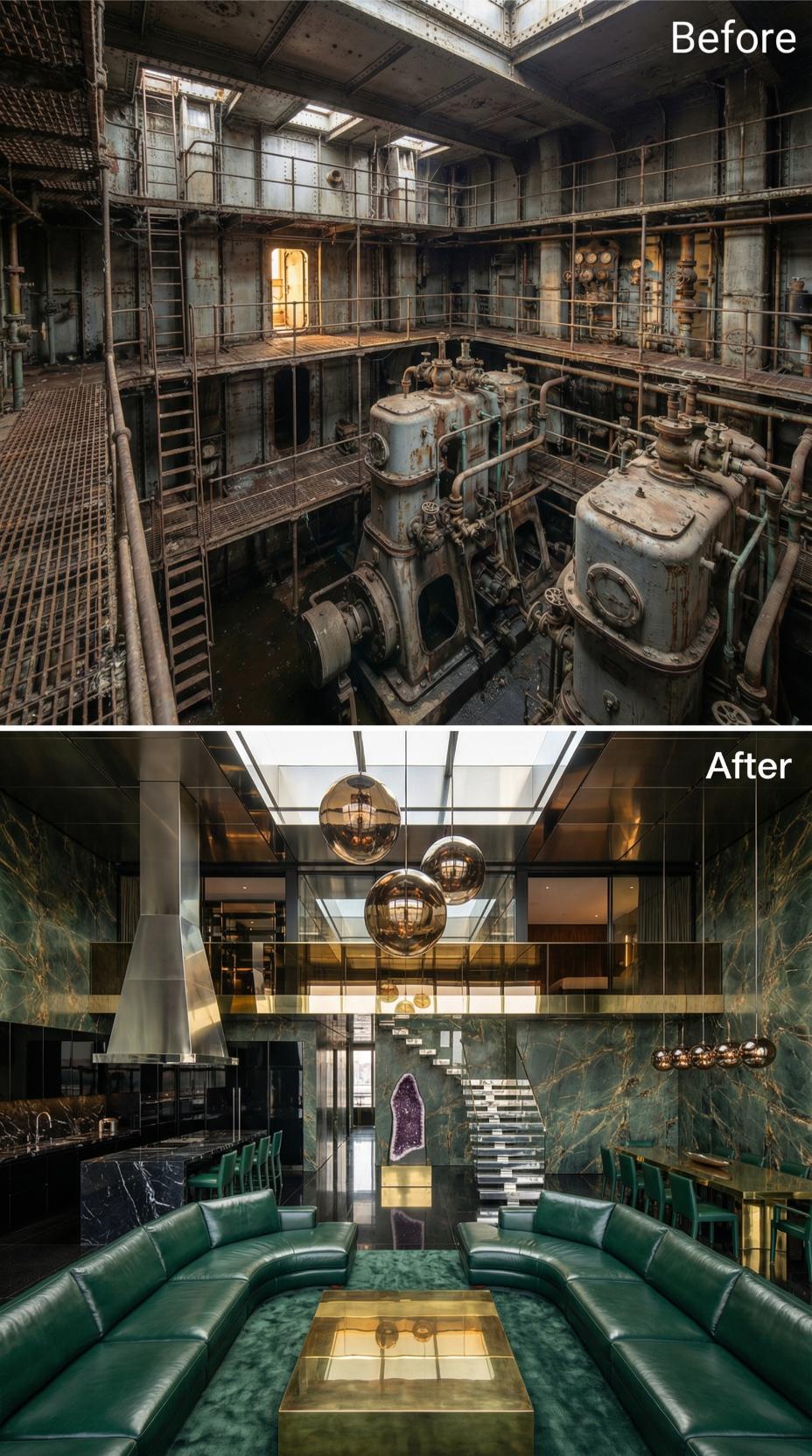
Dark green marble clad in gold veining covers every wall surface from floor to ceiling, replacing the corroded steel plating visible in the before image. Three oversized bronze sphere pendants drop from a structural skylight opening, casting warm reflections across the marble and the brass-framed coffee table below. The seating arrangement uses deep teal leather sectionals arranged in a U-shape around that low table, with green velvet chairs lining both a bar counter on the left and a dining surface on the right.
A large amethyst geode cluster anchors the center axis of the room, positioned at the base of a floating staircase with clear acrylic treads and brass side stringers. The staircase occupies exactly the footprint where the main engine machinery once stood. Smaller satellite pendant clusters with brass ball fixtures hang along the right wall, maintaining visual rhythm without repeating the central statement piece.
Three oversized bronze sphere pendants drop from a structural skylight opening, casting warm reflections across the marble and the brass-framed coffee table below.
From bold marble pits to something quieter, this conversion strips back further still.
Sand-Toned Marble and Curved Bouclé Reclaim an Abandoned Engine Pit
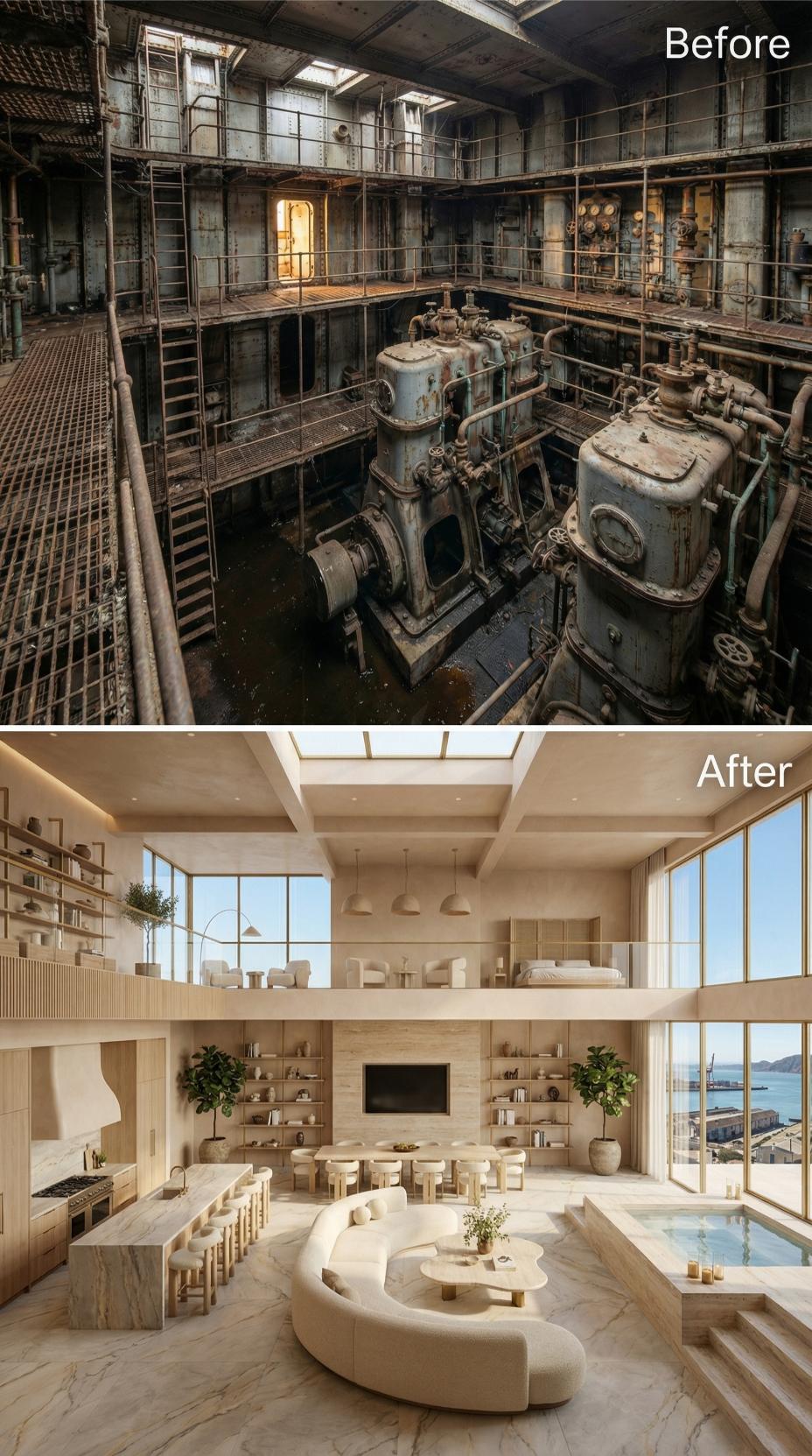
Bleached travertine tiles run wall to wall across what was once a flooded machinery pit, their veining barely perceptible against cream-painted plaster. A curved sectional sofa in off-white bouclé anchors the lower level, wrapping around a low organic-shaped coffee table finished in matching stone. Built-in shelving in light ash wood lines both side walls, carrying ceramics, small-leafed plants, and hardcovers without crowding the sightlines.
Floor-to-ceiling glazing on the waterfront side pulls in unfiltered bay light and a distant mountain ridge. A sunken pool sits flush with the travertine at the far right, its water line level with the living floor. The kitchen island to the left runs long in book-matched marble with a waterfall edge, paired with turned-leg counter stools in raw linen. Pendant lights in unglazed ceramic drop from a wide skylight opening that replaced the original engine room ceiling plate entirely.
Kayaks on the Wall, Leather Sectional Below, Water Visible Through Every Window
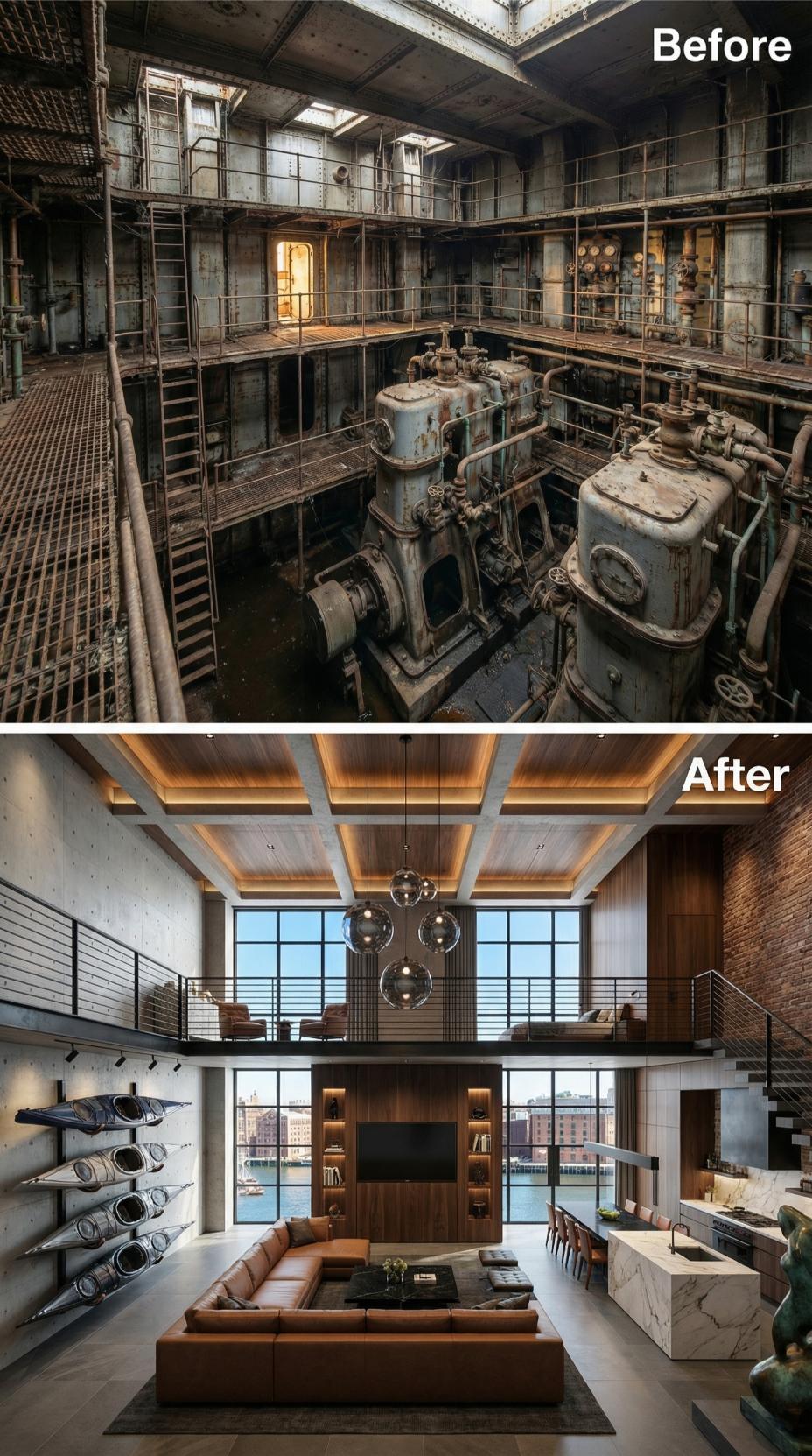
Cognac leather wraps a sunken sectional anchored by a black stone coffee table, while wall-mounted kayak racks in raw steel occupy the left concrete wall as functional sculpture.
The Psychology Behind This: Storing active gear inside a living space signals to the brain that rest and adventure coexist in the same zone, lowering the psychological barrier between relaxation and action. Spaces that display objects of physical pursuit tend to register as personally owned rather than decorated, which deepens the sense of belonging.
Billiard Table, Bar Shelves, and a Harbor View Fill the Reclaimed Engine Pit
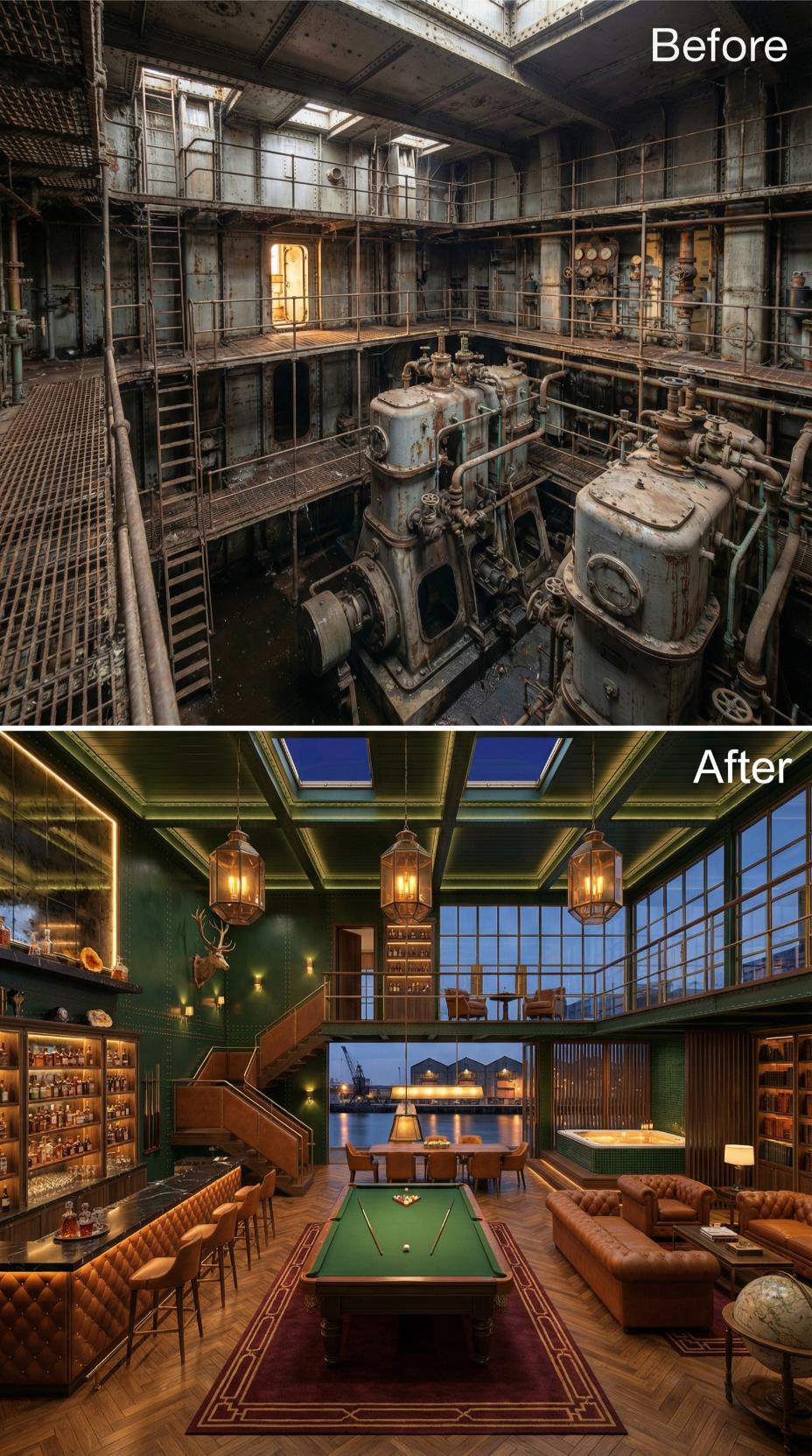
Green baize on the pool table anchors the room’s color story, pulling the hunter green wall paneling and ceiling trim into a single palette. Herringbone parquet floors in a warm amber wood run beneath the seating zone, where a tufted leather sectional sits alongside a low coffee table holding a vintage globe. Pendant lanterns with brass frames hang at three heights from the coffered ceiling, and the skylights above them open the room to the night sky without disrupting the warm lamp glow below.
The full-height steel-framed windows behind the pool table look directly onto the harbor, with cranes and waterfront sheds visible in the distance. A backlit shelving unit lines the left wall with glass decanters and spirit bottles, and a run of caramel leather bar stools tucks against a black marble counter. Mounted antlers and a wall sconce above them nod to the kind of private club aesthetic that rewards a second look.
Fun Fact: Billiard rooms designed with a dedicated bar wall on the opposite end of the table follow a layout principle borrowed from 19th-century gentlemen’s clubs, where the separation of play and drink zones kept both functions from interfering with each other. Keeping that distance intact in a residential build also improves sightlines across the full length of the table.
Sunken Hot Tub, Wall-Mounted Kayaks, and Warm Sandstone Reclaim a Rusted Engine Pit
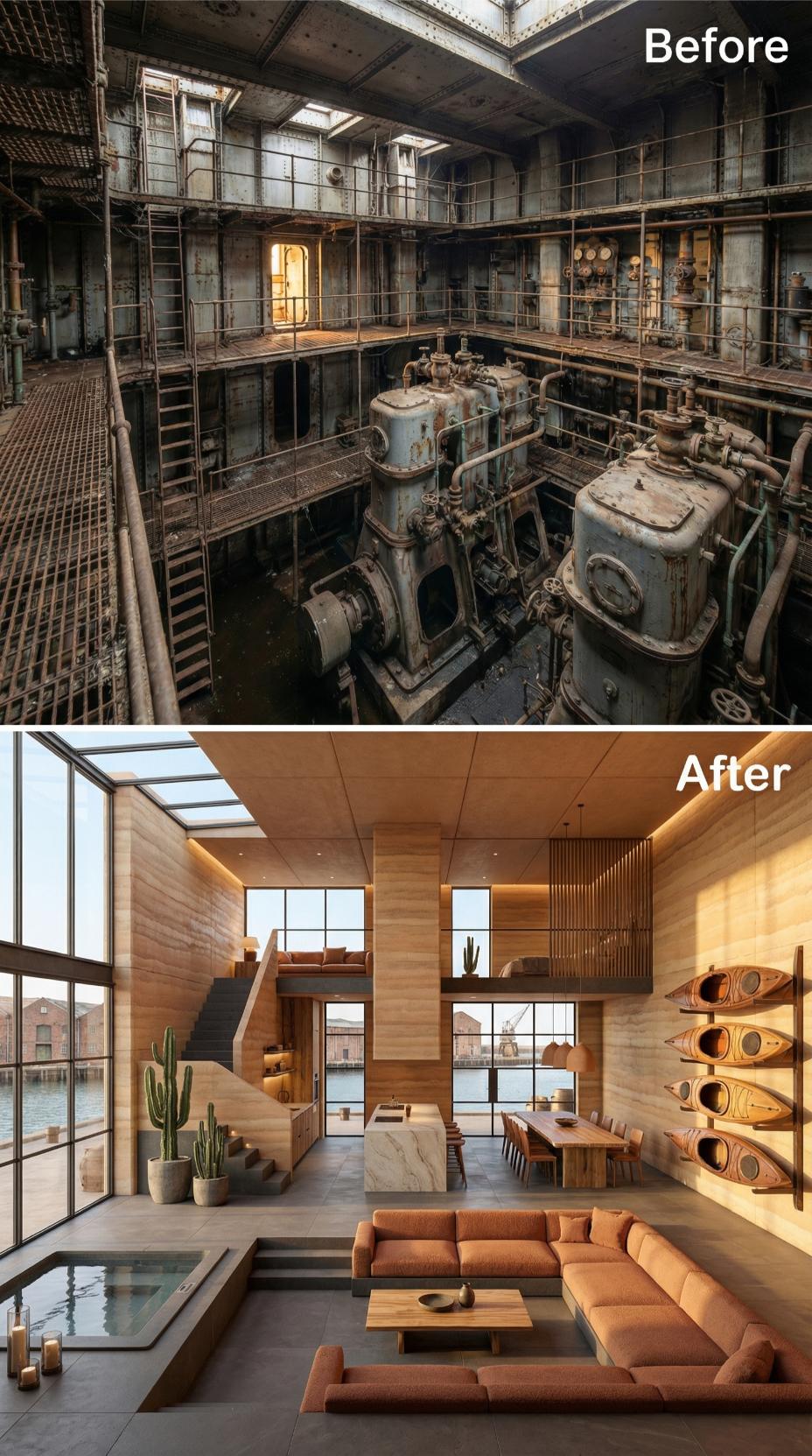
Warm sandstone cladding covers every wall, and a sunken hot tub occupies the spot where corroded machinery once sat. Terracotta sectional seating, a slatted wood upper level, and kayaks mounted horizontally on the right wall complete the conversion.
Pro Tip: Mounting recreational equipment directly on interior walls as display pieces serves a dual function, acting as art while keeping floor space open. Vertical wall storage for long items like kayaks works best when anchored into structural steel framing left intact from the original shell. In adaptive reuse builds, that existing framework often lines up perfectly with standard mounting intervals.
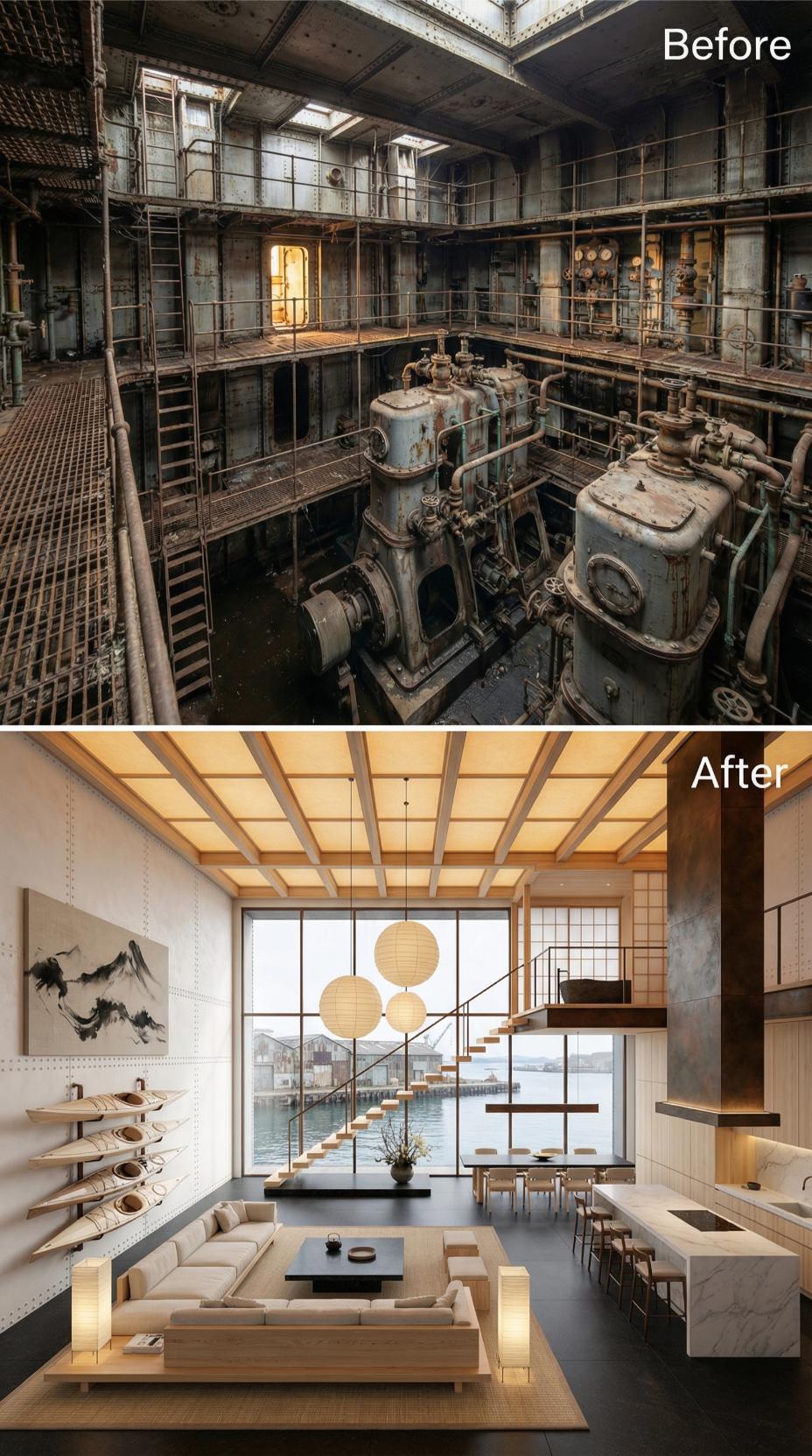
Paper Lanterns and Shoji Ceilings Replace Corroded Steam Machinery
🔥 Would you like to save this?
Where twin steam engines once sat corroding on a rusted grate floor, a sunken sectional in off-white linen now anchors the main living zone. The ceiling grid is the defining move: backlit shoji panels set inside a wood lattice framework cast diffused light across the entire room without a single recessed fixture in sight. Natural maple framing runs the grid’s full length, referencing Japanese interior tradition while keeping the industrial volume intact.
A floating staircase climbs toward a mezzanine level, its open steel treads paired with a slender wood handrail. Wall-mounted kayaks on the left read as sculpture rather than storage. Floor-to-ceiling glass at the rear frames a working harbor, replacing corroded steel cladding with an unobstructed waterfront view. The kitchen to the right runs a marble waterfall island along the full wall, finished in white tile with under-cabinet strip lighting.
- Backlit shoji ceiling panels distribute light evenly without spotlights or pendants punching through the grid
- Floating stair treads without risers preserve sightlines between levels, keeping the double-height volume visually open
- Positioning the kitchen along a side wall rather than the center keeps harbor views unobstructed from every seated position
Mezzanine Rails, Skylights, and Black Steel Reclaim a Corroded Engine Pit
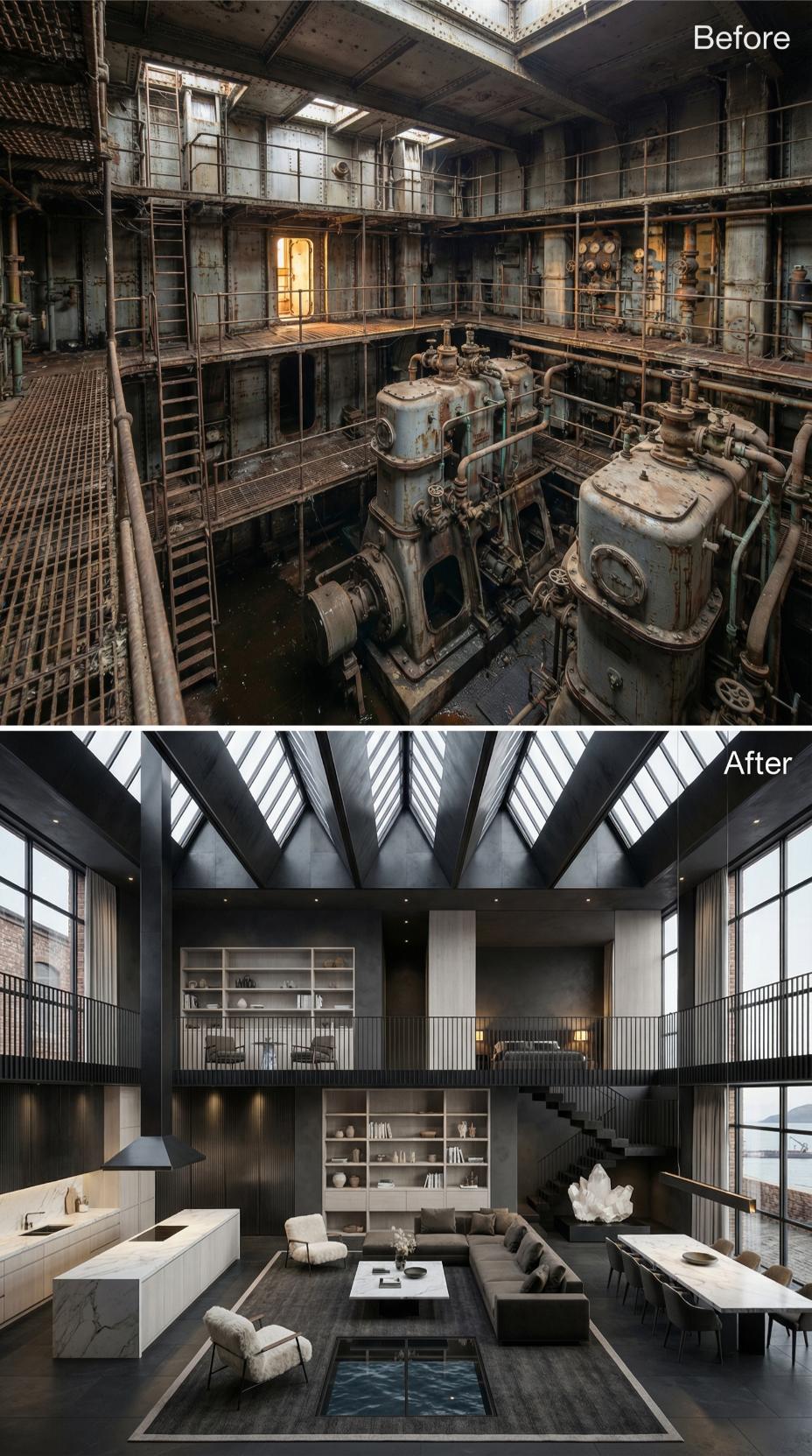
Exposed black steel beams run the length of the ceiling, framing a clerestory window band that pulls daylight across both levels. The lower living zone anchors around a sectional in charcoal fabric, flanked by a marble-topped kitchen island in veined white stone on one side and a long dining table with matching marble surface on the other. Open white shelving units divide the mezzanine visually from the ground floor without closing off the volume. A quartz crystal sculpture on the coffee table reads as the single organic element in an otherwise rectilinear room.
Common Mistake: Designers converting industrial spaces often default to painting all remaining metalwork black, but applying the same finish to structural beams, railings, and window frames flattens the hierarchy between architectural bones and decorative details. Varying the finish, using matte black for beams and a brushed graphite for railings, preserves depth and prevents the space from reading as a monolithic void.
Curved Green Marble, a Living Wall, and Harbor Glass Reclaim the Engine Pit
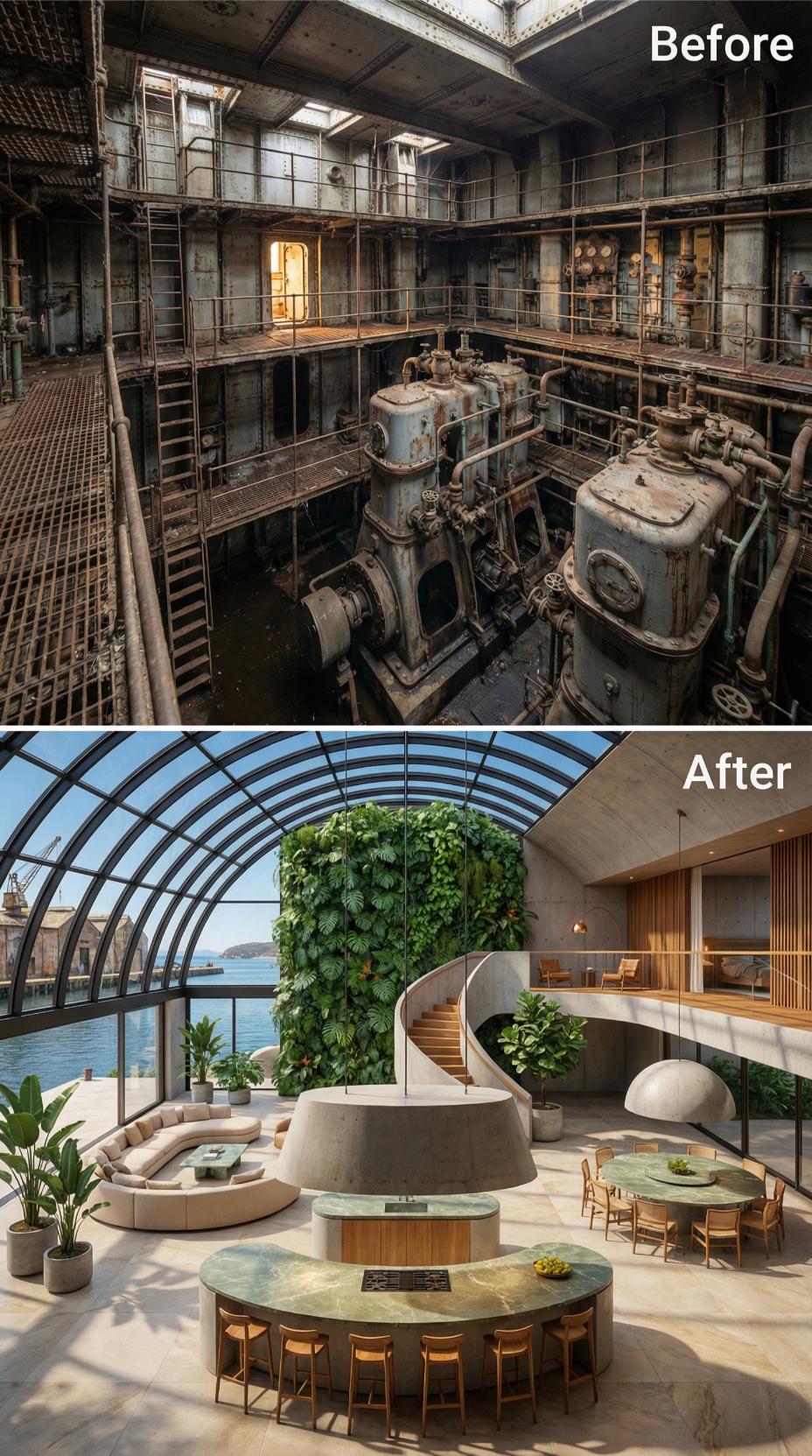
Concrete forms the cylindrical kitchen island base, topped with veined green marble that wraps into a curved bar counter with wood-backed stools. A living wall of tropical foliage climbs behind a spiral staircase with warm oak treads. Arched steel-and-glass panels open the entire harbor-facing wall to open sky.
Designer’s Secret: Vertical gardens installed against interior concrete walls regulate humidity naturally, reducing the load on mechanical climate systems by absorbing moisture released through evapotranspiration. In adaptive reuse spaces where original steel retains residual corrosion, that humidity buffering also slows future oxidation on any exposed metalwork left as design features.
Spiral Brass Staircase and Amber Glass Pendants Reclaim a Rusted Engine Room
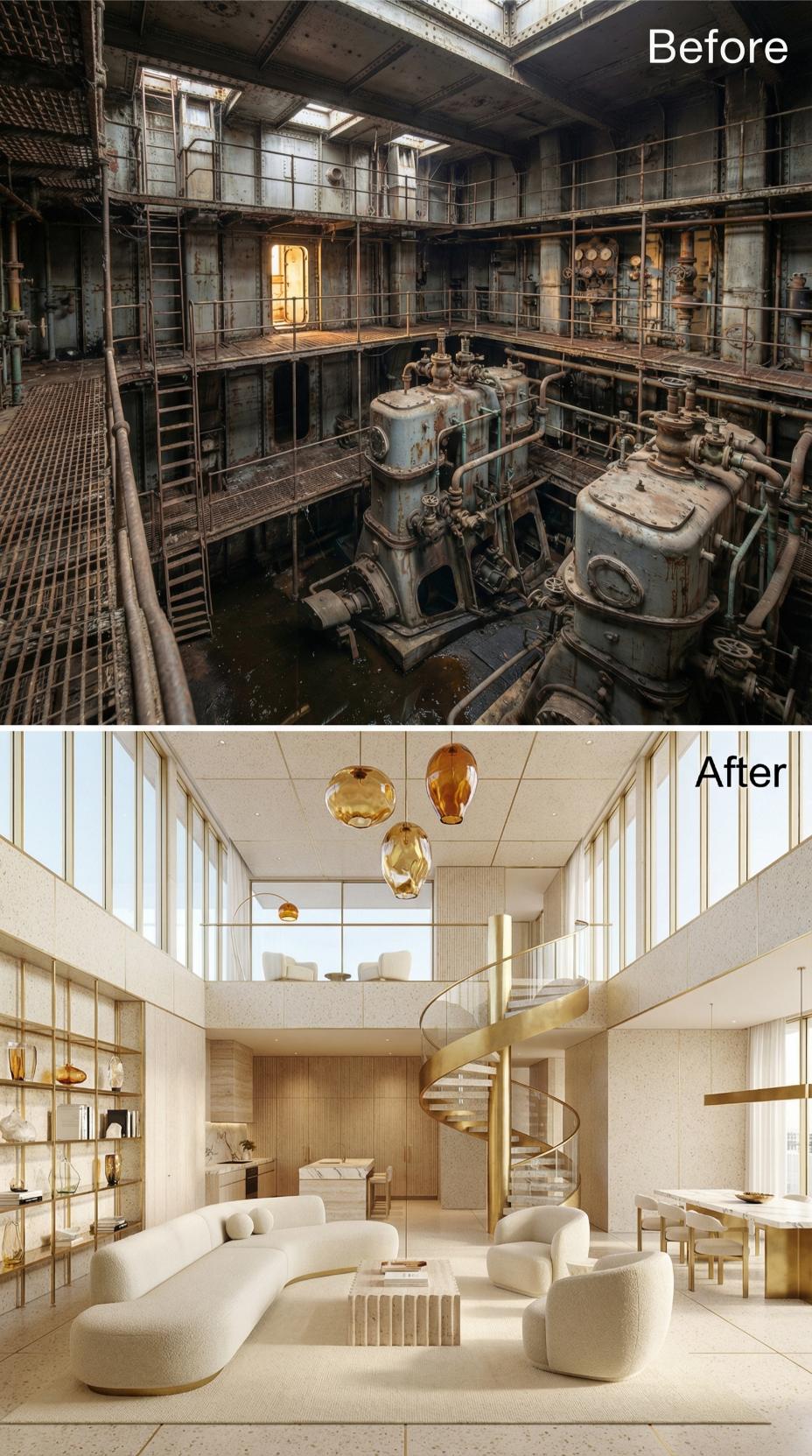
Cream bouclé furniture curves across a double-height living floor where corroded steam equipment once sat. The spiral staircase anchors the center of the room in brushed brass with open-riser treads and a glass balustrade. Four amber pendant lights drop at staggered heights above the seating cluster, their molded glass catching the natural light that pours through full-height windows on three sides.
Travertine-finish wall cladding runs floor to upper mezzanine, broken only by ribbed wood panels behind the main sofa. A modular coffee table in stacked stone blocks sits low between two organic-form accent chairs. Open brass shelving lines the left wall, holding amber glass vessels that mirror the pendant cluster overhead.
In The Details: Spiral staircases in double-height conversions require a minimum clear diameter of five feet to meet residential building codes, but most designers working in industrial spaces push that to six or seven feet to keep the form from reading as cramped against tall ceilings. Brass finishes on structural stair elements also require a lacquer topcoat in high-traffic installations to prevent oxidation from hand contact over time.
Kayaks Rack the Wall While Skylights and Teak Panels Claim the Engine Pit
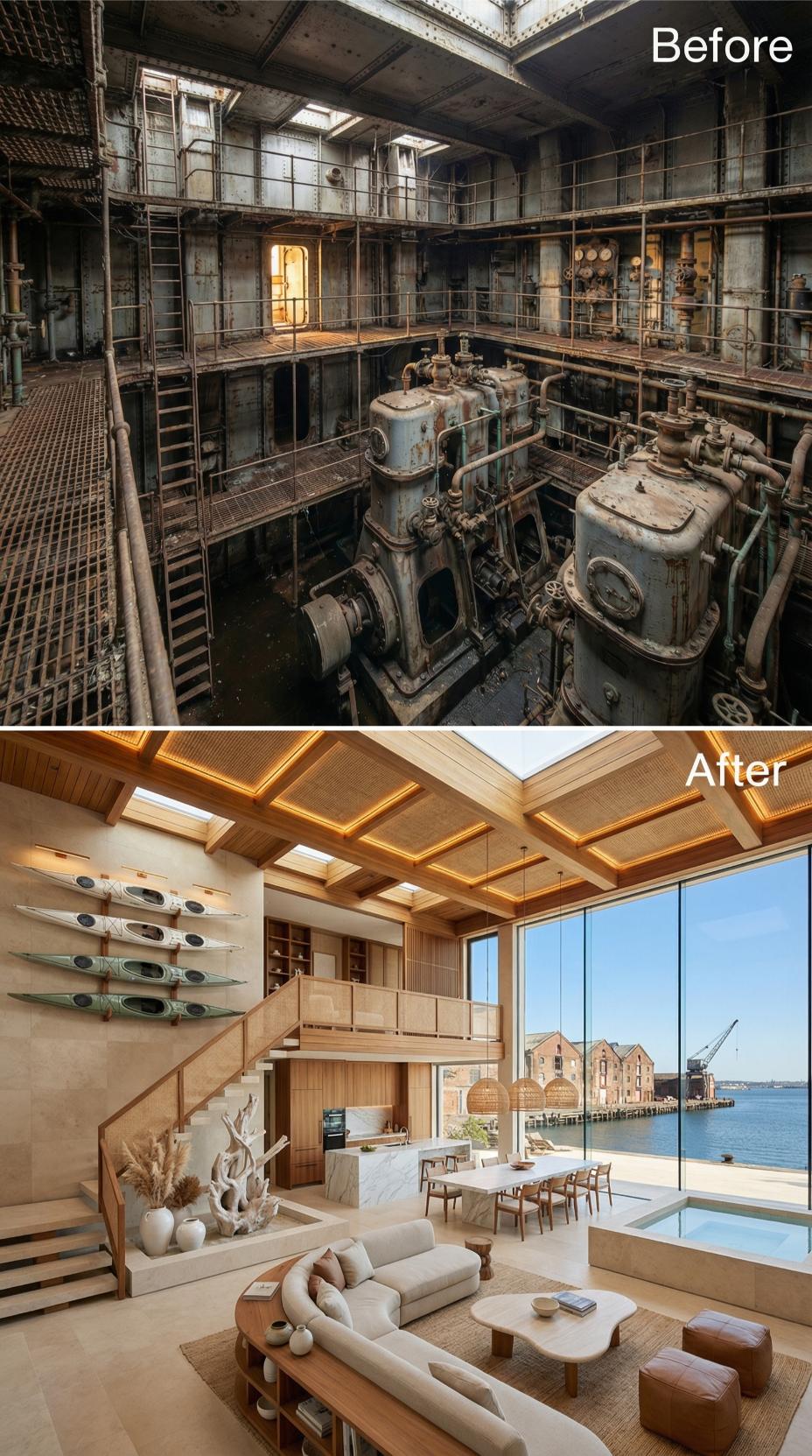
Rattan-inset ceiling coffers with recessed amber strip lighting replace the rusted overhead grating. Wall-mounted kayaks in seafoam and coral hang above the staircase in place of any conventional art. Floor-to-ceiling glass opens directly onto harbor water, with a sunken pool flush against the sill.
Coffered Ceiling Construction in Double-Height Industrial Conversions
The teak-framed rattan coffers visible here serve a structural purpose beyond aesthetics, housing acoustic insulation between the original steel deck above and the finished living space below. In engine room conversions with exposed overhead steel, sound transmission between levels is a persistent engineering problem that standard drywall ceilings cannot adequately solve. Recessing lightweight natural materials like woven rattan into a timber grid absorbs mid-frequency sound while keeping the ceiling visually warm rather than institutional.
Black Steel Rails, Marble Surfaces, and Gallery Walls Claim the Rusted Space
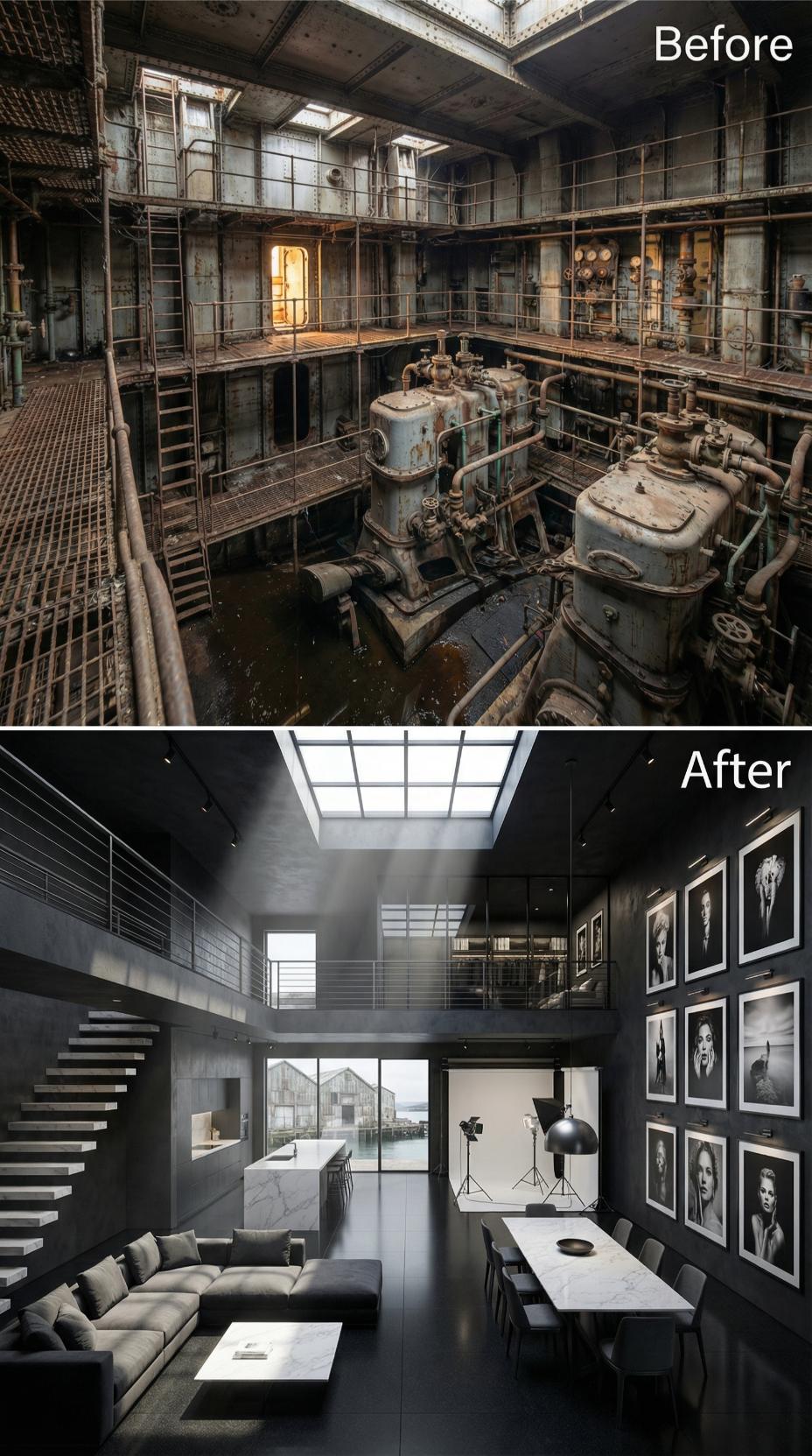
Matte black walls anchor a double-height floor plan where floating concrete stairs rise to a steel cable mezzanine, and a grid skylight pulls daylight directly onto a white marble island below. Nine black-and-white portrait photographs hang salon-style on the right wall, framed in thin white molding against the black plaster. A low-profile gray sectional and a marble coffee table occupy the main floor beside a long dining table with upholstered chairs in charcoal fabric.
Leather Sectional, Pool Table, and Skylights Reclaim the Rusted Engine Room
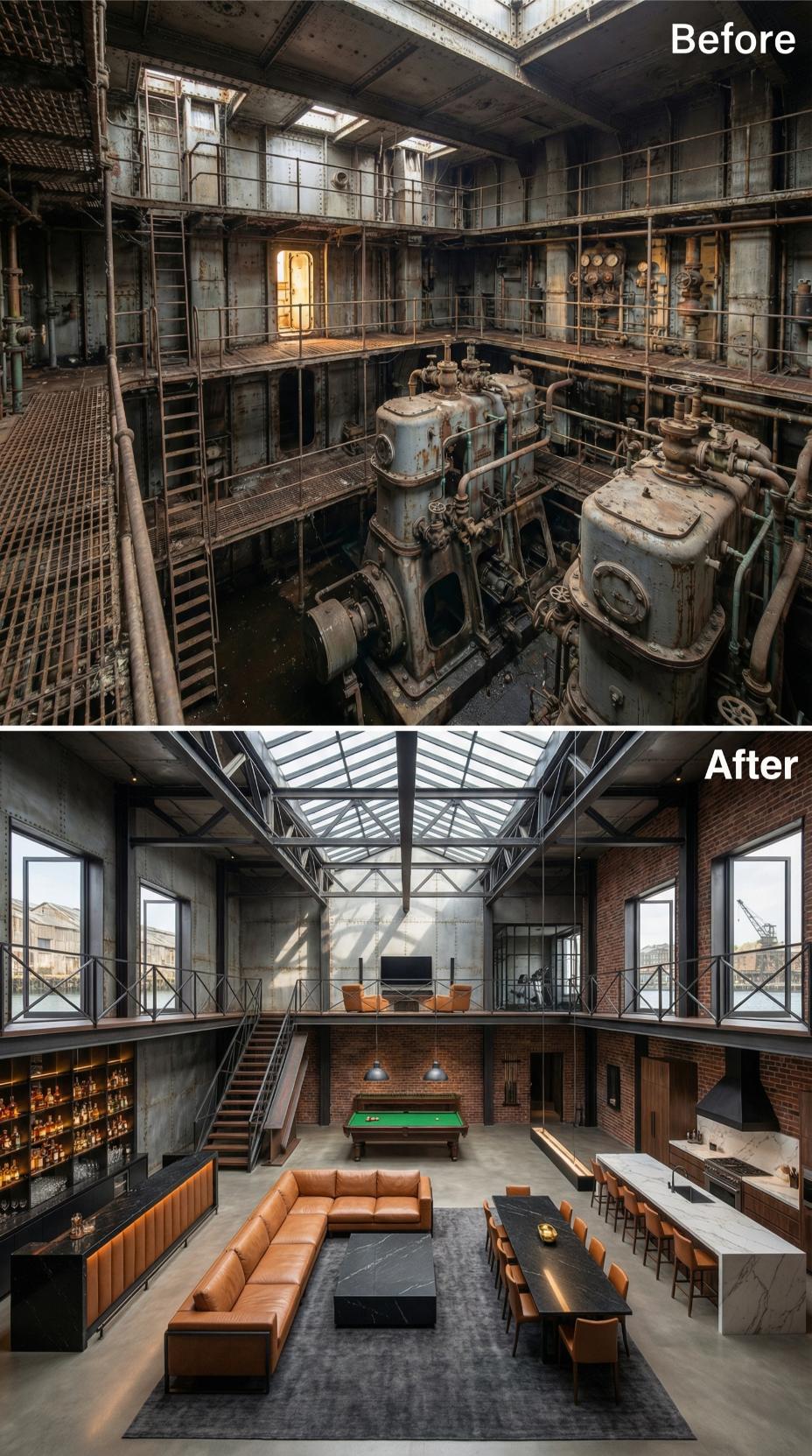
Caramel leather wraps a deep U-shaped sectional anchored on a charcoal area rug at the lower level, while a green-felt billiard table sits centered beneath two pendant lights with black metal shades. A full-height whiskey display lines the left wall, bottle rows stacked behind open steel shelving. On the right, a marble-topped island with dark wood cabinetry runs parallel to a row of cognac-upholstered counter stools.
Exposed brick columns flank the upper mezzanine, where a cable-rail walkway leads to a second seating area with a wall-mounted television. Steel cross-braced windows pull in harbor light from both levels, and a glass-panel skylight roof floods the central volume with diffused daylight. The concrete floor runs uninterrupted across both tiers, tying the two levels together without any change in finish.
Illuminated Wine Tower, Leather Sectional, and Glass Ceiling Reclaim a Rusted Engine Pit
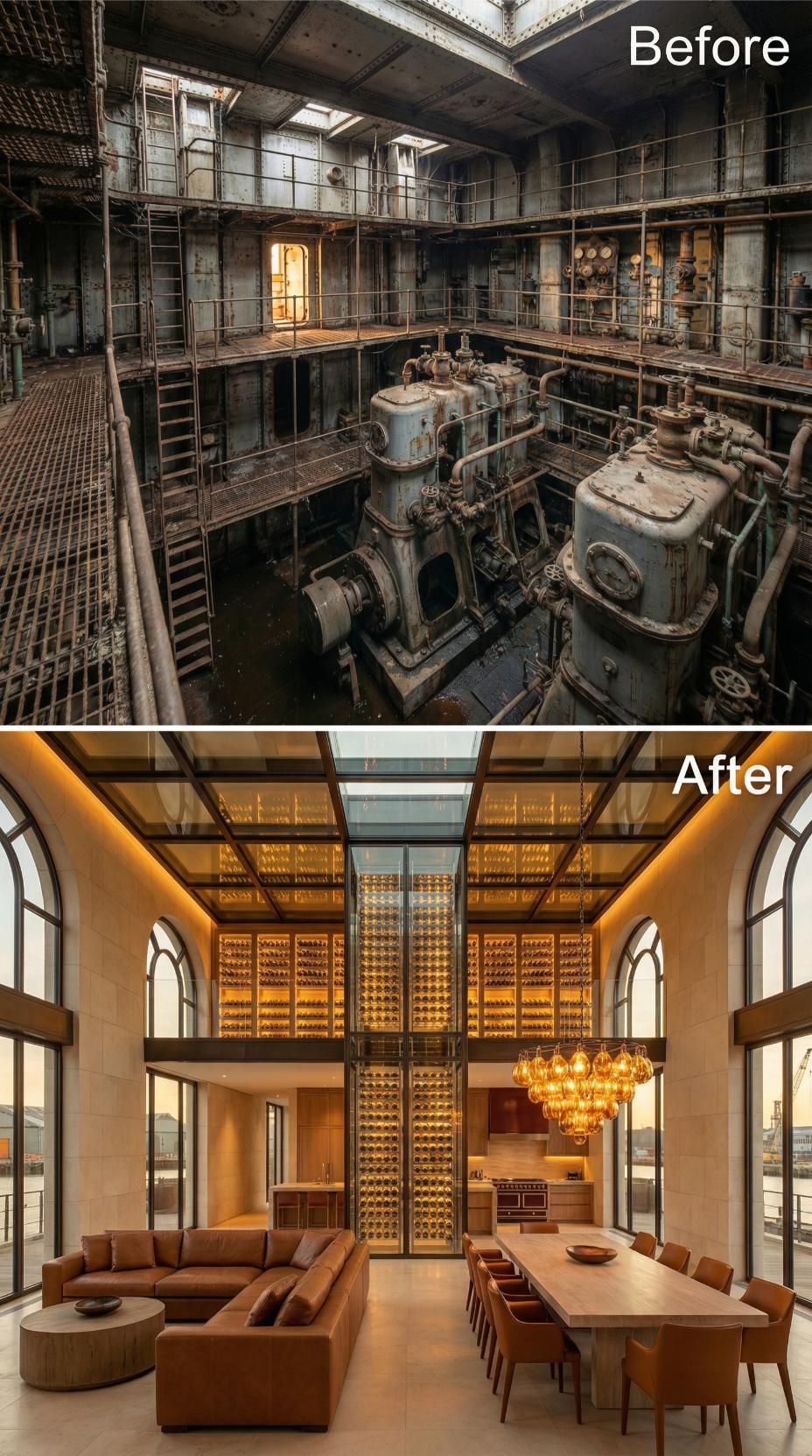
Cognac-toned leather wraps a deep sectional sofa facing a floor-to-ceiling wine storage column backlit in amber, while a glass roof panel draws natural light across the maple dining table and its row of saddle-brown chairs below.
Walnut Slat Walls, a Grand Piano, and Reel-to-Reel Gear Occupy the Space
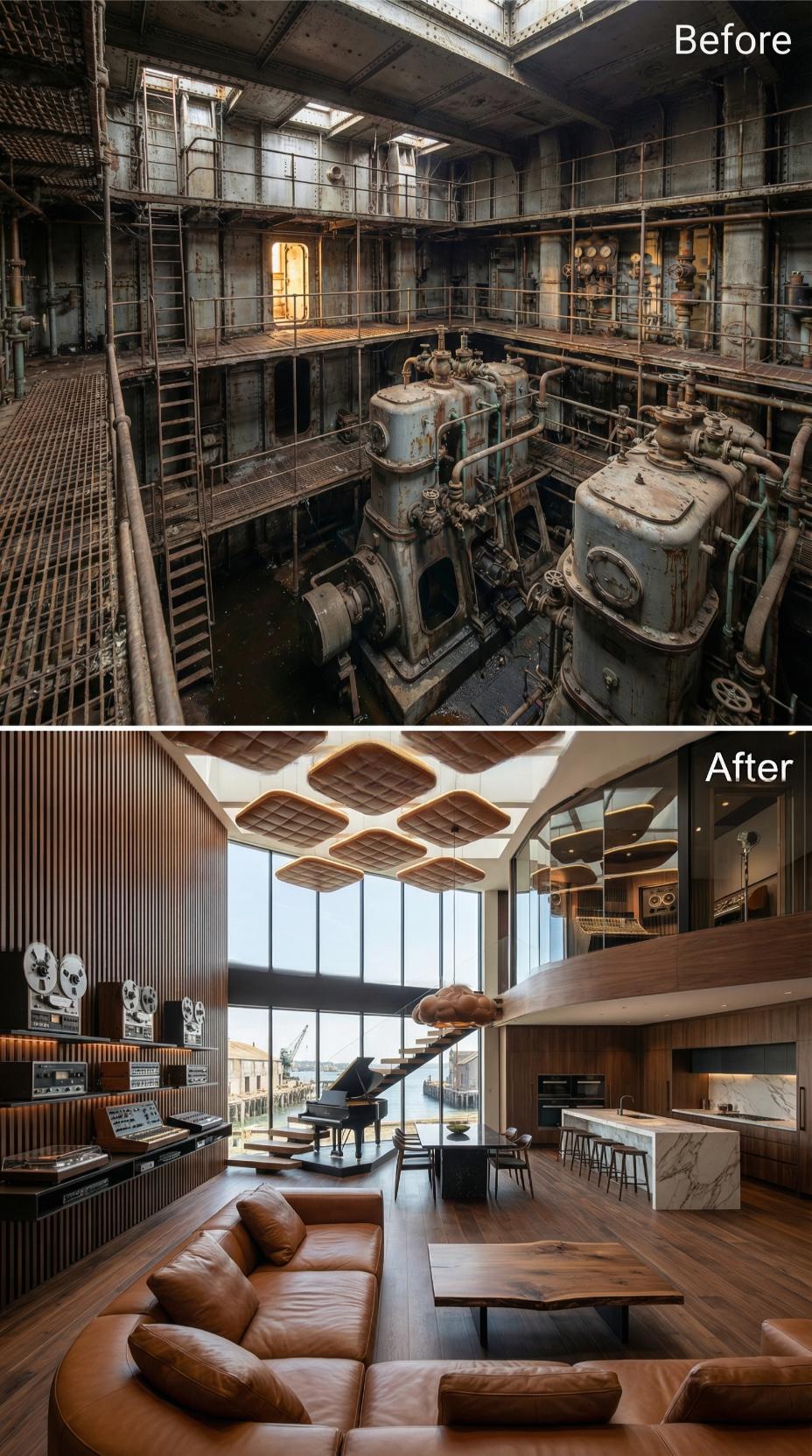
Cognac leather wraps a deep sectional facing a live-edge walnut coffee table, while reel-to-reel tape machines and analog mixing consoles line the slat-panel wall behind. Acoustic ceiling baffles in quilted walnut hang above floor-to-ceiling harbor glass, and a marble waterfall island anchors the kitchen beyond.
White Oak, Skylights, and Marble Counter a Rusted Engine Pit’s Industrial Shell
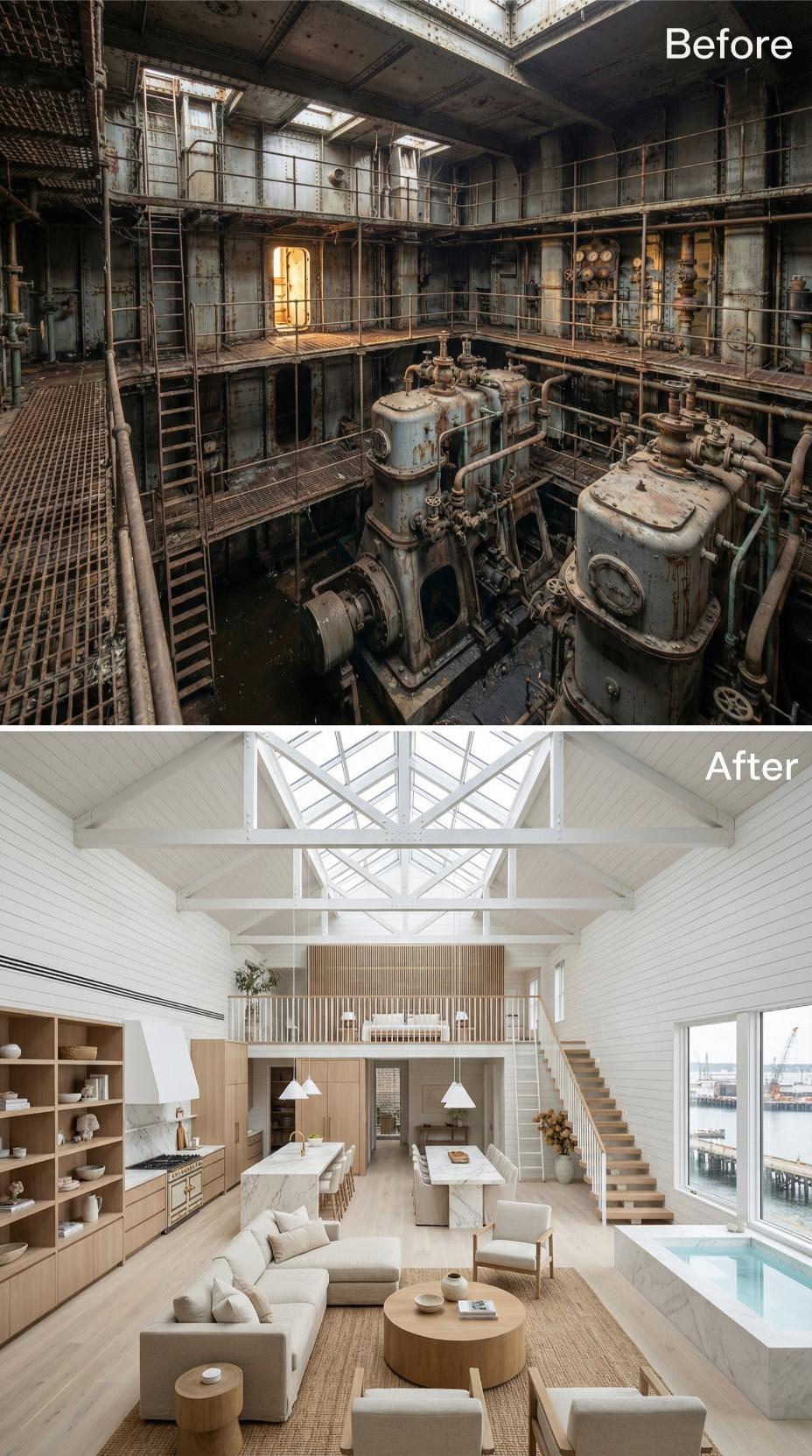
Bleached white oak cabinetry lines the left wall from floor to ceiling, paired with open shelving that holds ceramic vessels and woven baskets. A marble waterfall island anchors the kitchen zone, its veining picking up the pale tones of the shiplap wall cladding. Pendant lights in matte white hang at two heights over the dining table.
A loft bedroom sits above the main floor behind slatted wood railings, accessible by open-riser stairs along the right wall. Floor-to-ceiling glazing at the far end frames a harbor view, and a recessed plunge pool in pale stone occupies the corner below it. Structural skylights overhead flood the double-height space with daylight the engine room never saw.
Skylights, Warm Walnut Panels, and White Marble Bury the Rust Below
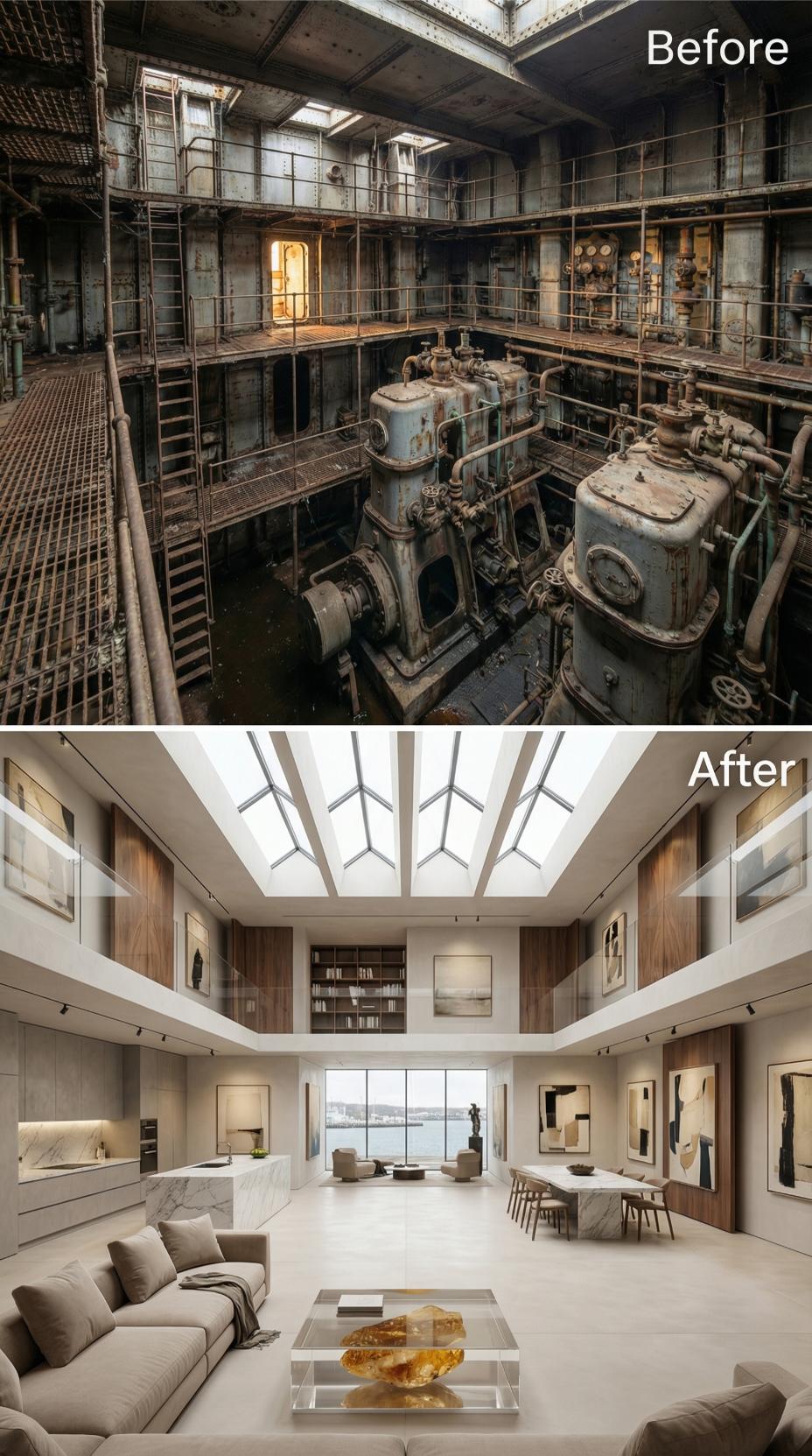
Corroded steam machinery and iron grating gave way to white plaster ceilings, a run of clerestory skylights, and walnut wall panels that warm both levels of the converted hull. Marble countertops on the kitchen island carry the same vein pattern down to the dining table surface, creating a visual spine through the open floor plan. Abstract art in black, sand, and ochre lines the upper gallery rail.
Resin-cast amber formations sit inside a glass coffee table frame, referencing the industrial amber of old gauge glass without replicating it literally. Warm gray upholstery on the sectional keeps the seating zone grounded while floor-to-ceiling windows at the far end pull in a full harbor panorama.
Coral Sectional, Geometric Skylights, and Pink Marble Reclaim the Engine Pit
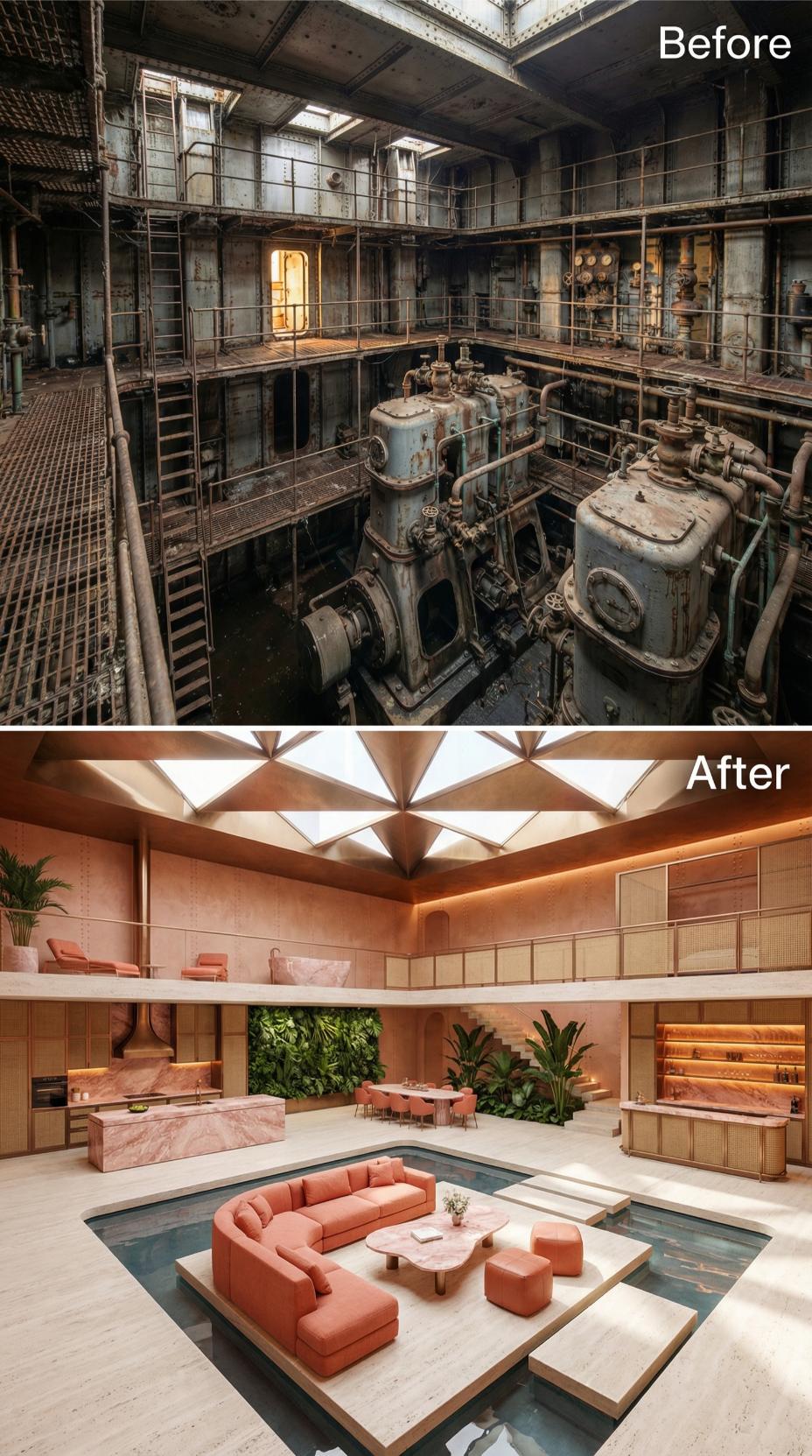
Coral-upholstered curved sectional seating sits on a raised platform surrounded by a shallow water feature, while geometric coffered skylights overhead replace the corroded ceiling entirely. Pink marble counters the kitchen island, and warm-toned plaster walls run floor to mezzanine level alongside rattan-paneled cabinetry with brass hardware.
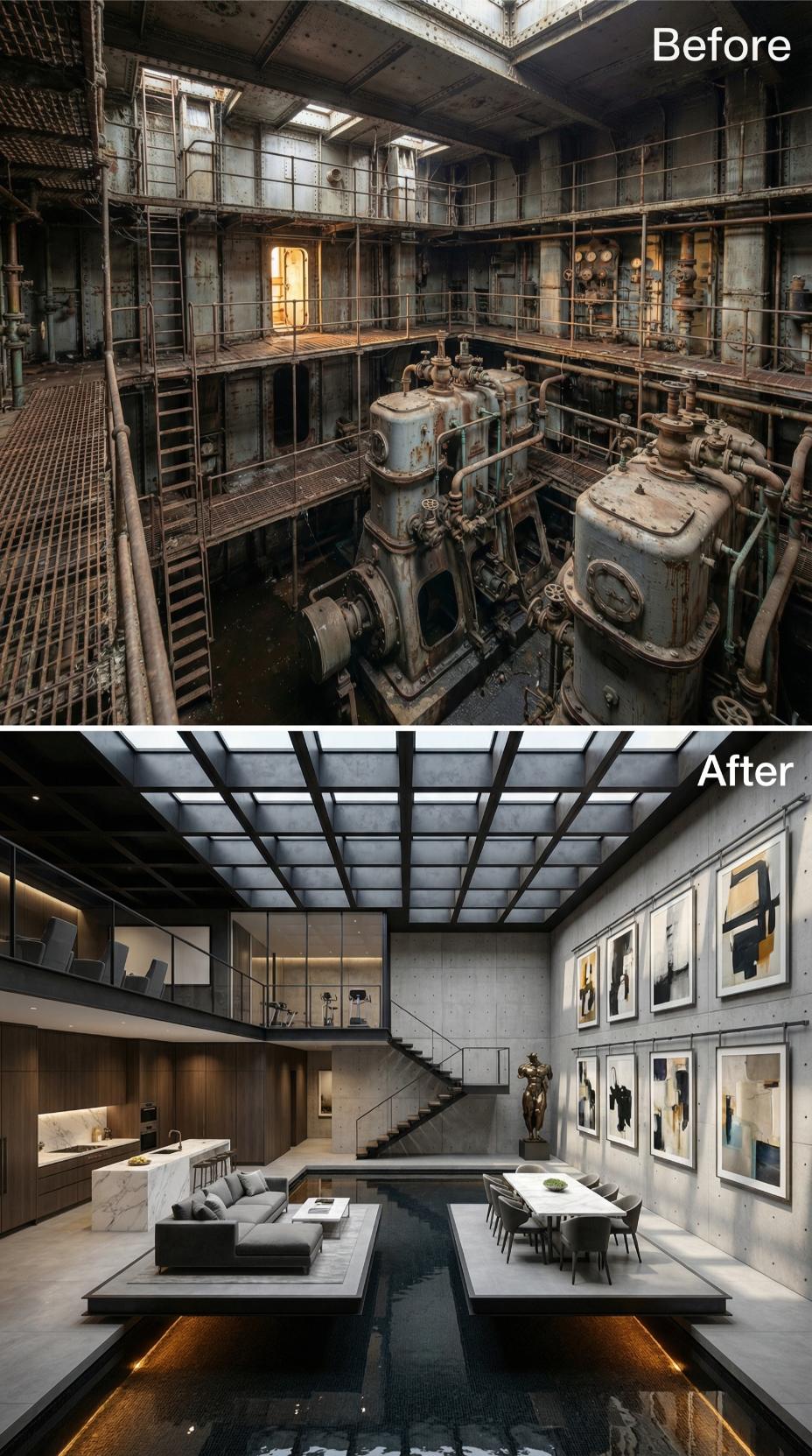
Sunken Living Platform, Glass Ceiling Grid, and Gallery Wall Replace the Engine Pit
🔥 Would you like to save this?
Where rusted boilers once dominated a multi-level engine pit, polished concrete platforms now float above a narrow reflection pool edged with warm amber underlighting. A grid of frosted skylights runs the full ceiling length, washing the raw concrete walls in diffused gray light. On the right wall, twelve framed abstract prints hang in two stacked rows, their muted gold and black tones pulling color from the bronze sculpture below. A sectional in charcoal upholstery anchors the sunken living zone, while a marble-topped island with dark wood cabinetry defines the kitchen along the left wall.
Paper Lanterns, Ash Wood Floors, and Shoji Screens Occupy the Engine Pit
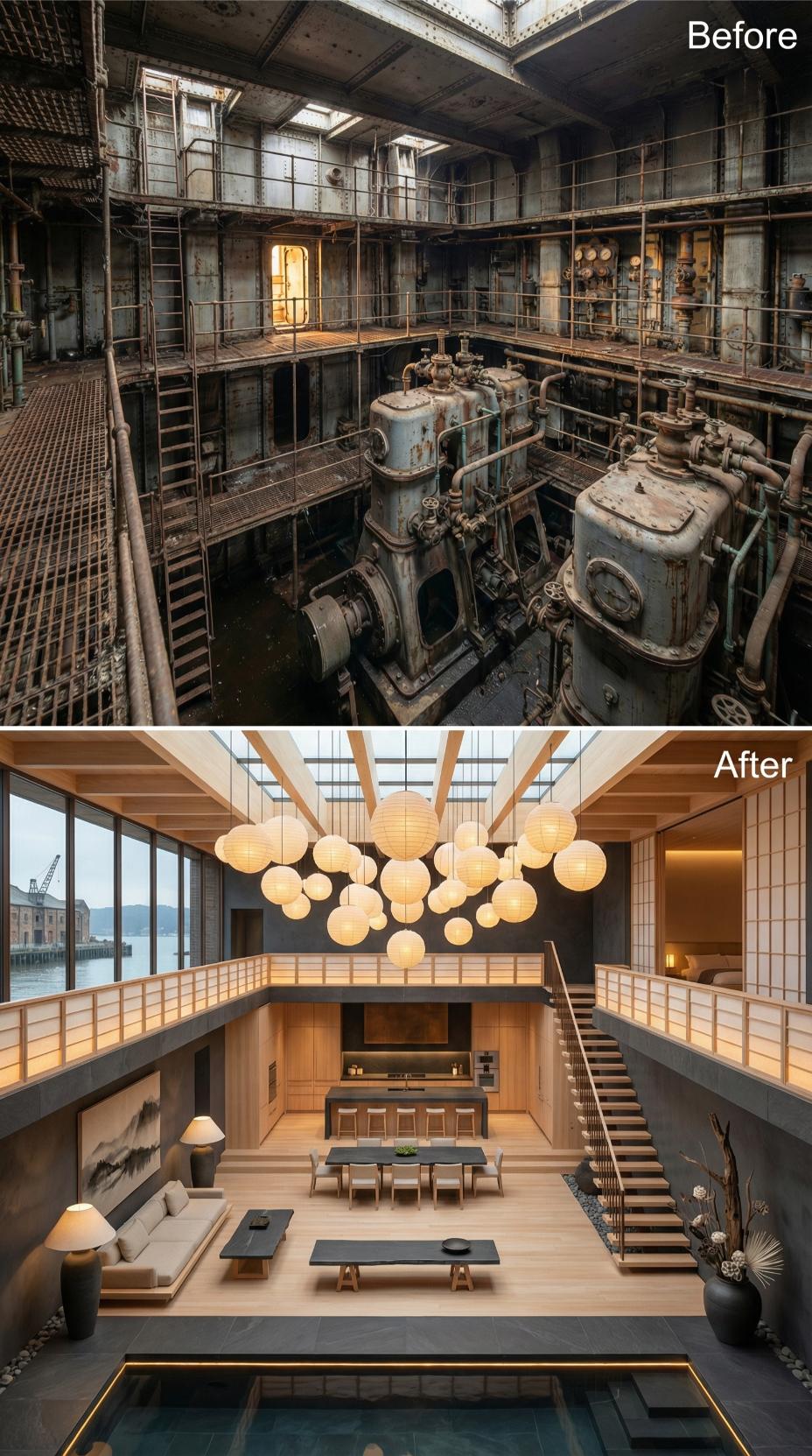
Dozens of white paper lanterns hang at varied heights above ash wood flooring and a slate-gray dining table, replacing corroded machinery with soft, diffused light across the double-height interior.
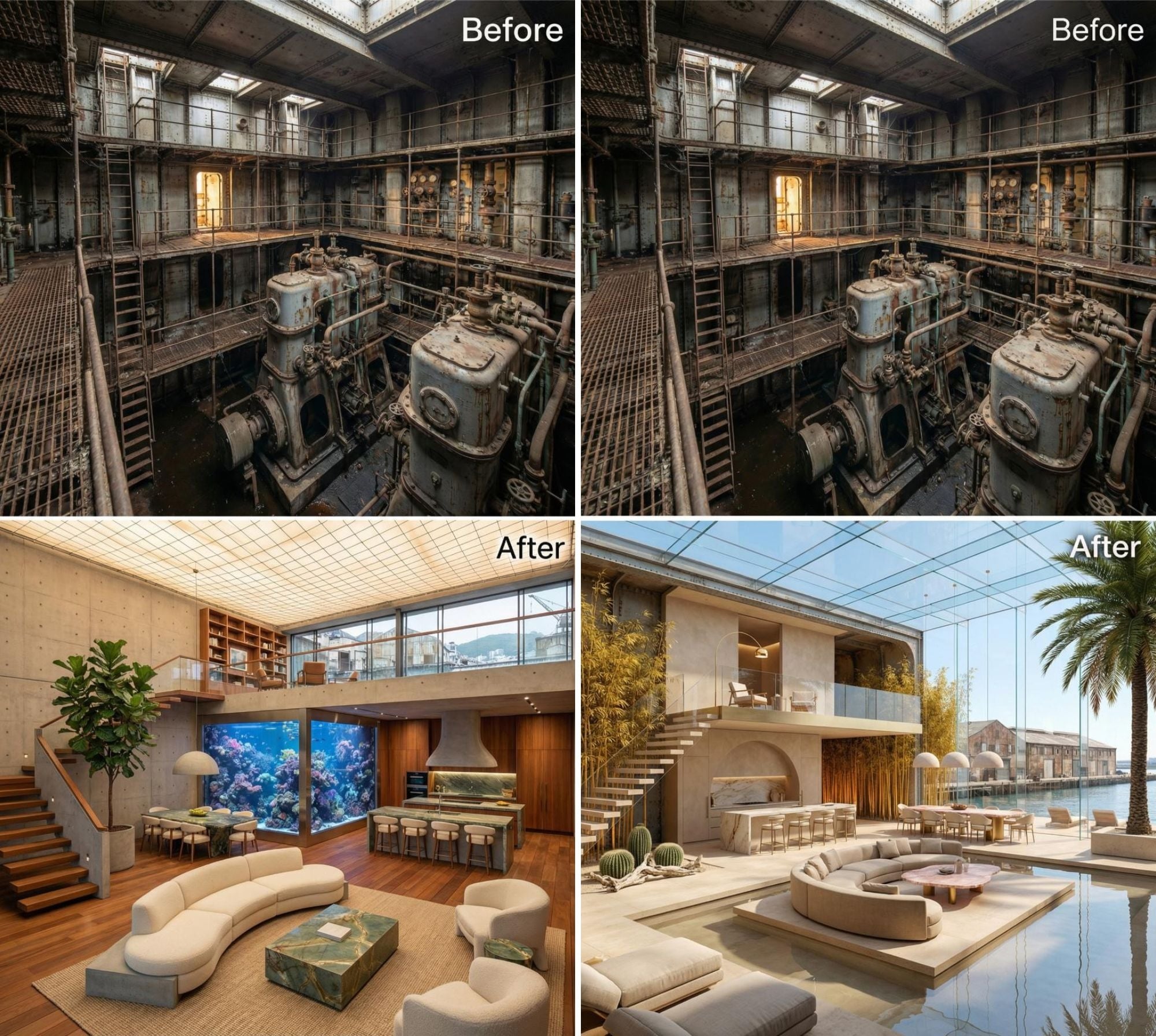
Coral Reef Aquarium, Curved Bouclé Sectional, and Glowing Ceiling Grid Occupy the Engine Pit
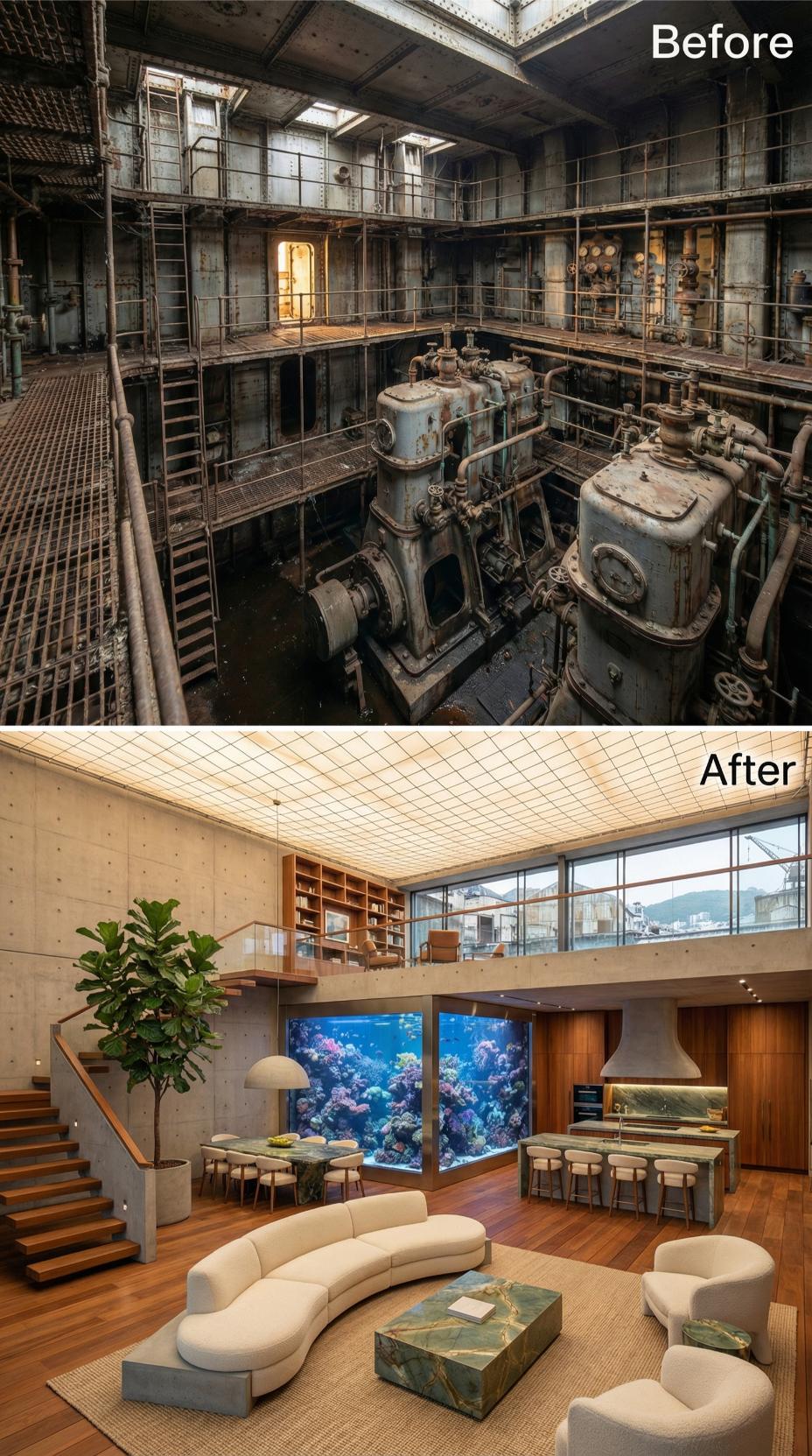
Warm walnut hardwood covers the floor end to end, anchoring a curved bouclé sectional around a green-veined marble slab coffee table. Behind the seating, a large reef aquarium built into a concrete surround pulls color into the space with live coral and fish. Overhead, a backlit translucent ceiling panel replaces the rusted skylight grid, casting diffused light across exposed concrete walls and a floating wood staircase with open treads.
Barrel Vault Glass, Bouclé Sectional, and Indoor Waterfall Overtake the Engine Room Shell
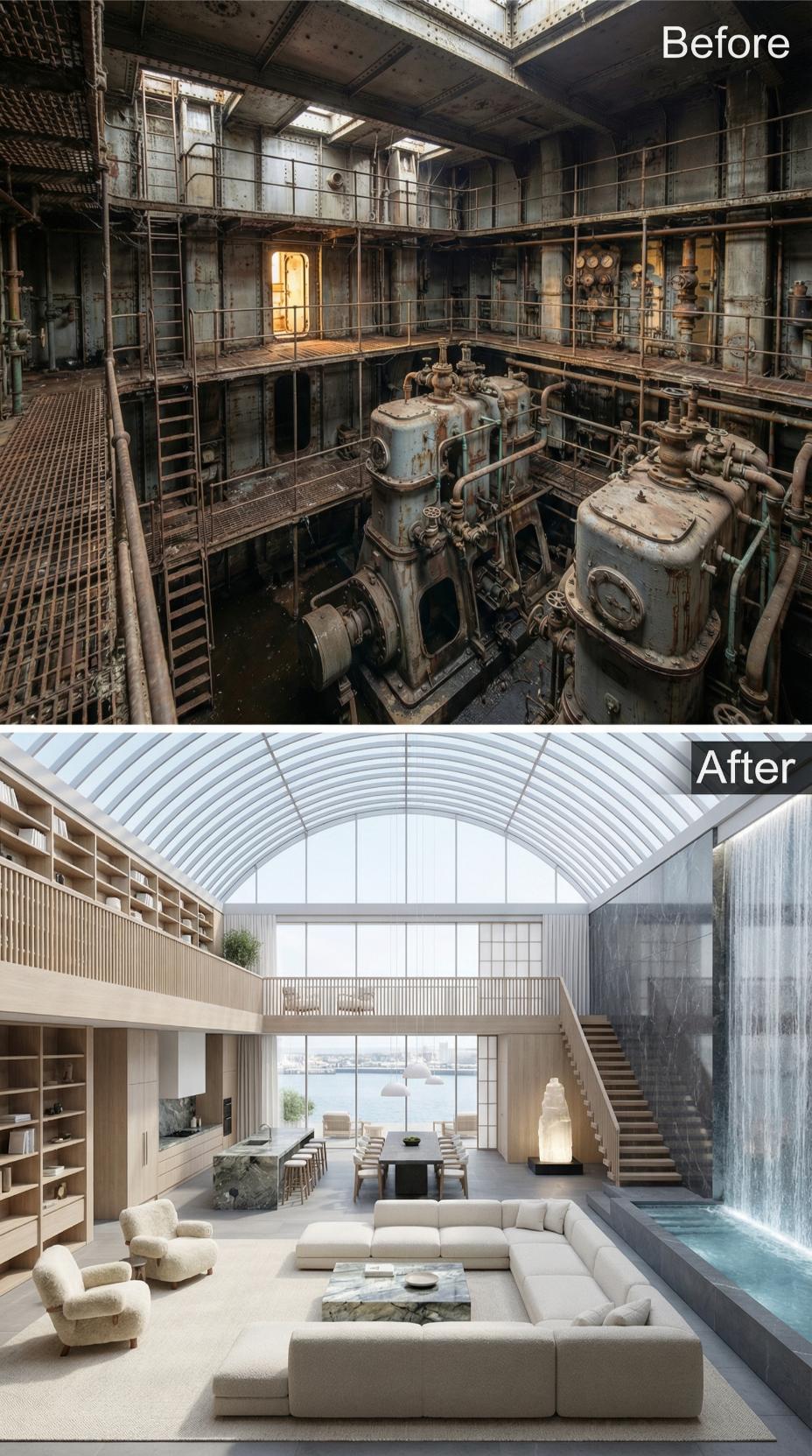
Bleached ash shelving lines the full left wall from floor to mezzanine, while a barrel-vault glass ceiling floods the space with diffused daylight. An indoor waterfall runs floor-to-ceiling along dark grey marble on the right, feeding a reflecting pool at its base. The sectional upholstery reads as raw wool bouclé in off-white, anchored by a marble-slab coffee table in veined green stone.
Glass Roof, Bouclé Sectional, and Waterfront Views Bury the Engine Room Below
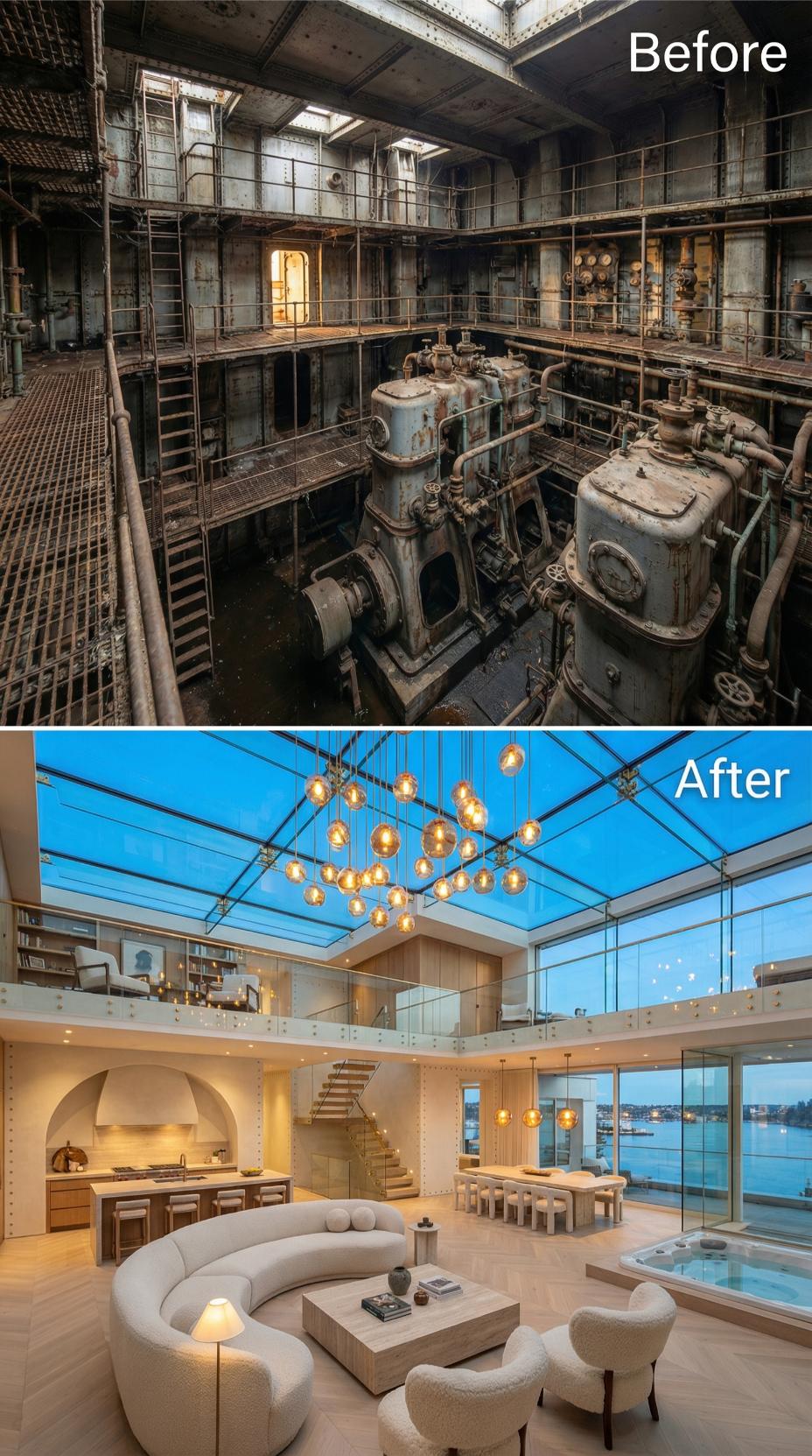
Limestone-toned travertine covers the floor and the low square coffee table, pulling the palette into a single continuous plane from ground level to the mezzanine rail. Pendant globes cluster in a cascading chandelier above the seating zone, while a curved bouclé sectional anchors the room without touching the perimeter walls, leaving circulation paths open on all sides.
A full-height glass facade on the water-facing wall replaces what was once solid steel cladding, and a glass ceiling grid above floods the upper level with natural light. An integrated hot tub sits flush against the glazed wall. The kitchen on the left features an arched plaster hood, a stone island with overhang seating, and open shelving built into the mezzanine stair wall above it.
Barrel-Vaulted Glass Roof, Olive Tree, and Travertine Dining Circle Bury the Rust
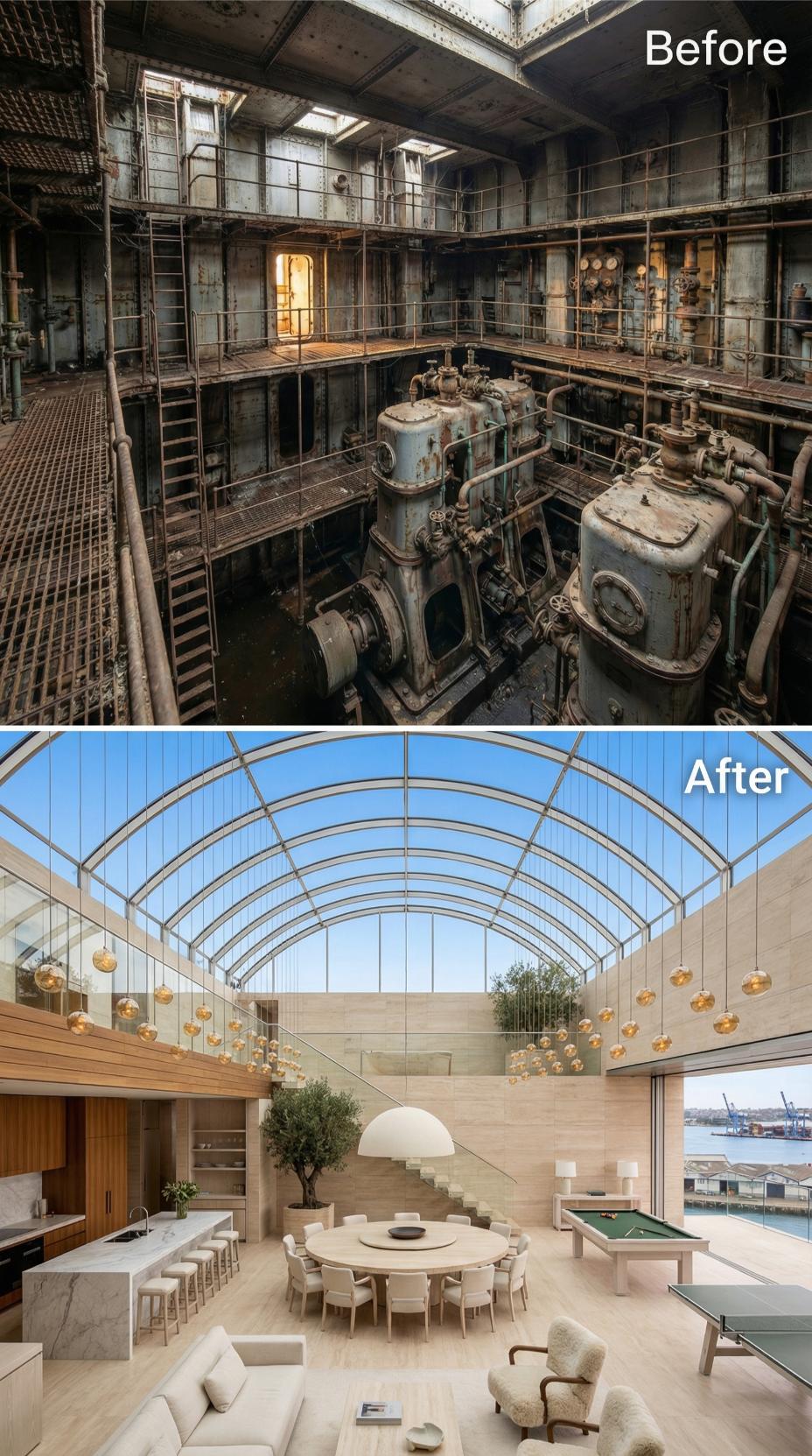
Travertine covers every horizontal surface from the round dining table to the floor, unifying the space under an arched glass ceiling that reads fully open to blue sky. Amber globe pendants hang at staggered heights above the seating zone, while a live olive tree anchors the room’s center beside a dome floor lamp.
Glass Ceiling Grid, Circular Sectional, and Bamboo Screens Reclaim the Engine Pit
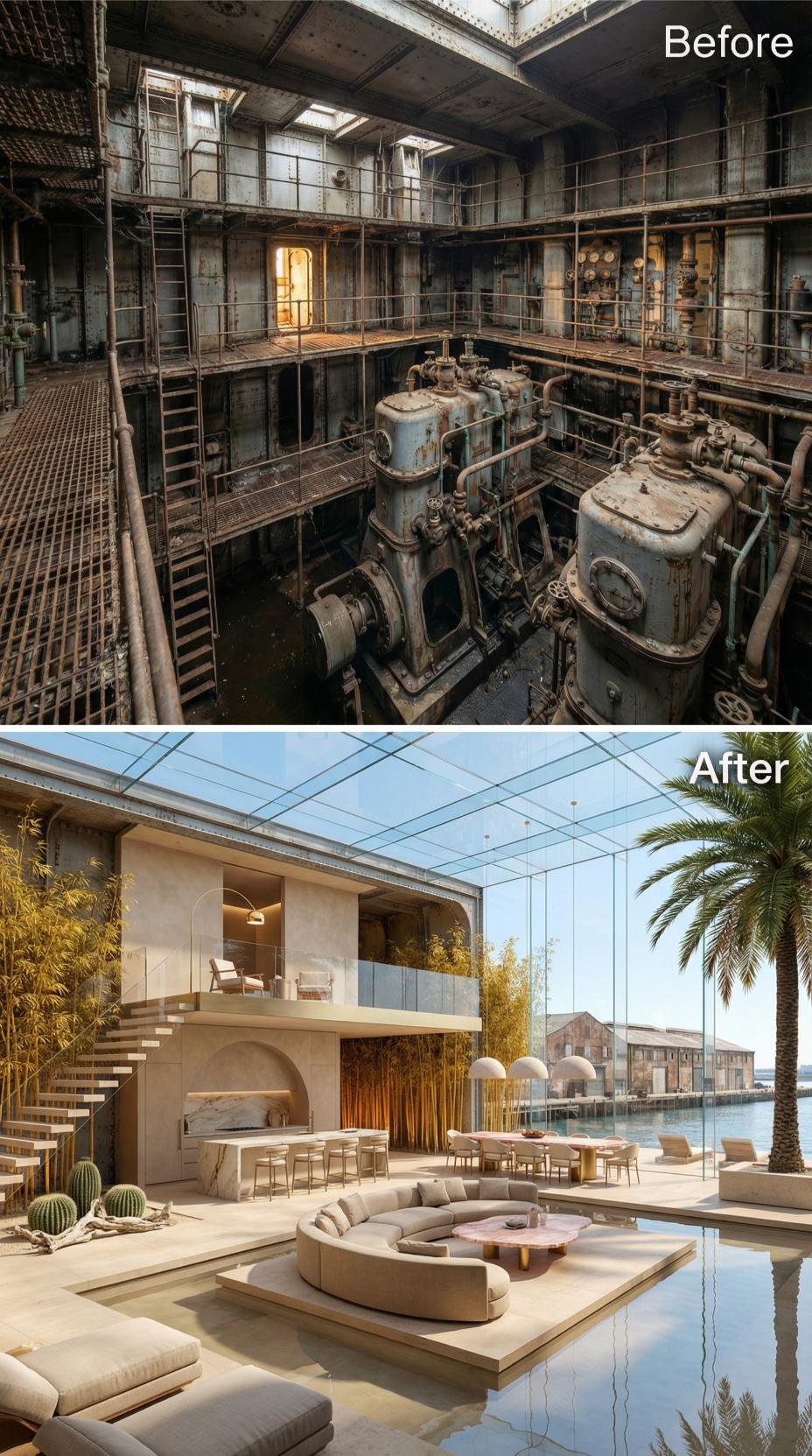
Sand-toned concrete flooring runs wall to wall, interrupted only by a sunken conversation platform centered on a curved sectional upholstered in oat bouclé fabric. A glass roof grid floods the double-height interior with natural light, framing open sky above a tall palm and clusters of golden bamboo that soften the original industrial shell still visible at the perimeter. On the mezzanine level, glass balustrades and a floating staircase with open risers keep sightlines clear across both floors, while a marble-surround fireplace anchors the lower level’s dining zone near the water-facing glass wall.
Cloud Pendants, Circular Plunge Pool, and Glass Walls Erase the Engine Room Floor
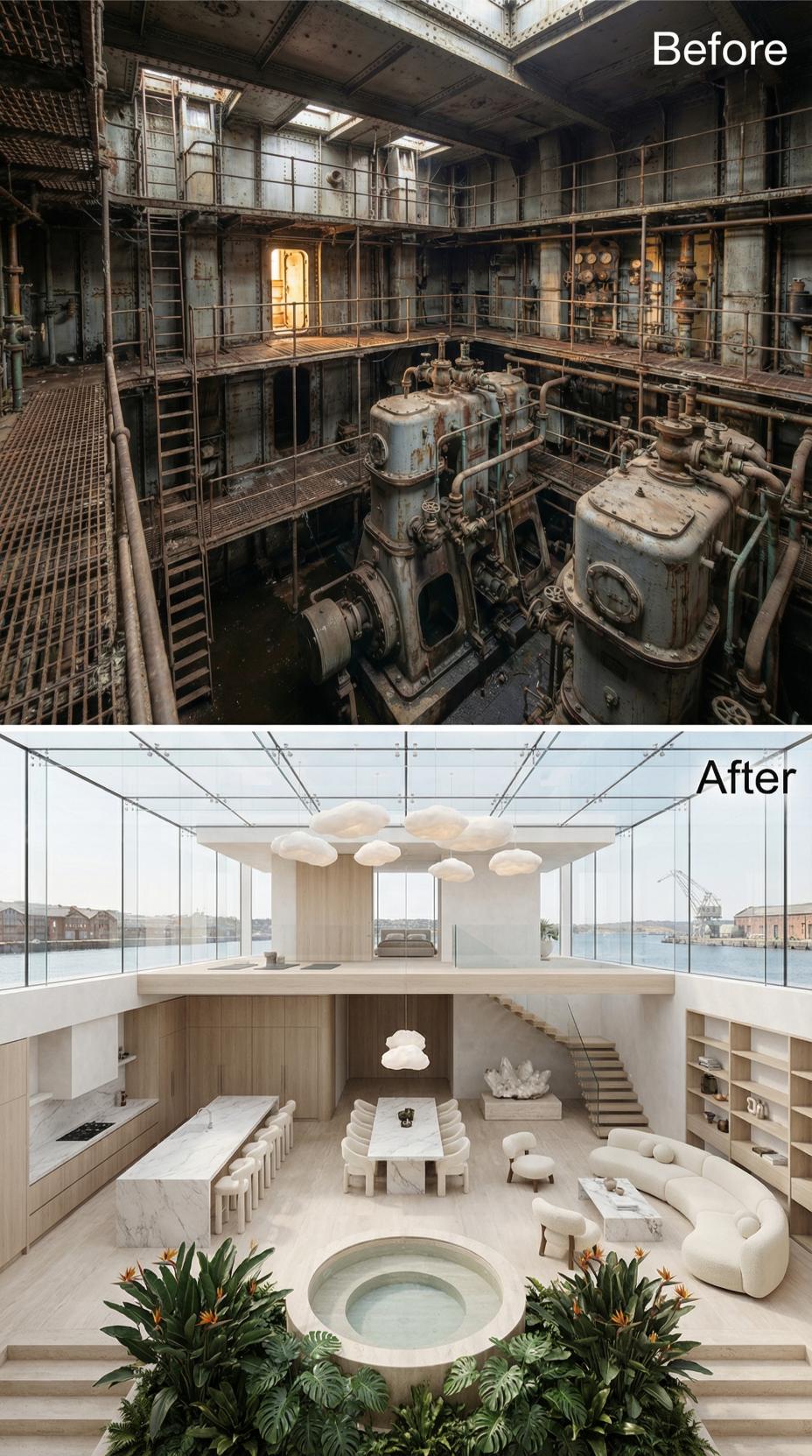
Bleached oak millwork lines the kitchen island base, paired with a honed marble countertop and bar stools in an off-white linen finish. Cloud-form pendant clusters hang from a double-height glass ceiling that replaced the rusted overhead grating entirely, flooding both levels with natural light. A curved bouclé sectional anchors the lower living zone, facing a round plunge pool set flush into the travertine floor and bordered by bird-of-paradise plants and monstera.
Up on the mezzanine, a platform bed sits directly behind a frameless glass rail, with harbor cranes visible through floor-to-ceiling glazing on three sides. Floating stair treads in pale ash connect the two levels without a stringer wall, keeping sightlines open across the full width of the converted hull.
Copper Range Hood, Onyx Coffee Table, and Mezzanine Library Erase the Engine Floor
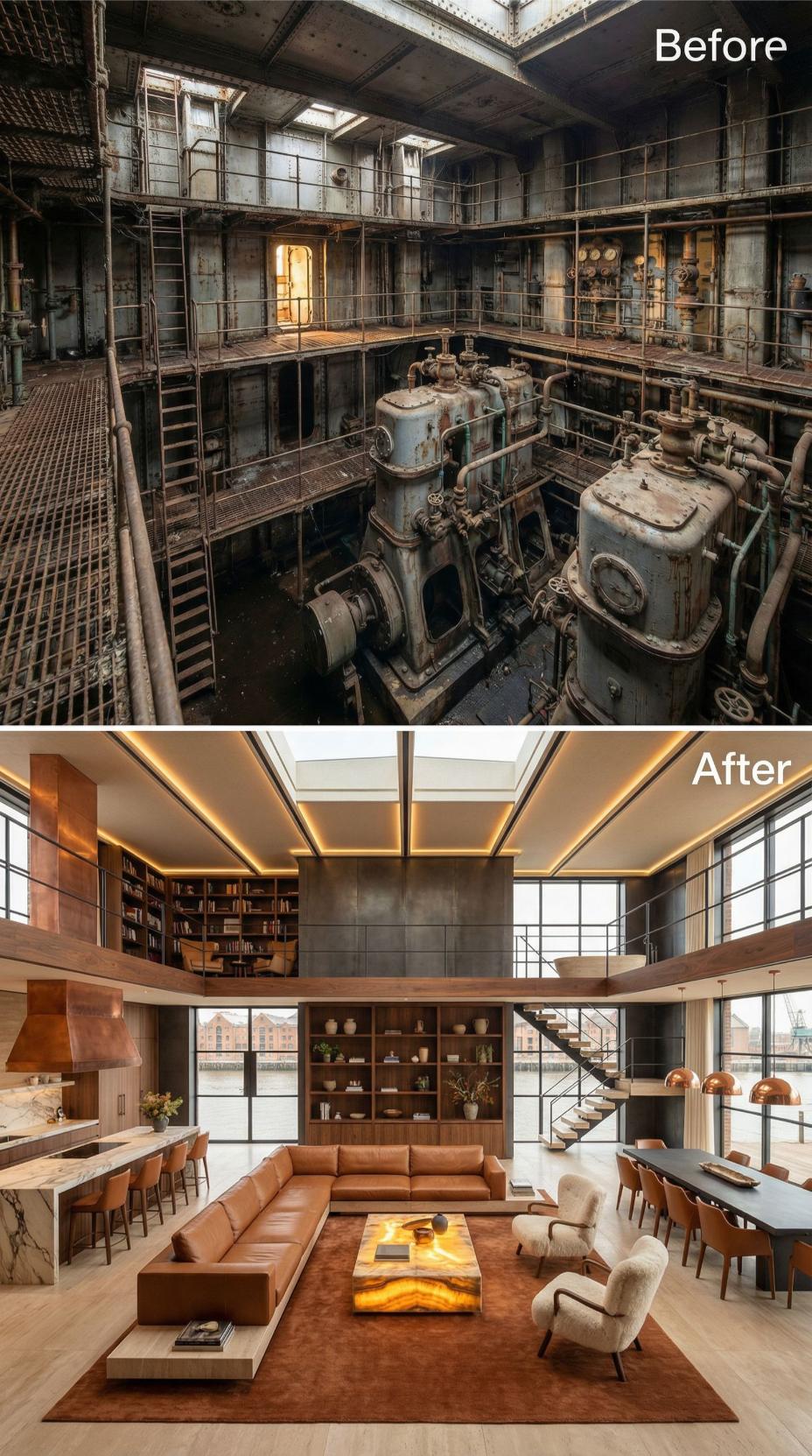
Cognac leather wraps a U-shaped sectional positioned over a rust-colored area rug, anchored by a backlit onyx slab coffee table that casts amber light upward across the seating zone. Walnut shelving lines the mezzanine level above, visible past a steel-framed balcony edge, while copper pendant lamps hover over a dark slate dining table to the right.