🔥 Would you like to save this?
In order to come up with the very specific design ideas, we create most designs with the assistance of state-of-the-art AI interior design software. Also, assume links that take you off the site are affiliate links such as links to Amazon. this means we may earn a commission if you buy something.
These transformations embrace wabi sabi’s celebration of imperfection and rustic warmth, creating kitchens that feel soulful rather than sterile. Each renovation strips away dated finishes to reveal spaces honoring natural materials, organic textures, and the beauty of handcrafted elements.
From dated kitchen to serene Wabi-Sabi retreat with earthy stone warmth
Rough-hewn stone countertops replaced synthetic surfaces, their irregular edges celebrating natural imperfection. Sage-toned plaster walls create calming depth while open shelving displays handmade ceramics. A farmhouse sink in aged copper adds patina-rich character. Reclaimed wood floating shelves and woven pendant lights complete this tranquil, earth-connected transformation.
From dated kitchen to warm minimalist Wabi-Sabi design with natural wood
Streamlined oak cabinets with visible wood grain replaced bulky units, paired with honed marble counters showing natural veining. Brass cup pulls add subtle warmth. A simple wooden dining table doubles as prep space. Neutral linen Roman shades filter light softly, while clay pottery accents honor handcrafted imperfection beautifully.
From dated kitchen to rustic Wabi-Sabi kitchen with soft neutral tones
Cream-washed cabinetry with distressed finishes replaced stark white units, creating gentle visual warmth. Soapstone countertops develop character over time through natural patina. A vintage wooden ladder displays copper pots. Textured plaster walls in warm beige and linen curtains soften the space, embracing lived-in beauty and organic simplicity.
From dated kitchen to elegant Wabi-Sabi layout with warm wood accents
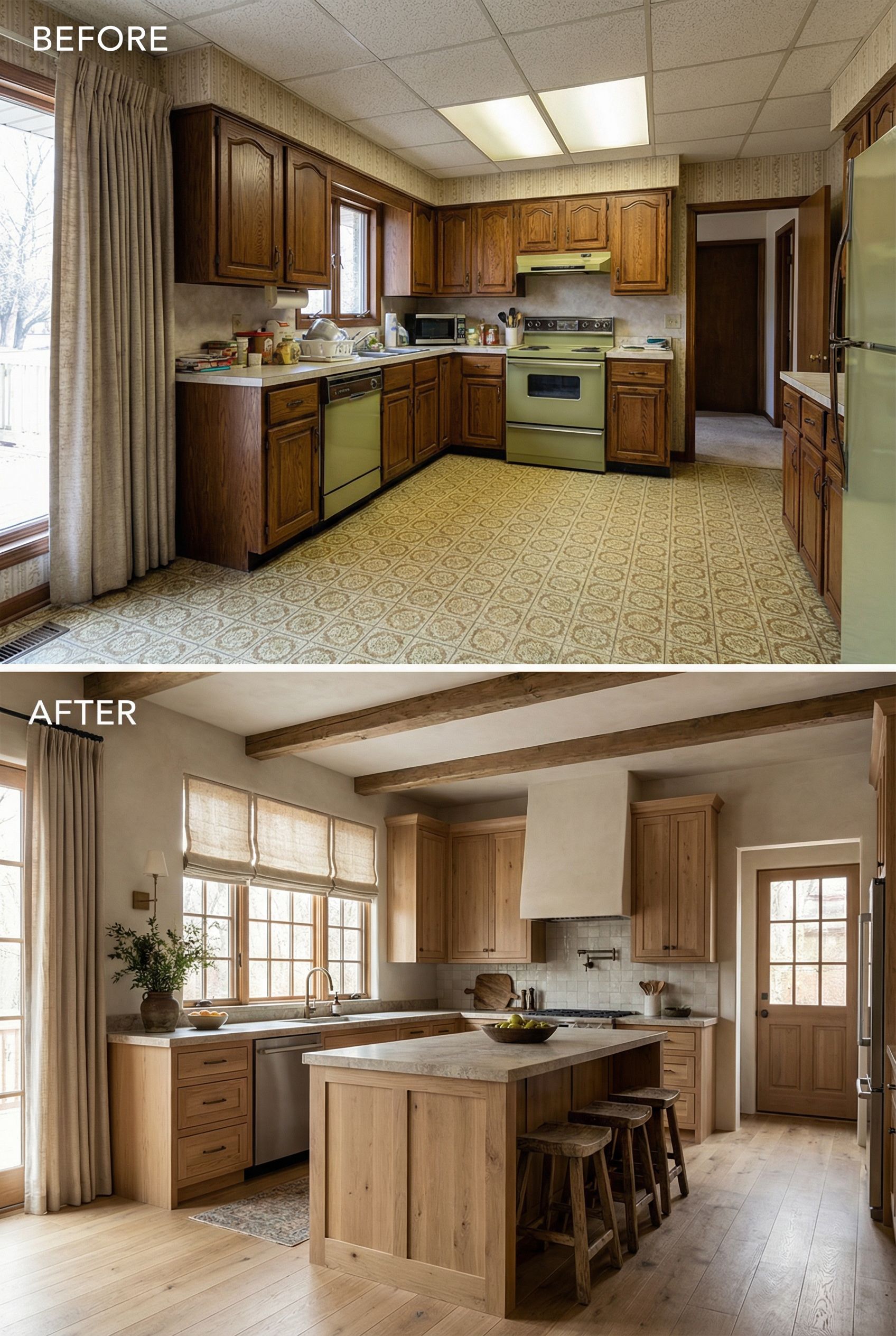
Sleek charcoal cabinetry contrasts beautifully with honey-toned oak open shelving and butcher block countertops. Unlacquered brass faucets will age gracefully. A minimalist range hood in blackened steel anchors the cooking zone. Natural fiber bar stools and a single statement vase celebrate restrained elegance and material honesty perfectly.
From dated kitchen to earthy Wabi-Sabi space with reclaimed rustic shelves
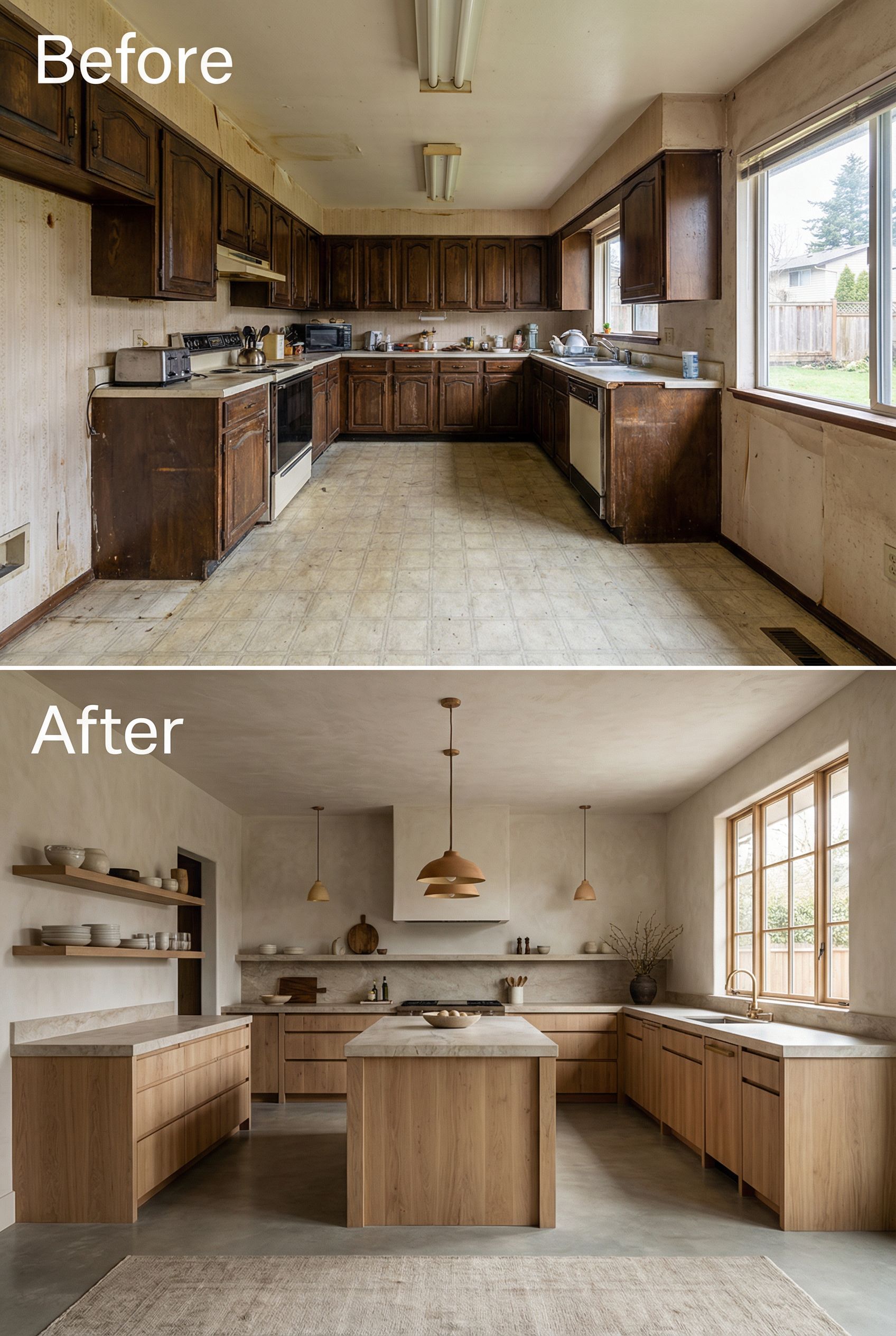
Weathered barn wood shelves replaced upper cabinets, displaying artisan bowls and vintage glassware. Concrete countertops with aggregate exposed add raw texture. Matte olive-green lower cabinets ground the palette. Iron brackets and a hammered copper backsplash introduce metallic warmth. Woven baskets provide organic storage while celebrating imperfect, reclaimed materials.
From dated kitchen to warm Wabi-Sabi kitchen with stone counters and brass
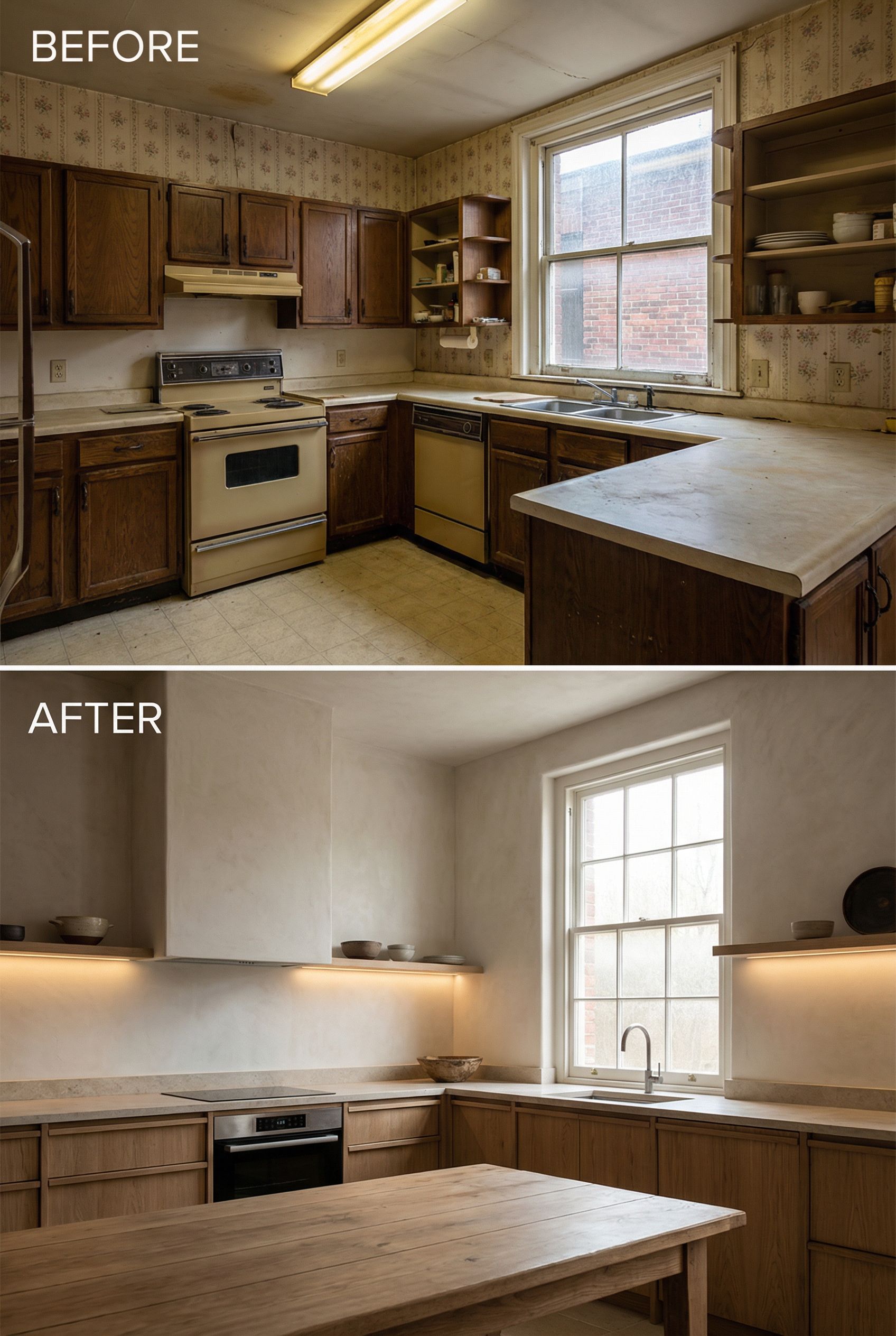
Travertine countertops with natural pitting replaced polished granite, embracing stone’s authentic character. Warm gray cabinetry pairs with aged brass hardware and faucet fixtures. A stone tile backsplash in irregular patterns adds depth. Wooden ceiling beams and rattan pendant lights layer in rustic warmth, creating inviting, tactile beauty throughout.
From dated kitchen to airy Wabi-Sabi makeover with soft cream textures
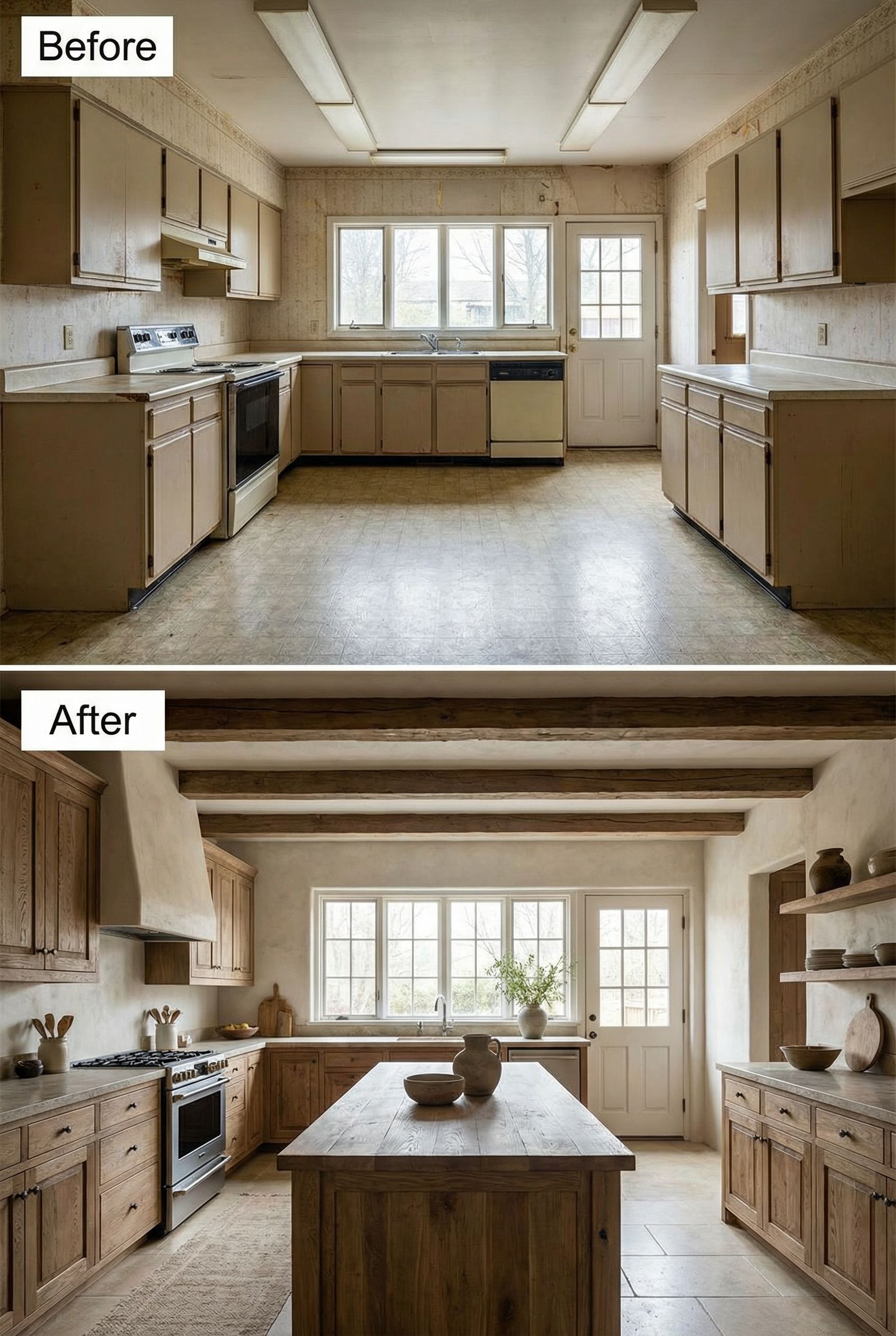
Ivory plaster walls and whitewashed oak cabinets create luminous serenity, replacing dark wood tones. Carrara marble counters with gray veining add subtle movement. Linen cafe curtains diffuse natural light beautifully. A ceramic farmhouse sink and turned wood bar stools introduce organic shapes. Cream-toned ceramics displayed openly complete this peaceful transformation.
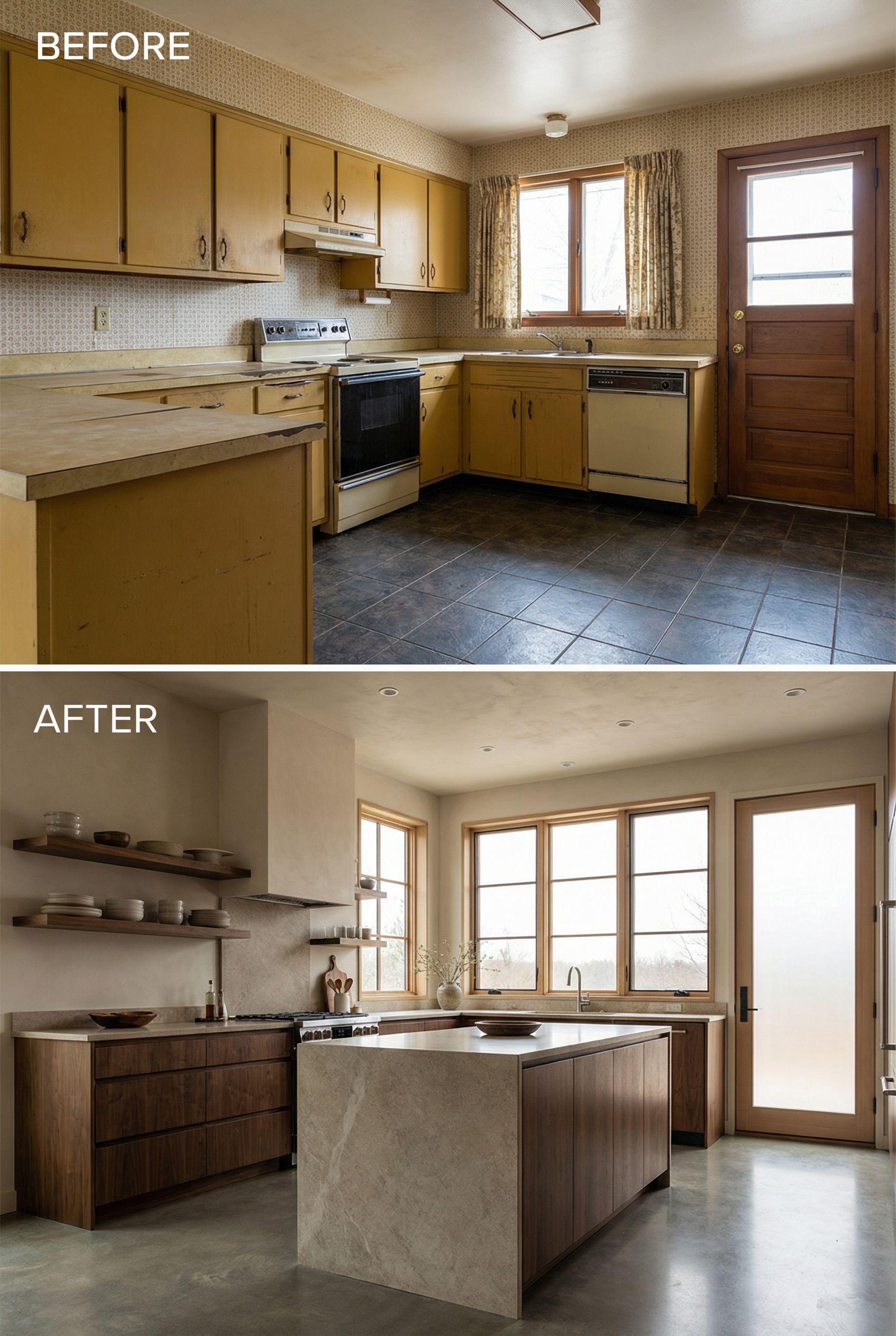
From dated kitchen to rustic-modern Wabi-Sabi mix with warm matte finishes
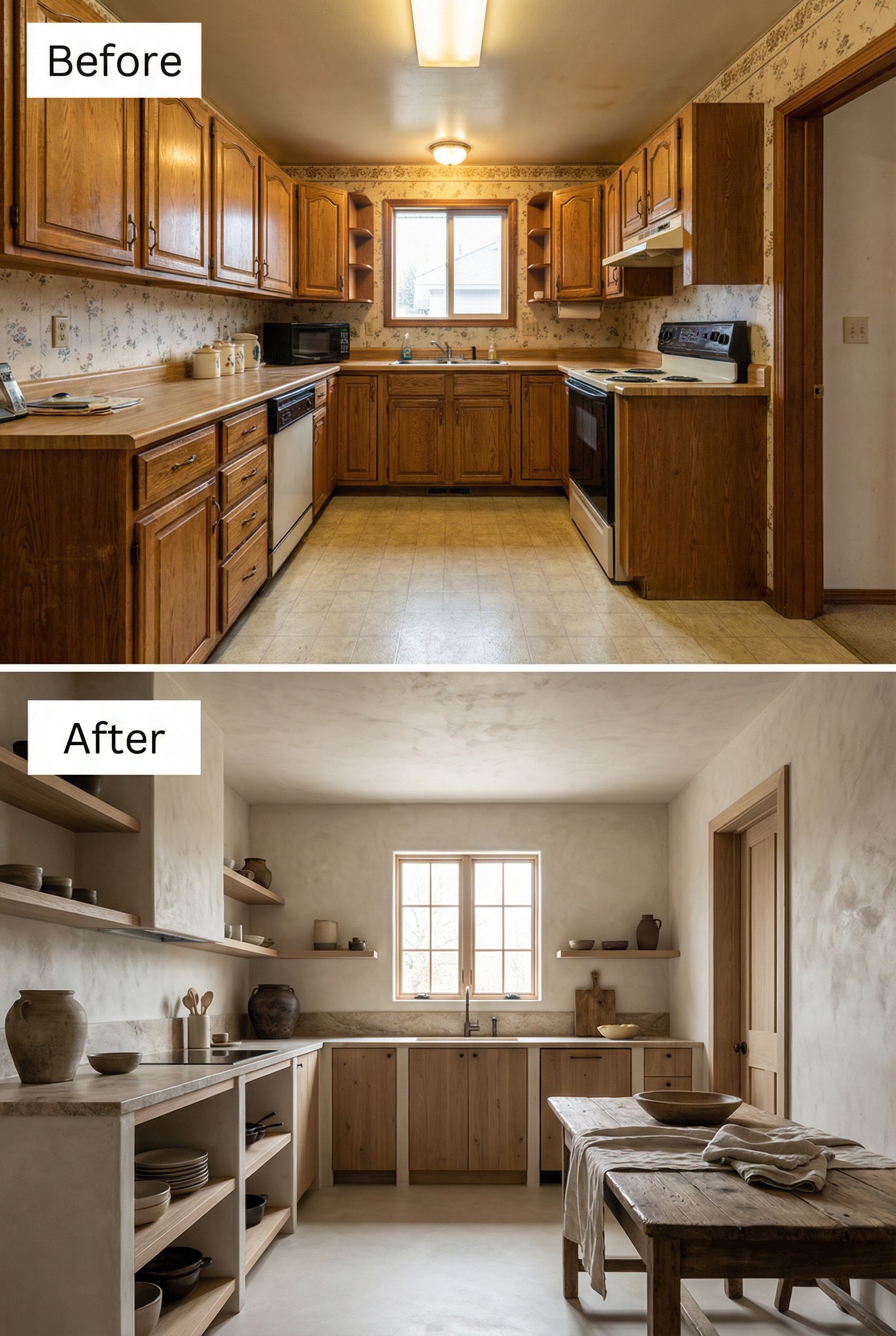
Flat-panel walnut cabinets with matte lacquer balance modern lines with organic warmth. Leathered granite countertops provide textured sophistication. Blackened steel accents on handles and light fixtures add industrial edge. A minimalist wood range hood and simple floating shelves maintain clean aesthetics while honoring natural materials and understated imperfection.
From dated kitchen to soulful Wabi-Sabi kitchen layered in warm neutrals
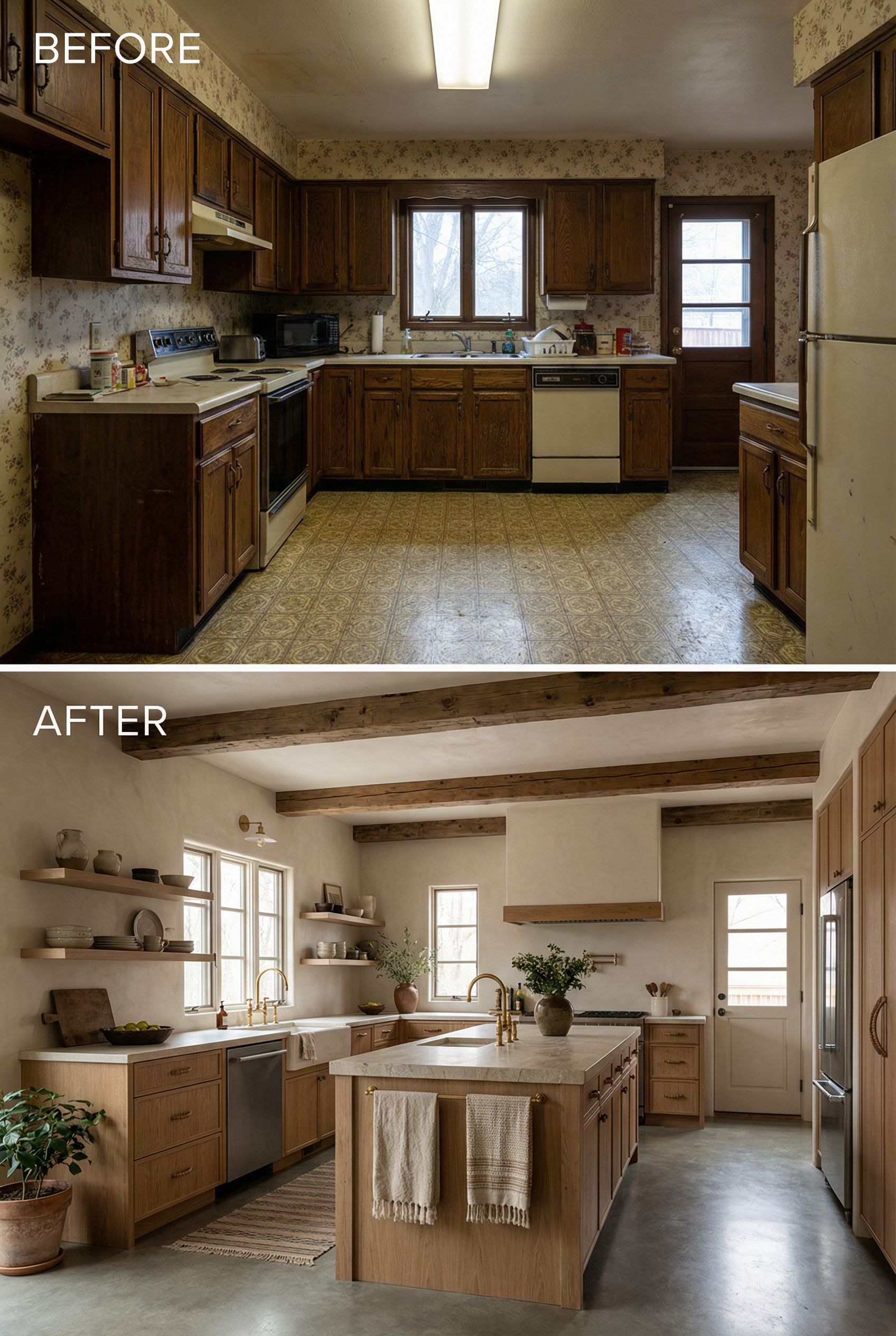
Taupe cabinetry with hand-applied lime wash creates depth and variation, replacing flat painted surfaces. Limestone counters age beautifully with use. A reclaimed wood island adds textural contrast. Antique brass pendants cast warm light. Terracotta pots, linen towels, and natural fiber rugs layer organic textures throughout this deeply personal space.
From dated kitchen to organic Wabi-Sabi kitchen with handcrafted accents
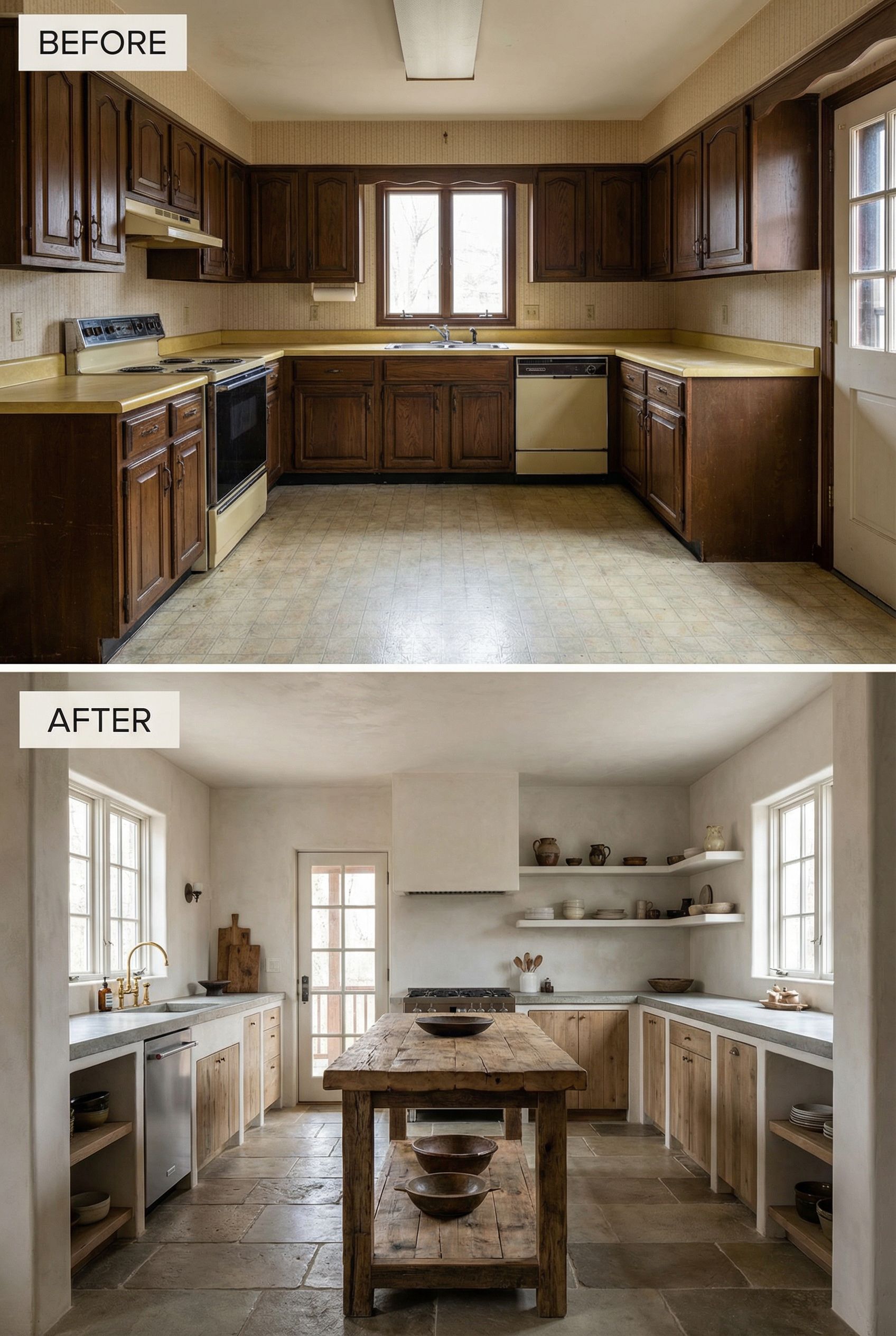
Custom cabinets showcase artisan joinery with visible wooden pegs and hand-planed surfaces. A hand-thrown ceramic sink becomes functional sculpture. Slate countertops with natural cleft edges celebrate stone’s raw beauty. Forged iron cabinet pulls and hand-formed clay tiles add individual character. Every element honors the maker’s hand and material authenticity.
From dated kitchen to warm Wabi-Sabi sanctuary with soft lighting
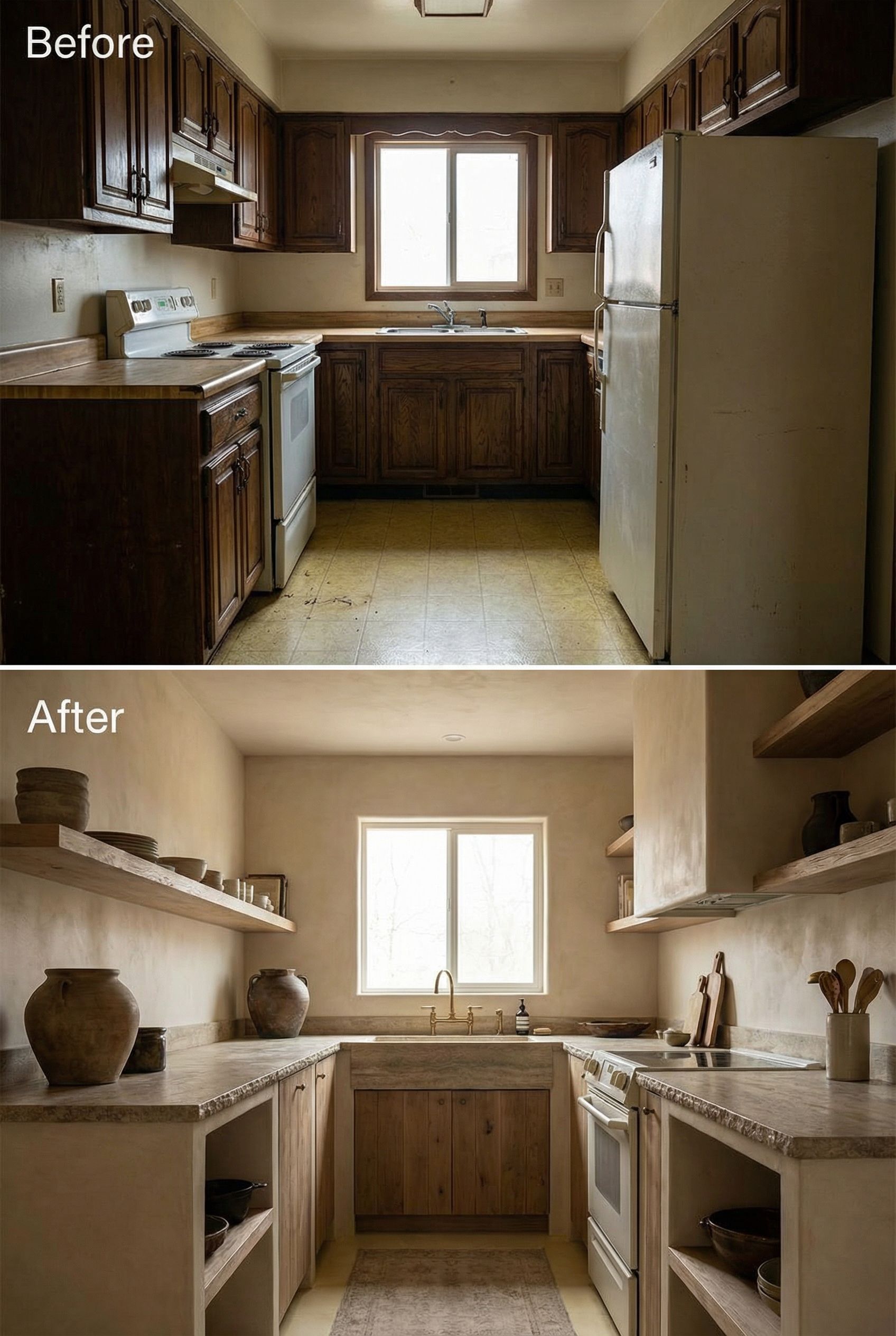
Warm oak cabinetry with oil finish replaced cold maple units, glowing richly under dimmable pendant lights. Honed quartzite counters avoid high gloss. Sheer linen shades filter daylight gently. A wooden beam pot rack and brass sconces create layered illumination. Natural textures and warm tones foster peaceful, meditative cooking experiences daily.
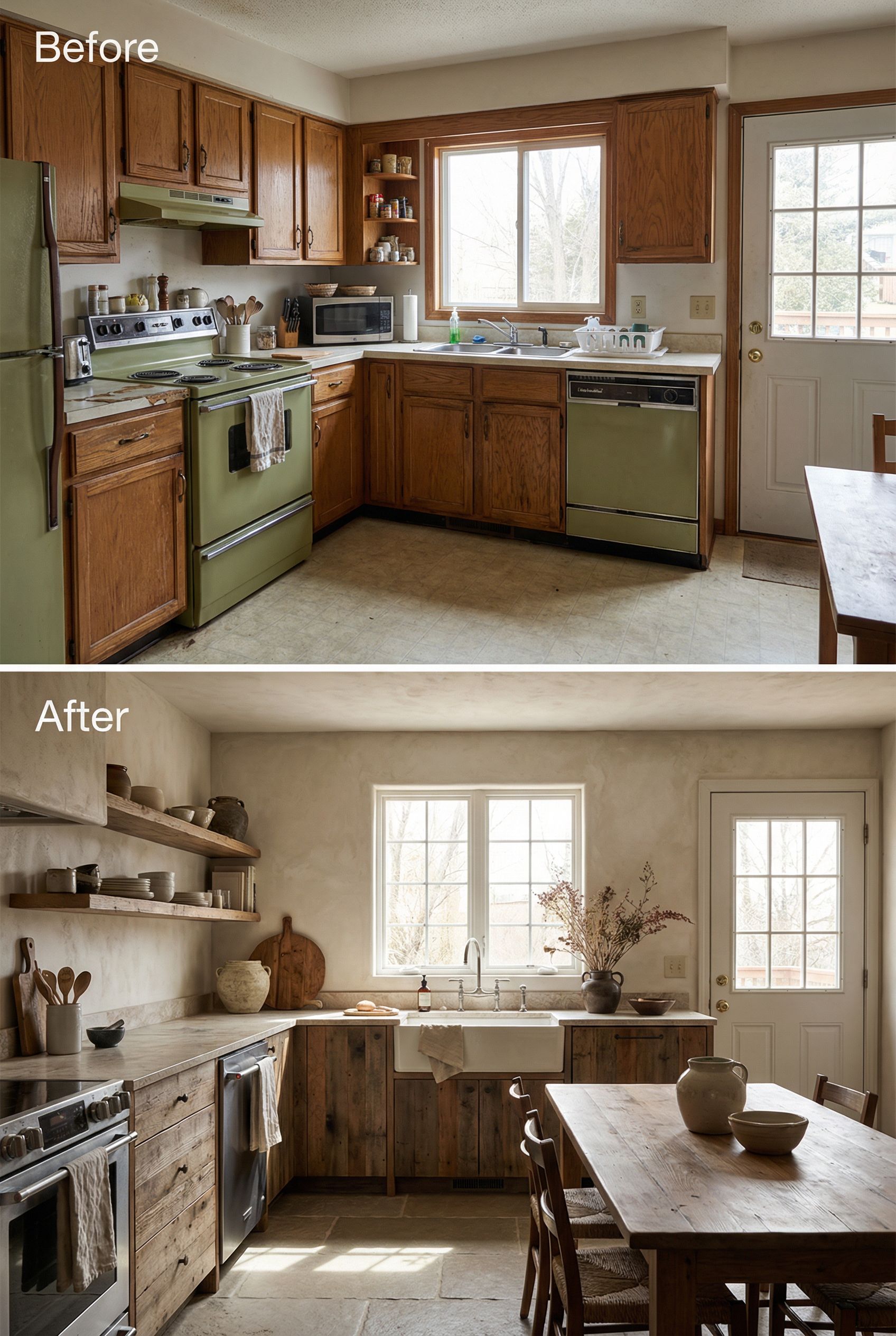
90s Oak Cabinet Kitchen → Serene Wabi Sabi Minimalist
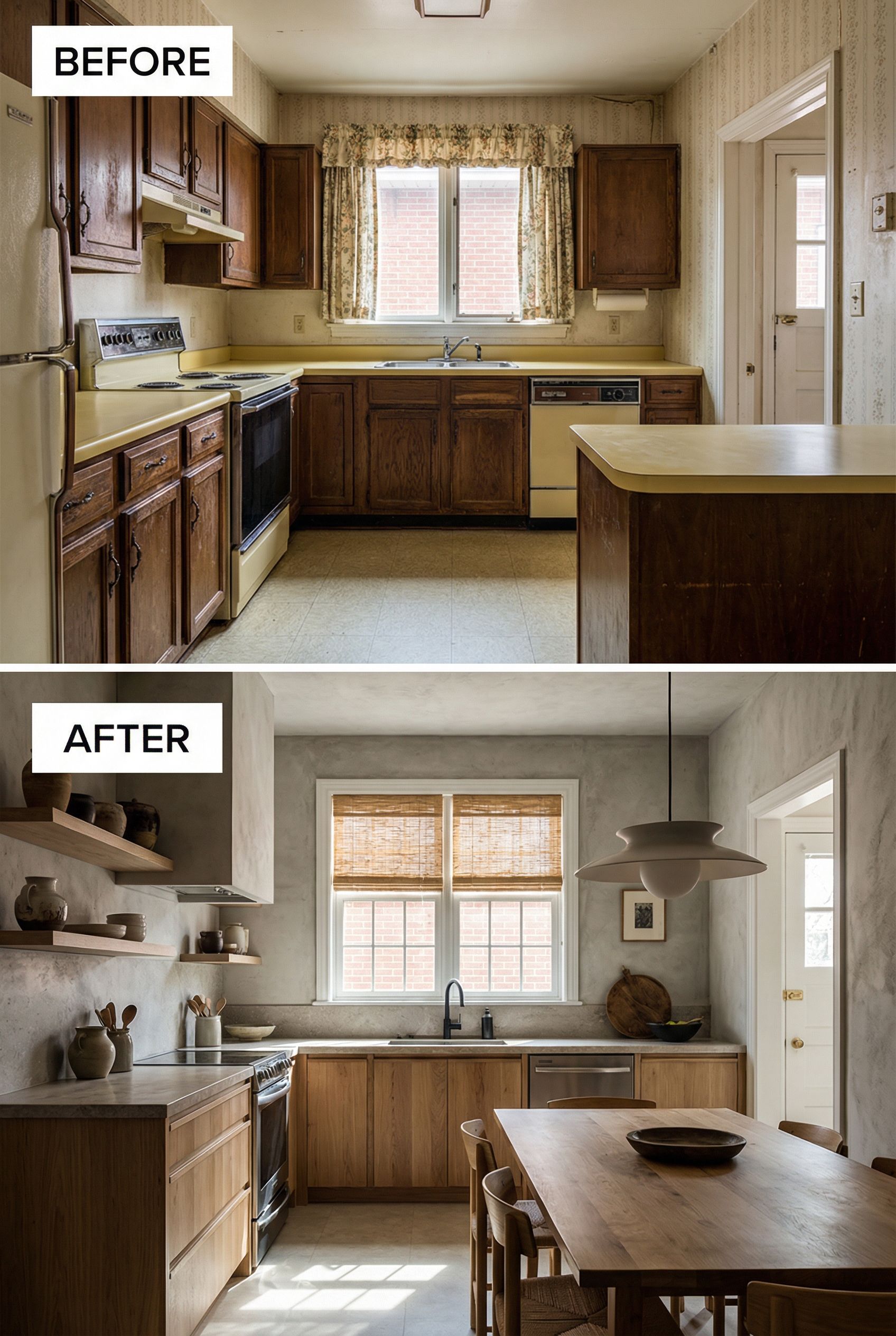
Cabinets were stripped to raw wood then sealed with natural oil, revealing honest grain patterns. Soapstone counters develop character through use. A single floating shelf replaces upper cabinets. Linen Roman shades filter light softly. The palette stays monochromatic—grays, taupes, and weathered whites—creating meditative simplicity with handthrown pottery displayed sparingly.
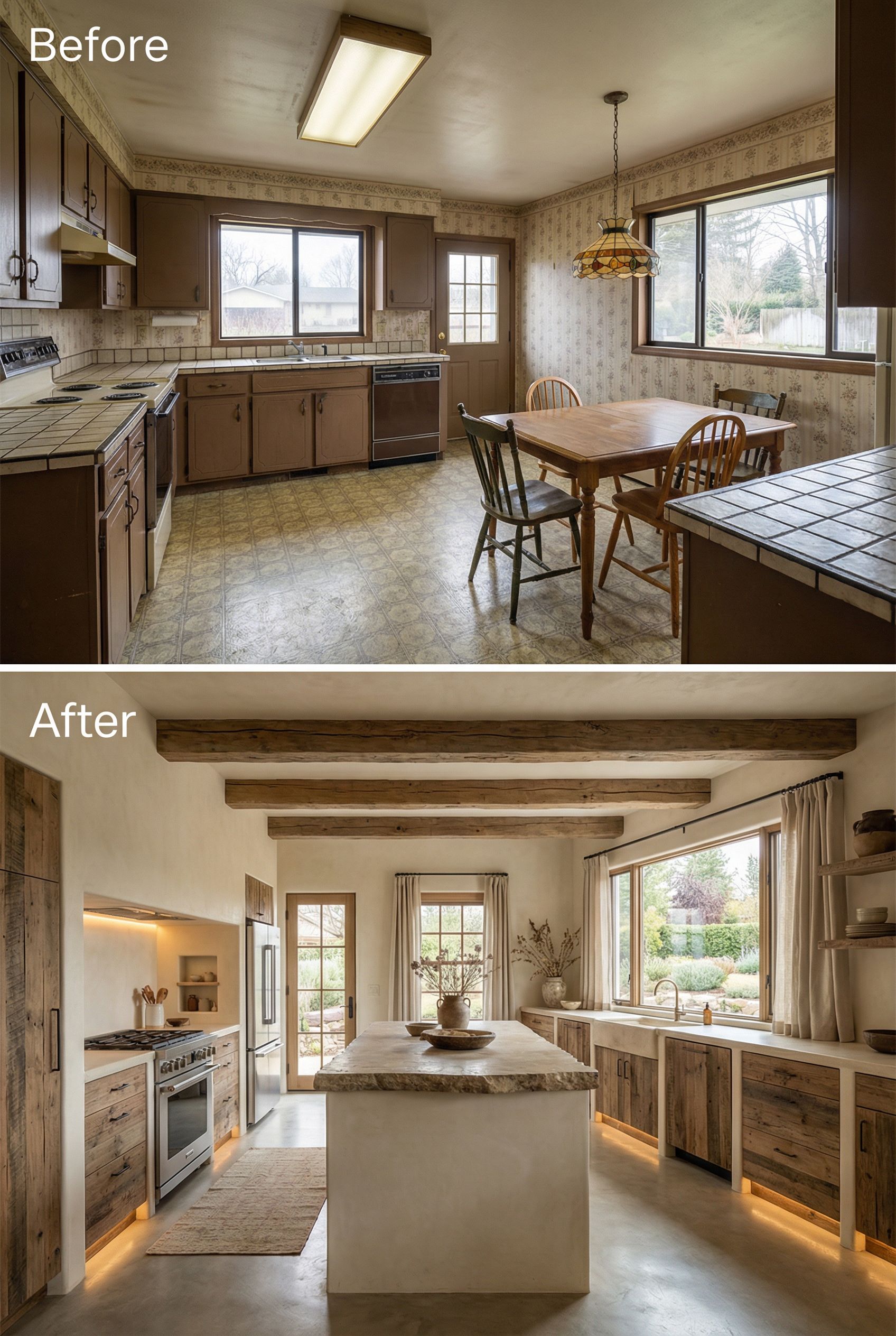
Early 2000s Tuscan Kitchen → Organic Wabi Sabi Warmth
🔥 Would you like to save this?
Faux finishes gave way to authentic plaster walls with intentional irregularities. Custom cabinetry in aged walnut showcases natural knots and color variation. Leathered quartzite countertops mimic stone worn by time. Terracotta floor tiles, each slightly different, replace uniform porcelain. Handforged iron lighting fixtures and woven pendant shades introduce artisanal warmth throughout.
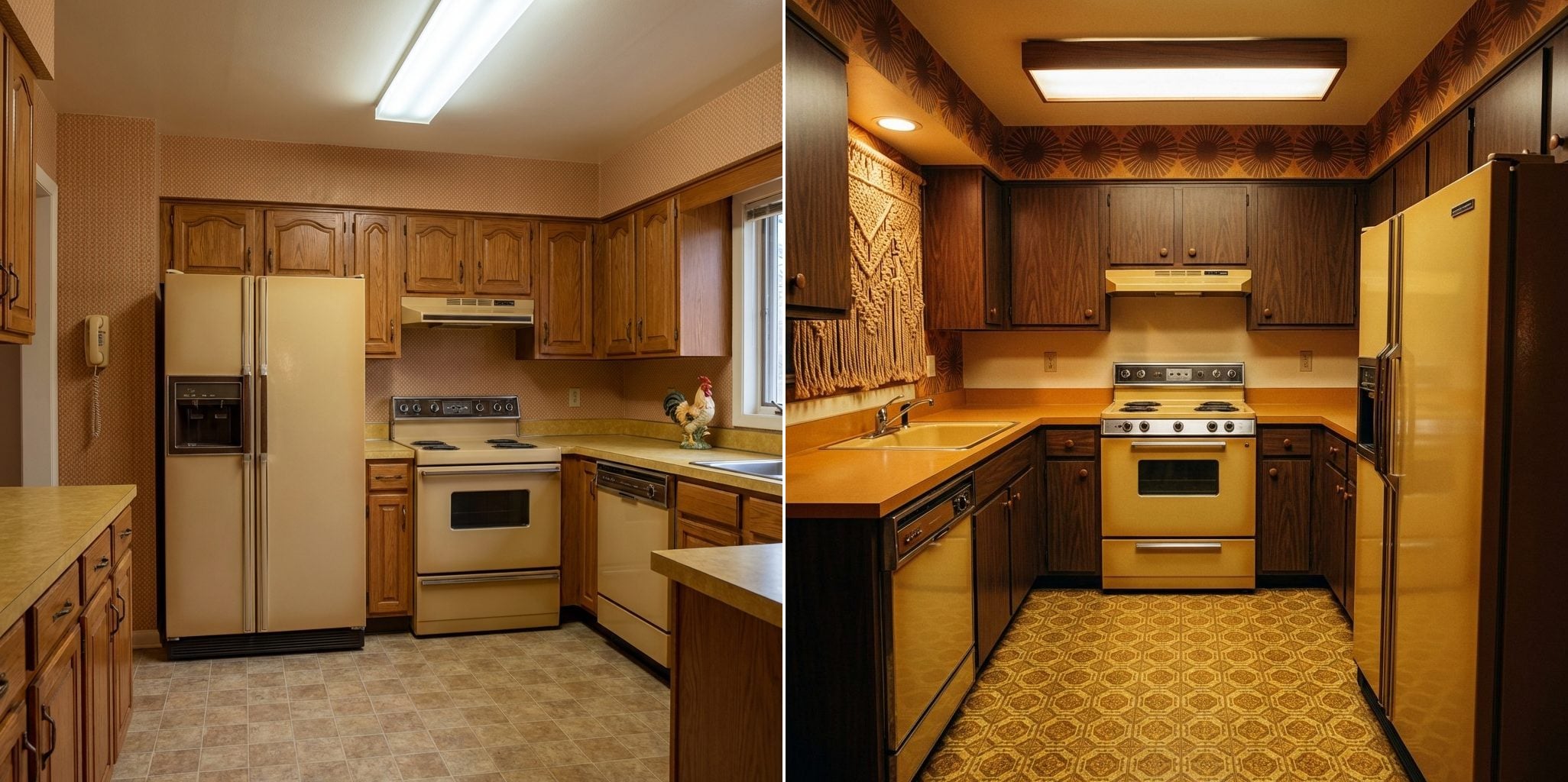
Dated Fluorescent Kitchen → Soft Wabi Sabi with Natural Light
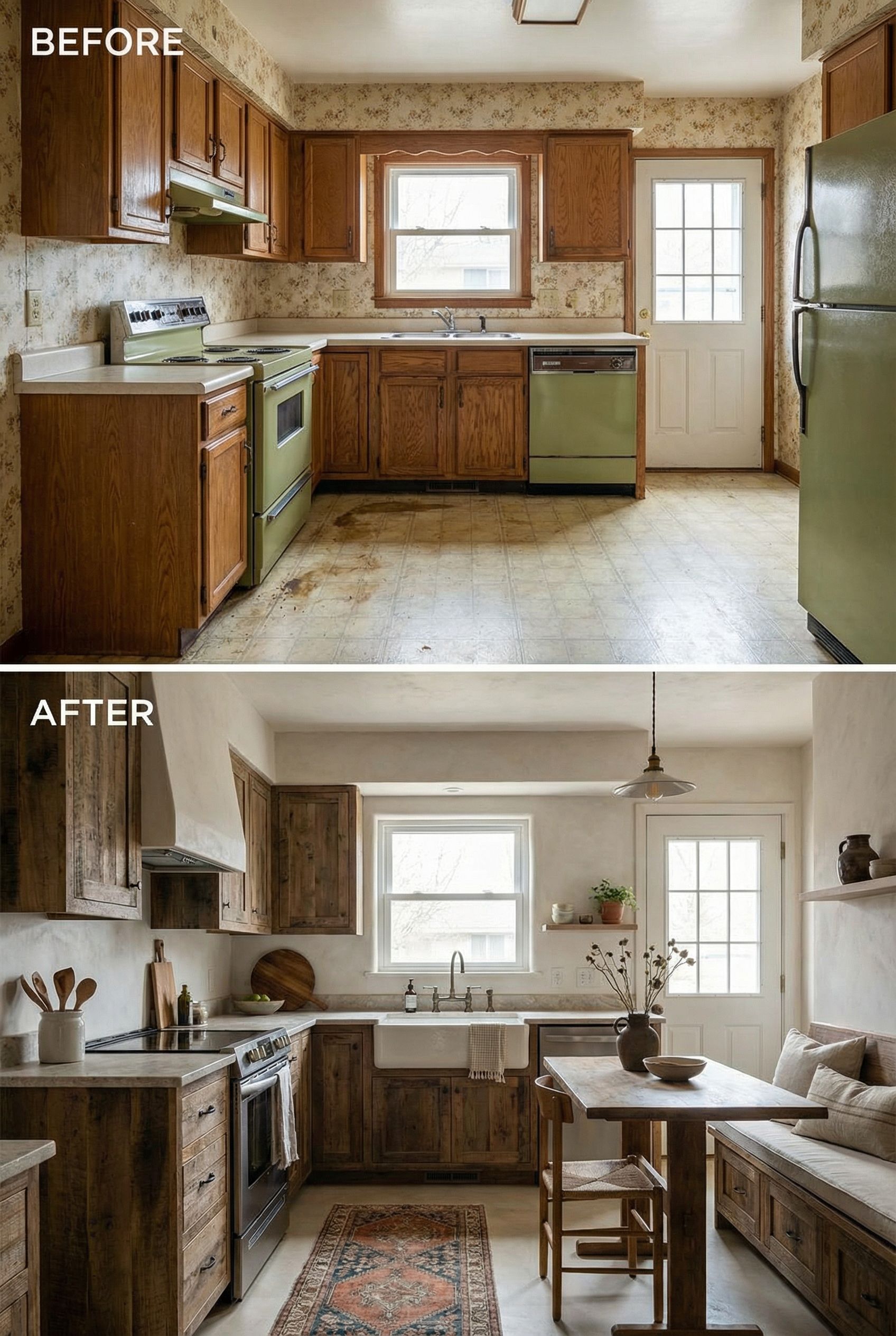
Harsh overhead lighting disappeared, replaced by layered ambient sources—paper lanterns, Edison bulbs in blackened fixtures, and under-cabinet LEDs. Sheer linen curtains maximize daylight. Whitewashed brick walls reflect light organically. Open shelving in weathered pine displays handmade ceramics. The transformation prioritizes gentle illumination that changes throughout the day, honoring natural rhythms.
80s Almond Appliance Kitchen → Earthy Wabi Sabi Retreat
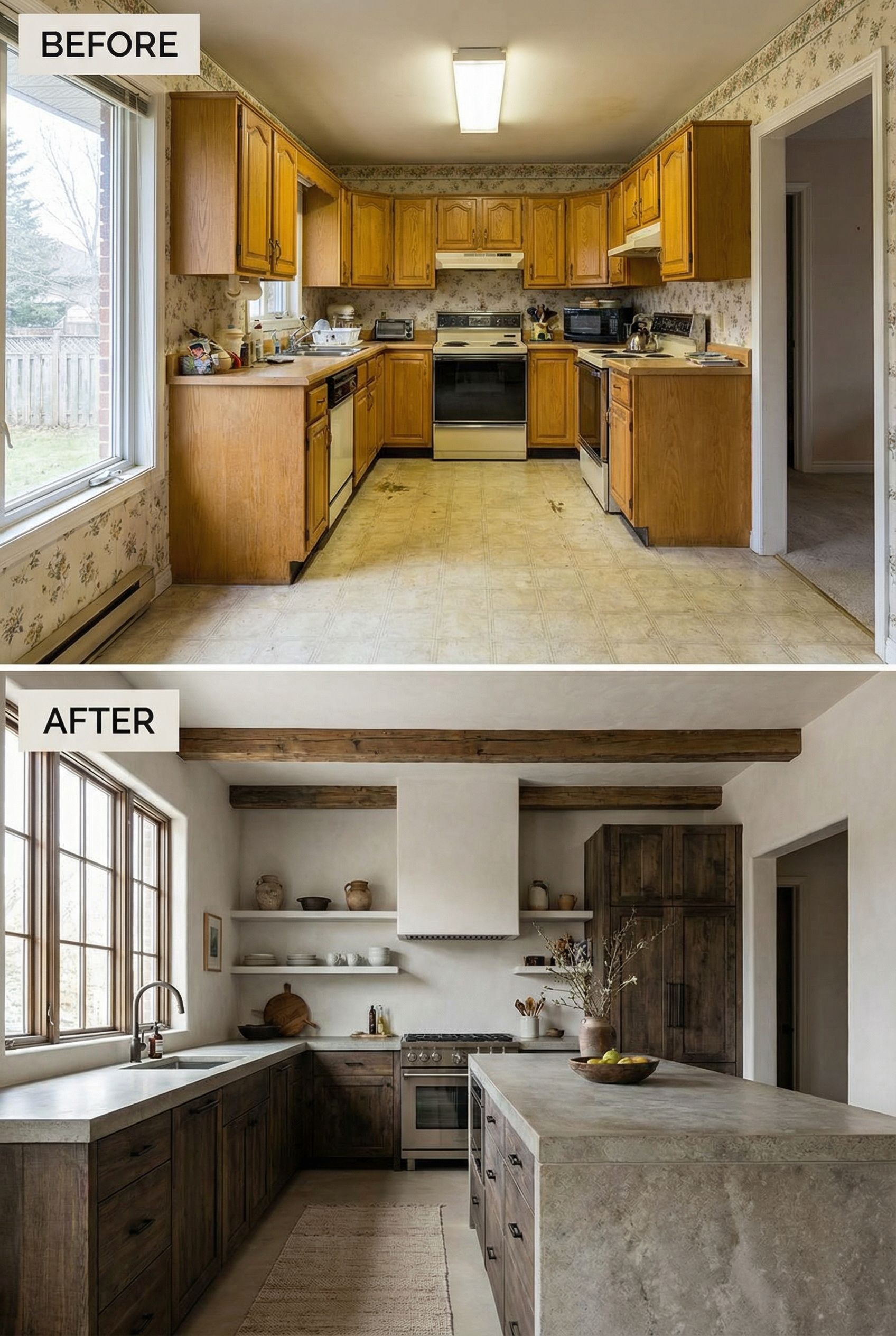
Matte black appliances blend seamlessly into charcoal-stained oak cabinetry with irregular wood grain celebrated. Concrete countertops feature aggregate variations and micro-fissures. Clay plaster walls in warm gray create textural depth. Jute pendant lights and a reclaimed wood island base add organic layers. River rock backsplash honors nature’s imperfect beauty with each stone uniquely shaped.
90s Country Blue Kitchen → Neutral Wabi Sabi Rustic Haven
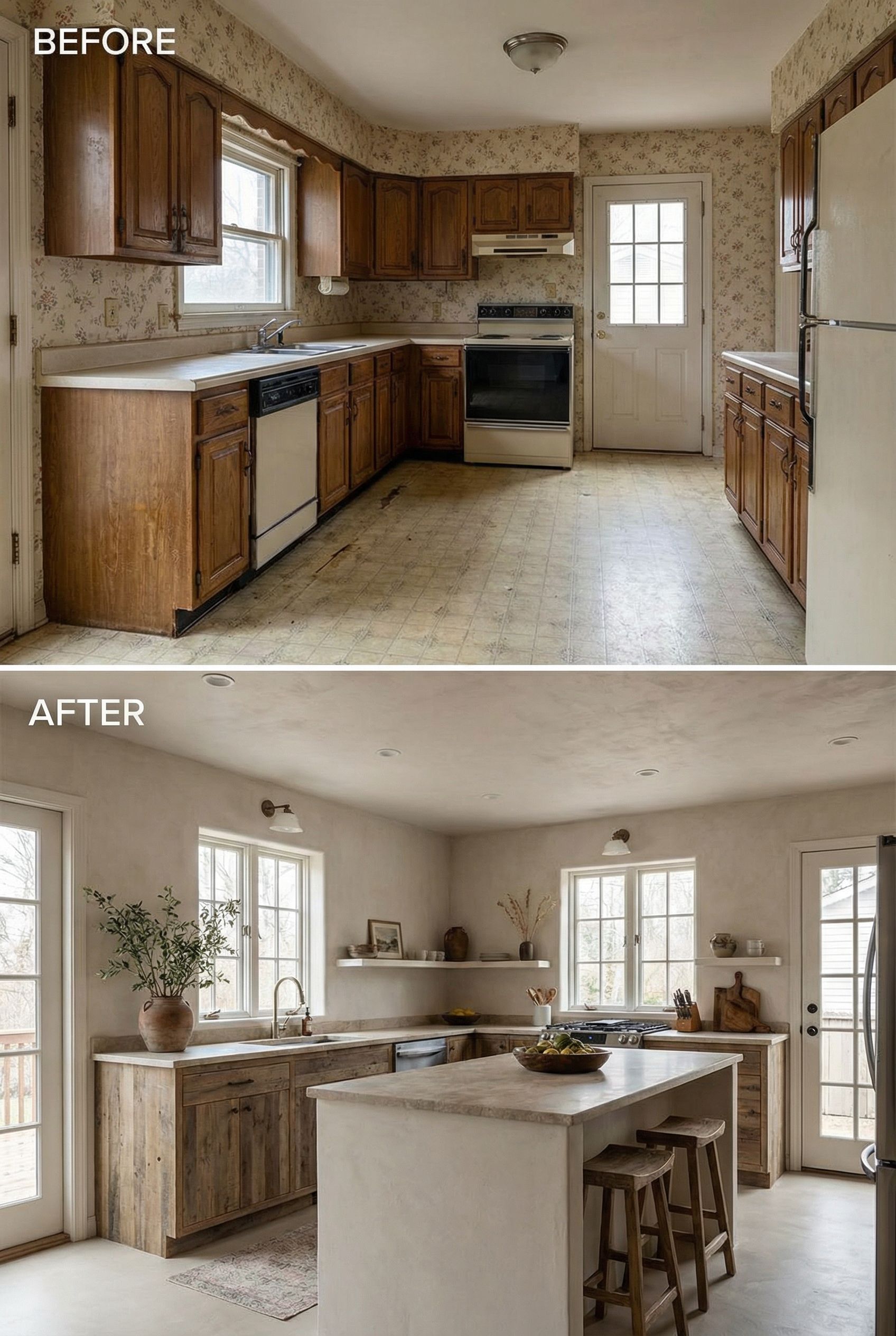
Blue stenciling disappeared beneath limewash paint in soft putty tones. Flat-panel cabinets in bleached oak replaced raised panels, finished with leather pulls. Marble counters showcase natural veining and cloudiness. A farmhouse sink in raw copper develops living patina. Rough-hewn ceiling beams and wide-plank flooring in varied widths introduce rustic authenticity and grounding warmth.
Early 2000s Granite Kitchen → Handcrafted Wabi Sabi Elegance
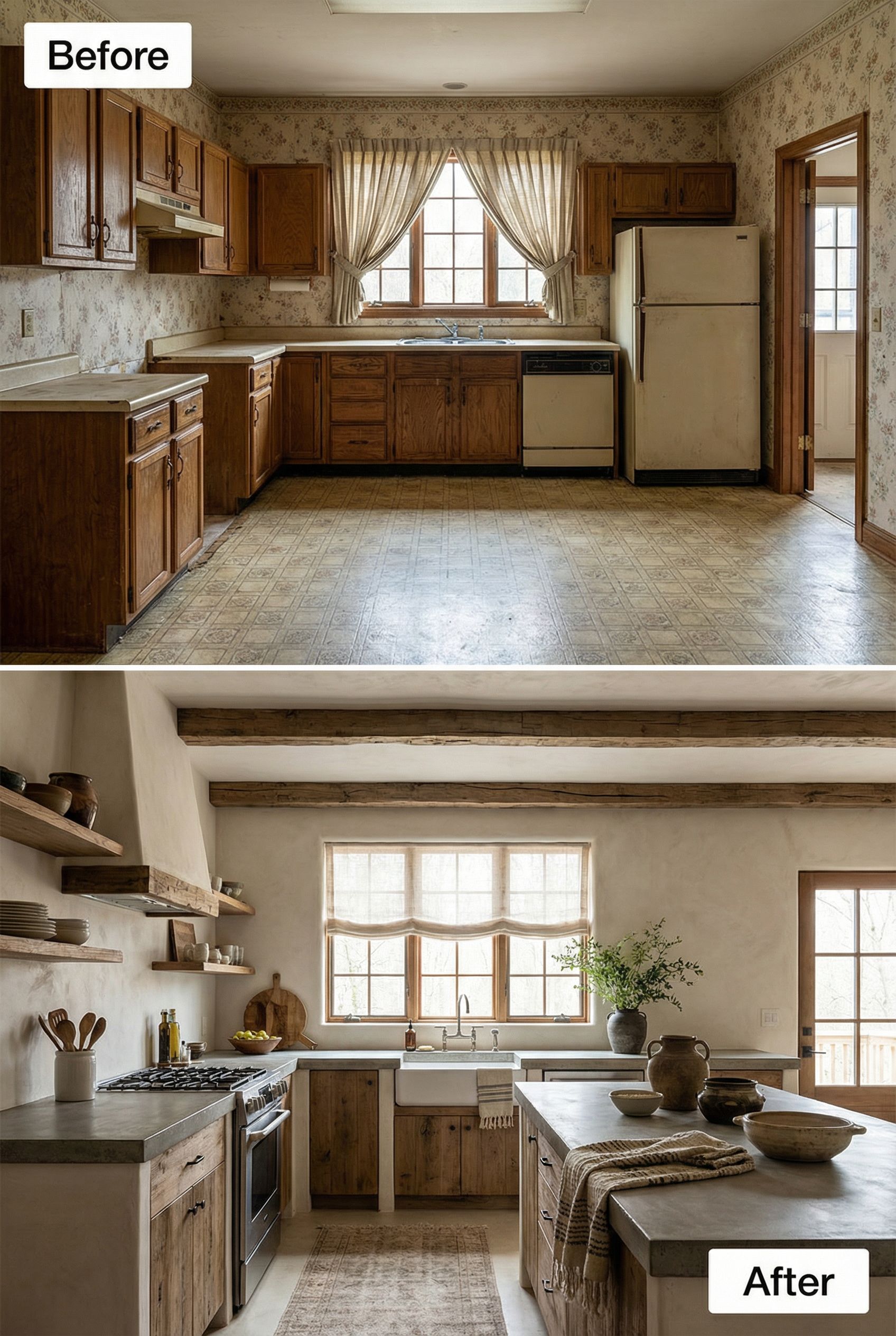
Busy granite yielded to creamy limestone with fossil inclusions and natural pitting. Custom cabinets feature hand-planed fronts showing subtle chisel marks. Zellige tiles in muted sage create an organically irregular backsplash. Brass fixtures develop natural patina over time. A live-edge walnut floating shelf and handthrown ceramic canisters emphasize artisan craftsmanship throughout the space.
Worn 80s Tile Kitchen → Textured Wabi Sabi with Stone Elements
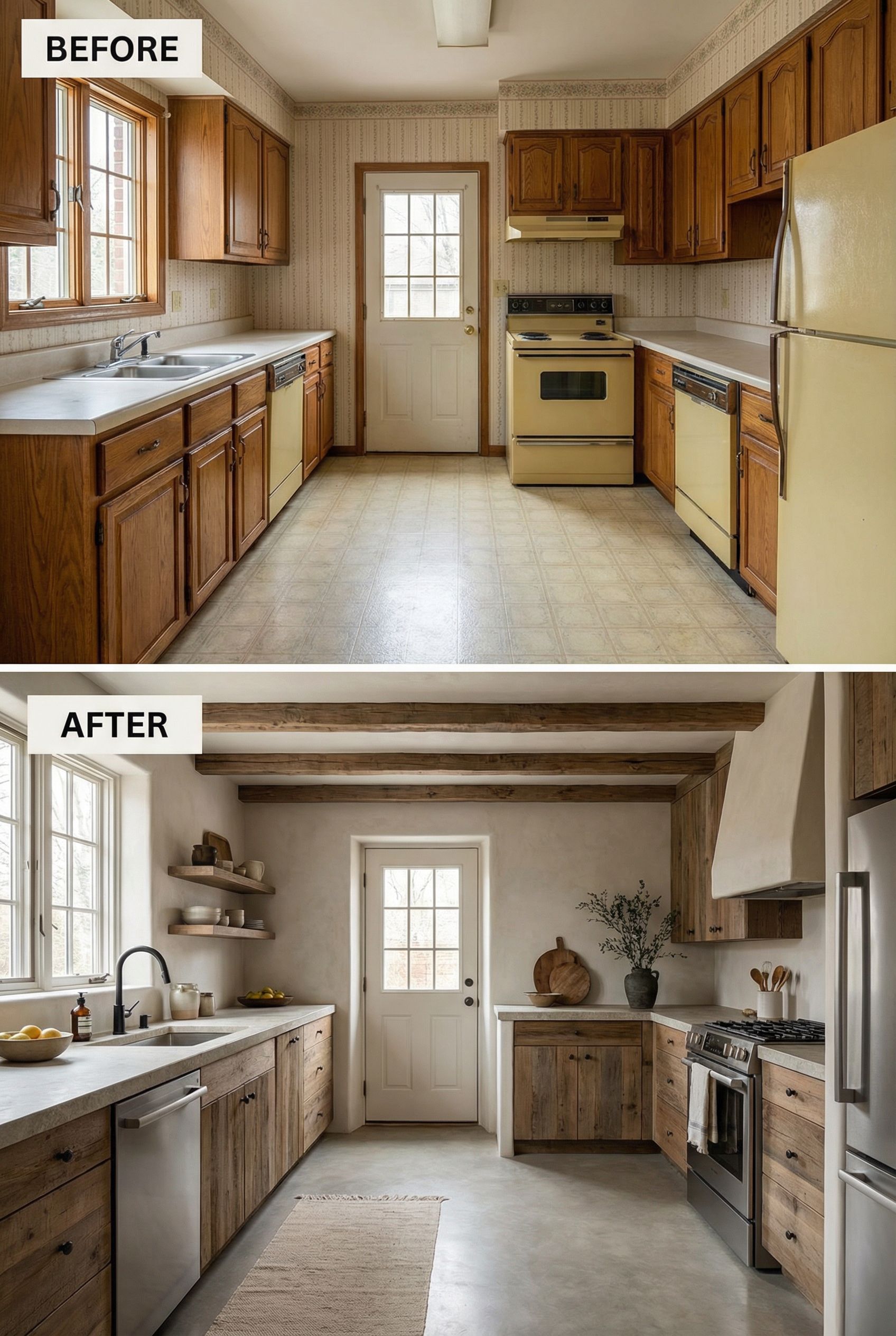
Cracked tiles became textured plaster walls with trowel marks visible. Cabinets in rough-sawn oak embrace wood’s natural imperfections. Bluestone counters feature organic color variation and surface texture. Flagstone flooring with irregular edges and thickness creates authentic rusticity. Woven basket pendant lights and clay pot storage honor handmade traditions while iron brackets support reclaimed wood shelving.
Dated Formica Kitchen → Imperfect Wabi Sabi Beauty
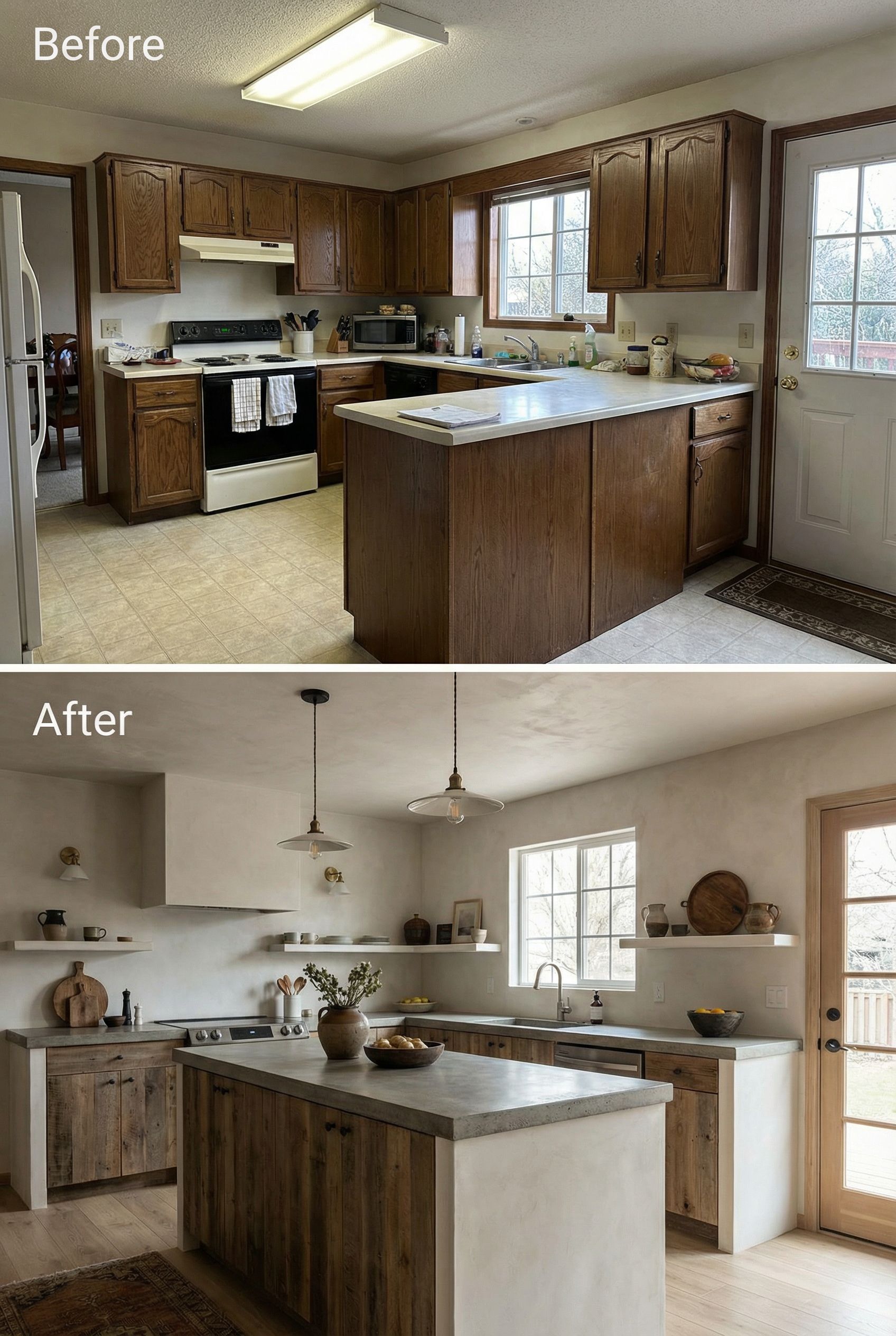
Formica disappeared beneath thick butcher block counters showing growth rings and color variation. Cabinets in knotty alder celebrate wood’s natural character marks. Clay-finished walls create organic texture. Handmade ceramic knobs, each slightly different, replace plastic hardware. Rough linen curtains, woven baskets, and a reclaimed barn door pantry entrance layer in authentic, imperfect materials that tell stories.
80s Brass Fixture Kitchen → Matte Wabi Sabi Rustic Charm
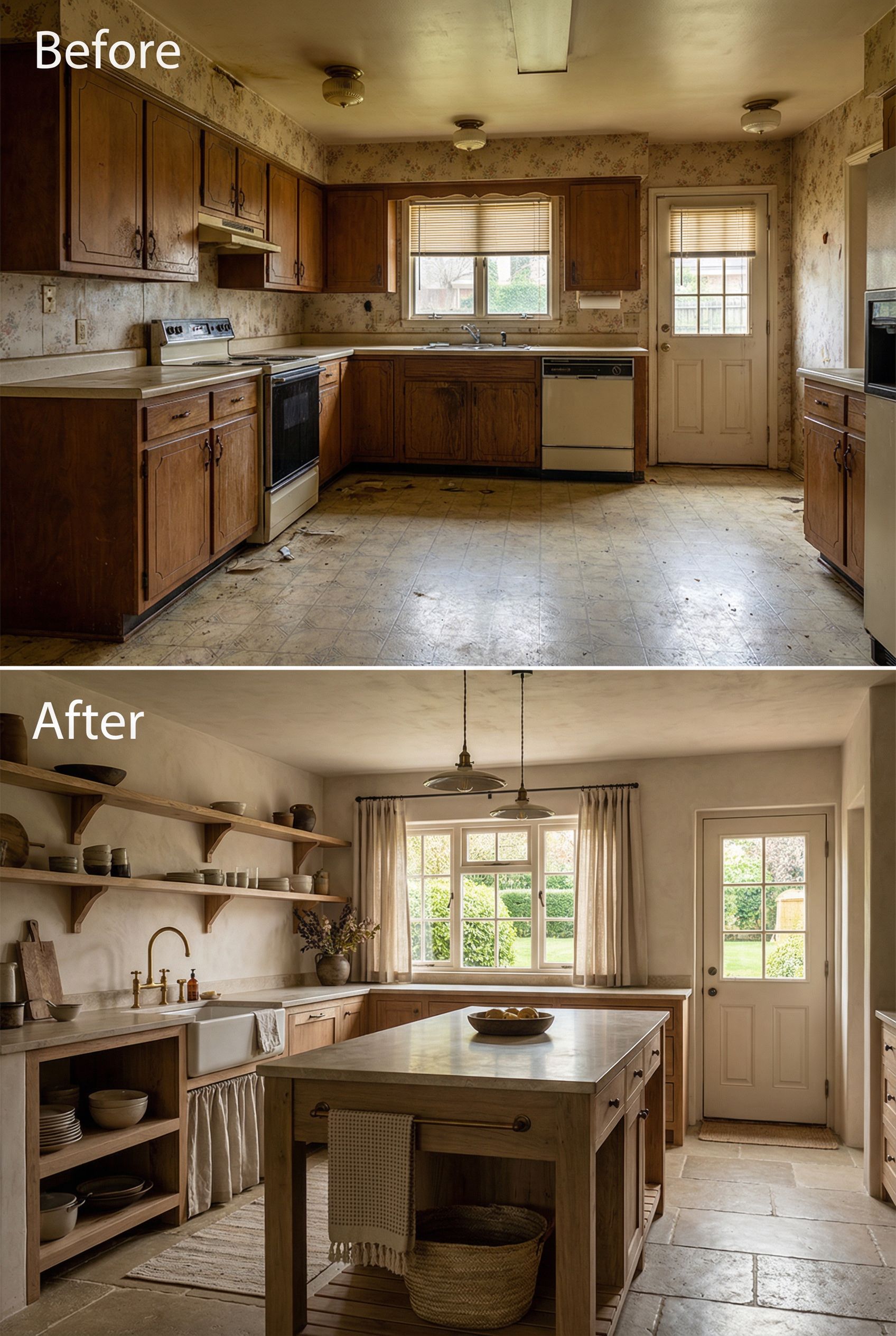
Shiny brass became matte black iron fixtures with hand-forged details. Cabinets in cerused oak highlight wood grain through wire-brushing. Concrete countertops feature intentional air pockets and color shifts. Unglazed ceramic backsplash tiles absorb light softly. Blackened steel floating shelves support stoneware collections. Wide-plank flooring in mixed wood tones introduces grounding rusticity and natural variation throughout.
Early 2000s Cherry Kitchen → Understated Wabi Sabi Luxury
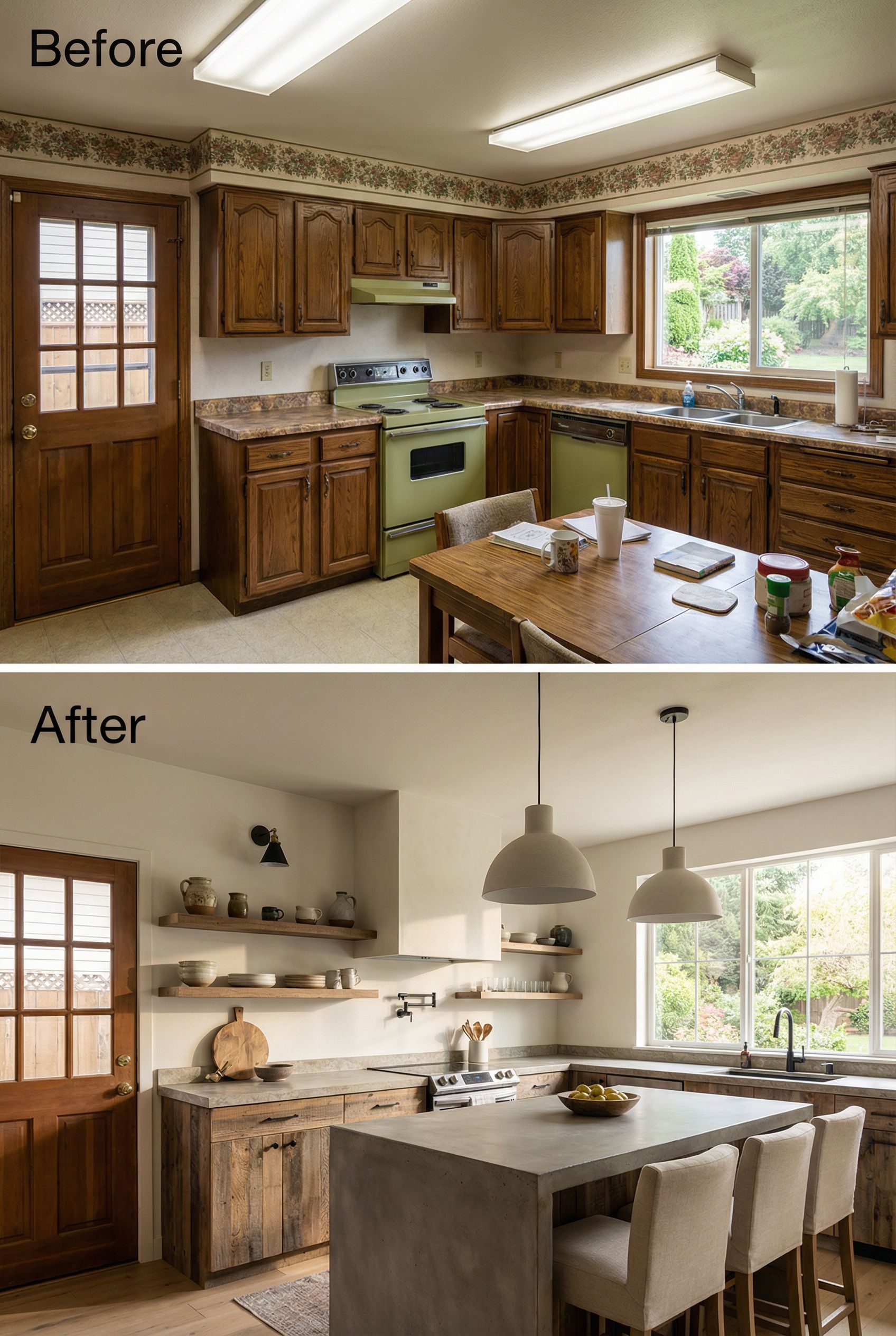
Glossy cherry transformed into matte walnut with natural sapwood variations celebrated. Leathered marble countertops feature organic texture and subtle veining. Handmade zellige tiles in neutral tones create gentle pattern variation. Unlacquered brass ages gracefully. Linen Roman shades, handthrown ceramic vessels, and a single statement branch arrangement introduce quiet luxury through restraint, imperfection, and natural beauty.
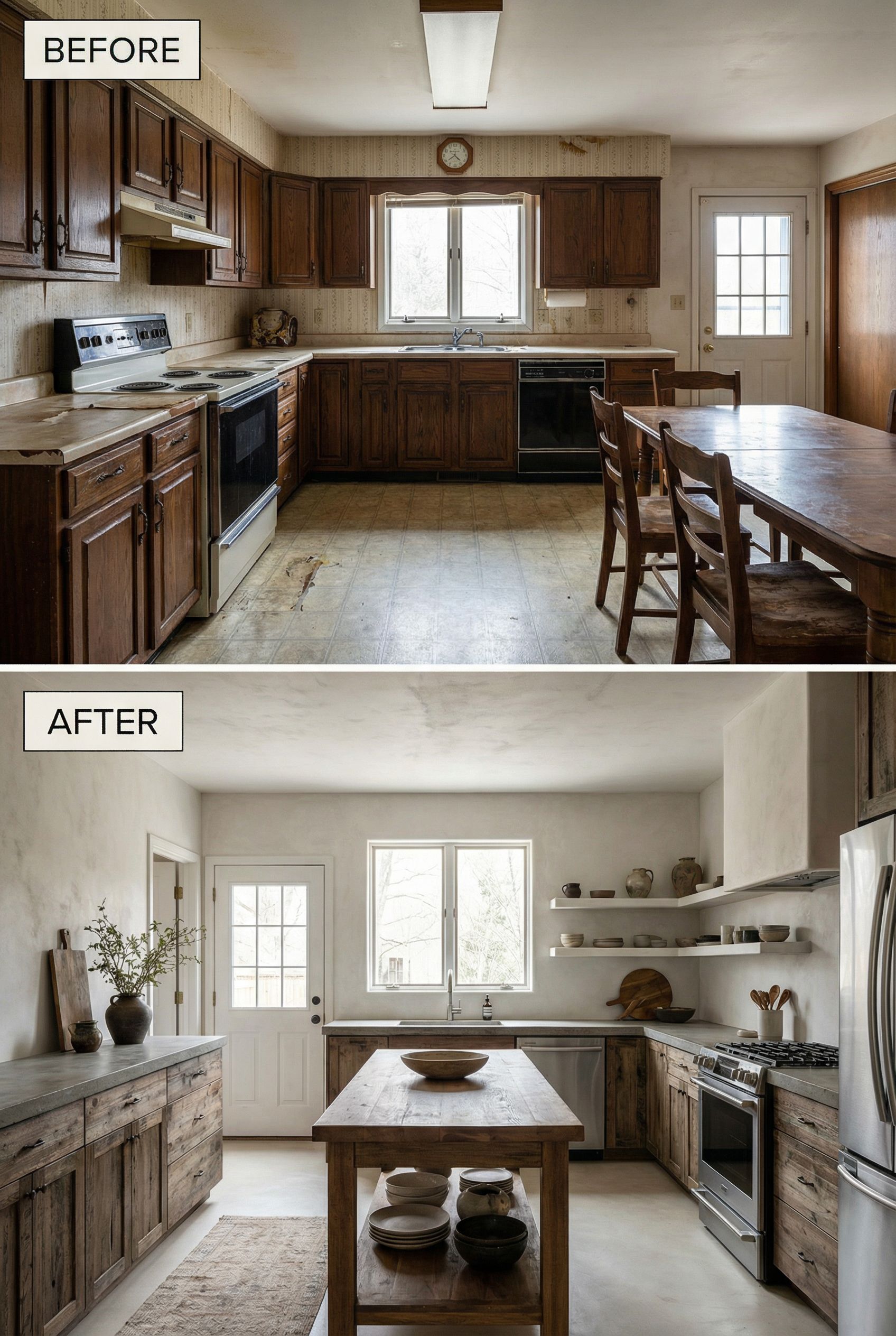
Cluttered 90s Kitchen → Peaceful Wabi Sabi Minimalism
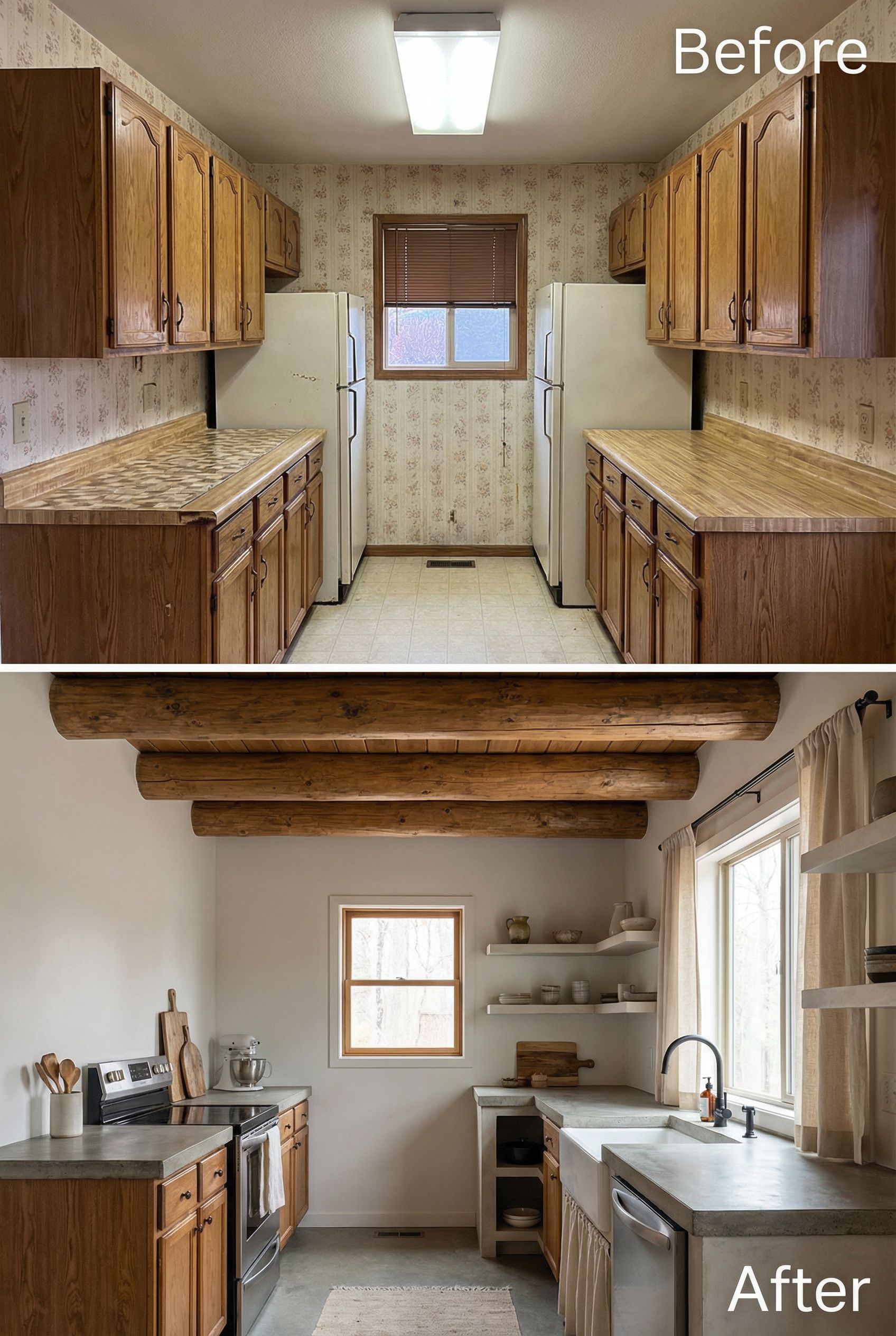
Excess disappeared, leaving essential elements in natural materials. Flat-panel cabinets in pale oak feature simple leather pulls. Honed Carrara marble shows natural gray veining. Walls received limewash in soft white. A single floating shelf displays three handmade bowls. Sheer linen curtains, concrete flooring, and one sculptural ceramic vase create breathing room, honoring emptiness as design element.
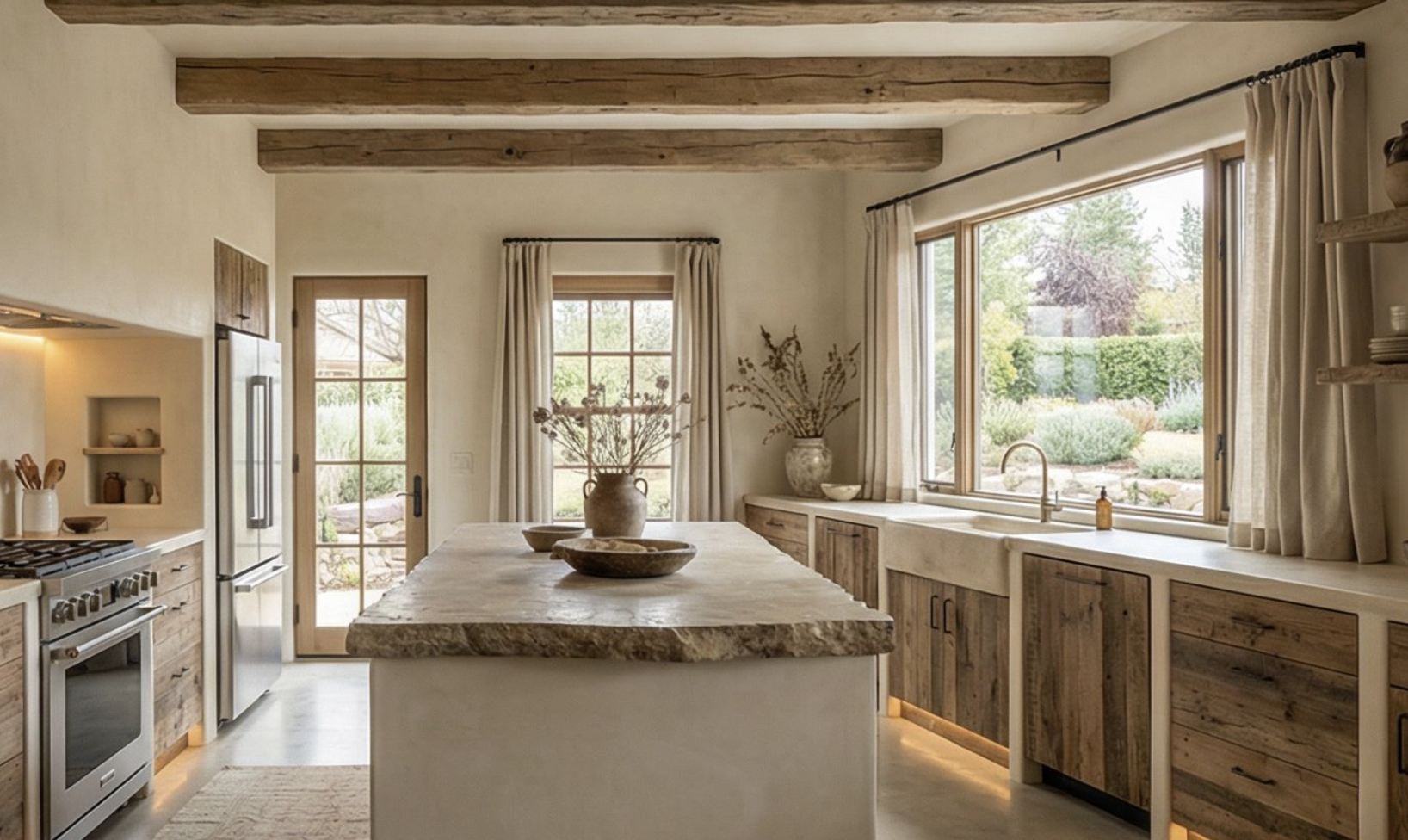
From dated kitchen to luxurious Wabi-Sabi space with warm rustic wood
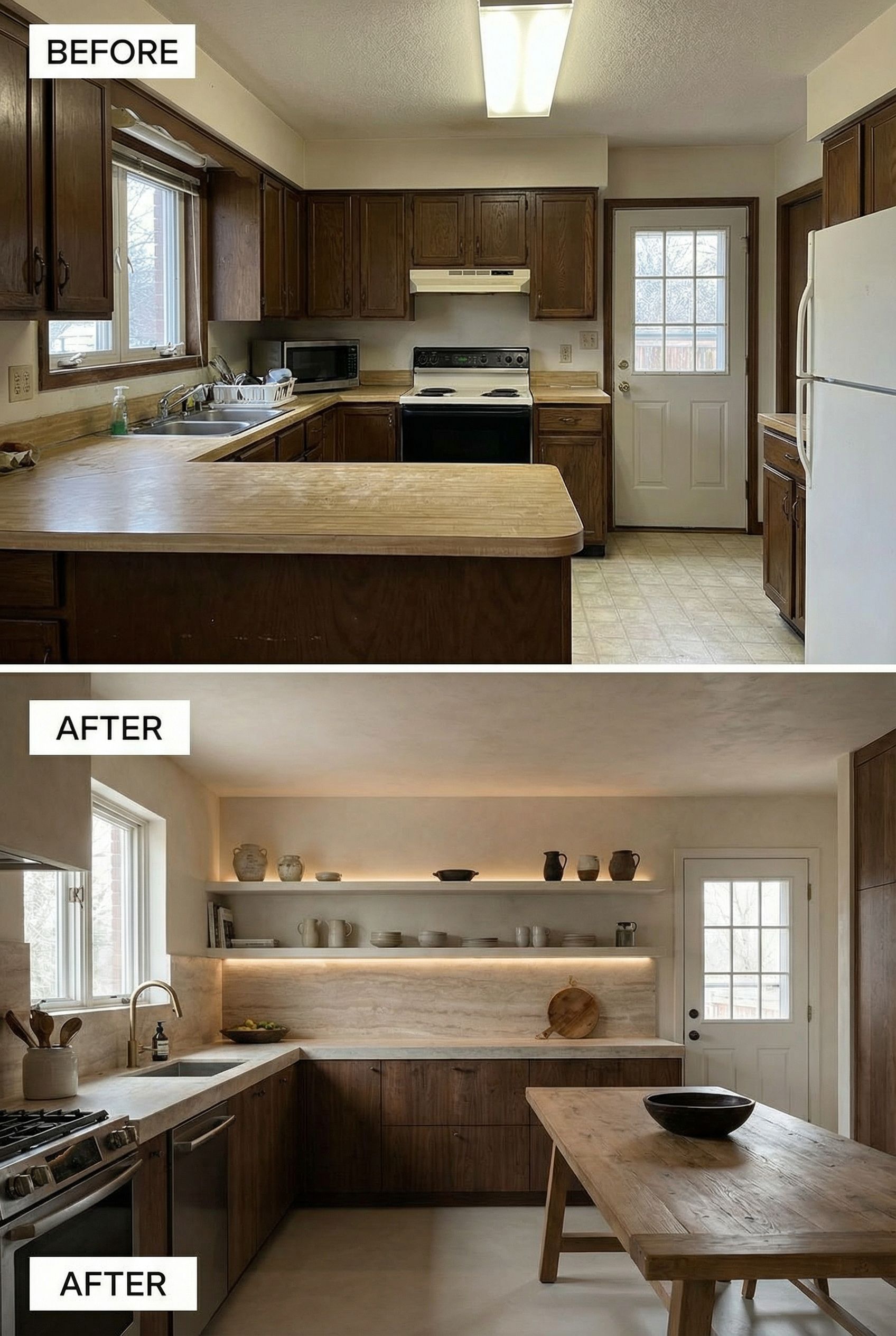
Handcrafted walnut cabinetry replaced glossy laminate, showcasing natural grain variations and knots. A live-edge wooden island anchors the space, complemented by limestone countertops and matte black fixtures. Exposed ceiling beams add architectural warmth while terracotta floor tiles ground the palette in earthy authenticity and organic texture.