🔥 Would you like to save this?
A rear fireplace is one of the most coveted architectural gifts a home can have, it anchors the back wall, draws the eye from the moment you enter, and demands a layout that respects it. These twelve floor plan arrangements show how to work with that fireplace as a true focal point while keeping traffic moving, sightlines clean, and the whole room feeling like somewhere you actually want to stay.
In order to come up with the very specific design ideas, we create most designs with the assistance of state-of-the-art AI interior design software. Also, assume links that take you off the site are affiliate links such as links to Amazon. this means we may earn a commission if you buy something.
Symmetrical Sofa Flanking with Central Fireplace and Ottoman Coffee Table
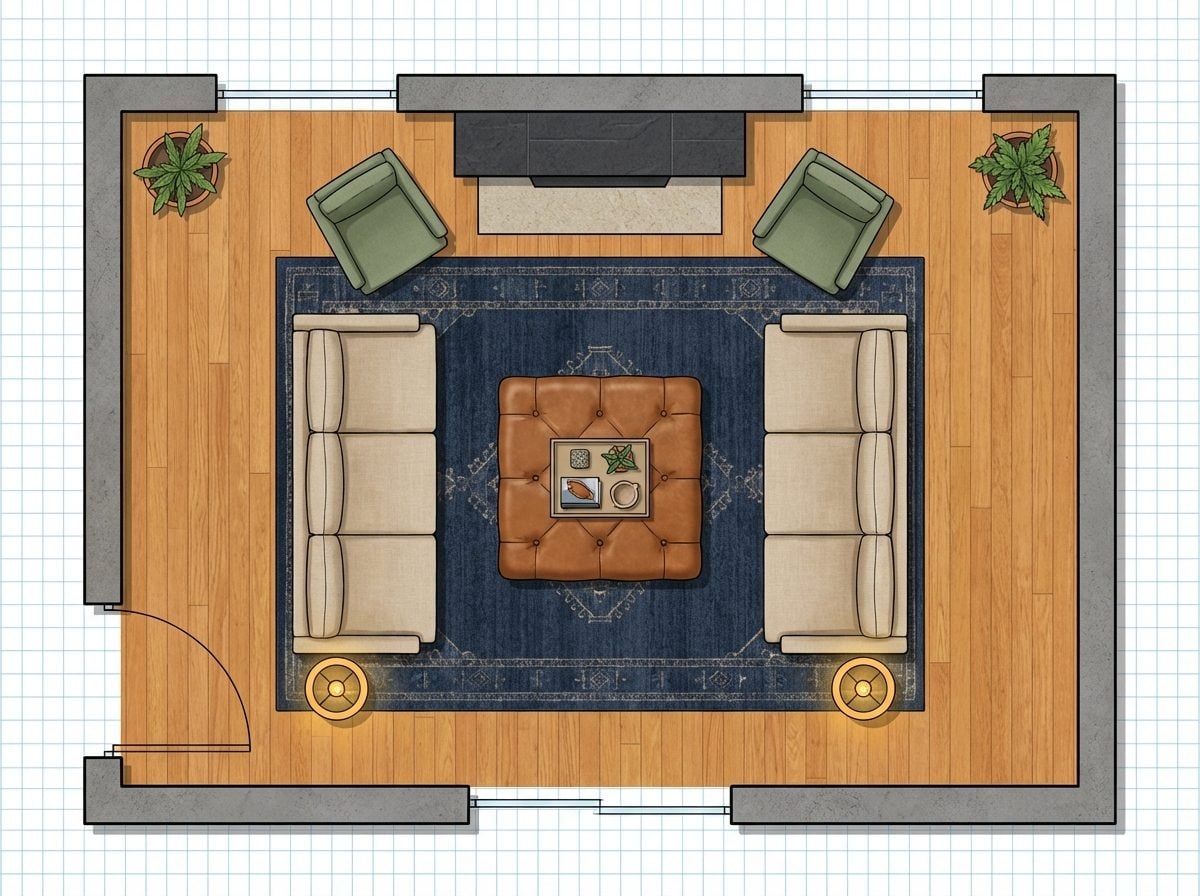
Symmetry is a psychological shortcut to calm, and this layout uses it deliberately. The two matching sofas create a mirrored conversation zone that pulls the fireplace into a clear center of gravity, while the flanking armchairs let you pull up close to the heat without blocking the main circulation path along the side walls.
The square ottoman does double duty: it holds drinks, books, and trays, but it also softens the rigid axis of the arrangement. Traffic flows cleanly along both sides of the rug, and because no furniture crowds the doorway, the transition from the rest of the home into this room feels natural rather than forced.
L-Shaped Sectional Angled Toward the Fireplace with Built-In Reading Corner
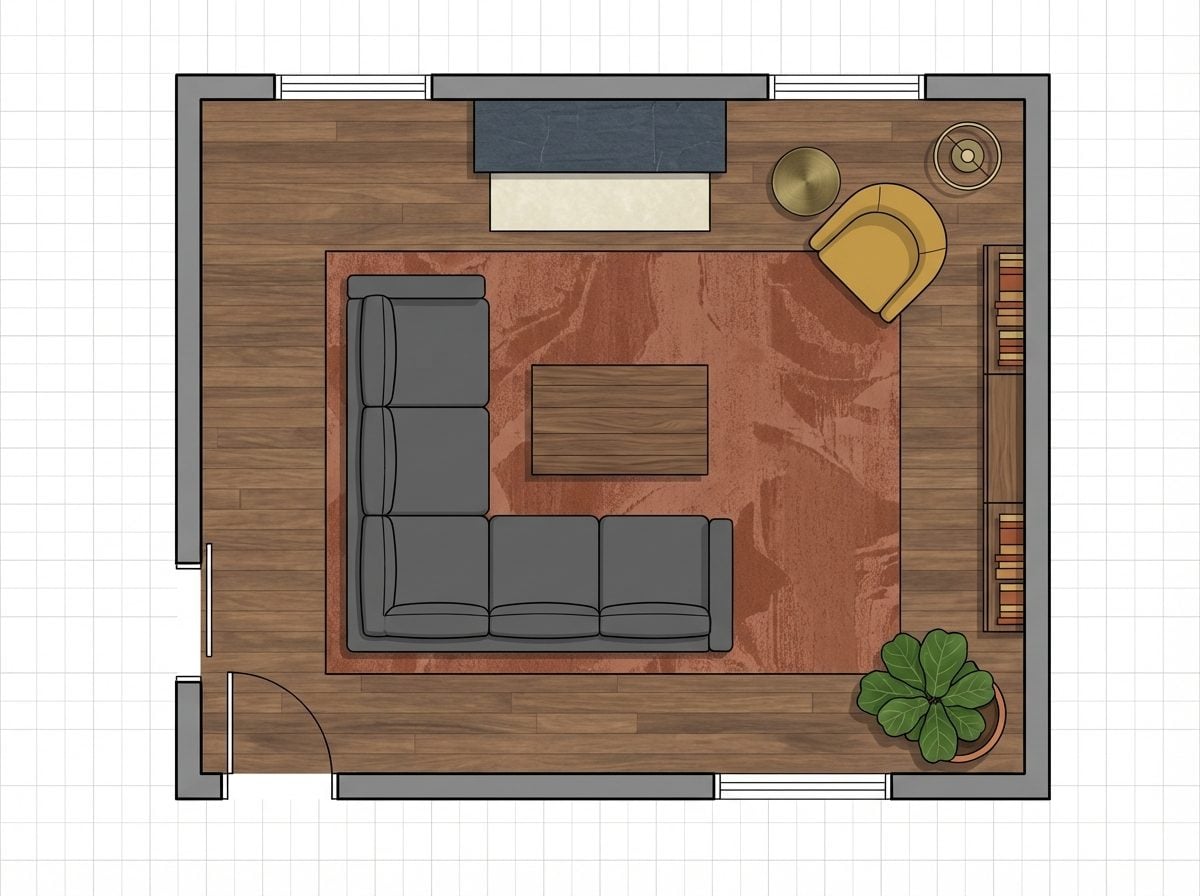
The L-shaped sectional does something a pair of sofas cannot: it wraps the viewer into the room rather than just seating them in it. Angled so the chaise end faces the fireplace diagonally, the arrangement carves out a clear primary viewing axis without closing off the reading corner tucked behind the sofa’s short arm.
That reading nook is the quiet win here. Positioned in the rear right corner with its own lamp and side table, it functions as a secondary destination that draws people away from the main seating cluster when the room fills up, which is exactly how great flow works in practice.
Dual-Sofa Floating Island with Fireplace as Back Wall and Open Rear Entry
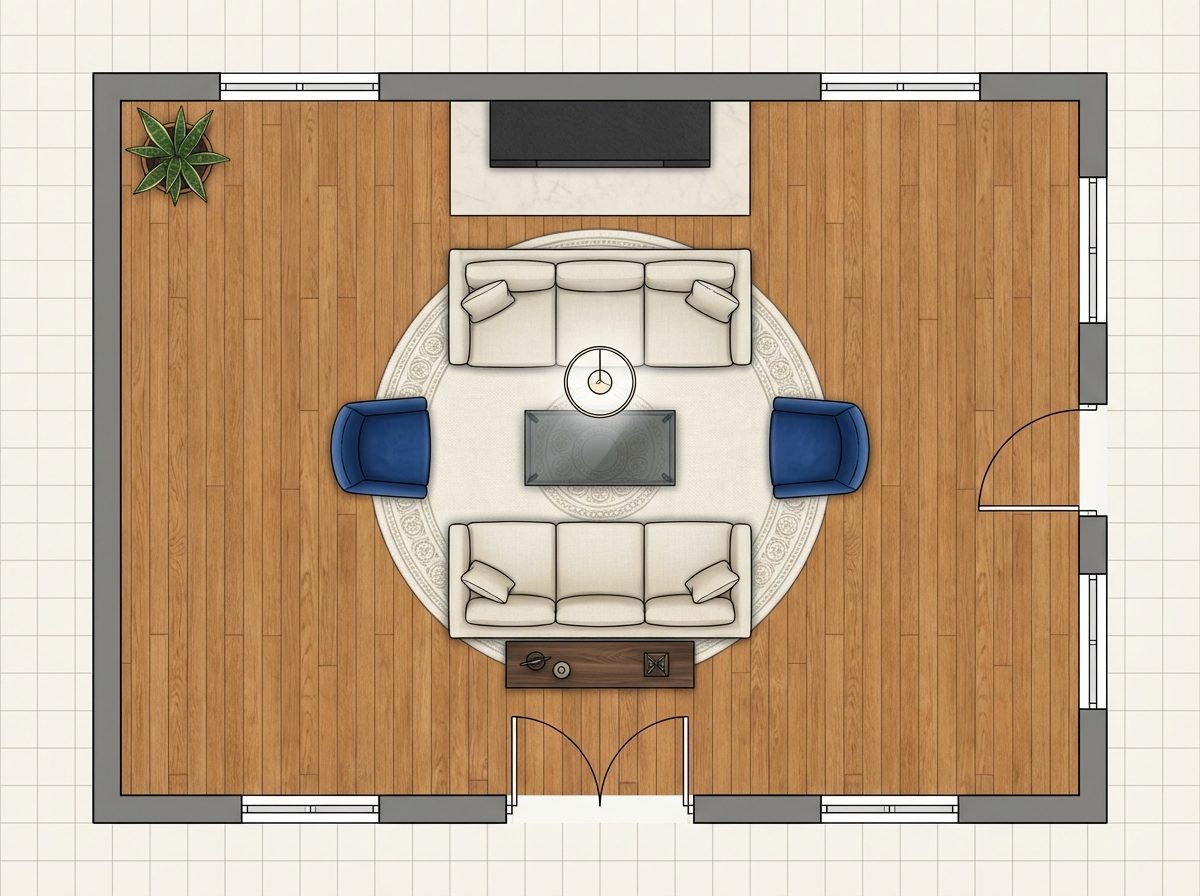
Floating the furniture island mid-room with a console table as its spine is a layout move that solves a specific problem: how to give the fireplace its proper stage while still serving a room that has foot traffic moving through it from multiple doors. The back-to-back sofa configuration means the rear sofa is always oriented toward the fire, while the front sofa handles guests coming in.
Corner Sectional with Fireplace Offset Left and Wraparound Window Seat
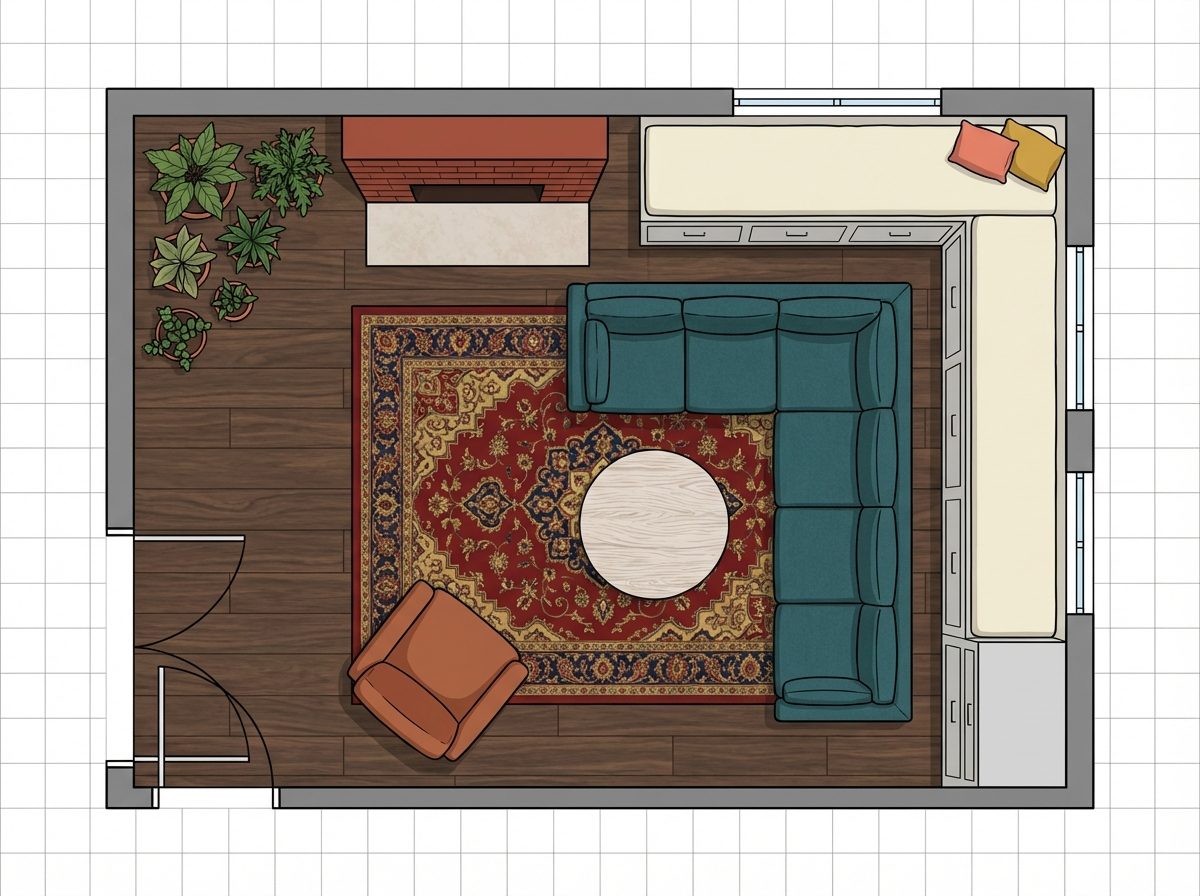
Asymmetry can be harder to pull off than symmetry, but when it works, it feels alive. Offsetting the fireplace to the left third of the rear wall creates a natural anchor that the corner sectional then counters from the right side, balancing the room visually without mirroring it. The window seat along the side wall fills what would otherwise be dead corner space, giving it purpose as both extra seating and a perch for natural light.
Traffic flows through the left side of the room unobstructed, passing between the fireplace and the sofa arrangement in a clear corridor that feels intentional rather than incidental.
Conversation Pit Effect with Low Sofas, Sunken Rug Zone, and Rear Fireplace Wall
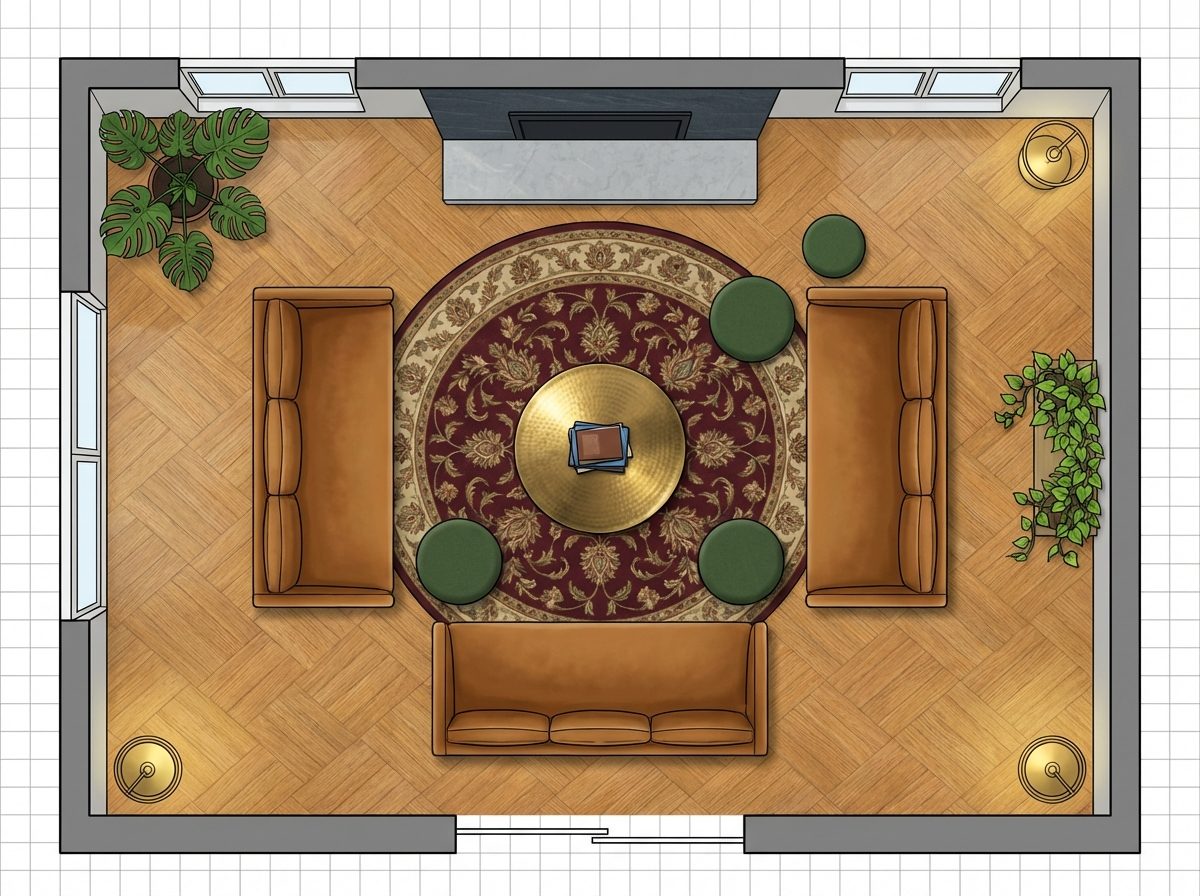
The U-shaped low sofa arrangement mimics the warmth logic of a conversation pit without requiring any structural excavation. Three sofas closing off three sides of a zone, with the fireplace completing the fourth wall, creates a defined room-within-a-room effect that psychology research links to the “refuge” principle: enclosed on multiple sides with a single clear outlook toward the fire.
The large round rug does the heavy lifting spatially, marking the boundaries of the pit zone without a single wall or step change. Low-profile furniture keeps sightlines open from the entry, so the fireplace reads from across the room even before you enter the seating cluster.
Fireplace Flanked by Built-In Shelving with Single Sofa and Chaise Pairing
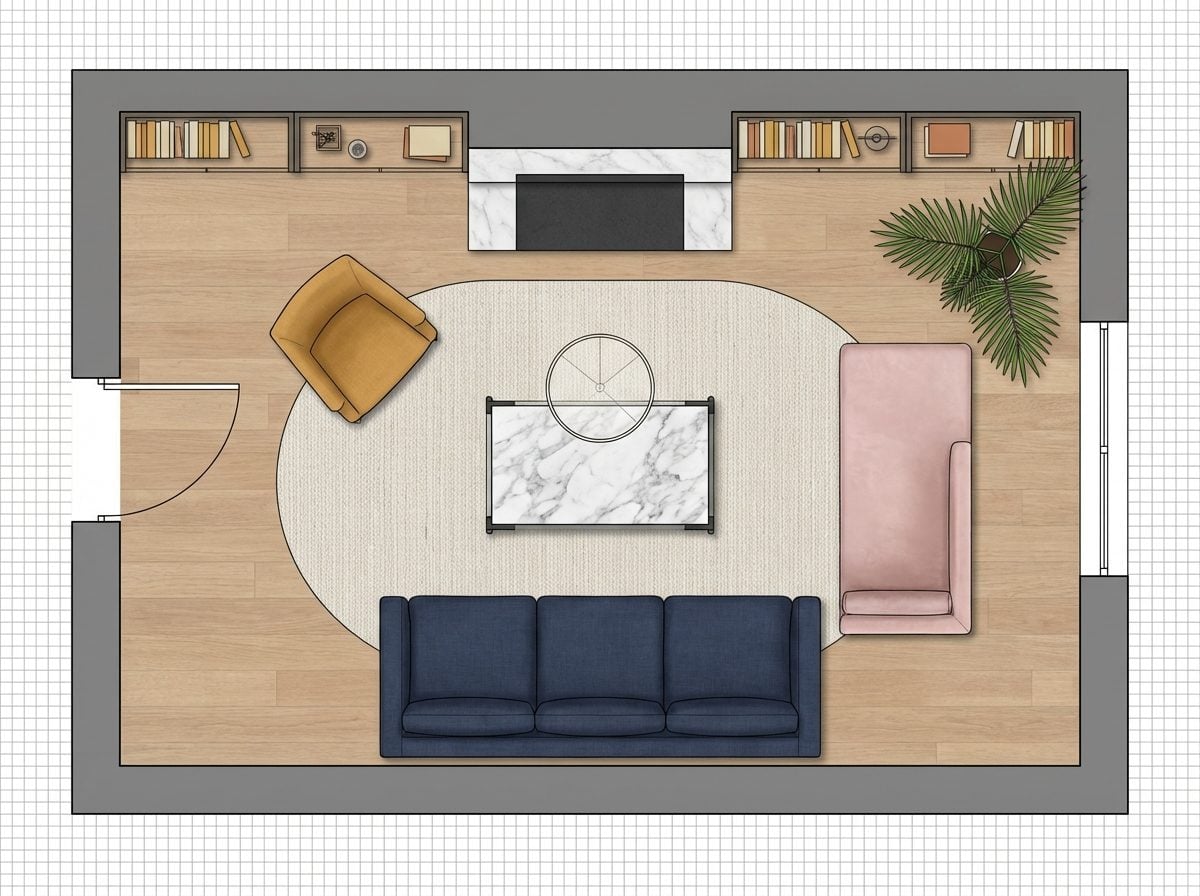
Built-ins that flank a fireplace compress the back wall into a single cohesive unit, and the visual effect is considerable: the entire rear of the room reads as one intentional composition rather than a wall with furniture pushed against it. Placing the sofa a full five feet forward from that wall keeps the fireplace visible and lets warm air circulate rather than baking the back cushions.
The chaise as a sofa companion rather than a second full sofa is a practical choice in rooms under 18 feet wide. It gives one person a full recline without duplicating seating mass, and the perpendicular angle naturally nudges conversation toward the fireplace focal wall.
Open-Plan Rear Living Room with Fireplace Divider Wall and Kitchen Sightline
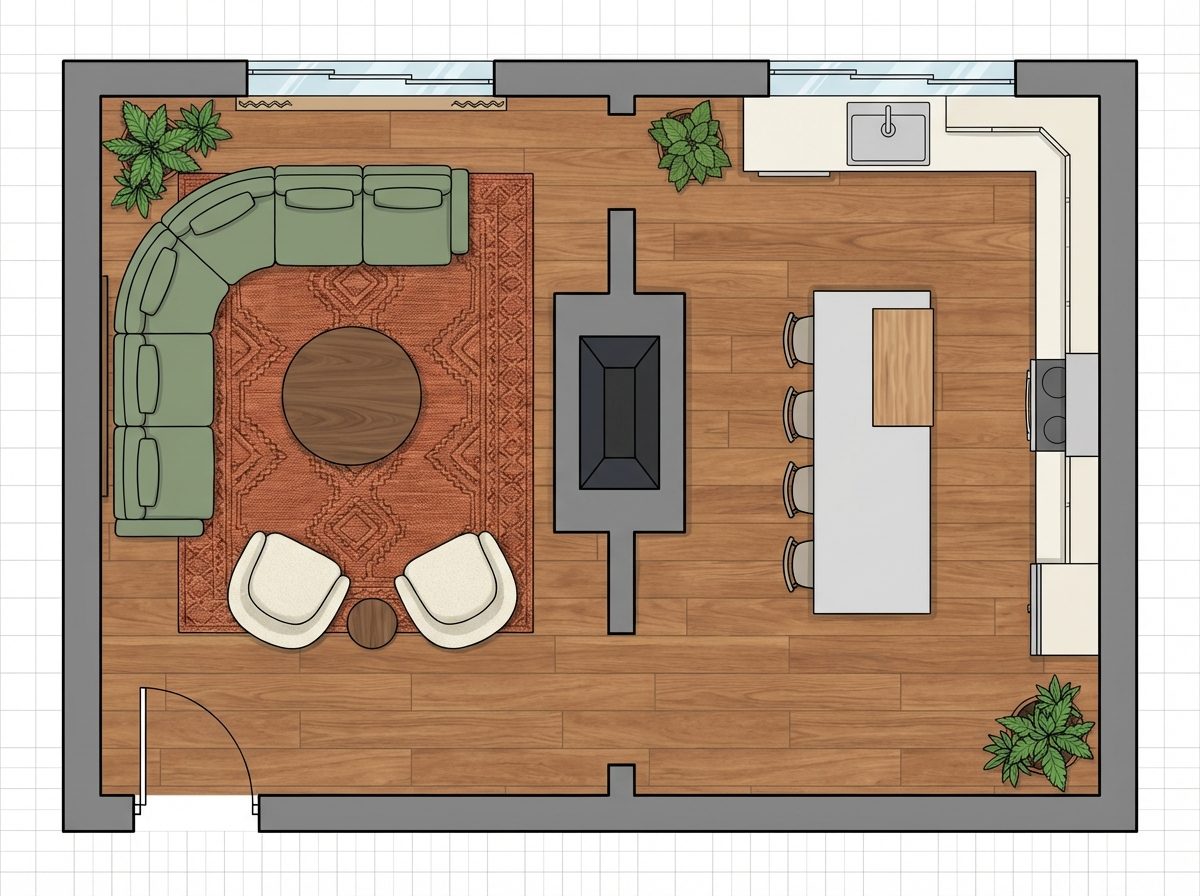
A fireplace you can see from the kitchen sink is not a luxury detail, it is a layout strategy.
The partial divider wall with a double-sided fireplace solves the open-plan living room’s hardest problem: how to give the living zone a defined focal point and sense of enclosure without walling it off from the rest of the home. The fireplace becomes architectural infrastructure, not just an appliance.
Sightlines from the kitchen island to the fire mean whoever is cooking stays connected to the room’s warmth, both literally and socially. The curved sectional facing the divider wall keeps the conversation group intact while leaving the kitchen-to-living corridor completely clear.
Narrow Rear Living Room with Fireplace End Wall and Side-by-Side Sofa Row
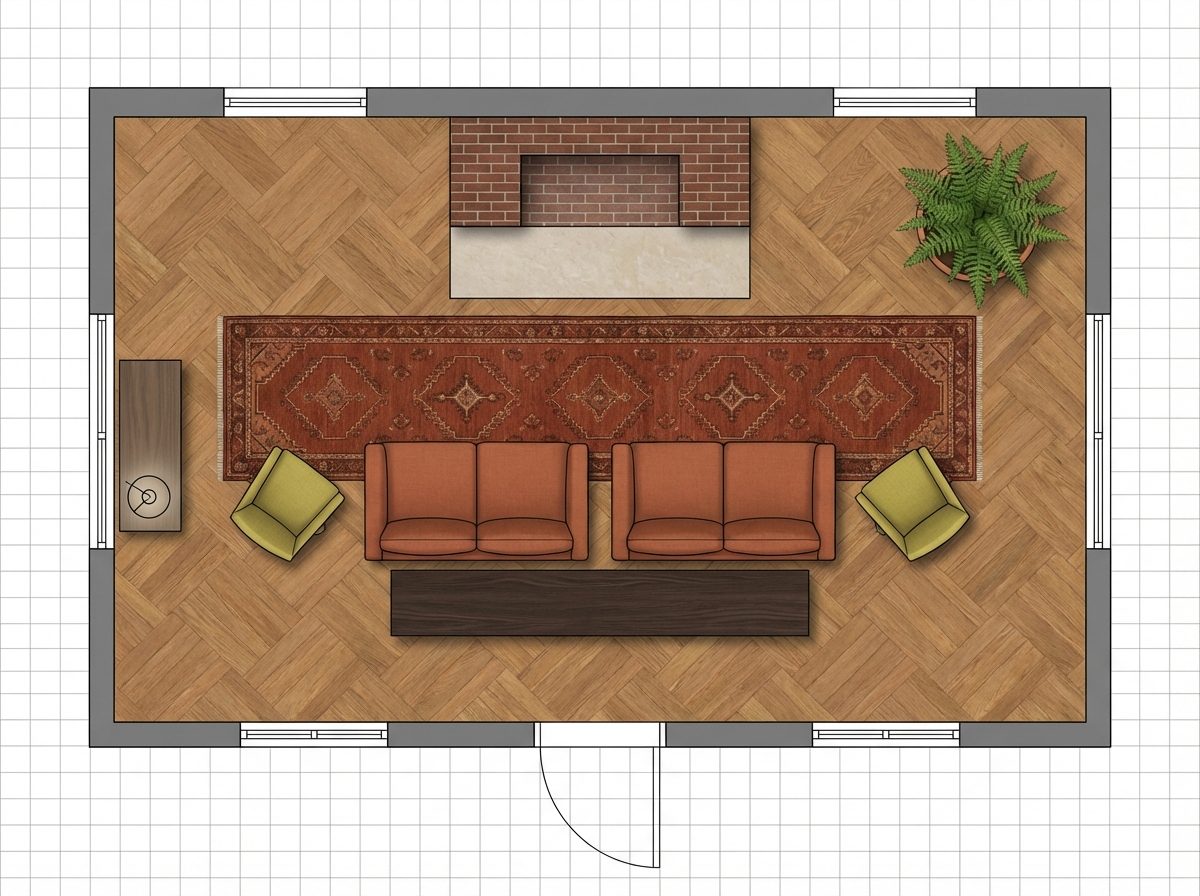
Long, narrow rooms resist most conventional layouts, and a rear fireplace in a room like this is both the problem and the solution. Placing two compact sofas side-by-side facing the fireplace uses the full width without projecting deeply into the room, keeping the walkways along both side walls genuinely passable rather than just theoretically there.
Rear Fireplace with Media Wall Combination and Wraparound Casual Seating
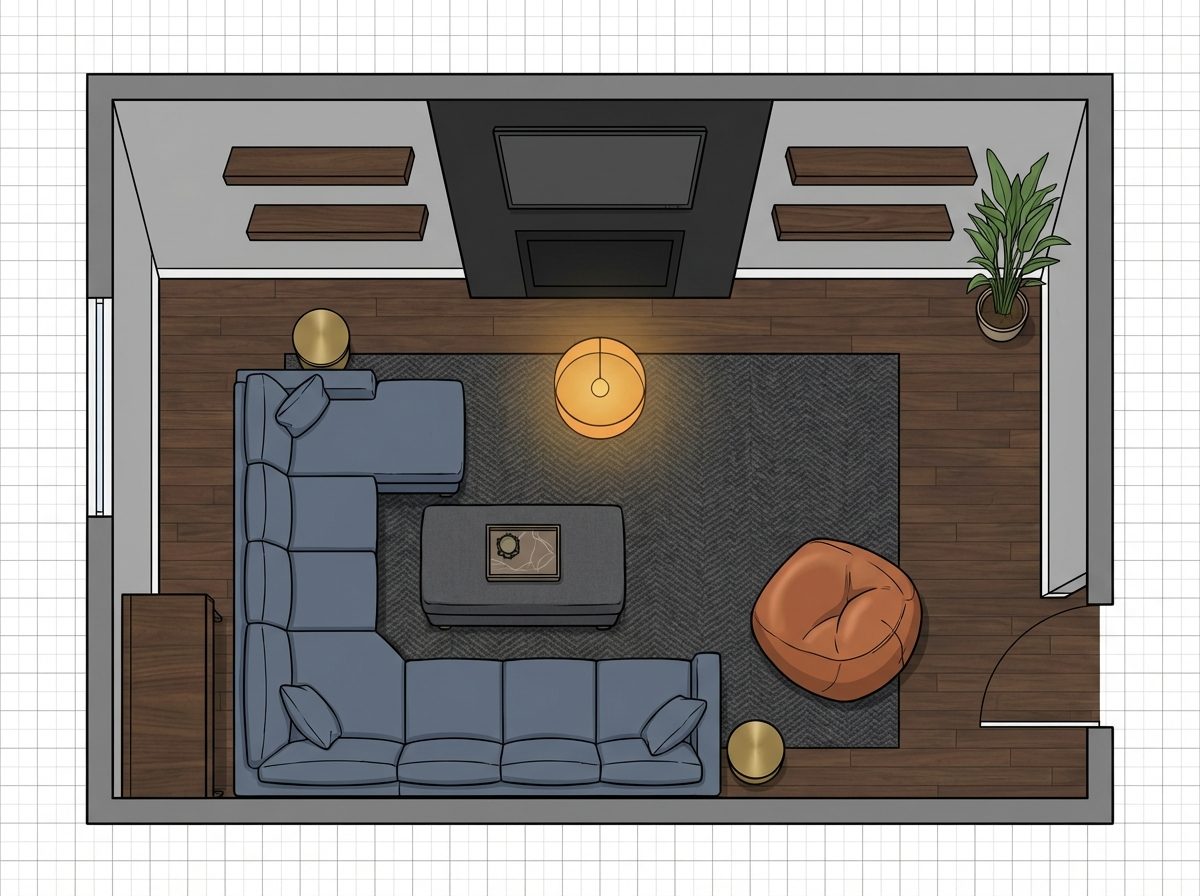
Combining the TV and fireplace on a single rear wall is a practical decision that many designers resist on aesthetic grounds, but when the room is at the back of the house with limited wall options, it is often the right call. The key is treating the entire wall as one composed unit rather than two competing focal points fighting for attention.
Dark floating shelves connecting the fireplace to the TV mount horizontally unify the two elements. The L-sectional’s chaise arm pointing toward the wall means every seat has a direct view of both the fire and the screen, with no awkward angled chairs required.
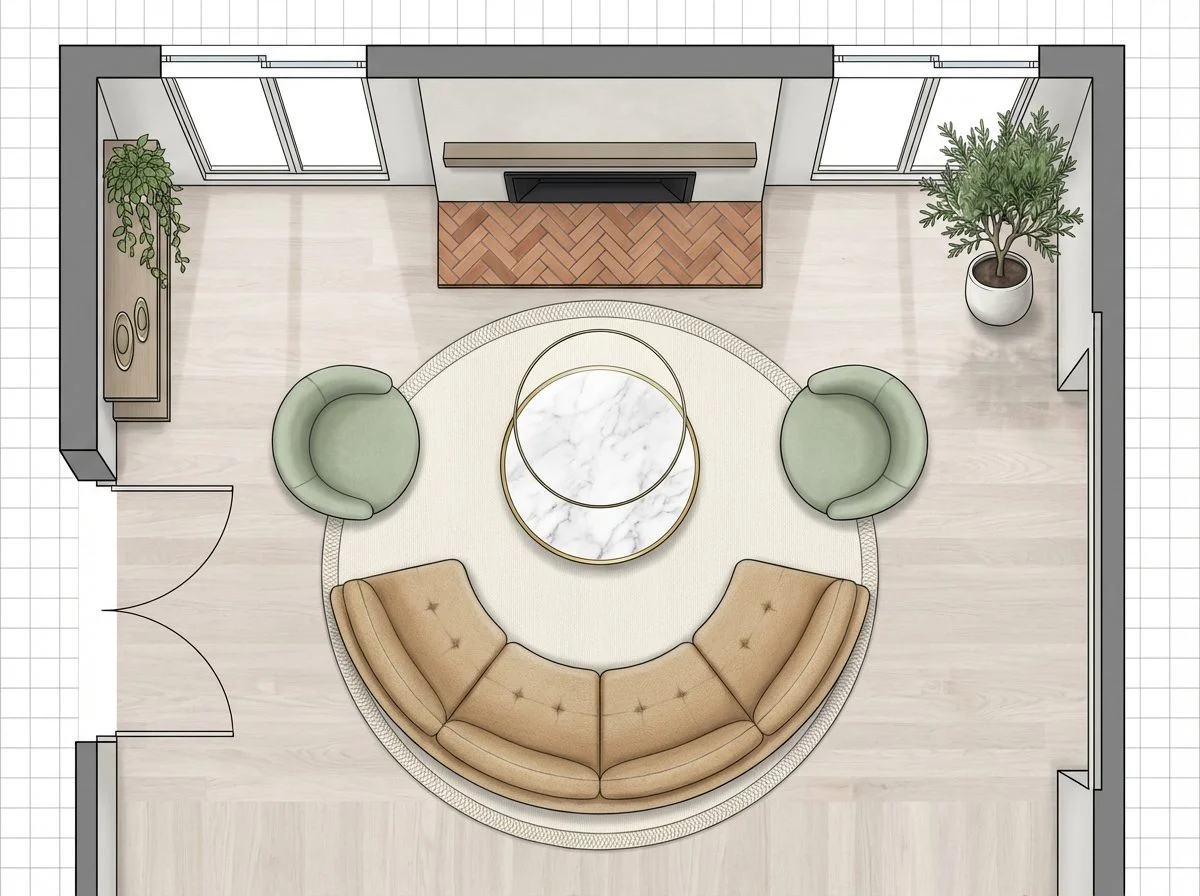
Herringbone Fireplace Hearth Focal Wall with Curved Sofa and Low Round Table
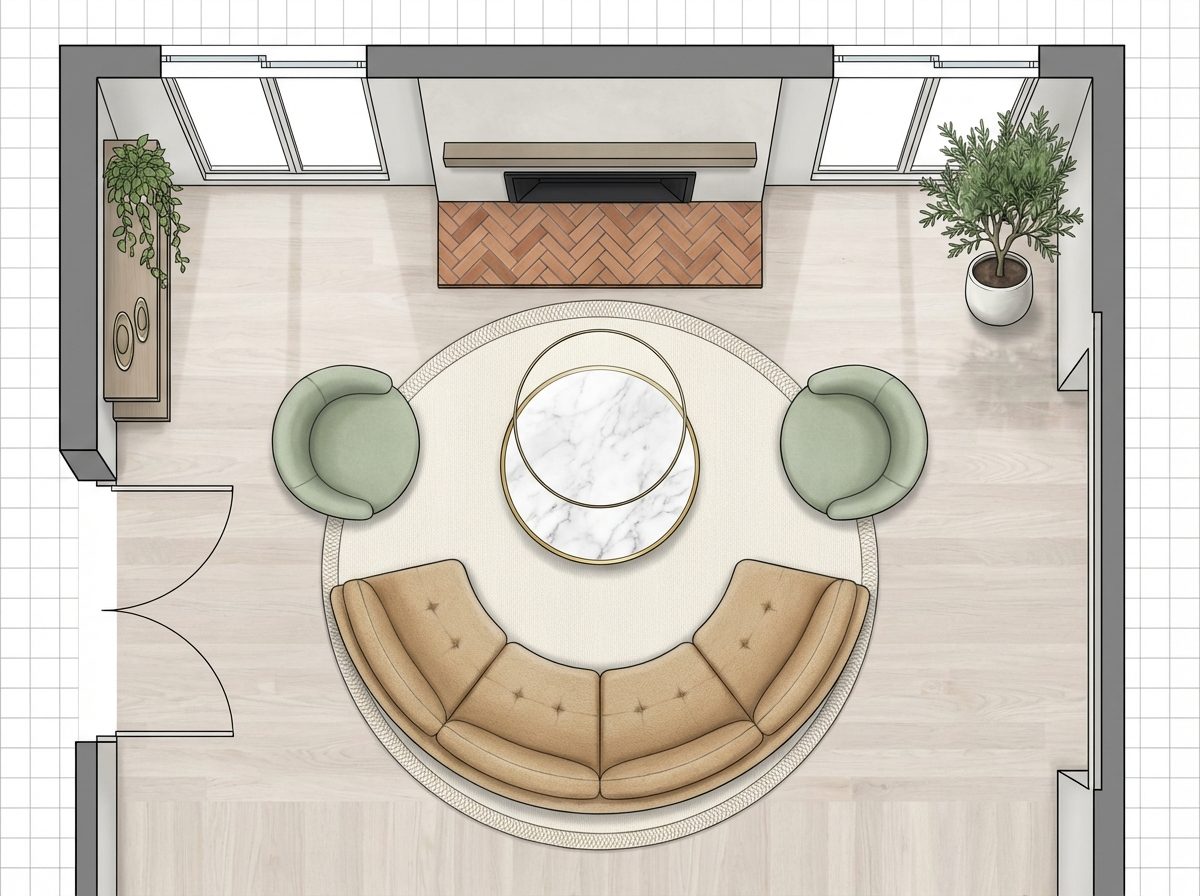
The curved sofa is doing two things at once here: it mirrors the arc of conversation itself, pulling everyone slightly inward toward each other and toward the fire, and it softens a room that could otherwise feel boxy with its rectangular boundaries.
Pair a curve with a round coffee table and round pendant overhead and the whole room starts speaking the same formal language, which is what makes this layout feel considered rather than assembled. The herringbone hearth reads as texture from across the room, giving the fireplace wall visual depth before you even light the fire.
Rear Garden-Facing Living Room with Fireplace Centered and French Door Flanking
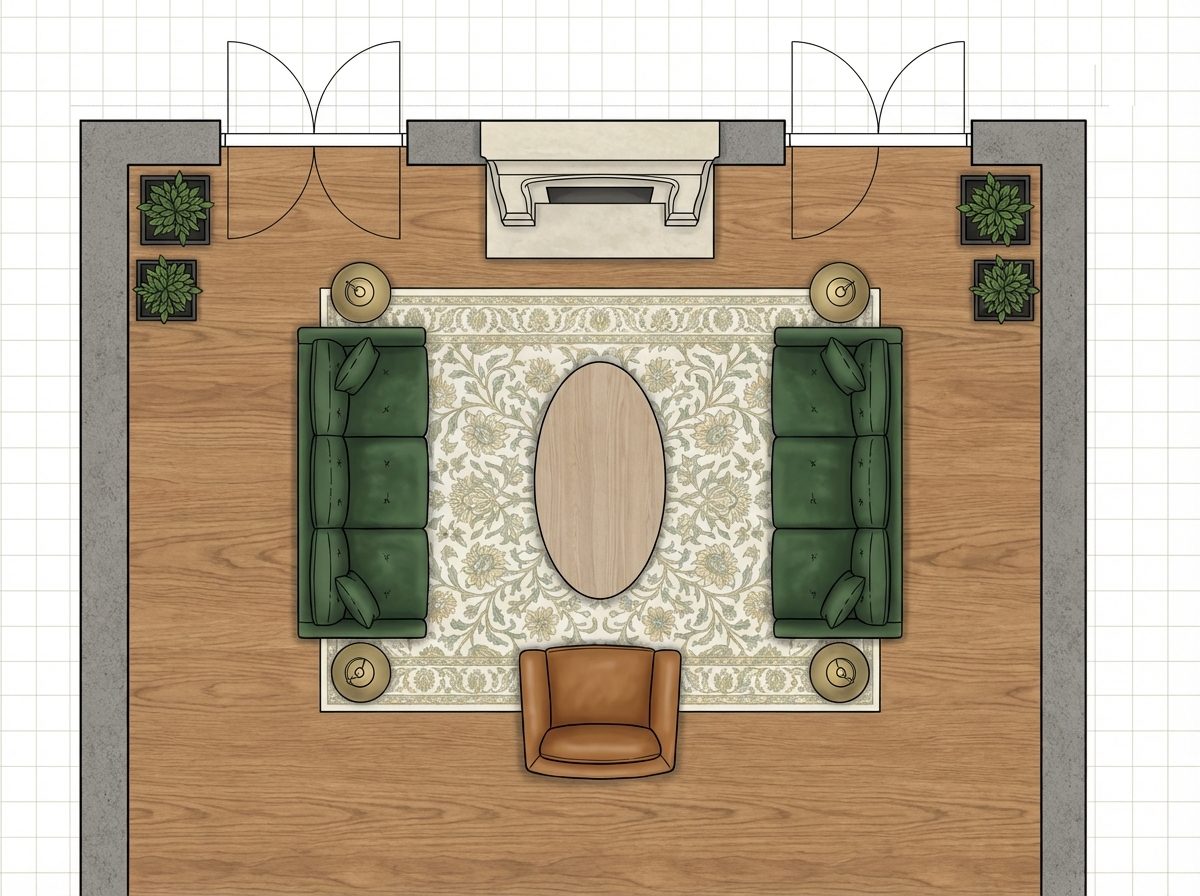
French doors flanking a fireplace on the rear wall of a home create a room that is simultaneously protected and connected to the garden, and the furniture layout has to honor both of those qualities without blocking either. The two sofas angled very slightly inward, rather than strictly parallel, is a small adjustment that makes a significant difference, it opens the sightline toward the doors at each end while keeping the conversation cluster tight enough around the fire to feel intimate.
- The angled sofas create natural pathways to both sets of French doors without a formal corridor.
- Facing sofas are easy to rearrange seasonally, pull them back in summer to open the garden access completely.
- A William Morris-pattern rug grounds the room in a heritage register that feels appropriate for a limestone fireplace surround.
Asymmetric Split-Level Feel with Fireplace on Rear Diagonal Wall and Mixed Seating
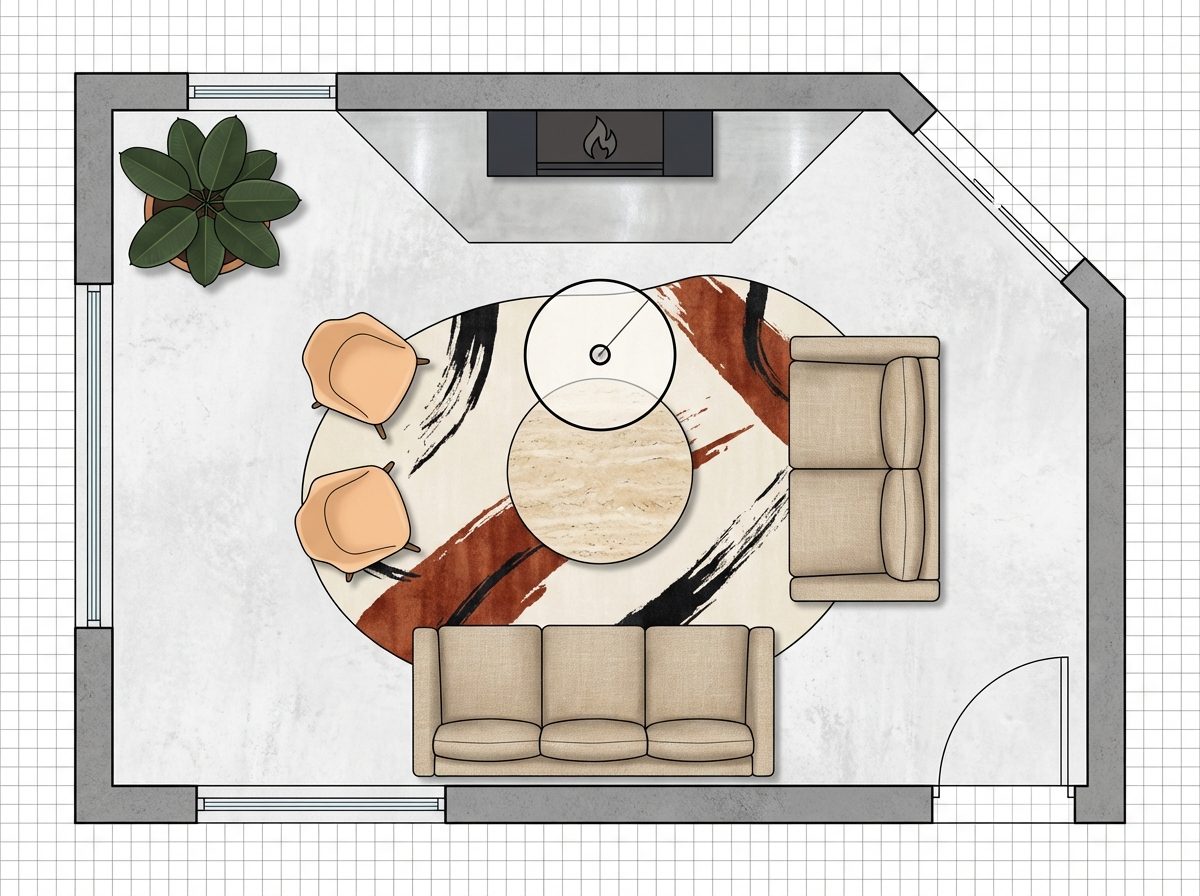
A diagonal corner wall is an architectural curveball that most layouts try to minimize. This arrangement does the opposite: it puts the fireplace directly on that angled surface and lets the whole furniture configuration rotate to meet it. The sofa’s slight diagonal position relative to the room’s main axis is a move borrowed from boutique hotel design, where seating rarely aligns perfectly with the walls because it makes the room feel more alive and less institutional.
The organic rug shape reinforces the room’s break from orthogonal convention without requiring any structural changes. The result is a rear living room that feels personal and specific to its architecture rather than interchangeable with any other house on the street.
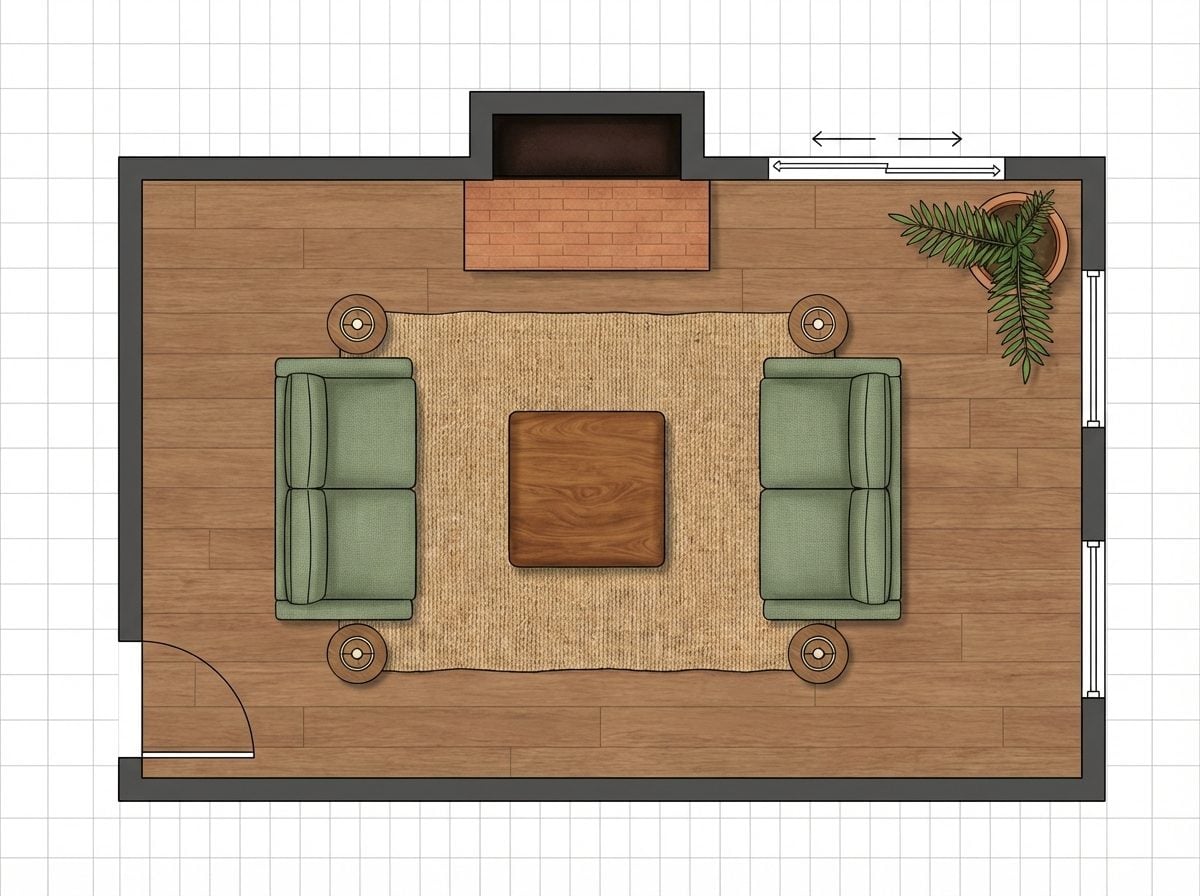
Twin Loveseats Facing Each Other Across a Hearth with Rear Sliding Door Access
🔥 Would you like to save this?
Parallel seating across a shared hearth is one of the oldest conversation configurations in residential design, and it works because it eliminates the social hierarchy of a sofa-and-chairs arrangement. Both sides are equal. The fireplace becomes a shared centerpiece rather than a backdrop for one dominant seat.
The sliding rear door on this layout is the real spatial move. It gives the room two completely different moods: closed, the fireplace is the sole focus and the room reads intimate; open, the outside floods in and the twin loveseats become a transitional lounge between interior and garden.
Modular Sofa in L-Shape with Fireplace Off-Center Right and Built-In Window Bench Left
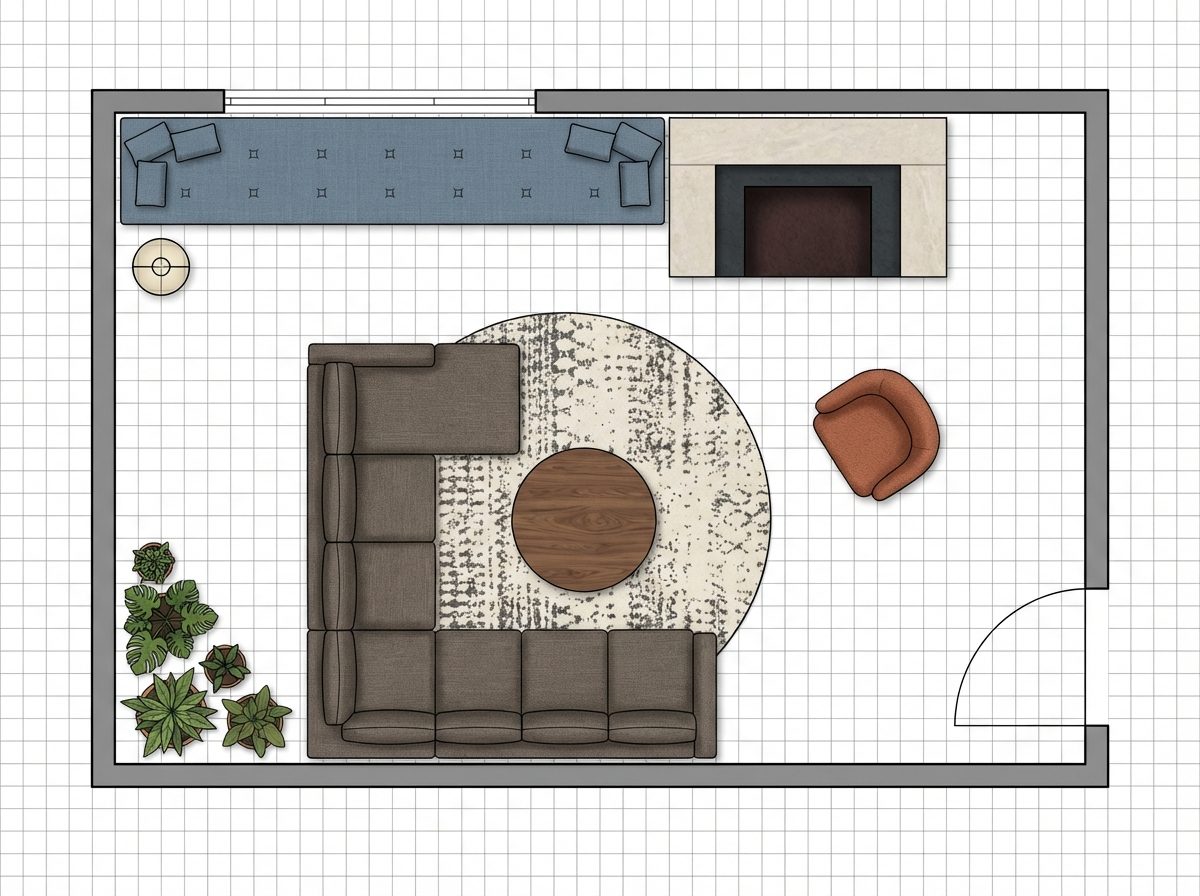
Off-centering a fireplace is a gift when you know how to use it. Shifting the firebox to the right wall frees up the left side for a built-in window bench, and the L-shaped sectional becomes the connective tissue between both features. The longer sofa arm tracks the fireplace while the shorter arm reaches toward the bench, so the eye moves naturally from warmth to light without the room feeling pulled in two directions.
The round coffee table inside the L elbow softens what could otherwise be a boxy arrangement. Circles in a room full of right angles are a reliable tension-breaker, and at low height they keep the sightline to the fire clear from every seat.
Semicircle Seating Around a Rear Statement Fireplace with Side Pocket Office Nook
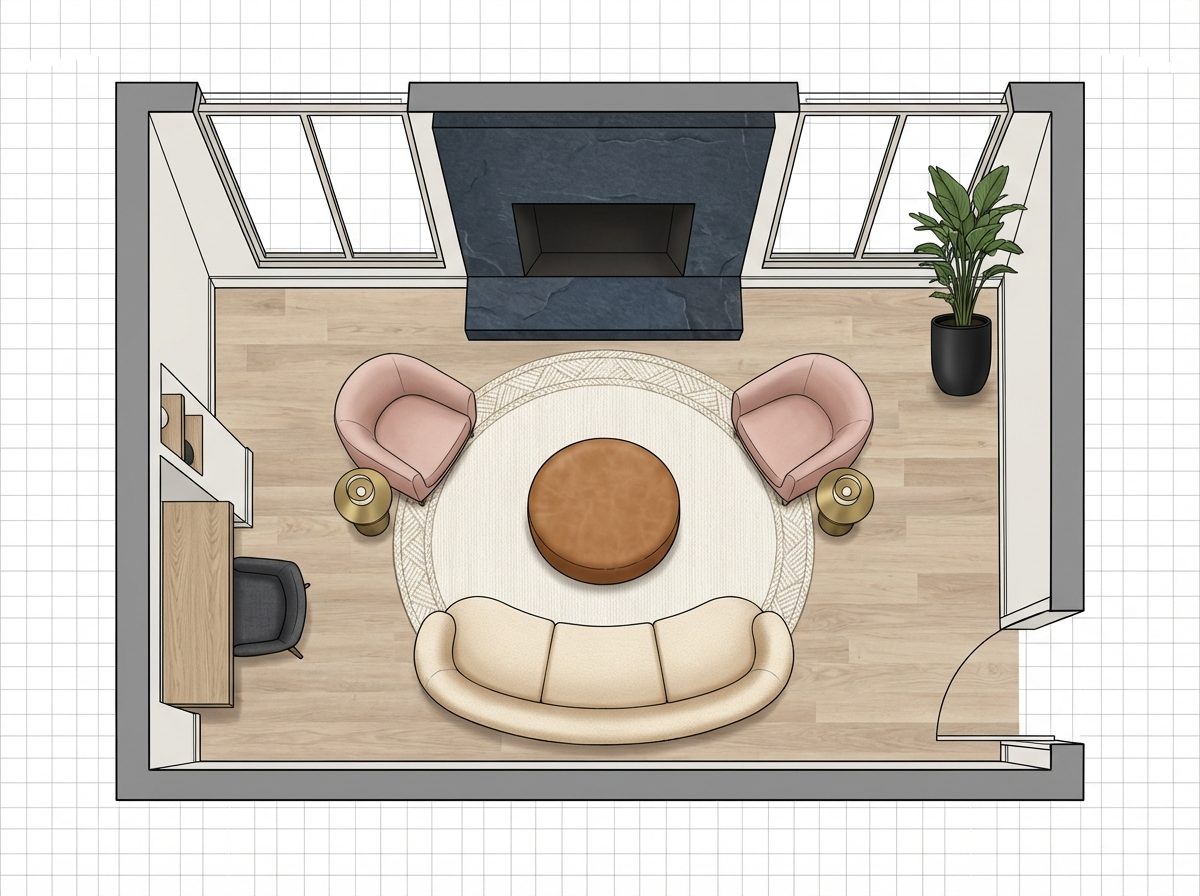
Curved furniture arrangements around a fireplace work on a primal level. The semicircle mirrors the campfire configuration humans have used for thousands of years, and the brain registers it immediately as a safe, social space. No design degree required to feel why this room pulls you in.
The side pocket office nook is the practical answer to a very modern problem: how to fit a work-from-home zone into a living room without the desk becoming the first thing anyone sees. Tucked into a recessed left wall, it sits completely outside the sightline of anyone seated at the fire.
Double Armchairs Flanking Layout with Fireplace Centered and Built-In Banquette Along Rear Wall
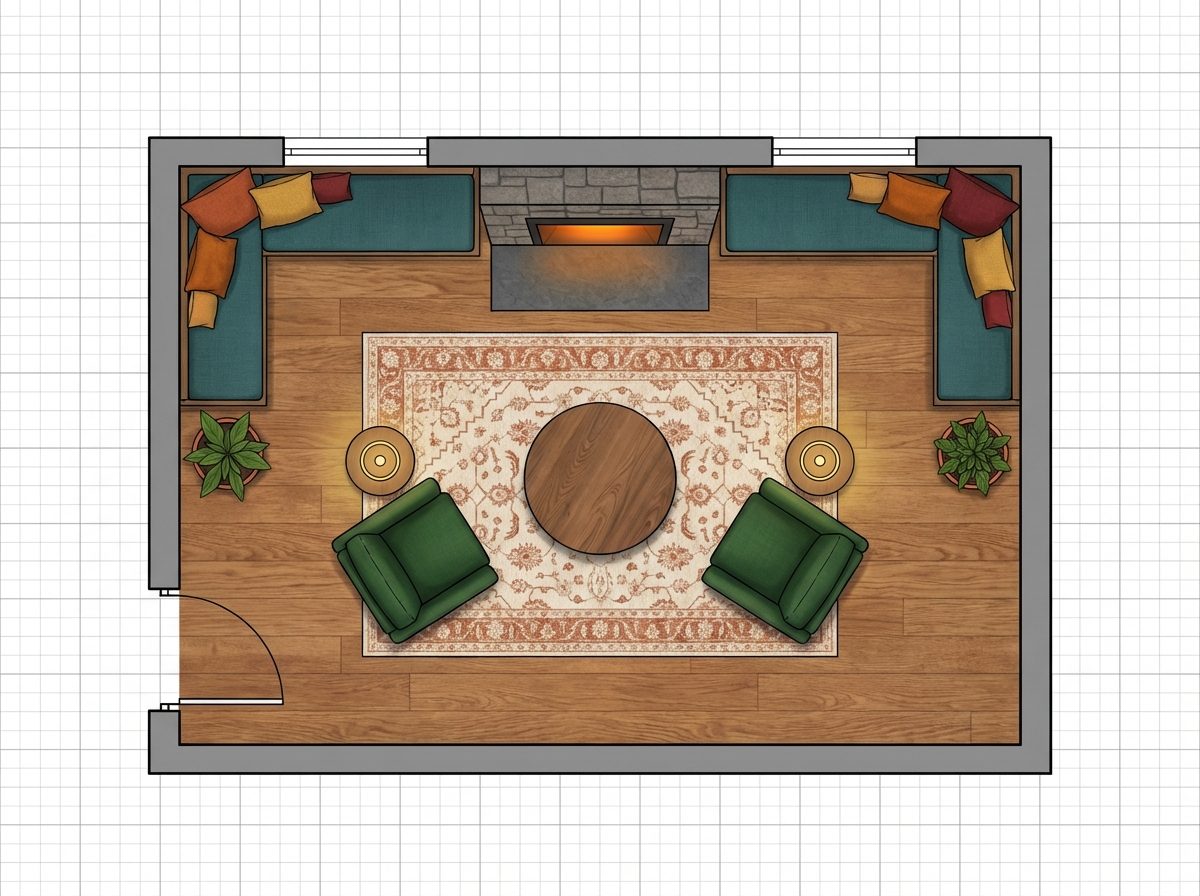
The banquette does something an extra sofa never could: it wraps the fireplace in architecture rather than furniture, so the whole rear wall reads as one intentional composition. The two armchairs pull slightly inward on the diagonal, which shortens the perceived distance across the room and makes the seating group feel gathered rather than arranged.
Traffic flows cleanly down both sides of the central rug zone, so the room never feels like an obstacle course even with four distinct seating surfaces. This layout rewards smaller rear living rooms where a full sectional would crowd the walls.
Three-Chair Conversation Triangle Around a Freestanding Fireplace with Floor-to-Ceiling Rear Windows
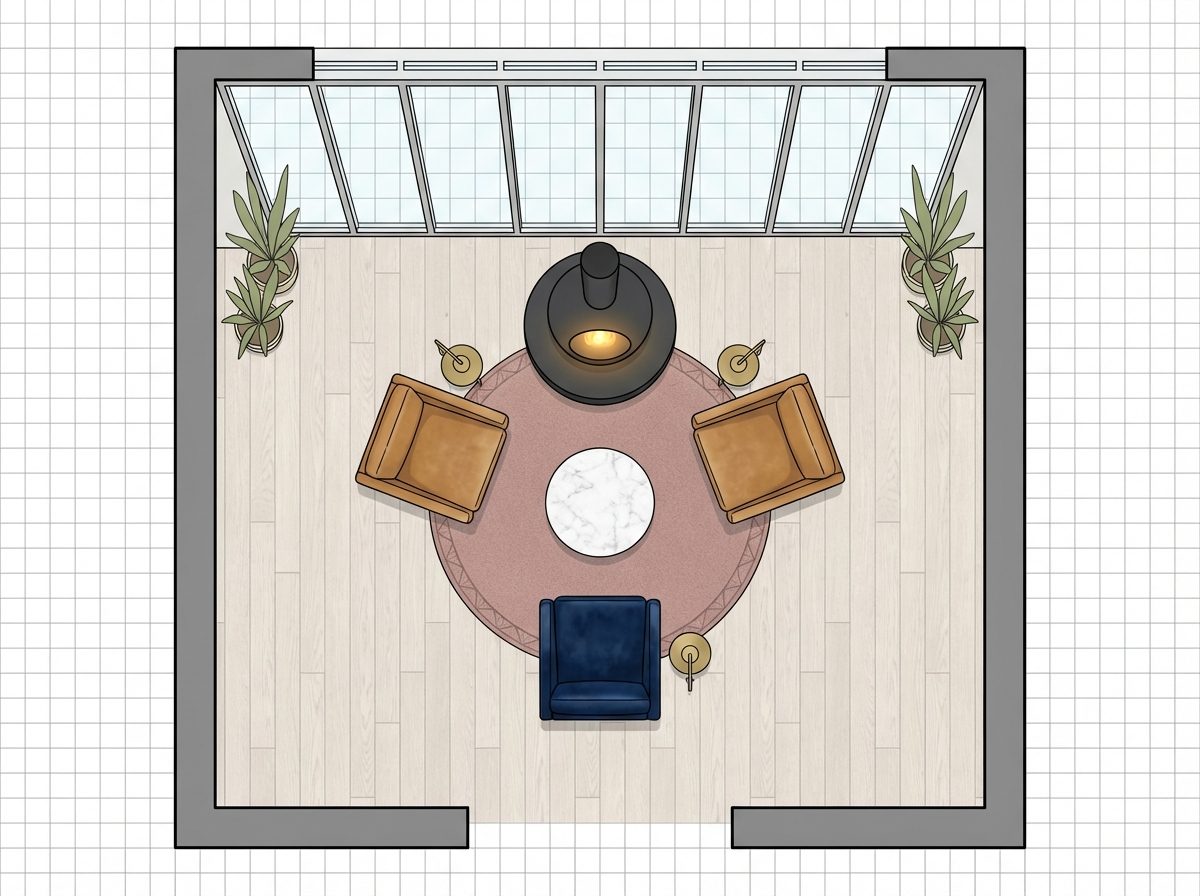
Removing the sofa entirely is the move that unlocks this layout. Three chairs in a triangle around a freestanding fireplace create a genuinely democratic conversation space where no seat has a worse view of the fire than any other. The psychology here is deliberate: equal sightlines reduce social hierarchy in the room, which is why this configuration shows up repeatedly in high-end hospitality lounge design.
The floor-to-ceiling rear windows mean the fireplace reads against a backdrop of light or garden rather than a solid wall, giving the room a floating quality that’s hard to achieve any other way. Keep the rug circular to echo the fireplace footprint and the whole arrangement locks into place visually.
Wraparound Sofa with Fireplace on Side Rear Pier Wall and Sliding Glass Doors Opposite
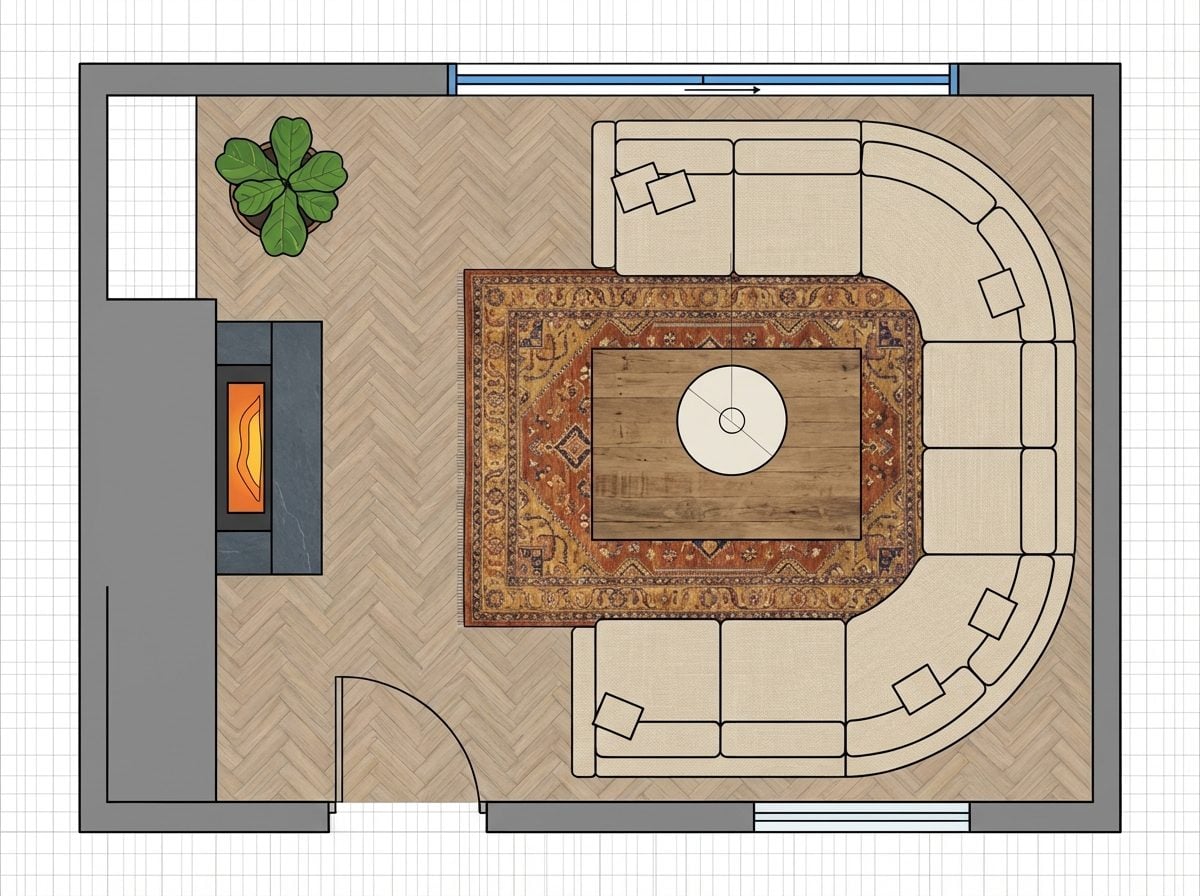
Placing the fireplace on a partial pier wall rather than dead center opens the rest of the rear elevation to glass, which is one of the smarter spatial trades available in a rear living room. The wraparound sofa swoops toward the fire from the right, so every seat on it has a natural diagonal sightline to both the flames and the garden beyond the sliding doors simultaneously.
Back-to-Back Seating Zones with Fireplace on Rear Wall and Casual Floor Cushion Area Toward the Room Center
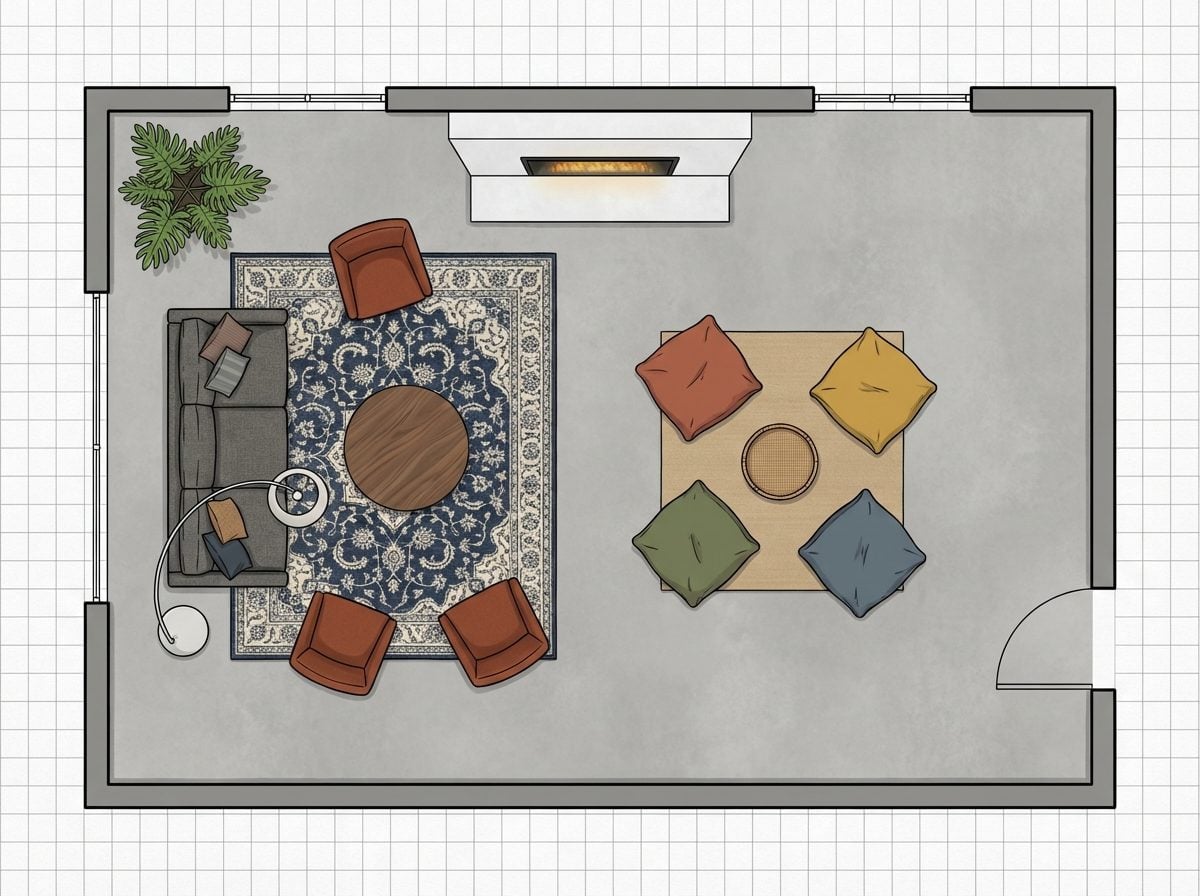
Two seating zones in one rear room sounds like it should feel cluttered, but the height differential does all the separating work here. The sofa-and-chairs grouping reads as the formal anchor toward the fireplace wall while the floor cushions drop the eye level dramatically toward the room’s center, signaling a looser, more relaxed use of that zone.
Polished concrete flooring unifies both areas without the visual interruption of a threshold or level change. The two rugs act as the zone markers instead, which keeps the floor plan flexible, the cushion arrangement can scatter or regroup depending on the occasion.
A room that can do two things at once is more valuable than a room that does one thing perfectly.