🔥 Would you like to save this?
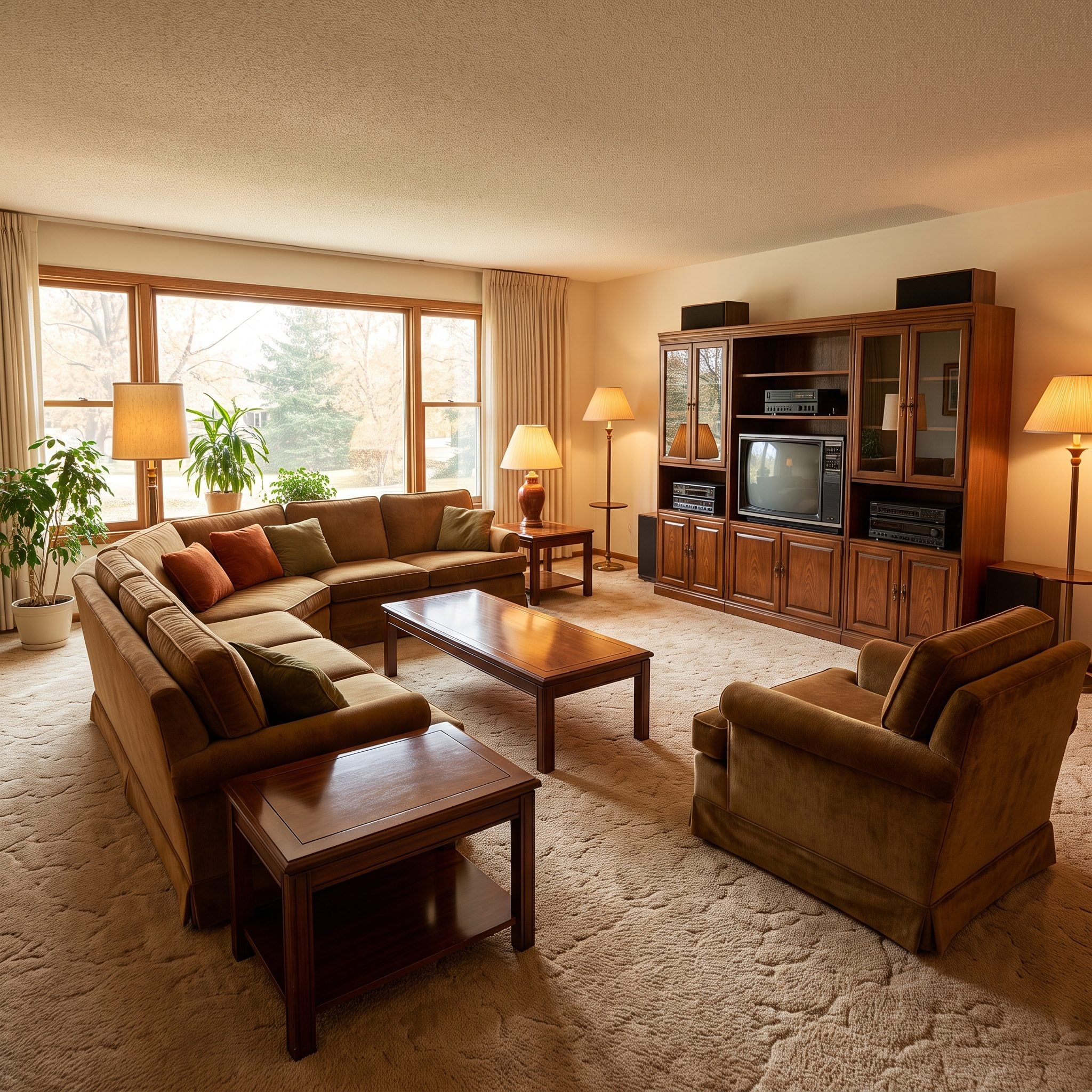
Walk into a furniture store in the mid-1980s with an empty living room and the bill could get serious before you made it past the sectional. The sofa was only the opening move. Then came the matching loveseat, the oak tables, the console television, the stereo components, the drapes, the lamps, the carpet, and eventually some enormous piece of cabinetry designed to make the television look as though it had inherited the house. Individual price tags can sound almost quaint now. Added together, they explain why furnishing a living room was something families planned, financed, and expected to live with for years.
The prices here are representative estimates rather than a single national price list. Brand, region, materials, retailer, and the exact year all mattered, and the decade itself changed quickly: electronics that felt luxurious in 1981 could be considerably more attainable by 1988. What matters is the scale of the purchases. An $800 sectional, a $700 console television, or a $600 entertainment center represented real household decisions at a time when hourly wages were also measured in single digits for many workers. Furniture wasn’t being refreshed because a new shade of beige appeared on Instagram. You bought the room, paid it off, and then spent the next decade looking at it.
In order to come up with the very specific design ideas, we create most designs with the assistance of state-of-the-art AI interior design software. Also, assume links that take you off the site are affiliate links such as links to Amazon. this means we may earn a commission if you buy something.
That permanence shaped the design. Matching mattered because nobody wanted six expensive pieces arguing with one another for fifteen years. Oak repeated across the tables and wall unit. Mauve from the sofa reappeared in the lamps, curtains, pillows, and rug. Brass migrated from floor lamps to cabinet handles and étagères until an entire room could look as though it came from one catalog spread. These 32 pieces reconstruct that living room from the expensive anchors down to the wobbling TV trays—and show where the money actually went.
A little inspiration can turn into a serious renovation plan—check today’s home equity rates if financing is on your mind.
32. The Oversized Sectional Sofa That Anchored the Room, About $800 in 1984
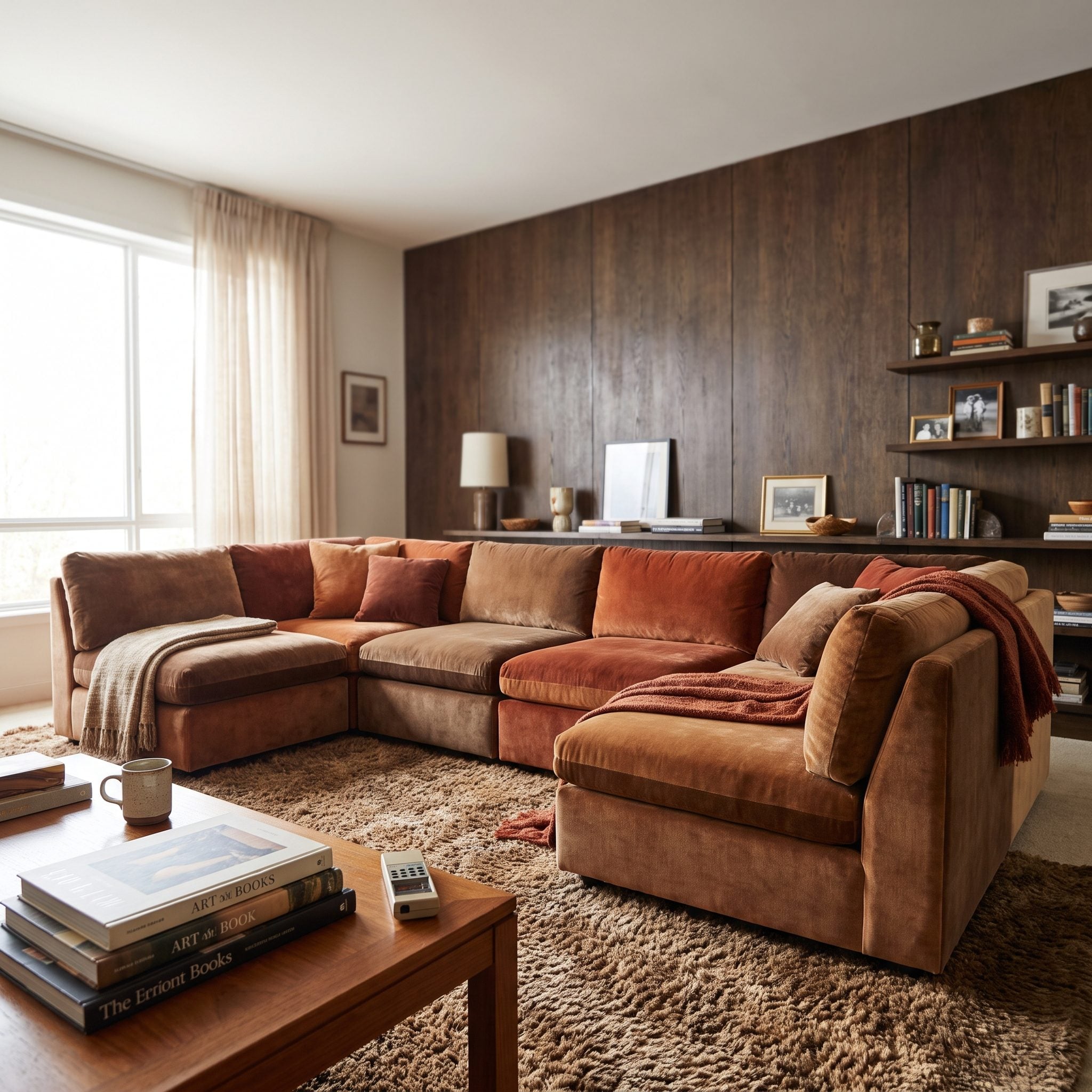
The sectional was the down payment on the whole room. A big velour or herculon L-shape could run around $800 in the mid-’80s, and versions with built-in recliners pushed higher. Furniture stores made purchases like this easier to spread over months with installment plans, because this was not casual Saturday-afternoon spending.
Put $800 against an $8 hourly wage and you are looking at roughly 100 hours of gross work. That helps explain why people chose cautiously. You did not buy it twice. You bought it once, in a color you expected to live with for years, and mauve won a remarkable number of those negotiations.
31. The Wood-Console Television, Furniture in Its Own Right, About $700
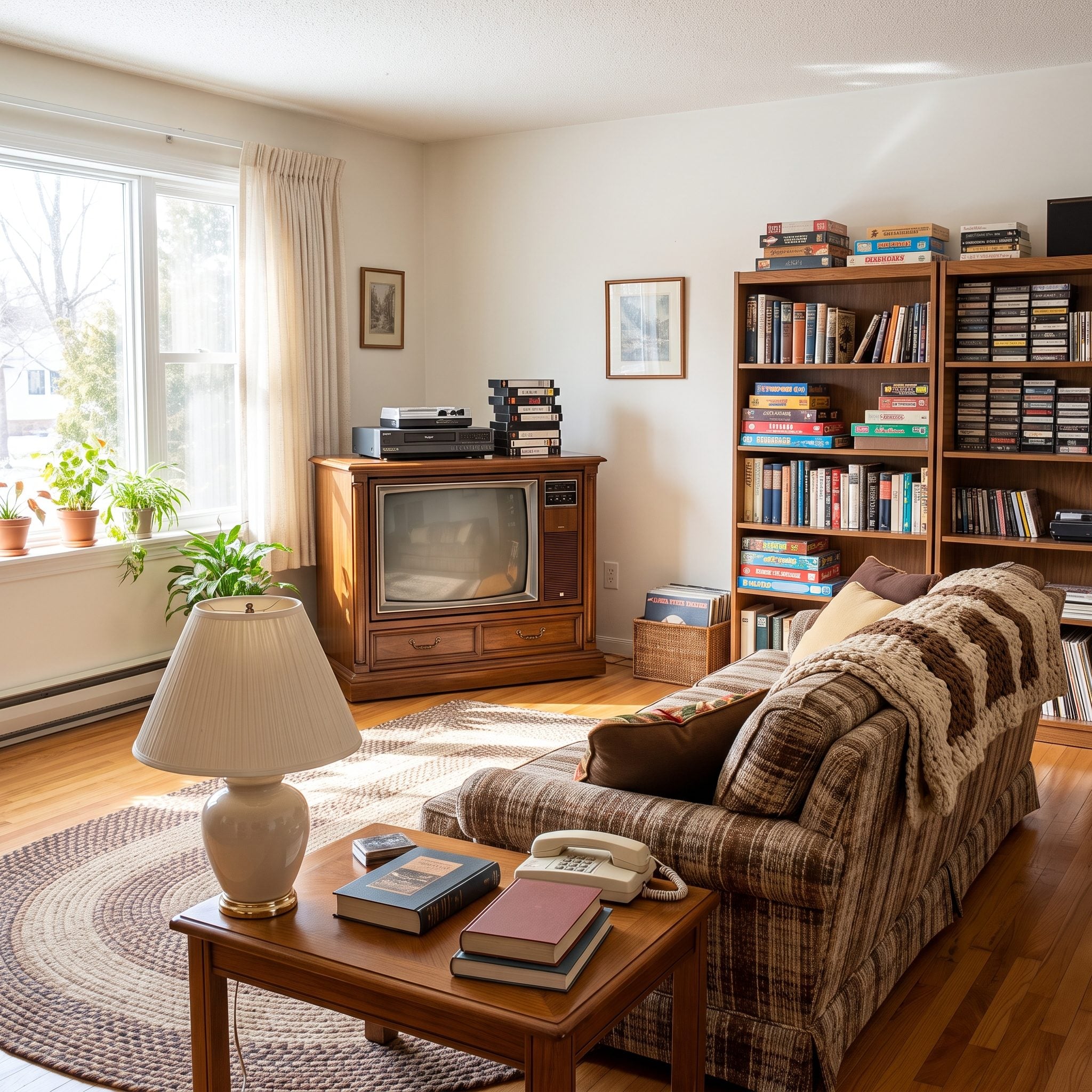
Before flat screens, a television could be a piece of case furniture with a picture tube inside. A 25-inch wood-console color set from a major brand might run around $700 in the early ’80s, housed in a walnut-look cabinet substantial enough to sit directly on the carpet on its own little legs.
The cabinet was meant to coexist with the rest of the room, so the top became prime real estate for a doily, a plant, and the rabbit ears. When the television finally died, families occasionally discovered that moving the carcass was more trouble than improvising around it. A smaller replacement perched on top was not unheard of. The dead TV had become furniture whether anyone intended it or not.
30. The Coordinating Accent Chair in Floral or Velour, Around $200
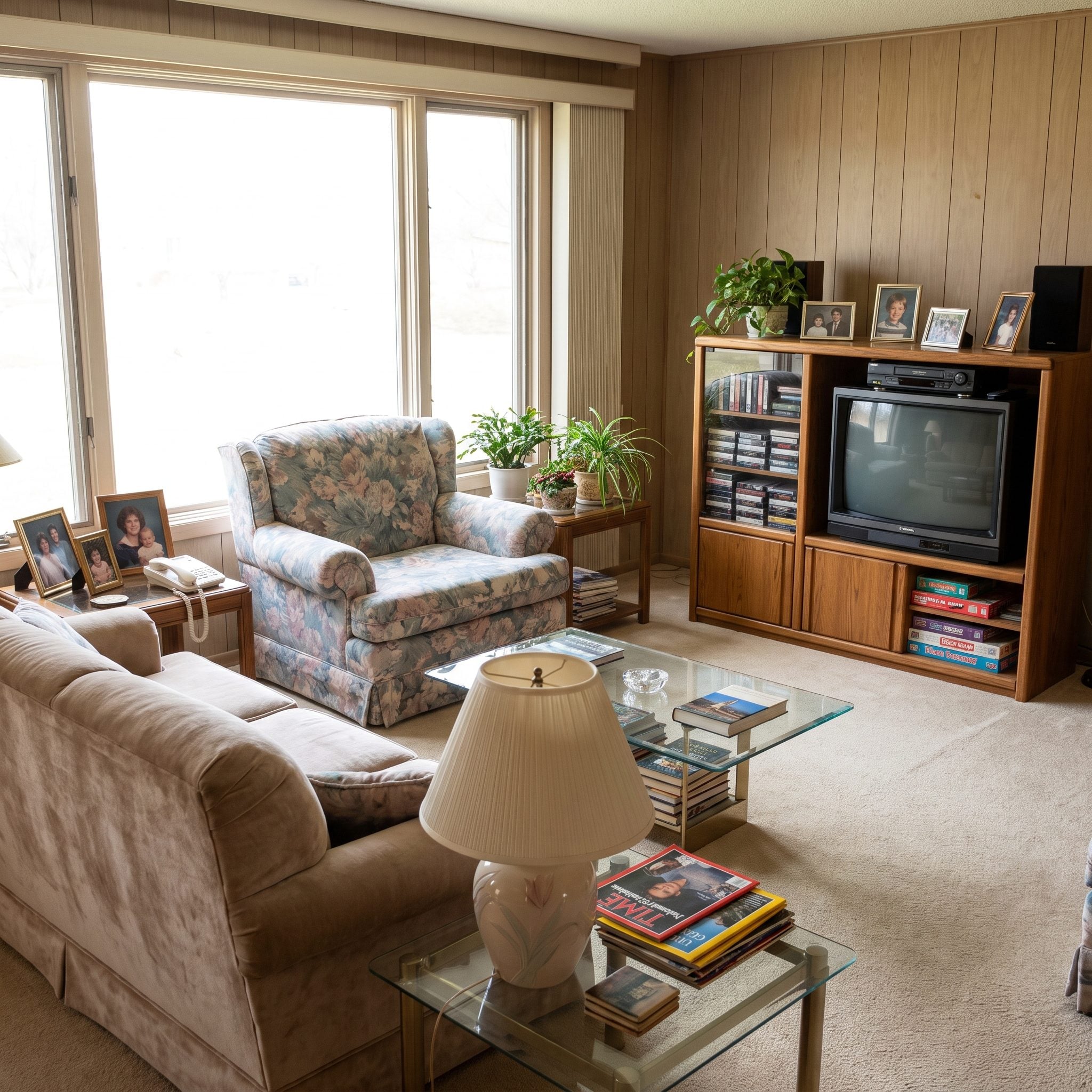
The accent chair was where the ’80s living room let itself get a little loud. Roughly $200 could buy a wingback or barrel chair in floral chintz, fat plaid, or jewel-tone velour that had very little to do with the sofa and everything to do with the drapes.
This was often the chair nobody actually chose first. It occupied the corner looking coordinated, a matching pillow perched on the seat, then got demoted to laundry-folding duty during the week. The same instinct survives in a good pink bonus room today: one assertive chair can make the whole composition feel intentional.
29. The Plush Wall-to-Wall Carpet Under Everything, Roughly $12 Per Square Yard Installed
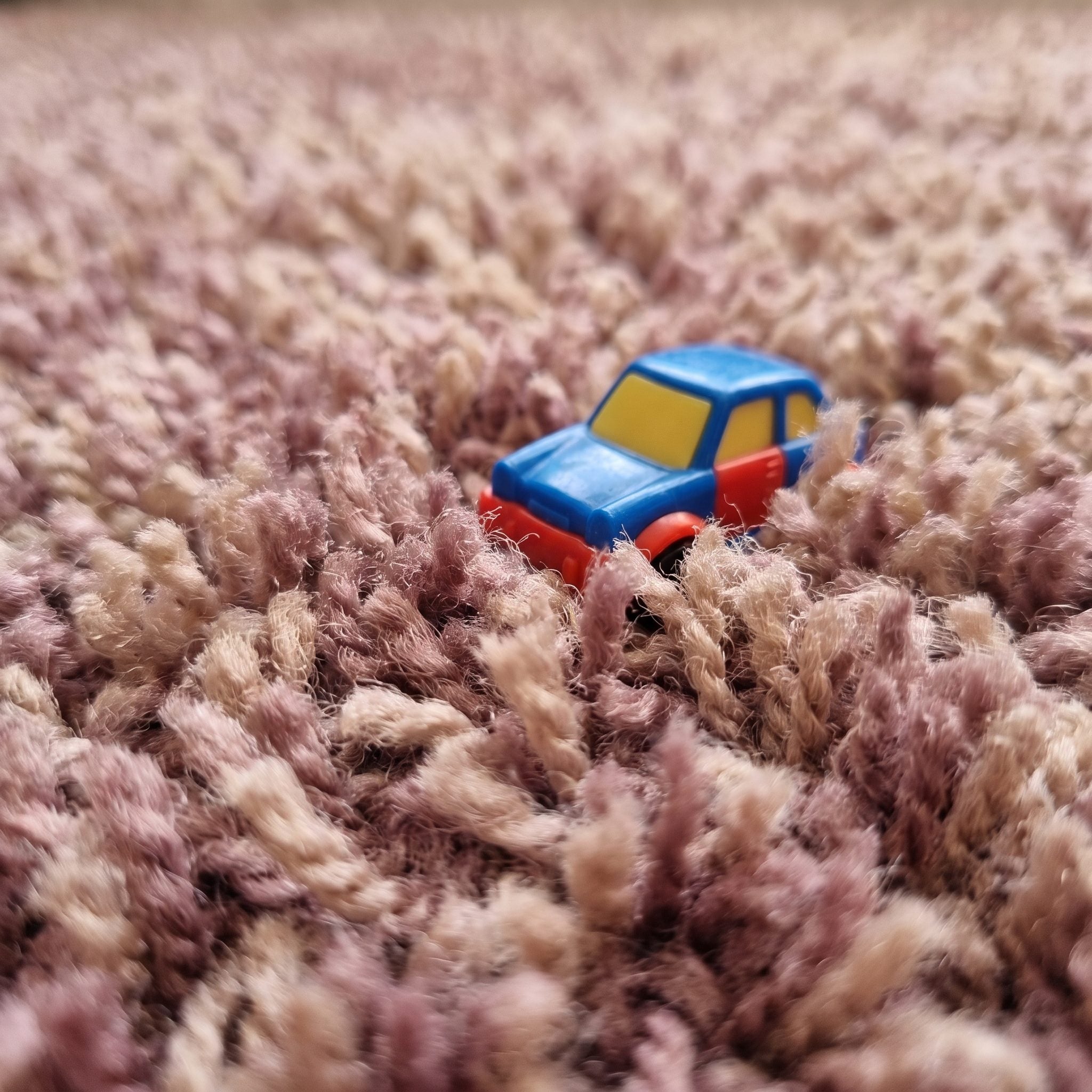
Wall-to-wall plush carpet—the thick kind that could hide a Lego for a year—might run around $12 per square yard installed in the early-to-mid ’80s, putting a typical living room floor into the hundreds once the pad and installation were included.
Beige and taupe were the diplomatic choices. Dusty blue or mauve required more conviction. The vacuum left neat tracks that everybody agreed meant clean, so people ran the machine in careful parallel lines like they were mowing a lawn. The pile flattened permanently beneath speaker cabinets and table legs. That was simply part of the arrangement.
28. The Giant Entertainment Center Built Around the TV, About $600
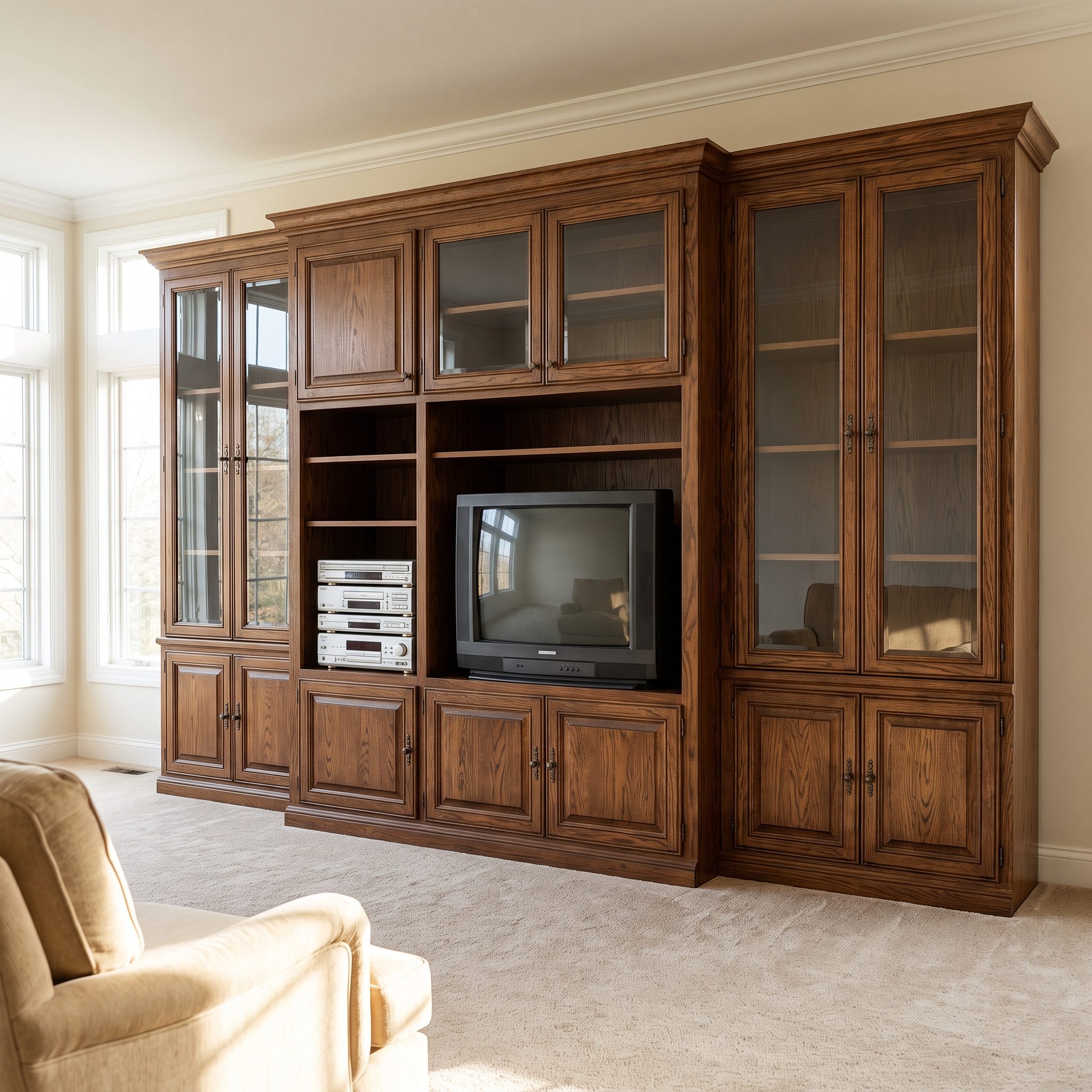
The entertainment center was the biggest object in the room after the sectional, and it knew it. Around $600 could buy a wall-swallowing oak unit with glass cabinet doors, open shelving, and a central opening large enough to make the television look permanently installed.
This was the shrine. Stereo behind the glass, tapes on the shelves, a trophy or two, family photographs, and a place for the VCR with its blinking 12:00. The entire wall became a composition built around electronics. That same wall-of-storage instinct still drives a good gray media room layout; only the television got thinner.
27. The Heavy Drapes and Sheers Layered at the Windows, Around $80 Per Window
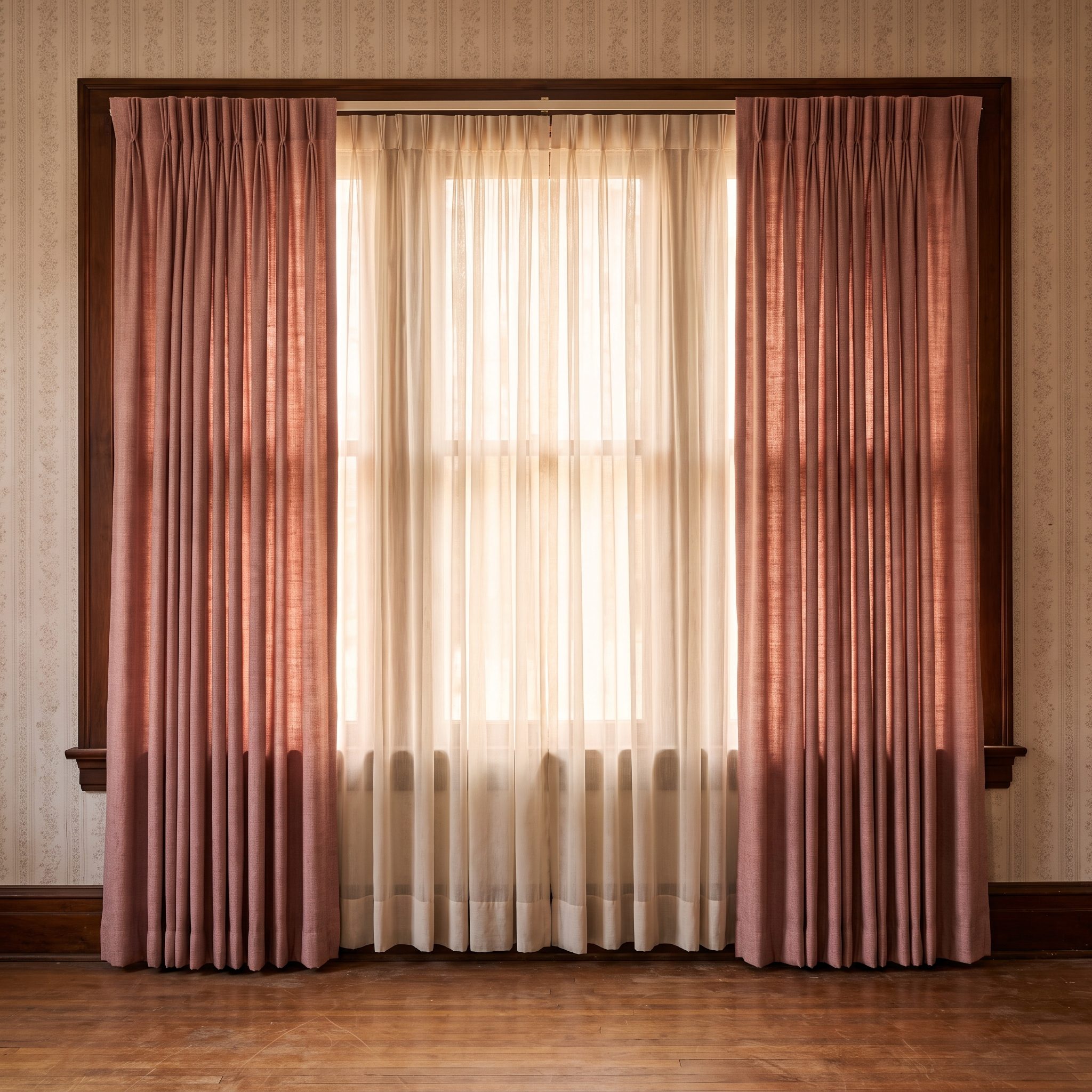
Full drapes with sheers underneath could run roughly $80 a window once panels, sheers, rods, and a valance were counted. A living room with three windows could quietly absorb around $250 in fabric before custom pinch pleats or upgraded hardware entered the conversation.
The layering did practical work. Sheers provided daytime privacy while still allowing light through, and the heavier drapes closed the room down at night. Tiebacks swept the panels outward, while a pleated valance concealed the hardware above. It was a lot of textile for one window, but subtlety was not really the assignment.
26. The Overstuffed Recliner Everyone Knew Belonged to Dad, About $350
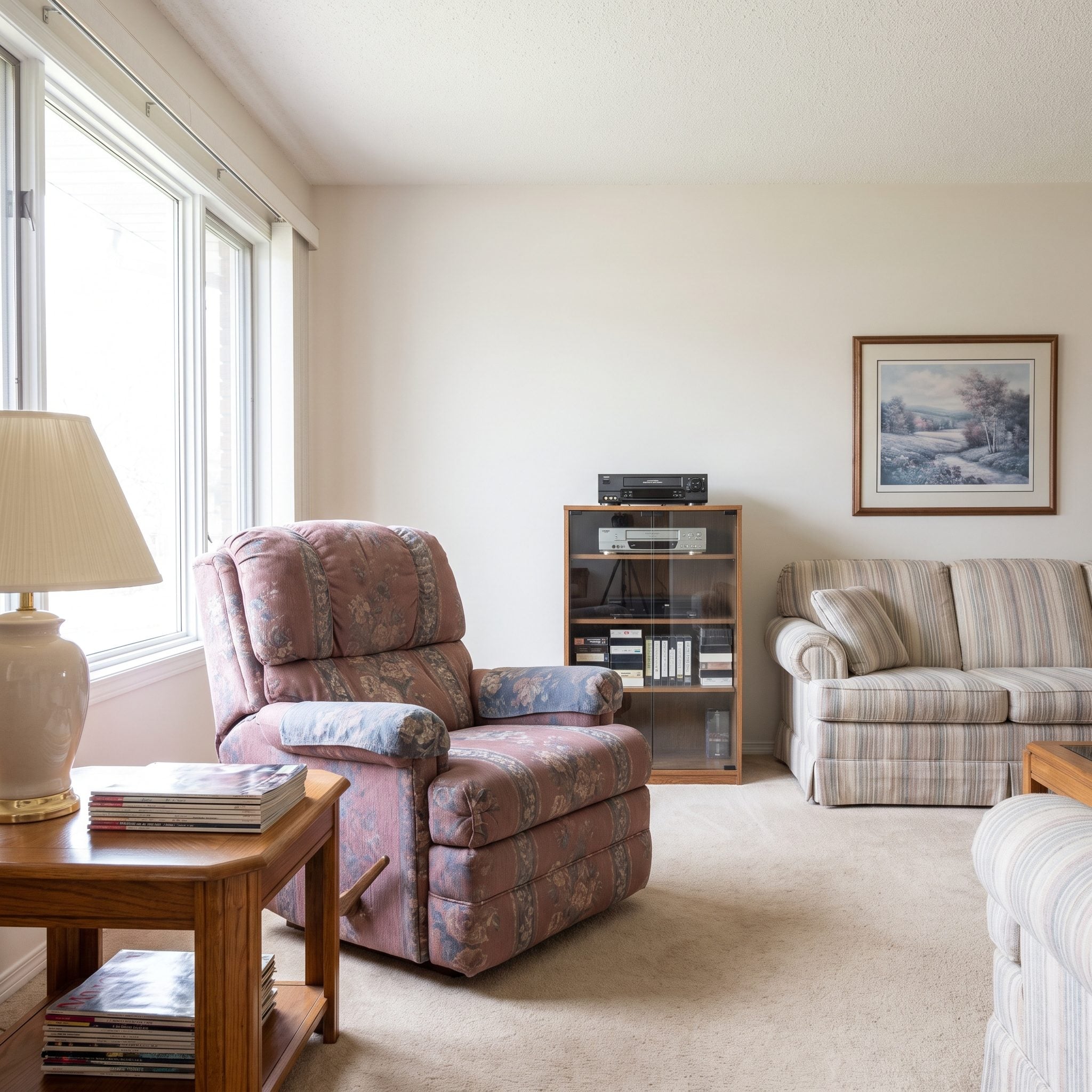
Everybody in the house understood the recliner’s political status without a word spoken. A La-Z-Boy or store-brand equivalent could run around $350 in the early ’80s, tan velour or brown corduroy, with a side handle that made the footrest launch with a satisfying clack.
That was a substantial amount for one chair occupied primarily by one person. The seat faced the television, the side table stayed within reach, and everybody else seemed to understand the zoning rules. Kids had a remarkable ability to vacate the chair seconds before the owner of record entered the room.
25. The Oak or Dark-Wood Coffee Table at the Center of It All, About $180
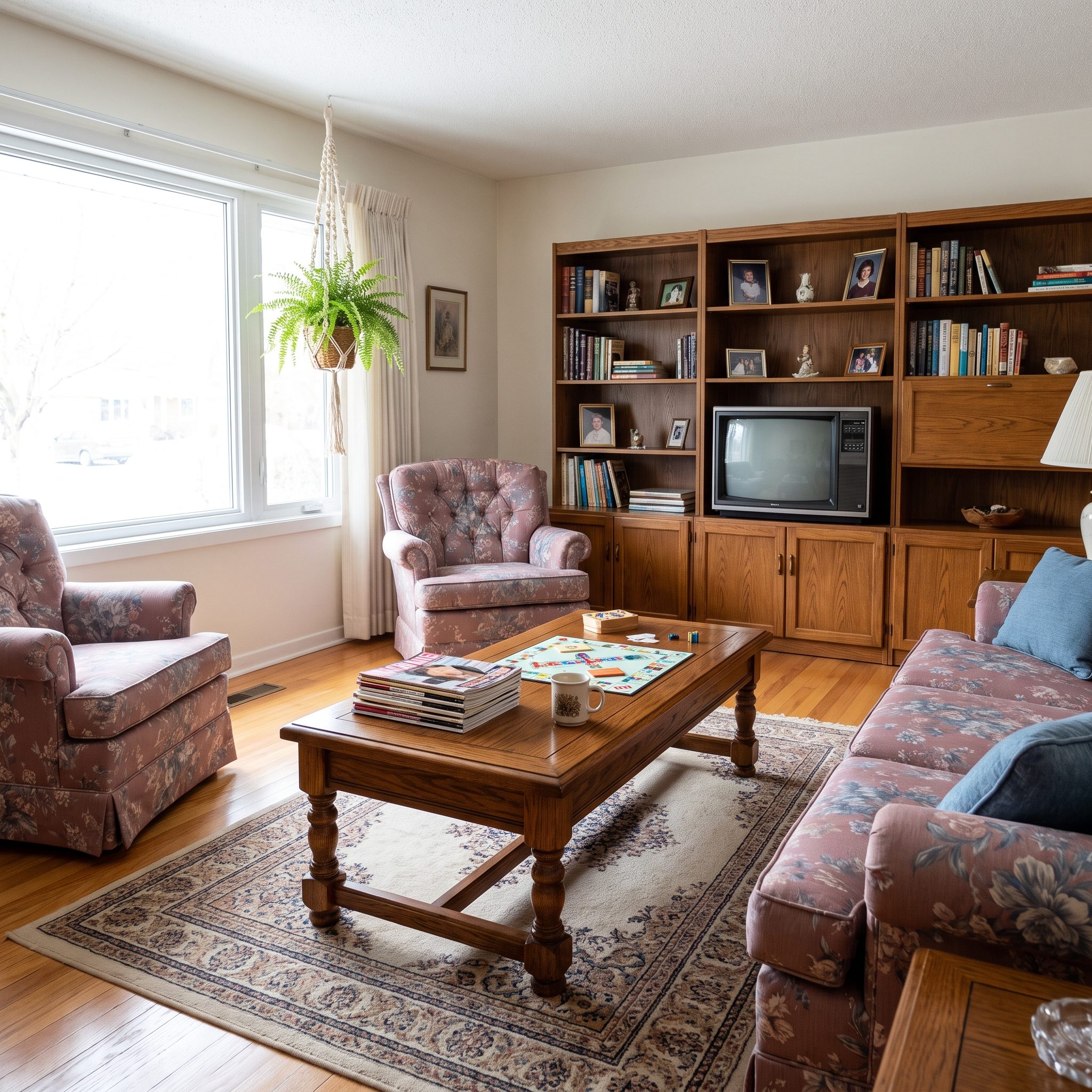
The coffee table was the room’s front porch, the surface everything landed on. A substantial oak model, sometimes with a beveled glass insert set into the top, might cost around $180 and weigh enough to discourage casual rearranging.
Honey oak was everywhere. The glass insert protected the wood and provided a perfect stage for magazines arranged just so. This was furniture built for years of feet, drinks, newspapers, board games, and whatever else the household dropped in the center of the room.
24. The VCR That Turned the Living Room Into a Movie Theater, About $500 Early, $250 Later
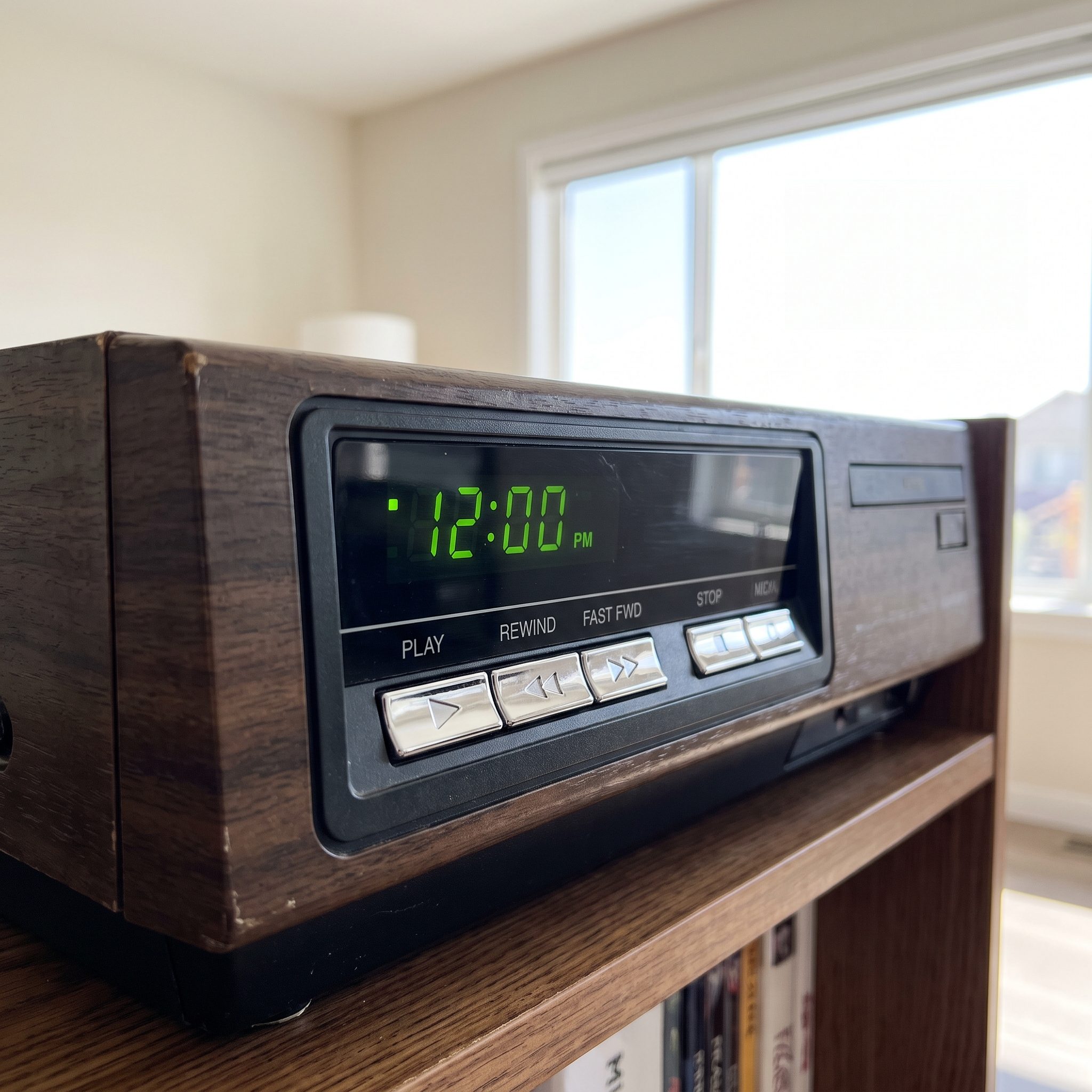
The VCR changed the living room and charged for the privilege. An early-’80s machine could still cost around $500, putting home video firmly in luxury-purchase territory. By the later part of the decade, prices around $250 made the technology far more attainable and VCR ownership increasingly commonplace.
Friday night was no longer limited to whatever the networks scheduled. You rented two movies, made popcorn, and recorded programs to watch later. The clock blinked 12:00 because programming it required diplomatic negotiations nobody had the energy to conduct. The machine was imperfect, expensive, and transformative.
23. The Artificial Ficus Filling the Empty Corner, Roughly $50 to $150
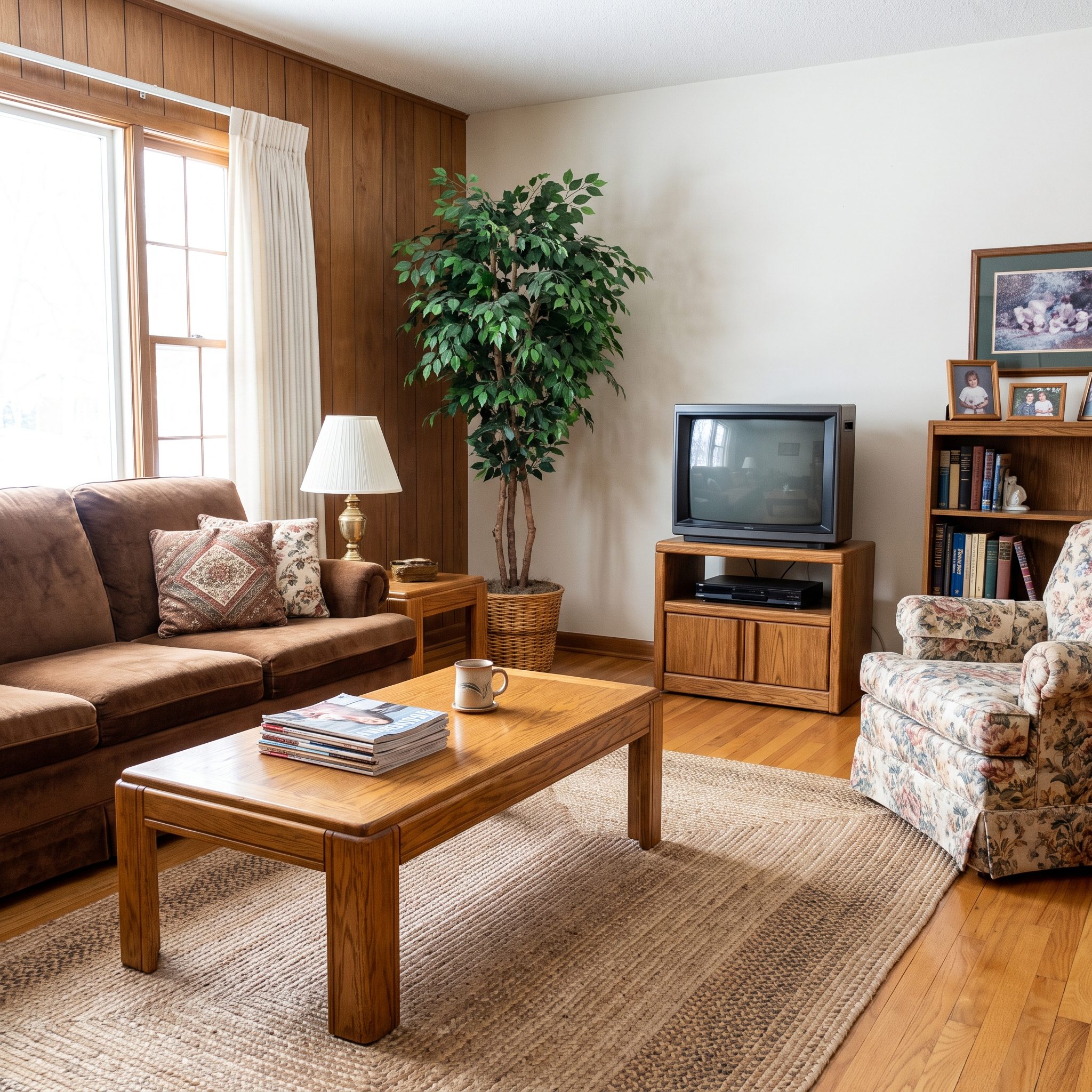
The giant fake ficus in the corner could run about $50 to $150, basket included. Silk leaves cost more than plastic, and the taller versions climbed in price quickly.
Nobody necessarily expected it to pass a botanical inspection. It solved a room problem. An empty corner looked unfinished, while a real tree of that size wanted more dependable light and care than many living rooms offered.
The basic instinct has aged surprisingly well. Interior stylists still use large plants—real or artificial—to give dead corners height and softness. The dusty leaves nobody remembered to wipe were the part best left in 1986.
22. The Matching Loveseat, Roughly $450 for Families With Wall Space
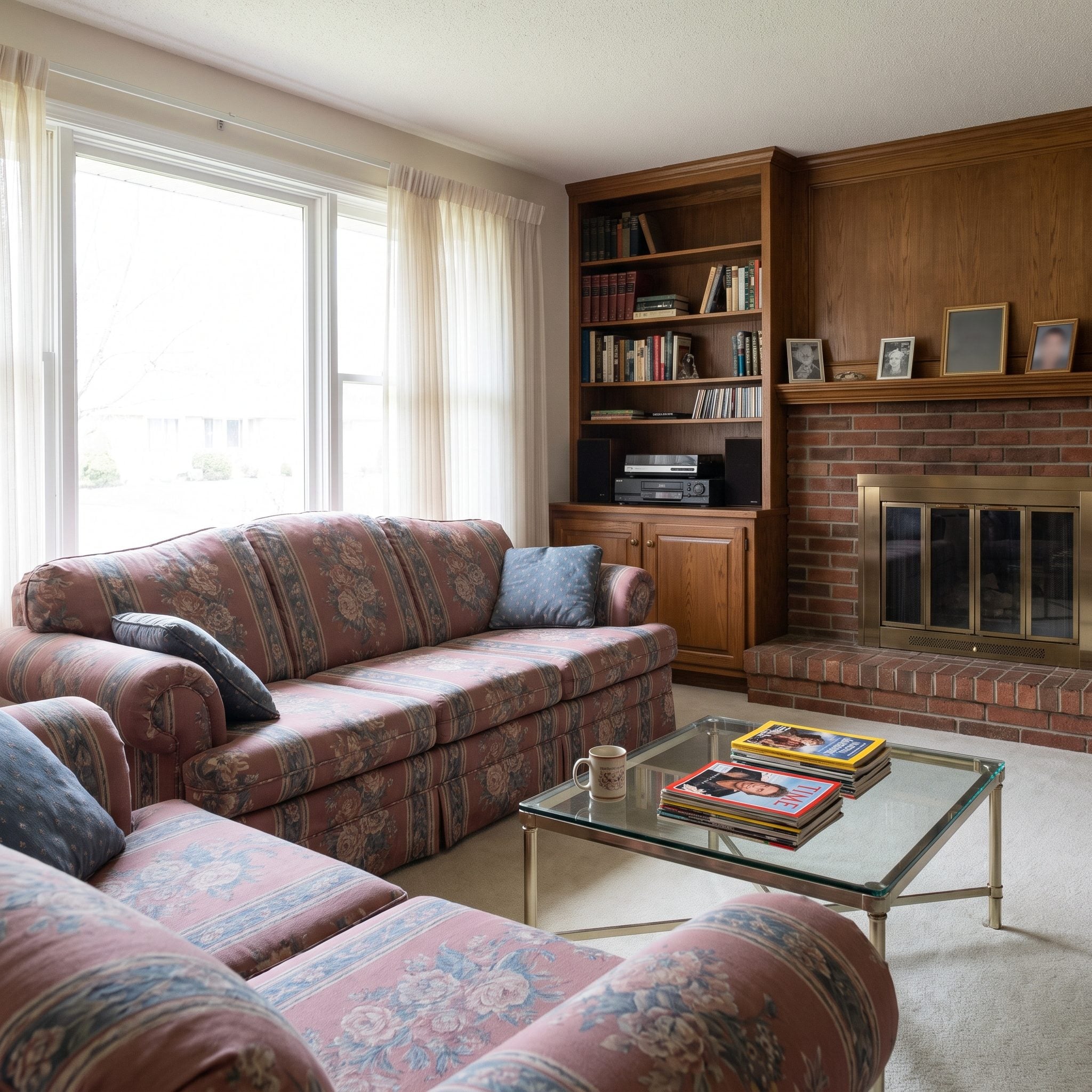
The loveseat was the sectional’s smaller sibling, and it existed because plenty of ’80s living rooms had another wall waiting to be filled. Around $450 might buy the coordinating piece in the same fabric, often a floral or plaid that looked settled and tasteful at the time.
Bought with the sofa, it helped create the full furniture grouping stores loved to sell. Sofa, loveseat, and chair became a “suite,” a word that made three upholstered objects sound as though they had just checked into a hotel.
21. The Oversized Decorative Mirror in a Brass or Wood Frame, About $60 to $200
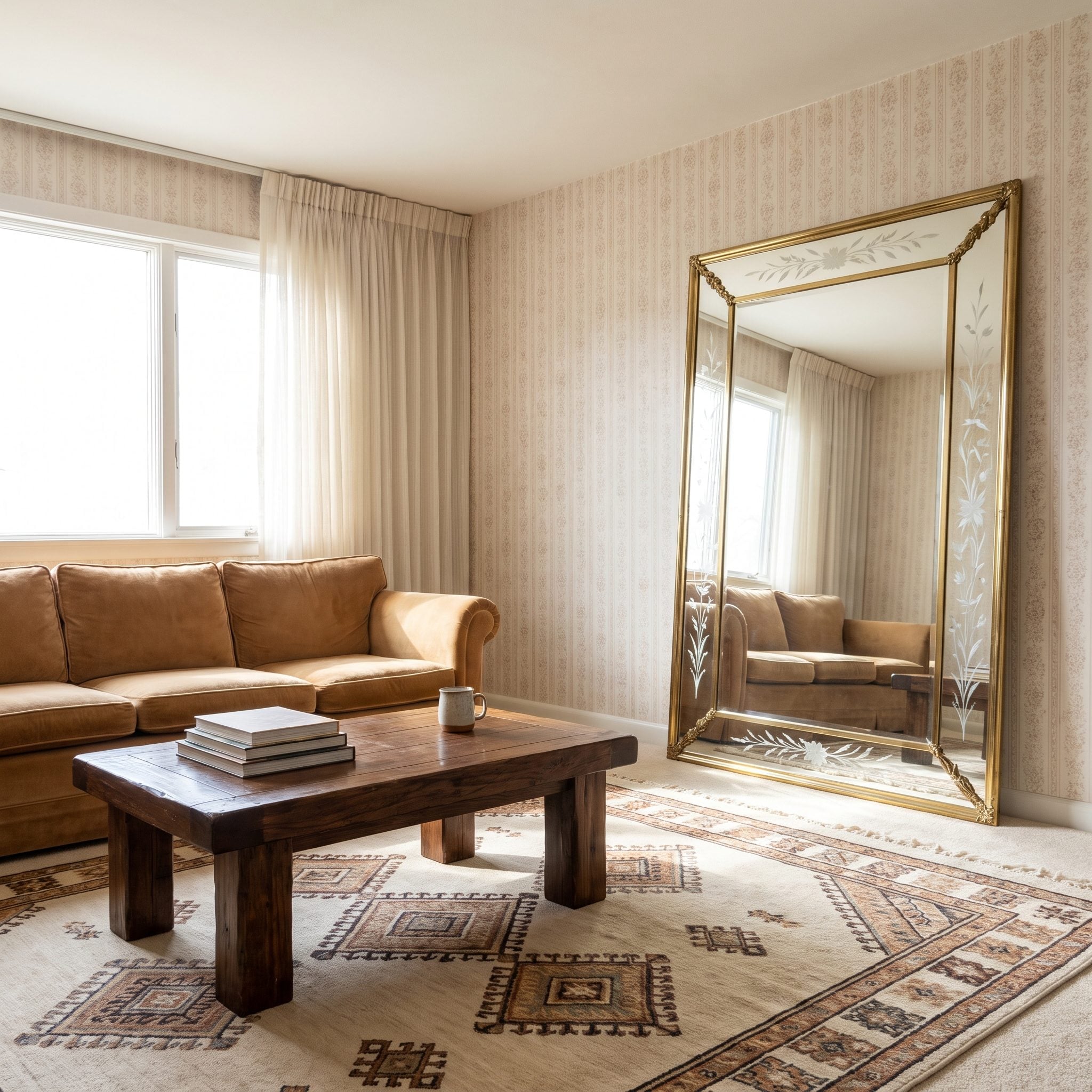
A large decorative mirror in a brass or wood frame might set you back roughly $60 to $200. Beveled glass, heavier frames, and more elaborate shapes pushed the price upward.
The design payoff was immediate. Positioned to reflect a window or another bright part of the room, a large mirror could make a boxy living room feel brighter and visually deeper without consuming floor space. Designers knew the trick then, and it still earns its keep.
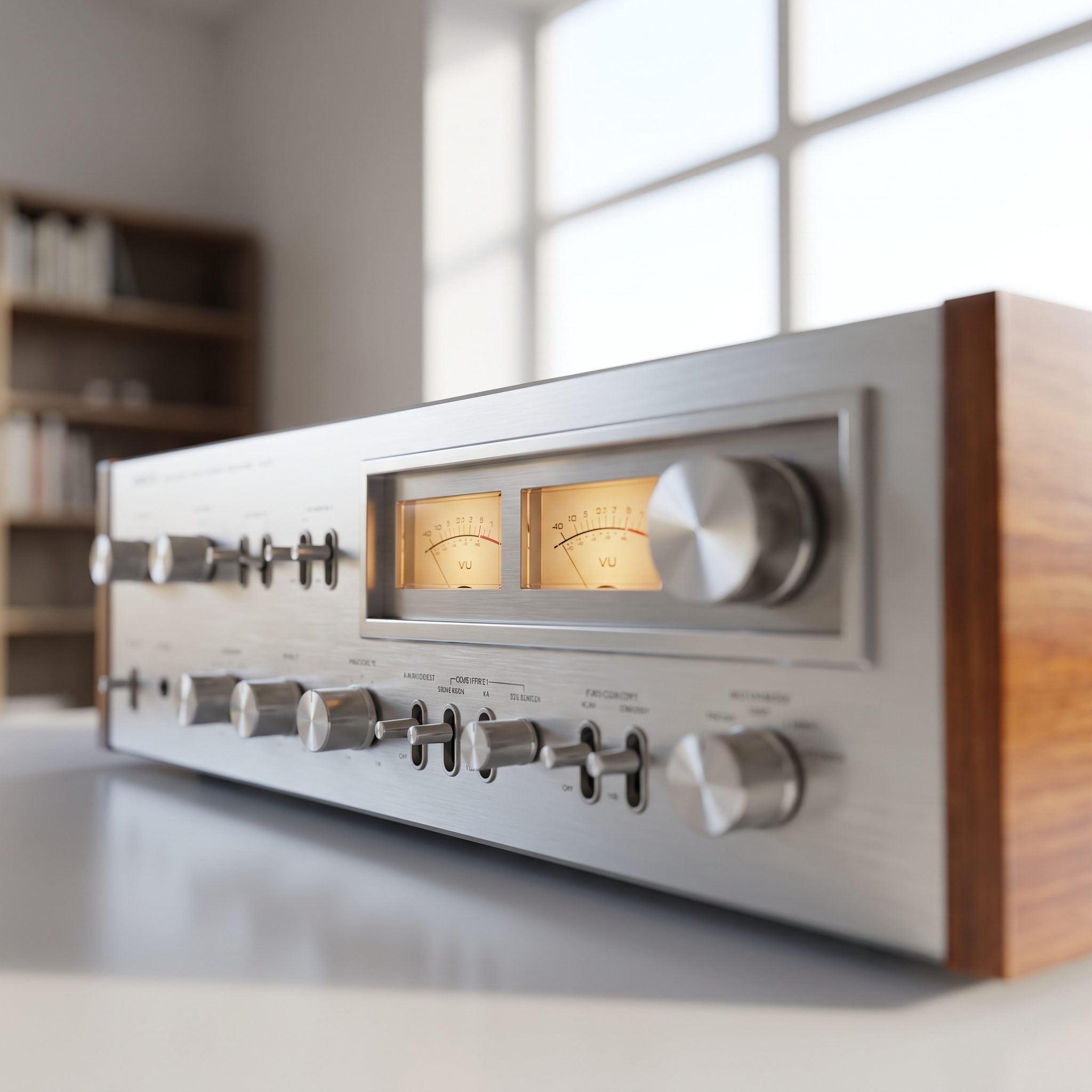
20. The Stereo Receiver and Component System: Around $350 in 1985
🔥 Would you like to save this?
A decent AM/FM receiver might cost around $350 in the mid-’80s, while more powerful or better-equipped models could move well beyond that. This was not the complete stereo. It was merely the box everything else eventually plugged into.
The receiver was the brain of the operation: tuner, amplifier, switches, knobs, and glowing indicators you could stare at while the record played. Buying one felt like a commitment because upgrading every couple of years was not the default assumption. A good receiver might remain in service through several rearrangements of the room around it.
19. The Large Area Rug Over the Hard Floor: About $150
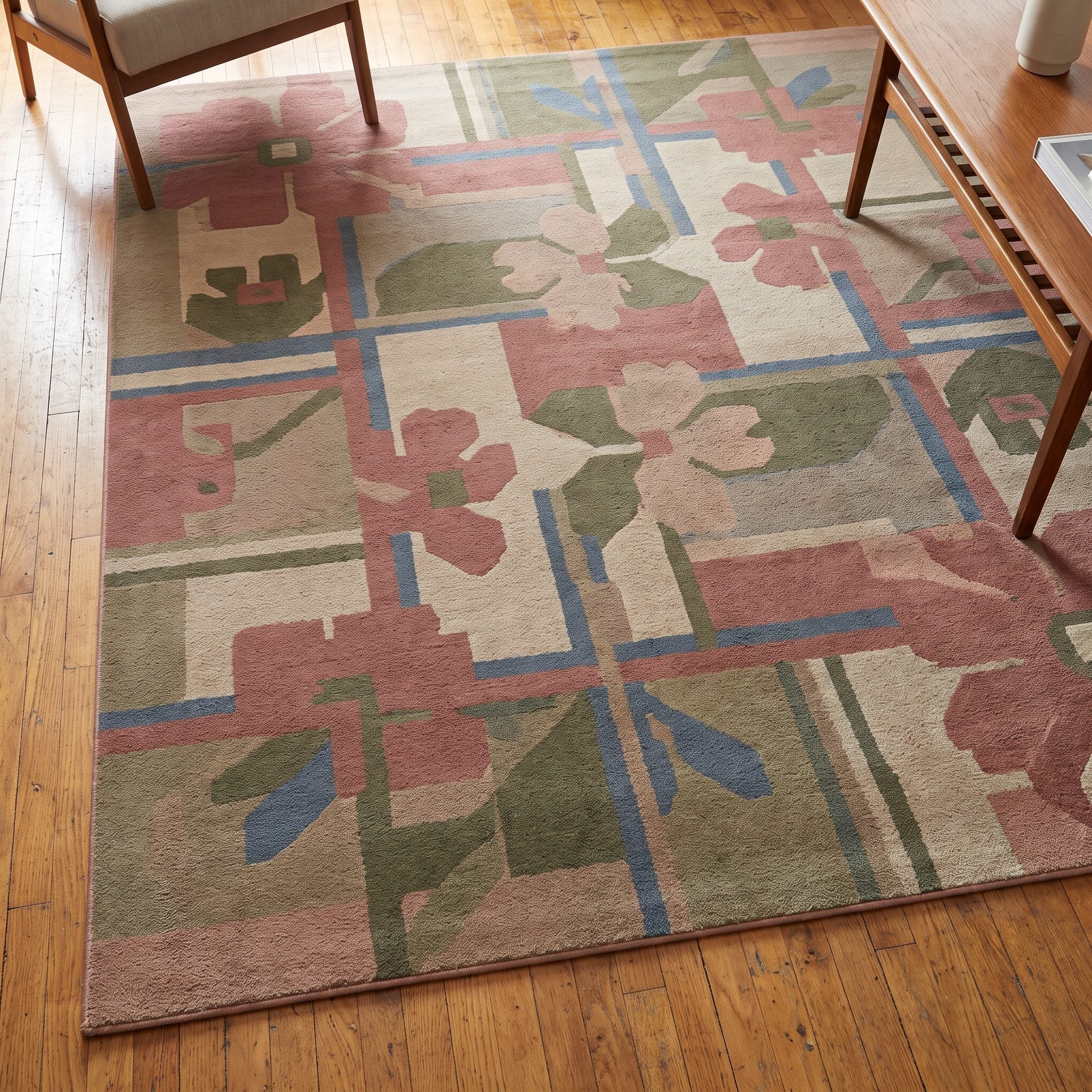
Have hardwood instead? A large area rug could run around $150—more for wool, less for the machine-woven synthetics many households actually bought. Dusty rose and country-blue florals were plentiful, while Southwestern geometrics gained ground as that look moved through the decade.
The rug’s real job was spatial. It pulled the sofa and chairs into one seating group instead of leaving them floating independently around the room. The strategy still works. Some of the mauve medallions require a little more historical generosity.
18. The Sofa Table Behind the Couch, About $150
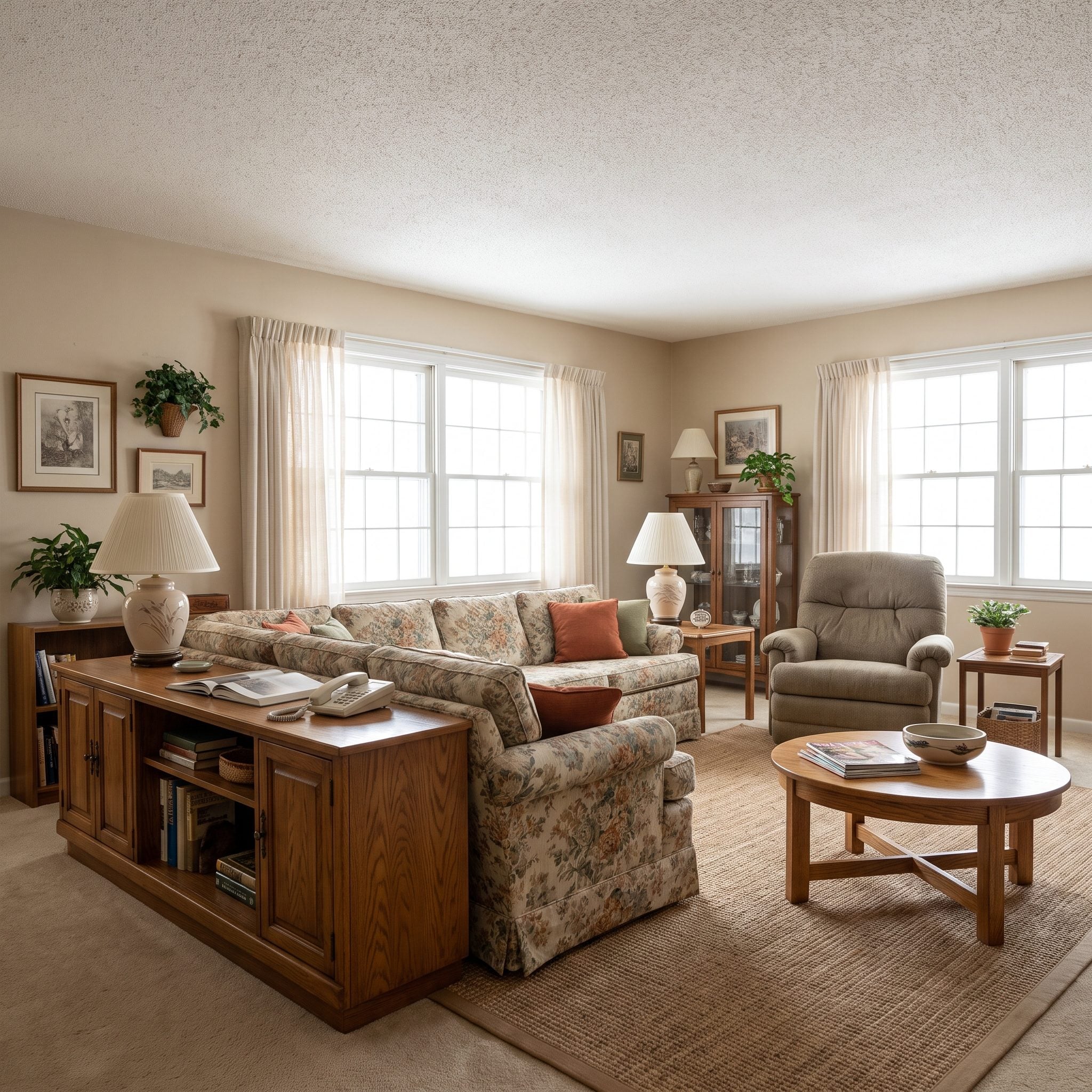
The sofa table was the piece nobody knew they needed until the couch moved away from the wall. A long, narrow console behind an exposed sofa could cost around $150 and gave that otherwise awkward furniture back somewhere to land.
It also gave decorators a stage. Brass candlesticks, framed photographs, a silk flower arrangement, maybe a pair of lamps—and suddenly the back of the sofa looked intentional rather than stranded in the middle of the carpet.
17. The Vertical or Mini Blinds That Screamed 1980s: About $50 a Window
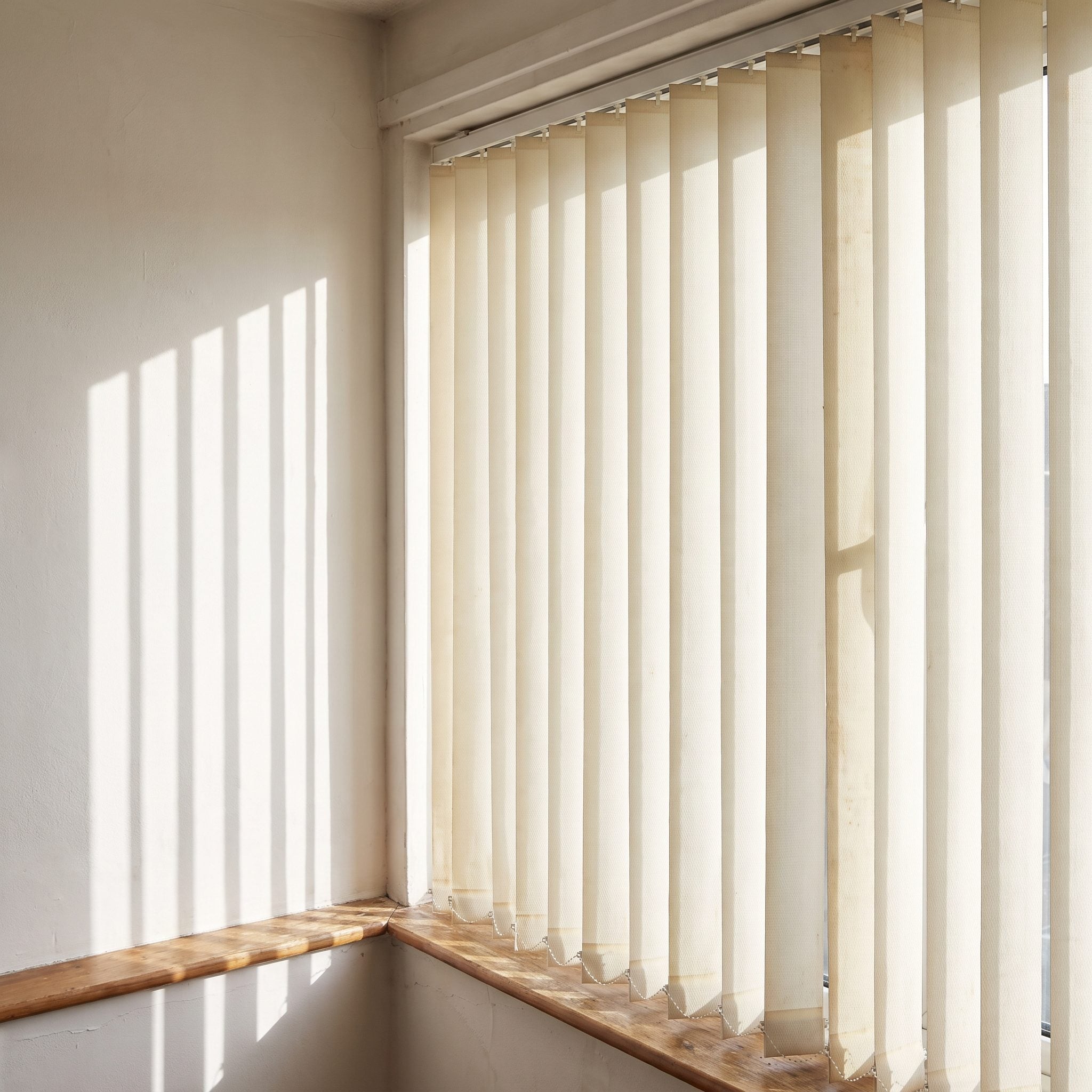
Few window treatments announce the decade faster than vertical blinds. Around $50 a window was plausible for basic installations, with larger sliding-door treatments costing more. Aluminum mini blinds could come in below that.
Vertical vanes across the patio door and mini blinds at the regular windows became a familiar combination. They tilted, they stacked, and one vane inevitably hung crooked after somebody pulled on it. The look reads instantly ’80s now, which is either charming or grounds for immediate removal depending on your tolerance for nostalgia.
16. The Pair of Large Wood-Grain Speakers: About $250 for the Set
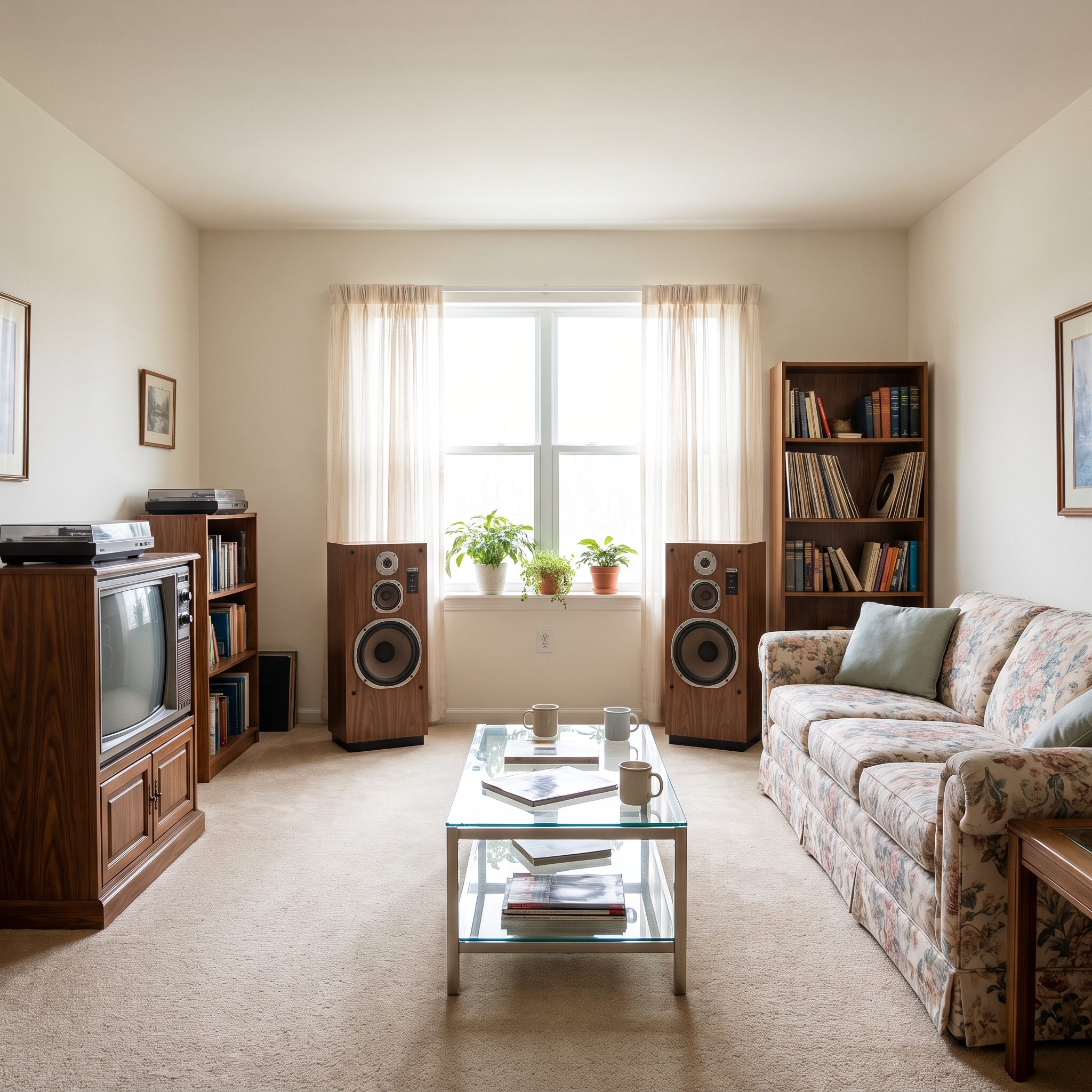
A pair of full-size wood-grain speakers might cost around $250, while larger three-way models could climb significantly higher. These were furniture as much as electronics: heavy, tall, and frequently positioned beside a reading chair or wedged into the corner of the tan family room.
The grille cloth was the giveaway. Brown or beige fabric stretched across a wooden frame concealed a woofer children immediately wanted to touch. Remove the grille and somebody eventually pushed a finger into the cone. Every household stereo seemed to acquire at least one mysterious dent.
15. The Brass-and-Glass Étagère for the “Good” Decorations, Roughly $150 to $400
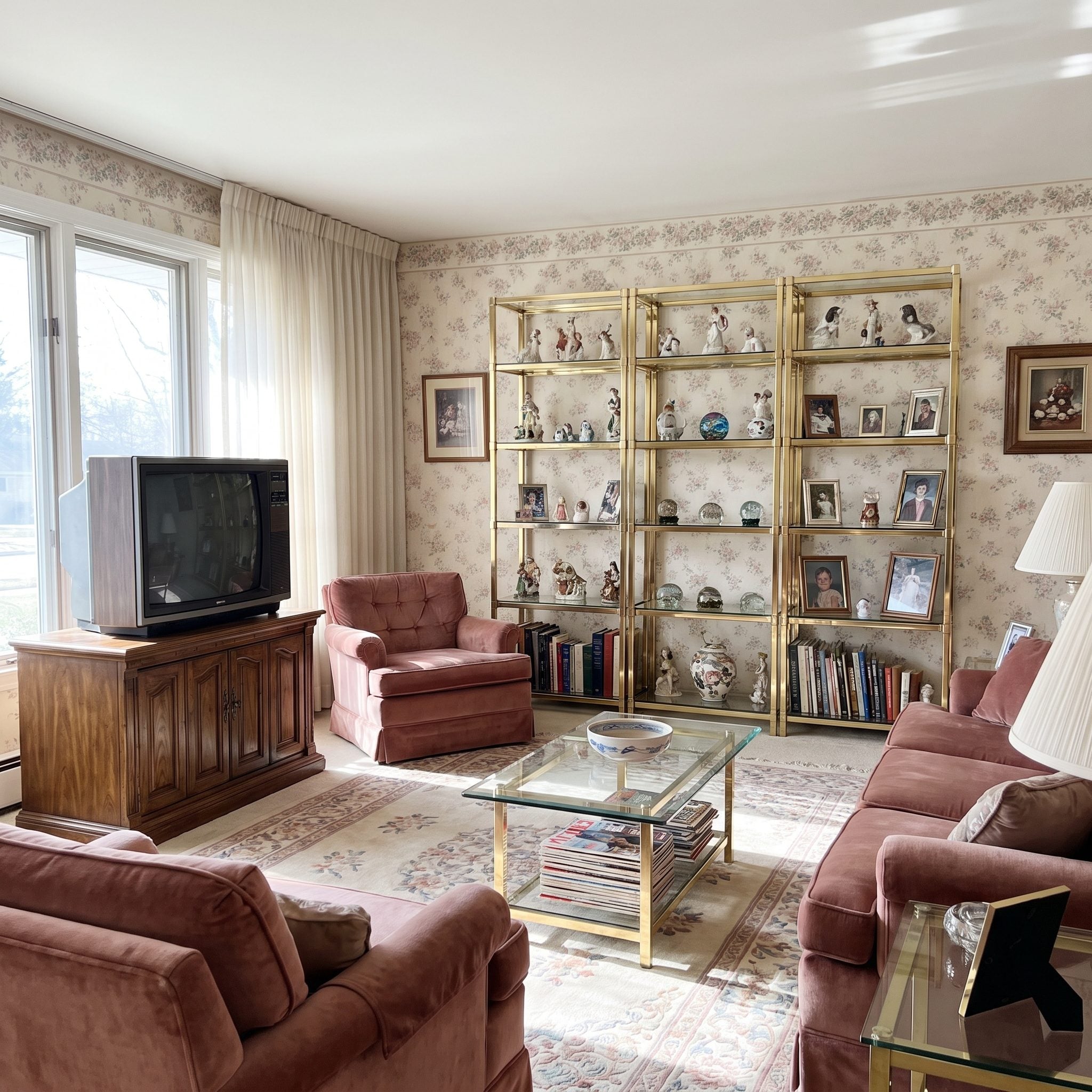
The brass-and-glass étagère was where the family put the things nobody was supposed to touch. Prices could range from around $150 to $400 depending on size, construction, and just how much gold-tone metal and glass the manufacturer managed to involve.
At the upper end, this was a real furniture purchase rather than an impulse accessory. Five shelves, a gleaming frame, perhaps a lighthouse figurine and a candy dish full of ribbon candy nobody actually ate. Brass helped ordinary display objects look more expensive from across the room, which was part of the appeal.
Formal living rooms needed things to look at because nobody was necessarily sitting in them.
14. The Matching Pair of Chunky Wood End Tables, Roughly $220 for Both
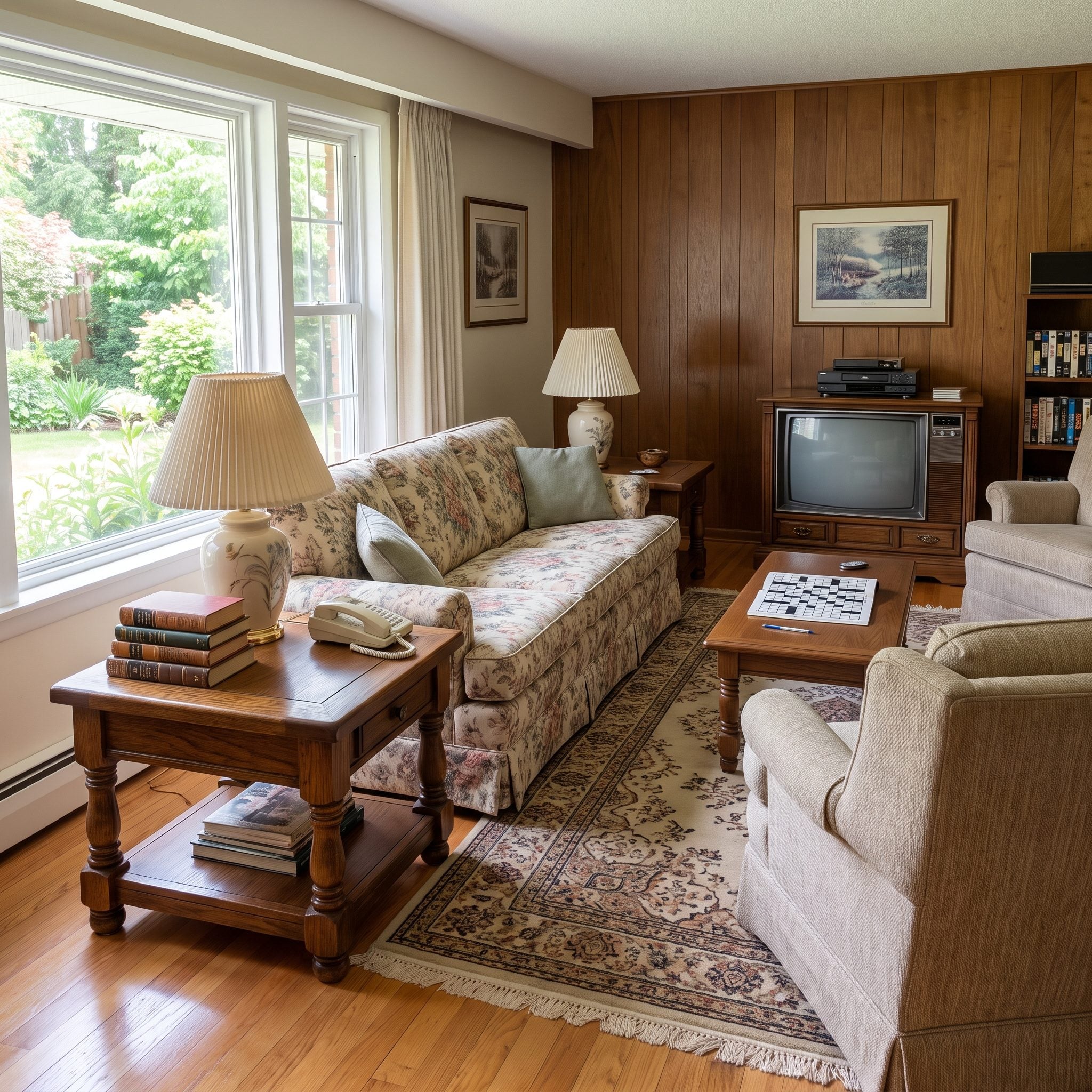
End tables came in twos because symmetry did a great deal of the decorating work. A matched pair in oak, often with a drawer and lower shelf, might run around $220 together. One sat at each end of the sofa beneath an equally matched pair of lamps.
One drawer held the TV Guide, spare batteries, and a deck of cards missing at least one. The other held objects nobody could identify but nobody dared throw away. The lamps arguably mattered more than the tables. The tables existed to give the lamps somewhere respectable to stand.
13. The Swag Lamp That Hung On Into the Early 1980s, About $30 to $60
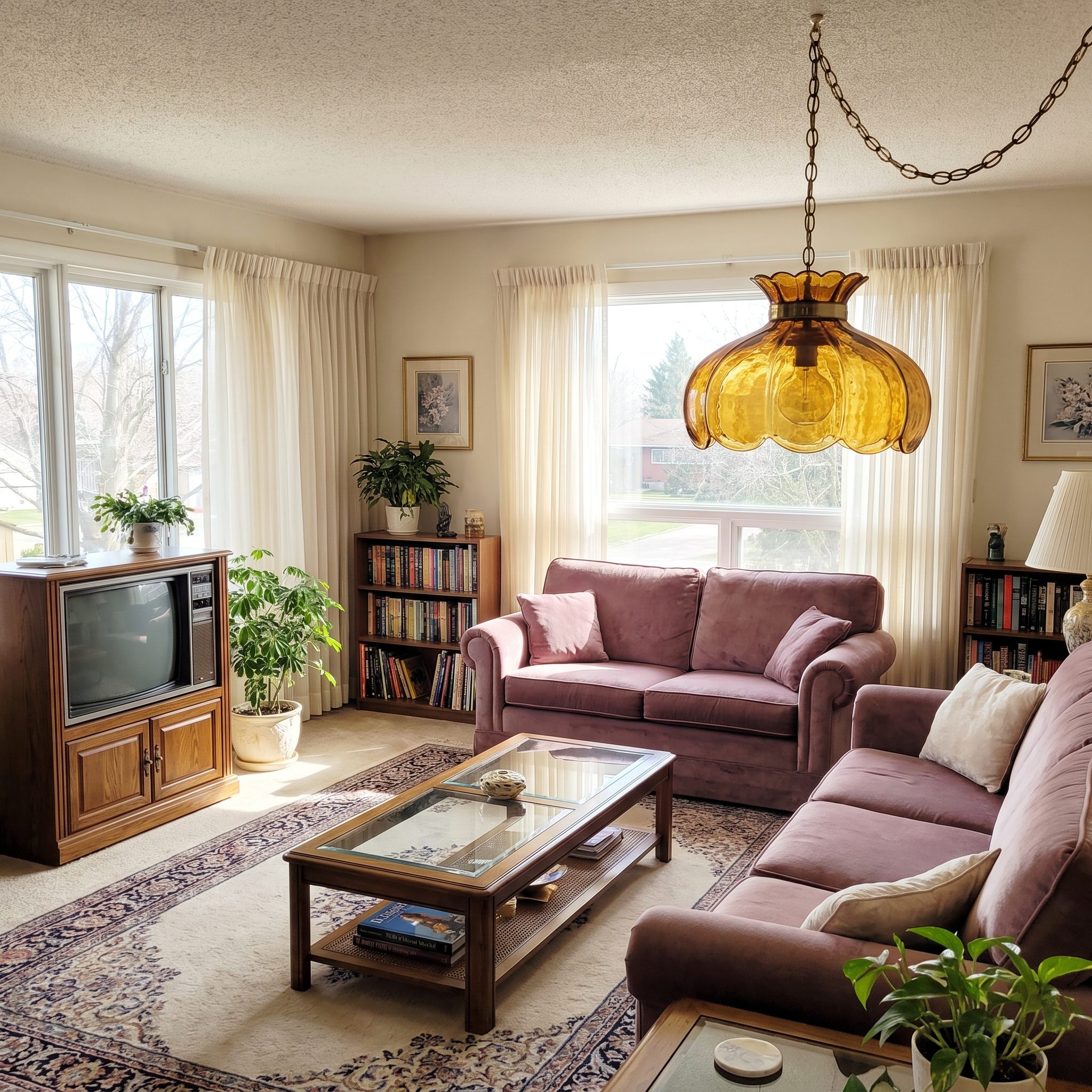
A swag lamp could cost roughly $30 to $60 in the early ’80s, more for elaborate glass shades with a stained-glass look. It hung from a ceiling hook, looped its chain toward the wall, and plugged into an ordinary outlet.
That was the attraction: no hardwiring. Renters could add overhead light with little more than a cup hook and optimism, while homeowners often kept existing swag lamps long after the 1970s had officially departed. Removing one meant patching a ceiling hole. Leaving it meant pretending the amber glass was still part of the plan.
12. The Record or Cassette Cabinet for the Collection: Around $60
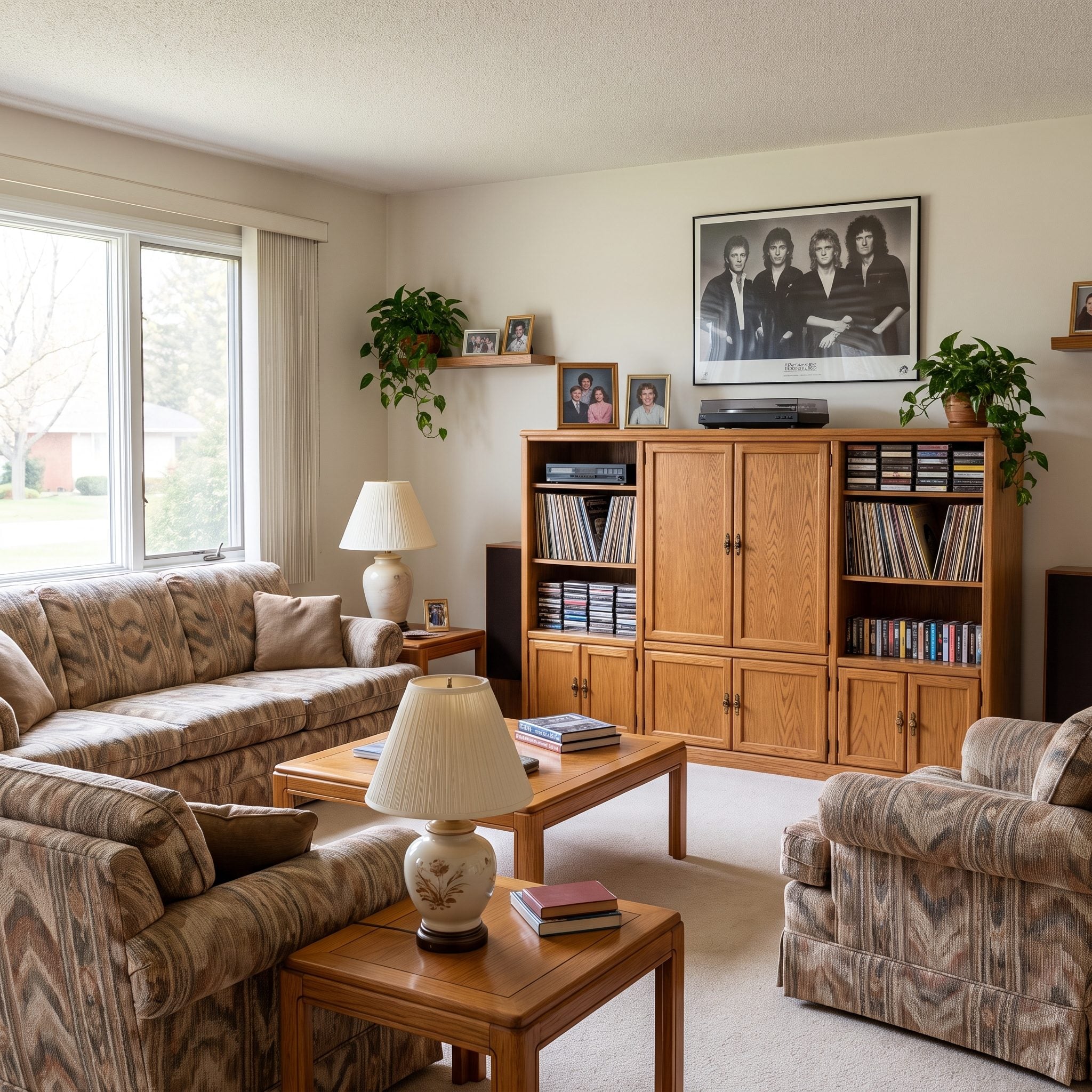
The music had to live somewhere, and that somewhere was often a smoked-glass cabinet costing around $60 from the same store that sold the stereo. Walnut-look veneer, adjustable shelves, a little brass handle. Vinyl stood vertically below while cassettes lined up in rows.
The shelves sagged. A full row of LPs is heavier than it looks, and particleboard eventually expressed an opinion about the load. Nobody replaced the cabinet. You redistributed the records, avoided the soft spot, and continued with your life.
11. The Framed Landscape Print Over the Sofa, Roughly $40 to $120
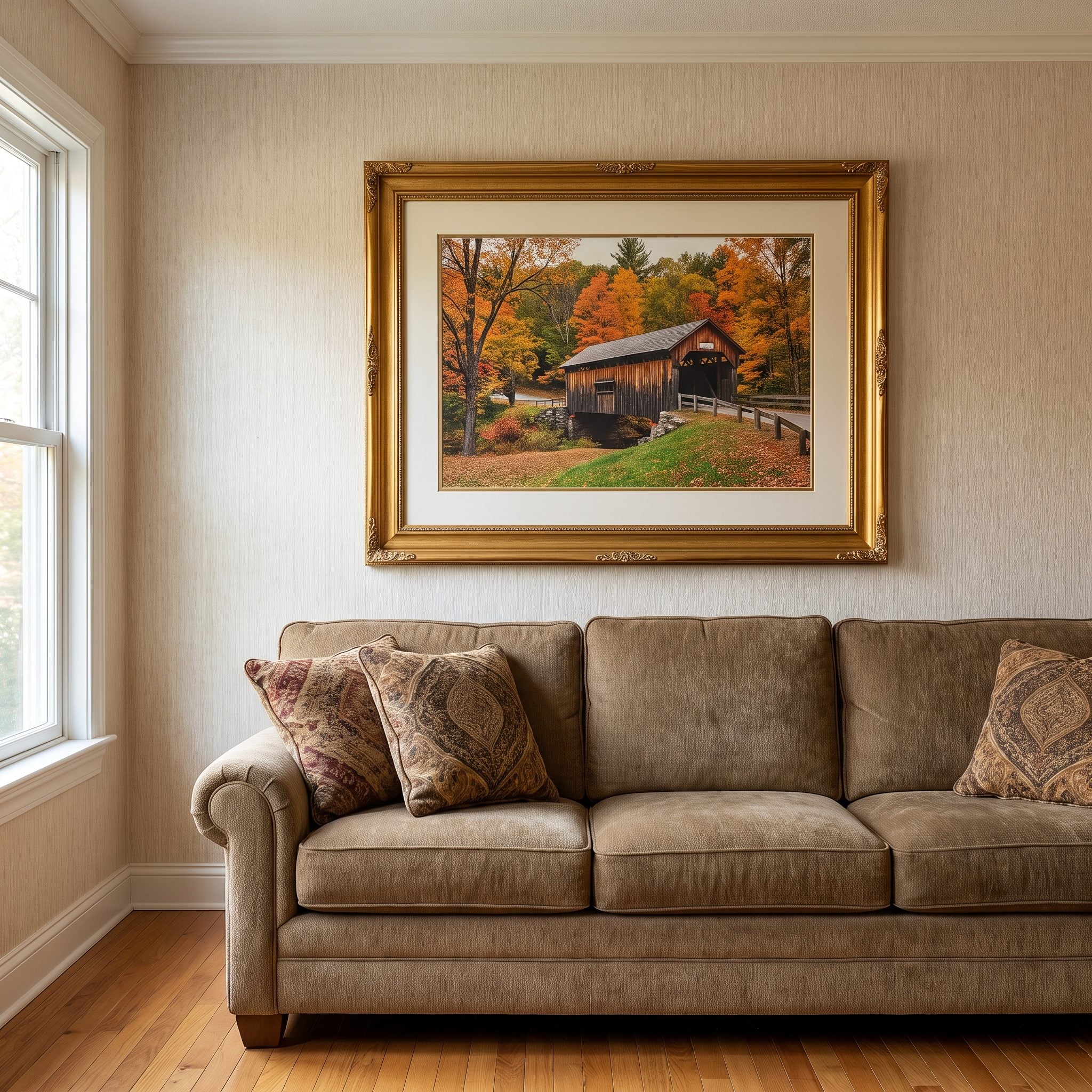
The big print over the sofa might cost around $40 to $120 framed. Autumn covered bridges, misty forests, lone lighthouses—the imagery was calm enough not to start an argument with the upholstery. Wide frame, cream mat, glass over the top.
Much of the expense was in getting something large enough to occupy the wall. A modest print became far more substantial once matted and framed to span the space above a seven-foot sofa.
Every autumn-toned tan family room seemed to understand the formula. The print picked up a color from the pillows, which picked up the drapes, which picked up the sofa. Coordination was not a side effect. It was the entire operation.
10. The Turntable and Cassette Deck Stacked With the Rest: Roughly $200 Together
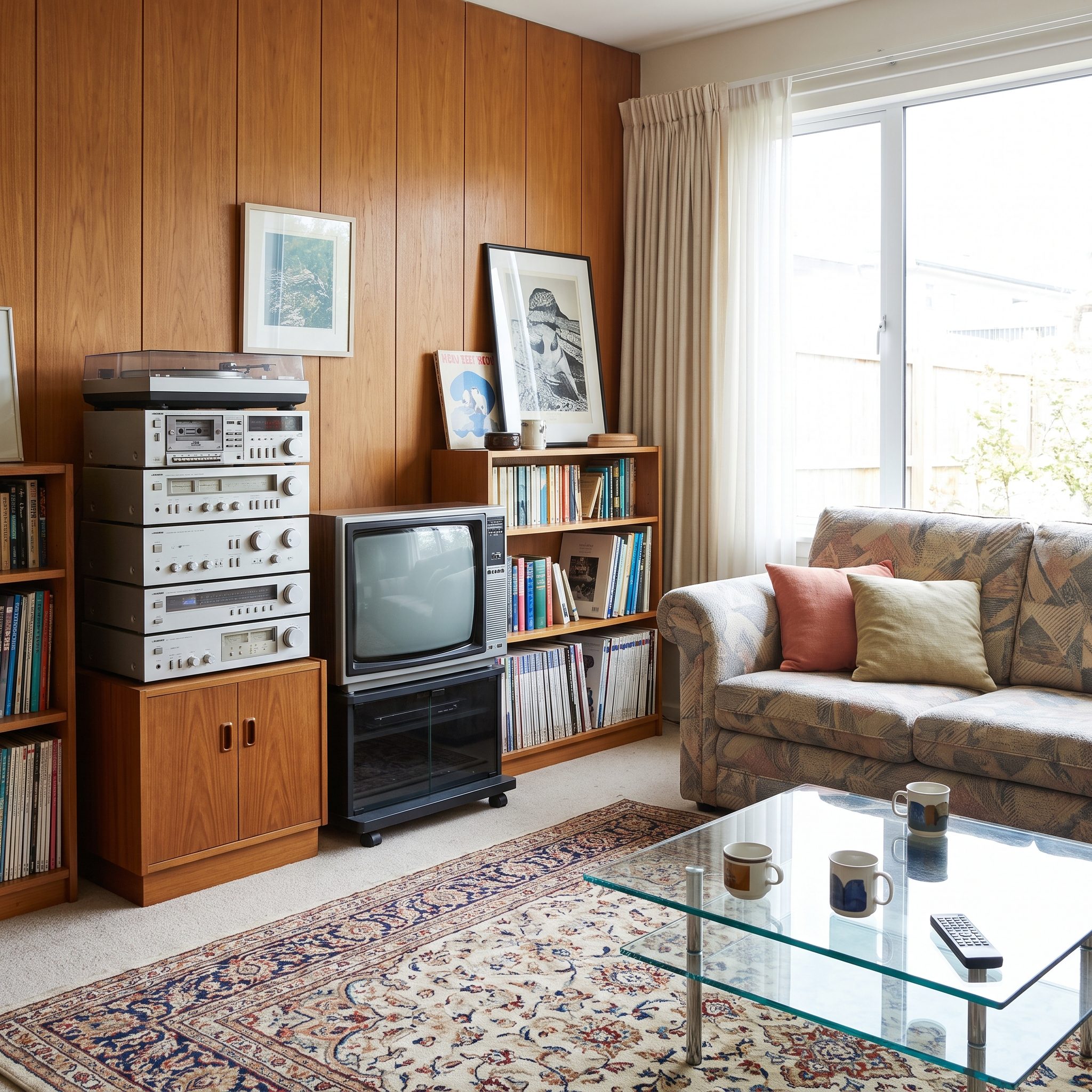
The turntable and cassette deck were where the receiver’s money went to work. A basic belt-drive turntable could land around $100, with a dual-cassette deck adding roughly another hundred. Better drive systems and additional recording features pushed the total higher.
The dual deck was the mixtape machine. You hovered over the record button waiting for the radio DJ to stop talking, and half the cassette still began three seconds late with a stranger’s voice bleeding over the first chord. Nobody considered this a manufacturing defect. It was simply part of making a tape.
9. The Pair of Oversized Ceramic Table Lamps: Roughly $90 for Both
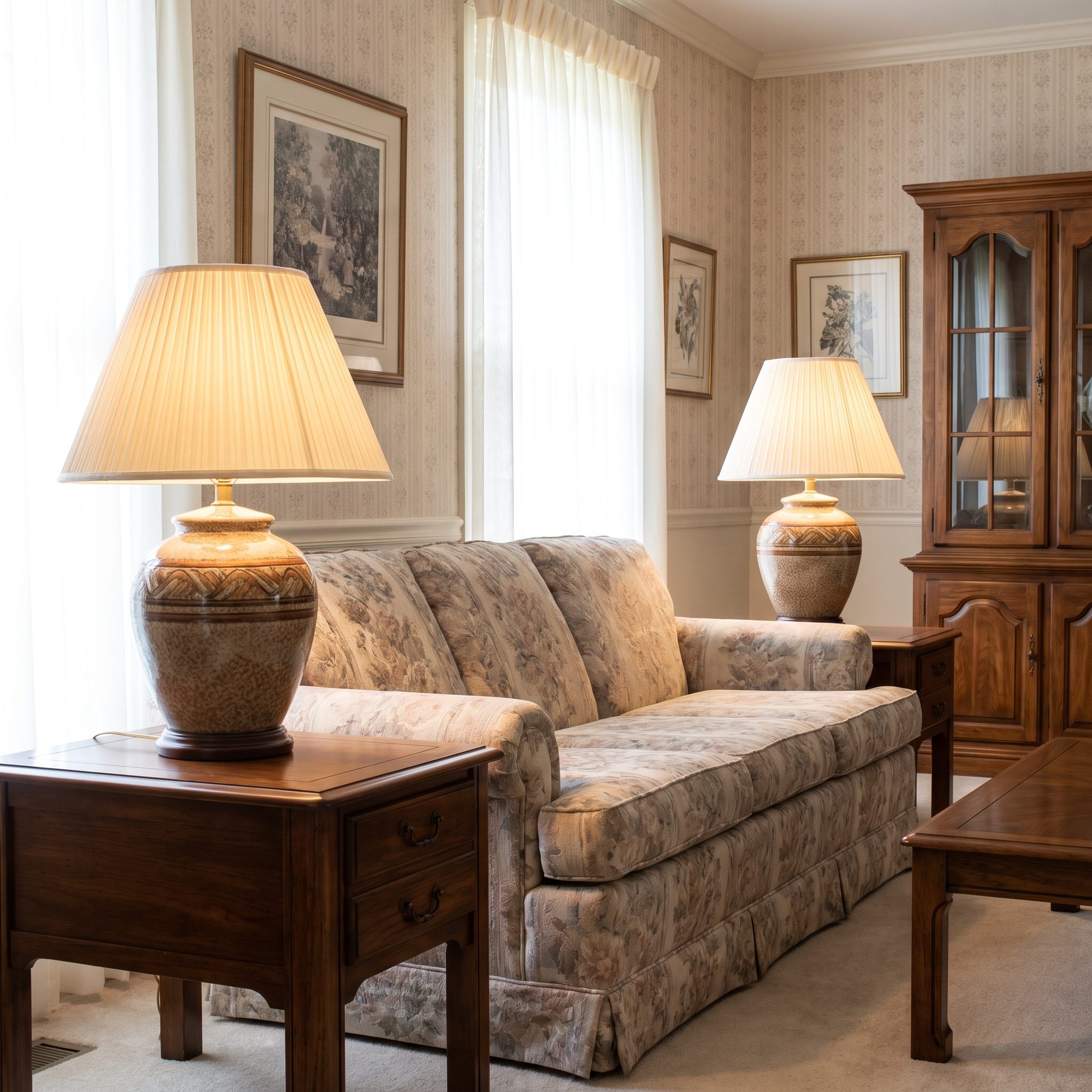
Big ceramic table lamps came in pairs, and a matched set might run around $90. Glazed bodies in mauve, cream, or country blue frequently arrived beneath broad pleated shades large enough to hold their own beside equally substantial upholstery.
The scale was intentional. A tiny lamp would have disappeared beside a fat sectional and large end table. Matched lamps flanking the sofa supplied instant symmetry—the same compositional instinct that still works in a carefully planned large guest room, even when the ceramic glaze is considerably quieter.
8. The Curio Cabinet Full of Collectibles, About $250 to $700
🔥 Would you like to save this?
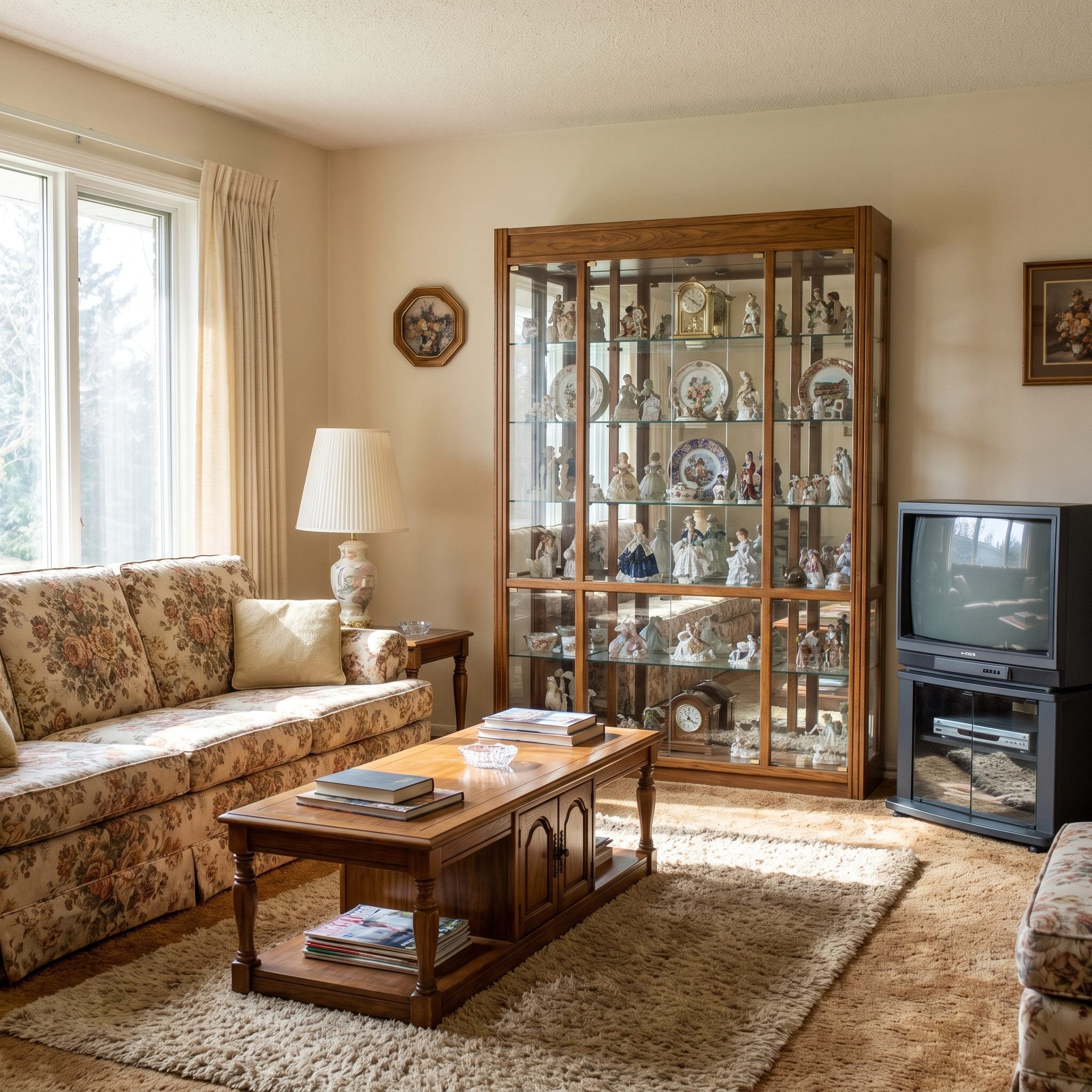
Bigger, heavier, and more enclosed than the étagère, a lit curio cabinet could range from roughly $250 to $700. Solid-wood frames, beveled glass, mirrored backs, and interior lighting moved the price upward.
The cabinet often cost more than any one object it displayed. Hummels, Precious Moments figures, commemorative plates, small souvenirs—ordinary collectibles acquired ceremony once they went behind glass.
7. The Brass Floor Lamp Beside the Reading Chair: About $75
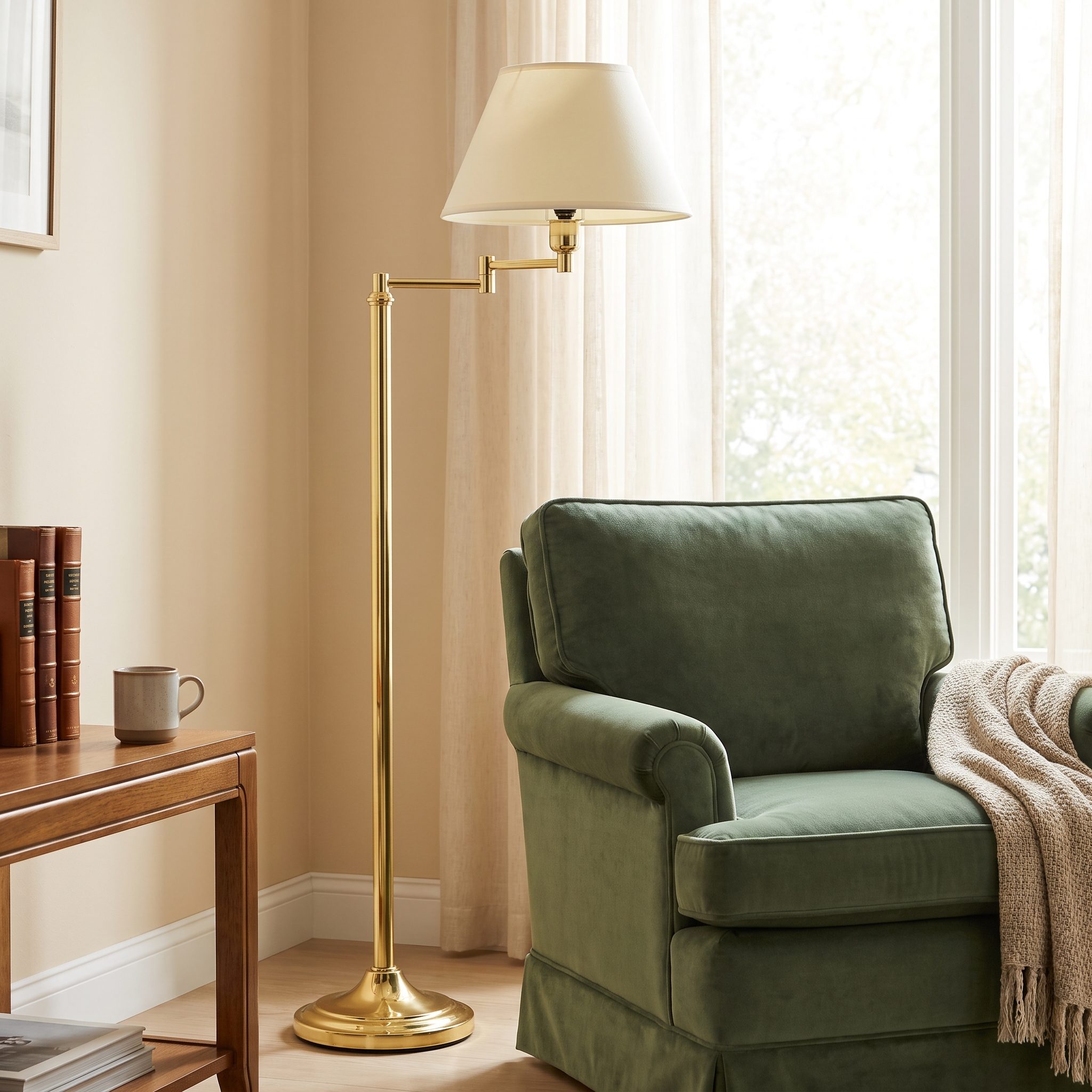
The brass floor lamp beside the reading chair might cost around $75. Polished brass pole, ivory pleated shade, sometimes a swing arm to send the light directly over a book.
Brass was everywhere—lamps, cabinet pulls, glass-table frames—but this piece had an actual spatial job. Its pool of light carved a smaller zone out of the larger living room and gave one chair a reason to sit apart from the main conversation area.
6. The Wicker Basket for Magazines and Newspapers, About $8 to $25
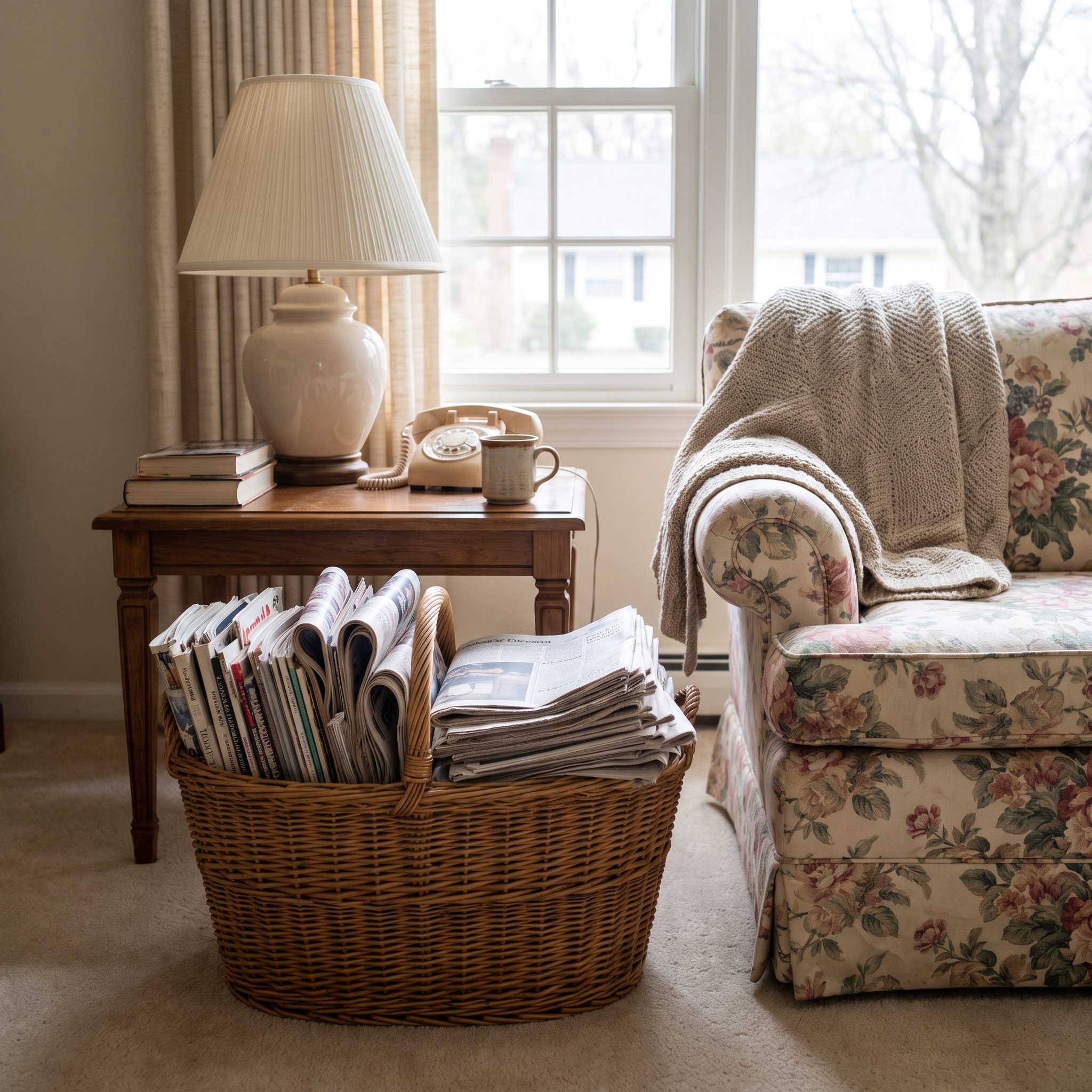
The wicker magazine basket was pocket change beside the electronics and upholstery, perhaps $8 to $25 at an import shop or department store.
It did an honest job. National Geographics stacked up, the Sunday newspaper accumulated, and the basket kept the whole pile off the floor while adding a little natural texture against the velour, glass, oak, and brass.
Cheap, useful, and quietly everywhere. Wicker was one of the decade’s most dependable supporting players.
5. The Coordinated Throw Pillows, About $8 to $20 Each
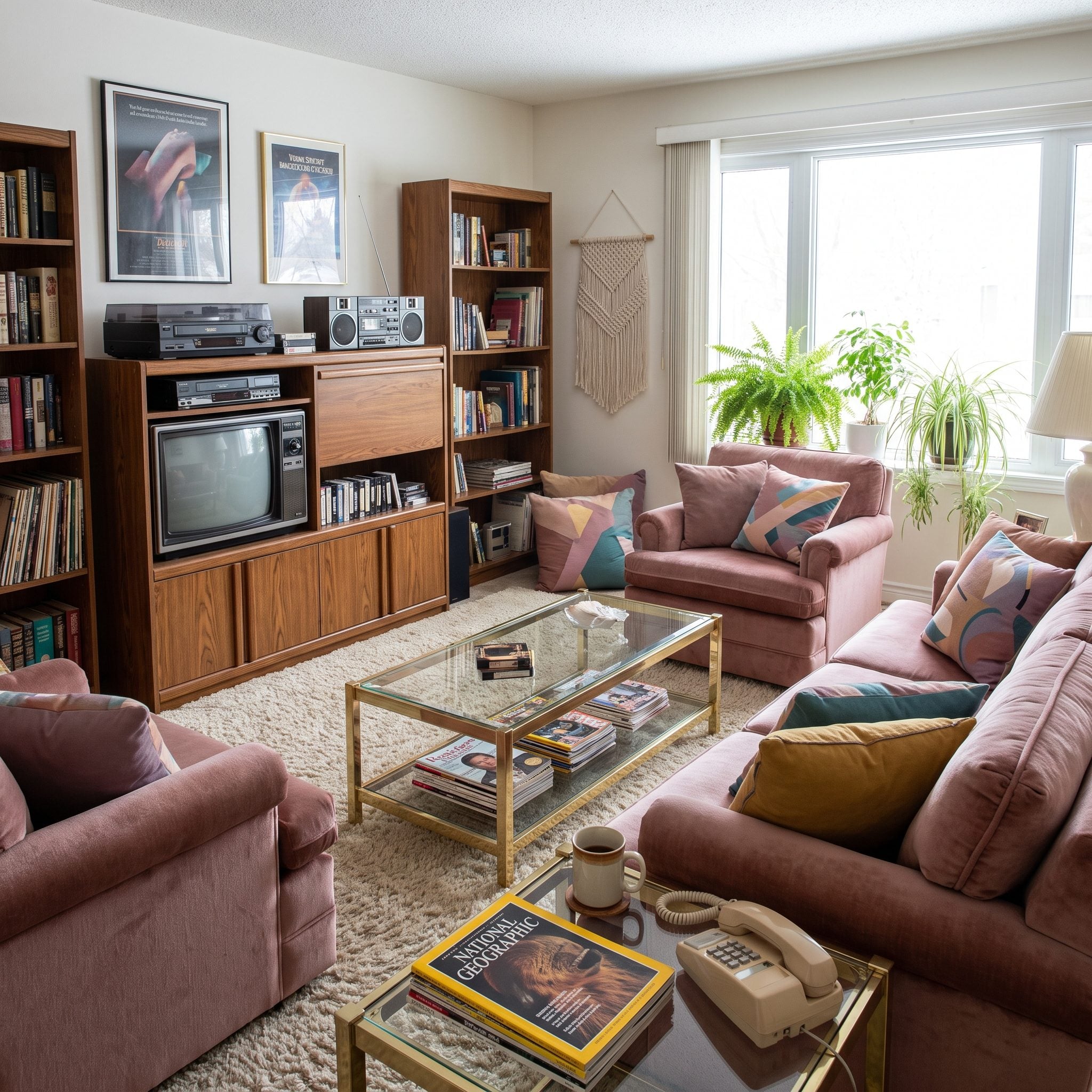
Decorative throw pillows could run about $8 to $20 apiece, with corded edges, ruffles, or more elaborate fabrics nudging prices upward. Living rooms rarely stopped at one.
The point was repetition. Pull a color from the curtains, echo it on the sofa, repeat it in the artwork. Pillows were among the cheapest ways to make expensive furniture look as though all of it had been selected in one sitting.
The same trick works in a gray media room today. The ruffles are negotiable.
4. The Magazine Rack Beside the Recliner, Roughly $15 to $40
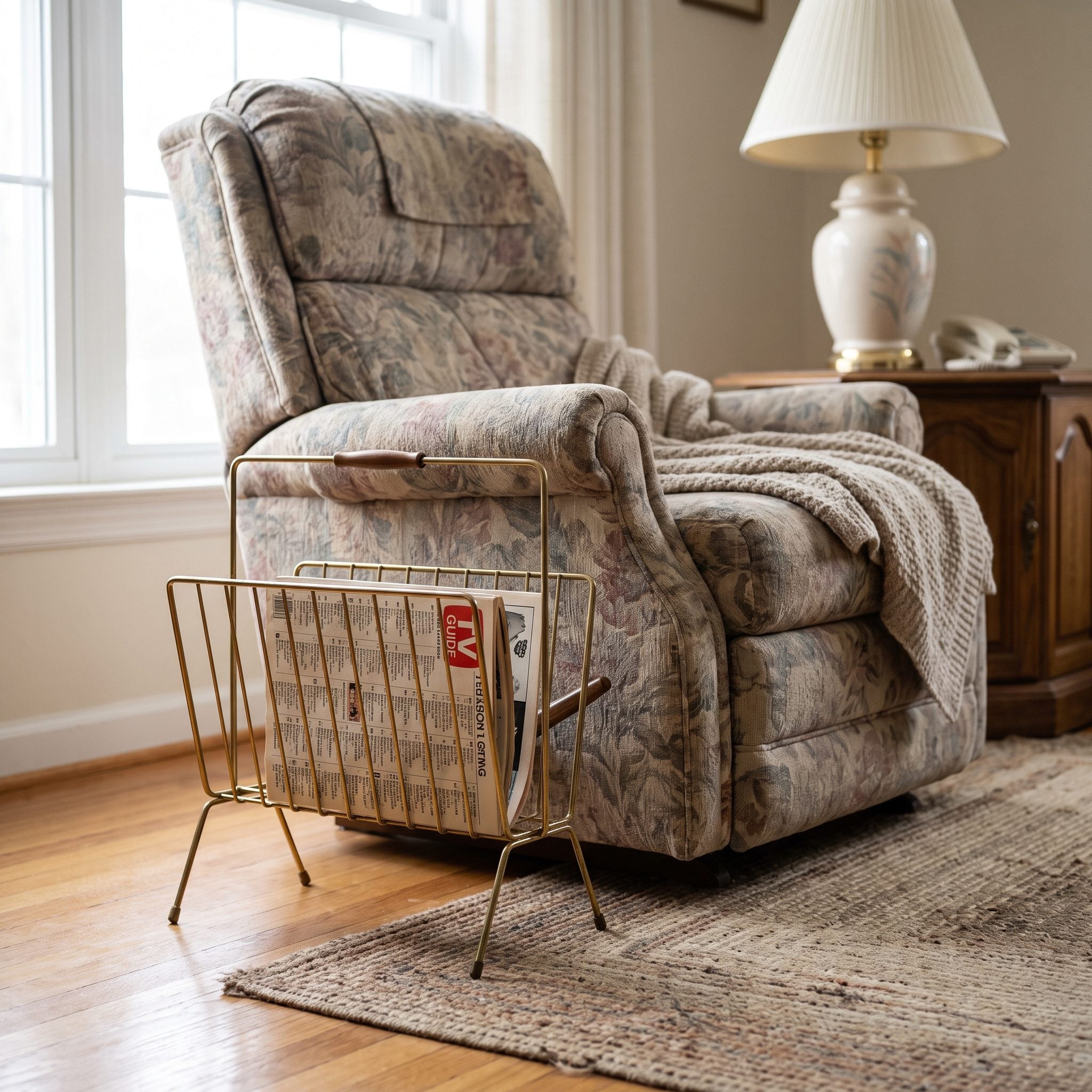
The dedicated magazine rack was different from the general-purpose basket. This was the little brass-wire or wood-slat holder stationed beside the recliner, generally in the $15 to $40 range. It belonged to one chair and one reader.
You know the arrangement: recliner, side table, lamp, and rack angled close enough that the TV Guide and folded newspaper could be reached without fully returning to an upright position. Nobody necessarily designed this corner. It assembled itself through repeated use.
3. The Crocheted Afghan Draped Across the Couch, Priceless (or About $20 to $50 Store-Bought)
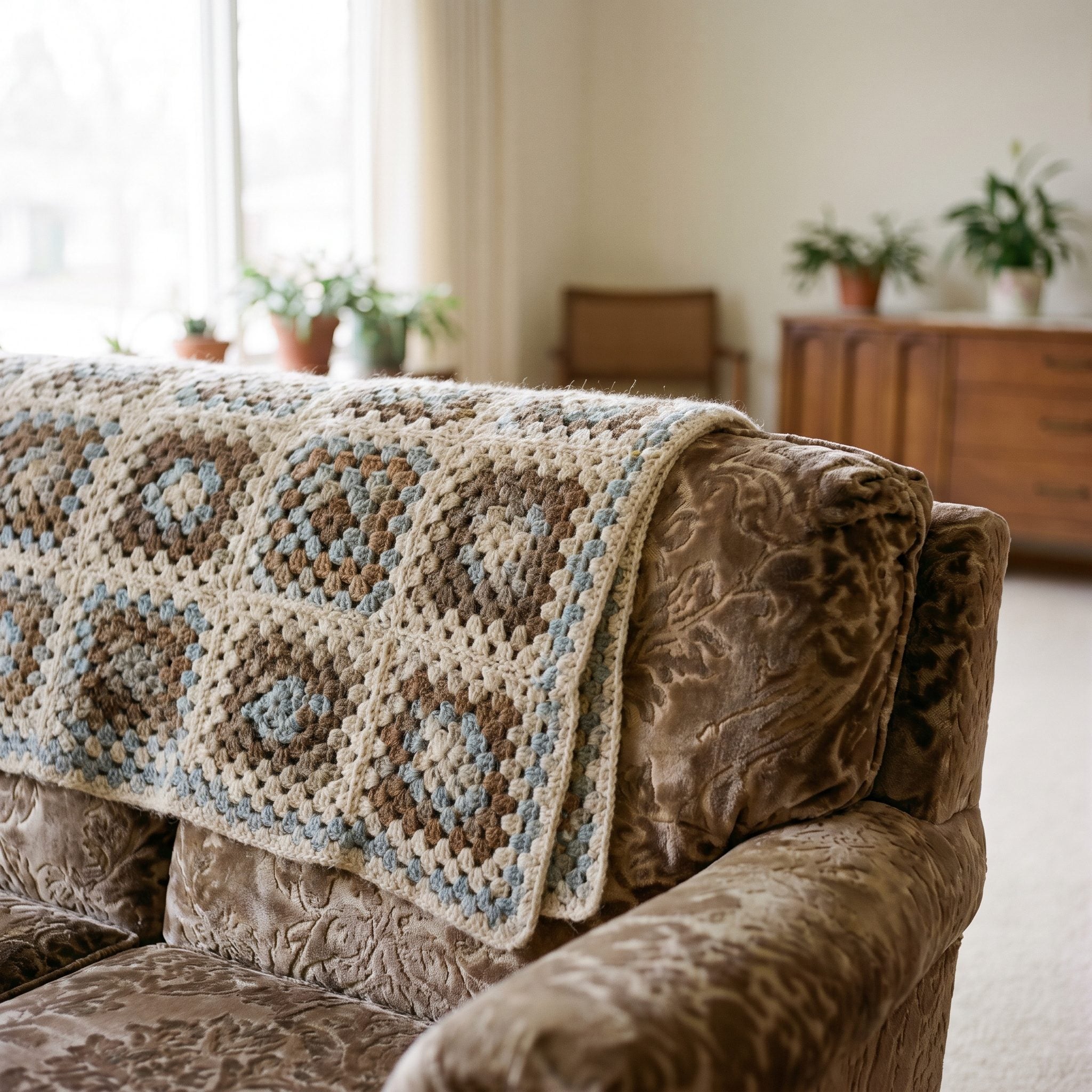
The afghan over the back of the couch is the item that refuses to fit neatly into the price list because many were never bought. Somebody made them. A store-bought version might run $20 to $50, while the homemade one represented yarn, hours, and a winter’s worth of television.
Granny squares in rust and gold, or a zigzag ripple stitch half the family seemed to know. It warmed your legs during the late movie and concealed the patch of sofa where the velour had begun to surrender.
Function and sentiment in one draped rectangle. The afghan routinely outlasted the sofa, the carpet, and half the decorating decisions around it. That’s the one piece nobody should have thrown away.
2. The Folding TV Trays That Came Out at Dinner or Snack Time, About $25 a Set
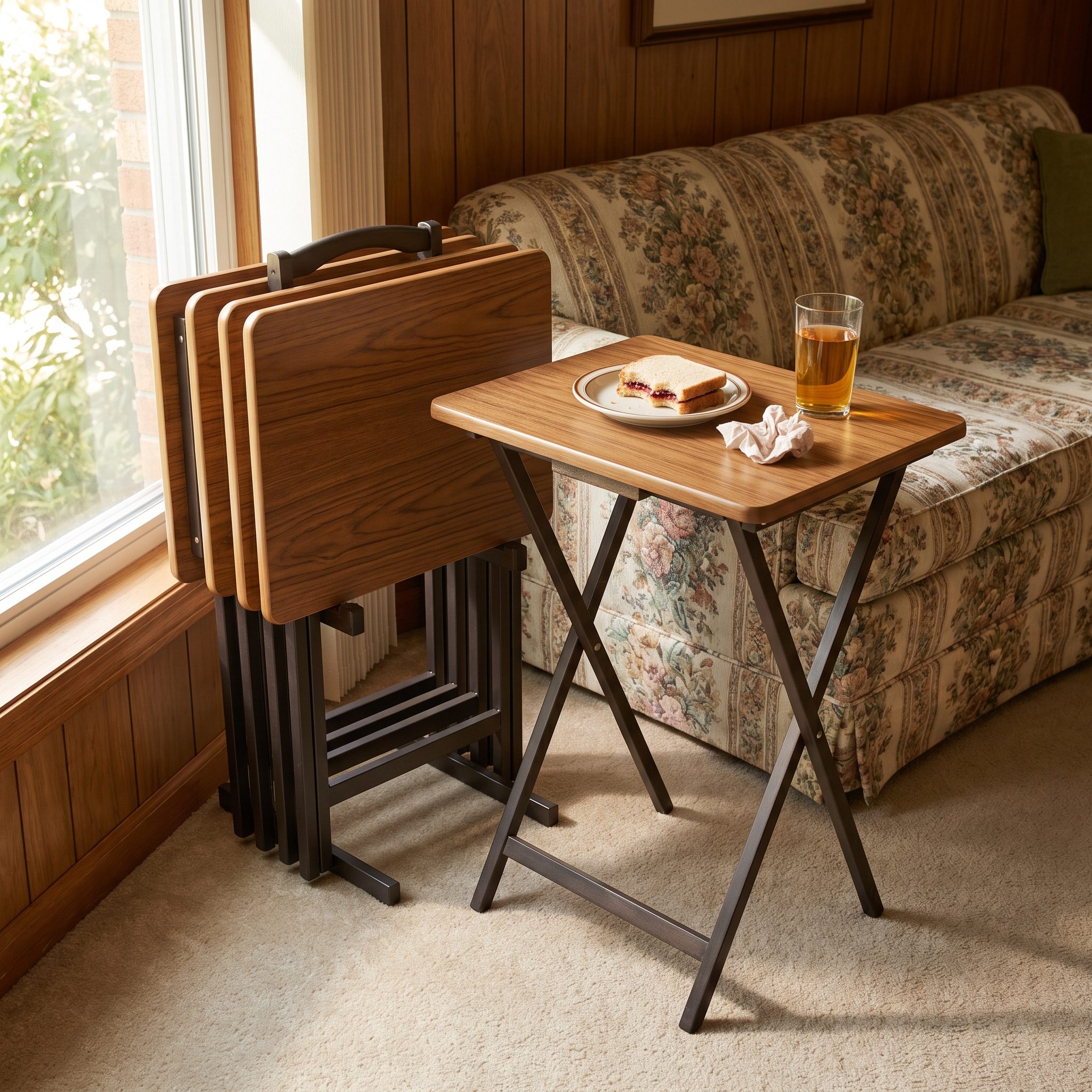
A set of four folding TV trays was one of the cheaper purchases in the room, rack included. The steel-legged versions with faux wood-grain tops folded flat enough to live against a wall or inside a closet until television and food suddenly needed to occupy the same square footage.
They came out for dinner in front of the news or snacks during whatever program had the entire household watching together. Floral and autumn-print tops slowly acquired scratches and stains, while the legs continued wobbling on thick carpet with admirable consistency.
1. The Complete Matching Furniture Suite That Made the Room Feel “Finished”
This is where all those separate price tags finally become a room. A matching suite might mean the sofa or sectional, loveseat, chair, coffee table, end tables, lamps, and perhaps the wall unit—all bought close enough together that the fabrics, finishes, and proportions spoke the same visual language.
For a household furnishing a room from scratch, that represented a serious commitment, and financing through the furniture store made large packages easier to buy at once. The attraction was obvious. One transaction could turn an accumulation of empty walls into something that looked completed.
You know the room. Mushroom velour repeated across the seating. Honey oak moved from table to cabinet. Brass lamps seemed to have been pulled directly from the same catalog spread. Whether or not every household consciously thought about status, the matched suite had an unmistakable visual message: this room had been planned rather than assembled from leftovers.
That may be the most revealing price of all. Families weren’t only paying for a sofa, a table, or a wall unit. They were paying for the feeling that the room was finally done—and then living with that definition of “done” until the mauve faded, the VCR died, and somebody eventually decided the oak entertainment center had to come out in pieces.