You spent weeks choosing the right sofa. You agonized over paint swatches. You styled your bookshelves like a set designer and arranged your throw pillows with the quiet precision of someone who cares very much what people think. But none of that tells a psychologist anything particularly interesting about you.
Your garage does.
In order to come up with the very specific design ideas, we create most designs with the assistance of state-of-the-art AI interior design software. Also, assume links that take you off the site are affiliate links such as links to Amazon. this means we may earn a commission if you buy something.
The spaces we curate for other people reveal our aspirations. The spaces no one ever sees reveal our actual psychology, our relationship with control, grief, identity, and the future we keep meaning to get around to. What follows is a deep dive into what the most overlooked room in your home is quietly, relentlessly saying about who you really are.
The Room Psychologists Say Reveals Your True Relationship With Control
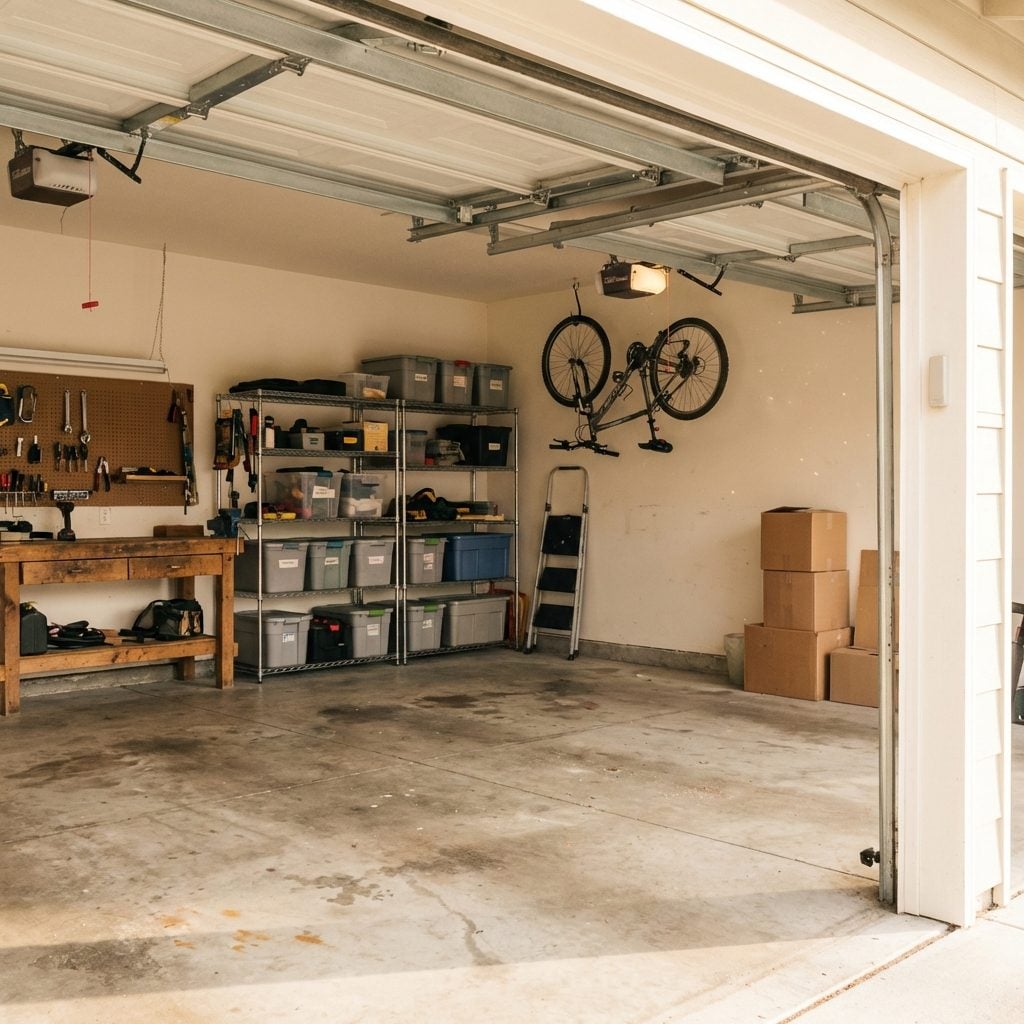
Every other room in your home gets edited. The living room is arranged for guests. The kitchen is managed by routine. Even the bedroom gets made presentable when life allows. The garage is the one space most people never bother performing for. Which is exactly why it’s so revealing.
Psychologists who study home environments and spatial behavior argue that the spaces we don’t curate are far more diagnostically rich than the ones we do. A 2024 study in PMC examining home environment and anxiety found that the subjective evaluation of home spaces is significantly related to self-reported anxiety levels, suggesting that how you feel about each room correlates directly with your psychological state, not just your decorating choices. The garage, in this context, isn’t a neutral storage unit. It’s an unedited readout of how you actually manage complexity when no one is watching.
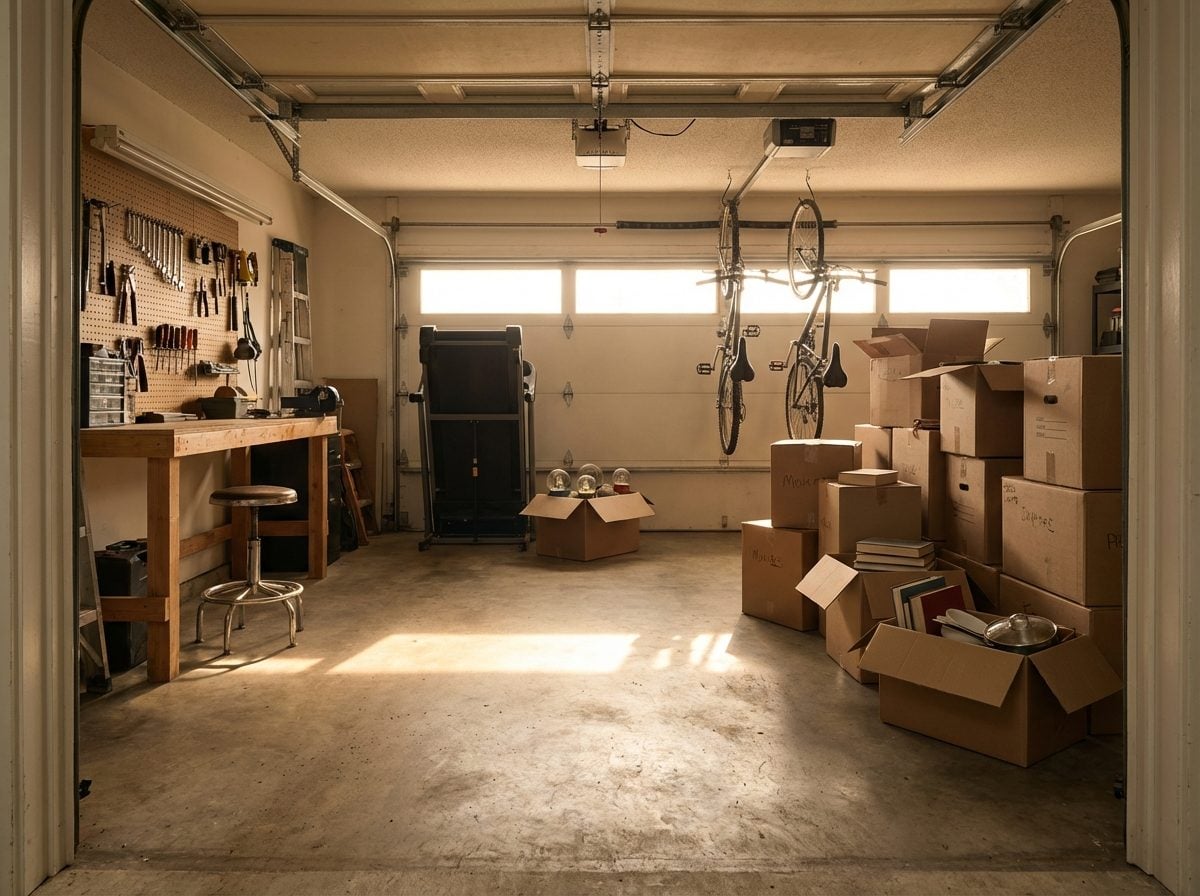
Control, real psychological control, not the performed kind, is about your capacity to make decisions, follow through on them, and tolerate the discomfort of incompleteness. The garage tests all three. It accumulates the residue of deferred decisions: the broken treadmill, the half-finished shelving project, the boxes that have moved with you twice without being opened. Each one is a small data point about your default relationship with control. And unlike the curated chaos of a busy desk or an overstuffed closet, the garage has nowhere to hide it.
Why the Objects You Can’t Throw Away Are Actually a Map of Your Unfinished Self
Behavioral economists have a name for the pull you feel toward objects you own: the endowment effect. Kahneman and Thaler’s foundational research on the endowment effect established that people consistently value objects they already own more highly than identical objects they don’t, purely because ownership creates psychological attachment. Giving something up feels like a loss, and losses, neuroscientifically speaking, register more intensely than equivalent gains.
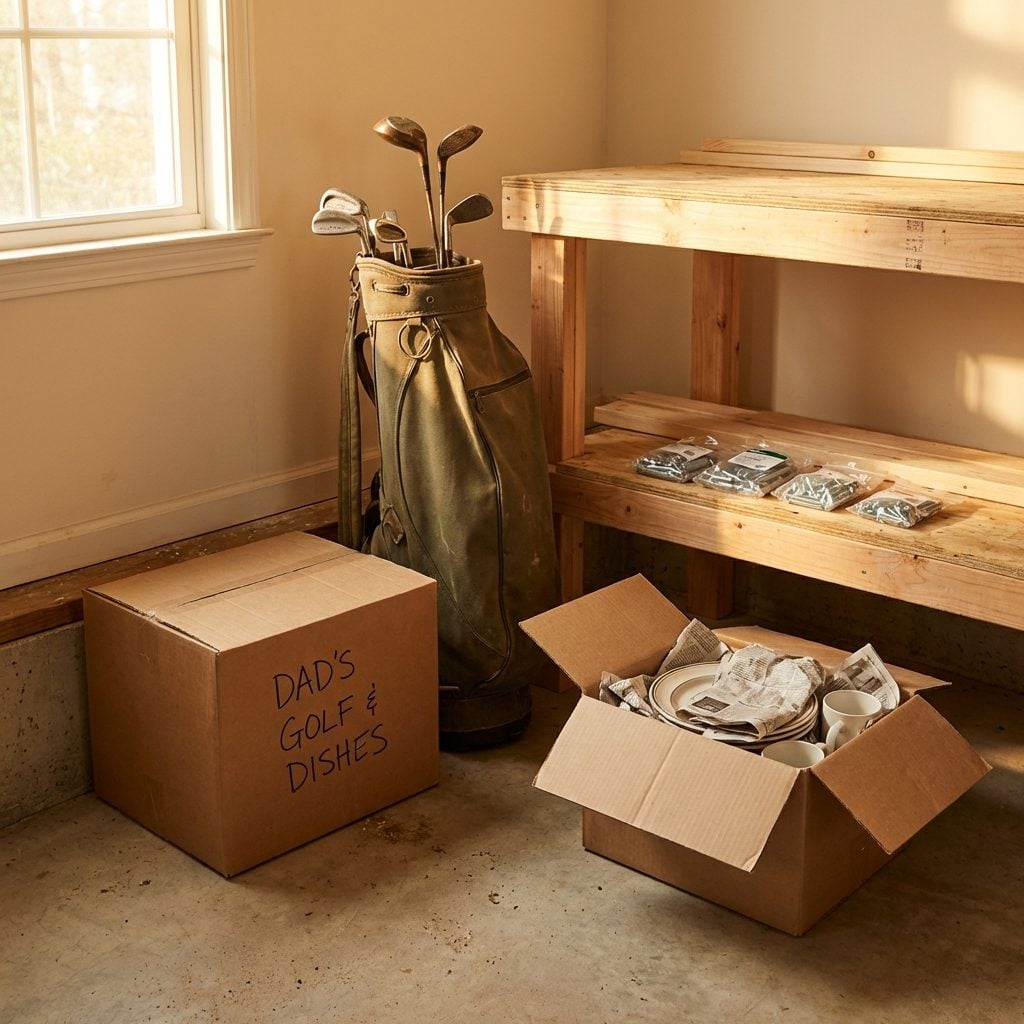
But the garage takes this further. The objects living in your garage aren’t just things you own. They’re things you’ve decided you’re not ready to decide about yet. The golf clubs from a sport you played once. The box of your mother’s dishes. The half-assembled workbench kit you bought in a burst of ambition. Each item represents an unresolved identity question: Am I the kind of person who golfs? Who preserves family heirlooms? Who builds things with his hands?
Psychologist Randy Frost of Smith College, whose work on compulsive saving and hoarding has been foundational in the field, has described how possessions function as extensions of the self, noting in research that people often see themselves as temporary custodians of objects, caretakers rather than owners. What this means for the average non-hoarding homeowner is that the garage is less a storage room and more a holding space for selves you haven’t fully committed to or let go of yet.
The One Space in Your Home Where Status Anxiety Goes to Hide
You chose your sofa to say something. Your kitchen hardware communicates a preference. Even your bathroom towels are performing a version of taste. The garage is where that performance stops, and in stopping, it says something more honest than any of it.
Status anxiety in the home is pervasive, even when it’s unconscious. Research in environmental psychology consistently shows that people modify their primary social spaces, living rooms, entryways, kitchens, based on how they want to be perceived. The garage, because it’s typically inaccessible to guests, becomes exempt from this performance. It’s the one room where your actual relationship with accumulation, organization, and aspiration is on unfiltered display.
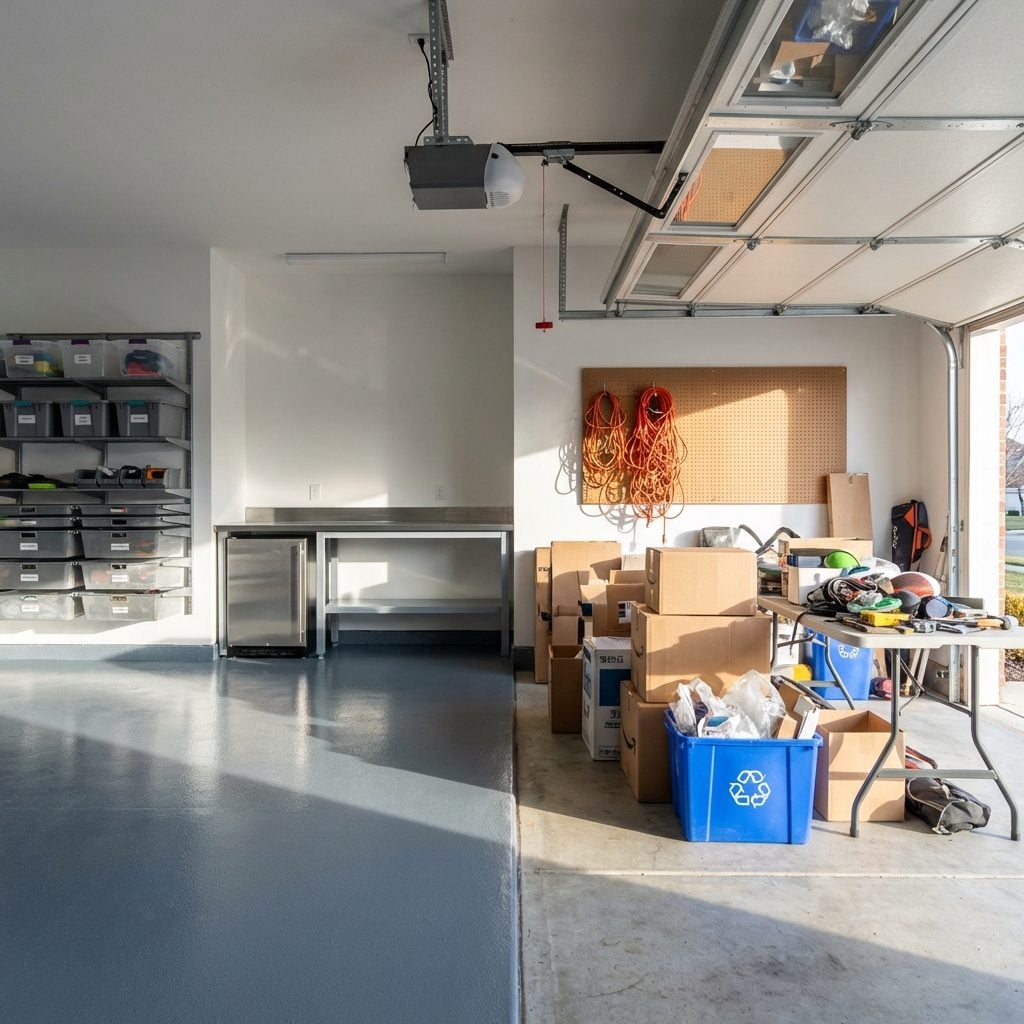
Interestingly, this exemption from status management sometimes reverses. For some households, garage features have become a new status arena, the epoxy-coated floor, the custom wall-mounted tool system, the garage fridge loaded with craft beer. What was once home improvement’s honest room is increasingly becoming another stage. But for most people, most of the time, the garage remains the place where the carefully managed impression of your home falls apart in the most revealing way possible.
What the Distance Between Your Car and Your Stuff Says About Your Priorities

There’s a simple diagnostic hiding in plain sight in most American garages: how far can you actually park your car inside?
A survey by the U.S. Department of Energy found that a significant percentage of homes with garages can’t actually fit a car inside them, the space has been fully reclaimed by storage. That physical displacement tells a clean psychological story. A garage that can no longer house a vehicle has reorganized its own hierarchy of purpose, and that reorganization is almost never a deliberate decision. It happens gradually, item by item, in a series of micro-deferrals: the box you’ll deal with later, the bike that’s in the way for now, the paint cans you’re keeping just in case.
The distance between the garage door and your car’s usual parking spot, driveway, street, or just inside the door, is a rough proxy for how many of those deferrals have accumulated. And deferrals, psychologically speaking, are not neutral. Research on cognitive load and clutter consistently shows that every unresolved item in a space creates a low-grade mental demand, what psychologists call the Zeigarnik Effect, where incomplete tasks continue to occupy cognitive bandwidth long after you’ve physically left the room. The car sitting in the driveway because the garage is too full isn’t just an inconvenience. It’s a daily, visible reminder of deferred decisions.
The Psychological Reason Clutter Feels Different When No One Can See It

Clutter in the living room is stressful partly because it’s visible to others. The social dimension of disorder, the fear of being judged, the feeling of exposure, layers on top of the cognitive load that clutter already creates. In the garage, that social layer disappears. So why does it still feel bad in there?
Because the audience for your home is never entirely other people. Researchers have found that chaotic environments elevate cortisol and strain the brain’s executive functions regardless of whether anyone else is watching. The neurological cost of clutter is self-directed, not social. Your own visual cortex is registering the disorder, your working memory is absorbing the unfinished-task signals, and your anterior cingulate cortex is doing overtime suppressing the competing stimuli. All of this happens in a private garage at 7am when you’re grabbing your garden hose and nobody’s watching.
What changes in the garage is the quality of the discomfort. In the living room, clutter produces social anxiety alongside the cognitive load. In the garage, stripped of the social audience, what remains is something more personal: a low-level shame that’s harder to blame on circumstances. Nobody made the garage messy for the guests. It got this way entirely for you, on your own time, without external pressure. That’s a different psychological flavor of discomfort, and it explains why so many people can walk past a cluttered garage every single day and still feel vaguely unsettled by it, even though they’ve long since stopped really seeing it.
Why Your Brain Treats the Garage Like a Permission Slip to Stop Deciding
Decision fatigue is real, well-documented, and quietly shaping more of your daily life than you probably realize. Cognitive research on clutter and decision-making has established that every object in a space represents a micro-decision, keep it, move it, discard it, fix it, and that the accumulation of those micro-decisions depletes the same mental resources you use for everything else. The garage becomes uniquely vulnerable to this dynamic because of what the space signals to your brain.
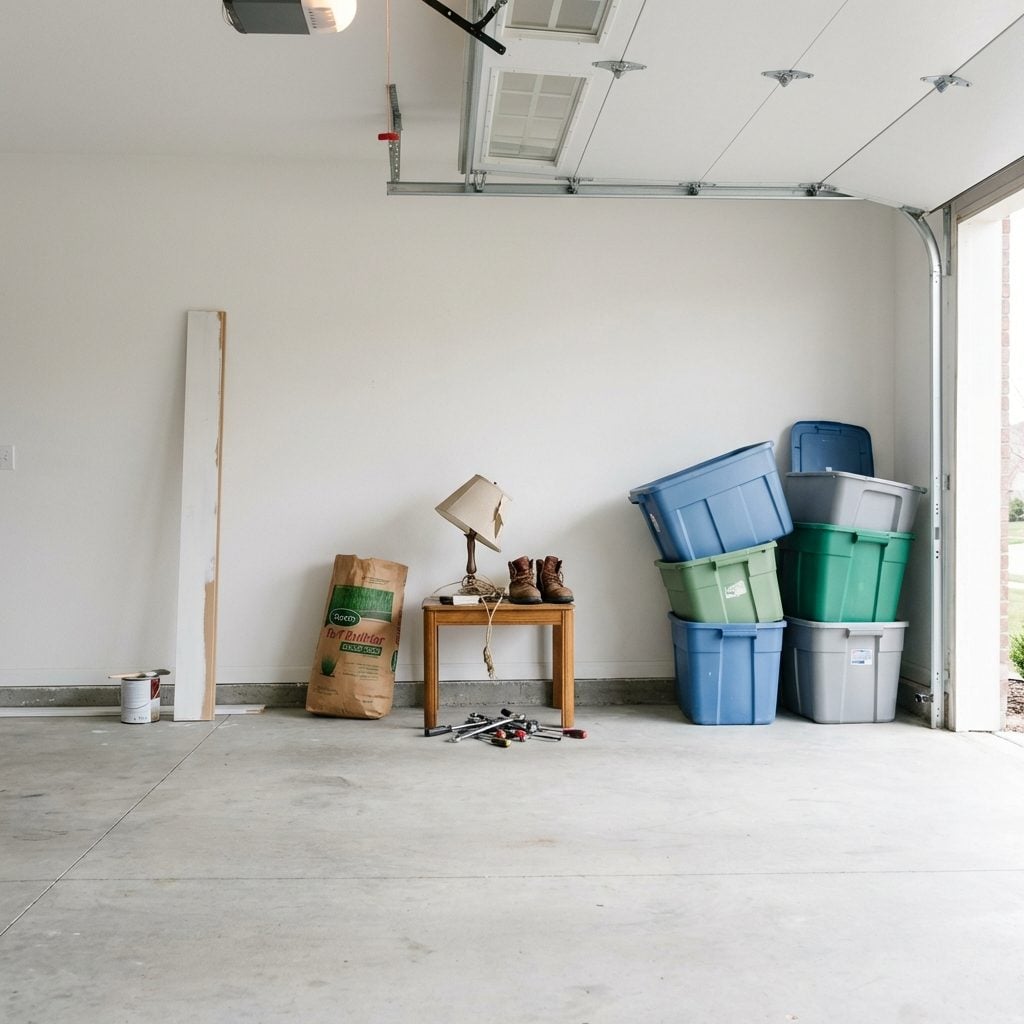
The garage is architecturally coded as a transitional space: not quite inside, not quite outside, not a room you live in and not one you manage for others. That ambiguity is a cognitive off-switch. When you carry something to the garage, you’re not making a decision, you’re deferring one. The garage absorbs the overflow of choices you’re not ready to make. And because it’s behind a closed door (often literally), the consequence of not deciding feels invisible.
But a published study on clutter behavior and decisional procrastination found that hesitant and indecisive participants experienced significantly greater negative impacts from clutter than action-oriented ones, and that the quality of the clutter relationship was directly tied to cognitive patterns around decision-making. The garage doesn’t just collect things. It collects the evidence of every time you handed your brain a choice and it said: not yet.
The Hidden Grief Stored in Every Box You Haven’t Opened Since the Move
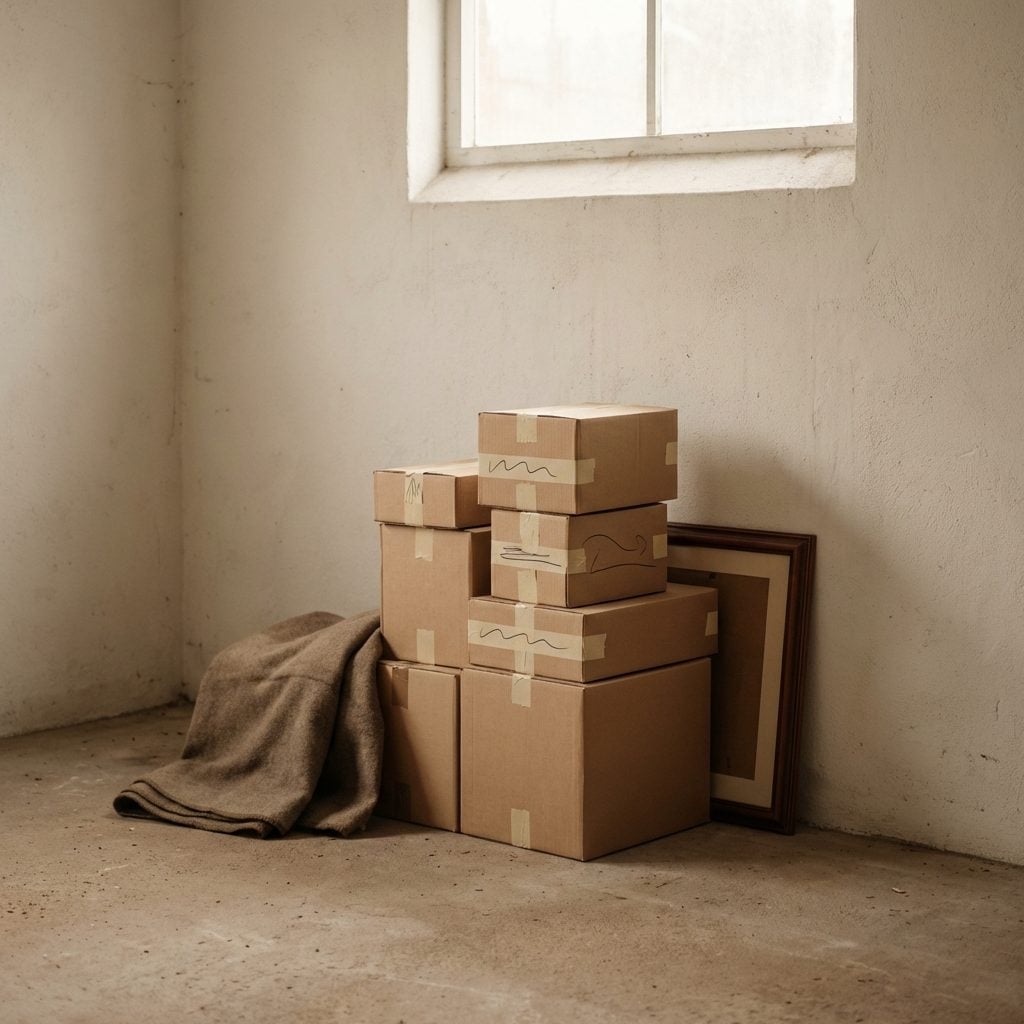
Some of the most psychologically dense objects in any home live in the garage. Not because they’re valuable or useful, but because they belonged to someone who is no longer here, or to a version of life that no longer exists. The box from your parents’ house that you couldn’t bring yourself to sort through. The baby gear from a stage of life that closed quietly. The equipment from a hobby you had before the divorce, before the move, before everything changed.
Grief researchers have long understood that physical objects carry emotional weight that outlasts the circumstances that gave them meaning. Research on psychological ownership and emotional attachment to possessions describes how objects become proxies for identity, memory, and emotional safety, and that difficulty parting with them is often rooted in the fear that discarding the object means discarding the connection it represents.
The garage is where this kind of grief parks itself. Not because you’re avoiding it exactly, but because confronting it requires a specific kind of readiness that everyday life rarely provides. The living room doesn’t accommodate that box. The bedroom can’t hold it. So it goes into the garage, sealed, labeled or unlabeled, waiting for a Saturday that never quite arrives. Each one of those boxes is a small piece of unfinished emotional business. And the garage, quietly, holds all of it.
What Behavioral Economists Call the ‘Threshold Effect’, and Why Your Garage Door Is the Trigger
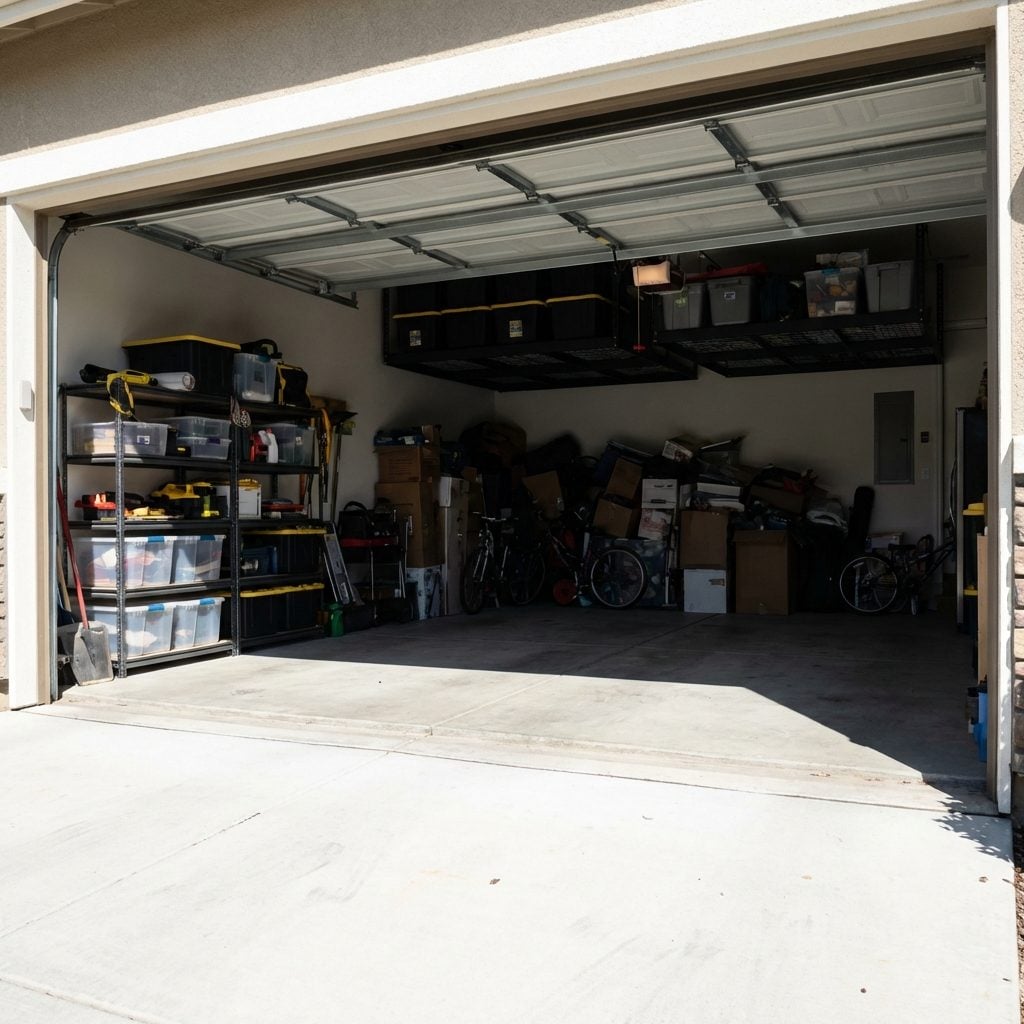
Behavioral economists use the term threshold effect to describe what happens when a situation crosses a psychological tipping point, the moment a behavior becomes self-reinforcing because the baseline has shifted. In the context of home organization, the garage door is one of the most reliable threshold triggers in domestic life.
Here’s the mechanism: the first box you store in the garage feels like a temporary measure. The tenth feels normal. By the thirtieth, the garage is a storage room, the expectation has reset, and the threshold for what counts as “too much” has quietly migrated upward. Kahneman and Thaler’s foundational work on the status quo bias, the human preference for current states over change, explains why this recalibration is so sticky. Once the garage becomes a storage space in your mental model, it takes active effort to reverse that classification. The new default has been set.
The garage door itself amplifies this effect. It’s a literal and psychological boundary between the managed interior and the unmanaged exterior of domestic life. Every time you close it, you’re sealing off the evidence. Out of sight, the threshold keeps moving. The behavioral question that follows, and it’s one behavioral economists find genuinely difficult, is whether you can ever reset a default once it’s become structurally embedded in a space. The garage suggests the answer is: rarely, and only with significant intentional friction.
The Reason Perfectionists Almost Always Have the Most Chaotic Garages
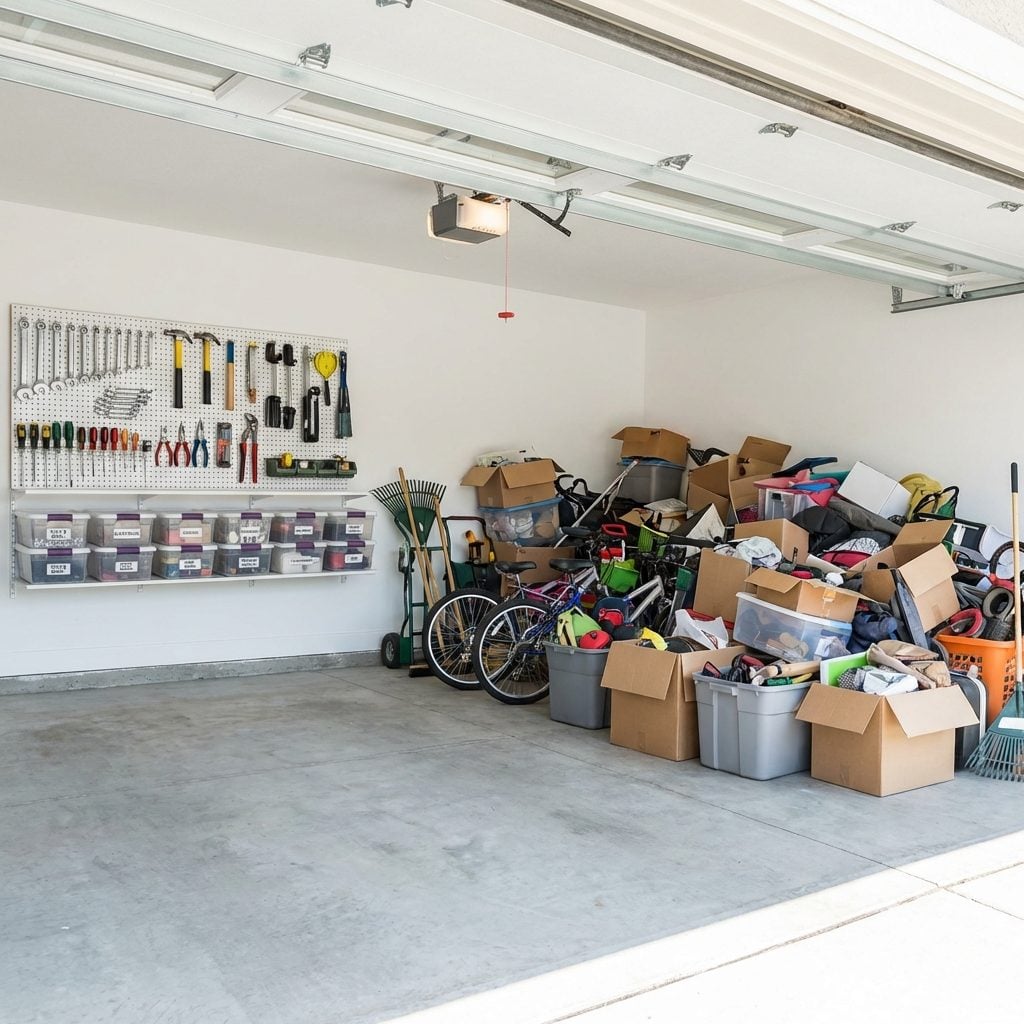
This one seems paradoxical until you understand what perfectionism actually is. Popular culture treats it as a synonym for neatness, the perfectly organized spice rack, the color-coded closet. But clinical and research psychology tells a different story. Research by Dr. Timothy Pychyl and colleagues on perfectionism and procrastination consistently finds that maladaptive perfectionism, the kind driven by fear of failure and impossible internal standards, produces avoidance, not achievement. The perfectionist doesn’t organize imperfectly. They don’t organize at all, until they can do it perfectly. Which is never.
The garage is the ideal hiding place for this dynamic. A scoping review published in Frontiers in Psychiatry noted that perfectionism characterized by high self-criticism and impossibly high performance standards consistently leads to procrastination and avoidance, particularly for tasks where the gap between the current state and the desired outcome feels overwhelming. A messy garage qualifies on every dimension.
The perfectionist looks at the garage and sees not a cleaning project but an impossible one: it would take a whole weekend, and it would have to be done right, with a system, with proper bins, with labels, with intention. Since that version of the project is always just out of reach, there’s never enough time, the right bins aren’t bought yet, the plan isn’t fully formed, the garage remains untouched. Meanwhile, the easygoing person who doesn’t need it to be perfect cleaned theirs out last spring in an afternoon.
Why the Tools You Never Use Say More About You Than the Ones You Do

Unused tools don’t lie. That drill still in its molded plastic insert, the router table that’s never touched sawdust, these aren’t failures of follow-through so much as they are artifacts of intention. Psychologist Russell Belk’s theory of the extended self argues that possessions absorb meaning over time and become repositories for memory, effort, and intention, even when they go unused. You’re not buying a table saw. You’re buying the person you imagined you’d become when you owned one.
The garage is where that imagined self lives rent-free. The woodworking tools speak to a quieter, slower version of you, the one who makes things with his hands rather than ordering them online. The garage features people accumulate often reflect aspiration more than actual lifestyle. And research on identity-linked possessions confirms that we resist letting go of them precisely because discarding them feels like admitting the person we meant to become isn’t coming. That admission is harder than keeping the router table.
The Psychology Behind Why We Turn Garages Into Shrines to Former Versions of Ourselves

Walk into almost any garage and you’ll find a museum no one meant to build. Old trophies from a softball league you quit in 2009. A guitar with a broken string. A road bike with flat tires. These aren’t random accumulations, they’re a curated archive of past identities, each one representing someone you used to be or someone you intended to be.
Psychologist Krystine Batcho’s research, discussed in an APA podcast on nostalgia, describes how nostalgic objects help us maintain self-continuity across time, a psychological thread connecting who we were to who we are now. The garage becomes the room where that thread tangles. Unlike the living room, which performs the present self, the garage quietly stores the past selves. The college intramural volleyball champion. The guy who was going to refinish his own furniture. The weekend cyclist.
What makes the garage distinct as a shrine space is that it’s hidden. You’re not displaying these relics, you’re warehousing them, which suggests something more ambivalent than simple pride. You’re not ready to claim these identities, but you’re not ready to release them either.
What Your Organizational System, or Lack of One, Reveals About How You Handle Uncertainty

The garage has a way of exposing what every other room in the house is trained to conceal: your actual relationship with decision-making. A 2023 study published in PMC examining clutter behavior in American adults found that hesitant and indecisive individuals experienced significantly worse psychological impacts from clutter than more action-oriented people. Clutter, it turns out, is less a storage problem than a decision problem.
Three things your garage organization reveals:
- Stacked but sorted piles signal someone who intends to decide but keeps deferring. The sorting is real effort; the follow-through is still pending.
- Complete chaos with hidden logic often belongs to people who are fine with uncertainty in the short term but resist systems that require ongoing maintenance, creative types, frequently.
- Hyper-labeled bins with exact categories can indicate someone who finds ambient uncertainty genuinely distressing, and whose external order is doing interior emotional labor.
The living room gets staged for guests. The garage gets organized, or not organized, for yourself. That difference is the whole story.
The Strange Comfort of a Space That Asks Nothing of You

🔥 Would you like to save this?
Every room in the house makes a demand. The kitchen asks you to cook or clean. The bedroom asks you to rest. The living room asks you to be presentable. The garage asks nothing.
This might sound trivial, but the psychological relief of a demand-free environment is well-documented. Research on environmental psychology and restorative spaces identifies low-demand environments as critical to cognitive restoration, spaces where attention can wander without consequence. The garage, with its lack of social scripts and its permission to putter, fits this definition almost perfectly.
There’s something about a space with unfinished projects and exposed infrastructure that grants psychological permission. The bare studs, the extension cords, the half-empty can of paint: none of it requires you to perform competence. You can sand something badly, measure wrong, start and stop. The garage is the one room where effort without visible output is still socially acceptable, and that absence of performance pressure is quietly rare in adult life.
Why Garage Hoarding Is Almost Never About the Objects, and Always About the Exit

Researchers who study hoarding disorder have consistently found that the behavior is not fundamentally about things, it’s about emotions. A landmark study in the journal Behavioral and Cognitive Psychotherapy found that experiential avoidance, the tendency to avoid contact with unwanted internal experiences, is a core predictor of hoarding symptoms. The objects stay because discarding them would require feeling something the person isn’t ready to feel.
In the garage specifically, this plays out in a particular way. The garage is the room furthest from the emotional center of the house. It’s the easiest place to put things you’ve deferred deciding about. Research published in Frontiers in Psychology describes how negative emotions, loss, guilt, grief, become associated with the act of discarding, which means the pile isn’t a storage choice. It’s a way of not having a conversation with yourself about something that ended.
The boxes of your ex’s things. The equipment from a business that failed. The baby clothes. Each one is a door to a feeling, and the garage is where those doors go to stay closed.
The Psychological Weight of ‘Someday’, and Why It Lives Almost Exclusively in the Garage

“Someday” is the garage’s native language. Someday I’ll learn woodworking. Someday I’ll fix the bike. Someday I’ll go through those boxes. Every one of those deferred futures takes up physical space, and according to research on identity-based motivation by psychologist Daphna Oyserman, objects tied to future versions of ourselves act as symbols that preserve a sense of possibility even when behavior hasn’t caught up to intention yet.
That’s not entirely unhealthy. The problem is accumulation. When the garage fills with enough someday objects, the weight of deferred possibility becomes its own kind of stressor. Research from a 2021 Psychology Today article on the consequences of clutter cites work connecting indecision and decisional procrastination directly to physical clutter, suggesting that every item in the garage that you haven’t decided about is actively costing you cognitive energy, even on days you don’t go in there.
The must-have must-have garage features lists that circulate online never mention a designated place for the someday pile. But psychologically, it might be the most important zone in the space to get honest about.
The Bottom Line
Your garage is the psychological self-portrait you never meant to paint, the one room where the performance stops and the actual person begins, preserved in boxes, broken tools, and things you almost threw away. What it reveals, more than anything else, is not how organized or chaotic you are, but how honestly you’re reckoning with who you used to be versus who you’re actually becoming. Go stand in it for five minutes without doing anything, what you feel in that silence is the answer you came here for.