🔥 Would you like to save this?
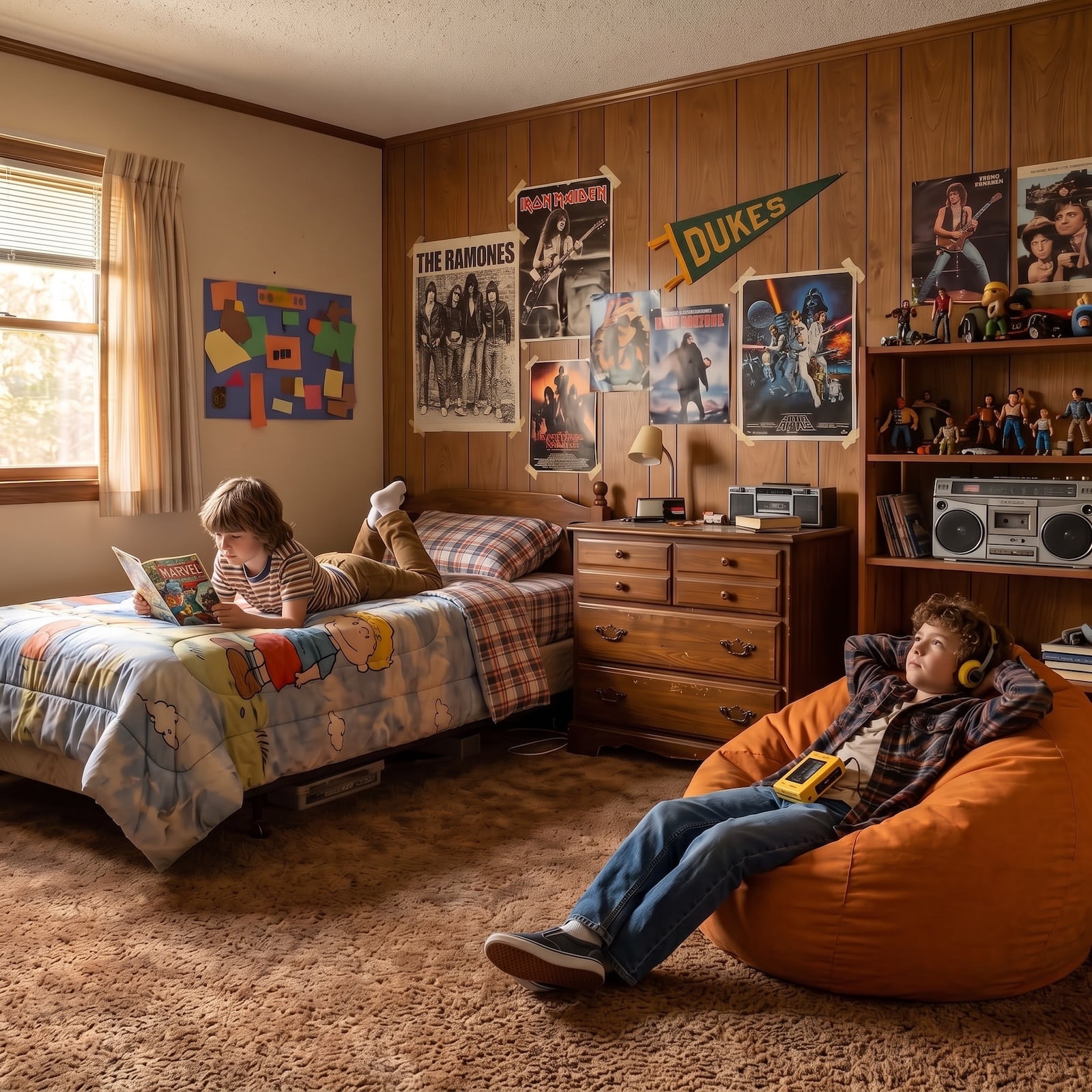
A kid’s bedroom in 1985 rarely whispered. Oak furniture arrived with serious visual weight. Strawberry Shortcake could colonize the bedding, curtains and lampshade before breakfast. Wallpaper climbed every wall, a boombox claimed the dresser, and carpet came in colors that seemed to have been invented specifically for suburban bedrooms.
Four decades later, almost every piece of the room has been renegotiated. Heavy bedroom suites broke apart into lighter pieces. Wall-to-wall carpet gave way to washable rugs. One furious ceiling fixture became layers of task and ambient light. Posters acquired frames, toy boxes developed filing systems, and the humble bedside clock somehow learned to answer questions and control the lights.
In order to come up with the very specific design ideas, we create most designs with the assistance of state-of-the-art AI interior design software. Also, assume links that take you off the site are affiliate links such as links to Amazon. this means we may earn a commission if you buy something.
These 36 comparisons aren’t really about deciding that NOW got everything right. Some 1985 rooms were clunky, crowded and spectacularly committed to peach. They were also personal in ways today’s polished rooms can struggle to reproduce. The most revealing transformations show what we gained in flexibility, comfort and organization—and what disappeared when the messy evidence of childhood stopped covering every available surface.
36. 1985: The Matching Wood Bedroom Set → NOW: Mixed, Lighter, Modular Pieces
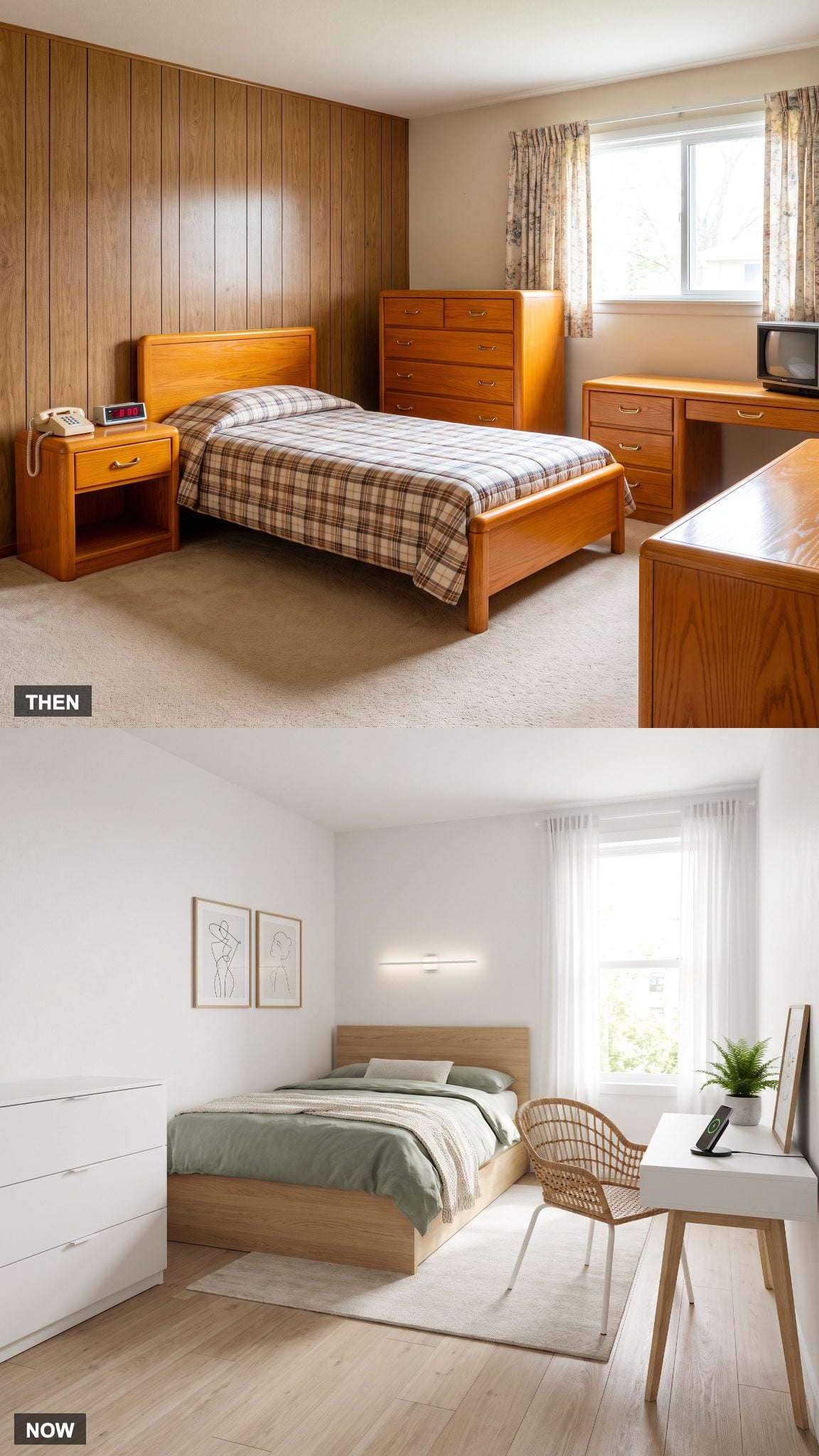
The coordinated bedroom suite made decorating remarkably efficient. Bed, dresser, nightstand and desk could all arrive in the same orange-toned wood, giving the room instant order—and a very definite expiration date when tastes changed.
Now the pieces don’t have to match, and that’s deliberate. A light oak bed can sit beside a white dresser and a rattan chair without anybody calling the furniture police. More importantly, individual pieces can leave as needs change without dragging the entire room along with them.
35. 1985: Bedspread Pulled Tight Over the Pillows → NOW: Layered Duvet, Throws, and Cushions
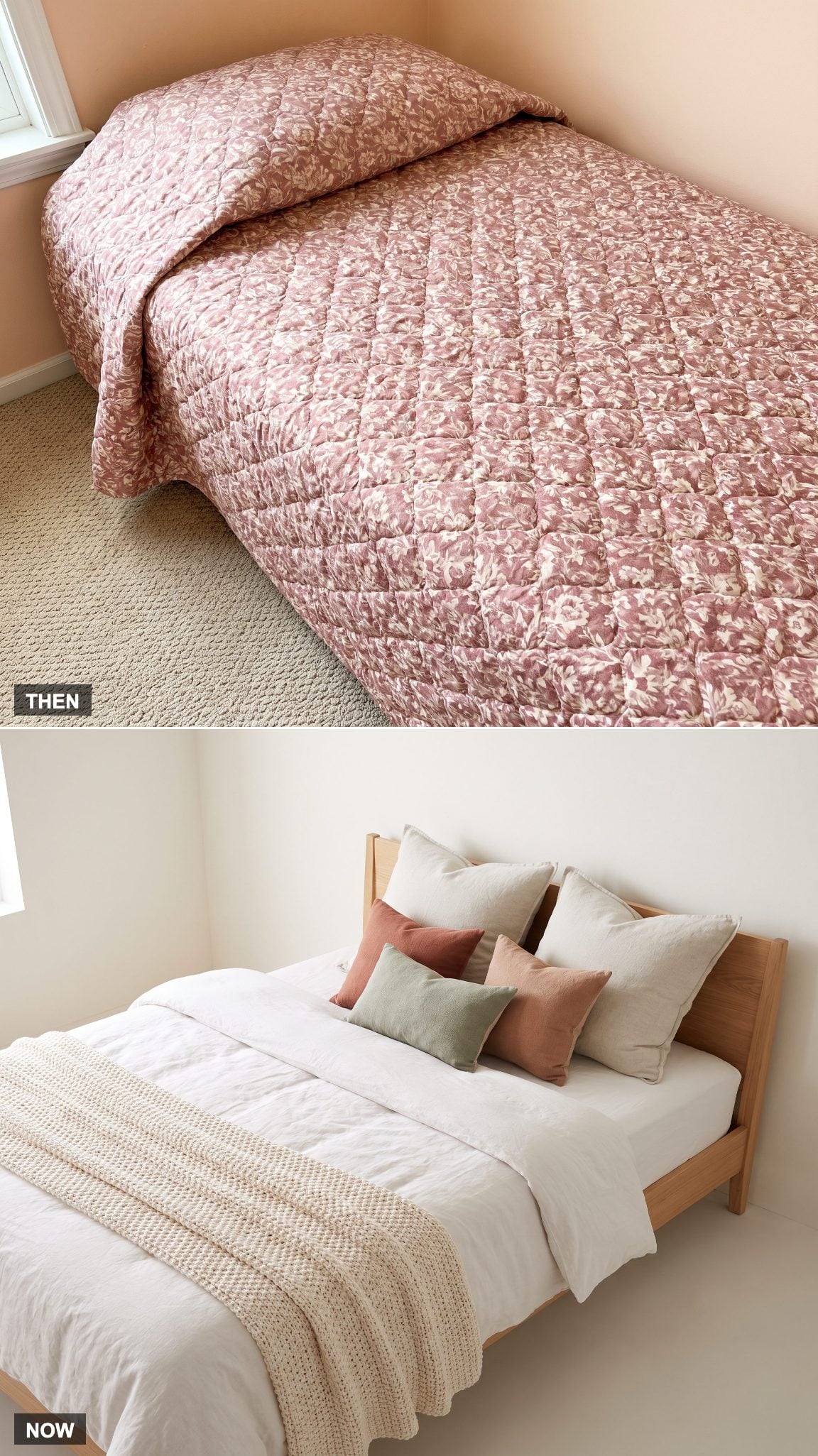
One bedspread could do the entire job. Pull it tight, sweep it over the pillows in a single disciplined motion, and the bed looked ready for inspection. Crisp? Absolutely. Inviting? That depended on how strongly you felt about hospital corners.
Today’s bed is a small landscape of layers: duvet, throw, pillows and cushions, with enough variation in texture to make the surface look softer before anybody climbs in. There are more pieces to throw on the floor at bedtime, admittedly, but considerably less resemblance to a bed nobody is supposed to touch.
34. 1985: Bunk Beds Built for Siblings → NOW: Loft Beds That Free Up the Floor
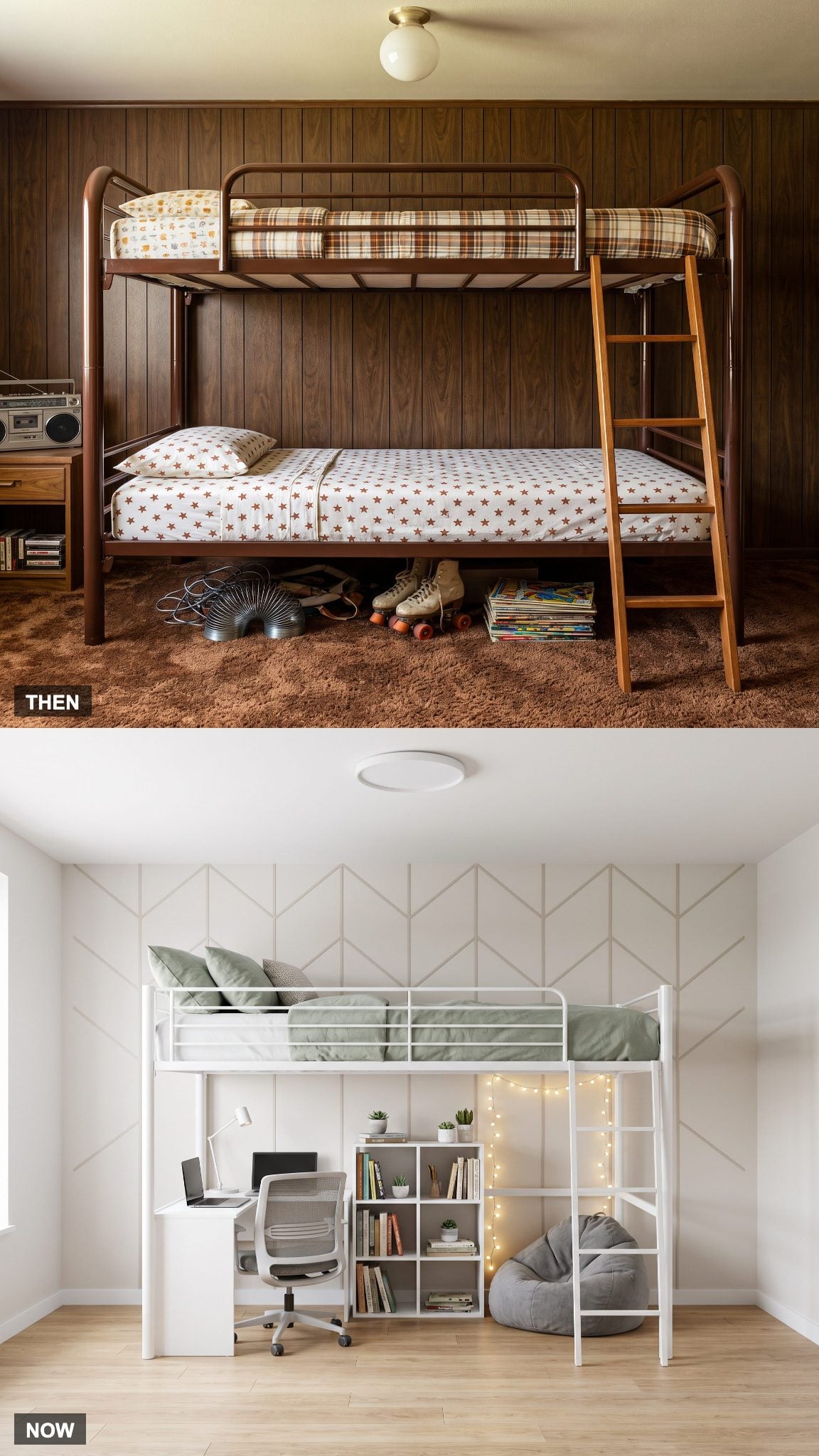
Bunk beds solved a straightforward problem: two kids, one room, insufficient floor. Stack the mattresses, attach a ladder, and let sibling diplomacy determine who got the top.
The loft bed uses the same vertical thinking for a different problem. One mattress goes upstairs while the footprint underneath becomes a desk, bookshelf, reading nook or den. The bed hasn’t become smaller. It has simply stopped demanding exclusive rights to the floor beneath it.
33. 1985: Wall-to-Wall Carpet → NOW: Hard Floors With a Washable Rug
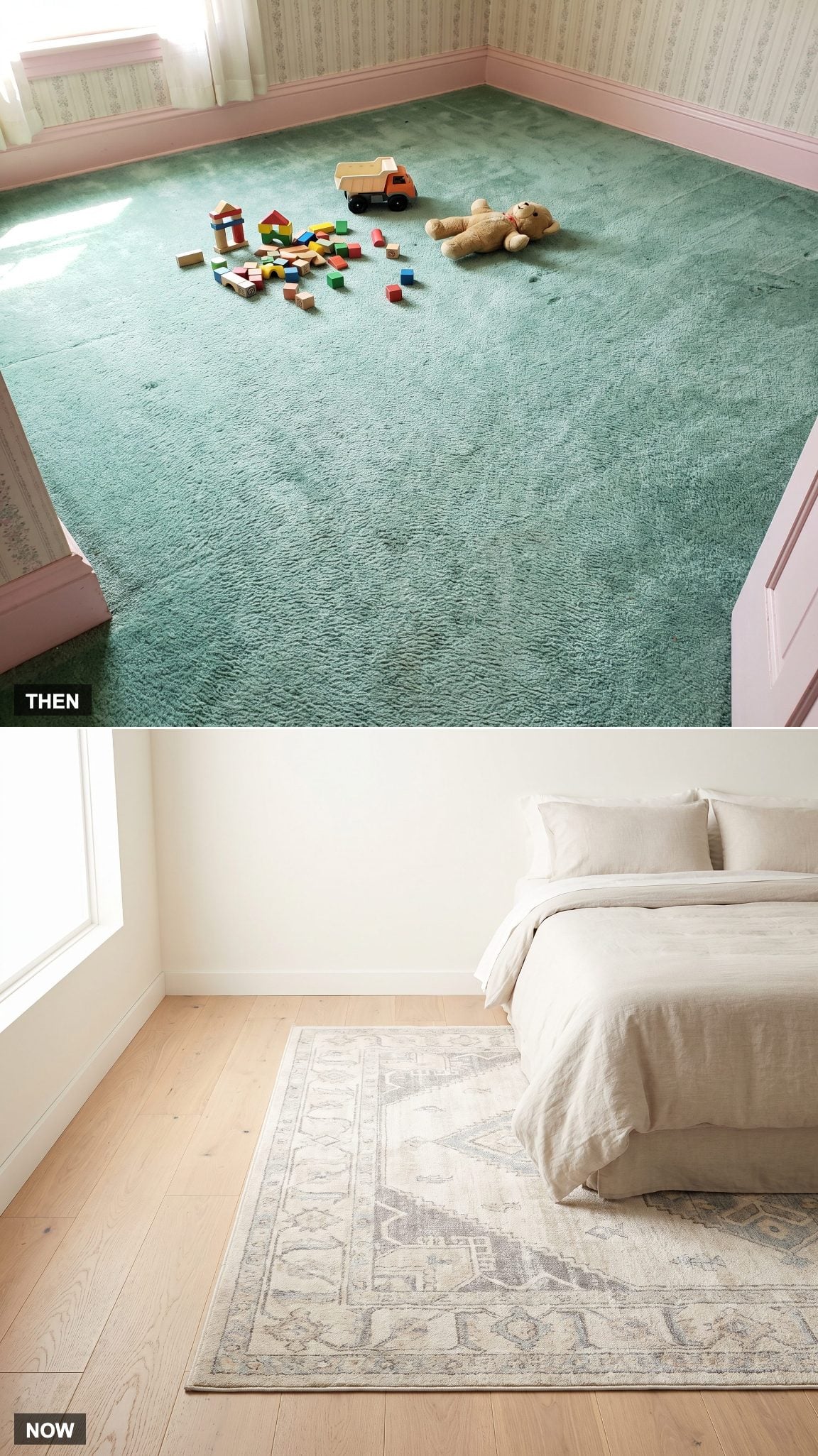
Wall-to-wall carpet brought warmth, softness and an enormous commitment to whatever color had seemed sensible in the showroom. Mint, powder blue and dusty rose could cover every inch from baseboard to baseboard, including the inch where somebody eventually spilled grape juice.
Hard flooring with a washable rug makes the commitment considerably smaller. The floor wipes down, the rug can be cleaned or replaced, and a room can move from dinosaurs to skateboards without requiring a flooring contractor.
32. 1985: Twin Bed With a Chunky Headboard → NOW: Upholstered, Platform, or Minimal Bed
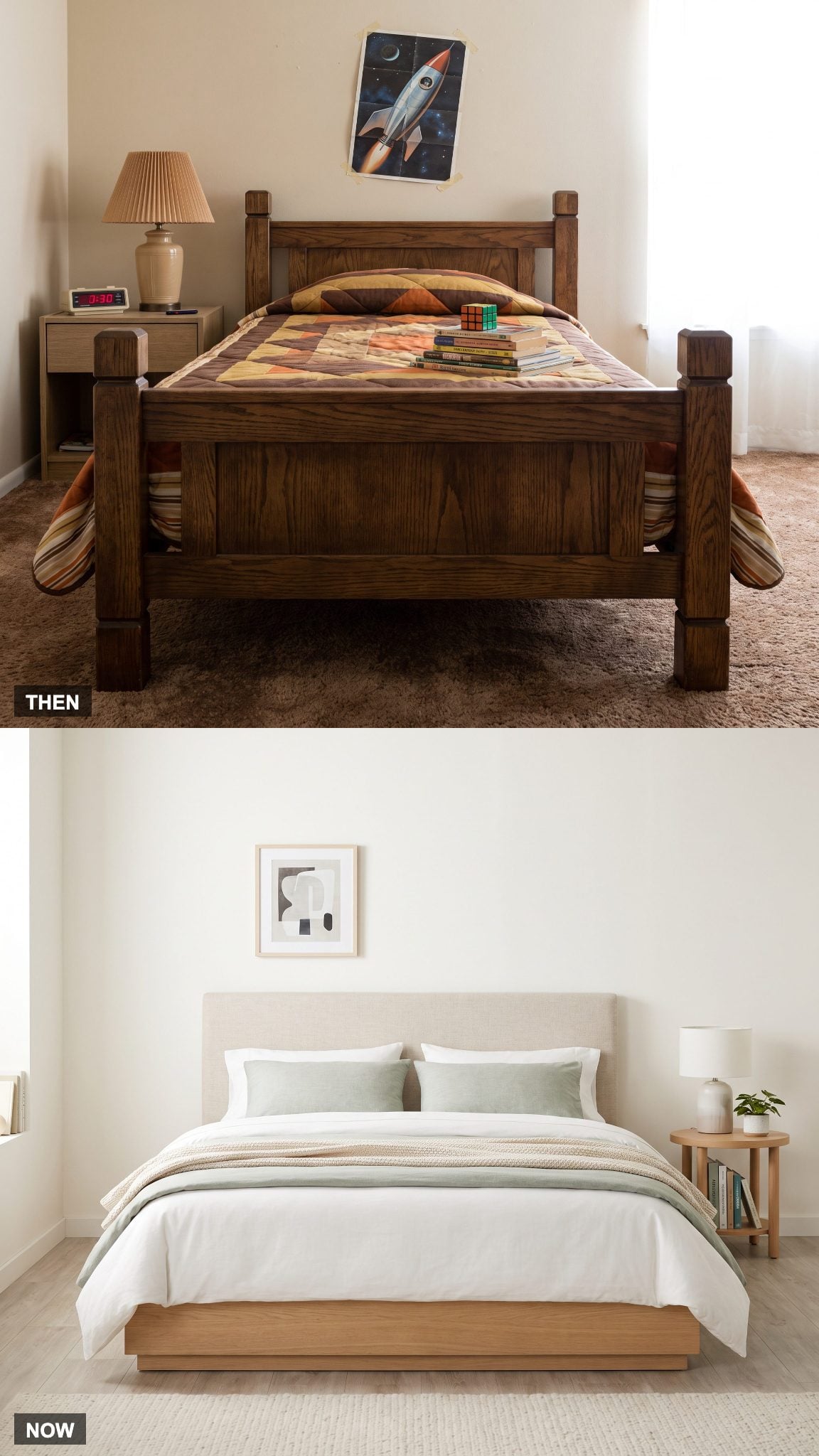
That headboard was built like a piece of gym equipment. Solid-looking stained wood, boxy corners, plenty of visual mass and enough presence to make a small bedroom feel even more committed to furniture.
The upholstered version changes the equation. Soft linen, a low platform and no bulky footboard reduce the amount of hard-edged furniture around the mattress, while the padded headboard gives reading in bed a considerably friendlier backdrop.
31. 1985: Floral, Striped, or Novelty Wallpaper → NOW: Statement Wallpaper or Removable Murals
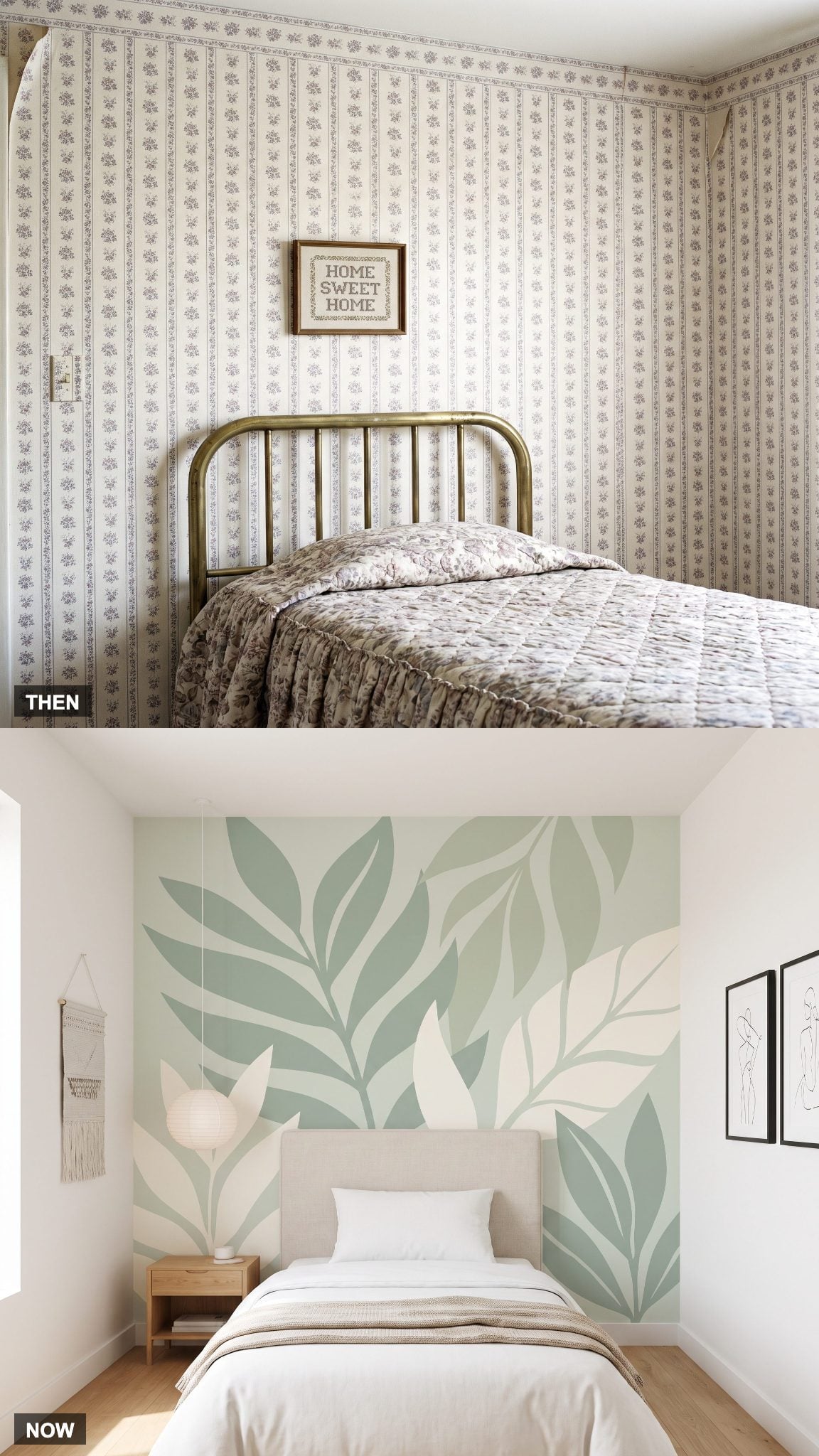
Wallpaper rarely knew when to stop. Tiny florals, stripes and novelty prints could march across all four walls, turning pattern into architecture and making any future change of heart considerably more labor-intensive.
The modern version concentrates the drama. Oversized botanicals, landscapes or graphic murals might occupy one wall while quieter paint handles the rest. Removable products can also make the next transformation less archaeological: fewer steamers, fewer scrapers, fewer discoveries about exactly how committed the previous decorator had been.
30. 1985: Toy Box Overflowing in the Corner → NOW: Labeled Bins, Cubes, and Low Storage
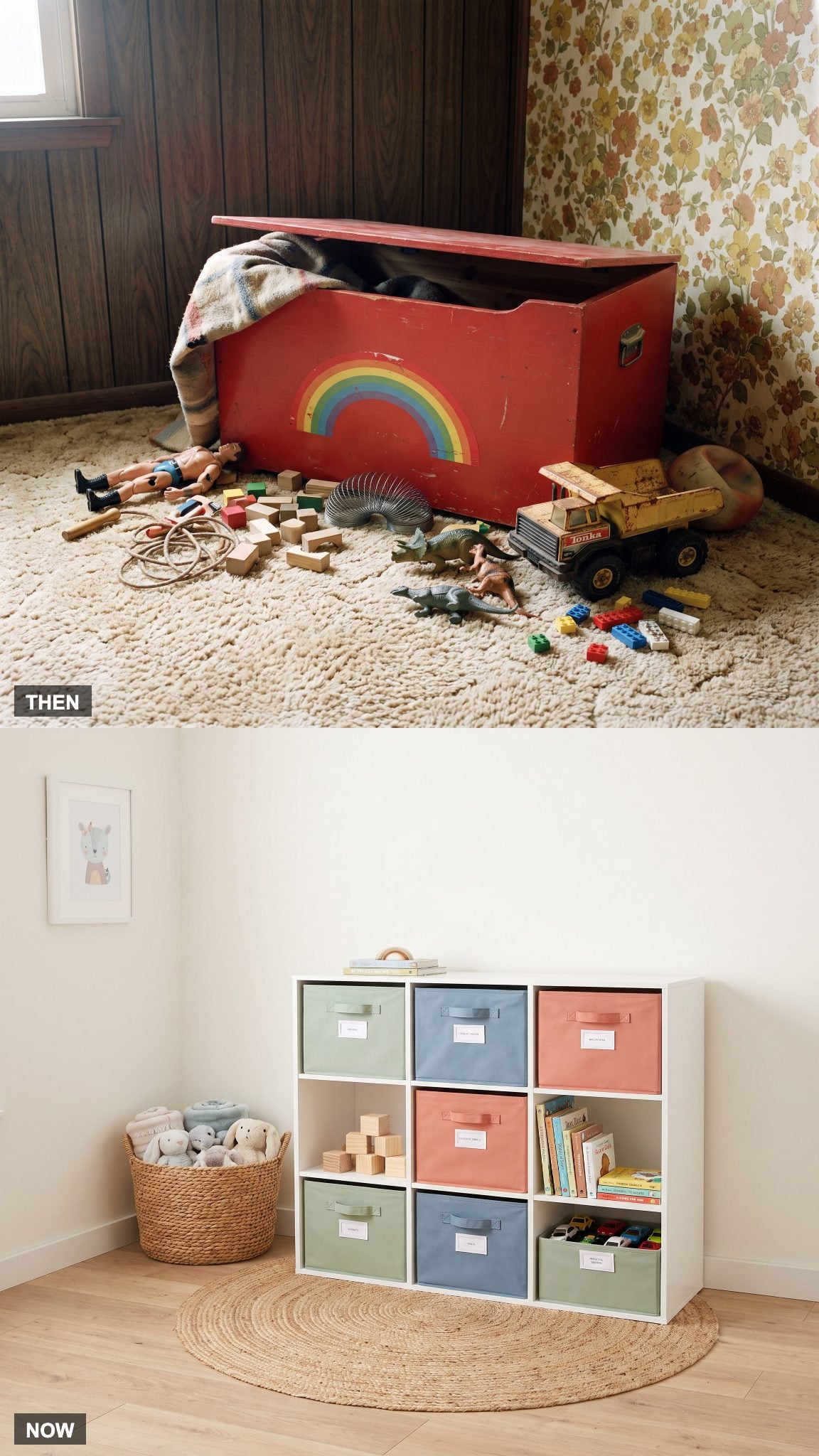
The toy box operated on one magnificent principle: everything goes in. The lid closed, the floor reappeared, and the one toy anybody actually wanted immediately migrated to the bottom beneath a jump rope, seventeen blocks and an action figure missing an arm.
Cube shelving changes the logic from hiding to sorting. Low bins keep storage within reach, categories keep similar toys together, and cleanup becomes a quick toss into several obvious destinations. Less archaeology. Better odds of finding the truck.
29. 1985: Pastel Pink, Country Blue, Peach → NOW: Muted Earth Tones and Grown-Up Palettes
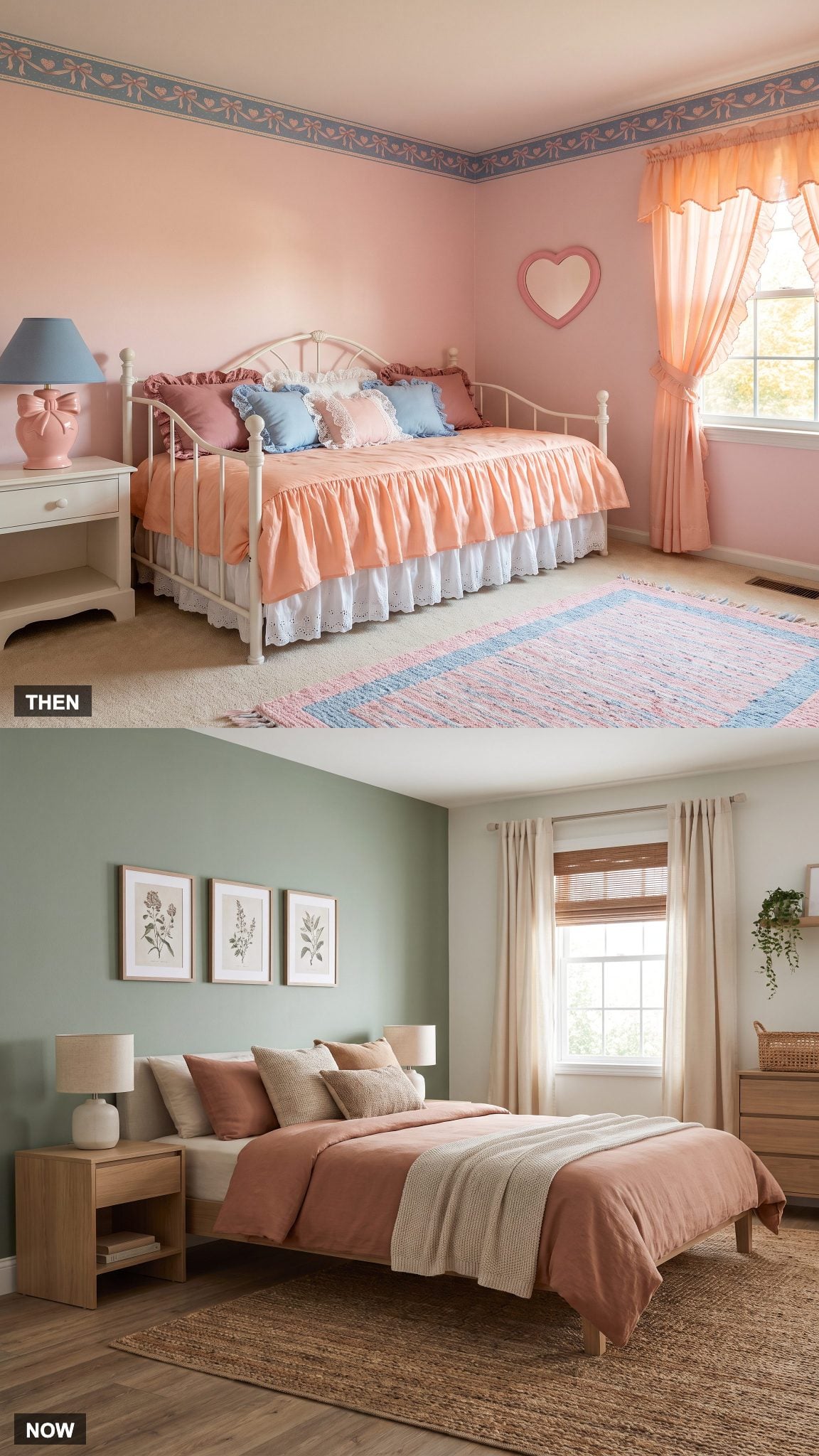
Country blue, pastel pink and peach formed one unmistakably period-minded corner of the 1980s palette. Add coordinating curtains and a lampshade and the room could become remarkably committed to a single sweet idea.
Today’s palette often borrows from farther down the paint deck: warm clay, sage, oatmeal, terracotta and other muted colors that can accommodate changing furniture and interests without requiring the walls to start over every few years.
28. 1985: Wallpaper Border at the Ceiling → NOW: Painted Arch, Mural, or Color Block
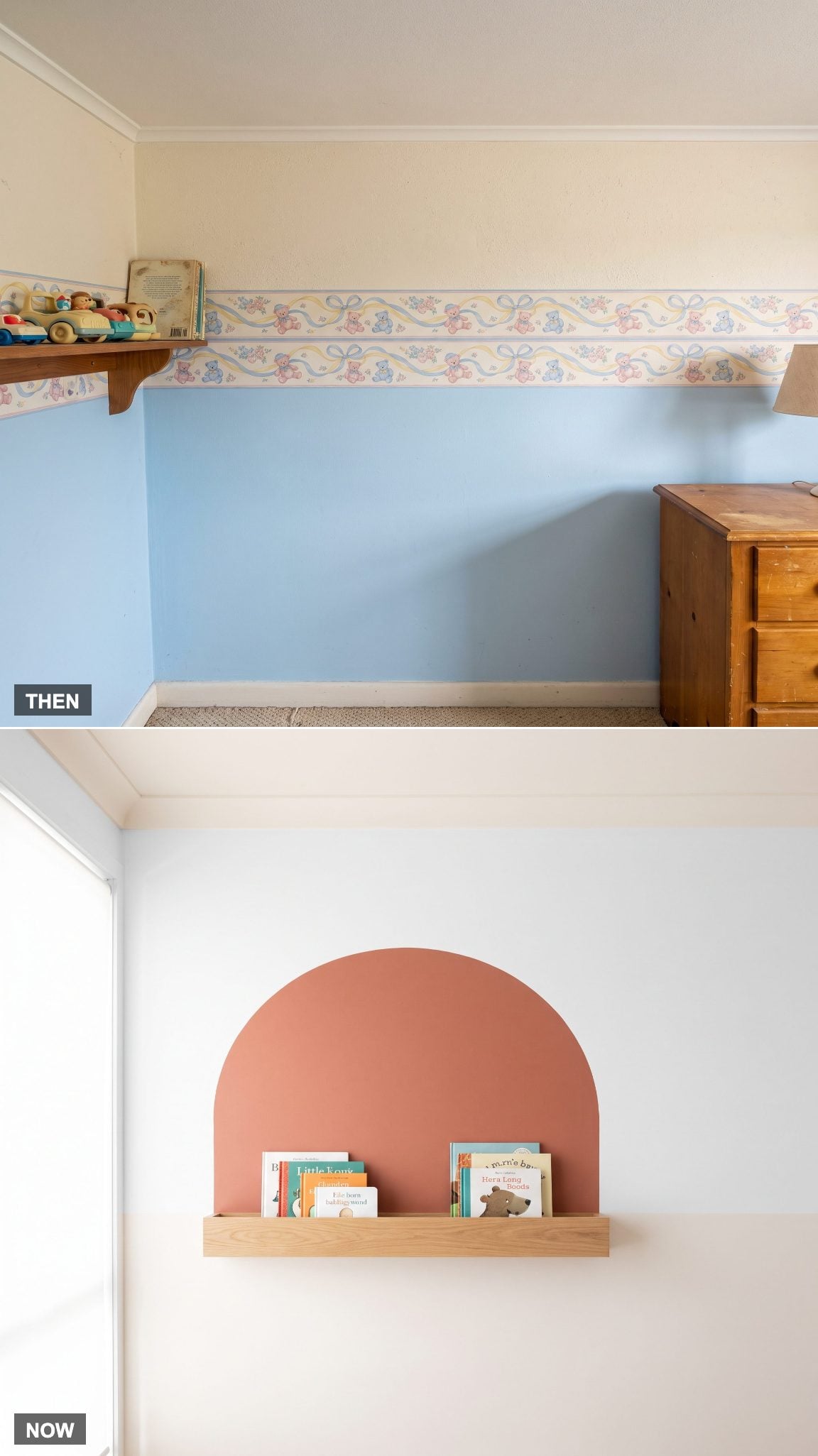
The wallpaper border was a finishing flourish with absolutely no interest in subtlety. Teddy bears, ribbons, flowers or geometric motifs circled the room near the ceiling, tying the scheme together while quietly timestamping the whole production.
A painted arch or color block moves that graphic gesture closer to the furniture. One field of color can frame a bed, desk or reading corner without sending a repeating motif around all four walls.
27. 1985: Open Bookshelf Packed With Everything → NOW: Display Ledges and Purpose-Built Book Storage
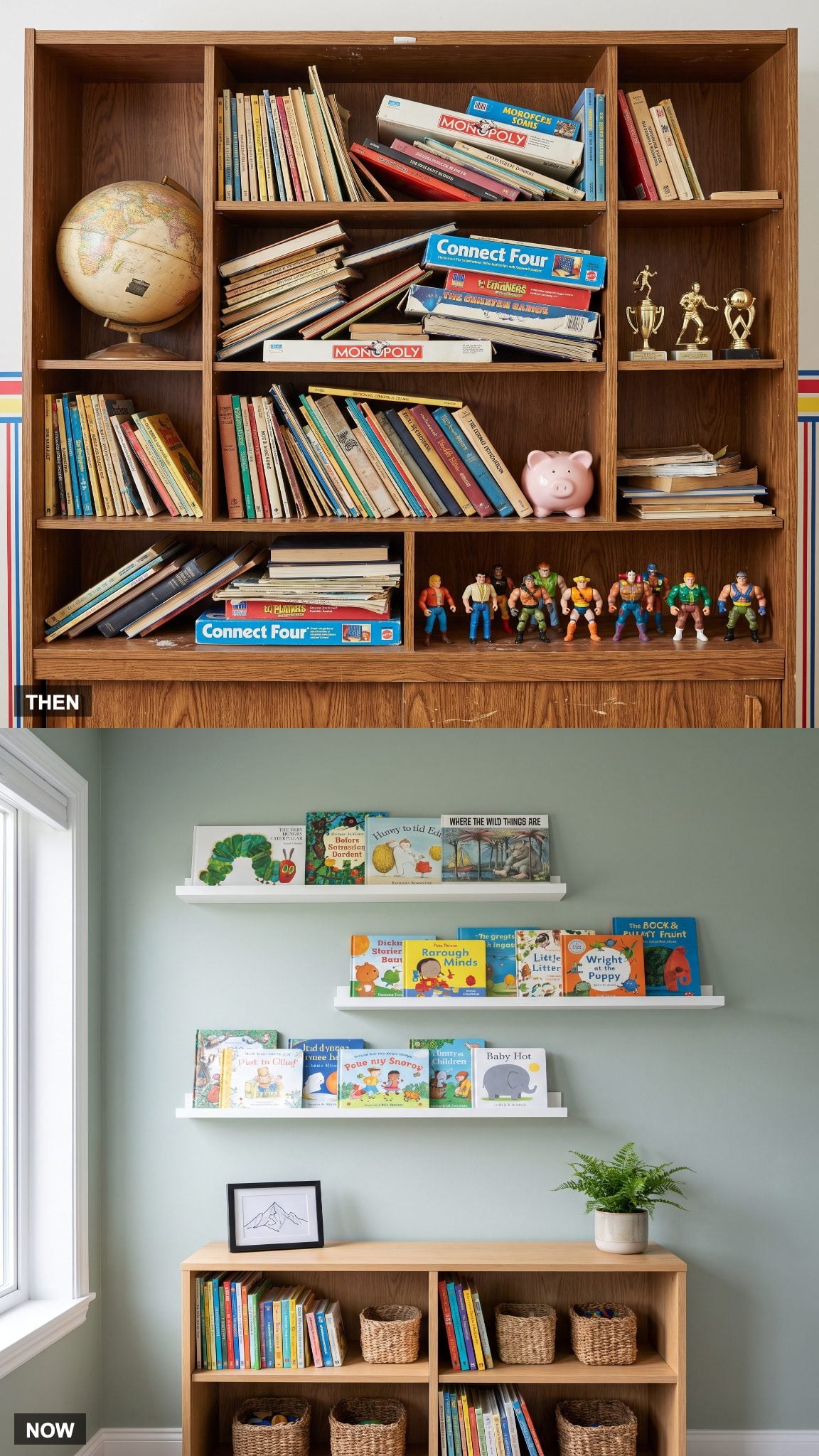
One shelf could hold the whole childhood. Paperbacks leaned against board games shoved in sideways, while a globe, trophies, piggy bank and several action figures fought over whatever territory remained.
Face-out ledges turn book covers into part of the room instead of burying them behind narrow spines. A low bookcase can handle the larger collection underneath, separating display from bulk storage and making the whole arrangement considerably easier to read at a glance.
26. 1985: Full Character Bedding → NOW: A Theme Without Everything Matching
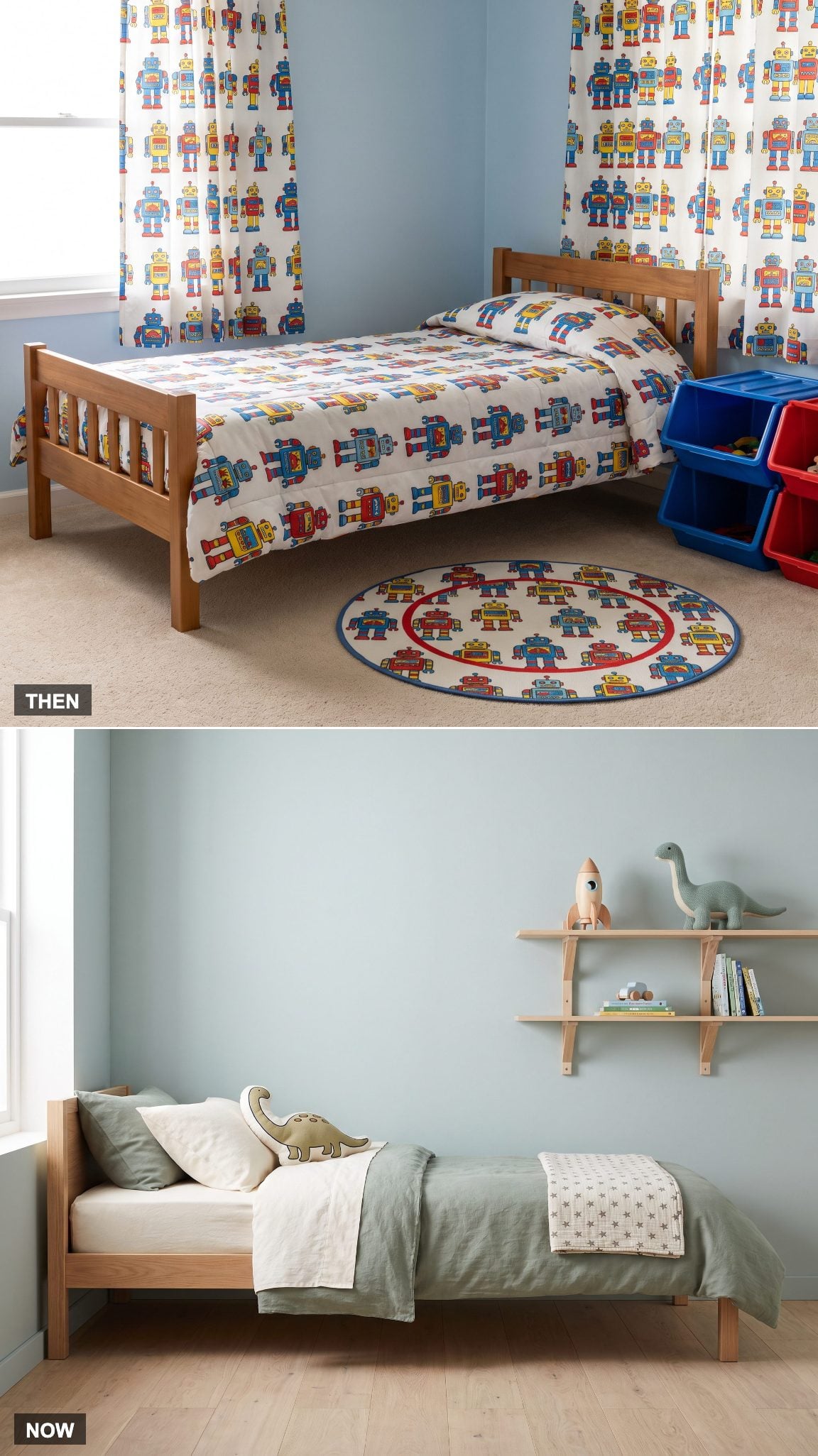
The theme could go all in. Comforter, pillowcase, curtains, rug and lampshade all carried the same character or motif, which was thrilling while the obsession lasted and considerably less convenient when it didn’t.
Now the theme can live in one or two expendable pieces: a dinosaur cushion, a starry throw, a framed print. Neutral bedding underneath does the long-term work. When dinosaurs suddenly lose to skateboards, one pillow can take the fall instead of the entire room.
25. 1985: Posters Taped to the Wall → NOW: Framed Prints and a Gallery Wall
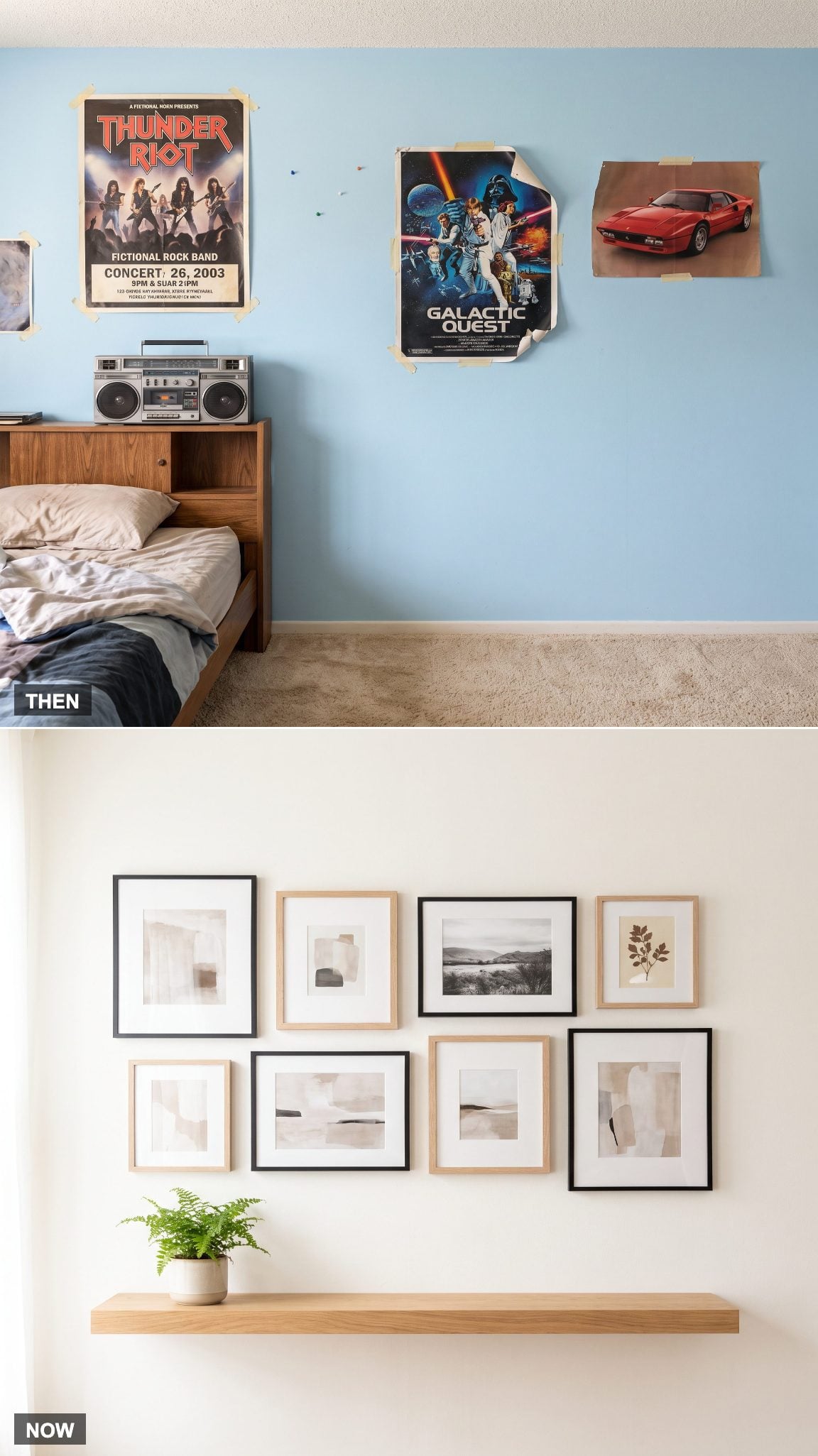
Posters went up with rolled tape and thumbtacks, then slowly developed curled corners and a complicated relationship with the paint underneath. The wall was less composition than accumulation, which was part of its charm.
The gallery wall takes the same impulse and gives it geometry. Thin black or pale wood frames introduce consistent edges even when the images have nothing else in common. Self-expression survives; the sticky residue does not.
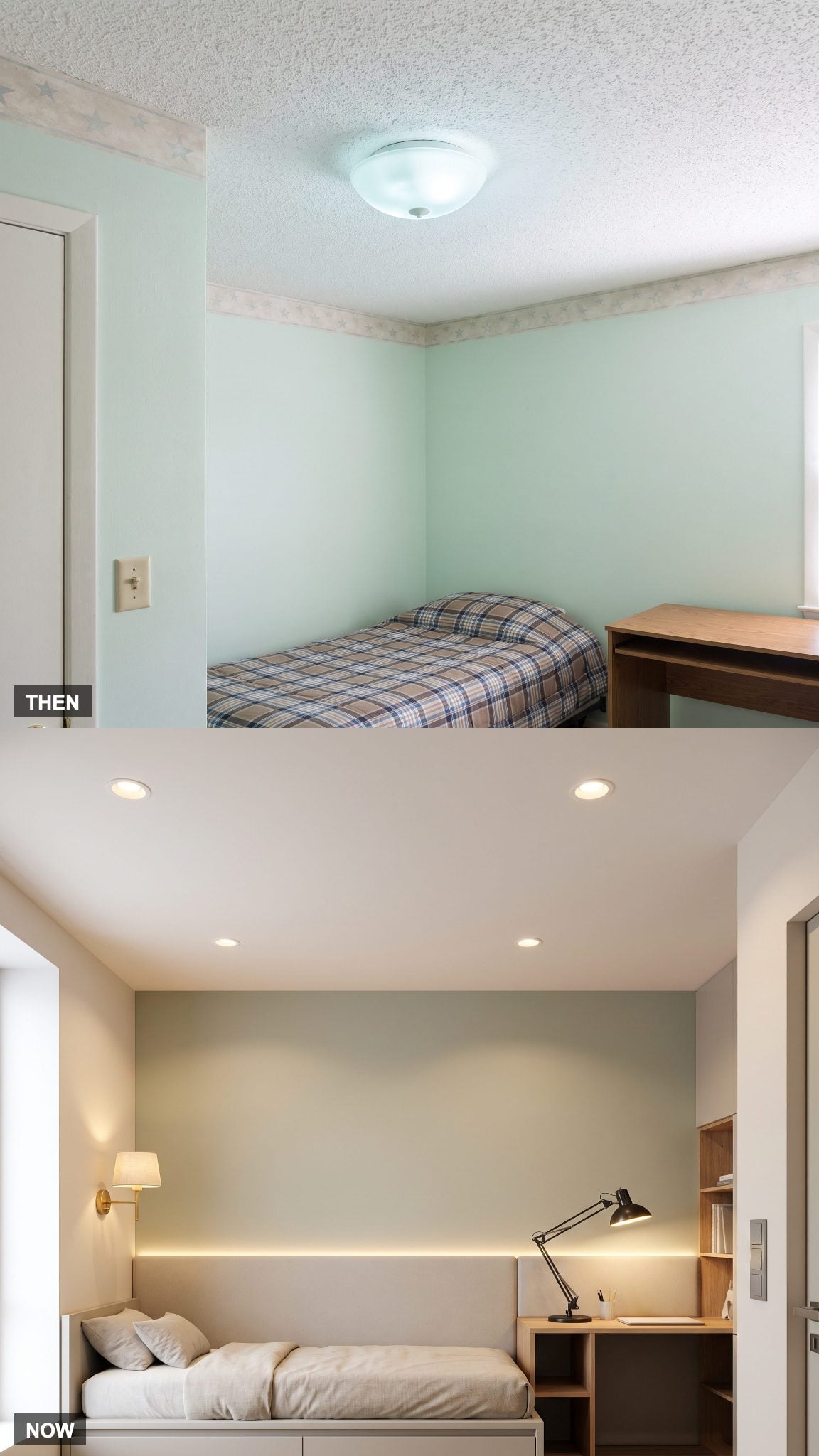
24. 1985: One Ceiling Fixture → NOW: Layered Ceiling, Bedside, Task, and Accent Lighting
🔥 Would you like to save this?
One switch by the door, one frosted dome overhead, one lighting strategy: illuminate everything equally and ask questions later. The result could make a bedroom feel remarkably like somewhere paperwork was about to be completed.
Layered lighting assigns different jobs to different fixtures. General illumination handles the room, a bedside sconce supports reading, a desk lamp concentrates light on work, and accent lighting can soften the edges when full brightness isn’t needed.
23. 1985: Stuffed Animals Buried the Bed → NOW: Plush Toys Get Their Own Basket, Shelf, or Hammock
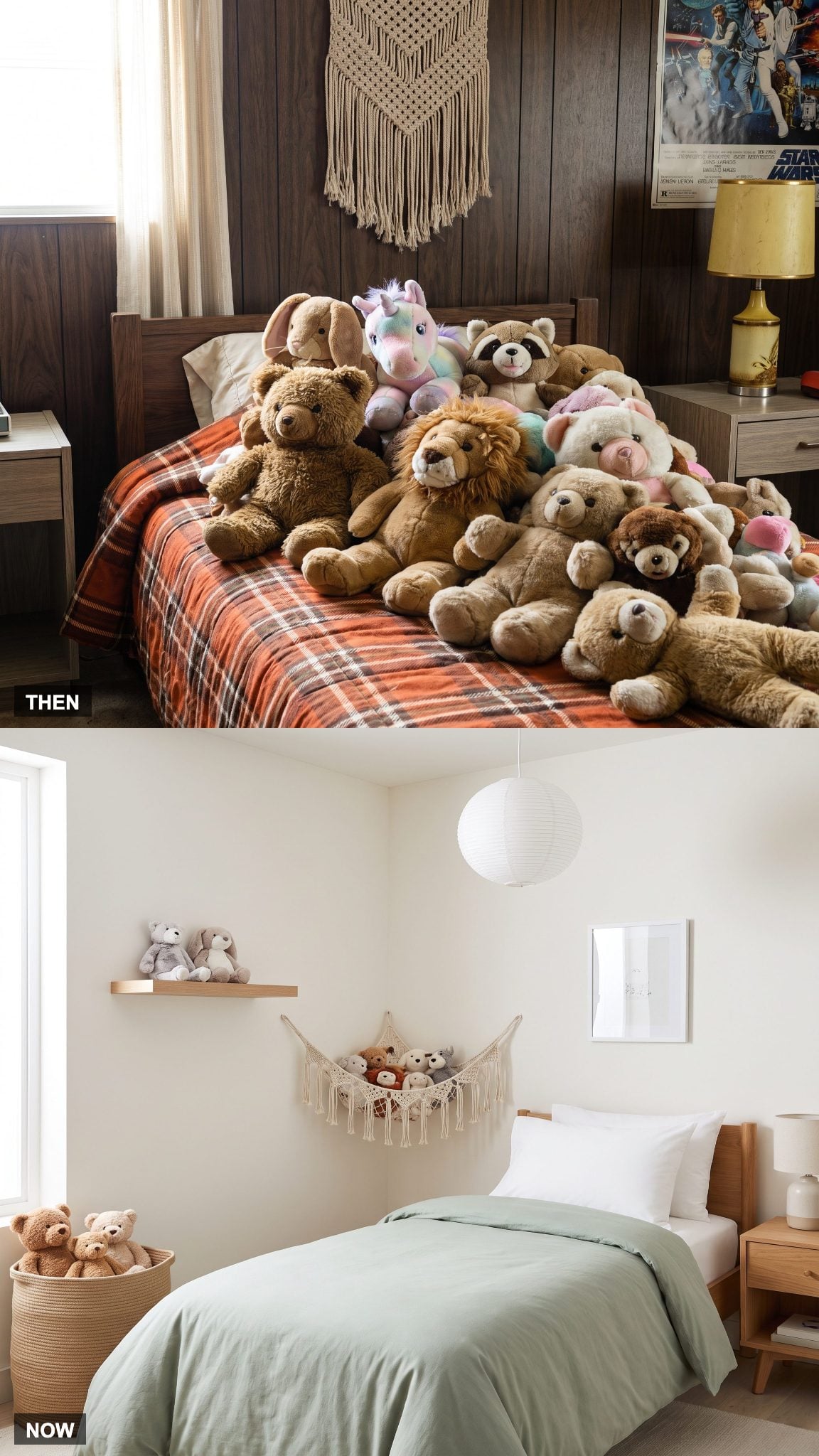
The bed could double as a wildlife preserve. Bears, rabbits, lions and several creatures of uncertain taxonomy occupied the pillows until bedtime began with negotiations over which ones were staying.
Now the plush population gets designated real estate: a woven basket, floating shelf or corner hammock. Favorites can remain visible while the mattress returns to its original occupation.
22. 1985: Ceramic or Plastic Bedside Lamp → NOW: Compact Sconce or Integrated Bedside Lighting
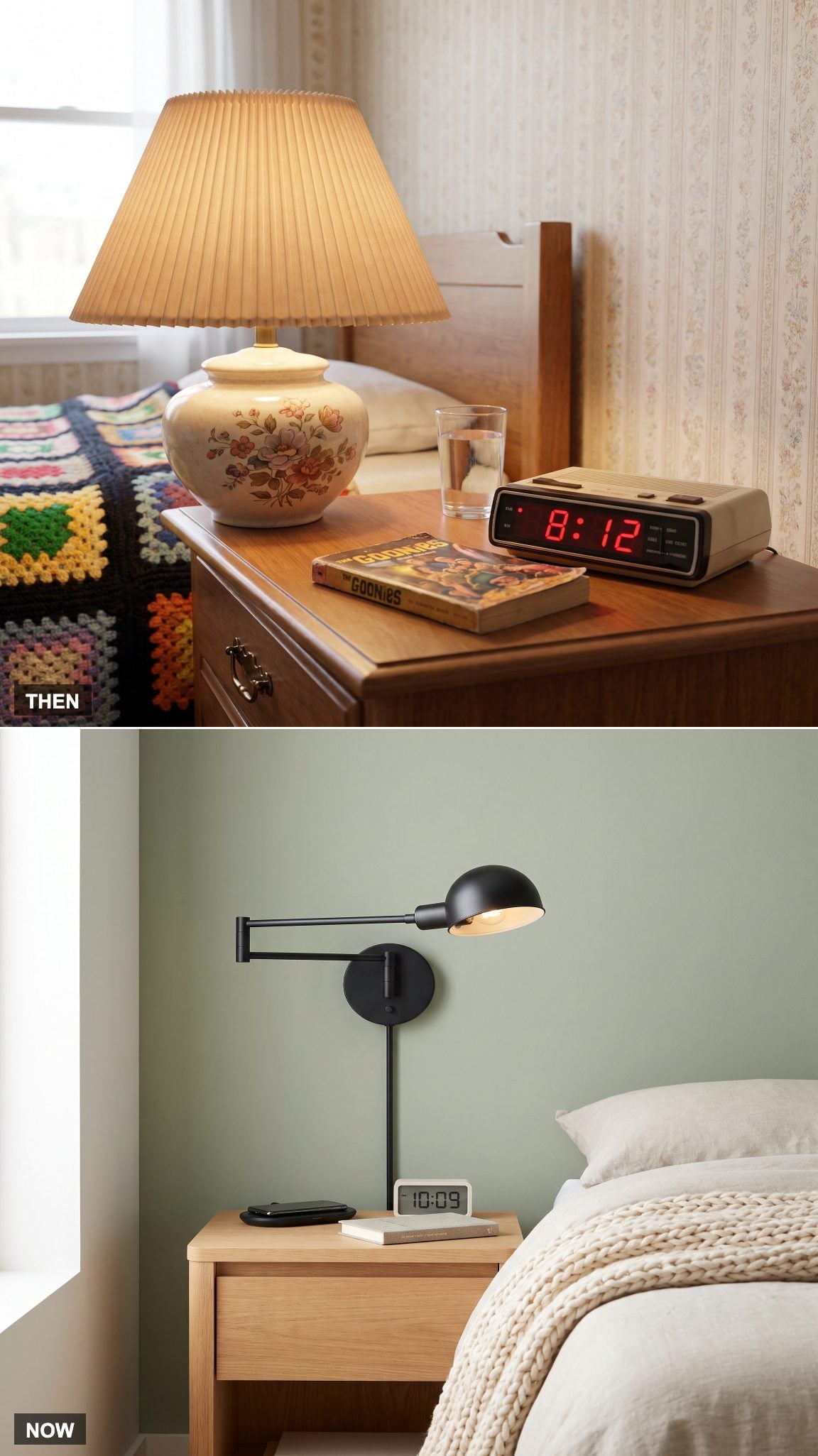
The bedside lamp often occupied a heroic percentage of the nightstand: ceramic or plastic base, pleated shade, generous footprint and just enough remaining surface for a book and a glass of water.
A wall-mounted sconce gives that territory back. A slim swing arm can direct light toward the bed while leaving the nightstand free for whatever has replaced the clock, radio, telephone and several other objects that once lived there.
21. 1985: Handmade School Art Everywhere → NOW: Dedicated Children’s Art Display
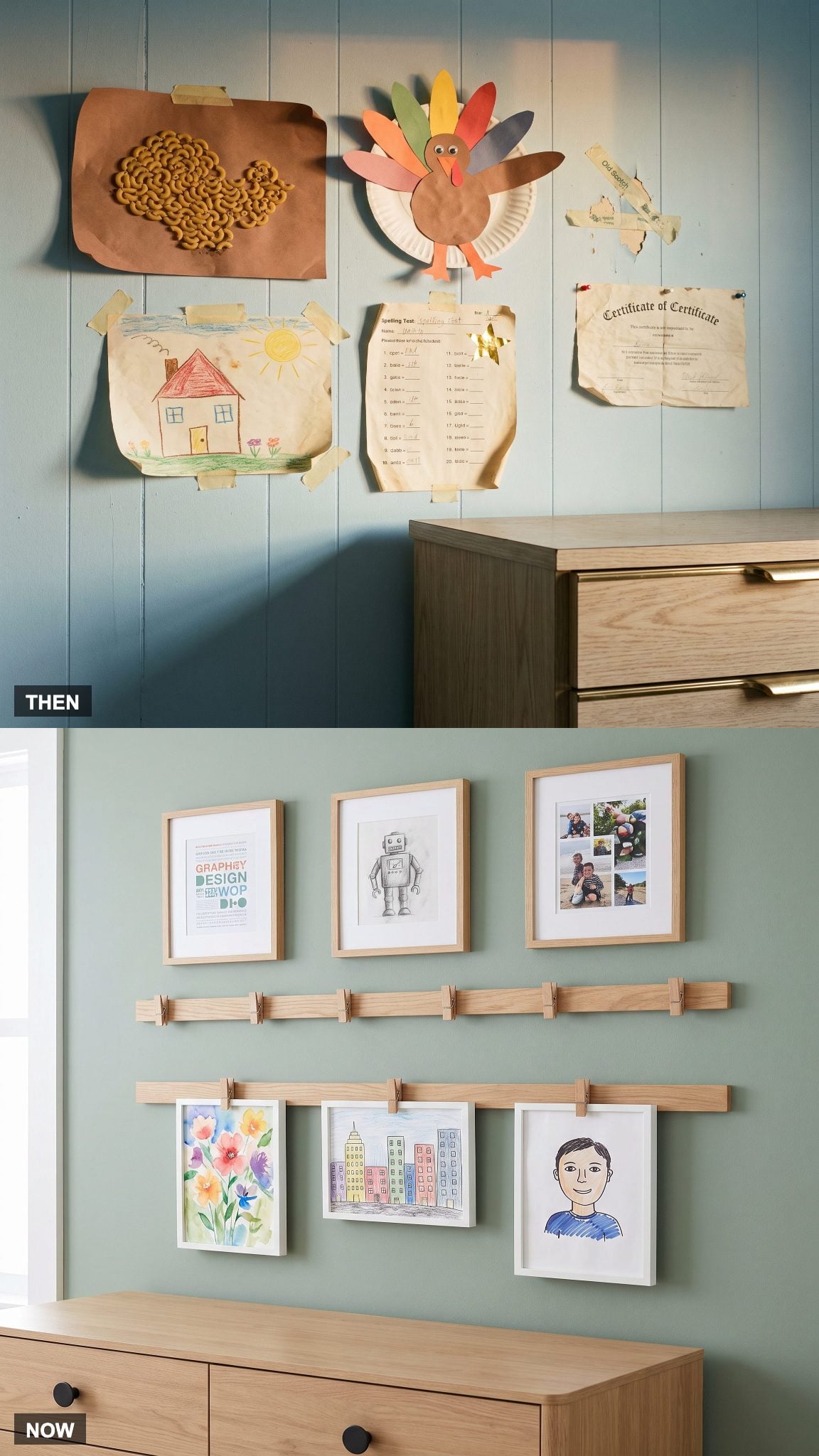
Macaroni collage. Paper-plate turkey. Spelling test with a gold star. Childhood produced paper at industrial scale, and once the refrigerator surrendered, the bedroom wall became overflow storage.
Clip rails and swappable frames give the latest work a defined place and make rotation easy. The display looks intentional without turning children’s art into something too precious to replace. A proper craft room inspiration setup takes the same idea considerably further.
20. 1985: A Small Wooden Homework Desk → NOW: The Ergonomic Study and Computer Station
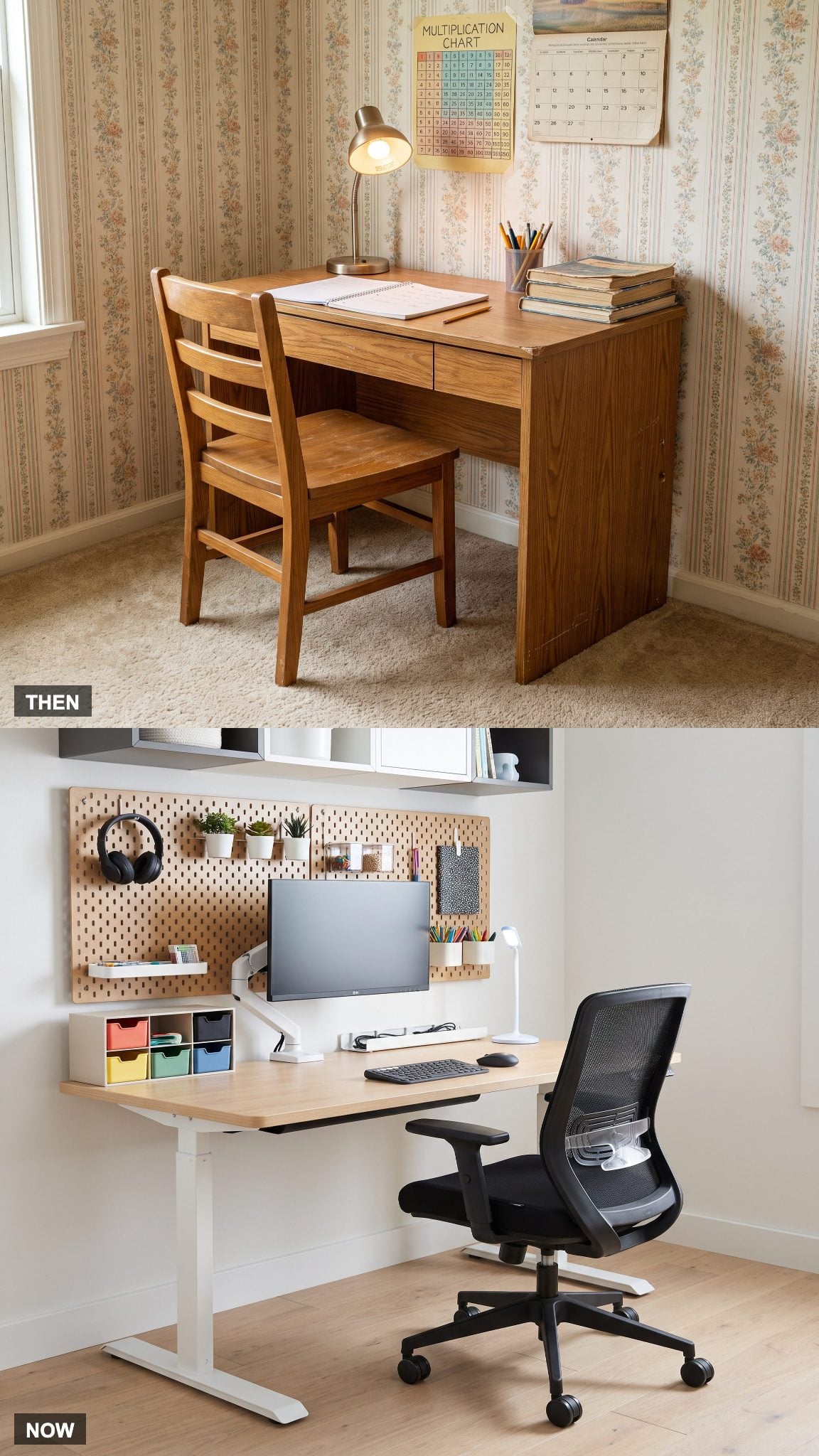
The 1985 desk had a wonderfully uncomplicated job description: hold paper, pencil, lamp and whichever textbook had caused the evening’s problem. Ergonomic ambition generally stopped somewhere around providing a chair.
The modern version treats a nine-year-old like a knowledge worker. Adjustable components, a supportive chair, monitor space, pegboards and cubbies turn one small corner into a genuine work zone. You can see the craft room inspiration in the storage, except the glue sticks now share territory with charging cables.
19. 1985: Glow-in-the-Dark Stars and Novelty Decorations → NOW: LED and Ambient Mood Lighting
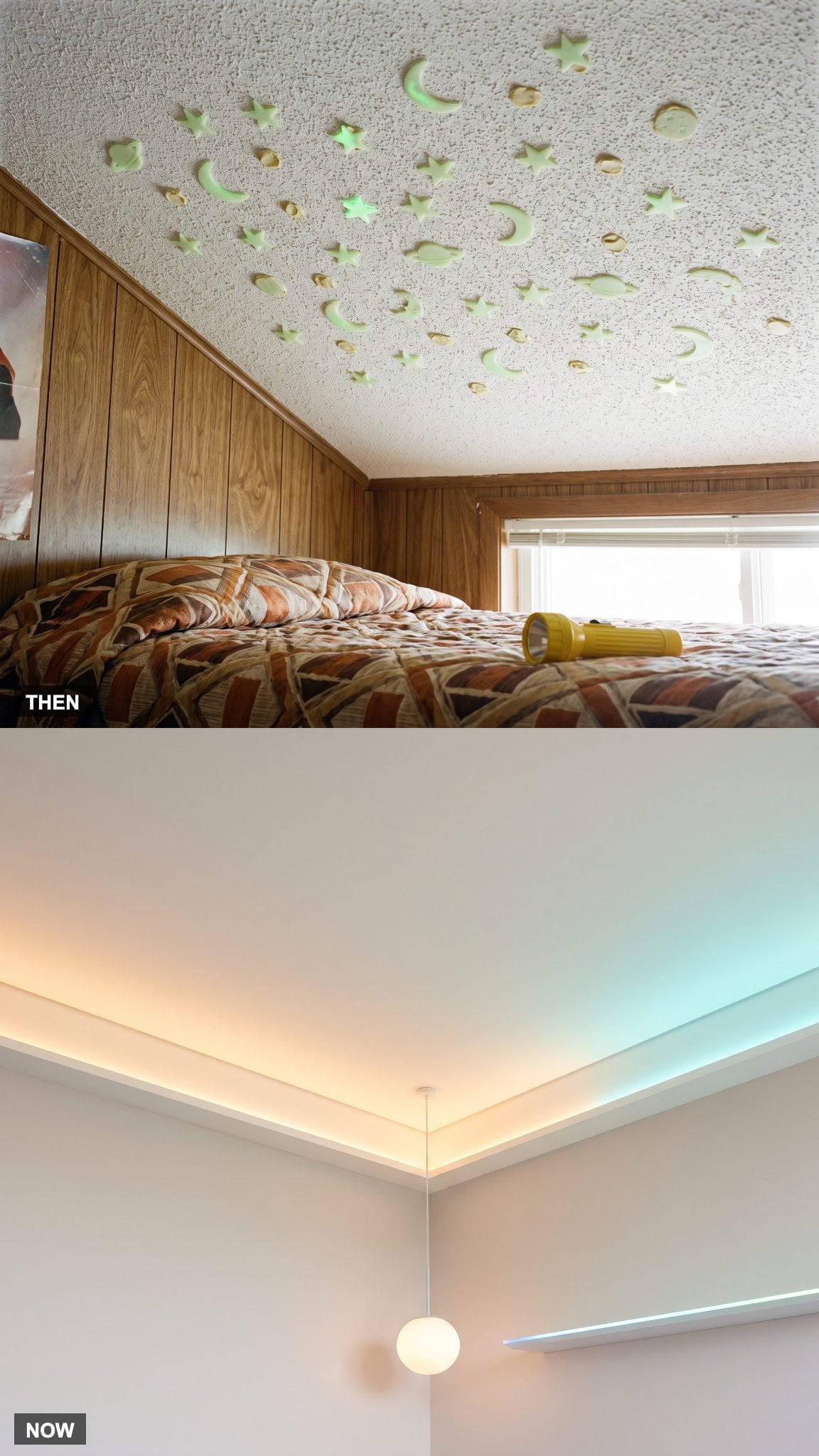
Glow stars turned the ceiling into a private planetarium for several glorious minutes after the lights went out. Charge them with a flashlight, wait for the pale green constellation to emerge, then watch the universe slowly run out of batteries without actually having any.
LED strips and smart bulbs pursue the same atmospheric idea with considerably more horsepower. Color, brightness and timing can change without anybody climbing onto the bed to stick another plastic star to the ceiling. The wonder survived. The putty residue didn’t.
18. 1985: Big Wooden Dresser → NOW: Closet Systems and Built-In Storage
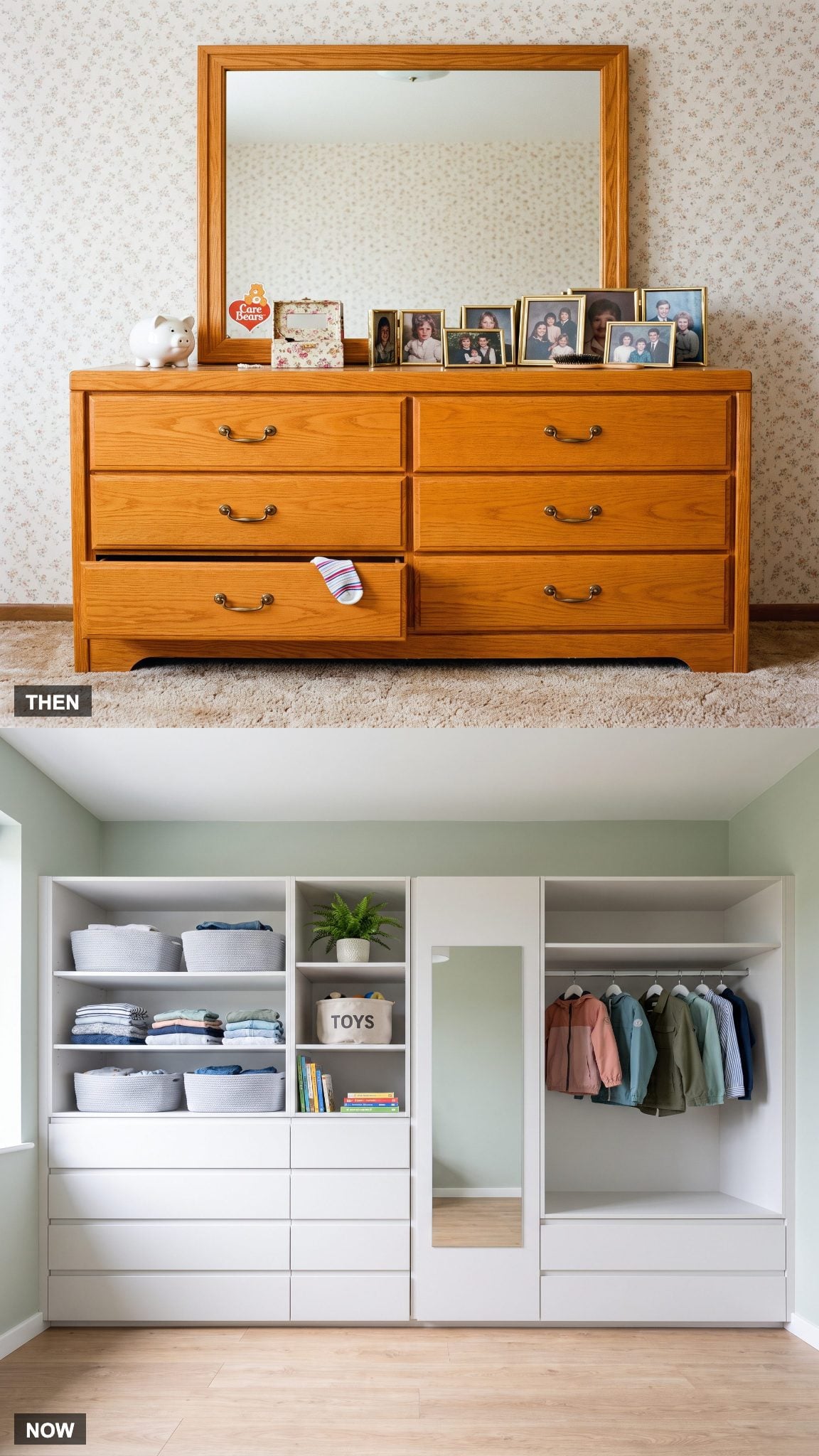
The dresser was furniture with gravity. Six drawers, substantial visual weight, perhaps a mirror above, and a top surface destined to collect a piggy bank, jewelry box and everything too important to put away.
A well-planned closet system moves much of that storage against the wall. Hanging rails, shelves, integrated drawers and baskets can exploit vertical space while freeing more of the floor from freestanding furniture.
17. 1985: Pencil Cup and Schoolbooks → NOW: Laptop, Tablet, and a War Against Cables
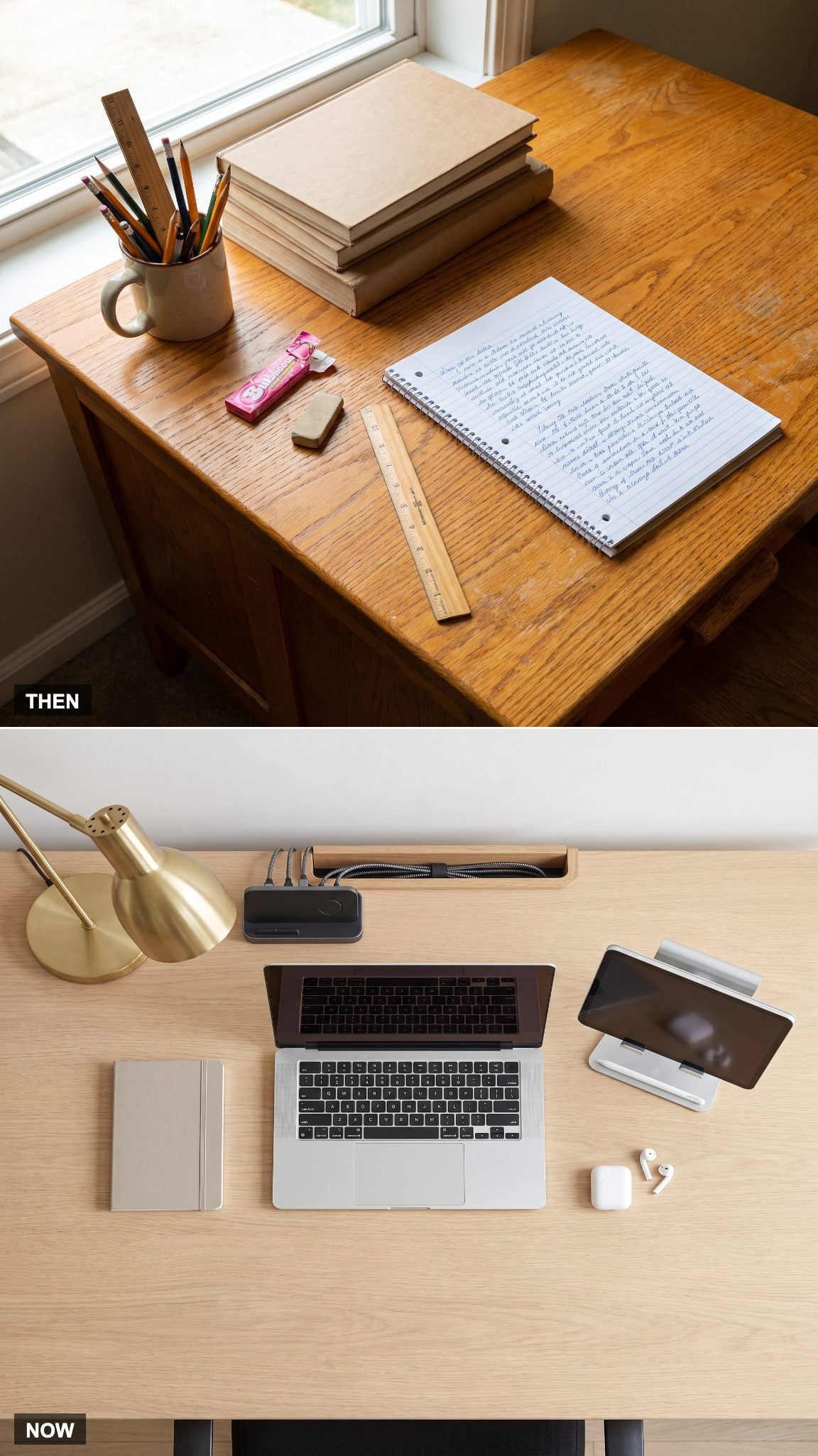
A pencil cup, lamp and stack of textbooks in brown-paper covers made a perfectly respectable desktop. The most demanding piece of technology might have been the pencil sharpener bolted to the edge.
Now the surface negotiates with a laptop, tablet, stylus, earbuds and charging dock, plus the eternal attempt to prevent the cables from forming their own civilization underneath. Cable management has become an actual design consideration because the desk now has an electrical ecosystem.
16. 1985: Toys Spread Across the Bedroom Floor → NOW: Defined Play Zone With Dedicated Storage
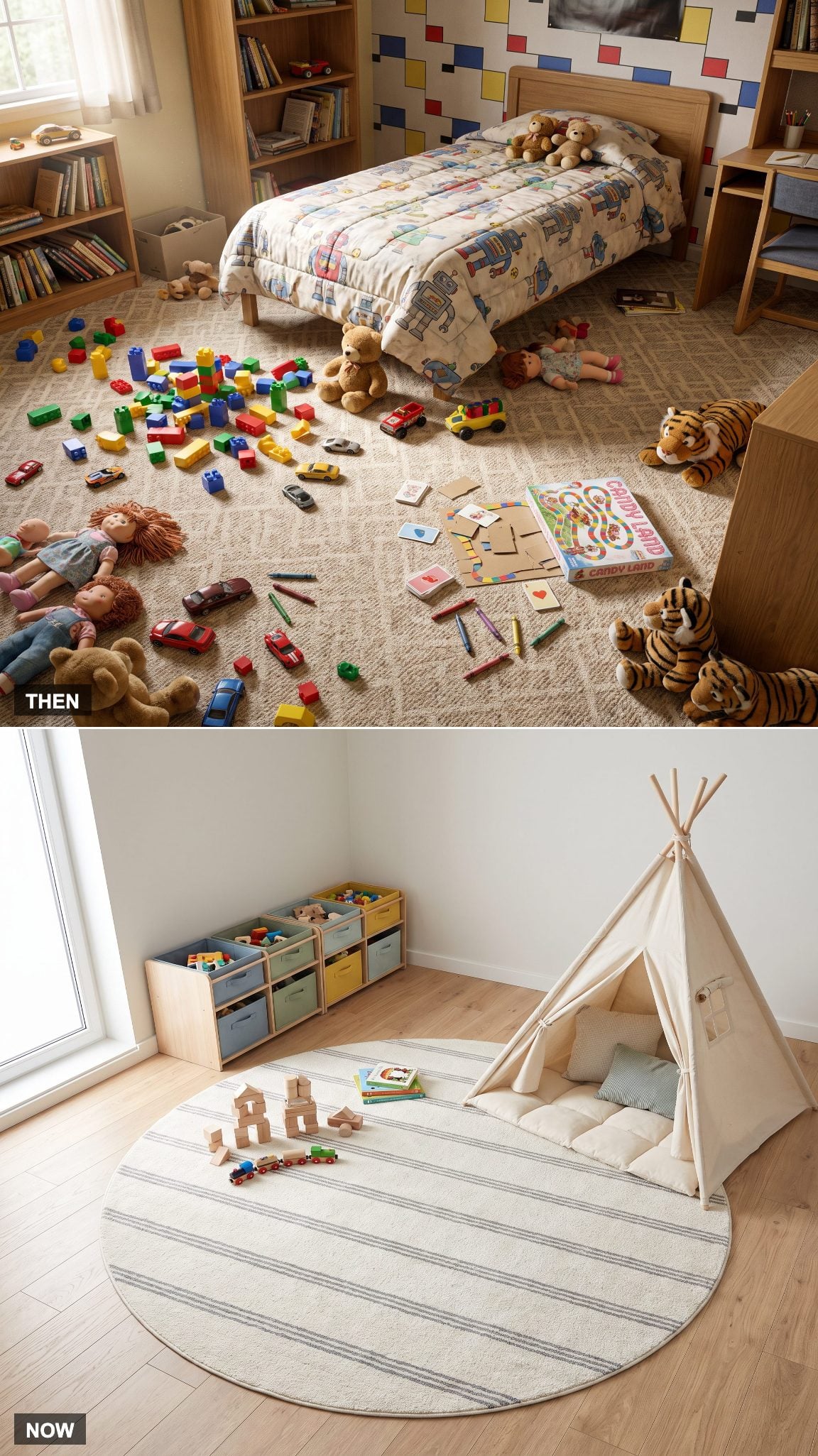
The floor was the play zone because the floor was there. Blocks migrated under the bed, dolls colonized the rug, and one strategically positioned plastic brick could turn a barefoot nighttime visit into an emergency.
A defined play area gives the activity an address. A washable rug marks the territory, low bins handle the equipment, and a reading nook or small teepee creates a destination within the room. The mess still happens. It simply has borders now. A teal bonus room uses a similar idea on a larger scale for older kids.
15. 1985: The Clock Radio → NOW: The Smart Speaker That Also Runs the Lights
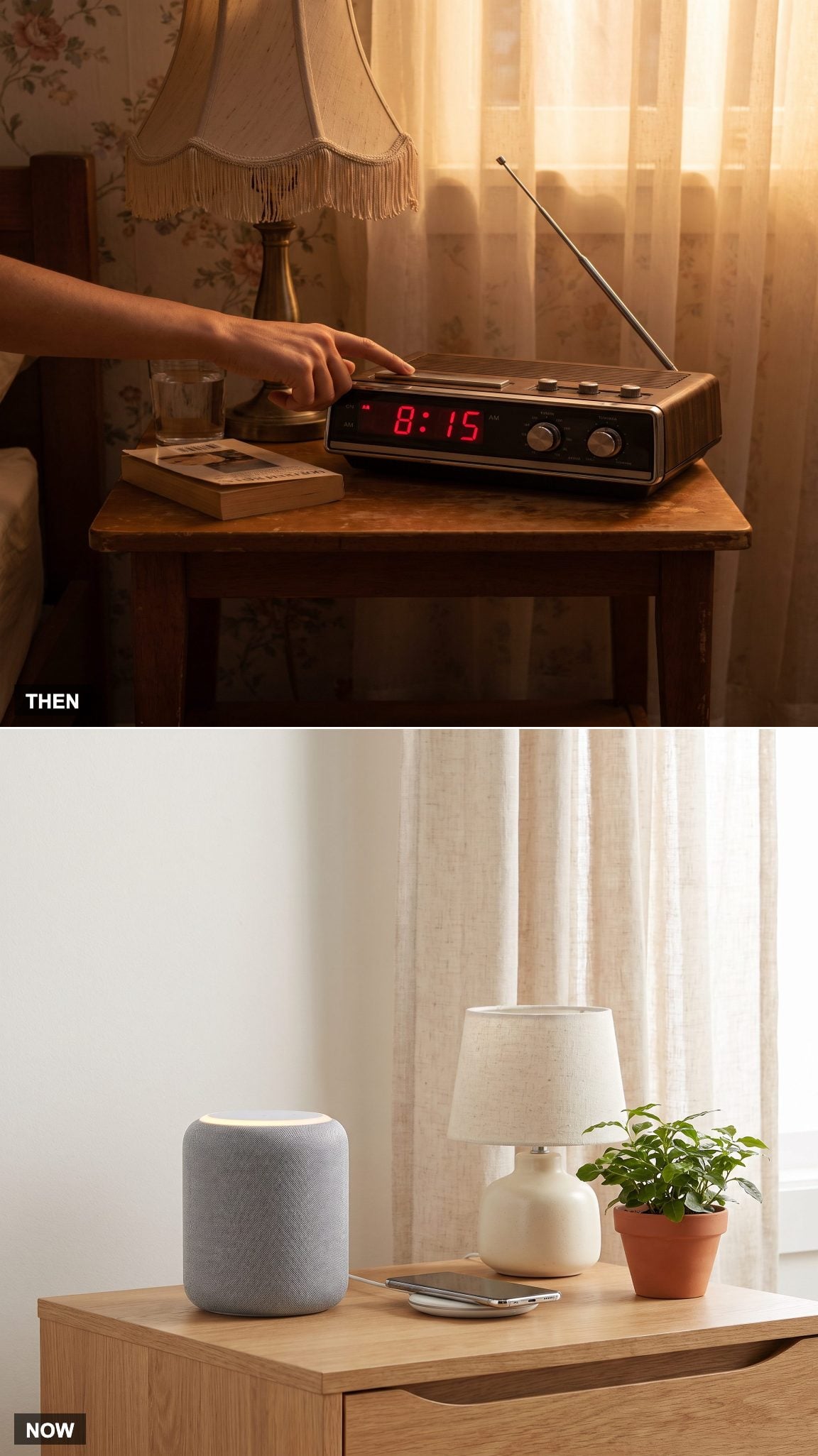
The clock radio ruled the nightstand with glowing red digits and a snooze bar engineered for contact before consciousness. Time, alarm and radio occupied one chunky plastic box, which seemed impressively multifunctional at the time.
A smart speaker can wake the room, play music, answer questions and control compatible lighting without displaying much more than a glowing ring. The nightstand lost an appliance and gained something suspiciously close to a tiny building manager.
14. 1985: Clothes Draped Over a Chair → NOW: Hooks, Drop Zones, and Open Storage
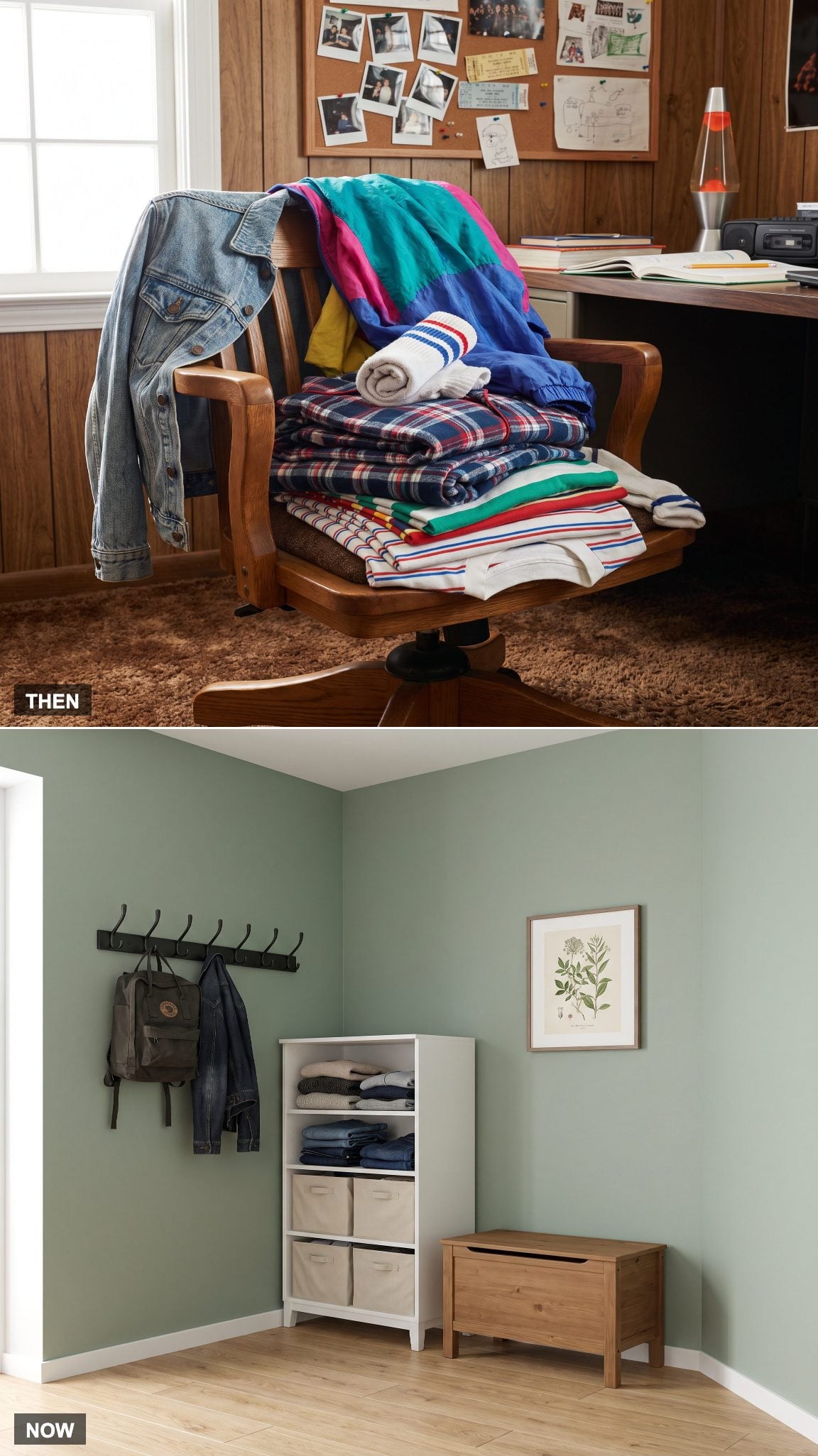
The Chair was nominally seating. In practice, it became a soft archaeological mound of jeans, sweaters, gym gear and one sock whose partner had entered another dimension. Eventually nobody remembered what the chair itself looked like.
Hooks, benches and open cubbies turn the instinct to drop something into part of the storage plan. Put the destination at kid height and remove unnecessary steps. Sometimes good organization is less about changing behavior than admitting what the behavior was going to be anyway.
13. 1985: The Boombox → NOW: A Bluetooth Speaker Smaller Than a Cassette
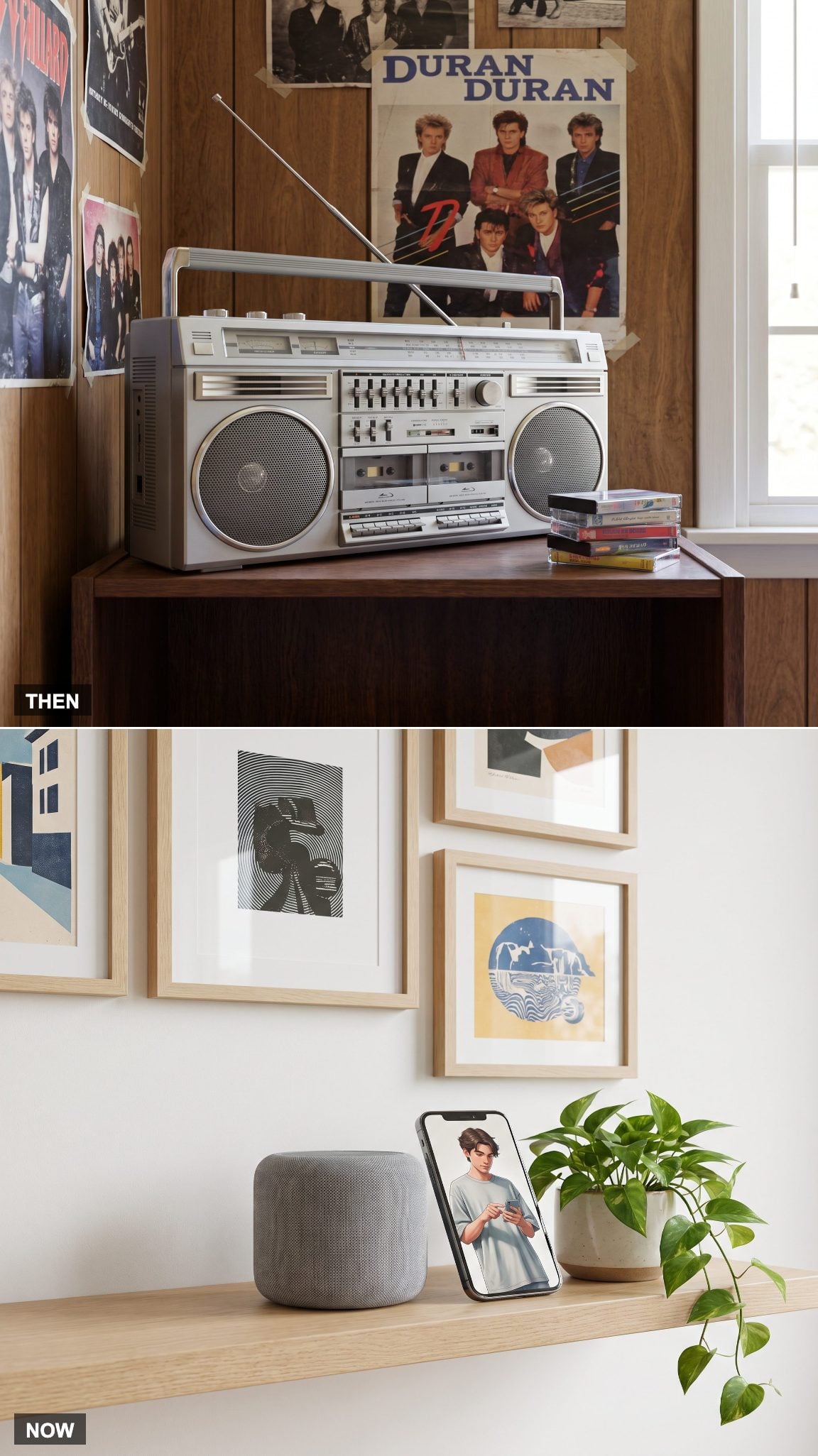
The boombox was audio equipment with stage presence. Big speakers, cassette deck, radio tuner, telescoping antenna and enough batteries to make portability feel like a technicality rather than a promise.
Now the music setup can be a Bluetooth speaker small enough to disappear into a bag while producing sound that would have seemed improbable from something that size in 1985. We gained portability. We unquestionably lost the theater of carrying the stereo itself.
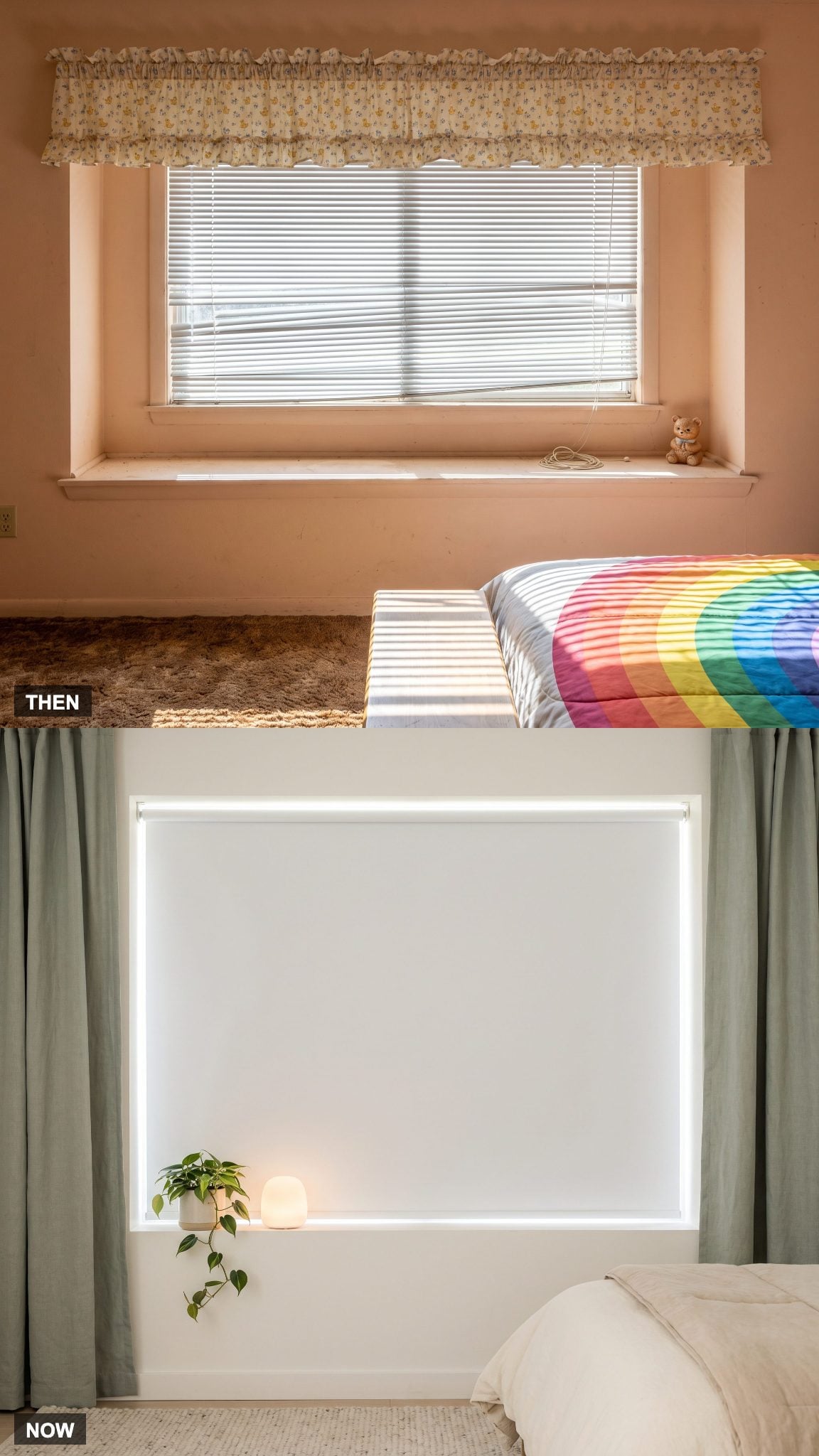
12. 1985: Mini Blinds With Ruffled Curtains → NOW: Blackout Shades and Clean Window Treatments
🔥 Would you like to save this?
Aluminum mini blinds could acquire a permanent kink from one badly judged encounter, while ruffled curtains or printed valances added another decorative layer above them. The window had hardware, fabric, cords and opinions.
Blackout shades simplify both the appearance and the job description. The treatment sits close to the window and can block substantially more incoming light when closed, leaving any additional curtain layer free to be decorative rather than responsible for darkness.
11. 1985: The Cassette Collection → NOW: A Music Library That Weighs Nothing
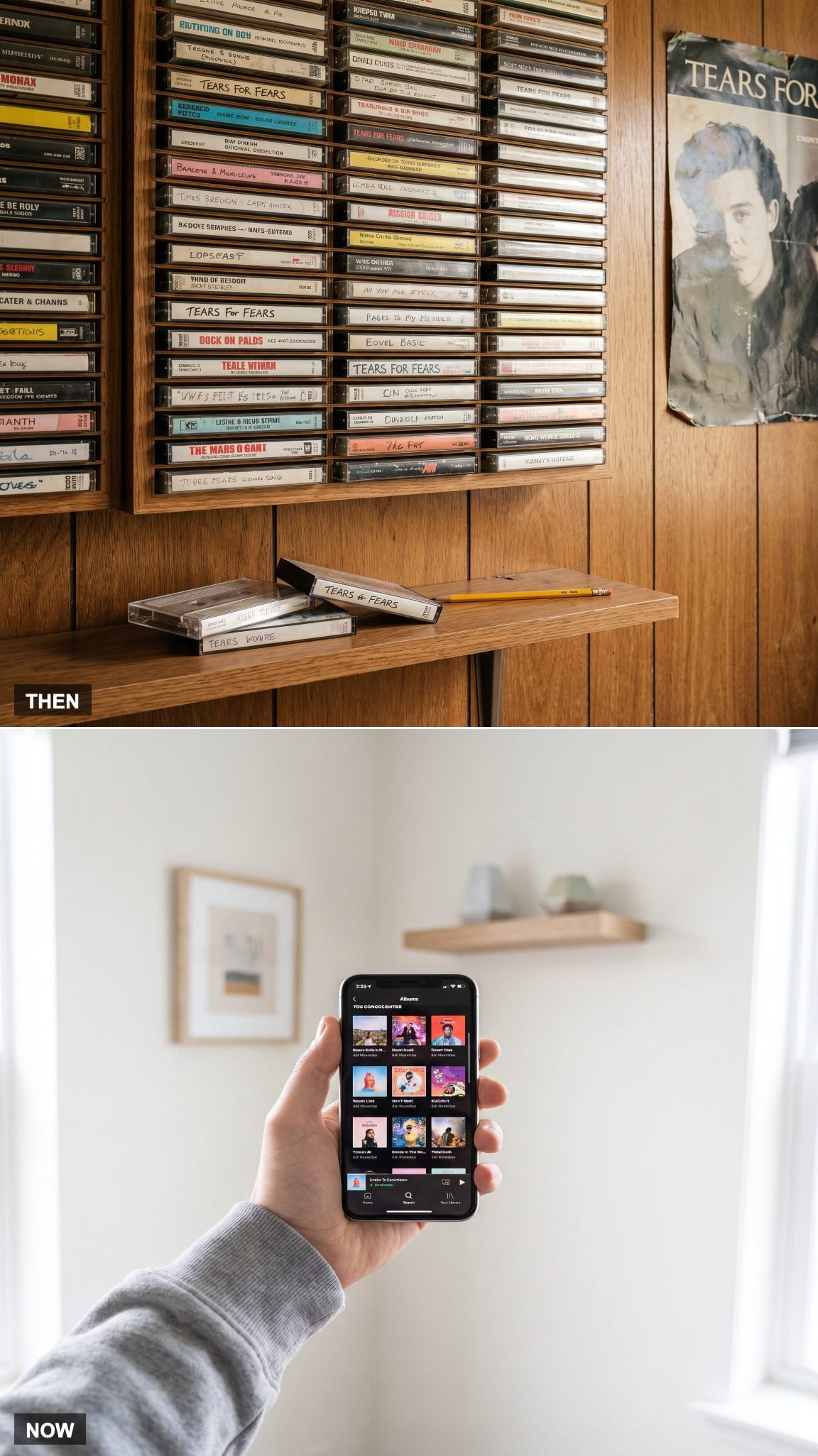
A cassette collection made musical taste visible. Handwritten mixtape labels, plastic cases and rows of album spines occupied actual furniture, while a pencil stood ready for the occasional emergency involving several feet of liberated tape.
Now thousands of songs can live inside a phone without occupying a centimeter of shelf space. Access expanded while the physical display disappeared. The room got tidier; musical taste became considerably harder to read from the doorway.
10. 1985: The Closet With One Rod and One Shelf → NOW: Adjustable Modular Organization
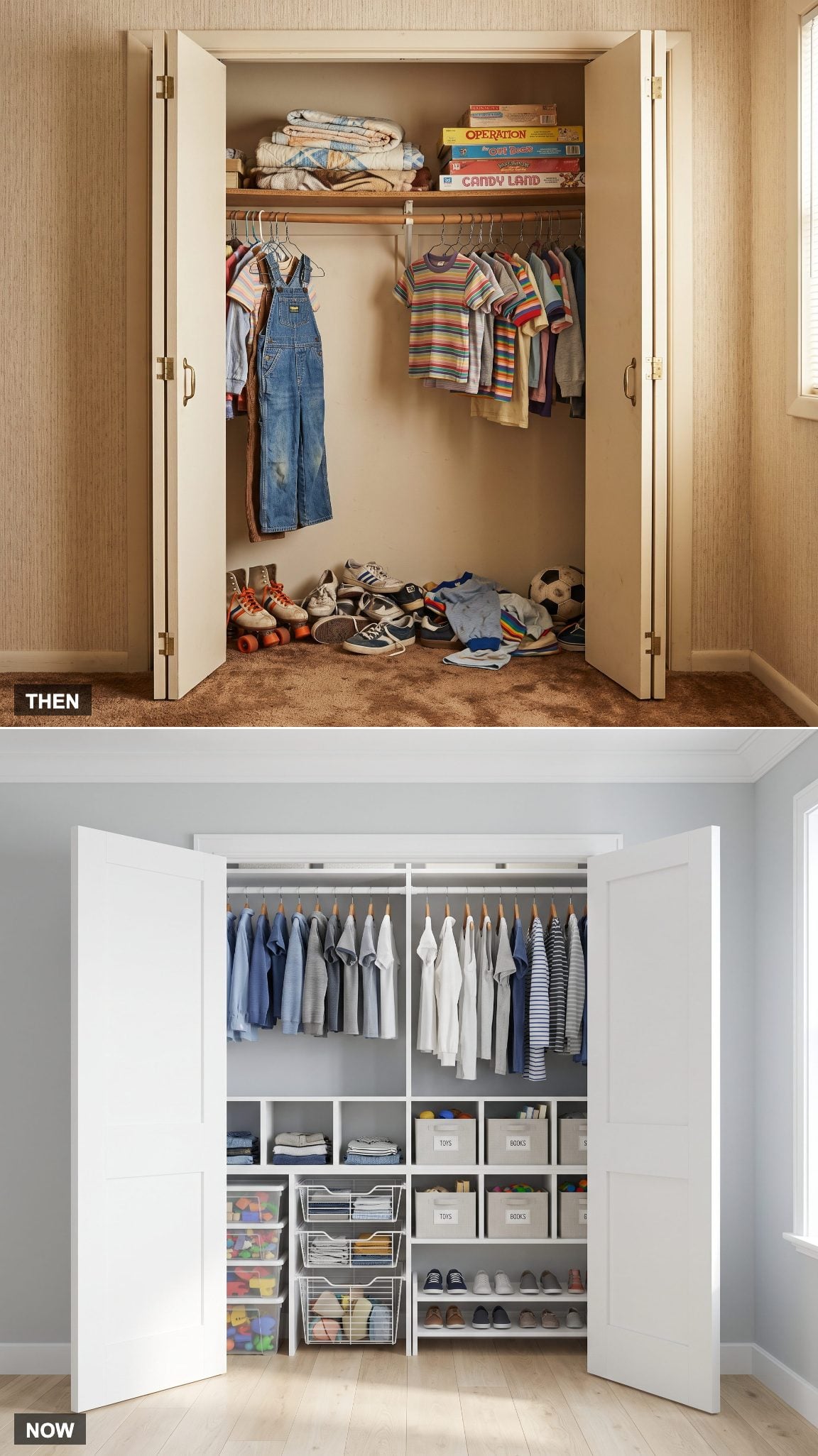
One rod. One shelf. Everything else was improvisation. Board games and blankets went overhead, shoes migrated across the floor, and the middle of the closet remained a large vertical volume nobody had quite figured out how to use.
Adjustable systems divide that volume into smaller jobs: movable rods, baskets, shelves and shoe storage that can shift as the child grows. The useful part isn’t merely having more compartments. It’s being able to move them.
9. 1985: Magazine Posters and Celebrity Pinups → NOW: Digital Fandom, Prints, and Personalized Wall Art
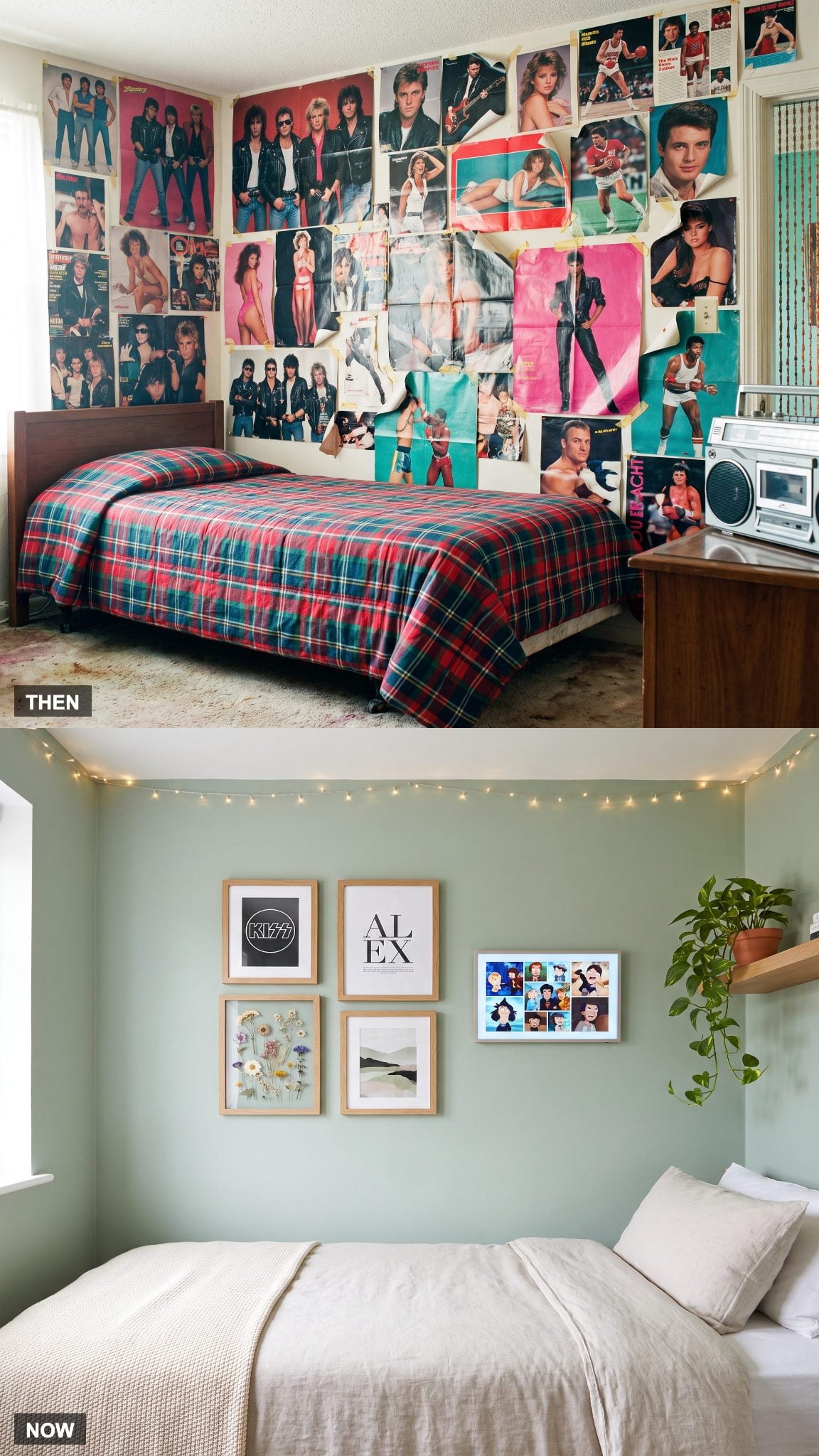
A bedroom wall could operate as a declaration of allegiance. Magazine pinups and music posters accumulated until the paint became background information, turning fandom into something any visitor could identify before sitting down.
Much of that devotion has migrated onto screens, feeds and digital collections. What remains on the wall is often more selective: a few framed prints, personalized artwork or a digital display. The bright bedroom makeover approach favors fewer, more deliberate pieces. Fandom didn’t disappear. Its square footage did.
8. 1985: A Door Plastered in Stickers and KEEP OUT Signs → NOW: Custom Name Signs and Designed Décor
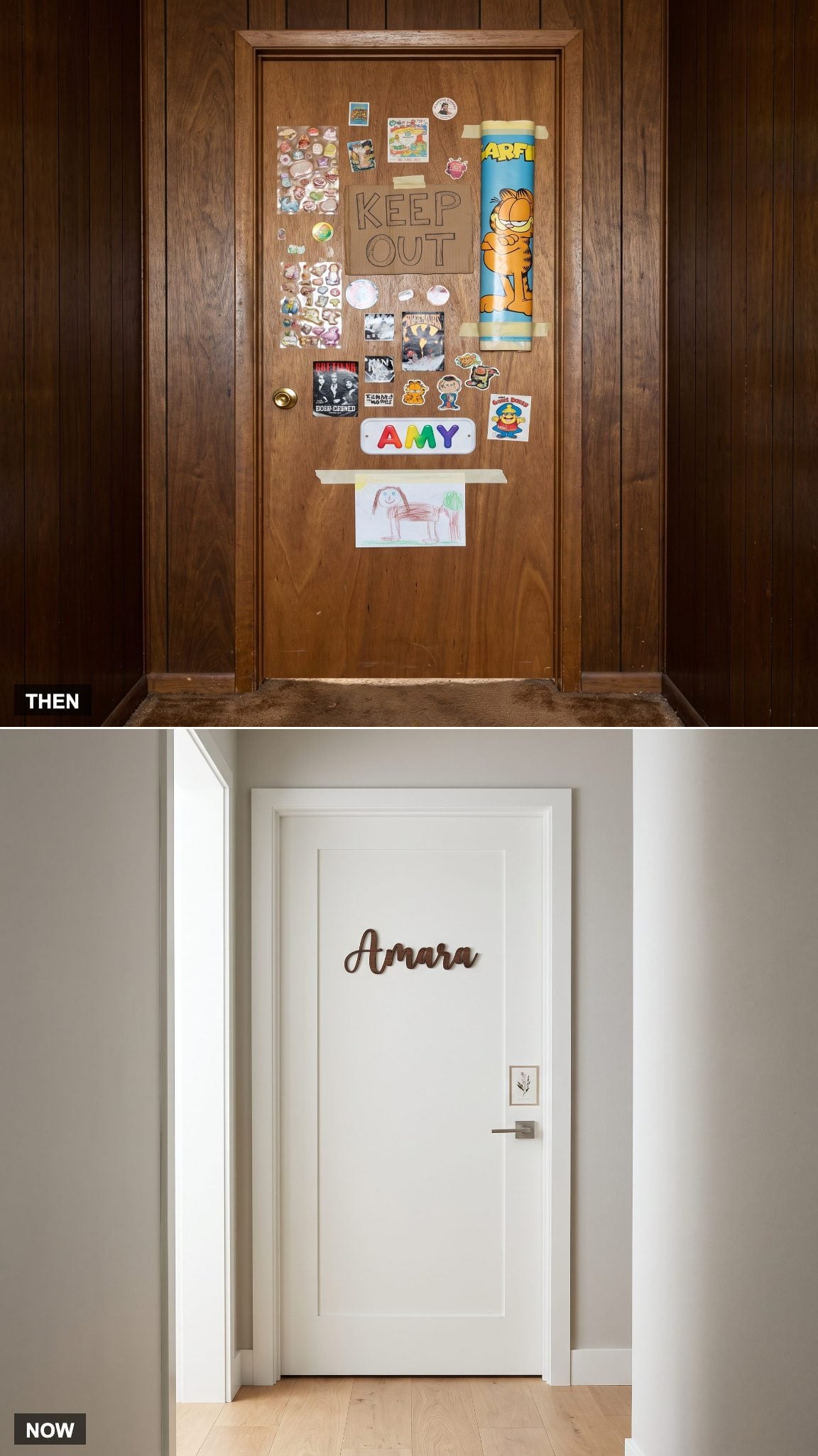
The bedroom door could be less an entrance than a manifesto. KEEP OUT in marker, puffy stickers, scratch-and-sniff decals, cartoon characters and a personalized name plaque gradually turned one flat surface into a running record of whoever lived behind it.
Today’s version is often considerably more composed: one custom name sign, perhaps a framed print, maybe a carefully chosen decal. Cleaner, certainly. The old door had one advantage no coordinated sign can quite duplicate: its layers accumulated instead of arriving finished.
7. 1985: Corkboard Covered With Photos and Notes → NOW: Pegboard or Modular Wall Organizer
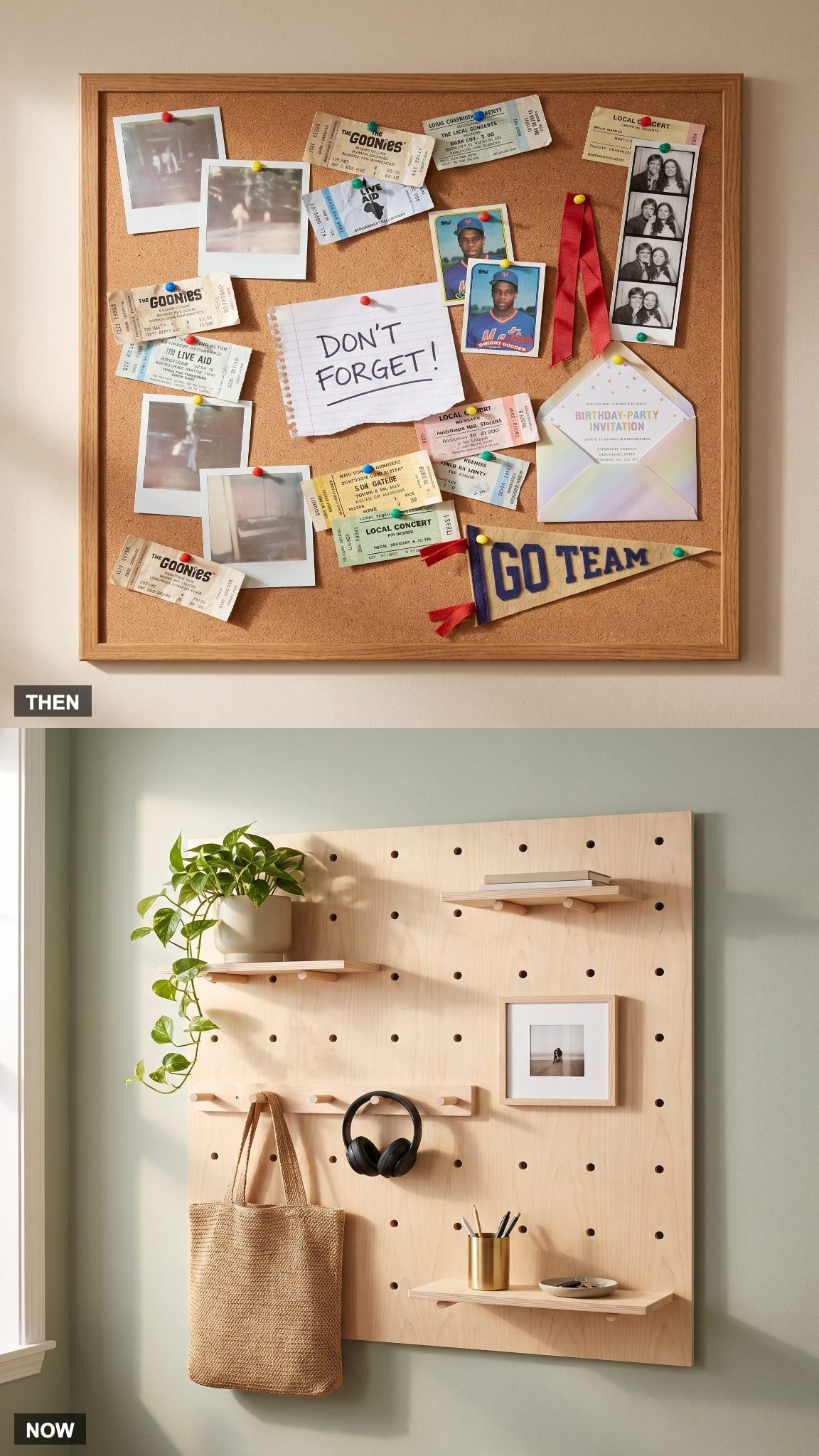
The corkboard was a physical feed before feeds existed: photos, notes, ticket stubs, drawings and scraps pinned wherever a bare patch remained. Chronology was optional. Straight lines were unheard of.
Pegboard introduces a grid, hooks and small shelves that can hold stationery, photos, plants and supplies without surrendering completely to chaos. Function improves. Something charmingly accidental gets traded away in the process.
6. 1985: A Tiny TV Was the Ultimate Flex → NOW: Screens Everywhere You Look
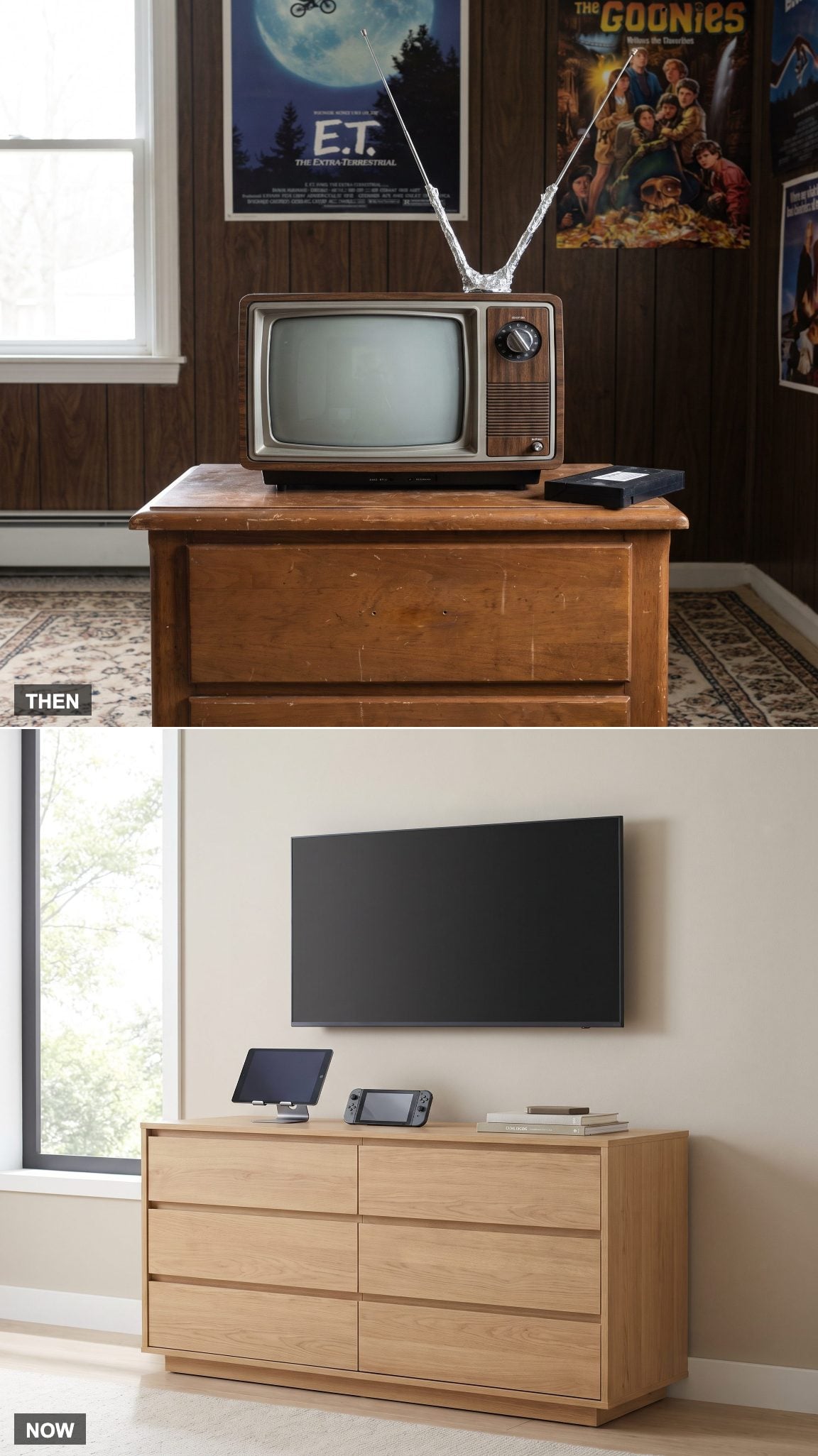
A television in the bedroom could feel like extraordinary independence: a small CRT, rabbit ears, curved glass and no need to negotiate every program with whoever controlled the main television elsewhere in the house.
Now a bedroom can contain a wall-mounted screen, tablet and handheld device without any one of them feeling particularly exotic. The scarce object multiplied. One private screen once felt luxurious; several can now disappear into the visual background.
5. 1985: The Landline Extension Was a Teenage Trophy → NOW: A Phone Charging Beside the Pillow
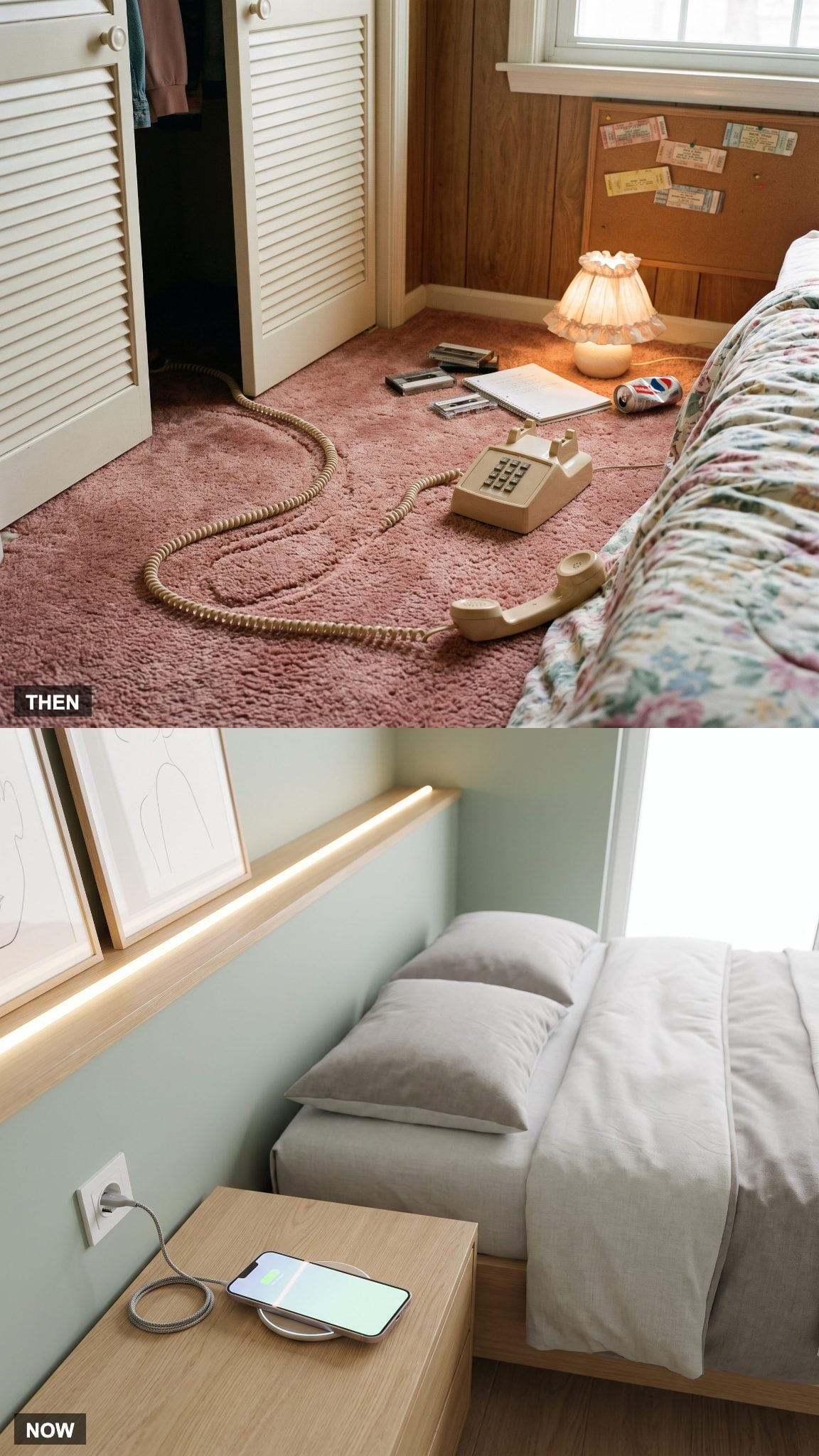
A bedroom telephone extension offered something adolescents had always wanted: a little more distance from the rest of the household. The coiled cord could stretch surprisingly far, although privacy remained theoretical whenever another extension existed elsewhere in the house.
Now the phone sits on the nightstand, carries the entire social world with it and doesn’t need a wall jack at all. Communication became vastly more private and vastly more portable, while the physical object shrank from furniture-adjacent appliance to glowing rectangle.
4. 1985: Early Home Consoles → NOW: A Dedicated Gaming Station
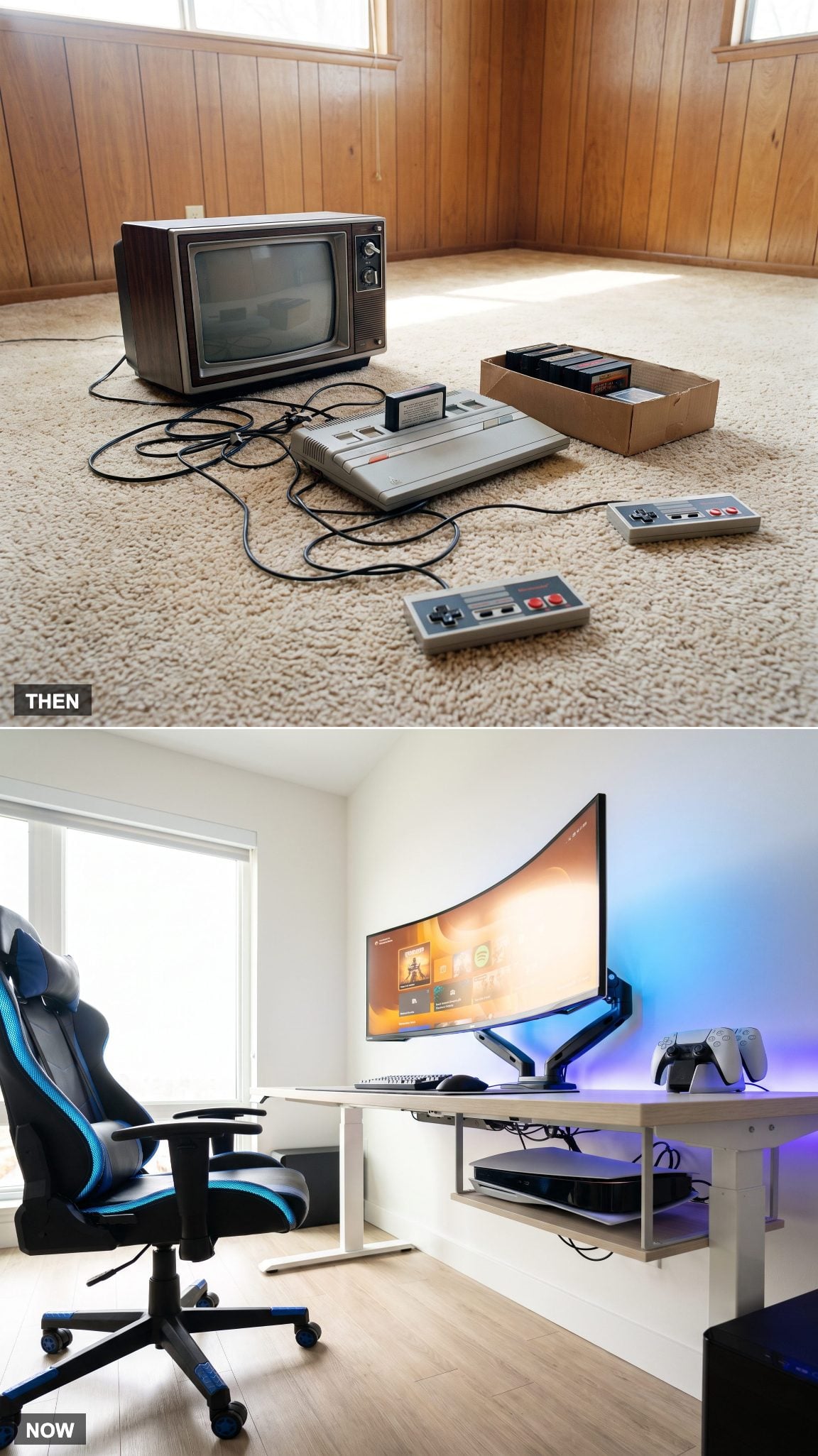
Home gaming in the mid-1980s still revolved around a console physically tethered to a television, wired controllers and a player usually sitting much closer to the floor than any ergonomist would recommend. Nintendo’s NES reached limited U.S. markets in 1985 before expanding nationally in 1986, making the period a genuine turning point rather than an overnight takeover.
The modern setup is a command center: dedicated monitor, supportive chair, carefully arranged peripherals, RGB lighting and far fewer wires running directly to the player’s hands. Gaming moved from borrowing space around the television to getting architecture of its own, a bit like a scaled-down teal bonus room for one player.
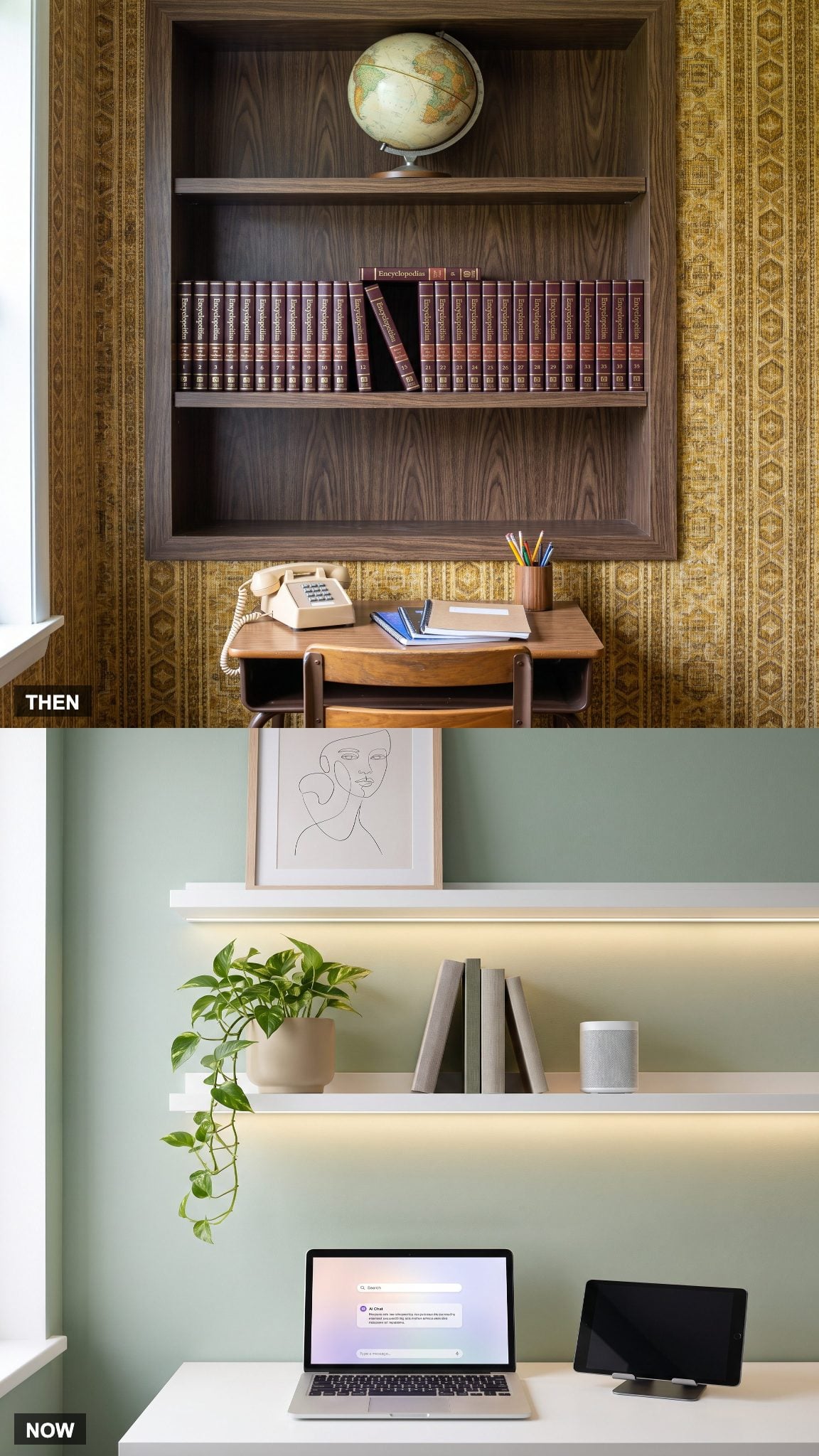
3. 1985: A Shelf of Printed Encyclopedias → NOW: Homework Answered by a Search Bar
🔥 Would you like to save this?
A full encyclopedia set made information architectural. Dozens of substantial volumes occupied a shelf, alphabetical order mattered, and research required physically locating the right letter before locating the right answer.
Now a question can produce thousands of results almost instantly, while the shelf once devoted to reference books is free for something else. The new challenge isn’t simply finding an answer. It’s deciding which source deserves to be trusted.
2. 1985: A Room Built Up Gradually by the Kid → NOW: A Room Designed as a Complete Concept
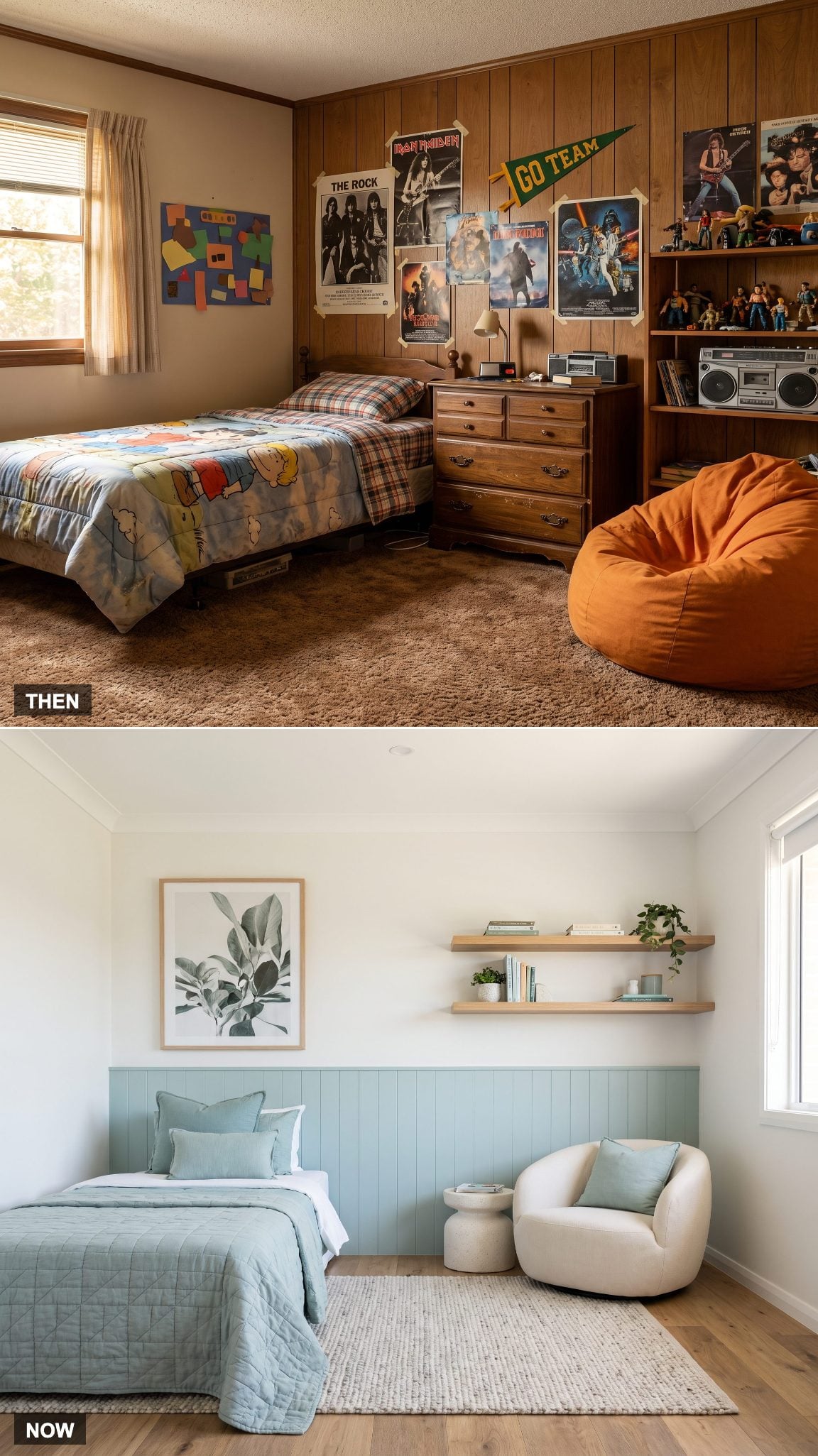
Many children’s rooms accumulated rather than debuted. A new comforter arrived one year, posters appeared later, furniture might be handed down, and hobbies left physical evidence behind. Matching was optional because the room was never really finished.
Today’s room can arrive as a complete concept: coordinated palette, storage plan, reading nook and furniture selected to work together from day one. The result photographs beautifully and can be planned to grow with the child, much like these big bed designs assembled around complete visual ideas.
1. 1985: A Messy Physical Record of Childhood → NOW: Organized, With Childhood Stored Digitally
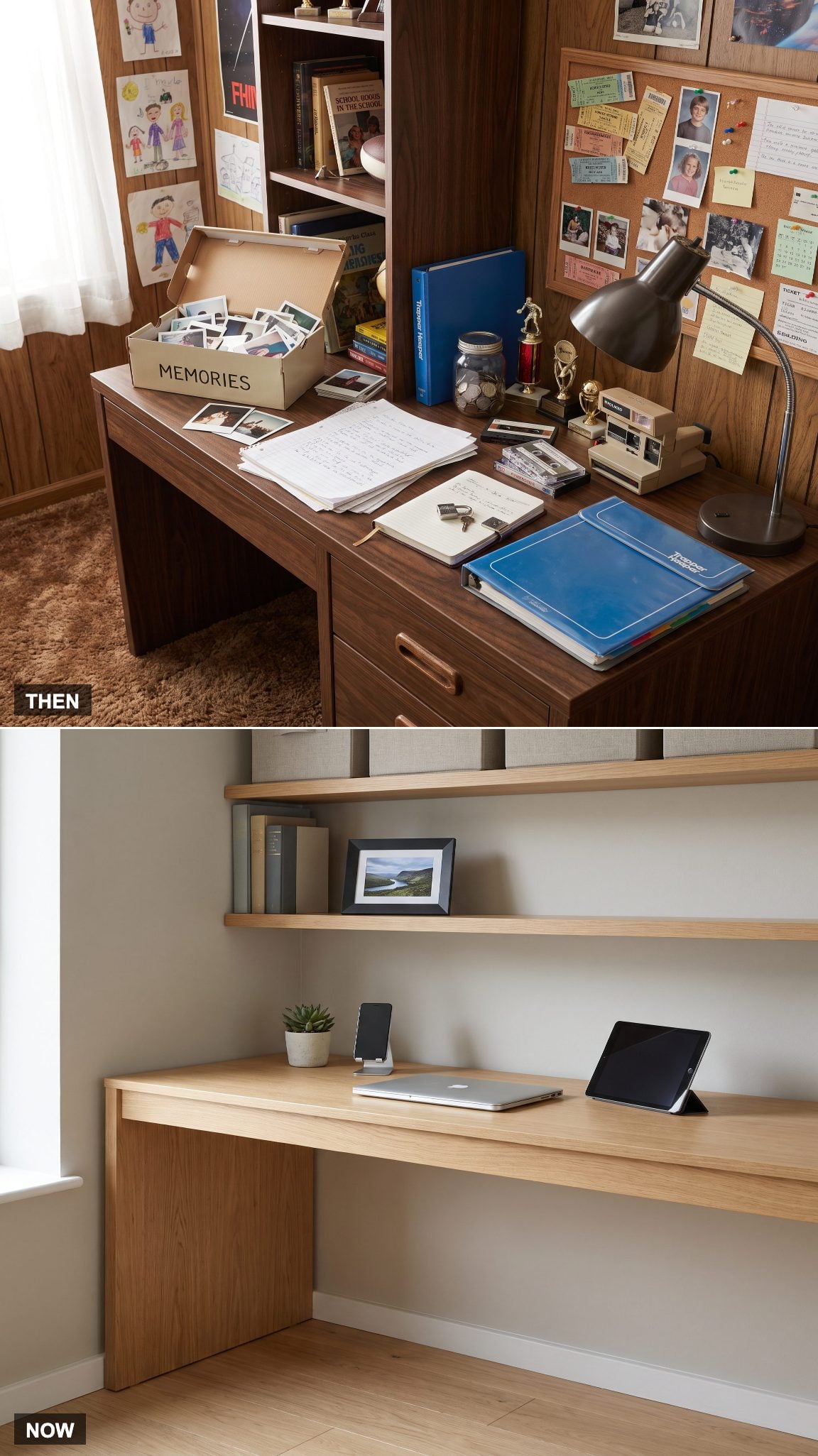
Childhood in 1985 had actual weight to it. Shoeboxes held photographs. Diaries occupied drawers. Cassette tapes filled racks. Corkboards sagged under ticket stubs, snapshots and scraps of paper important for reasons nobody else needed to understand.
Much of that material now lives on a phone or somewhere in the cloud. Surfaces can stay clearer, collections require less furniture, and thousands of memories occupy no visible space at all. The room became easier to organize. What it stopped doing quite so well was displaying an accidental archaeological record of the person growing up inside it.
The room got tidier. Whether the childhood inside it got richer is a harder question.