🔥 Would you like to save this?
There is a particular kind of kitchen that stops you cold the moment you walk in. Not because it is showy, but because every single detail is exactly right. The stone has weight. The cabinetry has restraint. The light is warm in all the right places.
In order to come up with the very specific design ideas, we create most designs with the assistance of state-of-the-art AI interior design software.
These modern farmhouse kitchens are built on that principle: ultra-luxurious interiors where natural materials, integrated appliances, statement islands, and bespoke range hoods come together in color palettes ranging from soft lavender to deep charcoal. Each one is its own argument for why restraint and richness are not opposites.
Warm Beige Farmhouse Kitchen with Fluted Stone Island and Integrated Walnut Cabinetry
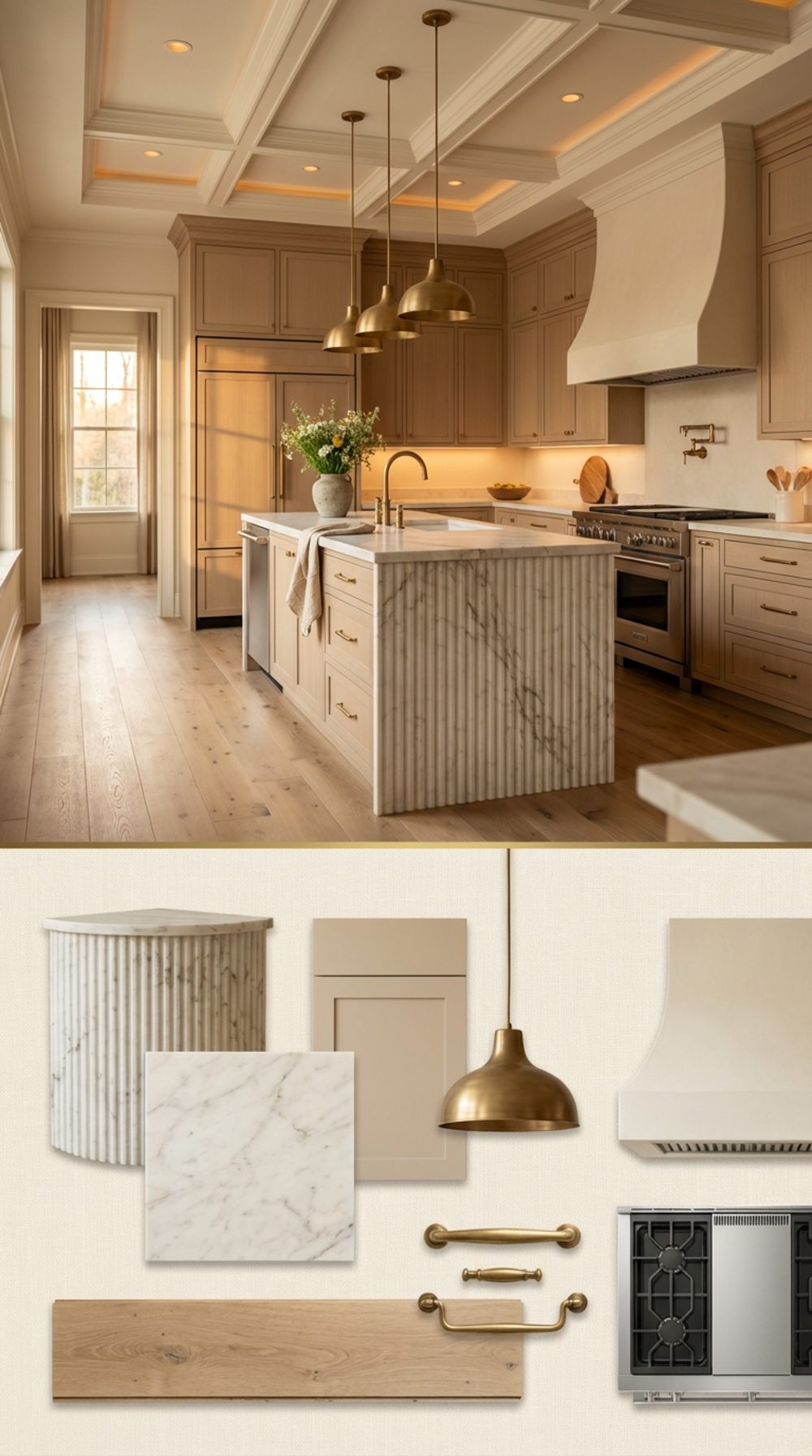
The fluted stone sides on this island are the defining move. Fluting adds tactile shadow lines that break up an otherwise flat surface without introducing pattern or color complexity, keeping the eye engaged without raising the visual temperature of the room.
Aged brass against beige plaster is a combination with almost no ceiling. The warmth reads immediately as luxurious, but it never tips into opulence because the material restraint around it keeps everything grounded.
Soft Lavender Farmhouse Kitchen with Marble Countertops and Matte Black Integrated Appliances
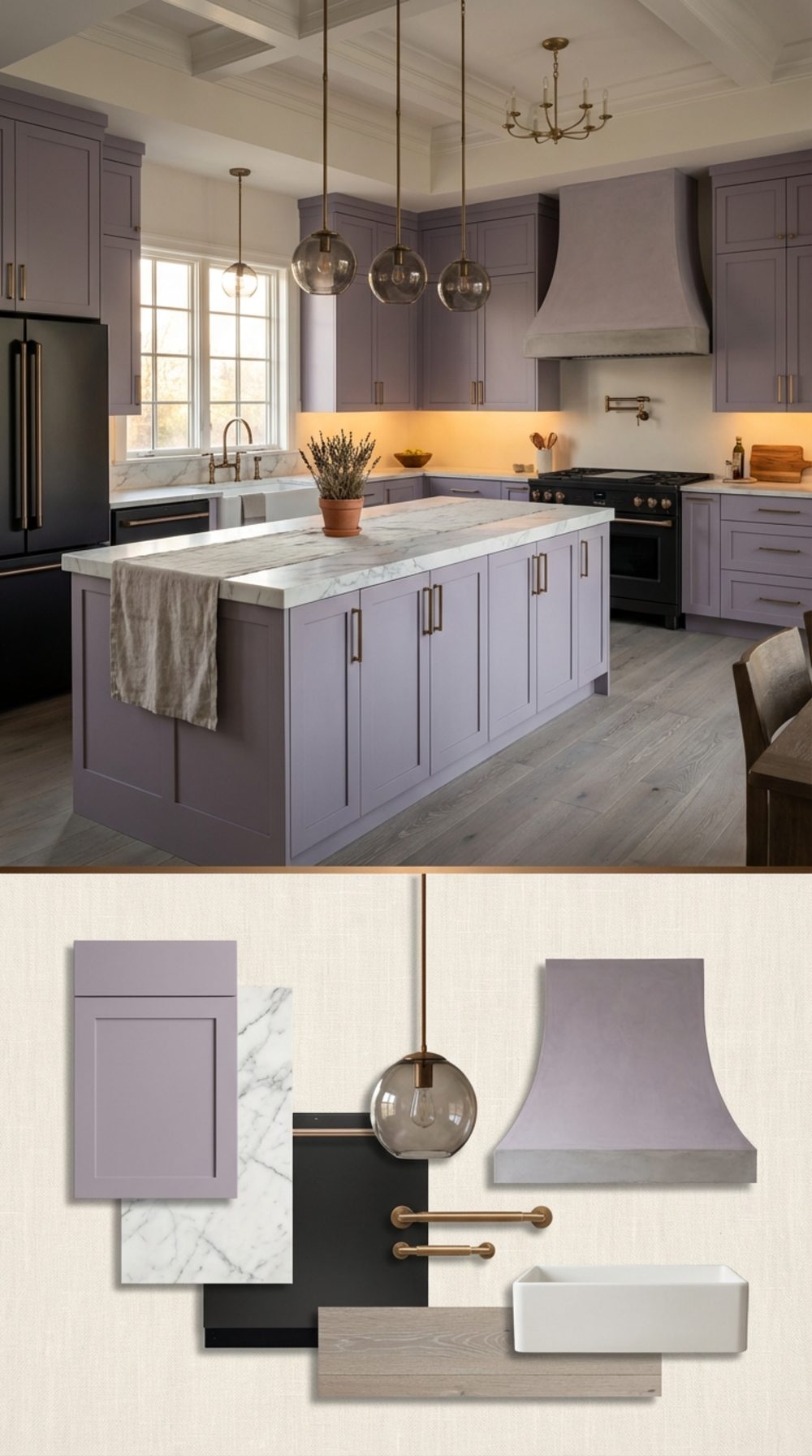
Lavender in a kitchen is a genuine commitment, and this room earns it by keeping the saturation almost imperceptibly low. The hue reads more as shadow than color in certain lights, which means it shifts throughout the day without ever announcing itself. Against matte black appliances, the lavender practically vibrates with quiet energy.
Charcoal Grey Farmhouse Kitchen with Quartzite Island, Integrated Column Fridge, and Arched Brick Range Hood
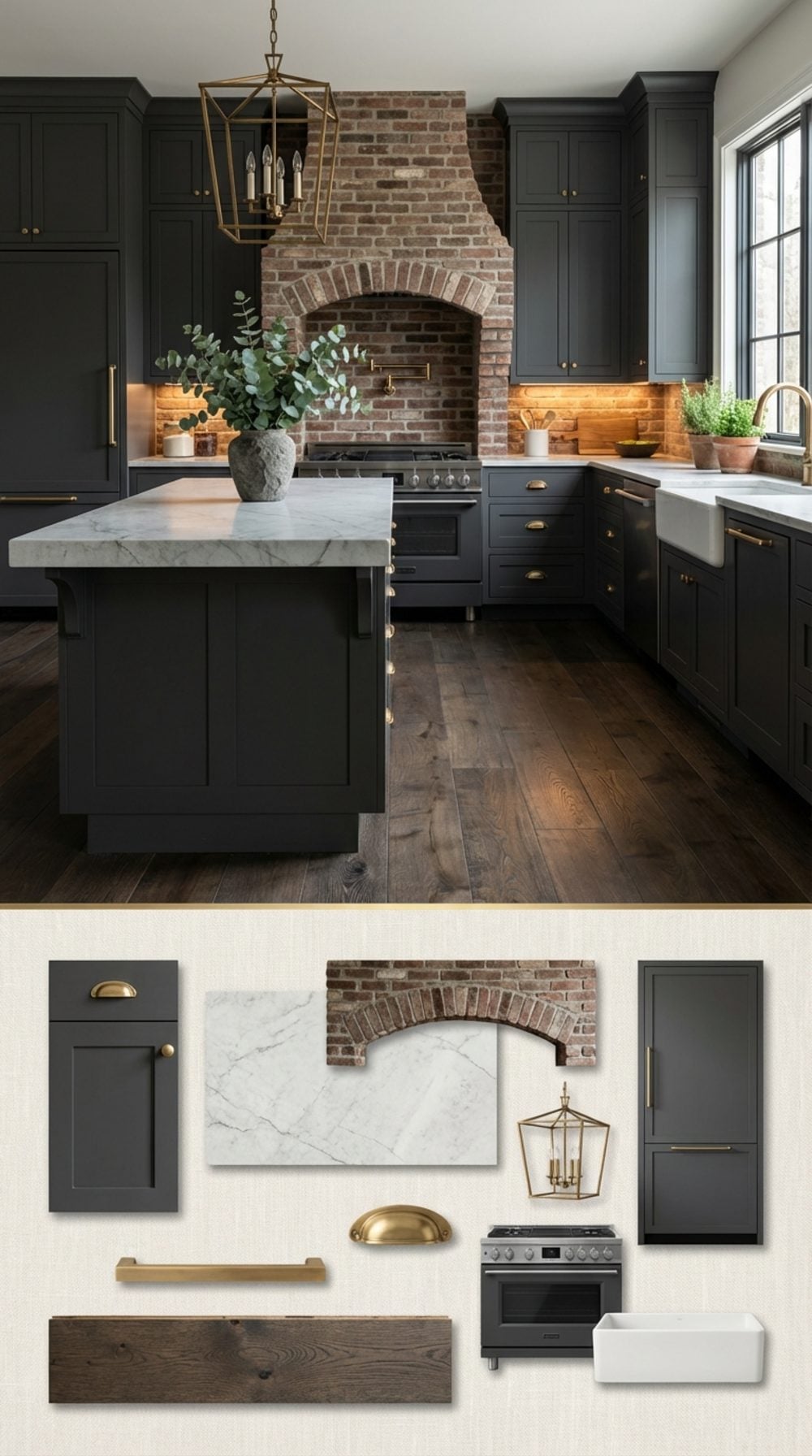
The arched brick range hood is doing structural and emotional work simultaneously. Architecturally, it introduces a curve into an otherwise strictly linear kitchen, which releases visual tension. Emotionally, raw reclaimed brick inside a room this refined is the kind of controlled contradiction that makes a space feel alive rather than designed.
Leathered quartzite has a specific tactile roughness that polished stone cannot replicate. In a kitchen this dark, that matte, mineral surface keeps the countertop from disappearing into the cabinetry while adding depth that glossy stone would flatten.
Crisp Navy Blue Farmhouse Kitchen with Unlacquered Brass Fixtures, Calacatta Gold Marble, and Shiplap Ceiling
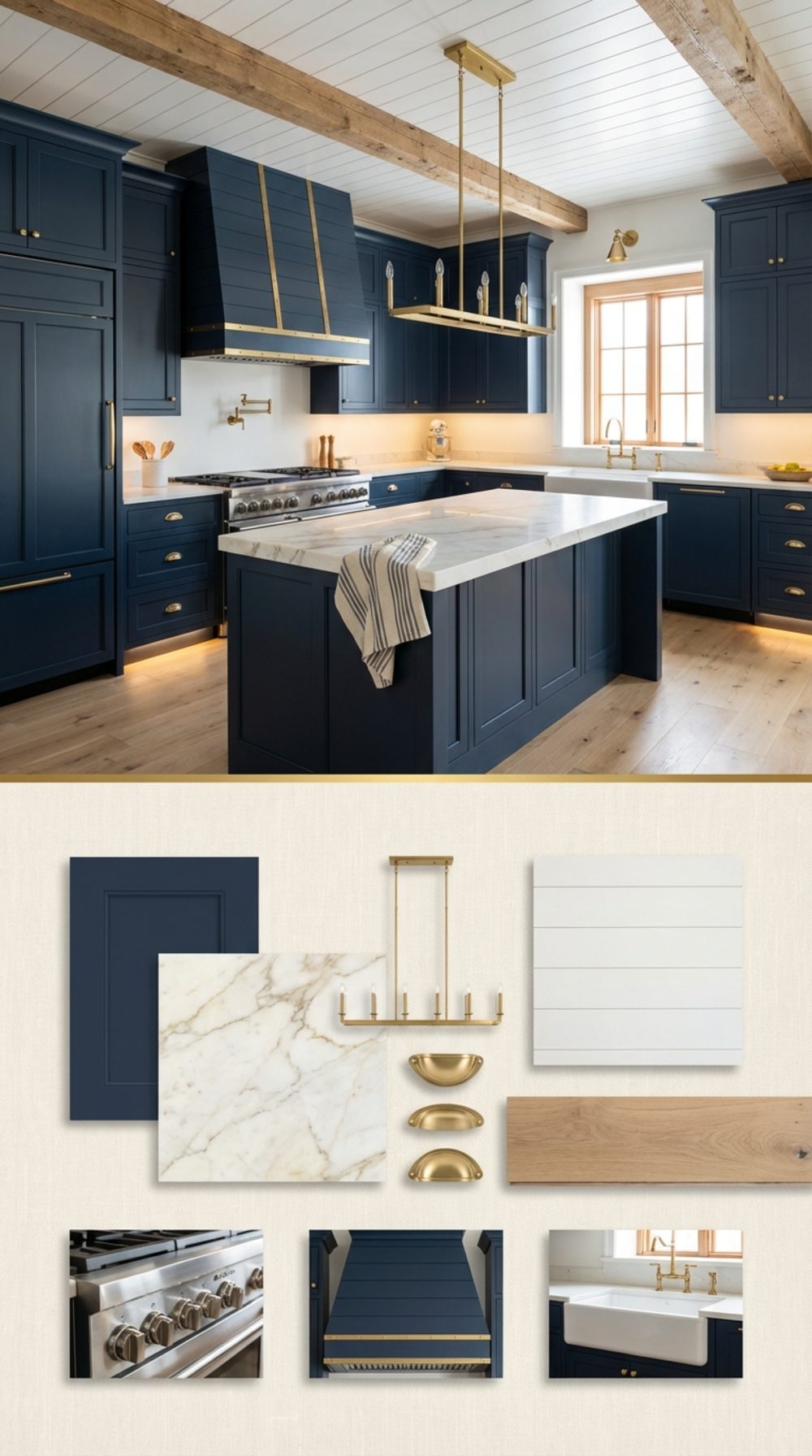
Navy and Calacatta Gold marble have been a reliable pairing since the Parisian brasserie era, but the shiplap ceiling is the move that locks this kitchen firmly in American farmhouse territory without sacrificing luxury. That ceiling material is doing enormous identity work: it signals warmth, craft, and a certain unpretentious confidence.
“Navy with Calacatta Gold is not a color story, it is a confidence story. The dark cabinetry owns the room and the marble simply rewards your attention for getting closer.”
The unlacquered brass here will patina over years of use, which is the point. A kitchen this considered deserves hardware that gets more interesting with time, not less.
Soft Yellow Farmhouse Kitchen with Honed Limestone Countertops, Shaker Cabinetry, and Vintage Bronze Fixtures
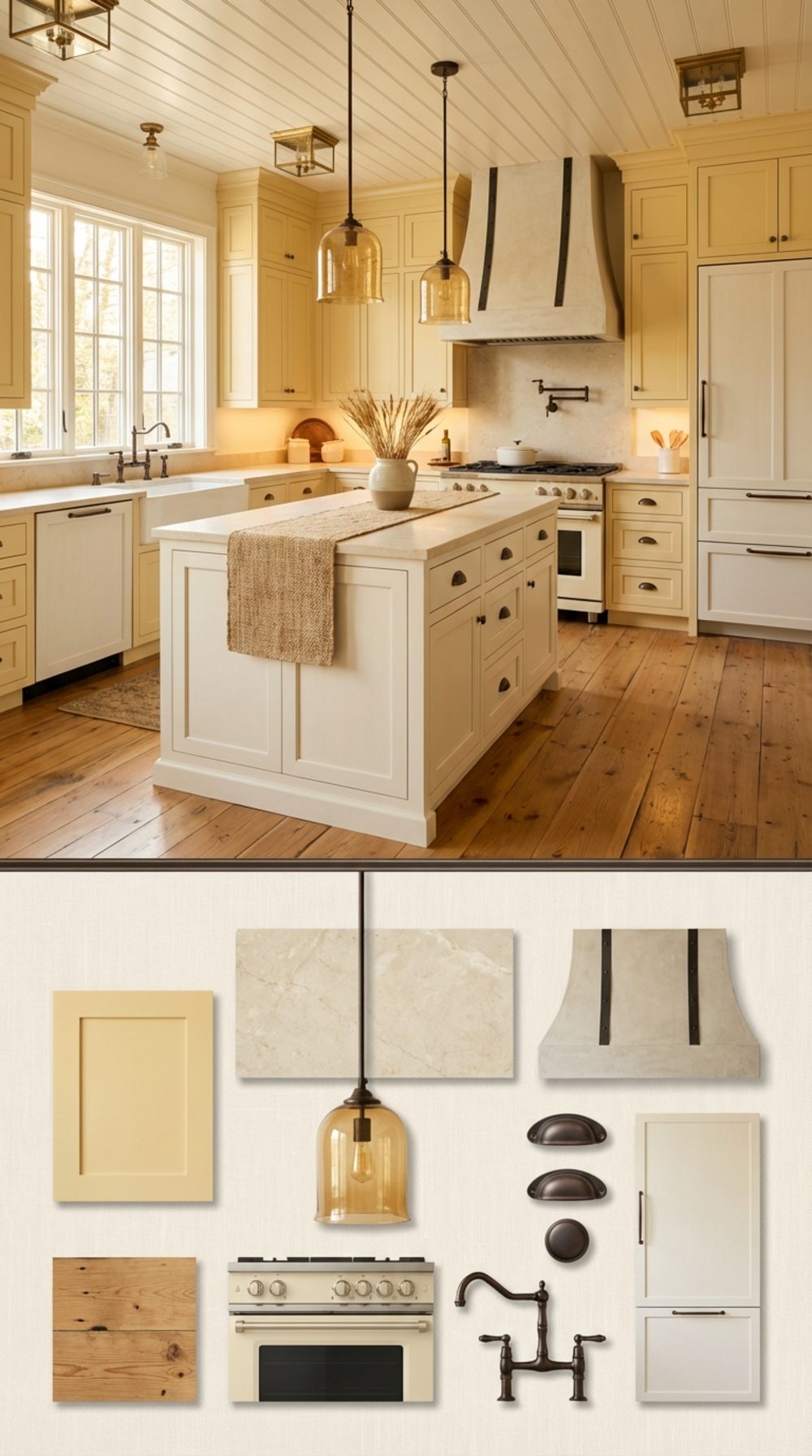
Soft yellow in a kitchen is a sophisticated gamble that pays off when the saturation is dialed down to something closer to cream. This reads like afternoon sunlight that has been folded into the cabinetry paint color itself.
Honed limestone on the countertops is the key material decision here. Polished stone would have hardened the room; honed limestone soaks light rather than reflecting it, which is exactly what a yellow kitchen needs to stay soft rather than sharp.
Warm Grey Farmhouse Kitchen with Book-Matched Marble Island, Custom Oak Range Hood, and Pewter Hardware
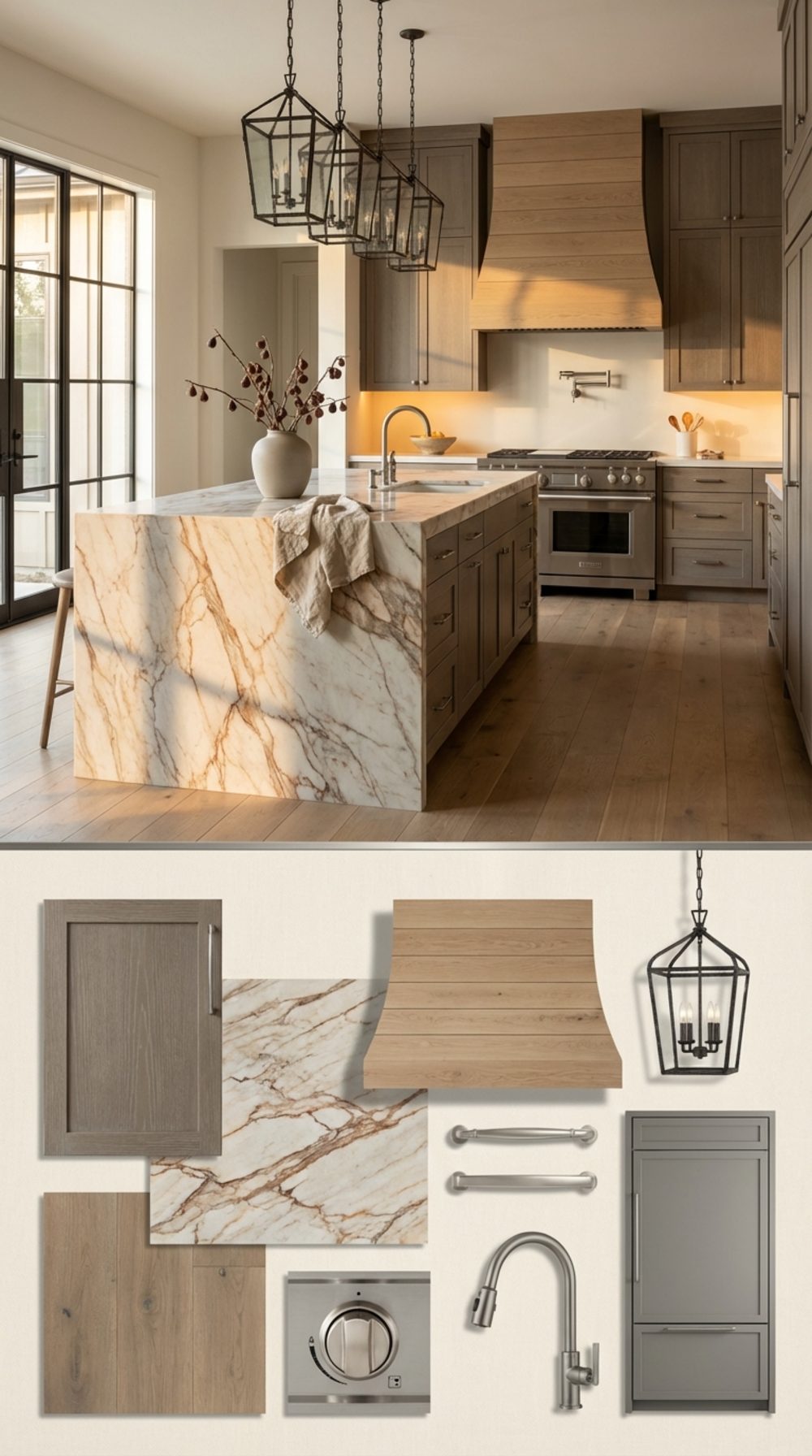
Book-matched marble is an architectural decision as much as a material choice. When two mirror-image slabs meet at the centerline of an island this size, the veining creates a visual symmetry that the rest of the kitchen deliberately avoids. That tension between the organic marble pattern and the clean-lined cabinetry is where the room earns its character.
The natural oak range hood introduces a third material layer between the grey cabinetry and the marble. Without it, the transition from painted wood to stone would have felt abrupt. The oak mediates, and the room breathes because of it.
Deep Forest Green Farmhouse Kitchen with Soapstone Countertops, Brass Cage Pendants, and Antique White Plaster Hood
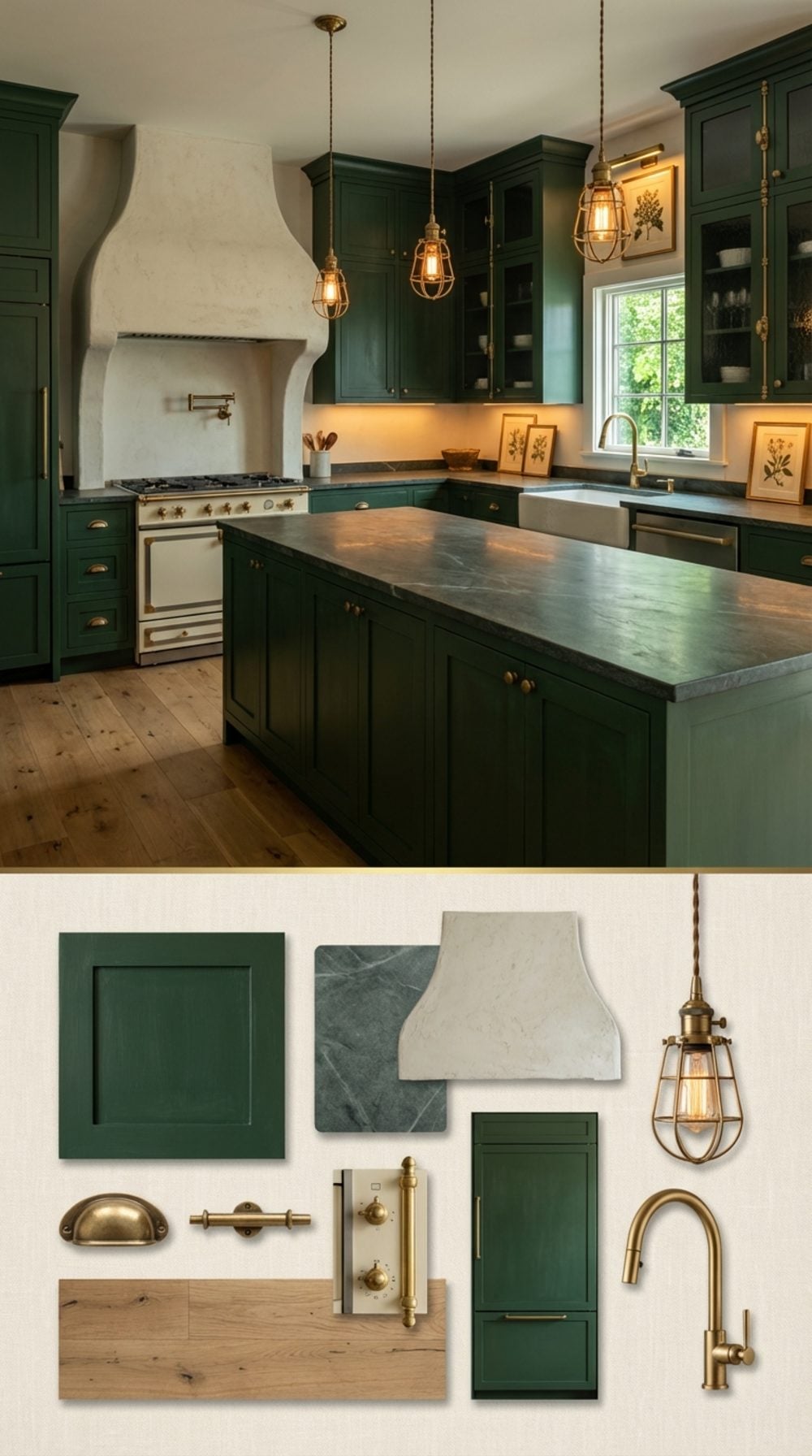
Soapstone and forest green share the same mineral quality in their color: both pull slightly blue-grey in low light and slightly warm in direct light. That material resonance is the reason this kitchen feels cohesive despite how much is happening in it.
Rich Red Farmhouse Kitchen with Aged Marble, Shaker Cabinetry, Copper Fixtures, and Exposed Timber Beams
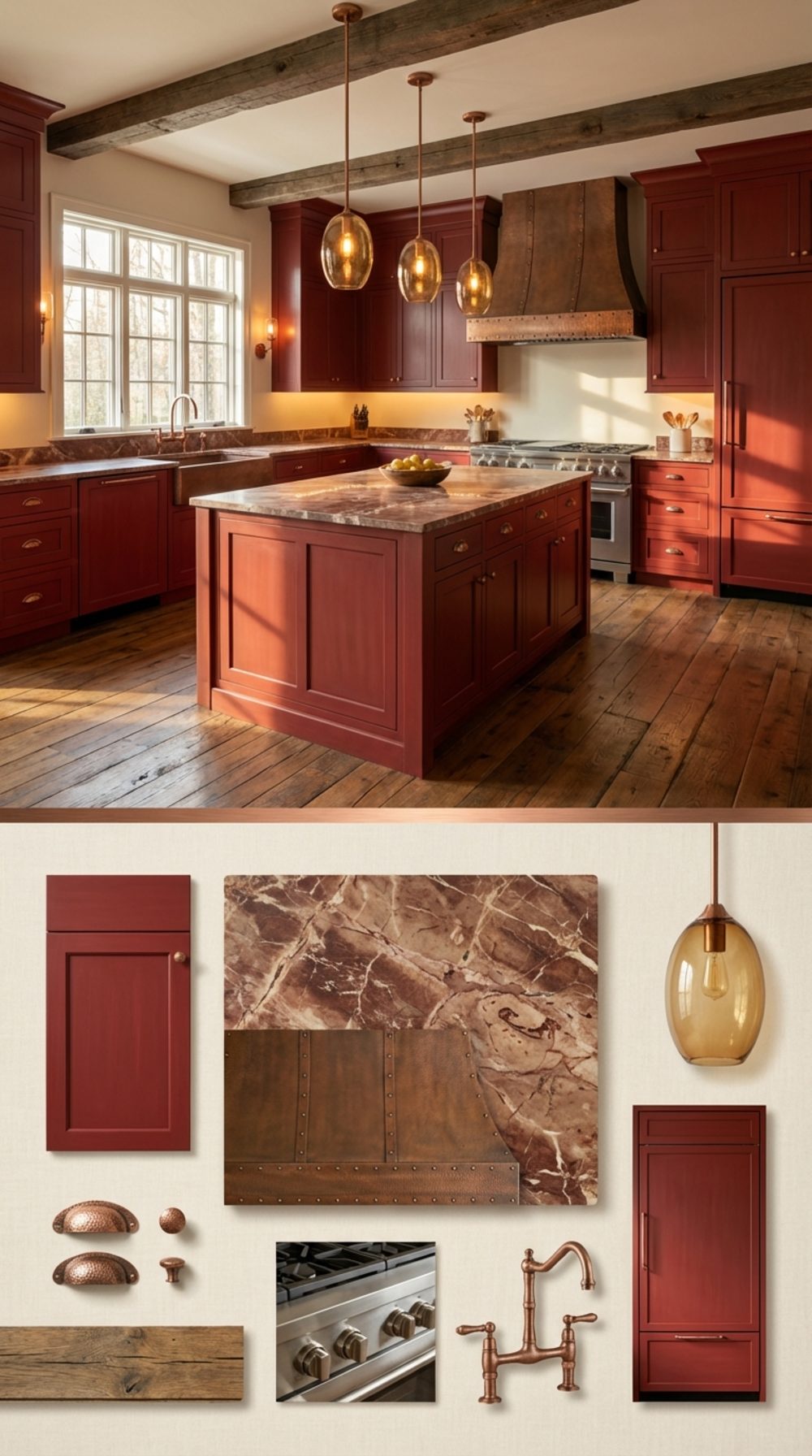
Red is the most psychologically loaded color in the kitchen spectrum, historically linked to appetite stimulation and heightened energy. But at this depth of tone, matte Venetian red rather than primary cherry, the effect shifts. The room feels less energetic and more authoritative, like a room that knows exactly what it is.
The hand-hammered copper hood is the smartest move here. Copper reads warm against the cool marble and keeps the red cabinetry from feeling one-dimensional. The visual temperature of this kitchen is in constant negotiation between those three materials, and that negotiation is what makes it so watchable.
- The Venetian red matte finish avoids the plasticky look of glossy colored cabinetry.
- Rosso Verona marble pulls cooler red and cream tones that bridge the gap between the cabinetry and the copper.
- Reclaimed chestnut flooring adds another warm-brown note that prevents any one material from dominating.
Pale Sage Farmhouse Kitchen with Fluted Glass Uppers, Integrated Everything, and Antique Brass Schoolhouse Lighting
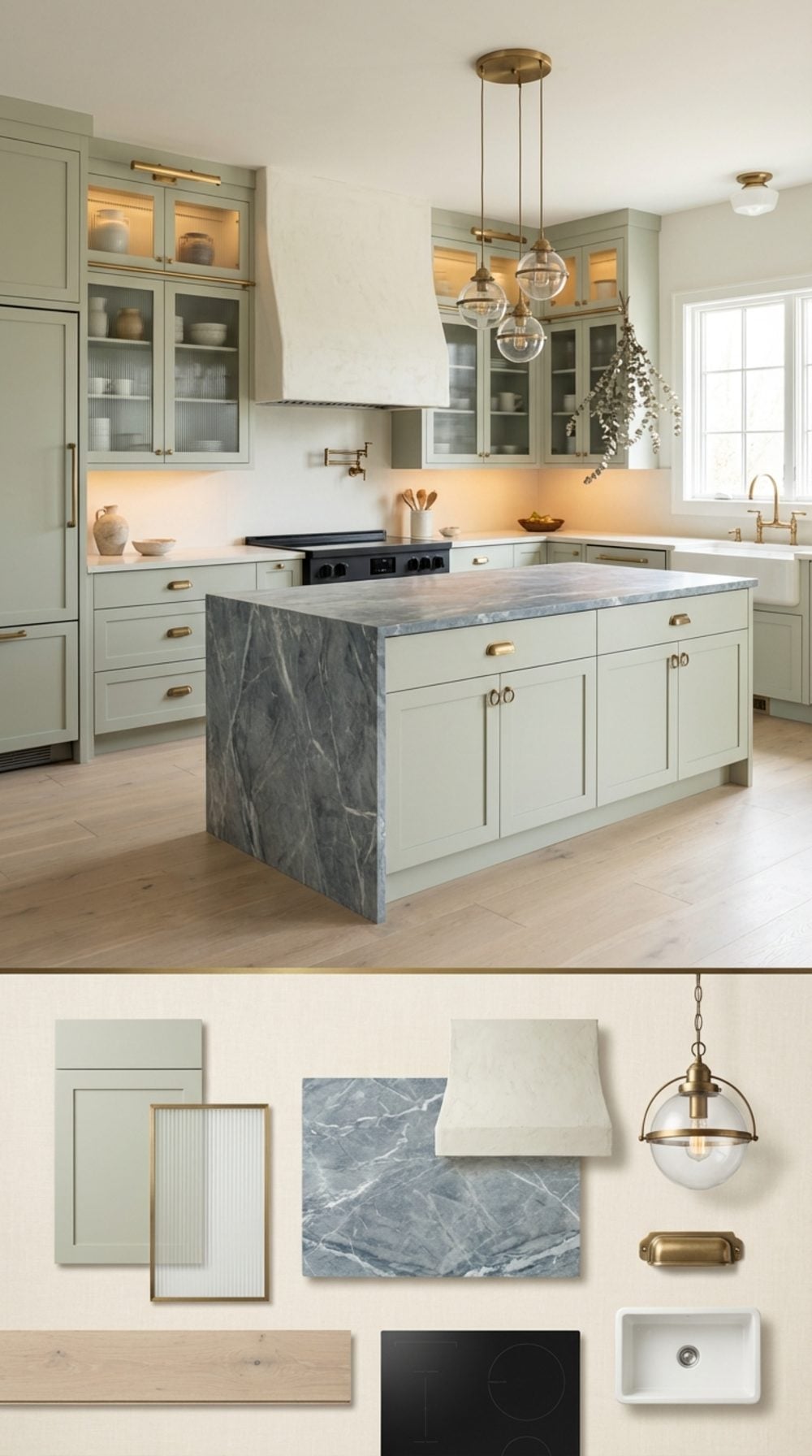
Fluted glass upper cabinets are having a moment precisely because they solve a longstanding kitchen tension: open shelves feel exposed, closed cabinets feel flat, but fluted glass offers display and discretion at the same time. The reeded texture softens what’s inside while the interior lighting turns it into something closer to a backlit art installation.
Pale sage and Pietra Grey marble share the same grey-green undertone, which is the color logic that makes this combination feel inevitable rather than effortful. The lime plaster hood, rough and hand-applied, gives the eye somewhere natural and grounded to land among all that careful refinement.
Slate Blue-Grey Farmhouse Kitchen with Leathered Granite, Integrated Column Appliances, and Wrought Iron Lighting
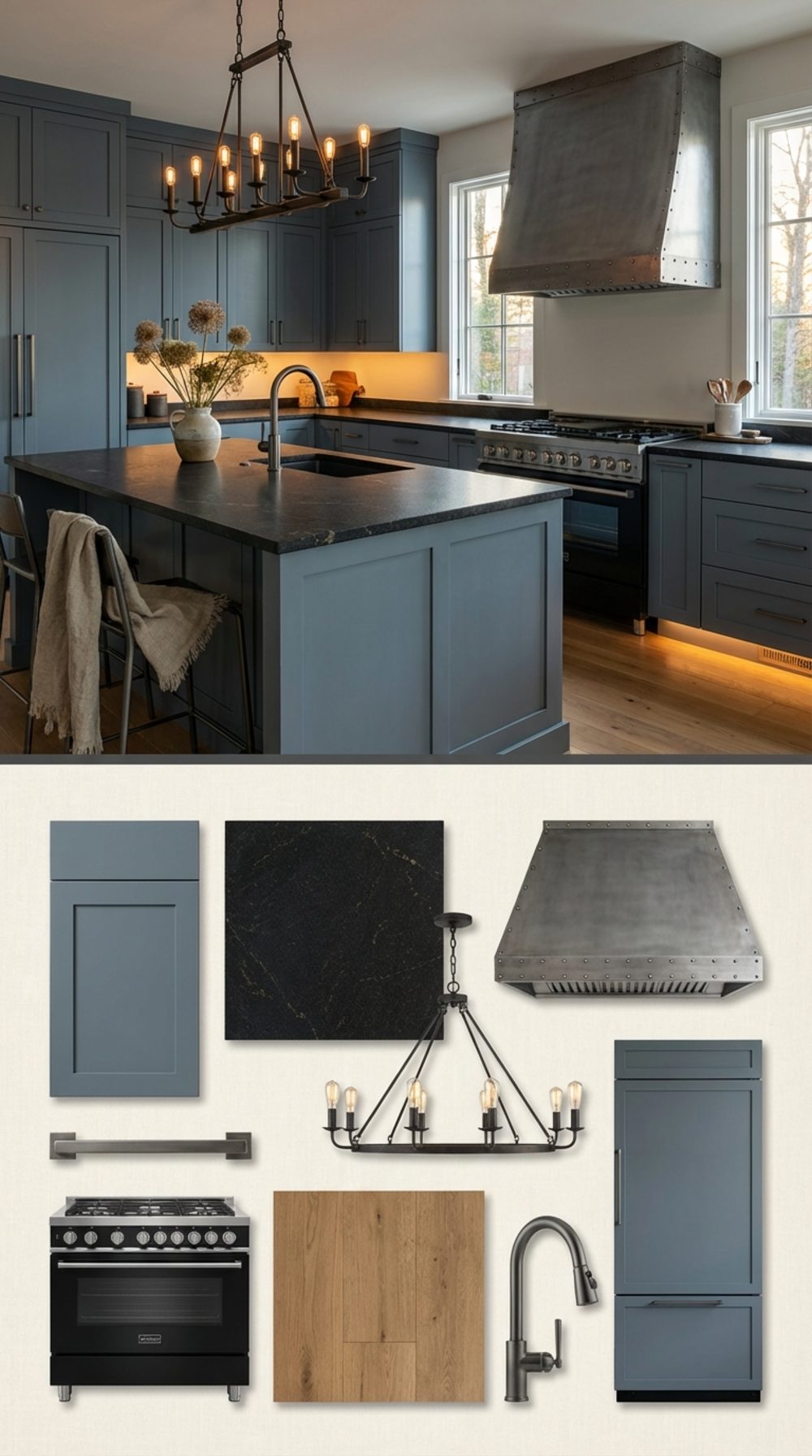
Raw steel on a range hood is an industrial material in a farmhouse context, and the friction between those two identities is exactly the point. The riveted plate hood looks like it was salvaged from a mill, but paired with chalky blue-grey Shaker cabinetry, it reads as intentional and precise.
Leathered Absolute Black granite is the most underused countertop finish in the luxury market. It absorbs rather than reflects light, making an island this size feel like a grounded, substantial piece of furniture rather than a shiny slab. The faint gold mineral inclusions in the granite catch the chandelier’s warm filament glow in a way that polished stone simply cannot.
Warm Alabaster Cabinetry with a Leathered Quartzite Island and Unlacquered Brass Hardware
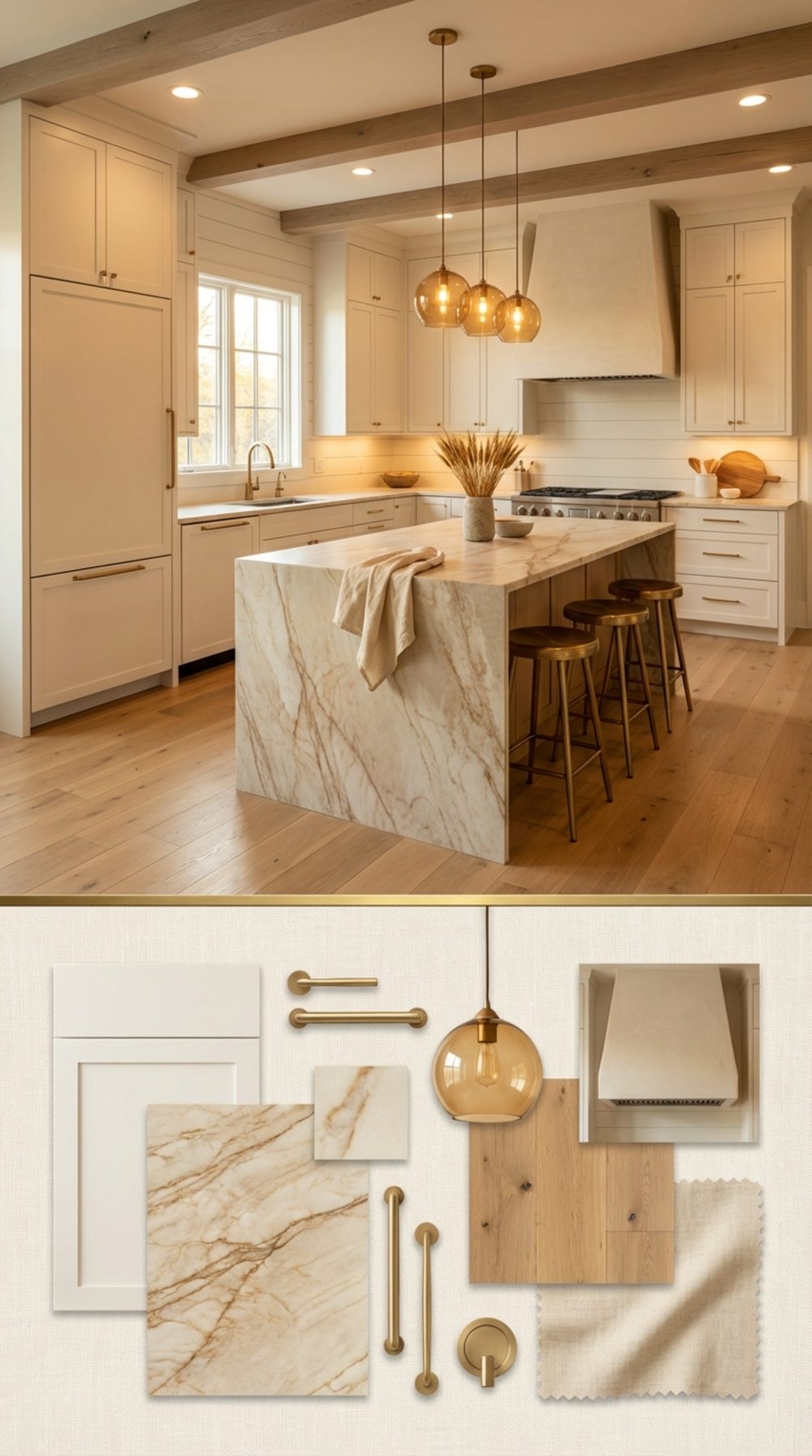
Unlacquered brass is doing something specific here that polished brass never could: it ages in real time, reading differently at 10am versus 6pm as the kitchen light shifts. Paired with leathered quartzite, which has a matte, almost geological texture underfoot, the two materials share a quality of honest imperfection that keeps the alabaster cabinetry from tipping into clinical. The wide white oak floors carry enough grain to anchor the whole composition without competing with the stone island.
The hand-plastered range hood is the real pivot point. It has mass and presence without ornamentation, functioning like a fireplace surround would in a living room, giving the eye somewhere authoritative to land.
Dusty Lavender Cabinetry with Honed Calacatta Marble and Aged Pewter Fixtures
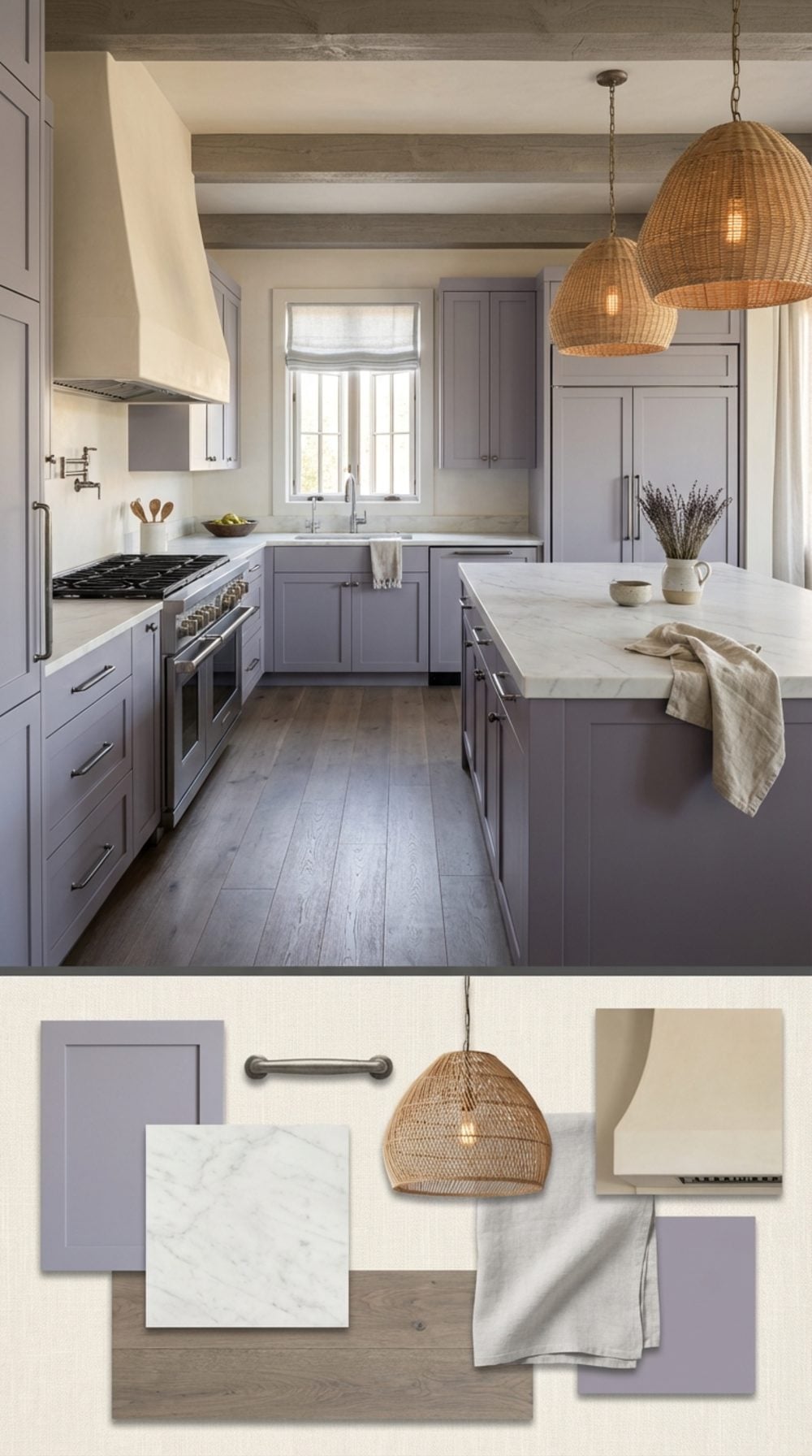
Lavender in a kitchen sounds risky. It isn’t, when you understand what the color is actually doing: the dusty, grey-pulled version of the hue reads almost as a neutral in low light, then reveals its violet character in morning sun. It’s a kitchen that changes personality through the day.
The honed Calacatta marble countertop is the right call precisely because it’s not polished. A glossy surface here would have thrown light back into a room that’s already working hard to feel calm. Matte stone absorbs the color from the cabinetry and the fumed oak floor, holding everything in the same quiet register.
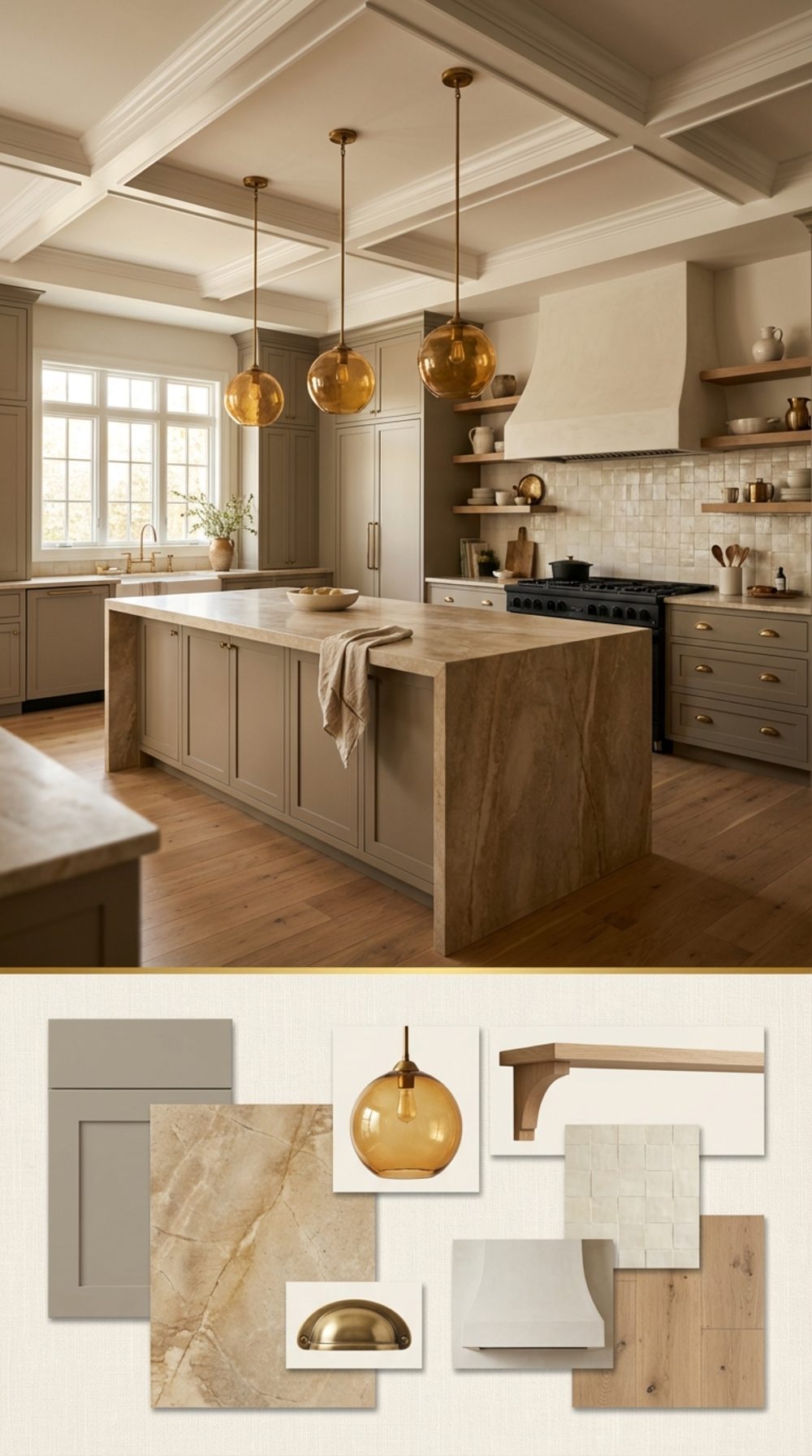
Aged Limestone Island and Matte Black Integrated Appliances in a Warm-Toned Farmhouse Kitchen
🔥 Would you like to save this?
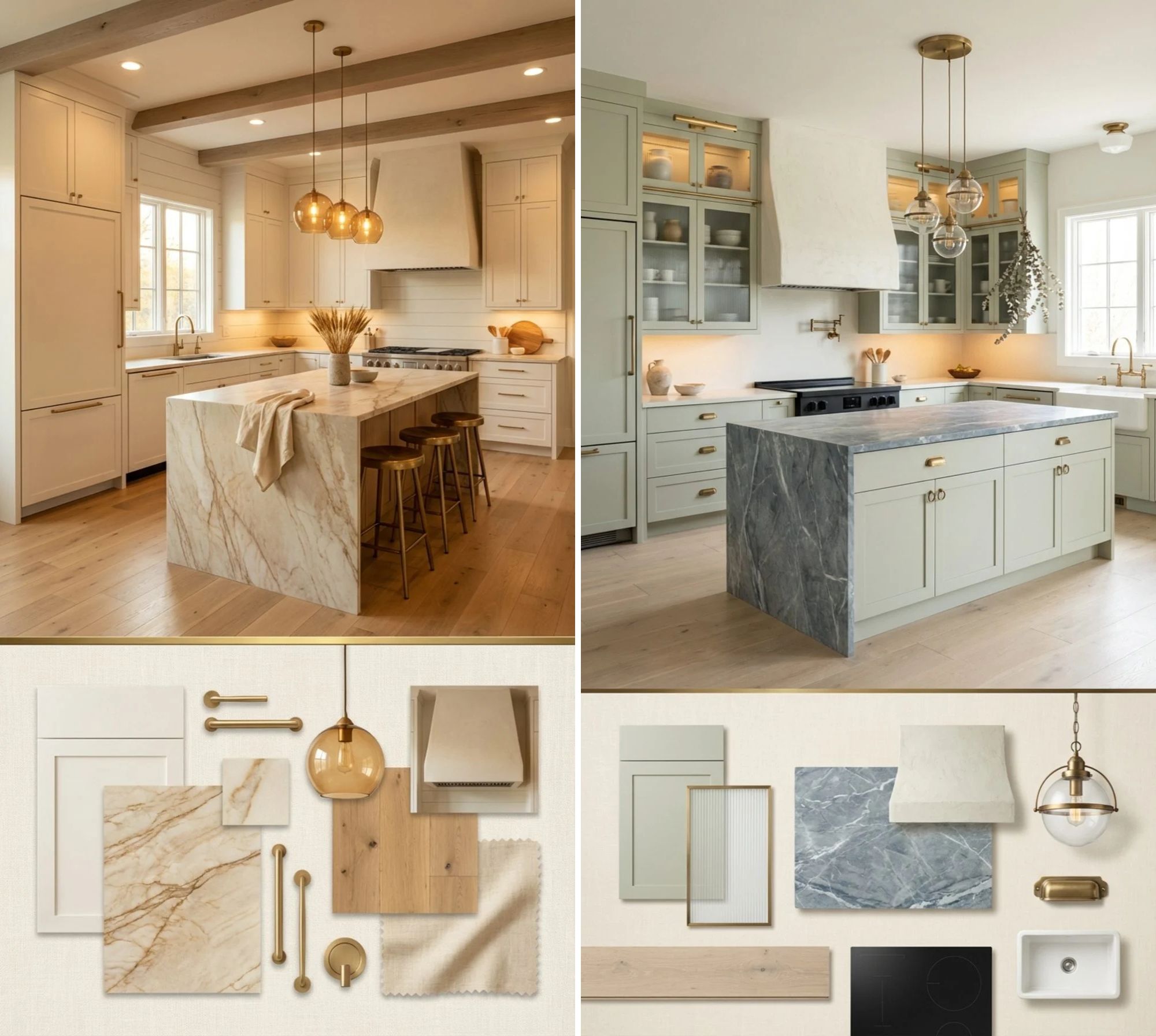
The island is doing what every great kitchen island should: anchoring the room without competing with it. That aged limestone waterfall top, honey-toned, honed to a matte finish, reads as geological rather than decorative, which is exactly why the brass cup pulls and amber glass pendants can afford to be so warm and rich without tipping into excess.
The integrated appliances are the real design discipline here. Paneling the refrigerator and dishwasher in the same putty linen finish as the surrounding cabinetry removes three visual interruptions from the room in a single move. The kitchen reads as a single composed surface, not a lineup of competing objects.
Smoked Oak Cabinetry, Quartzite Counters, and a Barrel-Vault Range Hood in a Deep Farmhouse Kitchen
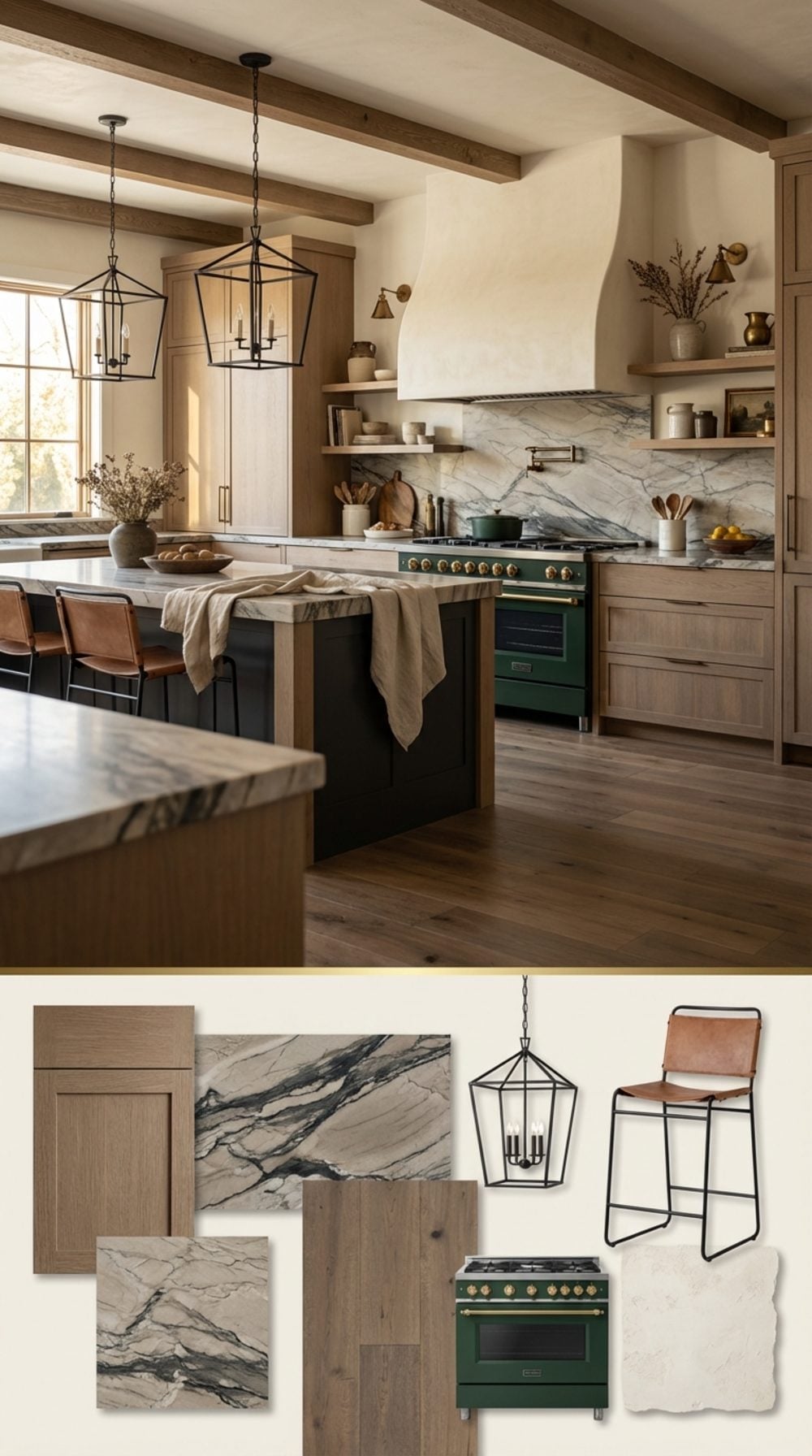
That forest green range is not trying to be subtle, and the room is better for it. Against the warm wire-brushed smoked oak cabinetry, the deep green reads less like a color choice and more like an architectural decision, a vertical focal point that gives the barrel-vault hood something to anchor to.
Book-matching the quartzite behind the range as a full-slab backsplash is the kind of move that separates a designed kitchen from a decorated one. The continuous veining pattern turns a functional surface into something closer to a painting.
“The smoked oak and quartzite combination works because one material has pattern, the other has texture, they never compete for the same visual frequency.”
Alabaster White Farmhouse Kitchen with Fluted Cabinetry and Leathered Quartzite Island
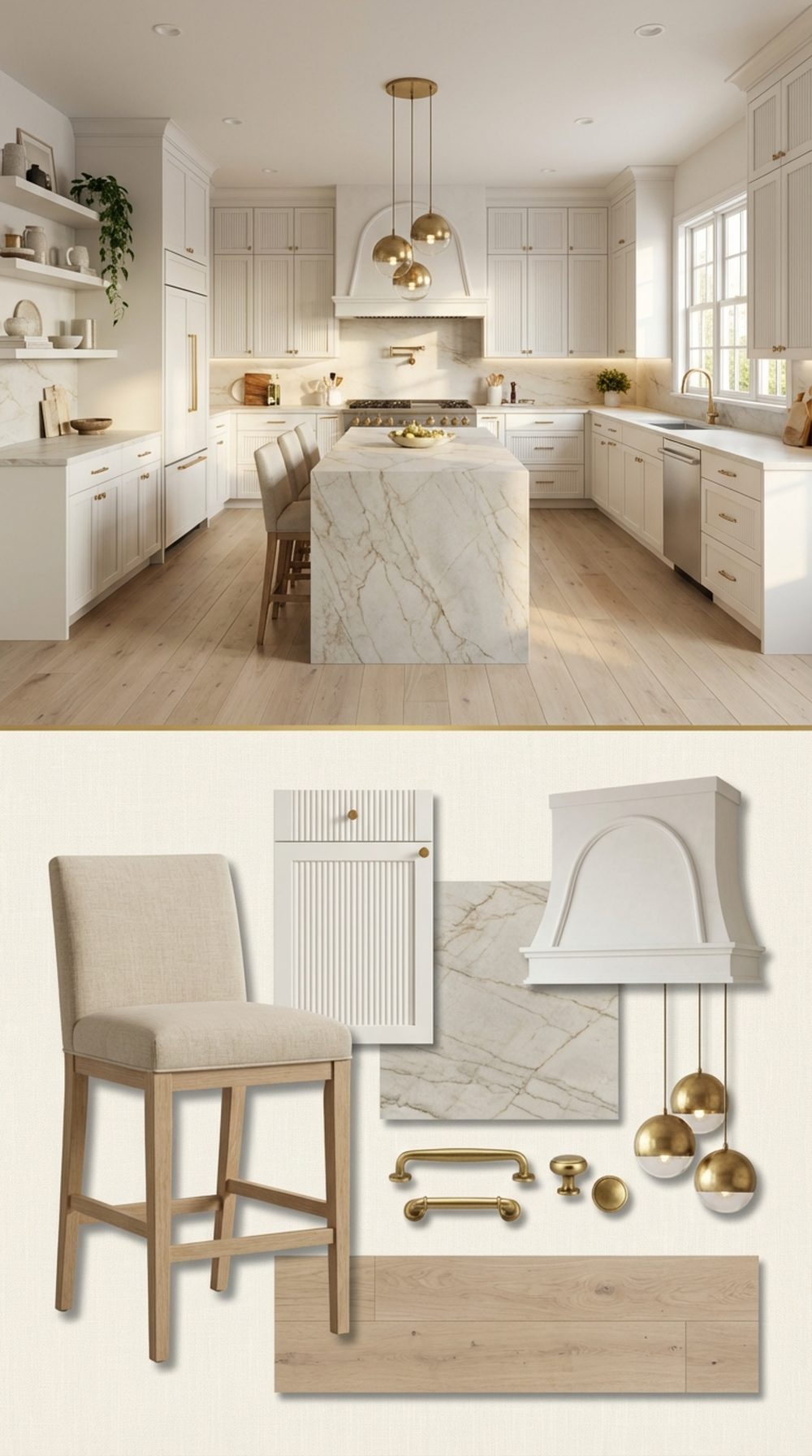
The arched plaster range hood is doing more work than it looks. By echoing the gentle curves of a European farmhouse hearth while staying firmly in the same alabaster palette as the cabinetry, it reads as architecture rather than appliance, which is exactly why the aged brass hardware registers so clearly against it. The contrast is quiet, but it’s there, and it’s doing all the visual work this room needs.
Leathered quartzite, rather than polished marble, was the right call for the island. The matte, slightly tactile surface absorbs light instead of reflecting it, keeping the overall mood grounded and warm rather than clinical.
Matte Black Modern Farmhouse Kitchen with Book-Matched Nero Marble and Forged Iron Accents
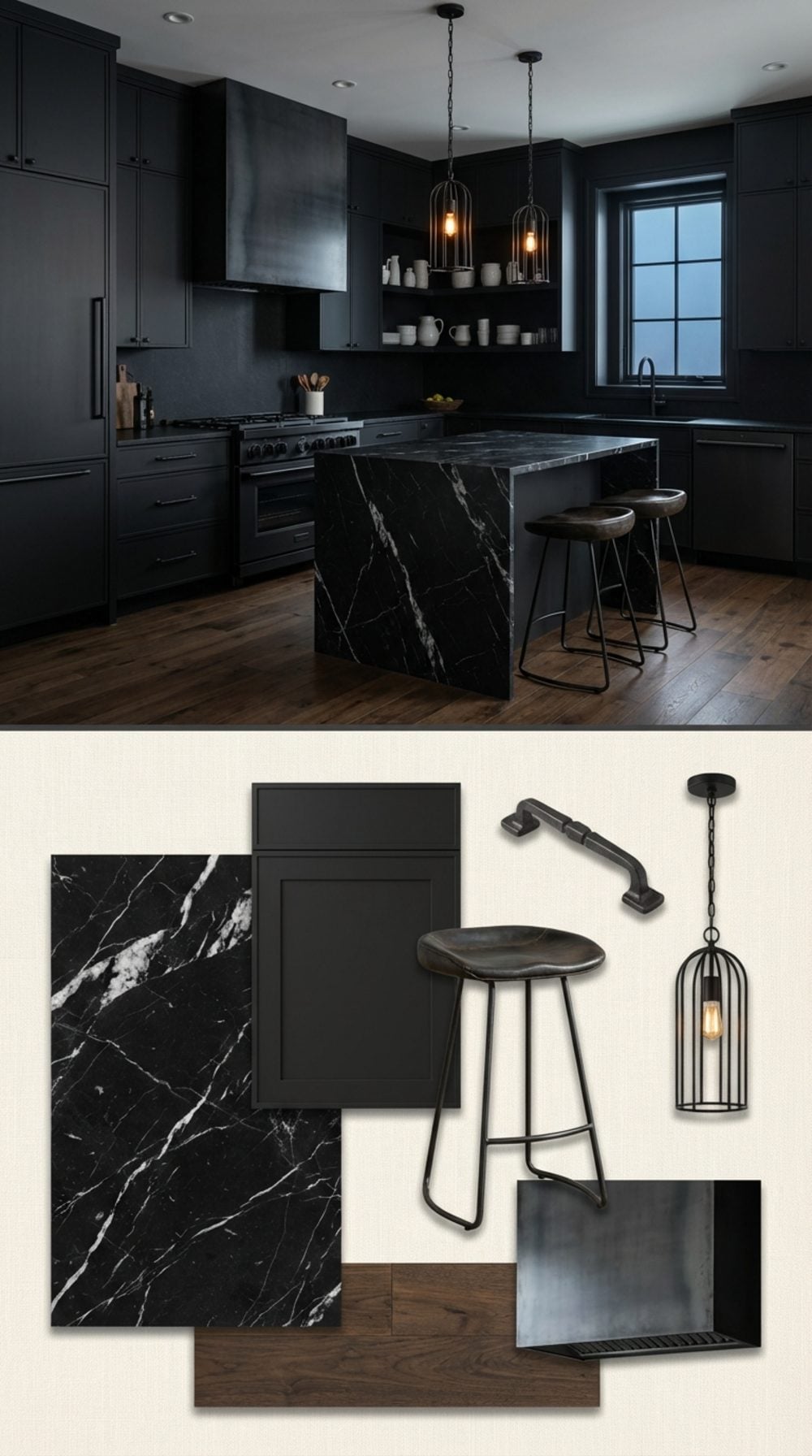
Everything in this kitchen is fighting for attention, and somehow nothing is losing.
Matte black on matte black should flatten a room, but the book-matched Nero Marquina marble keeps it from collapsing into itself, those explosive white veins introduce movement without introducing color, which is a genuinely difficult balance to strike. The forged iron details, slightly rough and hand-finished, prevent the whole composition from reading as sterile. There’s weight here. Actual material weight. The kind that makes a room feel like it costs what it cost.
Forest Green Shaker Kitchen with Unlacquered Brass, Soapstone Counters, and a Cathedral Ceiling
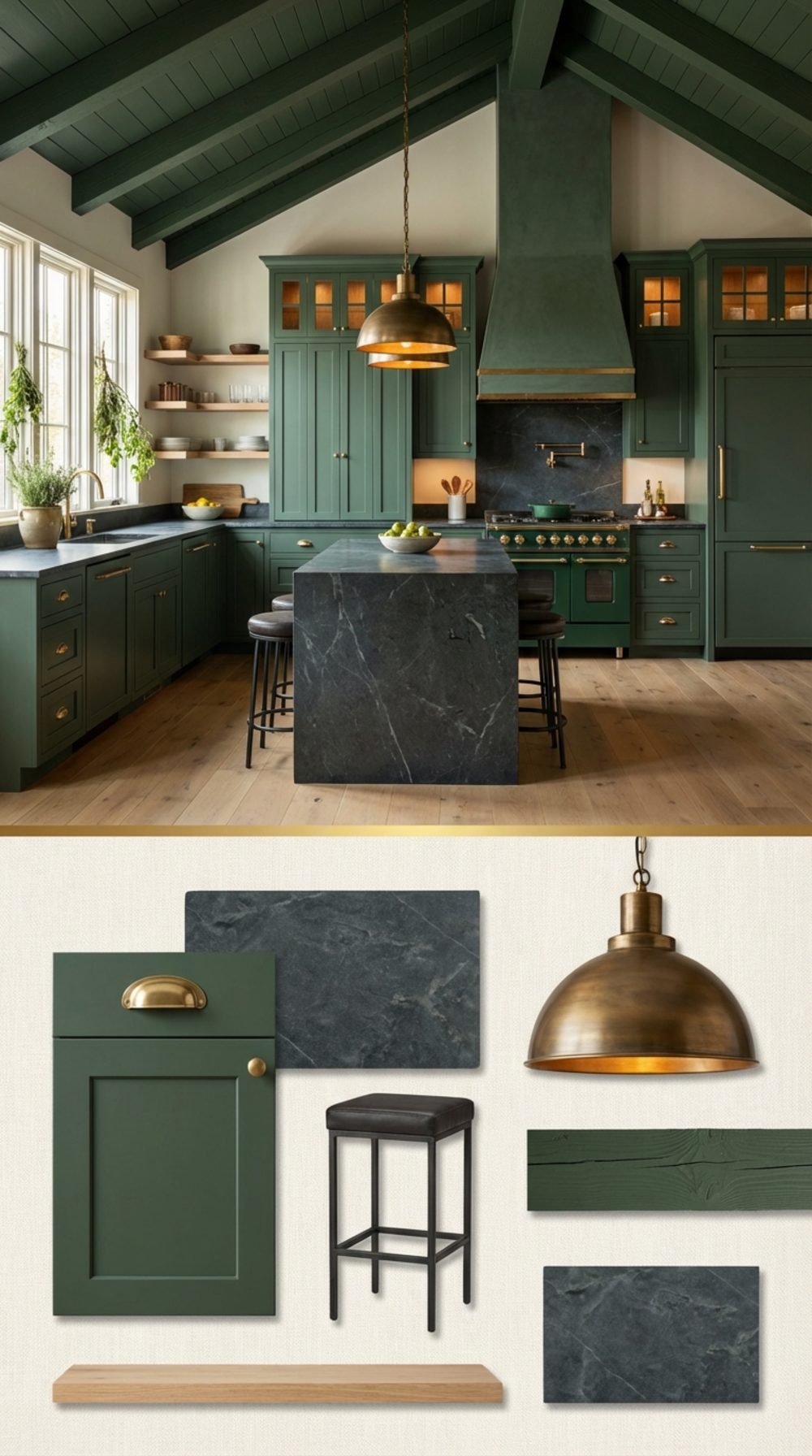
Soapstone was the correct countertop choice here, and not just aesthetically. Its dark, slightly waxy surface deepens over time with oil absorption, it literally changes with use, which gives a kitchen in this color register a sense of age and earned character that engineered quartz simply cannot fake.
The cathedral ceiling, painted the same forest green as the cabinetry instead of a contrasting white, is the room’s boldest spatial decision. Color continuity across vertical and overhead surfaces tricks the eye into reading the room as larger and more unified than it actually is.
Warm Cream and Cognac Farmhouse Kitchen with Walnut Island and Custom Reeded Hood
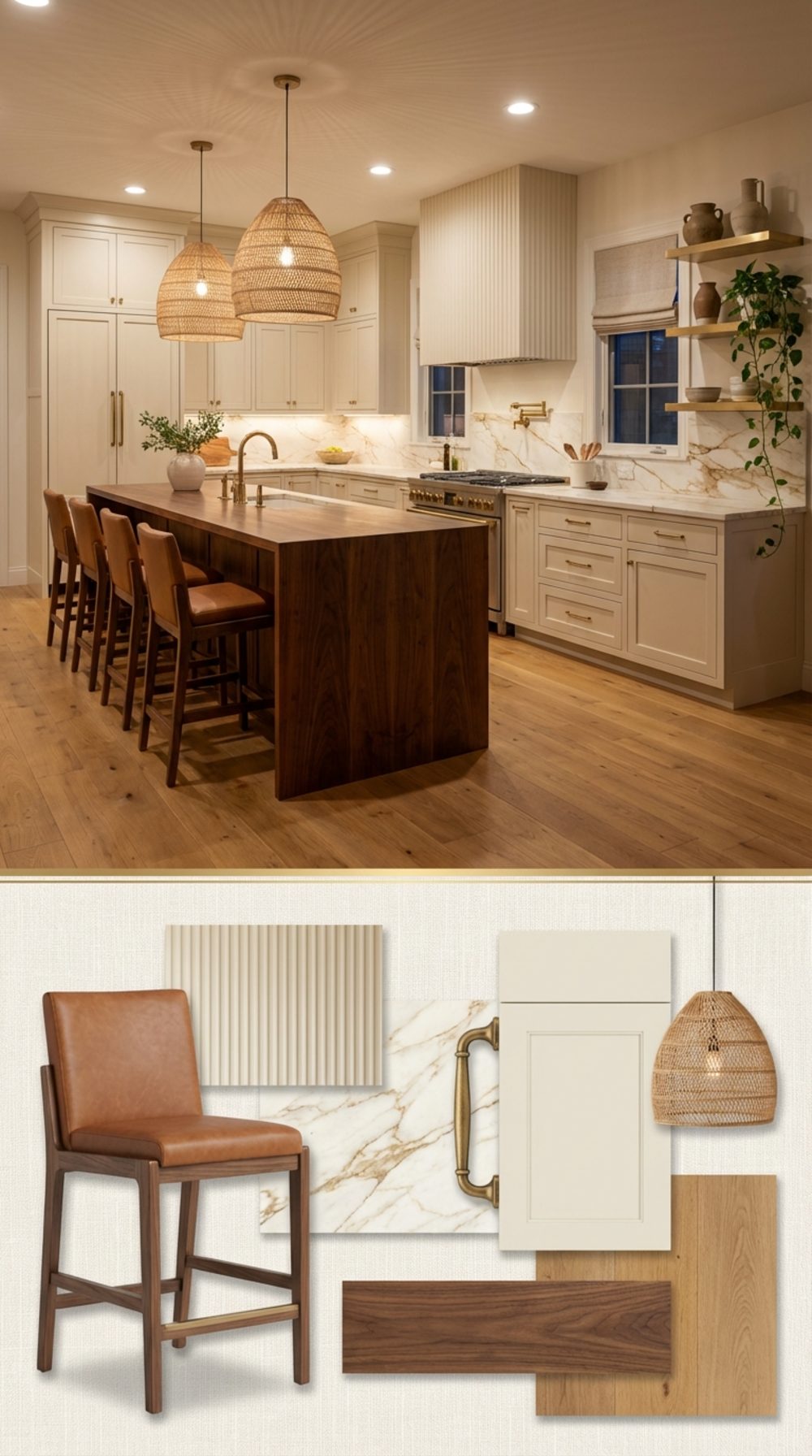
The walnut island base against cream upper cabinetry is a two-tone move that almost always works, but the key here is the matching Calacatta marble’s cognac veining, which pulls both tones together without requiring a third bridging element. The palette is internally consistent in a way that reads as instinctive rather than calculated.
Navy Blue Farmhouse Kitchen with Integrated Column Fridge, Marble Slab Backsplash, and Bronze Hardware
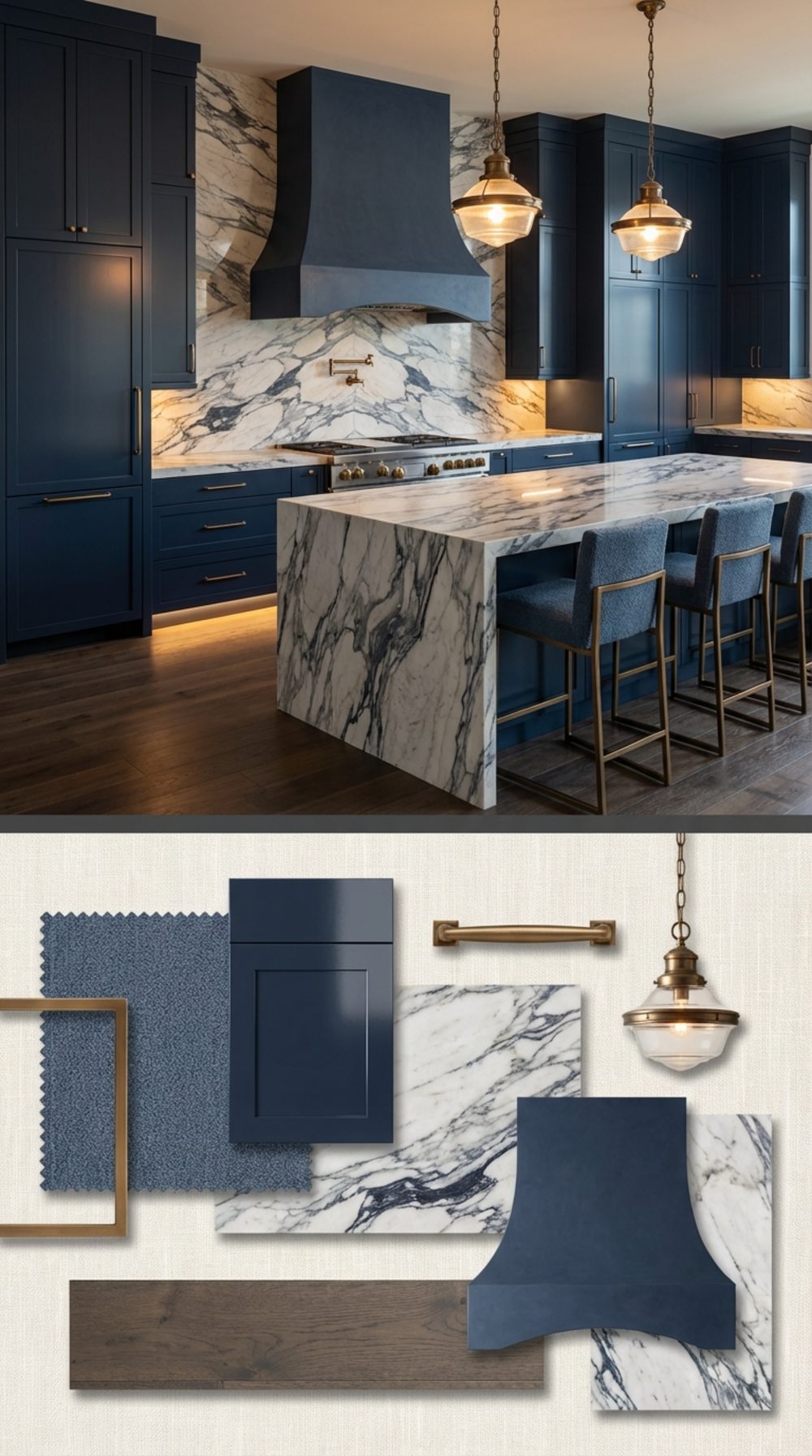
A full slab of book-matched Arabescato marble used as both countertop and continuous floor-to-ceiling backsplash wall is not a modest choice. It takes serious conviction (and a serious budget). What makes it work here is the navy cabinetry on both sides acting as a frame, turning the marble into a literal panel of art rather than just a surface.
Bronze hardware over navy is a combination with genuine historical precedent, naval architecture and traditional cabinetmaking both leaned on this pairing for exactly the same reason it works now: the warmth of bronze keeps navy from reading as cold or corporate.
Sage Green and Warm White Farmhouse Kitchen with Terracotta Tile Floor and Arched Window Alcove
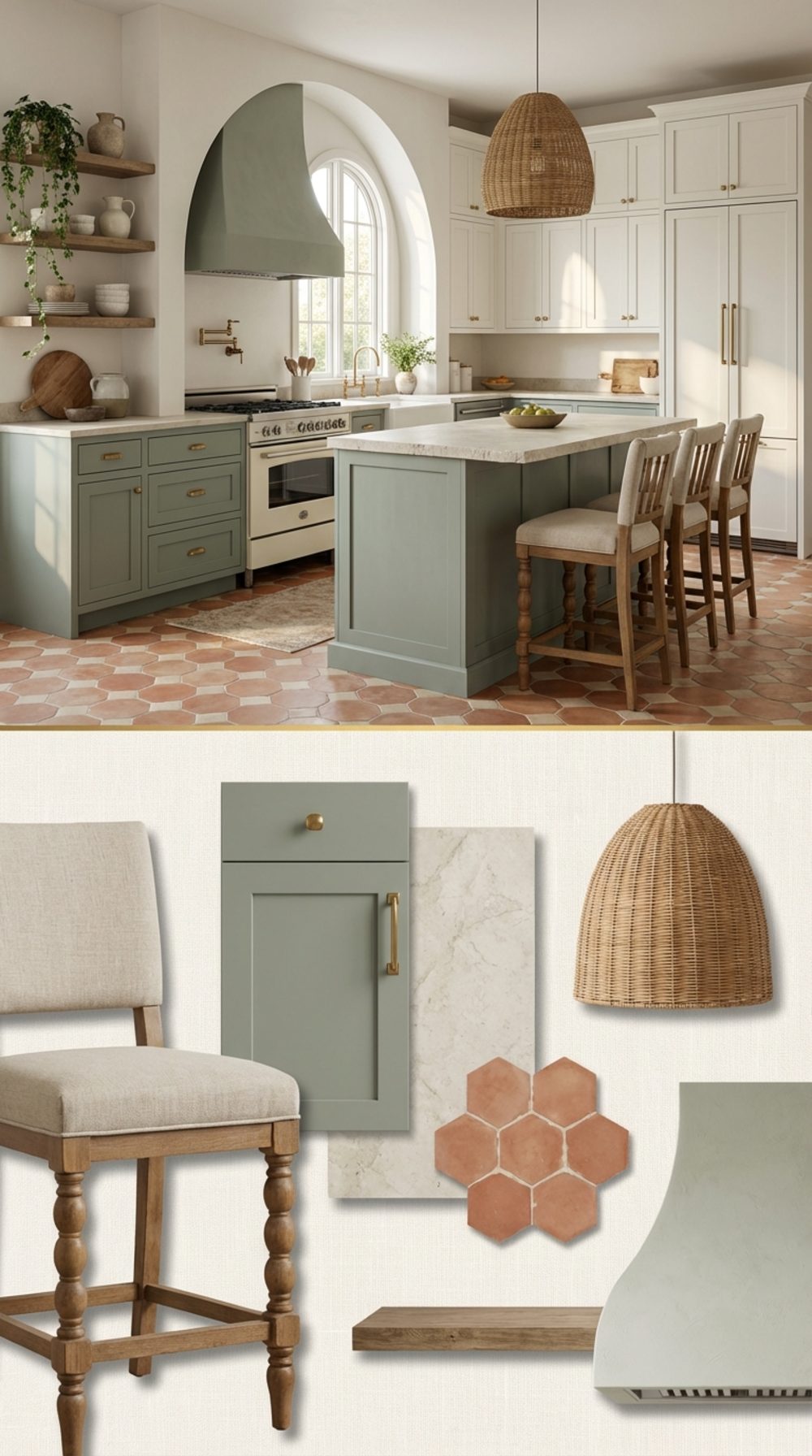
The arched alcove framing both the range and the window above it is the kind of architectural gesture that makes a kitchen feel designed from the inside out rather than fitted with appliances after the fact. The arch gives the range hood a reason to exist beyond function, it becomes part of a spatial narrative about hearth and gathering.
Terracotta hex tile underfoot adds a frequency of warm color that neither the sage nor the white cabinetry could provide alone. Floors are often the most underestimated surface in a kitchen’s color story.
Bone White Farmhouse Kitchen with a Dramatic Red Lacquer Island and Polished Nickel Hardware
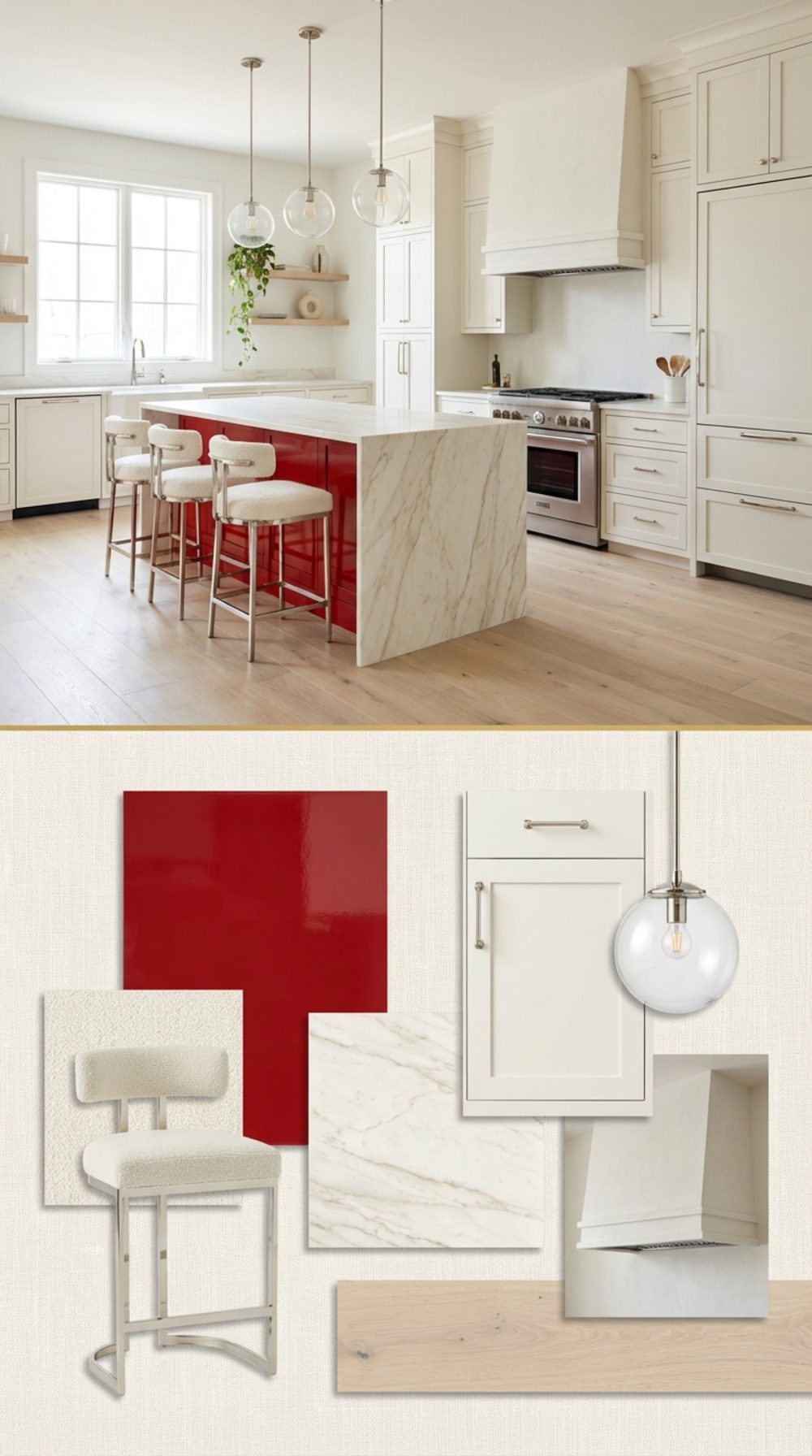
One red island in a bone white kitchen is not an accent, it’s a thesis statement. The entire room exists to make that lacquer surface read as the singular focal point, and it succeeds precisely because the surrounding cabinetry, hood, and floor make no competing moves. The polished nickel hardware maintains a cooler, crisper note throughout, keeping the red from reading as rustic or domestic, it stays firmly in the territory of intentional, editorial design.
Charcoal Gray and Raw Steel Farmhouse Kitchen with Concrete Island and Industrial Cage Pendants
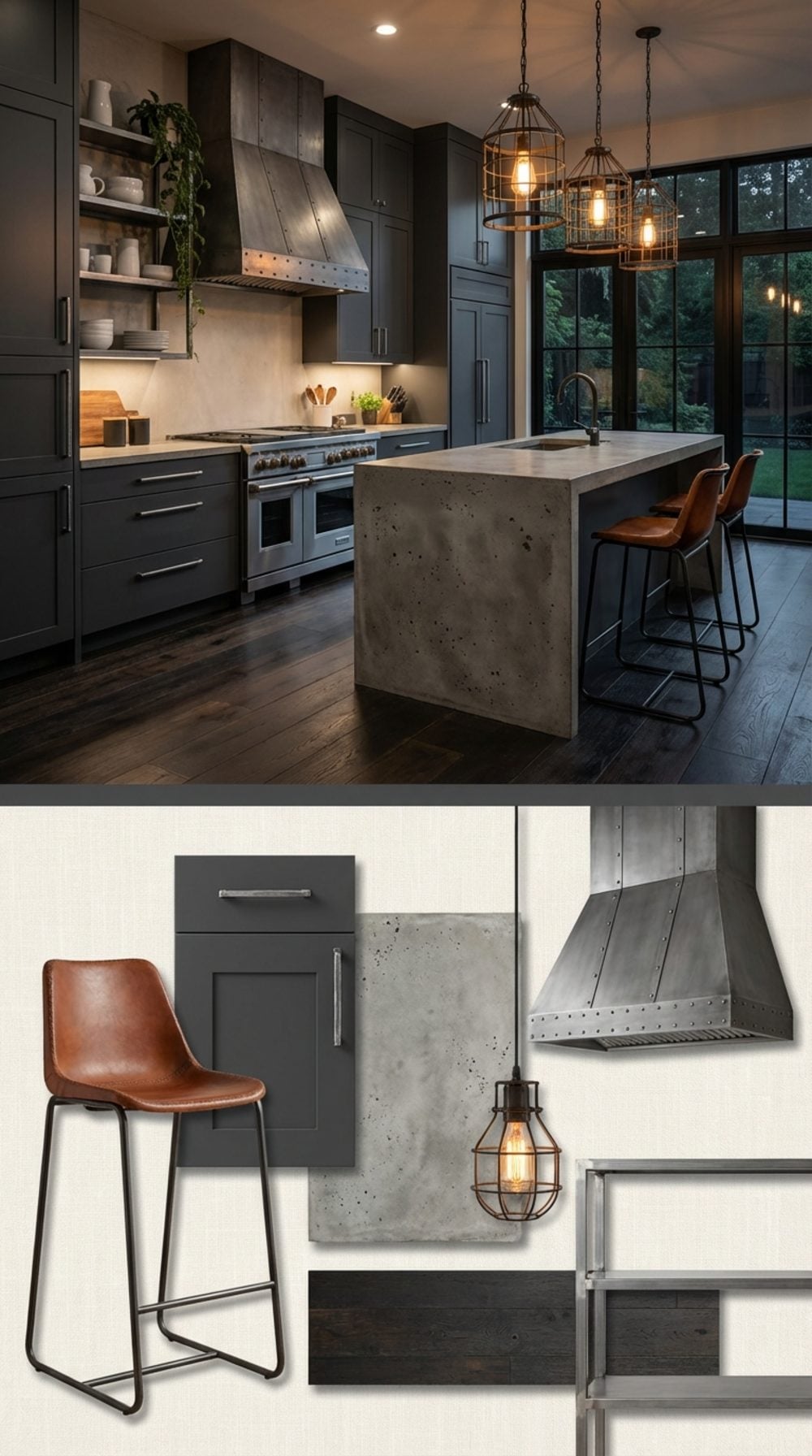
Hand-poured concrete countertops occupy an unusual position in high-end kitchen design: they are simultaneously among the most labor-intensive and most deliberately imperfect surfaces available. The pockmarks and color variations are not flaws, they are the entire point, providing a tactile roughness that keeps charcoal gray cabinetry from reading as cold or mass-produced.
- The raw steel hood signals workshop heritage without resorting to reclaimed-barn aesthetics.
- Cognac leather seats introduce the only warm tone in an otherwise restrained palette, doing outsized emotional work with minimal surface area.
- Edison filament pendants at low wattage keep the room’s ambient light human-scaled rather than overhead and interrogation-bright.
Soft Putty and Natural Oak Farmhouse Kitchen with Fluted Glass Uppers and Unlacquered Brass
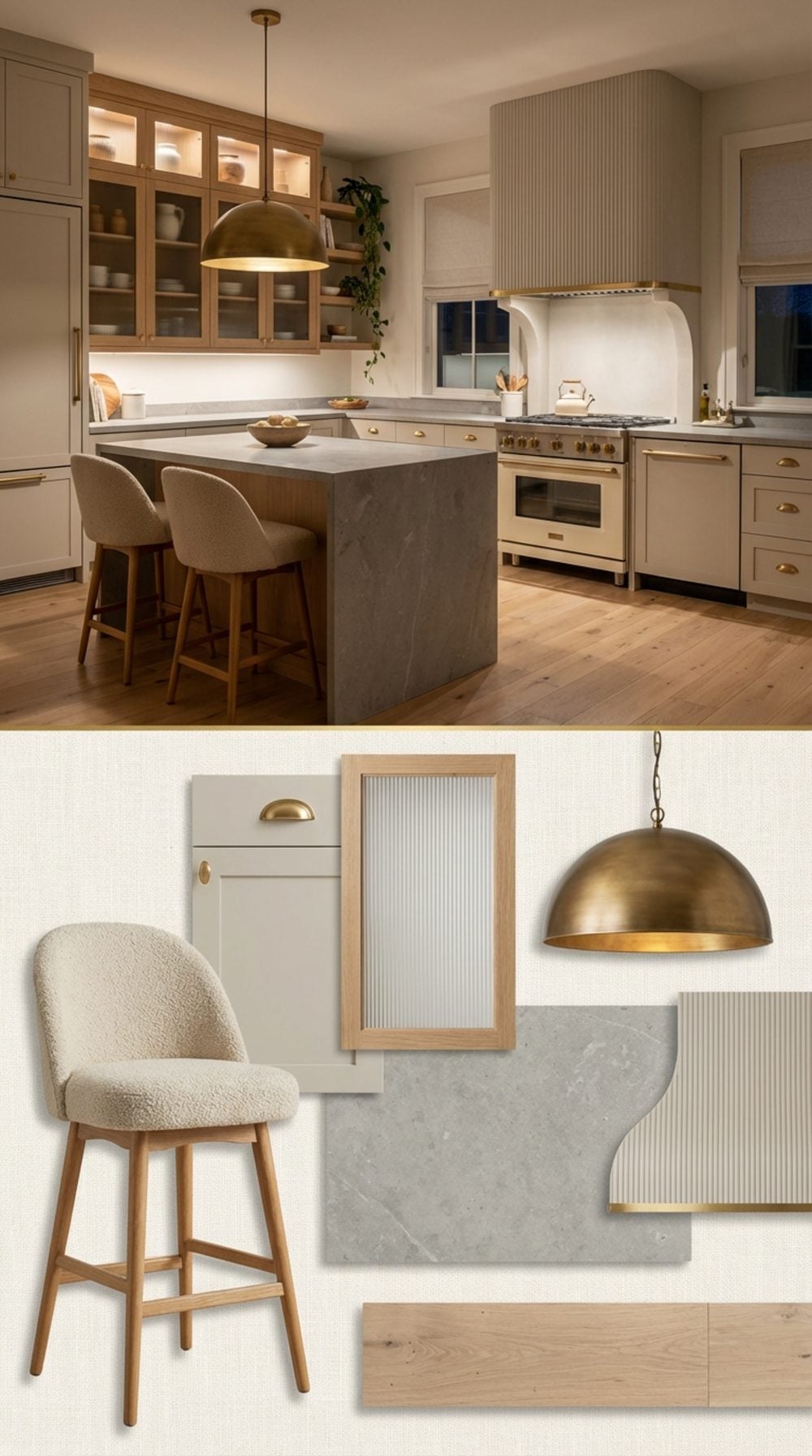
Fluted glass cabinet fronts lit from within are a relatively recent reintroduction to farmhouse kitchens, and they do something unusual: they create depth in a surface that is literally flat. The diffused visibility, you sense what’s inside rather than see it clearly, is far more interesting than either fully open shelving or fully opaque doors.
Putty and natural oak as a palette combination succeeds because both tones share the same underlying warmth frequency. Neither pulls the room toward gray nor toward yellow, they occupy a middle register that reads as neither trendy nor timeless, just quietly correct.
Rich Burgundy and Aged Brass Farmhouse Kitchen with Honed Black Granite and a Beamed Ceiling
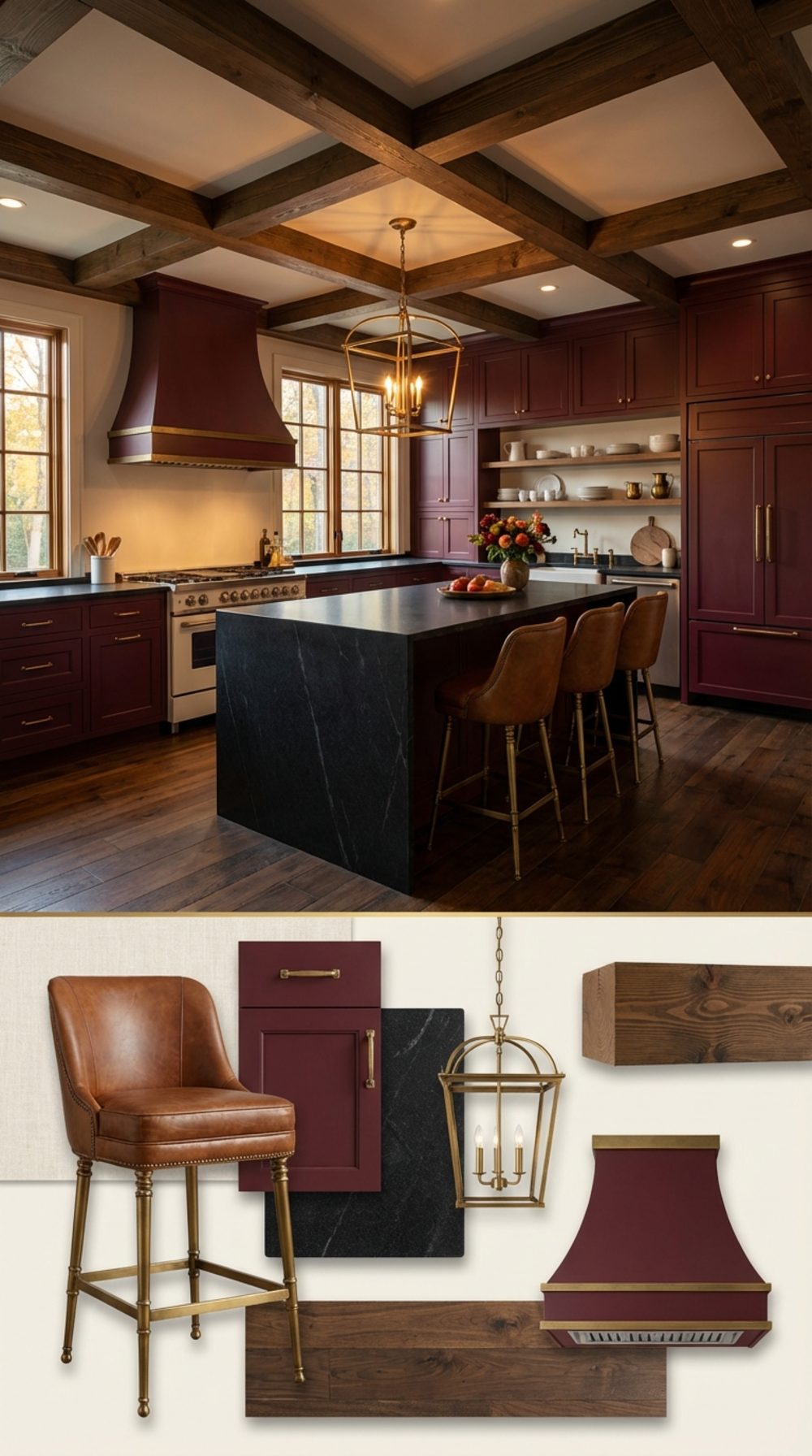
Burgundy cabinetry in a kitchen is a commitment most designers talk clients out of. The ones who don’t are usually right. Against honed black granite with a leather finish, the wine-dark color sheds any risk of looking sweet or Victorian, the granite’s absolute darkness gives it a foil it needs to read as sophisticated rather than country-cute.
“The beamed ceiling doesn’t just add height, it adds time. It makes the room feel like it has been here for decades.”
The lantern-style pendant in aged brass is the right lighting choice for exactly that reason: it looks like it could have been hung when the house was built, rather than ordered from a catalog last year.
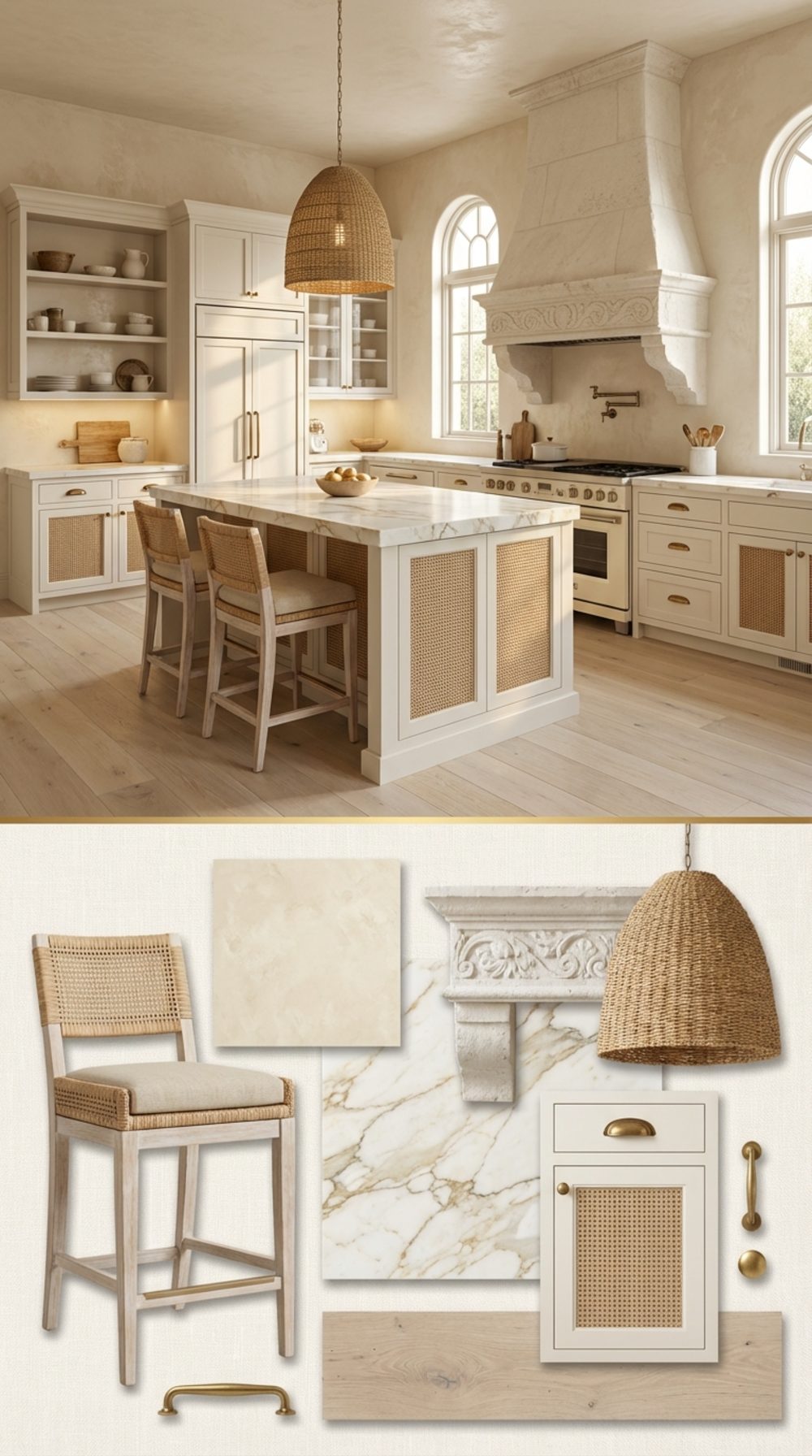
Creamy Off-White Farmhouse Kitchen with Venetian Plaster Walls, Carved Stone Hood, and Rattan Details
🔥 Would you like to save this?
A hand-carved limestone range hood is not a purchase, it is a commission. The carved relief detailing in this kitchen is the single element that shifts the entire room from expensive to irreplaceable. You could replace every other surface and fixture; you cannot replicate this hood without the same stonemason and the same stone.
Deep Teal Farmhouse Kitchen with Unlacquered Copper Hardware, Zellige Tile, and a Rustic Oak Island
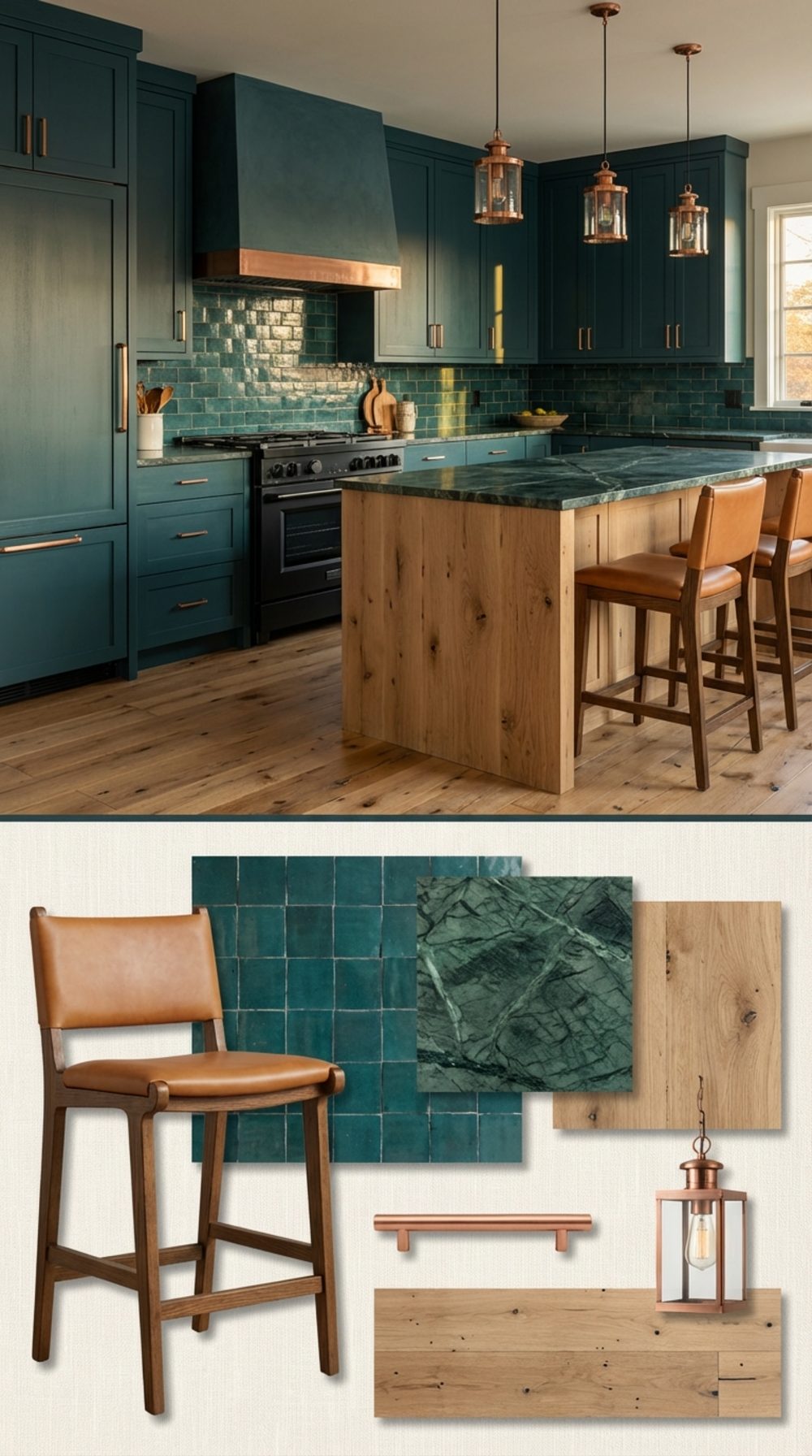
Zellige tile is having a sustained moment in luxury kitchens for a specific reason: no two tiles are exactly alike in thickness, glaze, or surface angle, so a backsplash becomes a surface that moves and shifts as light moves through a room. Against flat-panel teal cabinetry, the zellige introduces complexity without introducing pattern.
The verde Guatemala marble island top introduces a third green into the palette, and it works because all three (teal cabinetry, zellige tile, marble) exist in different value registers: dark, medium, and pale. They share a chromatic family without competing.
Warm White and Weathered Wood Farmhouse Kitchen with Open Rafters, Soapstone Perimeter, and a Brick Alcove Range
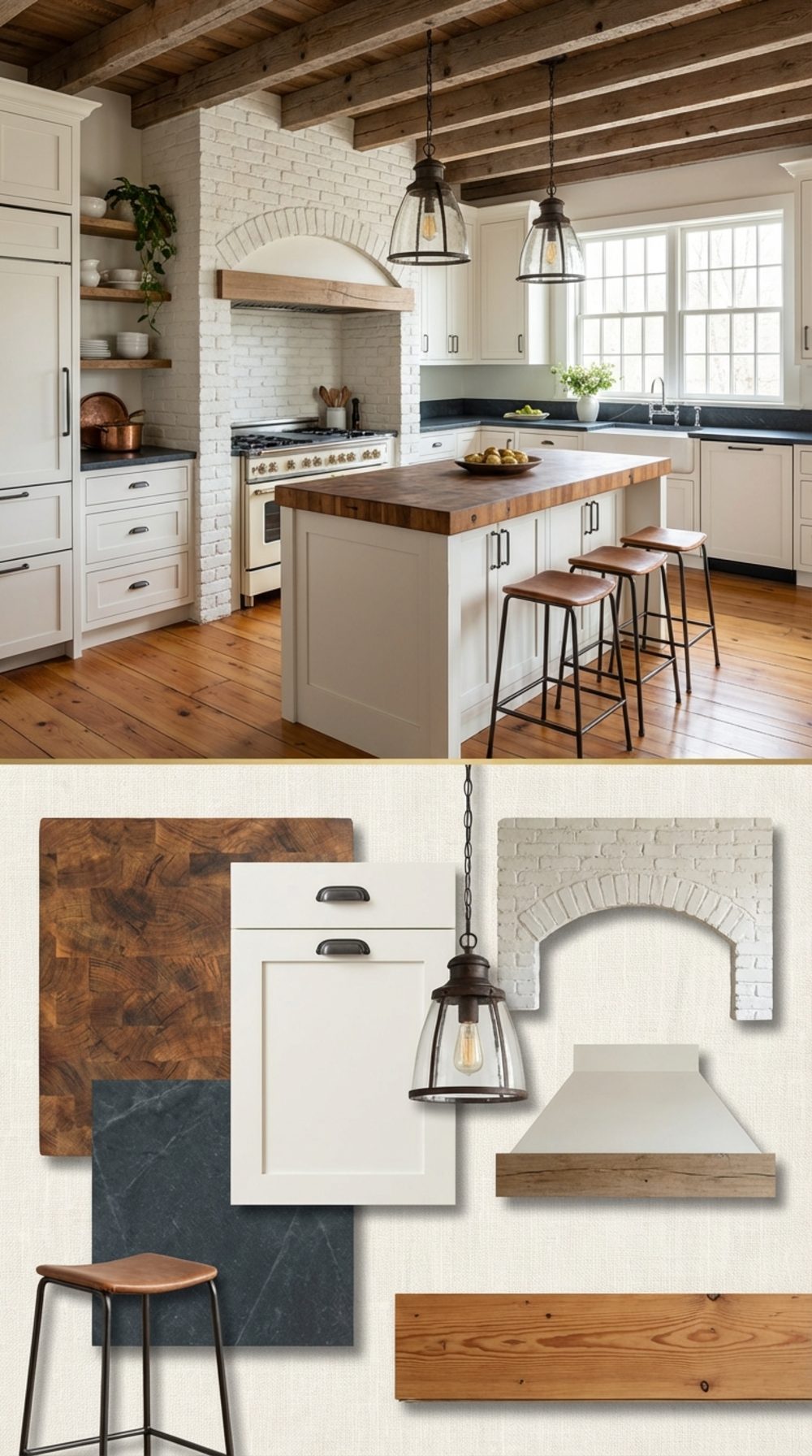
An end-grain butcher block island top with visible knife marks and patina is a kitchen element that accumulates character with every meal. The decision to keep the wear rather than refinish it signals something specific about the owners: they actually cook here. In a market saturated with kitchens designed primarily to be photographed, that reads as refreshing.
The brick alcove housing the range does the work of a stone hearth at a fraction of the spatial commitment. By enclosing the range on three sides, it creates the psychological sense of a cooking hearth, the oldest, most primal domestic architecture, while still housing a fully modern appliance.
Midnight Blue and Warm Brass Farmhouse Kitchen with a Fluted Column Island and Hand-Painted Encaustic Tile Floor
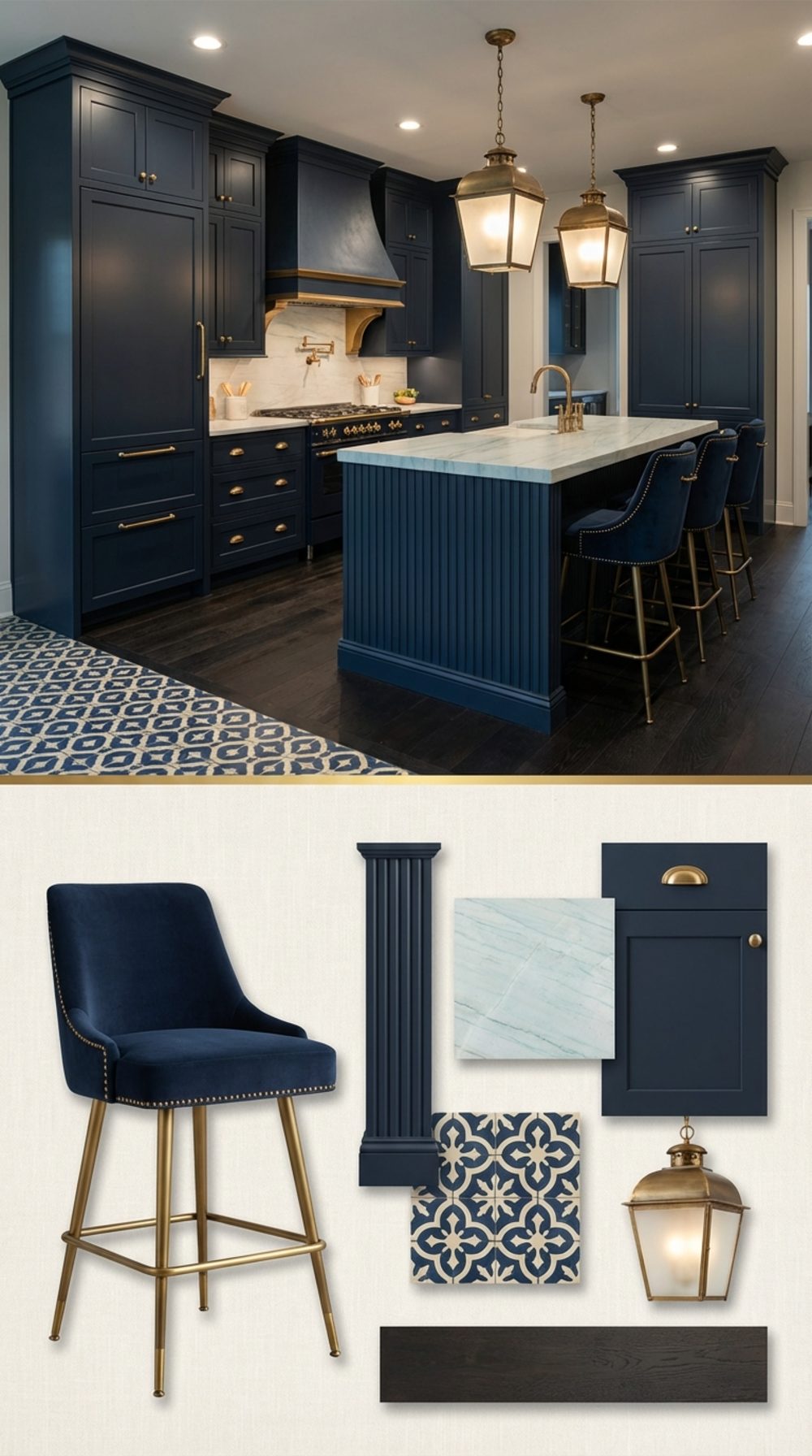
Fluted column detailing on an island base is an architectural move borrowed directly from classical furniture design, specifically the Regency and Federal period case pieces of the early 19th century. Transplanted into a modern farmhouse kitchen, it elevates the island from a functional work surface into a piece of furniture that happens to have a sink in it. The distinction matters: furniture has presence; fixtures do not.
Why the encaustic tile entry zone works
Using the patterned tile only at the kitchen’s entry threshold, rather than throughout, creates a spatial transition moment, you cross a threshold of pattern before entering the quieter, more formal kitchen proper. It’s a hospitality gesture borrowed from historic European entry halls.
Warm Greige and Natural Limestone Farmhouse Kitchen with a Vaulted Barrel Ceiling and Integrated Everything
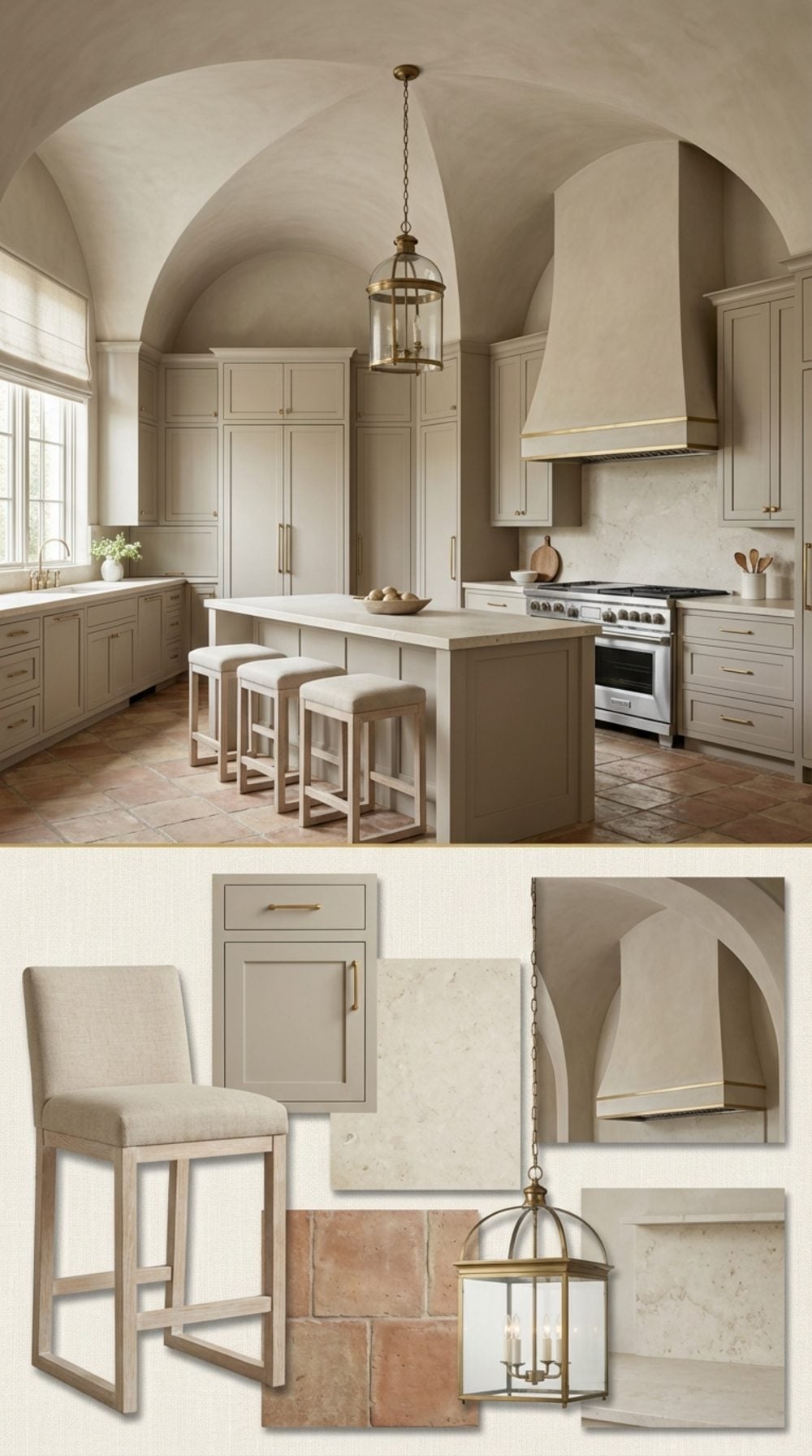
The range hood integrated directly into the barrel vault plaster is the kind of detail that makes a kitchen feel like it was designed by an architect rather than assembled from a catalog. When the hood disappears into the ceiling’s geometry, the range below takes on a different character, it reads as an element of the architecture rather than an appliance standing against a wall.
Warm greige Venetian plaster on a barrel vault ceiling creates a surface that shifts visibly between morning and evening light, between overcast and sunny days. In a kitchen where the palette is deliberately restrained, that movement becomes the room’s primary visual event.