
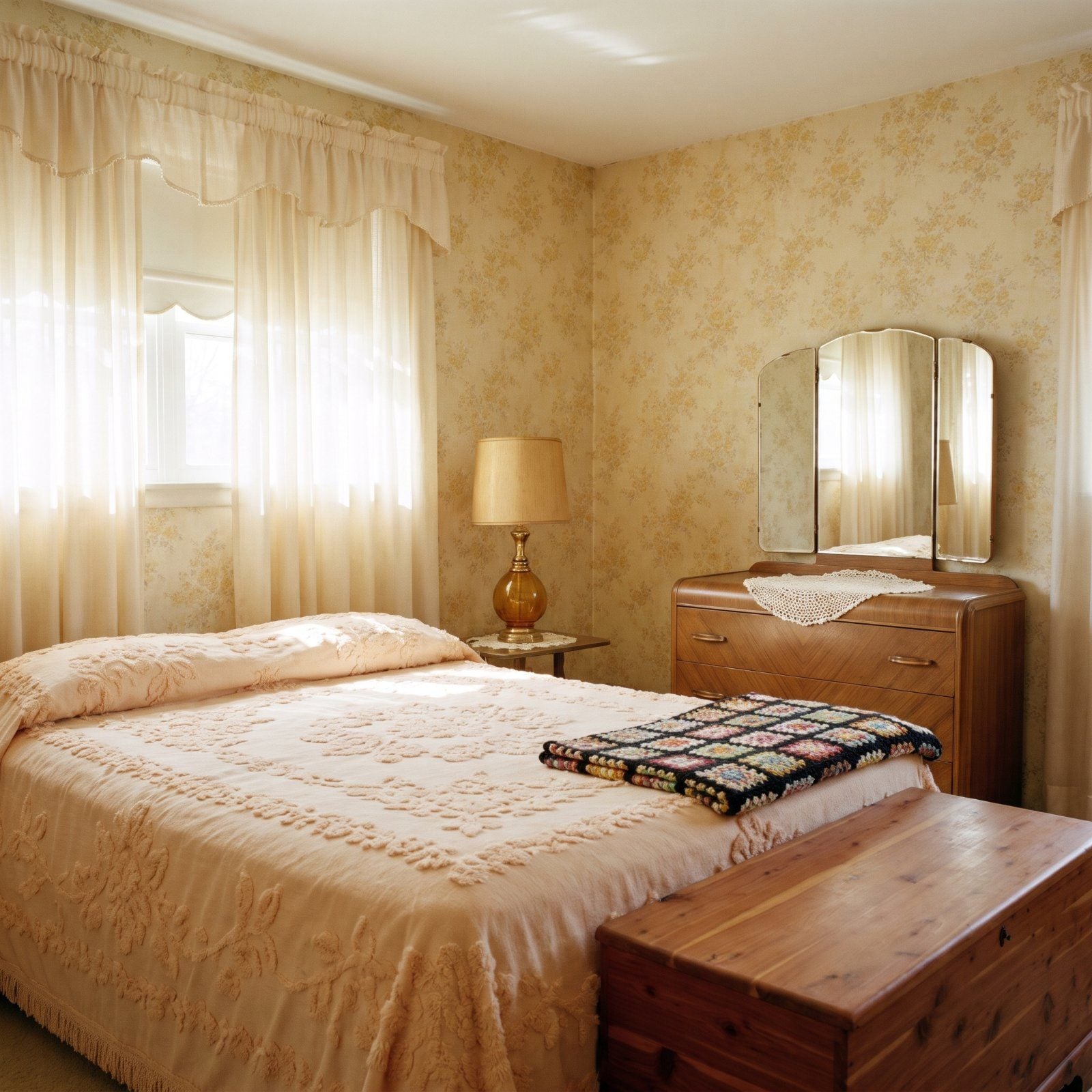
The door opened and the smell hit you first. Cedar, a little mothball, old cotton that had been washed a thousand times and line-dried a thousand more. The bed was already turned down, the amber lamp on the dresser already glowing so the whole room felt like it was holding you.
You slept under more blankets than you needed and woke up not sure what year it was. The rooms below are the ones that made that feeling.
In order to come up with the very specific design ideas, we create most designs with the assistance of state-of-the-art AI interior design software. Also, assume links that take you off the site are affiliate links such as links to Amazon. this means we may earn a commission if you buy something.
34. The Nubby Chenille Bedspread With Tufted Flowers
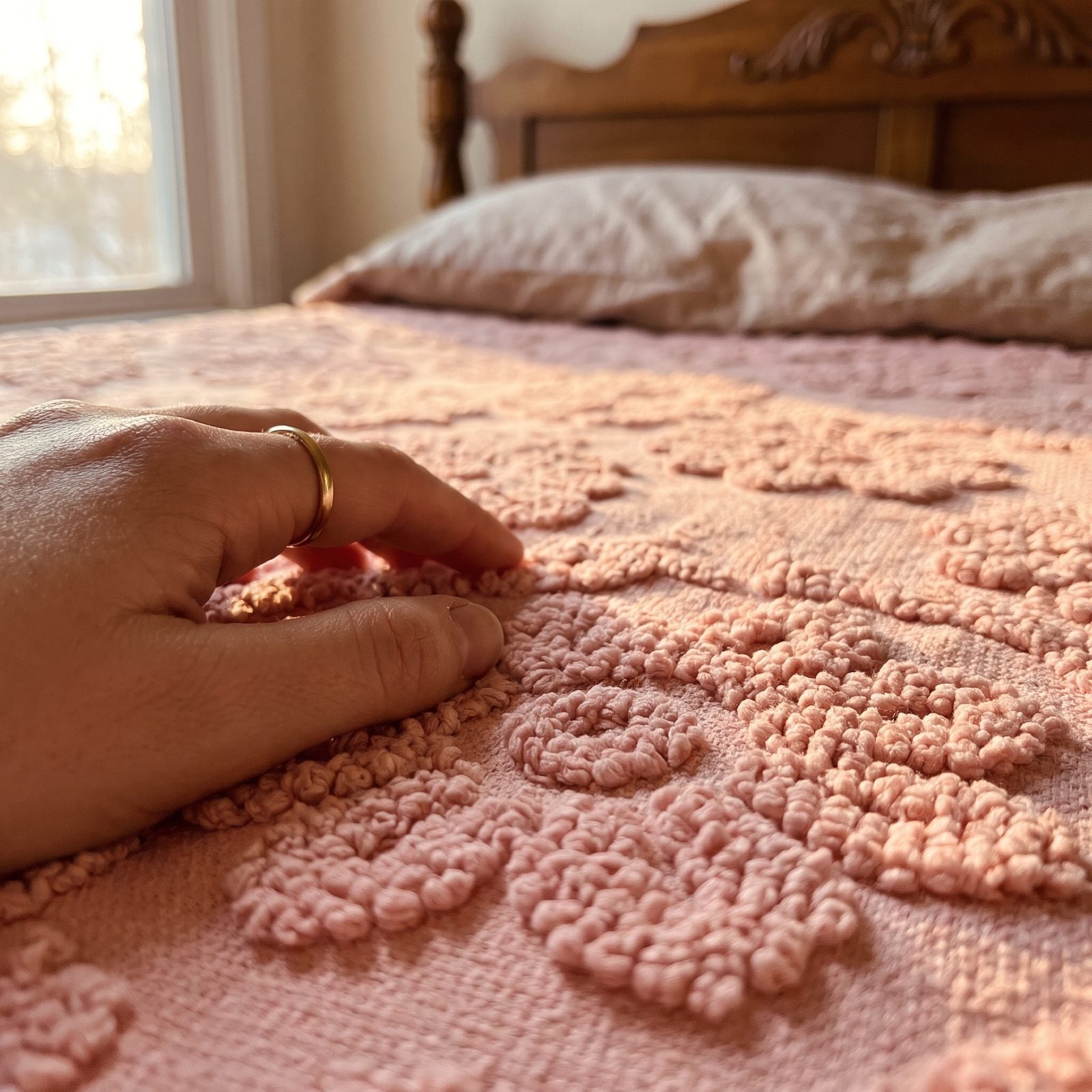
You’d run your palm across it before you even sat down, those raised cotton loops cool at first and then warm, arranged into a fat tufted flower right in the center of the bed. The chenille bedspread ruled the guest room. Peach, powder blue, or a yellow gone soft from decades of washing.
It weighed almost nothing and shed those little white fuzzies onto your pajamas. By morning you’d wake up with the tufting pressed into your cheek. You saw them everywhere from the forties through the seventies, and a good one could outlast three mattresses under it.
33. The Handmade Patchwork Quilt Pieced From Fabric Scraps
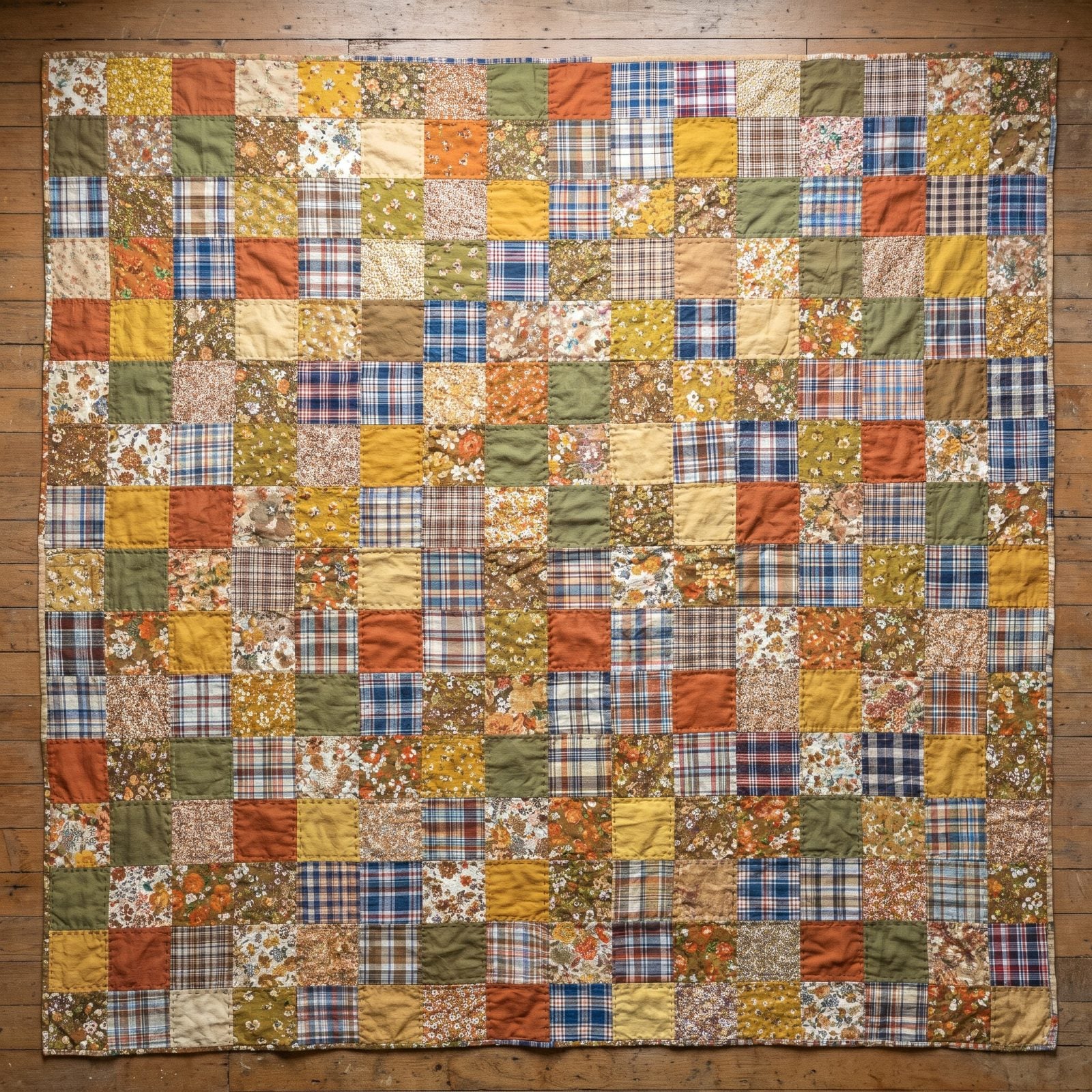
No two squares matched, and that was the fun of it. You’d lie there before sleep playing detective with the fabric: that blue gingham was a dress, that faded red calico was somebody’s apron, that soft flannel square was a shirt that had worn through at the elbow. A whole family’s history, cut up and sewn back together, keeping you warm.
The stitching was done by hand, sometimes with a few stitches noticeably bigger than the rest where a grandchild had been allowed to help. Those were the ones you looked for. A real scrap quilt carried the small imperfections that told you a person made it, not a machine, and honestly no factory version has ever faked that.
32. The Crocheted Granny-Square Afghan Folded Across the Foot
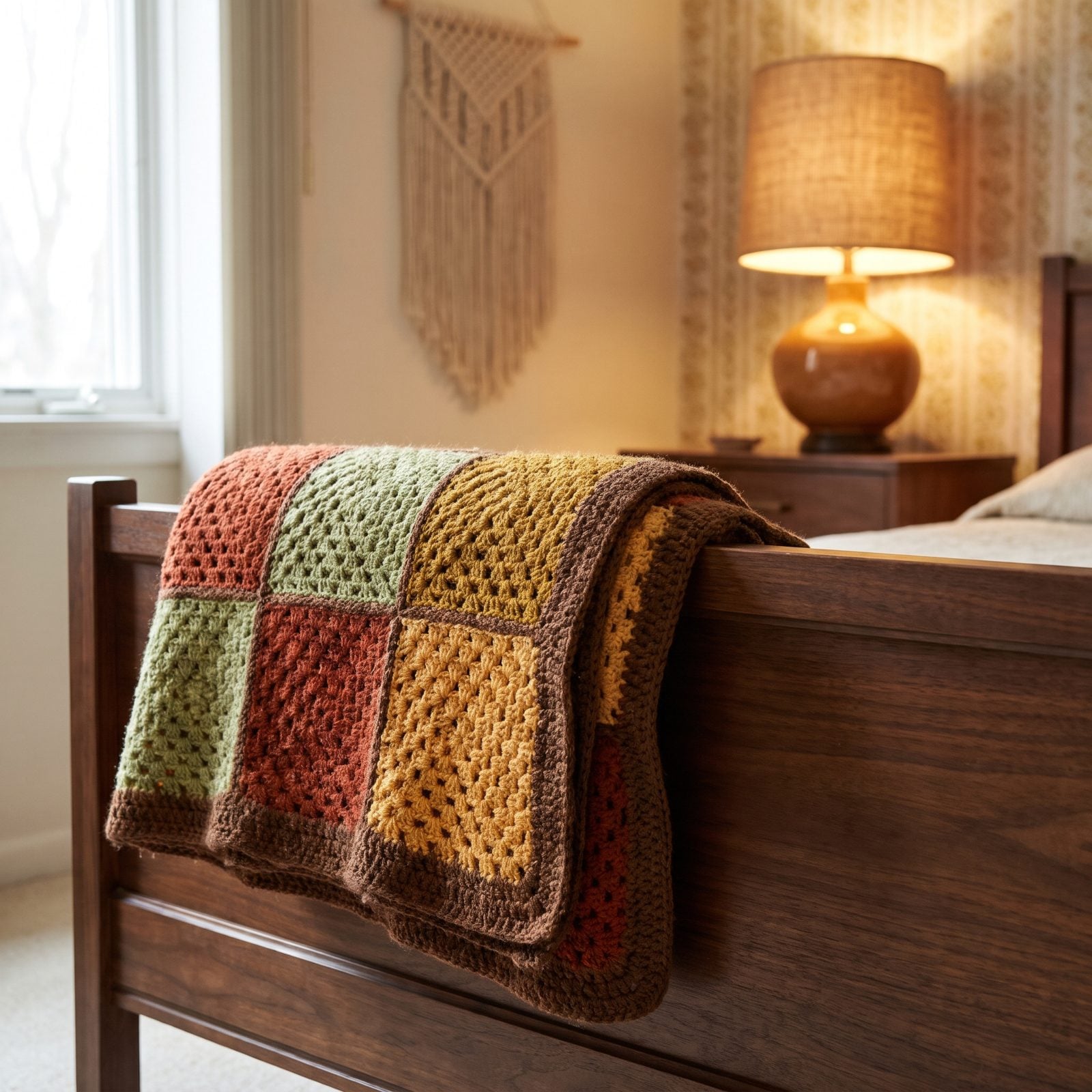
Rust, avocado, harvest gold, all circled in brown. If a color combination could tell time, the granny-square afghan read 1974 on the dot. It lived folded across the foot of the bed, your backup for when the furnace clicked off overnight and the room went cold.
The yarn was that slightly scratchy acrylic that pilled and never, ever wore out. Grandma made it in front of the TV over a couple of winters, hook flashing, a ball of yarn migrating across the floor. For more rustic guest room warmth, nothing has ever beaten one of these draped over your feet.
31. The Electric Blanket With a Dial Control
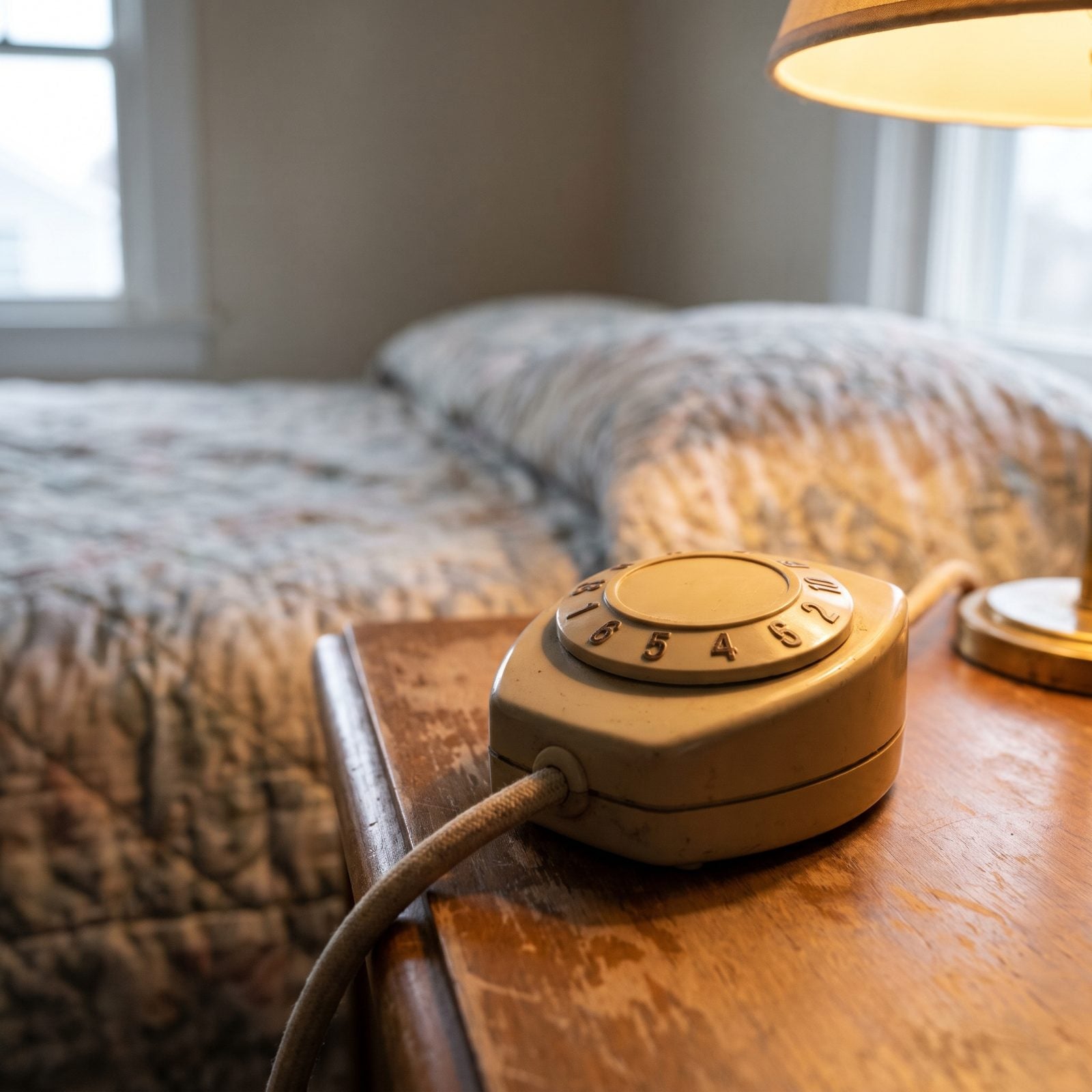
The dial sat on the nightstand like a little clicking dashboard, its worn numbers running around the rim, and you were trusted with the sacred ritual of setting it before bed. Too low and you froze. Too high and you woke up in a sweat around 3 a.m., kicking everything off.
Press your hand flat and you could feel the thin wires running through the blanket, and there was a faint warm dust smell when it first kicked on. Your grandparents warned you, every single time, not to fall asleep with it cranked. You did anyway.
30. The Heavy Feather Pillows in Striped Ticking
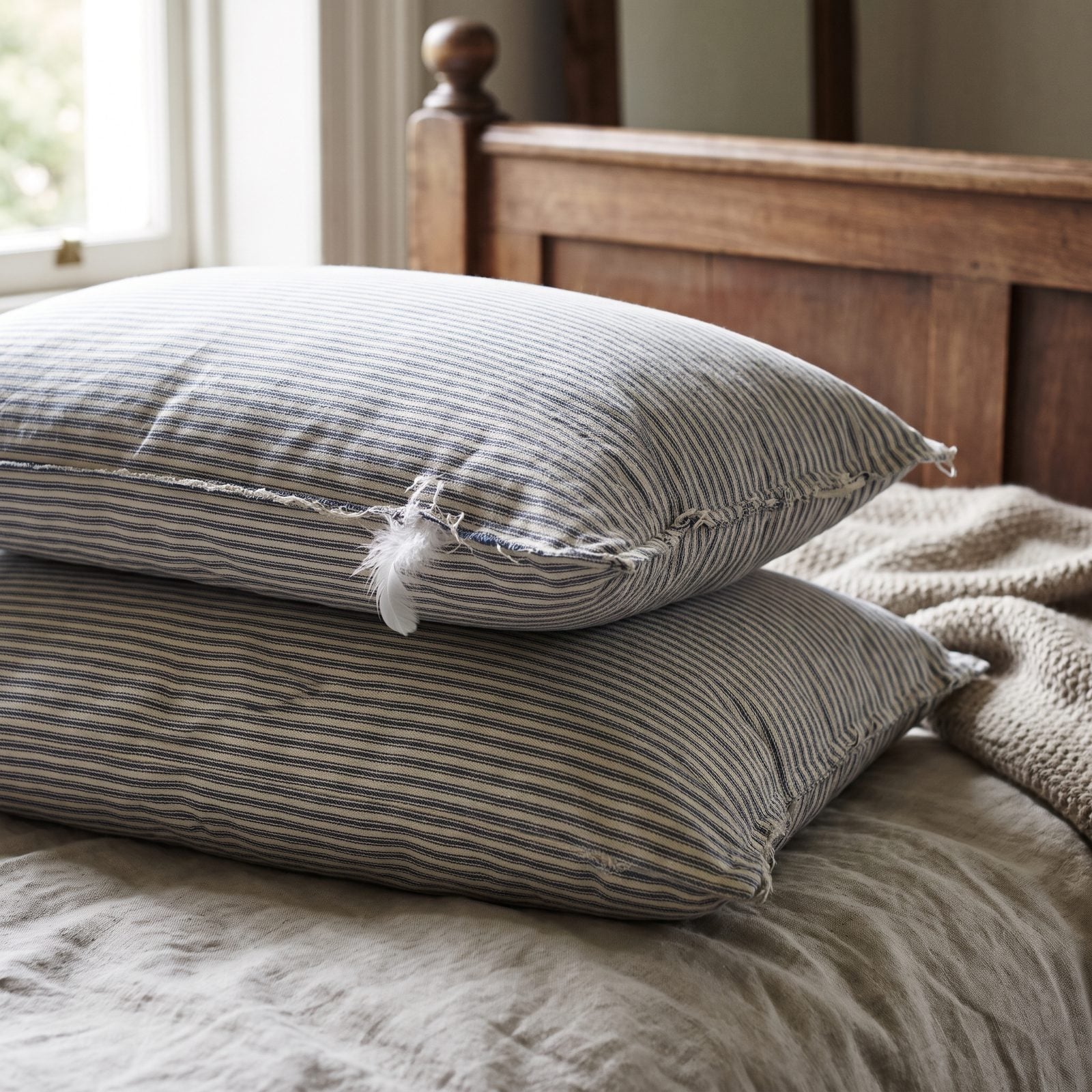
Pick one up and your arm dropped. These things were dense, packed with real goose and duck feathers inside blue-and-white striped ticking so tightly woven it felt almost waxy. Every so often a sharp little quill worked its way through and jabbed you in the ear at 2 a.m.
They never held a shape. You’d punch and fold and prop, and the feathers would just slowly settle to the bottom, leaving you hugging a half-empty sack by dawn. And the smell when you leaned in, faintly like a damp bird, unmistakable, weirdly comforting once you got used to it. Nobody throws these out. They get passed down.
29. The Shiny Brass Bed With Porcelain Knobs
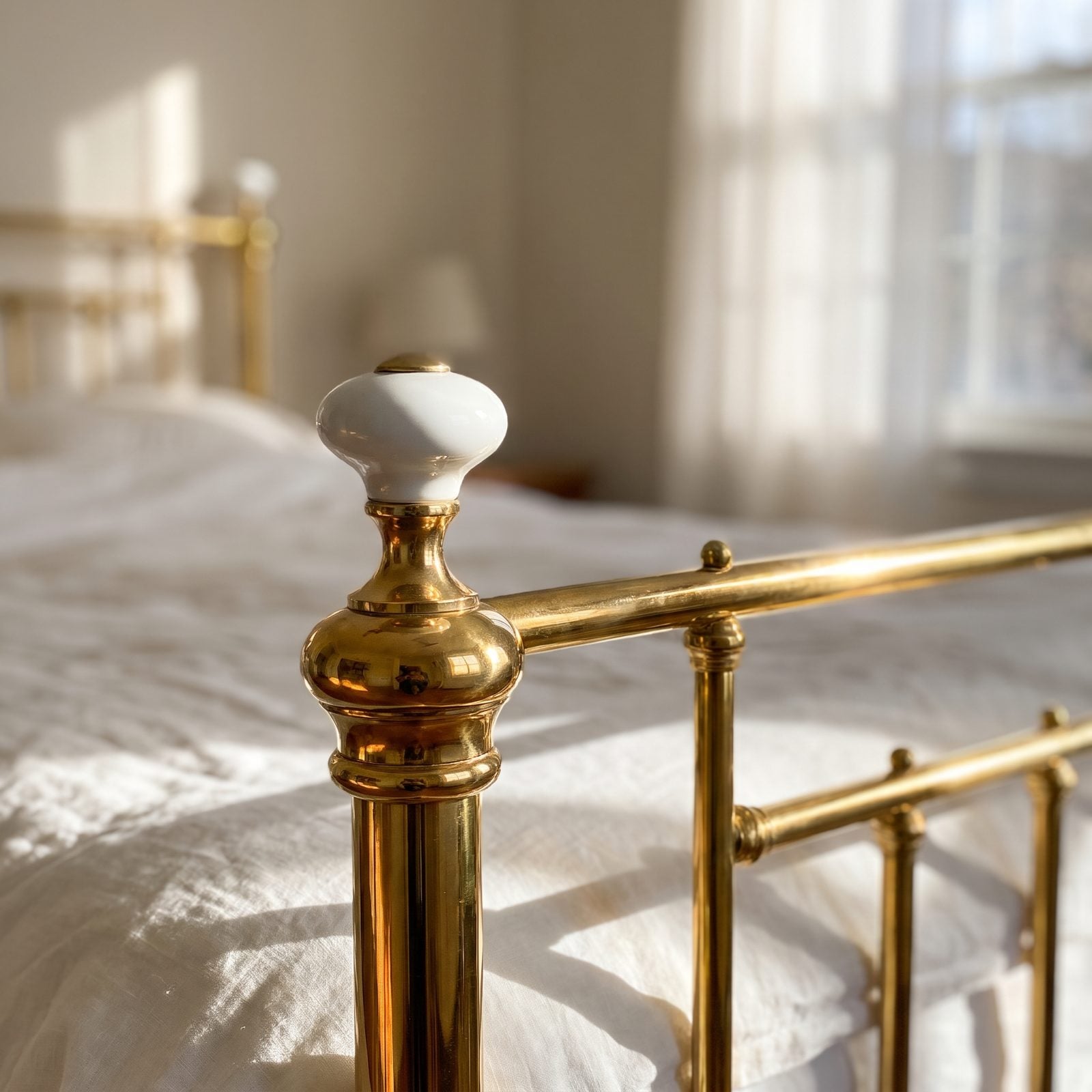
It caught the light from across the room, those thin brass rails polished to a mirror shine, each corner post topped with a plain white porcelain knob capped in brass. You could unscrew one. Every kid tried. They squeaked loose and the whole family pretended not to notice when one went missing.
The frame rang like a tuning fork if you bumped it, and it was cold to the touch on winter mornings. These beds date back to the Victorian era, but plenty survived in guest rooms right through the eighties, kept gleaming with a soft rag and a tin of metal polish. If you’re hunting fresh living room ideas, a reclaimed brass bed still carries an old warmth no reproduction catches.
28. The Cedar Hope Chest Filled With Spare Linens
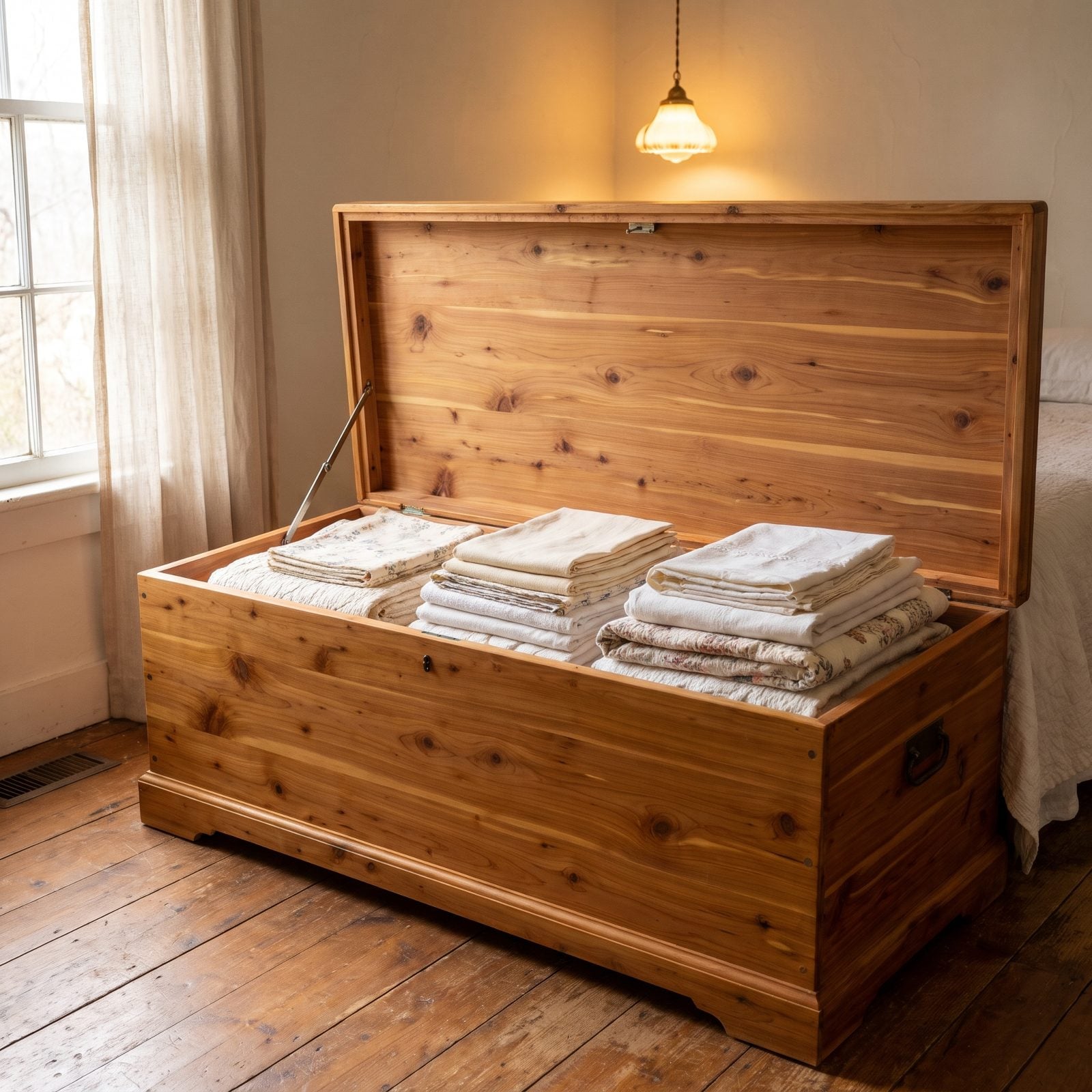
That smell when the lid came up. Nothing else in the world smells like a cedar chest, sharp and sweet and a little medicinal, and it hit you the second the heavy lid tipped back on its hinges.
Inside was the household archive: spare blankets, embroidered pillowcases saved for good, a wedding dress wrapped in tissue, baby clothes nobody could bear to give away. It usually lived at the foot of the bed, doubling as a bench and a step stool. The Lane company famously gave miniature versions to graduating girls for decades. If you want a closet or storage piece with that kind of staying power, you’re really chasing what the cedar chest pulled off without trying, and the smell is a bonus no modern bin can offer.
That famous smell may have done less than Grandma believed, according to an extension entomologist, who writes “Contrary to popular belief, cedar closets or chests are seldom effective in deterring clothes moths because the seal is insufficient to maintain lethal or repellent concentrations of the volatile oil of cedar.”
27. The Crocheted Doily Protecting the Dresser Top
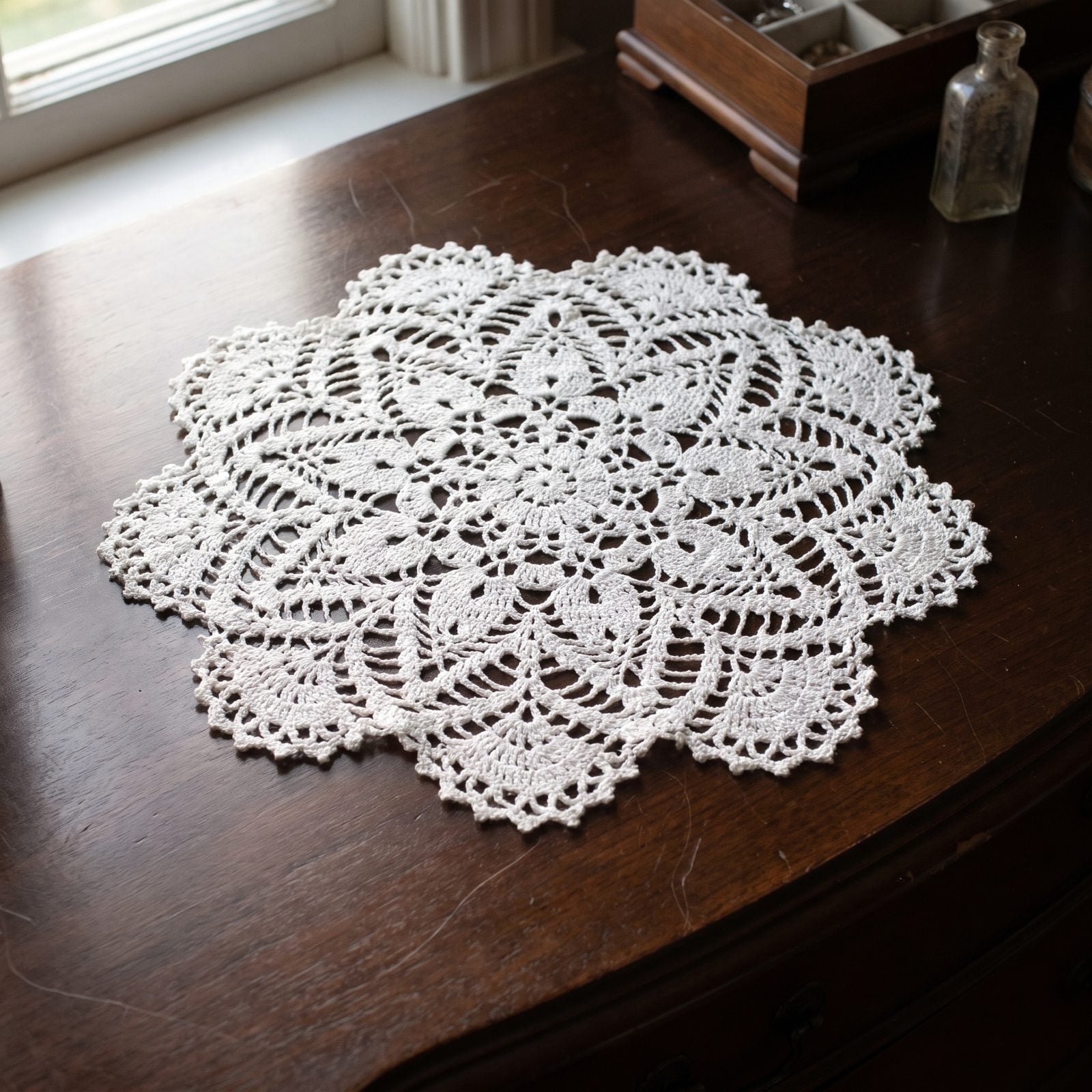
Starched so stiff it could almost stand on its own. The crocheted doily was the unsung guardian of every dresser, vanity, and nightstand in the house, a web of white cotton thread worked in a pineapple or snowflake pattern, laid down to catch water rings and dust so the wood underneath stayed perfect.
Nobody was allowed to move it. You learned fast that lifting a figurine off its doily and setting it back crooked would be noticed within the hour. Grandma made dozens of them, and the good ones took hours of counting stitches by lamplight. It’s the smallest thing on this list and somehow the loudest, the one that says guest room before you’ve even looked at the bed. The whole house ran on quiet, handmade acts of care like that, and the doily was the proof left out in the open.
26. A Treadle Sewing-Machine Cabinet Used as a Side Table
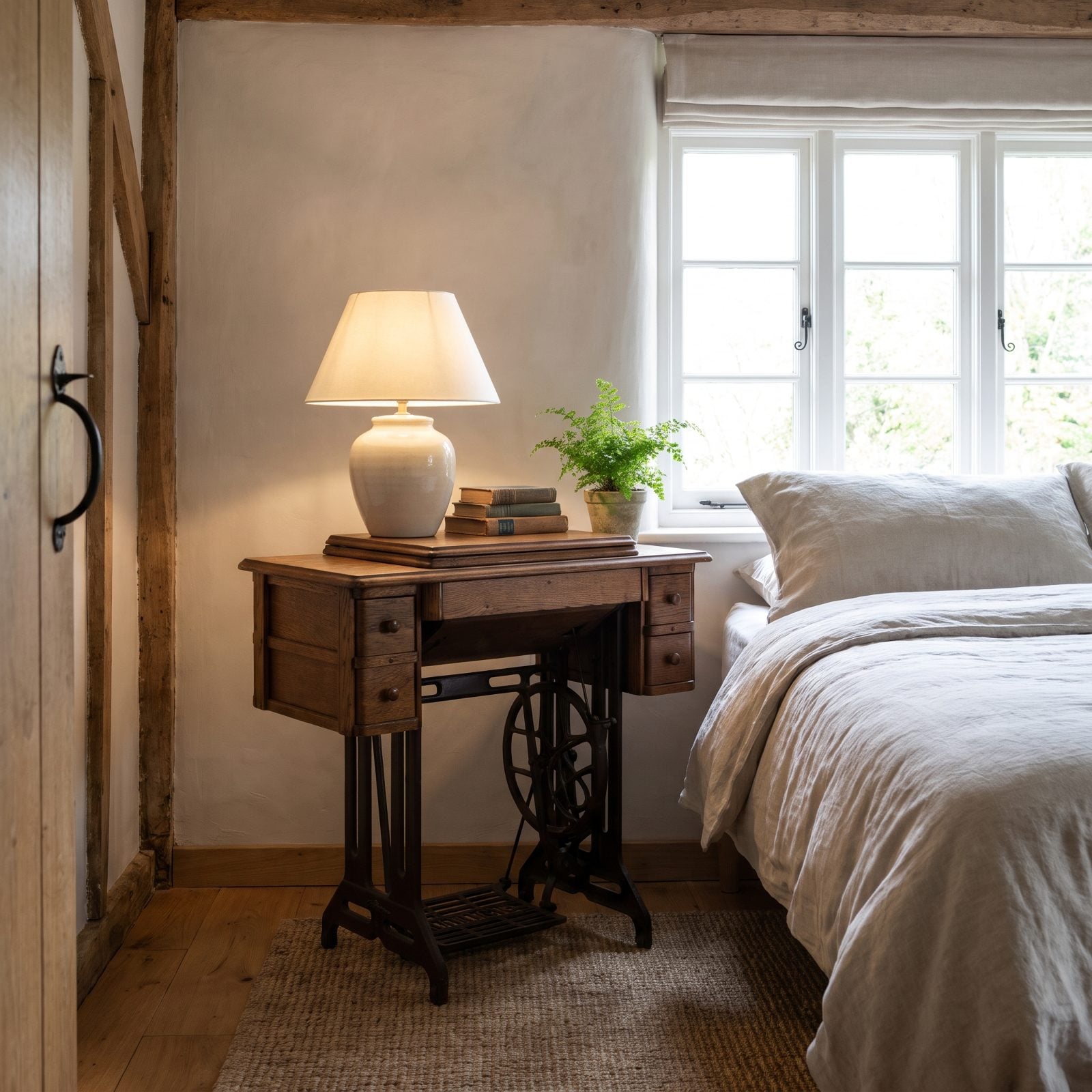
Nobody actually sewed on it anymore, and that’s exactly why it ended up in the guest room. By the time you were sleeping in there, the treadle machine had long since lost out to something electric, so the heavy oak cabinet got drafted into furniture duty. Folded shut, it held a lamp, a dish of ribbon candy, and whatever paperback Grandma was halfway through.
Run your foot across the iron pedal underneath and the big wheel still turned with a soft whir. Pure temptation for any kid told not to touch it.
25. A Windup Big Ben Alarm Clock
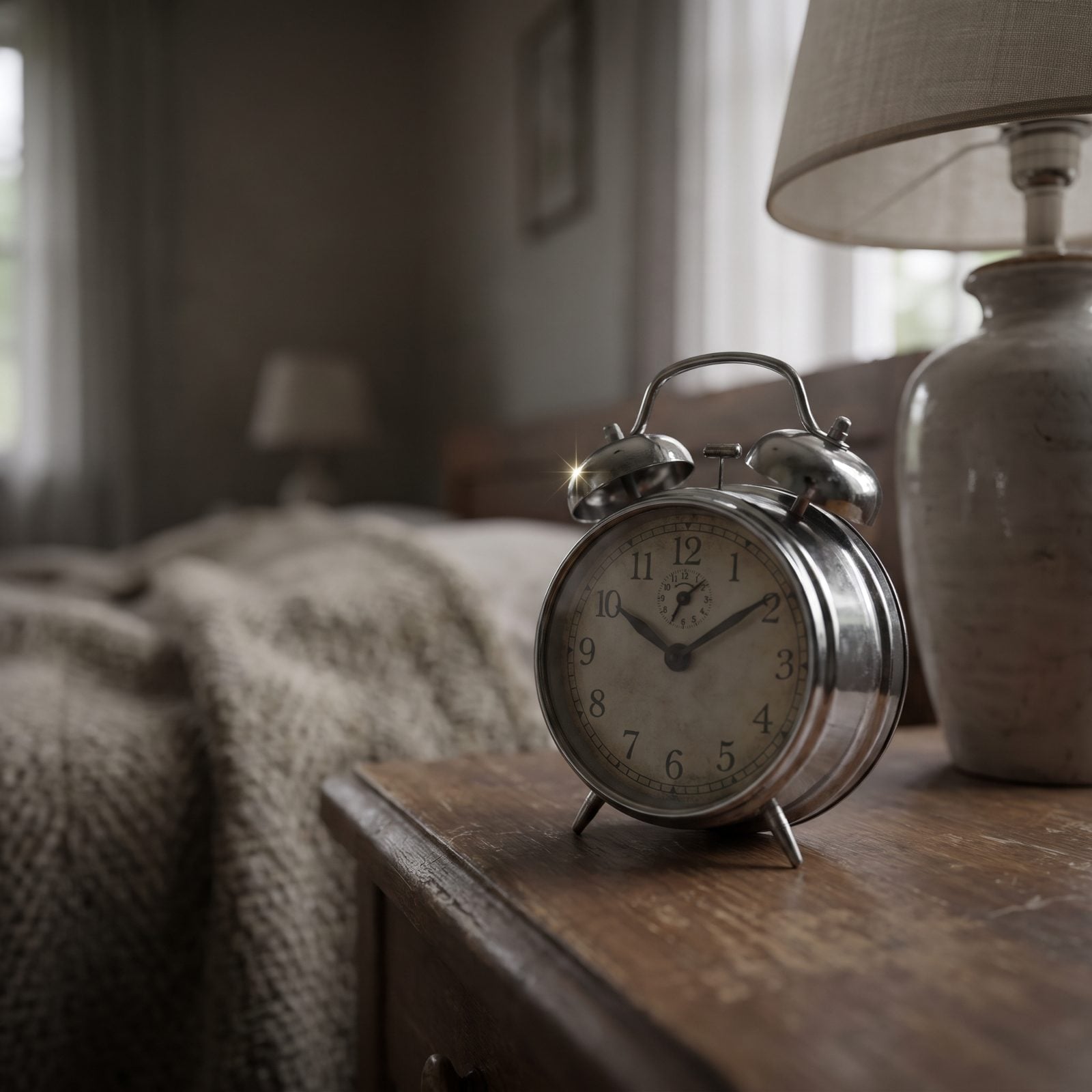
That tick was not subtle. In a silent guest room at night it sounded like a tiny hammer, keeping you company whether you wanted it or not. You learned to hear it the way you hear your own heartbeat — which is to say, only when you were trying to sleep.
The alarm, though, was a full-body event. A steel bell and a clapper going off like a fire drill, no snooze, no mercy. You wound it by hand every night, a little ritual of turning the key on the back until it resisted. Forget, and you overslept. Simple as that.
24. A Faux-Wood Flip Clock Radio
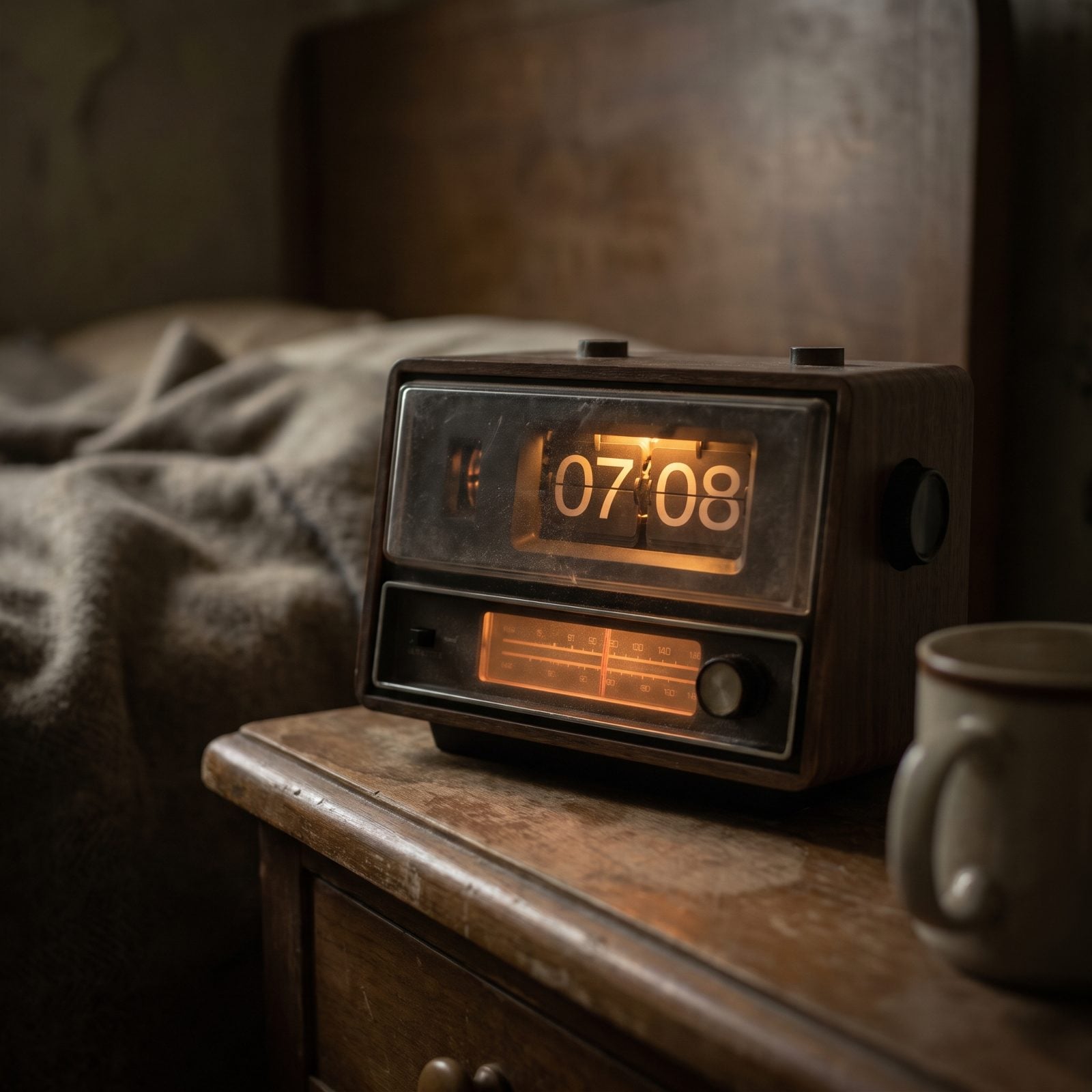
That soft mechanical flap in the dark meant a minute had passed. The flip clock radio shed its numbers one card at a time, and if you lay there long enough waiting for sleep, you could catch each tile tumble over with a faint click.
The faux-wood-grain plastic was the signature of the era — vinyl printed to look like walnut, fooling absolutely no one. The radio half picked up two stations clearly and a dozen more in a haze of static. You’d wake to an AM talk host mid-sentence, the volume dial having drifted overnight down to a whisper.
23. A Bedside Glass Carafe With a Tumbler Lid
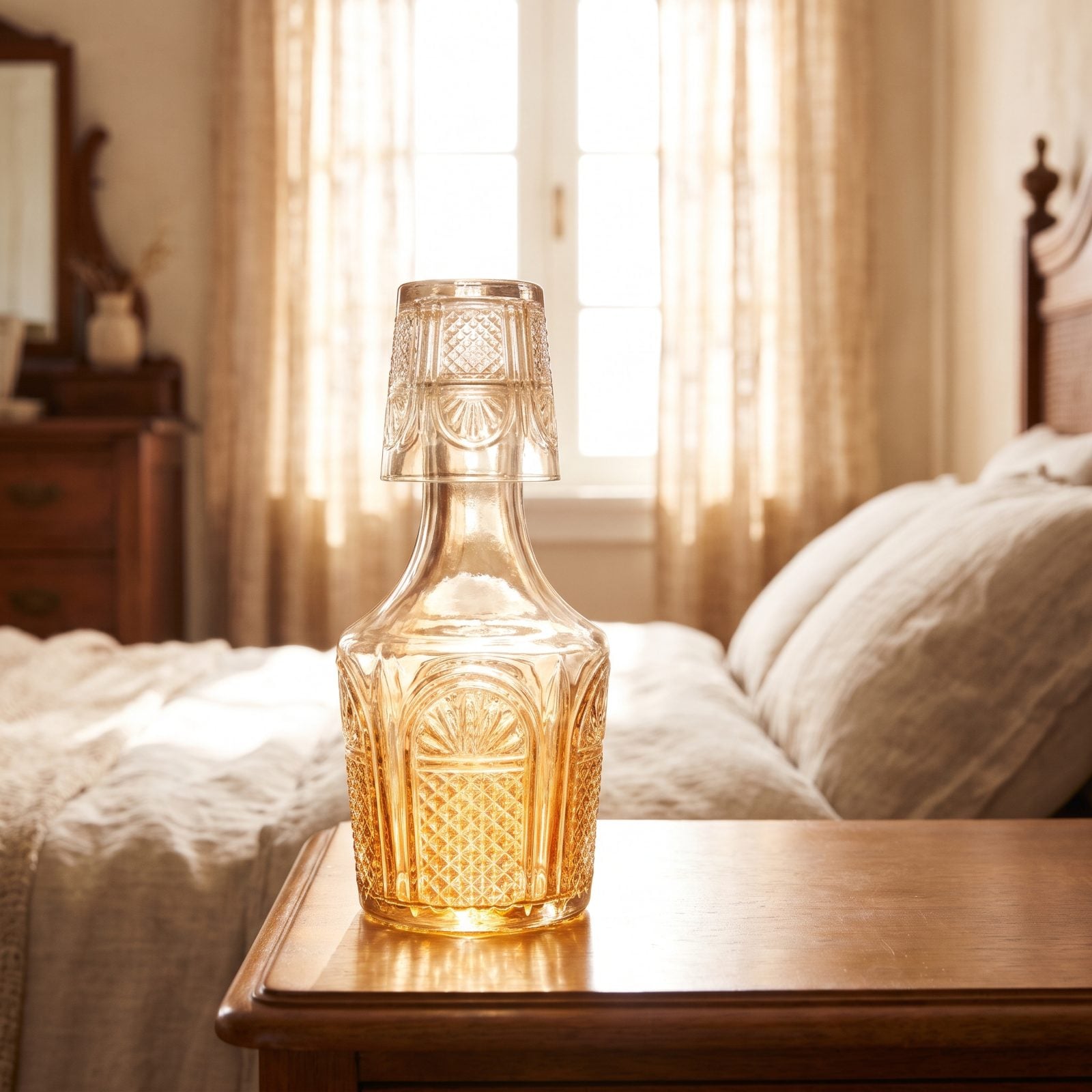
The tumbler flipped upside down over the carafe’s neck, serving as both lid and drinking glass, and it was the single most civilized object in the house. Water at the ready, no trek down a dark hallway to the kitchen. You felt like you were staying somewhere fancy.
By morning the water tasted faintly of glass and dust — warm, flat, one lone bubble clinging to the side. Nobody ever actually drank it. It just sat there, a quiet promise that this room had been made ready for you before you ever arrived.
22. A Gideon Bible in the Nightstand Drawer
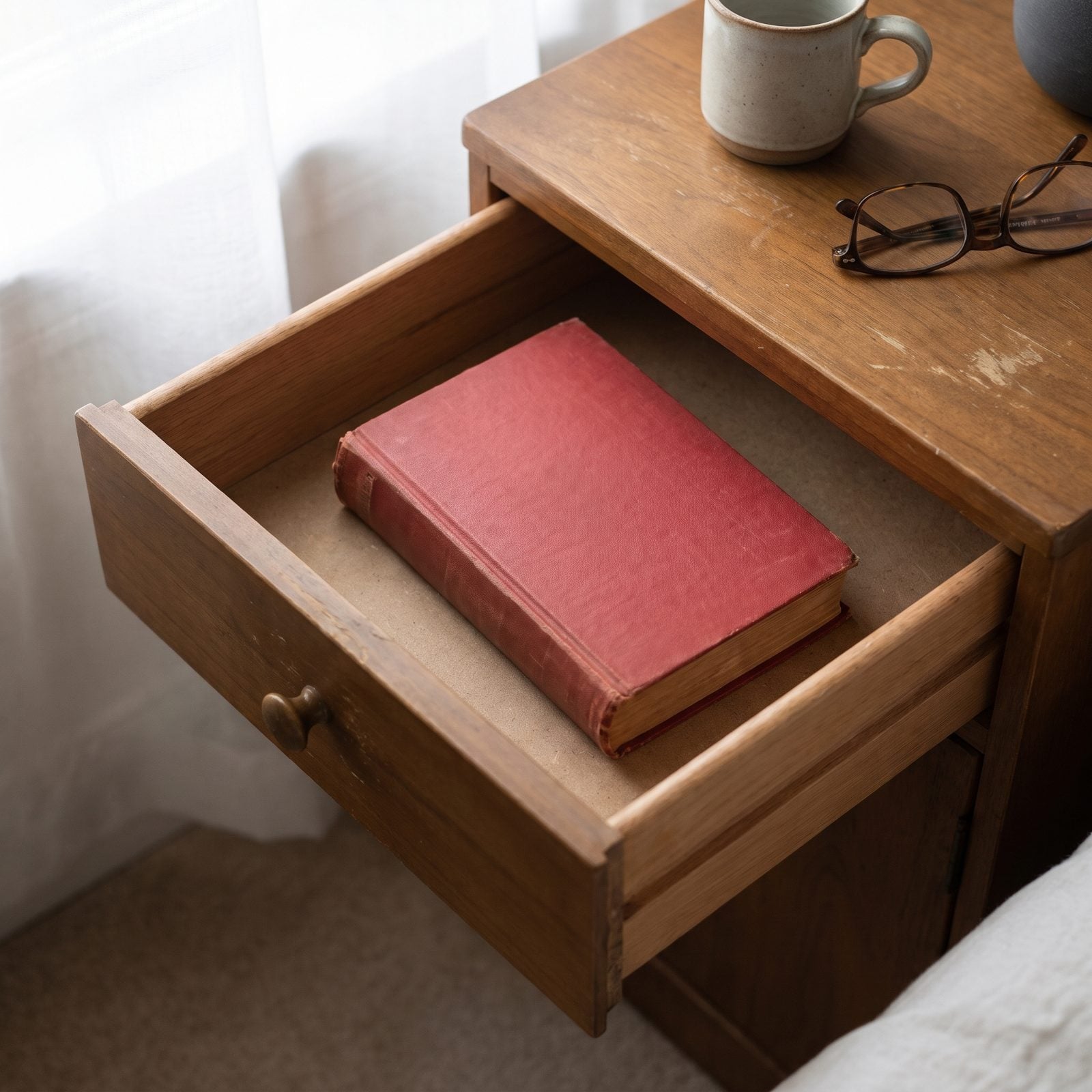
You didn’t notice it until you went looking for somewhere to stash your gum. Pull open the nightstand drawer and there it was, lying flat on the bottom — that bright red hardcover with plain cream page edges, set there by someone decades ago.
Half the drawers in America held one, courtesy of the Gideons, who’d been slipping Bibles into hotel rooms since 1908. In Grandma’s house it was less a hotel courtesy and more a quiet fixture, part of the furniture, the drawer’s permanent resident next to a nail file and a church bulletin yellowing from some long-gone spring.
21. A Small Wood-Grain Television With Rabbit Ears
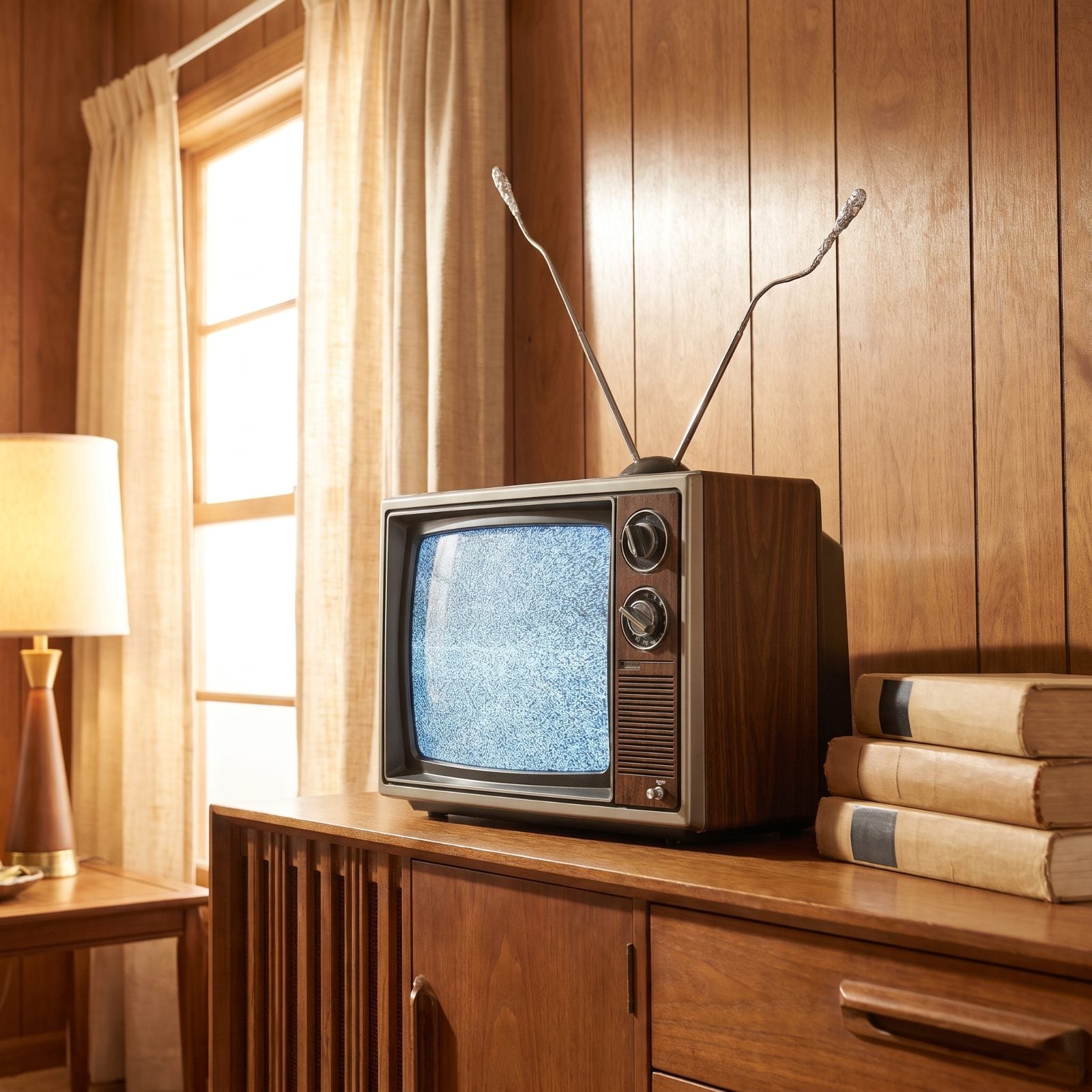
Twelve inches of screen, if you were lucky, in a plastic cabinet printed to look like oak. Getting the picture clear was a two-person job: one person hunched over the rabbit ears, the other yelling “there, hold it right there” from across the room. Add foil to the antenna tips and sometimes, briefly, a ghost would resolve into an actual channel.
You turned it on with a satisfying chunk, then waited a beat for the picture to warm up and bloom out from a single white dot. UHF had its own separate dial that clicked through numbers nothing ever broadcast on. This little set was your reward for being quiet — the guest-room luxury that let you watch something after the grownups went to bed.
20. A Ceramic Table Lamp With a Pleated Shade
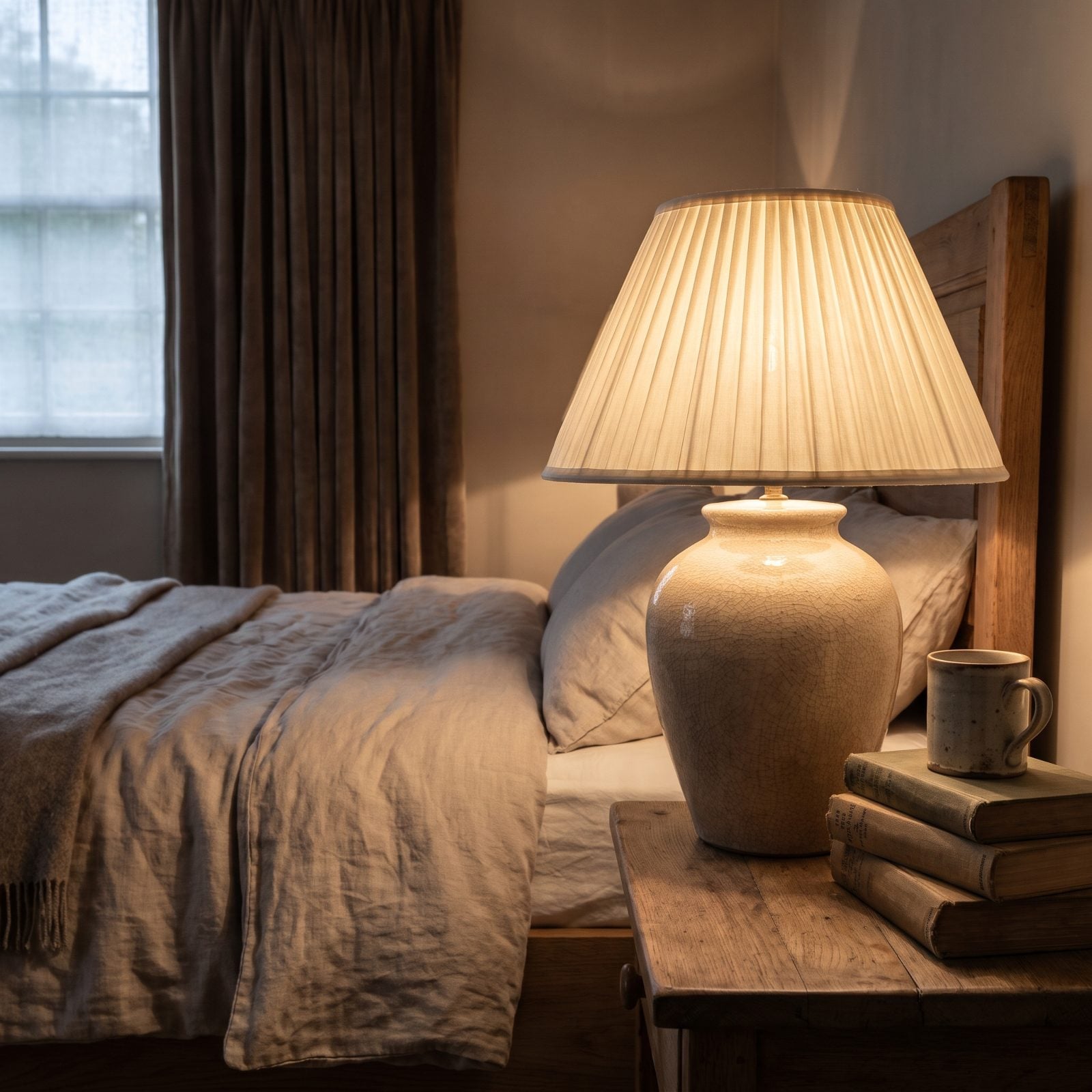
That pleated shade turned on a dime from a plain beige cone into a globe of warm light, and something about the whole lamp made the room feel safe. Heavy ceramic base, usually cream or pale celadon with a thread of gold trim, weighted so a stray elbow couldn’t tip it.
You switched it off with a little knob under the shade, three turns of the wrist in the dark. The glow it threw was soft and amber, the color of being looked after. For a kid sleeping somewhere unfamiliar, it was the last thing on before sleep and the first thing you reached for when you woke up not knowing where you were.
19. Tiny Floral Wallpaper Covering Every Wall
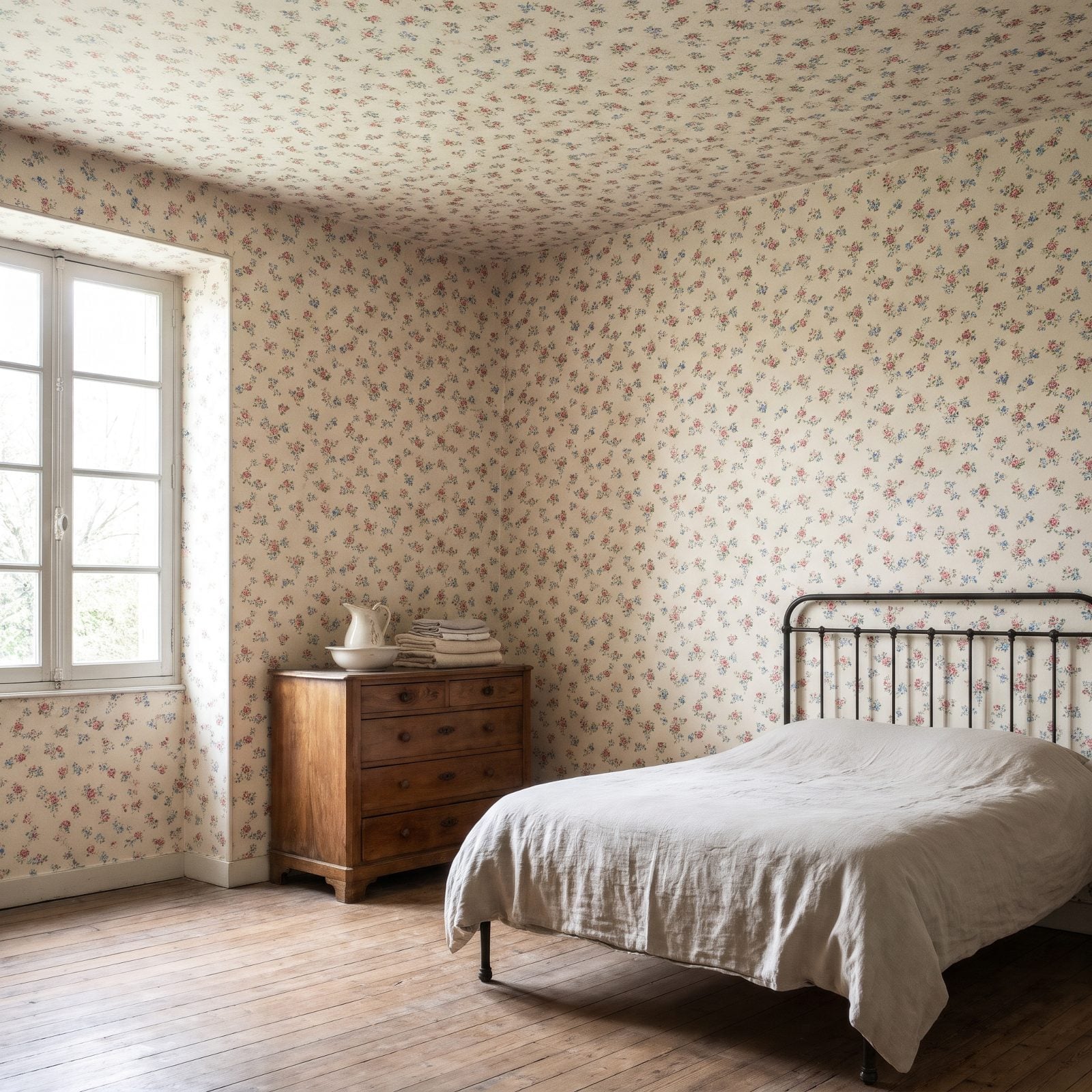
Walls, ceiling, sometimes the inside of the closet door — all of it the same tiny repeating sprigs of rosebuds and forget-me-nots on a cream ground. No accent wall. No restraint. The whole room just committed, and somehow it worked.
Lie in that bed as a kid and you’d trace the pattern until you found where the paperhanger didn’t quite match the seams, a little jog in the flowers that only you ever noticed. The print went soft and golden in the morning light, and faded to a quiet gray at night. More than any single object, that’s the detail that takes people straight back: the enveloping hush of a room where every surface bloomed. If you’re chasing that feeling again, our collection of rustic guest room ideas still leans into that wrap-you-up warmth.
18. Dark Faux-Wood Paneling on One Accent Wall
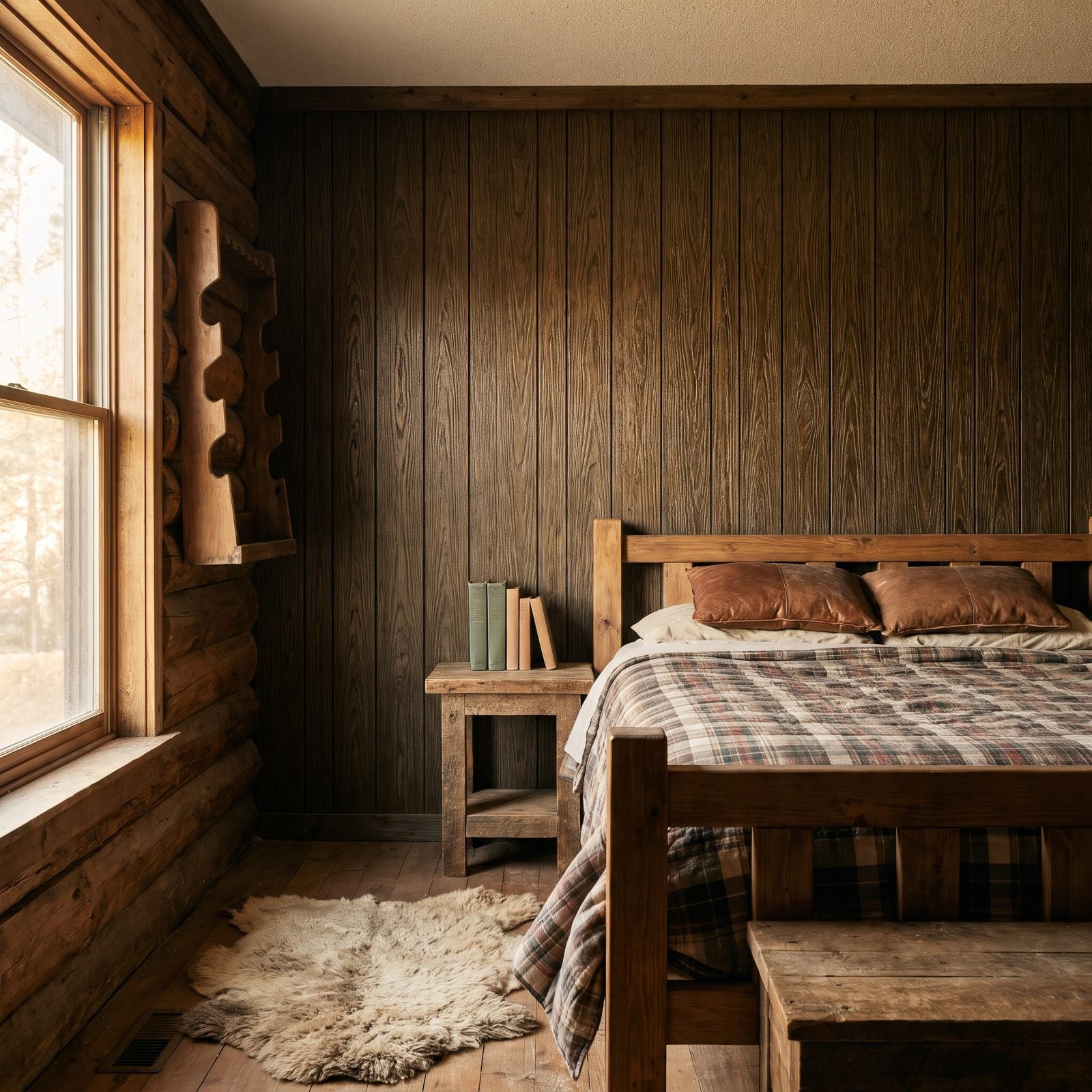
One wall, sometimes all four, looked like the inside of a hunting cabin. Dark faux-wood paneling came in big four-by-eight sheets with fake grooves cut every few inches, so it read as planks from across the room and as a printed photograph of wood up close. Knock on it and it answered with a hollow, thin thunk.
It soaked up every bit of light the lamp could throw, which made the room feel cozy at night and like a cave at noon. A nail hole or two always showed pale where a picture used to hang. Paneling was the cheap weekend remodel of the sixties and seventies, the fastest way to cover a cracked plaster wall without hiring anybody.
17. A Sparkly Popcorn Ceiling That Caught the Light
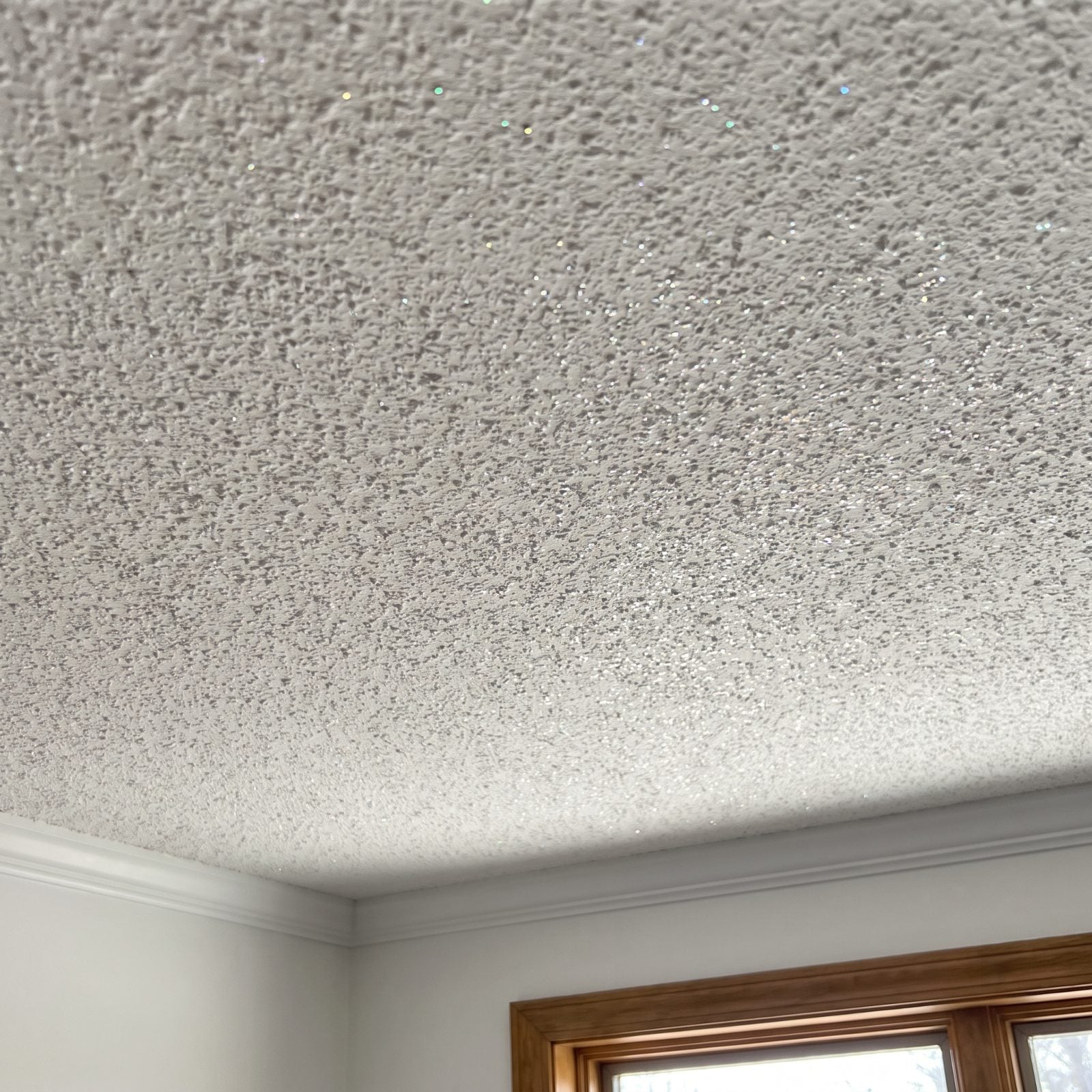
Lying flat on your back, you’d stare up at it and spot faces, maps, and animals in the bumpy white texture. If you were lucky, someone had tossed glitter into the spray while it was still wet, so the ceiling twinkled every time a car’s headlights swept across the room. It felt a little like sleeping under a cheap galaxy.
Every so often a crumb of it drifted down onto the bedspread. Popcorn ceilings were everywhere from the fifties through the eighties because they hid flaws, muffled sound, and went up fast.
Looking back at the 1970s glitter-ceiling trend, an asbestos testing firm notes “By mixing small flecks of glitter or mica flakes into the spray, contractors could create a starry, shimmering finish.”
16. Wall-to-Wall Shag Carpet Raked Around the Bed
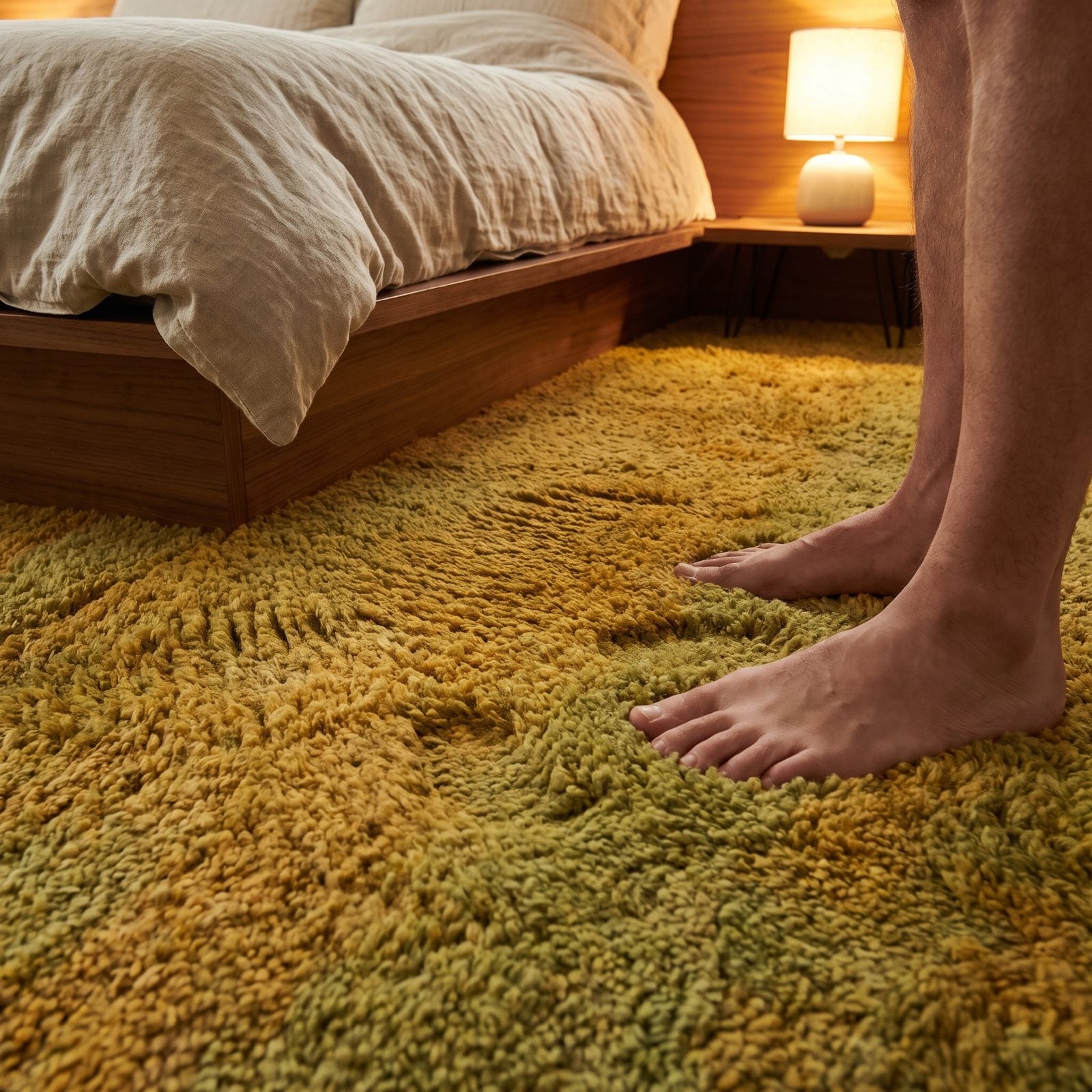
Your bare feet sank right into it. Wall-to-wall shag in harvest gold, avocado green, or a burnt orange that glowed under the lamp, so thick you could lose an earring back in there for a decade. The long strands lay in neat raked rows, because yes, there was a special rake for it, and somebody had dragged it across the floor before you arrived.
Walk to the bed and you left a trail of footprints in the pile, plain as fresh snow. Drop a bobby pin or a jack and it was gone forever. Shag hit its peak in the late sixties and seventies, and nothing since has felt quite that soft underfoot.
15. White Lace Curtains With Ruffled Valances
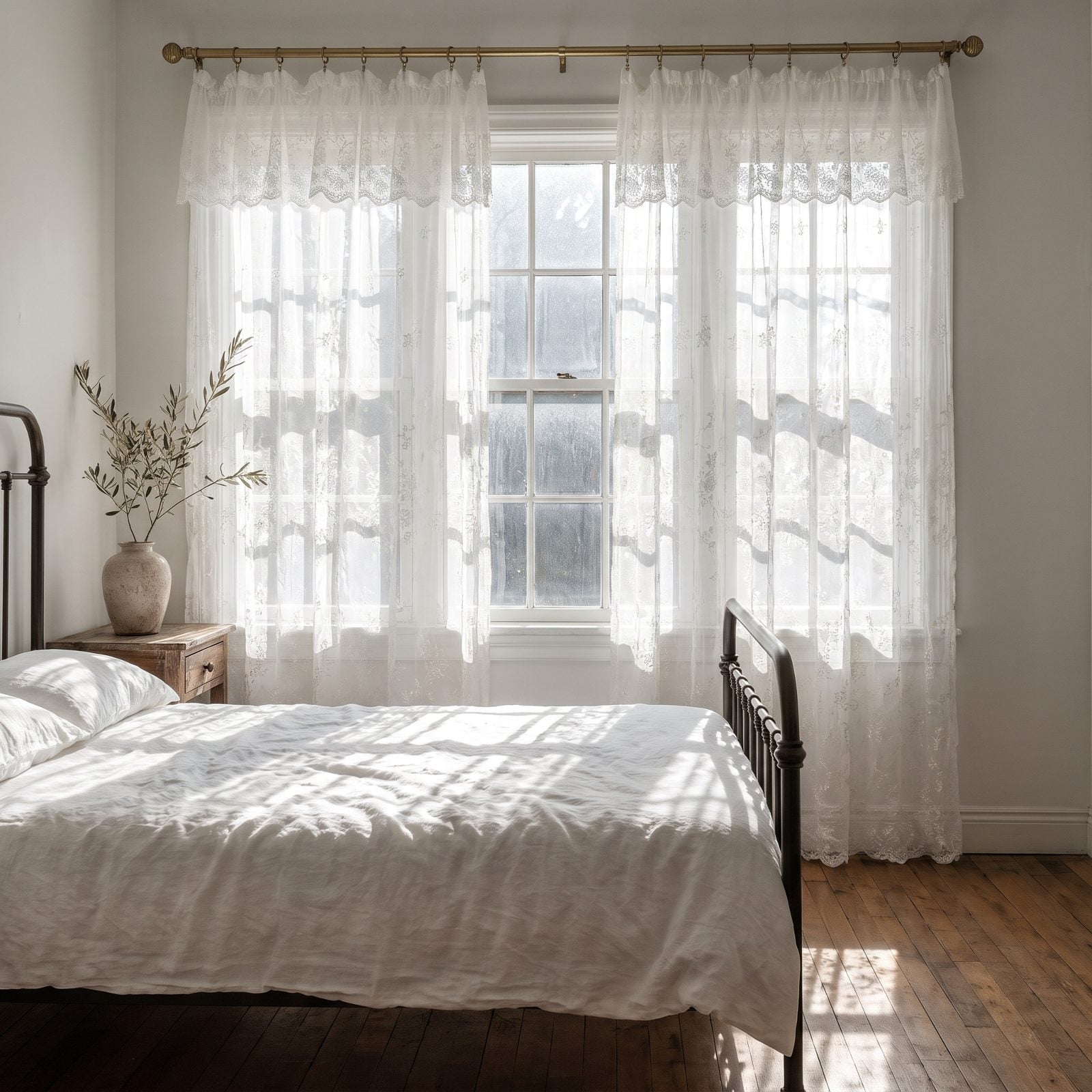
Morning sun came through them in patterns, little lace flowers and scallops thrown across the bedspread and up the wall. White lace panels hung on a thin brass rod, topped by a ruffled valance gathered so tight it looked like a frilly petticoat for the window. They were starched, ironed, and never once pulled all the way shut.
The fabric gave you almost no privacy and absolutely no darkness, so you woke with the sun whether you wanted to or not. Up close they smelled faintly of laundry starch and dust. Grandma took them down a couple of times a year, washed them by hand, and hung them back up looking exactly the same.
14. A Cast-Iron Radiator Beneath the Window
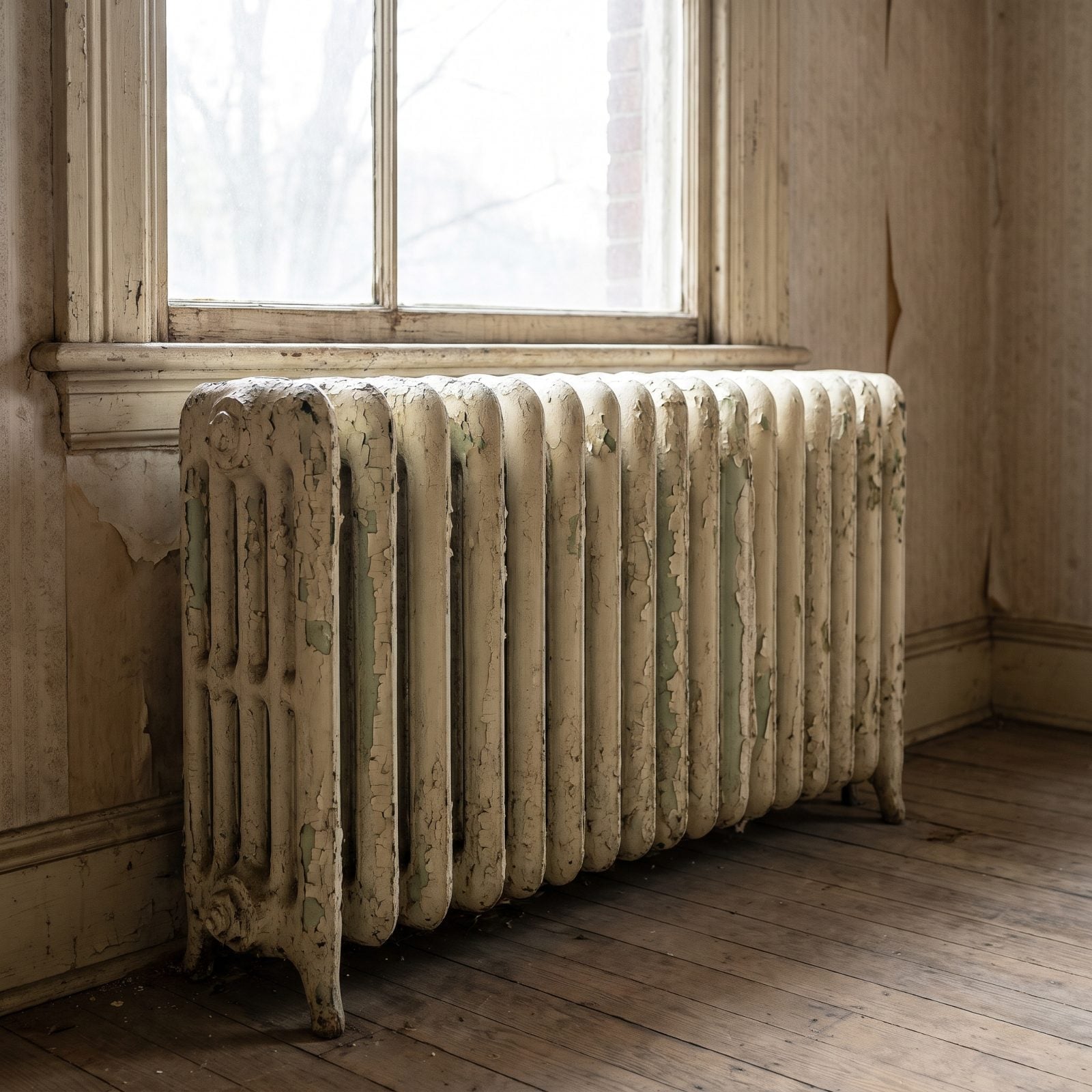
It sat under the window like a heavy iron accordion, painted so many times that the fins had gone soft and rounded at the edges. On cold mornings it woke up before you did, clanking and banging as the pipes heated, then hissing like a kettle until the room turned toasty. Touch it at the wrong moment and you learned a lesson fast.
The top doubled as a drying rack for wet mittens and socks after a day in the snow, and they came off stiff, warm, and smelling faintly of scorched wool. Nobody ever controlled it, exactly. You just opened the window an inch when it got too hot and called it even.
Explaining the classic steam-radiator bang, a plumbing and heating contractor says “On the way back, that condensation is going to be cold water, which is meeting hot water on its way up, and that’s going to be that hammering sound”
13. A Window Air Conditioner With Mechanical Knobs
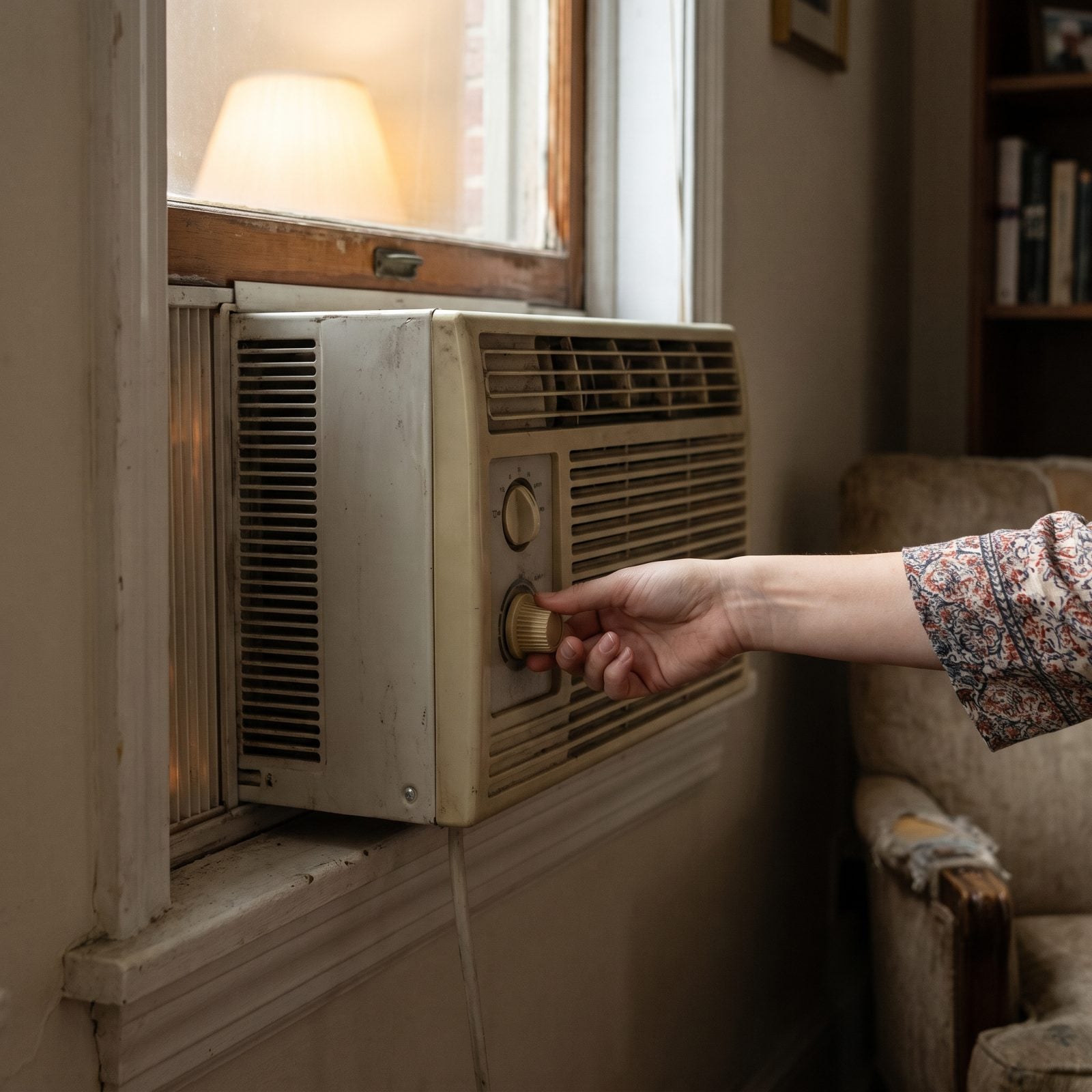
On summer visits the window unit was the hero of the guest room. Two chunky knobs ran the whole operation, one for Fan, Low Cool, and High Cool, the other a thermostat dial with no real numbers, just a blue arrow pointing toward Cooler. You turned it on and the lights in the room dimmed for a split second.
It roared, rattled, and dripped steadily onto the bushes outside, and that drone became the sound you fell asleep to. Stand right in front of the vents and the air came out cold enough to make your teeth hurt. Point those louvers at the bed and you’d end up pulling the quilt back on in July.
12. A Porcelain Washbasin and Pitcher Set
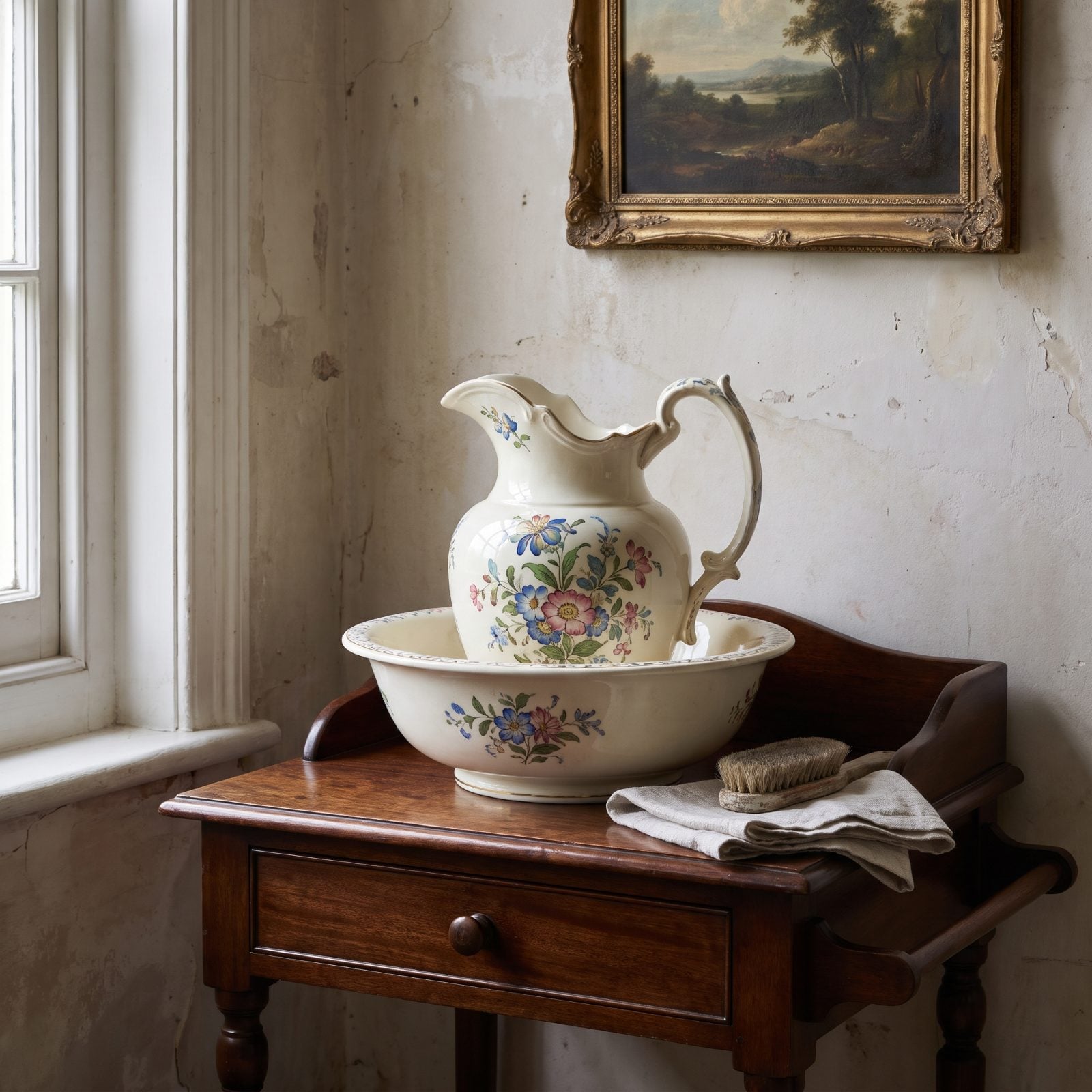
A wide porcelain bowl sat on the dresser or a little stand, with a tall matching pitcher standing inside it, both painted with roses or blue flowers and edged in faded gold. Before indoor plumbing, a set like this was how people washed up each morning, pouring water from the pitcher into the basin.
By the time you slept in that room, it was purely decorative, and you were told in no uncertain terms not to touch it. Somebody had inherited it from somebody else, and it carried that weight. If you looked closely you could usually find a hairline crack or a tiny chip along the rim, proof it had actually been used once.
11. A Mirrored Vanity Tray With a Brush and Hand Mirror
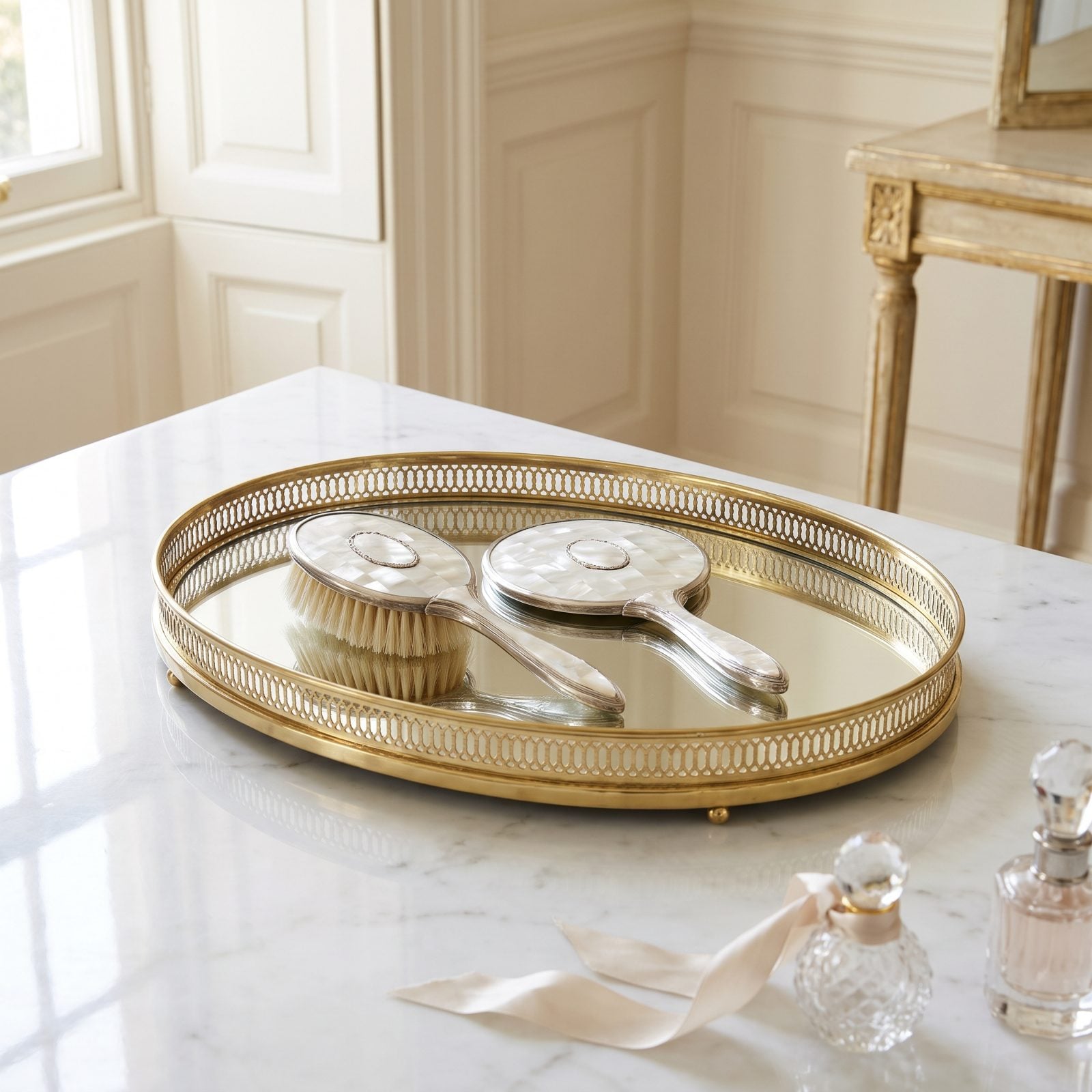
A mirrored tray with a little gold filigree rail held a matched set: a hairbrush, a comb, and a hand mirror, all backed in the same ornate silver plate, enamel, or creamy celluloid. It caught the lamplight and doubled every object sitting on it, making a perfume bottle or two look like a whole collection.
Nobody actually brushed their hair with that brush. The bristles were too stiff and the whole set was for show, laid out as if a lady might sit down any minute to get ready for a dance. Pick up the hand mirror and it was heavier than you expected, and the glass had gone a little cloudy at the edges.
10. Decorative Avon Perfume Bottles Shaped Like Figurines
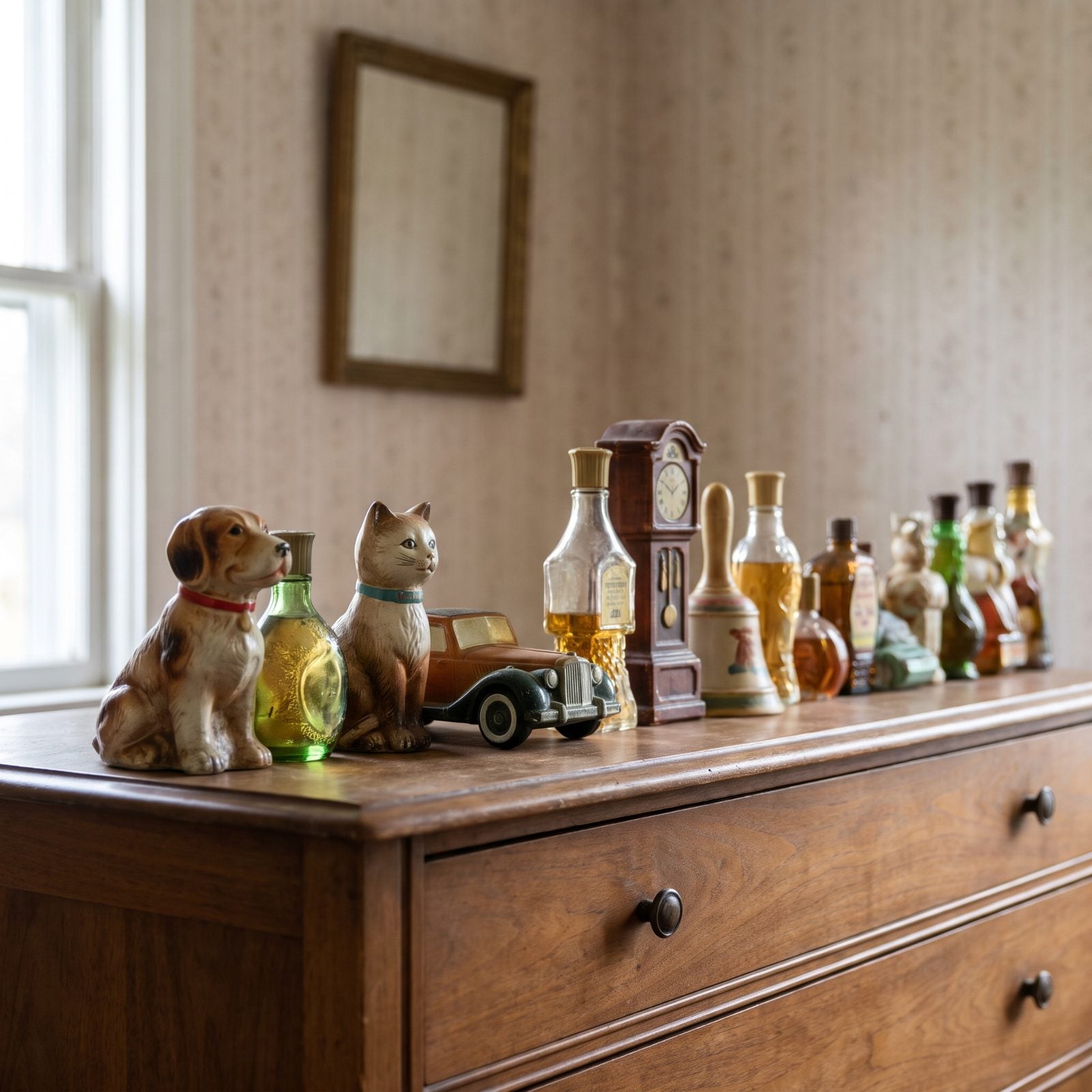
You could smell them before you ever touched one. A whole row lined up on the dresser like some tiny parade, caps that never quite screwed back on straight, and inside each one a cologne that had gone a little syrupy with age. The lady in the hoop skirt. The little car. And that frosted bluebird you were absolutely not supposed to play with — which, of course, you did.
Each one was earned, one at a time, from the Avon lady who turned up at the door with a sample case and a catalog. Grandma kept the bottles long after the scent faded, because by then it was the bottle that mattered. You’d lift one, pop the cap, breathe in something floral and faintly medicinal, then set it back in its exact spot before anyone noticed.
Nobody wears that cologne now. But pop one open and suddenly you’re ten again, standing in a hushed guest room where touching anything was strictly off-limits.
9. A Dusting-Powder Box With an Oversized Puff
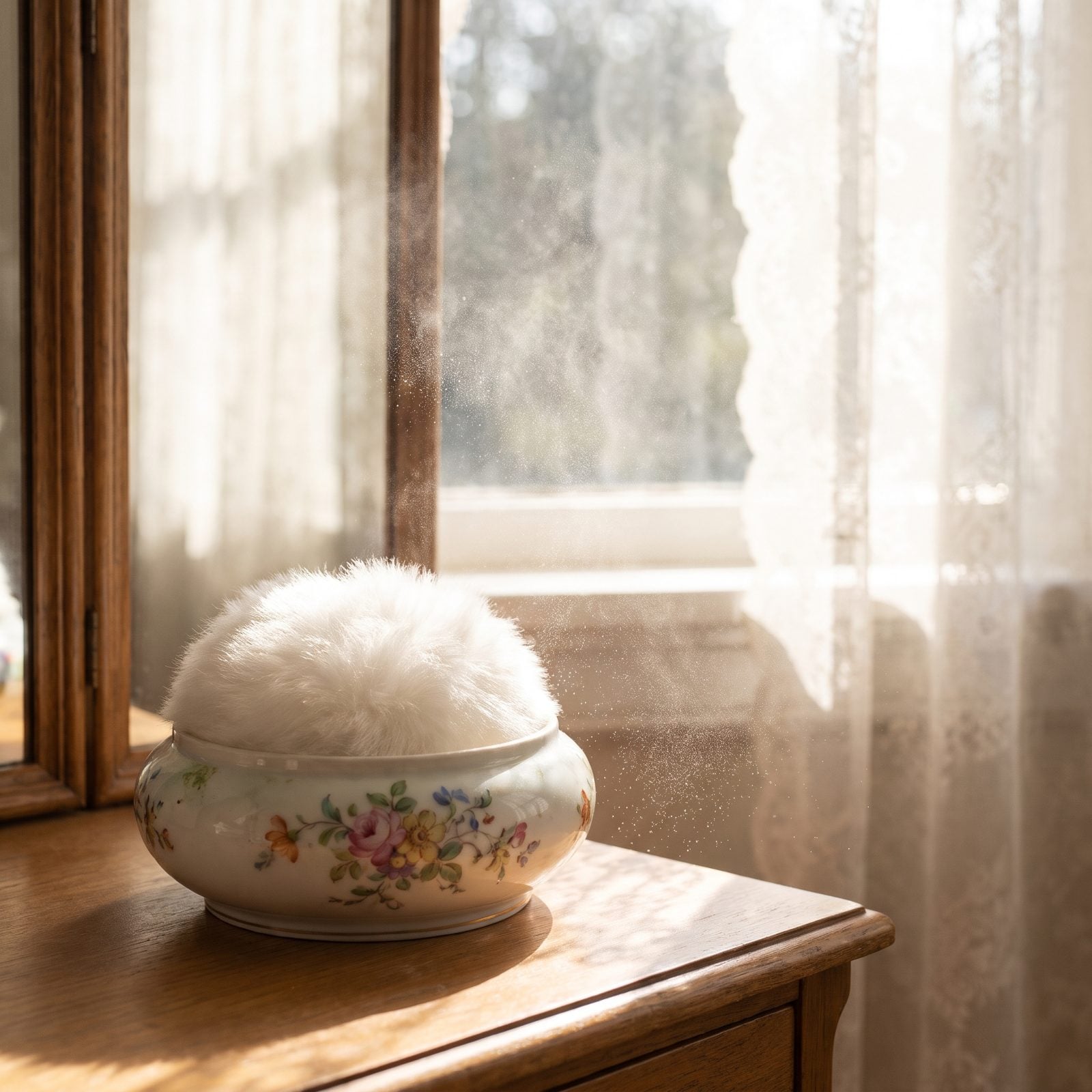
The round box sat on the dresser, usually printed with flowers or a swirly gold pattern, and inside was a puff the size of a saucer resting on a drift of scented talc. Lift the lid and a sweet, powdery cloud rose up immediately, the smell of every grandma who ever hugged you.
You were not supposed to touch it, and of course you did. One pat on the arm and you’d send a fine white haze across the dresser top, the mirror, and the front of your shirt. The puff itself was absurdly soft, almost like petting a small animal. The scent hung around the room for days and clung to your clothes all the way home.
8. Hand-Embroidered Pillowcases Reserved for Company
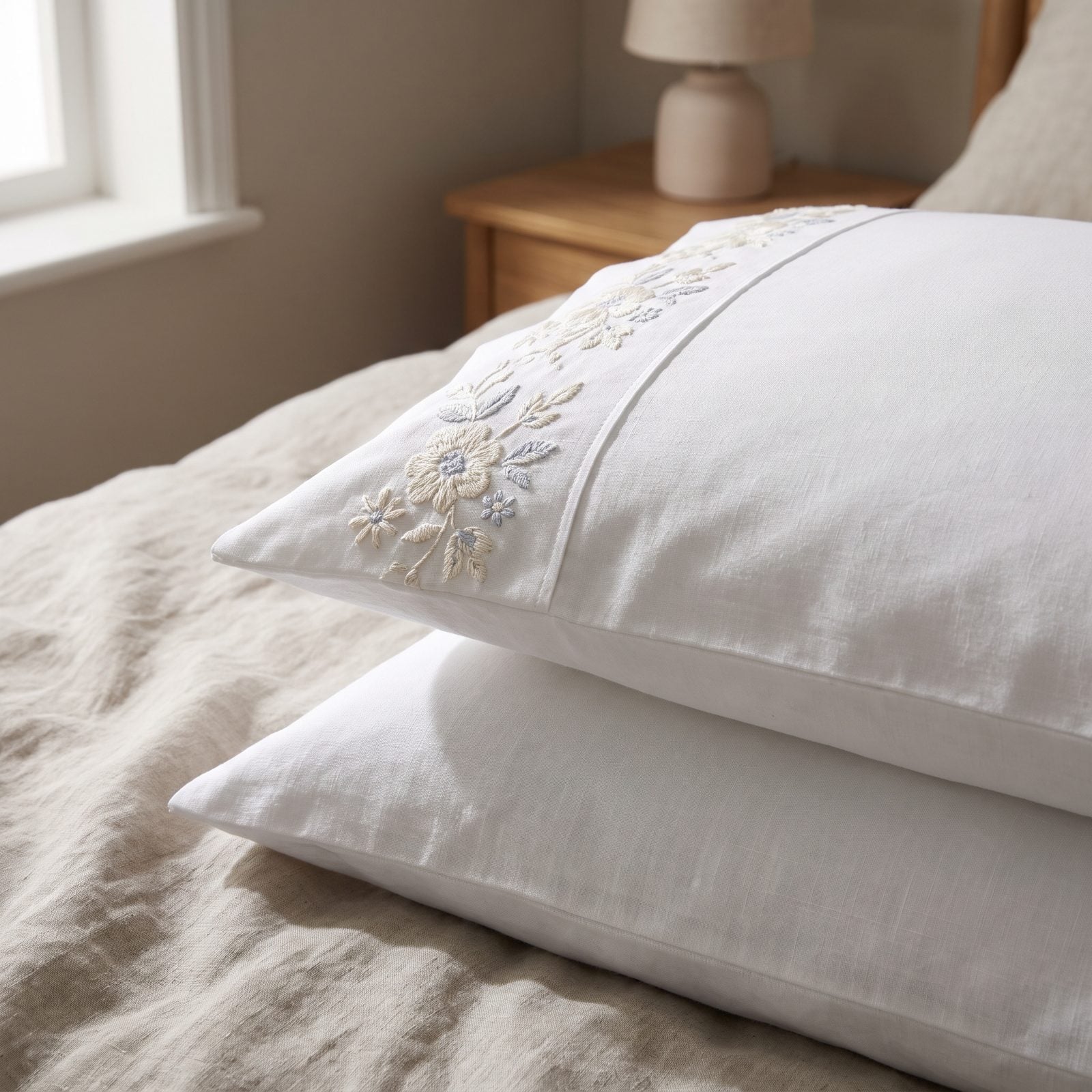
These never came out for just anybody. The everyday pillowcases were plain white percale, but when company was expected, and grandkids counted as company, out came the good pair from the linen closet. They had hems worked in satin stitch and French knots, bluebirds or baskets of daisies in pastel floss, and sometimes a band of crocheted lace along the open edge.
Most started as stamped kits or hot-iron transfers. The blue design lines were pressed onto the cotton and stitched over during long evenings in front of the radio or TV. They were starched and ironed so crisp they crackled when you laid your head down. You could feel the raised embroidery against your ear all night, and you lived in mild terror of drooling on them.
7. A Framed Needlepoint Sampler With a Homespun Saying
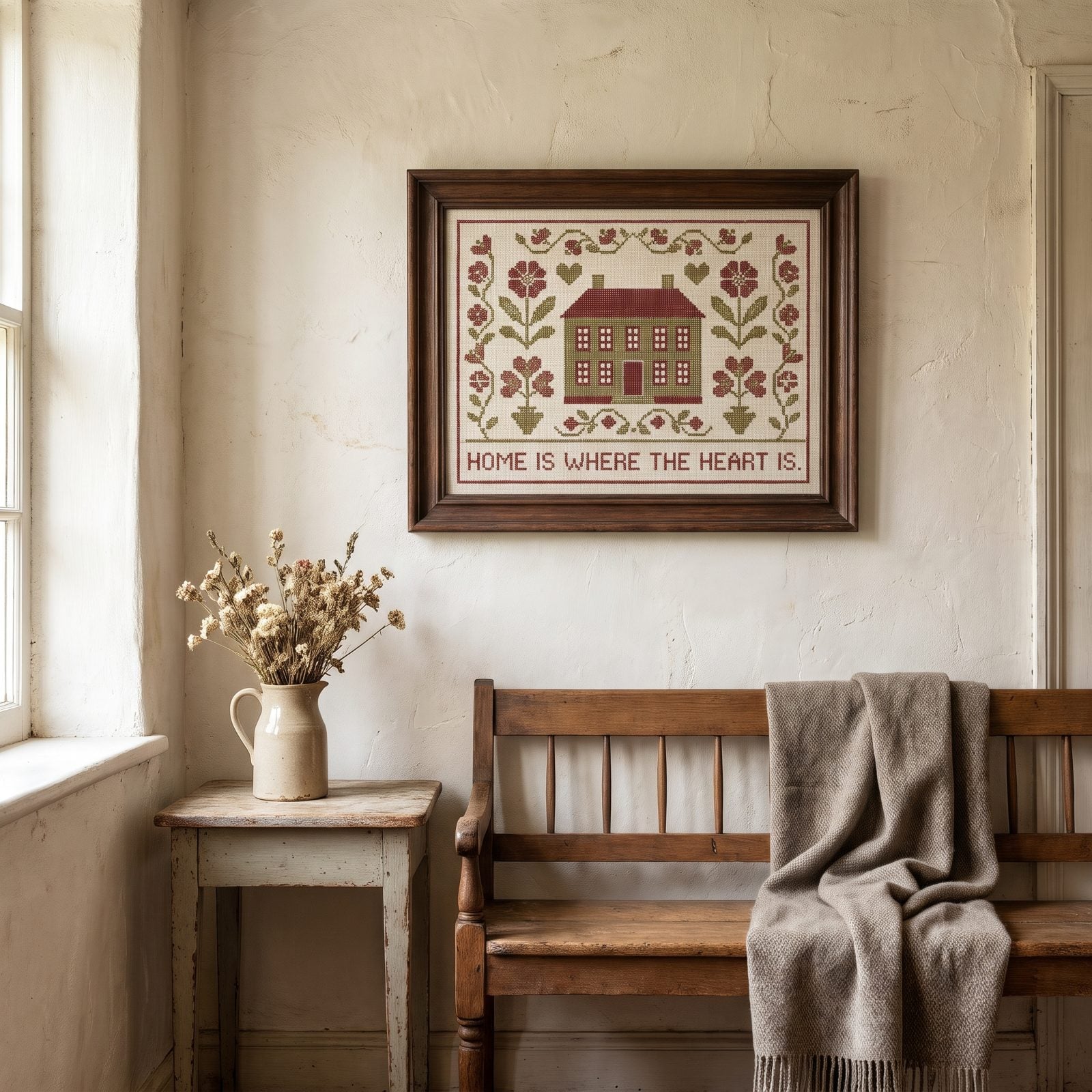
It hung over the bed or beside the door, stitched in reds and greens on a cream background and framed behind glass that never quite lost its film of dust. “Home Is Where the Heart Is,” it read, in careful stitched letters. There was a border of hearts and vines across the top and bottom, a little house flanked by potted flowers in the middle, and no initials or year anywhere to say who made it or when.
Strictly speaking, a lot of them were cross-stitch rather than true needlepoint, but nobody in the family ever made that distinction. What mattered was that somebody had made it by hand, one stitch at a time. The saying was the last thing you read before the lamp clicked off.
6. Porcelain Figurines Arranged Across the Dresser
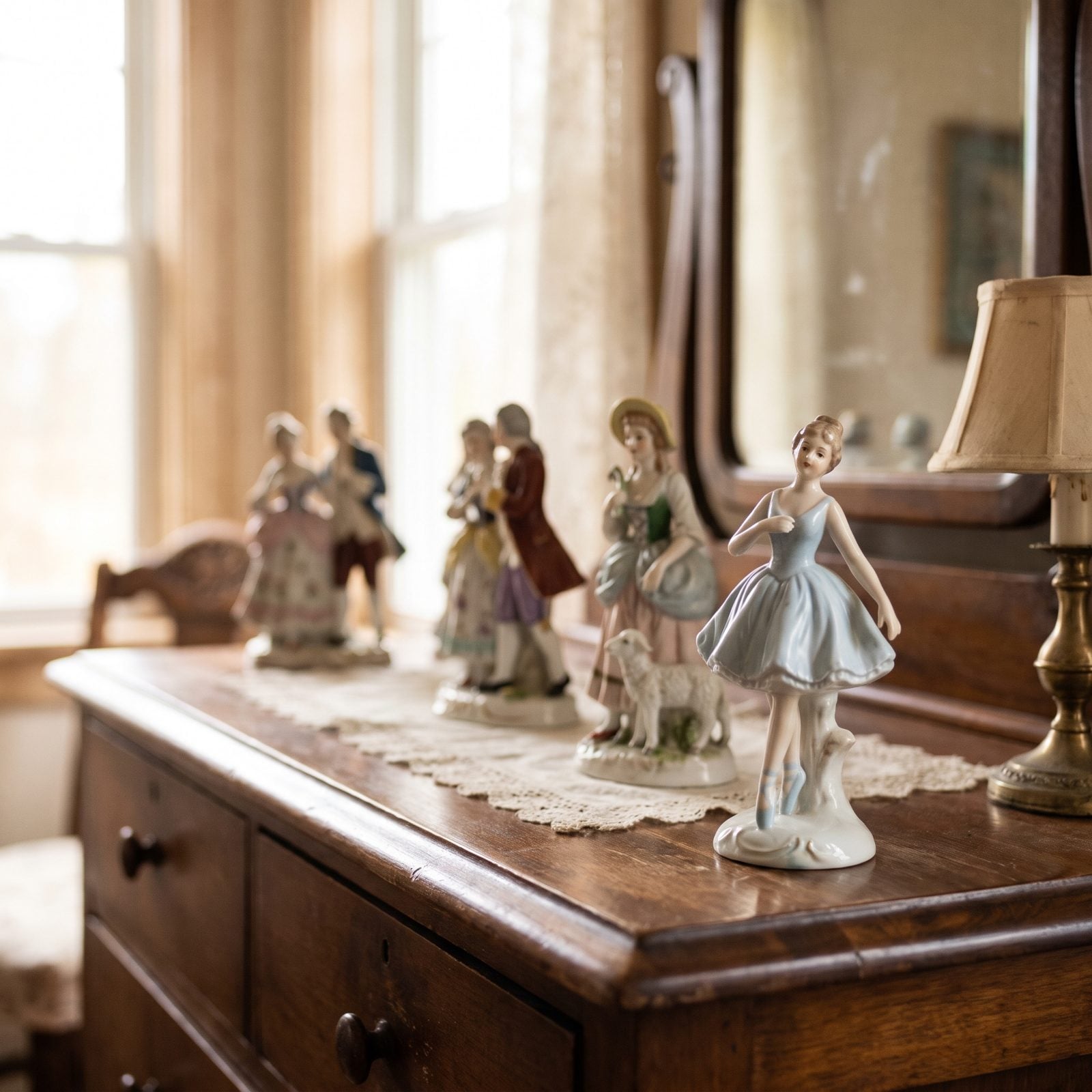
Ballerinas frozen mid-twirl, a shepherdess with her crook, a little boy fishing off a log, a courting couple in powdered wigs and hoop skirts. The porcelain figurines stood in a careful row across the dresser top, every one facing out. The guest room was where the overflow from the living room curio cabinet ended up.
You were allowed to look. You were absolutely not allowed to touch. Of course you touched anyway, picking one up to read the maker’s stamp on the bottom and then setting it back a quarter inch off, sure somebody would notice. Somebody usually did. Hummels, Lladró, dime-store copies of both: in that room they all carried the same weight.
5. A Bowl of Heavily Scented Potpourri

You smelled it from the hallway before you saw it. A glass dish or wicker bowl was heaped with dried rose petals, curled wood shavings, tiny pinecones, and dried orange slices, all of it soaked in fragrance oil strong enough to make your eyes water. It was cinnamon in winter and some flowery blend called “country garden” the rest of the year.
Over time the scent faded and the colors went dusty, so out came the little bottle of refresher oil and the whole bowl got doused again. More than one small child mistook it for a fancy snack. It perfumed everything in the room, including your suitcase, which smelled faintly of cinnamon for a week after you got home.
4. A Crocheted Tissue-Box Cozy
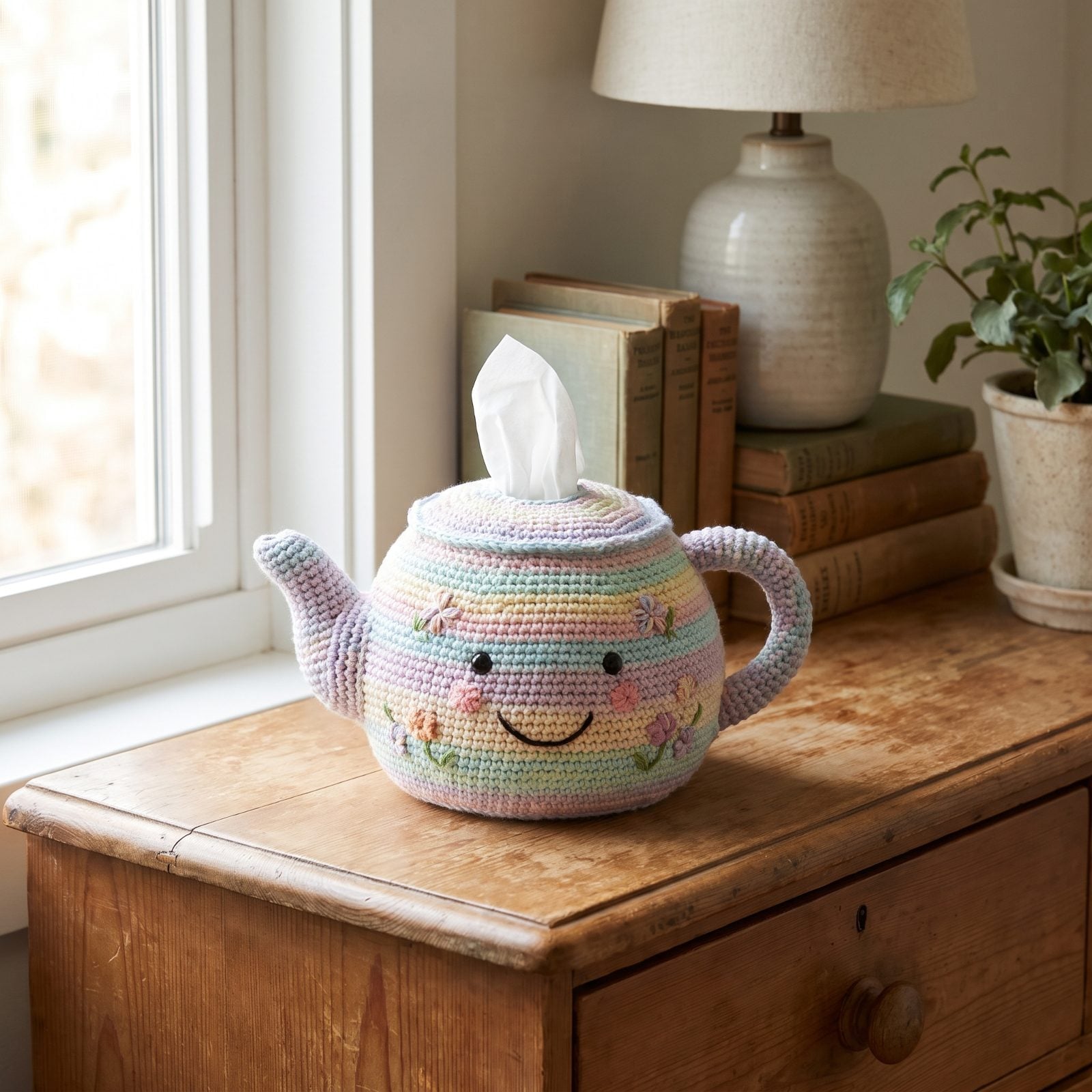
A box of tissues was apparently too plain to be seen in polite company, so it got dressed. The crocheted cozy slipped over a square boutique box like a sweater. It came in variegated yarn or a bold two-tone like orange and brown, with a round hole on top where the tissue poked out like a flower. Fancier versions had a ruffled skirt or a crocheted rose stitched to one side.
They were a go-to project for anyone with spare yarn and a pattern clipped from a magazine, and every grandmother seemed to have a drawer full of extras. Pull a tissue too fast and the whole cozy lifted with it, box and all. It never once occurred to anybody to just leave the box naked.
3. A Floral Metal Wastebasket
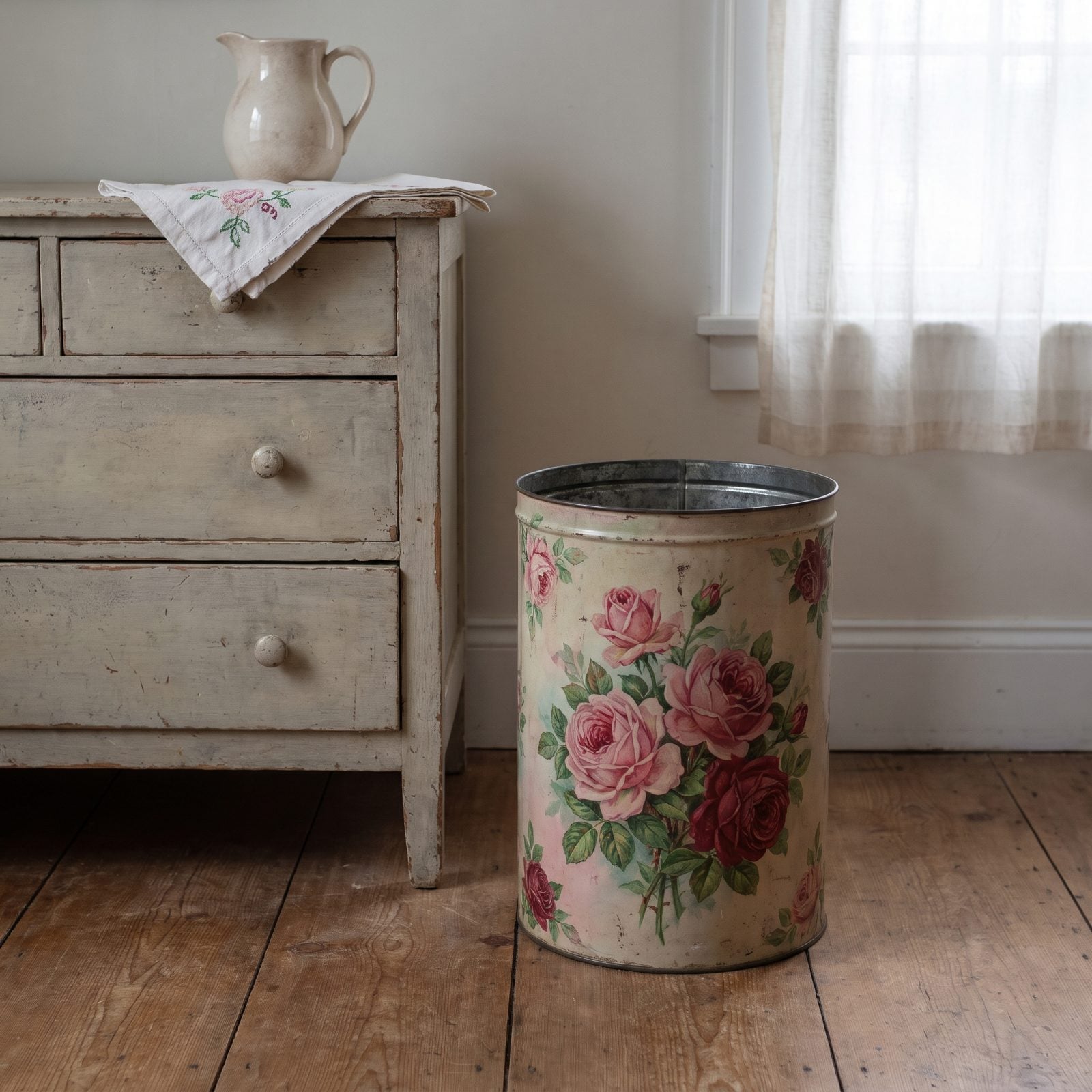
It was oval, made of lithographed tin, and printed with cabbage roses or pastel tulips, sometimes with a thin gold band around the rim. The floral metal wastebasket matched nothing else in the room exactly, but it matched the general idea of the room perfectly. Kick it by accident in the dark and it let out a hollow clang loud enough to wake the house.
It was almost always empty, because guests didn’t make much trash: a gum wrapper, a used tissue, maybe the cardboard from a new pair of pantyhose. Sometimes the bottom was lined with a folded paper bag, and usually there was nothing in it at all. A dent or two along one side told you it had survived years of vacuuming.
2. A Cut-Glass Ashtray on the Nightstand
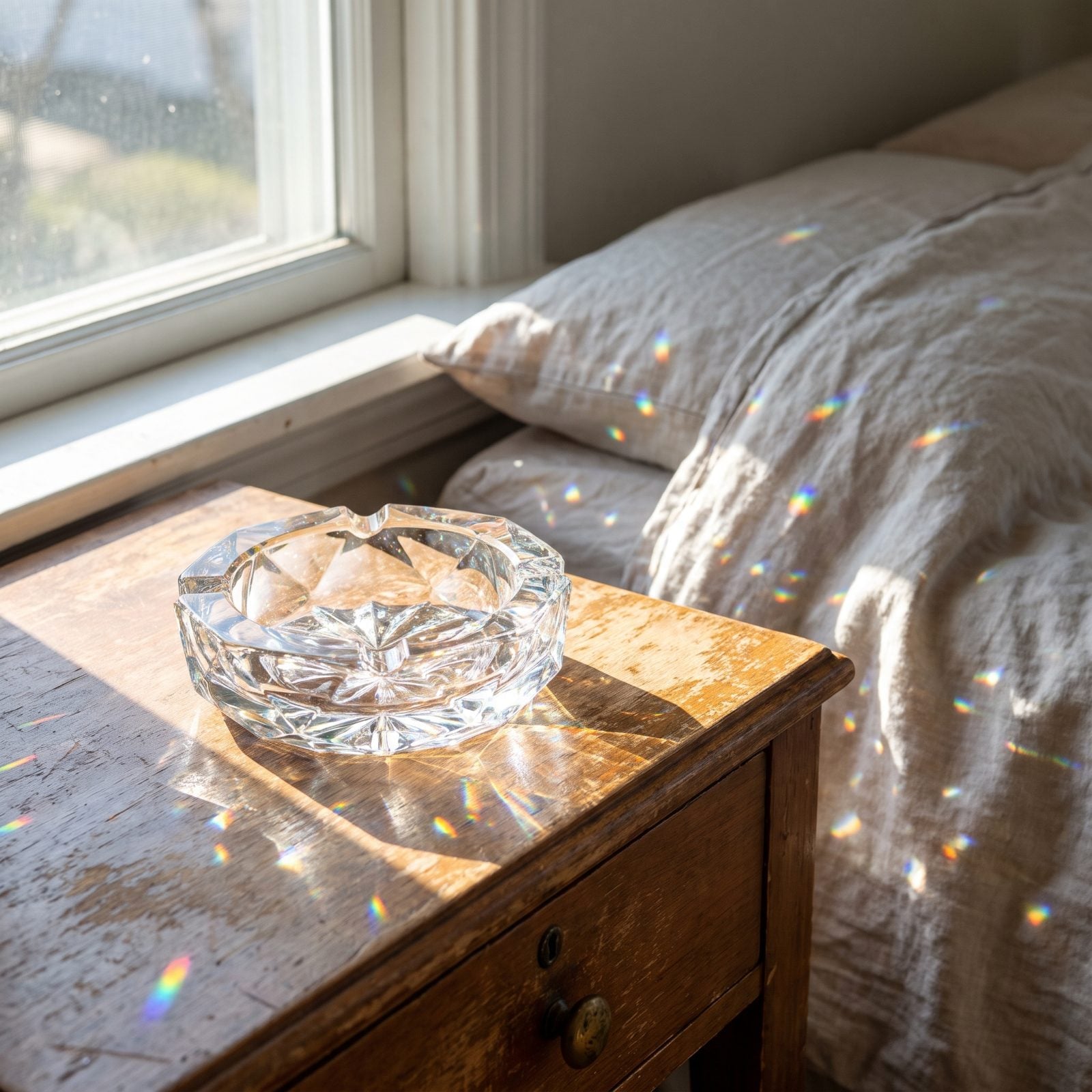
It was heavy enough to stop a door, and faceted enough to throw little rainbows across the bedspread when the morning sun came through. The cut-glass ashtray sat on the nightstand whether or not anybody in the house still smoked, because a properly set guest room had one. Smoking was part of hosting, and you didn’t make your guests go looking for a place to tap their ash.
Most were pressed glass made to look like cut crystal, though nobody ever said so out loud. In nonsmoking households it turned into a catchall for bobby pins, loose buttons, and a stray earring back. Tilt it toward the lamp and you’d still see a faint gray film in the grooves that no amount of dish soap ever fully reached.
1. A Stack of Hatboxes Balanced on the Closet Shelf
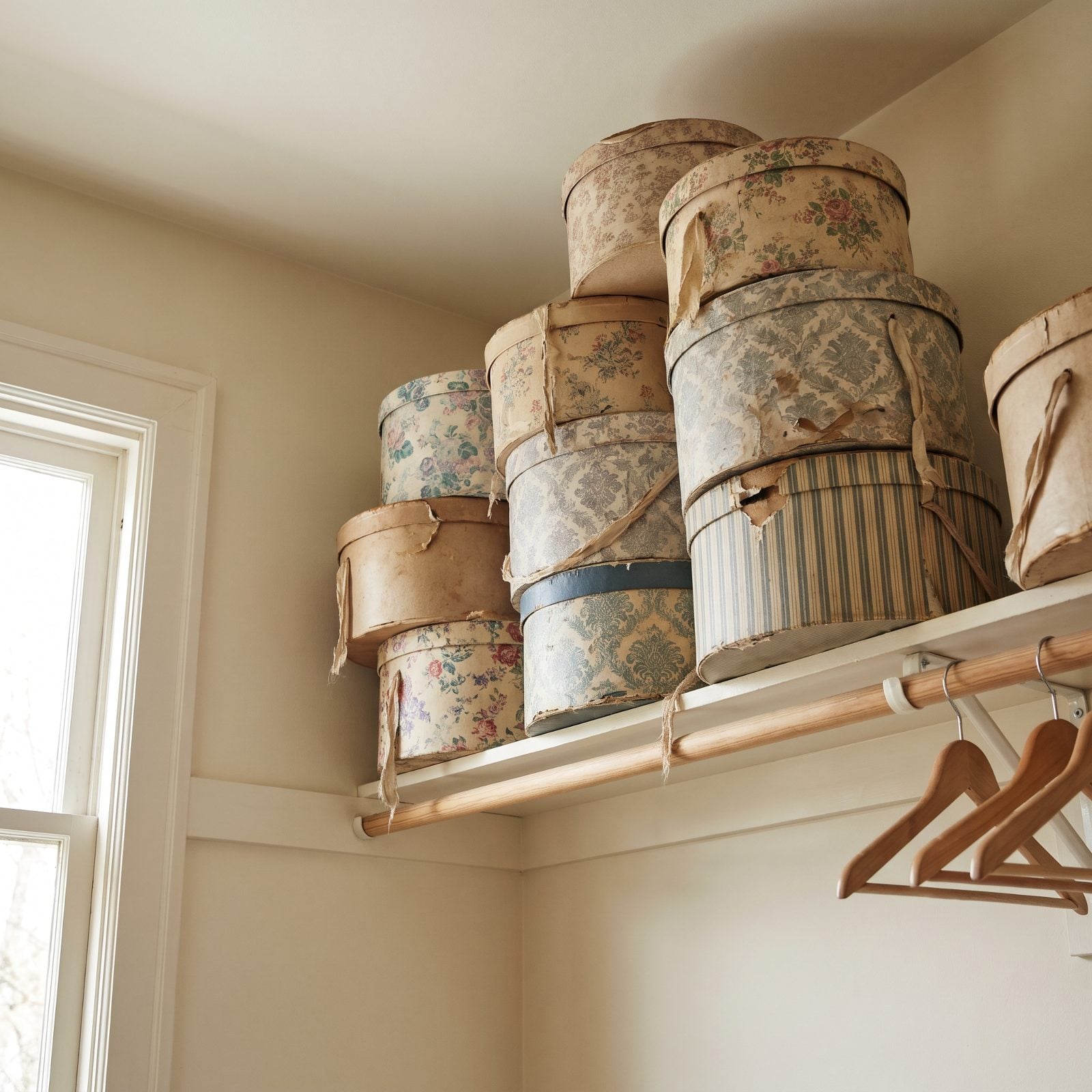
Up on the closet shelf, just out of reach, sat a tower of round cardboard boxes stacked three or four high and leaning a little to one side. Some were papered in faded blue toile, some in a pale damask print, and a few still had a limp ribbon handle and a handwritten paper tag. You were told not to pull them down. You pulled them down.
Inside, nested in crinkly tissue paper, were the hats. There might be a navy straw with a short net veil, a pillbox, or a felt cloche with a feather tucked into the band. They came from an era when nobody went to church, downtown, or a wedding bareheaded. Once hats fell out of everyday fashion in the sixties, the boxes simply stayed put. They were too nice to throw away and too much trouble to wear, so they sat up there gathering dust while you dreamed underneath them.