Your guests form an opinion about your home before they sit down, before you offer them a drink, and before a single word of small talk has passed. It happens in the entryway, in roughly three seconds, and it’s almost entirely unconscious. The brain reads a space the way it reads a face, scanning for warmth, intention, and whether it belongs. Most homeowners obsess over living rooms and kitchens, leaving the entryway as an afterthought. But that first room isn’t decorative. It’s communicative. And when it gets it wrong, it sends a message no host ever intends to send: that visitors weren’t really planned for. Here’s what your entryway is actually saying, and why the psychology behind it runs much deeper than you’d expect.
The Silent Message Your Entryway Sends Before You’ve Said a Word
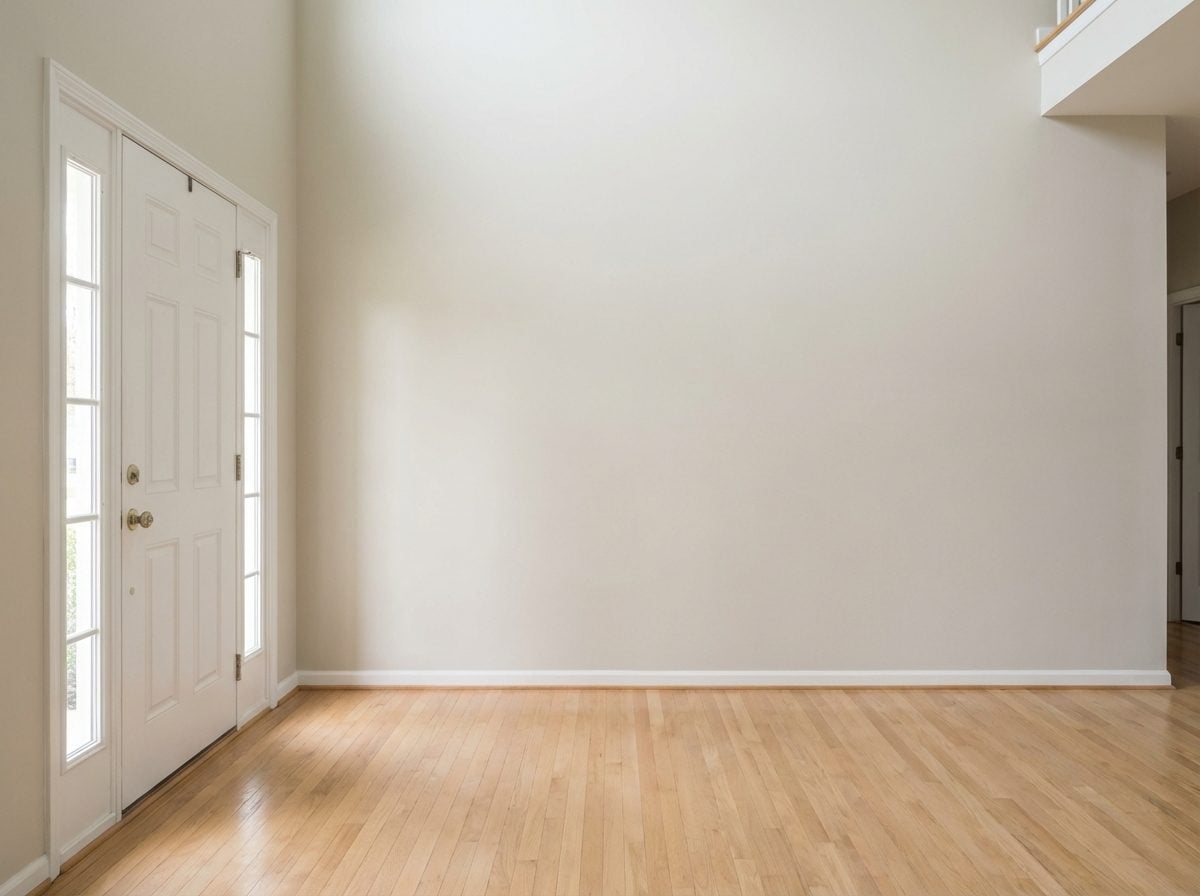
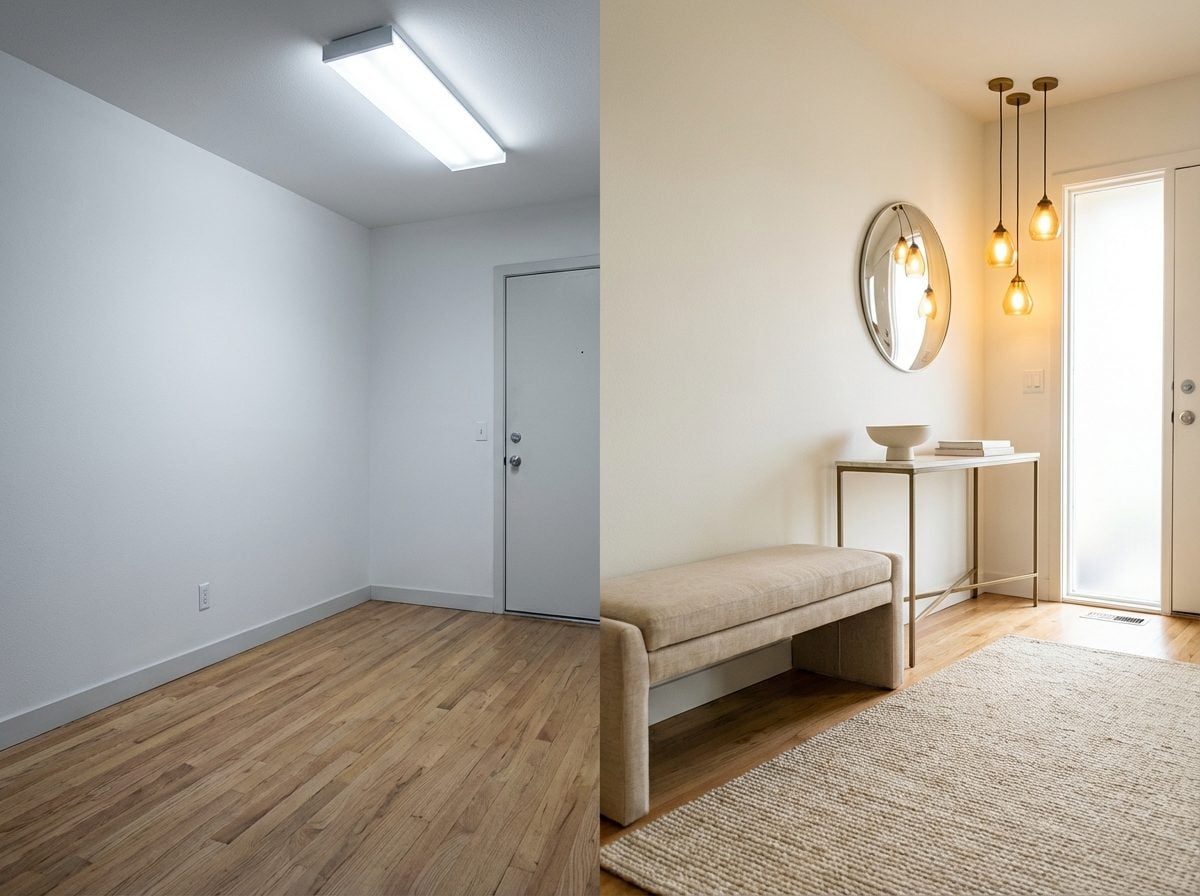
Your front door swings open, and before you’ve offered a drink or said a single word, your entryway has already spoken. Every bare wall, every echoing stretch of floor, every missing surface where a lamp or a bowl of keys might sit, all of it transmits information. Guests absorb it instantly. And here’s what’s unsettling: they can’t fully explain why they feel the way they do.
In order to come up with the very specific design ideas, we create most designs with the assistance of state-of-the-art AI interior design software.
Spaces communicate through what designers call environmental cues, the physical details of a room that signal how it’s used, who lives there, and whether visitors are truly expected. An entryway without functional objects says, on some wordless frequency, that no one planned for your arrival. It’s not that the room is ugly. It’s that the room is indifferent. And indifference, it turns out, is one of the more quietly devastating messages you can receive at someone’s front door.
Interior designers have long understood this intuitively, but the psychology runs deeper than aesthetics. The way a space is arranged sends signals about hospitality, care, and belonging that operate below conscious thought, the same social channels your brain monitors constantly for signs of welcome or exclusion. Your entryway, whether you’ve considered it or not, is already saying something. The question is what.
Why Your Brain Decides If It’s Welcome Within the First Three Seconds
Your nervous system makes social judgments at a speed that would embarrass any conscious thought. Research from Princeton psychologists Janine Willis and Alexander Todorov, published in Psychological Science, found that it takes as little as a tenth of a second to form a first impression, and crucially, that more time doesn’t substantially change it. The impression locks in almost immediately.
We tend to think of first impressions as being about people, a face, a handshake, a smile. But your brain applies the same rapid-fire evaluation to spaces. The moment you step into an environment, you’re scanning for information: Is this place inhabited? Does it expect me? Is there anywhere for me to go? A foyer that offers a surface to set things on, a hook for a coat, a small seat, all of these answer yes before you’ve said hello. A foyer without those things leaves the question hanging awkwardly in the air.
What makes this neurologically interesting is that psychologist Nalini Ambady described these rapid evaluations as “thin slice” judgments, brief bursts of observation that are hardwired into human cognition as a survival mechanism. We evolved to read environments for safety and social belonging with the same urgency we once scanned the horizon for threats. Your entryway is being read the same way.
The Furniture Piece That Tells Guests ‘You Were Expected’
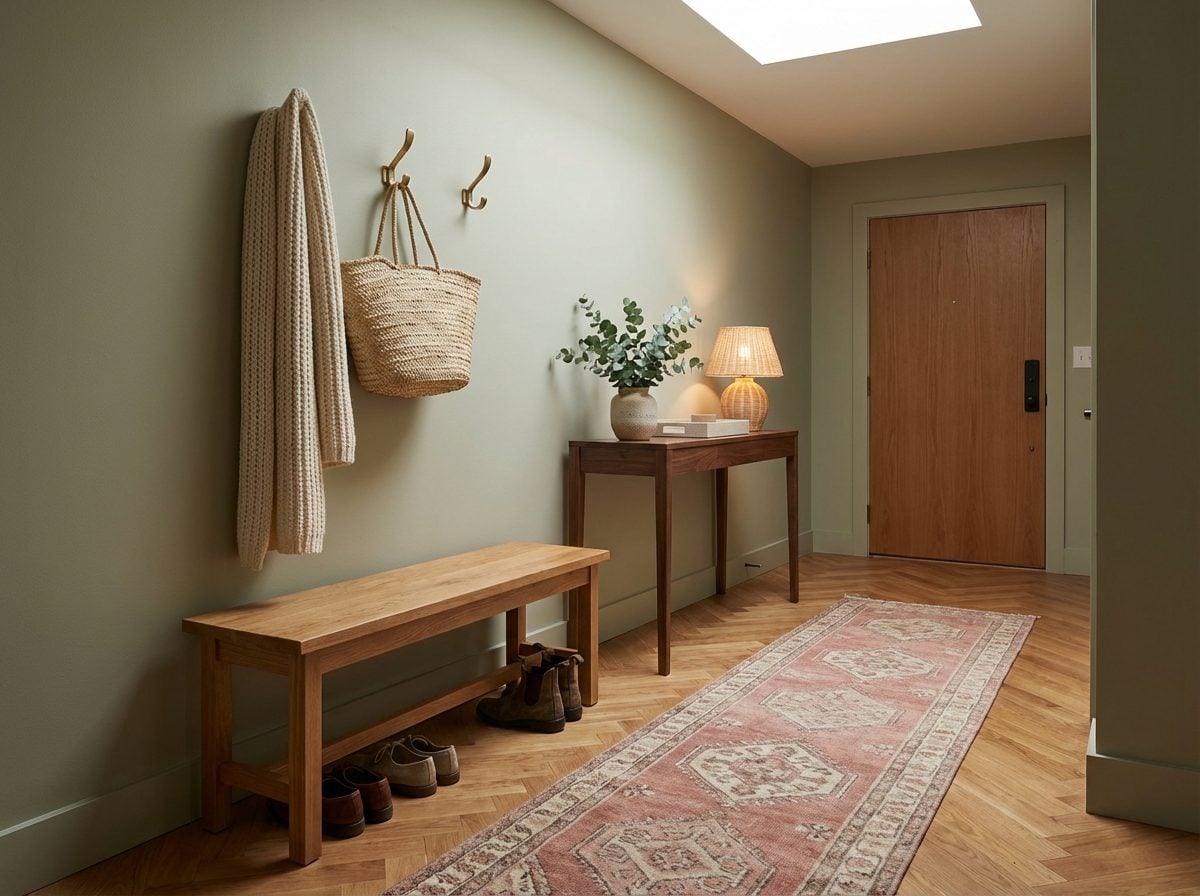
There’s a reason the entryway bench feels like such a small but meaningful gesture. It isn’t just seating, it’s an announcement. When a guest walks in and sees a bench near the door, their brain registers something specific: someone thought about what I might need when I arrived. That’s the psychological work one piece of furniture does, quietly and without fanfare.
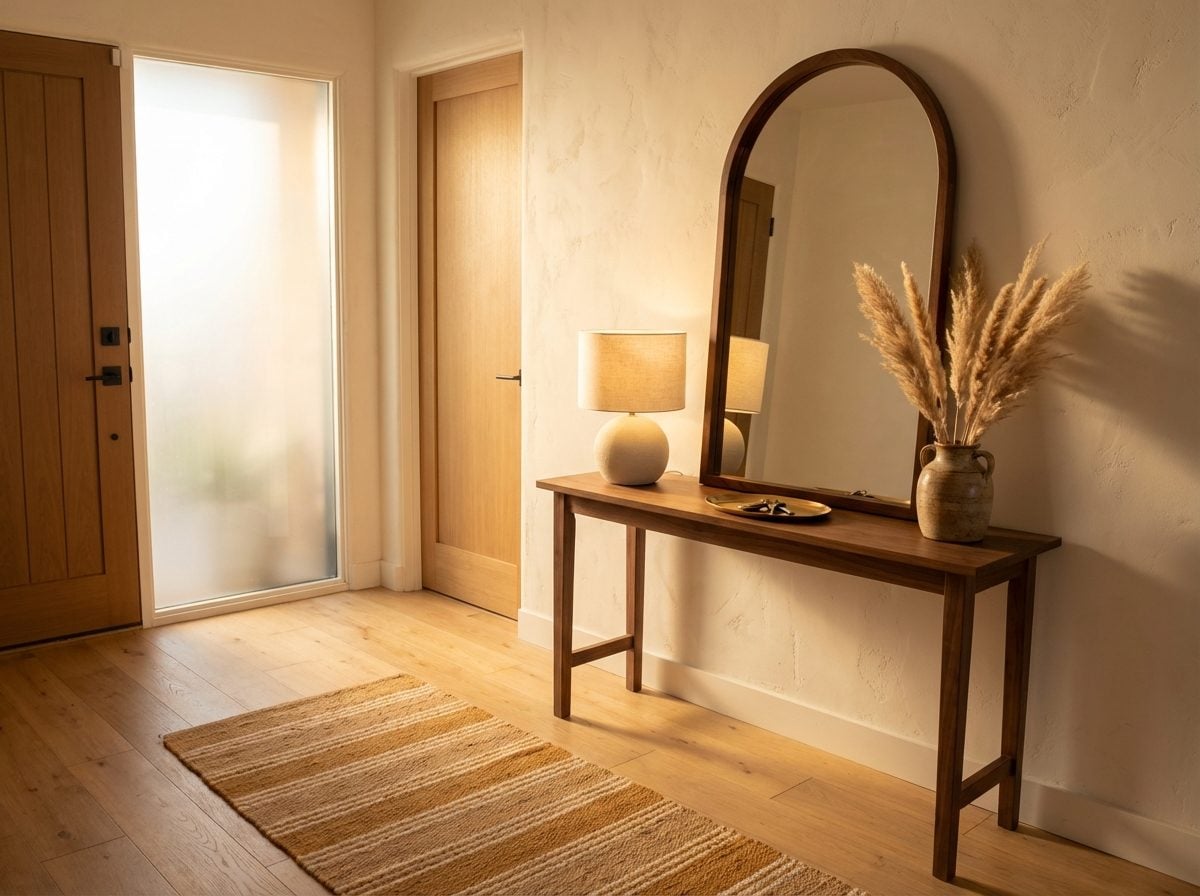
The console table pulls similar weight through a different mechanism. A well-placed entryway table communicates your home’s entire design mood before a guest steps fully inside, but more than that, it signals that the space was organized around the reality of visitors arriving. A surface to set a bag on. A tray for your phone. A lamp that says the light was turned on for you.
In the language of hospitality psychology, these objects function as what researchers call affordances, environmental features that suggest what actions are possible and welcome. A bench affords sitting. A hook affords hanging. Without them, a guest is left holding their coat, scanning the walls for somewhere to put their bag, standing in a space that hasn’t offered them a single physical invitation to settle in.
- The bench says: sit, stay, take your time removing your shoes, you’re not in a rush here.
- The console table says: put your things down, you don’t have to carry them anymore.
- The coat hook says: we planned for winter. We planned for you.
What Empty Walls in an Entryway Actually Signal to a Visitor’s Subconscious
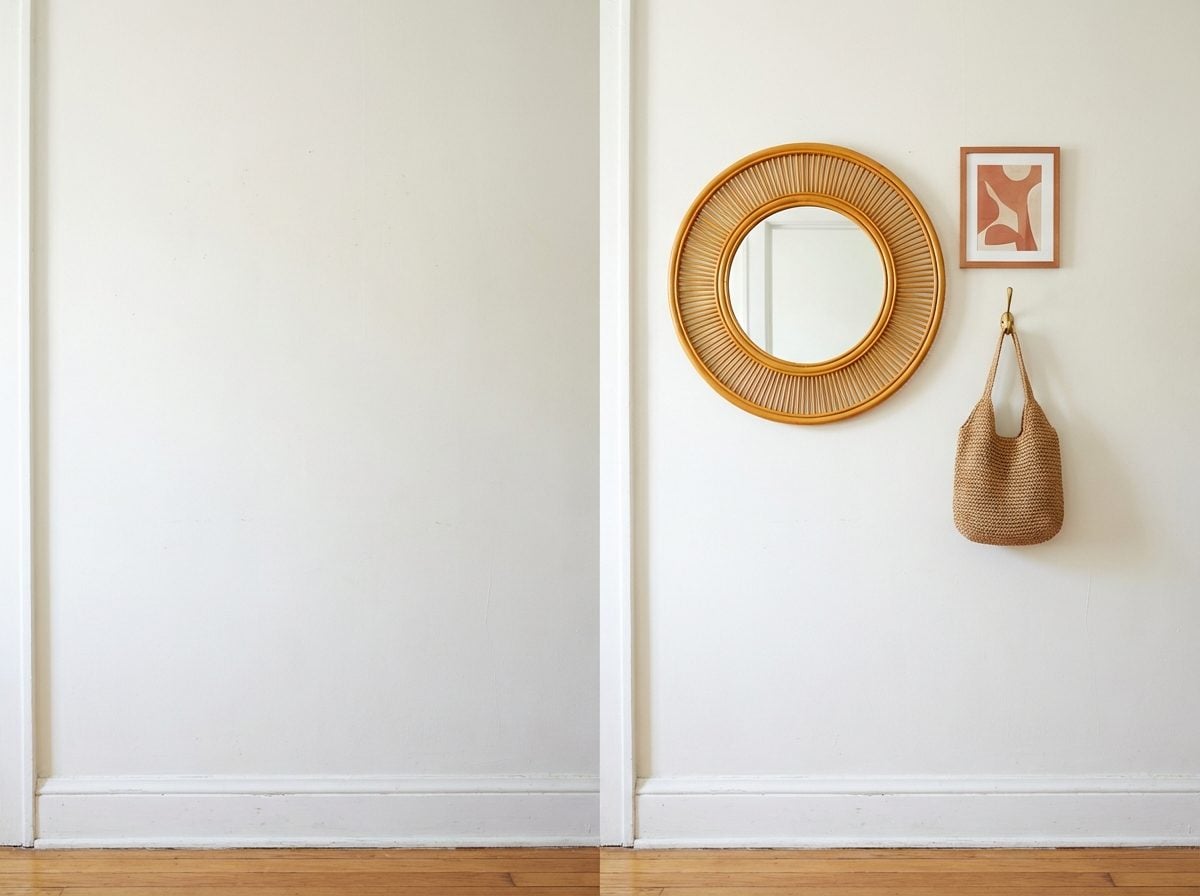
Blank walls in a foyer do something strange to a guest’s sense of belonging. It’s not merely that the space looks unfinished, it’s that bare surfaces in a transitional space like an entryway can register as a kind of social vacancy. The room hasn’t been claimed. No one has declared, through color or art or even a simple mirror, that this space matters.
There’s a concept in environmental psychology called personalization, the degree to which a space reflects the identity and care of the people who inhabit it. Personalized spaces signal occupancy, intention, and warmth. Bare spaces do the opposite. They read, on a subconscious level, as spaces that weren’t thought about. And when you weren’t thought about, in even the most design-level sense, it’s a short emotional leap to feeling like an afterthought yourself.
This connects to research on what psychologists call liminal spaces, transitional zones between one defined place and another. An entryway is inherently liminal. Strip it of any visual identity, and it starts to feel like a space that exists only functionally, not socially. Guests passing through a bare foyer have no visual prompt to slow down, no invitation to linger, nothing that says: this threshold was considered. The wall that holds nothing communicates absence louder than any design mistake.
The Psychological Reason a Coat Hook Can Change How Guests Feel About You
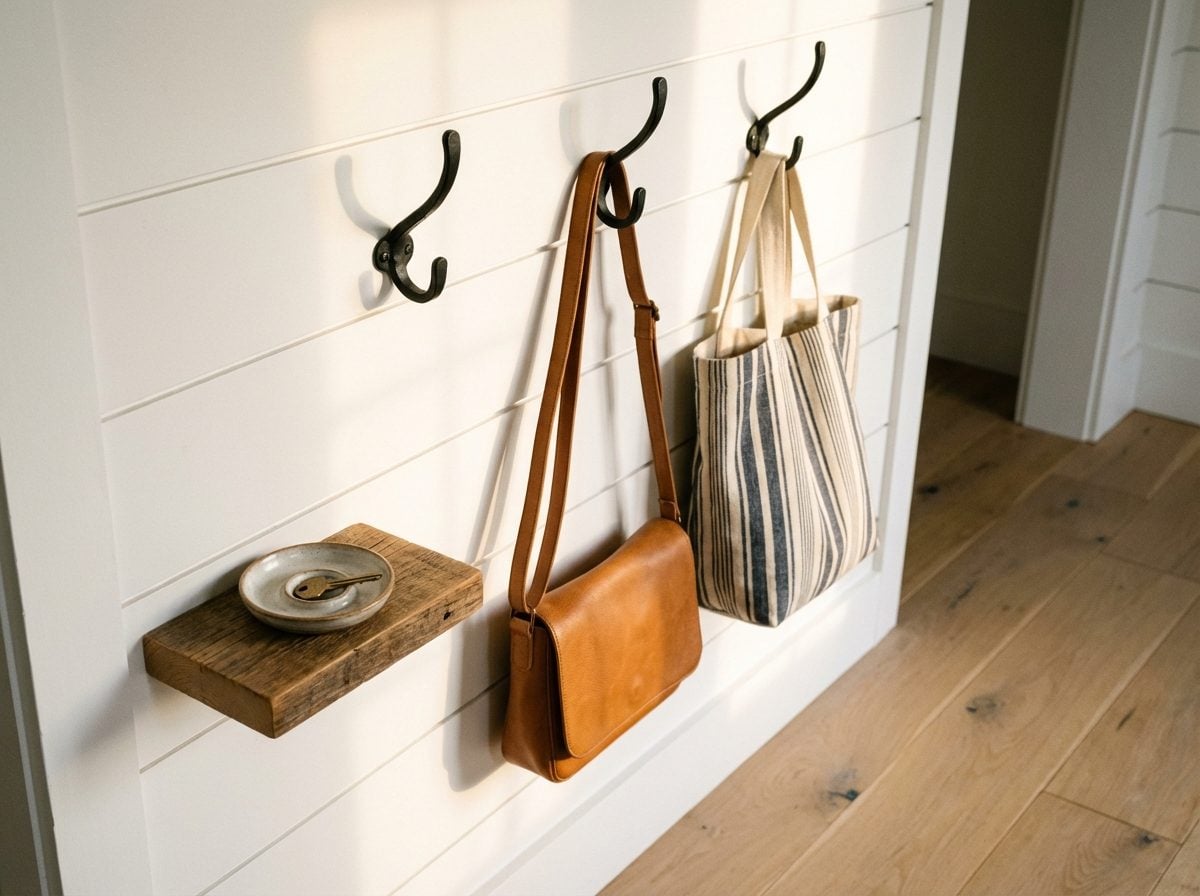
A coat hook is maybe the least glamorous object in interior design. It’s hardware. It costs twelve dollars. And yet its presence or absence communicates something surprisingly precise about how you think about the people who visit you.
Think about what happens without one. A guest arrives wearing a heavy winter coat. You say, warmly, “Let me take that.” Then you disappear somewhere with it, a bedroom, a closet, a chair they can’t see. They’re left standing, coatless, in someone else’s space, with no idea where their belonging went. That’s a moment of low-grade social exposure. The coat hook removes all of it. It gives the guest agency: hang your own coat, on your own terms, and know exactly where it is.
This is where design and psychology overlap in a way that’s almost embarrassingly practical. Agency, the feeling of being able to act on your own behalf in a space, is a core component of psychological comfort. When a space is designed so that guests must depend entirely on the host for every small act (where to put my coat, where to set my bag, where to sit), it subtly positions the visitor as passive. The coat hook, small as it is, gives the guest a transaction to complete independently. It makes them a participant rather than a recipient.
Why Standing in a Bare Entryway Triggers the Same Anxiety as Being Ignored
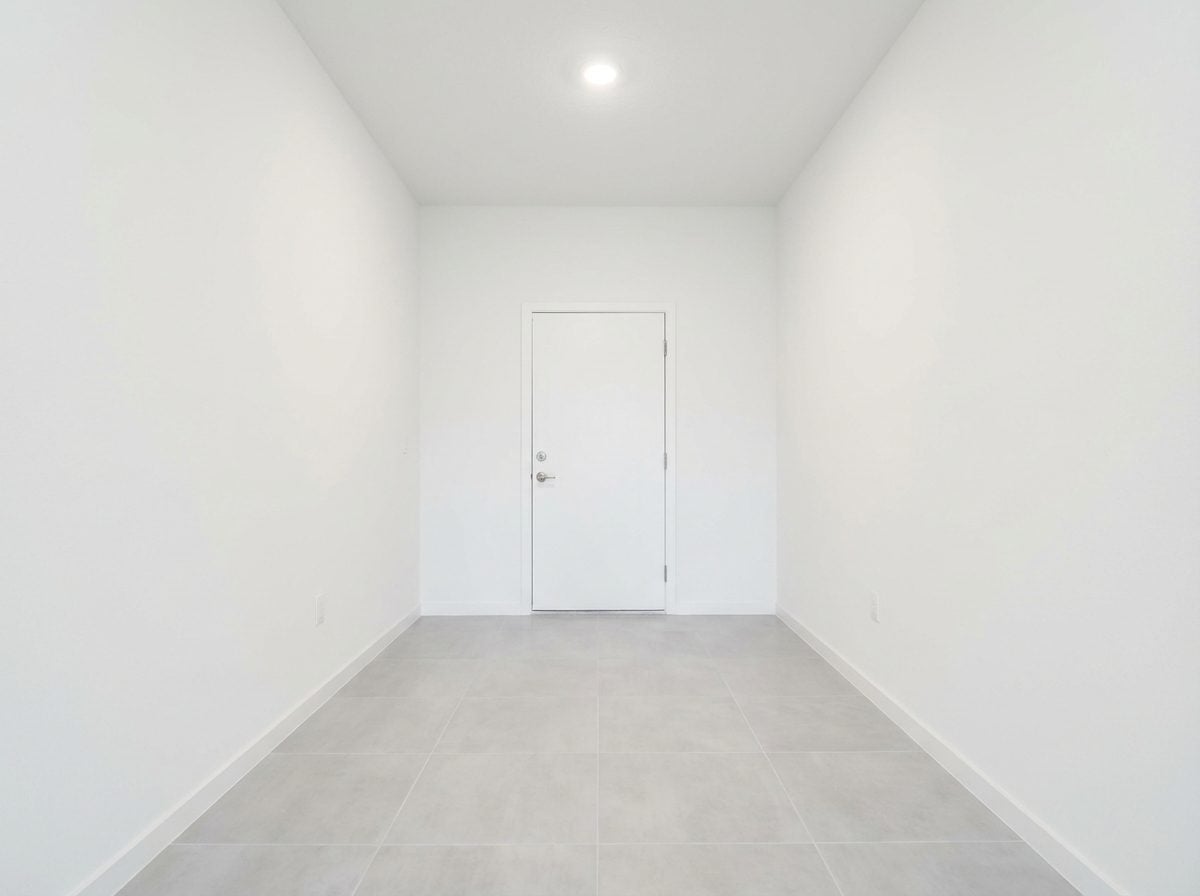
This is where design psychology gets genuinely surprising. When you strip an entryway of functional objects, nothing to sit on, nothing to set things down on, nowhere to visually land, you create a space where the guest has no role to play. They stand in the middle of it, holding their coat, waiting. And that act of waiting in a space that offers no guidance is, psychologically, remarkably close to the experience of being socially overlooked.
Research on ostracism by psychologist Kipling D. Williams at Purdue University found that social exclusion registers in the brain’s dorsal anterior cingulate cortex, the same region that processes physical pain. Being ignored, even briefly, even by strangers, triggers genuine neurological distress. More unsettling still: Williams found that harmful reactions occur even when ostracized by a stranger for a short amount of time.
A bare entryway doesn’t ignore a guest intentionally, but its effect can rhyme with that experience. There’s nowhere to sit, so sitting isn’t an option. There’s no place to set things, so the guest keeps holding them. Nothing on the wall catches their eye. The space provides no script, no cue, no affordance. The guest is, in the most architectural sense, being given nothing. And the brain, exquisitely tuned to detect social exclusion, registers that absence as a kind of signal.
The Overlooked Surface That Makes Guests Feel Like They Belong
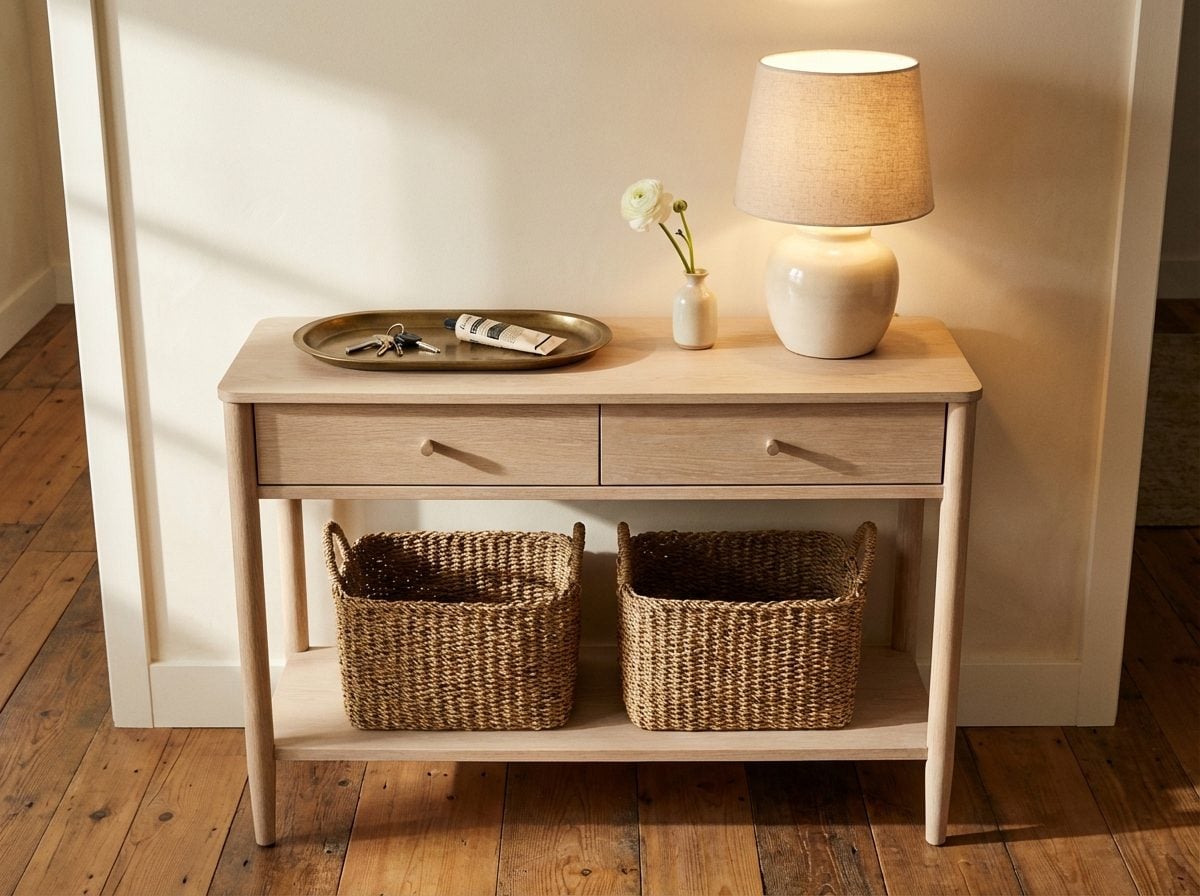
Of all the things missing from the average underthought entryway, the surface, a console table, a floating shelf, even a small wooden stool, might be the most quietly important. Here’s why: the act of setting something down is one of the most basic gestures of arrival.
When you set your keys on a table, you’re not just putting them somewhere. You’re marking territory, however temporarily. You’re signaling: I’m here. I’ve arrived. My things can live here for a moment. That’s a powerful micro-ritual, and it’s entirely dependent on having a surface to receive your object. Without it, guests clutch their bags and their phones and their coats for the duration of their visit, subtly unable to complete the small act of settling in. The belonging that should arrive with them stays locked just outside the front door.
There’s a reason that hotels, which spend significant money studying how guests feel upon arrival, almost always place a console table or credenza in the entry corridor of a room. It’s one of the first pieces specified. The surface says: your things belong here. And if your things belong here, so do you.
What Prospect-Refuge Theory Reveals About Why Some Entryways Feel Threatening
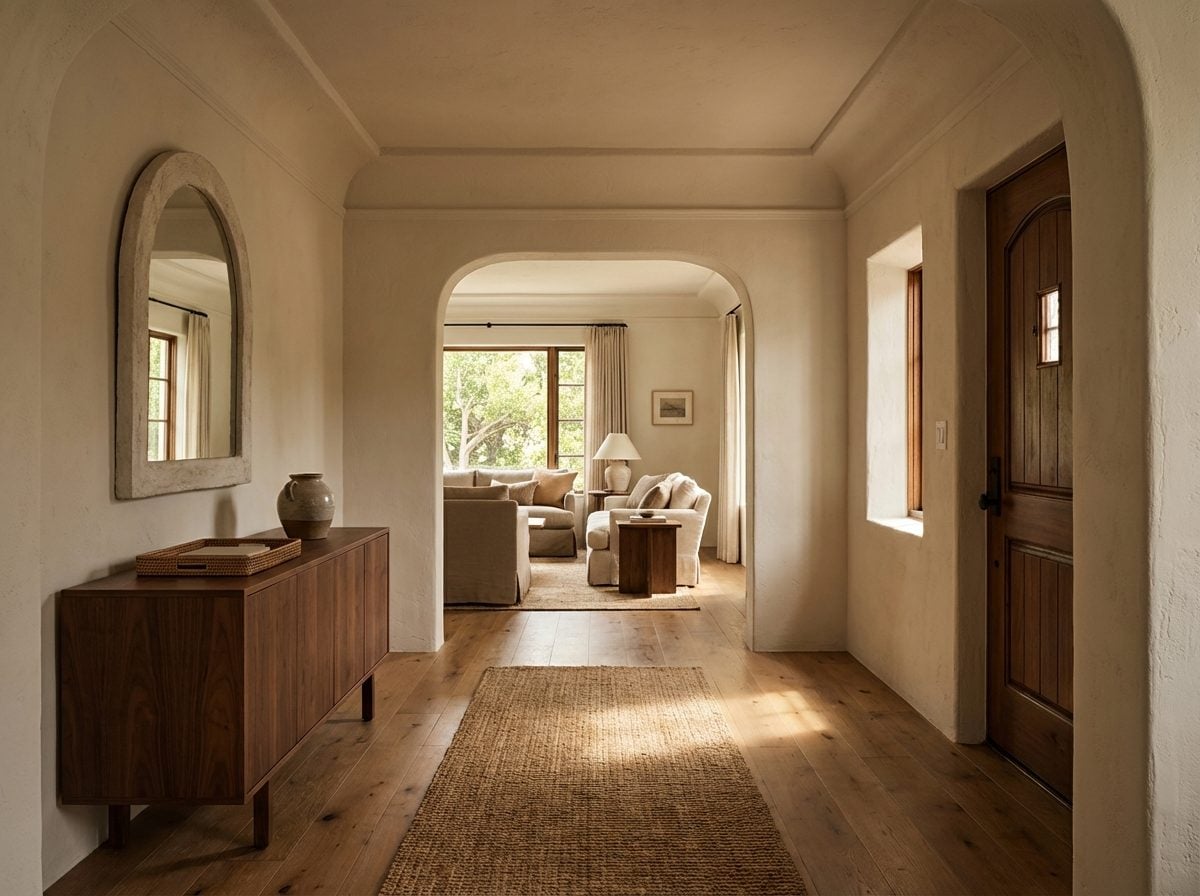
British geographer Jay Appleton introduced prospect-refuge theory in his 1975 work The Experience of Landscape, arguing that humans instinctively prefer environments where they can see without being seen, spaces that offer both prospect (an open view) and refuge (a sense of enclosure and safety). According to this framework, spaces that provide neither open views nor protective enclosure can feel instinctively uncomfortable.
Apply this to entryways, and something clicks. A foyer that opens directly into the main living space, no transition, no moment of oriented arrival, can feel psychologically exposed. Too much prospect, not enough refuge. Guests step in and immediately feel on display, unable to gather themselves before being seen. Conversely, a long, featureless corridor with low ceilings and no sightlines can feel oppressive, all refuge, no prospect, slightly threatening in its tunnel-like enclosure.
The entryways that feel right tend to offer a small, considered moment of arrival, a slight buffer, a visual anchor point, a clear sense of where you are and where you’re headed. As researchers Dosen and Ostwald noted in their meta-analysis of prospect-refuge studies, the balance between openness and enclosure is what determines psychological comfort, and that balance is especially delicate in transitional spaces. The entryway is the most transitional space in the home.
Why the Entryway Gets This Wrong Most Often
Most entryways fail prospect-refuge balance in one of two directions: they’re either far too open (the foyer dumps immediately into the living room with no visual separation) or far too closed (a narrow hallway that feels more like a squeeze than a welcome). Furniture, art, rugs, and lighting are how you calibrate the balance, giving the arriving guest enough enclosure to feel held without enough exposure to feel scrutinized.
The Lighting Mistake That Makes Visitors Feel Like They’re Being Interrogated
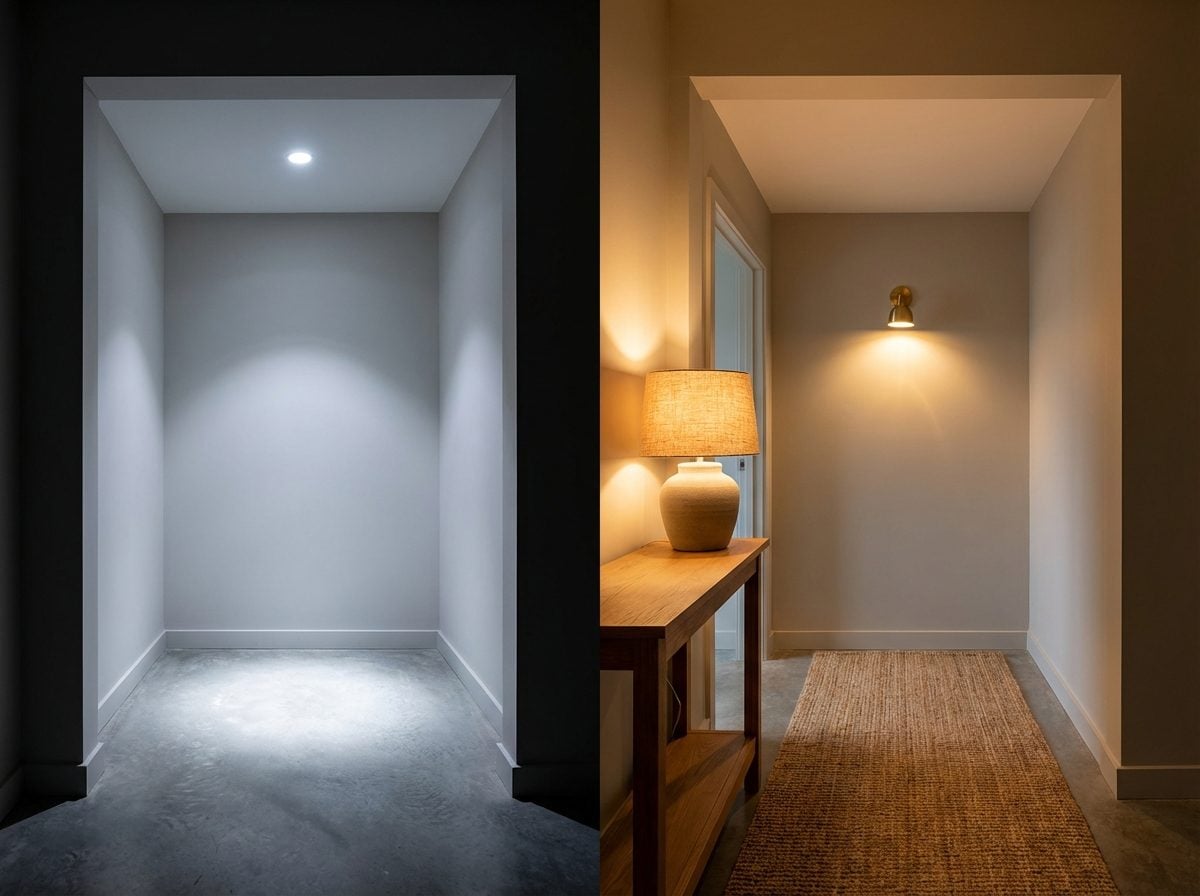
Overhead recessed lighting at full brightness is the most common lighting mistake in entryways, and also the most psychologically counterproductive. A single can light blazing directly down from the center of a foyer ceiling creates a harsh, shadowless pool of illumination that has more in common with an examination room than a welcome. Guests step into it and, unconsciously, feel assessed rather than received.
This isn’t just atmospheric preference. Research published in Scientific Reports found that lower correlated color temperatures, warm light, below 3500K, led participants to perceive neutral faces as more positive and less threatening compared to cool, high-CCT lighting. The light we stand in changes how we read the faces around us. It changes how we feel about the space itself.
A separate study on office lighting, published in the Journal of Environmental Psychology, found that warm, dimmed lighting at around 3000K effectively reduced stress markers and perceived stress levels, while cool lighting above 5000K was associated with heightened alertness, which in a social context can tip into discomfort.
The entryway needs warm, layered light, a table lamp at low eye level, a wall sconce casting ambient glow, perhaps an overhead fixture on a dimmer set well below maximum. The goal isn’t to flood the space with brightness. It’s to create the lighting equivalent of a warm tone of voice: relaxed, unhurried, glad you’re here.
Why Mirrors in Entryways Do Something Unexpected to a Guest’s Confidence
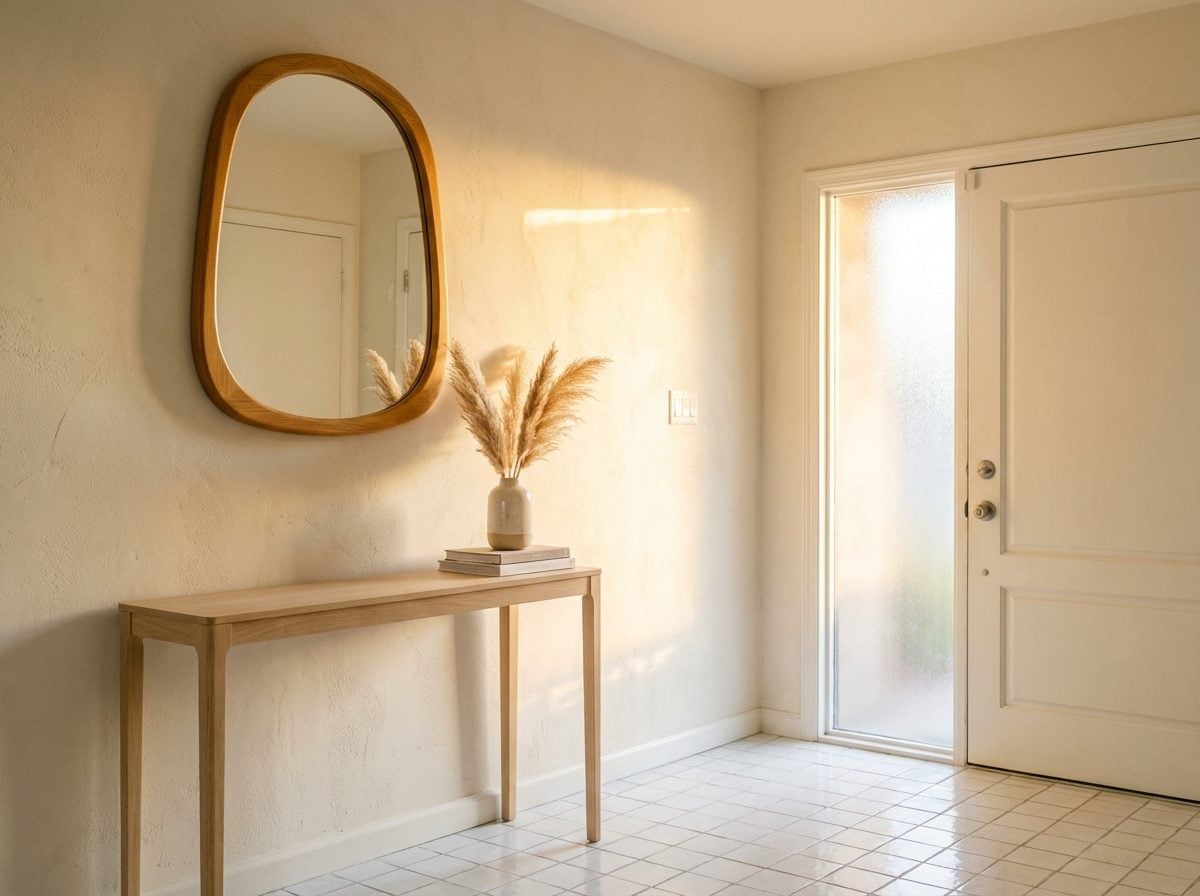
You probably assume a mirror in the foyer is just practical, a last-chance check before the door opens. But what’s actually happening is more layered than that. Research published in Frontiers in Psychology on the social neuroscience of mirror gazing found that we don’t just see ourselves when we look in a mirror, we experience a kind of social coding, perceiving our reflection much the way another person might see us. That brief, external perspective activates the same neural mechanisms as face-to-face social interaction.
In an entryway, that split-second of self-awareness cuts both ways. For a guest who feels good about how they look, the mirror is a quiet confidence booster, a reset before they walk into your social space. But for someone who arrived feeling rushed, tired, or self-conscious, it can spike anxiety just before they cross the threshold.
This is the part most homeowners miss: the placement and scale of an entryway mirror shapes the emotional state your guest carries into every room that follows. A full-length mirror hung dead-center, at eye level, with harsh overhead lighting, turns the foyer into a scrutiny zone. One positioned to the side, framed in warm wood, lit with a soft sconce, that’s an entirely different psychological experience. The mirror is still there. The social coding is still happening. But the emotional context around it changes everything.
The Scent Trigger That Tells the Brain ‘This Is a Home, Not a House’
Before a guest clocks your paint color or your console table, their nose has already filed a verdict. Smell is the only sense that bypasses the brain’s rational processing centers and feeds directly into the limbic system, the region governing emotion and memory. According to research summarized by Remedy Psychiatry, smell-triggered memories are more emotionally intense and more precisely located in time and place than memories recalled through any other sense. This is why a whiff of something, cedar, citrus, warm spice, can flood a person with feeling before they’ve had a single conscious thought.
What does this mean for a foyer? A home that smells like nothing, or worse, like stale air, cleaning product, or someone else’s lunch, registers in the brain as a transactional space. It reads as a building, not a place someone actually lives in. A 2025 study in Building and Environment examining ambient scent in indoor spaces confirmed that environmental scent produces measurable shifts in emotional response, including reduced feelings of hostility and increased comfort, within minutes of exposure.
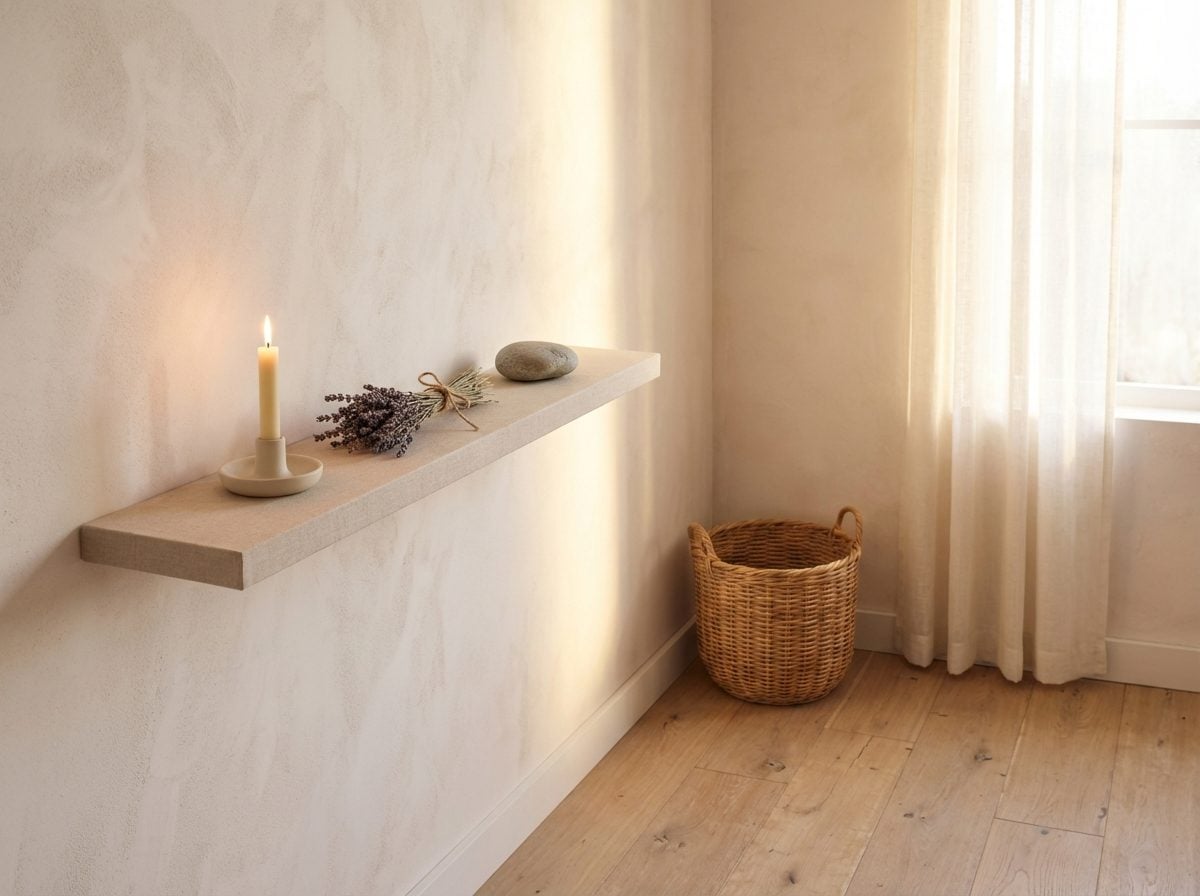
The best entryway scent isn’t the loudest one. It’s the one that feels like it belongs, a beeswax candle that’s been burning for an hour, dried lavender near the coat hooks, or simply the faint carry of whatever’s in the oven. These aren’t decorating decisions. They’re neurological cues that tell a visitor’s brain: someone lives here, and they expect you.
What the Absence of Seating Communicates on a Deeply Primal Level
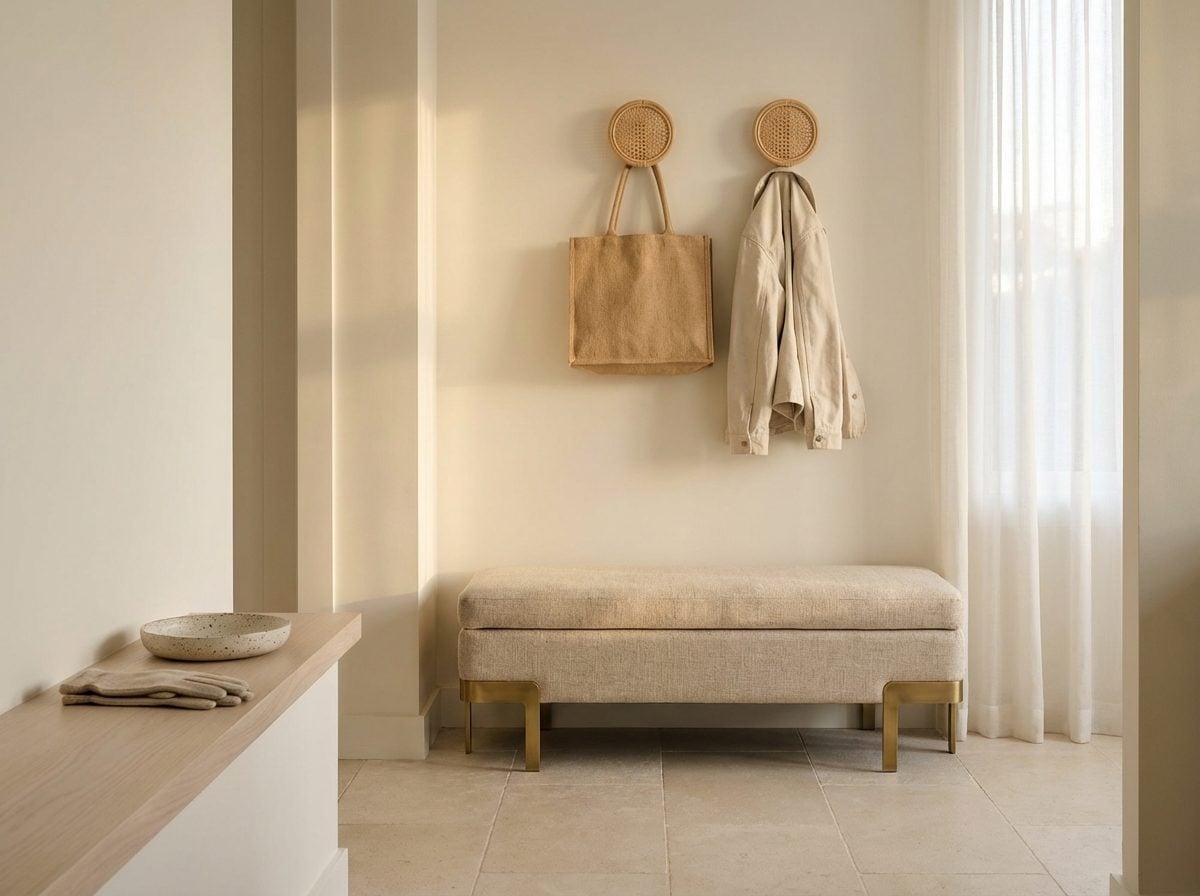
There is no piece of furniture with more psychological weight than a chair someone offers you. Seating isn’t just functional, it’s symbolic. It says: you can stay. You’re not just passing through. You belong here long enough to sit down.
Research in social psychology on belonging and exclusion makes clear how sensitive the human brain is to signals of being welcomed versus tolerated. a 2017 review in Frontiers in Psychology examining how humans process social inclusion and exclusion cues found that humans continuously scan their environment for cues about their relational value, how wanted and welcomed they are. Those cues don’t need to be explicit. A missing chair in a foyer is not a neutral absence. It’s a signal, processed below conscious awareness, that says: this space wasn’t designed with you in mind.
Think about what a guest does without a seat in the entryway. They remove their shoes while balancing on one foot. They struggle with a coat while their bag slides off their shoulder. They can’t set anything down. Every second of that small physical chaos communicates that their arrival wasn’t fully anticipated, that they’re accommodating themselves into a space not built around their comfort. It’s minor. It’s also cumulative. And by the time they reach your living room, they’re already carrying a faint, unexamined feeling of being an imposition.
The Color Psychology Behind Why Some Front Doors Feel Like a Warning
🔥 Would you like to save this?
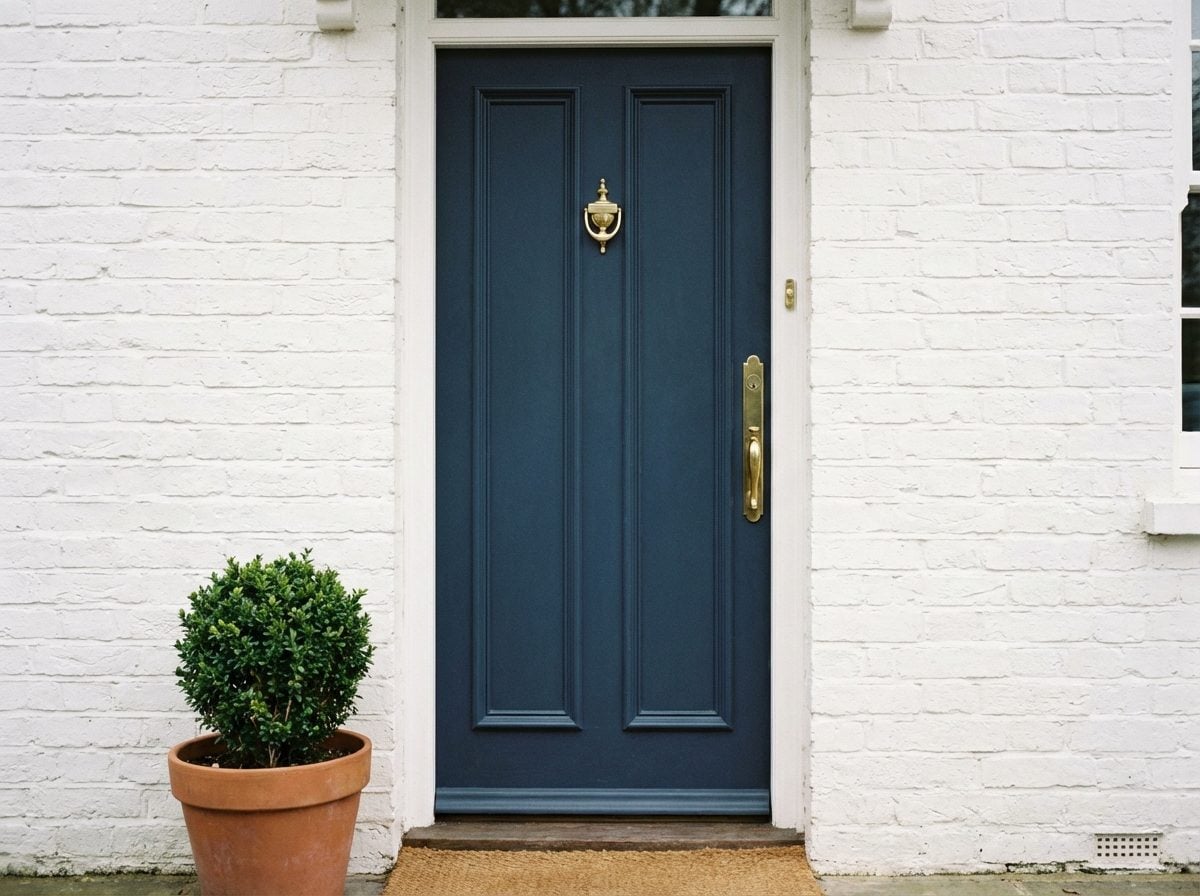
Color hits the brain before any conscious thought forms. By the time you’ve processed what you’re looking at, your emotional response to its color is already done. This is why the wrong front door color doesn’t just look off, it can actually create low-level unease in a visitor before they’ve rung the bell.
What the Research Tells Us
Red is the most discussed front door color in psychology circles, and its effects are genuinely double-edged. Color psychology research on entry door symbolism notes that red carries simultaneously warm associations, energy, vitality, hospitality, and alerting ones, since the same hue is used universally in stop signs, warning signals, and danger markers. What determines which emotional register it activates depends almost entirely on context: the surrounding trim color, the architectural style of the home, the lighting conditions, and the shade of red itself. A deep, muted crimson on a Georgian home reads as confidence. A bright, traffic-cone red on a beige suburban ranch reads as… something else.
Colors that consistently produce a mild threat or “approach with caution” response tend to be those that feel contextually wrong rather than inherently bad. An intensely saturated color that clashes with its surroundings forces the brain to work harder to reconcile the visual information. That extra cognitive effort registers as mild discomfort, a feeling the visitor can’t quite name but will absolutely carry across the threshold with them.
Why Clutter at the Entry Does Something Surprising to a Guest’s Nervous System
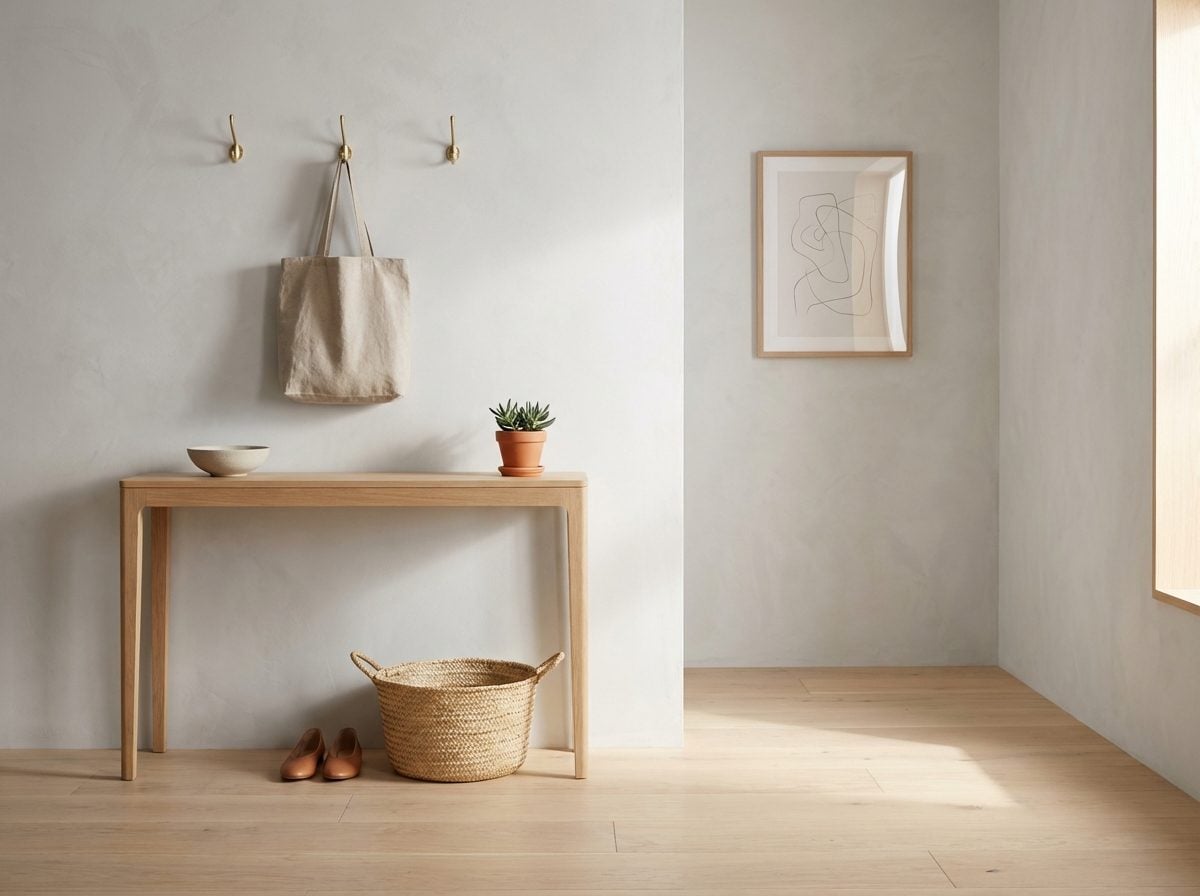
You’ve adapted to it. Your nervous system has filtered it out. But your guest hasn’t, and theirs hasn’t either, and the pile of shoes, the wall of coats, the stack of mail on the console table is landing in their brain as something their body registers as low-grade threat.
A 2024 Psychology Today article on clutter and cortisol synthesizes research showing that cluttered environments are directly linked to elevated levels of cortisol, the body’s primary stress hormone. The brain’s evolutionary scanning system, still wired for threat detection, reads visual chaos as “something needs attention here.” It’s not a saber-toothed tiger, but the autonomic response is the same flavor of alarm: mild, persistent, and draining. Research cited by Nuvance Health explains that when multiple visual stimuli compete for attention simultaneously, they literally compete for neural representation in the visual cortex, splitting focus and increasing cognitive load.
For a guest who enters an entryway dense with objects, this cognitive overload happens in the first ten seconds of arrival. They haven’t even taken their coat off. And because this stress response is unconscious, they won’t attribute it to the shoes by the door, they’ll just feel vaguely unsettled and not know why. The entryway is the brain’s first read of what the whole home will demand of it. A clear, intentional foyer signals: you can relax here. There’s nothing to process. You’re safe.
The Transition Ritual That Every Welcoming Home Unconsciously Provides
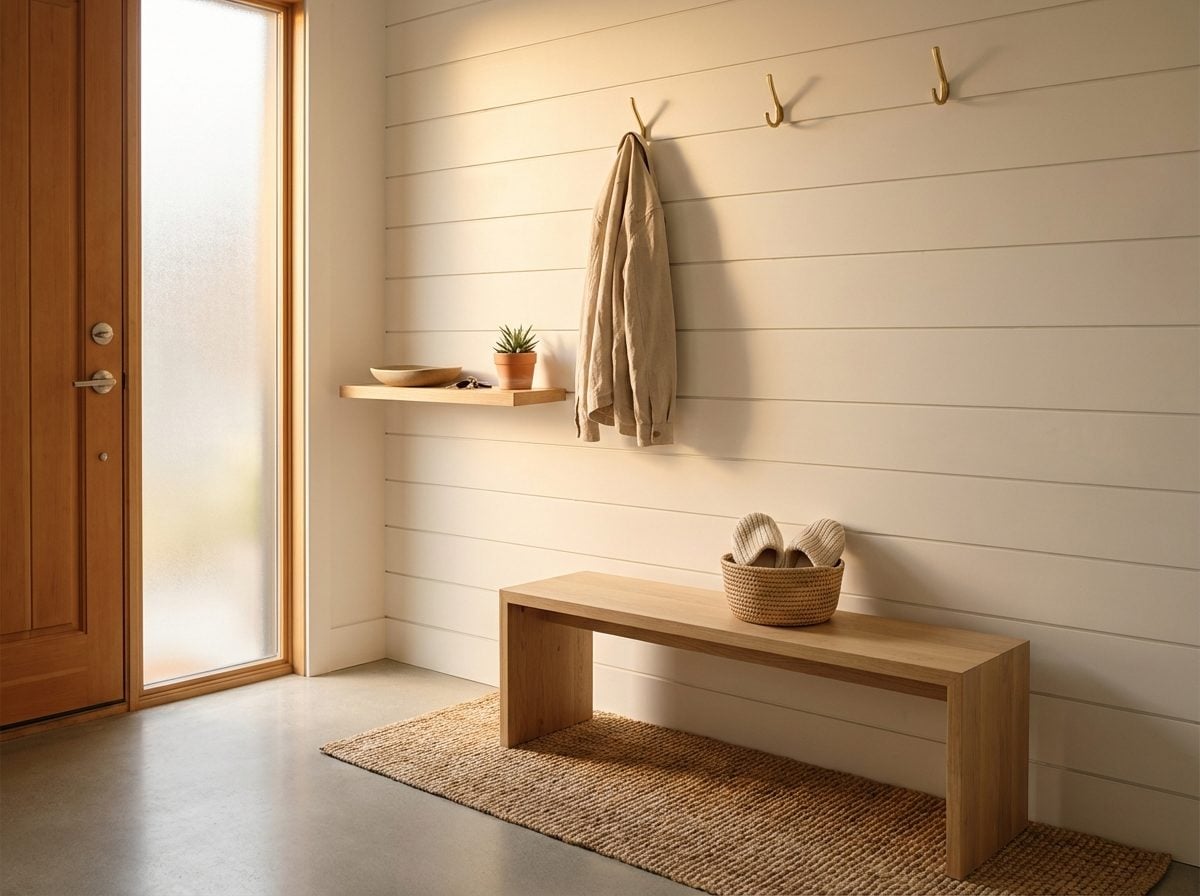
Anthropologists call it a “threshold moment”, the psychological act of moving from one world into another. Crossing a front door is never purely physical. It’s a mental decompression, a shedding of the outside, an entry into a different social mode. The question is whether your foyer helps that transition happen, or whether it short-circuits it entirely.
Think about the homes you’ve walked into that immediately felt right. There was almost certainly a moment, brief but distinct, where something slowed you down. A step up to a raised console to set your keys down. The gesture of removing your shoes and finding a basket for them. A hook waiting for your coat. These aren’t accidents of layout. They’re transition cues: small physical actions that help the nervous system downshift from “outside world” to “guest mode.” Research on the sociology of home and olfactory belonging describes how domestic spaces function as distinct sensory environments that the body reads as a signal to shift behavioral and emotional registers, and that cues must exist within the entryway itself to initiate that shift.
A home that lacks these cues, that opens directly into the living room with nothing to anchor the transition, leaves guests in an awkward in-between state. They’re inside, but they haven’t fully arrived. They’re holding their coat, looking for somewhere to put it, standing just inside the door with the mild social anxiety of someone who doesn’t yet know what’s expected of them. That disorientation doesn’t disappear. It just goes underground.
What Interior Designers Know About ‘Landing Zones’ That Most Homeowners Don’t
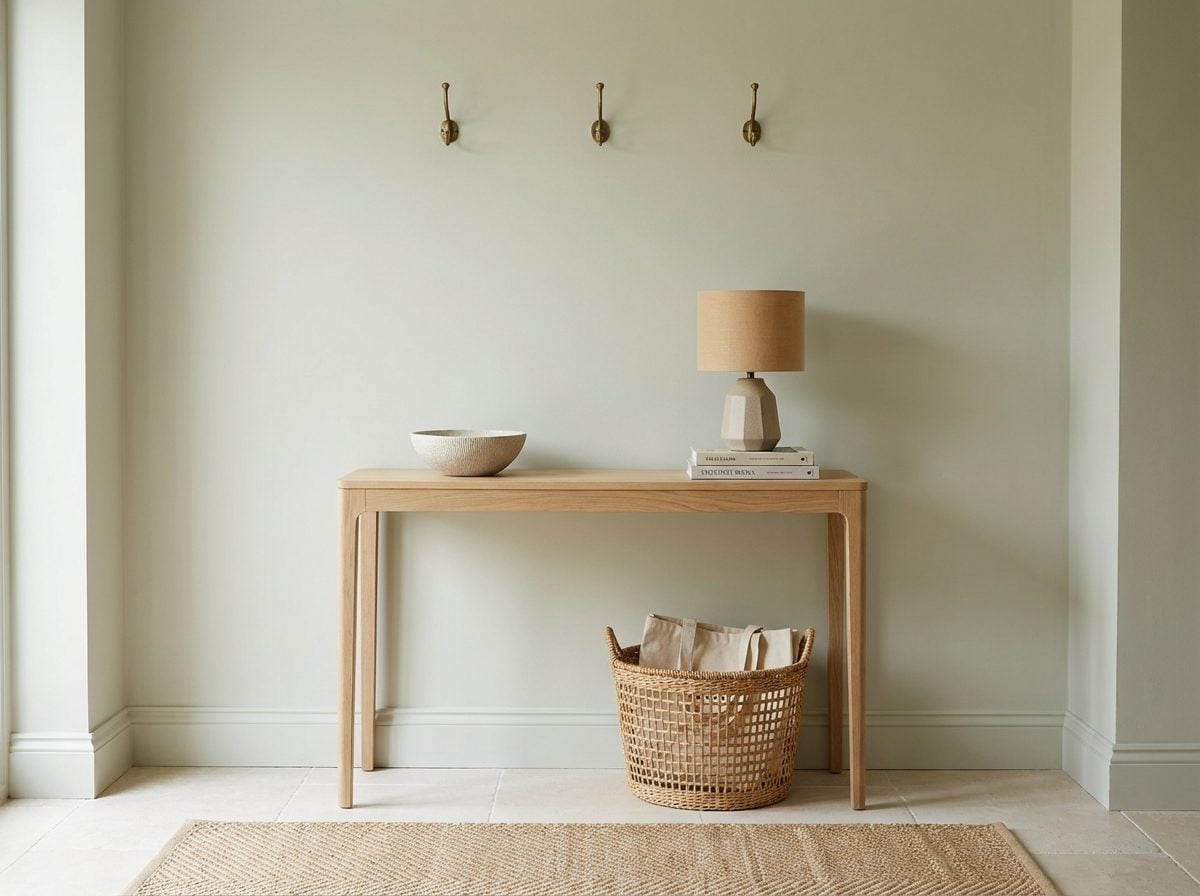
Every professional interior designer working on a residential project will think about the entry the same way an architect thinks about a lobby: as a system, not a room. The question isn’t “what looks good here?”, it’s “where does everything go?”
A landing zone is any surface or designated area in the entryway that gives arriving guests a place to physically set something down. A bag. A coat. Their keys. Their shoes. These aren’t decorating details, they’re functional accommodations that signal, at a primal level, that a host anticipated the guest’s needs before they arrived. Neuroscience research on environmental processing suggests that when the brain enters an unfamiliar space, it immediately begins cataloguing where things can be placed, where exits are, and whether the environment can accommodate the person’s needs. A well-designed entry answers those questions instantly and lets the brain move on.
- The surface: A console, shelf, or bench at arm height gives guests a place to deposit belongings without bending or searching. Even a 10-inch-deep shelf does the job.
- The hook: A coat hook at shoulder height, within arm’s reach of the door, tells a guest their coat has a place, and that you thought about this before they arrived.
- The floor anchor: A basket, tray, or defined mat area tells guests where shoes go without anyone having to say it. The implication of order communicates welcome far more powerfully than any decoration.
Interestingly, AI-powered home design tools are increasingly flagging the absence of functional landing zones as a top usability flaw in foyer designs, which suggests that even algorithmic systems have absorbed the principle that human arrival needs accommodation, not just aesthetics.
The Subtle Symmetry Trick That Makes a Narrow Entryway Feel Like an Embrace
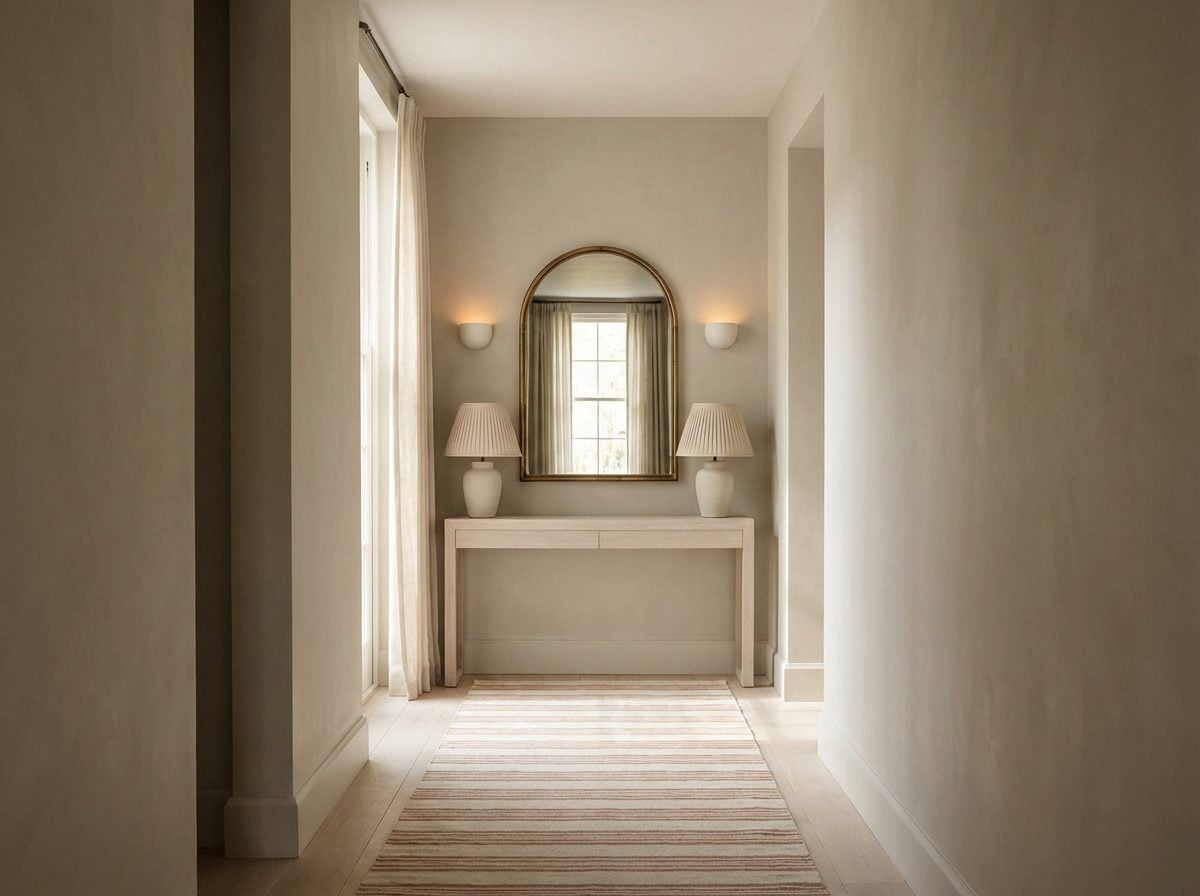
Narrow entryways make most homeowners reach for mirrors to visually expand the space. That’s not wrong, but it’s only half the equation. The more interesting intervention is symmetry, and the psychological reason it works goes deeper than aesthetics.
Research published in Scientific Reports found that adults detect symmetrical visual displays faster and more accurately than asymmetrical ones, and remember them better, with neuroimaging showing that symmetrical visual patterns elicit measurably more activation in the visual cortex. More relevantly for interior design, space psychology research on symmetry in interior architecture describes how the brain processes symmetrical arrangements with significantly less cognitive effort, producing what psychologists call “cognitive fluency”, a sense of ease and rightness that feels pleasant without the viewer knowing why.
In a narrow foyer, two identical sconces flanking a console, or matching hooks on either side of a door, activate this fluency response the instant someone steps inside. The brain reads the space as intentional, ordered, and, here’s the key part, designed for arrival. A space that reads as designed for arrival feels, at a gut level, like it was designed for you. That’s the difference between a corridor you walk through and a threshold that actually welcomes you. The embrace isn’t physical, it’s neurological.
Why Guests Remember How Your Entryway Made Them Feel, Not How It Looked
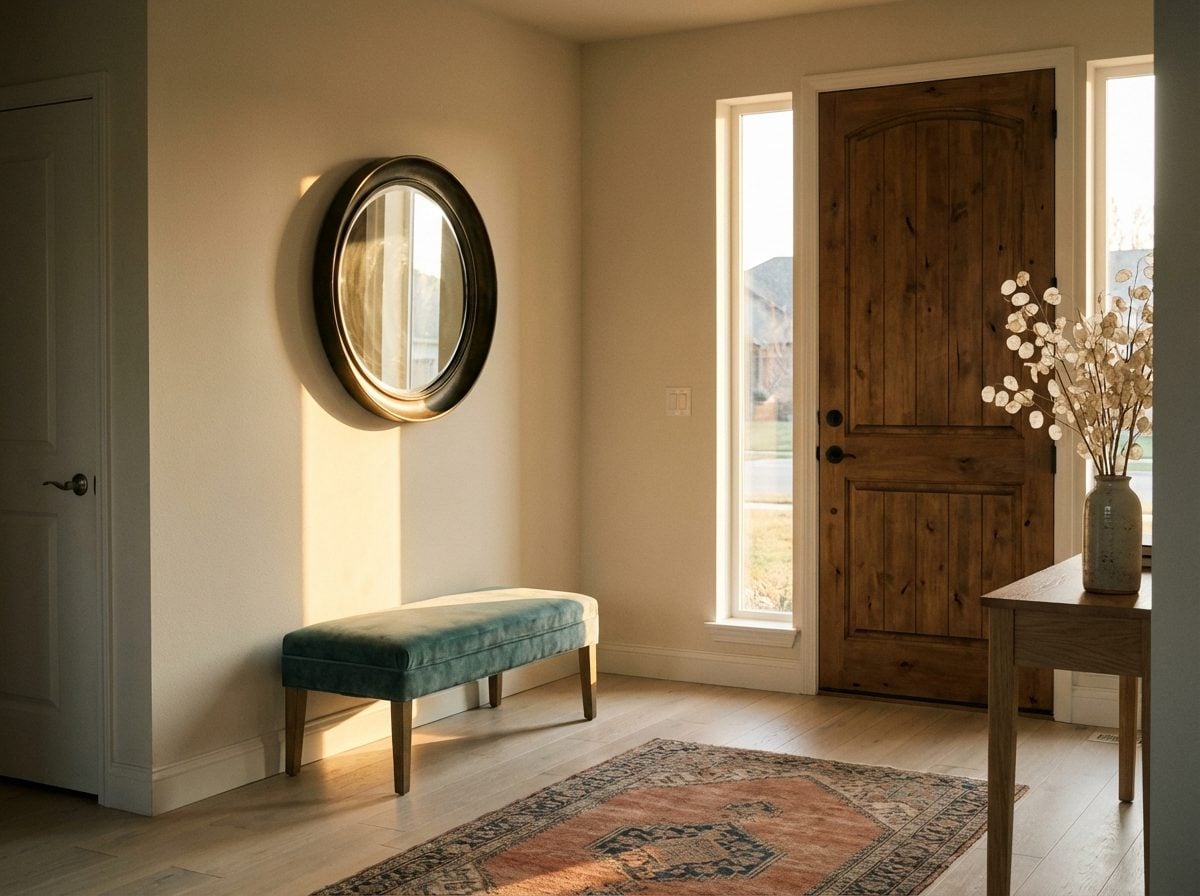
Describe your last visit to a friend’s home. Go ahead. You probably remember whether it felt warm or awkward, whether there was somewhere to put your things, whether you felt like an anticipated guest or an improvised one. You may not remember the paint color. You almost certainly don’t remember the hardware on the coat hooks.
This is memory working exactly as it should. Emotion encodes experience. The emotional valence of arriving, welcomed, comfortable, seen, is the thing that survives in memory long after the visual details have faded. This maps directly to what psychologists call the “peak-end rule,” the well-documented finding that people judge experiences primarily by how they felt at their most intense moment and at the end, not by a careful average of the whole. The entryway is not the end of a visit, but it is absolutely the beginning, and beginnings prime everything that follows.
When a foyer has nowhere for a guest to sit, hang a coat, or set something down, it sends a silent message that visitors aren’t truly expected. A welcoming entryway gives people a place to land, and without that, guests feel like an afterthought before they’ve even stepped inside. The furniture, the scent, the lighting, the visual order, none of it works in isolation. What works is the cumulative signal they send together: you were thought of. You were expected. You are welcome here. That’s the message a well-designed entryway delivers before a single word is spoken. And it’s the one your guests will carry home with them.
The Bottom Line
The mistake is this: an entryway with nowhere to set anything down, nowhere to sit, and nothing that signals a human being actually lives there tells guests, below the level of conscious thought, that their arrival was not anticipated. It doesn’t matter how warm your greeting is or how beautiful the rest of your home looks; the entryway has already spoken. So before your next guest walks through the door, add one surface, one hook, one small sign of preparation, because welcome is not a feeling you express, it’s one you design.