🔥 Would you like to save this?
A guest decides who you are in about seven seconds. Before you offer coffee. Before you say a word. And more often than not, the thing doing the talking is your couch.
Sofas are the loudest quiet object in any home. The shape broadcasts how you handle power. The upholstery leaks your relationship with money. A sunken cushion, a floating placement, a pile of pillows arranged with military precision, each one hands a stranger a small confession you never meant to make.
In order to come up with the very specific design ideas, we create most designs with the assistance of state-of-the-art AI interior design software. Also, assume links that take you off the site are affiliate links such as links to Amazon. this means we may earn a commission if you buy something.
We dug into the research on spatial psychology, color response, and first impressions to figure out exactly what people read off a sofa, often correctly, usually unconsciously. Some of these you’ll recognize in your own living room immediately. One or two might make you rethink where that couch is sitting right now. Keep going. The one about the red sofa catches almost everyone off guard.
15. The Sofa Shape That Tells Strangers You’re In Charge
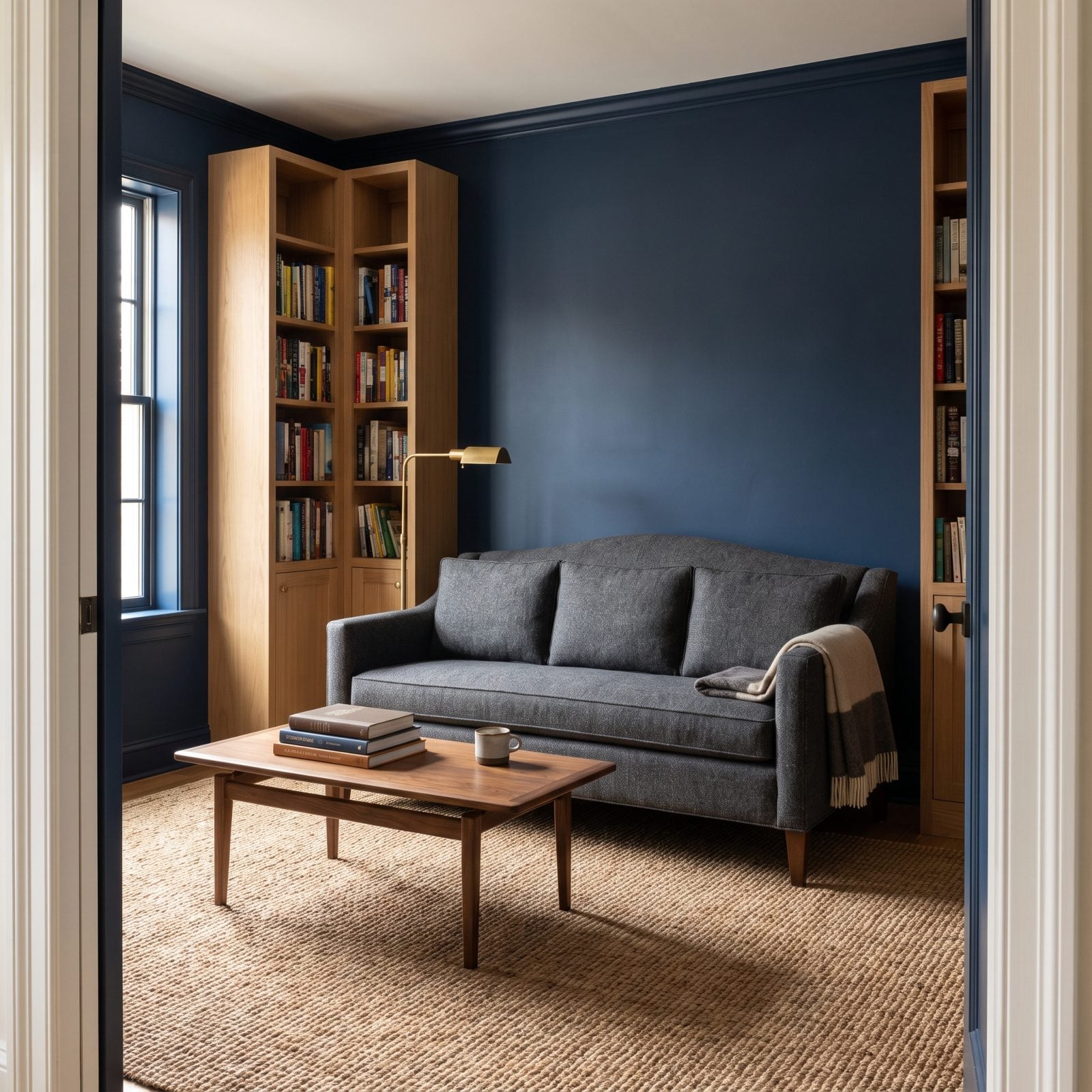
Walk into a room with a high-backed, tight-lined sofa, arms squared off, cushions that don’t give an inch, and your body reads it before your brain catches up. Upright furniture reads as upright people. A tall back and firm structure borrow the same visual grammar we use for posture, and posture is one of the first things we scan for dominance.
Camelback frames and tuxedo silhouettes do this best. The straight arms, the symmetry, the refusal to slouch. These are the shapes that end up in law offices and the studies of people who like to be taken seriously. According to (Source), we read furniture the way we read faces, assigning it a character on sight. A structured camelback sofa isn’t asking you to relax. It’s asking you to sit up.
14. Why a Sunken, Lived-In Cushion Earns More Trust Than a Firm One
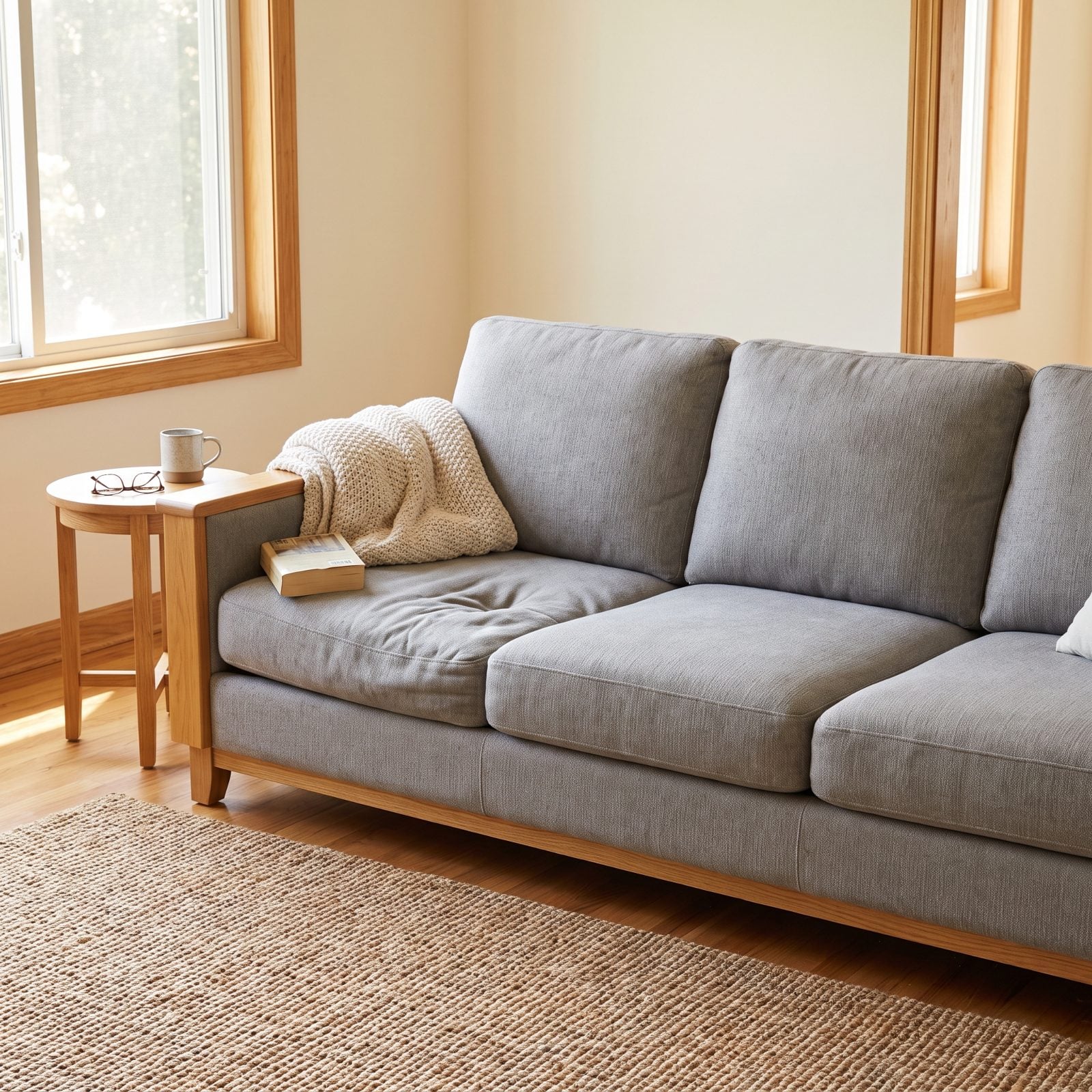
The cushion with the dent in it tells the truth. A sofa that still looks like the showroom says nobody has committed to it yet. A seat with a soft hollow worn into the left side, the side near the window, the side with the good reading light, says this is where a life actually happens.
We read wear as evidence. (Source) points out that imperfections work as proof. A scratch, a worn edge, a softened seat. They signal that something has been used and cared for, not staged for a photo. The pristine sofa makes guests perch. The lived-in one invites them to drop. You trust a house that has clearly been lived in the way you trust a restaurant with a worn-smooth doorknob. Somebody’s been here. It was good enough to come back to.
13. The Upholstery Color That Reads as ‘Old Money’ to Everyone Who Walks In
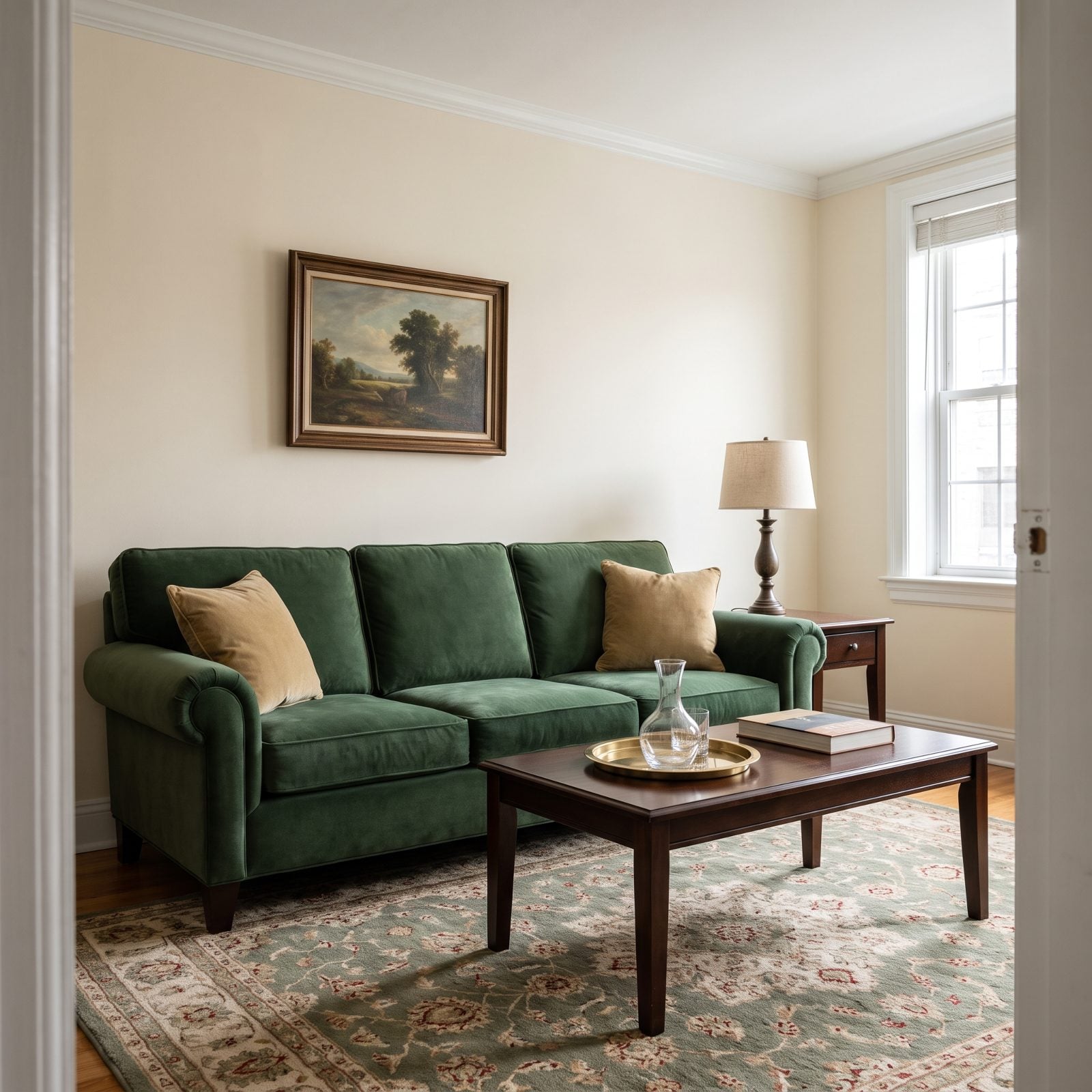
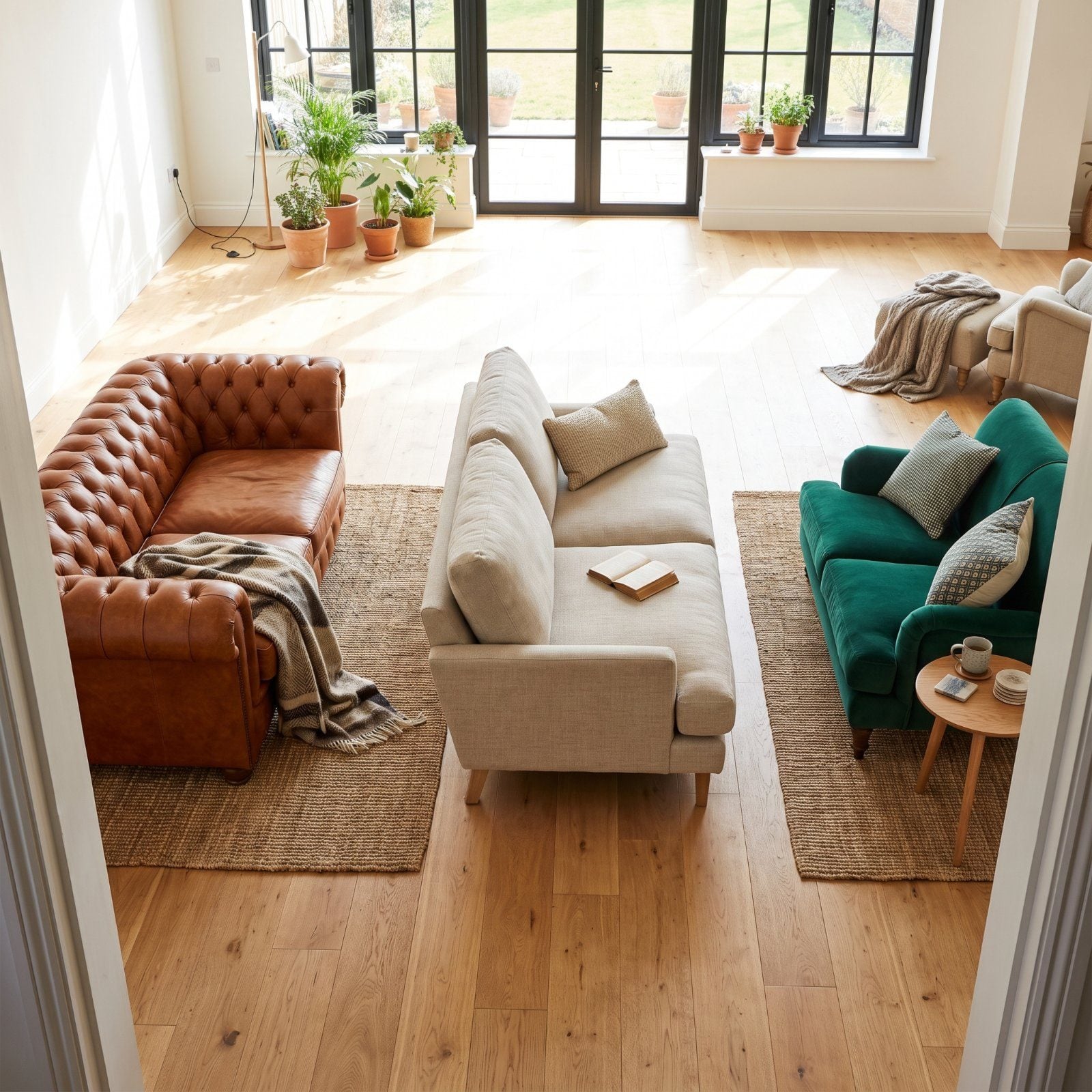
It’s deep green. Specifically the muted, slightly grayed forest and hunter tones that look like they’ve been in the family since before anyone asked where they came from.
Green carries a quiet double signal that almost no other color pulls off. It reads as calm and natural, and it reads as money, all at once. (Source) notes that green is tied to wealth, abundance, and prosperity, which is why emerald velvet and forest tones read as sophisticated rather than loud. The trick is restraint. A deep green sofa doesn’t announce itself the way a red one does. If you like a louder statement, there are red sofa designs that do the opposite job entirely. But forest green velvet whispers. And whispering, in the language of status, is the whole point.
12. What the Pillow Arrangement Reveals About How Your Brain Handles Chaos
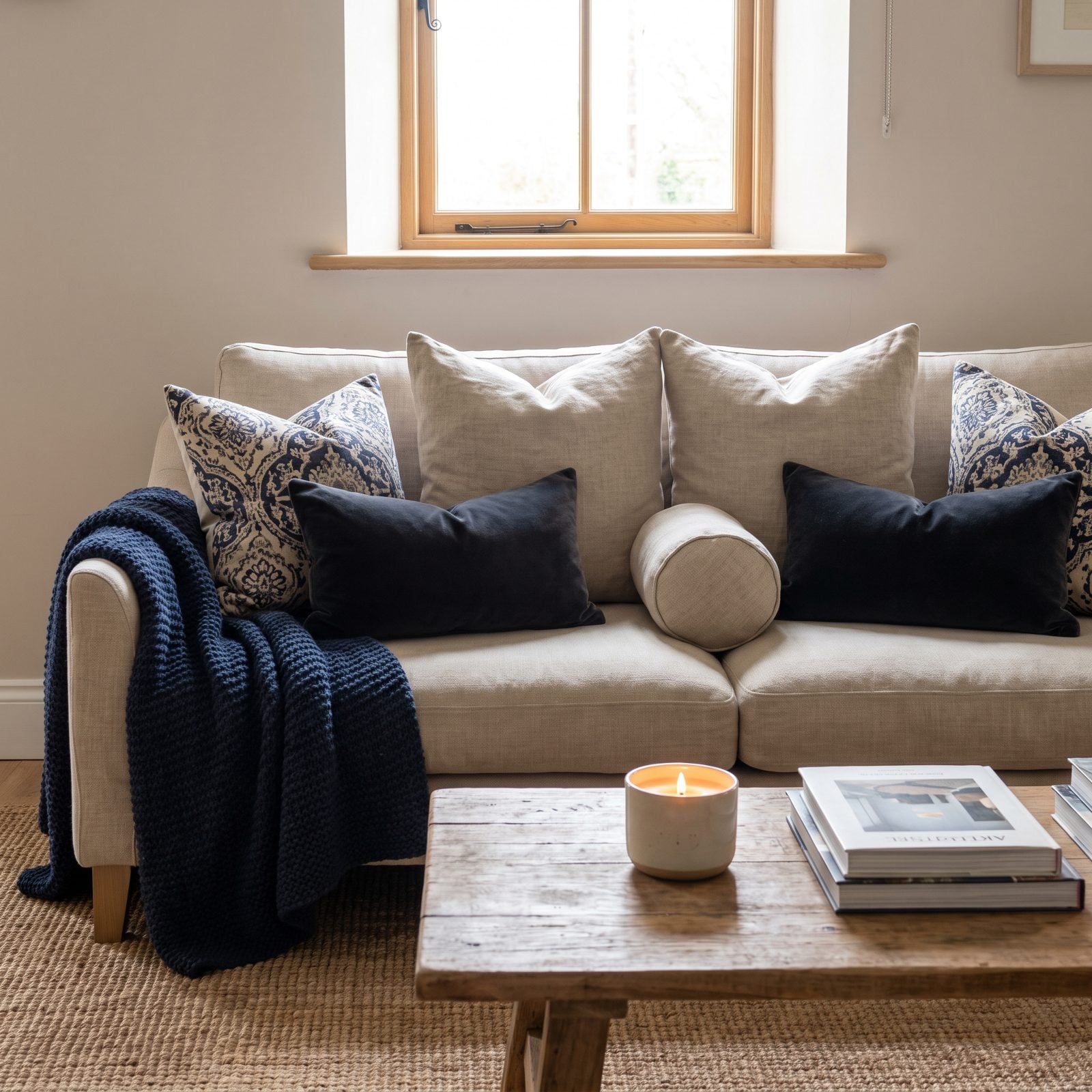
Count the pillows. Then look at how they’re placed. Two matching pillows squared into the corners is a brain that keeps its desktop clean. A pile of seven in four patterns, karate-chopped and layered front to back, is a brain that finds order inside abundance rather than inside emptiness.
Neither is better. They’re just different operating systems. One person calms down by removing stimulus. The other calms down by surrounding themselves with texture and color, because a bare sofa reads to them as unfinished. (Source) explains that layered textures engage us on a subconscious level and can be used to build a specific mood, which is exactly what the pillow maximalist is doing on purpose. The minimalist reads the same pile as cognitive load. Same couch, two nervous systems, both soothing themselves the only way that works.
11. The Low-Slung Silhouette That Signals You Have Nothing to Prove
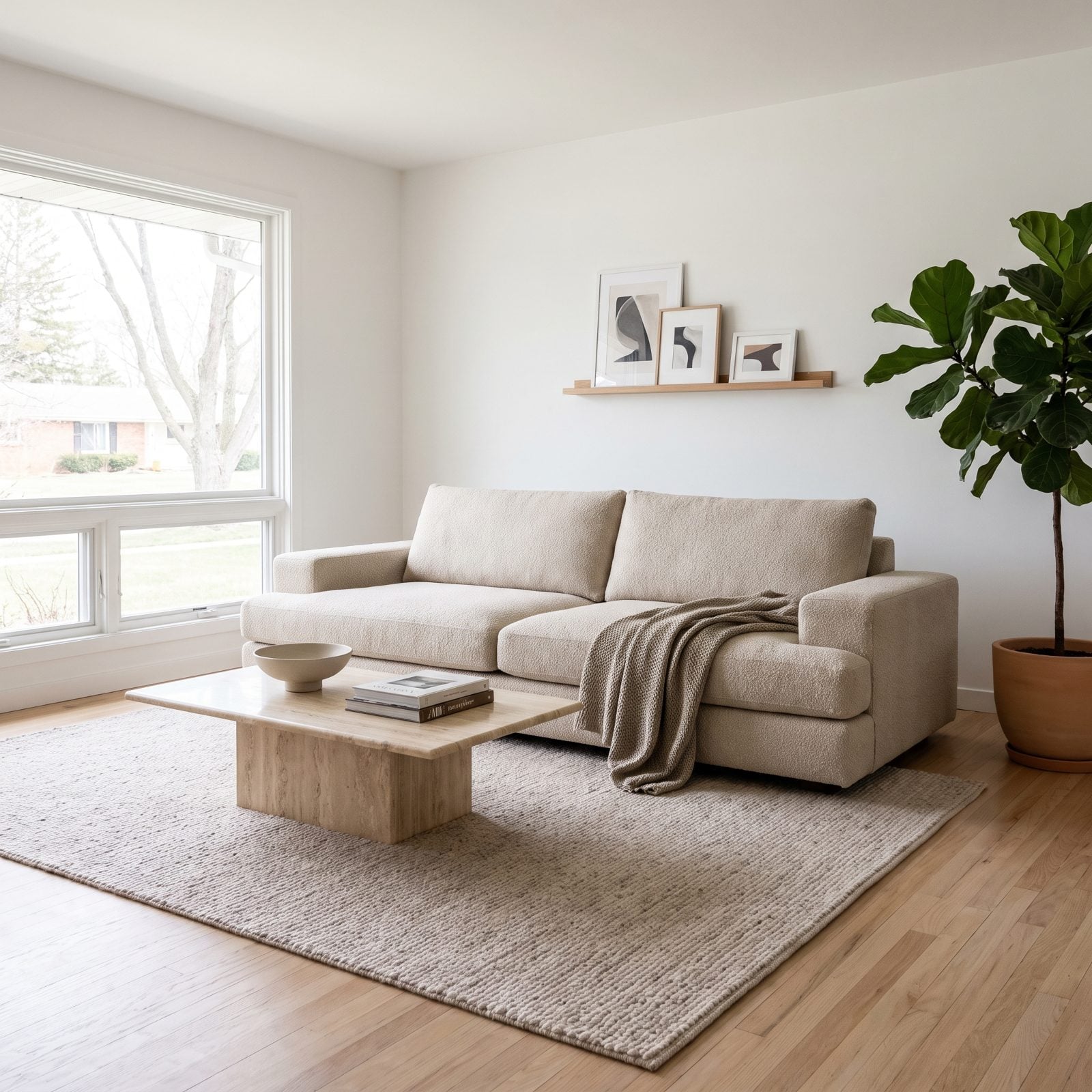
Low sofas are a flex that pretends not to be one. The deep-seated, floor-hugging Italian frame, the kind you lower yourself into rather than sit on, quietly says comfort matters here more than formality. It skips the posture game entirely.
There’s a reason these shapes read as confident. A tall, structured sofa is performing readiness, always a little braced for a guest. A low one has stopped bracing. The craftsman sofa tradition leaned into this same grounded, horizontal calm decades before Italian modernism made it a status symbol. (Source) found that cool, settled environments consistently score higher on preference, and a low horizontal line does the same thing a cool palette does. It drops the room’s shoulders. A low-profile deep-seat sofa tells visitors you’d rather they sink in than sit up straight.
10. Why Leather Makes People Assume You Make More Decisions Alone
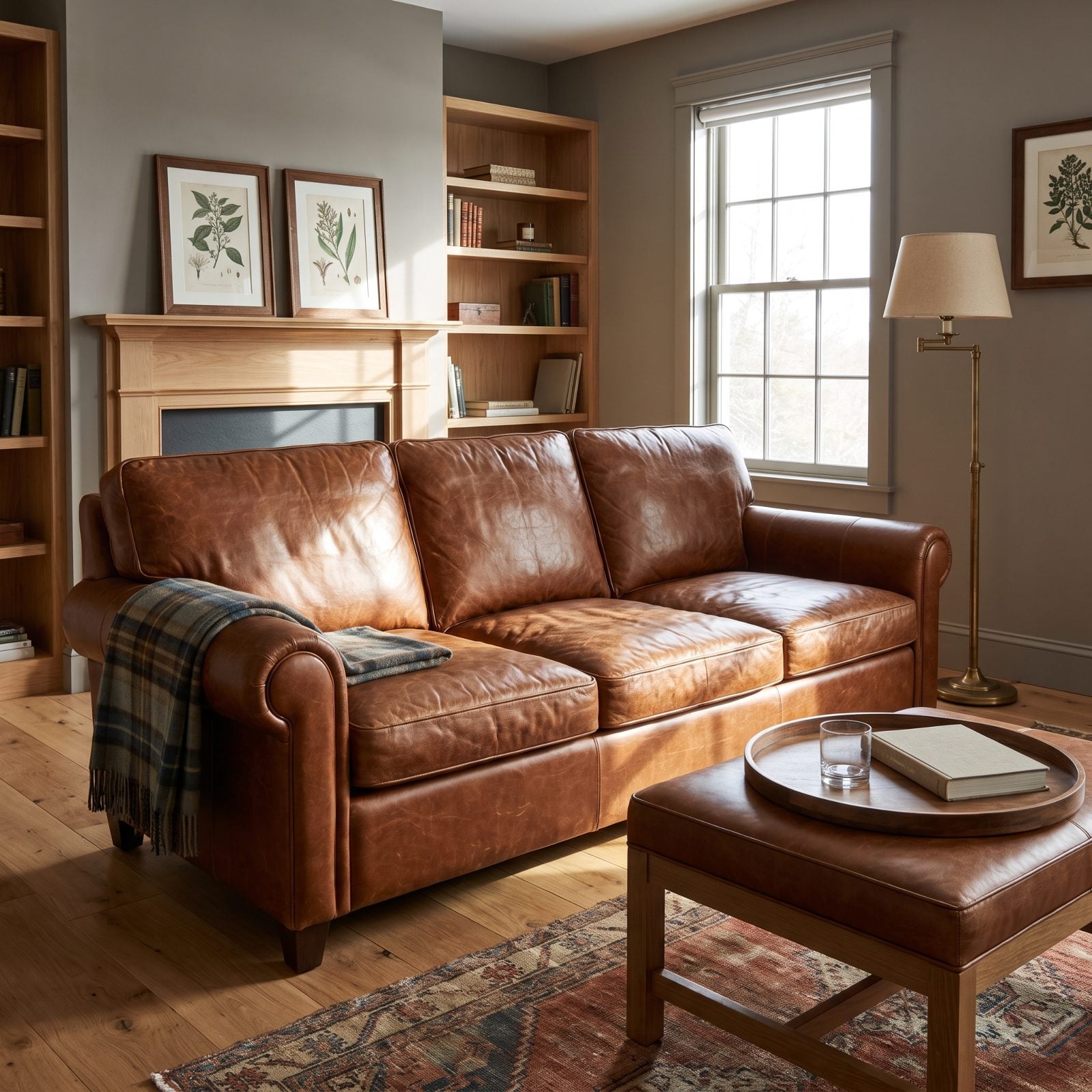
Leather reads as a one-person call. Fabric gets chosen by committee. Leather gets chosen by somebody who knew exactly what they wanted and didn’t take a vote.
Part of it is permanence. (Source) notes that durable, lasting materials instill a sense of reassurance and permanence, a feeling of stability in the home. Leather is a bet on the long haul. It ages into itself instead of wearing out, which signals a person who thinks in decades, not in redecorating cycles.
The other part is the cool-over-soft contrast. A velvet sofa invites. A cognac leather sofa holds its line. It’s the material equivalent of someone who’s comfortable being a little unapproachable, and perfectly happy with their own company.
9. The One Placement Mistake That Makes a Room Feel Emotionally Guarded
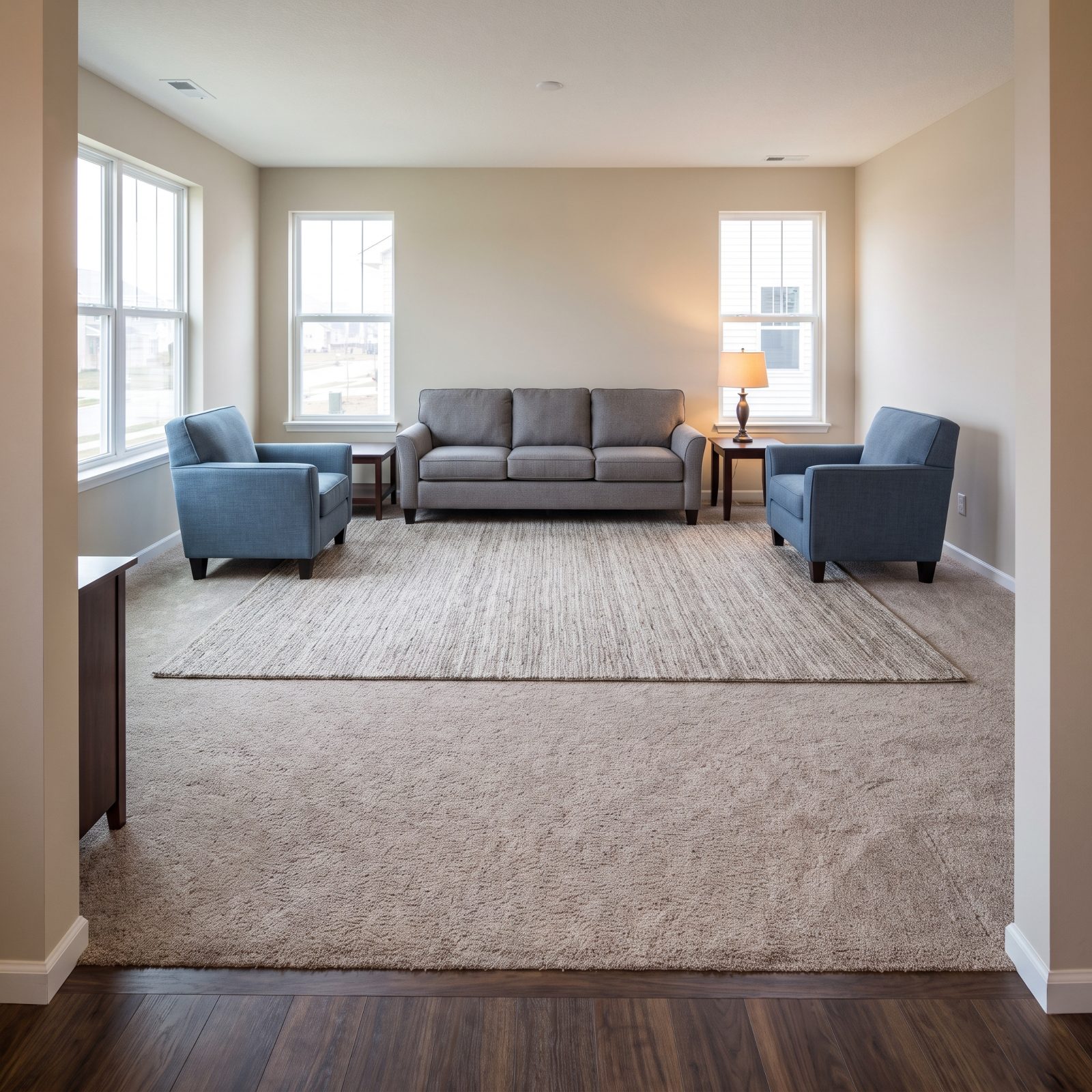
You’ve walked into it. The sofa shoved flat against the longest wall, every chair backed up to the perimeter, a wide dead zone of empty floor in the middle. The room looks tidy and feels like a waiting area.
Environmental psychologists have a name for this. It’s a sociofugal layout, a term tied to psychiatrist Humphry Osmond’s mid-century work in institutions. As we covered in our piece on design choices that erode connection, sociopetal seating orients furniture so people can face one another, while sociofugal seating points them away and quietly shuts conversation down. Osmond’s colleague Robert Sommer proved the fix: pulling furniture off the walls into small clusters raised social interaction all on its own.
The wall-hugging habit feels safe. It reads as guarded. When every seat faces out, you’ve built a room that keeps people at arm’s length without ever saying so. Pull the sofa in a foot. Angle a chair toward it. Watch the room exhale.
8. The Velvet That Makes Visitors Want to Stay Twenty Minutes Longer
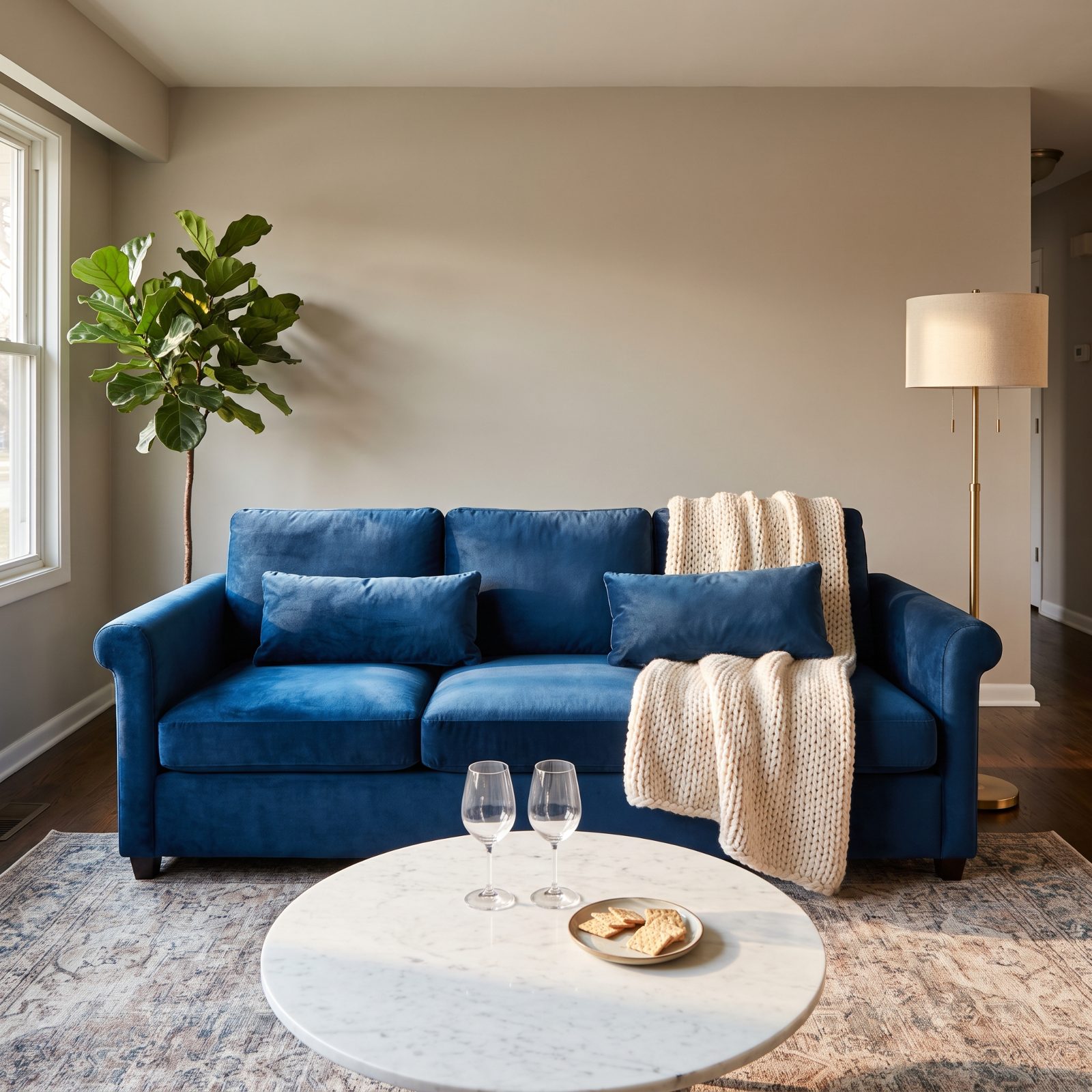
There’s a reason hotel lobbies run on velvet. People sit down on it and forget to leave.
It starts in the hand before it starts in the head. (Source) explains that soft, pleasant textures increase feelings of comfort and security and have been shown to promote more positive social interactions, because touch signals are processed in the same brain regions that handle emotion. Velvet’s dense pile hits the somatosensory cortex as pure softness. Your guest’s nervous system relaxes before the conversation even warms up.
Hospitality designers know this cold. A velvet sofa or chair, as noted in (Source), invites guests to touch their surroundings and encourages them to linger. Pair a sapphire velvet sofa with a soft chunky knit throw and you’ve built a seat people have to talk themselves out of. The third glass of wine gets poured. Nobody’s checking the time.
7. What a Spotless White Sofa Quietly Announces About Your Private Life
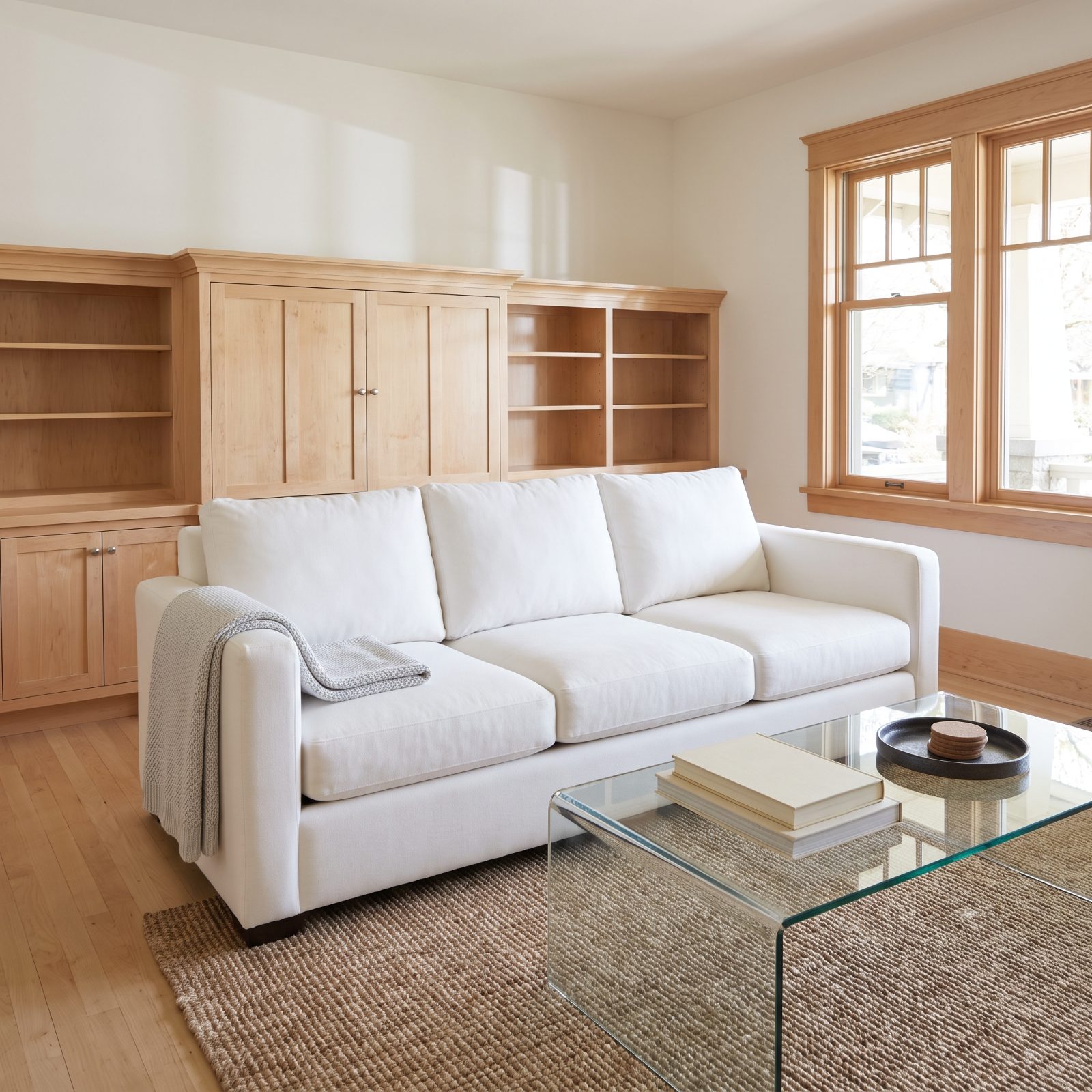
A white sofa with no coffee stain, no dog hair, no faint grey smudge where a hundred hands have rested on the arm, says one thing before it says anything else: nobody is allowed to relax here without permission.
That reads as discipline. And discipline is the point. White upholstery is a standing dare to entropy, and keeping it clean takes the kind of daily vigilance most people reserve for their inbox. Psychologists who study living spaces found that strangers sent into a person’s rooms with no other information could guess personality traits like conscientiousness almost as accurately as close friends, just from the objects and the order. Source
So the white sofa isn’t really about the sofa. It’s a signal of control over the small chaos of ordinary life. Some of us read that as calm. Some read it as a house holding its breath. If you want the look without the vigilance, a cream sofa ideas palette in a performance ivory bouclé sofa forgives a lot more than flat white cotton ever will.
6. The Tiny Loveseat Choice That Points to a Sharper Mind Than You’d Think
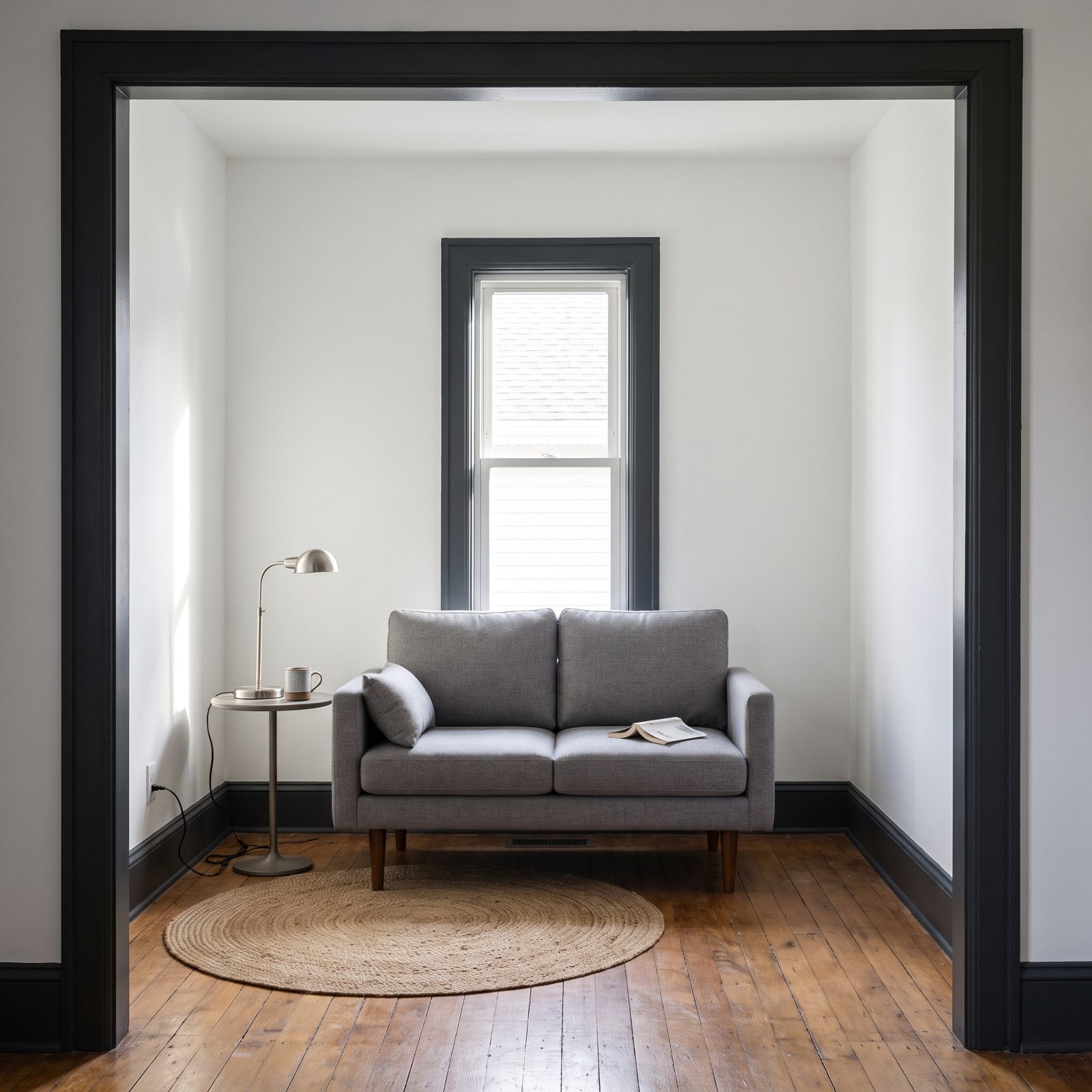
Everyone assumes the small sofa is a compromise. The apartment was tight, the budget was tighter, settle for the loveseat. Sometimes. Often, though, the small sofa is a decision, and a shrewd one.
A loveseat sets a cap on the room. Two people, close, facing in. It rejects the sprawling sectional that invites a crowd and quietly says this space is for conversation, not an audience. Research into living-room seating going back to a 1988 study links the placement, amount and type of seating directly to how extroverted someone is, which means the furniture is doing social math whether you meant it to or not. Source
Choosing less seating on purpose is a kind of editing. It takes confidence to leave room empty. In a small footprint, a well-scaled tiny sofa designs approach beats a crammed-in sectional every time, and a slim walnut-leg loveseat reads as intentional rather than apologetic.
5. Why a Sofa Facing the Door Calms Some People and Unnerves Others
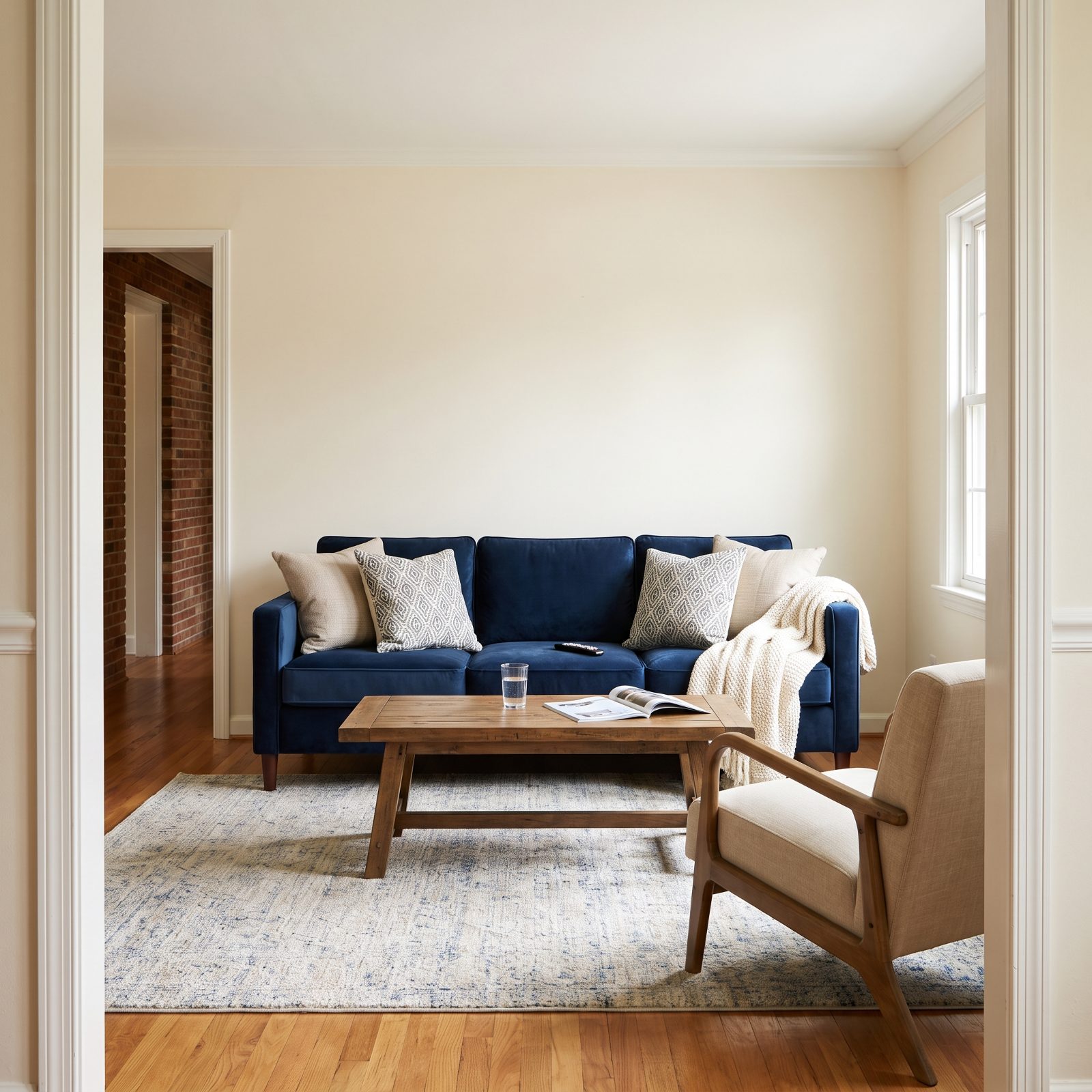
Turn your back to the entrance and something in you stays half-alert all evening. You might not name it. Your nervous system names it fine.
Geographer Jay Appleton called this prospect-refuge theory back in 1975: we’re drawn to spots that give us a view of our surroundings while keeping our back protected, the way our ancestors favored a cave mouth looking out over the valley. Source A sofa that faces the door delivers exactly that. You see who comes in. Nobody surprises you.
But there’s a catch, and it’s why the same layout unnerves people. A 2026 study found that when a seat left occupants exposed to activity behind them, feelings of insecurity jumped by sixty-seven percent even when they reported concentrating well. Source So facing the door soothes the person sitting on the sofa. The guest seated with their back to it feels watched and vaguely cornered without knowing why.
The person who always claims the seat facing the door isn’t being difficult. Their body is running a very old program.
4. The Worn Vintage Piece That Reads as Confidence, Not Carelessness
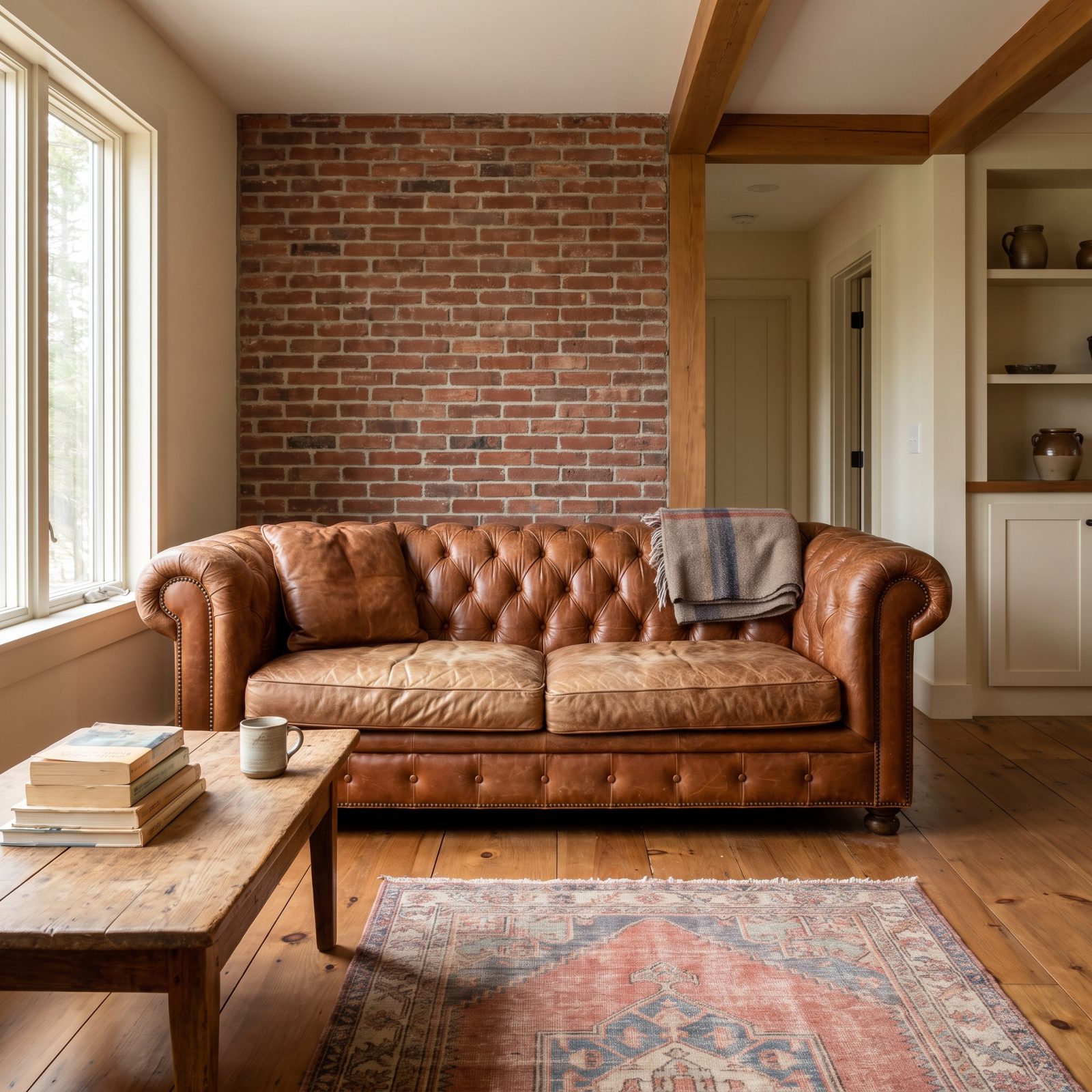
A leather Chesterfield with cracked arms and a cushion that’s sunk into the shape of real use doesn’t look neglected. It looks like someone who has nothing to prove.
There’s a name for finding beauty in wear: the Japanese aesthetic of wabi-sabi, the appreciation of things imperfect, impermanent and incomplete. Writing for Forbes, a psychologist noted that even small acts of it, like using a worn journal or a chipped pan, pull us toward valuing authenticity over flawlessness. Source
The confidence it signals is social, too. A spotless showroom piece is trying to be read a certain way. A worn one has stopped performing. Research ties the drive for a flawless home to the anxious end of perfectionism, the fear that exposed flaws lead to rejection, so the person who lets a sofa age in plain sight is quietly opting out of that fear. Source That reads as ease. A patinated cognac leather Chesterfield or a inherited frame reupholstered once carries that story better than anything off the floor. See more vintage sofa designs that lean into age.
3. The Bold Red Sofa and the Personality Science Nobody Warned You About
🔥 Would you like to save this?
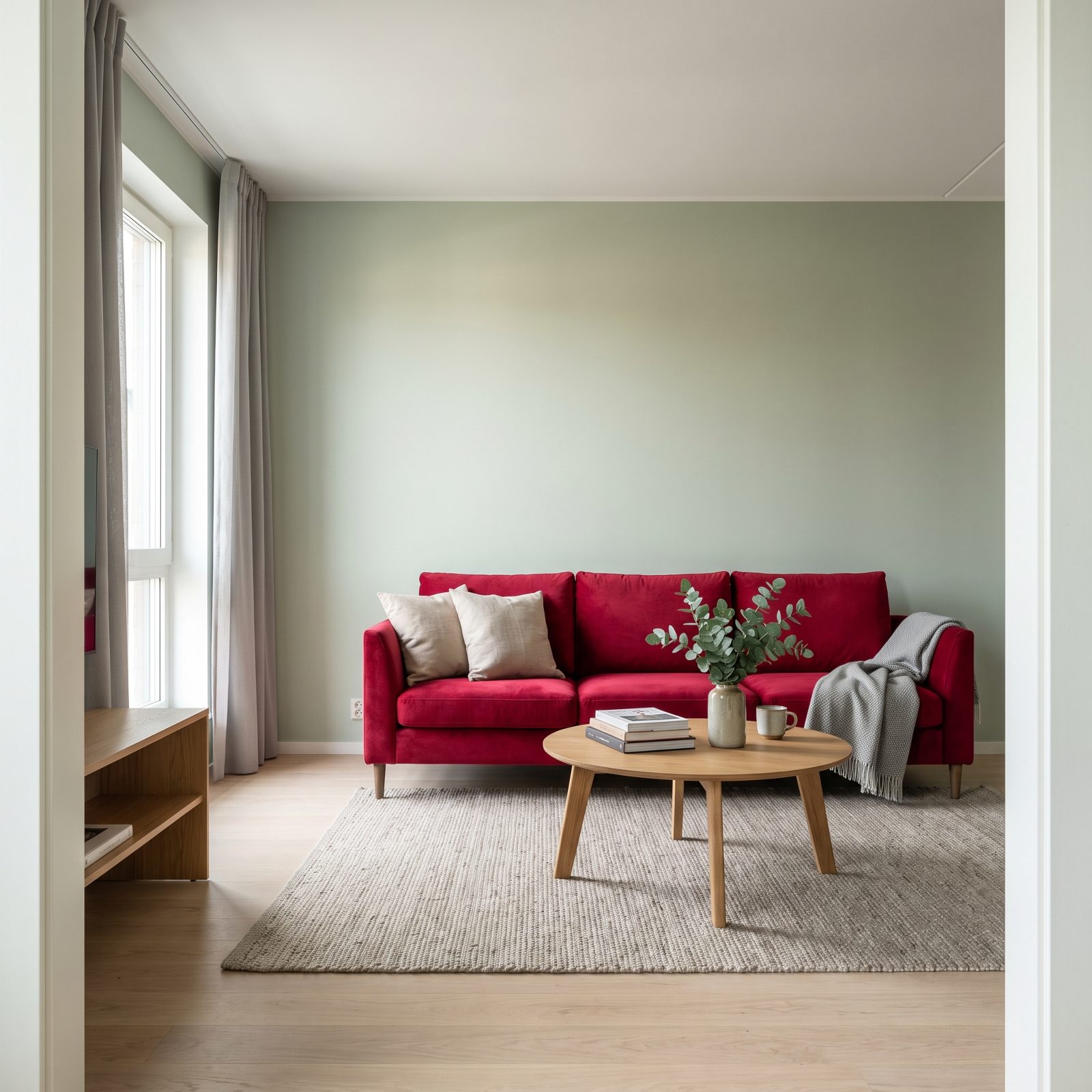
Put a red sofa in a room and watch where every eye goes first. That’s not taste. That’s wiring.
In a 2016 study, researchers showed people red, blue and green and measured three emotional responses. Red landed with the strongest effect of all, scoring high on both dominance, the sense of being in control, and arousal, the sense of being keyed up and alert. Source A later experiment found the red-dominance link runs so deep it’s implicit, firing before conscious thought even gets involved. Source
So a red sofa is a dominance cue parked in the middle of your living room. It announces the person who chose it isn’t angling to blend in. That’s not a flaw, it’s a stance, and it changes the temperature of a room the second a guest walks in. A velvet crimson velvet sofa pushes the effect hardest, since saturation amplifies the arousal response. For a calmer take, browse red sofa designs in a muted brick or oxblood instead of a true fire-engine red.
2. Why Matching Everything to the Sofa Signals a Need for Control
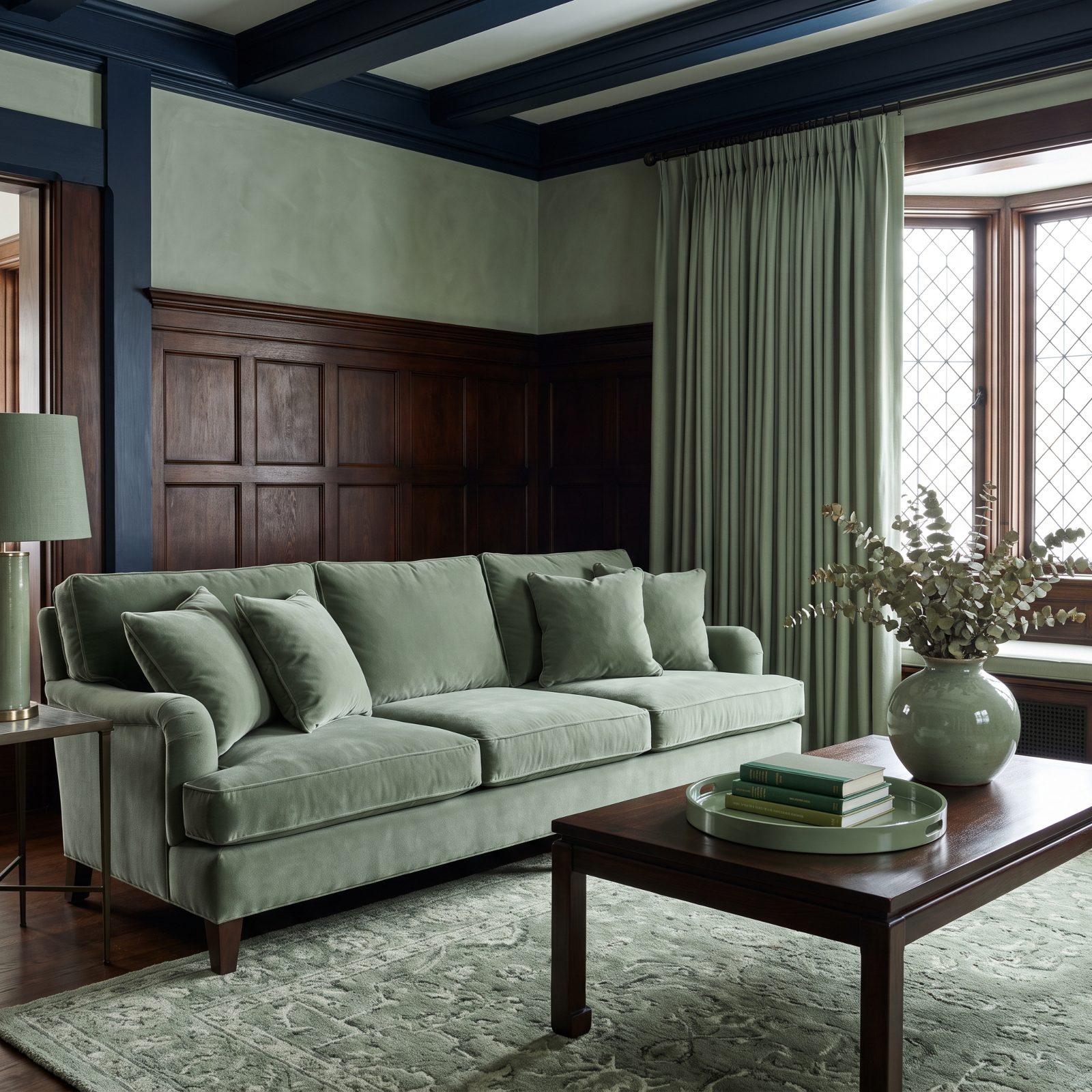
You’ve seen the room. The pillows pull a thread from the sofa, which matches the curtains, which echo the rug, which rhyme with the lampshade. Nothing is out of key. Nothing is out of place.
That hunt for total harmony isn’t random. Writing on why we choose the decor we choose, one account describes the home as the one place a person feels fully in control, where arranging and matching delivers reduced stress and a felt sense of stability. Source Matching everything to the sofa is that instinct turned up to its highest setting.
It overlaps with conscientious perfectionism, which research actually ties to higher well-being when it stays in the healthy lane. Source So the matched room isn’t a problem to fix. It’s a nervous system that calms down when the visual field agrees with itself. I’ll admit I find a perfectly matched set a little airless, like a room that won’t let you put your feet up. But that’s a taste, not a verdict. If you love the coordinated look, a light sofa in a tonal scheme is the most forgiving way to do it.
1. The Floating Sofa That Changes How Welcome People Feel Without a Word
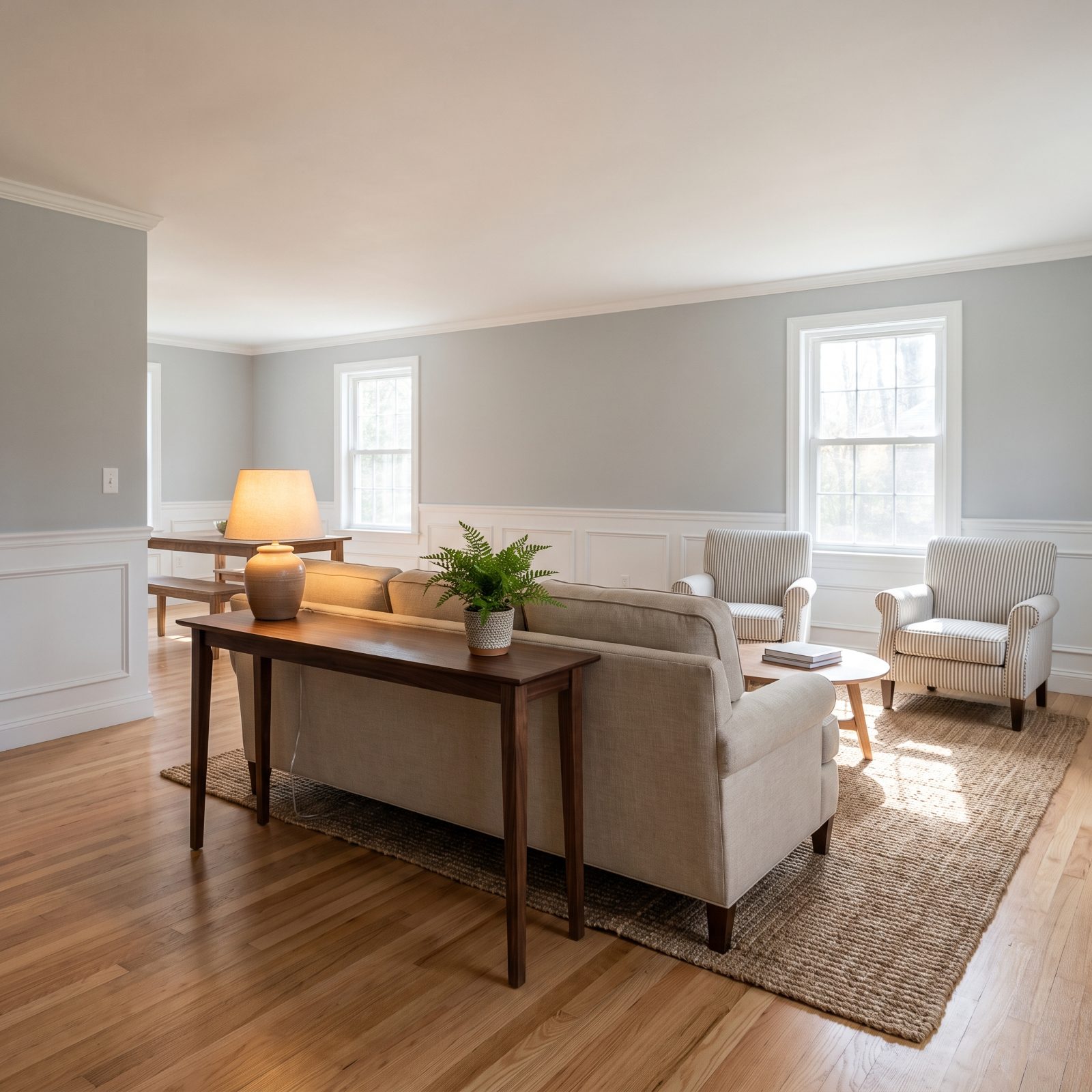
Push a sofa off the wall and into the middle of the room and you’ve done more than open up the floor plan. You’ve rewired the social contract of the space.
A sofa shoved against the wall says sit here, look out at the room, keep your distance. A floating sofa, pulled forward with a console or walkway behind it, turns the furniture inward and builds a conversation circle. It’s the difference between a waiting room and a dinner party. Living-room seating has been studied as a readout of social orientation since at least 1988, with the placement and arrangement of seating linked to how outward-facing and sociable a person is. Source
Floating the sofa also satisfies the prospect-refuge instinct from both sides, giving everyone a view of the room and a defined back edge, which is part of why a well-placed back-to-back console reads as generous rather than awkward. A floating arrangement works best when the sofa earns a finished back, so a slim console table behind it closes the composition. Pair it with a warm tan sofa ideas palette and the room starts inviting people in before anyone says a word.
The Bottom Line
Here’s what your sofa has been saying all along: it broadcasts how much control you need versus how much comfort you’re willing to let others see. The firm lines, the matched colors, the untouched cushions, they all tell people whether your home is a place to perform or a place to relax, and strangers read that signal in seconds. Walk into your living room tonight and sit where a guest would sit; whatever you feel in that moment is the message you’ve been sending without knowing it.