🔥 Would you like to save this?
There’s a specific kind of kitchen that photographs perfectly, impresses every guest who walks through the door, and somehow never feels quite right to actually cook in. You know the one. The counters are always clear. The shelves are always styled. And somewhere behind a paneled cabinet, there’s a fridge nobody can find. Expensive and well-designed are not the same thing, and kitchens have become the place where that gap is most visible. These 36 signs will make you look at your own kitchen, and maybe see it clearly for the first time.
In order to come up with the very specific design ideas, we create most designs with the assistance of state-of-the-art AI interior design software. Also, assume links that take you off the site are affiliate links such as links to Amazon. this means we may earn a commission if you buy something.
The Range Hood That’s Basically Architecture, Not Appliance
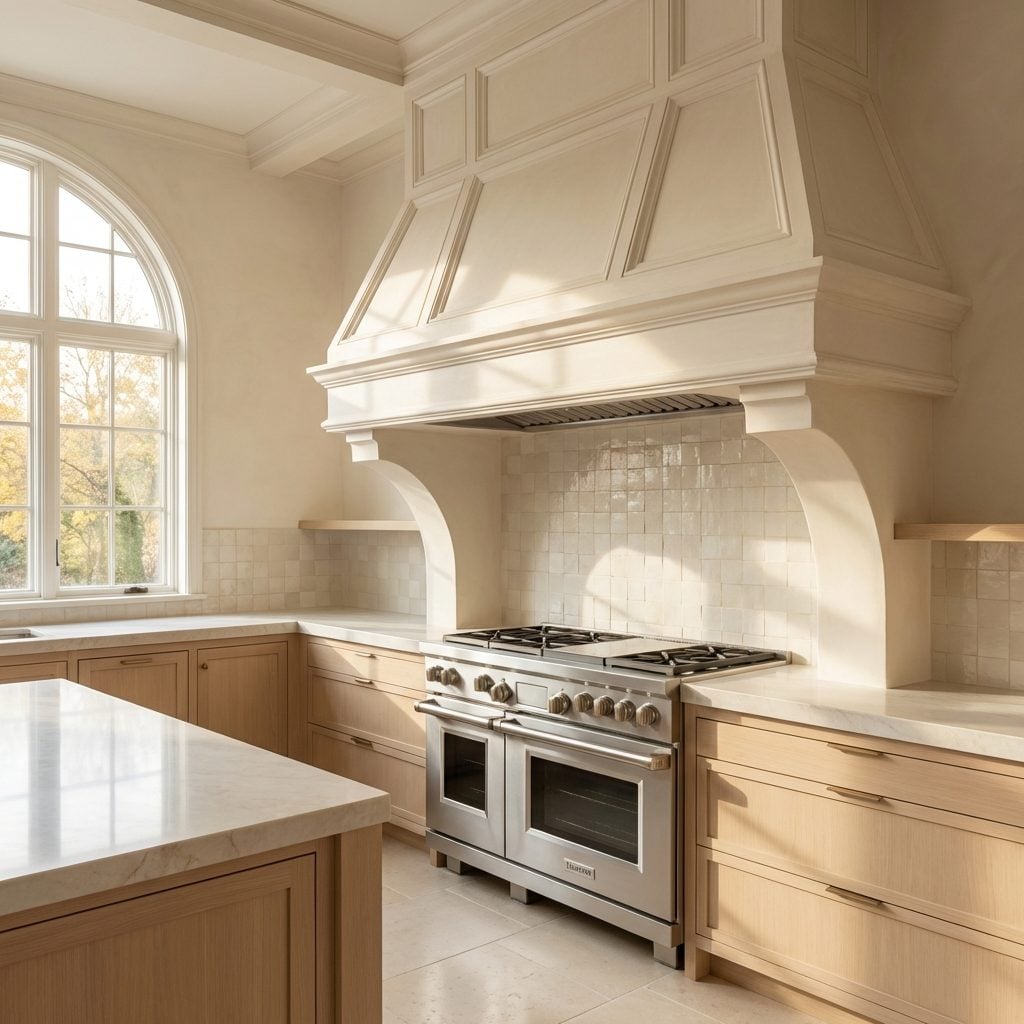
A range hood that rises nearly to the ceiling makes a serious architectural statement. The problem is when the cooking beneath it amounts to reheating takeout twice a week. Oversized hoods designed for professional-level BTUs look commanding above a six-burner range, but if the back burners never get used and the ventilation fan runs on low because there’s nothing to vent, the whole thing reads as theater.
The proportions tell the truth. A genuinely used kitchen gets sized for function first, then aesthetics. When the hood is scaled for drama rather than airflow, visitors might admire it, but cooks can spot the mismatch immediately.
Stone Countertops So Perfect You’re Afraid to Set a Glass Down
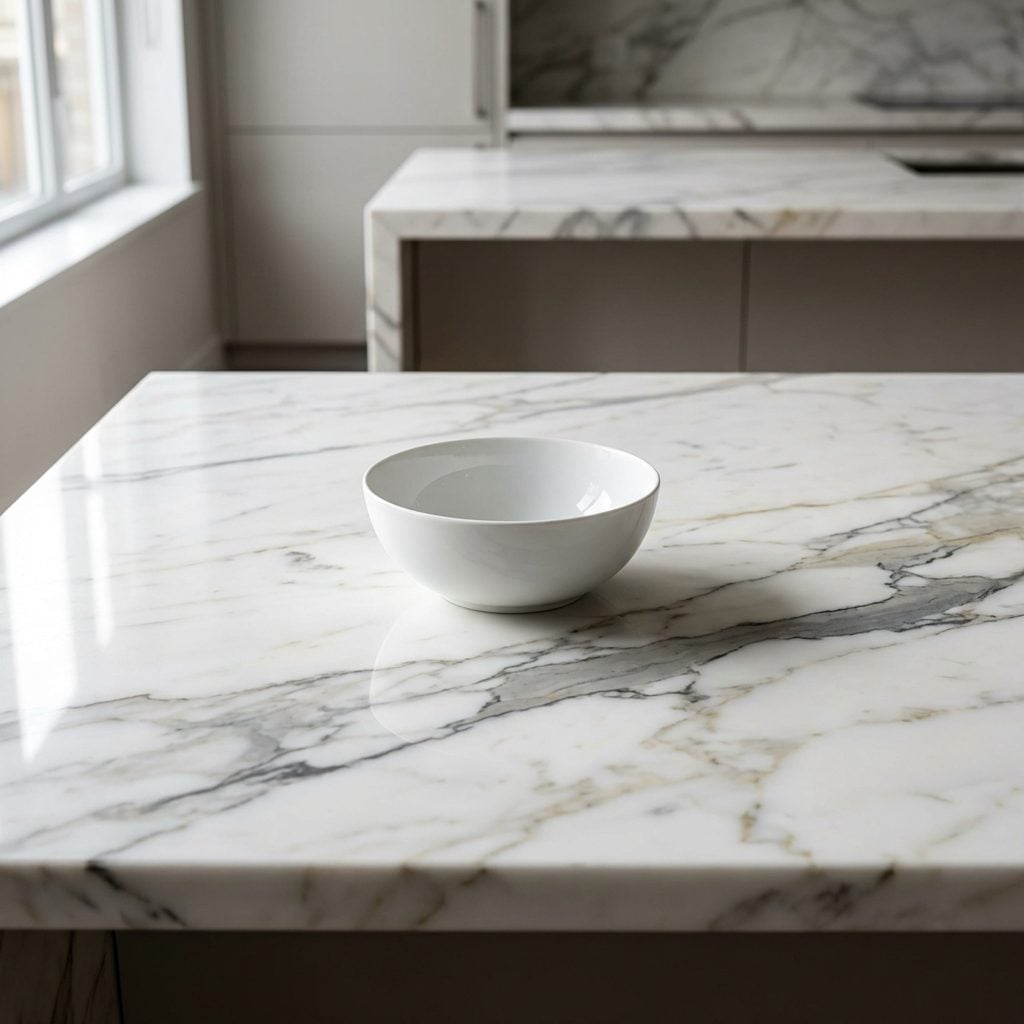
There’s a specific kind of anxiety that lives in kitchens with book-matched marble countertops. The veining is dramatic, the surface is flawlessly sealed, and somewhere in the back of your mind you know that a splash of red wine would be a minor catastrophe. That feeling, the low-grade tension around simply using the space, is a sign the kitchen was designed to be looked at.
Real kitchens accumulate small marks of life. A water ring near the coffee maker. A faint scuff near the cutting board area. Choosing surfaces based on their photograph potential rather than their durability creates spaces that feel more like showrooms than homes. If you’ve found yourself placing coasters under olive oil bottles, the stone might be running the kitchen.
Matching Appliances That Look Like a Showroom Floor, Not a Kitchen
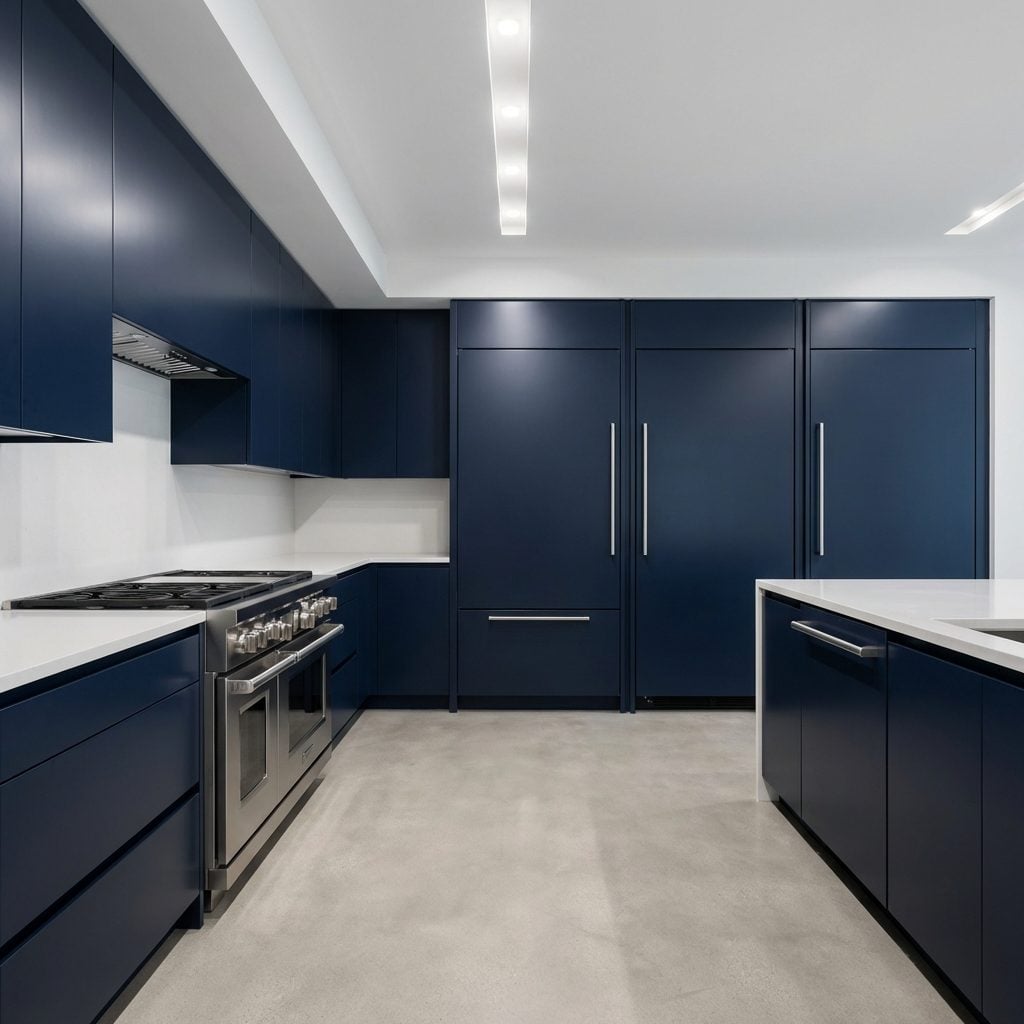
A fully coordinated suite of appliances from the same luxury brand is a real selling point. Column refrigerator, column freezer, matching dishwasher panels, 48-inch range, all in the same brushed stainless or custom color. The issue surfaces when the coordination is the point rather than the cooking.
Kitchens where every appliance matches but the mixer lives in a cabinet (to preserve sightlines), the toaster is stored in a drawer, and the dishwasher hasn’t been run in days because there are no dirty dishes, those are kitchens performing wealth rather than supporting daily life. Appliances are tools. When they’re treated as display pieces, the kitchen slowly stops functioning as a kitchen at all.
Open Shelving That’s All Sculpture, No Storage
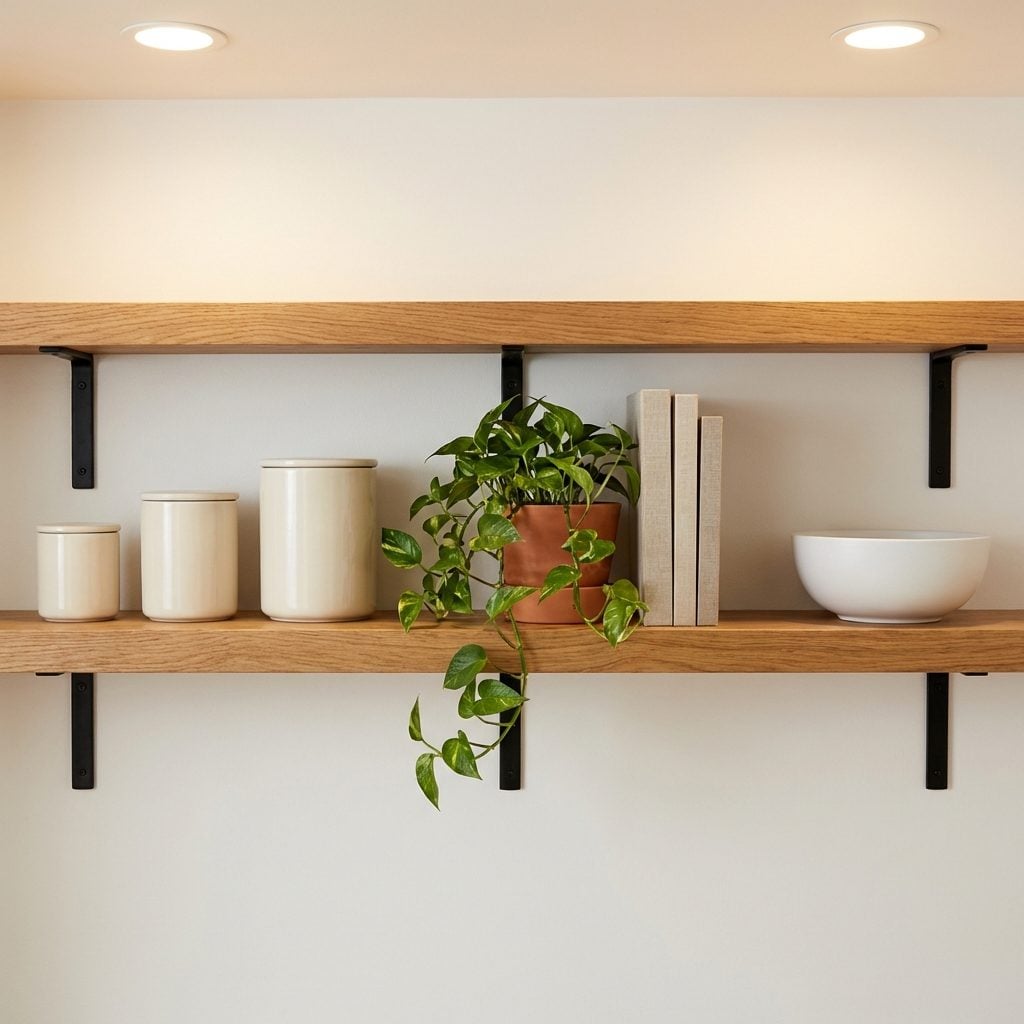
Open shelving done well is one of the most honest design choices in a kitchen, it puts what you actually use on display. But when every shelf looks like it was arranged by a prop stylist for a catalog shoot, it’s worth asking where the real stuff lives.
The giveaways are specific. A row of matching linen-spined cookbooks you’ve never read. Three identical white ceramic canisters that don’t contain anything. A single perfectly placed terracotta pot and a trailing vine. No coffee mugs. No stacked Tupperware. No evidence that someone reaches for anything here on a Tuesday morning before work. Somewhere behind closed cabinet doors, the actual kitchen supplies are crammed in with zero style and maximum function.
If your open shelves look better in photos than in person, they were probably designed for photos.
The Island So Grand You Have to Walk Around It to Get Anywhere
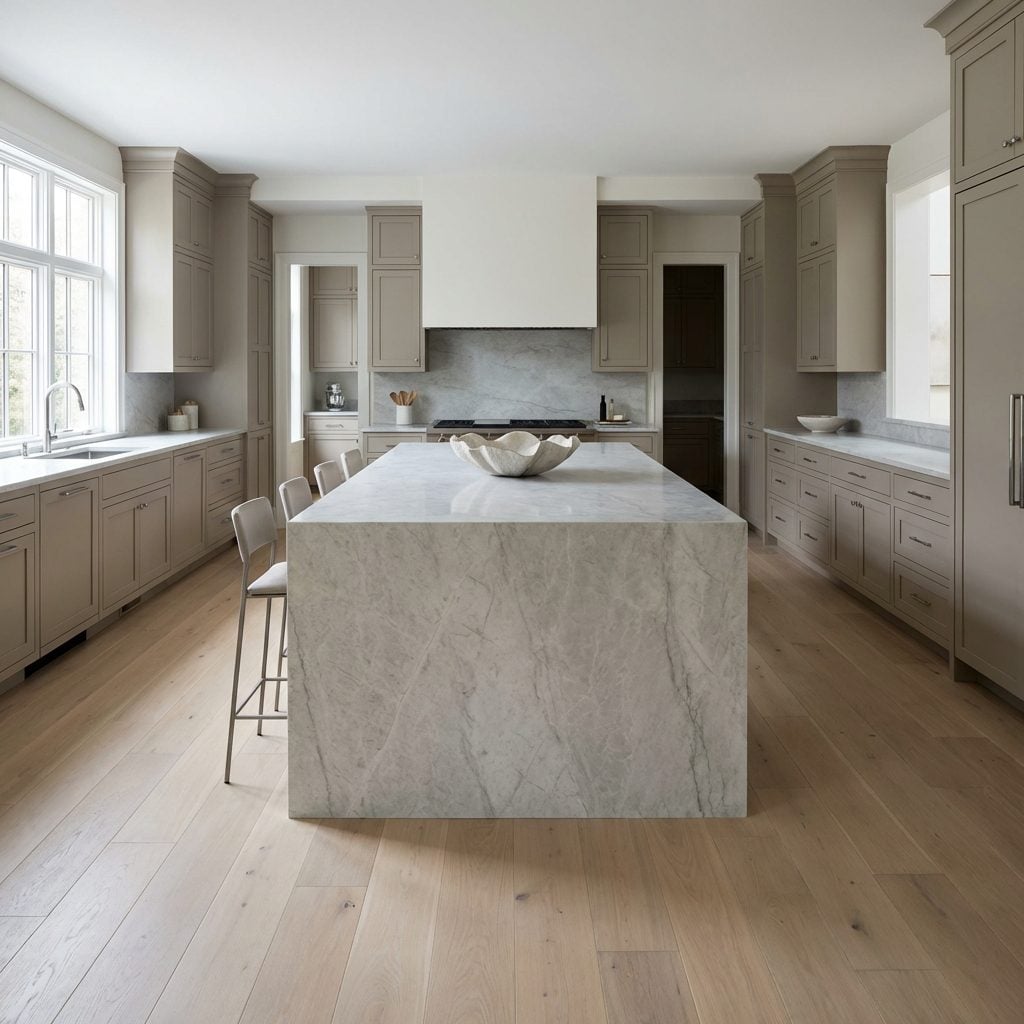
Kitchen islands hit a tipping point somewhere around ten feet long, especially in home kitchens that weren’t designed around professional workflow. When the island is so expansive that the path from the refrigerator to the range requires a full detour, the layout starts working against cooking rather than supporting it.
The National Kitchen and Bath Association recommends at least 42 inches of clearance around an island for single-cook kitchens, and 48 for two. Oversized islands in average-sized kitchens frequently shrink that clearance to 30 inches or less. Traffic jams when more than one person is cooking, drawers can’t fully open, and the far end of the island collects mail and bags because no one naturally reaches it during actual kitchen use.
A beautiful island that disrupts the work triangle isn’t a kitchen upgrade. It’s a statement piece with cabinetry.
The Pendant Lights That Barely Touch the Countertop Below
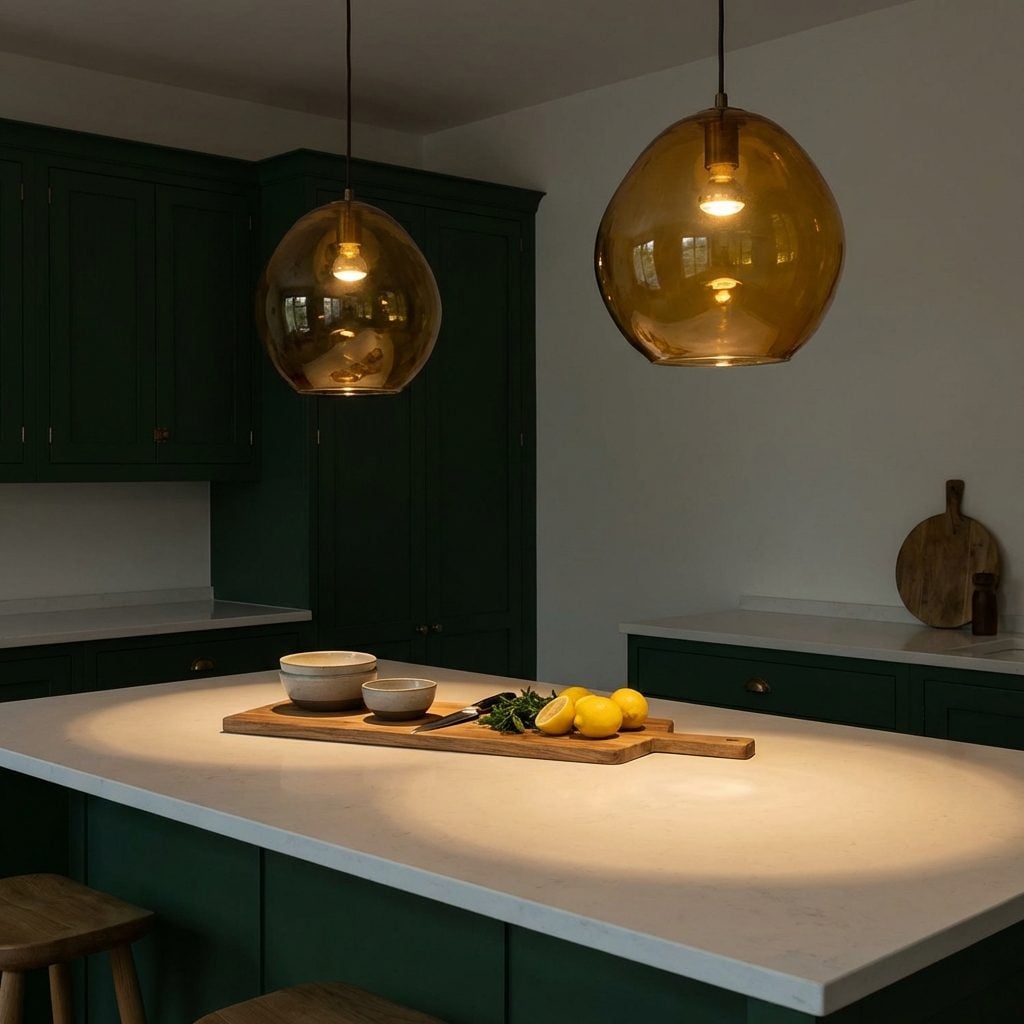
Oversized statement pendant lights over a kitchen island are one of the most photographed design moves of the past decade. The problem comes when the light output doesn’t match the visual presence. A pair of large blown-glass pendants that emit the equivalent of candlelight look dramatic in a sunset-lit Instagram photo and genuinely terrible when you’re trying to read a recipe or spot-check whether chicken is cooked through.
Task lighting in a kitchen is not optional. When decorative overhead fixtures are chosen for their silhouette rather than their lumen output, the workspace underneath becomes dim and frustrating. The tell: a kitchen that looks better in ambient evening light than at 7pm on a weeknight when dinner actually needs to be made.
Hardware That Costs More Per Knob Than Most People Spend on Dinner
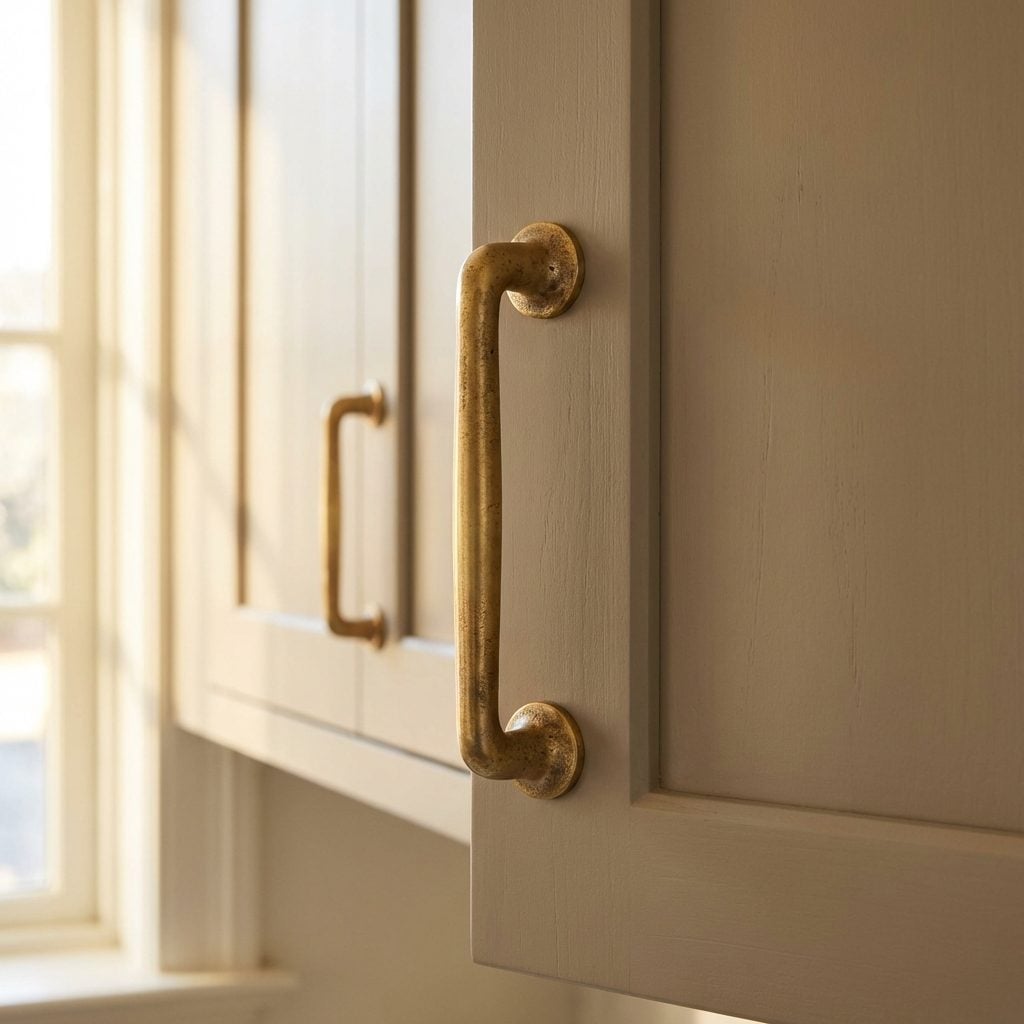
Unlacquered brass, hand-forged iron, solid bronze with a hand-rubbed patina finish, cabinet hardware has become a genuine luxury category, and the prices reflect it. There’s nothing wrong with investing in quality hardware. The sign you’ve crossed from design enthusiasm into performance is when the hardware conversation comes up unprompted with every visitor who sets foot in the kitchen.
High-end hardware choices like unlacquered brass cabinet knobs or hand-forged iron pulls can be genuinely beautiful. They also don’t need an introduction. If the first thing you say when someone compliments your kitchen is “the hardware alone was $4,000,” the design is working harder as a social signal than as a living space.
The Backsplash That’s Trying to Win a Design Award
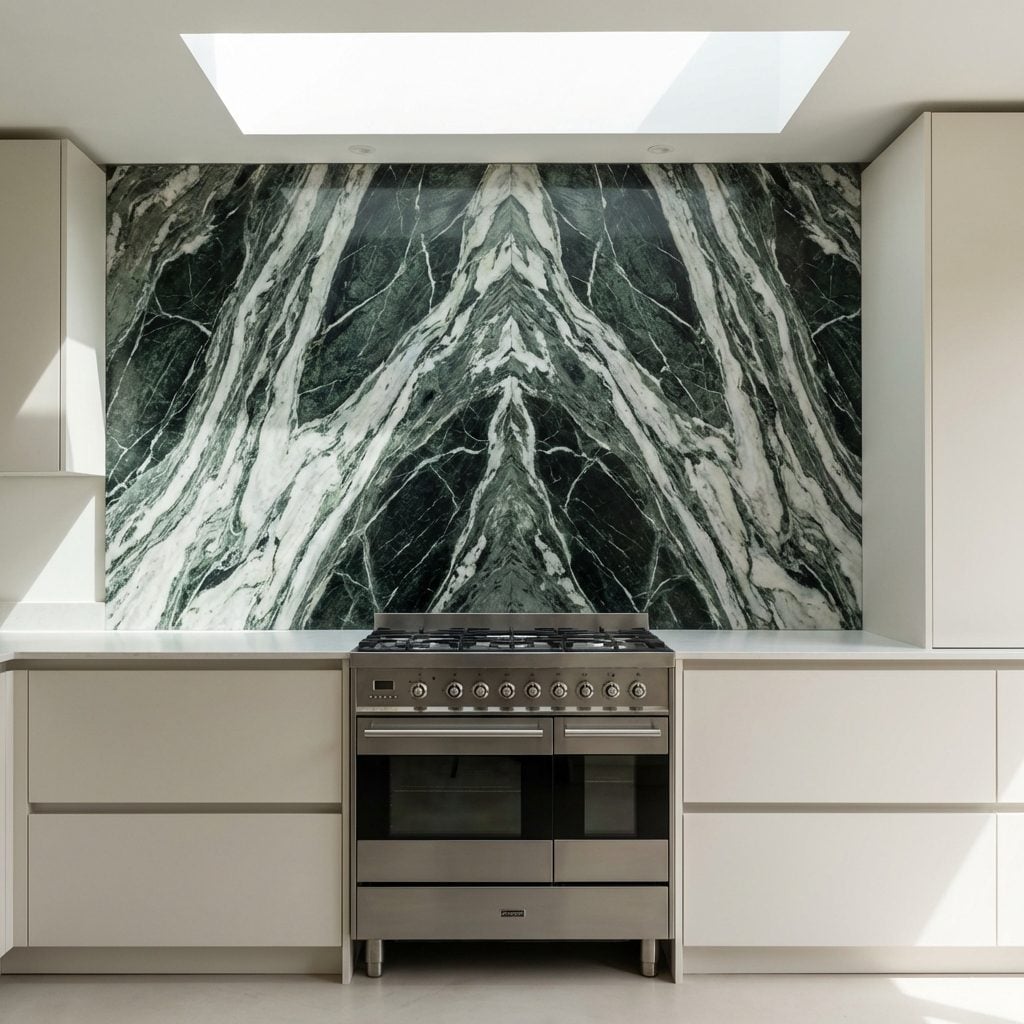
A backsplash should earn its place in the room, but it shouldn’t be campaigning for attention at the expense of everything else. When the tile is so complex, so layered, or so visually loud that countertops, cabinetry, and lighting all have to retreat to neutral just to coexist with it, the backsplash has stopped supporting the design and started competing with it.
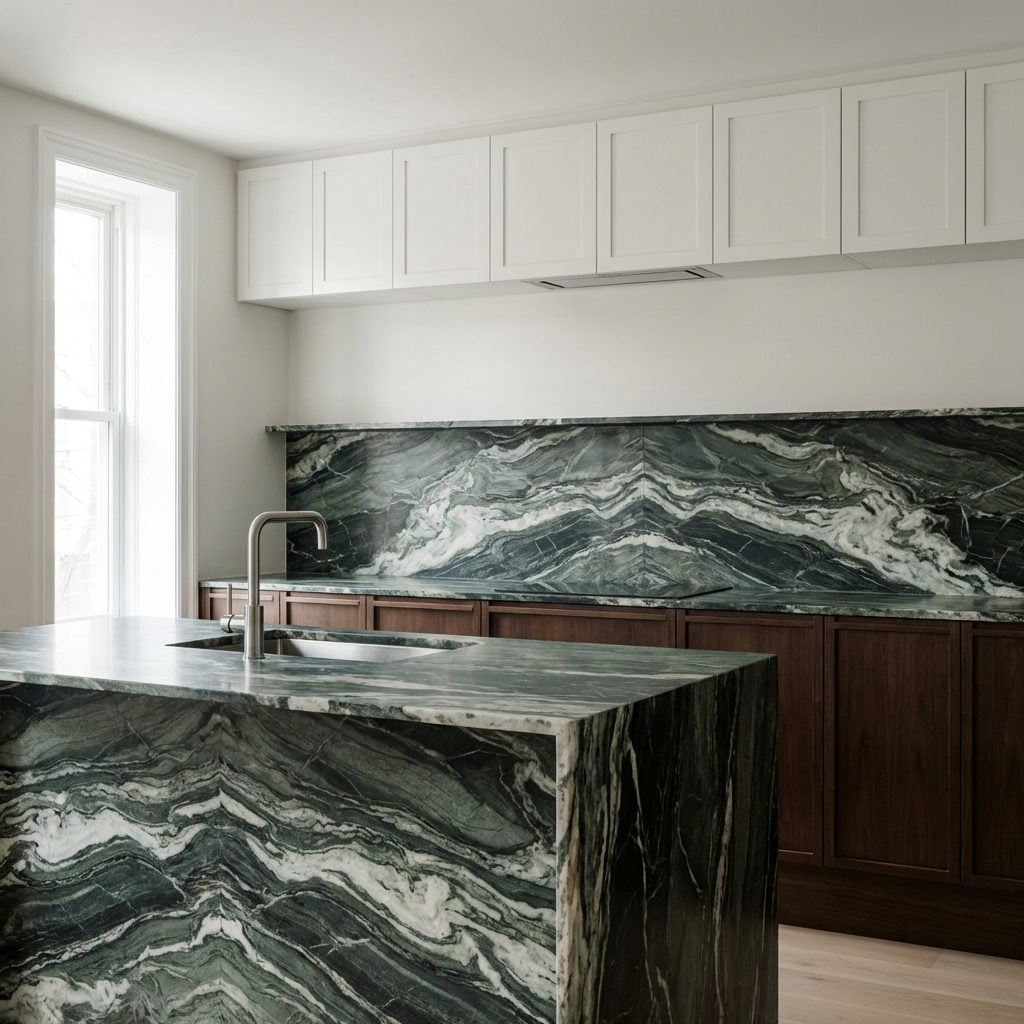
This shows up with dramatic book-matched slabs behind ranges, floor-to-ceiling textured zellige in busy colorways, or hand-painted Moroccan tile that would be at home in a boutique hotel lobby. Each of those can work beautifully. The sign you’ve gone too far is when the room reads as “backsplash” rather than “kitchen.”
The Refrigerator So Hidden Your Guests Search the Whole Room for It
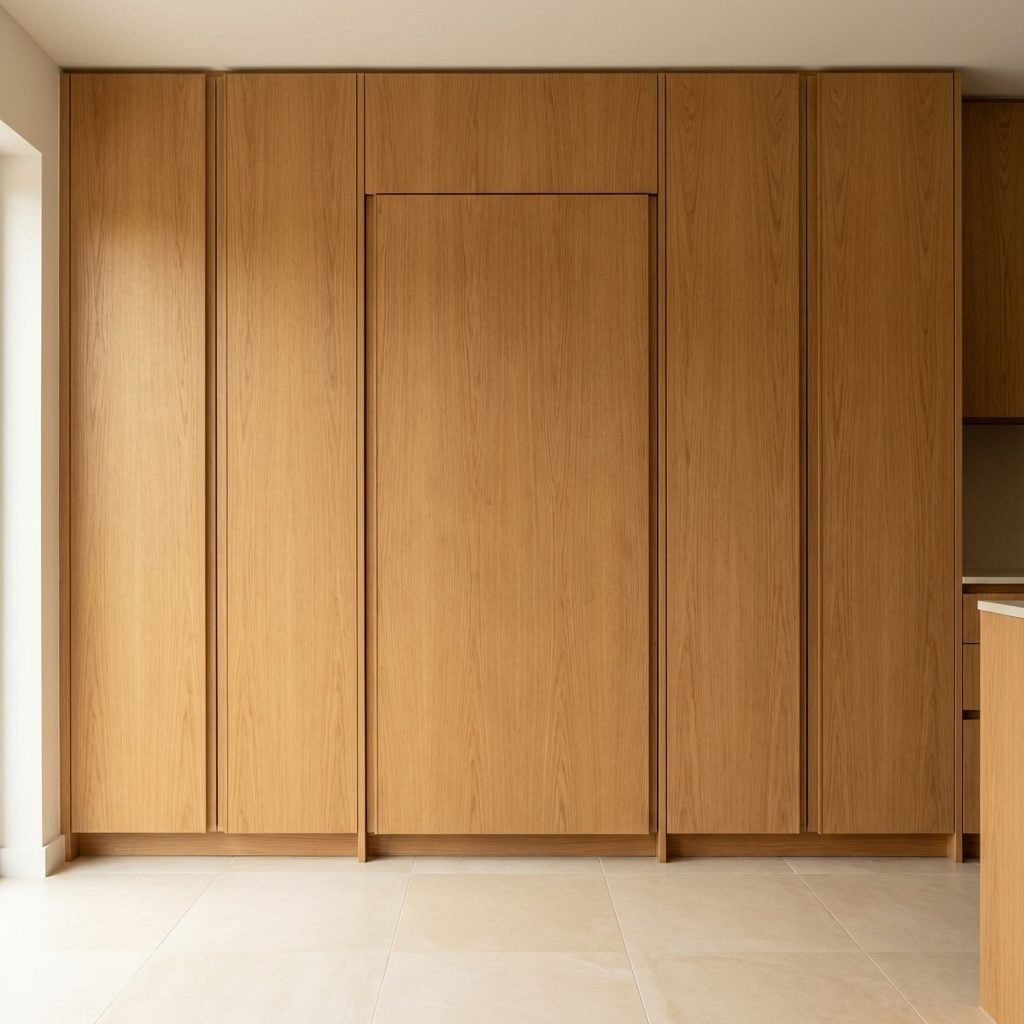
Paneled refrigerators that blend seamlessly into the cabinetry line are a hallmark of high-end kitchen design. The idea is a cleaner visual field, no appliance bulk interrupting the cabinet run. It works. It also produces a specific, slightly awkward social situation when a guest asks for water and genuinely cannot identify which panel conceals the fridge versus the pantry versus the dishwasher versus a broom closet.
There’s a point at which concealment becomes inconvenience. A kitchen where the most-used appliance requires a brief tutorial for anyone who hasn’t visited before isn’t streamlined, it’s solving an aesthetic problem by creating a functional one.
The Espresso Machine That’s More Monument Than Morning Ritual
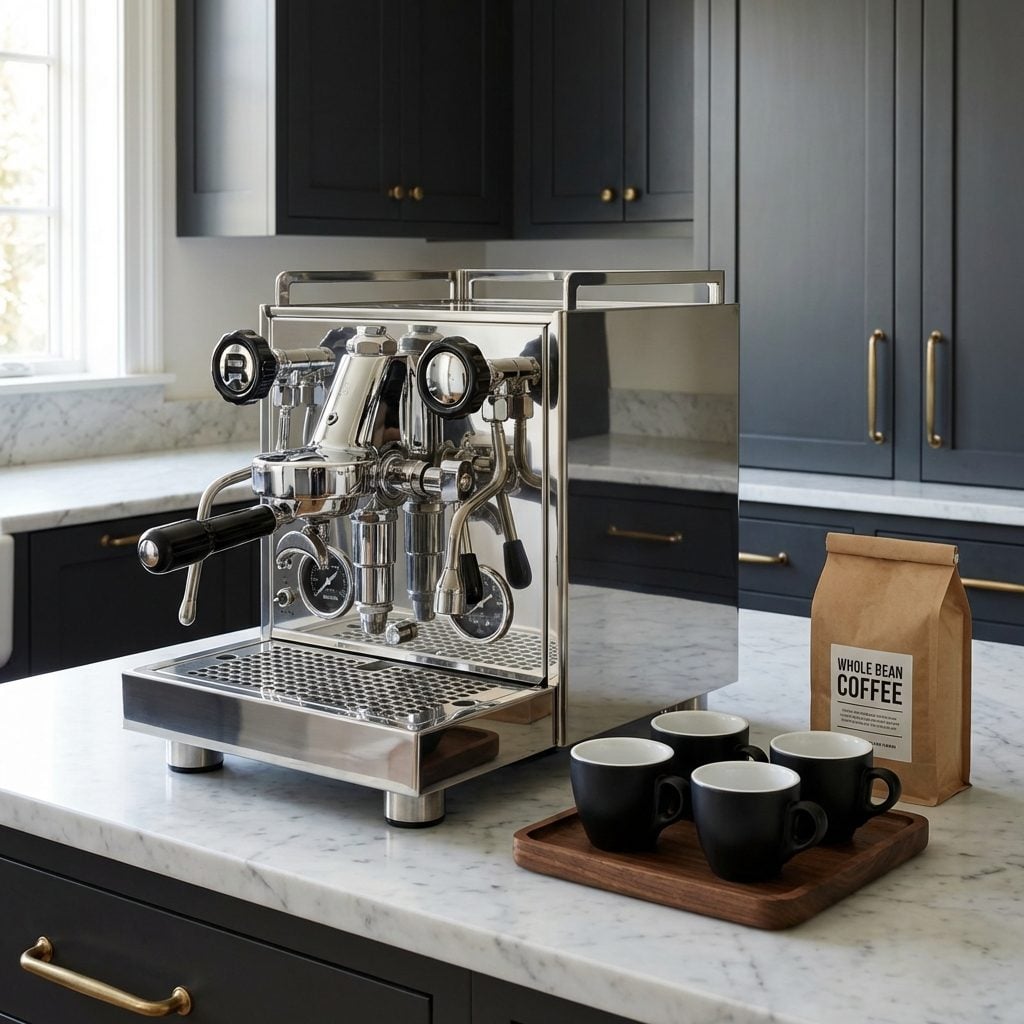
A La Marzocco or Slayer espresso machine on the counter is a statement. It signals taste, an appreciation for craft coffee, and a certain kind of domestic seriousness. It also costs several thousand dollars, and in a surprising number of kitchens, it sits unused most mornings while the owner orders from a coffee app.
The sign isn’t owning a serious coffee setup. The sign is when the espresso machine is positioned for maximum visibility, kept in a spotless state that suggests minimal use, and surrounded by a carefully arranged collection of ceramic espresso cups that have never had espresso in them. It’s set dressing. The kitchen is performing a version of its owner’s identity rather than supporting their actual morning.
The Bar Cart Staged So Precisely It Feels Like a Crime Scene to Disturb
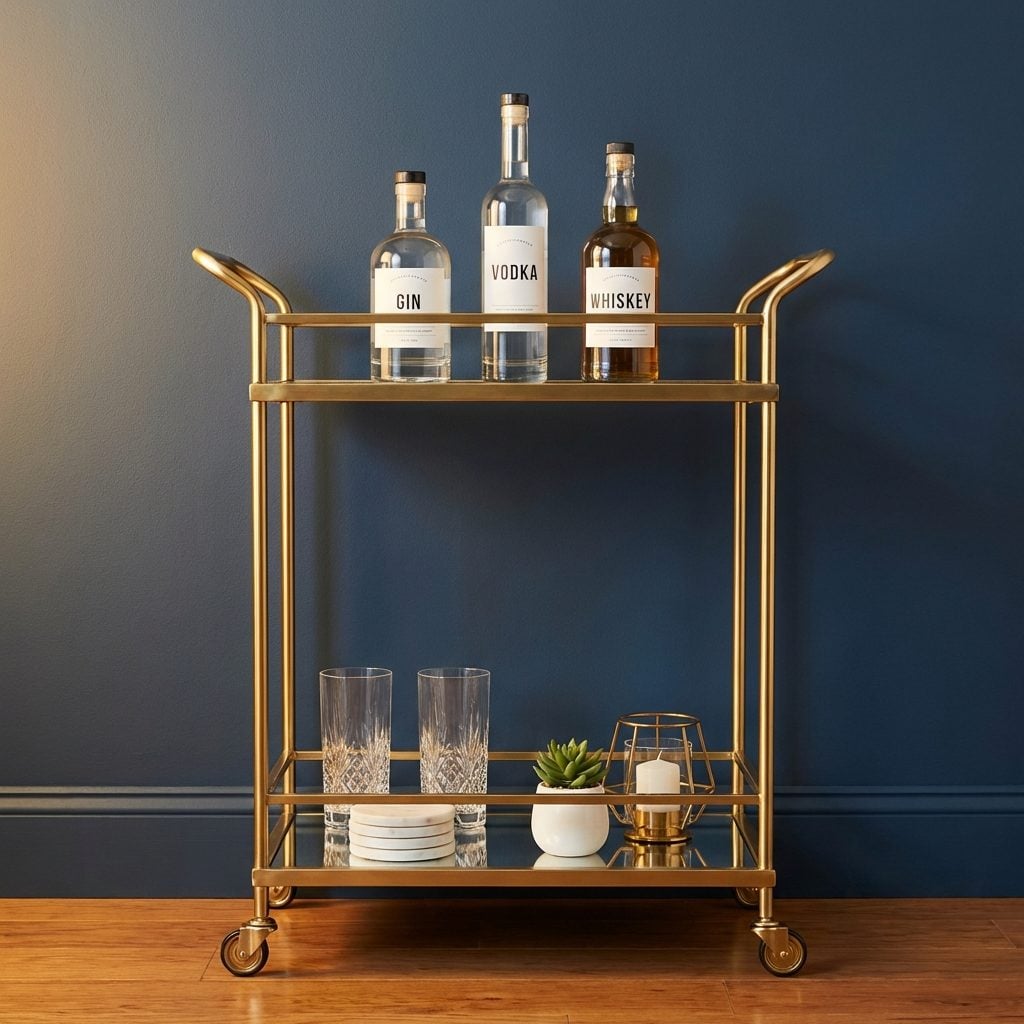
Bar carts should feel generous. A little chaotic, even, bottles at different heights, a couple of mismatched glasses, a citrus of some kind. When a bar cart is styled with the precision of a retail display, with bottles turned label-forward, glassware arranged by height, and decorative objects filling every gap so nothing can actually be moved or used without dismantling the composition, it’s no longer a functional bar cart.
It’s a vignette. The cart exists to be photographed from one angle in good light. Pouring a drink from it would feel like a disruption rather than the point.
Cookbooks Arranged by Spine Color That Have Never Been Opened
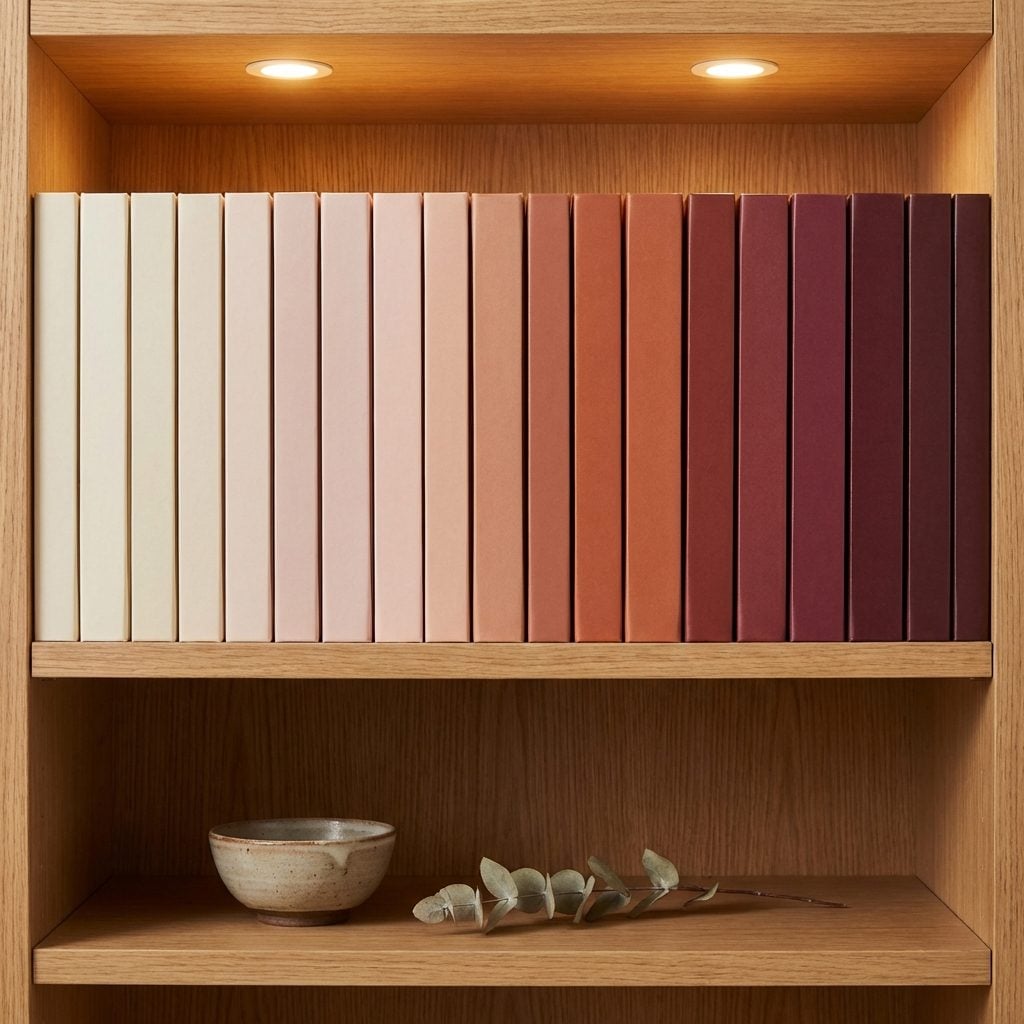
Cookbooks sorted by color are one of the most visually satisfying shelf arrangements in a kitchen. They’re also the clearest possible sign that the books are decorating, not cooking. A cookbook that’s actually used develops a personality: a cracked spine, a sauce-stained page somewhere in the pasta chapter, a Post-it note flagging the one roast chicken recipe that always works.
Color-coordinated cookbook spines, by contrast, require the books to stay in order. Opening one disrupts the palette. So they remain closed, looking expensive, facing outward on beautifully lit floating shelves in a kitchen that orders delivery four nights a week.
The cookbooks become part of the same performance as the oversized hood and the pristine marble. Not evidence of a cooking life, evidence of the idea of one.
The Fruit Bowl That’s Been ‘Full’ for Three Months
🔥 Would you like to save this?
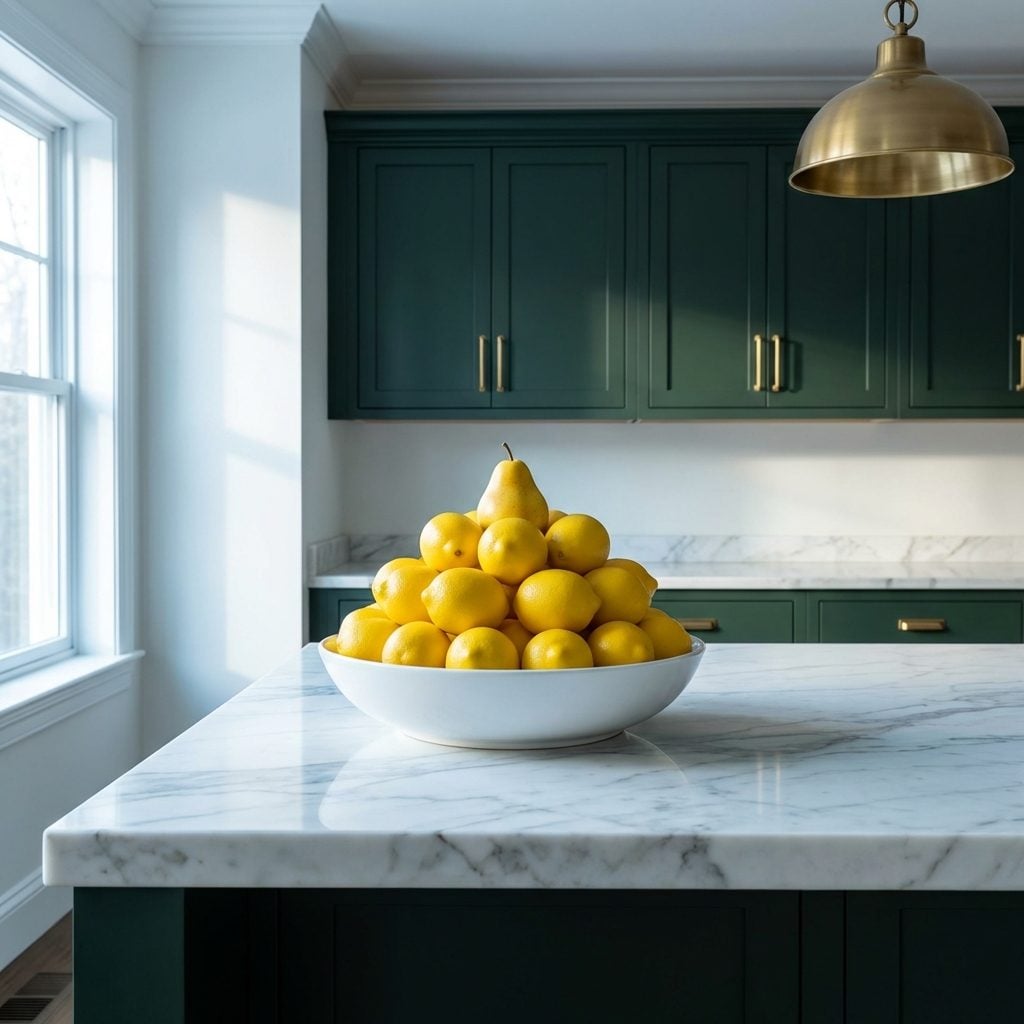
There’s a particular kind of kitchen theater that reveals itself in the fruit bowl. Fake lemons that never bruise. Wax apples with a suspicious sheen. A pomegranate that looks exactly the same in every photo from the past two years. It reads as abundance at a glance, but hold one of those lemons and the illusion collapses instantly.
Real kitchens have bananas with brown spots. They have one orange rolling toward the edge. The fruit bowl is where a kitchen admits whether it’s designed for living or for looking. A bowl of ceramic fruit bowl with real seasonal produce tells you someone actually eats here. Fake fruit tells you someone wanted to check a styling box without the inconvenience of ripening.
The Kitchen You Only Use When Someone’s Watching
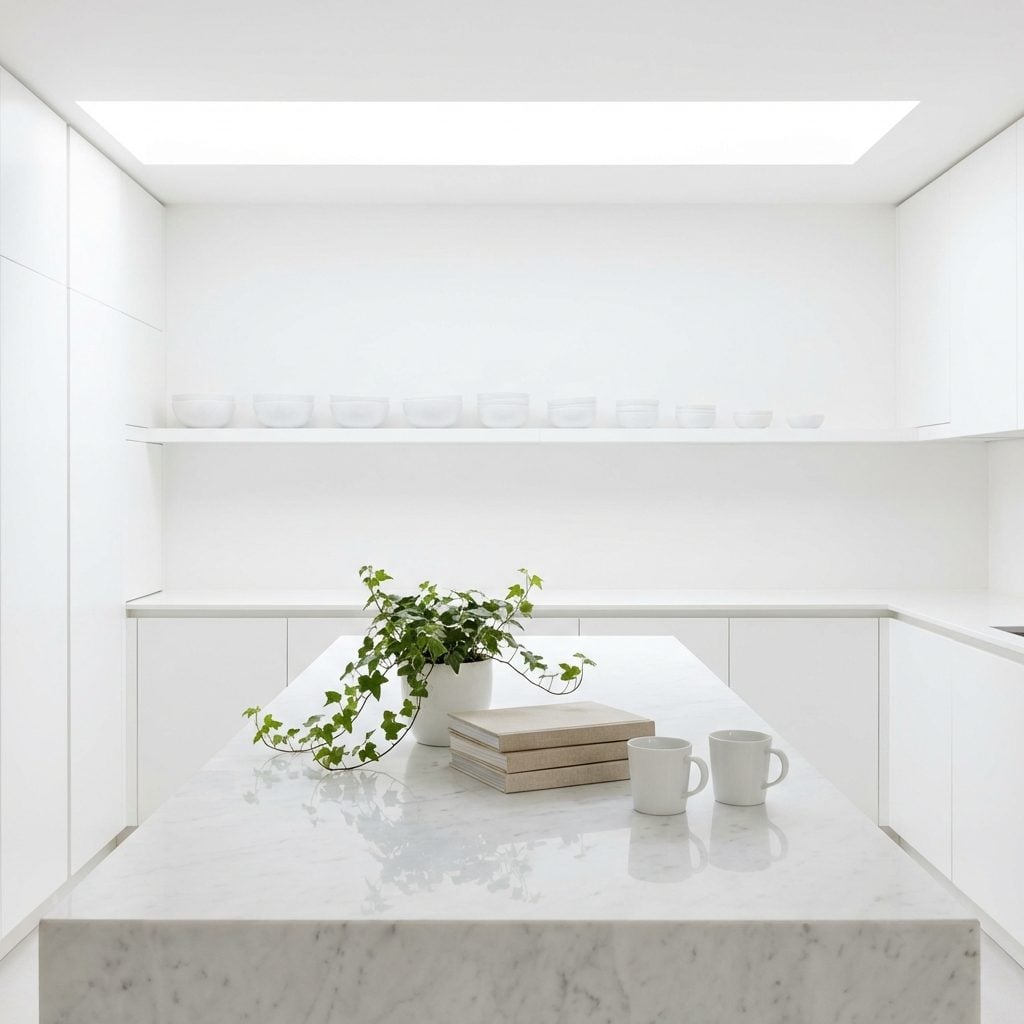
You know this kitchen. The counters are cleared. The herbs are artfully placed. The morning light hits the marble at the exact right angle, and someone’s phone is already out before the coffee is even started. Every element in the room has been positioned for a frame, not a function.
The real tell is what happens when no one’s taking a picture. Does the coffee maker move to a more convenient spot? Does the cutting board come out from behind the pantry door? A kitchen designed for daily life has a rhythm to it. One designed for photos has a pose.
Counters So Clear They Make You Anxious to Cook on Them
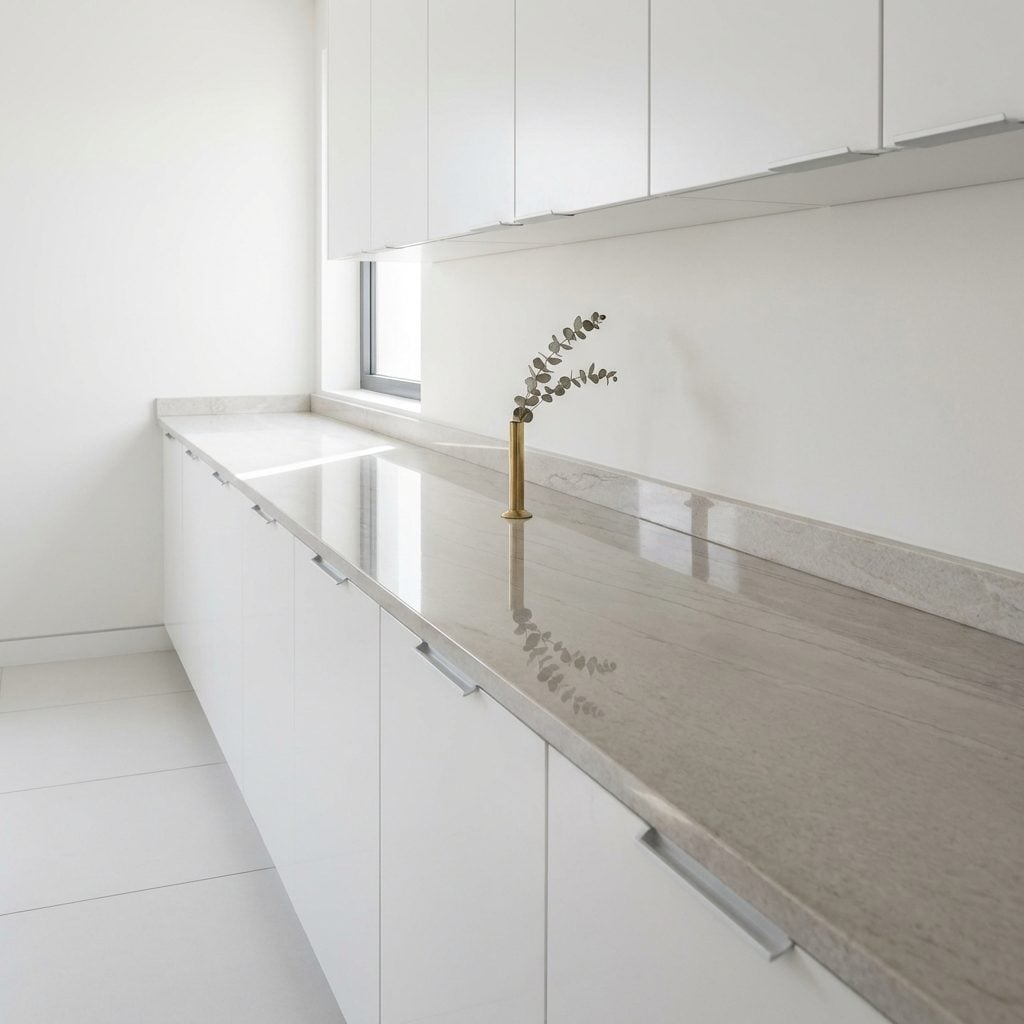
An empty counter is not an organized counter. It’s a counter where someone spent fifteen minutes hiding everything before company arrived. The toaster is in a cabinet. The paper towels are in a drawer. The olive oil lives behind a door it doesn’t fit through comfortably. The result looks magazine-worthy and functions like an obstacle course.
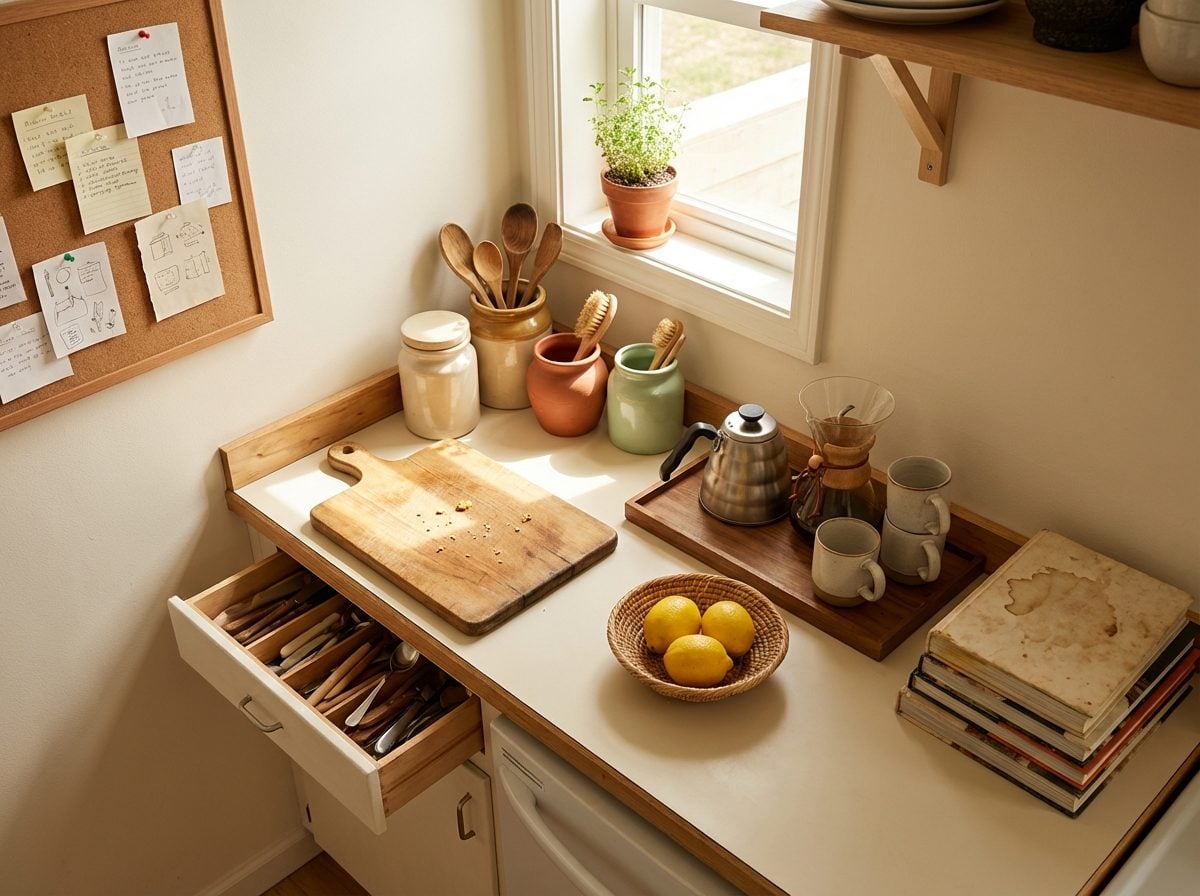
Practical kitchens keep what’s used daily within reach. A wooden knife block, a small ceramic crock of utensils, a bottle of everyday oil, these aren’t clutter. They’re evidence of a kitchen that earns its space. Clearing everything away to achieve a surface so pristine it’s almost untouchable isn’t organization. It’s performance.
The Faucet That Takes a Degree to Operate
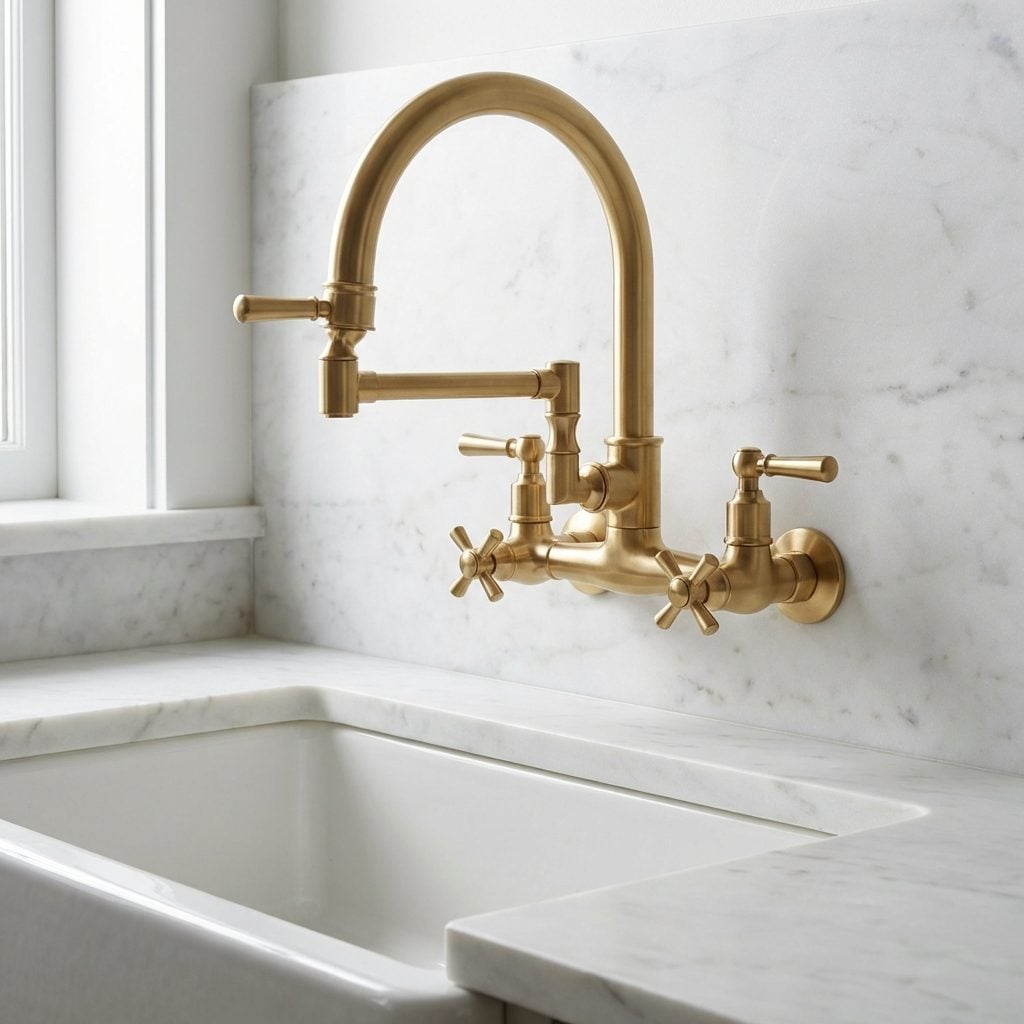
It’s brushed gold. It has four separate levers. One controls temperature, one controls pressure, one activates the pot filler function, and the fourth seems to do something, though no one is quite sure what. It looks exceptional in photos. It requires a tutorial to use without scalding yourself.
This is the kitchen faucet as status symbol: selected for its silhouette rather than its usability. Guests reach for the obvious handle and nothing happens. You have to explain that you press the lower lever first, then rotate. A brass faucet can be both well-designed and intuitive. But when form wins so completely over function that people hesitate to wash their hands, the faucet is doing the opposite of its job.
Barstools So Sculptural You’d Rather Stand
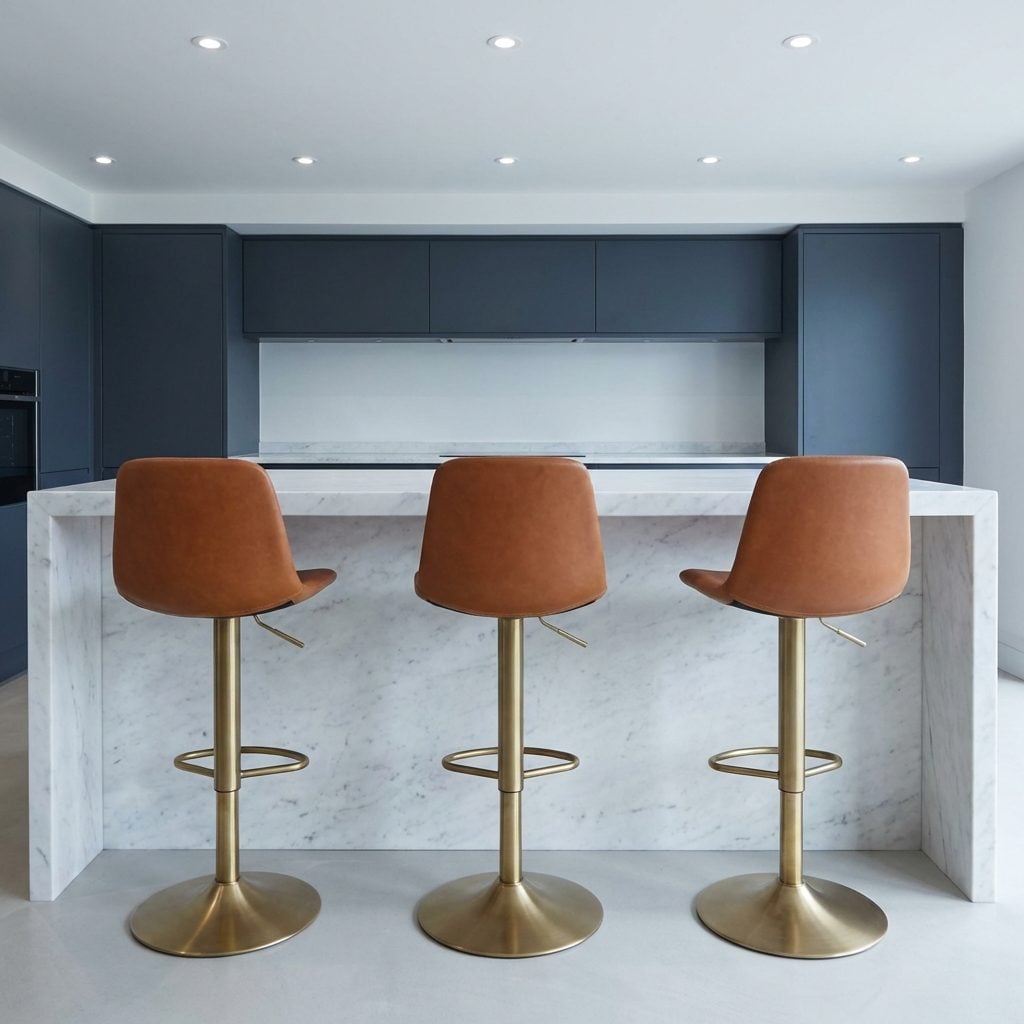
The stools at the island are extraordinary. Solid brass bases, hand-stitched leather seats in a shade of cognac that took three samples to land on. They photograph magnificently. Sitting on them for longer than twenty minutes is a different experience entirely: the footrest is at the wrong height, the seat is shallow, the backrest hits at an odd angle, and the leather has a firmness that doesn’t soften with use.
Beautiful seating that’s uncomfortable doesn’t invite people to linger over coffee or stay through a second glass of wine. It moves them along. And a kitchen where no one wants to sit and stay is a kitchen that’s opted for a visual win at the cost of everything that makes a kitchen actually worthwhile.
The Windowsill That’s Staged Differently for Every Season
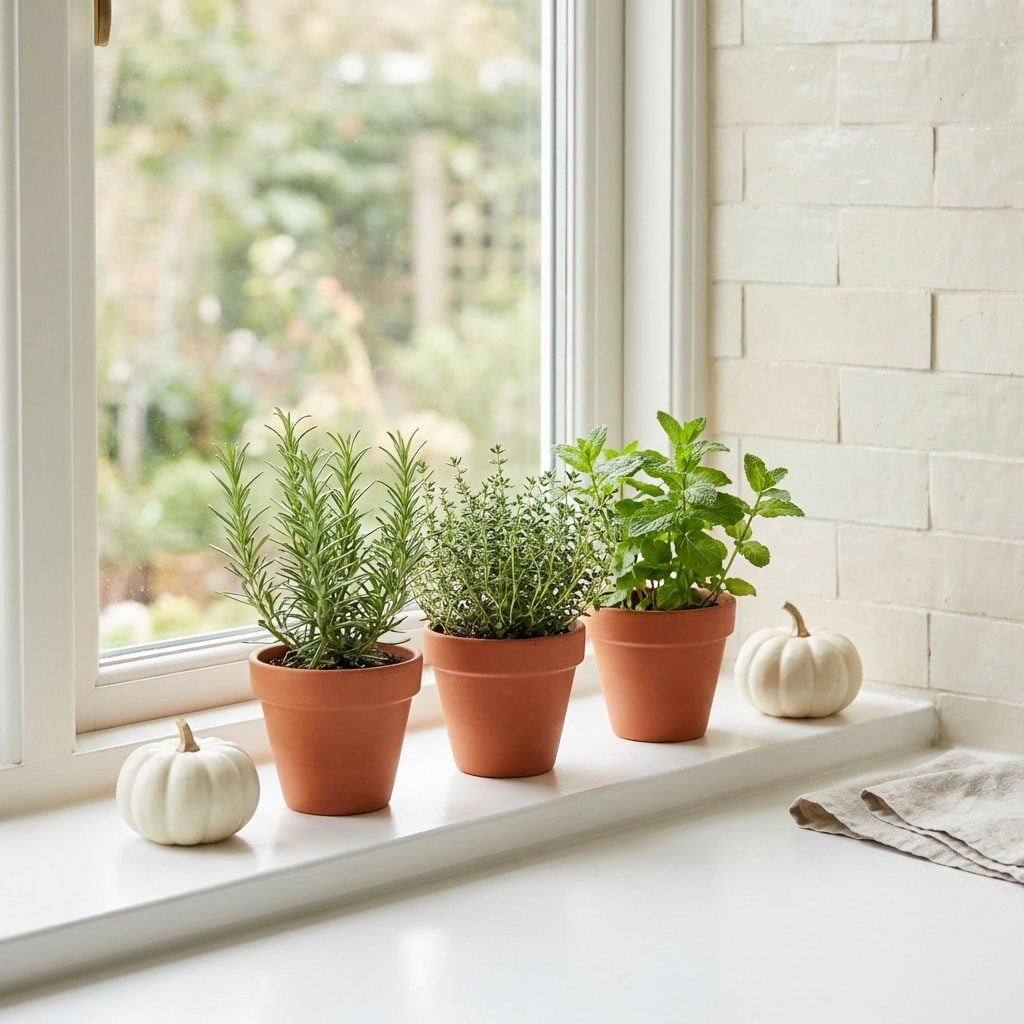
Spring brings small terracotta pots of herbs that will be dead within two weeks because this window doesn’t actually get enough light. Autumn brings a row of mini pumpkins, perfectly odd-numbered, replaced before they soften. The windowsill is a prop shelf that cycles through seasonal content the way a social feed cycles through trends.
There’s nothing wrong with decorating for seasons. The distinction is whether the window is treated as a backdrop or as part of the kitchen’s actual life. A windowsill that holds the same chipped mug of wooden spoons for five years because it’s genuinely convenient is telling a completely different story than one that gets reset every eight weeks for maximum visual appeal.
The Cutting Board That’s More Decoration Than Cooking Tool
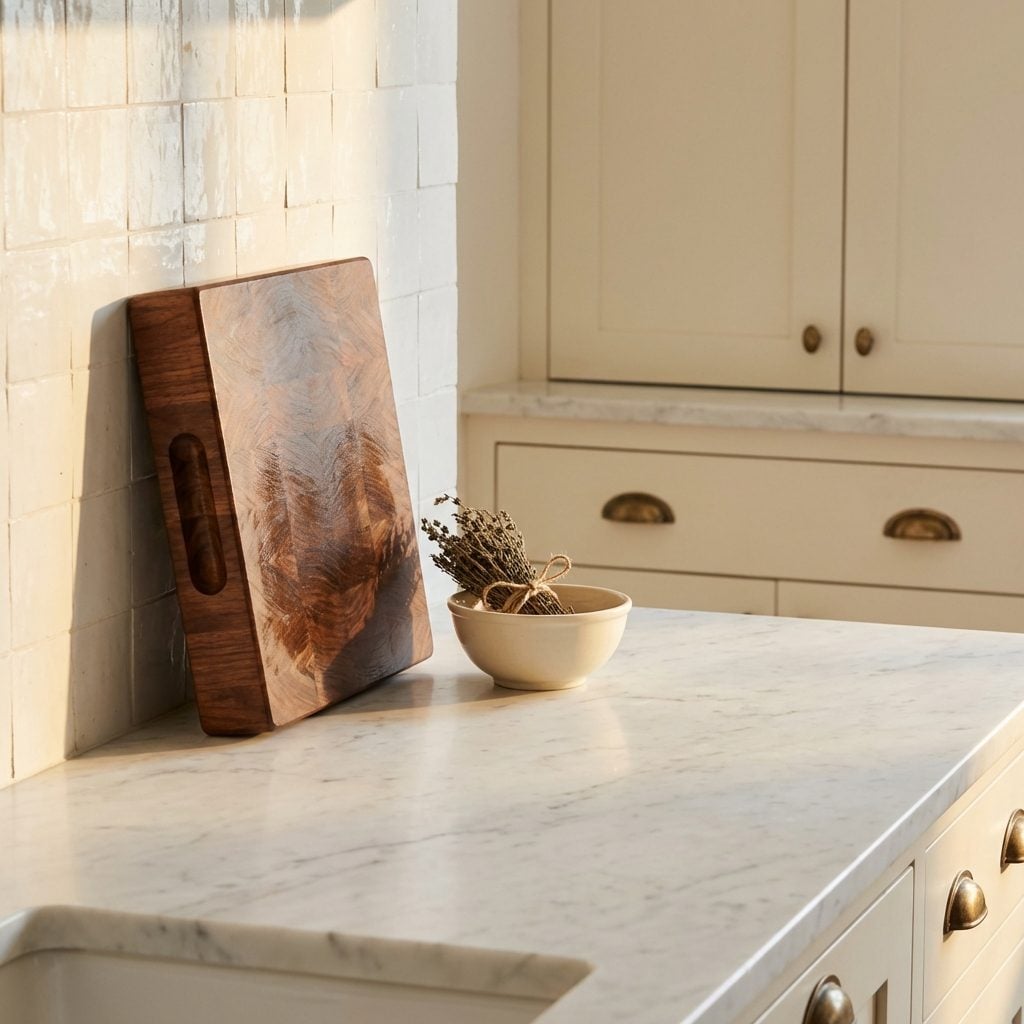
An end-grain walnut cutting board, thick as a paving stone, stands propped against the backsplash at a considered angle. It’s been oiled. It has a small handle carved into one end. It is, objectively, a genuinely useful object. It is also never used for cutting anything, because it would leave marks.
Instead, chopping happens on a thin plastic board that lives in a lower cabinet and is never photographed. The beautiful walnut cutting board is permanent scenery. This is the kitchen equivalent of buying a first-edition book for the spine color. The most satisfying cutting boards in real kitchens are the ones with knife scars, juice grooves worn dark, and a story in every mark.
It Smells Like a Candle, Not Like Someone Cooks Here
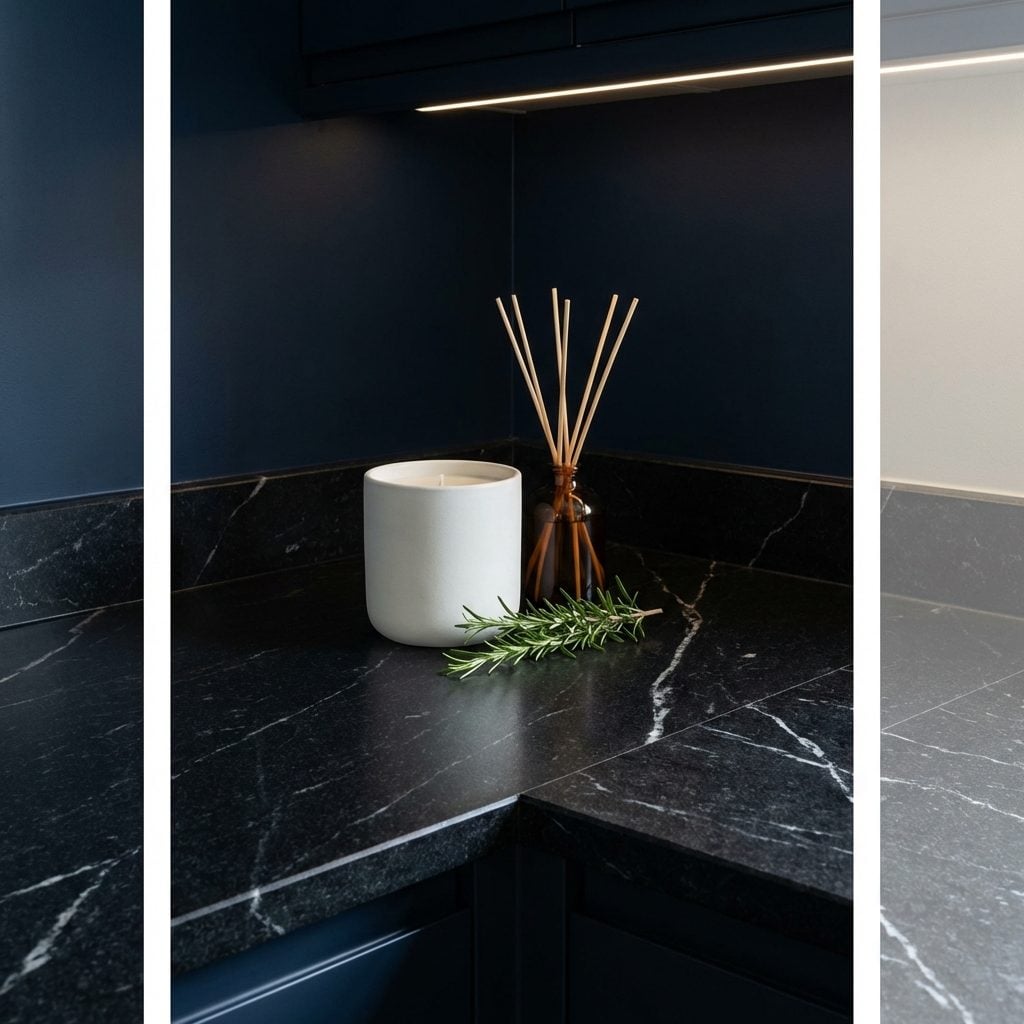
Walk into this kitchen at any hour and the smell is the same: something linen-adjacent, or fig, or the very specific non-smell of a room kept aggressively clean. There’s no residual garlic. No faint trace of last night’s browned butter. No coffee-warmed air in the morning. Just a consistent, aesthetically appropriate ambient scent doing heavy lifting.
Smell is the sense that registers a kitchen’s real character fastest. A kitchen used for actual cooking accumulates a particular warmth in its air, not a mess, just a presence. The kind of kitchen that relies on a ceramic candle to define its atmosphere has, intentionally or not, edited out the most honest thing about itself.
The Trash Can That Requires an Orientation Session
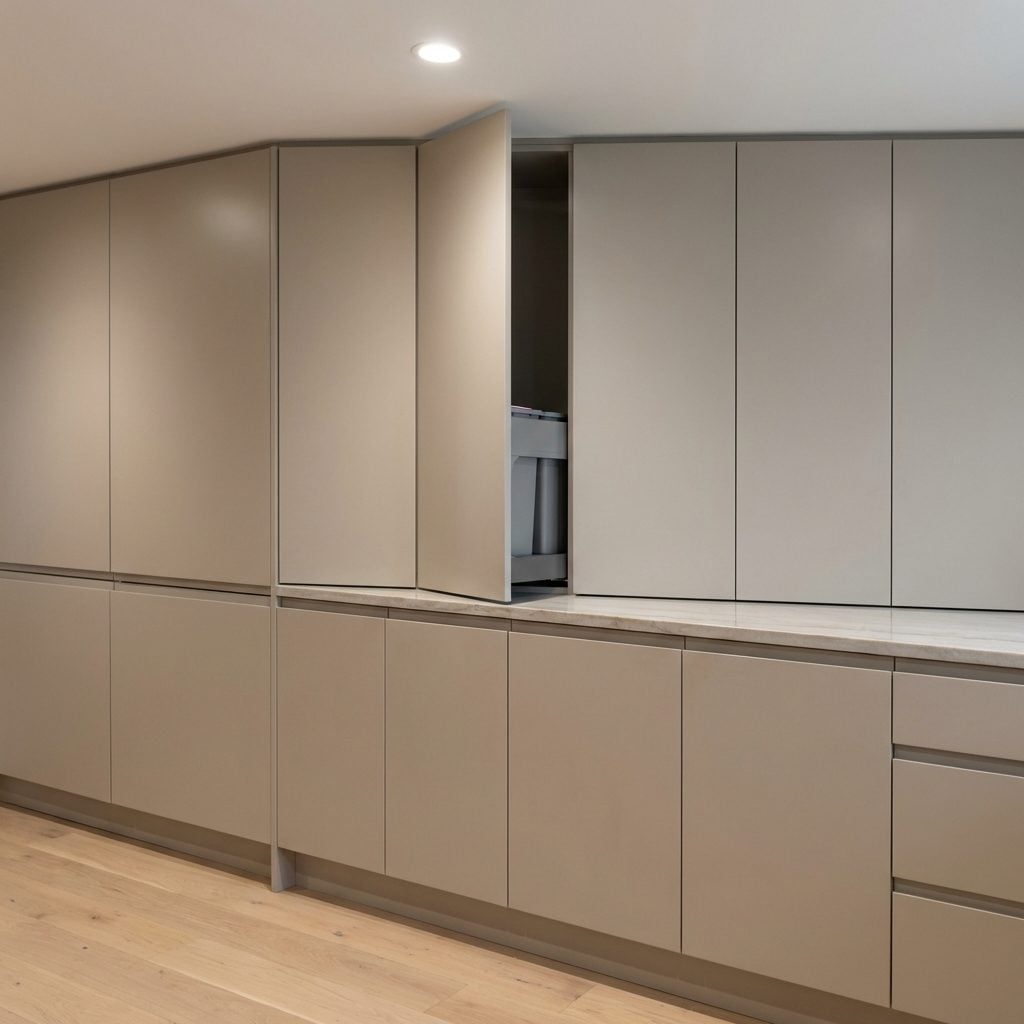
It’s integrated, panel-front, spring-loaded, and hidden behind the cabinet door that’s third from the left on the lower run, the one that looks exactly like every other cabinet door. Guests hold their empty cup and make a slow scan of the kitchen. You watch them check the obvious candidates before finally telling them where it is. Again.
Hidden trash solutions are genuinely useful when they’re intuitive. A small pull-out trash cabinet with a clear visual signal, a slightly different hardware style, a small label, even just a different hinge reveal, communicates its location without ruining the aesthetic. When the trash is so hidden that functioning as a guest in this kitchen requires help, the design has prioritized appearance over the most basic practical reality of how kitchens work.
The Kitchen That Signals Wealth But Has Never Hosted a Real Meal
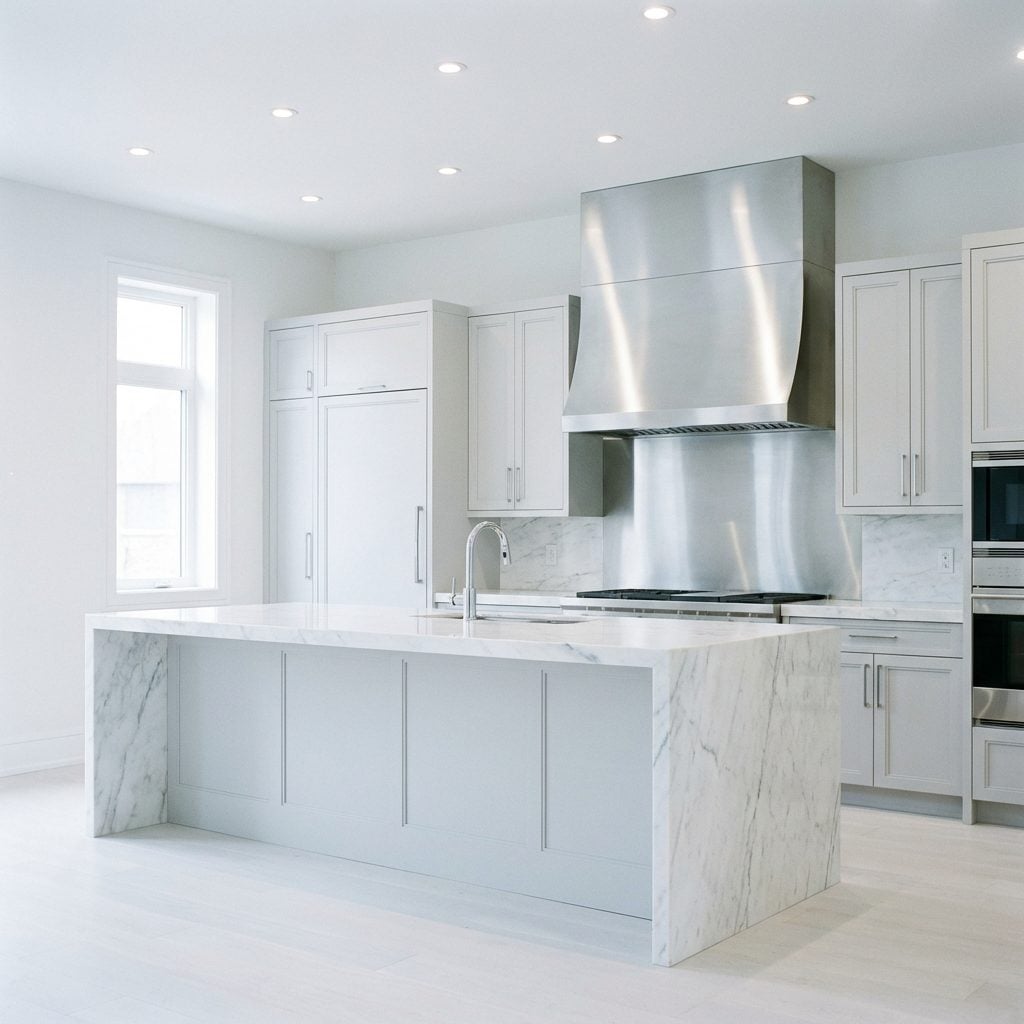
There’s a particular kind of kitchen that reads like a mood board made permanent. Every element was chosen to communicate something about cost: the waterfall edge on the island, the integrated appliances with flush panels, the statement range hood that could anchor a Michelin-starred restaurant. And yet nothing in the room speaks to what you actually cook, drink, or reach for at 7am on a Tuesday.
The real tell is absence. No oil splatter near the stovetop. No worn spot on the countertop where you always set your cutting board. A kitchen built around cost signaling forgets that use leaves marks, and marks are what make a kitchen feel true. When every choice is filtered through how does this look? instead of how does this work?, the room becomes a performance, and performances get exhausting to live inside.
The $50,000 Range Hood That Made Everything Harder to Reach
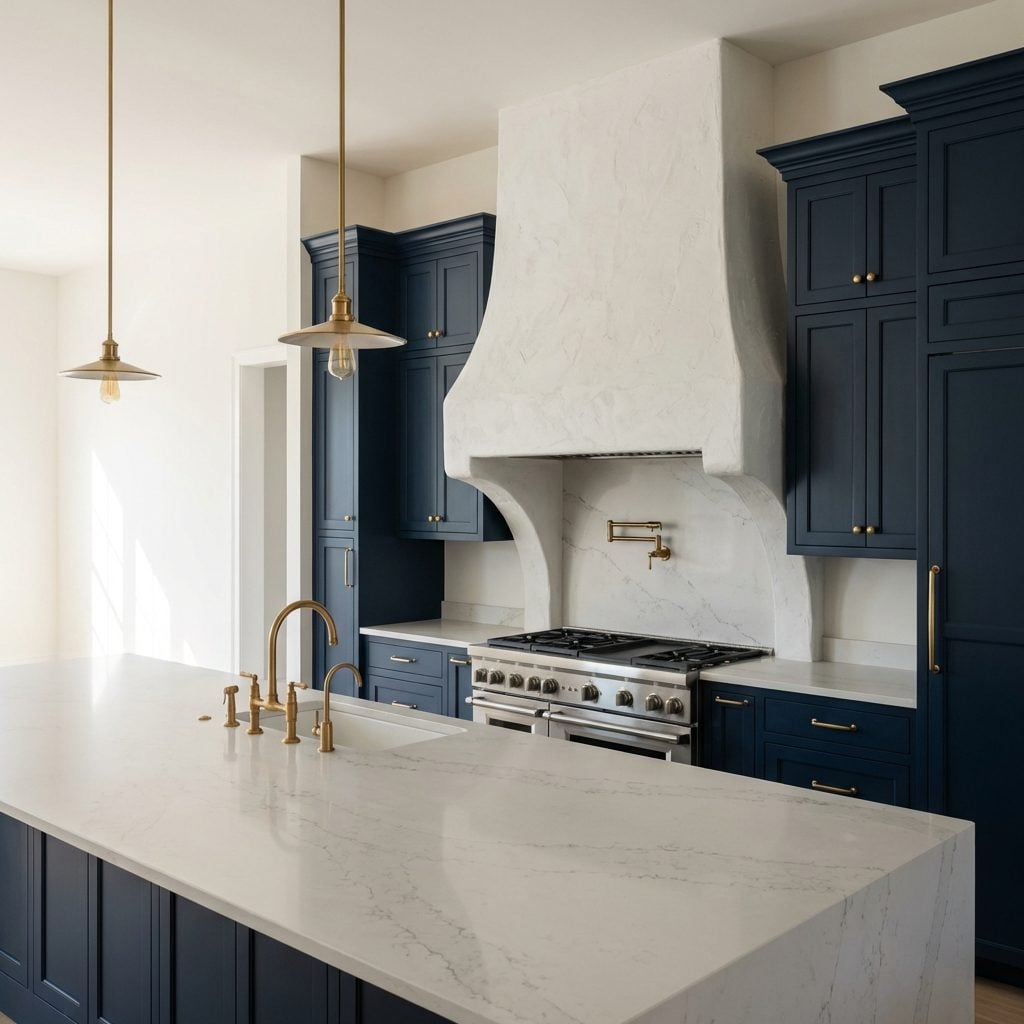
Statement features are seductive during the design phase. A dramatic arched range hood, a pot filler centered above the range, an oversized island with seating on three sides, these look undeniable in a floor plan or a Pinterest save. The problem surfaces when you actually try to cook dinner and realize the island is so deep you can’t reach the far side, the pot filler is beautiful but the range sits two feet to the left of where you prep, and the hood is so massive it crowds the upper cabinet space you desperately need.
Layout and workflow aren’t glamorous. No one pins a well-executed kitchen triangle to their inspiration board. But the absence of good workflow is something you feel every single day, in small frustrated moments, the awkward pivot from sink to stove, the drawer that catches on the dishwasher door, the refrigerator that opens the wrong way. Prioritizing the statement over the sequence is one of the most common and costly mistakes in kitchen design.
When Every Finish Is Premium but They All Argue With Each Other
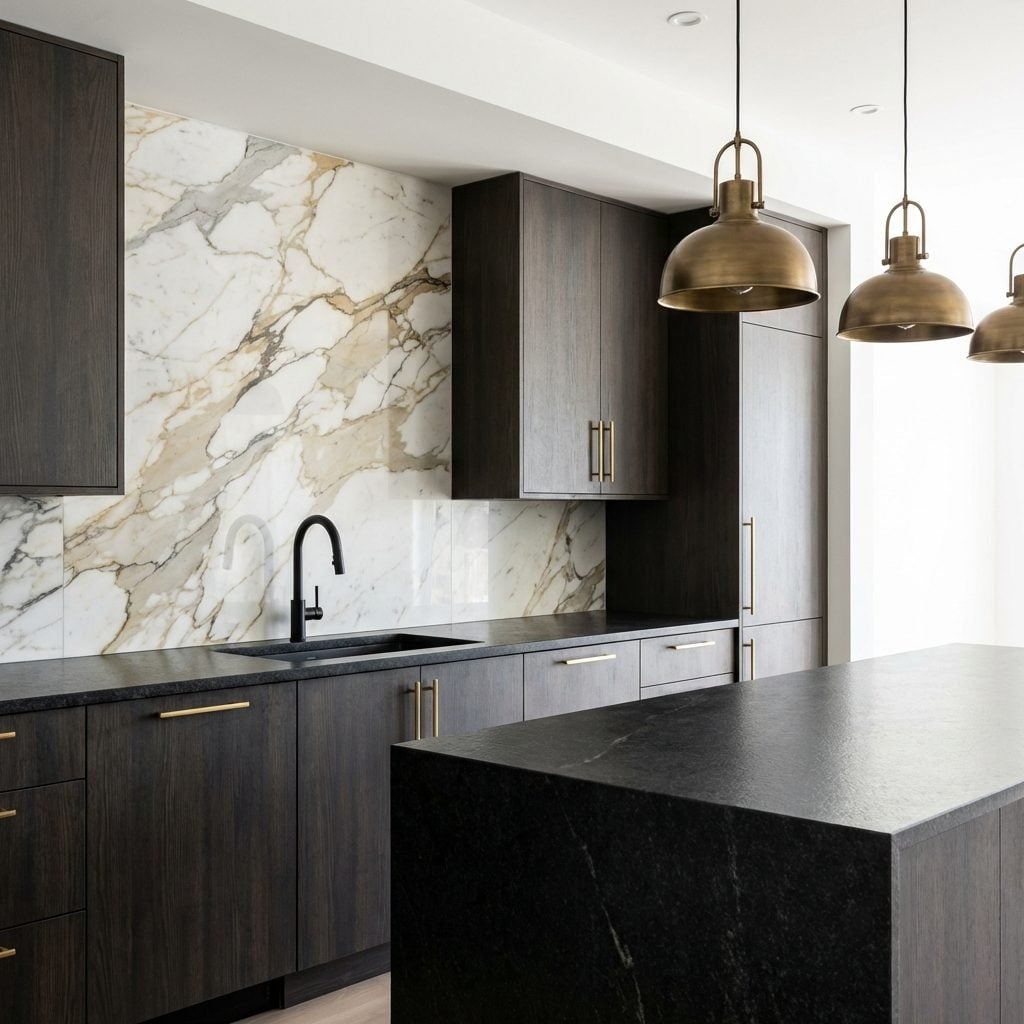
Calacatta marble backsplash. Smoked oak cabinetry. Leathered black granite counters. Brushed gold hardware. Matte black fixtures. Each one is a legitimate design choice in the right context, and together, they form a kind of visual noise that reads as expensive confusion rather than intentional design.
Cohesion doesn’t require everything to match. It requires everything to relate. A well-designed kitchen has a clear material logic: one dominant surface, one accent, one connector. When you add premium material after premium material without that logic, the eye doesn’t know where to rest. The result is a kitchen that feels busy despite looking high-end, where the modern kitchen design principles of restraint and repetition were skipped in favor of accumulation.
The Kitchen That Feels Like a Hotel Lobby, Not Someone’s Home
🔥 Would you like to save this?
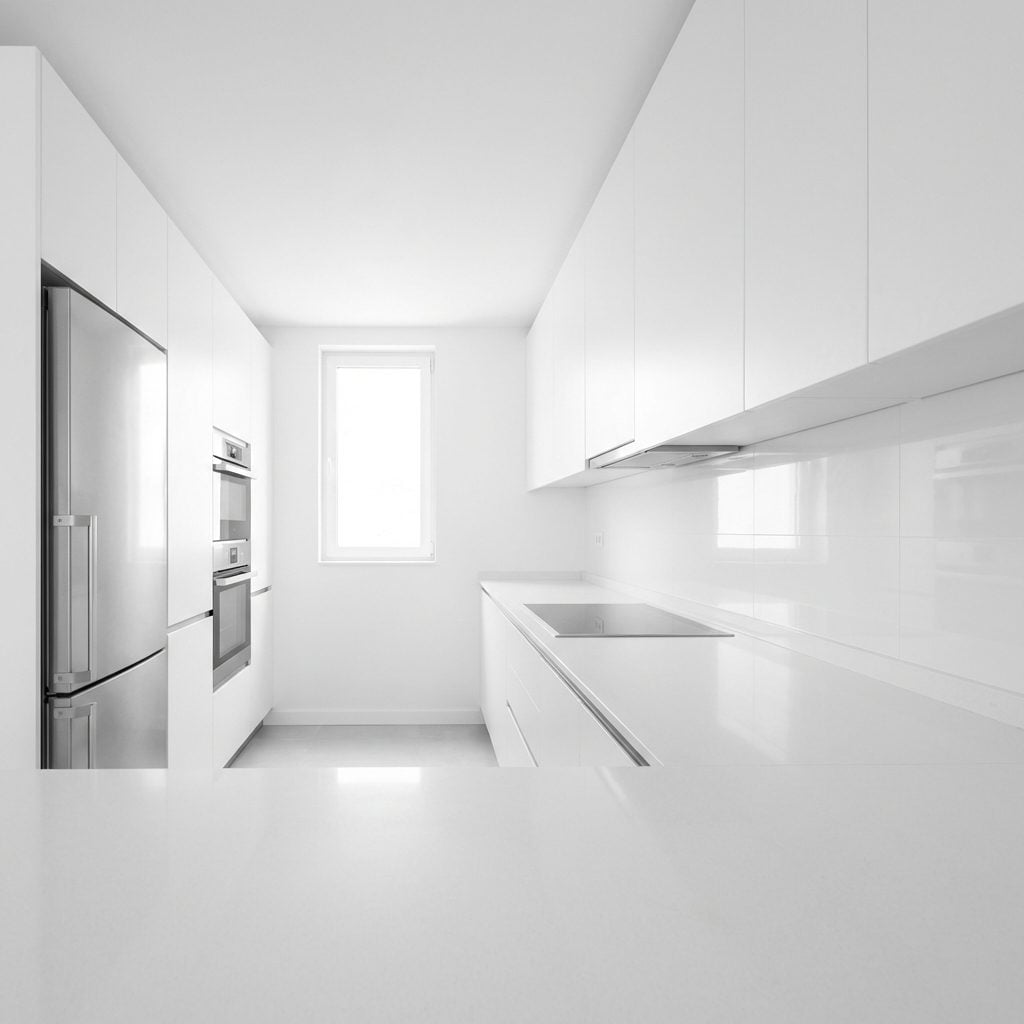
High-end finishes can create warmth or they can evacuate it. When a kitchen tilts cold, the signs are specific: no color variation in the cabinetry, surfaces that reflect light without absorbing it, a total absence of soft materials, nothing on the countertops that wasn’t placed there intentionally. It’s the kitchen equivalent of a room where no one has ever left a coat on a chair.
Personalization is what separates a designed kitchen from a livable one. A linen kitchen runner underfoot, a ceramic bowl that holds fruit because you actually eat fruit, a small potted herb on the windowsill, these aren’t decorating choices, they’re life choices that happen to have a visual effect. Impersonal kitchens are usually built by people who confused sterility with sophistication.
You Have a Statement Island and Nowhere to Actually Put Anything
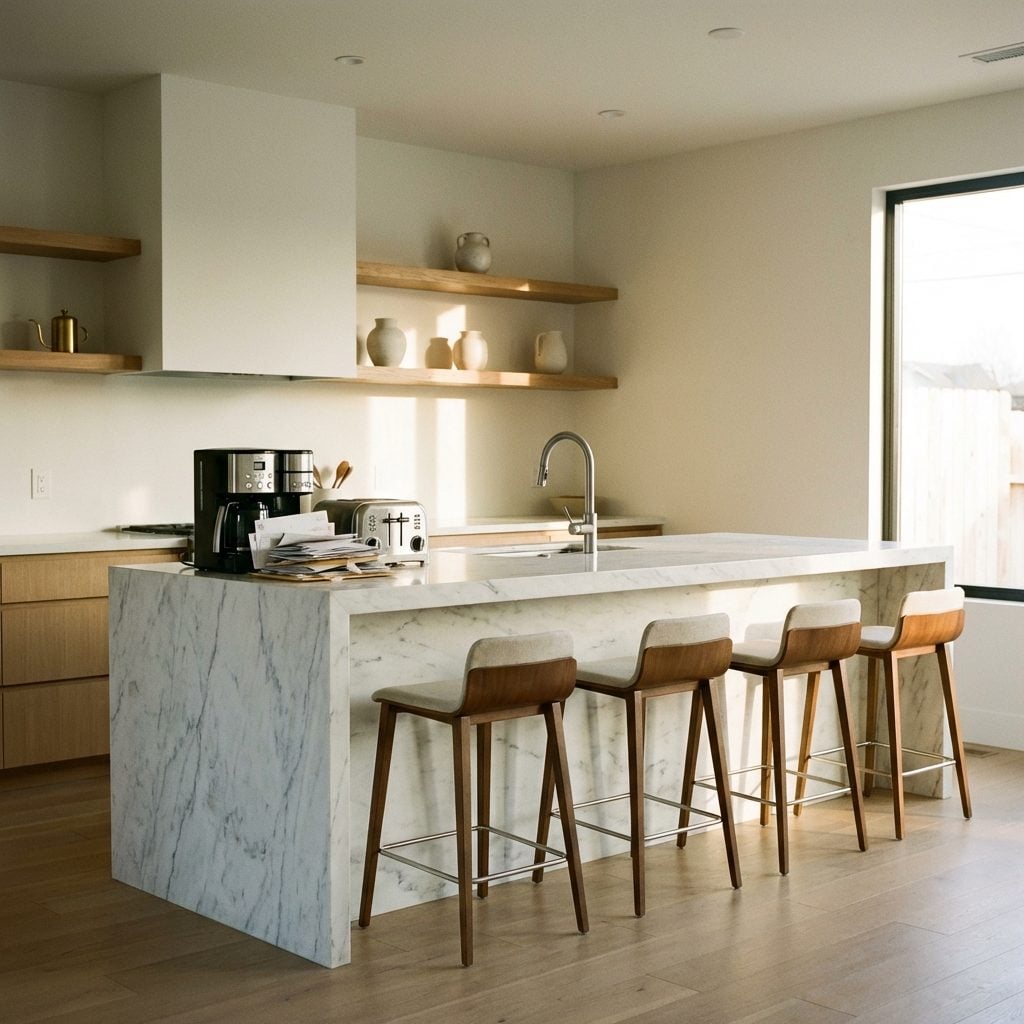
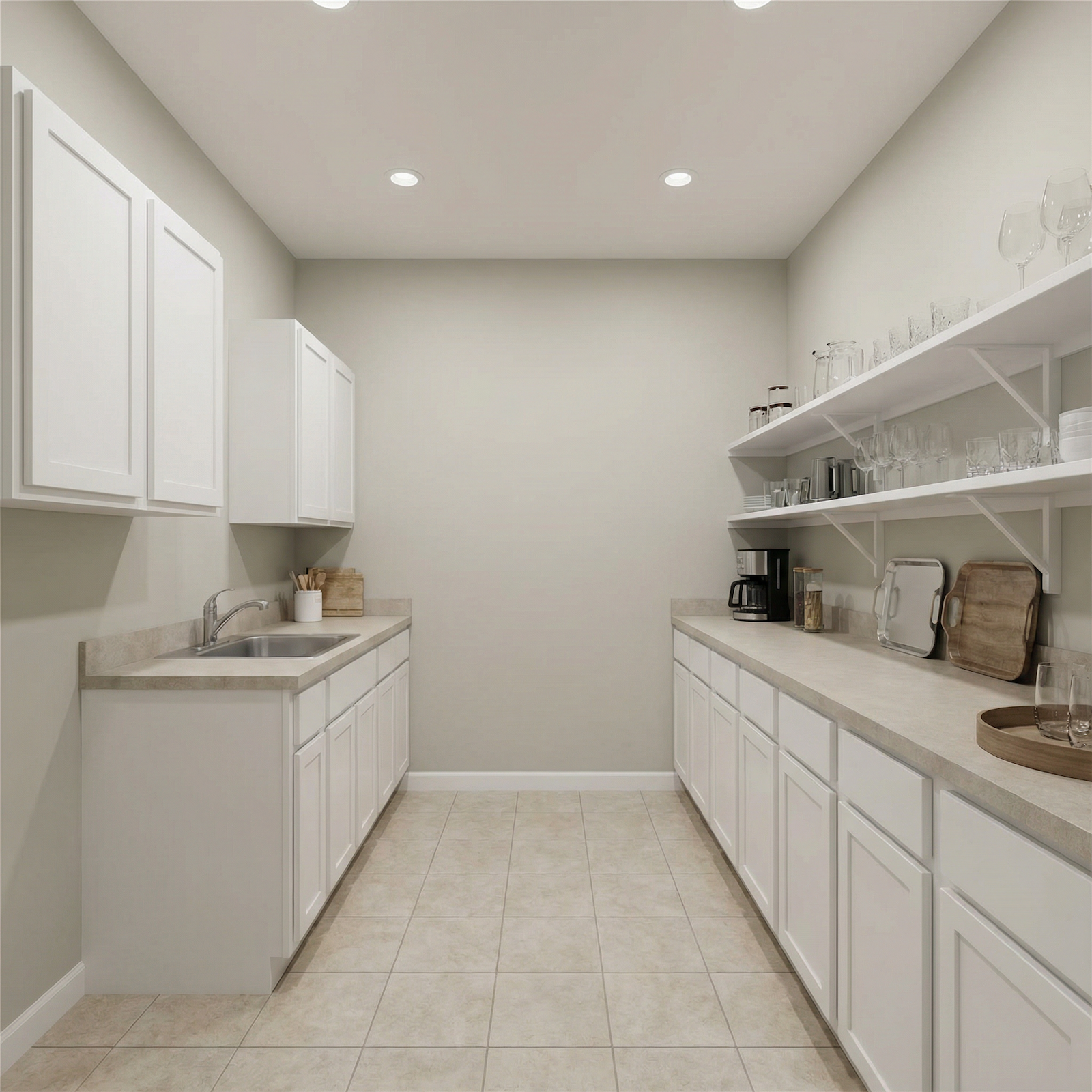
A kitchen can be all surface area and no storage. The large waterfall island takes up the center of the room, looks remarkable from every angle, and offers exactly two drawers and an awkward open shelf that collects dust. The uppers were reduced or eliminated to preserve sightlines. The pantry was swapped for a butler’s pantry that photographs well but holds about forty percent of what a real pantry would.
Storage decisions made for aesthetics almost always announce themselves within the first month of daily use. Suddenly every counter holds what should be inside a cabinet. The visual clutter undoes the design intention completely. A kitchen that prioritizes visual impact over actual capacity ends up looking worse in real life than one built around practical storage from the start.
A kitchen without enough storage will always look cluttered, no matter how expensive the island is.
Two Focal Points Walk Into a Kitchen and Neither Wins
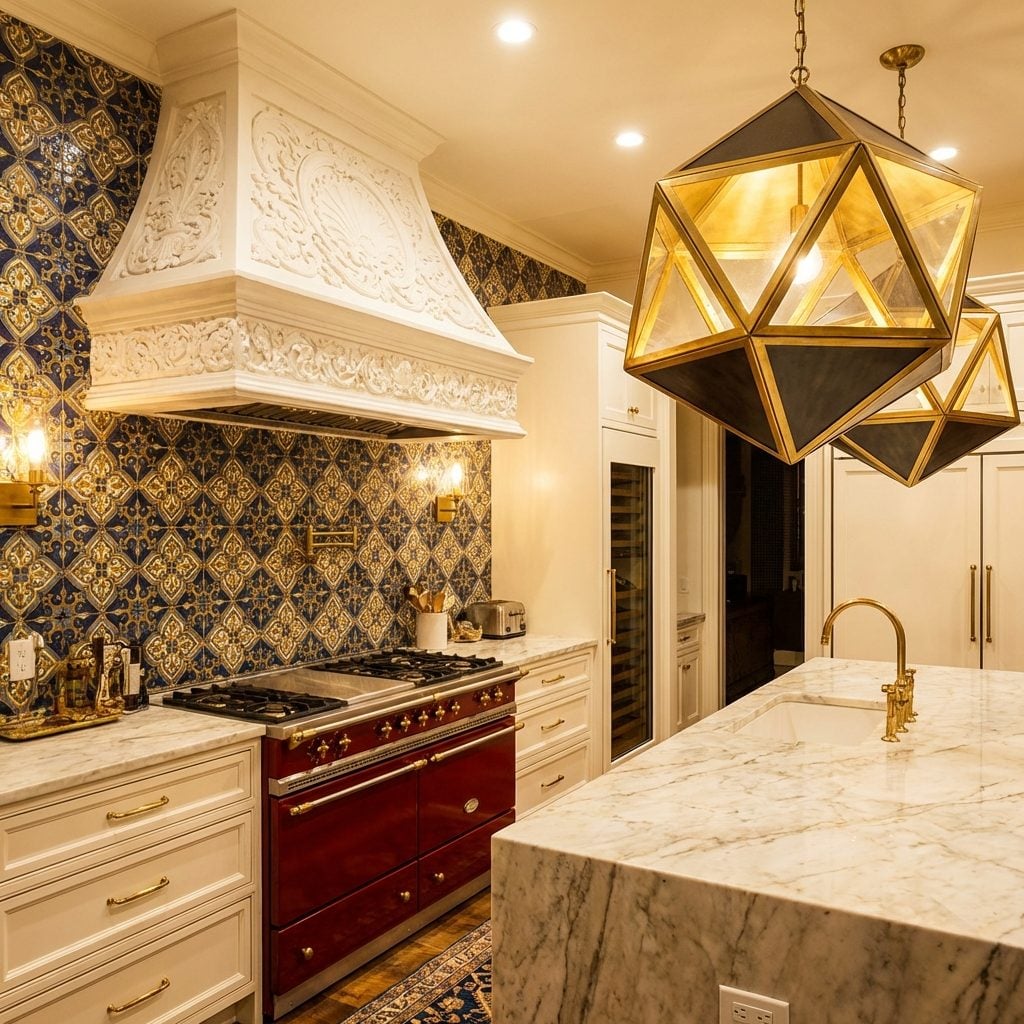
Luxury elements have visual weight, and when several of them are installed in the same room at equal scale, they cancel each other out. A hand-painted red kitchen range as a centerpiece is striking, unless the range hood above it is equally dramatic, the brass statement pendant over the island is competing for attention, and the backsplash tile pattern is loud enough to read from across the room.
Good design has a hierarchy. One thing leads. Everything else supports. When multiple luxury elements fight for dominance, the kitchen doesn’t feel expensive, it feels exhausting to look at.
The Kitchen That Photographs Flawlessly and Frustrates You Daily
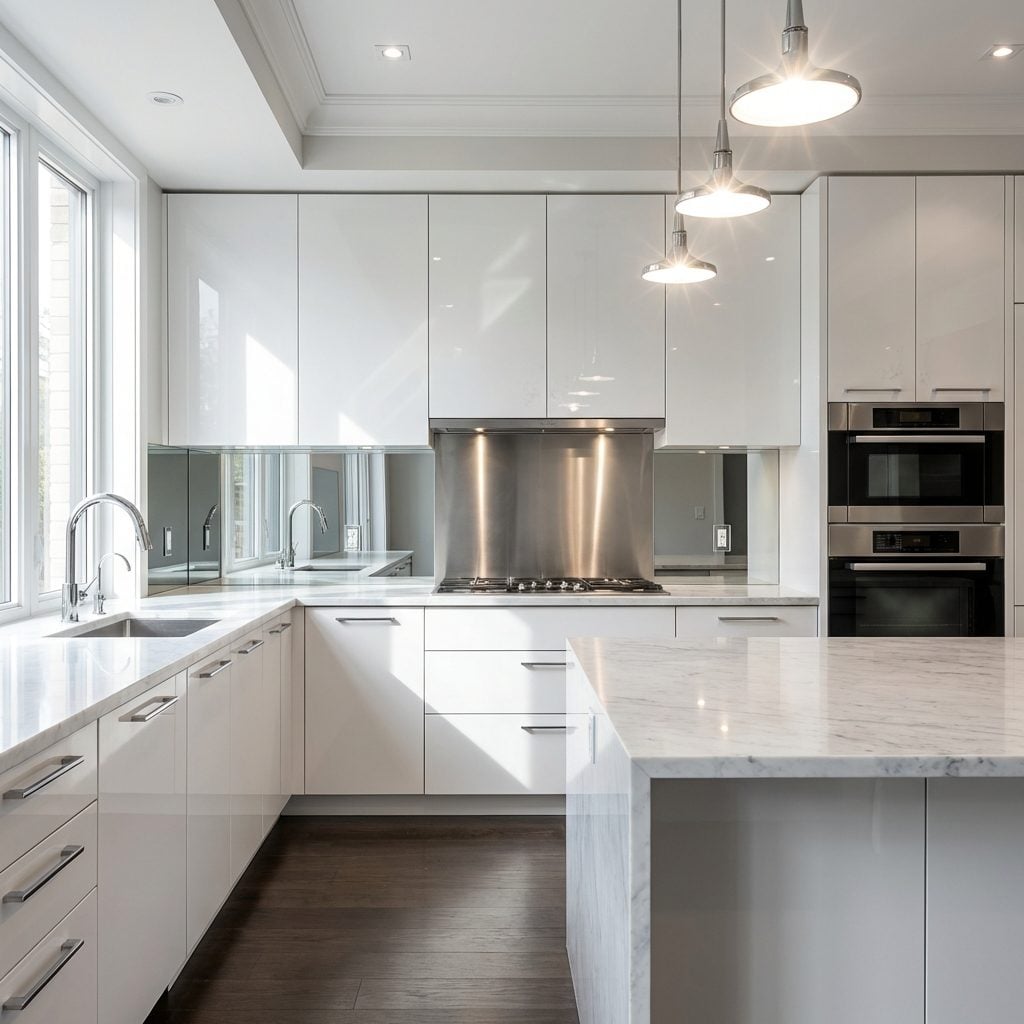
Some kitchens were designed for the camera. Polished surfaces catch light beautifully in a wide-angle shot. The island photographs as spacious and architectural. The range hood reads as sculptural. Post the photo and it will perform well.
Then you move in. The polished surfaces show every fingerprint within twenty minutes of use. The island that looked spacious in photos has exactly eight inches of clearance on each side when you walk around it. The range hood, stunning in a still image, hums at a pitch that becomes the background score of every meal you cook. Photography flattens depth, hides awkward proportions, and removes the ambient reality of daily life, and kitchens designed to photograph well are often designed with exactly that flatness in mind.
The best kitchens look decent in photos and feel right in real life. The ratio should favor the lived experience, always.
You Have Unlacquered Brass Fixtures in a Kitchen That Doesn’t Match Your Life
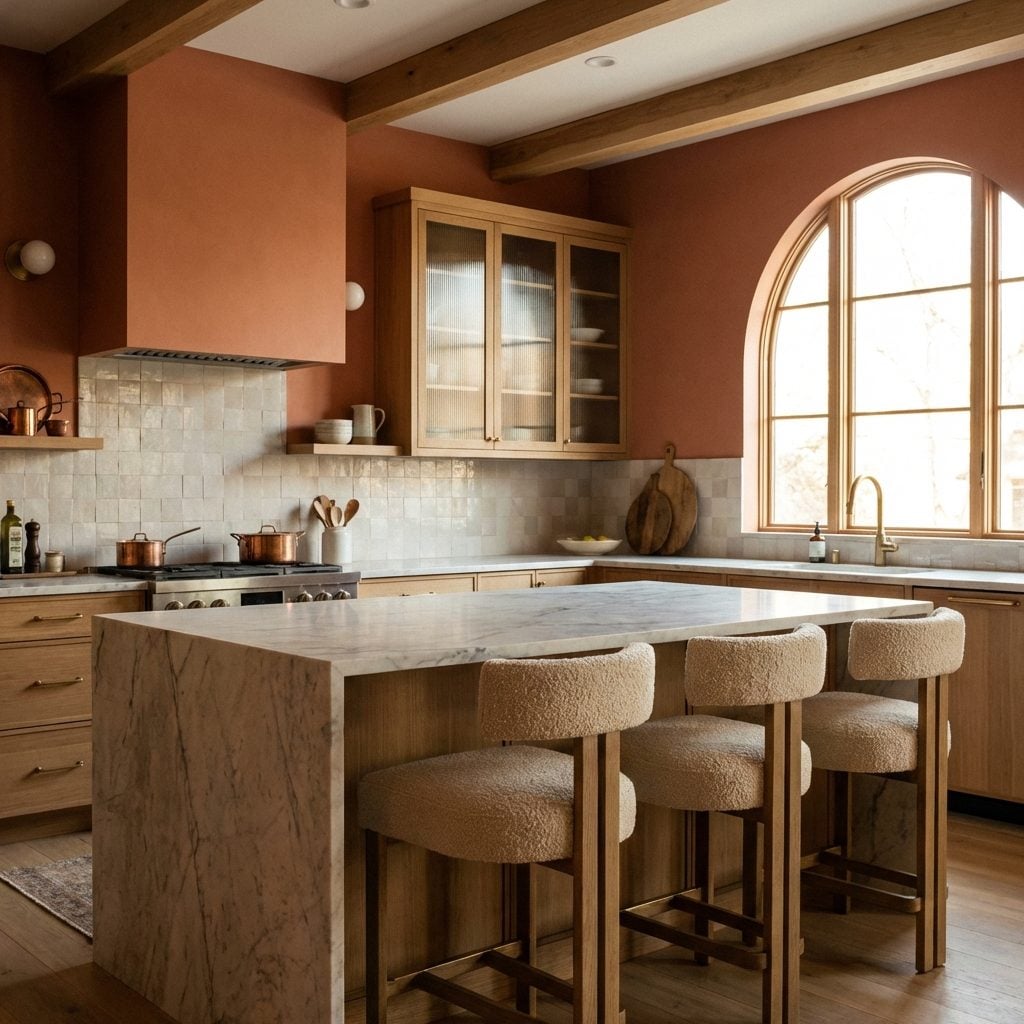
Trends in kitchen design move through distinct phases, and right now certain finishes carry enormous cultural cachet: rust kitchen inspiration, warm-toned metals, fluted glass, bouclé bar stools, and unlacquered brass that patinas over time. All of these are genuinely interesting design choices, in the right context.
The context is everything. Unlacquered brass develops a living patina that some people find rich and others find grimy. Bouclé bar stools around a kitchen island are tactilely inviting but notoriously difficult to keep clean if you have young children or cook frequently. Fluted glass cabinet fronts are decorative but reduce visibility of contents and require more deliberate organization behind them.
Following a trend without stress-testing it against your actual daily life produces a kitchen that looked current for about eighteen months and then started feeling like a costume you’re not sure you chose for yourself.
Expensive Everything, and Still Your Eye Doesn’t Know Where to Land
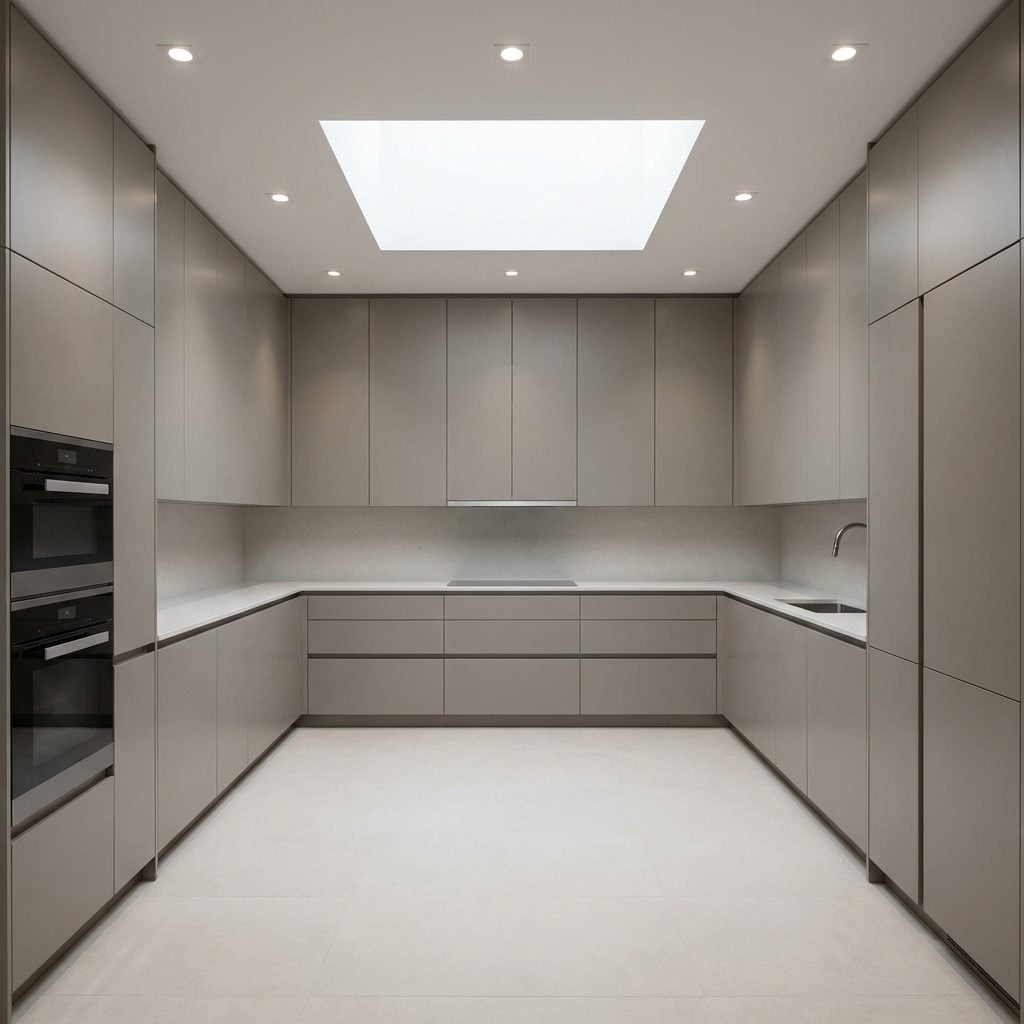
A focal point isn’t about spending more, it’s about making a deliberate choice about what leads the room. Some of the most focused, confident kitchens built around farmhouse kitchen inspiration or craftsman kitchen decor achieve their focal point with something as simple as a painted color on the cabinetry or a distinctive range in a sea of white.
When a kitchen has no focal point, the eye bounces. It looks for something to anchor to and finds only more of the same level of interest repeated across every surface. This is surprisingly common in high-budget renovations where every detail received equal investment and attention, resulting in a room that reads as expensive but oddly flat.
The Countertops Are Extraordinary and the Cabinets Are Wrong for the Room
Surface materials attract the budget in ways that cabinetry proportions and room scale don’t. A slab of dramatic quartzite with a bookmatched vein pattern is easy to justify and easy to admire on a showroom visit. The relationship between upper and lower cabinet height, the visual weight of a toe kick, the way a tall cabinet interrupts a sightline, these are harder to explain in a showroom and easier to get wrong without noticing until installation day.
Proportion is the invisible architecture of a kitchen. Get it right and the room feels resolved even without exceptional materials. Get it wrong and no amount of extraordinary stone will compensate. A kitchen with out-of-scale upper cabinets and a legendary slab countertop is still a kitchen with out-of-scale upper cabinets. The surfaces distract from the problem temporarily but never fix it.
Guests Admire the Kitchen. You Dread Cooking in It.
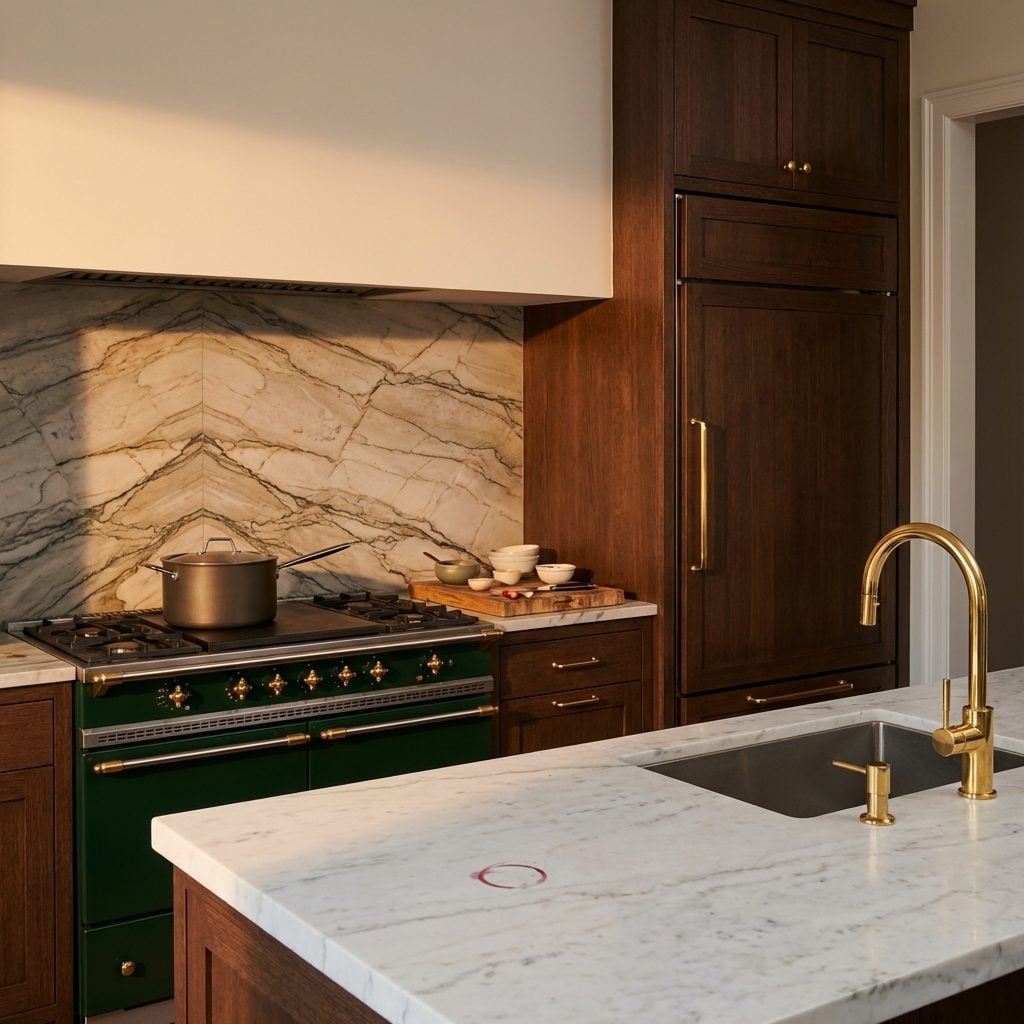
When friends walk in, the reaction is reliable: raised eyebrows, a slow scan of the room, some version of “this is incredible.” And you feel it, for a moment. Then they leave and you’re standing at the range trying to cook pasta and remembering that the pot drawer is on the wrong side of the stove, the prep lighting is beautiful but directional in exactly the wrong way, and the white marble countertop stains if you set a glass of red wine down without a coaster.
A kitchen designed to impress guests prioritizes the moments of arrival and the wide-angle view. A kitchen designed for daily use prioritizes the forty-five minutes every evening when you’re actually in there. The first category photographs well and functions as a very expensive piece of social currency. The second one feeds you reliably, without friction, for twenty years.
The Kitchen Is Styled to Perfection and Tells You Nothing About Who Lives There
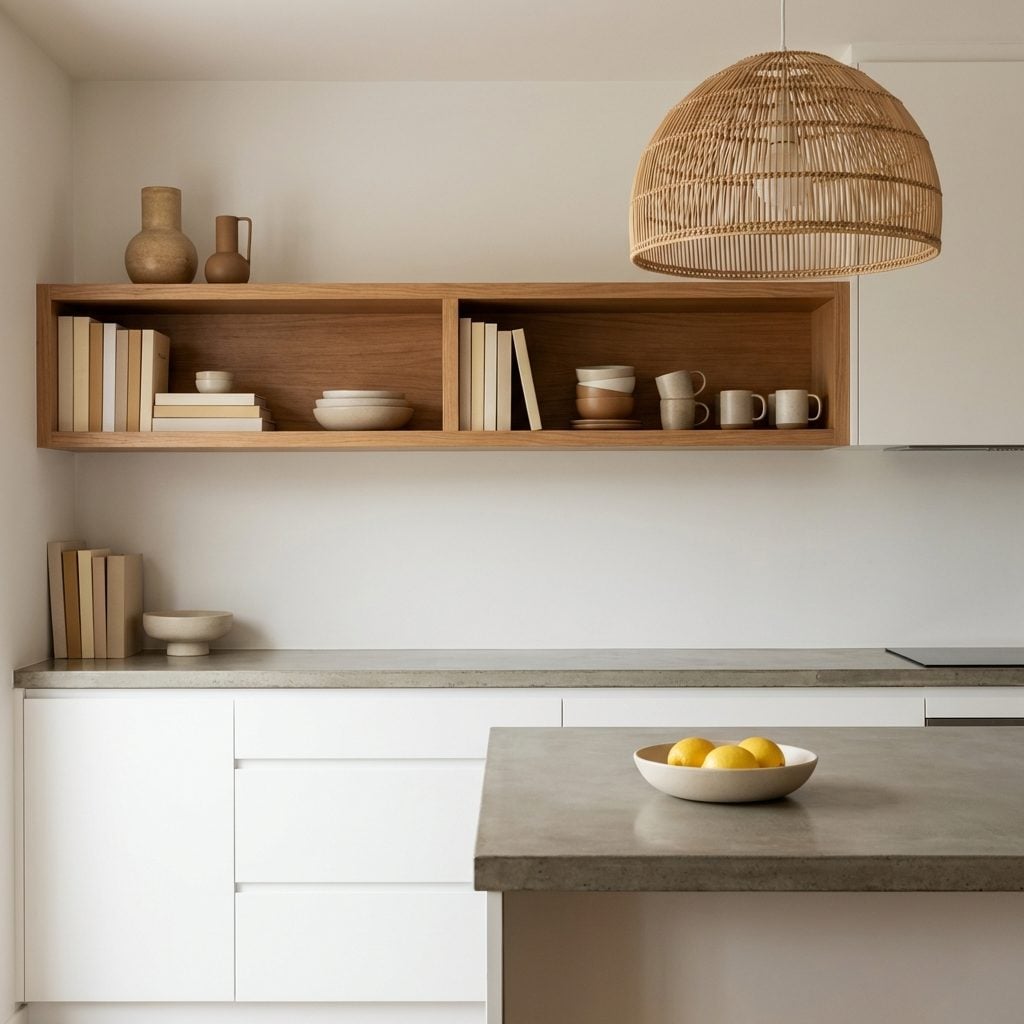
Walk into a kitchen that belongs to someone and you can usually feel it within thirty seconds. There’s a particular olive oil they love, kept on the counter because they reach for it constantly. A ceramic mixing bowl inherited or bought somewhere specific, sitting out because it gets used. A shelf of cookbooks that are clearly read, not displayed. Even the small kitchen inspiration that lives in tight quarters has a point of view, a personality, something that accumulates meaning over time.
A kitchen that looks arranged rather than lived-in is recognizable instantly. The objects were chosen for how they read visually, not because someone actually uses them. The cookbooks are spines-out in a color-coordinated row. The fruit bowl holds wax fruit or three lemons placed for scale. The open shelving displays pottery that hasn’t moved in two years.
Curation without personal selection produces a kitchen that could belong to anyone, which means, effectively, it belongs to no one. The most interesting kitchens have at least one thing in them that’s slightly wrong for the aesthetic but completely right for the person.