🔥 Would you like to save this?
The mirror over the mantel is the design world’s default answer. Big blank wall, warm focal point, easy call, and we’ve hung one in a thousand rooms without a second thought. Then we started looking at what those mirrors actually reflect, and the picture got ugly fast. Glare. A TV bounced back into your face. Half a chandelier, soot creeping up the silvering. What follows are the real problems we’ve watched unfold above the hearth, so you can spot yours before you commit a single anchor screw.
20. The Sunny Window That Turns Your Mantel Into a Spotlight
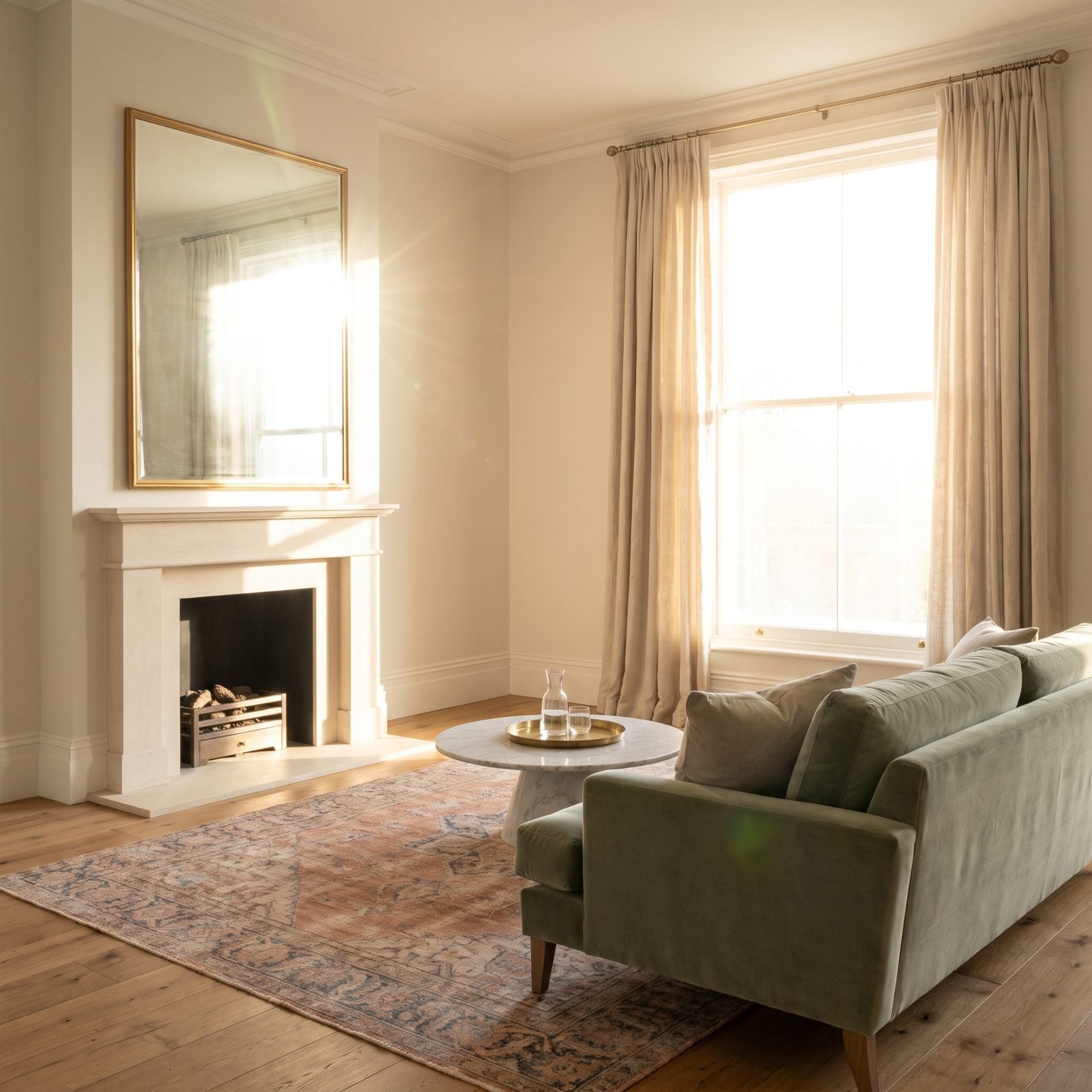
Mirrors do one job well: they throw light around. Point one straight at a south-facing window and it stops being charming and starts being a headache. Literally. The glare lands right at seated eye level, so every conversation happens with a white-hot rectangle burning in your peripheral vision.
In order to come up with the very specific design ideas, we create most designs with the assistance of state-of-the-art AI interior design software. Also, assume links that take you off the site are affiliate links such as links to Amazon. this means we may earn a commission if you buy something.
We got this wrong for years, assuming more bounced light was always a win. It isn’t. A piece of framed art absorbs that afternoon sun; a mirror weaponizes it. If your window sits across from the hearth, this gold framed mirror becomes a spotlight nobody asked for.
19. The Television Reflected Straight Back Into Your Face
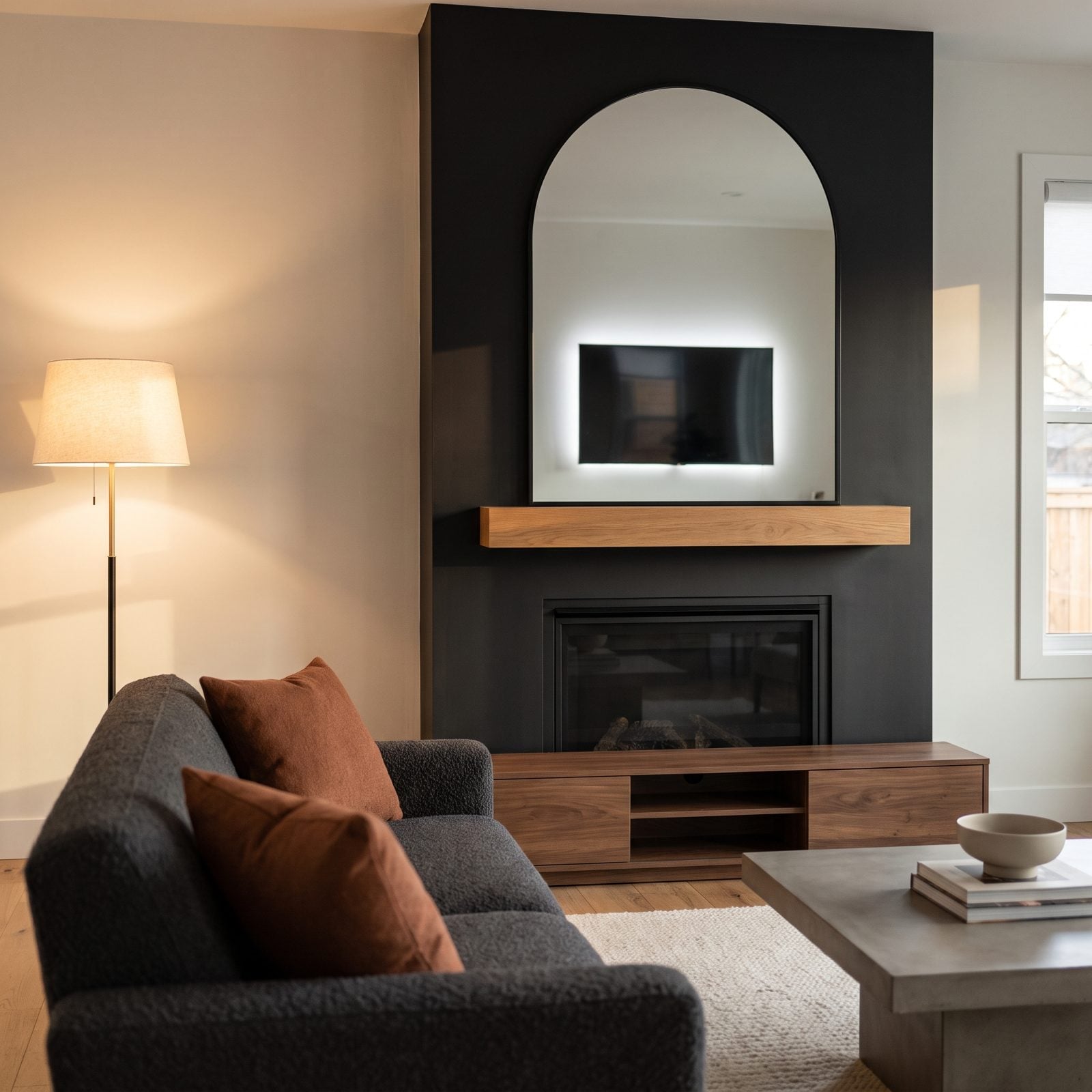
Say you finally get the seating just right, everyone facing the TV on the side wall. Then you glance at the mantel and there’s the TV again, backwards, glowing in the mirror. Now the screen is fighting itself for your attention from two directions at once.
This one drives us up the wall. You bought a mirror to add calm and instead built a distraction machine. The eye keeps snapping to that little glowing rectangle in the glass, especially at night, and your brain reads two competing light sources and can’t fully settle. If you’ve built a proper bohemian media room, the last thing you want is your screen echoing where it shouldn’t.
18. The Mirror That Reflects Nothing but a Blank Stretch of Ceiling
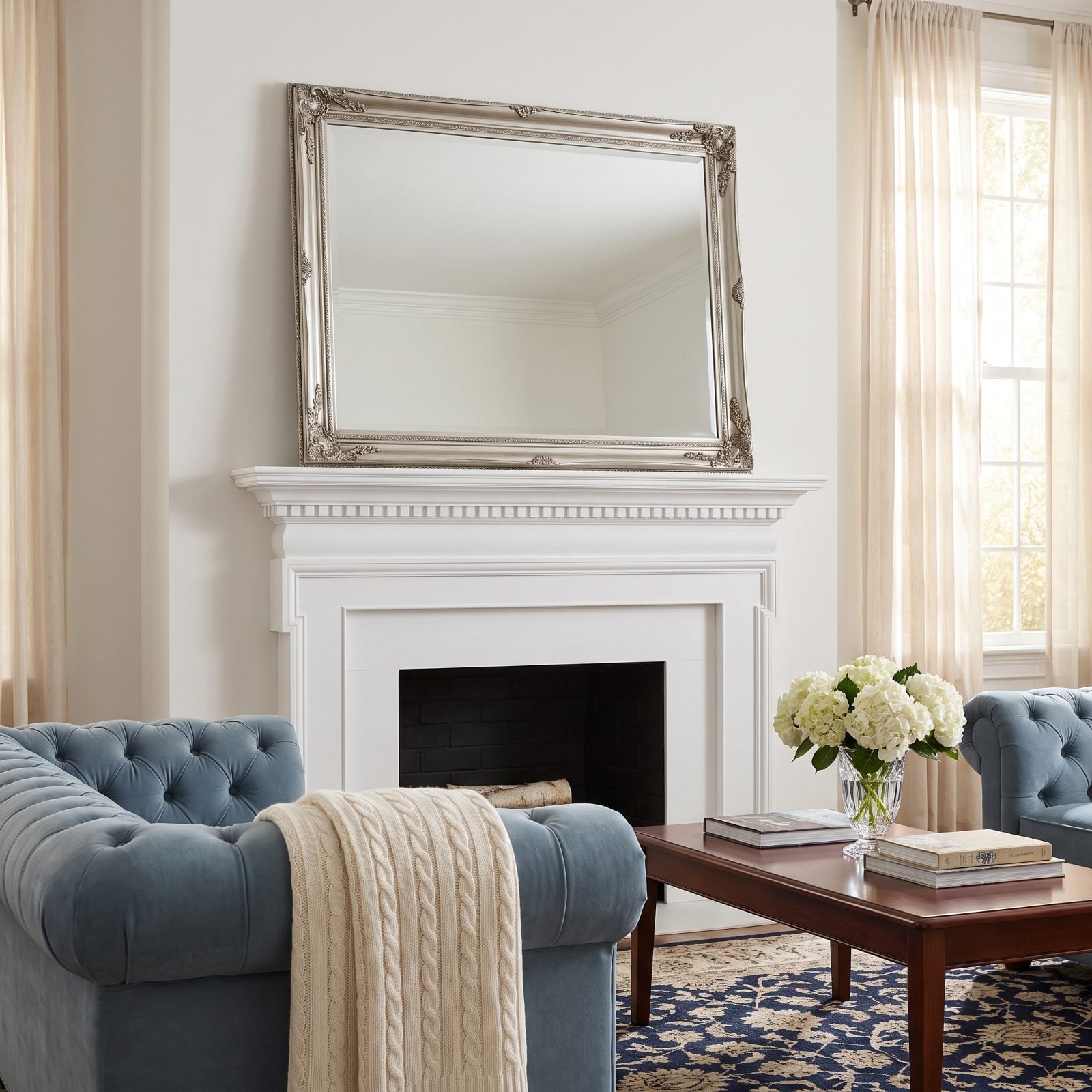
Here’s the quiet failure nobody warns you about. Hang the mirror too high, or tilt it back even a little, and all it gives back is ceiling. Flat, white, boring ceiling.
A mirror only earns its spot when it reflects something worth reflecting — a slice of the room, a bit of a window, some warm light. Reflect nothing and you’ve hung an expensive gray rectangle. The fix is dead simple. Sit down where you actually sit, then check the angle before you drill. Go try it right now, I’ll wait.
17. The Ceiling Fan That Becomes an Unwanted Second Focal Point
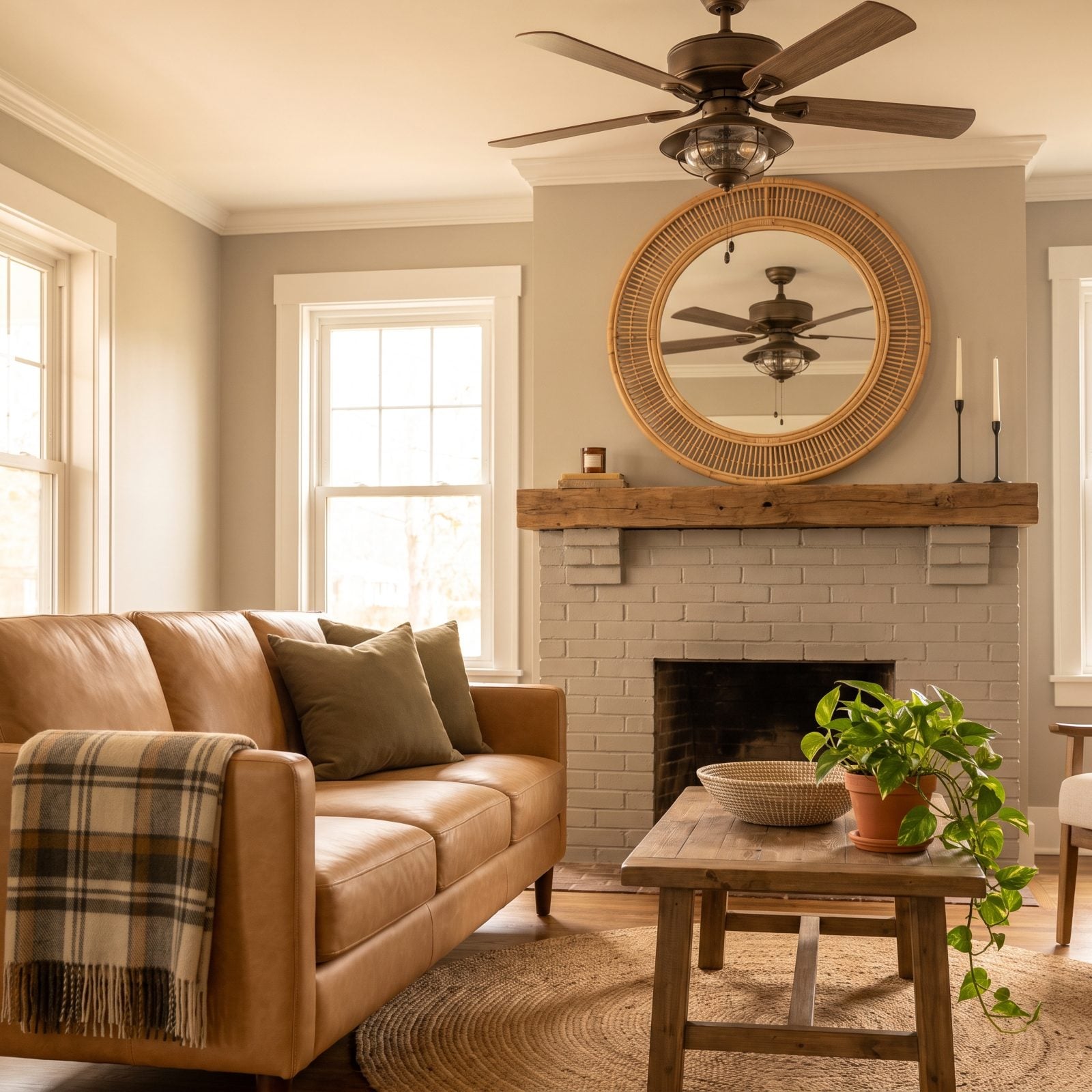
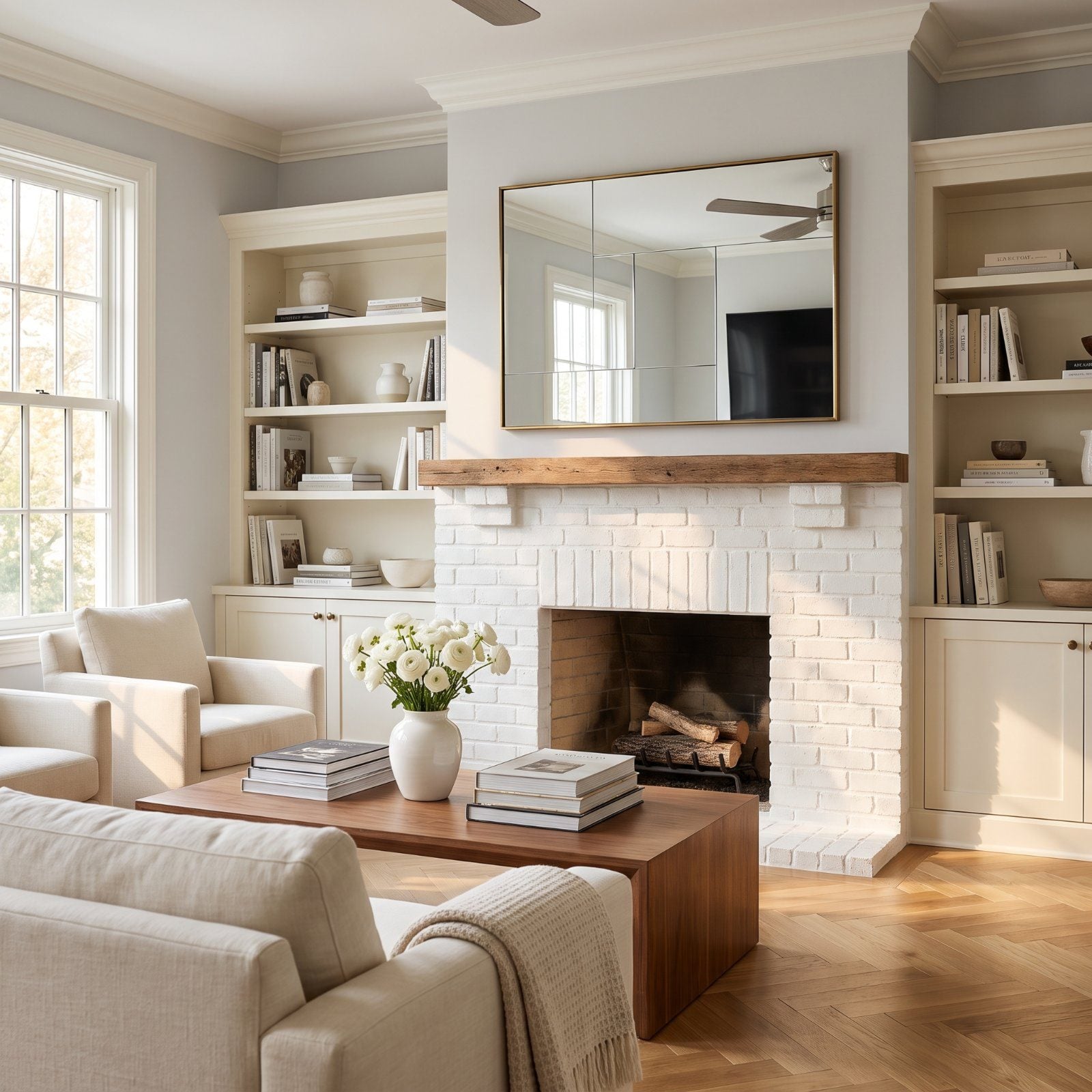
Round mirrors love ceilings, and ceilings often have fans. Put the two together and the fan lands smack in the middle of your glass, blades and all, doubled into the most prominent spot in the room.
Now your eye has two things pulling at it: the real fan above and the ghost fan in the mirror. Motion makes it worse. Turn the fan on and the reflected blades spin in the glass, dragging your gaze up and away from the fire that was supposed to be the star. A round shape amplifies the problem because it grabs whatever sits directly overhead.
16. The Chandelier Sliced Awkwardly in Half
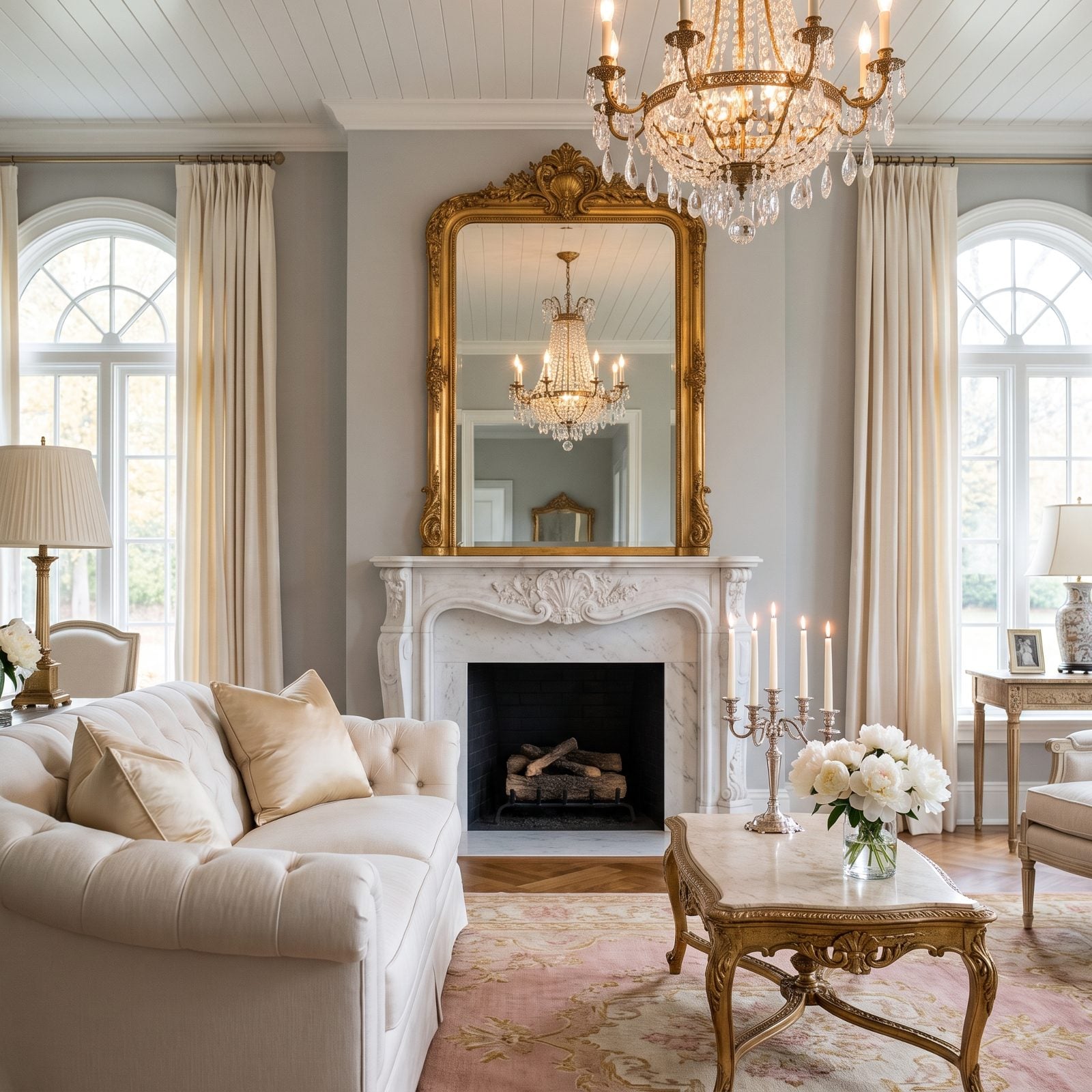
A chandelier and a mantel mirror should be a match made in heaven. Half the time they’re a near miss instead — the mirror catches the bottom of the fixture and slices it clean across, so you get a truncated stub of crystal floating in the glass.
The eye hates an incomplete object. It keeps trying to finish the shape and can’t. Show the whole chandelier or show none of it; that half-and-half version is the worst of both. It happens constantly in a formal retro dining room where the fixture hangs low and the mirror sits high.
15. The Oversized Mirror That Dwarfs a Modest Mantel
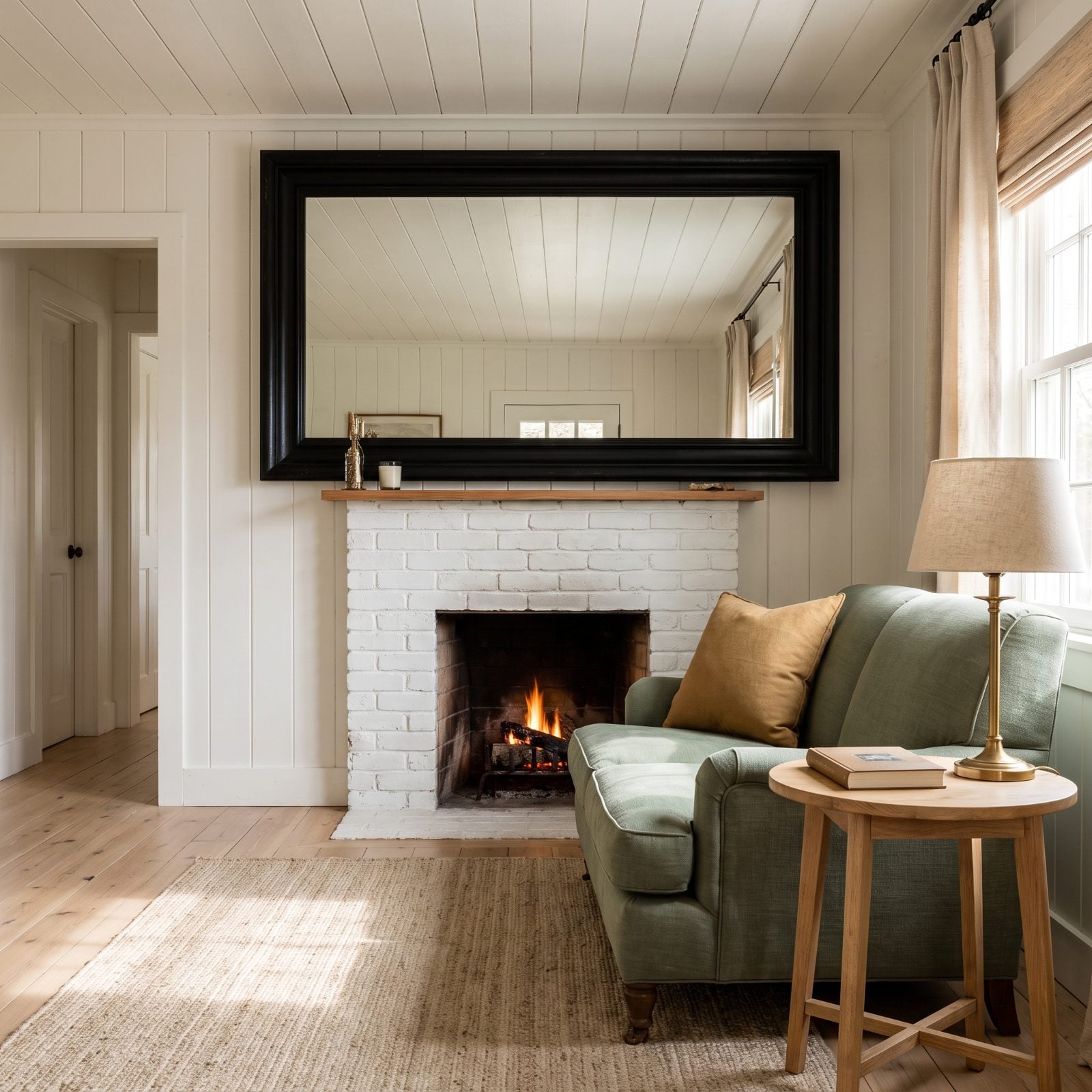
Bigger isn’t always better, and this is the room that proves it. The mantel is slim and modest; the mirror is a slab that spills past both ends and crowds the ceiling. Something’s off, and your eye knows it before your brain does.
Scale is the quiet engine of a room feeling right. A mirror should relate to the mantel width beneath it, not bully it. Aim for a mirror roughly two-thirds to three-quarters the mantel’s width. Go wider and the fireplace looks like an afterthought propping up a giant piece of glass.
14. The Heavy Gilt Frame Wrestling With Rough Fieldstone
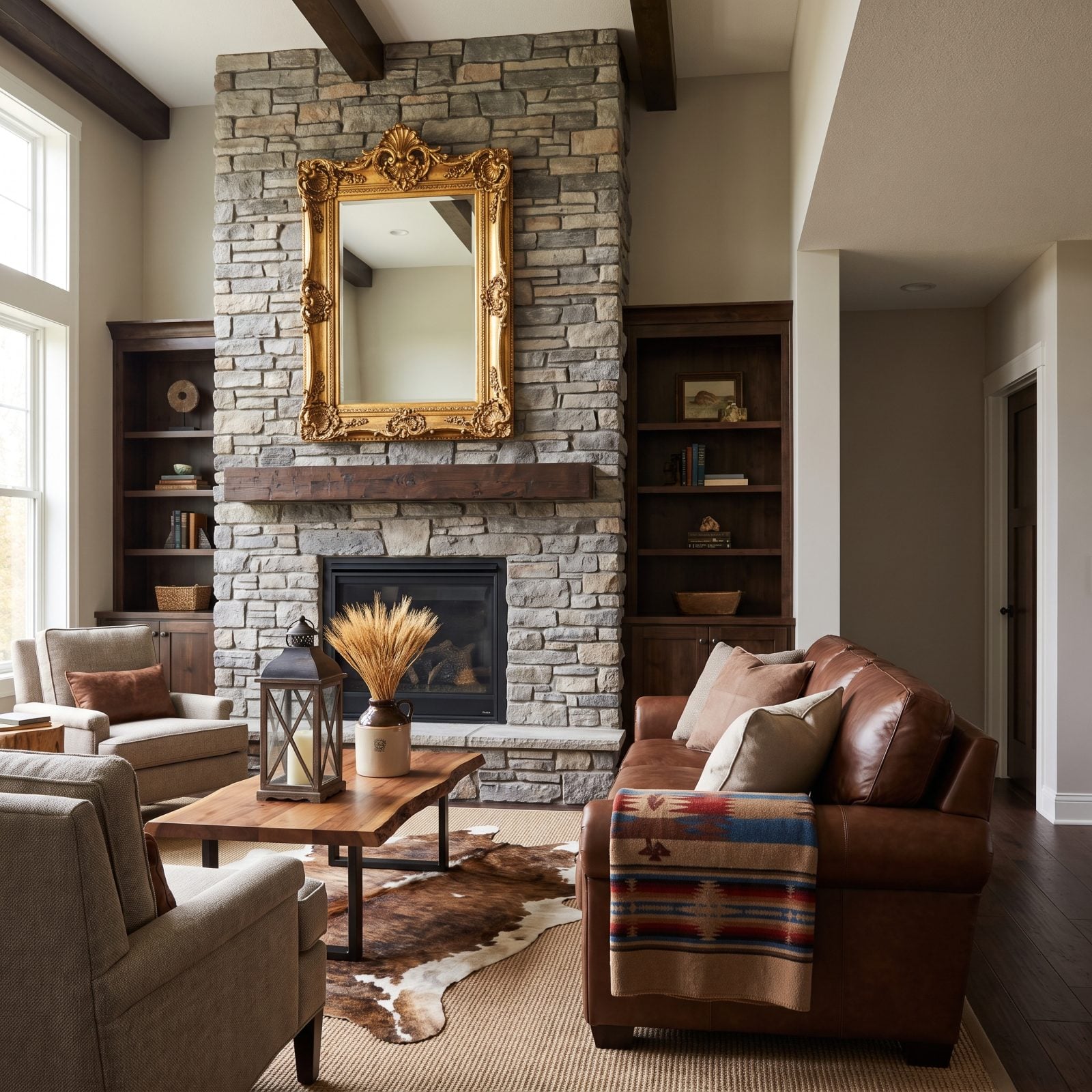
Rough fieldstone and a fussy baroque gilt frame want nothing to do with each other. One is raw and heavy and cabin-honest. The other is polished ballroom formality. Bolt them together and both look worse for it.
Material honesty matters. Stone carries a texture and weight that a delicate gold scroll frame can’t stand up to. Match the mirror’s mood to the fireplace instead — a chunky wood or forged iron frame would settle in with that stone rather than fight it. In a proper glam family room the gilt would sing. Against fieldstone it just clangs.
13. The Leaning Mirror That Looks One Nudge From Disaster
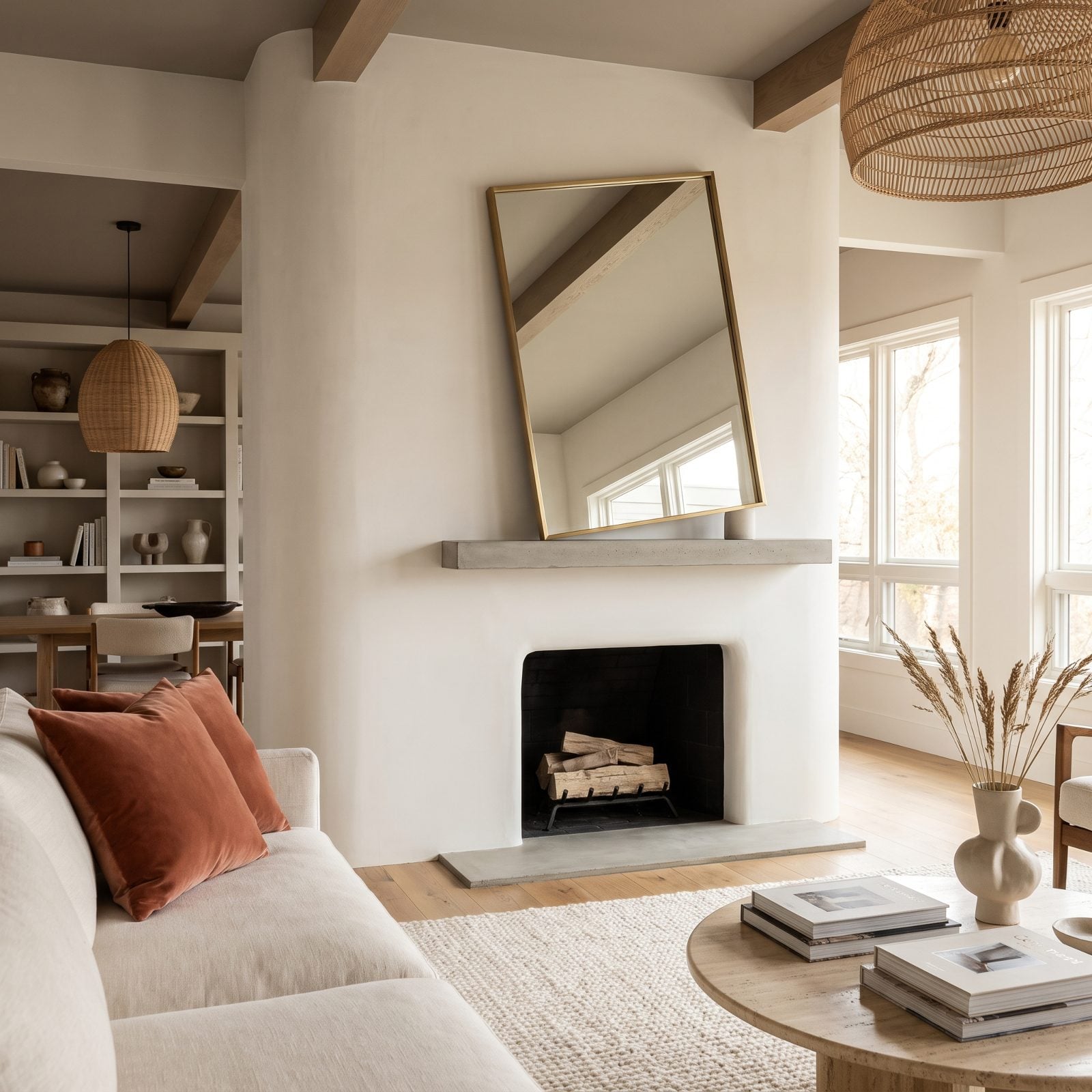
The leaning mirror looks casual and cool in a catalog. On a narrow mantel over a working fireplace it reads as an accident waiting to happen, balanced on a four-inch ledge, held up by gravity and optimism.
Your brain clocks the instability even when you’re not thinking about it. You can’t fully relax under something that looks like it’ll slide off at the first door slam. And on a mantel above a fire? That’s not a look, that’s a hazard. Anchor it to the wall or don’t put it there.
12. The Heat-Damaged Vintage Mirror With Clouded Silvering
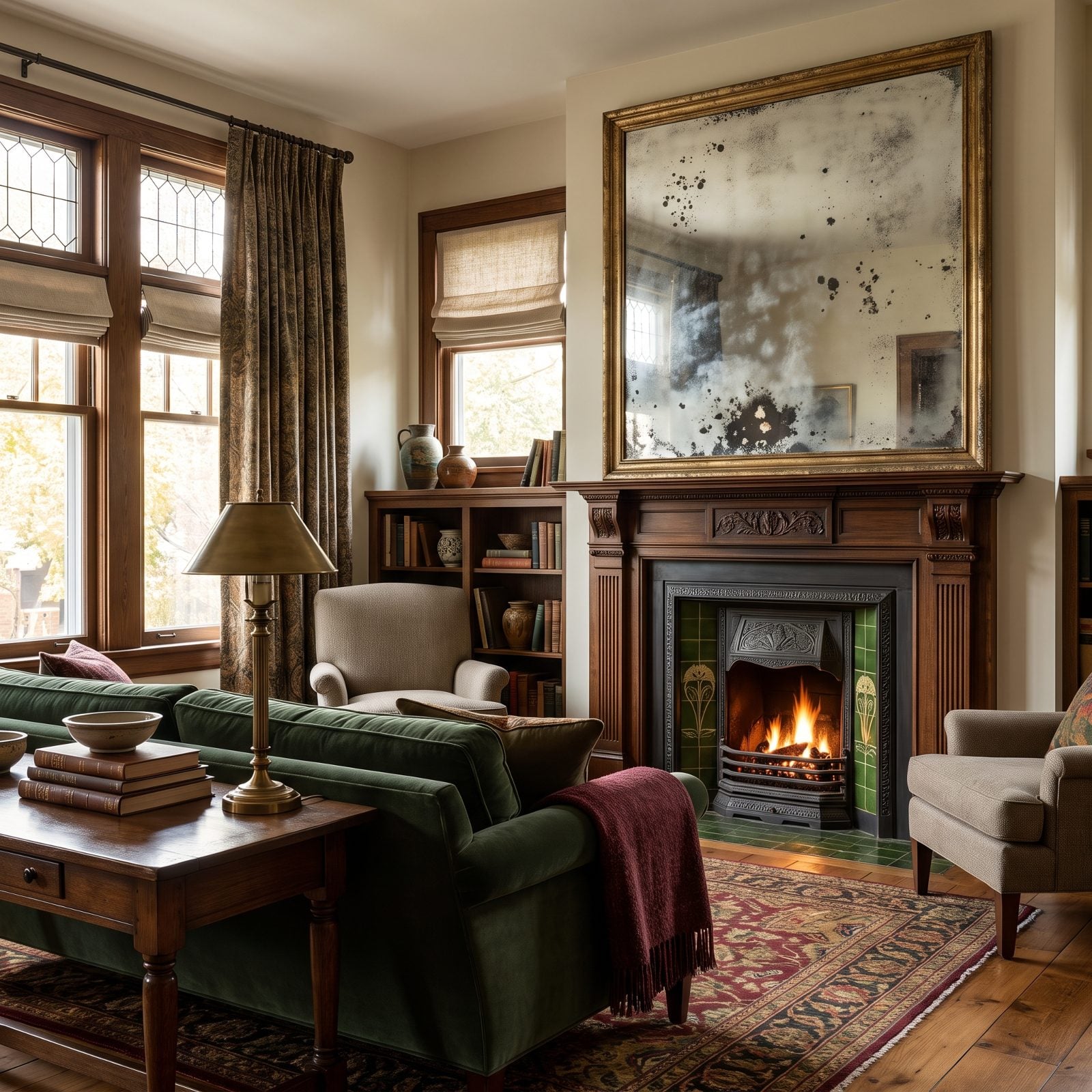
Some clouding on an antique mirror reads as patina. Too much — especially the kind heat causes — and it just looks broken. The silvering peels and mottles from behind, leaving dark foggy patches that spread out from wherever the heat hits hardest.
Fireplace warmth accelerates all of it. The backing coating breaks down over time, and steady heat from below speeds the failure right where the mirror sits closest to the mantel. A genuine flea-market fog can be gorgeous. Heat-caused desilvering that keeps growing is a mirror slowly dying in place. Know the difference before you commit that old beauty to a spot above the fire.
11. The Soot-Streaked Mirror Above a Working Wood Fire
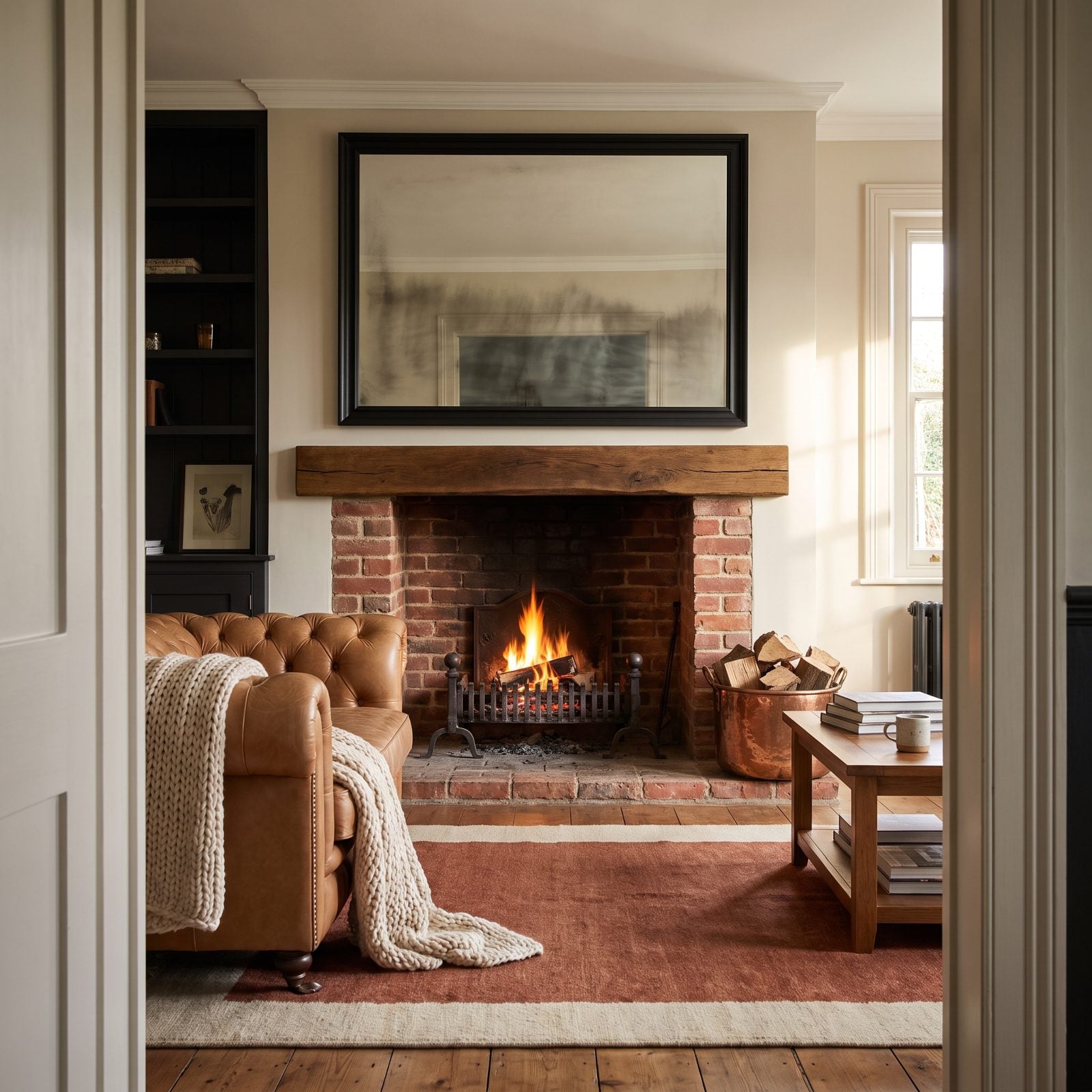
Wood fires make soot, and soot goes up. Hang a mirror in that rising plume and it films over faster than you’d believe. The lower edge hazes gray first, then the whole surface dulls to a smudge no glass cleaner fully fixes.
Here’s the maintenance trap nobody mentions at the frame shop. A painting can shrug off a light film; a mirror shows every speck because its whole point is clarity. Above a working wood-burner you’re signing up for a weekly wipe-down, and even then the soot works into the frame corners. If you burn real logs, think hard before you put glass in the smoke’s path.
10. The Mirror That Doubles Every Piece of Mantel Clutter
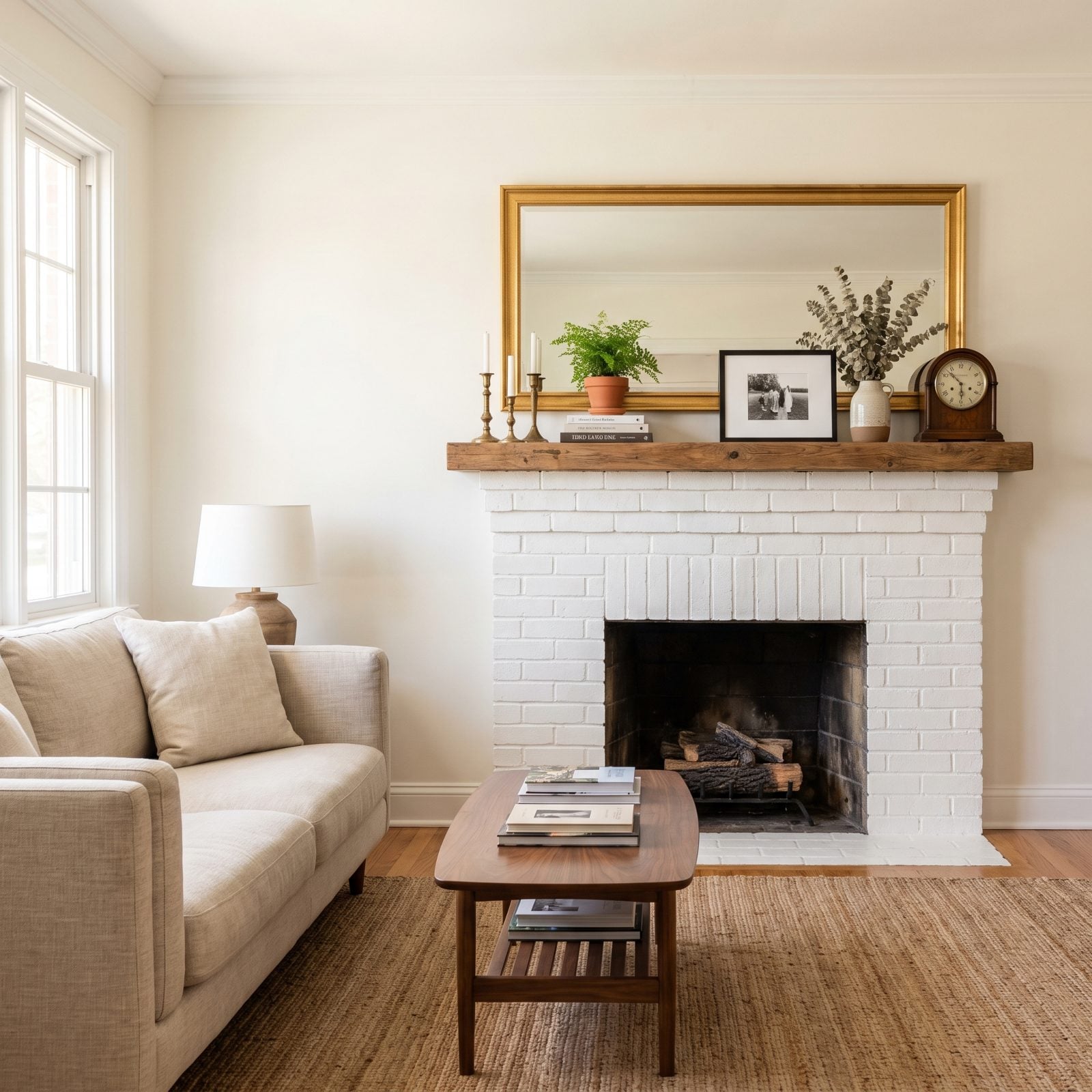
A mirror magnifies whatever sits below it. Hang one over a mantel and every candlestick, every framed photo, every stray remote gets counted twice, so nine objects read as eighteen and your eye can’t tell which set is real.
The fix isn’t a bigger frame. Curate down to three pieces you actually love and the reflection stops fighting you. Art doesn’t have this problem — a painting reflects nothing back at you.
9. The Mirror Exposing a Hallway and Bathroom Door
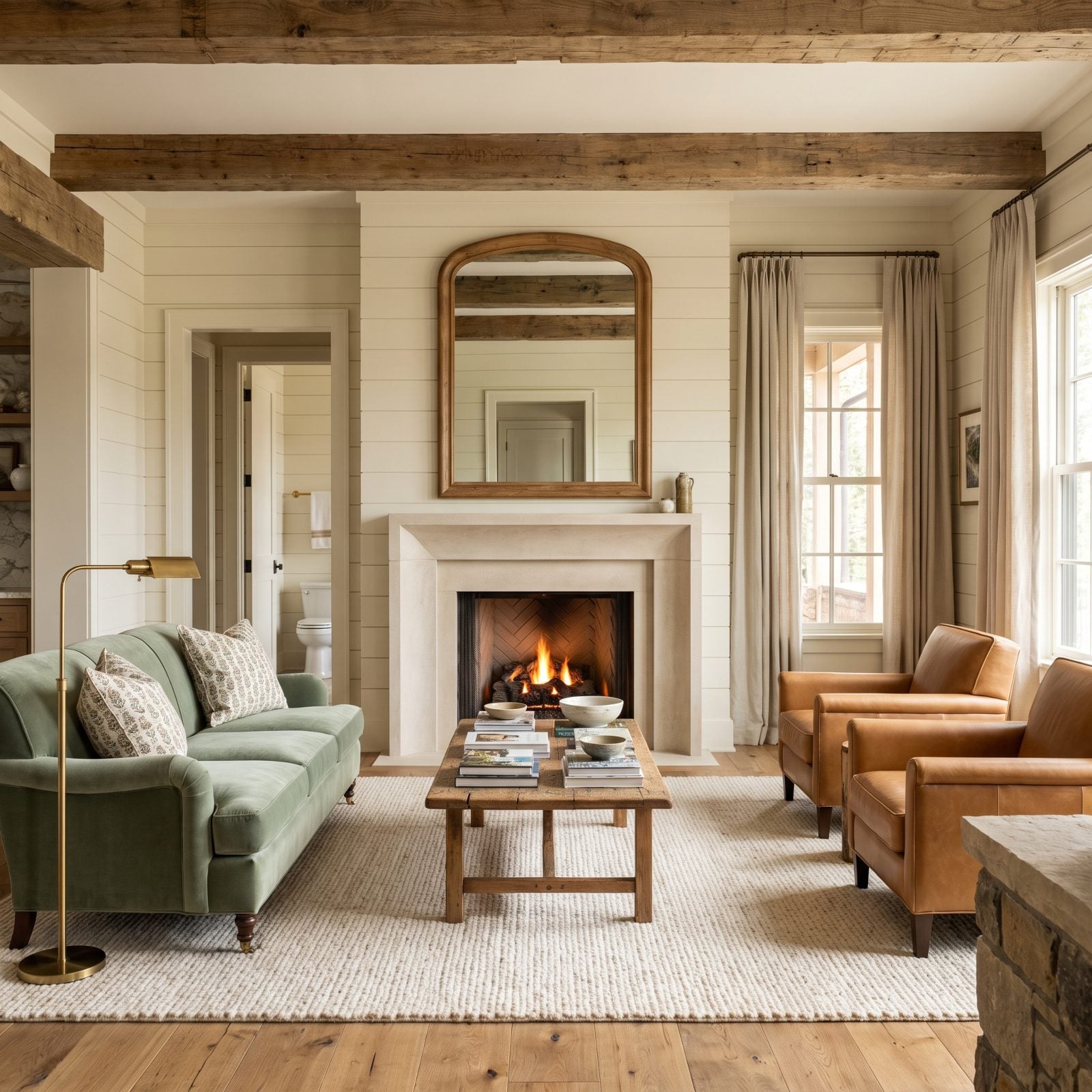
Nobody warns you about this one. A mirror over the fireplace doesn’t reflect the pretty part of the room — it reflects whatever stands directly across from it, which in most homes is the hallway, the front door, or, worst case, a bathroom somebody forgot to close.
Sit on the sofa and you’re staring at a sliver of toilet all evening. Before you hang anything, take the seat guests will take and study what bounces back. If it’s a doorway, hang art. A framed landscape reflects nothing but your good taste.
8. The Mirror That Magnifies Visible Cords and Electronics
🔥 Would you like to save this?
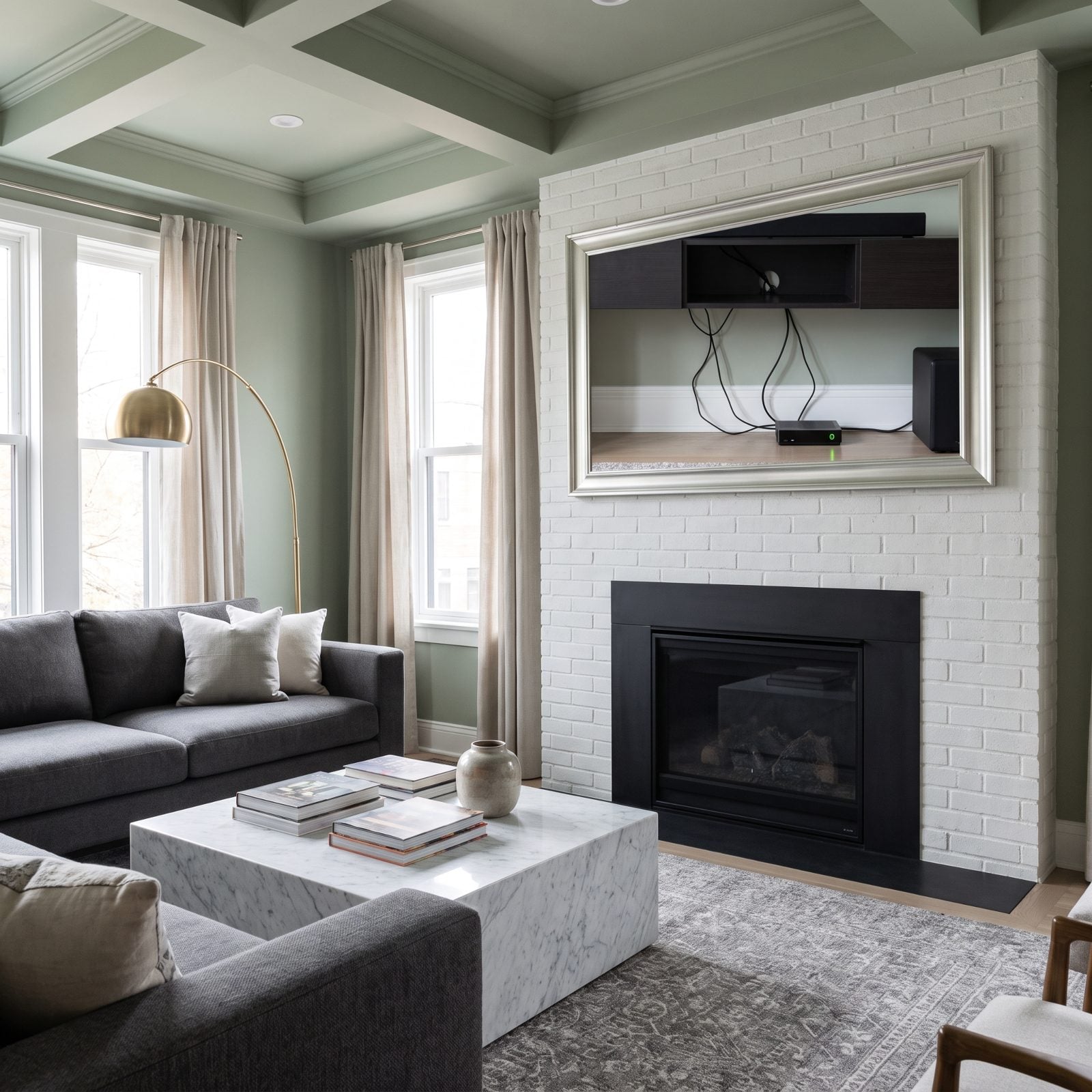
You spent a weekend hiding cords behind the console, then hung a mirror and undid all of it. Mirrors love the stuff you hate — cables, cable boxes, that one blinking green light on the router, the back of the soundbar. All of it gets a second showing on the wall.
Electronics live low, mirrors hang high, and the reflection drags the mess up into your eyeline. If your fireplace shares a wall with the TV situation, a mirror is the last thing you want overhead. Cord-taming matters as much in a slick bohemian media room as it does in a formal front room.
7. The Mirror Reflecting Recessed Lights as Harsh White Dots
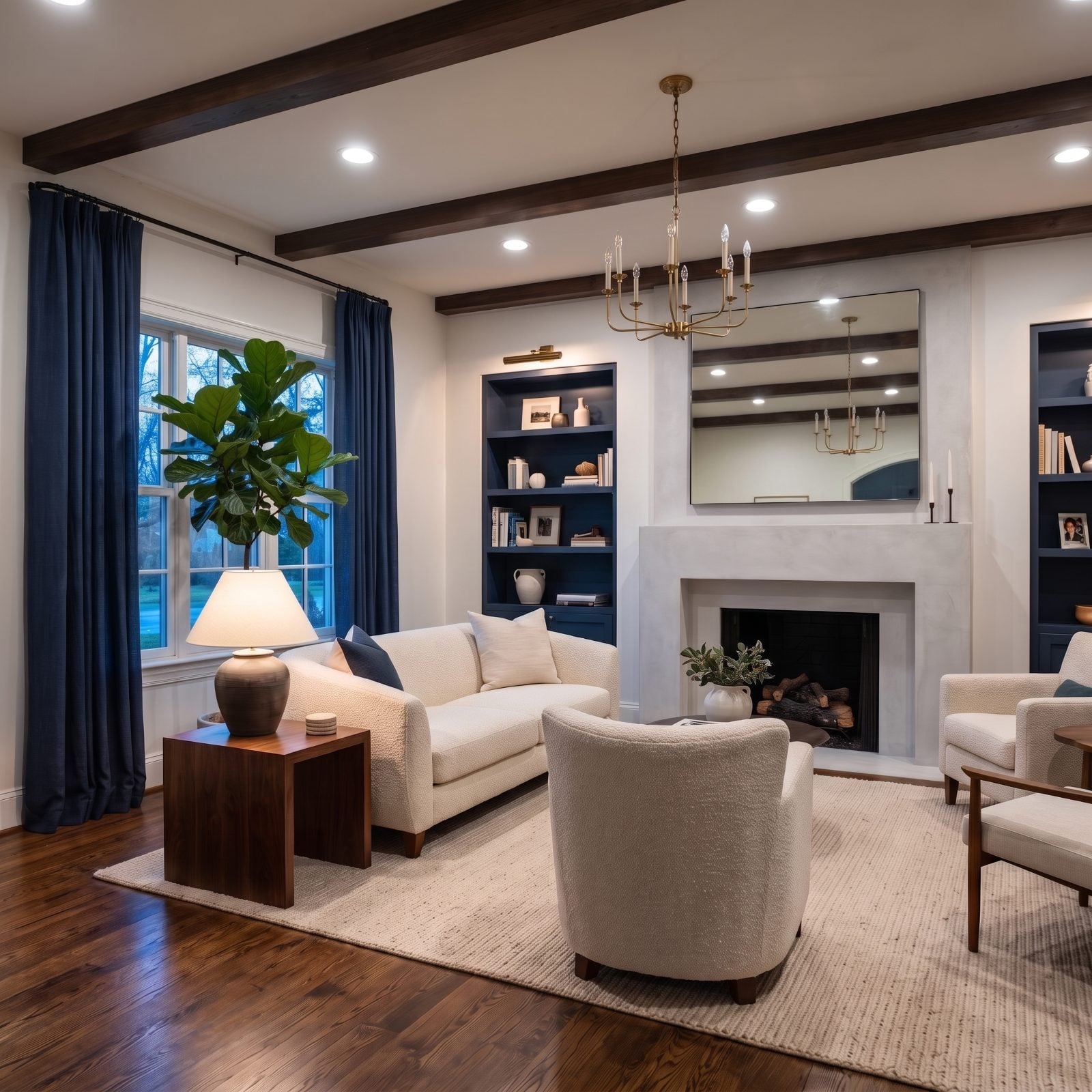
Flip the recessed lights on at night and watch a mirror over the fireplace catch them. Suddenly you’ve got a scatter of hard white dots floating on the glass, like someone punched holes in the wall. Same reason you don’t want a mirror across from a chandelier.
Ceiling cans throw light straight down. A vertical mirror sends it straight back at you. If your ceiling is full of pot lights, that overhead wall is not the spot. Reach for a matte-finish piece of retro dining room style art instead, which soaks light up rather than firing it back.
6. The Mirror That Makes an Off-Center Fireplace More Obvious
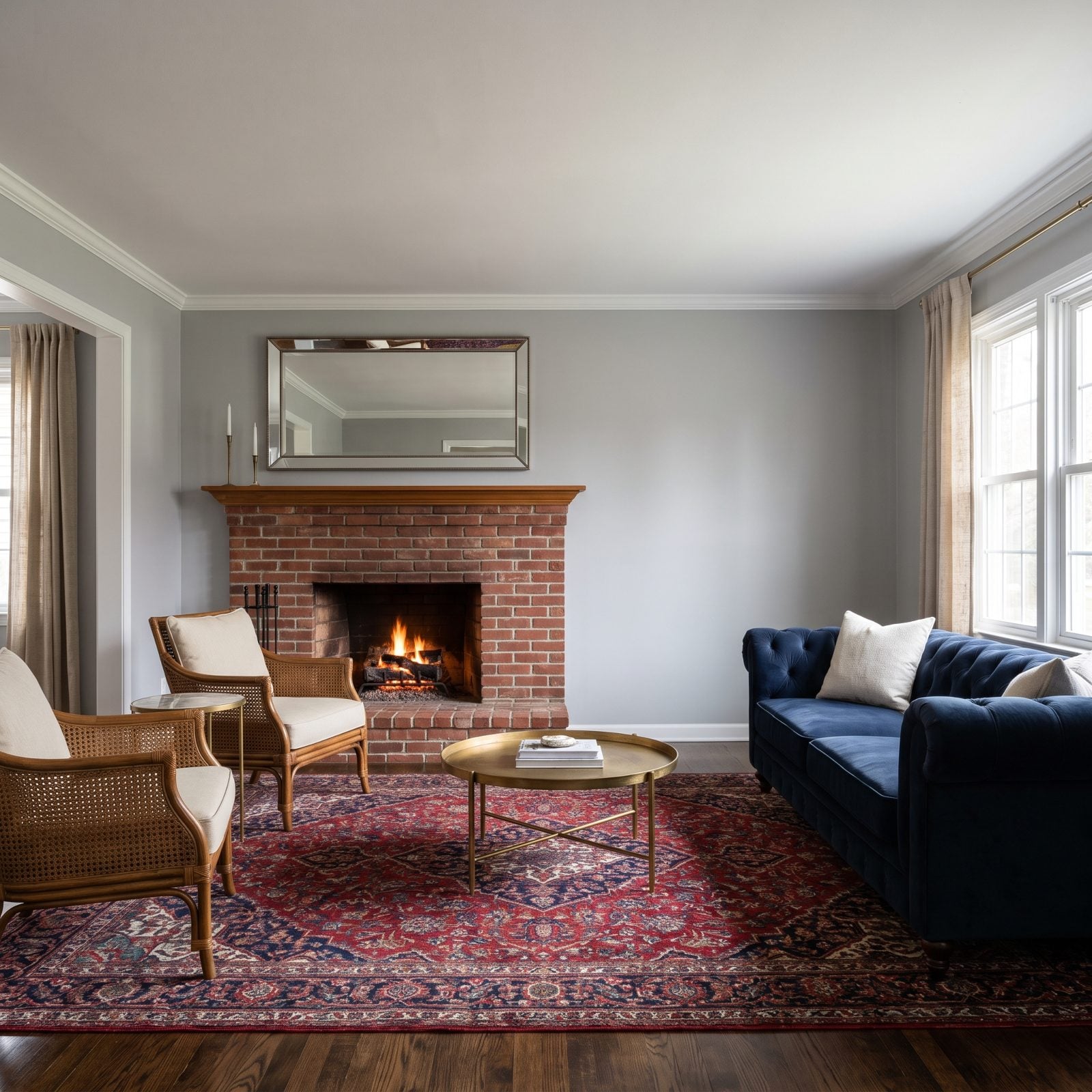
A mirror is a perfect rectangle of pure symmetry. Hang it over a fireplace that sits off-center and you’ve just installed a spotlight on the problem — the eye locks onto the balanced frame, then notices all that lopsided wall around it.
Off-center fireplaces come with old houses and additions. The trick is to distract, not to declare. A gallery arrangement or an asymmetric piece of art absorbs the imbalance, while a dead-center mirror announces it to the whole room.
5. The Mirror Crowded by Tall Bookcases on Both Sides
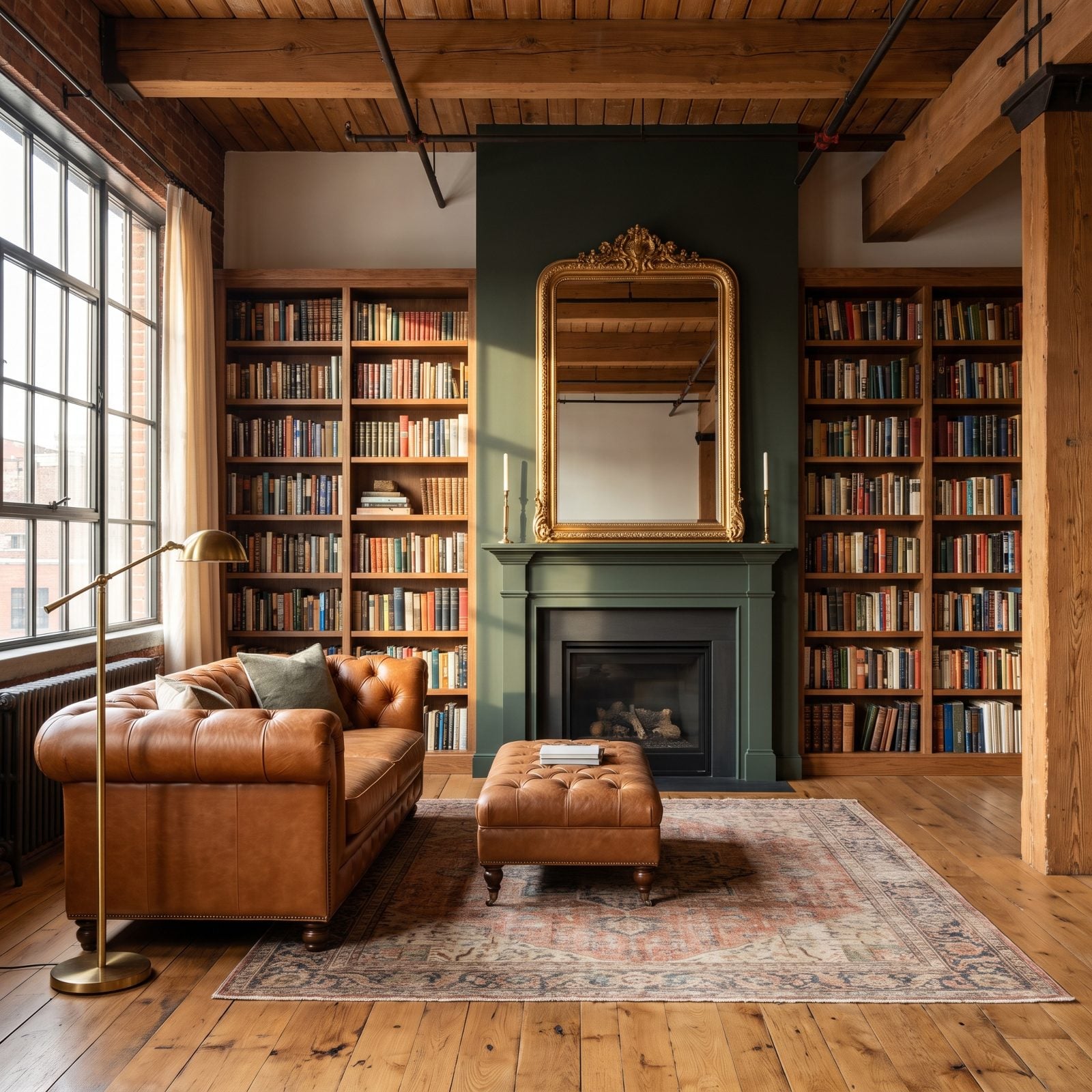
Flanking a fireplace with tall bookcases is one of the best moves going, honestly. Then people plug the middle with a big mirror and the whole wall starts arguing with itself — dense spines on both sides, a bright reflective void in the center, and your eye with nowhere to land.
Books are texture and depth. A mirror is a flat sheet of nothing that borrows the room. Squeezed between two loaded bookcases, that borrowing reads as a hole. Art holds the center because it belongs to the same family as the books. I’ll die on this hill.
4. The Black-Framed Mirror Lost Against a Black Chimney Breast
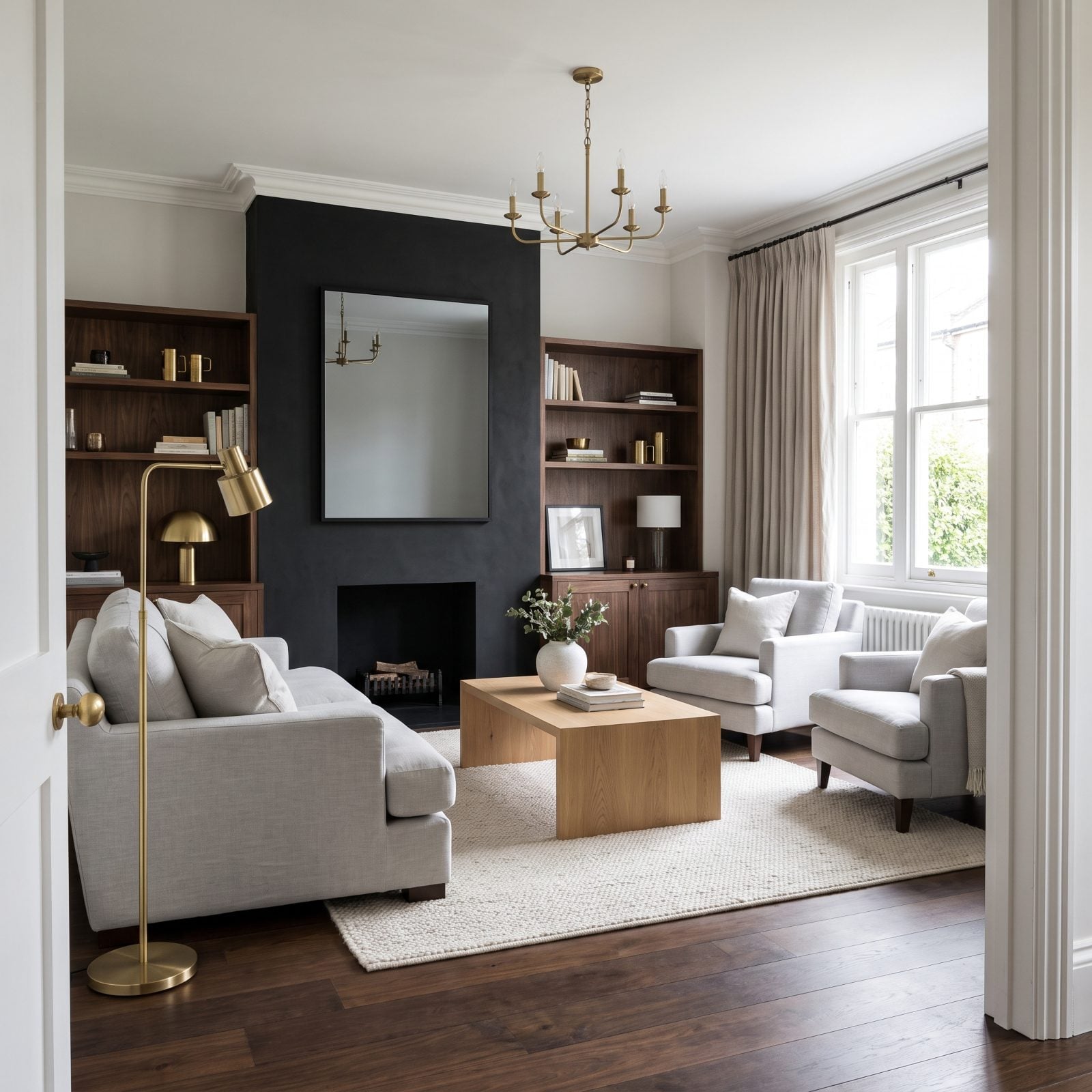
Black chimney breasts are having a moment, and I get it. Then out comes the black-framed mirror and it vanishes into the wall like it was never hung. The frame that was supposed to define the mirror dissolves, leaving a grey ghost with no edges.
Contrast is what makes a frame read. Match the frame to the wall and you erase it. On a dark chimney breast you want a light or brass frame — or a piece that stands off the surface entirely.
3. The Mirrored Wall Section That Feels Like a Dated Rental
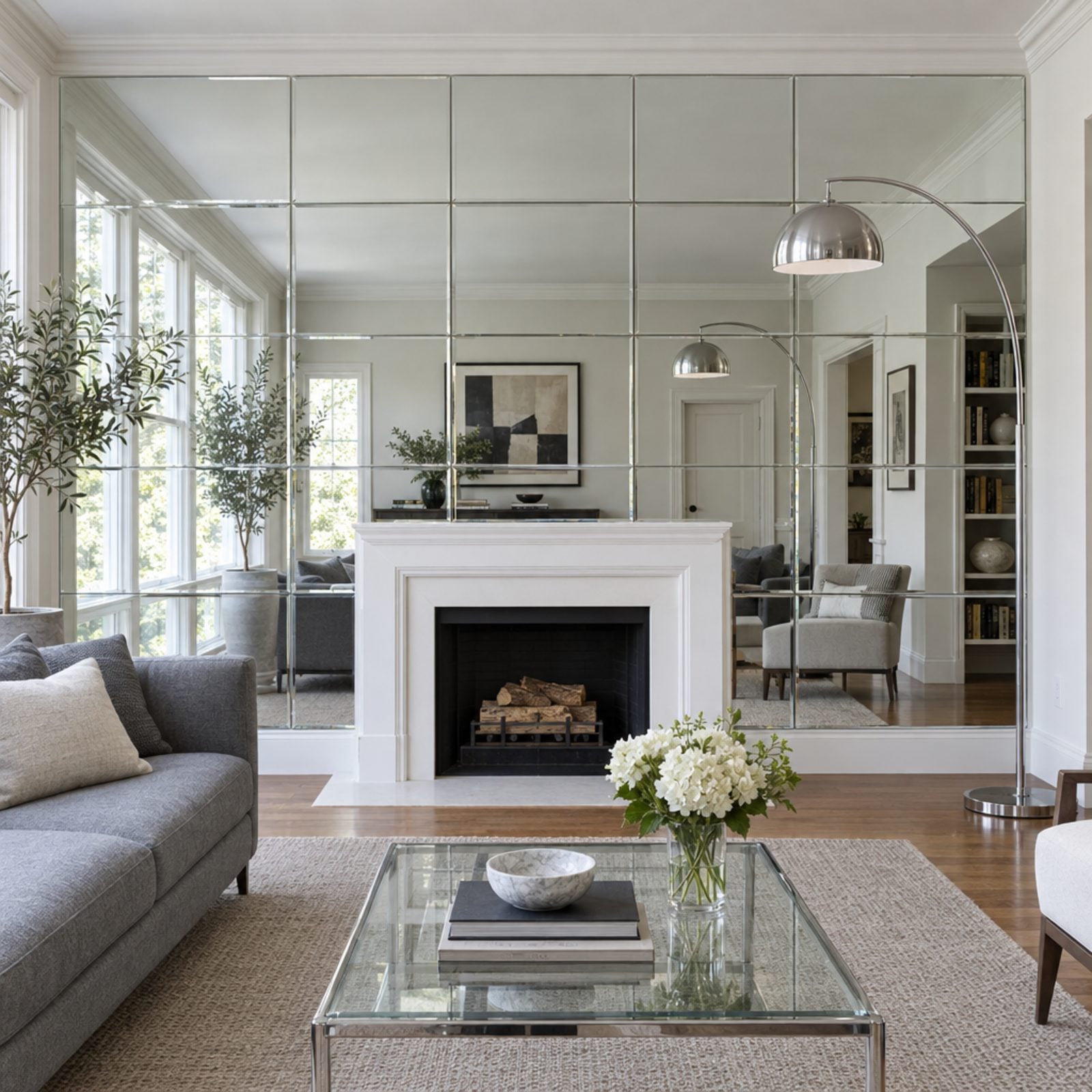
Mirror tiles over the fireplace pull the whole room straight back to 1985. The seams give it away, and so do those little beveled edges catching light in a grid. It’s the design equivalent of shag carpet, and no amount of modern furniture in front of it can win that fight.
A segmented mirror wall chops your reflection into panels and reads as a builder-grade shortcut, the same tired energy you’d find in a played-out navy powder room waiting for a redo. Inherit one of these and pulling the tiles is usually cheaper than living with them another year.
2. The Convex Mirror That Distorts the Entire Seating Group
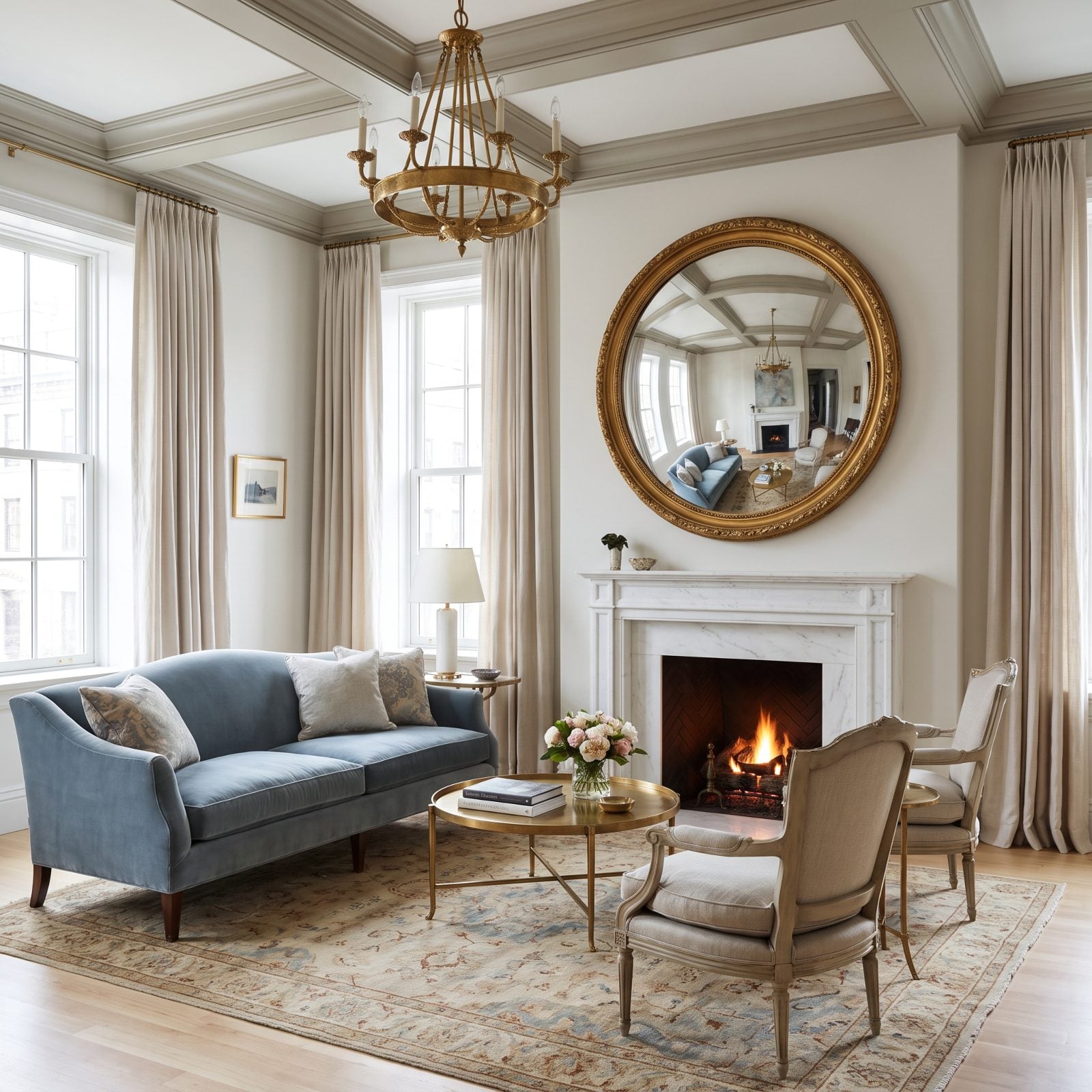
Convex mirrors look great in a catalog. Above a working seating group, the fisheye effect gets old fast — everything you own bends outward, the sofa curves, the coffee table balloons, and the whole room takes on a funhouse pull every time you glance up.
These pieces were meant as accents on a small wall, not as the anchor over a mantel where you spend whole evenings looking at them. The bigger the room they reflect, the more grotesque the distortion. Charming in a hallway. Dizzying over the fire.
1. The Floor-to-Ceiling Mirror That Visually Erases the Fireplace
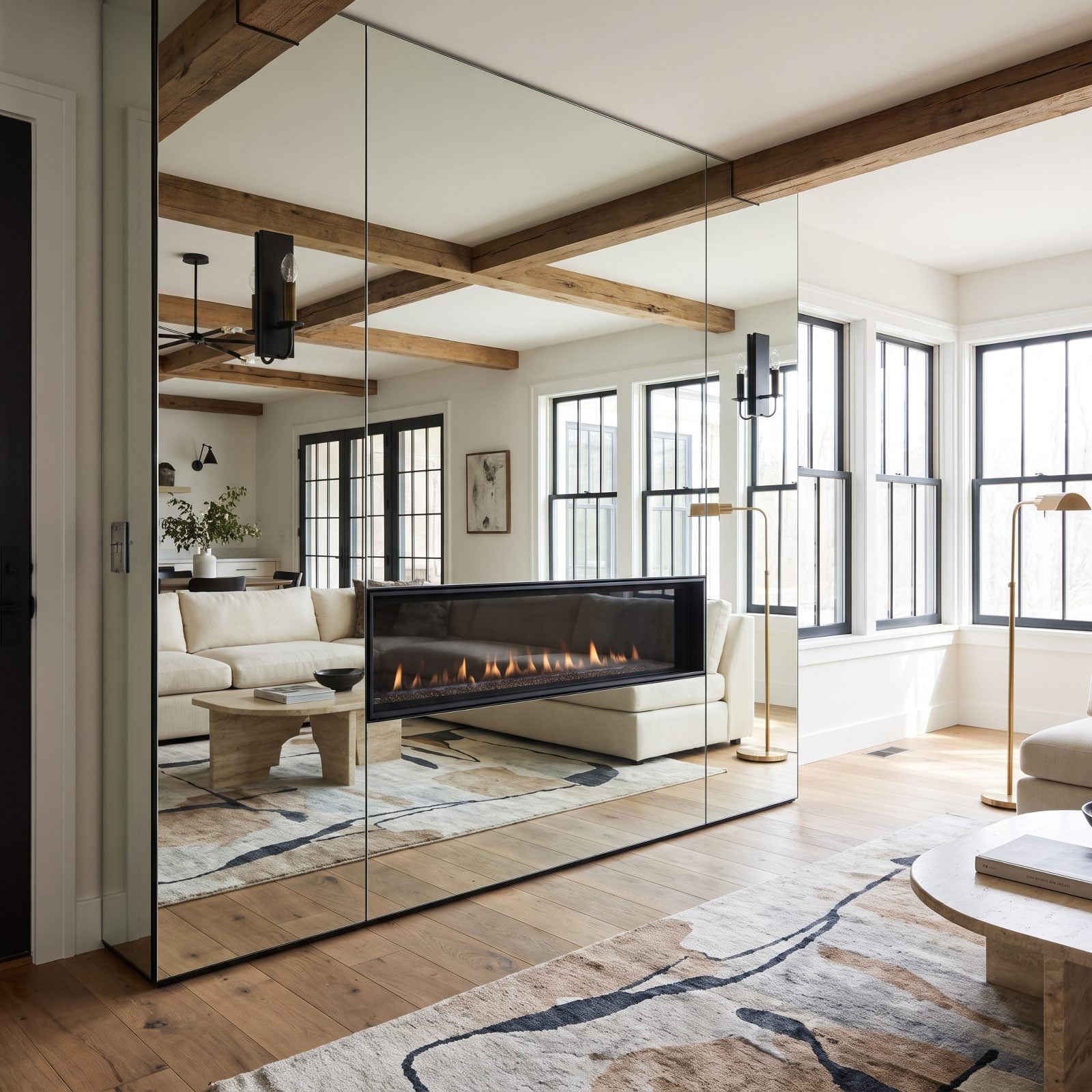
Cladding the whole fireplace wall in mirror sounds dramatic until you realize you just erased your focal point. A fireplace is supposed to pull the room toward it. Drown it in a floor-to-ceiling reflection and it disappears into a busy copy of the room behind you.
The fire has to compete with everything the mirror bounces back, and it loses. What should feel calm and grounding — the whole reason a hearth anchors a room — dissolves into visual noise. Put a solid material behind the fire instead: stone, plaster, tile, anything that gives it weight. Even a bold glam family room keeps one clear anchor for the eye to rest on.