Walk into any middle-class home in the 1980s and you’d know exactly where you were. The carpet was somewhere it shouldn’t be. Something was avocado green. A telephone cord stretched across the kitchen like a trip hazard nobody ever fixed. These houses had a specific smell, a specific sound, and a specific set of objects that every family owned without question. See how many of these you remember.
Wood-Paneled Walls in At Least One Room
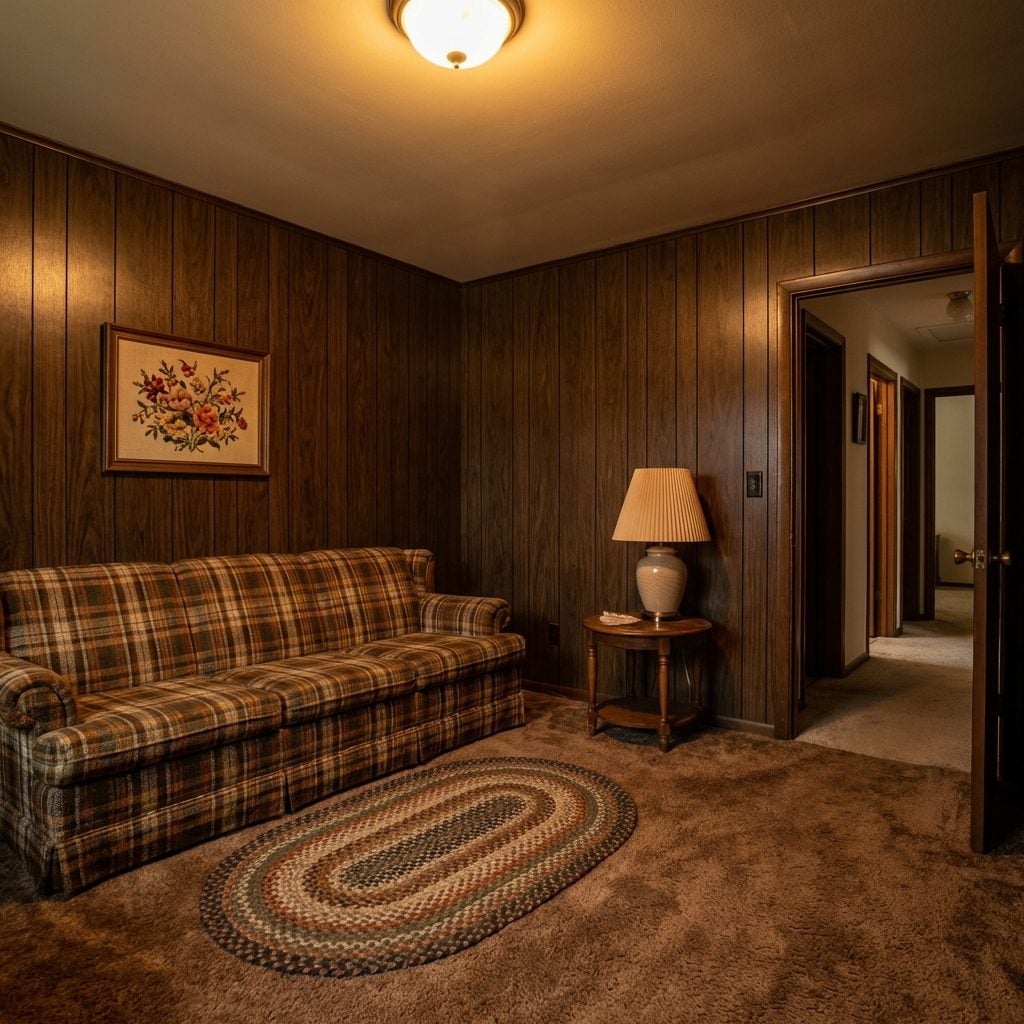
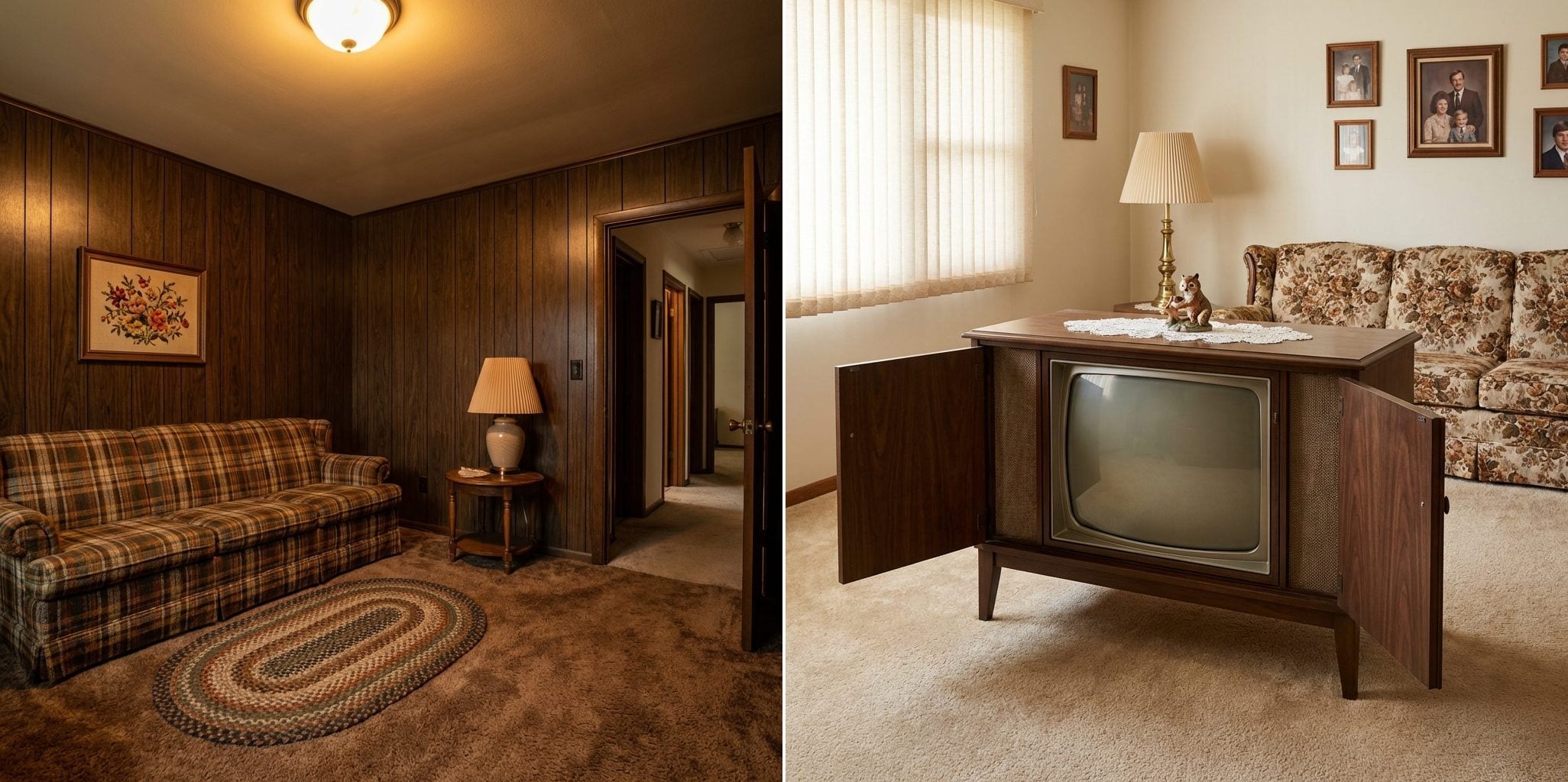
It was almost always the basement, the den, or that one hallway nobody could explain. The paneling came in sheets, thin, slightly hollow-sounding when you knocked on it, printed with a wood grain that convinced absolutely no one. The color hovered somewhere between walnut and disappointment.
In order to come up with the very specific design ideas, we create most designs with the assistance of state-of-the-art AI interior design software. Also, assume links that take you off the site are affiliate links such as links to Amazon. this means we may earn a commission if you buy something.
Every house had at least one room wearing it floor to ceiling like a uniform. Nobody questioned it. It absorbed light, it smelled faintly of the 1970s, and when you pressed your palm flat against it on a summer afternoon, it was always weirdly cool. Some of us grew up thinking paneling just was what walls looked like.
The Console TV Set That Was Also Basically Furniture
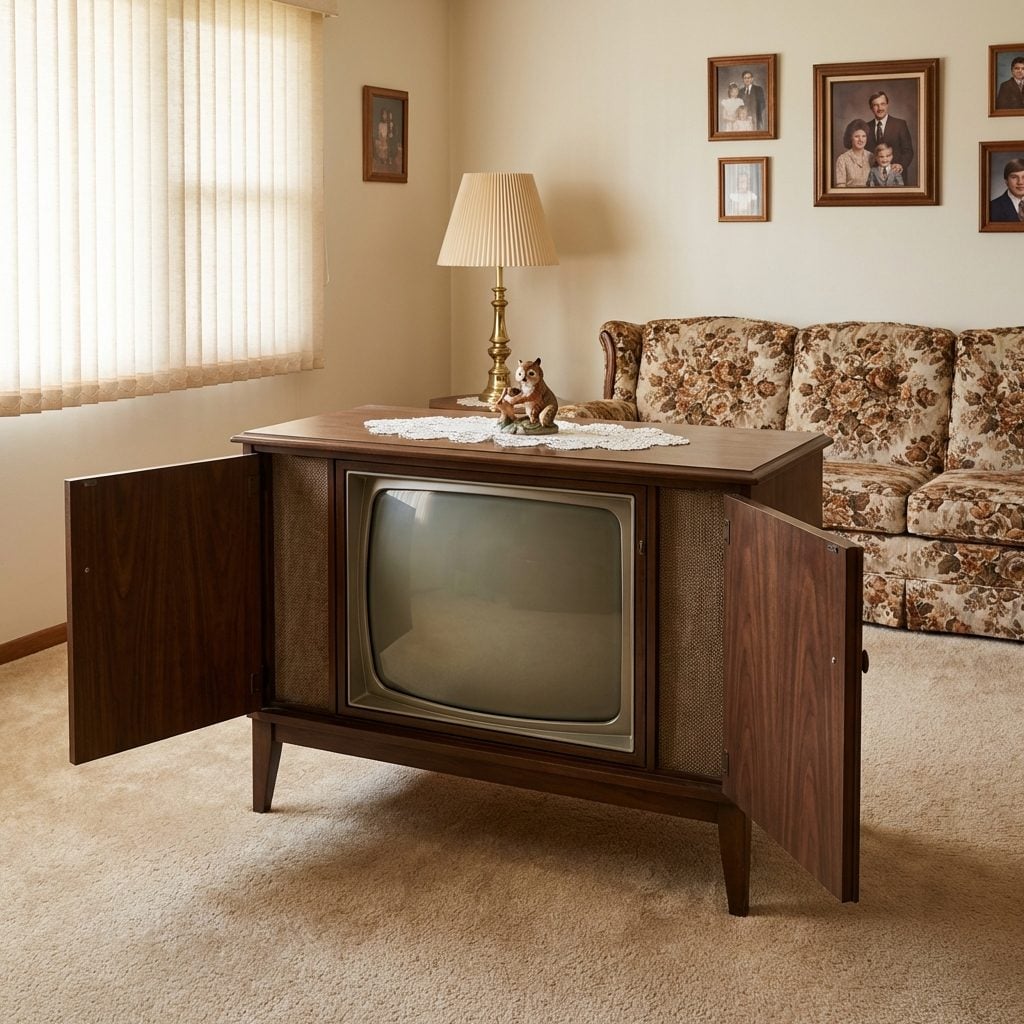
This wasn’t a television. This was a piece of furniture, a wood-paneled cabinet on four squat legs, housing a 25-inch screen behind smoked glass doors you’d swing open like you were revealing a sacred object. It sat in the living room on the good carpet, and nobody moved it. Ever.
The top became a surface for ceramic figurines, a doily, and maybe a framed school photo. The sound came from two tiny speakers flanking the screen, and the channel selector was a rotary dial that clicked with satisfying finality. Remote controls existed by 1980, but someone in your house was still getting up to change the channel well into 1987.
Wall-to-Wall Carpet in the Bathroom (Yes, Around the Toilet)
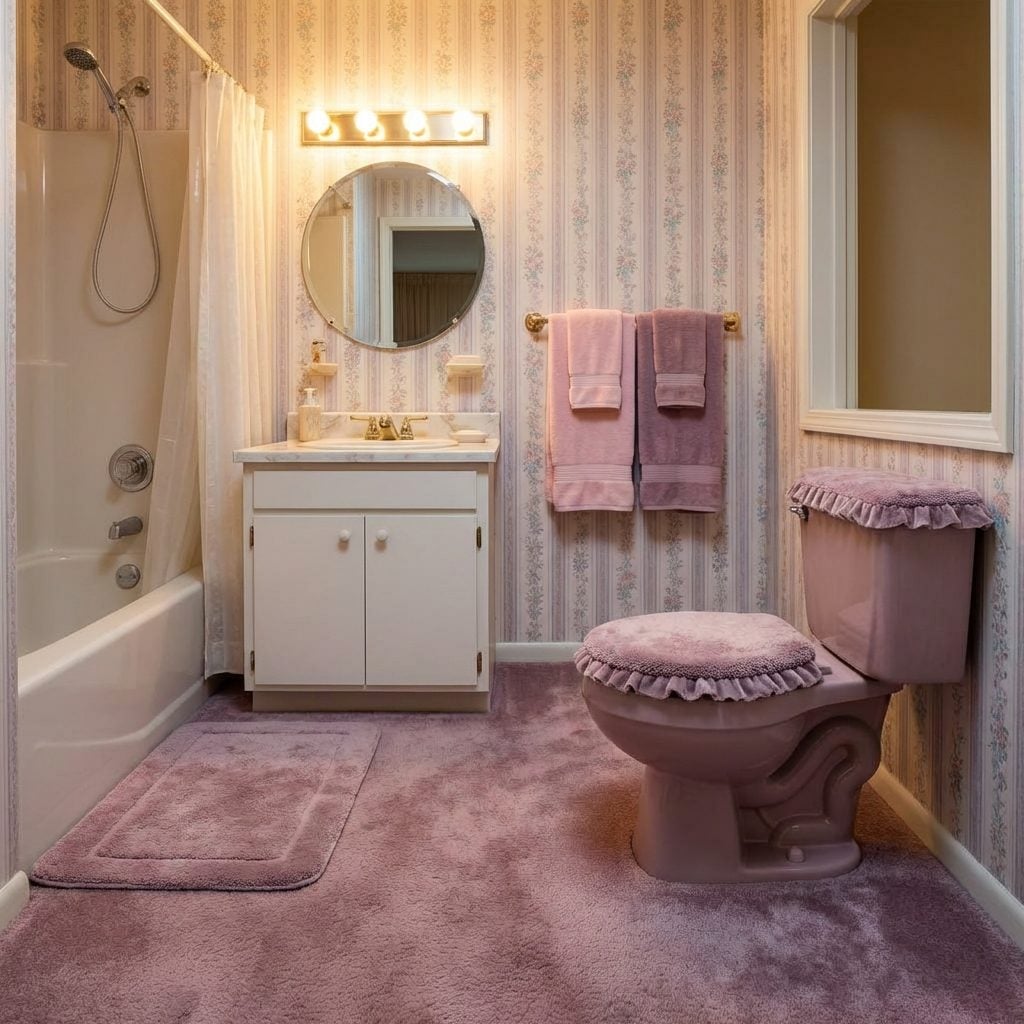
Think about what we accepted here. Wall-to-wall carpet. In a room where water regularly meets the floor. Installed tight around the base of the toilet. It came in colors like seafoam, dusty mauve, or a particular shade of tan that matched nothing else in the house.
The matching toilet lid cover and tank cover were non-negotiable. Sometimes a small rug in the shape of an appliance sat in front of the sink for reasons nobody could articulate. The carpet itself aged in ways that the mind would prefer not to revisit, and yet there it was, in virtually every 1980s home, soft underfoot at 2am, slightly damp and slightly mysterious.
The Rotary or Push-Button Wall-Mounted Telephone
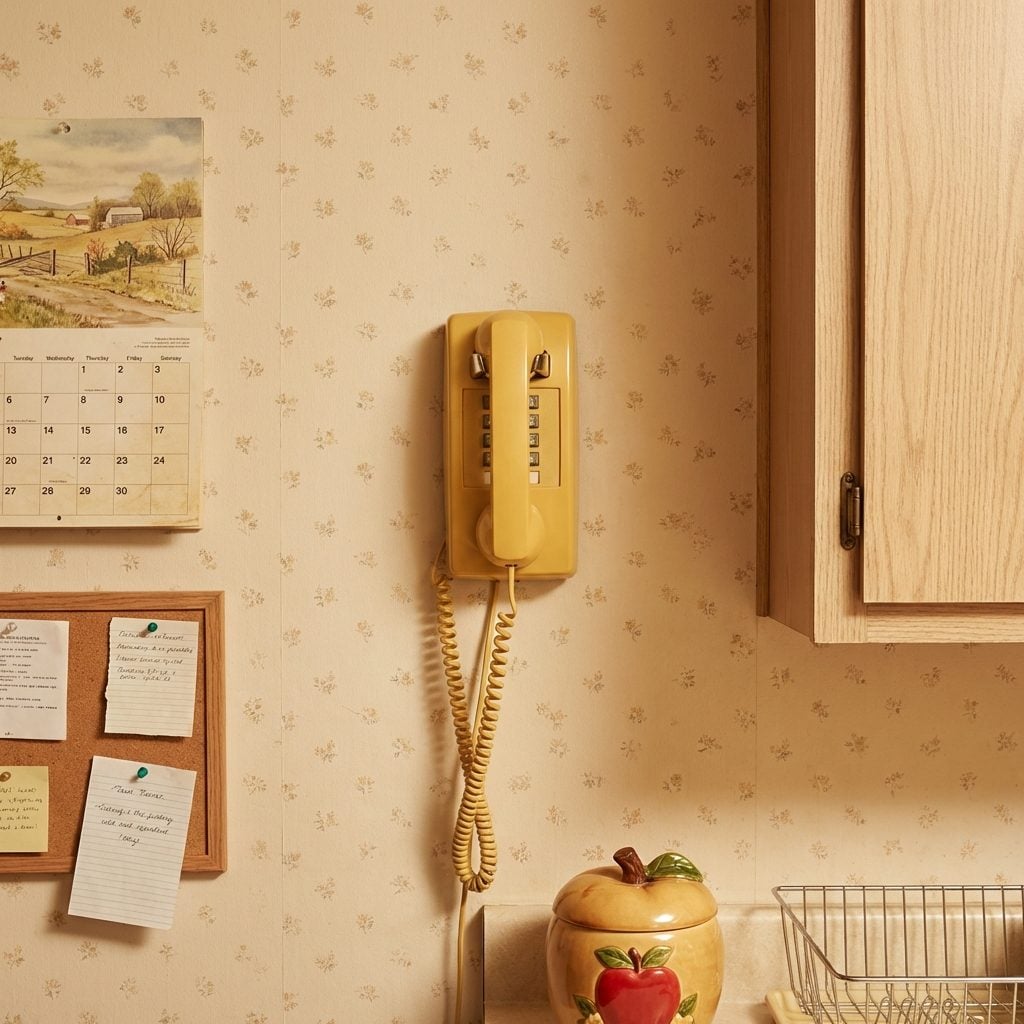
Avocado green, harvest gold, or, if someone had recently redecorated, almond. It was bolted to the kitchen wall at adult chest height, and the handset weighed about as much as a shoe. The dial tone sounded like a promise. You could hear it from the next room.
The Kitchen Phone With the Cord That Reached Every Room
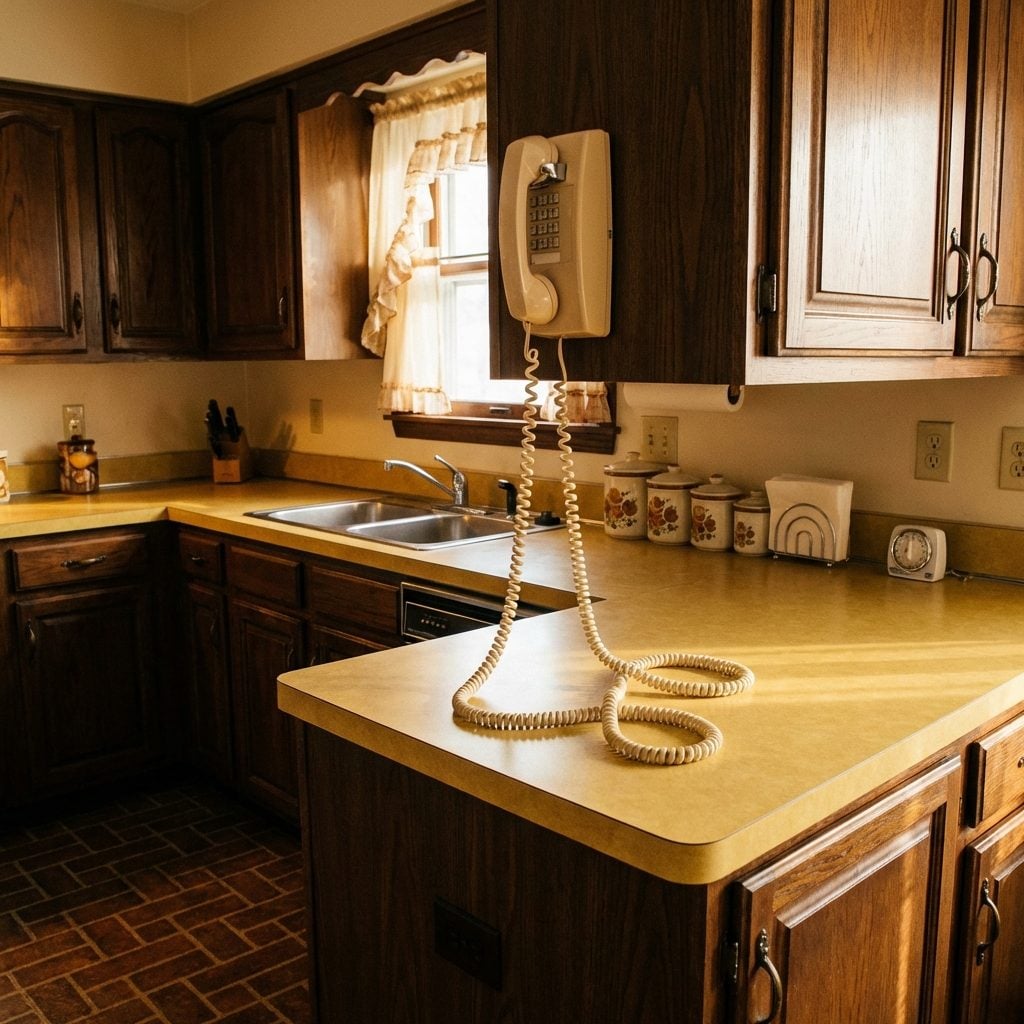
That cord was at least twelve feet long, and it spent its life tangled into a physics experiment nobody asked for.
The kitchen phone, separate from the wall-mounted one in some houses, the same unit with an impossibly stretched cord in others, was a social infrastructure device. You’d pin the handset between your shoulder and ear, pace the full length of the kitchen, lean into the hallway, and occasionally make it to the living room doorway. The cord got twisted so many times it developed its own muscle memory.
Teenagers treated it as a lifeline. Parents treated it as a leash. The spiral coil would eventually stretch so loose it drooped to the floor in long, defeated loops, and nobody ever replaced it.
The Encyclopaedia Britannica Set Lined Up on the Bookshelf
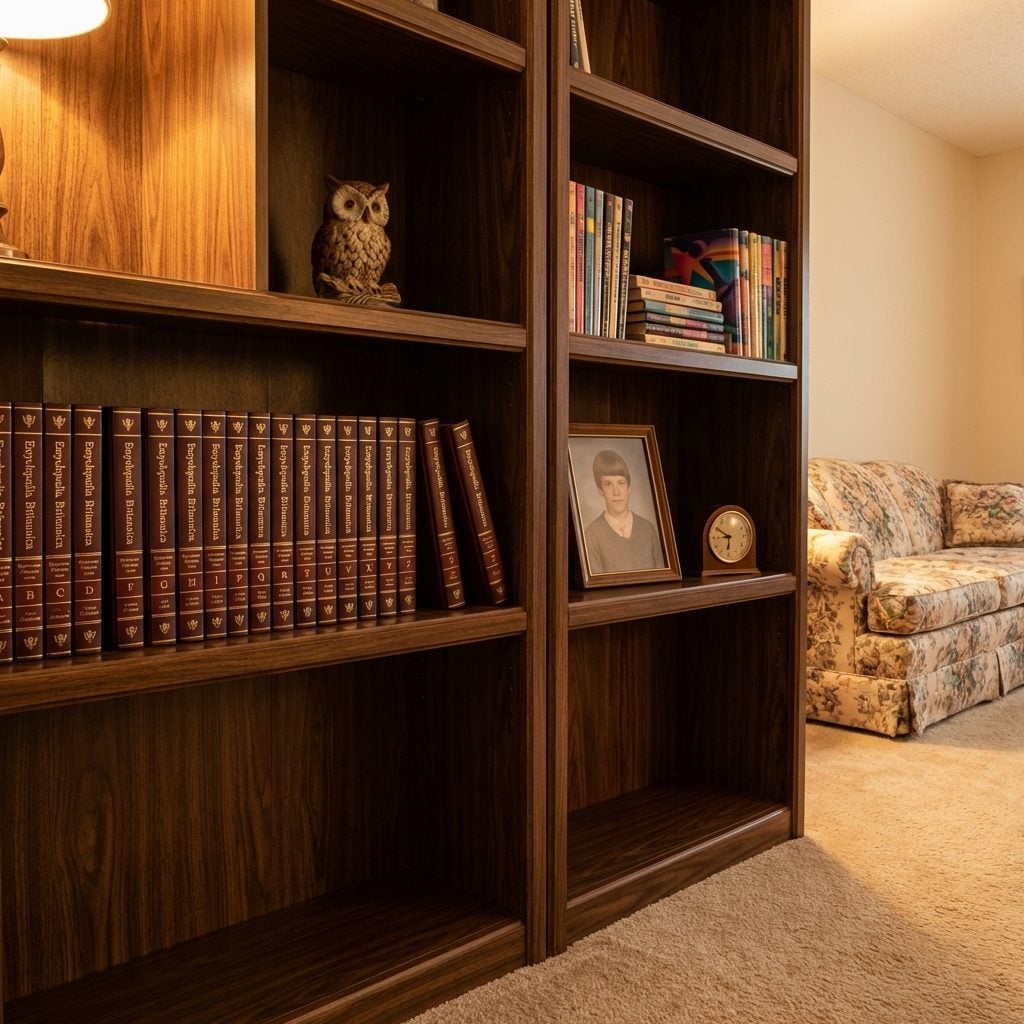
Burgundy spines, gold lettering, never quite straight on the shelf. They came as a set, somewhere between 20 and 30 volumes depending on which edition, and the family treated them with a reverence usually reserved for religious texts. Because they cost about as much as a used car.
A salesman came to the house. There was a payment plan. The encyclopedias arrived in a box and were installed on the good bookshelf like a permanent installation. Then they were consulted maybe three times a year for school reports, the information already slightly out of date by the time the ink was dry. But their presence said something about a household’s aspirations, that knowledge lived here, bound in leather-look vinyl, alphabetically organized, gathering dust with dignity.
The VHS Player Stacked With a Pile of Tapes
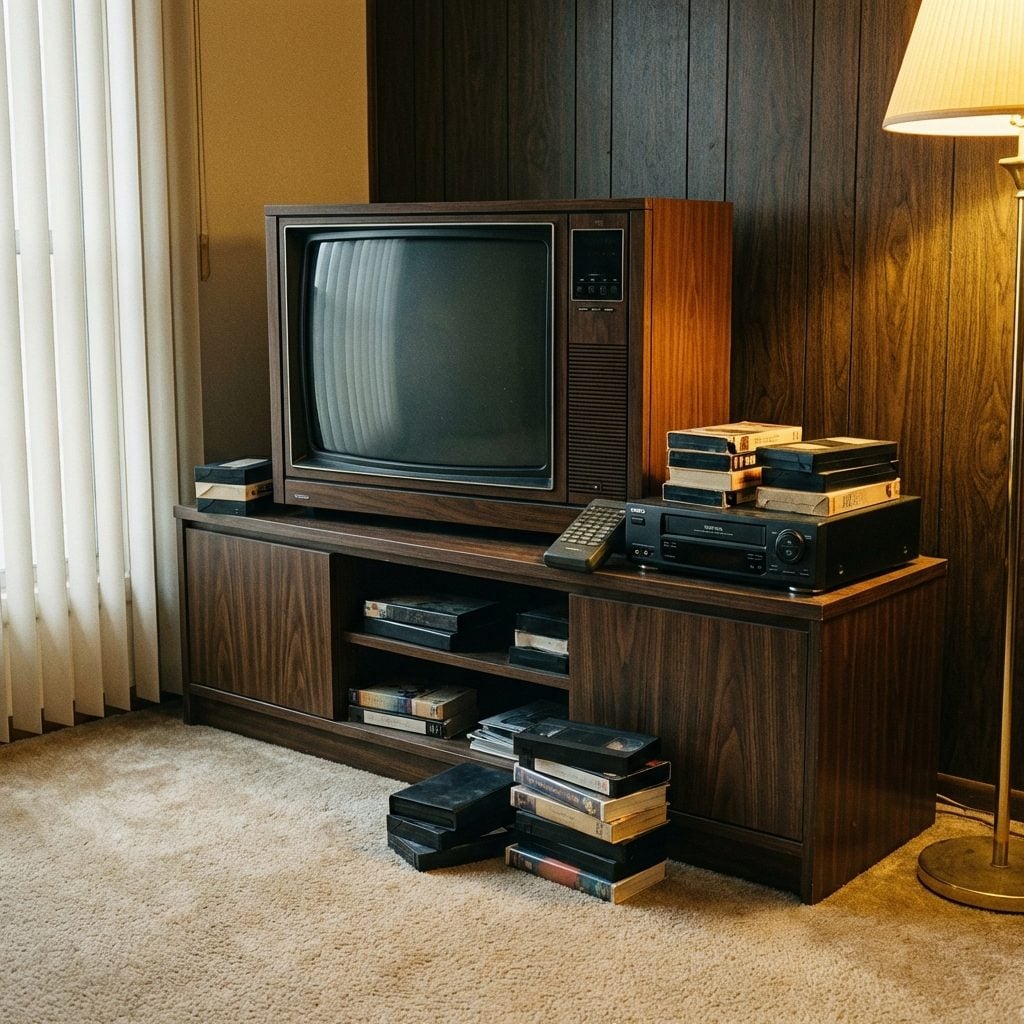
It sat on top of the console TV or on a dedicated shelf underneath it, blinking 12:00 in a crime against user experience that stretched across the entire decade. The VCR was a household appliance treated with the same anxiety as a car engine, most adults could not explain how it worked, but everyone knew not to touch the tracking dial unless they were ready to commit.
The tapes lived in a pile. There was always a pile. Some had cardboard sleeves, some were naked, some were labeled in Sharpie with things like “MOVIES DO NOT TAPE OVER” in someone’s parent’s handwriting. Raiders of the Lost Ark was definitely in there. So was a tape that had accidentally recorded three hours of a soap opera over Christmas.
The Waterbed Someone’s Parents Definitely Had
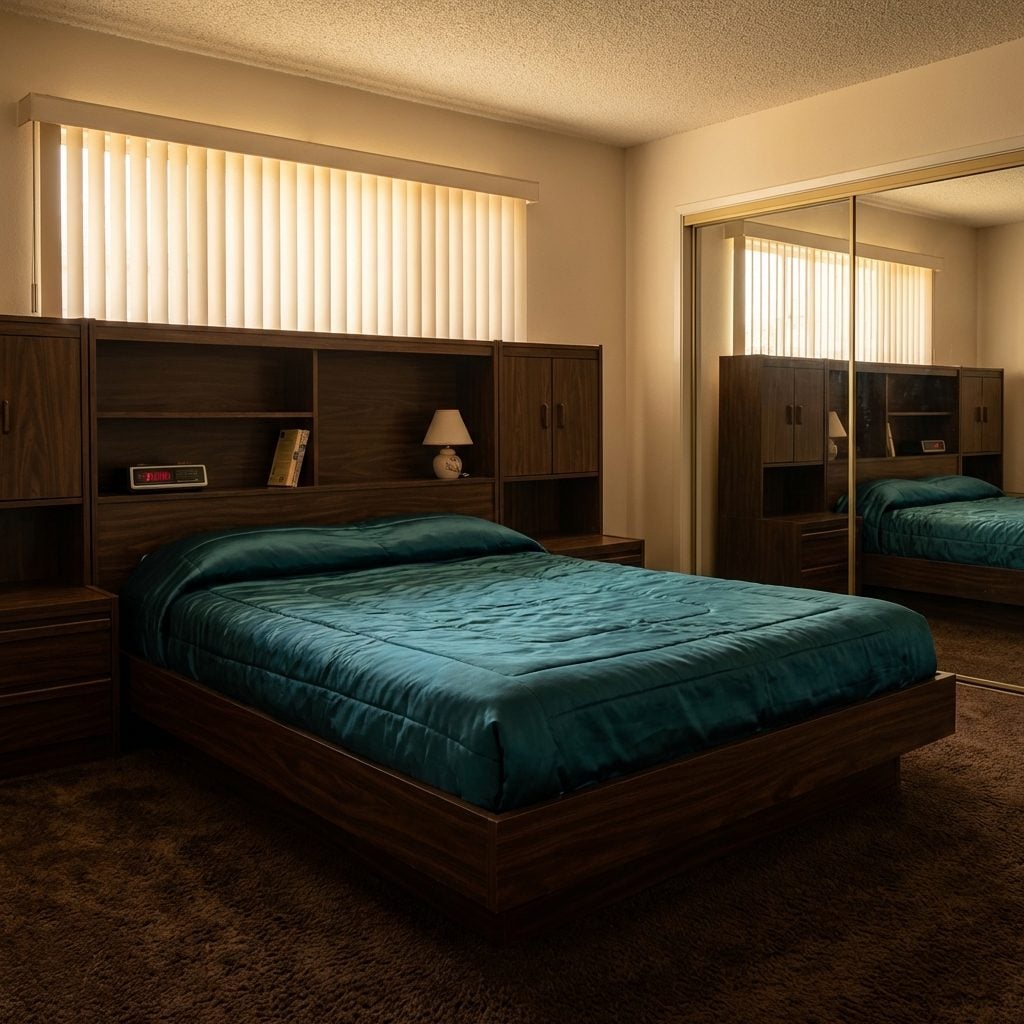
It was in the master bedroom. It took forever to fill. It required a heater. And the first time you sat on the edge of it, the whole thing moved in a slow, disorienting wave that made you feel slightly seasick in a carpeted room in Ohio.
Waterbed sales peaked in the early 1980s, when something like one in five American households reportedly owned one, a statistic that seems impossible until you think about how many of your friends’ parents had one. The frame was usually dark stained wood with built-in headboard shelves: a perfect system for keeping a glass of water, a clock radio, and a paperback novel in precarious proximity to the world’s largest vinyl balloon.
The Macramé Wall Hanging That Survived Into the ’80s
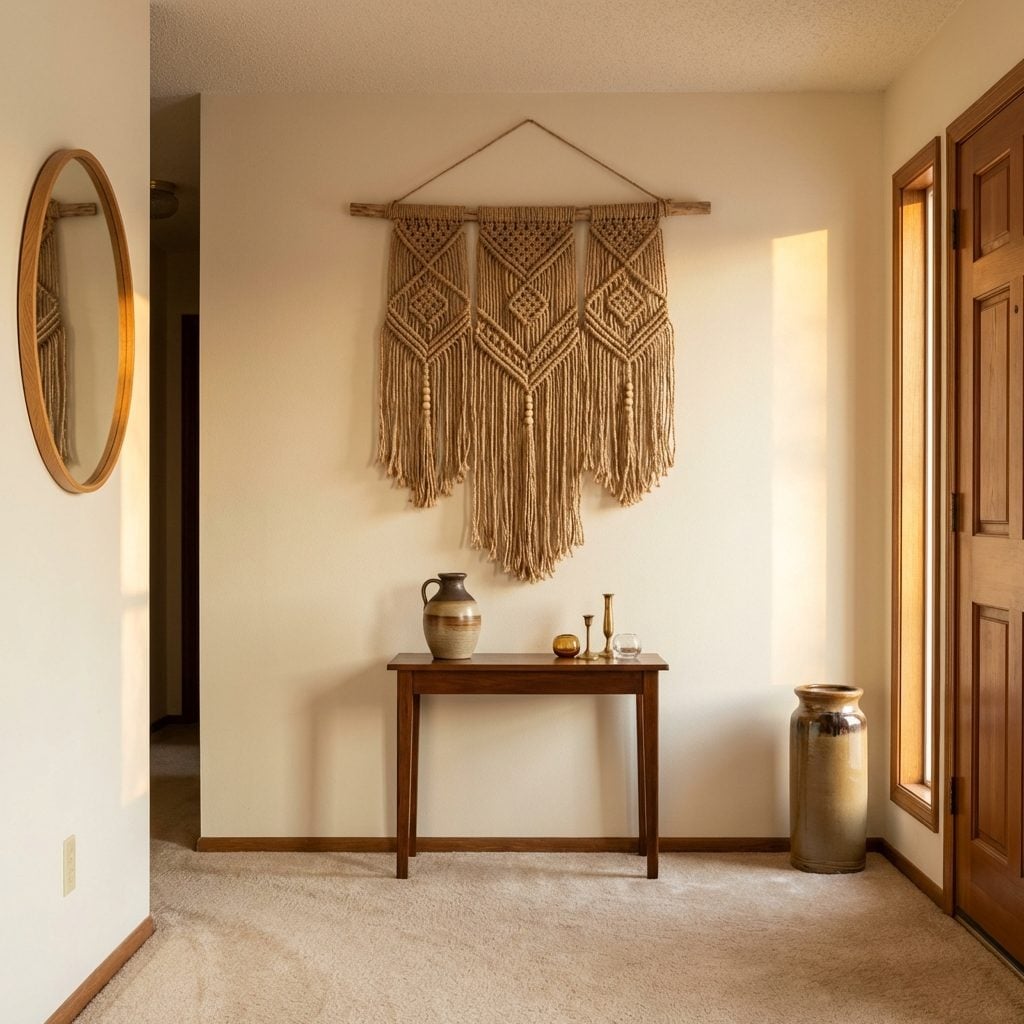
It came from the 1970s and refused to leave. Knotted from thick cotton or jute cord, it hung in the living room or the entryway like a textile artifact from a slightly earlier era, usually in natural beige or brown, sometimes with wooden beads threaded through, occasionally with a sad dried flower arrangement woven into the bottom fringe.
Someone in the household had either made it at a craft night or bought it at a craft fair, and either way it carried a quiet pride. It was the kind of decorative object that said: this home has warmth. It also said: this home still has some of its 1975 energy, and we’re at peace with that.
“The macramé didn’t really belong to any decade. It just kept hanging there, outlasting everything around it.”
Avocado Green or Harvest Gold Appliances in the Kitchen
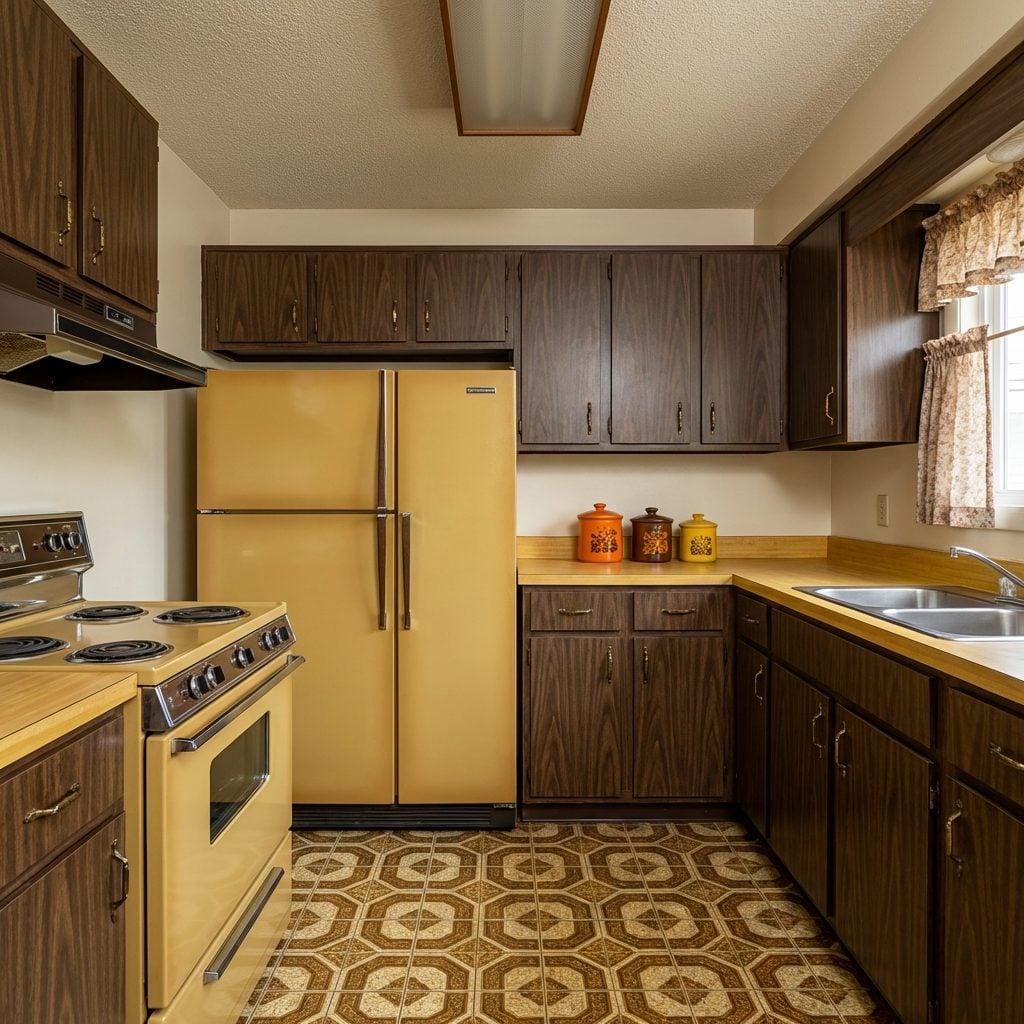
If you opened the kitchen and saw a refrigerator in avocado green or a range in harvest gold, you were looking at a household that had bought appliances sometime between 1965 and 1978 and was absolutely going to get their money’s worth. These colors were not accidents. They were chosen from a catalog with intent and optimism.
The matching set was the goal: refrigerator, stove, and dishwasher in the same muddy, warm hue, anchoring the kitchen in a color palette that the rest of interior design was actively fleeing from by 1982. The finish had a slight sheen to it, not glossy, not matte, but something in between that showed fingerprints in very specific lighting conditions.
The Answering Machine Sitting on the Kitchen Counter
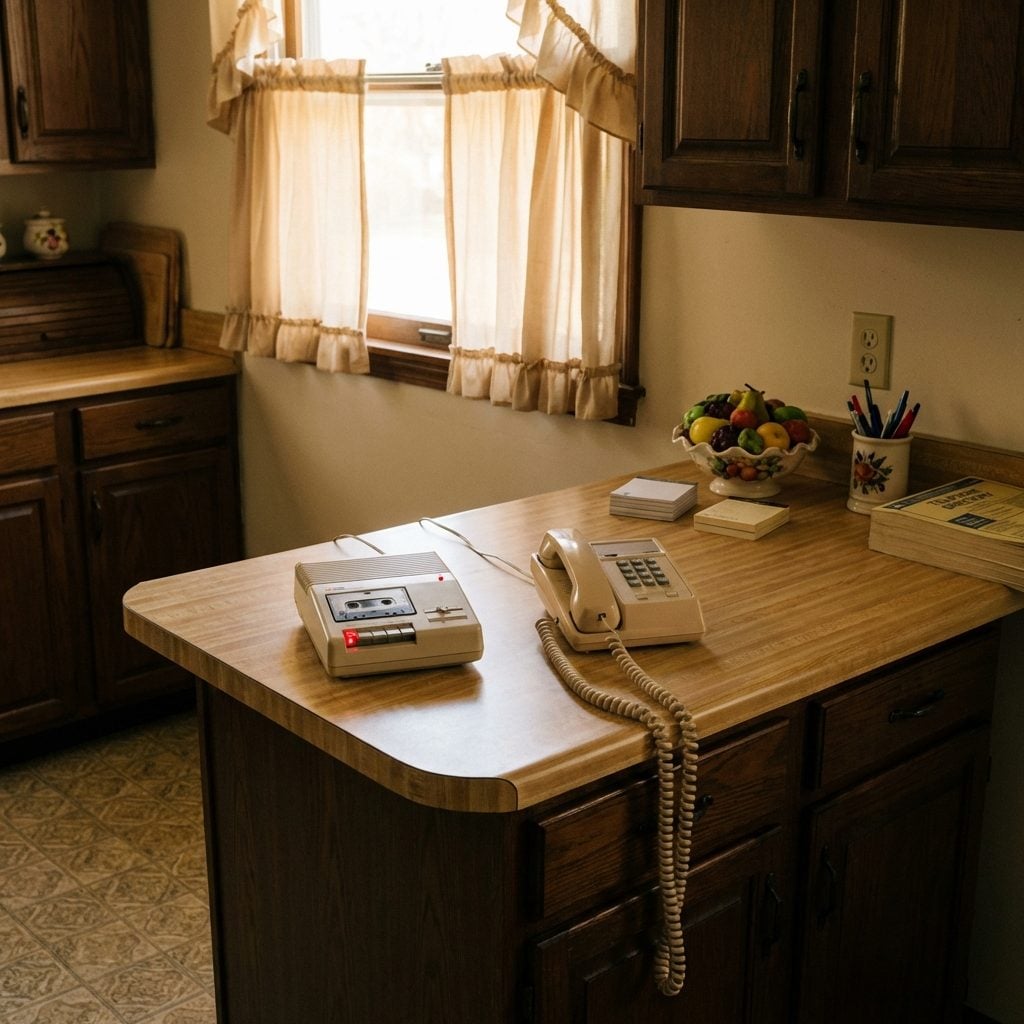
It was about the size of a hardback novel and had a small cassette tape inside it. When the red light was blinking, something had happened in the world while you were out, and you played it back standing at the counter in your coat, not yet ready to sit down.
The outgoing message was a whole production. Someone had to record it, usually the most confident adult in the household, and the family would stand around listening to playback to see if it sounded “too formal” or “too casual.” The tape itself filled up fast if your grandmother called. You’d hear the machine pick up from the next room and hold your breath to find out who it was before deciding whether to answer.
The Atari or Early Nintendo Console Parked Under the TV
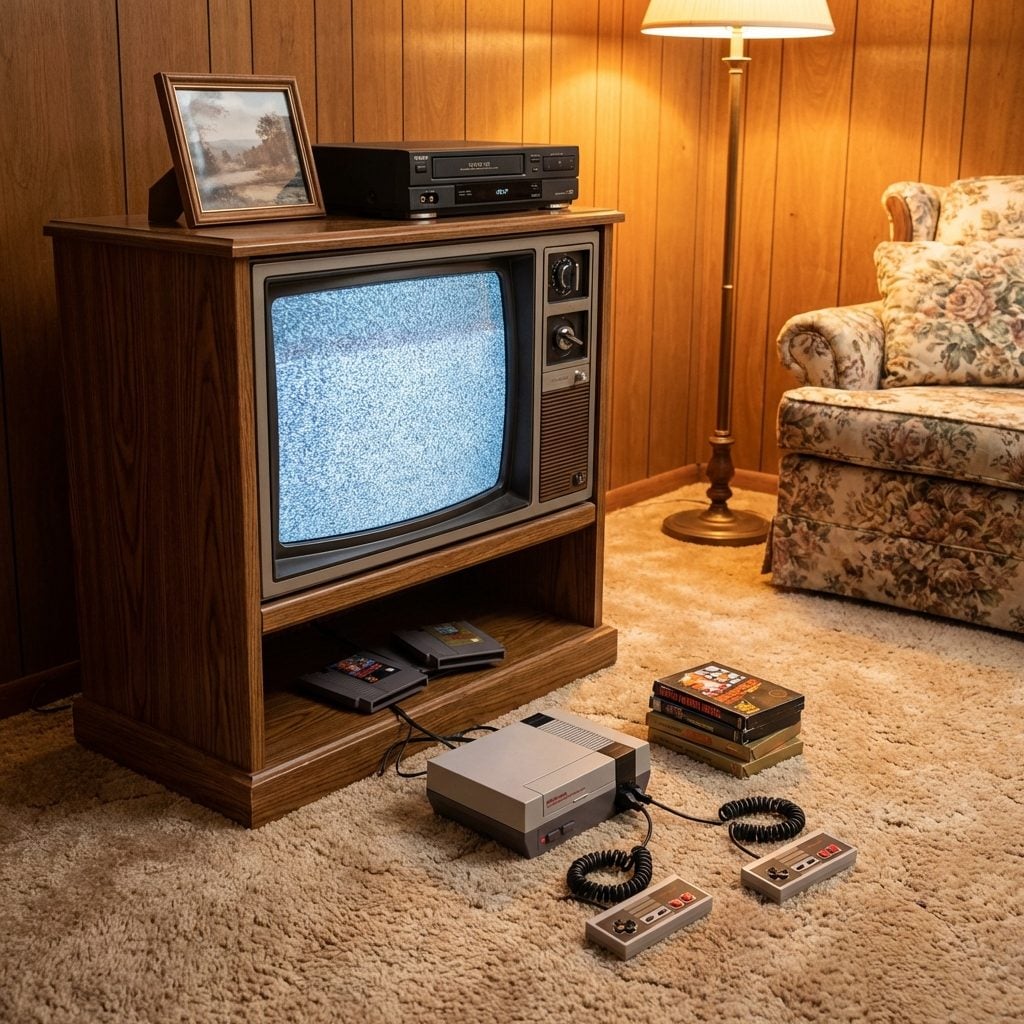
It lived on the floor or on the lowest shelf of the TV stand, connected to the television by two wires that were never quite long enough, requiring the console to sit at an angle you had to compensate for every single time. The Atari 2600 came first, those fake wood-grain sides, the six-switch panel, the joystick with one orange button that somehow needed to do everything.
By the mid-to-late ’80s, the Nintendo Entertainment System had arrived and everything changed. The gray cartridge slot, the satisfying push-click of loading a game, blowing into the cartridge like it was a medical procedure required by law. The controllers lived in a hopeless tangle in a shoebox nearby, and someone’s older brother had definitely broken one during Excitebike.
The La-Z-Boy Recliner That Was Unofficially Dad’s Chair
🔥 Would you like to save this?
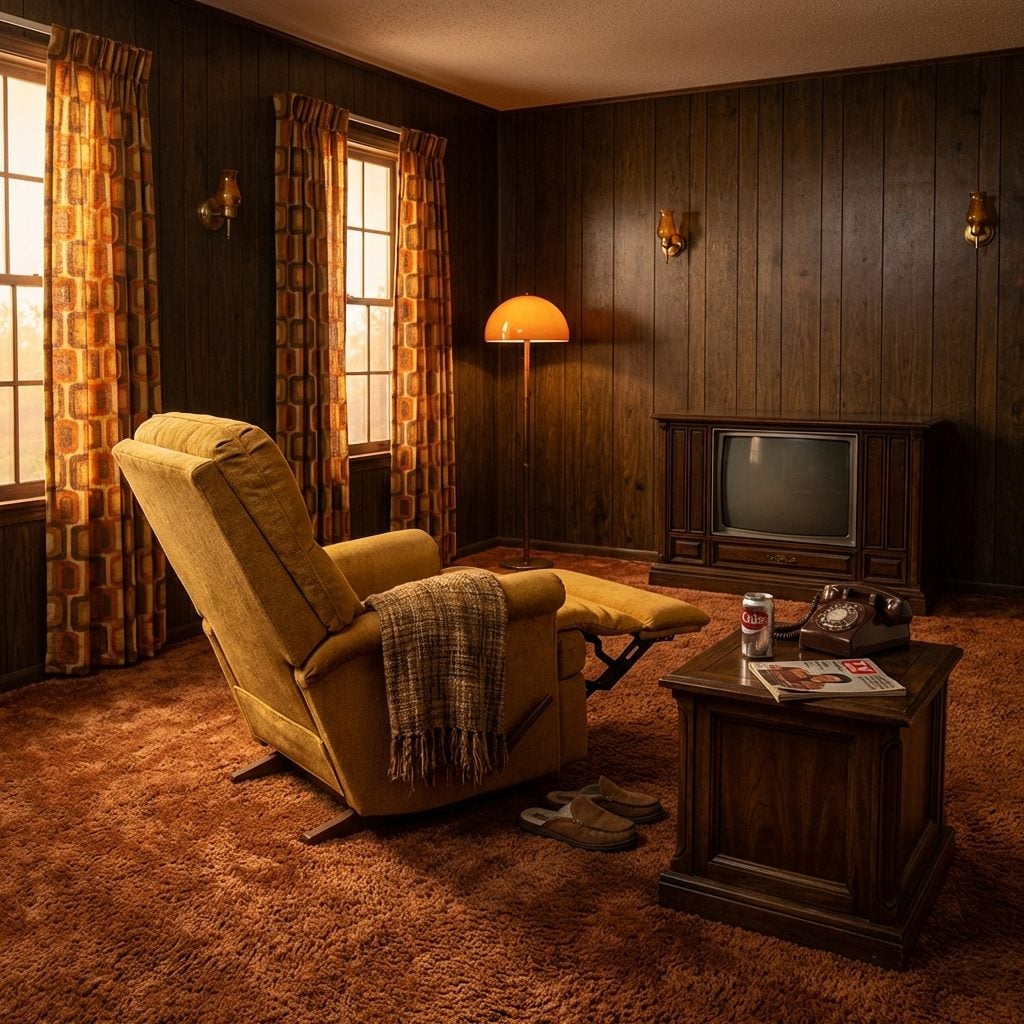
Nobody sat in it. You knew better. That La-Z-Boy, usually in harvest gold, burnt orange, or a dark masculine plaid, had a permanent indentation shaped exactly like one person, and that person was Dad. The footrest lever made a satisfying thunk when it went up, and the side pocket held the remote, a TV Guide, and maybe a stray peanut.
These recliners were built to last decades, and they did. Some are probably still in someone’s basement right now, still reclining perfectly, still faintly smelling of Old Spice and Sunday afternoons. La-Z-Boy was founded in 1927 but hit its cultural peak squarely in the 1980s, when plaid recliner ownership was basically a milestone of suburban fatherhood.
Shag Carpet So Deep You Lost Things in It
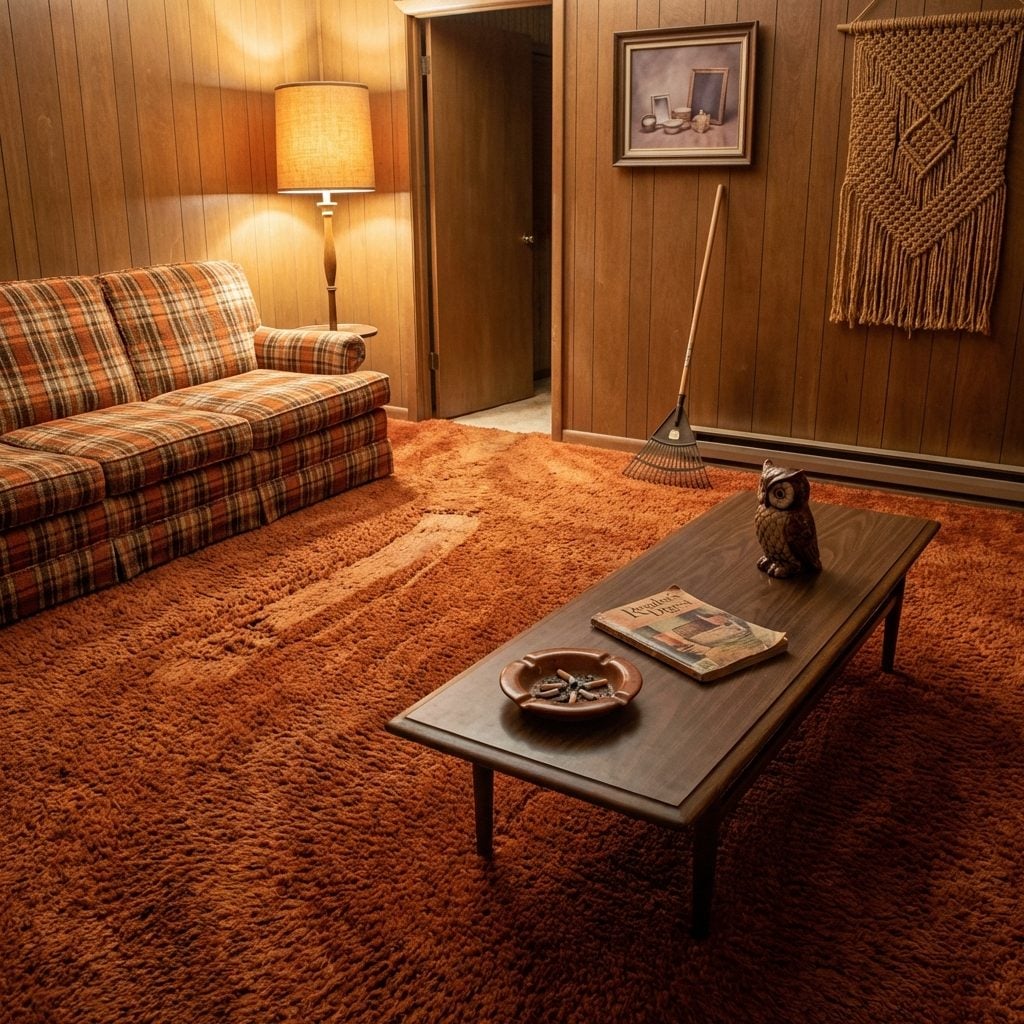
Coins, Legos, hair ties, the back of an earring, shag carpet was basically a landfill with fibers. Running your bare feet through it was weirdly satisfying. Vacuuming it was not, especially with the machines of the era, which would get eaten alive by the longer piles and require their own tiny rake-shaped attachment to survive the job.
The colors were something else entirely. We’re talking avocado green, chocolate brown, burnt sienna, and a specific shade of rust orange that appeared in approximately 70% of 1970s-to-early-1980s homes. Most of it disappeared when Berber and hardwood came back into fashion in the late ’80s, but plenty of it survived under those newer floors for decades.
The Velvet Painting Nobody Could Explain but Everyone Had
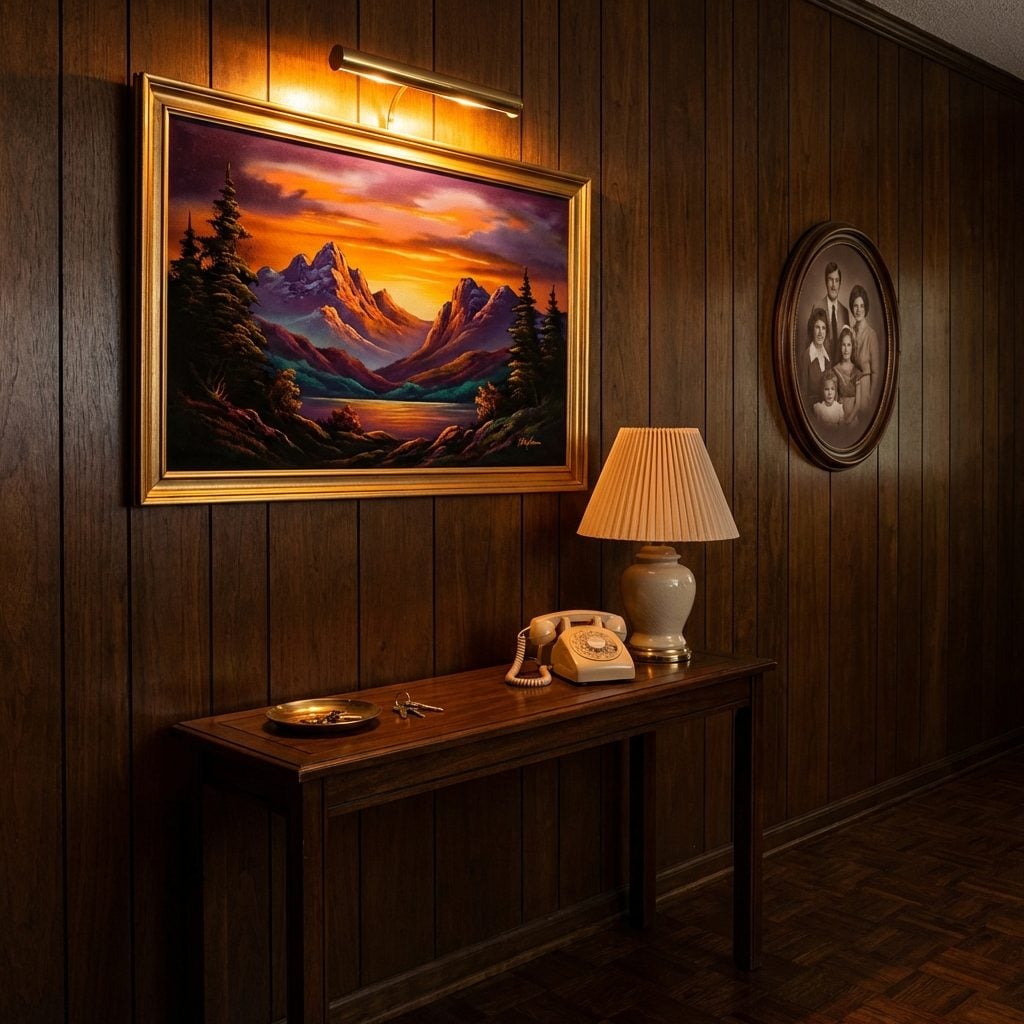
A sunset over mountains. A matador. Elvis. A tiger in profile, somehow both majestic and slightly terrifying. Velvet paintings occupied a very specific cultural niche in the 1980s home: too inexpensive to be considered real art, too beloved to take down.
They hung in dens, hallways, above headboards, and occasionally in the basement recreation room with the pool table and the bar cart. The velvet backing made colors look almost neon, that particular shade of deep blue or blood red that seemed to glow from within. Many were purchased at roadside stands on road trips and carried home wrapped in newspaper. Almost none had a artist’s name on them. They were anonymous, vivid, and absolutely of their moment.
Wallpaper That Absolutely Did Not Know When to Stop
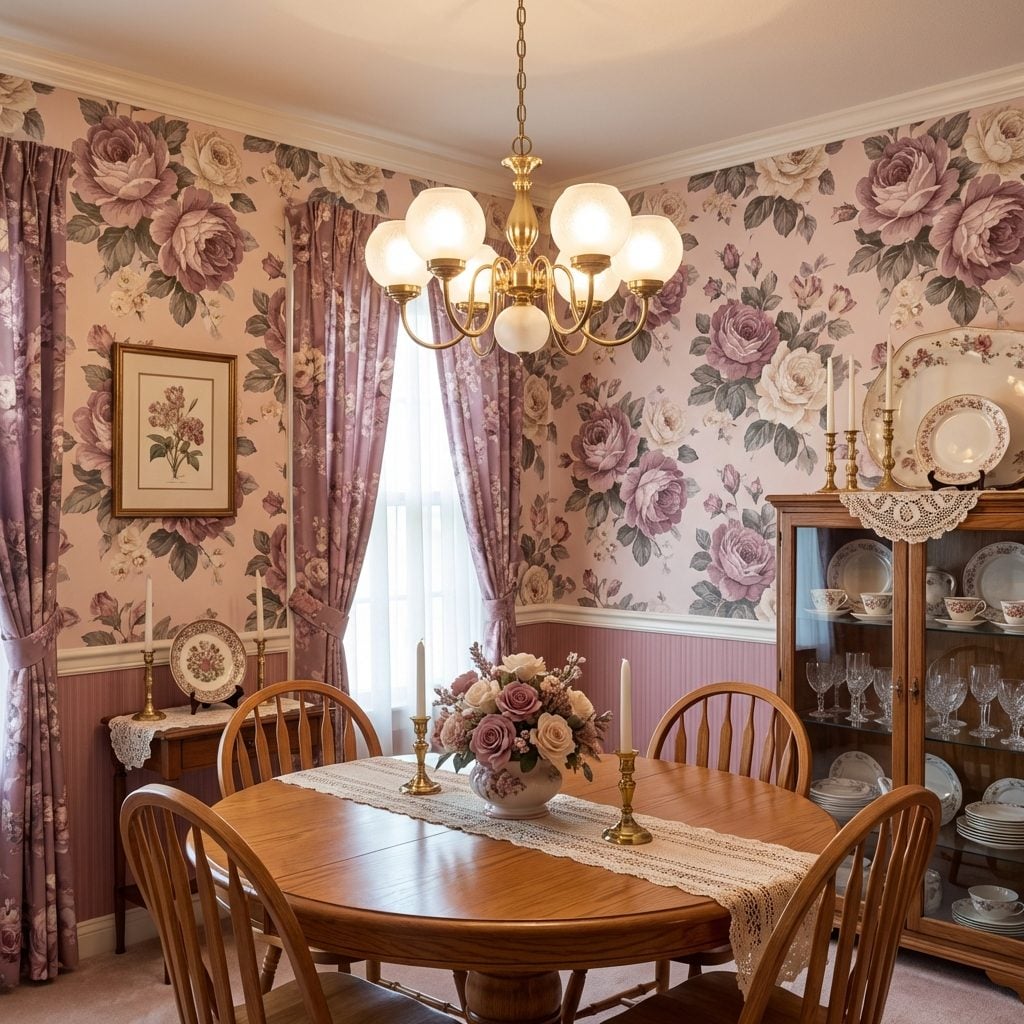
Big floral. Bold stripe. Dramatic geometric repeat.
The 1980s were not a decade of restraint, especially not on the walls. Wallpaper in this era came in patterns that made a statement from across the room: oversized roses in mauve and dusty rose, vertical stripes in cream and terracotta, trellis patterns in hunter green and burgundy. In many homes, it wrapped the entire room including the ceiling. In kitchens, a cheerful country-rooster or fruit-basket border ran at plate-rail height like a finishing touch no one had asked for.
Removing it later became one of the defining home improvement nightmares of the 1990s and 2000s. Entire weekends, an industrial steamer, and a genuine sense of betrayal at whoever decided to glue this stuff directly to drywall without primer.
The Magazine Rack Overflowing with TV Guide, Reader’s Digest, and Good Housekeeping
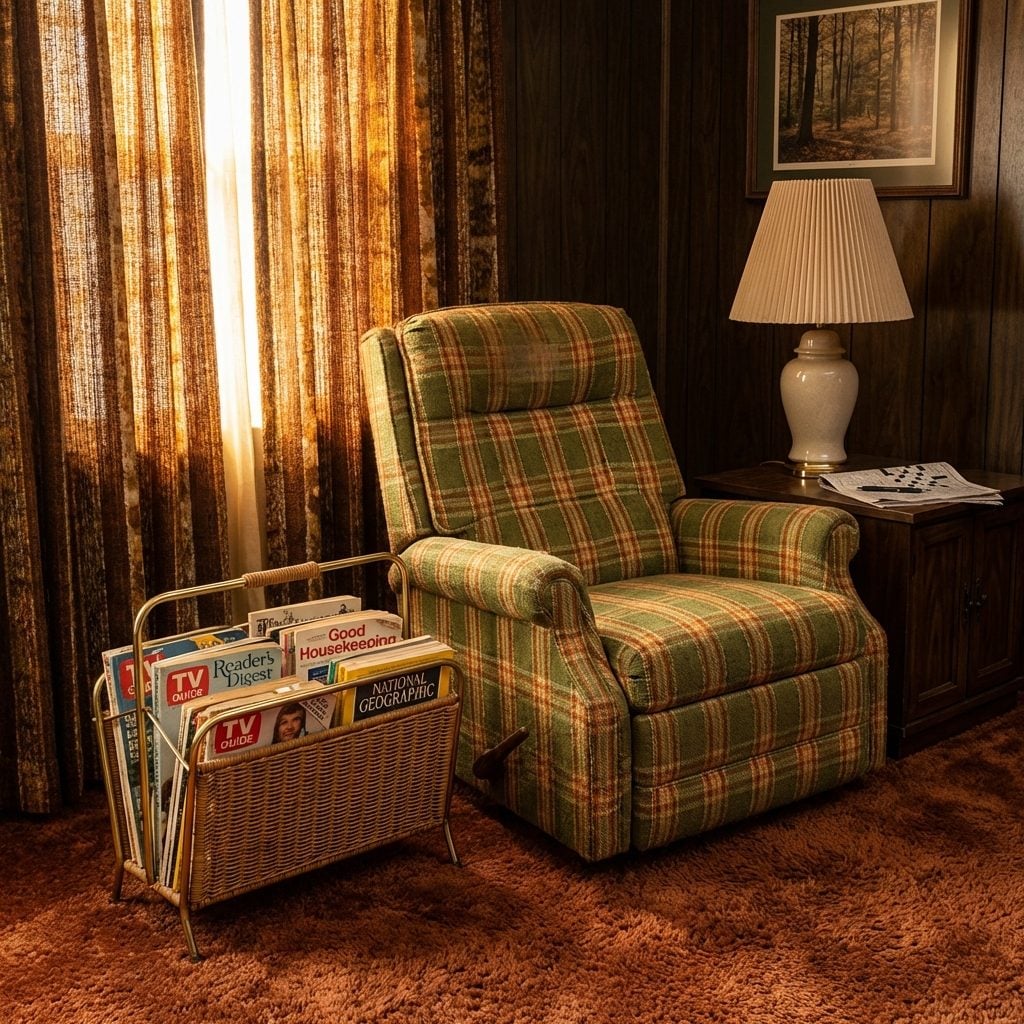
Brass frame, wicker body, or wrought iron, the style of the rack didn’t much matter because it was barely visible under the stack. TV Guide came weekly and somehow never got thrown away, so you always had about four months’ worth threatening to avalanche onto the carpet. Reader’s Digest was permanent. It was the magazine that belonged to the house itself, not to any specific person.
Flipping through a TV Guide with a highlighter or pen to mark what you were going to watch that week was a legitimate Saturday morning activity. The programming grid was dense, the font was tiny, and figuring out which channel your local NBC affiliate was on required real commitment. That little magazine was the algorithm before the algorithm existed.
Fake Plants and Hanging Silk Ferns Draped in Every Corner
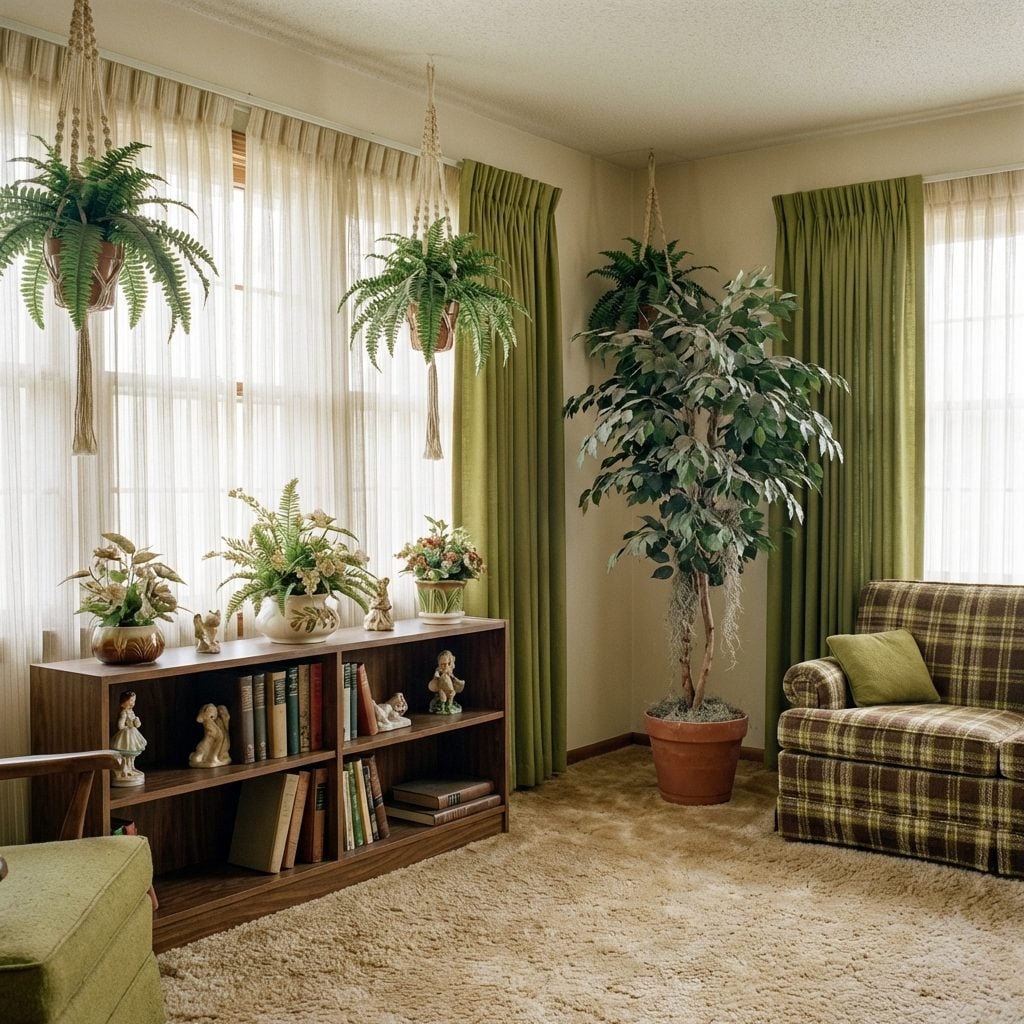
The plastic hanging fern. The silk arrangement in the foyer. The fake potted tree in the corner of the living room that collected dust on its leaves and fooled absolutely no one. We had them everywhere, and we committed to them completely.
The logic was sound, actually: real plants require maintenance, sunlight, and remembered watering. Fake plants just needed an occasional dusting and the willingness to pretend. The 1980s home decorating philosophy was that green made a room feel alive, and if actual life was inconvenient, a convincing imitation would do fine. Some of these ferns hung in macramé holders. Some sat in terracotta pots with a layer of Spanish moss over the faux soil to sell the illusion.
The Fondue Set That Surfaced Once a Year and Disappeared Again
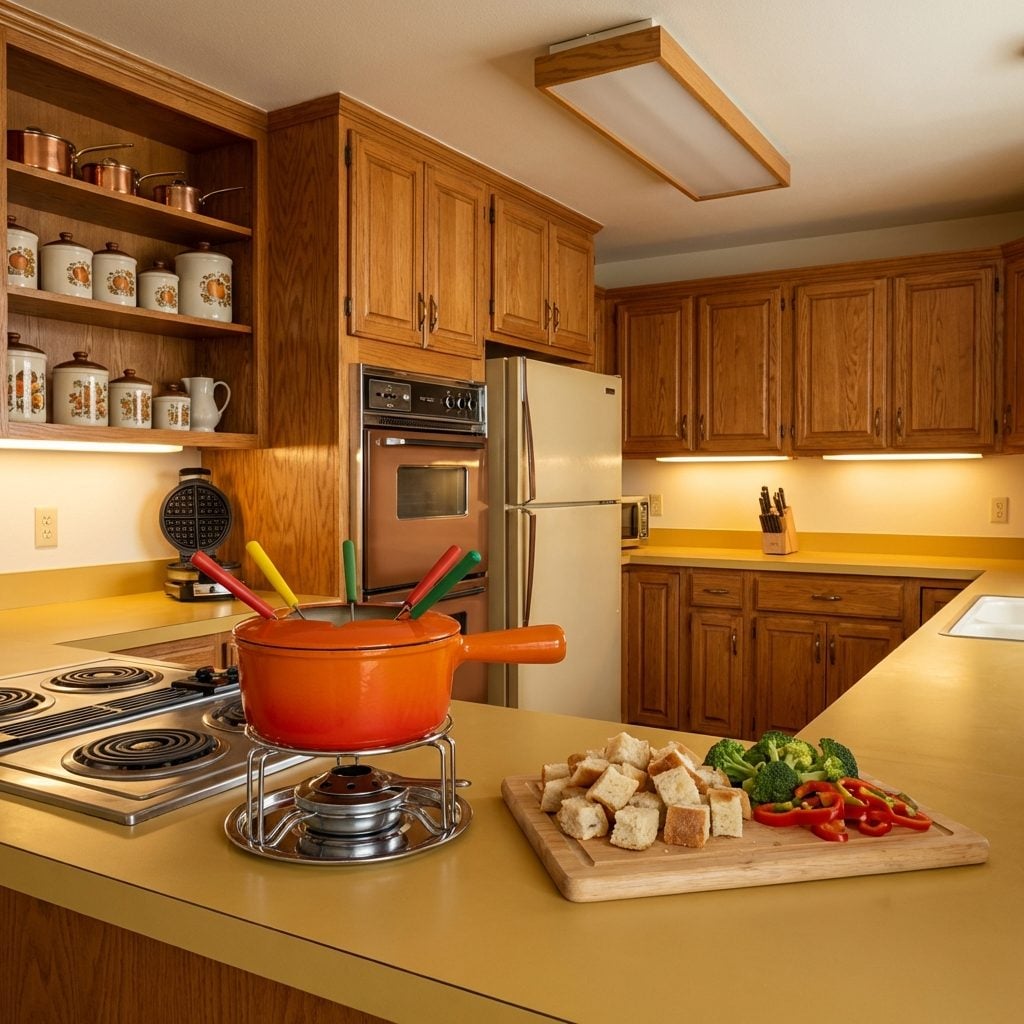
Every house had one. Nobody could tell you where it came from, a wedding gift, probably. It lived in the back of a kitchen cabinet or high on a pantry shelf, wedged behind the electric skillet and the waffle iron, waiting for the dinner party that would justify its existence.
That dinner party came approximately once. Maybe Christmas, maybe New Year’s Eve, maybe a specific moment in the early ’80s when someone decided that melted cheese and long forks were the height of entertaining. The Sterno can would be lit, the Swiss Gruyère would be melted, and someone would inevitably lose a bread cube in the pot and have to follow the rule that everyone at the table made up on the spot.
“The fondue set was the aspirational object of 1980s dinner party culture, too fancy to use, too interesting to throw away.”
The Electric Can Opener That Never Left the Counter
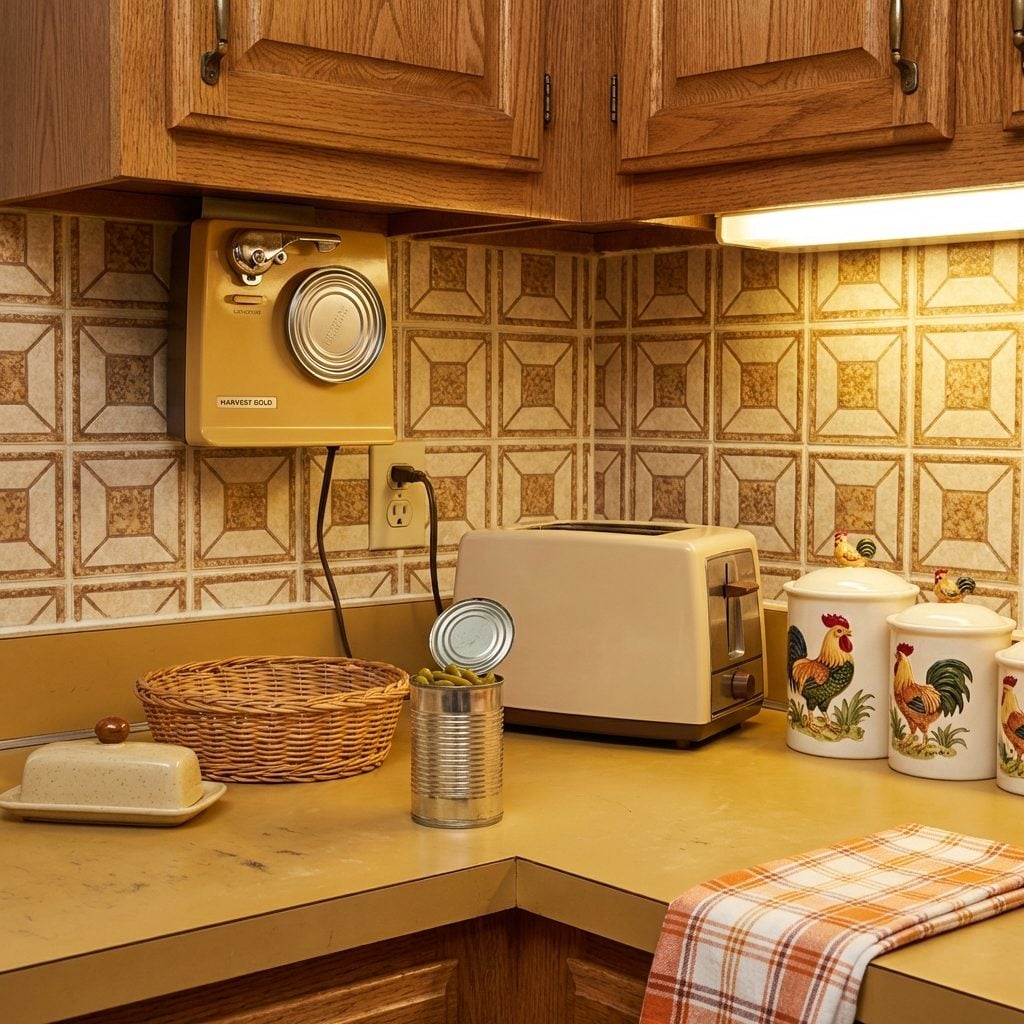
Permanently plugged in. Always in the same spot, usually near the corner where the counter met the backsplash, its magnetic lid-catcher loaded with the lid from three cans ago. The motor sound, that specific low grinding whirr, is genuinely one of the most recognizable sounds of 1980s domestic life.
Models from brands like Rival and Hamilton Beach came in almond, harvest gold, or avocado green to coordinate with the other countertop appliances. The cutting wheel would go dull over time and start leaving ragged edges on the lids, but the machine kept going because nobody threw away a working appliance in 1983. It would stay on that counter until the kitchen was remodeled, and even then, someone probably moved it to the basement.
The Brass Ceiling Fan with the Built-In Light Kit
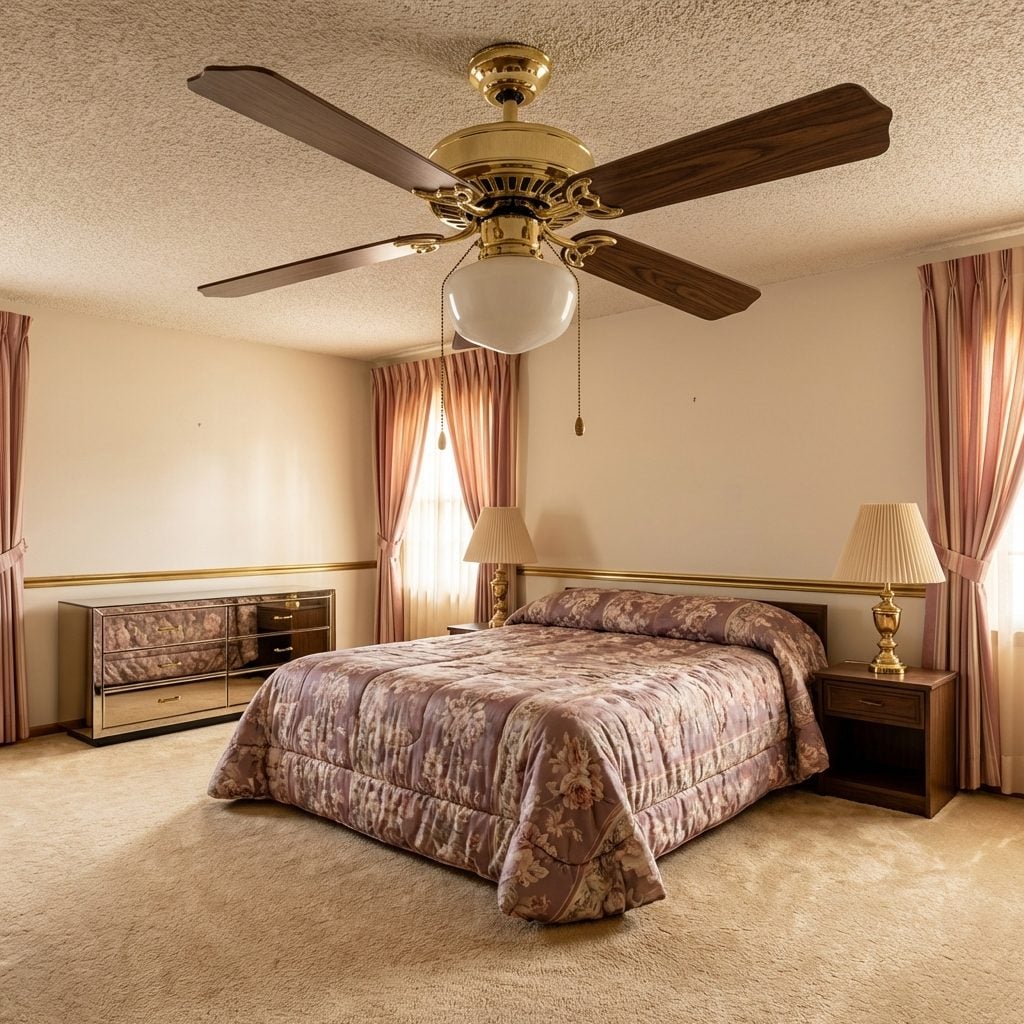
Brushed brass blades, a faux-wood grain finish on those blades, a frosted globe light kit in the center, and a pull chain with a little brass bead on the end that you had to yank twice to cycle through the three speeds. This ceiling fan was in the den, the master bedroom, possibly the dining room, and ideally every room if the budget allowed. It hummed at high speed and wobbled slightly if one blade had been bumped. Nobody called a repair person. You just accepted the wobble.
The ceiling fan with light kit was the home design compromise of the decade: practical in warm climates, decorative everywhere else, and slightly cheaper than recessed lighting. In some homes, the brass finish extended to every visible fixture, doorknobs, faucets, switchplates, curtain rods. A coordinated brass universe.
Framed School Photos in Oval Mats Going Back Approximately a Decade
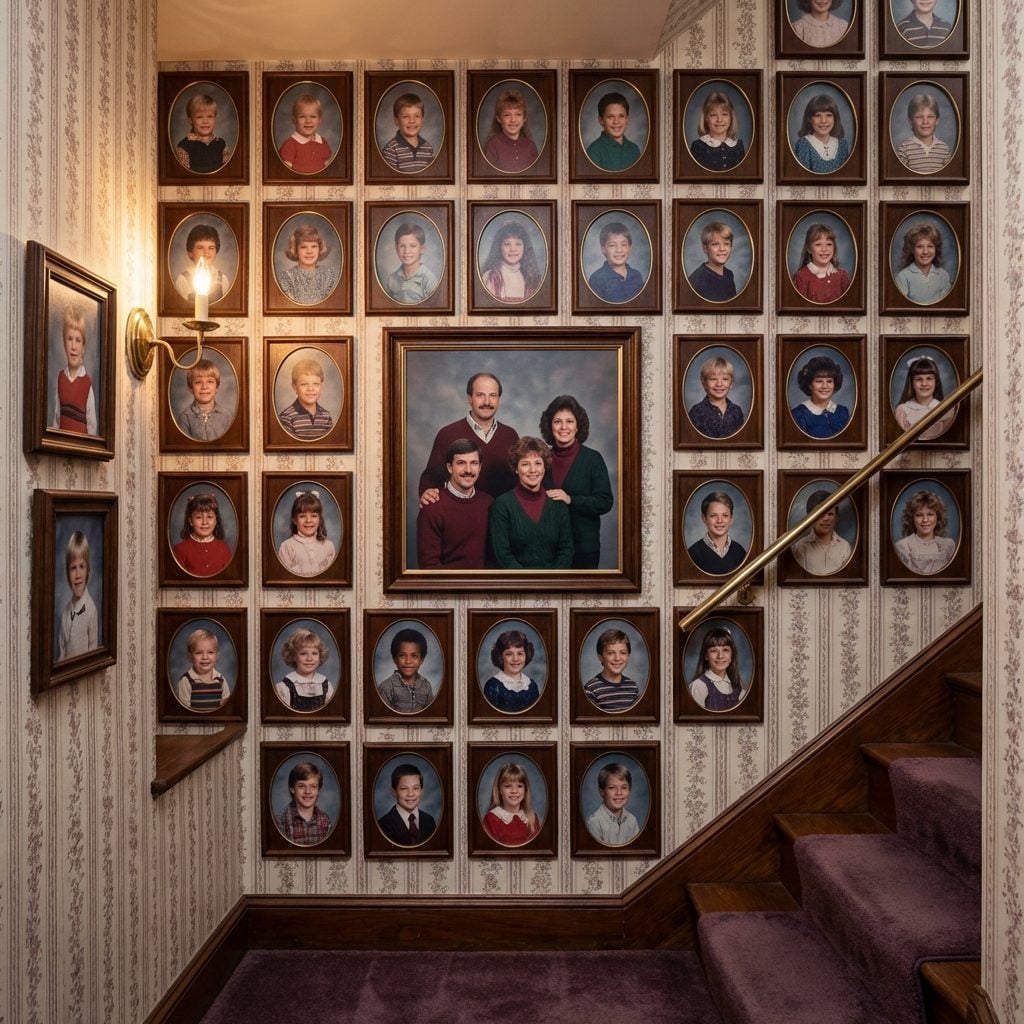
The wall going up the staircase, or the long hallway between bedrooms, was the gallery. Every fall’s school photo got framed, usually with a cream oval mat inside a dark wood or gold frame, and added to the collection. You could track your haircuts and missing teeth across an entire wall if you stood in the right spot.
Some families went for the full composite: the big rectangular frame with individual oval cutouts for each kid, each year, across the top, and a larger family portrait in the center. The family portrait itself was often from Sears Portrait Studio, everyone dressed in coordinating jewel tones (burgundy, forest green, navy) against a mottled grey background.
The Stereo Console with Speakers the Size of Small Children
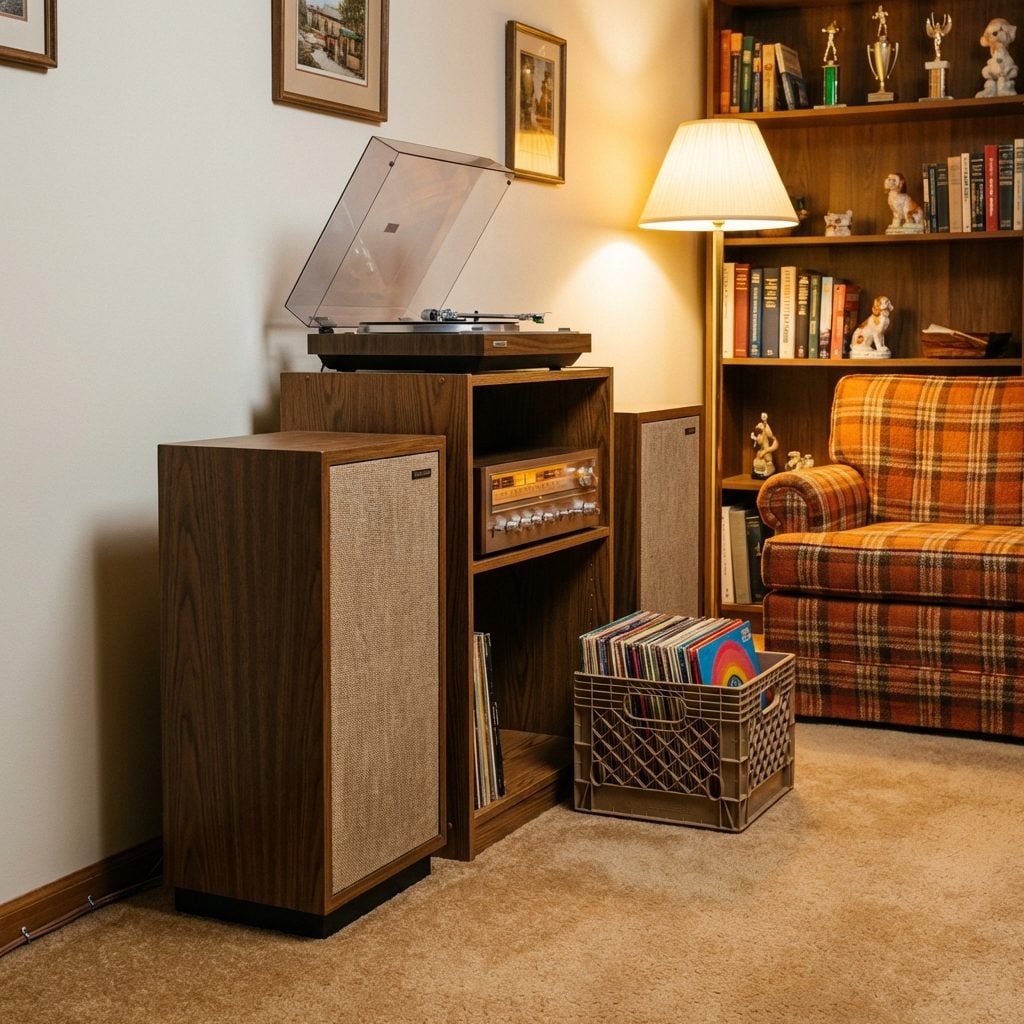
Two towers of speaker, fabric grilles in brown or black, wood-veneer cabinets, each one roughly two feet tall and heavier than they had any right to be. They flanked the stereo receiver like bookends, connected by cables that ran under the carpet or along the baseboard. Brands like Fisher, Pioneer, Marantz, and Kenwood were the names on those receiver faces, their volume knobs and equalizer sliders glowing with a greenish or amber backlit display.
The record player sat on top or in the component stack, with a clear plastic dust cover that you flipped up reverently before dropping the needle. Albums were filed alphabetically in a milk crate or a dedicated album stand nearby. This was not casual listening equipment. This was the living room’s most serious commitment to sound.
The Plaid or Floral Sofa (Occasionally Preserved Under a Plastic Slipcover)
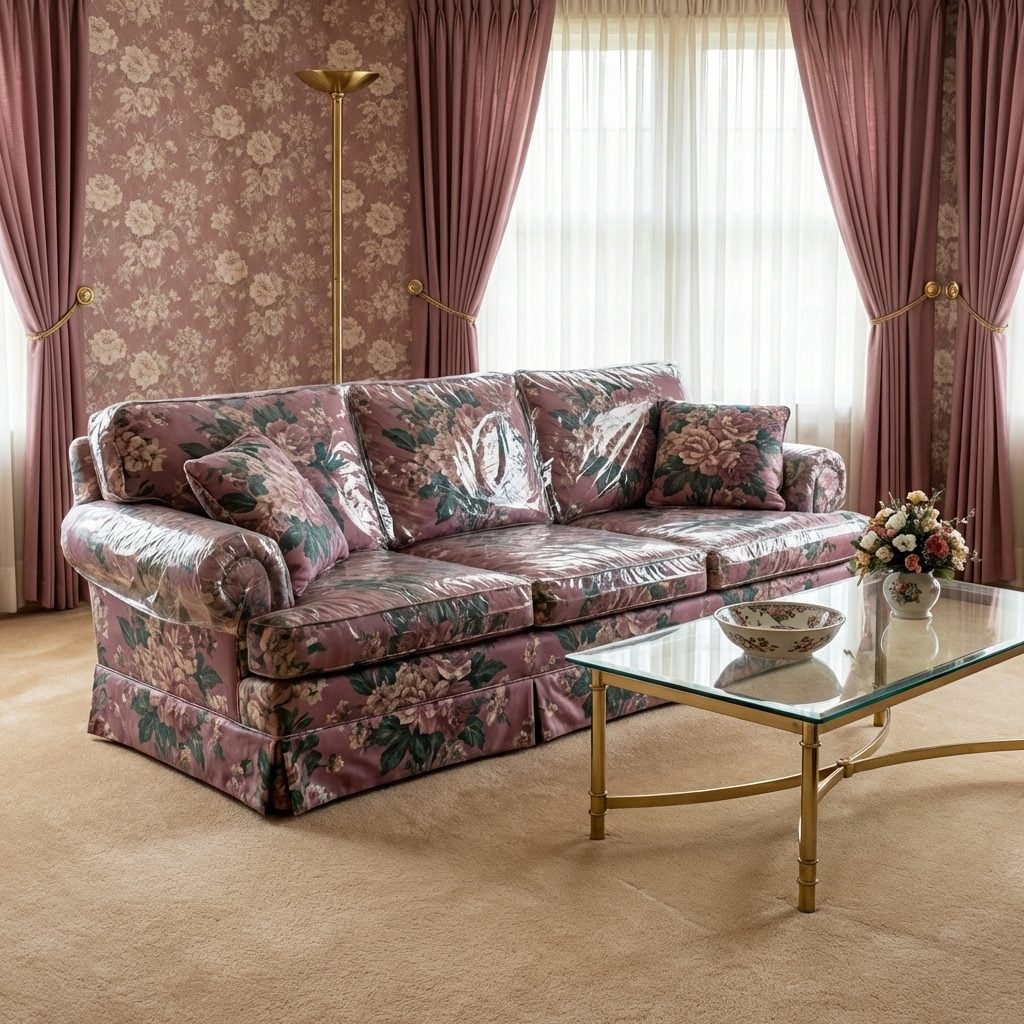
It stuck to your legs in summer. You could hear it from the next room whenever someone sat down or shifted position. The plastic slipcover over the good sofa was one of the most singularly 1980s (and really, 1970s-into-1980s) domestic realities imaginable: furniture so nice it couldn’t actually be used for sitting.
The sofa underneath was usually worth protecting, to be fair. Sofas in this era came in bold plaids, brown, orange, and cream woven together, or large-scale floral prints in mauve, dusty rose, and hunter green that matched the wallpaper. They were substantial, deep-cushioned, and built with a kind of structural seriousness that modern furniture often lacks.
Some homes kept the plastic on indefinitely. Others only deployed it when company wasn’t coming, which is a kind of logic that still makes a certain sense if you think about it long enough. The floral upholstered sofa underneath was always pristine. That was the whole point.
The Formal Dining Room Nobody Was Actually Allowed to Use
🔥 Would you like to save this?
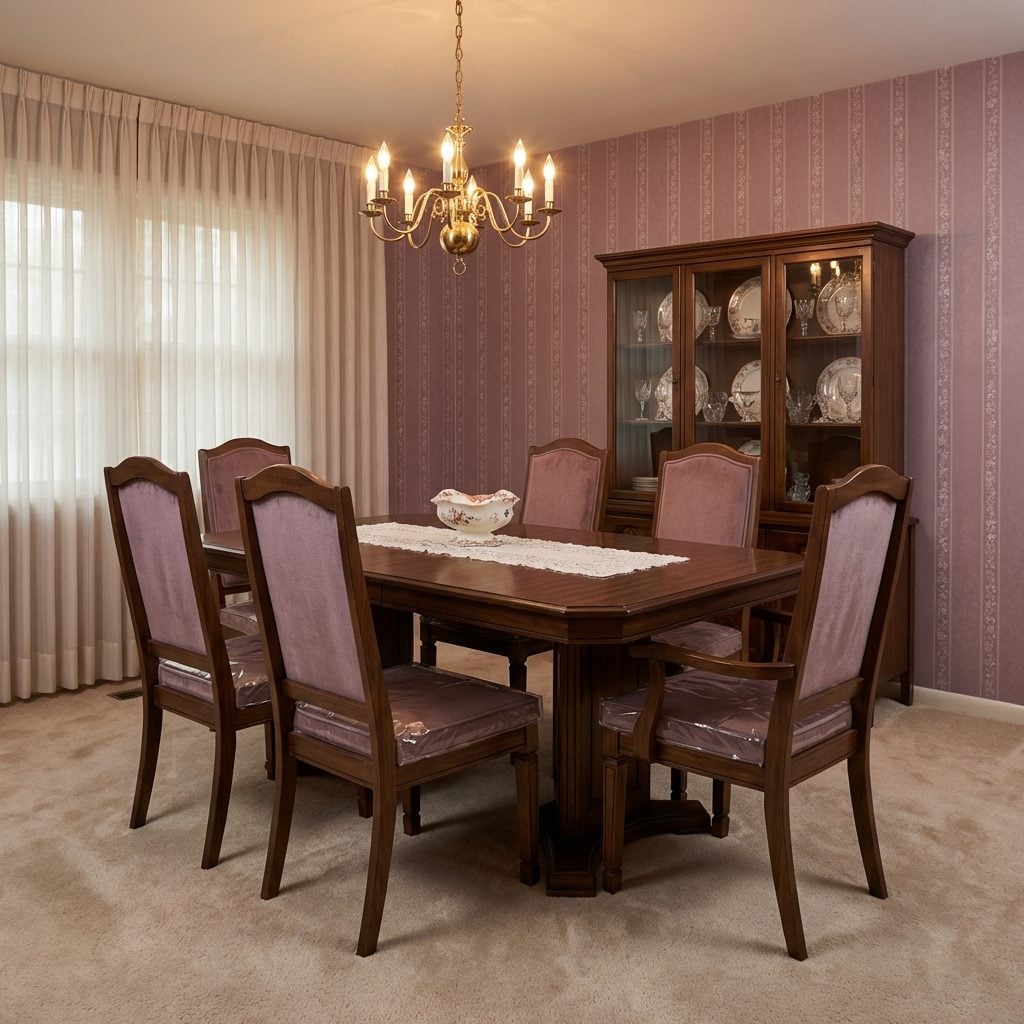
Every middle-class house in the 1980s had a dining room that existed in a kind of suspended animation. The good china sat behind glass. The chairs had plastic covers. The carpet was somehow cleaner than anywhere else in the house because nobody ever walked on it. You ate dinner in the kitchen every single night.
Then Thanksgiving arrived, and suddenly this room sprung to life with a folding table extension and your grandmother’s tablecloth. The whole family crammed in, elbows touching, pretending this was normal. The formal dining table was less about food and more about status, proof that this household had a room it didn’t need to use.
The Basement Rec Room With Wood Paneling and a Bar Nobody Asked For
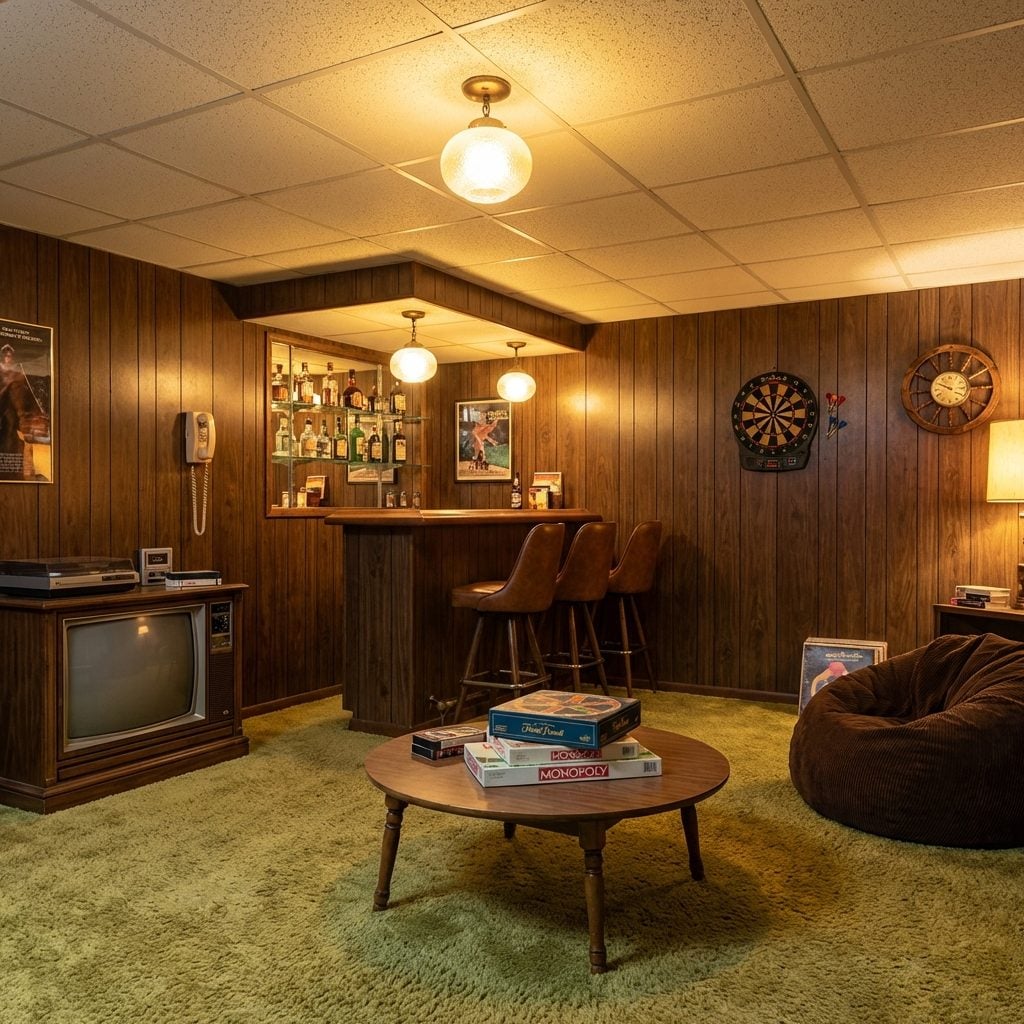
The basement rec room was the 1980s dad’s greatest achievement and most ambitious project. Dark walnut paneling on every wall. Drop ceiling with those white foam tiles. A built-in bar in the corner with a mirrored back panel, a few bottles of dusty Kahlúa, and bar stools that swiveled but wobbled. The carpet was always some shade of avocado, harvest gold, or burnt orange that had been discontinued at the store level for at least a decade.
This is where the good TV lived, the bean bag chairs got used, and the kids held court on Friday nights. Sometimes a dart board. Always a clock shaped like a wagon wheel. The home design logic of the era said: if you have a basement, you owe it to yourself to panel it.
The Wall Calendar from a Local Business That Tracked Everyone’s Life
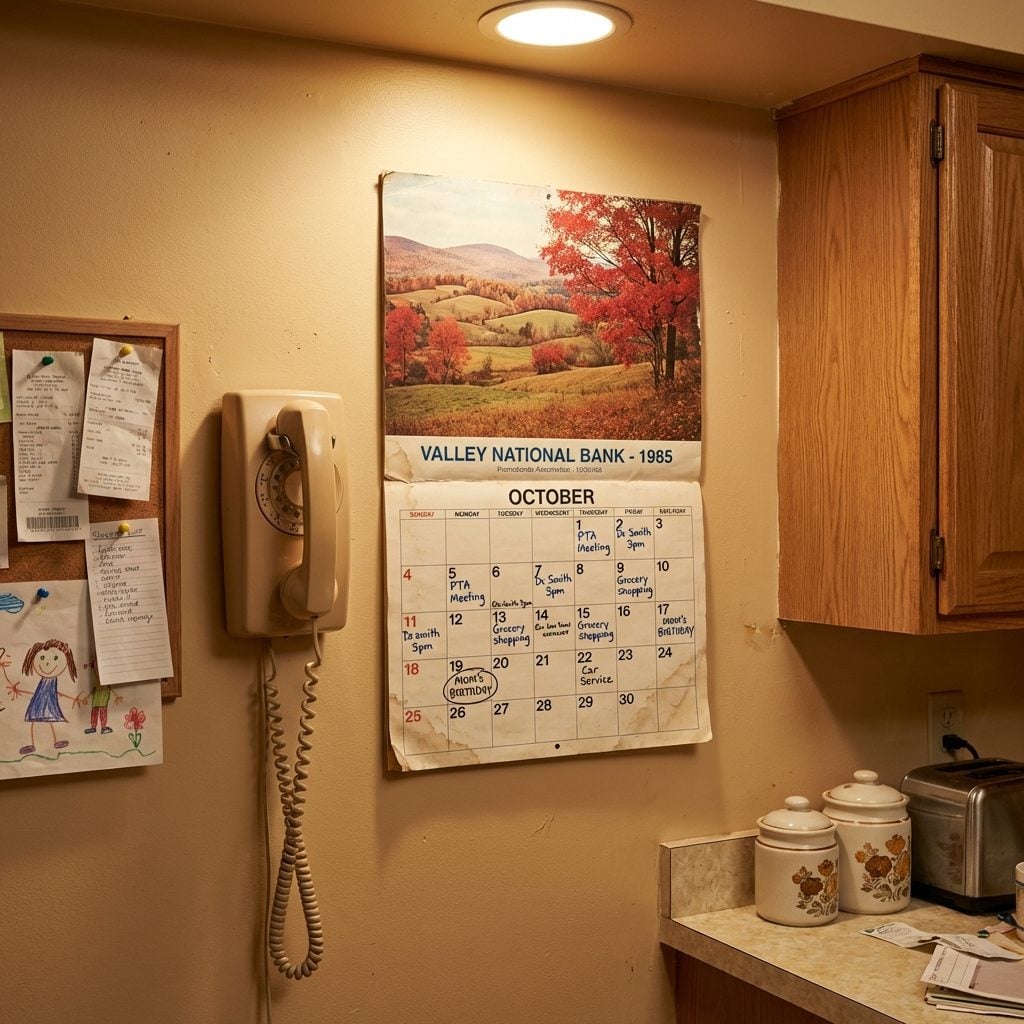
It hung on the nail beside the phone, or sometimes on the side of the refrigerator, and it came from the insurance agent on Route 9 or the savings and loan downtown. The company logo was printed across the top in navy blue. The pictures were usually landscapes, a covered bridge in October, a snow scene in January. And the squares were completely covered in your mom’s handwriting.
Doctor appointments, school picture day, your sister’s dance recital, the date the car was due for an oil change. The family calendar was the operating system of the household. There was no app, no shared Google sync. There was just this free calendar that arrived in December, and whoever controlled the pen on that wall controlled the schedule.
Wicker Everything in the Sunroom (And a Little Bit Past That)
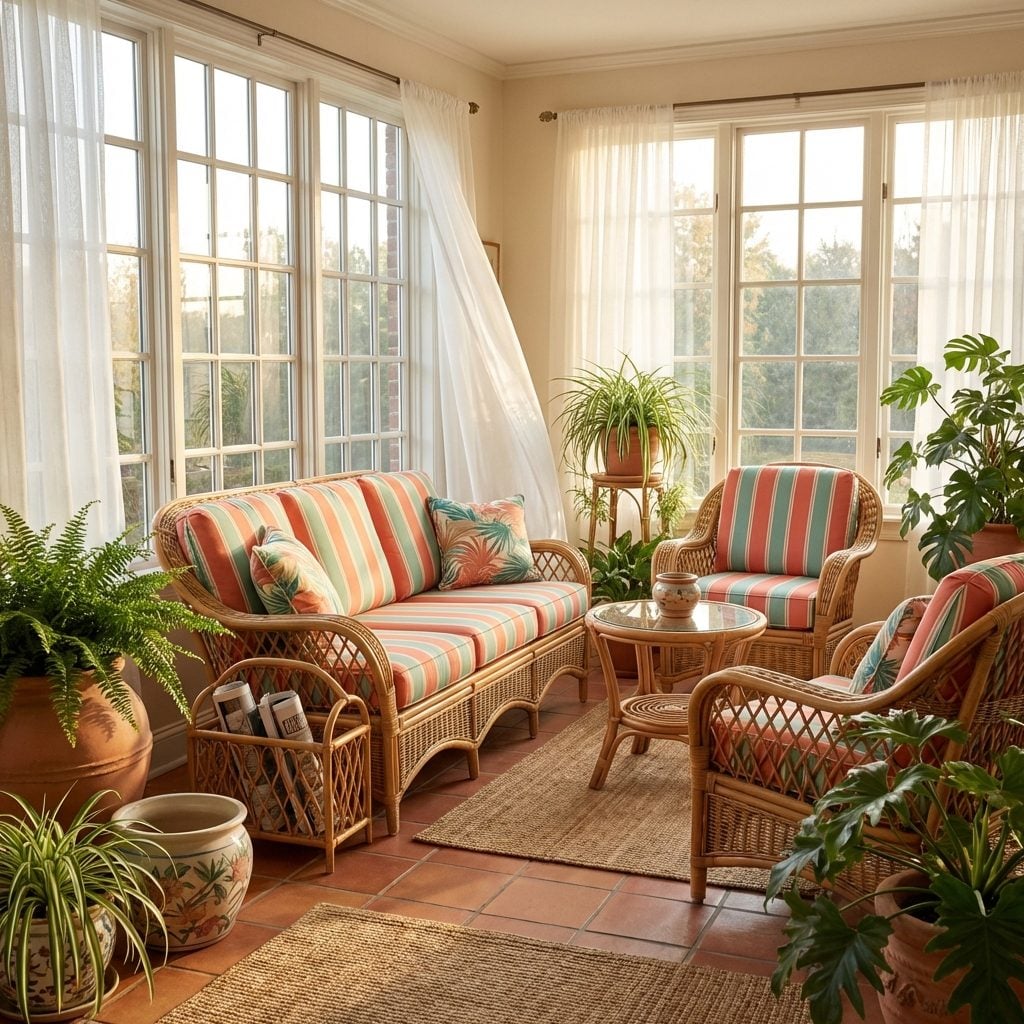
The sunroom was where wicker went to rule. A full suite of it: the settee with the cushions in a cabana stripe, the matching armchairs, the little side table, the magazine basket that was basically just more wicker. The cushion fabric was always a cheerful tropical print or a stripe in coral, seafoam, or terracotta. Everything smelled faintly of sun-warmed fiber and maybe a little bit of mildew by September.
What made 1980s wicker distinctive was its ambition. It didn’t stay politely in the sunroom. It crept into the guest bedroom. It appeared in bathrooms as a tissue box holder and a laundry hamper. Someone always had a wicker accent chair in the corner of the master bedroom, as if to say: vacation lives here too.
The Ceramic Rooster on the Kitchen Counter That Nobody Could Explain
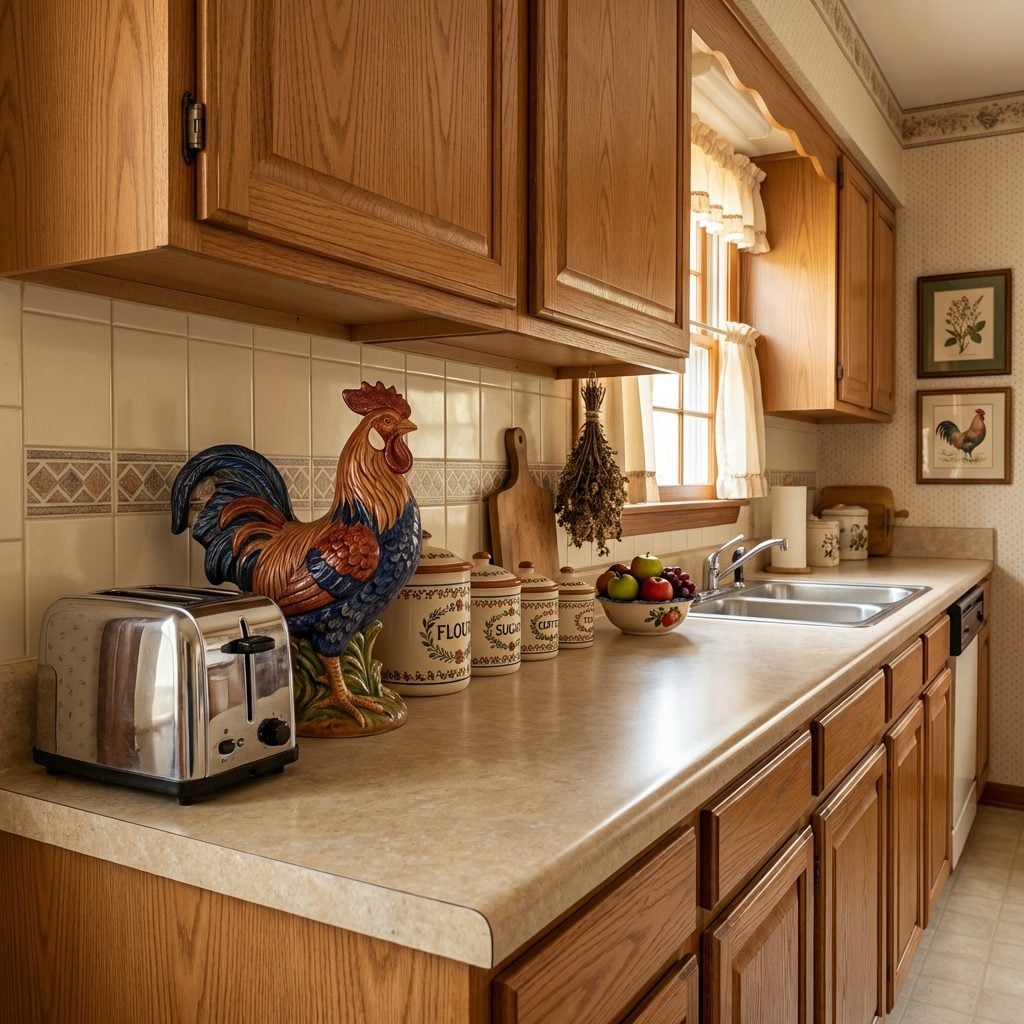
It just appeared one day, maybe a gift, maybe a garage sale find, and then it stayed for fifteen years. The ceramic rooster occupied the space between the toaster and the wall with absolute authority. Sometimes it was a full rooster in hand-painted terracotta or glazed cobalt blue. Sometimes it was a decorative fruit bowl with a molded bunch of ceramic grapes and apples that could not actually hold fruit. Both were equally mysterious. Neither served a function anyone could clearly articulate.
These pieces were part of a broader 1980s kitchen language that said: this room is warm, it is European-inspired, it is the heart of the home. Country French kitchen decor dominated the decade, and the rooster was its mascot. You can still find these exact pieces at every estate sale in America, patient as ever.
The Cookie Jar That Watched Over the Kitchen Like a Ceramic Guardian
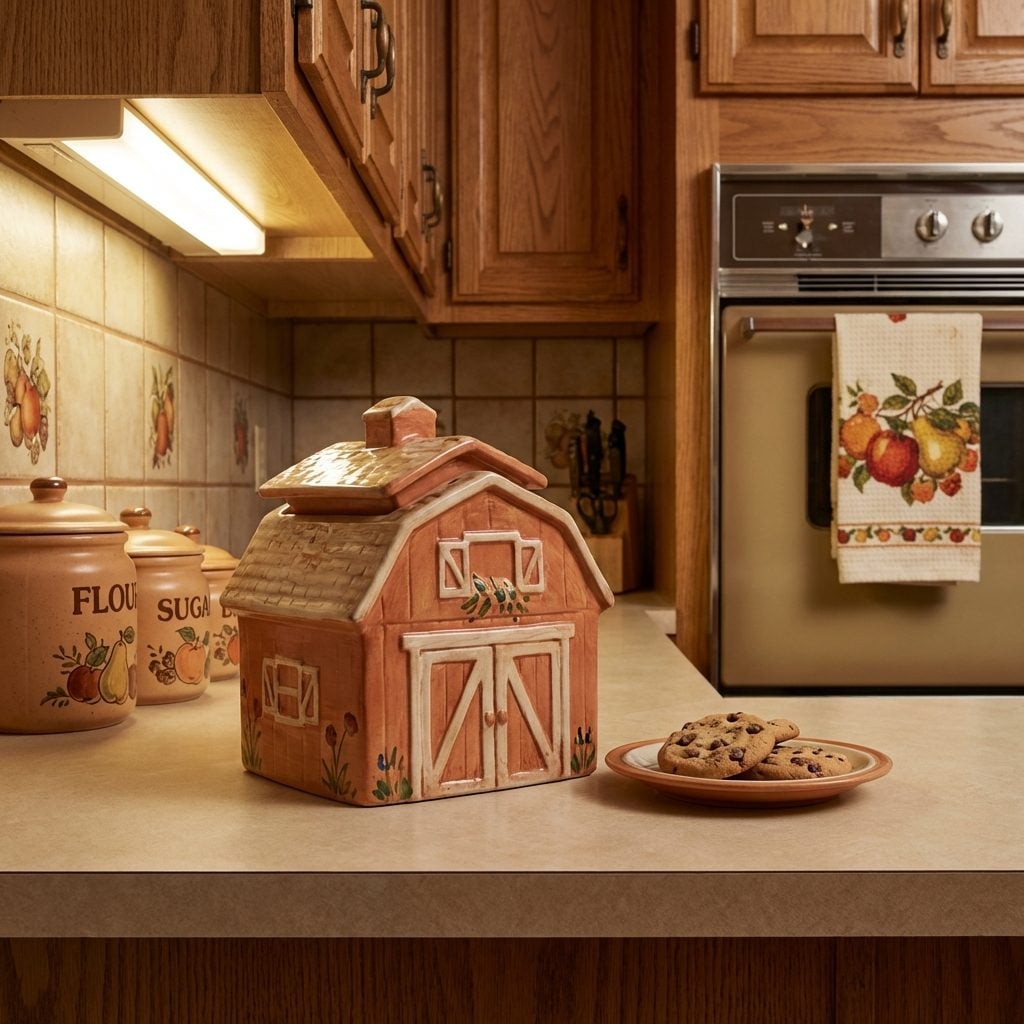
Barn-shaped. Bear-shaped. A cartoon pig wearing an apron. Whatever the form, the cookie jar had a throne on the counter and an outsized presence in childhood memory. The lid made a specific sound, a ceramic-on-ceramic scrape-and-clink, that was one of the best sounds a kitchen could produce. You could hear it from two rooms away, which meant your mom could too.
Inside was rarely just cookies. There might be a couple of Oreos, some Chips Ahoy going soft, maybe a Little Debbie wrapper that someone forgot to throw out. The jar was symbolic more than functional, a declaration that this kitchen was a warm and welcoming place.
“The cookie jar was the kitchen’s mascot. Whatever shape it took, it made the room feel like a home.”
The Garage That Had Everything Except the Car
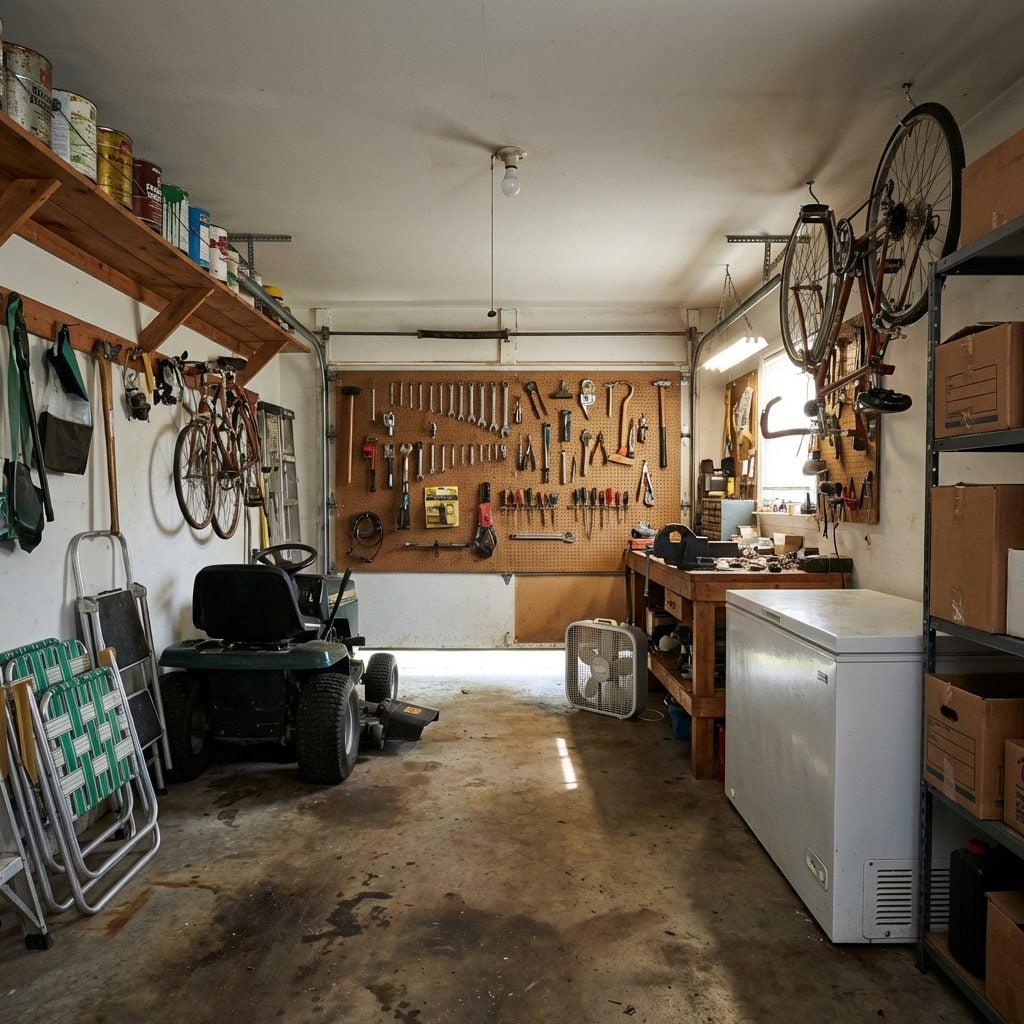
The two-car garage held: a riding lawn mower, a chest freezer full of venison or green beans, a pegboard wall of tools that was either perfectly organized or a complete disaster depending on who you’re talking about, bicycles hanging from hooks, a box fan, folding lawn chairs, two cans of paint from 1979, a workbench, and a complete set of encyclopedias your dad swore he was going to sell.
The car sat in the driveway.
This was not a failure of planning. This was intention. The garage was the domestic overflow valve, the room where everything landed that didn’t quite fit the house and couldn’t quite be thrown away. Some households converted one bay into a large home gym by the late 1980s, though “gym” was a generous word for a weight bench and a dusty stationary bike.
The Coffee Table That Was Basically a Magazine Archive
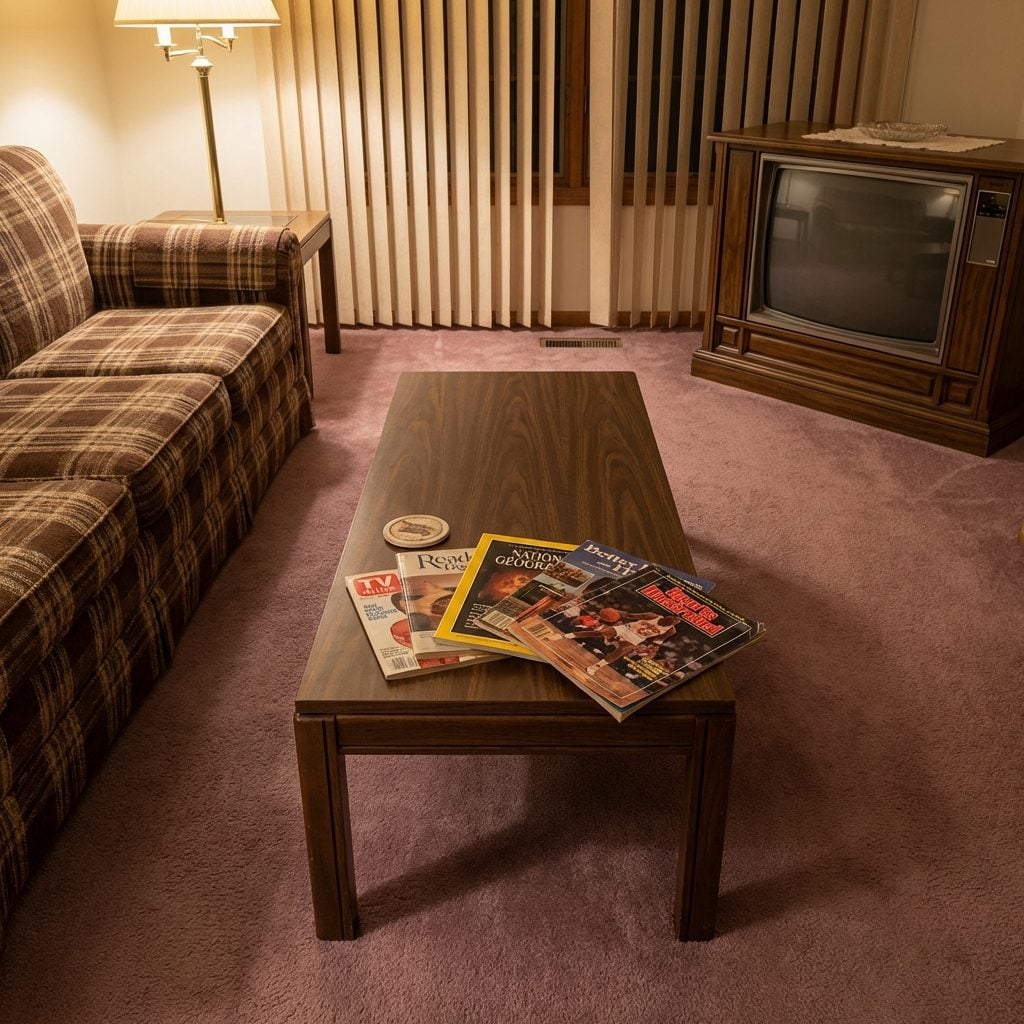
TV Guide on top because it was the most essential document in the household. Below it: a Reader’s Digest, two National Geographics, a Better Homes and Gardens from March, a Sports Illustrated your dad was still planning to read, and something like Good Housekeeping or Family Circle that had slipped under everything else. The wood coffee table was a filing system masquerading as furniture.
Guests instinctively sorted through it while waiting for people to come downstairs. Kids used the magazines as a hard surface for coloring. Nobody actually threw one away until there were so many you couldn’t lift the stack without something sliding off. And then only the oldest ones went.
The Sewing Corner That Doubled as the Quietest Room in the House
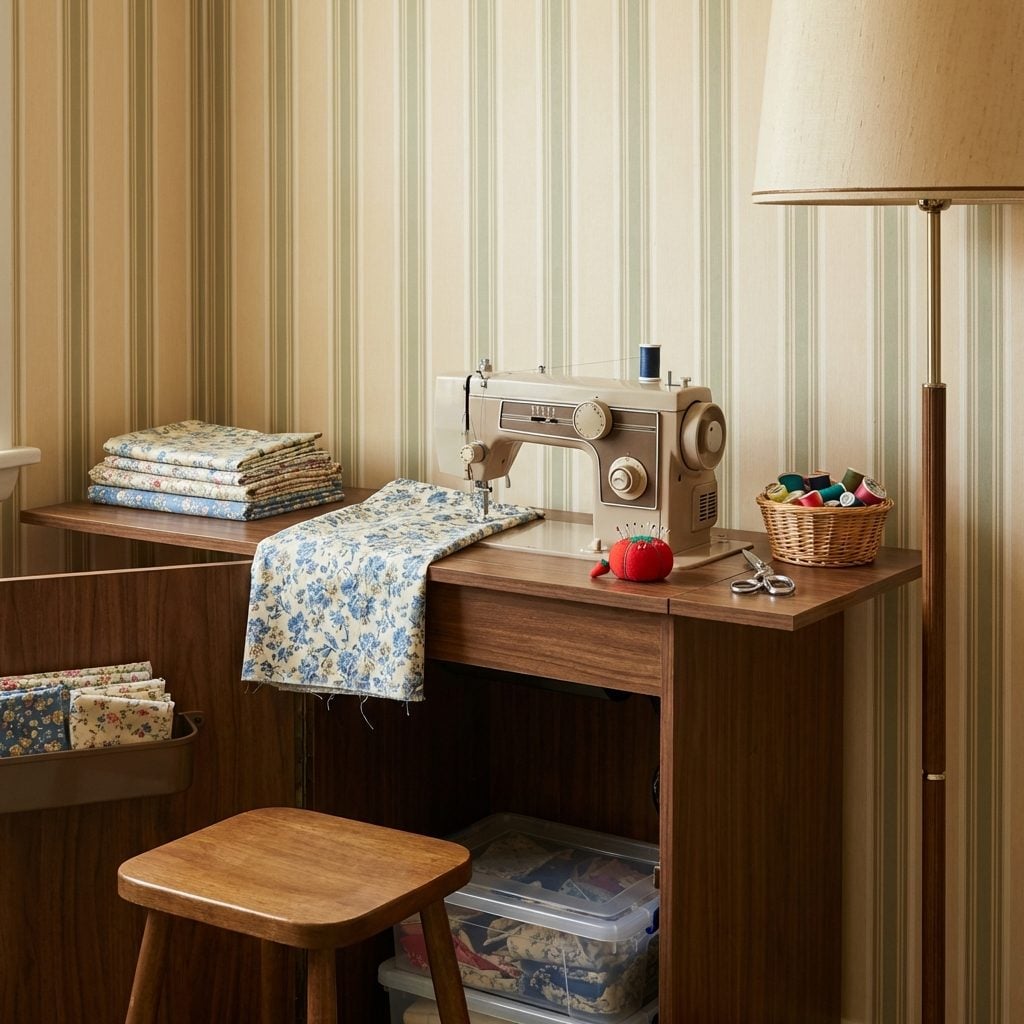
It was usually in the guest room or at the end of the master bedroom: a vintage sewing machine in a wooden cabinet that folded down when in use, a small basket of threads and a pincushion shaped like a tomato, a cutting mat on the floor, fabric folded in a plastic storage box under the table. The room smelled like ironing and something floral, maybe sachets in the drawer.
Moms who sewed had a particular kind of quiet focus when they sat there. You didn’t interrupt them any more than you’d interrupt someone on the phone. There was something about that corner that felt deeply personal, a transitional home office of sorts before the concept had a name: a space that was hers and only hers, in a house where most spaces belonged to everyone.
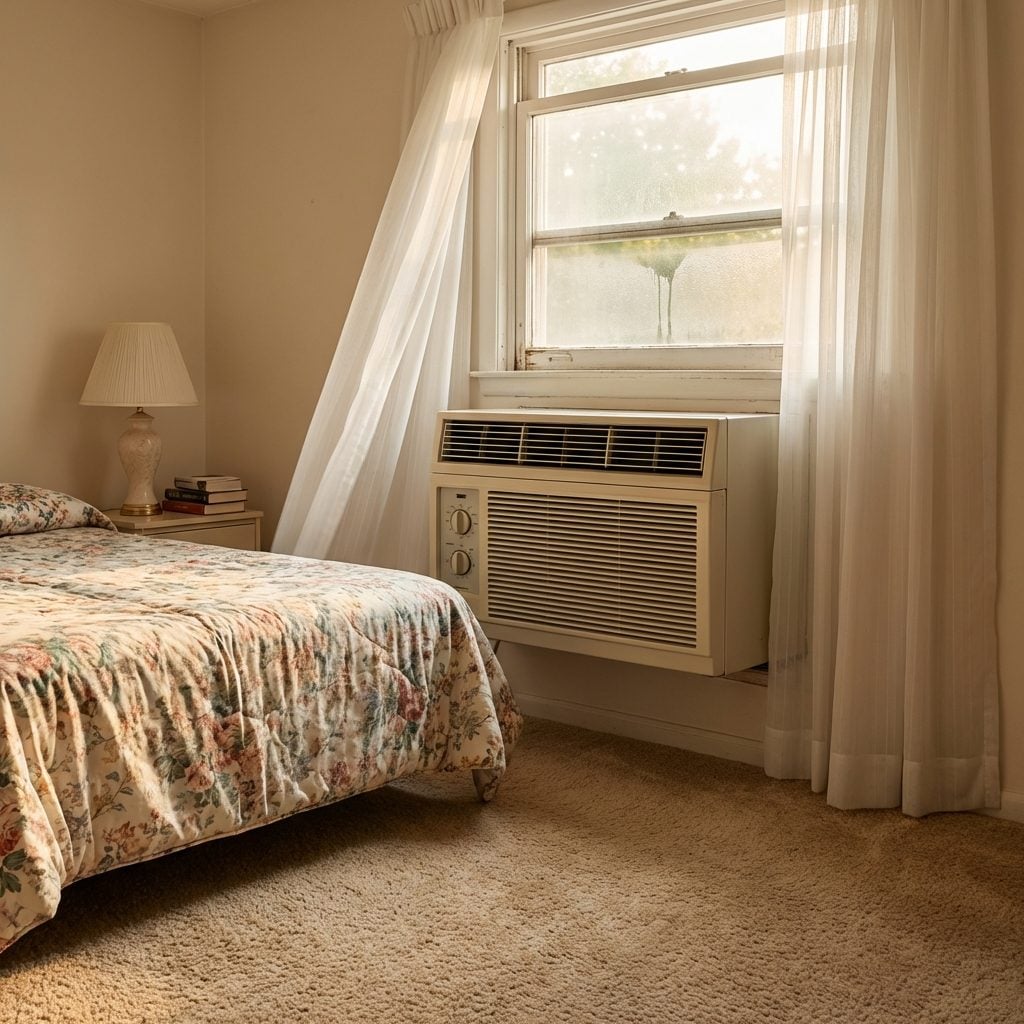
The Window Air Conditioner That Announced Summer Had Arrived
🔥 Would you like to save this?
It went in the window sometime around Memorial Day weekend and it stayed until September, rattling and humming and dripping condensation onto the side of the house. The installation was always a production, your dad in the window frame with someone else holding the unit from outside, everyone sweating more during setup than they would have sweated without it.
Once running, the whole room organized itself around the A/C unit. The chair moved closer. The door stayed shut to keep the cold in. It was loud enough that you had to turn the TV up, which meant it was also loud enough to muffle arguments, conversations, and the rest of the summer happening in the rest of the house. There was a specific pleasure in pressing your face close to it and feeling that cold, slightly metallic air hit you directly.
The Indestructible Vacuum Cleaner That Outlived Every Trend
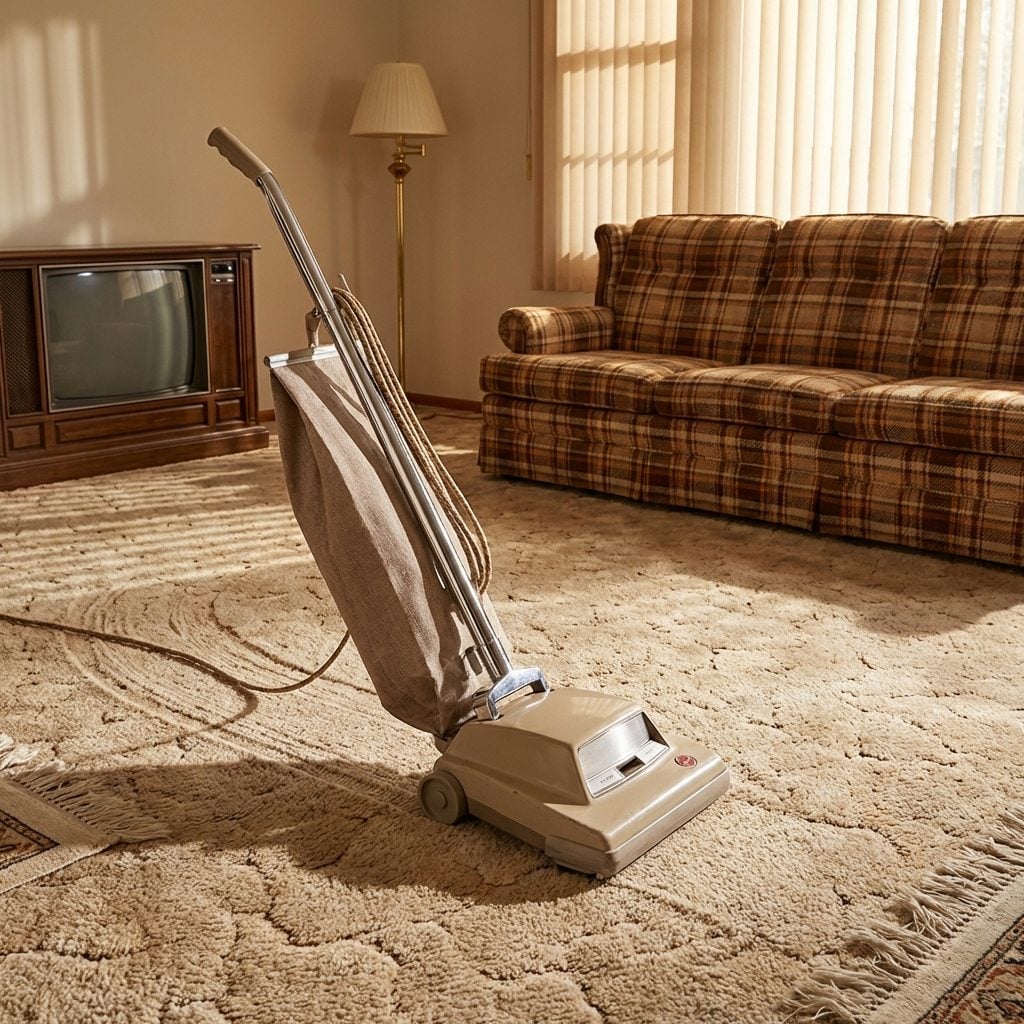
Hoover. Kirby. Electrolux. It weighed approximately as much as a small refrigerator, it had a bag you changed roughly every two weeks while trying not to inhale the dust cloud, and it was so loud that anyone in the house knew immediately to stay out of the way. The cord was always slightly too short, which meant unplugging and replugging at every room transition, a minor annoyance that somehow nobody ever got around to solving.
These machines were built the way tanks are built. They cleaned carpets that no modern vacuum could comprehend, deep shag, thick pile, the kind of flooring that ate small toys. A good canister or upright from the early 1980s might still be running today in someone’s basement, doing exactly what it was designed to do, which is more than you can say for a lot of things from that decade.