🔥 Would you like to save this?
For years, matching furniture got blamed for crimes committed by bad rooms. The sofa and loveseat were identical, so the whole arrangement was dismissed as a showroom. The nightstands matched, so somebody decided the owner had stopped thinking. A dining set arrived together and suddenly the chairs were guilty by association. Meanwhile, the actual problems were usually somewhere else: too much brown, too little contrast, undersized rugs, timid lighting, furniture lined up without a focal point.
In order to come up with the very specific design ideas, we create most designs with the assistance of state-of-the-art AI interior design software. Also, assume links that take you off the site are affiliate links such as links to Amazon. this means we may earn a commission if you buy something.
The useful question was never whether two pieces came from the same collection. It was what repetition was doing in the room. Sometimes a matched pair creates an axis around a bed or fireplace. Sometimes four identical stools turn a busy island into one clean line. Sometimes a coordinated sofa set gives a loud rug, old lamp, or wall of botanical paper enough quiet around it to matter. Repetition can flatten a room when everything repeats; used selectively, it can give the room structure.
These 38 spaces make that distinction visible. Matching works when proportion, contrast, texture, and placement are doing their jobs — and it fails when the set is expected to do all the decorating by itself. So keep the twins, the suite, the row of chairs, even the furniture-store set if it earns its place. Then make the rest of the room interesting on purpose.
Working out what your next home project could cost? Remember to compare home equity rates if you plan to borrow.
38. Matching Furniture Against Bold Wallpaper That Supplies the Contrast
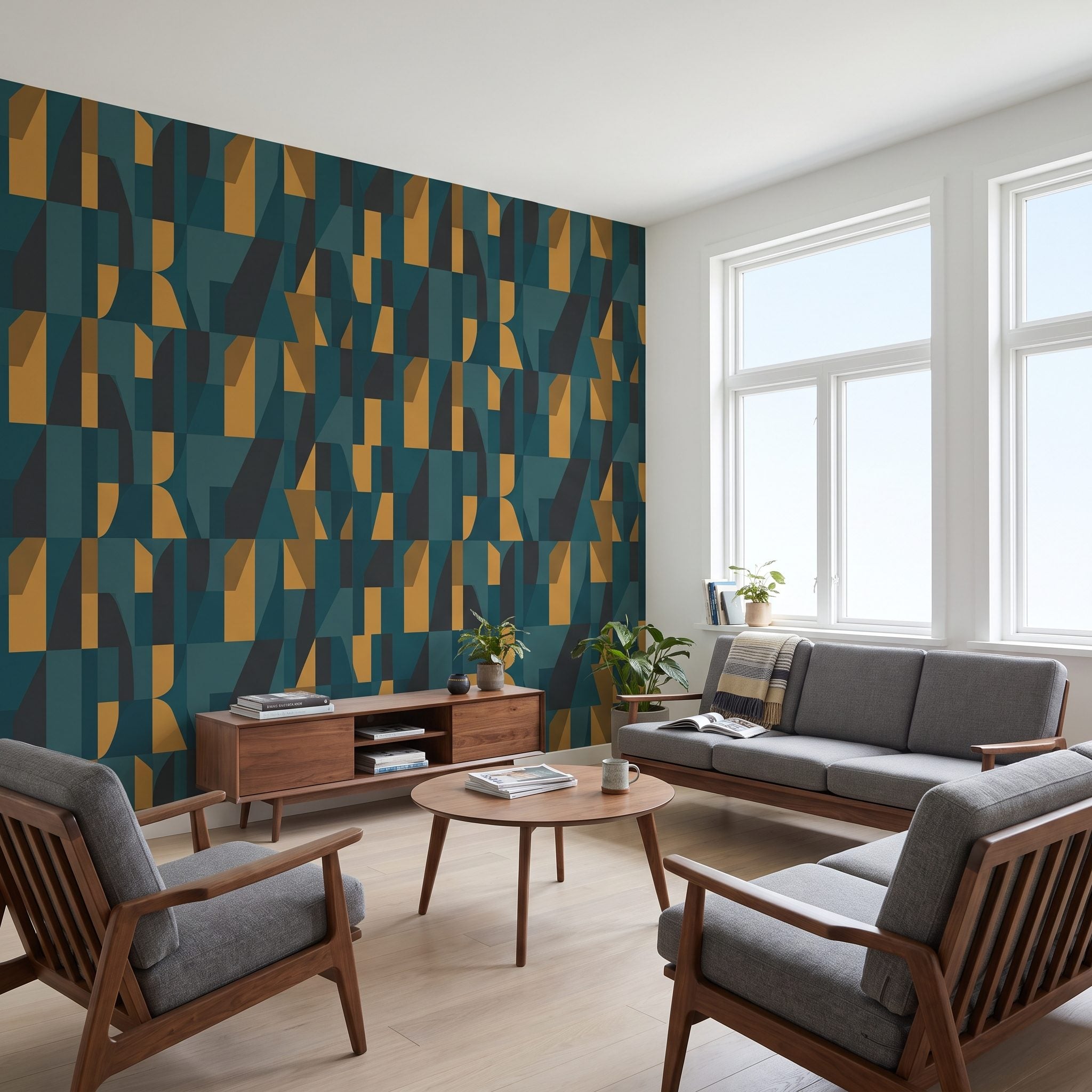
Bold wallpaper can do the disagreeing so the furniture doesn’t have to. Two matching green velvet chairs against a large botanical print give the room a calm foreground and a loud backdrop; the contrast is immediate without turning every object into a separate event.
That is the useful distinction here. Repetition in the seating does not flatten the room when the walls are already carrying pattern, scale, and color. A burgundy great room or a tight navy powder room can take the same approach: let one surface bring the drama and let the furniture hold its line. Two matching green velvet armchairs look sharper when they have something bold to push against.
37. Twin Beds With Matching Furniture That Make a Guest Room Feel Intentional
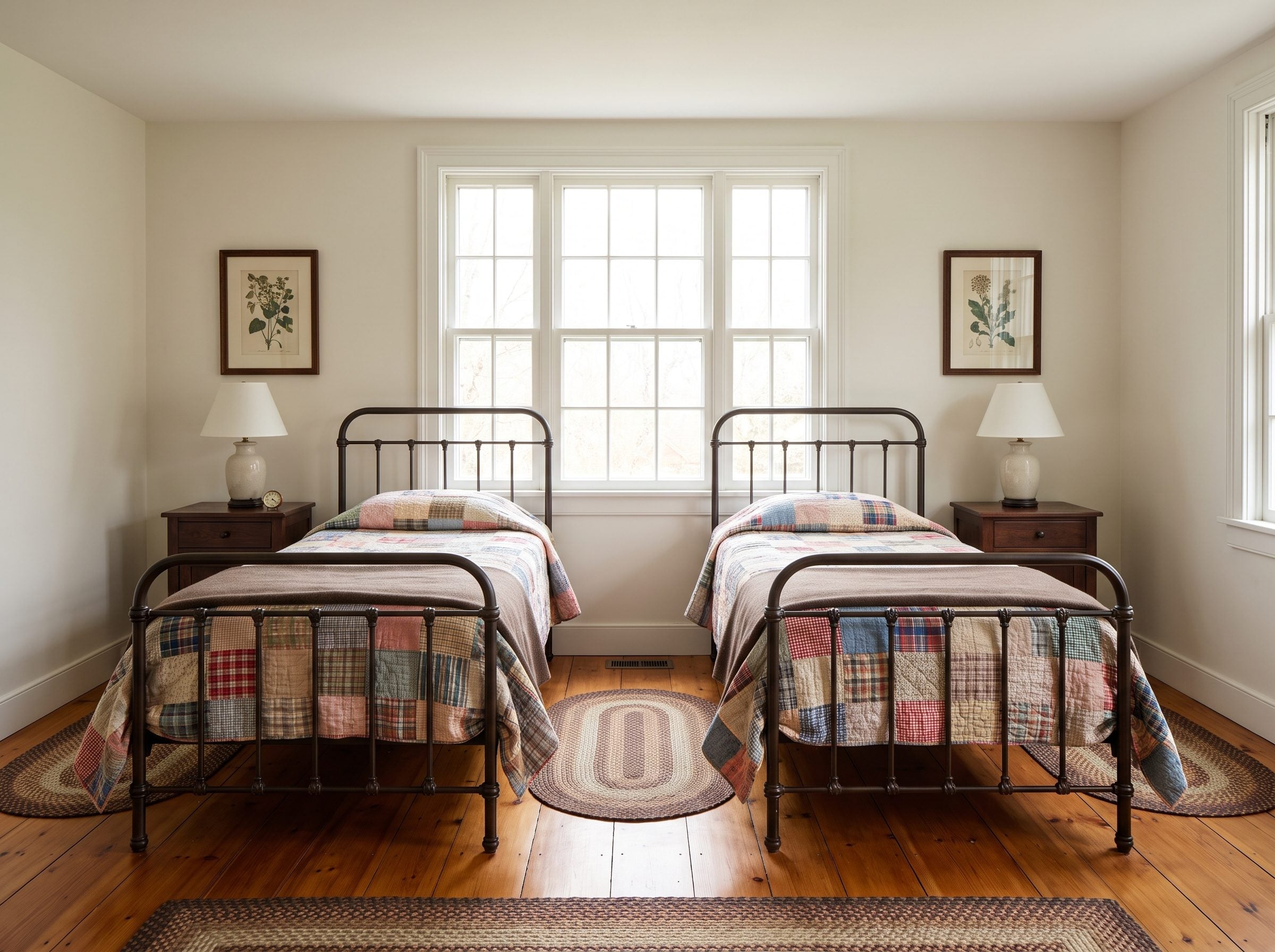
Twin beds are one of the places where matching never really needed rescuing. Two identical frames, one shared nightstand, two lamps: the room establishes its order before you add a single decorative object.
For a guest room, spacing matters more than novelty. A practical planning range is roughly 24 to 36 inches between the beds, enough for circulation and a compact nightstand in the middle. Source A pair of white four-poster twin beds under matching brass bedside lamps turns the wall into one balanced composition instead of two unrelated sleeping zones.
The room can still have personality. Put the variation in the quilts, art, or rug. Let the furniture establish the beat.
36. Matching Outdoor Lounge Chairs That Make a Patio Feel Like a Resort
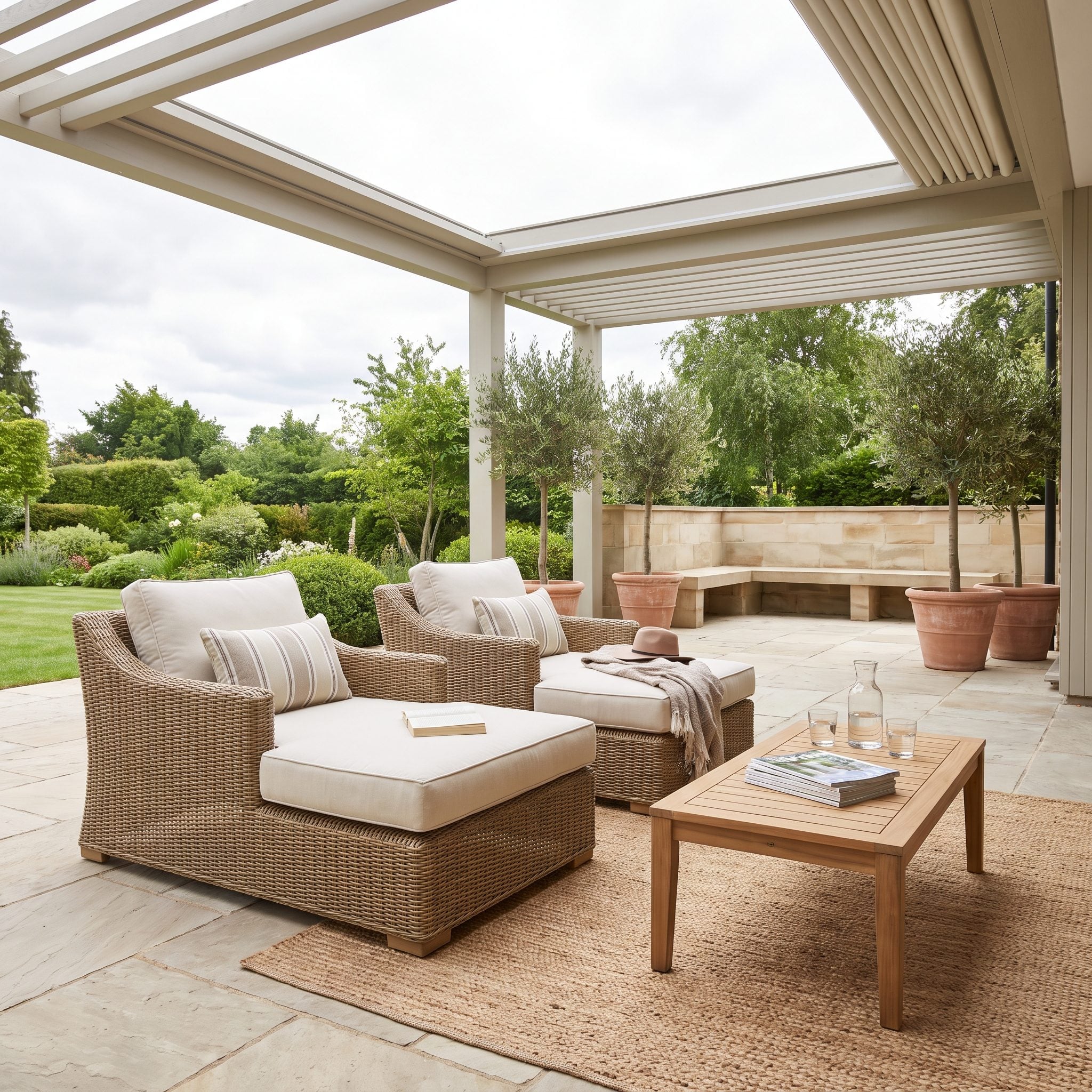
Poolside furniture has no patience for the anti-matching argument. A row of identical chaises beside water reads as hospitality almost instantly: repeated frames, repeated cushions, repeated spacing, then a huge field of sky and water around them.
Larger pool areas often use several matching loungers to create that resort rhythm, while a smaller deck can get the same effect from a pair. Source Pick one weather-ready material — teak, powder-coated aluminum, or HDPE — and repeat it. Two teak chaise loungers with cream outdoor cushions and one striped umbrella already feel composed.
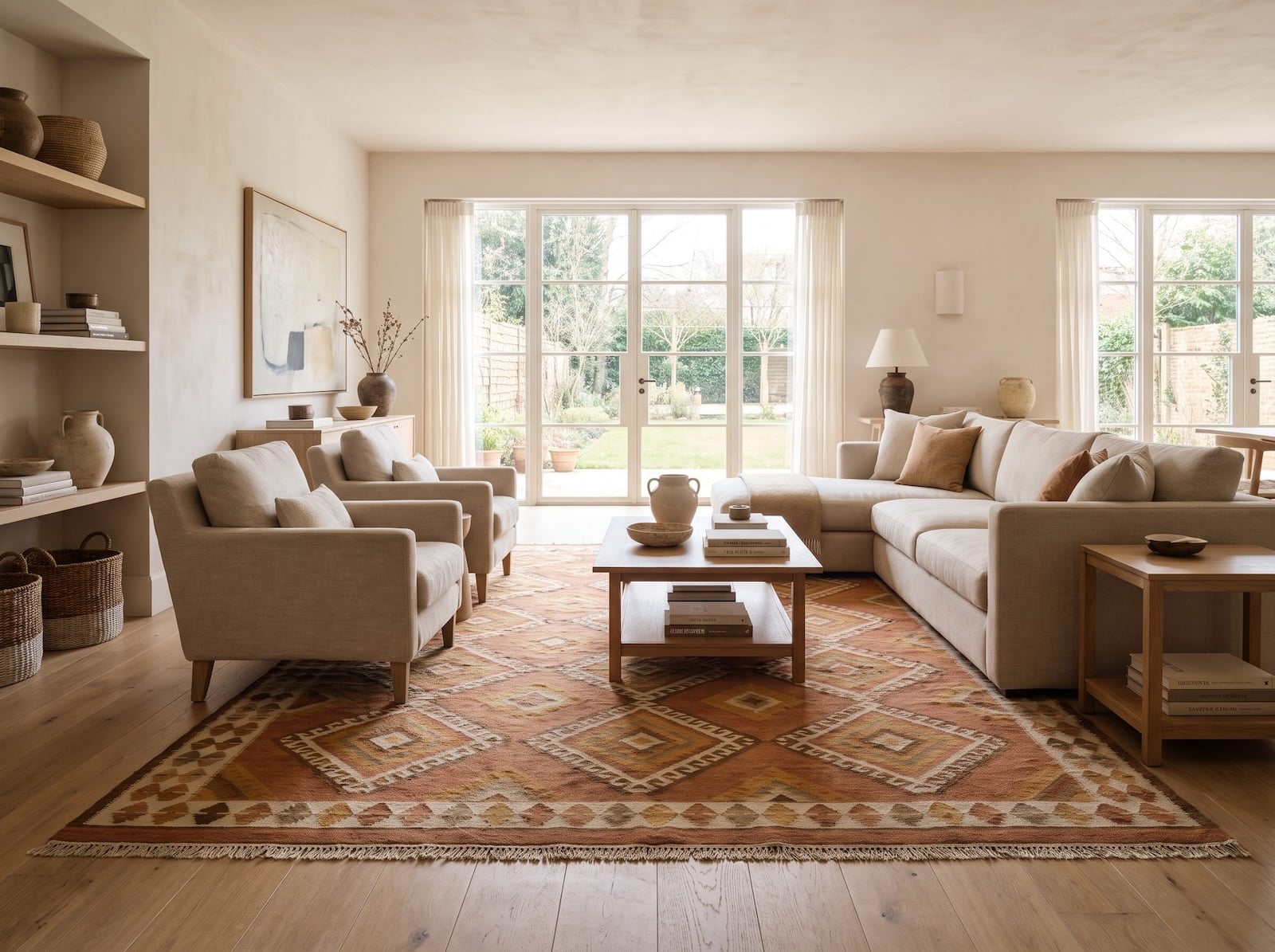
35. Matching Sideboards and Cabinets Creating Architectural Symmetry
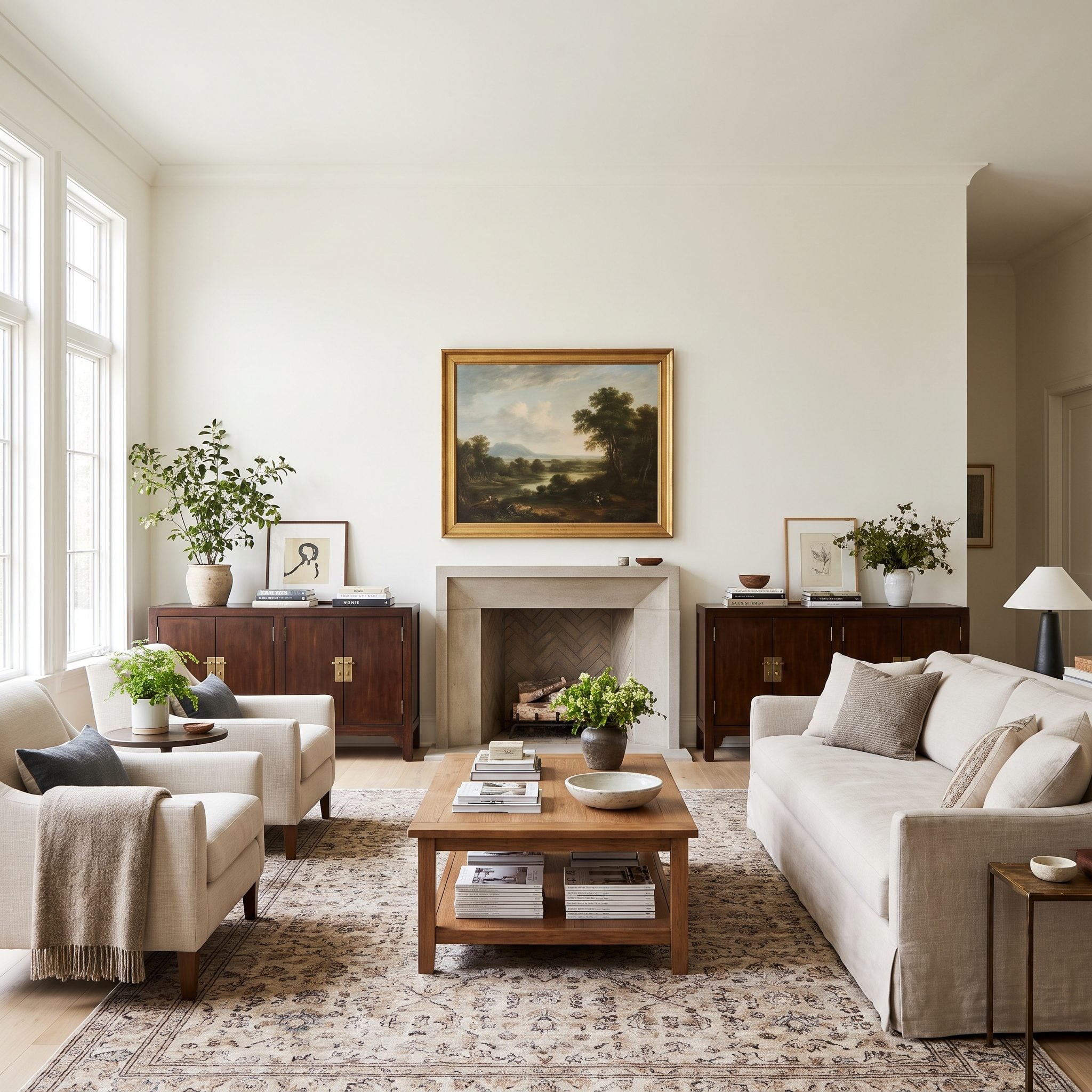
A fireplace, doorway, or large window already gives a room an axis. Put matching sideboards on either side and the architecture suddenly looks more intentional, even when the cabinets are freestanding.
Research on visual symmetry supports the broader point that people detect symmetrical arrangements quickly. Source Architecture has used the same visual principle for centuries; Palladio’s Villa Rotonda is an extreme, famous example of repeated balance and orientation. Source
The practical move is simpler: use a pair of low cabinets to frame the thing that already deserves attention. In a hallway, a living room, or even a navy powder room, the furniture begins to behave like part of the architecture instead of another layer sitting in front of it.
34. Matching Children’s Bedroom Furniture That Makes a Busy Room Feel Calm
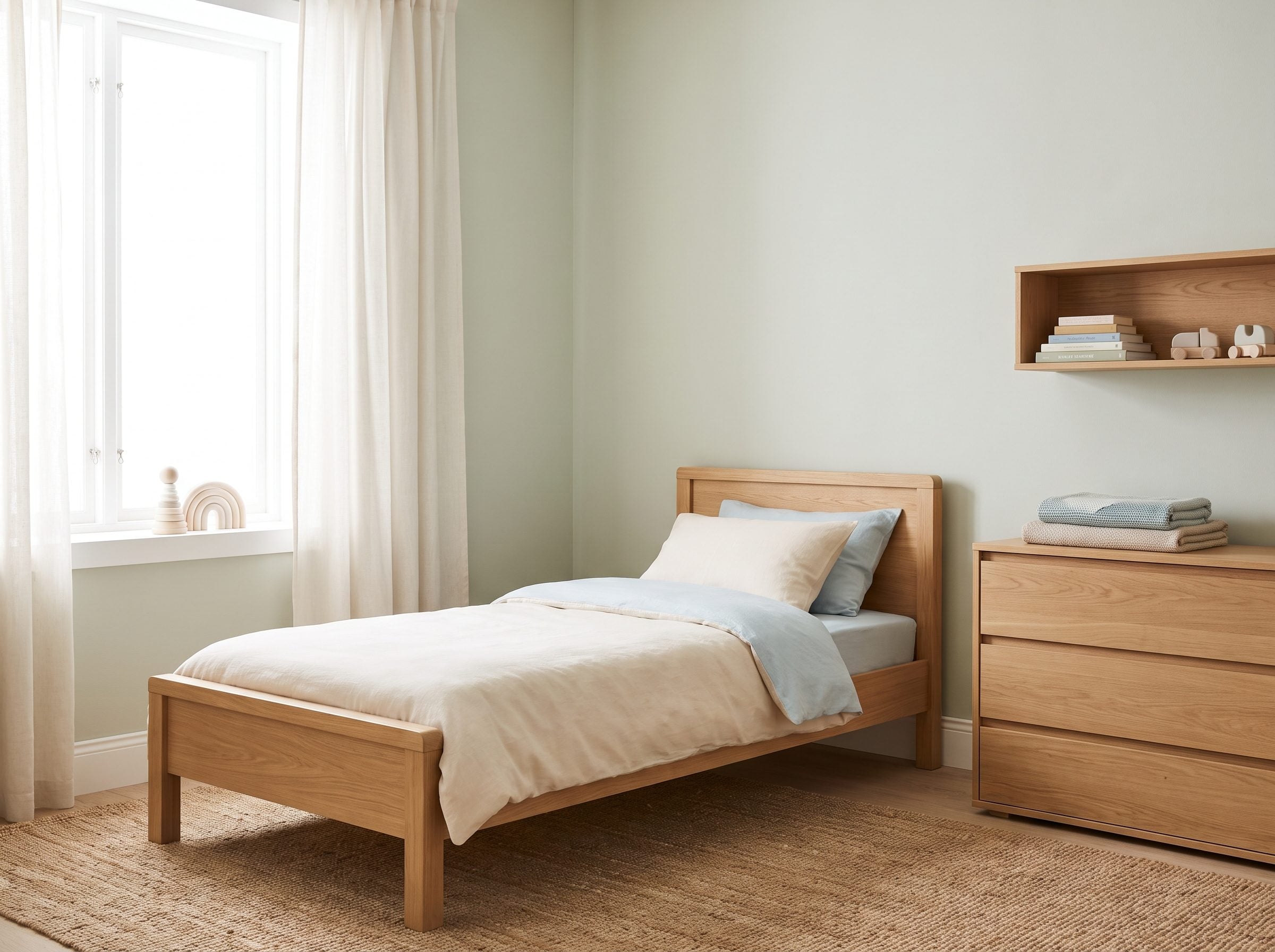
Kids’ rooms generate visual noise for free. Toys, books, art, bedding, backpacks, whatever the current obsession is — plenty is already happening before the furniture enters the conversation.
That is where a matching bed, dresser, nightstand, and bookcase can be useful. One finish and one basic silhouette give the changing stuff a quiet backdrop. A 2014 Carnegie Mellon study found that kindergartners were more distracted and learned less in a heavily decorated classroom than in a sparsely decorated one. Source Source
That study was about classrooms, not bedrooms, so it doesn’t prove matching furniture improves sleep. It does make a narrower point worth borrowing: young children can be distracted by visual clutter. Keep the fixed pieces quiet and let the personality live in the parts that are easy to change.
33. Matching Dining Chairs Around a Statement Table
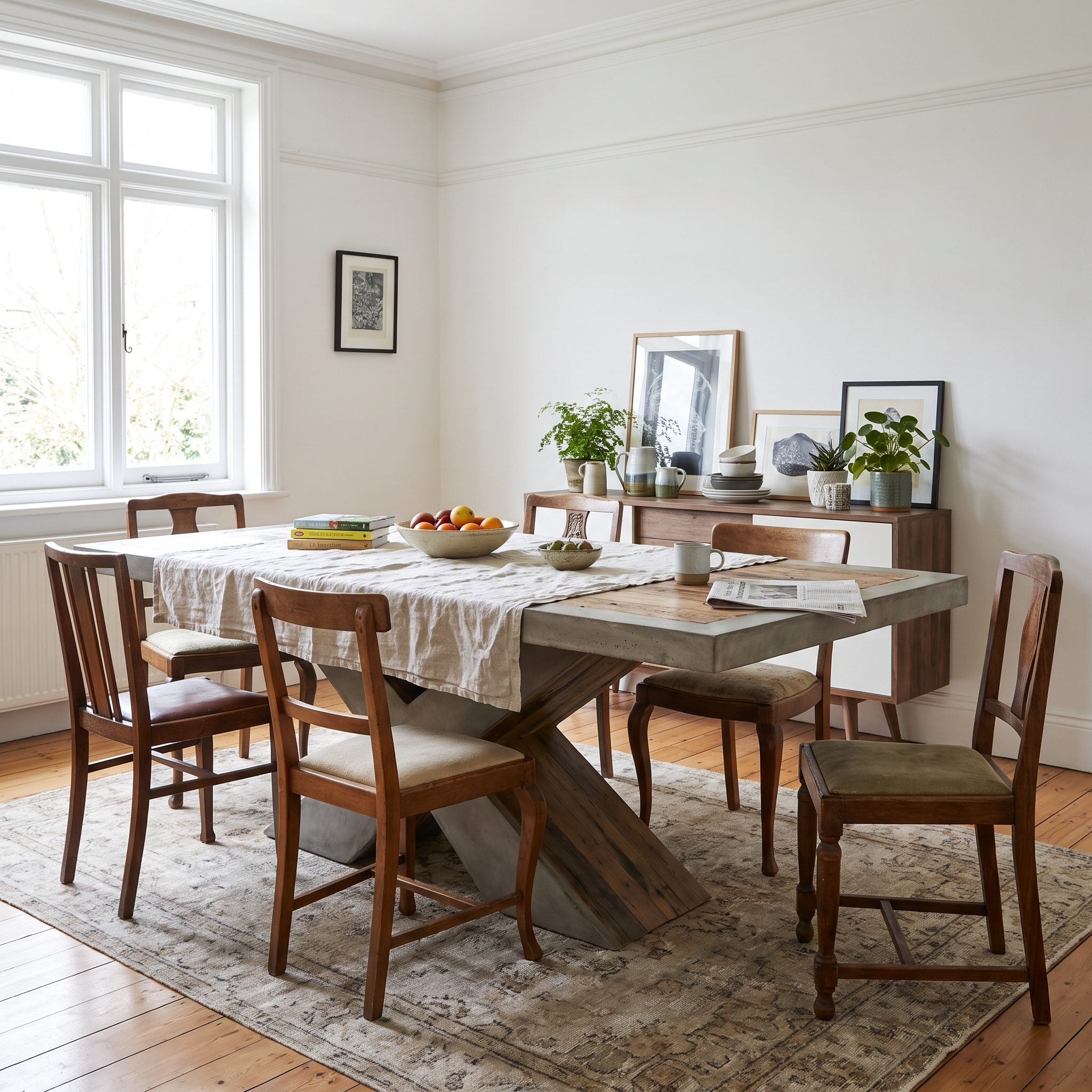
Six identical chairs around one exceptional table is not a failure to collect. It is editing. When every chair has the same outline, the eye stops comparing seats and finally notices the thing in the middle.
That is particularly useful with a live-edge slab, a marble pedestal, or a sculptural round table. In a retro dining room, six caramel leather dining chairs can become a clean frame around a walnut pedestal table instead of six competing personalities.
32. A Matching Sofa and Loveseat That Actually Look Sophisticated
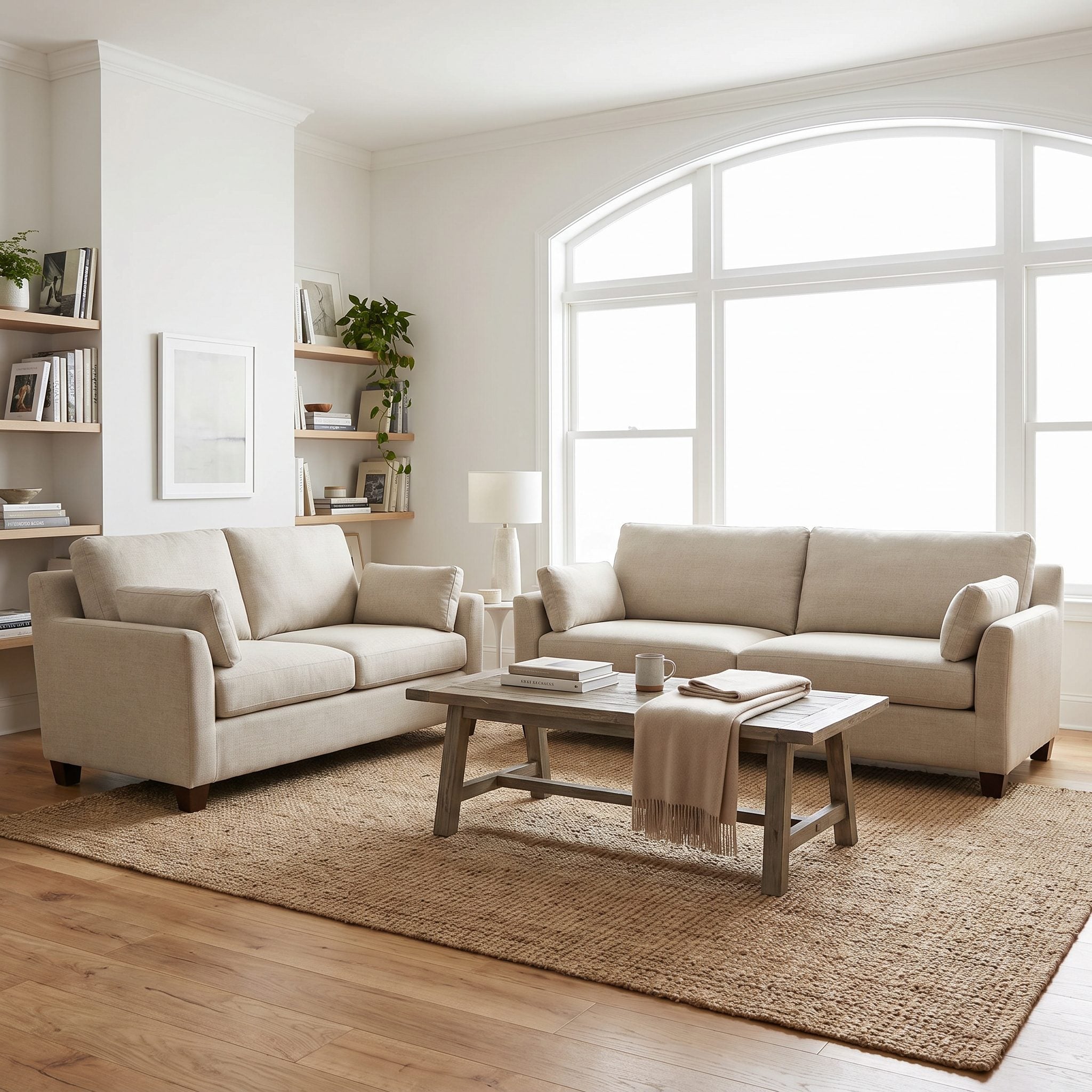
The matching sofa-and-loveseat set has spent years taking the blame for rooms that were actually guilty of something else: matching everything. Same upholstery, same pillows, same tables, same lamps, same beige rug. Of course that went flat.
Keep the frames together and break the repetition elsewhere. An 84-inch sofa and a 60-inch loveseat in the same charcoal linen can handle a cognac leather ottoman, a jute rug, mismatched pillows, and a lamp with some nerve. The seating becomes the calm part of the room instead of the entire personality.
31. A Dark-Wood Bedroom Suite Against Pale Walls
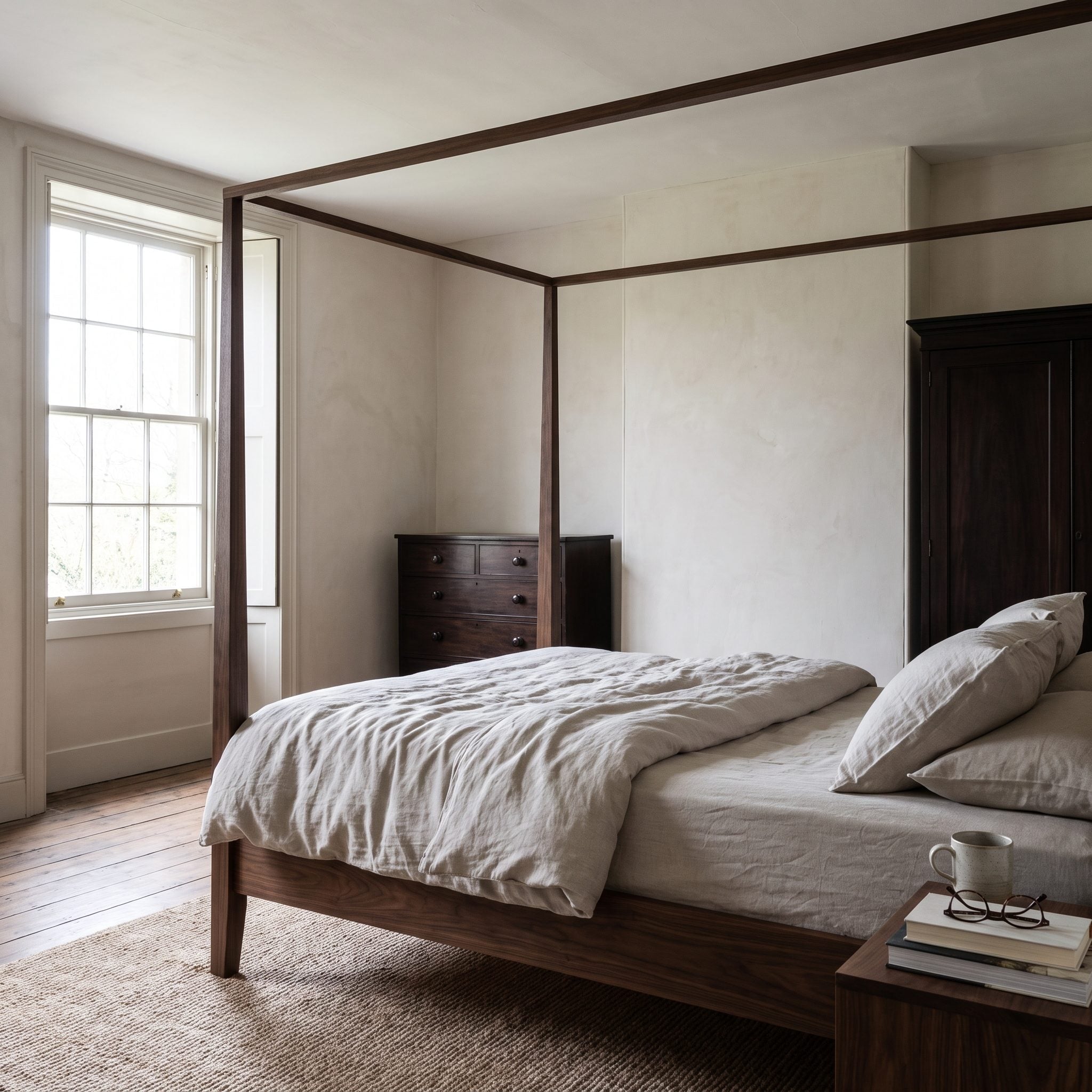
Dark wood doesn’t need to be broken up just because the pieces belong to the same family. What it needs is enough contrast around it to show the grain, hardware, and silhouette clearly.
Coordinated bedroom suites were an established part of American furniture manufacturing well before the postwar period, and Broyhill was among the companies that helped make the category a mass-market fixture. Source Mid-century lines such as Broyhill Sculptura remain collectible today; complete examples show up on the vintage market precisely because intact groups are harder to find. Source Source
Put that dark suite against chalky white or pale gray instead of builder beige and the wood stops becoming background sludge. The room needs contrast, not an emergency furniture divorce.
30. Matching Bar Stools Around a Large Kitchen Island
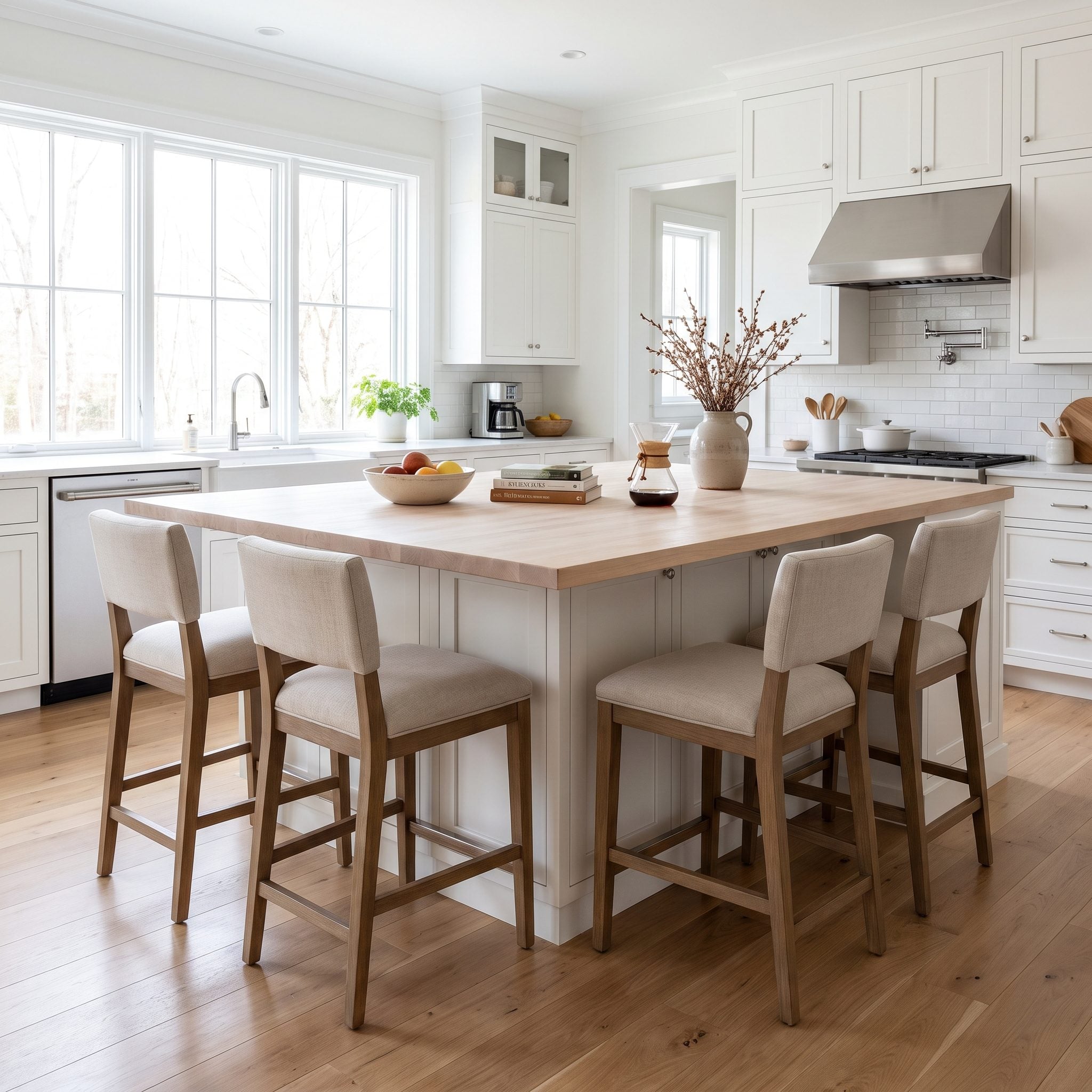
A nine-foot island already makes a long horizontal statement. Four different stools turn that line into four interruptions. Four matching stools let the island stay one piece.
The useful measurements are straightforward. A standard 36-inch counter generally pairs with a seat around 24 to 26 inches high; a 42-inch bar typically needs something closer to 28 to 30. Allow roughly 24 to 30 inches of counter width per stool so people can sit without negotiating elbows. A row of black metal counter stools works because the spacing and silhouette repeat as clearly as the cabinet doors behind them.
Use the ceiling for variation if the room needs it. Pendants, art, or upholstery can disagree. The stools are there to hold the line.
29. Matching Bookcases That Look Like Custom Built-Ins
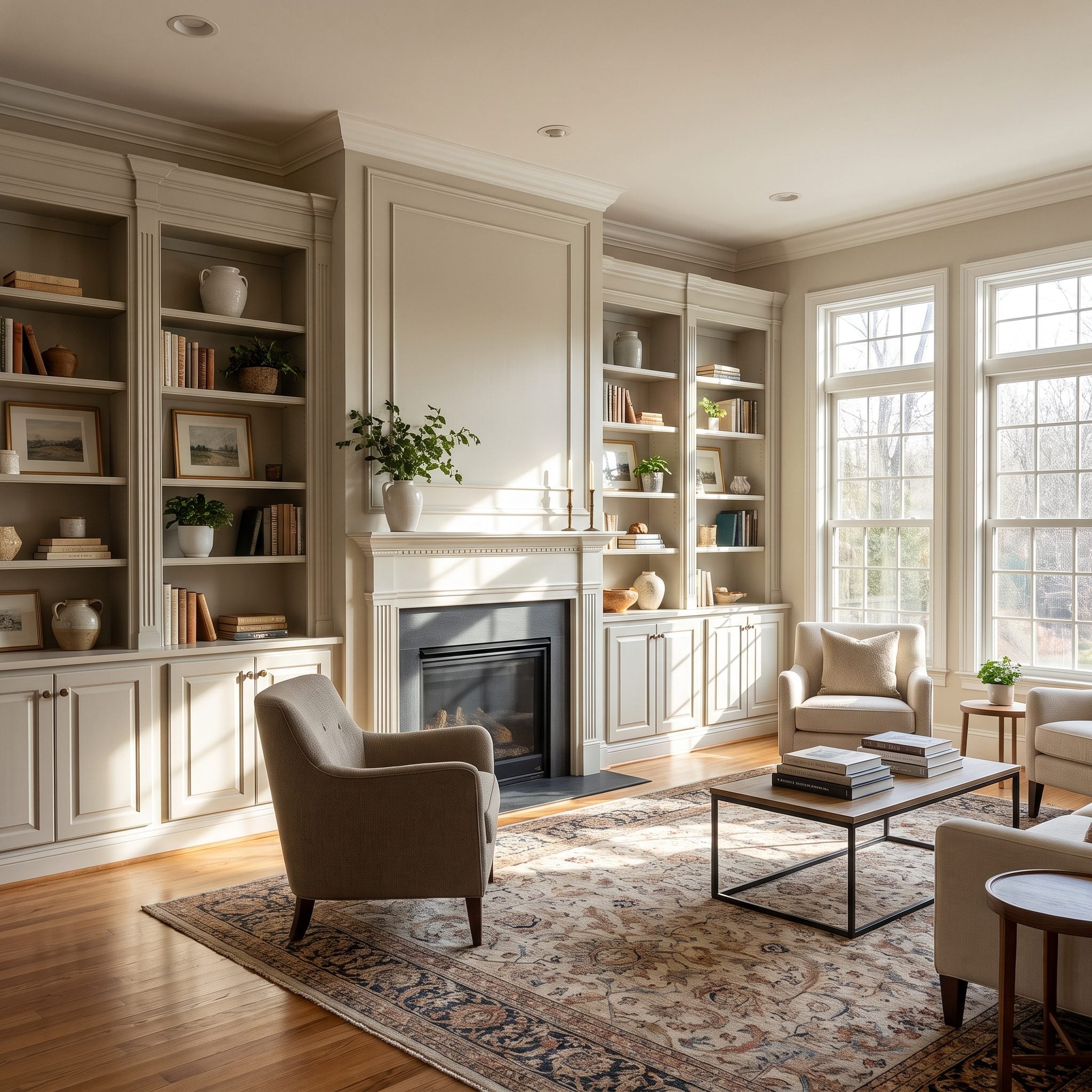
Two identical bookcases pushed together can perform a small visual fraud: the eye starts reading one larger installation instead of two pieces of furniture.
The trick lives at the seams. Set matching cases flush, run one baseboard treatment across the bottom, and if the room allows it, use a shared strip of trim or crown across the top. Paint the backs to match the wall and the individual boxes recede even further. The same move shows up in a grandmillennial living room, where repeated shelving can frame a fireplace like it belonged to the architecture from day one.
Style the shelves loosely — horizontal stacks, a few objects, some brass bookends, actual empty space. Matching is the part that sells the built-in illusion; overfilling is what gives the game away.
28. Matching Furniture Broken Up by an Oversized Statement Headboard
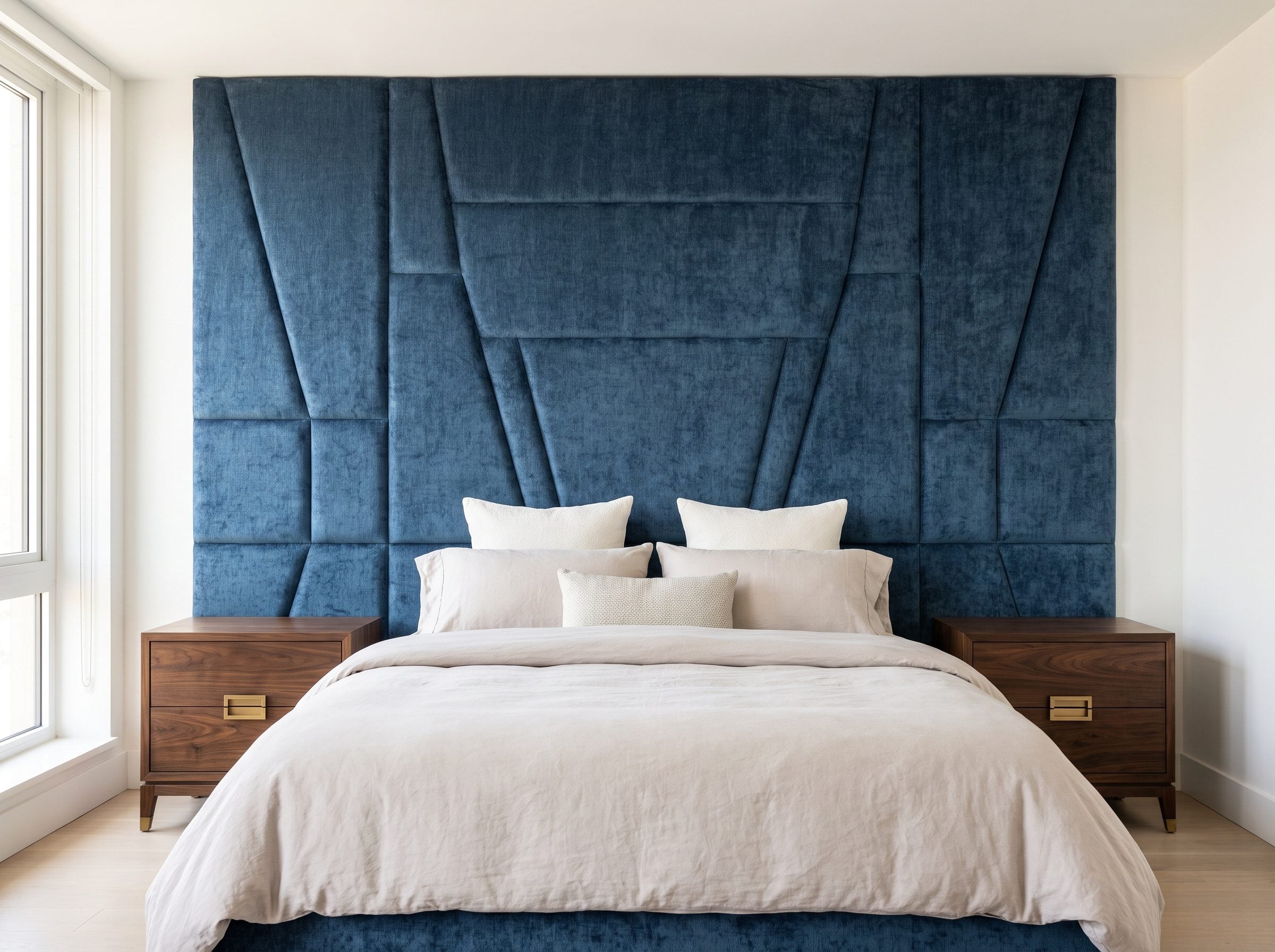
Keep the matched dresser, chest, and nightstands. Change the headboard.
That one break can do more than replacing half the room. Case goods stay in one wood tone, so the bedroom has a quiet base, while an oversized linen, channel-tufted, or arched headboard becomes the shape you notice first. The set stops reading as a package because the bed — the largest visual object in the room — no longer belongs to the package.
Scale it to the wall rather than obeying one fixed height rule. In a low room, a headboard can stay relatively restrained; on a tall wall, taking it well above the pillows can make the whole composition feel intentional. One big departure is enough. The moment every piece tries to be the exception, the room loses the point.
27. Matching Porch Rockers That Look Timeless Instead of Cheap
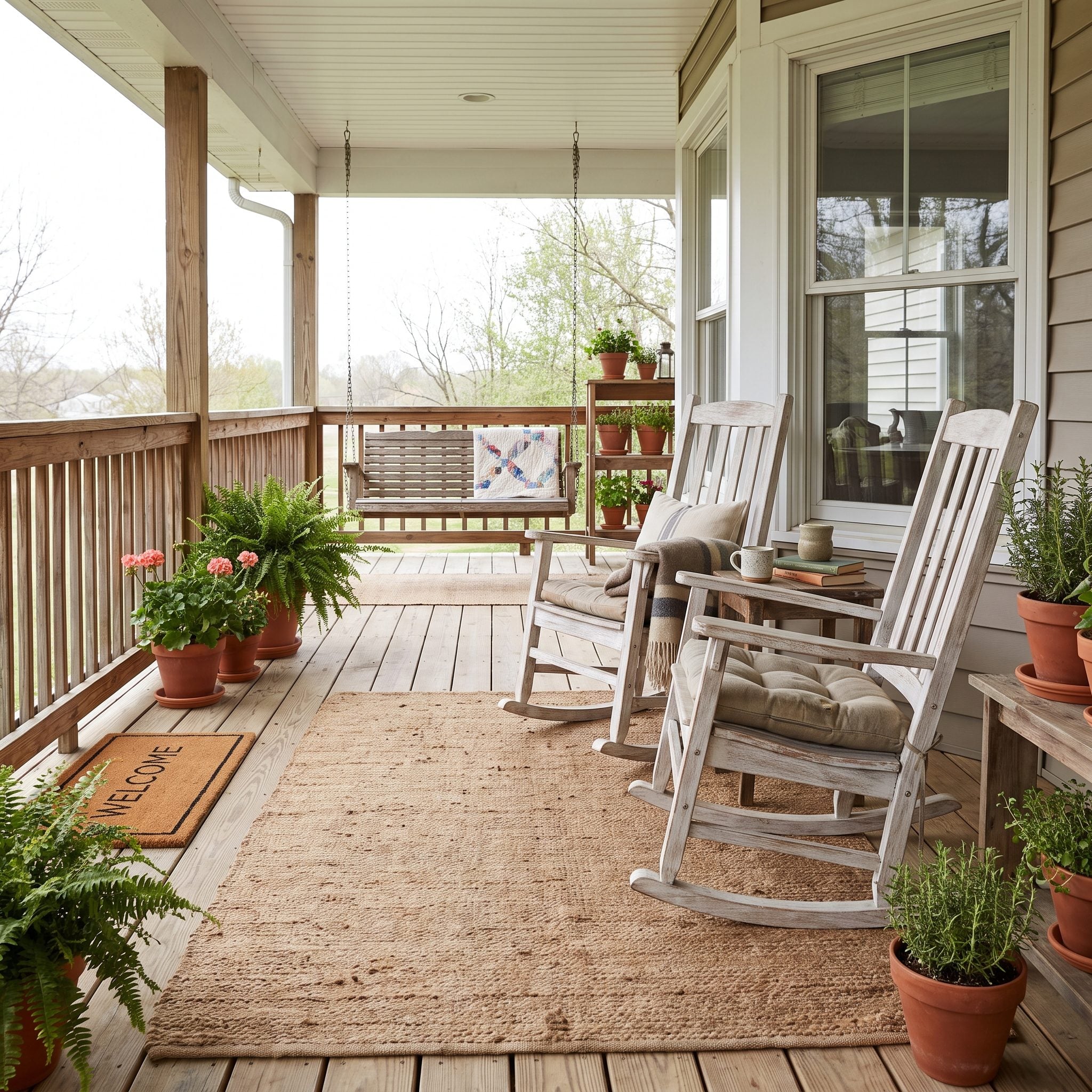
Rows of matching porch rockers have escaped the anti-matching backlash for a simple reason: repetition is part of the image. The chairs don’t compete with the porch. They establish its rhythm.
Cracker Barrel has made the front-porch rocker part of its visual identity since the chain’s early years, and the chairs remain closely associated with the brand. Source At home, the same logic works with two chairs and a table or four chairs in a straight run. Equal spacing matters more than ornament.
Skip the grand claims about matching signaling some universal Southern psychology. The porch is persuasive enough on its own: repeated black ladderbacks, a long horizontal rail, and one view beyond them. Point the chairs toward that view and let the architecture finish the sentence.
26. Matching Office Chairs in a Two-Person Home Office
🔥 Would you like to save this?
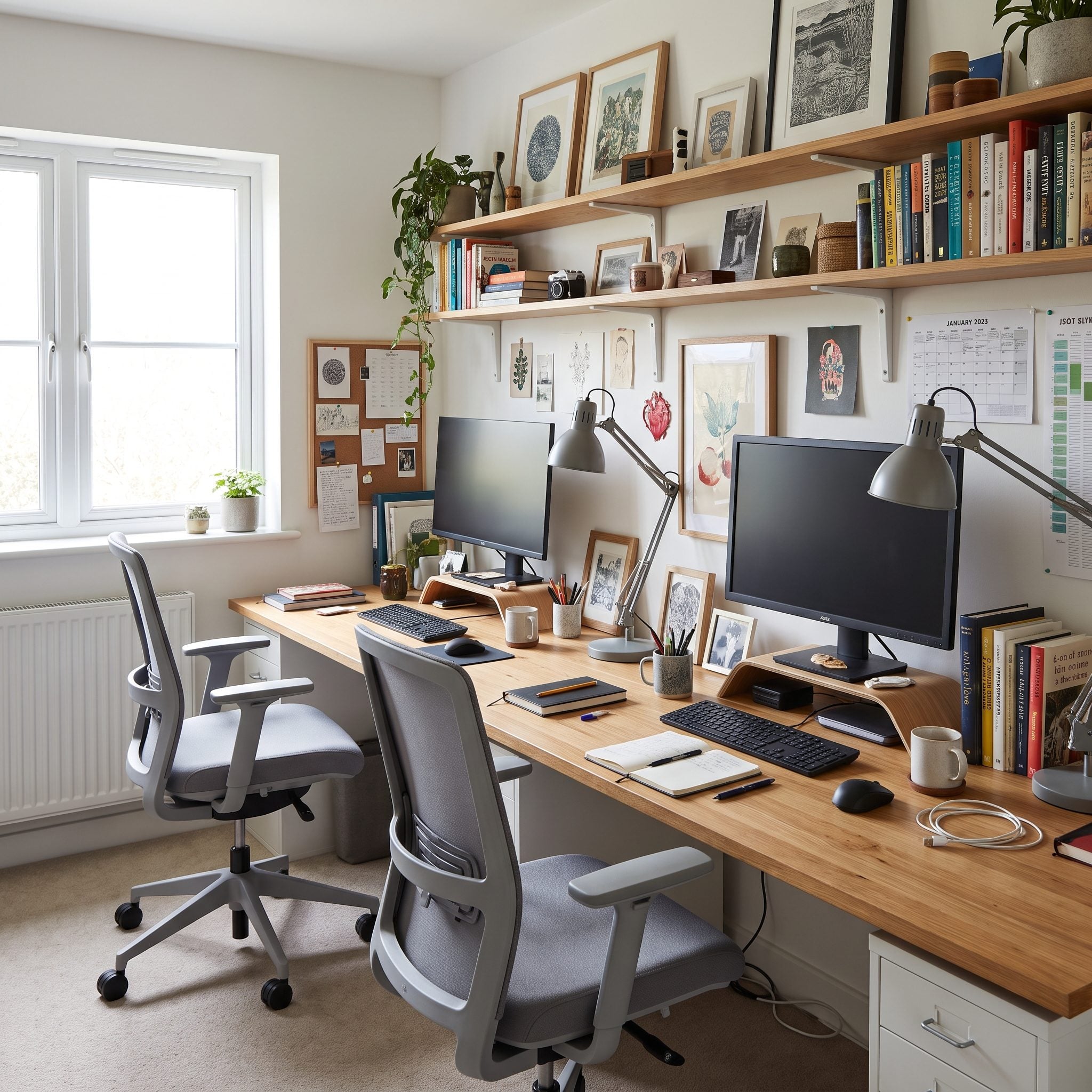
In a two-person office, matching chairs solve a practical problem before they solve an aesthetic one. Two people doing similar work need comparable support, comparable adjustment, and enough visual order that the room doesn’t look like one desk arrived five years after the other.
The Aeron, introduced by Herman Miller in the 1990s, helped make the high-performance task chair a design object in its own right. Source You don’t need two Aerons to use the principle. Two black mesh task chairs at separate desks can disappear into the working background instead of becoming the first thing you notice.
That restraint is useful in a compact office or craft room. Let the monitors, shelves, pinboards, and actual work provide the irregularity.
25. A Traditional Matching Dining Set in a Contemporary Room
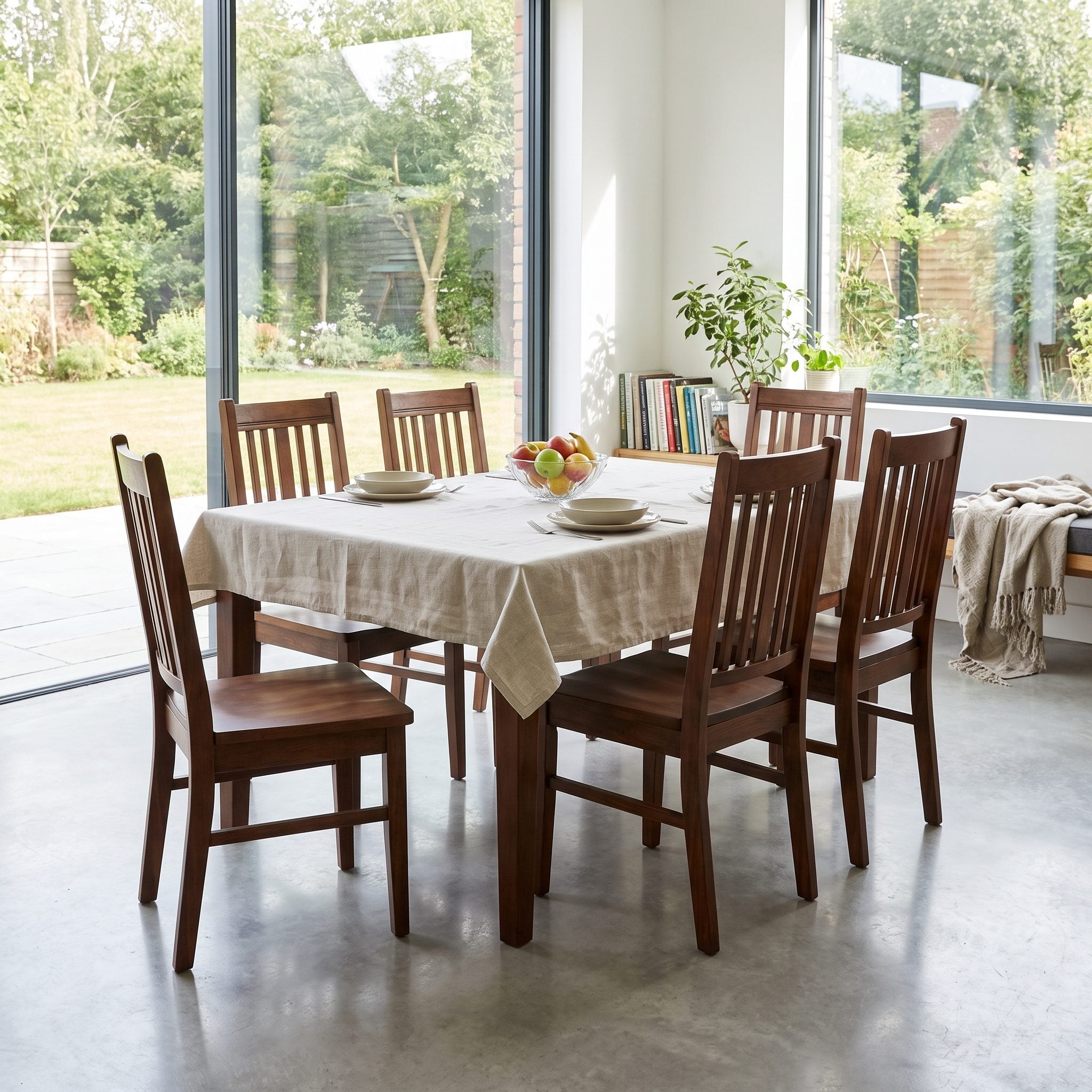
A carved mahogany table, six matching chairs, and a sideboard can look suffocating in one room and magnificent in another. The furniture hasn’t changed. The shell has.
The resale market for traditional dark-wood furniture weakened sharply as tastes shifted toward lighter, simpler interiors. Source Some consumer-market commentary has tried to quantify that decline, though the numbers vary by category and period. Source More recent dealers are also arguing that interest in mahogany, walnut, cherry, and oak is returning. Source
The design fix doesn’t require predicting the antiques market. Put the traditional set against white plaster, a clean rug, and a contemporary fixture. The age contrast does more for it than six replacement chairs ever could.
24. Matching Bedside Chests Styled Completely Differently
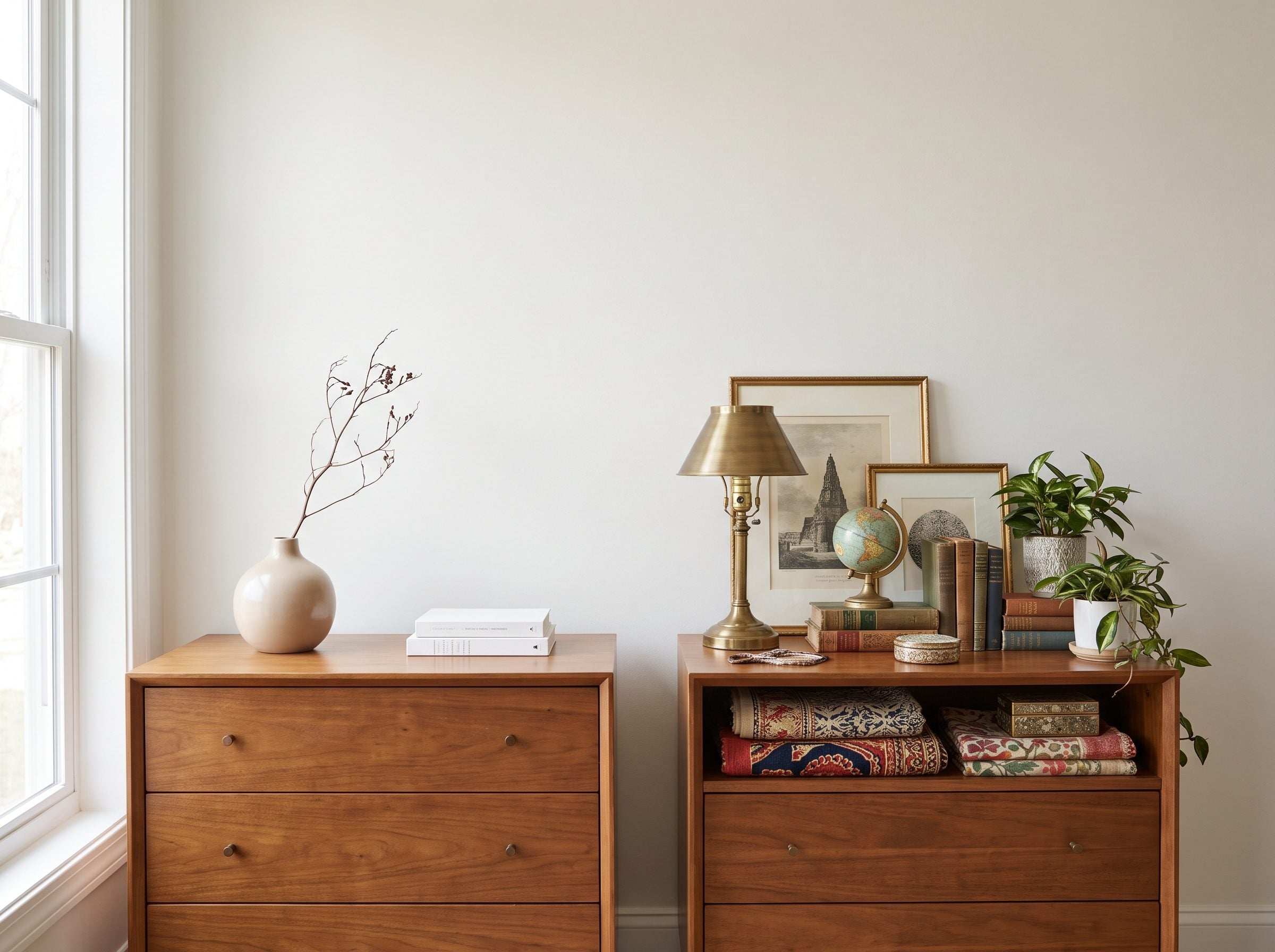
Matching bedside chests don’t force you into matching bedside lives. The boxes can agree while everything above them refuses to.
Put books and a slim brass lamp on one side. Put a rounded ceramic lamp, a small bowl, or a vase on the other. The equal height and identical drawer fronts keep the bed centered, but the styling stops the wall from looking duplicated.
That is the cleanest way to use matching furniture without sliding into showroom symmetry. Keep the expensive, bulky pieces consistent; make the small, cheap pieces personal. One chest can hold a paperback and water glass. The other can hold a plant and a dish for rings. Same furniture. Different evidence of who sleeps there.
23. Matching Accent Chairs Flanking a Fireplace
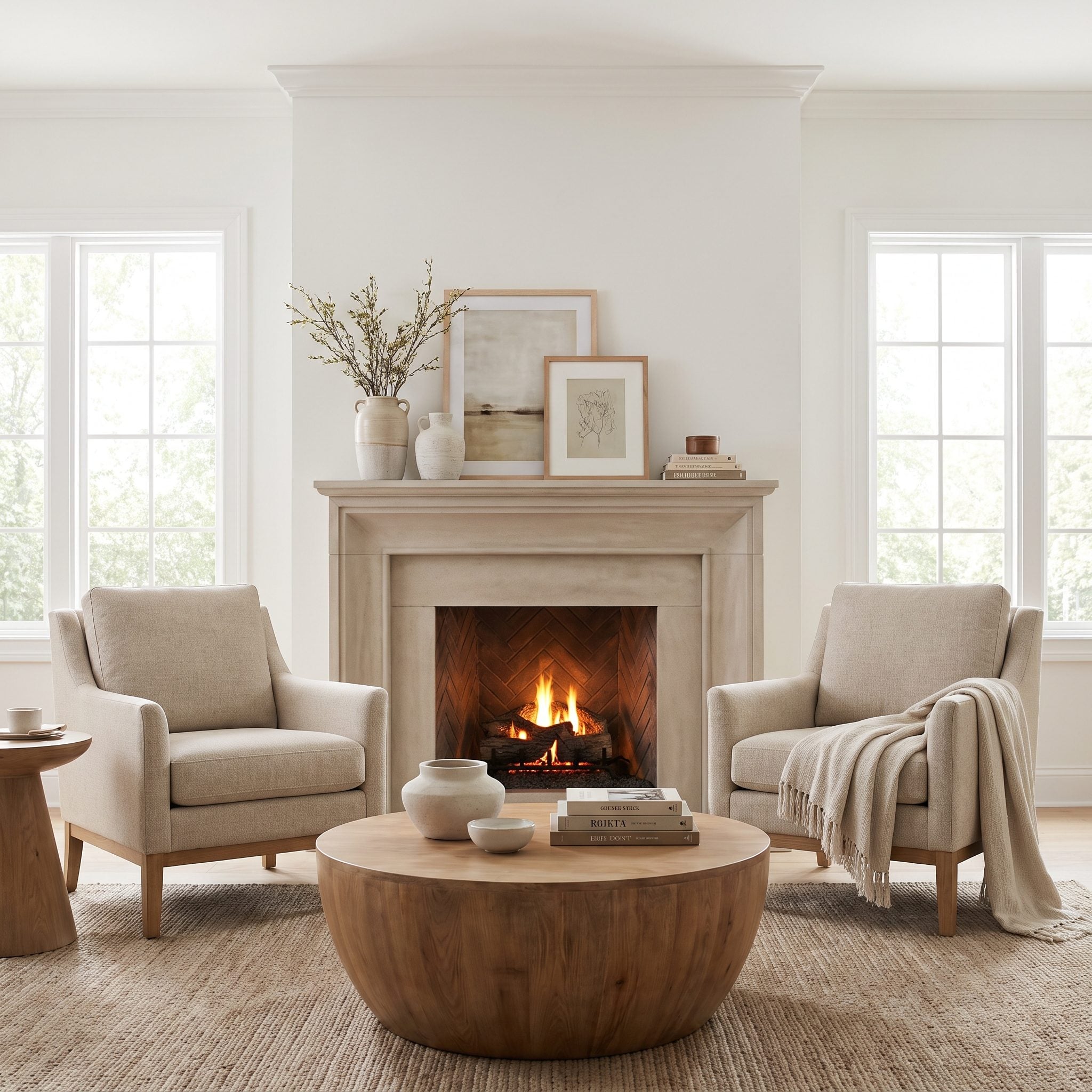
A fireplace already gives you the center line. Two matching chairs simply admit that the room has one.
Put an identical chair on either side of the hearth and the composition settles fast: same height, same width, same visual weight. Then break the mirror with the things that can afford to be casual — a throw on one arm, a book on one side table, a pillow on only one chair.
The pair feels formal only if everything else joins the ceremony. Keep the upholstery relaxed, use a lived-in rug, and let the room show some asymmetry at human scale. The chairs are the brackets. Life happens inside them.
22. A Coordinated Outdoor Sofa Set Made Sophisticated With Textiles
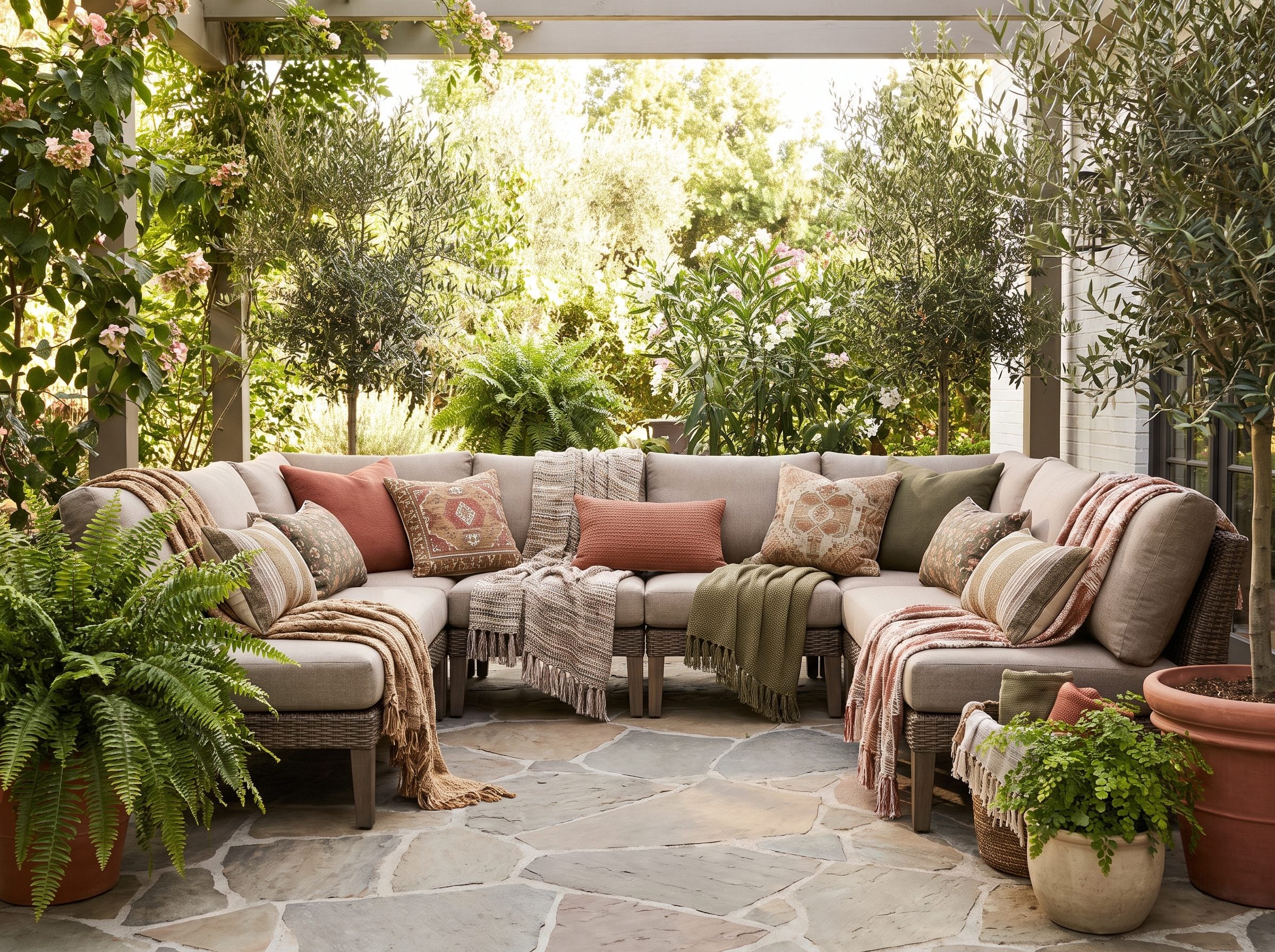
Outdoor sets often arrive with the least interesting part already chosen for you: the cushions. That doesn’t mean the frames are the problem.
Sunbrella traces its performance-fabric history to 1961 and built its reputation on solution-dyed acrylics designed to hold color outdoors. Source So keep the matching teak or metal frames and change the surface layer instead. Striped lumbar pillows, a different cushion fabric, and an outdoor rug can make the set feel selected rather than unpacked.
The frames are not what make a patio generic. Beige-on-beige-on-beige does.
21. A Complete Wood Bedroom Set in a Light, Airy Room
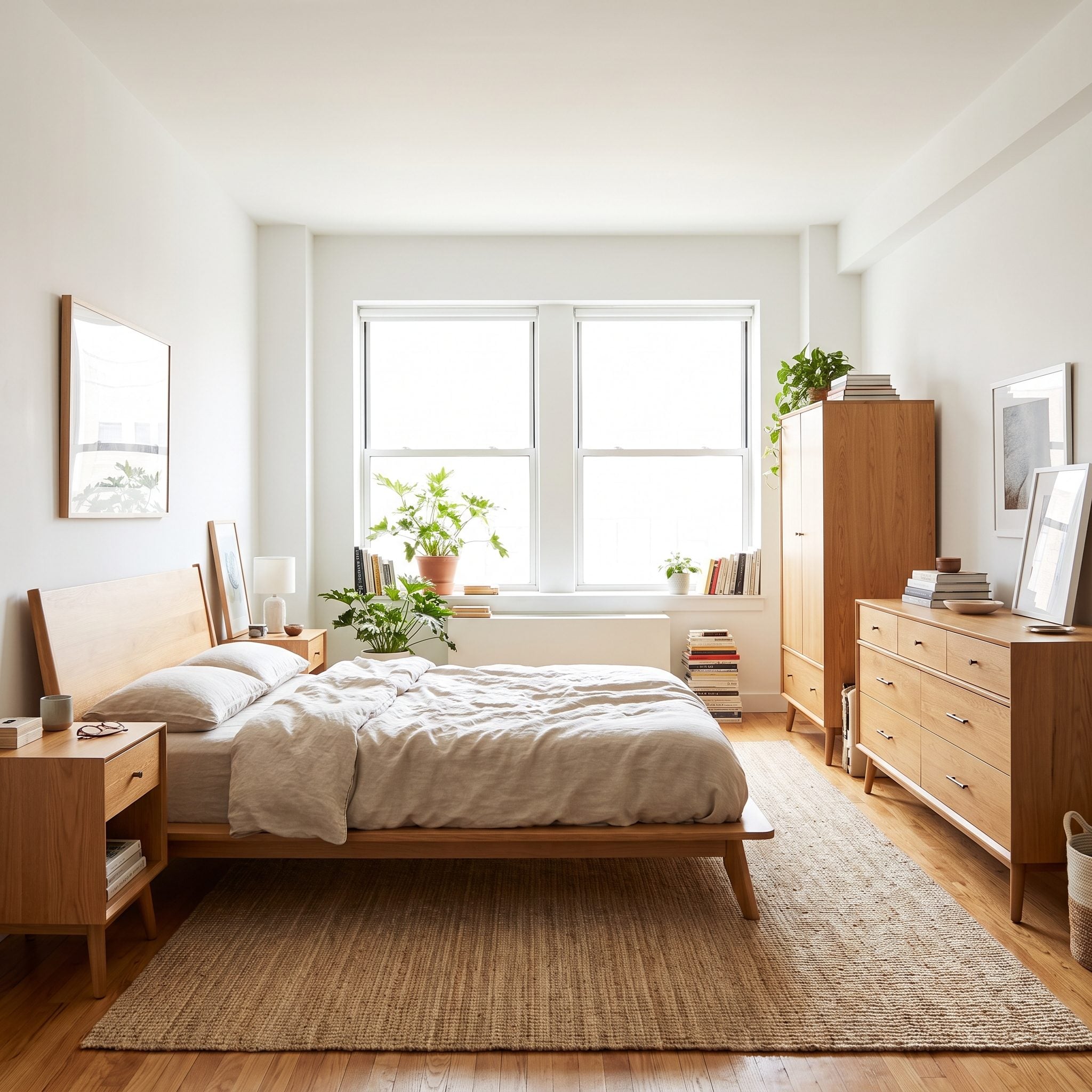
A full wood bedroom set can be a lot of wood. That is not the same thing as being too much furniture.
Mid-century bedroom groups from makers such as Kent Coffey, Broyhill, and American of Martinsville are now a familiar part of the vintage market. Source Many used veneers alongside solid-wood components, so “solid hardwood” is too blunt a description. What matters visually is the continuity of finish and grain across the pieces.
Give that continuity air. White walls, pale linen, a generous window, a jute rug, and a woven pendant light keep the room from becoming one continuous brown surface. The furniture can match completely because the room around it doesn’t.
20. Matching Kitchen Chairs Against Contrasting Cabinetry
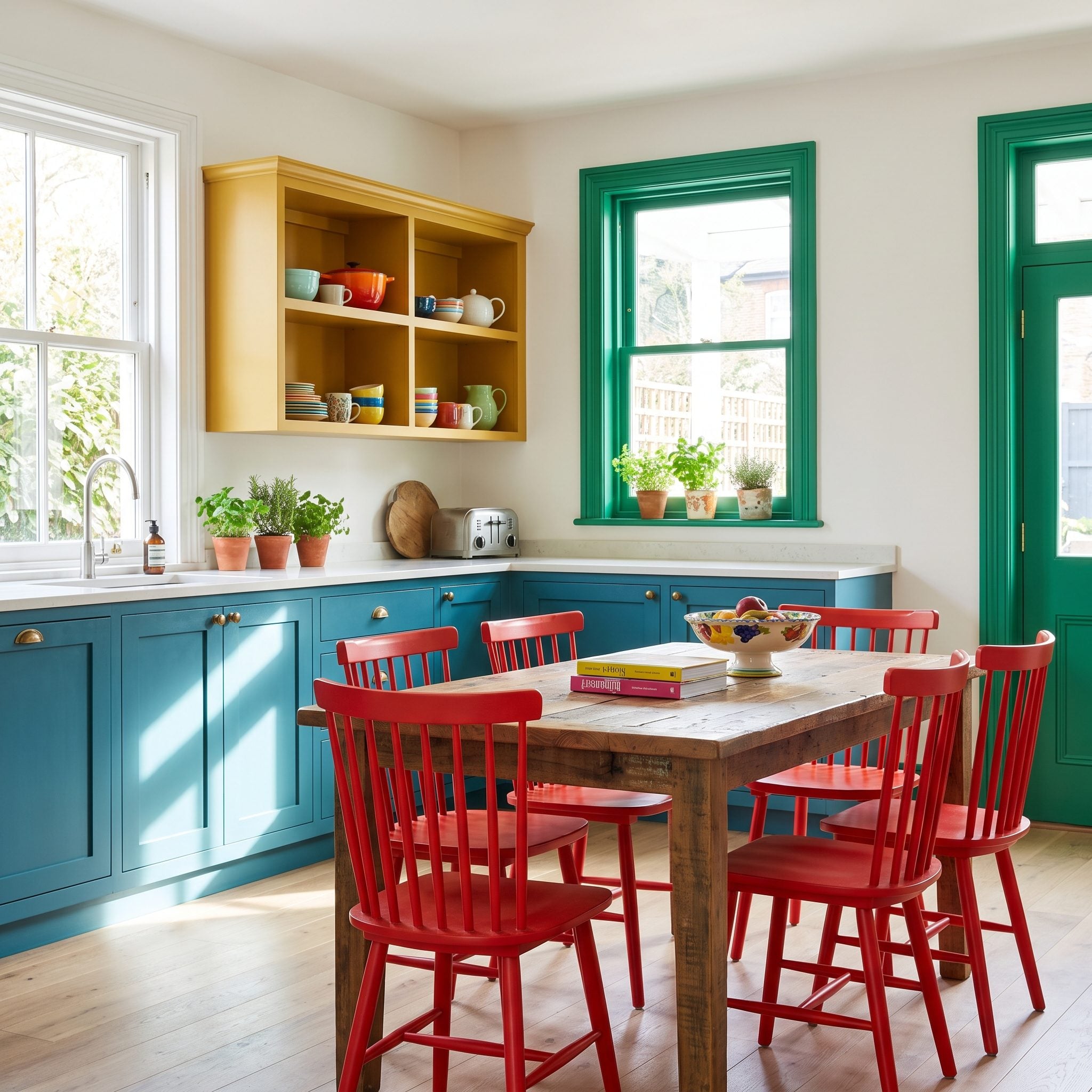
Four matching black Windsor chairs against sage cabinetry have enough contrast without a single chair needing to be different from the next.
That is the distinction the mix-and-match conversation often misses. Contrast can happen between furniture and architecture, not just from object to object. A retro dining room can use the same trick: repeated chairs against a table or wall color that clearly belongs to another family.
A run of black Windsor chairs gives the eye a rhythm. The sage cabinets supply color. The oak table supplies warmth. Nobody needs a fifth idea.
19. Matching Sofas Facing Each Other Across a Coffee Table
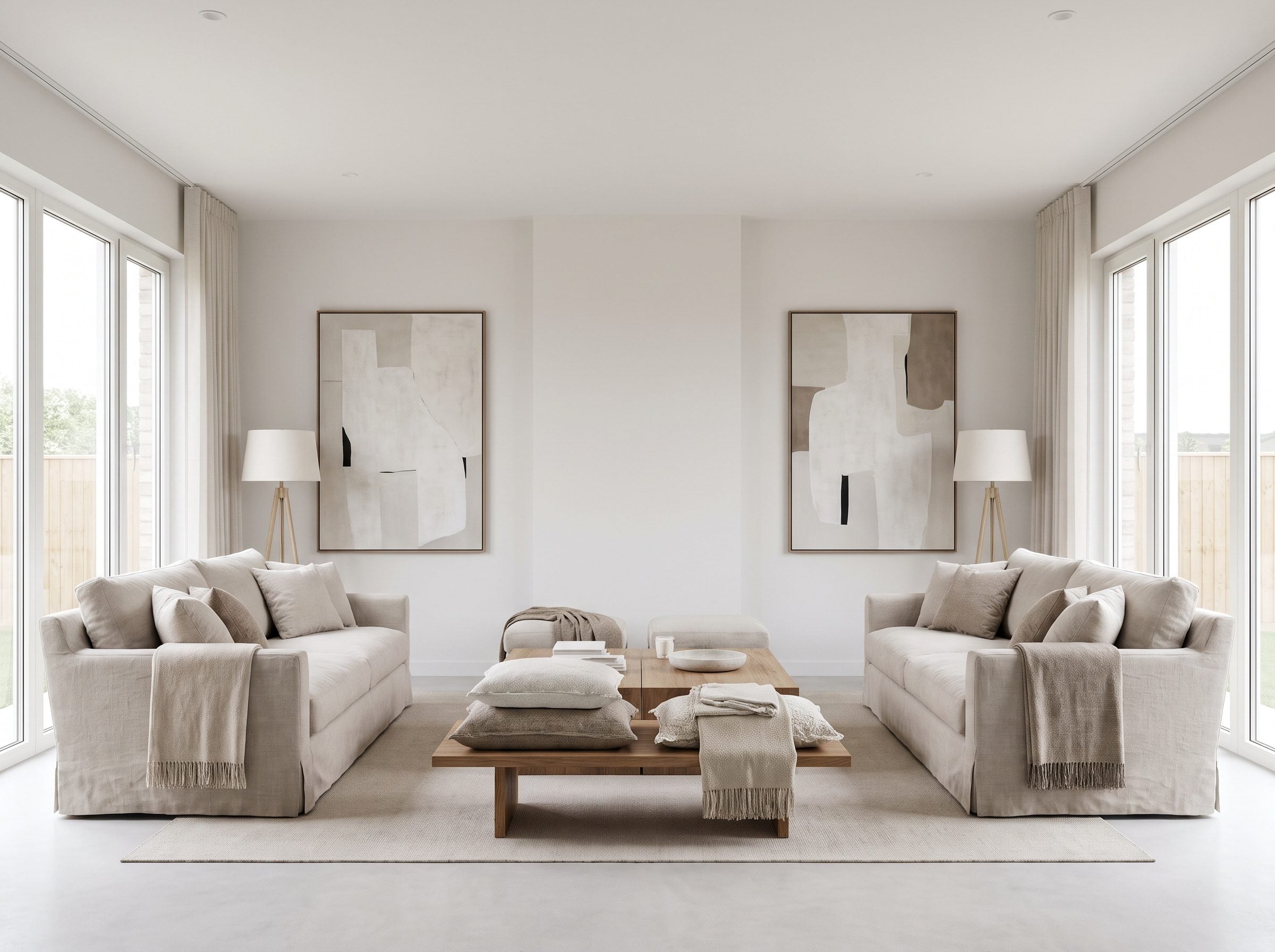
Two matching sofas facing each other across a coffee table can look formal, but formal is not the same as lifeless. The arrangement does something many TV-first living rooms no longer bother to do: it points people at one another.
Historic conversation furniture includes forms such as the tête-à-tête, although that is a specific two-seat design rather than the origin of the facing-sofa layout. Source For a modern room, the practical part is spacing. Keeping a coffee table roughly 16 to 18 inches from the sofa edge is a common planning guideline. Source Conversation distance between opposing seats depends on scale, but the room should not force people to shout. Source
Try two linen sofas, a walnut coffee table, and one large wool rug. The symmetry creates the room; the people give it movement.
18. Matching Console Tables in a Long Hallway or Entry
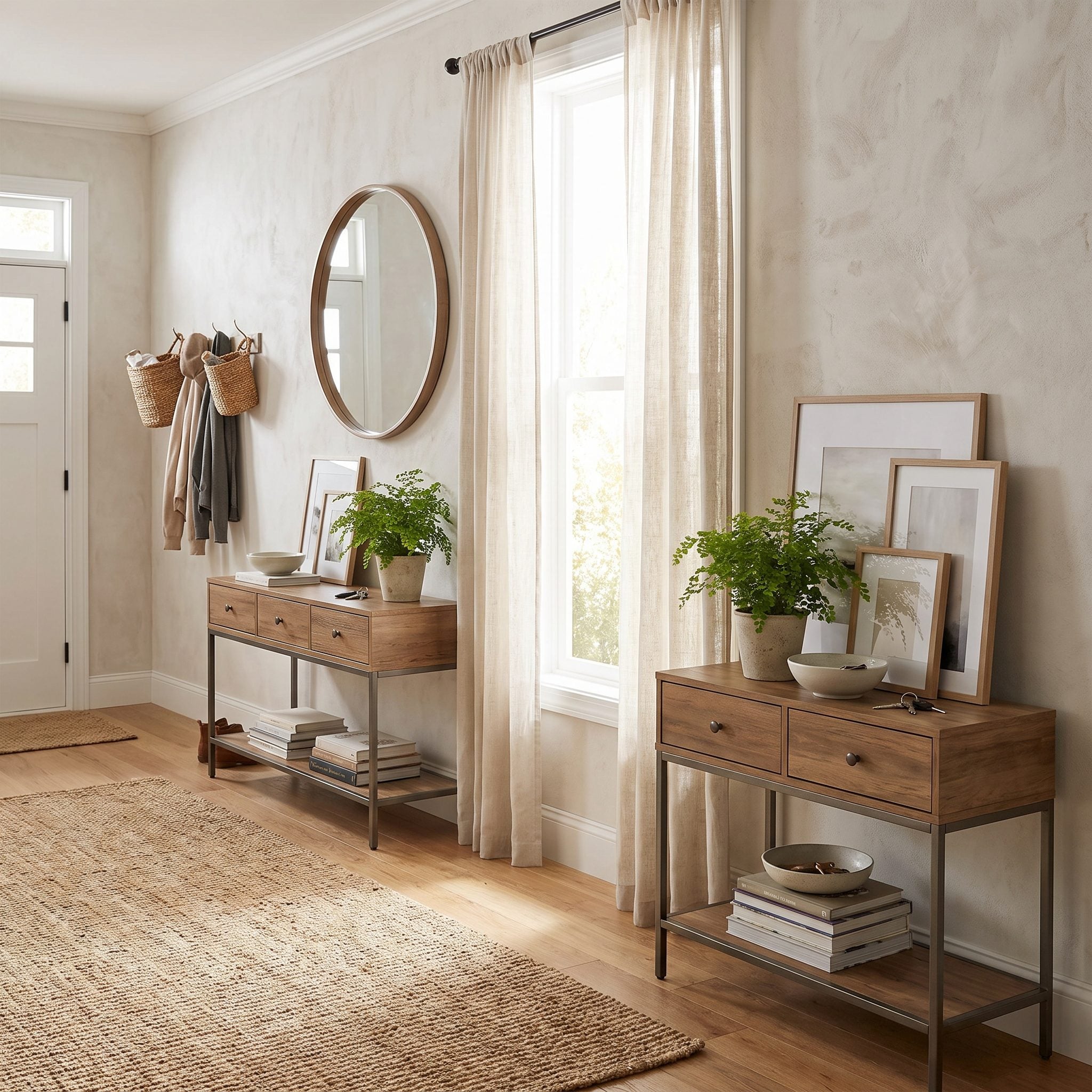
A long hallway benefits from repetition because there is so little furniture available to establish a rhythm in the first place.
Put one console near the entrance and its twin farther down the run. The pair gives the corridor a beginning and an echo. Mirrors or lamps can repeat too, but they do not have to. A runner down the center is enough to connect the two stations.
Skip the idea that symmetry automatically makes a space more “trustworthy.” The useful observation is visual: repeated shapes are easy to recognize at a glance. In a passageway, where you rarely stop to study the furniture, that quick legibility is an advantage.
17. Matching Upholstered Beds and Benches That Feel Hotel-Luxurious
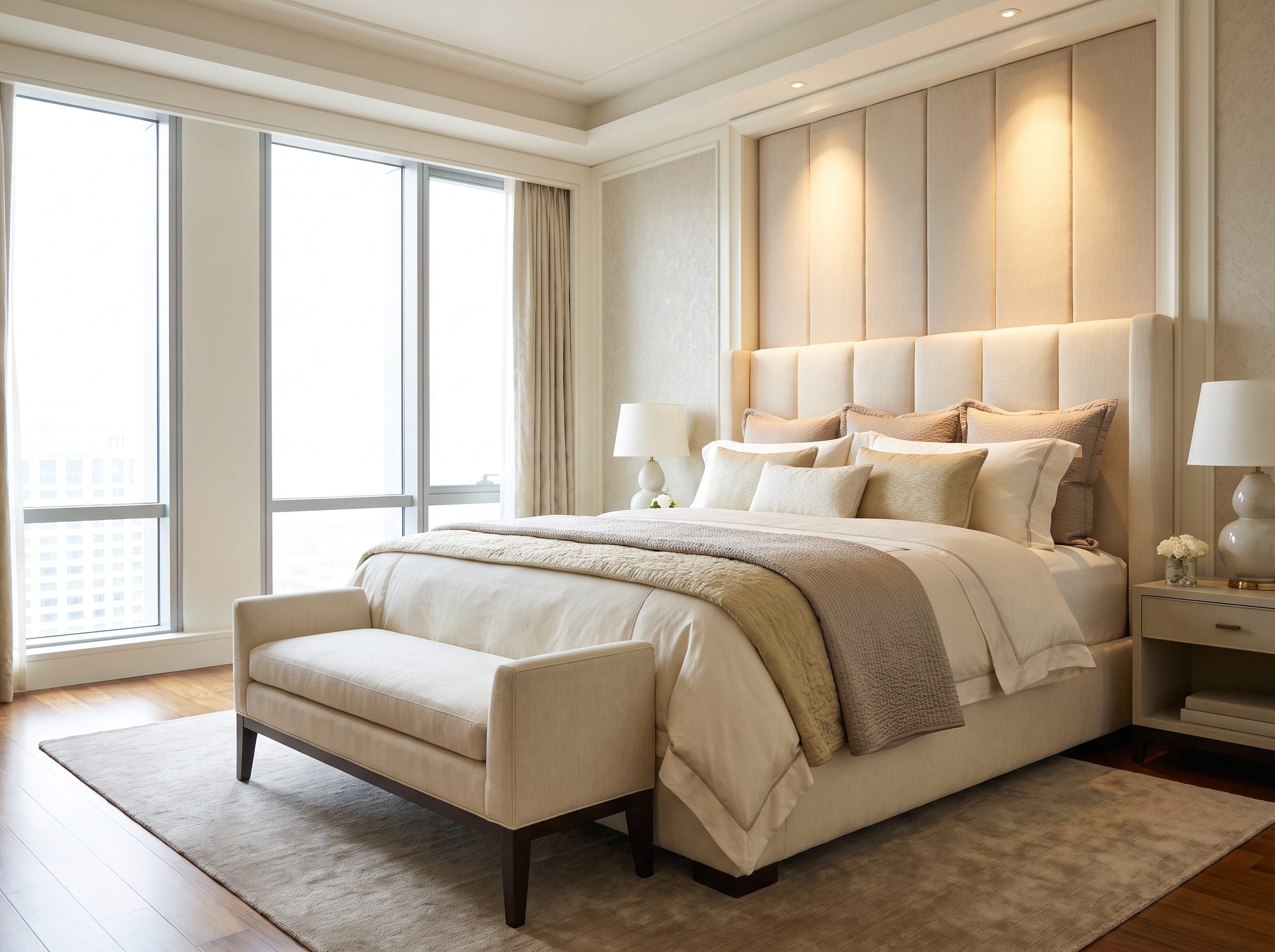
Matching upholstery works best when the proportions are right enough that you notice the relationship before you notice the repetition.
A bench at the foot of a bed usually looks strongest when it is clearly narrower than the mattress. A common rule of thumb is roughly two-thirds to three-quarters of the bed width; on a 60-inch queen, that puts you around 40 to 45 inches. Source Keep the seat at or below mattress height and leave enough clearance at the foot for actual circulation.
Matching the bench fabric to an upholstered headboard can make the bed read as one composed unit. A linen upholstered bench in the same oatmeal tone is not inherently “hotel.” The hotel effect comes from disciplined proportion and repetition. The Ritz-Carlton bedding link is useful context for the luxury-hotel association, not proof that every property uses the same bench formula. Source
16. A Coordinated Living-Room Set Surrounded by Collected Accessories
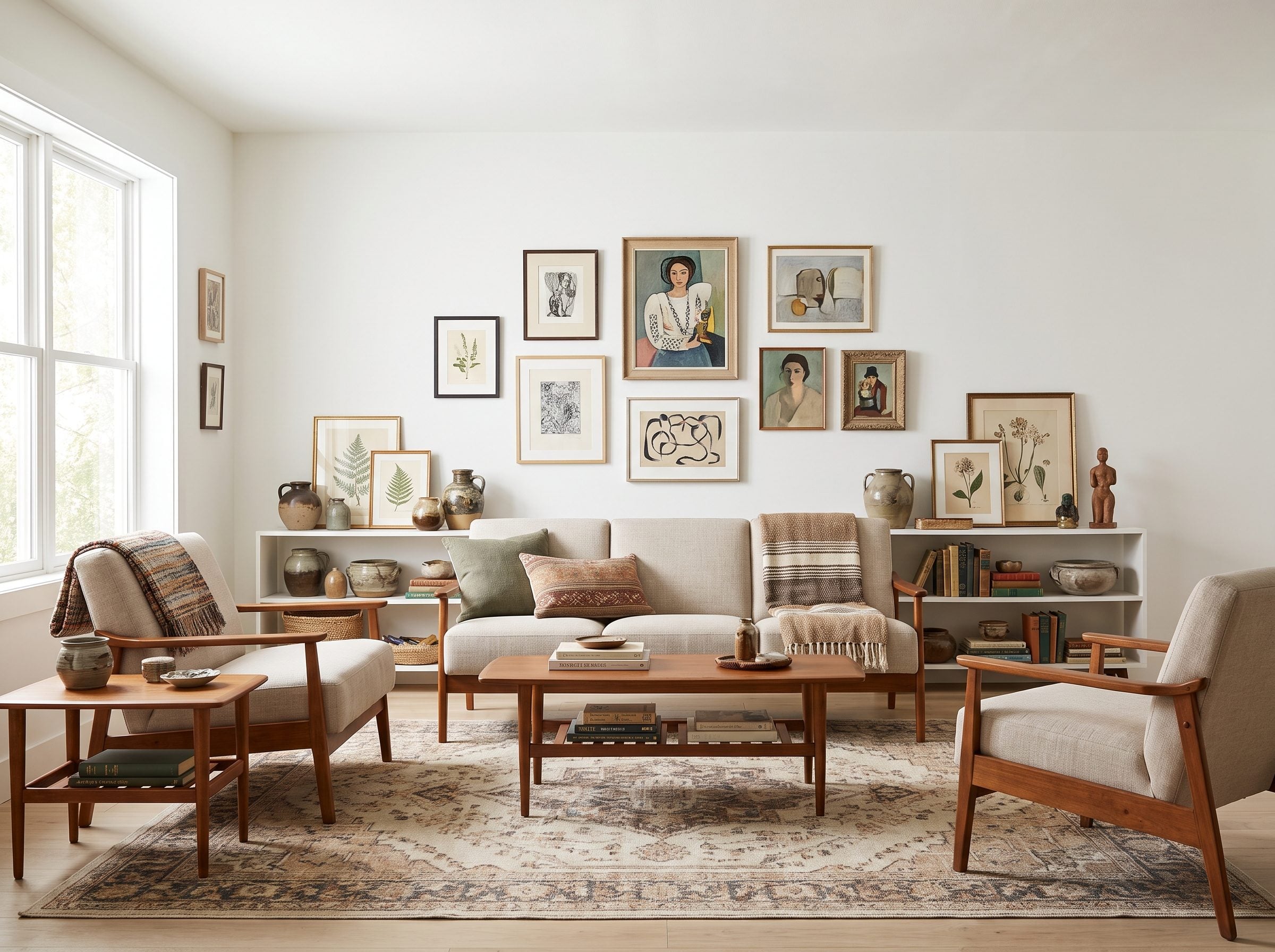
A coordinated sofa, loveseat, and chair can be the quietest thing in a room if you stop asking the set to provide all the personality.
Let the three upholstered frames agree, then bring in the objects that actually carry biography: the old brass lamp, the art books, the bowl from a trip, the rug with a little wear in it. A great room especially can use that stable seating base because there is already so much square footage to organize.
Anchor it with a vintage kilim rug, add linen throw pillows that do not match the upholstery, and pull in a brass floor lamp. Coordination is the floor, not the ceiling.
15. Matching Desks Creating a Beautiful Shared Workspace
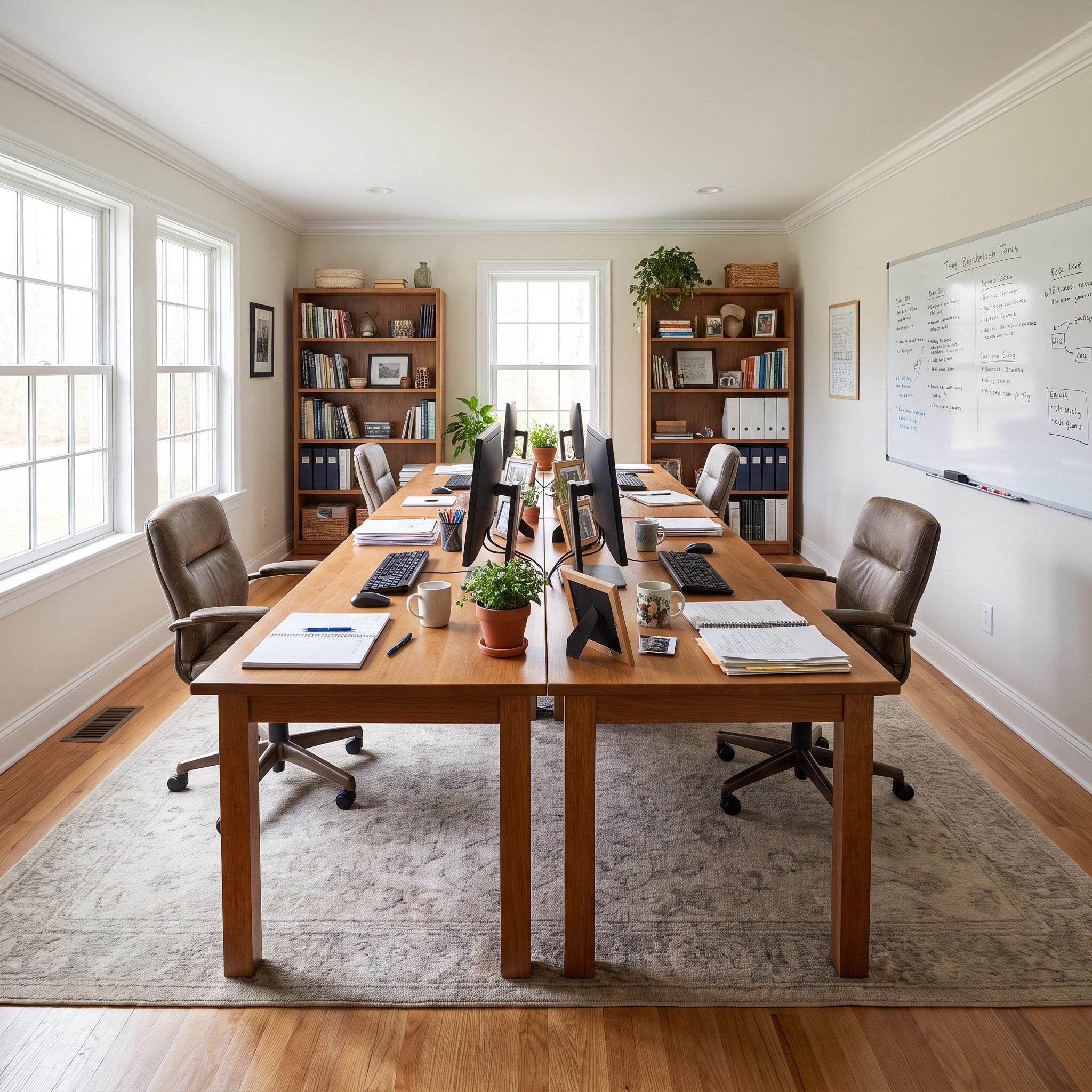
Matching desks solve a different problem than matching office chairs. Here the goal is to make two workstations read as one piece of room planning rather than two separate negotiations with whatever fit in the car.
Twin desks under a window, aligned lamps, and matching chairs establish a horizontal line much like repeated seating in a dining room. Cable management matters because cords are where all that visual order can collapse.
Two oak writing desks pushed together can read almost like one long worktable. Add two black task chairs and a brass desk lamp at each end. The repetition is architectural; the work itself can be as messy as it needs to be.
14. Matching Host Chairs at Opposite Ends of a Long Table
🔥 Would you like to save this?
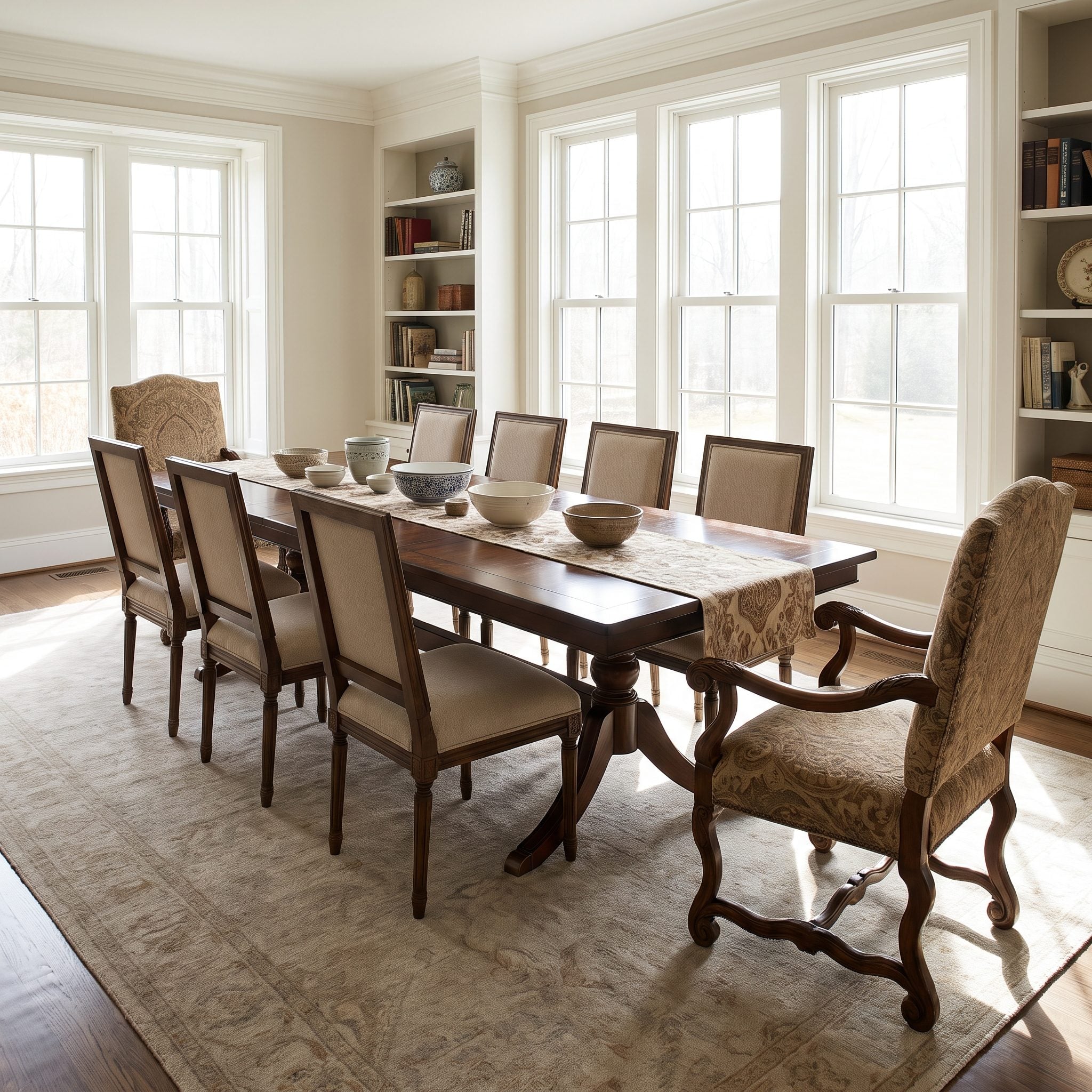
A long dining table benefits from punctuation at both ends. Two matching upholstered armchairs can provide it without forcing the six side chairs to match them.
The term carver chair is used in British furniture language for an armed dining chair, and it often refers to the end chairs sold with a dining suite. Its history is more complicated than the tidy story that the name simply comes from whoever carved the meat, so there is no need to hang the design argument on that etymology.
The useful part is visual. Put identical linen host chairs at the poles and a run of cane dining chairs down the sides. In a retro dining room, the matched ends create an axis while the middle gets to loosen up.
13. Matching End Tables Giving a Living Room Visual Rhythm
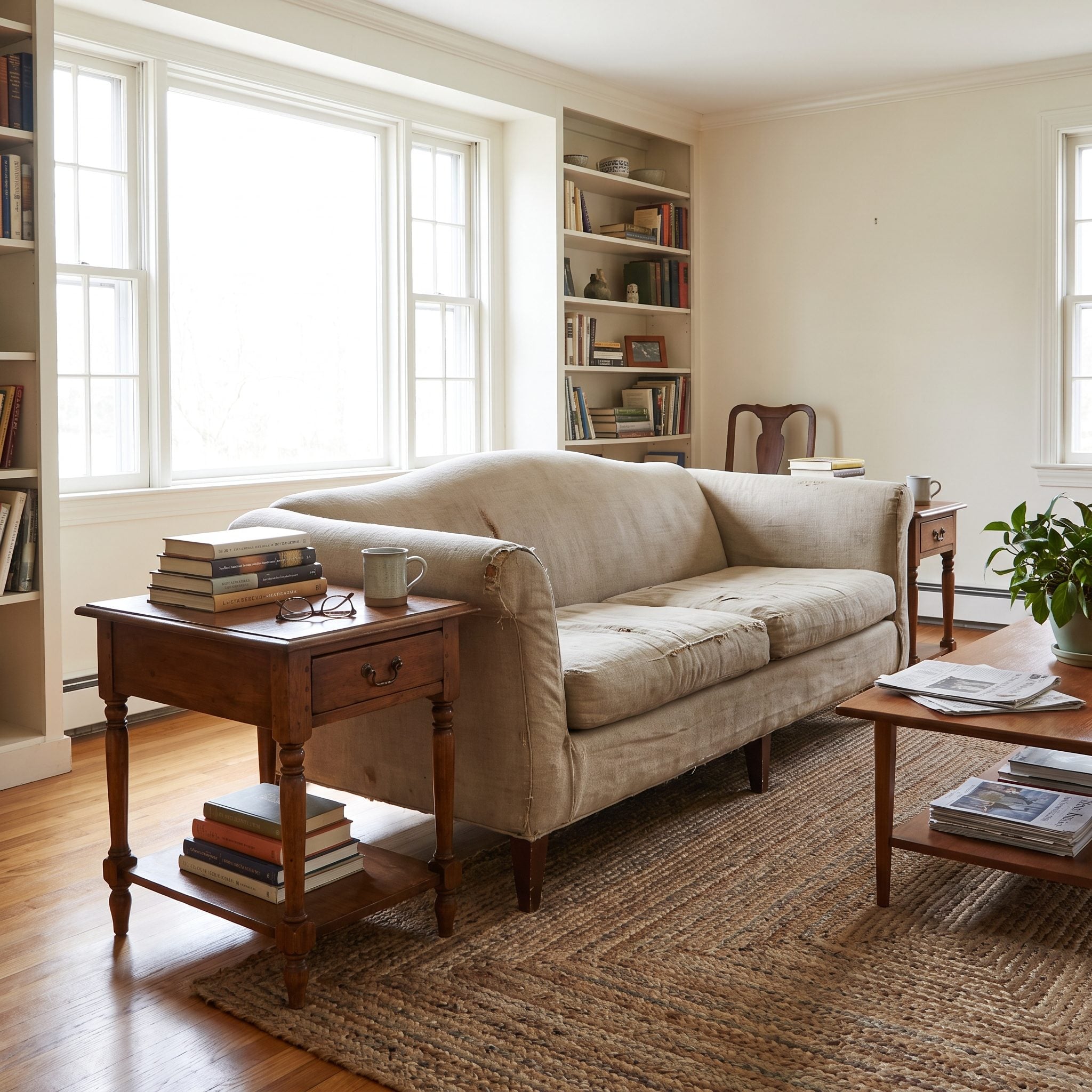
Flank a sofa with two identical end tables and the wall immediately gains a beat: table, sofa, table. The repetition is simple enough that the art, lamp, or coffee table can be the thing with personality.
Paired case pieces and lamps were common tools in Georgian and Federal interiors because symmetrical compositions made large rooms legible. That does not make every modern pair “traditional.” It simply means repetition has a long design pedigree.
Try two round walnut end tables with brass table lamps, then hang one oversized artwork above the sofa. The same basic logic works in a grandmillennial living room: the paired furniture provides rhythm so something else can break it.
Two of the same thing is not a shortage of ideas. It can be the frame that lets the better idea show.
12. Matching Dressers and Nightstands Unified by Contrasting Bedding
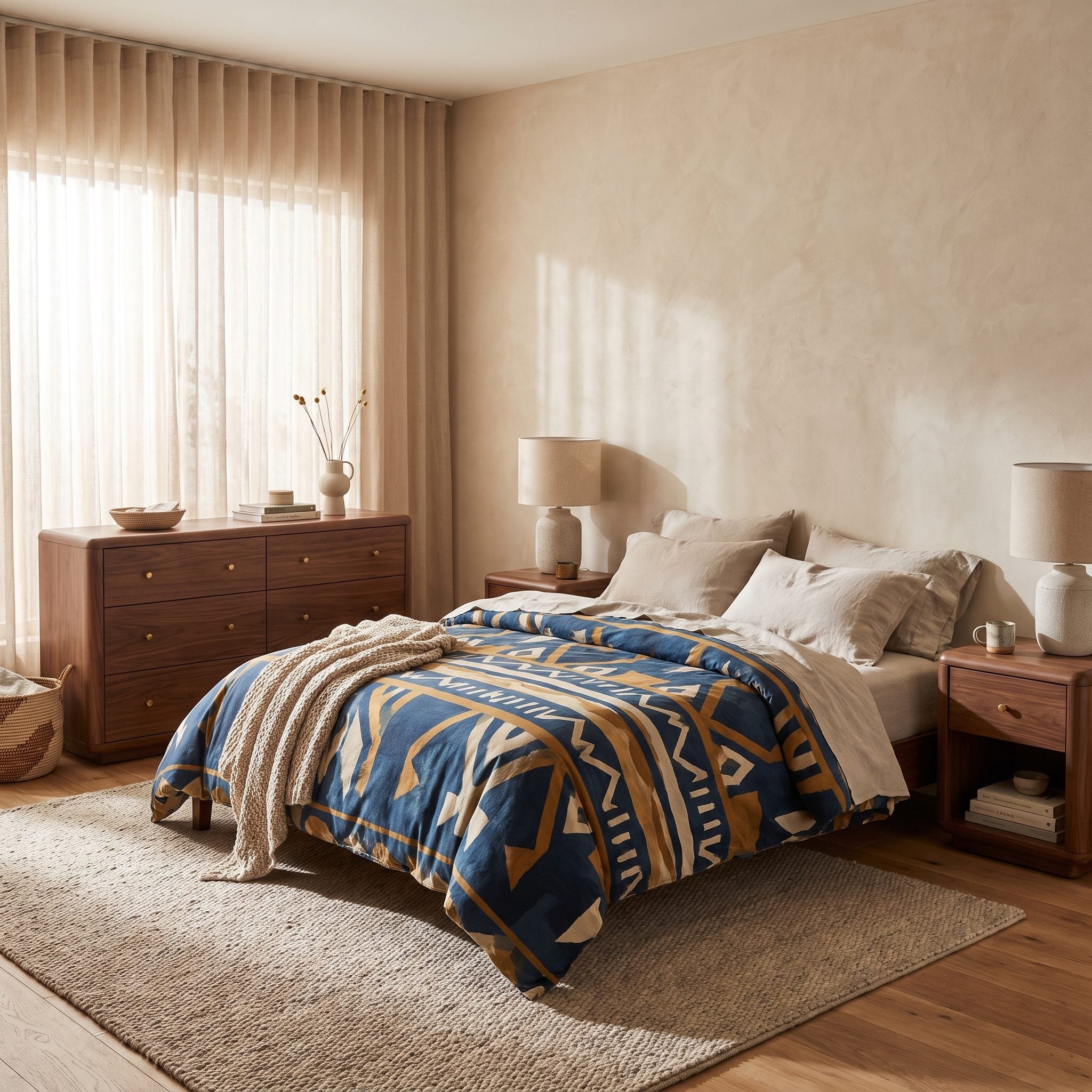
A dresser and two nightstands in the same walnut finish only become monotonous when the rest of the room insists on matching them too.
Contemporary design advice often warns against buying an entire bedroom as a package, and there are plenty of examples of designers arguing that coordinated sets can feel too easy or too showroom-like. Source Source Other designers make an explicit exception for paired nightstands because symmetry around a bed can feel settled and intentional. Source
So keep the case goods together and spend the contrast budget on bedding. Rust stripes, a cream quilt, patterned shams, one throw with a completely different texture. The furniture holds the perimeter; the textiles keep the room from becoming a showroom.
11. Matching Counter Stools Making a Kitchen Look Cleaner
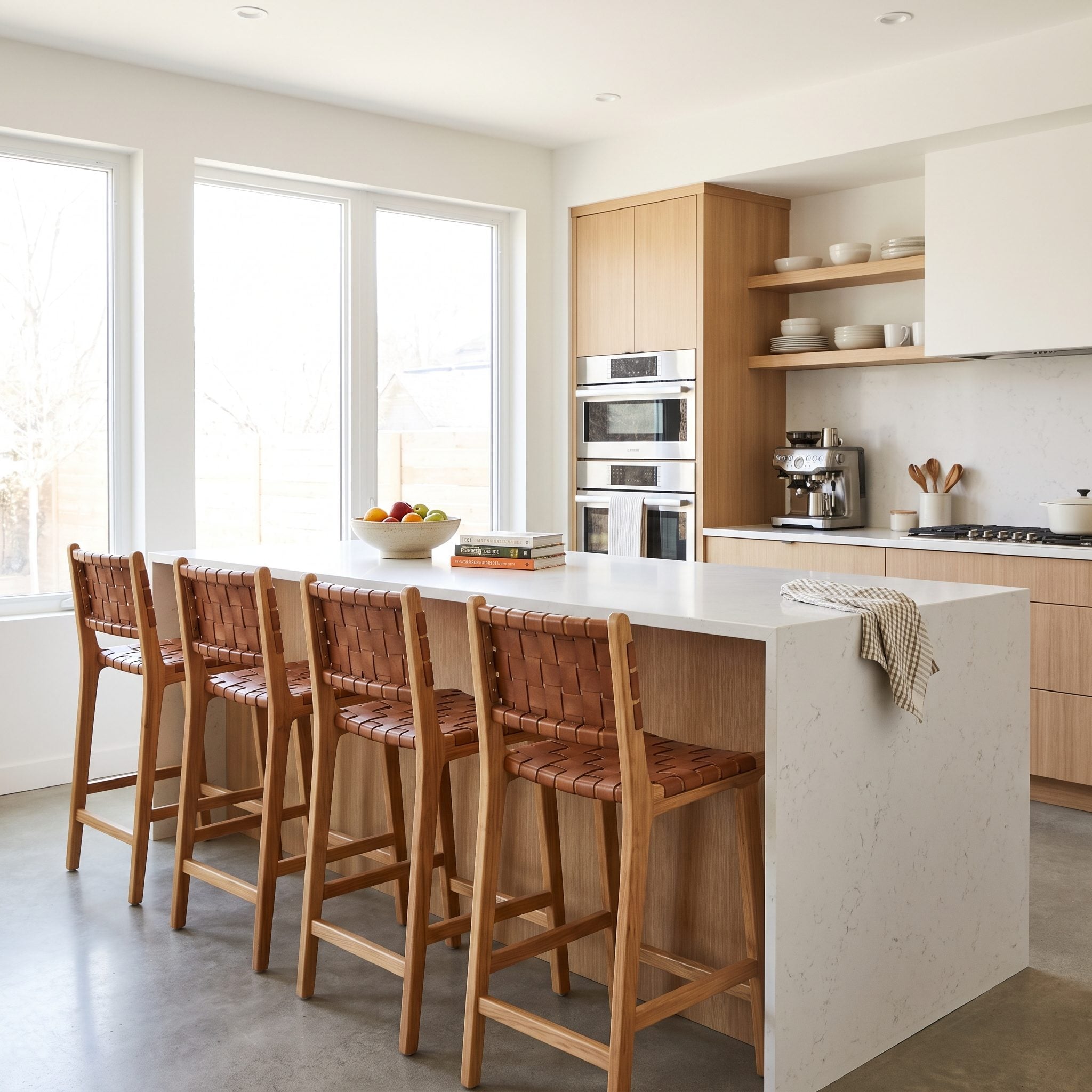
Three matching stools can make a busy kitchen look quieter for the simple reason that the island stops presenting three separate silhouettes.
The basic height math matters. A standard counter is usually around 36 inches high, which generally calls for a 24- to 26-inch seat. A 42-inch bar needs a taller stool. Once that is right, leave enough width for shoulders and elbows rather than squeezing the maximum possible number of seats onto the run.
This item is about compact repetition, not the four-stool resort of a giant island. Backless stools are especially useful where you want them to disappear under the overhang between meals. Match the stools and let the hood, tile, hardware, and cabinetry carry the rest of the visual information.
10. Matching Chairs Positioned Opposite a Nonmatching Sofa
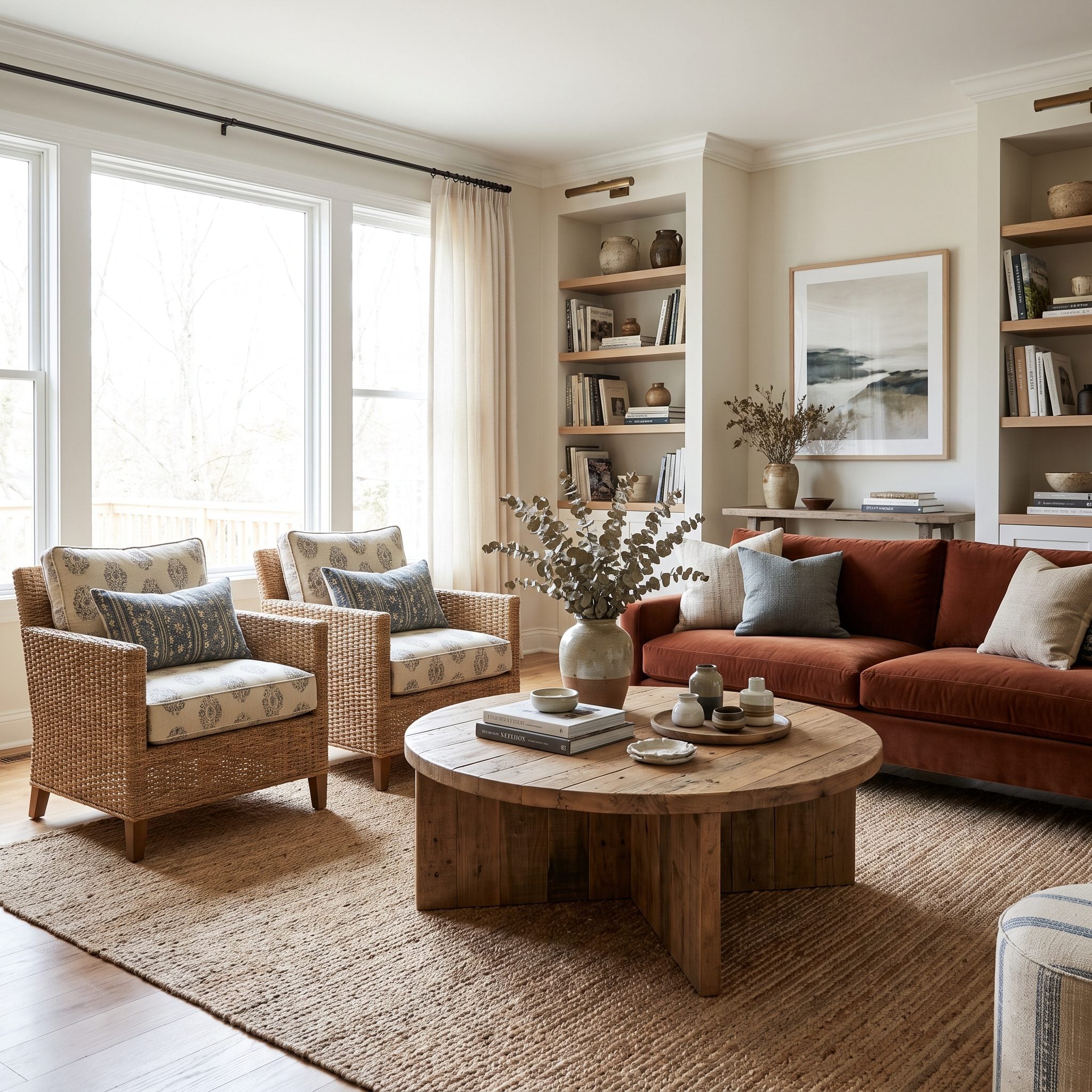
You do not need every seat in the room to match. A pair is often enough.
Two identical cream chairs opposite an olive sofa create one clear relationship: the chairs belong together, the sofa deliberately does not. That is much easier to read than three unrelated seating pieces all asking for equal attention.
The pair can work especially well in a great room, where scale makes isolated furniture look even more isolated. Put two rattan accent chairs across from the sofa and let the coffee table sit between them. The symmetry comes from the pair; the color and material contrast come from the sofa.
One matched pair can give the rest of the room permission to disagree.
9. Matching Benches Creating Repetition in an Open-Plan Home
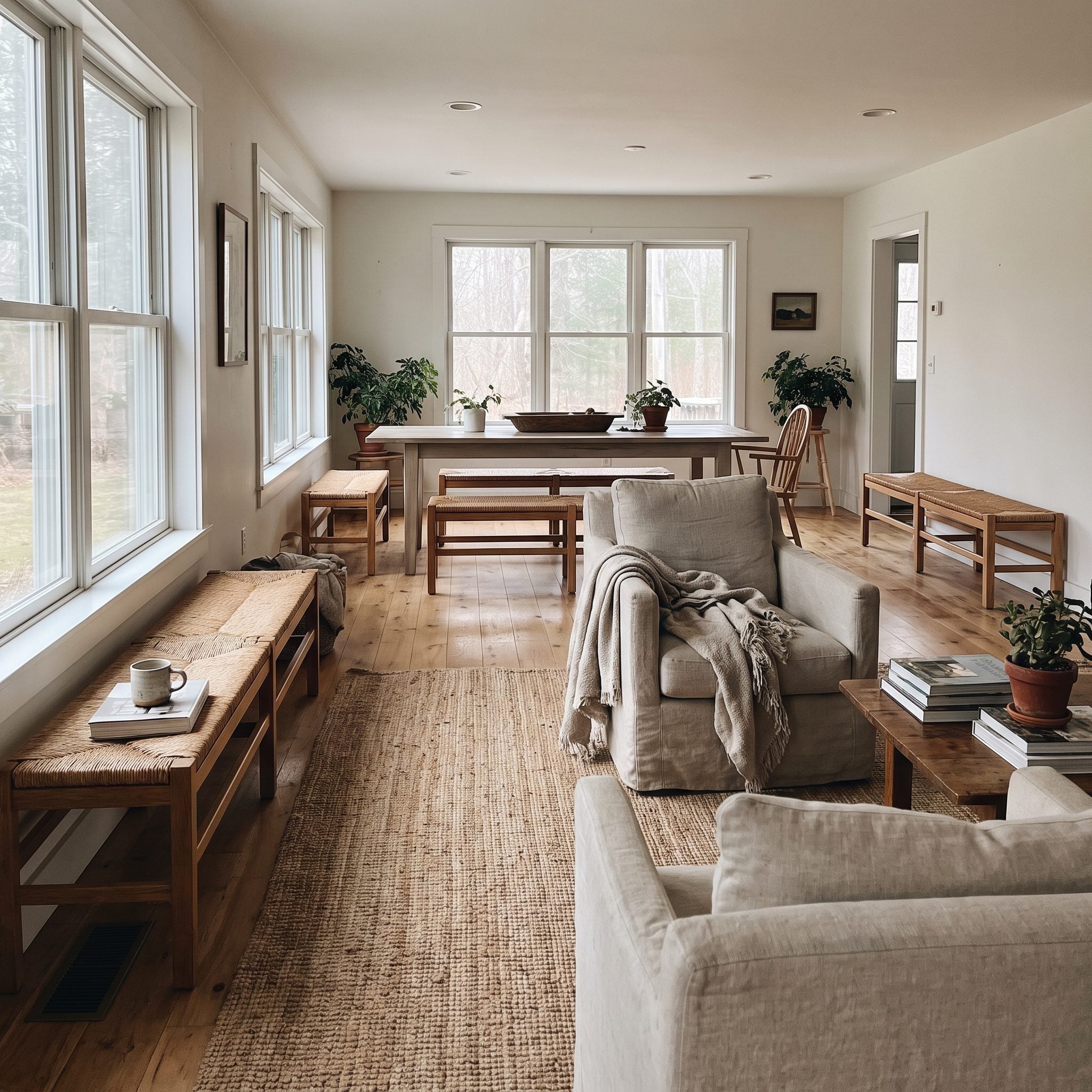
Repeating the same bench in two visible zones can make an open plan feel connected without forcing every piece of furniture into one collection.
This is not technically enfilade. Enfilade refers to a sequence of rooms with doorways aligned on a shared axis, a device associated with European palaces and formal houses. The useful idea to borrow is the long sightline: when several spaces are visible at once, a repeated form can help the eye connect them.
Put a natural woven bench near the entry and its twin at the dining table or at the foot of a bed visible beyond. The pieces do not need to be cheaper because you bought two; pricing varies. Their value here is compositional. One repeated shape can stitch two zones together without making the whole house match.
8. Matching Nightstands Creating Perfect Bedroom Symmetry
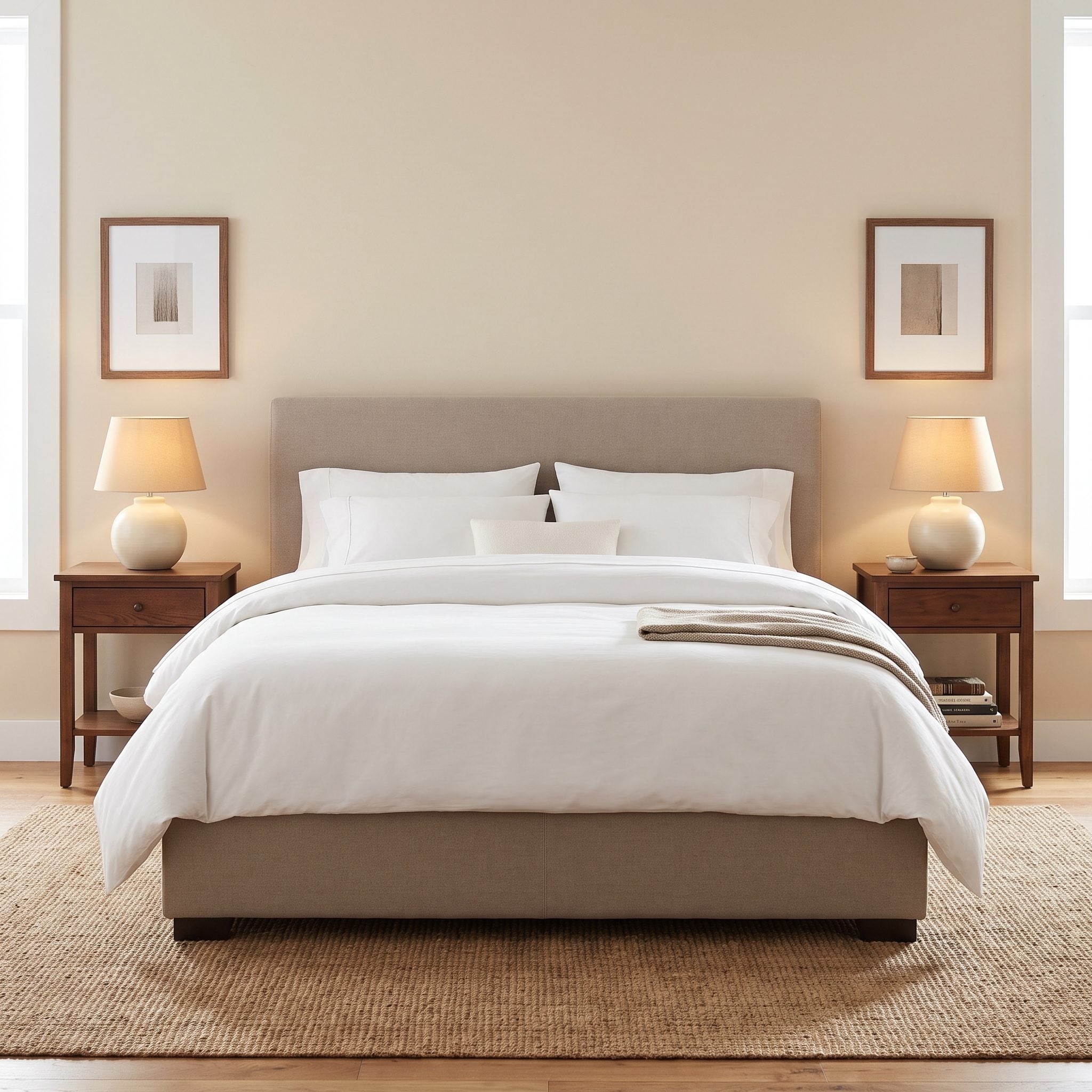
Two identical nightstands are not the problem. Two identical nightstands, identical lamps, identical frames, identical bedding, and nothing else to interrupt the mirror can become one.
Around a bed, though, matched case pieces are useful because the bed already wants a center. Equal-height tables on both sides give lamps, books, and charging clutter a consistent platform. The symmetry is doing practical work before it does anything decorative.
You do not need a universal three-inch rule between mattress and tabletop. Aim for a nightstand height that makes the surface easy to reach from bed and looks proportionate to the mattress. Then let the styling loosen up. A bedroom can be quieter than a navy powder room without becoming sterile.
The old accusation was that matching meant you stopped thinking. This version works because the matching is exactly where the thinking happened.
7. A Matching Sofa and Chairs Unified by an Incredible Rug
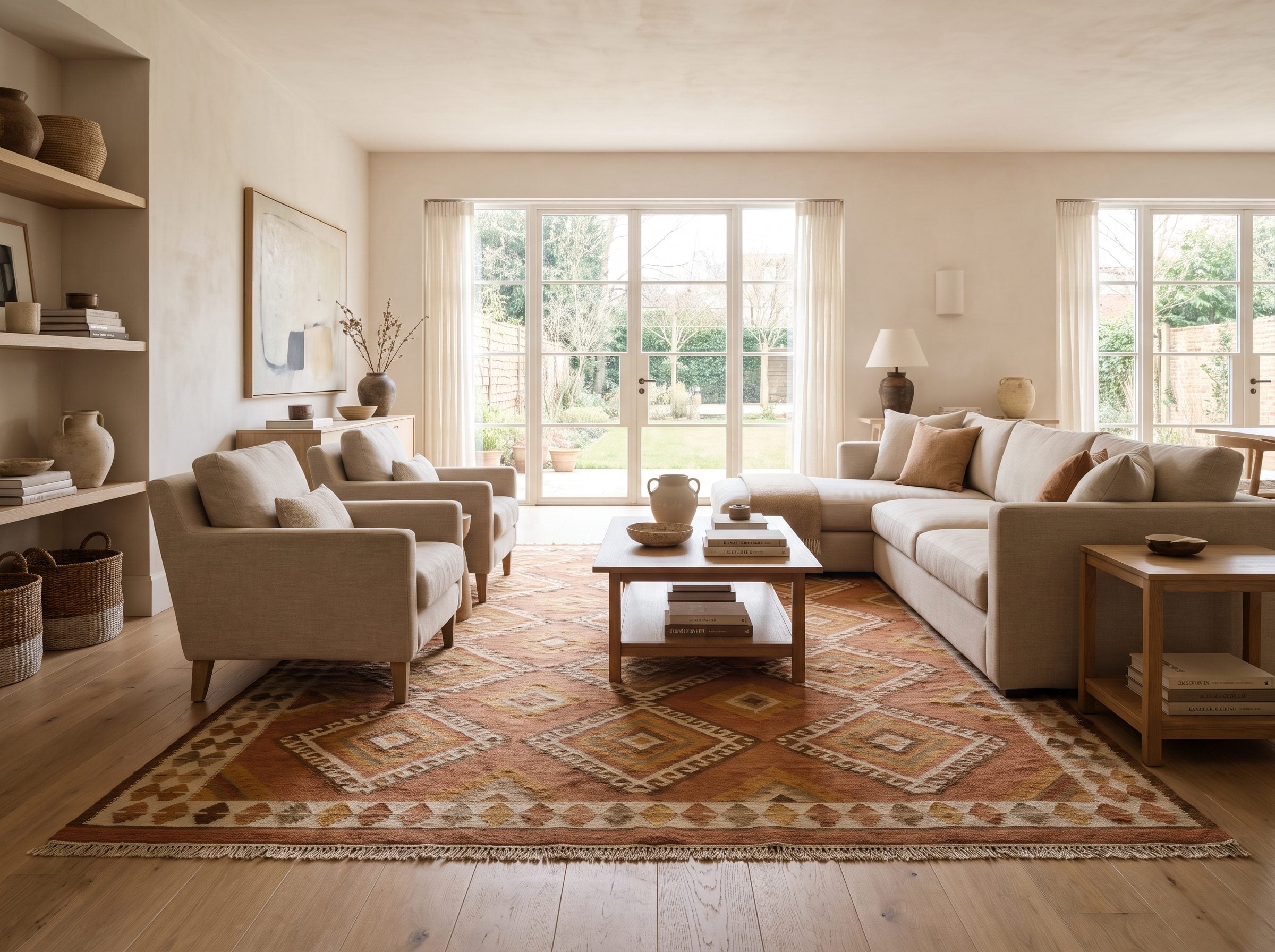
A matching sofa and chairs can disappear into the background if the rug is strong enough to become the actual composition.
The most reliable layout is to get at least the front legs of the major seating onto the rug, which visually joins the group. Source For a standard sofa with two chairs, an 8-by-10 rug often works, but room dimensions and furniture depth matter more than any single default size.
Then use the floor for the personality the seating does not provide. A saturated Persian-style rug, a graphic flatweave, or something with real color can turn three coordinated upholstered pieces into a backdrop rather than the headline.
6. Matching Consoles Creating Symmetry Across a Large Room
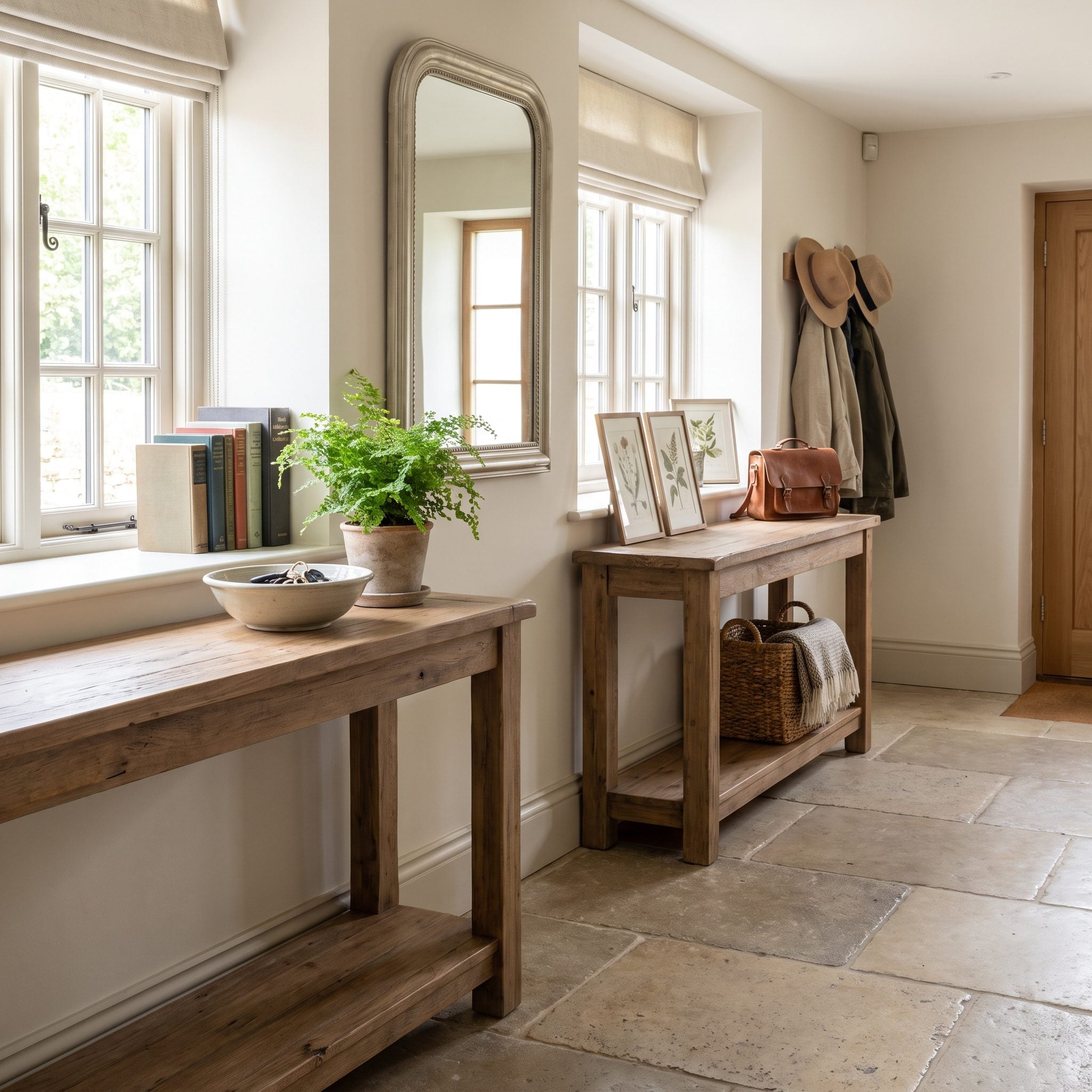
In a large room, two matching consoles do not need to sit side by side to act like a pair. Distance can actually make the relationship more useful.
Place identical low tables on opposite walls or at opposite ends of a long room. Add lamps of similar scale and the eye starts connecting the points across the space. That invisible line is valuable in a great room, where isolated furniture can otherwise feel as though it drifted in from neighboring houses.
A pair of walnut console tables with brass table lamps can establish that cross-room rhythm without turning the entire space symmetrical.
5. Matching Nightstands Paired With Different Lamps
🔥 Would you like to save this?
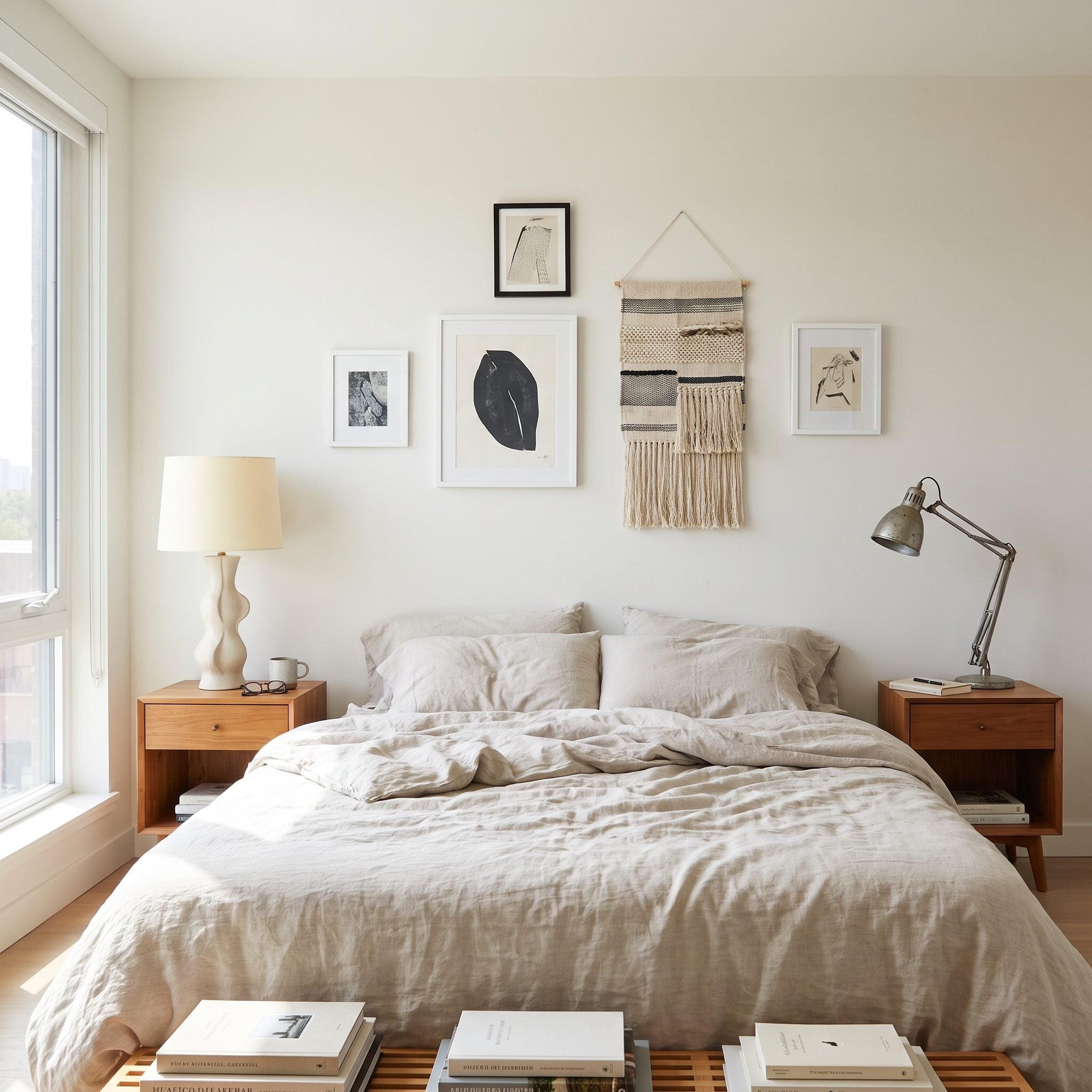
Matching nightstands with different lamps take the previous bedside idea one step further: the furniture establishes the baseline, while the lighting introduces difference.
A ceramic gourd lamp on one side and a slim brass column on the other can work as long as the overall scale feels balanced. They do not need to end at exactly the same height, and they certainly do not need to be identical. What matters is that one lamp does not dwarf the other or make the bed look visually tilted.
Keep one small echo between them — perhaps cream shades, warm metal, or similarly sized pools of light. Same chests, different lamps, one shared detail. That is enough to look collected without asking the furniture itself to perform the collecting.
4. Matching Armchairs Creating a Formal Conversation Area
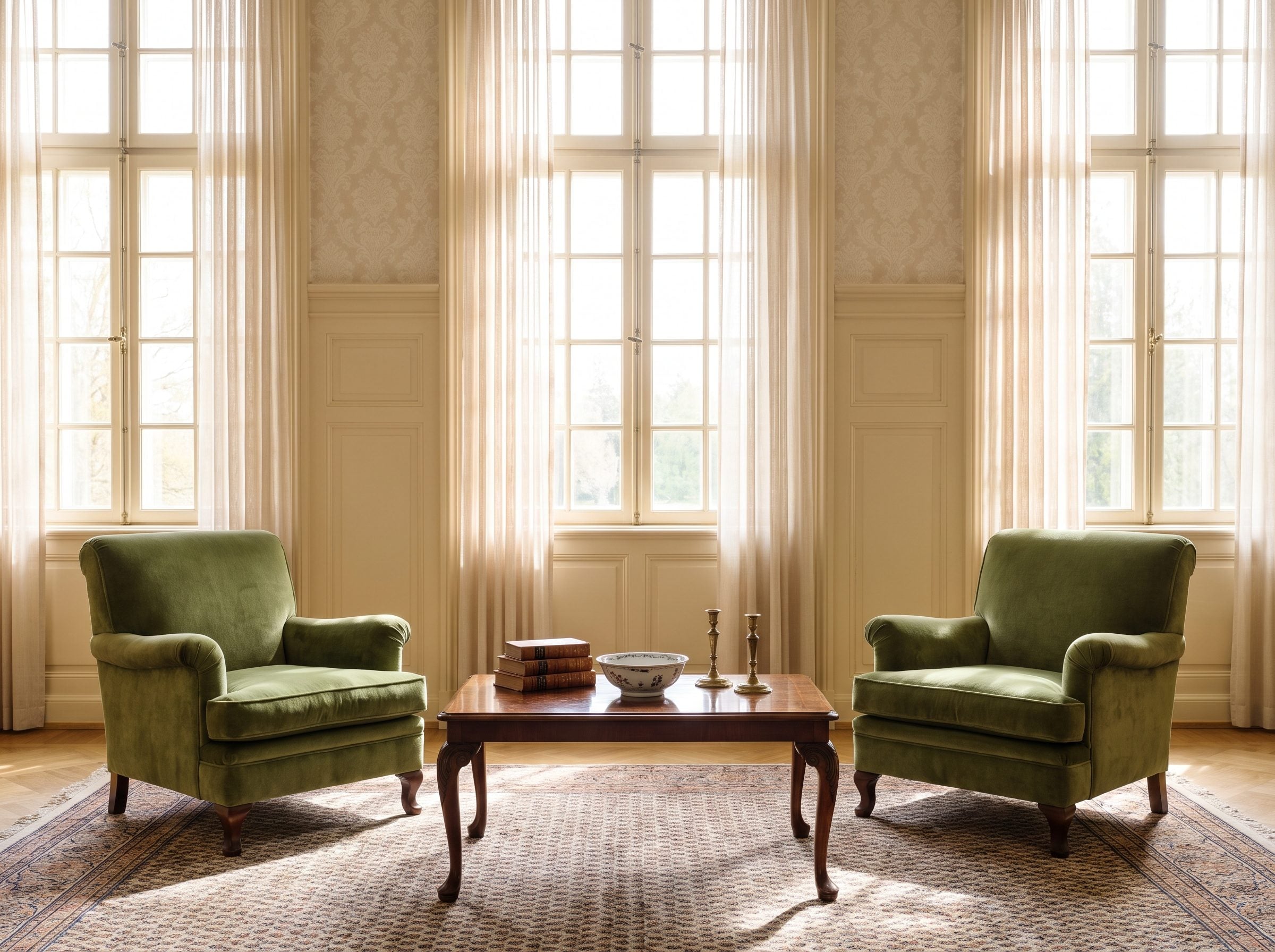
Two matching armchairs facing each other are formal only if the rest of the room insists on formality. Put them on a worn rug, pull one slightly off-axis, add a throw, and the geometry starts feeling conversational instead of ceremonial.
For face-to-face seating, distance matters. Designers commonly keep chairs within a range that allows ordinary conversation rather than forcing people to project across the room. Source A pair of cognac leather armchairs across a vintage kilim rug already has enough warmth to keep the symmetry from feeling corporate.
3. A Matching Dining Table and Chairs Broken Up by Modern Lighting
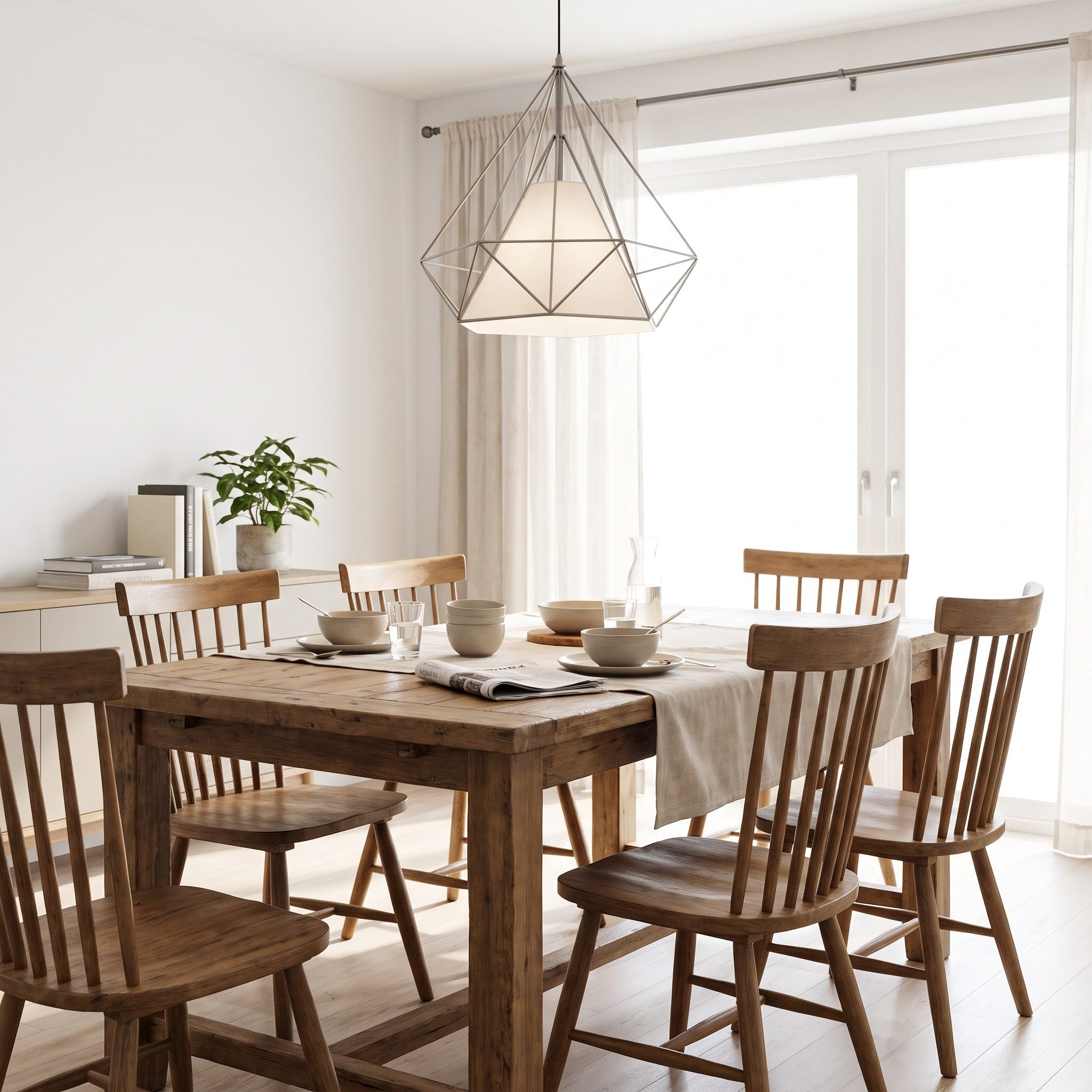
A matching dining table and chair set does not need to be dismantled to look current. Sometimes the cleanest intervention is above it.
Put a black linear fixture over a warm oak set, or a cluster of brass globe pendants above matching wood chairs. A black linear chandelier changes the age, color, and visual weight of the composition in one move.
That is a cheaper and clearer source of contrast than hunting for six “coordinating” chairs that still need to agree on height and scale. The same strategy works in a retro dining room: keep the furniture together and let the fixture come from another decade.
2. Matching Furniture in a Small Room Where Visual Calm Matters
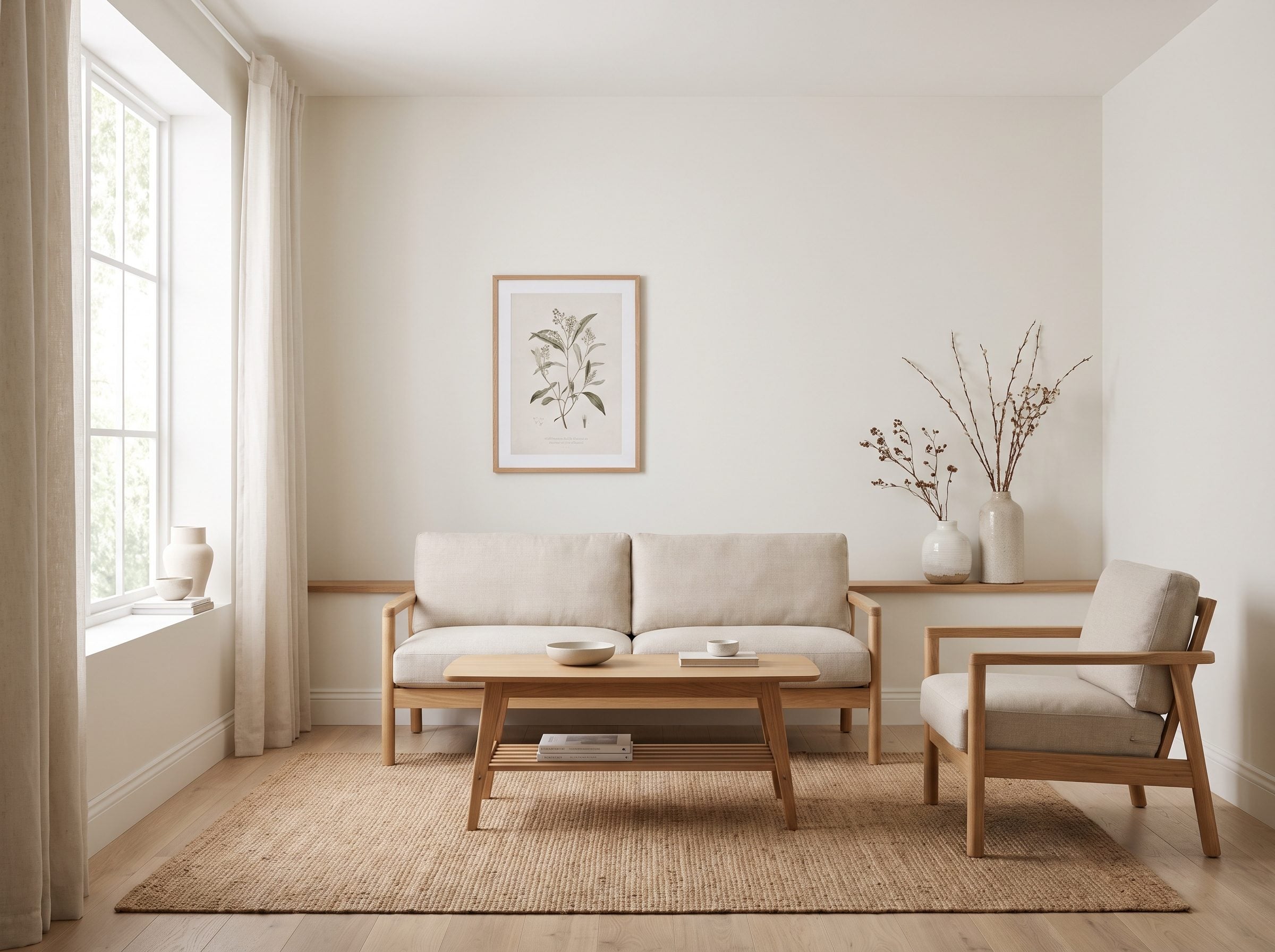
Small rooms punish unnecessary variety faster than big ones do. Five unrelated furniture silhouettes can make an 11-by-11 space feel busier even when every piece technically fits.
The safest claim is visual, not neurological. Repeated arms, legs, and upholstery reduce the number of competing shapes in the room. Research on furniture density has long shown that over-furnished rooms tend to be perceived as less spacious; matching is not a scientific shortcut to more square footage, but it can help a room look less fragmented. The linked design analysis makes a similar argument about unified palettes and repeated forms. Source
A matching oatmeal linen sofa and loveseat can therefore make sense in a compact room, especially if the walls, rug, and art carry the contrast. The same principle can work in a grandmillennial living room: simplify the largest shapes and spend the detail elsewhere.
1. Matching Furniture in a Monochromatic Room That Looks Deliberately Serene
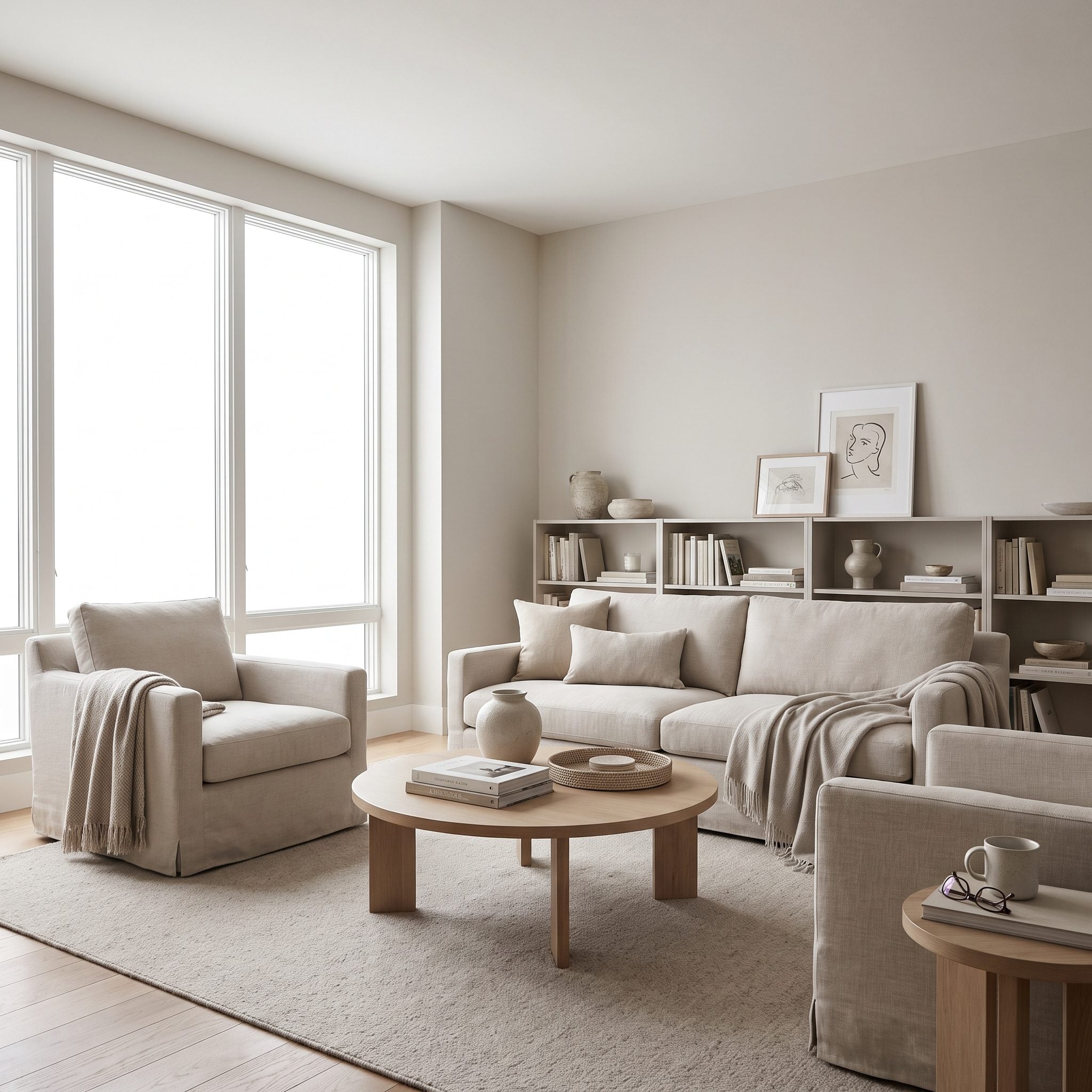
A monochromatic room and a matching furniture set are not automatically redundant. They can make each other more interesting if texture takes over the job color normally does.
Start with oatmeal seating, walls a shade or two lighter, and a jute rug. Then split the surfaces: linen sofa, nubby boucle, matte ceramic, a brass floor lamp, chunky knit, perhaps one smooth leather detail. The palette stays narrow while the room changes every time the light hits a different material.
Designers such as Axel Vervoordt have made tonal, textural interiors a signature, but the principle scales down easily. If beige feels too polite, a burgundy great room can use the same logic in a saturated key.