You cleaned the counters this morning. You put things away. And yet, the moment you walk in to make coffee, something tightens in your chest. Not stress, exactly. More like a low-level sense that you’re already behind, already inadequate, already losing a game you didn’t agree to play. Sound familiar? Most people blame themselves. Therapists call it something else entirely. It turns out, your kitchen may be running a quiet psychological operation against you, and it has nothing to do with how tidy you are, how organized you try to be, or how much you love to cook. The design itself might be the culprit. Here’s what the research actually says.
The Invisible Tax Your Kitchen Collects Every Time You Walk In
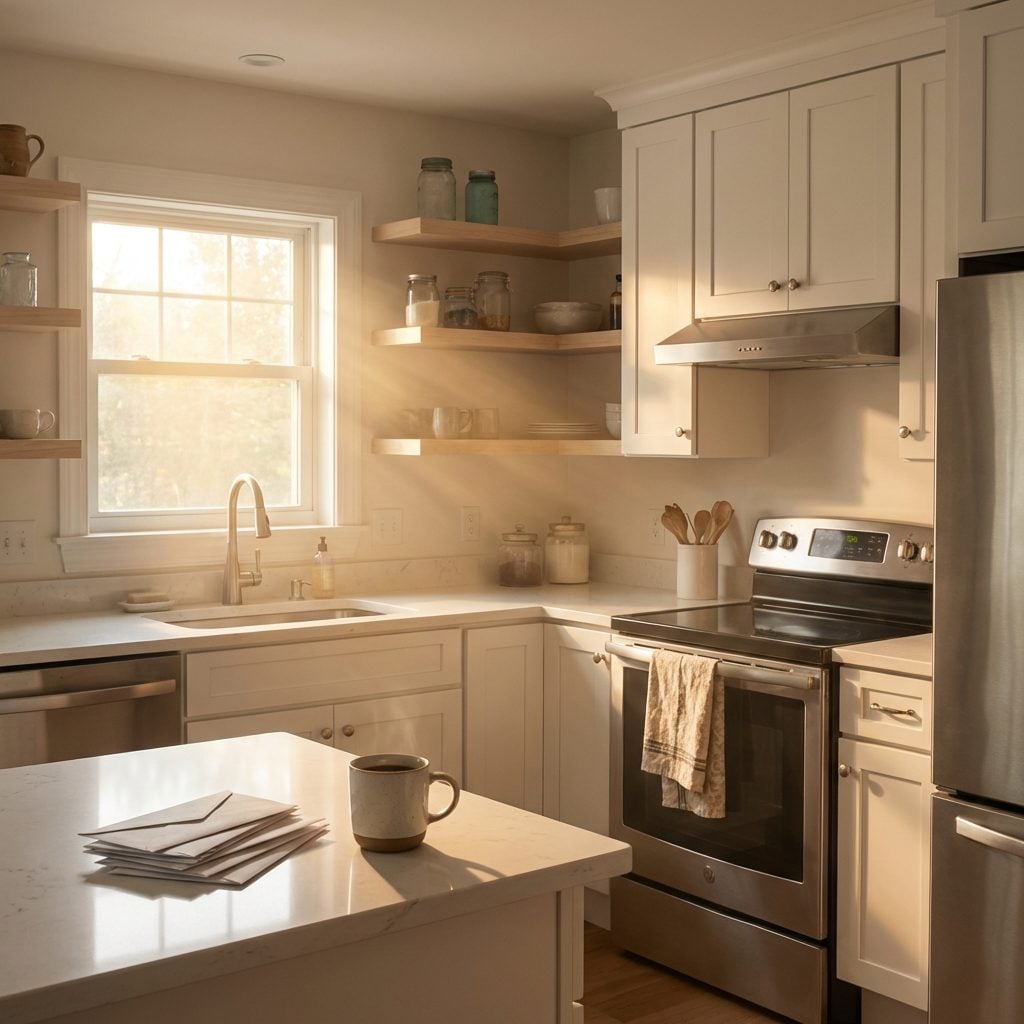
Every time you step into your kitchen, your brain runs a rapid environmental audit. It clocks the stack of mail on the counter, the sticky residue near the burner, the drawer that won’t quite close. You don’t consciously register any of it, but your nervous system does. (Source) found that the kitchen is perhaps the most important space in daily family life, described by researchers as “a crucial hub of logistical organization and everyday operations.” That makes its visual state uniquely loaded, not neutral background, but active signal.
In order to come up with the very specific design ideas, we create most designs with the assistance of state-of-the-art AI interior design software. Also, assume links that take you off the site are affiliate links such as links to Amazon. this means we may earn a commission if you buy something.
What your brain is actually doing is threat assessment dressed up as housekeeping. (Source) describes how a chaotic kitchen triggers mild fight-or-flight activation: “Something’s not right here.” The cost is small each time. But paid every morning, before coffee, before a single pan hits the stove, it adds up to something significant, a low-grade toll on your attention and emotional baseline that researchers have linked to elevated cortisol, increased irritability, and reduced cognitive performance throughout the day. You aren’t failing. You’re being charged without realizing it.
Why Your Brain Reads a Cluttered Counter as a Personal Character Flaw
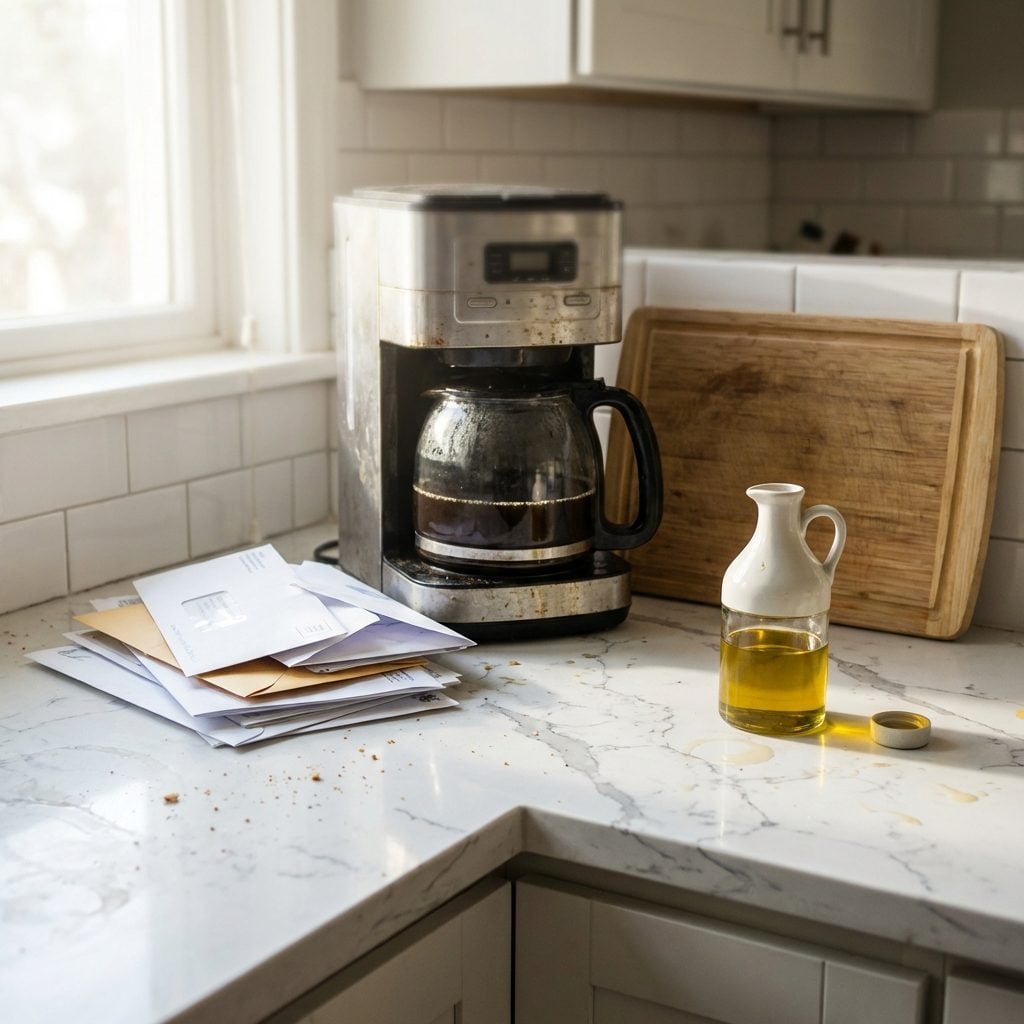
The counter isn’t just a surface, it’s a mirror. When it’s clean, you feel capable. When it’s covered, you feel like you’ve already lost the day before it started. That’s not an accident of perception; it’s a documented psychological response.
A landmark study published in the journal Personality and Social Psychology Bulletin by Darby Saxbe and Rena Repetti at UCLA found that (Source), a hormonal pattern associated with adverse health outcomes, including depression and metabolic disruption. Their homes weren’t just stressful. They were slowly rewiring the body’s stress system.
What’s especially insidious is how that stress gets misattributed. Research reviewed by Nuvance Health confirms that cluttered homes can chip away at mood and self-esteem, creating “feelings of shame or inadequacy about not being ‘on top of things.'” Your brain doesn’t blame the design. It blames you. That pile of cutting boards jammed in the wrong cabinet isn’t a storage problem, your nervous system quietly files it as evidence of your own disorder.
The Lighting Mistake That Makes Even Clean Kitchens Feel Like Crime Scenes
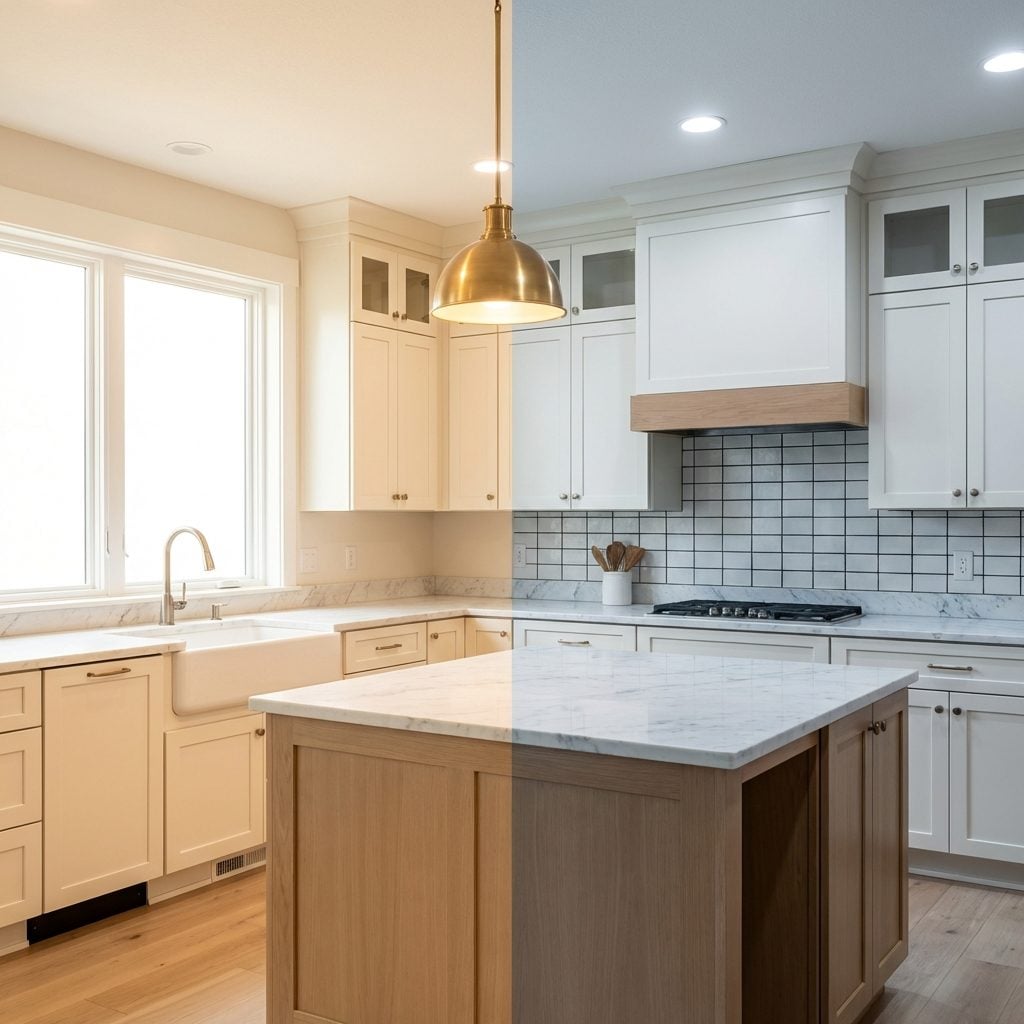
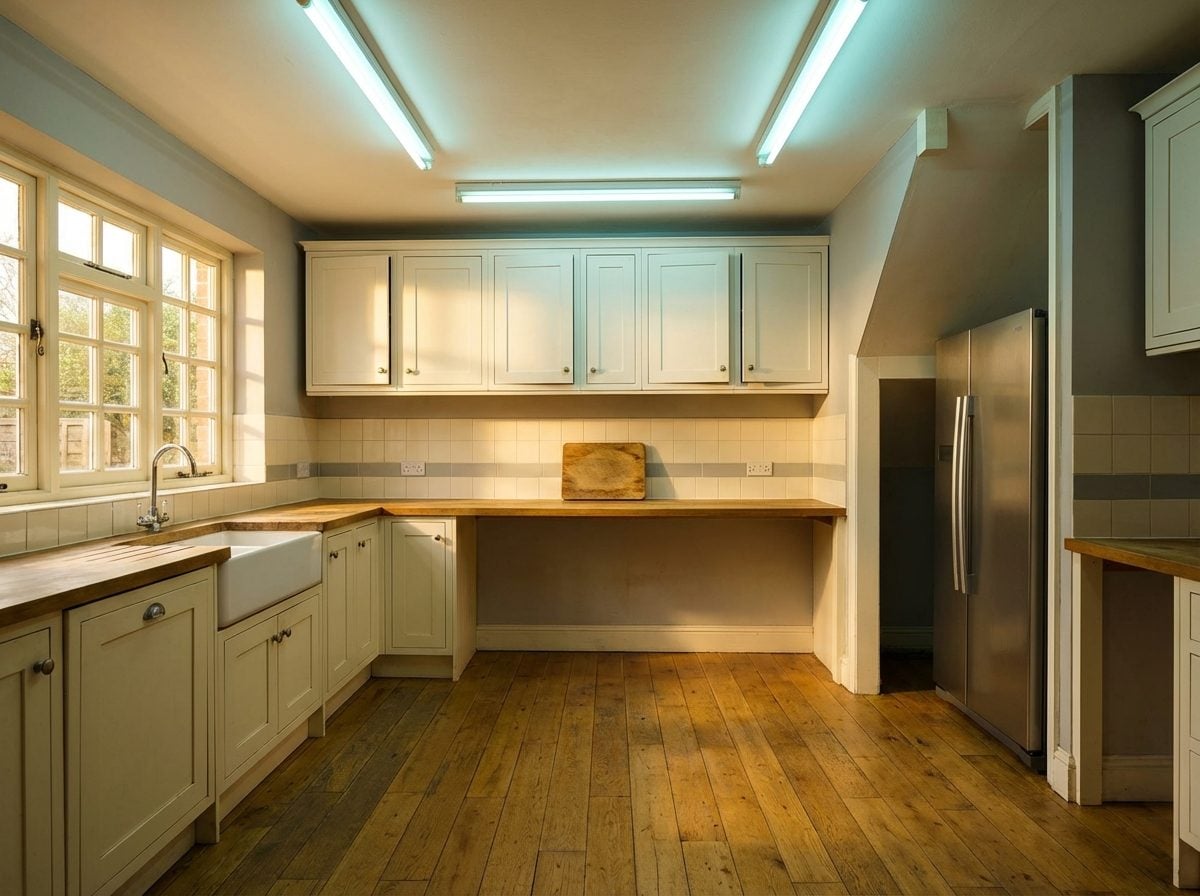
You scrubbed every surface. The counters are clear. And somehow the kitchen still feels hostile. Chances are, the problem is overhead: a single recessed fixture, or a cool-white fluorescent tube humming at 5000K, flooding every shadow and surface with the kind of flat, merciless illumination that belongs in a morgue, not a meal.
Color temperature has a profound effect on how spaces feel, and the kitchen is particularly vulnerable to getting it wrong. (Source) confirms that lighting conditions directly influence mood, cognitive performance, and emotional response. Cool-white light (5000K+) reads as clinical, it heightens alertness but also sharpens every imperfection. Under that light, a water spot becomes a stain. A shadow becomes a mess. The kitchen looks like evidence.
Warm lighting in the 2700K, 3000K range does the opposite: it softens surfaces, lengthens shadows kindly, and signals to your nervous system that you’re in a place of nourishment rather than inspection. (Source), meaning harsh kitchen light doesn’t just flatten the space visually, it can actually amplify stress responses during already-tense mornings. Layered lighting, task, ambient, and accent working together, is not a luxury upgrade. It’s a mood management system.
Why the Kitchen Triangle Your Grandmother Had Was Actually About Your Nervous System
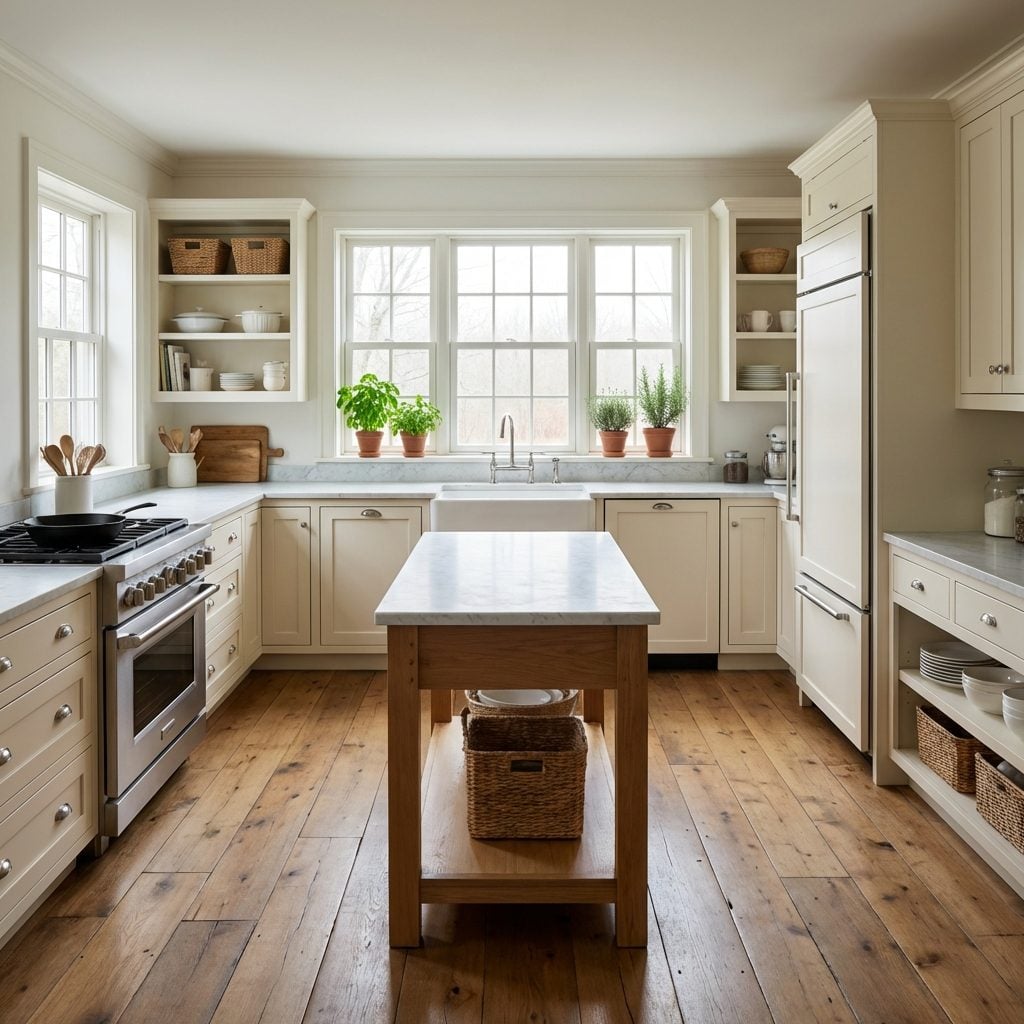
The kitchen work triangle, the invisible path connecting your refrigerator, stove, and sink, is older than most people realize. (Source) using time-and-motion studies, and by the 1940s the triangle had become the foundational rule of kitchen design. But it was never really just about saving steps.
The deeper reason the triangle works is cognitive. (Source) confirms that modern understanding of kitchen workflow incorporates cognitive ergonomics, the recognition that mental workload directly affects physical performance and overall efficiency. When your brain can predict movement, it doesn’t have to expend energy recalculating routes. Cooking becomes something close to automatic, which frees up cognitive bandwidth for the actual creative work of the meal.
Break the triangle, say, a refrigerator on one wall, a stove around a corner, and a sink behind you, and every task requires a micro-deliberation. Where do I go next? How do I hold this while getting that? Each question is tiny and invisible, but together they generate what ergonomists call cognitive friction. Your farmhouse kitchen with gorgeous exposed shelving and a statement range can still feel exhausting to cook in if those three points aren’t talking to each other.
The Ceiling Height Secret That Determines Whether Cooking Feels Like Joy or Obligation
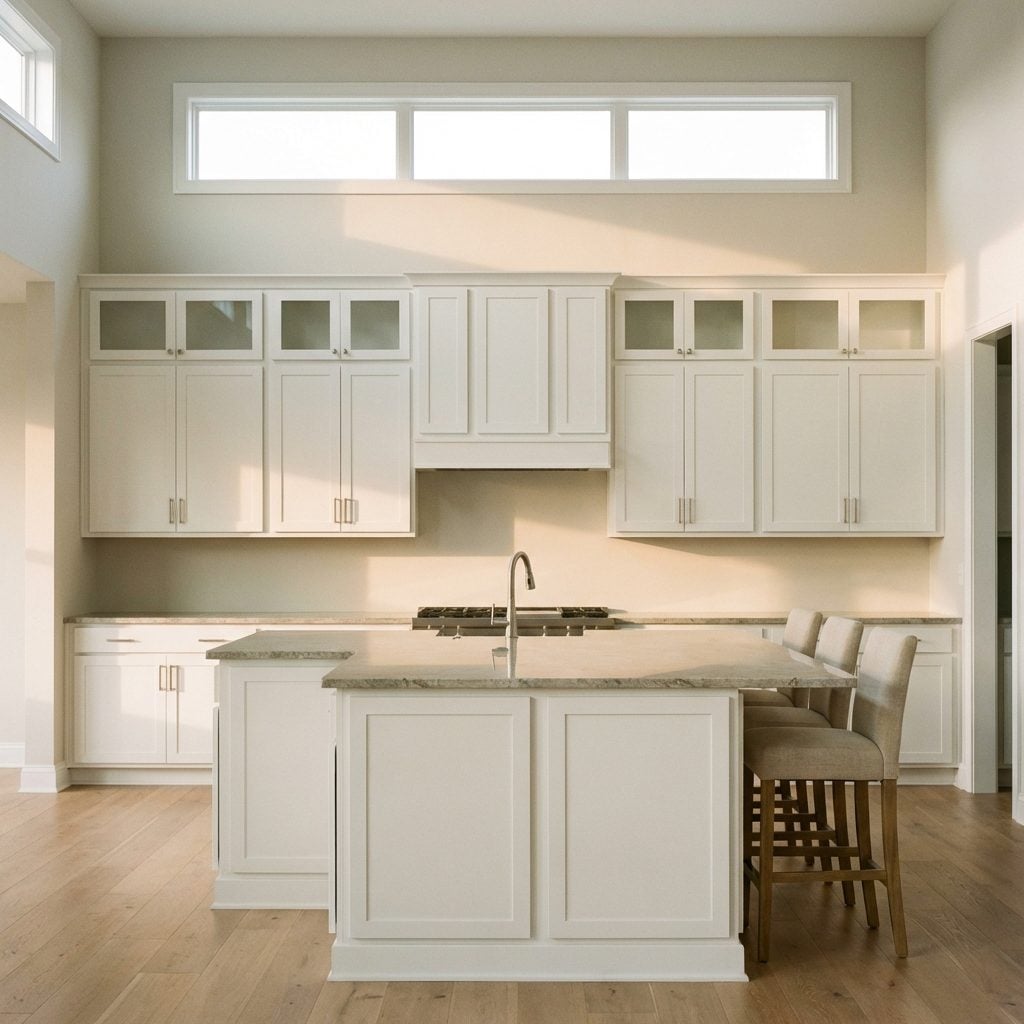
A kitchen with an 8-foot ceiling and a kitchen with a 10-foot ceiling can be identical in every other way, same layout, same appliances, same color palette, and one will feel oppressive to cook in while the other won’t. That’s not an aesthetic preference. It’s a cognitive one.
Researchers Joan Meyers-Levy and Rui Juliet Zhu famously identified what became known as the Cathedral Effect: (Source), while lower ceilings activate confinement-related thinking, triggering more constrained, detail-focused cognitive patterns. In a kitchen, that distinction matters enormously. Cooking a complex meal, improvising, substituting, layering flavors, is an act of creative cognition. A low ceiling, quite literally, makes it harder.
(Source) notes that ceilings below 2.44 meters (roughly 8 feet) may induce feelings of compression and lethargy over time. This is the quiet physics behind why a modern kitchen decor that opens upward, with taller uppers, open soffits, or even a light-colored ceiling that reads taller than it is, tends to feel more inviting. Conversely, the standard-issue builder kitchen with an 8-foot drop ceiling and brown cabinet tops jammed to the soffit doesn’t just look dated. It shrinks your mental bandwidth every time you cook in it.
What Happens to Your Cortisol Levels When Your Kitchen Has No Landing Zone
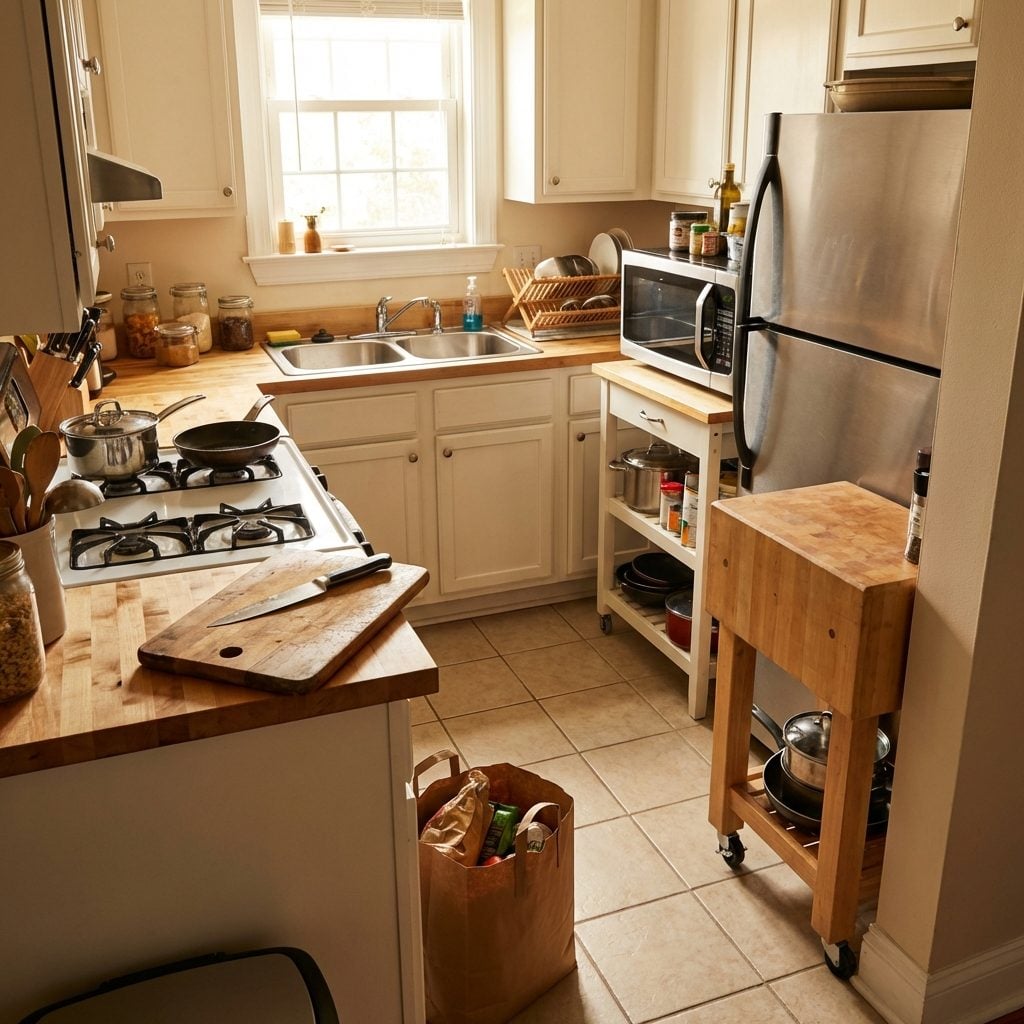
You come home from the grocery store, arms full, and the refrigerator door swings open to reveal: no counter space on the handle side. The bags go on the floor. You shuffle around trying to put things away while holding the door with your hip. Hot pan out of the oven: no clear surface nearby. You stand there, burning, rotating slowly, searching. These aren’t just inconveniences. (Source) When landing zones are absent or misplaced, you’re forced into awkward compensations every single time you cook.
That repetitive friction activates something your brain interprets as chaos. (Source) describes how navigating spatial disorder creates cognitive overload, which in turn produces a stressed physiological state marked by agitation, overwhelm, and shutdown. Your kitchen doesn’t need to be messy to create this effect. It just needs to be designed in a way that forces your body into constant problem-solving mode. A missing landing zone is a design flaw that masquerades as personal chaos.
The Color on Your Kitchen Walls That’s Quietly Killing Your Appetite for Cooking
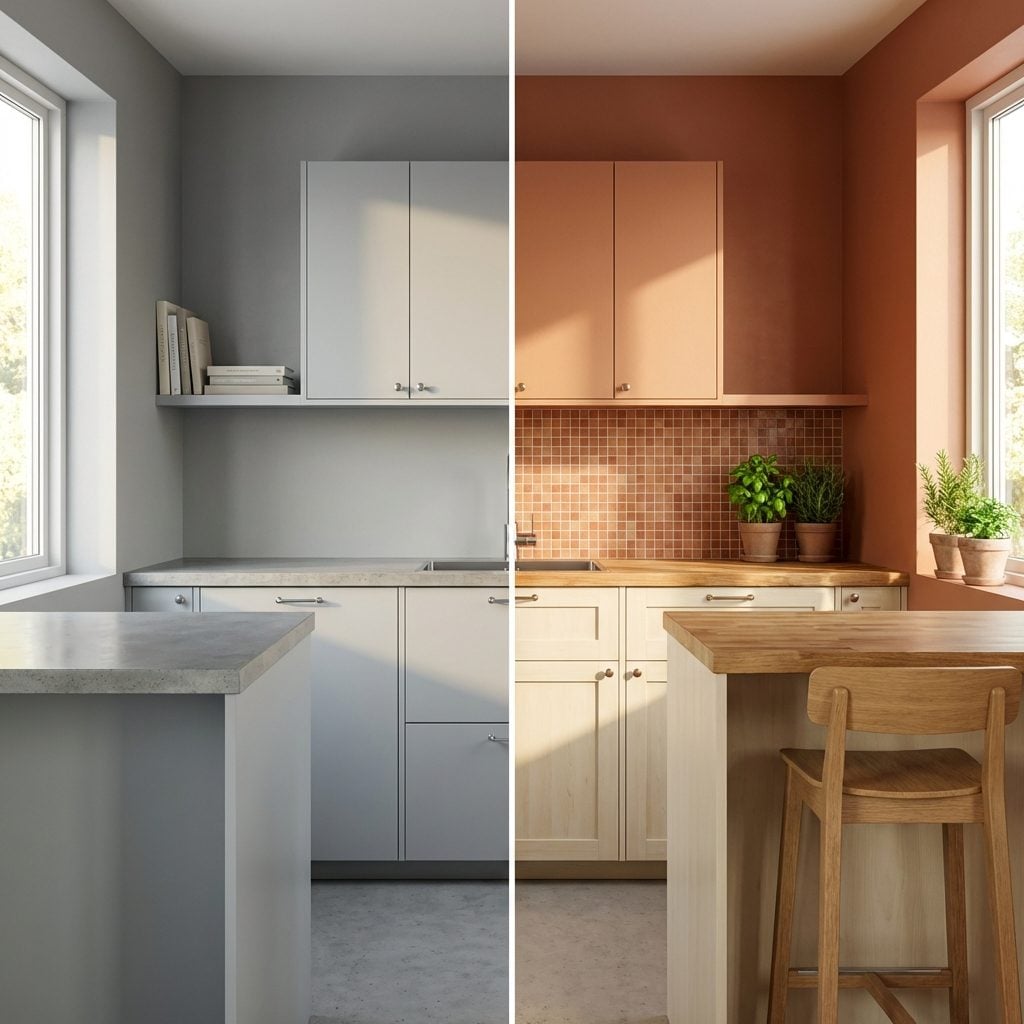
Consider the psychology of appetite and color together, and a pattern emerges that most homeowners never connect to their own kitchens. Research reviewed by Escoffier’s culinary school finds that blue is considered a significant appetite suppressant, rare in natural foods and therefore processed by the brain as a subconscious deterrent to eating and, by extension, to the creative desire to cook.
But it’s not just blue. A flat, cool grey, the kind that dominated kitchen design for over a decade, doesn’t stimulate appetite either. It signals clinical precision. (Source), practical and quiet, which is the psychological opposite of the warmth and sensory excitement that actually motivates cooking. Compare that to the warm side of the spectrum: red and orange walls are used in restaurants specifically because they increase heart rate and stimulate appetite, and yellow has been linked to serotonin activation.
The irony of the trend-driven all-grey kitchen is that it’s often the most photogenic space and the least enjoyable one to actually cook in. If you find yourself ordering delivery more often than you’d admit from a kitchen that looks immaculate, the walls might be a bigger factor than your schedule. Even a rust kitchen accent, a warm terracotta tile, a saturated earth-tone cabinet, can shift the emotional register enough to make you want to actually use the stove.
Why Exposed Appliances Make Your Brain Feel Like It’s Already Behind
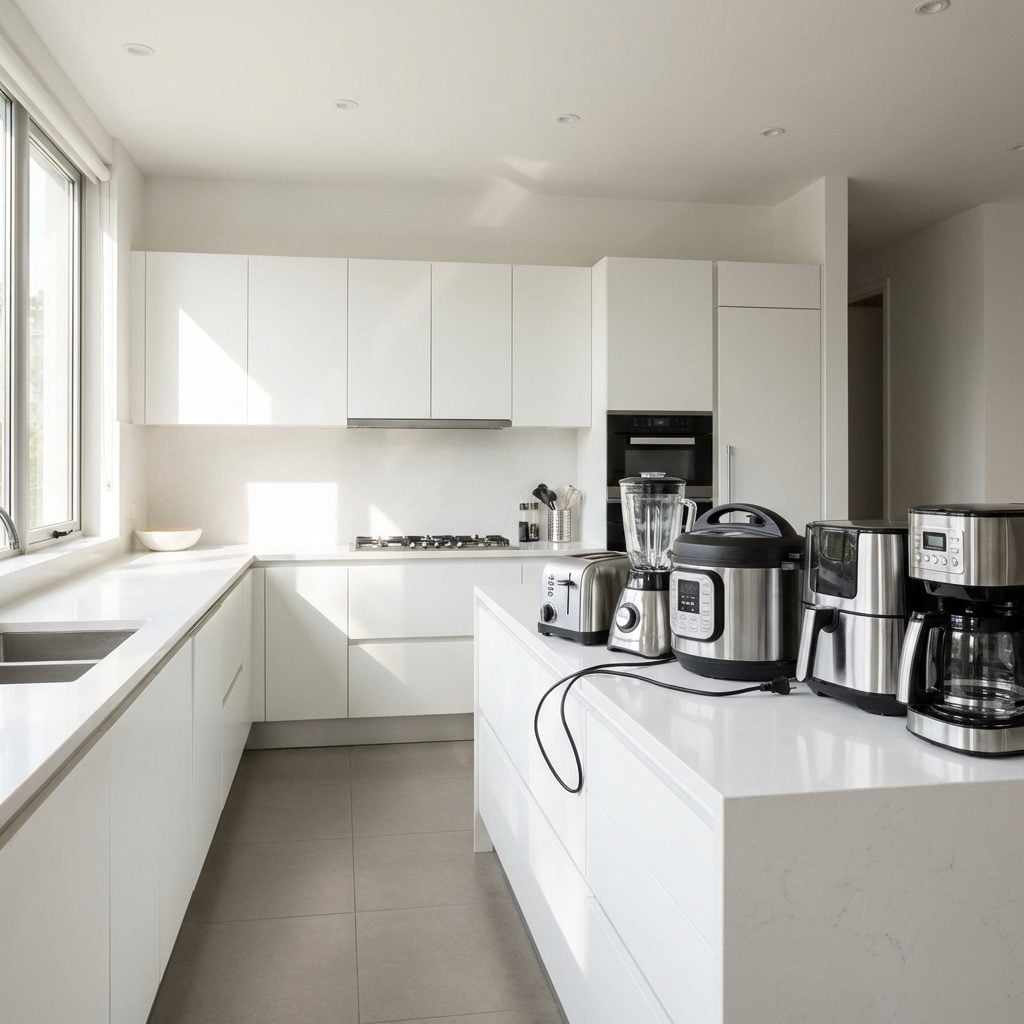
There’s a reason professional organizing culture developed such a strong appetite for hiding appliances. An air fryer on the counter, a toaster, an instant pot, a coffee maker, a blender, each one is an unspoken demand. Not a mess, exactly. But a task. An obligation. A thing that could be used, should be used, needs to be cleaned. (Source) and tires out cognitive functions over time, with fMRI scans showing that every object in the visual field creates a competing signal the brain must actively suppress.
Appliances on a counter aren’t clutter by conventional definition, but to your prefrontal cortex, the effect is similar. (Source) notes that every visible item represents work that needs to be done and a choice that needs to be made. Your air fryer isn’t just an air fryer. It’s a silent to-do list. A cool kitchen that’s genuinely restful to enter tends to have a single unifying principle: counters that look like nothing is expected of you. Every appliance tucked away is a demand your nervous system doesn’t have to answer.
The Psychological Reason an Ugly Kitchen Makes You Eat Worse
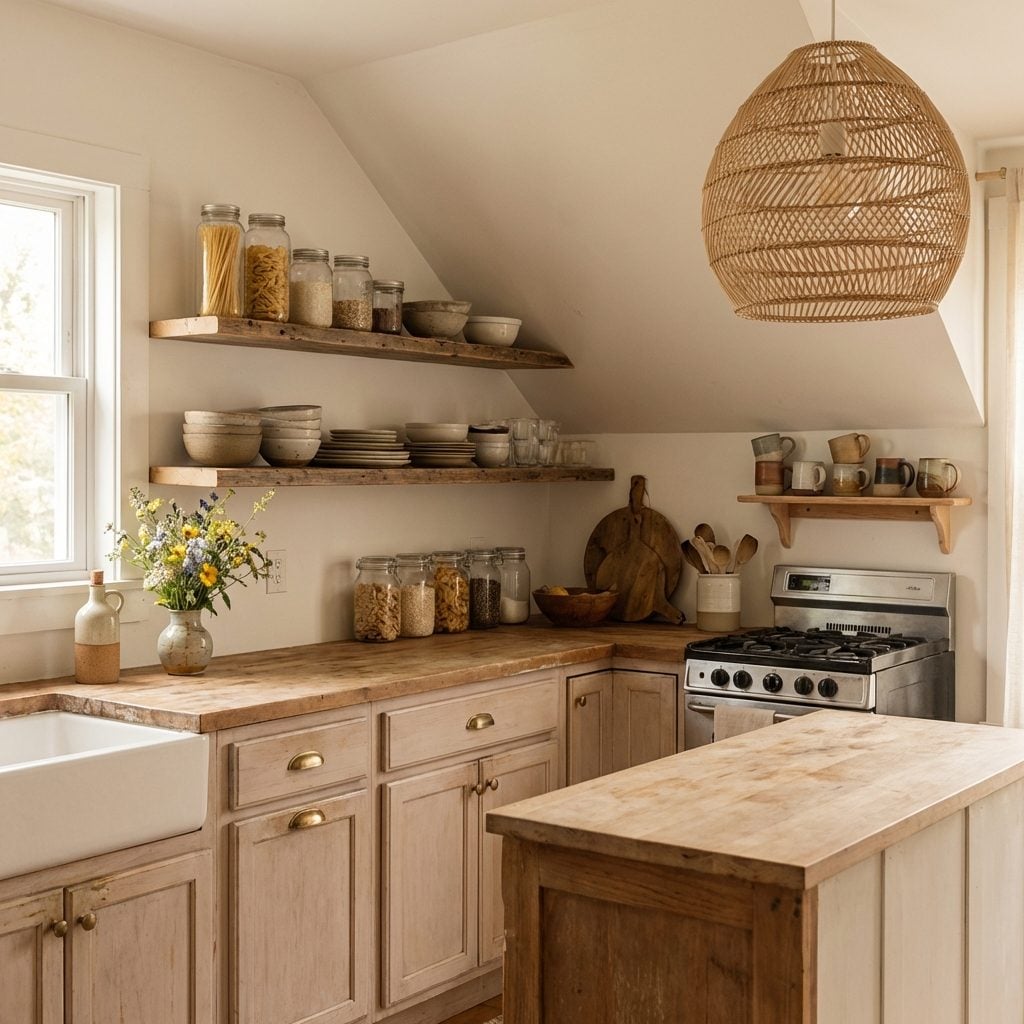
When your kitchen is uninspiring, dated laminate, stained grout, lighting that makes even fresh produce look grim, something subtler than discomfort happens. Your brain starts associating the act of cooking with dread instead of pleasure. That shift has measurable downstream effects on what you eat and how you eat it.
Research on environmental influences on eating behavior published in BMC Obesity found that home environment modifications, including making the kitchen feel more functional and inviting, directly changed food choices, with participants more likely to reach for fresh, whole foods when their cooking environment supported positive cues. The researchers cited the importance of removing visual cues to unhealthy eating and replacing them with environmental signals that make preparation feel accessible.
An ugly kitchen delivers the opposite signal. When the space feels punishing to be in, you avoid it, grabbing whatever requires the least time in that room. Takeout, packaged food, cereal over the sink. Boho kitchen inspiration that layers in warmth, texture, and visual pleasure isn’t just decorative indulgence, it’s functional psychology. The brain is far more willing to invest effort in spaces that feel worth inhabiting. An inviting kitchen is, in a very real sense, a health intervention.
The One Storage Flaw That Triggers a Shame Response Every Single Morning
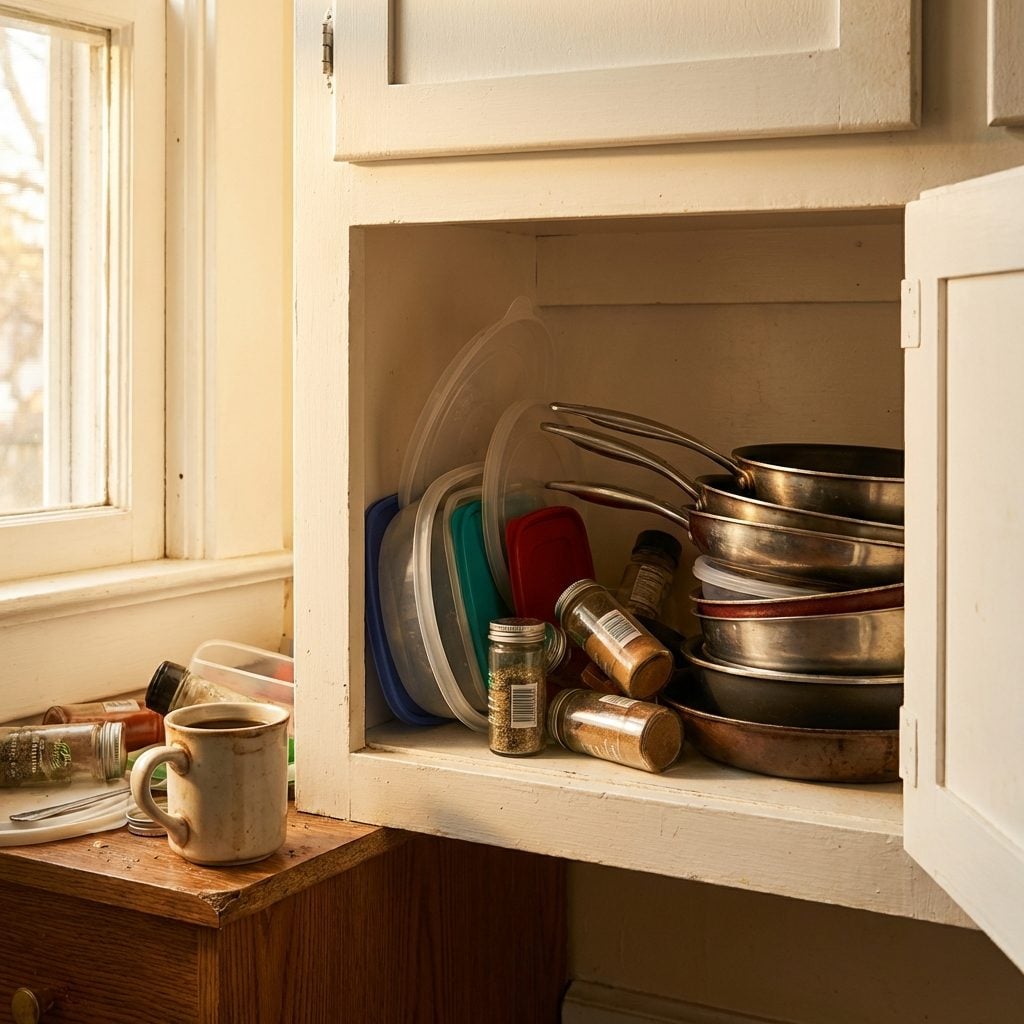
It happens in the same moment, every day. You open the cabinet to get the coffee, and the contemporary kitchen you thought you had reveals the drawer that doesn’t. The one where nothing fits where it should. Maybe it’s the pan drawer that requires a specific angle and a prayer. The spice cabinet that avalanches every time. The Tupperware graveyard with no matching lids. (Source), and that the psychological benefits of accessible storage are “profound,” with families reporting significantly less kitchen-related stress when frequently used items are stored within easy reach.
What makes this particular flaw so damaging is timing. It happens at the start of the day, before you’ve had a chance to build any momentum or resilience. Your first interaction with your kitchen is a small defeat. And as (Source), the brain doesn’t frame the obstacle as a design problem, it reads it as personal incompetence. The cabinet didn’t fail. You did, again, apparently.
A kitchen designed without adequate storage, counter space, or logical workflow forces you into constant micro-frustrations, searching, shuffling, backtracking, that your brain registers as personal incompetence rather than a design flaw. The kitchen isn’t reflecting your effort; it’s working against it.
Why Your Kitchen’s Sightlines Are Either Giving You Control or Taking It Away
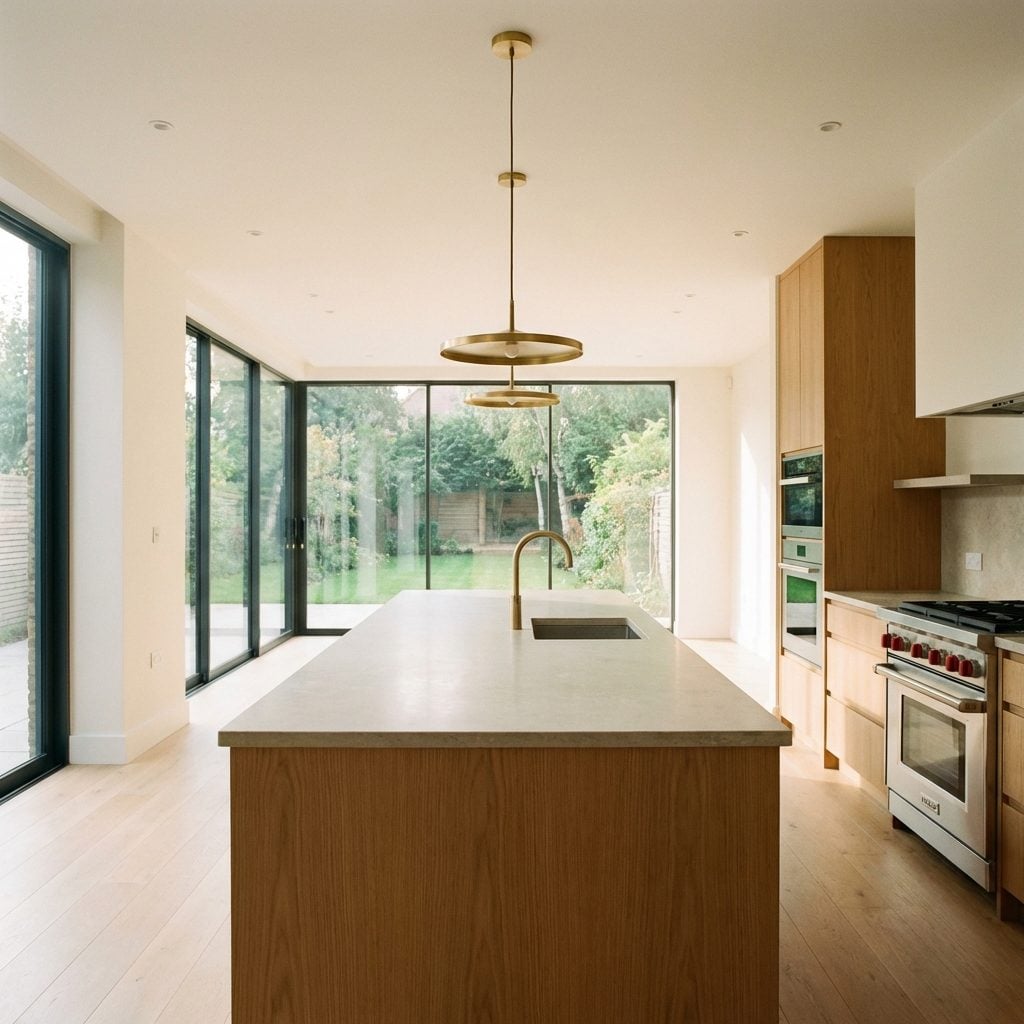
There’s a reason some kitchens feel like command centers and others feel like closets you cook in. It comes down to something ancient: your nervous system’s need to see what’s coming. Psychologist Jay Appleton formalized this instinct in his 1975 prospect-refuge theory, which proposed that humans are hardwired to prefer spaces that offer open views (prospect) without leaving them exposed (refuge). Applied to kitchens, this means the moment you step in and your sightlines are blocked, by a wall directly in front of you, an island that cuts off the room, or upper cabinets stacked so high you’re essentially cooking inside a box, your brain quietly registers a low-level threat. You can’t see the full picture, and some part of you knows it.
(Source) notes that open sightlines reduce perceived vulnerability and improve comfort, with guidelines suggesting focal lengths of at least 20 feet and partitions no higher than 42 inches so even seated occupants can scan across a space. A kitchen where you stand with your back to a doorway, chopping at a counter that faces a solid wall, is working directly against those thresholds. You feel vaguely unsettled, vaguely rushed, and you assume it’s because you haven’t prepped efficiently enough, not because the room itself has positioned you on the wrong side of your own instincts.
Kitchens designed with a view into the living area, like a contemporary kitchen with an open-plan layout, tend to score high on the prospect axis without the homeowner ever consciously noticing why they love cooking in them. That visibility isn’t a design flex. It’s a biological requirement.
The ‘Visual Noise’ Phenomenon That Makes Even Organized Kitchens Feel Chaotic
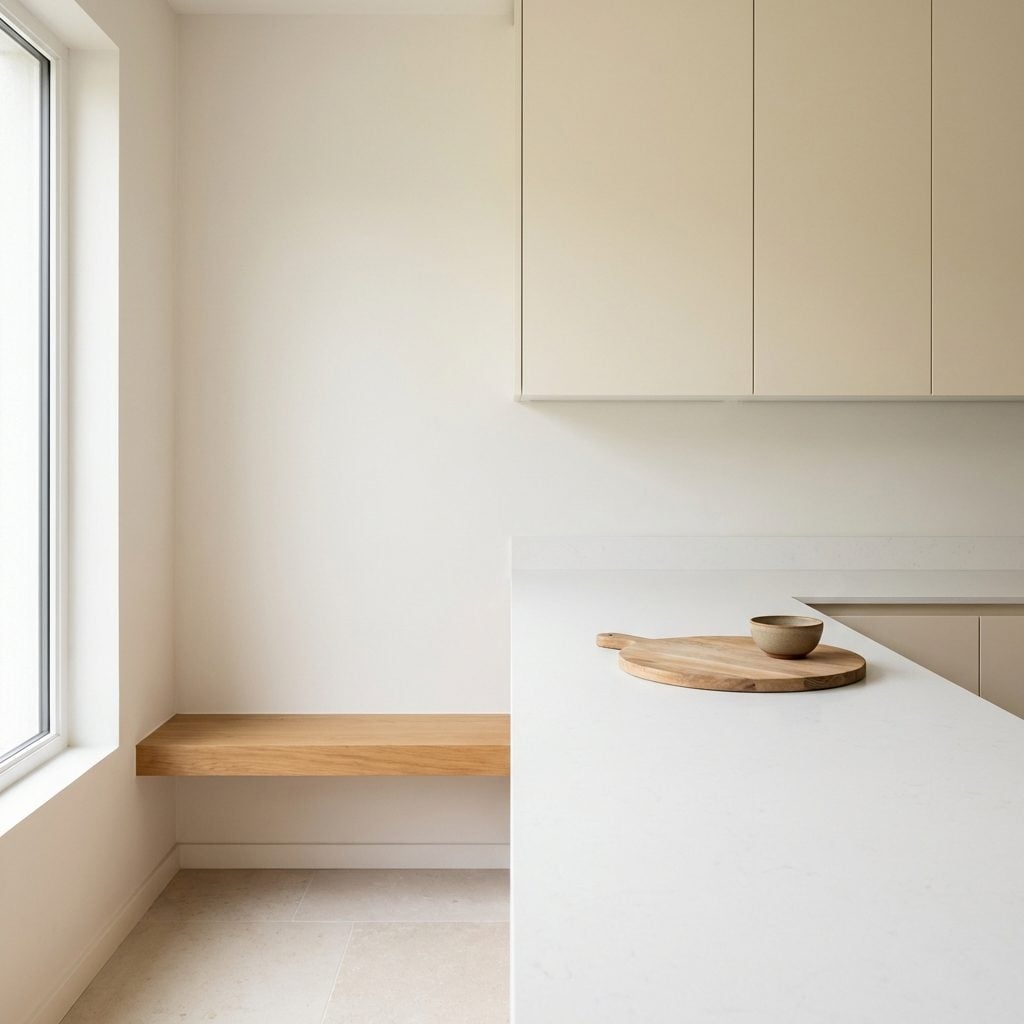
Your kitchen can be technically clean and still be making you anxious. The culprit is what researchers call visual noise, the cumulative cognitive load created when too many competing stimuli occupy your visual field at once. It’s not about mess. It’s about volume.
Princeton University neuroscientist Sabine Kastner spent two decades studying how clutter affects the brain and found that (Source). In any environment, there’s both a “push” toward what you’re trying to focus on and a “pull” from every other object competing for neural bandwidth. The more items in your visual field, the harder your brain works to suppress them, even when you aren’t consciously looking at them. In a kitchen packed with open shelving displaying 40 mismatched items, stacks of appliances on the counter, a fruit bowl next to the toaster next to a block of knives next to a recipe stand, every single object is taxing your brain’s filtering capacity simultaneously.
This is why a modern kitchen decor scheme built around consistent materials, a limited palette, and matte white cabinets tends to feel calmer than a kitchen crammed with personality, not because it looks better, but because it demands less of your brain just to exist in it. Organized chaos is still chaos to your visual cortex.
Why Deep Cabinets Are a Psychological Trap Disguised as Extra Storage
🔥 Would you like to save this?
The phrase “extra storage” triggers a near-Pavlovian excitement in kitchen planning, but depth is not the same as usability. Standard 24-inch-deep base cabinets and 12-inch-deep upper cabinets sound like generous storage, until you’re on your knees at 7 a.m. excavating the back of a cabinet for the Dutch oven you use every Sunday, and you come up empty. The thing you need is always behind three things you don’t.
- Out of sight is out of mind. Anything pushed to the back of a deep cabinet effectively stops existing in your mental inventory. You forget you own it, buy duplicates, or simply stop cooking the meals that require it.
- Retrieval cost creates avoidance. Each time a needed item requires physical effort to reach, your brain starts associating that task, making pasta, roasting vegetables, with a small tax. Over time, those taxes accumulate into decisions to not bother.
- The Zeigarnik Effect compounds the problem. According to research on the psychology of clutter, (Source) in the brain, items you know are back there, need to deal with, haven’t gotten around to sorting.
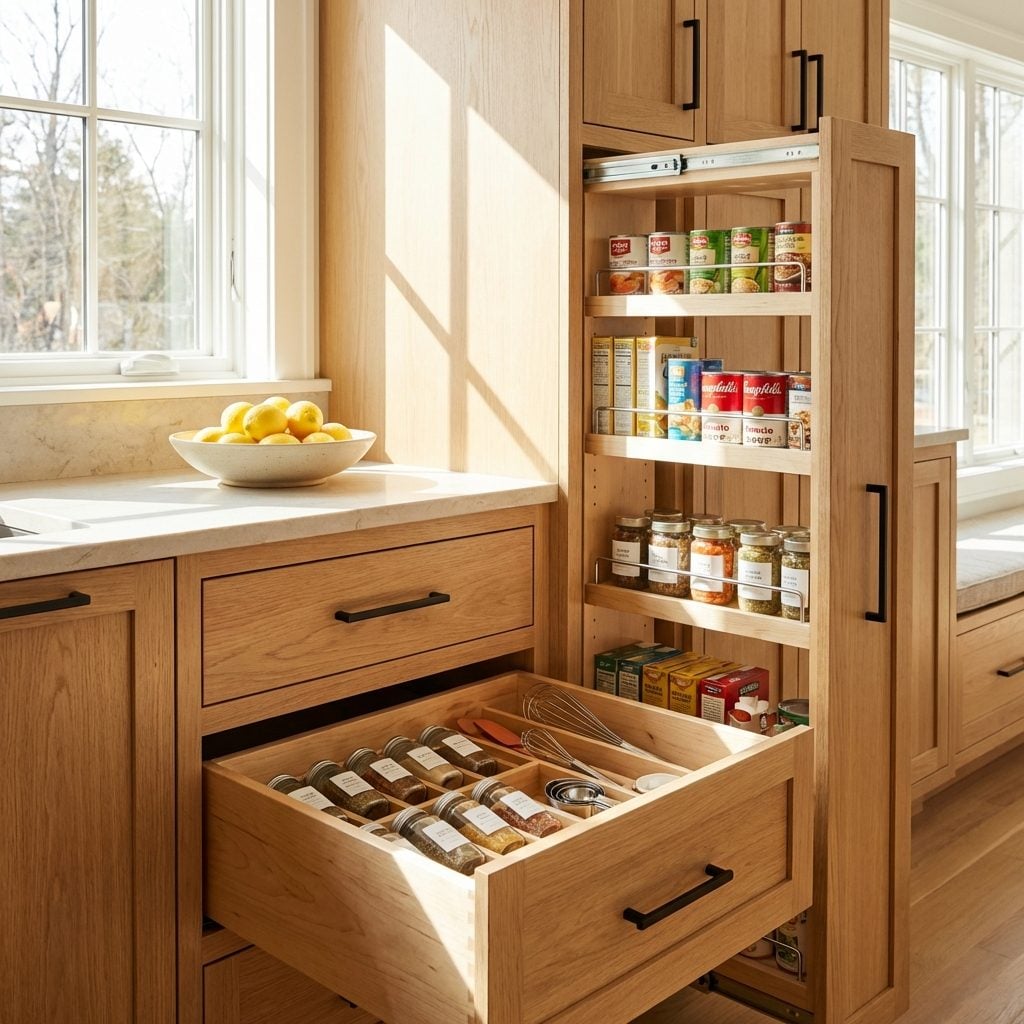
Designers working in small-footprint kitchens know that shallow, accessible storage beats deep inaccessible storage every time. Browse any thoughtful small kitchen inspiration and you’ll notice the consistent reliance on open lower drawers, pull-out shelves, and shallow wall niches over the deep-cabinet default. The storage isn’t less, it’s just honest about what your arms can actually reach.
The Surprising Way Your Kitchen’s Smell Memory Is Rewriting How You Feel About Home
Smell is the only sense that bypasses the thalamus and travels directly to the amygdala and hippocampus, the brain’s emotional and memory centers. According to (Source), this unique neurological wiring means odors can trigger emotional responses faster, more vividly, and with more physiological force than any other sense. The scent of toasted bread or coffee grounds doesn’t just remind you of something, it reactivates the emotional state you were in when you first formed that smell-memory. Your kitchen is constantly depositing and withdrawing from this account.
Here’s where it gets complicated: if your current kitchen is mostly associated with the smell of a drain that never quite drains fully, synthetic countertop cleaner, and the recycling bin that needs emptying, those mundane olfactory signatures are being recorded as your home’s emotional baseline. A 2016 review published in Brain Sciences found that odors evoking positive autobiographical memories have the potential to increase positive emotions and reduce physiological stress markers, but the inverse matters too. Odors associated with effort, sourness, or neglect keep building a sense that this space is draining rather than nourishing you.
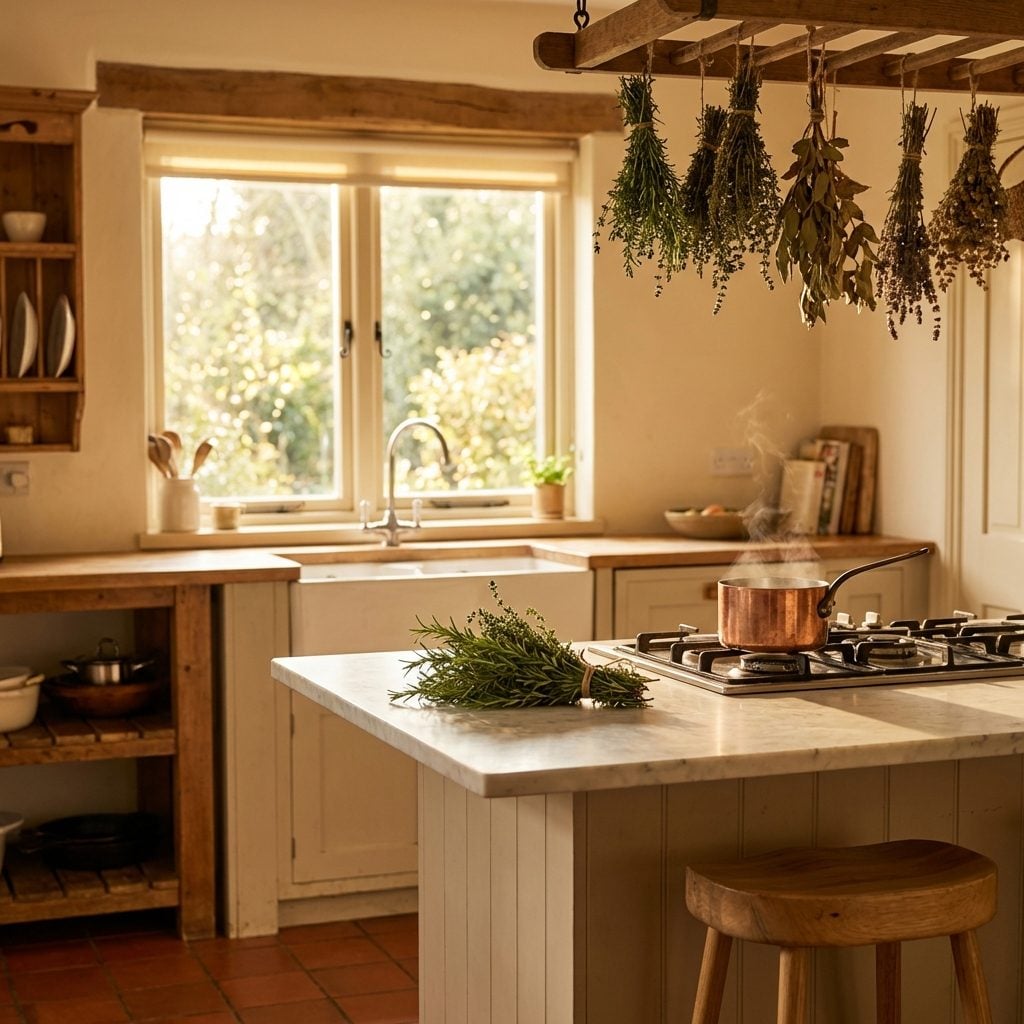
The boho kitchen inspiration trend that leans heavily into dried herb bundles, beeswax candles, and whole-food cooking isn’t purely aesthetic. Consciously or not, it’s building a smell library of warmth, care, and abundance, rewriting what “kitchen” means to the nervous system, one simmer at a time.
What Architects Know About Counter Height That Most Homeowners Never Learn
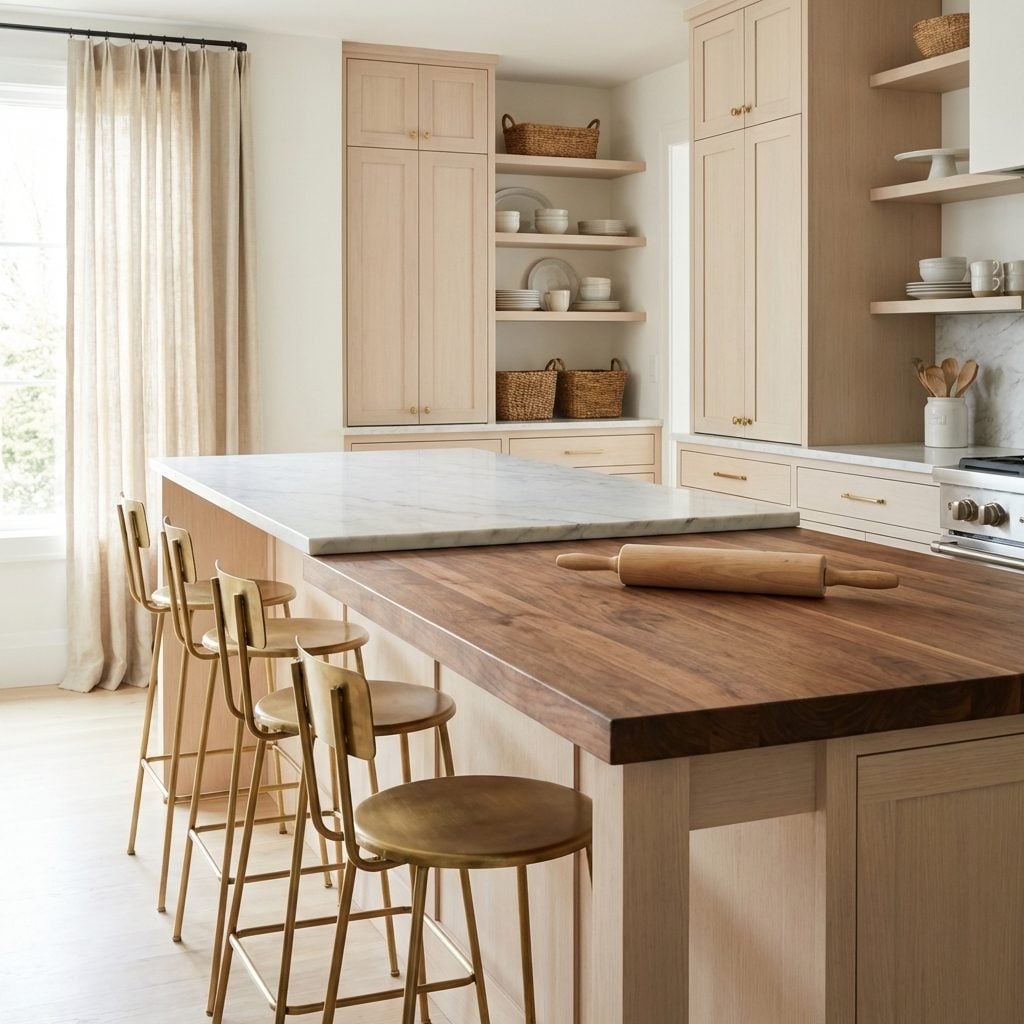
The standard residential counter height of 36 inches was not arrived at through scientific research into human comfort. It became standard because it was easy to mass-produce. In the 1940s, the Small Homes Council at the University of Illinois began formally applying ergonomic principles to kitchen design, but (Source).
The ergonomic principle architects actually work from is simpler: your ideal prep-surface height should be 3 to 4 inches below your elbow when standing relaxed. For someone 5’4″, that might be 34 inches. For someone 6’1″, it’s closer to 38 or 39. Working at a surface that’s even two inches too low forces a subtle but sustained forward shoulder rotation; too high, and your traps engage unnecessarily to stabilize the movement. Neither registers as acute pain. Both register as vague fatigue and the persistent sense that cooking is more effort than it should be.
According to a scoping review on (Source), environmental psychology research consistently shows that the ambient conditions of the kitchen, including surface height, directly affect the user’s comfort and willingness to engage in cooking tasks. A adjustable height kitchen stool at a prep island is one of the few retrofits that genuinely closes this gap for taller or shorter cooks.
Why a Kitchen With No Natural Light Is Slowly Eroding Your Sense of Time
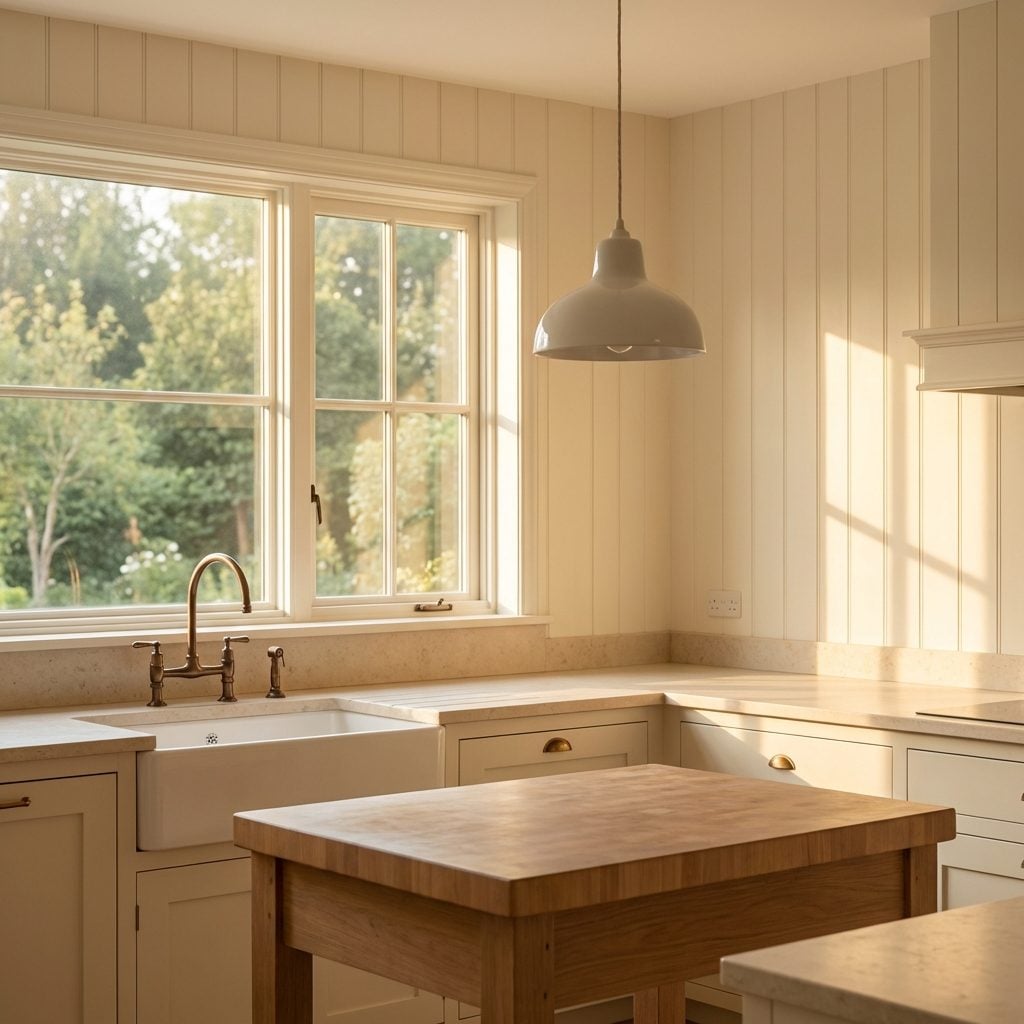
Light isn’t just about seeing clearly. It’s the primary signal your brain uses to synchronize its internal clock with the 24-hour world. Your circadian system relies on morning light, specifically its blue-wavelength component, to trigger a cascade of hormonal events: cortisol rises appropriately, serotonin production gets calibrated, melatonin begins its long suppression. A kitchen that receives no natural light, or where the only illumination is recessed halogen bulbs at 2700K regardless of the hour, strips out that signal during one of the most critical windows of your day.
A large-scale study of over 400,000 UK Biobank participants found that daytime light exposure is significantly associated with improved mood and sleep outcomes via circadian phase advancement, and that people spending more time in low-light indoor conditions showed measurably worse mood and sleep quality. Most people brew their first coffee, eat breakfast, and prep the next day’s lunches in their kitchen. If that room is a light-deprived cave, you’re starting and ending your active day without the circadian anchor your biology requires.
This effect is subtle by design. You don’t feel dramatically worse in a windowless kitchen. You just feel slightly flatter, slightly more disconnected from the rhythm of the day, and you have no obvious reason to attribute it to the room itself. The cool kitchen designs that consistently rate highest for occupant satisfaction are almost universally the ones with large south- or east-facing windows. That’s not coincidence, it’s chronobiology.
The Psychological Weight of a Sink Facing a Wall, and Why It Matters More Than You Think
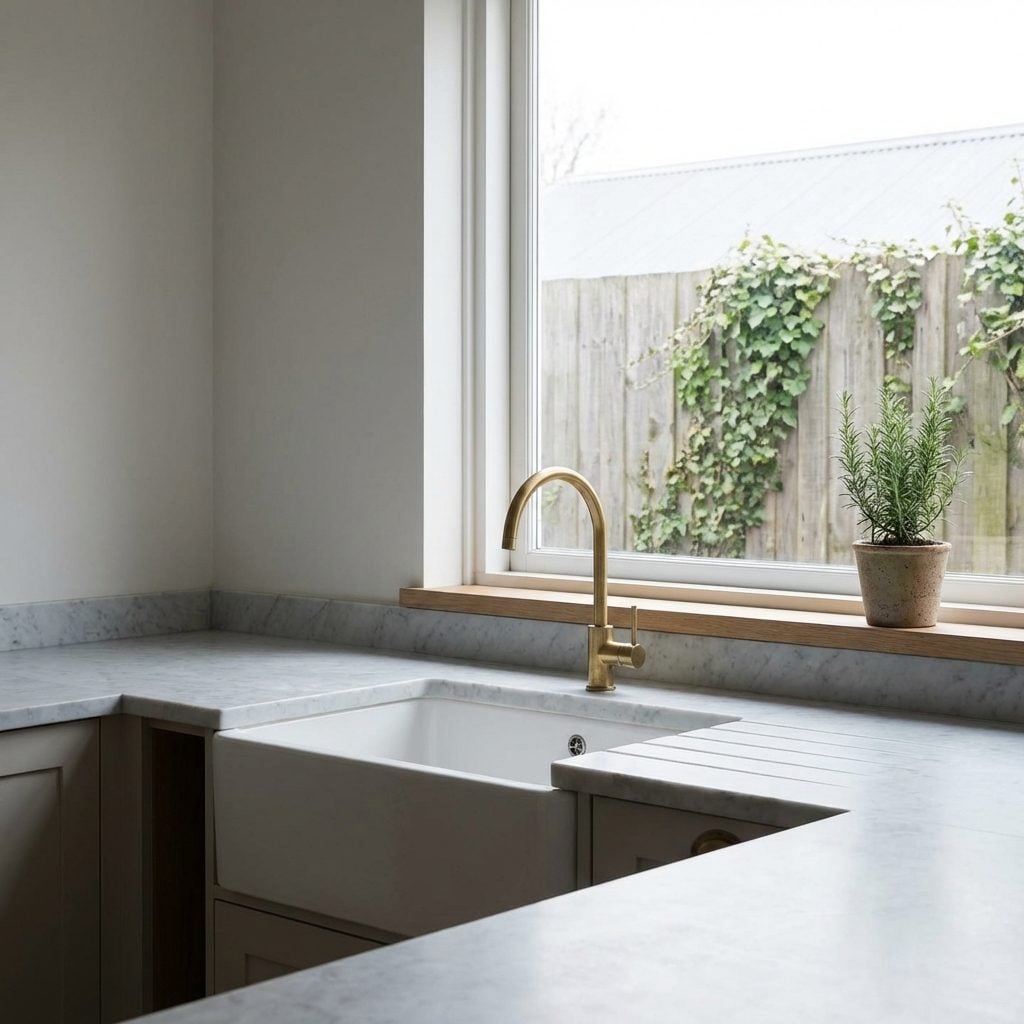
Standing at a sink facing a flat wall for 20 to 30 minutes of daily dishwashing is a small thing. But small things, when repeated hundreds of times a year, accumulate. What’s happening psychologically in that position is more interesting than most people realize.
Prospect-refuge theory suggests that (Source), and that this orientation preference connects directly to ancient survival instincts about monitoring your surroundings. You cannot see who is entering the room. You cannot track the larger space. Your back is exposed and your visual horizon is 18 inches of tile. The brain responds to this arrangement not with panic but with a persistent, barely-conscious unease: a low-grade alertness that never fully settles.
Meanwhile, research synthesizing evidence across hundreds of studies found that (Source), with workers and occupants in windowed environments consistently reporting better wellbeing and satisfaction. A sink under a window, by contrast, gives you access to daylight, a shifting view, seasonal change, bird movement, weather. These microbursts of natural variability are exactly the kind of low-level environmental input that Attention Restoration Theory describes as “soft fascination”, stimuli that restore mental capacity without demanding it.
A wall offers none of that. It just holds grout lines. An attractive subway tile backsplash helps aesthetically, but it can’t replicate the restorative effect of even a modest view outdoors.
Why the Kitchen You Grew Up In Is Still Judging the One You Live In Now
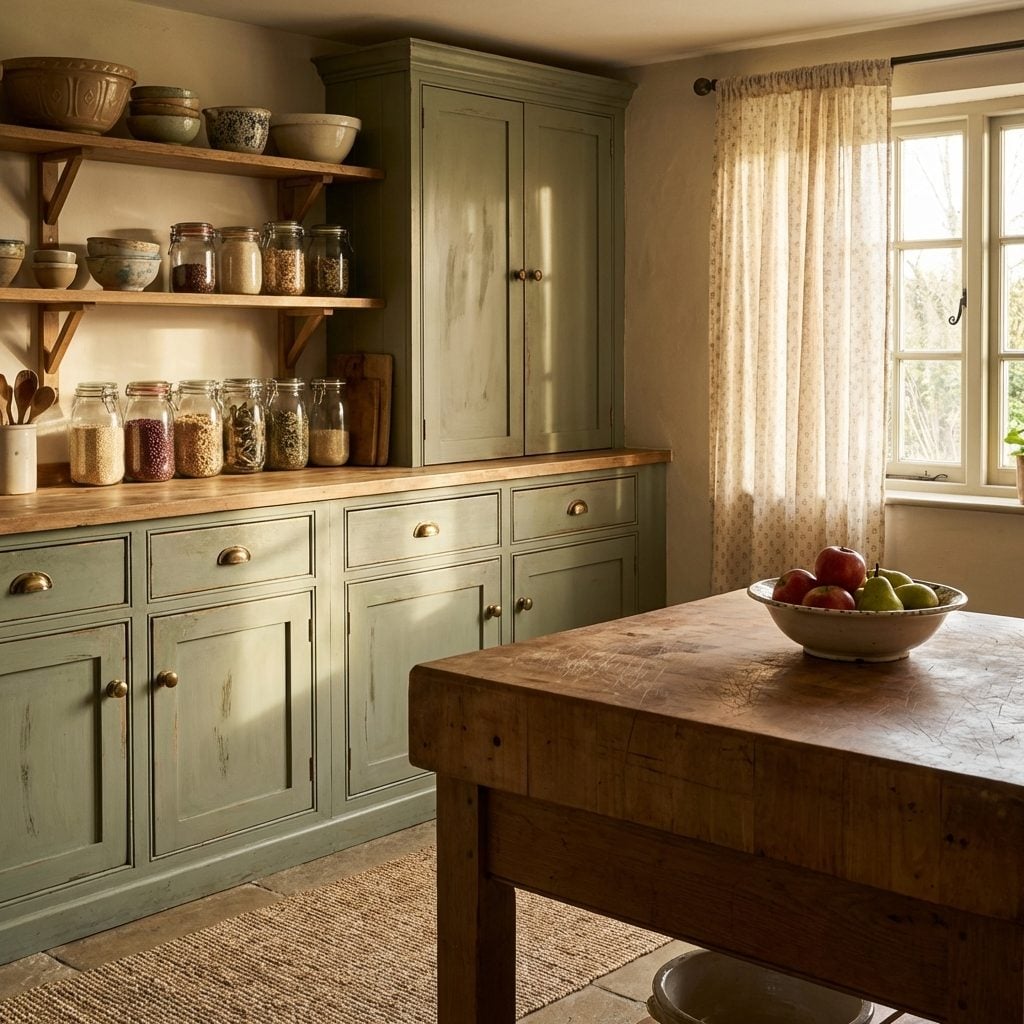
Nostalgia is not a passive experience. Research published in Social Cognitive and Affective Neuroscience confirms that (Source), one the brain deploys most powerfully during states of uncertainty, loneliness, or diminished sense of self. In plain terms: when your current kitchen frustrates you, when cooking feels like a chore, when the space doesn’t reflect who you imagined you’d be, your brain often reaches backward for contrast. And the kitchen it retrieves is almost always the one from childhood.
This matters because autobiographical memory is notoriously unreliable. The kitchen you grew up in, whether it was a cramped 1970s galley or a cluttered farmhouse chaos, has been edited by time into something emotionally coherent. Research on nostalgia consistently shows that nostalgic memories are retrieved through “rose-colored glasses,” with negative elements smoothed out and warmth amplified. So the internal benchmark your adult kitchen is being judged against isn’t real. It’s a curated highlight reel of comfort, belonging, and food that just seemed better.
A study examining food-evoked nostalgia found that (Source). The kitchen isn’t just where you cook. It’s where your sense of home identity is constantly being compared, consciously or not, to a childhood memory that no architect could reproduce. The farmhouse kitchen trend persists partly because it taps directly into those nostalgic templates, warm wood, gathered foods, visible evidence of care, in ways that more clinical modern spaces simply don’t.
The Micro-Frustration Loop That Makes You Feel Incompetent Before Breakfast Is Even Ready
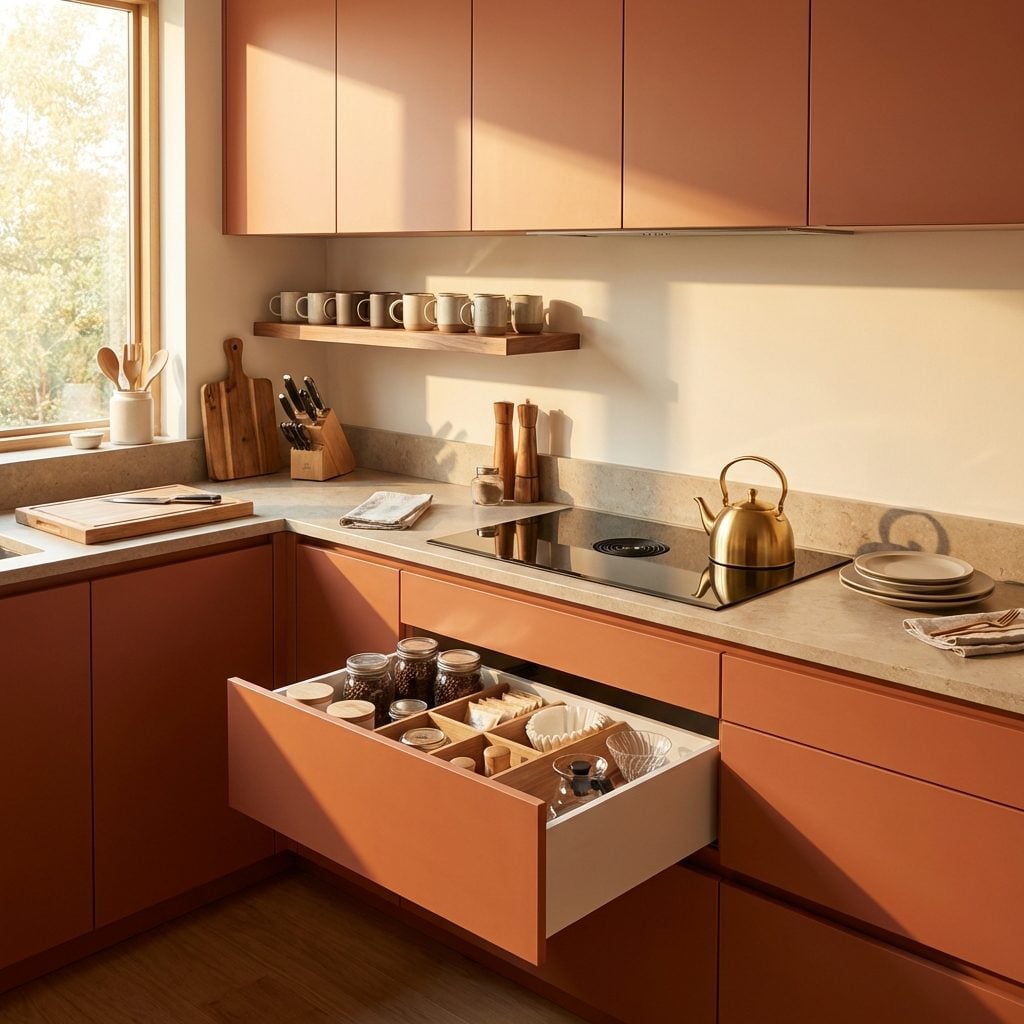
Open the cabinet to get the coffee. The coffee is behind the protein powder. The protein powder falls out. Put it back. Reach for the mug, wrong shelf, the mugs are above the refrigerator where you put them when you ran out of space. Step back, reach up, bang your elbow on the open cabinet door. The kettle is on the wrong side of the stove for the mugs. Shuffle everything. Breakfast hasn’t started and your brain is already registering a small, repeating signal: this isn’t going well.
What’s insidious about this loop is where the blame lands. According to environmental psychology research on how chaotic environments affect cognition, when a space forces repeated small failures, people tend to internalize that frustration rather than attribute it to the design. The kitchen is fixed; your performance inside it feels variable. So the logical conclusion your brain reaches is that you are disorganized, inefficient, clumsy, not that the space is fighting you.
This is the micro-frustration loop: a poor kitchen workflow generates friction, friction generates minor failures, minor failures register as personal incompetence, and incompetence erodes your willingness to cook at all. The rust kitchen aesthetic so popular in Japandi design isn’t just visually striking, it’s built around considered workflow, where each element is placed to reduce the number of steps, pivots, and reaches required to complete a task. The aesthetic and the psychology are inseparable: a rattan pendant light over a well-organized island looks calm because the space underneath it functions calmly.
What Your Kitchen’s Workflow Reveals About Whether Your Home Respects Your Time
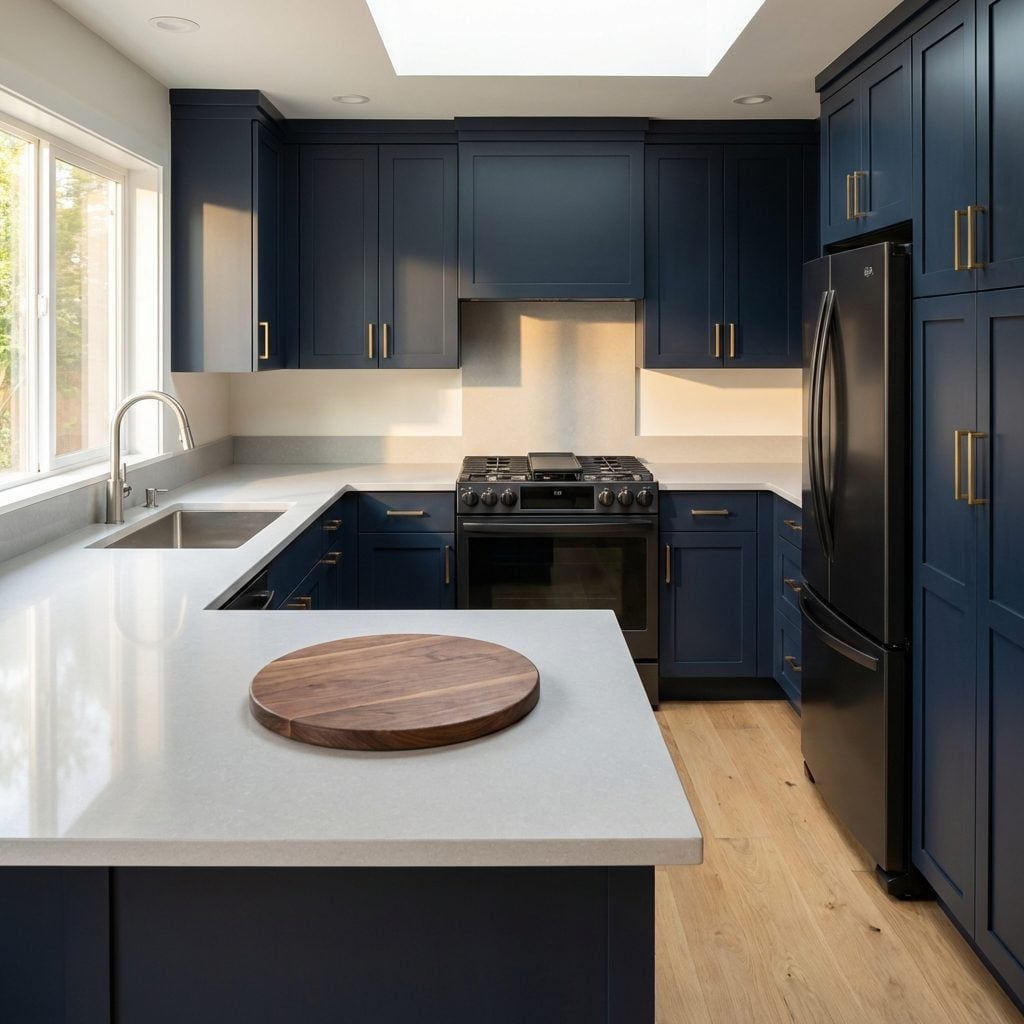
The kitchen work triangle, the spatial relationship between refrigerator, stove, and sink, was first formalized in the 1920s by psychologist and industrial engineer Lillian Moller Gilbreth, who applied time-and-motion studies to domestic labor. A century later, the insight remains intact: the work triangle minimizes distance between key stations, reducing unnecessary movement and accumulated fatigue. Violate it, spread your sink 12 feet from your stove, position your refrigerator behind a corner that requires a full pivot on every trip, and you create a kitchen that charges you time and physical energy on every meal, every single day.
But the deeper psychological dimension is what that charged cost signals over time. A kitchen designed without adequate storage, counter space, or logical workflow forces you into constant micro-frustrations, searching, shuffling, backtracking, that your brain registers as personal incompetence rather than a design flaw. The kitchen isn’t reflecting your effort; it’s working against it.
This is the quiet cruelty of a poorly designed kitchen: it frames a structural failure as a personal one. You leave it not thinking “that layout was inefficient,” but feeling vaguely like you couldn’t handle the morning. The most functional kitchens, whether a kitchen decor scheme rated high on luxury energy or a modest galley built around a tight, logical triangle, share one quality. They get out of your way. They respect the time you’re spending in them. And that respect, felt as ease and flow rather than friction, is what makes cooking feel like something you chose rather than something that happened to you.
The Bottom Line
The answer is this: your kitchen was almost certainly designed for aesthetics or resale value, not for the way a human body and nervous system actually move through space under stress. When your environment consistently fights your instincts, your brain stops blaming the room and starts blaming you. So the next time you walk into your kitchen and feel that quiet, nameless dread, recognize it for what it is, not a character flaw, but a design flaw, and ask yourself which one small friction point you could remove today.