🔥 Would you like to save this?
Think about the last truly great dinner party you attended. Chances are, everyone could see everyone else. Conversation moved like water, finding its own level, pulling people in who hadn’t planned to speak. Now think about the last dinner at home that felt oddly flat, people on their phones between courses, side conversations that fizzled, a general sense that the room never quite came alive. The food was fine. The people were the same people you love. So what went wrong?
The answer isn’t in the menu or the mood. It’s in the room itself. Your dining space is broadcasting psychological signals you’ve never been taught to read, and some of them are actively working against connection every single night.
In order to come up with the very specific design ideas, we create most designs with the assistance of state-of-the-art AI interior design software. Also, assume links that take you off the site are affiliate links such as links to Amazon. this means we may earn a commission if you buy something.
The Invisible Force Field That Silently Splits Your Dinner Table in Half
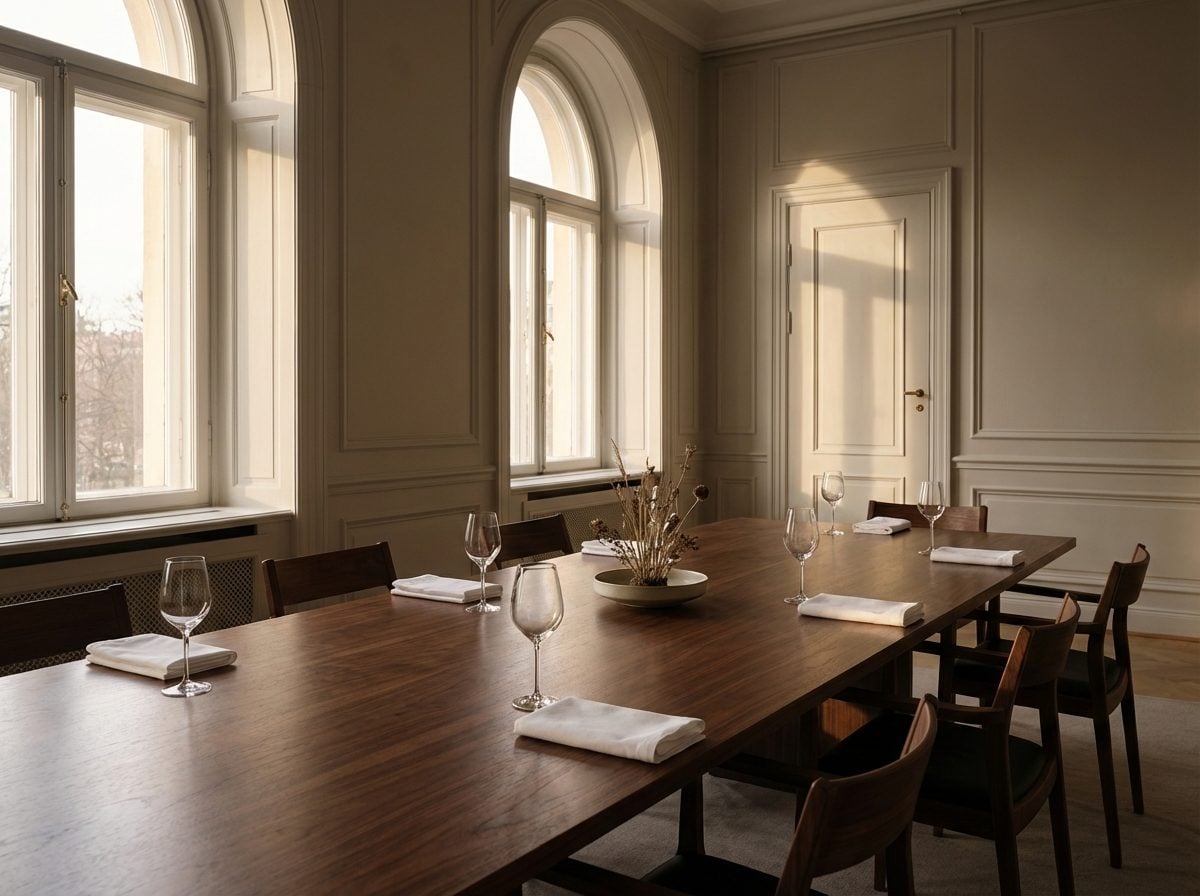
Your dining table has a dividing line running straight through the middle of it, and you’ve probably never seen it. It isn’t drawn in the wood grain or marked on any blueprint. It lives in the space between people, and it’s governed by something called proxemics, a field of study pioneered by cultural anthropologist Edward T. Hall in the 1960s. Hall discovered that humans operate within invisible spatial zones that determine how connected, comfortable, or closed-off we feel toward others.
According to Hall’s foundational proxemic theory, comfortable conversation between friends and family happens within roughly 18 inches to 4 feet of each other. The moment that distance creeps past four feet, the brain quietly reclassifies the interaction as something more formal, more distant, more like a social acquaintance than someone you actually know. A standard dining table is often 36 inches wide. Add chairs pushed back, posture, and the physics of reach, and many people are eating dinner at what Hall would classify as the outer edge of personal space, or beyond it entirely.
Nobody announces this shift. Nobody feels a wall go up. But something changes anyway. The conversation that might have flowed becomes more deliberate, a little more effort, a little less warm. The invisible force field isn’t dramatic. That’s precisely why it works without anyone naming it.
Why the Distance Between Two Chairs Decides Whether a Conversation Ever Starts
There’s a threshold. Cross it and conversation flows almost automatically. Stay on the wrong side of it and the effort to speak feels, subtly but unmistakably, like a choice rather than a reflex.
Hall’s proxemic research established that the personal-casual zone, roughly 18 inches to 4 feet, is where humans naturally open up with people they’re close to. As Hall outlined in his proxemics framework, physical distance signals relationship type to the brain before a single word is spoken. When you’re seated just outside that zone, your nervous system subtly registers the other person as an acquaintance-level presence, not an intimate one. The content of your relationship doesn’t override that signal, the spatial data wins.
This matters enormously at the dining table. Research into restaurant design psychology has found that even table width plays a role: tables too wide prevent the instinctive lean-in that marks genuine engagement in conversation. That lean isn’t decorative. It’s the body physically trying to close the gap the furniture created. When the table is too wide to lean across comfortably, the body stops trying. And often, so does the conversation.
The Psychological Reason Long Tables Feel Lonely No Matter How Many People Are Sitting at Them
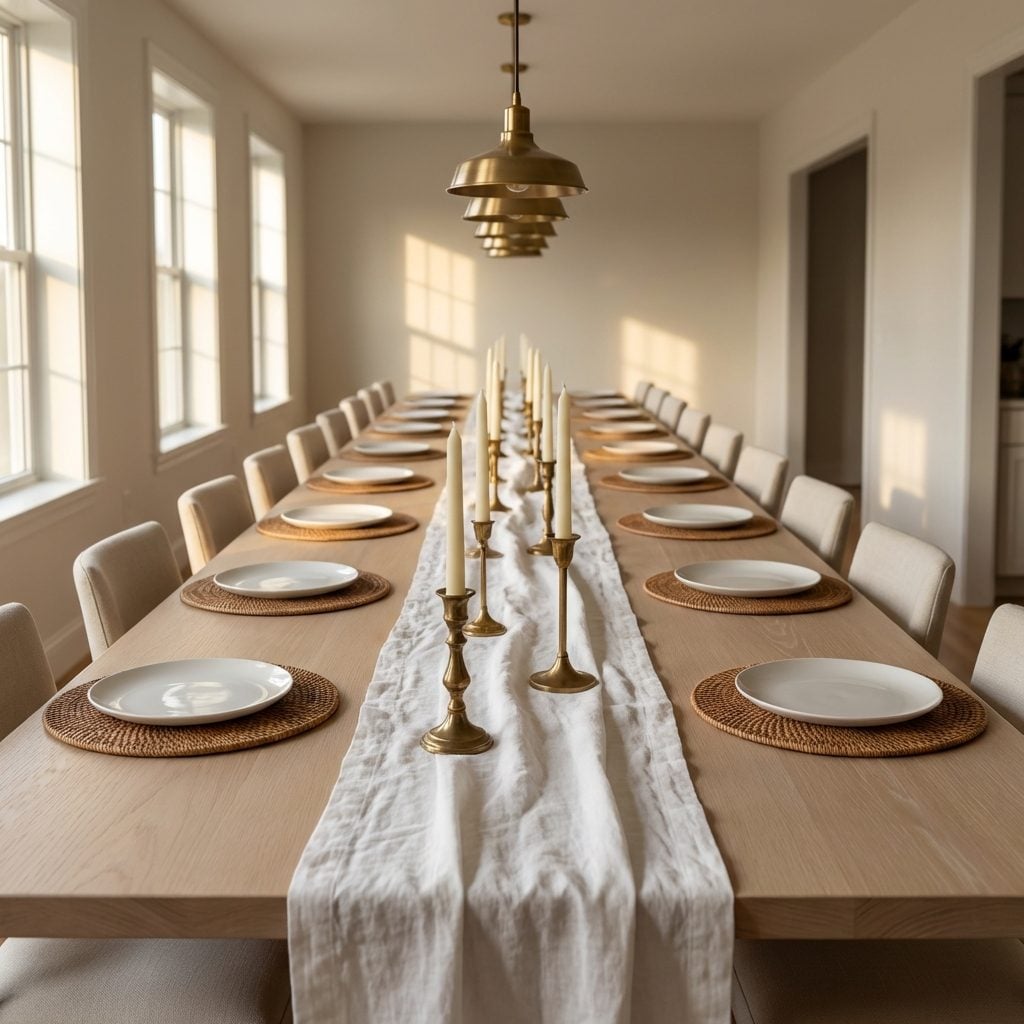
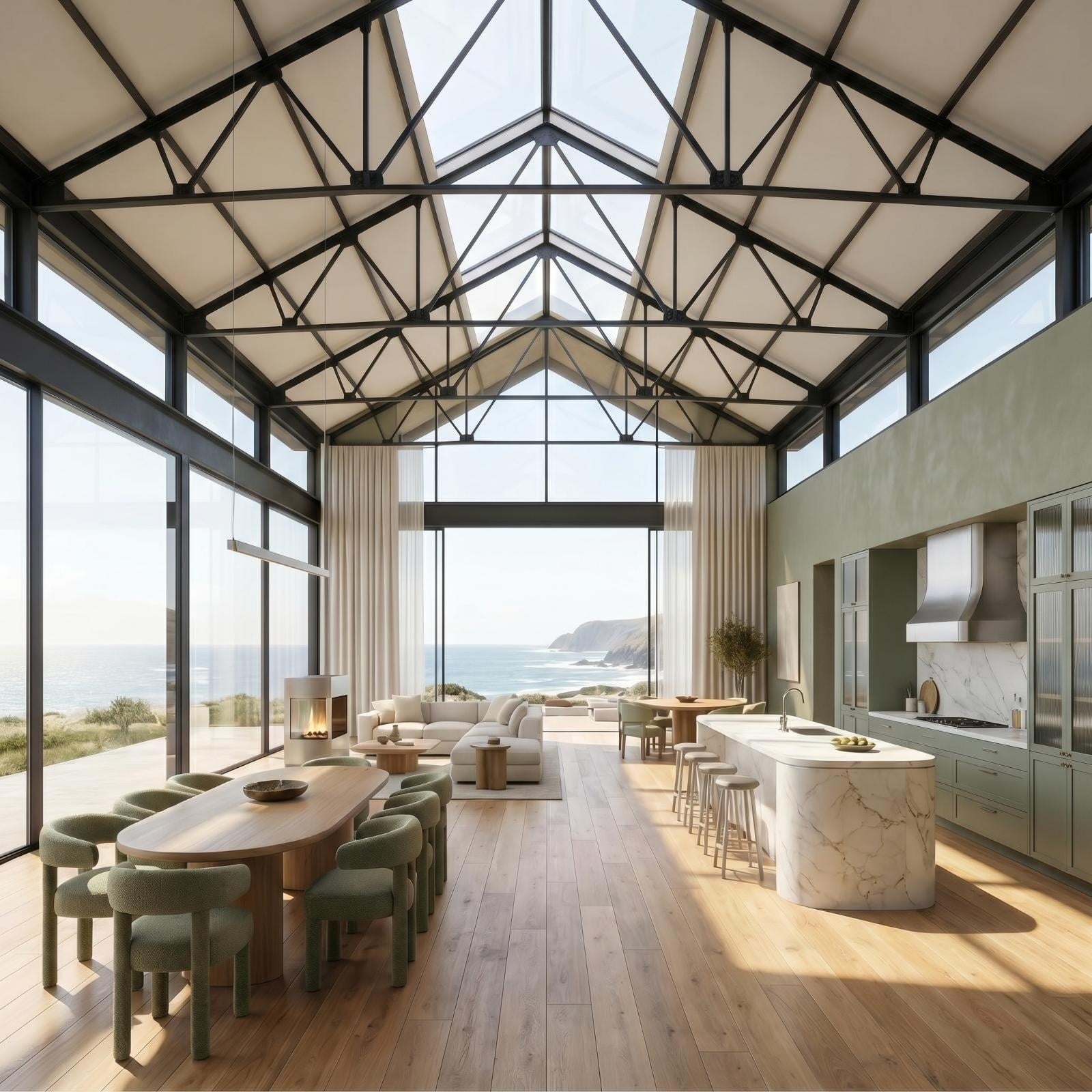
You can seat twelve people at a twelve-foot table and still feel completely alone at dinner. The math is obvious once you know it: a long rectangular table doesn’t create one conversation, it creates several small ones happening simultaneously in different sections, like a train car where each compartment has its own isolated world.
Environmental psychology research on spatial layout consistently shows that circular arrangements produce more democratic conversation patterns than linear ones. At a long table, people can only realistically speak with the two or three people nearest to them. The rest of the guests become audience members, faces you smile at, mouths moving too far away to hear clearly without raising your voice. The room doesn’t feel full. It feels fractured.
There’s something almost architectural about the loneliness of the long table. The person at the far end might as well be in another room. Dinner becomes a series of private two-person exchanges strung together along a plank of wood, and the thing most people come to the table for, the feeling of actually being together, quietly evaporates. What’s frustrating is how often this gets blamed on the people. Bad conversation. Tired guests. The wrong dynamic. Almost never the table.
What Happens to Your Brain the Moment You Can’t Make Eye Contact Across the Table
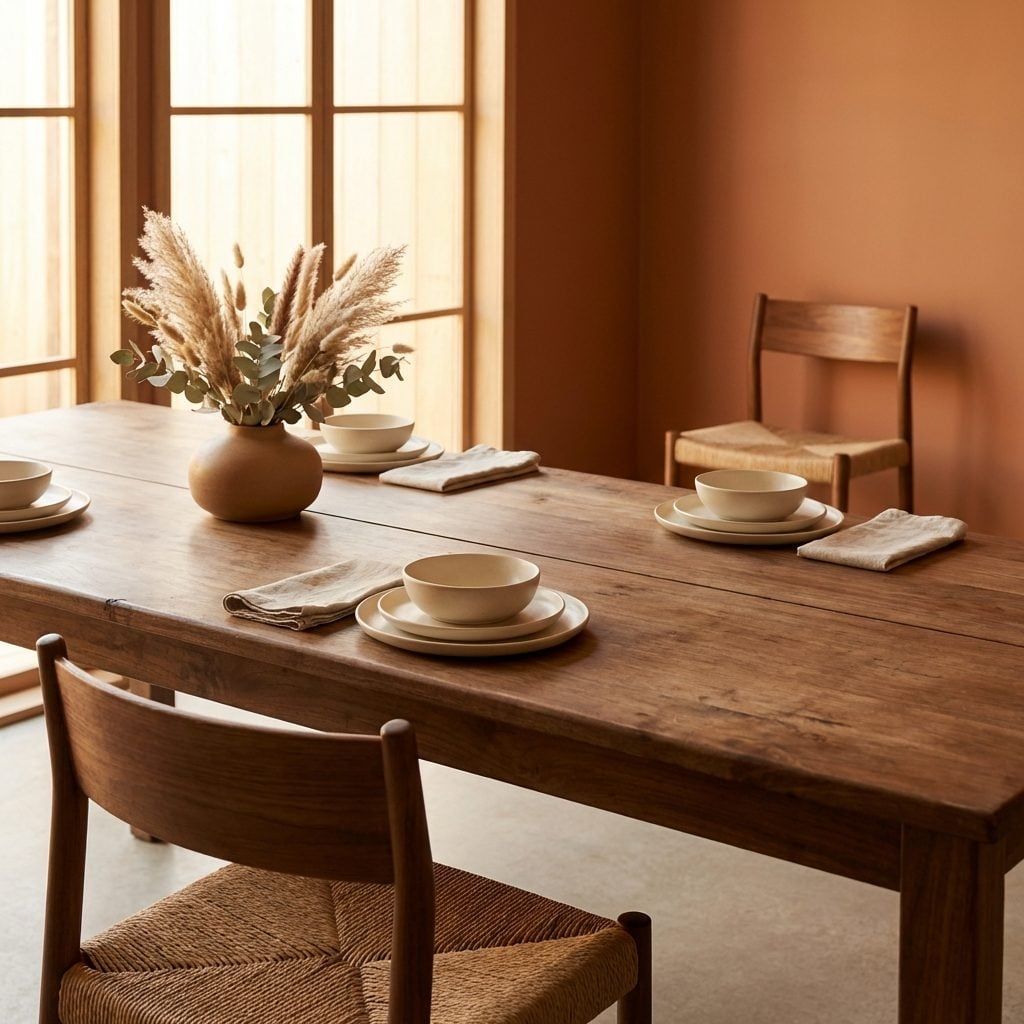
Eye contact isn’t decorative, it’s neurochemical. When two people make genuine eye contact, the brain triggers a release of oxytocin, the same neuropeptide associated with bonding, trust, and emotional closeness. a 2014 study in Biological Psychiatry on oxytocin and attentiveness to the eye region during social interaction found that oxytocin measurably increases attentiveness to the eye region of a face during live social interactions. In plain terms: looking at someone’s eyes is part of how the brain builds and maintains closeness with them.
Now consider what happens at a long table where the guests at the opposite end are too far away for comfortable eye contact. The gaze drops. People look at their plates, at the candle, at whoever is within easy reach. The oxytocin loop never completes. The brain processes those distant family members in essentially the same way it processes strangers across a room. Not because anything is wrong with the relationship, but because the table made eye contact structurally inconvenient.
Psychologist Zick Rubin’s research in the 1970s found that deeply bonded couples maintain eye contact roughly 75% of the time during conversation, compared to the 30-60% average for most people. That gap doesn’t just describe closeness, it helps create it. A table that forces you to shout across four feet of oak to make eye contact with your teenager is quietly working against the very bonding mechanism that family dinners are supposed to activate.
The Furniture Shape That Evolutionary Psychology Says Was Built for Togetherness
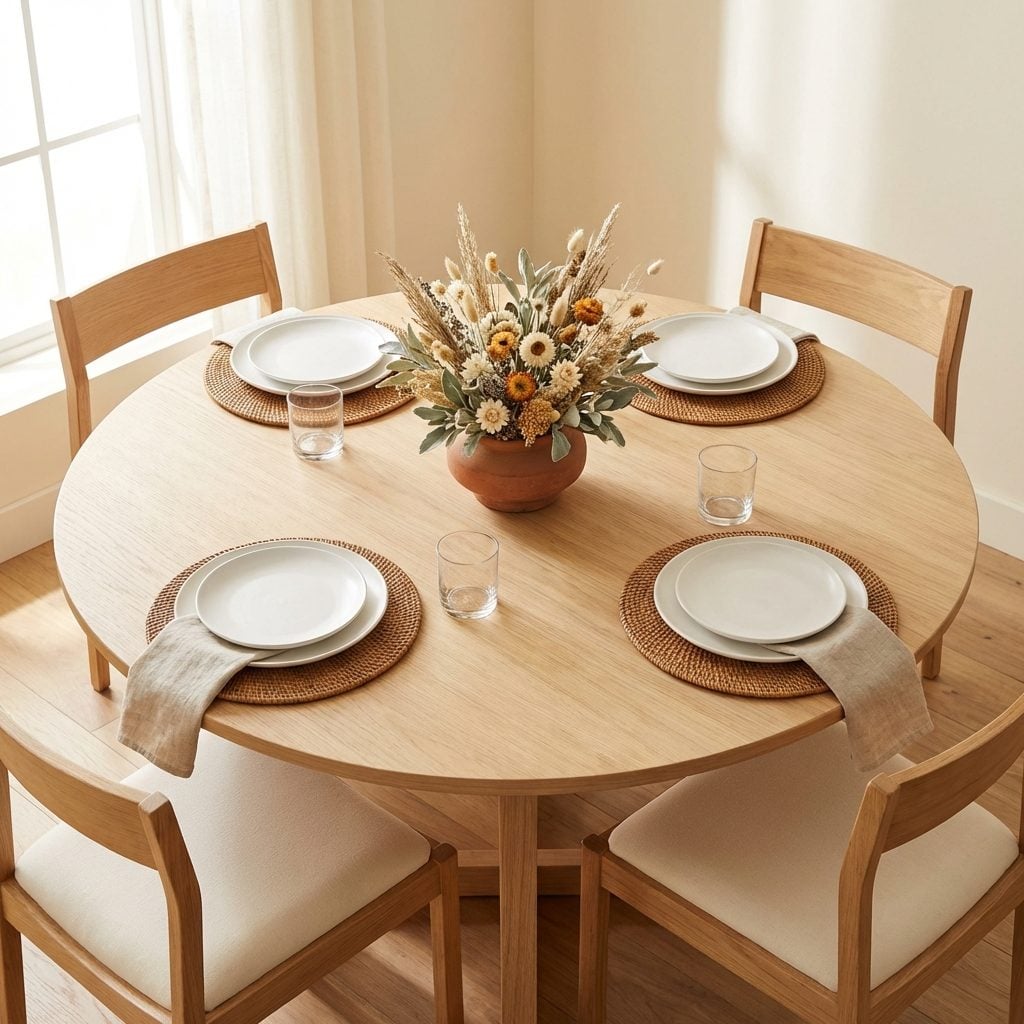
The round table’s reputation for equality isn’t myth. According to historical accounts, Wace’s 12th-century retelling of the Arthurian legend says Arthur created the Round Table specifically to prevent quarrels among his barons, none of whom would accept a lower position than the others. The round shape had no head, no foot, no hierarchy baked into the geometry. the Britannica entry on the Round Table in Arthurian legend, the table was a mechanism for equality before it was ever a symbol of it.
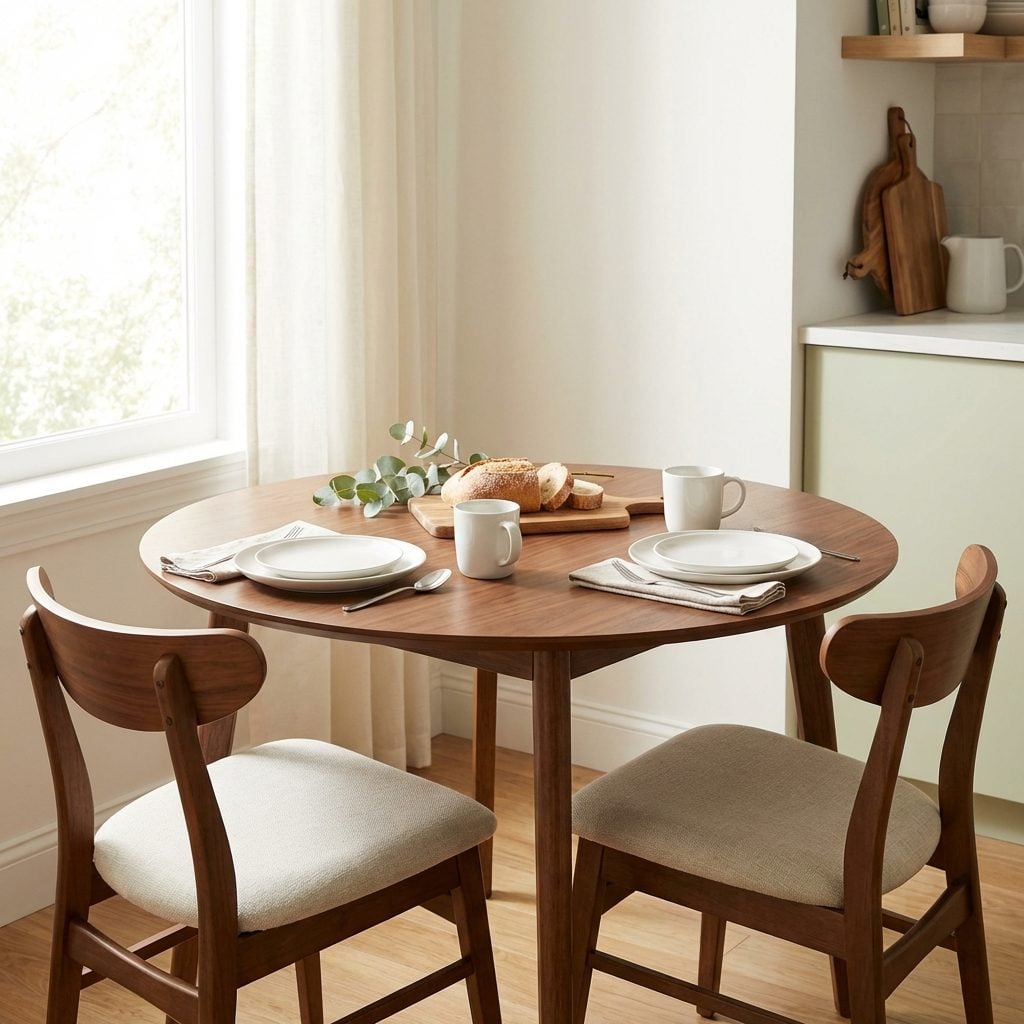
The psychology operating here predates medieval legend entirely. Circular formations appear across nearly every human culture as a default for communal gathering, from Celtic warrior councils sitting in circles, to the Last Supper table, to the campfire, which may be the oldest round table of all. Research on round table psychology finds that people perceive round shapes as more pleasant and communal than sharp or angular ones, and that circular seating measurably increases the likelihood of engaged conversation among everyone present, not just adjacent pairs.
Three reasons the round table works for conversation
- Equal sightlines: Everyone can see everyone else’s face without turning or straining.
- No positional hierarchy: There is no power seat, which reduces unconscious status anxiety at the table.
- Compressed distance: A round table for six puts every guest within personal-space range of every other guest, something a rectangular table of the same capacity cannot do.
Why the Room Your Family Eats In May Be Engineered, by Accident, for Silence
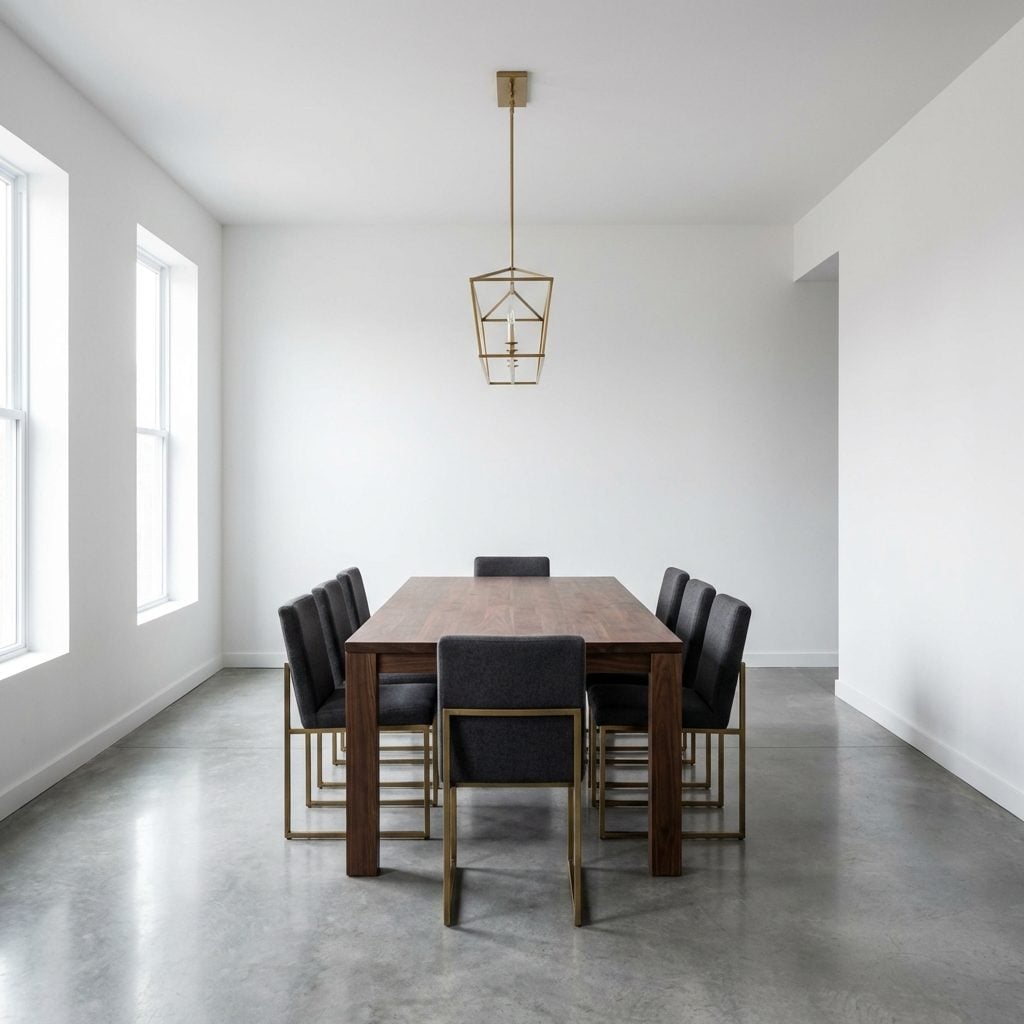
Nobody designed your dining room to suppress conversation. That’s the uncomfortable part. The choices that work against connection weren’t made maliciously, they were made aesthetically, practically, or by default. A large rectangular table because it filled the space. High-backed upholstered dining chairs pushed to standard spacing because that’s how the set came. A room with hard floors and bare walls because that’s what photographs well. Each decision felt reasonable in isolation. Together, they form an accidental architecture of disconnection.
Hard surfaces amplify noise and create the acoustic equivalent of a cocktail party effect, where each conversation at the table competes with every other, forcing people to raise their voices, which makes others raise theirs, which makes everyone strain to hear, which makes the whole thing exhausting. Research on environmental psychology in dining spaces identifies excessive reverberation as a direct inhibitor of comfortable social interaction. When listening becomes effortful, people stop initiating.
Add a table that’s slightly too wide, chairs slightly too far apart, and a room with slightly too much echo, and you haven’t built a dining room. You’ve built a room that looks like a dining room but functions like a waiting area. The family sits. The food gets eaten. Very little else happens. And nobody can quite say why.
The Seating Arrangement Restaurants Use to Make You Linger (and Why Your Home Does the Opposite)
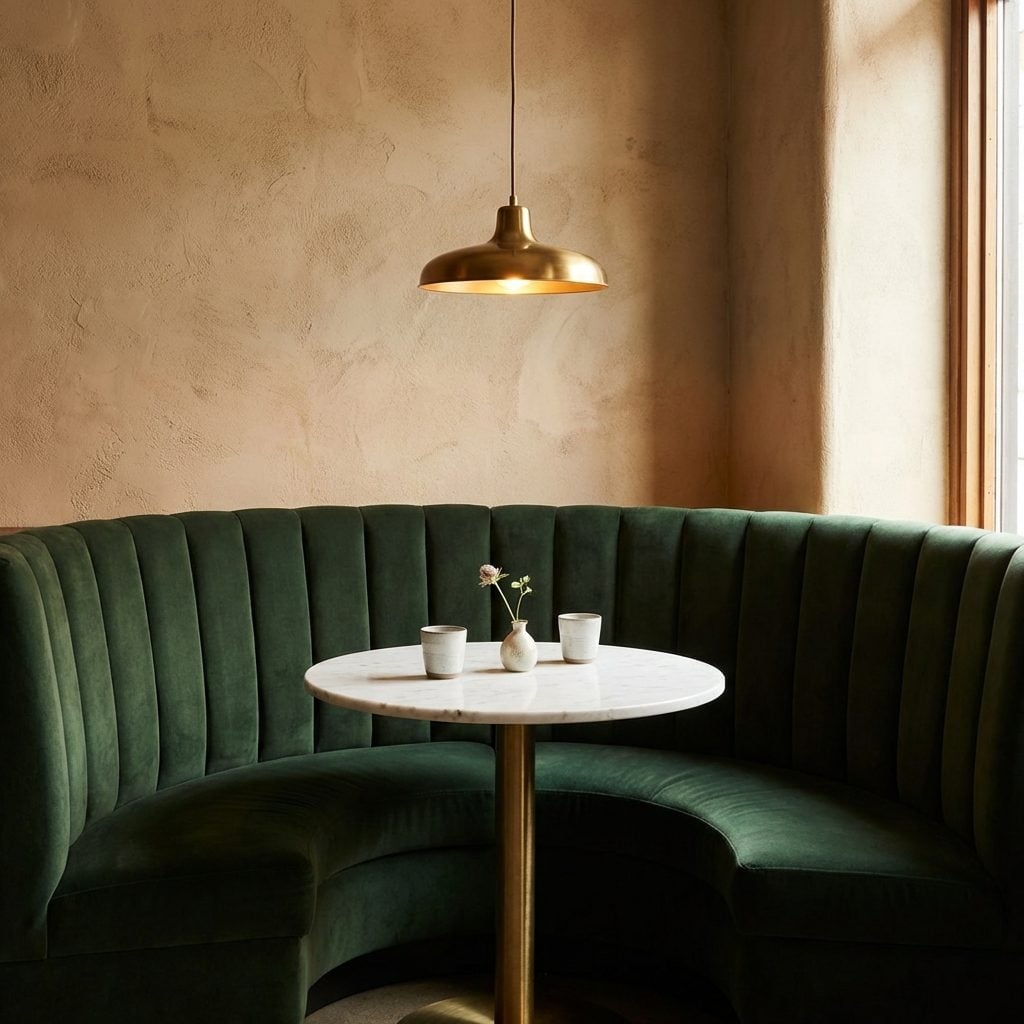
Restaurants that want you to stay, the kind where the tab grows naturally and nobody checks the time, engineer their seating around a specific psychological principle: the feeling of being held without being confined. According to restaurant design psychology research, banquettes positioned at 90-degree angles create what designers call prospect and refuge, you can see the room, you feel part of the energy, but you’re physically protected on one or more sides. That combination signals safety to the brain. And safe people stay longer, talk more, and order dessert.
Booth seating produces a subtly enclosed world. The high back creates a psychological boundary that reduces the social noise of strangers around you, allowing your nervous system to relax into the people directly in front of you. Studies on restaurant seating behavior have shown that customers seated in booths spend measurably more per minute than those at open tables, not because booths are more expensive, but because comfort lengthens the experience. Relaxed people linger. Lingering people keep ordering.
The average home dining room does almost none of this. Four freestanding chairs in open space, no back support against a wall, full exposure on all sides, and hard surfaces that bounce sound in every direction. It’s the architectural opposite of the conditions that make people want to sit still and talk. The restaurant studied the psychology. The dining room just picked a table that fit.
The Reason Conversation Dies at One End of the Table Before the Appetizers Are Gone
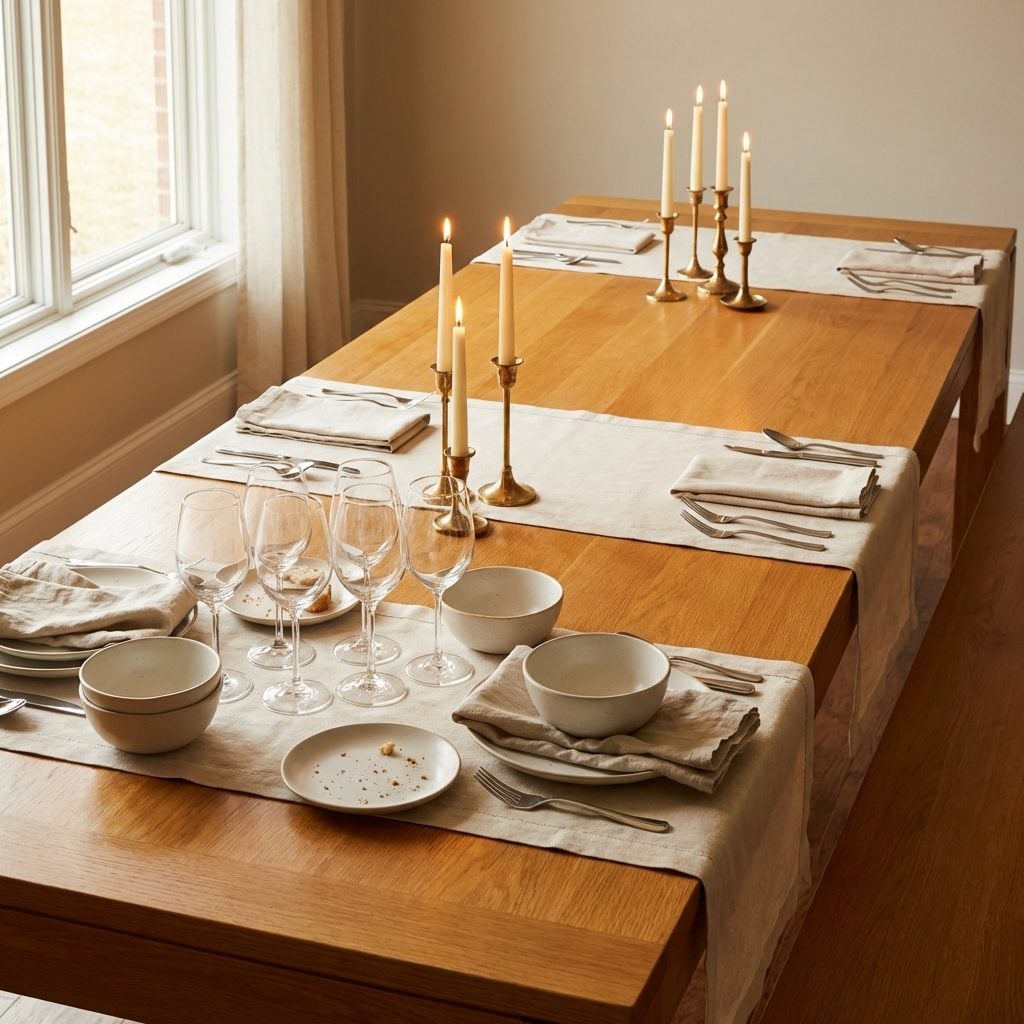
It happens at almost every large dinner party: one end of the table is animated and loud, and the other end has gone quiet by the time the first course is cleared. It isn’t a personality problem. It’s a geometry problem.
Research on seating arrangement and group interaction from the University of Hawai’i found that at rectangular tables, the end seats carry a structural conversational advantage: people at the head positions have a wider field of interaction, giving them access to more people simultaneously. Everyone else is competing for a smaller social radius, limited by the tunnel of who’s across and who’s adjacent. The people at the narrow far end of a long table are, in effect, in a conversational cul-de-sac.
What dies at the quiet end isn’t interest. It’s access. The guests there can’t easily enter the conversations happening four seats down. They can’t make eye contact with the host. They’re physically cut off from the energy of the table, not by intention but by the tyranny of the seating chart. So they form their own small cluster. Or they go quiet. And if you’re wondering what that says about you that your living and dining spaces quietly shape social outcomes, the answer is: quite a lot, and almost entirely without anyone noticing.
“At a round table, each knight sat within reasonable speaking distance of all the others.”, David Perkins, Harvard professor, on King Arthur’s Round Table as a model of collaborative conversation
What Prison Architecture and Your Dining Room Have Uncomfortably in Common
In the late 18th century, philosopher Jeremy Bentham proposed a prison design called the Panopticon: a circular building where cells radiated outward from a central observation tower. As historians of surveillance architecture have noted, the Panopticon’s genius was psychological, not physical. Prisoners couldn’t see the guard tower clearly enough to know if anyone was watching. The mere possibility of observation was enough to change behavior. Michel Foucault later expanded this idea, arguing that the internalization of surveillance, the feeling of potentially being watched, produces compliance, self-regulation, and a suppression of natural spontaneous behavior.
The connection to your dining room is less metaphorical than it sounds. A long rectangular table with a designated head seat creates a mild but real power hierarchy. The person at the head of the table has visual access to everyone. Everyone else has partial, limited access to each other. The spatial arrangement communicates, without words, who is watched and who is watching. Research on table seating dynamics has found that end seats at rectangular tables are consistently associated with leadership emergence and authority perception, not because the people in those seats are more dominant, but because the geometry grants them structural power.
Dinner conversation under a subtle hierarchy is different from dinner conversation among equals. It’s slightly more performative, slightly more careful. People speak to the head of the table rather than to each other. The spontaneity that makes a meal feel warm gets quietly replaced by something more managed. And the table that enables it looks, from the outside, like nothing more than a perfectly ordinary piece of furniture, which is exactly what makes it so effective.
The Lighting Mistake That Signals ‘Eat Quickly and Leave’ to Everyone at the Table
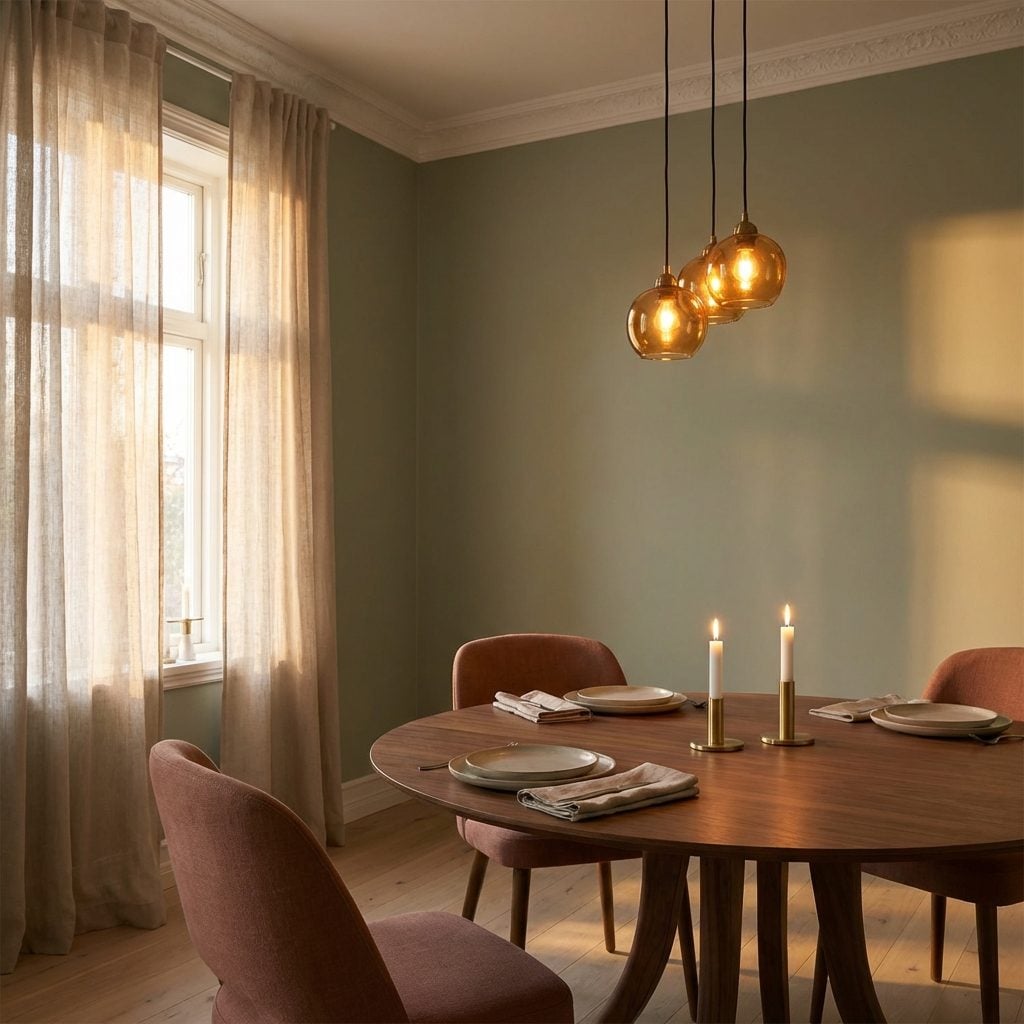
You didn’t install a fast-food dining room on purpose. But if your overhead light is a single bright fixture, recessed, LED, or worse, a bare flush mount, your brain is reading the room exactly the way it reads a McDonald’s at noon. According to a Tasting Table deep-dive on restaurant lighting psychology, brighter lights are deliberately used by fast-casual restaurants to accelerate table turnover, while dim, warm light encourages guests to slow down, linger, and connect. The effect is not subtle.
Here’s what makes it stranger in a home context: you never consciously chose this pace. The lighting came with the house, or felt practical, or simply never got updated. But every night at dinner, your nervous system is quietly receiving the same signal. A study published on PubMed in 2025 found that diners displayed the most positive emotions and the highest appetite under 2700K warm white light, the temperature of a candle, not a kitchen. Your fixture probably sits closer to 4000K. The gap between those two numbers might be the gap between a real family dinner and a meal everyone eats fast and then retreats from.
The fix isn’t dimming the existing light, it’s changing the source. A warm brass pendant light hung low over the table, or a cluster of Edison bulb chandelier, shifts both the color temperature and the psychological mood of the room entirely. It’s one of the cheapest, highest-impact changes in any dining room, and almost nobody makes it.
Why Your Brain Reads an Empty Chair as a Social Rejection
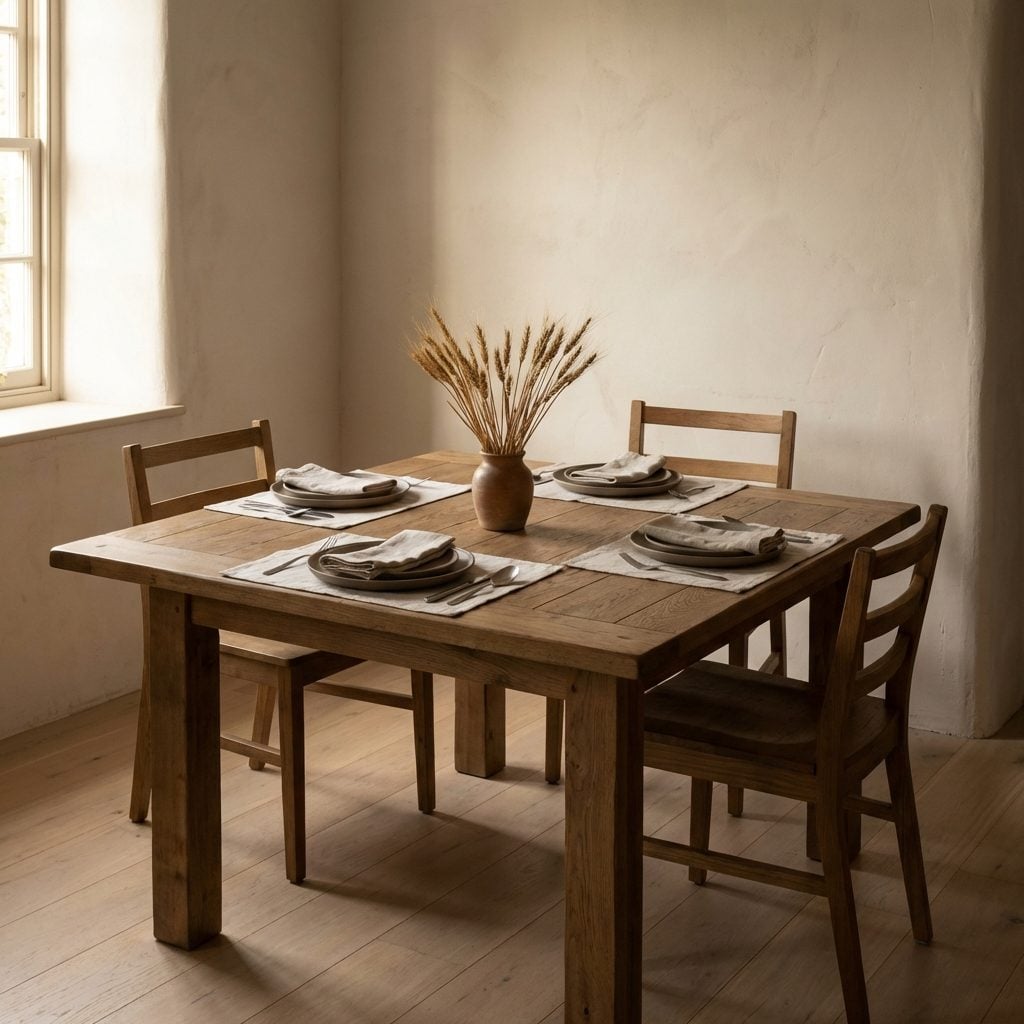
Sit at a table with one too many chairs and notice what happens to the mood. Something shifts, not dramatically, but unmistakably. That empty seat reads as absence, and absence, to the social brain, reads as loss.
The psychology here runs deep. Gestalt therapy has long used the phenomenon of an empty chair to represent unresolved relationships, absent figures, and unfinished emotional business, the technique works precisely because the brain cannot look at an empty chair without assigning it a narrative. According to EBSCO’s research overview of the empty chair technique, therapists use the empty chair to help clients process grief, conflict, and disconnection. That same psychological weight transfers directly to your dining room, whether you intend it to or not.
The chair that belonged to a child who moved out. The one pulled up for a guest who cancelled. The extra seat that came with the set and now just sits there every night. Each one quietly narrows the emotional register of the room. You might not consciously name it as loss, but the brain does its accounting anyway, and conversation tends to shrink slightly around that charged empty space. One question worth sitting with: how many chairs are at your table, and how many people actually eat there most nights?
The Wall That Shouldn’t Be There, and Why It’s Strangling Your Dinner Conversation
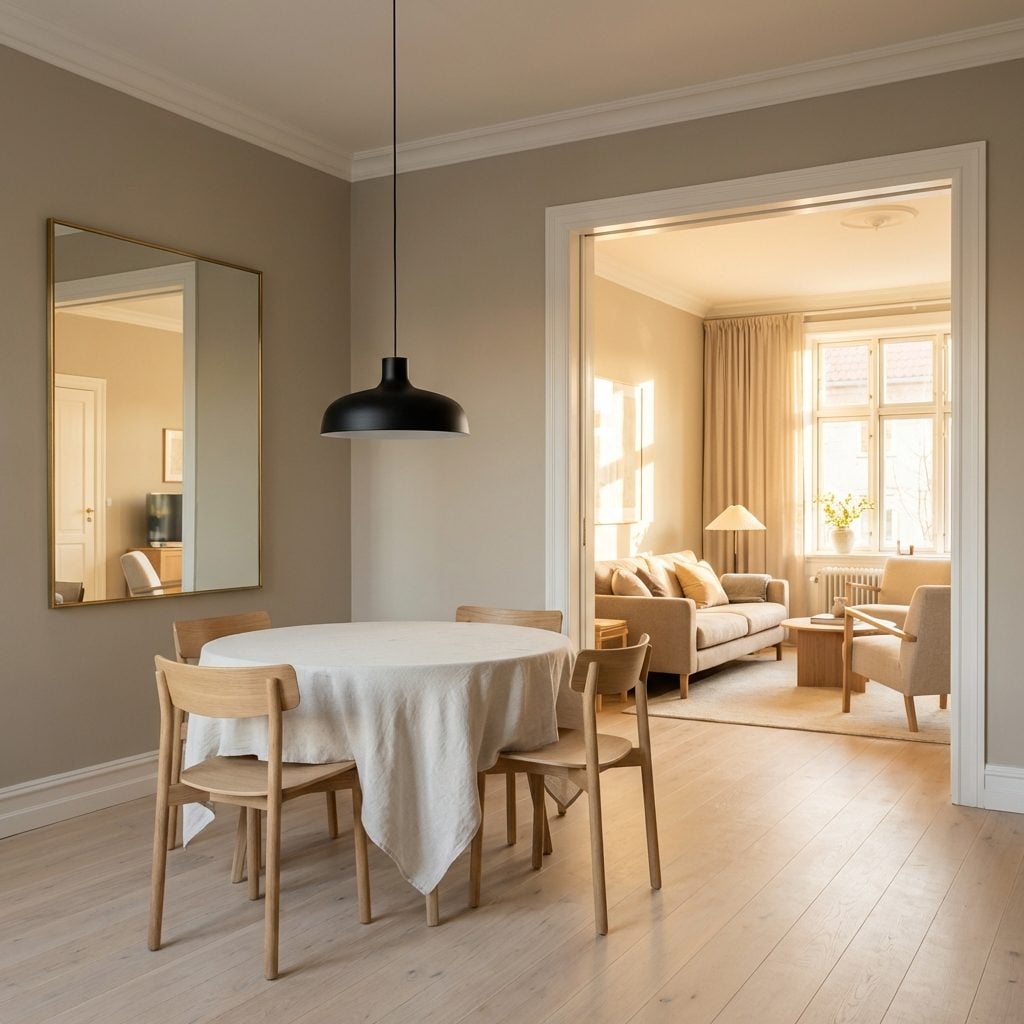
Most dining rooms were designed to be separate. A closed door, a dedicated room, a formal space apart from the noise and activity of the rest of the house. The logic was Victorian in origin: dining was ceremonial, and ceremony required enclosure. The problem is that enclosure, when it’s applied without thought to a room where you eat with your family every day, can quietly produce something closer to isolation than intimacy.
A 2016 meta-analysis in City, Territory and Architecture examined prospect-refuge theory, the evolutionary psychology principle, first proposed by Jay Appleton, that humans feel safest in spaces that offer both a view outward and a sheltered position. A dining room with no sightlines beyond its own walls fulfills the refuge condition but starves the prospect one. You’re enclosed, but not anchored. Protected, but not connected to anything larger. That combination tends to produce a room that feels slightly heavy, the kind of space people eat in efficiently and then leave.
The relationship between open sightlines and conversation quality is something restaurant designers understand instinctively. A wall that blocks the kitchen, the living room, or any sense of the wider home doesn’t create intimacy. More often, it creates the feeling of being sealed in. Worth asking: is that wall load-bearing, or just inherited?
The Subconscious Signal Your Table’s Surface Is Sending Every Single Night
🔥 Would you like to save this?
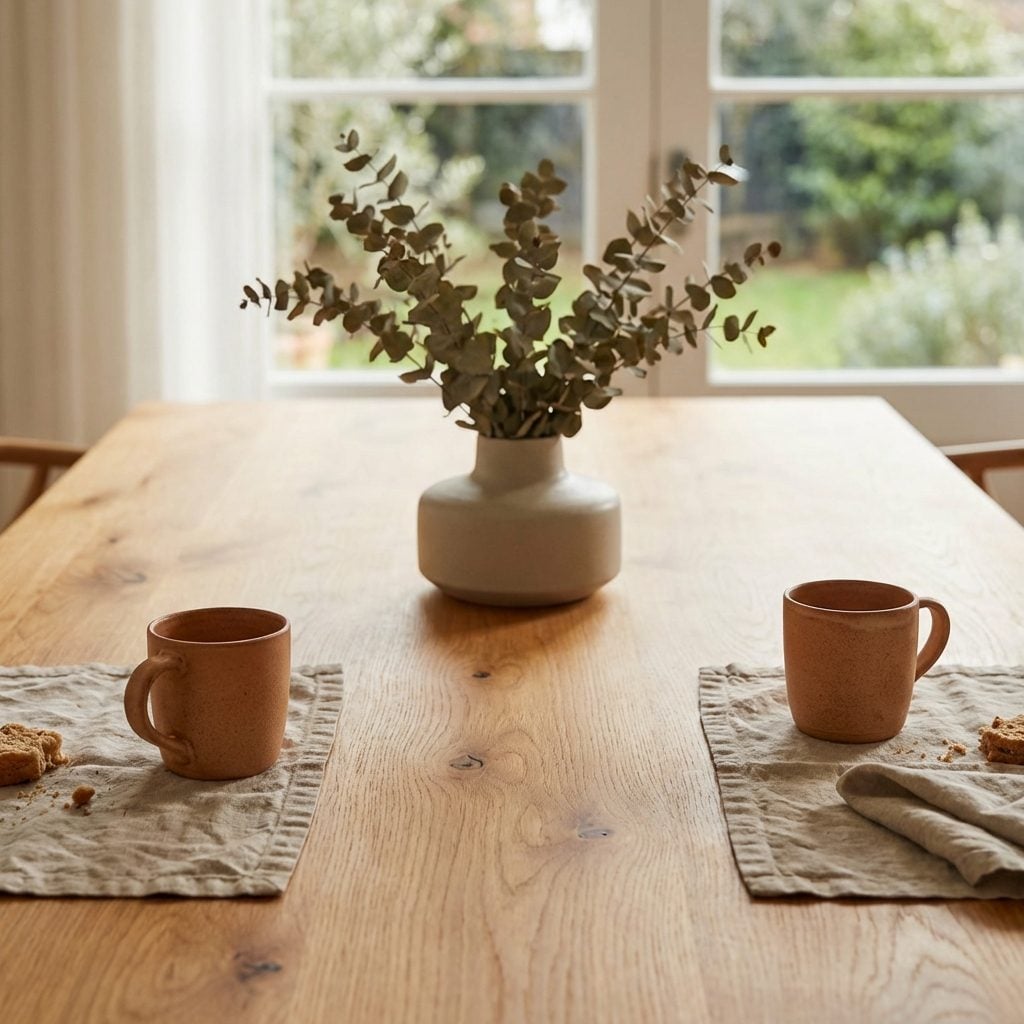
High-gloss dining tables photograph well. They catch the light, they read as premium, they dominate a room in a way that matte or textured surfaces simply don’t. What they also do, and this is harder to articulate but surprisingly consistent across rooms, is create a subtle psychological distance between the people sitting around them.
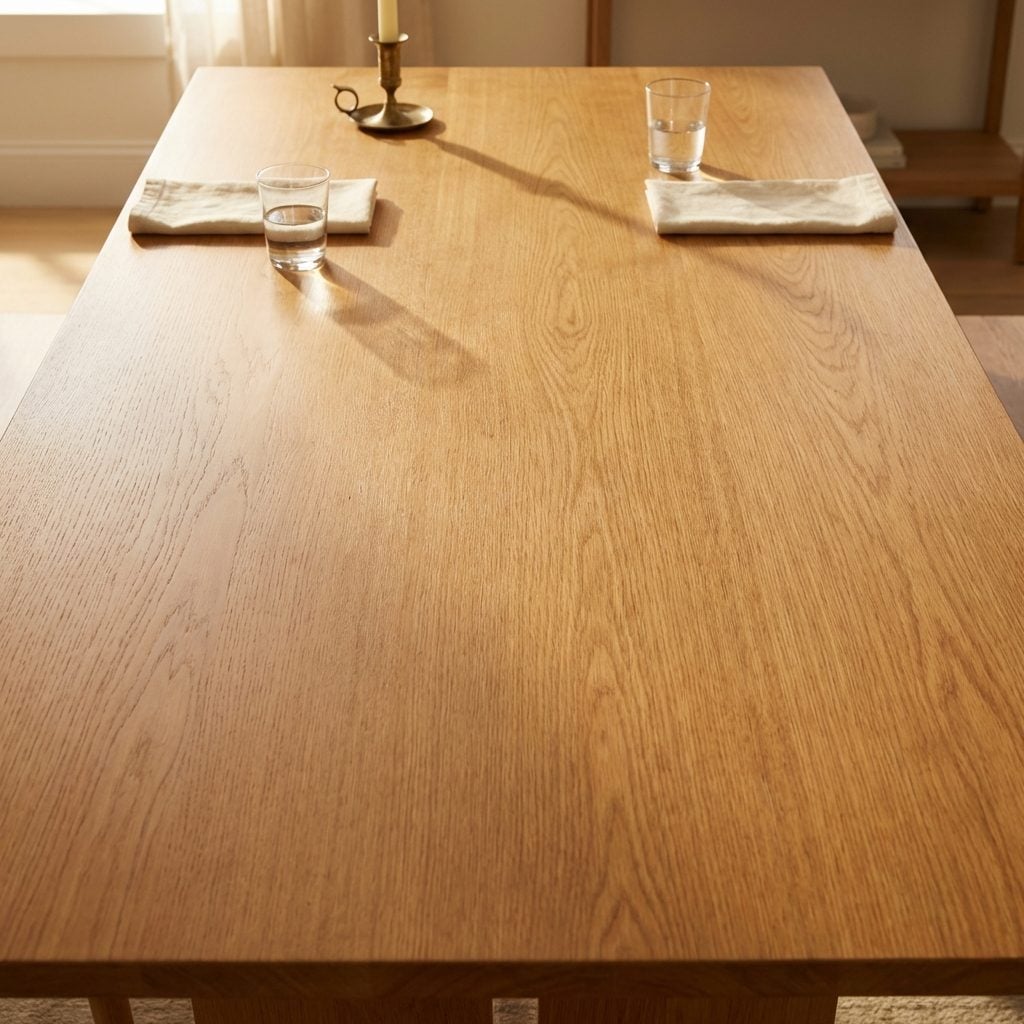
The surface of your table is communicating something before a single word is spoken. A polished lacquer finish, a highly reflective glass top, or a cold marble surface all signal formality, maintenance, and a certain kind of social performance: this is a table you’re meant to behave at. Research on material perception published on a 2017 study in Frontiers in Psychology on how surface gloss affects aesthetic perception and social distance judgments found that glossiness tends to be read as more innovative and impressive, but also as more distant and less approachable. Matte surfaces, by contrast, tested as more natural and more trusted. The implication for a dining table is real: the surface finish of your table is quietly telling everyone who sits at it how to hold themselves.
This is partly why green and white kitchen remodel trends keep favoring honed stone and oiled wood over polished alternatives, the matte finishes invite touch, relaxed posture, and the kind of elbows-on-the-table ease that makes conversation flow. A reclaimed oak top or a brushed concrete finish won’t just look warmer. It will behaviorally signal that this is a table where people are allowed to relax.
Why the Room That’s Supposed to Bring Everyone Together Is the Most Socially Isolating Space in the House
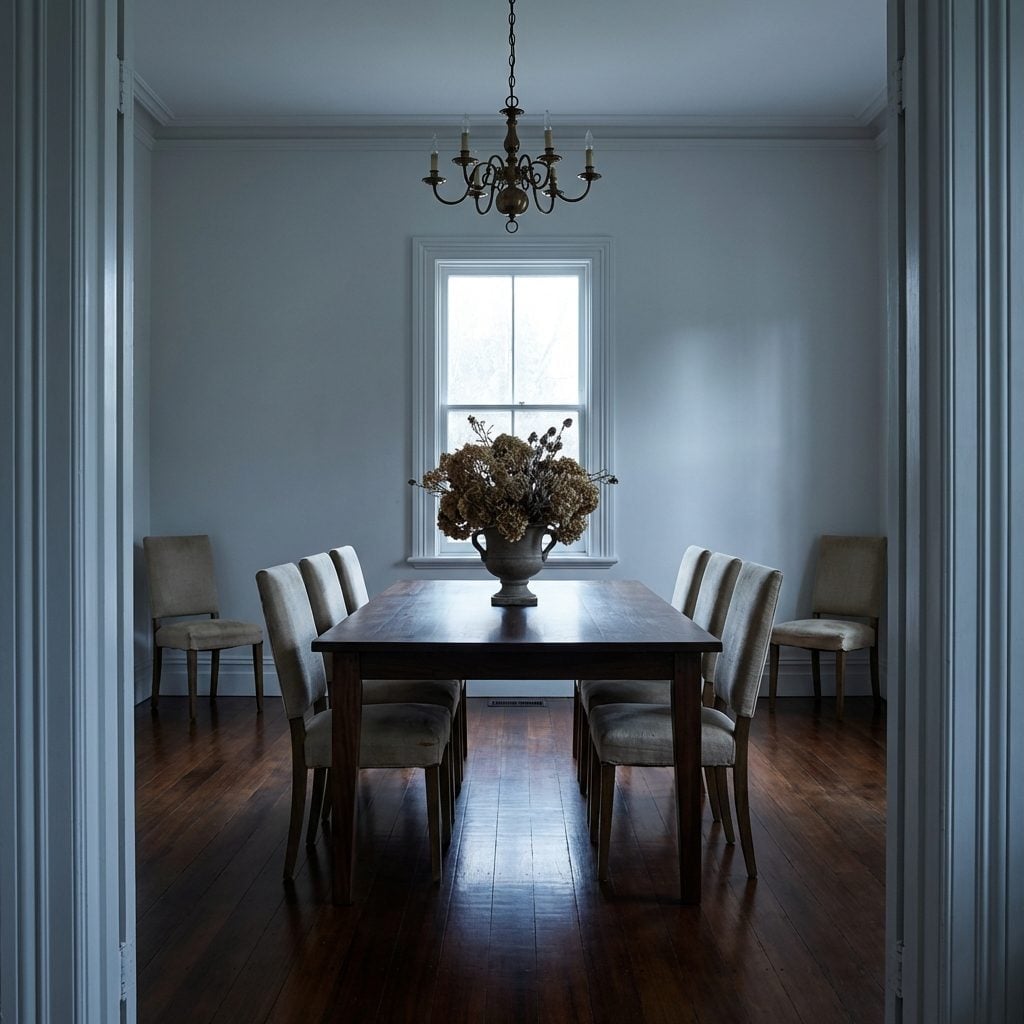
The dining room is the only room in the house designed explicitly for communal gathering. It has one job. And yet, in a striking number of homes, it’s the room people feel most disconnected in, and the hardest to explain why.
Part of the answer may be structural. The formal dining room, as a room type, was built around performance: it signals what your home says about you that your living standards are. The table is often too large, the chairs too stiff, the distance between seats too polished. Every design decision points toward occasion rather than ease, which means that on the 340 non-occasion nights of the year, the room quietly communicates that tonight isn’t special enough to be here.
There’s also a sensory dimension that rarely gets discussed. The dining room, unlike the kitchen or the living room, is typically stripped of the ambient noise, soft textures, and layered visual interest that make people feel comfortable enough to talk. Hard floors, bare walls, a single overhead fixture, the acoustic and visual profile of many dining rooms is closer to a conference room than a convivial space. The room doesn’t invite lingering. It invites eating, which is a fundamentally different social act.
The Bottom Line
The culprit is your table’s shape and length, specifically, the long rectangular table that Western dining culture treats as the default, which places people too far apart for the brain’s social circuitry to fully activate, fractures eye contact, and triggers the same psychological distance as a formal institution rather than a home. Every other factor in this article, the lighting, the acoustics, the empty chairs, the rug, amplifies or softens that foundational problem, but the rectangle is where the silence starts. If you want conversation to come back to your dining room, the single most direct thing you can do is gather around a smaller, rounder surface, and watch what your family says next.