🔥 Would you like to save this?
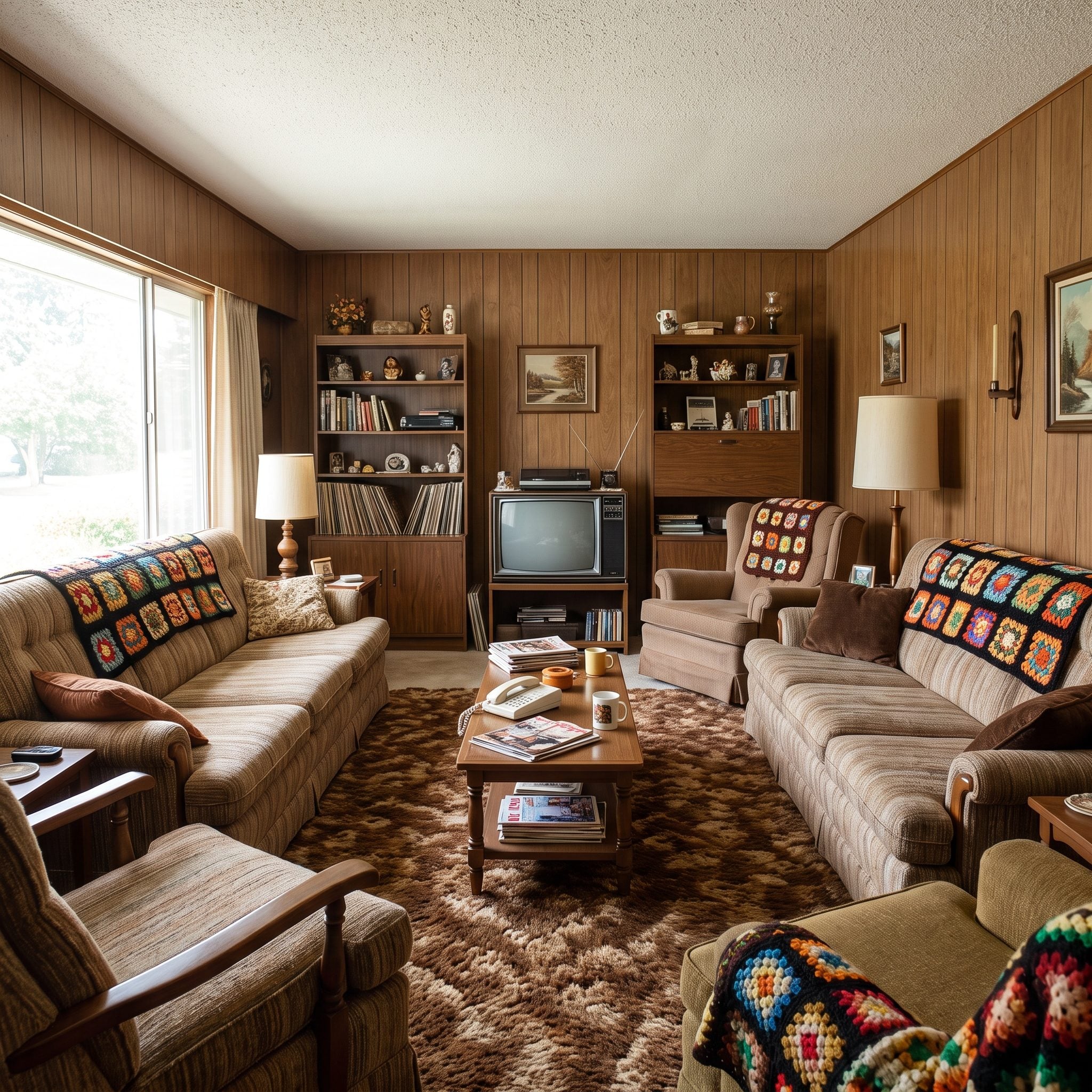
The recliner had its own gravitational field. The television sat inside a cabinet big enough to qualify as architecture. Somewhere beneath the crocheted afghan, the sofa cushions had surrendered their original shape years earlier. Nothing matched quite as perfectly as the furniture-store catalog promised, and the carpet had probably survived more spilled drinks than anyone cared to count. Yet the room worked. Spectacularly.
1980s living rooms could be excessive, stubbornly brown, and magnificently unconcerned with restraint. Their oversized furniture consumed floor space. Their window treatments could have dressed a small theater. Entertainment systems occupied entire walls, and every available surface collected something. But behind the visual abundance was a surprisingly practical approach to domestic life: deep seating, warm lighting, soft floors, reachable tables, and enough storage to accommodate everything a household actually used.
In order to come up with the very specific design ideas, we create most designs with the assistance of state-of-the-art AI interior design software. Also, assume links that take you off the site are affiliate links such as links to Amazon. this means we may earn a commission if you buy something.
Some of those choices deserved retirement. Others solved problems that still confront contemporary interiors. These 34 details reveal what made the decade’s living rooms so distinctive, from the furniture that swallowed half the floor plan to the smaller touches that gave the space its unmistakably lived-in character.
34. The Oversized Sectional That Could Swallow an Entire Family
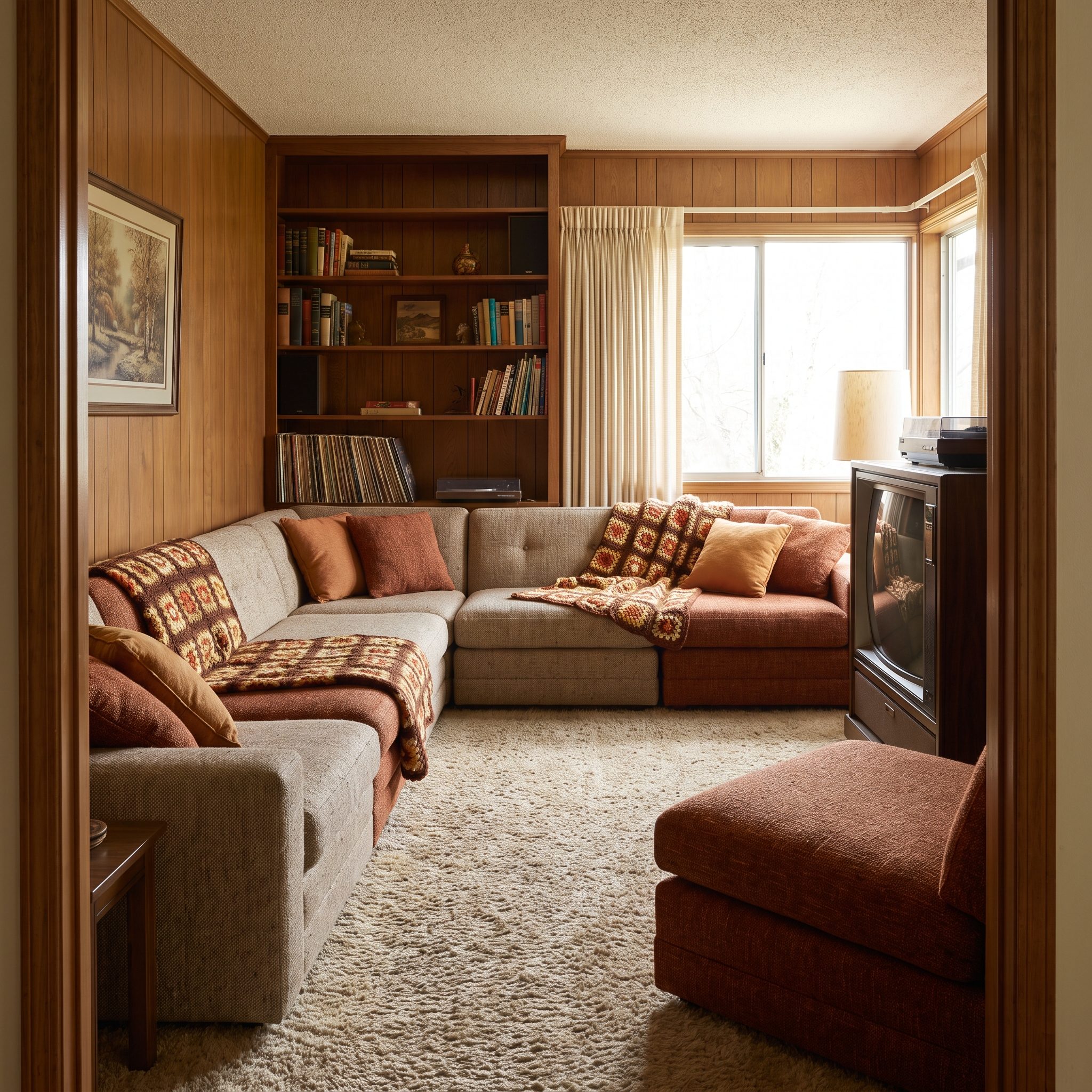
Six seats, enormous cushions, and enough upholstered territory to make a conventional sofa look like an afterthought. The 1980s sectional rarely apologized for its dimensions. Caramel, rust, chocolate, and muted geometric fabrics only made its presence more emphatic.
The wraparound arrangement could gather several seating positions into one continuous piece, particularly useful in large family rooms. Unlike a collection of separate chairs, a sectional established an unmistakable focal point. The trade-off was flexibility: once that enormous upholstered shape occupied a corner, the rest of the room generally had to negotiate around it.
33. The Wood-Paneled Wall That Turned an Ordinary Room Into a Den
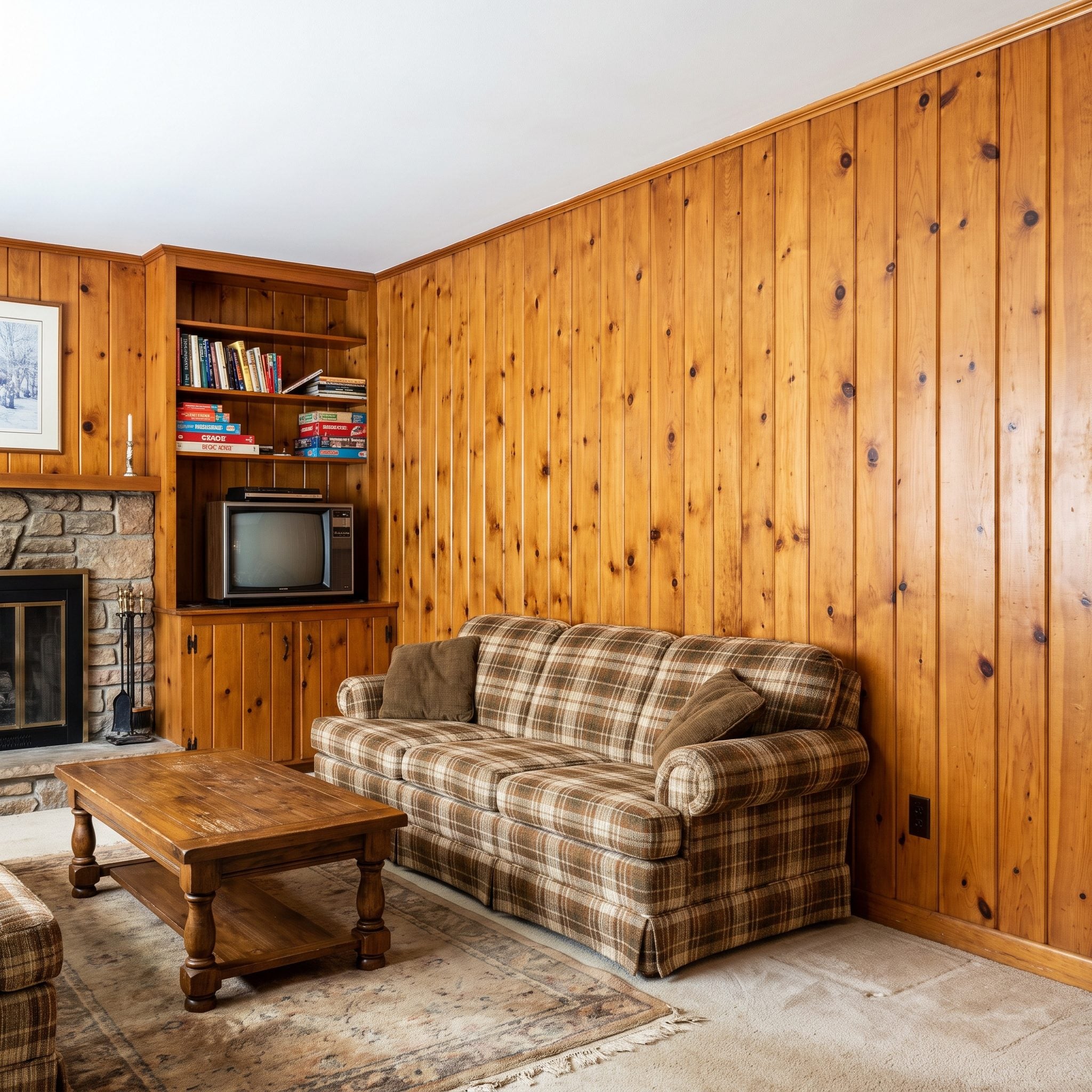
One wall of pronounced wood grain could change the entire character of a living room. Honey-colored paneling suggested a casual family space; darker walnut tones pushed the atmosphere toward a private den. Either way, the wall became part of the furniture composition rather than a neutral backdrop.
Not every installation was solid timber. Thin veneers, plywood panels, and printed hardboard were common alternatives, offering the appearance of wood at different prices. The visual effect came from the continuous grain and warm color, especially when combined with substantial furniture and low lighting. Used selectively, the same principle can bring depth to a contemporary interior without reproducing every brown surface of the original.
32. The Table Lamps That Did More Work Than the Ceiling Fixture
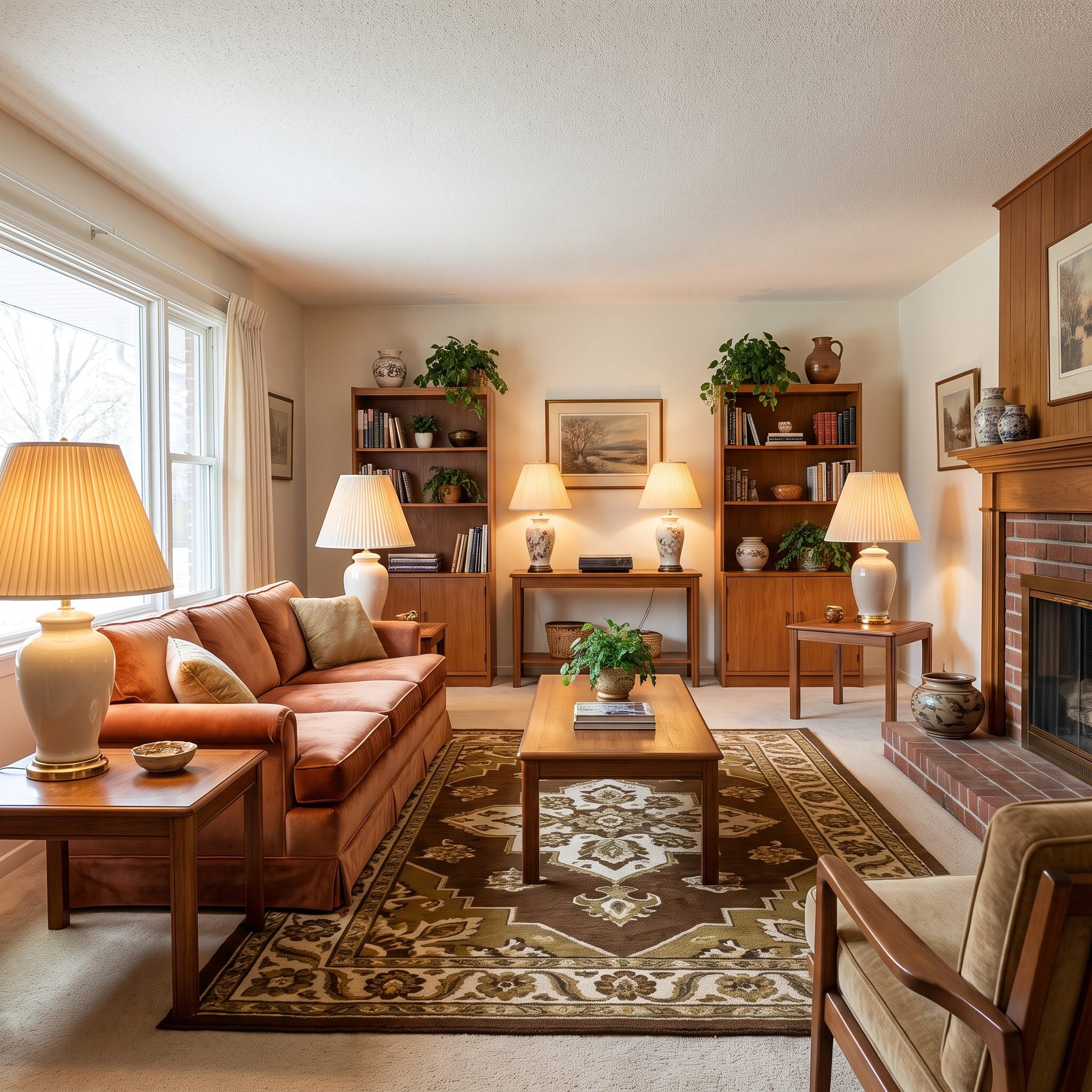
Ceramic bases, pleated fabric shades, brass fittings, and warm incandescent bulbs. Table lamps were hardly discreet accessories in a 1980s living room. Some stood nearly as tall as the furniture beside them, with shades broad enough to command their own section of the room.
Several lamps distributed around the seating could provide softer, more adaptable illumination than relying entirely on a bright overhead fixture. Their shades diffused the light, while the separate switches allowed different parts of the room to be illuminated independently. The arrangement was practical, flattering to textured upholstery, and especially effective against darker wall finishes.
31. The Entertainment Center That Turned a Television Into an Architectural Feature
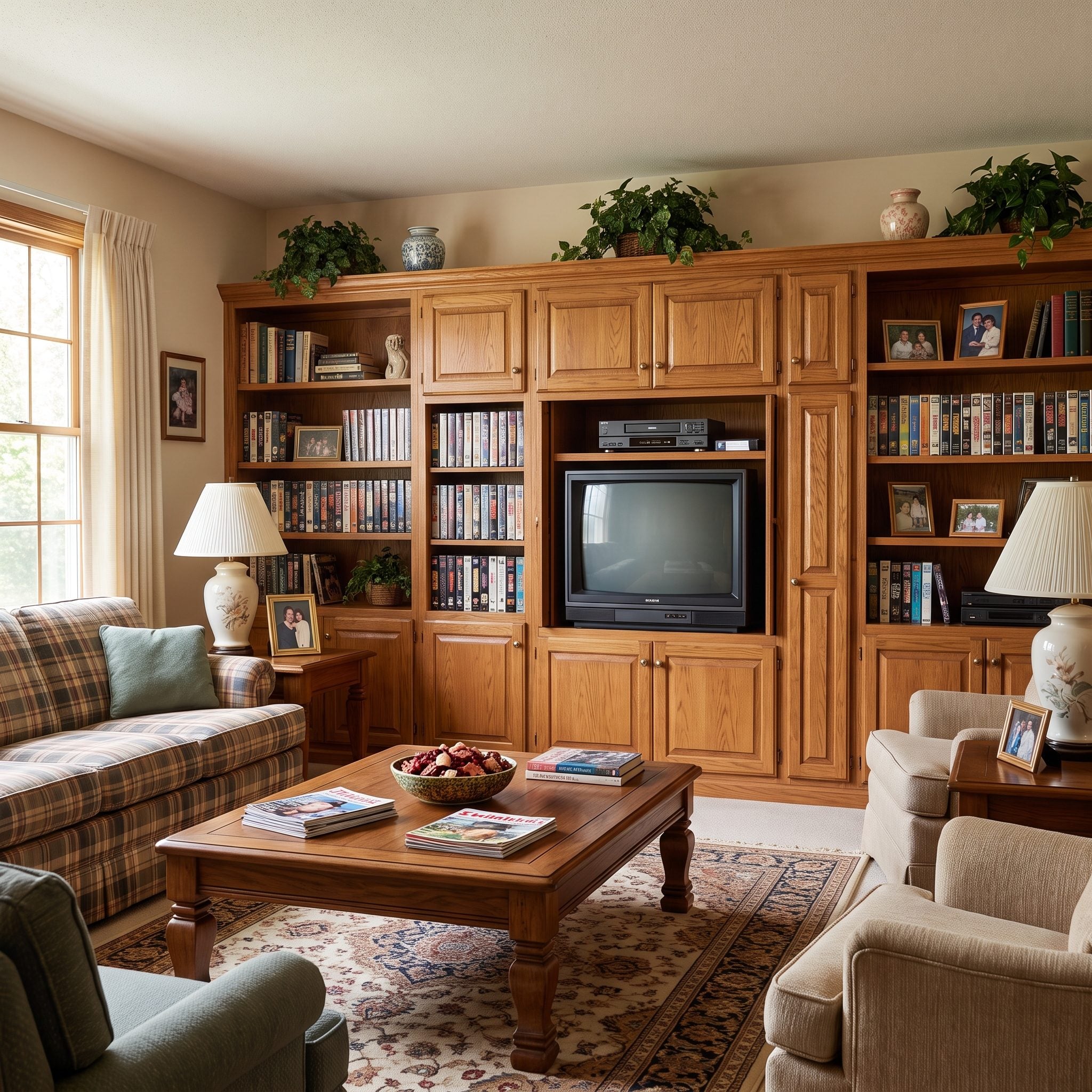
The television occupied the center. Everything else had an assigned compartment. A VCR below, stereo components behind glass, cassette tapes in narrow drawers, and family photographs arranged along the upper shelves. The largest entertainment centers resembled entire walls of cabinetry with an electronic heart.
These units became increasingly familiar during the 1980s and remained prominent well into the following decade. Their bulk could overwhelm a small room, but their organizing ability was considerable. Instead of scattering equipment across several surfaces, the cabinet consolidated an expanding collection of household electronics. In a large great room, that substantial wooden structure could also establish a clear focal wall.
30. The Wall-to-Wall Carpet That Changed How the Whole Room Felt
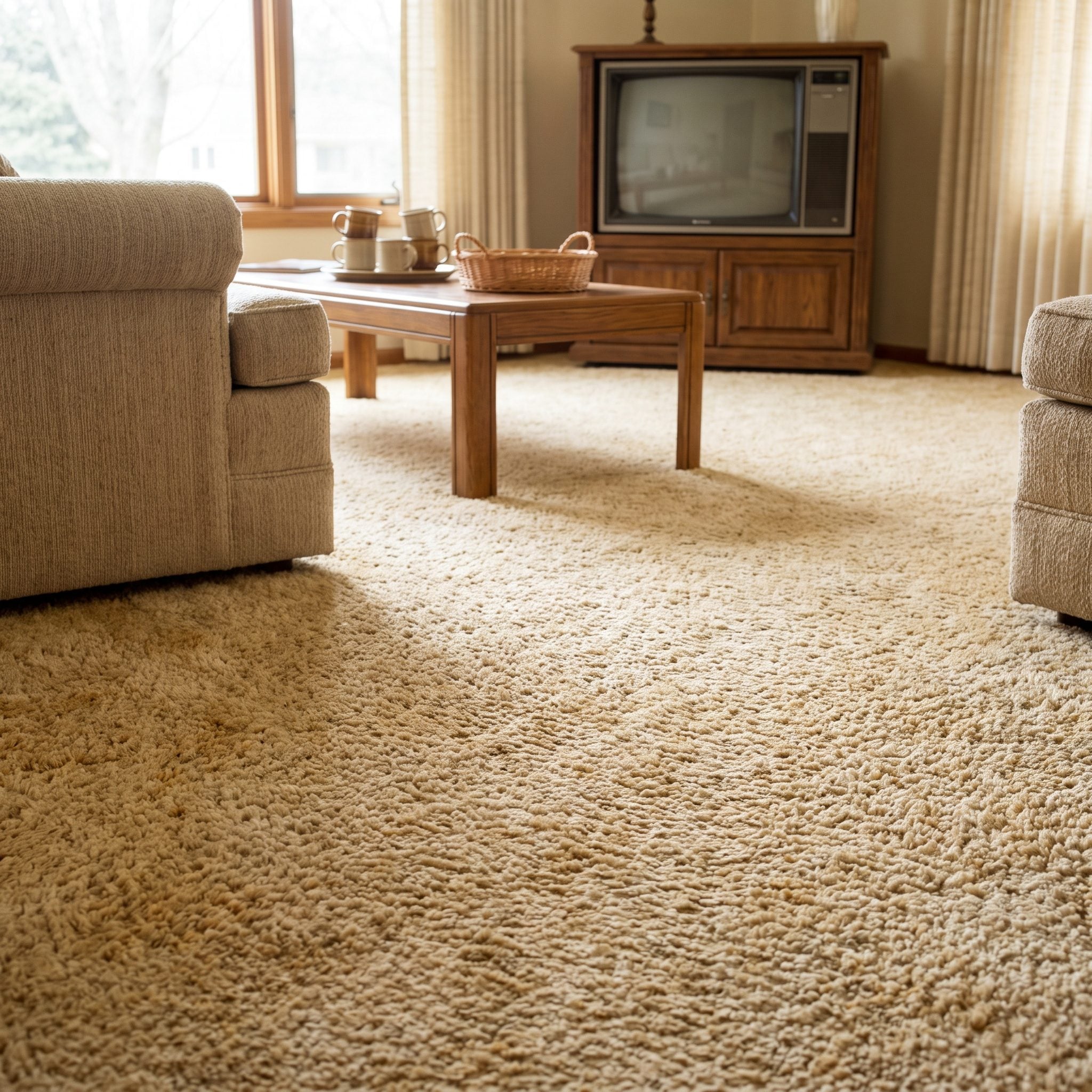
Oatmeal, harvest gold, beige, rust, and occasionally a green that seemed determined to outlast the house itself. Wall-to-wall carpeting covered enormous expanses of 1980s living-room floors, softening the room before a single piece of furniture arrived.
Beyond appearance, carpet reduced the sharpness of footsteps and helped absorb some reflected sound. The pile offered warmth and cushioning, while the uninterrupted surface made even a large room feel visually connected. Cleaning, wear, and allergens were legitimate disadvantages, but the acoustic and tactile differences between carpeting and hard flooring remain significant.
29. The Crocheted Afghan That Refused to Stay Folded
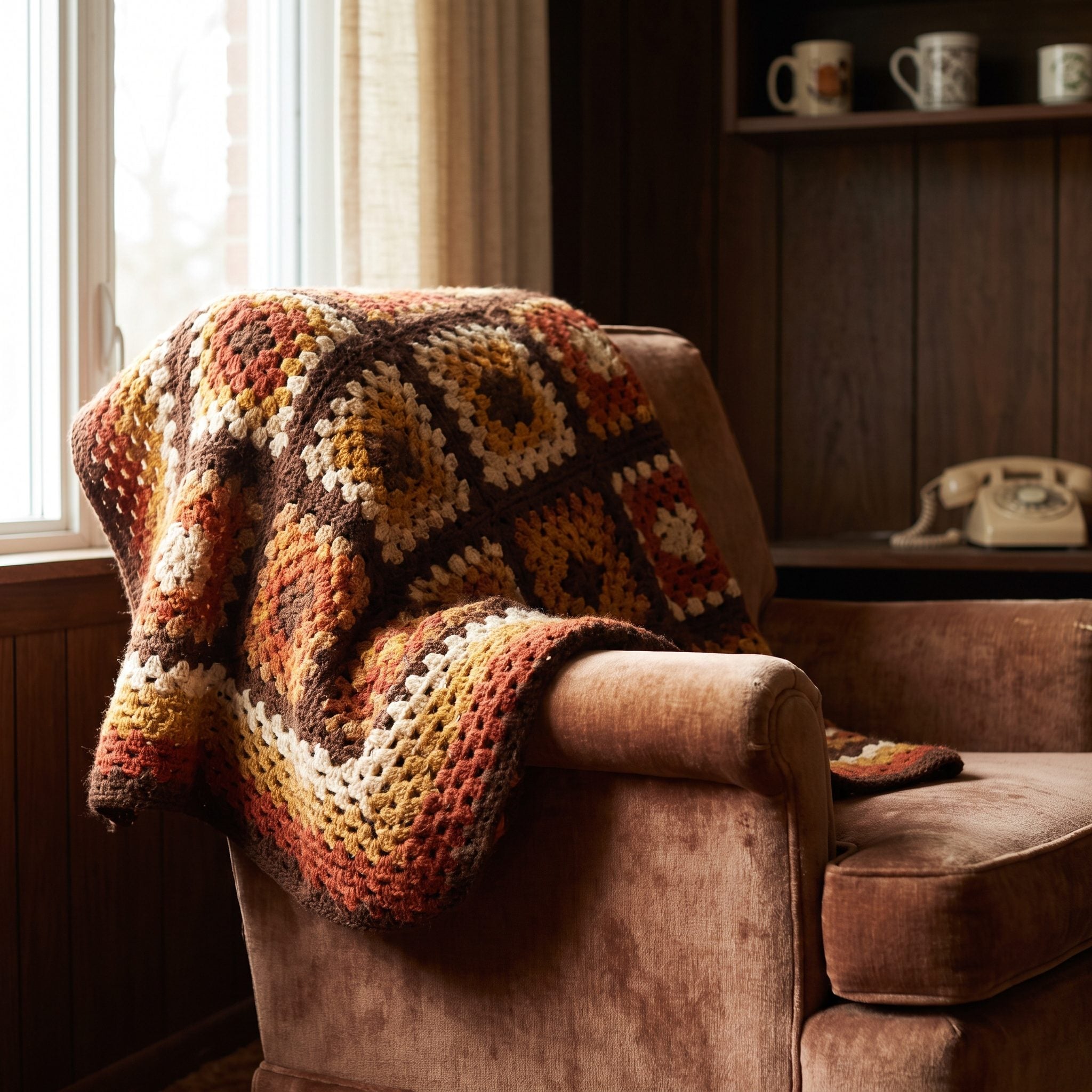
Brown, orange, mustard, cream, and whatever other colors the yarn basket surrendered. The granny-square afghan was an improbable little mosaic, draped across sofa backs, folded over recliner arms, or abandoned in a heap after somebody used it.
Its appeal was partly visual and partly practical. Crochet introduced texture to upholstery, and the blanket remained available whenever the room turned chilly. Granny-square designs were especially popular during the 1970s and continued appearing in homes throughout the 1980s. Handmade examples could also incorporate leftover yarn, giving their irregular combinations of color a perfectly reasonable explanation.
28. The Brick Fireplace That Needed Almost No Decoration
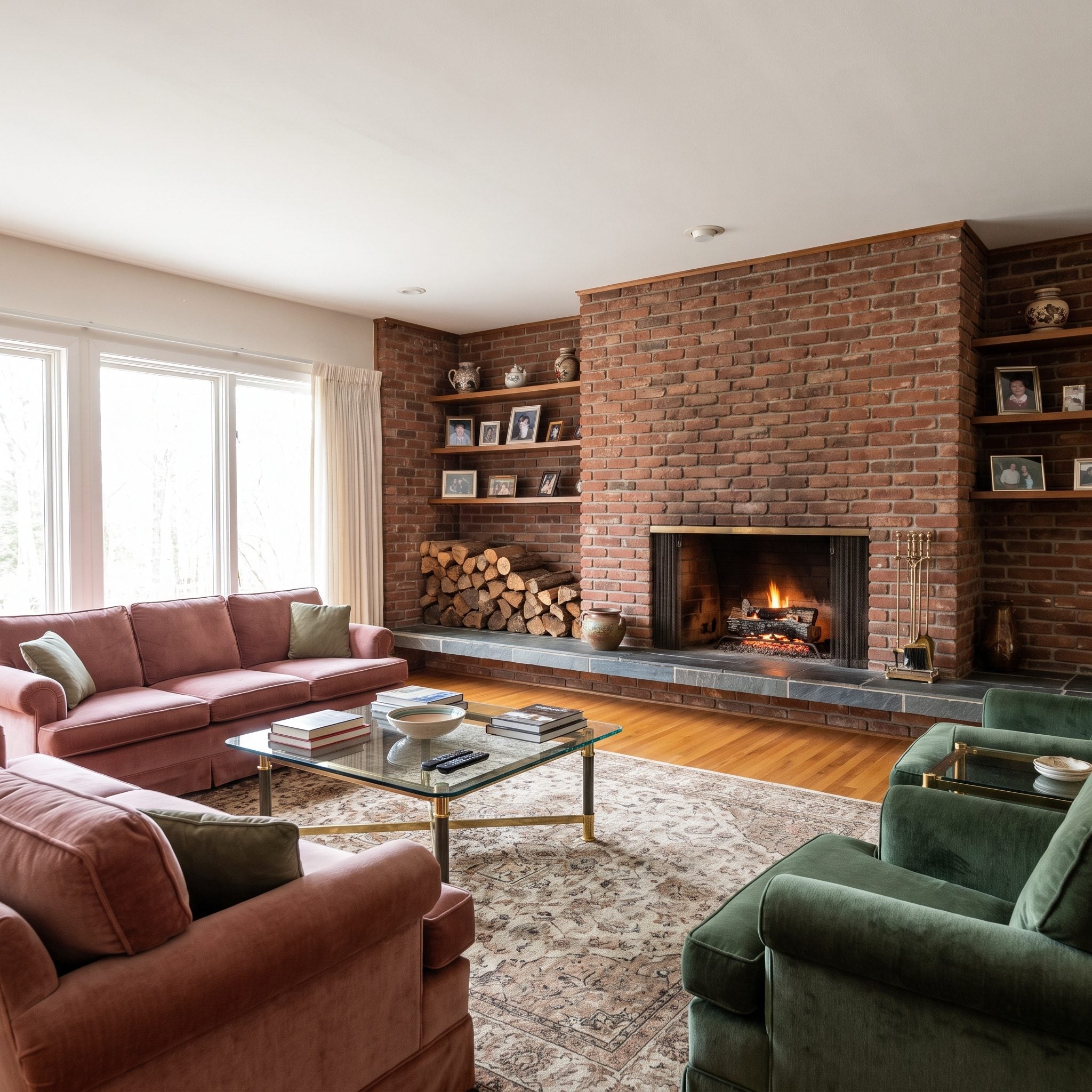
A full-height wall of brick or rough stone could dominate the room more effectively than the largest sofa. The masonry supplied color, texture, and an unmistakable focal point, sometimes extending from the floor to the ceiling without a single painted surface interrupting it.
Fireplace surrounds varied from orderly brickwork to irregular fieldstone, each giving the room a different character. The surrounding furniture often responded to the mass of the masonry, forming seating arrangements around the hearth. Whether a fireplace delivered meaningful heat depended on its construction and operation, but its architectural presence required no explanation.
27. The Giant Recliner That Made Good Posture Entirely Optional
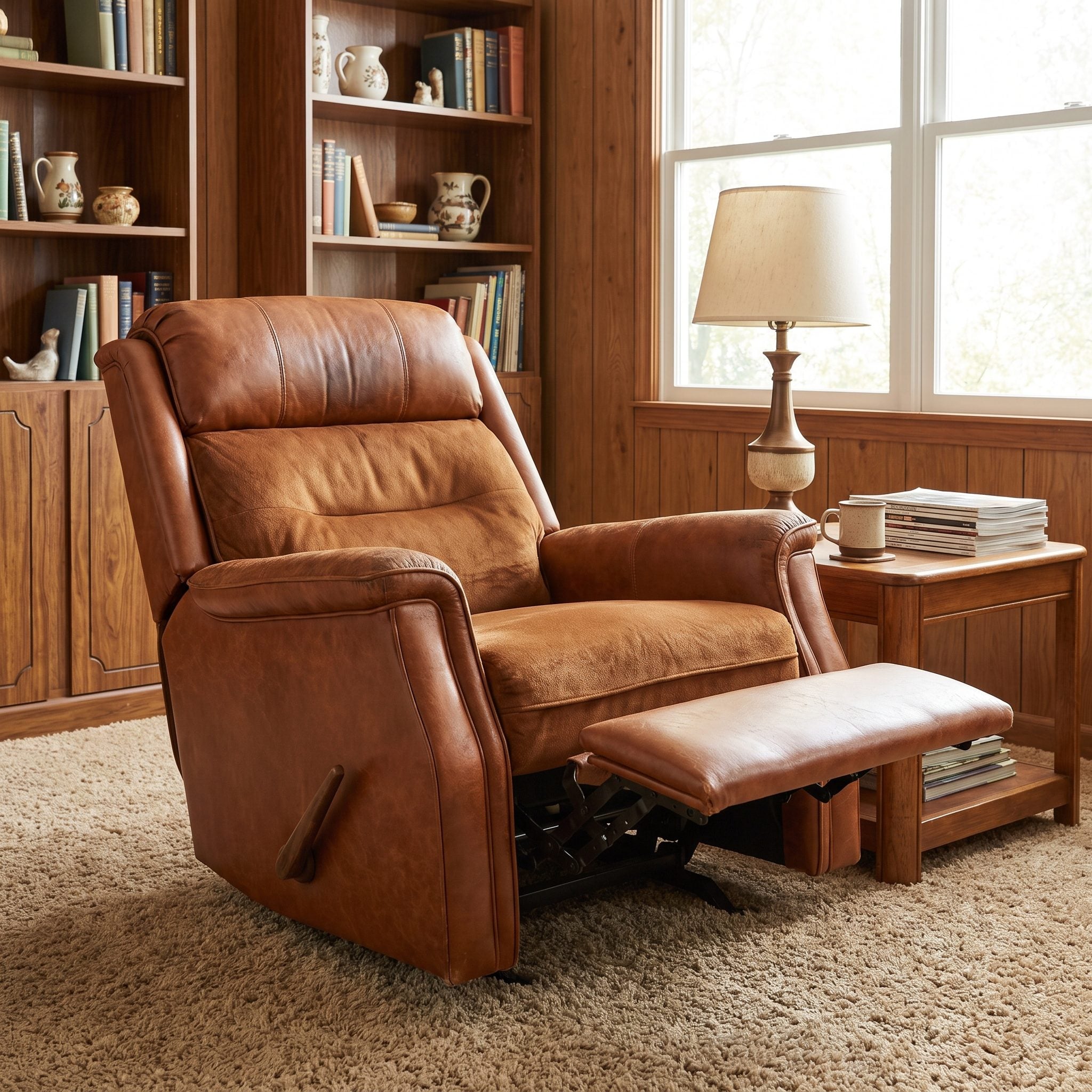
Broad arms, a thick backrest, deeply padded cushions, and a mechanical lever that transformed an ordinary-looking chair into a nearly horizontal lounging machine. The classic 1980s recliner could consume an astonishing amount of floor space, especially once the footrest extended.
Its proportions followed a different priority from those of a slim accent chair. The reclining mechanism supported changes in position, while the generous padding emphasized prolonged comfort. The price was visual bulk and the clearance needed behind or in front of the chair. Nothing about the arrangement was subtle, which was rather the point.
26. The Houseplants That Turned Empty Corners Into Small Jungles
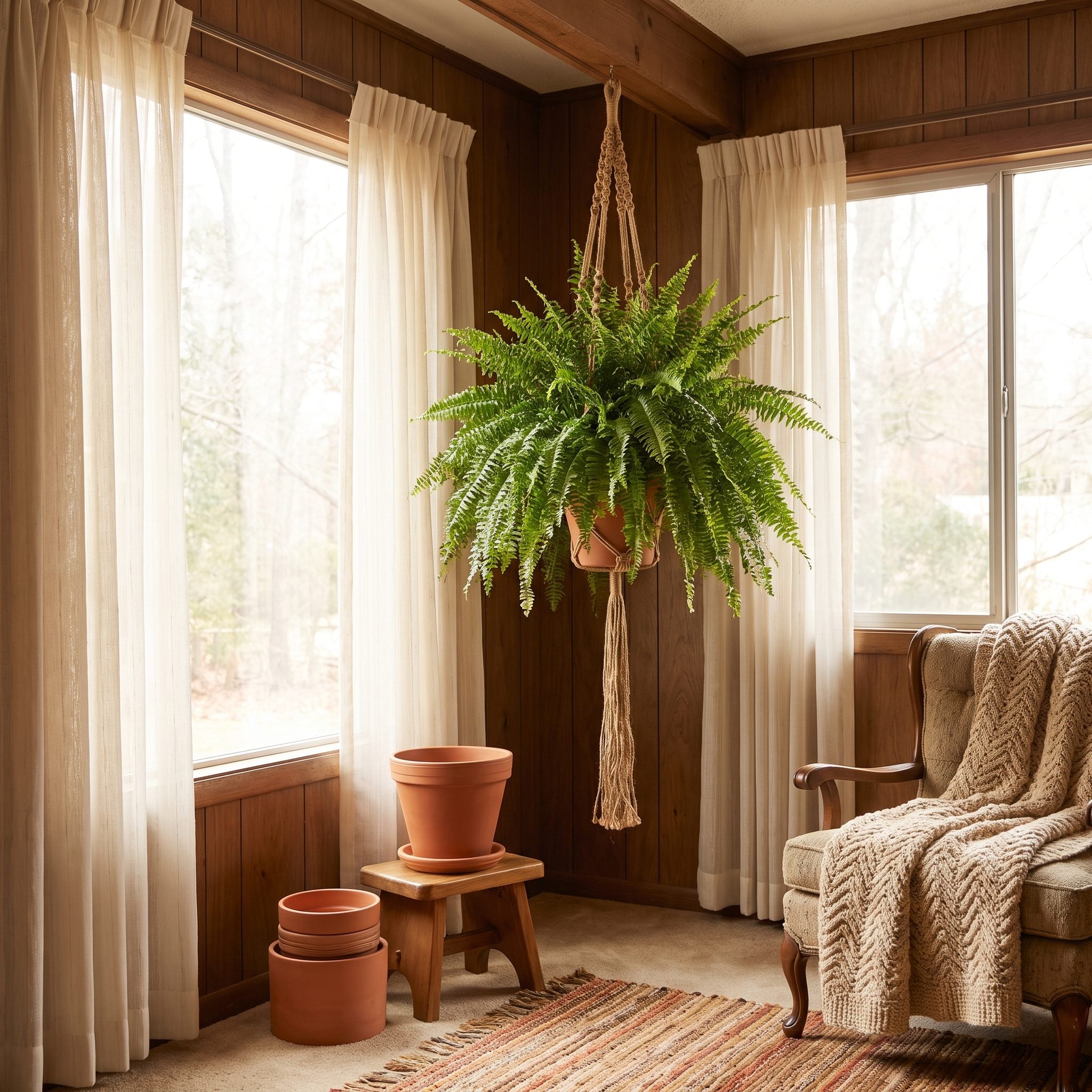
Boston ferns spilled from macramé hangers. Spider plants sent runners over wicker stands. Rubber plants and broad-leafed tropical specimens occupied corners with the confidence of permanent residents. Greenery interrupted the room’s considerable inventory of brown upholstery and wood grain.
Plants also introduced irregular shapes into interiors dominated by rectangular cabinets, square cushions, and substantial tables. Hanging varieties made use of vertical space, while taller plants softened awkward corners. Their effectiveness depended on light, watering, and maintenance, but visually they offered something most furniture could not: a living form that changed as it grew.
25. The Wood-Console Television That Was Practically Another Cabinet
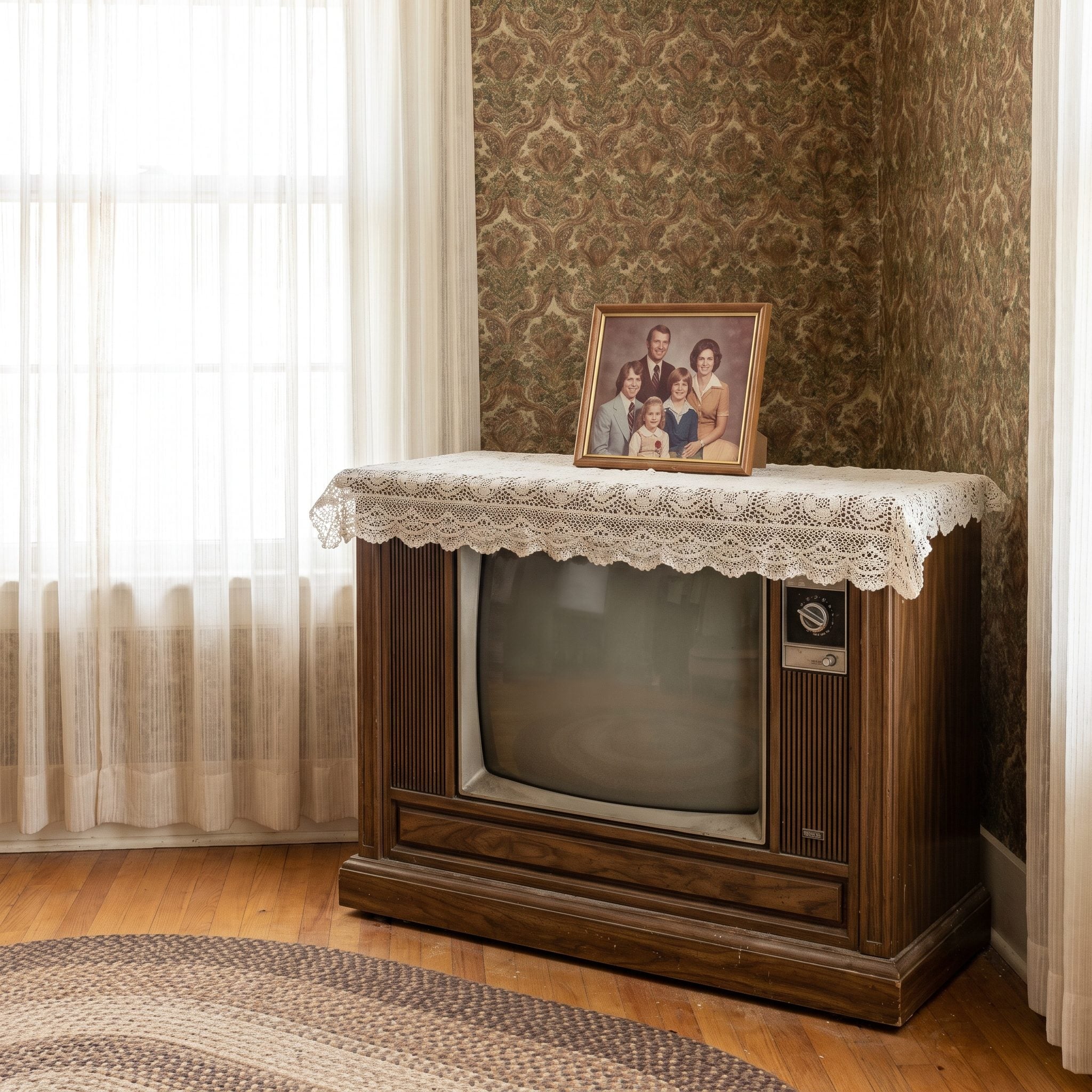
A television enclosed in a substantial wood-finished cabinet occupied the floor like a piece of case furniture. Walnut-toned veneer, decorative speaker grilles, and a deep picture tube made the appliance impossible to confuse with today’s thin screens.
Console televisions were already established before the 1980s, but many remained in use during the decade. Their cabinetry helped the technology fit among wood tables and upholstered seating, even as the equipment itself demanded considerable space. The screen was only one component of the object; the cabinet determined how it participated in the room.
24. The Heavy Drapes That Could Make Daylight Disappear
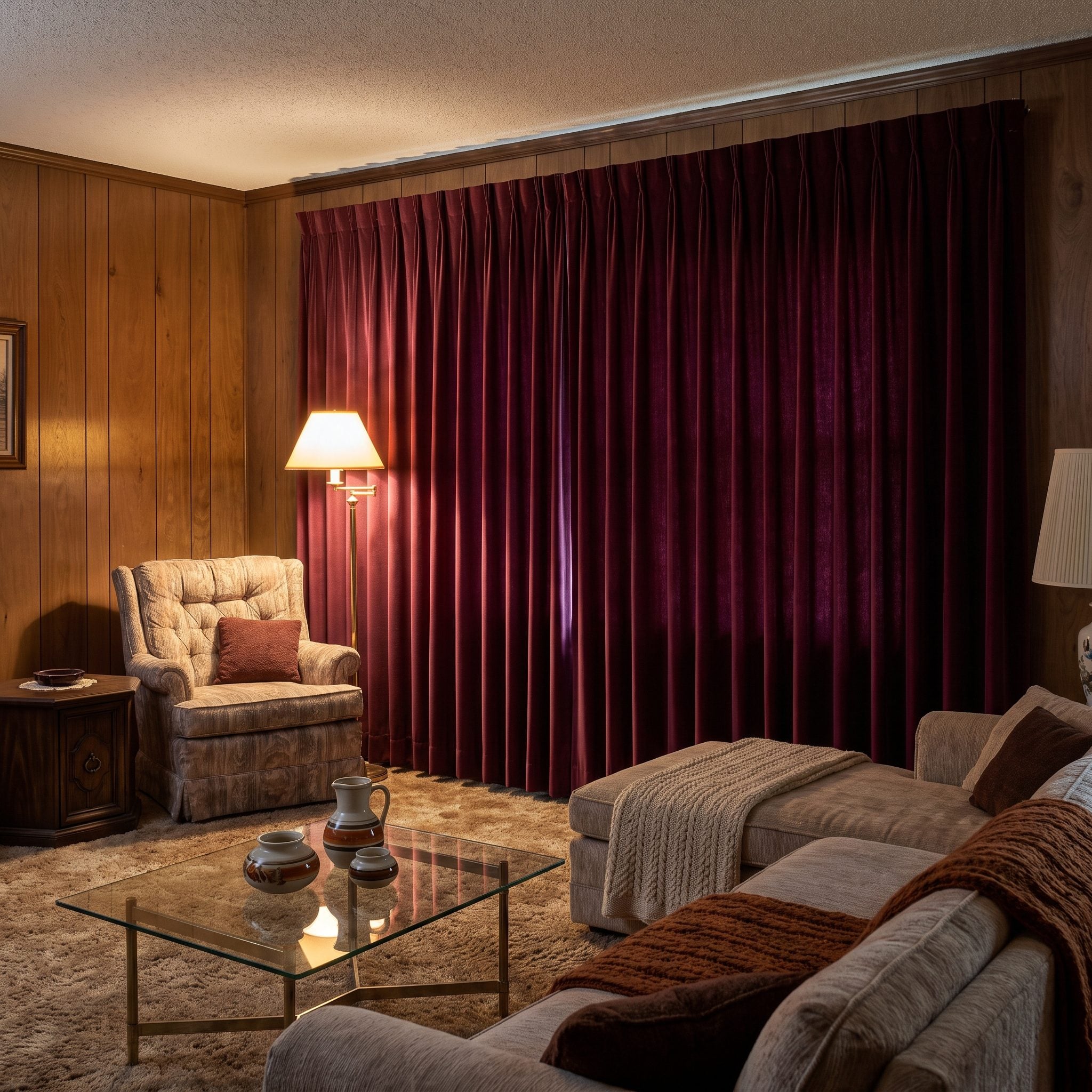
Floor-length fabric, generous pleats, substantial linings, and occasionally a matching valance. The 1980s window treatment could rival the sofa for visual weight. Even when open, the gathered fabric formed thick columns at either side of the glass.
Closed drapes controlled daylight, improved privacy, and could help reduce drafts or sound transmission to varying degrees. Their folds also added texture to rooms already rich in upholstery. The disadvantage was obvious: heavy treatments could overwhelm modest windows and make an interior considerably darker than necessary.
23. The Huge Wooden Coffee Table That Had to Survive Everything
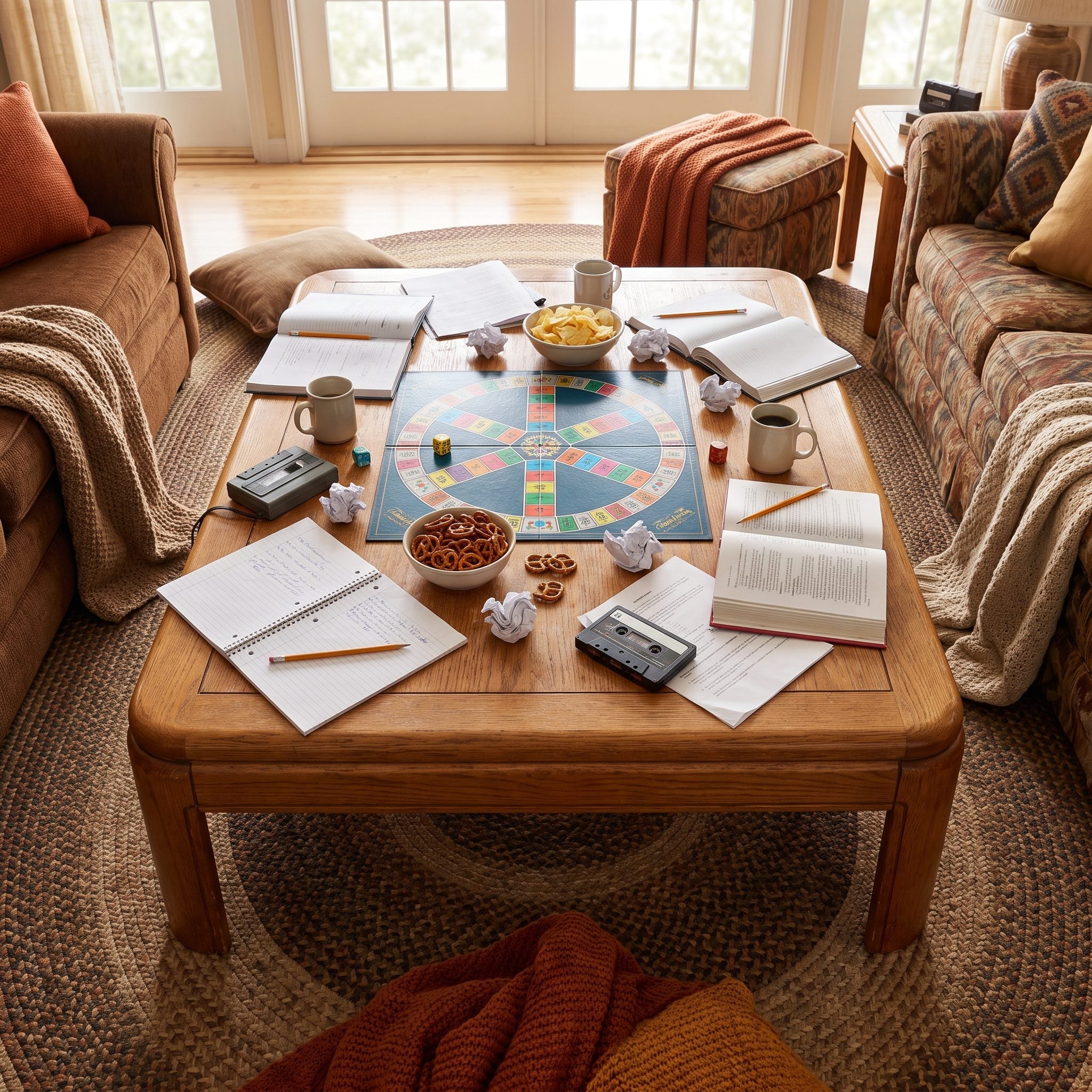
Broad enough for a board game, low enough to reach from the sofa, and sturdy enough to tolerate the daily traffic of a busy household. The oversized wooden coffee table occupied the center of many family-room arrangements with the authority of a small dining table.
Its generous surface could accommodate drinks, magazines, snacks, puzzles, and whatever else accumulated during an evening. Solid wood and durable veneers offered different levels of resilience, while darker finishes helped disguise ordinary wear. The table’s real advantage was its usefulness: one substantial piece handled an extraordinary number of small domestic tasks.
22. The VCR That Made Movie Night an Entire Production
🔥 Would you like to save this?
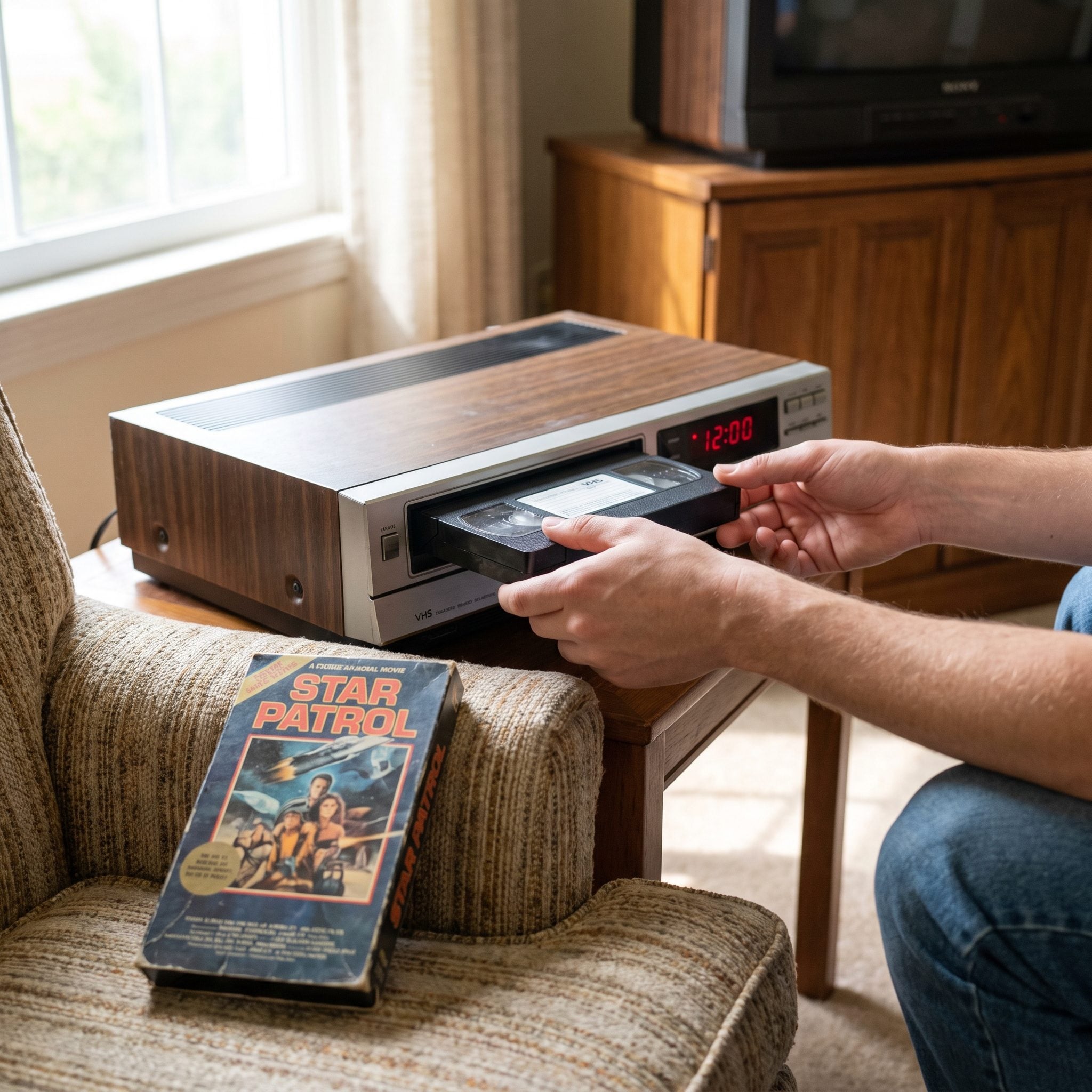
A cassette slid into the machine with a mechanical clunk. Motors engaged, a counter began moving, and the television briefly displayed the familiar imperfections of magnetic tape. The VCR brought a new degree of control over what appeared on the living-room screen.
Home video rentals and television recording changed how households used the room. Movies no longer depended entirely on broadcast schedules, and favorite programs could be recorded for later viewing. The technology required shelves, cables, tapes, and occasional tracking adjustments, but it also turned the living room into a home entertainment destination.
21. The Sheer Curtains That Made Afternoon Light Look Different
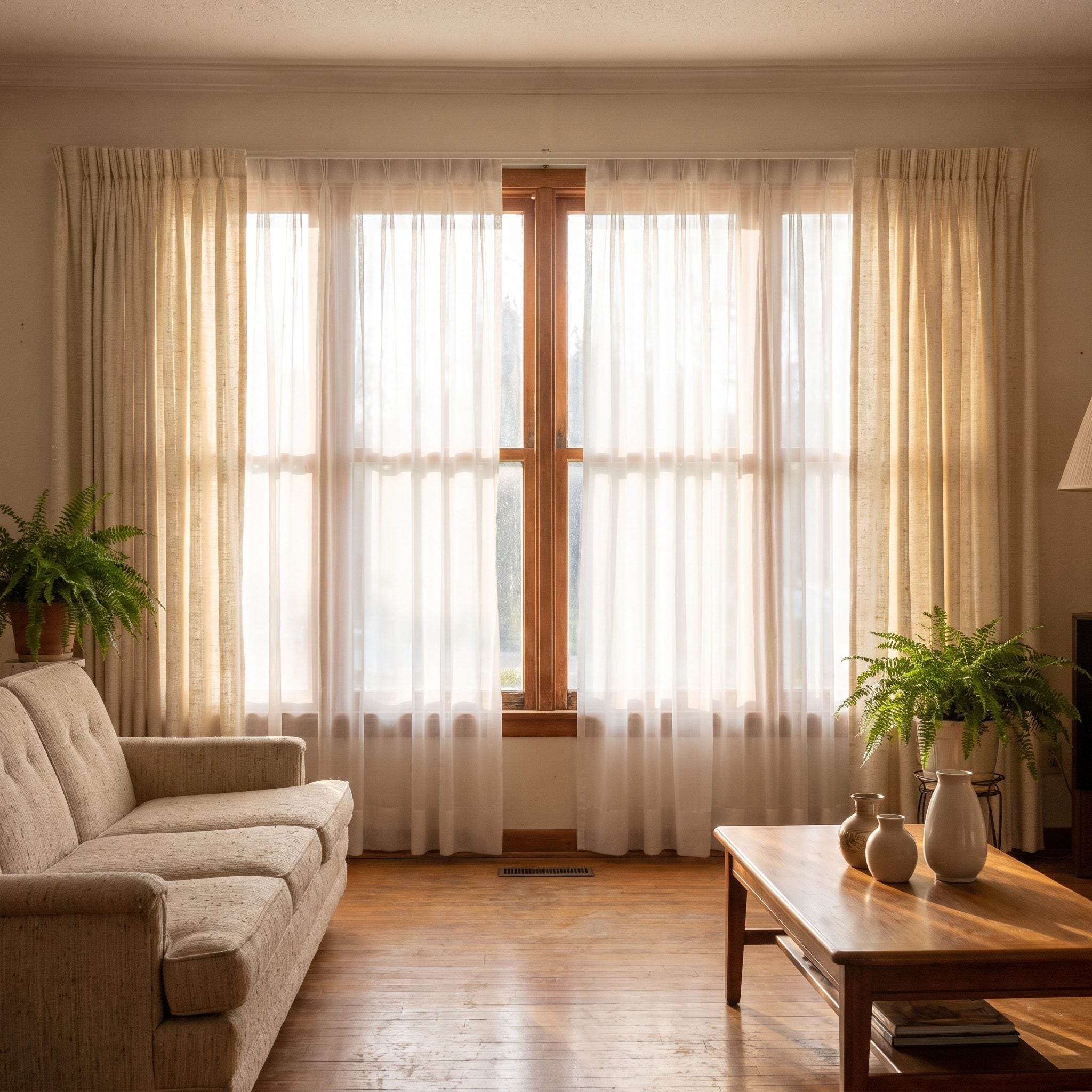
Behind the substantial drapes, a lighter layer often performed an entirely different job. White or cream sheers filtered strong daylight, reducing glare while allowing the window to remain visually open.
The arrangement gave the room more flexibility than a single heavy curtain. Sheers could offer a measure of daytime privacy when outdoor light was brighter than the interior, although they became far less effective after dark with the lights on. Their translucent fabric also softened the hard edges of window frames and balanced the room’s heavier furnishings.
20. The Stereo Speakers Big Enough to Compete With the Furniture
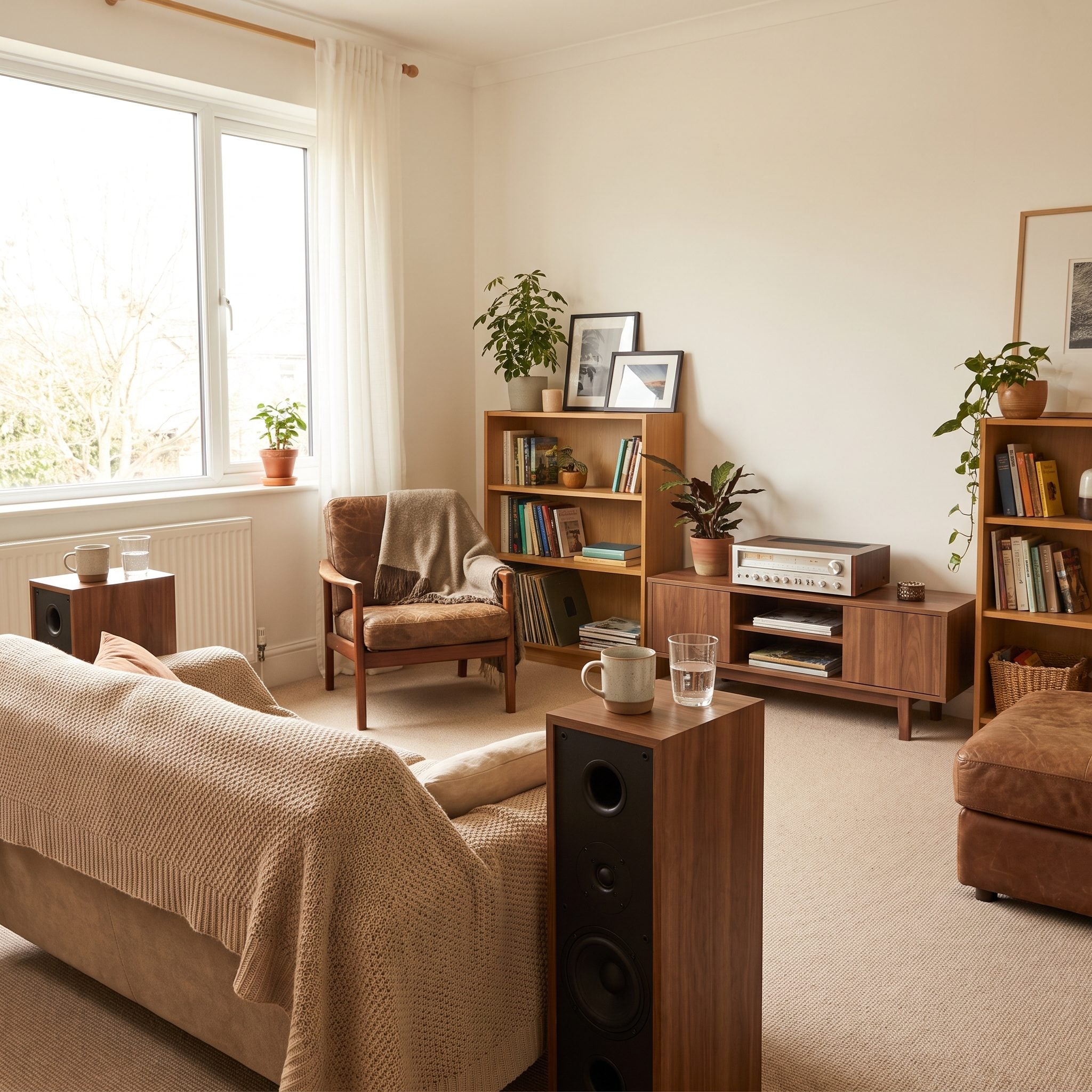
Wood-veneered speaker cabinets, a receiver glowing with illuminated numbers, and an equalizer covered in sliders. A substantial component stereo could occupy a dedicated wall or cabinet, with speakers standing apart like matching pieces of furniture.
Audio equipment was often assembled component by component, allowing owners to replace or upgrade individual pieces. The visible machinery was part of the appeal: moving meters, spinning records, cassette decks, and the unmistakable presence of large speaker enclosures. Unlike today’s compact wireless systems, the equipment made music reproduction a conspicuous part of the room.
19. The Matching Loveseat That Made the Sofa Look Like Part of a Set
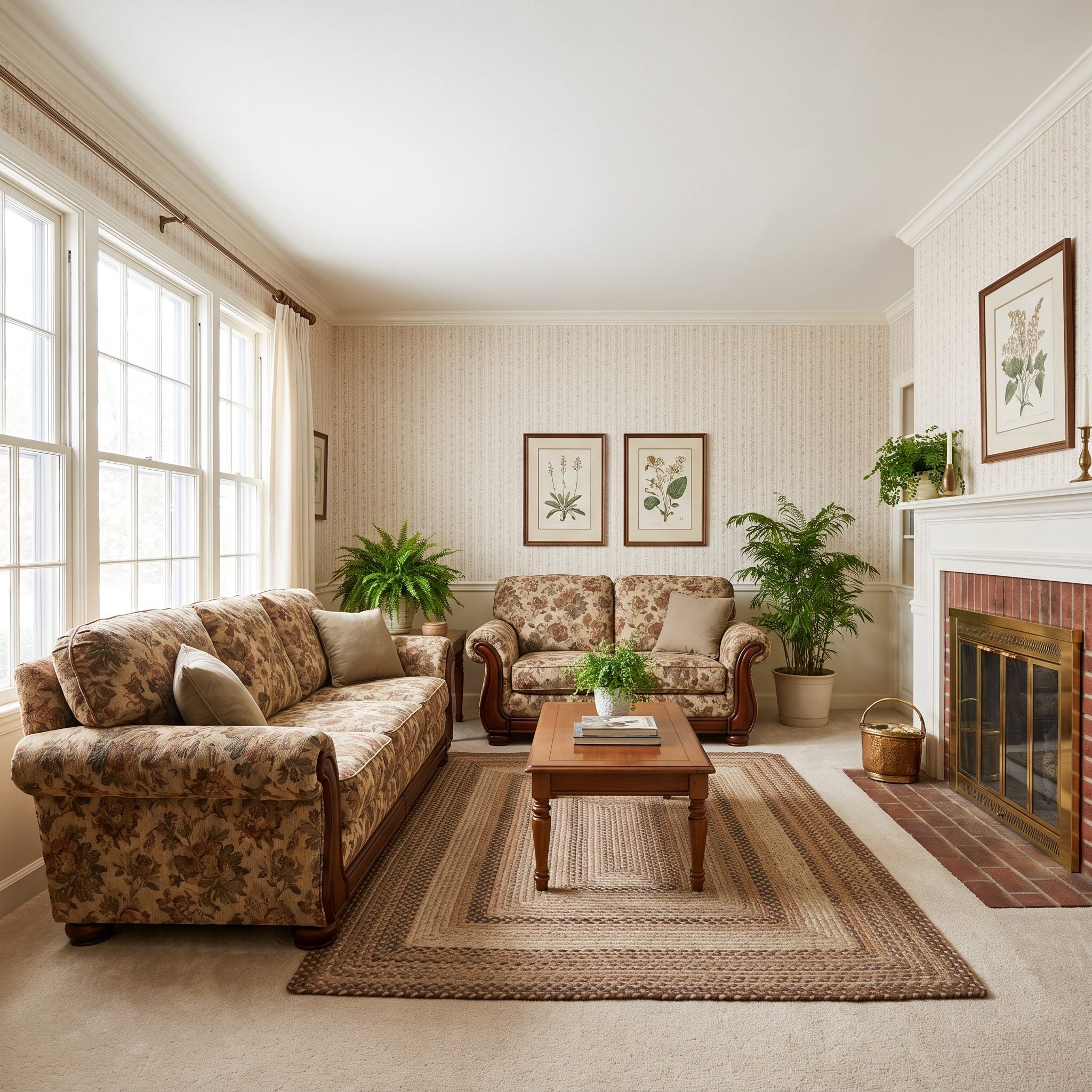
The same upholstery, the same rounded arms, the same generous cushions, only in a smaller package. Matching sofas and loveseats gave 1980s living rooms a coordinated appearance that left little doubt about which pieces belonged together.
Furniture-store collections made it straightforward to furnish a room with related pieces. A loveseat could provide additional seating without requiring the space of another full sofa, and positioning the two at an angle could encourage conversation. The uniformity sometimes became excessive, but the practical advantage of extra seating was difficult to dispute.
18. The Built-In Bookshelves That Displayed Everything Except Restraint
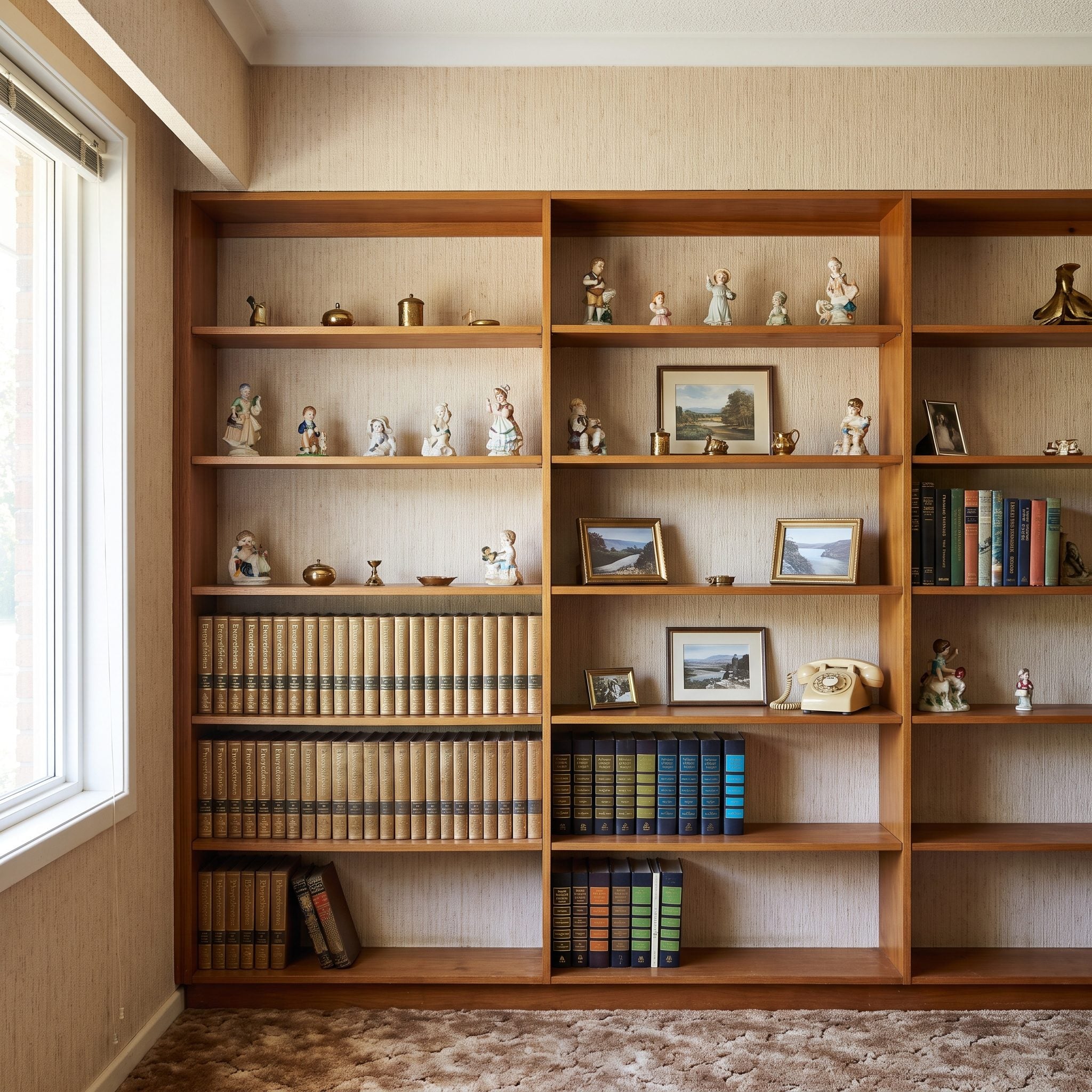
Encyclopedias with matching spines, paperback novels, ceramic souvenirs, framed photographs, trophies, and decorative plates all competed for shelf space. The built-in bookcase was rarely reserved for books alone. Its compartments accommodated the accumulated evidence of an entire household.
Unlike freestanding shelves, built-ins could occupy awkward recesses or frame a fireplace, making storage part of the architecture. Their contents supplied color, texture, and personal character, turning an ordinary wall into a display that could change as the household accumulated new books, photographs, and keepsakes.
17. The Ottoman That Was Never Too Precious for Someone’s Feet
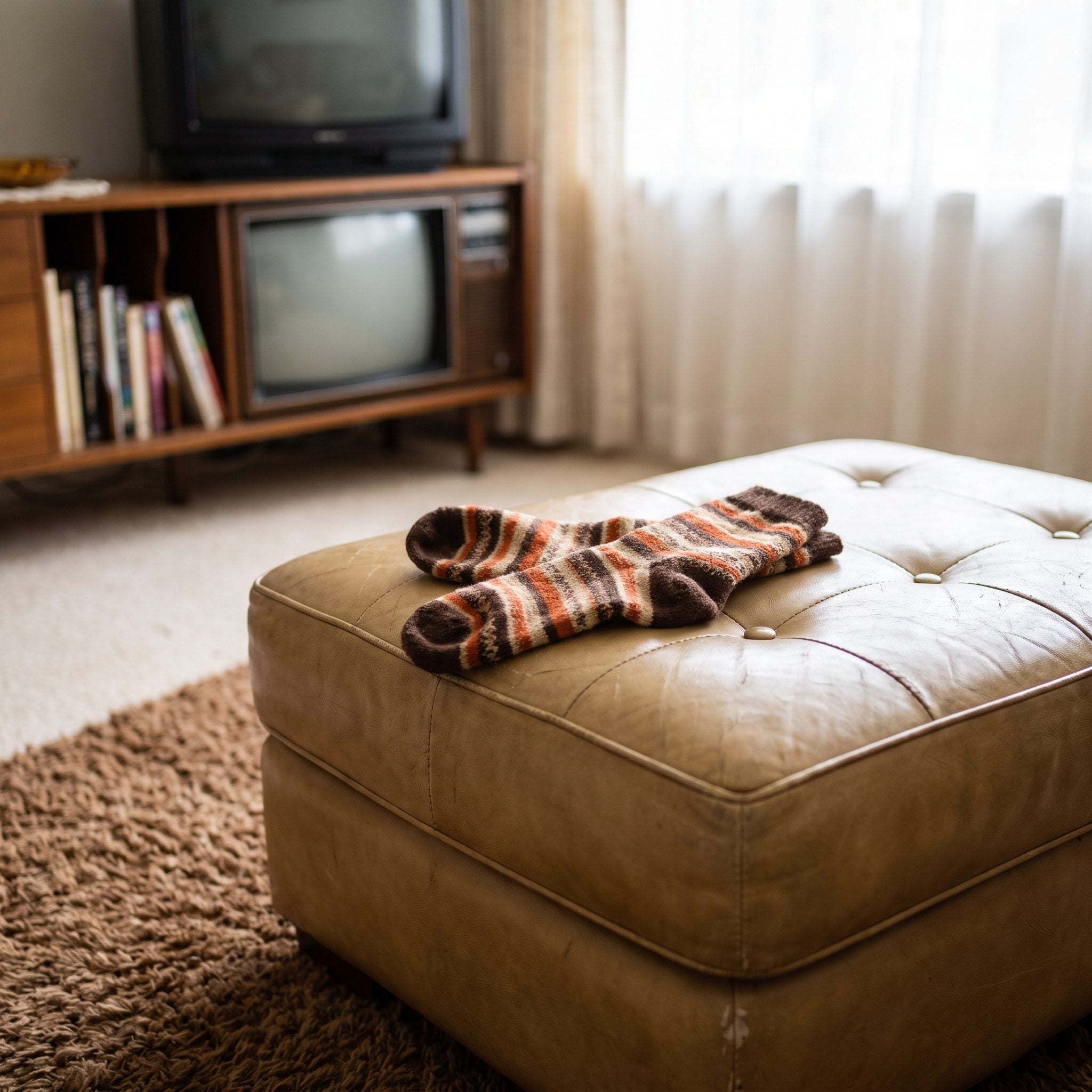
Tufted velour, thick padding, rounded corners, and a footprint large enough to make its purpose obvious. The upholstered ottoman was designed to support feet, not to serve as a pristine display surface.
Placed beside a recliner or sofa, it extended the seating area without requiring another chair. Some versions were sturdy enough for occasional additional seating, while others functioned primarily as footrests. Their soft surfaces also introduced a welcome contrast to the heavy wooden tables surrounding them.
16. The Cabinet Packed With Records, Cassettes, and VHS Tapes
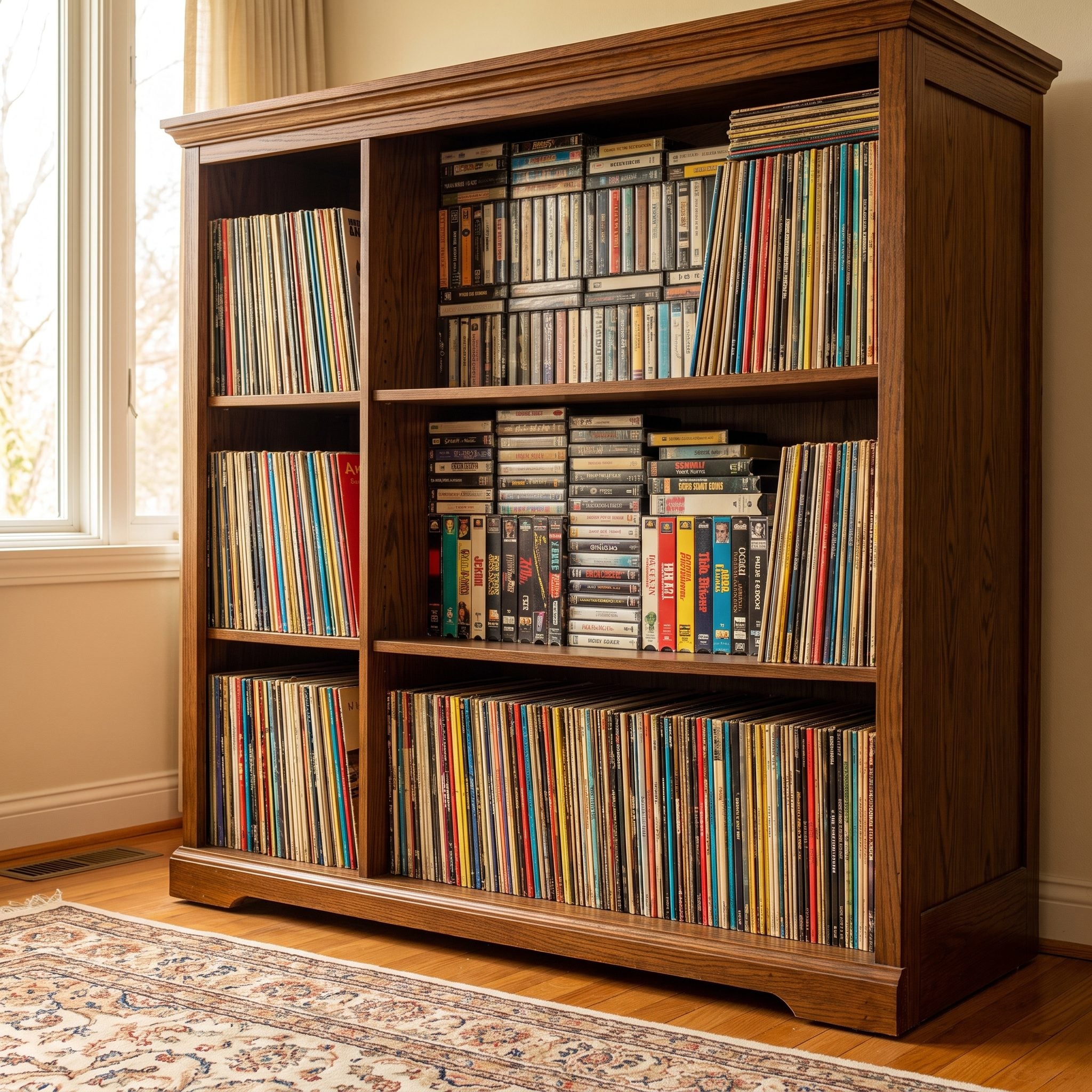
Album sleeves lined up vertically. Cassette cases occupied narrow shelves. VHS boxes formed rows of colorful spines, sometimes interrupted by home-recorded tapes with handwritten labels. Physical media required actual furniture, and the resulting collections were impossible to overlook.
Storage cabinets protected recordings from dust and damage while keeping them accessible. They also revealed musical and cinematic preferences at a glance. The mixture of formats reflected a decade of technological transition, when vinyl records, audio cassettes, and videotapes could all be part of the same household entertainment system.
15. The Raised Hearth That Quietly Became Extra Seating
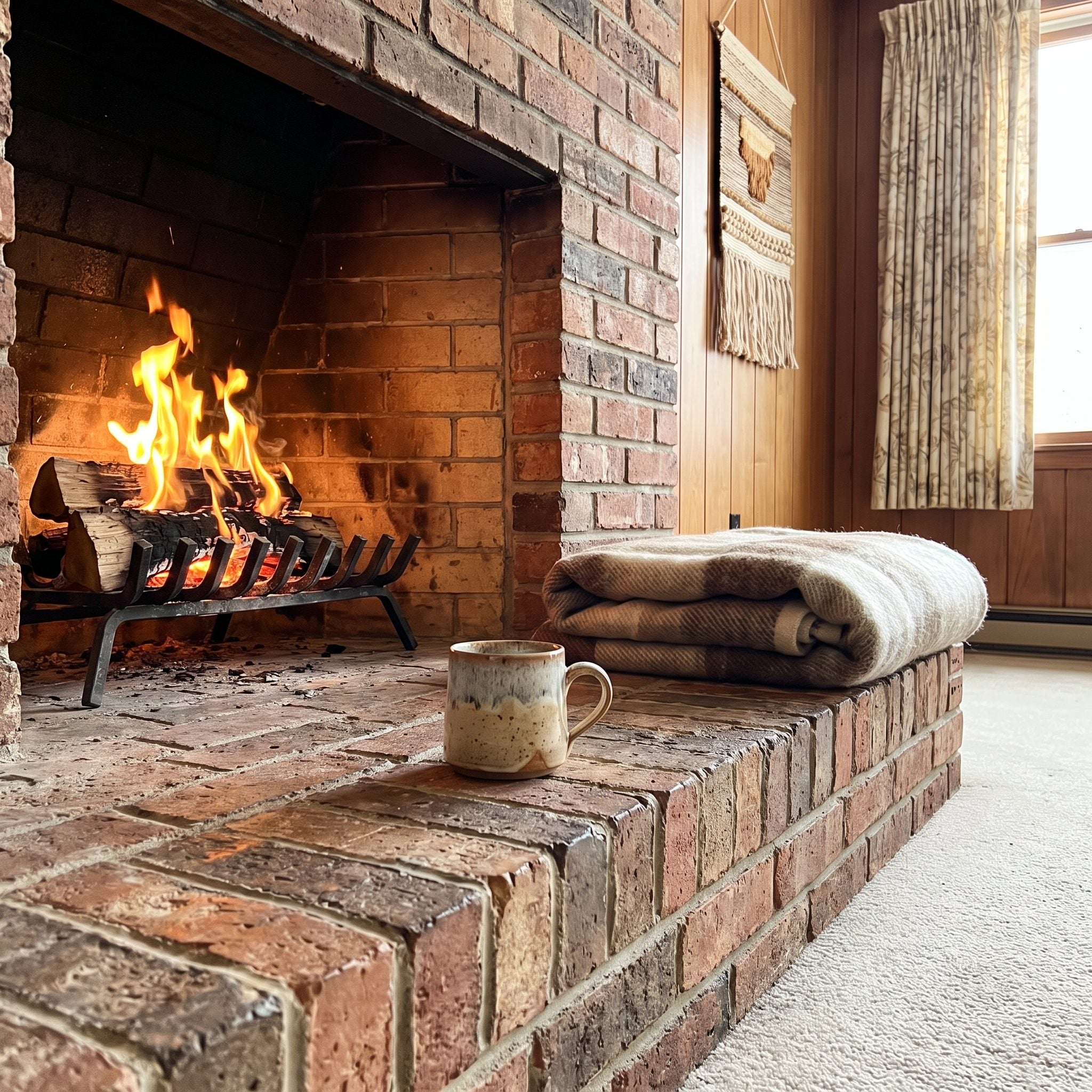
A broad brick or stone ledge running across the fireplace wall offered more than a place to accommodate the firebox. Depending on its height and depth, the raised hearth could become an informal seat or a convenient surface for decorative objects.
Some hearths were deliberately proportioned to accommodate sitting, while others were primarily functional or decorative. Their solid masonry added another horizontal element to the room, often visually connecting the fireplace with surrounding furniture. The ledge could make a substantial fireplace wall feel less like a flat surface and more like an integral part of the seating arrangement.
14. The Brass Floor Lamp That Made One Chair Its Own Little Territory
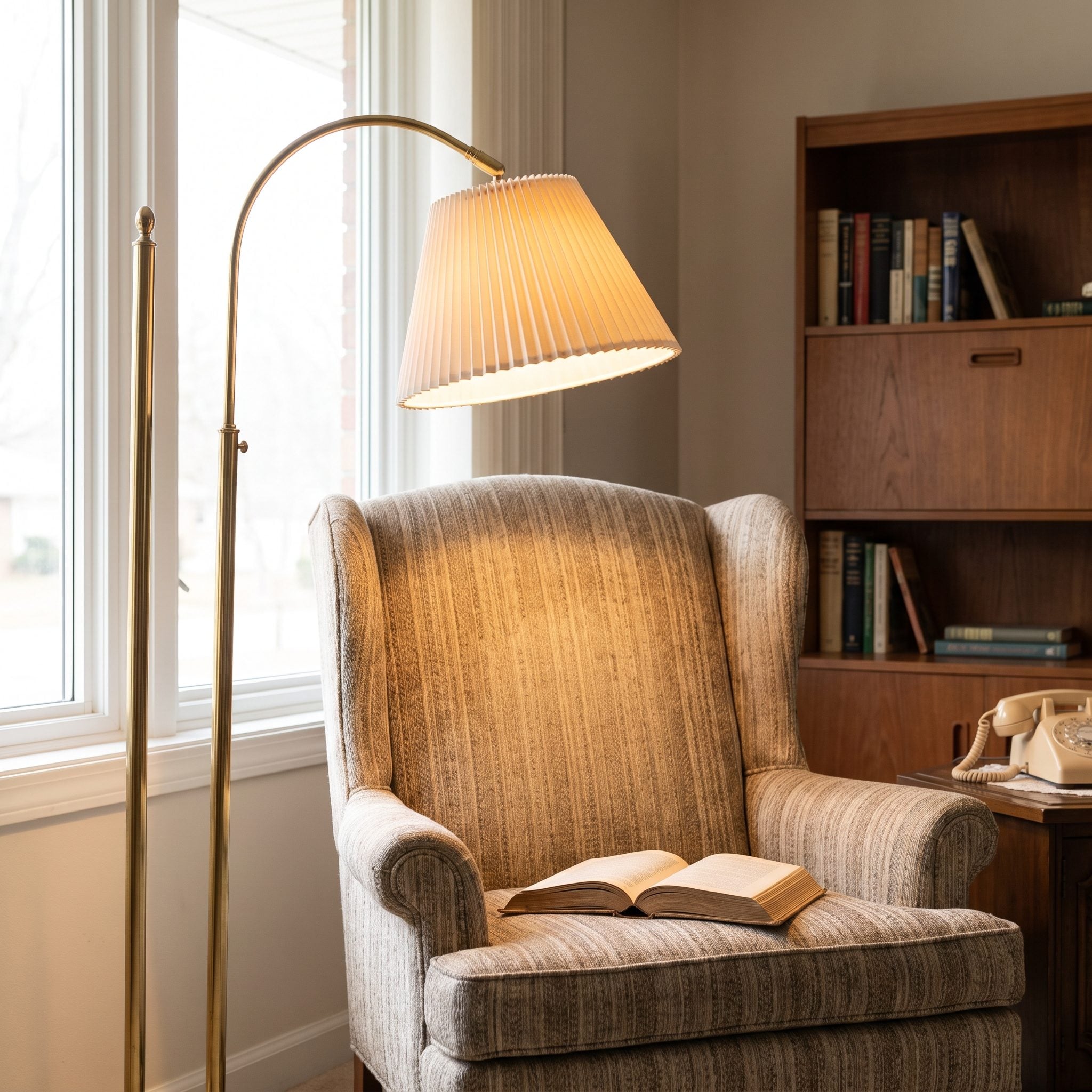
A slim brass stem rose beside the chair, then bent or angled toward the reading surface. Adjustable floor lamps brought light directly to a book, newspaper, or needlework without requiring the entire room to be illuminated.
Their advantage was precision. A gooseneck or articulated arm could direct the beam toward a specific task, while the lamp’s narrow footprint preserved valuable table space. Brass finishes also introduced a bright metallic accent among the room’s wood and upholstery, making the fixture useful even when switched off.
13. The Family Photographs That Claimed Every Available Surface
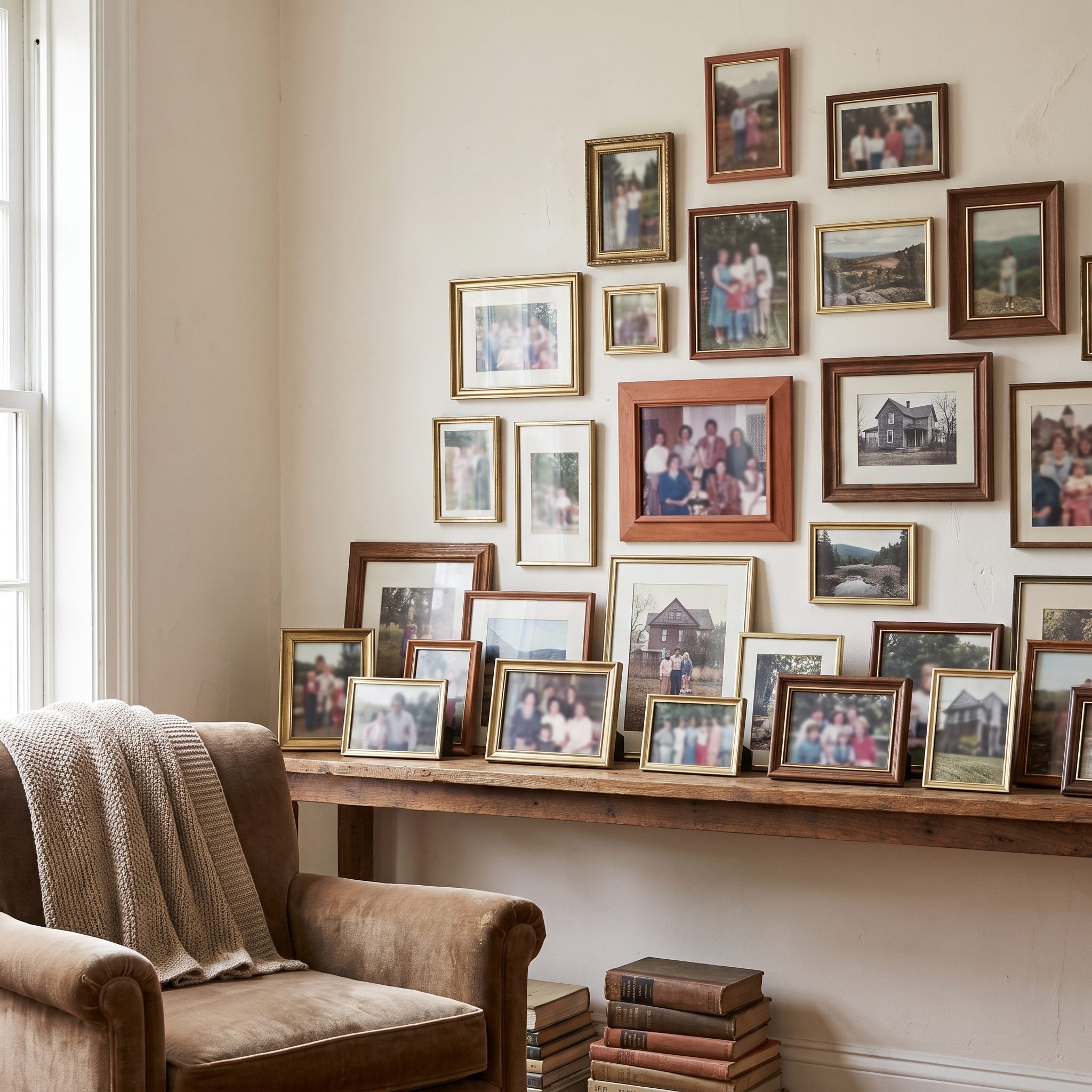
School portraits, wedding photographs, vacation snapshots, and formal family pictures filled frames of different sizes and finishes. Brass, wood, silver-tone metal, and painted frames frequently shared the same table without much concern for coordination.
Photographs made the room personal in a way that decorative objects alone could not. Their arrangement often developed gradually as new pictures joined older ones. A crowded mantel or sideboard might lack the discipline of a carefully styled display, but the variety of faces, occasions, and frames gave it an unmistakable identity.
12. The Thick Carpet Pad Nobody Saw but Everybody Felt
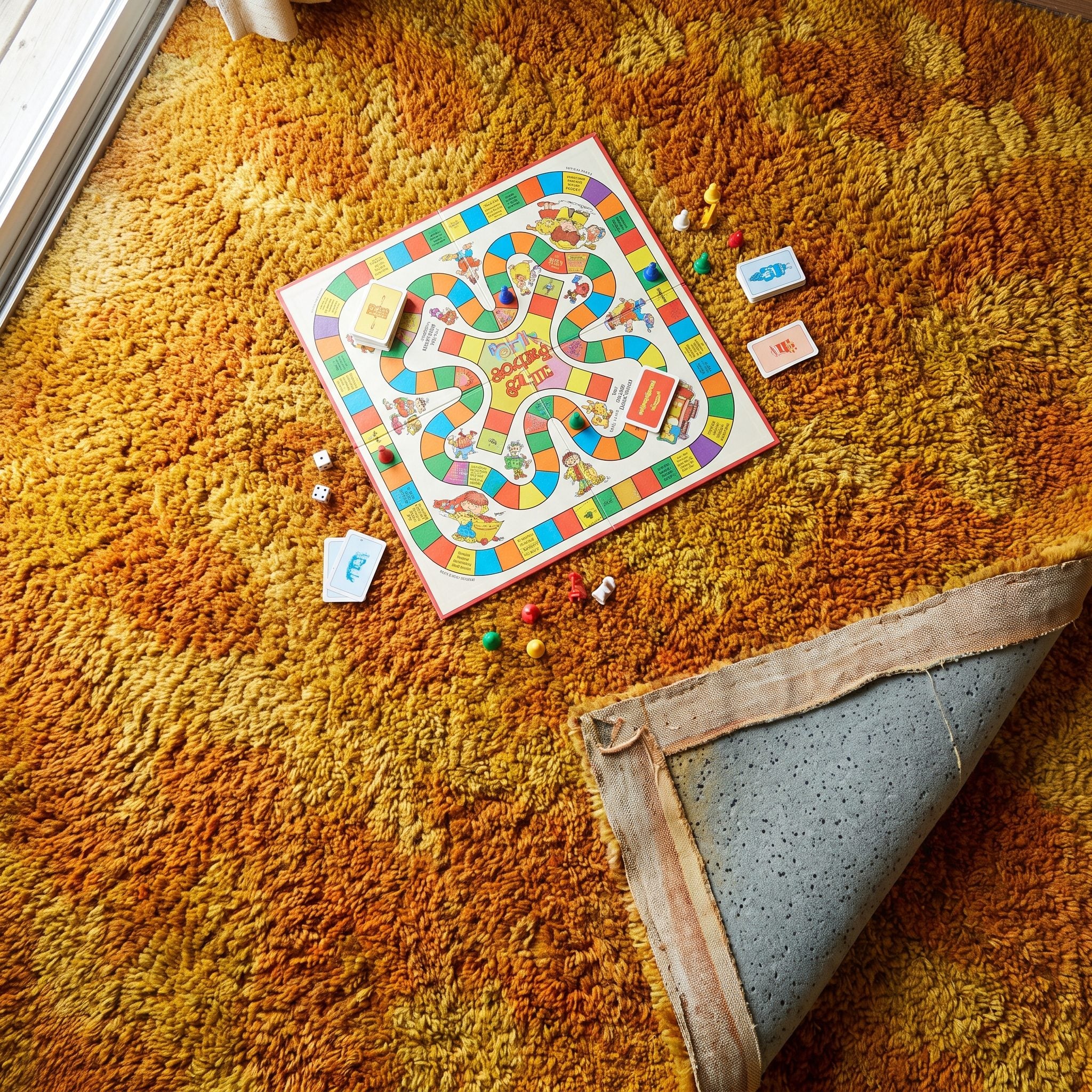
Under the visible carpet sat another layer that rarely received attention. Foam, rubber, and fiber underlays varied in thickness and resilience, influencing how the floor responded to footsteps, furniture, and anyone sitting directly on the carpet.
A suitable pad could improve cushioning, help protect the carpet backing, and contribute to sound reduction. Density mattered as much as thickness; an excessively soft underlay could be unsuitable for some carpeting. In family rooms where children played board games or sprawled on the floor, that hidden layer could make a substantial difference.
11. The Corded Telephone That Turned One Side Table Into a Communications Center
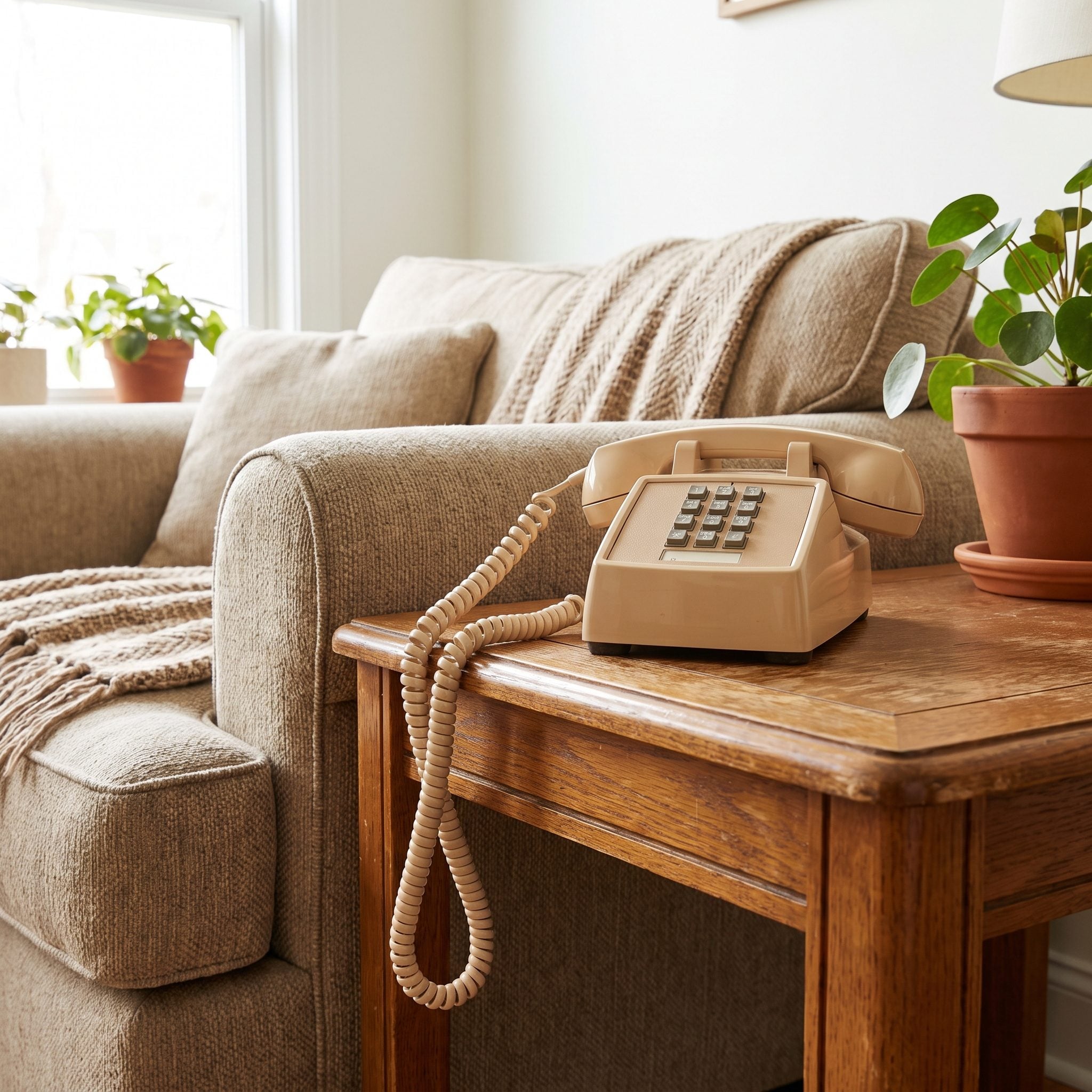
A push-button or rotary telephone sat beside the sofa, its coiled handset cord draped across the tabletop. The receiver could travel only as far as the cord permitted, making telephone conversations unusually dependent on furniture placement.
Some households had extensions in several rooms; others relied on one or two strategically located instruments. The cord stretched, twisted, and occasionally developed stubborn tangles. Unlike a mobile phone, the apparatus had a permanent physical presence, complete with a designated surface and a nearby wall connection.
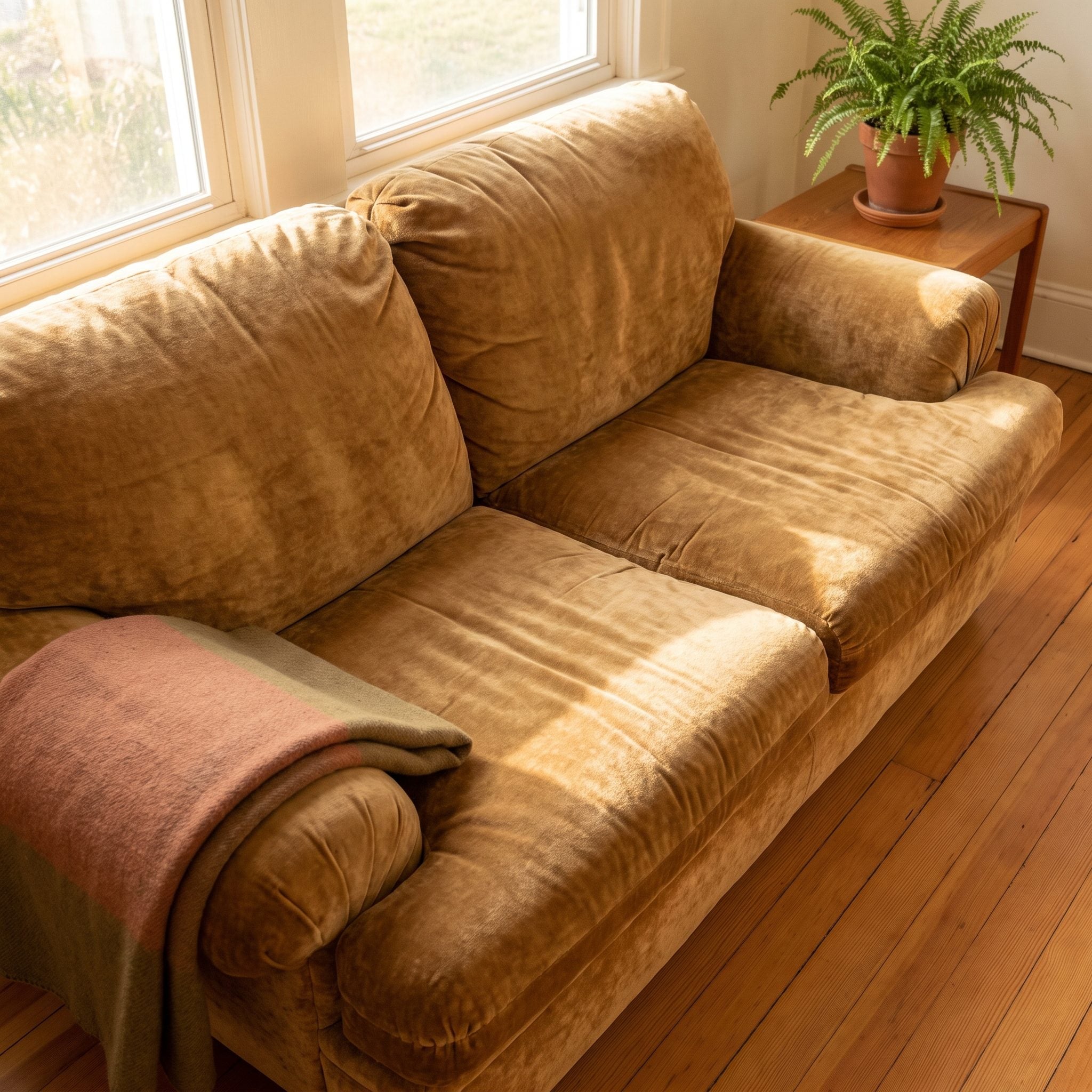
10. The Deep, Overstuffed Sofa That Made Sitting Upright Seem Unnecessary
🔥 Would you like to save this?
Thick rolled arms, broad seat cushions, padded backs, and upholstery that seemed to extend in every direction. The overstuffed sofa emphasized softness so thoroughly that its underlying frame almost disappeared.
Generous seat depth allowed a relaxed posture, while thick cushions created a rounded silhouette. Construction and support varied widely, and softness alone did not guarantee comfort. But the design made its priorities unmistakable: this was seating intended for long stretches of television, reading, conversation, and the occasional afternoon nap.
9. The Magazine Rack That Made Reading Material Part of the Furniture
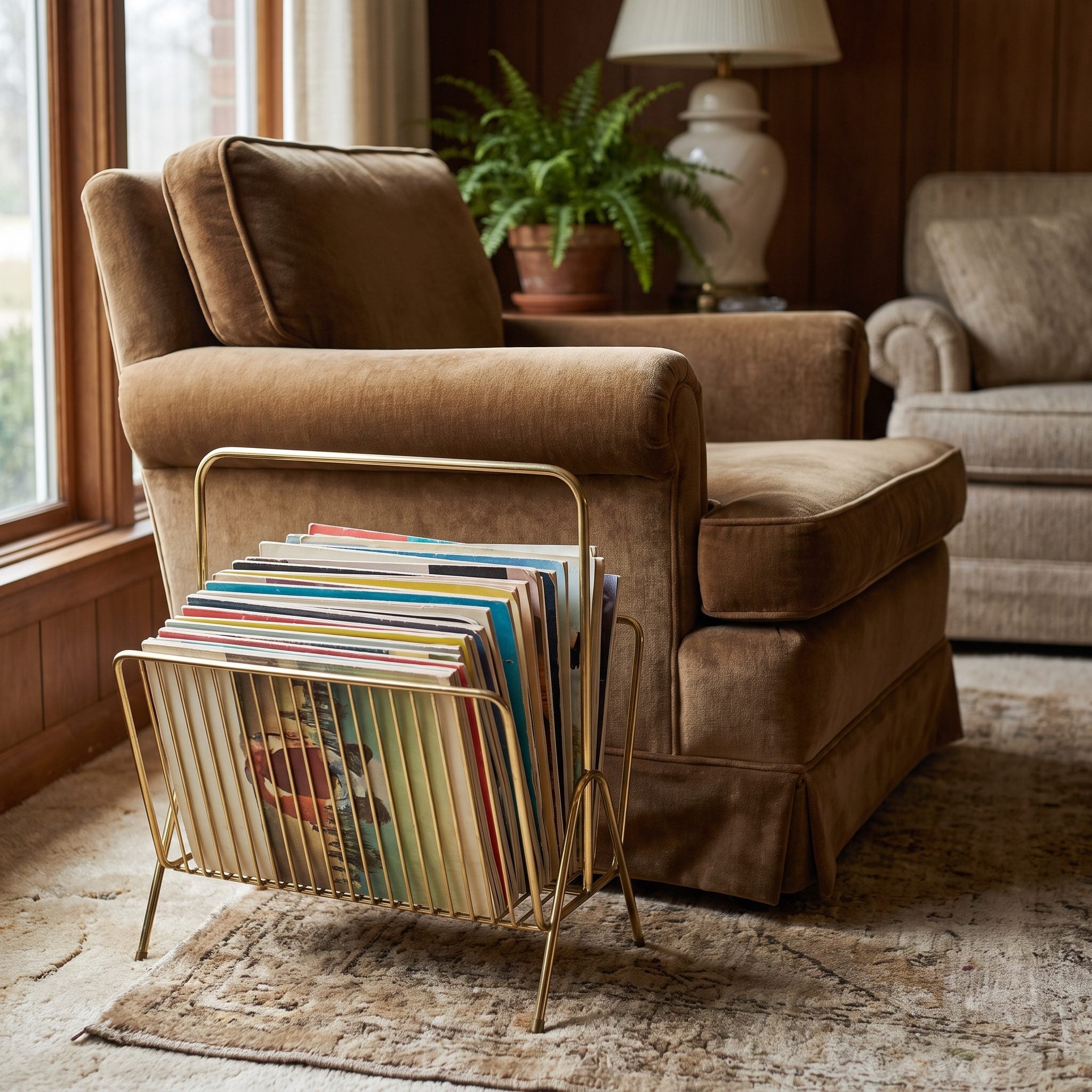
Brass wire, bentwood, wicker, and wooden slats all appeared in magazine-rack designs. The narrow containers accommodated newspapers, catalogs, television listings, and magazines without requiring an entire shelf.
Placed beside a chair or sofa, the rack kept reading material visible and accessible while preventing loose papers from spreading across the coffee table. Its small footprint made it particularly useful in crowded rooms. An accessory that could easily be dismissed as old-fashioned was, at heart, a practical solution to an everyday storage problem.
8. The Warm Pools of Light That Divided One Room Into Several
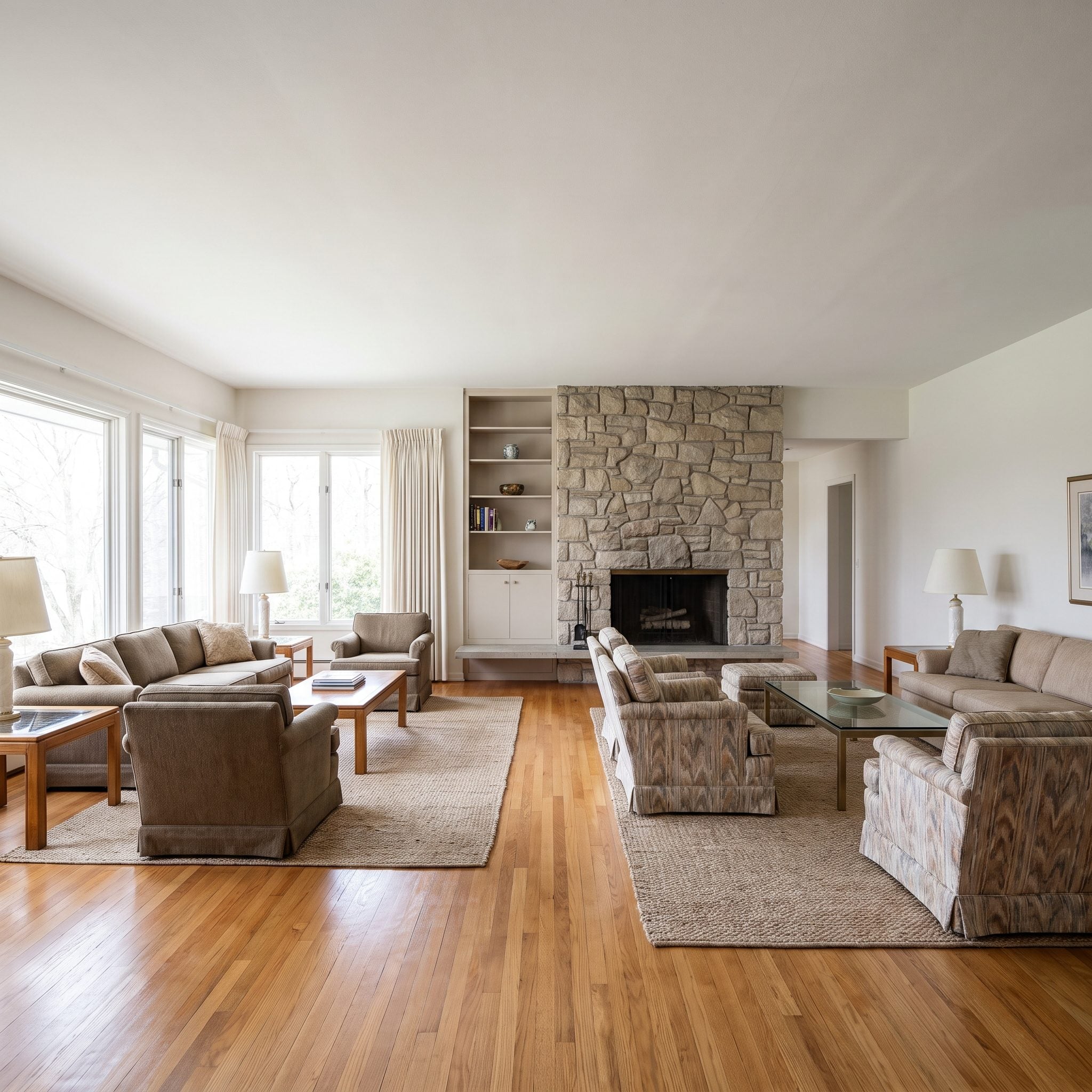
One lamp illuminated the sofa. Another marked the reading chair. A third brightened a side table near the window. Between them, darker portions of the room provided contrast rather than competing for attention.
This approach created distinct lighting zones within a single space. Task lighting could support reading, while shaded lamps offered lower-intensity illumination for conversation or television viewing. The arrangement remains useful in large rooms where one overhead fixture cannot comfortably serve every activity. Rather than illuminating every corner equally, the lamps established a visual hierarchy that helped organize the space.
7. The TV Trays That Brought Dinner Directly to the Sofa
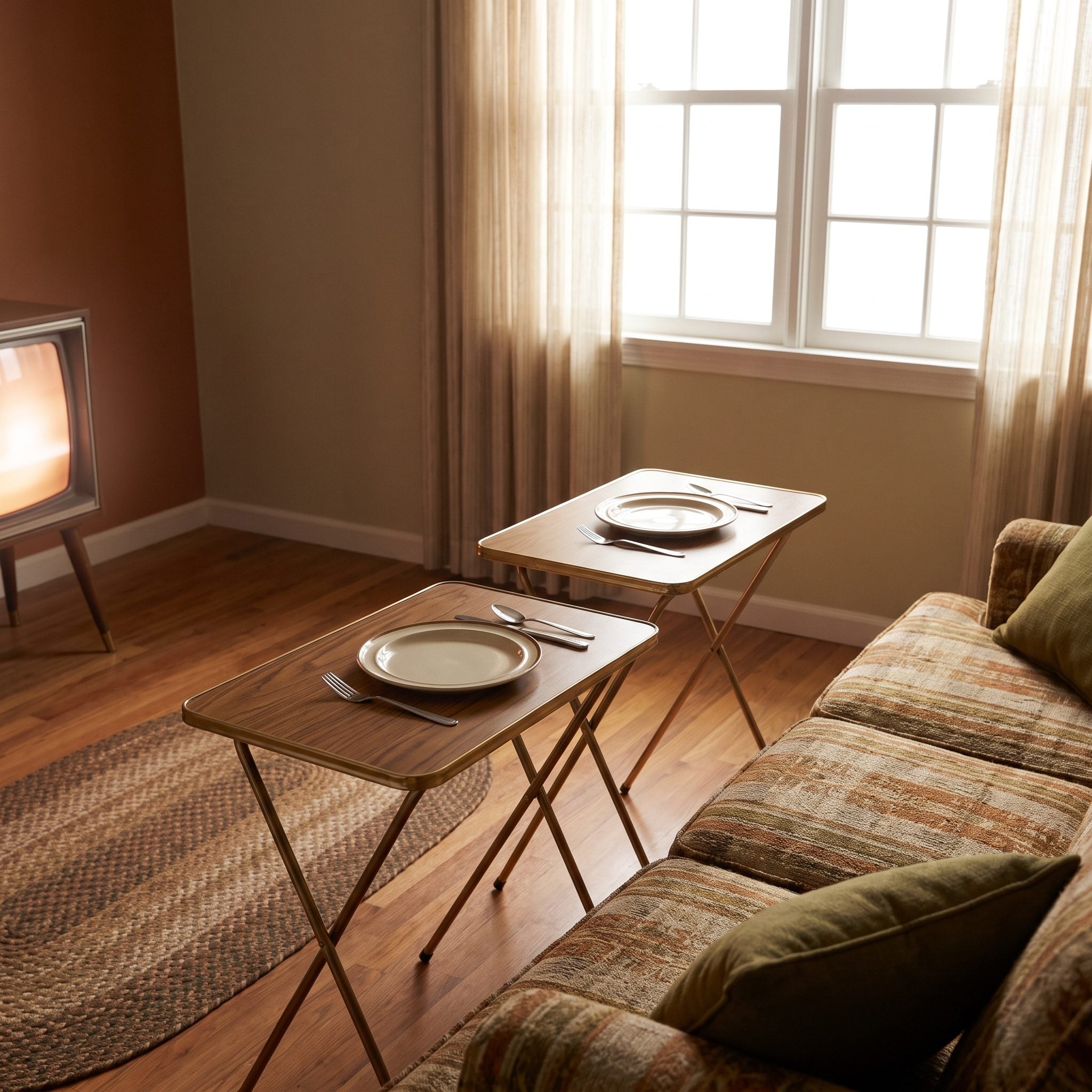
Faux-woodgrain tops, folding metal legs, and a compact storage stand holding several trays upright. The television tray was designed around a simple proposition: eating in front of the television should not require balancing a plate on your knees.
TV trays became popular during the 1950s alongside television-centered dining habits and remained familiar household accessories through the 1980s. Their folding construction allowed temporary dining surfaces to appear when needed and disappear afterward. The legs could be wobbly, and the trays were hardly elegant, but their convenience was considerable.
6. The Honey-Oak Furniture That Made Lightweight Pieces Look Temporary
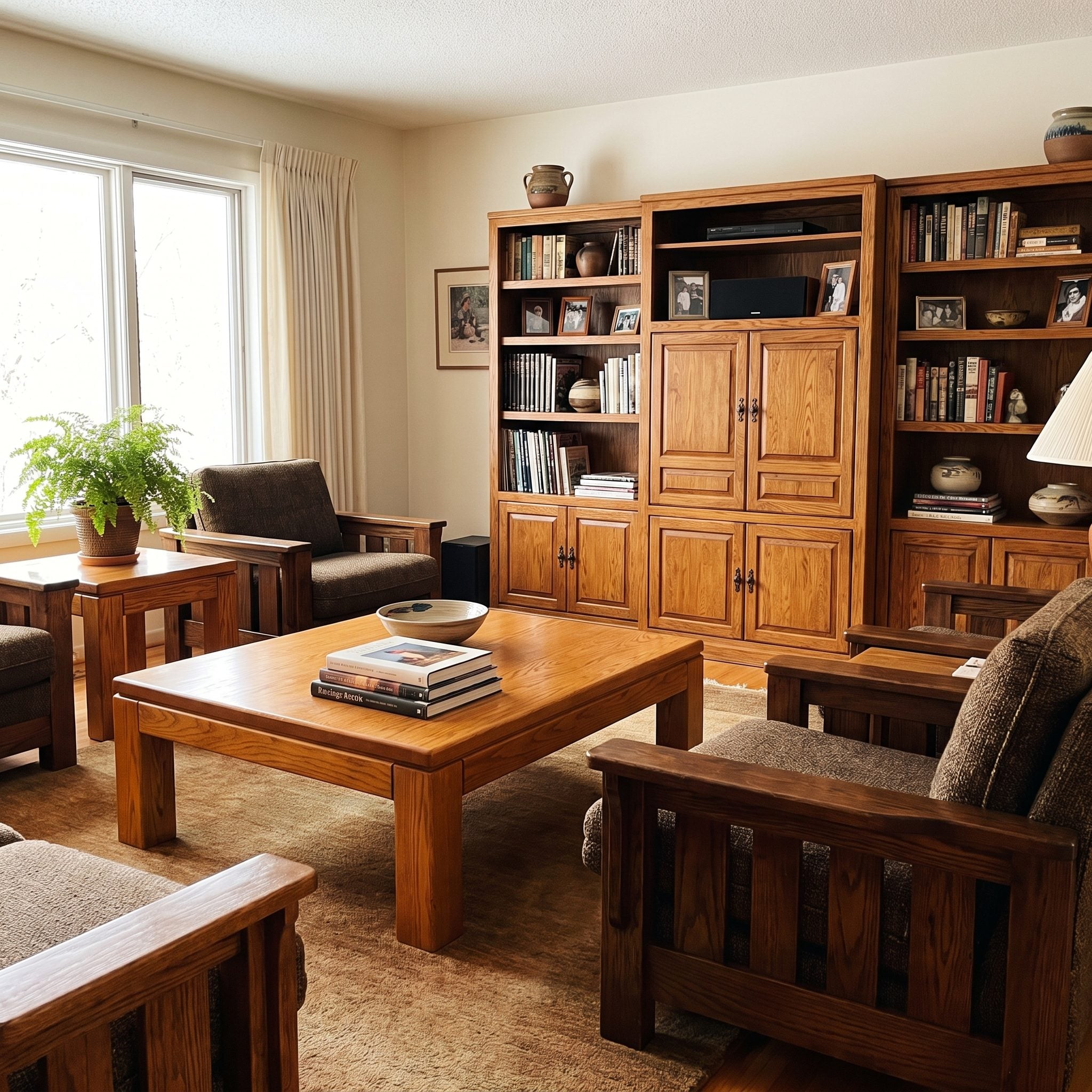
Honey oak, dark-stained wood, thick legs, and broad cabinet doors gave many 1980s living-room pieces a substantial appearance. Some were built from solid hardwood; others combined wood veneers, engineered panels, and decorative moldings.
Quality varied, but well-constructed wooden furniture could be repaired or refinished, extending its useful life. The heavy silhouettes also suited rooms furnished with deep sofas and large entertainment systems. Vintage examples remain available today, although their desirability depends on construction, condition, style, and manufacturer rather than age alone.
5. The Throw Pillows That Were Actually Allowed to Be Used
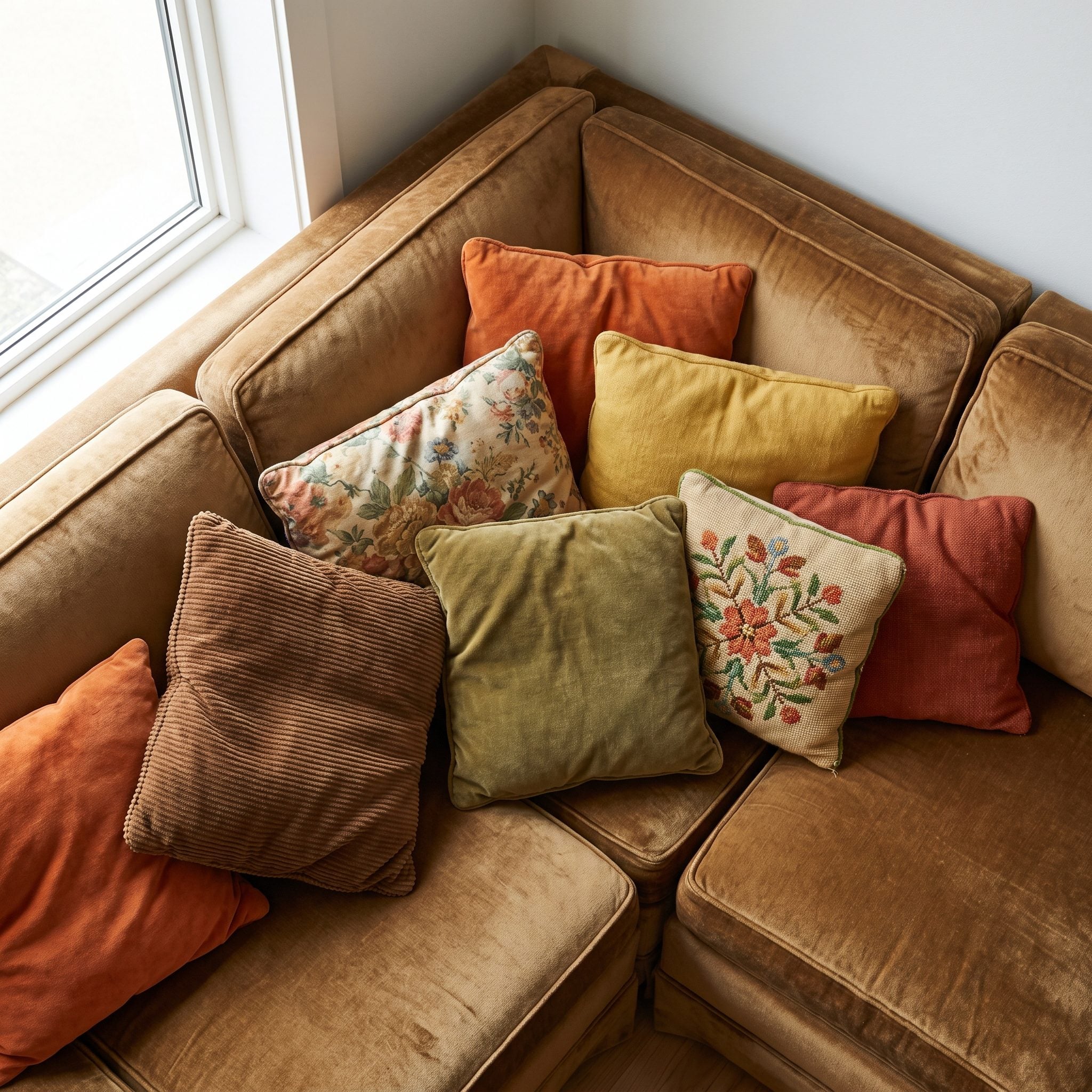
Corduroy beside floral chintz. Needlepoint against velour. A cushion with a geometric print that bore only a passing relationship to the sofa beneath it. Decorative pillows brought small bursts of pattern into rooms already full of competing textures.
Their usefulness went beyond appearance. Loose cushions could support the lower back, prop an arm, or soften a deep seat. Mixed fabrics also introduced contrast without requiring changes to the main furniture. A perfectly coordinated arrangement was one option; a more casual assortment could be just as effective.
4. The Room Arranged for Conversation Instead of a Perfect View of the Screen
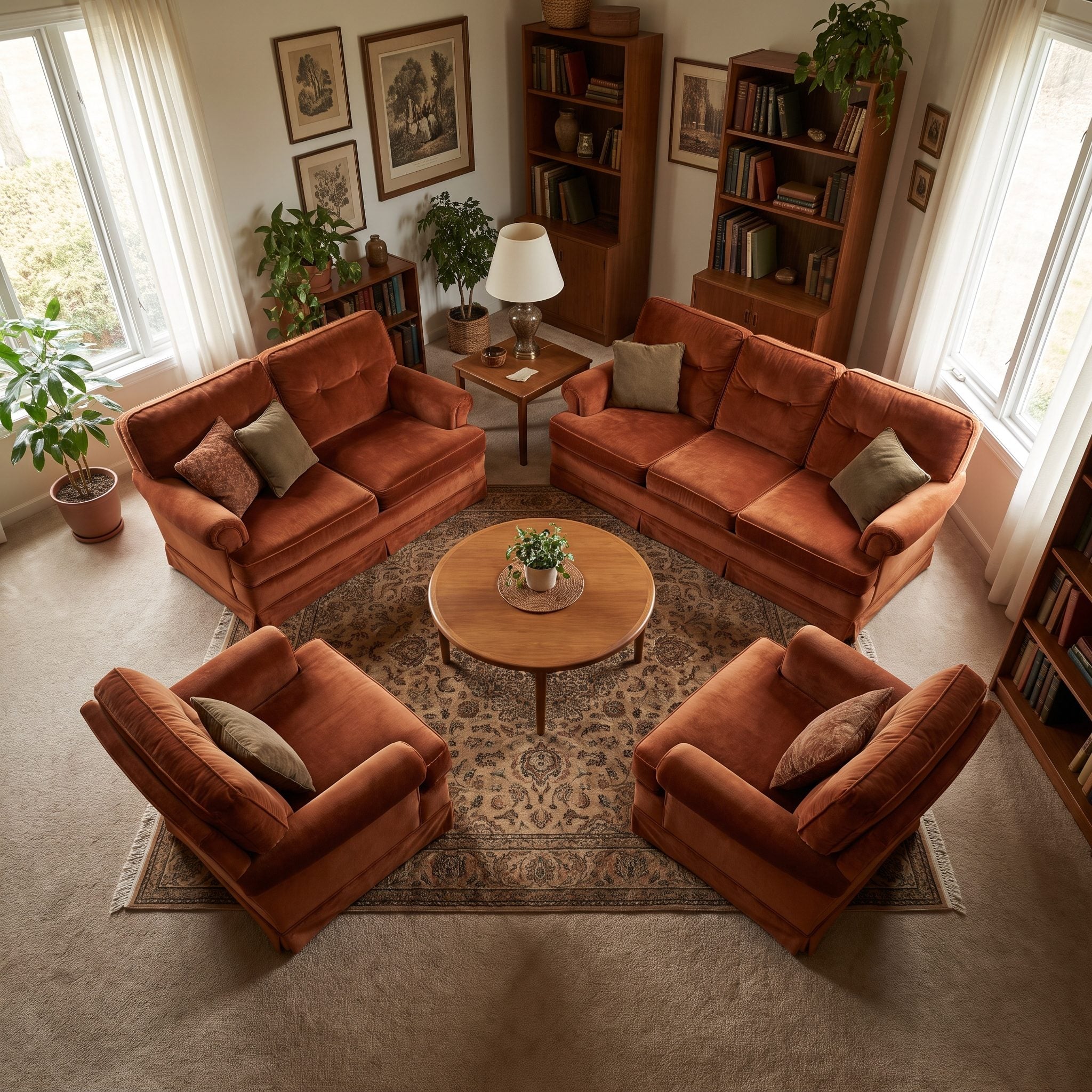
A sofa faced two armchairs. A loveseat turned inward toward the coffee table. The television remained visible, but the furniture did not necessarily form a rigid audience in front of it.
Television-centered layouts were certainly common during the 1980s, particularly in dedicated family rooms. Other arrangements gave conversation equal consideration, with seats angled toward one another and tables placed within easy reach. The distinction was not whether the room contained a television, but whether the screen dictated every seating position. A balanced arrangement could accommodate both conversation and viewing without making either activity an afterthought.
3. The Matching End Tables That Solved a Problem Before Anyone Noticed It
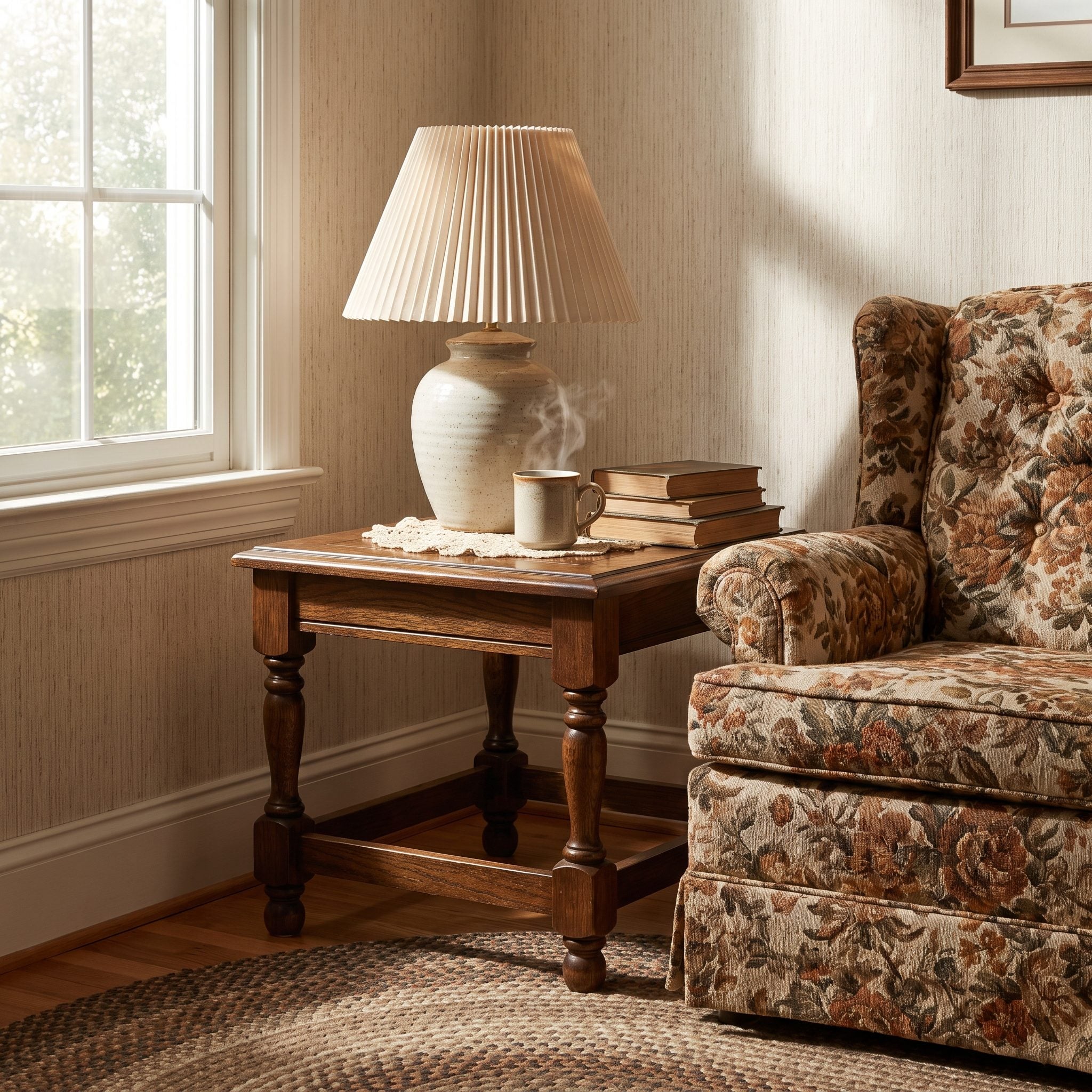
Matching wooden end tables flanked the sofa, supported table lamps, and provided somewhere to put a drink without leaning halfway across the room. Their dimensions often echoed the coffee table, creating a coordinated group of practical surfaces.
Convenience was the principal advantage. A table beside each seating position could accommodate reading glasses, books, remote controls, and cups while keeping the central coffee table available for larger activities. The furniture might have been visually heavy, but its placement reflected careful attention to how people actually used the room.
2. The Basket of Toys That Made No Attempt to Disguise Family Life
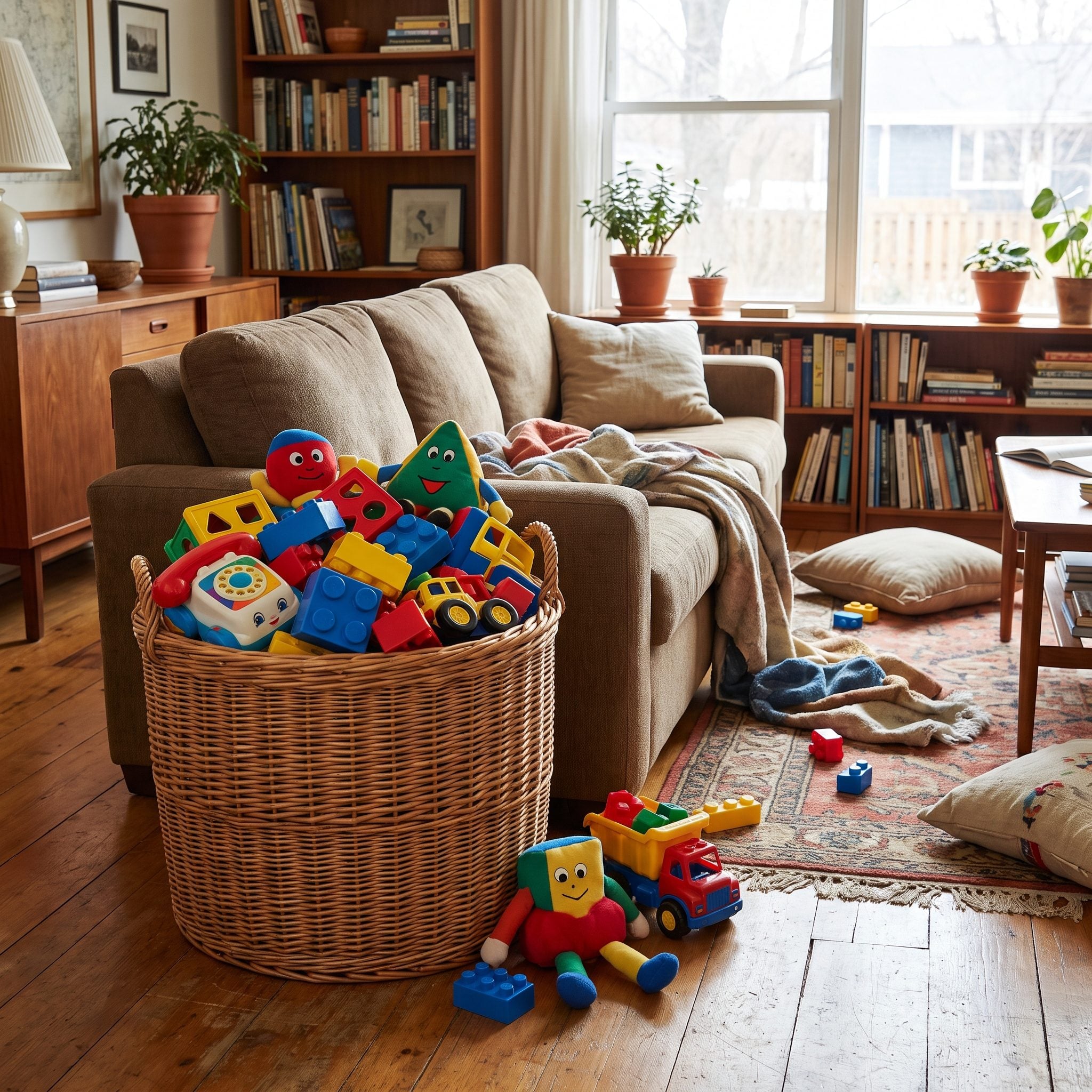
A large wicker basket beside the sofa could contain an improbable assortment of toys: stuffed animals, building blocks, dolls, small vehicles, and whatever else had migrated from the bedrooms. The contents rarely resembled an orderly display.
Open baskets made cleanup straightforward and kept frequently used toys within reach. They also introduced natural texture into rooms filled with upholstered furniture and polished wood. Not every 1980s household displayed children’s belongings so openly, but the arrangement illustrates a practical approach to shared family space: storage that accommodates everyday activity rather than requiring it to disappear.
1. The Slightly Cluttered, Completely Lived-In Look Nobody Tried to Curate Away
🔥 Would you like to save this?
Magazines spread across the coffee table. A half-finished crossword beside the reading chair. An afghan gathered at one end of the sofa, framed photographs occupying the shelves, and a plant growing in a direction nobody had anticipated. The 1980s living room often contained considerably more than its furniture.
That abundance could become disorderly, and some rooms were genuinely overcrowded. Yet the accumulation of useful objects also gave these interiors their particular character. Storage, seating, lighting, and display were intertwined with daily routines. The strongest examples were not necessarily the most coordinated or the most expensive. They were rooms whose furnishings made sense for the people using them, even when the resulting picture was anything but immaculate.