🔥 Would you like to save this?
You can repaint the walls, swap the furniture, and hang new art, but the shared closet is the one space in a home that people almost never perform for. It’s too private, too habitual, too unconsciously arranged to be staged. And that’s exactly why interior designers pay such close attention to it.
In order to come up with the very specific design ideas, we create most designs with the assistance of state-of-the-art AI interior design software. Also, assume links that take you off the site are affiliate links such as links to Amazon. this means we may earn a commission if you buy something.
In over a decade of working inside couples’ most personal spaces, designers have noticed something striking: the way two people organize, or fail to organize, a shared closet is rarely just about storage. It’s a physical map of the relationship itself. Power, comfort, intimacy, avoidance, identity. It’s all hanging there, right in front of you, if you know what to look for.
The Side of the Closet That Always Belongs to the Person With More Control

It starts with something so mundane it barely registers: who claimed the right side. But interior designers with years of observational experience notice a pattern in shared closets that tracks eerily well with what therapists see in their offices. The partner who selected their side of the closet first, who organized it on their own terms before the other person’s things arrived, has quietly established something psychologists call territorial priority.
Research on human territorial behavior, including psychologist Irwin Altman’s foundational work on primary territories, has shown that the spaces people claim as “theirs” become deeply tied to their sense of autonomy and identity. According to environmental psychology research, territorial behavior involves habitual occupation, personalization, and marking of a space, and this deeply satisfies the psychological need for control. In a shared closet, the person whose organizational system dominates the space, whose hangers face a particular direction, whose shoes dictate the floor layout, has often done something revealing: they behaved as if the space were primarily theirs, and their partner quietly accepted that framing.
This isn’t always sinister. Sometimes it’s simply a reflection of who moved in first, or who cares more about clothing. But designers who ask the right questions often find something more layered underneath. The space tells a story about whose preferences went uncontested, and what neither person quite thought to negotiate.
Why a Perfectly Color-Coded Closet Is Sometimes a Red Flag
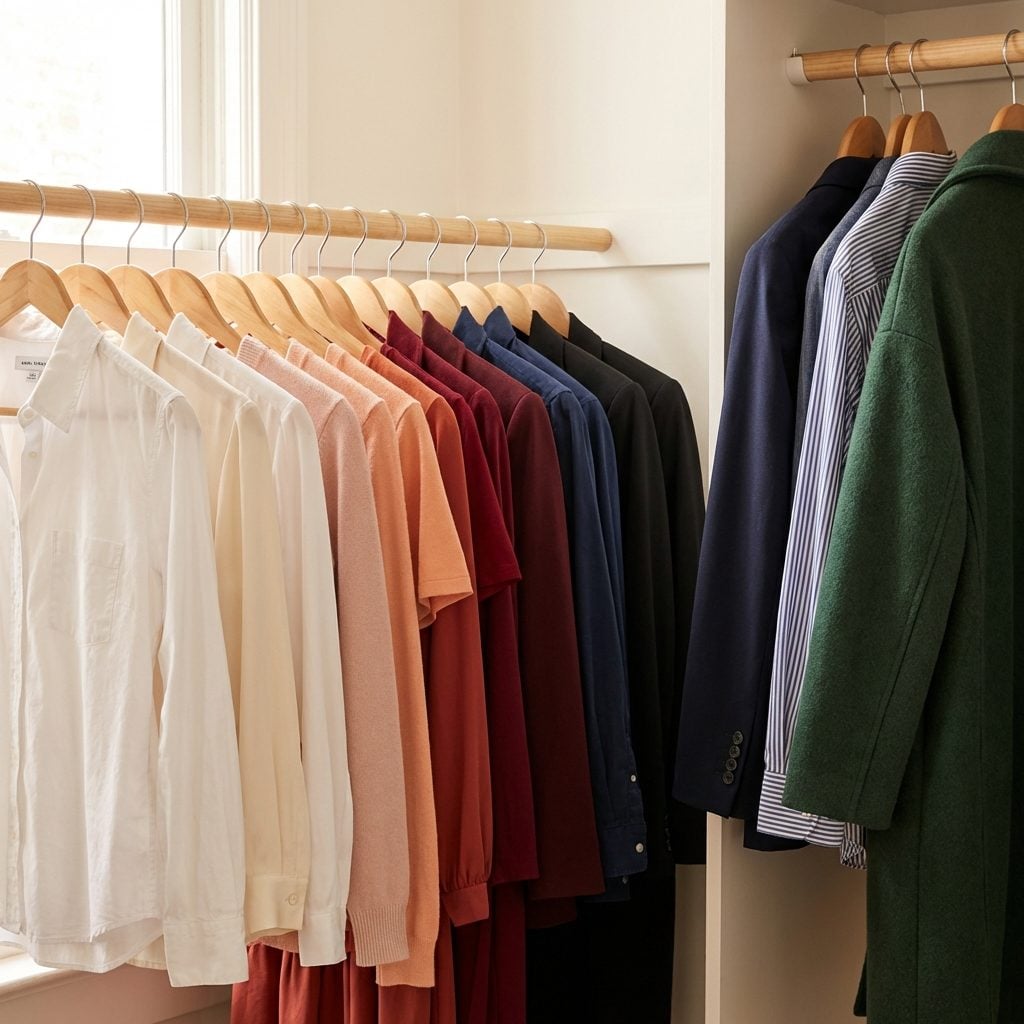
A rainbow-ordered wardrobe is a social media staple, but what does it say when the entire shared closet operates this way, with every item pressed into perfect chromatic sequence? On the surface, it reads as aspirational. Look closer, and it can be something else entirely.
Psychologists distinguish between adaptive and maladaptive perfectionism. (Source), compulsive behaviors around color-coding, order, and symmetry can reflect a need to manage underlying anxiety through environmental control. Research has found that (Source) is a documented compulsive behavior in perfectionism-driven OCD presentations. This isn’t a judgment, it’s a signal about where one person’s anxiety lives.
The more telling detail isn’t the color-coding itself, it’s whether both partners’ clothes are color-coded, or only one person’s. When only one half of the closet is immaculate and the other simply exists alongside it, designers are looking at a negotiated truce: one person’s anxiety contained to their side, one person allowed to exist freely. That’s actually a sign of a working boundary system. But when the system has expanded to govern everything, including how the other partner’s clothes are arranged? That’s a different conversation altogether.
The Invisible Line That Tells Designers Everything About Boundaries in the Relationship
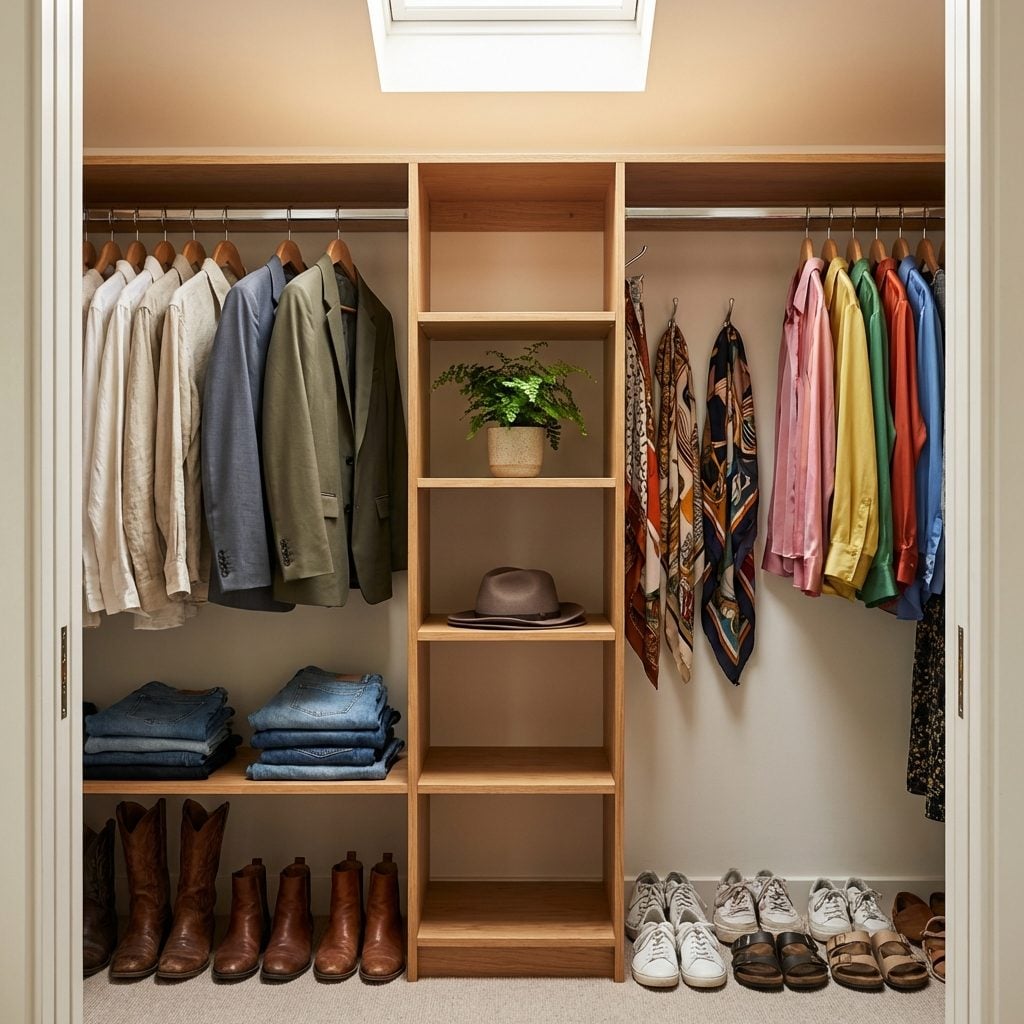
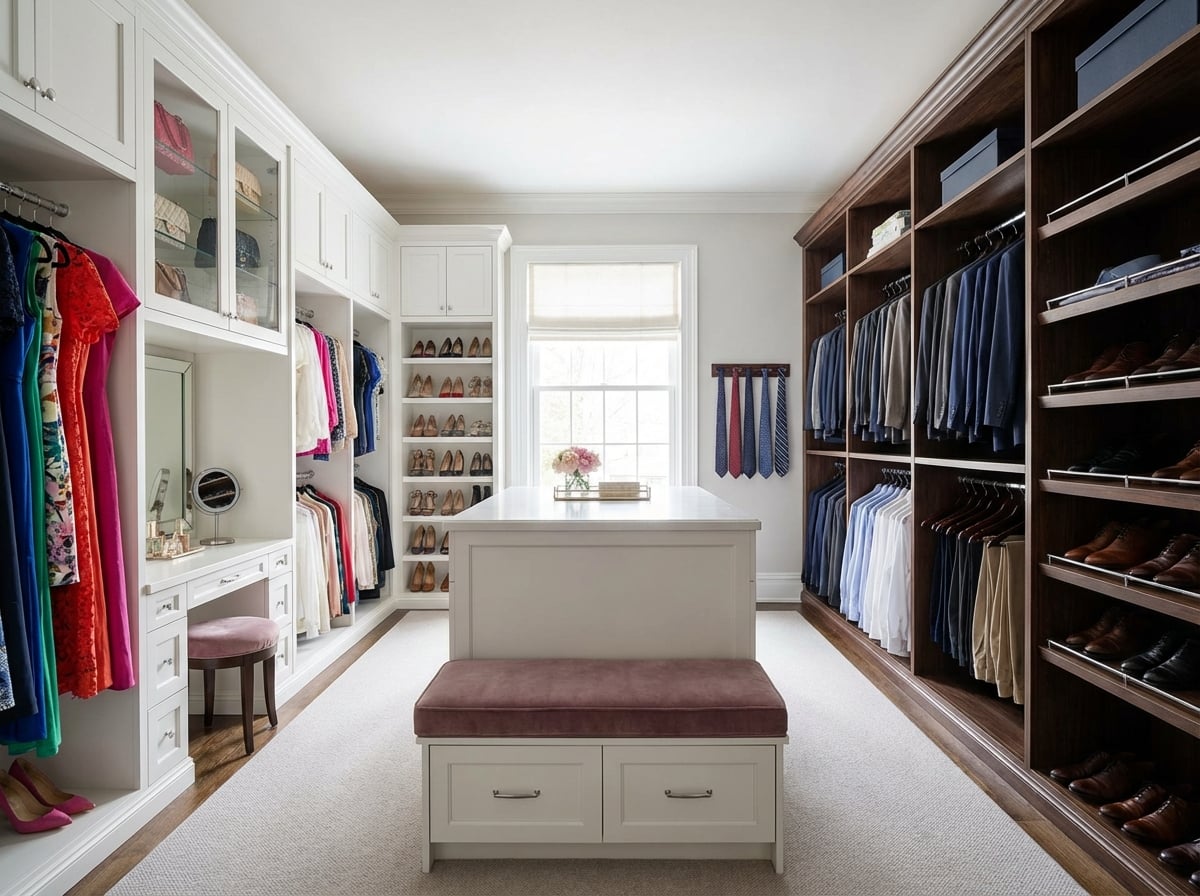
Most shared closets have one. An invisible seam somewhere in the middle, sometimes marked by a gap between hanging sections, sometimes by a change in hanger color, sometimes by nothing more than a felt understanding: your space ends here. Interior designers who have walked through hundreds of homes describe it as one of the most immediate reads they get on a couple’s dynamic. The nature of that line says as much as the clothes themselves.
A clearly defined, mutually respected border in a shared closet suggests what environmental psychologists call a healthy territorial negotiation. (Source) confirms that when people feel secure ownership over a defined space, they experience greater satisfaction and engagement with that environment. Couples who’ve consciously allocated closet space tend to use language like “my side” and “your side” without charge. It’s a practical solution that reflects something psychologically healthy: both people have a zone where their autonomy is unquestioned.
The line becomes interesting when it shifts, blurs, or disappears entirely. A boundary that migrates, where one side slowly contracts and the other expands, is a spatial metaphor some designers find difficult to unsee. How the line was drawn, and whether it was drawn together or by one person, can mirror how decisions get made everywhere else in the relationship.
What It Means When One Partner’s Clothes Have Quietly Colonized the Other’s Space
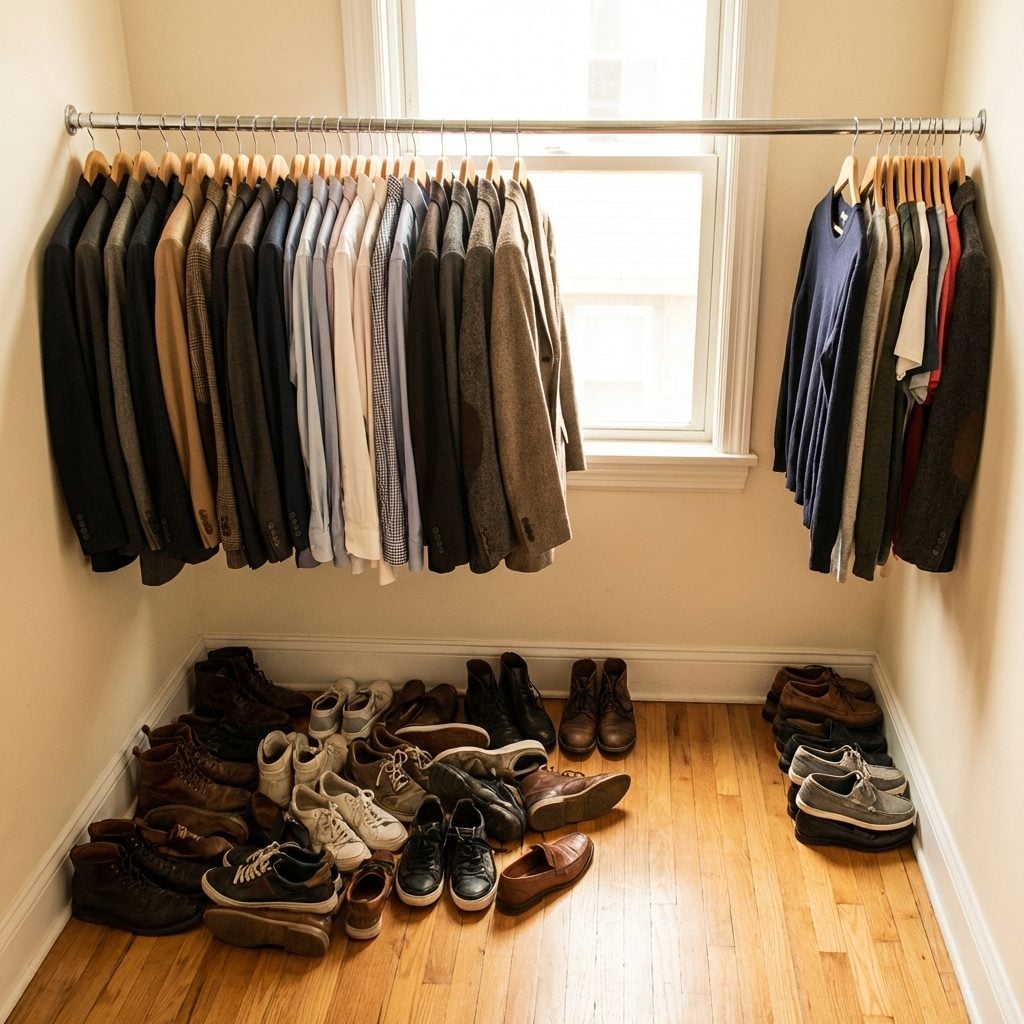
It happens so gradually that neither person can name the moment it began. A few extra jackets migrate past the center mark. A new shoe rack appears on what was technically the other side. A category of hangers that used to be contained expands without announcement. Interior designers see this kind of slow spatial expansion regularly, and it almost always prompts the same question: does the other person know this happened, and if so, did they agree to it?
Research in environmental psychology shows that when territorial boundaries in the home are repeatedly crossed, residents often develop a gradual sense of powerlessness over their space. The key word is “repeatedly”, a single encroachment is easy to address. Dozens of small ones, each too minor to mention, accumulate into a pattern that’s nearly impossible to reverse without a direct conversation nobody wants to have.
There’s a meaningful distinction between a partner who expands their closet space because they genuinely need more room and one whose partner simply didn’t feel entitled to say anything. Both look identical from the outside. This is precisely what makes the shared closet such a dense psychological artifact: the arrangement can represent a practical compromise or a quiet power imbalance, and the closet itself can’t tell you which. But the couple usually can, if asked the right questions.
The Hanger Count Ratio That Reveals Who Feels More ‘At Home’ in the Relationship
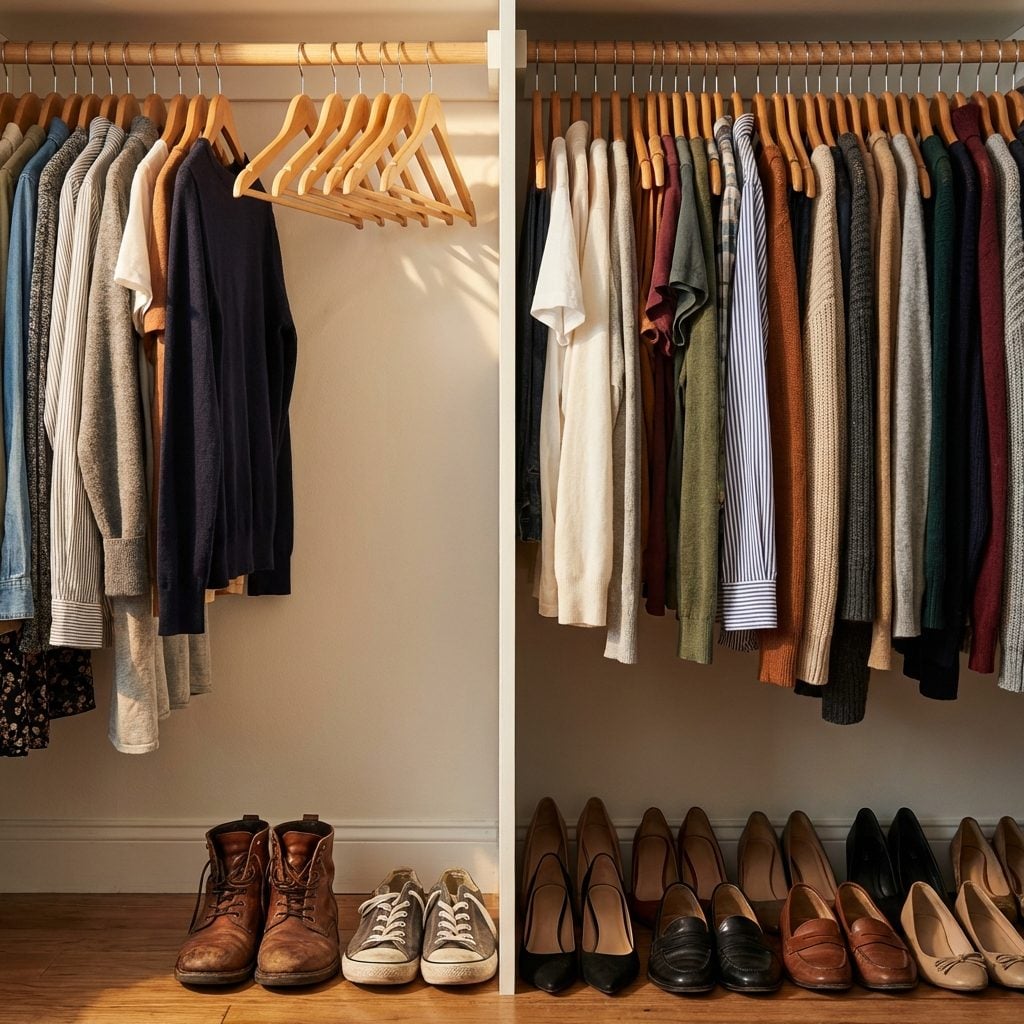
Count the hangers on each side. Not the clothes, just the hangers, including the empty ones. The partner with significantly more total hanger space has, at some point, been given, taken, or assumed more room. But the empty hangers are the tell.
Empty hangers signal future intention. They hold space for clothes not yet acquired, for a wardrobe still expanding. A side stocked with empty hangers reflects someone who sees themselves growing into this space, who plans to be here. A side with no empty hangers, every rod fully occupied or the space conspicuously bare, tells a different story. It may suggest someone who has reached a ceiling, or who never quite unpacked fully in the first place.
This connects to what psychologists studying pair-bonding describe as the process of spatial integration: (Source). A partner who still keeps a sparse footprint in a shared closet years into a relationship may be expressing, without words, a residual sense that this space, and possibly this life, was never fully their own to occupy.
Why Designers Look at the Floor of a Shared Closet First
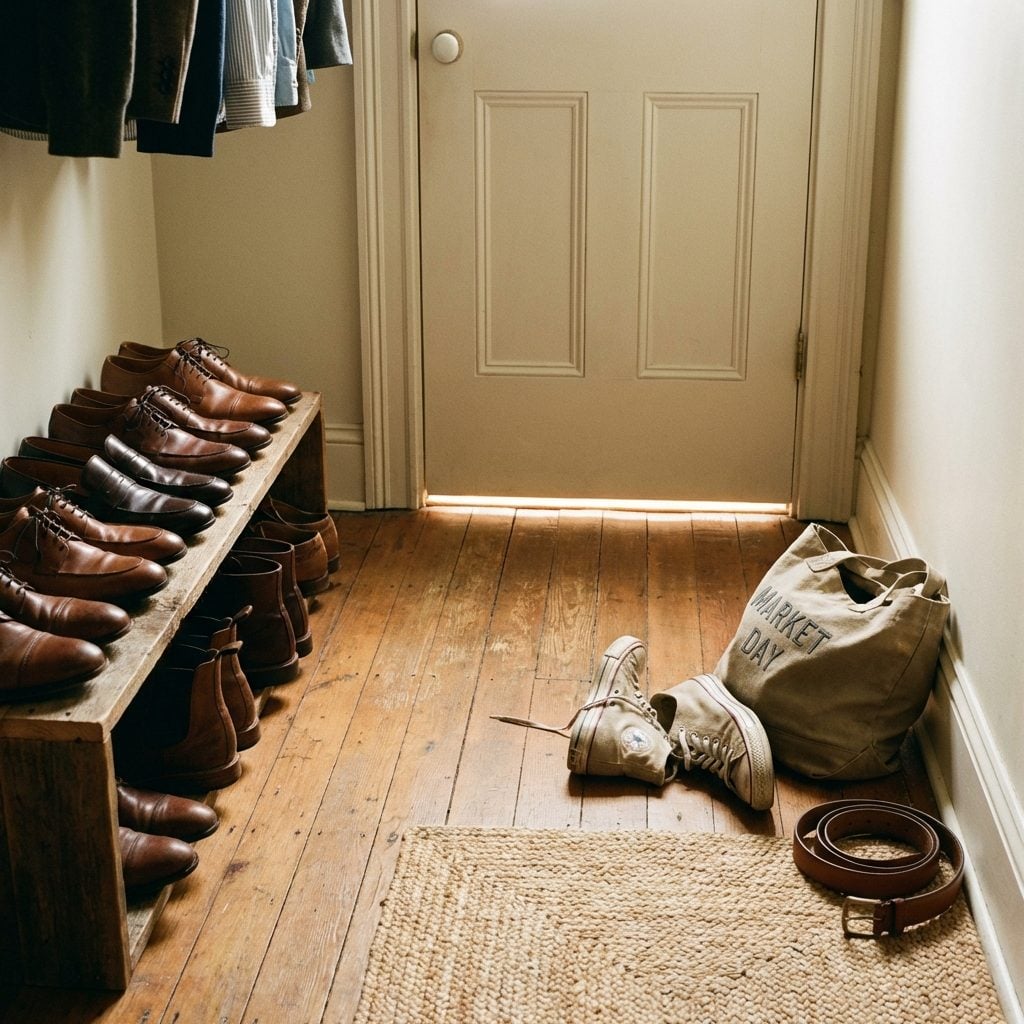
The floor of a shared closet is the relationship’s subconscious. It’s the zone that gets addressed last, organized least, and negotiated almost never. Clothes end up on the floor not because someone planned it but because the system above ground has already exceeded its capacity, whether that’s physical space, mental bandwidth, or motivation.
(Source), describes how clutter, particularly in intimate domestic spaces, functions differently for each partner. Research from UCLA found that women who described their homes as cluttered had measurably higher cortisol throughout the day. (Source) that women who perceived their homes as cluttered had high levels of cortisol all day, while those in restful, organized spaces did not, a disparity that rarely matched how their male partners experienced the same space.
The closet floor tends to be the last frontier of shared domestic negotiation. Whose shoes migrate there? Whose dry-cleaning bags accumulate? Whose gym bag has lived in that corner for three months? These aren’t trivial questions. They map onto who carries what cognitive load in the household, and who has, explicitly or silently, abdicated responsibility for that small zone of shared space.
The Psychological Reason One Partner Always Ends Up With the Darker, Harder-to-Reach Side
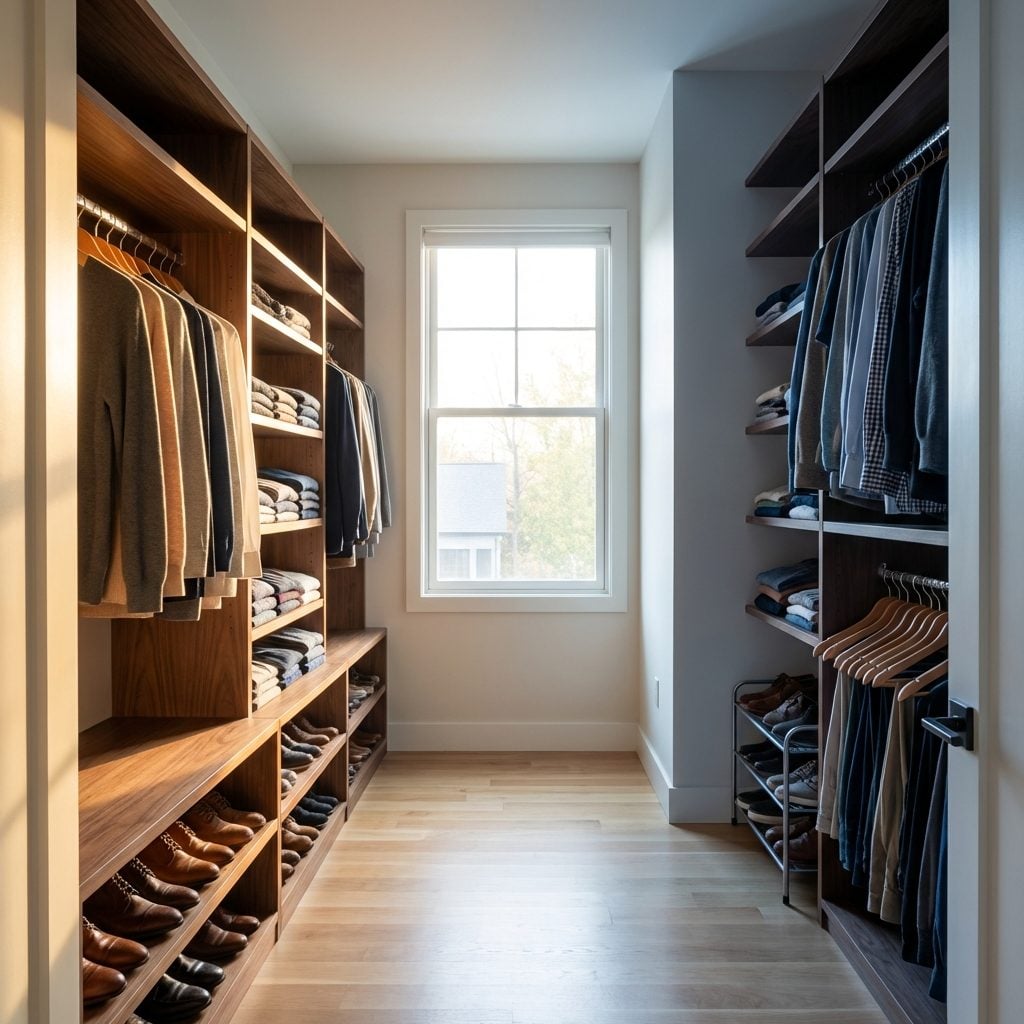
Almost every walk-in closet has a better side. One side gets more natural light, more ceiling height, easier access from the doorway, deeper shelving. And in a striking number of homes, that better side belongs to the same partner: the one who, in other contexts, tends to speak first, decide where to eat, and choose which friends to see on weekends.
This isn’t always the result of conscious decision-making. (Source), describes how dominant behavior operates across contexts: individuals with higher dominance motivation tend to claim more physical space, occupy more prominent positions, and do so through behavioral displays that often feel natural rather than strategic. The partner who positions themselves instinctively near the door, near the light, near the easier access route, may not be consciously staking a claim. They’re simply operating from an ingrained behavioral pattern.
The more interesting question is why the other partner accepts it. And here, research on power dynamics in relationships offers something worth sitting with: (Source), when one partner consistently feels dominated, their self-confidence erodes gradually. By the time the closet arrangement feels normal, the pattern of deference has often been running for years. The closet is just where it finally became visible.
What a Completely Merged Closet, No Separation at All, Actually Signals About Intimacy
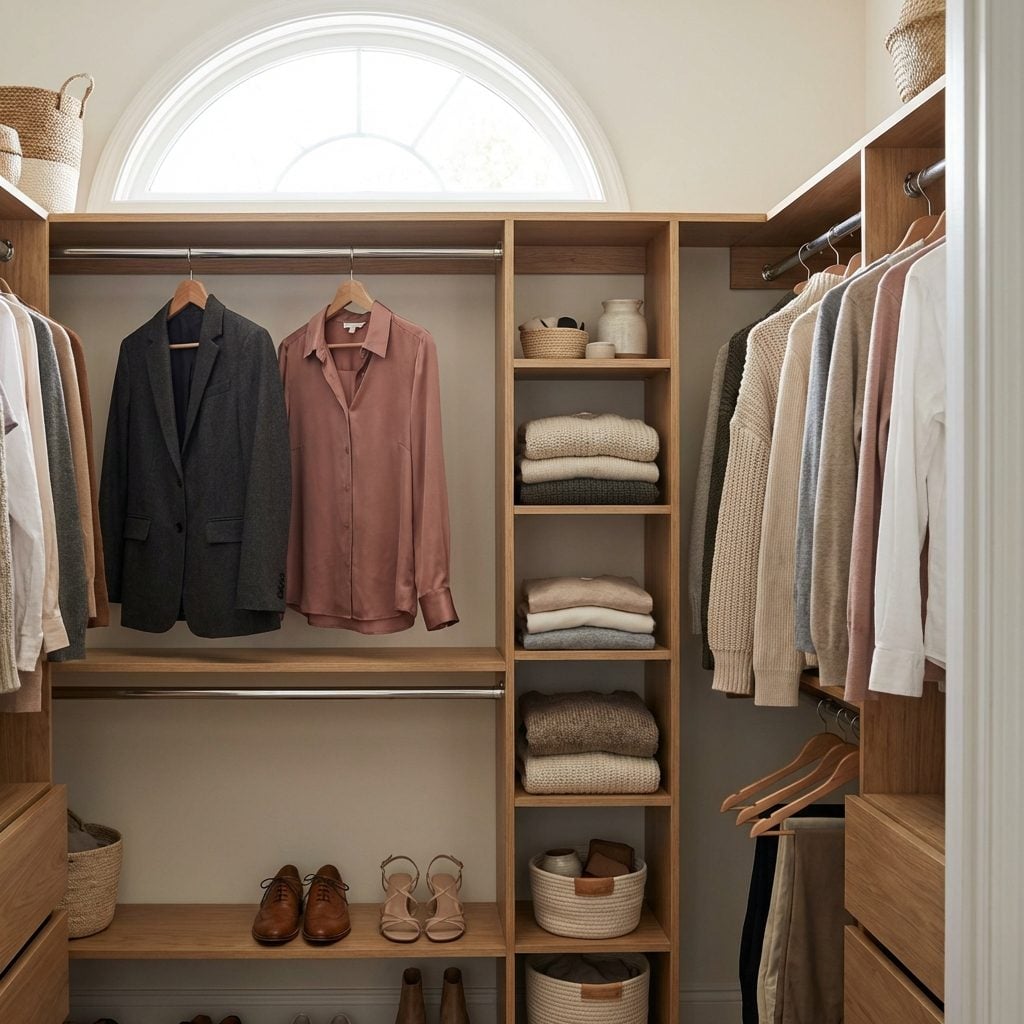
No dividing line. His dress shirts interspersed with her blazers. Shared hangers, shared shelf space, shoes mixed together. To some couples, this feels like the natural expression of togetherness. To others who see it, it can look like the dissolution of two separate selves into one undifferentiated whole. Which interpretation is correct depends almost entirely on whether both people chose the arrangement or whether it simply happened.
Behavioral science research on how romantic partners merge their identities describes this as a deeply meaningful process. (Source), couples don’t just merge possessions, they merge identities, goals, memories, and even their sense of reality as they share experiences. A fully merged closet can be a beautiful expression of that.
But research on identity and marriage also points to something worth considering. (Source) found that marriage was associated with a process of depersonalization that posed a challenge to private identity for many participants. The identity shift from “I” to “we” is healthy when chosen and balanced, but when it erases the sense of individual self, it can create quiet resentment. A fully merged closet, then, is either the healthiest closet in the building or a space worth asking questions about. The hangers can’t tell you which.
The One Organizational System That Suggests a Couple Is Running on Autopilot
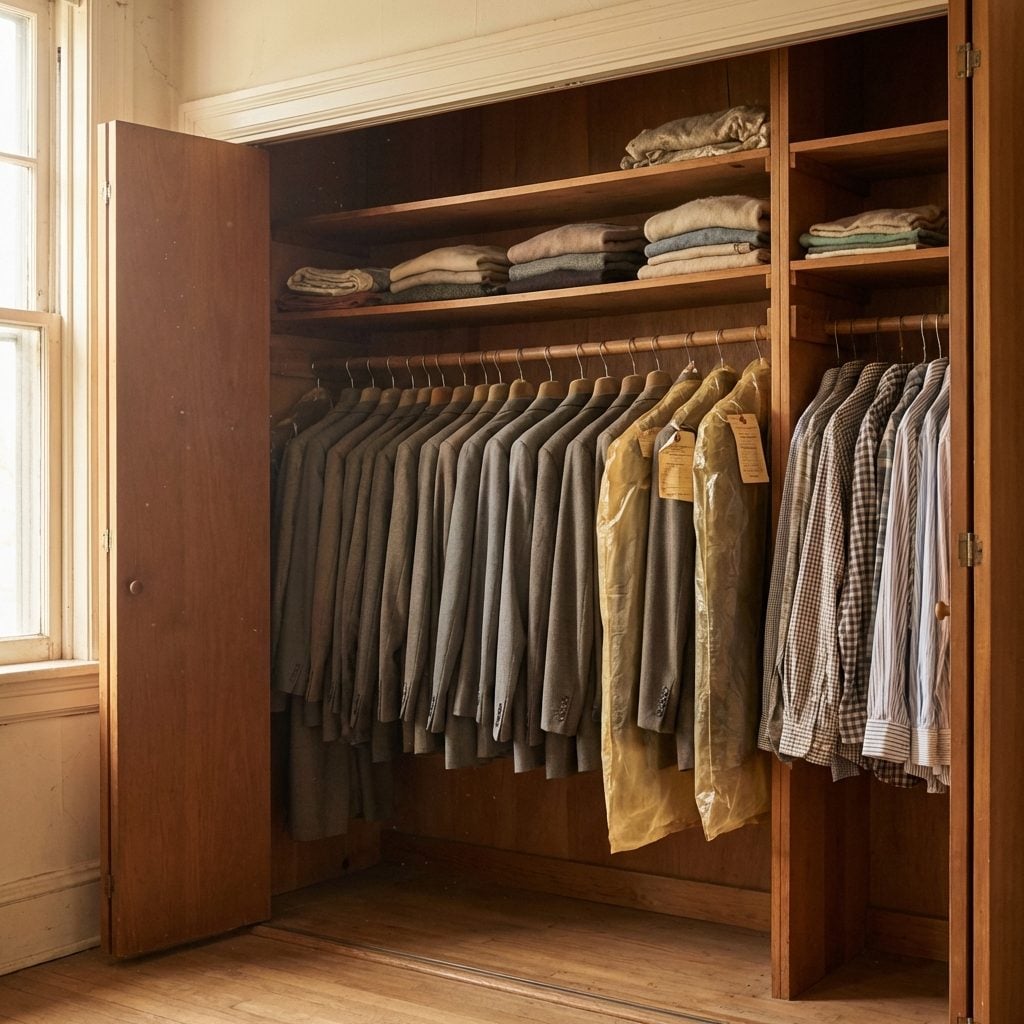
It’s not the messy closet. Mess is alive in its own way. The closet that signals a couple on autopilot is the one that looks completely functional and completely static. Same organizational logic for years. Same section for work clothes, same section for casual, same shelf for the things nobody touches anymore. A system that was set up once, worked once, and has simply… continued. No updates, no new acquisitions thoughtfully integrated, no evidence that either person has reconsidered the arrangement since the first year.
Psychology Today’s research on autopilot relationships describes the pattern precisely: partners settle into routines, let other things take priority, and allow their shared life to manage itself without intentionality. The Gottman Institute notes that getting stuck on autopilot happens even to strong relationships, and that disengaging requires becoming aware of habits and patterns that have become invisible through repetition.
The static closet is one such pattern made physical. Both people get dressed every morning. Neither has rethought their system in three years. The warm sauna design aesthetic of intentional, evolving personal space is precisely the opposite of this. It’s not the clutter or the order that’s the tell, it’s the absence of any evidence that either partner has updated their sense of themselves, their style, or their relationship to the space they share.
Designers describe this as a closet that feels like it belongs to people five years ago. The question worth asking isn’t how to reorganize the closet. It’s whether the same static quality has migrated elsewhere in the relationship too.
Why Mismatched Hangers in a Shared Closet Are Actually a Sign of Respect
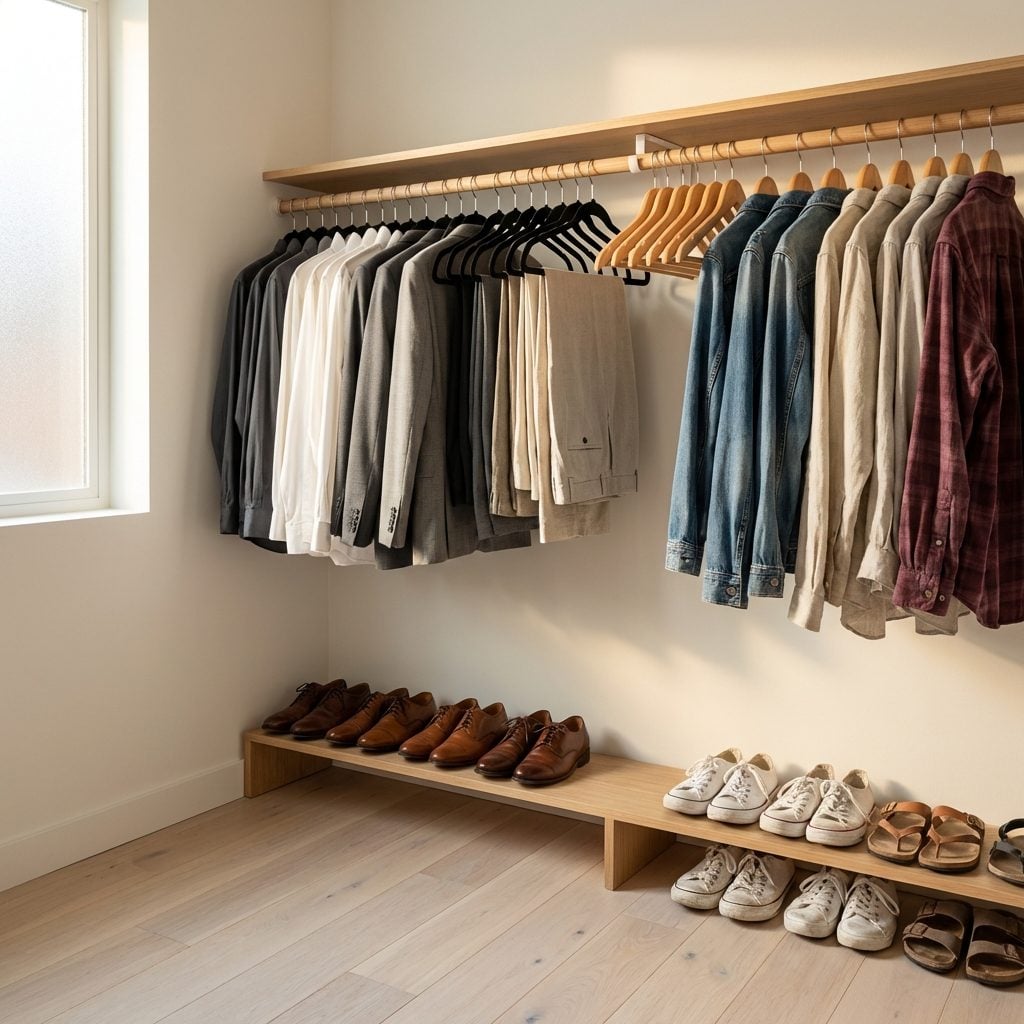
Here’s a counterintuitive one: the closet where both partners use completely different hanger systems, one favors velvet slim hangers, the other swears by chunky wooden suit hangers, is often the closet of a genuinely healthy dynamic. Designers walk in and notice this immediately. The mismatched hardware is physical evidence that nobody forced a single organizational system on both people.
This is the spatial expression of what relationship psychologists call autonomy support: the active choice to honor your partner’s preferred way of operating rather than insisting on uniformity. According to research published in (Source), people who feel their autonomy is respected within a partnership report stronger relational well-being and more motivation to invest in the relationship long-term. The hanger detail is small. The dynamic it reflects is not.
Contrast this with the couple whose closet runs on military-grade uniformity: same hangers, same spacing, same direction. That level of visual control can reflect genuine shared preference, or it can reflect one partner’s need to govern the domestic environment. The distinction matters, and a trained eye can usually tell the difference just from how the clothes themselves are arranged inside that perfect system.
What Designers Notice When One Partner’s Section Looks Like a Hotel Room
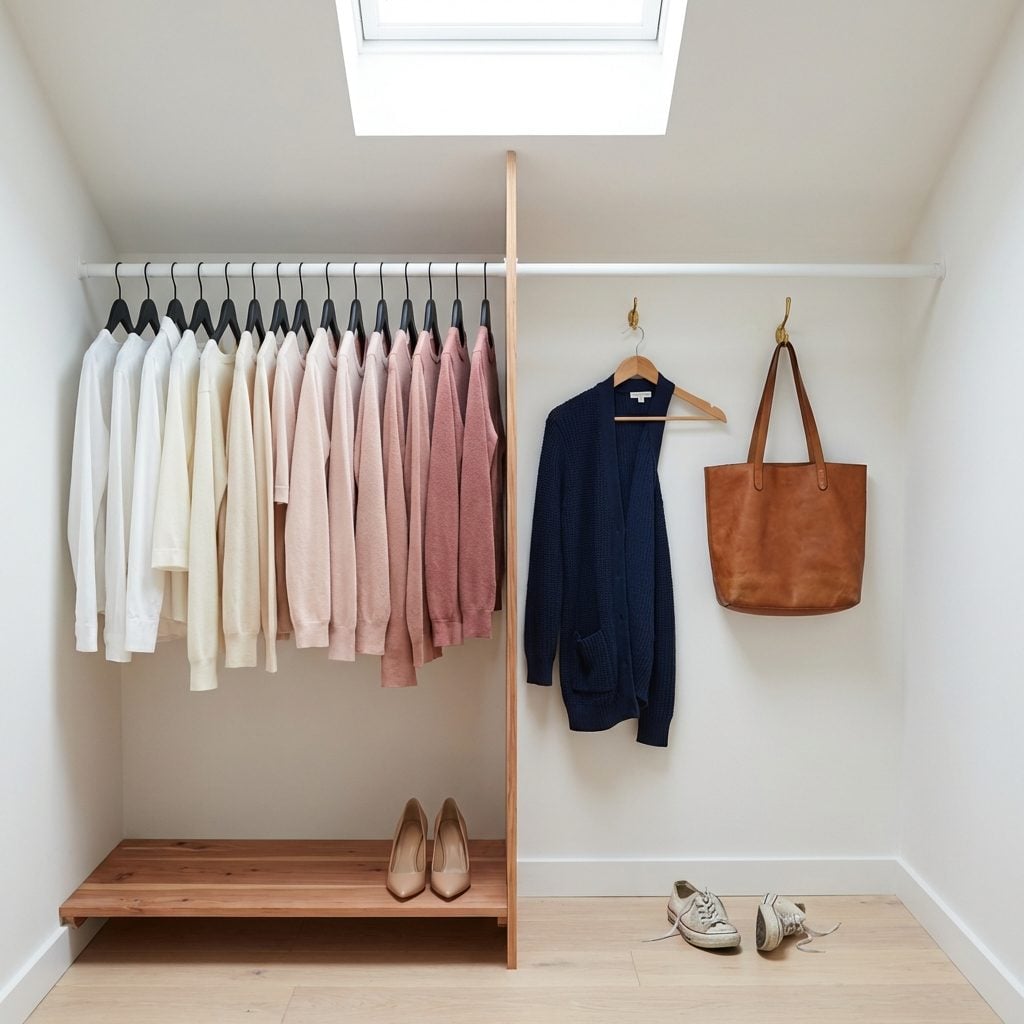
It stands out the moment you open the door. One side: a flawless capsule wardrobe. Garments organized by color, weight, season. Everything pressed, everything purposeful. Nothing out of place. It looks like a high-end boutique display, or a hotel room where someone has lived for exactly three days.
The other side of the same closet? Normal. Lived in. Slightly chaotic in the best possible way.
When one partner’s section reads as hyper-controlled and aesthetically performative while the other is simply functional, designers and therapists notice the same thing: the overly composed section often belongs to someone who is managing anxiety through environmental control. According to HelpGuide’s overview of Obsessive-Compulsive Personality Disorder, an excessive preoccupation with order and organization can reflect a deeper need for control, and that need frequently bleeds into domestic space first.
This doesn’t mean something is wrong. Sometimes a hotel-room closet section just belongs to someone with excellent discipline and a genuine preference for negative space. But when the contrast between the two sides of a shared closet is extreme, one breathes, one suffocates, it’s a spatial metaphor worth sitting with.
The Buried Box at the Back of the Closet and What It Reveals About Trust
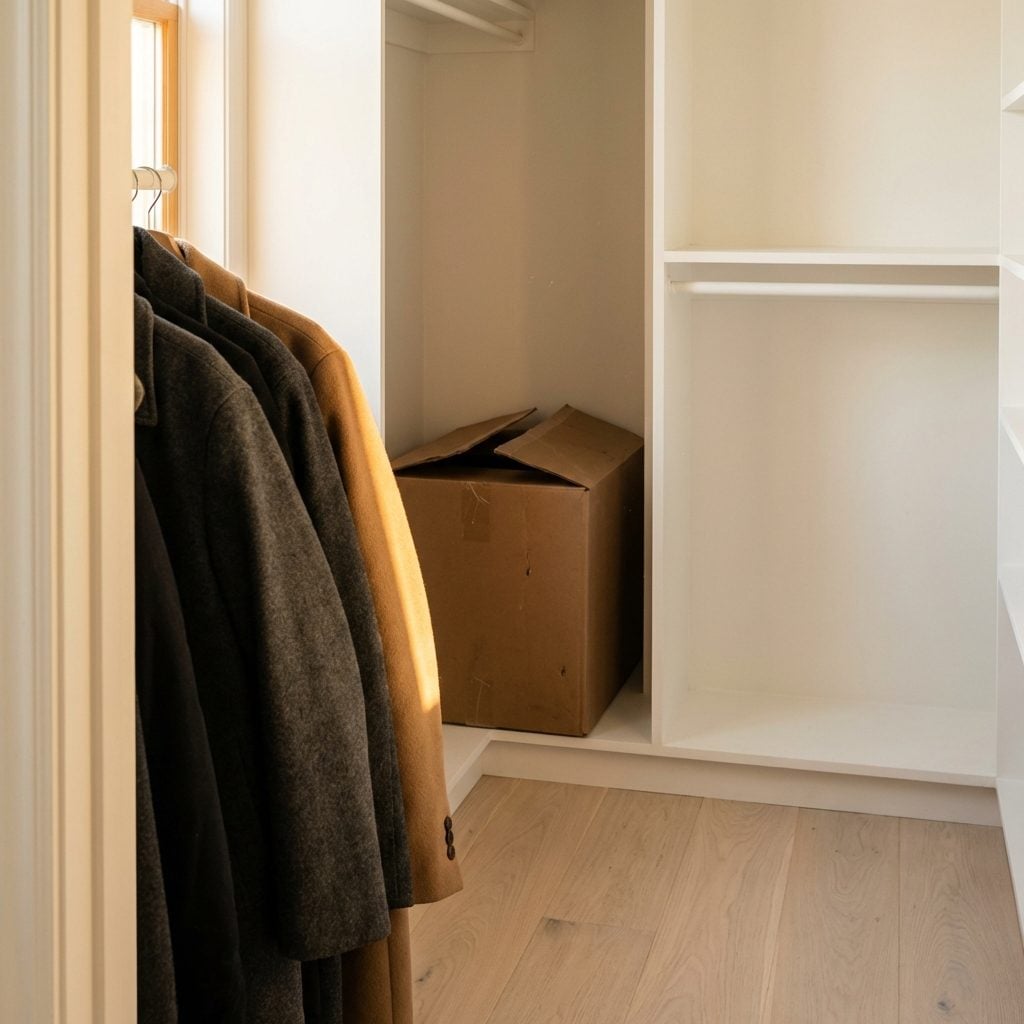
Every shared closet has a back corner. What lives there says more than most couples realize.
The box that never gets moved, the one sitting behind the winter coats, slightly pushed into shadow, is one of the most telling details a space can offer. It might contain old love letters. Tax documents. A journal. An ex’s belongings that were never returned. In some cases, it contains nothing particularly significant at all, and yet it’s been treated like a vault for years.
Psychologists who specialize in attachment note that privacy within shared spaces is not inherently a red flag, it’s a normal need. According to a Psychology Today piece on personal space in relationships, sharing physical space can sometimes feel threatening when it’s perceived as erasing the boundaries between self and other. A deliberately obscured personal object is one way people quietly maintain a psychological boundary inside a shared domestic life.
The question isn’t whether the box exists. It’s whether both partners know about it and feel fine with that knowledge, or whether one partner would be surprised to learn the box is there at all. The first scenario suggests healthy privacy. The second suggests something the closet’s architecture is quietly encoding, well before any conversation has been had about it.
Why the Presence of ‘Ghost Clothes’, Items Never Worn But Never Removed, Speaks Volumes
🔥 Would you like to save this?
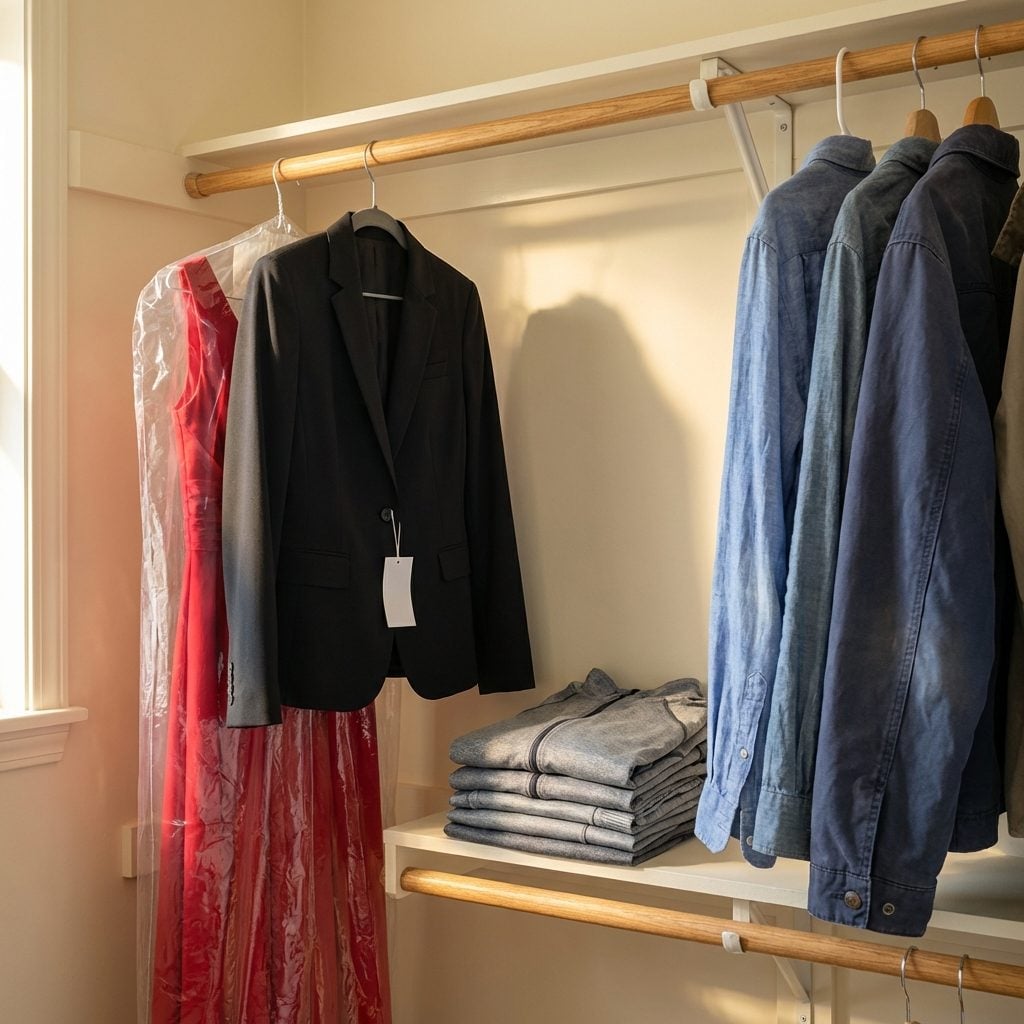
Ghost clothes are everywhere. You know the ones: a cocktail dress still in its dry-cleaning bag from three years ago. A suit jacket that was bought for one specific occasion and never touched since. A workout set with the tags still on. These items aren’t forgotten, they’re consciously avoided, and yet consciously kept.
Psychologists who study material culture describe this pattern through the lens of what researcher Jonathan Chapman calls “emotionally durable design”, the idea that we keep objects not for their function but for the feelings they represent or the identity they once anchored. A 2025 article from Phys.org on emotional connections to clothing notes that garments can function as physical archives of who we were or who we intended to become.
In a shared closet, ghost clothes carry a secondary layer of meaning. If the unworn items cluster on one partner’s side, they may represent an aspirational self that partner hasn’t felt safe abandoning, a version of themselves that existed before the relationship redefined their daily life. If both partners have extensive ghost sections, it may suggest a shared tendency to avoid confronting the gap between who they are and who they imagined they’d be. Neither reading is inherently damning. Both are psychologically significant.
The Surprising Thing a Shared Closet With Zero Shared Items Says About the Relationship
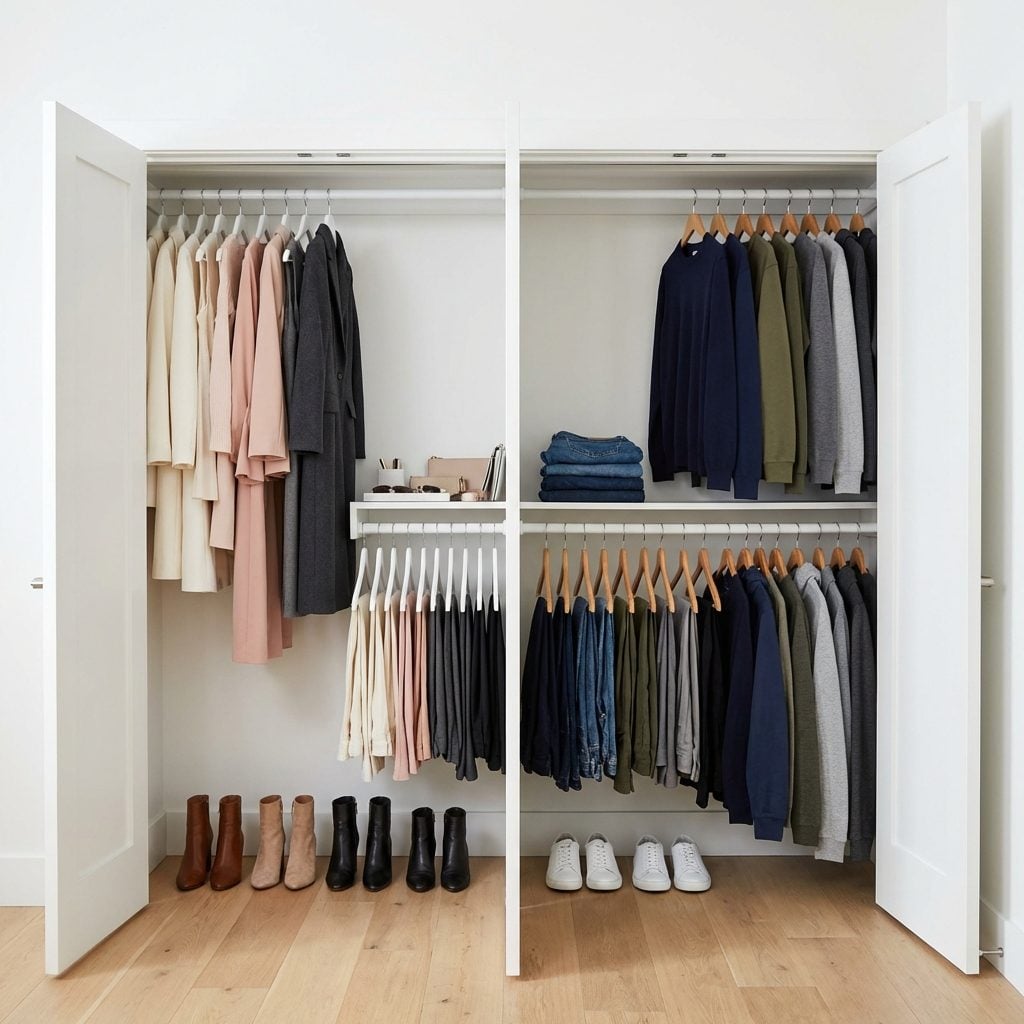
Two people live together, sleep in the same bed, share finances and futures, and not a single item in their closet overlaps. No shared robe hanging near the door. No oversized sweater that gets passed back and forth. No worn flannel shirt that technically belongs to one person but smells like both of them. Just two completely separate, entirely self-contained wardrobes occupying opposite sides of the same space.
This is not automatically a problem. Research in relationship psychology consistently shows that maintaining personal autonomy within shared living arrangements is linked to higher relationship satisfaction, not lower. A study referenced in a marriage.com review on personal space in relationships found that couples who respect each other’s need for individual space tend to report stronger commitment and well-being over time.
But the absence of any physical blending across a closet draws a particular kind of attention. Shared garments are a form of what psychologists call “behavioral mimicry”, a low-stakes, high-resonance way of signaling closeness and interdependence. A oversized unisex sweatshirt or a shared linen robe that both partners reach for isn’t just a garment, it’s a physical overlap of identities. When that overlap is completely absent, it can hint at a carefully maintained separateness that goes beyond healthy autonomy. Sometimes it’s a design choice. Sometimes it’s a map of emotional distance.
What It Means When Both Partners Dress for Each Other, and When They’ve Stopped
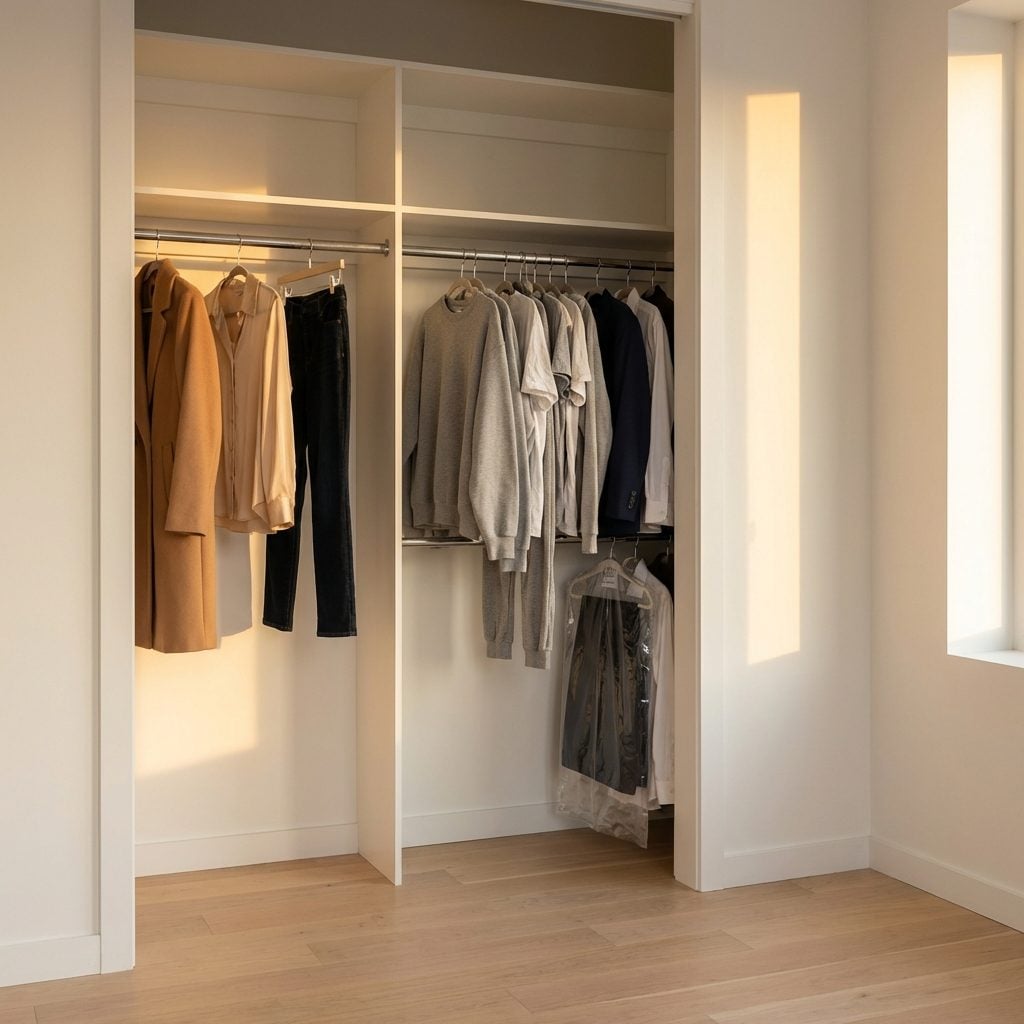
There’s a moment in many long-term relationships where the effort invested in appearance quietly recedes. It’s rarely dramatic. A good blazer gets replaced by a hoodie. Date-night clothes migrate to the back of the closet while comfortable basics dominate the front. The question designers ask isn’t whether this happened, but what it means when the shift is visible in how the closet is organized.
The front of the rod tells the story. The items a person reaches for without thinking are their psychological default state. When those items shift from “considered” to “invisible” over time, it signals something about who the person is dressing for, or not dressing for.
Research published in a 2025 dyadic study on partner appearance satisfaction found that satisfaction with a partner’s appearance was directly linked to relationship quality, and that perceived body criticism from a partner was associated with lower relational satisfaction for both people. The act of dressing, or not dressing, with your partner in mind is a form of non-verbal relational investment. When both partners’ front rods are full of items that feel chosen, it speaks to an ongoing desire to be seen by each other. When both fronts have collapsed into pure function, something more deliberate may have faded.
The Closet Detail That Trained Therapists Say Predicts Who Initiates Hard Conversations
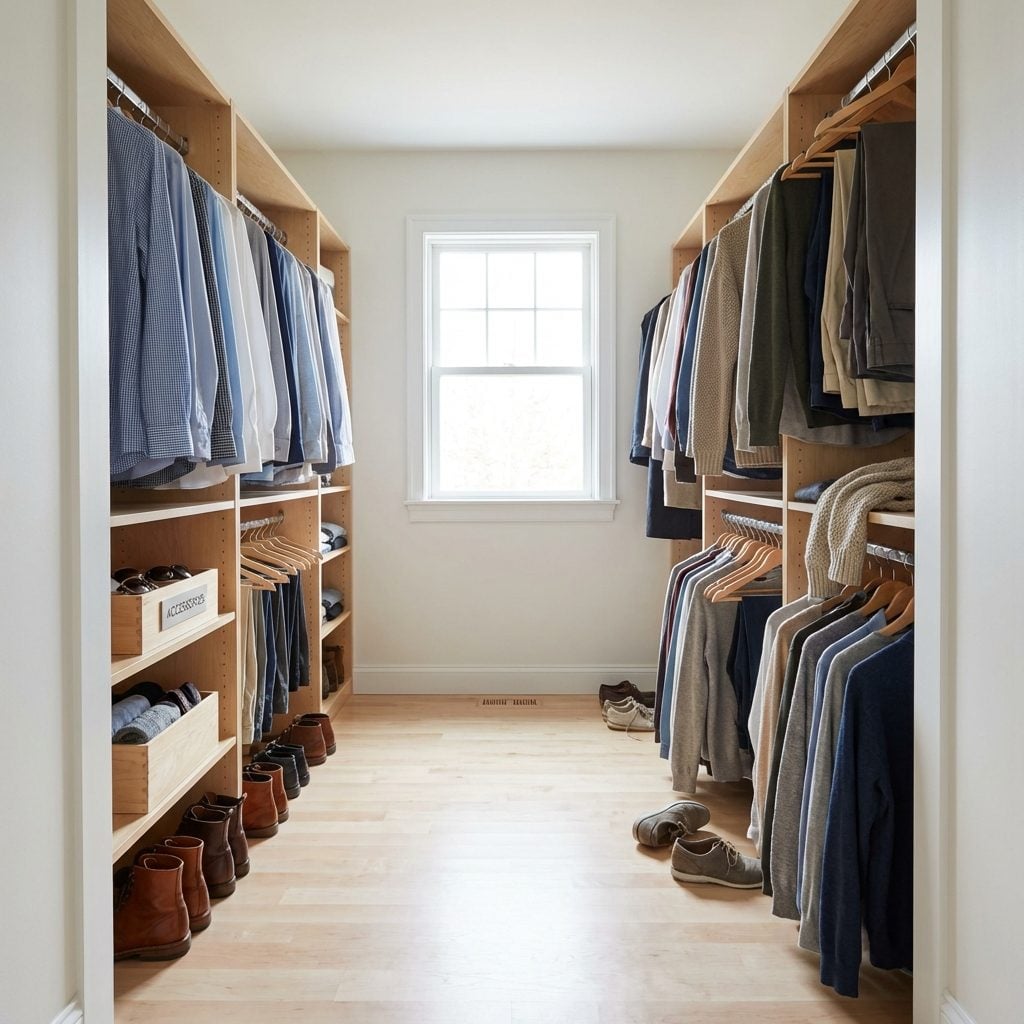
Couples therapists who ask clients to describe their home often notice a pattern: the partner who maintains the closet, who knows where everything is, who reorganizes when things drift, who holds the invisible organizational logic of the shared space, is frequently the same partner who initiates difficult conversations in the relationship.
This isn’t coincidence. It tracks with what researchers call “cognitive labor” or “mental load”, the unseen work of tracking, planning, and maintaining the systems that keep shared life running. The partner who manages domestic space tends to be the same partner who manages relational space: who notices when something is wrong, who schedules the check-ins, who brings up the things that need to be said.
Spatial management and emotional management, it turns out, draw on the same underlying orientation: a willingness to notice disorganization and act on it, rather than wait for someone else to. According to a study in the Journal of Family Issues on cohabiting couples and relationship dynamics, power dynamics and commitment asymmetries in shared domestic spaces often go largely unaddressed, even by therapists, because they manifest in micro-behaviors that seem mundane until you see the pattern. A closet is not mundane. It is, as one clinician put it, the most honest room in any shared home.
Why a Suddenly Reorganized Closet Is One of the First Signs Designers Look For After a Relationship Shift
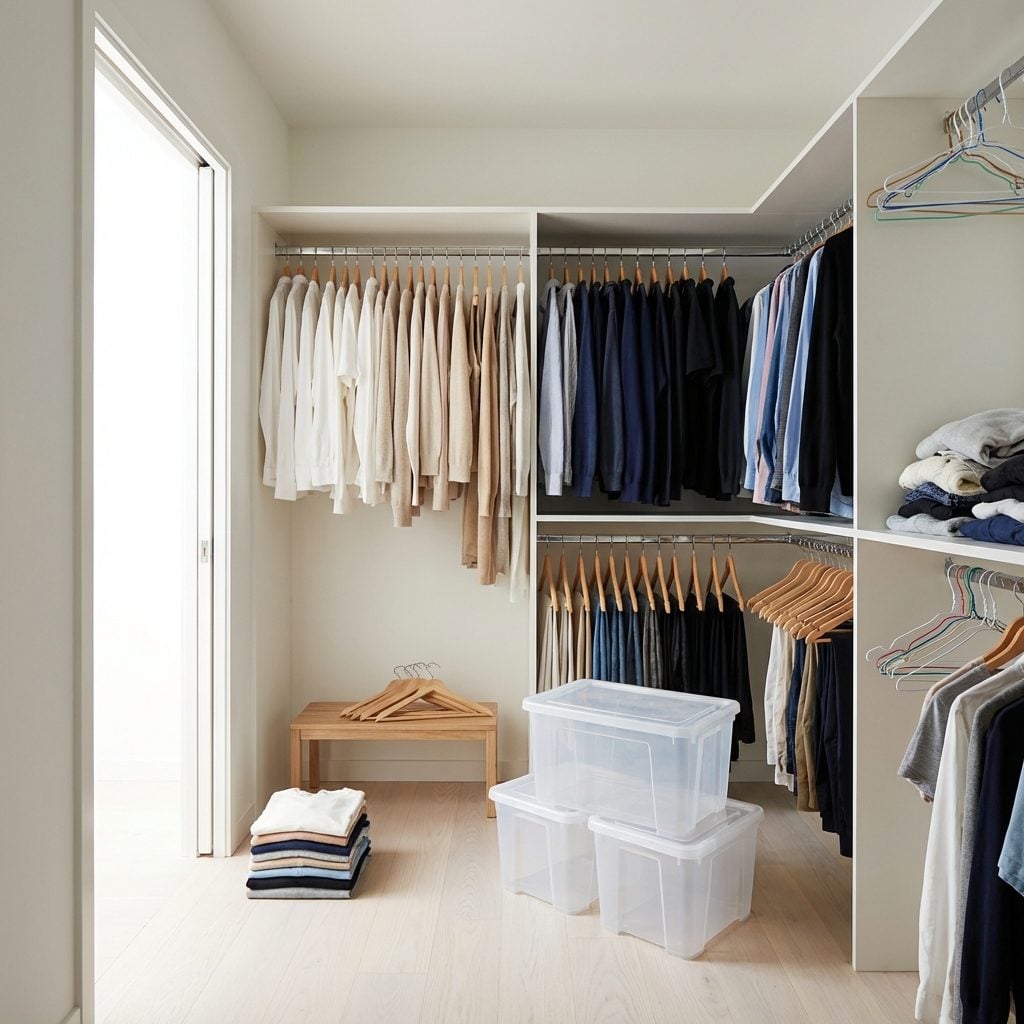
Interior designers and home stagers who work with couples during transitions, a separation, a reconciliation, a major move, a loss, often describe the same phenomenon: the closet is always the first thing that changes.
Not the living room. Not the kitchen. The closet. Because the closet is private, and it’s where identity lives.
A 2025 Psychology Today article on wardrobe reset and emotional alignment notes that during major life transitions, people frequently describe feeling disconnected from their wardrobes, as if the clothes that once felt natural now feel wrong. The physical act of reorganizing that space is, for many people, the first concrete step toward renegotiating their identity after a shift.
In a shared closet, this shows up in specific ways. One partner’s section suddenly contracts or expands. Items disappear and aren’t replaced. New clothing appears that doesn’t match the pre-existing style vocabulary of either person. Or, most tellingly, the closet is reorganized at the level of the entire system: new matching closet hangers, new drawer organizer sets, a fresh coat of white paint on the interior walls. When the system itself gets overhauled, someone inside the relationship has decided, consciously or not, that the old arrangement no longer fits who they are.
The Status Object Hidden in Plain Sight That Reveals Which Partner Holds the Social Identity
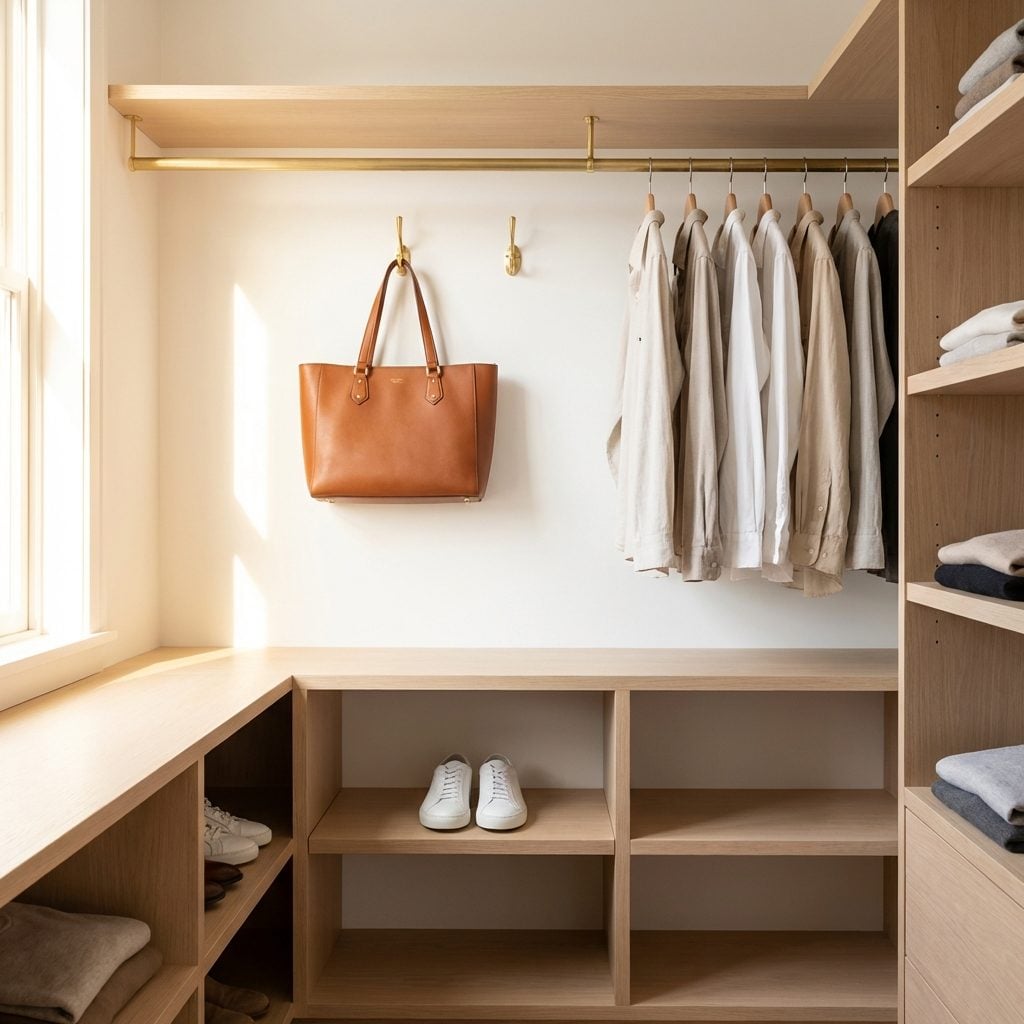
Scan the closet for the object that doesn’t need to be there. The luxury item that’s too good for the space, a designer tote on a plain hook, a limited-edition sneaker displayed on a shelf like a small trophy, a tailored suit in a closet otherwise full of practical basics. That object tells you something specific: whose social identity is being curated, and for whom.
Territorial behavior research, rooted in the proxemics work of Edward T. Hall and later Irwin Altman, suggests that psychological ownership of a space is often enacted through the objects placed most prominently within it. In a shared closet, the status object in the most visible position, on a dedicated hook, on an eye-level shelf, given more physical space than anything around it, signals whose image the couple projects outward to the world.
This is the closet version of social identity theory. One partner’s wardrobe signals professional status, cultural capital, or social aspiration. The other’s is functional, comfortable, perhaps more private in its meaning. Neither is superior. But the distribution of visible prestige objects within a shared space is a spatial record of which partner carries the weight of the couple’s external identity. Designers notice it. Therapists, when they ask about the home, notice it. And sometimes, so do the people who live there, usually during an argument that seems to be about something else entirely.
The Bottom Line
Here is what interior designers, and the therapists who consult alongside them, have quietly agreed on for years: the shared closet is not about clothes. It is a physical record of who each person believes they are allowed to be inside the relationship, and how much of themselves they have surrendered, protected, or simply forgotten to defend. The next time you open yours, look at it like a stranger would, because what you see in thirty seconds is exactly what your partner has been living with every day.