There was a particular smell to a 70s or 80s backyard on a hot afternoon: cut grass, chlorine, sun-baked metal, and maybe a faint whiff of lighter fluid. We ran barefoot across gravel, launched ourselves off rope swings, and drank from garden hoses without a second thought. Nobody wore a helmet. Nobody filed a waiver. And somehow most of us survived to tell the story. These are the backyard hazards we all forgot we were living inside.
The Metal Slide That Reached Surface-of-the-Sun Temperatures by 10 A.M.
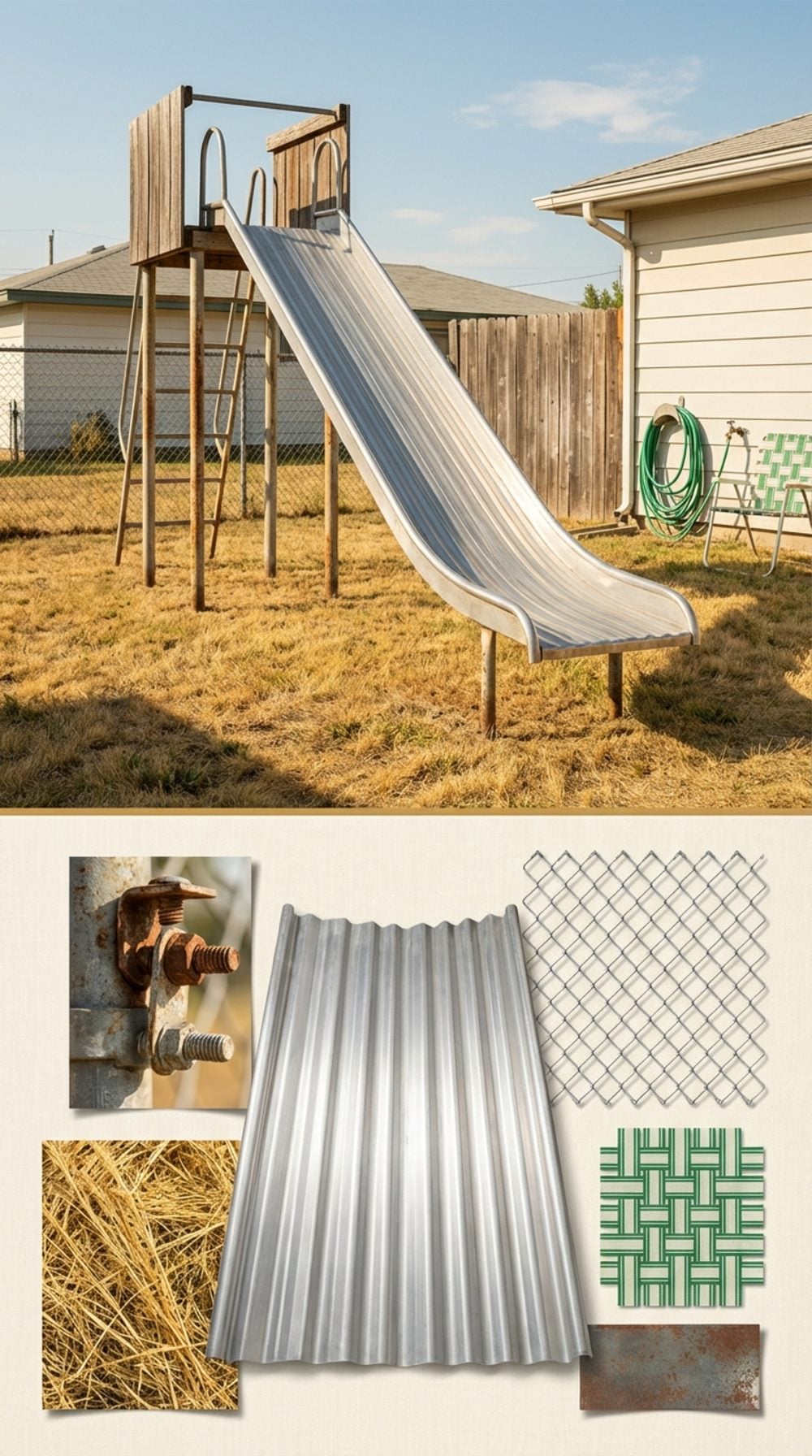
By July, that slide was a cooking surface. You learned quickly to either send a younger sibling down first as a thermal test, or hover two inches above the surface for the entire descent, thighs burning anyway. The corrugated aluminum ridges left perfect parallel pink stripes across the backs of your legs that lasted until dinner.
In order to come up with the very specific design ideas, we create most designs with the assistance of state-of-the-art AI interior design software. Also, assume links that take you off the site are affiliate links such as links to Amazon. this means we may earn a commission if you buy something.
These slides weren’t padded, cushioned, or angled for a gentle landing. They were steep, fast, and ended roughly six inches above concrete or packed dirt. The fact that they came standard in every backyard catalog from 1968 to 1985 is a minor miracle of collective amnesia.
The Lawn Jarts Set That Lived in the Garage Until Someone Got Brave
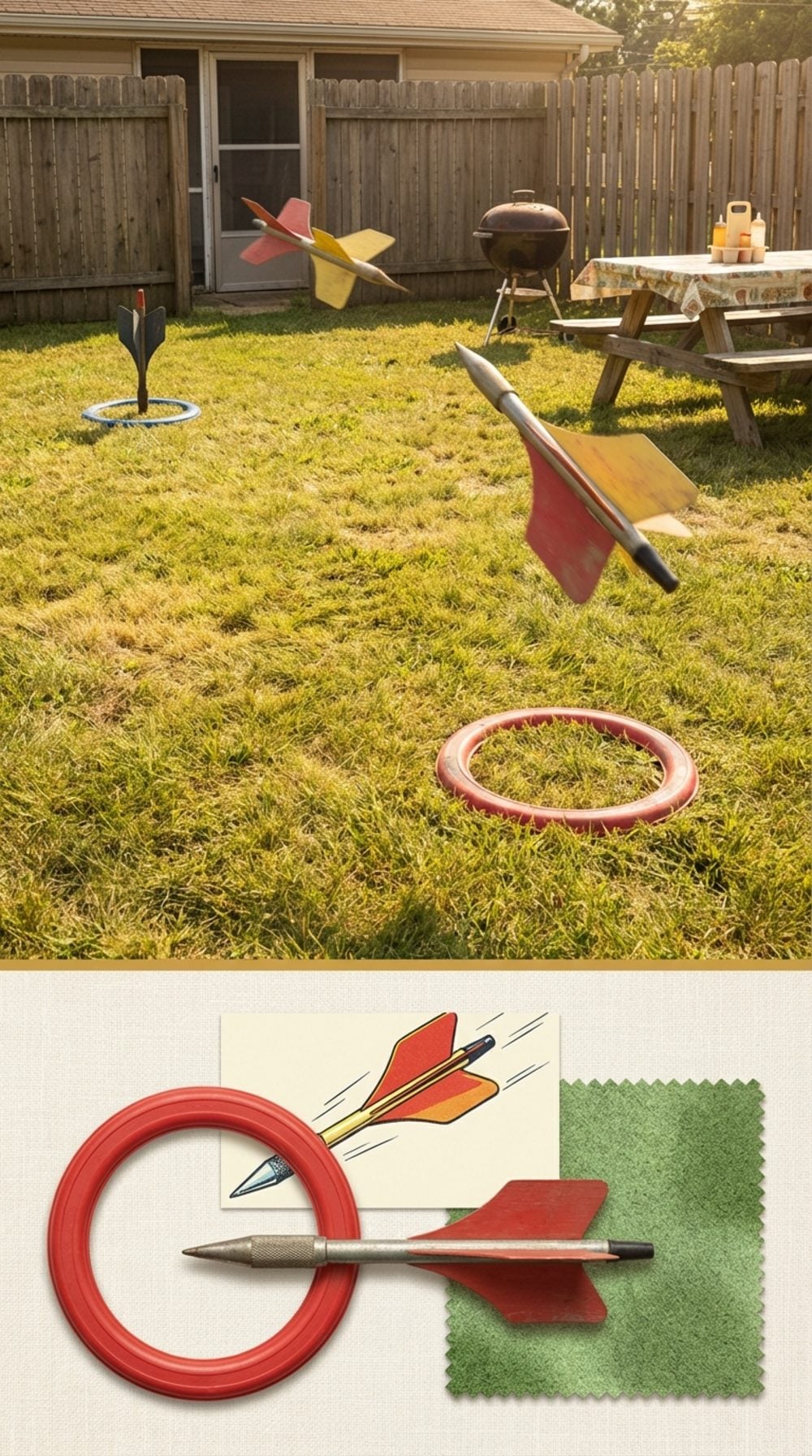
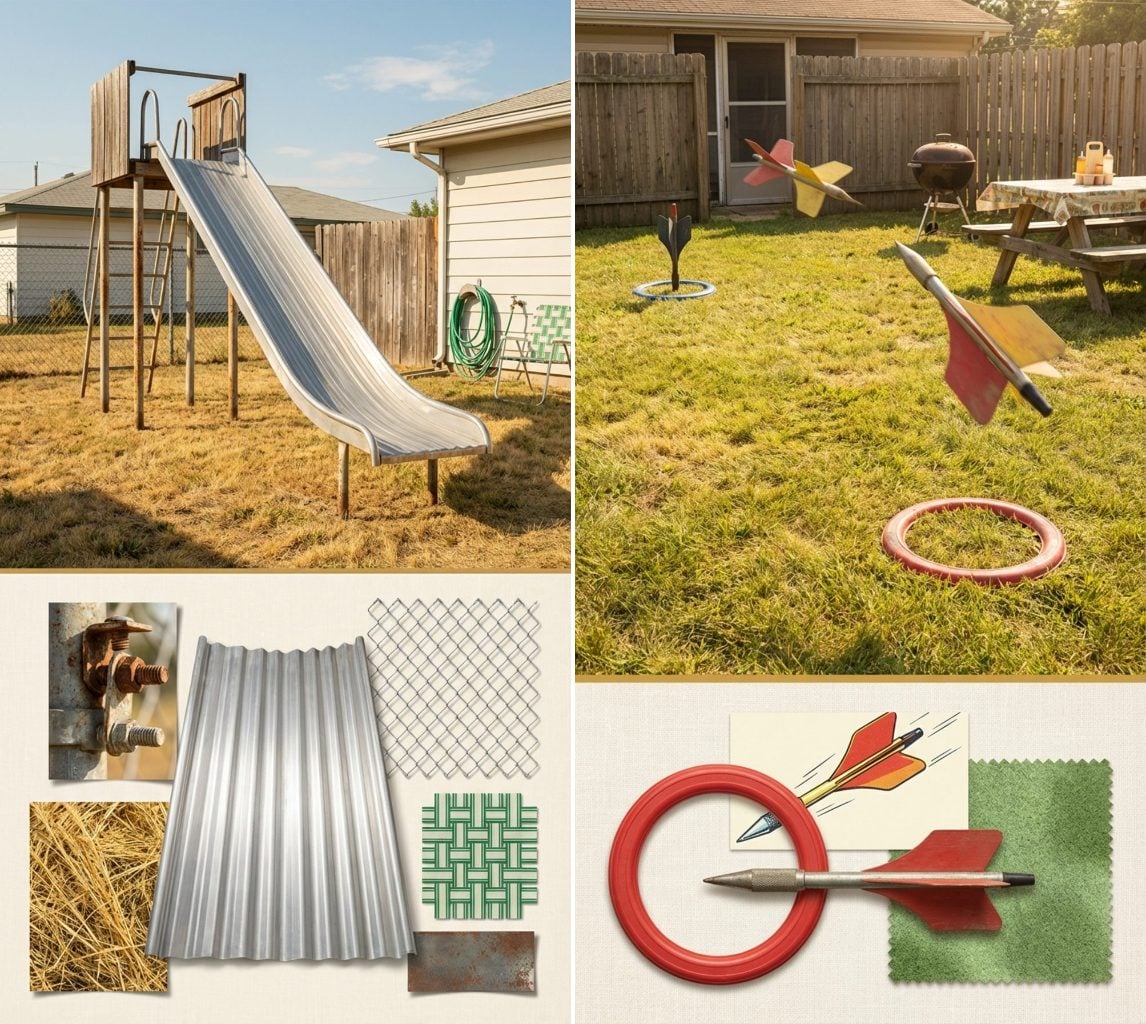
Weighted metal spikes. Thrown at high arc trajectories. Aimed at plastic rings on the ground. In a yard where children were also present. The Lawn Jart set sat in the garage behind the push mower for most of the year, pulled out on holiday weekends when someone’s dad decided the afternoon needed some excitement.
The Consumer Product Safety Commission banned them in 1988 after three children died. Before that, they were a backyard staple, sold right alongside croquet sets and badminton nets at every hardware store in America. The box even had a cheerful family on it.
The Above-Ground Pool With the Ladder That Folded Down From Nowhere
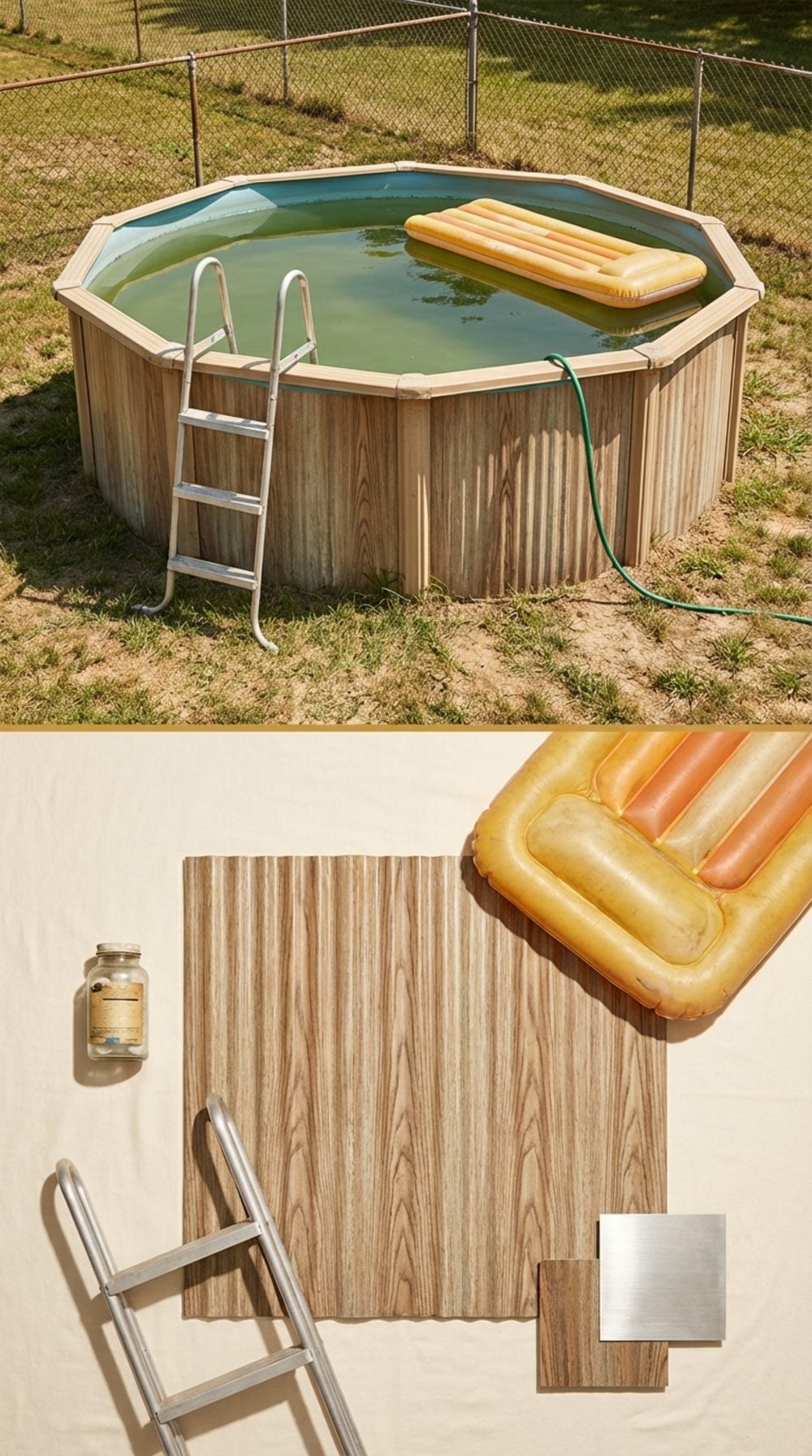
The ladder was the whole problem. It hooked over the wall, giving easy access in, and absolutely no controlled access out. Little kids could climb in unsupervised whenever they pleased. The solution most families landed on was either removing the outer steps entirely or leaning a lawn chair against it as a deterrent. Neither worked.
The pool itself turned a shade of algae green after three weeks regardless of how many chlorine tablets you dropped in. The filter sounded like a dying refrigerator and ran 24 hours a day on an extension cord that crossed the lawn.
The Rope Swing Tied to a Branch That Was Definitely Not Load-Bearing
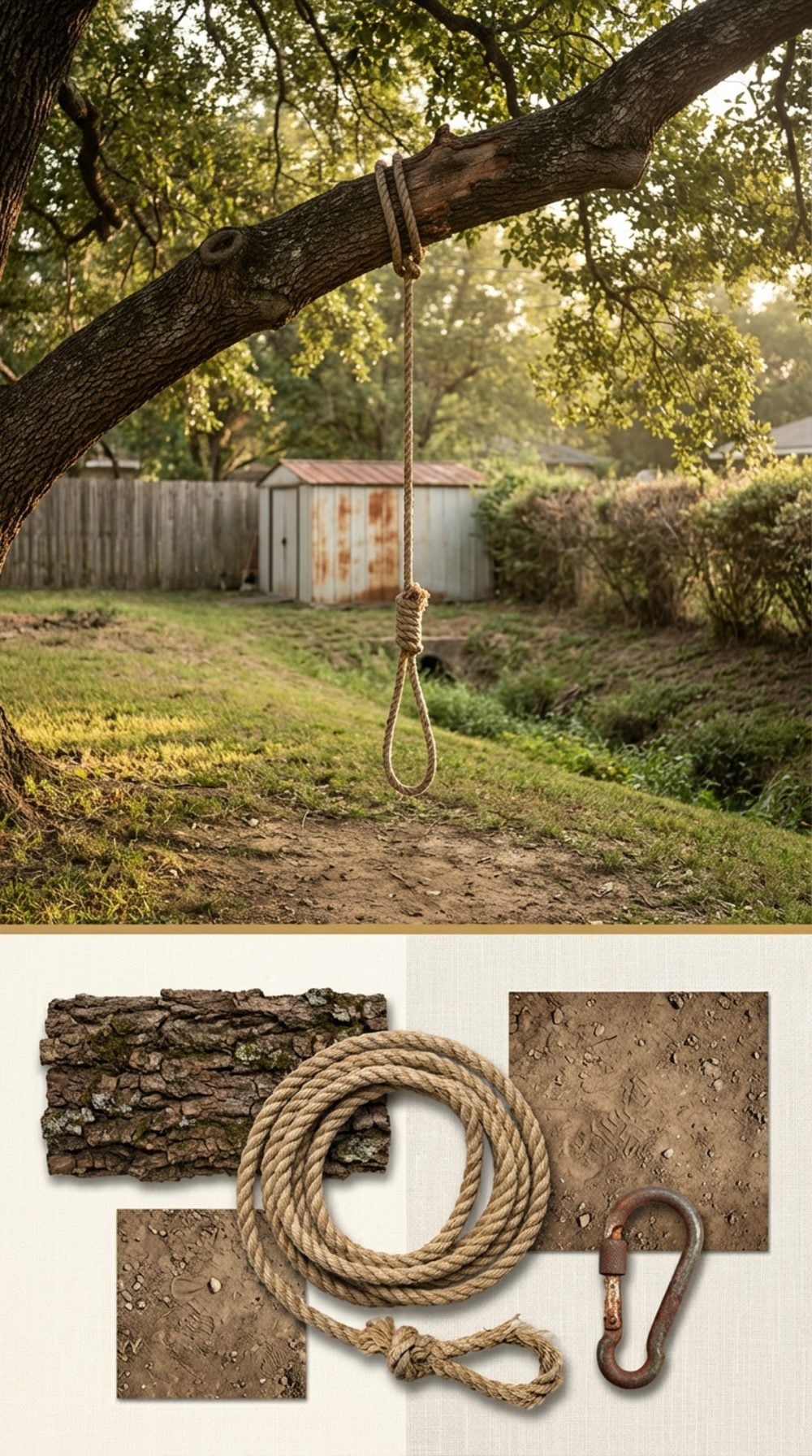
Someone’s dad tied it up there on a Saturday afternoon, tugged on it twice, announced it was fine, and went back inside. That was the safety inspection. The branch had a visible crack running about eight inches from the attachment point, which everyone noticed and nobody mentioned.
The swing worked perfectly for two summers. Then it didn’t.
The Backyard Trampoline With No Safety Net, No Padding, and No Apologies
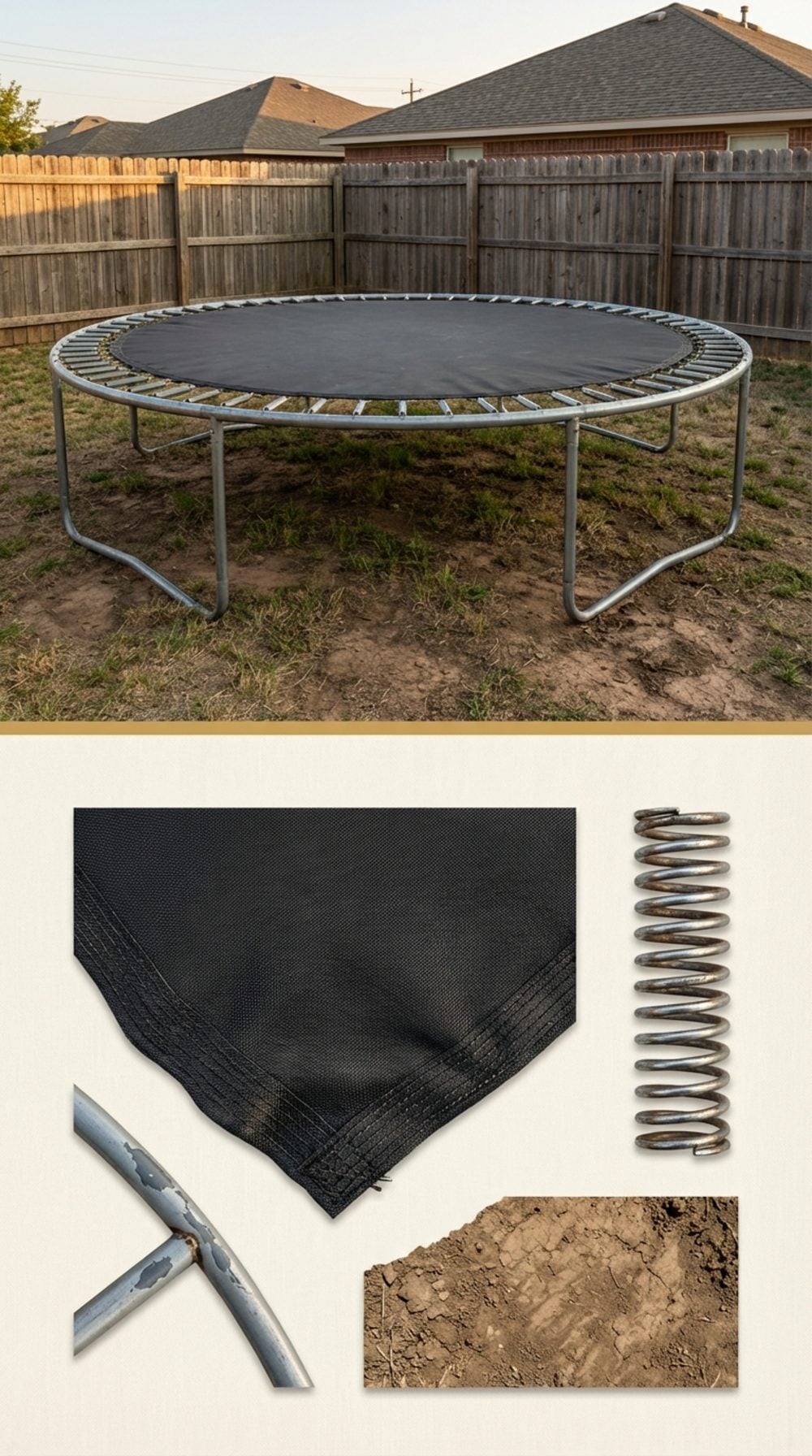
Those exposed coil springs were the real villain. Every kid who owned a trampoline in the 80s has a specific scar story that begins with “I was just jumping normally when…” The springs caught fingers, toes, and the occasional ponytail without mercy. The metal frame sat at exactly shin height for maximum bruising efficiency.
The American Academy of Pediatrics has discouraged recreational trampolining for decades. Trampoline injuries send roughly 100,000 Americans to emergency rooms each year even now, with safety nets and padding standard. Without them, the 80s version was basically a controlled falling apparatus.
The Creosote-Soaked Railroad Tie Landscaping That Edged Every Flower Bed

They were everywhere in the 70s and 80s, used as raised bed borders, retaining walls, garden steps, and decorative edging. They looked like they’d last forever, and in fairness, they did. The problem was creosote, the coal tar preservative soaked deep into the wood, which is a known carcinogen and leaches into soil with every rain.
Kids sat on them, dug around them, tracked the dark oily residue inside on bare feet. The EPA restricted new railroad tie use in residential landscaping in the late 1990s, but plenty of those original ties are still sitting in backyards right now, quietly doing their thing.
The Rusty Swing Set That Wobbled When You Pumped Too High
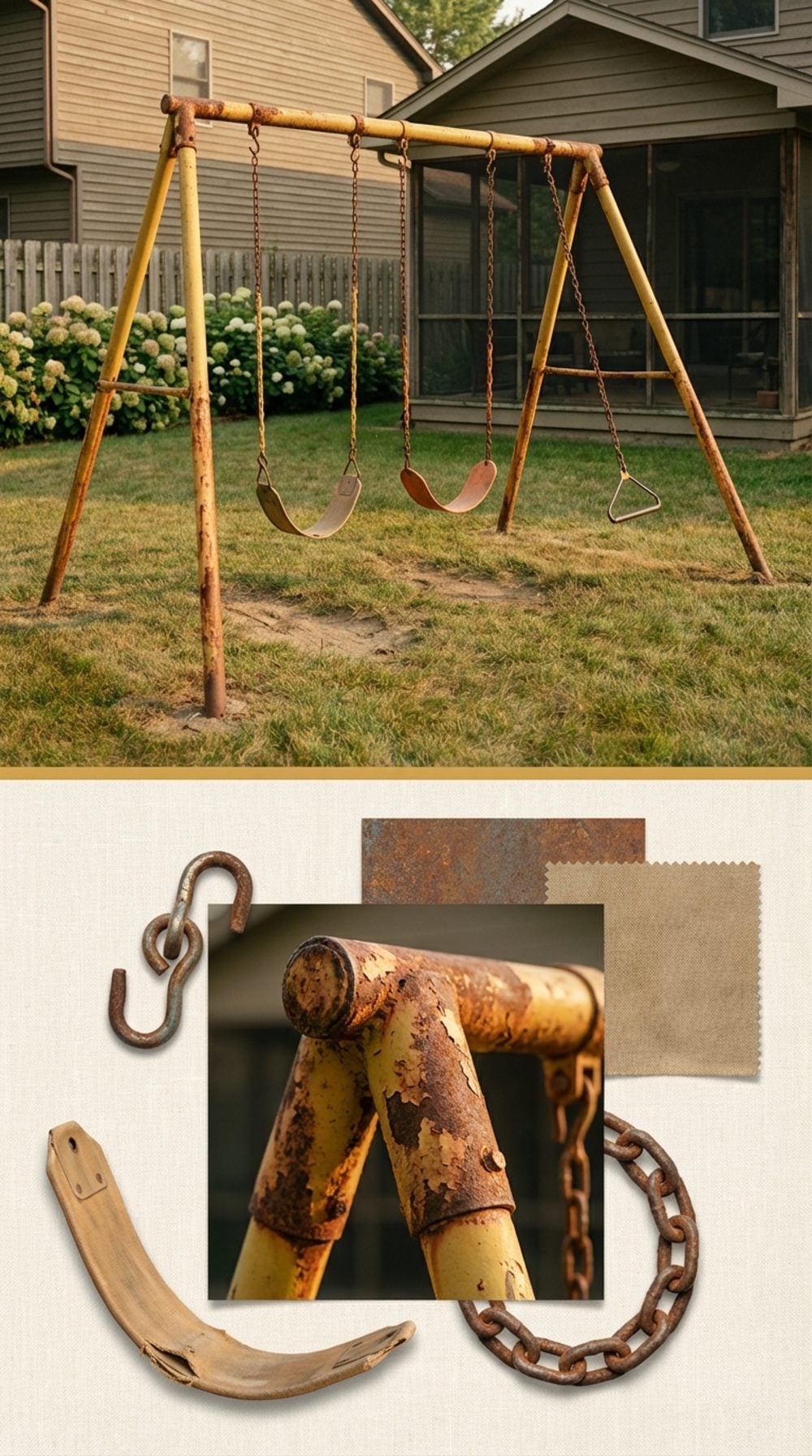
When the whole frame started to lift off the ground on the back swing, that was not the time to stop. That was the time to go higher. The legs came up two, sometimes four inches off the dirt with every forward push, and the entire structure groaned in a way that now reads clearly as structural failure and then read as perfect fun.
The rust wasn’t just cosmetic. Those joints were compromised, those S-hooks were stretched, and the chains had sharp edges that caught the meat of your palm at exactly the wrong moment. Every set came with a ground anchor kit. Nobody installed it.
The Garage Refrigerator Full of Beer That Every Kid Knew the Code To
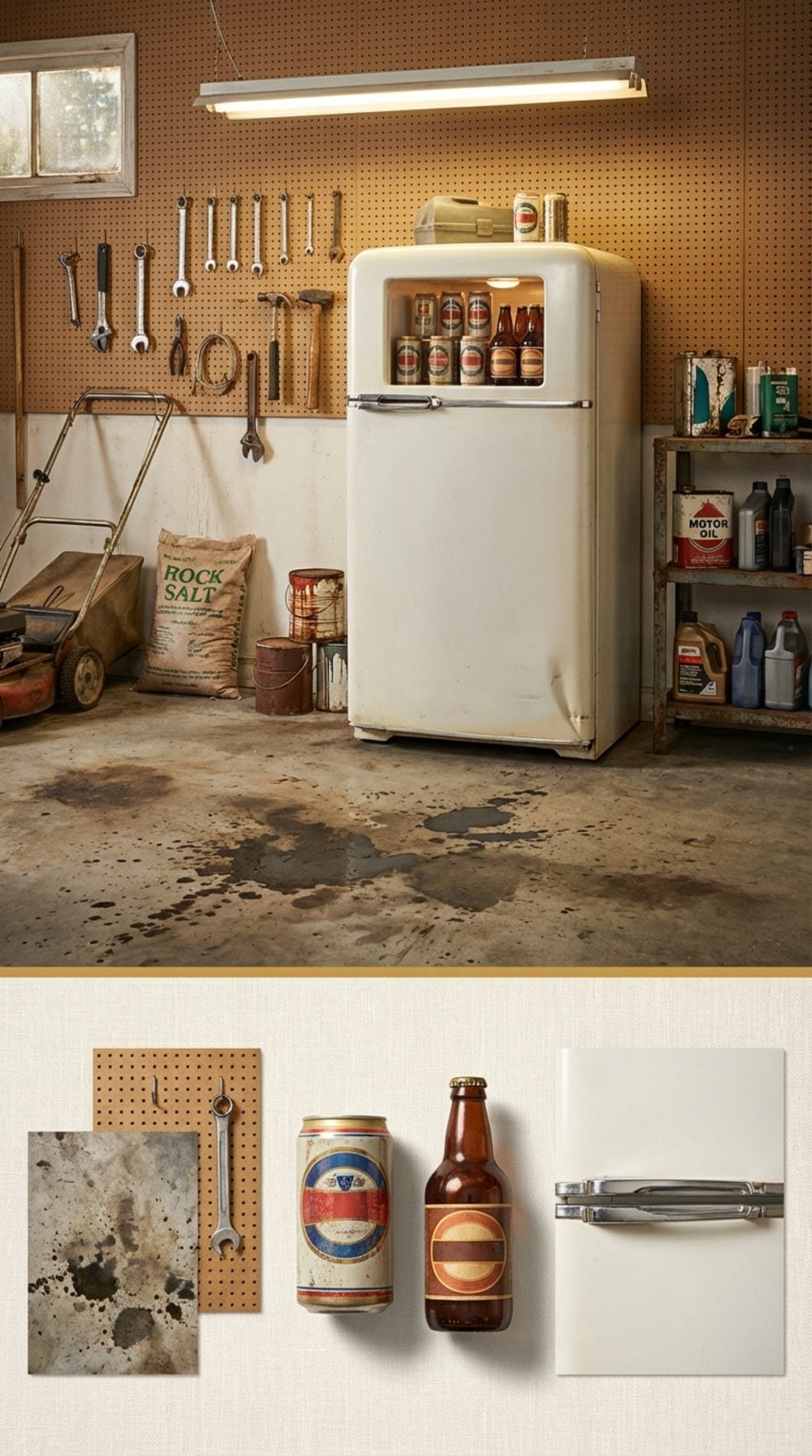
Not a backyard hazard in the dramatic sense, but worth including for sheer cultural ubiquity. The garage fridge was an institution. It held overflow beer, soda for the kids, and sometimes mystery Tupperware that had been out there since the Carter administration. The fact that it was entirely accessible to every child in the neighborhood was simply not a consideration anyone entertained.
The Homemade Wooden Jungle Gym Built Without a Single Code Requirement
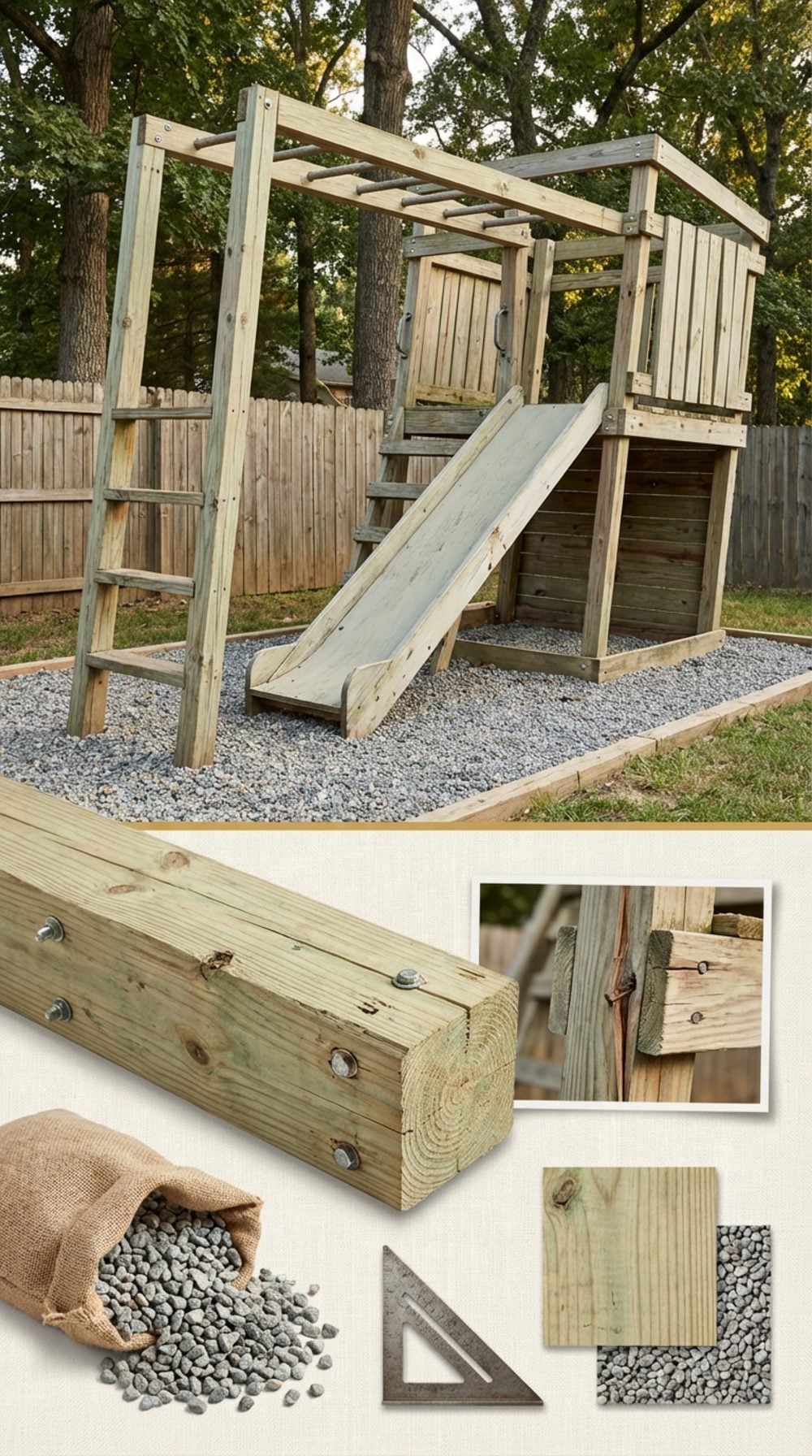
Dad designed it on a napkin. He built it over one long weekend in May. He was proud of it. And structurally, it was roughly 60% of what it needed to be. The monkey bars were installed at a height that made sense to someone six feet tall, not someone four feet tall. The platform had no railing on two of its four sides. The ladder rungs were spaced for adult legs.
Today, any residential playset sold commercially must comply with ASTM F1148 safety standards, covering fall height, entrapment hazards, and protrusion risks. The napkin-and-a-half-day-of-work approach has been regulated out of existence, mostly for excellent reasons.
The Pesticide Spray That Dad Applied Without Gloves, a Mask, or a Second Thought
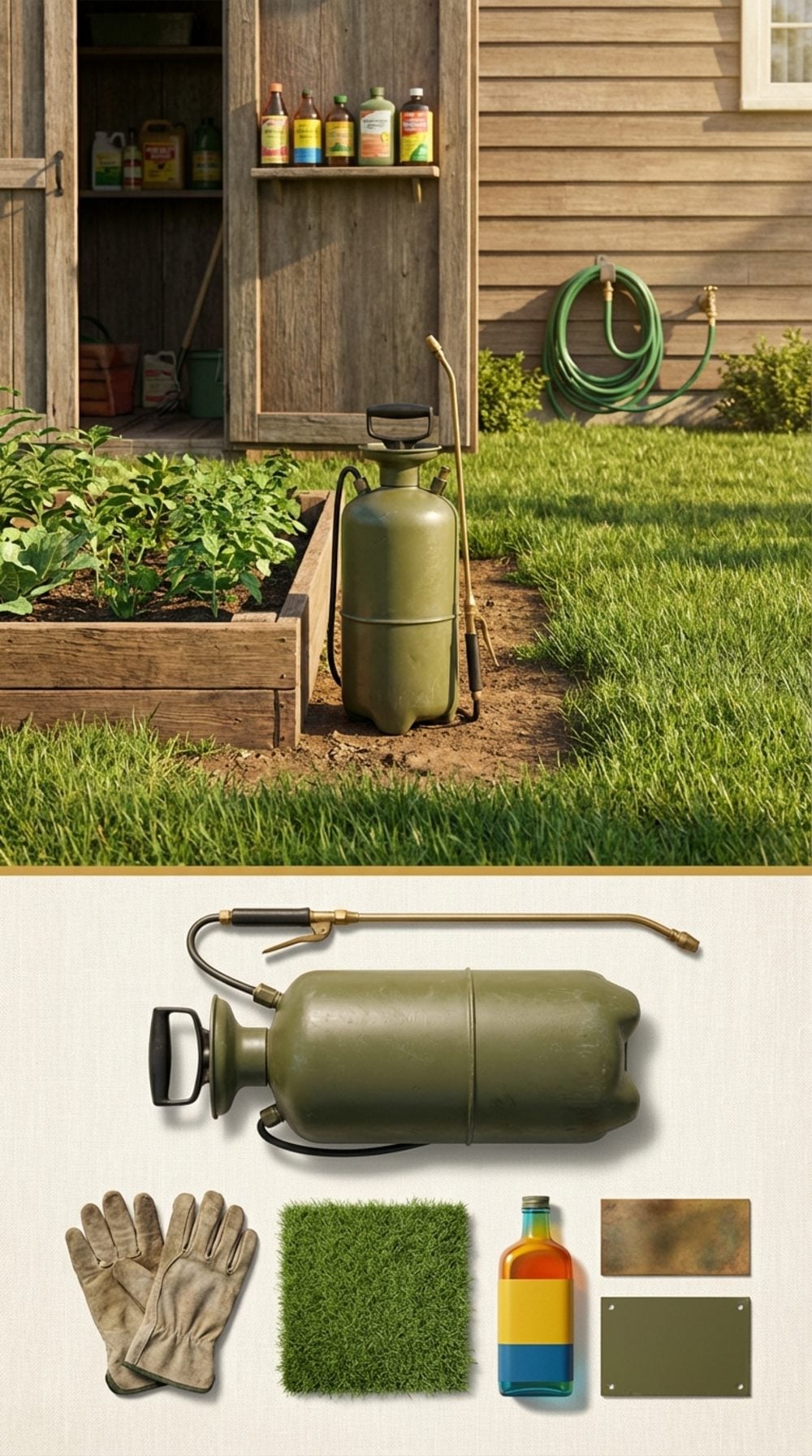
The pump sprayer came out on Saturday mornings. Chlordane for the ant hills. Diazinon for the beetles. Something else entirely for the dandelions, the bottle sun-faded past identifying. Kids were told to stay off the grass for “a little while” and were back out there within the hour. Nobody wore gloves. The breeze direction was not consulted.
Chlordane was banned by the EPA in 1988 after being classified as a probable human carcinogen. Diazinon was phased out of residential use by 2004. Several of the standard backyard chemical staples of that era have since been restricted or prohibited, based on findings that came decades too late for a generation of kids who played on treated lawns barefoot.
The Concrete Birdbath at Exact Shin Height in the Middle of the Yard

Immovable. Concrete. Positioned with no regard for traffic patterns. The birdbath was purely decorative and functionally a trauma object for every child who played chase in that yard after dark. Its shallow basin also served as a standing mosquito hatchery from June through September, which was a separate public health situation nobody discussed.
The Kiddie Pool Left Sitting in the Sun for Three Weeks Between Uses
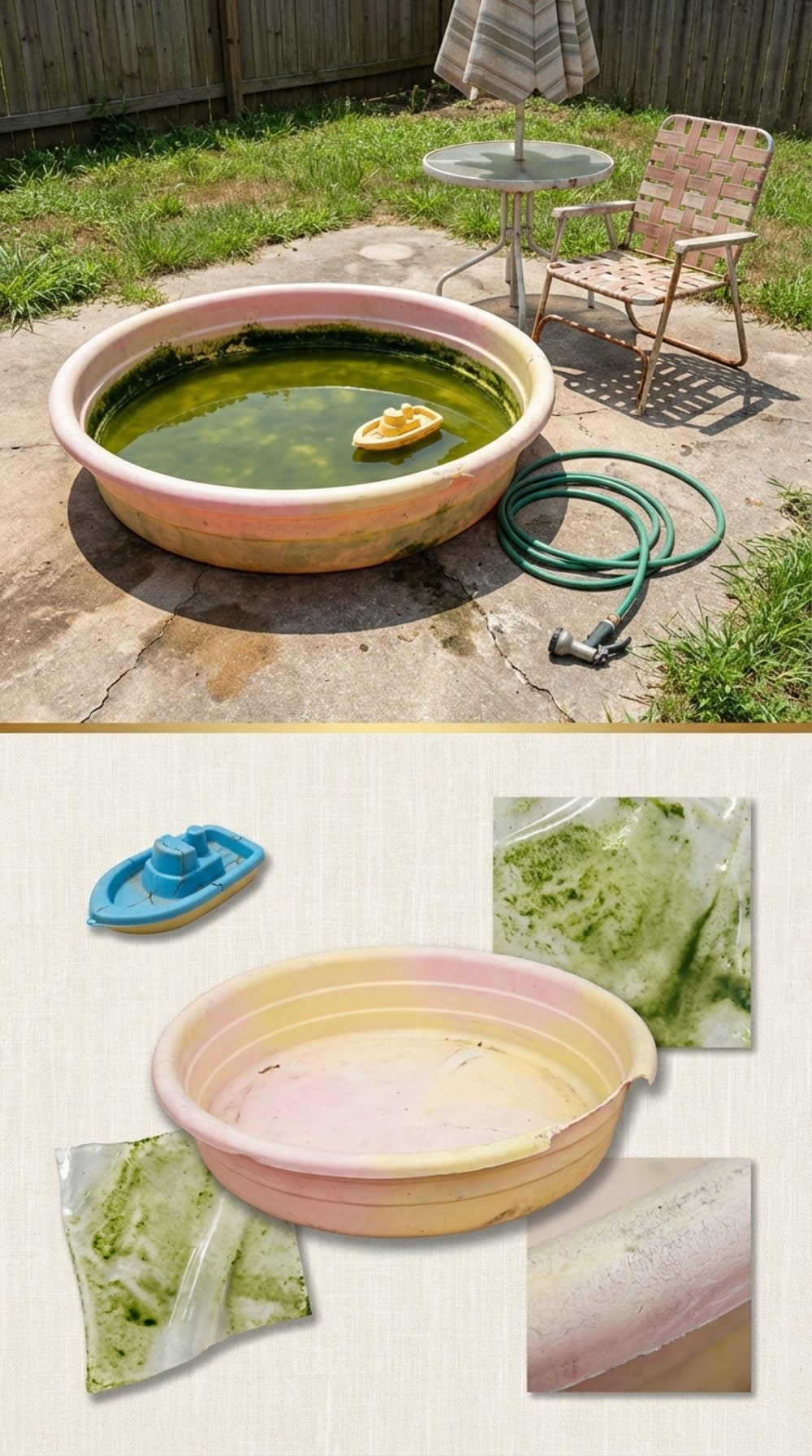
Filled on a Friday afternoon in June. Not emptied until someone noticed the water had turned the color of pea soup three Saturdays later. The kiddie pool was a standing-water incubation system for bacteria, mosquito larvae, and every form of single-celled life that enjoys warm, stagnant conditions.
Kids climbed back in without question. The water was warm. That was considered a bonus.
The Wheelbarrow Full of Old Nails Left Open by the Side of the House
🔥 Would you like to save this?
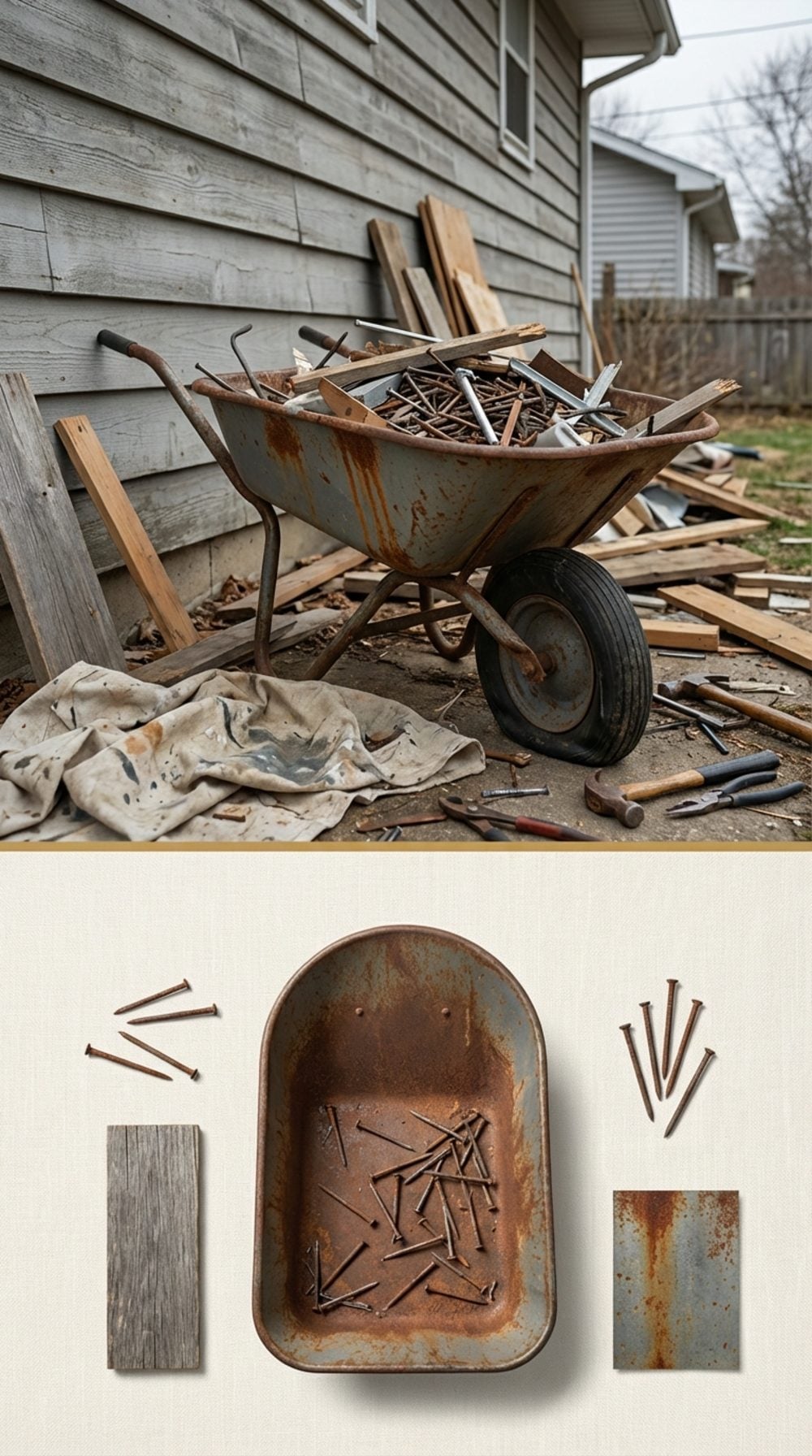
Not the wheelbarrow itself, wheelbarrows are fine. The issue was what lived inside the wheelbarrow for the entire summer: a deep collection of old nails, bent screws, broken glass, and mystery metal debris from every unfinished project since the Ford administration. Left open. At child height. Next to the path everyone walked to the backyard.
The Outdoor Electrical Extension Cord Running Through the Wet Grass to the Pool
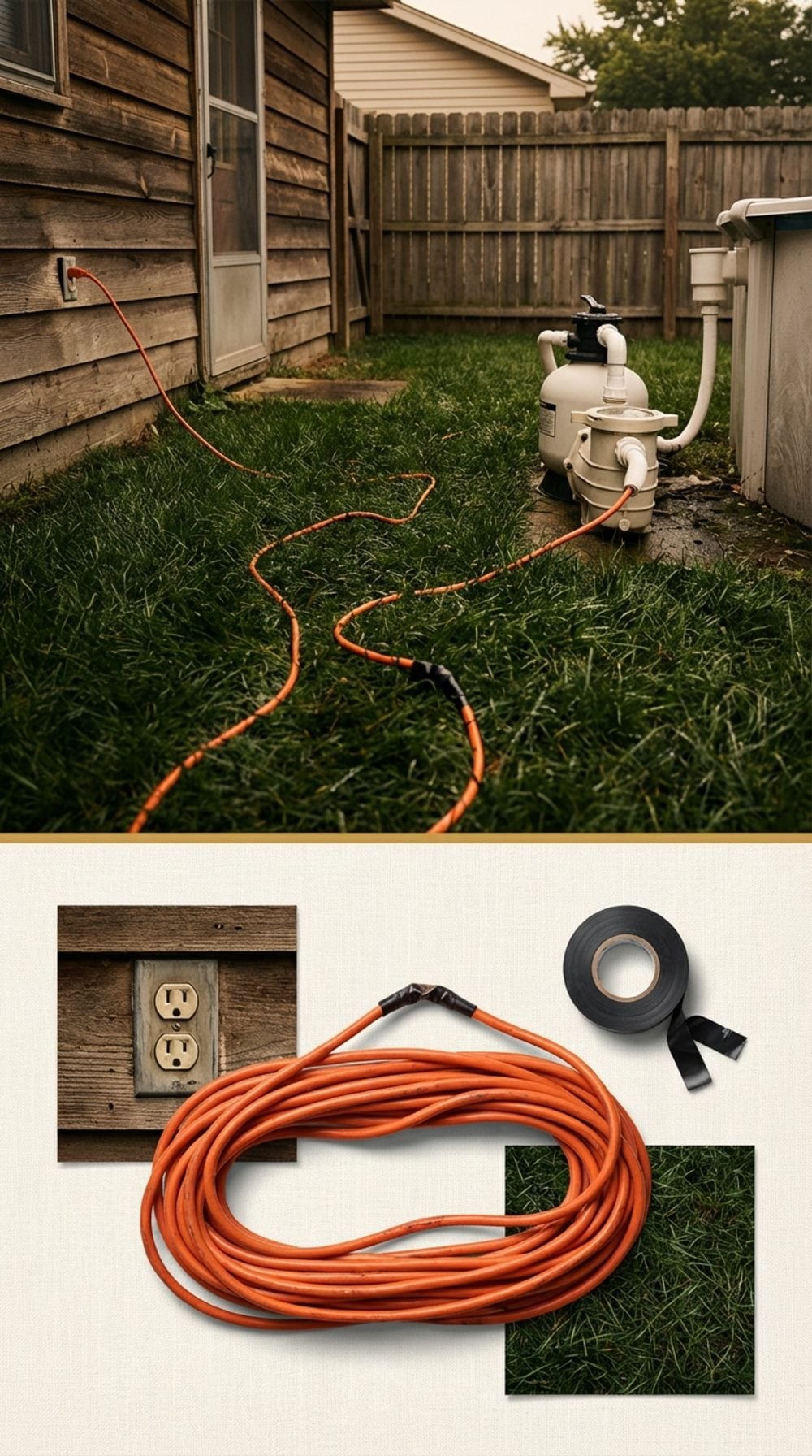
Indoor extension cord. Outdoor application. Wet grass. Active swimming pool. These are four things that should never appear in the same sentence, let alone the same backyard, and yet this was a completely standard setup for every above-ground pool in a three-block radius. The tape patch in the middle of the cord was considered a proper repair.
GFCI outlets became required by the National Electrical Code for outdoor receptacles in 1978 and near pools in 1975, but enforcement in existing homes was essentially nonexistent. The backyard electrical situation of the average 1970s home would fail a modern inspection in about six different places.
The Massive Lawn Dart to the Temple Waiting to Happen: The Tetherball Pole
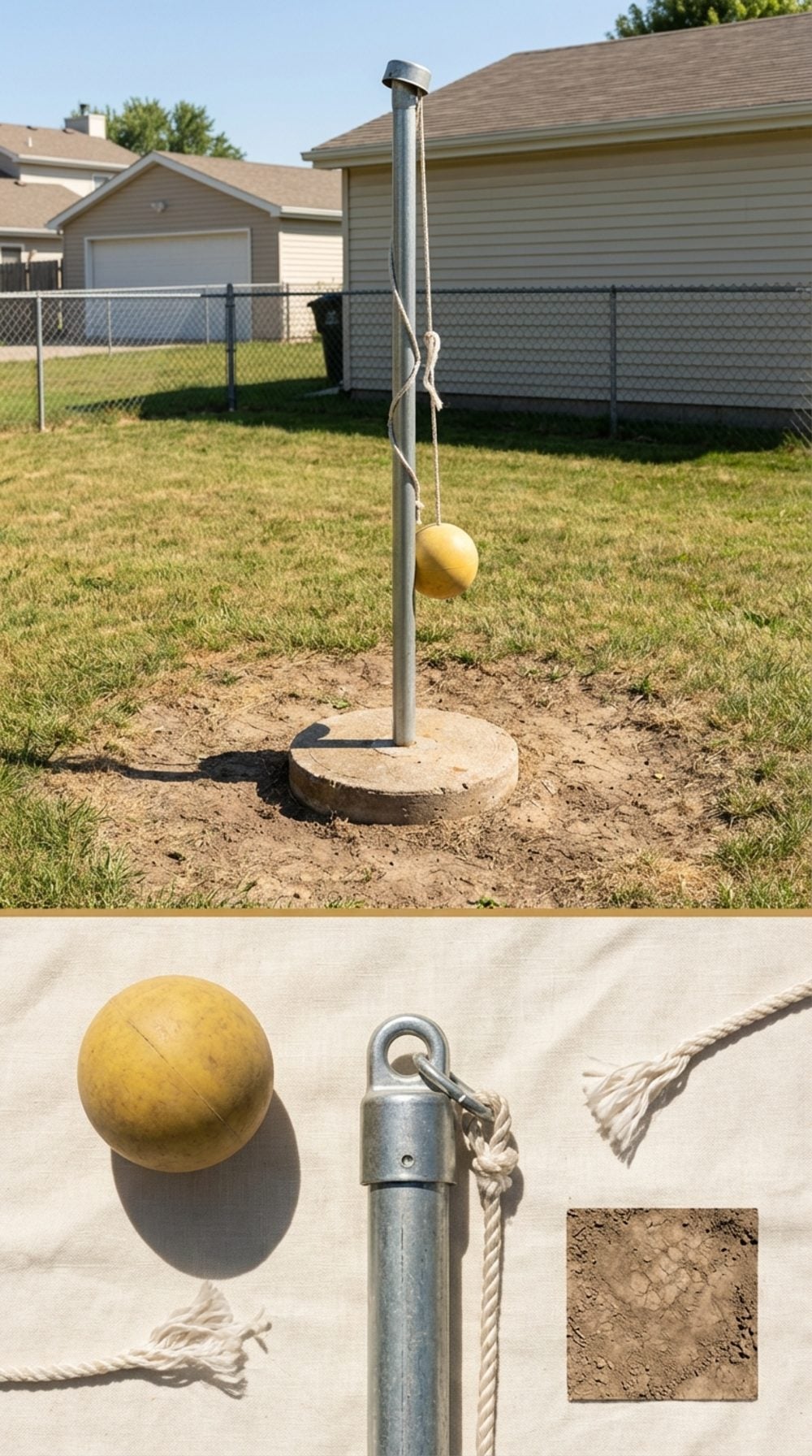
The game itself was fine. The eight-foot steel pole cemented permanently into the ground, with a slightly off-center blunt cap, in the middle of an active play area where children were running at full speed? Less fine. Walking into that pole at a sprint was a rite of passage across every suburb in America, and the resulting forehead dent should have been a design note taken seriously much earlier.
The Wood-Burning Barrel at the Back of the Yard for “Getting Rid of Stuff”
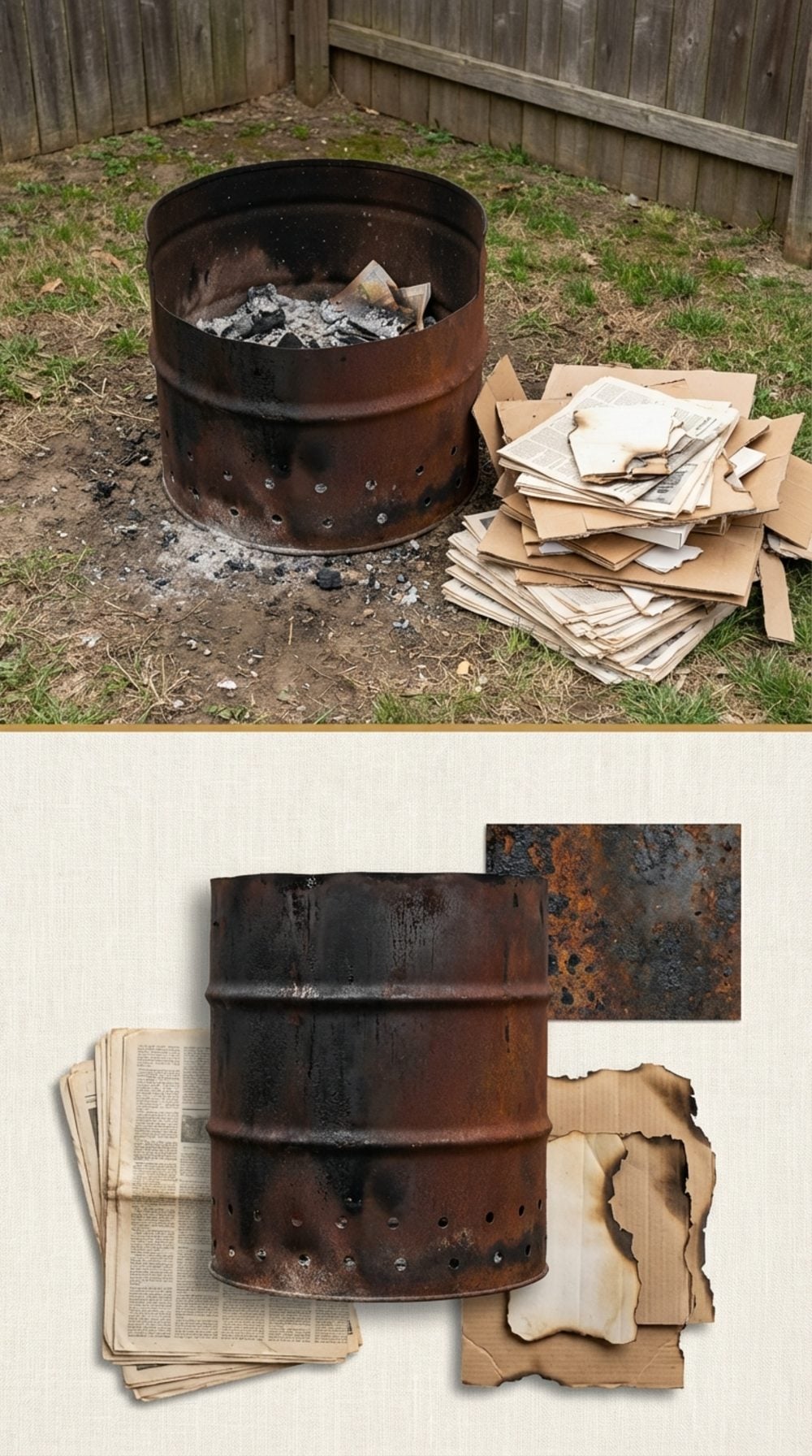
Burning trash in a backyard barrel was completely routine through the 1960s and into the 70s in many parts of the country. Paper, cardboard, sometimes plastic, sometimes things that should not under any circumstances be burned. The smoke drifted directly across the yard and into open windows. Kids played ten feet away.
Most municipalities banned residential open burning by the mid-1980s, driven by air quality regulations rather than child safety concerns specifically. But the hazard was threefold: the smoke, the fire itself, and the scorching-hot drum surface that had no safety perimeter of any kind around it.
The Chain-Link Fence With the Top Rail Removed, Leaving Just the Raw Upright Posts
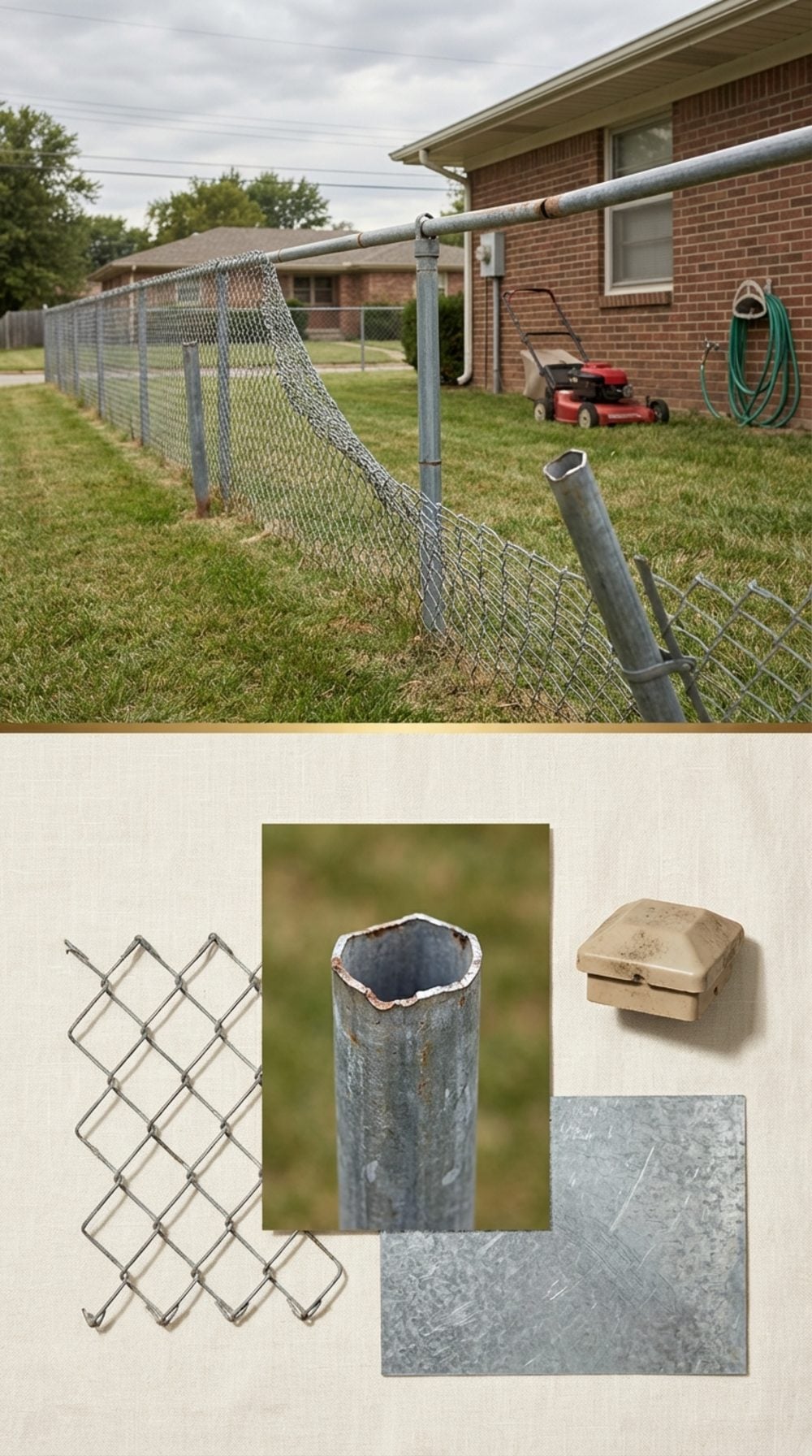
Those exposed hollow post tops were exactly at eye level for a running eight-year-old. Perfectly circular, pipe-sharp at the cut edge, and completely uncapped because the caps cost $2 and nobody bought them. The fence served its purpose perfectly well with or without capping, from an adult’s perspective. The child’s perspective involved a slightly different calculation.
The Deteriorating Asbestos Shingles on the Tool Shed the Kids Kept Breaking
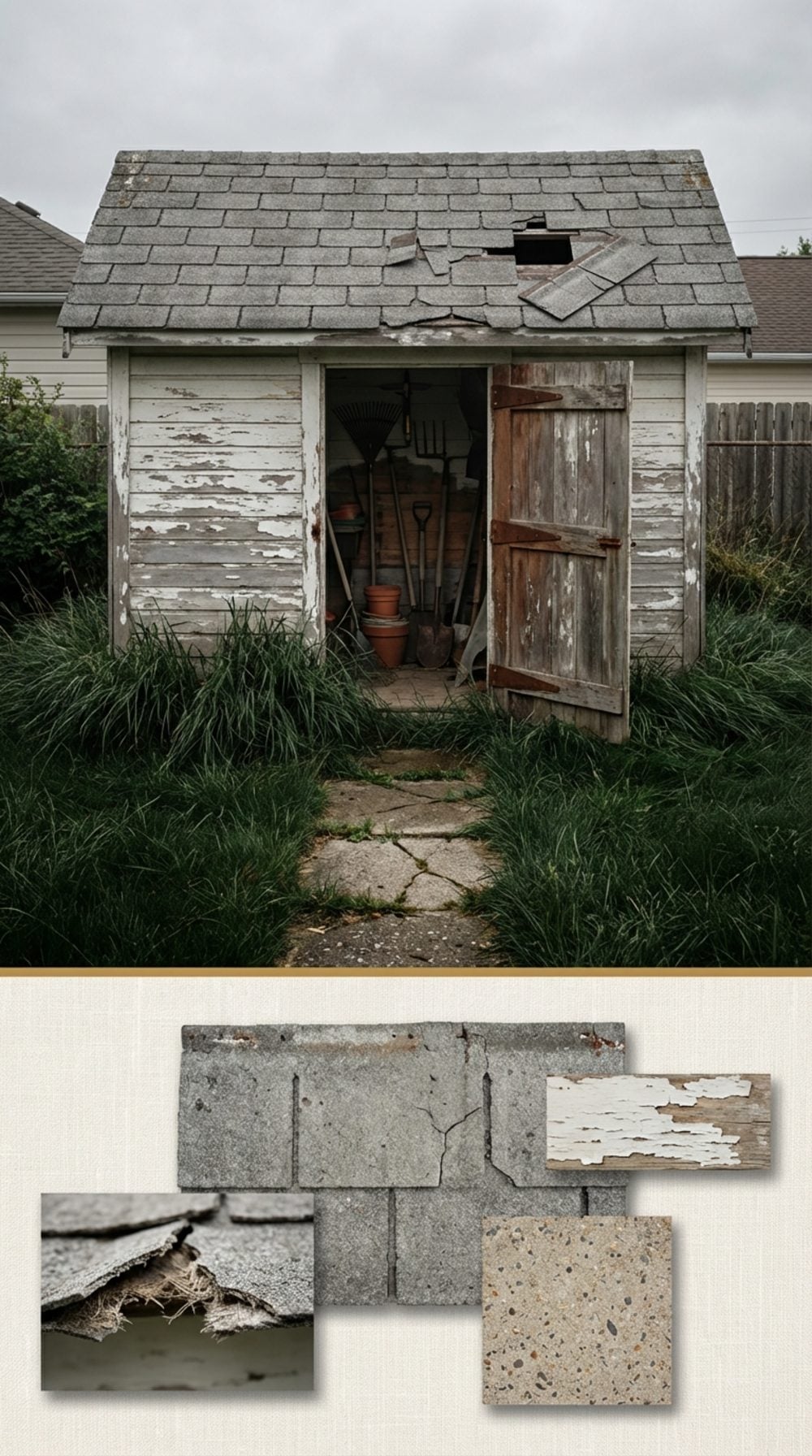
Cement-asbestos shingles were a common roofing material for outbuildings, sheds, and garage additions through the early 1970s. They were durable, fire-resistant, and completely unremarkable to look at. The problem was what happened when they cracked or broke, which they did regularly, and which children assisted with enthusiastically by throwing things at them or occasionally climbing on the roof.
Disturbed asbestos-containing materials release friable fibers that settle in lung tissue and remain there permanently. The exposure risk from a few broken shed shingles is low in absolute terms, but the casual way those broken pieces were swept up bare-handed and tossed in the trash is, in retrospect, worth noting.
The Deep Backyard Drainage Ditch That Everyone Called “The Creek”
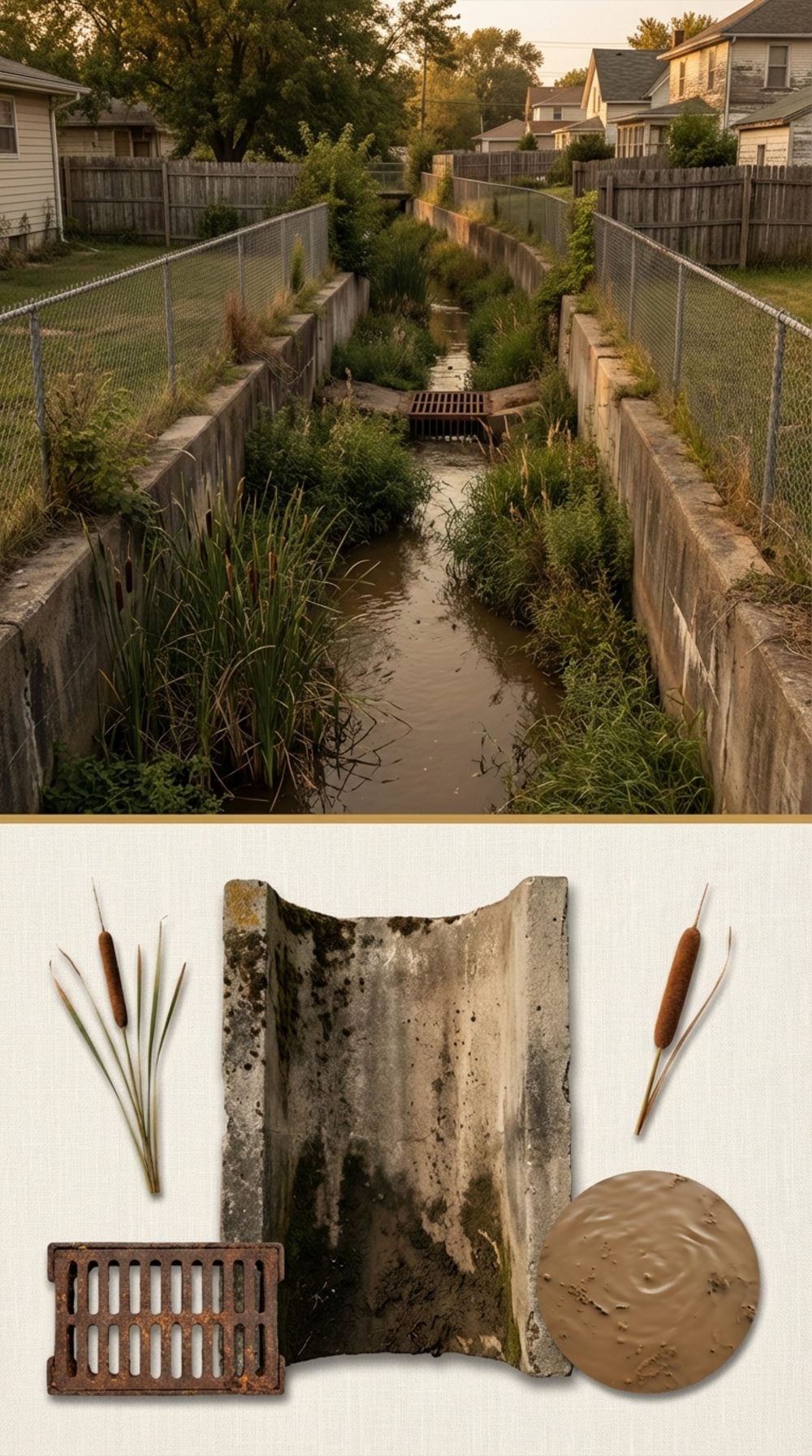
It was not a creek. It was a municipal storm drainage channel that filled to capacity during rain events and ran everything that came off the street directly past your backyard. We built dams in it, caught crawfish in it, and tracked its mud inside every single day from April through October.
Storm drainage infrastructure was designed to move water quickly, which means it could go from a gentle trickle to a fast-moving hazard in under ten minutes during a summer storm. The kids playing in it were generally unsupervised. There was no fence. There was no posted warning. There was just “the creek.”
The Pressure-Treated Lumber Playset, Stained With Arsenic-Based Preservative
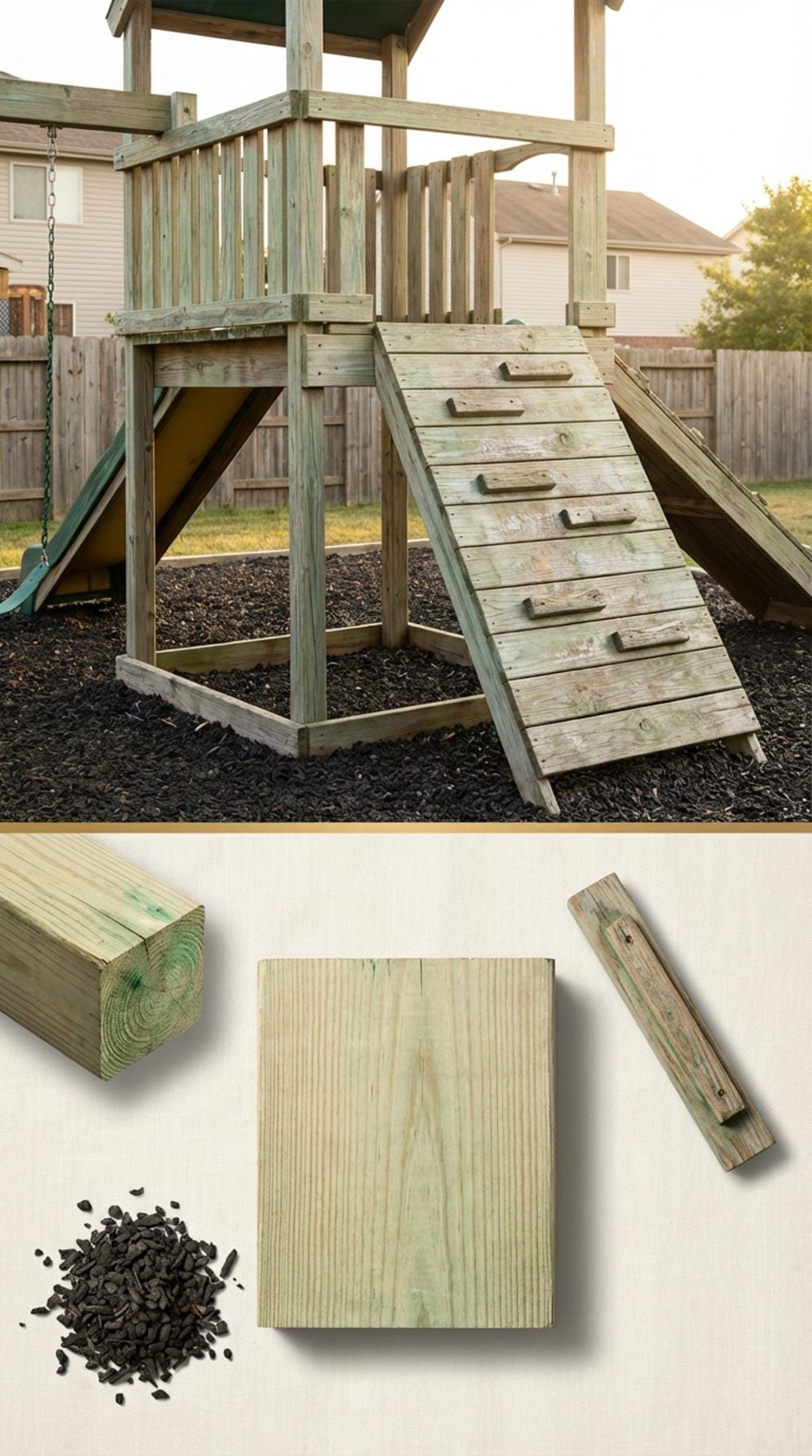
The pale green tint was everywhere in 80s and 90s backyard construction. CCA-treated lumber, laced with chromium, copper, and arsenic as a preservative, was the standard material for any outdoor wood project: decks, playsets, sandbox frames, garden beds. Arsenic leaches from the wood surface and transfers to anything that touches it, including children’s hands pressed firmly on climbing rungs for hours at a time.
The EPA phased out CCA for residential use in 2003, by which point it had been the dominant outdoor lumber treatment for thirty years. Modern pressure-treated lumber uses different preservative chemistry, but older playsets built before 2004 may still contain CCA and are worth testing.
The Sandbox That the Neighborhood Cats Had Claimed as a Personal Facility
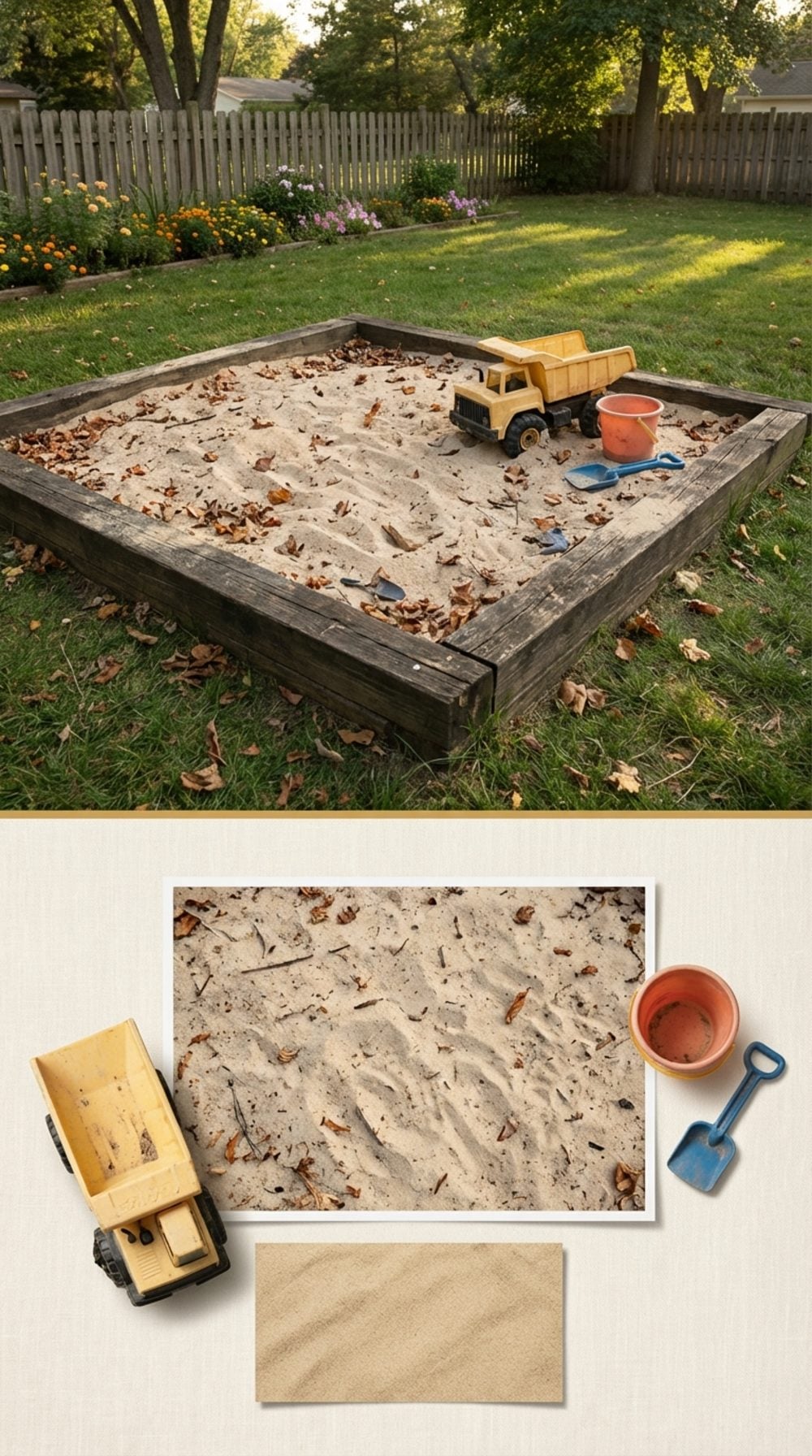
Every neighborhood sandbox without a lid was a community litter box, a fact fully known to every adult and carefully not discussed. The sand was refreshed periodically, which was considered a sufficient response. Children played in it for years without visible consequence, which is either reassuring or a testament to immune system resilience. The sandbox lid was invented at some point. Nobody bought one.
The Hose Left in the Sun for an Hour Before Anyone Remembered It Was on
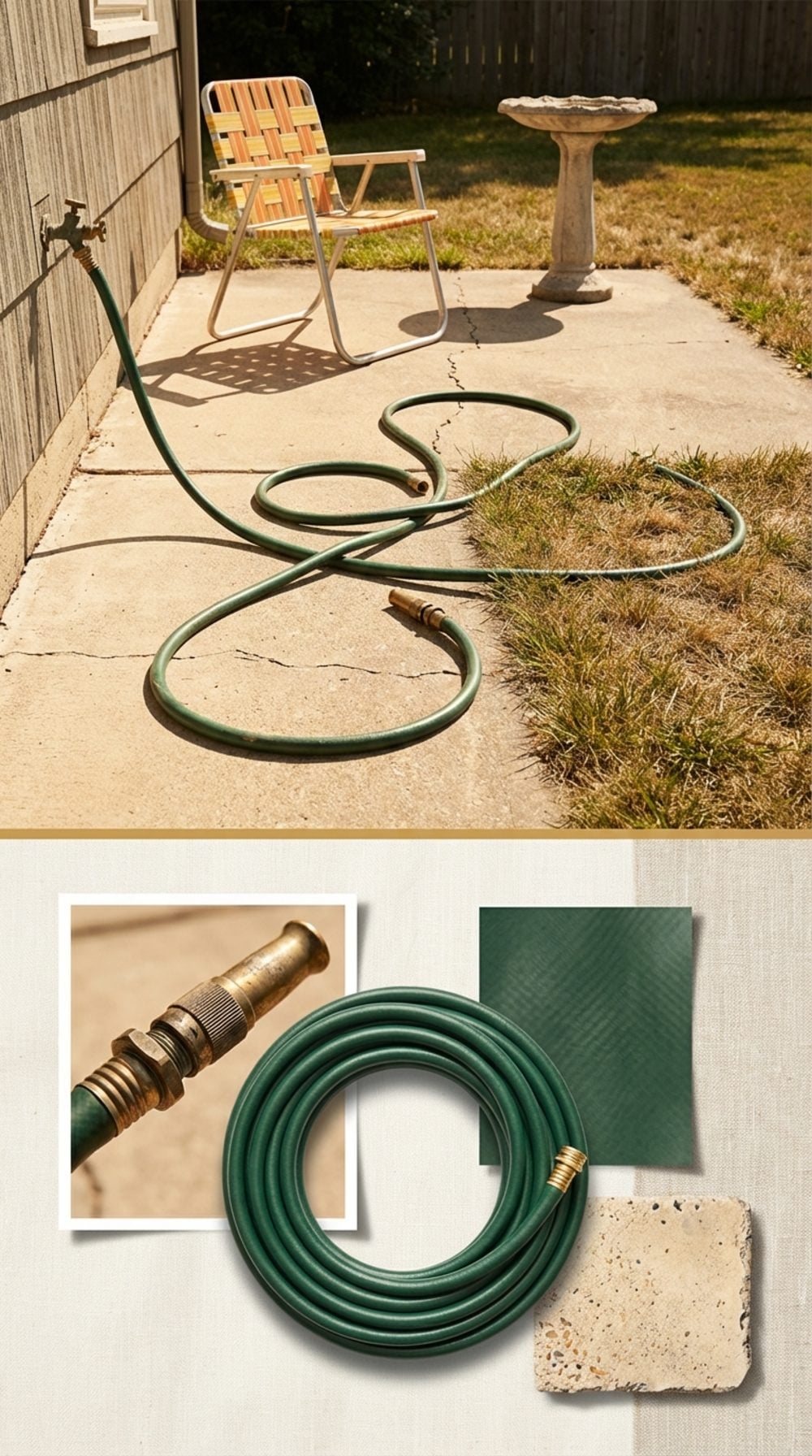
The rubber hose, sitting in direct sun on a July afternoon for an hour, could deliver water at scalding temperatures for the first fifteen to twenty seconds before the cool supply caught up from the line. The number of children who learned this by drinking directly from the hose, or spraying themselves in the face on a hot day, is statistically significant.
It also applies to the hose left attached to the spigot through a hot day with the water turned off: the water sitting in the line could reach temperatures high enough to cause burns. We drank from it anyway, directly from the nozzle. This was considered refreshing.
The Exposed Nail Heads Running Along the Bottom of Every Fence Board
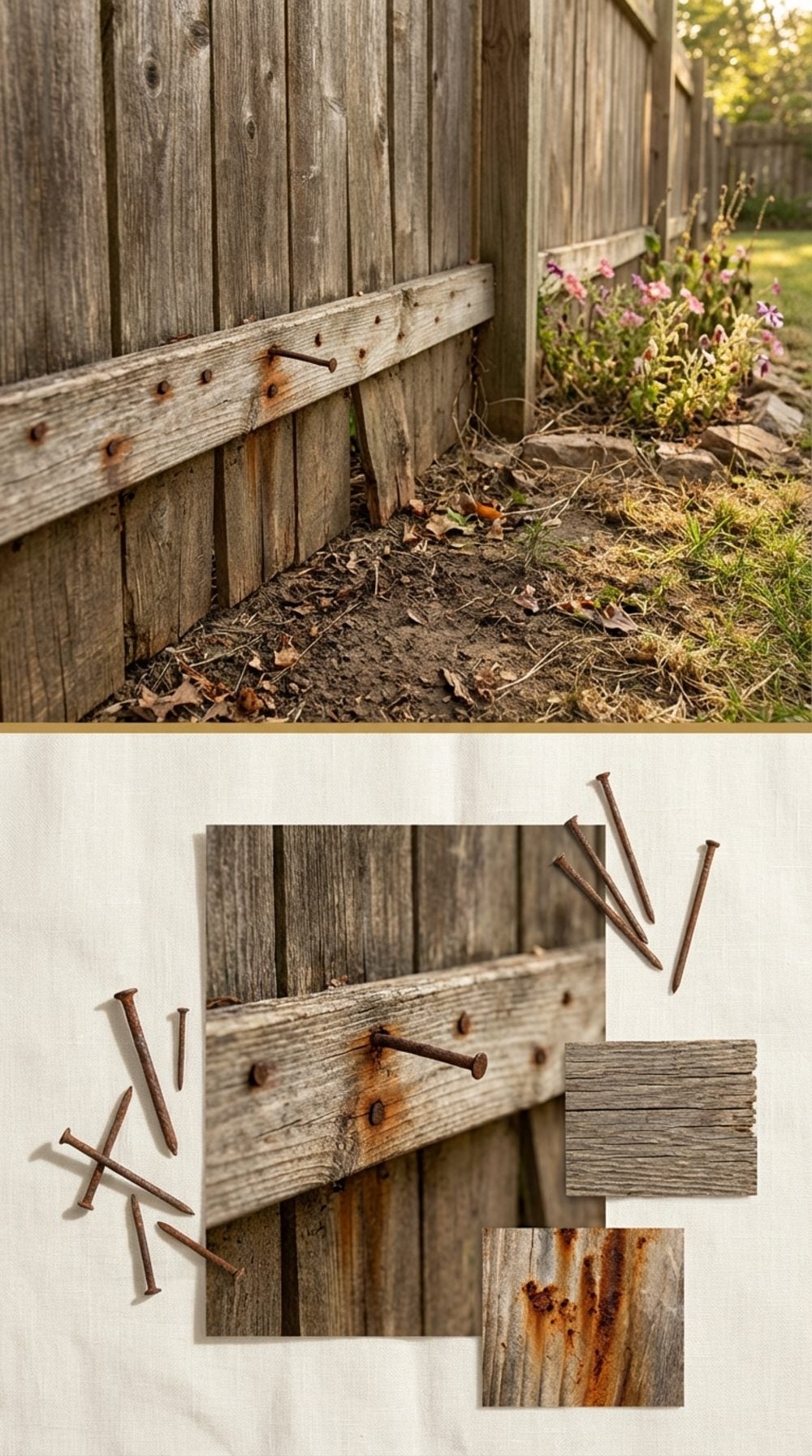
Popped nail heads at ankle and foot height along fence boards were so common as to be background noise. The combination of wood movement, moisture cycles, and cheap fasteners meant that every wooden fence had at least two or three nails working their way back out by summer. Bare feet and fence lines were a pairing that reliably ended one way.
The Backyard Barbecue Grill Lit With Enough Lighter Fluid to Be Taken Seriously
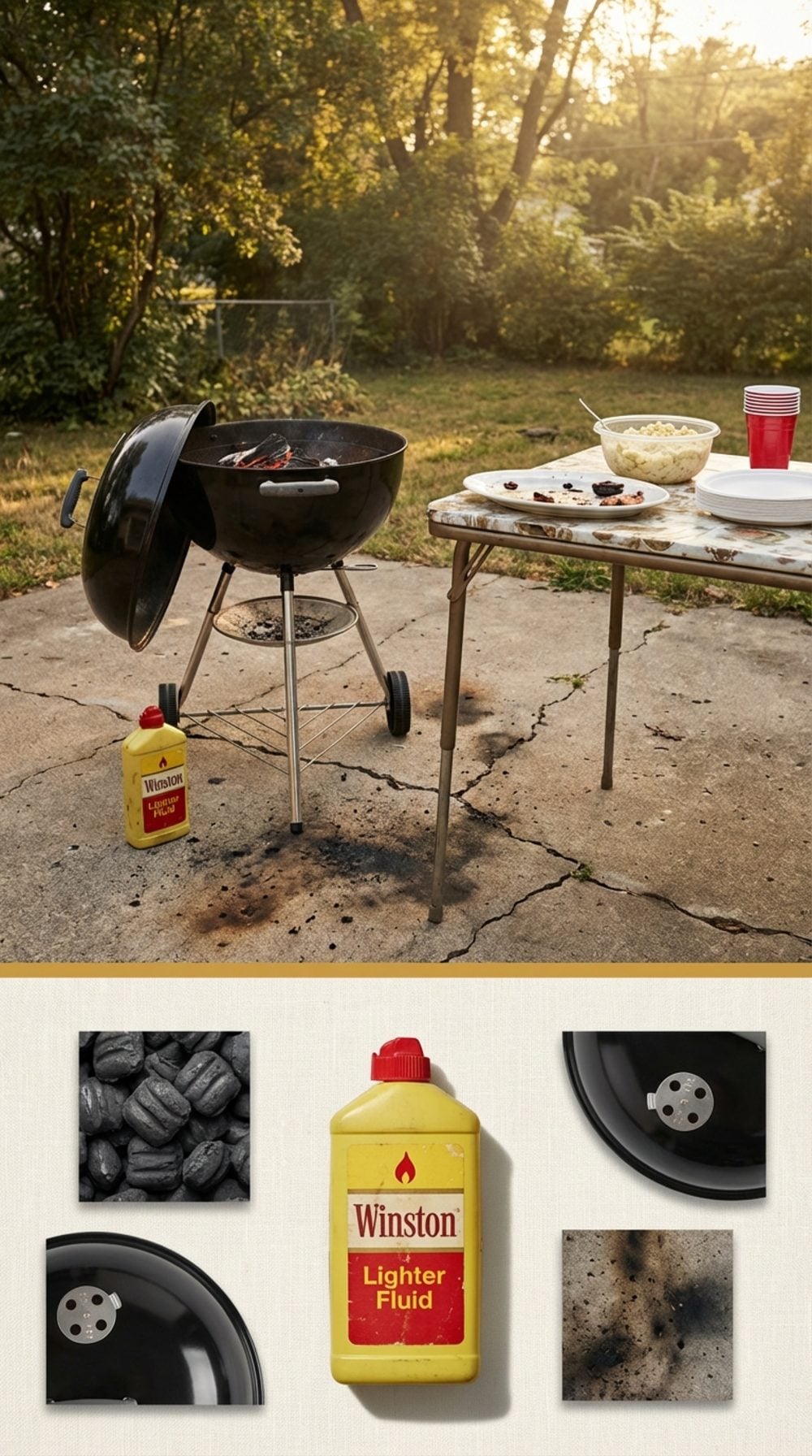
The quantity of lighter fluid applied was always approximately three times what the instructions suggested, because impatience is a universal human trait and waiting fifteen minutes for coals to ash over felt like a character flaw. The resulting fireball was treated as a success metric, not a near-miss.
Children stood at a distance of roughly four feet during this ritual, which was considered a responsible safety margin. The follow-up squirt of lighter fluid applied to coals that were “almost there” but “needed a little help” was the moment that made every backyard barbecue of that era genuinely exciting for all the wrong reasons.
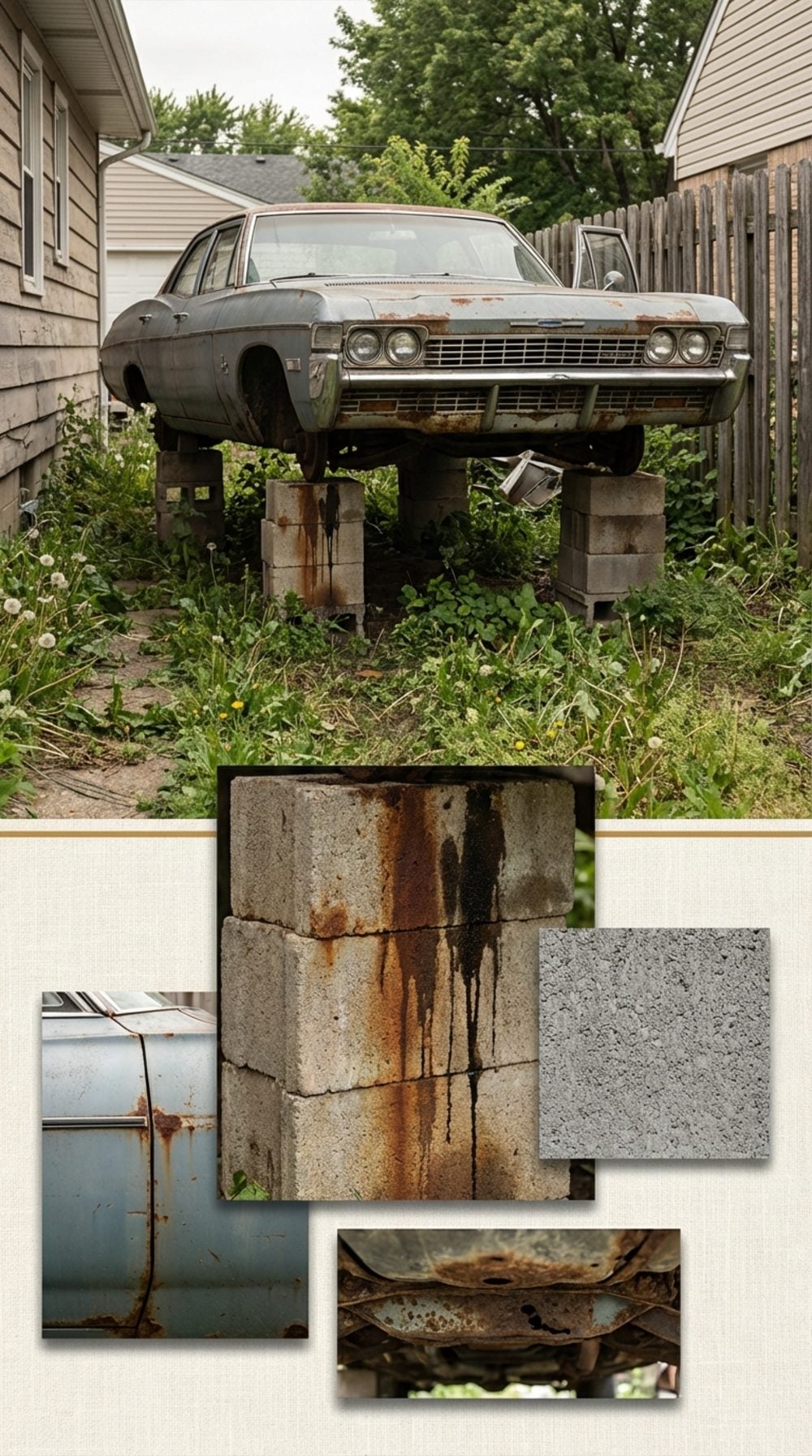
The Old Car Propped on Cinder Blocks at the Side of the House Since 1974
🔥 Would you like to save this?
The car on cinder blocks was a long-term fixture in at least one yard on every block, and children climbed into it, played in it, and occasionally got into it alone and somehow released the parking brake on a sloping driveway. The cinder blocks themselves were unstable under anything but perfectly distributed load. The car sat on them for years, shifting incrementally with each freeze-thaw cycle, until someone decided they were done with the project.
Beyond the collapse risk, a stored vehicle accumulates fuel residue, battery acid, and brake fluid over time. It became both a chemical hazard and a structural one, wrapped in nostalgia and a plan to fix it “this spring.”